
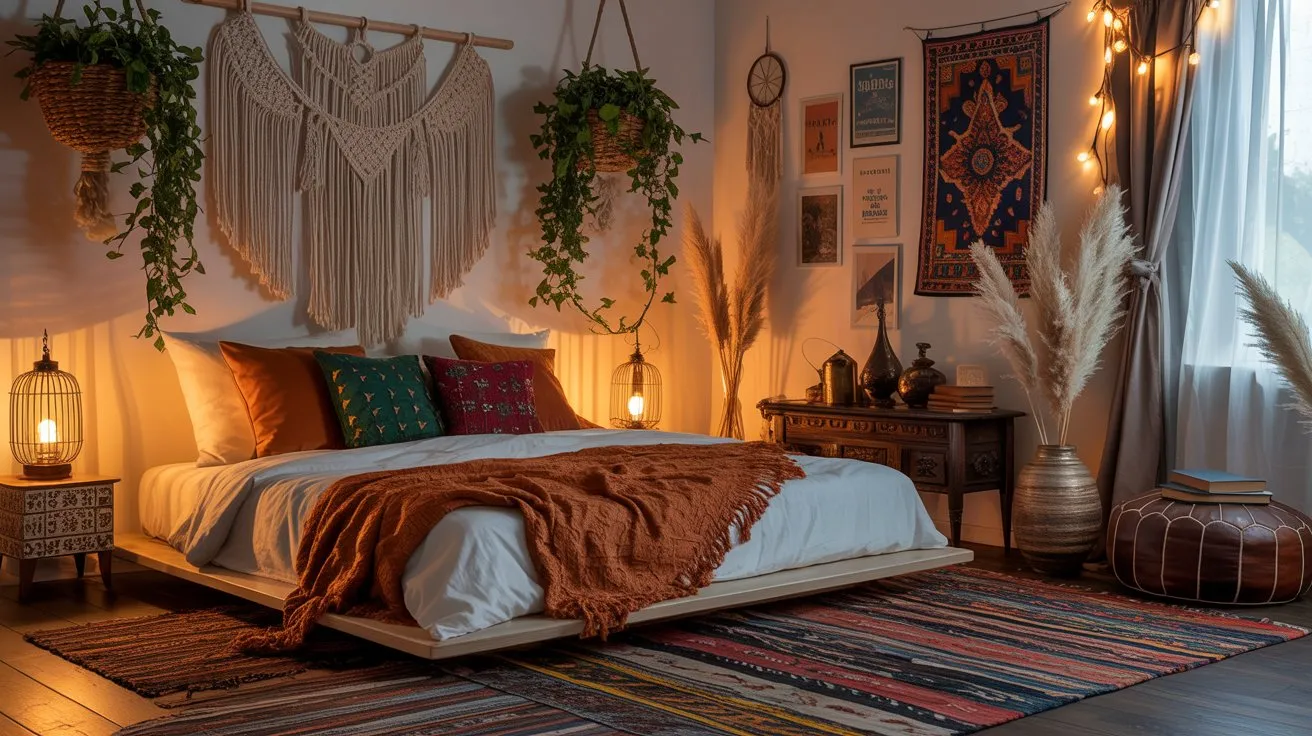
The bedroom is the only room in the house nobody else has to approve of. No guests sit in it. No dinner parties happen inside it. It doesn’t need to match the living room or coordinate with the hallway. It just needs to feel like the place you want to be at the end of the day.
Most bedrooms fail this test completely. They are tidy. They are inoffensive. They are assembled from the same mattress-in-a-box, flat-pack headboard, matching nightstand set that fills every apartment in every city and communicates nothing at all about the person sleeping in them.
Bohemian bedrooms are the opposite. They reveal something. They accumulate. They have a personality that arrived over time rather than being purchased in an afternoon. And they are, without exception, better to sleep in than a room designed to photograph well for a listing.
Here is how to actually build one.
Light Is the First Decision, Not the Last
Most people decorate a bedroom and then think about lighting. That is backwards. Light shapes how every other decision in the room reads. The same rust linen pillow looks like a warm autumn ember under amber candlelight and like a faded orange under a cool white overhead bulb. Get the light right first.
What Woven Pendants Actually Do
A woven rattan or bamboo pendant hung above the bed does something no other fixture can: it makes shadows. The lattice of the weave throws an intricate pattern across the walls and ceiling that shifts as the light inside dims or brightens. At full intensity it is a geometric projection. At low intensity it is a warm glow with depth.
The pendant needs to be oversized to work properly. A small shade reads as a task lamp. A dome that fills most of the visual field above the bed reads as architecture. The shadow pattern from a large, densely woven bamboo dome at amber bulb intensity is one of the most effective atmospheric interventions available in a bedroom — it costs the price of a pendant and a warm filament bulb.
String Lights Are Not a Teenage Phase
String lights — actual Edison-style globe lights on a black or copper cord — draped loosely from a ceiling hook down a corner wall have nothing to do with age or aesthetic trend. They are a warm light source at a different height from everything else in the room, and that variety of light source height is precisely what makes a bedroom feel atmospheric rather than functional.
A corner with a macramé plant hanger, a monstera floor plant, and a string of globe lights draped loosely through both creates a bedroom corner that reads as a destination. Not just a corner where things happen to be.
The Bed as Architecture
The bed is the largest object in the room. Whatever decision you make about the bed determines what everything else must work with. Choosing a platform bed with a plain upholstered headboard is not a neutral decision — it is a decision to make the bed invisible. A rattan headboard, a four-poster frame, a painted arch on the wall behind, a collection of dream catchers lit by fairy lights — these are decisions to make the bed the room’s focal point, which it should be.
Above the Bed: the Most Neglected Space
The wall above the headboard is the largest piece of real estate in the bedroom and the most consistently wasted. A single piece of art too small for the wall. Two pieces hung symmetrically. Sometimes nothing at all.
Bohemian bedrooms use this space deliberately. A large gallery arrangement that mixes framed art, macramé panels, woven baskets, and a rattan mirror — all at different heights and in an organic spread rather than a grid — turns a wall into a composition. A collection of dream catchers in graduating sizes strung with fairy lights is as effective as anything hand-hung or gallery-framed. A single large statement macramé panel from dowel rod to fringe, wide enough to span the full width of the headboard, requires nothing else on that wall.
The rule is that whatever goes above the bed should be large enough to read clearly from the door. If you have to squint to see it, it isn’t doing its job.
The Arch Trick
Paint a full arch directly onto the wall behind the bed in a contrasting colour — terracotta against cream, sage against white, indigo against plaster. The arch starts at floor level or at the top of the headboard and rises to a semicircular crown that nearly touches the ceiling. Fill the interior of the arch with a rattan round mirror, a pendant light centred within it, or simply leave it as a painted colour field.
This is not a structural intervention. It is a pot of paint and masking tape. The effect is that the bed now sits inside an architectural frame, which gives the room a focal point it previously lacked. It is the single highest-impact DIY move available in a bedroom with a plain wall.
Bohemian Bedroom Ideas to Take Directly
The Patchwork Quilt Sanctuary
Use a large floral patchwork quilt — the kind where each square is a different vintage floral print in muted terracotta, sage, dusty rose, and cream — as the primary bed textile. Lay it fully across a rattan-frame bed over plain cotton bedding. On the nightstands, light three or four candles of different heights. Place large woven seagrass baskets on the floor on each side of the bed, filled with dried pampas grass. Above the headboard, mount a large circular woven rattan mandala wall decoration.
The plaster-finish wall and the warm candle light at night make the patchwork quilt glow. At full candle intensity with the overhead light off, this room looks like a painting.
The Mixed Media Gallery Wall
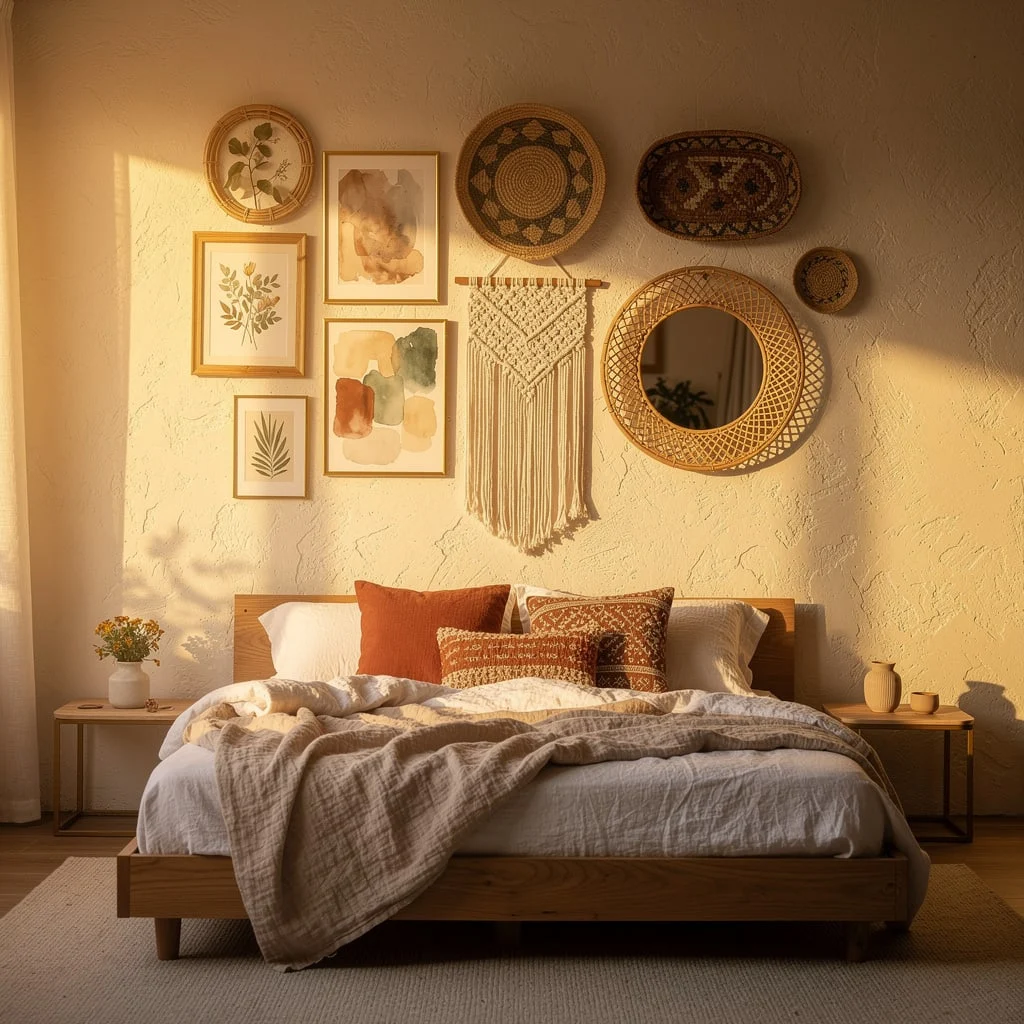
On the wall above a low timber platform bed, build a gallery arrangement that covers the full width of the headboard and extends from headboard height to within 30 cm of the ceiling. Mix the following: two framed botanical prints in different sizes, one abstract watercolour in a gold frame, one macramé panel hung from a wooden dowel, two or three woven wall baskets in different sizes and shapes, and one large rattan round mirror at the centre. Overlap some pieces slightly. Leave gaps between others.
The wall becomes the room’s artwork and the bed becomes the furniture that belongs in front of it.
The Maximalist Jewel Box
This is the bohemian bedroom that has decided comfort is maximalism’s strongest argument. Purple silk and embroidered velvet bedding. Layered cushions in every jewel tone. A carved wooden four-poster bed or a bed surrounded by hanging panels of printed chiffon and silk. Pierced tin Moroccan lanterns casting star patterns. A tapestry covering one full wall. A printed sheer at the window.
The logic is that every surface has something on it and everything on every surface belongs to the same colour world: jewel, gem, deep, saturated. Nothing is beige. Nothing is minimalist. Nothing is apologetic.
The Plant Corner Bedroom
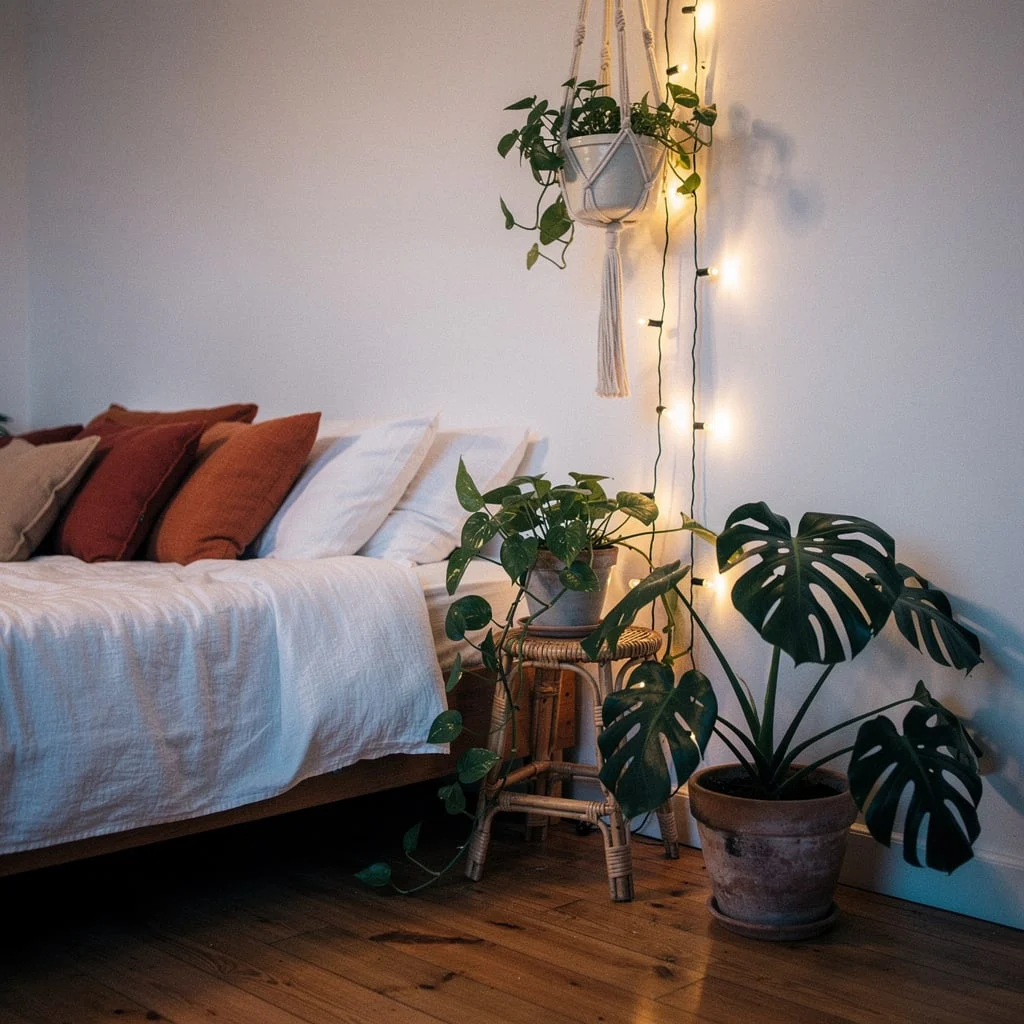
Rather than decorating the whole room, focus on one corner beside the bed and do it thoroughly. Install a macramé plant hanger at ceiling height with a pothos growing in a plain ceramic pot, long enough that the vine trails down the cord and onto the rattan side table below. Set a floor monstera in an unglazed terracotta pot beside the table. Drape a string of globe lights from the ceiling hook, letting the cord fall loosely through the corner.
In the morning, the plants are backlit by window light. At night, the globe lights illuminate the leaves from below. Two different rooms in the same corner.
The Mughal Canopy Bed
Source or commission a four-poster bed with deeply carved wooden posts and an ornate carved headboard. Drape deep purple silk panels from the top rail — generously cut so they puddle on the floor at each corner. Swag the canopy with embroidered or brocade fabric trimmed with beadwork or small bell fringe. Use richly embroidered silk pillow covers in jewel tones — teal, magenta, gold — layered across the bed. Place carved wood or painted ceramic lamps on ornate side tables.
This is the bohemian bedroom at its most opulent and its most architectural. The bed is not furniture. It is a room within a room with its own ceiling, its own walls, and its own light. Everything outside the canopy is secondary to the world inside it.
The Lattice Light Bedroom
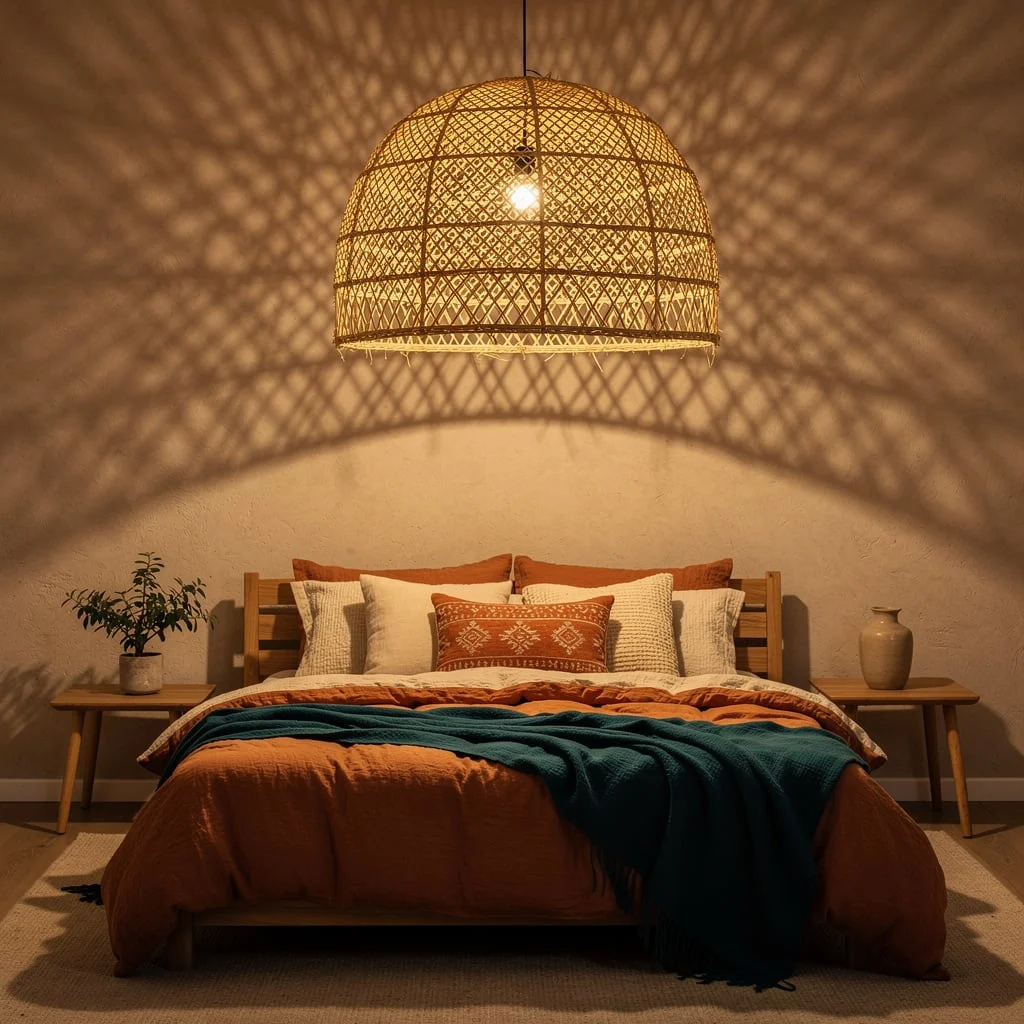
Buy the largest woven bamboo dome pendant you can find — aim for 70 cm in diameter minimum. Hang it low over the bed with an amber filament bulb inside. Dress the bed in rust linen bedding with white pillow cases, a teal throw draped across one corner, and one printed geometric lumbar pillow in the centre. Use plain low timber bedside tables. On one side, place a small ceramic pot with a stem of leaves. Leave the wall above the headboard plain plaster or a warm cream.
The pendant does all the design work in this room. The shadow pattern it casts at night makes a plain cream wall look like a silk screen print. Nothing else needs to compete.
The Two-Colour Split Bedroom
Paint one wall terracotta from floor to ceiling and paint the adjacent wall or the wall facing it in deep teal. Let the two walls meet in one corner. On the terracotta wall, hang rattan sunburst mirrors, framed botanical prints, and a small wall shelf with terracotta pots. On the teal wall, hang a pair of Moroccan-style star lanterns. Use a woven rattan or cane headboard on the bed. Dress the bed in mustard, teal, and print textiles.
The two-colour wall technique creates a room that looks like two different environments from different angles. Looking left is warm. Looking right is cool. Straight ahead is the window and the ocean if you have it.
The Ceiling Garden Bedroom
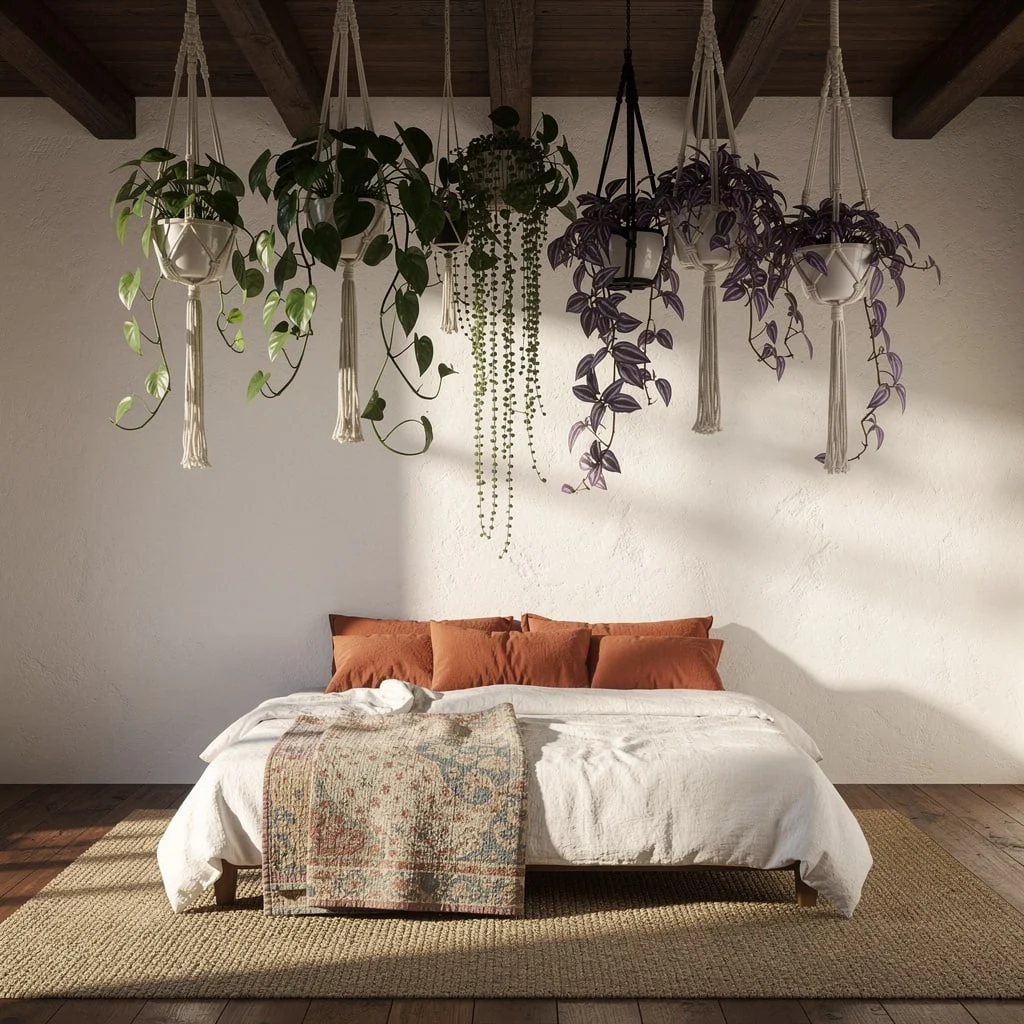
From the exposed timber ceiling beams of a room with either real or decorative rafters, hang five or six macramé plant hangers at staggered heights. Plant each with something different: pothos for draping length, string-of-pearls for fine texture, tradescantia for purple-green colour contrast. The hangers should vary between cream cotton and black cord so the ceiling reads as a curated arrangement rather than a repetition.
Keep everything below white and minimal — white linen, rust accent pillows, jute rug, low bed. The plants are the ceiling. Everything else is the ground.
The Tropical Dark Bedroom
Paint all walls in near-black or deep forest charcoal. Use a dramatic rattan bed frame with an elaborate geometric headboard pattern. Layer the bed with a black-and-white geometric print duvet, kilim and printed accent pillows, and a white sheepskin throw. Place a large areca palm or parlour palm in the corner so the green of the palm reads against the dark wall. Mount a rattan chandelier above the bed and a rattan sunburst mirror on one wall. Add a hand-bell curtain on the adjacent wall as a sound and texture element.
In this room, every light source — the chandelier glow, any lamp, even daylight through a window — reads as warm against the dark walls. The palms look tropical rather than domestic. The rattan against the dark wall looks collected rather than retail.
The Full Rattan Suite
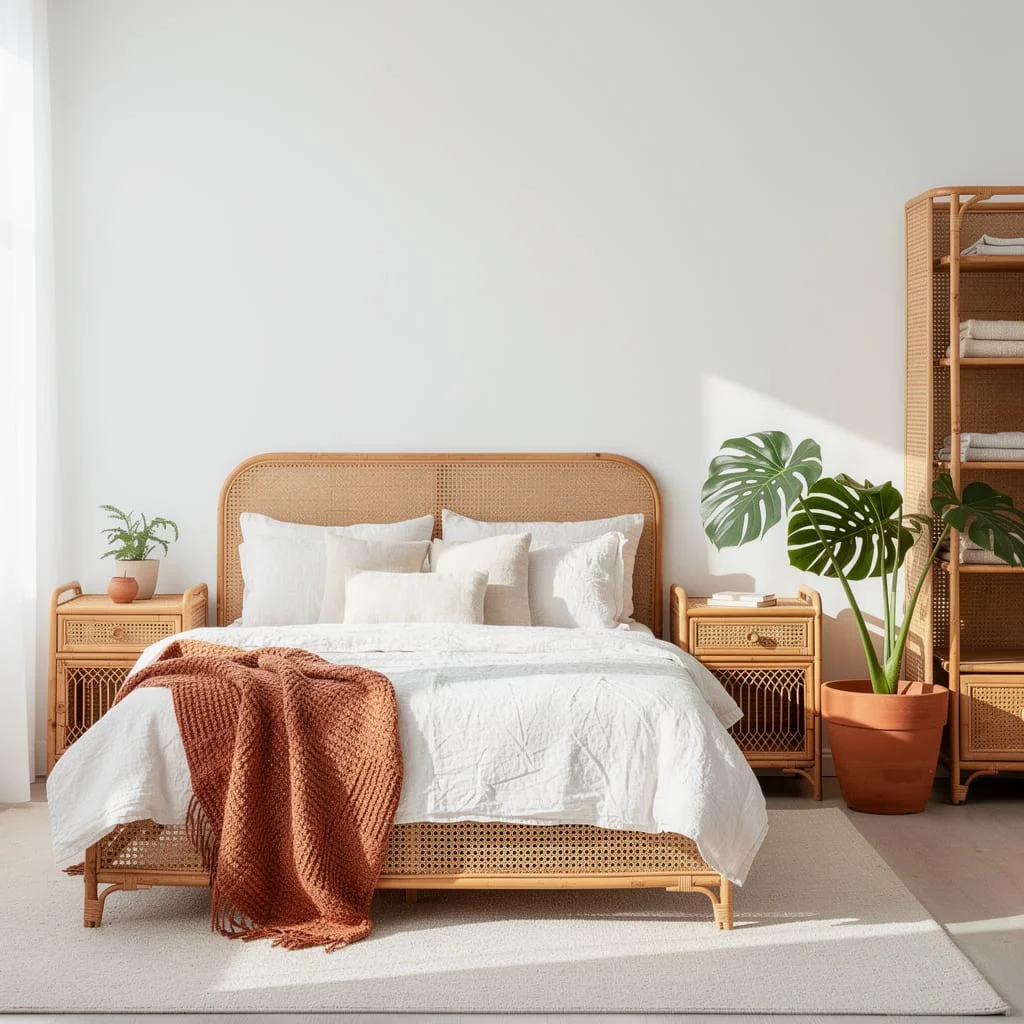
Commission or source a matching rattan bedroom suite: rattan cane-panel headboard, rattan cane nightstands, and a tall rattan cane shelving unit for one corner. Use white linen on the bed with a single rust knit throw draped over one bottom corner. Place a large monstera in an oversized terracotta pot beside the shelving unit. Keep the walls plain white and the floor covered with a simple wool loop rug.
The rattan suite is the room’s entire design argument. Everything else is supporting cast. This works because the material is consistent across every piece of furniture, which creates a visual unity that reads as deliberate even though nothing matches conventionally.
The Painted Arch Bedroom
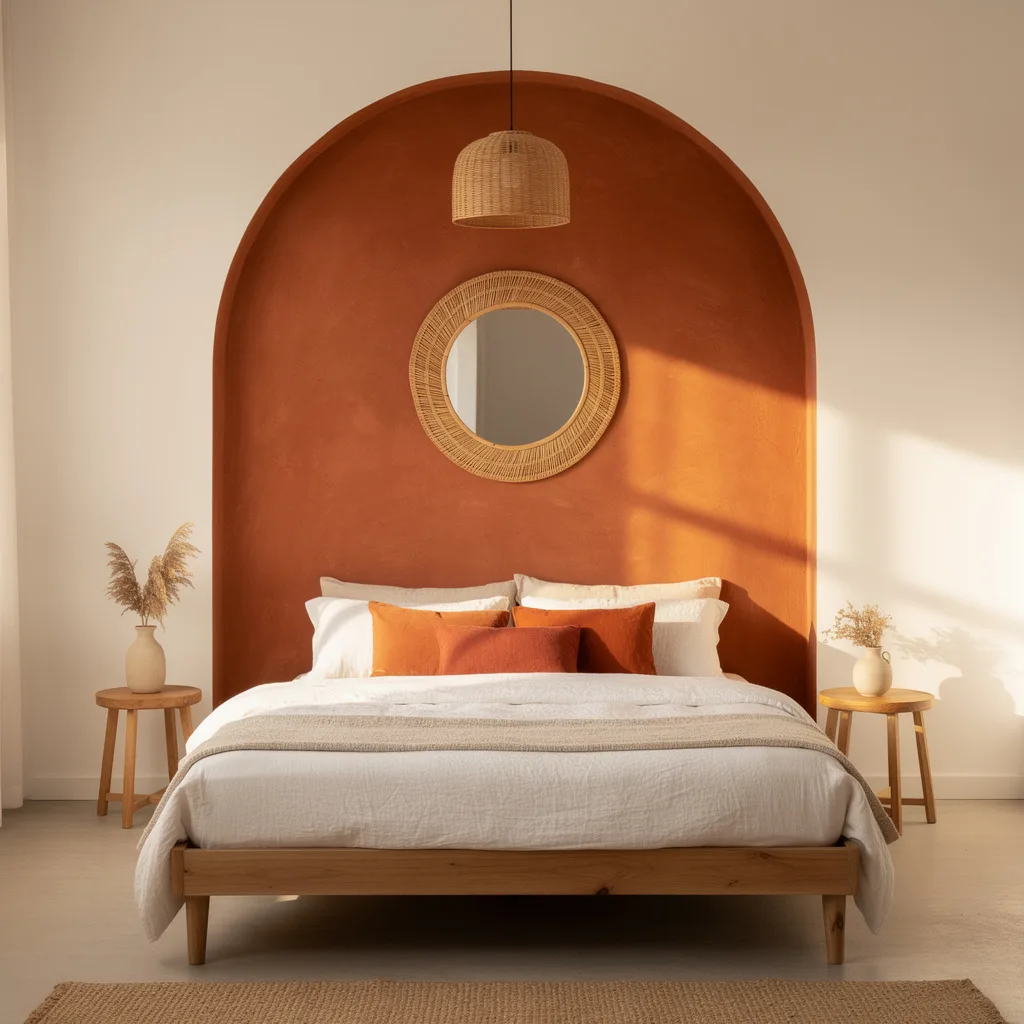
Paint a large terracotta arch directly behind the bed. The arch should span the full width of the mattress and rise to the ceiling or close to it. Inside the arch, hang a circular rattan mirror at upper-centre height. Use a simple low timber bed with no headboard so the arch functions as the headboard. Dress the bed in white linen with rust and terracotta pillow layers. Place two small round wooden stools as nightstands with slim ceramic vases of dried pampas grass on each.
The arch frames the bed, the mirror bounces light back into the room, and the whole wall reads as a destination rather than a backdrop.
The Candlelit Floor Retreat
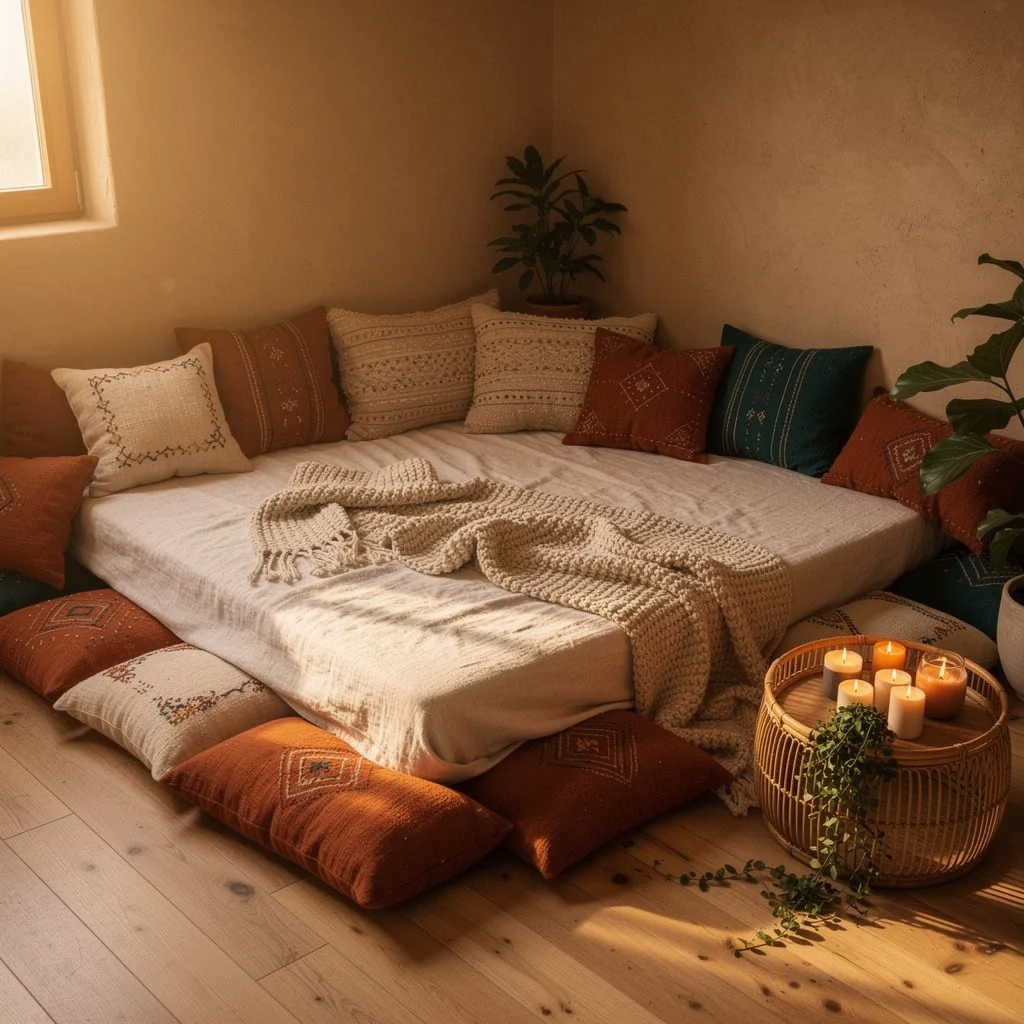
Remove conventional bed furniture from a spare room or meditation space. Place a queen-size mattress directly on the floor, covered in white linen gauze. Surround three sides with large floor cushions in rust linen, cream printed cotton, and teal linen. Drape a chunky handknit cream blanket across the centre. On a low bamboo tray to one side, arrange three or four pillar candles in graduated heights and let a small succulent trail over the tray edge.
The bamboo-walled room with a single small window and afternoon light filtering in turns this arrangement into a place people will choose to spend time in. The floor level is the point. Everything being at the same height as the sleeping surface makes the room feel wrapped rather than open.
The Vintage Trunk Bedroom
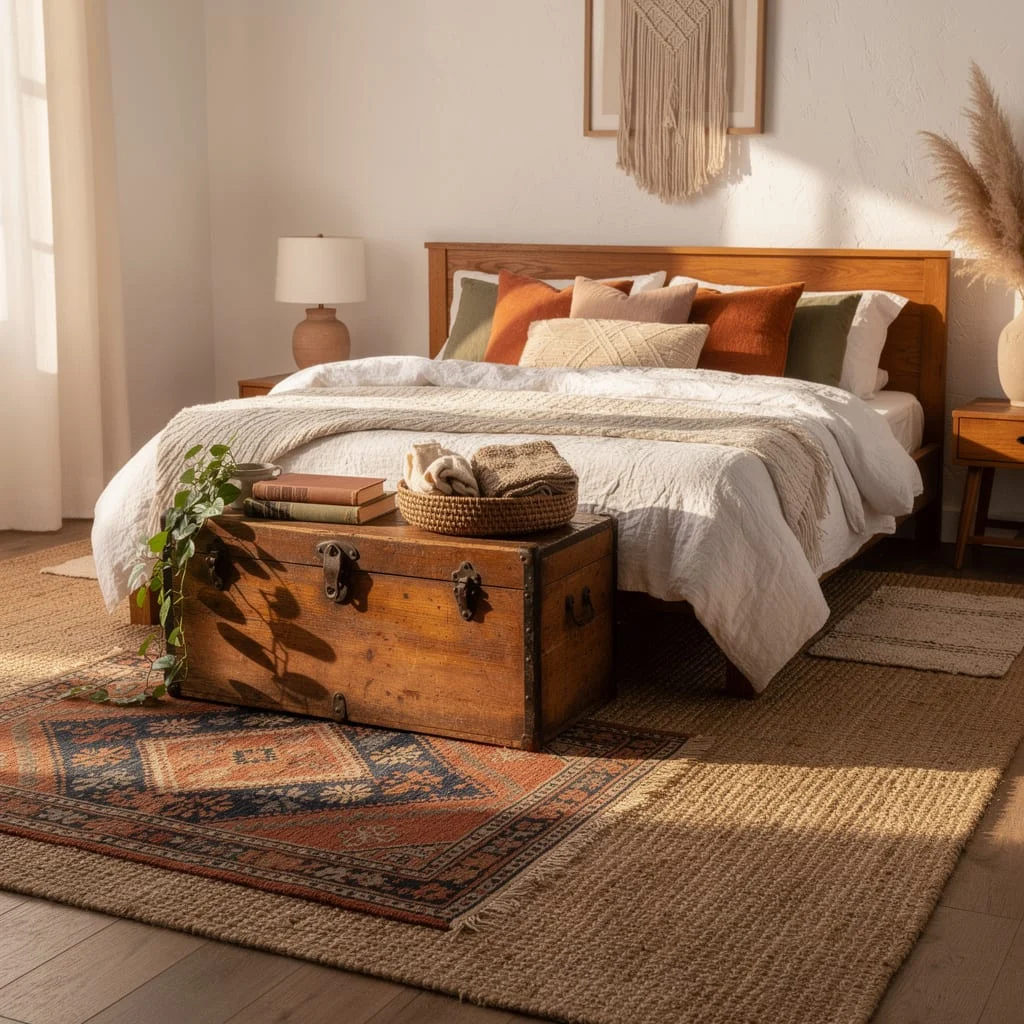
Use an old wooden travel trunk — the kind with metal hardware and visible age — as the footboard bench for the bed. Stack two or three books on top of it, a small woven basket, and one trailing plant. The bed itself uses white gauze linen and a mix of rust, sage, and terracotta pillows. A vintage Persian-style kilim rug lays below the bed and trunk. Behind the headboard, a macramé panel hangs from a wooden rod beside a thin framed art piece leaning against the wall.
The trunk anchors the foot of the bed visually and functions as storage. It is better-looking than any conventional bed bench and costs significantly less.
The Four-Poster Linen Canopy
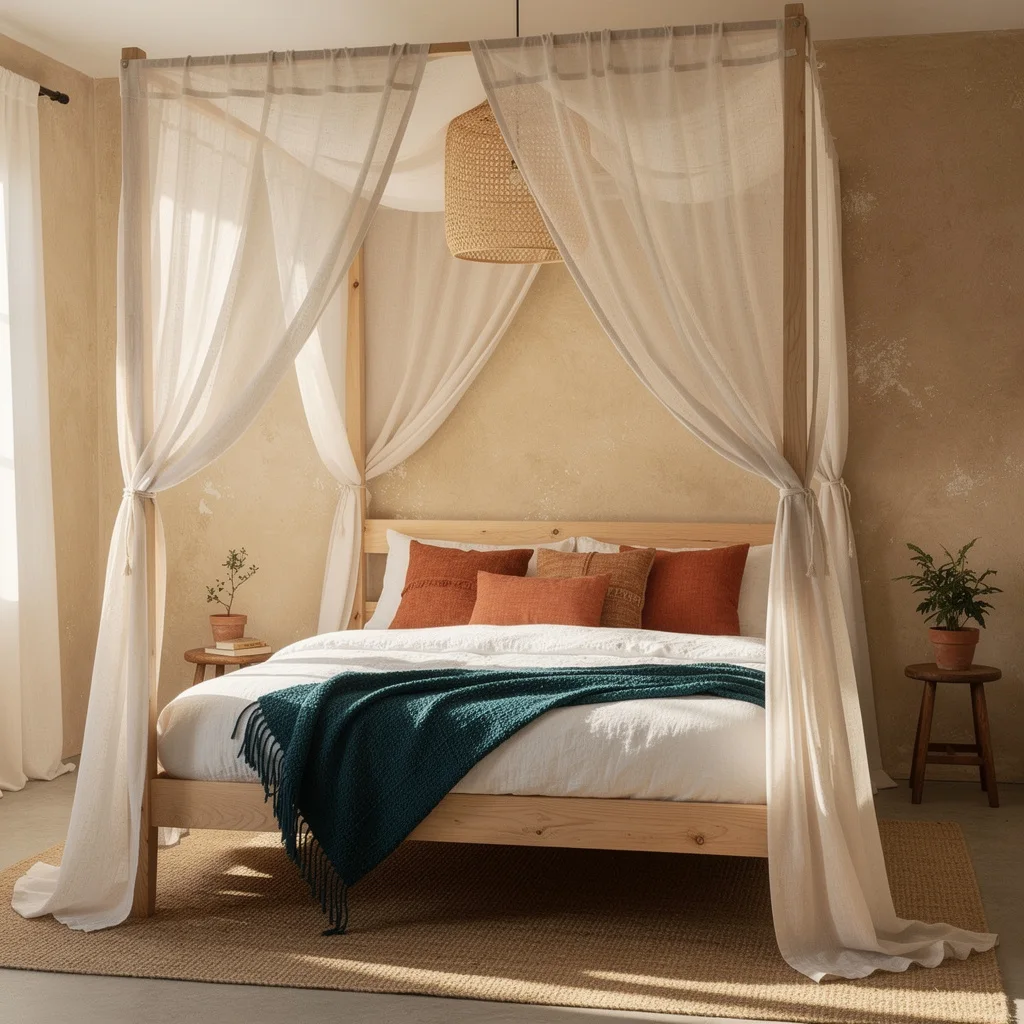
Build or source a simple four-poster bed frame in raw pine or light timber — the kind with minimal ornamentation and straight posts. Hang four panels of sheer white linen or cotton muslin from the top rail, one on each side, long enough to pool slightly on the floor. Tie each panel loosely to its post with a length of cream cotton ribbon.
Inside the canopy, use white linen bedding with rust cotton pillowcases. Drape a teal knit throw across the bed. On either side, use simple round wooden stools as nightstands with a single terracotta pot and a small plant. Above the canopy, let a small rattan pendant hang at the centre.
The canopy creates a room within the room. The effect at night, with a warm light inside the linen walls, is of a lit lantern.
The Dried Botanical Headboard Wall
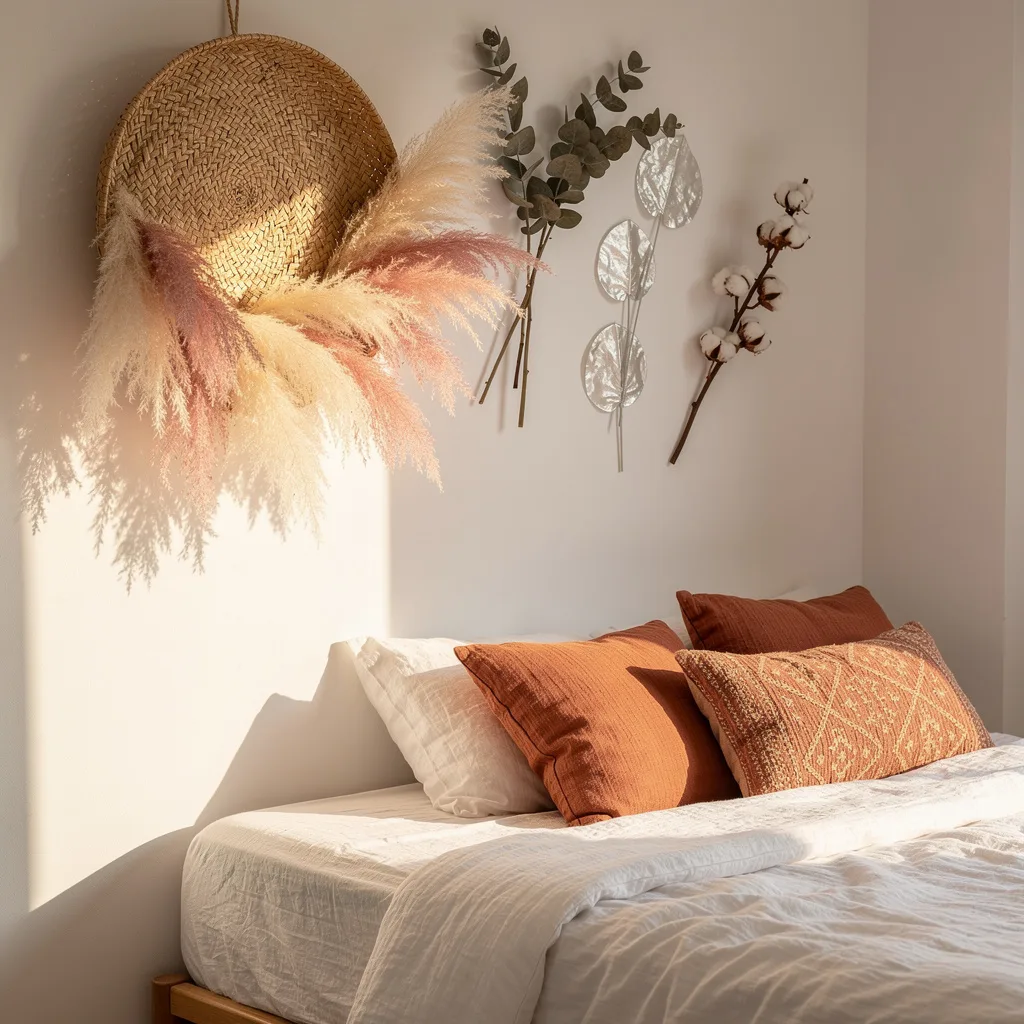
Instead of art or macramé above the headboard, use dried botanicals pinned or hooked directly to the wall. A large woven straw hat hung flat at upper left. Beside it, three stems of blush pampas grass in a loose arrangement. Further right, a branch of dried eucalyptus stems, a spray of lunaria seed pods, and one cotton stem with its bolls intact. Leave deliberate space between each piece so the arrangement reads as sparse and curated rather than busy.
The bed below has white linen and rust linen pillowcases. No printed cushions are needed. The wall above is the pattern. The wall below is quiet.
The Living Plant Wall Bedroom
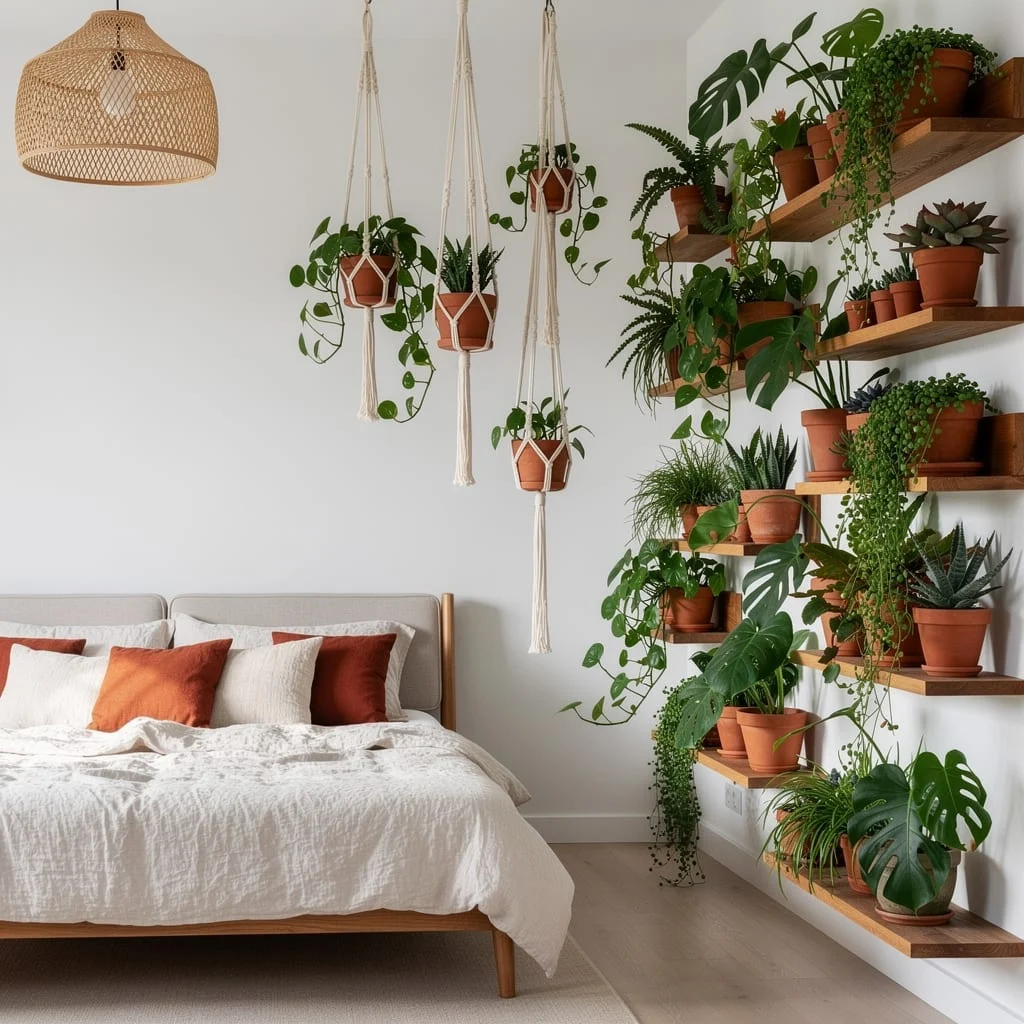
Mount seven or eight floating oak shelves in a staggered arrangement on one bedroom wall, rising from counter height to near the ceiling. Populate every shelf with terracotta pots: monstera on the lower shelves where the leaves have room to spread, string-of-pearls and ferns on the middle shelves so they trail over the edges, succulents and small cactus in a cluster on the top shelf. Supplement with two or three macramé hangers in front of the shelves at different heights.
The plant wall becomes a living installation that changes with the seasons as plants grow, trail, and need repotting. Hang a rattan dome pendant in front of the wall to complete the garden effect.
The Blue and Rust Layered Bed
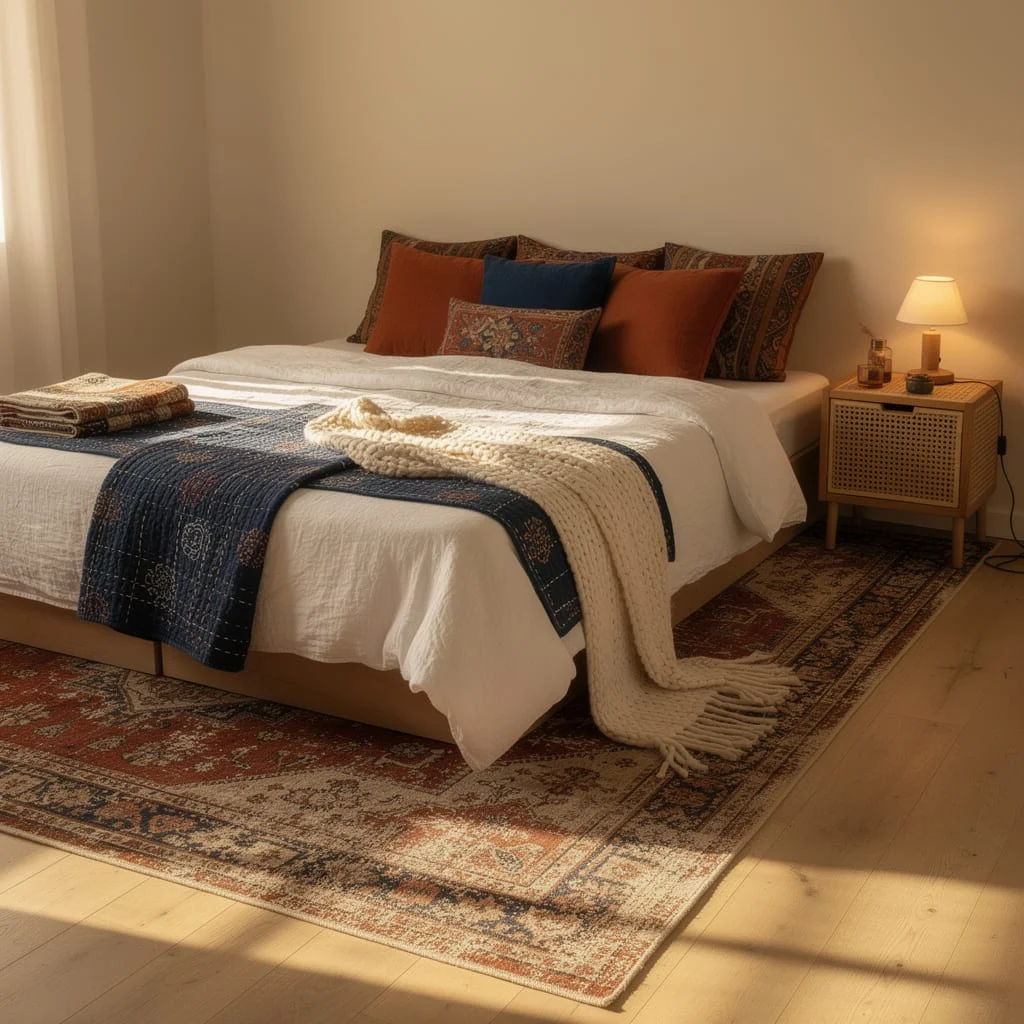
On a low platform bed or simple divan base, use white linen bedding as the foundation. Layer a navy blue block-print kantha quilt — the hand-stitched running stitch visible across the surface — loosely across the bed, draped off one side. Fold a cream chunky-knit throw across the top. Arrange pillows at the back in navy block-print shams matching the quilt, with rust and printed accent pillows layered in front. Keep the nightstand simple: a cane-panel bedside cabinet with a warm lamp, a small glass bottle, and a single short candle.
The navy and rust combination is bold without being loud. The kantha running stitch adds a craft dimension to the bed that makes the textile look considered rather than purchased.
The Dream Catcher Headboard
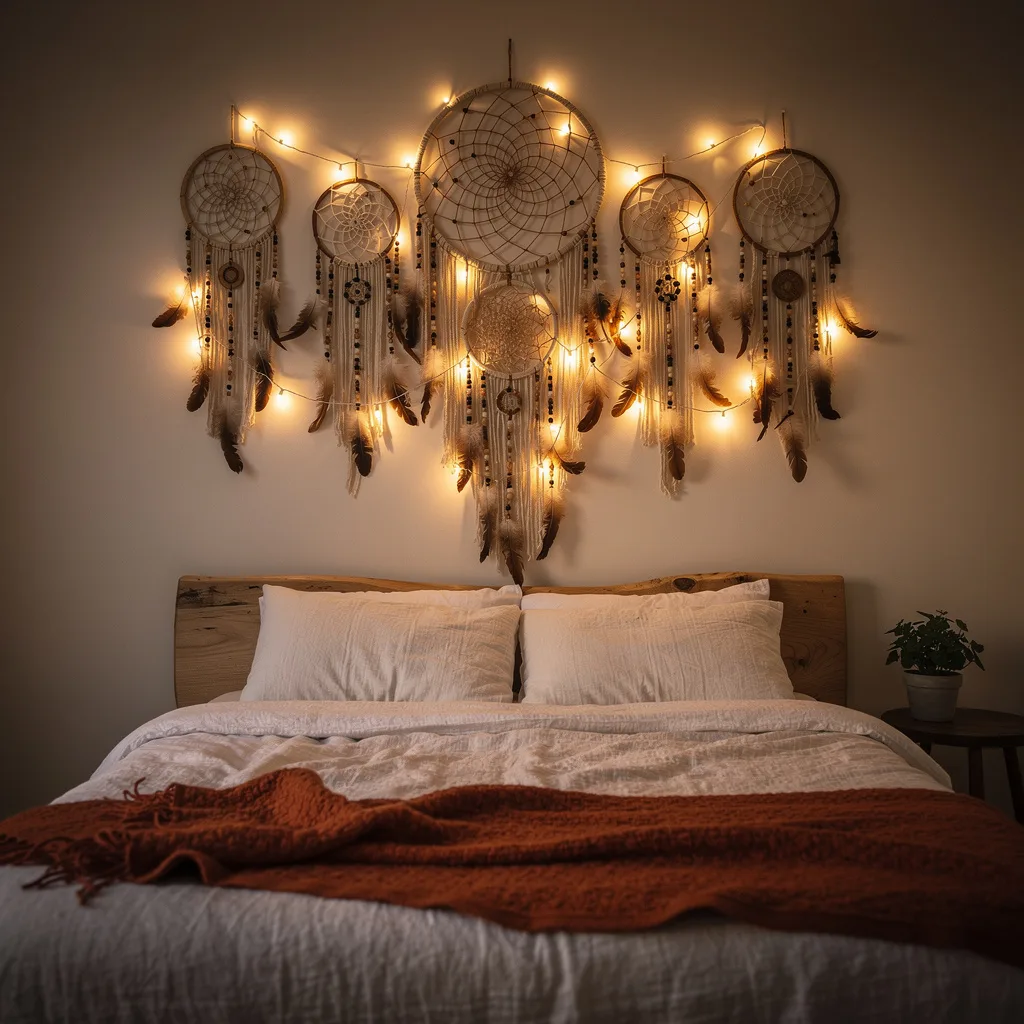
Collect five dream catchers in graduating sizes — one large central piece, two medium, two small — all in natural cotton, cream cord, and earth-tone beads with feathers in brown and cream. Pin them to the wall above the headboard in a spread arrangement with the largest at the centre. Weave a string of globe or fairy lights through and across the arrangement, draped loosely enough to look organic.
On the bed below, use plain white linen and a single rust knit throw. Use a live-edge timber slab as the headboard. One small plant on the nightstand.
The dream catcher wall lit at night is a composition that looks nothing like any other bedroom wall treatment. At full globe-light intensity it is festive. Dimmed to minimal, it is intimate and almost campfire-adjacent in mood.
The Indigo Block-Print Bed
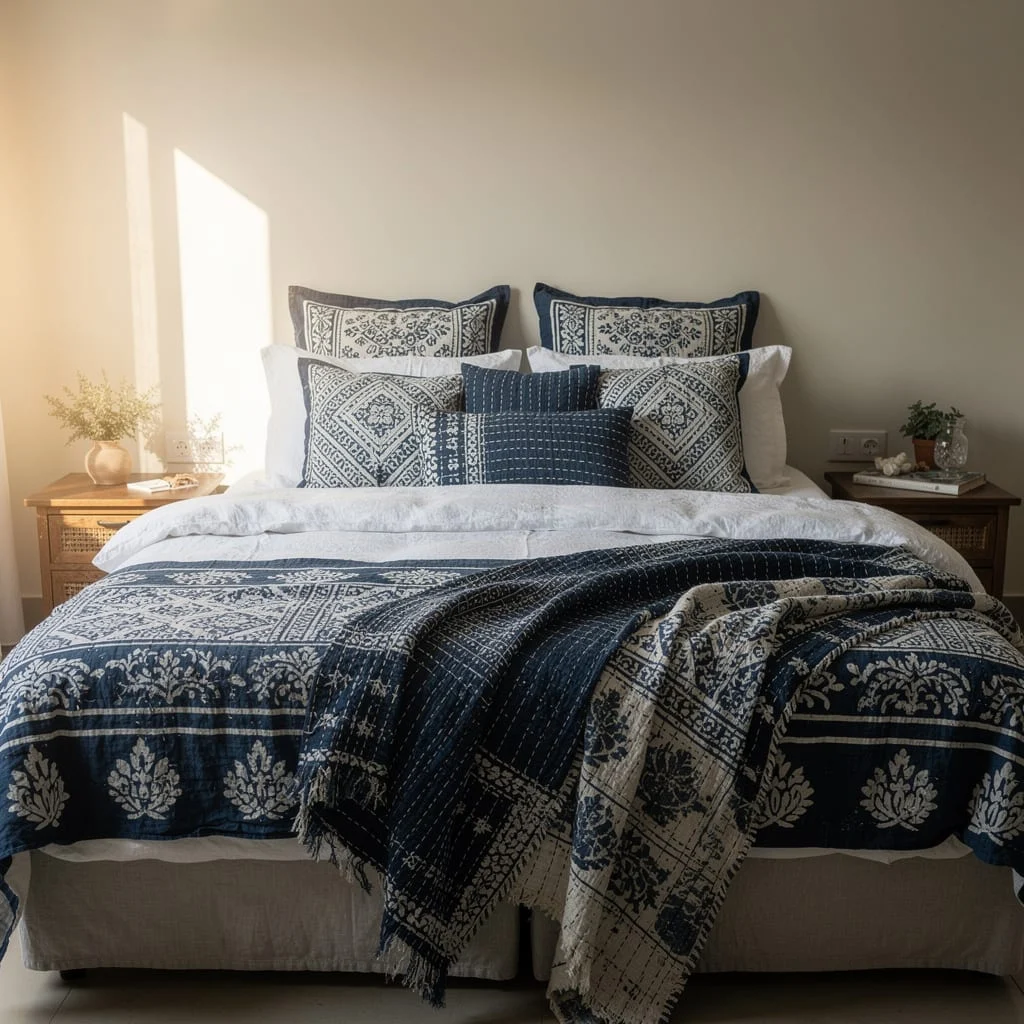
Dress the bed entirely in indigo block-print textiles — kantha quilt, pillow shams, and a bandana-style print throw. Use navy block-print pillow shams at the back, a printed geometric accent lumbar at the front, and the kantha quilt laid loosely across the lower half of the bed in the manner of someone who got up quickly and didn’t quite straighten it.
On the wooden nightstands, place a small white ceramic vase with dried gypsophila, a stacked book or two, and a low-wattage lamp. White plaster walls and warm afternoon light from the window do the rest.
The Macramé Statement Bedroom
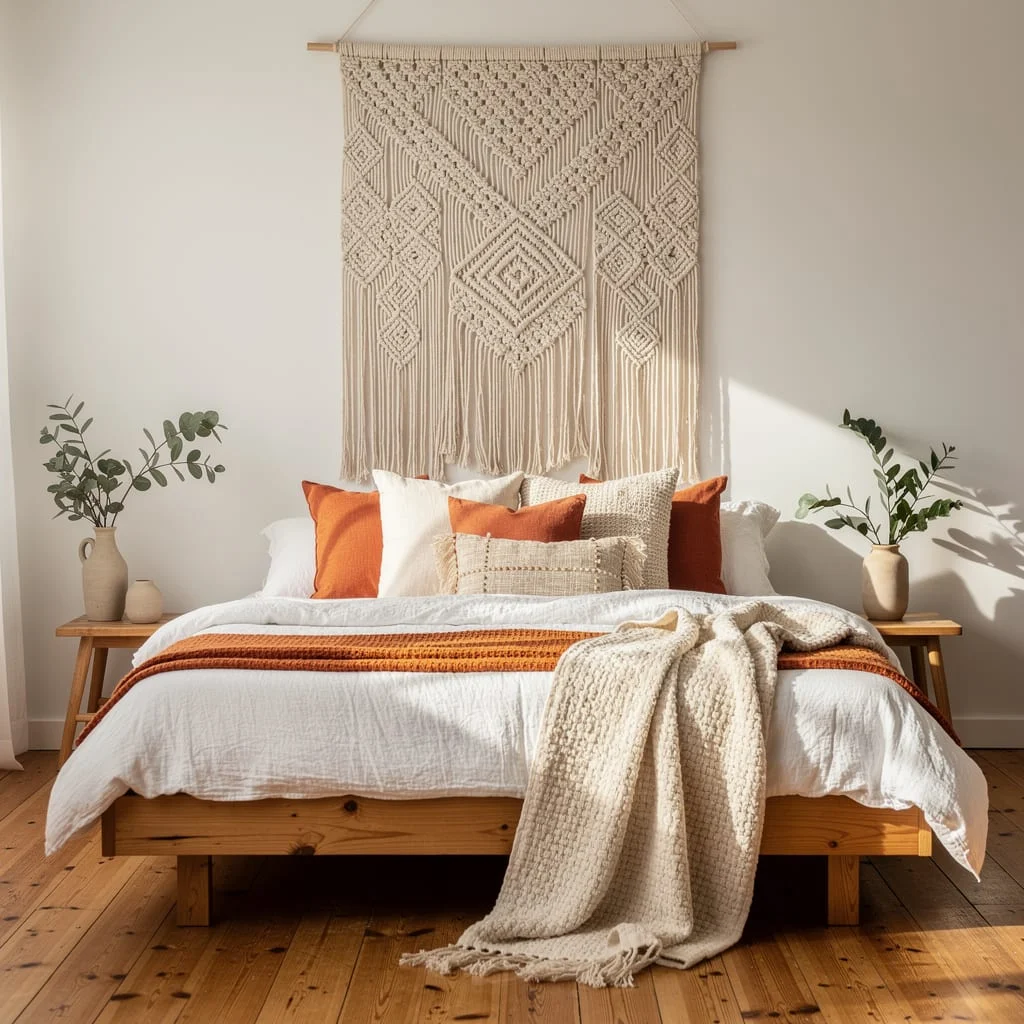
On a plain white wall above a low timber platform bed, hang a single large macramé panel — the kind with a full-width diamond lattice pattern and a generous fringe section beneath. The panel should be at least 80 cm wide and tall enough that the top sits just below the ceiling. Use a simple dowel rod for hanging.
Dress the bed in white crinkle linen with rust velvet accent pillows and a waffle-weave cream throw draped over one bottom corner. On either side, place shallow wooden bench-style nightstands with white ceramic vases of eucalyptus stems.
The macramé is the entire design of this room. It doesn’t need a companion. It needs white walls and enough daylight to show its texture clearly.
The Bedroom You’ll Actually Want to Be In
None of these bedrooms are easy. Some are expensive. Some are very personal. Some will look strange for several weeks while they are being assembled and before they become coherent.
That is fine. A bedroom that looks like it arrived all at once will feel like it arrived all at once, and rooms that feel like deliveries are not rooms that feel like homes.
The bedrooms in this post took time. A rug found at a car boot sale. A kilim bought from a photograph online that looked completely different in person and was better for it. A pendant that arrived two sizes smaller than expected and ended up being hung in the bathroom and replaced by something larger and more correct. A plant that died and was replaced by a plant that was more interesting.
The bohemian bedroom is built slowly, on purpose, from real decisions. That is what makes it the room you most want to come home to.