
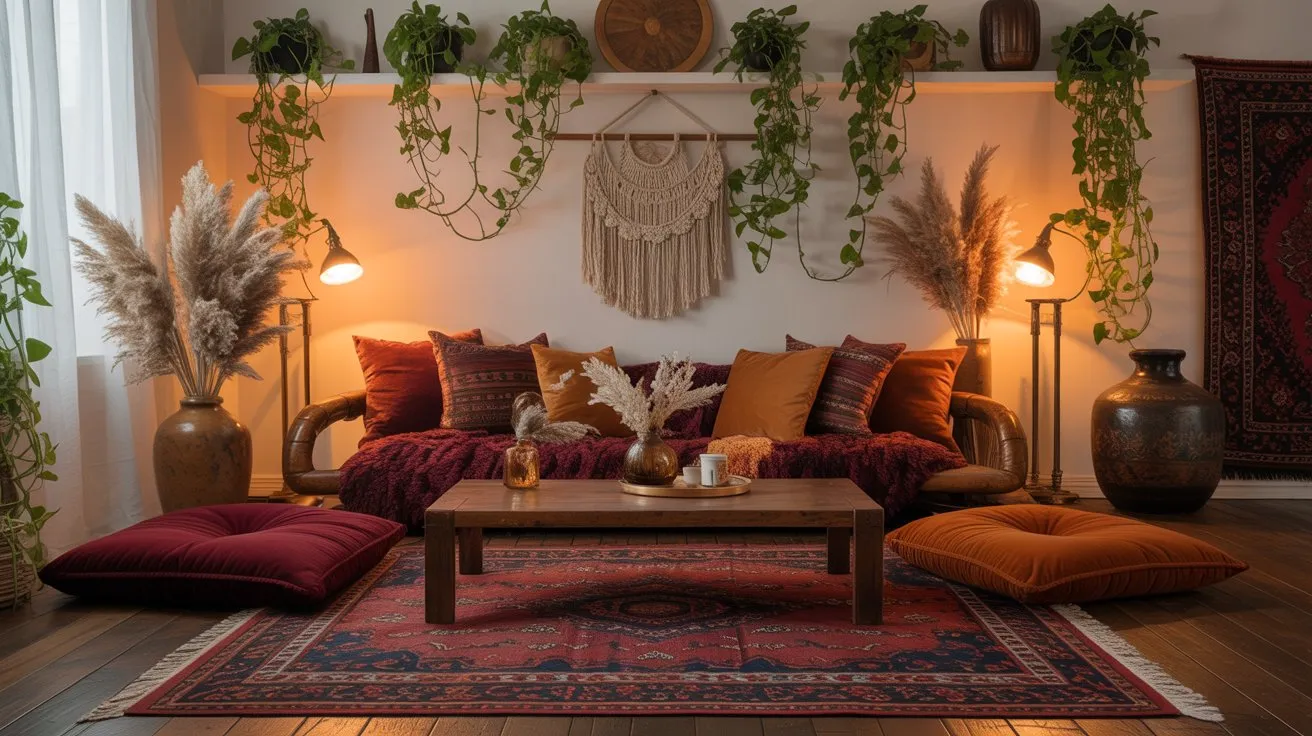
Everyone thinks they understand bohemian style until they try to do it and end up with a room that looks like a market stall exploded near a sofa.
The problem is not taste. The problem is that bohemian style is taught backwards. People start with the objects — the macramé, the kilim, the hanging plants — and hope the result feels intentional. It rarely does. You don’t build a bohemian interior by accumulating things. You build it by understanding the principles those things are in service of.
This post is about the principles. The images are proof they work across rooms, styles, colour palettes, and budgets. Once you see the logic, you’ll stop decorating by feel and start making actual decisions.
Colour Is a Commitment, Not a Suggestion
The bohemian interiors that photograph well and feel good to be inside share one trait: colour was chosen deliberately and applied without apology. Not accent colour. Not a feature wall. Colour that lives in the room.
Full Saturation or Go Home
There is a version of bohemian style that uses colour at full intensity — teal walls painted floor to ceiling, orange and cobalt cabinets in a kitchen, a living room with peacock blue planked walls hung from floor to ceiling with rugs and art and textiles until the colour is almost architectural. This version requires nerve. It also produces rooms that are genuinely unlike anything else and impossible to forget.
The logic that makes it work is not chaos — it is pattern repetition. In a room where the walls are saturated teal, every other warm tone naturally pops against it. The amber pendant glows. The orange velvet pillow vibrates. The warm wood floor reads as gold. The colour is doing compositional work that neutral walls cannot do because neutral walls return nothing.
The Terracotta Principle
Terracotta is the pivot colour of bohemian design. Not because it is fashionable — though it is — but because it behaves well with almost everything. It connects to natural materials without being beige. It warms cream without overpowering it. Against deep green it reads as earthy. Against teal it reads as warm. Against white it reads as sunset.
A terracotta wall with a macramé panel, a rattan mirror, two large monstera plants, and a cream sofa with rust pillows is a complete room. Nothing is fighting. Every element is supporting every other element. The wall colour is the decision that makes all the other decisions easier.
When to Use Dark
Dark rooms make people nervous. They shouldn’t. A room with a near-black or very deep charcoal wall and warm candlelight, jewel-toned velvet pillows, a hammered gold sunburst mirror, large pampas plumes in terracotta vases, and a vintage kilim rug is among the most visually arresting rooms possible. The darkness is not oppressive. It is a background that makes everything in front of it luminous.
The rule with dark rooms is that the light sources must be warm and plentiful. Candles on a coffee table. Amber glass votives. A filament bulb. Cold overhead light in a dark room kills the effect entirely.
Bohemian Interior Ideas
The Maximum Colour Kitchen
Paint every cabinet a different colour — cobalt, teal, magenta, mustard, rust — using aged or distressed paint finishes so the surfaces read as worn rather than freshly painted. Source a full patchwork backsplash of small individually hand-painted tiles in the widest possible range of colours and patterns. Use a matching patchwork tile on the floor. The range hood should be dark aged metal — patinated copper or darkened steel — to ground the room and prevent it from reading as chaotic.
The key to this room is that every cabinet is treated as a drawer or door, not as a canvas. The colour is applied to functional objects, not decorative ones, which keeps the room feeling like a kitchen rather than an art installation.
The Boho Bathroom
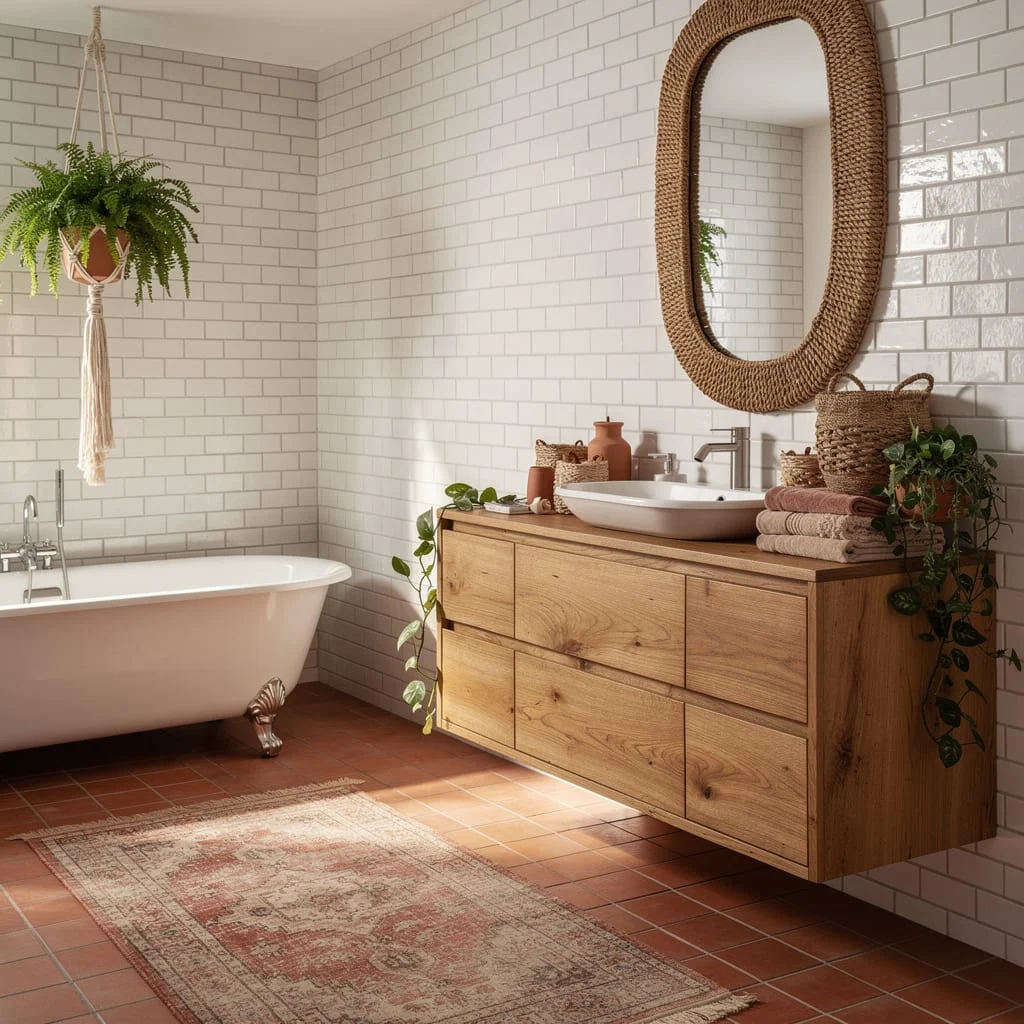
Lay unglazed terracotta square tiles on the floor — the reddish-brown tile that absorbs rather than reflects light. Install white subway tile on the walls floor to ceiling. Choose a floating vanity in natural oak with visible grain and knots. Mount a large rattan-framed oval mirror above the sink. Add a vessel sink in plain white ceramic. Hang a fern in a macramé hanger near the bathtub. Place a standalone clawfoot tub in the main space. Add a vintage Turkish or Persian-style rug between the tub and vanity. Keep accessories simple: a terracotta soap dish, a woven seagrass basket, dusty rose cotton towels. The contrast between the clean white tiles and the warm natural wood and rattan is everything. The vintage rug on the terracotta floor is unexpected in the best way.
The Ikat Hallway
Paper a hallway — particularly a staircase hallway — in a bold ikat-inspired wallpaper in crimson and cream. Hang a vintage kilim runner on the floor. Add a traditional wooden daybed or settee against one wall with a printed cushion. On the stair treads, use a patterned stair runner in a contrasting but related pattern. Hang a pierced brass lantern from the ceiling. Allow the hallway to do more design work than it is conventionally expected to do.
A hallway is the first impression of a house. In most houses it apologises for existing. In a bohemian house it announces intent.
The Double Rug Living Room
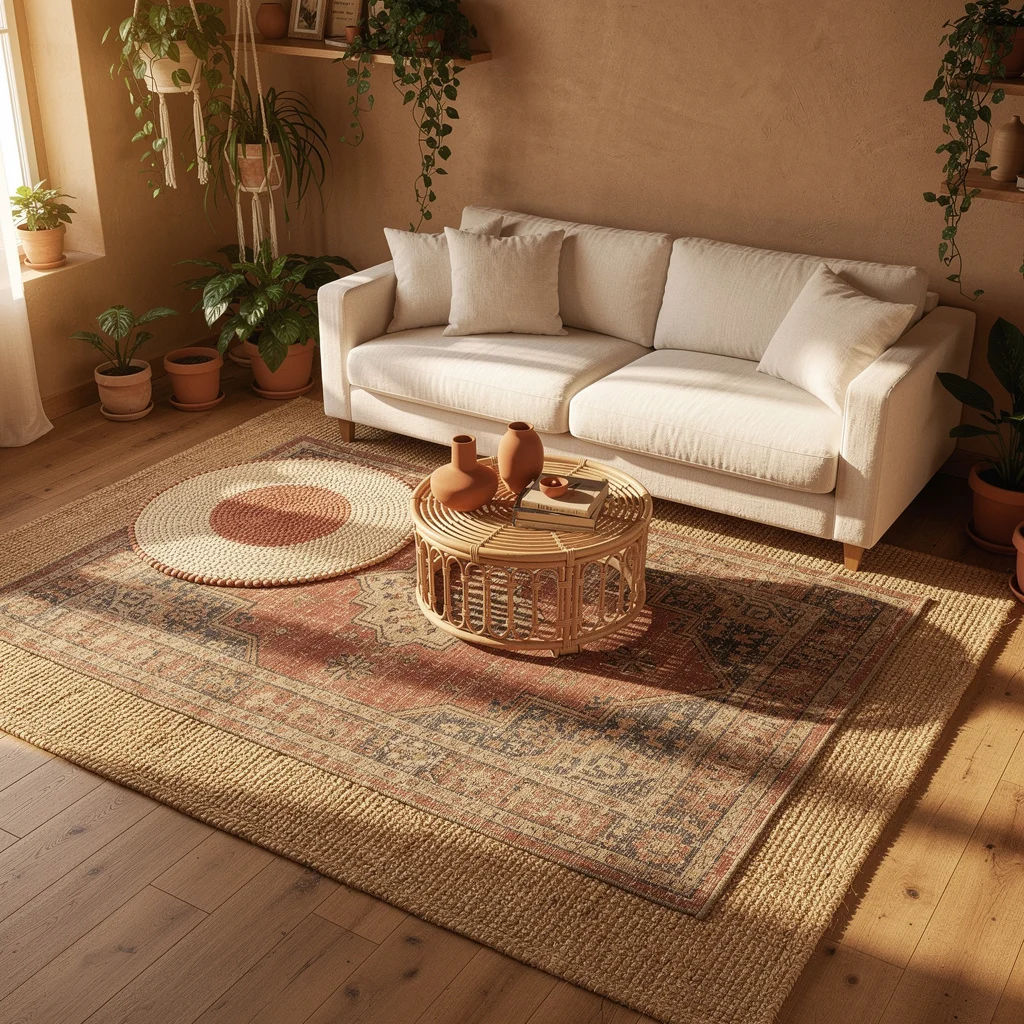
In a sun-filled room with sand-coloured plaster walls and light oak floors, lay a large natural jute rug as the base layer. On top of it, centre a vintage-style medallion rug in rust, ochre, and blue. Place a round woven rattan coffee table at the centre. On it, arrange two terracotta vases of different heights and a small stack of books. Put a cream linen sofa behind the rug, with terracotta pots of trailing plants on both sides. Add a small round woven rug asymmetrically within the main arrangement for a third layer of texture. The double — or triple — rug technique is the most accessible bohemian move in this entire post. It costs less than repainting, takes thirty minutes, and changes a room’s character more than almost any other intervention.
The Floor Living Room
Remove or sideline conventional sofa seating entirely. Build the living room around the floor. Layer a large Beni Ourain or similar textured white rug as the base. Add a reclaimed timber pallet or low vintage trunk as the coffee table. Pile it with large floor cushions in kilim and printed cotton. Layer velvet and tapestry floor cushions around the edges. Scatter Moroccan leather poufs and round velvet cushions throughout. Add a hanging plant overhead, a macramé wall hanging behind the seating area, and candles on the coffee table.
A room designed for floor living communicates that the people who live there actually spend time on the ground — reading, talking, sitting with their children, eating. It is a radical act of comfort.
The Terracotta Corner Moment
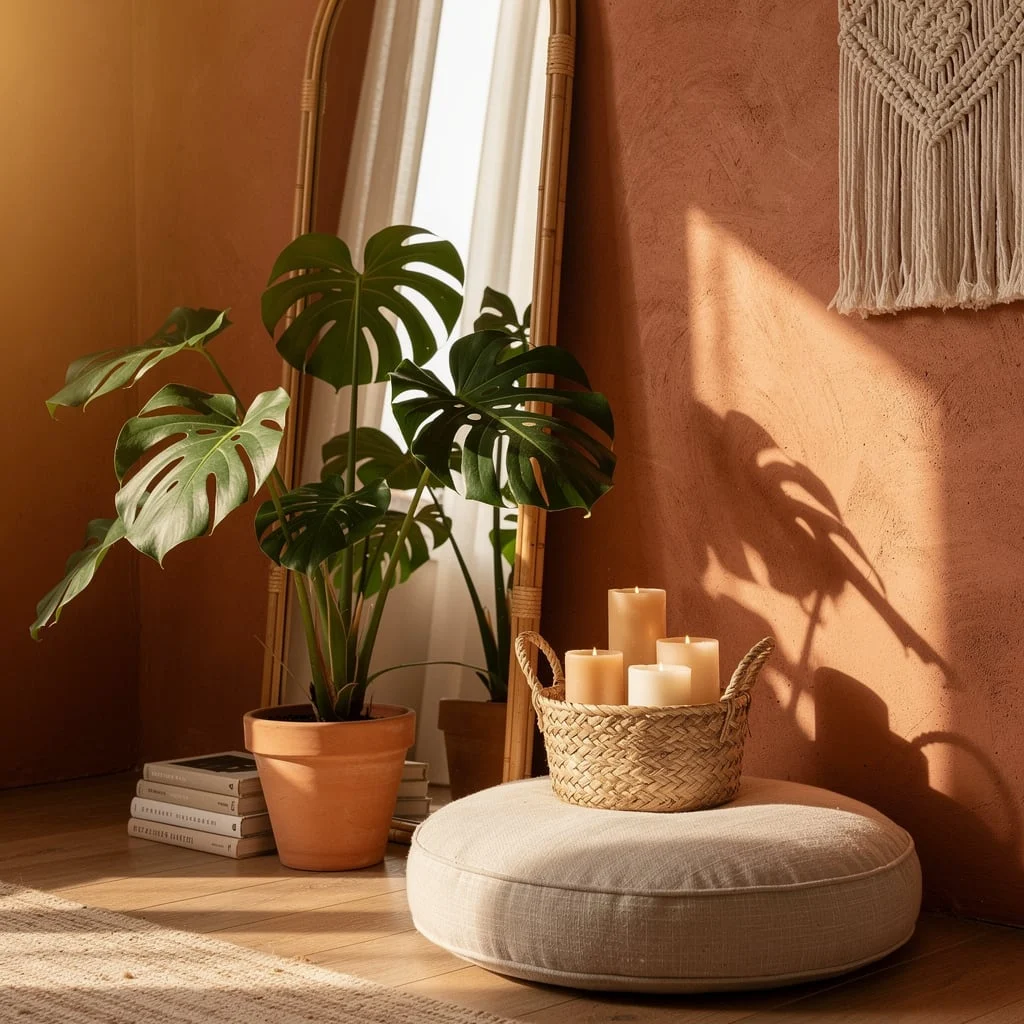
Take one corner of a room and treat it as a complete composition. Paint the wall terracotta. Lean a full-length rattan-framed mirror against it. Place a large monstera in a terracotta pot to one side. Stack books on the floor beside the plant pot. Place a low round floor cushion in front and set a woven seagrass basket filled with pillar candles on it. Hang a small macramé panel in the upper corner of the same wall. Nothing in this corner costs very much. Everything in it is in conversation with everything else. The corner becomes the most photographed, most often noticed part of the room.
The Blue Wall Living Room
Paint a living room or studio apartment in a deep petrol or peacock teal from baseboard to ceiling — walls, window trim, everything. Hang textiles, vintage art, and collected objects directly on the wall in an arrangement that grows organically over time. Use a patterned sofa in warm tones — ikat, kilim-style, or block print. Layer floor cushions and small poufs around a low wicker coffee table. Add two large tropical plants in the corners. Hang a Moroccan-style pierced metal or fabric lantern overhead.
The teal wall absorbs the colour of everything in the room and returns it warmer. The room works because the wall is not competing with the objects — it is the container they live inside.
The Macramé and Velvet Living Room
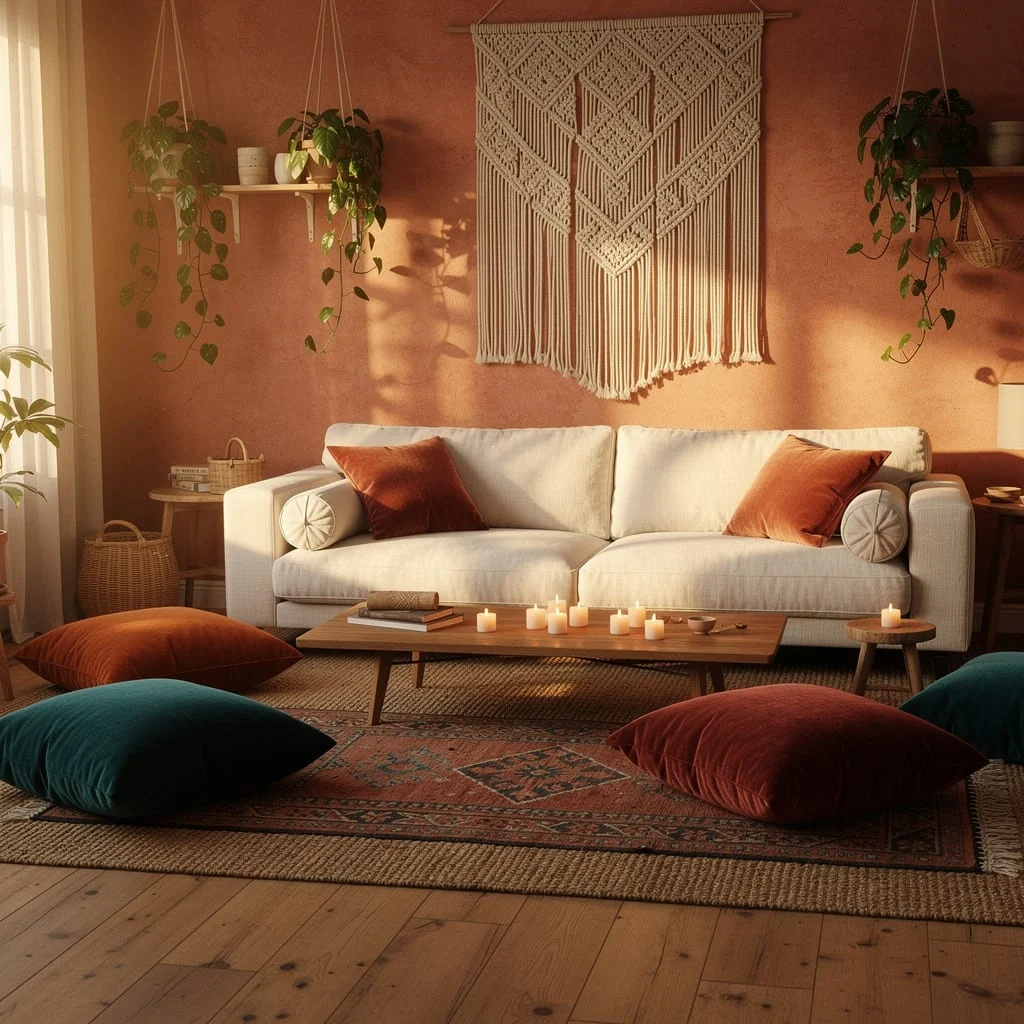
Paint the walls in a warm terracotta or burnt sienna plaster finish — either genuine limewash or a limewash-effect paint applied with a sponge. Centre a large-scale macramé wall hanging — at least 80 cm wide and generously long — above the sofa. Use a cream linen sofa with rust velvet cushions. Add hanging pothos plants to either side in ceramic or rattan wall planters. Place large velvet floor cushions on the kilim rug in front of the coffee table — deep teal and burgundy. Line the coffee table with small pillar candles. This room is warm without being dark. The plaster-effect walls absorb light softly. The macramé adds texture at wall height. The velvet floor cushions extend the seating plane downward and outward. It works as a room for living in.
The Bamboo Balcony Room
On a small balcony or enclosed porch, line the walls with natural bamboo roll blinds. Hang a cotton macramé hammock from posts or ceiling brackets. Add a rattan armchair with a macramé cushion. Lay a round jute rug underneath. Cluster terracotta pots with pothos and ficus at each corner. Hang macramé wall art and a plant hanger at different heights on the bamboo wall. String Edison bulbs overhead.
The bamboo backdrop unifies the whole space. Everything in this room is either natural fibre or plant, and the consistency of material is what makes the small space feel considered rather than cramped.
The Reading Nook Alcove
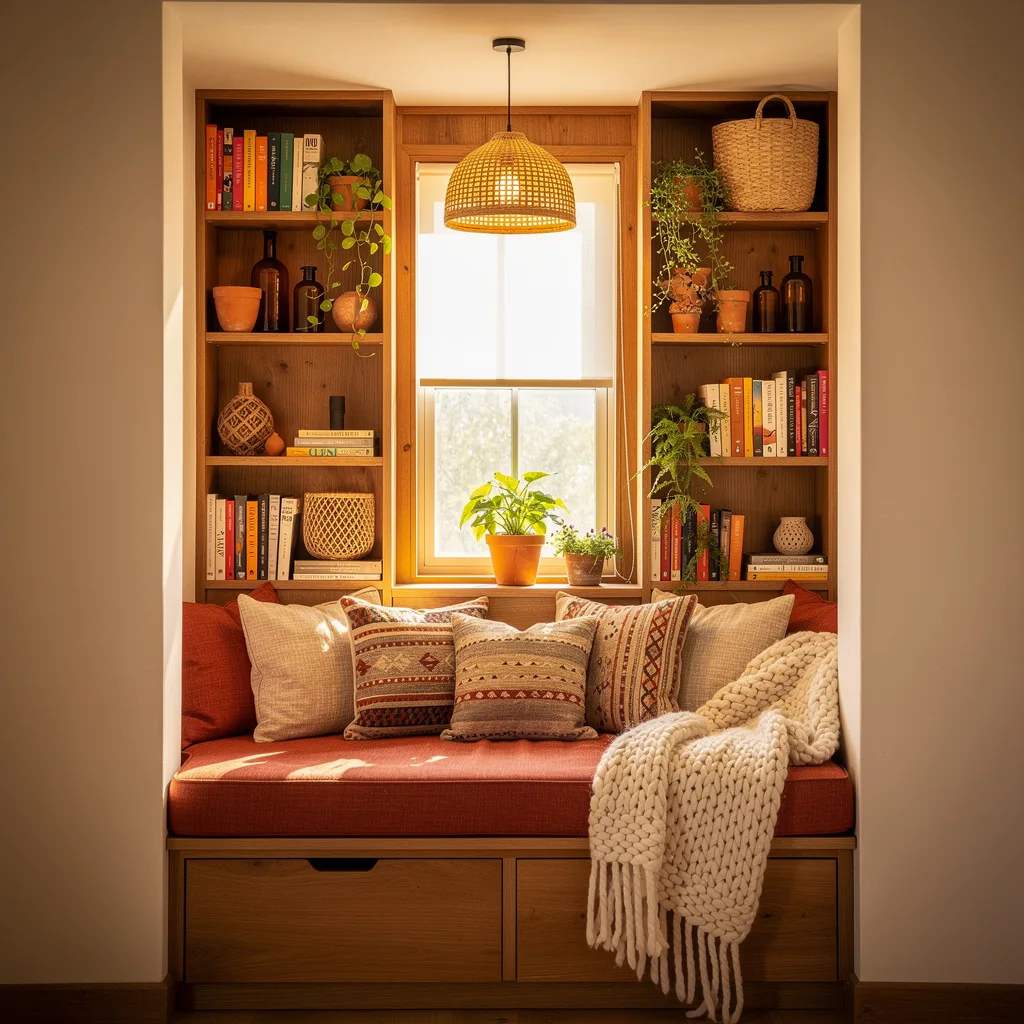
Build a recessed window seat with storage drawers underneath. Fit it with a thick cushion in deep rust or terracotta fabric. Flank the window with full-height bookshelves in solid oak, and populate them with a combination of books, small terracotta pots with trailing plants, amber glass bottles, woven baskets, and small ceramic objects. Hang a woven rattan dome pendant above the nook. Drape a chunky arm-knit cream throw over one end of the cushion. The nook should feel enclosed without being closed. The books and plants on either side create walls without blocking light from the window behind. The pendant brings the ceiling plane down to a human scale.
The Boho Study Nook
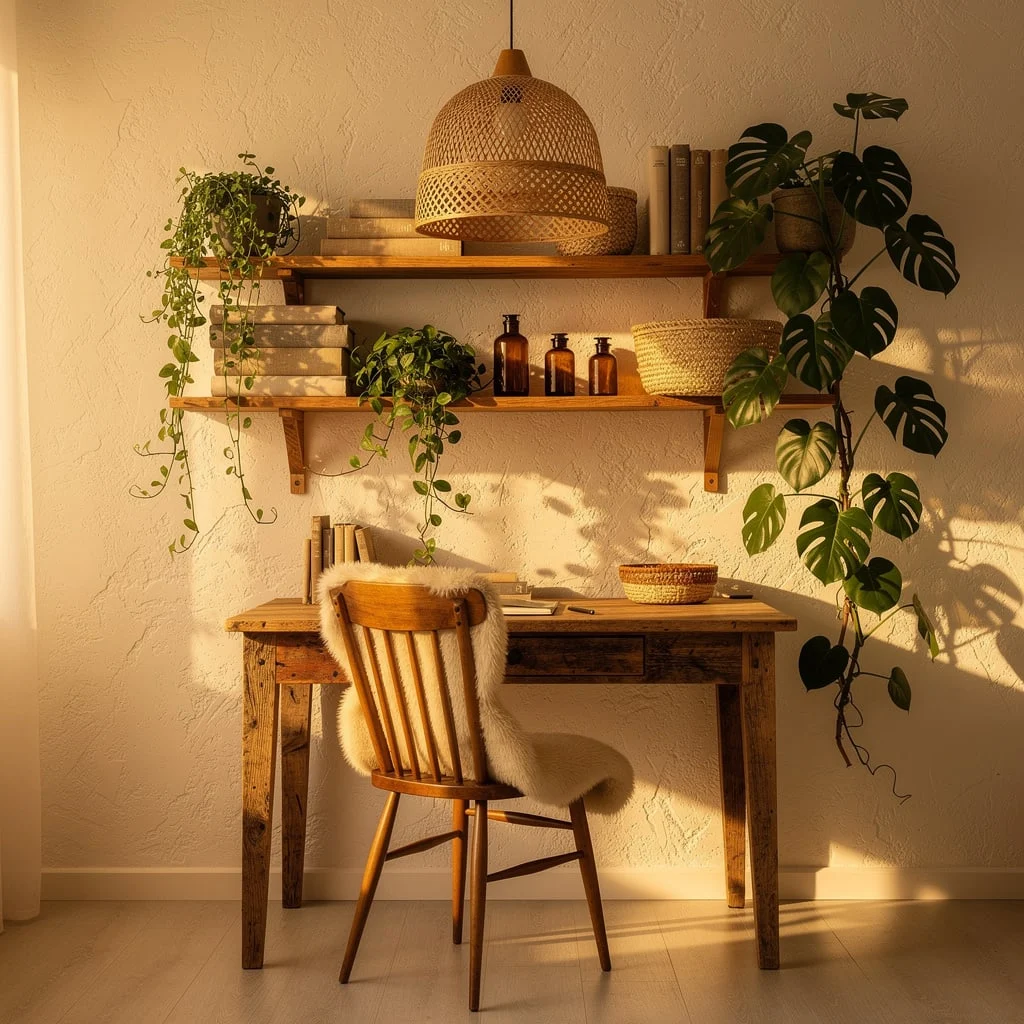
Set a reclaimed timber desk — rough grain, visible history — against a plain textured wall. Mount two floating oak shelves above it and load them with books stacked both horizontally and vertically, amber glass bottles, small trailing plants in pots, and a woven seagrass basket. Drape a large full monstera in one corner so a few leaves overhang the desk surface. Hang a rattan dome pendant above. Use a simple wooden slat chair with a sheepskin or fleece draped over the back. The desk should be kept intentionally spare — one woven tray for small items, one open book, one pen. The shelves carry the visual interest so the desk surface can stay clear and functional.
The Provençal Dried Bundle Kitchen
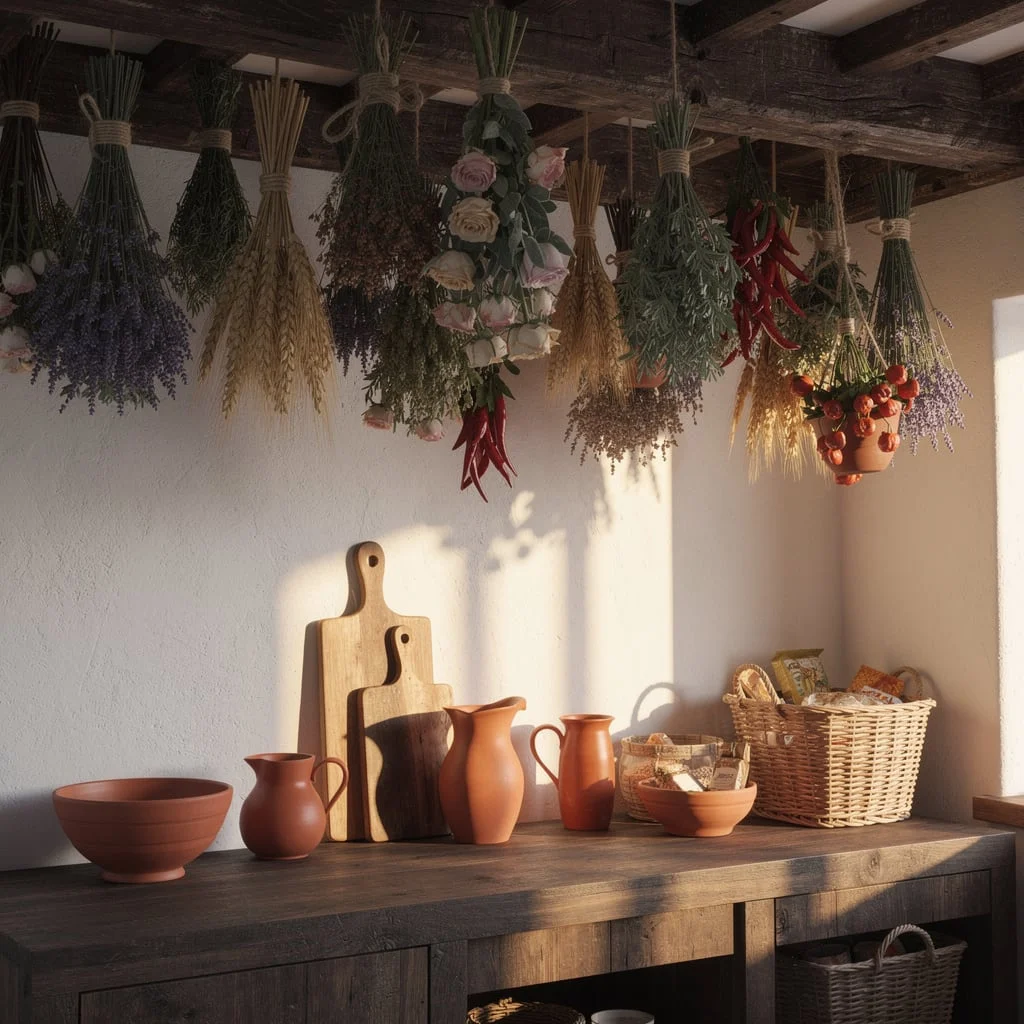
Hang multiple bundles of dried botanicals from exposed ceiling beams above a kitchen counter: lavender, rosemary, wheat stalks, dried roses, chilli strings, and dried herbaceous flowers, all tied with natural twine and hung at slightly different heights. On the counter below, arrange terracotta pitchers and bowls in a gradation of sizes, wooden cutting boards propped against the wall, and a large woven market basket. Keep the walls white or cream plaster and the counter surface dark reclaimed wood. The dried bundles are doing enormous decorative work. They add colour at ceiling level, fragrance to the room, a sense of abundance, and a visual connection to the idea that this kitchen is used for actual cooking with actual ingredients.
The Open Plan Boho Living and Dining
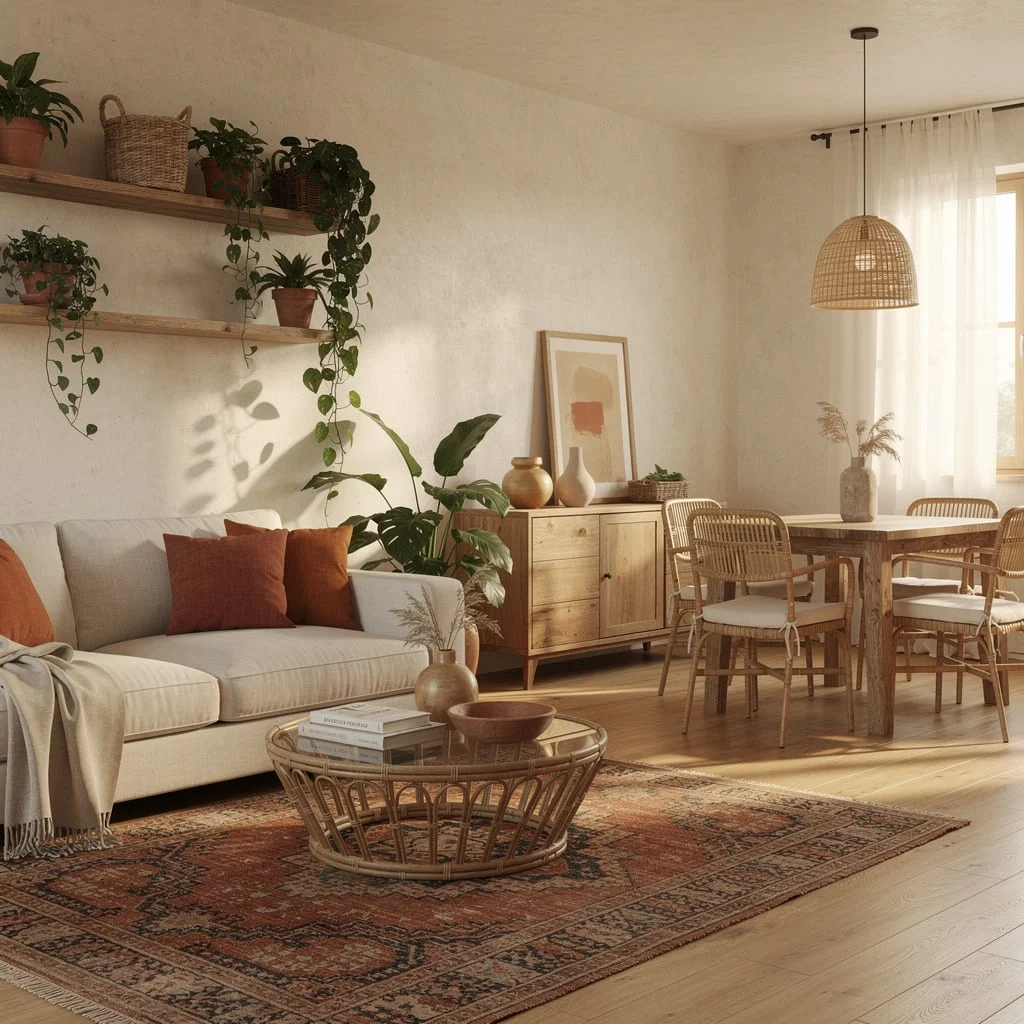
In an open-plan space, use different flooring zones to define living and dining areas rather than walls. In the living zone, lay a large vintage-style rug and anchor a cream linen sofa with rust pillows and a rattan glass-top coffee table on top of it. Run a long floating plant shelf along the living wall with trailing plants and terracotta pots. In the dining zone, use a reclaimed timber farm table with rattan chairs, hang three mismatched rattan pendants above at slightly different heights, and place terracotta vases with pampas grass at the table centre. The two zones share a material language — rattan, terracotta, natural linen — so the open plan reads as one cohesive home rather than two rooms that happen to be adjacent.
The Pitched Ceiling Plant Bedroom
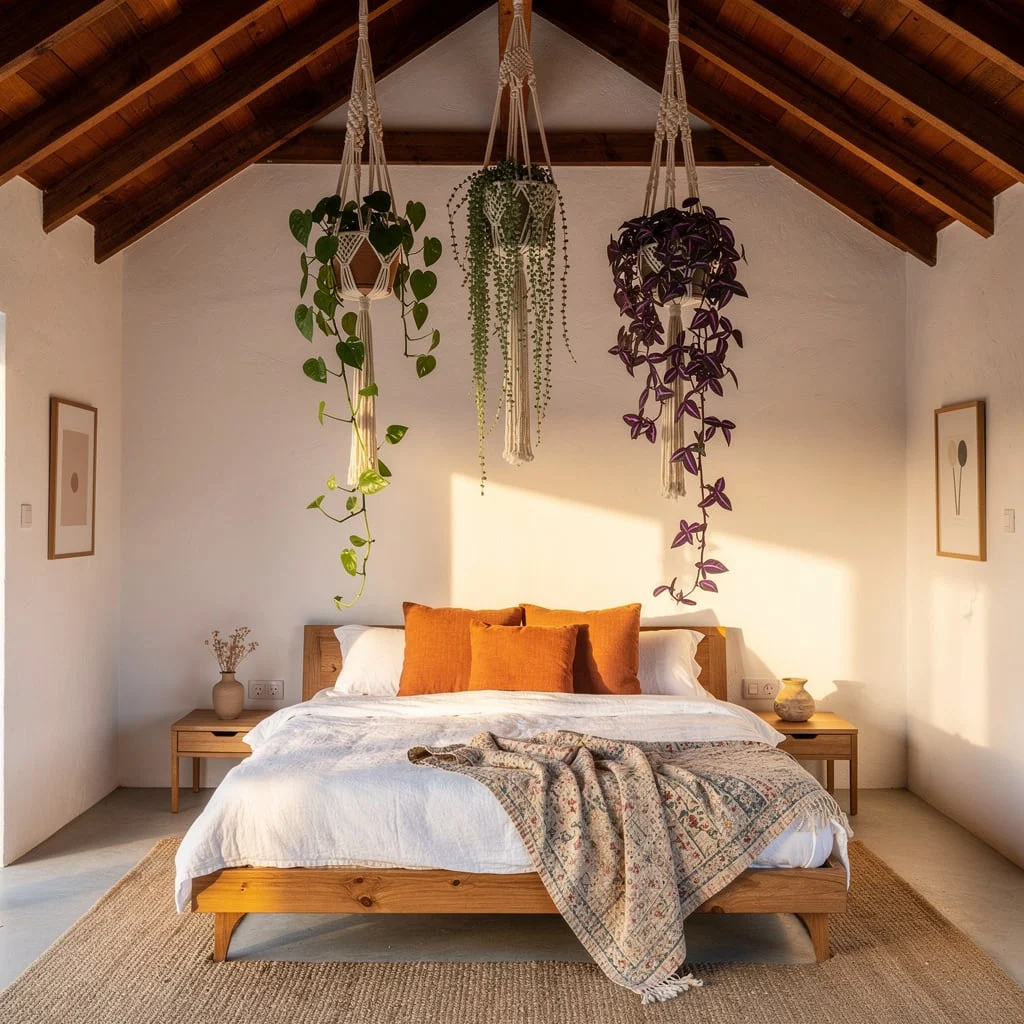
In a bedroom with a steeply pitched ceiling and exposed timber rafters, hang three macramé plant hangers from the ridge beam at different lengths. Choose plants with dramatic trailing habit: pothos, string-of-pearls, and a purple wandering Jew or similar for colour contrast. Use a solid timber bed frame with white linen bedding and two rust linen pillowcases. Drape a floral or printed throw across the foot of the bed. Put simple terracotta vases on the nightstands. The pitched ceiling is an asset, not an awkwardness. The hanging plants at ceiling height make the room feel inhabited from top to bottom rather than only at furniture level.
The Sage Green Dining Room
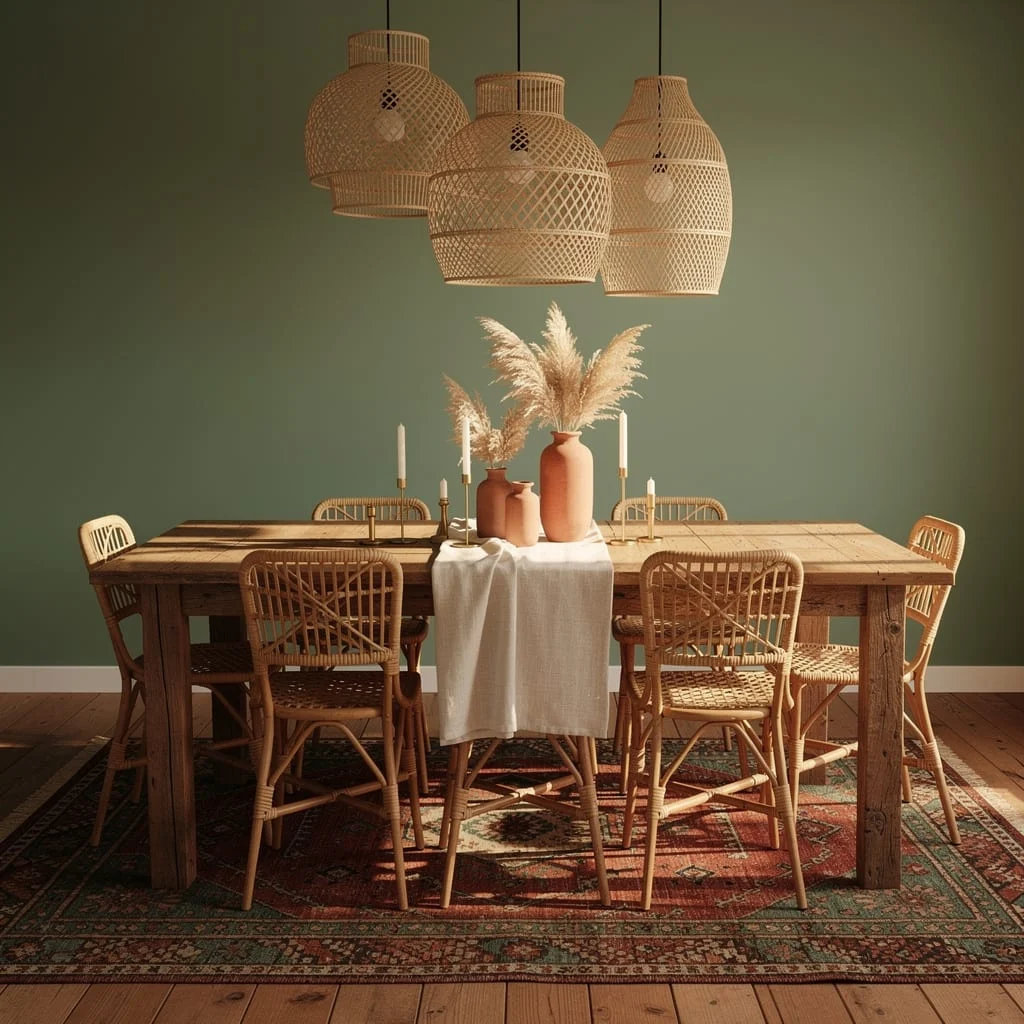
Paint the dining room walls in a muted sage or forest green — deeper than mint, quieter than emerald. Source a long reclaimed timber dining table with visible knots and grain variation. Use rattan dining chairs in natural tone, mixing two or three slightly different styles if possible. Hang three rattan pendants of slightly different profiles above the table at different heights. Dress the table with a plain white linen runner. Centre two terracotta vases with pampas grass and slim brass candlesticks between them. The sage green wall behind the natural rattan and terracotta tones creates one of the most reliably satisfying colour combinations in bohemian design. The green reads as grown, not painted.
The Dark Boho Living Room
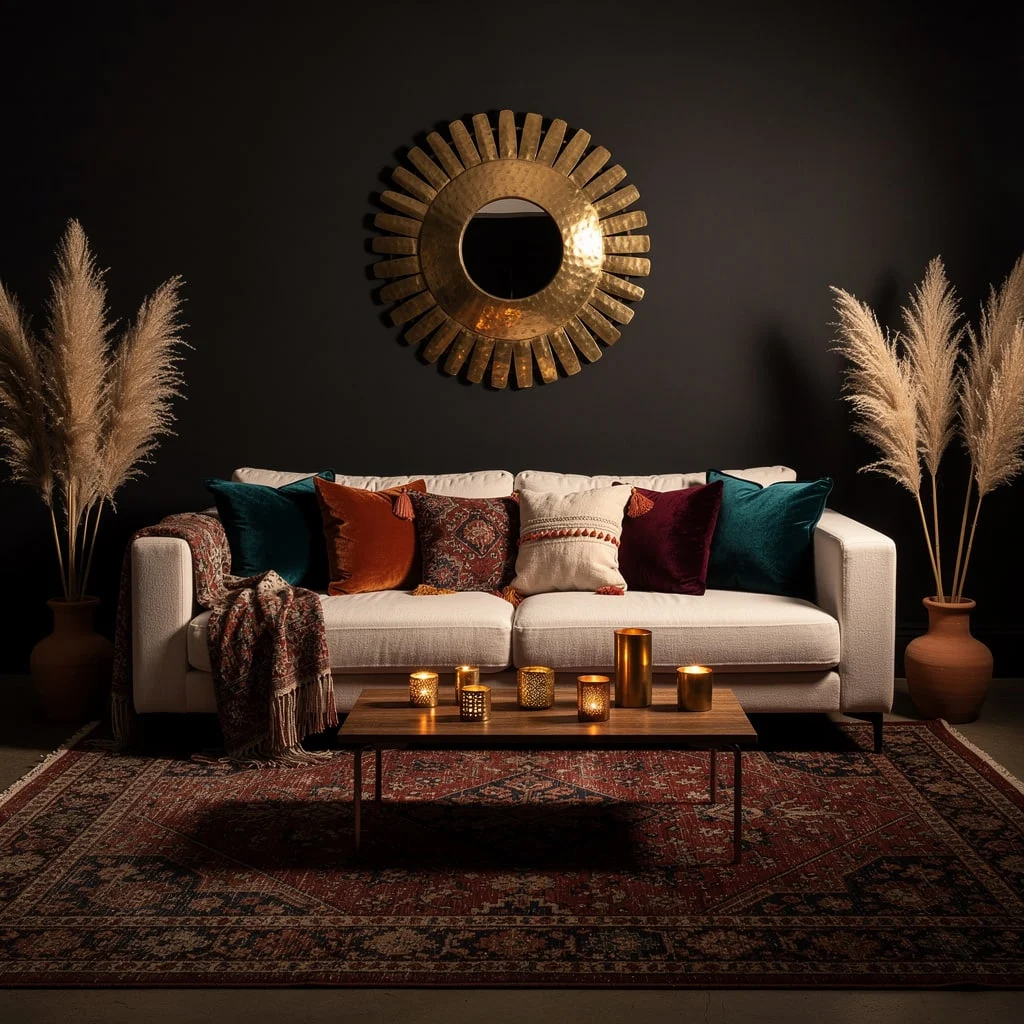
Against a near-black wall, build a living room with a white or cream bouclé sofa at the centre. Add jewel-toned velvet pillows — teal, rust, burgundy — and a fringed paisley throw. Place two large terracotta floor vases with pampas grass flanking the sofa. Hang a large hammered brass sunburst mirror on the dark wall above the sofa. Lay a deep vintage Persian rug underneath. On the coffee table, arrange brass and gold candleholders with lit pillar candles and Moroccan tea-glass votives. Every light source in this room should be warm, open flame, or amber glass. The room is designed to be seen by candlelight as much as by day.
The Arch and Monstera Living Room
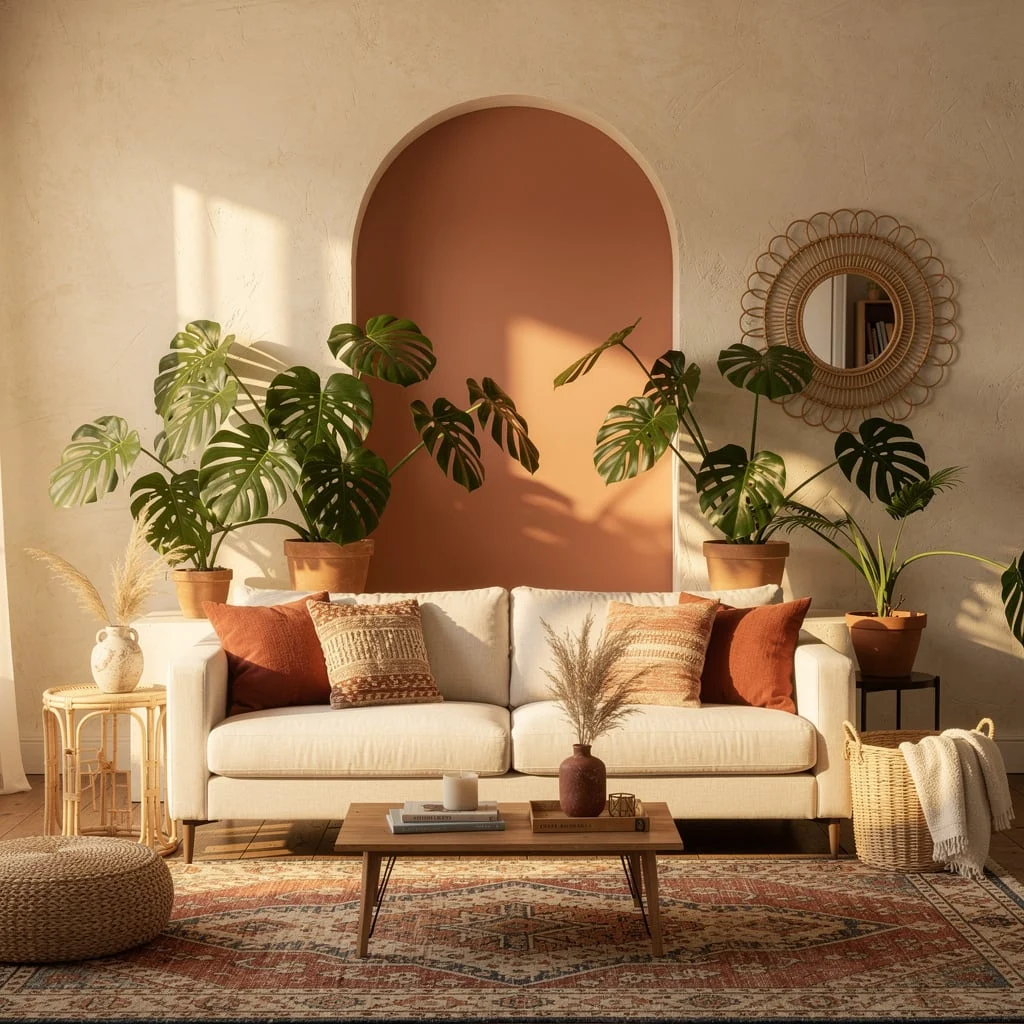
Paint a large arched shape directly onto a textured plaster wall in terracotta — a full arch from the floor or from above sofa height up to a point, filled in as a solid colour so the arch functions as a painted accent panel rather than an architectural feature. Place two large monstera plants in terracotta pots flanking the sofa, tall enough that the leaves extend above the sofa back. Use a cream sofa with rust and terracotta printed cushions. Place a hairpin-leg timber coffee table in front. Hang a small woven rattan sunburst mirror on the wall beside the arch. The painted arch is the one trick in this list that costs the price of a litre of paint and produces an architectural effect that would otherwise require a builder. The monstera plants make the arch feel botanical rather than geometric.
The Terracotta Console Hallway
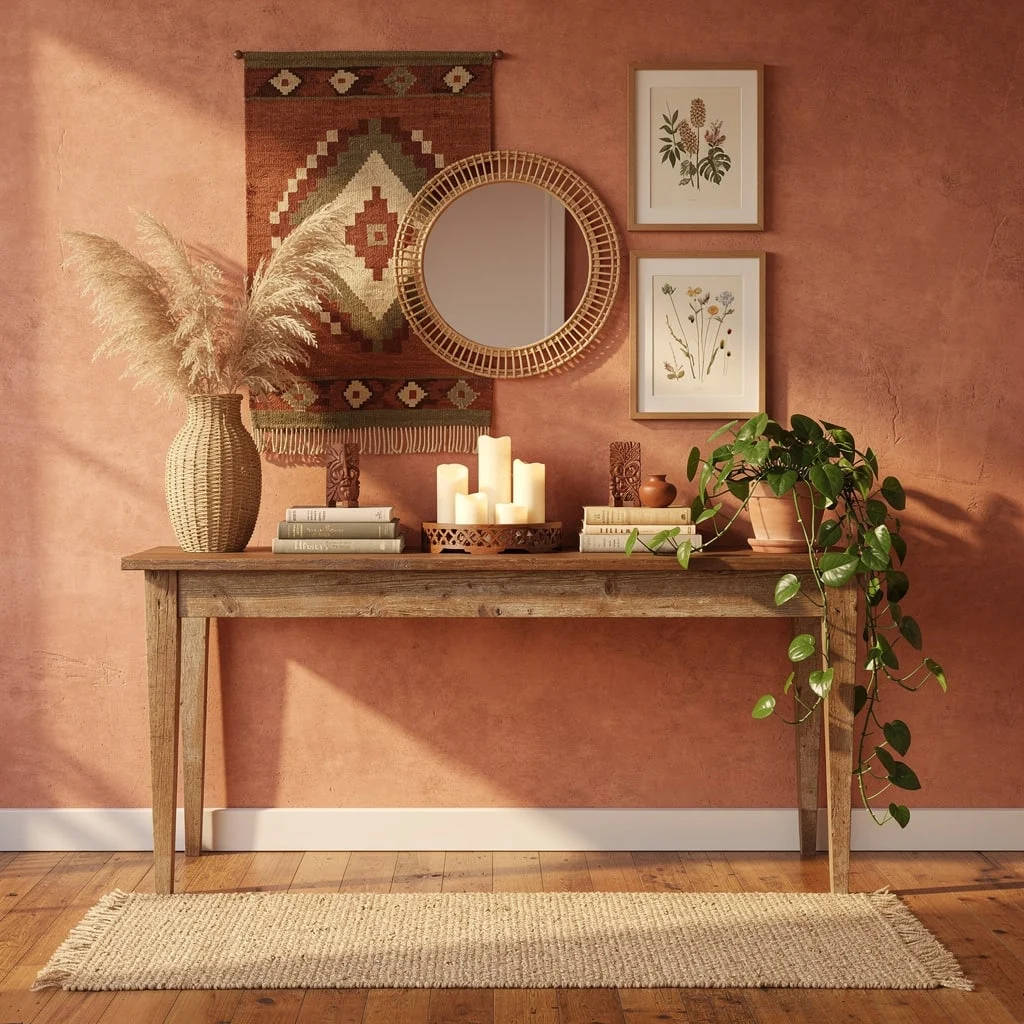
In an entrance hallway or living room corner, place a long reclaimed timber console table against a terracotta wall. Lean a woven rattan-framed circular mirror against the wall above it, overlapping a kilim or geometric tapestry hanging behind. On the console, build a composition: a large woven seagrass vase with dried pampas grass on the left, a stack of coffee table books in the centre, pillar candles on a perforated metal holder, small carved wooden figurines, and a trailing pothos in a terracotta pot on the right. Hang two botanical prints in natural wood frames above and to the side of the mirror. The console wall is a complete composition. Mirror, textile, art, and natural objects occupying different heights create a wall that is worth looking at from every angle.
The Macramé Study Corner
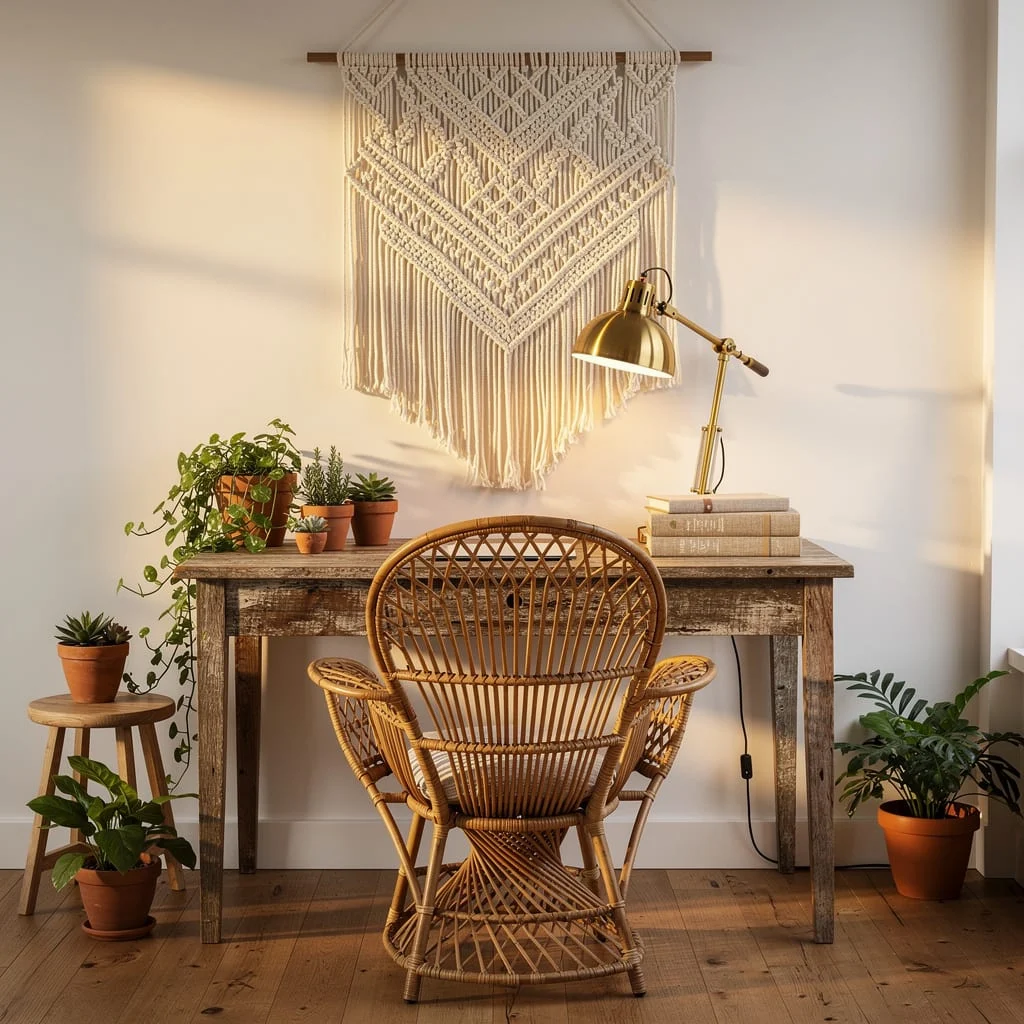
Against a plain white wall, set a reclaimed timber desk with a deep surface and visible weathering marks. Place a large rattan peacock or fan chair in front of it. Hang a large statement macramé wall hanging above the desk — a chevron or diamond pattern with a substantial fringe section — wide enough to fill the space above the desk from edge to edge. On the desk surface, cluster five or six terracotta pots with succulents and trailing plants on one side. Add a brass adjustable desk lamp on the other. Stack three books horizontally beside the lamp. The macramé hanging is doing the work that art would do in a conventional study. It establishes scale, adds texture, and gives the workspace a sense of calm authority.
The Rattan and Egg Chair Living Room
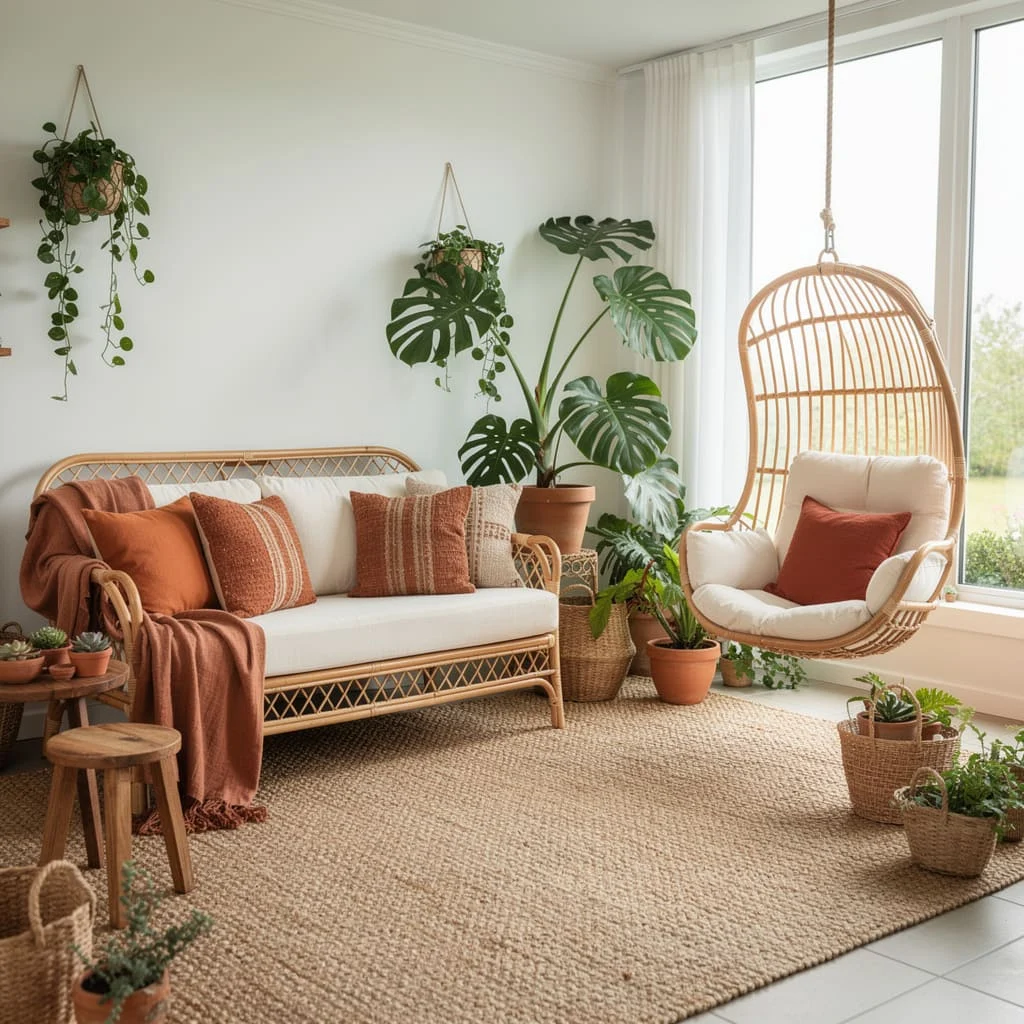
In a bright living room with white walls and large windows, anchor the space with a rattan-framed low sofa — the kind with a latticework base and a plain cream cushion set. Layer rust linen and terracotta printed pillows on it. Add a small round wooden stool as a side table. Hang a rattan egg chair from the ceiling beside the window with a white seat cushion and a rust accent pillow. Cluster five or six terracotta pots with monstera, pothos, string-of-hearts, and succulents around the room in woven baskets and natural pots. Lay a jute rug across the whole space. The egg chair is the room’s single statement piece. It justifies itself by being both furniture and sculpture — nothing else in the room needs to work as hard. Everything else can stay grounded, natural, and quietly beautiful.
The Thread That Connects All of This
None of these rooms are the same. They span from an all-over maximalist colour kitchen to a single well-composed corner, from a dark and jewelled living room to a bleached-white pitch-ceilinged bedroom. The colour palettes are different. The room types are different. The price points are different.
What they share is that every element is connected to every other element by material, colour, or weight. Nothing in these rooms is stranded. Nothing is there by accident or by default. Even in the rooms that look most casually assembled — the floor living room, the reading nook, the balcony — the connection between objects was thought about.
That is what bohemian style actually is. Not a product category. Not a mood board. An attitude toward objects and space that asks: why is this here, what is it doing, and what does it have to say to everything around it?
Start asking those questions about your own rooms and you’ll stop needing guides like this one.