
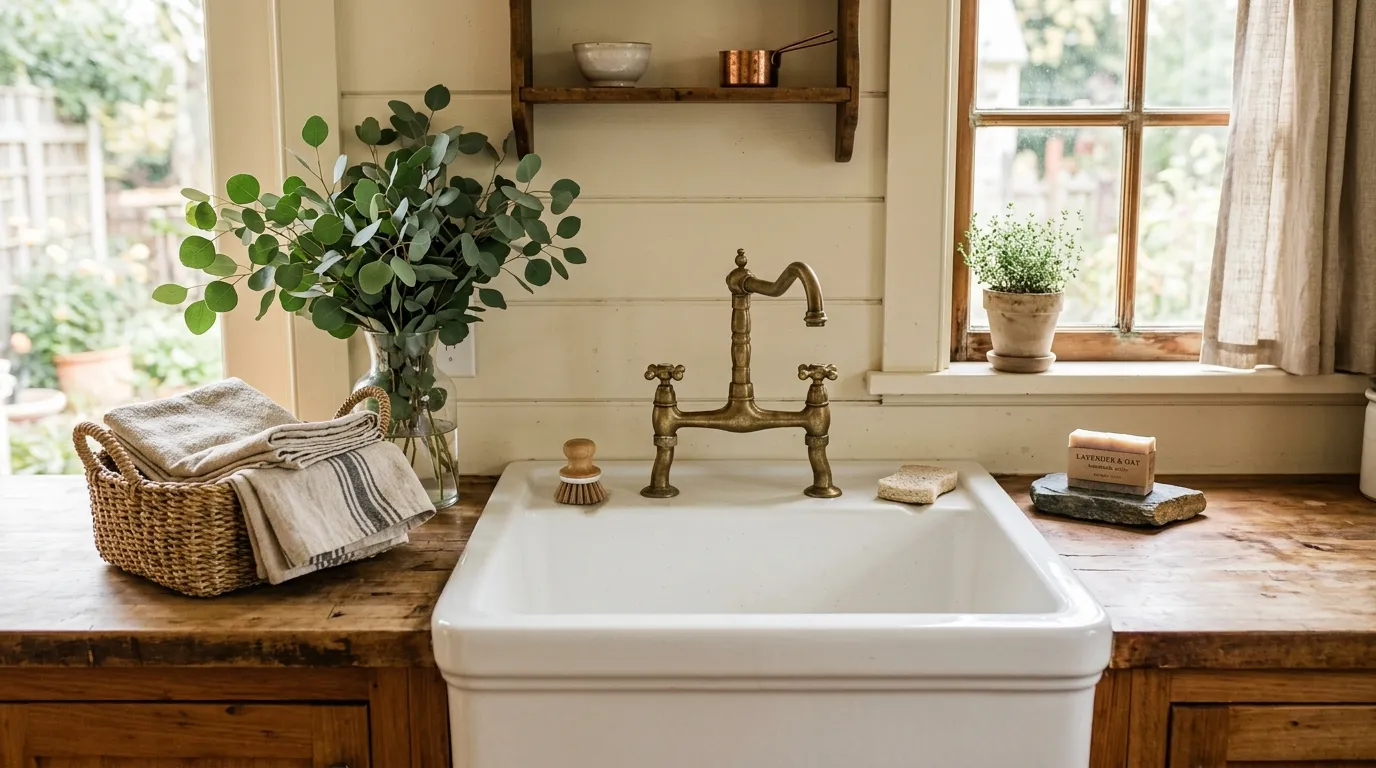
The kitchen sink is where you spend more time than you’d like to admit. Washing up after dinner. Filling the kettle. Standing there staring out the window wondering where the last decade went.
And yet most people treat it like an afterthought. A functional hole in the counter with a tap stuck in it and a bottle of dish soap that’s been there since before the pandemic.
The sink zone is the most hardworking surface in your entire kitchen. It’s also, in almost every kitchen, the most visually neglected. That’s not an accident — it’s a failure of imagination dressed up as practicality.
Every choice you make in this small zone — the material, the faucet, the wall treatment, the sill — either elevates the whole kitchen or quietly drags it down. Here’s how to stop letting it drag.
What Nobody Actually Explains About Sink Zone Design
Good sink zones are not about having expensive things. They are about having intentional things. There’s a difference, and it matters.
Material Contrast Is Doing Most of the Work
In almost every compelling sink zone, there’s contrast. Warm wood and cold marble. Dark cabinets and white porcelain. Stone and brass. Your eye needs somewhere to travel.
Sink zones that feel flat are almost always monochromatic by accident — not by design. The sink, the counter, the cabinet, the wall all end up within the same tonal range because no one made a deliberate decision to break it up.
Pick one material to contrast with everything else. Let it be your deliberate accent.
The Sink Itself Is Architecture
An apron-front farmhouse sink changes the visual weight of an entire kitchen. So does a marble sink carved from a single slab. So does a steel workstation sink with its integrated accessories.
The basin you choose is not just a vessel for water. It’s a structural decision that shapes how everything else in the zone reads. Too many people treat it as purely functional and then wonder why the zone feels uninspired.
Light Transforms Everything
Pendant lighting directly over the sink does something no amount of styling can replicate. It creates a focal point. It signals that this is a considered space, not just a utility corner.
You don’t need elaborate lighting. A single pendant — even a simple one — hung at the right height over the sink turns the zone into a room within a room. It changes the psychology of the space entirely.
Kitchen Sink Styling Ideas
Marble Herb Window Garden
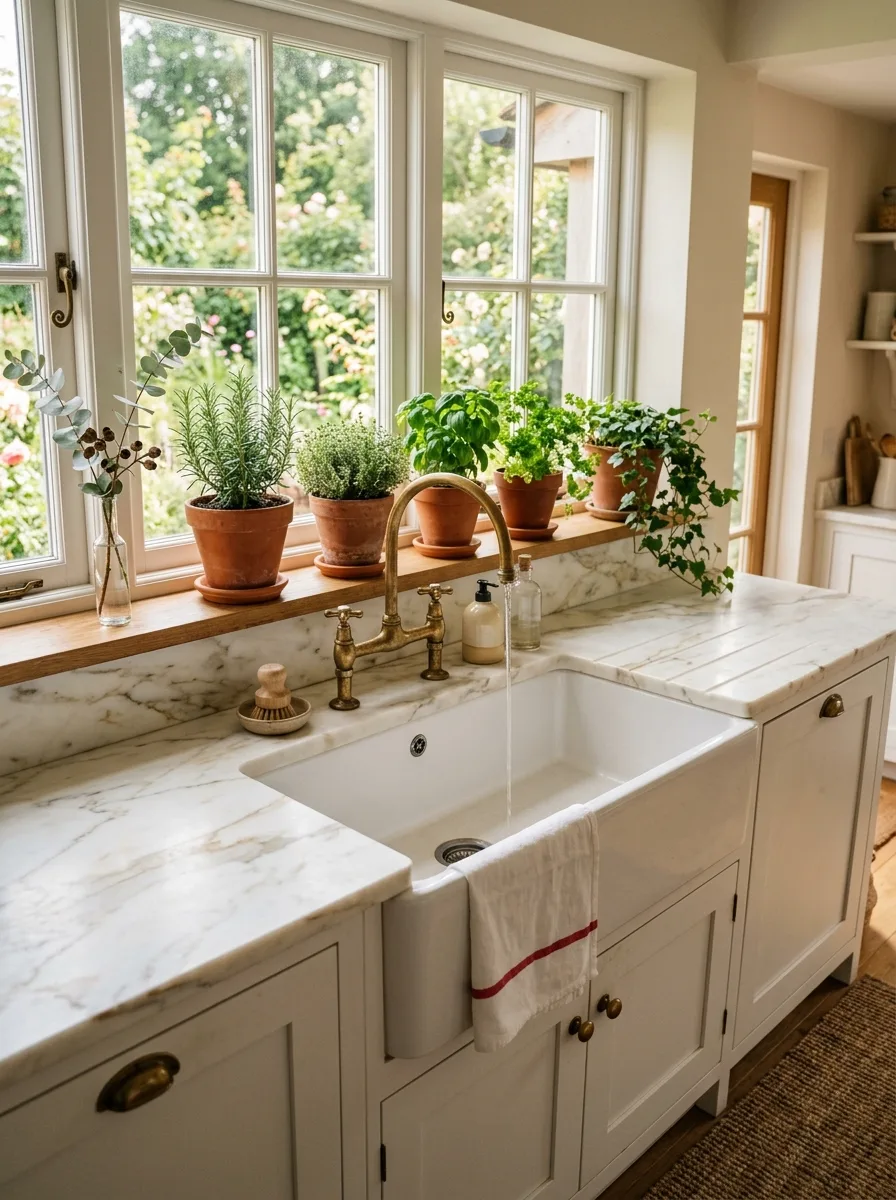
Run your marble countertop flush to the window and add a slim oak ledge inside the frame to hold four or five unmatched terracotta pots — rosemary, thyme, basil, trailing ivy. Keep the pots raw and unglazed. The organic texture against the stone veining is the whole point.
Pair with a brass bridge faucet as the centrepiece. It needs to be substantial — cross handles, polished finish, the kind that looks like it belongs in a Victorian kitchen that got very good at being itself. Add one tall glass bottle with a eucalyptus stem at the sill edge. Stop there.
Dark Zellige Pendant Drama
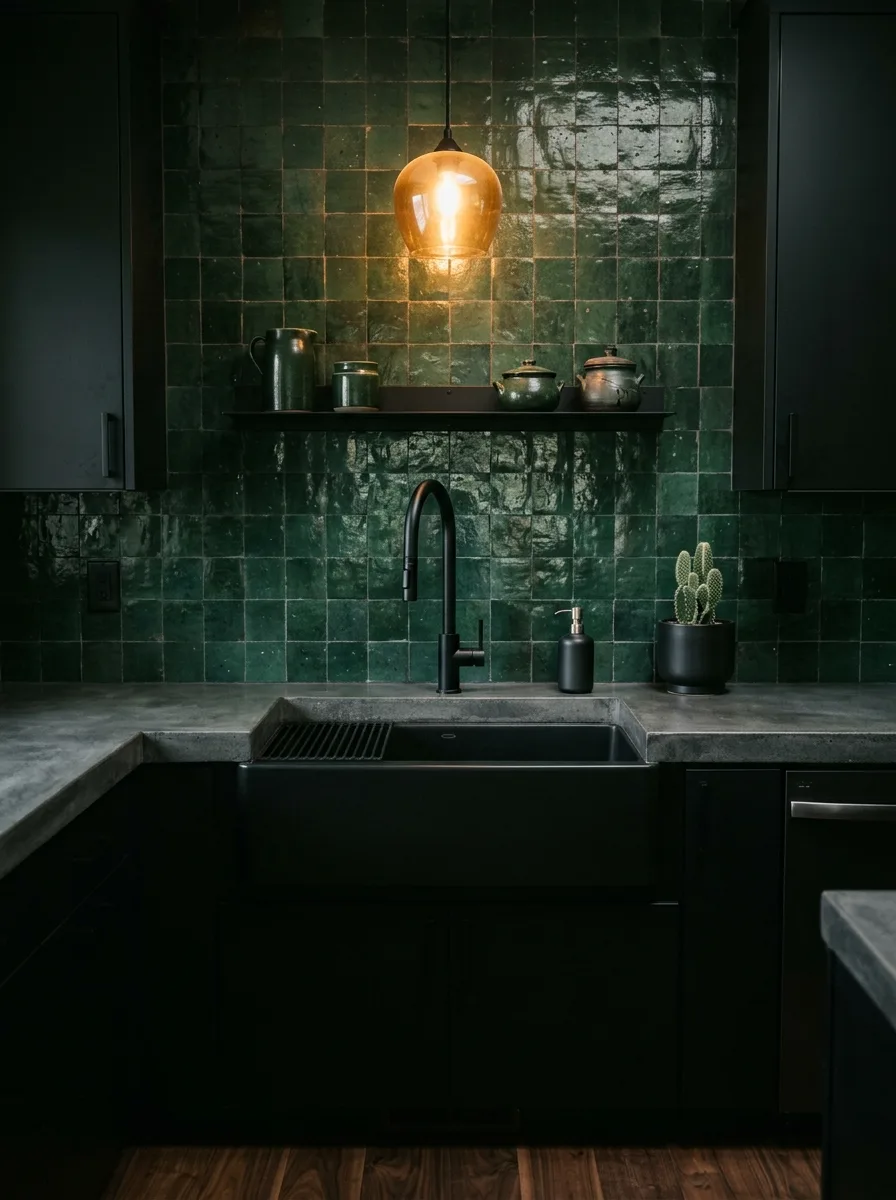
Tile the entire wall behind the sink floor to ceiling in deep forest green zellige — the handmade Moroccan tiles with a slightly irregular, lumpy surface that catches light differently from every angle. Grout in a tone that nearly disappears into the tile rather than defining the grid. Mount a single floating shelf in blackened metal halfway up and set three dark-glazed ceramic vessels on it.
Hang one amber glass pendant directly over the sink. The warm light bouncing off the uneven green surface does something no flat tile can replicate. Choose a matte black pull-down faucet and a concrete countertop. Everything else in the zone should be dark. Let the pendant do the talking.
Total White Precision
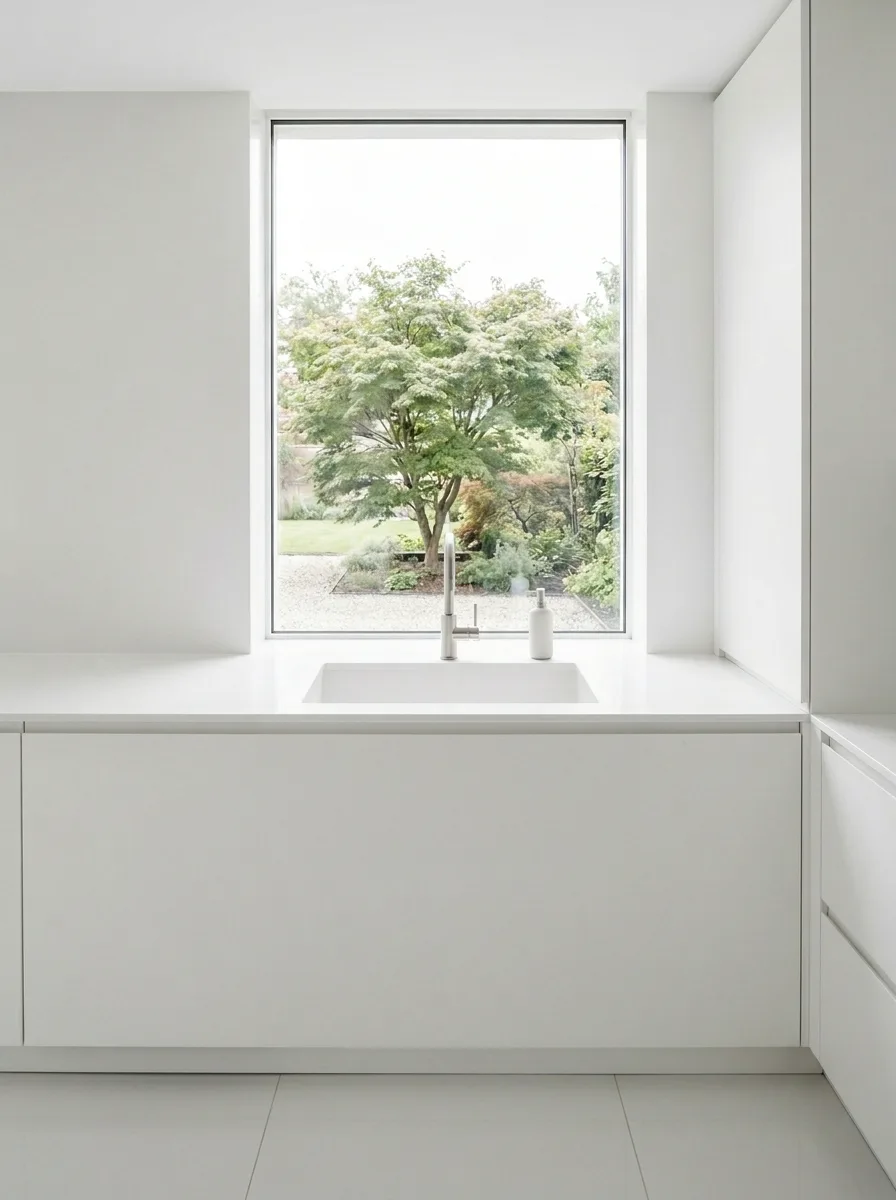
Install handleless flat-front cabinets with no visible hardware. Drop in a white composite undermount sink that sits nearly flush with the counter surface. Choose a slender chrome gooseneck faucet — minimal profile, no ornamentation. One white ceramic soap dispenser beside it. Nothing on the sill.
The window view becomes the art. This only works if what’s outside earns it. A Japanese maple, a garden, a courtyard. If you’re looking at a fence panel, this is not your look.
Double Butler Butcher Block
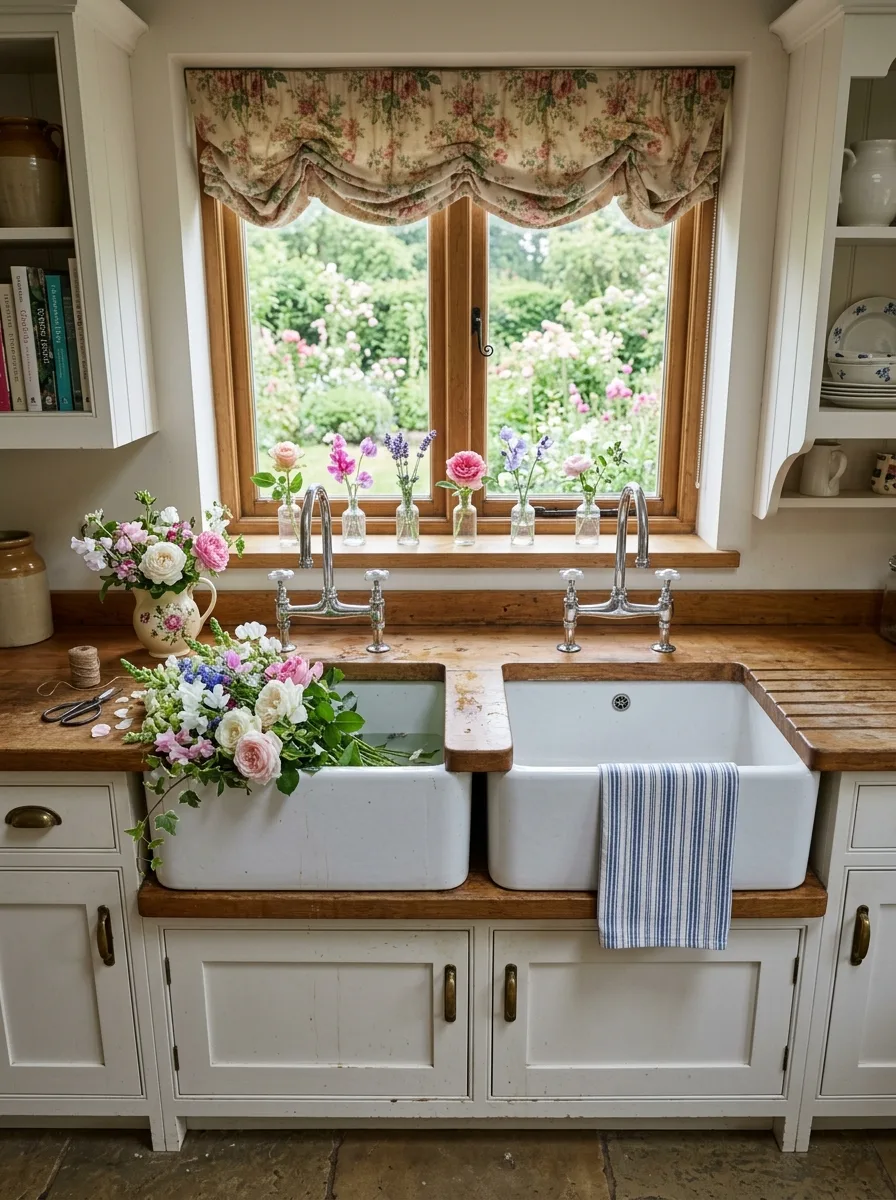
Set two white ceramic Belfast basins side by side into a thick solid walnut worktop — dark-stained oak or natural mid-honey tone, never pale pine. Pair each basin with its own chrome bridge faucet. Place a pottery jug overflowing with cut garden flowers on the left side of the counter.
Line the windowsill with small glass bottles, one stem each — a pink rose, a lavender sprig, something blue. Hang a gathered floral valance at the top of the window frame in a coordinating fabric with some weight to it. The zone should look like someone just came in from the garden with their arms full.
Sage Cabinet Lavender Bundles
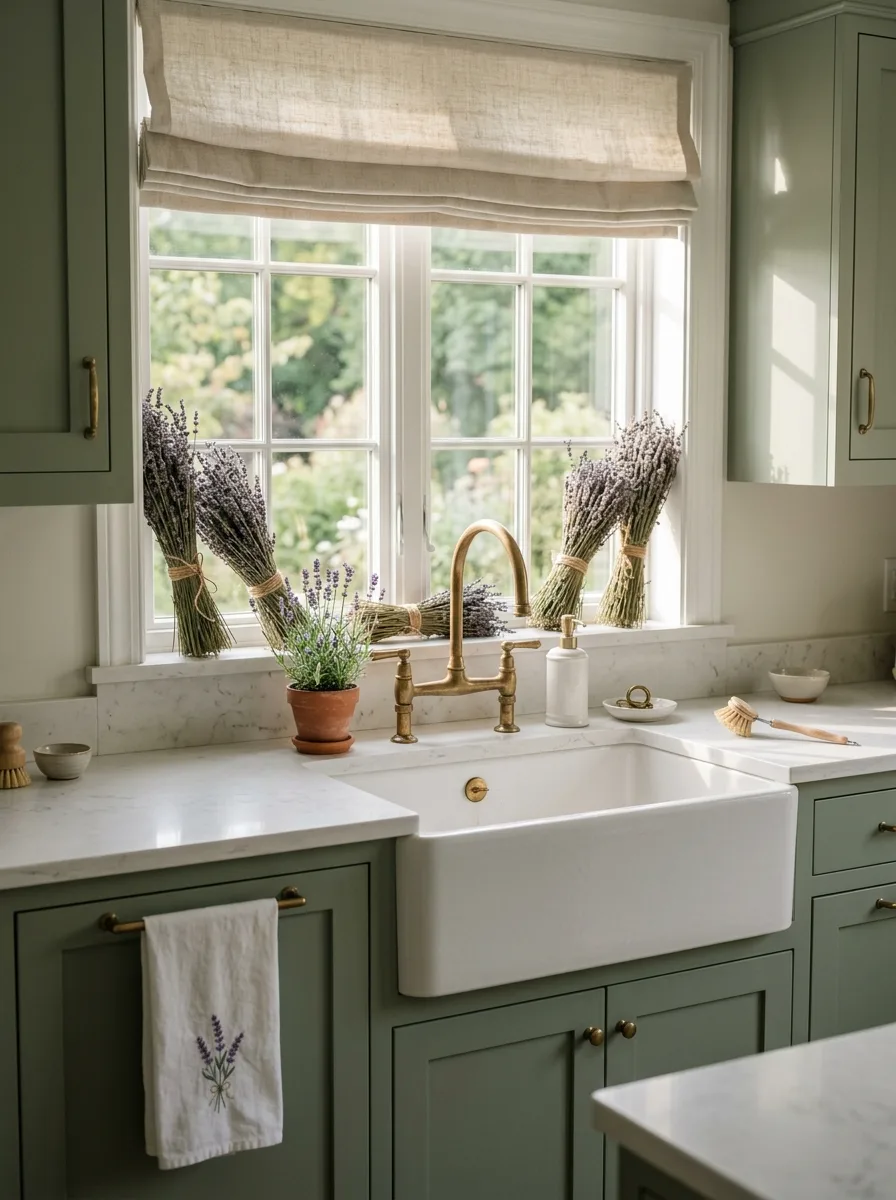
Paint every cabinet in a dusty sage — grey-toned, not yellow-green, eggshell finish. Install a white apron-front sink under a multi-pane window with an unlacquered brass bridge faucet. Unlacquered brass darkens and ages slightly over time. This is desirable. Let it happen.
Stand three tied bundles of dried lavender on the windowsill, leaning against the glass at different heights. Set one small terracotta pot of live lavender at the base of the faucet. Hang an unbleached linen Roman blind at the window. Fold a white linen tea towel with a small embroidered botanical motif over the rail beneath the sink. The palette — sage, brass, white, grey-purple — holds together because nothing leaves it.
Stainless Steel Workhorse
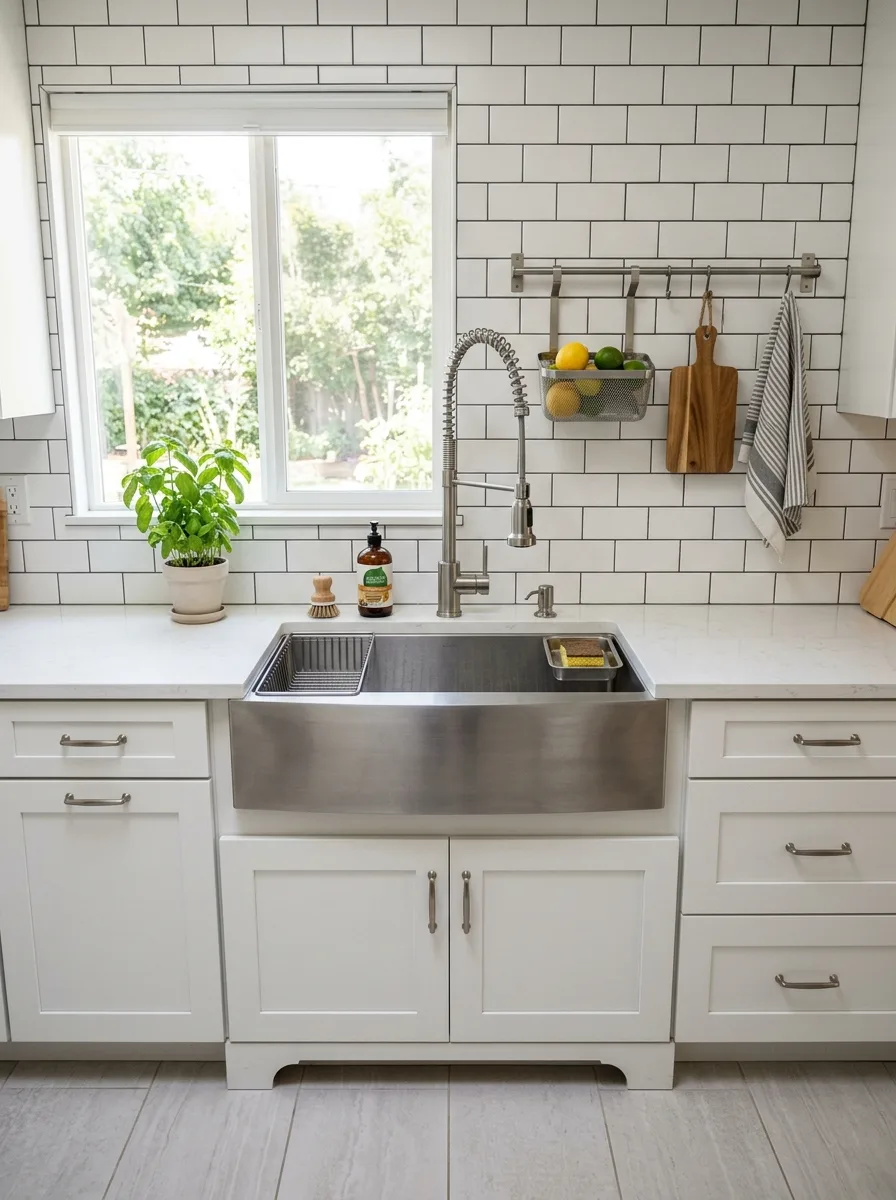
Install a stainless steel apron-front sink with an integrated ledge system inside the basin — the kind that accepts a cutting board, a colander, and a drying rack. Pair with a commercial spring pull-down faucet in brushed steel above it. Tile the backsplash in white subway with dark charcoal grout. The contrast sharpens the grid into a graphic element rather than a background texture.
Mount a horizontal rail on the wall beside the window and hang from it a wire basket for citrus, a small cutting board on a hook, a striped tea towel. Keep the counter spare. One small basil plant in a plain white pot. This zone admits it is a kitchen. That confidence is the style.
Botanical Wallpaper Pink Cabinets
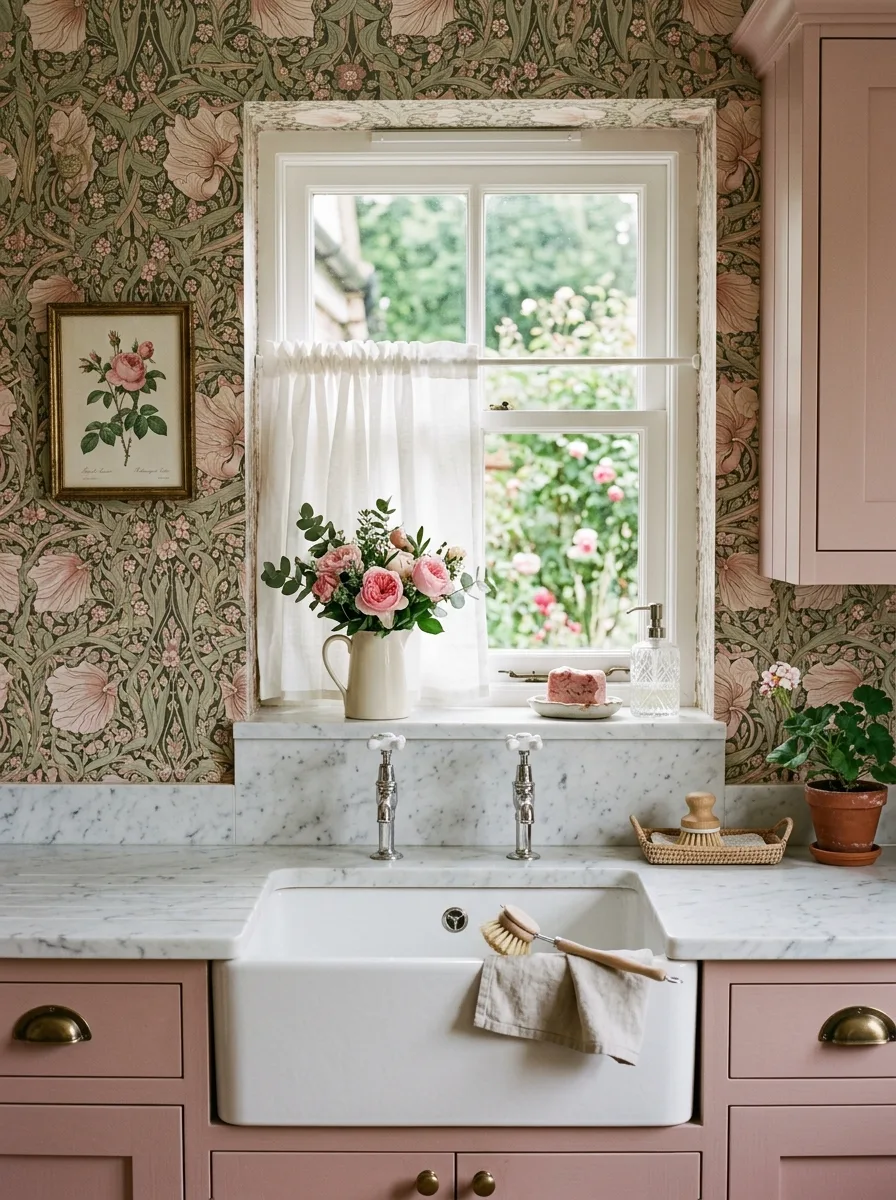
Choose a large-scale Arts and Crafts botanical wallpaper — dense intertwining foliage, flowers in dusty pink and sage on a darker ground — and paper the entire wall including around the window frame. Paint cabinets in a grey-blush pink that reads as sophisticated in afternoon light, not sweet.
Install a white marble backsplash slab directly behind the sink from counter to the underside of the upper cabinets. Pair with chrome cross-handle taps and a white ceramic apron-front basin. Set one large white jug of garden roses on the counter and hang a small framed botanical print directly on the wallpaper beside the window. Keep the flowers in one shade pulled directly from the wallpaper. Do not let the roses and the pattern compete.
Scandi Oak Tray Station
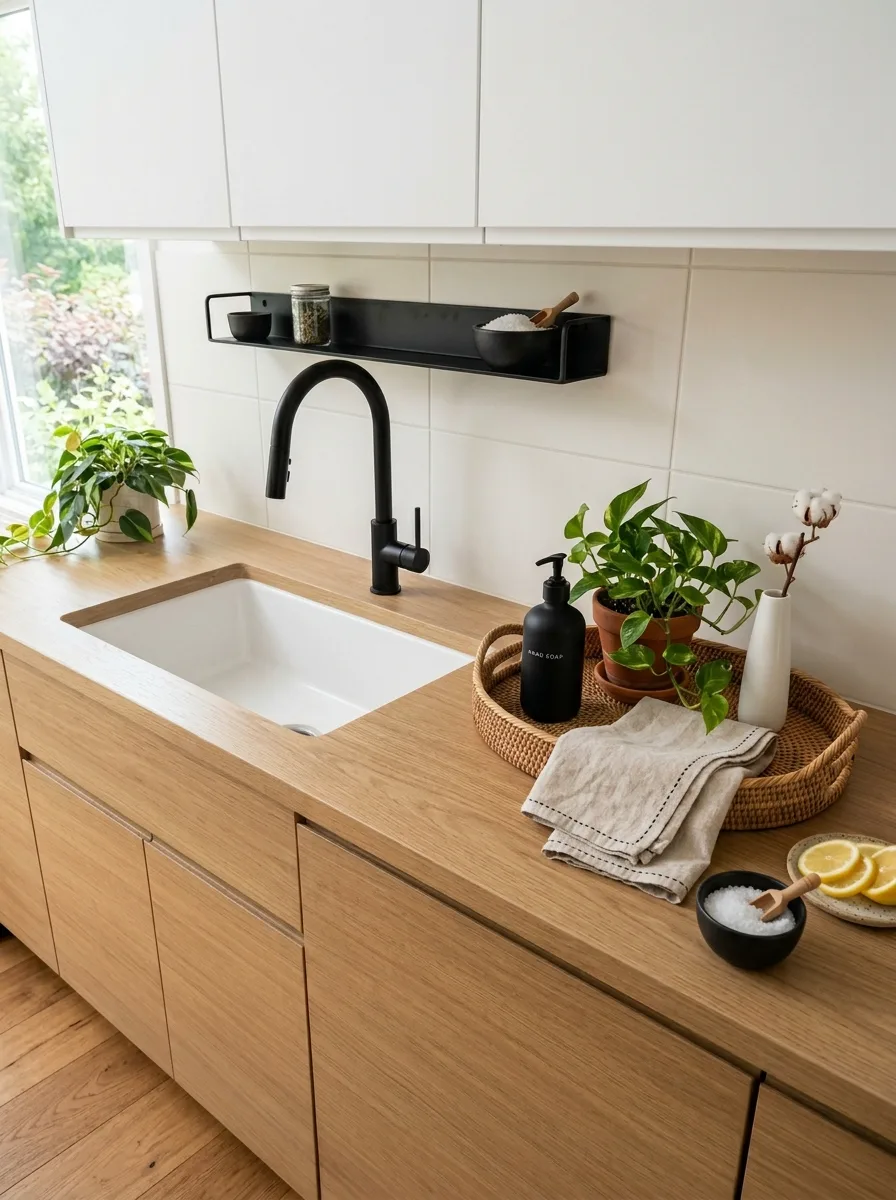
Choose a solid oak countertop in a clean natural grain, lightly oiled. Drop in a white undermount sink and pair it with a matte black gooseneck faucet — the contrast between warm wood and black metal is the design decision. Tile behind in large-format white subway and mount a small black metal floating shelf on the tile for two small ceramic bowls.
Set a round rattan tray on the counter and arrange on it a matte black soap dispenser, a small trailing pothos in a terracotta pot, and a folded natural linen cloth. Place a white ceramic vase with a single cotton stem off to one side. This zone is quiet. It does not perform. That is precisely why it works.
Navy Subway Curated Shelf
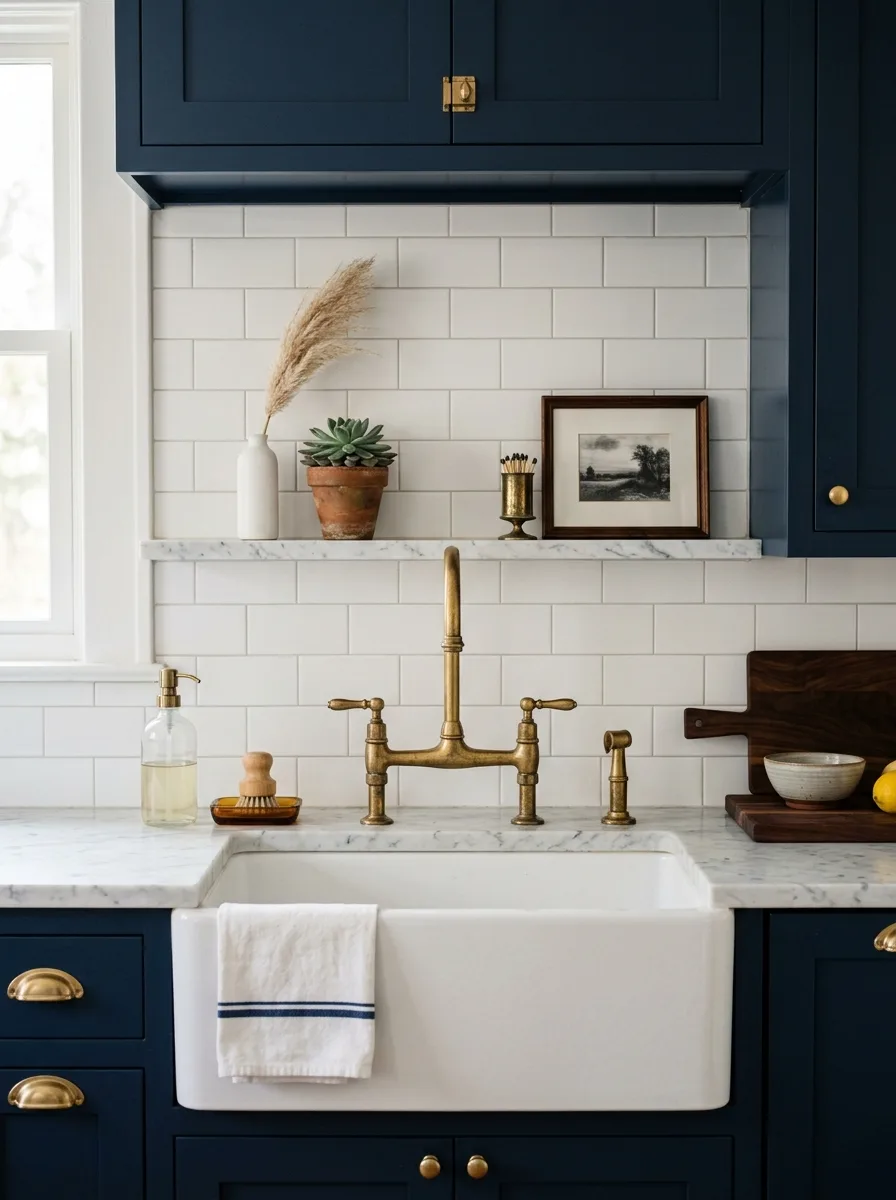
Paint all cabinets in deep midnight navy and pair with satin brass hardware throughout. Tile the backsplash in white subway with pale grout — not charcoal, because the navy cabinets already provide the contrast. Mount a floating marble shelf midway up the backsplash and style it with three objects only: a white ceramic vase with a dried pampas stem, a terracotta succulent pot, a small framed black and white landscape.
Install a brass bridge faucet and white apron-front sink below. Set a walnut chopping board to the right with a ceramic bowl and one lemon. This zone looks arranged because it is arranged. Own that. Every object is there by decision, not habit.
Butcher Block Linen Blind
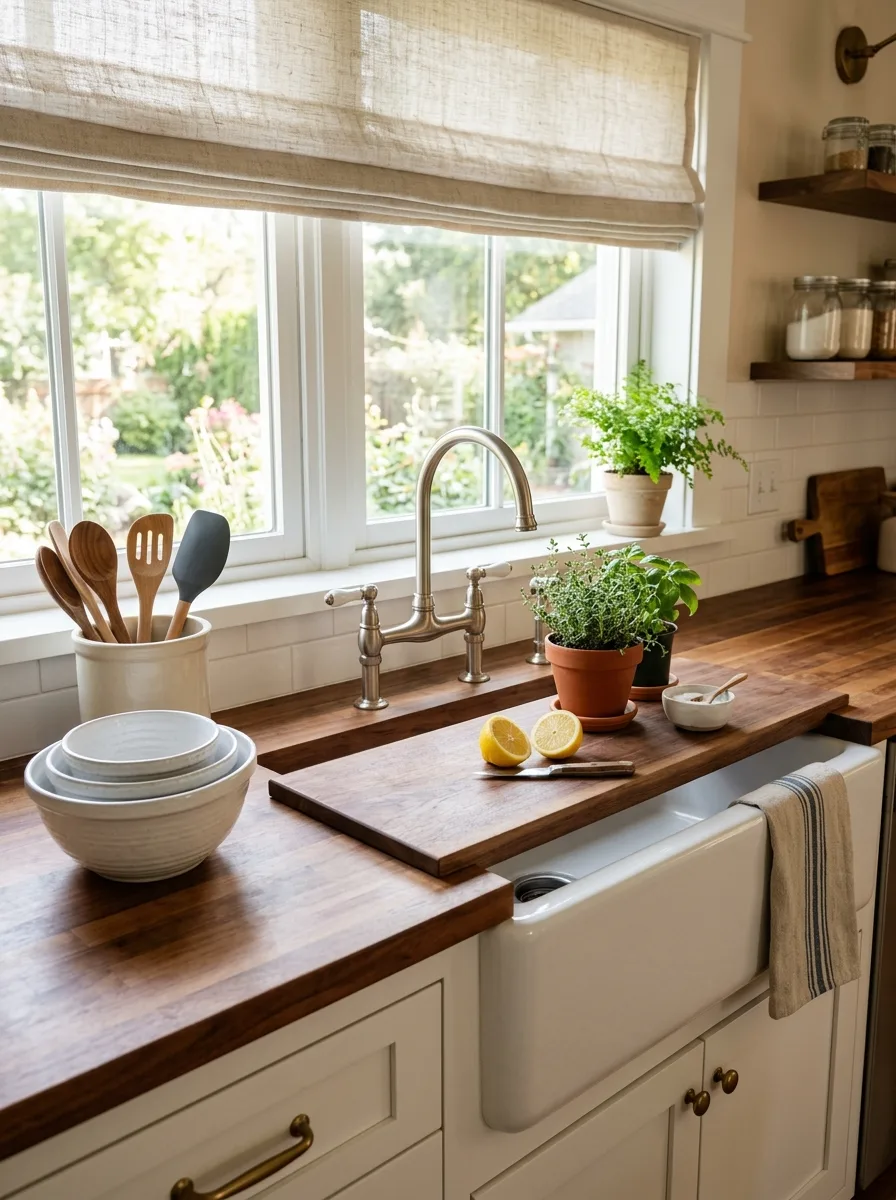
Install a wide farmhouse sink under a window that spans most of the counter run rather than sitting above the sink alone. Use butcher block countertops in walnut or mid-honey oak. Pair with a brushed nickel bridge faucet. Hang a linen Roman blind across the full window width in unbleached natural weave — it softens the wide expanse of glass without blocking the garden light.
Place two terracotta herb pots and one cream ceramic plant on the sill. Set a ceramic crock of wooden spoons, spatulas, and one grey silicone spatula on the left of the sink — the mix of materials stops it looking staged. Stack two or three plain cream bowls nearby and prop a large walnut cutting board against the tile. Let the counter look used.
Live Edge Stone Wildflowers
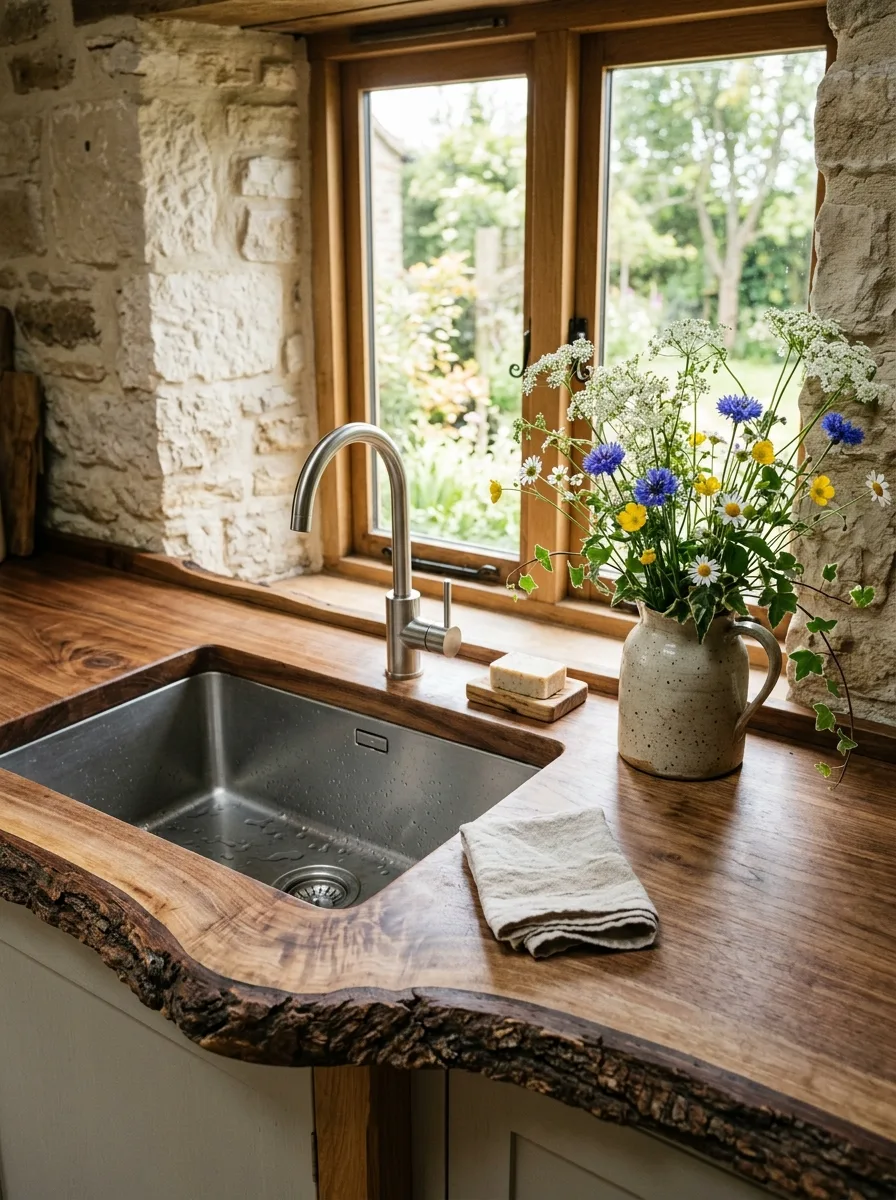
Source a live-edge walnut or oak slab for the countertop with the natural bark edge left intact on the outer face. Install a dark undermount stainless sink and a tall slender chrome gooseneck faucet. The raw edge is the statement. Everything else should recede.
Place a chunky speckled stoneware jug beside the sink and fill it with wildflowers — cow parsley, cornflowers, daisies, buttercups — that look cut from a field ten minutes ago. Set a bar of natural soap on a small wooden dish. Fold a linen cloth and leave it. This zone commits to the primitive and does not apologise for it.
Gold Gooseneck Cookbook Counter
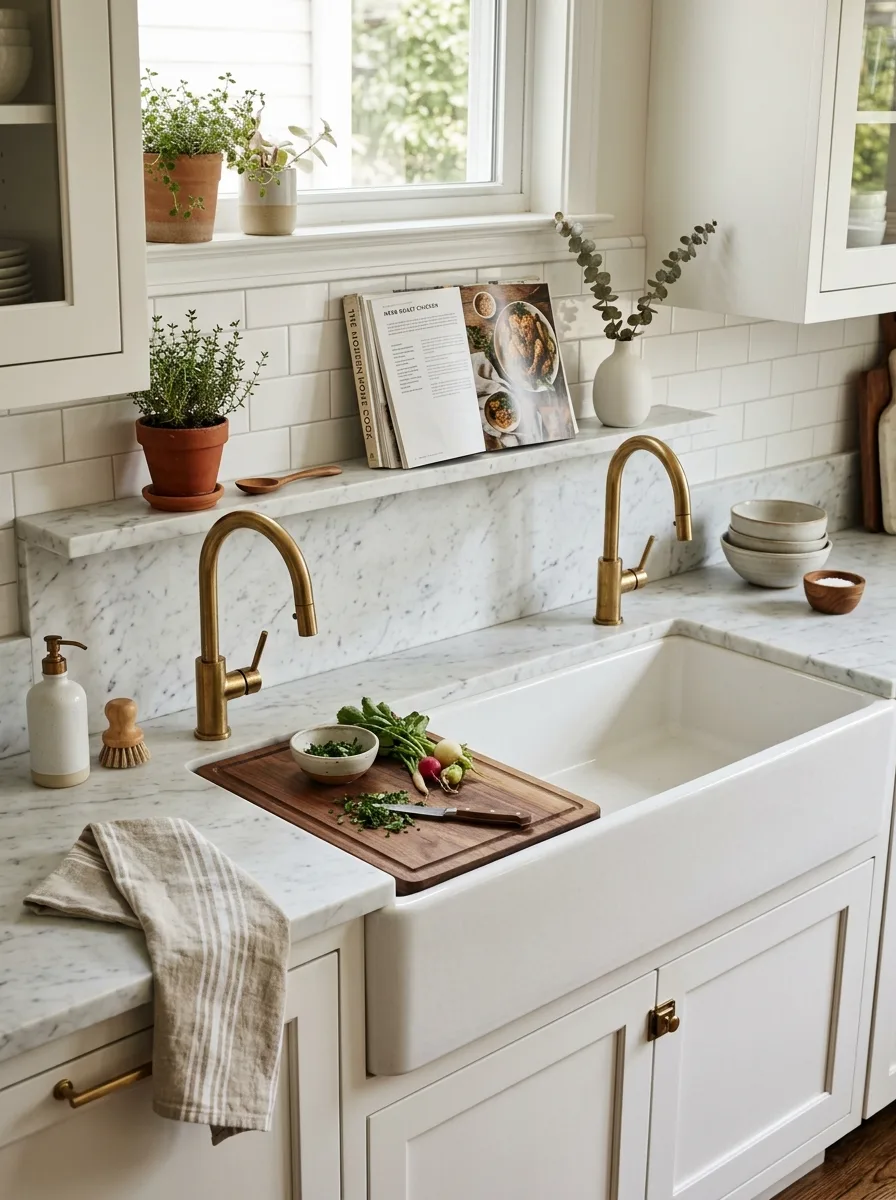
Install two separate single-lever gooseneck faucets in brushed gold on either side of a wide white apron-front sink rather than one central piece. The paired placement reads as intentional and architectural. Run a thick marble ledge shelf across the full backsplash width at mid-height — substantial enough to prop things against, not just a thin decorative strip.
On the ledge, lean an open cookbook facing outward, a small terracotta herb pot, and a slim white ceramic vase with a eucalyptus stem. Keep the marble countertop clear except for a walnut cutting board resting inside the sink basin, a linen cloth draped at the edge, and a natural bristle brush nearby. The open cookbook is the move — it makes the zone feel inhabited rather than styled.
Blue Toile Under-Sink Curtain
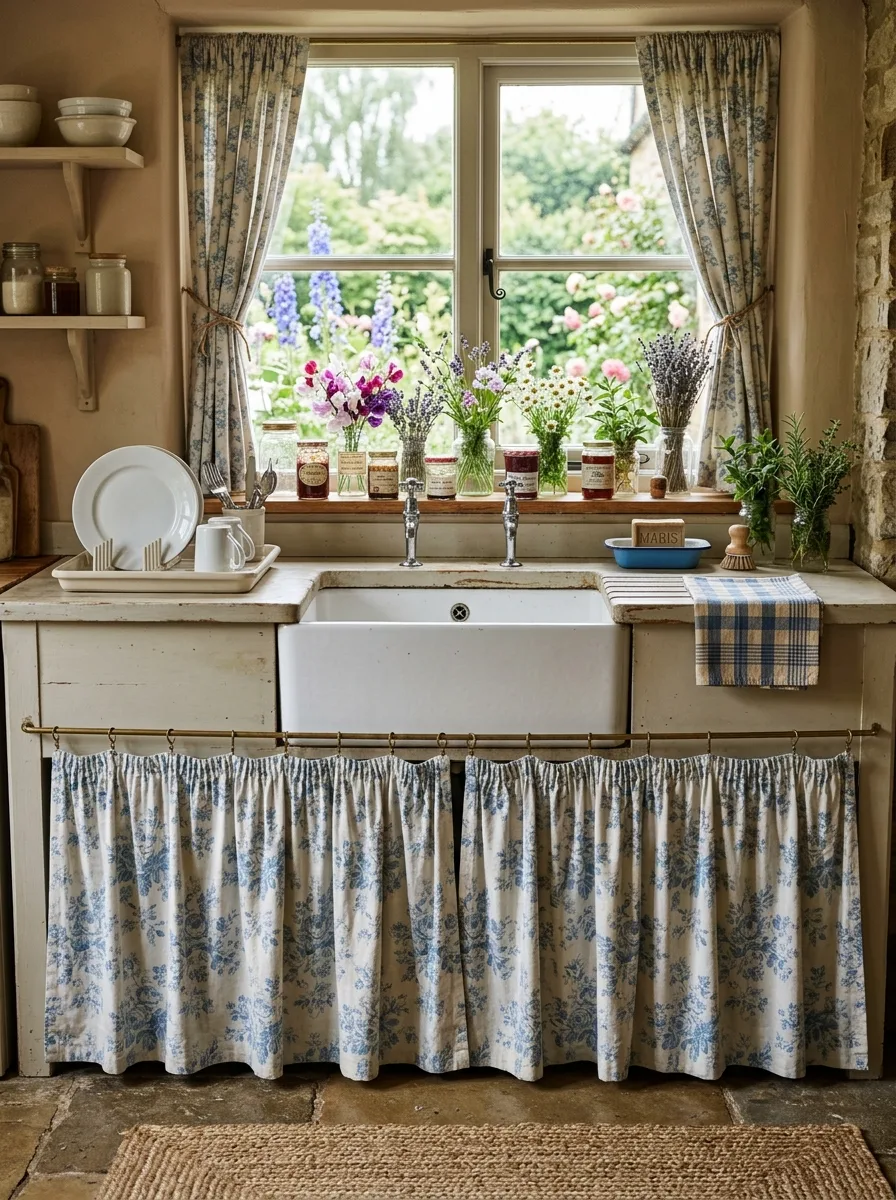
Remove the cabinet doors beneath a freestanding or unfitted sink. Hang a brass or copper rail at counter height beneath the basin on small curtain rings, and run panels in blue and white toile de Jouy — the classic repeated scenic pattern — gathered generously along the rail to just above floor level. Line the window above with matching panels tied back loosely with jute.
On the sill, stand glass jam jars holding single stems of garden flowers — several different varieties, loosely arranged. Add labelled jars of home-preserved jam beside the sink, a blue gingham tea towel, a scrubbing brush, one white plate drying on a rack. This zone is deliberately lived-in. It earns its charm by being genuinely unpolished, not by simulating it.
Full Slab Marble Brass Sink
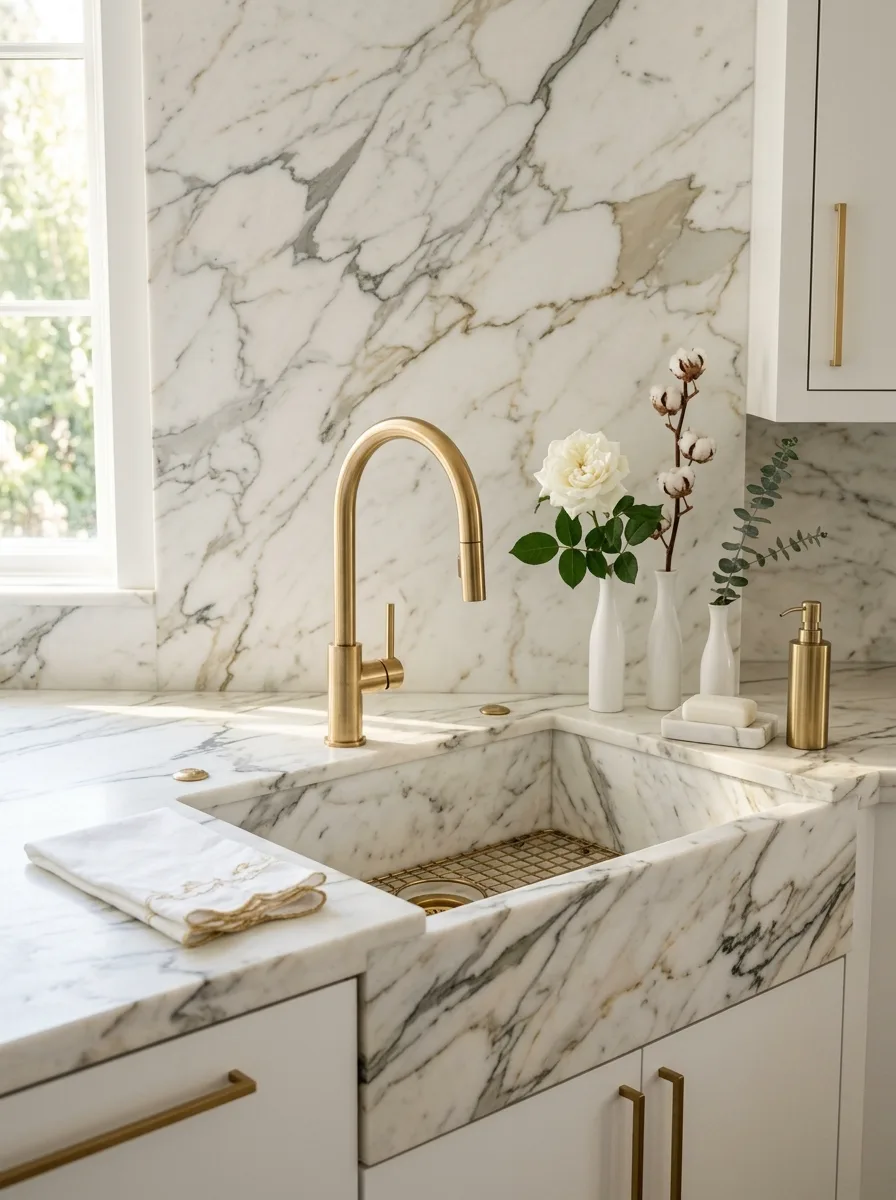
Run the marble countertop up the wall as a full-height slab backsplash — same stone, continuous surface from counter to near-ceiling. The slab needs strong veining with genuine movement in the stone. Calacatta or anything with bold grey and gold lines will do. Pale beige with hairline marks will not. Cut the apron-front basin directly from the marble so the sink and the counter appear to be one unbroken piece.
Install a single brushed brass pull-down gooseneck faucet. Set three slim white ceramic vases of different heights to one side — one white garden rose in the tallest, a cotton branch in the second, a eucalyptus sprig in the third. Place a gold soap dispenser and a white marble soap dish beside them. The restraint in the styling is what makes the marble dramatic. Do not add more.
Hand-Painted Botanical Tile
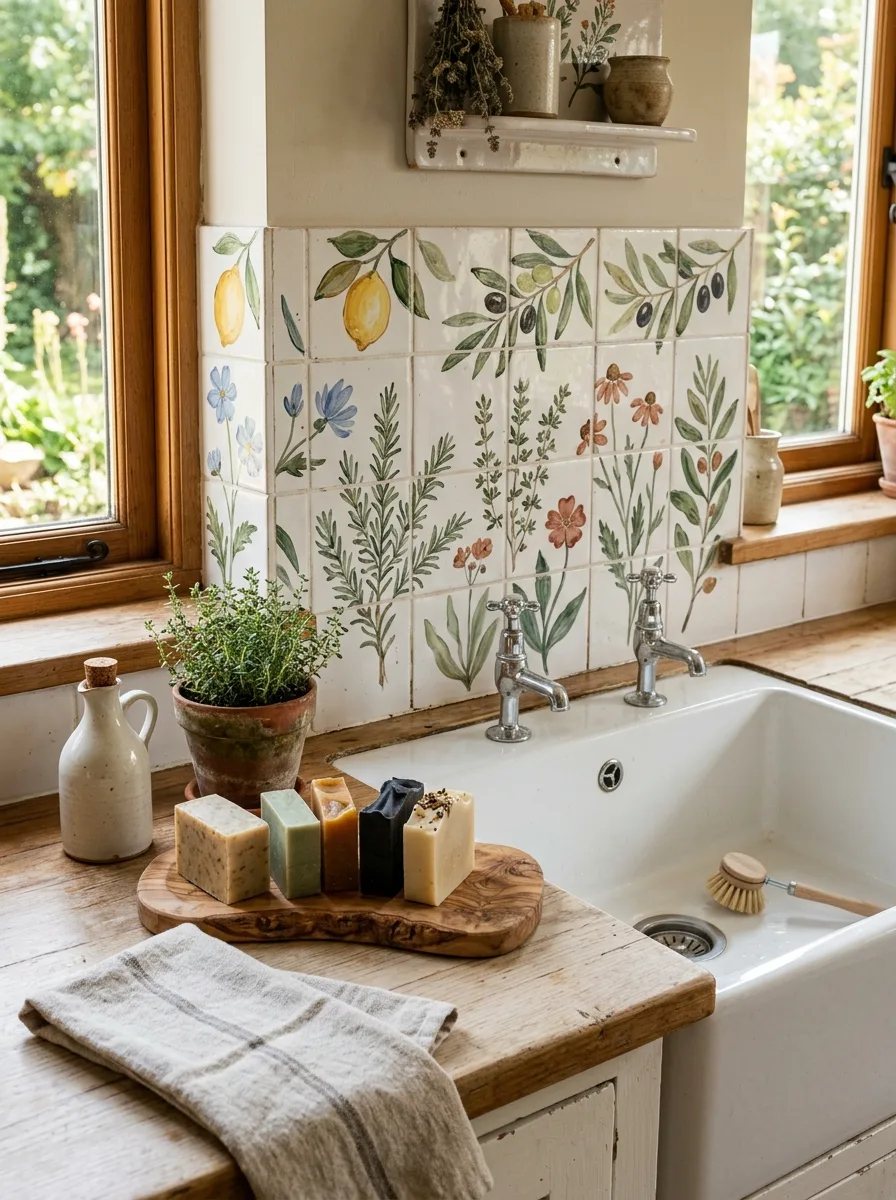
Source individually hand-painted square ceramic tiles in a botanical pattern — lemons, olive branches, rosemary, cornflowers — and tile the backsplash behind the sink. Each tile should be separately painted so no two are identical. Set them at fifteen to twenty centimetres square so each reads as a distinct picture rather than a repeating surface.
Mount chrome cross-handle taps over a white Belfast sink set into an aged wood counter. On the counter, line up four or five bars of artisan soap on an olive wood board — different colours, different textures, some with herbs pressed in. Add a small terracotta pot of live thyme, a ceramic oil bottle, a folded linen towel. Hang a simple clay shelf above the window for stoneware vessels and a bundle of dried herbs. This kitchen has clearly been somewhere.
Vertical Tile Black Pendant
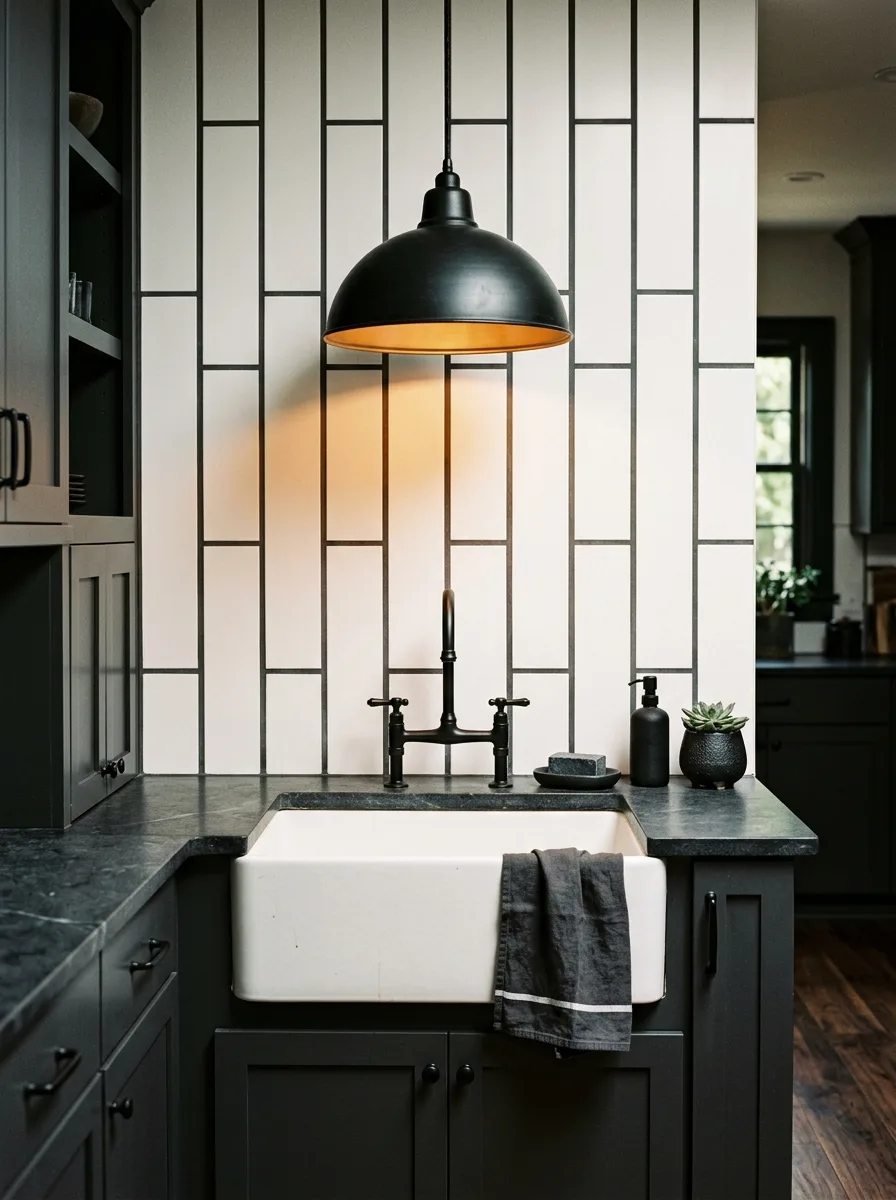
Rotate your subway tile installation ninety degrees. Stack white rectangular tiles vertically, floor to ceiling, in a straight stacked bond — no offset, no brick pattern, all the way up. Grout in near-black charcoal. The vertical orientation elongates the wall, makes the ceiling feel higher, and turns a familiar material into a graphic statement.
Install charcoal shaker cabinets with simple black bar handles and a soapstone or honed dark granite countertop. Set a white apron-front sink below a black bridge faucet. Hang one large dome pendant in matte black with a warm amber interior finish directly over the sink. Add one succulent in a textured black ceramic pot. Add nothing else.
Small Kitchen Wall System
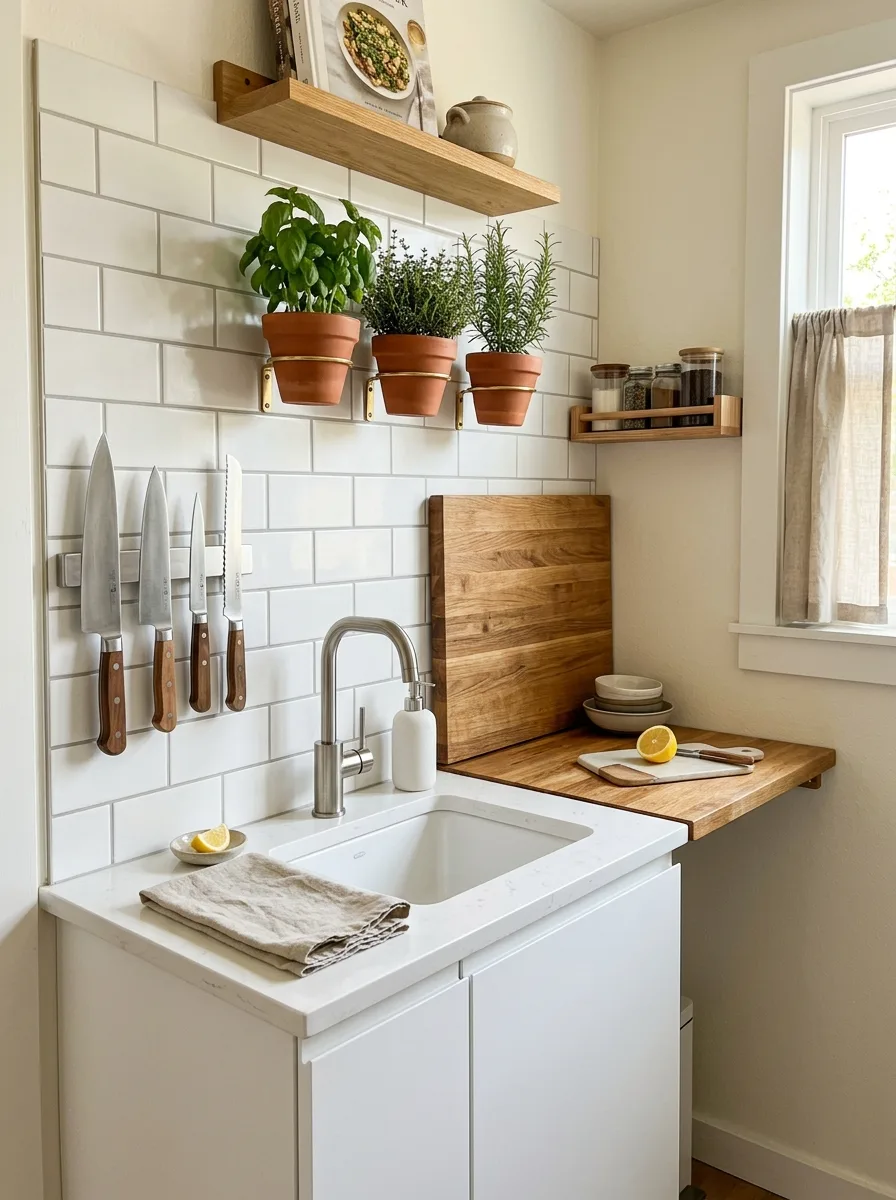
Mount a stainless steel horizontal rail across the backsplash at roughly thirty centimetres above the counter, spanning the full width of the sink cabinet. Hang from it a small wire mesh basket, a wooden cutting board on a hook, and a cotton tea towel. Mount two small brass-tipped wall brackets directly on the white subway tile and set terracotta herb pots on them at counter height where they catch window light — basil, thyme, rosemary.
Add a narrow wooden spice shelf to the side wall for three or four jars. Mount a magnetic knife strip to the left of the sink at a height that keeps the blades accessible but clear of the work zone. Add one floating oak shelf above the rail for a leaning cookbook, a small ceramic vessel, and a storage jar. Every centimetre earns its keep. That is the design.
Navy Glass Butler Display
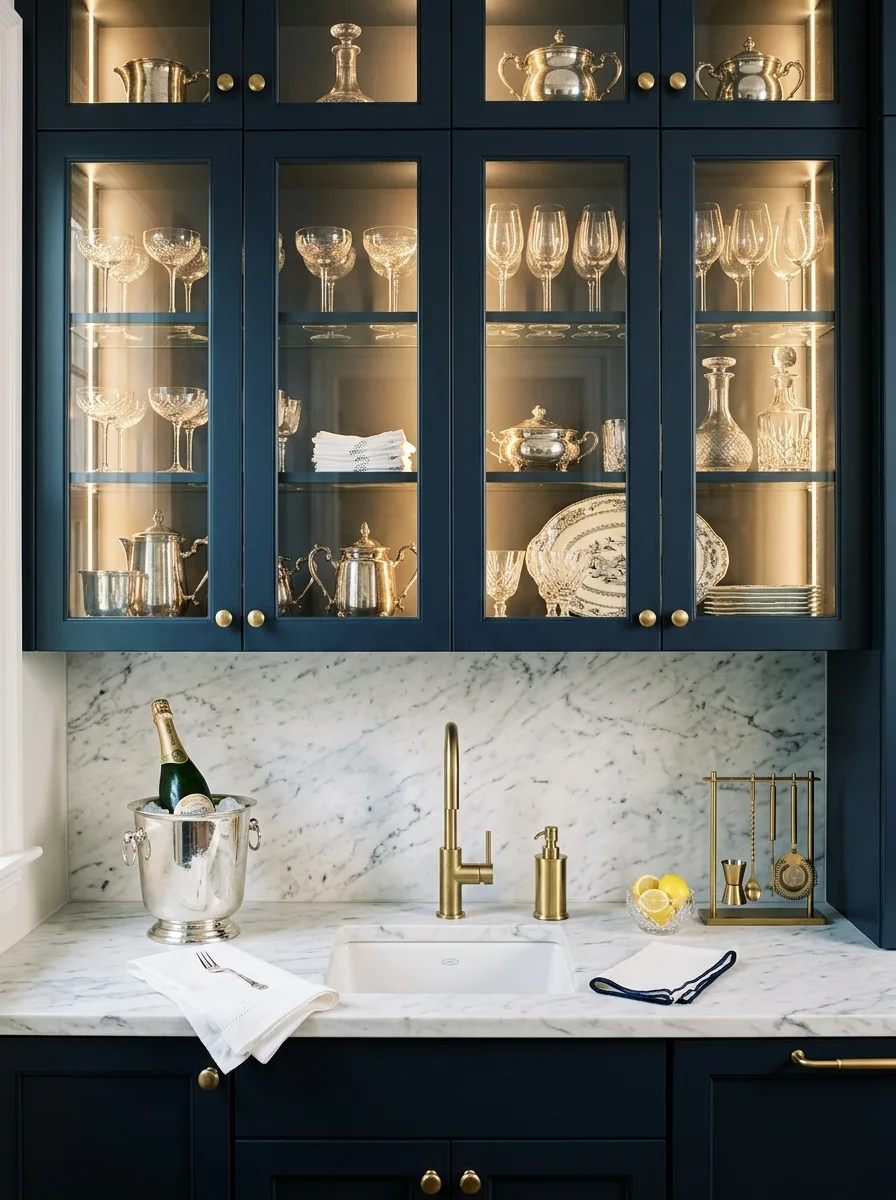
Install wall-to-wall upper cabinets in deep navy with glass-front panels on every door. Paint the interior back of each cabinet in a warm brass or gold tone. Mount warm white LED strip lighting inside each cabinet along the top interior edge. Fill with crystal stemware arranged by type, silver-plate serving pieces, and heirloom china — the internal lighting turns the collection into a glowing display visible from across the room.
Below, run white marble as both counter and full-height slab backsplash. Install a single brass gooseneck faucet over an undermount white sink. Set a silver champagne bucket on the left and a brass bar tool rack on the right. Arrange stemware inside the cabinets with deliberate space between each piece. Crowding kills the effect entirely. The cabinet display is not decorative. It is the entire point.
Final Thoughts
Every sink zone in this list is built on one central decision. The zellige tile. The live-edge slab. The wall-to-wall marble. The wallpaper. Everything else — the herbs, the linen, the flowers, the soap — came after that decision was made.
That’s what separates a zone that feels designed from one that feels assembled. Not the budget. Not the finishing touches. The commitment to one clear idea, followed through completely.
Your sink is where you spend your time. Make the decision it deserves, then let the details follow.