
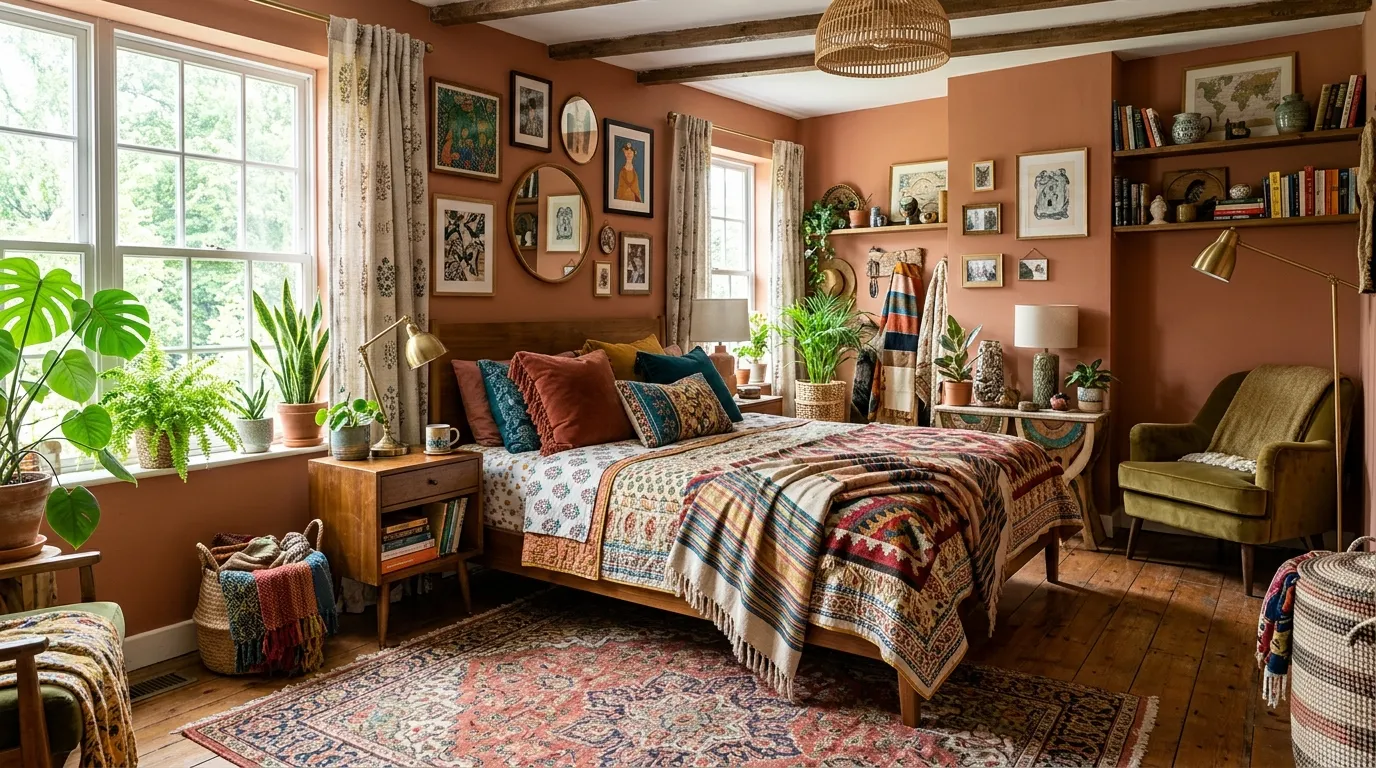
Somewhere along the way, “cohesive” became a synonym for “boring,” and nobody sent the memo to the beige sectional industrial complex.
Eclectic bedrooms get accused of being chaotic. They’re not. A room with a teal velvet bed frame, a mustard throw, a Persian rug, and a gallery wall of mismatched frames isn’t an accident. It’s a series of decisions, made by someone who understood that a bedroom is allowed to have opinions.
Most people who attempt this look end up with a room that reads as cluttered instead of curated. The difference has nothing to do with how much stuff is in the room. It has everything to do with what’s holding it together.
What Eclectic Actually Requires
People think eclectic means “no rules.” It means the opposite. It means more rules than a minimalist room, they’re just invisible.
The Difference Between Eclectic and a Yard Sale
A yard sale has a hundred objects and zero relationships between them. An eclectic bedroom has a hundred objects and every single one is quietly agreeing with at least one other object in the room.
That agreement can be color. It can be material. It can be era. It doesn’t matter which thread you pick, as long as something repeats often enough that your eye starts to trust the room instead of scanning it for exits.
Look at any bedroom that reads as “confidently maximalist” instead of “hoarder chic.” There’s always a repeating color showing up in at least three unrelated places — a pillow, a lamp base, a piece of art. That repetition is doing all the work. Remove it and the whole thing collapses into noise.
Why One Loud Element Beats Five Medium Ones
The instinct with eclectic decorating is to make everything interesting. Wrong move. Interesting rooms have one thing that’s genuinely loud — a wallpaper, a rug, a chandelier — and everything else exists to support it.
Five medium-loud things fighting for attention is exhausting to be in. One extremely loud thing, surrounded by pieces that know their job is secondary, is restful even when it’s colorful. Your eye needs somewhere to land first.
Pick your loudest piece before you buy anything else. Everything downstream gets decided in relation to it.
What Nobody Tells You About Pattern Mixing
The rule people repeat is “mix patterns of different scales.” True, but incomplete. The actual trick is that mixed patterns need a shared colorway, even a partial one, or the scale trick does nothing to save you.
A large floral and a small geometric will clash regardless of size difference if they don’t share even two colors. Find the overlap first. Then worry about scale.
Eclectic Bedroom Ideas
Teal Velvet Jungle Bed
Start with a jewel-toned velvet bed frame — teal, emerald, or a deep sapphire all work — and treat it as the one non-negotiable splurge in the room. Velvet catches light in a way flat fabrics never will, which matters enormously in a room this saturated.
Build the plant wall next. Cluster at least six plants of varying heights along one side of the bed, mixing trailing varieties with tall structural ones like a monstera or fiddle leaf. Don’t space them evenly. Let them overlap and compete for light like they would outdoors.
Layer the bedding in a gradient rather than a single print — sunset oranges bleeding into blues and pinks reads as intentional, while a single busy print reads as loud for no reason. Finish with mismatched pendant lighting overhead: a woven globe, a feathered fixture, string lights. No two fixtures should match.
Leather Headboard Dark Green
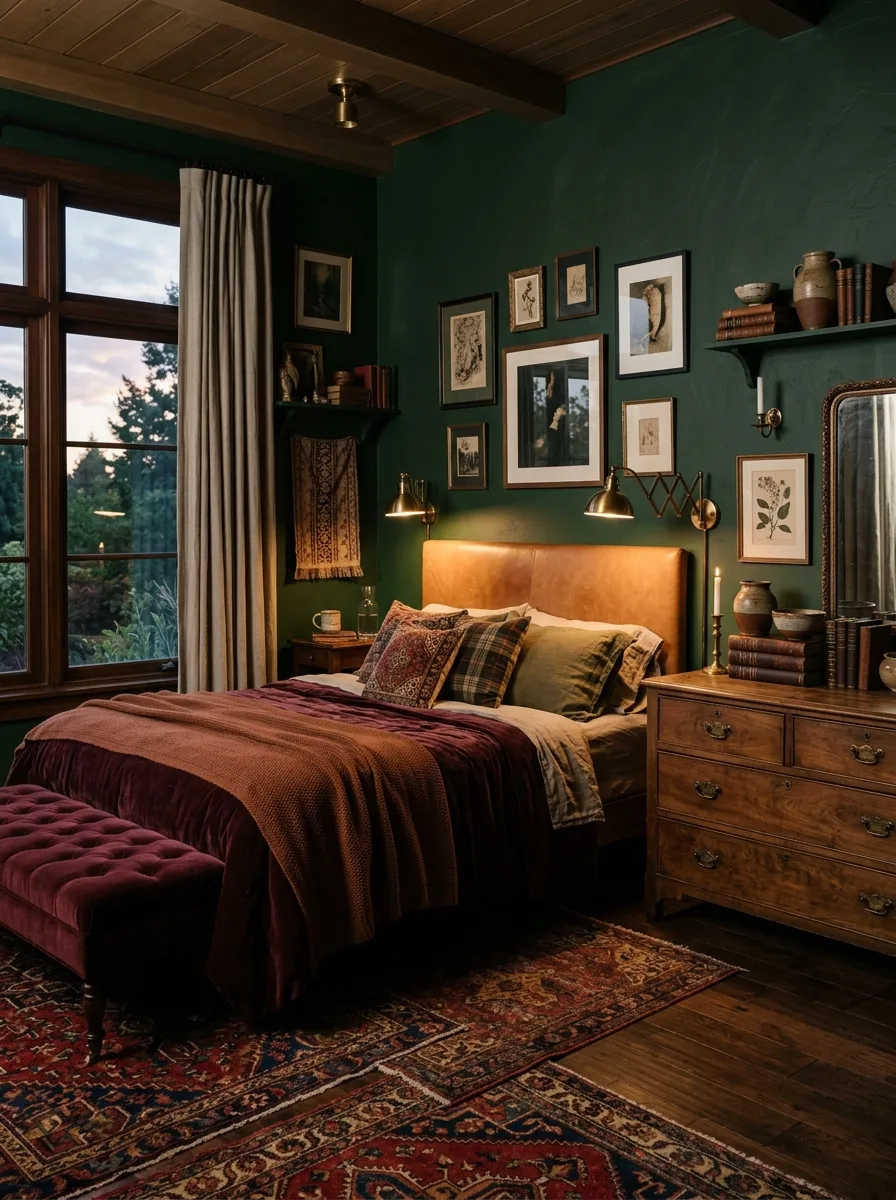
Choose a deep forest or hunter green for the walls and commit to it floor to ceiling, no accent wall halfway measures. Dark saturated colors need full coverage to read as intentional rather than accidental.
Build the bed around a cognac or tan leather headboard. Leather against dark green is the core relationship in this room — warm against cool, shiny against matte — and it should be the first decision you make.
Assemble a gallery wall of small, mismatched frames in warm wood tones rather than one large piece. Keep the frame sizes varied and the spacing tight, almost overlapping, so the wall reads as accumulated rather than purchased as a set. Finish with brass sconce lighting flanking the art for a warm, library-adjacent glow.
Two-Tone Wall Art Cluster
Paint the bottom third of the wall in a saturated color, teal or forest green both work well, and leave the top two-thirds white. This single move gives you a built-in frame for everything else without touching a paintbrush twice.
Cluster oversized abstract art above the bed rather than a neat symmetrical arrangement. One piece should be significantly larger than the rest, hung slightly off-center, with two or three smaller works filling the gaps. Mismatched frame widths make the cluster feel assembled over time.
Bring in mid-century wood furniture with tapered legs to ground the color-blocked wall. A vintage console or dresser in warm walnut reads as collected, not staged, especially against a saturated paint color.
70s Wallpaper Mushroom Lamps
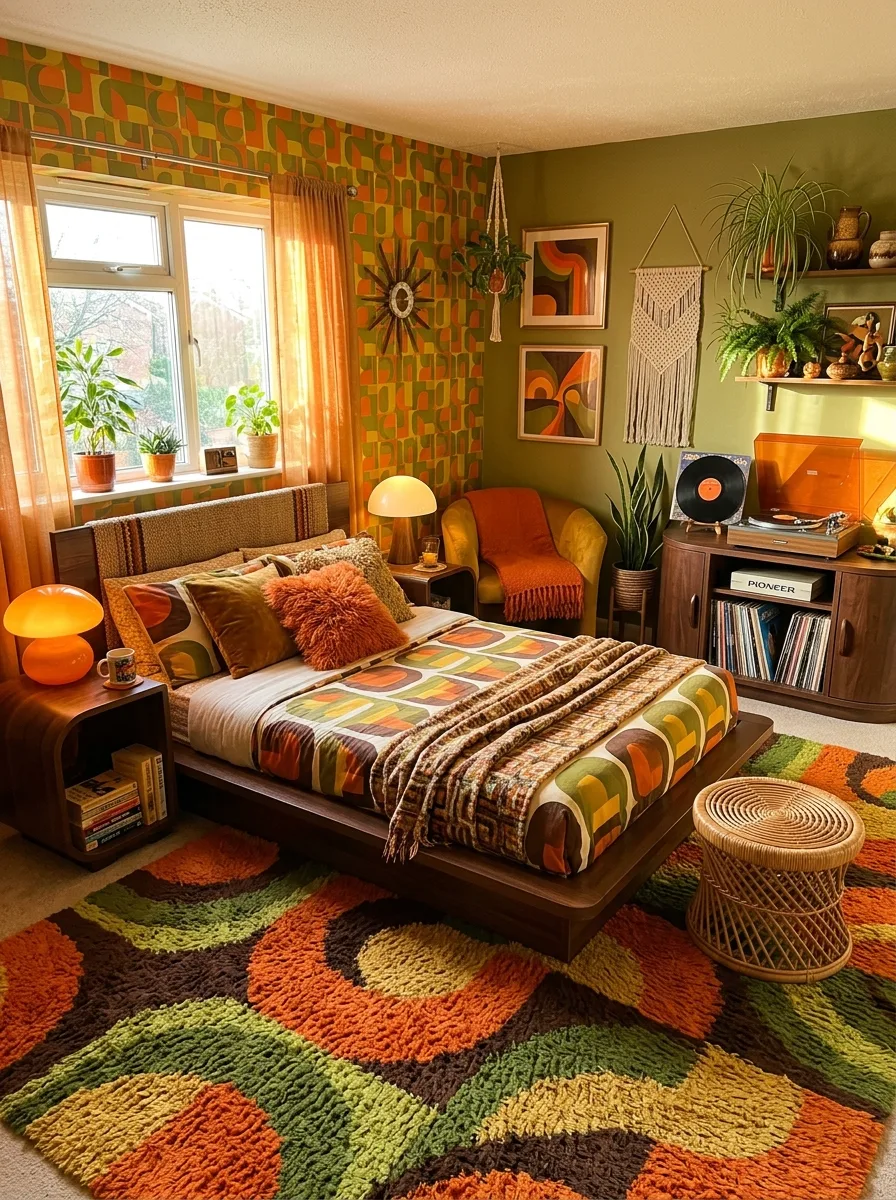
Commit to a genuine retro wallpaper — geometric shapes in olive, orange, and mustard — on at least one full wall, ideally paired with a solid wall in the room’s dominant olive tone rather than white. Half-measures make this look like a costume instead of a room.
Bring in mushroom-shaped lamps in warm amber or orange glass as your primary lighting. Their rounded silhouette and warm glow are doing more period-accurate work than almost any other single object you can buy.
Layer a swirled, high-pile shag rug in the same warm palette, and add macrame wall hangings and hanging plants to soften all the hard geometric lines. A vintage record player on open shelving isn’t optional decoration here — it’s load-bearing for the whole aesthetic.
Graphic Throw Over Pastels
Pick one high-contrast graphic textile — black and white works best because it reads as neutral despite being loud — and let it dominate the foot of the bed, rumpled rather than folded flat.
Underneath it, layer soft pastel bedding in mustard and blush. The contrast between the graphic throw and the quiet pastels underneath is the entire trick. Neither element should be muted.
Add a single piece of graphic wall art in the same black-and-white family directly above the headboard, then let everything else in the room go quiet: a plain grey wall, simple lamps, unfussy furniture. The two loud graphic elements need a calm room to perform in.
Oversized Abstract As Anchor
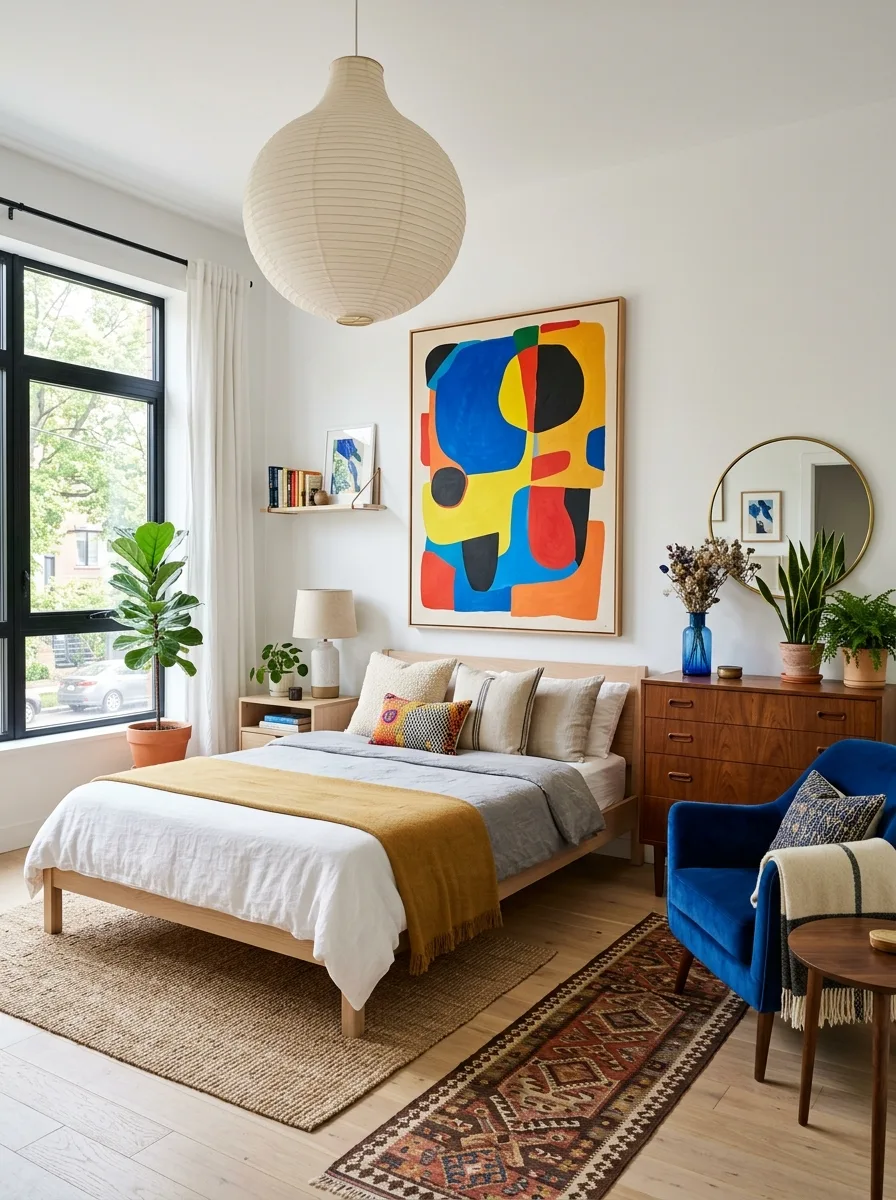
Hang one oversized, high-color abstract painting directly above the bed and size it generously — it should feel slightly too big for the wall, not perfectly proportioned. That scale is what lets a mostly white room still feel maximalist.
Pull three or four colors directly from the painting and repeat them in small doses around the room: a blue velvet accent chair, a small framed print, a ceramic vase. Nothing else needs to be as loud as the painting, but everything needs to acknowledge it exists.
Keep the furniture and bedding neutral and textural — white linens, warm wood, a jute rug — so the painting has room to be the only saturated statement. Add one graphic kilim runner at the foot of the bed as a second, quieter pattern moment.
Pink Chandelier Plum Walls
Paint the walls and ceiling the same deep plum or burgundy, no trim break. This monochrome envelope is what makes a colorful chandelier read as jewelry instead of clutter.
Hang a tiered crystal or glass chandelier in a soft pink or rose tone as the room’s single loudest element. It should feel oversized for the room — that’s correct, not a mistake.
Introduce one saturated contrast piece, a cobalt or royal blue accent chair, positioned where it catches light from the window. Keep the rug graphic but tonal, pulling gold and blush from the walls rather than introducing a third competing hue.
Paper Lantern Studio Glow
Hang a paper lantern pendant as your primary light source and let it do the job an overhead fixture usually does. The soft diffused glow is what keeps a busy, lived-in room from feeling messy after dark.
Add smaller secondary lamps at desk height — a stylized task lamp works well here — so the room has at least two distinct light sources at different heights. Layer in string lights or a small strand around a shelf for a third, lower layer.
Keep the furniture functional and slightly mismatched: a boxy desk chair in a bright color, open shelving stacked with records or books, personal ephemera taped directly to the wall. This look depends on evidence of an actual life being lived in the room, not a showroom edit of one.
Graphic Rug Neutral Room
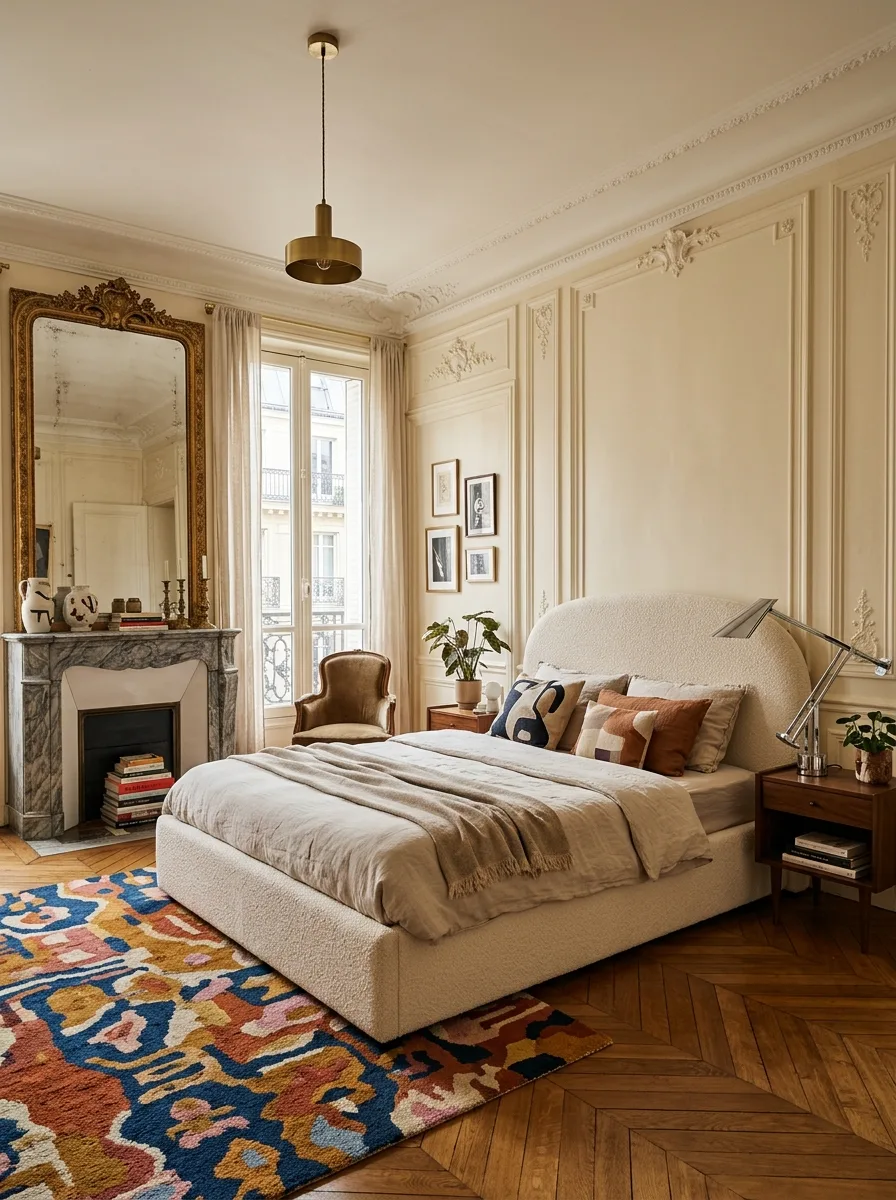
Start with the walls in a warm, unfussy neutral — cream, warm white, soft greige — and resist the urge to add color there. This room’s entire personality lives on the floor.
Choose one boldly graphic, high-color rug and let it be the loudest object in the space by a wide margin. Abstract, folk-art-inspired patterns work better here than florals, since they read as art rather than decoration.
Keep every other textile quiet: a plain boucle or linen bedspread, unpatterned throw pillows in one or two solid colors pulled from the rug. An ornate gold mirror or vintage marble mantle can add texture without adding competing color. The restraint everywhere else is what lets the rug function as the room’s real artwork.
Plaster Walls Bold Art
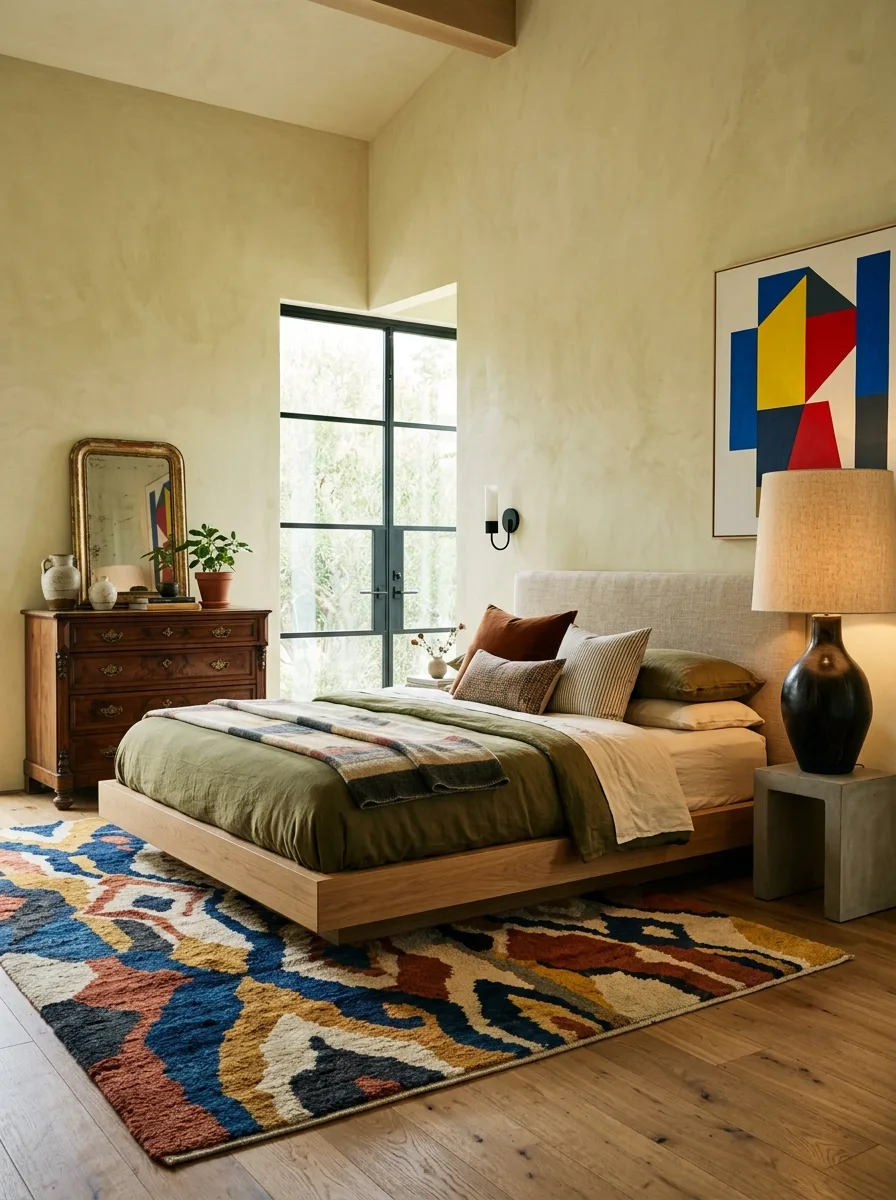
Use a textured lime-wash or plaster finish on the walls in a warm, sandy neutral. The texture alone adds visual interest without adding a single extra color, which frees up your budget for the art.
Hang a boldly geometric, primary-color piece of art as the room’s single loud element, sized to command the wall rather than fill a gap. Against a textured neutral wall, even one graphic piece reads as maximalist.
Ground the room with aged wood furniture — a carved antique dresser, a black ceramic lamp with real weight to it — and finish with a boldly patterned rug in a Southwestern or mudcloth-inspired print. The plaster texture keeps all this pattern and color from feeling cold.
Wallpaper Matched to Curtains
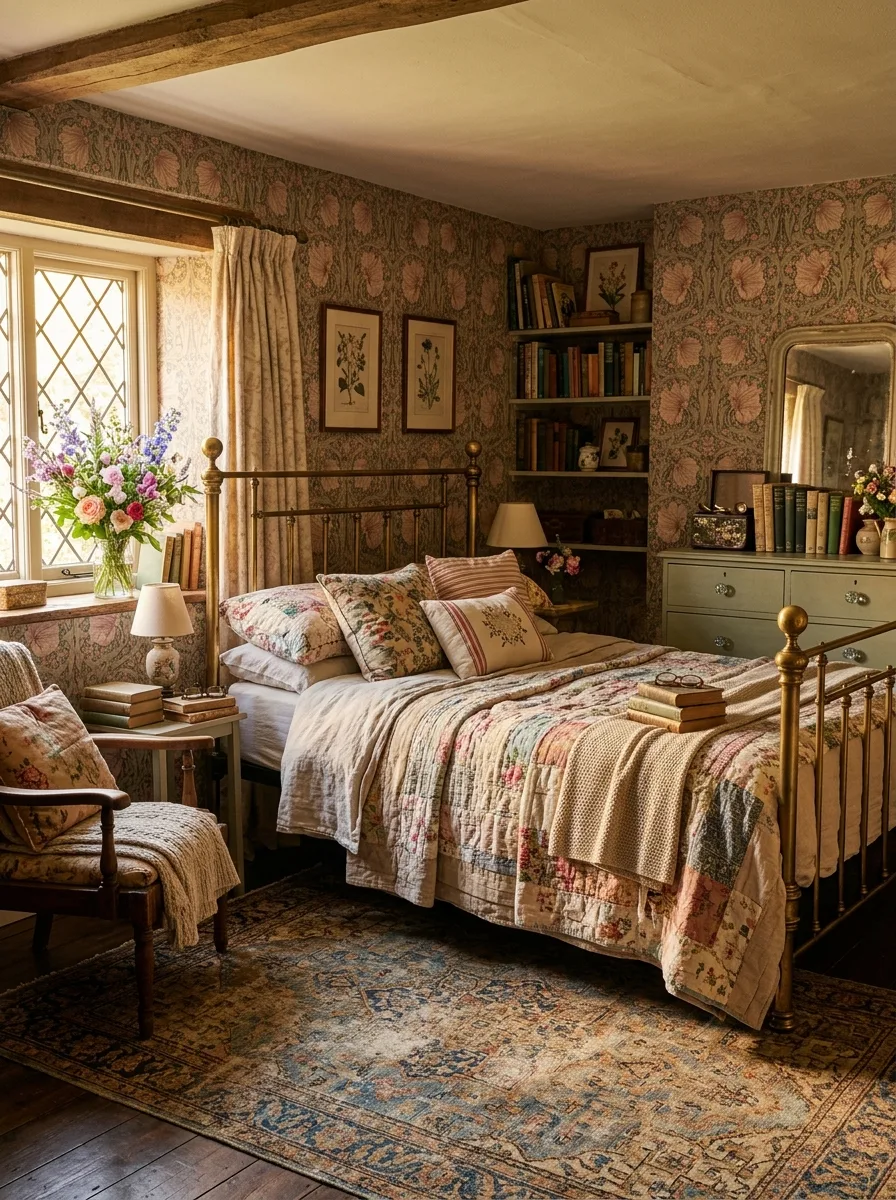
Choose a dense floral wallpaper and have your curtains made from the exact same or a closely coordinating fabric. This full-room immersion is the single most effective trick in traditional maximalism, and almost nobody does it because it feels excessive. Do it anyway.
Layer a patchwork or vintage quilt on the bed rather than a solid duvet, mixing in smaller florals that echo but don’t exactly match the wallpaper’s colors. Pile on more pillows than feels reasonable, no two covers identical.
Fill open shelving with real, well-loved books and small framed botanical prints rather than styled decor objects. A brass or iron bed frame, left slightly imperfect rather than polished, keeps the room from tipping into precious.
Bookshelves As Bedroom Backdrop
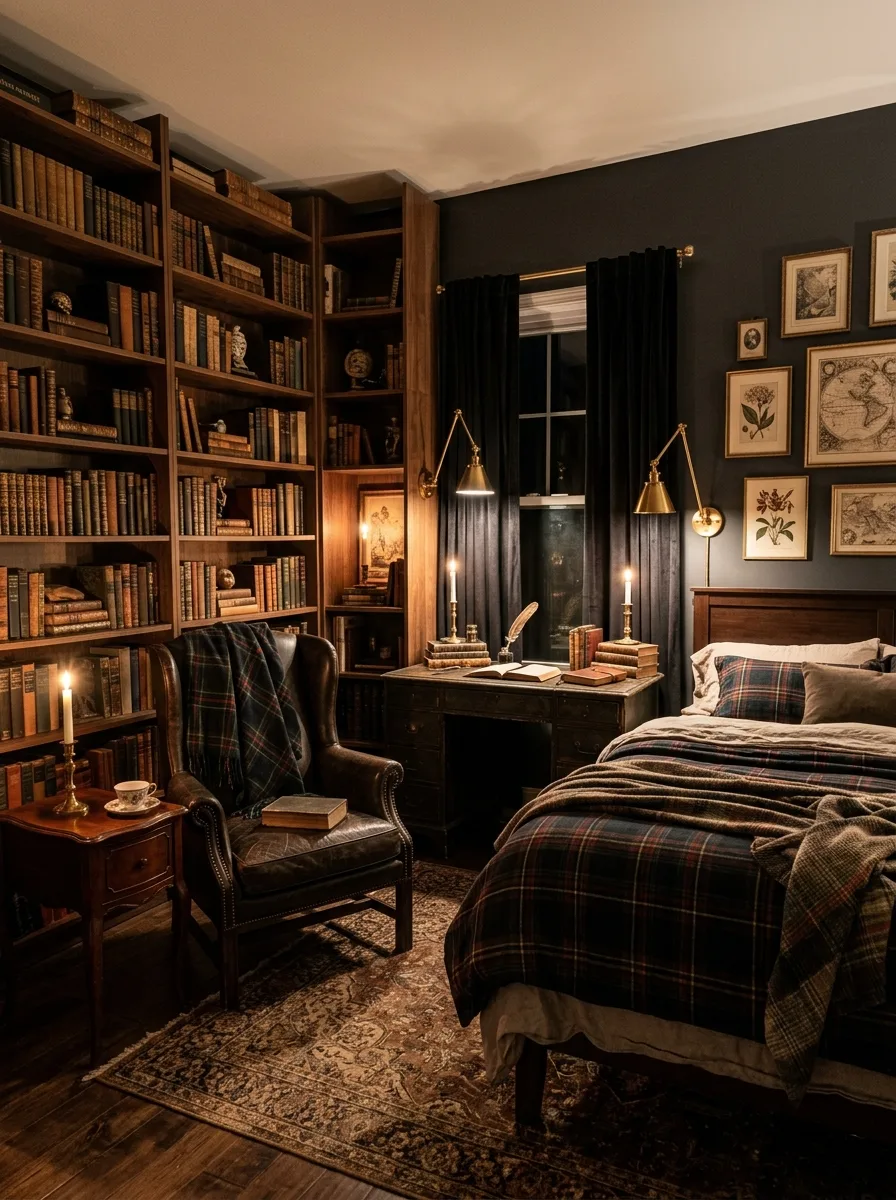
Install floor-to-ceiling wood shelving along one full wall and fill it with actual books, not curated stacks of three. Density is the point — a half-empty shelf reads as staged, a packed one reads as real.
Choose a dark, moody wall color for the remaining walls, charcoal or near-black, so the warm wood of the shelving and the leather furniture pop instead of competing with bright paint.
Add a leather wingback chair with a plaid throw draped over the arm, positioned as if someone was just sitting there. Light the room primarily with warm brass sconces and candles rather than overhead fixtures — this look lives or dies on warm, low, uneven light.
Wallpapered Ceiling Gallery Wall
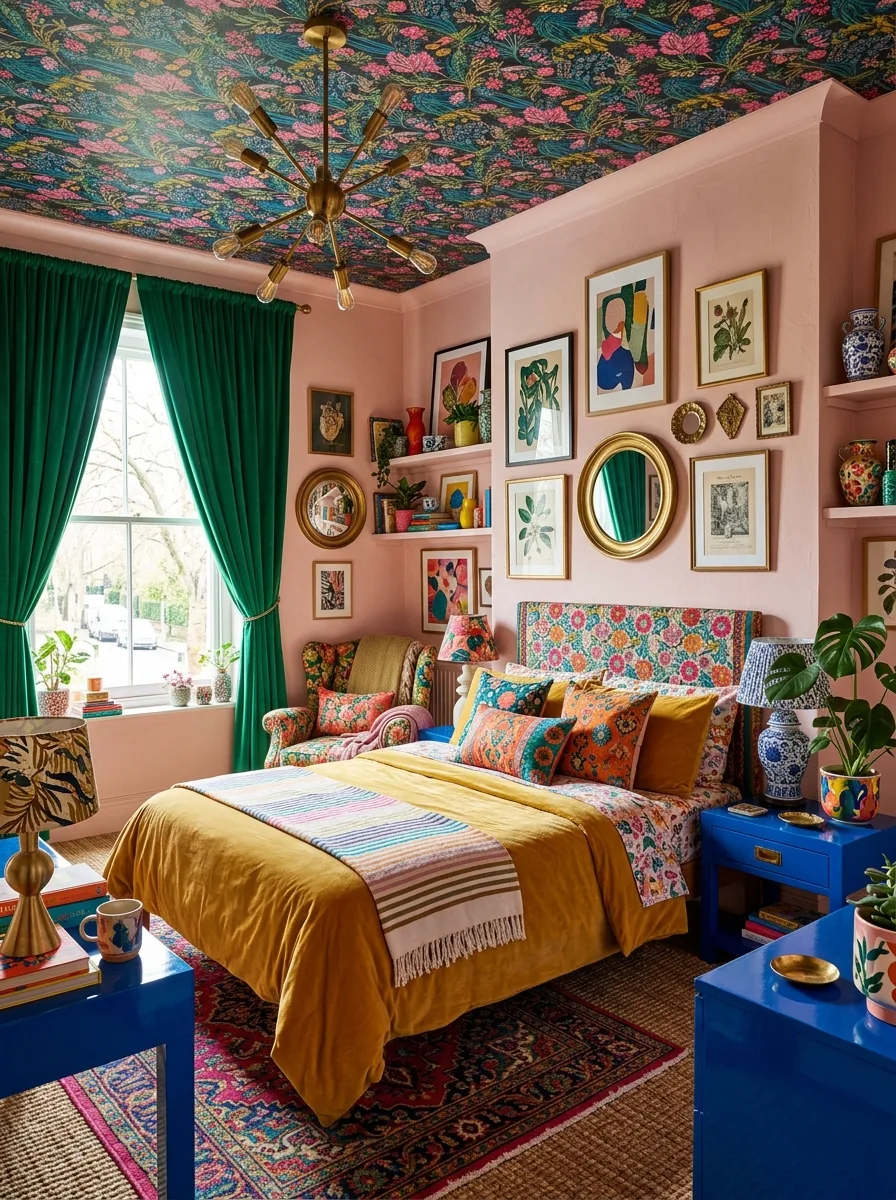
Wallpaper the ceiling in a dense floral print and paint the walls a solid, complementary color like blush pink. A patterned ceiling is the single boldest move on this entire list, and it instantly makes everything below it feel intentional rather than random.
Build an asymmetrical gallery wall of mixed frames, mirrors, and small shelved objects on the largest open wall. Mix gold frames with black ones, round mirrors with rectangular art, so the wall reads as accumulated over years rather than hung in one afternoon.
Choose jewel-toned velvet curtains, emerald works particularly well against pink, and lacquered colored furniture like a cobalt nightstand to keep the color story going below the ceiling. Every surface in this room should be doing something.
Oversized Tufted Wood Headboard
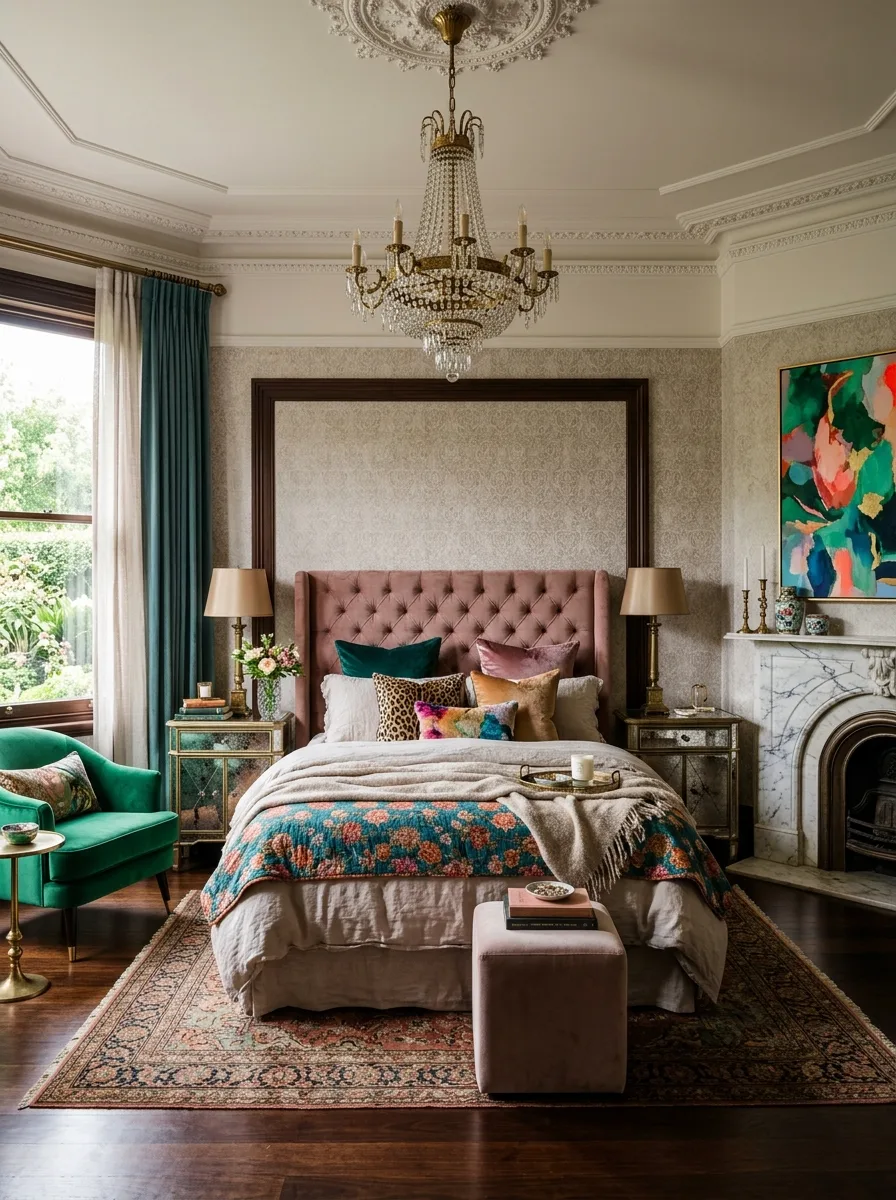
Build the bed around an oversized tufted headboard framed in natural wood, sized dramatically taller than a standard headboard. The scale alone reads as traditional glam without needing much else.
Hang a crystal chandelier as the room’s central light source and let it be genuinely ornate — this is not the room for a discreet fixture. Pair it with mirrored nightstands on either side of the bed to bounce the chandelier’s light around the room.
Add one saturated velvet accent chair in emerald or jewel-tone blue in a corner, plus a single leopard or animal-print pillow on the bed as the room’s one intentionally wild note. Keep the rug traditional and warm-toned so it doesn’t compete with the more ornate pieces.
Reclaimed Wood Vintage Trunk
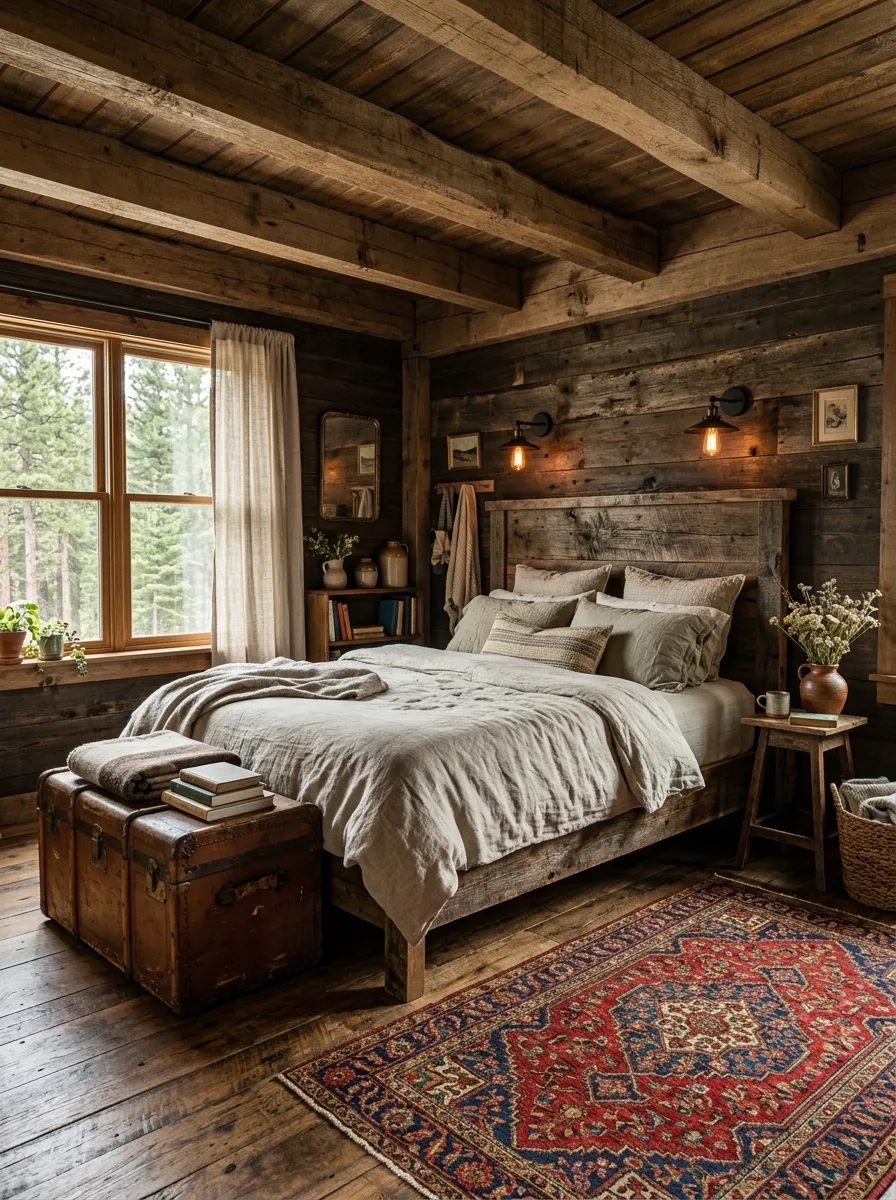
Line the walls and ceiling in reclaimed or rough-sawn wood planks, keeping the tone warm and slightly weathered rather than polished. This is the foundational choice the entire room depends on — everything else here is secondary to getting this material right.
Use a vintage leather trunk as a bench or storage piece at the foot of the bed instead of a standard bench. Old and new should touch directly: pile fresh linen bedding right up against the trunk’s worn leather.
Keep the lighting warm and low, wall-mounted sconces with exposed bulbs rather than anything polished or modern. Add one boldly patterned rug in a traditional red and navy palette to keep the room from tipping into rustic-and-nothing-else.
Geometric Wallpaper Headboard Wall
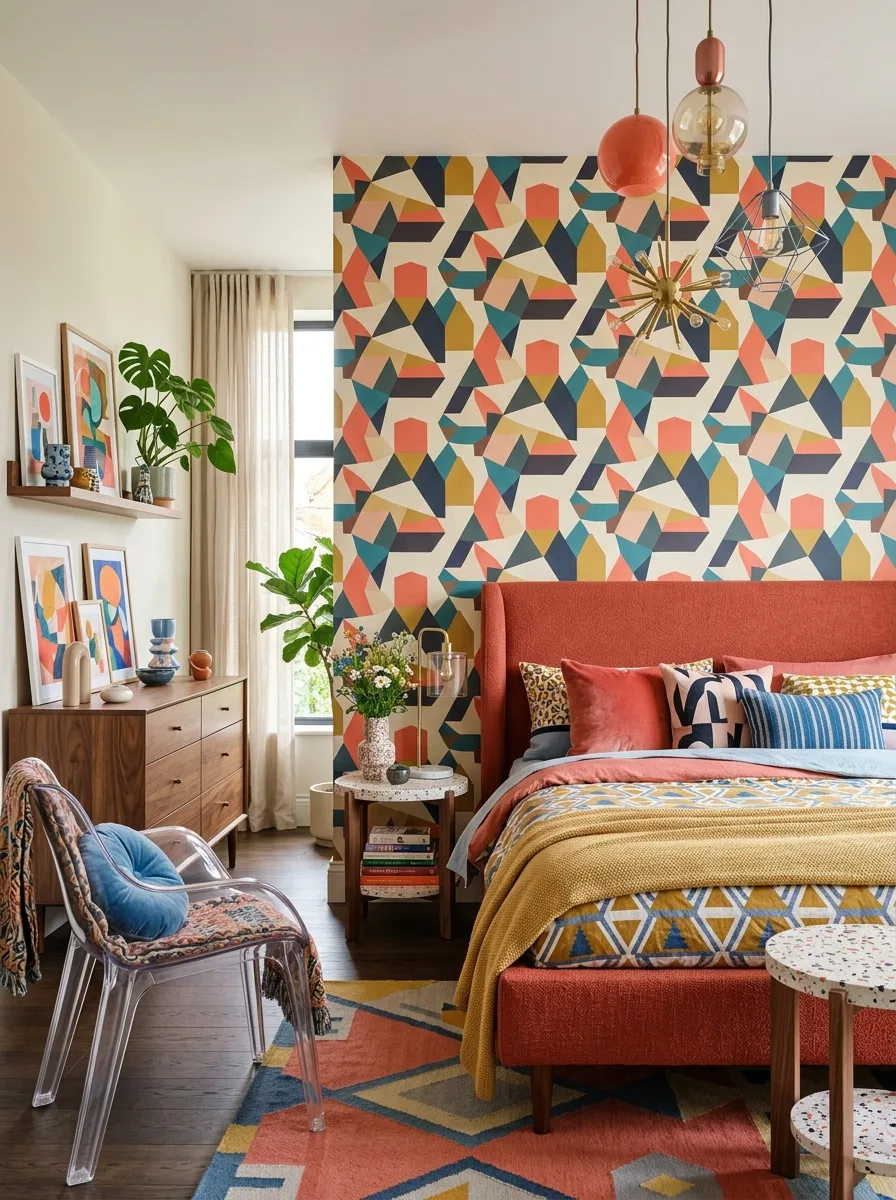
Choose an oversized geometric wallpaper in a multicolor palette and apply it to a single wall behind the bed only, letting the rest of the room stay a plain warm white. Contained to one wall, even the boldest geometric print stays wearable long-term.
Upholster the bed frame in a single saturated color pulled from the wallpaper, coral or rust both work, so the headboard reads as part of the wall pattern rather than competing with it.
Mix in mid-century pendant lighting, a sputnik fixture paired with a geometric wire pendant, hung at different heights above the bed. Finish with a clear acrylic chair to let the busy wallpaper stay visually dominant even with more furniture in the room.
Stacked Luggage Map Wall
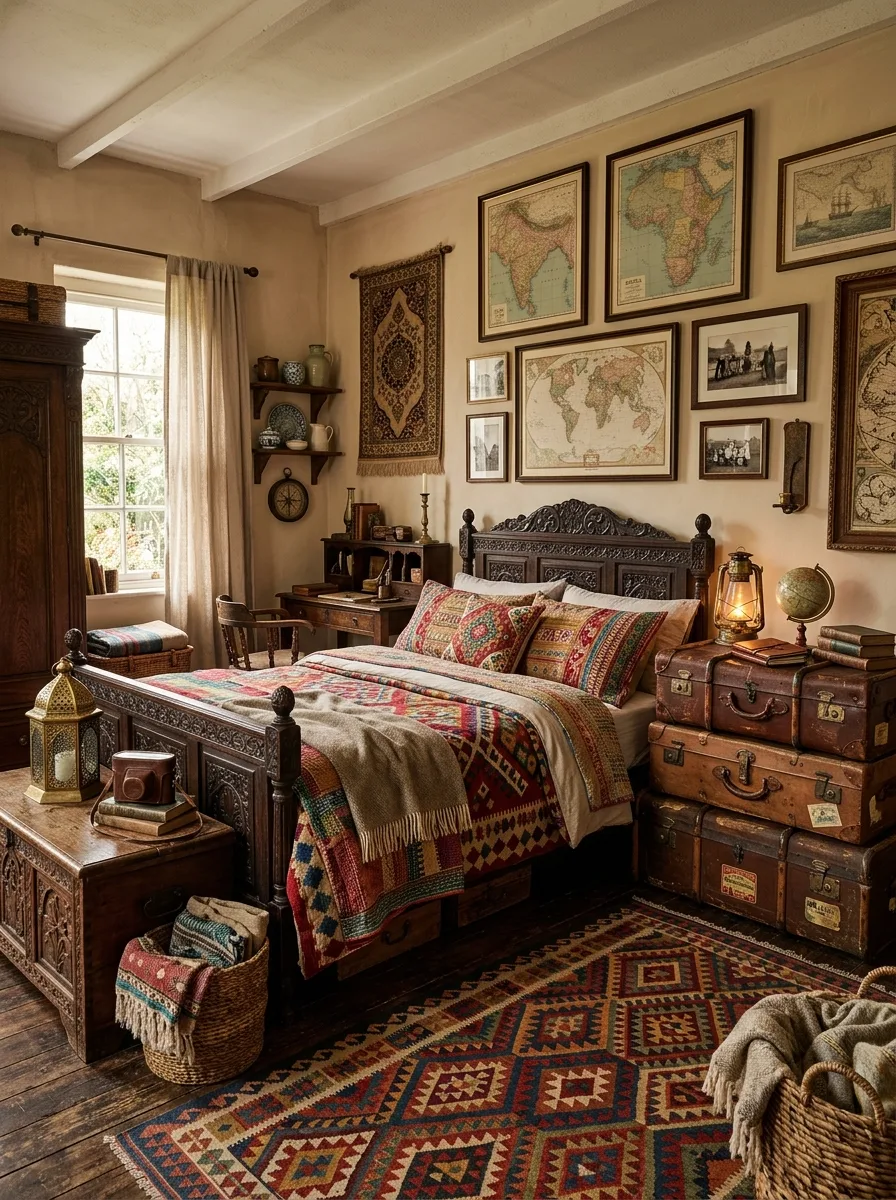
Cover a full wall in framed vintage maps and travel photography, mixing frame sizes and orientations rather than aligning everything into a grid. The lack of a grid is what makes it feel like a real collection instead of a purchased set.
Stack genuine or convincingly aged leather suitcases beside the bed as a nightstand substitute. Three stacked cases of varying sizes read as furniture, not clutter, especially topped with a small lamp or lantern.
Choose a heavily carved dark wood bed frame and layer kilim textiles across the bedding rather than a single duvet. Add one brass lantern and a small globe as the final period-accurate details that tie the whole travel narrative together.
Plaster Wall Shelf Vignette
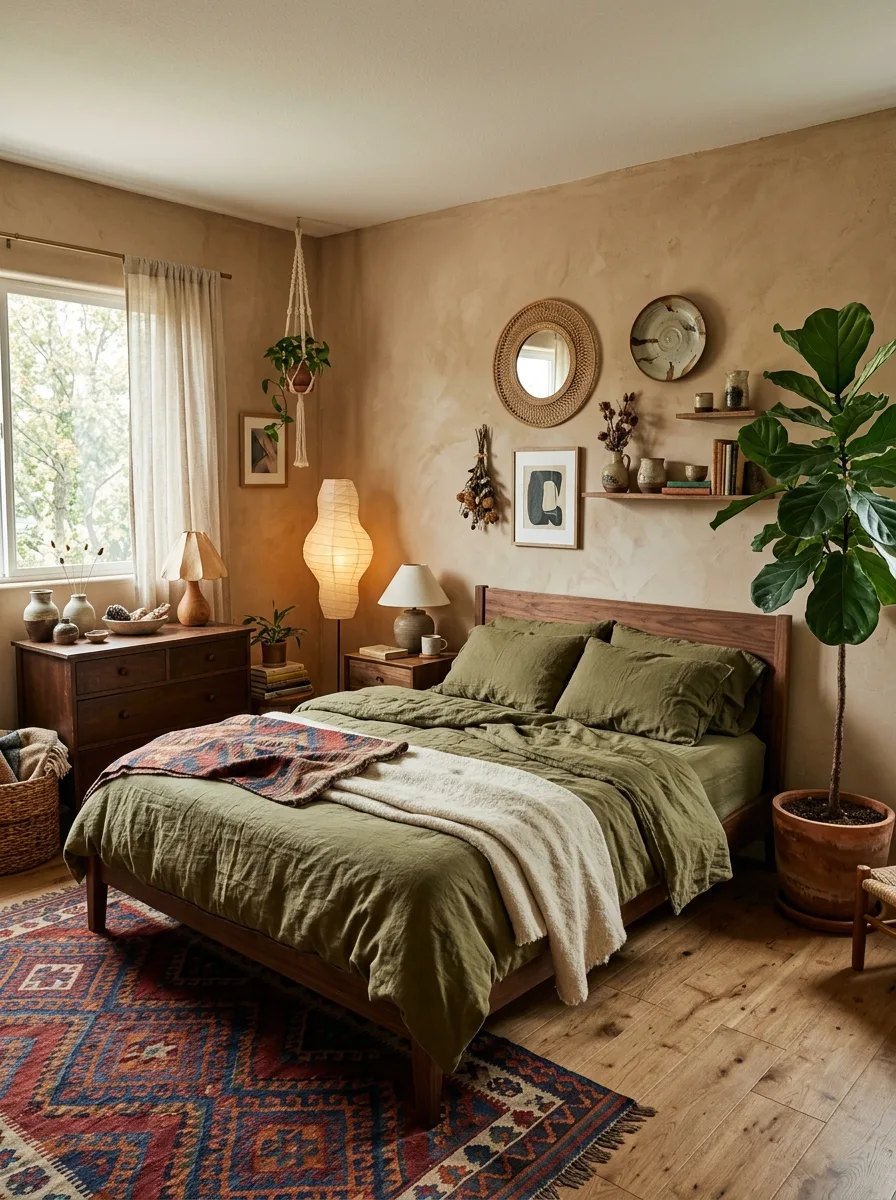
Finish the walls in a warm, textured plaster in a sandy or terracotta tone, and let the wall itself provide most of the room’s visual interest rather than paint or wallpaper.
Style a single open shelf with a tightly curated vignette: a round rattan mirror, a ceramic plate, small vases, and one framed print, all left with breathing room between objects rather than crowded together. This is the one spot in the room where restraint matters more than volume.
Add a macrame plant hanger and a large potted fiddle leaf fig for scale and texture, then finish with layered kilim rugs in overlapping warm tones. Warm paper lantern lighting keeps the whole room glowing rather than lit.
Black Walls Boucle Bed
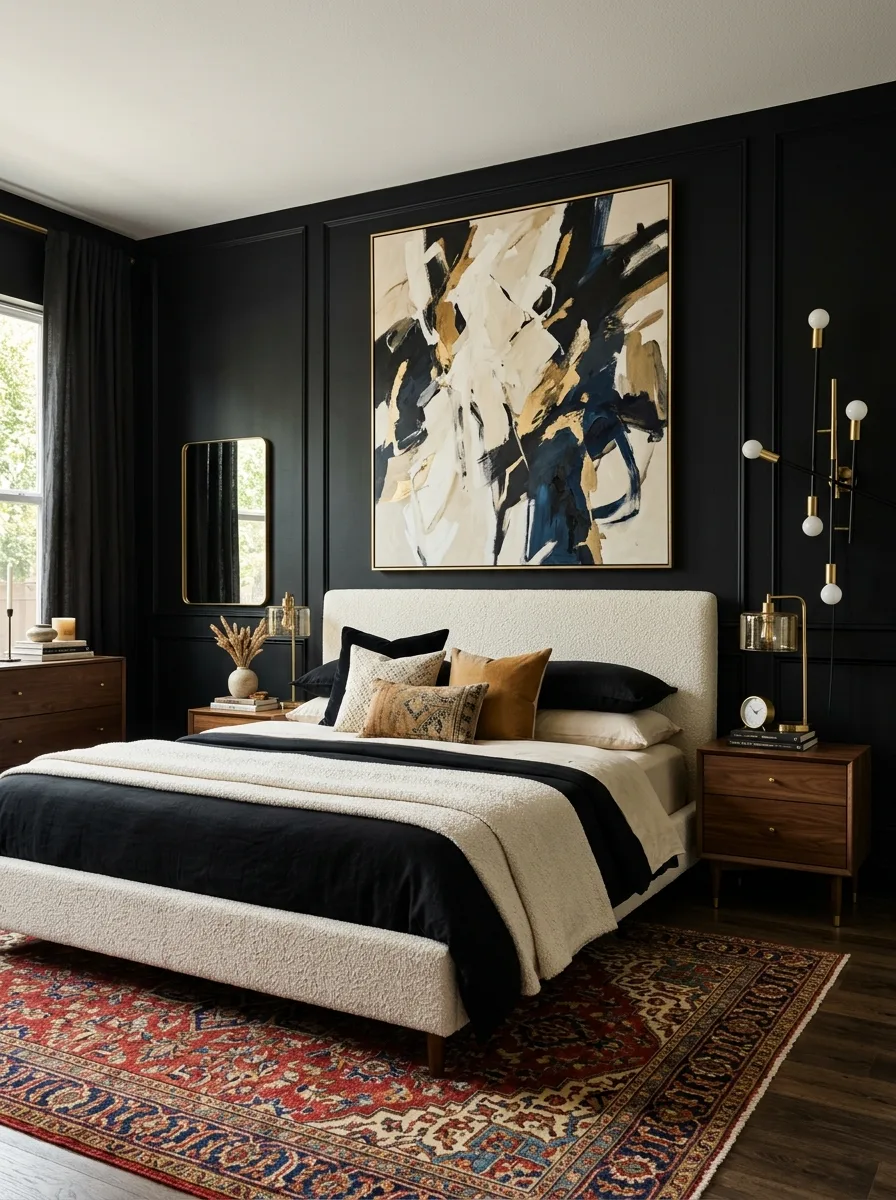
Paint the walls a true matte black, including any wall paneling or trim detail, and treat it as a backdrop rather than a color choice you’ll second-guess. Black walls make every other object in the room read as more expensive than it is.
Hang one oversized abstract painting in warm gold, cream, and navy tones directly above the bed. Against black, even a moderately sized piece reads as a major statement.
Choose a boucle-upholstered bed frame in soft cream to create maximum contrast with the dark walls, and lay a traditional red and navy Persian-style rug beneath it. The clash between the modern boucle texture and the traditional rug pattern is intentional — let it be loud.
Painted Panels Floral Match
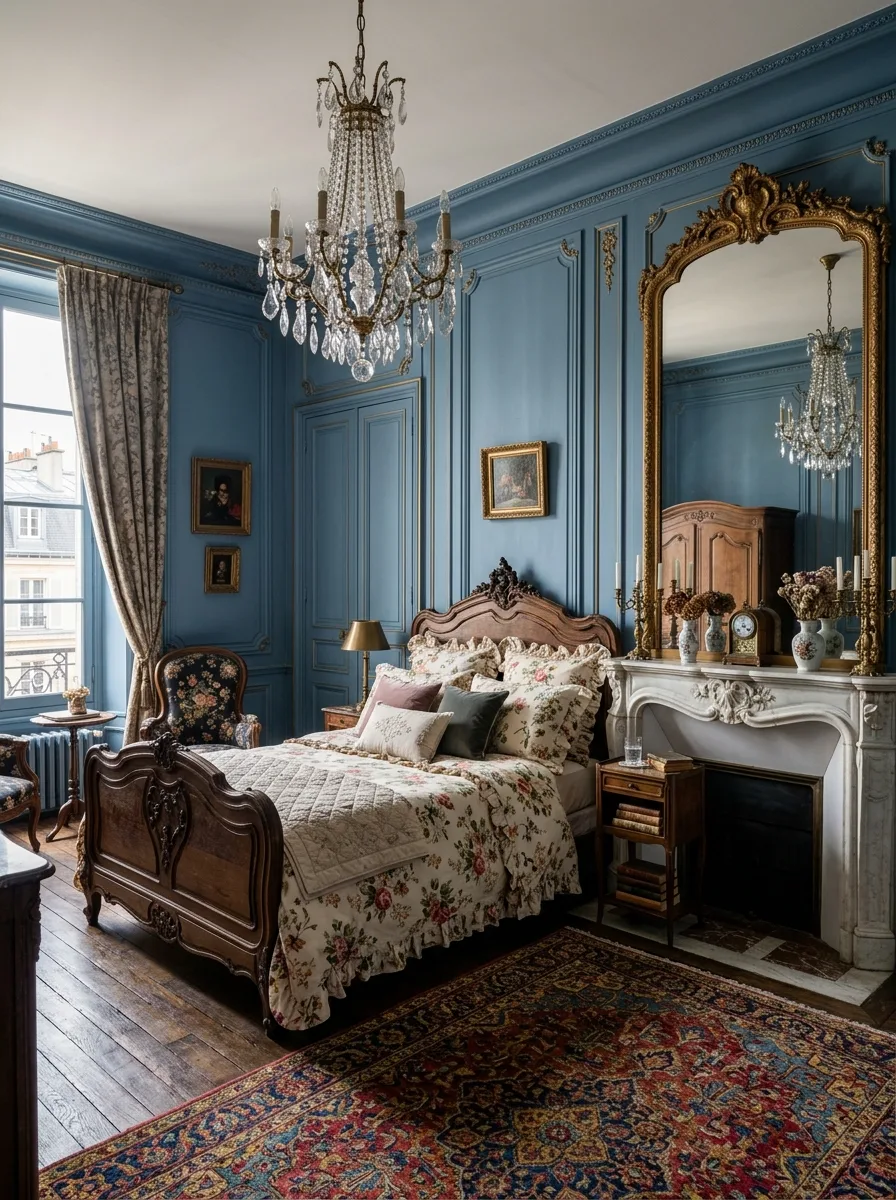
Paint architectural wall paneling in a soft, saturated blue and keep the color consistent across every panel and door in the room. The paneling itself does the heavy lifting here, so resist adding wallpaper on top of it.
Choose an ornately carved wood bed frame and dress it in floral chintz bedding that echoes the warm tones found elsewhere in the room, gold, cream, dusty rose. The carved wood against the painted panels is the core relationship to get right.
Hang an oversized gilt mirror above a marble mantle to bounce light and add scale, then finish with a crystal chandelier and matching floral curtains. Every fabric in the room should share at least one thread of pattern or color with the bedding.
Final Thoughts
None of these twenty rooms have anything in common on the surface. A dark academia library bedroom and a jungle-themed jewel-tone bedroom shouldn’t belong in the same conversation, and yet the same underlying logic runs through both of them.
Every room here made one loud decision and then spent the rest of its budget supporting that decision instead of competing with it. That’s the whole secret, and it’s less exciting than most design advice pretends it needs to be.
Eclectic doesn’t mean fearless. It means specific. The rooms that fail at this look aren’t missing personality — they’re missing a hierarchy, a sense of which object in the room gets to speak first and which ones are there to listen.
Copy the anchor-first thinking, not the exact color palette, and you’ll end up with a bedroom that looks like yours instead of a screenshot of someone else’s.