
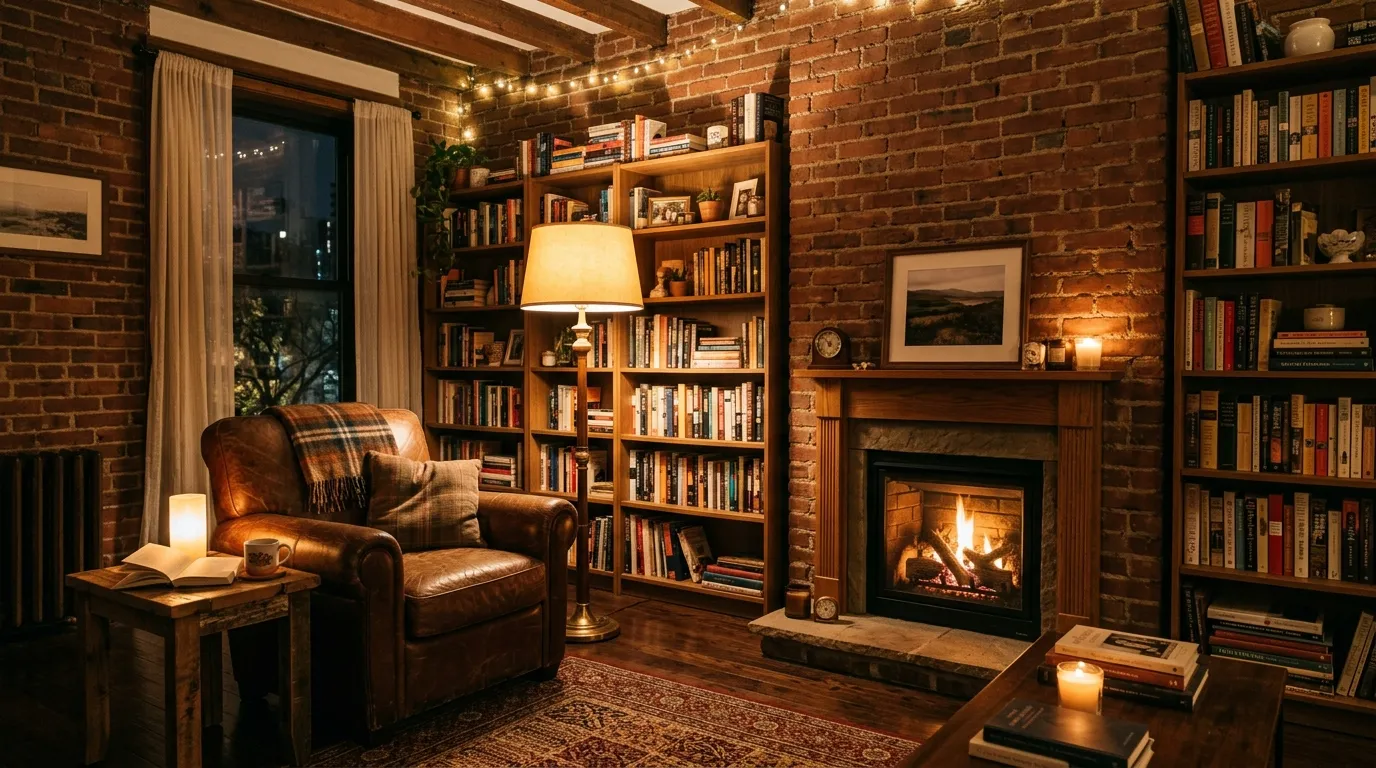
You keep buying things and your apartment still looks like a hotel room with commitment issues.
That’s not a coincidence. Cozy isn’t a product. It’s not a throw pillow, a candle, or a $40 diffuser shaped like a cactus. It’s a set of decisions, most of which cost nothing and none of which are sold at the register you keep walking up to.
Here’s the part nobody tells you: the influencers whose apartments you’re screenshotting aren’t spending more than you. They’re spending differently. They’ve figured out which five dollars actually matter and which three hundred don’t.
So put the cart down. We’re doing this properly.
Your Rental Isn’t the Problem, Your Instincts Are
Most people blame the landlord for a room that feels temporary. The landlord didn’t do this. You did, by furnishing for function and stopping there.
Empty Corners Announce You Haven’t Moved In
A bare corner is the fastest way to make a fully furnished room look half-finished. It doesn’t need a couch or a cabinet — furniture isn’t the fix. It needs something with visual weight: a tall plant, a stack of books, a floor lamp, anything that gives the eye a reason to land there.
Walk your apartment right now and count the corners doing nothing. That number is your to-do list.
Buy Texture, Not Furniture
A smooth cotton throw and a chunky knit blanket cost roughly the same. Only one of them makes a room feel touchable. Texture is the cheapest lever in interior design and the most underused one, because it doesn’t show up as a line item anyone brags about.
Mix rough with soft. Wood against wool. Rattan against velvet. The contrast is doing more work than any single piece could do alone.
Stop Buying Matching Sets
A matching bedroom set from one catalog page reads like a hotel, because that’s exactly where matching sets are designed to go. Cozy rooms are collected, not purchased in one transaction.
Buy the lamp from one place, the mirror from another, the rug from somewhere else entirely. The slight mismatch is what makes it look like your life happened here, instead of a delivery truck.
Cozy Corner Ideas
Blue Velvet Glow-Up Corner
Start with one tufted accent chair in a color your sofa doesn’t already own — dusty blue against cream works because it’s a contrast, not a match. Velvet or velvet-adjacent fabric is non-negotiable here; it catches lamplight in a way flat cotton never will.
Skip the overhead light entirely and build the glow from shelf-level LED strips tucked behind books and frames, plus two or three grouped candles on every flat surface within reach.
Add fresh or faux greenery in a tall vase — hydrangeas or eucalyptus both read expensive for under fifteen dollars. A glass-and-brass coffee table underneath ties the metal tones together without costing what a solid wood one would.
What kills this look fast is clutter without symmetry. Group objects in odd numbers, keep negative space between clusters, and resist the urge to fill every inch of the shelving.
String-Lit Balcony Nights
Outline the railing with warm string lights before you add a single piece of furniture — the lights are doing the atmospheric heavy lifting, not the seating. Buy the longest strand you can find; you want overlap and density, not a thin single line.
A small bench or loveseat with weatherproof cushions is the only furniture investment that matters. Everything else — a low side table, a lantern, a folded throw — can come from a clearance rack.
Layer plants along the railing itself, not just on the floor. Height variation at eye level does more for the mood than another potted plant sitting at your feet.
The failure mode here is treating it like an indoor room. Keep the palette dark and warm, let the city lights outside do some of the work, and don’t over-light the space — dim is the entire point.
Diagonal Fairy Light Wall
Attic and sloped-ceiling spaces have one advantage nobody uses: the angle itself. Run a single strand of string lights along the diagonal beam instead of straight across a flat wall, and the slope becomes the feature instead of the obstacle.
Build a small gallery underneath using thin-frame, mismatched artwork — thrifted prints work better than anything new, since uniformity is what you’re avoiding. Leave gaps between frames; a tightly packed grid reads as an office, not a hideaway.
A floor-level pouf or macrame ottoman anchors the seating without competing with the ceiling line above it. Keep the furniture low across the whole space so the eye keeps traveling up toward the lights.
Don’t center everything. A slightly off-kilter arrangement under a sloped ceiling looks lived-in; a perfectly centered one looks like it’s trying too hard to correct the room’s shape.
Twin Bed Trinket Corner
This look lives or dies on personal objects, not furniture. A single hanging mobile near the window — paper stars, small mirrors, anything catching light — does more than a headboard ever could, and costs almost nothing to make yourself.
Mismatched bedding across two beds in the same room is a feature, not an accident. Pick two patterns that share one color and let them argue a little.
A tiny side table barely bigger than a stool holds exactly one lamp, one mug, one small object. Restraint on the surface is what keeps a small room from feeling like storage.
Pin photos, ticket stubs, and postcards directly to the wall near a light source. This is the cheapest form of decor that exists, and it’s the one thing nobody can buy pre-made for you.
Candlelit Window Table
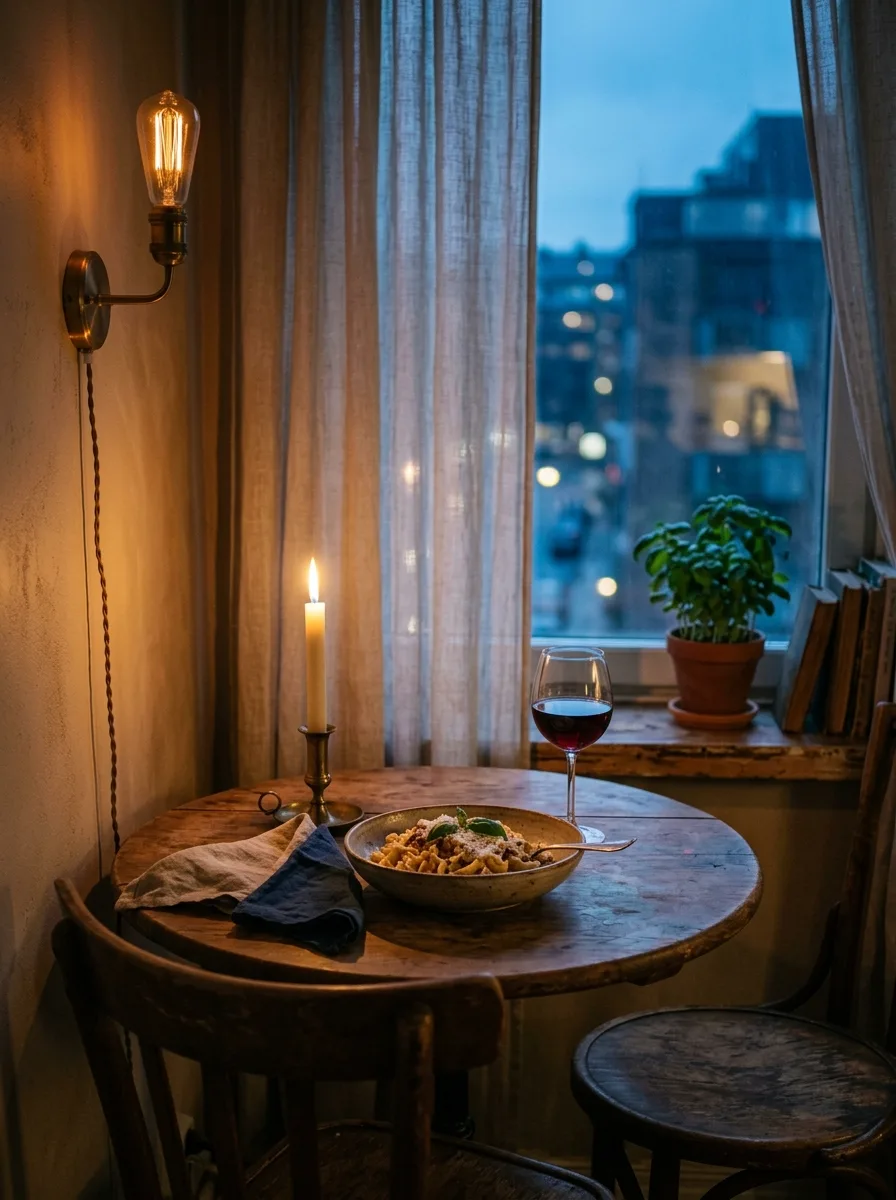
A round wooden table pushed against a window turns any awkward corner into a destination. The size doesn’t matter — this works at eighteen inches wide just as well as at four feet.
One taper candle in a brass holder outperforms any overhead fixture in this setup. Light it before you sit down, not after; the room needs a minute to catch the mood.
A single potted herb on the windowsill, basil or thyme, adds both scent and a green note without asking for a whole plant collection. Cloth napkins instead of paper ones are a two-dollar upgrade that reads as ten times that.
Don’t clear the table completely between uses. A bowl left slightly askew, a book left open — the imperfection is what separates a lived-in table from a staged one.
Sloped Ceiling Reading Nook
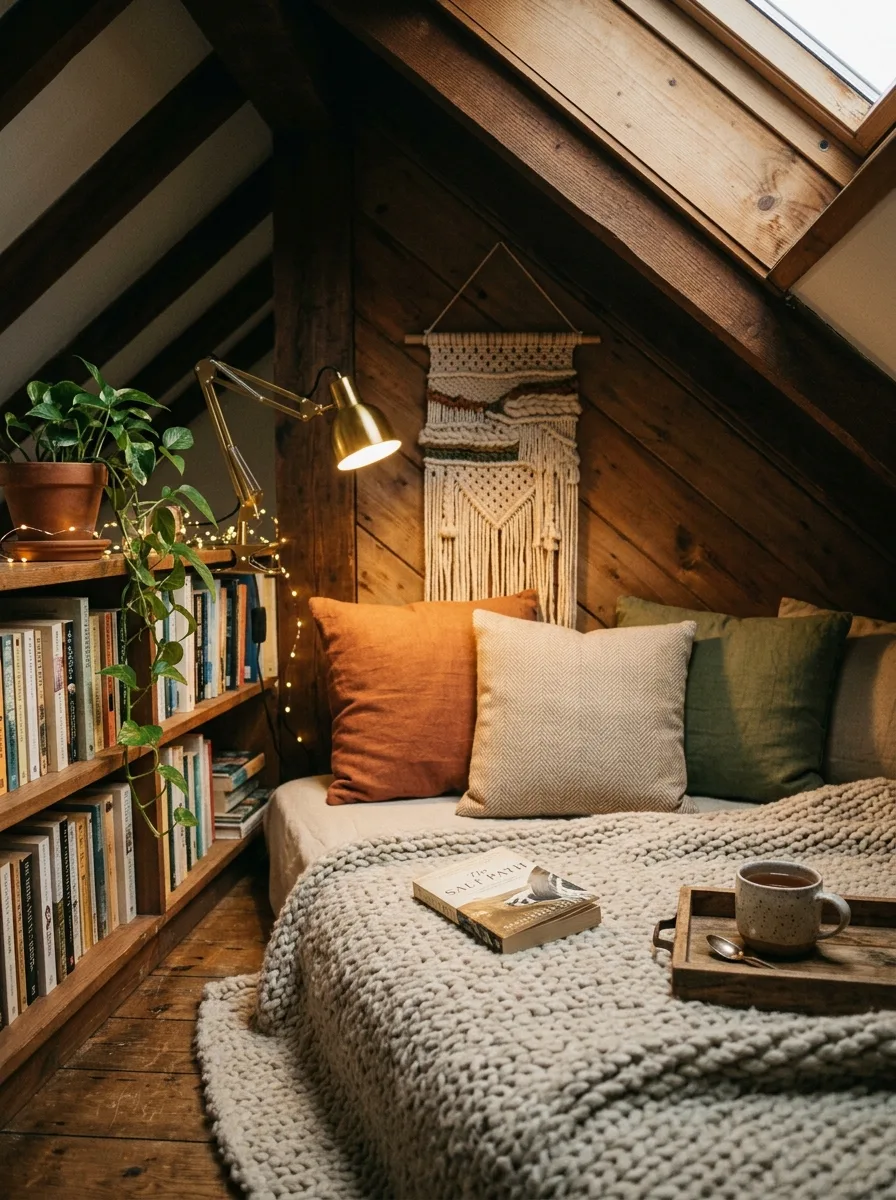
Attic angles are a gift if you stop fighting them. Push a low mattress or daybed frame directly under the slope and let the ceiling become a canopy instead of an obstacle to work around.
A chunky knit throw in a neutral tone covers more visual ground per dollar than almost any other single item you can buy. Buy it oversized — it should spill off the edge of the bed, not sit neatly on top.
Line one wall with low, open bookshelves rather than a closed cabinet. Open shelving fills a wall with color and texture for free, using books you already own.
One warm-toned clip lamp, the kind that clamps directly onto a shelf, solves the lighting problem in these spaces better than any floor lamp could, since floor space under a slope is usually the first thing you run out of.
Rattan Mirror Mudroom
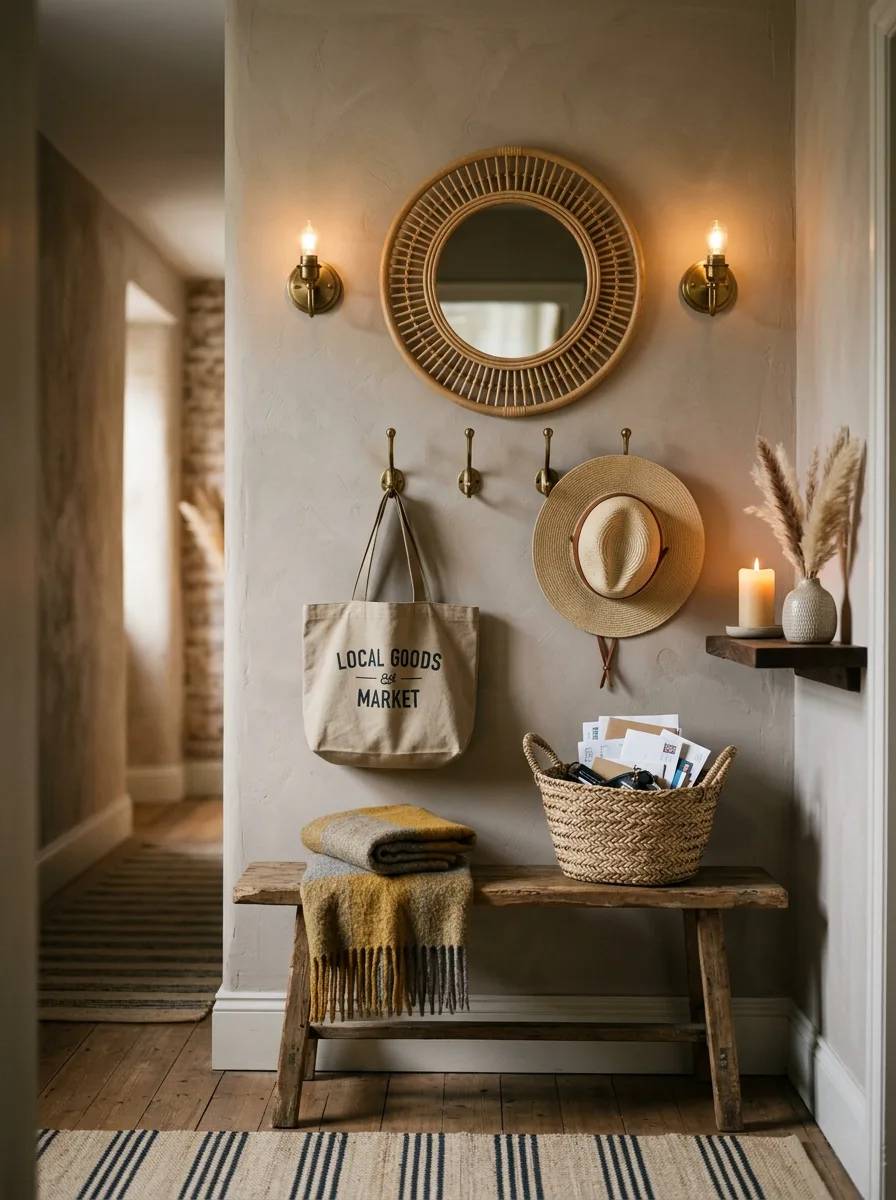
An entryway sets the tone for the entire apartment before anyone reaches the living room, and most people leave it completely bare. Start with a round rattan-framed mirror — it’s the single item doing the most visual work in this whole setup.
Mount a row of brass hooks below it at slightly uneven heights, not a perfectly level line. A canvas tote or a straw hat hung there looks intentional; a coat rack looks like storage.
A narrow wooden bench underneath holds a woven basket for mail and keys, plus a folded blanket nobody actually uses but everyone loves looking at. Sconces flanking the mirror beat any single overhead fixture for this space, since symmetry at eye level reads as considered rather than accidental.
Skip anything glossy or metal-heavy here. The whole point of a mudroom done right is texture you want to touch on your way out the door.
Postcard Desk Nook
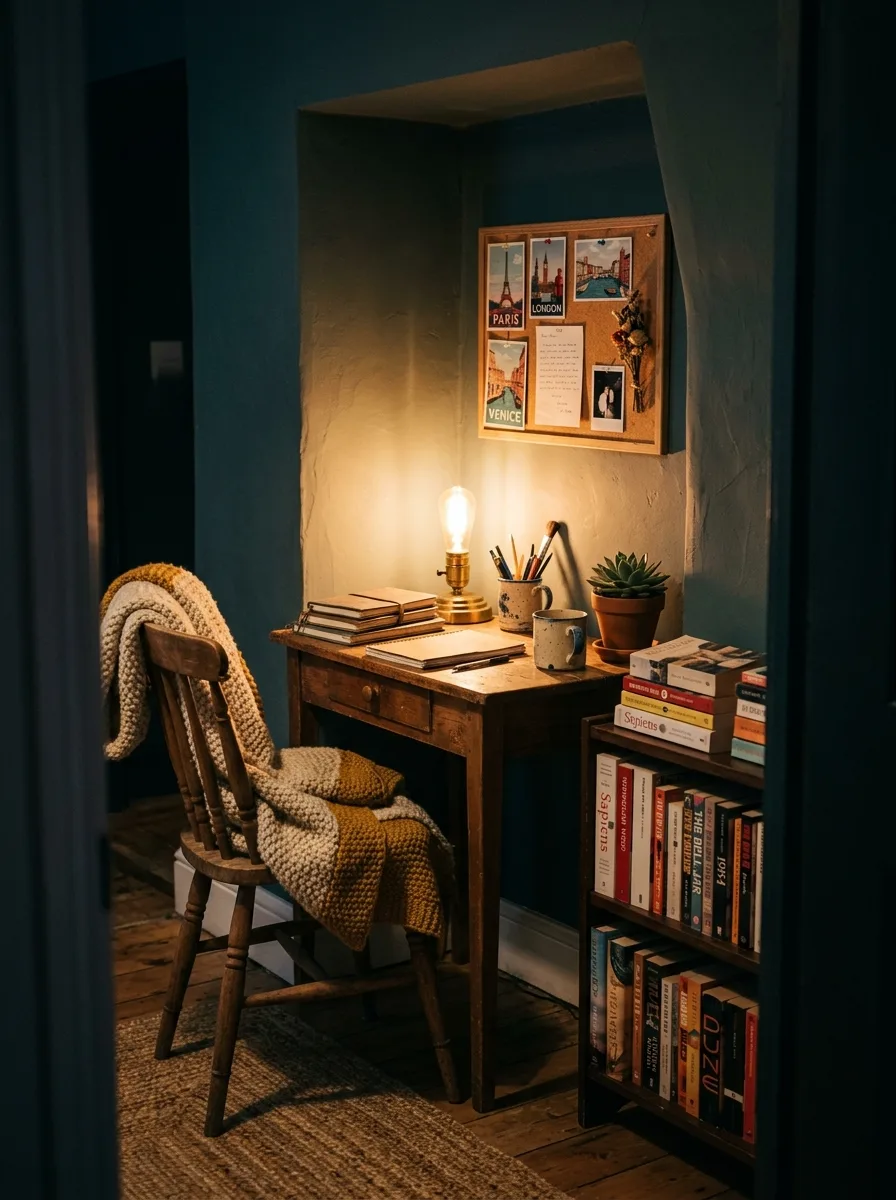
A tiny desk crammed into a leftover nook works harder than a full home office ever will. Keep the desk itself small and old — a scuffed secondhand find outperforms anything flat-packed and new.
Cover the wall above it with a cork board of postcards, ticket stubs, and handwritten notes instead of framed prints. This costs almost nothing and updates constantly, which is exactly what a desk wall should do.
One warm bulb desk lamp is the only lighting this space needs. Skip the overhead entirely; a desk nook is meant to feel like a pocket of focus, not a fully lit room.
Drape a knit throw over the chair back even if you never plan to use it there. An empty chair with nothing on it photographs cold — one with a blanket photographs like someone just stepped away.
Floating Candle Bath
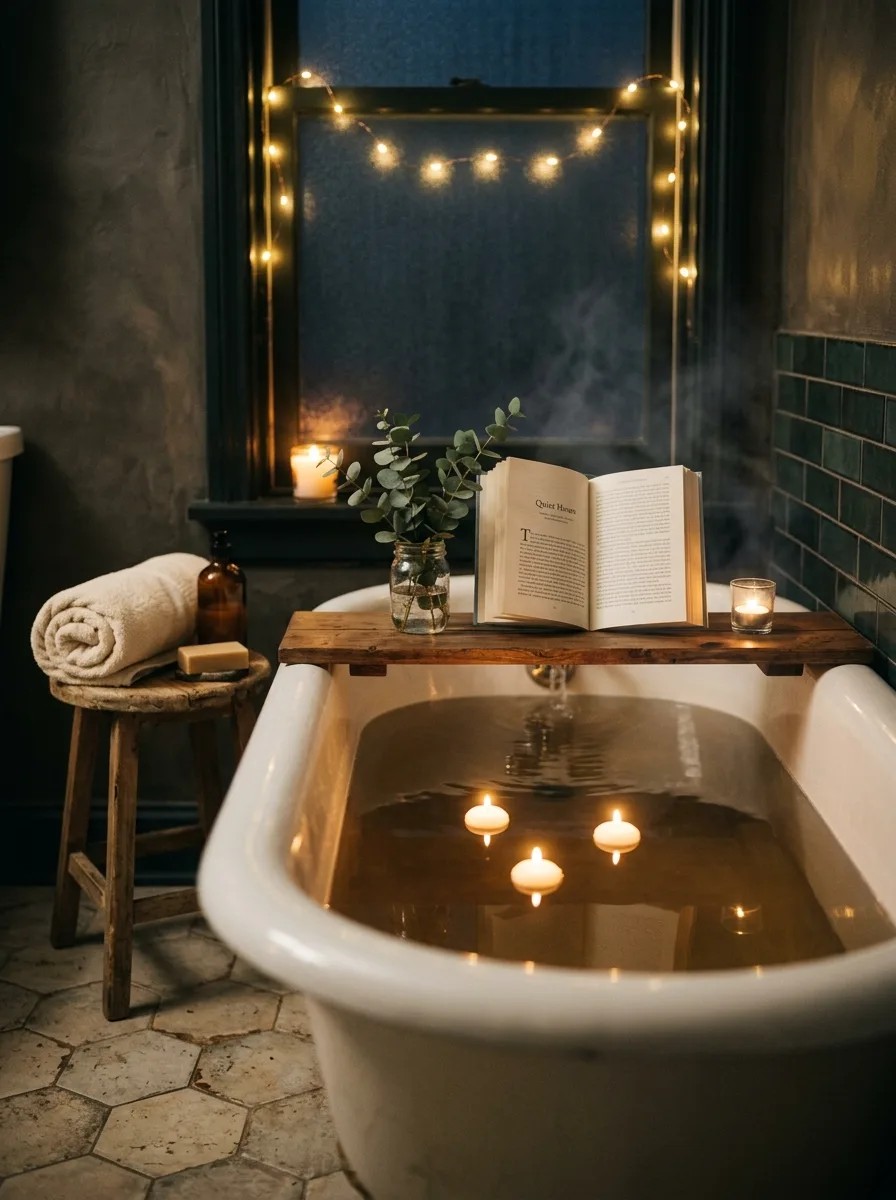
A tub surrounded by candlelight is the fastest, cheapest transformation on this entire list. Floating candles cost less than a coffee and do more for the mood than any bath product on the market.
Wrap the window frame in a single strand of warm string lights. Steam and low light together are what sell the whole scene — skip this step and the room reads as a bathroom instead of a retreat.
A small wooden caddy across the tub holds a book, a mug, one candle at eye level. Buy or build one for under twenty dollars; the caddy is doing the job a side table would in any other room.
Dark tile and matte black fixtures aren’t required, but they help — they absorb light instead of bouncing it, which keeps the whole space moody instead of clinical.
Velvet Window Bench
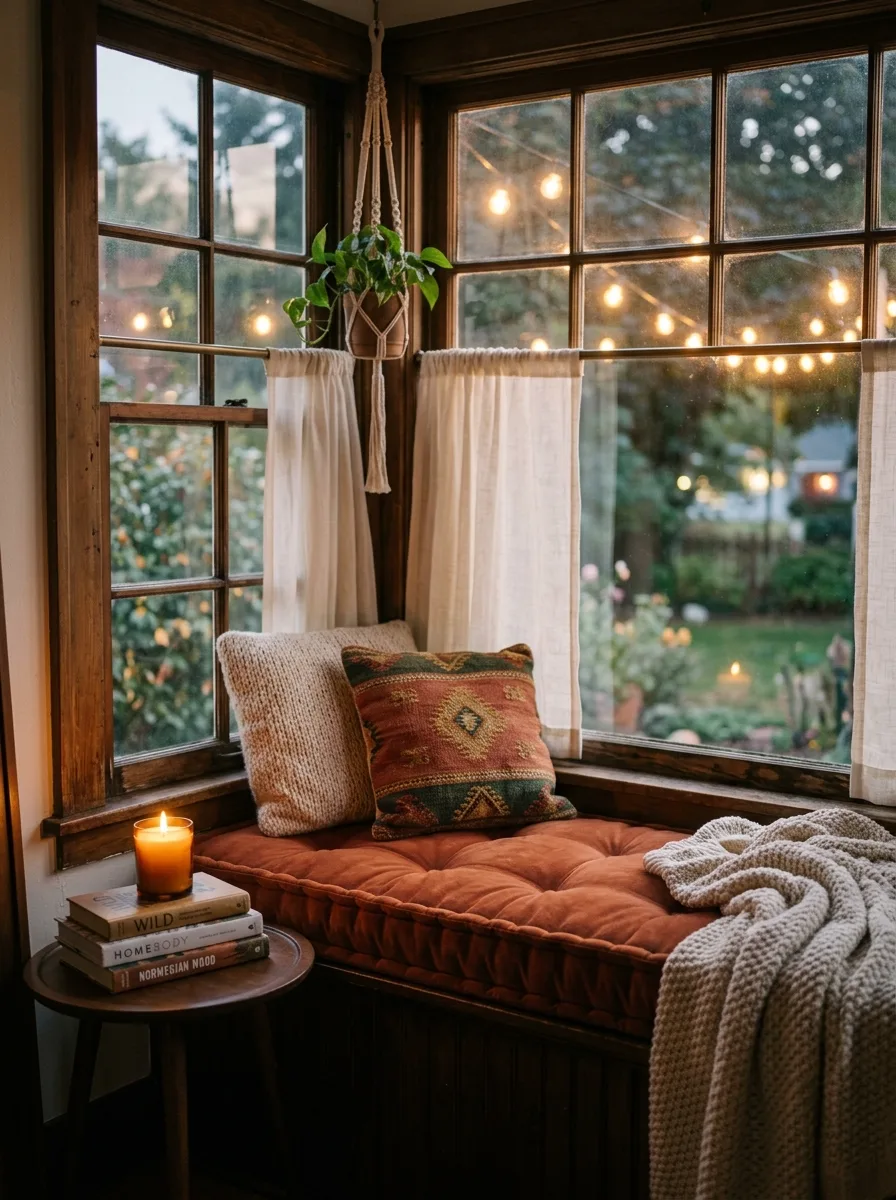
A built-in-style bench under a window costs far less than it looks like it should. A deep, tufted cushion in rust or terracotta velvet is the one item worth spending real money on here.
Pile pillows in patterns that clash slightly rather than match. A kilim-style print against a chunky knit works because the textures disagree just enough to look collected.
Hang a small potted plant in a macrame holder at the top corner of the window rather than setting one on the sill. Height variation at the window is what makes the whole nook feel finished instead of half-decorated.
One candle and a short stack of books on a tiny side table finish the look. Nothing here should be new — every piece should look like it’s been chosen slowly, over time.
Herb Garden Bistro Table
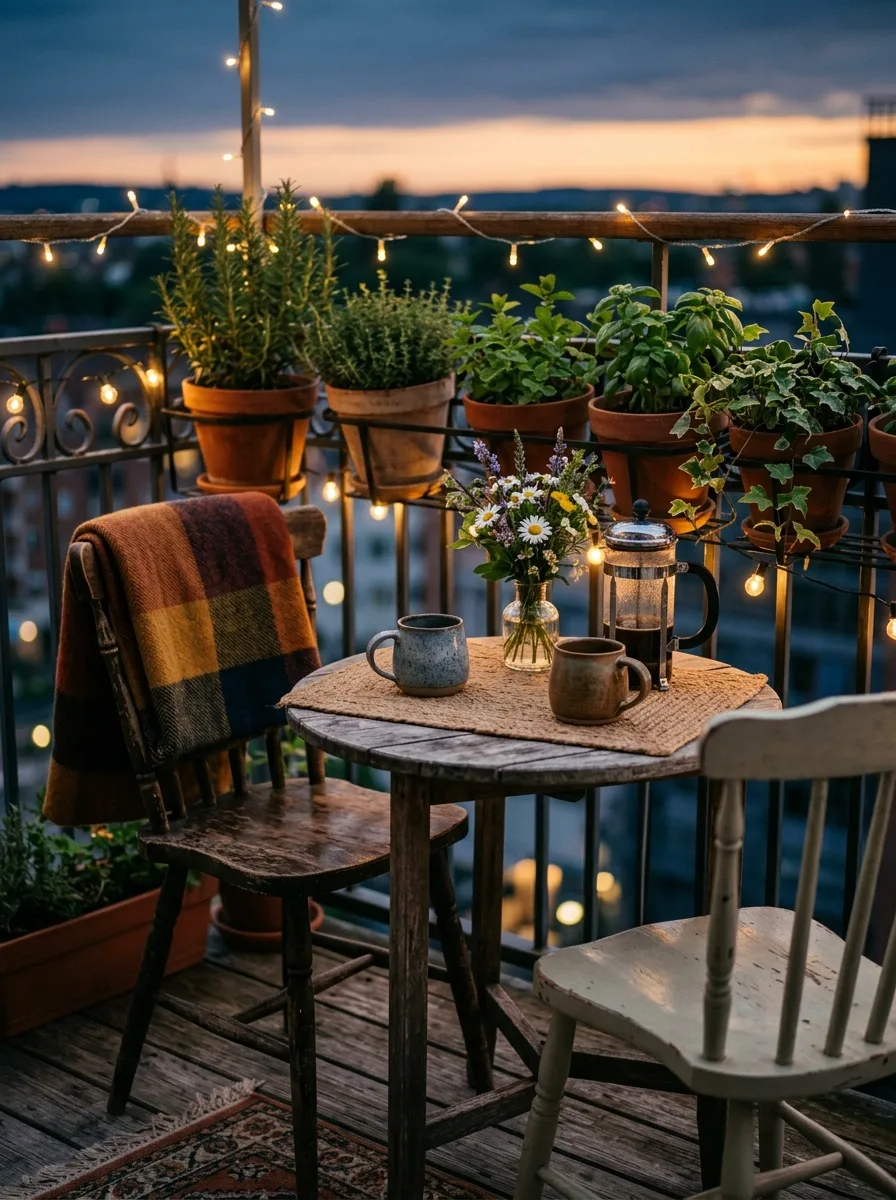
A balcony this size doesn’t need furniture, it needs a system. Mount railing planters first and fill them with herbs you’ll actually use — rosemary, thyme, mint — so the greenery is doing double duty as both decor and dinner.
A small secondhand bistro table with two mismatched chairs beats a matching patio set every time. The mismatch signals collected-over-time instead of ordered-in-one-click.
String lights along the full length of the railing, doubled up if the strand allows, turn the space from a smoking spot into a destination after dark. Add a French press and two mugs and you’ve built a reason to come out here every morning, not just at night.
Wildflowers in a mason jar on the table cost less than a bouquet from any florist and look more at home outdoors than anything wrapped in cellophane would.
Puzzle Night Table
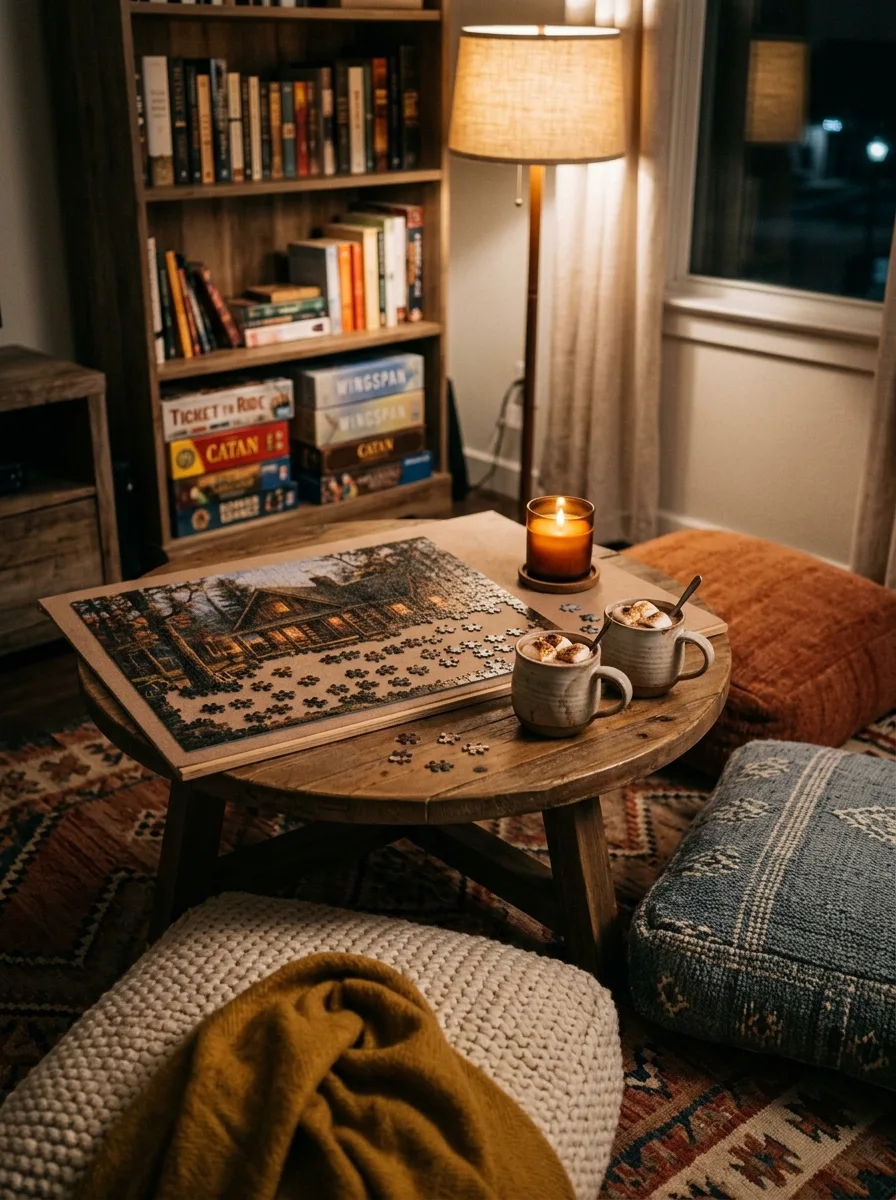
A round wooden coffee table doing double duty as a game table earns its keep more than almost any other furniture piece in a small apartment. Keep a puzzle or board game permanently in progress on it — an empty coffee table photographs unused, a busy one photographs alive.
Floor cushions in mismatched, richly patterned fabric replace a second sofa for a fraction of the cost. Stack two or three at different heights instead of laying them flat.
A single warm floor lamp positioned behind a low bookshelf does the lighting work here, and the bookshelf itself — visibly full, spines out, no color coordination attempted — is decor you already own.
Two mugs, always two, sitting half-finished on the table. It’s a small detail, but an empty table reads as staged and a table mid-use reads as a room someone actually lives in.
Fairy-Lit Herb Sill
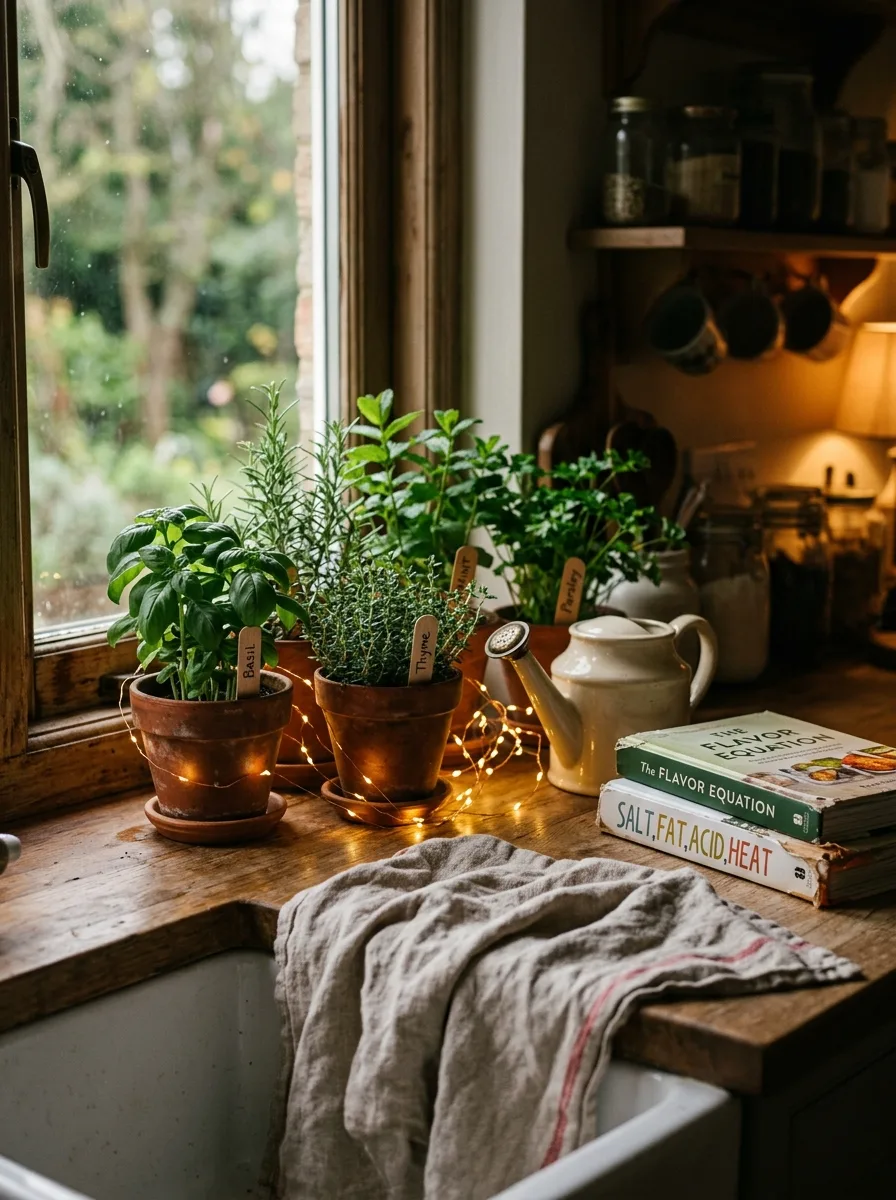
A kitchen windowsill lined with potted herbs solves two problems for the price of one — fresh cooking ingredients and a permanent green feature that costs a few dollars per plant. Basil, thyme, and mint all tolerate low apartment light better than most houseplants people struggle to keep alive.
Wrap a thin strand of fairy lights around the base of the pots rather than above them. Light coming up from below a plant does something no overhead fixture can — it makes the leaves glow instead of just illuminating them.
Stack two or three well-loved cookbooks nearby, spines showing wear. New cookbooks look staged; used ones look like a kitchen someone actually cooks in.
A linen towel draped over the sink edge, slightly wrinkled, finishes the scene better than a folded, ironed one ever would.
Chalkboard Laundry Corner
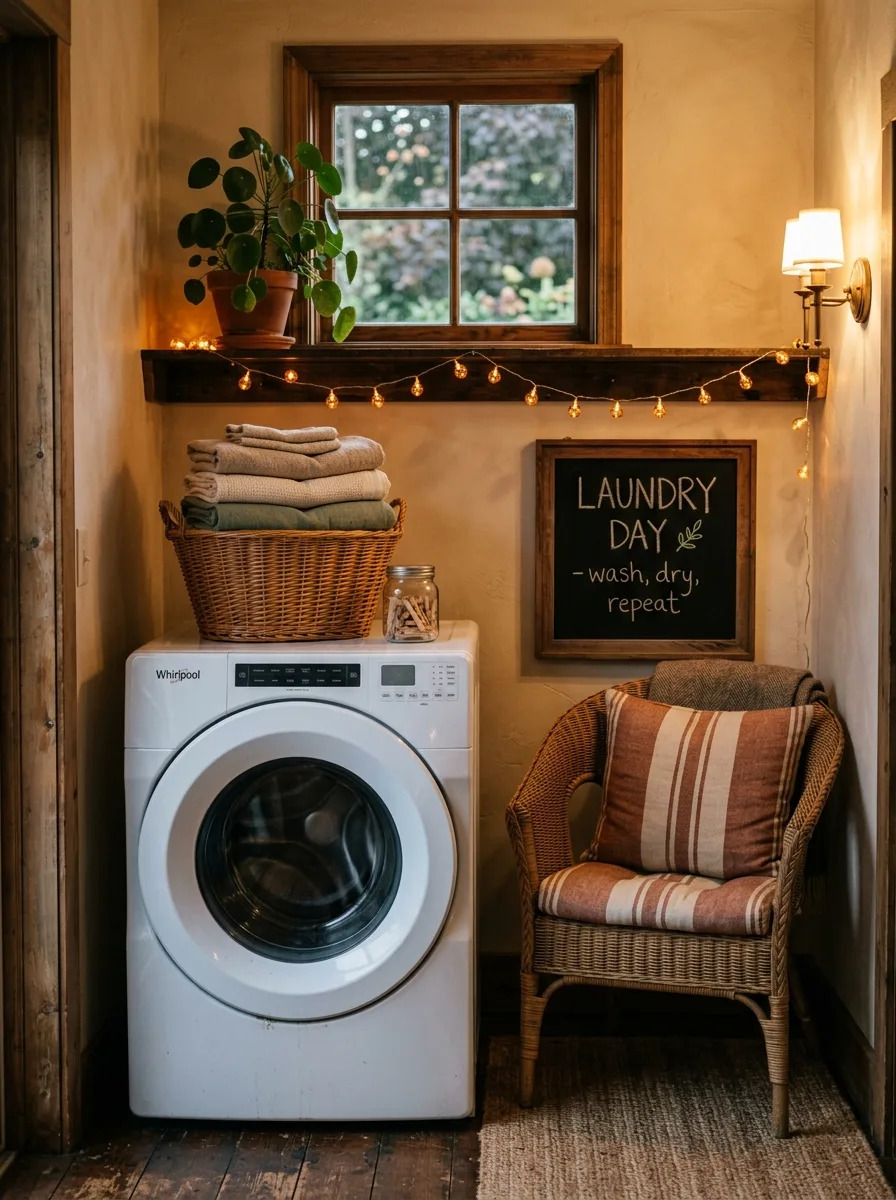
Even a laundry nook can earn its cozy credentials for less than the cost of a single load of towels. A small chalkboard sign above the machine turns a chore into a moment — write something on it and change it occasionally, since a static sign starts to look like wall art instead of a living object.
String lights along a floating shelf above the appliance do more for this corner than any overhead fixture could, especially since laundry rooms are usually the most harshly lit space in the apartment by default.
A single potted plant on the shelf, positioned near the window if there is one, keeps the space from reading purely functional. Fold towels into the basket loosely rather than stacking them with hotel-corner precision — a slightly rumpled stack looks like a home, not a linen closet.
A secondhand wicker chair with one striped cushion gives the room a place to sit while you wait, which is a small addition that changes the entire function of the space.
Rattan Pendant Breakfast Nook
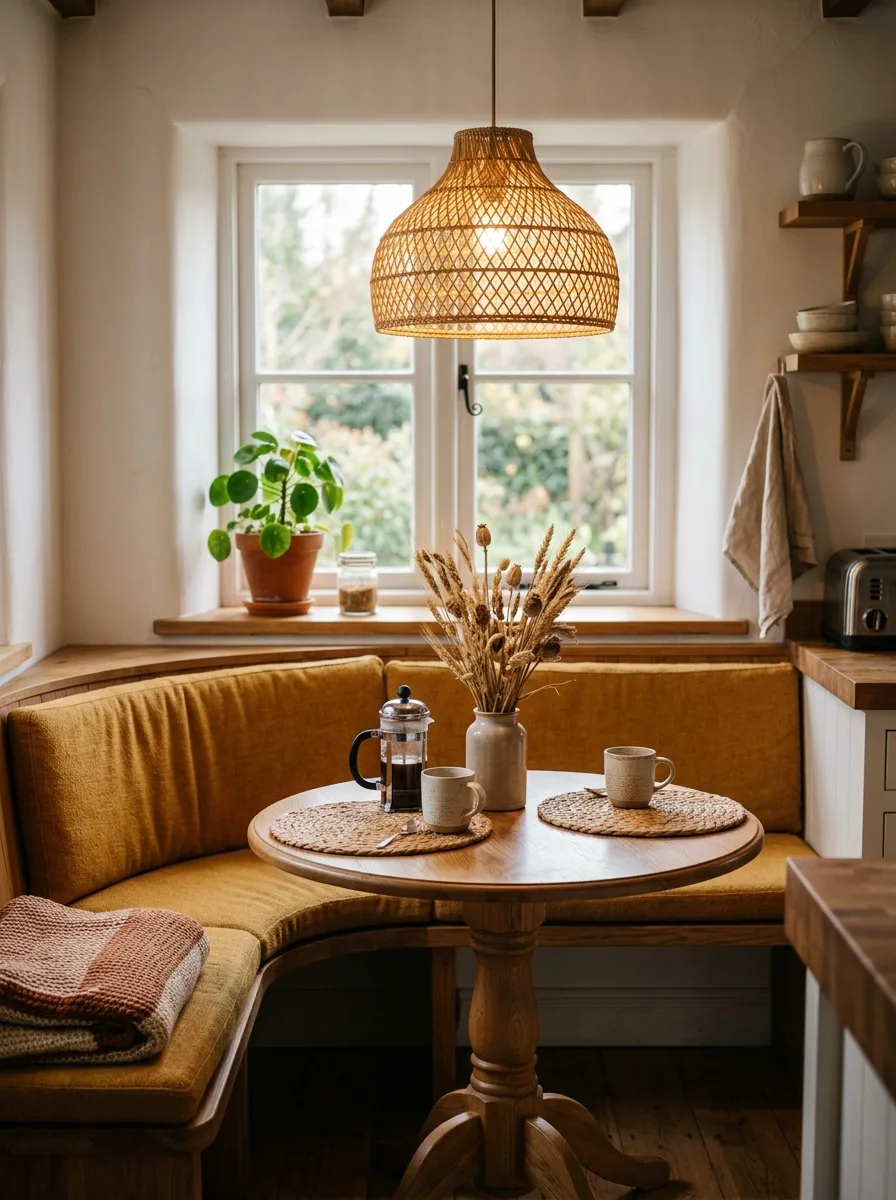
A curved banquette bench, even a small one, makes a breakfast corner feel like a destination instead of a leftover space near the kitchen. Cushion it in a warm mustard or ochre tone — this color does more to make a small nook feel cozy than almost any other in the palette.
Hang one oversized woven pendant light directly over the table. A single dramatic fixture beats several small ones here, since the low ceiling in most breakfast nooks can’t handle visual clutter overhead.
Keep the table itself small and round, pedestal-style if you can find one secondhand. A round table seats the same number of people in less visual space than a square one.
Dried wheat or pampas grass in a stoneware vase lasts for months and costs a fraction of fresh flowers. Woven placemats under two mismatched mugs finish the look without needing a full matching set of dishware.
Terracotta Yoga Corner
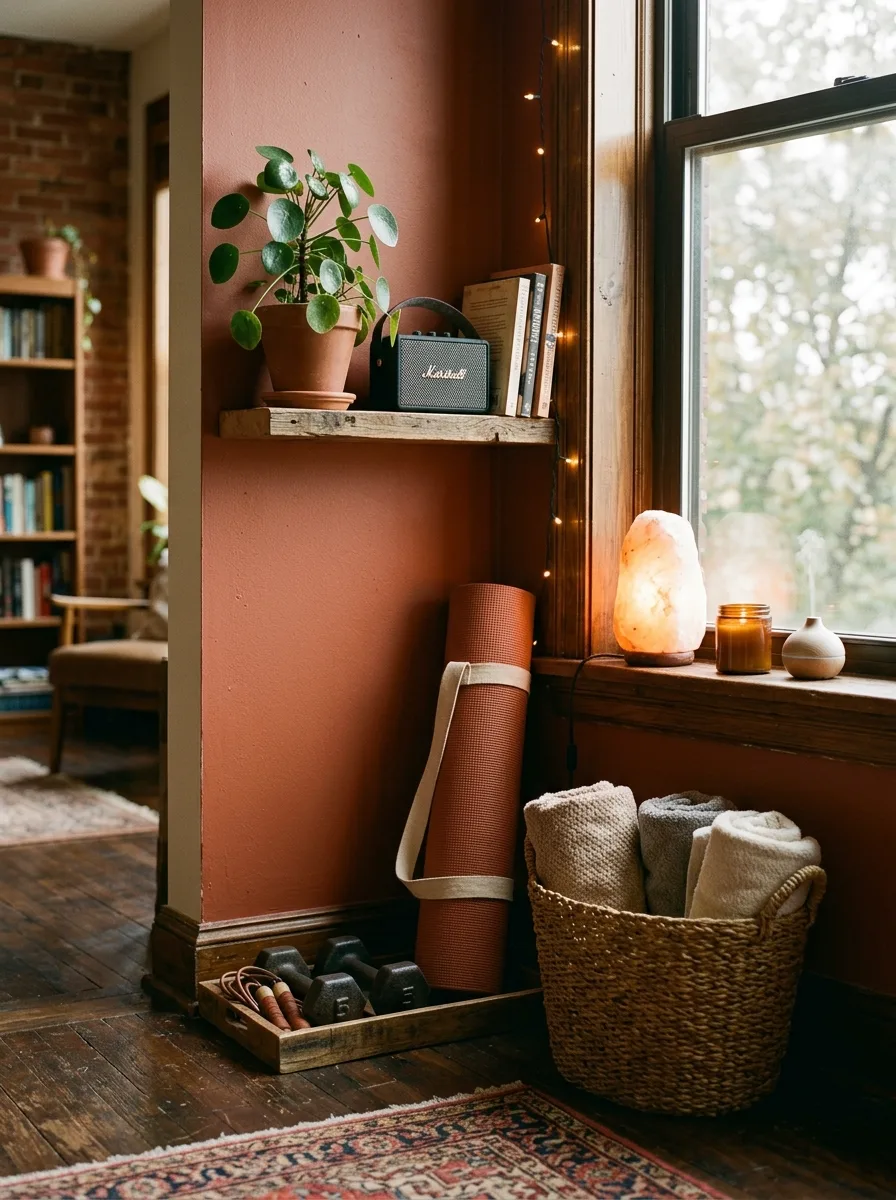
Paint is the cheapest transformation on this entire list, and a warm terracotta accent wall does more for a small corner than any furniture purchase could. If painting isn’t an option, a large removable wallpaper panel gets close for a similar price.
A salt lamp on the windowsill gives this corner its signature glow — it’s a twenty-dollar object that reads as far more expensive once it’s lit at dusk. Pair it with one low candle rather than a second bulb source.
Roll the yoga mat and lean it against the wall instead of laying it flat; a leaning object takes up less visual space and reads as intentional storage rather than gear left out. A shallow wooden tray beneath it corrals hand weights and bands without needing a dedicated cabinet.
A basket of rolled towels finishes the corner and gives it a second use as a linen catch-all. Keep the greenery here simple — one round-leafed plant is enough; more than that competes with the wall color for attention.
Wicker Pet Nook
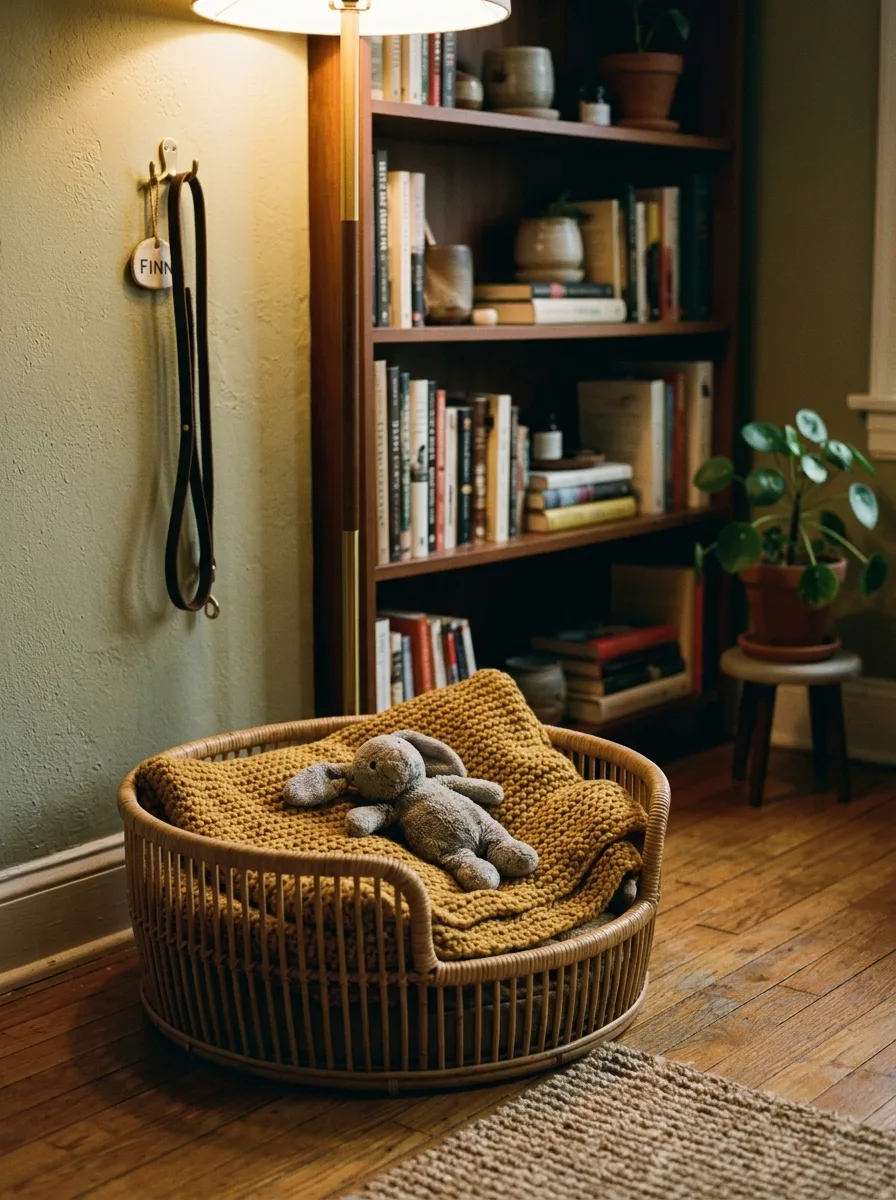
A small pet corner deserves the same lighting rules as the rest of the apartment. One floor lamp with a warm shade, positioned to spill light across the bed rather than down onto a book or desk, does the job here.
A woven rattan pet bed outperforms a plastic or foam one for almost the same price, and it matches the natural materials already doing the work everywhere else in the apartment. Line it with a knit blanket in a color pulled from elsewhere in the room, so the corner doesn’t feel like a separate zone.
Hang the leash on a labeled hook at the same height as any other entryway hooks in the apartment — treating it like a real accessory, not an afterthought, is what keeps it from looking like clutter.
A nearby bookshelf, left as-is with its existing mismatched spines and small objects, gives the corner a backdrop without requiring a single new purchase.
Fairy-Lit Vanity Mirror
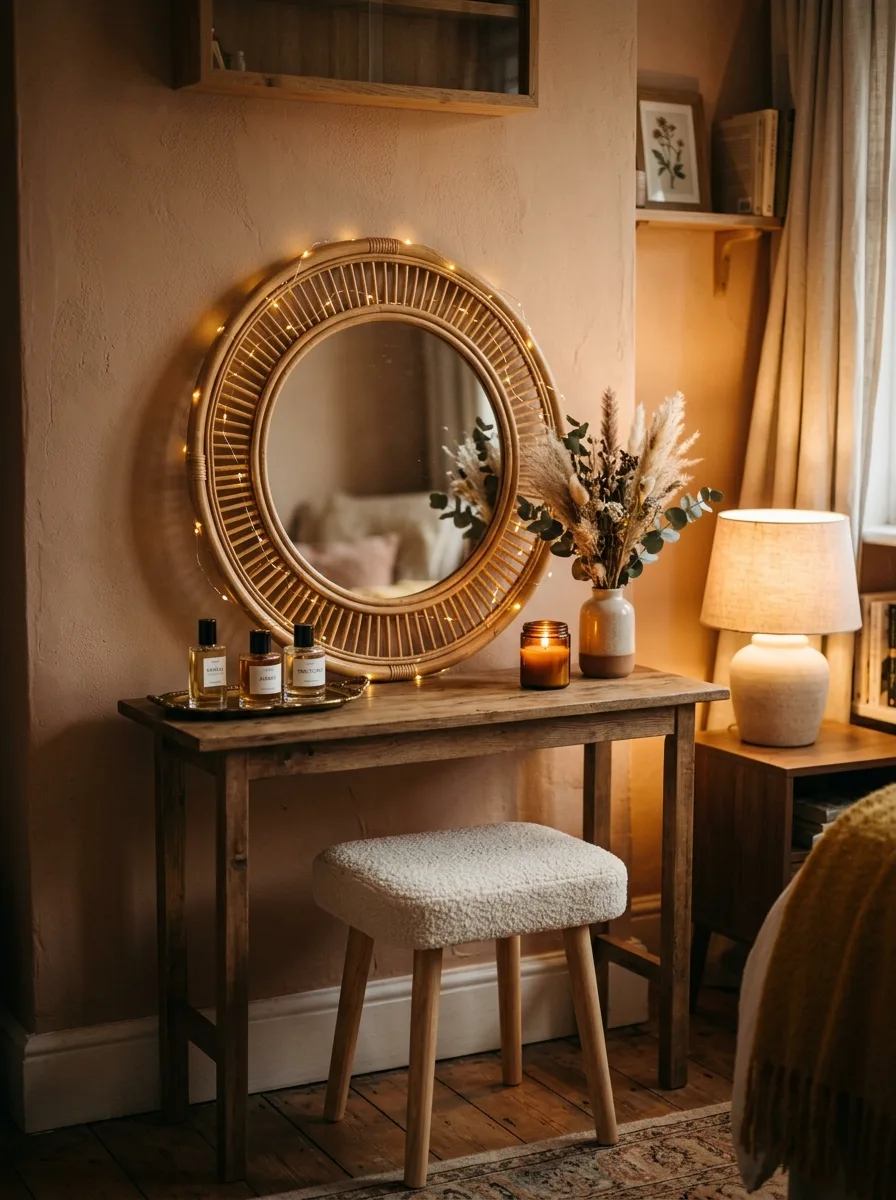
A round rattan mirror wrapped in a single loose strand of fairy lights turns a plain console table into the focal point of a bedroom for under thirty dollars total. Let the lights sit loosely around the frame rather than pulled taut — the slight looseness is what catches light unevenly and looks intentional instead of assembled.
A narrow secondhand wood table underneath holds perfume or oil bottles lined up by height, tallest to shortest. This small styling trick photographs far better than bottles placed at random, and it costs nothing.
Dried pampas or eucalyptus in a stoneware vase beside the mirror adds height without blocking the reflection. A boucle-topped stool tucked underneath finishes the set without needing a full vanity chair.
One warm table lamp beside the mirror, never overhead, is what makes this corner glow instead of just reflecting light from somewhere else in the room.
Brass Mirror Console
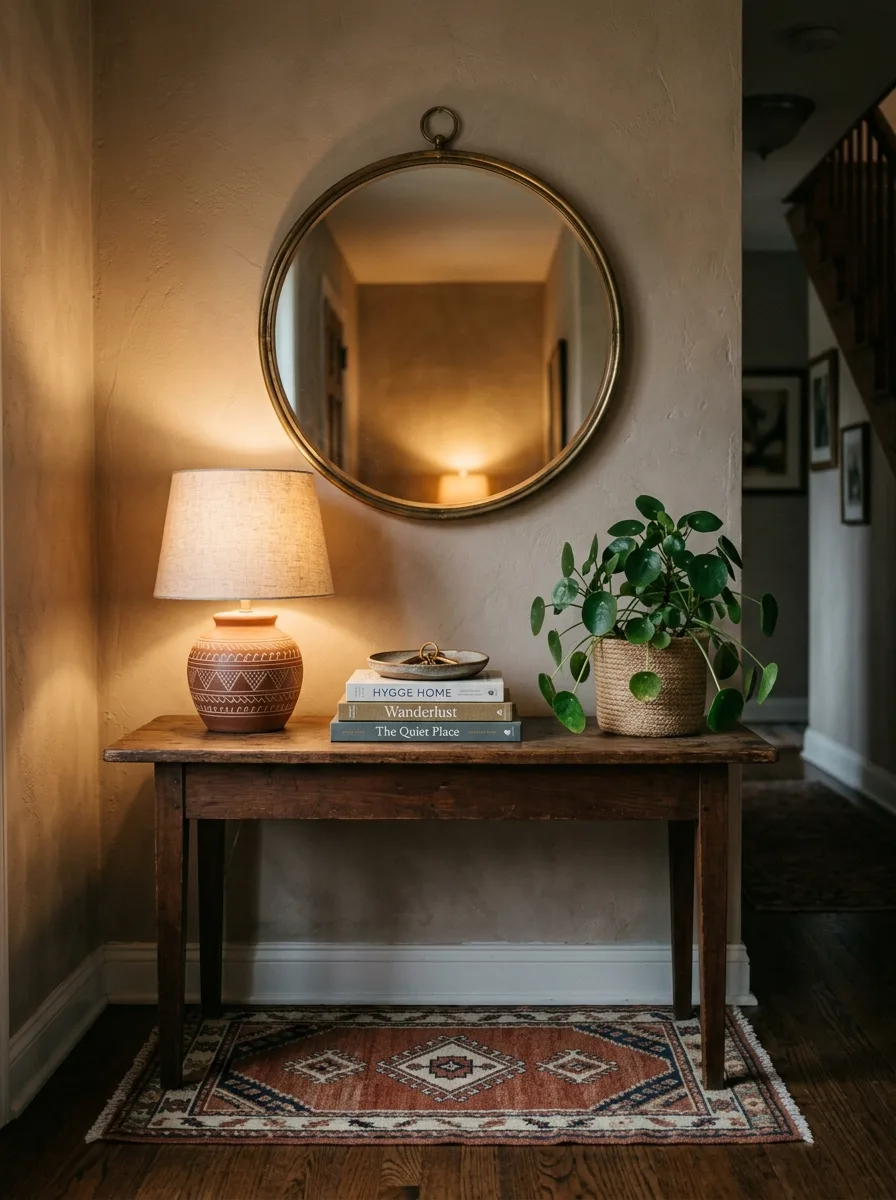
A narrow wood console table against a hallway wall is one of the highest-impact, lowest-cost purchases you can make in a small apartment — secondhand versions run a fraction of retail and look better with the wear already on them. A round brass mirror above it doubles the hallway’s apparent light without adding a single fixture.
Stack three or four books flat under a small dish for keys or rings. This is a two-minute styling move that turns a bare tabletop into a considered one.
A single table lamp with a linen shade, switched on even during the day, is what separates a console table that photographs warm from one that photographs like storage furniture. One potted plant in a woven basket balances the lamp on the opposite side.
A thin runner rug underneath, even a small remnant piece, grounds the whole setup and keeps the hallway from feeling like a pass-through instead of a room.
Trailing Plant Ladder
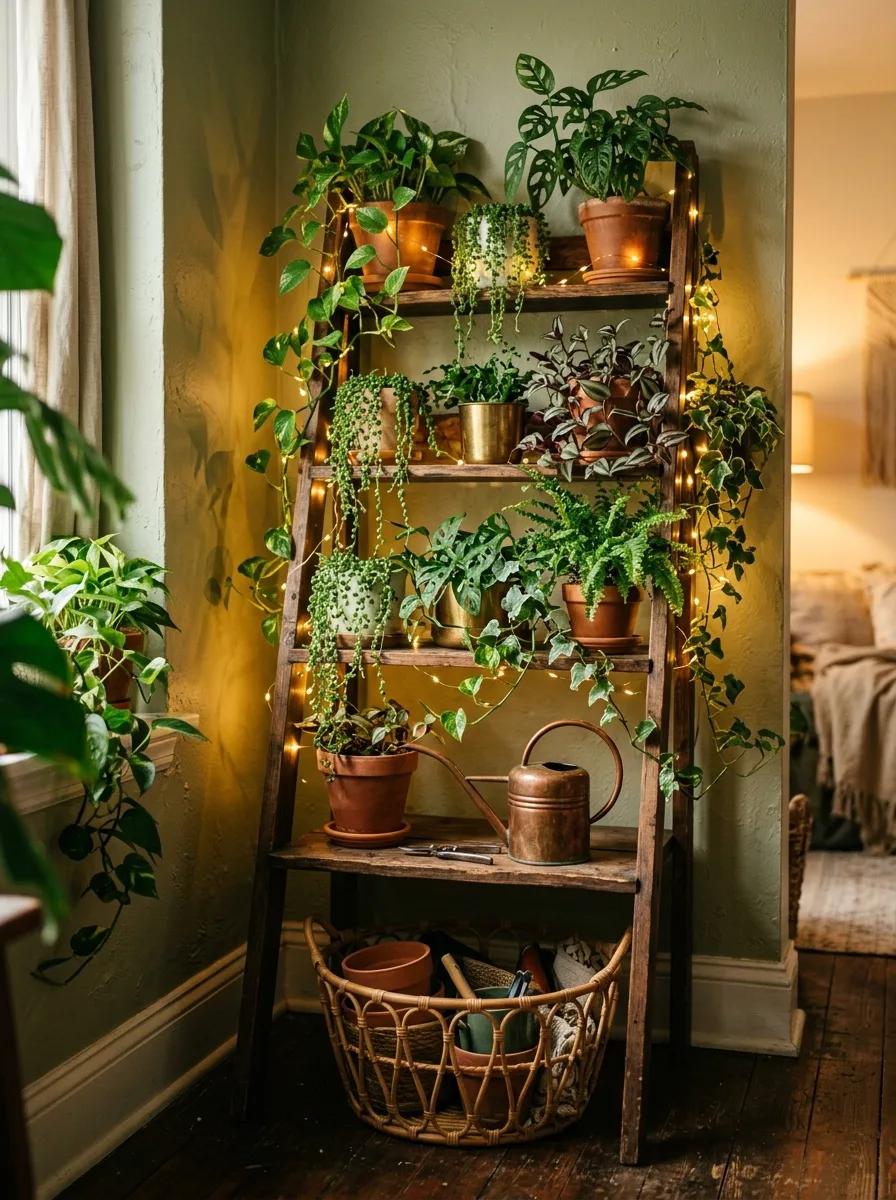
A wooden ladder shelf costs less than almost any bookshelf on the market and does more for a corner than one twice its price. Stagger plants by height and trailing length across each rung — tall upright plants on top, trailing pothos and string of pearls lower down, so the whole structure reads as a single green wall instead of separate pots.
Wind a thin strand of fairy lights through the shelves as you go, not around the outside. Threading the lights between the plants themselves is what makes the whole corner glow from within instead of looking lit from the outside in.
A woven basket at the base catches watering cans, spare pots, and gardening gloves — the mess a plant corner generates finally has somewhere to live instead of spreading across the floor.
Don’t buy every plant on the same day. This look is built over months, not one trip to the garden center, and the gradual fill is exactly what keeps it from looking like a display instead of a habit.
Final Thoughts
None of this required a renovation. Not one item on this list needed a landlord’s permission or a credit card limit increase.
What it required was noticing — which corners go dark at night, which surfaces have nothing on them, which light in your apartment is doing you no favors and never has been. That’s the actual skill here, not the shopping.
The apartments that feel the most collected are rarely the most expensive ones. They’re the ones where someone paid attention over months instead of writing one big check in an afternoon.
Turn off the overhead light. Start there. Everything else on this list is just what you do once your eyes adjust to the dark.