
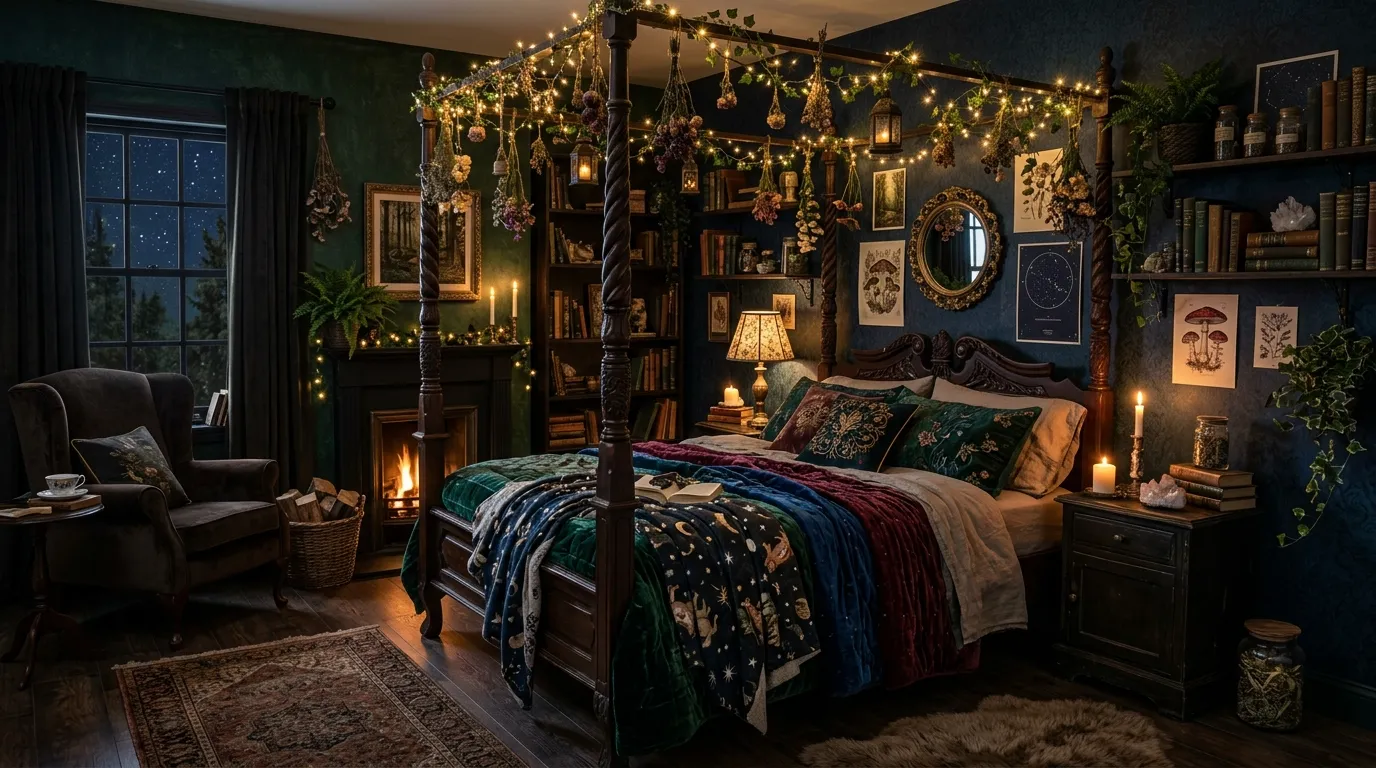
A dark bedroom can look incredible in photos and still feel completely wrong once you actually live in it. The problem usually isn’t the dark paint. It’s everything that gets piled on top of it afterward.
Too many black surfaces make the room feel flat. Too many vintage pieces make it feel like a themed set. Too many quirky accessories make the eye bounce around without finding anywhere to rest. And when the lighting is wrong, even beautiful colors lose their depth.
A dark whimsical bedroom needs more control than a plain bedroom because every choice carries more visual weight. You need contrast, texture, warm light, natural materials, and a few unexpected details. The room should feel mysterious without becoming gloomy and imaginative without looking childish.
The best rooms in this style don’t scream for attention. You notice the deep walls first, then the unusual lamp, then the old-looking frame, then the soft fabric around the bed. Each layer reveals itself slowly.
Why Dark Whimsical Bedrooms Usually Look Wrong
Moody Doesn’t Mean Murky
Dark walls aren’t the problem. Lack of contrast is.
A room covered in charcoal, black bedding, dark furniture, and weak overhead lighting quickly loses its shape. You need surfaces that catch light and textures that reveal themselves at different angles.
Use one deep wall color as the anchor, then bring in softer pieces around it. Cream bedding, pale linen curtains, aged brass, warm wood, and glass all help the darker color look richer instead of dull.
The goal isn’t to make everything dark. The goal is to make the dark parts look deeper.
Whimsy Needs One Strong Idea
Random unusual objects don’t create a whimsical bedroom. They create visual noise.
Pick the feature that gets the most attention first. It could be a dramatic headboard, an ornate mirror, a strange light fixture, botanical wallpaper, oversized art, or a bed surrounded by fabric.
Then let the smaller pieces support it.
A useful rule is simple: one big statement, several quiet references. A framed moth print can echo an unusual pendant. A curved mirror can repeat the shape of a bedside table. The room feels collected because the details relate without matching.
Layering Beats Matching
A matching bedroom set makes decorating easy, but it also removes most of the personality.
Dark whimsical rooms work better when the furniture looks like it was gathered over time. Pair a painted nightstand with a wood one. Put an old-looking frame beside a simple modern lamp. Mix a soft upholstered piece with something slightly rougher.
That contrast gives the room depth.
You don’t need expensive antiques. You need different materials, different ages, and different shapes working together. That’s what makes the room feel lived in instead of assembled from one catalog page.
Dark Whimsical Bedroom Ideas
Layer Botanical Prints And Textures
A moody space thrives on heavy textiles and rich patterns that catch the dim light. Mixing floral bedding with vintage floral lampshades creates a cohesive, storybook look that feels utterly intentional.
Lean into different eras by combining antique gilded mirrors with plush velvet throws. The secret is letting the fabrics do the talking while keeping the underlying color palette intensely deep and saturated.
Finish the styling with small personal touches on the nightstands to keep the heavy elements feeling grounded and inviting rather than overwhelming.
Paint the Walls a Deep Plum Instead of Basic Black
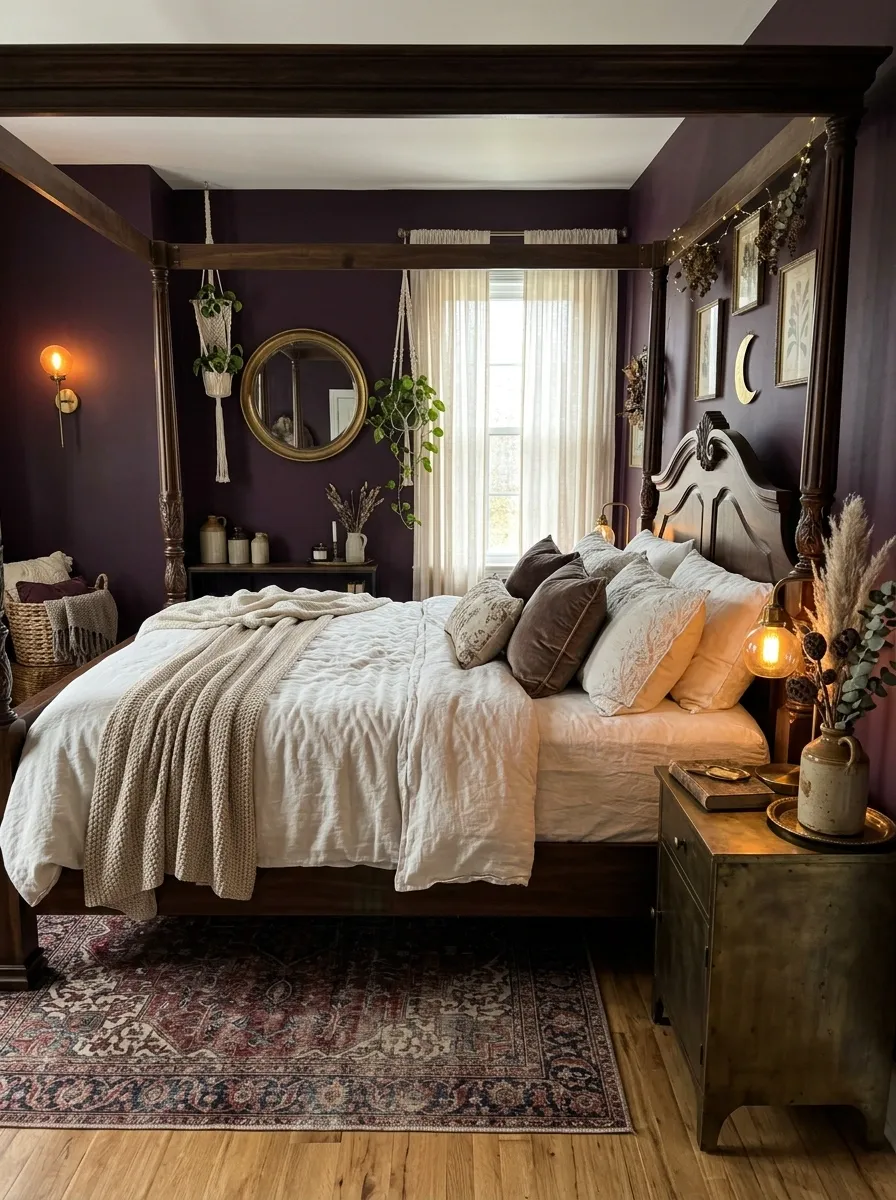
Black is an easy answer, but it isn’t always the best one. A deep plum gives you the same dramatic weight while keeping a little warmth in the room.
Use it on all four walls when the bedroom has enough natural light. In a smaller or dimmer room, make the wall behind the bed the deepest shade and keep the others slightly lighter.
The important part is what goes around it. Cream bedding, muted wood, aged metal, and warm bulbs keep the color rich.
- Warm white textiles
- Natural or dark wood
- Soft amber bulbs
- Aged metal details
Embrace Rich Emerald And Black
Black walls do not have to feel cold when paired with jewel-toned emerald bedding. The contrast gives the room an enchanting depth that instantly shifts the mood into something magical.
Incorporate subtle thematic elements like spiderweb pillows or vintage candle sconces to lean into the whimsical aesthetic without tipping into a novelty costume. Restraint is what keeps it sophisticated.
Keep your lighting low and localized with a bedside lamp casting a gentle glow against the dark paneling, highlighting the lush greens and matte blacks.
Put Warm Lamps on Both Sides of the Bed
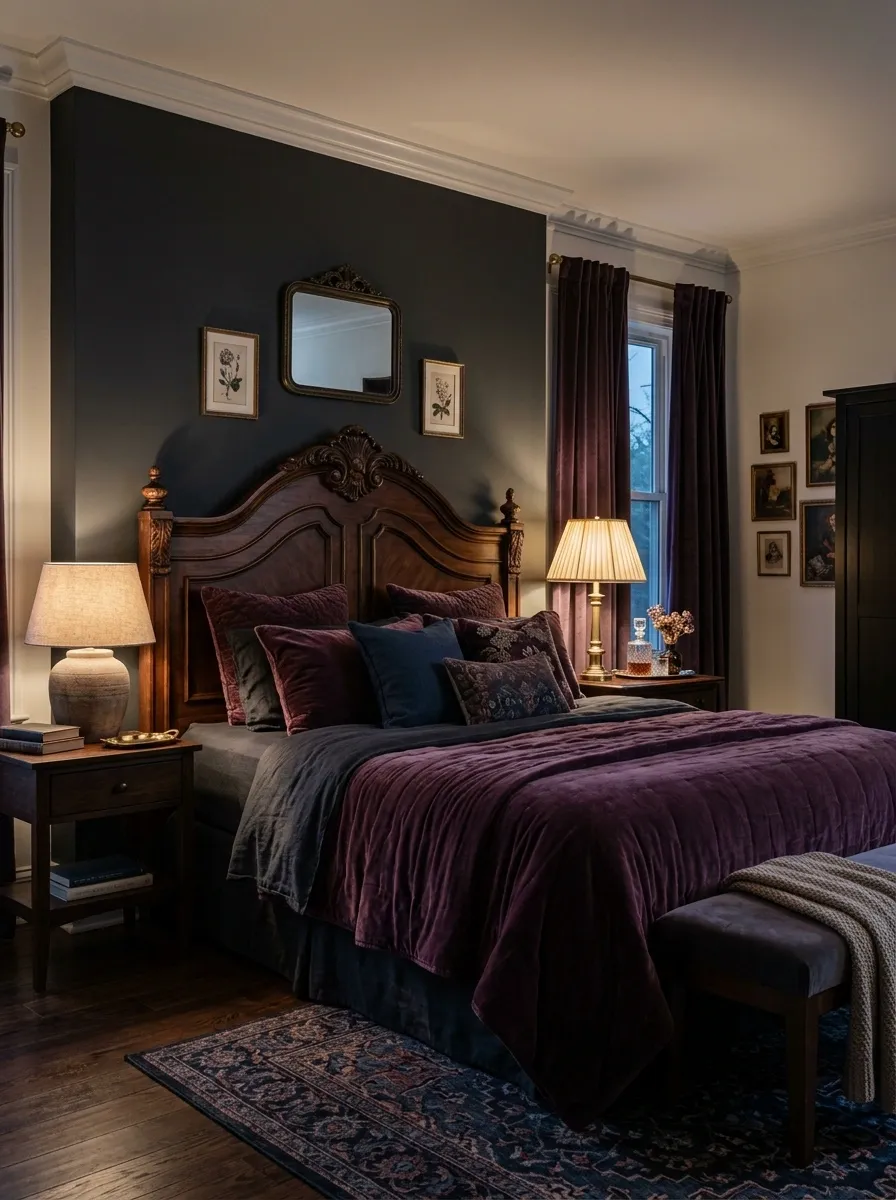
The ceiling light shouldn’t be doing all the work.
A pair of bedside lamps gives the room a softer glow at eye level, which matters even more when the walls are dark. Keep the lamps warm and slightly shaded so the light pools around the bed instead of blasting across the whole room.
Choose lamps with different visual weight from the furniture. A simple ceramic base works beside ornate wood. A pleated shade works beside a clean-lined table
Paint Enchanting Forest Wall Murals
Transform a basic wall into a fairy-tale forest by hand-painting delicate tree branches across a mottled green backdrop. It instantly blurs the boundaries of the room and makes the bed feel like a hidden woodland clearing.
Suspend an ornate, candle-style chandelier overhead to cast dramatic shadows across the textured walls. The flickering light brings the painted branches to life as evening settles in.
Anchor the magical art with heavy, dark velvet drapes at the window and rich burgundy blankets at the foot of the bed for a truly immersive sanctuary.
Turn the Bed Into the Room’s Main Character
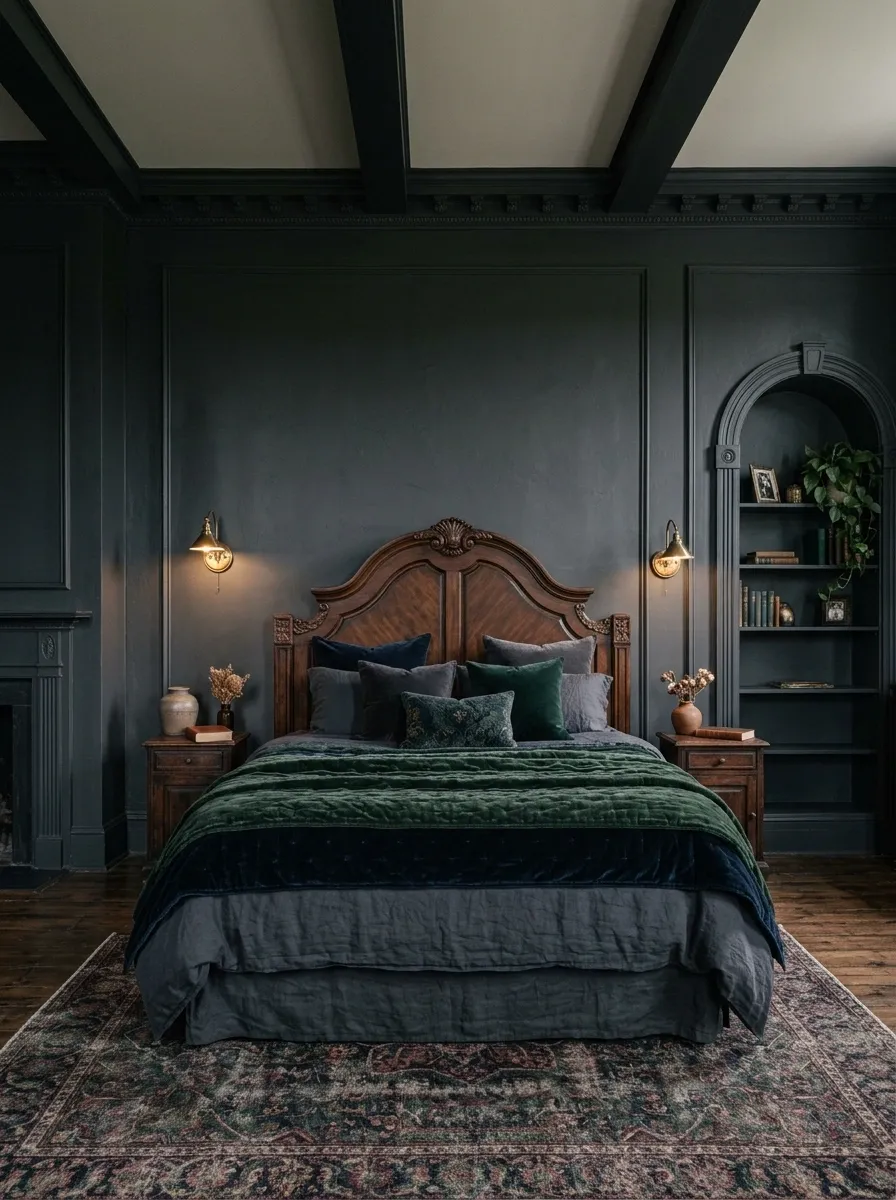
Your bed should feel like the centerpiece, not just the thing sitting in the middle.
A tall upholstered headboard, carved wood frame, gathered fabric, or oversized canopy instantly gives the room a stronger silhouette. Keep the bedding less complicated when the bed frame is doing the visual work.
The trick is scale. A tiny decorative headboard gets lost against dark walls. A taller shape creates the vertical drama the room needs.
Hang Vintage-Style Art in an Intentional Cluster
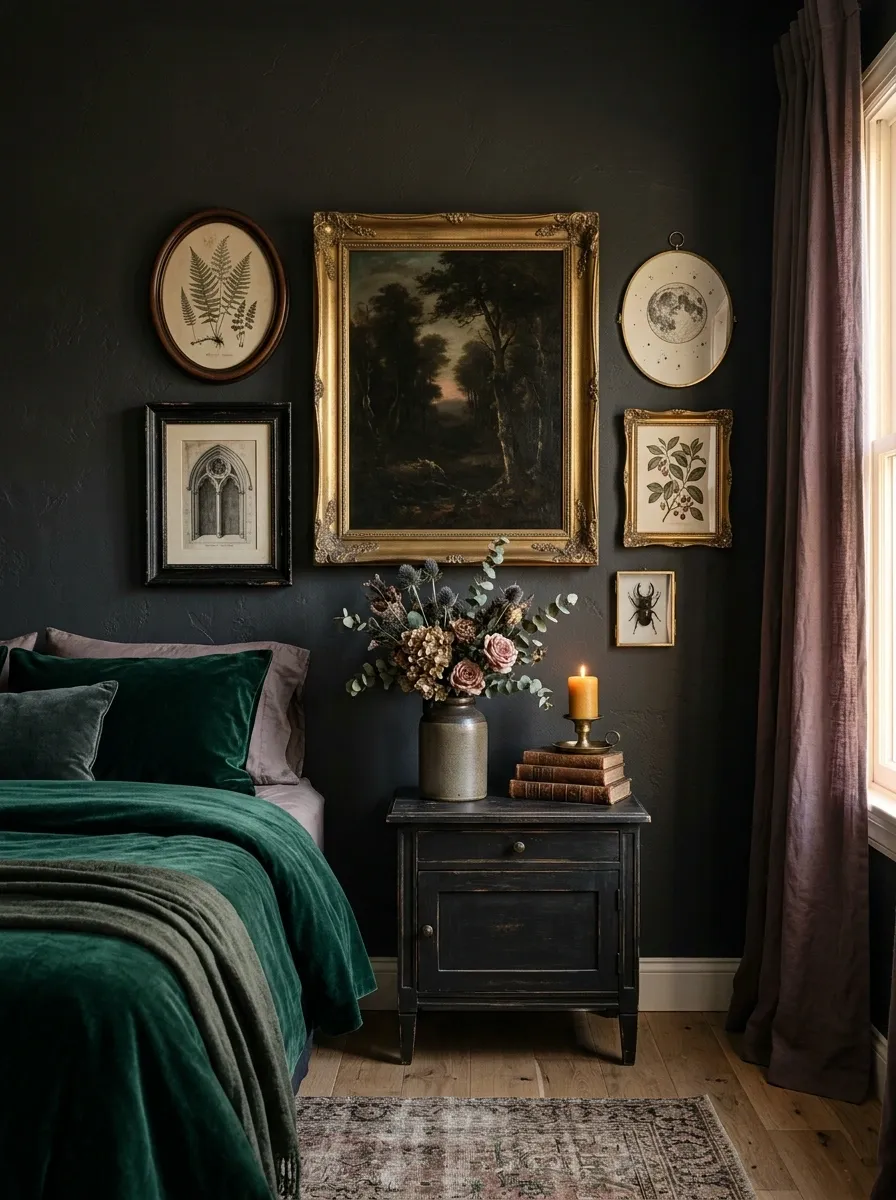
A single small frame often disappears on a dark wall. A loose cluster has much more presence.
Start with the largest piece, then place two or three smaller pieces around it. They don’t need matching frames. In fact, slight differences make the arrangement look collected.
Keep the subject matter connected. Botanical sketches, old landscapes, celestial drawings, insects, architectural details, or muted portraits can all work together when the colors share a quiet range
Use Sheer Curtains Against Dark Walls
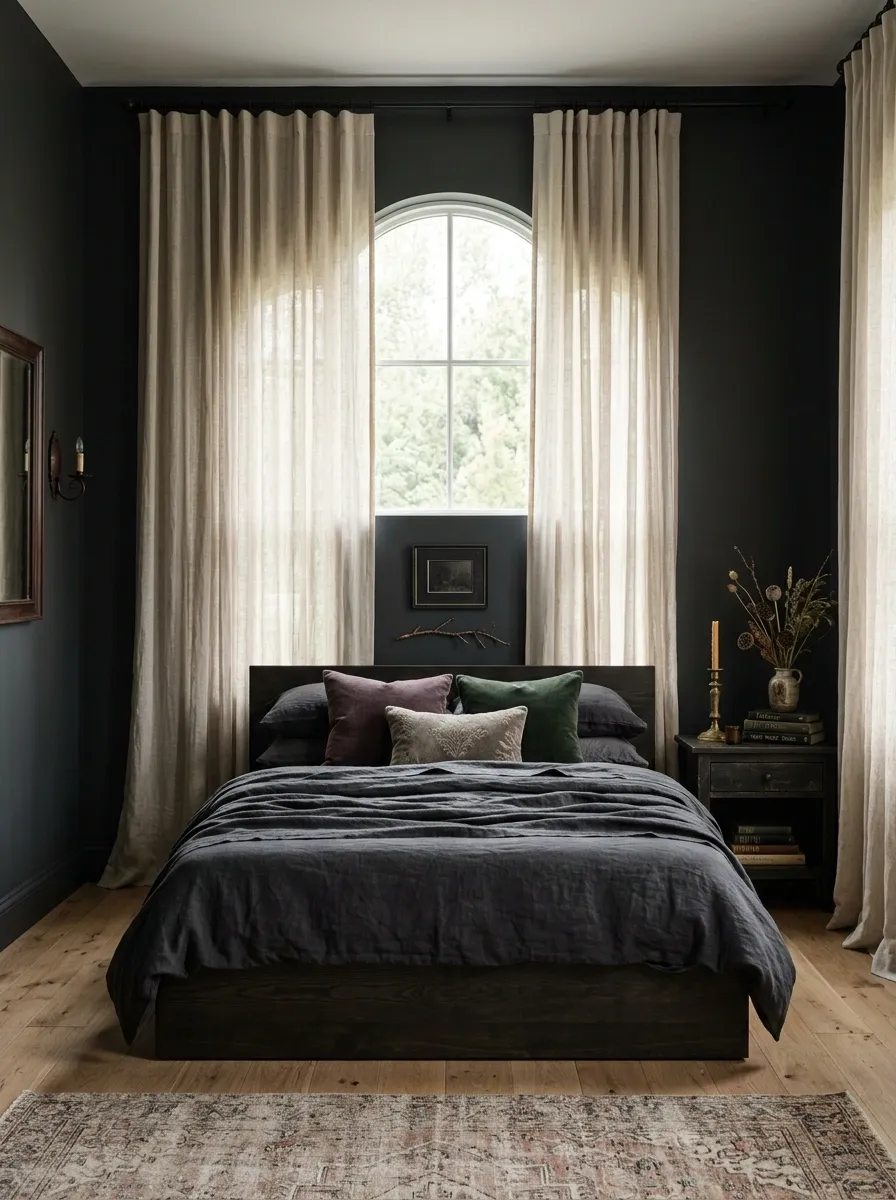
Dark walls look dramatically better when the windows still feel light.
Floor-length sheer curtains soften the hard edge of the wall and allow daylight to move through the room. Choose off-white, oatmeal, or a muted neutral instead of bright white if you want a more aged, romantic effect.
Hang the rod higher and wider than the window so the fabric frames the glass rather than covering it.
The result is simple: heavy wall color, lightweight window treatment.
Add a Chandelier With an Unexpected Shape
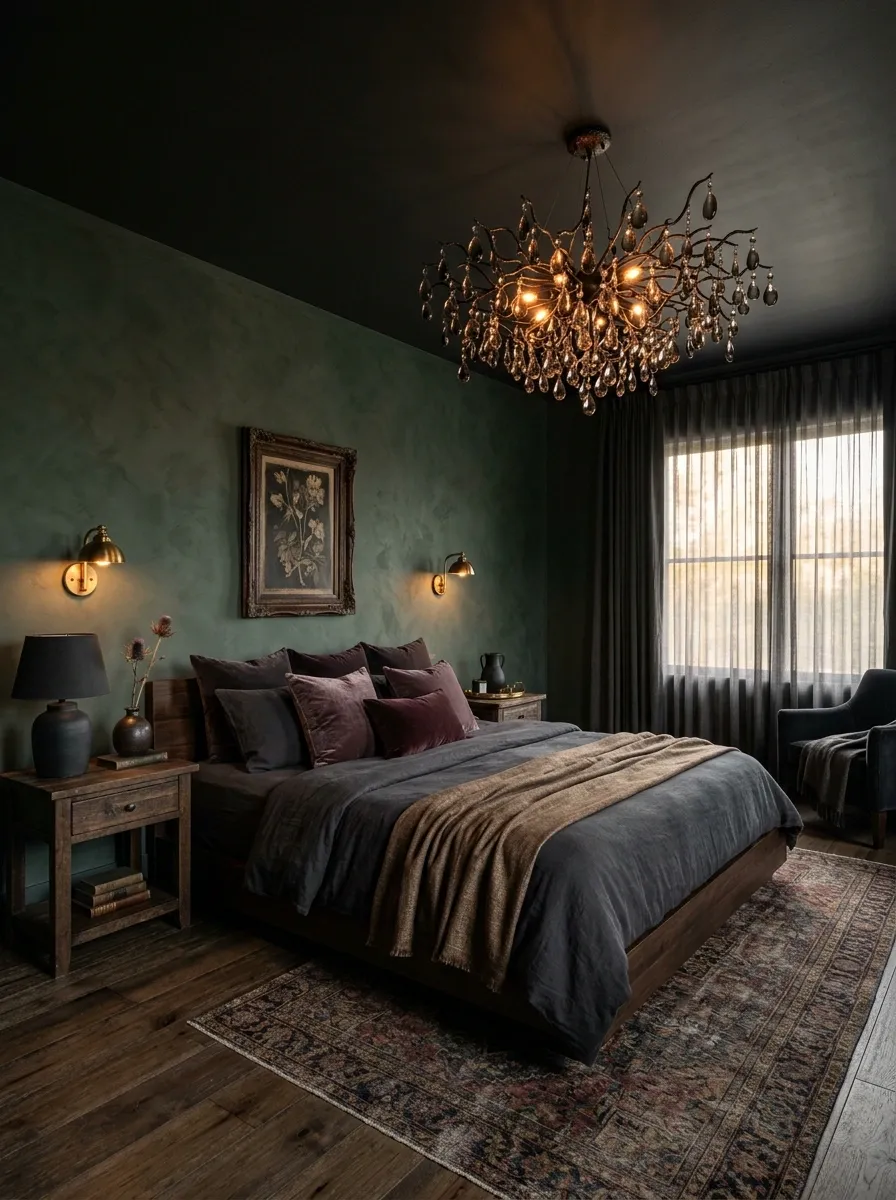
A basic flush-mount fixture kills the mood faster than almost anything else in the room.
Choose a chandelier that has a little irregularity. Branch-like arms, smoked glass, aged metal, or a slightly antique silhouette all work. The fixture should feel like part of the room’s story, not like a random luxury add-on.
Keep the rest of the ceiling simple. You don’t need a dramatic light fixture plus elaborate ceiling decor plus a giant gallery wall. One strong overhead shape is enough.
Best move: hang it where the bed can see it clearly, then keep the bulb glow warm and low.
Layer Velvet, Linen, and Woven Bedding
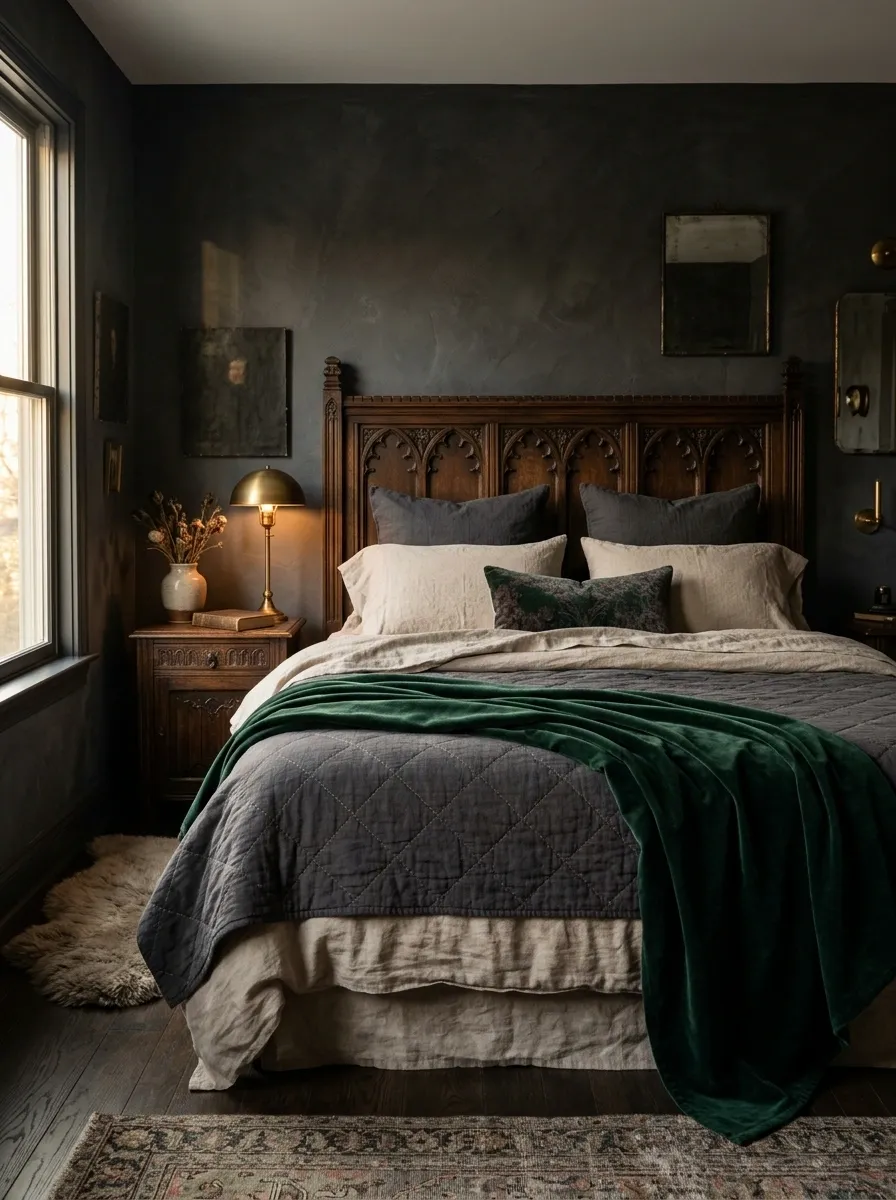
The bed shouldn’t look like it came as one package.
Texture matters more than adding another pattern. Start with washed linen sheets, add a quilt or coverlet with visible stitching, then finish with one velvet or woven layer. The contrast makes the bed feel deeper, especially against dark walls.
Don’t stack ten decorative pillows. That’s the fastest way to lose the relaxed feeling.
A few useful layers are enough:
- Breathable base sheets
- Textured coverlet
- One heavier throw
- Two or three pillows with different fabrics
Give One Corner a Tiny Reading Nook
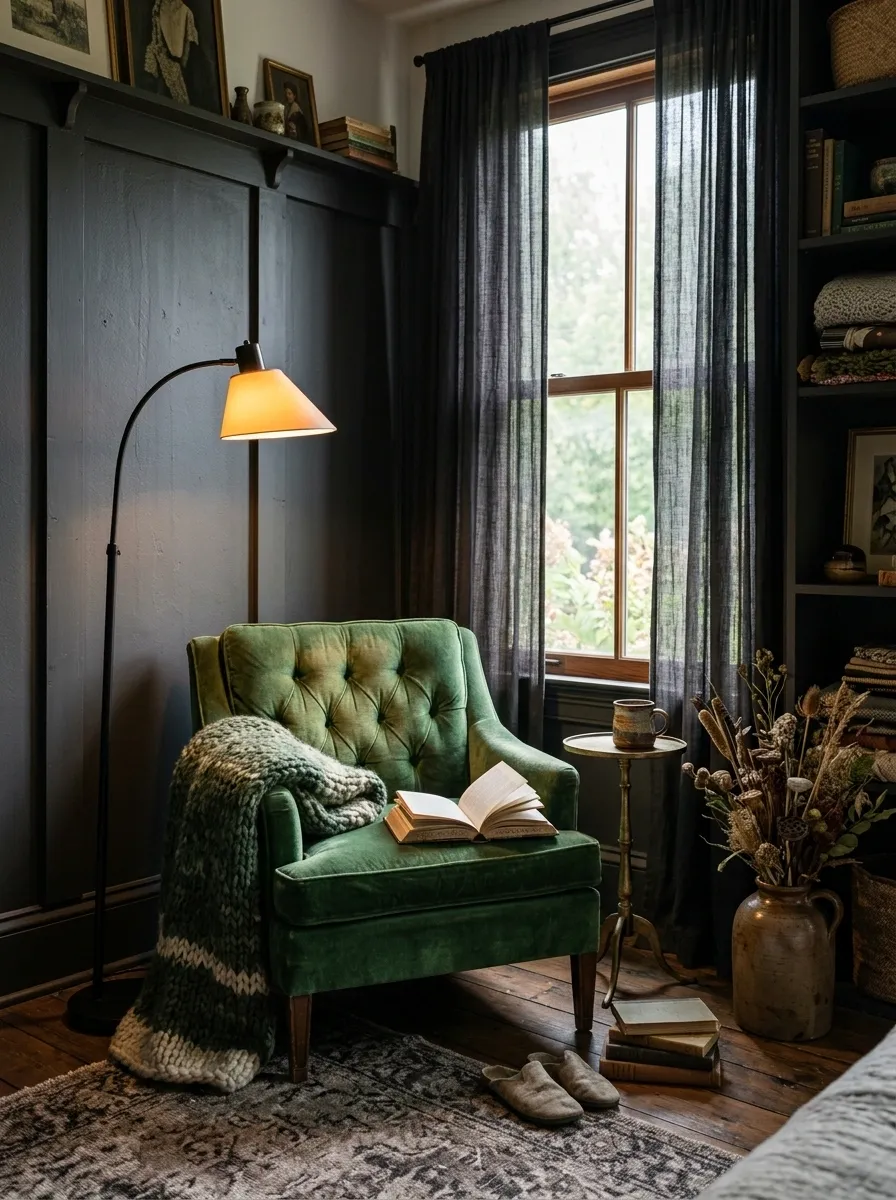
A dark whimsical bedroom feels more believable when it looks like someone actually uses it.
Take the least useful corner and give it one job. A compact chair, small side table, and floor lamp are enough. Don’t fill the corner with shelves and accessories just because there’s empty wall space.
A narrow chair works especially well beside a tall window or near a wardrobe.
Quick comparison:
The nook should feel tucked away, not staged.
Use Botanical Prints Without Making the Room Feel Floral
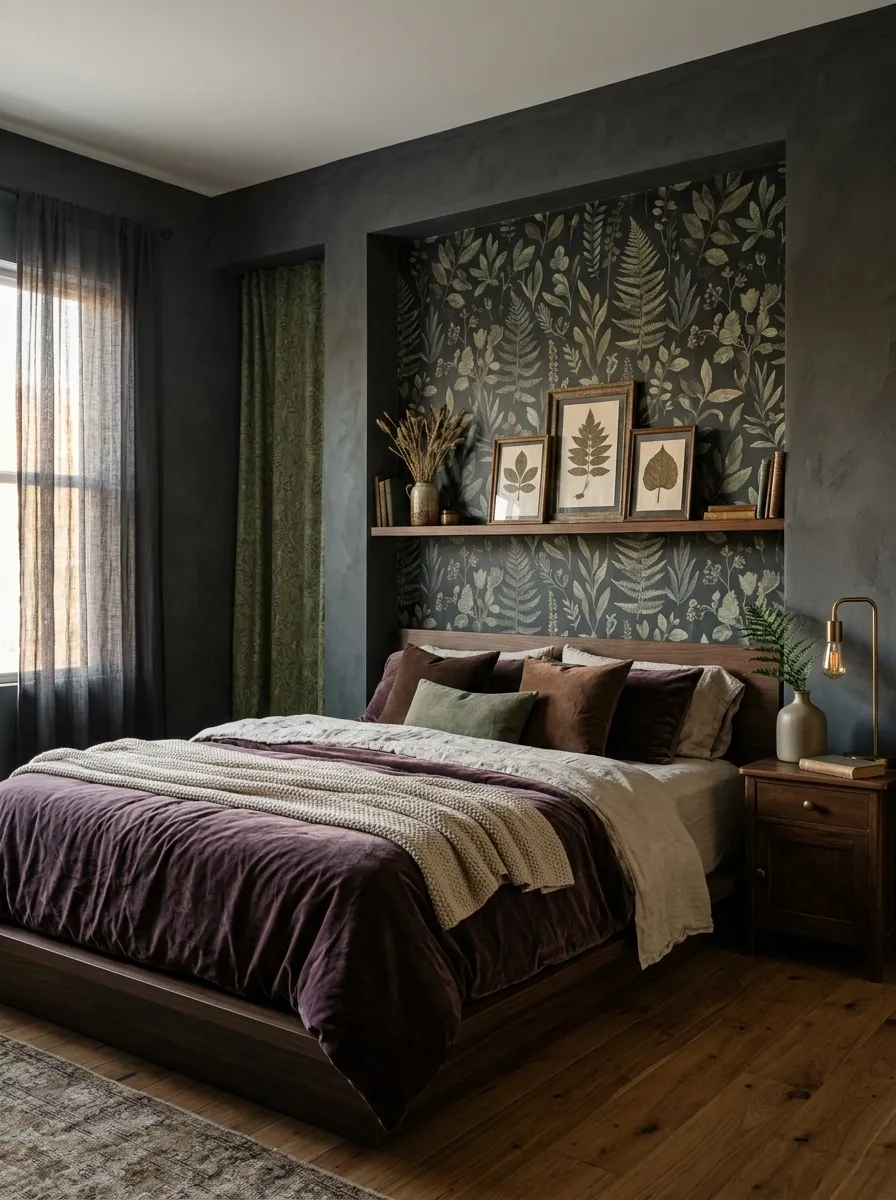
Botanical patterns work beautifully in a dark bedroom, but oversized floral bedding usually pushes the room in the wrong direction.
Use the botanical element in a quieter place. Wallpaper behind a narrow shelf, framed pressed-looking leaves, a leafy print in one corner, or a single botanical fabric panel gives you the organic reference without covering every surface in flowers.
Stick to muted greens, dusty cream, brown, and deep plum. Those colors sit naturally with the palette.
The trick: make the plant reference feel discovered rather than announced.
Frame the Bed With Floor-Length Drapes
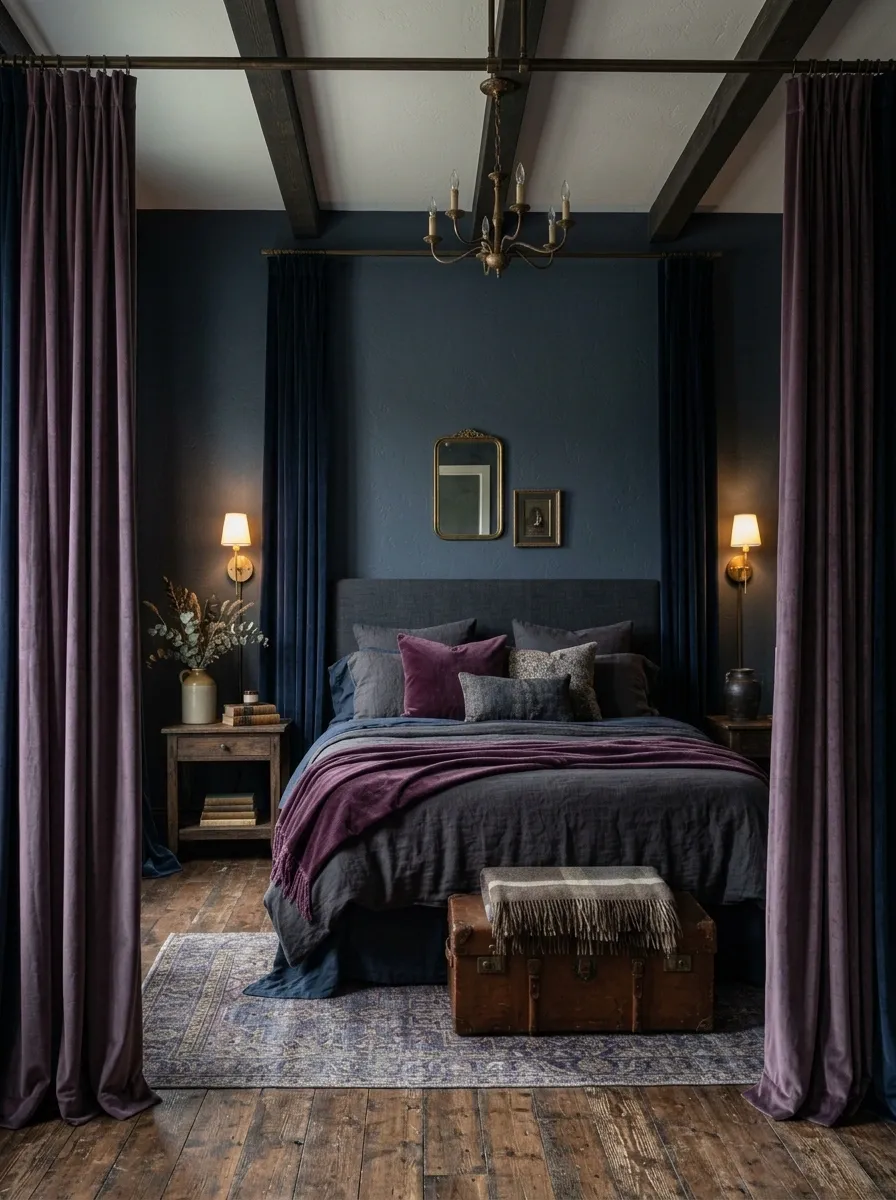
Curtains don’t have to stay on the windows.
Hang fabric behind or around the bed and you’ll create a soft architectural frame without building anything permanent. This works especially well if the bed sits against a plain wall that feels too empty.
Choose fabric with some weight, but don’t use an ultra-heavy material that swallows the bed.
Mount the fabric so it reaches the floor. Let it pool slightly or fall straight depending on how clean you want the room to feel.
Use this move when the wall behind the bed needs more drama but wallpaper feels too permanent.
Replace Matching Nightstands With Mismatched Pieces
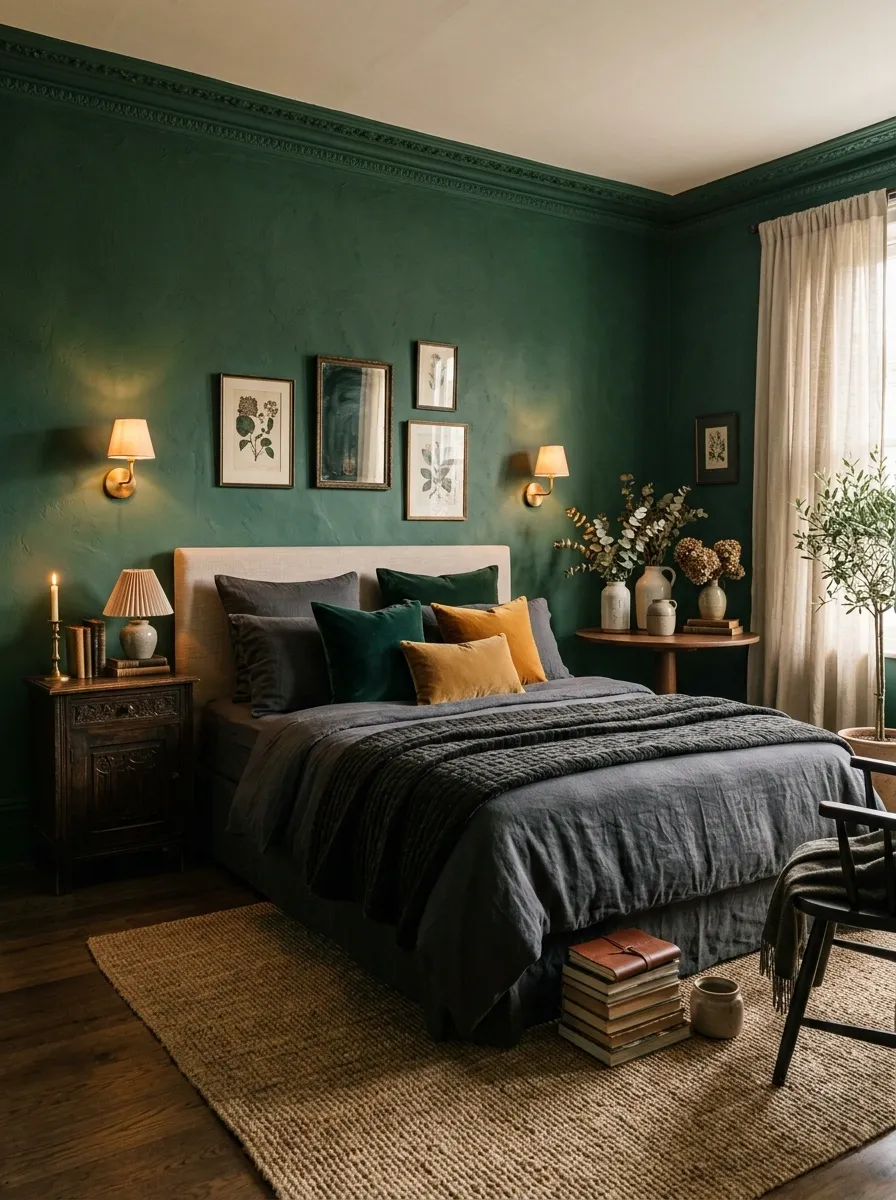
Matching nightstands are tidy, but they can make the bedroom feel like it came straight from a showroom.
Use two pieces that share one quality instead of matching completely. Maybe both have wood tones, similar heights, or the same aged finish. The shapes can still be different.
A small vintage cabinet beside the bed can sit comfortably next to a simple round table. That little mismatch makes the room feel collected over time.
Keep the mismatch controlled.
Create a Shadowy Accent Wall Behind the Bed
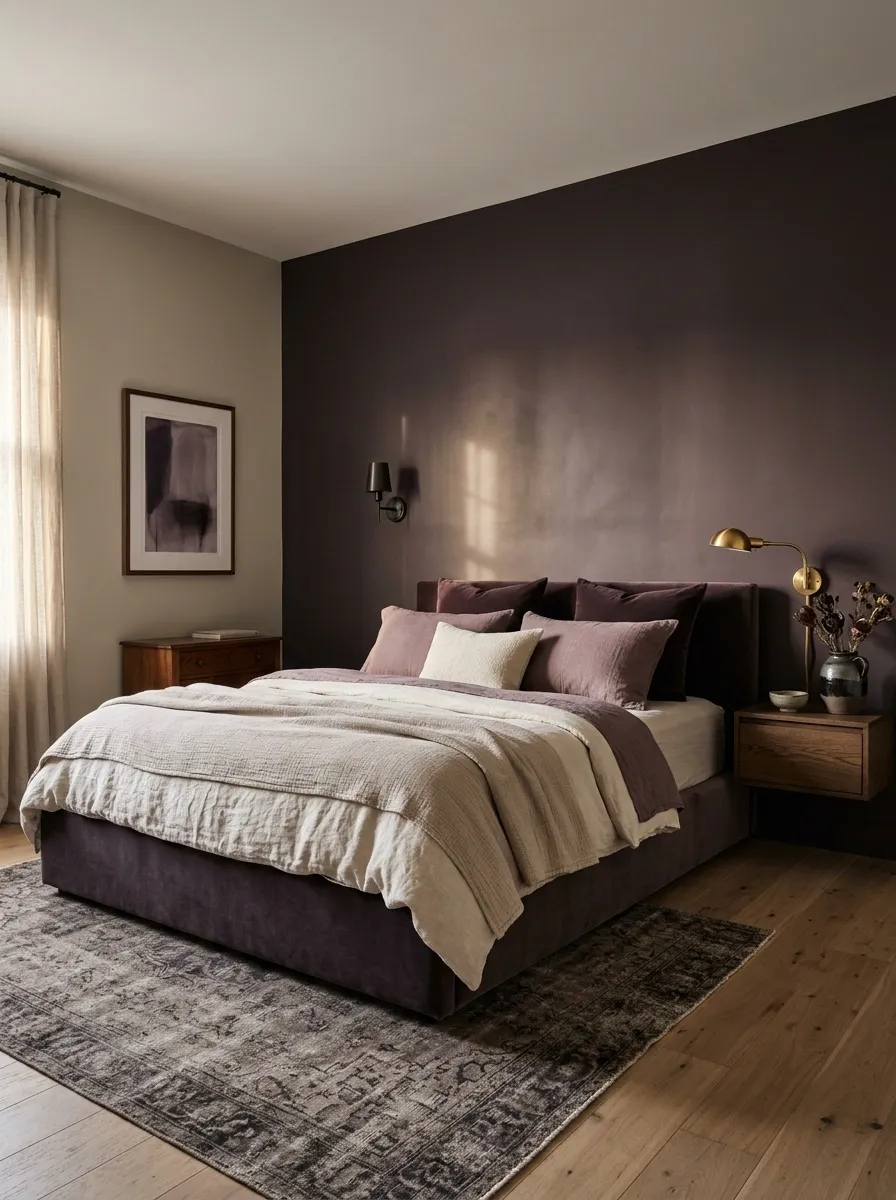
An accent wall shouldn’t look like someone simply chose a random darker paint.
Use the wall behind the bed to create depth. Deep green, aubergine, charcoal brown, and smoky plum all work because they’re strong enough to separate the bed from the rest of the room.
Keep the other walls calmer if the bedroom is small. Then repeat a little of the accent color in the bedding or artwork.
The common mistake is adding too many competing patterns to that same wall. Let the paint do its job first.
Warning: dark wallpaper plus dark art plus dark curtains can turn one wall into a visual block. Pick one major treatment.
Add an Antique Mirror Where Light Can Hit It
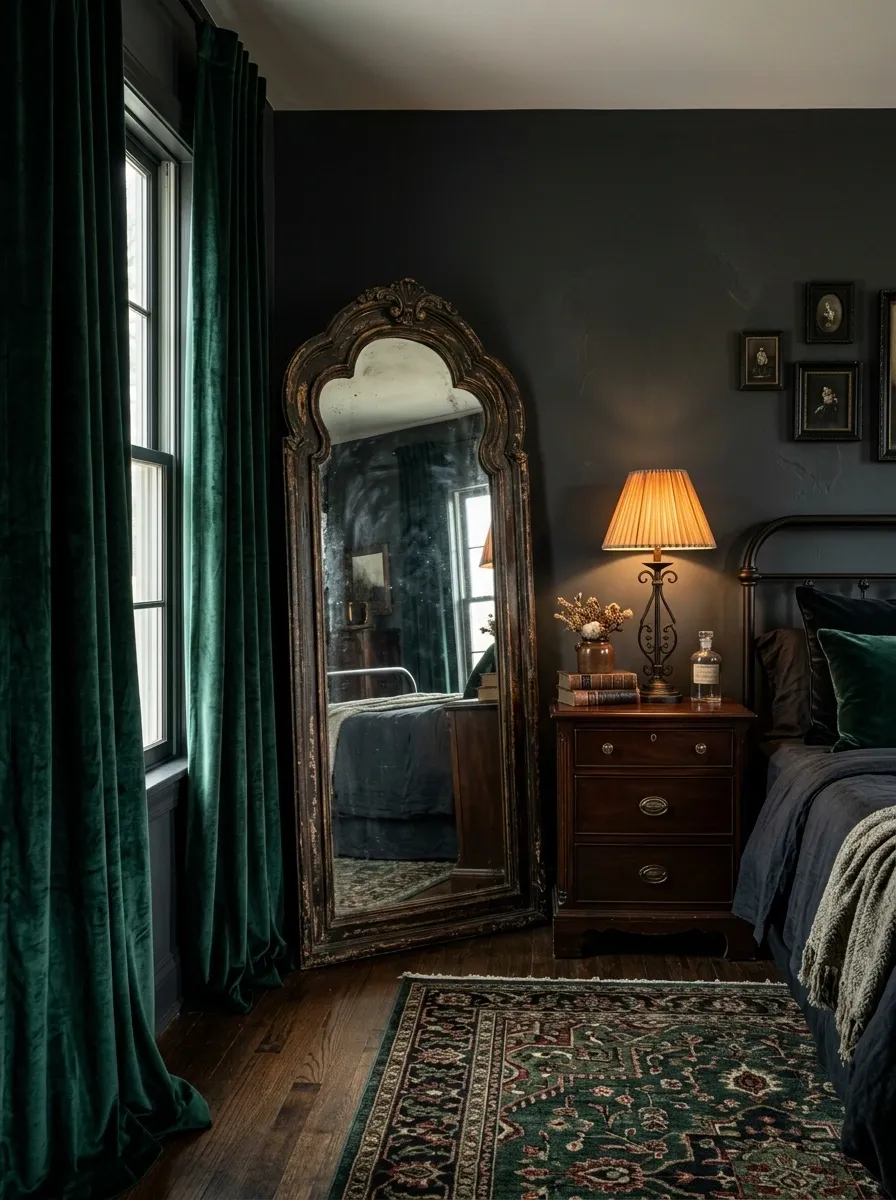
A mirror isn’t just there to check your outfit.
In a dark bedroom, an old-looking mirror can bounce daylight and lamp glow into corners that otherwise feel flat. Choose one with character, such as an aged wood frame, distressed finish, or unusual curved shape.
Position it where it can catch a window or nearby lamp. A mirror facing a blank dark wall does far less for the room.
A small mirror over a dresser works. A taller leaning mirror works even better when you have the floor space.
Let the Ceiling Become Part of the Design
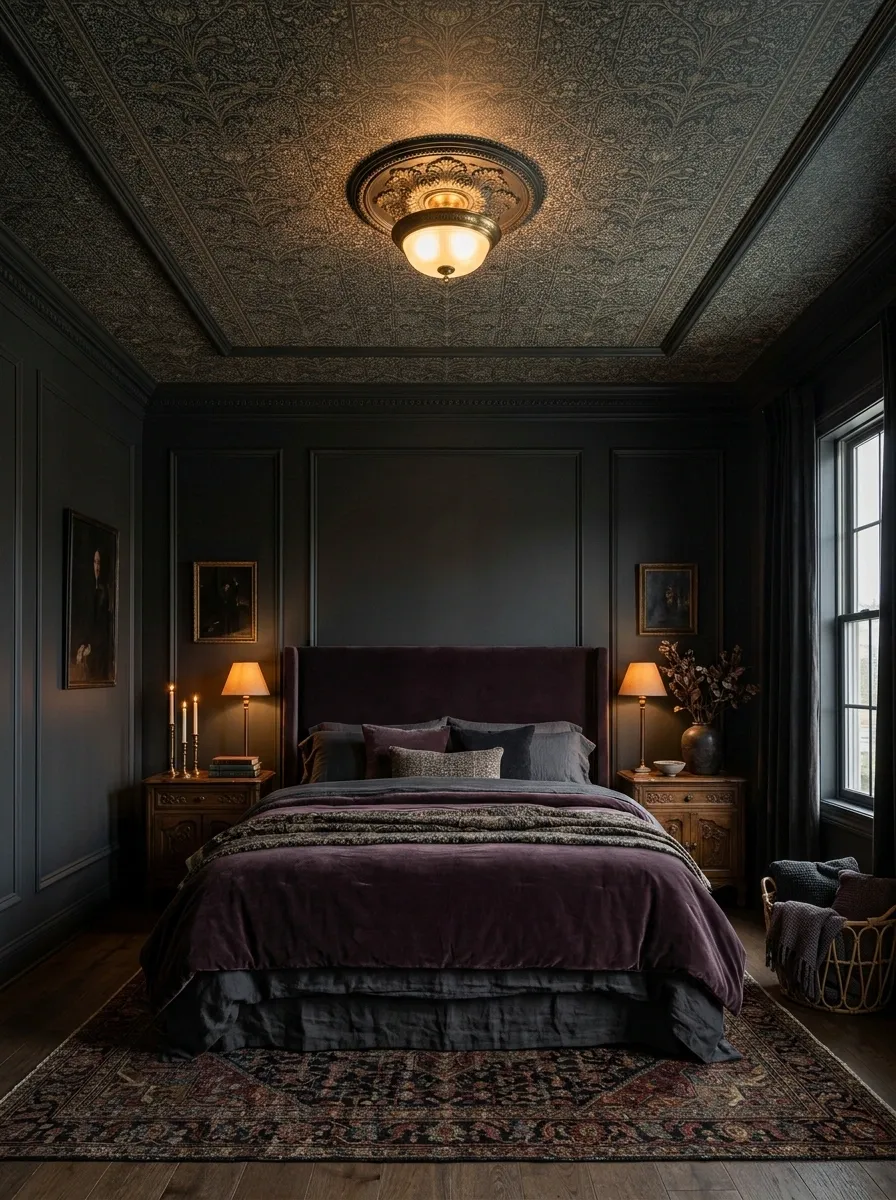
Most bedrooms stop decorating at eye level. That’s a missed opportunity.
Painting the ceiling a muted version of the wall color makes the room feel wrapped in color. For a stronger effect, use a subtle patterned wallpaper overhead or add narrow trim that gives the ceiling a little architectural detail.
Keep the treatment quieter than the walls. You want people to notice it after they enter, not before.
This idea works especially well in bedrooms with tall ceilings where a plain white surface feels disconnected from the rest of the palette.
Three ways to use the fifth wall:
- Paint it a softer shade of the wall color.
- Use a subtle pattern above the bed.
- Add simple trim for a framed effect.
Use Candlelight-Style Lighting for Evening Mood
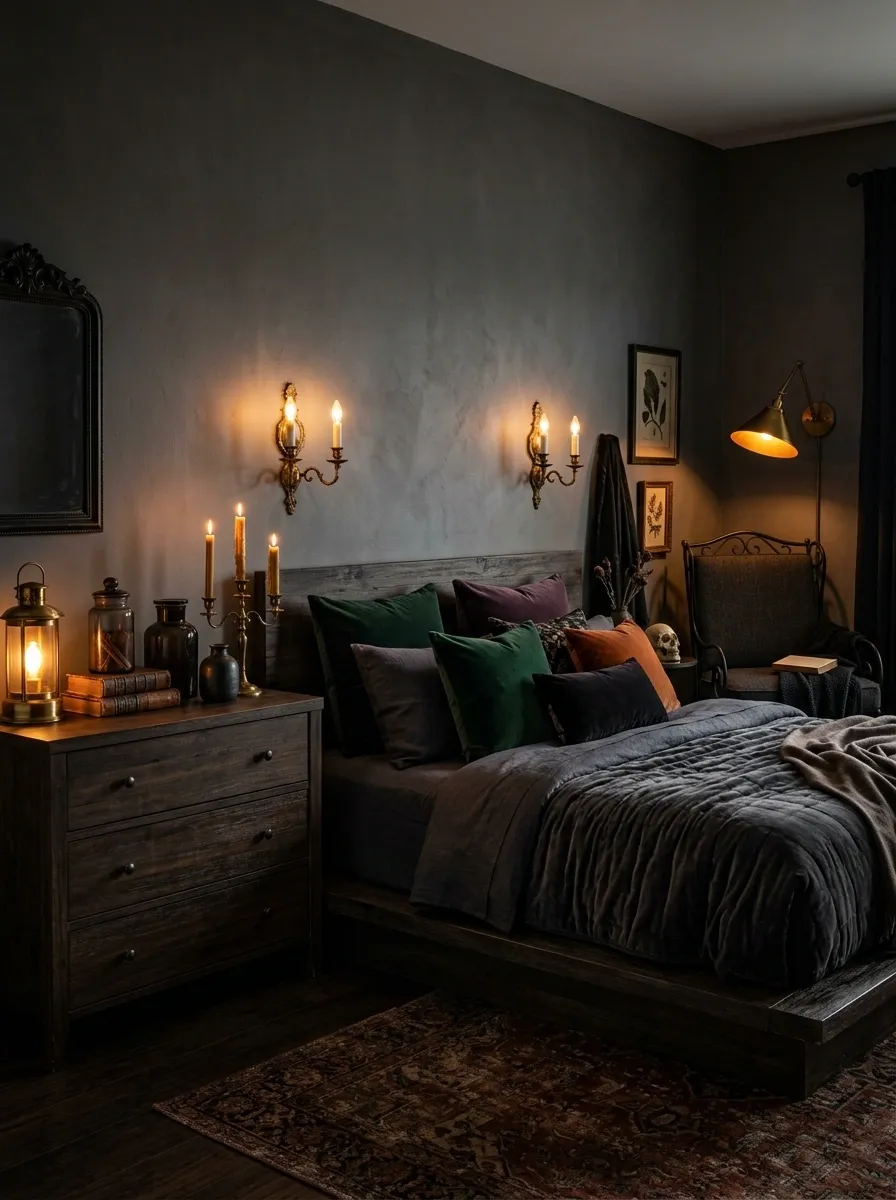
A dark whimsical bedroom should look different after sunset.
That’s why one ceiling light isn’t enough. Add a second layer that feels lower, warmer, and softer. Table lamps, wall sconces, small lantern-style lights, or candle-shaped bulbs all help create that evening shift.
You don’t need actual candles scattered across the room. The visual effect matters more than the literal flame.
Keep the brightest light near useful areas like the dresser or reading chair. Let the corners stay quieter.
Bring In One Strange, Sculptural Object
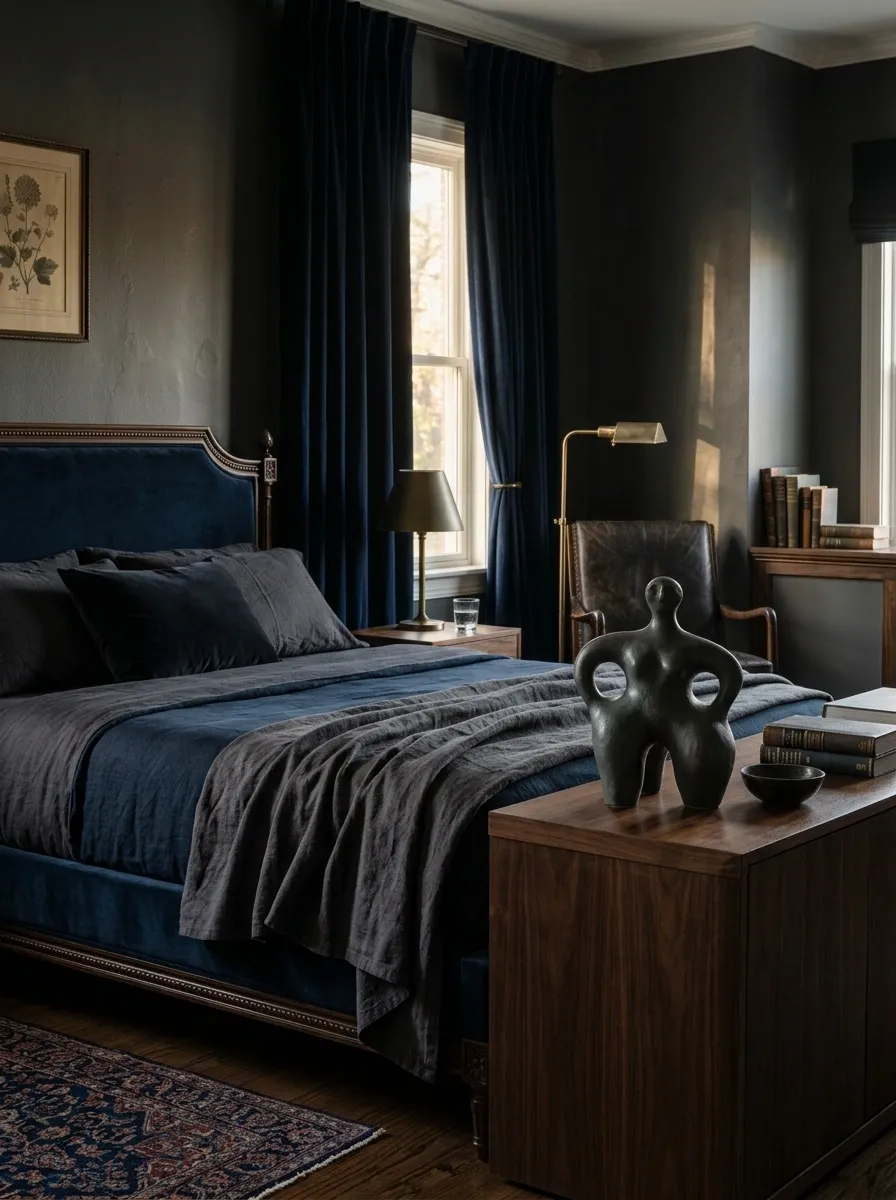
A whimsical bedroom needs something that makes you stop for a second.
It could be a sculptural lamp, an unusual ceramic figure, a carved wooden object, an oversized vase, or a piece of decor with a shape you don’t see everywhere. The key is restraint. One strange object has more impact than a shelf packed with quirky things.
Place it somewhere your eye naturally travels, such as a bedside table, dresser, or reading nook.
Use a Deep-Rimmed Rug to Ground the Room
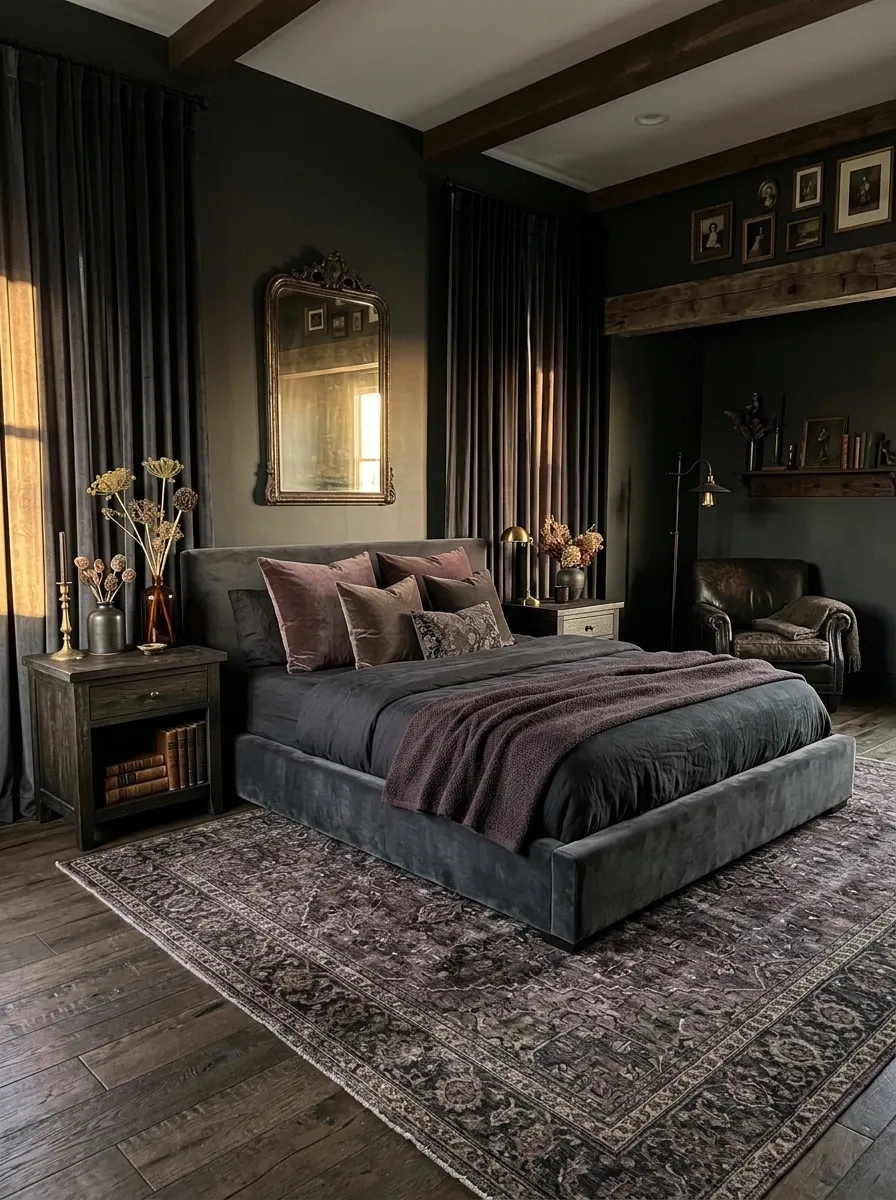
A dark bedroom often needs something underneath all that furniture to stop it from feeling visually disconnected.
A rug with a deep border gives the room a stronger base. Choose muted plum, brown, charcoal, moss, or another low-contrast shade that works with the walls.
The rug should extend beyond the bed enough to create a clear visual zone. A tiny rug floating in the center simply makes the furniture look scattered.
For a softer room, choose a faded traditional pattern. For a cleaner look, choose a subtle solid or low-contrast weave.
The rug’s job is to connect the bed, nightstands, and nearby furniture into one composition.
Hide Practical Storage Inside Pretty Furniture
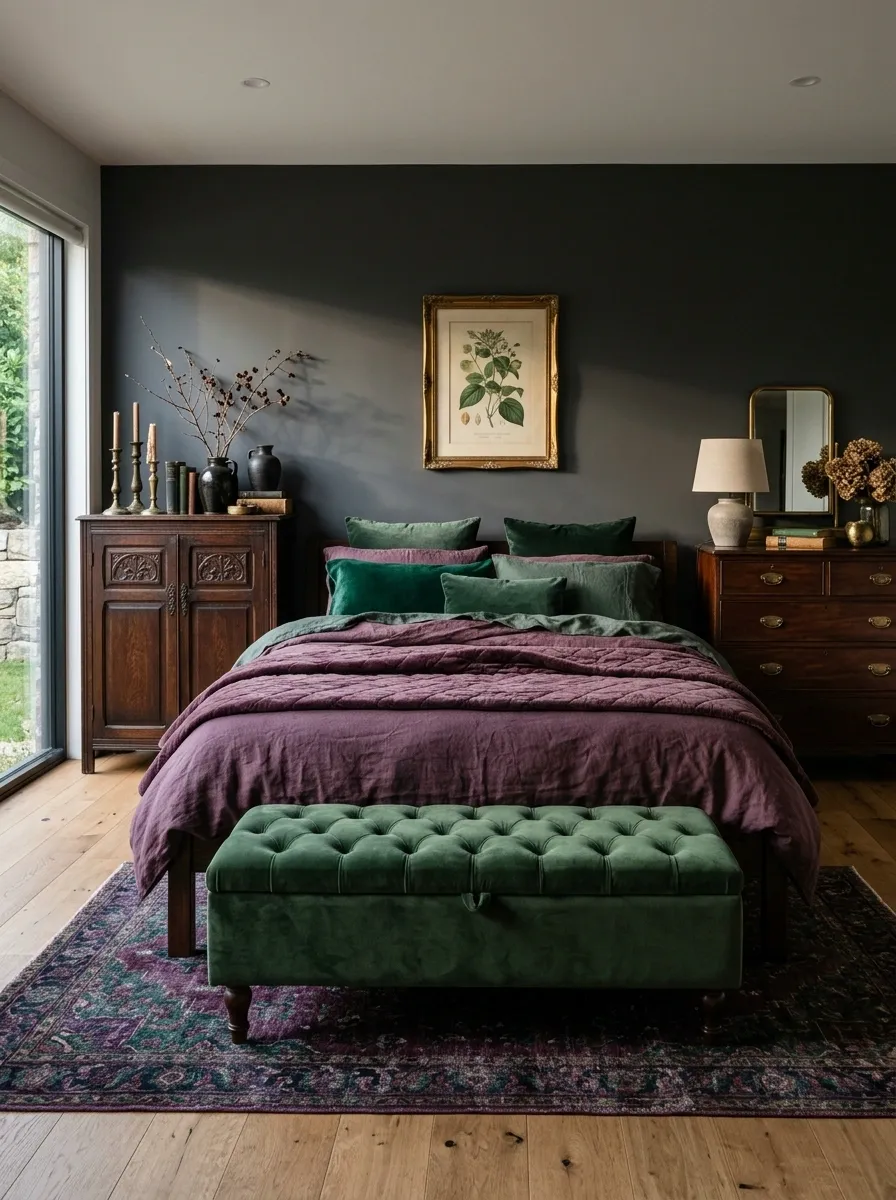
Nothing ruins a whimsical bedroom faster than visible cables, spare blankets, clothes piles, and plastic storage tubs.
The answer isn’t having less stuff. It’s giving the useful stuff better hiding places.
Choose a storage bench at the foot of the bed, a vintage-looking cabinet, a dresser with deep drawers, or baskets tucked under a console. Let the furniture carry the practical work so the decorative parts can stay simple.
The best storage pieces look good even when they’re doing absolutely nothing decorative.
Before buying another basket, check whether one furniture piece could hide the whole category instead.
Add Dark Wood Instead of More Black
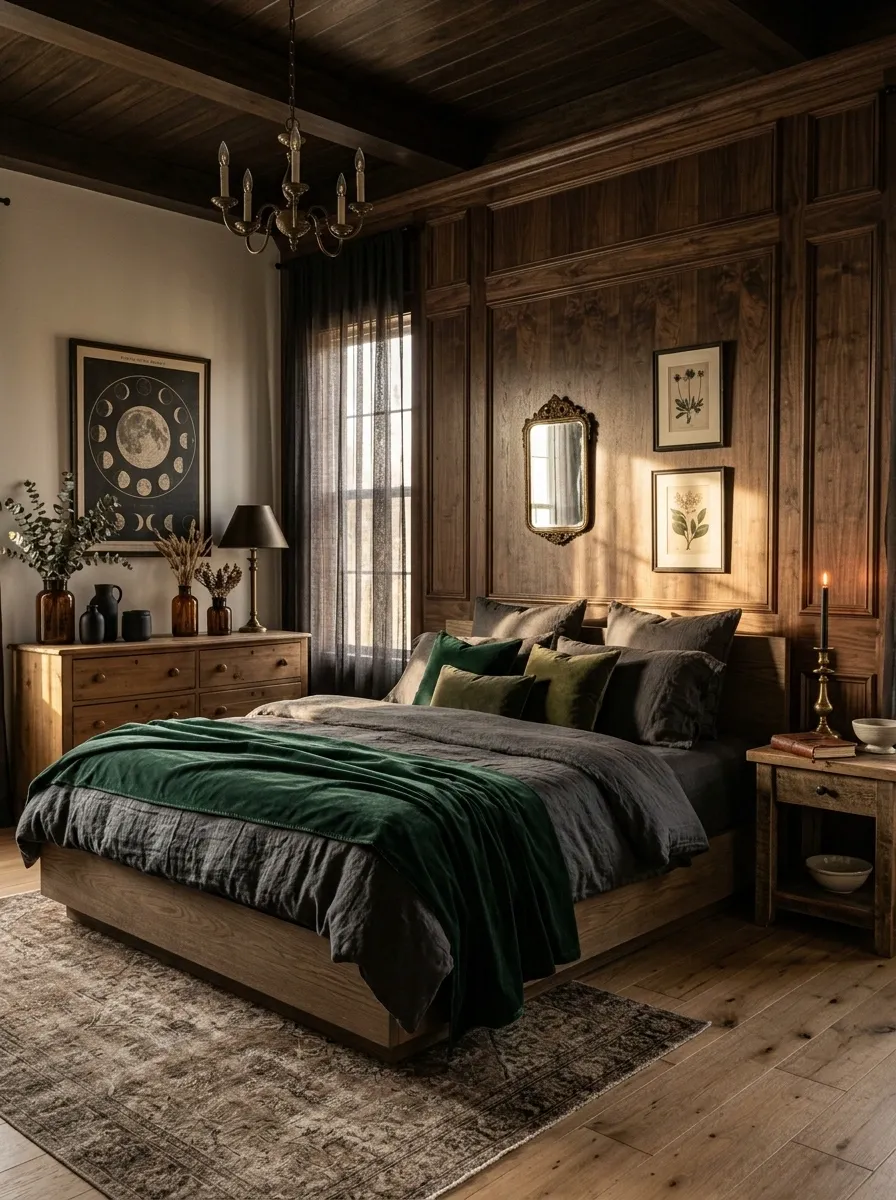
When a dark bedroom starts feeling too black, don’t immediately reach for another lighter wall color.
Bring in wood.
Dark walnut, smoked oak, aged pine, and other rich wood finishes add warmth while keeping the room moody. Wood also breaks up the flatness that can happen when painted surfaces and black furniture dominate everything.
Use it where the room needs visual weight, such as a bed frame, dresser, nightstand, or small bench.
A useful rule: let the room have dark color and dark material, but don’t make every dark surface the same finish.
Use Tiny Whimsical Details Where You Least Expect Them
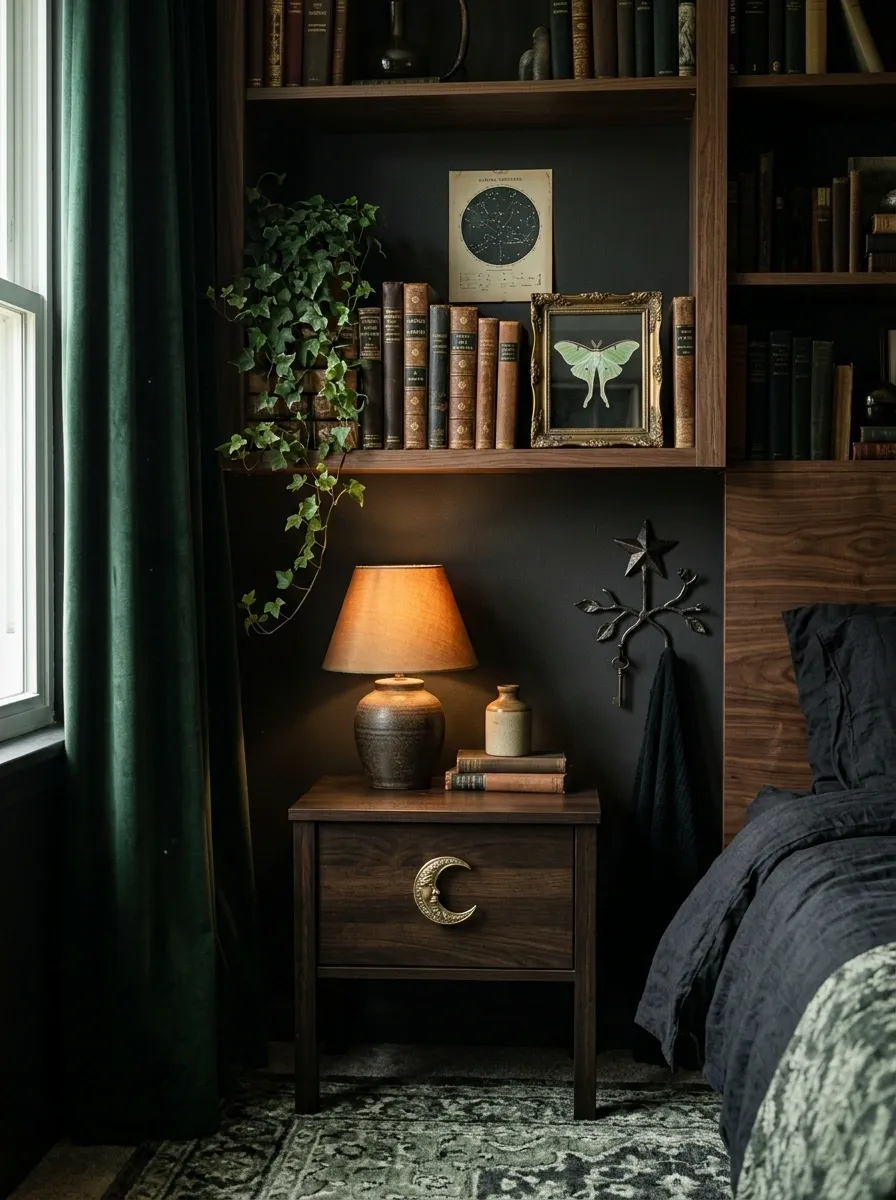
The strongest whimsical details aren’t always the biggest ones.
A tiny celestial print inside a bookcase, a moon-shaped drawer pull, an unusual switch plate, a small moth illustration, or a sculptural hook can create that unexpected moment without turning the room into a theme.
Put these details in places people discover rather than places they have to stare at.
That’s what makes them feel personal.
Good spots include:
- Inside open shelving
- Beside the dresser mirror
- On a bedside tray
- Above a small hook rail
- Inside a reading corner
Make the Bed Look Slightly Overgrown and Romantic
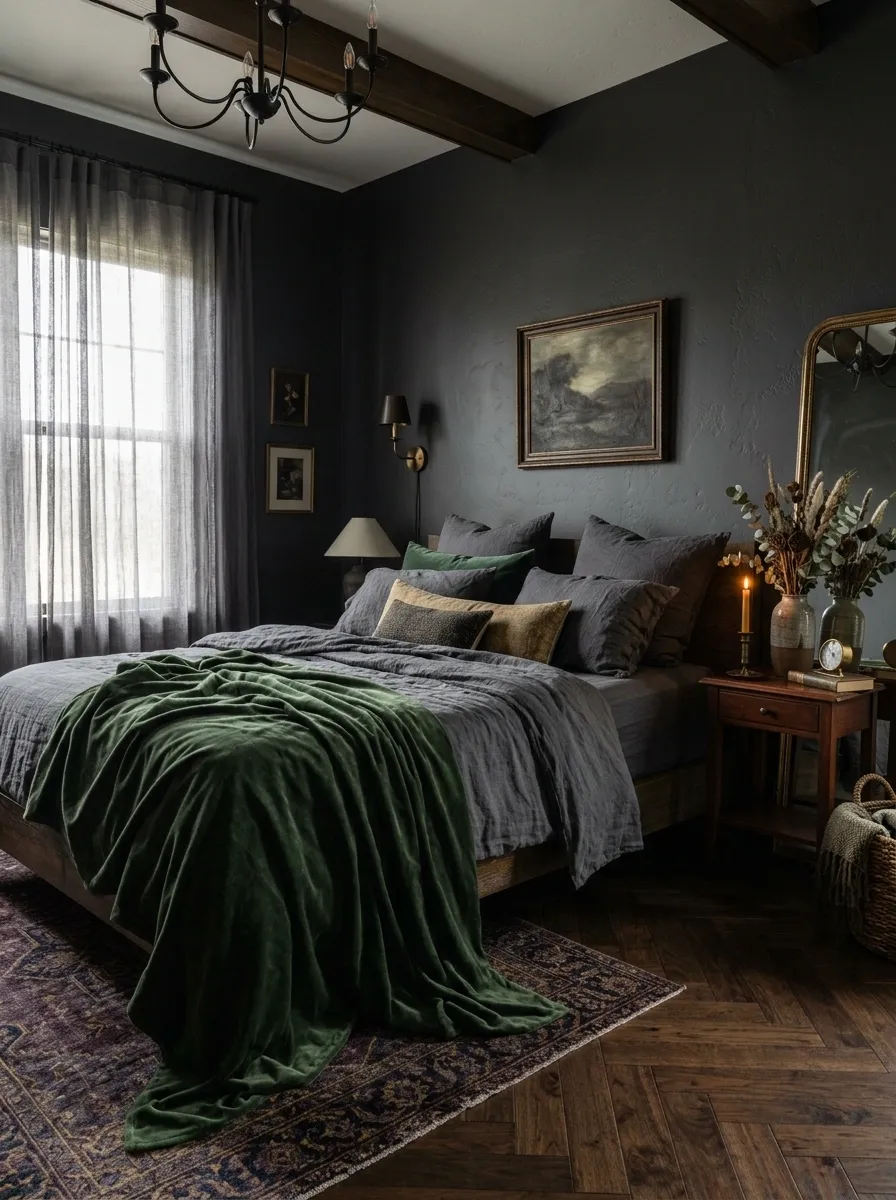
A whimsical bedroom needs softness, but too much polish works against the idea.
Let the bed look a little lived in. Use a generous throw that falls naturally over one corner. Let a linen coverlet sit slightly unevenly. Mix two pillow shapes instead of lining up a giant row of identical cushions.
The room should look comfortable enough to crawl into.
Don’t confuse “relaxed” with messy. The difference is control. The bedding can look loose while the rest of the room stays clean and deliberate.
Think soft edges, natural folds, and a little imperfection.
Control the Room With a Three-Level Lighting Plan
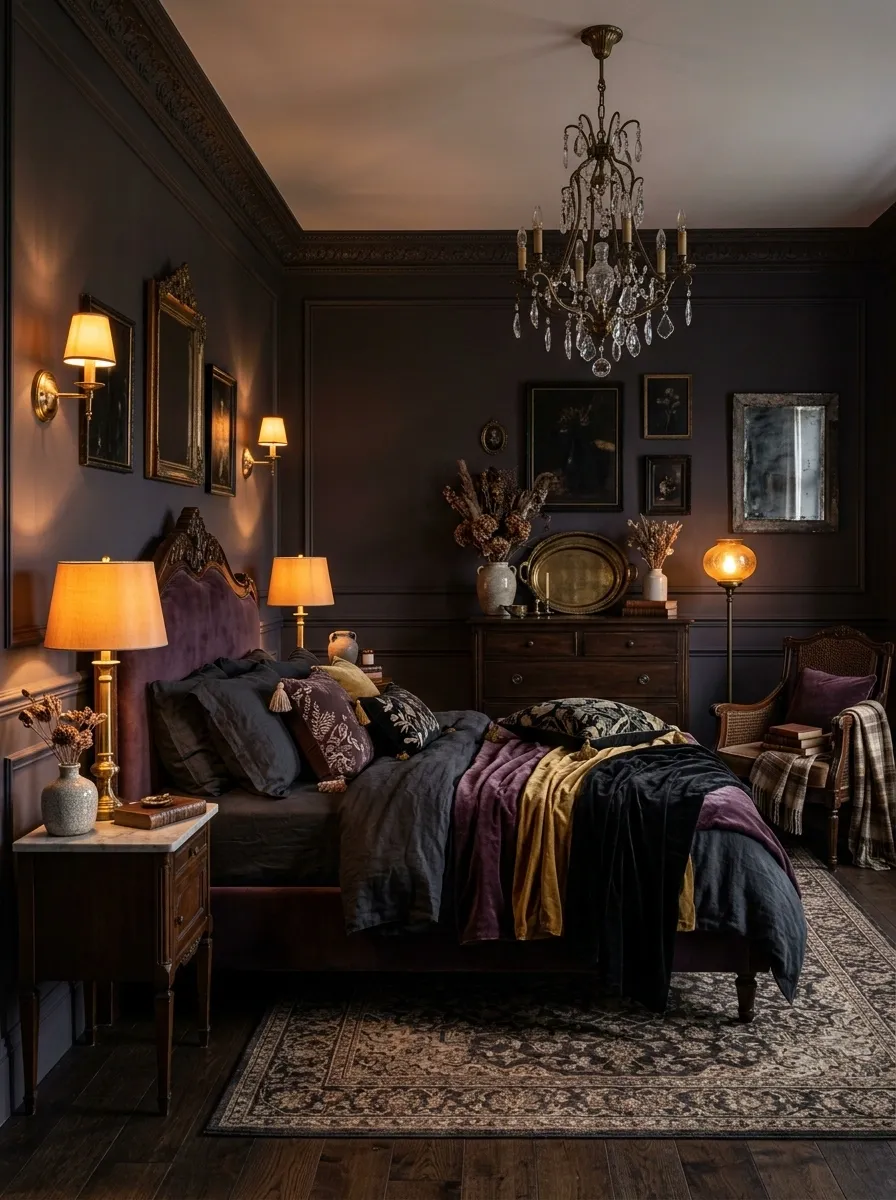
This is the detail that makes the whole room work after dark.
Don’t depend on one central fixture. Build lighting in layers so you can change the room’s mood without changing the furniture.
Start with the main ceiling light for practical tasks. Add bedside or wall lighting for the middle layer. Then add one low, soft source near a chair, dresser, or floor for the final layer.
Each light should have a job.
Finish With One Signature Piece Nobody Else Has
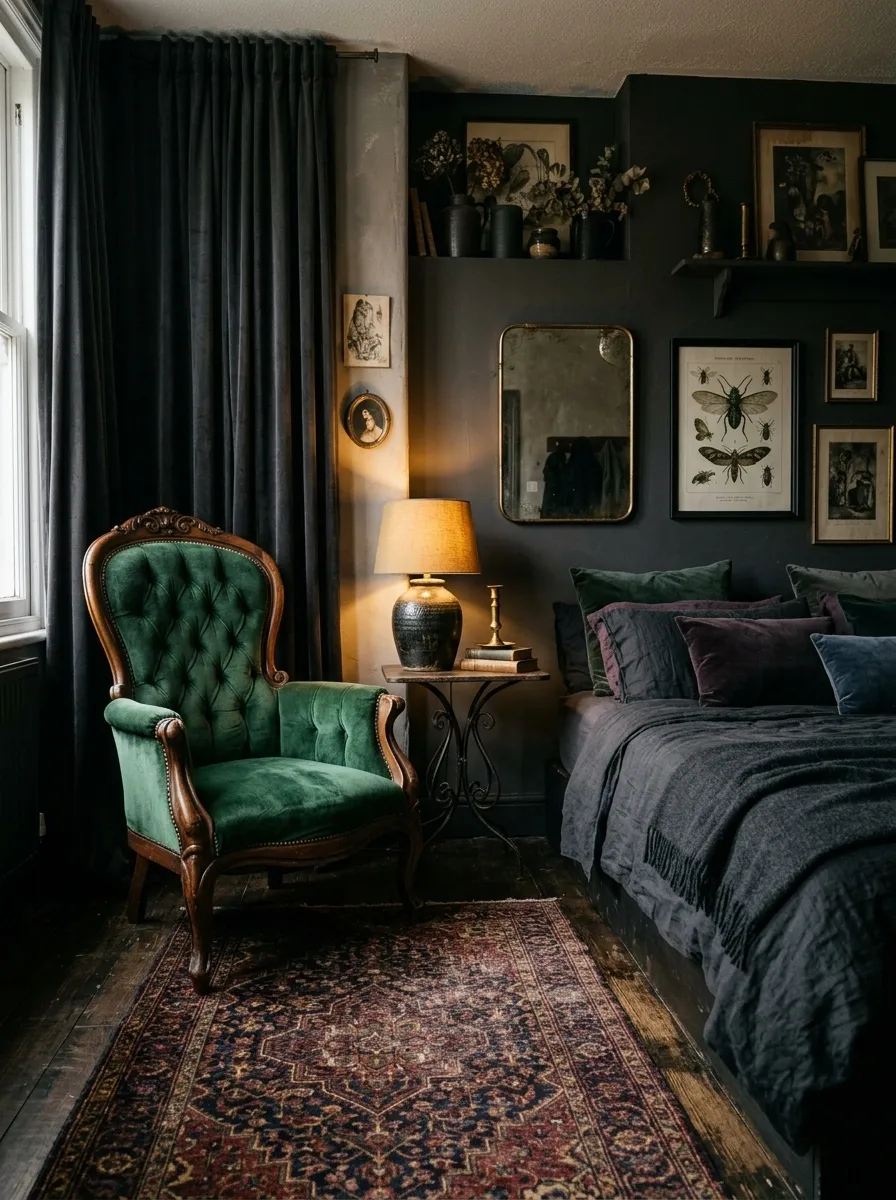
The final detail shouldn’t be another generic accessory.
Choose one thing that gives the room its own identity. Maybe it’s an inherited chair, a strange old mirror, a handmade ceramic lamp, a framed object with a story, or a piece of art you wouldn’t find in every bedroom.
This is where the room stops looking like a collection of decorating ideas and starts looking like your bedroom.
Don’t worry about making the piece match perfectly. It should connect to the room through color, material, shape, or mood.
The best signature piece is usually the thing you’d keep even if you redecorated everything else.
Final Thoughts
The best dark whimsical bedrooms don’t feel decorated all at once. They feel like they have collected a personality over time.
Start with the bigger decisions first: the wall color, bed, lighting, and one strong focal point. Then bring in texture, wood, old-looking pieces, soft curtains, and a few details that reward a closer look. Leave some surfaces quiet. That restraint is what keeps the room from sliding into clutter.
You don’t need every whimsical idea in one bedroom. In fact, the strongest result usually comes from choosing only the details that genuinely fit the way you live.
Make the room dark enough to feel atmospheric, warm enough to feel comfortable, and personal enough that it couldn’t belong to anyone else.
Save this list for the next time you’re collecting dark whimsical bedroom inspiration, and use it as a filter before you buy the next decorative piece.