
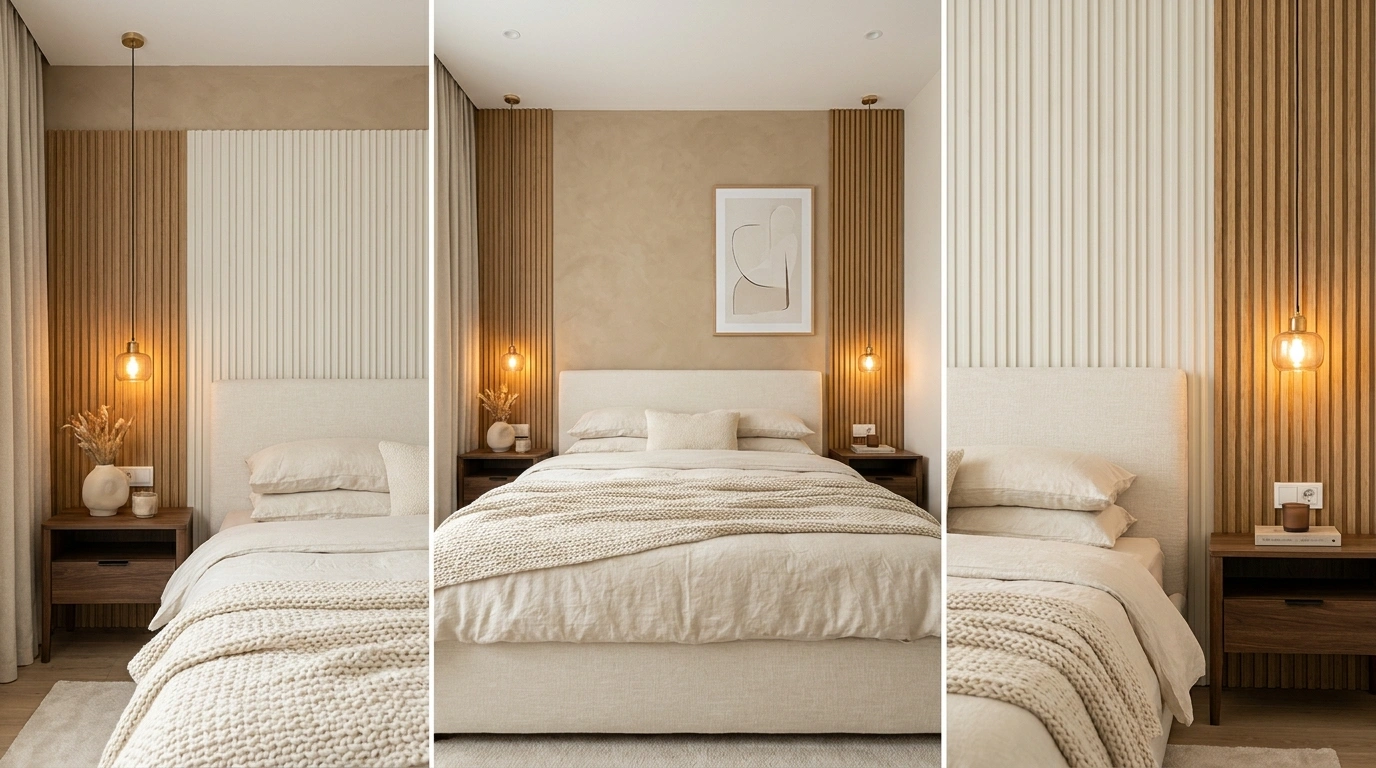
A blank wall behind the bed can make an otherwise well-decorated bedroom feel strangely unfinished. The problem isn’t always a lack of furniture or decor. Often, the wall simply has no visual relationship with the bed, lighting, floor, or colors around it.
A strong feature wall solves that by becoming part of the room’s overall composition. Wood can add architectural warmth. Paint can create a deliberate sleeping zone. Wallpaper can introduce pattern without requiring a pile of accessories. Built-ins can make the wall useful as well as attractive.
A Feature Wall Works Best as a Whole Composition
COLOR + TEXTURE
POSITION + HEIGHT
+ SHADOW
Bedroom Feature Wall Ideas
Navy and Gold Abstract Wave Wall
Deep navy paint sets a dramatic foundation, while sweeping golden line art cascades across the wall like an abstract wave. The metallic strokes catch the light, turning a flat painted surface into an expressive and luxurious focal point behind the bed.
A dark upholstered bed, rich blue bedding with golden accents, and warm brass bedside lamps complete the sophisticated palette. The rich textures and metallic gleam work together to ensure the room feels curated rather than overwhelming.
This approach shines in bedrooms with ample natural light, where the metallic accents can shimmer throughout the day. It brings instant personality and artistic flair to a space without needing heavy physical decor.
Full-Height Warm Oak Wall With a Low Upholstered Bed
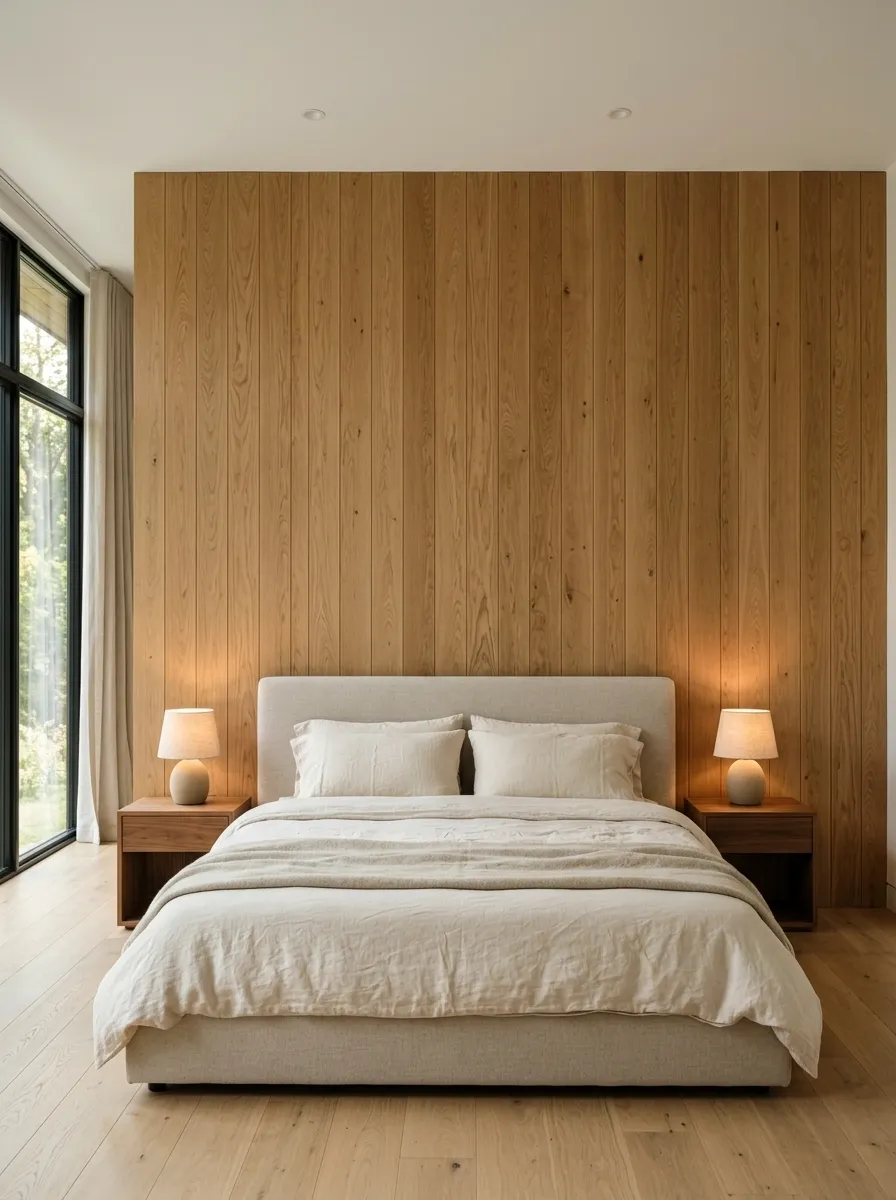
Warm oak turns the entire bed wall into architecture in this Scandinavian-inspired bedroom. Vertical boards run from floor to ceiling, giving the wall height and making the bed feel intentionally anchored rather than simply pushed against a blank surface.
A low oatmeal upholstered bed sits in front of the wood, with pale linen bedding, simple walnut-toned nightstands, and small warm lamps. The floor stays light so the oak doesn’t make the room feel too dense. The restrained styling matters here. Too many decorative objects would compete with the strong vertical rhythm.
This concept works especially well in bedrooms that already have natural light. The changing daylight brings out the grain and keeps the wood from looking flat.
Botanical Mural With Vertical Slat Accents
Vertical wood slats frame a stunning botanical mural in this nature-inspired bedroom, creating a striking contrast between clean architectural lines and organic wall art. The combination adds both texture and depth to the primary wall.
A neutral upholstered bed rests gently against the mural, flanked by modern nightstands and soft green bedding that echoes the earthy tones of the backdrop. The careful balance of wood and greenery keeps the space grounded and inviting.
This design direction works wonderfully in modern spaces that crave a touch of nature. The dual textures of wood paneling and printed foliage make the entire room feel thoughtfully finished and deeply serene.
Deep Olive Bedroom With an Arched Painted Alcove
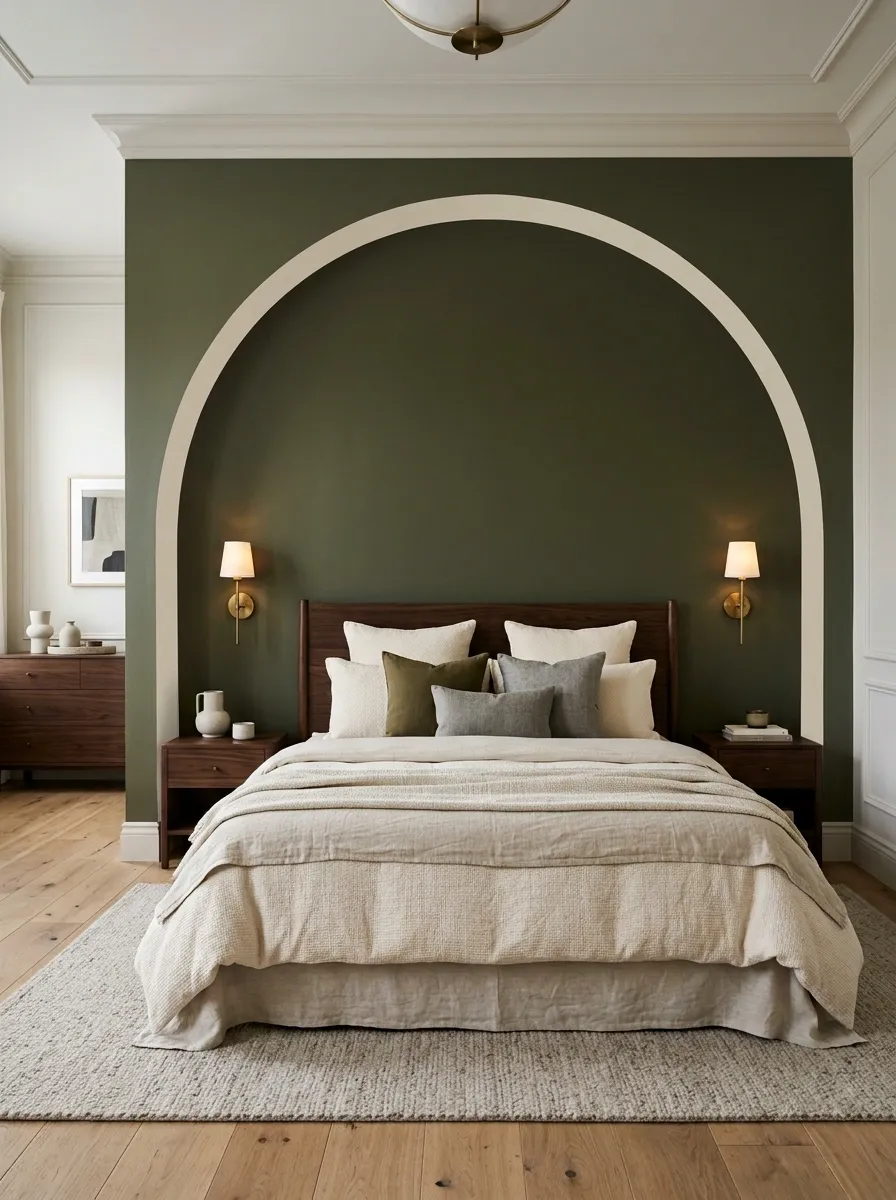
Deep olive paint gives this bedroom a richer architectural character, while a broad painted arch behind the bed creates a focal zone without adding a bulky structure. The arch is slightly lighter than the surrounding wall, so the bed appears framed by a change in tone rather than by another piece of furniture.
Cream bedding, dark wood, and aged brass bring enough contrast to keep the room from becoming muddy. The arch should remain broad and calm. A small decorative arch would make the composition feel more like a painted accent than a finished architectural idea.
This direction is especially strong in bedrooms with simple ceiling lines and limited architectural detail because the wall treatment supplies the structure.
Sculptural Gold Leaf Wall Art
Oversized metallic leaf sculptures create an extraordinary three-dimensional effect across the headboard wall. Integrated backlighting catches the golden edges, casting a warm glow that emphasizes the intricate shapes and rich textures.
A tailored bed with neutral bedding and sleek wooden nightstands anchors the space below the brilliant installation. The warm ambient lighting highlights every contour, making the feature wall feel like a high-end art gallery piece.
This concept is ideal for anyone looking to make a bold, sophisticated statement. The combination of sculptural elements and gentle illumination transforms an ordinary bedroom into an architectural masterpiece.
Limewashed Plaster Wall With Floating Walnut Nightstands
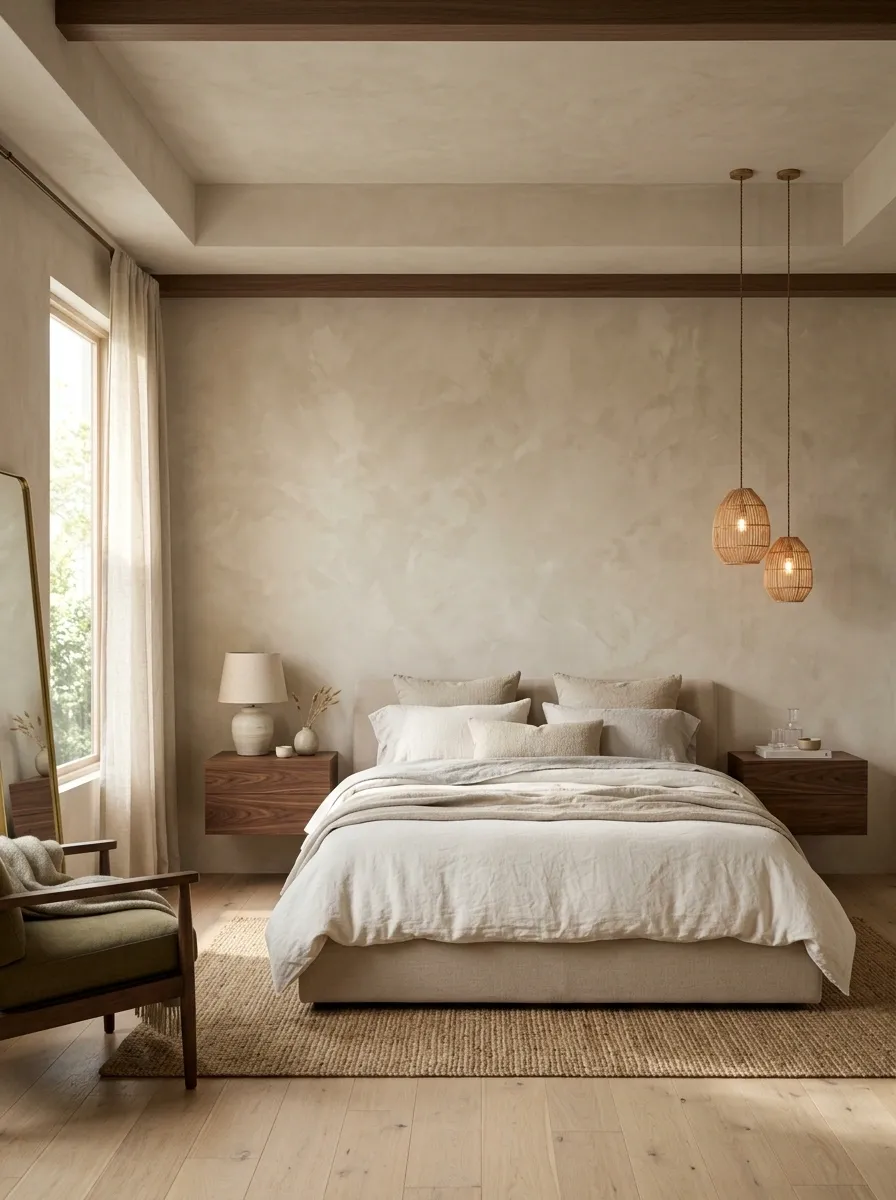
The wall carries almost no hard pattern here. Instead, limewashed plaster creates gentle variation across a warm neutral surface, giving the bedroom depth without making the feature wall visually busy.
A simple upholstered bed floats in front of it, while walnut nightstands add a darker horizontal weight on either side. Linen bedding, woven lighting, and pale flooring continue the soft material story. The contrast is subtle, but the different surfaces stop the room from feeling flat.
The most important detail is restraint. A heavily patterned rug or large collection of wall decor would interrupt the calm relationship between plaster, wood, and fabric. The texture should remain the main event.
soft variation
light layer
dark anchor
Grid Paneling With Modern Wall Sconces
Classic grid paneling gets a contemporary update in this calm, neutral bedroom, adding subtle architectural interest and refined geometry to the space. A sleek pendant-style wall sconce adds a single point of warm illumination against the textured surface.
A tall olive tree in a minimalist planter introduces organic movement beside the bed, while soft bedding and pale wood nightstands maintain the understated, earthy aesthetic. Every element feels deliberate and harmonious.
This style is a brilliant choice for adding structure to blank walls without relying on loud colors or busy patterns. The architectural rhythm provides a timeless backdrop that makes the entire room feel complete.
Dusty Blue Paneling With Traditional Brass Lighting
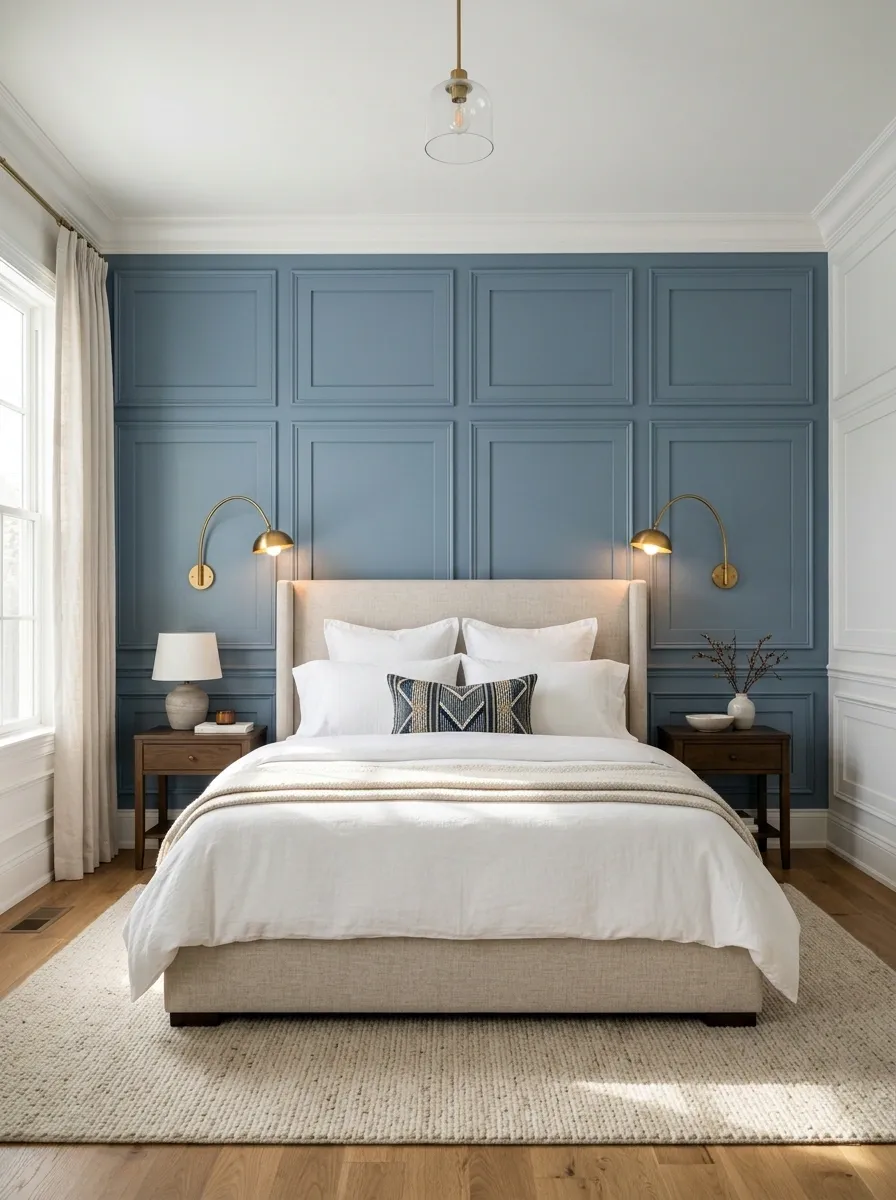
This bedroom takes a more tailored route with dusty blue wall paneling, crisp trim, a structured upholstered bed, and warm brass sconces. The panel layout gives the wall a deliberate rhythm while the brass introduces small points of warmth against the cooler blue.
White bedding keeps the center of the composition bright, while a patterned accent pillow and medium-tone wood prevent the room from feeling overly formal. The key is proportion. Large panels suit the full wall better than many tiny framed sections, which can make the design feel fragmented.
The finished effect sits comfortably between traditional and contemporary because the architectural details are classic while the palette stays relaxed.
Embossed Calla Lily Plaster Wall
A breathtaking embossed plaster mural featuring graceful calla lilies transforms the headboard wall into a work of art. The tactile, monochromatic floral relief catches overhead spotlighting, creating gentle shadows that bring the flowers to life.
A dark tufted bed and soft gray bedding contrast beautifully against the creamy plaster backdrop, while warm under-bed lighting grounds the composition. The restrained color palette allows the intricate wall texture to take center stage.
This sophisticated treatment is perfect for bedrooms desiring elegance and artistic depth. The seamless blend of classic sculptural relief and modern lighting gives the space a truly bespoke, finished feel.
Oversized Floral Wallpaper Framing the Entire Bed
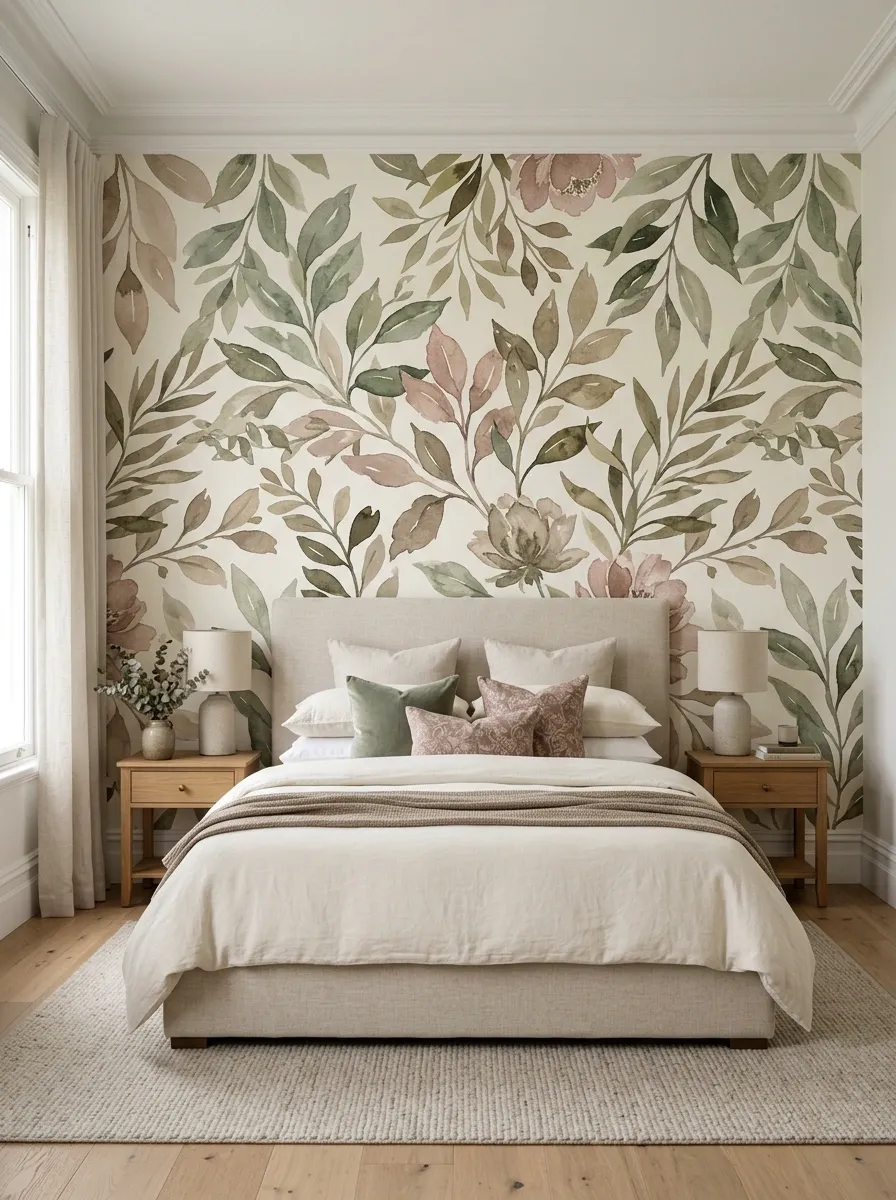
A large botanical wallpaper can completely change the personality of a bedroom when it covers the full wall instead of being treated as a small decorative insert. Here, oversized leaves and flowers form the backdrop for a simple upholstered bed, while cream bedding and quiet wood furniture prevent the pattern from becoming chaotic.
Scale is what makes this version work. The botanical forms should feel large enough to read as part of the architecture, not like a collection of tiny motifs scattered behind the bed. A restrained rug and simple bedside lighting leave enough visual breathing room.
This is one of the strongest choices for a bedroom that needs personality without relying on lots of separate decorative objects.
Charcoal Bedroom Wall With Gallery-Style Artwork
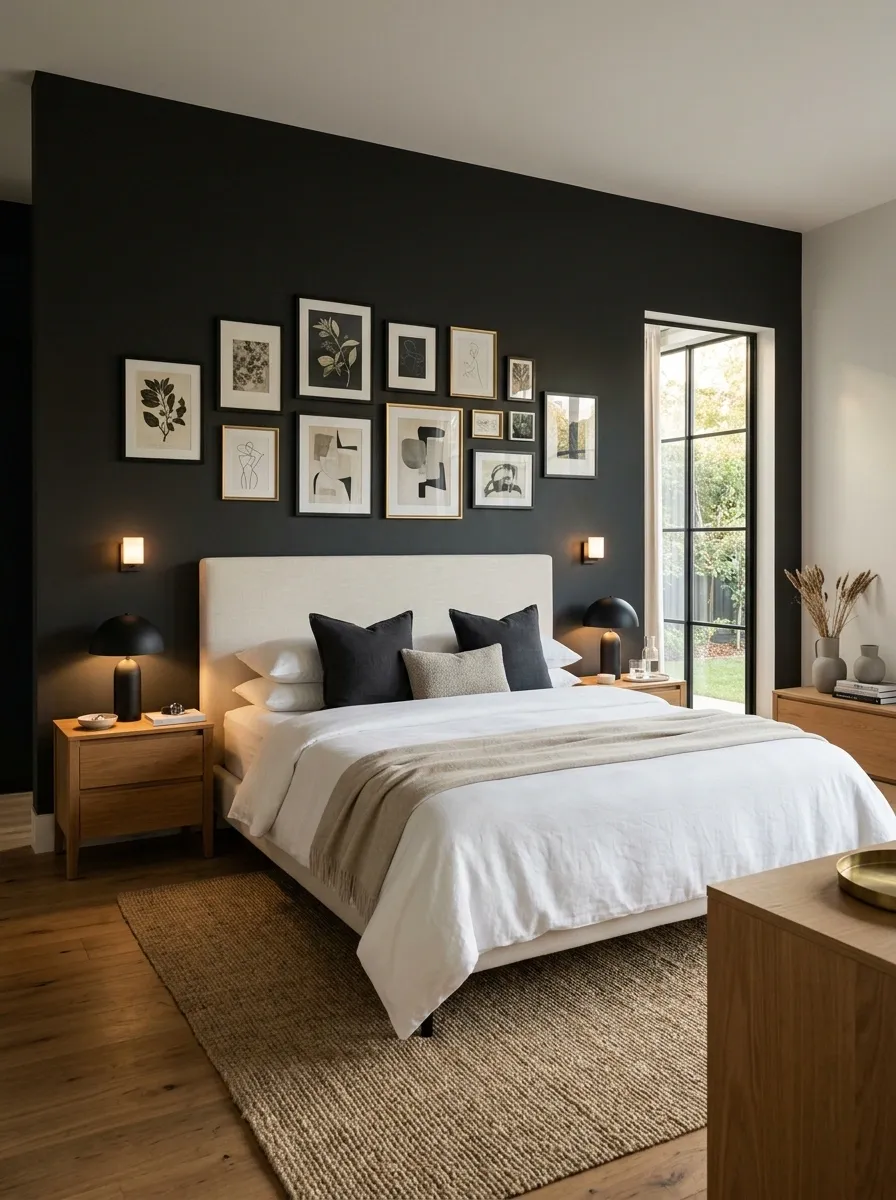
A near-black charcoal wall gives this bedroom a strong architectural backdrop, but the composition doesn’t rely on color alone. A wide arrangement of framed artwork stretches behind the bed, creating a second horizontal layer across the dark surface.
The bed stays pale and upholstered, while warm oak furniture and soft bedside lamps prevent the wall from feeling severe. The artwork should have enough visual weight to read as one composition rather than a collection of unrelated frames. Keeping the bedding mostly solid also gives the eye somewhere to rest.
This approach suits bedrooms with generous natural light, especially when the surrounding walls remain lighter and the floor introduces another warm surface.
ARTWORK
Fluted Wood Wall With Integrated Bedside Niches
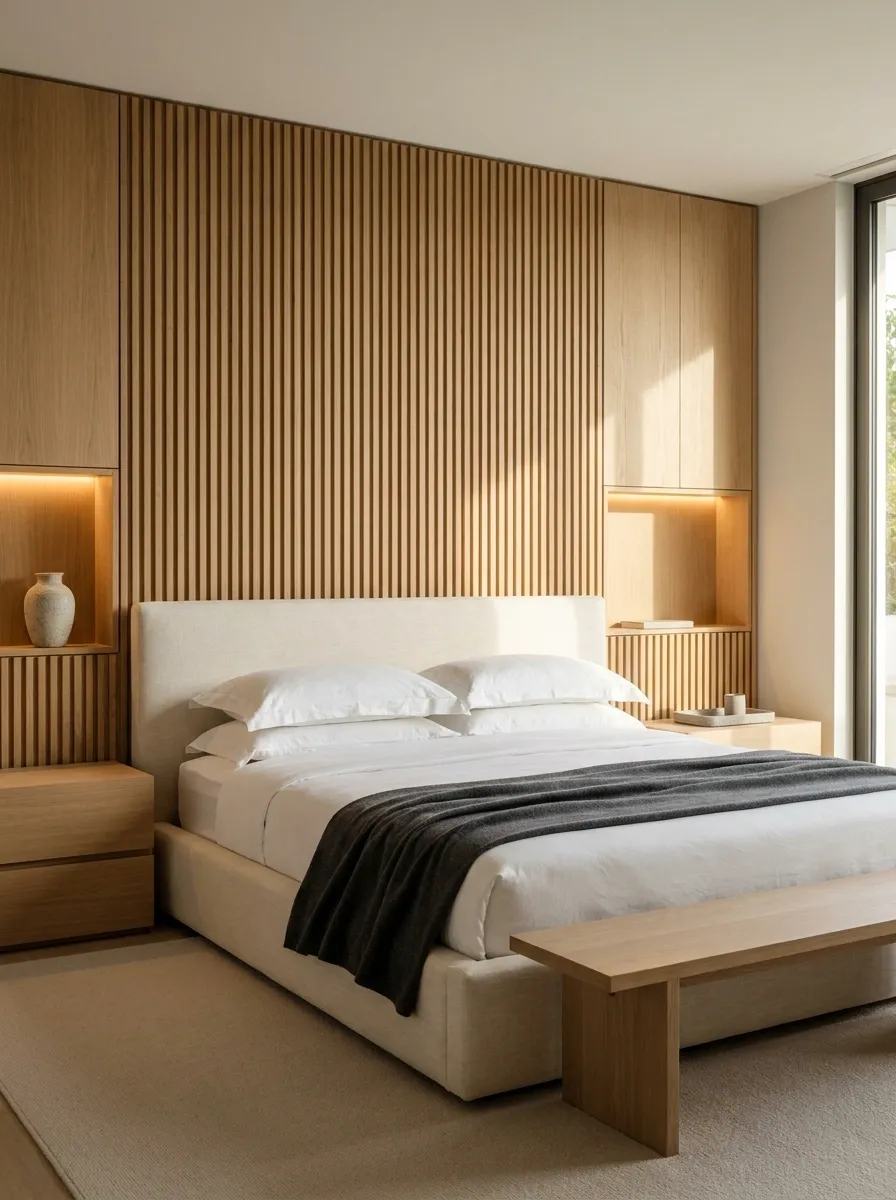
This bedroom makes the feature wall do several jobs at once. Vertical fluted wood runs behind the bed and continues into shallow recessed niches on either side, creating built-in bedside zones without adding large nightstands.
The bed is upholstered in a soft neutral fabric, while the niches hold compact lights and a few carefully chosen objects. Because the wall already contains strong vertical texture, the rest of the furniture stays simple and low.
The result feels architectural because the storage, lighting, and backdrop read as one piece. It also works particularly well when floor space beside the bed is limited.
Soft Clay Color Block Behind a Four-Poster Bed
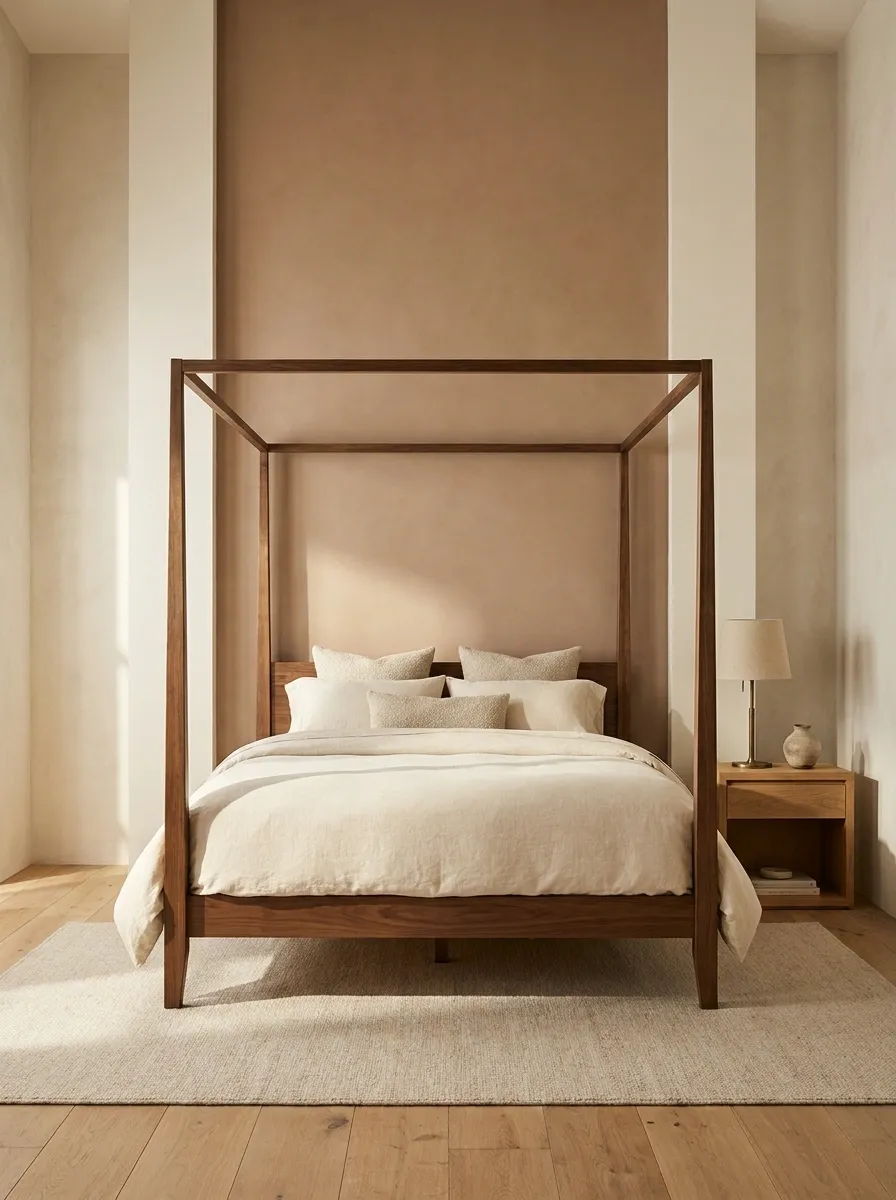
A warm clay rectangle becomes the defining feature here, but it deliberately stops before the ceiling and leaves generous cream margins on both sides. A substantial four-poster bed sits directly in front of the painted zone, making the bed and wall treatment feel like a single architectural statement.
The contrast is strongest when the clay has a slightly muted finish rather than an overly orange tone. Cream bedding, medium wood, and aged brass bring enough variation without competing with the large block of color.
This composition is particularly useful when a room needs a strong focal wall but doesn’t need added shelving, molding, or built-ins.
Textured Grasscloth Wall With Layered Neutral Bedding
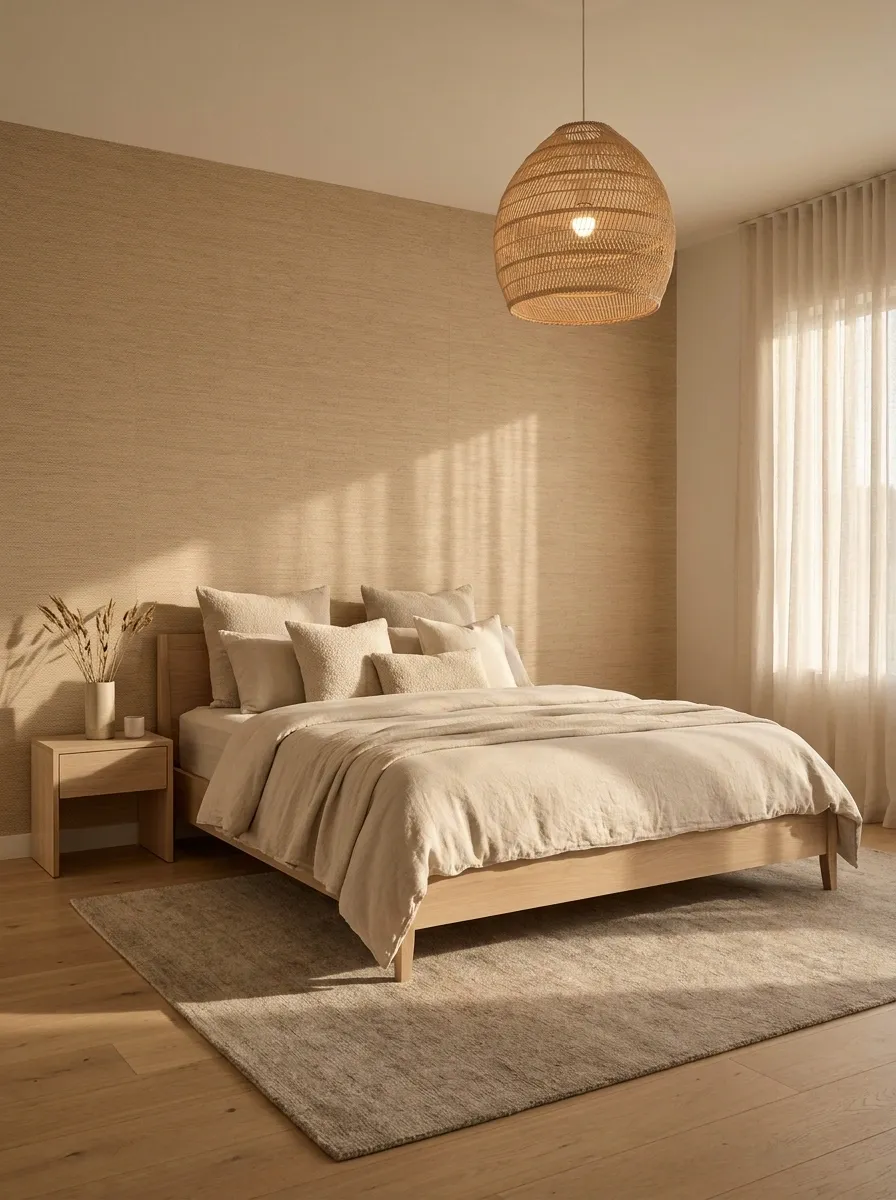
Texture does the heavy lifting in this calm bedroom. A warm grasscloth wall introduces a fine natural pattern, while beige linen, pale oak, woven lighting, and a muted rug build depth through material rather than strong color.
The bed remains visually simple, which allows the wall to stay noticeable without becoming dominant. Natural fibers repeat the quiet texture of the grasscloth, creating a connection that would be lost if the room relied on glossy or highly polished surfaces.
The strongest versions use variation in texture rather than lots of accessories. Too many decorative pieces would turn the understated wall into background noise.
Modern Brick Feature Wall With Soft Linen Furniture
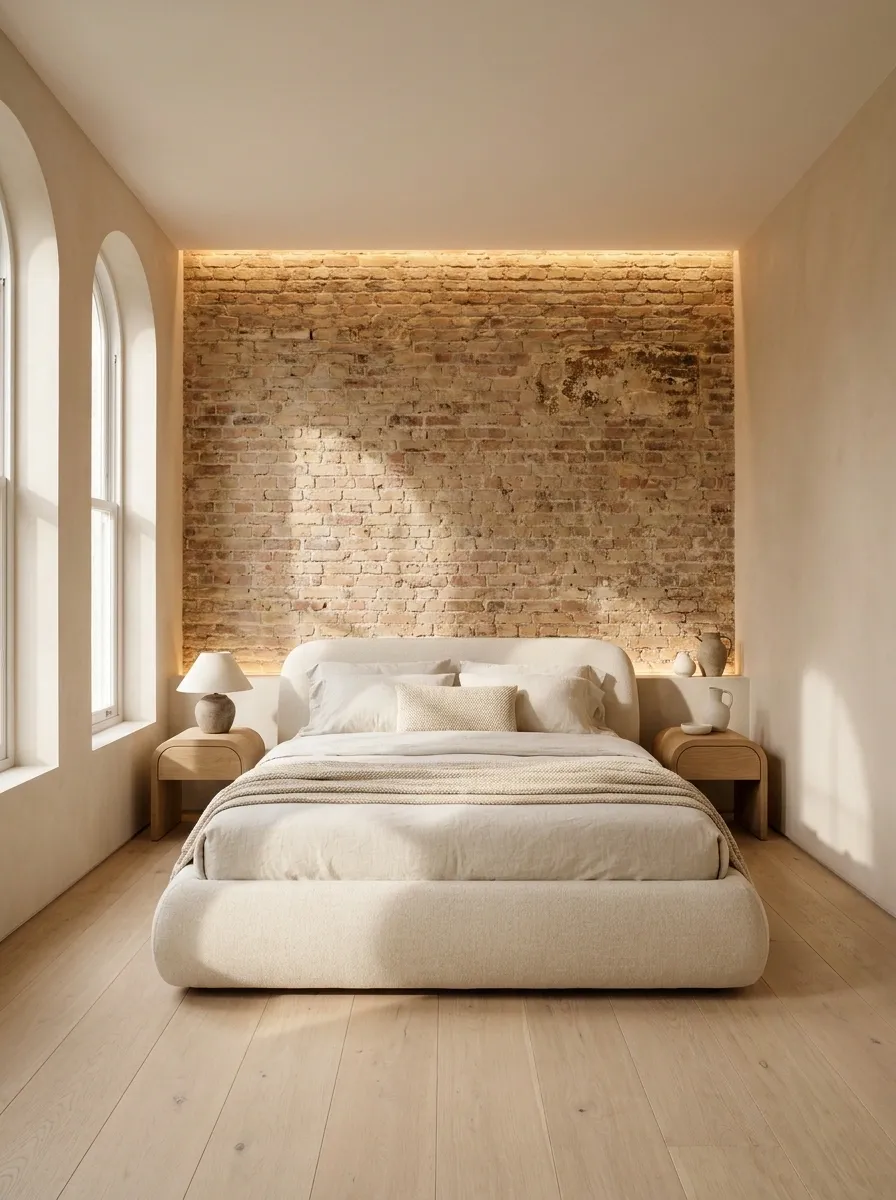
Warm exposed brick provides the hard, irregular surface in this bedroom, while nearly everything in front of it moves in the opposite direction. An oversized linen bed, curved bedside tables, soft plaster walls, and warm indirect lighting keep the room comfortable rather than industrial.
The brick should have enough natural variation to feel authentic, but the surrounding palette needs to stay restrained. Pale flooring and warm textiles prevent the wall from becoming visually heavy.
The appeal comes from contrast. Rough brick supplies character; soft furniture stops that character from taking over the entire room.
Full Wall Mural With Quiet Contemporary Furniture
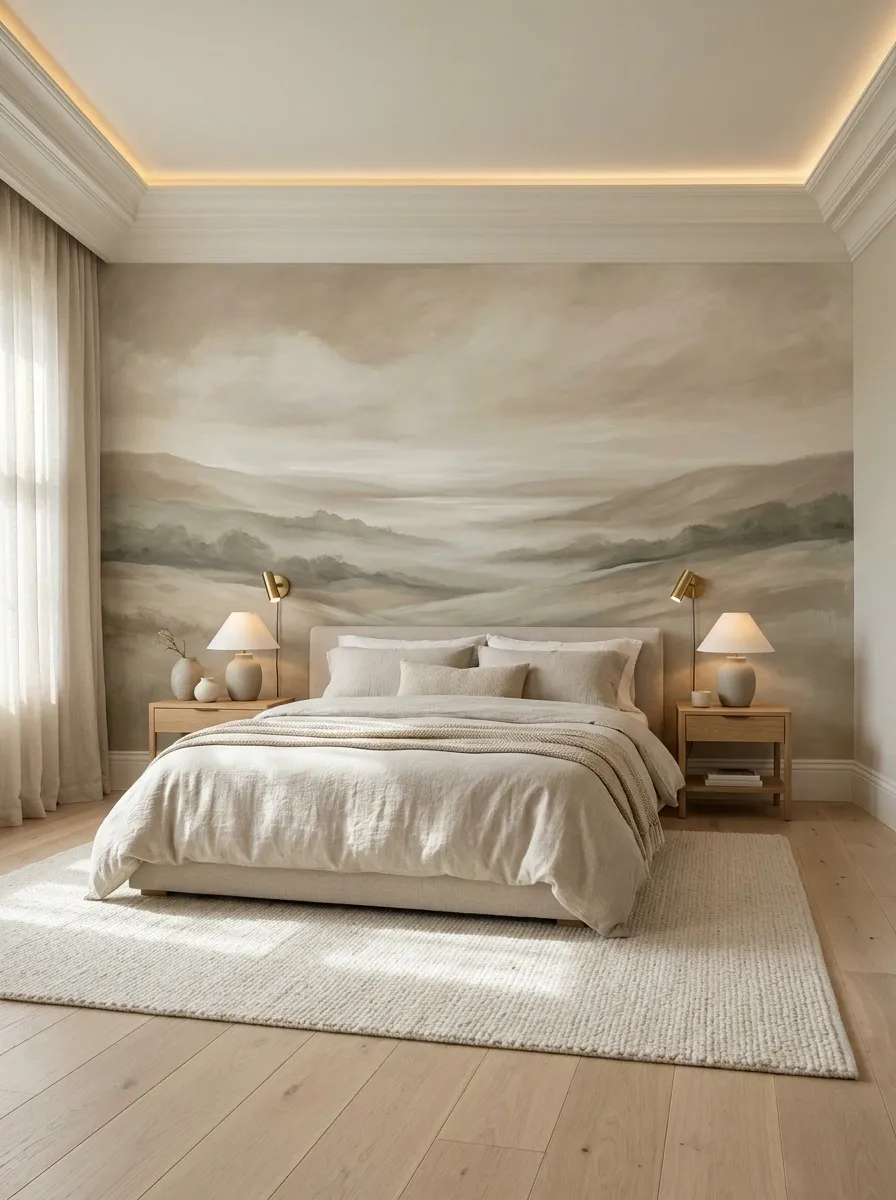
A large landscape mural turns the bed wall into the room’s visual horizon. Rather than treating the mural like oversized artwork, the pattern continues across the entire surface and sits naturally behind a low upholstered bed.
Furniture stays deliberately quiet: a simple bed, slim wood nightstands, understated lamps, and solid bedding in warm neutrals. That restraint gives the mural enough space to breathe. A complicated headboard or heavily patterned bedding would create competing focal points.
The strongest versions use a mural with atmospheric depth, such as distant hills, soft branches, or an abstract landscape with a clear sense of recession. The wall should feel expansive rather than busy.
Cream Board-and-Batten Wall With a Dark Walnut Bed
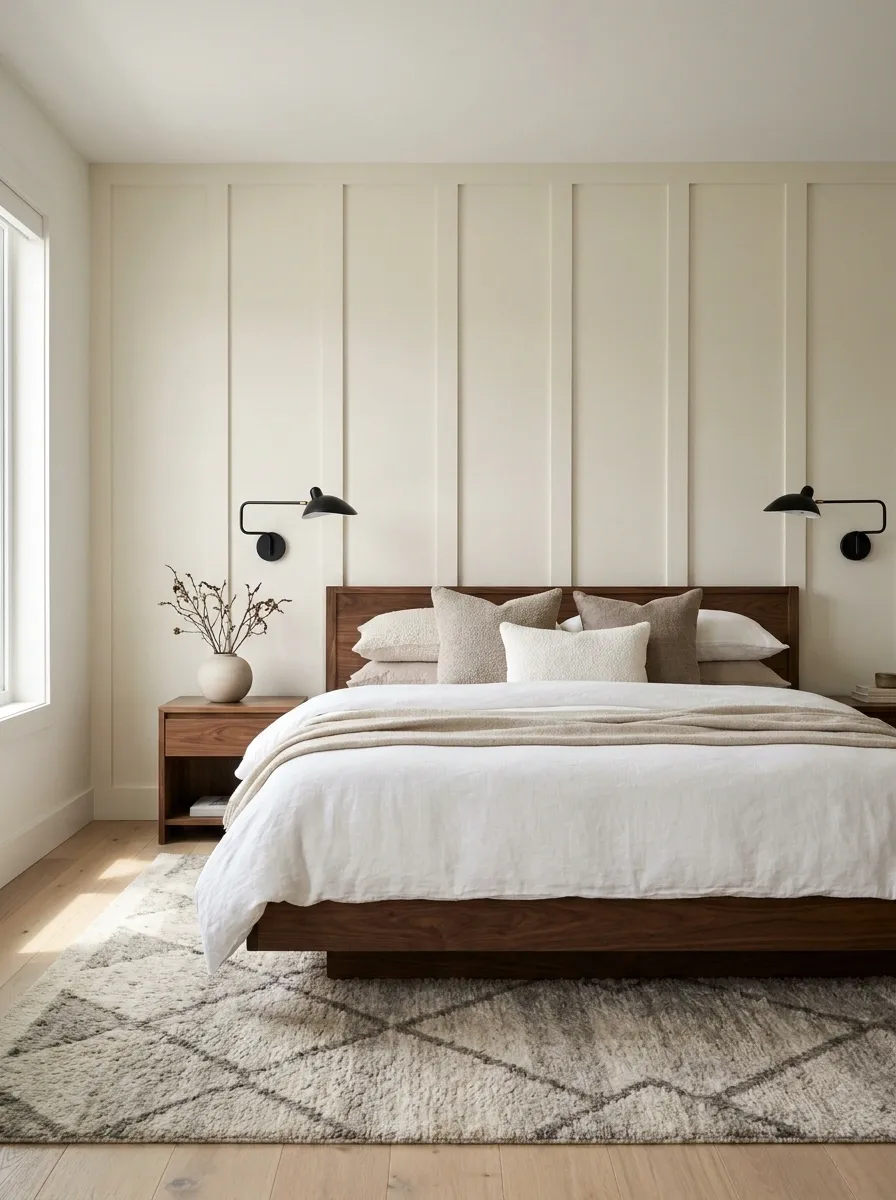
This bedroom takes a crisp transitional approach, using creamy board-and-batten paneling across the entire wall behind a substantial walnut bed. The pale wall establishes the structure, while the dark timber creates the room’s strongest horizontal weight.
White and oatmeal bedding soften the contrast. Small black accents can appear in the lighting, but they stay secondary to the walnut. A warm rug under the bed helps connect the dark furniture to the floor instead of leaving it visually isolated.
The paneling should feel architectural rather than overly decorative. Broad, evenly spaced sections give the wall a calmer appearance than a collection of narrow battens.
Ceiling-to-Wall Painted Wrap in Muted Terracotta
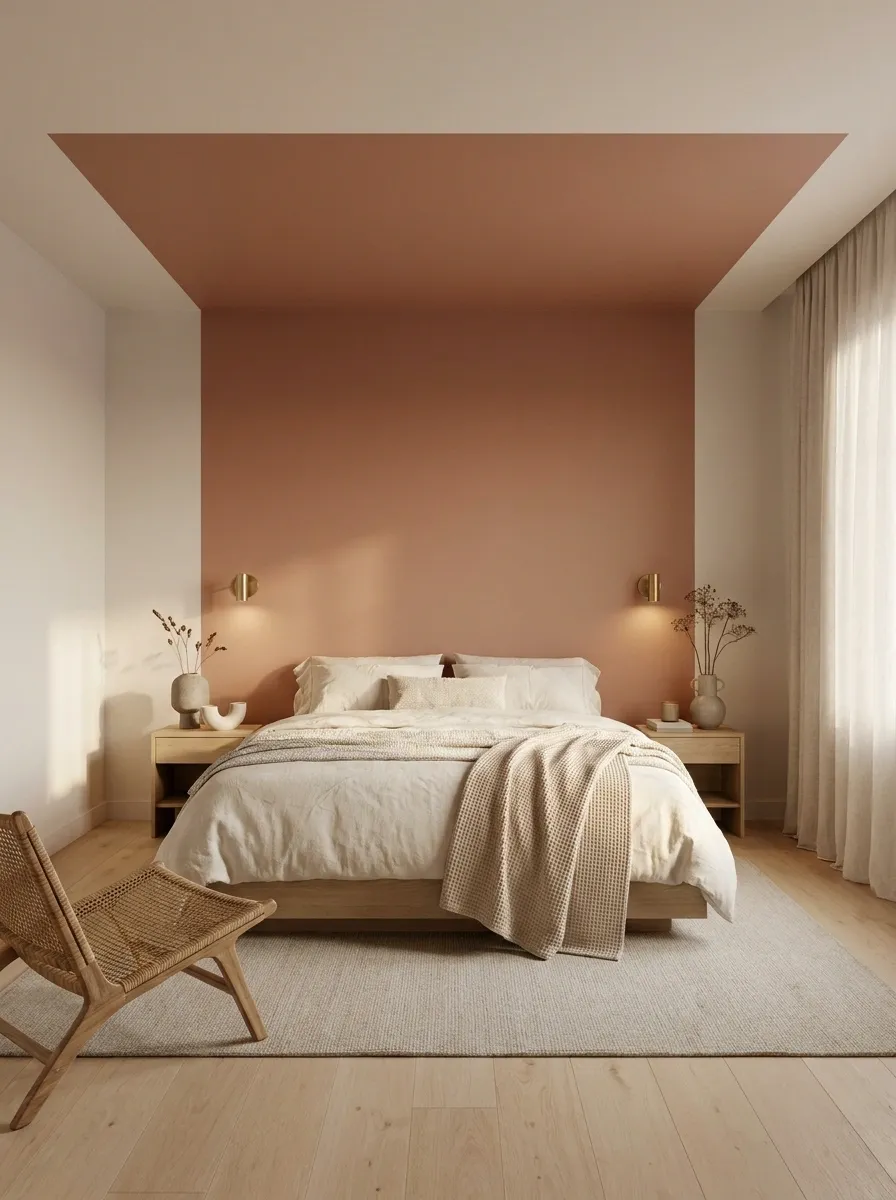
Muted terracotta continues from the feature wall onto the ceiling directly above the bed, creating an enveloping color zone that changes the shape of the room. Instead of a simple painted backdrop, the treatment wraps around the corner and visually lowers the ceiling over the sleeping area.
The rest of the bedroom stays pale and warm. Cream bedding, light oak, and soft woven pieces break up the terracotta without fighting it. The color feels architectural because it follows the room’s planes.
The wrap is most effective when the transition is clean and intentional. Carrying the color onto too many additional walls would remove the sense of a defined sleeping zone.
wall
Cream Stone-Look Slab Wall With Boutique-Hotel Styling
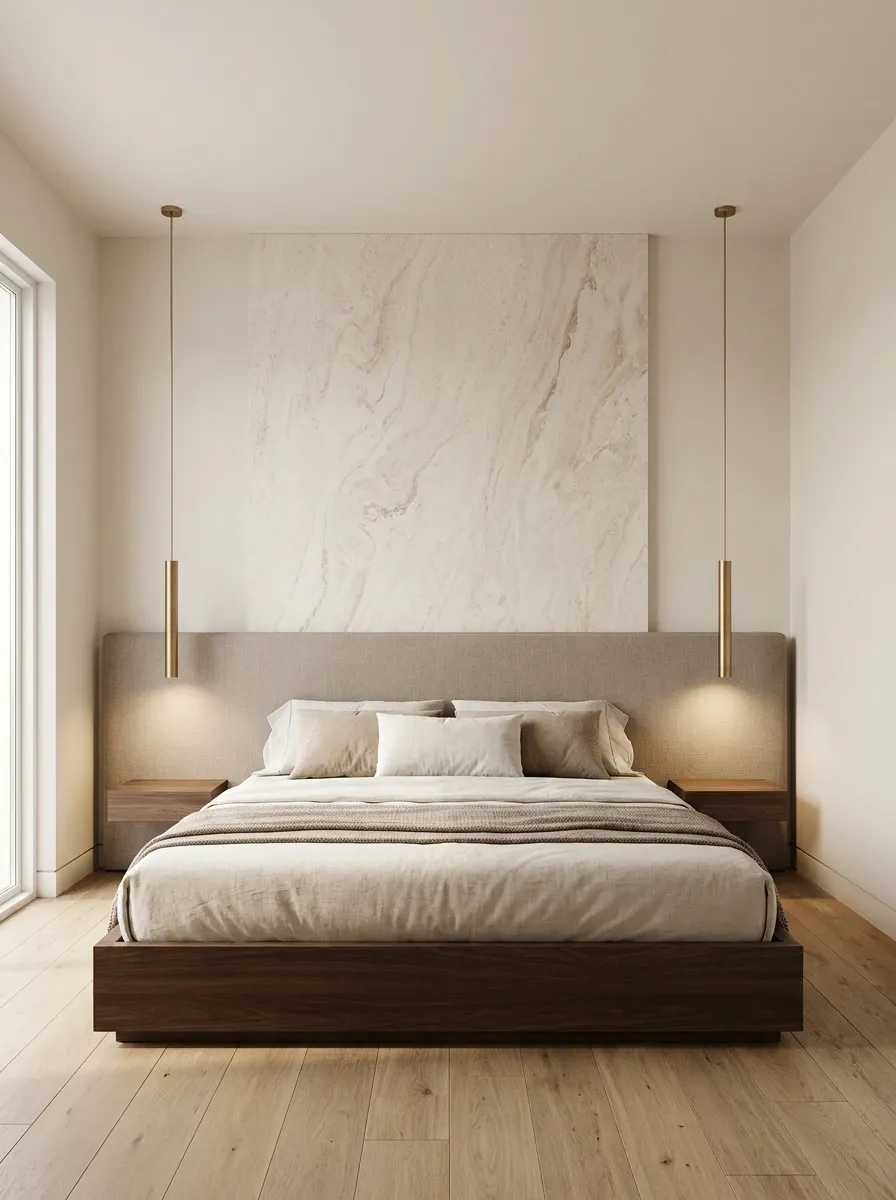
A stone-look slab creates a more luxurious direction without relying on ornate furniture. The surface behind the bed has subtle veining, a wide upholstered headboard sits directly in front of it, and warm pendant lights drop from either side.
Dark wood provides depth at the base of the composition, while cream and taupe textiles keep the bedroom from feeling overly formal. The material contrast is deliberately narrow: stone, fabric, wood, and warm metal are enough.
The wall needs breathing room to look convincing. Packing shelves, art, or multiple decorative objects around the slab would weaken the clean hotel-like composition.
One visual hierarchy.
Soft Pink Plaster Wall With Chocolate Brown Accents
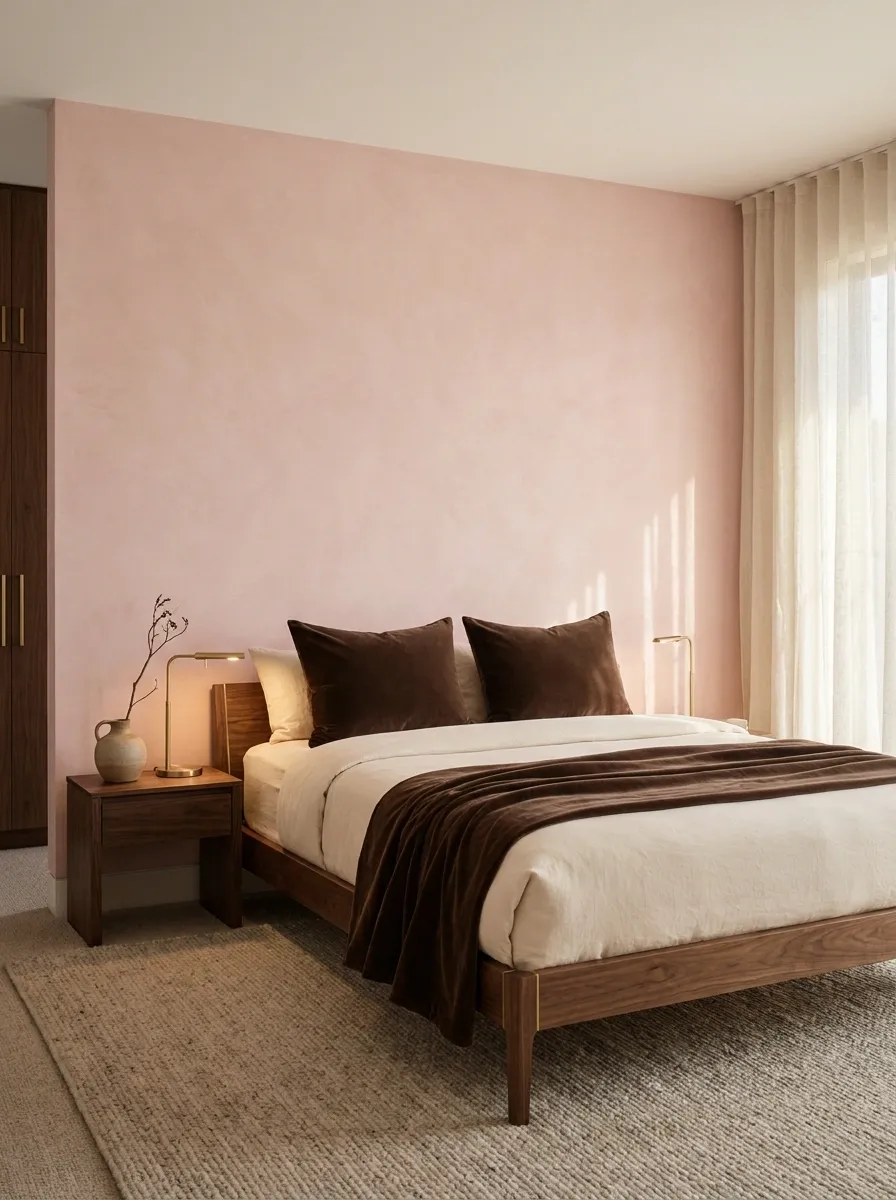
This bedroom uses dusty pink as an architectural color rather than a sugary accent. A softly textured pink plaster wall extends across the bed zone, while chocolate brown appears in the bedding, walnut furniture, and selected lighting details.
The contrast makes the pink feel richer and more sophisticated. Cream sheets keep the center of the bed light, while the darker furniture grounds the composition toward the floor. Brass can appear in small amounts, but the brown should remain the stronger secondary tone.
The wall works best when its texture stays subtle. Too much artificial variation would compete with the deep brown elements and make the palette feel busier than intended.
Built-In Wardrobe Wall With a Bed Niche in the Center
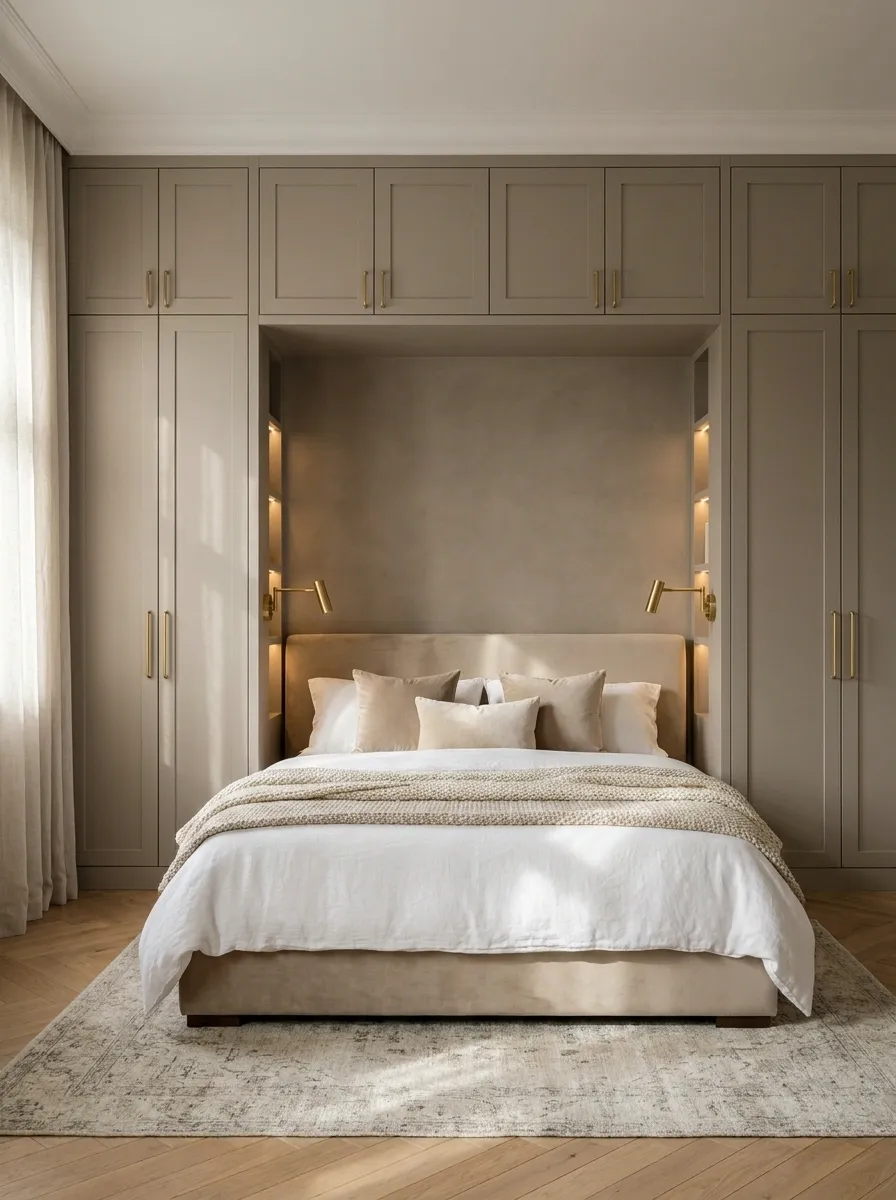
This layout treats the entire bed wall as one architectural system. Tall built-in wardrobes rise on both sides, while the center recess becomes a dedicated sleeping niche with the bed tucked neatly inside it.
The cabinetry can stay warm white, mushroom, or muted wood, depending on the rest of the bedroom. Inside the niche, a slightly darker wall finish gives the bed visual depth, while integrated sconces remove the need for bulky bedside lamps.
It is a particularly strong solution for bedrooms where storage is taking over too much of the floor area. Instead of adding separate wardrobes, nightstands, and decorative shelving, the wall organizes everything in one clean composition.
Moody Navy Wall With Crisp White Architectural Trim
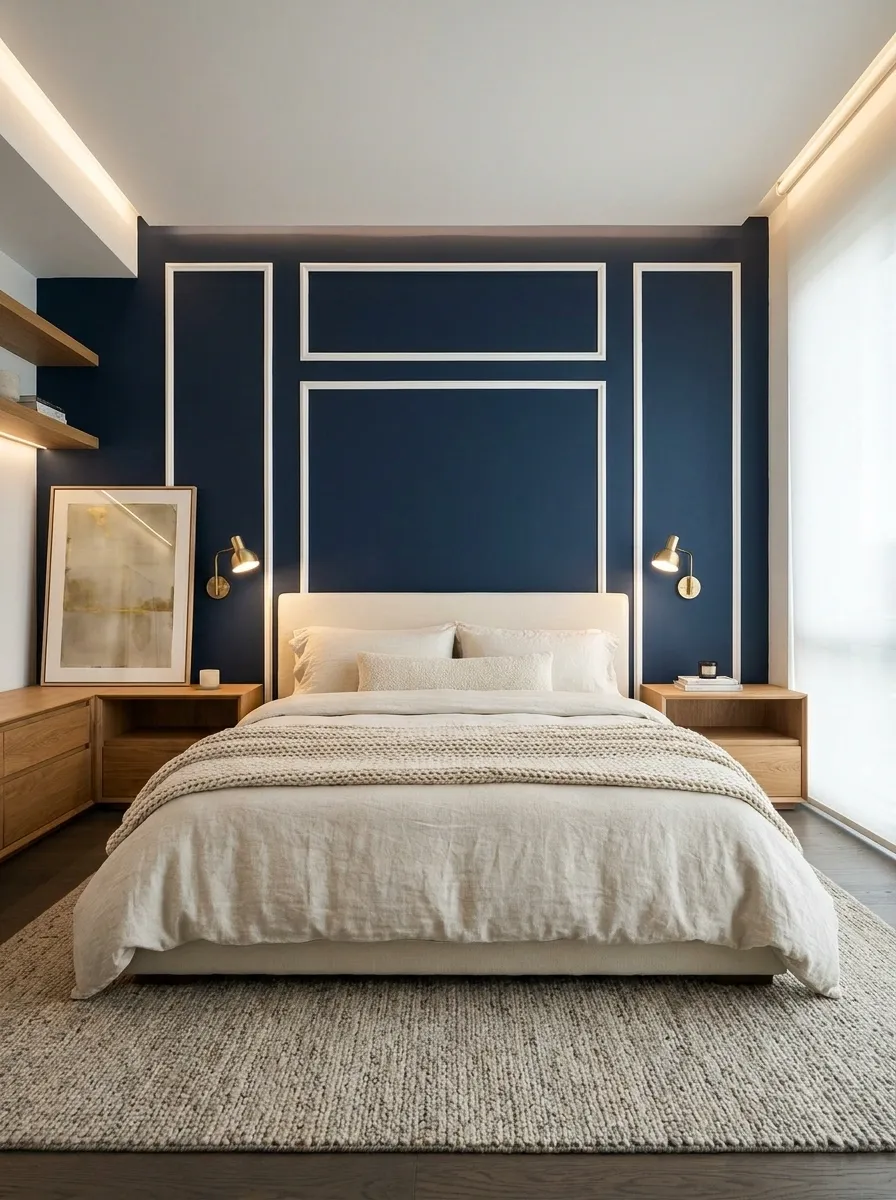
Deep navy gives this bedroom a tailored, almost library-like mood, while bright architectural trim keeps the feature wall sharply defined. Large molding frames the bed zone, and the contrast between navy and white creates enough structure without requiring wallpaper or decorative artwork.
A pale upholstered bed breaks into the dark field, while warm oak furniture keeps the palette from becoming too cool. Brass bedside lighting adds another warm note, but only in small amounts.
The molding should have enough scale to hold its own against the saturated color. Tiny decorative trim would disappear into the navy and weaken the concept.
MEETS TRIM
Woven Textile Wall Behind a Minimal Platform Bed
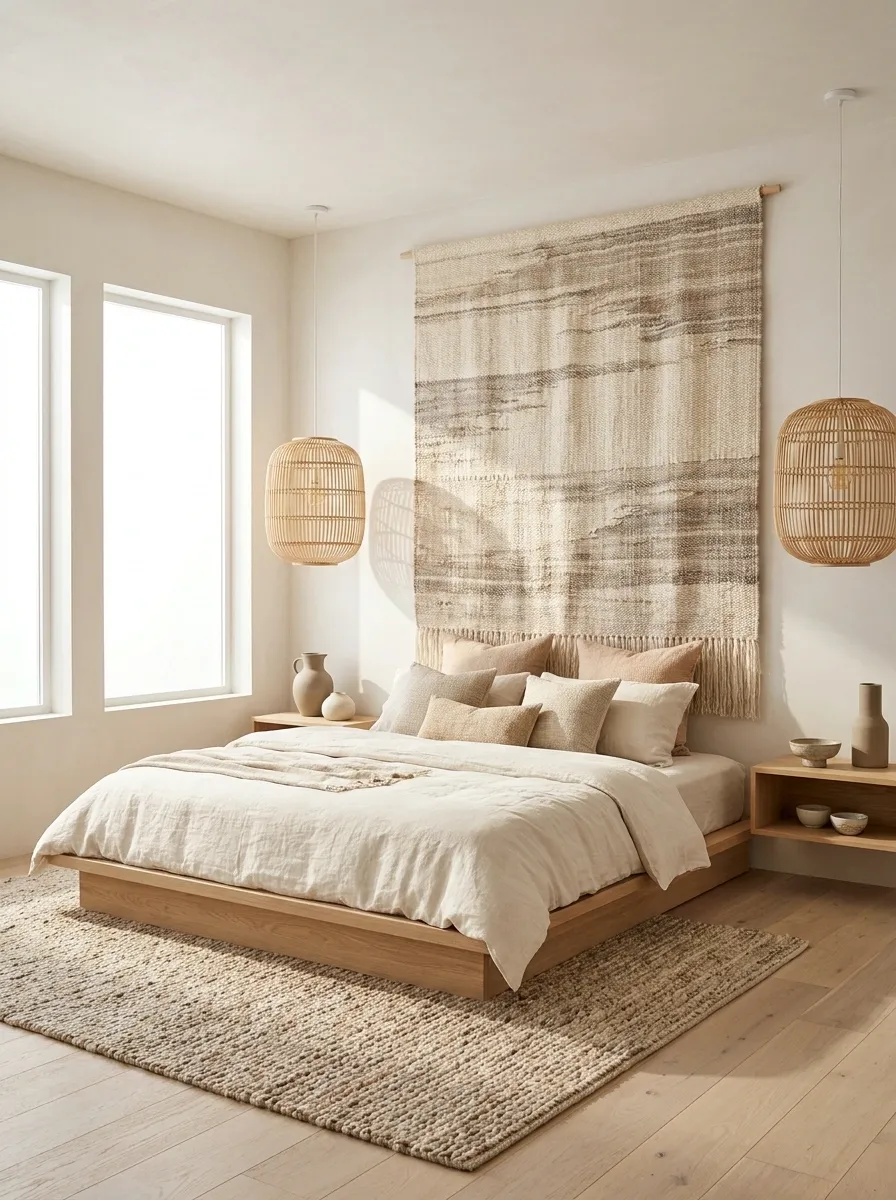
A large woven textile replaces the usual headboard and artwork, creating a soft focal wall with almost no hard edges. The textile can be natural beige, warm ivory, or a muted earth tone, depending on the surrounding palette.
The platform bed stays deliberately low and simple, allowing the wall to remain visually dominant. Woven pendants, linen bedding, and a natural fiber rug repeat the tactile quality without copying the same pattern everywhere.
What makes the composition work is the shared material language. There is no need to pile on bohemian accessories. The oversized textile already provides enough texture and character for the room.
Half-Wall Plaster Treatment With Natural Wood Above
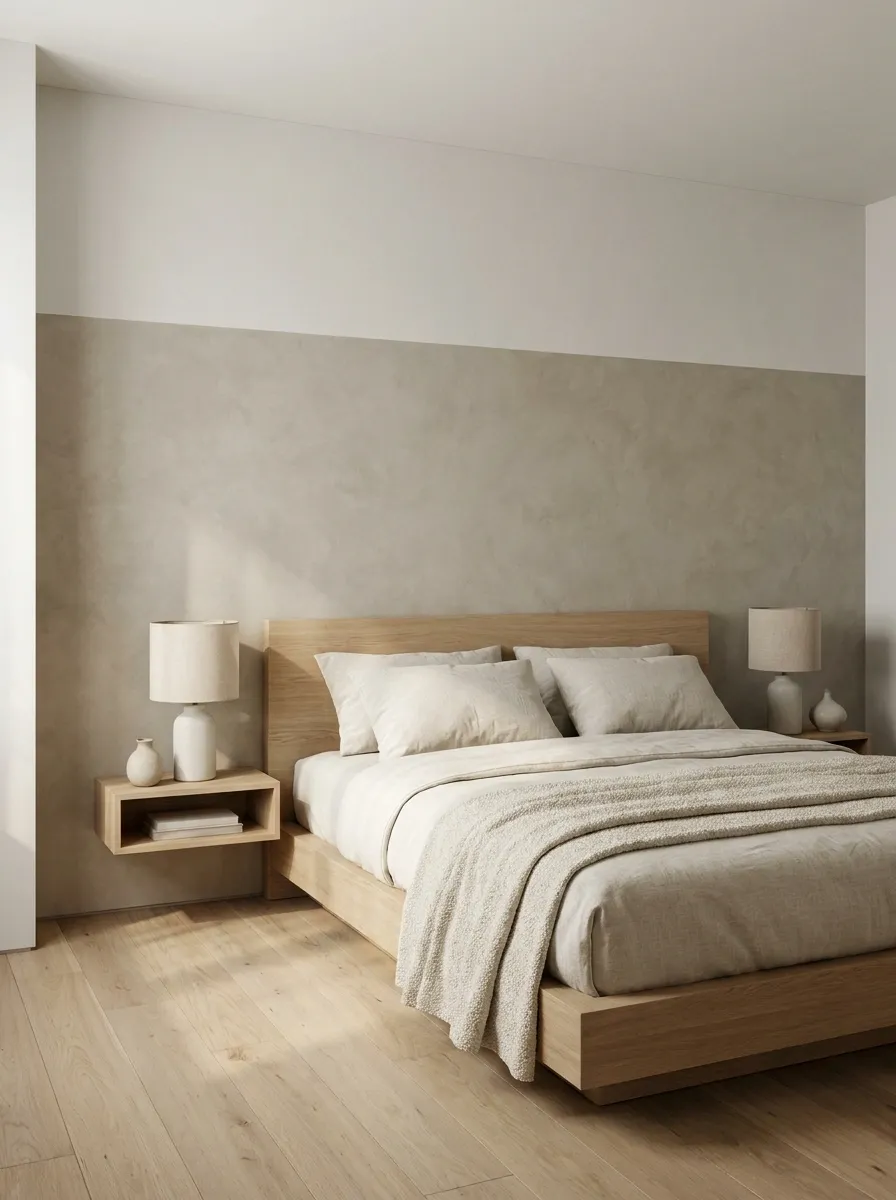
The feature wall is divided into two distinct zones. Warm textured plaster covers the lower portion, while the upper section remains light and natural. A simple wood headboard bridges the two surfaces, connecting the soft wall treatment to the furniture below.
The horizontal division gives the bedroom more architectural definition without requiring full-height paneling or wallpaper. It also creates a practical visual break that can make a low-ceilinged room feel wider.
Keep the transition clean. The look depends on a strong, deliberate horizontal line rather than a gradual or decorative fade.
Black-and-Cream Geometric Wallpaper With Curved Furniture
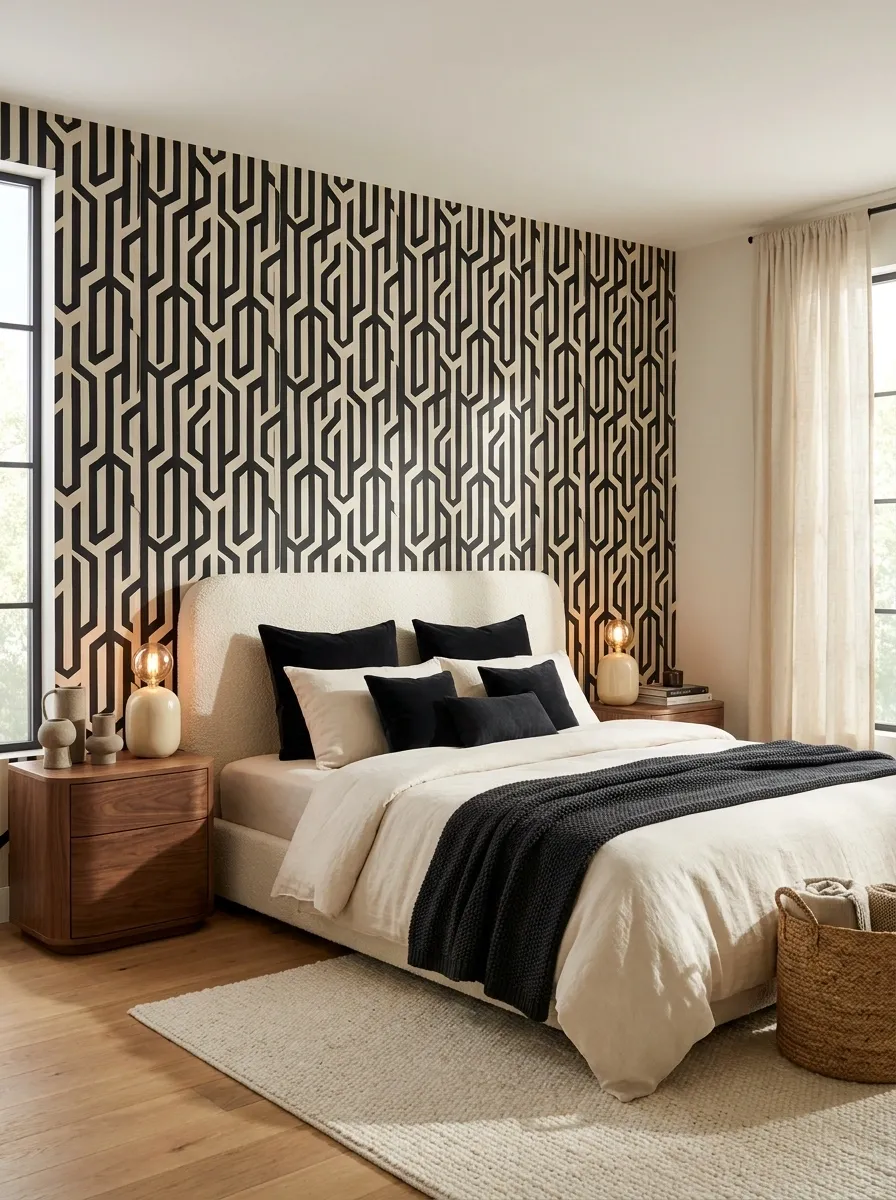
This bedroom uses a strong graphic wallpaper as its feature wall, then deliberately introduces rounded furniture to soften it. The black-and-cream pattern establishes crisp geometry behind the bed, while curved nightstands, a rounded lamp, and a softly shaped headboard interrupt those hard lines.
The room works because the furniture doesn’t attempt to compete with the wallpaper. Its shapes provide relief instead. Bedding stays mostly cream, with black appearing in a few controlled accents.
The visual contrast between angular wall pattern and curved furniture is the defining idea. Repeating the same geometry in the rest of the room would remove that tension.
Warm Gray Wall With an Oversized Integrated Headboard
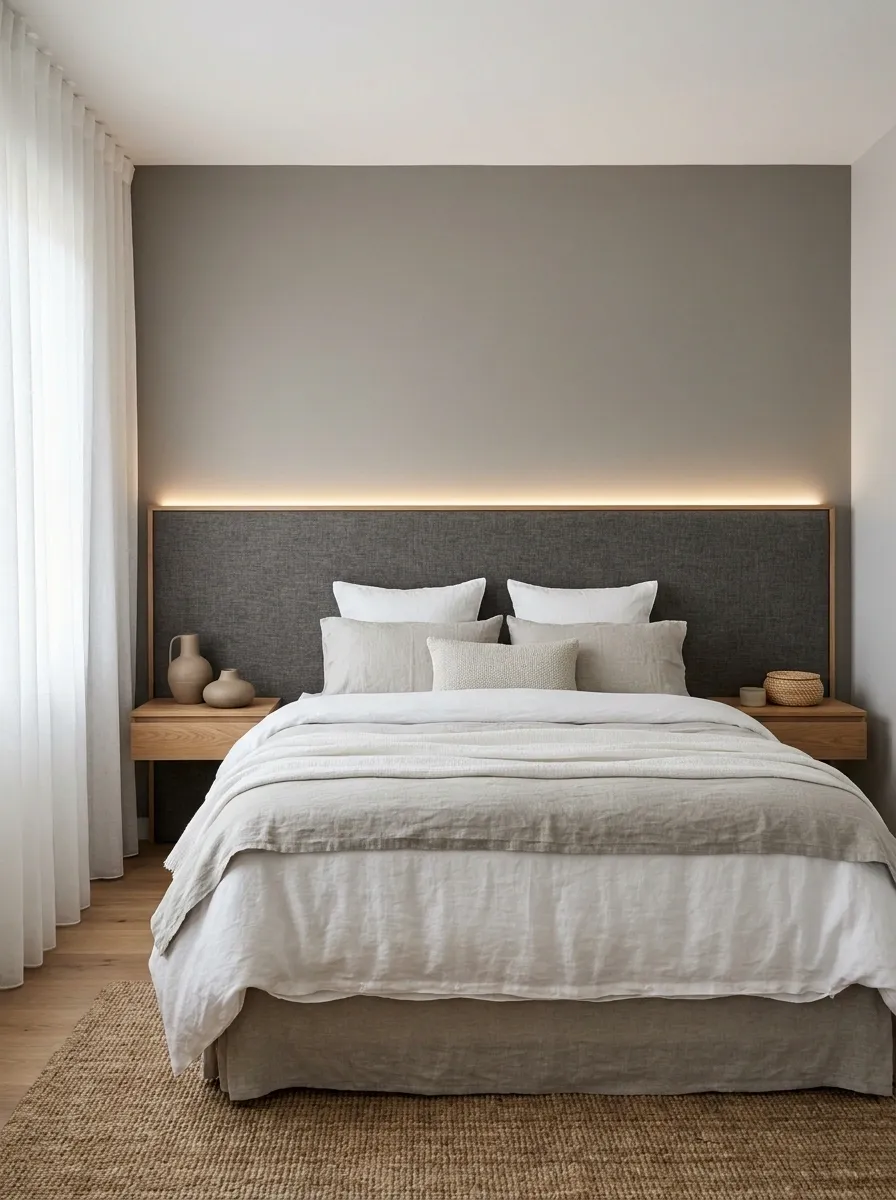
A wide upholstered headboard becomes part of the feature wall in this compact bedroom. Instead of stopping at the edges of the mattress, the headboard stretches well beyond the bed on both sides, creating a broad horizontal focal point against a warm gray backdrop.
Slim integrated lighting sits within the extended headboard area, while the bedside tables stay narrow and visually quiet. The result makes the sleeping zone feel wider without adding more furniture or decorative clutter.
The wall color should remain a little lighter than the upholstery so the large headboard reads as a distinct layer rather than disappearing into the background. This is a particularly effective composition when the bedroom has limited width.
Soft Black Slatted Wall With Warm Backlighting
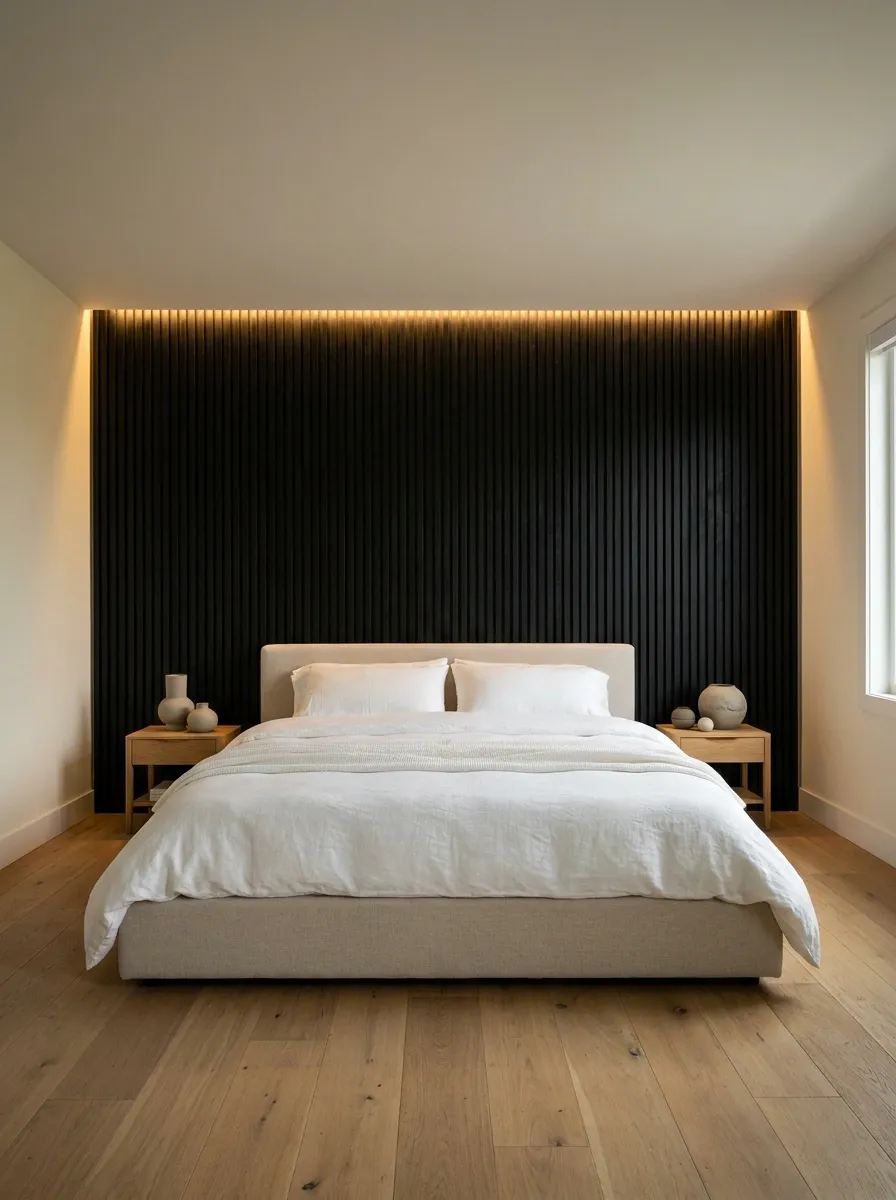
Narrow dark wood slats create a deep, graphic backdrop while warm lighting glows through the gaps behind the bed. The effect is dramatic, but the surrounding bedroom remains pale enough to keep the composition balanced.
A light upholstered bed sits low against the wall, with warm wood tones repeated in the floor and small bedside pieces. Because the slatted wall already has a strong linear pattern, the rest of the room benefits from rounded and softer surfaces.
The lighting matters as much as the slats themselves. A flat, evenly lit wall would lose much of the dimensional effect that makes this concept special.
Sage Green Wallpaper With Natural Linen and Rattan
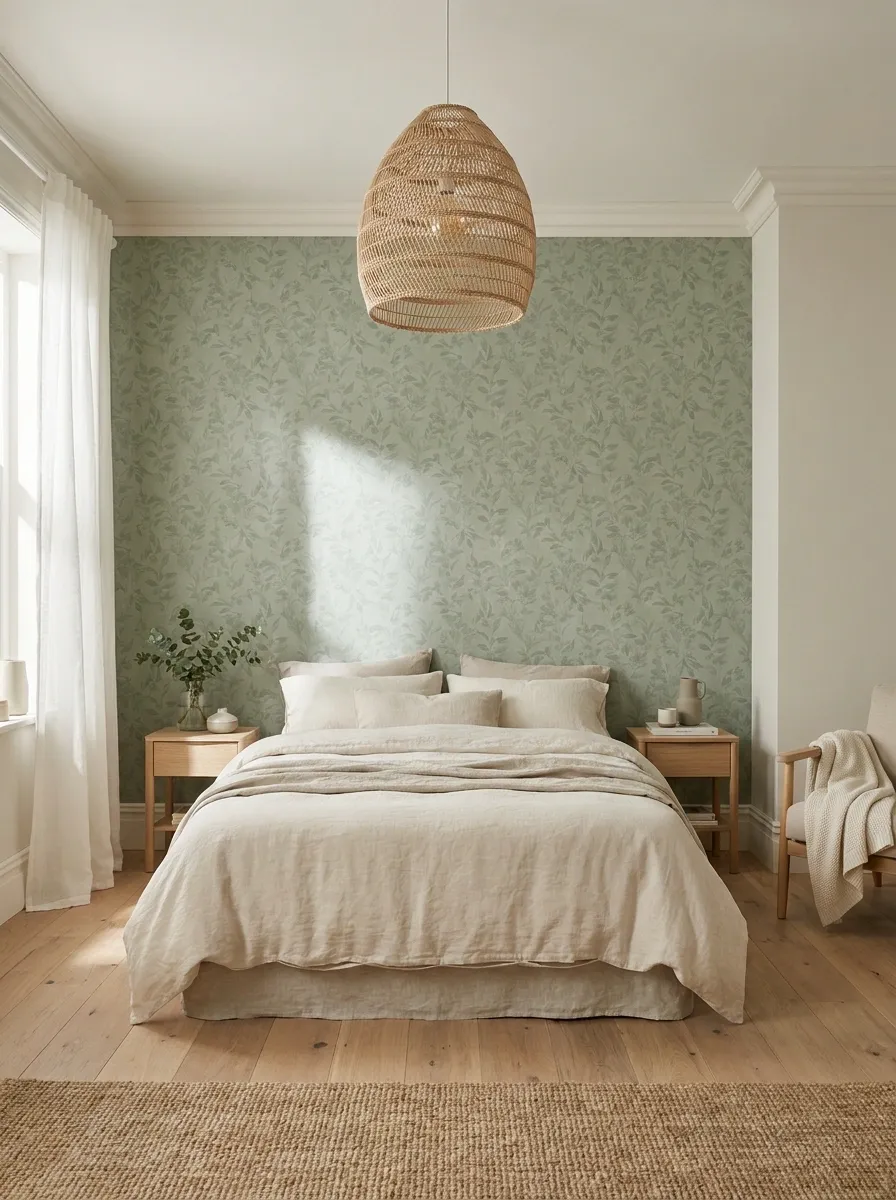
A soft sage botanical wallpaper gives this bedroom a relaxed garden-like character without turning the room into a themed space. The bed is dressed in natural linen, while pale timber and rattan pieces continue the organic material story.
The wallpaper carries the pattern, so the furniture doesn’t need elaborate silhouettes or strong colors. A woven pendant and simple bedside tables reinforce the natural theme without making every surface look handmade.
The key is keeping the greens slightly muted. A highly saturated botanical print would change the room from relaxed and collected to visually busy.
Natural materials soften it.
Layered Neutral Feature Wall With Plaster, Molding, and Walnut
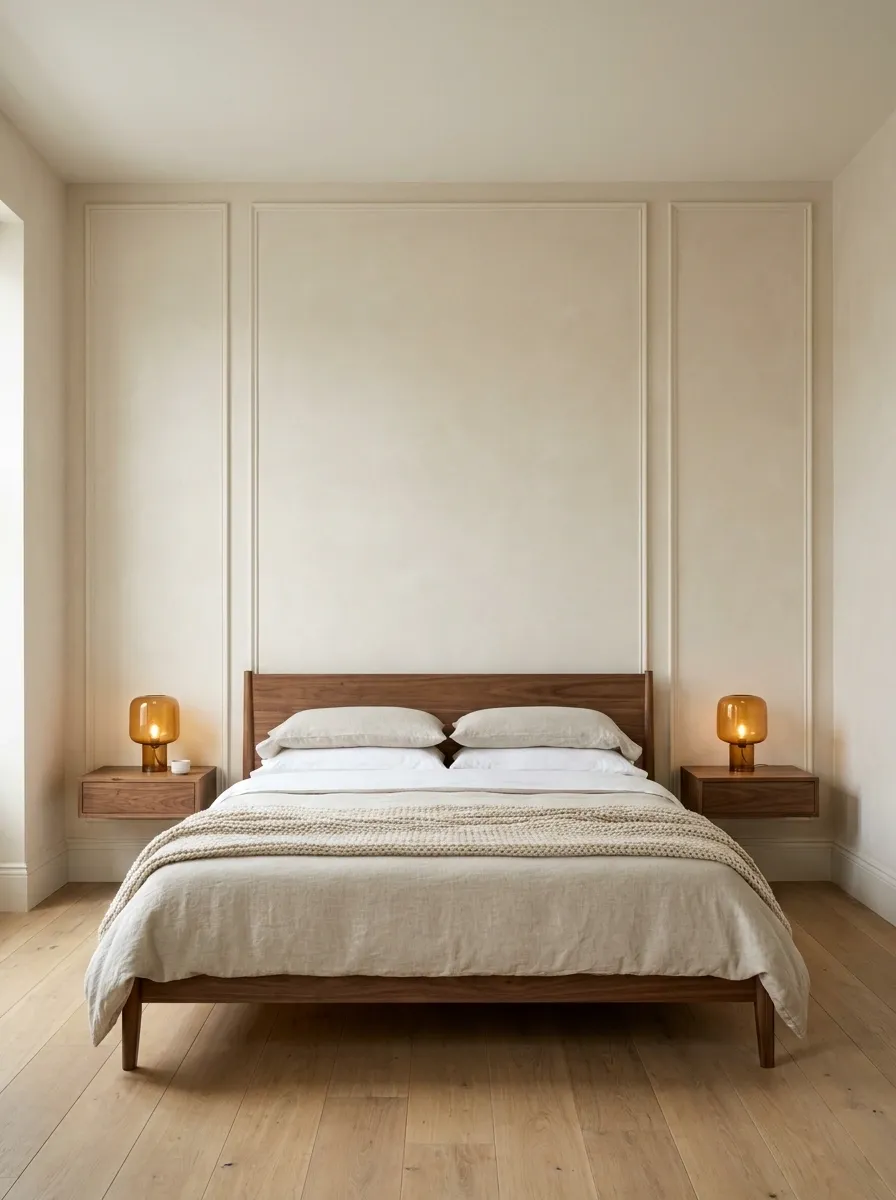
The final design relies on depth instead of dramatic color. A warm neutral plaster surface forms the backdrop, shallow molding adds a second architectural layer, and a walnut bed introduces the darkest element near the floor.
Soft bedding, warm bedside lighting, and restrained furniture keep the composition from becoming formal. Nothing is designed to dominate. Instead, the eye moves through several small changes in surface, depth, and tone.
That layered approach makes this concept especially adaptable. It can work in a traditional home, a newer build, or a bedroom that needs architectural interest without a bold mural or saturated paint color.
The strongest feature wall isn’t necessarily the boldest one. It is the one that gives the rest of the bedroom a clear visual relationship to work with.
A dramatic mural needs quieter furniture. Heavy wood benefits from lighter textiles. Strong wallpaper usually works best when the bed and surrounding pieces have simpler shapes. Architectural paneling needs enough wall area to read properly, while a compact bedroom may benefit more from a wide headboard or an integrated storage solution.
Before settling on a direction, look at the entire wall as part of the room rather than as a separate decorating project. Consider the bed width, ceiling height, windows, flooring, lighting, storage needs, and walking space together. Once those relationships make sense, the feature wall stops looking like something added afterward and starts looking like it was always meant to be there.