
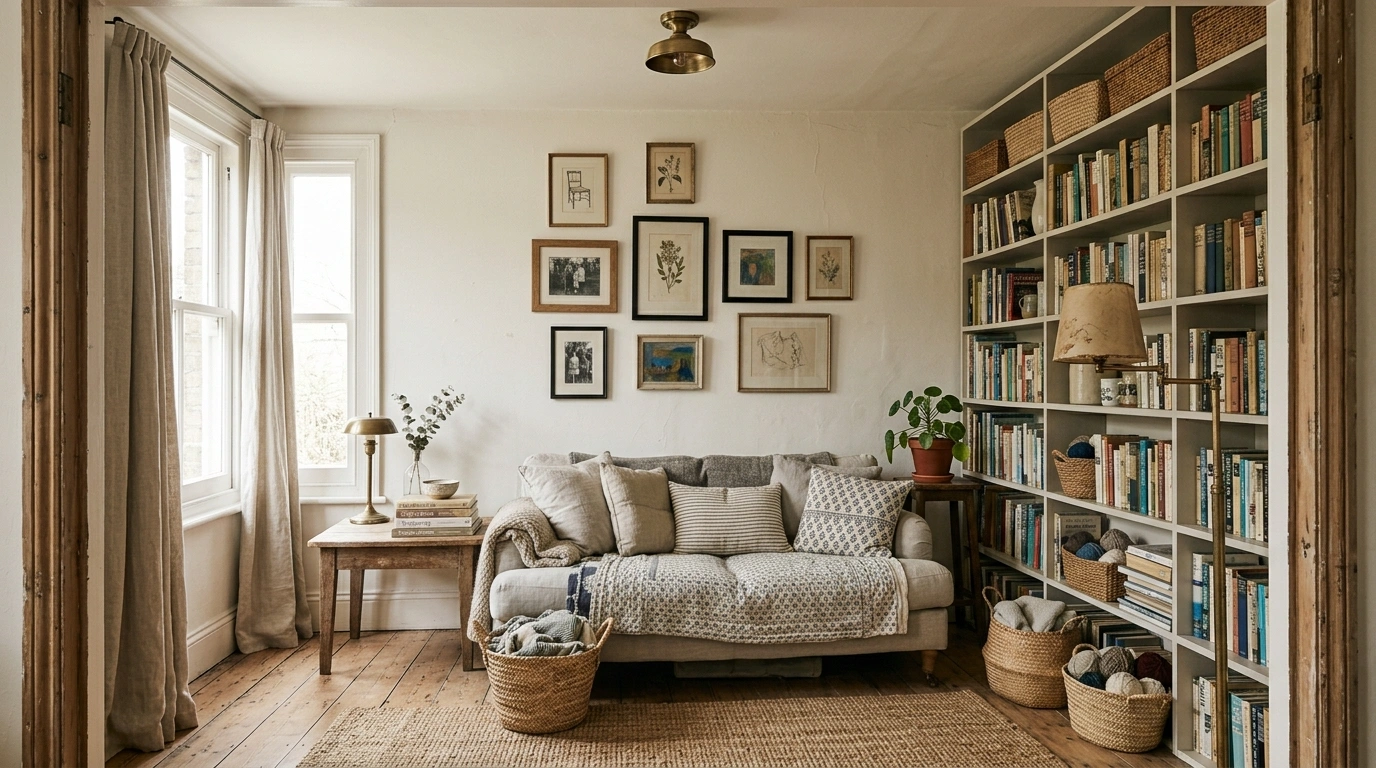
Most rooms don’t look unfinished because they need more decor. They look unfinished because the things already in them aren’t working together.
A vase gets pushed into a cabinet. Books sit in uneven piles. A spare chair becomes the place where clothes land. A basket gets filled and forgotten. Meanwhile, empty corners stay empty because decorating them somehow turns into another shopping list.
That’s the part worth changing.
Your Home Already Has the Pieces. They Just Need a Better Arrangement.
A room can contain plenty of attractive things and still look flat. Usually, the missing ingredient is visual hierarchy. A tall object needs something lower beside it. A collection needs breathing room. A lonely item needs either a stronger position or a useful companion.
The trick is simple: stop treating every object as an individual decoration. Start treating the room as one composition.
Smart Ways to Decorate Using Stuff You Already Have
Turn a Stack of Books Into a Decor Anchor
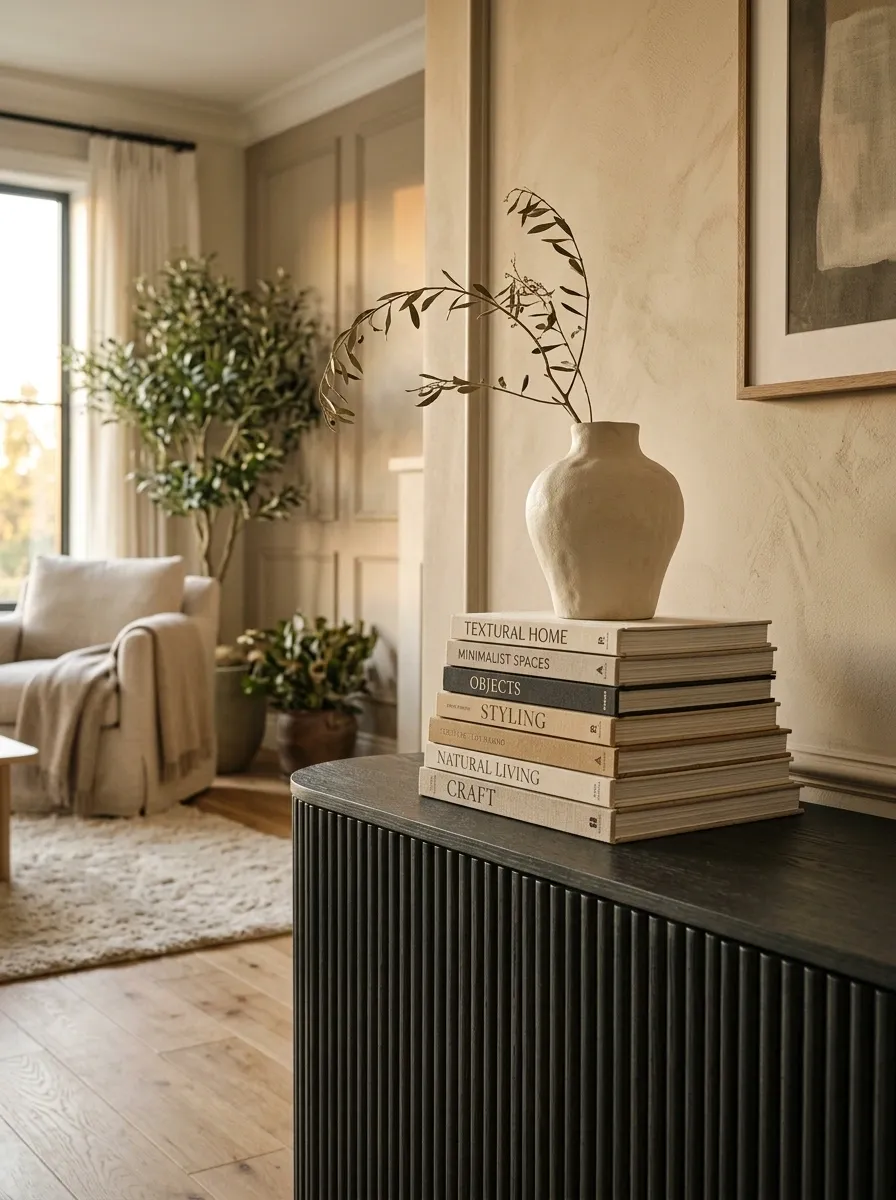
Books look far better when they’re given a job.
Stack two or three on a console, nightstand, or coffee table, then place one object on top. The stack creates height while the item above it becomes the visual finish.
Keep the arrangement tight:
- Put the largest book on the bottom.
- Turn the next book slightly.
- Add one compact object on top.
Don’t build a tower. A low, solid stack feels intentional. A tall pile starts looking like storage.
Move One Chair Into an Empty Corner
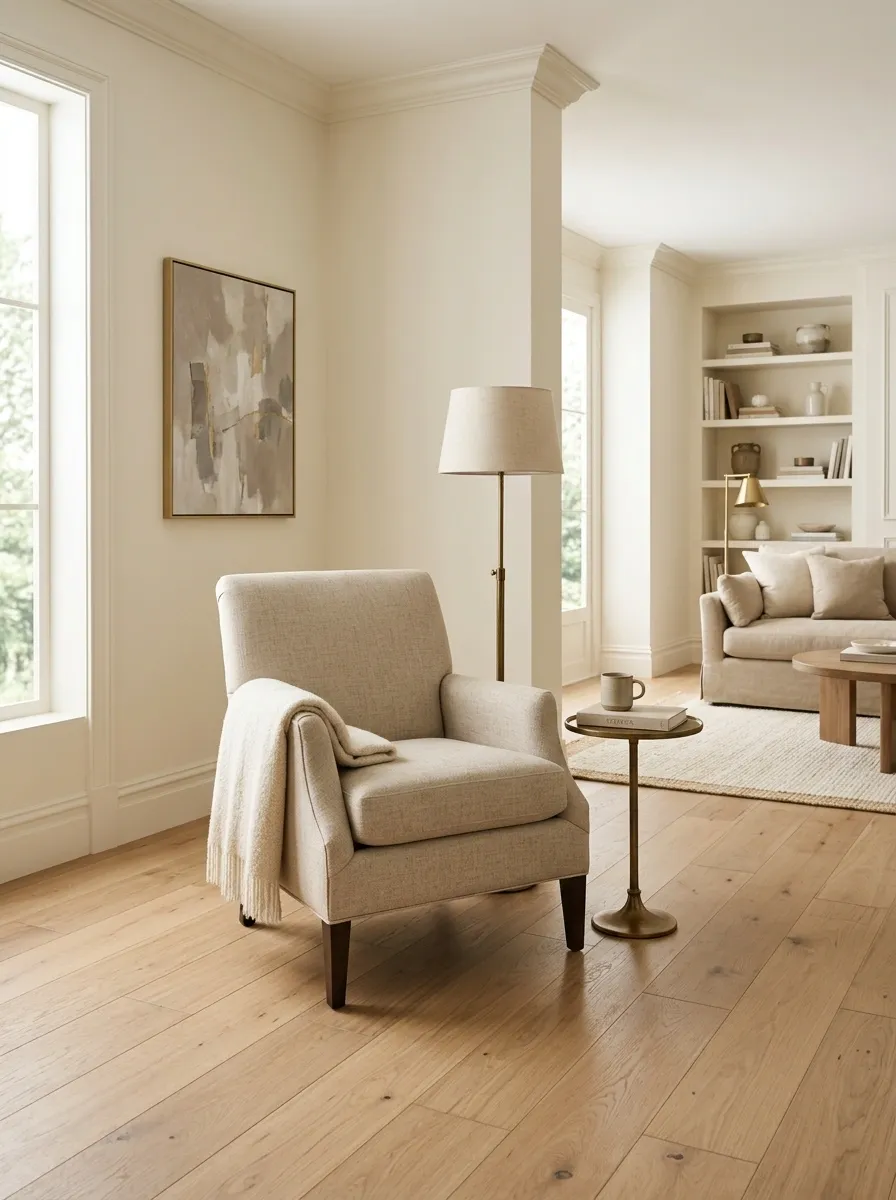
An empty corner doesn’t always need a cabinet, plant, or new accent table.
A spare chair can give that space a purpose instantly. Angle it slightly toward the room instead of pushing it flat against both walls. Add an existing cushion or folded throw and stop there.
Quick placement check
- Leave walking space around the chair.
- Angle it toward the room.
- Give it one soft layer.
- Keep the surrounding floor mostly clear.
This works especially well in corners that feel disconnected from the rest of the room. The chair creates a destination without making the area feel crowded.
Group Small Objects on One Tray
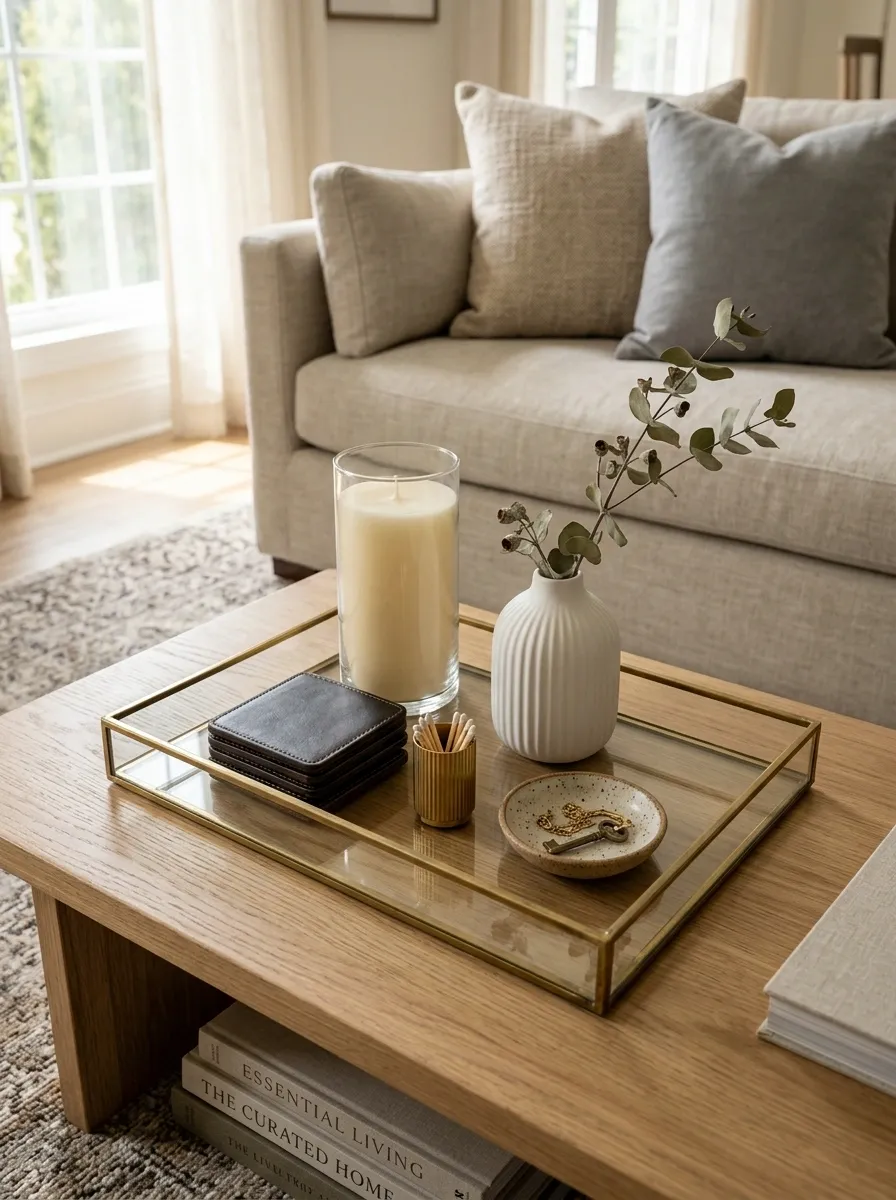
Scattered little objects are what make a surface look messy.
Gather them onto one tray and you’ve created a visual boundary. Candles, a small vase, matches, a remote, coaster stack, or a tiny dish suddenly read as one composition instead of five unrelated things.
The tray doesn’t need to match the room. It just needs enough visual weight to hold the group together.
Best rule: keep the tallest object near the back and the smallest pieces toward the front.
Use a Vase Somewhere Nobody Expects It
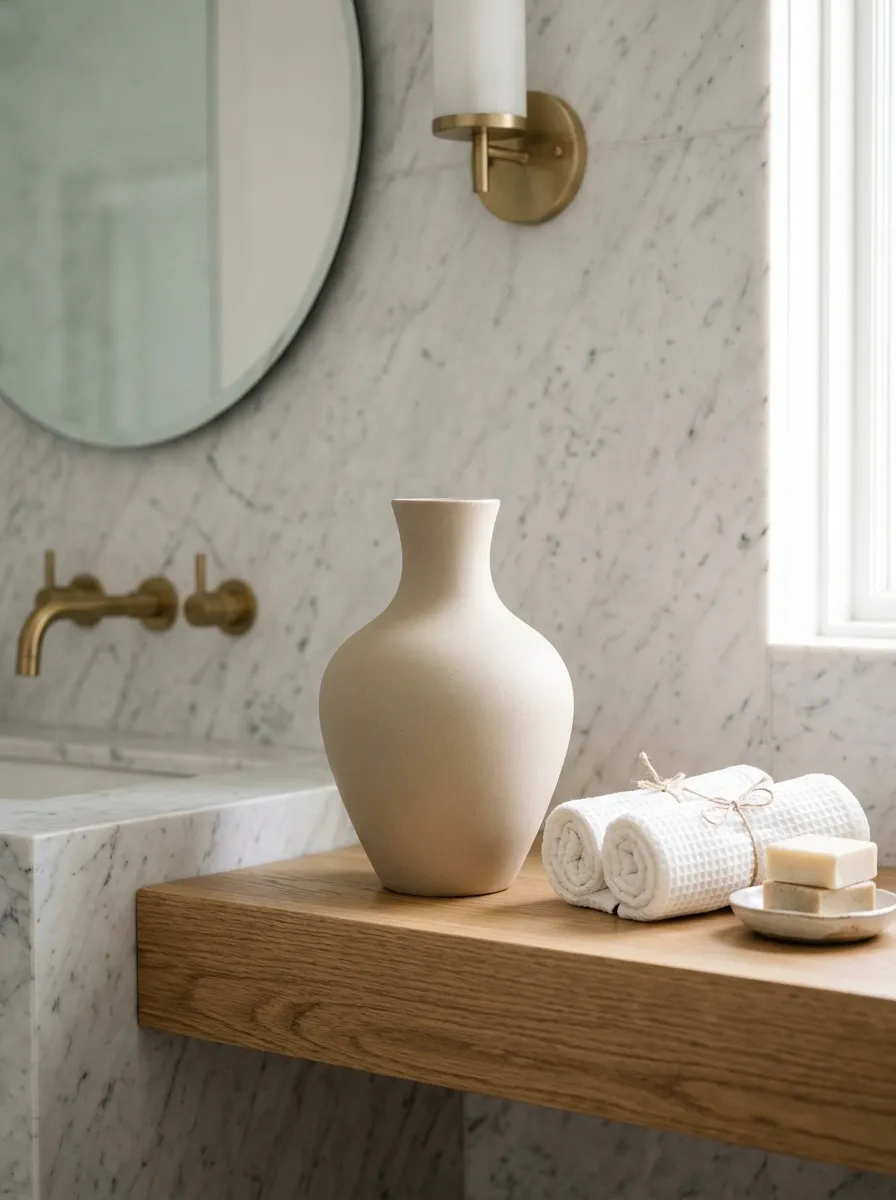
A vase doesn’t need flowers to earn its place.
An empty ceramic vase can work beautifully on a bathroom shelf, beside a stack of towels, on a bedside table, or at the end of a kitchen counter. The shape itself becomes the decoration.
Good relocation spots
- Bathroom shelf
- Entry console
- Bedside table
- Kitchen shelf
- Open bookcase
Choose the spot where its silhouette can be seen clearly. Don’t bury a distinctive vase between five smaller objects.
Make Art From Plates, Baskets, or Cutting Boards
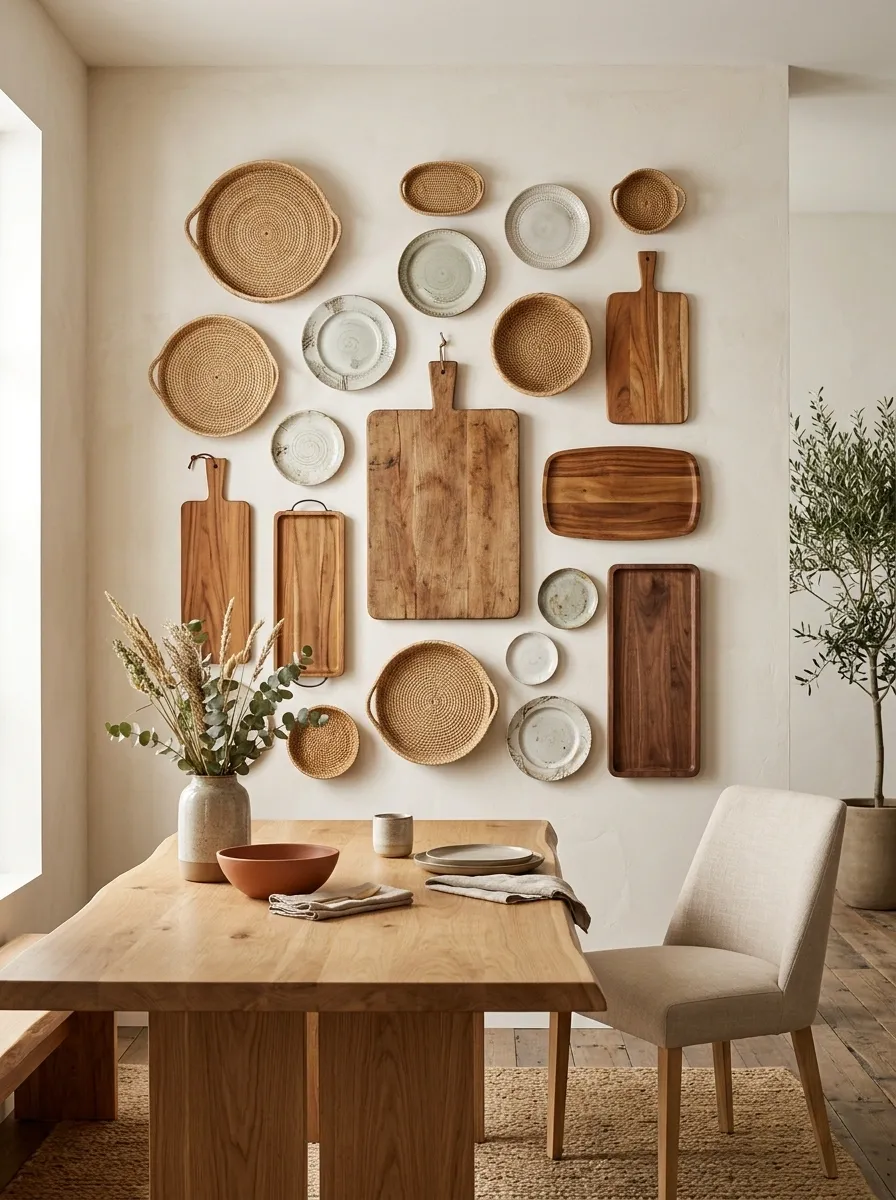
Flat household pieces don’t have to stay stored away.
A collection of woven baskets, decorative plates, wooden boards, or trays can become a wall arrangement when they’re displayed vertically. The key is repetition. Similar shapes create rhythm without needing matching pieces.
Start with the largest piece, then build outward with smaller ones. Keep the spacing intentional rather than squeezing everything together.
Strongest choices: pieces with texture, unusual edges, natural materials, or a limited color range.
Swap Decor Between Rooms Instead of Buying Anything New
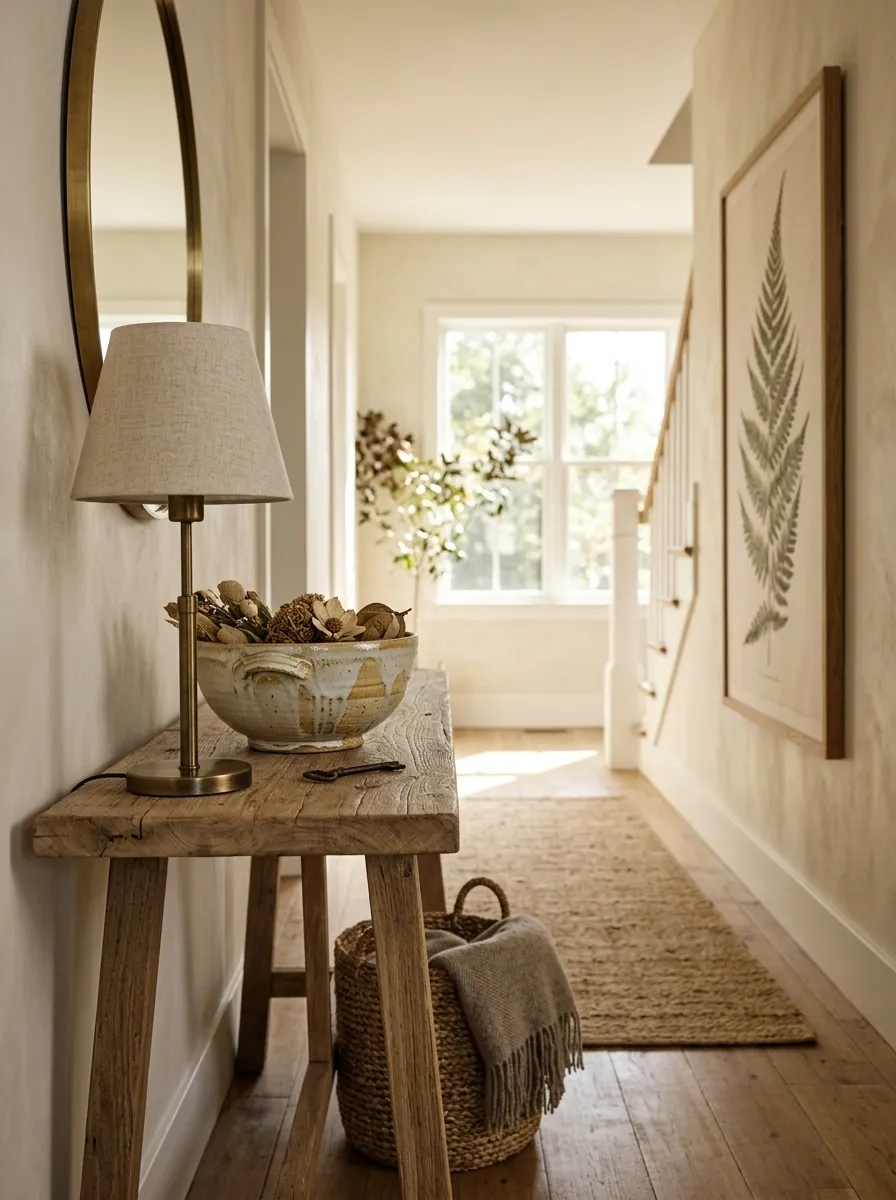
A room can make an old object feel completely different.
That lamp sitting unnoticed in the bedroom may suddenly become the piece that finishes the entryway. A bowl from the living room can look more useful on a kitchen counter. A framed print can wake up a hallway that has been ignored for months.
The trick is to move functionally similar objects into a new visual setting, not to drag every accessory from one room to another.
Room-swap test
| Move | New Home |
|---|---|
| Small lamp | Entry console |
| Decorative bowl | Kitchen island |
| Framed print | Hallway |
| Accent cushion | Reading chair |
Create Height With an Upside-Down Bowl or Box
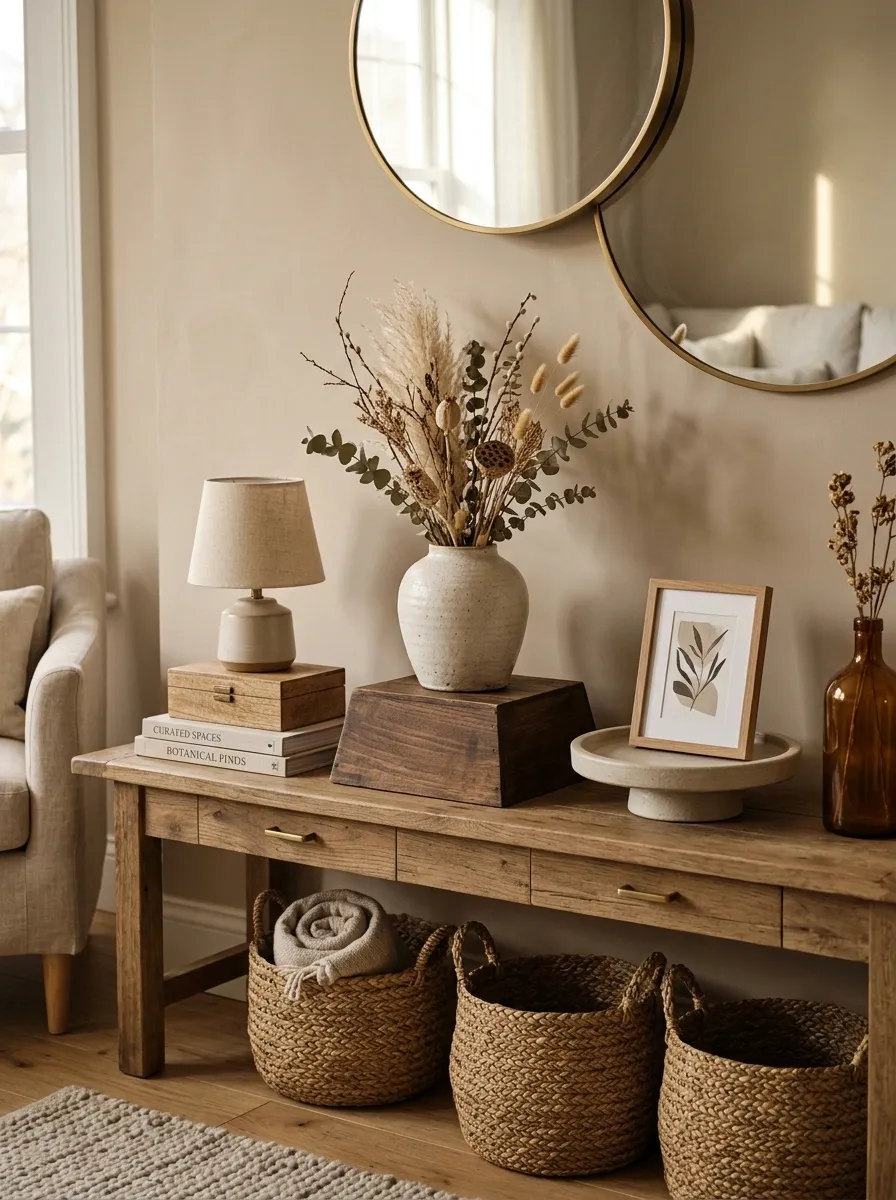
Short decor gets lost when everything sits at the same level.
Instead of buying a riser, turn over a sturdy bowl, ceramic dish, wooden box, or stackable container. Hide it beneath the object that needs more height.
The goal isn’t to make the support visible. It’s to create different levels across the surface.
Use this trick for short vases, small lamps, decorative bowls, and tiny framed pieces. Keep the raised object toward the back or center of the arrangement.
Give an Existing Mirror the Space to Matter
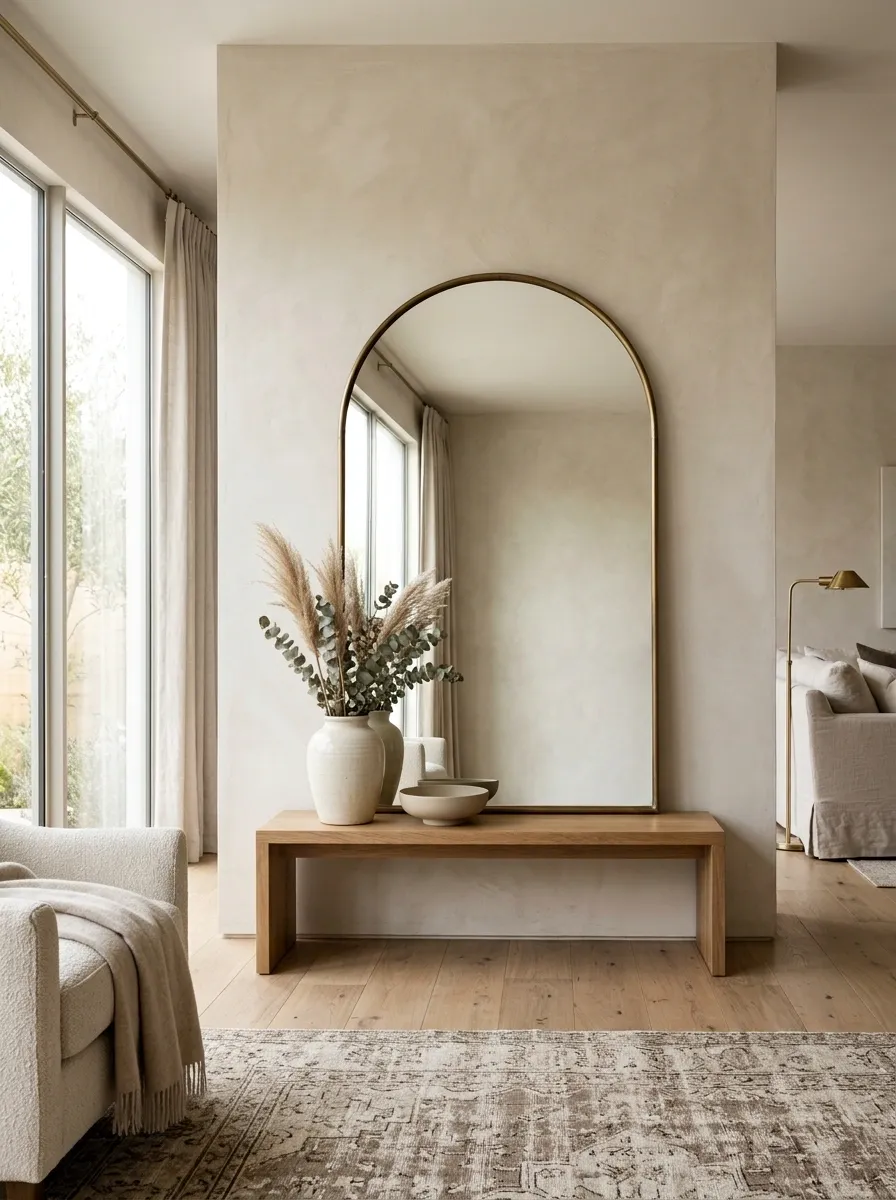
A mirror loses impact when it’s treated like another small accessory.
Move it where its full shape can be seen. Let it sit above a console, lean it against an open wall, or place it near a window where it can catch natural light.
Don’t surround it with a dozen tiny objects.
Placement rules
- Let the mirror be the largest shape in its immediate area.
- Keep nearby accessories low.
- Leave visible wall or floor space around the frame.
- Use the reflection as part of the arrangement.
Pull Attractive Kitchen Pieces Onto Open Shelves
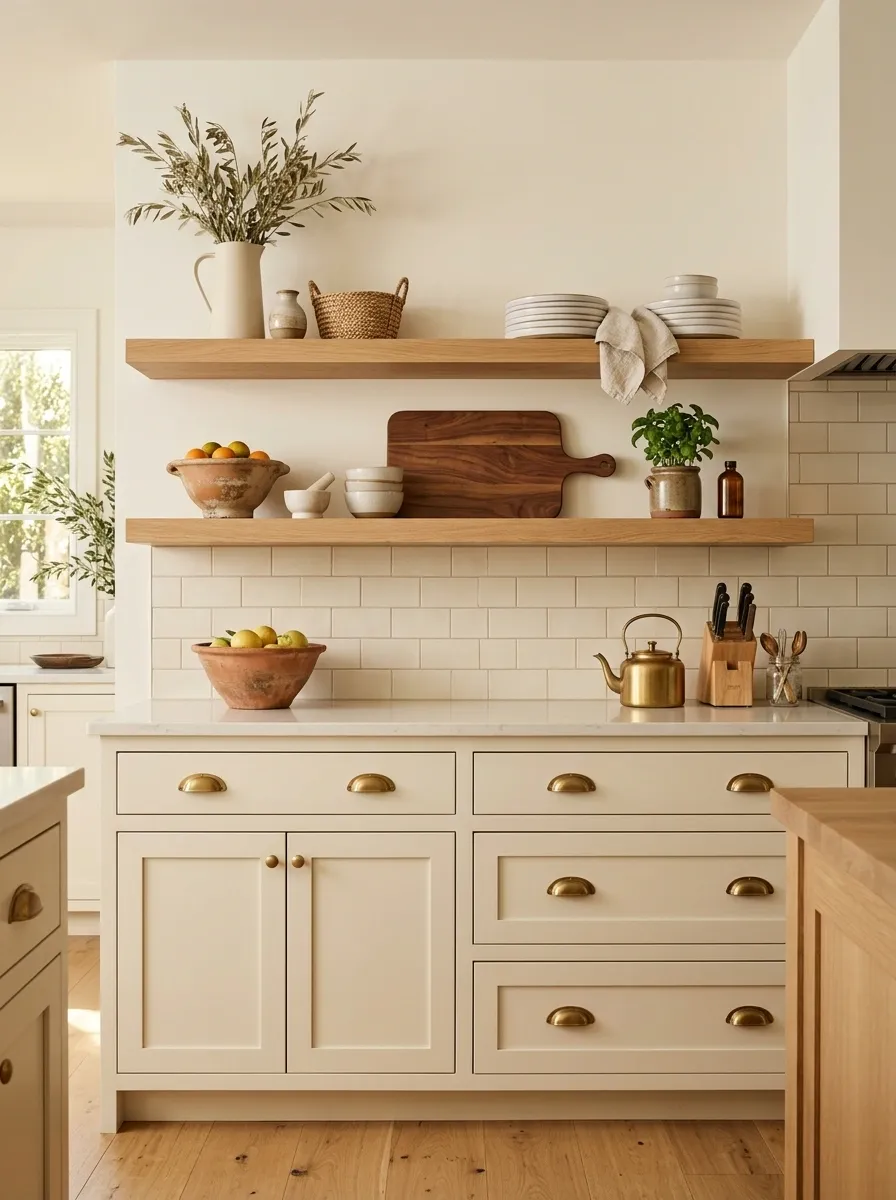
The kitchen already contains plenty of objects with useful shapes and colors.
A stack of plates, a wooden cutting board, a ceramic pitcher, or a favorite mug can become part of the room instead of staying hidden behind a cabinet door. The difference is editing.
Choose pieces worth seeing, then group them by height and material.
Shelf formula
- One tall piece
- One horizontal stack
- One organic shape
- A little empty shelf space
Don’t empty the cabinets onto the shelf. Three strong groupings look intentional.
Fold a Blanket to Change the Shape of Your Sofa
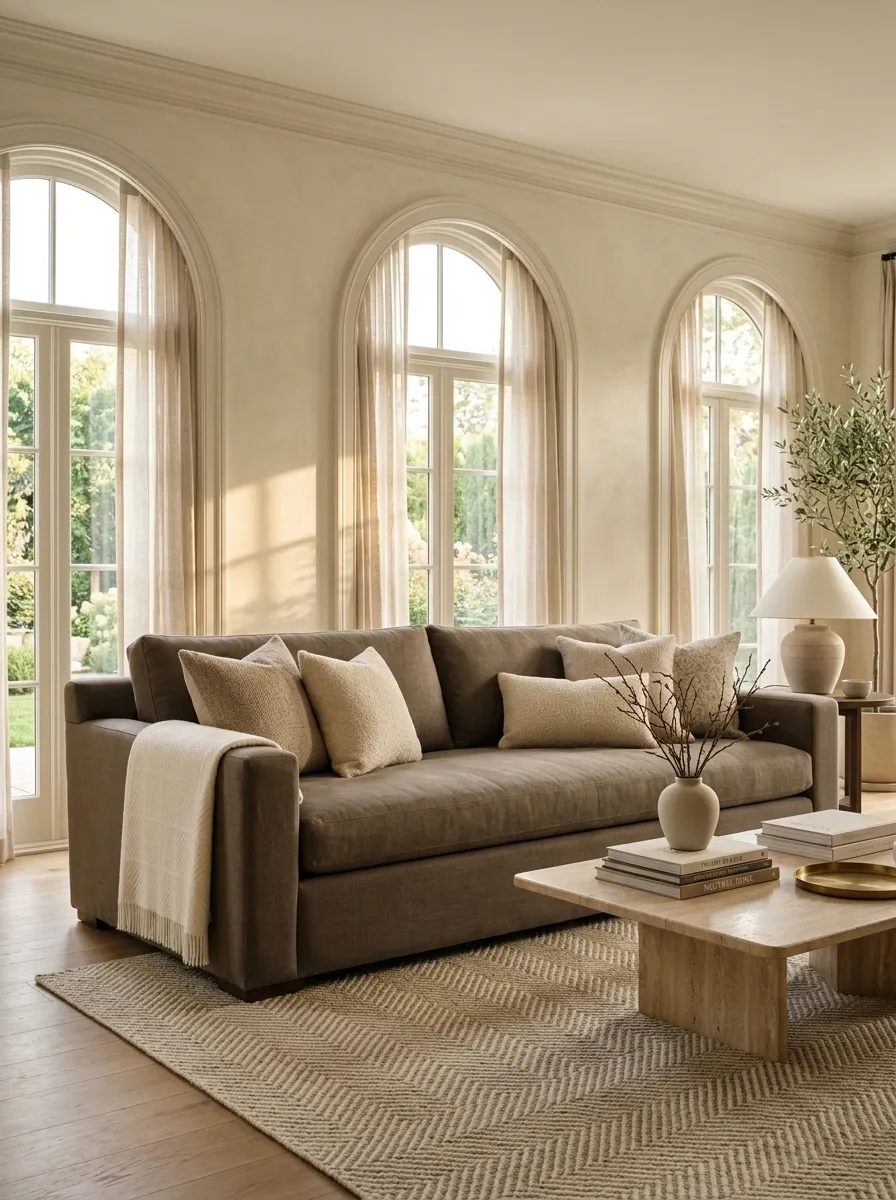
A throw doesn’t have to be draped over the back of the sofa.
Fold it into a clean rectangle and place it across one arm. Or make a loose vertical fold and let it fall over the seat. The point is to introduce a different line against all the horizontal cushions.
This works especially well when the sofa already feels visually flat.
Three easy placements
- Arm fold: structured and tidy.
- Seat drape: relaxed and softer.
- Corner drop: casual, with one end reaching toward the floor.
Use one blanket, not several.
Group Candles Into One Strong Focal Point
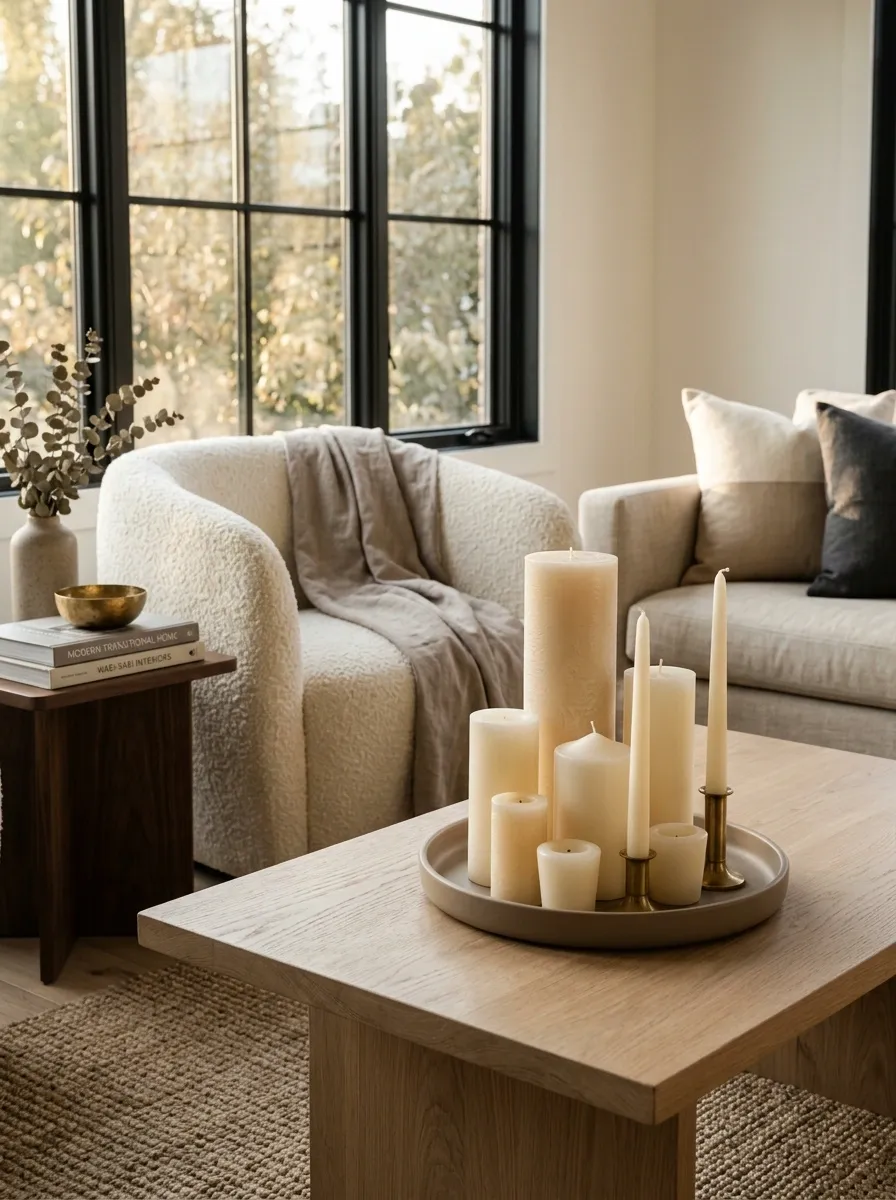
Candles scattered across a room rarely look intentional. Grouped together, they become a small sculptural arrangement.
Use candles with different heights, but keep their shapes or finishes related. Put the tallest toward the back and let the shorter ones step forward. A ceramic plate, tray, or shallow bowl can ground the whole group.
The mistake is spacing them evenly.
Better rhythm: close together, slight height changes, plenty of empty space around the cluster.
Put a Pretty Bowl to Work on an Empty Surface
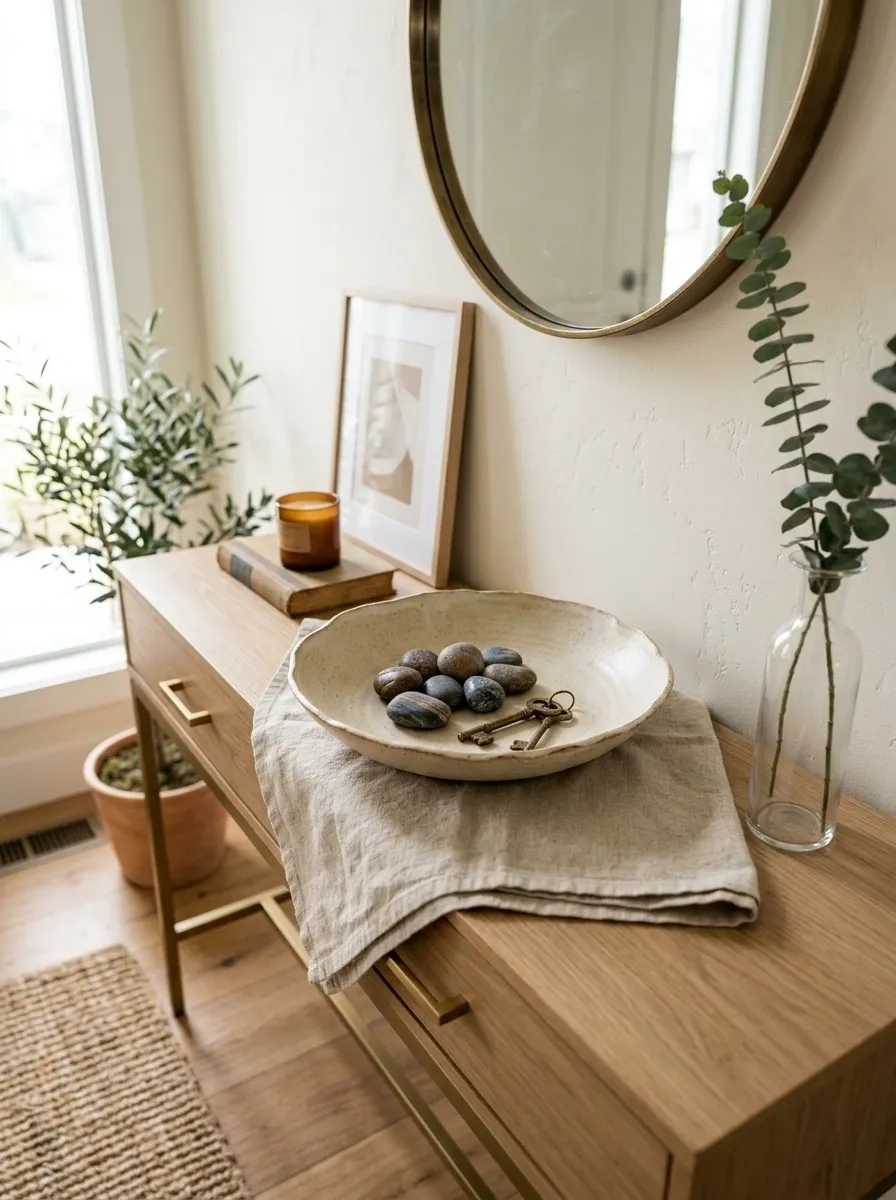
An attractive bowl doesn’t need to sit empty just because it’s decorative.
Place it on a kitchen island, entry console, coffee table, or dresser and give it a simple job. Keys, fruit, wrapped treats, remote controls, or a few natural objects can all make sense depending on the room.
The strongest approach is to keep the contents low.
Think shallow, not stuffed.
Frame a Small Object Instead of Adding Another Print
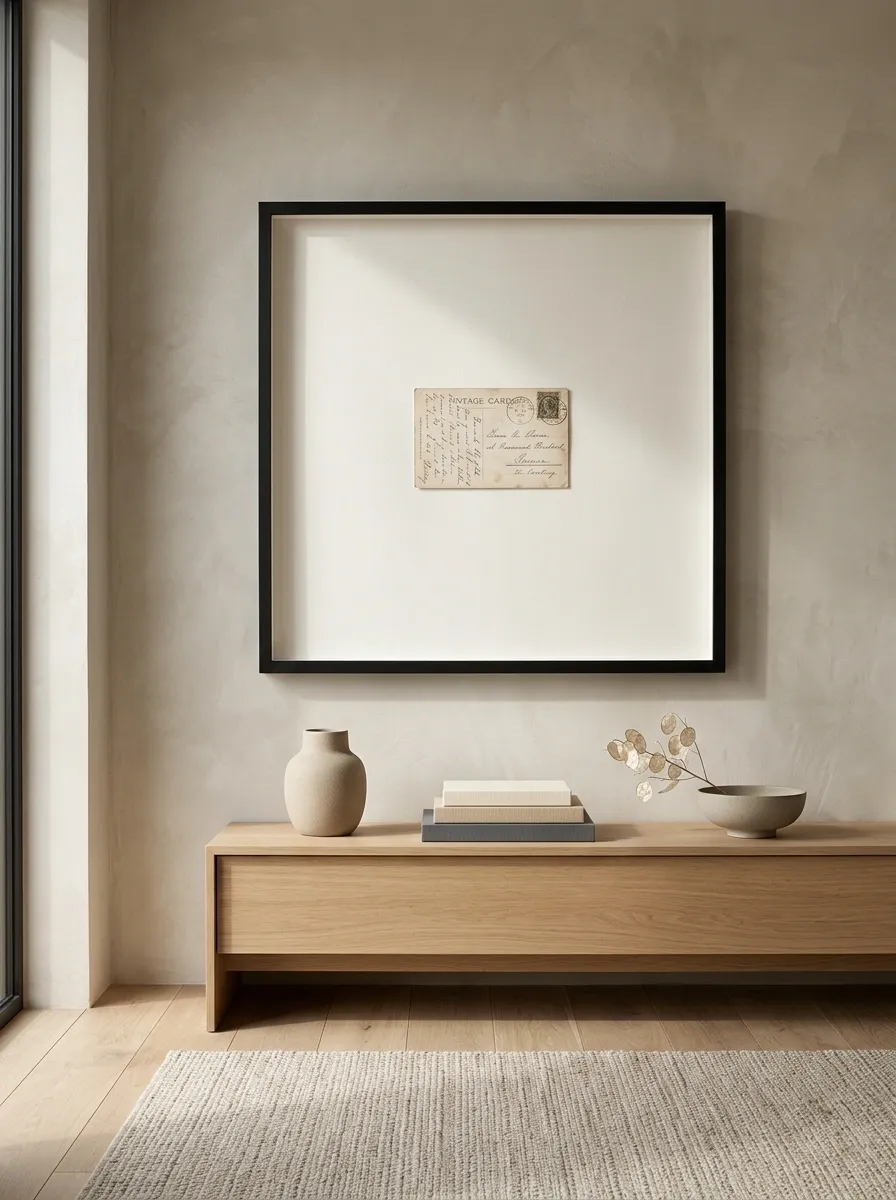
A wall doesn’t need another large piece of artwork.
A small textile, pressed leaf, handwritten note, postcard, fabric scrap, or meaningful little object can become the feature when placed inside a frame. The empty space around it is what gives it presence.
Use a larger frame than the object needs. Center the piece generously instead of crowding it.
Small object + generous negative space = stronger display.
Rest Artwork Against a Wall Instead of Hanging It
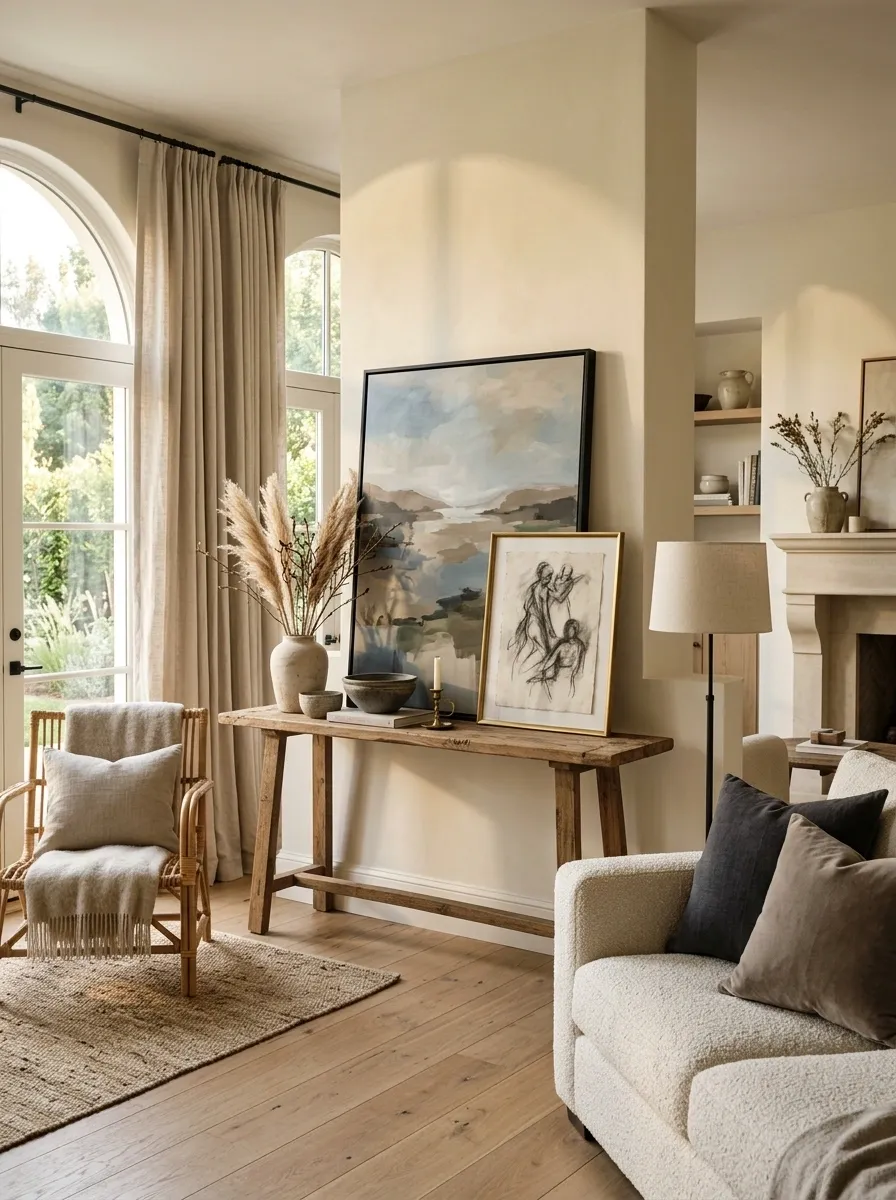
Not every framed piece needs hardware.
Lean artwork on a dresser, console, bookshelf, or even directly on the floor when the room has enough open space. Layering a smaller frame in front of a larger one creates depth without making the wall feel busy.
Keep the front piece smaller.
That gives the arrangement a clear order and keeps both frames visible.
Turn a Side Table Into a Three-Level Display
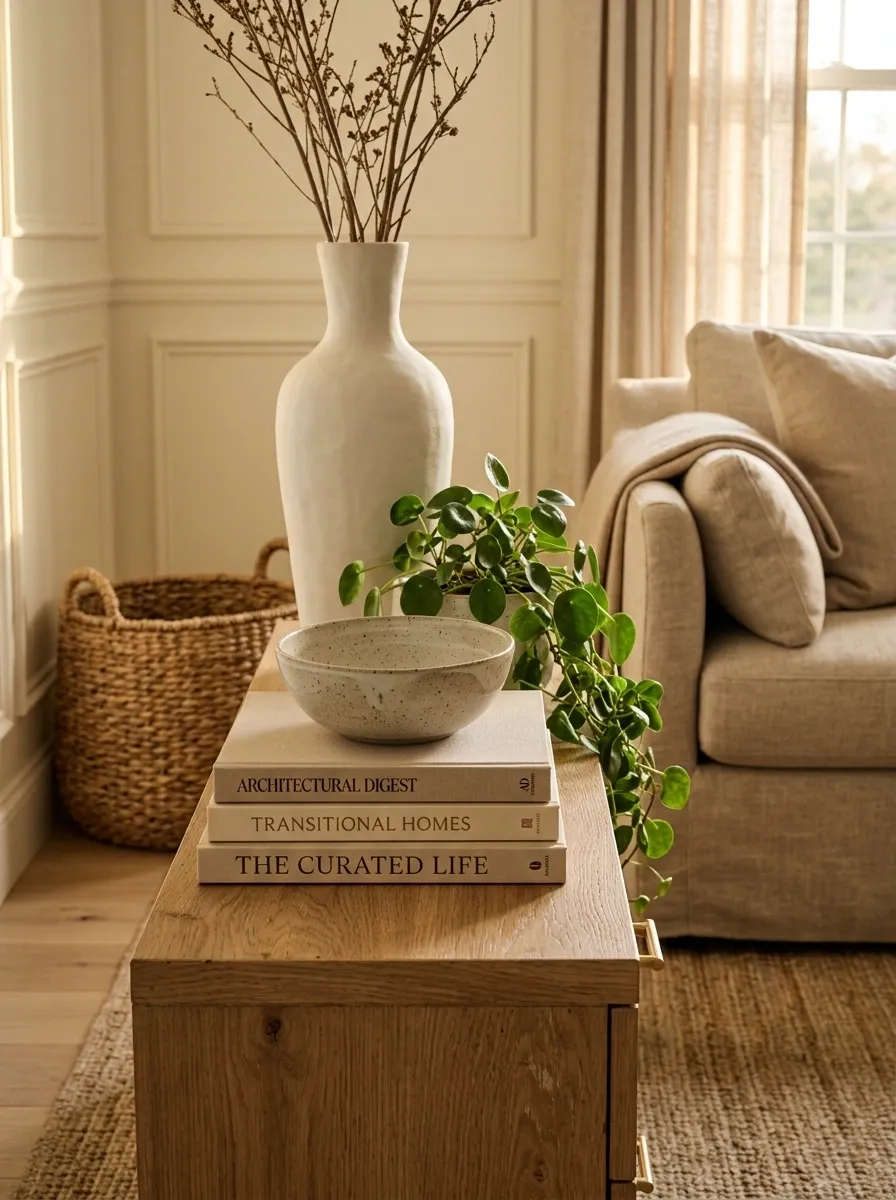
A side table looks unfinished when everything sits at the same height.
Use the tabletop for one medium object, place something taller behind it, then bring a small object forward. The eye moves through the arrangement instead of seeing one flat row.
A lamp, vase, books, bowl, or small plant can fill these roles.
Three levels are enough:
- Tall
- Medium
- Low
Keep one area of the tabletop empty too.
Medium.
Small.
Use Plants to Fill the Corners That Actually Need Them
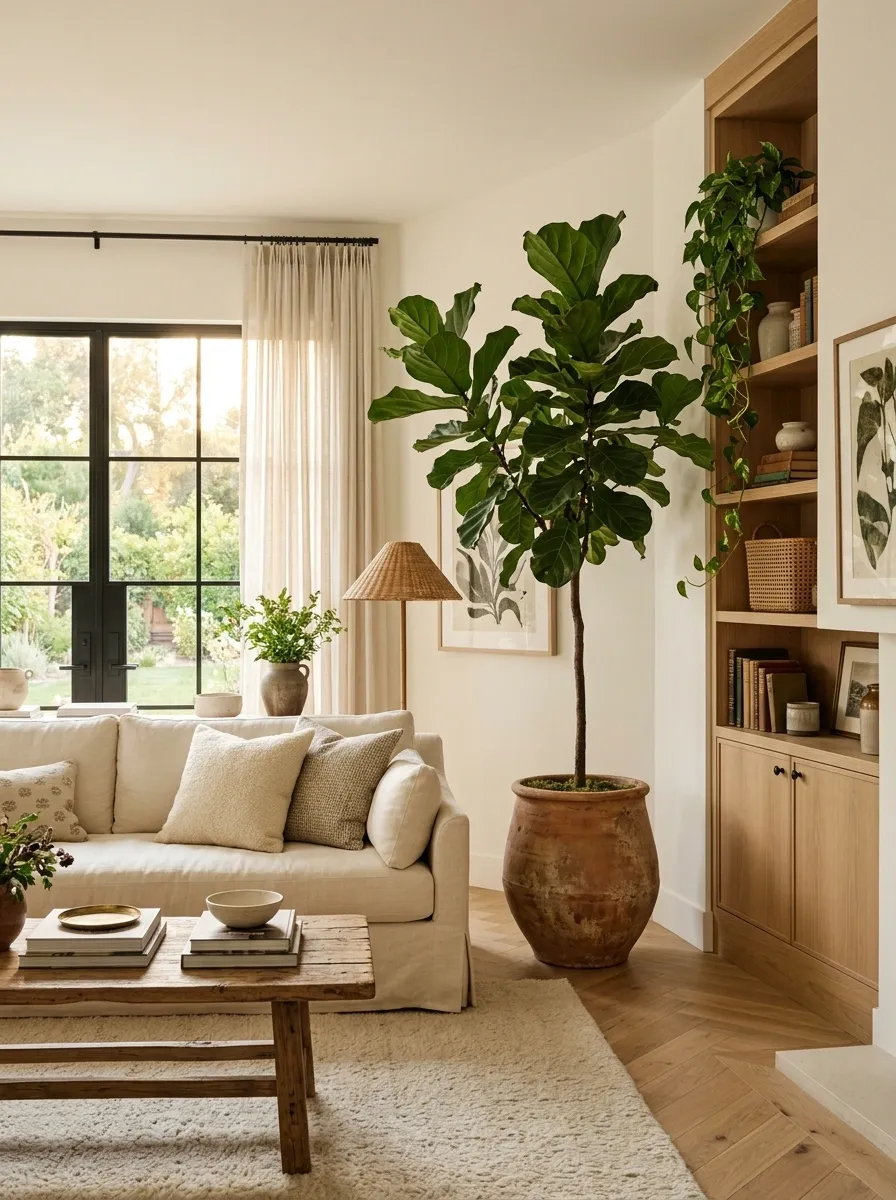
A plant shouldn’t be placed in a room simply because there’s an empty spot.
Look for areas that feel visually heavy on one side or completely bare on the other. A tall plant can soften a hard corner beside a cabinet. A smaller plant can break up a row of books without taking over the shelf.
Match the plant to the problem:
- Tall plant for an empty vertical corner
- Small plant for a crowded horizontal surface
- Trailing plant for a high shelf
- Wide plant for a plain, low piece of furniture
One well-placed plant does more than several scattered ones.
Style a Dresser With One Tall, One Low, and One Personal Piece
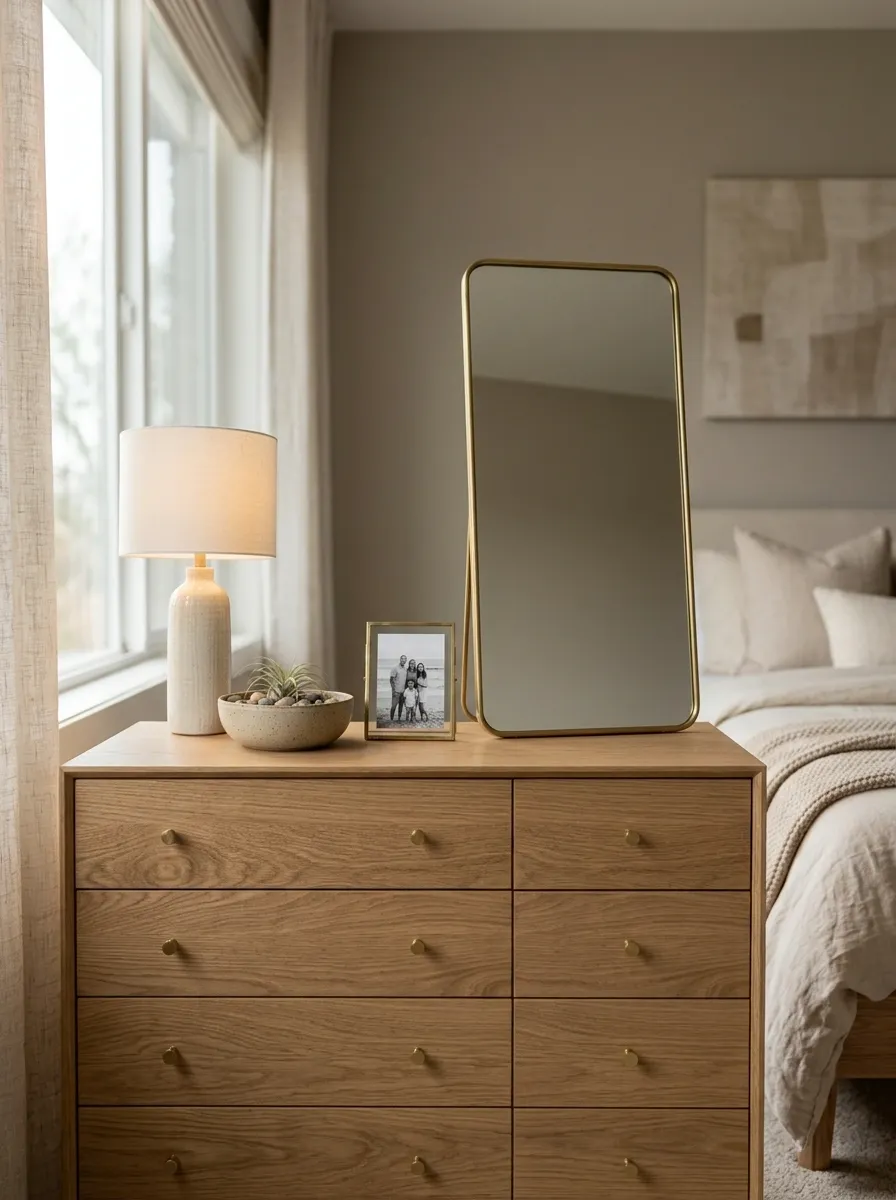
A dresser gets messy fast because it’s usually treated like a storage zone.
Clear the surface first. Then bring back only three types of objects: something tall, something low, and one piece with meaning or character. A lamp, a shallow bowl, a framed photograph, a vase, or a small sculpture can fill those roles.
The exact objects matter less than the difference in scale.
Leave a noticeable strip of bare dresser visible. That empty space makes the remaining pieces look intentional.
One low.
One meaningful.
Turn an Unused Textile Into Wall Decor
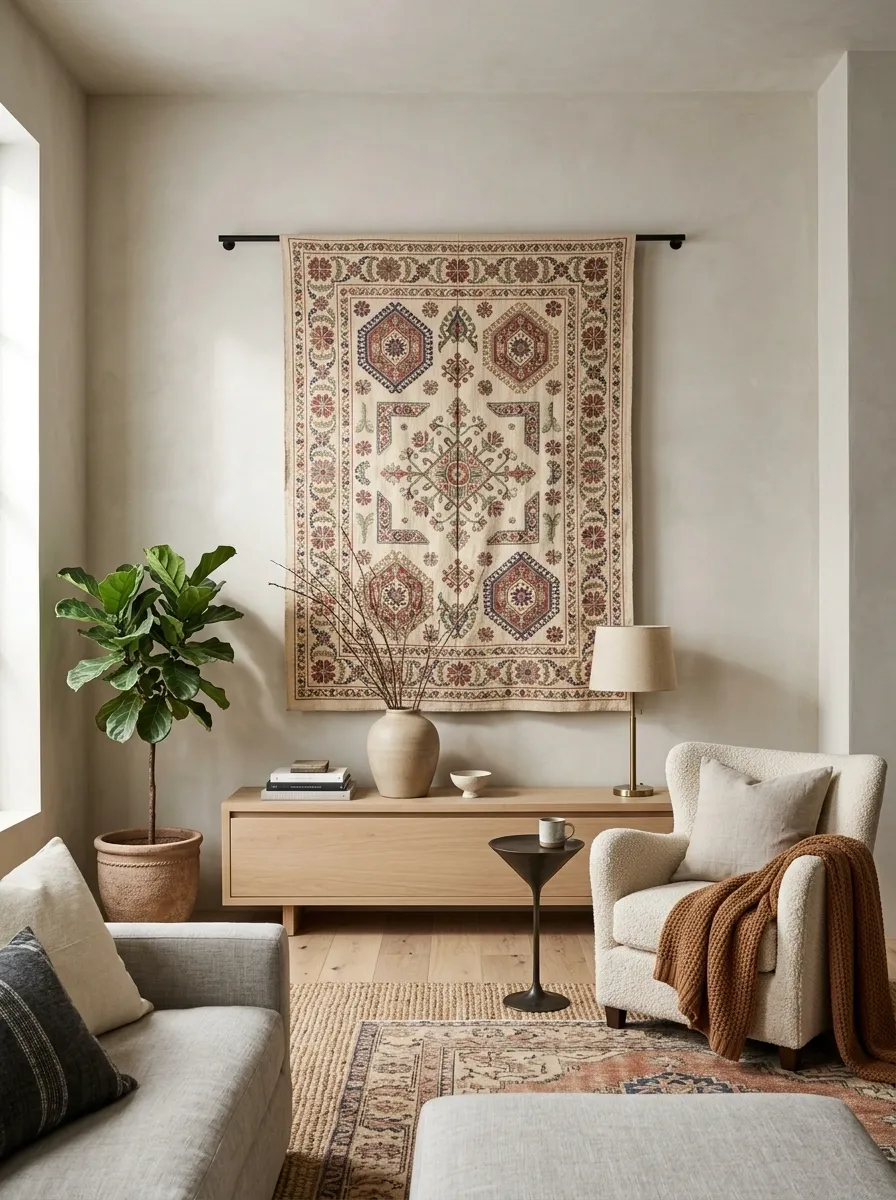
A beautiful scarf, old quilt, woven cloth, embroidered piece, or patterned throw doesn’t have to stay folded in a drawer.
Hang it where a plain wall needs softness. A textile can work above a bed, behind a console, beside a reading chair, or in a narrow hallway.
The key is to show enough of the pattern to make the material recognizable.
Don’t bunch it into a tiny decorative knot. Let the fabric fall naturally, or stretch it flat inside an existing frame or over a simple rail.
Make a Window Seat Feel Finished With Existing Layers
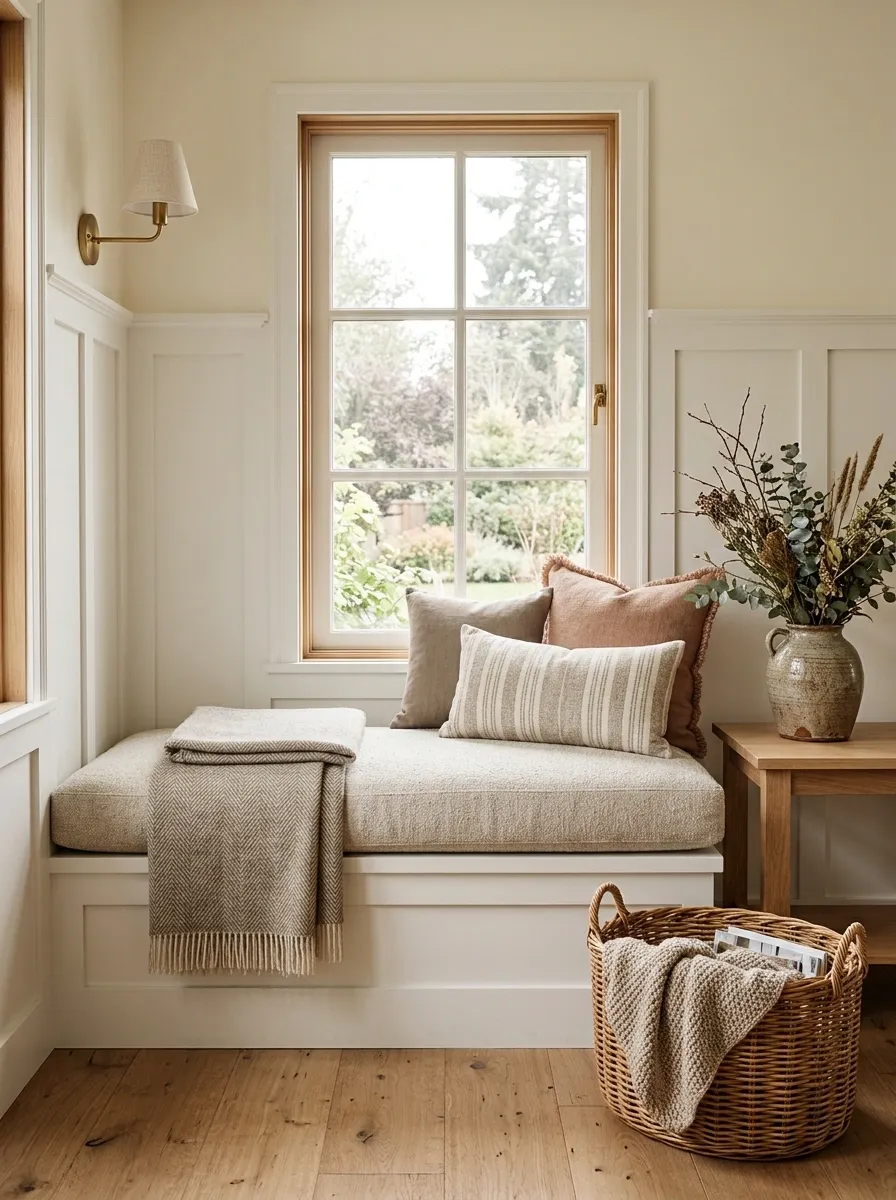
A window seat can look strangely empty even when it’s technically furnished.
Start with one cushion or folded blanket as the base. Add two pillows with different shapes, then place one small object nearby, such as a stool, basket, or side table. Stop before the area becomes a pile of textiles.
The strongest window seats have one clear place to sit, not a mountain of accessories.
Keep the center usable and let the layers build toward the edges.
Space in the center.
Use a Wooden Board as a Display Base
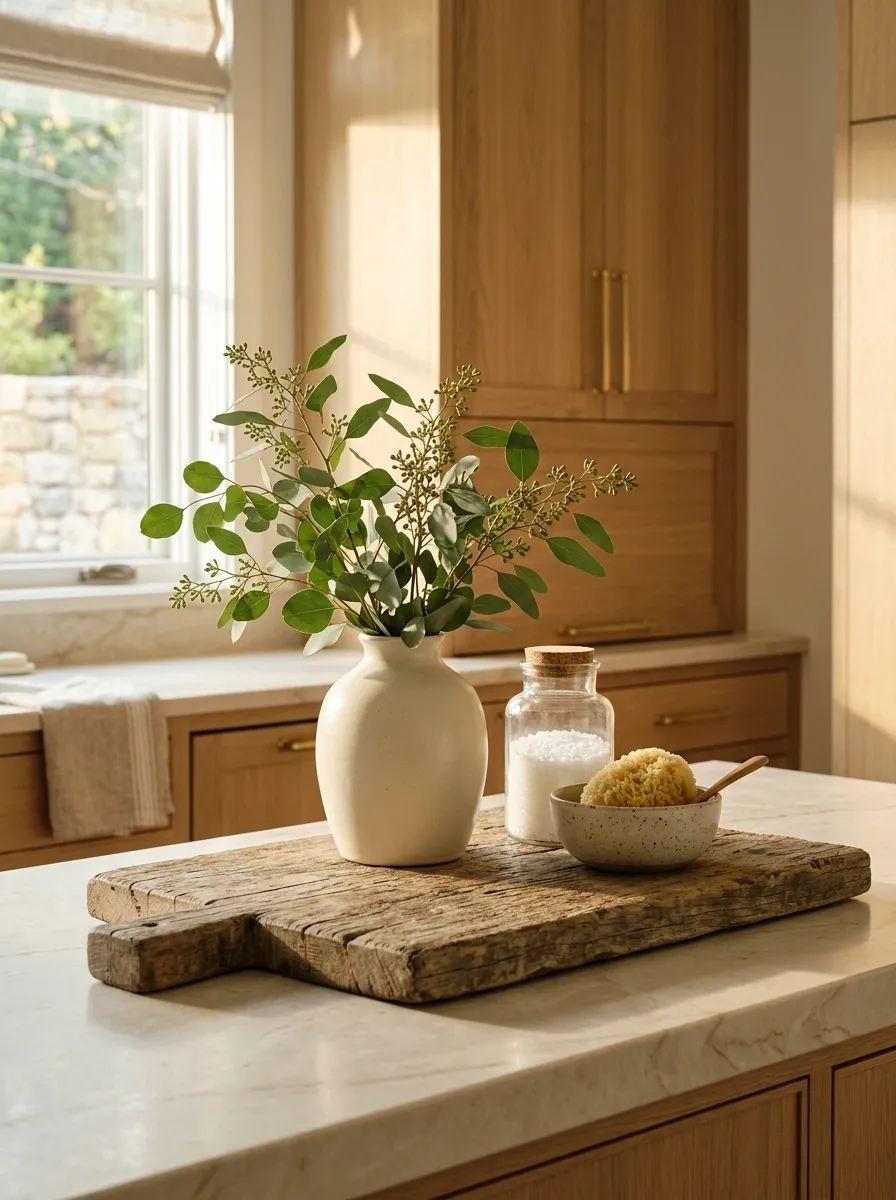
A wooden cutting board can do more than hang on the kitchen wall.
Stand one upright behind a vase, place it flat under candles, or use it beneath a small cluster on a counter. The board creates a visual boundary around objects that might otherwise feel disconnected.
This works because the natural material adds weight without requiring another decorative object.
Good combinations: board + ceramic, board + glass, board + greenery.
Avoid stacking too many pieces on top. The board should still be visible around the edges.
Build One Shelf Story Instead of Filling Every Gap
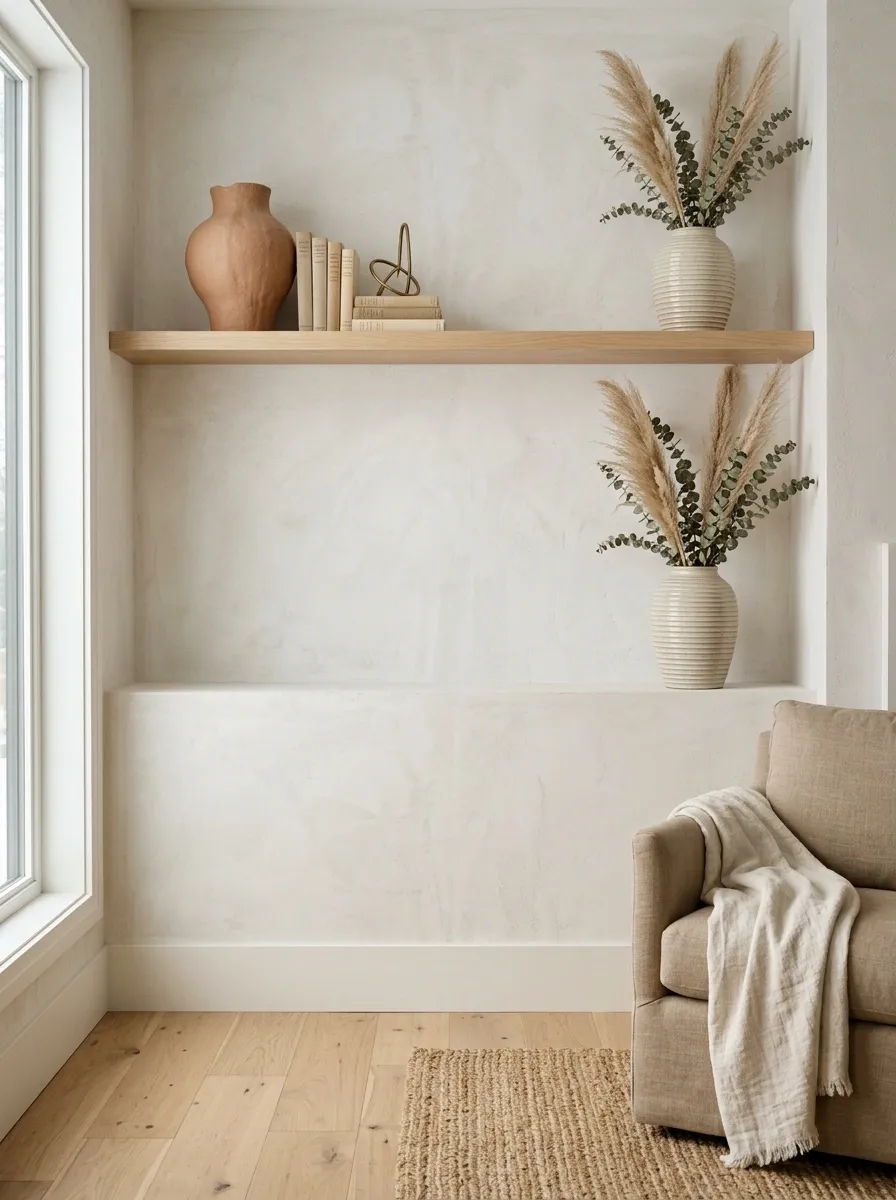
A shelf usually looks better with a few deliberate pauses than with something sitting in every open space.
Start with the largest object, then place pieces with different shapes beside it. A stack of books can create a horizontal line while a vase or framed piece brings height. Leave one clear section of shelf visible.
Think of the arrangement as a visual rhythm, not a storage puzzle.
Use this order:
large shape → small cluster → open space → medium shape
Repeat One Color Across Different Objects
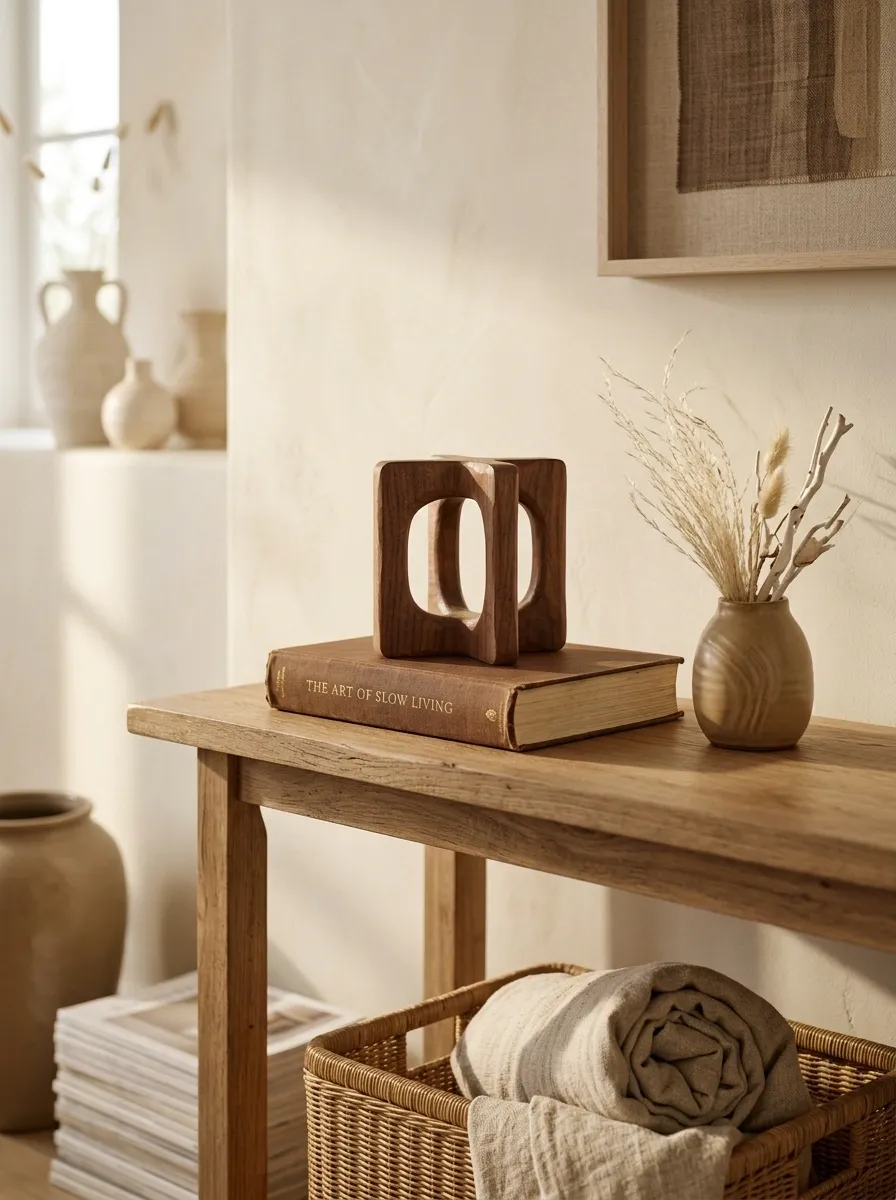
Matching every piece isn’t necessary. Repeating one color is enough to make unrelated objects feel connected.
Look around the room for a shade that already appears in several places. It could be the warm brown of a wooden frame, the cream of a ceramic bowl, or a muted accent from a cushion.
Then group a few objects that share that color.
The connection can be subtle.
A brown book beside a wooden object beside a small tan vessel creates a visual thread without making the room look overly coordinated.
Move Oversized Decor Down to Ground Level
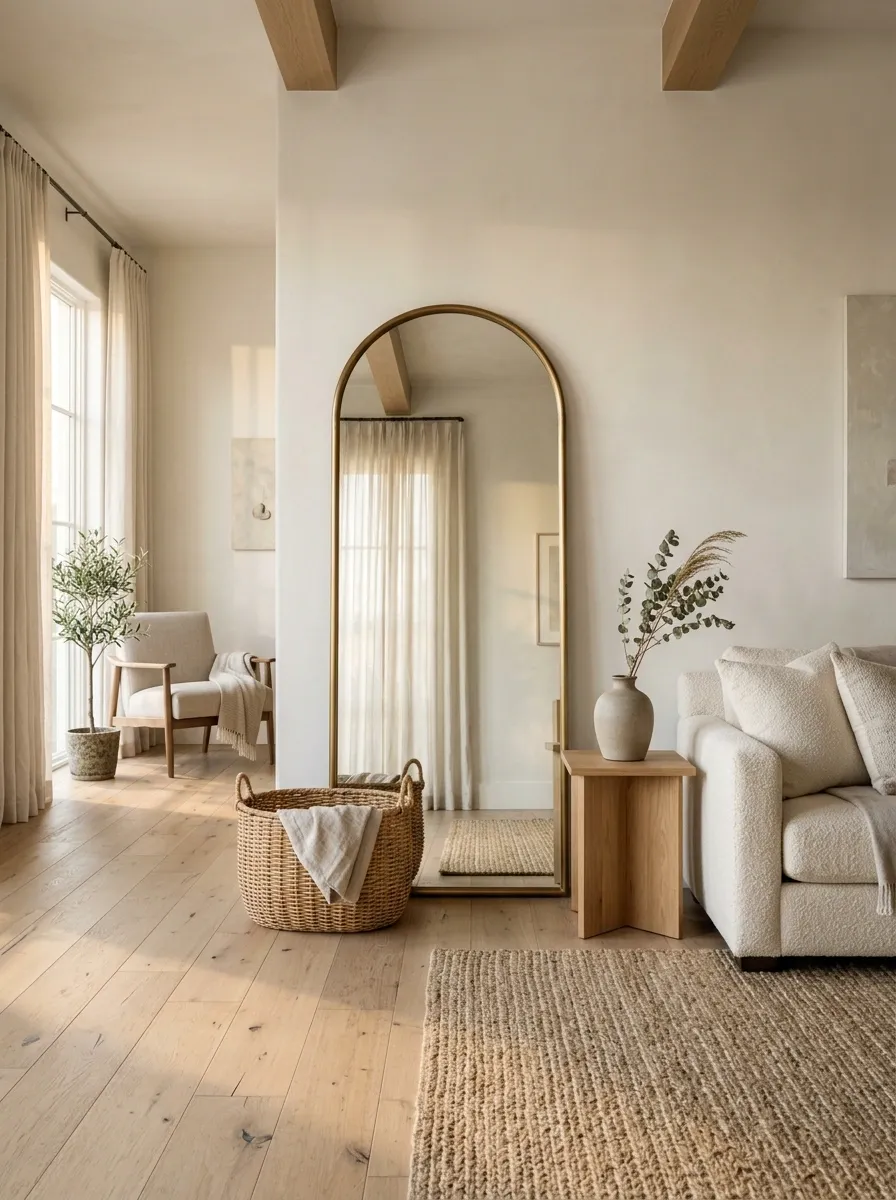
Large objects don’t always belong on a tabletop.
A tall mirror, oversized basket, floor lamp, large planter, or wide vessel can work much harder when it sits directly on the floor. This is especially useful beside furniture that already occupies the wall space above it.
A large piece on the floor creates a strong vertical line without making another surface feel crowded.
Use the floor when:
- A corner feels empty.
- A large object looks cramped on furniture.
- The walls already have plenty going on.
- A room needs more height without another shelf.
Clear One Surface and Restyle It From Scratch
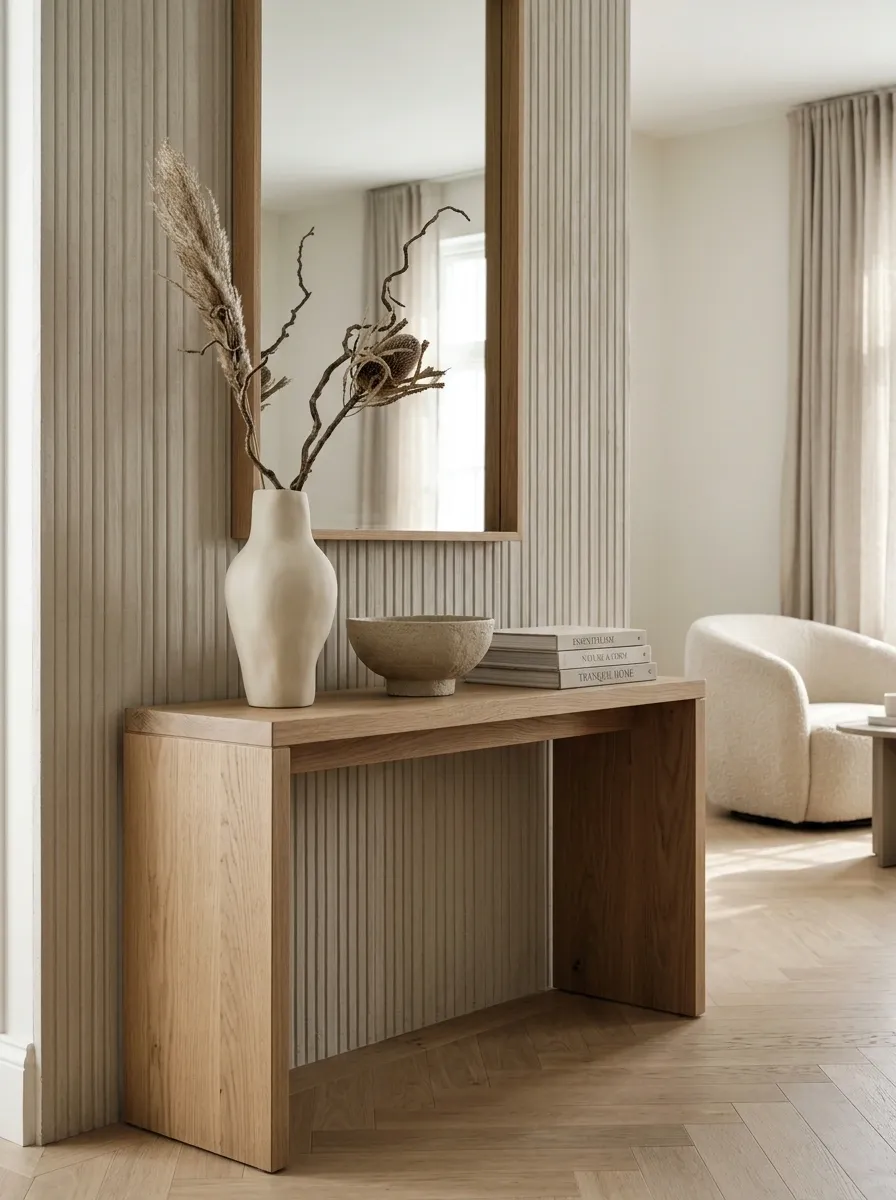
Sometimes the best decoration is the stuff that gets removed.
Choose one overworked surface, clear everything from it, then bring back only the pieces that actually improve the room. Don’t automatically return every item to its old position.
Use this edit:
- Remove everything.
- Choose one anchor piece.
- Add one smaller companion.
- Check the empty space.
- Stop before it feels full.
A cleared surface changes the visual weight of the whole room. It also makes overlooked pieces easier to notice.
Turn a Forgotten Tray Into a Room-Defining Arrangement
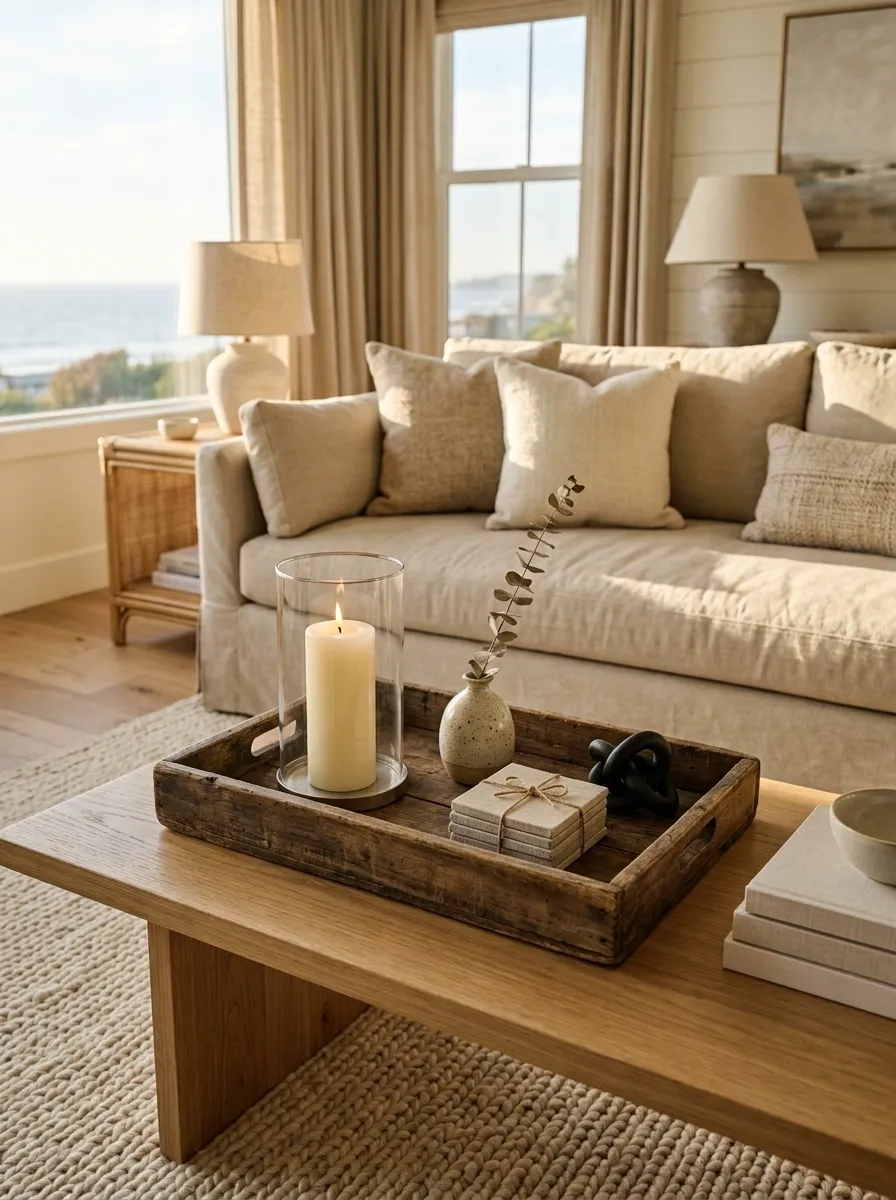
A tray sitting in a cupboard can solve a surprisingly common decor problem: too many small objects with nowhere to belong.
Bring it onto a coffee table, ottoman, dresser, or console and use it as the boundary for a compact arrangement. A candle, small vase, remote, coaster stack, or decorative object can suddenly read as one intentional grouping.
The tray doesn’t need to be fancy. Wood, metal, woven material, or even a simple serving tray works.
Keep some tray visible around the edges. That border is what makes the arrangement feel contained.
Use the Bookshelf as a Backdrop, Not a Storage Grid
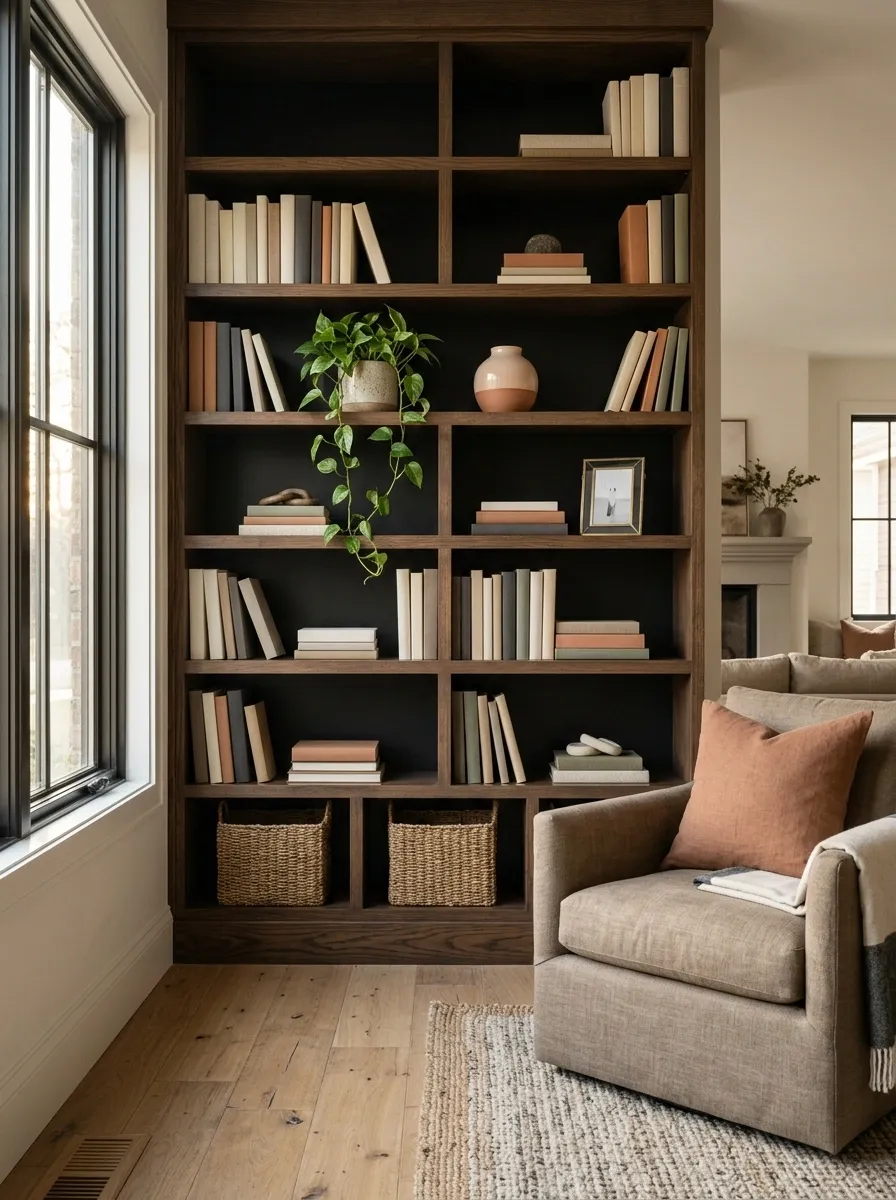
A bookshelf gets much more interesting when every section isn’t treated the same way.
Let a few books stand upright while others lie horizontally. Add one ceramic piece, one frame, or one plant between groups. Then leave an entire section partially empty.
The contrast matters.
Vary these three things:
- Book orientation
- Object height
- Empty-space size
Don’t line every book up perfectly and then fill the remaining gaps with tiny accessories.
Put a Small Stool Beside Furniture That Feels Too Heavy
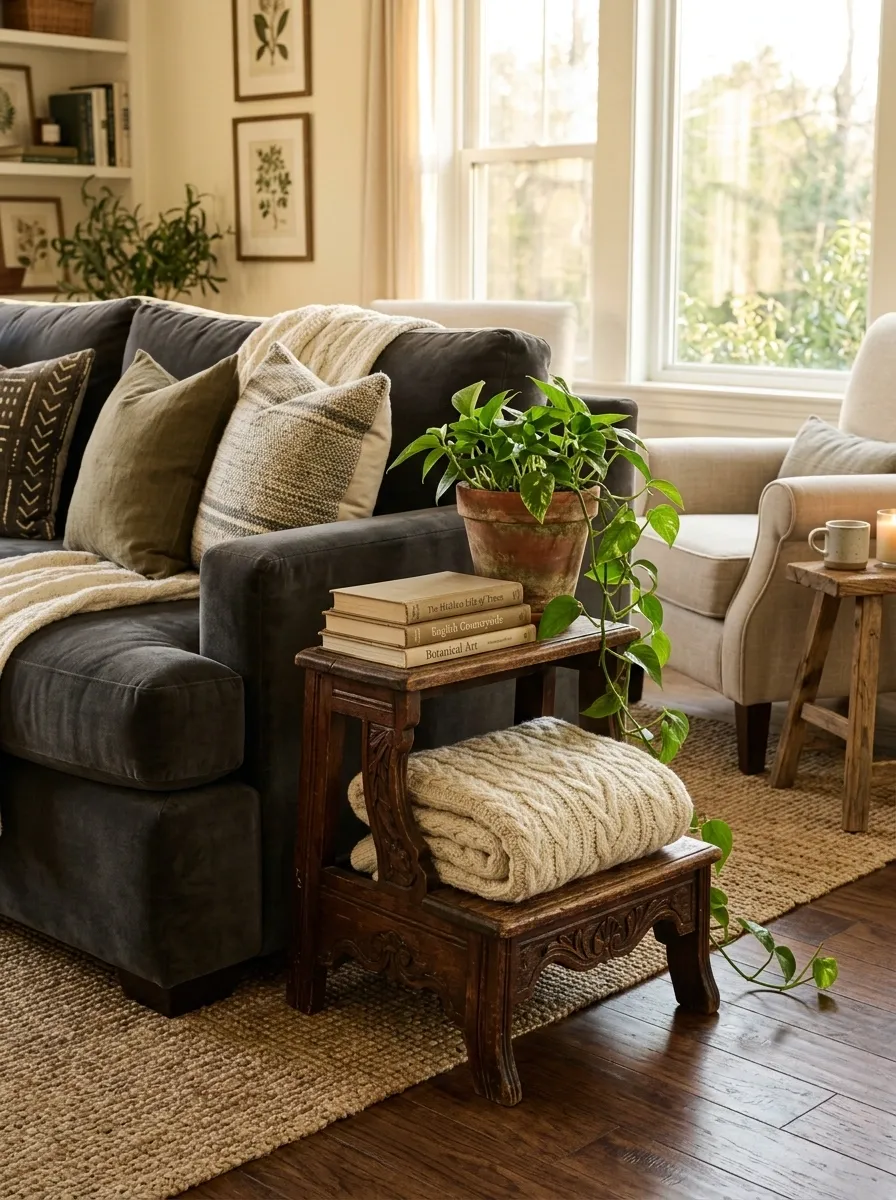
A small stool often gets overlooked because it isn’t considered decor.
That’s exactly why it works.
Place one beside a bulky sofa, bed, cabinet, or oversized chair to break up a heavy visual block. It can hold a folded blanket, a stack of books, or a small plant while staying useful.
The important part is scale. Choose a stool that’s visibly smaller than the main furniture nearby.
Use it as a visual step down: large furniture → stool → small object.
Let a Collection of Mugs Become Kitchen Decor
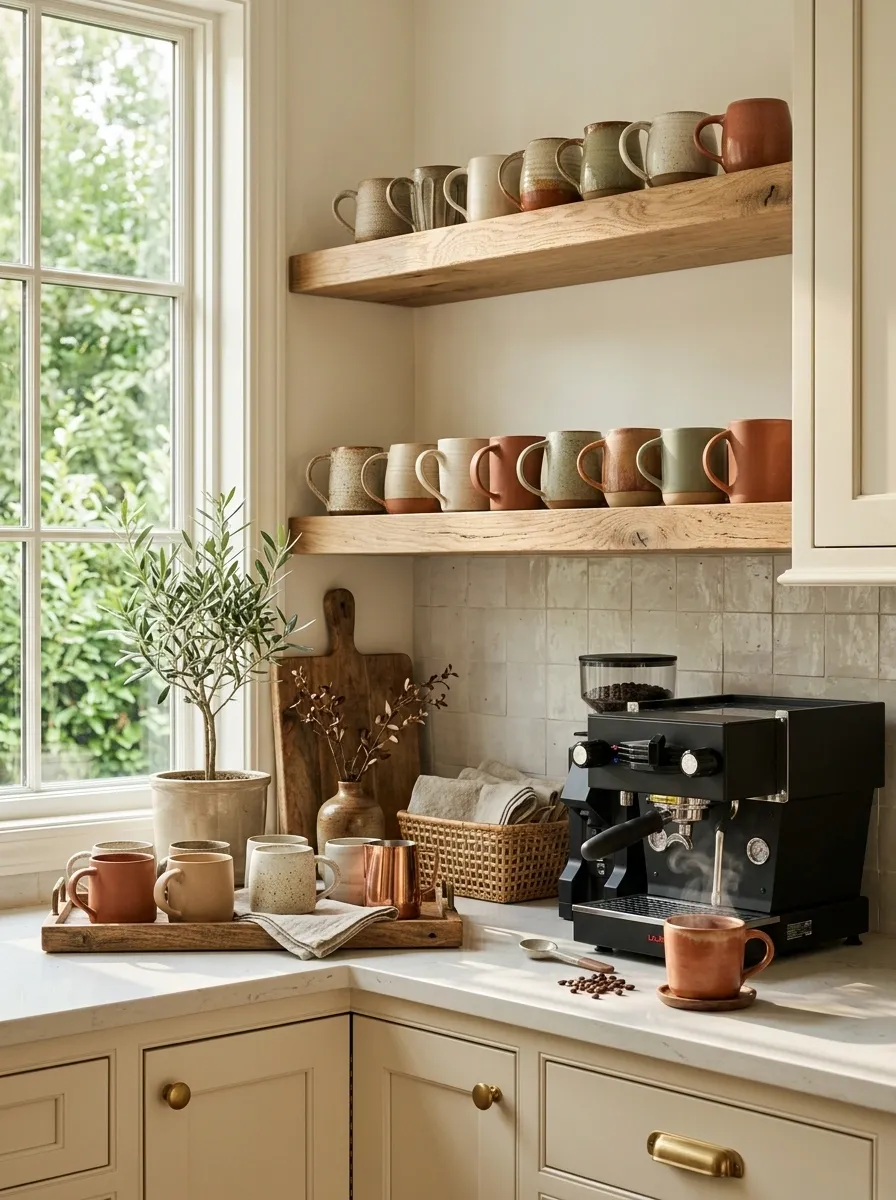
Those favorite mugs hidden inside a cabinet can do double duty.
Hang a few beneath an open shelf, line them along a visible ledge, or group them beside a coffee setup. Their handles create repetition, which gives the arrangement a strong graphic quality.
You don’t need every mug displayed.
Choose the ones with:
- Similar tones
- Interesting handles
- Different but related shapes
Keep the everyday favorites within easy reach. A display that can’t actually be used becomes another thing to manage.
Use a Basket Beside Furniture Instead of Filling Another Shelf
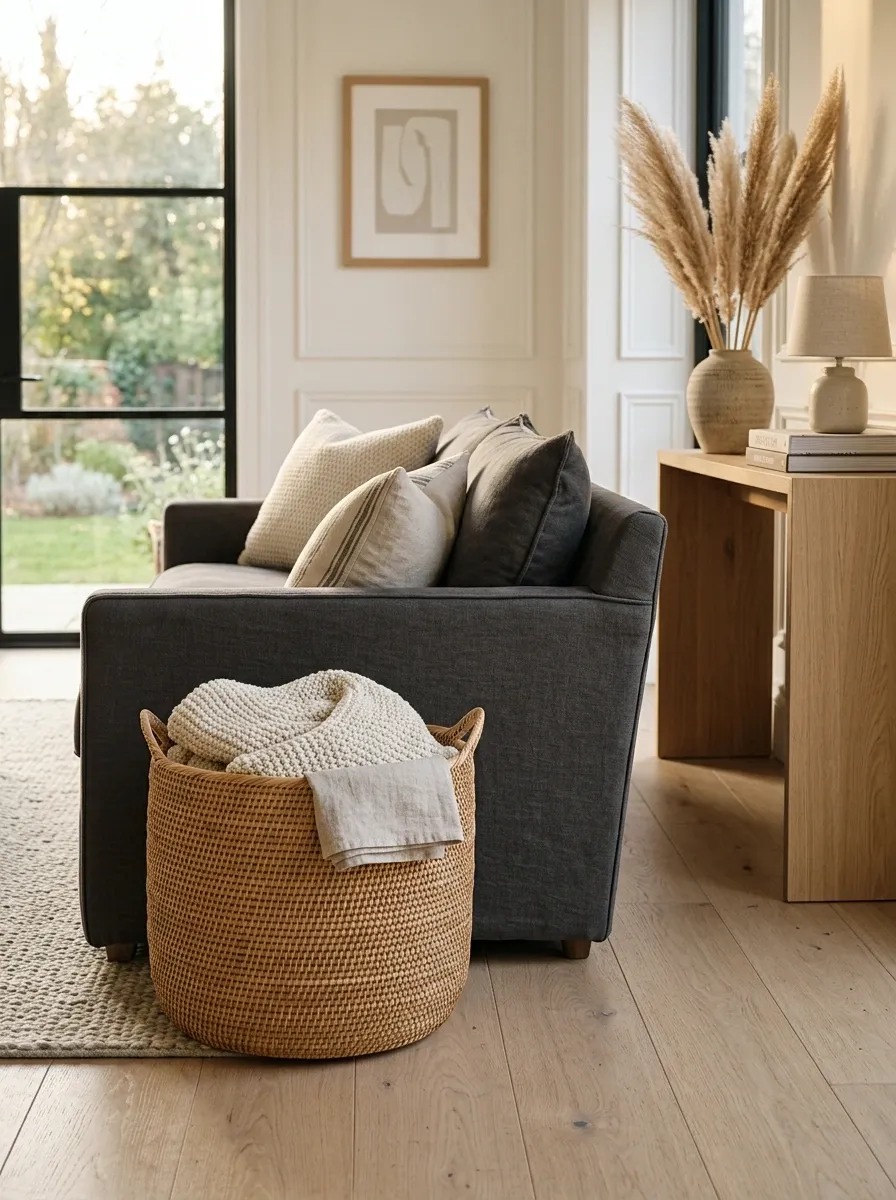
A basket can solve an empty floor area while quietly handling the things that don’t belong in plain sight.
Place one beside a sofa for blankets, near the entry for shoes or bags, beside a console for everyday items, or next to a reading chair for throws.
The basket should sit close enough to furniture that it feels connected to the arrangement.
Keep the top partially visible. A basket stuffed beyond its rim loses the clean shape that makes it decorative.
Create a Tiny Reading Nook From Things Already in the Room
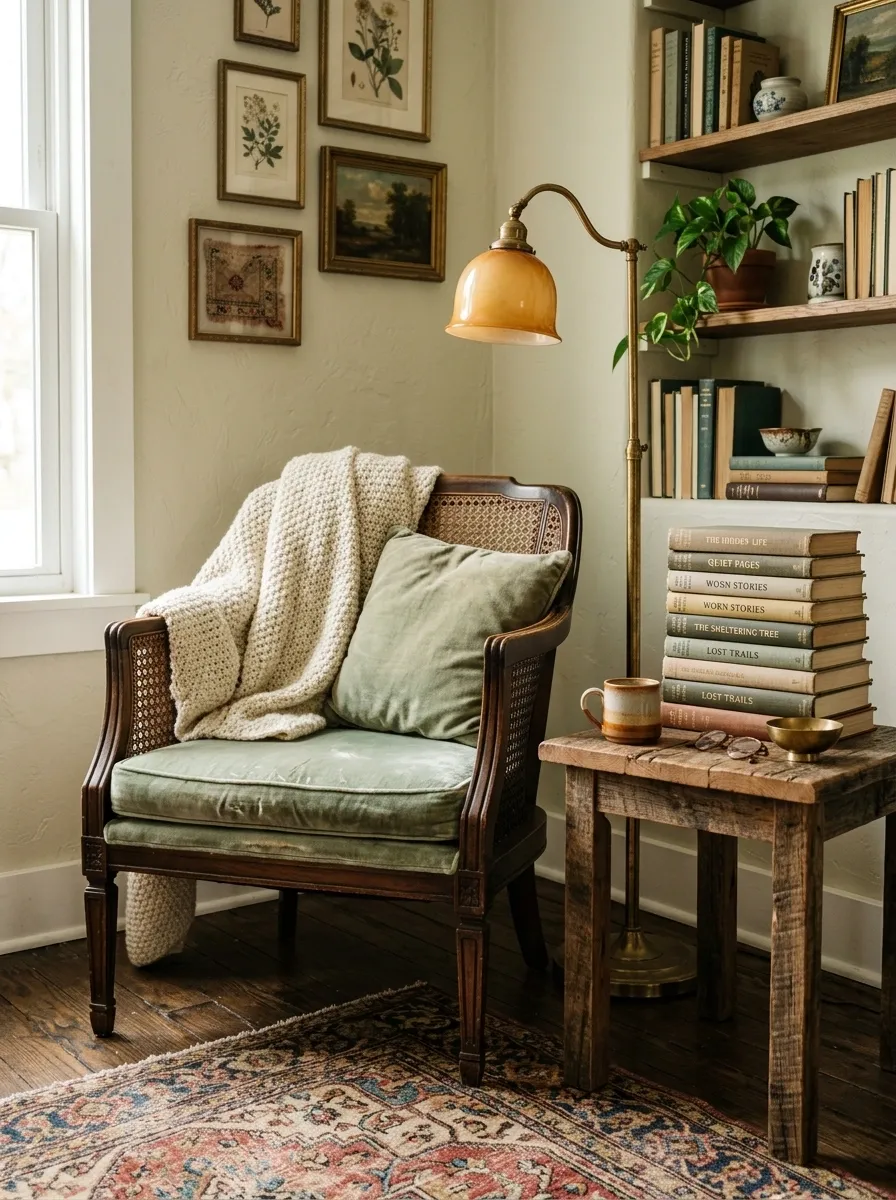
A reading nook doesn’t require matching furniture.
A chair, nearby lamp, small table, cushion, and a few books can create a complete little destination. The magic comes from keeping those pieces close enough to read as one group.
Place the lamp within easy reach of the chair. Put the books on the table or underneath it. Add one soft layer and stop.
The formula is simple:
seat + light + surface + something to read
Turn an Oversized Basket or Pot Into an Entry Anchor
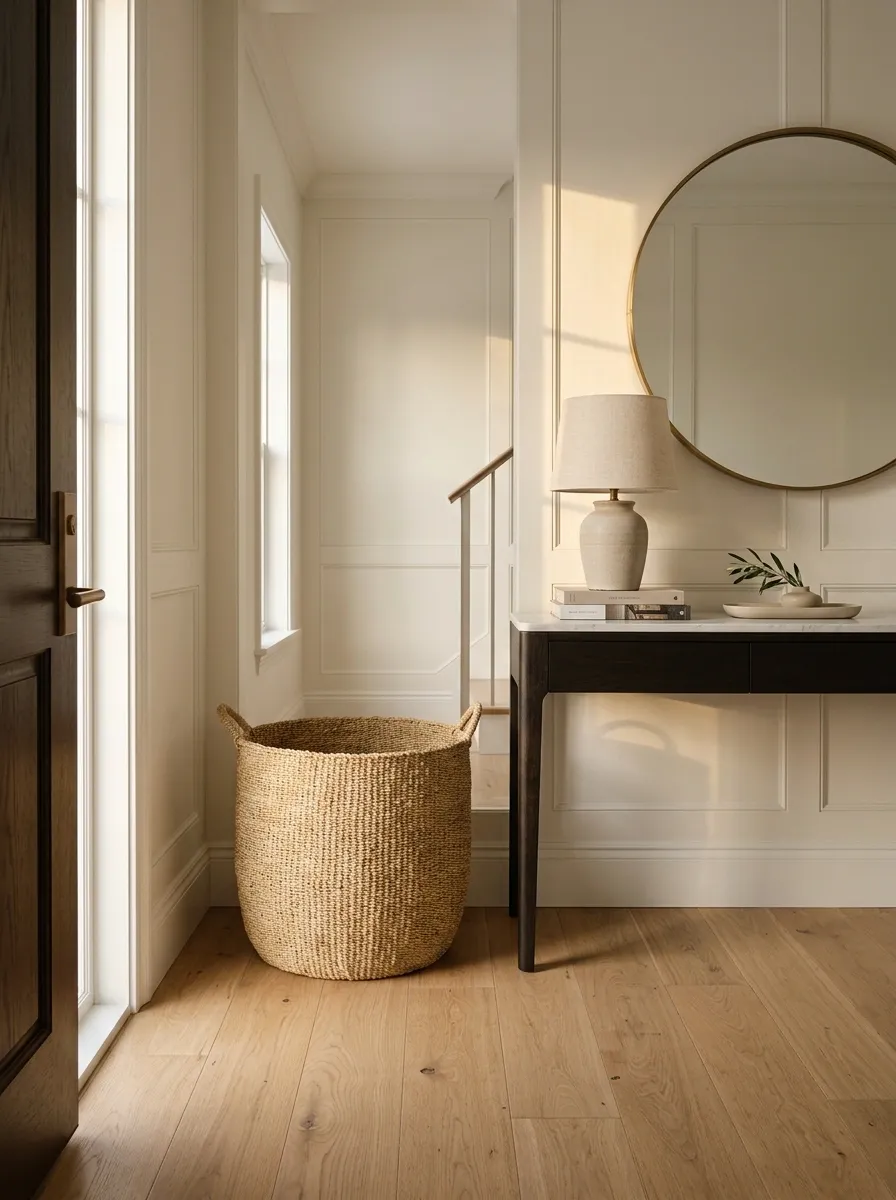
Entryways often end up with a strange strip of unused floor beside a console or door.
That’s where an oversized basket, planter, or large vessel earns its keep. It gives the empty area visual weight without forcing another piece of furniture into the walkway.
Keep the object simple. A large shape is already enough.
Best placement: beside the console, slightly away from the door swing, with nothing tiny scattered around it.
Turn a Dull Hallway Into a Mini Gallery With Existing Frames
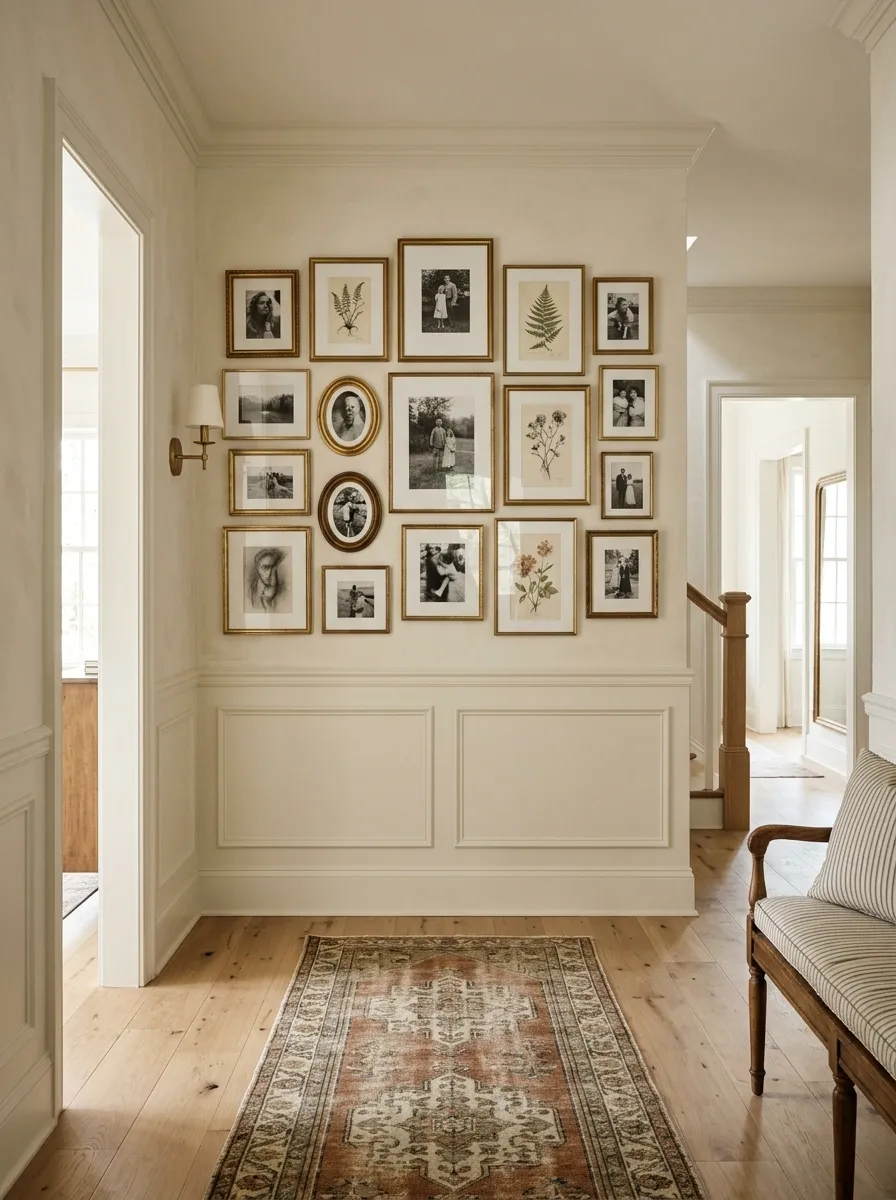
A hallway doesn’t need a collection of expensive art to feel finished.
Gather frames already hanging in other rooms or stored away, then build a small gallery along the hallway. Mix sizes, but repeat one element such as frame color, subject, or mat tone.
Don’t spread the frames randomly from one end of the hall to the other.
Choose one defined section. A compact arrangement has more impact than a few lonely frames scattered across a long wall.
Use a Lamp as Decor Even When It Isn’t Turned On
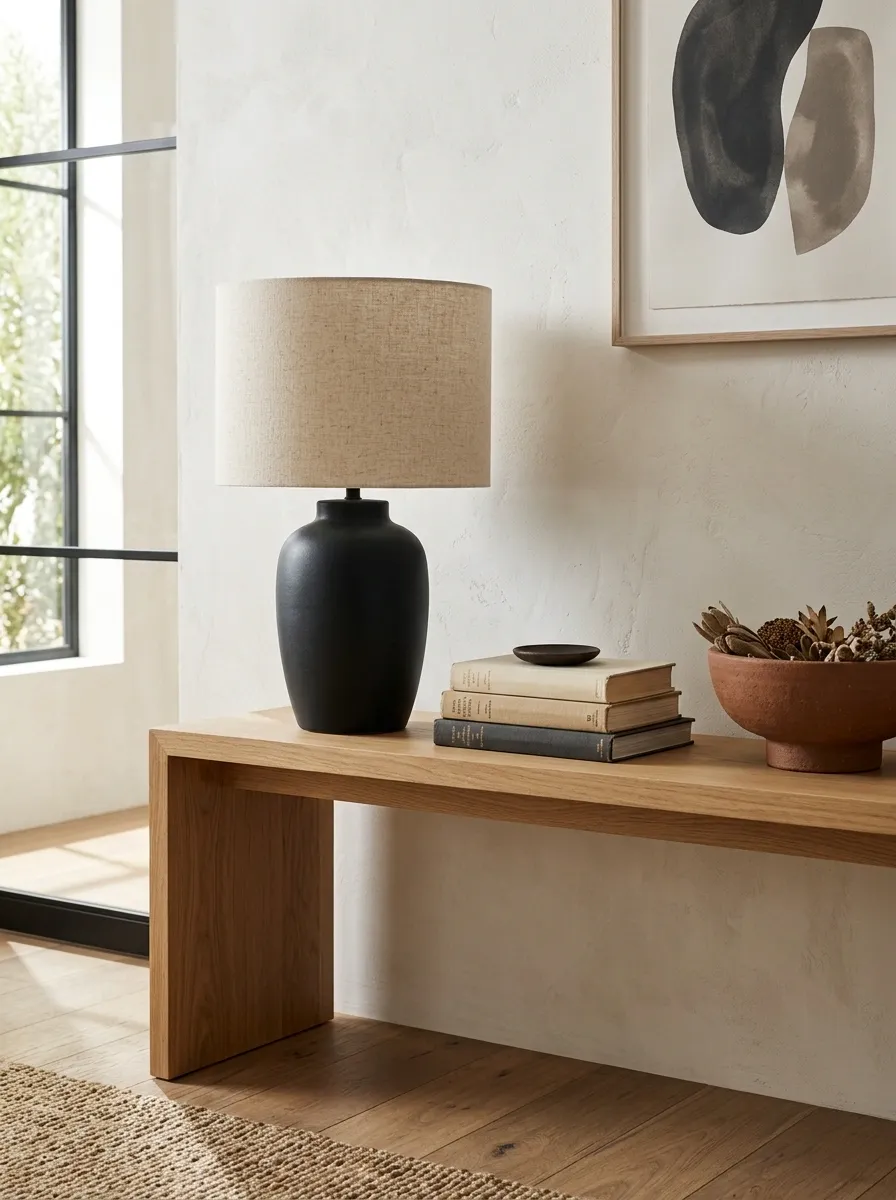
A lamp has two jobs: lighting and shape.
That makes it especially useful on surfaces that need height. Move an existing lamp onto a console, sideboard, desk, or dresser and let its silhouette become the anchor.
Then keep everything around it low.
The visual order should read: lamp first, supporting objects second.
A lamp with a wide shade needs even more breathing room. Don’t crowd its sides with framed photos or tall vases that compete with the shape.
The Best Decor Move Is Often the One That Removes Something
The biggest improvement doesn’t always come from finding another object to display. Sometimes it’s one final edit.
Pull a few pieces together. Move one oversized item to the floor. Let a useful object become visible. Give a strong shape more empty space. Then stop.
A room starts looking intentional when every piece has a reason to be where it is. That doesn’t mean everything needs to match or that every corner needs styling. It means the eye can understand the arrangement without fighting through clutter.
The next time a room feels tired, skip the shopping list first. Open the cabinets, walk through the other rooms, and look at the things already sitting there differently.
Save this list for the next time a room needs a refresh without bringing home another bag of decor.