
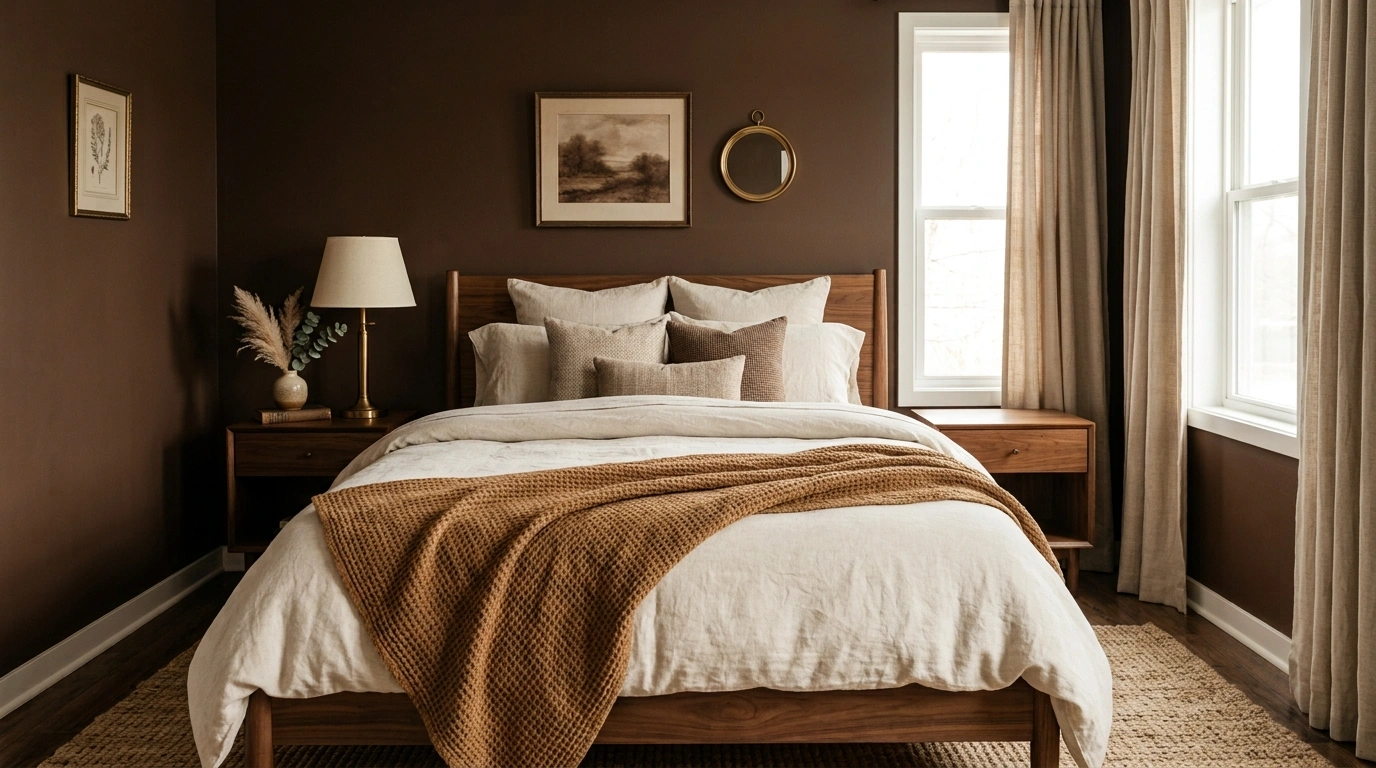
Brown bedrooms can look incredible, but they can also go wrong fast. The difference usually comes down to what surrounds the brown.
A room filled with dark walls, dark bedding, dark furniture, and weak lighting doesn’t feel rich. It feels weighed down. Brown needs contrast, texture, and a few lighter surfaces to show its best side.
The good news is that you don’t need to redesign the whole bedroom to get there. A cream duvet can change a dark wall. A walnut nightstand can give a pale room more depth. A single sage green chair can make brown feel fresher without changing the entire palette
Why Brown Bedrooms Look Rich Instead of Dull
Brown Needs a Clear Light Balance
Deep brown absorbs visual weight, so a room needs lighter surfaces to keep that weight under control. Cream bedding, warm white curtains, pale oak, and even a light rug can give dark brown something to contrast with.
Natural daylight matters too. A brown room with good morning light feels completely different from the same palette in a dim room.
The easiest rule is simple: don’t let every large surface compete at the same dark level.
The Best Brown Combinations Aren’t All Brown
Brown works best when another color gives it direction. Sage green makes it feel earthy. Clay and rust make it warmer. Dusty blue pulls it in a calmer, cooler direction. Cream keeps the whole room relaxed.
You don’t need five accent colors.
Choose one supporting color, then repeat it in two or three places so the room feels intentional rather than decorated piece by piece.
Texture Matters More Than Another Decoration
A brown bedroom gets boring when everything is smooth.
Add a nubby throw, washed linen, visible wood grain, a woven basket, or a boucle bench. Those surfaces catch light differently, which gives the room depth without adding clutter.
Before buying another little accessory, look at the materials already in the room. One strong texture usually does more than three small decorations.
Brown Bedroom Ideas
Frame the Bed With Vertical Wood Panels
A feature wall made of dark vertical wood panels creates instant architectural interest and brings a sophisticated hotel vibe to the bedroom.
Keep the surrounding decor minimal so the texture of the wood stands out as the main event. Pair the dark panels with soft, low-profile upholstered furniture to balance out the rigid lines of the woodwork.
Accent the space with warm hanging pendant lights or recessed spotlights to cast a gentle glow across the wood grain and add depth at night.
Paint the Walls a Deep Cocoa Brown
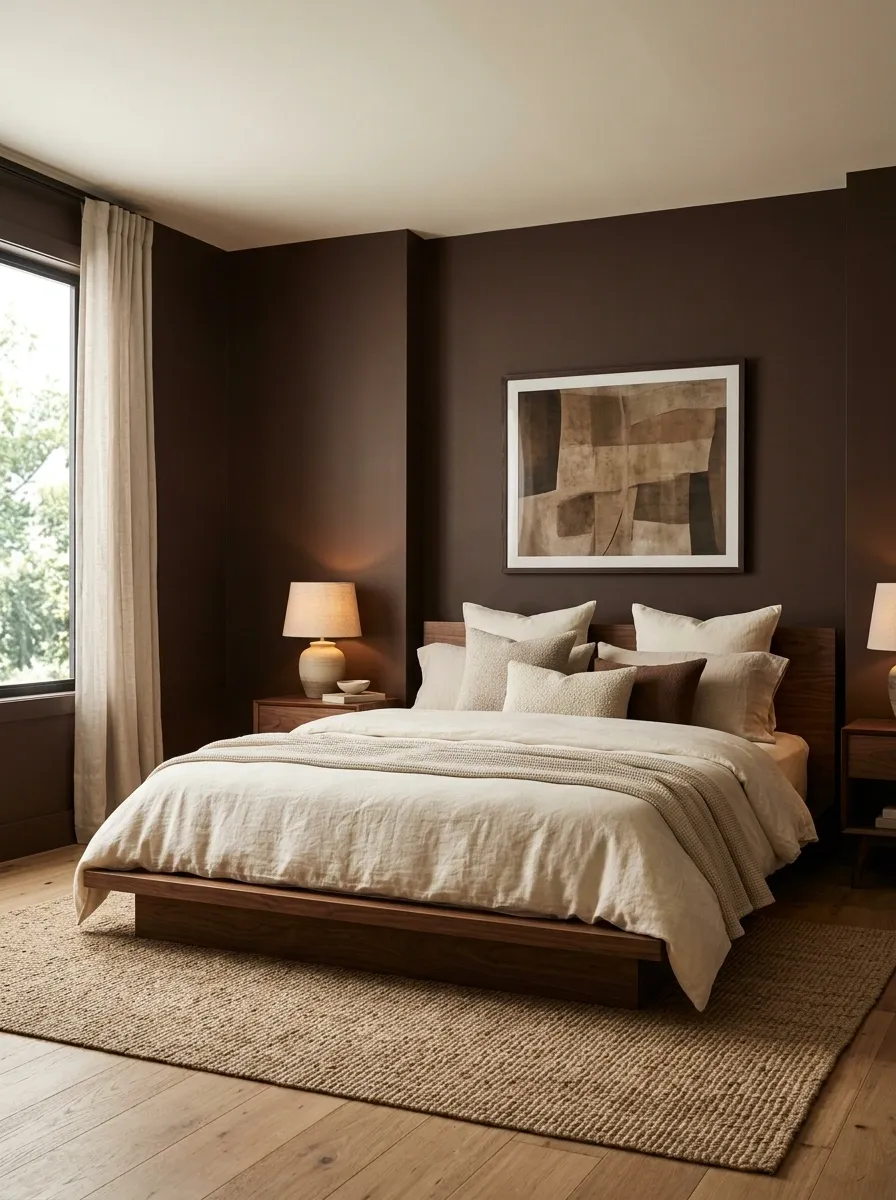
The quickest way to make brown feel intentional is to give the walls a rich, even color.
Choose a deep cocoa or chocolate tone rather than a muddy gray-brown. Keep the ceiling lighter and bring in warm cream bedding so the walls feel dramatic without swallowing the room.
This works especially well when the room has decent natural light. At night, use warm lamps instead of a single harsh ceiling fixture.
Room formula: dark walls, light bedding, medium wood, soft lighting.
Layer Rich Textures for Ultimate Cosiness
Drenching a bedroom in chocolate tones works best when you mix various textiles to prevent the space from looking flat or overly heavy.
Combine crisp linen blackout drapes with a 100 percent cotton duvet cover and a chunky cream throw blanket draped casually across the foot of the bed. Ground the entire setup with a vintage-style area rug that softens the dark wood floors.
Introduce subtle contrast through natural wood nightstands and warm ceramic vases to complete the cocoon-like atmosphere without sacrificing brightness.
Keep the Bedding Cream to Break Up Dark Brown
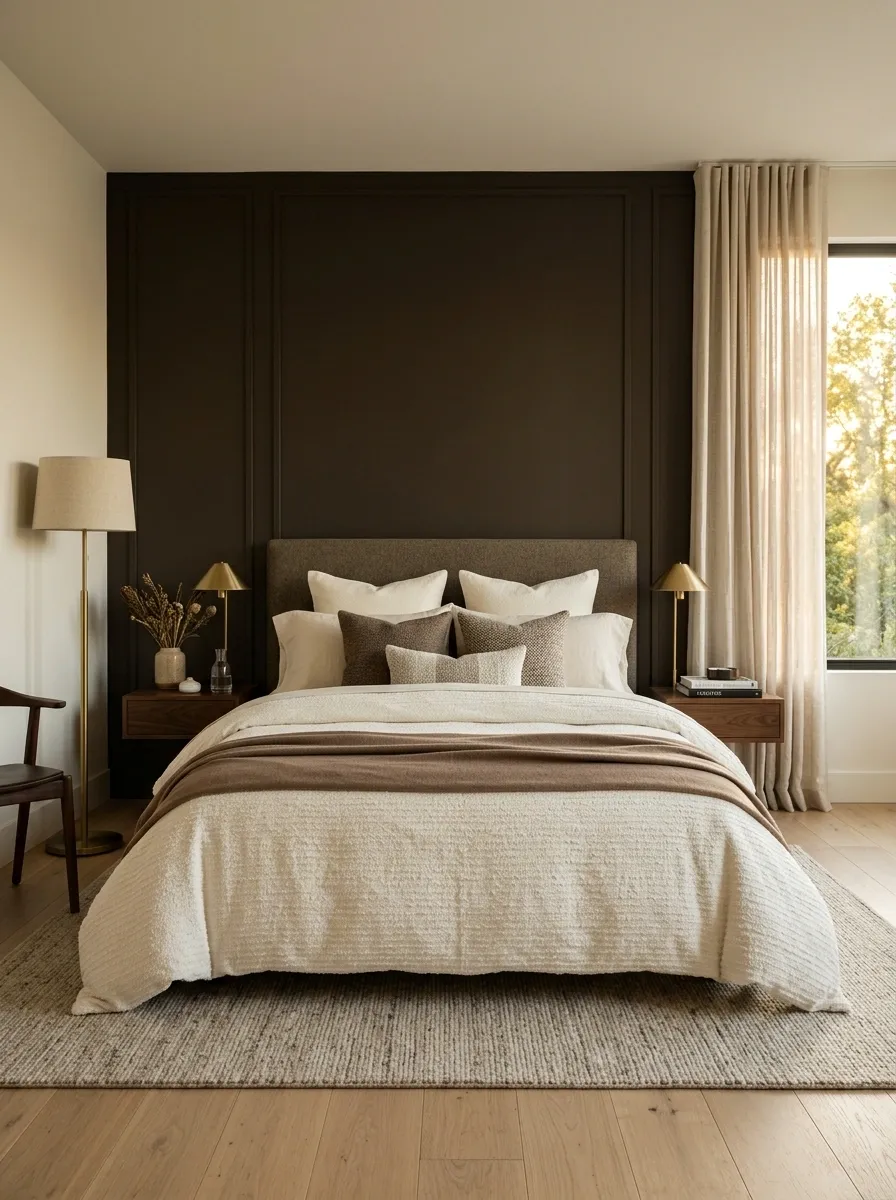
A dark room needs somewhere for the eye to rest, and the bed is the easiest place to create it.
Use cream sheets, an ivory duvet, and one medium-brown throw folded near the foot. Keep the pillows simple rather than filling the headboard with ten different shapes.
This also makes changing the season easy. The brown stays put while the bedding can shift lighter or heavier.
Use this checklist before styling the bed:
- Cream base layers
- One brown throw
- Two restrained accent pillows
- One textured material
Anchor the Room With Dark Wood Finishes
Embracing deep espresso and charcoal tones on the walls creates a dramatic backdrop that instantly makes a bedroom feel finished and intimate.
Install sleek vertical paneling behind the bed to draw the eye upward and give the room a taller, more expansive feel. Balance the dark walls with crisp white sheets and a plush, dark brown velvet duvet for a high-end layered effect.
Finish the space with soft textural bedside pendant lighting and a light neutral area rug to keep the dark floors feeling grounded and inviting.
Pair Chocolate Brown With Warm White Trim
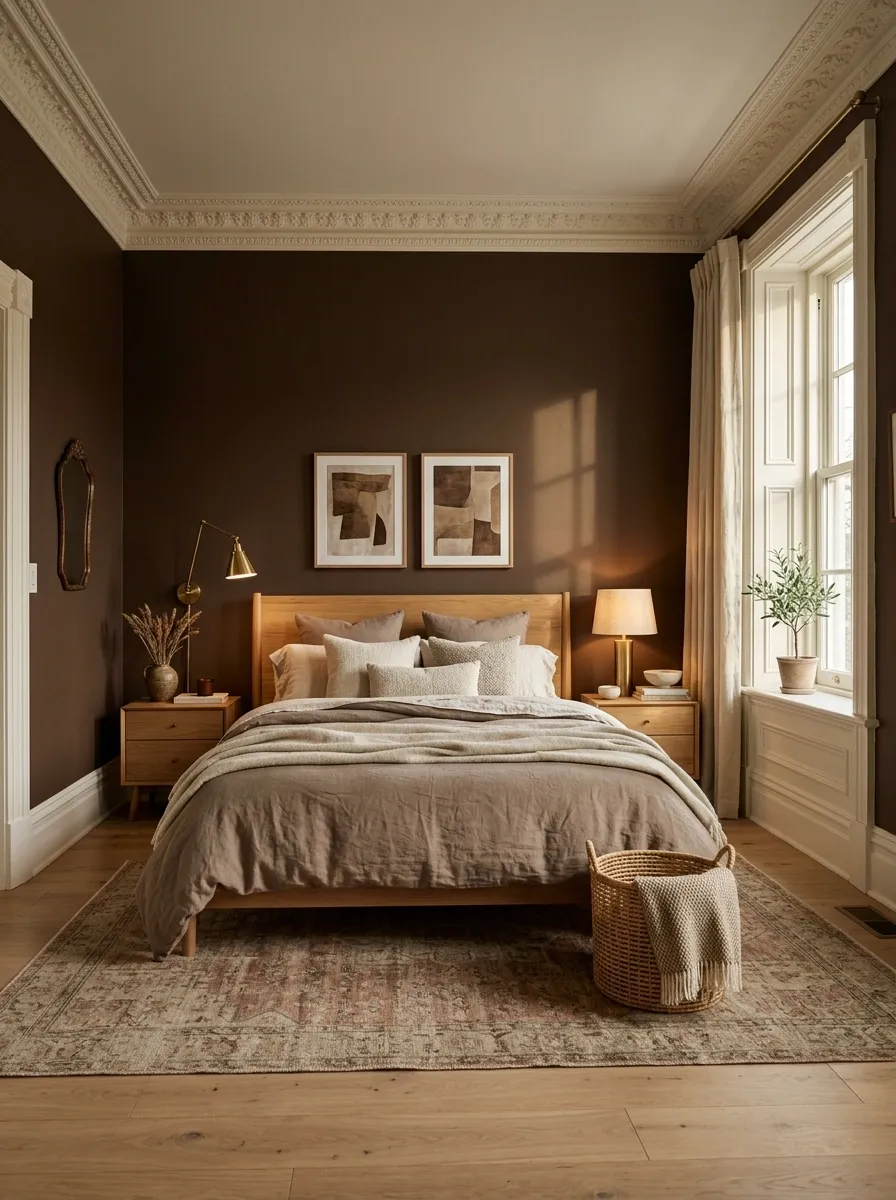
Chocolate brown becomes sharper when the trim is clearly lighter.
Paint the walls brown, then keep the baseboards, door trim, and ceiling in a warm white rather than a stark blue-white. That small difference makes the architecture easier to see and stops the color from feeling boxed in.
This pairing is especially strong in older homes with detailed molding. Let the trim do some of the decorating.
Best contrast: deep brown walls + creamy white trim + natural wood accents.
Use Walnut Furniture Against Lighter Brown Walls
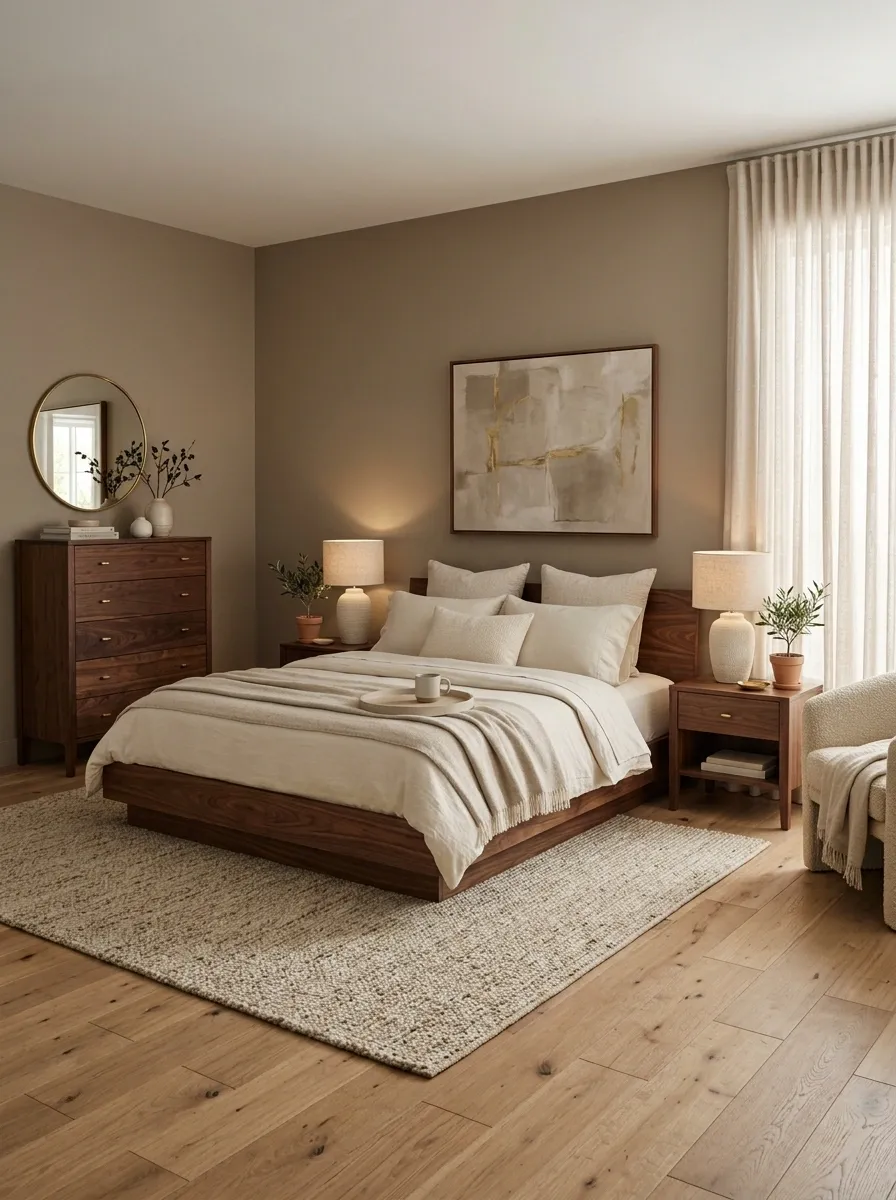
Not every brown bedroom needs dark walls. Sometimes the furniture should carry the deeper tone instead.
Try warm beige or muted taupe walls with a walnut bed, dresser, or nightstands. The darker wood gives the room structure while the lighter background keeps it open.
Set one walnut piece beside something lighter, such as a cream lamp or pale bedding. That contrast keeps the wood from blending into one heavy block.
Quick setup:
- Keep the walls light.
- Choose one consistent walnut finish.
- Repeat that wood tone in only a few places.
- Let lighter textiles fill the remaining visual space.
- Start with a light wall color.
- Choose one walnut anchor piece.
- Repeat the finish on one smaller item.
- Keep textiles noticeably lighter than the wood.
Build the Room Around a Brown Upholstered Bed
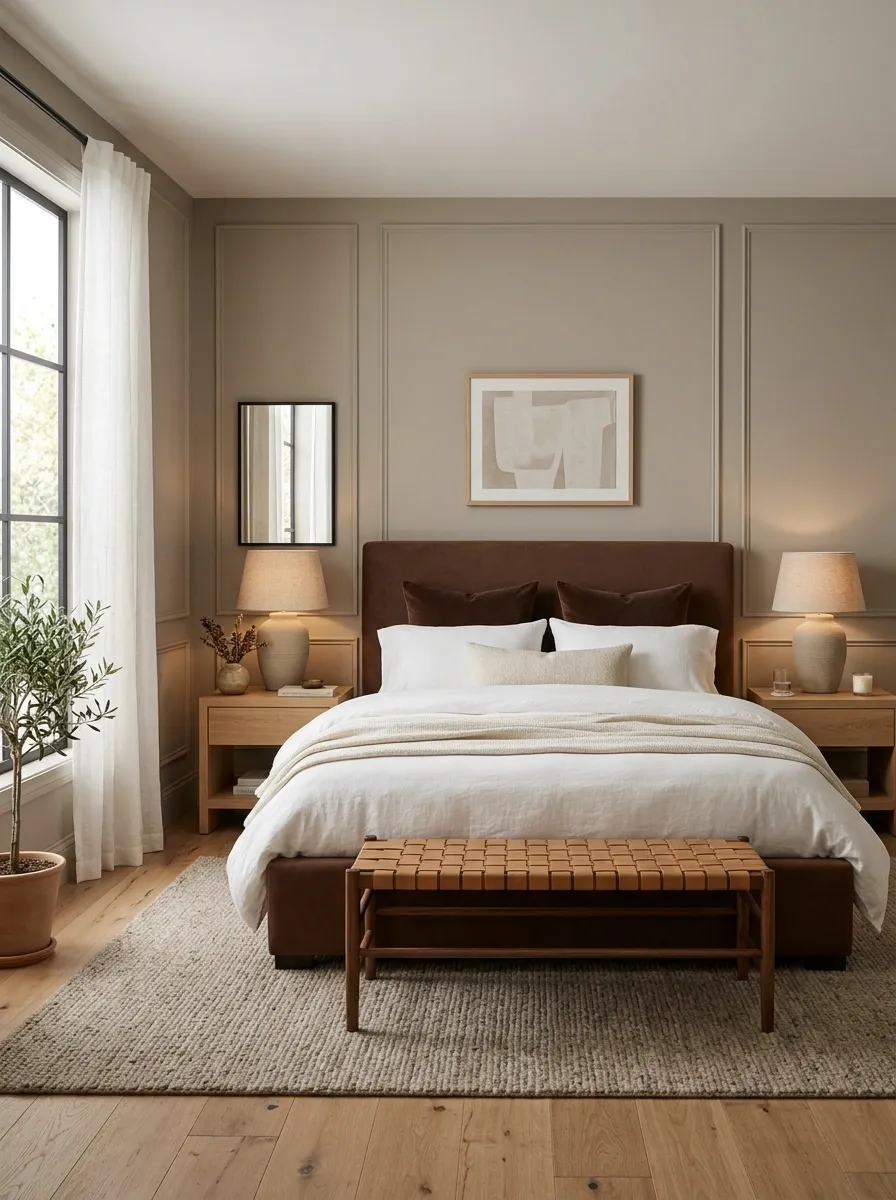
A brown upholstered bed gives you a built-in focal point, so you don’t need to decorate every wall.
Choose a warm chocolate, camel, or medium mocha fabric with a simple silhouette. Then let the rest of the room stay quieter. A low bench, linen bedding, and two substantial lamps are enough.
This approach works particularly well when the room already has busy flooring or architectural details. The bed creates one clear visual destination instead of competing with everything else.
Let the bed lead: keep the nightstands simple, the bedding lighter, and the wall behind it relatively calm.
Add Sage Green Instead of More Neutrals
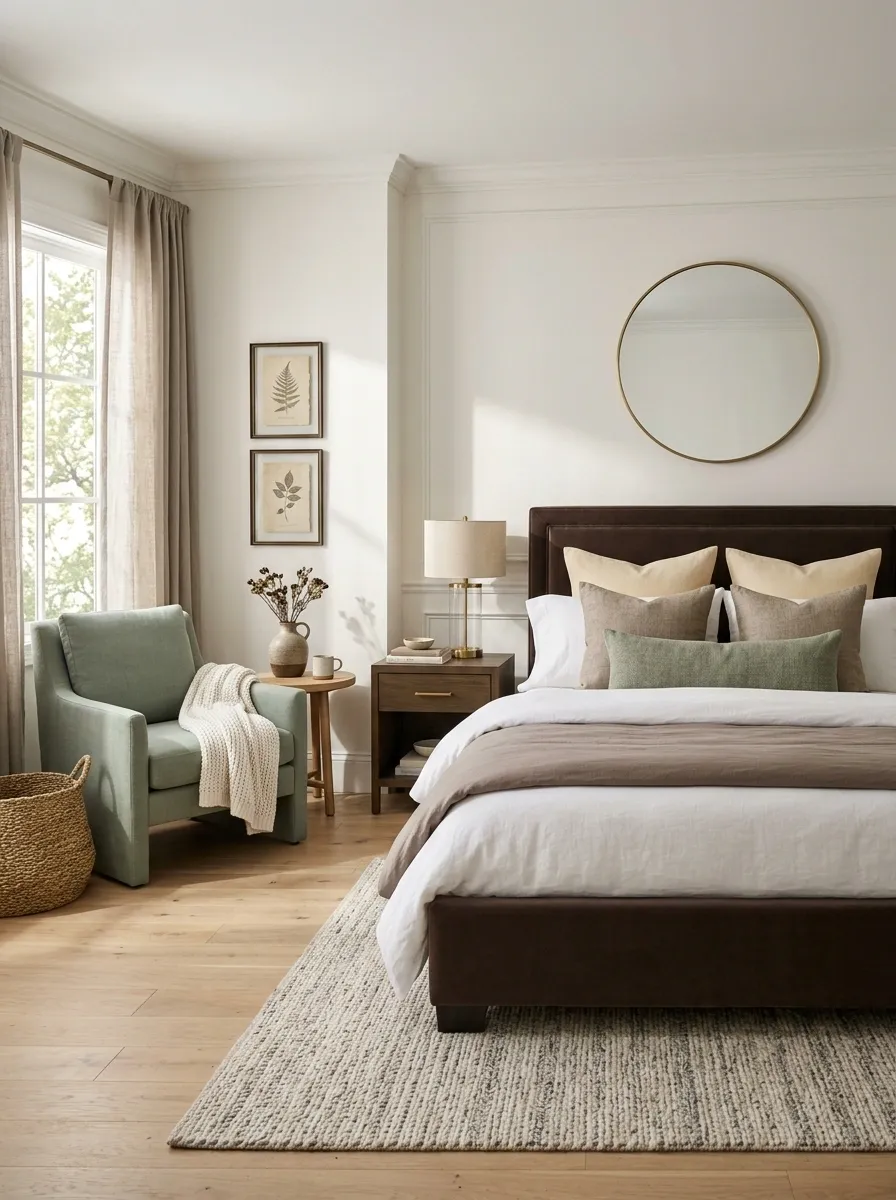
Brown doesn’t need another beige companion. Sage green gives it enough contrast to keep the room feeling fresh.
Use sage on one upholstered chair, a lumbar pillow, or a pair of small botanical prints. Keep the green muted. Bright green will fight the warmth of the brown.
A useful rule: repeat the sage in at least two places so it looks planned rather than accidental.
Place the green in two or three intentional spots instead of sprinkling tiny green accessories all over the room.
Choose Rust and Clay for a Warmer Brown Bedroom
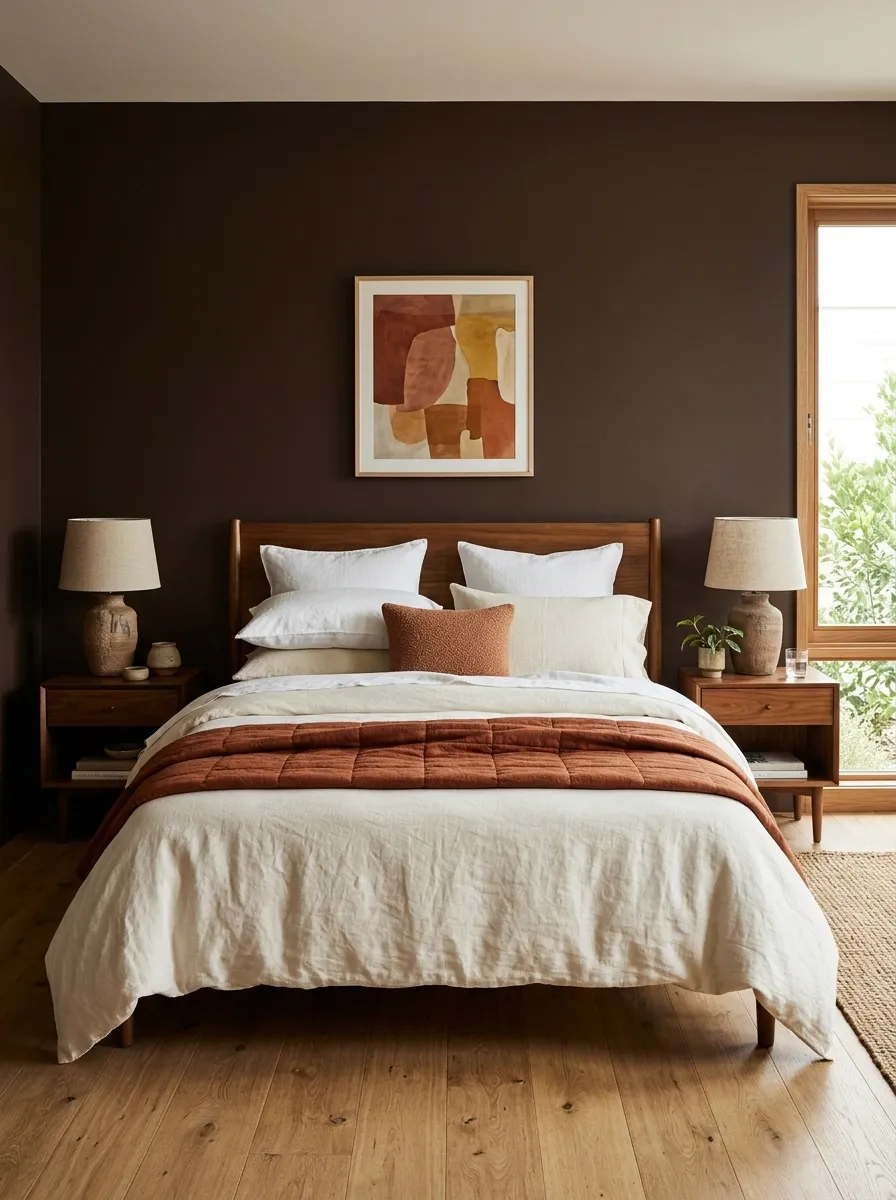
Want the room to feel warmer without adding more brown? Bring in burnt rust and terracotta.
These colors work especially well with chocolate walls, walnut furniture, and cream bedding. Use them in a quilt, ceramic lamp, small cushion, or artwork instead of making them the main color.
The result feels collected rather than color-matched.
Best pairing: chocolate brown + clay + cream + natural wood.
Layer Three Different Brown Textures
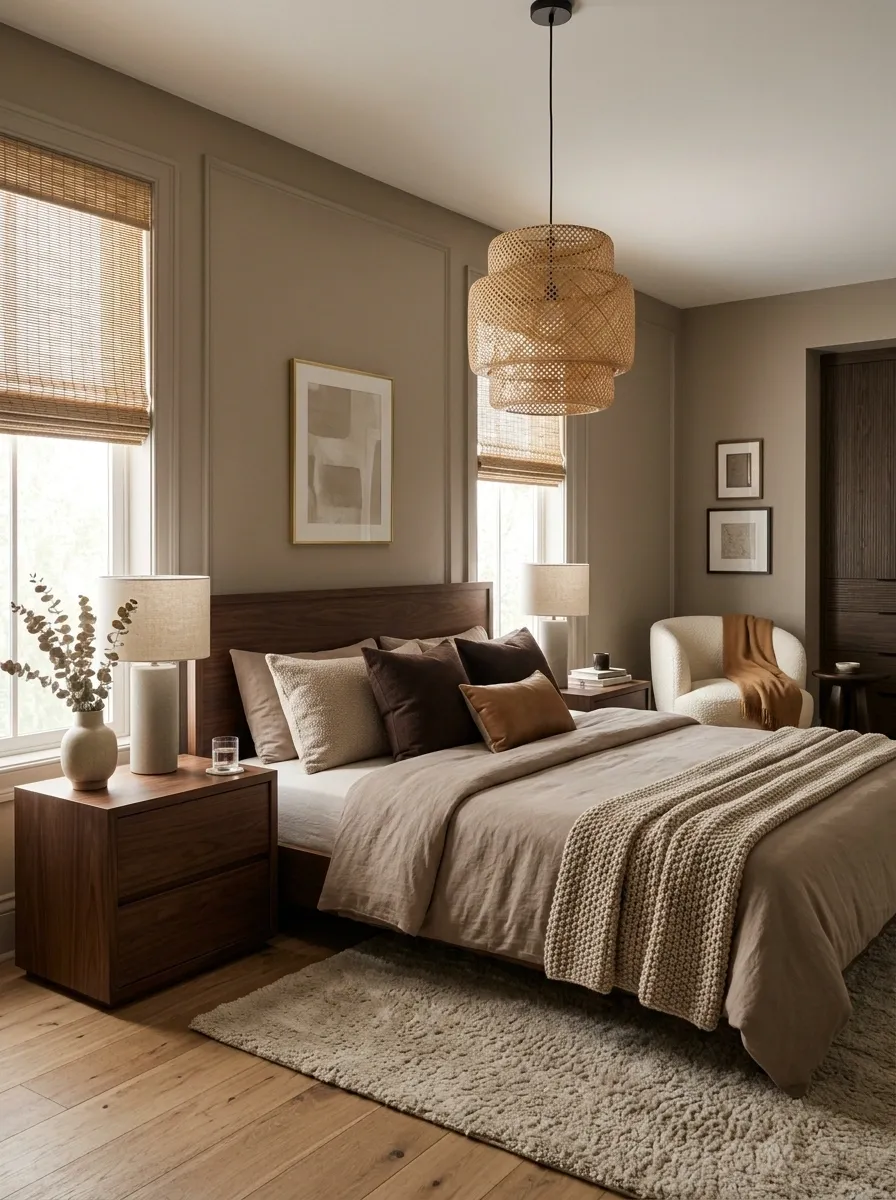
Using three shades of brown isn’t enough if every surface feels the same.
Mix a smooth wood nightstand with nubby upholstery and washed cotton bedding. Add one woven detail, such as a basket or roman shade, and stop there.
Texture checklist:
- Smooth walnut or oak
- Nubby upholstery
- Washed linen or cotton
- One woven material
The eye should notice different surfaces before it notices more stuff.
Visible grain
Subtle texture
Washed fabric
One natural detail
Use Brown Bedding With Pale Wood Furniture
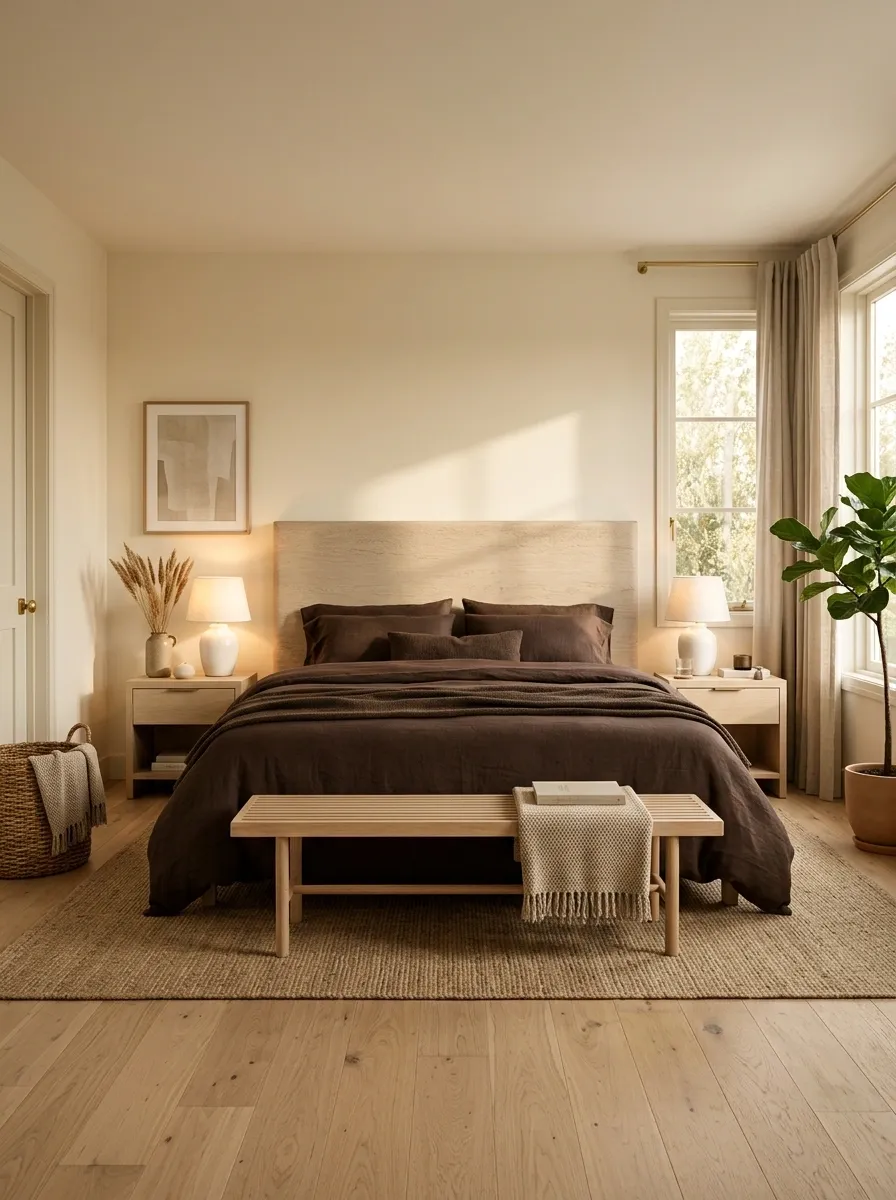
Dark brown bedding can look sophisticated, but it needs a lighter material nearby.
Pair chocolate sheets or a duvet with pale oak nightstands, a light wood bench, or a soft timber headboard. The contrast stops the bed from becoming a dark visual block.
Keep the wall behind it fairly quiet. You don’t need a dark accent wall fighting for attention.
The winning mix: dark textile + pale wood + cream wall + warm metal.
Make a Small Bedroom Feel Lighter With Brown
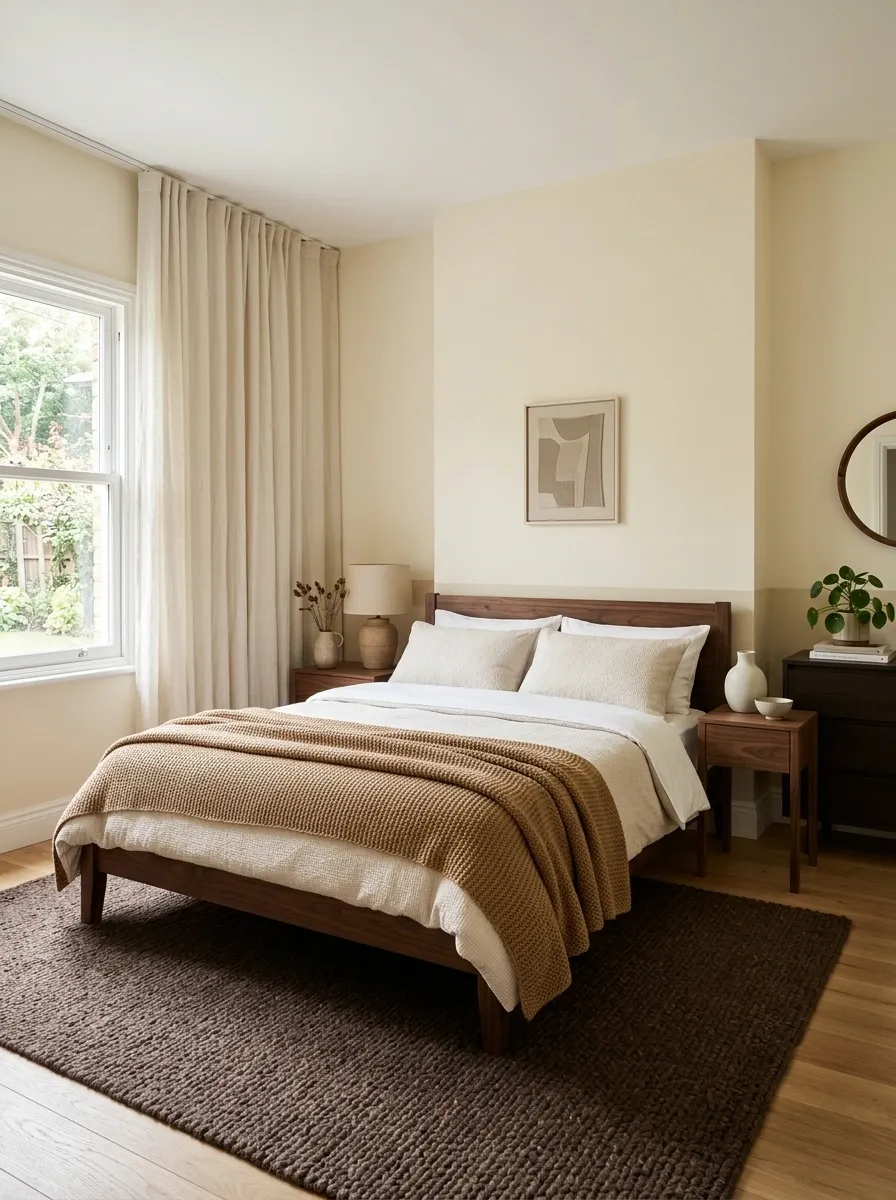
A small bedroom doesn’t need to avoid brown. It needs the right placement.
Keep deep brown below eye level with a wooden bed, bedside tables, or low dresser. Use lighter walls and curtains above that line. Then add one substantial brown textile to connect the lower half of the room.
This creates depth without making the ceiling feel lower.
For a compact room, keep these three surfaces light:
- Ceiling
- Window treatments
- Largest visible wall
Add Black Lighting for a Sharper Look
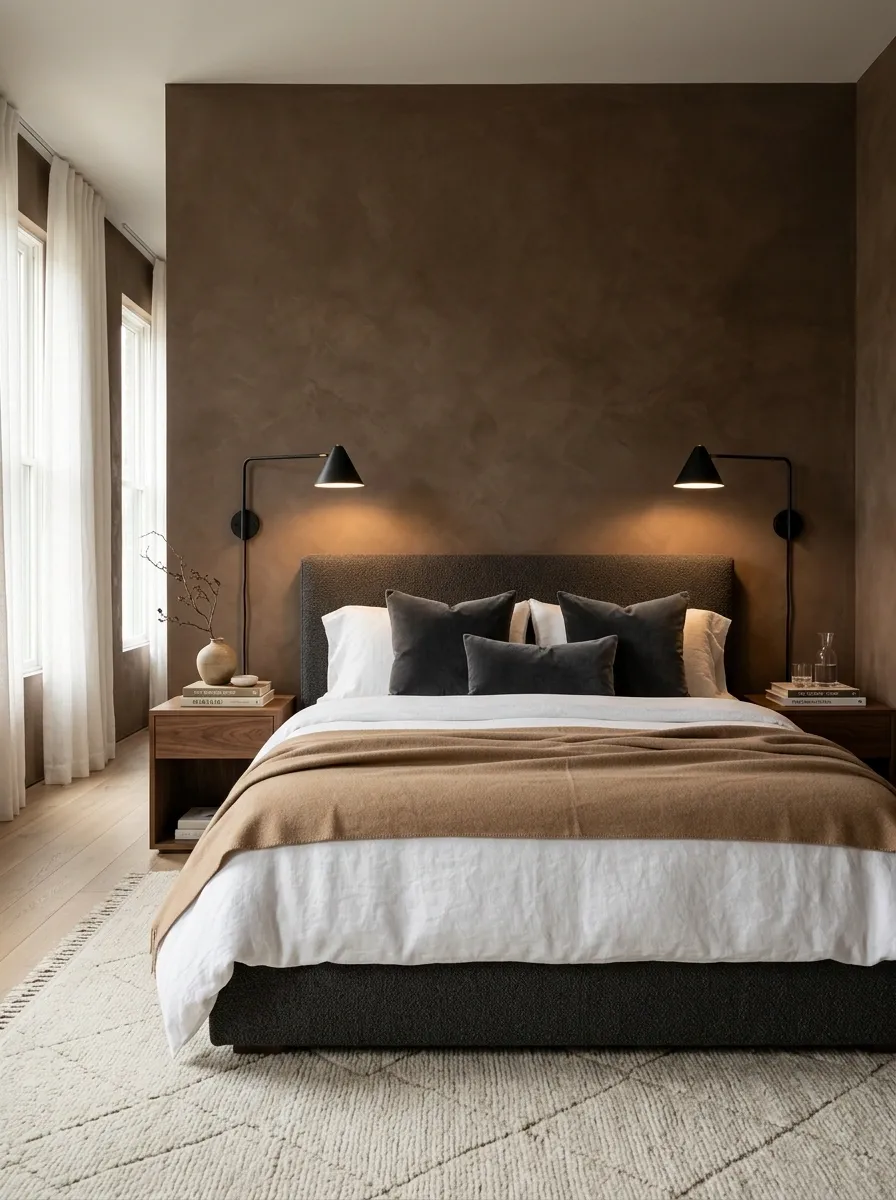
Brown can lean soft and traditional, so black lighting gives it a cleaner edge.
Choose a black metal pendant, reading lamp, or pair of bedside sconces. Keep the shape simple. Thin frames and compact shades work better than bulky fixtures that compete with the bed.
The trick is using black as punctuation, not as another dominant color.
Use Chocolate Brown Only Behind the Bed
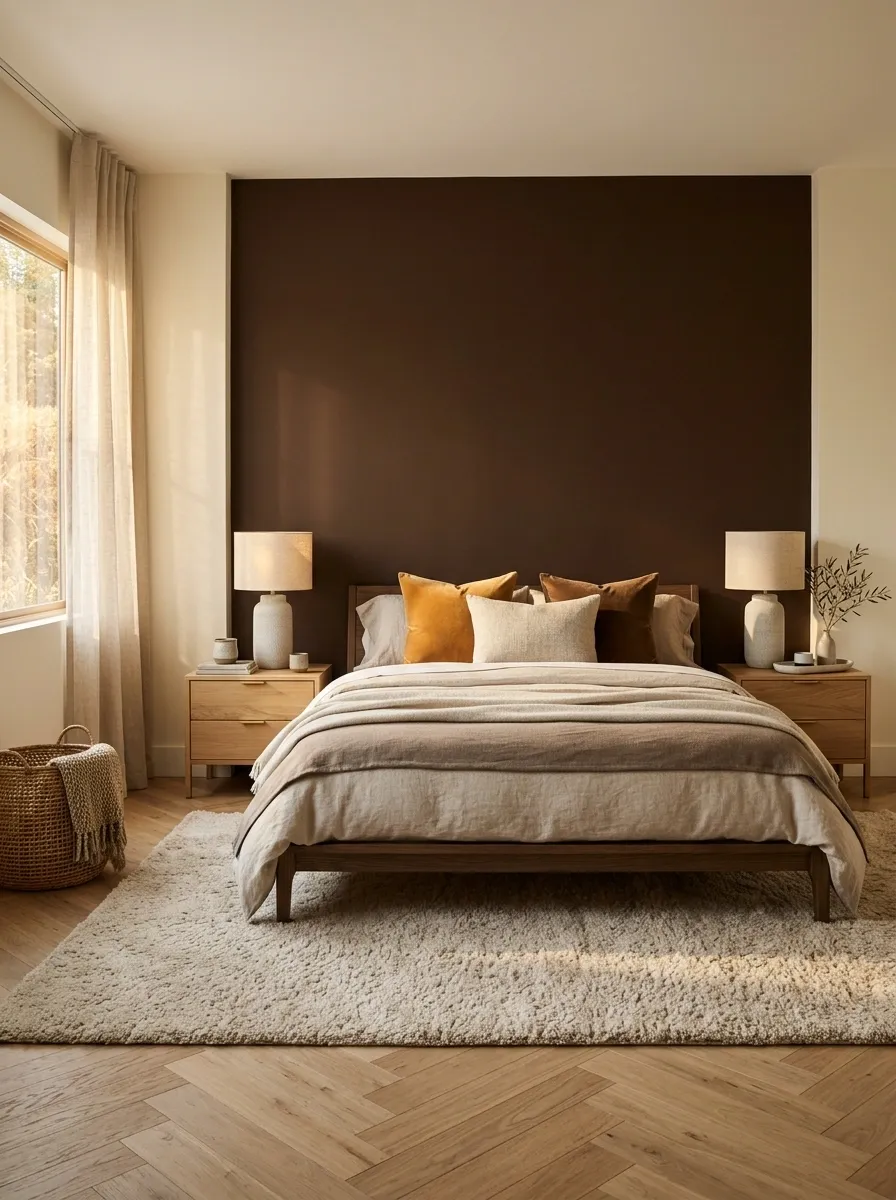
You don’t need to paint the entire room dark.
A single chocolate wall behind the bed creates the depth you’re after while the other walls keep the room brighter. This works especially well in apartments, smaller bedrooms, and rooms with limited natural light.
Choose the wall with the bed as the focal point. Leave doors, windows, and awkward architectural breaks in the lighter color.
Simple rule: one dark wall, three quieter walls.
Try Brown and Dusty Blue for a Cooler Bedroom
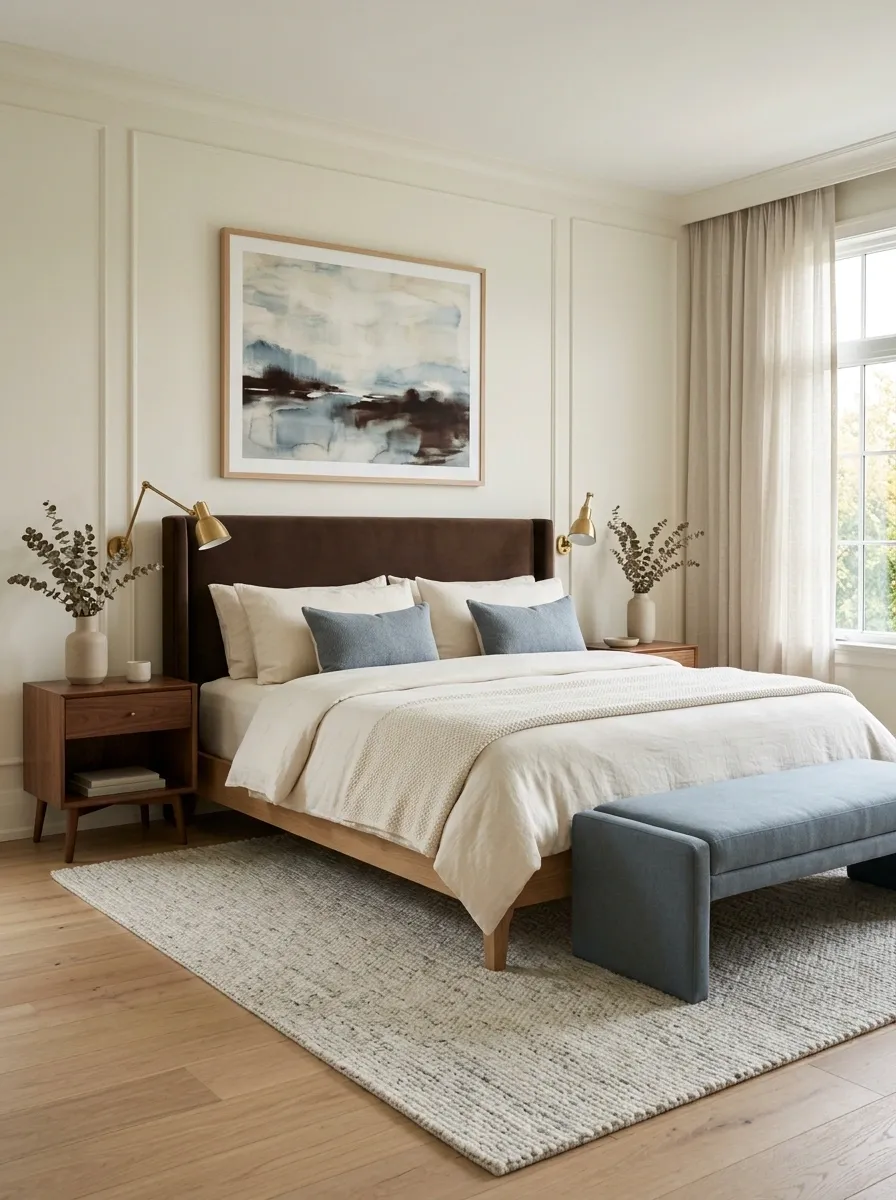
Brown doesn’t always have to read warm and earthy.
Dusty blue gives chocolate and walnut tones a cooler counterpoint, which is useful when you want the bedroom to feel calm rather than rustic. Try dusty blue pillowcases, artwork, a bench cushion, or a small upholstered piece.
Keep the blue muted and gray-based. Strong royal or electric blues will overpower the softness of the brown.
Ground the Room With a Large Brown Rug
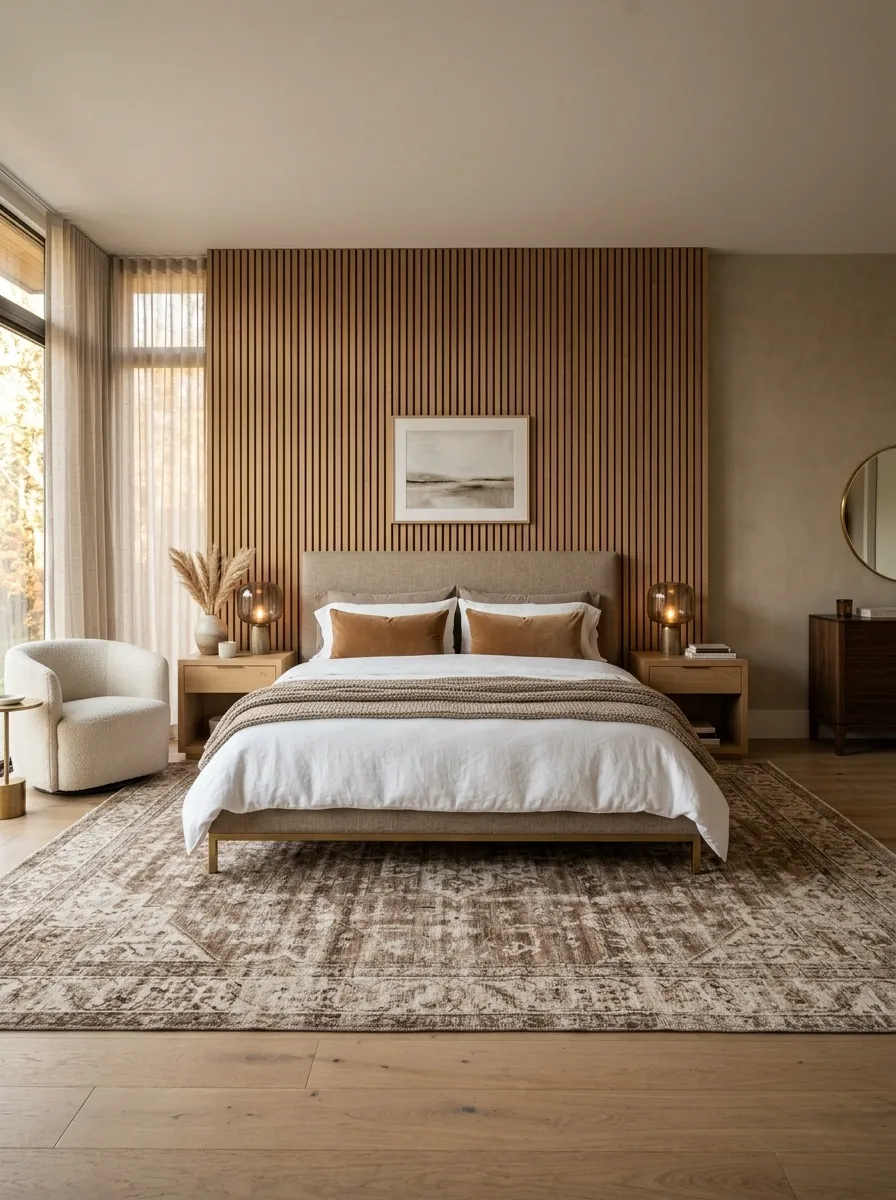
A brown rug should connect the furniture, not sit like a small island in the center of the floor.
Choose a size that extends under the bed and reaches far enough toward the nightstands or lower seating area. A faded brown pattern is especially useful because it adds depth without creating a hard block of dark color.
Don’t use a tiny rug just because it’s easier to fit. It will make the bed and furniture feel disconnected.
Placement guide:
- Center the rug with the bed.
- Let it extend beyond both sides.
- Keep enough visible rug at the foot to frame the bed.
- Center it with the bed instead of the room’s doorway.
- Extend it beyond both sides of the bed so the furniture feels connected.
- Carry it forward far enough to create a soft landing at the foot of the bed.
Mix Brown With Natural Woven Details
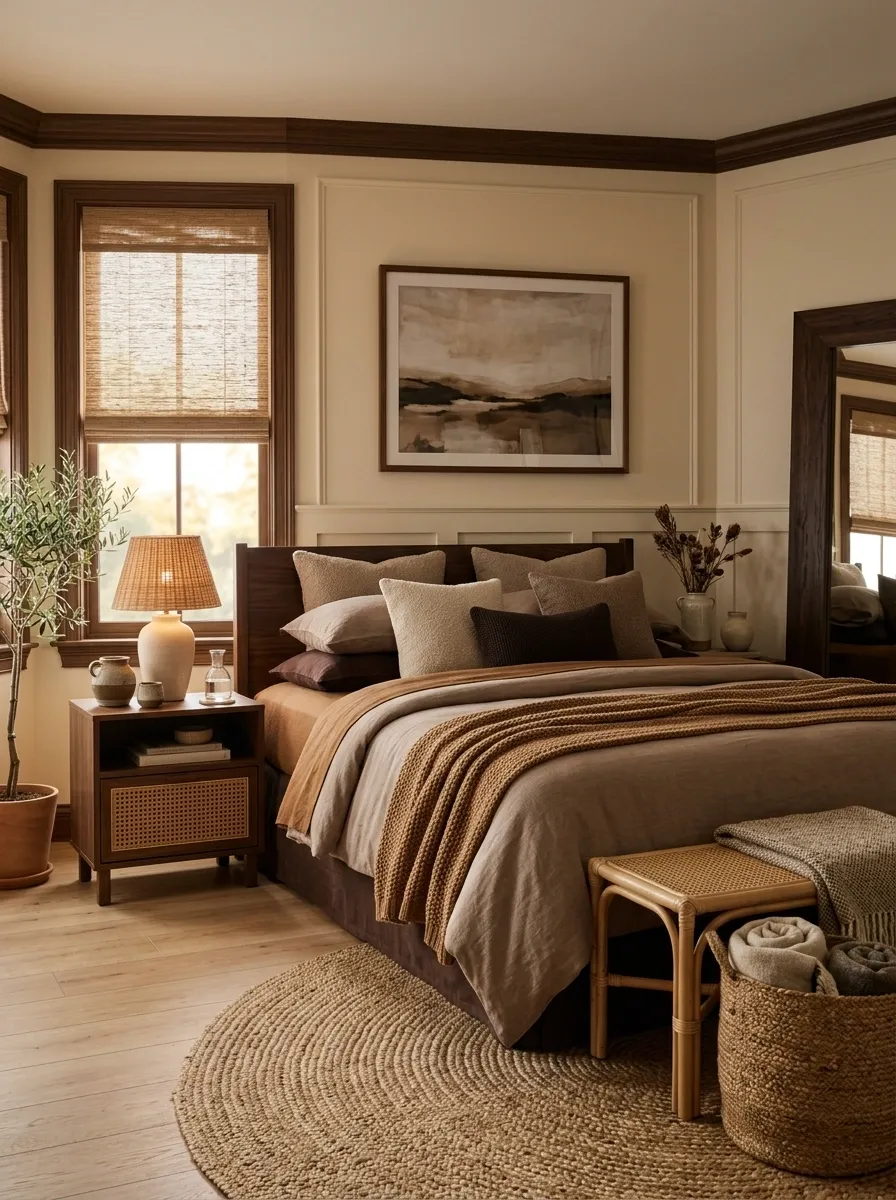
Brown already has a natural connection to wood, so woven materials make the palette feel richer without adding another strong color.
Bring in a rattan bench, woven lamp shade, jute basket, cane-front nightstand, or textured window shade. You don’t need all of them. One or two are enough.
The best brown rooms don’t rely on matching furniture. They rely on materials that feel like they belong together.
Choose Tan Curtains Instead of Heavy Brown Drapes
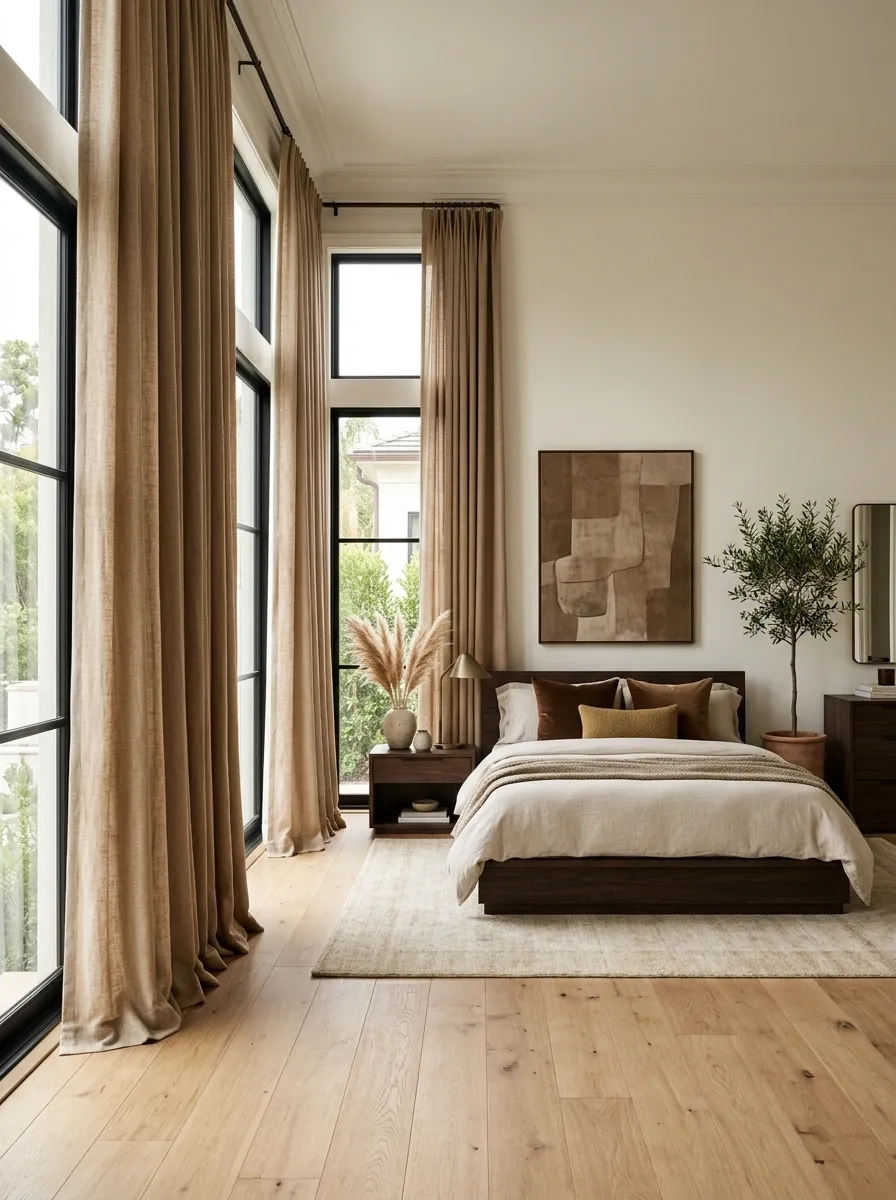
Heavy brown curtains can make an already rich bedroom feel closed in.
Use tan, oatmeal, or warm flax curtains instead. Hang them high and let them fall close to the floor. The lighter fabric keeps the windows from becoming another dark block while still working with the brown palette.
Keep the curtain pattern quiet. A solid woven fabric is enough when the room already has strong wood and bedding tones.
Style a Brown Bedroom With Cream and Brass
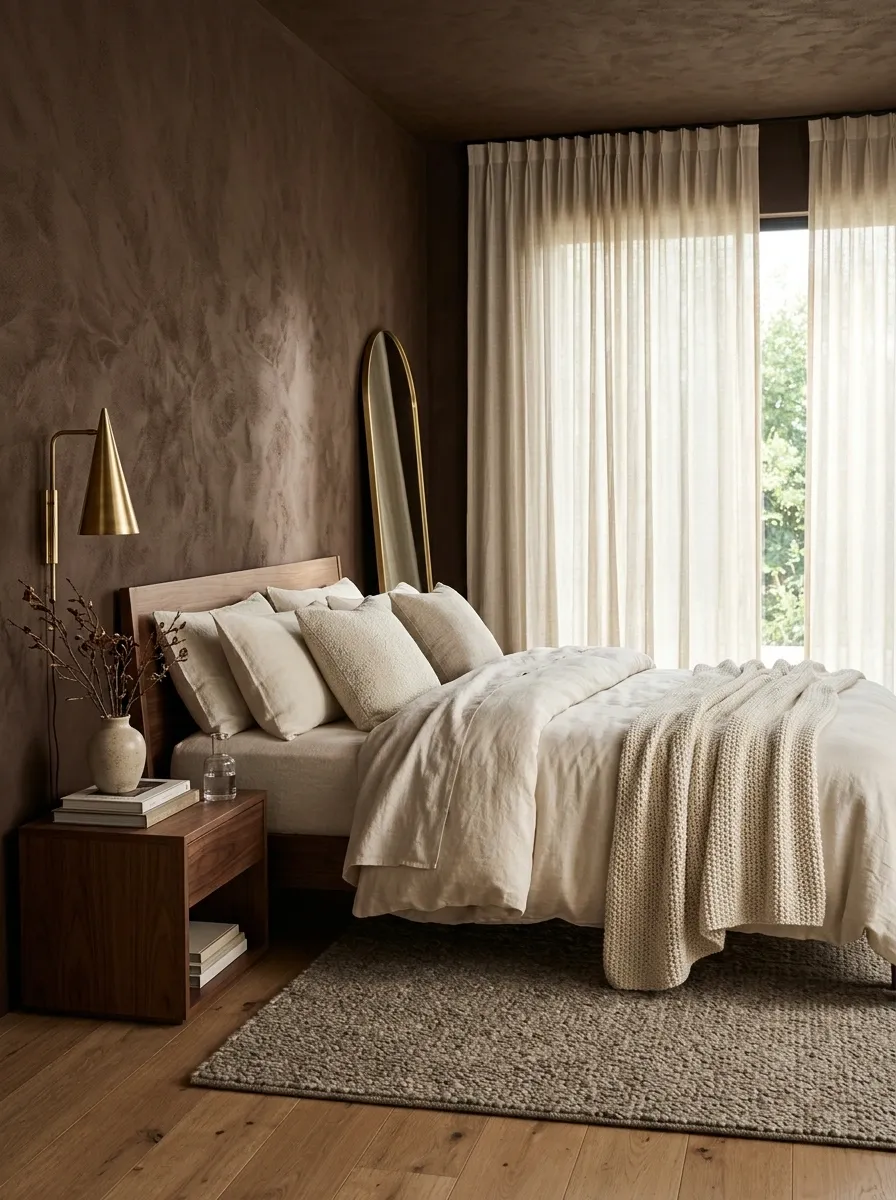
Cream keeps brown from feeling too serious. Brass gives the combination a small hit of shine.
Use brass on the bedside lamps, drawer pulls, mirror frame, or curtain hardware. Don’t spread metallic finishes across every surface. Two or three intentional touches are plenty.
For the strongest result, pair warm brass with a muted cream rather than bright white.
Use Dark Brown Furniture in an All-Light Bedroom
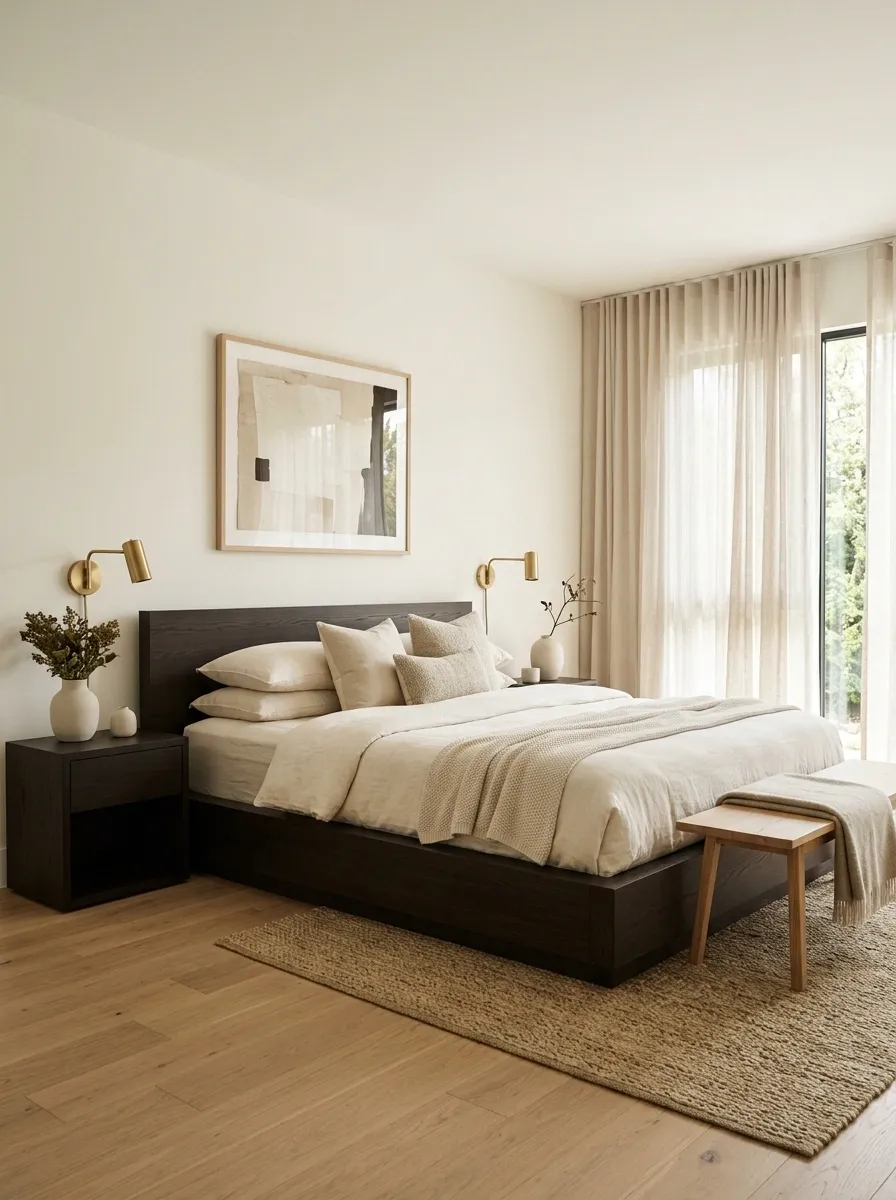
Sometimes the furniture should be the brown.
Start with cream walls, light bedding, and soft curtains. Then add a dark brown wood bed or dresser as the anchor. The furniture will look intentional because everything around it is quieter.
This is one of the easiest approaches for renters who can’t repaint the walls.
Keep the dark furniture substantial. One strong dresser looks far better than five tiny brown accessories competing for attention.
The contrast should come from the furniture, not from a pile of small dark objects.
Add One Oversized Brown Accent Instead of Several Small Ones
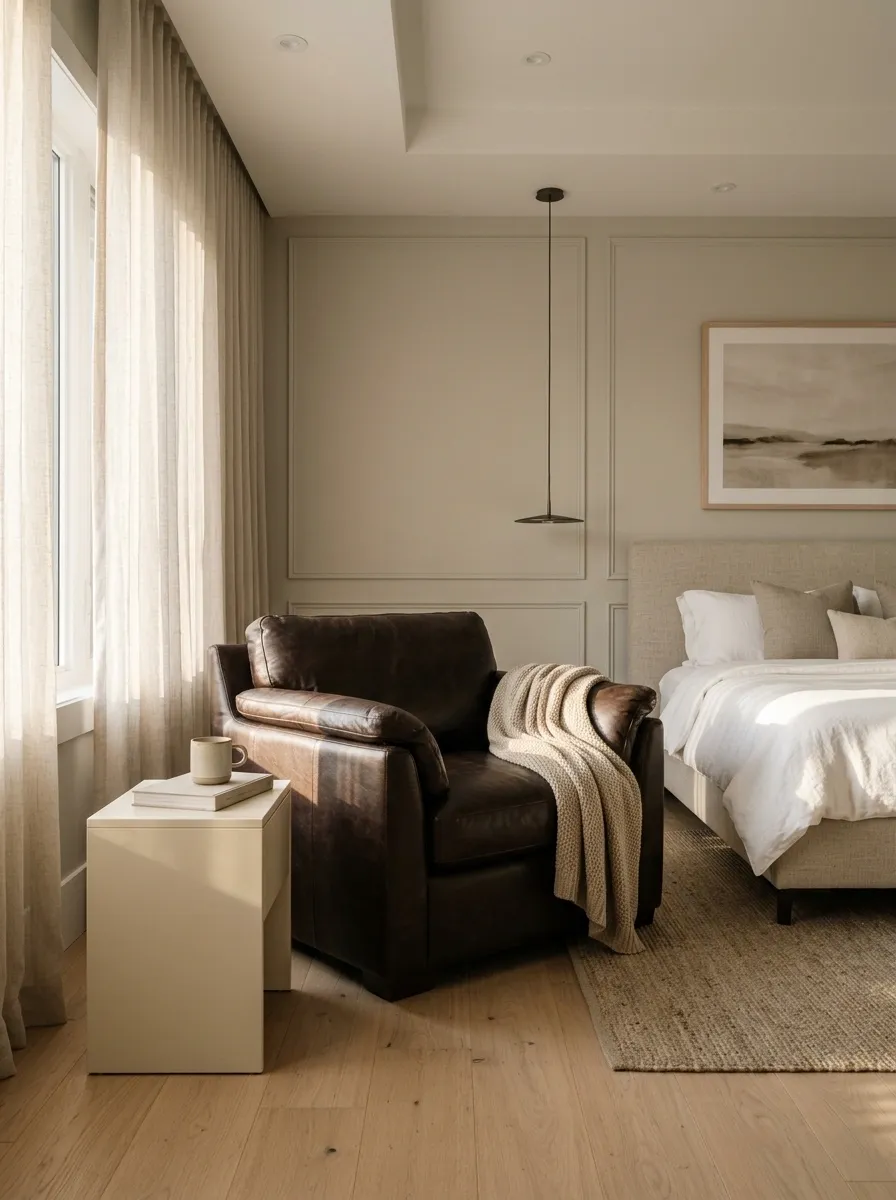
Small brown accessories scattered around a room create visual noise.
Choose one large brown piece instead. A leather bench, oversized upholstered chair, large throw, or wide wood-framed mirror gives the color enough weight to feel deliberate.
Then leave the surrounding surfaces fairly quiet.
Think focal point, not collection. One substantial object tells the eye where to land.
Warm Up a Brown Bedroom With Terracotta Accessories
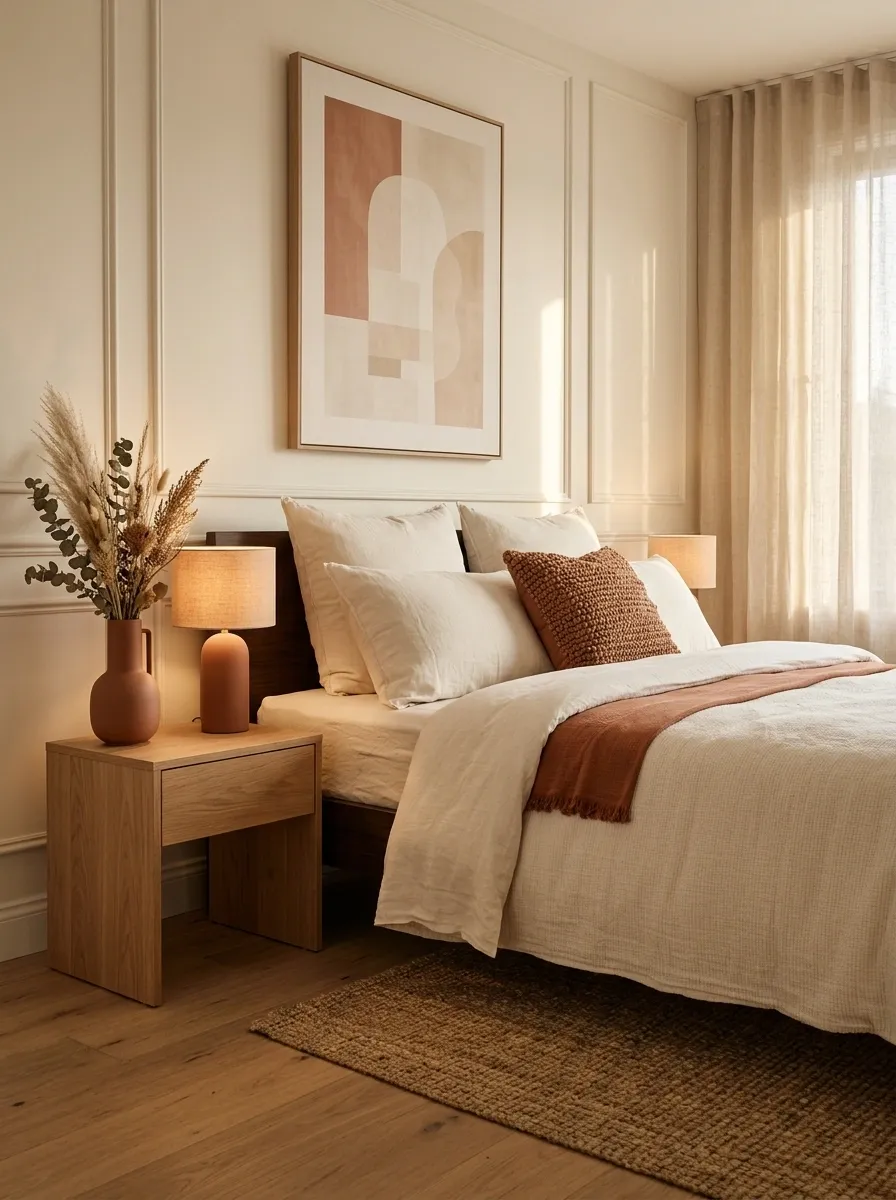
Terracotta is especially useful when a brown bedroom feels too flat.
Use it in a ceramic vase, bedside lamp, cushion, artwork, or small blanket. Keep the terracotta matte and earthy rather than bright orange.
You only need a handful of pieces.
Easy shopping checklist:
- One terracotta ceramic
- One small textile accent
- One artwork detail
- Cream or natural base materials
That combination gives the room warmth without turning it into a rusty color scheme.
Combine Brown With Soft Pink Without Making It Sweet
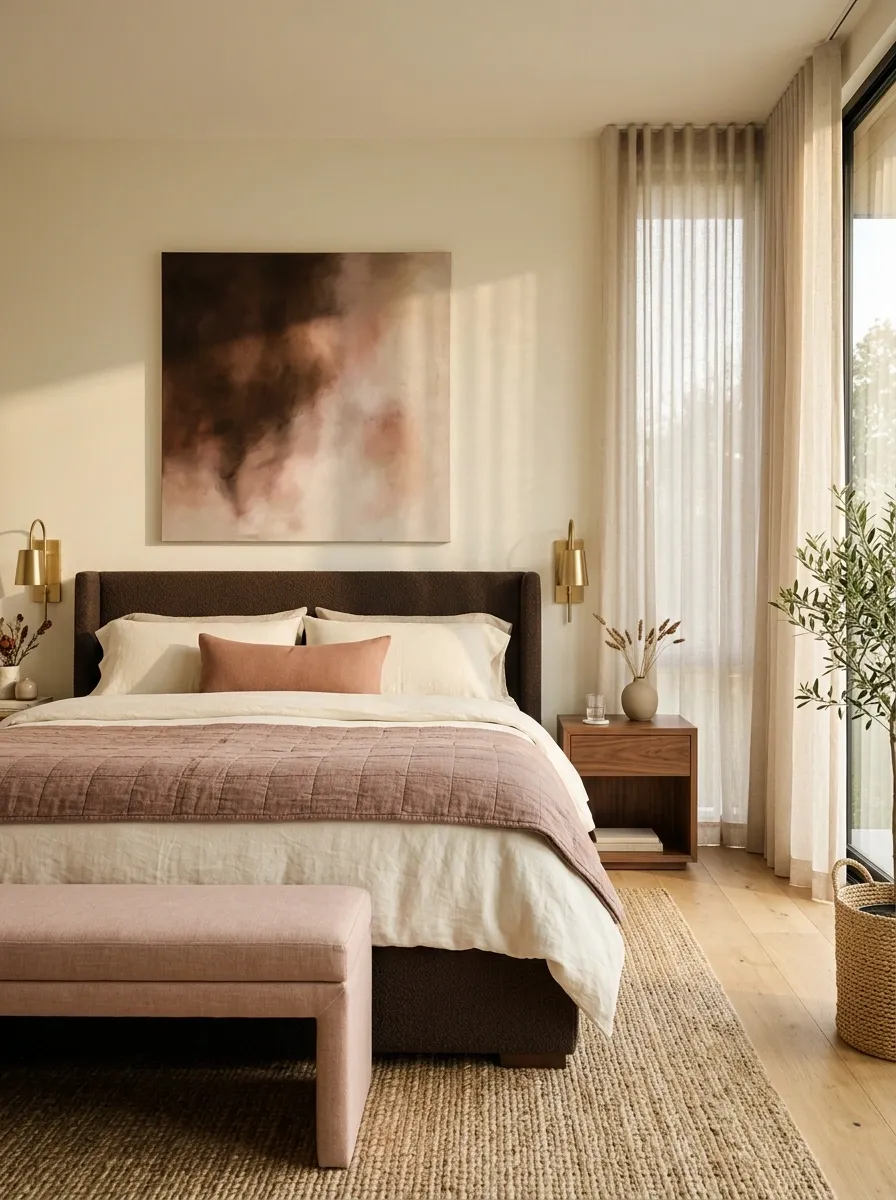
Brown and soft pink work because the brown gives the pink some weight.
Choose a dusty rose, muted blush, or clay-pink rather than a sugary pastel. Use it in a quilt, lumbar pillow, upholstered bench, or artwork, then repeat the shade once more across the room.
Keep the larger surfaces brown, cream, or wood. The pink should act as a controlled accent.
Use Brown Paneling for a Tailored Look
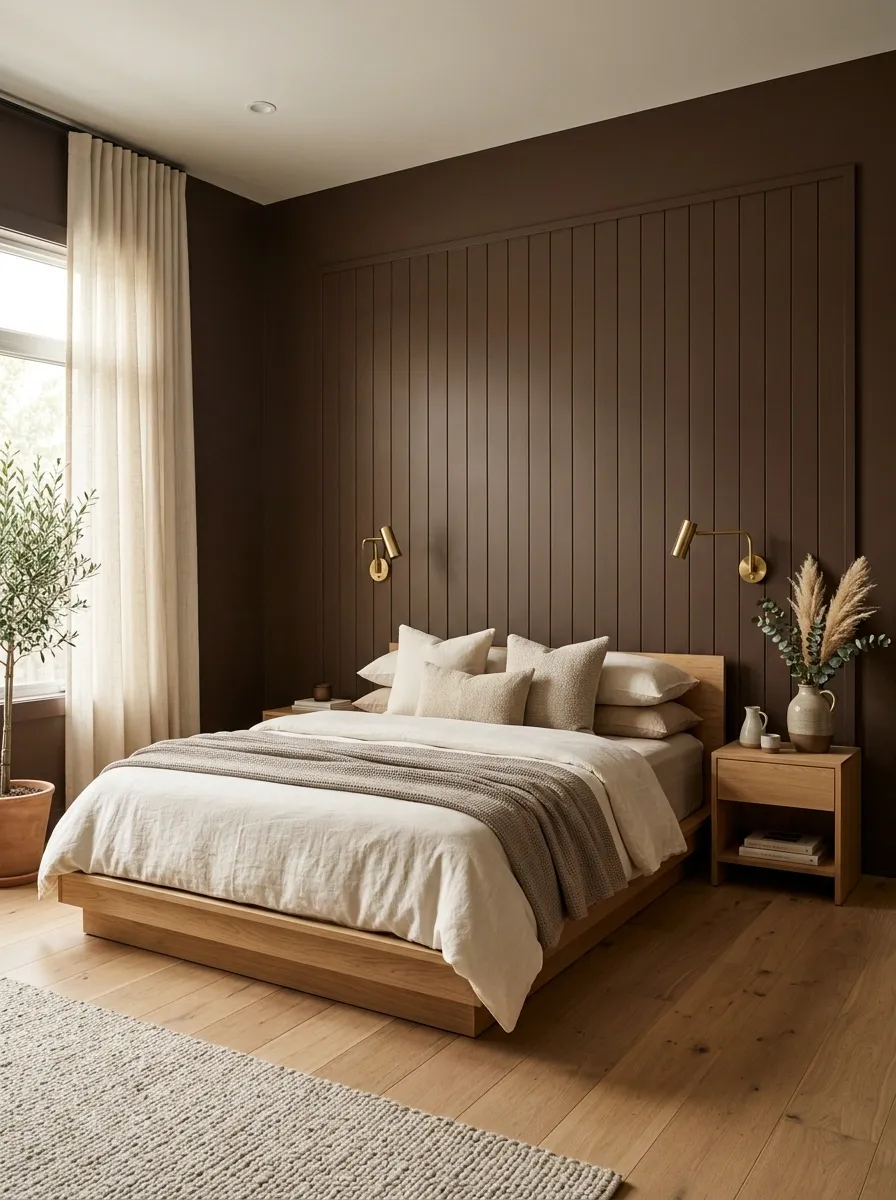
Brown paneling gives a bedroom structure that paint alone can’t create.
Use simple vertical panels behind the bed or across one focal wall. Keep the panel design clean and let the brown color do the work. Too many decorative profiles will make the room feel busy.
Start with the wall that already has the clearest furniture arrangement.
Build it in this order:
- Choose the focal wall.
- Keep panel spacing consistent.
- Paint the panels and wall in the same brown.
- Finish with lighter bedding and restrained lighting.
- Find the anchor wall. The wall behind the bed usually wins.
- Keep the pattern restrained. Simple vertical lines look cleaner.
- Match the paint. One brown across wall and paneling creates a tailored finish.
- Lighten everything around it. Cream bedding and soft lighting prevent heaviness.
Bring in Plants to Refresh a Deep Brown Room
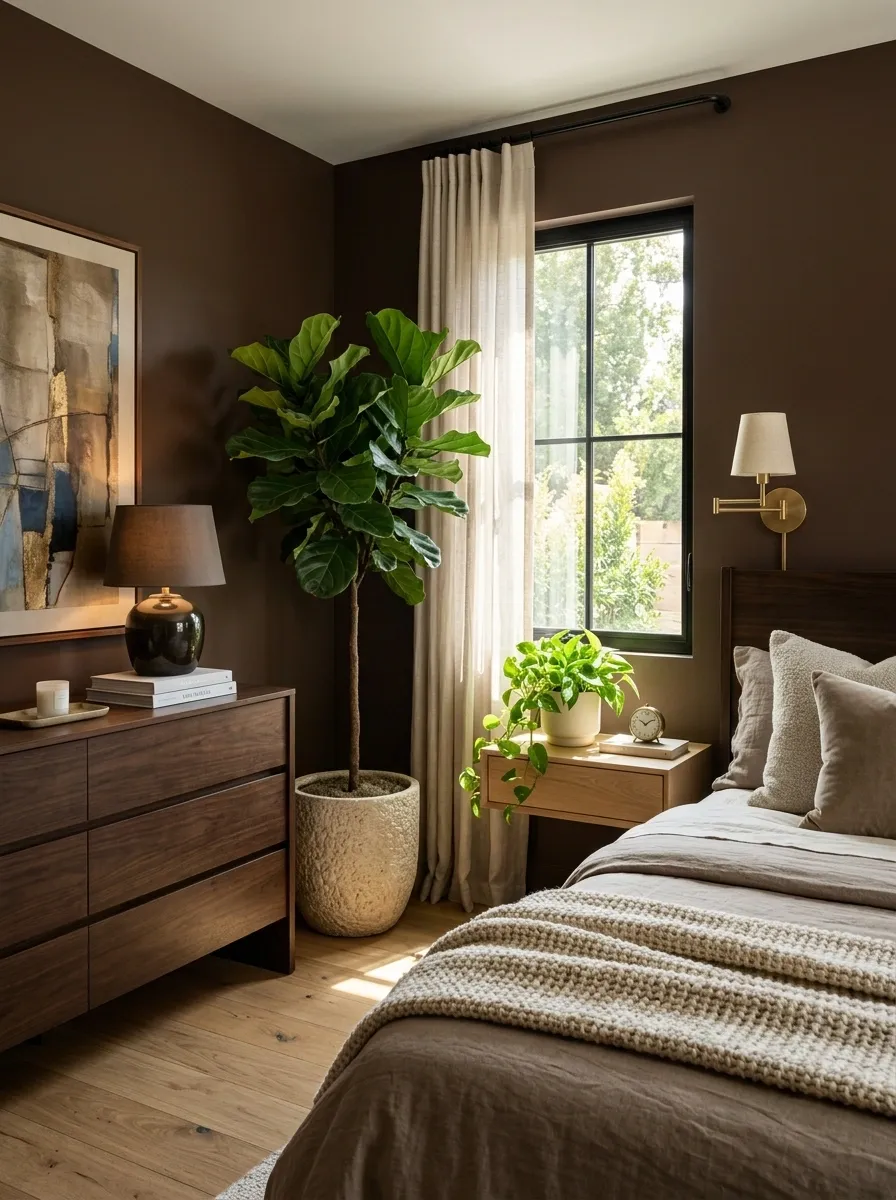
Deep brown and green plants are an obvious pairing, but placement matters.
Put one tall plant beside a dresser or empty corner rather than covering every surface with small pots. Add a second, smaller plant near a window or bedside area if the room has enough light for it.
Use simple pots in cream, terracotta, or natural stone tones. The greenery should soften the brown, not create another collection to maintain.
Create a Moody Brown Bedroom With Layered Lighting
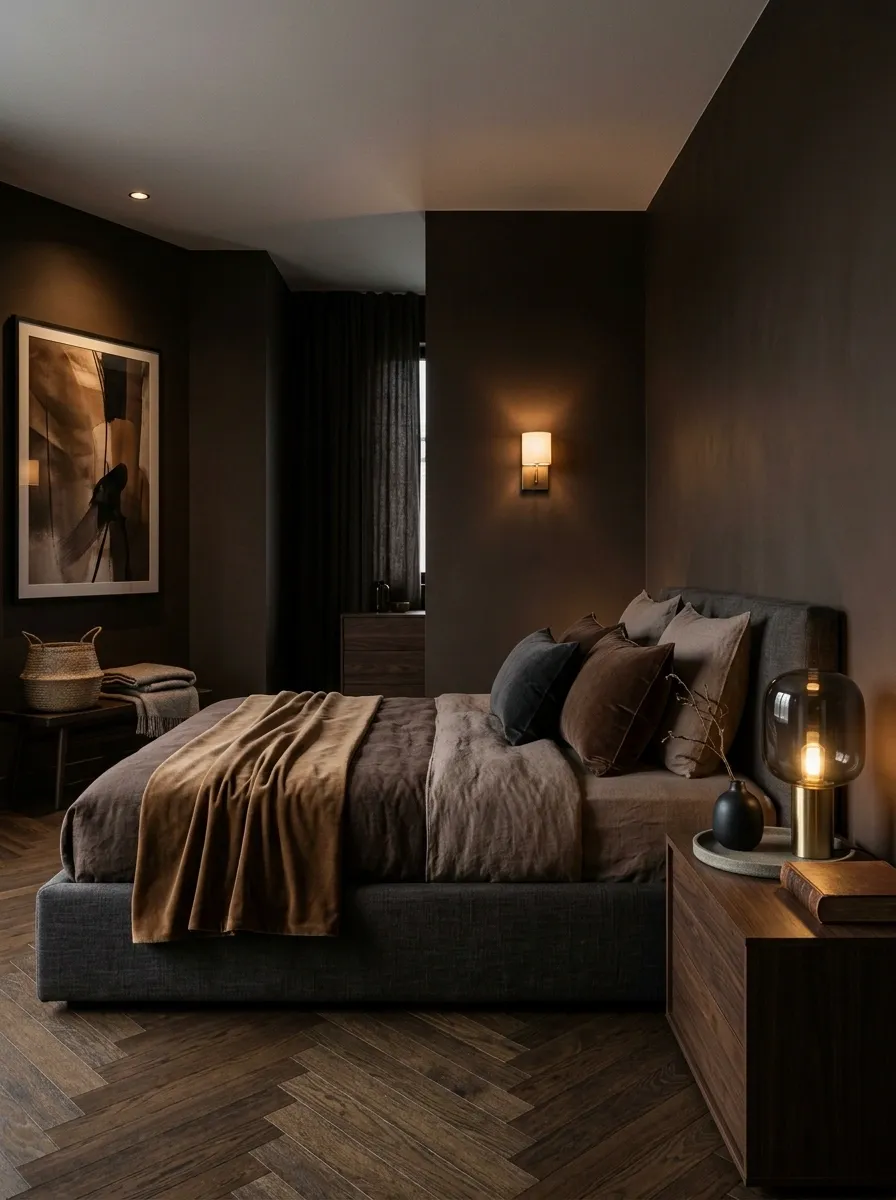
A dark bedroom needs more than one light source.
Use a bedside lamp for reading, a softer lamp or wall fixture for general glow, and a small accent light to catch a corner or artwork. Turn off the harsh overhead light once evening starts.
The goal isn’t brightness. It’s several small pools of warm light.
Nighttime checklist:
- Bedside reading light
- Soft ambient lamp
- Optional accent light
- Warm bulbs suited to the fixtures
- No single fixture doing all the work
Finish With Brown, Cream, Wood, and One Accent Color
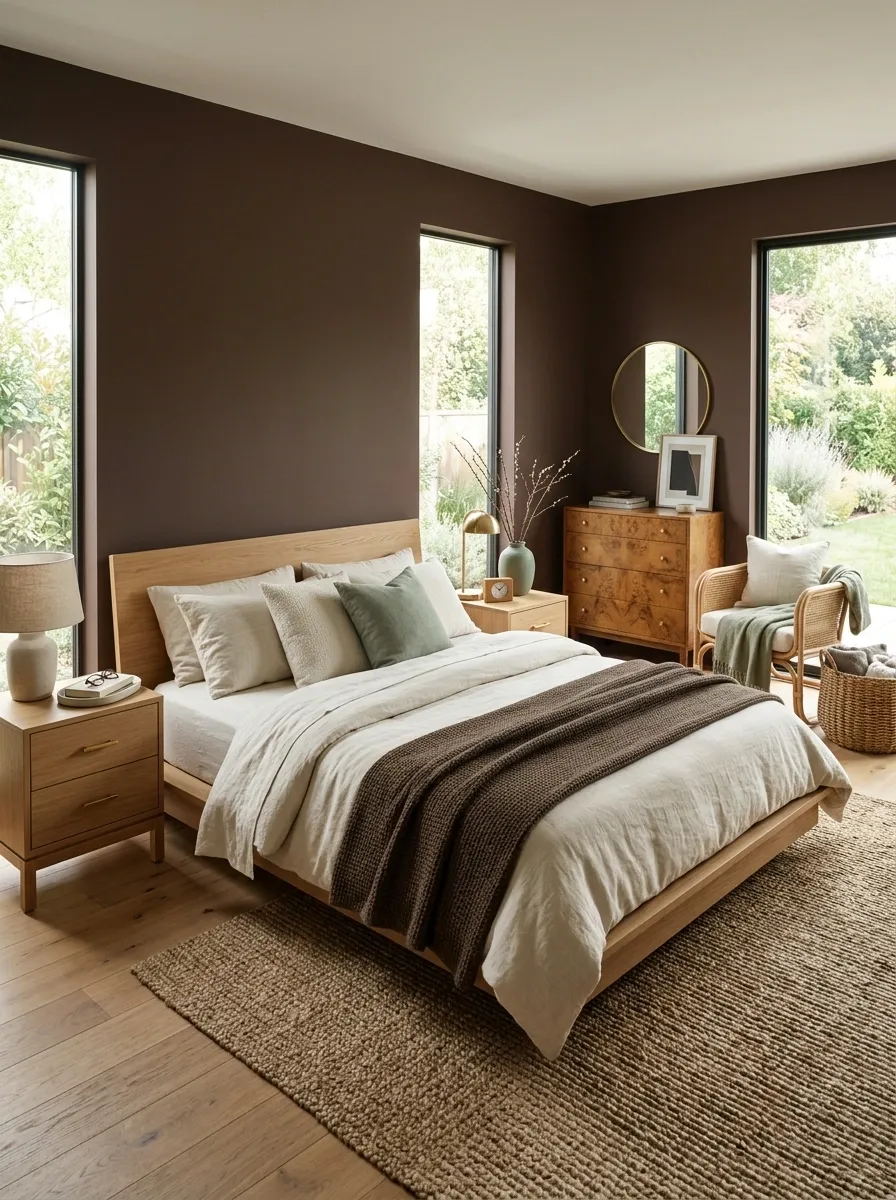
The strongest brown bedrooms don’t keep adding colors until the room feels “finished.” They stop at the right point.
Build the room with brown as the anchor, cream as the light layer, wood for natural warmth, and one accent color that appears in a few deliberate places.
That could be sage, dusty blue, terracotta, or muted pink. Once those four ingredients are working, stop decorating.
The final test: remove one accessory. If the room looks cleaner, you had too much.