
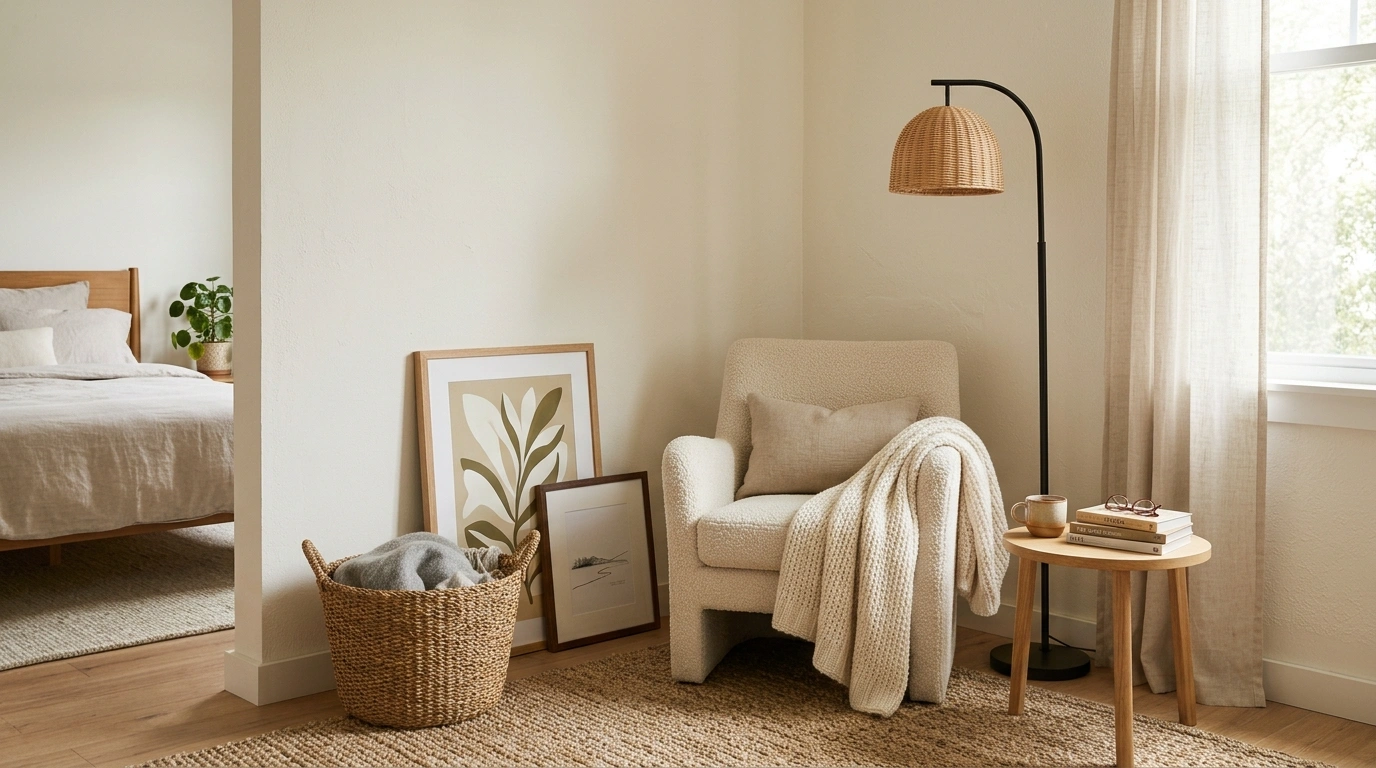
That awkward bedroom corner usually isn’t asking for more decoration. It’s asking for a reason to exist.
A chair gets shoved in and suddenly the walkway feels tight. A plant ends up looking too small. A little table collects things that should’ve gone somewhere else. Then the corner still looks unfinished, just with more stuff in it.
The fix is simpler than that. Start with the shape of the room and decide what the corner can actually do. It might become a reading spot, a storage zone, a small vanity, a work area, or simply a place that adds height and balance.
Good corners also have something in common: they don’t try too hard. One strong piece usually looks better than a collection of small objects competing for attention. The ideas below focus on that balance, with practical ways to make a forgotten corner earn its space.
Start With the Corner, Not the Decor
An empty corner doesn’t need to be filled just because it’s empty. It needs a job.
Look at what the bedroom is missing first. Seating? Storage? Light? Height? A little softness? Once that need is clear, the right piece becomes much easier to choose.
What to Put in an Empty Bedroom Corner
Reflect Light with a Statement Mirror
A blank bedroom corner can swallow natural light, making the entire sleeping space feel a bit heavy and closed off. An oversized mirror tucked neatly into the angle bounces illumination around the room while effortlessly expanding the visual footprint.
Choose an irregular shape or a soft, textured frame to keep the setup from feeling too harsh against the walls. Angle it slightly rather than hanging it flat to give the corner a relaxed, designer-approved layer.
Keep the surrounding decor minimal by pairing the mirror with a petite accent table or a couple of ambient candles. This creates a functional vignette that serves both your morning routine and the room’s overall aesthetic.
Anchor a Cozy Corner Lounger
An empty bedroom corner often lacks a sense of purpose until you give it a deeply inviting seat. A rounded, plush armchair turns that wasted square footage into the ultimate spot for unwinding with a book.
Pair the chair with a slender floor lamp and a petite pedestal table to round out the functional grouping. Stacking a couple of favorite reads underneath a small potted plant adds a thoughtful touch of life and texture.
Stick to soft, tactile fabrics like boucle or sherpa to maximize the cozy factor. The result transforms a dead corner into a destination you will actually look forward to using every single day.
Build a Small Reading Nook With a Floor Lamp
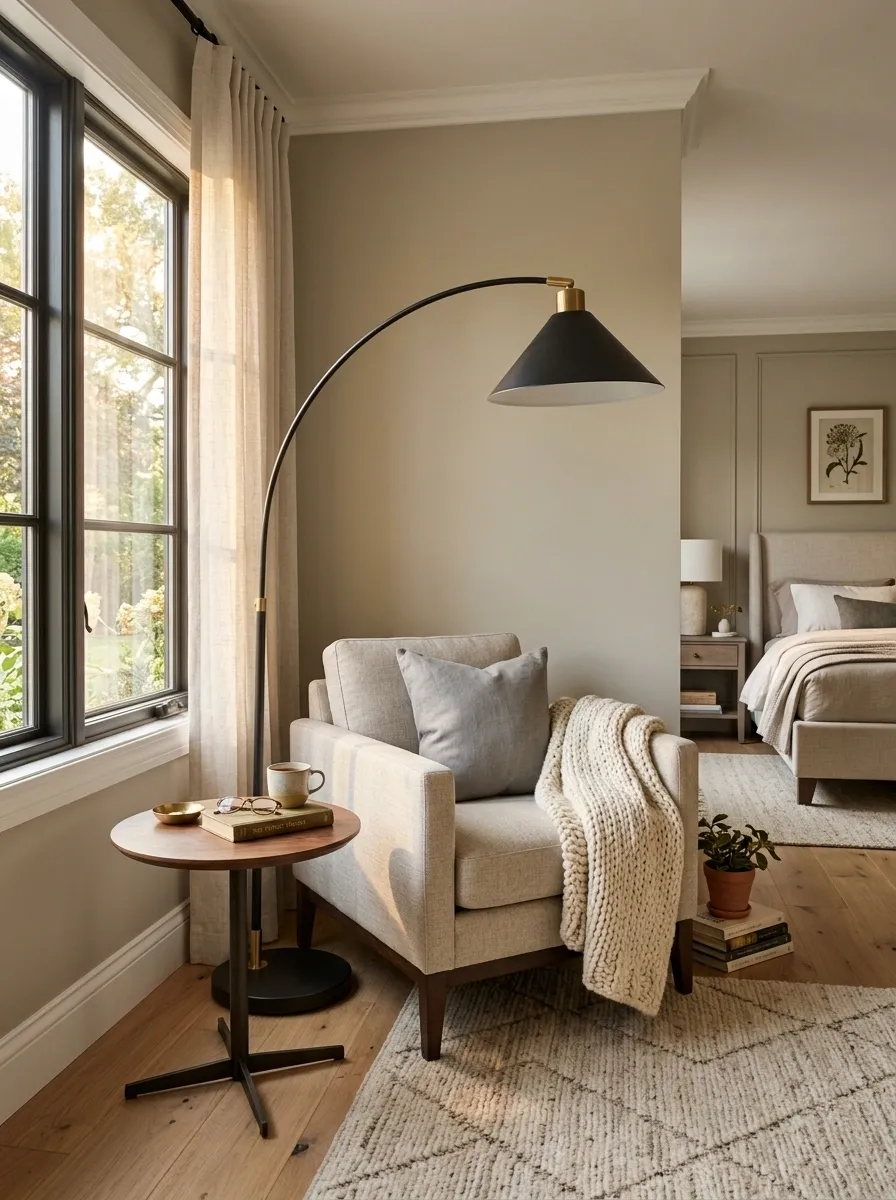
Sometimes a chair alone still looks like furniture dropped into a vacant spot. A floor lamp gives the arrangement a clear visual connection.
Place the lamp slightly behind and to the side of the chair rather than directly in front of it. That keeps the light source useful without cutting across the seating area.
Small-nook checklist
- Slim chair
- Tall floor lamp
- Small side table only when needed
- One throw or cushion
- Clear floor around the setup
Don’t overdecorate the nook. The chair and lamp should do most of the visual work.
A compact silhouette leaves the corner breathing.
The lamp should support the chair, not crowd it.
One textile detail is enough to soften the arrangement.
This setup works especially well in bedrooms where there isn’t enough room for a full seating area.
Maximize Walls with Floating Shelves
When floor space is at an absolute premium, taking your styling efforts upward is the smartest design move you can make. Floating corner shelves turn bare drywall into an organized gallery for your favorite treasures.
Mix greenery, framed art, and a few cherished books across the tiers to create visual interest. Vary the heights of your objects on each shelf so the arrangement feels curated rather than crowded or stiff.
Leave a little breathing room around your decor pieces to keep the wall from looking heavy. This approach lets you inject personality into the room without sacrificing an inch of valuable floor area.
Use a Tall Plant to Give the Corner Height
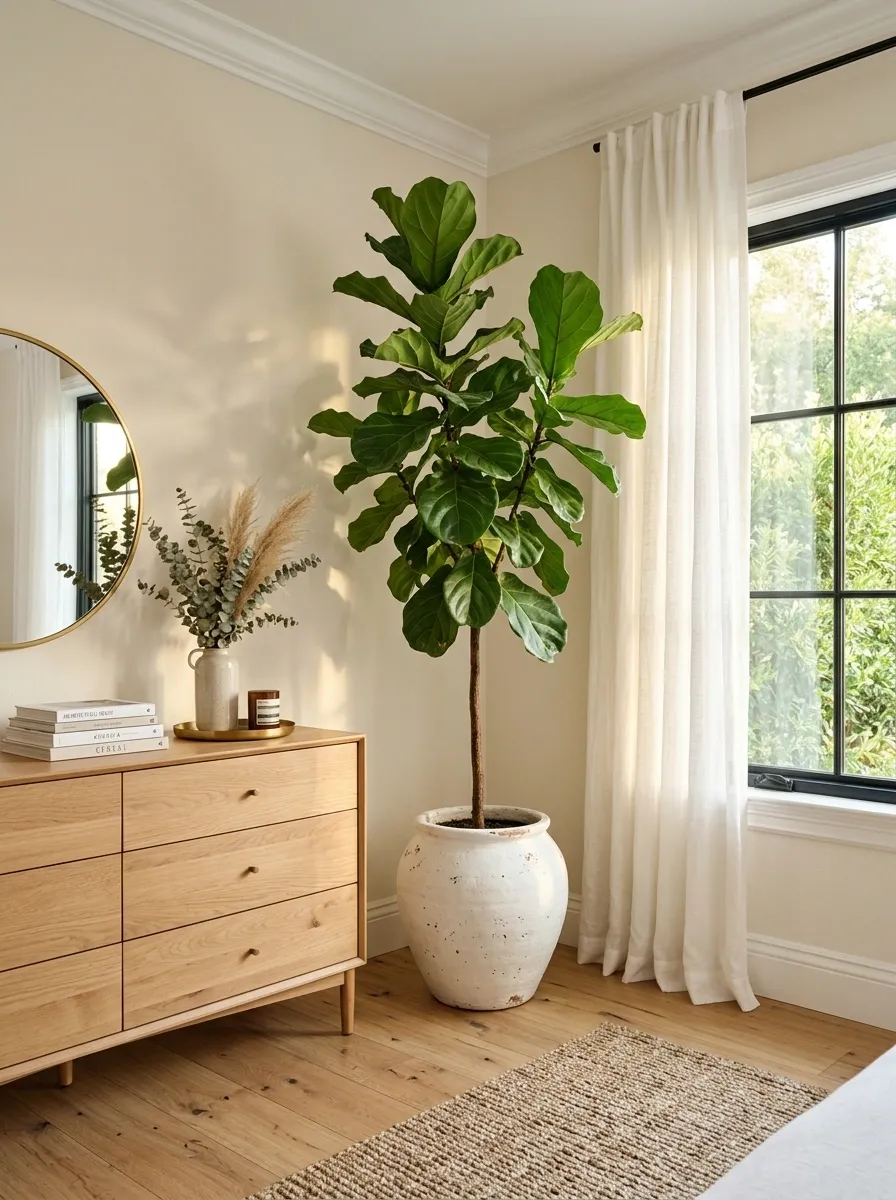
A bare corner often looks flat because everything nearby sits at the same low height. A tall plant fixes that problem without adding bulky furniture.
Choose a plant with a strong upright shape and place it in a substantial pot. The plant should rise clearly above nearby furniture so it actually fills the vertical zone.
Best placement: beside a dresser, near a window, or in a corner where the room already has several horizontal lines.
A tall plant works best when the corner needs visual height rather than another piece of furniture.
Skip a tiny plant on a tiny stand here. That combination leaves the upper corner empty and usually makes the original problem more obvious.
Install an Electric Corner Fireplace
A standard bedroom corner can easily feel cold and neglected, especially if it sits far away from the main heating source or primary furniture layout. A compact electric fireplace instantly transforms the atmosphere into a warm, lodge-like retreat.
Choose a mantel style that matches your room’s existing trim and finish it with a simple vase of greenery or a stack of neutral books. The mantel top gives you just enough surface area to style without cluttering the floor.
Tuck a woven basket filled with an extra throw blanket right beside the hearth to complete the picture. It brings an incredible layer of coziness that makes the entire bedroom feel finished and intentional.
Turn the Corner Into a Practical Clothing Drop Zone
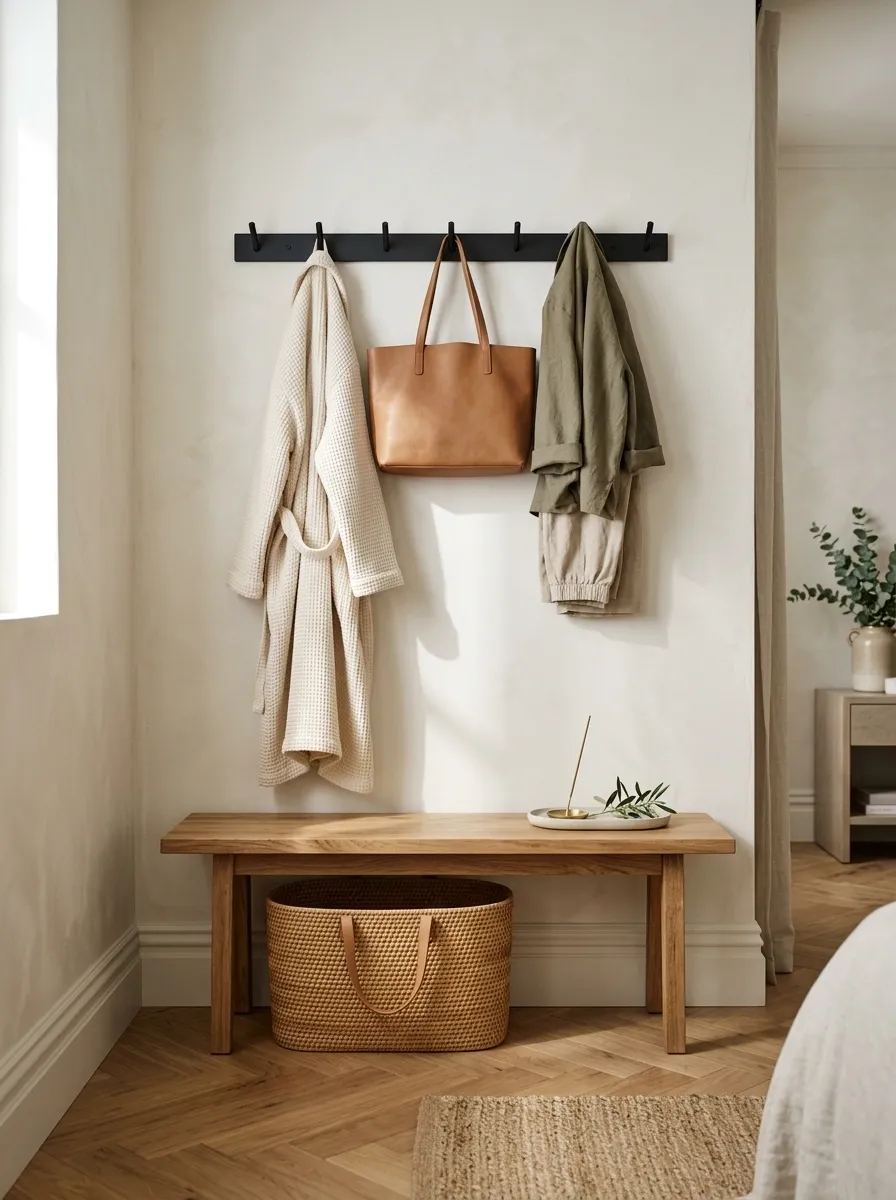
Bedrooms collect clothes in corners whether the decor plan accounts for them or not. A small drop zone gives those clothes somewhere better to land.
A narrow bench with a basket underneath works particularly well. A wall hook rail can handle robes, bags, or tomorrow’s outfit without taking up much floor space.
Do this:
- Use one defined landing spot.
- Keep everyday items within easy reach.
- Hide loose accessories inside a basket.
- Leave the surrounding floor clear.
Avoid: turning the corner into a second closet.
The goal isn’t more storage for the sake of storage. It’s one controlled place for the things that normally end up on the floor.
Slide in a Narrow Bookcase Instead of a Bulky Cabinet
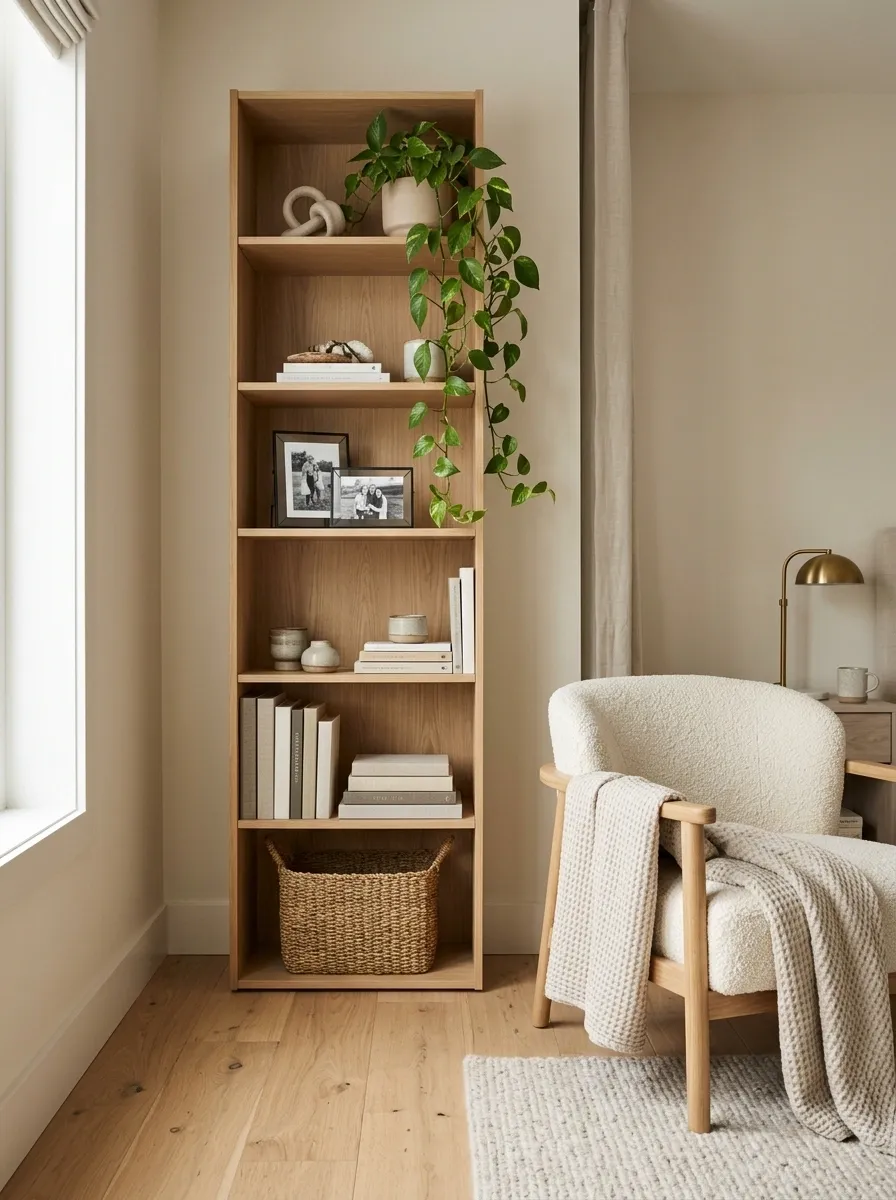
An empty corner doesn’t always need a wide storage unit. Going vertical is usually the smarter move.
A narrow bookcase can hold books, framed photos, folded throws, baskets, or a few decorative objects while keeping much of the floor visible. That open floor matters in a bedroom because oversized storage can make the sleeping area feel boxed in.
Style the shelves from largest to smallest. Start with books or baskets, then add a few smaller objects around them. Leaving some open space keeps the unit from looking overloaded.
This is the better answer for a corner that needs storage but can’t afford the visual weight of a full cabinet.
Create a Tiny Vanity That Doesn’t Steal Floor Space
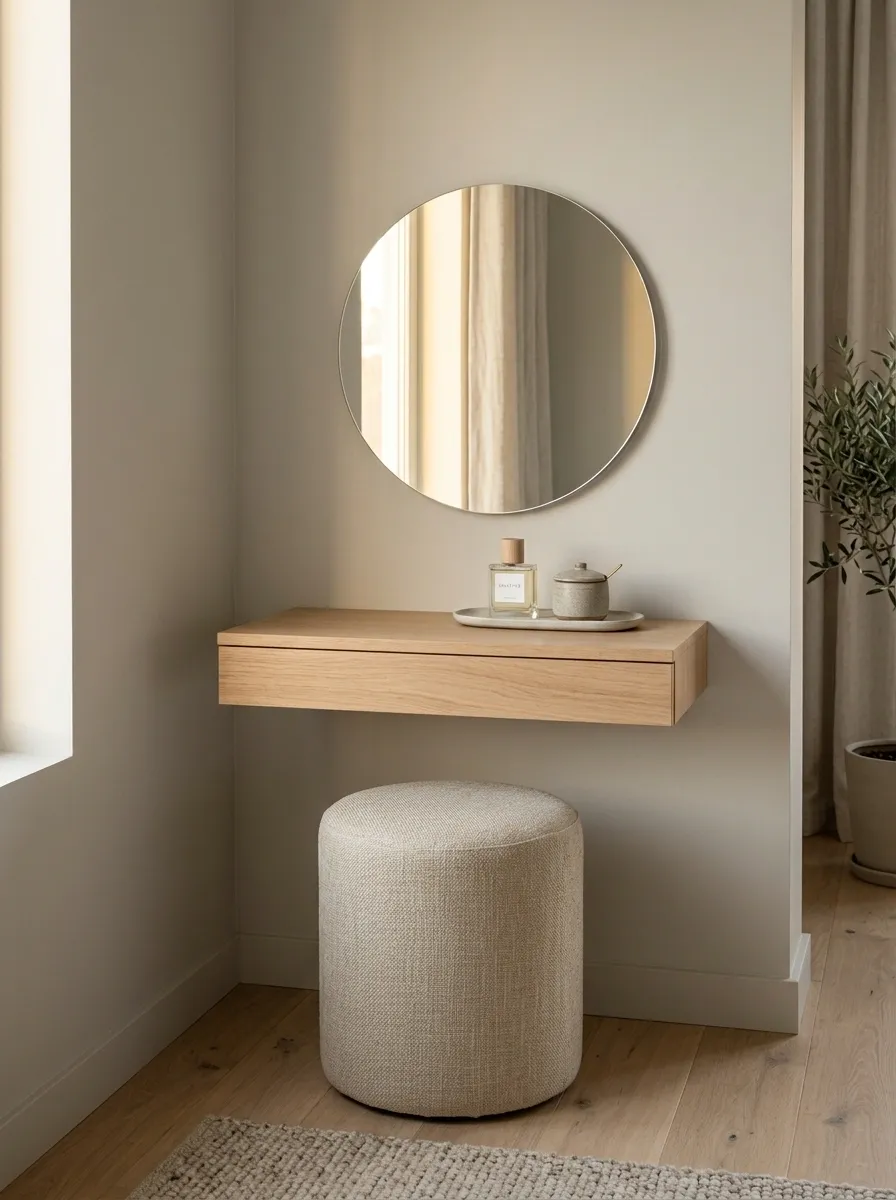
A bedroom vanity doesn’t need a full desk and matching cabinet. A slim wall-mounted shelf can create the same useful spot while keeping the floor almost completely open.
Mount a narrow surface at a comfortable height, then pair it with a small stool that can slide underneath. Add a wall mirror above it and keep the surface limited to the things used every day.
Keep on the surface:
- Small tray
- Everyday skincare
- One compact lamp or wall light
- Hairbrush or accessories
The stool should tuck fully underneath. That’s the detail that keeps a tiny vanity from becoming another obstacle.
This setup is especially smart in a bedroom where every inch of floor space already has a job.
Use a Small Bench Where a Chair Feels Too Heavy
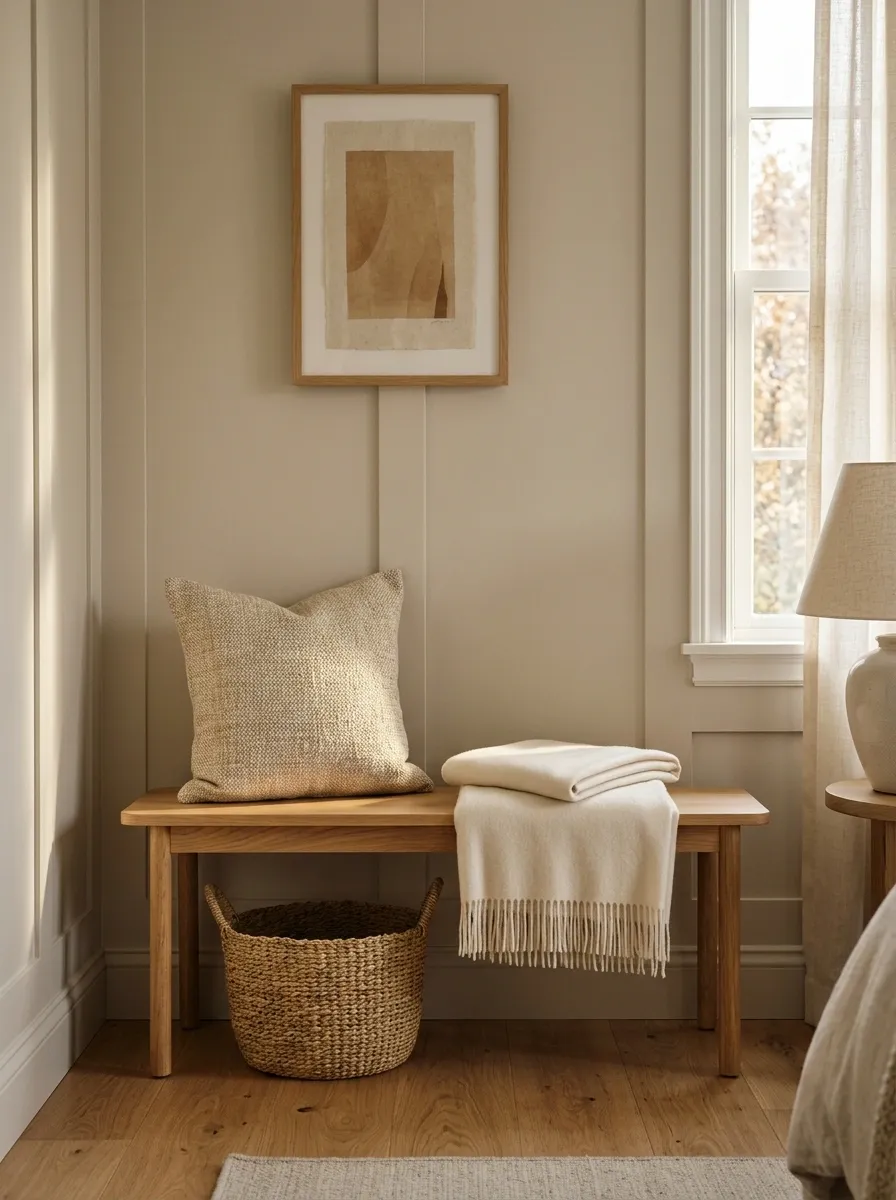
A chair gives a corner a clear purpose, but it can also introduce a strong visual shape. A bench is lighter and easier to fit.
Choose a compact bench with a relatively slim profile. Place it against the wall, then add a single cushion or folded throw rather than a collection of pillows.
The winning layout:
Bench → soft textile → optional basket underneath
That arrangement creates a place to sit, put on shoes, fold tomorrow’s outfit, or simply break up a large blank wall. It also keeps the corner visually lower than a bulky armchair.
A bench is the clean choice when the corner needs function without becoming the room’s main focal point.
Add a Statement Floor Lamp and Let It Stand Alone
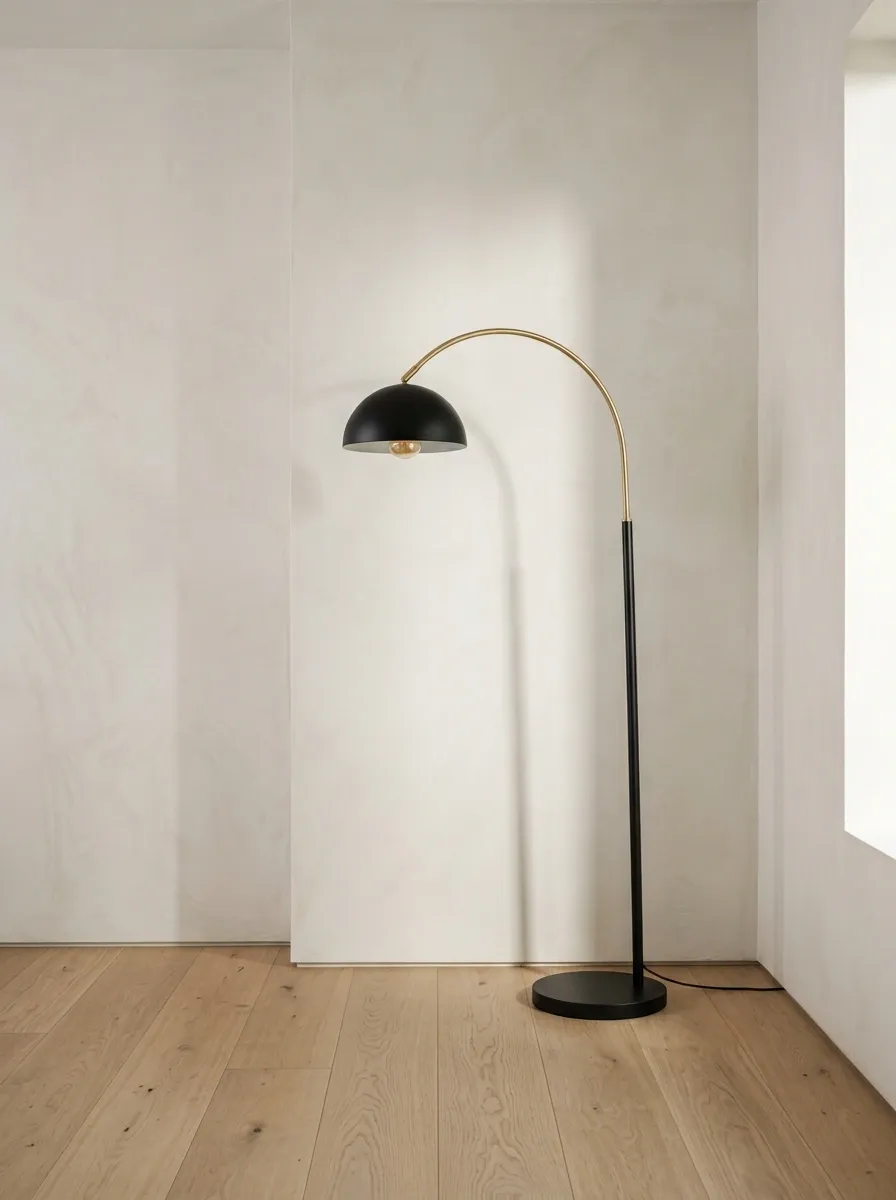
Not every empty corner needs furniture. Sometimes the bedroom already has enough pieces and the corner only needs height.
A sculptural floor lamp can fill that vertical gap while adding useful light. Arched lamps work beside beds and chairs, while tall tripod or straight-column styles work better against a completely blank wall.
Use this rule: let the lamp be the object.
Don’t crowd it with a tiny table, several plants, and decorative baskets. The empty floor around the base actually makes the lamp look more deliberate.
This is one of the easiest fixes for a corner that’s visually empty but doesn’t have enough room for another substantial piece of furniture.
Make the Corner a Mini Gallery With One Oversized Artwork
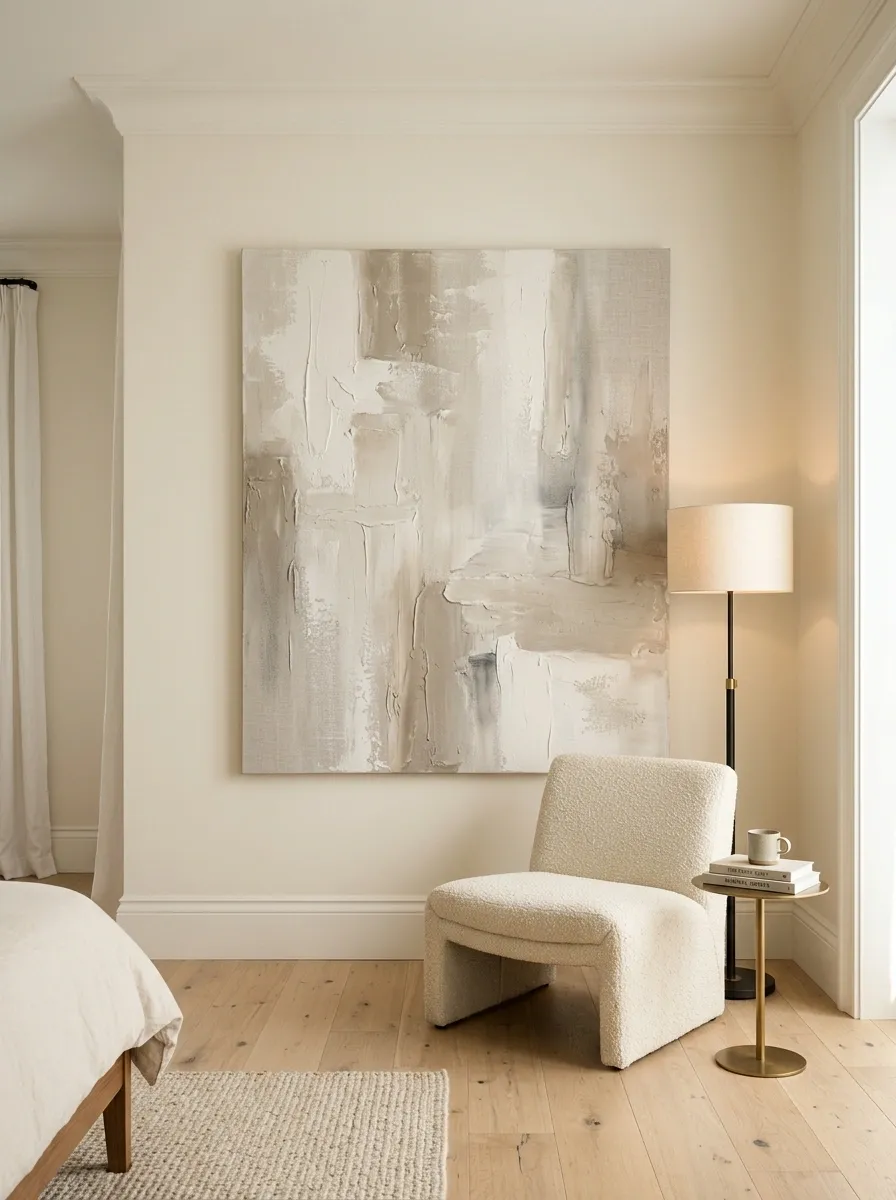
A corner doesn’t always need something sitting on the floor. A large piece of artwork can give the wall enough presence to make the entire area feel finished.
Skip the gallery wall here. Several small frames can look scattered when the real problem is an oversized blank wall.
Hang one large piece slightly above the main visual center of the corner. A quiet abstract, oversized botanical print, textured canvas, or architectural photograph can work depending on the bedroom style.
The artwork becomes the corner’s visual anchor without taking up valuable floor area. That’s especially useful in tighter bedrooms.
Put a Round Accent Table in the Forgotten Spot
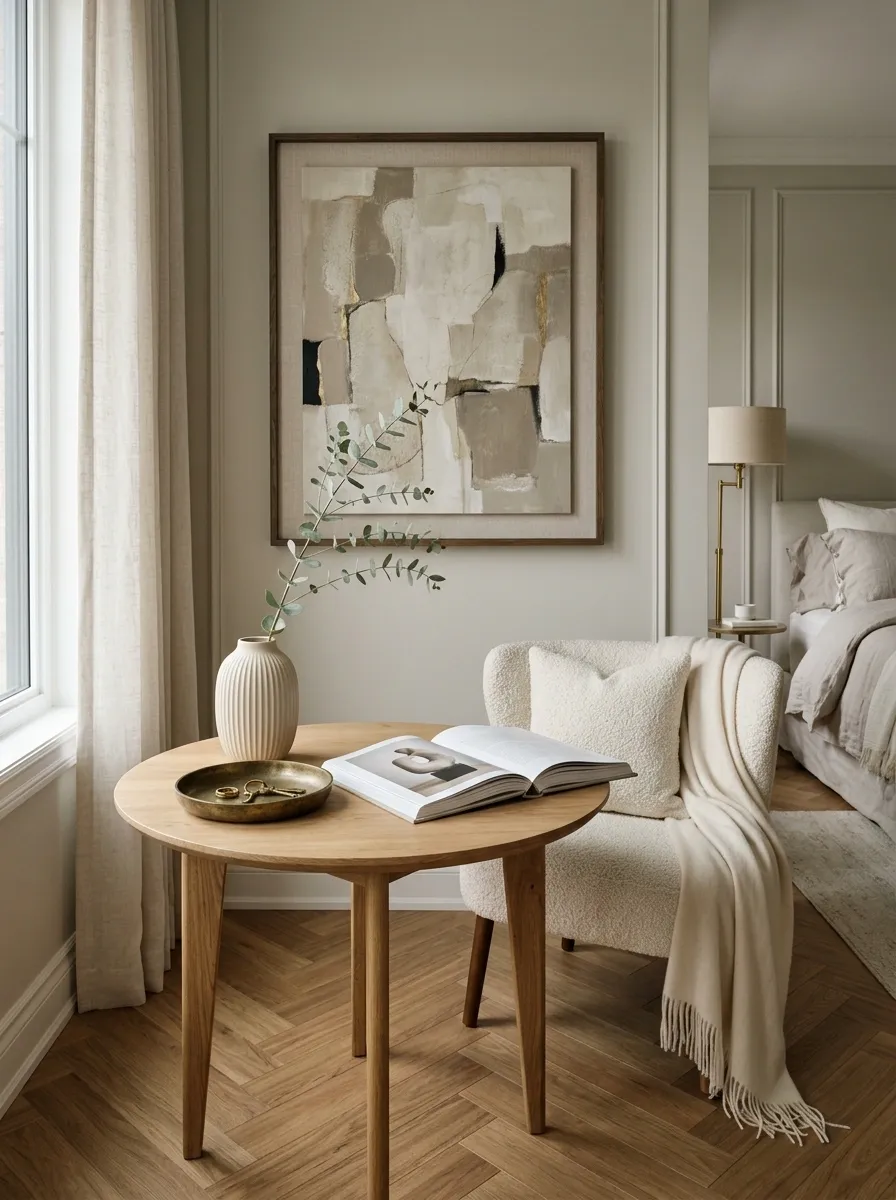
A tiny accent table works when the corner needs a purpose but doesn’t need a major furniture piece.
The round shape is especially useful near walkways because there are no sharp corners jutting into the path. Use it beside a chair, near a window, or alone beneath a piece of artwork.
Good uses include:
- Holding a book and reading glasses
- Supporting a small lamp
- Creating a spot for a morning drink
- Displaying one restrained decorative object
Don’t turn the tabletop into a storage pile. Two or three useful things are enough.
The right table makes the corner feel complete without making it feel occupied. That’s the balance to aim for in a bedroom.
Create a Cozy Floor Cushion Reading Spot
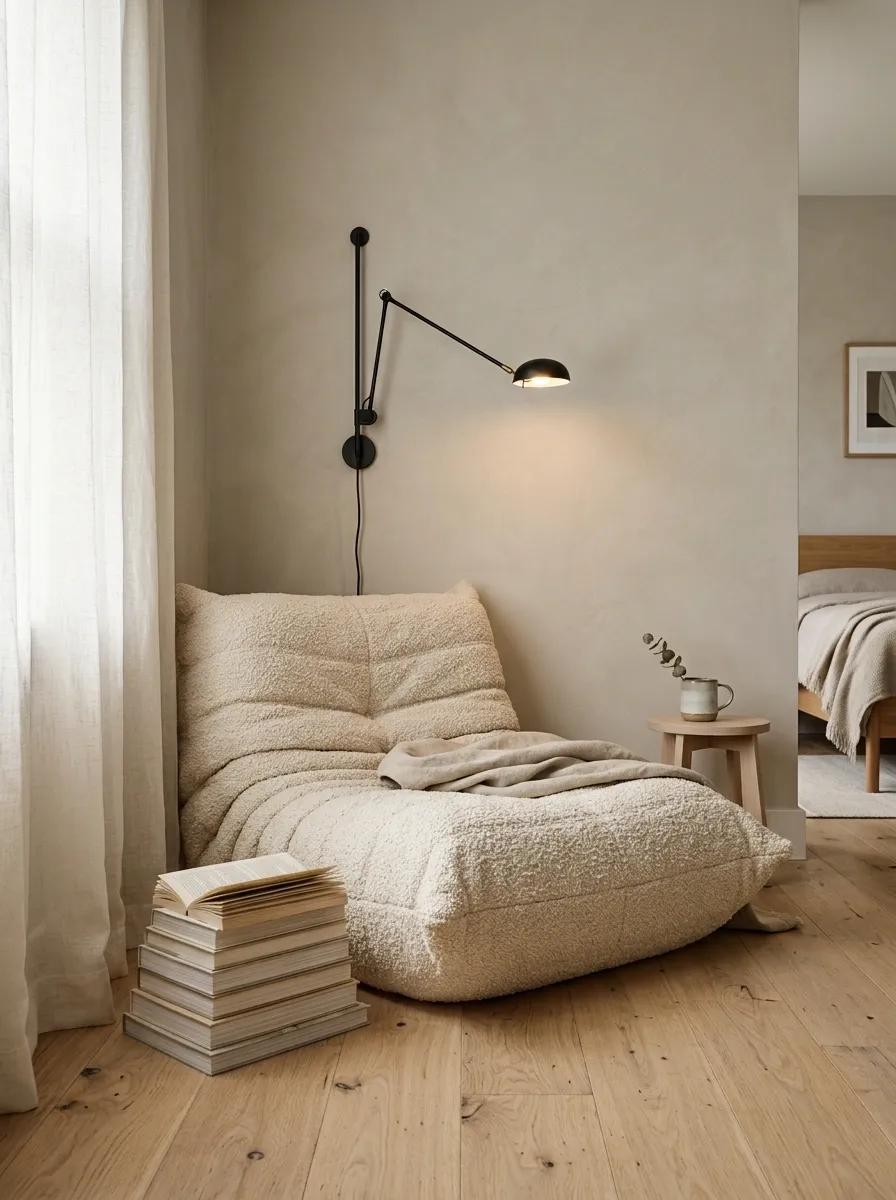
A floor cushion can turn an awkward low corner into a relaxed little reading space without adding the visual bulk of a chair.
Choose one oversized cushion or a thick floor pouf, then place a small stack of books beside it. A slim wall light or nearby lamp handles the practical lighting without forcing another table into the corner.
Keep the setup low and deliberate.
The mistake is adding too many cushions, blankets, baskets, and small tables. That makes the floor space look crowded. One comfortable seat, one light source, and a small book stack are enough.
This idea suits bedrooms where a full chair would eat up too much floor space.
Use a Ladder Shelf for Blankets and Small Decor
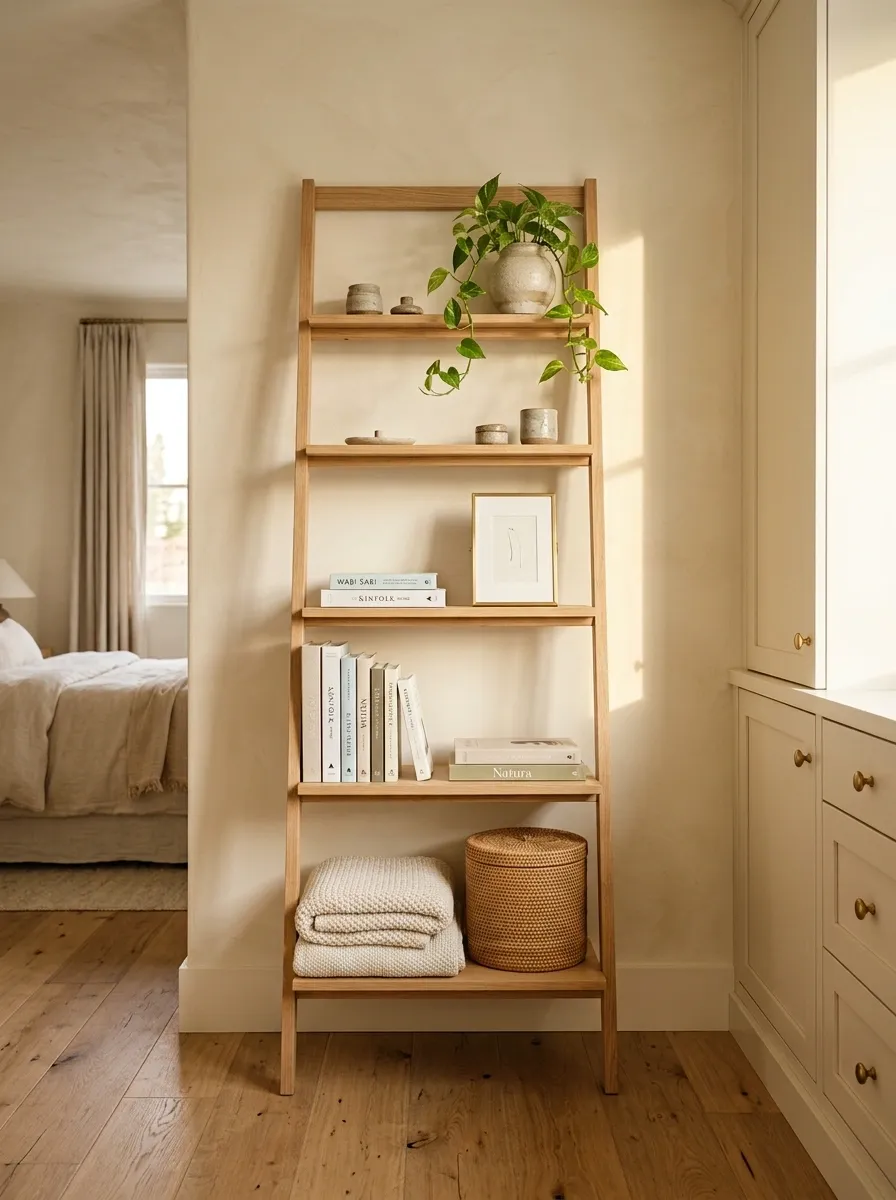
A ladder shelf fills vertical space while keeping the footprint narrow, which makes it one of the safer choices for a corner near a walkway.
Use the lower levels for folded blankets or a storage basket. Reserve the upper shelves for lighter pieces such as framed art, a small plant, or a few books.
Shelf styling checklist
- Keep heavier items low.
- Mix useful pieces with decorative ones.
- Leave visible gaps between objects.
- Repeat one material or color to connect the shelves.
- Avoid filling every rung.
A ladder shelf looks best when it has room to breathe.
The narrow profile keeps the corner useful without making the room feel like it has gained another full cabinet.
Give the Corner a Dedicated Laundry Basket
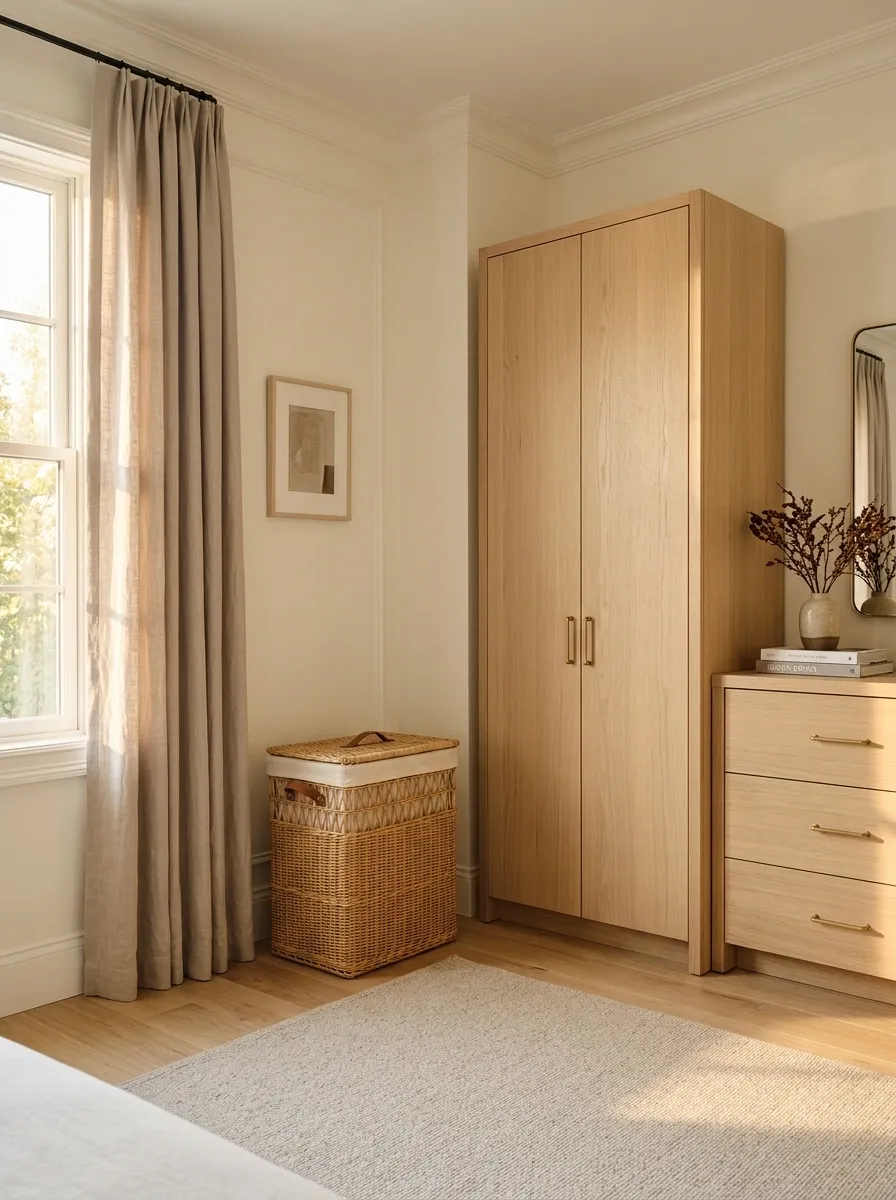
An empty corner beside a wardrobe or dresser is often the ideal place for laundry storage.
Choose one tall, attractive hamper instead of several small containers. Woven texture can soften a room filled with hard furniture, while a fabric-lined hamper gives the corner a quieter look.
The important part is containment.
Dirty clothes belong inside one defined vessel, not in a growing pile beside the bed.
This turns a dead corner into a useful landing spot while keeping laundry from taking over the room.
Turn It Into a Simple Morning Coffee Spot
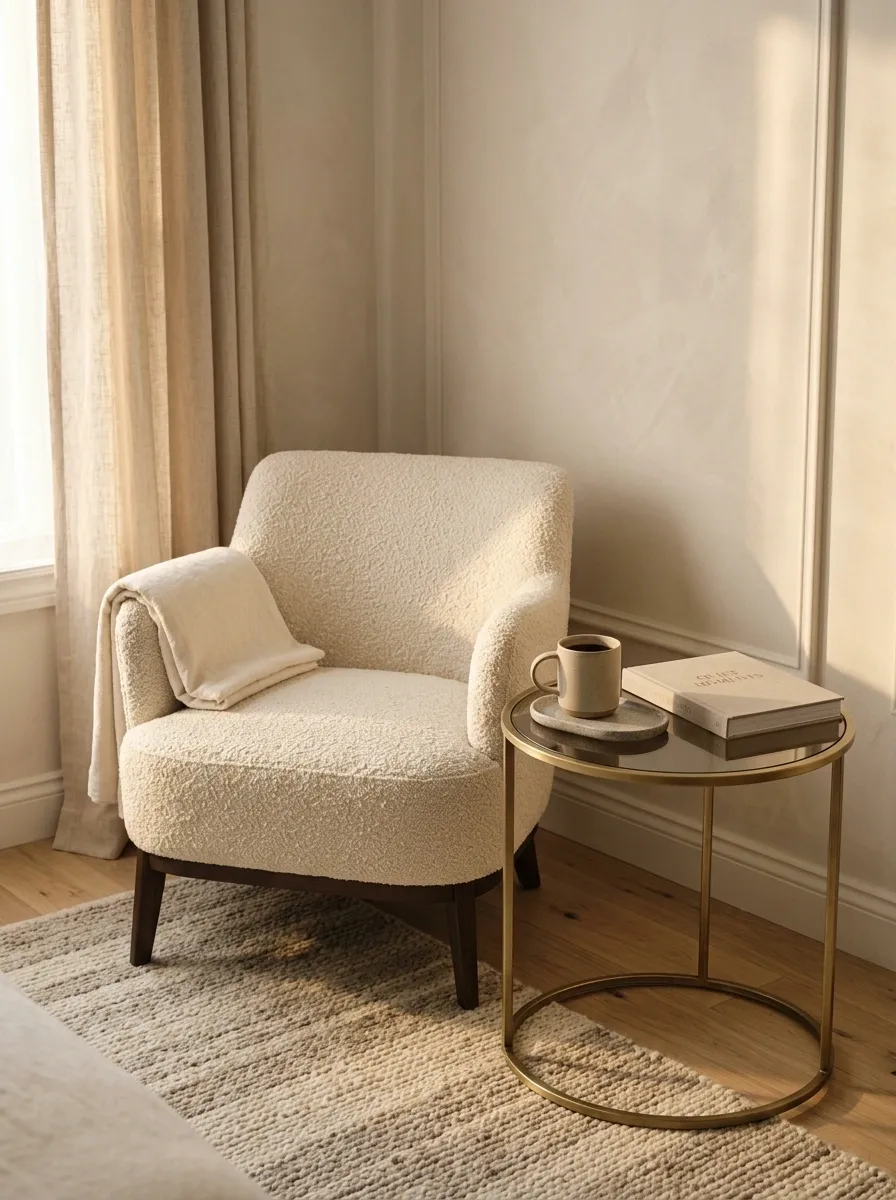
A bedroom corner can earn its keep before the day has properly started.
Place a compact accent chair beside a small round table, then keep the tabletop limited to one mug, a book, or a small tray. The corner becomes a comfortable place for a few quiet minutes without requiring a full lounge setup.
Morning setup
→ Compact chair
→ Small table
→ One useful tray
→ Soft light nearby
Keep electronics out of this corner when possible. The point is to make it feel like a deliberate pause, not another workstation.
The best version stays intentionally simple. A coffee corner doesn’t need to compete with the bed for attention.
Fit a Compact Dresser Into a Deep Bedroom Corner
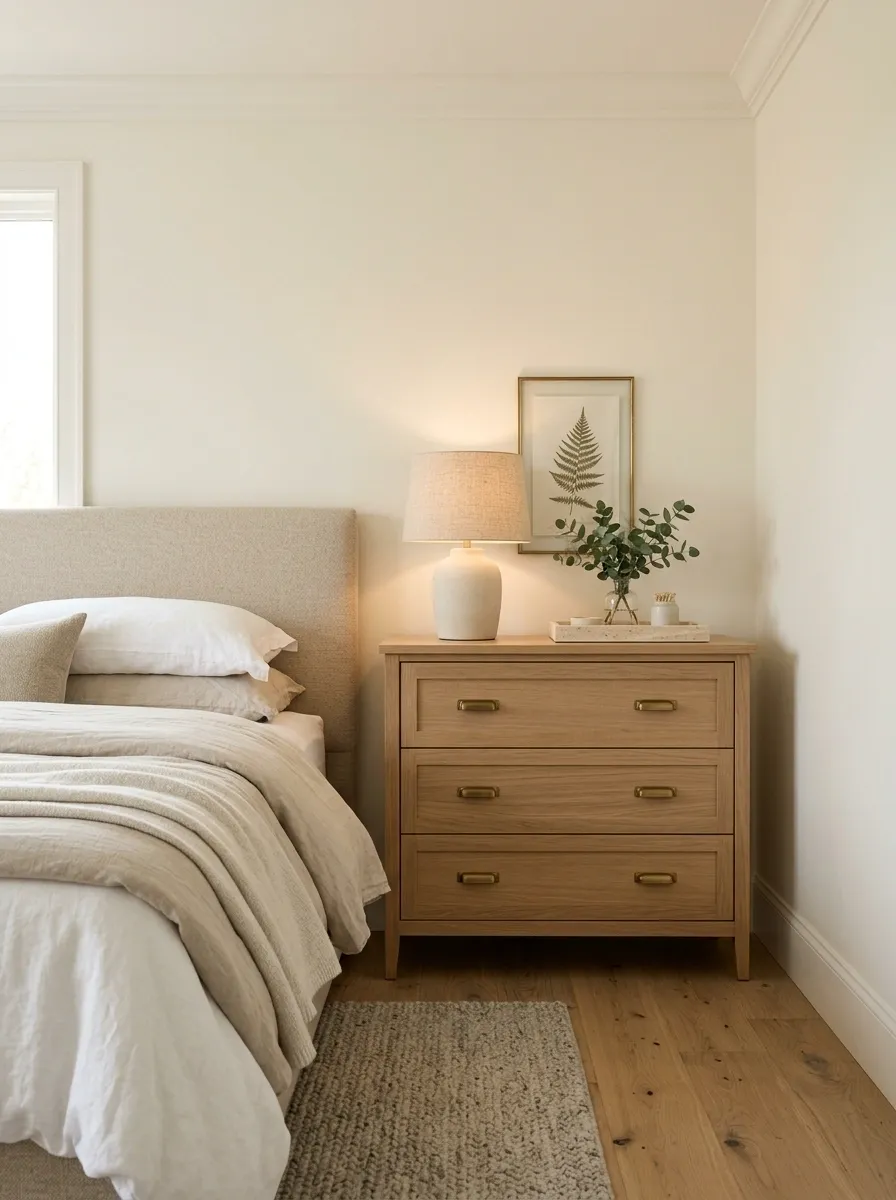
Some bedroom corners look empty because they’re deeper than they appear. That’s the perfect situation for a narrow dresser.
Before bringing one in, open every nearby drawer and door to check the actual working space. A dresser that technically fits can still be a bad choice if the drawers hit the bed or block the path.
Use the depth wisely.
Choose a dresser that fills the back wall without projecting too far into the room. Then keep the top restrained with one lamp, one tray, or one framed piece.
A dresser works only when its drawers can open and people can still move naturally around it.
This is one of the strongest options for an oversized bedroom that has plenty of floor space but not enough practical storage.
Hang Curtains to Give the Corner a Soft Backdrop
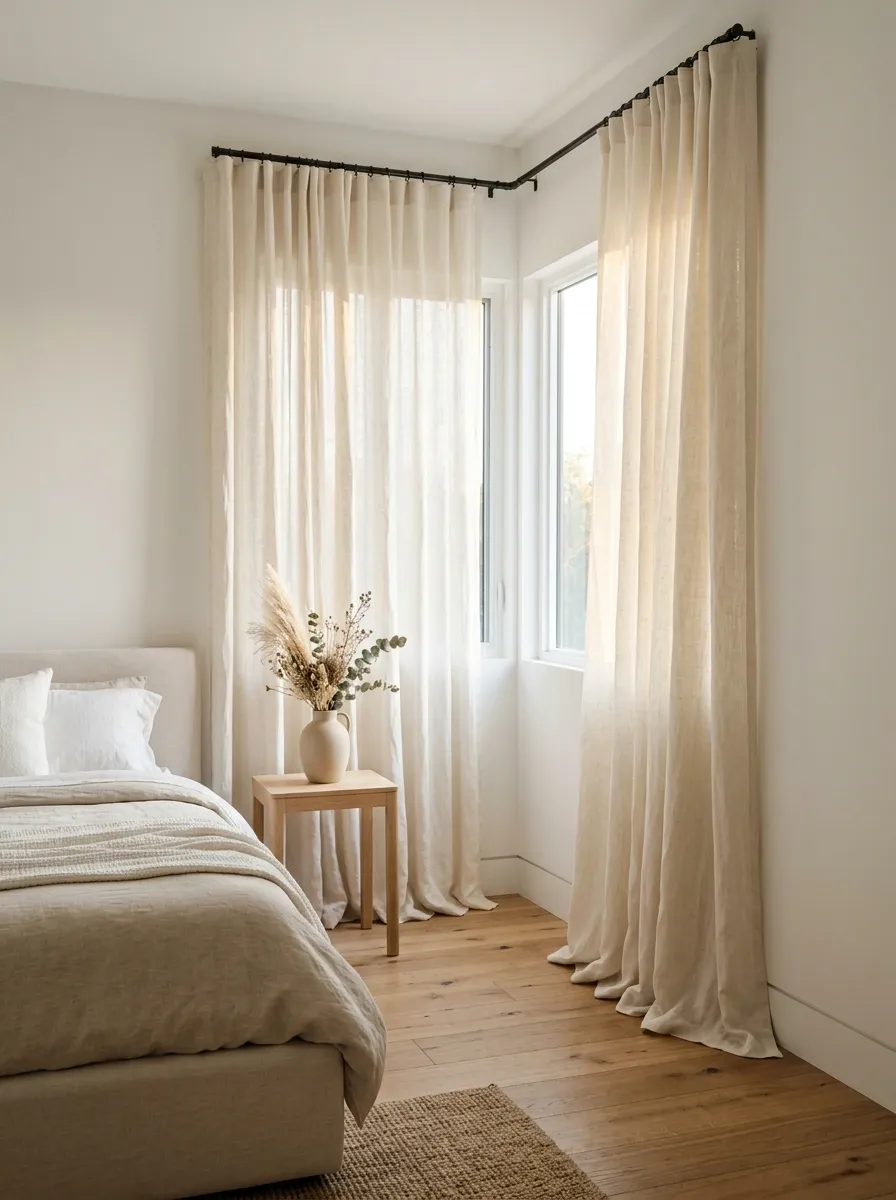
A corner beside a window can sometimes look unfinished because the wall treatment stops too abruptly. Floor-to-ceiling curtains can solve that without adding another piece of furniture.
Hang the curtain rod higher and wider than the window itself when the layout allows it. Let the fabric fall all the way toward the floor so the corner gains softness and height at the same time.
Keep the fabric simple. Linen-look panels, soft cotton, or another relaxed material works better here than heavy patterned curtains competing with the rest of the room.
This move works especially well when the empty corner sits next to a window and the room needs more softness rather than more furniture.
Set Up a Tiny Desk for Work or Journaling
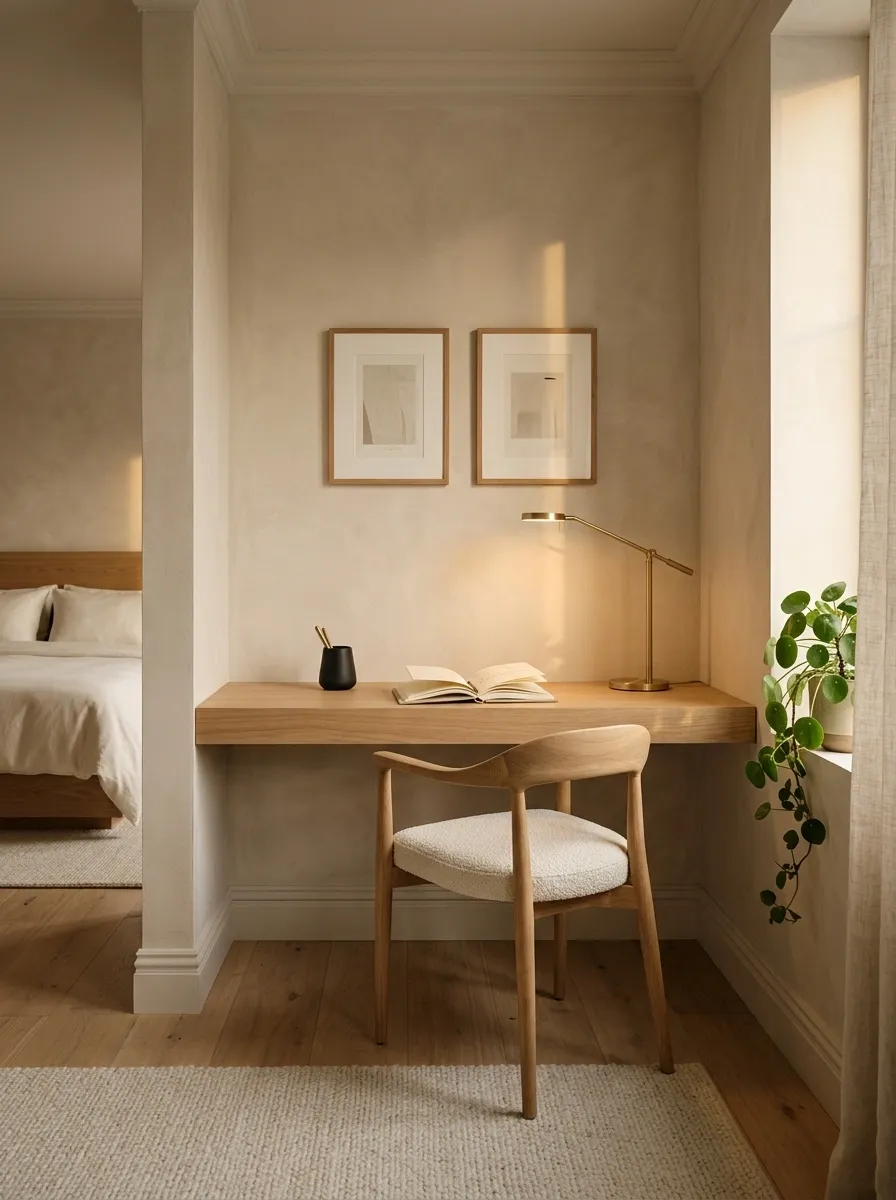
A forgotten bedroom corner can become a useful mini desk with surprisingly little furniture.
Choose a narrow desk or floating work surface that gives enough room for the actual task. A small chair that tucks underneath keeps the footprint controlled when the desk isn’t being used.
Keep the setup focused: one light, one notebook or laptop, and one small organizer. Once the surface becomes a storage pile, the corner stops feeling like a workspace and starts looking like clutter.
This idea is especially useful in bedrooms that need a work spot but don’t have enough room for a separate office area.
Use a Basket Pair for Blankets, Pillows, or Accessories
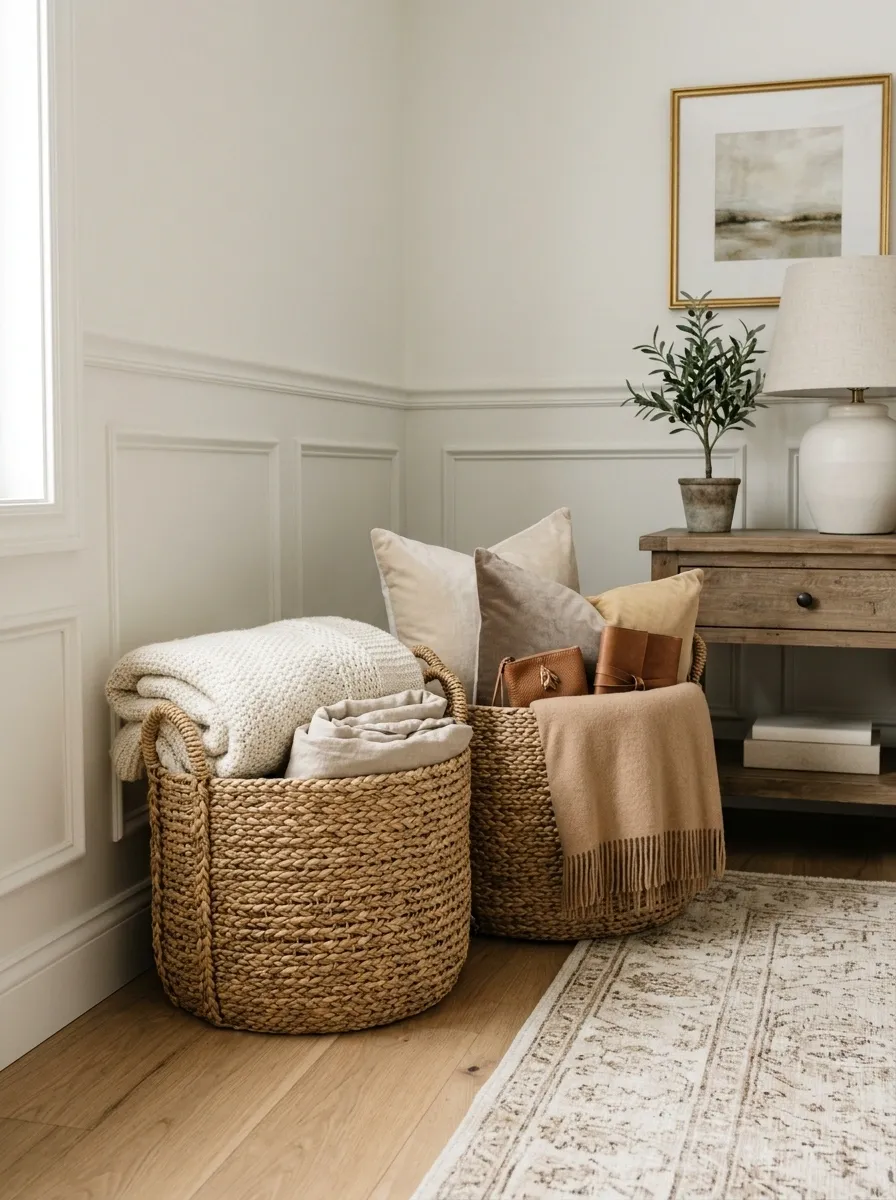
One large basket can look accidental. Two matching or closely related baskets look like a deliberate storage zone.
Place them side by side or stagger one slightly behind the other. Use one for extra blankets and the other for pillows, handbags, accessories, or another category that routinely needs a home.
Choose baskets with some visual connection, such as the same material, similar color, or matching shape. The contents can differ, but the containers should feel related.
This is a strong choice when the corner needs hidden storage but a cabinet would feel too heavy.
Create a Calm Meditation or Stretching Corner
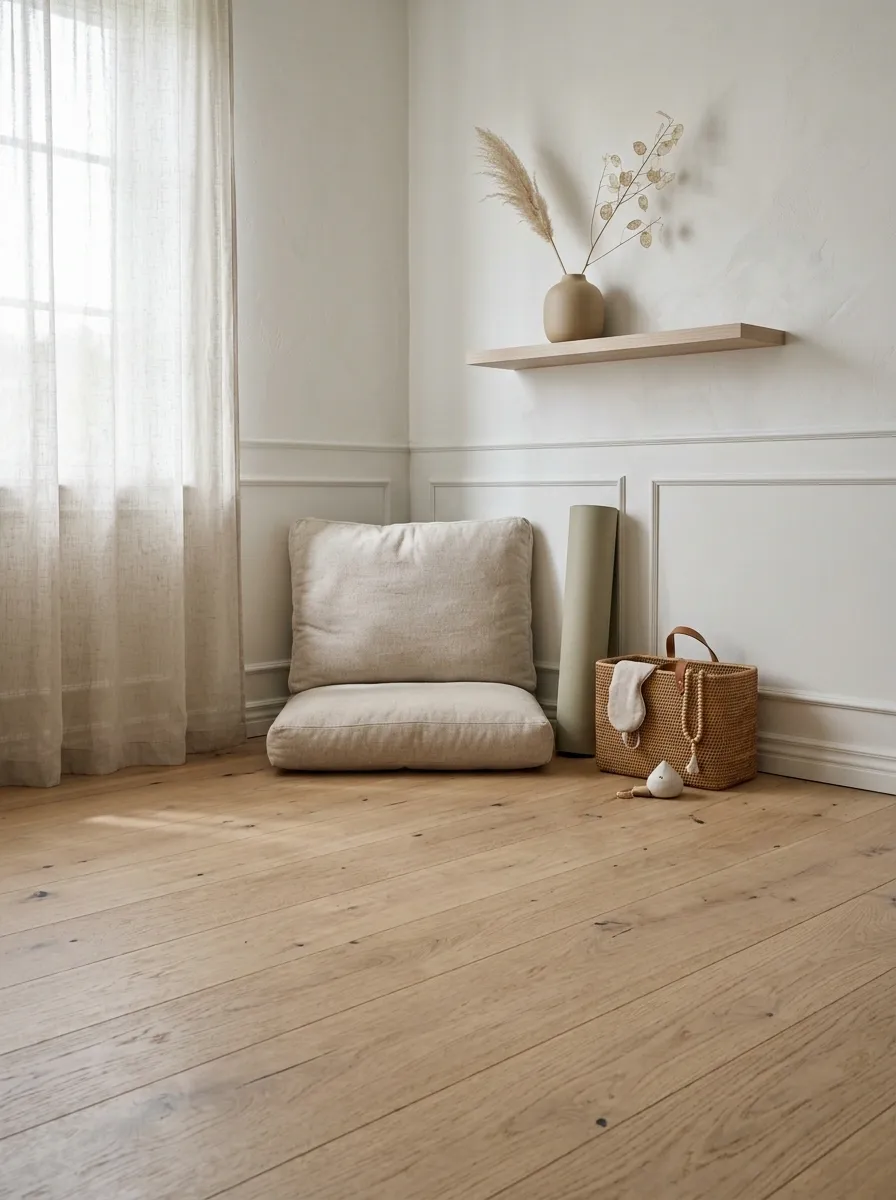
A bedroom corner doesn’t have to hold furniture at all.
Clear the floor and create a small area for stretching, breathing exercises, quiet reading, or a few minutes away from screens. The trick is to make the setup easy to use. If a mat is buried in a closet, the corner won’t serve its purpose.
Use a rolled mat, one floor cushion, and a small basket for anything that belongs there.
This approach is useful in a bedroom that already has plenty of furniture. The empty floor becomes the feature.
Add a Small Storage Ottoman That Pulls Double Duty
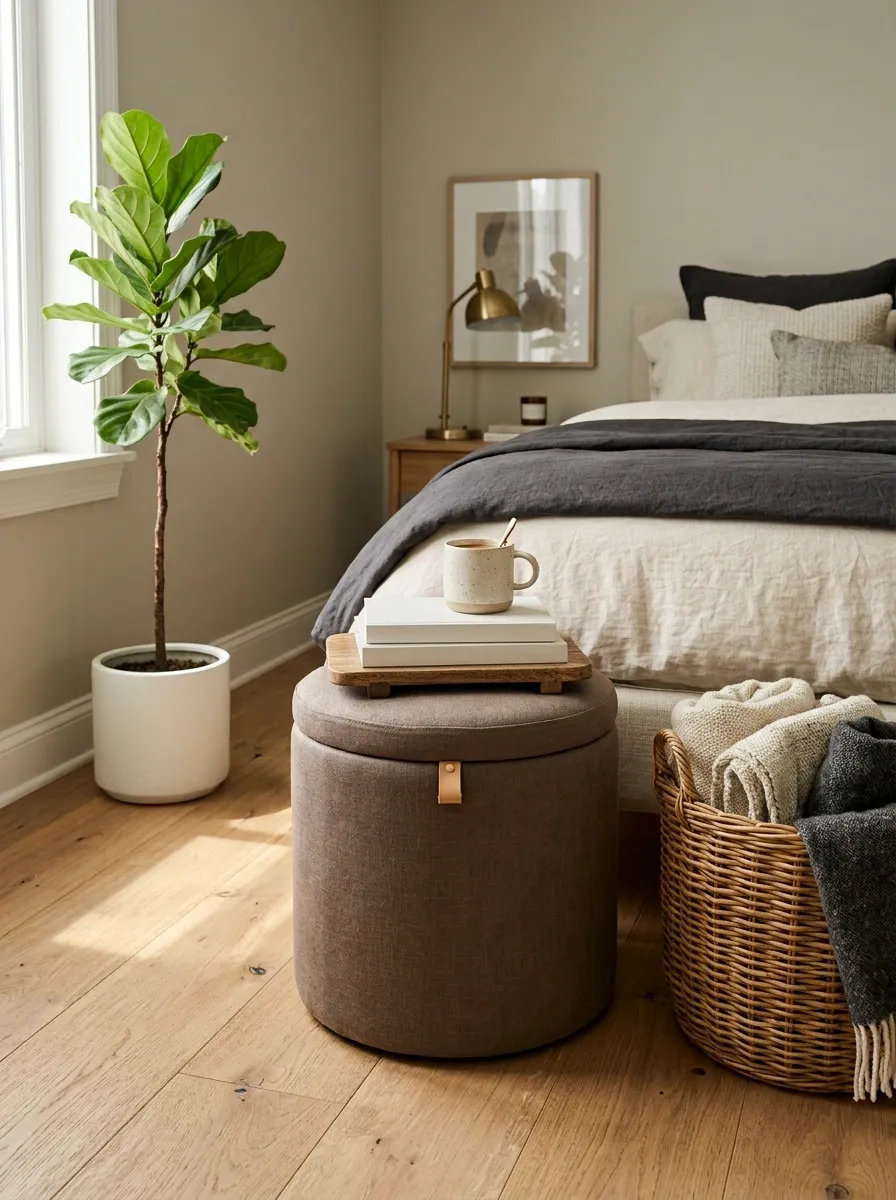
An ottoman earns its space because it can do two jobs at once. It can provide a place to sit while hiding blankets, books, accessories, or other bedroom extras.
Choose a compact shape that fits the corner without touching nearby furniture. Upholstered versions soften a room with lots of hard surfaces, while structured woven styles work well in more casual bedrooms.
The key is the lid.
A storage ottoman with an actual compartment solves more than a decorative stool ever could.
This is the practical choice when the corner needs both seating and storage, especially in bedrooms where every furniture piece needs to earn its footprint.
Build a Bedroom Plant Cluster Instead of One Lone Pot
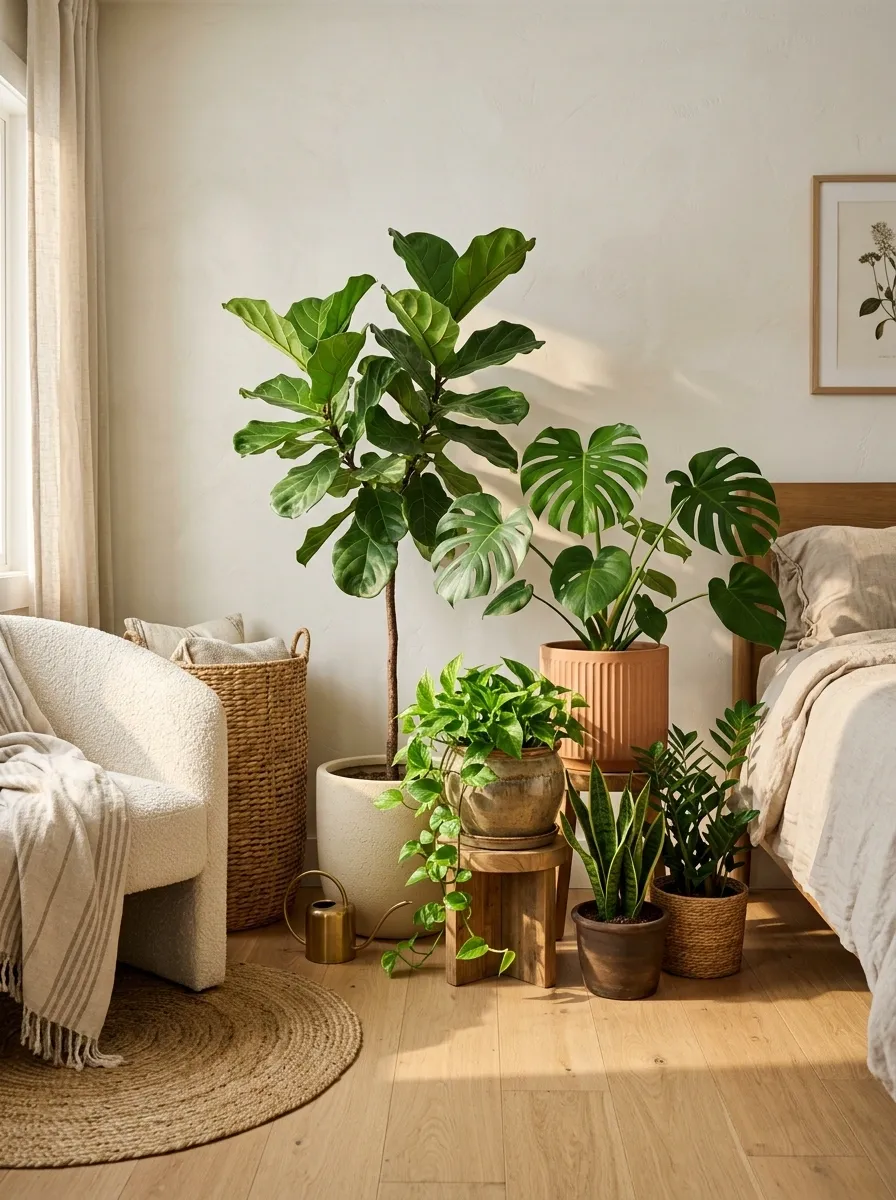
One plant can look undersized in a large empty corner. A small group creates more presence without requiring a large piece of furniture.
The trick is variation. Use one taller plant, one medium plant, and one low pot rather than three identical plants lined up like a display shelf.
Keep the grouping loose. Slight differences in height, pot shape, and leaf form make the arrangement feel natural. Keep enough floor visible around the pots so the corner still feels open.
This works best in a wider corner where a single small pot would disappear visually.
Use a Floating Shelf When the Floor Is Already Full
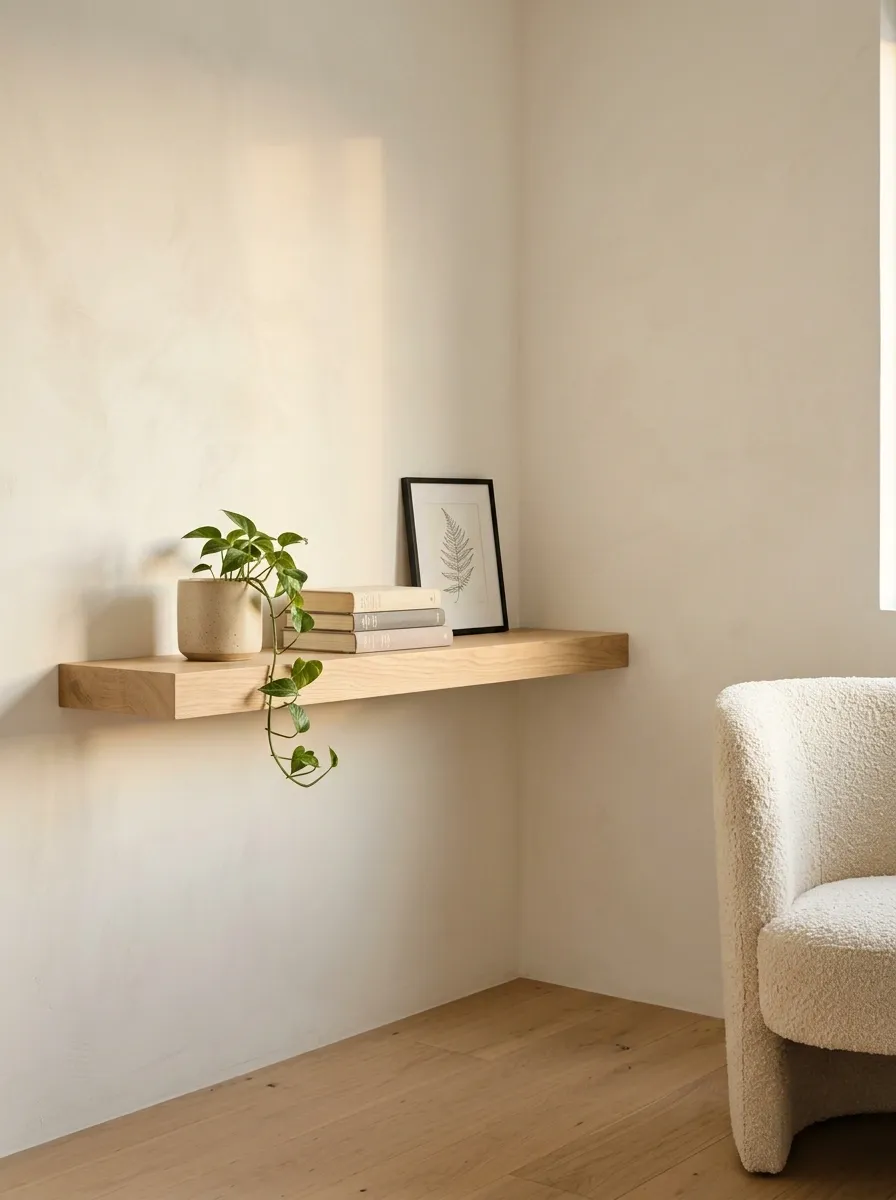
Sometimes the answer isn’t another floor object. A floating shelf uses the wall while leaving the floor completely untouched.
Mount one substantial shelf at a comfortable viewing height, then give it a clear purpose. Books, framed prints, a small plant, or a few personal objects can work well.
Keep the shelf edited.
A long shelf packed edge to edge defeats the whole point. Leave a deliberate gap between groups so the wall still reads as open space.
This is one of the cleanest solutions for a small bedroom where every extra piece of floor furniture makes the room feel tighter.
Make a Soft Accent Corner With a Mirror and Stool
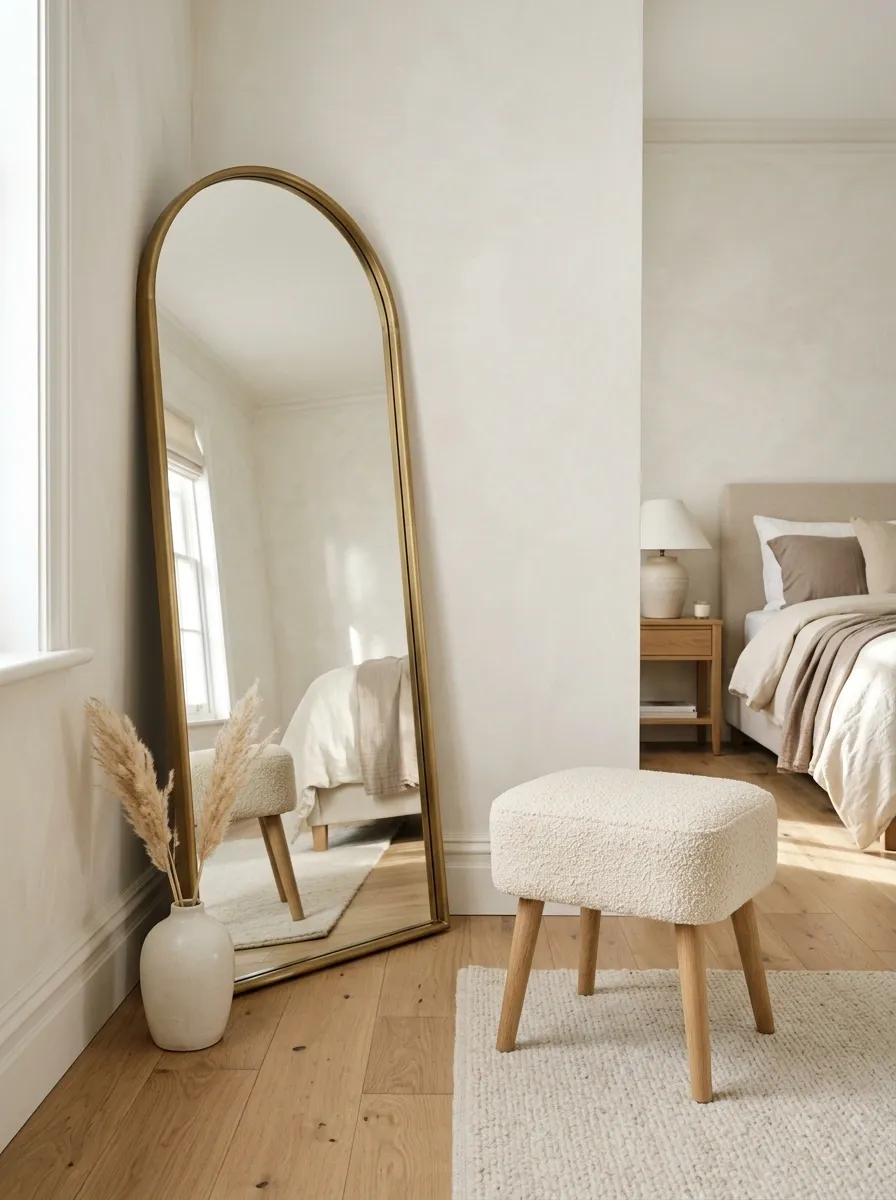
A mirror gives a blank corner more visual weight while also reflecting light around the bedroom. Pair it with a compact stool and the corner gains a useful purpose without becoming a full vanity.
A tall leaning mirror can work particularly well when the room has enough floor depth. In tighter spaces, mount the mirror and keep the stool underneath or slightly to the side.
Keep the composition simple: one mirror, one stool, one small detail.
The result gives the corner enough structure to feel finished while keeping the overall bedroom light and open.
Turn the Corner Into a Pet Station Without Making It Look Messy
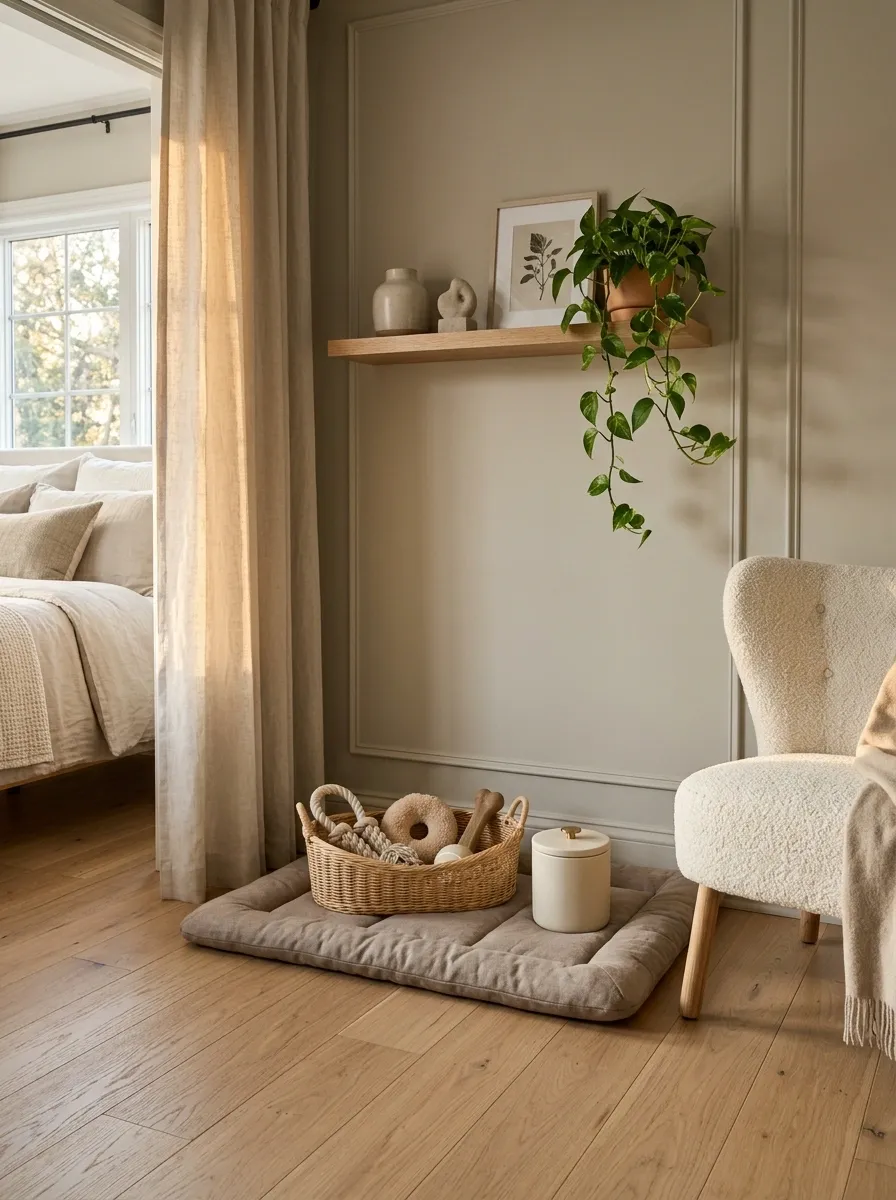
Pet supplies tend to spread across bedrooms fast. A dedicated corner gives them boundaries.
A low basket can hold toys, a washable mat can define the area, and a small lidded container can hide everyday supplies. Keep the station close to where the pet already spends time so it gets used instead of becoming decorative storage.
The visual trick is repetition. Choose containers that share a material or color so the setup reads as one zone.
The goal is a pet-friendly corner that still looks like part of the bedroom rather than a pile of pet equipment.
Finish the Corner With One Layered, Intentional Vignette
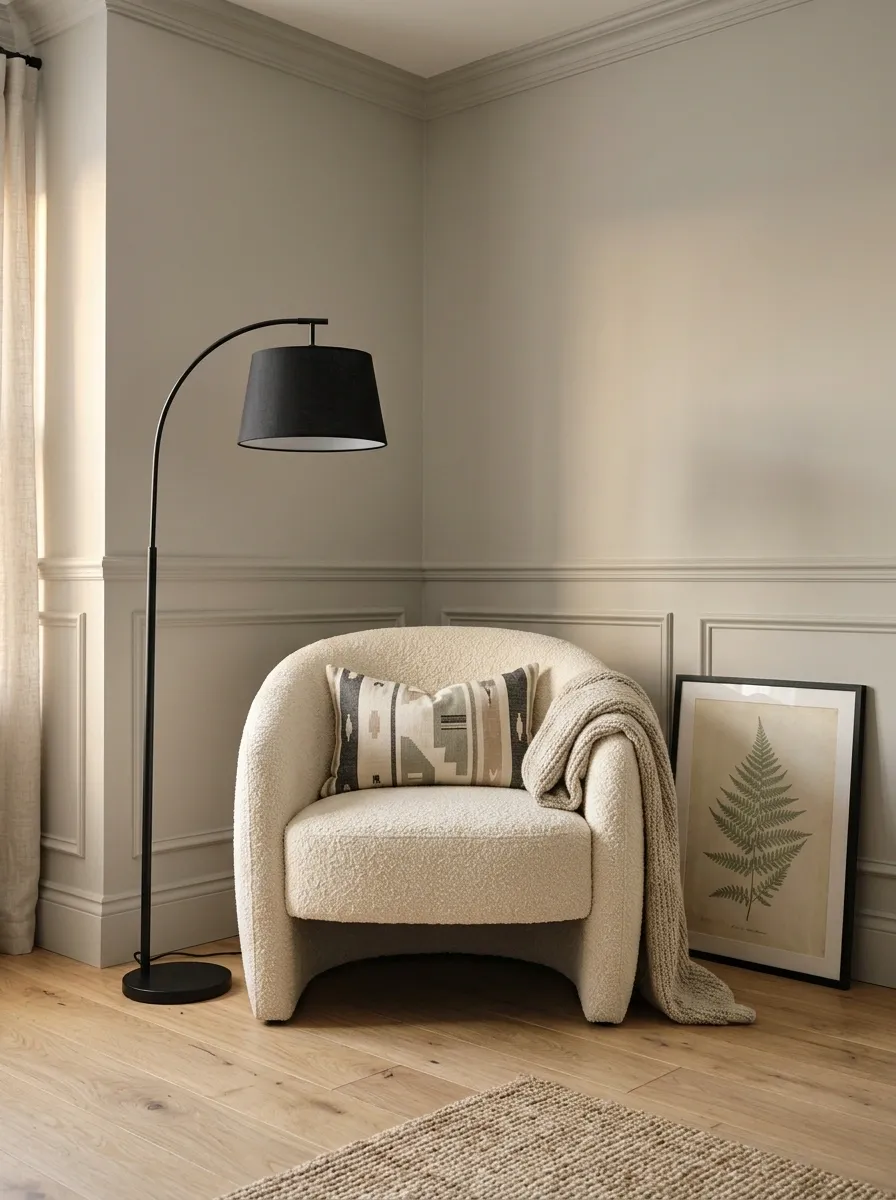
The final option is for the corner that doesn’t need another job. It simply needs visual balance.
Start with one anchor, then add only two supporting details. A small chair with a lamp and cushion works. So does a tall plant with a basket and artwork. The exact combination matters less than the hierarchy.
Use the three-layer rule:
- Anchor: the largest or tallest object.
- Support: one useful or medium-sized piece.
- Finish: one small detail that connects the corner to the rest of the room.
Stop there. Over-styling is the fastest way to make a once-promising corner look cluttered.
A finished corner should look intentional from across the room and useful up close. That’s the standard worth keeping.
The Best Bedroom Corner Is the One That Earns Its Space
A forgotten corner doesn’t need a complicated makeover. It needs one decision that makes sense for the room.
A chair can create a reading spot. A narrow bookcase can solve storage. A mirror can add height. A floor lamp can fill a blank vertical area without adding bulky furniture. Even an intentionally empty floor can work when the corner has a clear purpose.
The biggest mistake is buying something simply because the corner looks bare. Start with what the bedroom actually needs, choose one strong anchor, and leave enough breathing room around it.
That’s what makes the finished space feel considered instead of crowded. Save this list for the next time an empty bedroom corner starts begging for attention.