
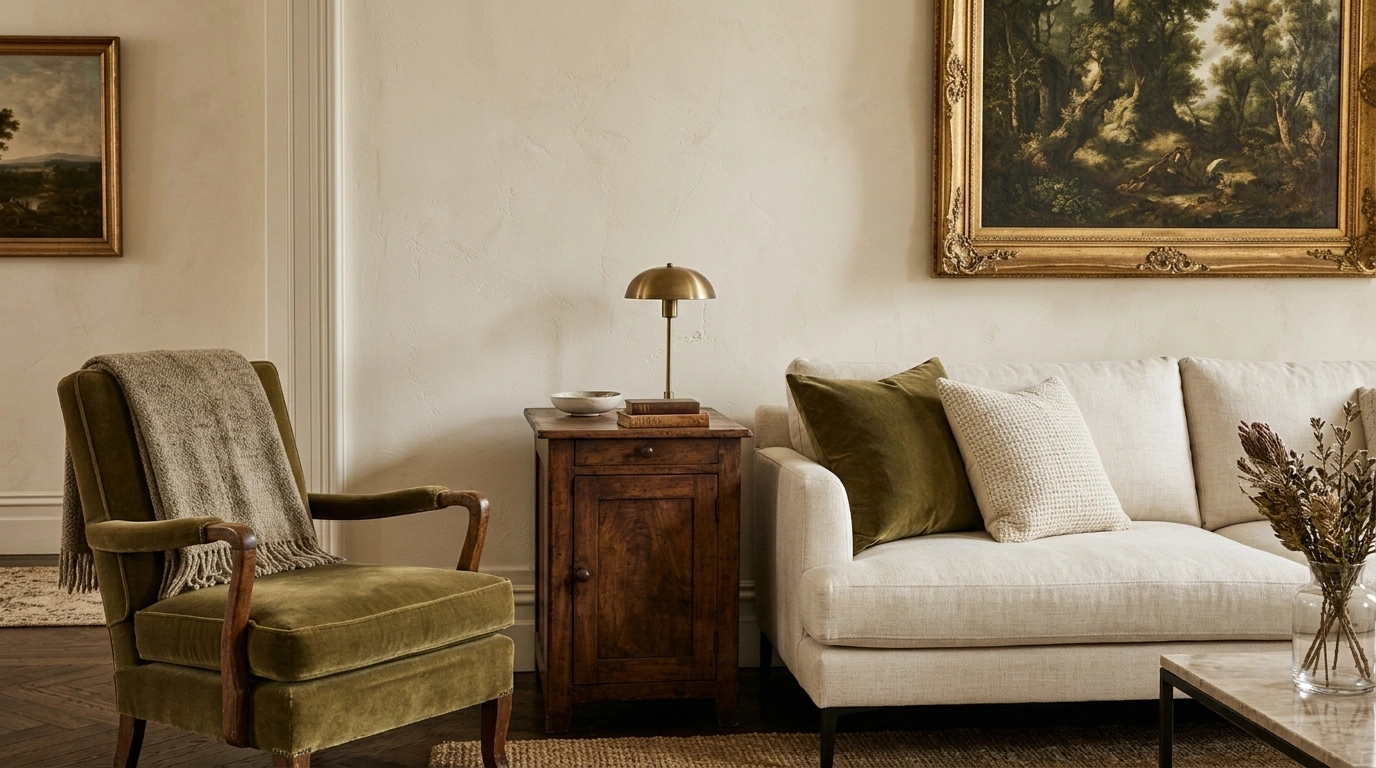
The easiest way to ruin a room with mixed furniture is to treat every piece like it needs a partner from the same decade.
That sounds obvious, but it happens constantly. An old wooden cabinet gets surrounded by more antique-looking accessories. A modern sofa gets paired with a matching coffee table, matching side tables, and matching lamps. Then a single vintage chair gets dropped into the corner because it looked good in the store.
The result isn’t layered. It’s disconnected.
Old and new furniture actually looks best when the contrast is obvious but the room still has a few details tying everything together. A carved cabinet can work with a clean sofa. A sleek dining chair can make an old table feel less formal. A weathered console can look better with a very simple lamp than with a collection of rustic accessories.
The trick is knowing what should repeat and what should stay different.
Smart Ways to Mix Old and New Furniture
Anchor a Modern Sofa With One Serious Vintage Piece
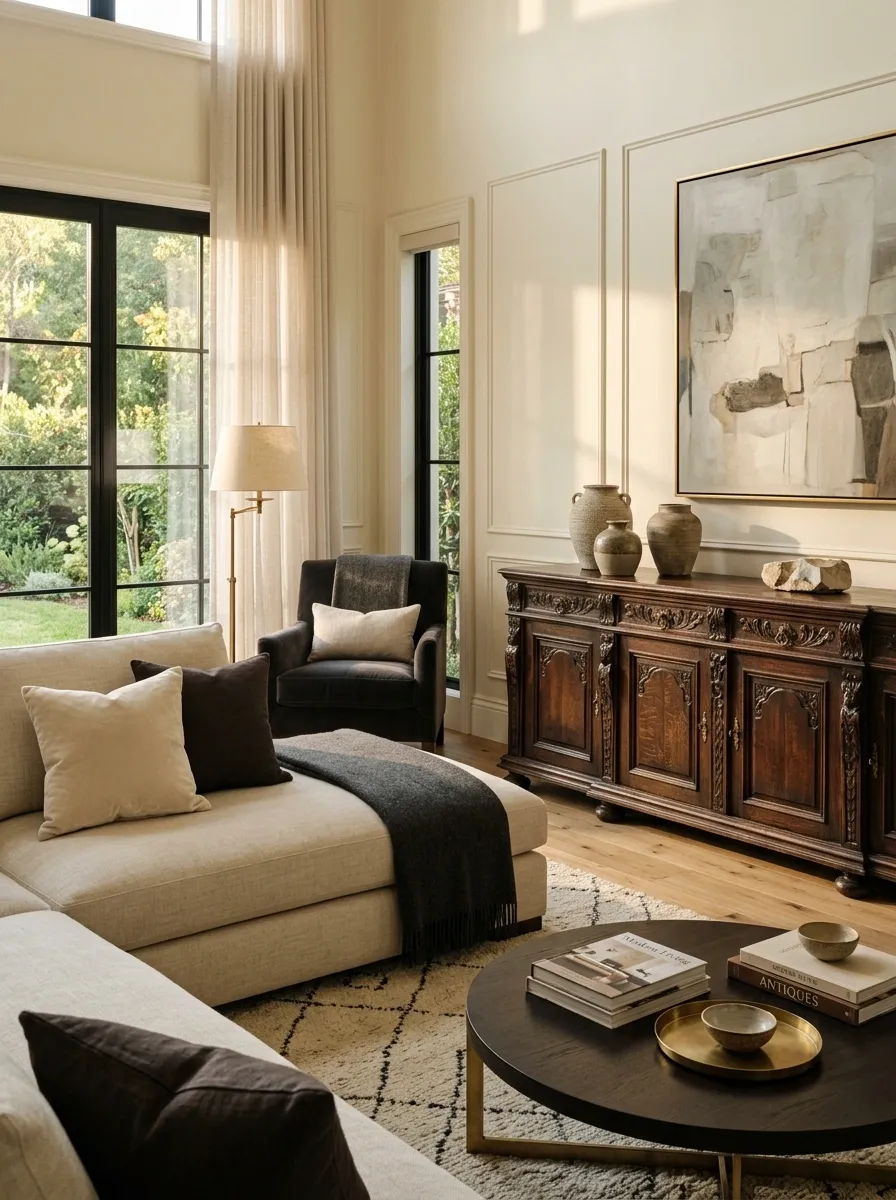
A modern sofa needs something with enough character to keep the room from feeling showroom-flat.
Choose one older piece with real visual weight, such as a carved cabinet, chunky wooden chest, or antique sideboard. Let it become the counterpoint to the sofa instead of adding several small vintage accessories.
Keep the pairing strong:
- Choose one substantial older piece.
- Give it clear space around it.
- Repeat one of its colors elsewhere.
The contrast works because both pieces can hold their own. A tiny antique stool beside a large contemporary sectional won’t create the same balance.
Repeat the Old Wood Tone Somewhere Across the Room
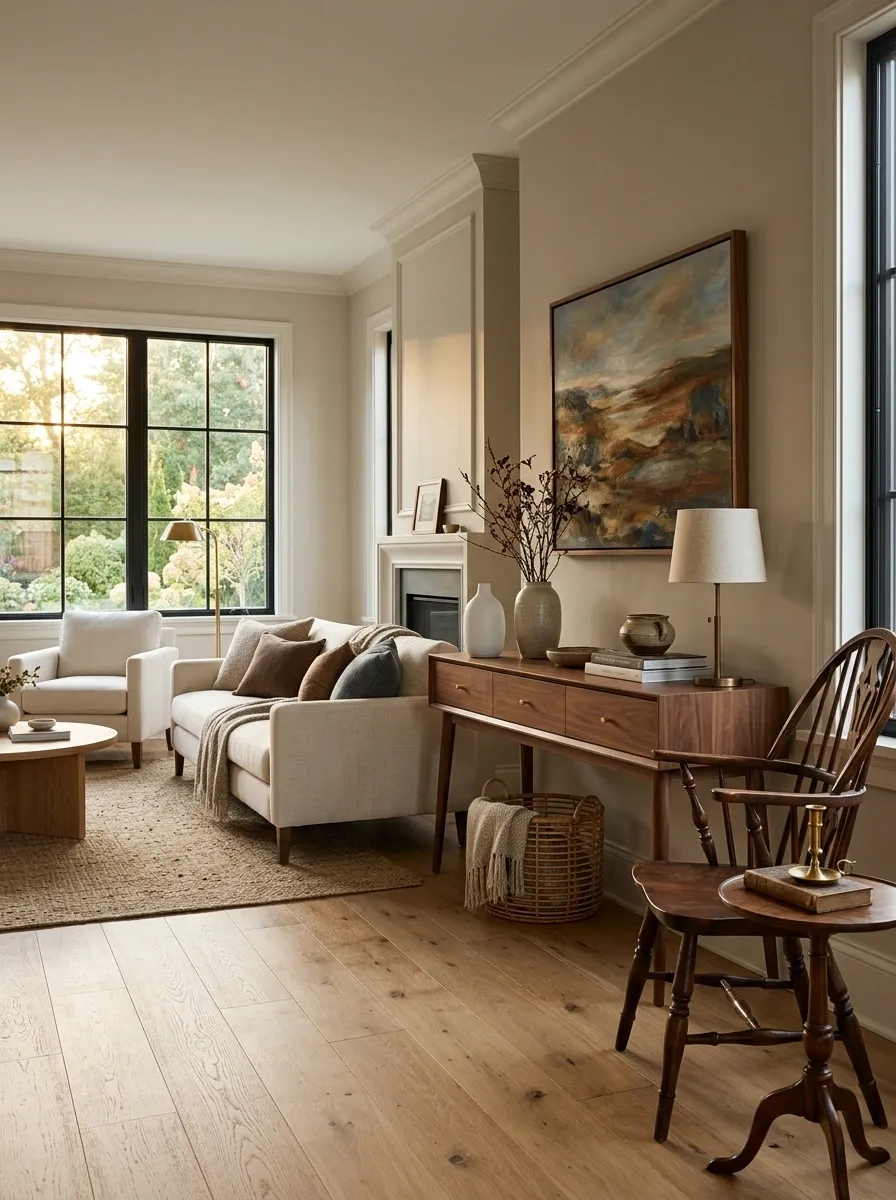
Different furniture periods stop arguing when their wood tones have a visible connection.
A walnut console can relate to an older walnut chair. A honey-toned cabinet can work beside a newer table when that same warmth appears in a frame, stool, or small side table.
Quick check before adding another piece:
- Look at the older wood.
- Find its dominant undertone.
- Repeat that warmth at least once nearby.
- Let the modern furniture stay simpler.
The goal isn’t matching every finish. It’s giving the eye one familiar thread to follow.
Pair a Bulky Antique With Something Visually Light
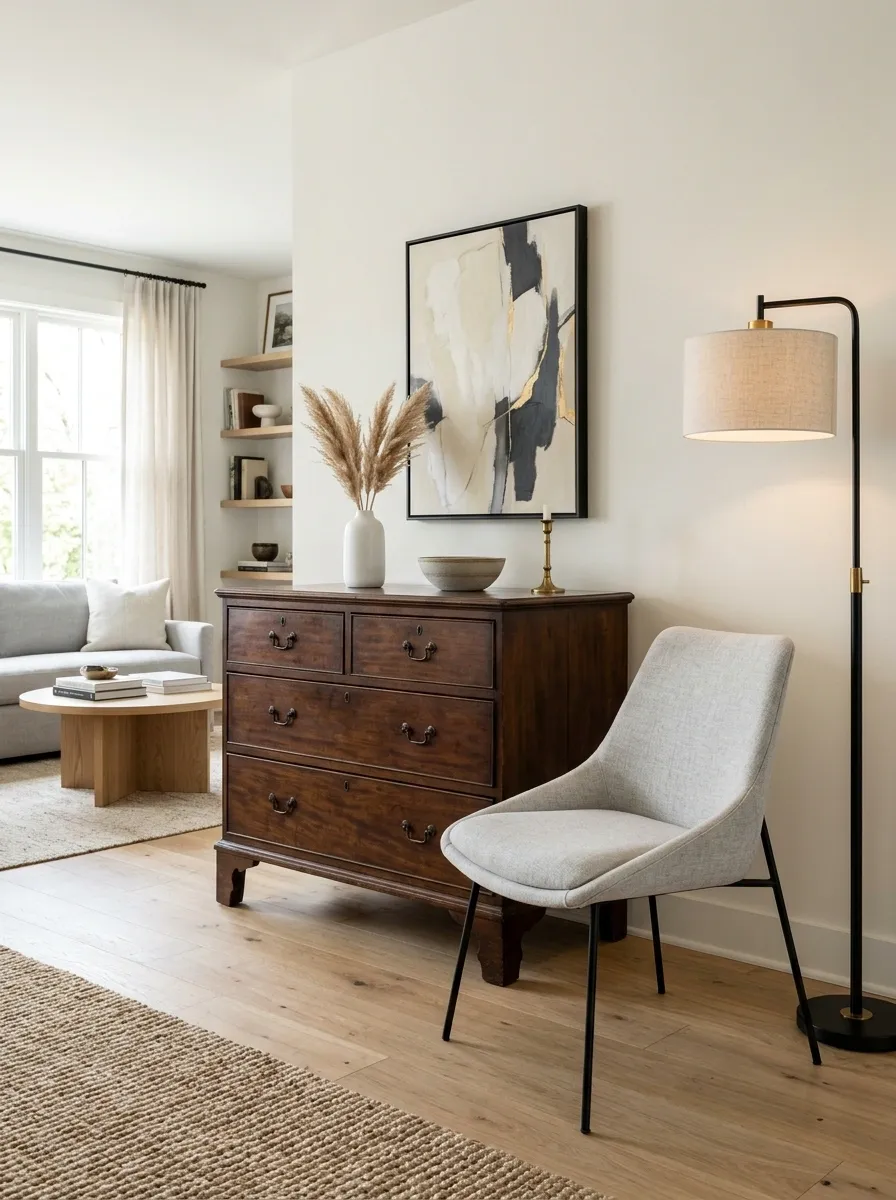
Large antiques can make a room feel heavy when every nearby piece is equally substantial.
A dark wooden dresser looks sharper beside a slim metal lamp. A thick vintage cabinet feels less imposing next to a streamlined chair with exposed legs. The contrast gives the eye somewhere to breathe.
Use this simple pairing:
Heavy piece: thick wood, deep color, closed storage
Light piece: thin legs, open space, glass, metal, or pale upholstery
Don’t crowd the antique with more visual mass. Give it one lighter neighbor and let that difference do the work.
Use One Fabric Color to Tie Different Eras Together
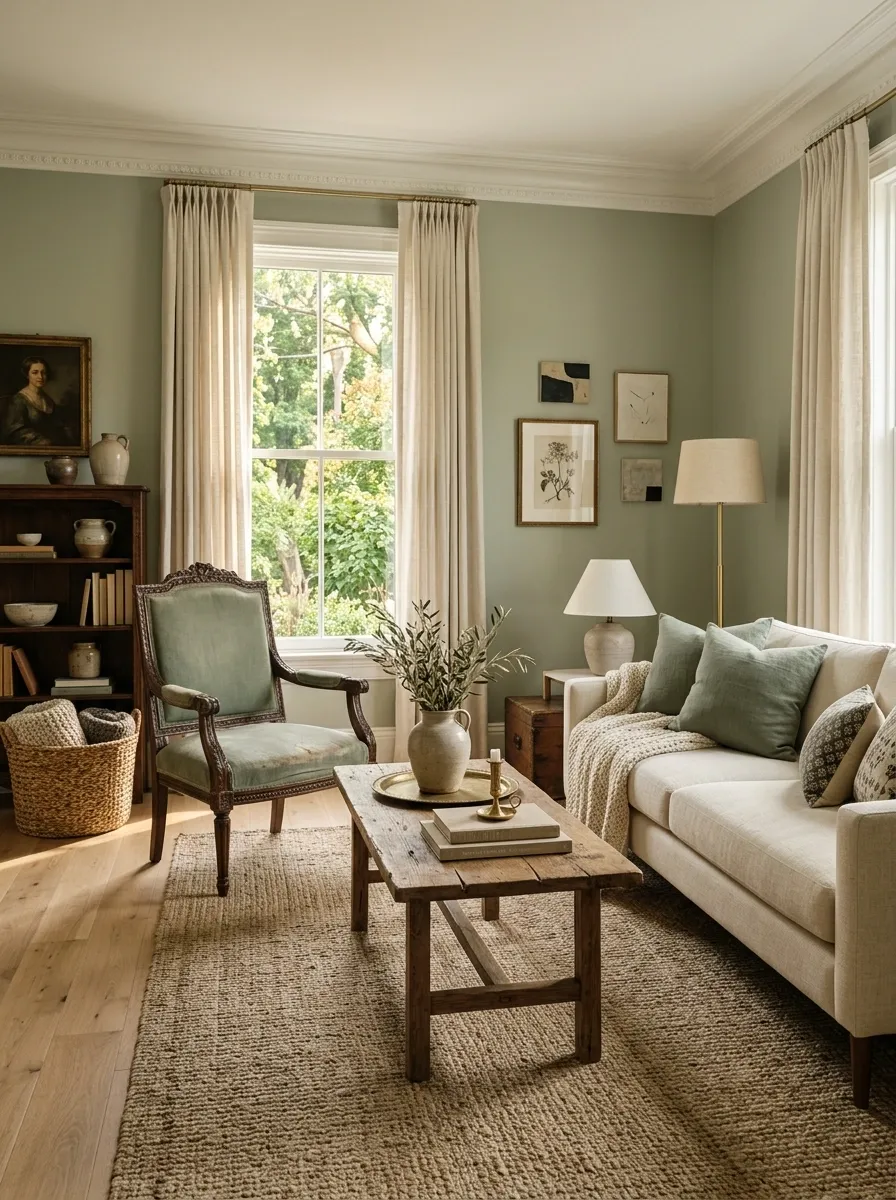
Fabric is one of the easiest ways to make unrelated furniture feel connected.
A faded vintage armchair can share its muted green with a new sofa cushion. A cream linen curtain can echo the seat of an old dining chair. The furniture doesn’t need matching upholstery. It needs one repeated color that appears naturally around the room.
A reliable formula:
Vintage fabric → repeated color → modern fabric
Keep the shared color slightly varied rather than perfectly identical. Small differences make the room feel lived-in instead of coordinated by a catalog.
Let an Old Dining Table Meet Modern Chairs
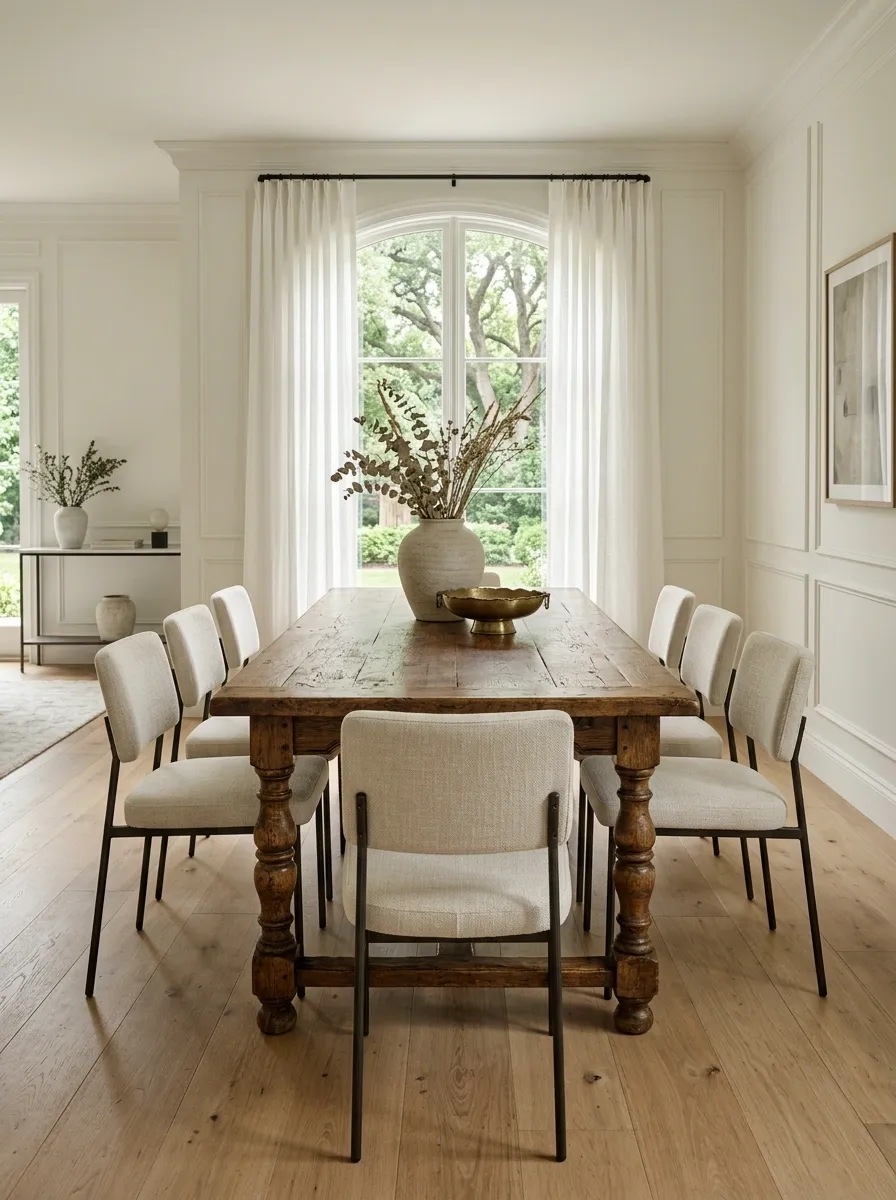
A traditional dining table doesn’t need traditional chairs around it. In fact, that pairing can look overly formal.
Modern chairs give an old table a cleaner edge, especially when their shape is simple and their upholstery is quiet. Look for chairs with enough visual presence to hold up against thick table legs and a substantial top.
The strongest mix usually has:
- A table with visible age or craftsmanship.
- Chairs with cleaner lines.
- One repeated color or material between them.
Keep the table as the main character. The chairs should frame it, not compete with it.
Repeat One Metal Finish on Both Old and New Pieces
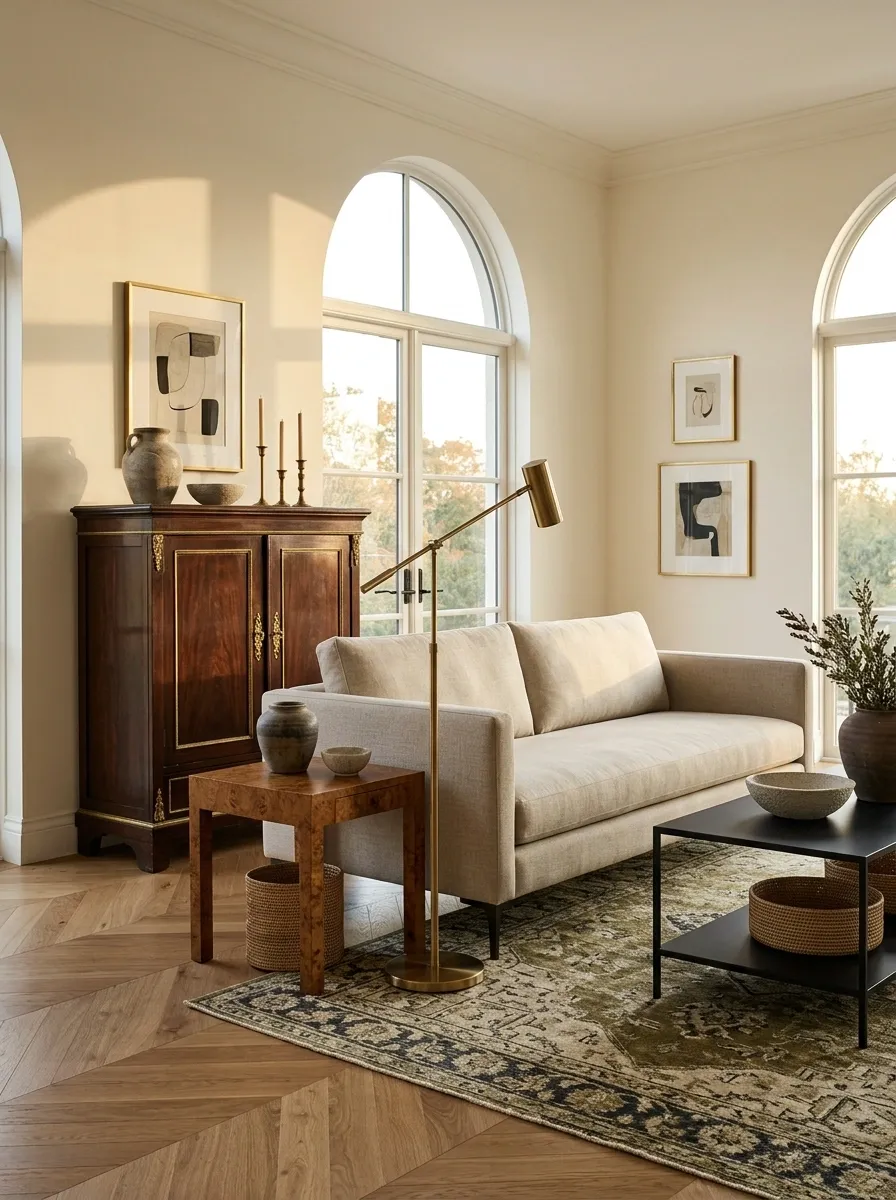
Metal finishes can quietly pull different furniture styles into the same room.
A brass detail on an older cabinet can connect to a modern brass lamp. Black hardware on a vintage dresser can echo a slim black coffee table. The pieces don’t need identical finishes, but they should feel like they belong to the same metal family.
Use the finish where the eye naturally travels:
- Cabinet hardware
- Lamp bases
- Side-table legs
- Picture frames
- Small decorative details
Don’t scatter five different metals across the room. Two related finishes create rhythm. Too many make the room feel undecided.
Put a Sleek Lamp on a Traditional Cabinet
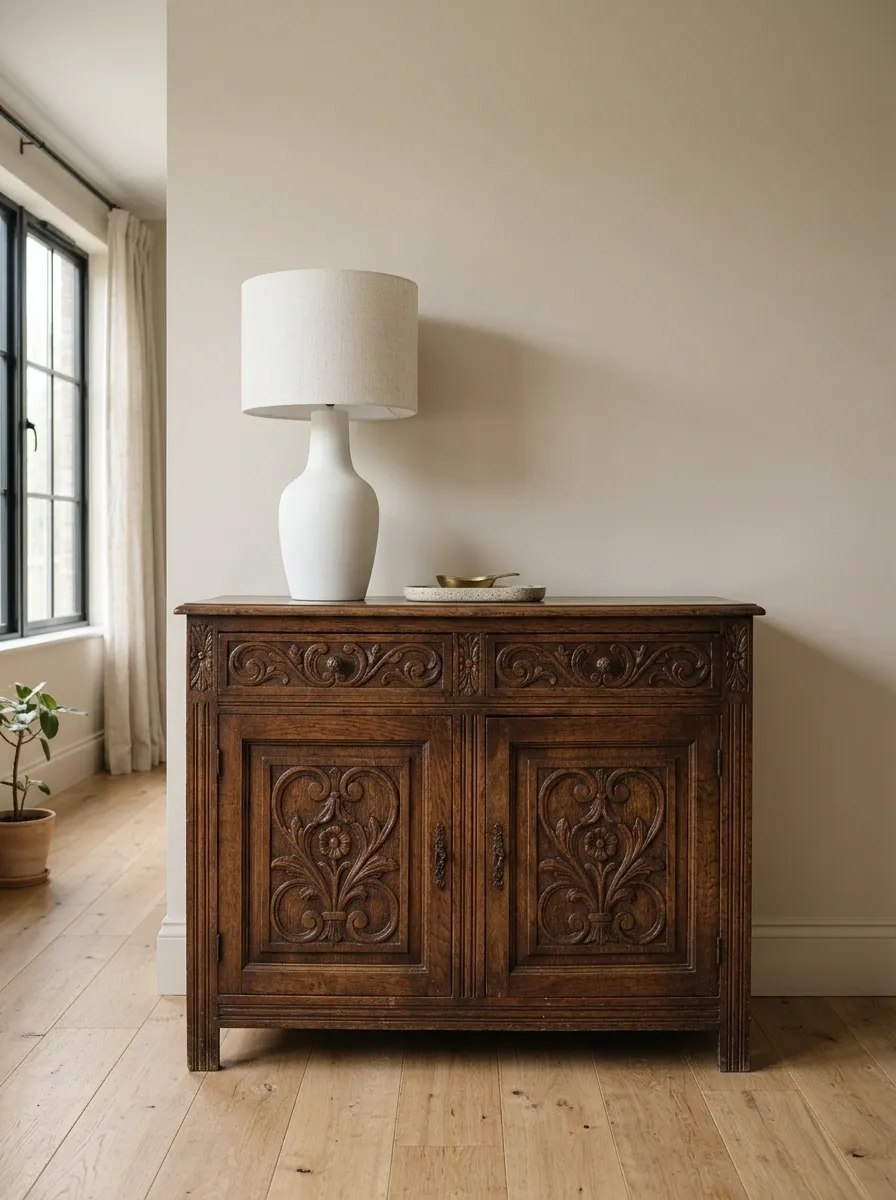
An old cabinet can look surprisingly current with the right thing sitting on top.
Instead of adding another antique object, place a clean modern lamp above it. A simple ceramic, glass, or metal silhouette creates a crisp interruption against ornate woodwork.
The contrast is strongest when the cabinet has plenty of character and the lamp has almost none.
Aim for this relationship:
Detailed base + quiet lamp = controlled contrast
Keep the surface mostly clear. One lamp and perhaps one small object will look sharper than a crowded collection of decorative pieces.
Make an Antique Chair Part of a Modern Seating Group
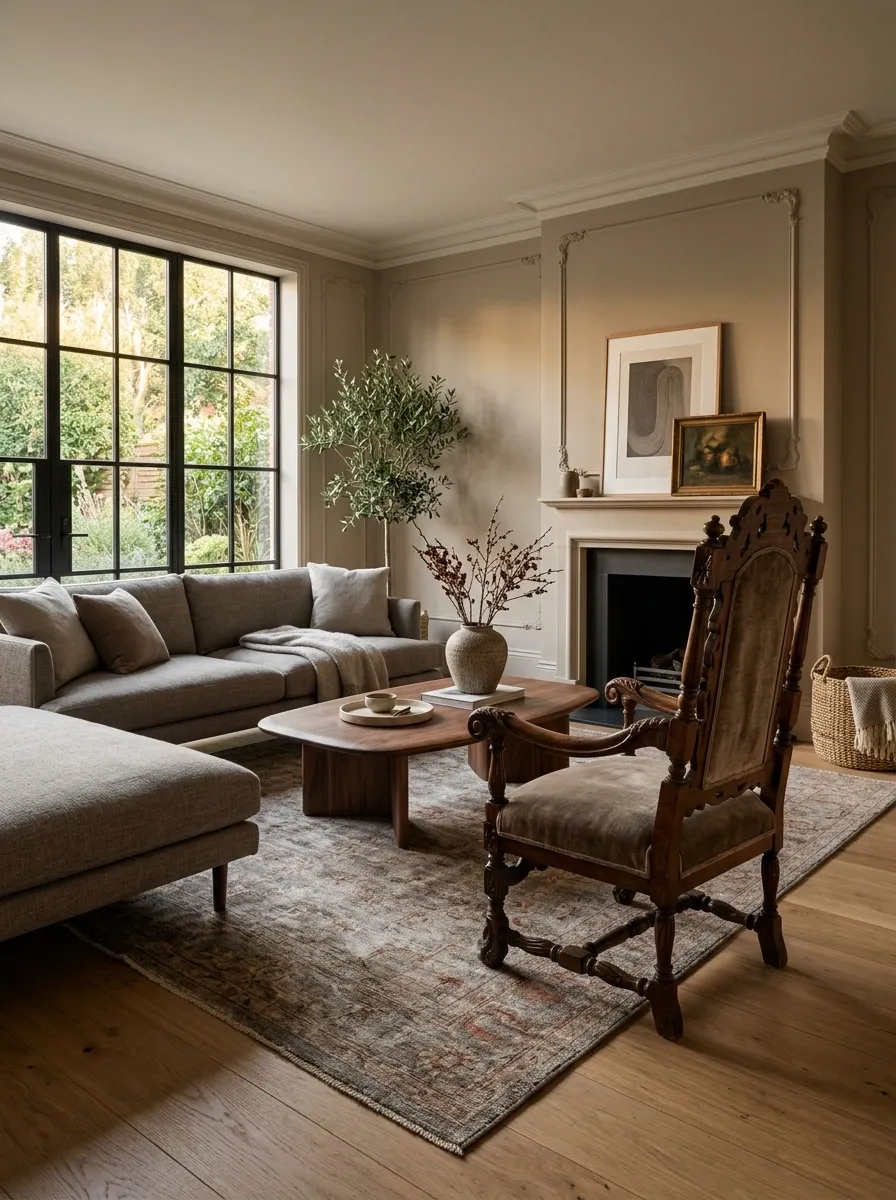
An older chair shouldn’t look like it was dropped into the room as an afterthought.
Give it a real job. Place it opposite the sofa, angle it toward the coffee table, or use it to close one side of the seating arrangement. Its position matters as much as its style.
A modern sectional paired with one carved chair can look far more intentional when the chair shares a color already present in the sofa or rug.
The key move: treat the vintage chair as furniture first and a statement piece second.
Keep the Background Quiet Around a Statement Antique
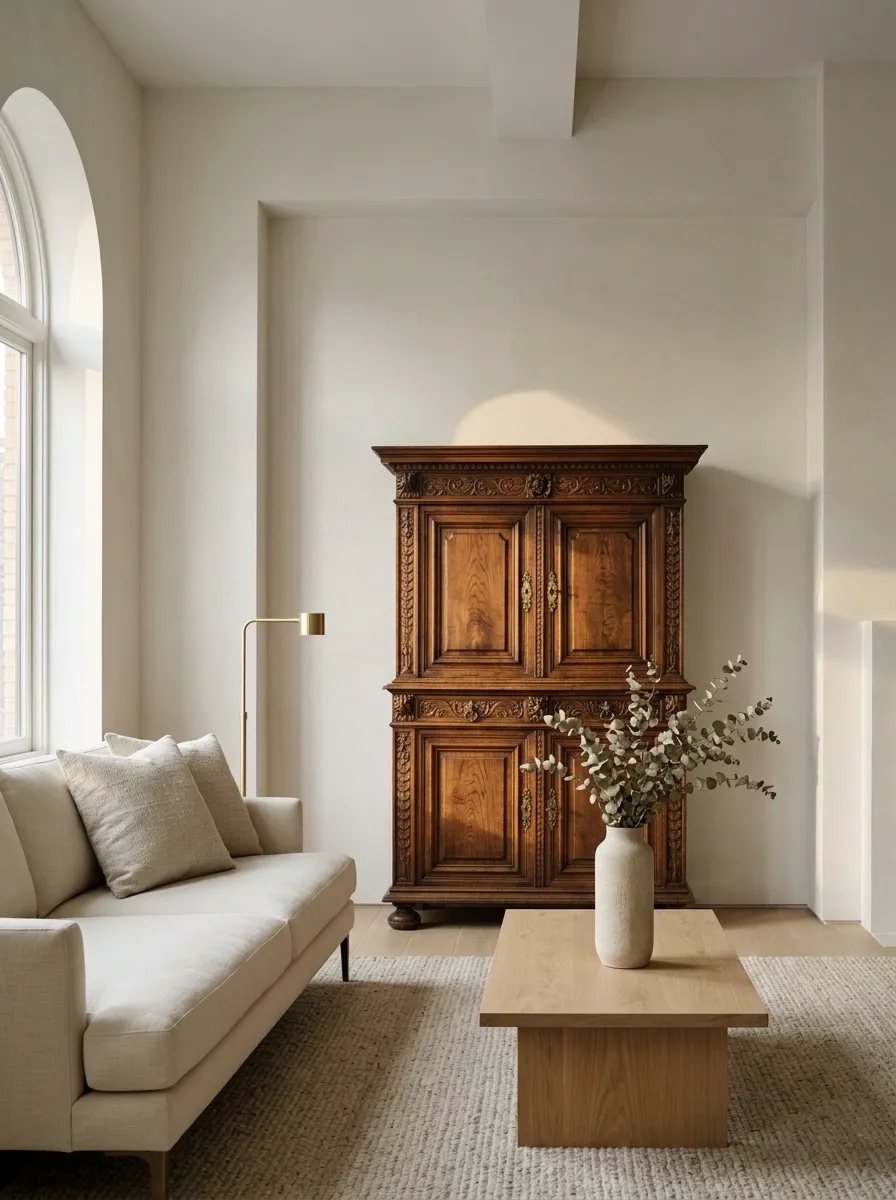
A highly detailed antique doesn’t need a busy backdrop.
If a cabinet has carved doors, unusual hardware, or rich wood grain, give it a calmer wall and fewer nearby accessories. Modern simplicity around an older piece makes the craftsmanship easier to notice.
Use restraint around the star:
- Plain wall
- Simple lamp
- Limited accessories
- Open floor space
- One repeated color nearby
The mistake is trying to add more character around a piece that already has plenty. Let the antique breathe.
Mix Wood Furniture by Matching Its Undertone
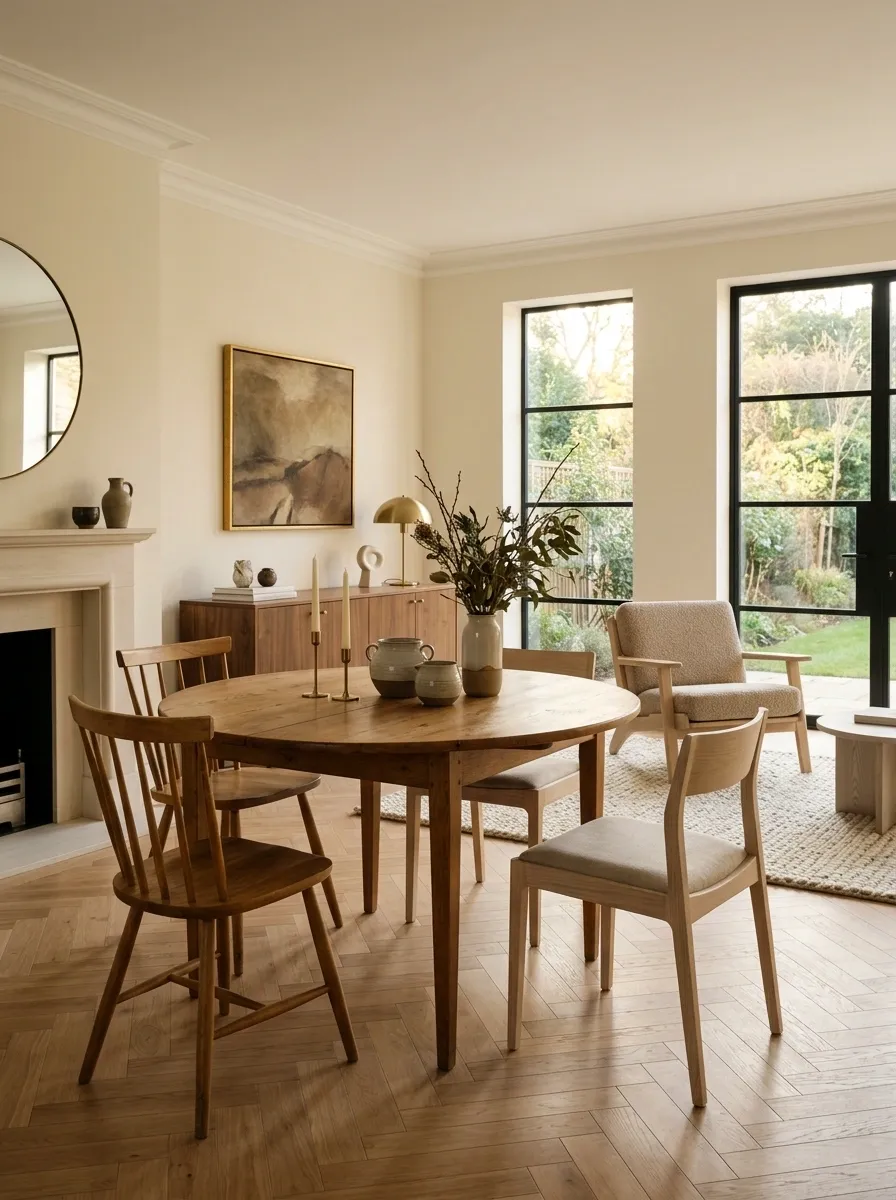
Brown isn’t one color. Some woods read warm and honeyed, while others lean cooler, deeper, or more muted.
That difference matters more than whether two pieces come from the same era.
Place a warm antique table beside another warm wood or a neutral modern piece. Avoid putting a very orange-toned finish beside a cool gray-brown finish unless the rest of the room provides a strong bridge.
Use the dominant undertone as the filter.
Use New Cushions to Update a Vintage Chair
A vintage chair can have a beautiful frame and completely wrong upholstery for the room.
Don’t replace the chair. Change the soft layer.
A new cushion in linen, cotton, or another simple fabric can make an older silhouette feel current without erasing what makes the piece special. Keep the frame visible. That’s where much of the character lives.
Best approach: use a fresh fabric color that already appears somewhere else in the room.
This is especially useful when the chair’s original upholstery is faded, overly patterned, or difficult to coordinate.
Pair a Rustic Console With Clean Modern Accessories
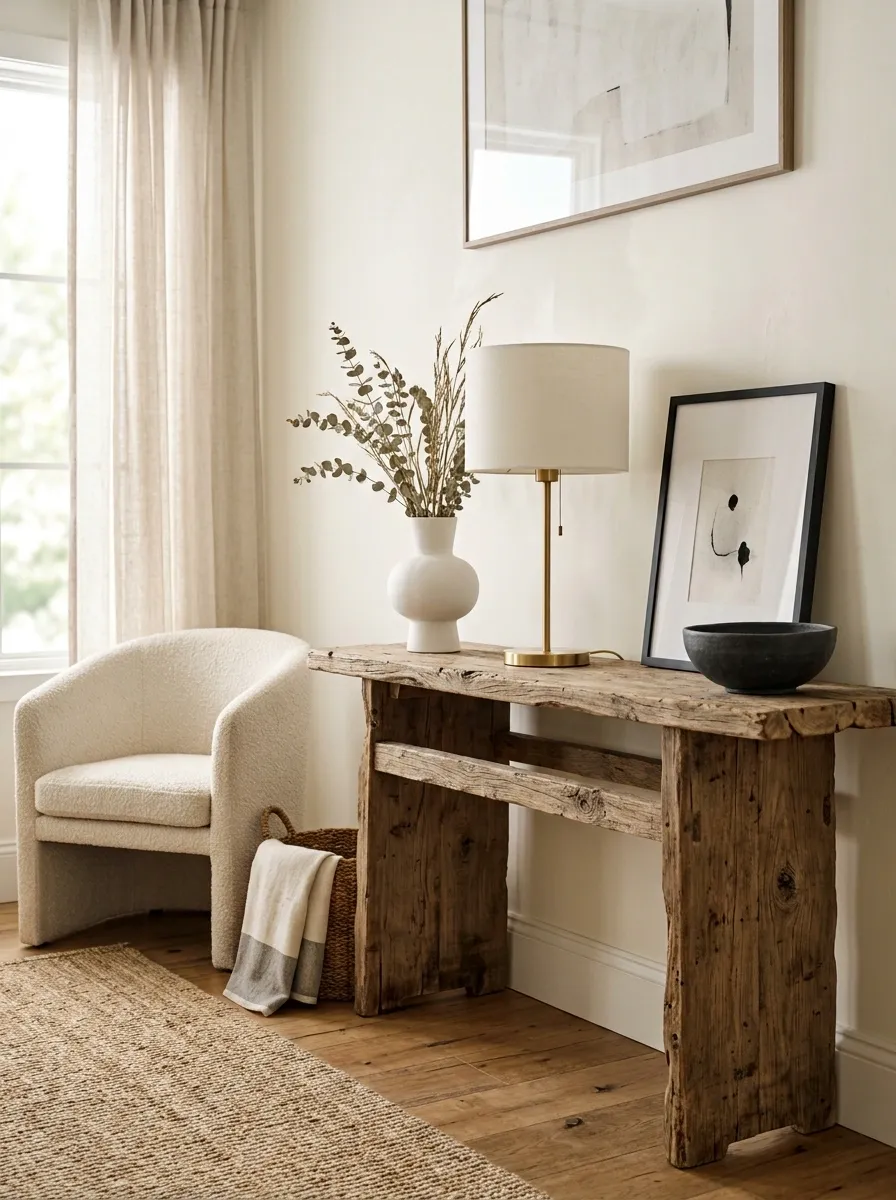
A rustic console already brings texture, knots, irregular edges, and visual age. More rustic accessories usually make the composition feel themed rather than collected.
Place cleaner objects on top instead.
A smooth ceramic vase, a simple lamp, or a restrained frame gives the console enough contrast to stand out without turning the room into a farmhouse display.
Think in opposites:
Rustic wood → smooth ceramic
Aged surface → crisp frame
Heavy base → simple accessory
The contrast keeps the console useful without allowing its style to take over the whole room.
Use Repetition to Make Mismatched Chairs Feel Intentional
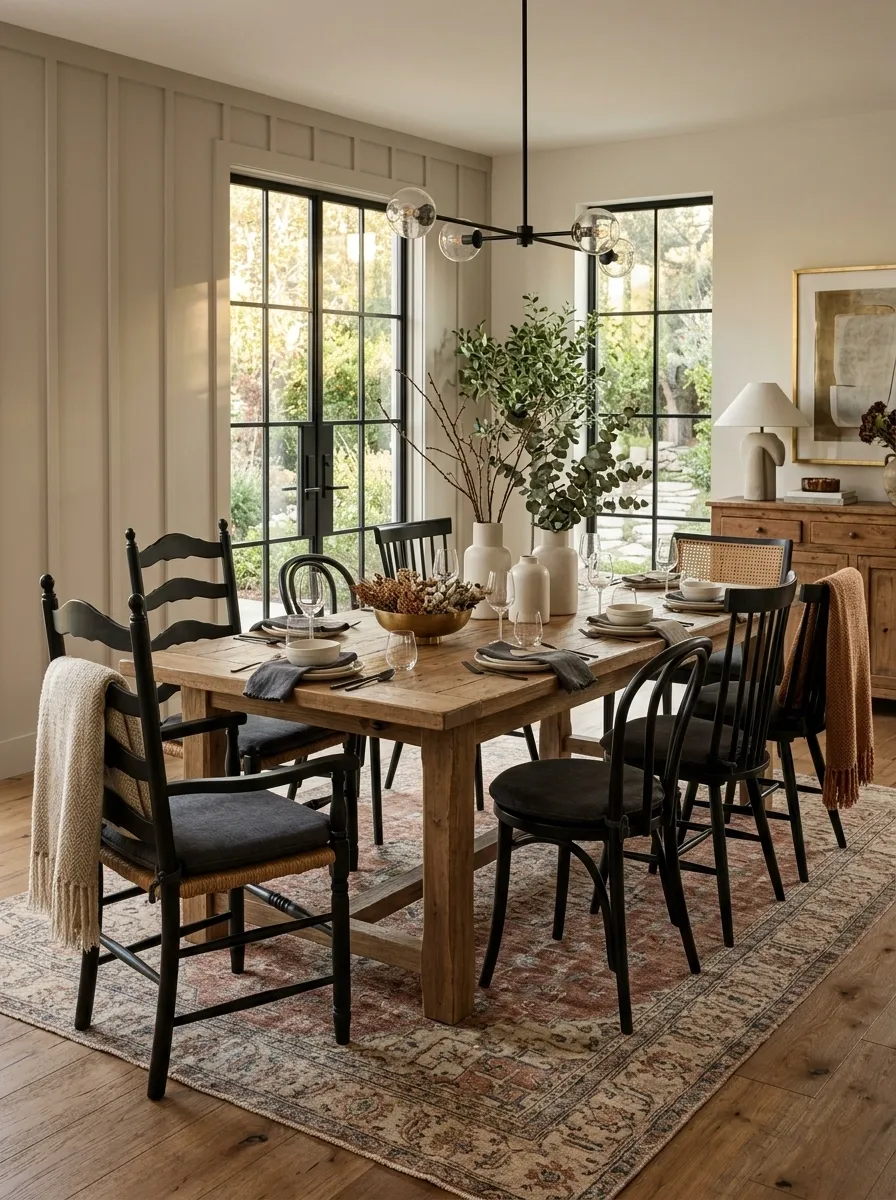
Dining chairs don’t need to be identical. They do need a reason to sit together.
Repeat one element across the group, such as seat color, wood tone, shape, or overall height. The frames can vary while the repeated detail gives the eye a pattern to recognize.
A mixed group feels especially natural when the differences are clear but controlled.
Use this three-step test:
- Pick the feature that repeats.
- Let the other details vary.
- Keep the table as the visual anchor.
That’s enough structure to make different chairs look collected rather than randomly assembled.
Give an Ornate Piece One Modern Neighbor
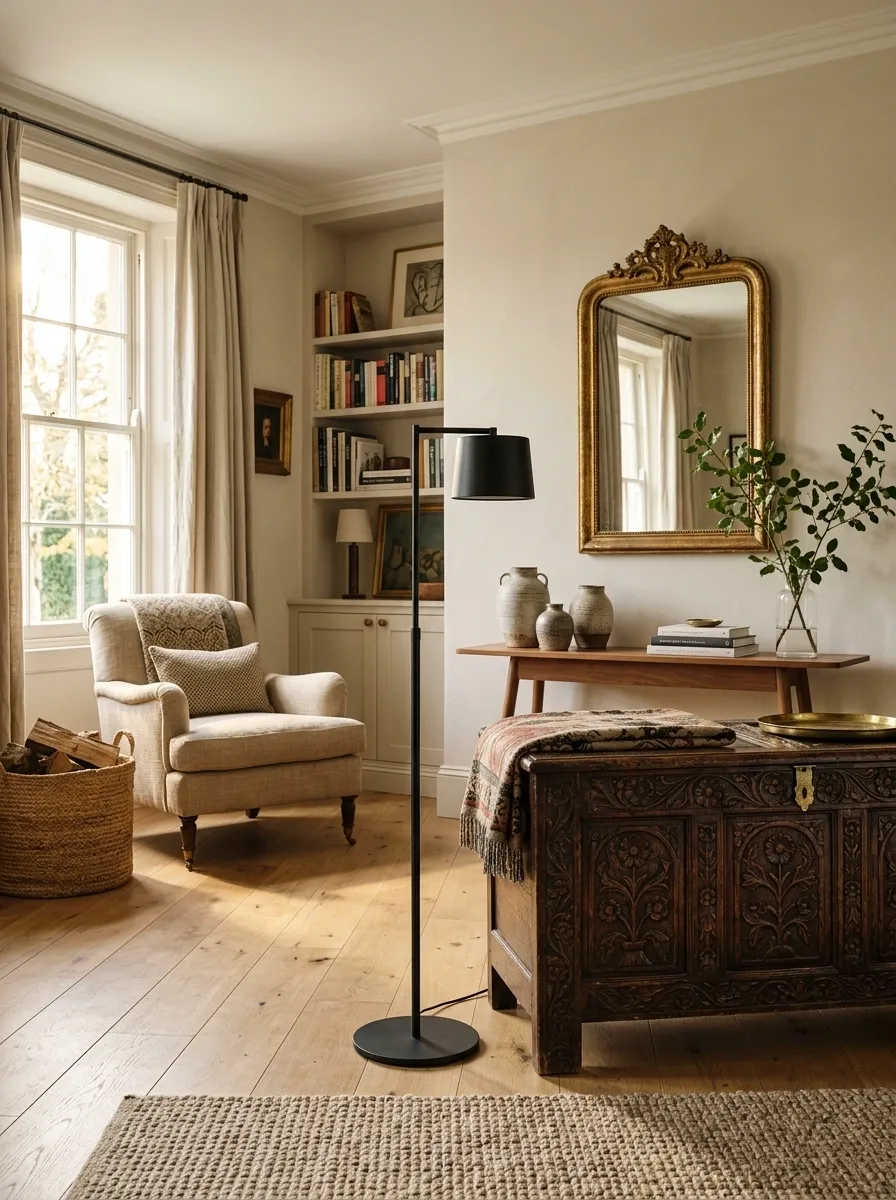
Ornate furniture becomes easier to live with when something nearby has almost the opposite personality.
An elaborate mirror can hang above a simple console. A carved chest can sit beside a streamlined floor lamp. An ornate chair can share space with a clean metal side table.
The goal isn’t to hide the old piece. It’s to stop its decorative language from repeating too many times.
One ornate piece gets attention. One modern neighbor gives it boundaries.
Balance a Delicate Vintage Table With a Chunkier Sofa
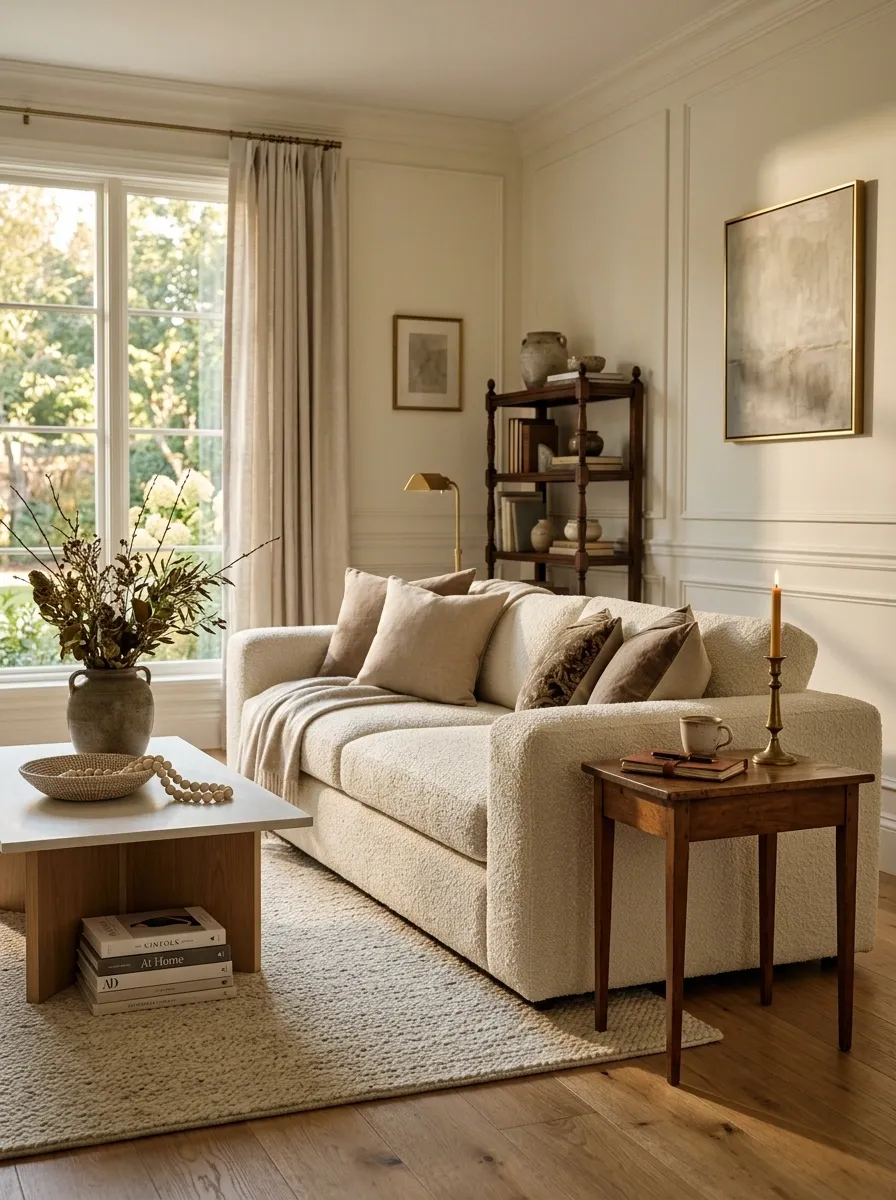
Not every old piece needs to be visually heavy.
A small antique side table with thin legs can actually look lost beside a large contemporary sofa. The solution isn’t necessarily a larger antique. It’s placing the table where its scale makes sense.
Set the delicate piece beside the sofa rather than far away from the seating group. Then repeat its color or material on something closer to eye level.
Small vintage piece + substantial modern furniture = useful contrast.
Choose One Dominant Era and Let the Other Play Support
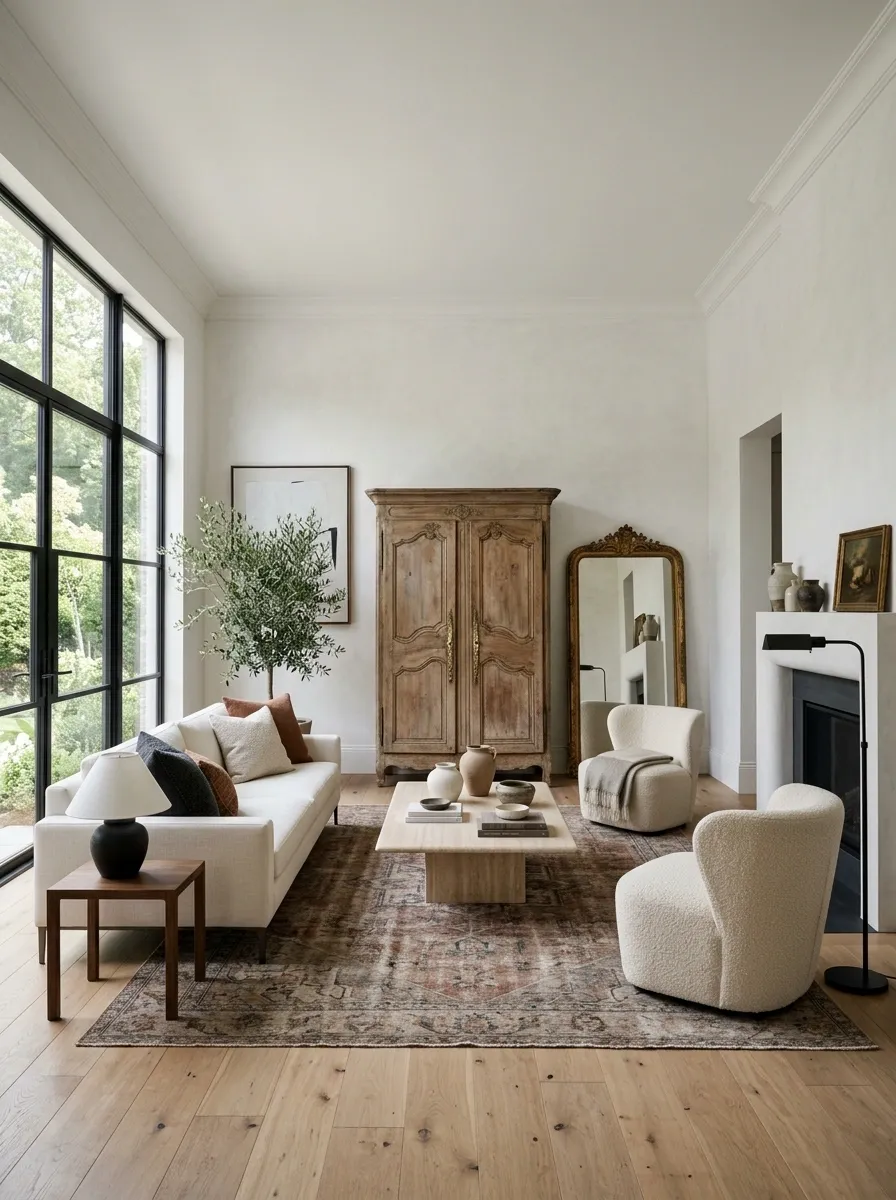
A room becomes easier to control when one furniture era clearly leads.
A mostly modern room can use antique pieces as punctuation. A traditional room can use modern furniture to cut through the formality. Problems start when both styles fight equally for attention.
Choose the dominant language first.
Modern-led room: older pieces add warmth and history.
Traditional-led room: modern pieces add freshness and restraint.
That decision makes every later furniture choice easier because the room already has a hierarchy.
Connect Old and New Pieces With a Shared Color Story
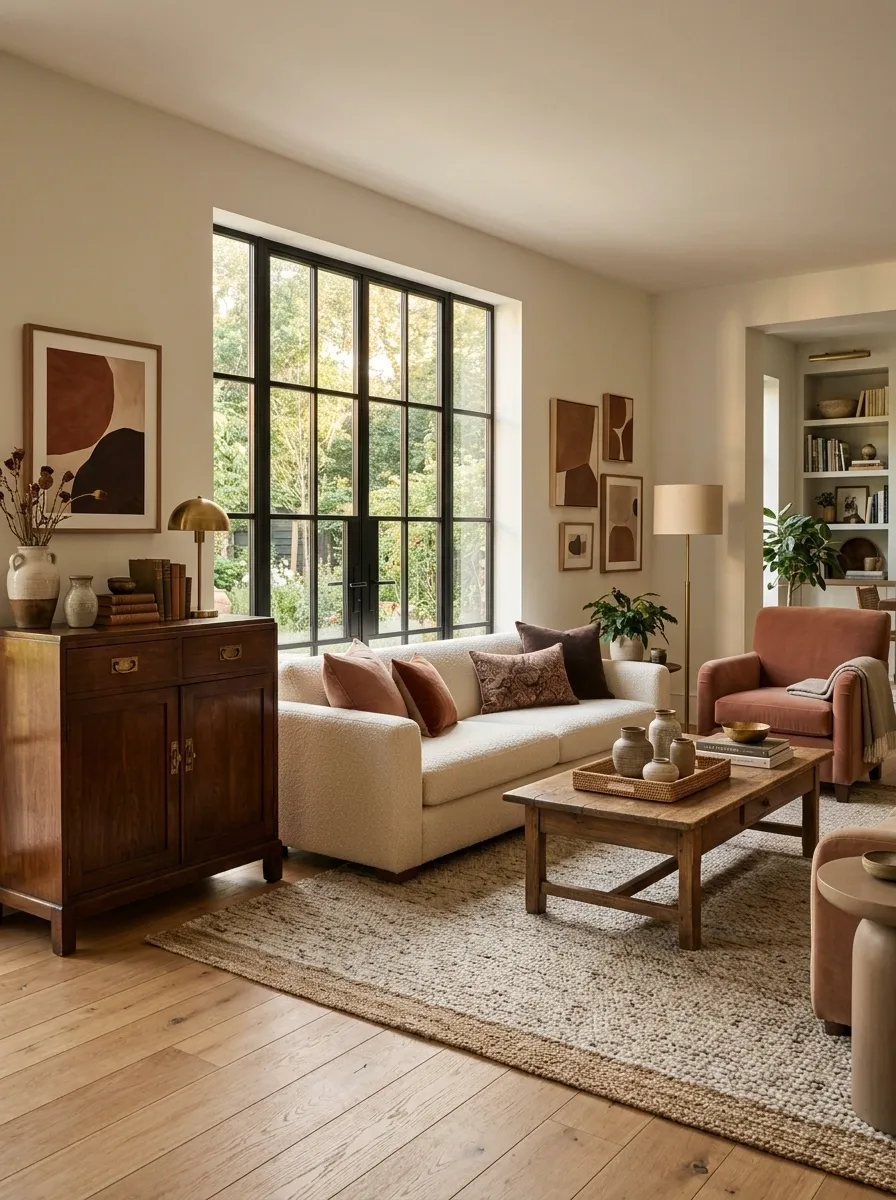
Color can do more heavy lifting than furniture style.
A deep brown vintage cabinet, cream modern sofa, and muted terracotta chair can feel connected when those colors repeat in smaller places around the room. The furniture doesn’t have to share the same finish.
Build the room around a small group of colors, then distribute them across old and new pieces.
Keep the color story visible but uneven. One color should lead, another should support, and a third can appear in smaller details.
Put Modern Art Above Traditional Furniture
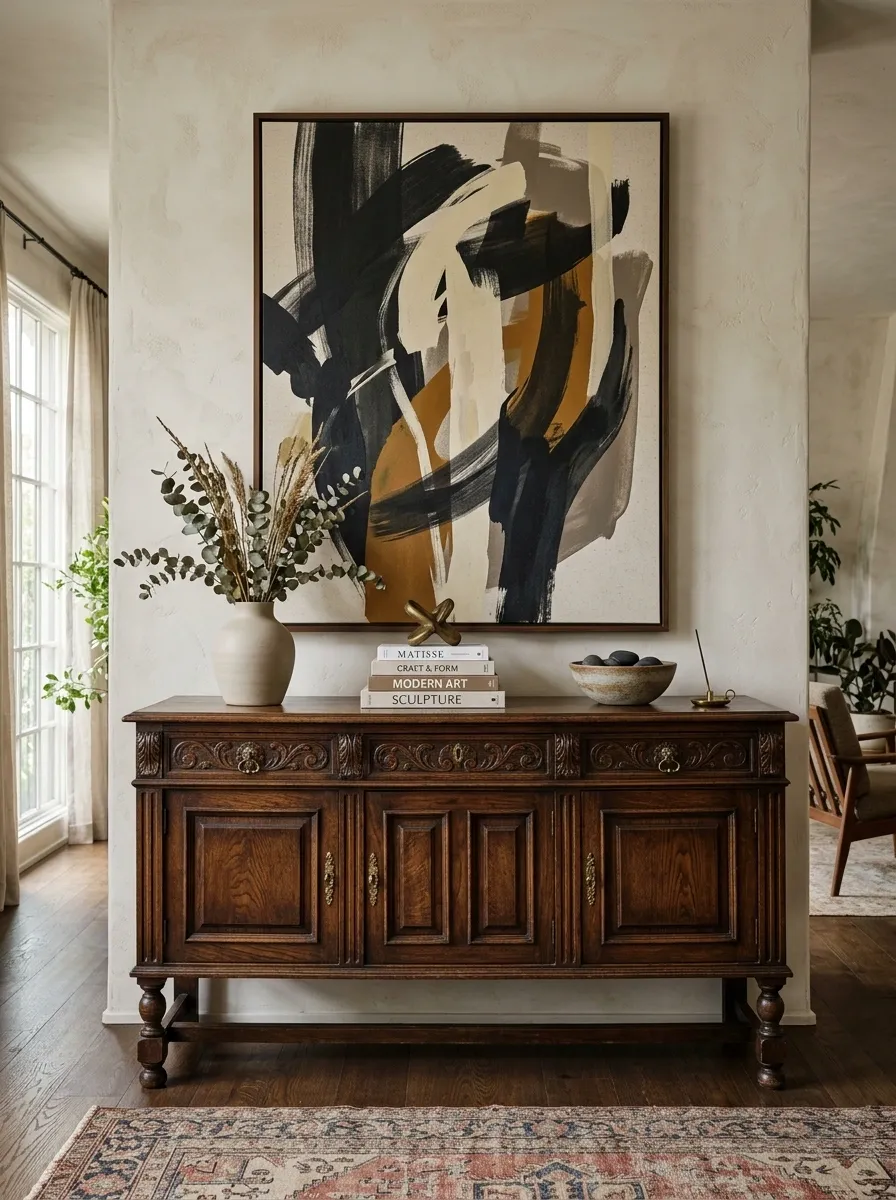
Traditional furniture can feel surprisingly fresh when the wall treatment goes in a completely different direction.
Hang a large abstract print, oversized graphic piece, or simple contemporary artwork above an older sideboard, console, or cabinet. The modern art creates a clean visual break without changing the furniture itself.
Keep the artwork substantial enough to hold the wall. A tiny print floating above a large antique usually looks timid.
The strongest contrast is simple:
Old furniture below
Modern art above
Quiet accessories around both
Mix Furniture Heights Instead of Lining Everything Up
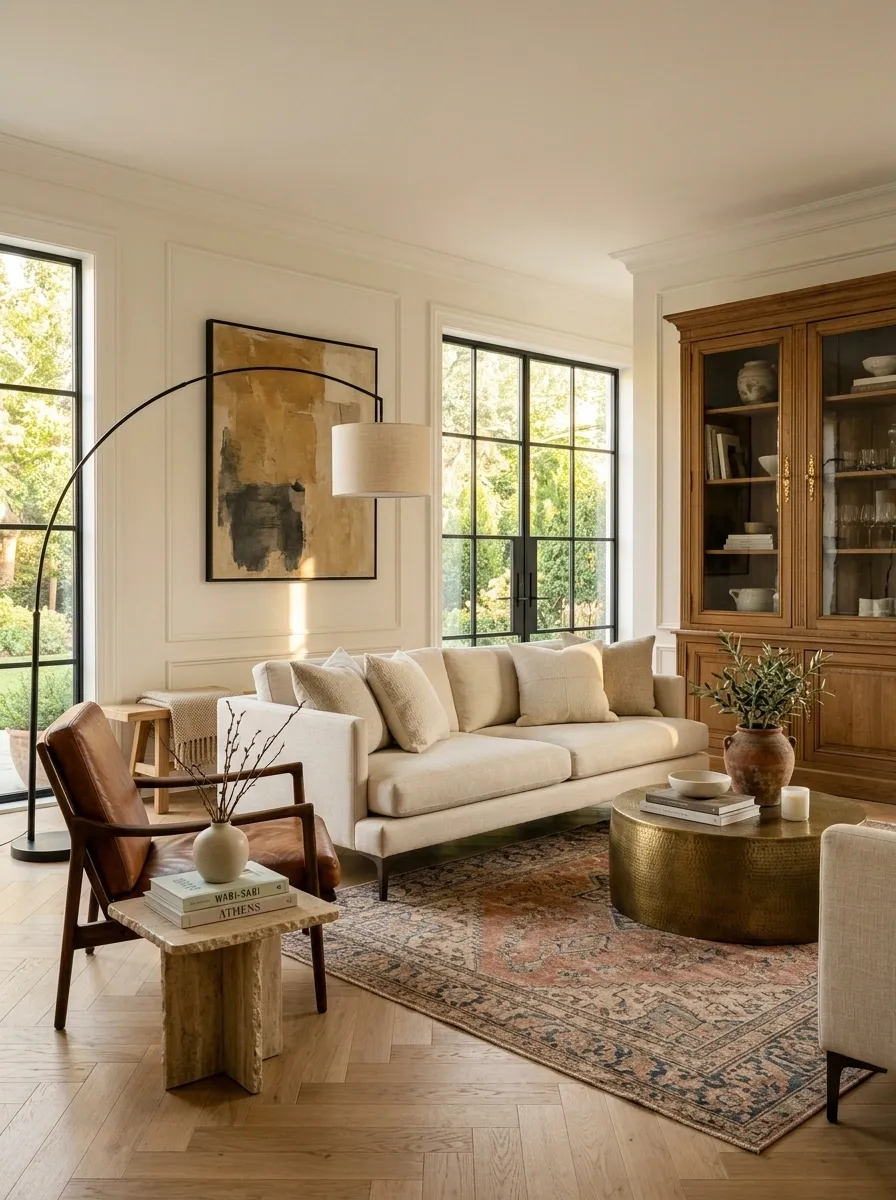
A room can feel strangely stiff when every furniture piece sits at nearly the same visual height.
Break that line.
A low modern sofa beside a taller vintage cabinet creates more movement than two similarly proportioned pieces. A tall floor lamp next to a low side table creates another useful shift.
Think in three levels:
- Low: sofa, bench, coffee table
- Middle: chair, side table, cabinet
- High: lamp, artwork, shelving
Varying height gives the eye a path through the room. That’s especially useful when the furniture already comes from different eras.
Use a Vintage Mirror to Soften a Modern Room
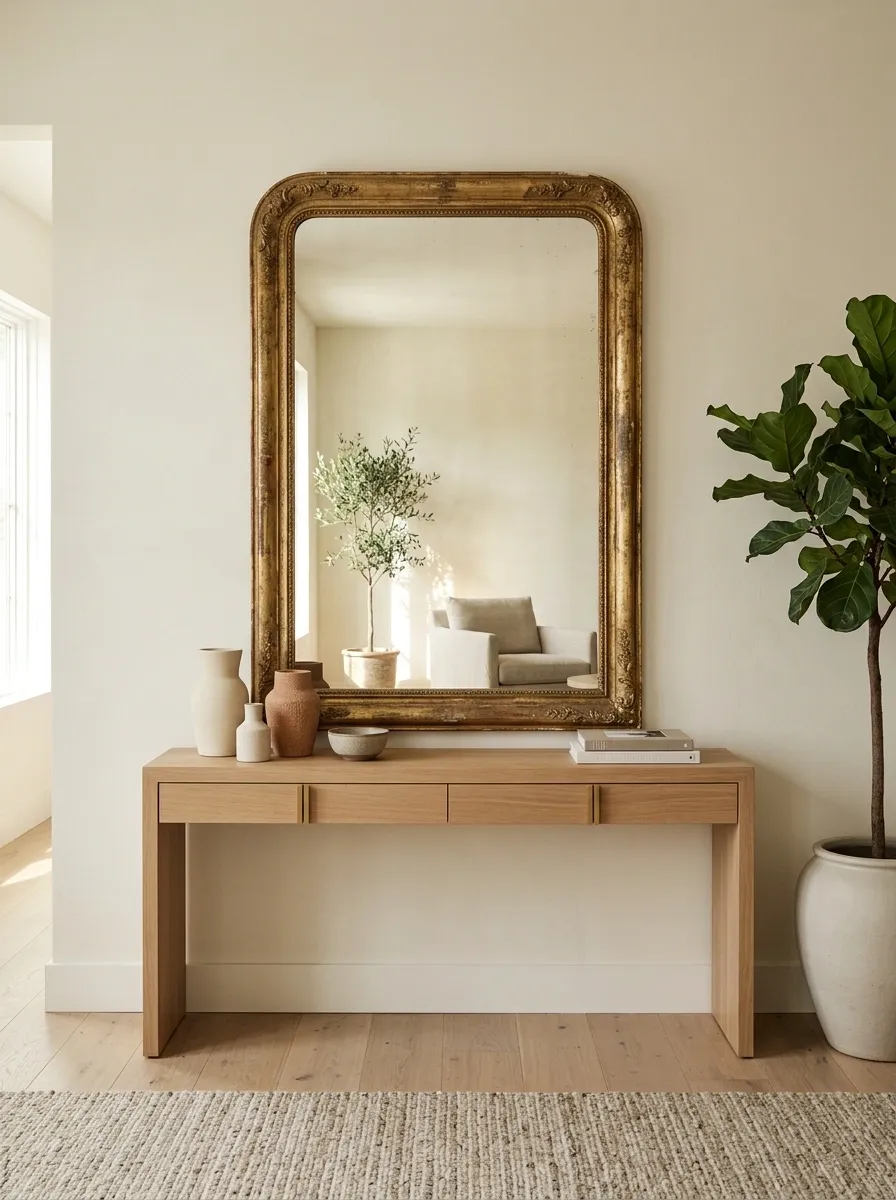
A modern room can become too crisp when every surface is smooth and every line is straight.
An older mirror fixes that without requiring more furniture.
Choose a vintage frame with age, patina, or subtle ornament, then place it where it can reflect natural light or another attractive part of the room. The mirror introduces history while still performing a practical job.
Keep the surrounding wall fairly simple. The frame should be the interesting part.
Best placement: above a clean console, behind a slim entry table, or opposite a window.
Finish the Room With One Unexpected Old-or-New Piece
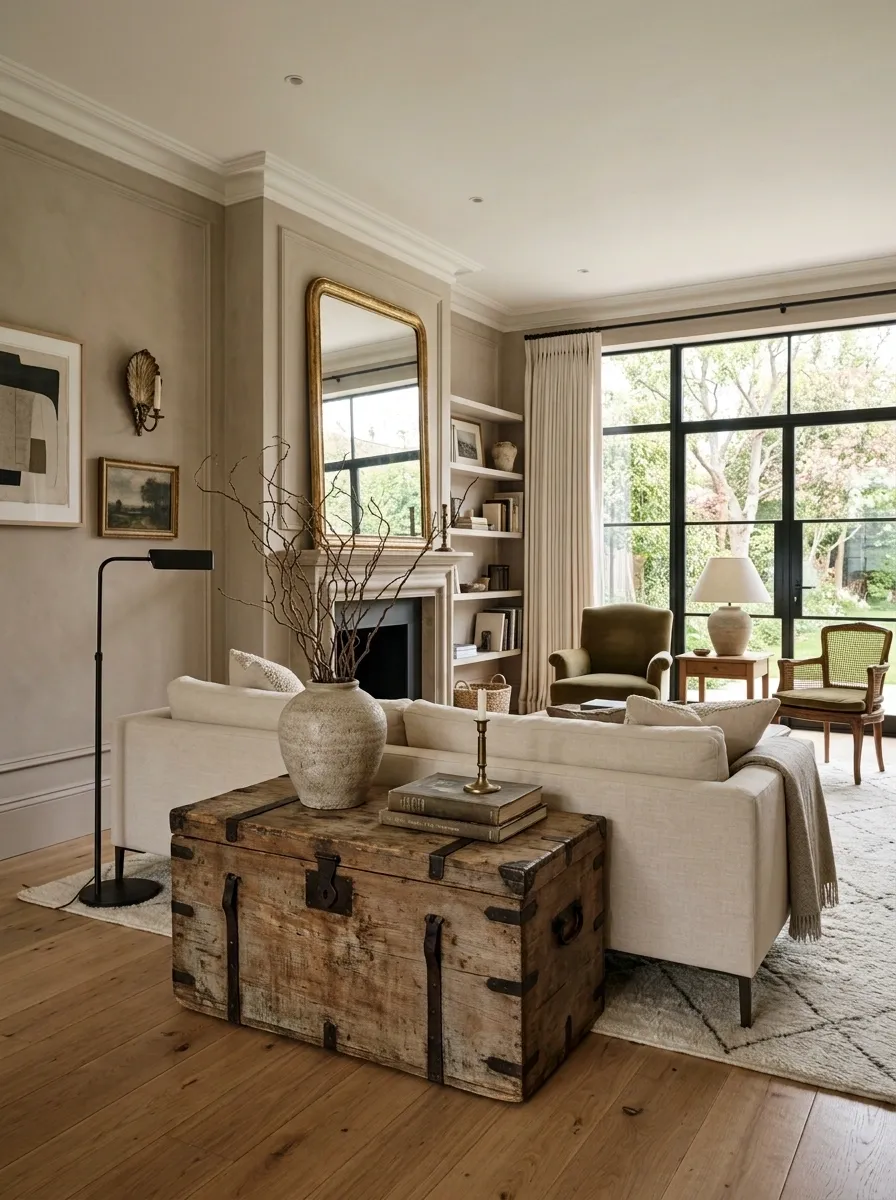
The final piece shouldn’t repeat everything already happening in the room.
A room full of modern furniture can benefit from one old wooden stool, antique chest, or weathered chair. A traditional room can handle one sharply modern side table, sculptural lamp, or streamlined bench.
The important part is placement. The unexpected piece should look intentional, not stranded.
Give it a connection through color, material, scale, or shape. That’s enough.
This is the move that often makes a carefully mixed room feel collected rather than carefully matched.
Final Thought
A room with old and new furniture shouldn’t look as though every purchase happened on the same afternoon. That’s the whole point of mixing pieces from different periods.
The difference in age should be visible. That’s what gives the room depth.
What keeps that difference from becoming visual noise is much simpler: repeat a color, connect a wood tone, echo a shape, balance heavy furniture with something lighter, or use a modern piece to give an older one some breathing room.