
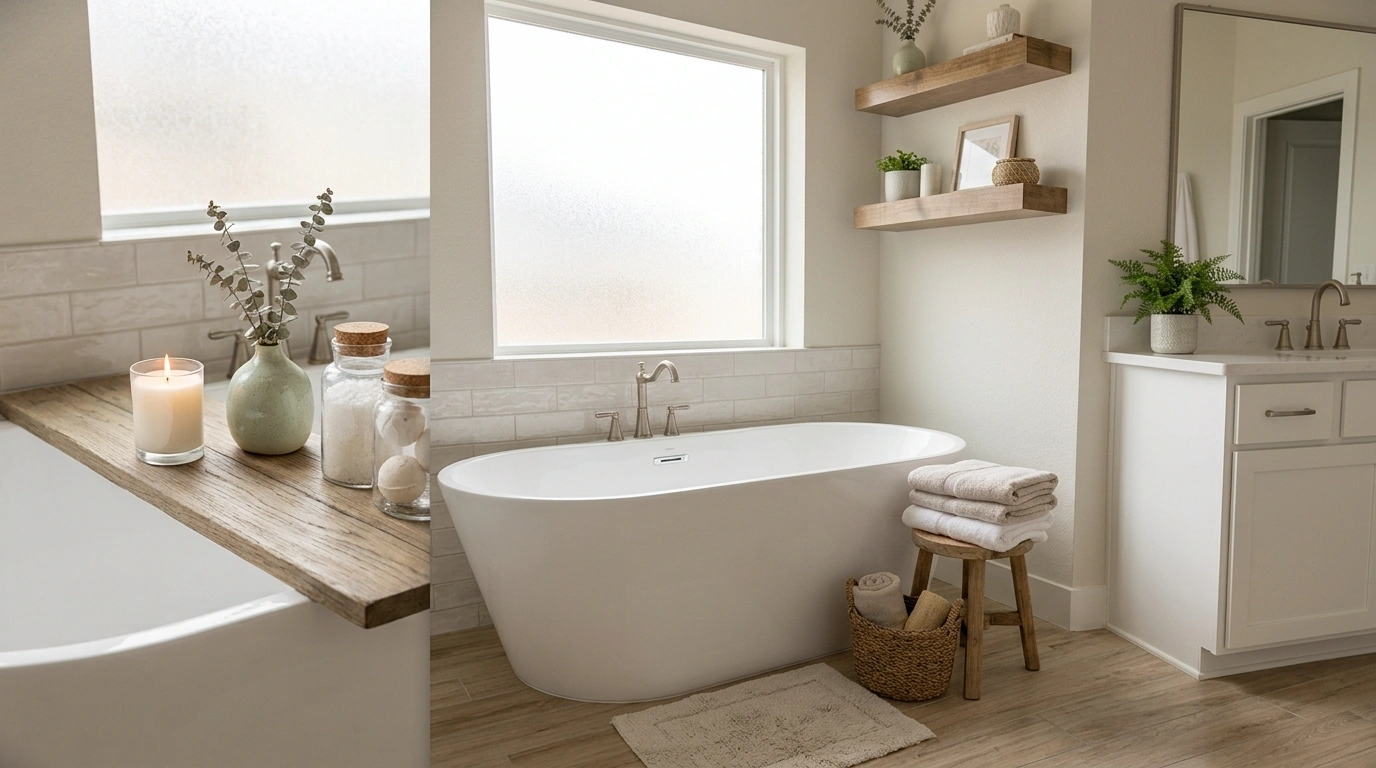
A bathtub can be perfectly nice and still look like it was dropped into the bathroom five minutes before the listing photos were taken.
The problem usually isn’t the tub itself. It’s the empty wall behind it, the awkward strip of floor around it, the random bath products sitting on the rim, or the fact that nothing nearby seems to relate to it.
Learning how to decorate a bathtub is less about piling pretty objects around the water and more about giving the entire tub zone a reason to exist.
A strong backdrop can make a plain tub feel architectural. A well-placed stool can make an empty corner useful. The right curtain, rug, lighting, color, tile, artwork, or wood detail can make the bathtub feel connected to the rest of the room.
Make the Bathtub Look Like a Design Decision
Layer Candles for Instant Atmosphere
A standard bathtub can easily feel clinical and stark when left entirely to overhead lighting. Introducing a soft, flickering perimeter of candles completely changes the mood without requiring a major renovation.
Cluster pillars of varying heights along the tub ledge, tile surround, and nearby surfaces to build depth and warmth. Keep the flame glow natural and restrained so the space feels like a private sanctuary rather than a movie set.
The secret is abundance balanced with safety. Let the warm pool of light bounce off the white porcelain and water, turning an ordinary soak into an intentional ritual.
Curate a Gallery Above the Tub
A cluster of framed artwork can transform a blank bathroom wall into a compelling focal point. Instead of relying on a single large piece, group multiple smaller frames together to wrap the corner space with character and personal style.
Choose cohesive artwork with a shared color palette, organic shapes, or botanical forms to keep the composition from feeling cluttered. Mount them closely and intentionally above the tub surround so they feel connected to the bathing zone rather than randomly scattered.
Keep the surrounding decor relatively quiet to let the art do the talking. A well-curated wall brings unexpected warmth and finished polish to an otherwise ordinary bathroom layout.
Give a Freestanding Tub a Strong Wall Behind It
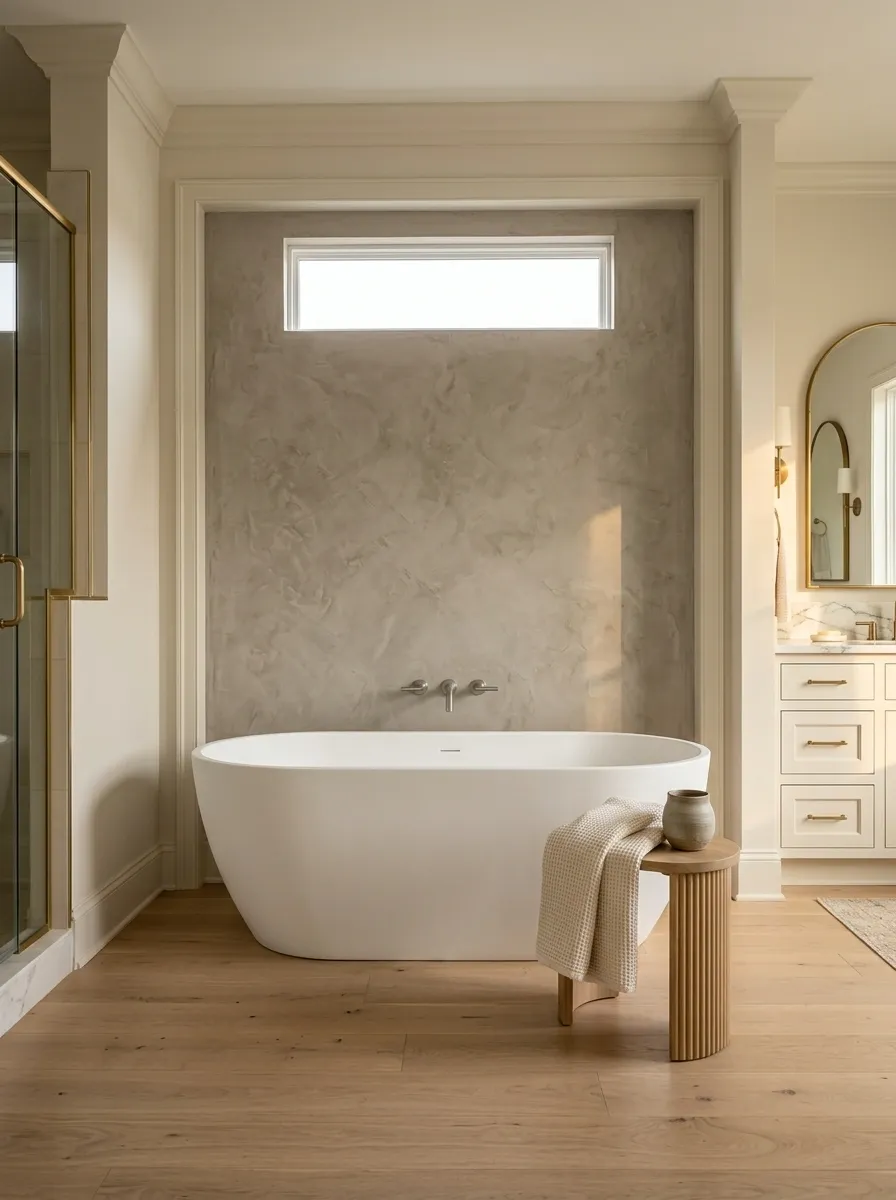
A freestanding bathtub often looks strangely unfinished when it’s sitting against a completely ordinary wall. The tub has enough presence to be the focal point, but the wall behind it is giving absolutely nothing. That’s how a potentially gorgeous bathroom ends up looking like a showroom display waiting for someone to finish the installation.
Give the wall a job.
Paint it in a deeper version of the bathroom’s main color, cover it in a subtle stone-look finish, use large-format tile, or create a plaster-like backdrop. The goal isn’t to make the wall compete with the bathtub. It should make the bathtub look intentional.
Keep the styling in front of the wall restrained. One stool, a folded towel, or a simple vessel is usually enough. The wall does the heavy visual lifting.
Float Botanical Trays and Playful Rugs
A bathroom often lacks organic texture when every surface consists of hard tile, glass, and porcelain. Bringing in natural wood elements and playful textiles immediately introduces the missing warmth and tactile contrast.
Position a slim wooden caddy across the tub to hold essential bath items, and top it with tiny vases filled with fresh blooms. Down below, anchor the floor with a cheerful, graphic rug that injects personality without overwhelming the room’s core palette.
The magic lies in the details that feel both functional and delightful. A thoughtful mix of wood tones and soft accents makes the entire bathing area look intentionally styled and completely finished.
Frame an Alcove Tub With Full-Height Curtains
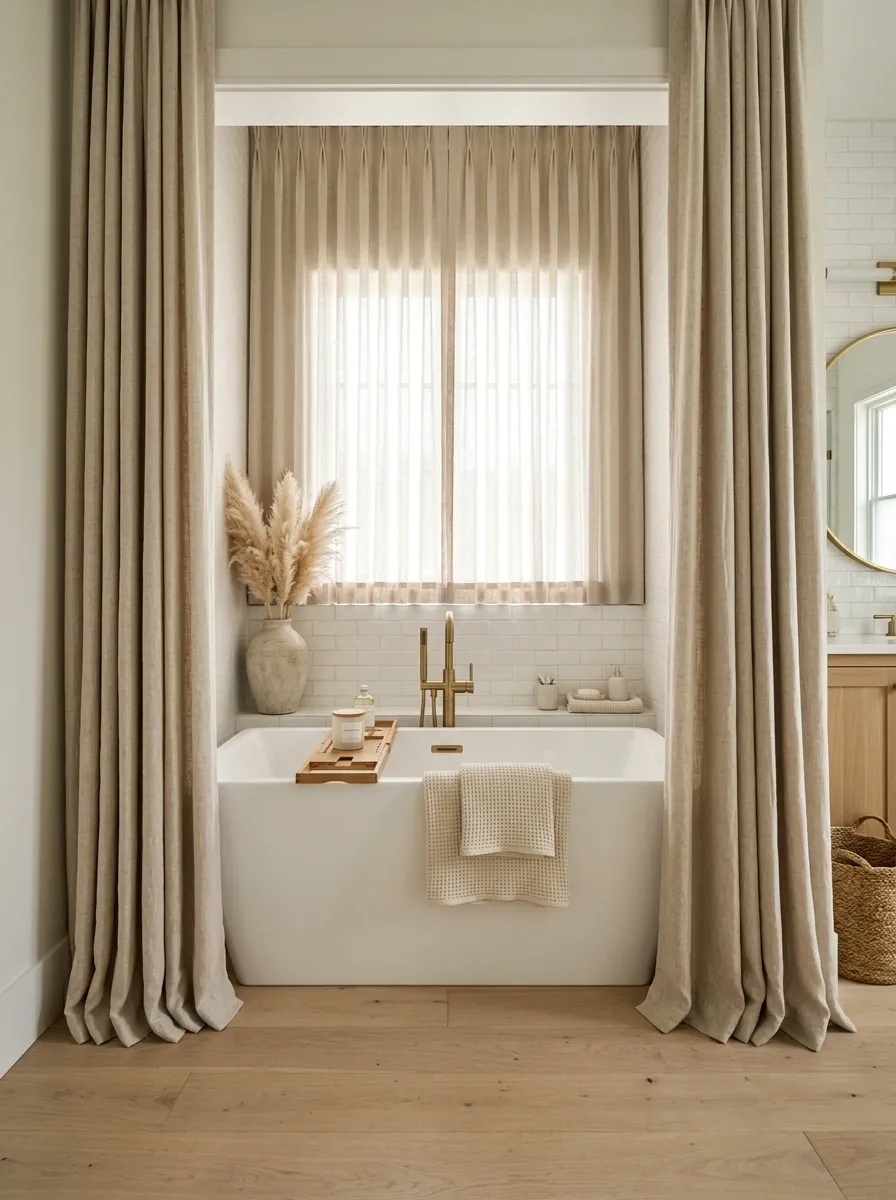
An alcove bathtub can easily disappear into the wall because its edges are surrounded by tile. Instead of treating the tub enclosure as a purely functional necessity, make the curtain part of the room’s architecture.
A full-height fabric curtain immediately adds verticality. Hang it as close to the ceiling as practical and let it fall generously to the floor. A warm linen-look fabric can soften a hard tiled bathroom, while a striped or subtly patterned curtain can introduce personality without requiring a renovation.
The important part is fullness. A skimpy curtain pushed to one side can make the whole bathroom feel like a rental with commitment issues. Generous fabric makes the tub feel framed.
Create a Towel Composition Beside the Tub
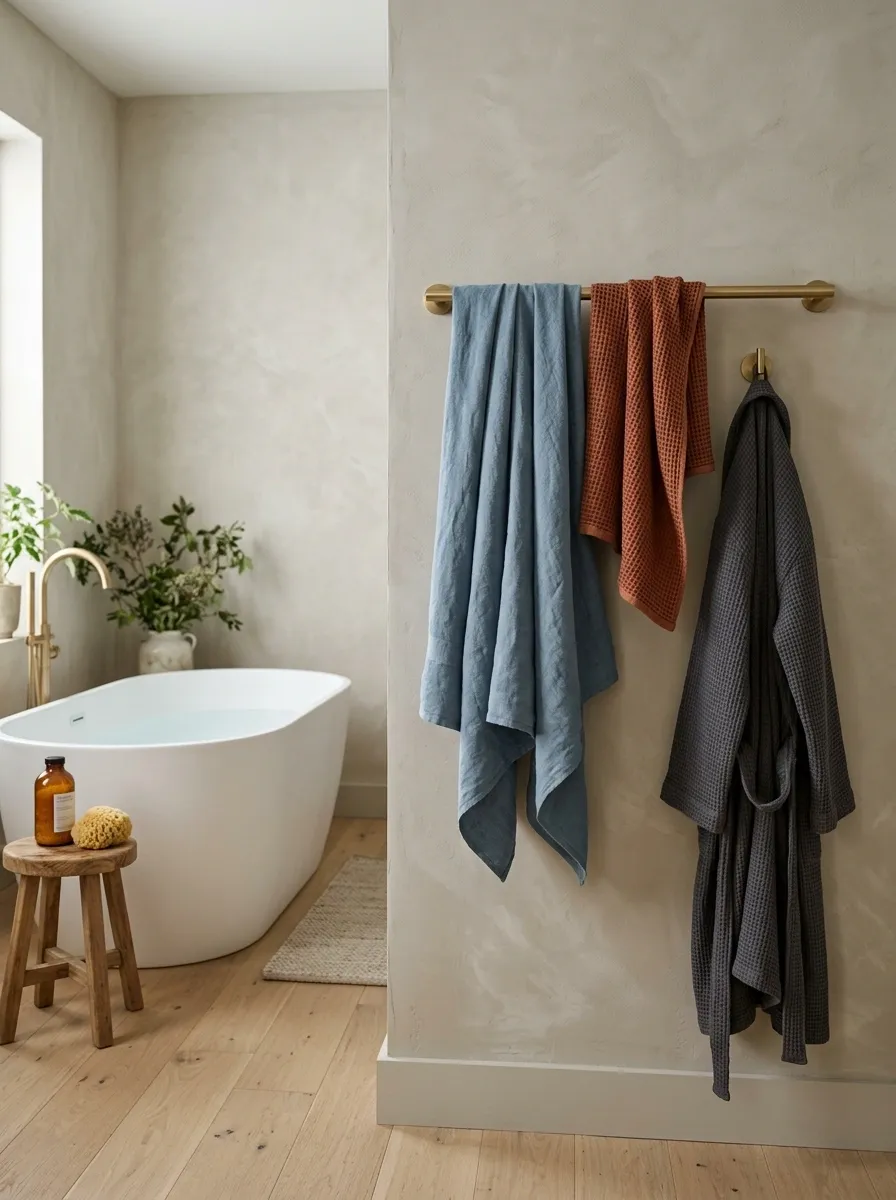
Towels don’t have to be stored in a cabinet just because they’re practical. A thoughtfully arranged towel rail or wall-mounted bar beside the tub can become part of the decoration.
Choose towels that relate to the bathroom palette rather than automatically buying a matching white set. Cream, sand, muted green, terracotta, charcoal, or dusty blue can add color without making the room noisy.
Hang one or two towels with enough space between them to remain useful. A small hook beneath the main rail can hold a hand towel or robe. The arrangement should look relaxed, not like a hotel housekeeping department is conducting an inspection.
Ground the Tub With a Proper Bath Runner
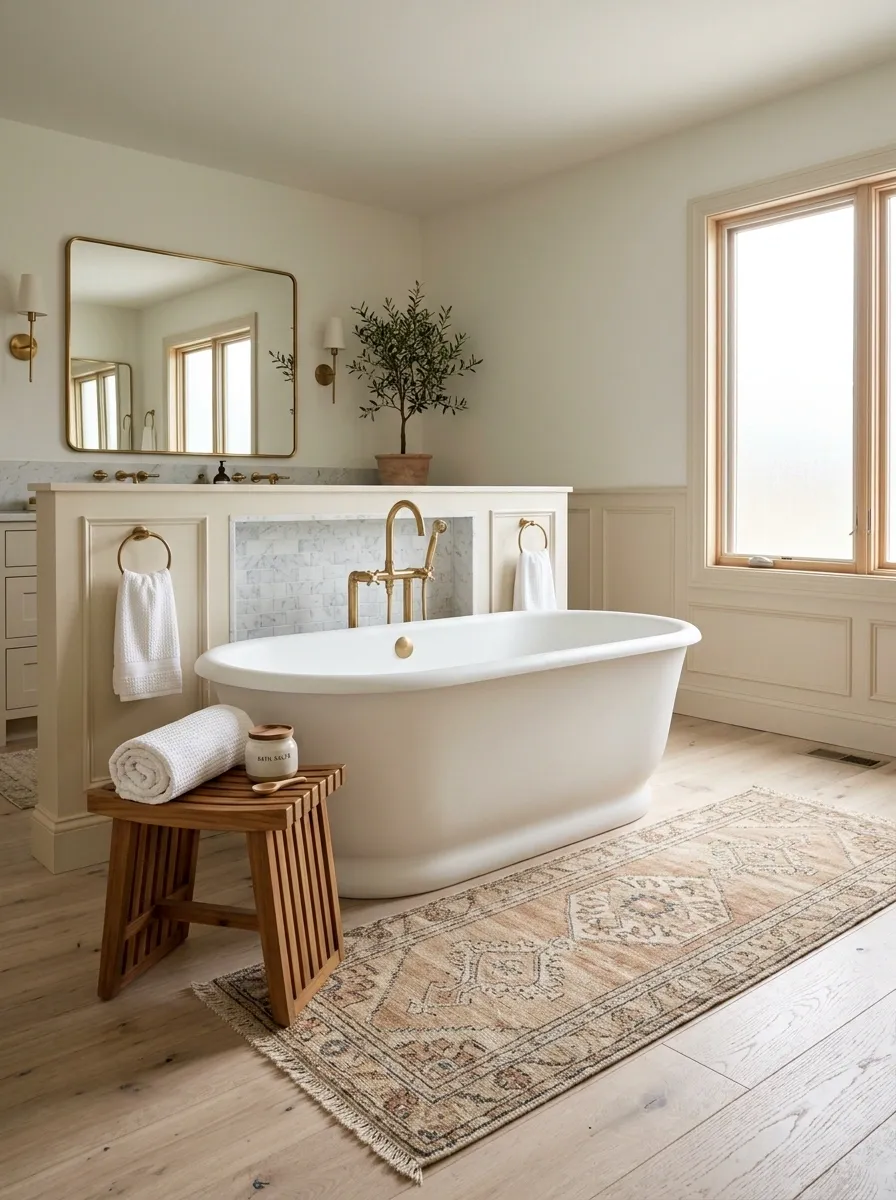
A freestanding tub can look as though it’s floating in an enormous empty floor area. A runner or substantial bath mat can visually connect it to the rest of the bathroom.
Choose something with enough scale to relate to the tub. Tiny mats often make a large bathtub look even larger and more isolated.
For a traditional bathroom, try a vintage-inspired patterned runner. In an organic space, use a textured neutral. In a colorful bathroom, a muted stripe can bridge several shades without competing with the tub.
Keep the material suitable for a wet bathroom and leave enough clearance around the tub for easy movement.
Hang Oversized Art on the Dry Wall
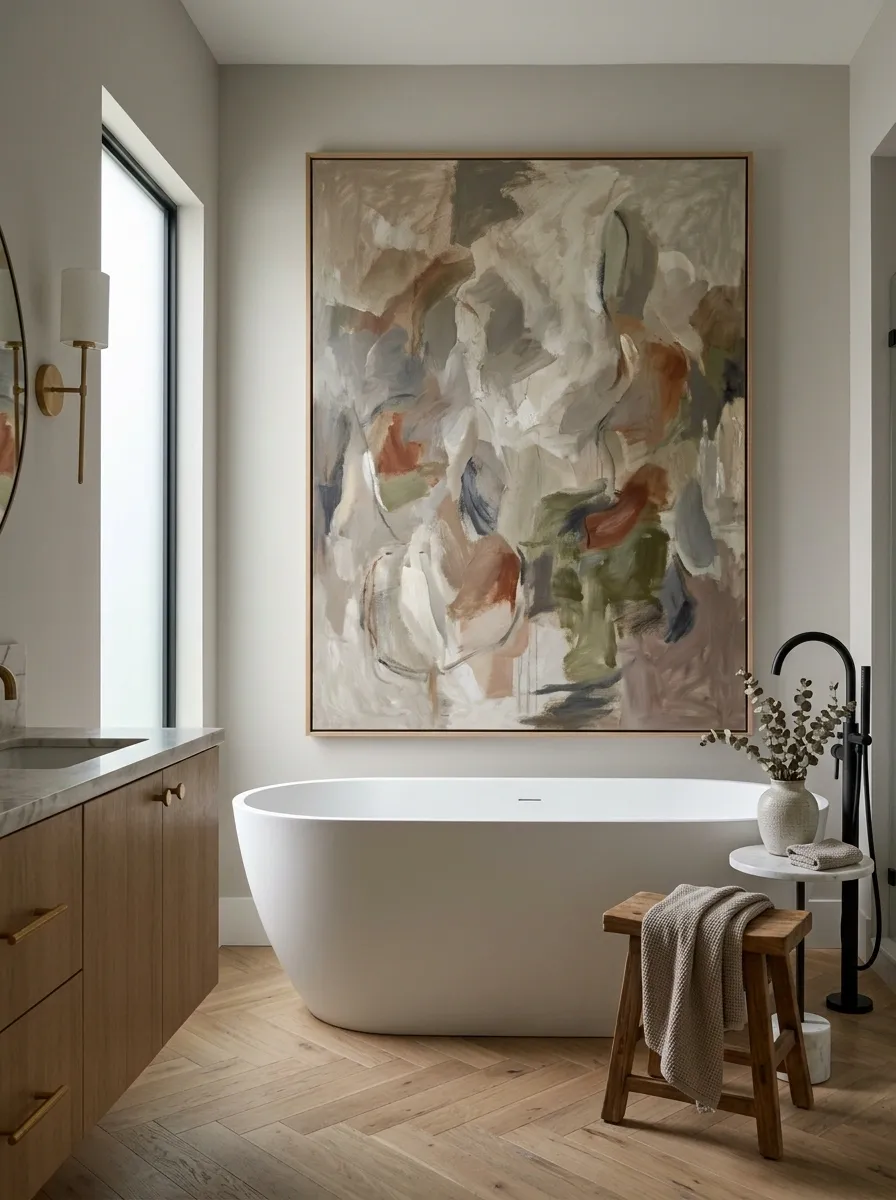
A completely empty bathroom wall beside a tub can make the entire space feel unfinished. Large-scale artwork solves that problem much faster than a cluster of tiny prints.
Choose artwork that can tolerate the environment and place it on a wall that isn’t receiving direct water. Abstract shapes, botanical-inspired graphics, architectural drawings, or simple vintage-style pieces work especially well.
The artwork doesn’t need to depict a bathtub, seashells, or a spa. In fact, avoiding overly literal bathroom art usually makes the room feel more sophisticated.
Scale matters more than quantity. One properly sized piece can look far more intentional than six tiny frames nervously occupying the same wall.
Repeat One Metal Finish Around the Tub
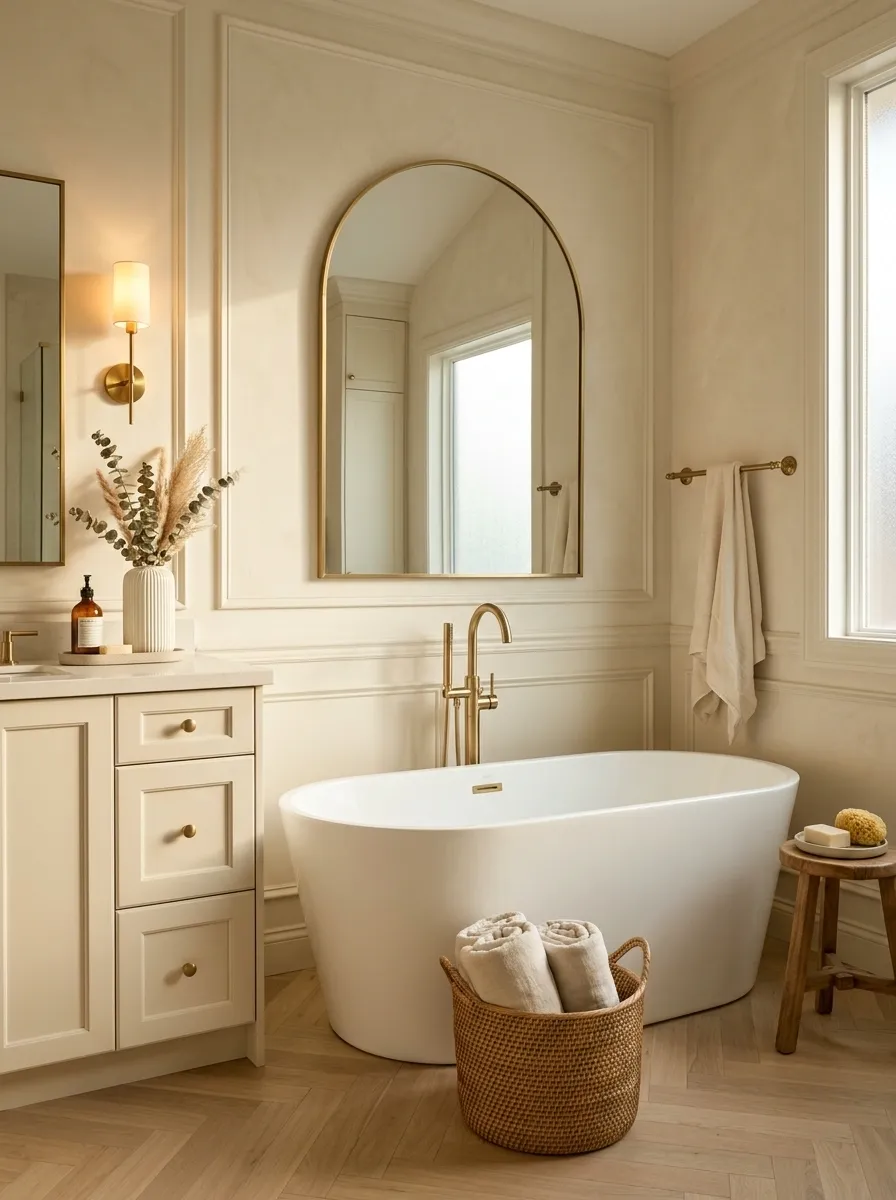
Sometimes the bathtub doesn’t need more decoration. It needs better relationships.
Look at the faucet, shower hardware, towel rail, mirror frame, cabinet pulls, and lighting. If every element is a different metal, the tub area can feel visually disconnected even when each individual piece is attractive.
Choose one dominant finish to repeat near the tub. Brushed brass can warm a cream bathroom. Matte black can sharpen a modern space. Brushed nickel can keep a cooler palette understated.
The repetition doesn’t need to be exact. It just needs to be noticeable enough for the eye to connect the pieces.
Bring in Wood for a Warmer Tub Zone
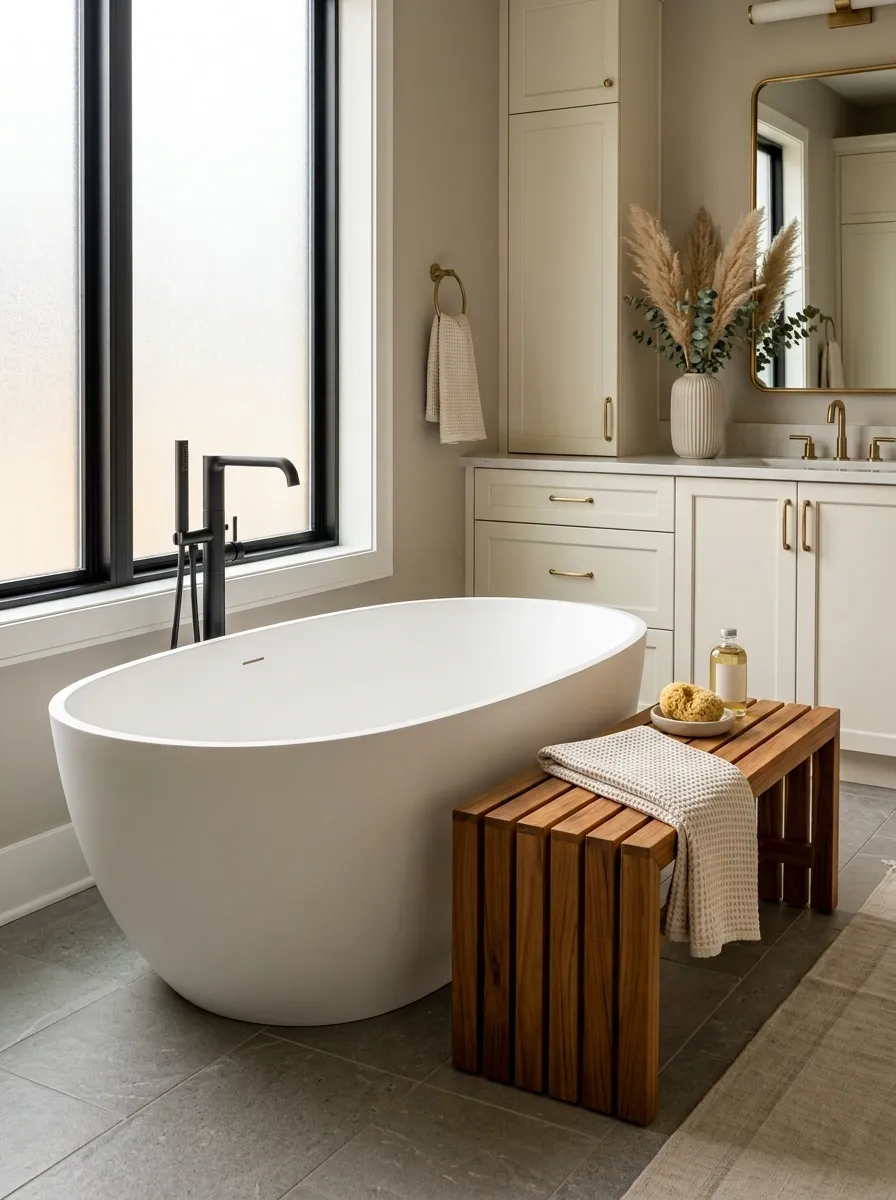
Bathrooms can become visually cold very quickly, especially when the tub, walls, floor, and vanity are all tile or stone.
Introduce wood somewhere near the tub. A teak-style stool, wooden bench, slatted storage detail, framed mirror, or warm wood accessory can immediately soften the hard surfaces.
Keep wood away from constant standing water unless it’s specifically designed for wet conditions. The goal isn’t to create a tiny sauna beside the bathtub. It’s to introduce one warmer material into a room full of hard ones.
A single strong wood element often works better than several small wooden decorations competing for attention.
Make the Tub Wall Symmetrical
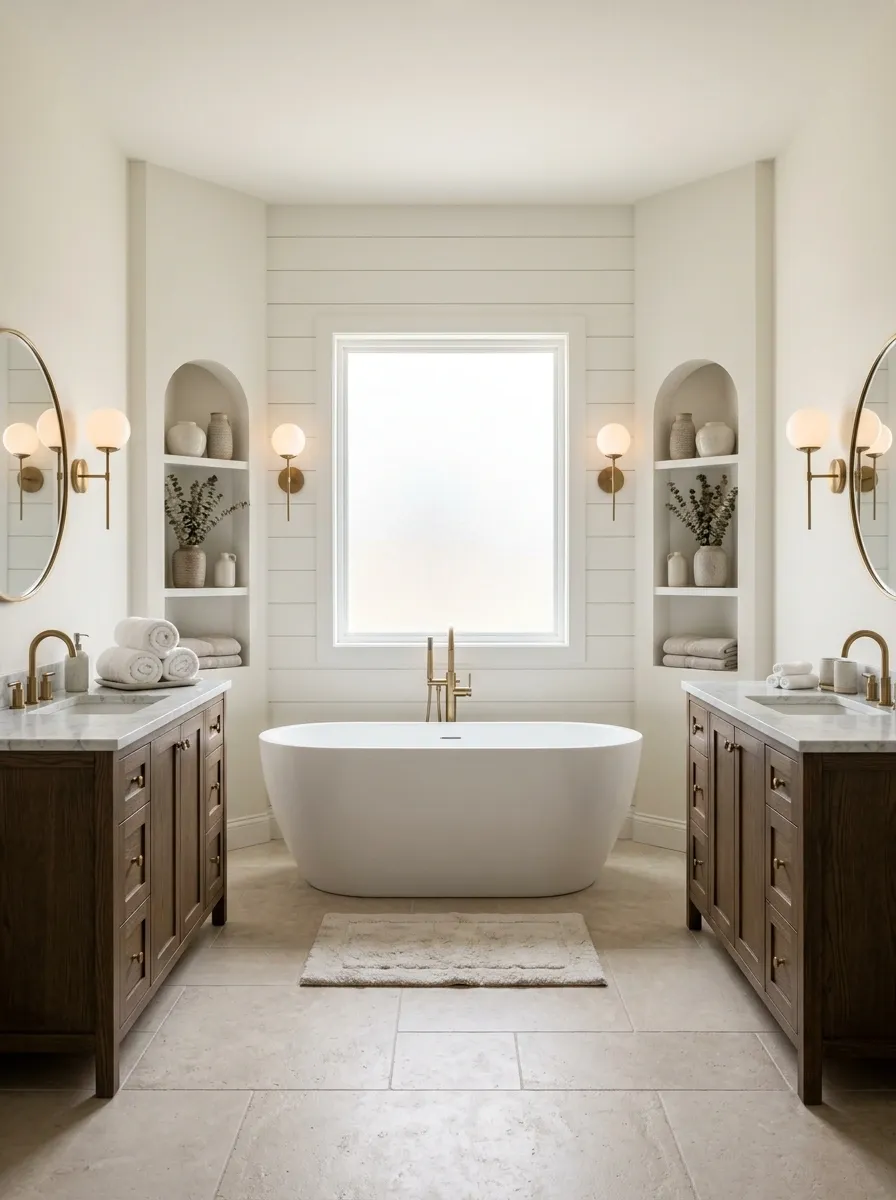
Symmetry is particularly effective when the bathtub is the main focal point.
Center the tub on the wall when the room allows it, then build a balanced composition around it. Matching sconces, evenly placed accessories, or two similar vessels can create a strong visual frame.
The trick is not to force perfect symmetry into an awkward room. If the plumbing or architecture prevents a centered layout, use visual balance instead. A tall plant on one side might be balanced by a stool and artwork on the other.
The result should feel calm and deliberate, not like someone measured the entire bathroom with a ruler while everyone else waited outside.
Color Drench the Tub Wall
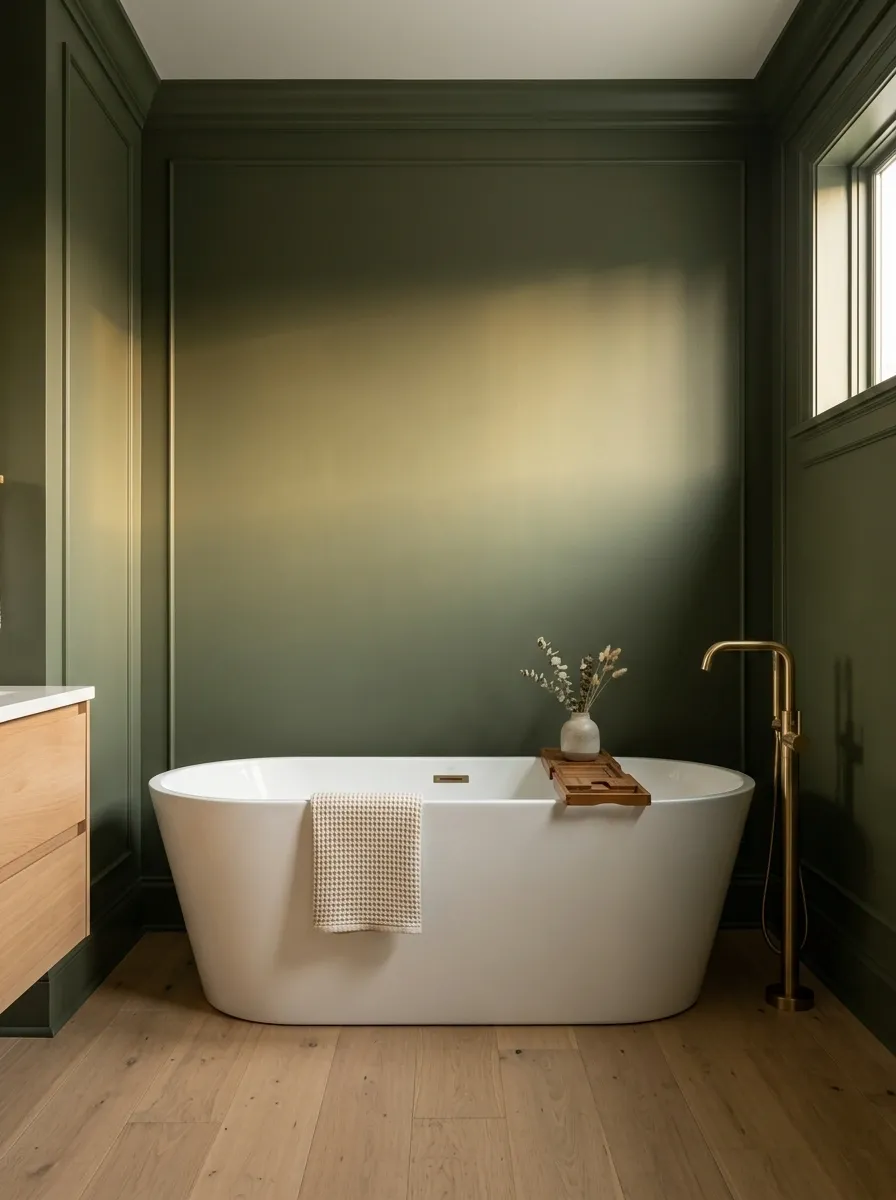
If the bathroom already has a pale tub, pale tile, pale floor, and pale everything else, the tub may need color more than accessories.
Paint the wall behind it and, where appropriate, the surrounding trim in one deeper tone. A dusty olive, muted clay, warm taupe, deep blue, or earthy brown can give the tub a visual home.
Color drenching works particularly well with freestanding tubs because the uninterrupted wall color creates a strong architectural plane.
Keep the accessories quiet so the color remains the main event.
Create Contrast With a Distinct Tub Surround
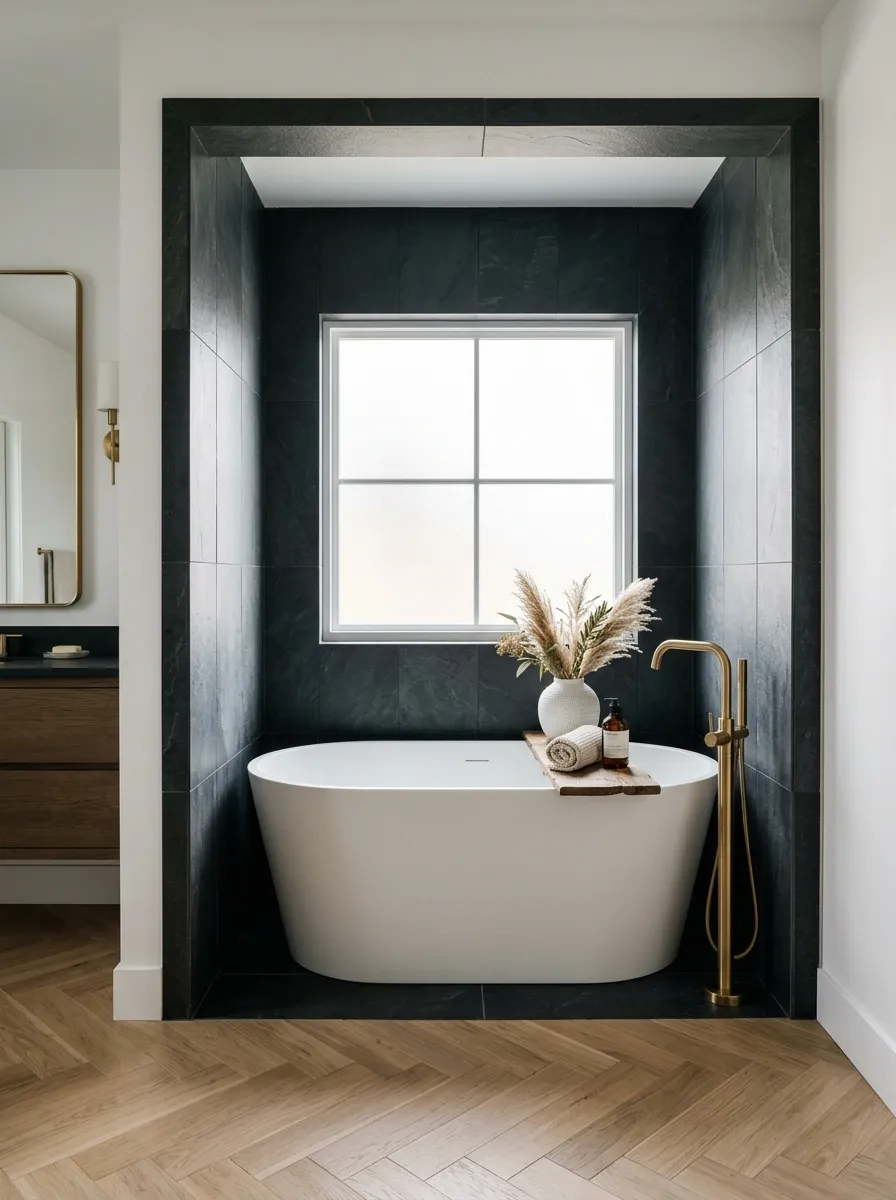
For an alcove or built-in tub, the surrounding surface can become the decoration.
Instead of treating the bathtub as a white rectangle surrounded by generic tile, use a different tile size, texture, or tone around the tub itself. Large stone-look slabs can create a quiet luxury feel. Small handmade-look tiles can add texture. A darker surround can make a pale tub stand out.
The key is creating a visual boundary between the tub zone and the rest of the bathroom.
Don’t introduce five different tile patterns. One strong contrast is usually enough to tell the eye, “Yes, this area was planned.”
Layer the Tub With Coordinated Textiles
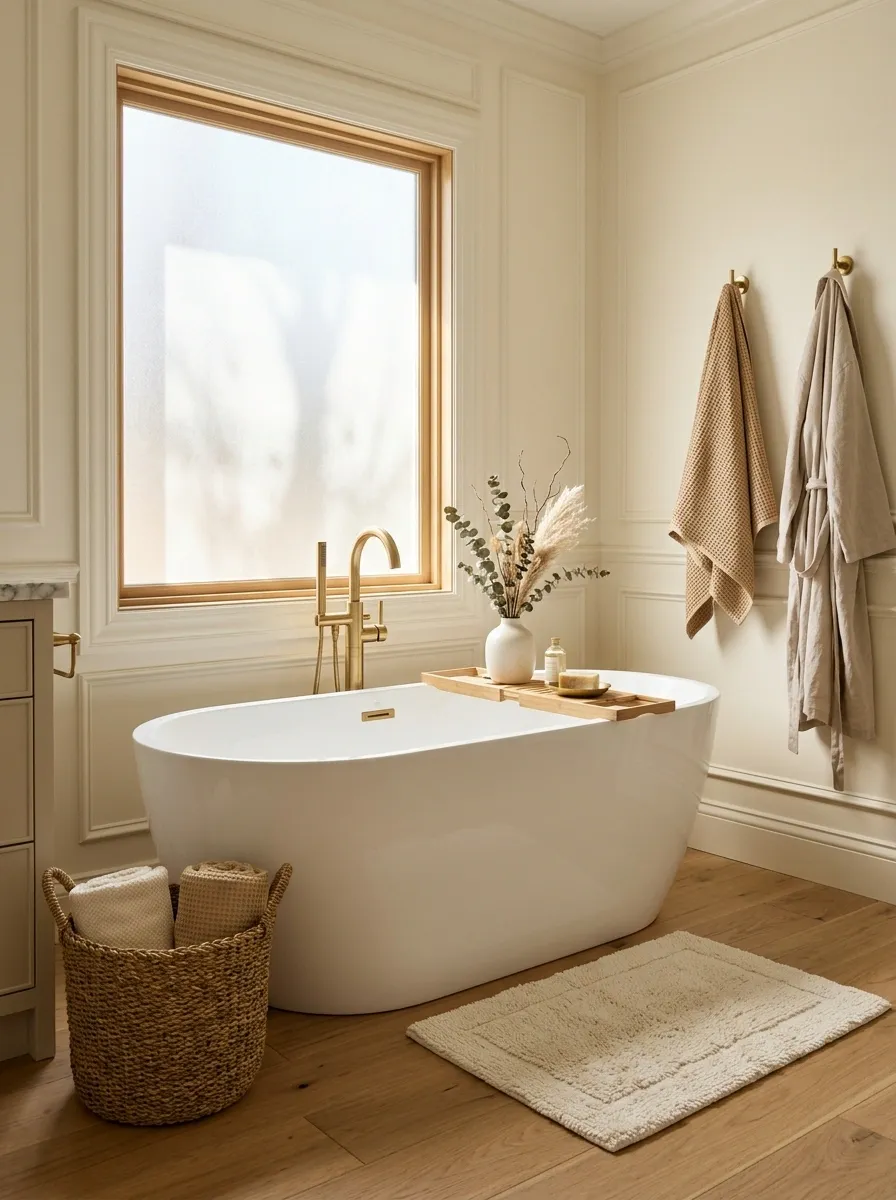
A bathtub becomes more visually inviting when the textiles around it speak the same language.
Use the bath mat, towels, curtain, robe, and perhaps a small runner as a connected palette. They don’t need to match exactly. In fact, exact matching can make the room feel like it came in a boxed set.
Try cream with tan, olive with natural linen, muted blue with warm white, or terracotta with soft beige.
The best combinations usually have one dominant neutral, one secondary color, and a little texture.
Give a Clawfoot Tub an Old-World Composition
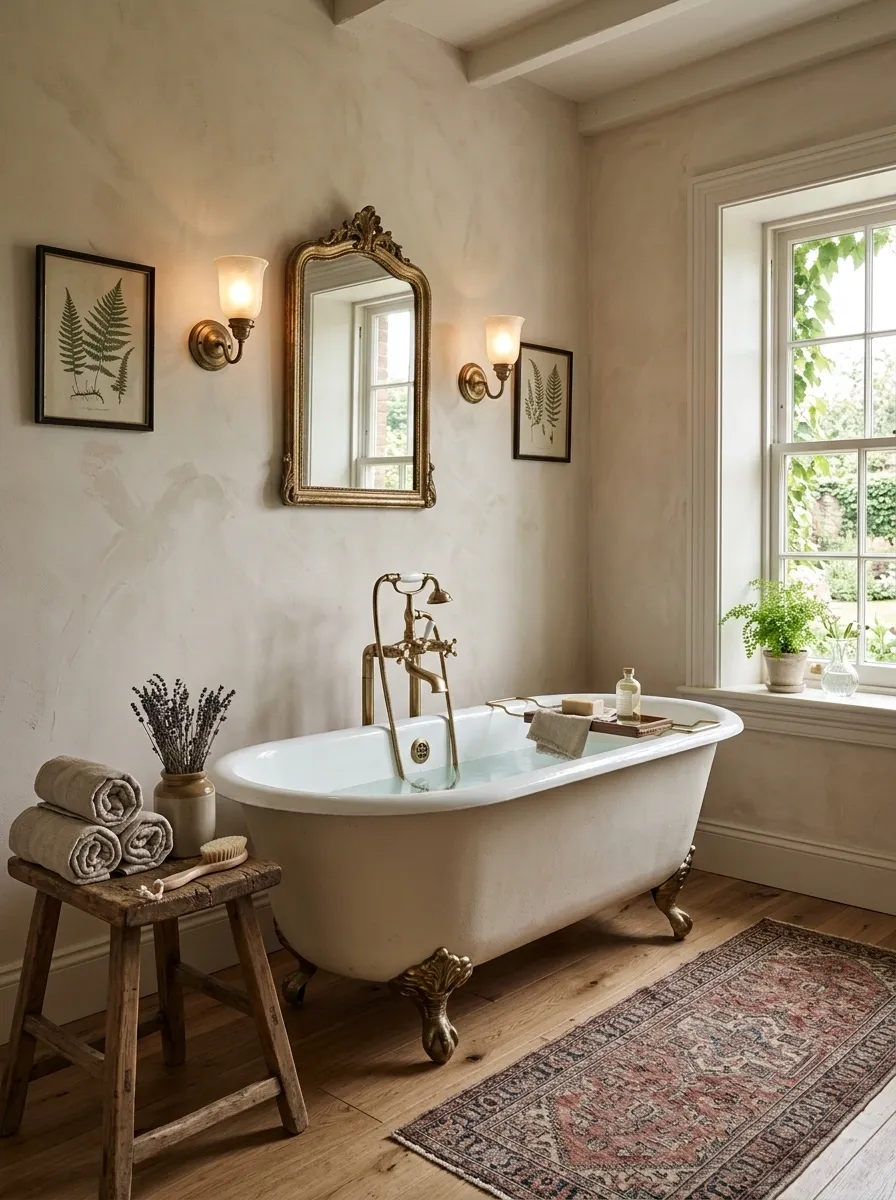
A clawfoot bathtub already carries plenty of personality. The mistake is surrounding it with modern accessories that have absolutely nothing to do with it.
Build around the tub’s character instead. Try an aged-looking mirror, vintage-inspired artwork, traditional sconces, an antique-style stool, or a patterned runner.
The goal isn’t to turn the bathroom into a historical reenactment. Mix older-looking pieces with clean modern plumbing and simple surfaces so the room feels collected rather than themed.
Let the tub be the nostalgic element. Everything else can support it without shouting.
Keep a Minimalist Tub Almost Empty
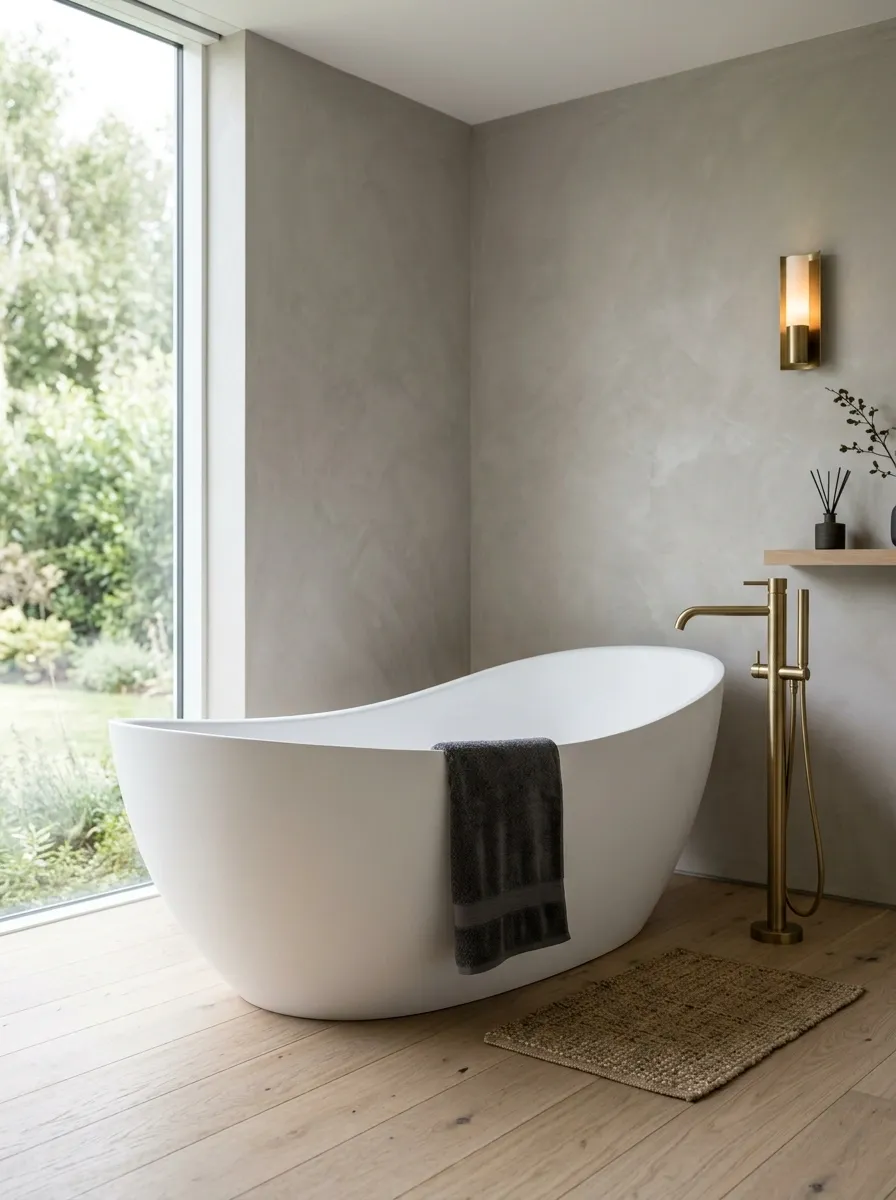
Some bathtubs are already visually strong. Adding more decoration only makes them look worse.
If the tub has an unusual silhouette, beautiful hardware, a sculptural shape, or a dramatic location, let it breathe. Use one restrained accessory nearby and leave the rest open.
A clean wall, a simple towel, a subtle bath mat, and one architectural light can be enough.
Minimalism here isn’t about making the bathroom sterile. It’s about allowing the bathtub itself to remain visible.
Sometimes the most expensive-looking move is simply refusing to put a basket full of eucalyptus next to everything.
Paint the Tub Wall a Deep Moody Shade
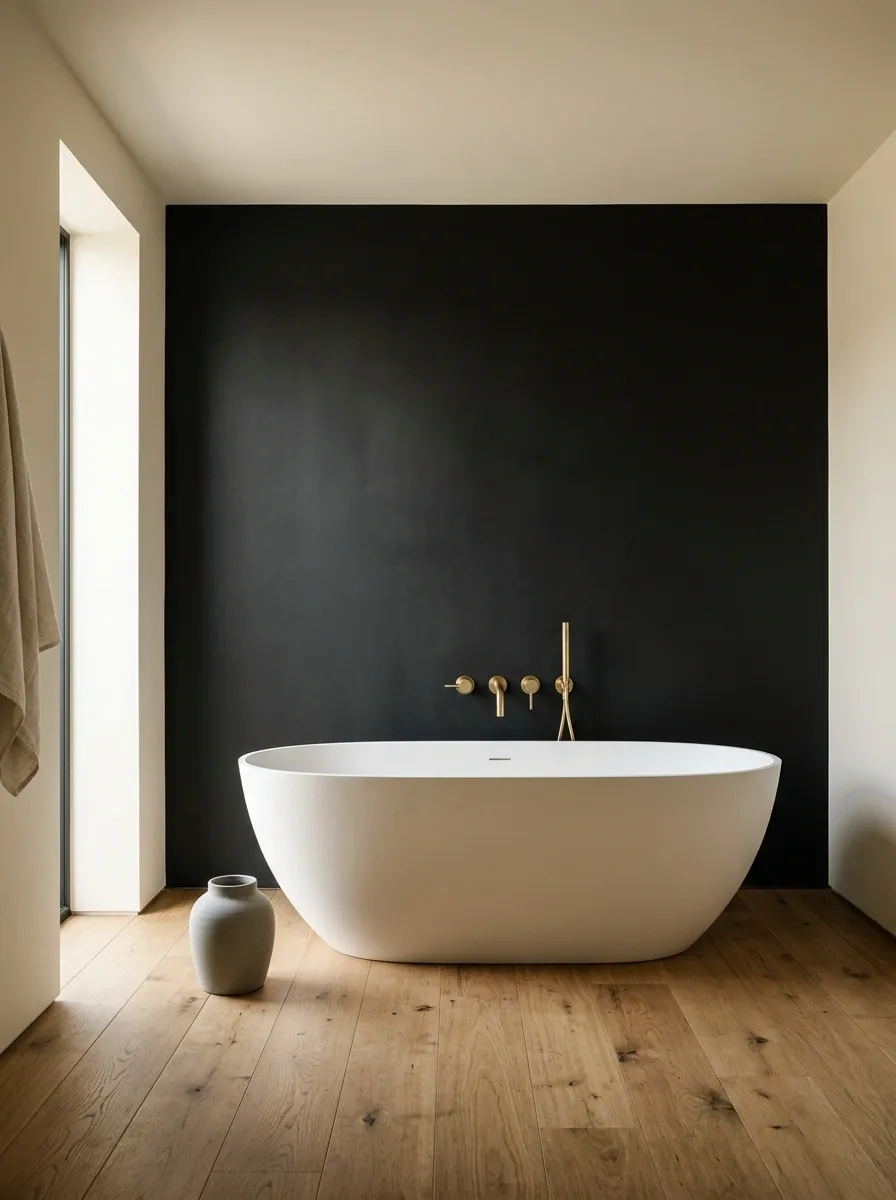
A dark wall behind a pale bathtub creates instant contrast.
Try charcoal, deep green, brown, navy, or a softened black if the bathroom receives enough light. The pale tub becomes more sculptural against the darker background, while brass or warm metal hardware can add another layer of contrast.
Keep the rest of the room relatively restrained. Dark walls work best when they have a clear focal point rather than being surrounded by a dozen unrelated accessories.
This approach is especially effective when the bathroom currently feels flat and overly pale.
Use Warm Stone or Plaster-Look Texture
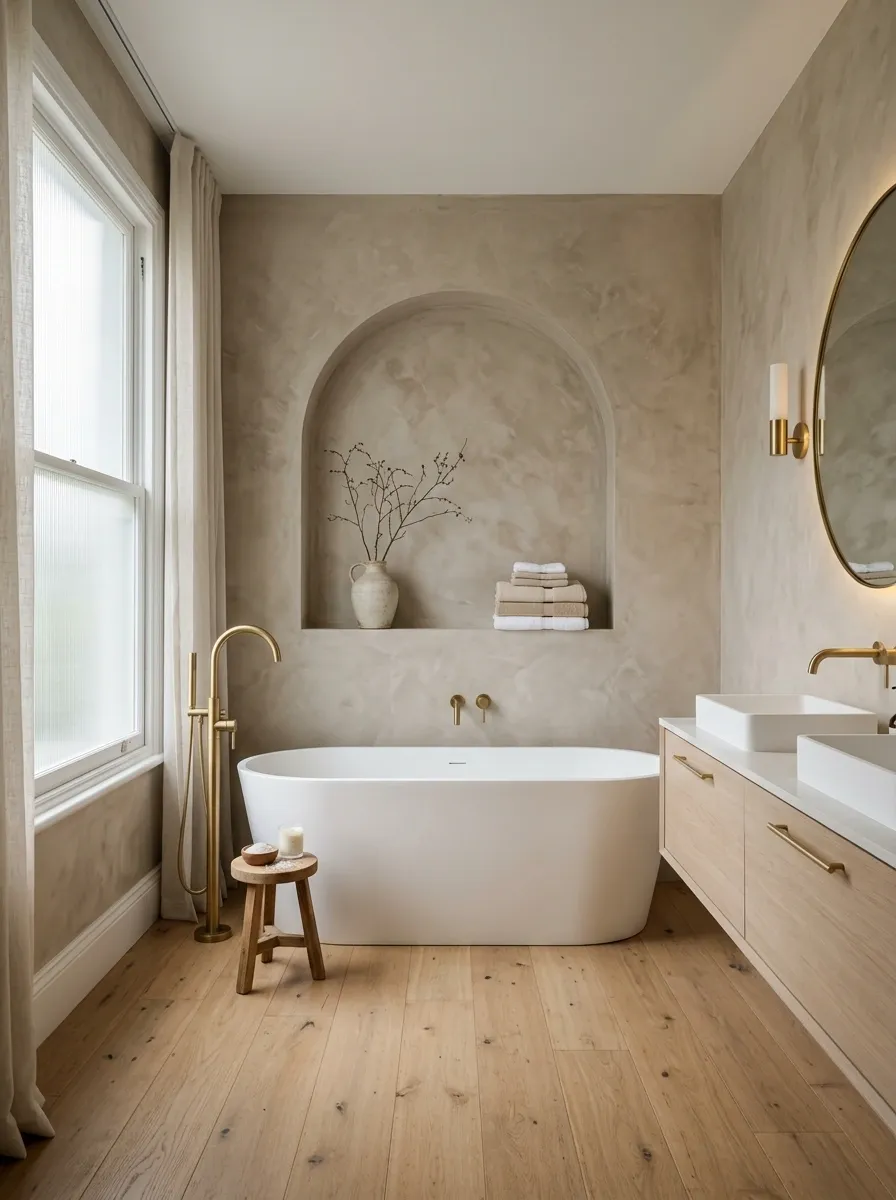
If paint feels too flat and patterned tile feels too busy, introduce a softly textured surface behind the tub.
Limestone-look tile, microcement-inspired finishes, plaster-effect walls, and warm stone tones can make the tub zone feel substantial without creating a strong pattern.
This works particularly well with simple white or cream bathtubs. The texture gives the eye something to notice while keeping the overall palette calm.
Use the texture as the backdrop and keep the accessories simple. The surface itself becomes the decorative feature.
Build a Hotel-Inspired Tub Arrangement
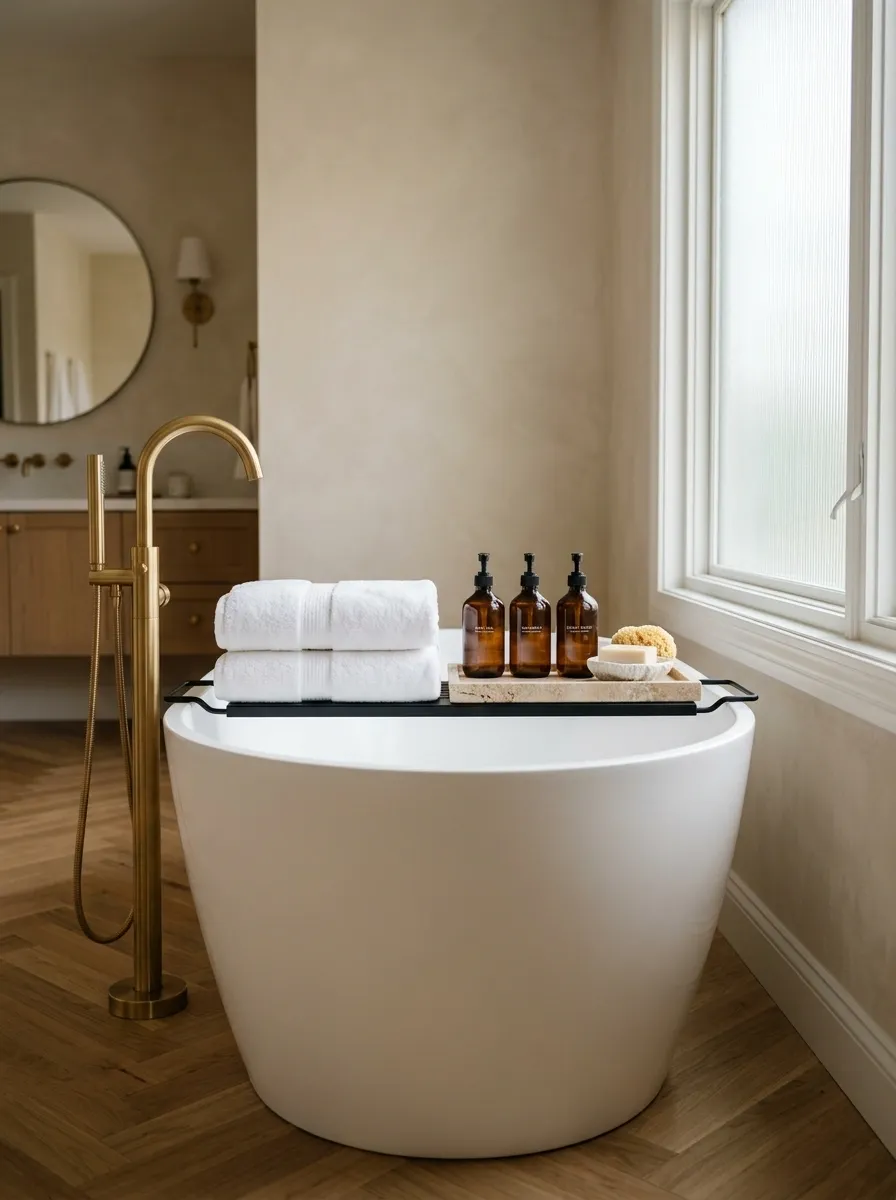
A hotel bathroom often looks polished because everything has a place and the visual composition is controlled.
Borrow the principle without trying to recreate an entire hotel suite.
Place two neatly folded towels where they’re actually useful, add one restrained vessel or tray, keep toiletries grouped rather than scattered, and repeat the same metal finish through the hardware.
The bathtub should still feel usable. The goal is a composed scene, not a room where someone is afraid to touch anything.
Turn a Recessed Niche Into a Feature
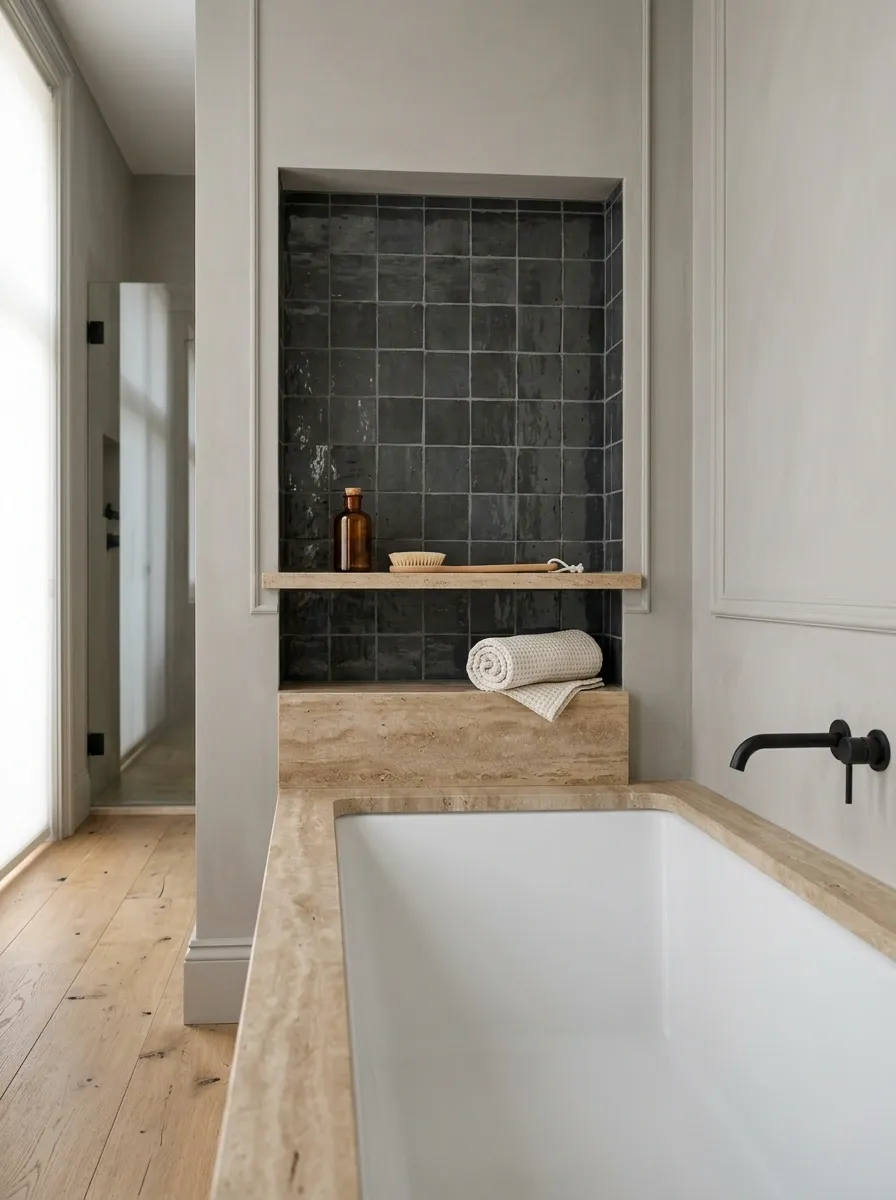
A recessed niche near the bathtub can become much more than storage.
Use a contrasting tile inside the niche, a darker grout, a warm stone shelf, or a different finish to make the recess visually deliberate. Keep the contents sparse so the architectural detail remains visible.
A small ceramic bottle, bath brush, or neatly folded cloth can be enough.
If the niche is inside the shower or direct splash zone, prioritize materials and finishes designed for that environment. Decorative ideas are great until moisture starts collecting around them.
Add a Half-Height Wall or Panel Behind the Tub
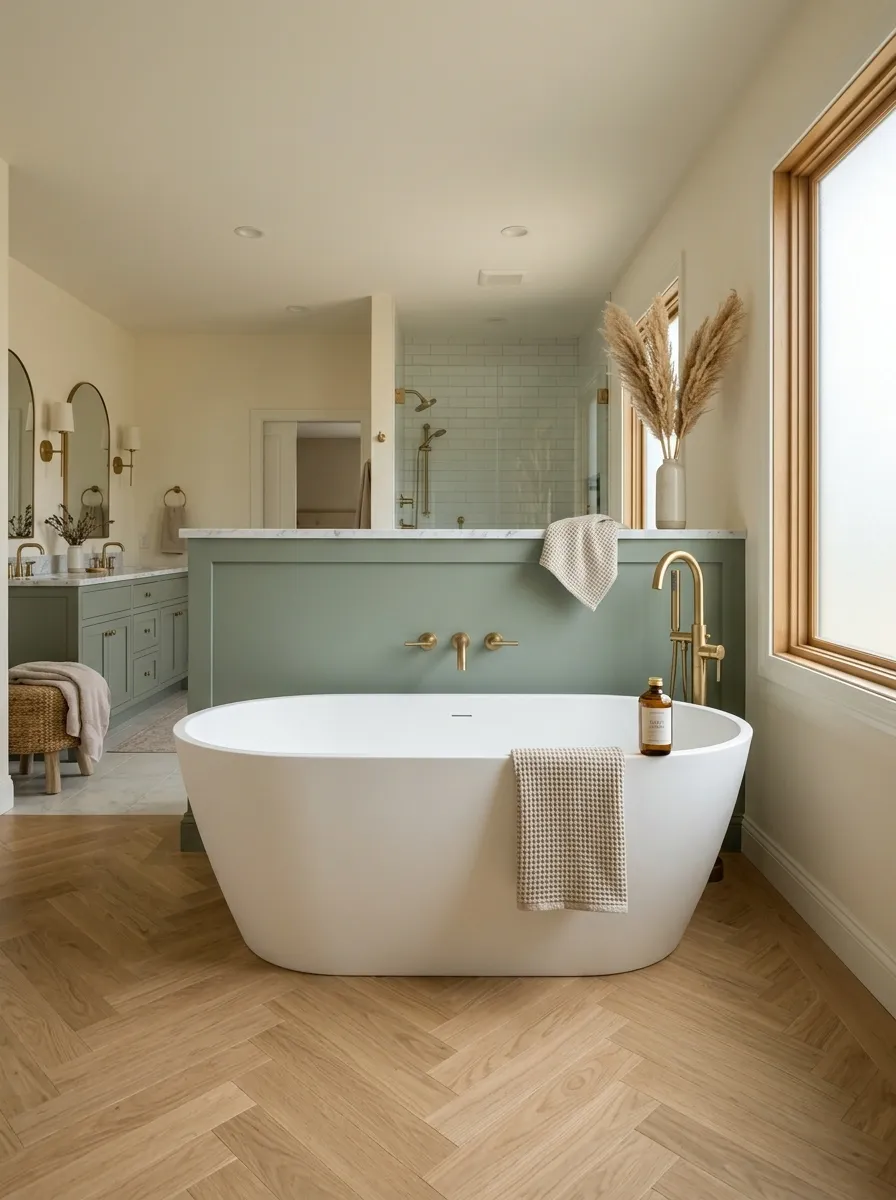
A half-height wall can visually frame a bathtub without completely closing off the room.
This works especially well in larger bathrooms where the tub currently feels disconnected from everything else. A tiled half-wall, fluted panel, or painted architectural divider can establish a boundary while keeping the room visually open.
Use the top surface carefully. It can become a useful ledge, but don’t let it become a dumping ground.
The strongest versions make the tub feel like it belongs to a defined zone rather than sitting randomly in the middle of a large floor plan.
Use Wallpaper on a Protected Tub Wall
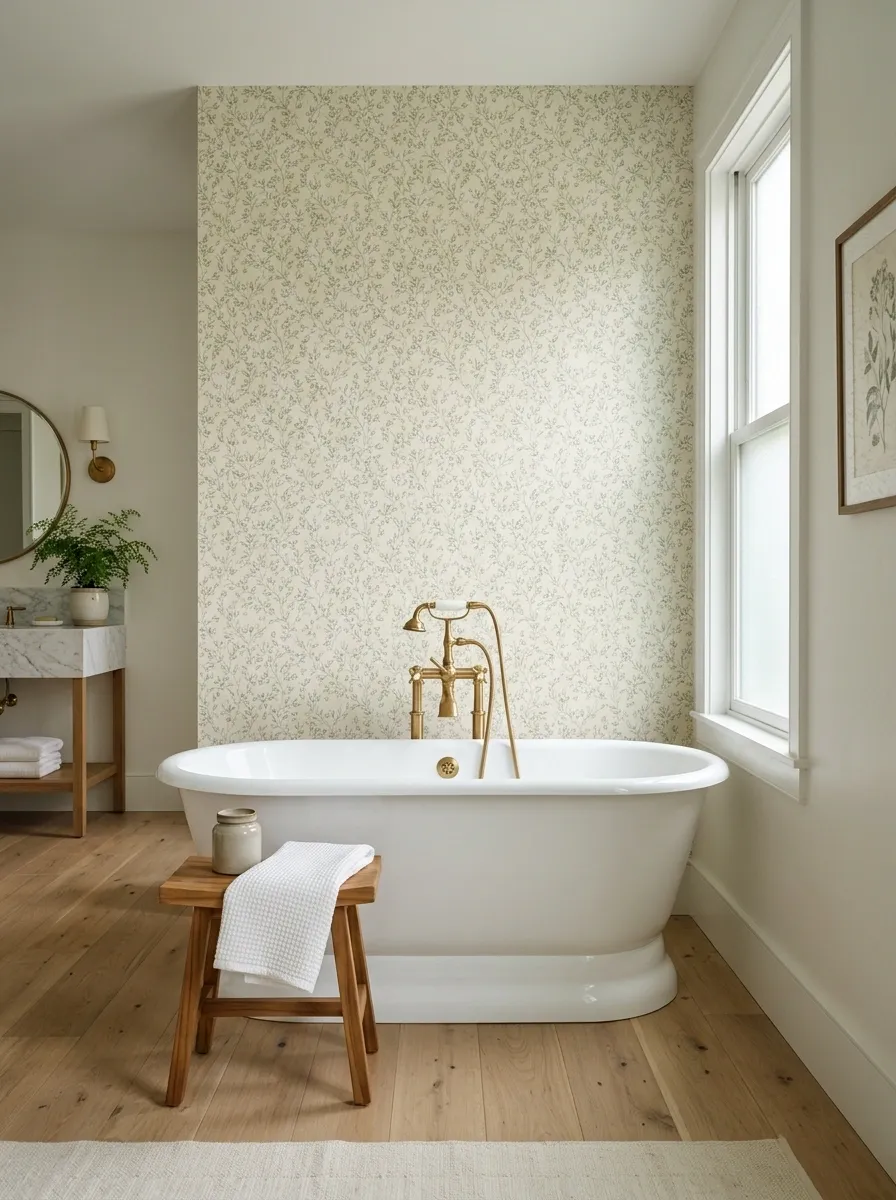
Wallpaper can make a bathroom feel dramatically more decorative, but it needs to be used intelligently around a bathtub.
Choose a wall outside direct splash exposure and use a bathroom-appropriate product and installation method. A subtle botanical, small-scale geometric, vintage stripe, or painterly pattern can give the tub area personality without adding physical clutter.
Keep the rest of the bathroom quieter if the wallpaper is expressive.
The point is to use the wall as decoration instead of trying to decorate the tub itself with objects that inevitably get wet.
Place an Arched Mirror Near the Tub
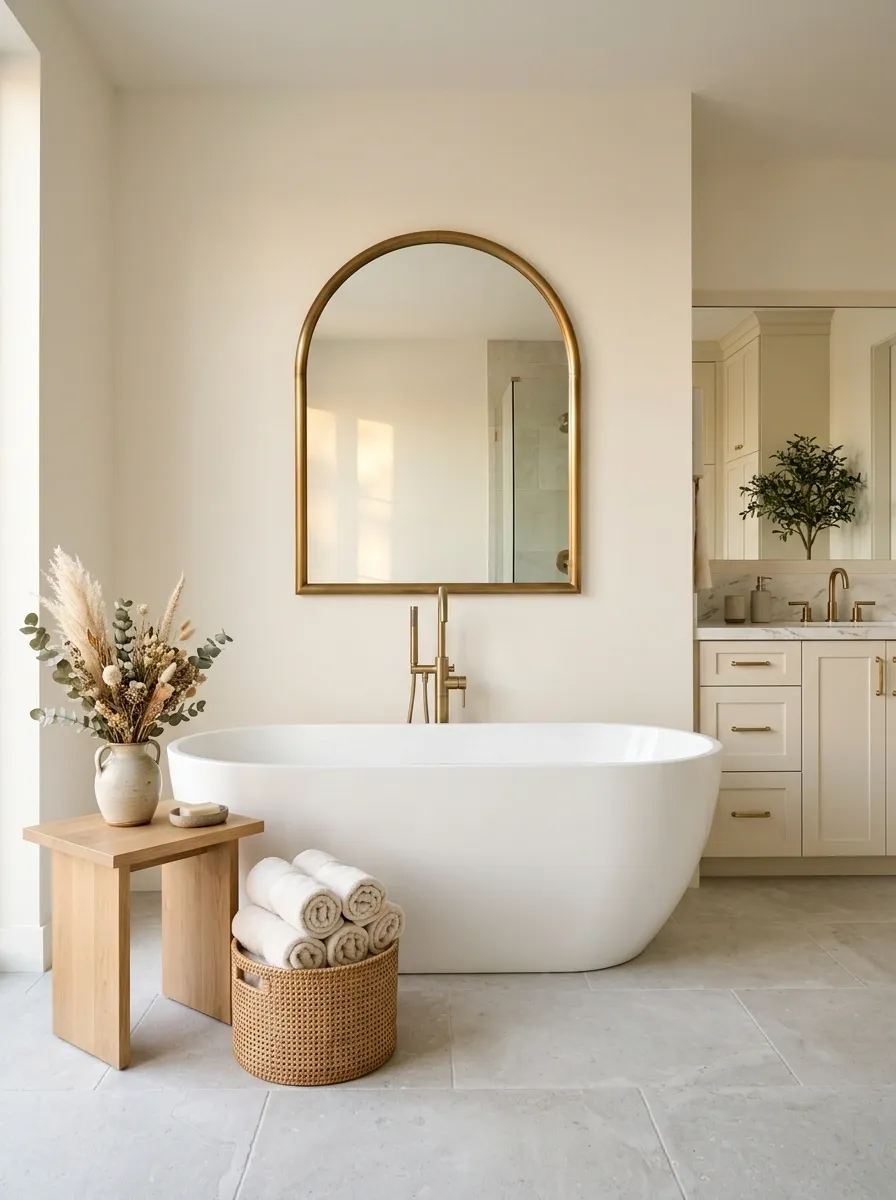
An arched mirror can add architectural shape to a bathroom filled with rectangles.
Place it on a dry wall near the tub, rather than directly over a soaking area, and let its curved silhouette contrast with the straight lines of tile and cabinetry.
The mirror can also reflect light and make the tub zone feel more layered. Choose a frame that repeats another finish in the room so the shape feels integrated rather than randomly decorative.
The mirror doesn’t have to be enormous. It simply needs enough scale to hold its own against the bathtub.
Make a Window Above the Tub Part of the Composition
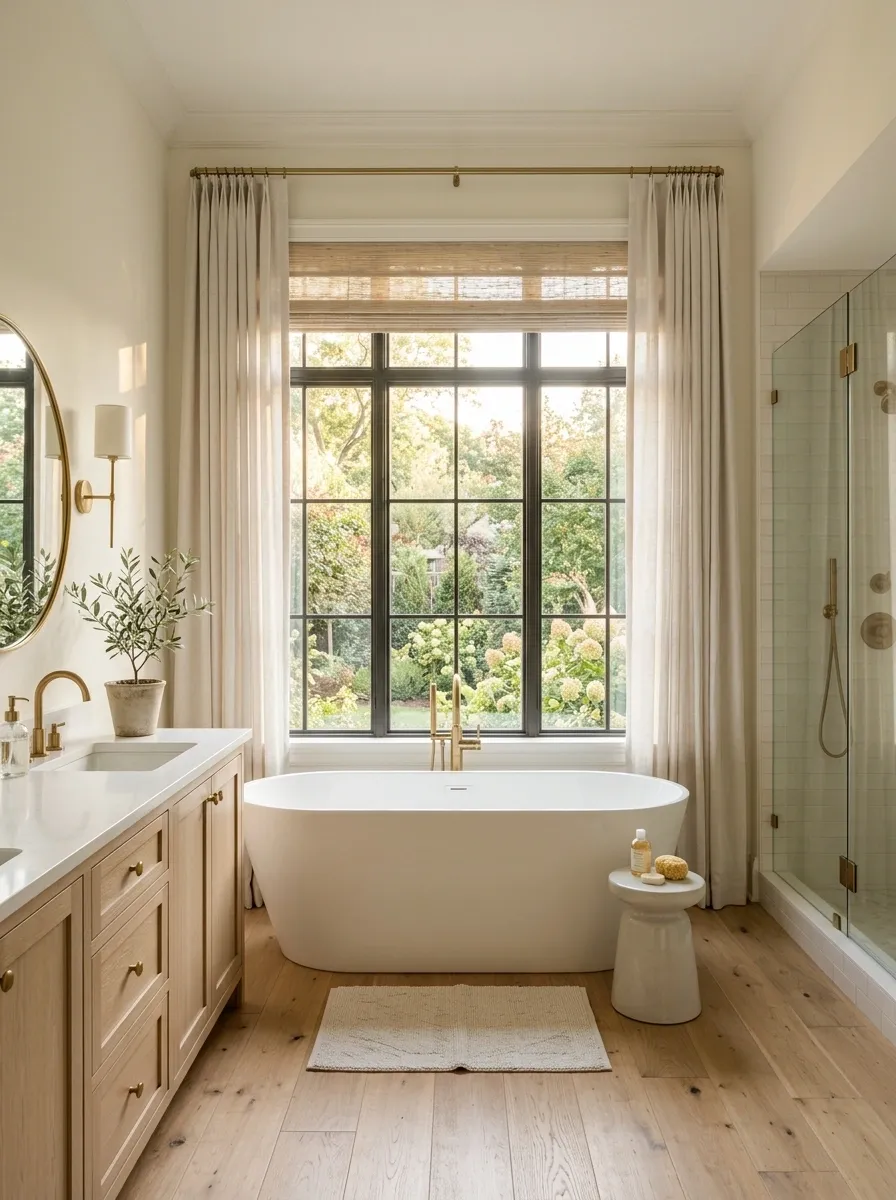
A bathtub under a window can either look incredibly intentional or completely random.
Treat the window as part of the tub’s visual frame. Use simple curtains, woven shades, or understated blinds depending on privacy and moisture needs. Keep the windowsill relatively clear and let natural light become part of the composition.
If privacy allows, the tub can remain the visual focus while the window supplies the architectural backdrop.
Avoid crowding the sill with plants, bottles, candles, and decorative objects. The window already has a job.
Tie the Tub Into the Ceiling
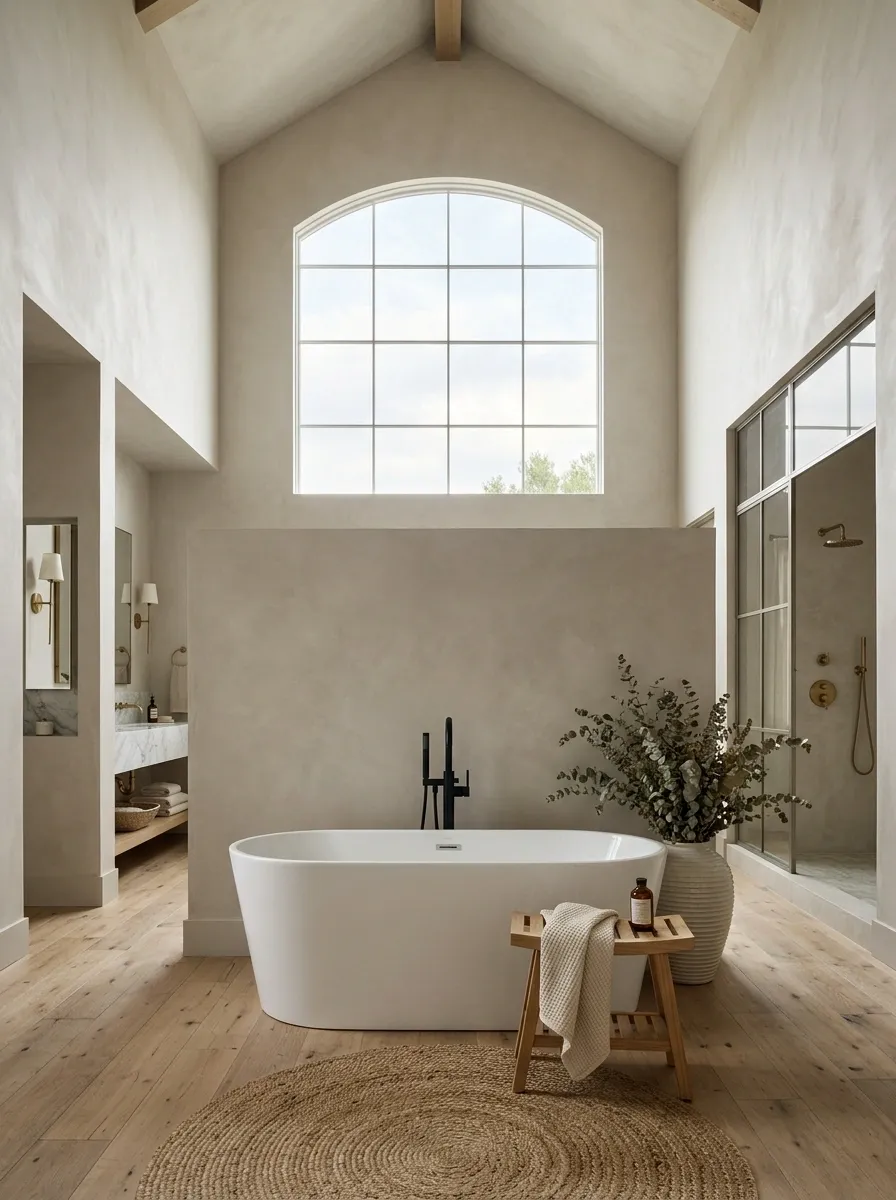
A bathtub can look disconnected because all the decorative attention stops at wall height.
In a larger bathroom, carry the tub area’s color or material upward. A painted ceiling, wood-look detail, or continuation of a subtle wall tone can visually connect the vertical surfaces.
This is particularly effective in rooms with unusually high ceilings or a freestanding tub placed in a large open area.
The treatment doesn’t have to be dramatic. Even using the same warm neutral on the ceiling as the tub wall can make the whole zone feel more enveloping.
Anchor a Long Tub With a Bench
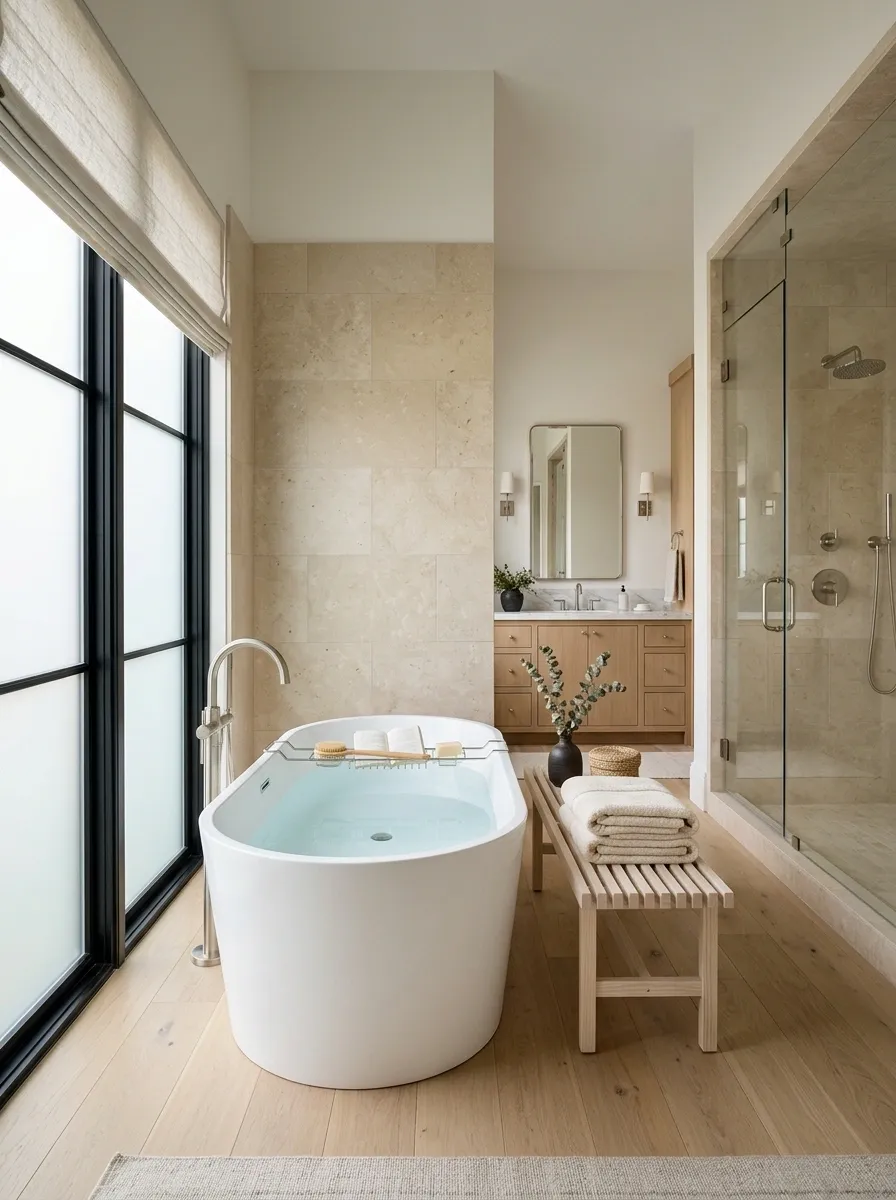
A long bathroom can make even a beautiful bathtub look undersized.
A narrow bench placed beside or near the end of the tub can visually anchor the composition and fill awkward empty space. Choose one with a shape that complements the bathtub rather than competing with it.
The bench can hold towels or provide a practical place to sit, but it should remain visually simple.
This works particularly well in bathrooms where the tub occupies one side of a large open floor area and currently looks slightly lost.
Use One Monochrome Palette With Lots of Texture
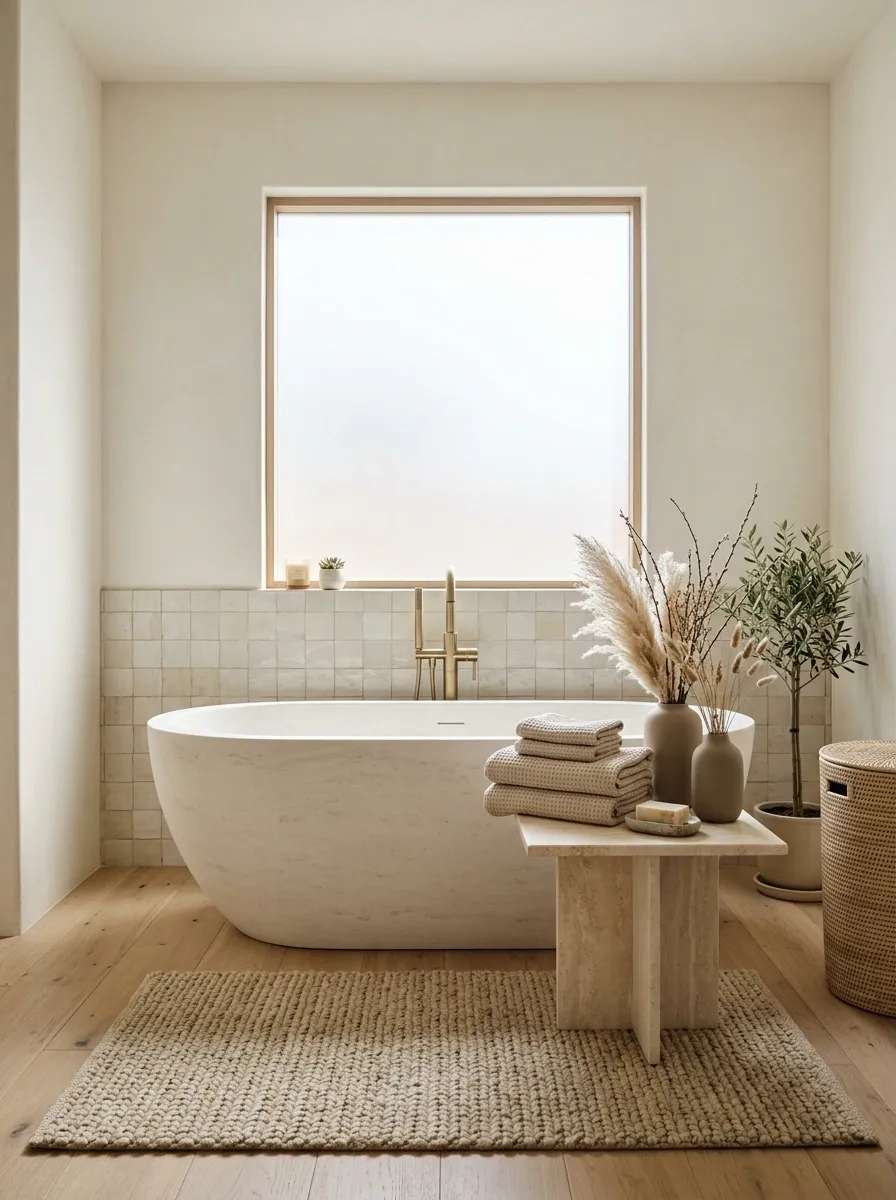
A bathtub can look polished without a single bold color.
Choose one family of shades and create variation through texture instead. Cream tile, warm white walls, beige towels, pale stone, woven accessories, and slightly darker ceramics can create depth without visual noise.
This works particularly well in bathrooms where the architecture is already interesting.
The trick is avoiding a completely flat palette. Different surfaces should catch light differently so the room doesn’t become one giant beige rectangle.
Use a Decorative Tub Tray Without Overloading It
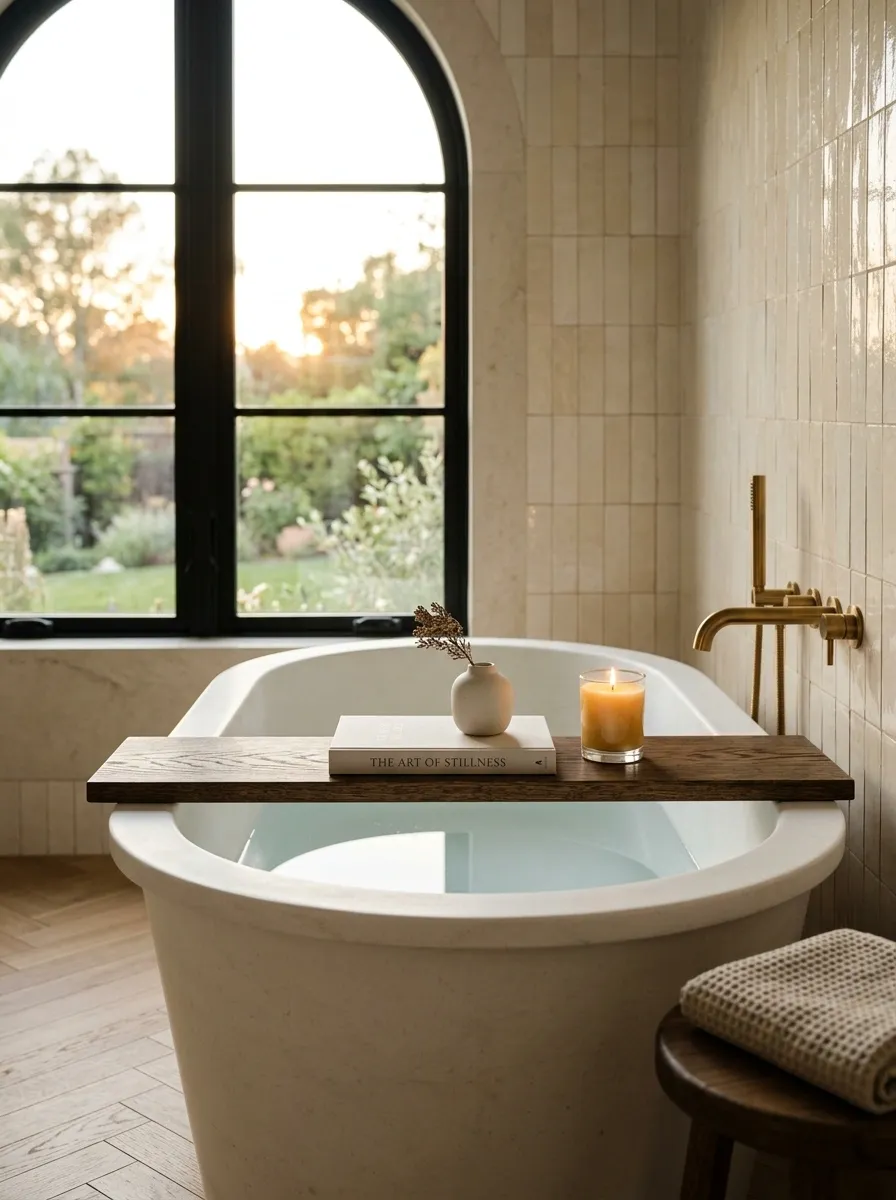
A bathtub tray can become a useful visual anchor when the tub itself has a broad, stable rim or the tray is specifically designed for that tub.
Keep the arrangement extremely edited. A book, small vessel, bath accessory, or single candle is enough. Don’t create a miniature breakfast buffet with six objects balancing over the water.
Choose a tray finish that relates to the rest of the bathroom, especially wood or a dark neutral.
The tray should make the tub feel lived-in and intentional, not like an online shopping cart got tipped over.
Add a Large Plant Where the Light Actually Supports It
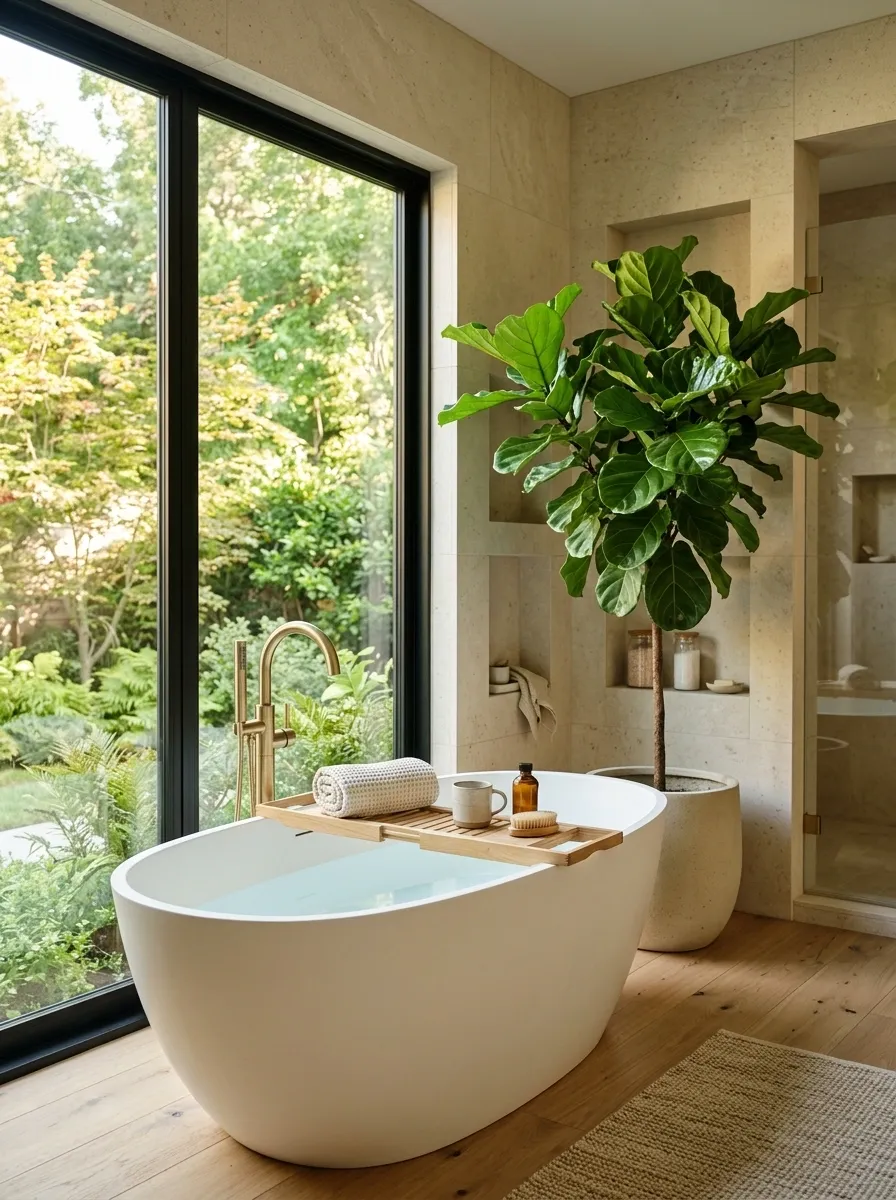
A plant can soften the hard surfaces around a bathtub, especially in a bathroom with natural light.
Use a genuinely suitable plant for the room’s humidity and light conditions rather than buying greenery purely because it photographs well. A tall plant in a simple pot can fill a dead corner and introduce an organic shape against tile.
Keep it clear of splash zones and make sure the pot can handle the environment.
One substantial plant usually looks more convincing than a collection of tiny pots scattered around the tub.
Frame the Tub With Matching Sconces
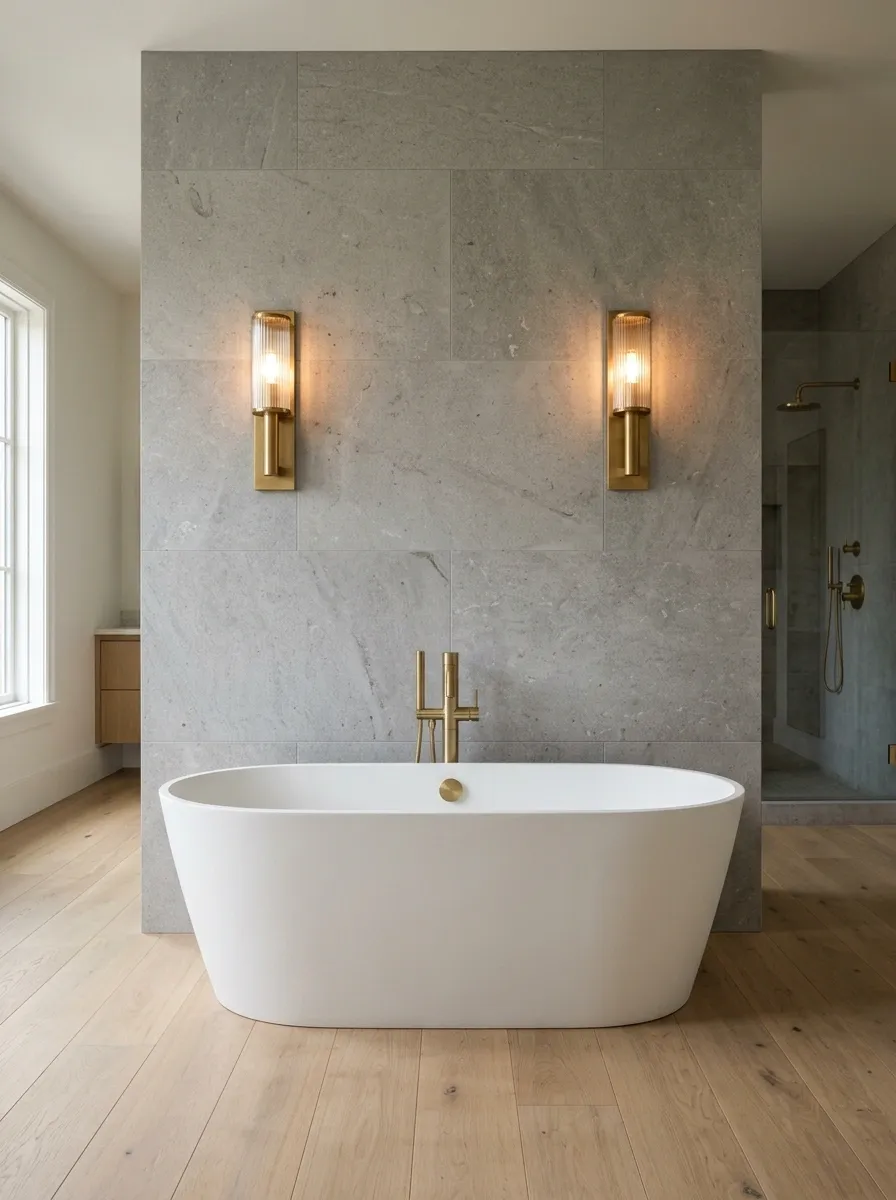
Lighting can do the framing work that artwork or accessories sometimes can’t.
If the wall layout permits, place matching sconces around the tub’s focal wall or use a balanced lighting arrangement that visually centers the bathtub.
Choose fixtures appropriate for bathroom use and install them according to local electrical and safety requirements, especially around water.
Warm, flattering lighting can make tile, stone, metal, and the tub itself look significantly richer in the evening.
The important part is that the fixtures feel architectural rather than like random lamps that happened to find themselves in the bathroom.
Use a Decorative Arch Around the Tub
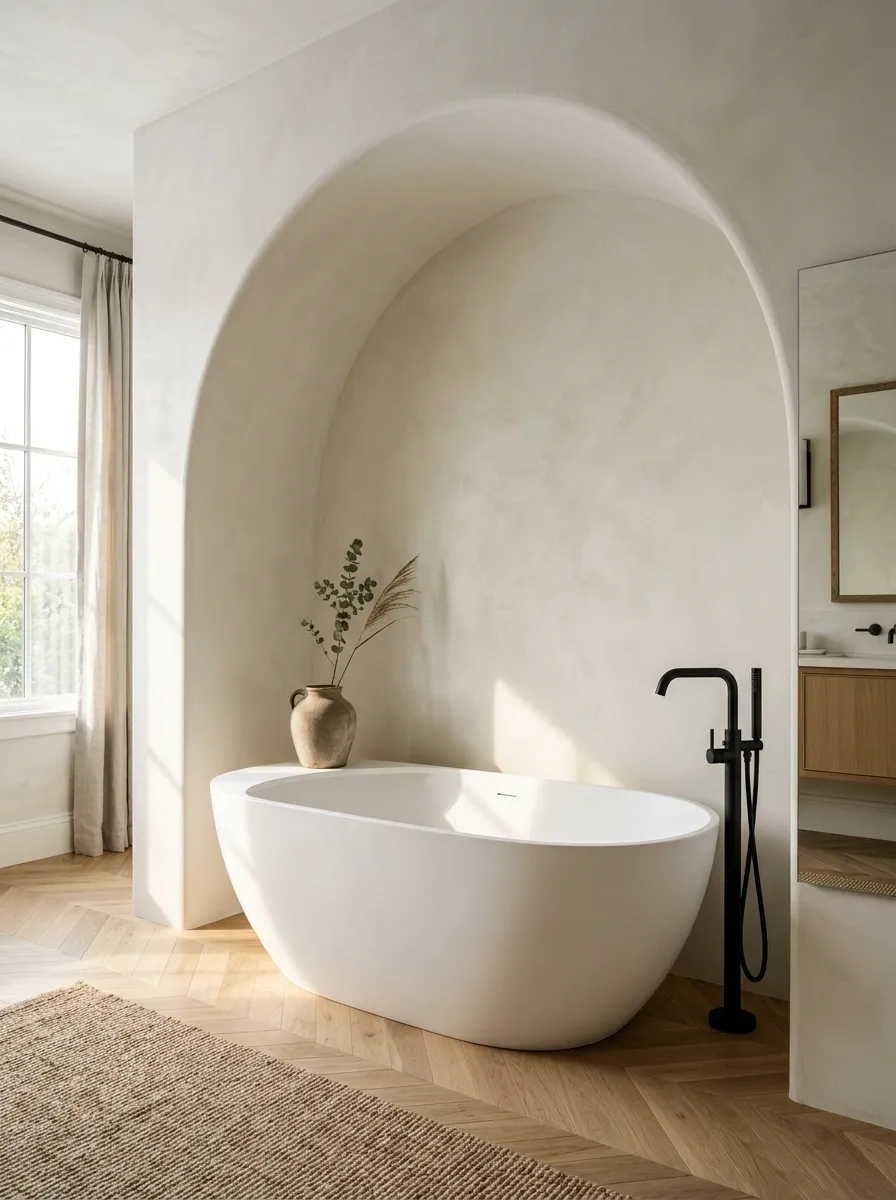
An arch can give a bathtub a strong architectural identity without relying on lots of accessories.
The arch might be created with tile, paint, plaster, stone, or an existing architectural opening. It can frame a freestanding tub against a wall or emphasize a built-in bathing area.
Keep the interior of the arch relatively simple. The shape itself is the decoration.
This approach is especially effective in bathrooms that currently have a lot of rectangular elements and need one softer architectural gesture.
Make a Narrow Side Wall the Decorative Moment
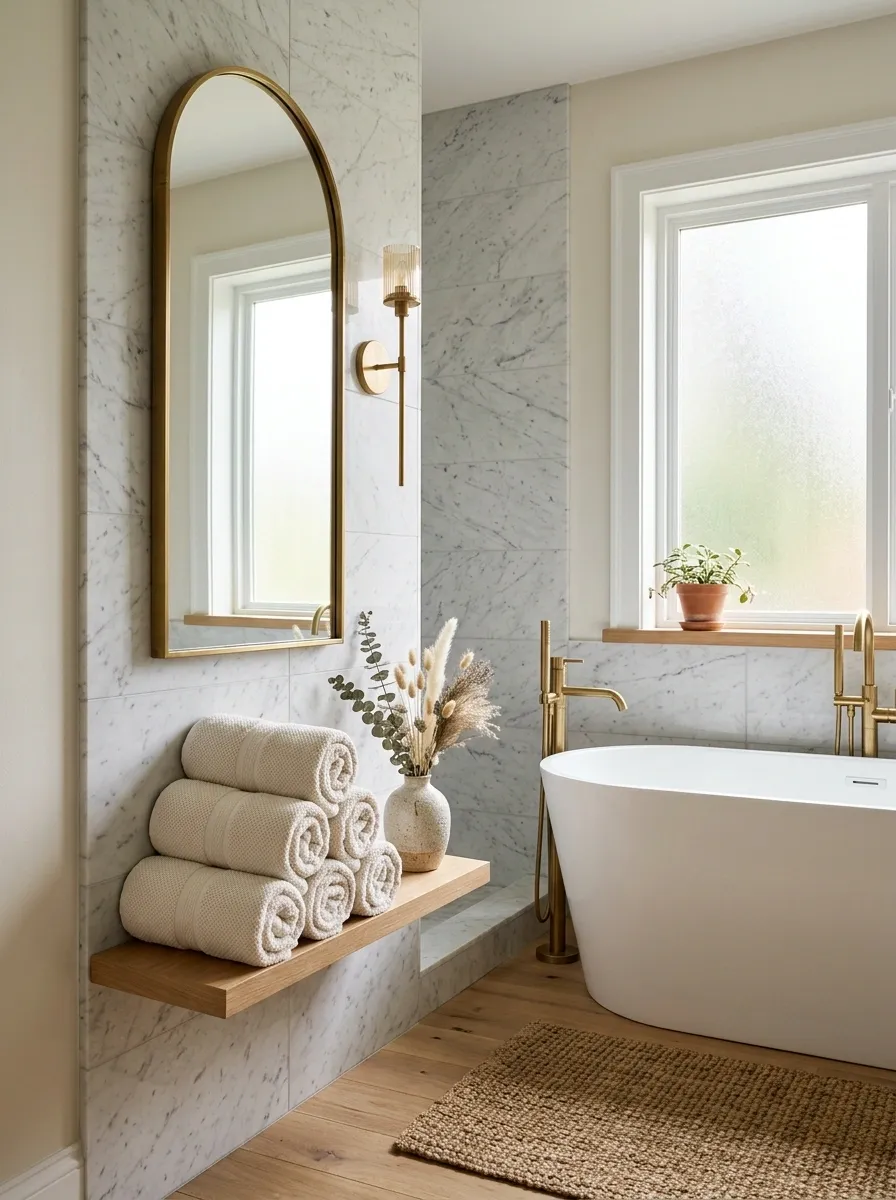
Not every bathroom has a big blank wall behind the bathtub. Sometimes the best opportunity is a narrow wall beside it.
Use that smaller surface for a vertical piece of art, a tall mirror, a slim sconce, a towel composition, or a strong paint color.
This is particularly useful in compact bathrooms where trying to decorate the entire tub wall would make the space feel crowded.
Think vertically. A narrow wall doesn’t need lots of width to become visually important.
Repeat the Bathroom’s Main Color Around the Tub
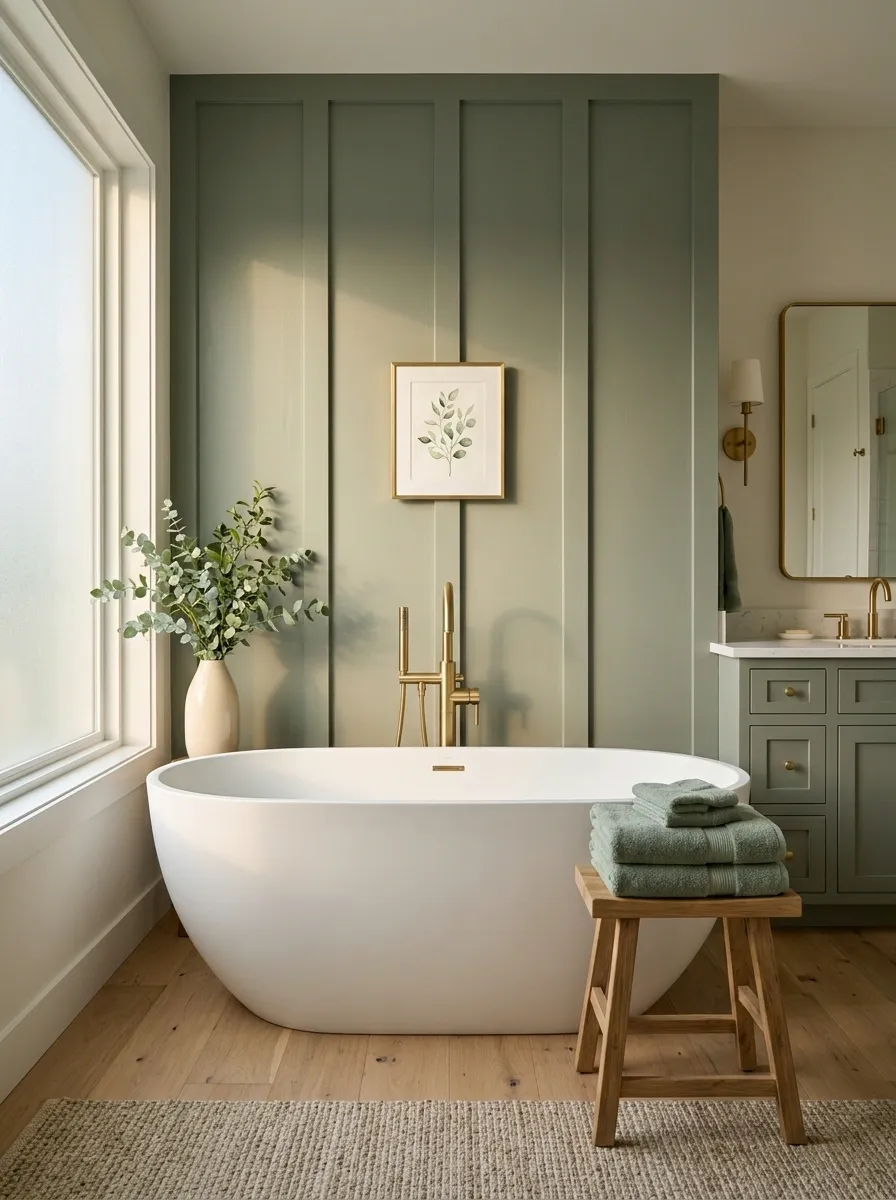
If the bathtub feels visually disconnected from the rest of the room, borrow an existing color and repeat it near the tub.
Take the muted green from the vanity, the brown from the floor, the blue from the shower tile, or the brass tone from the hardware and bring that color into a towel, stool, artwork, curtain, or ceramic piece near the bathtub.
This creates a visual bridge without introducing another color.
It also makes decorating easier because the bathroom already gave you the palette. There is no need to invent a new one just because the tub is sitting there looking lonely.
Let the Bathtub Be the Only Large Shape
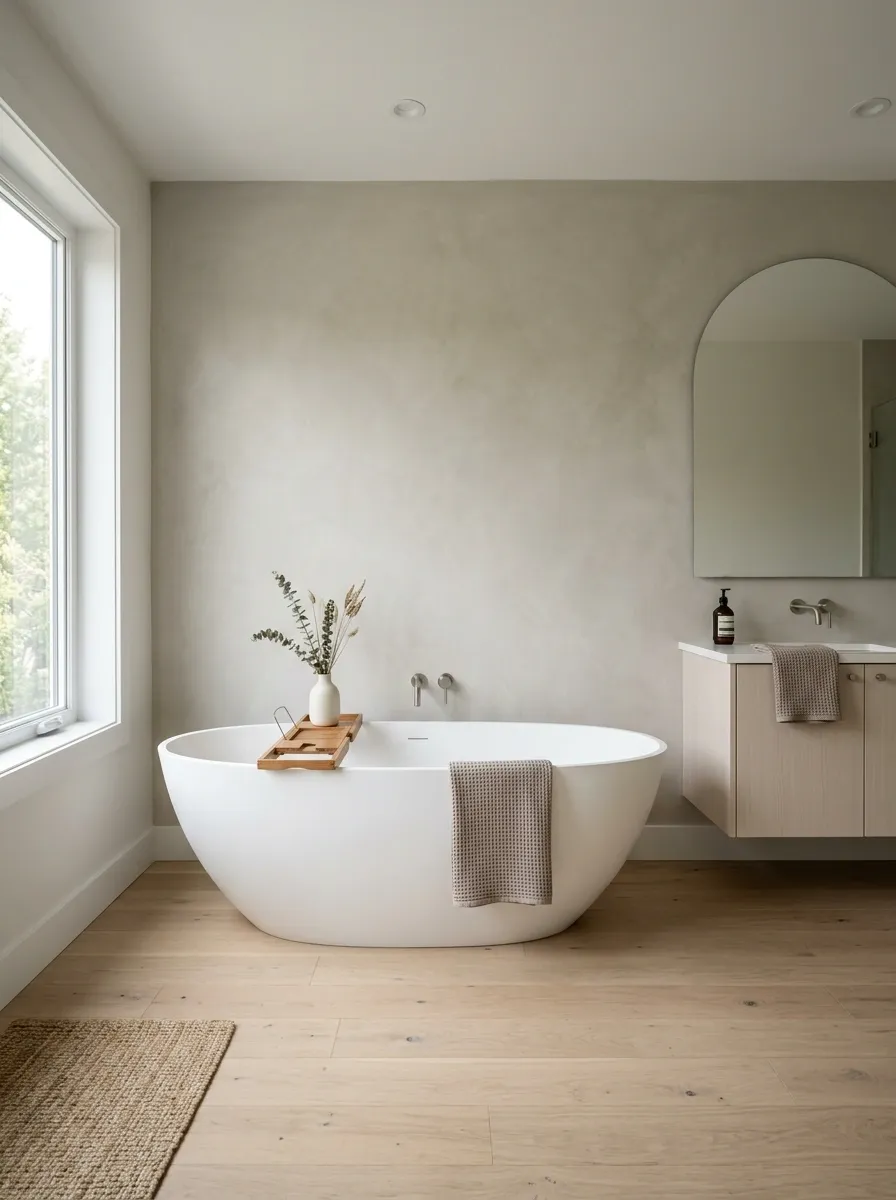
A bathroom can become visually chaotic when several large objects compete.
If the tub has a distinctive silhouette, keep nearby furniture, artwork, mirrors, and accessories relatively quiet. Avoid putting another oversized object directly beside it unless the room genuinely needs the balance.
This works especially well with sculptural freestanding tubs, slipper tubs, rounded tubs, and unusual stone bathtubs.
The room feels more intentional because the eye knows where to land.
And sometimes the decorating solution is realizing the bathtub was already doing enough and everyone else needed to calm down.
Finish With a Deliberately Edited Tub Zone
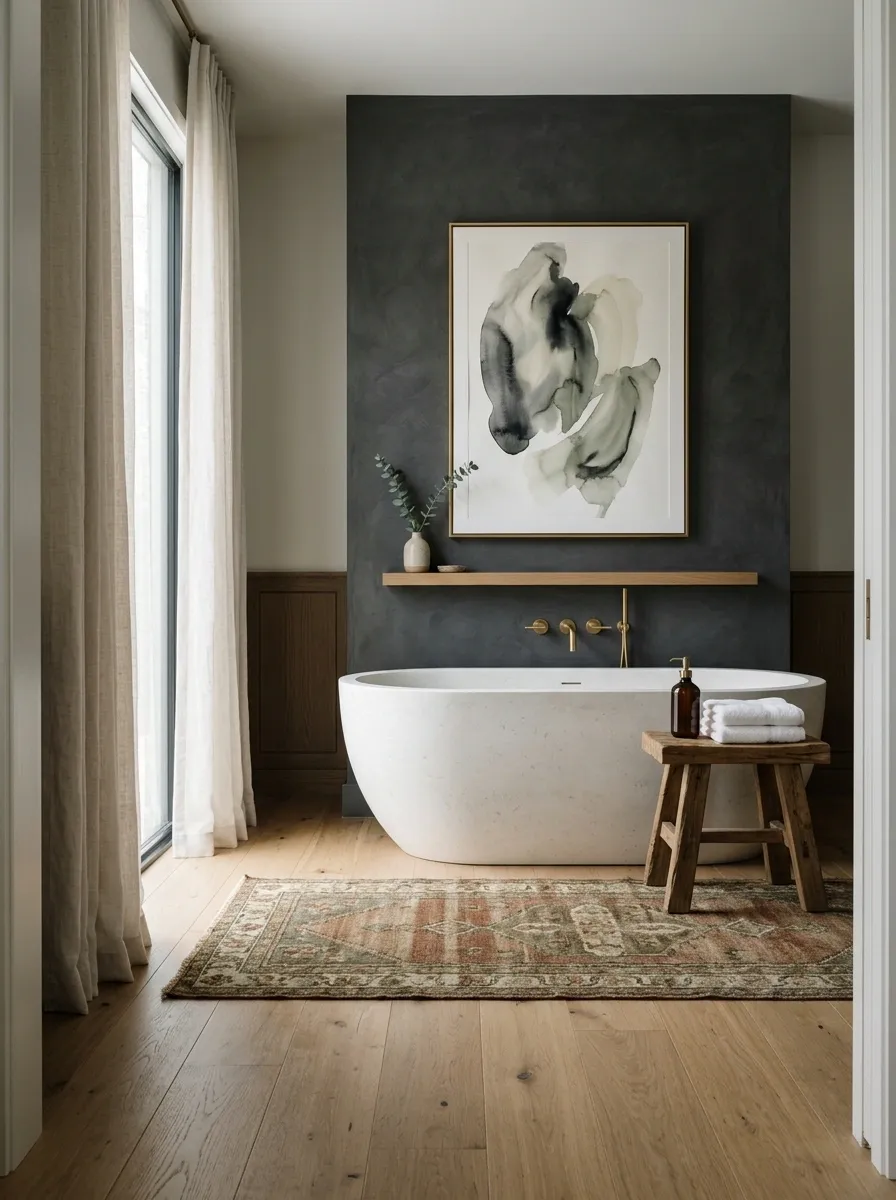
The final approach is less about adding something and more about removing everything that isn’t helping.
Stand back and look at the bathtub from the bathroom doorway. Does the eye know where the tub begins and ends? Is there a clear focal point? Is there one material, color, or shape connecting it to the rest of the room?
Remove duplicate baskets, unnecessary bottles, tiny decorations, random signs, and anything that only exists because there was an empty surface.
Then keep the strongest few elements.
A bathtub doesn’t need to look decorated from every angle. It needs to look like the room was designed around it rather than decorated around it at the last possible second.
Make the Tub Feel Like Part of the Room
The most convincing bathtub designs don’t depend on a pile of accessories sitting around the water. They create a relationship between the tub, the wall behind it, the floor beneath it, the lighting nearby, the textiles, and the materials already present in the bathroom.
That might mean a darker wall, a better-scaled runner, a substantial stool, a full-height curtain, a single oversized artwork, or simply removing half the clutter currently competing with the bathtub.
Start with the visual problem, then choose the solution that actually fixes it. A tub that once looked awkward can become the feature that gives the whole bathroom its character.
And if the bathroom still looks unfinished after all that, check the clutter before ordering another decorative basket. The basket industry has suffered enough.Fix the broken code-block labelsRemove repeated and overlapping ideas
Fix the broken code-block labels
Remove repeated and overlapping ideas
Add safety guidance near wet areas