
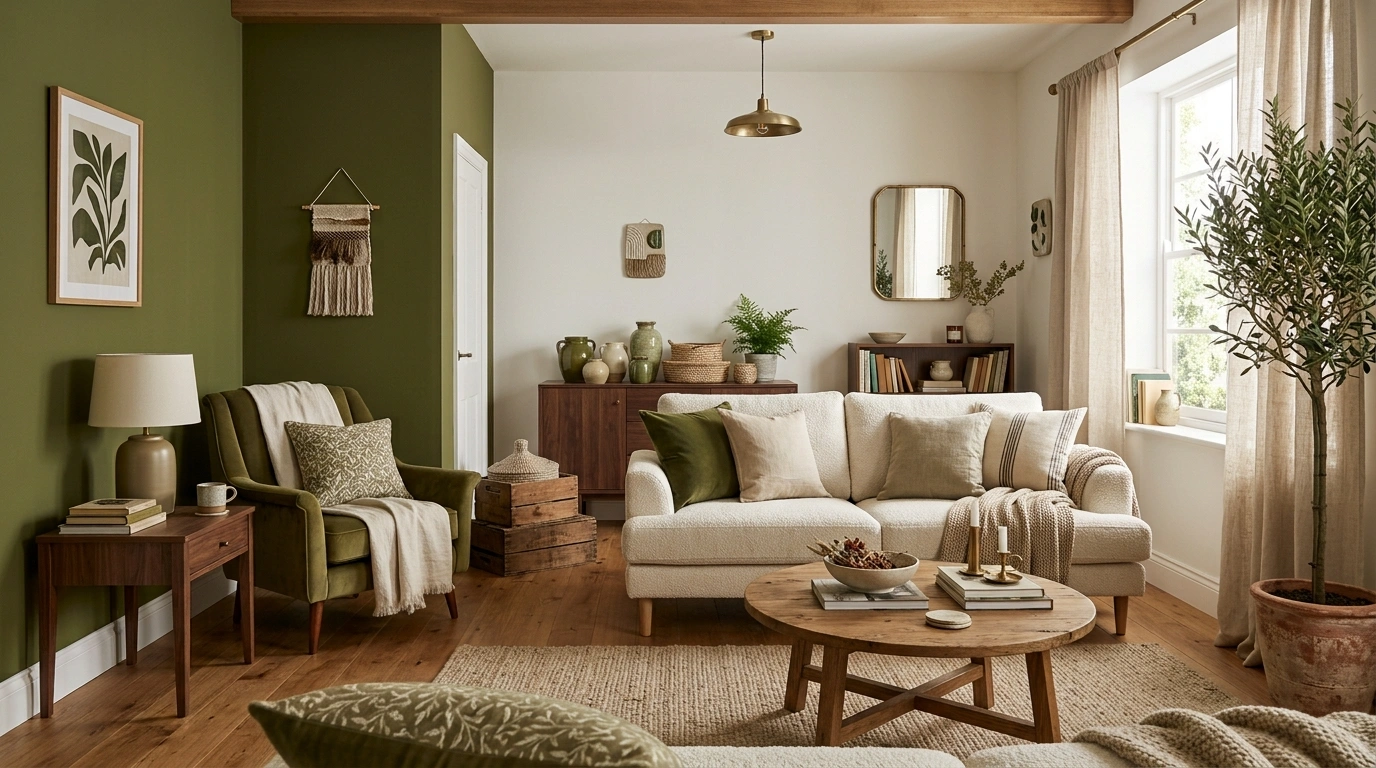
Olive green is having a moment, but there’s a very specific way to get it right. Throw green things around a beige room and hope for the best, and suddenly the house looks like it lost a bet with a garden center.
The problem isn’t olive itself. It’s usually the way it’s used. Too many little accessories make the color feel scattered. Too much dark green makes a room feel heavy. And matching every olive piece to the exact same shade creates that suspiciously coordinated look that nobody asked for.
The better approach is to give olive a proper job.
Let it anchor a wall. Let it take over a sofa. Put it on the kitchen island. Use it in curtains, tile, bedding, or one genuinely interesting vintage piece. Then surround it with materials that make the green look richer, such as warm wood, cream linen, natural stone, leather, brass, or black metal.
The Olive Green Mistakes
Olive doesn’t need a matching accessory army
The fastest way to weaken olive green is to repeat it on every available surface.
A room usually needs one dominant olive element and a few quieter connections. If the sofa is olive, the cushions don’t need to match it exactly. If the walls are olive, the curtains don’t need to join the green committee too.
Think repetition, not duplication.
The color should appear in different materials or at different visual levels. That’s what makes a room feel layered instead of color-coded.
Warm neutrals make olive look richer
Olive has enough depth on its own. It doesn’t need a dozen dramatic colors fighting beside it.
Cream, oatmeal, walnut, tan, natural stone, aged brass, and soft black all give it somewhere to go. Bright white can work too, but warmer neutrals usually make the green feel softer and more expensive.
The easiest formula is simple:
Deep olive + warm neutral + natural texture = a room that doesn’t look like it tried too hard.
One strong green element beats scattered little accents
An olive sofa makes a statement.
An olive cushion, olive vase, olive candle, olive tray, olive artwork, and olive blanket all sitting within six feet of each other make a statement too, but it’s usually “someone discovered a color filter.”
Pick the architectural or furniture element that can carry the color properly. Then repeat the shade sparingly elsewhere.
That’s where the following ideas come in.
Olive Green Home Decor Ideas
Layer Olive With Warm Lighting
An olive bedroom truly comes alive when paired with dramatic multi-pendant lighting that brings out the rich undertones of the walls.
Keep the bedding in soft cream and mustard tones, letting the deep green headboard anchor the entire space without feeling heavy.
A light patterned rug underfoot ensures the room stays bright and inviting rather than dark and enclosed.
Give Olive Walls a Warm, Lived-In Living Room
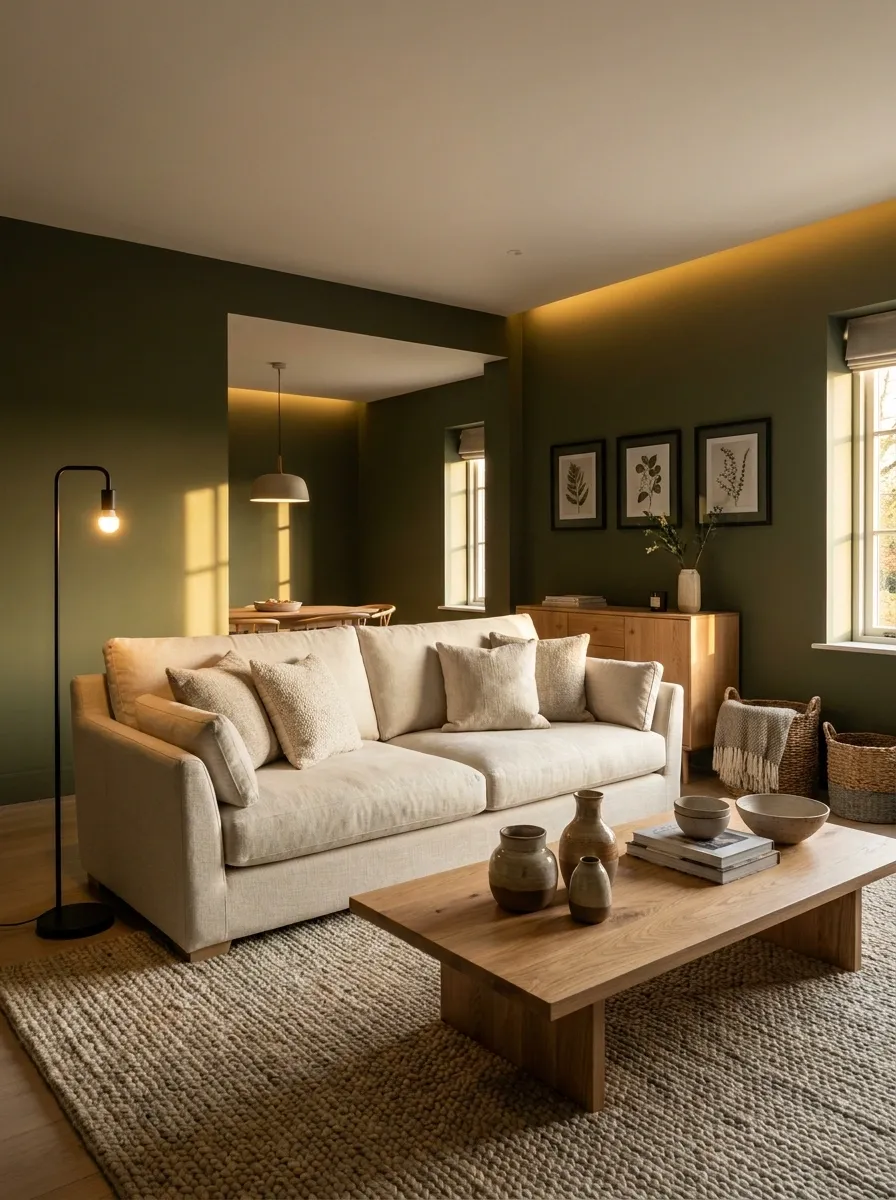
Olive walls work because they change the entire background instead of adding another decorative object to an already busy room.
Pair them with a cream or oatmeal sofa, warm wood coffee table, and a textured neutral rug. Black can appear in small doses through a floor lamp or picture frame.
The important part is keeping the furniture lighter than the wall.
Let the olive be the backdrop, not another object fighting for attention.
A few natural textures stop the wall from feeling flat, while warm lighting keeps the green from becoming too cool in the evening.
Mix Olive With Earthy Tones
A warm olive green living room loves company, especially when that company includes rich browns, rust tones, and natural wood furniture.
Anchor the space with a soft brown sectional, then tie the earthy palette together with a patterned neutral rug and plenty of leafy green plants.
Stick to a few statement art pieces and an organic coffee table so the room feels curated rather than crowded.
Build Around an Olive Sofa Instead of Decorating Around It
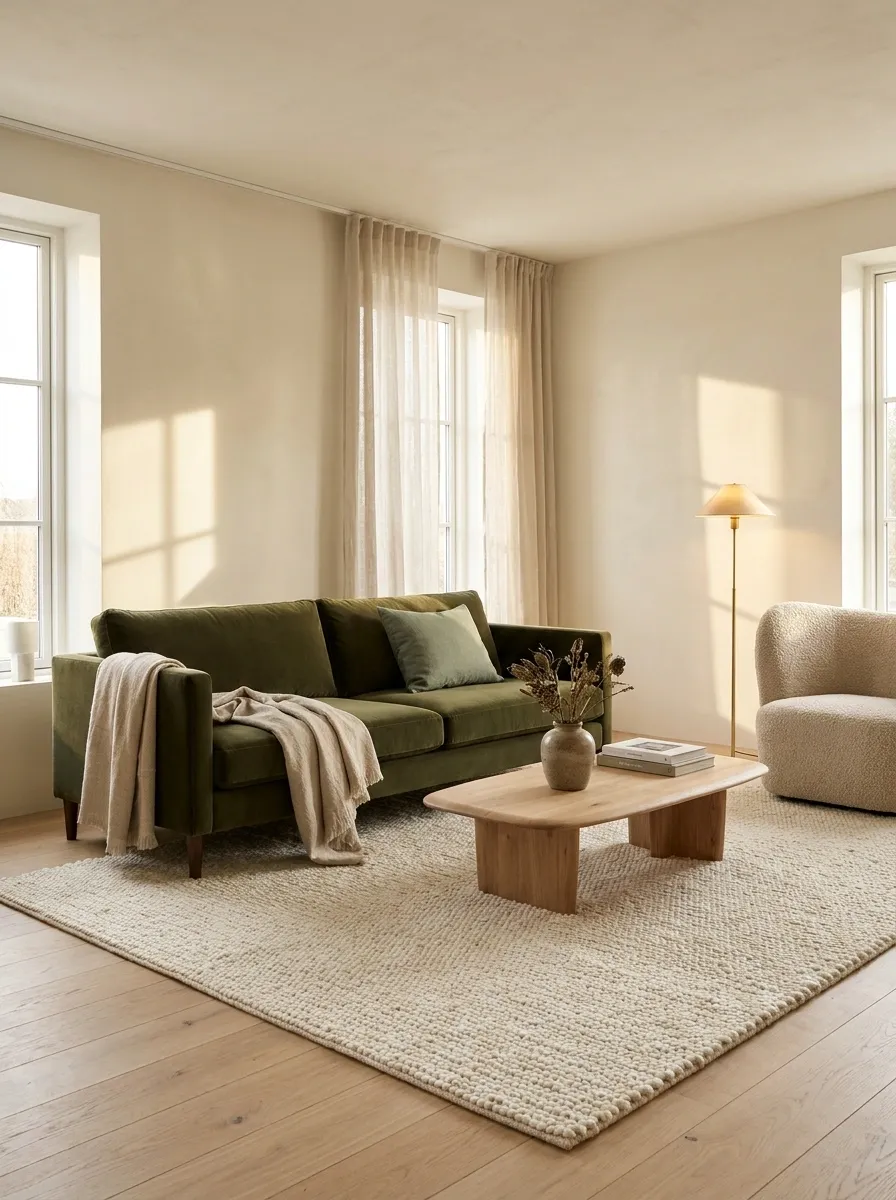
An olive sofa already has enough personality to anchor the room.
Keep everything around it relatively calm. Cream walls, a natural wood coffee table, beige or oatmeal textiles, and a textured rug let the upholstery become the obvious focal point.
Then repeat the green once or twice. A small cushion or artwork detail is enough.
Don’t put five matching green accessories around the sofa.
That’s not layering. That’s a hostage situation.
The best version feels collected because the supporting pieces have different textures and finishes.
Create a Focused Olive Office
Working from home feels entirely different when your desk is backed by calming olive walls and open wooden shelving.
Keep the workspace functional with a sleek monitor, a comfortable dark chair, and warm wood accents that soften the green backdrop.
Let hanging plants and framed black-and-white prints add life to the walls without distracting from your daily tasks.
Give an Olive Bedroom a Soft Landing With Oatmeal Bedding
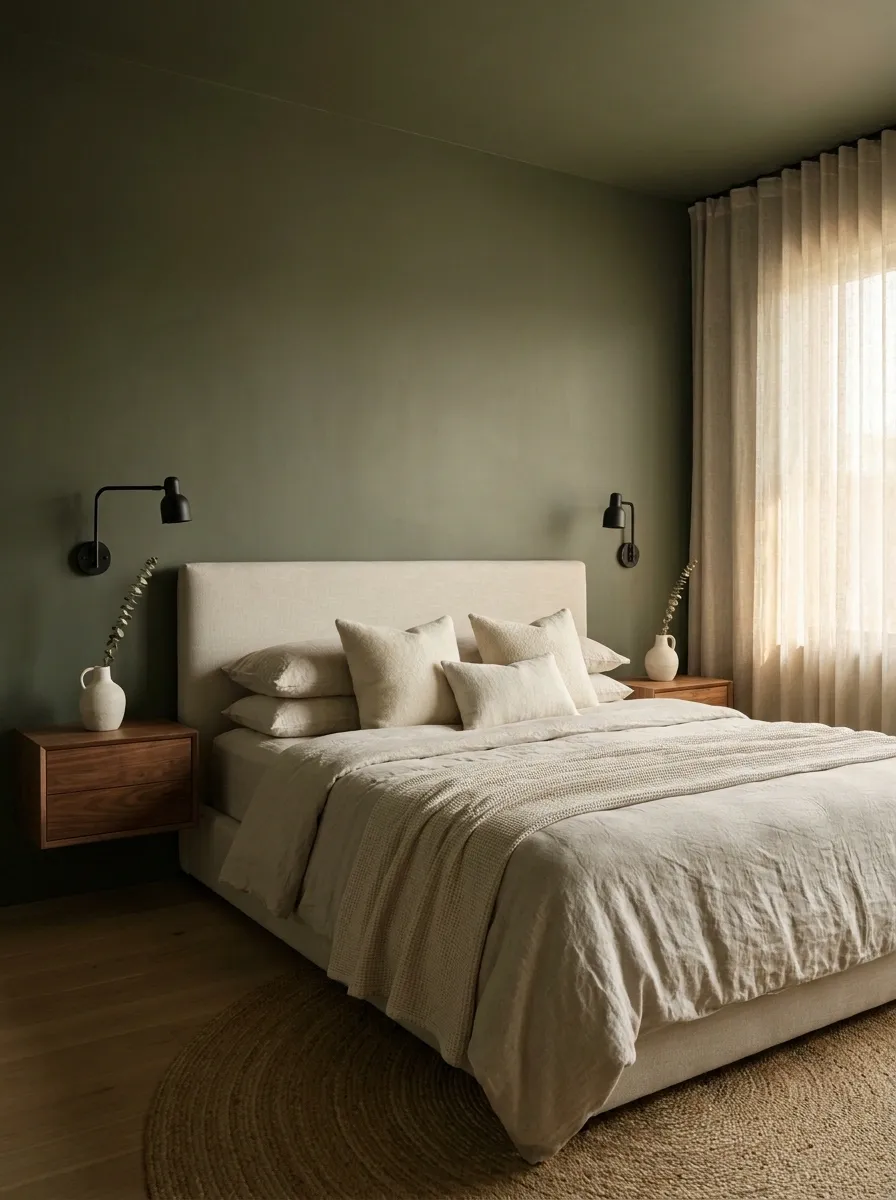
Olive gets much calmer in a bedroom when it’s paired with oatmeal rather than stark white.
Use an olive wall or headboard, then layer oatmeal linen bedding, cream pillows, and warm wood nightstands. Keep the lighting soft and avoid filling the bedside tables with decorative clutter.
The combination works because both colors feel grounded rather than bright.
Olive brings depth. Oatmeal keeps the room from becoming too serious.
A little black hardware can sharpen the look, but there’s no reason to turn the bedroom into a collection of dark accents.
Frame a Room With Drapes
Floor-to-ceiling olive drapes instantly transform a neutral bedroom into a luxurious retreat, especially when paired with a dramatic arched mirror.
Add a low wooden bench with textured cushions and a cozy throw blanket to create a styled vignette that actually serves a purpose.
A simple white ceramic vase with palm fronds finishes the corner without adding unnecessary clutter to the floor space.
Paint the Lower Kitchen Cabinets Olive
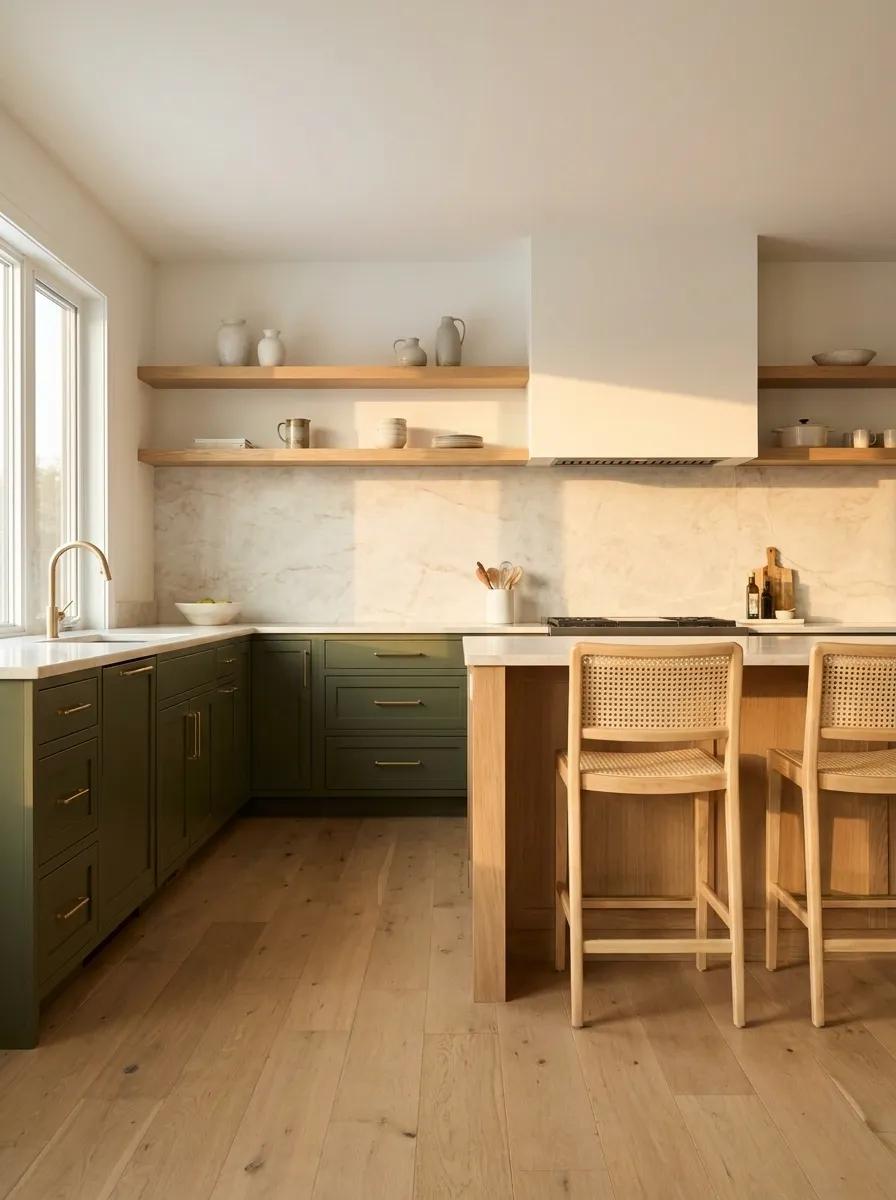
Olive lower cabinets are one of the easiest ways to bring personality into a kitchen without making every cabinet fight for attention.
Keep upper cabinets or walls light, then use natural wood, pale stone, or warm white surfaces around the green.
Brass or black hardware can both work. Just pick one and repeat it.
The lower cabinets get the color. The rest of the kitchen gets to behave.
This works particularly well in kitchens that already have wood floors because the green and wood naturally balance each other.
Turn a Small Entryway Into an Olive Green Moment
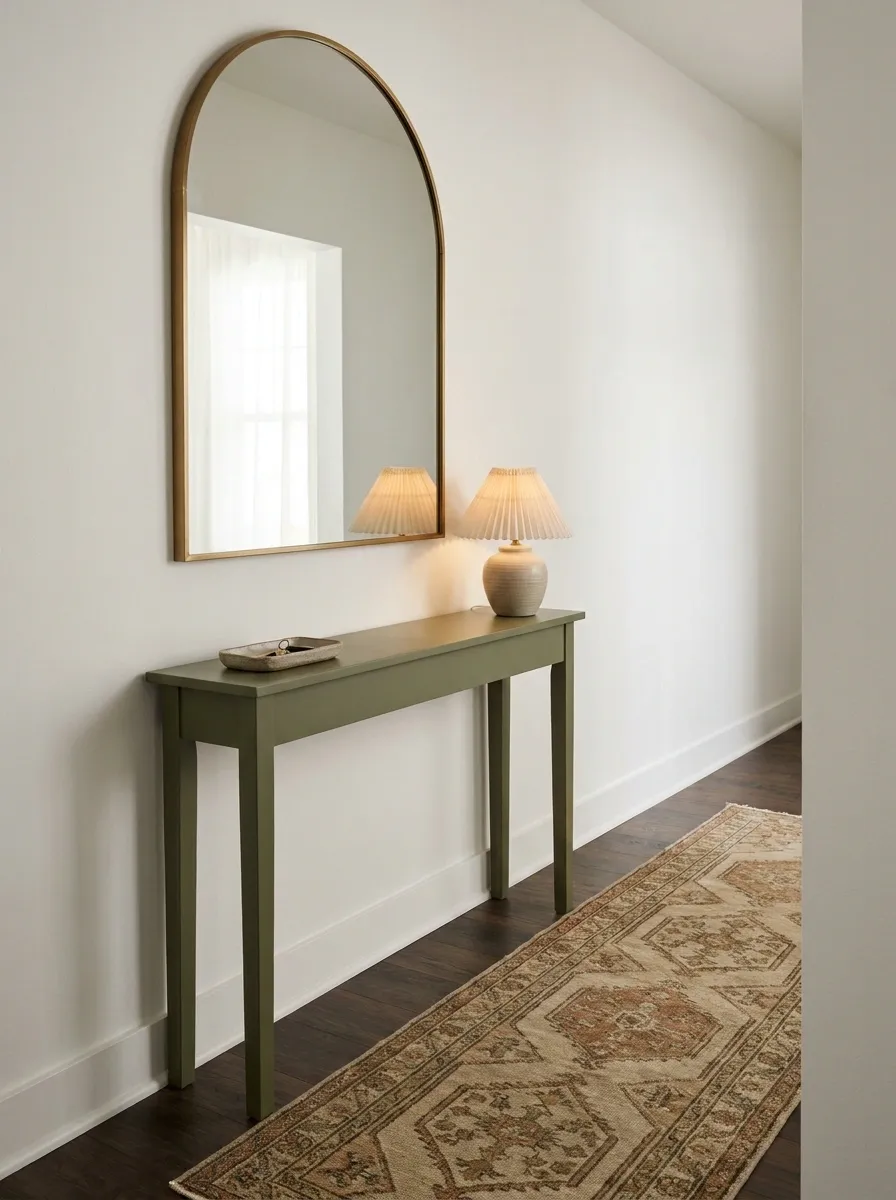
A narrow entryway doesn’t need a giant console and seventeen baskets to feel finished.
Use an olive console against a warm white wall, add one large mirror, then keep the surface useful. A small tray for keys and one lamp are enough.
A runner can add texture underfoot without making the narrow space feel crowded.
The smaller the entryway, the more disciplined the styling needs to be.
Nobody needs to perform an obstacle course just to reach the front door.
Mix Olive With Aged Brass for a More Collected Look
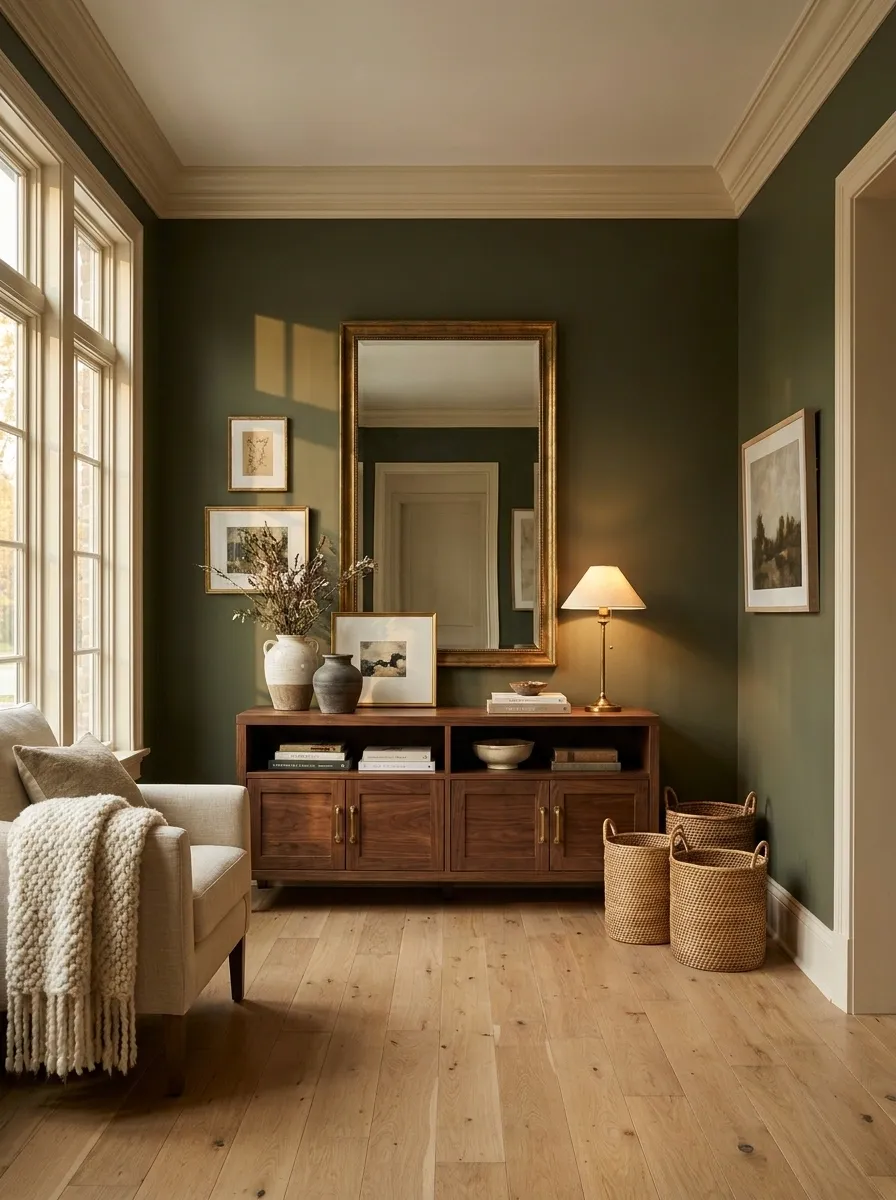
Olive and aged brass work because one is earthy and the other catches the light.
Use brass on cabinet pulls, a mirror frame, a lamp, or a small side table. Don’t polish the room into oblivion. Slightly aged finishes have more depth and don’t make the space feel overly matched.
Pair the combination with cream walls, walnut, or natural linen.
Brass should sparkle occasionally, not announce itself from three rooms away.
Give a Small Bathroom a Moody Olive Treatment
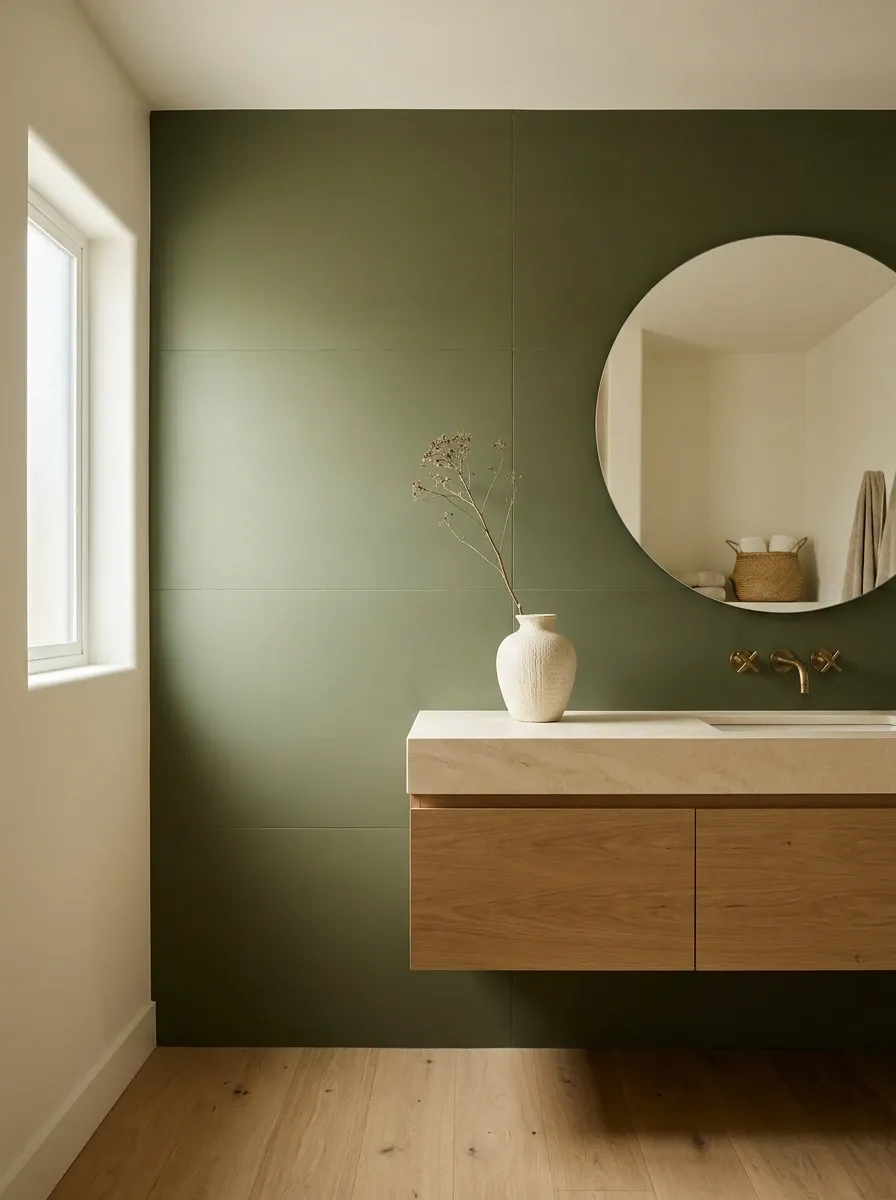
Small bathrooms don’t need timid color.
Use olive tile or paint on one strong surface, then keep the remaining walls and fixtures lighter. Warm stone, a simple mirror, and aged brass or dark metal hardware finish the room without cluttering it.
The trick is giving the green a clean boundary.
One strong wall looks intentional. Random green patches look accidental.
Keep the counter mostly clear too. A bathroom doesn’t need seventeen little bottles pretending to be styling props.
Use an Olive Accent Wall Behind the Bed
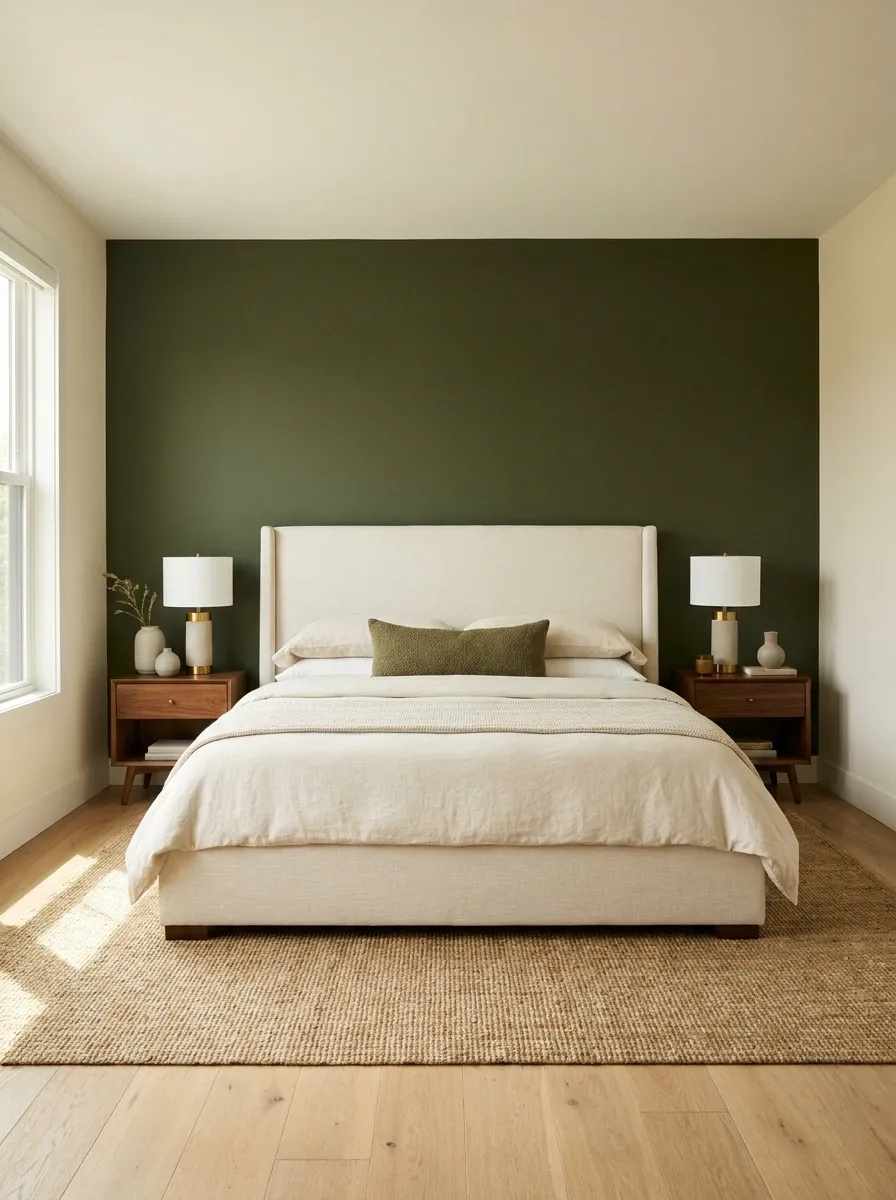
An olive accent wall gives a bedroom depth without requiring every wall to participate.
Paint only the wall behind the bed, then use cream bedding, walnut furniture, and a small olive cushion or throw to connect the palette.
Keep the other walls warm white or very light beige.
The bed wall gets the drama. The other walls can mind their business.
This is especially useful when the bedroom already has plenty of furniture and needs a stronger focal point rather than more objects.
Let Olive Take Over the Dining Room Walls
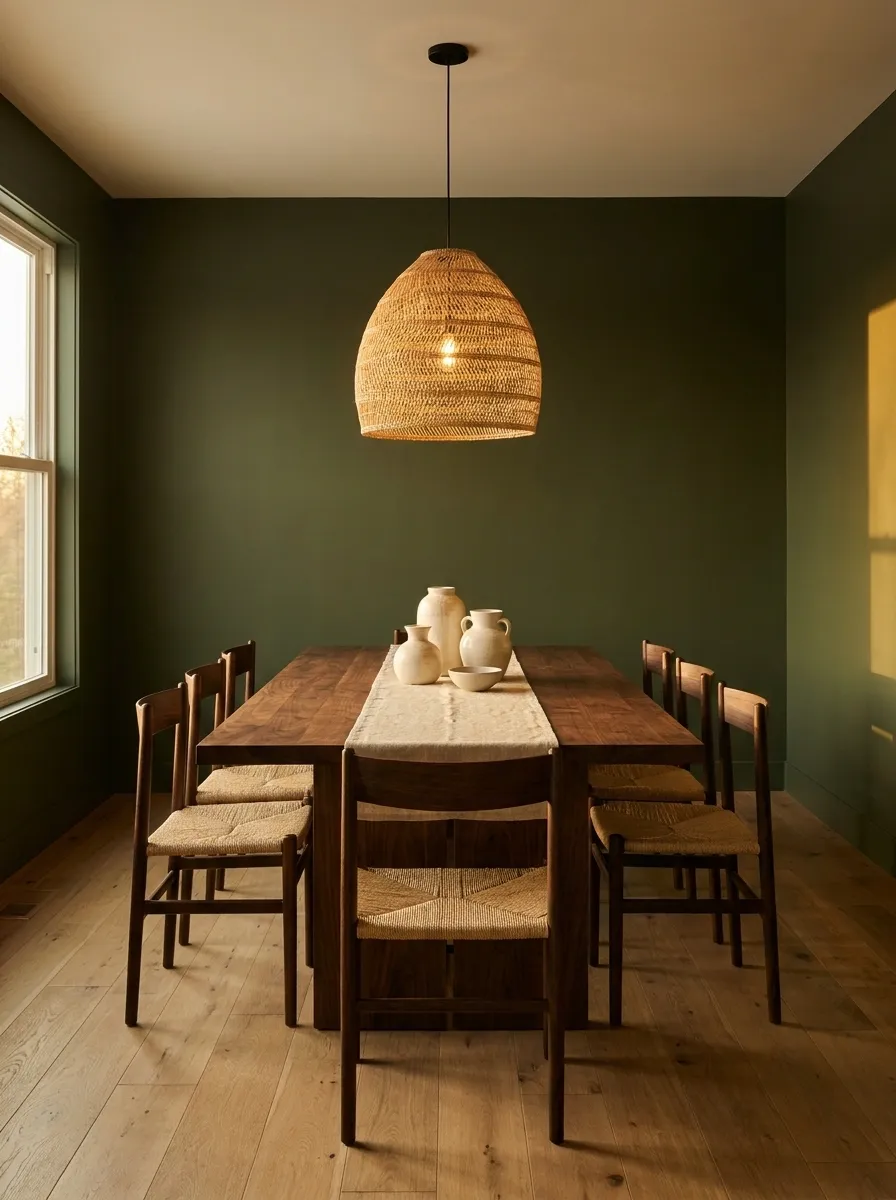
An olive dining room looks especially good with dark wood because the two colors reinforce each other’s depth.
Use a walnut table, simple dining chairs, and a woven pendant overhead. Keep the tabletop fairly restrained so the wall remains the main backdrop.
Cream ceramics and natural linen can soften the darker palette.
The dining room doesn’t need a decorative personality disorder.
A strong wall, a good table, and useful lighting are doing most of the work already.
Put an Olive Green Chair in the Home Office
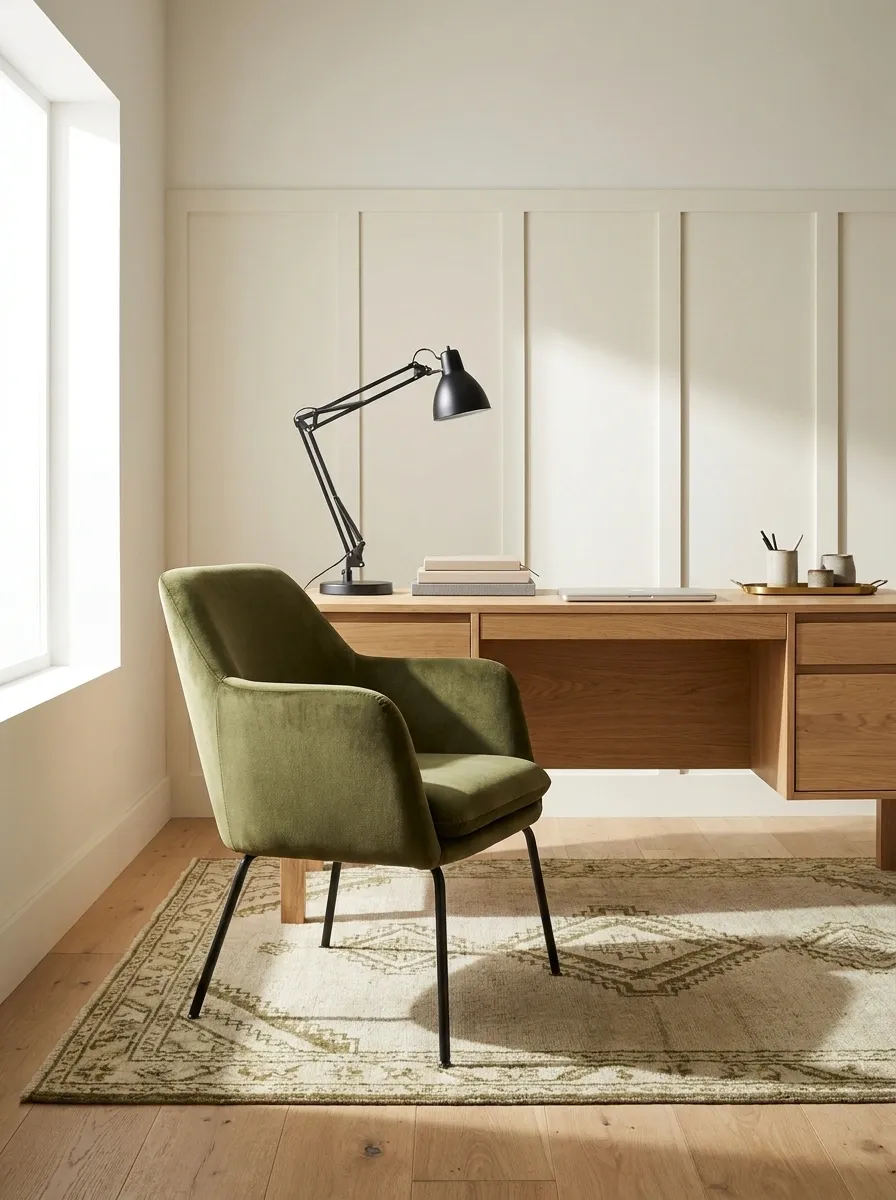
A home office doesn’t need to look like a corporate cubicle that accidentally learned about Pinterest.
An olive chair gives the room a proper focal point while still working with a wood desk, cream wall, and black task lamp.
Keep the desk accessories practical. A tray, notebook, lamp, and computer are enough.
The chair gets to be interesting. The desk gets to be useful.
That’s a much better division of labor than decorating every inch of the workspace.
Layer Olive, Cream, and Terracotta for a Warmer Living Space
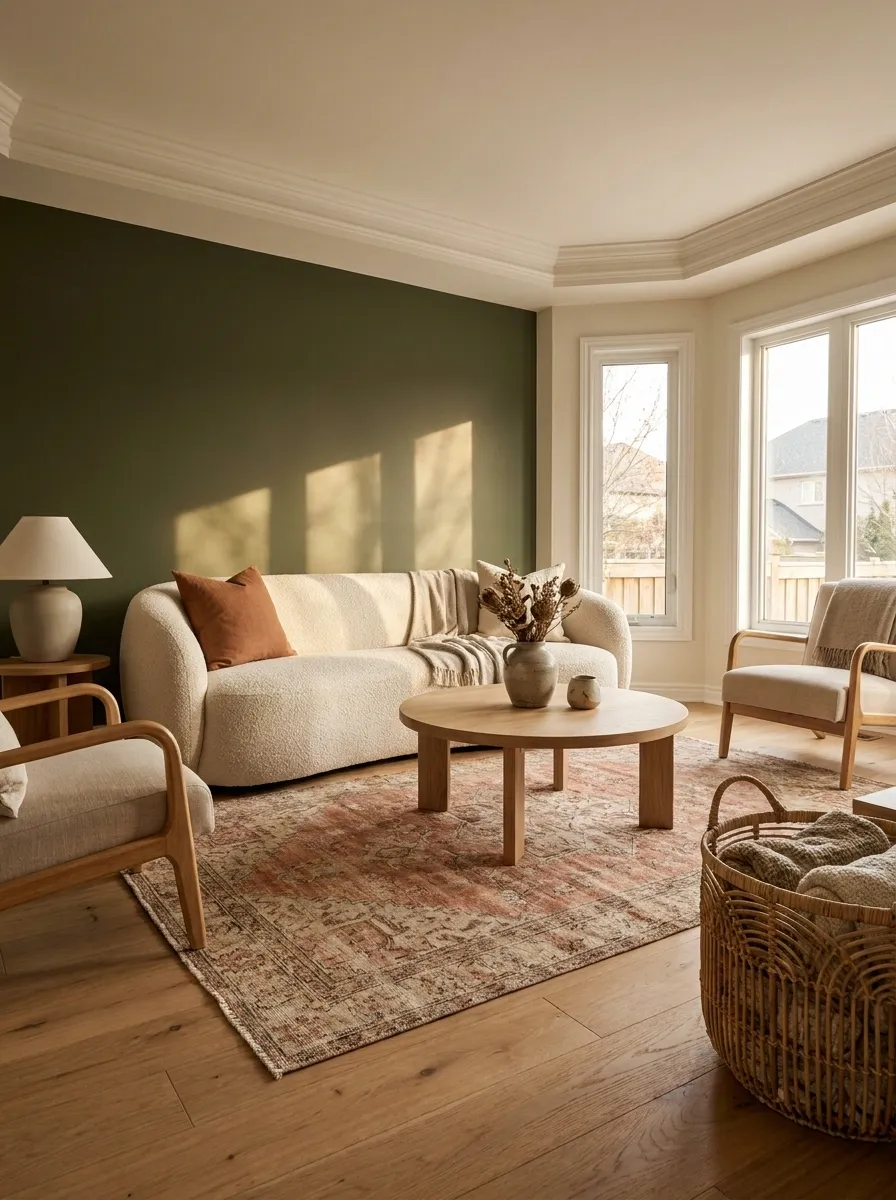
Olive gets especially good when a warm earthy color joins the conversation.
Use olive as the anchor, cream as the largest light neutral, then bring in terracotta through a cushion, ceramic vase, rug detail, or small piece of art. The trick is keeping terracotta controlled. One or two hits are enough to wake up the green.
Think in layers, not matching sets.
Olive handles depth. Cream keeps the room open. Terracotta adds warmth. Natural wood quietly connects all three.
Choose an Olive Rug When the Furniture Already Feels Neutral
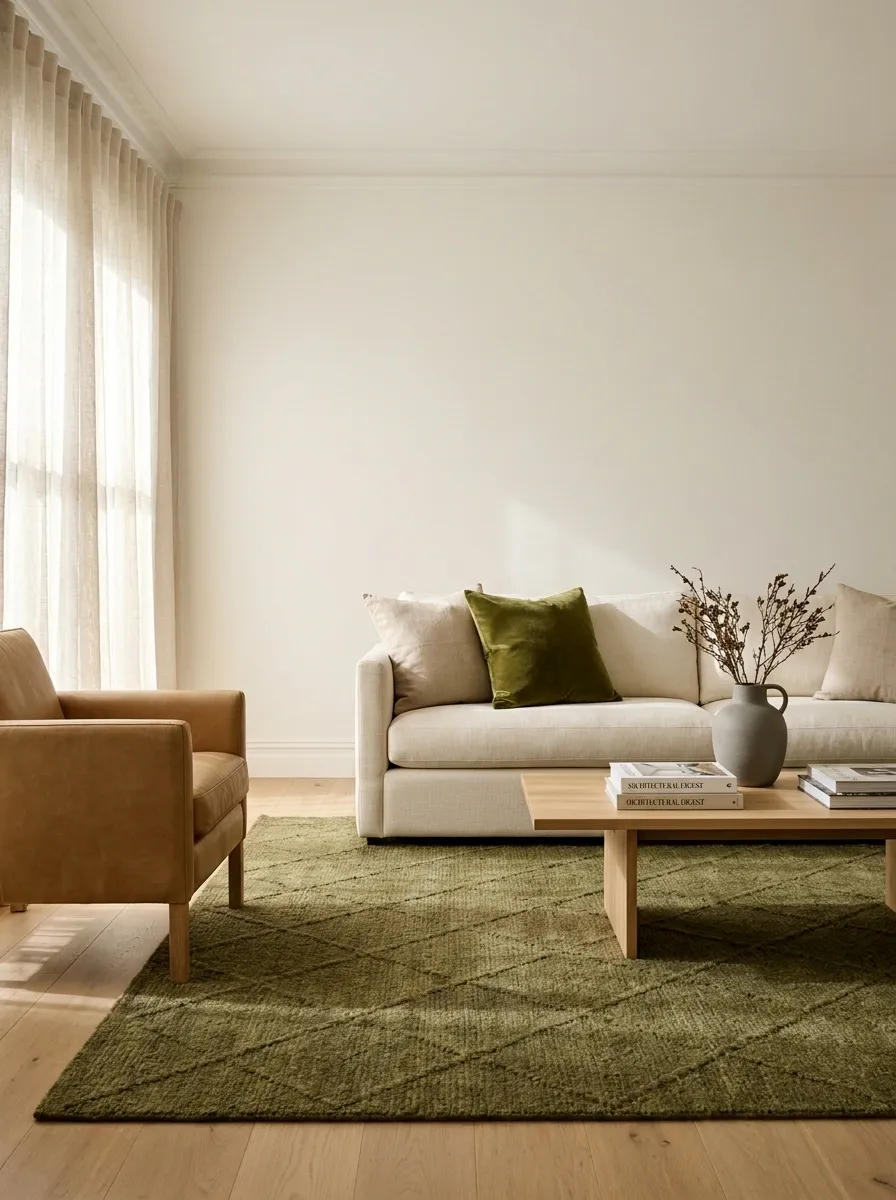
A neutral sofa doesn’t mean the entire room needs to stay beige forever.
An olive rug can pull a cream, tan, or light-gray seating arrangement together without requiring new furniture. Choose a pattern with some tonal variation rather than a completely flat green field. It hides everyday life better too, which matters when somebody insists that snacks belong on the sofa.
Keep the walls lighter and repeat olive once above the floor, perhaps in a cushion, lamp shade, or small artwork.
The rug should connect the room, not scream for a standing ovation.
Use Olive Bedding With Walnut Furniture for a Deep, Quiet Bedroom
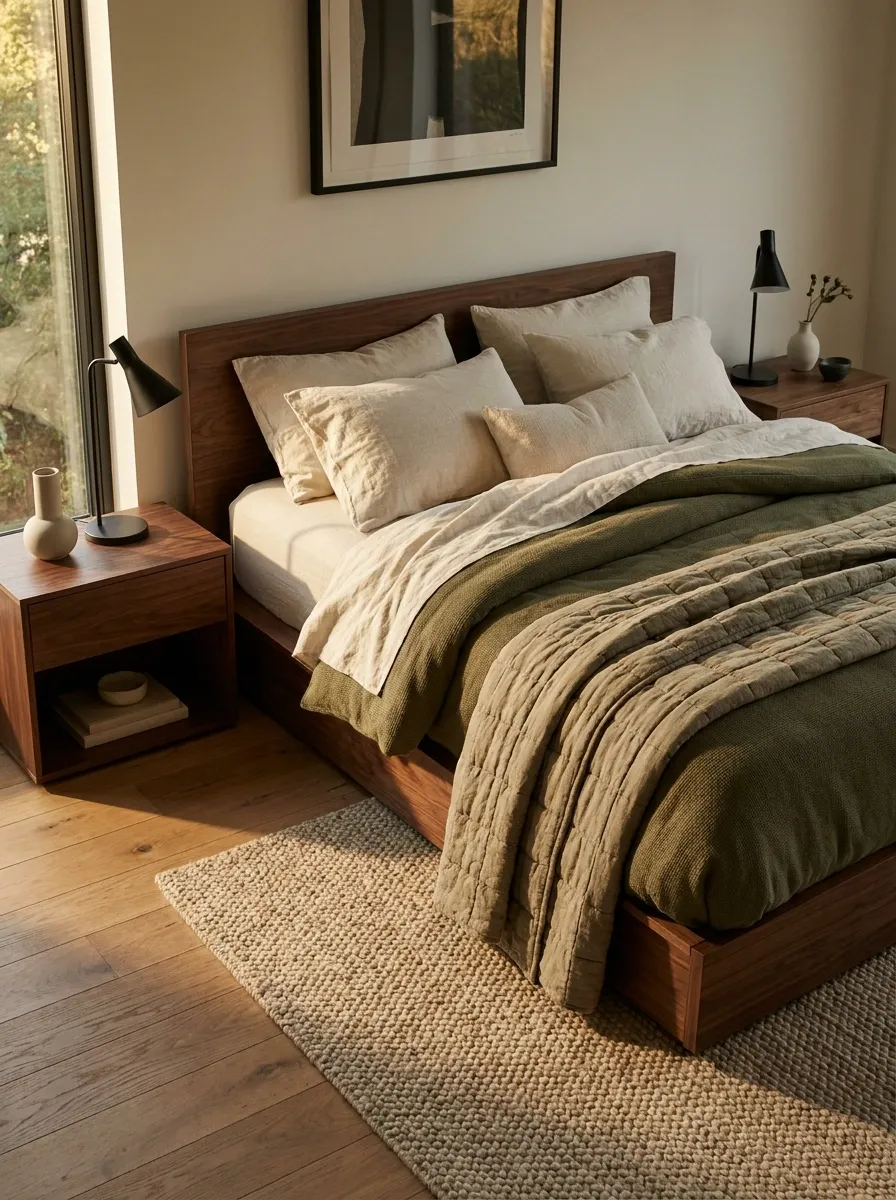
Olive bedding looks much richer when the furniture brings in a darker brown.
Choose a walnut bed frame or nightstands, then keep the sheets and larger pillows in cream, oatmeal, or warm beige. A textured olive duvet or quilt becomes the main color without making the bedroom feel heavy.
Add black only in small doses, such as a reading lamp or picture frame.
The visual goal is depth, not darkness.
Walnut gives the green somewhere to settle. Cream gives the eye a rest. Linen, cotton, and wood keep the whole room from looking too slick.
Frame Olive Walls With Crisp White Trim for Cleaner Contrast
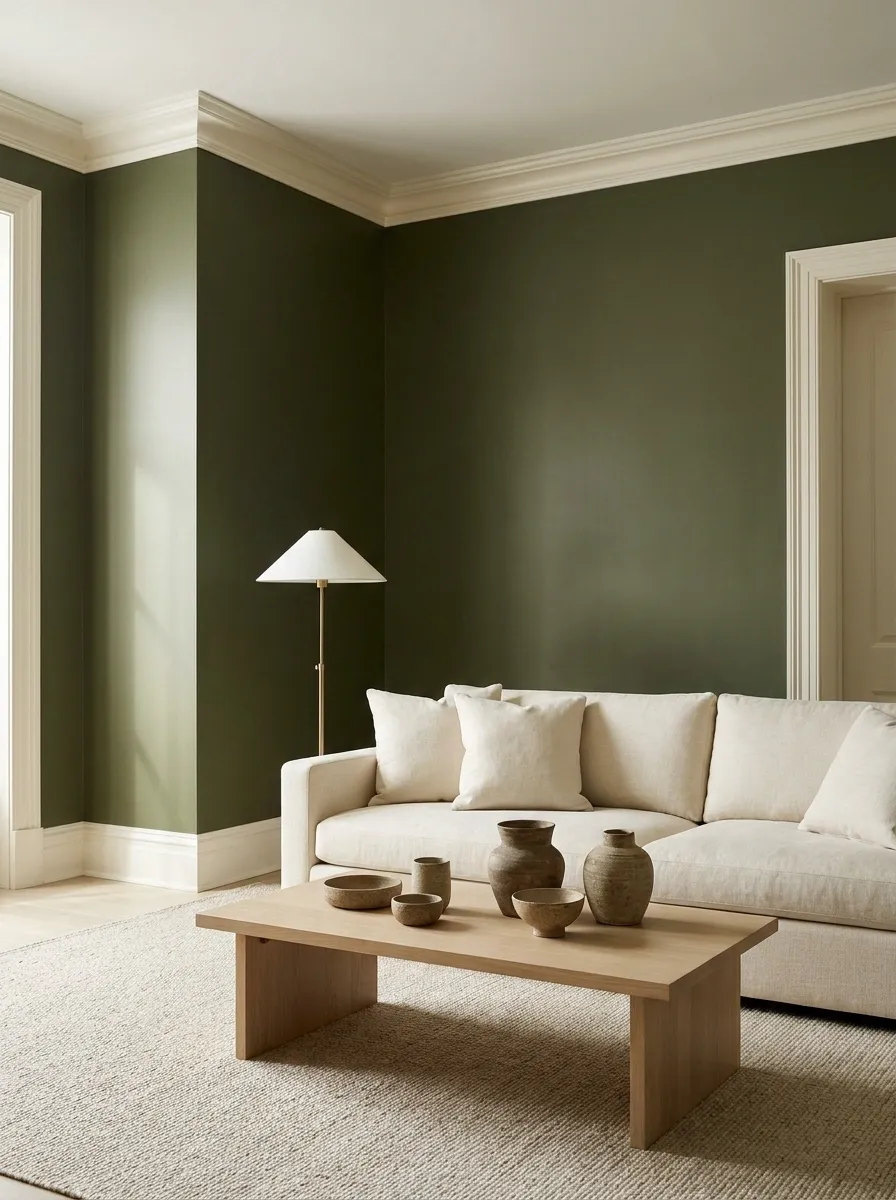
Olive walls don’t need fancy architectural details to look finished. Clean trim already gives them definition.
Use a warmer crisp white on the baseboards, door frames, and ceiling. Keep the furniture mostly neutral so the contrast stays obvious.
The important part is consistency. If the trim is creamy in one room and icy white in the next, the olive can start looking like a completely different color.
A simple rule: dark or muted wall, light trim, restrained furniture.
That’s enough visual drama. The trim doesn’t need its own supporting cast.
Give a Kitchen Island the Olive Green Treatment
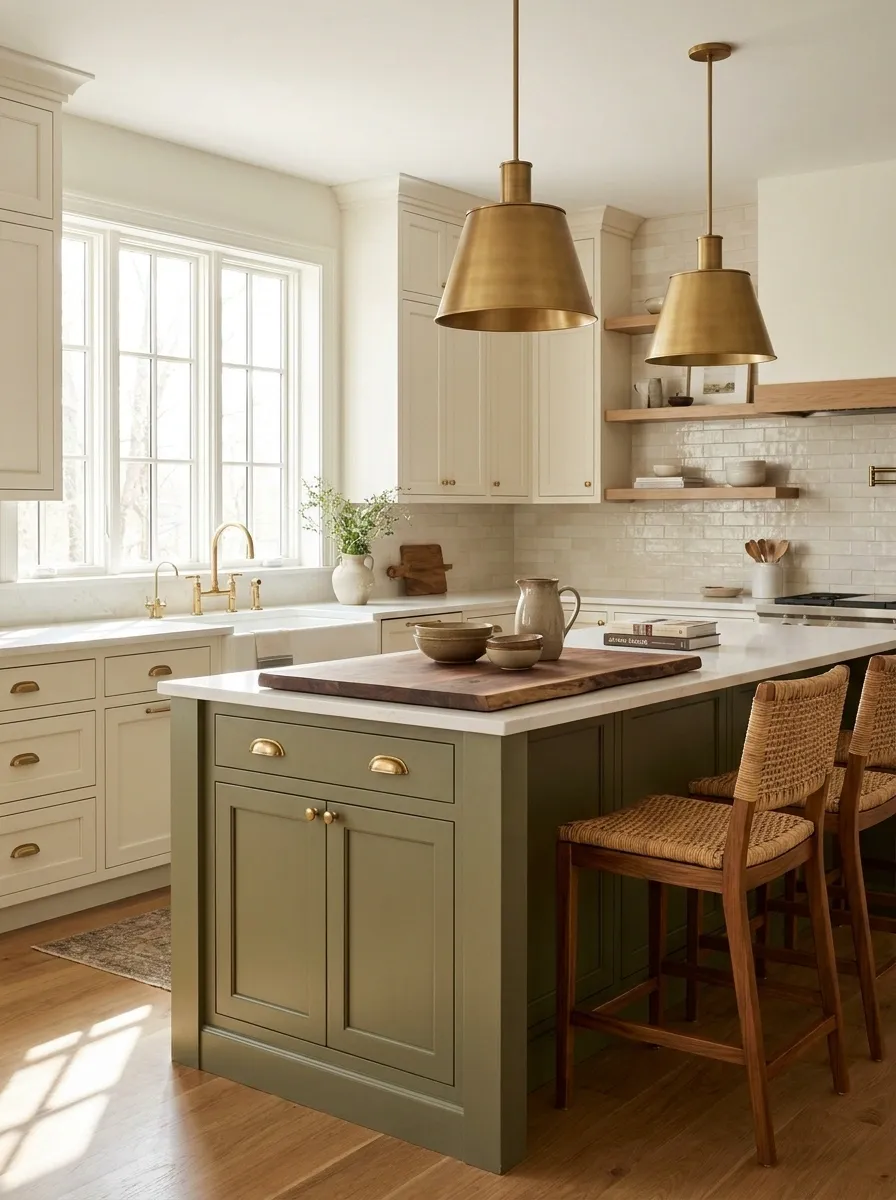
The island is already the kitchen’s natural center, so it doesn’t need help becoming the focal point.
Paint just the island olive while the perimeter cabinets stay cream, natural wood, or another quiet neutral. Use the same hardware finish throughout so the island looks integrated rather than randomly highlighted.
A thick wood cutting board, stools with woven seats, or a stone countertop adds texture without fighting the color.
This is the move for kitchens that need personality without a full cabinet makeover.
One olive island does more work than an entire countertop covered in green accessories.
Use Olive Curtains to Add Color Without Repainting the Room
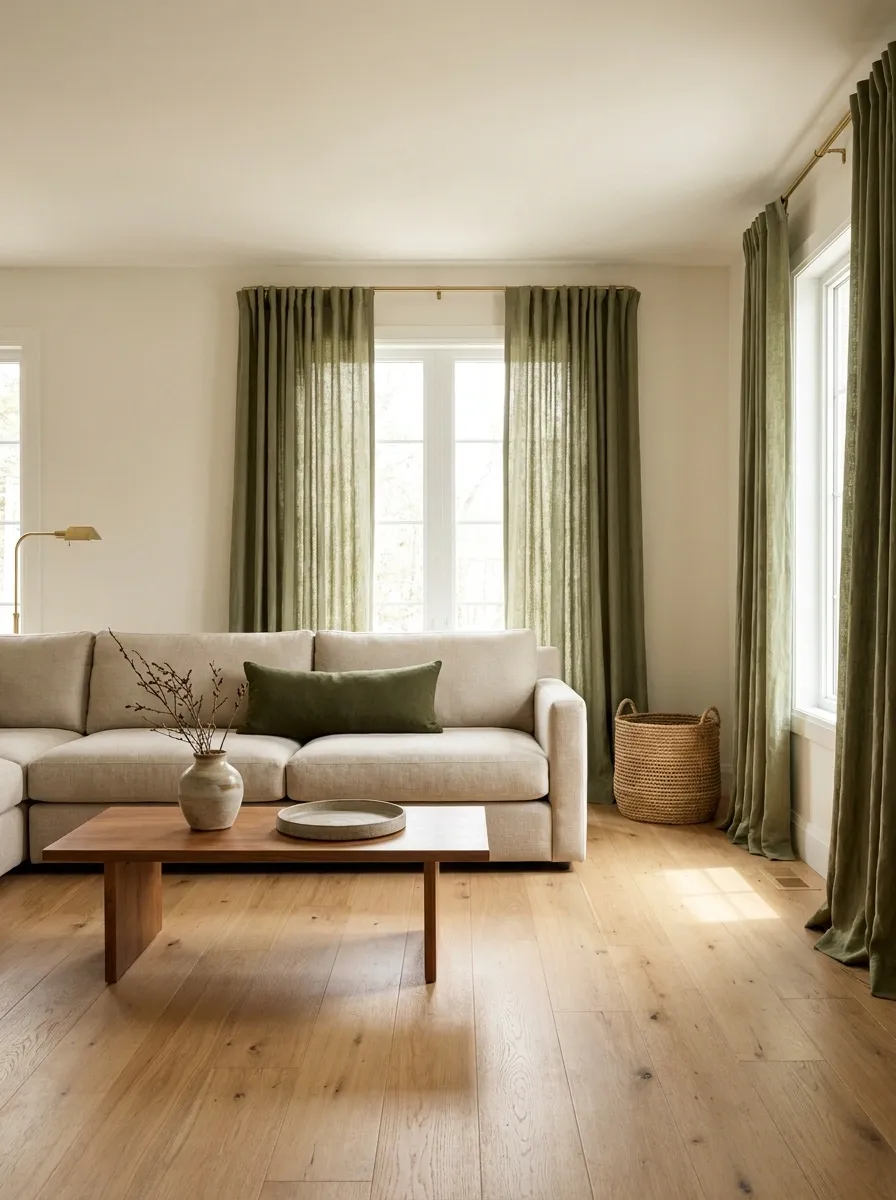
Curtains are one of the easiest places to sneak in a serious color without committing the walls to it.
Choose full-length olive curtains in linen, cotton, or another softly textured fabric. Hang them close to the ceiling and let them reach the floor. That extra height makes the color feel architectural instead of randomly attached to a window.
Keep the rest of the room lighter. Cream walls, warm wood, and a neutral sofa give the curtains enough contrast to matter.
The trick is simple: repeat the olive once somewhere lower in the room, then leave it alone.
The curtains already understood the assignment.
Create an Olive Green Reading Corner With Leather and Linen
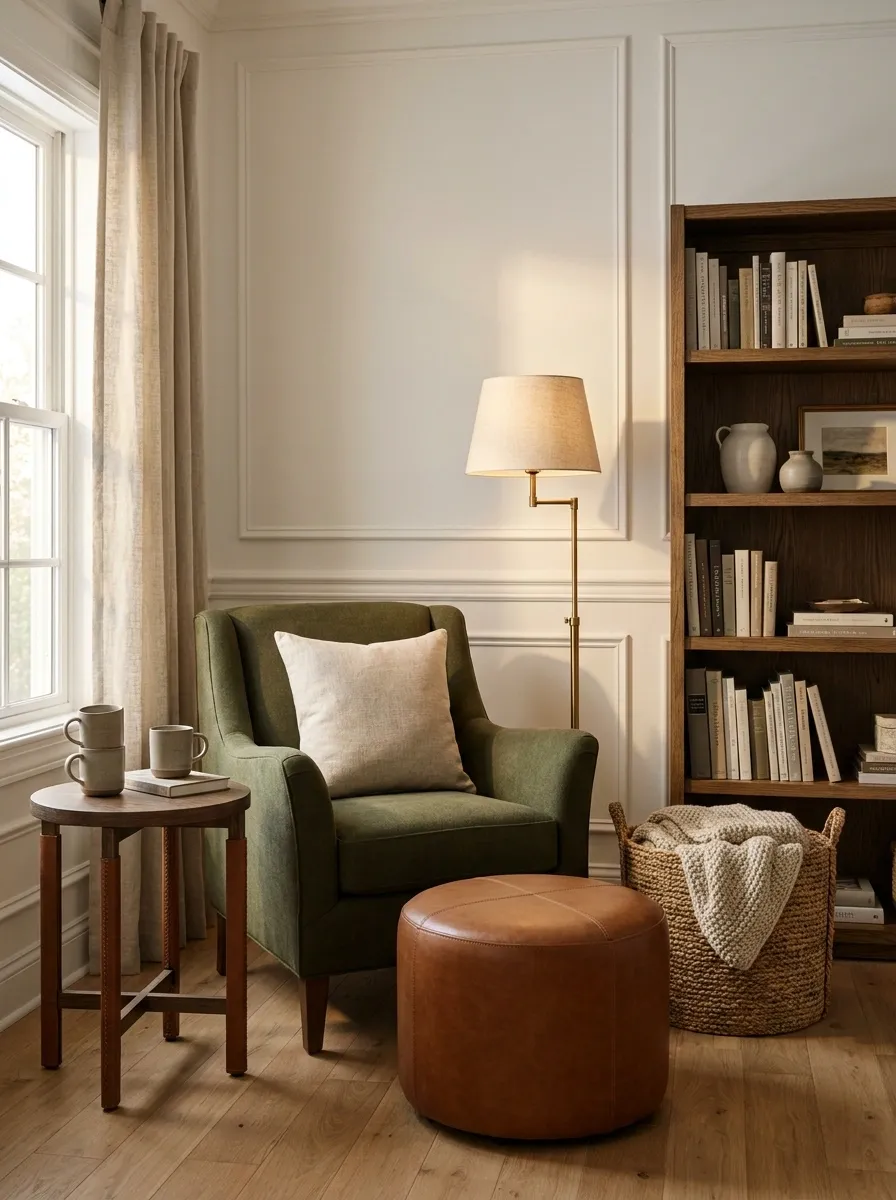
A reading corner looks far more intentional when the materials do the decorating.
Start with an olive armchair, then add a cognac leather footstool or small side table with a leather accent. Throw in an oatmeal linen cushion and a warm floor lamp. That’s enough.
The mix works because the colors aren’t fighting for attention. Olive brings depth, leather adds warmth, and linen keeps everything soft.
Put the chair near a window, beside a bookcase, or in that awkward corner that’s been holding absolutely nothing except dust and personal disappointment.
One chair can turn dead space into a destination.
Pair Olive With Soft Blue When You Want the Room to Feel Fresh
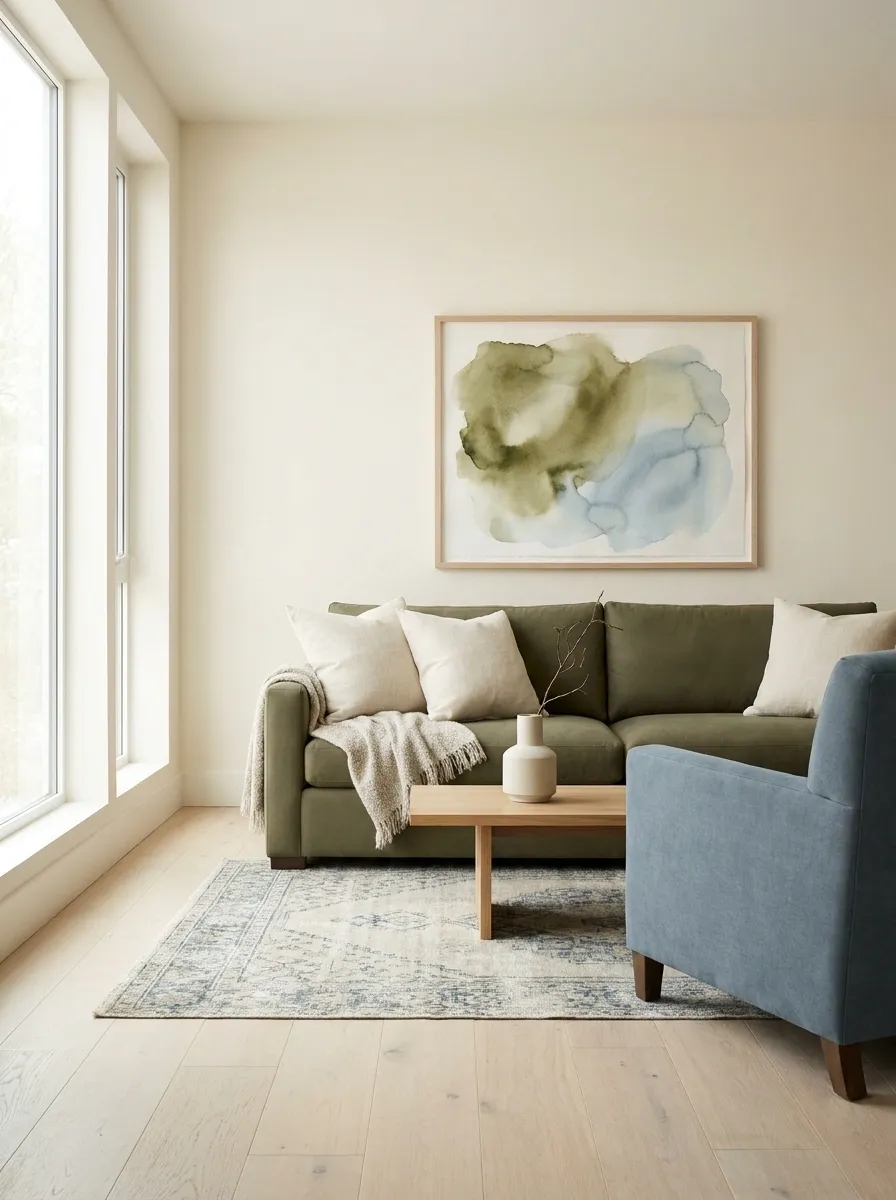
Olive doesn’t always have to go warm.
A dusty, muted blue gives olive a cleaner and slightly fresher direction without making the room look cold. Use olive on the larger piece, then bring blue into a throw, rug pattern, artwork, or occasional chair.
Keep the supporting neutrals warm. Cream and natural wood stop the blue from becoming too icy.
Think muted blue, not bright cobalt.
The whole point is contrast with restraint. Nobody needs a room where the colors are yelling across the coffee table.
Use Olive Tile in a Small Bathroom With Warm White Walls
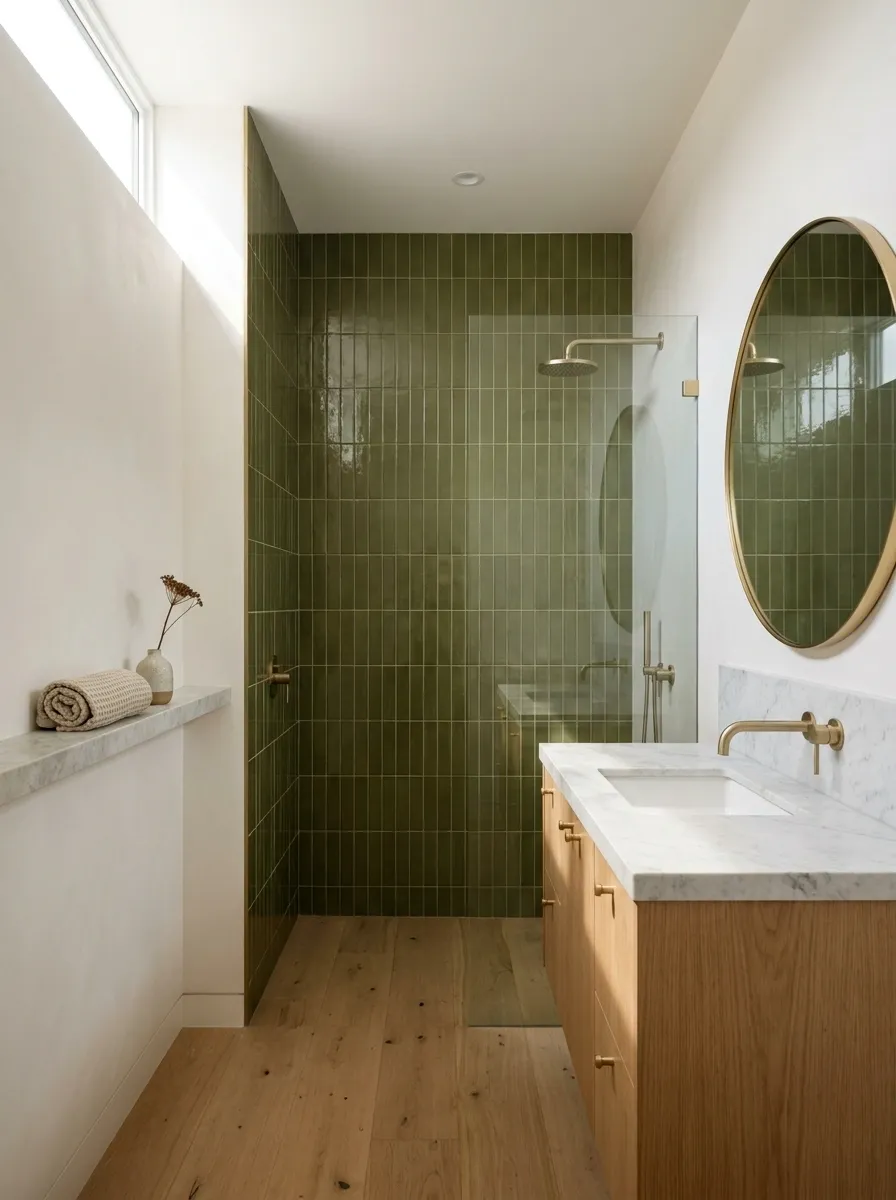
Small bathrooms don’t need timid color.
Olive tile can make a compact room feel deliberate, especially when the tile occupies one clear zone such as the shower wall or vanity wall. Keep the remaining surfaces warm white and let the grout stay quiet.
A simple stone vanity top, brushed metal hardware, and one substantial mirror are enough to finish it.
Avoid chopping the green into too many tiny areas. A clean vertical or horizontal block reads as architecture. Scattered green accents just read as accessories having an identity crisis.
Make an Olive Headboard the Main Event in a Neutral Bedroom
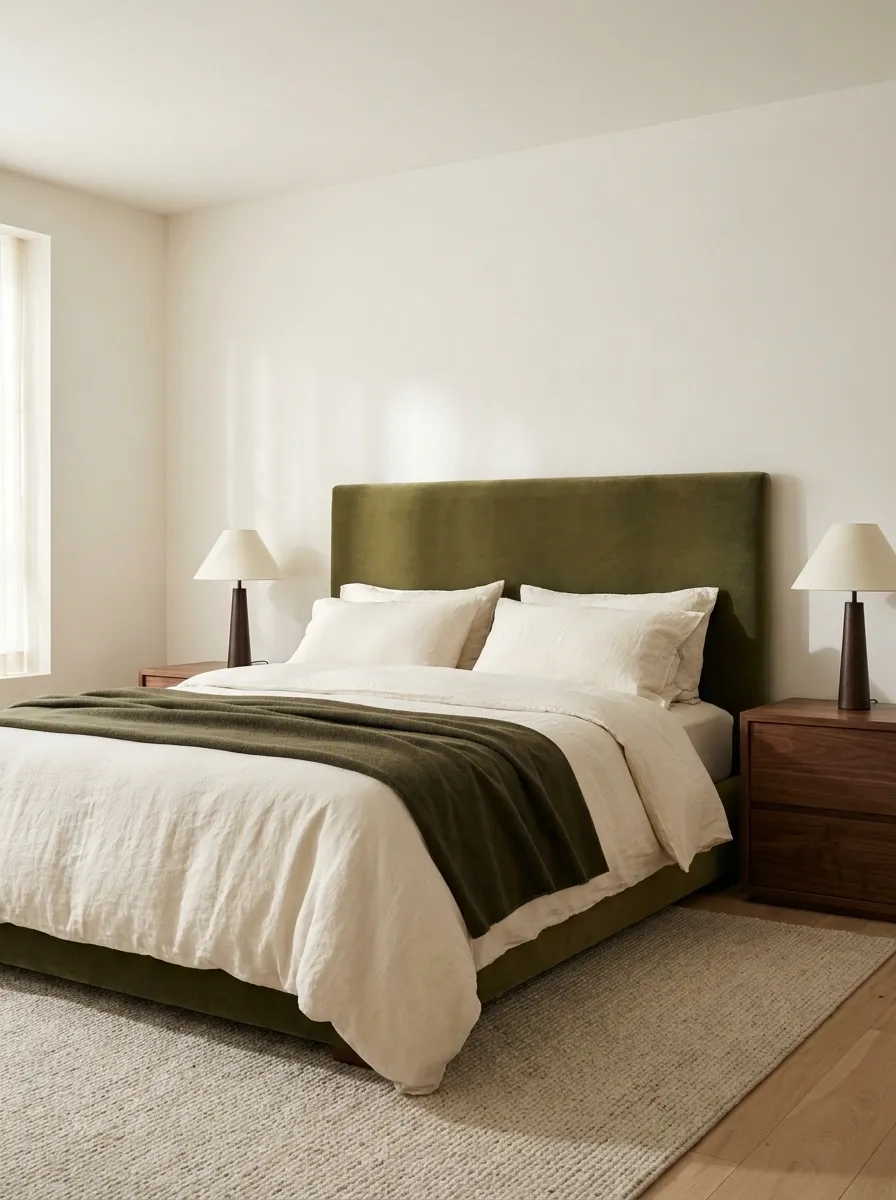
Not every olive bedroom needs green paint.
An upholstered olive headboard gives the room the same depth with much less commitment. Keep the walls warm white, then use cream bedding with one darker throw folded across the bottom.
Add walnut nightstands or dark wood lamps for weight. The rest can stay deliberately boring.
And that’s a compliment.
A neutral bedroom becomes much more interesting when one large piece carries the personality instead of twelve tiny decorations competing for it.
Bring Olive Into the Dining Room Through Upholstered Chairs
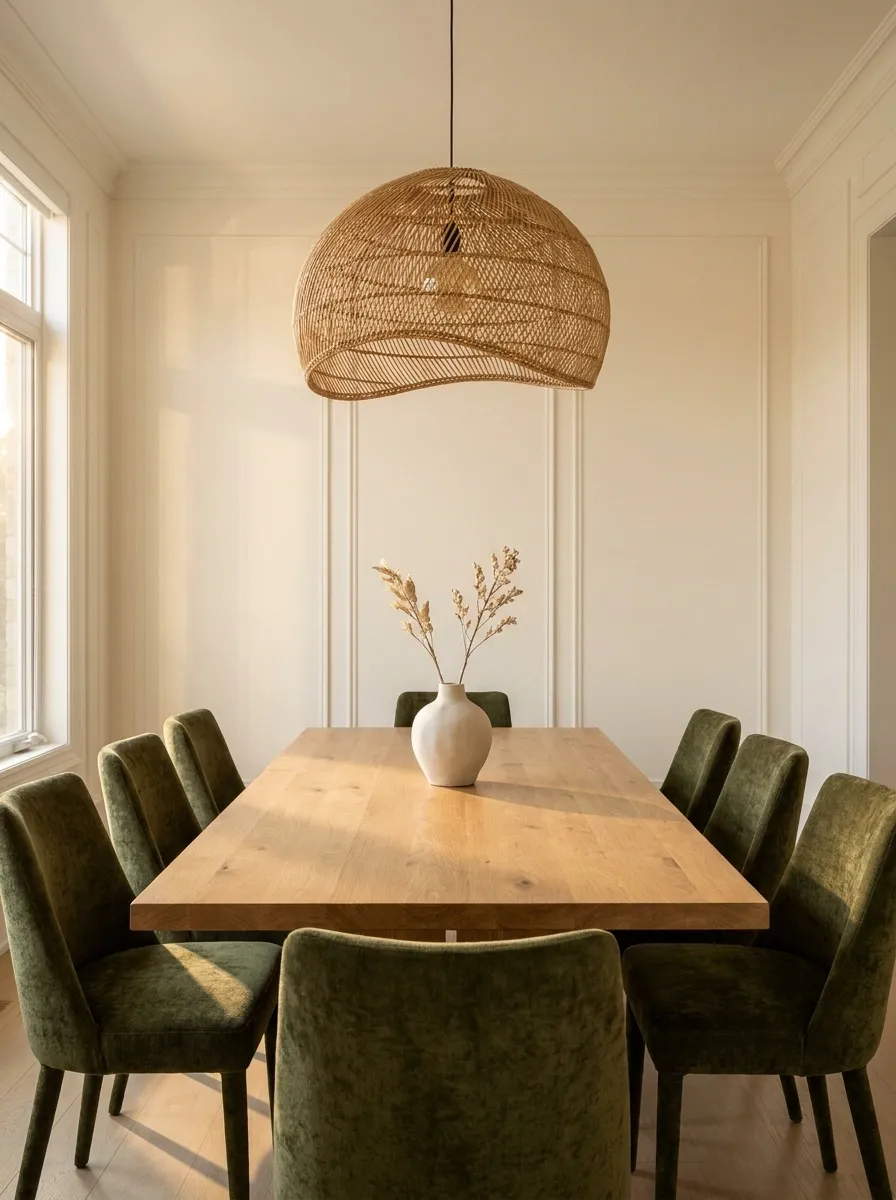
Dining chairs are an underrated place to use olive because they bring the color down to eye level without covering the walls.
Pair olive upholstery with a light or medium wood table, then keep the walls neutral. A woven pendant above the table adds another layer of texture without competing with the chairs.
The chairs should be the strongest repeated color in the room.
That’s the whole trick.
Don’t add an olive runner, six olive napkins, three olive vases, and a suspiciously green chandelier afterward. The chairs already made the point.
Style an Olive Kitchen With Natural Stone and Simple Hardware
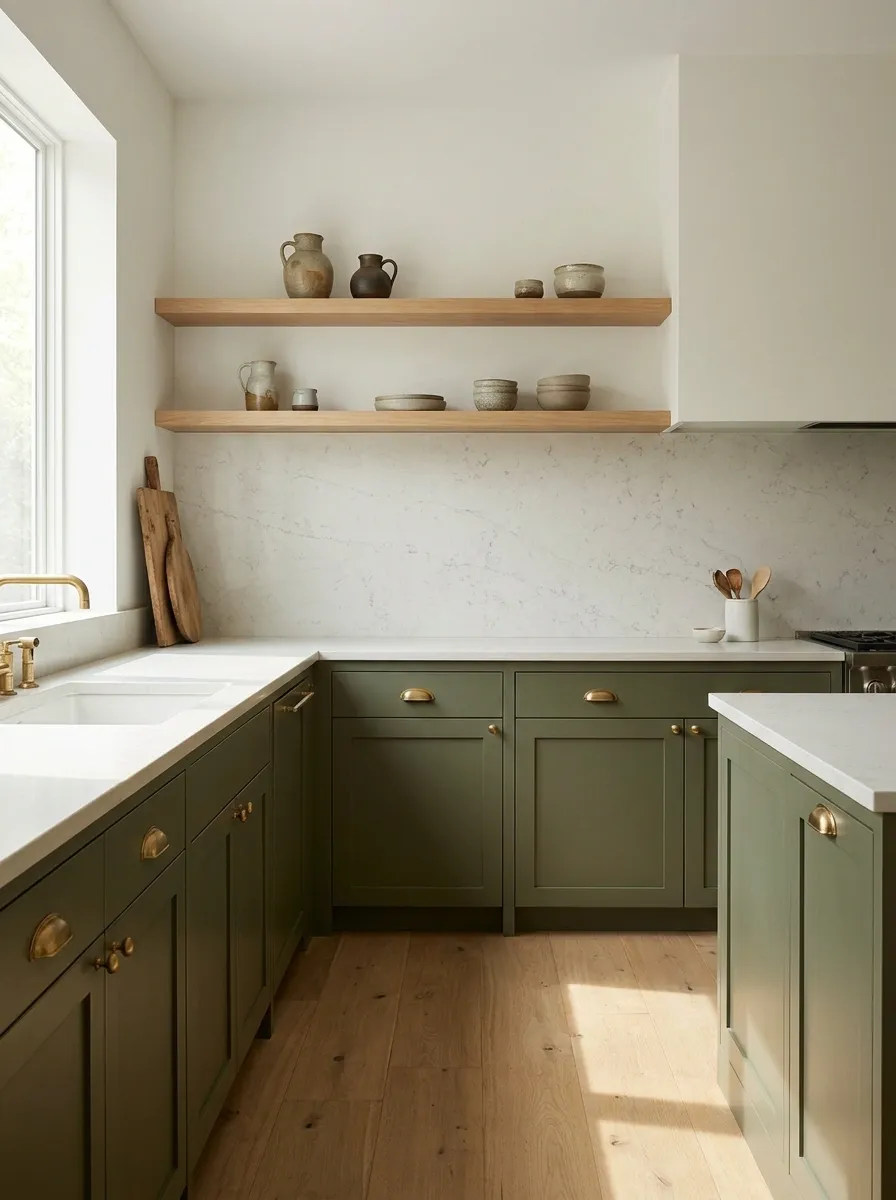
Olive cabinets don’t need elaborate styling to look finished.
Let the cabinetry do the heavy lifting, then pair it with natural stone, a simple backsplash, and hardware in one consistent finish. Warm white stone keeps the green feeling clean, while darker stone creates a moodier kitchen.
Natural variation is a good thing here. A little stone veining, wood grain, or handmade-looking ceramic adds life without turning the room into a showroom display.
Keep the hardware simple. Keep the counters useful. Keep the decorative stuff from multiplying overnight.
Use Olive Paint in a Hallway to Connect Separate Rooms
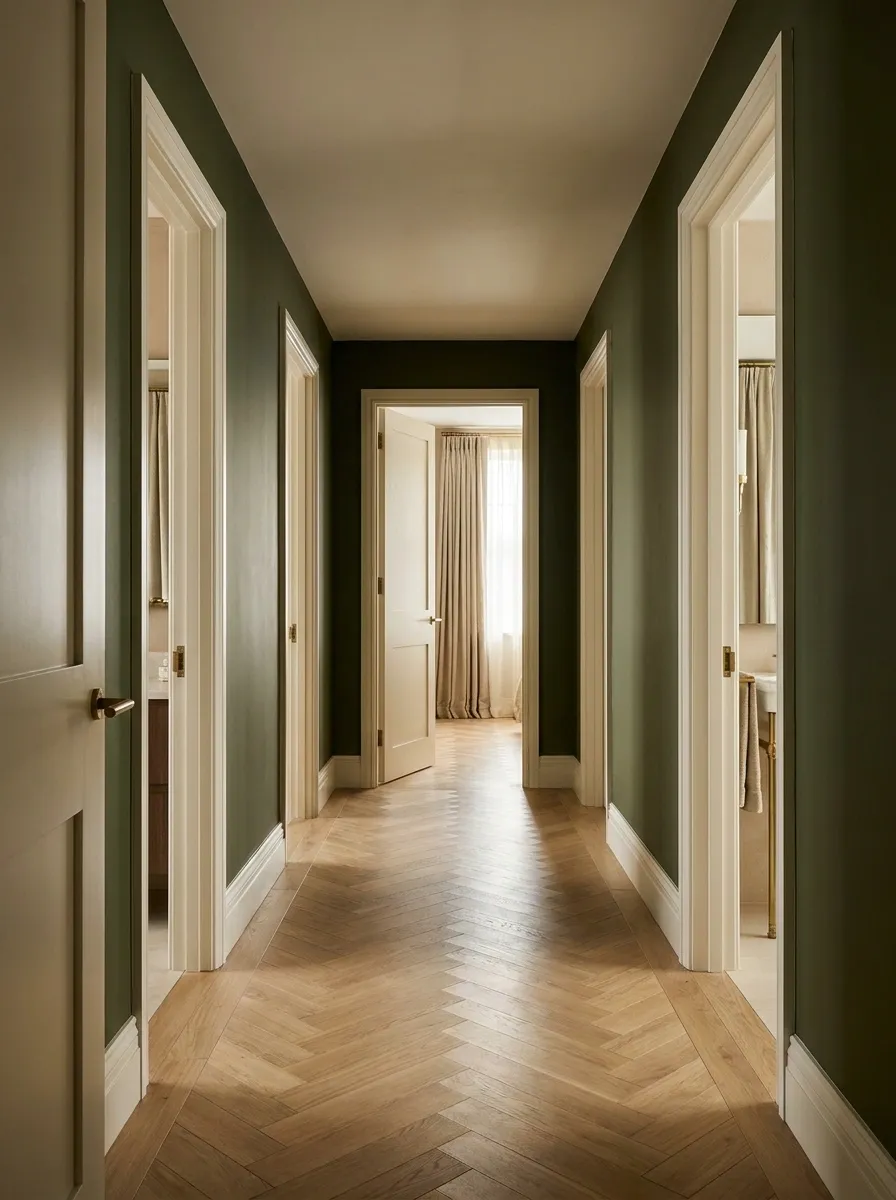
A hallway can do more than move people from one room to another.
Paint it olive and suddenly the color becomes a thread connecting rooms that don’t otherwise share much. Keep the doors and trim light, then let the adjoining spaces use their own palettes.
This works especially well when the hallway contains little furniture. The walls become the feature, so there’s no need to clutter the narrow floor with decorative furniture nobody can comfortably walk around.
The hallway gets the color. The rooms get to breathe.
It’s a surprisingly easy way to make the whole home feel more connected without making every room match.
Add Olive Through Vintage Pieces Instead of Matching New Decor
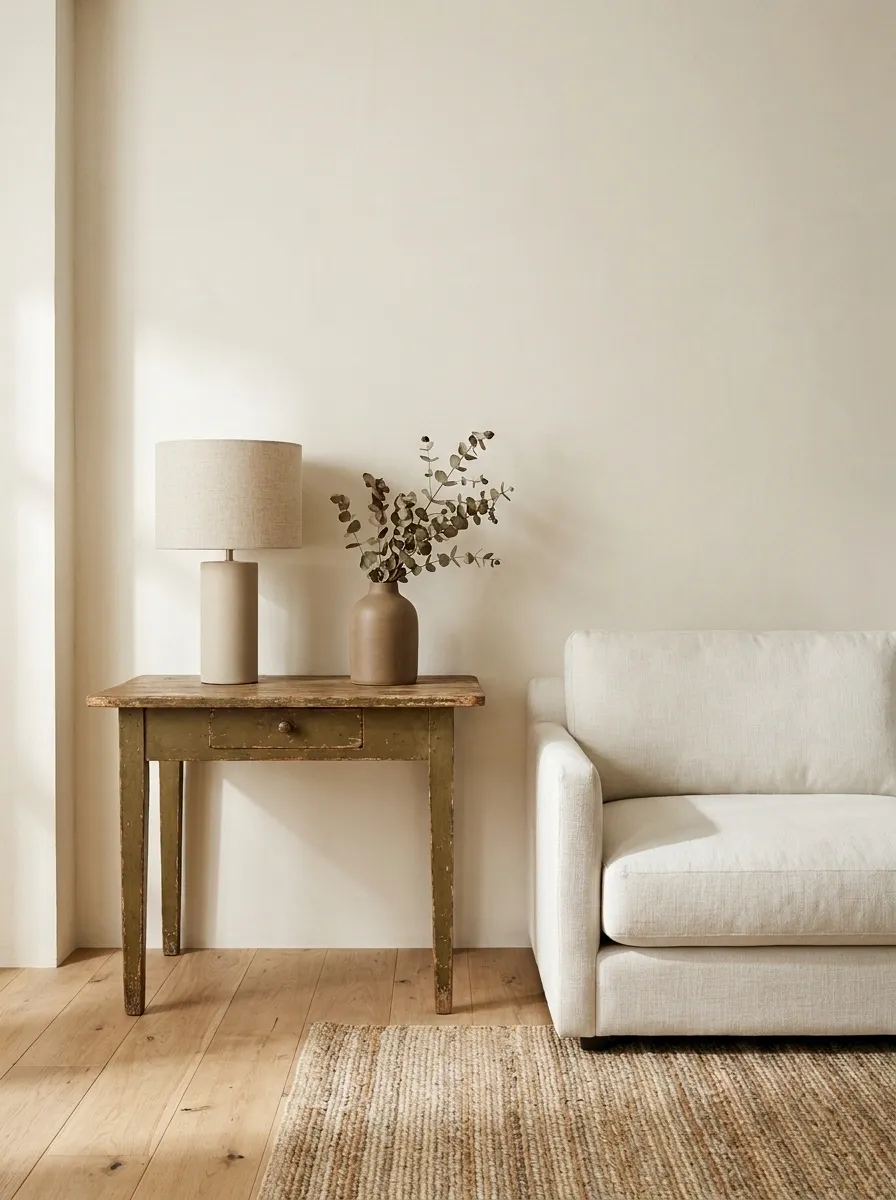
Olive becomes much more interesting when it shows up in something with a little history.
Look for an old painted stool, ceramic lamp, framed cabinet, woven textile, or small side table in a muted olive finish. Let the piece keep some of its imperfections. Tiny worn edges and uneven texture stop the color from feeling too manufactured.
Pair vintage olive with modern basics such as a simple sofa, clean-lined table, or plain cream wall.
Old piece + simple room = character.
Old piece + twelve fake-vintage accessories = someone’s online shopping cart got out of control.
Finish an Olive Green Room With Black Lighting and Small Natural Accents
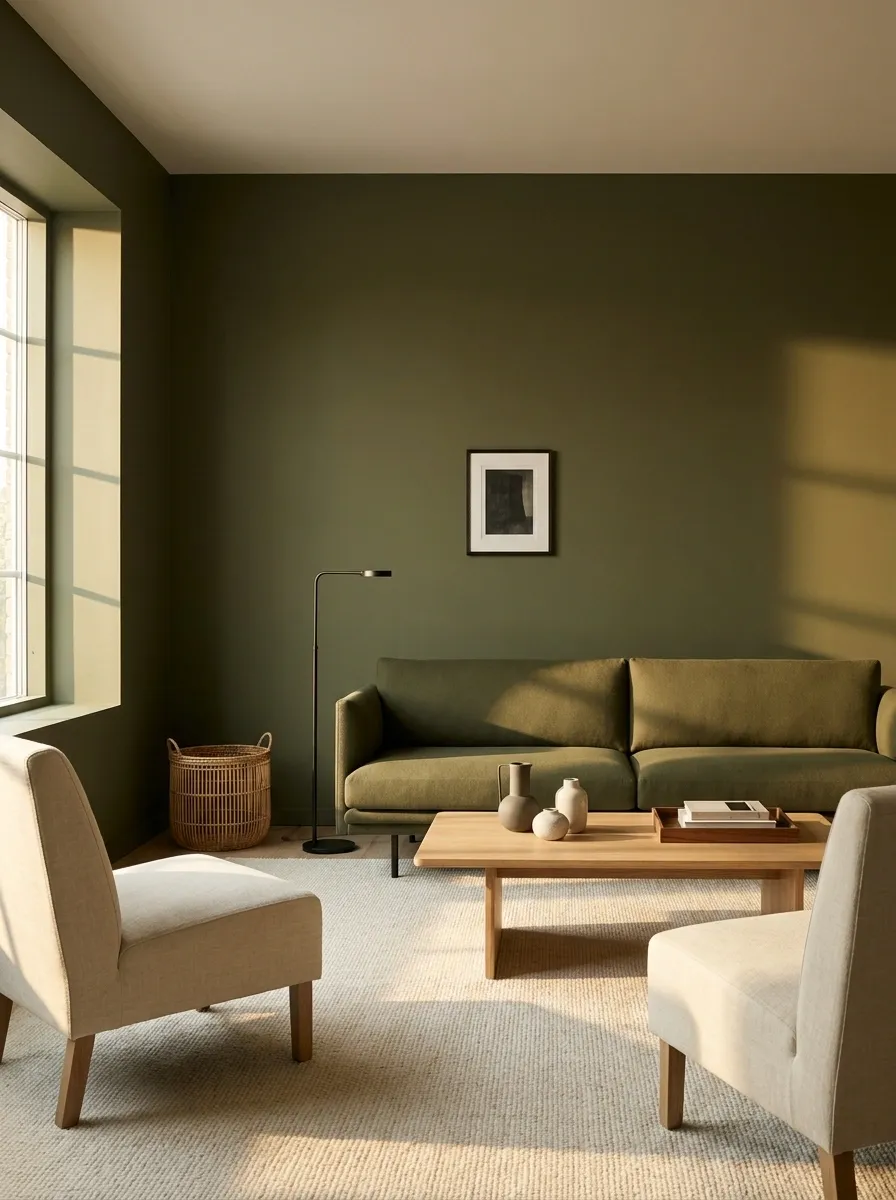
The final layer shouldn’t compete with the olive. It should sharpen it.
Use black lighting, a dark picture frame, or slim black hardware to give the room a few crisp lines. Then soften those edges with natural accents such as rattan, linen, warm wood, or a woven basket.
Keep the natural pieces small. The point isn’t to build a forest inside the living room.
Olive provides the depth. Black provides definition. Natural texture keeps everything human.
And once those three jobs are covered, stop decorating. Empty space is doing work too.
The Part That Makes Olive Green Actually Work
Olive doesn’t need to be everywhere to make an impression.
The strongest rooms give the color one clear responsibility, then surround it with materials that make sense. A painted wall gets lighter furniture. An olive sofa gets warm wood and cream textiles. Green cabinets get stone and restrained hardware. An olive vintage piece gets modern surroundings so it doesn’t disappear into a pile of themed accessories.
That’s the difference between using a color and actually designing around it.
If the room starts feeling too busy, remove something before adding something else. If the green feels too dark, introduce cream, warm wood, or softer textiles before reaching for another accent color.
And if a room already looks good, leave it alone.