
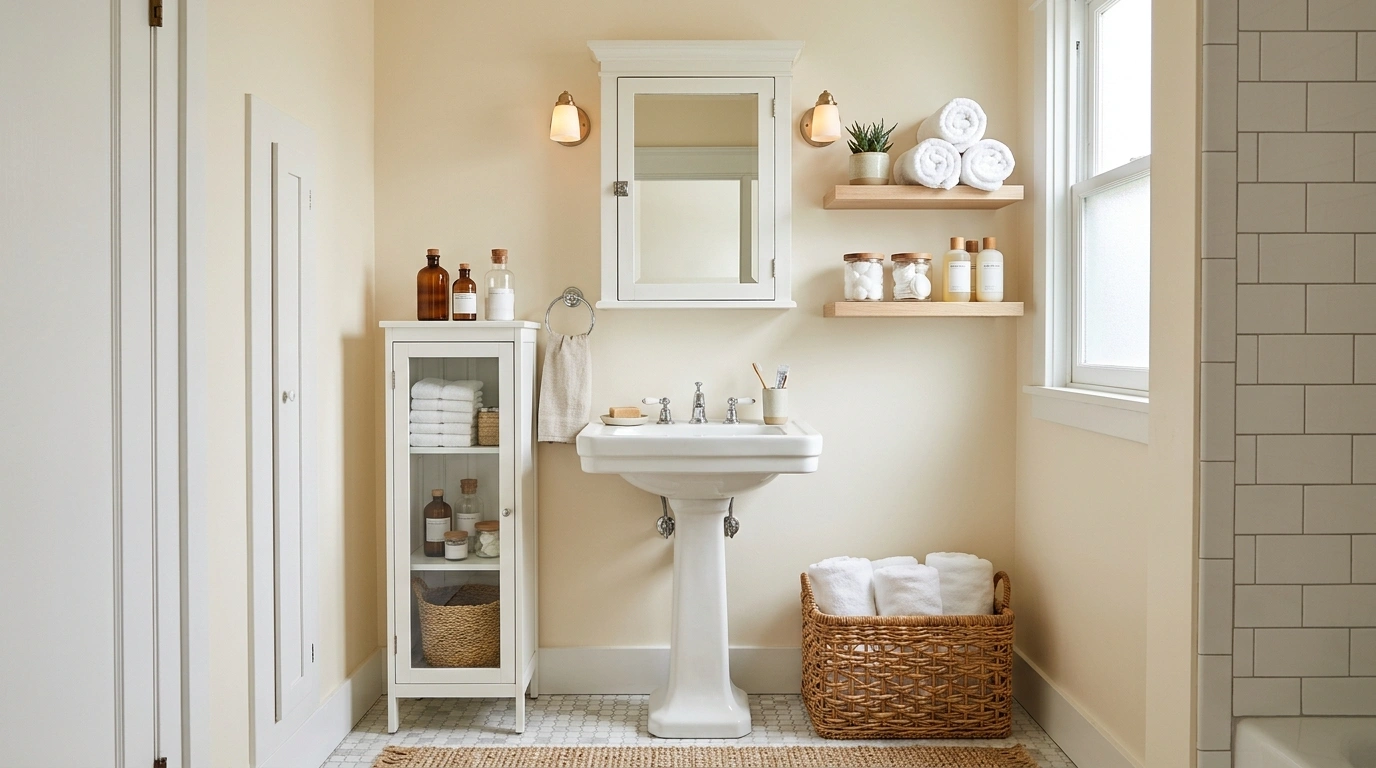
A pedestal sink has a very specific kind of charm. It is elegant, classic, visually light, and completely uninterested in helping with bathroom storage.
That last part is where things get complicated.
The space around a pedestal often ends up filled with whatever storage piece happens to fit. A narrow cabinet gets squeezed beside it. A basket gets shoved underneath. A shelf appears on the nearest wall and suddenly the whole bathroom looks like it is collecting furniture instead of following a design plan.
There is a much better way to handle it.
Treat the pedestal as part of the architecture and design the storage around its shape. Shelves can wrap around it. Cabinets can curve around it. Timber frames can expose it. A linen skirt can soften the storage underneath it. Even a very small bathroom can turn that awkward empty area into a beautiful, useful focal point.
The best designs also understand that storage does not have to look like storage.
Natural oak, walnut, painted cabinetry, woven baskets, fluted panels, soft curves, warm brass, pretty towels and carefully edited accessories can make the whole sink wall feel more like custom furniture.
And yes, the toothpaste still needs somewhere to live.
It just doesn’t need to become the star of the room.
The Pedestal Sink Storage Test
Integrated Pedestal Sink Storage Ideas
Compact White Wrap-Around Storage
This clever storage unit makes a pedestal sink feel like a custom-designed piece with built-in functionality from day one.
A crisp white shelving structure hugs the pedestal tightly, featuring symmetrical side cubbies that offer plenty of organization without overwhelming the tiny footprint of the basin. The clean lines keep the entire setup looking bright and airy.
Fill the open shelves with neatly rolled towels, charming jars, and a touch of greenery to keep the look intentional and fresh rather than clinical.
White Shelf Surround With Natural Wood Side Rails
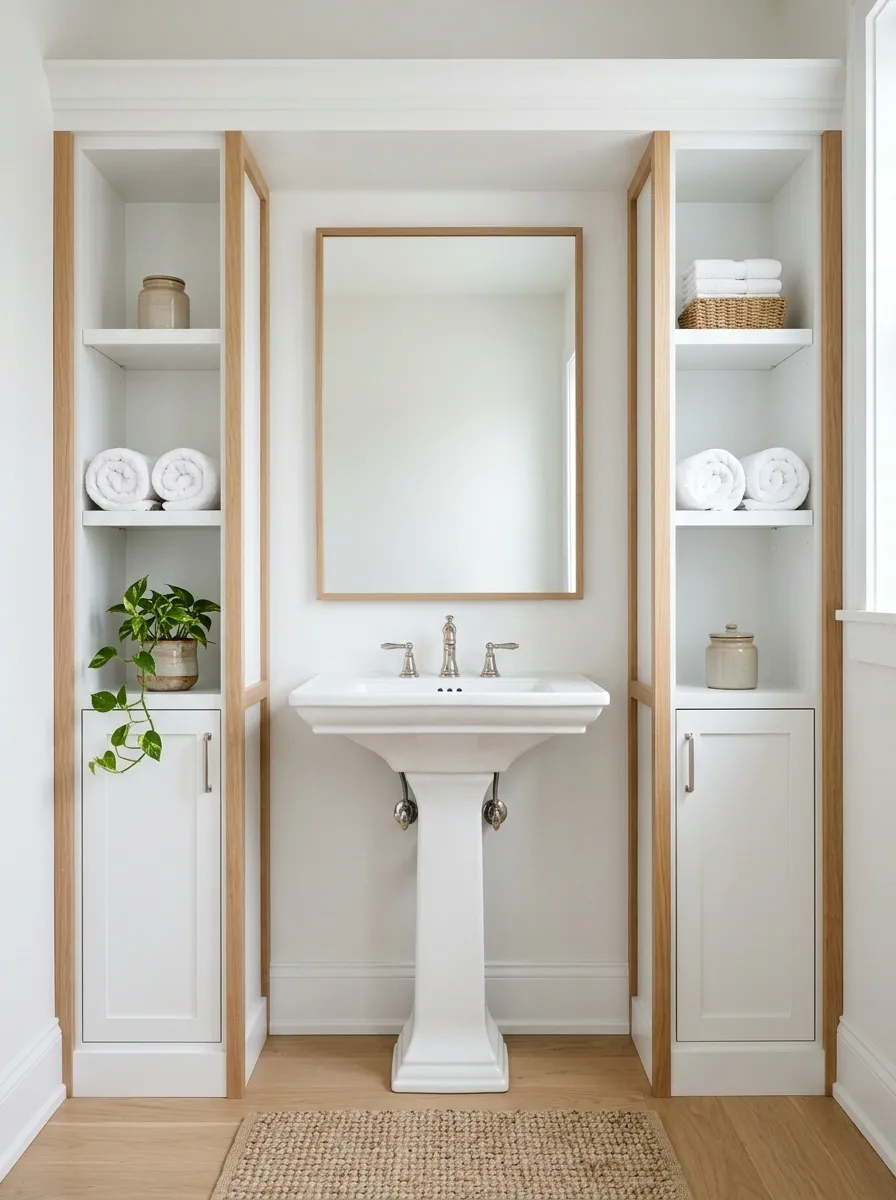
This is the look that makes a pedestal sink suddenly seem like it was designed with storage in mind from day one.
A crisp white shelving structure wraps around the sink, with the pedestal sitting visibly inside the composition instead of being hidden behind a bulky vanity. Natural wood side rails add enough warmth to keep all that white from feeling clinical.
Keep the shelves relatively shallow so toiletries don’t start creeping toward the basin. Rolled white towels, a small trailing plant, a ceramic container and a few neatly stacked essentials are plenty.
The secret is restraint. The shelves should look styled, not like the bathroom has opened a tiny retail branch.
SINK
Open Timber Frame Organization
A warm wooden framework gives a traditional pedestal sink a wonderfully organic, furniture-like presence in the room.
This open-shelf wooden console frames the porcelain pedestal completely, providing dedicated lower space for a woven basket full of essentials and neatly stacked towels. The natural wood tone adds an immediate layer of coziness against neutral walls.
Keep the styling purposeful by balancing practical supplies with a warm glowing candle and a simple potted plant on the upper tier.
Curved Walnut Storage Wrapped Around the Pedestal
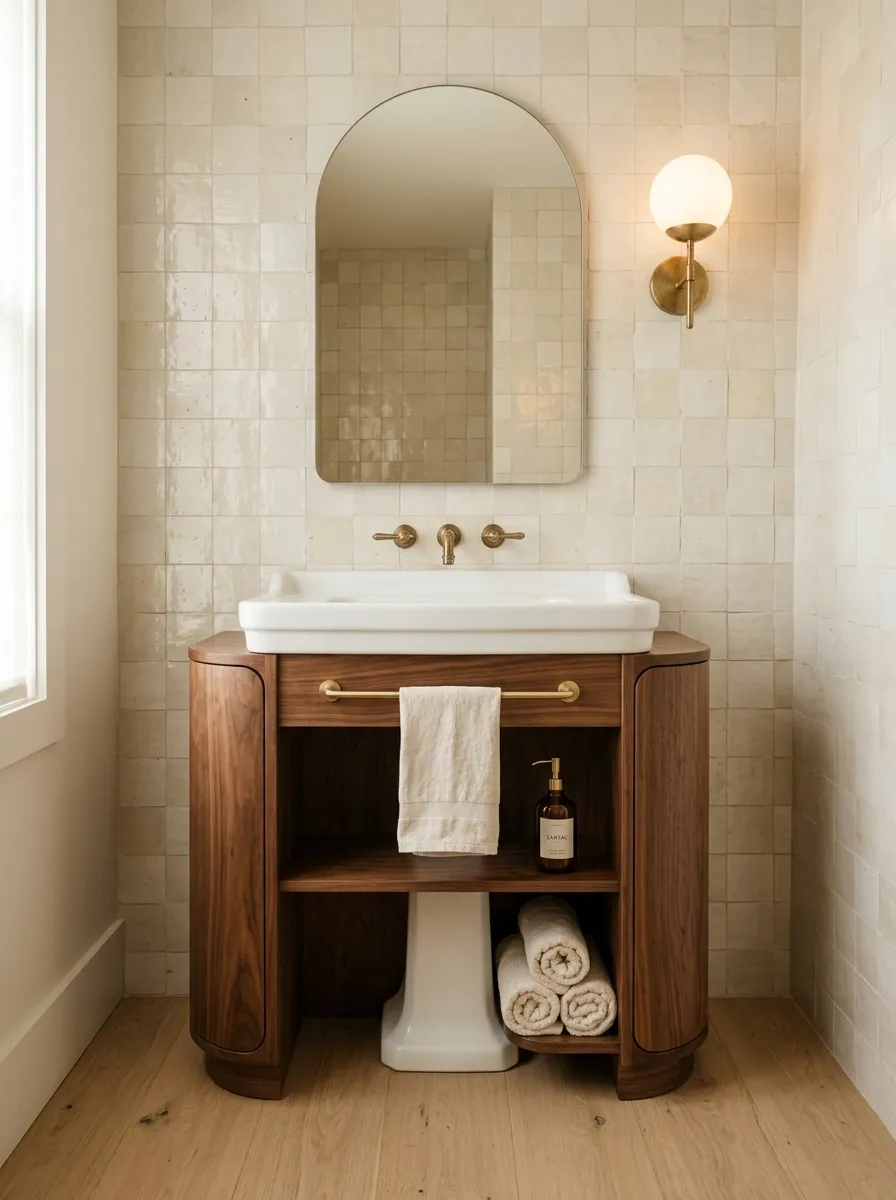
A curved storage surround turns the awkward geometry of a pedestal sink into the best-looking detail in the room.
Imagine rich walnut following the outer shape of the pedestal, with rounded side panels and shallow concealed compartments tucked into the surround. A small towel rail can sit beneath the basin while one open shelf keeps frequently used pieces within easy reach.
The curved profile matters here. Straight cabinetry would make the sink look like an obstacle. Soft curves make the cabinetry look deliberately designed around it.
Pair the walnut with creamy tile, warm lighting and a simple mirror.
Basically, the bathroom gets furniture with a personality instead of another rectangular box.
Softens the cabinetry.
Keeps the pedestal visible.
Slatted Wood Pedestal Console
This multi-tier white and wood storage system turns a tricky corner sink into a beautifully styled focal point.
White framework wraps securely around the plumbing, while natural woven baskets and neutral organizers sit neatly on the shelves, creating an organized drop-zone for daily toiletries. The combination of bright white and warm textures feels effortlessly balanced.
Style the surfaces with restraint, allowing the woven details and fresh greenery to do the heavy lifting for visual interest.
Floating White Shelves With a Precise Pedestal Cutout
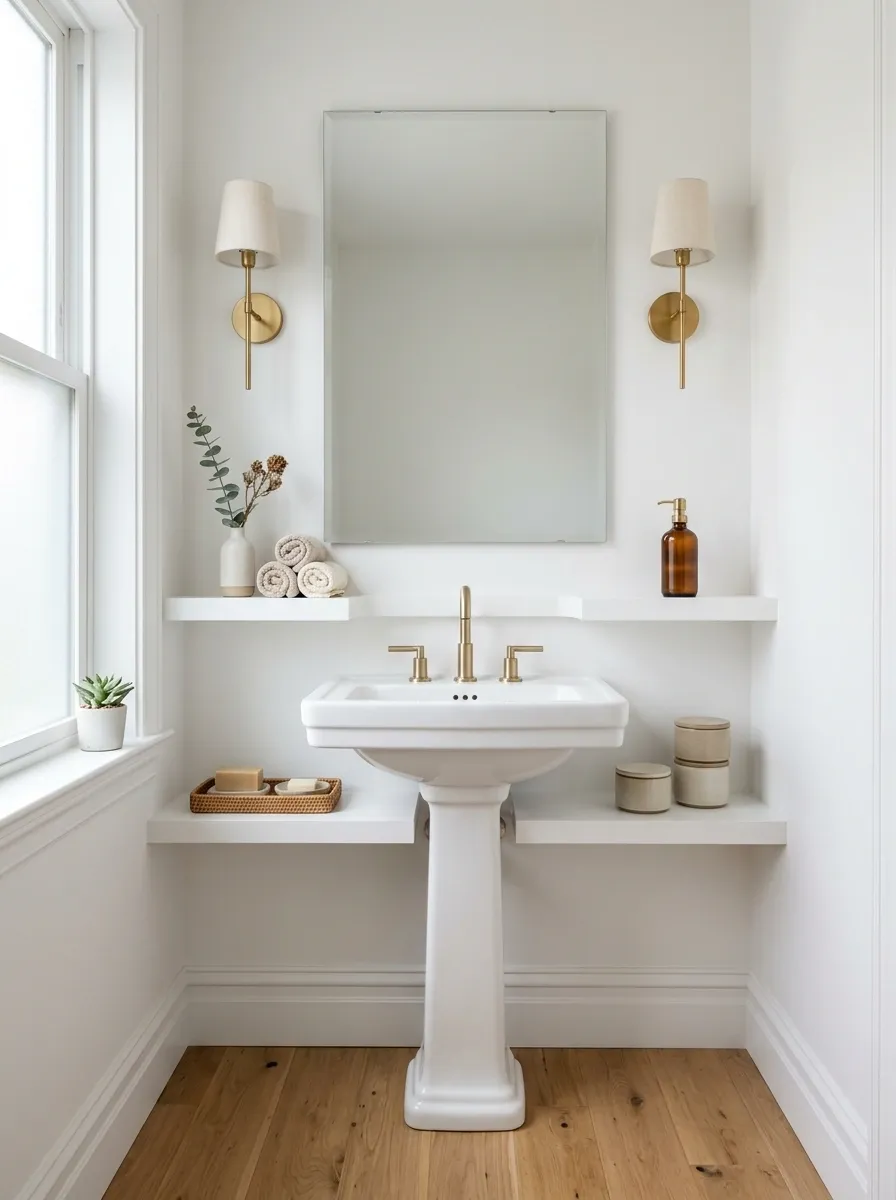
For a small bathroom, sometimes the prettiest storage is the storage that knows when to stop.
Three floating white shelves can be installed around the pedestal with a carefully measured central opening. The result gives the sink a built-in look without introducing a heavy cabinet underneath it.
The shelves should be deep enough for folded hand towels and small bathroom essentials, but not so deep that they visually swallow the basin.
Use the same white as the wall for a quiet built-in effect. Then add one warm material, such as oak or rattan, to prevent the room from becoming one giant bowl of white paint.
White Shelving With Slatted Drop-Down
For a streamlined approach, this white shelving unit integrates seamlessly around the pedestal while keeping clutter completely out of sight.
The clean white structure features multiple open display levels paired with a handsome slatted drop-down cabinet door at the base. It gives you the best of both worlds: pretty styling up top and hidden storage below.
Let the rich wood tone of the lower door ground the crisp white finish, creating a polished look that feels completely tailored to the space.
Warm Oak Frame With White Cubby Shelves
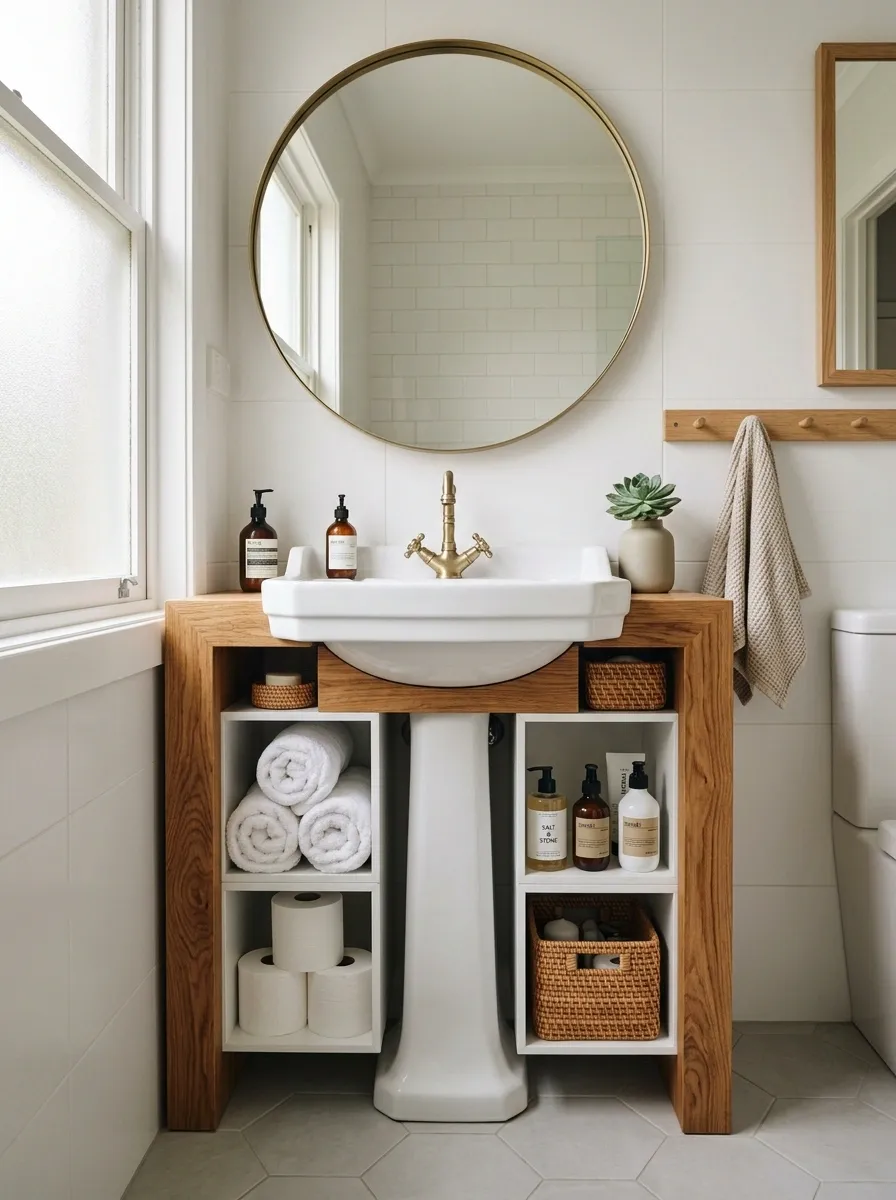
Warm oak gives a simple pedestal sink a much more furniture-like presence.
Build a timber frame around the sink, then introduce white cubby shelves inside the frame so the storage doesn’t become visually heavy. The contrast between natural wood and white porcelain gives the whole arrangement a collected, Scandinavian feel.
Use the cubbies for things that are genuinely useful: towels, spare toilet paper, skincare, small baskets and everyday supplies. A tiny ceramic vase or plant can break up the practical stuff.
The trick is making the oak frame feel substantial enough to look intentional without becoming a giant rectangle parked around the sink.
Because nobody needs another bathroom rectangle.
Tailored Fabric Sink Skirt
A pleated fabric skirt brings instant softness, charm, and hidden storage to an otherwise exposed pedestal sink.
This classic design technique drapes a patterned fabric right beneath the basin, completely disguising the plumbing while offering a secret stash zone for all your less-than-photogenic bathroom supplies. It introduces timeless pattern and texture to the room instantly.
Pair the skirt with a statement mirror and soft wall color to complete a deeply personal, curated aesthetic that feels straight out of a design magazine.
U-Shaped Cabinet Built Around the Pedestal
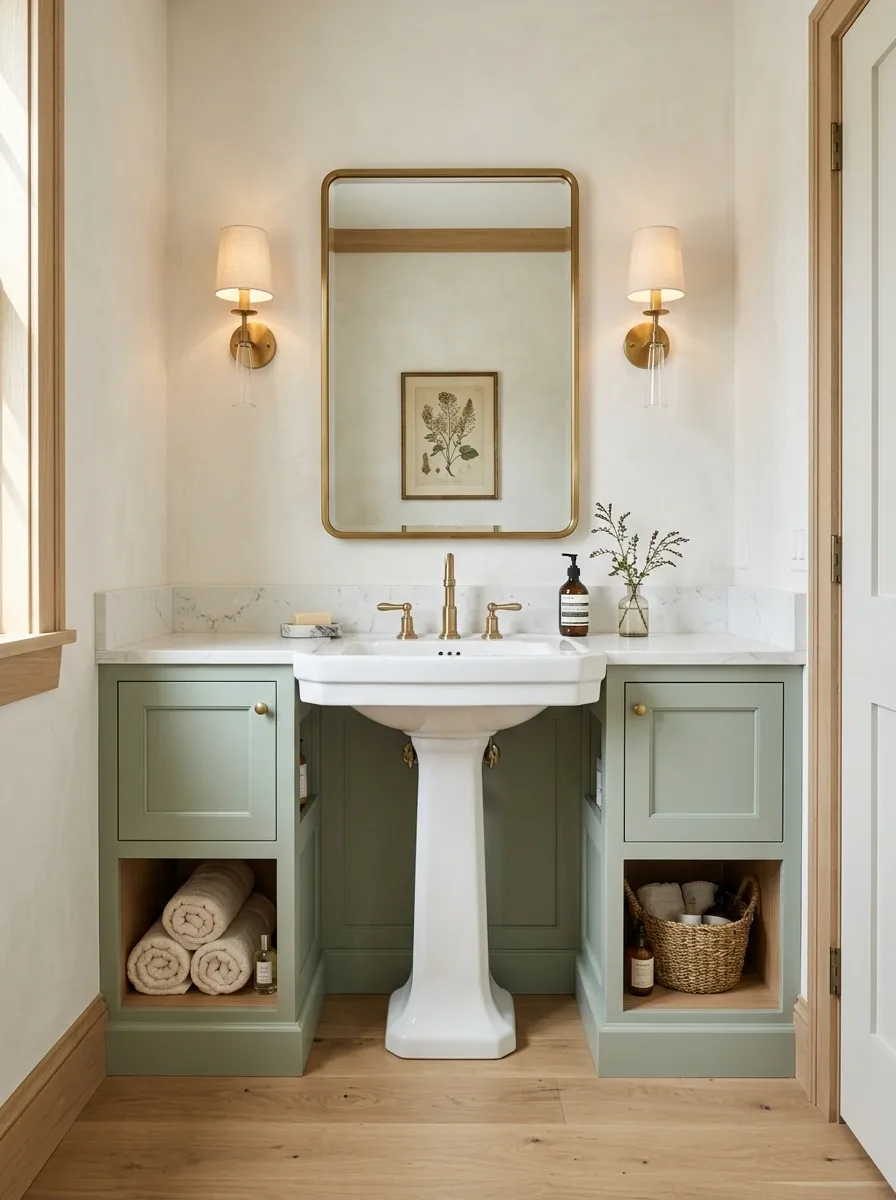
This is the more substantial version of integrated pedestal storage.
A custom U-shaped cabinet can surround the pedestal from both sides while leaving the center open. The sink remains completely visible, but the surrounding cabinetry gives the bathroom much more usable storage.
Closed compartments on either side are ideal for the ugly-but-necessary stuff that doesn’t deserve a Pinterest cameo. Open shelving can handle towels and attractive everyday pieces.
Use pale stone, painted wood or light oak for the cabinet top, depending on the rest of the bathroom.
The important part is the opening. The pedestal should look deliberately framed, not trapped.
Paired Bamboo Corner Shelves Around the Sink
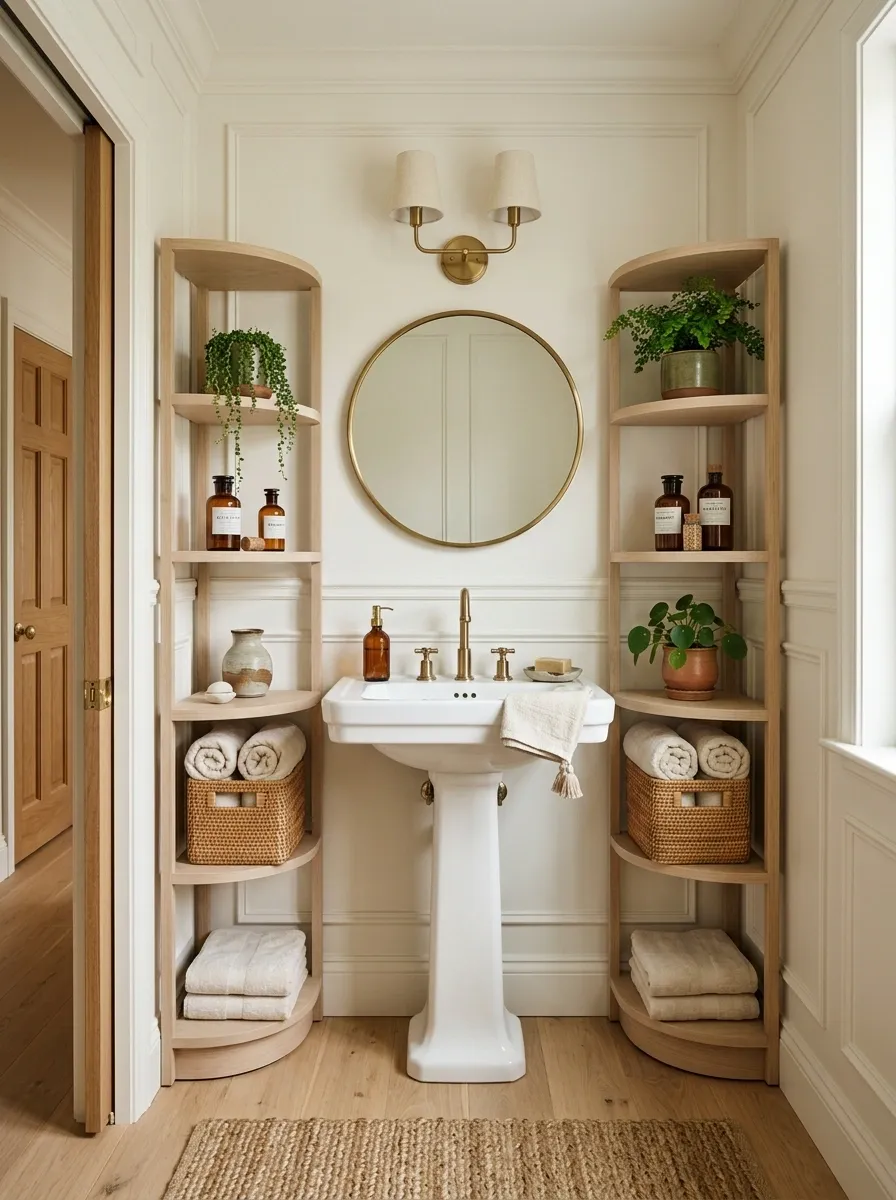
Sometimes the most convincing built-in look comes from two pieces that are technically separate but visually behave like one.
Slim bamboo or pale-oak shelving can sit on either side of the pedestal, with both units turned slightly inward toward the sink. Keep the shelves shallow and relatively symmetrical so they visually frame the basin instead of making the bathroom feel crowded.
The lower shelves can hold rolled towels and baskets. Higher shelves can take the prettier assignment: small plants, amber bottles, ceramics and the occasional object that exists purely because it looks good.
And honestly, bathrooms deserve decorative objects too. Not every square inch needs to be holding toothpaste.
Scandinavian Sink Surround With Pale Oak Shelves
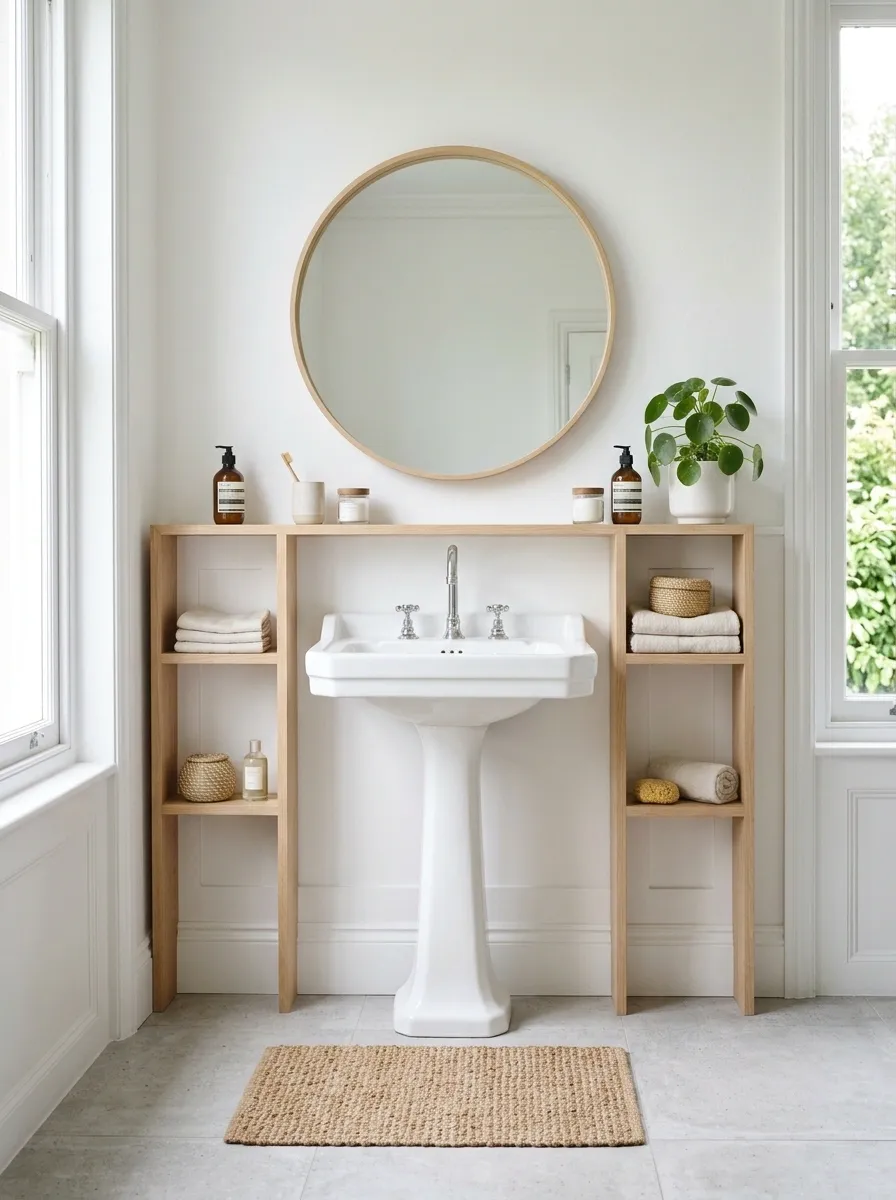
A pale-oak surround is especially good for bathrooms that already have white walls, light tile and simple fixtures.
The goal is not to build a giant vanity. Instead, use slim oak shelves to create a visual frame around the white pedestal. The warm wood introduces enough contrast to make the sink area interesting without overpowering the room.
A round mirror above the basin reinforces the soft Scandinavian look. Add cream towels, a small woven basket and one leafy plant.
The whole arrangement should feel calm and slightly expensive.
Which is useful because “calm and slightly expensive” is basically the dream bathroom brief.
Sage Green Cabinet With an Open Center
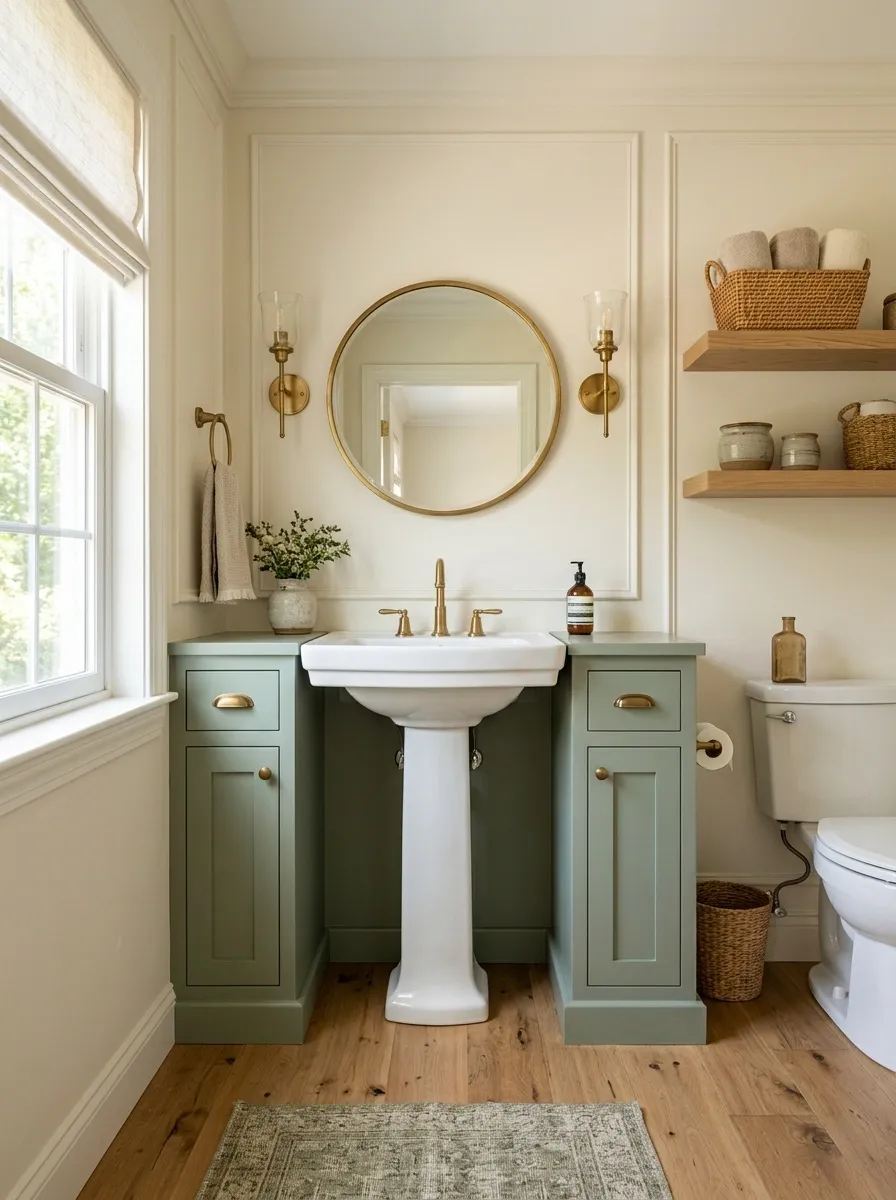
For a bathroom that needs more color, sage green makes an excellent cabinet finish.
Build the cabinetry around the pedestal with a deliberately open center. The green surrounds the white porcelain while the exposed pedestal keeps the composition visually light.
Brass pulls add a little polish. Natural wood shelves or woven baskets can soften the painted cabinetry, while cream walls stop the whole thing from becoming aggressively green.
The important detail is the cutout. It should be generous enough that the pedestal doesn’t look squeezed into a tiny hole.
A bathroom cabinet should store your stuff, not look like it’s holding the sink hostage.
Minimal Floating Cabinet Wings Around a White Pedestal
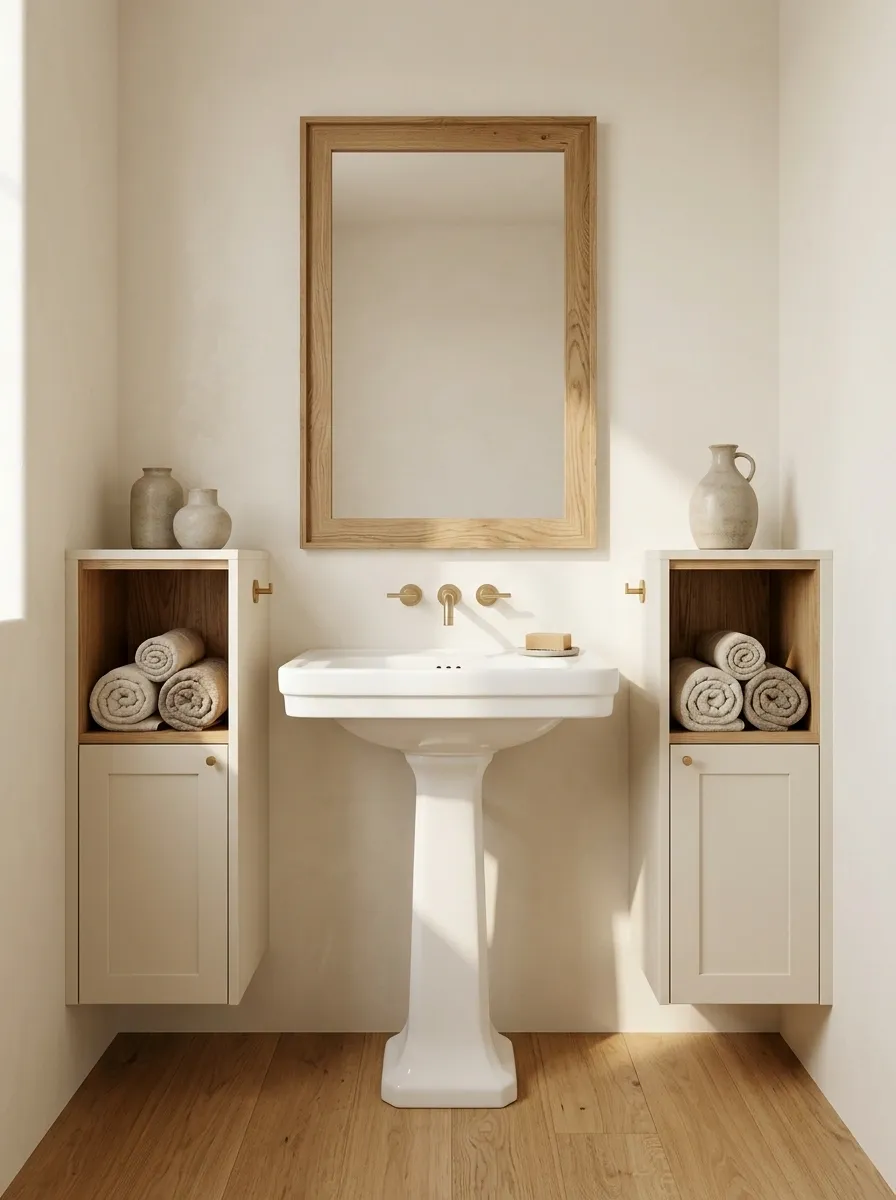
This is the option for bathrooms that want storage without looking like they have storage.
Instead of building one continuous cabinet, create two narrow floating cabinet wings on either side of the pedestal. The center stays completely open, allowing the porcelain basin and pedestal to remain visually dominant.
The floating installation also leaves some floor visible underneath, which helps a small bathroom feel less boxed in.
Use handleless fronts for an especially clean appearance, then bring warmth through oak shelving, linen towels or a timber-framed mirror.
It is minimalist, but not sterile.
There is a difference. One says quiet luxury. The other says doctor’s office waiting room.
Ribbed Wood Wraparound Storage
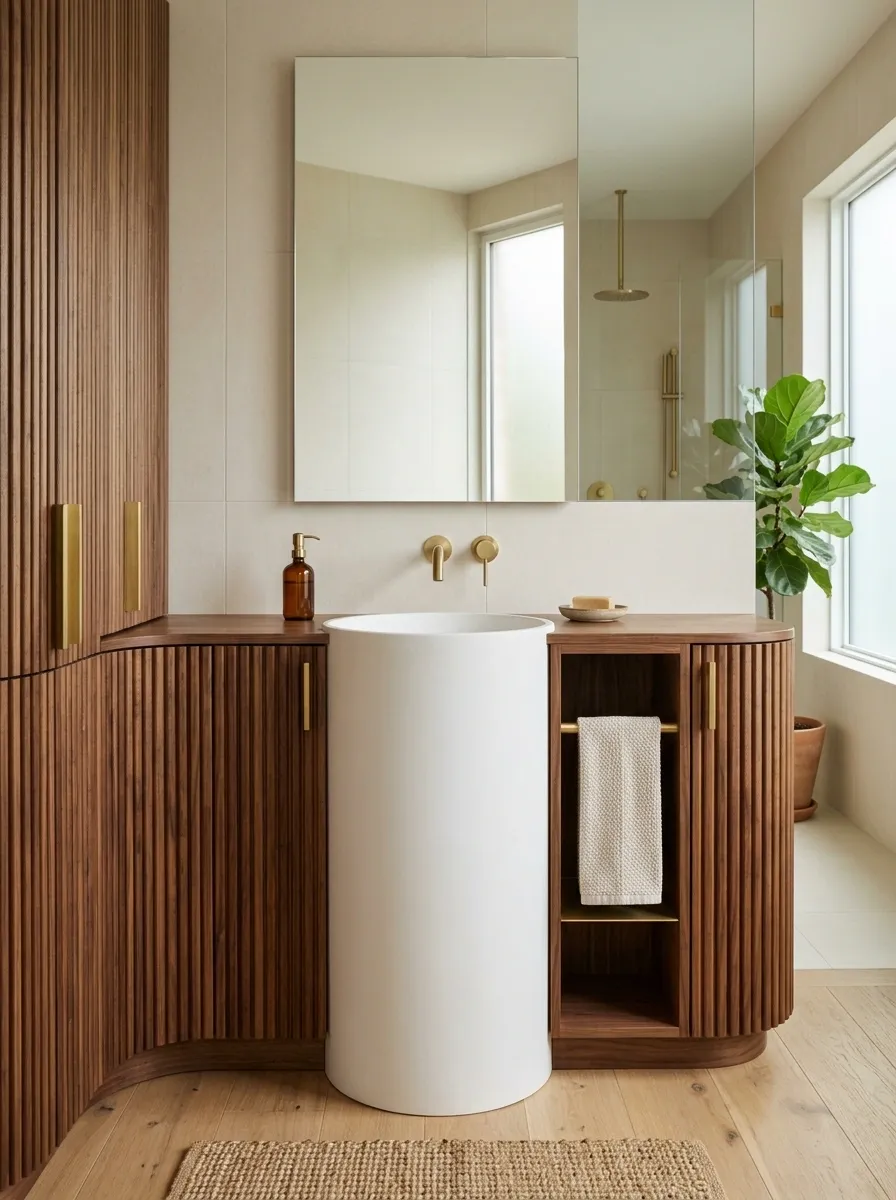
Ribbed or fluted wood brings texture into a bathroom without relying on another pattern.
Use vertical ribbed panels to create a curved surround around the pedestal, with concealed storage tucked behind the textured doors. A narrow open section can hold a folded hand towel so the cabinetry doesn’t become one continuous block.
Warm walnut works beautifully against creamy tile and white porcelain. Keep the mirror simple so the ribbed surface gets to be the interesting part.
This is particularly good when the rest of the bathroom is quiet.
Because apparently the cabinet is allowed to have main-character energy.
Traditional Painted Cabinet With a Pedestal Opening
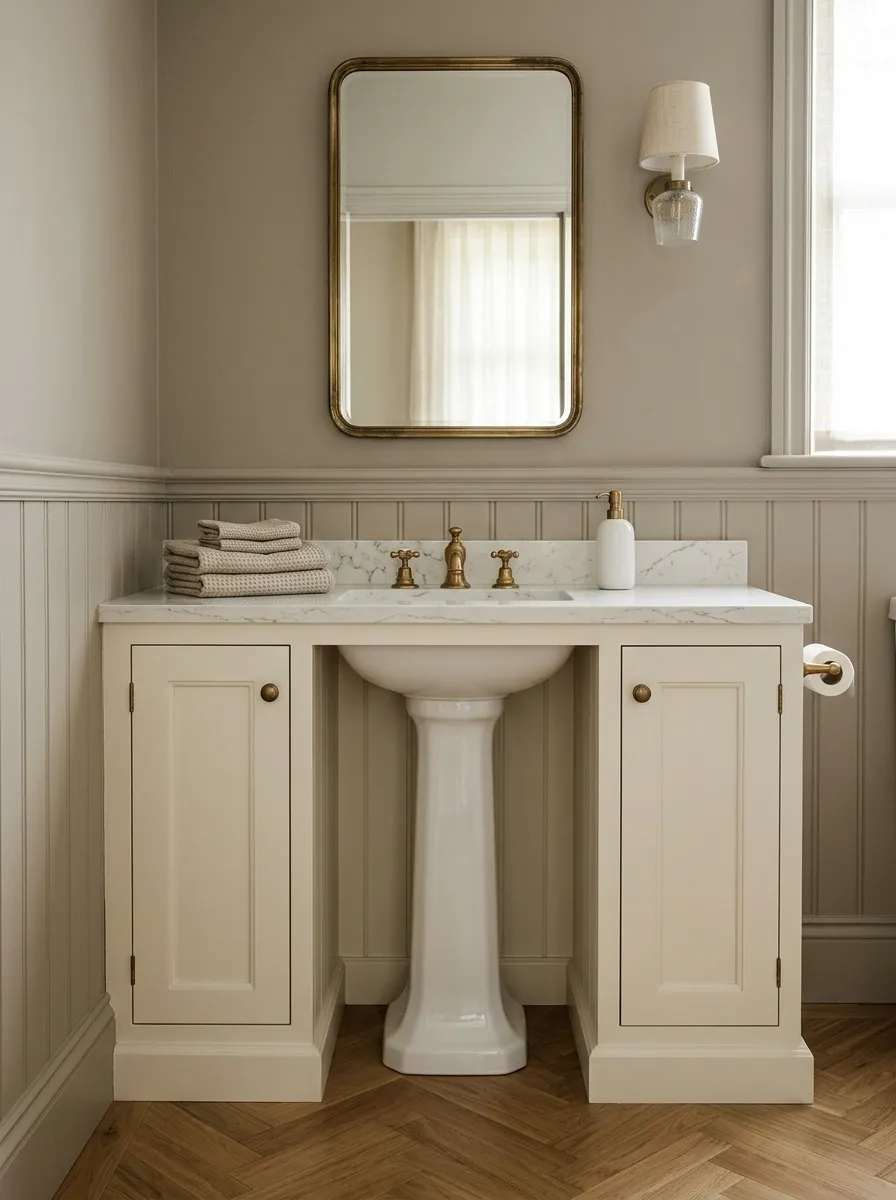
Pedestal sinks naturally suit traditional bathrooms, so there is no need to force them into a hyper-modern look.
A furniture-style painted cabinet can be built around the pedestal, with paneled doors on either side and an open center beneath the basin. Cream, warm white or muted taupe keeps the cabinetry classic.
Add small brass knobs, a marble-look surface and a framed mirror above the sink. The result feels like a proper piece of furniture rather than bathroom cabinetry.
The pedestal stays visible, which is important. Hiding all of that porcelain behind cabinetry would be like buying a beautiful vintage chair and then putting a sheet over it.
DOOR
DOOR
Ladder-Frame Shelving Designed Around the Pedestal
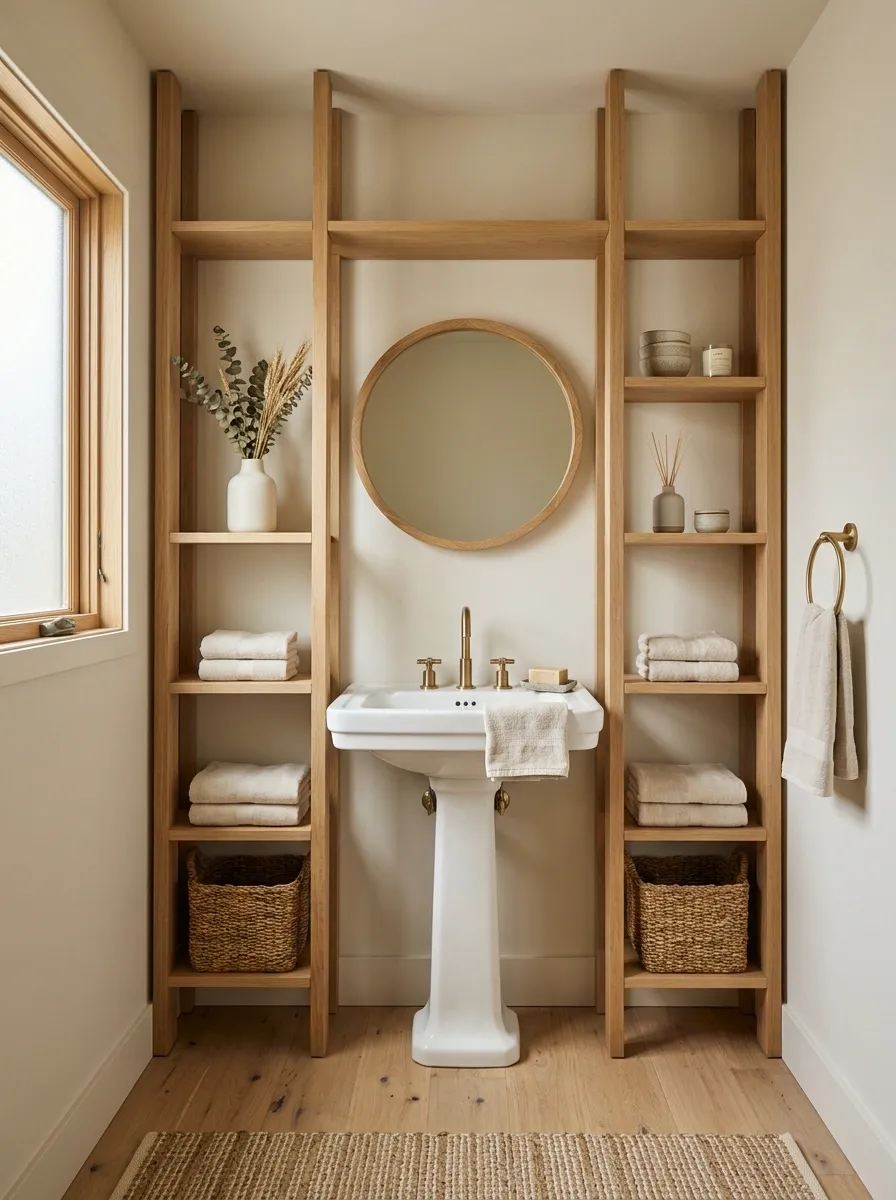
A ladder-style frame is a clever choice when bulky cabinetry would overwhelm the bathroom.
Use two vertical timber sides with shallow shelves connecting them, creating a light framework that rises alongside the sink. The bottom can accommodate baskets while the upper shelves hold towels and decorative pieces.
The open construction means the wall remains visible behind the storage, which is particularly useful in small bathrooms.
Choose one wood finish and repeat it somewhere else in the room, perhaps through the mirror frame or stool.
Otherwise the ladder can start looking like it got lost on the way to a very different room.
White Storage Surround With a Walnut Bridge Shelf
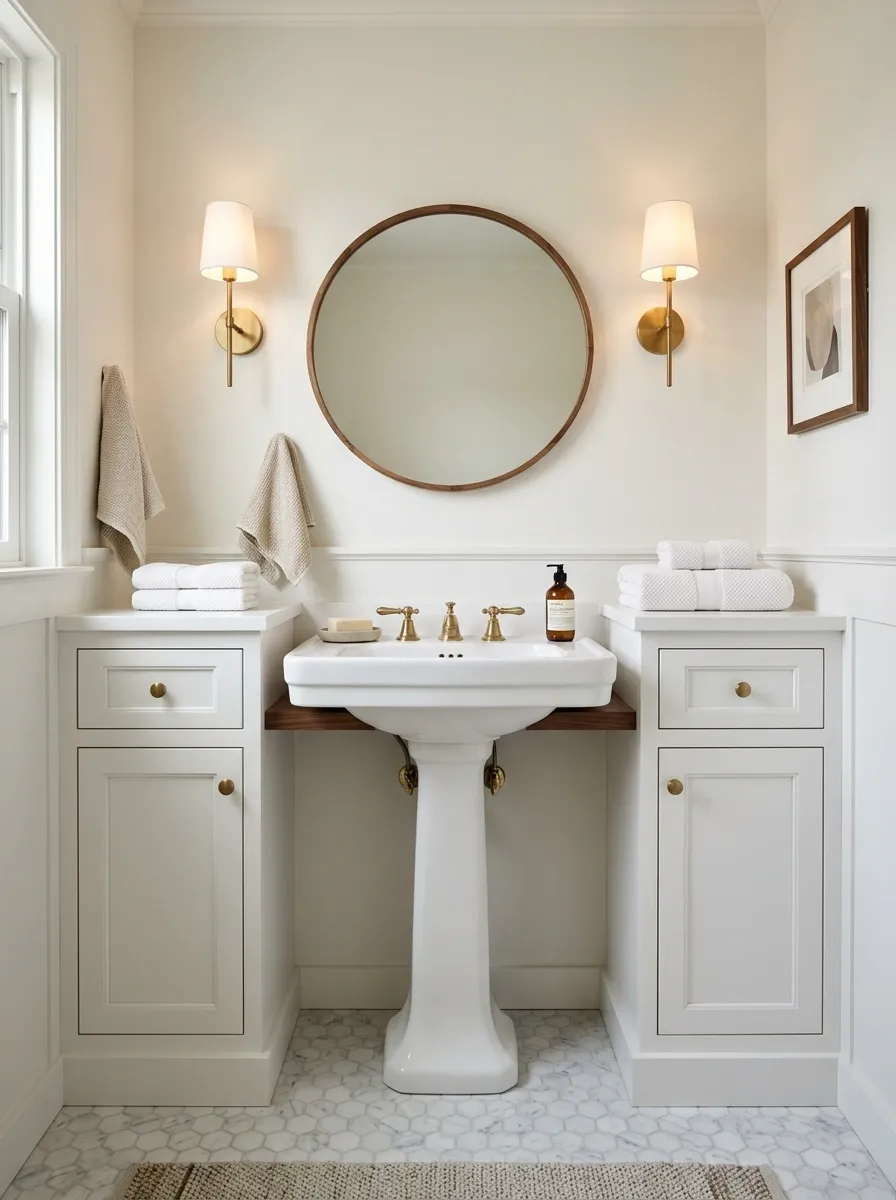
This combination gives a white bathroom a little more depth without introducing a completely different color story.
Build the main storage surround in white, then add a narrow walnut shelf running horizontally beneath or beside the basin. The walnut acts almost like a visual bridge, connecting the two sides of the surround while adding warmth.
Keep the shelf thin. It should read as a deliberate material accent rather than another chunky storage surface.
White towels, warm brass and a walnut-framed mirror can repeat the same palette throughout the room.
It is a tiny material decision with suspiciously good results.
Fluted Cabinet With Open Towel Niches
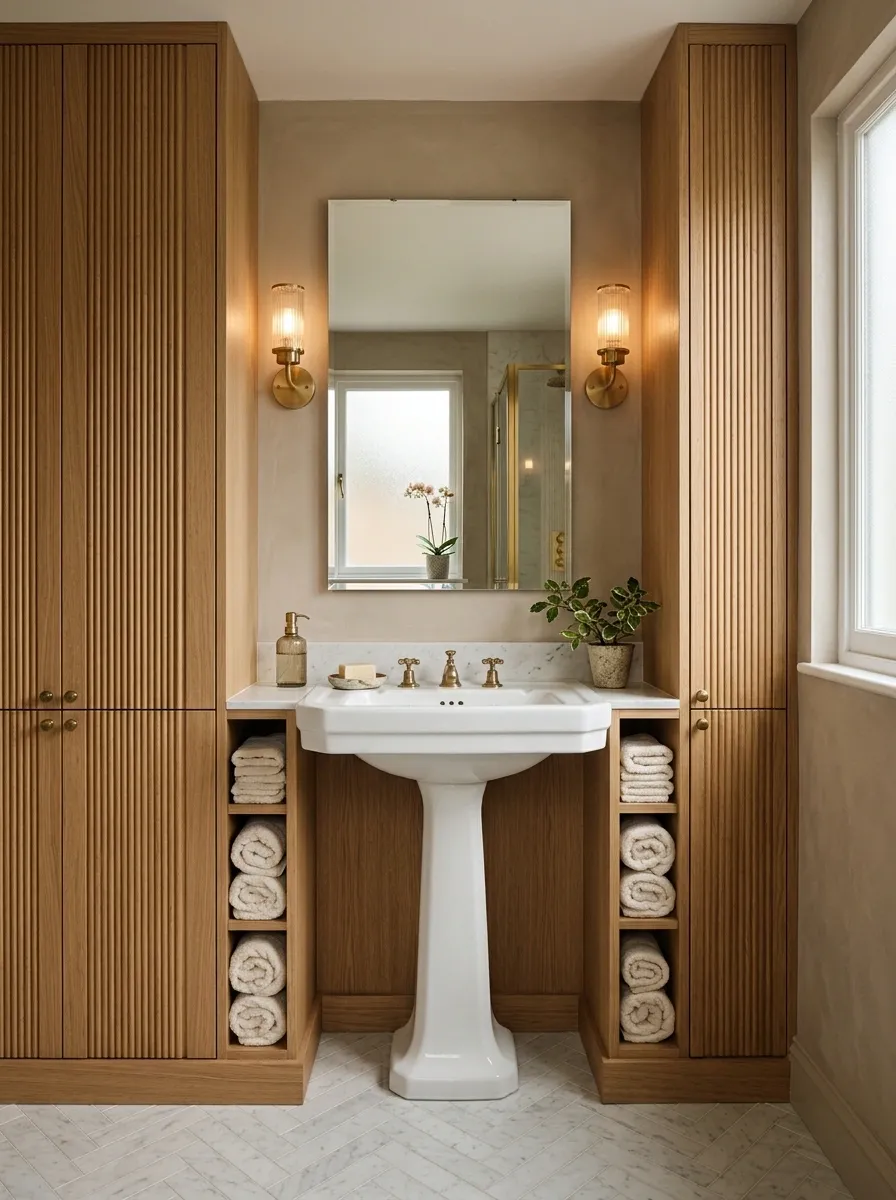
Fluted cabinetry can make a compact bathroom feel much more custom, especially when the storage is shaped around an existing pedestal sink.
Use a warm wood or painted fluted cabinet on either side of the pedestal, then leave narrow open niches specifically for towels. Those openings break up the solid cabinet fronts and give the eye somewhere to rest.
The towel niches should be genuinely useful rather than decorative holes that can fit approximately one washcloth.
Pair the fluting with simple tile and a large mirror.
Let the cabinetry have the texture. Everything else can calm down.
Arched Storage Surround With Soft Curves
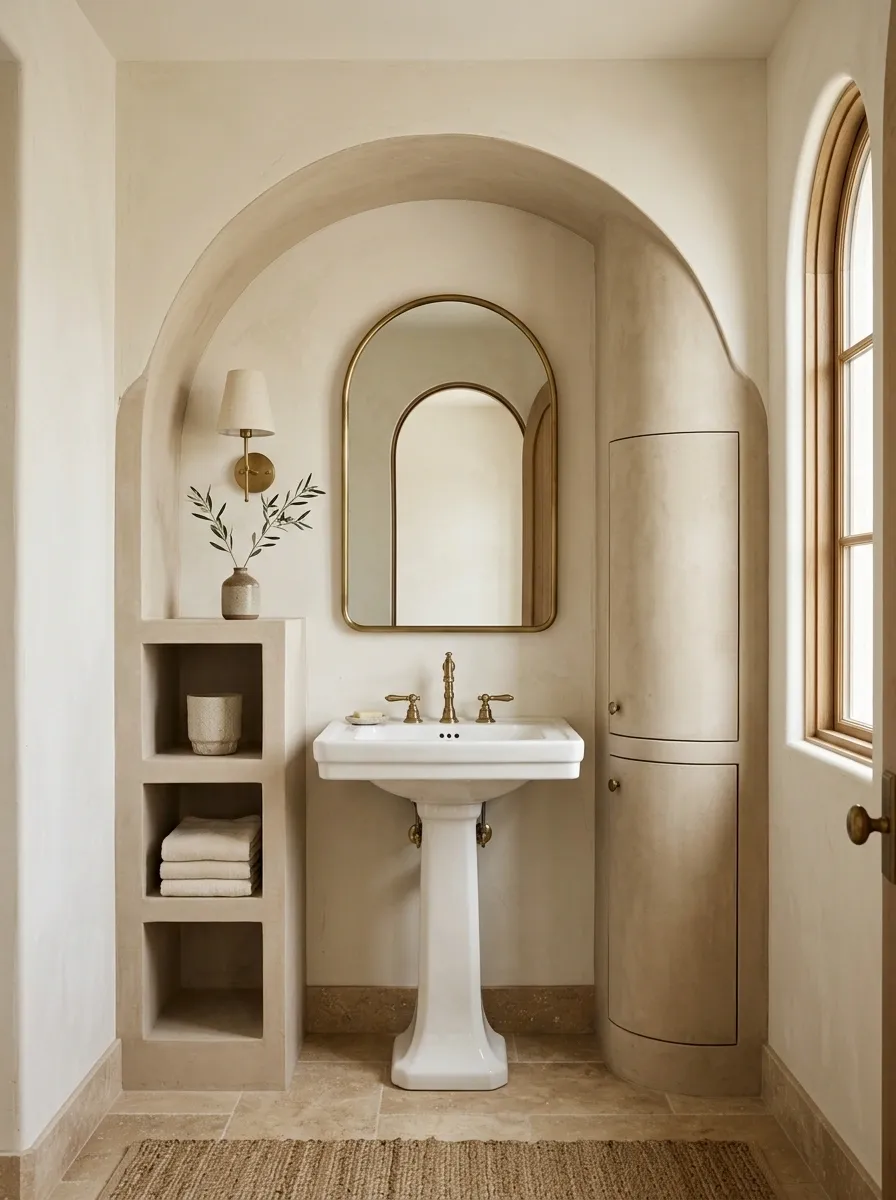
An arched surround gives the pedestal sink a softer architectural frame.
Instead of square cabinetry, create an arch around the sink using painted wood, plaster-inspired finishes or a combination of curved cabinetry and open shelving. The pedestal remains visible beneath the basin while the surrounding storage follows the same gentle geometry.
Cream, warm beige and aged brass work beautifully here. A rounded mirror above the sink can echo the arch without making the room feel like it has entered a geometry competition.
Keep the styling quiet: folded linen, one ceramic vessel and perhaps a small branch.
The curve is already doing enough.
Vintage Bathroom With Furniture-Style Surround
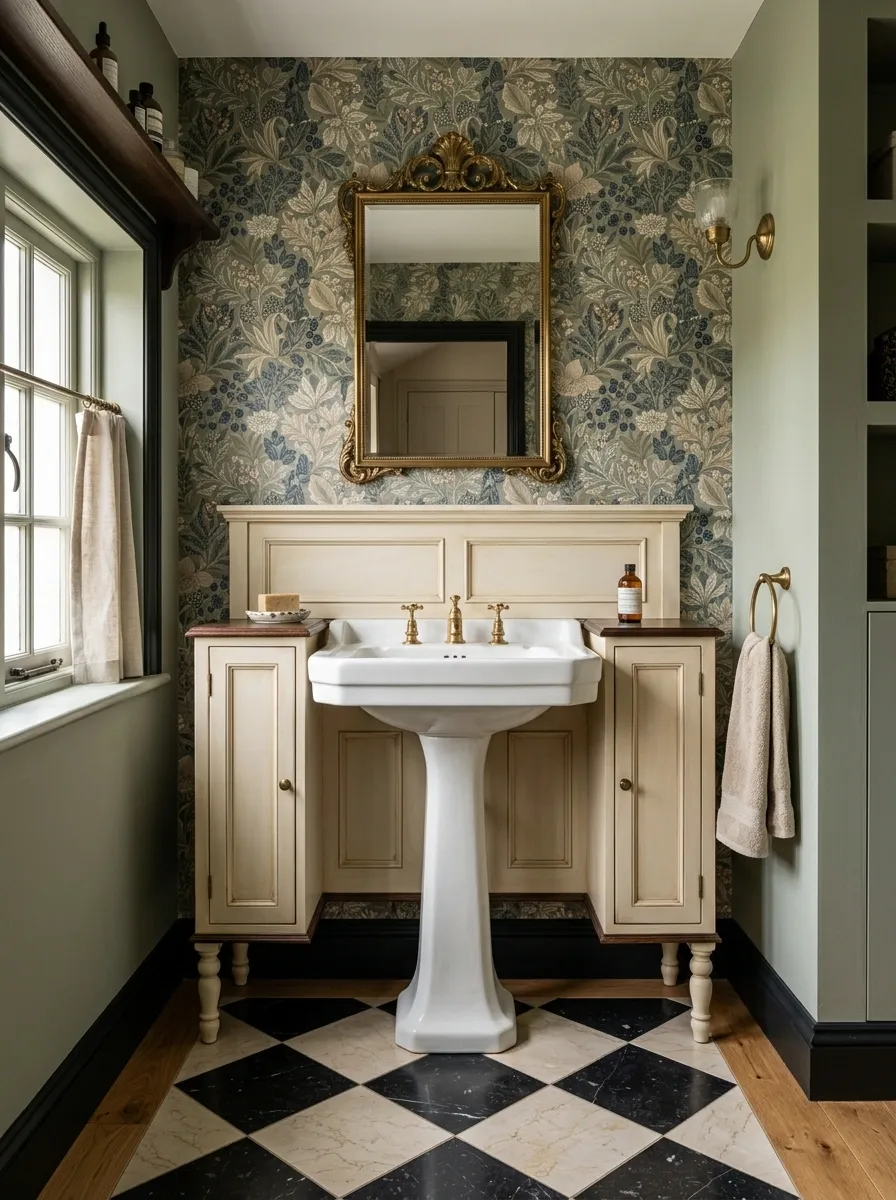
A pedestal sink already has a nostalgic quality, so leaning into it can produce a beautiful vintage bathroom.
Use a painted furniture-style surround with narrow storage compartments around the pedestal. Add patterned wallpaper, a checkerboard floor, an antique-inspired mirror and small brass hardware.
The cabinetry should look like a piece of furniture adapted specifically for the sink rather than a modern vanity trying to cosplay as vintage.
Keep the palette controlled. Cream, muted green, dusty blue or warm beige works better than throwing every vintage color at the wall.
The goal is collected.
Not “grandma’s bathroom cabinet has entered the chat.”
Black Metal and Oak Open Sink Frame
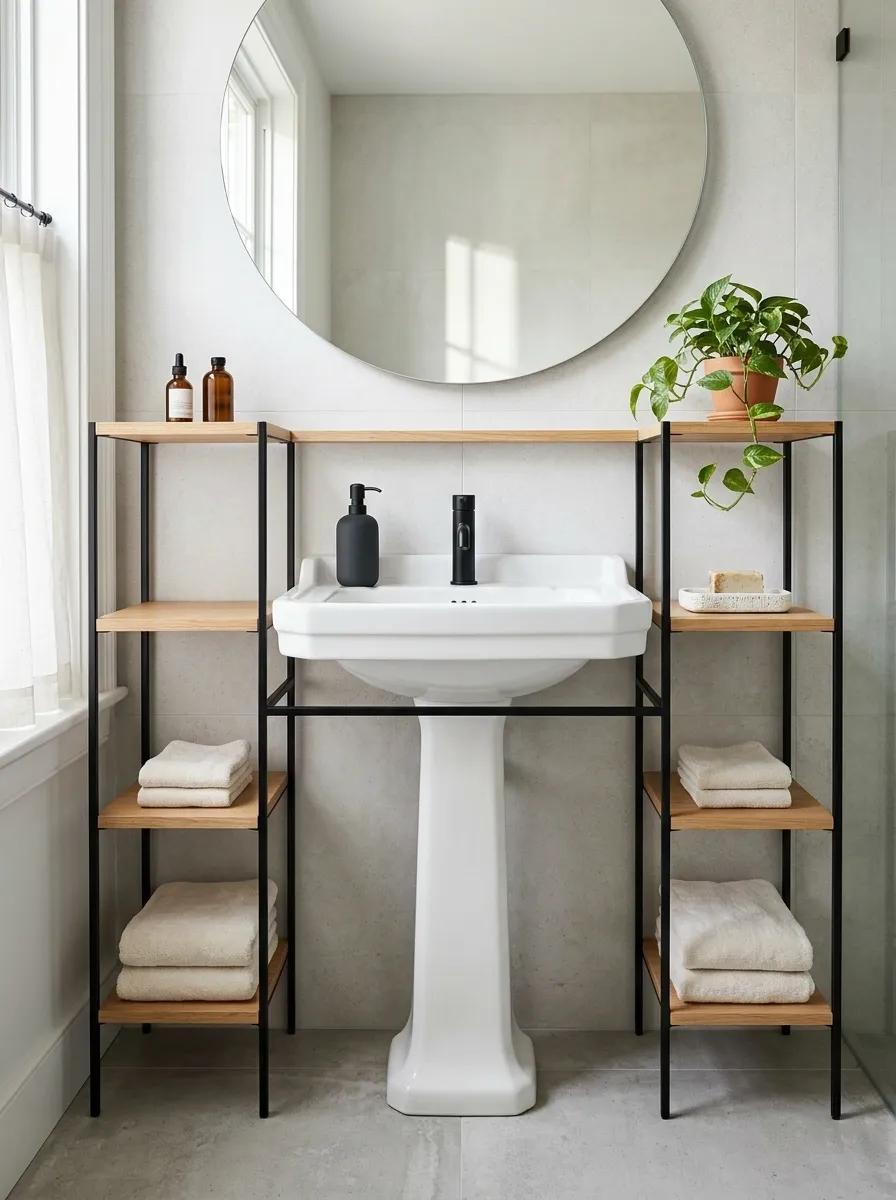
For something more contemporary, combine slim black metal with warm oak.
A lightweight metal framework can rise on both sides of the pedestal, supporting shallow oak shelves. The black structure gives definition while the wood prevents the bathroom from feeling overly industrial.
White porcelain becomes the perfect counterpoint.
Keep the shelves edited. A few towels, a soap dispenser, one plant and perhaps a small tray are enough.
The metal frame should look almost drawn into the room with a pencil.
Not welded together like it is preparing to survive the apocalypse.
Symmetrical Storage Towers Framing the Sink
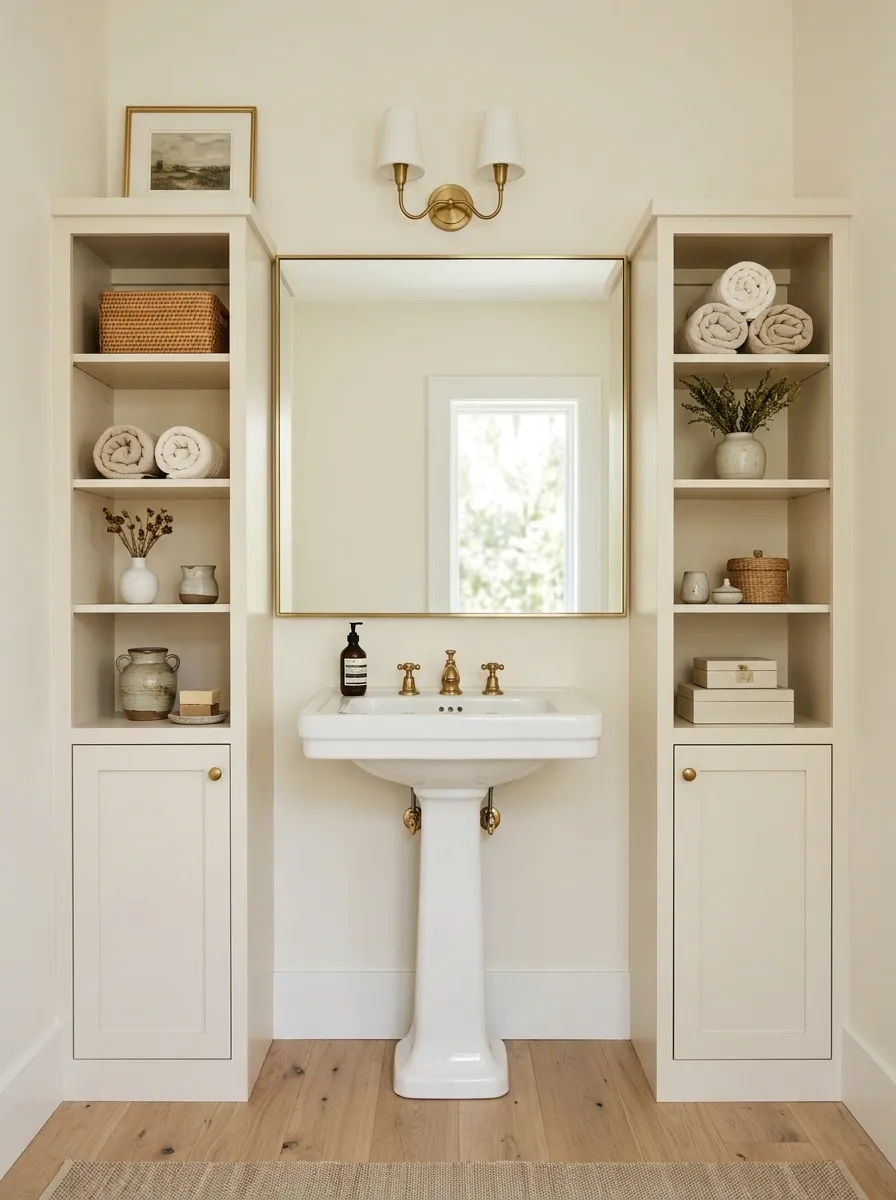
When the bathroom has enough width, two narrow storage sections can create a dramatic frame around a central pedestal sink.
Unlike random tall cabinets parked beside the sink, these should be designed as one composition. Keep both sides similar in width, material and height, with the pedestal occupying the center.
Mix closed storage at the bottom with a few open shelves higher up. This keeps the visual weight grounded while giving the upper half of the bathroom some breathing room.
A large mirror can span between or slightly beyond the two sides.
The result feels architectural rather than improvised.
And yes, symmetry is doing a lot of unpaid labor here.
Continuous Wall Shelf With a Pedestal Opening
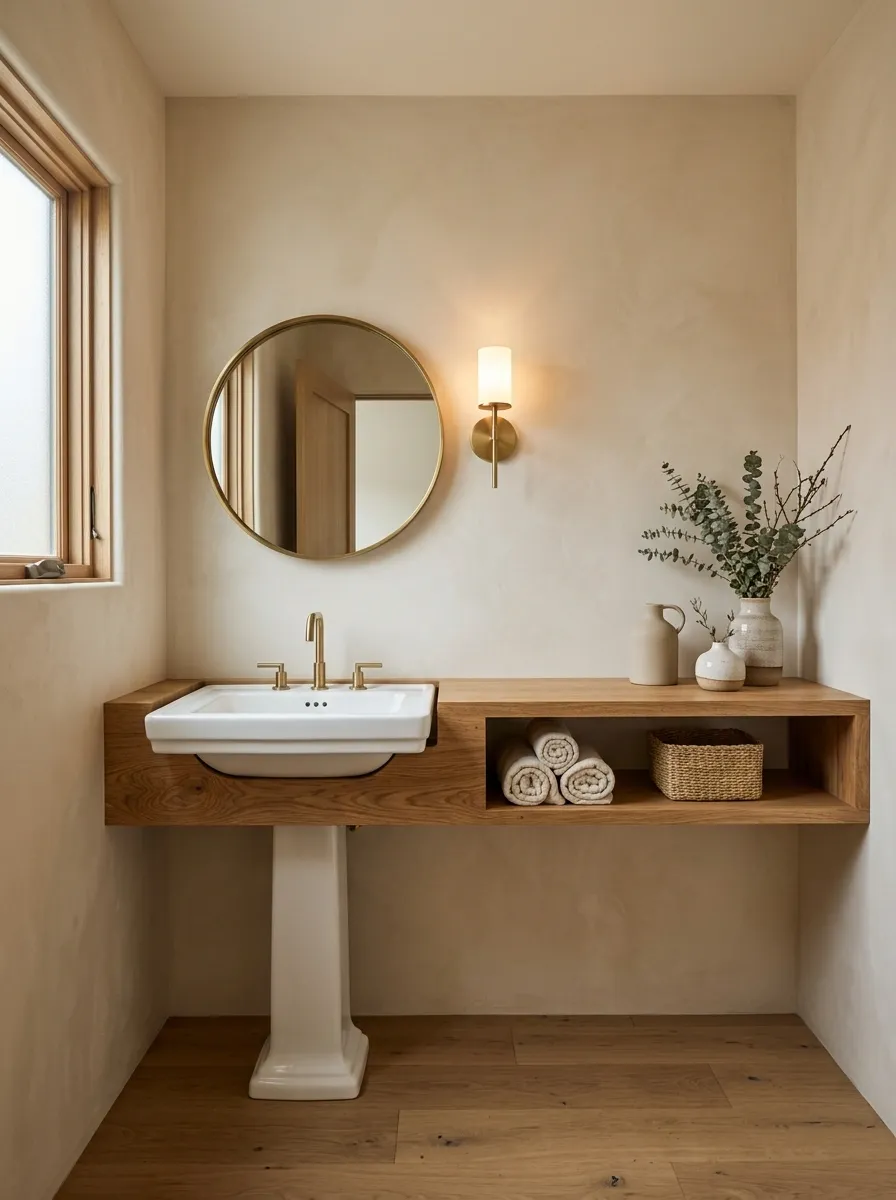
A long wall-mounted shelf can make a small bathroom feel much more intentional when the pedestal sink is given a proper opening within the composition.
Instead of stopping the shelf at the sink, run it across the wall and create a carefully measured cutout around the basin and pedestal. The result visually connects the sink to the rest of the room while keeping the floor completely open.
Use the shelf for folded towels, baskets and a few decorative pieces. A warm oak finish works beautifully against plaster, white tile or a softly colored wall.
The important part is the opening.
It should look engineered.
Not like someone attacked a shelf with a jigsaw five minutes before guests arrived.
Soft Cream Cabinet With Curved Side Wings
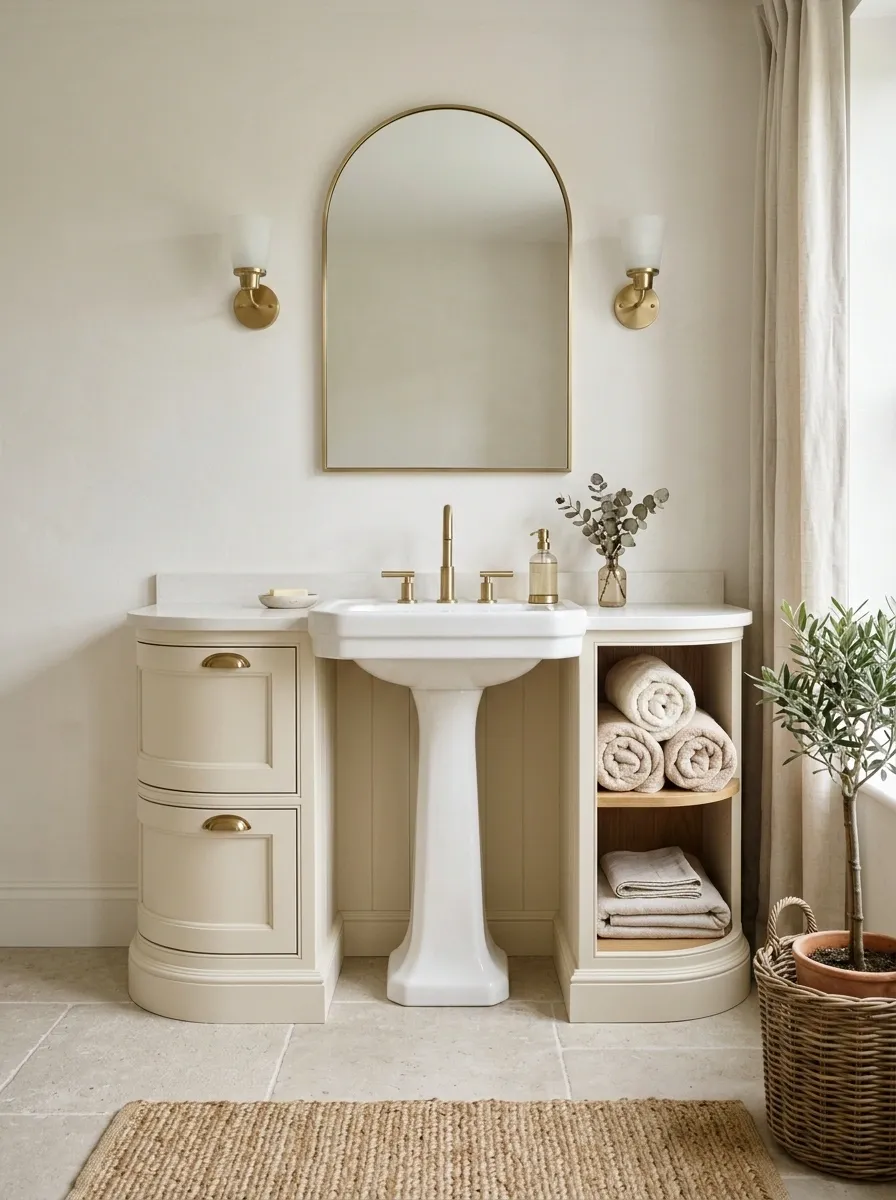
For a bathroom that needs a softer, more elegant treatment, use cream cabinetry with rounded side wings.
The cabinetry can extend outward from either side of the pedestal, with curved edges that visually soften the transition from sink to storage. Add a couple of drawers on one side and an open towel compartment on the other.
A warm cream finish keeps the cabinet from feeling visually heavy. Pair it with limestone-look tile, brushed brass and a rounded mirror.
This is especially pretty in bathrooms where sharp rectangular cabinetry would feel too severe.
Basically, the cabinet gets the edges softened before anyone has a chance to complain.
Dark Walnut Built-In Against Pale Tile
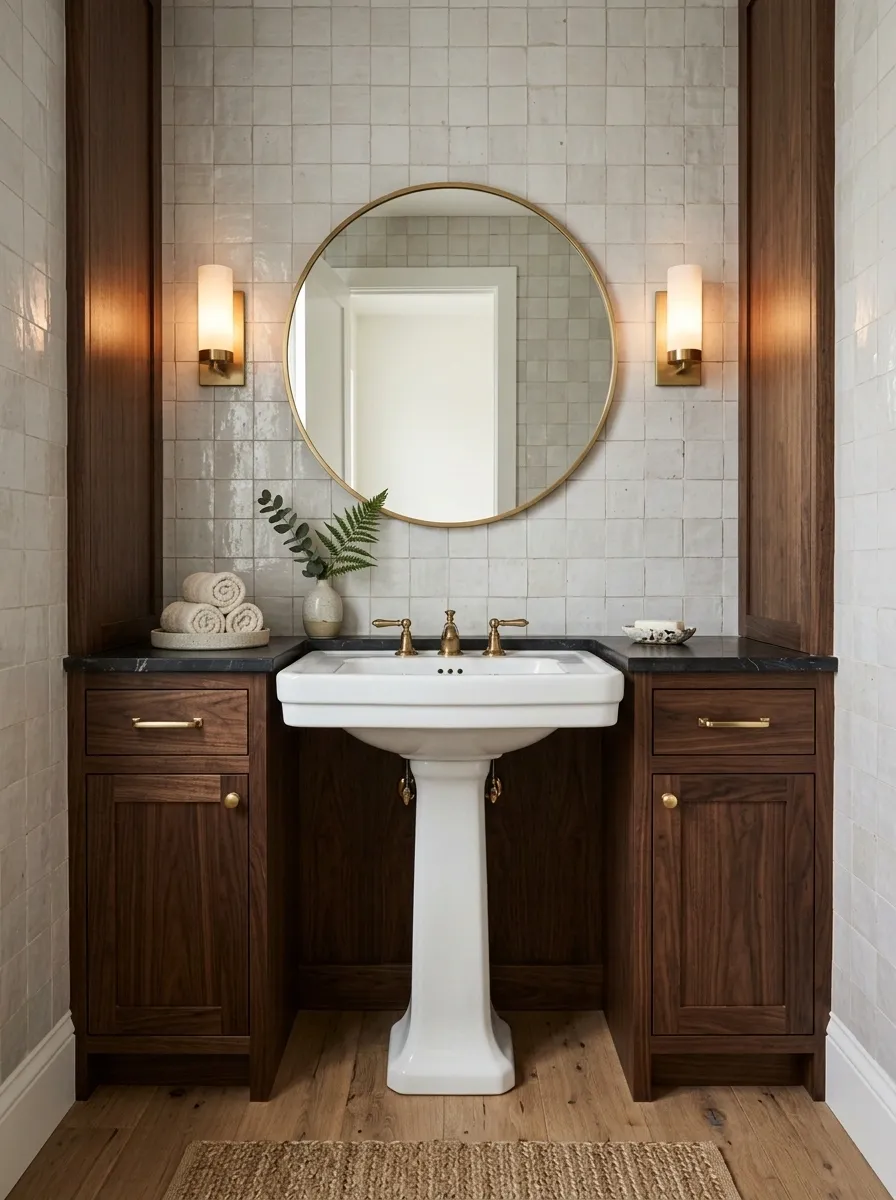
Dark walnut completely changes the personality of a pedestal sink.
Use rich walnut cabinetry to wrap around the sink, then place it against pale handmade-look tile or creamy plaster. The contrast makes the white porcelain pop while giving the storage enough visual weight to feel like a deliberate piece of furniture.
Keep the cabinet profile relatively simple. Dark wood already brings plenty of drama.
Brass hardware, warm lighting and cream towels complete the look.
And this is one of those bathrooms where the phrase “just add a little warmth” accidentally turns into an extremely convincing design decision.
Compact White-on-White Sink Cabinet
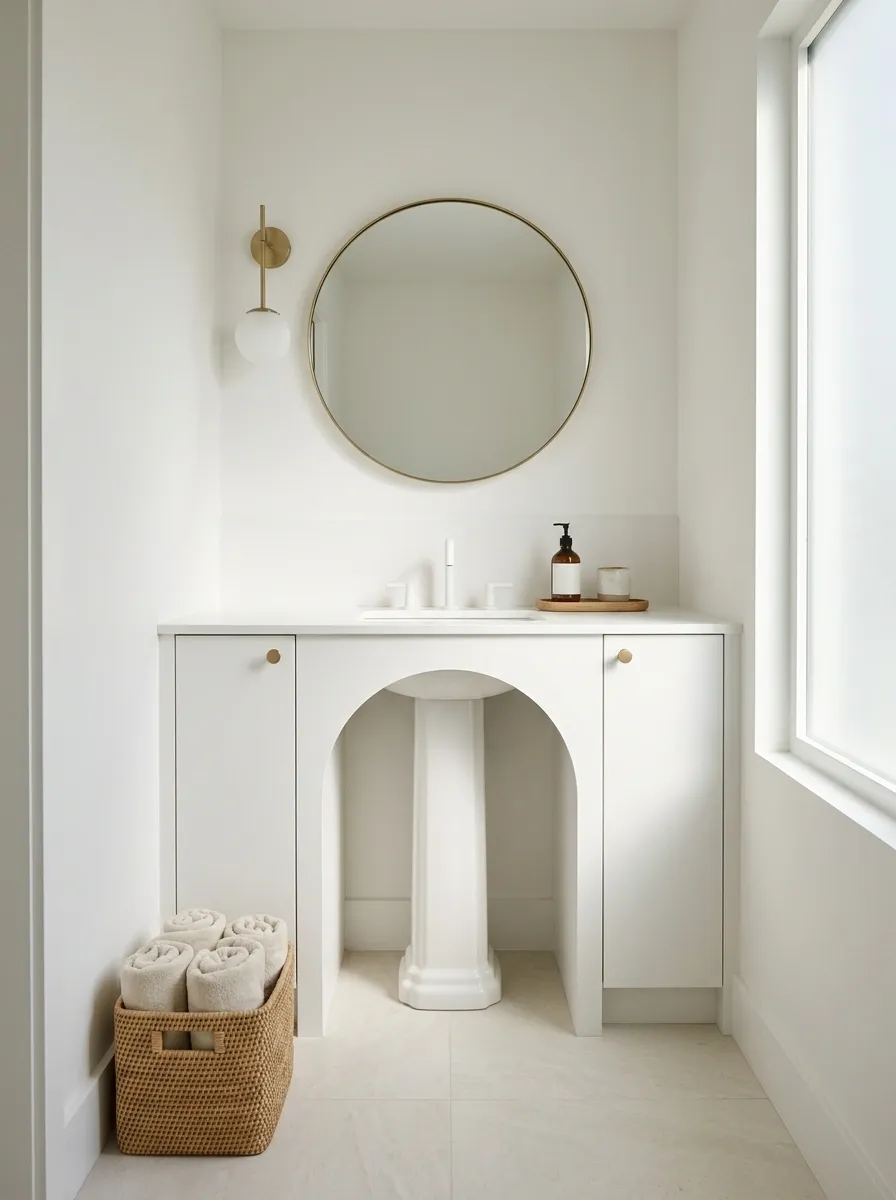
For a tiny bathroom, white-on-white can make integrated storage almost disappear.
Build a compact cabinet surround in the same white family as the pedestal sink and walls. Give the cabinet a carefully shaped central opening so the pedestal remains visible.
The lack of strong contrast makes the storage recede, while towels, baskets or a small wood accent provide just enough visual warmth.
This is especially effective in narrow powder rooms where every dark line makes the space feel smaller.
The aesthetic equivalent of whispering instead of yelling.
Less visual interruption.
Enough warmth to avoid sterile.
Dusty Blue and Oak Integrated Sink Surround
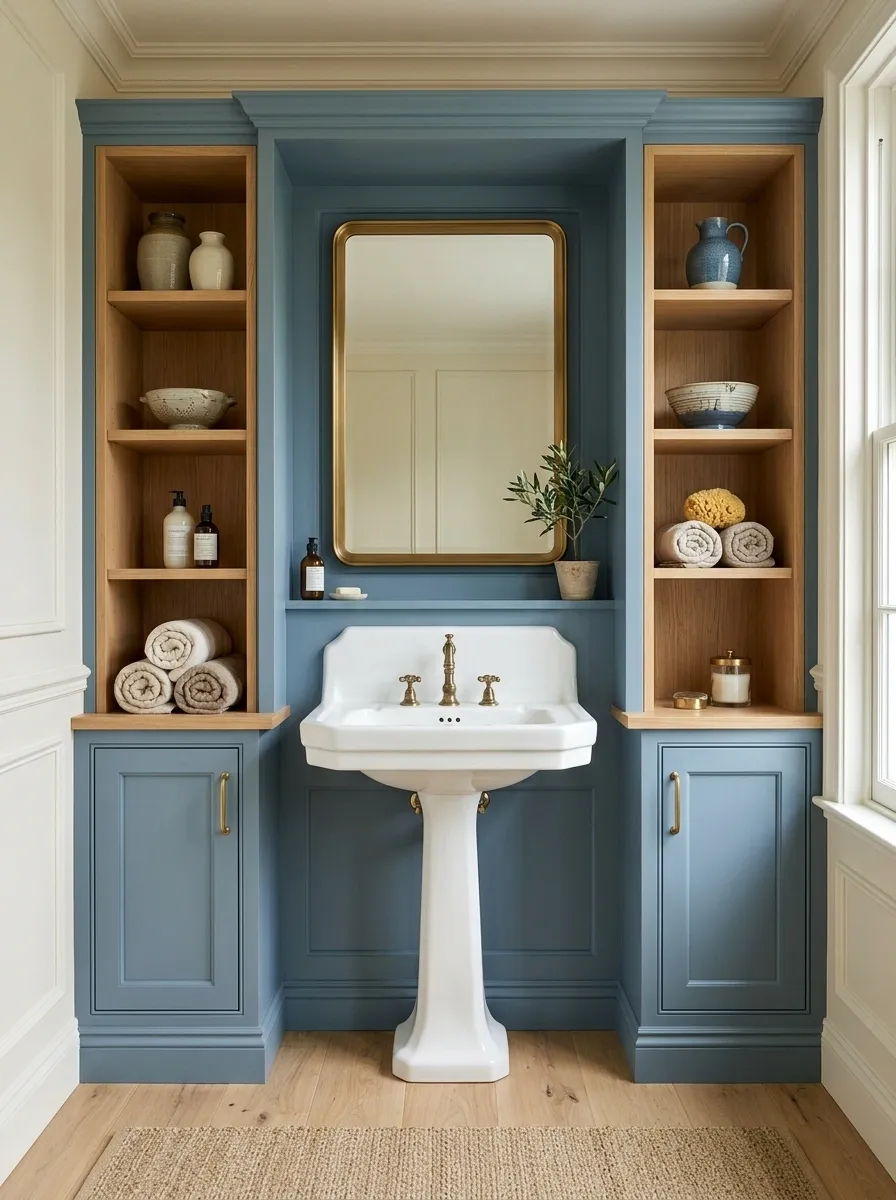
Dusty blue gives an integrated pedestal-sink surround a little more personality without becoming loud.
Use dusty-blue cabinetry around the lower sink area, then introduce natural oak shelves within the frame. The white pedestal creates a clean break between the two materials.
Brushed brass hardware adds warmth, while cream walls keep the color combination from feeling too cool.
This works particularly well with traditional or transitional bathrooms where a completely white storage surround might feel too predictable.
And predictable is fine.
But Pinterest did not come here to be predictable.
Freestanding Furniture Frame That Hugs the Pedestal
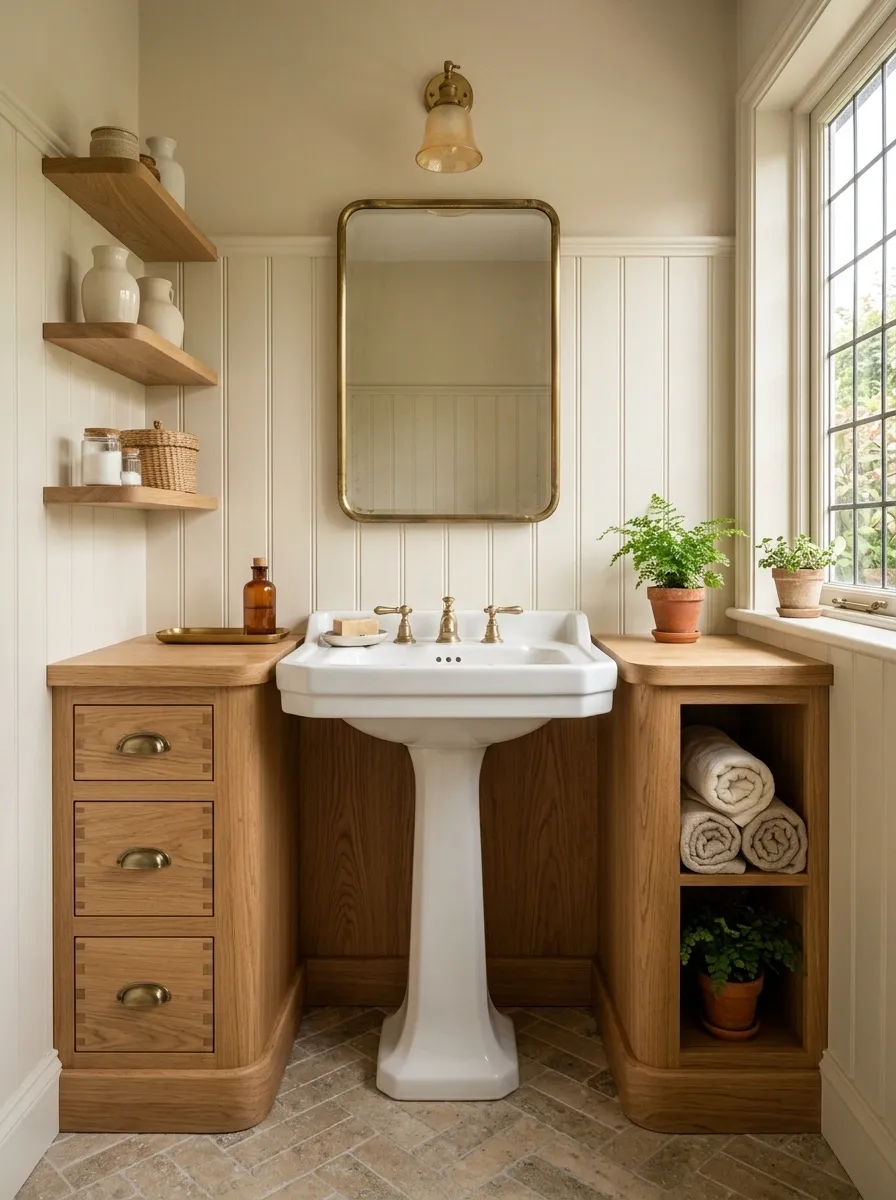
Not every integrated storage solution needs to look permanently built into the wall.
A furniture-like oak frame can be designed specifically around the pedestal, with shallow shelves, small drawers and towel storage built into its footprint. The key is that the opening is custom-shaped around the existing sink rather than simply leaving a giant rectangular gap.
This approach works especially well in older homes where replacing the original pedestal would destroy some of the bathroom’s charm.
Give the furniture frame a substantial top, rounded corners and beautiful joinery details.
Make it look like furniture.
Because technically, that is exactly what it is.
Nearly Invisible White Built-In Storage
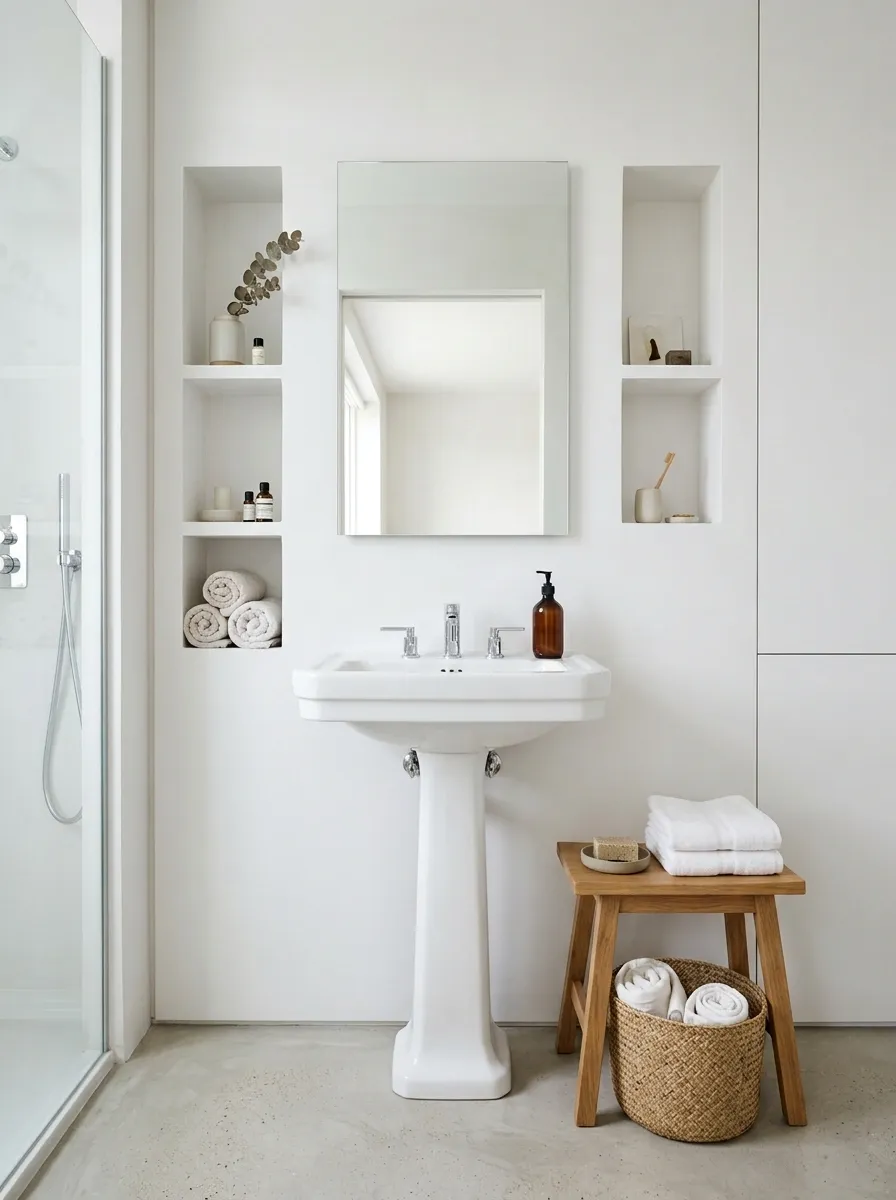
Sometimes the best integrated storage is the storage nobody notices at first.
Use a white built-in surround, recessed shelves and a frameless or very simple mirror so the entire sink wall reads almost as one continuous surface.
The pedestal remains visible because its shape creates the focal point. Everything around it quietly disappears.
This is particularly effective in tiny bathrooms where visual clutter is more noticeable than actual clutter.
Add one natural material, such as a wood stool or woven basket, to keep the white composition from becoming too flat.
The goal is not boring.
It is quiet enough to look expensive.
Designer Curved Wraparound Vanity Around the Original Pedestal
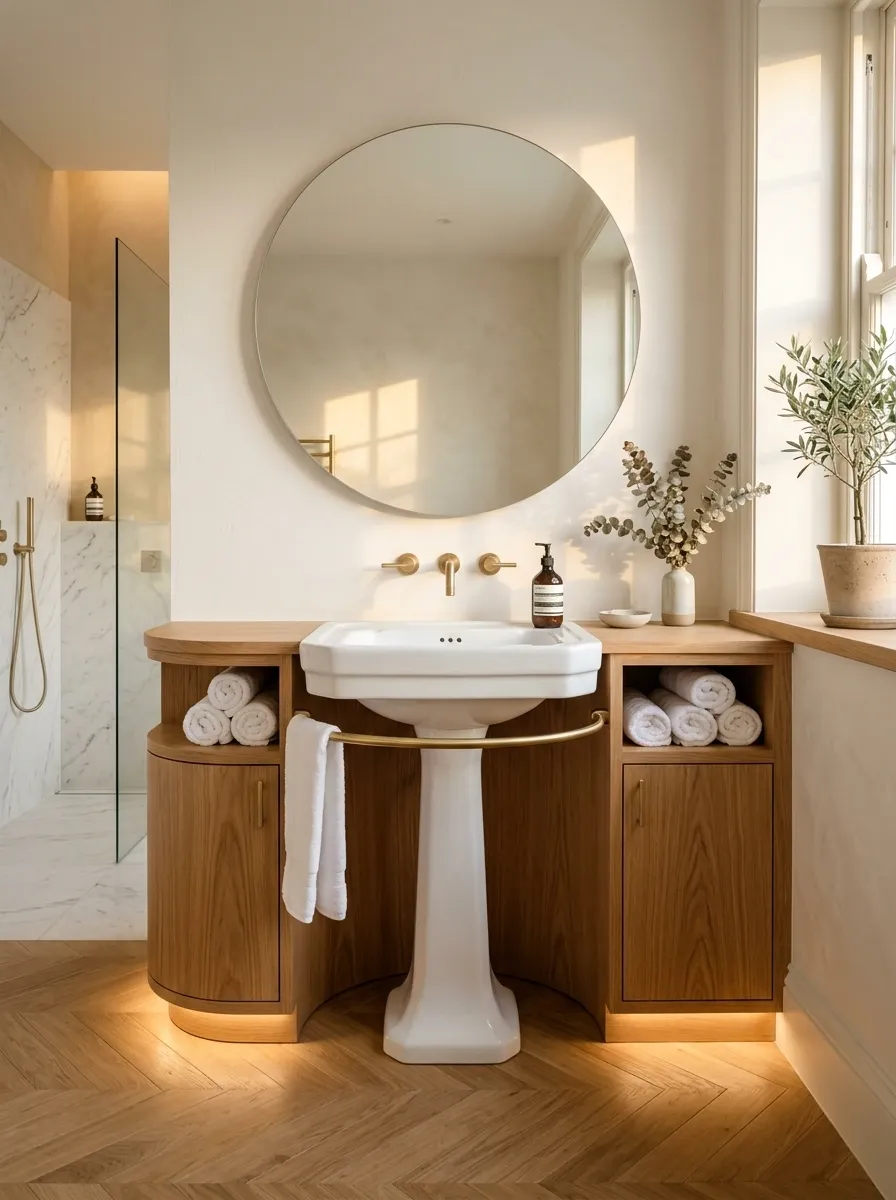
For the final idea, take the whole concept and make it feel genuinely custom.
Keep the original pedestal sink, then build a curved wood surround that flows around it like furniture designed specifically for the room. Concealed cabinets can hide practical supplies while a narrow open shelf keeps towels within reach.
A slim integrated towel rail can follow the curve. Warm lighting underneath the upper section can add another layer of depth at night.
Use walnut, oak or a painted finish depending on the bathroom’s existing palette. Keep the mirror large and uncomplicated.
The important thing is that the original pedestal remains visible.
That porcelain pedestal is not an obstacle to work around.
It is the reason the whole design exists.
Defines the silhouette.
Keeps towels accessible.
Hides the ugly stuff.
A pedestal sink does not need to be replaced just because it refuses to provide cabinet space.
That is actually what makes these designs interesting.
Instead of hiding the pedestal behind a standard vanity, the storage can acknowledge its shape and make that shape part of the room. A curved surround can turn it into a focal point. Open shelves can make the empty space useful without making it heavy. Painted cabinetry can frame it. Wood can warm it up. Linen can soften it. Baskets can hide the chaos that nobody wants photographed.
The best result is the one where the storage looks so naturally connected to the sink that it seems obvious in hindsight.
Which is usually a good sign.
The bathroom shouldn’t look like storage was added after the fact.
It should look like the entire sink wall was designed that way from the beginning.