
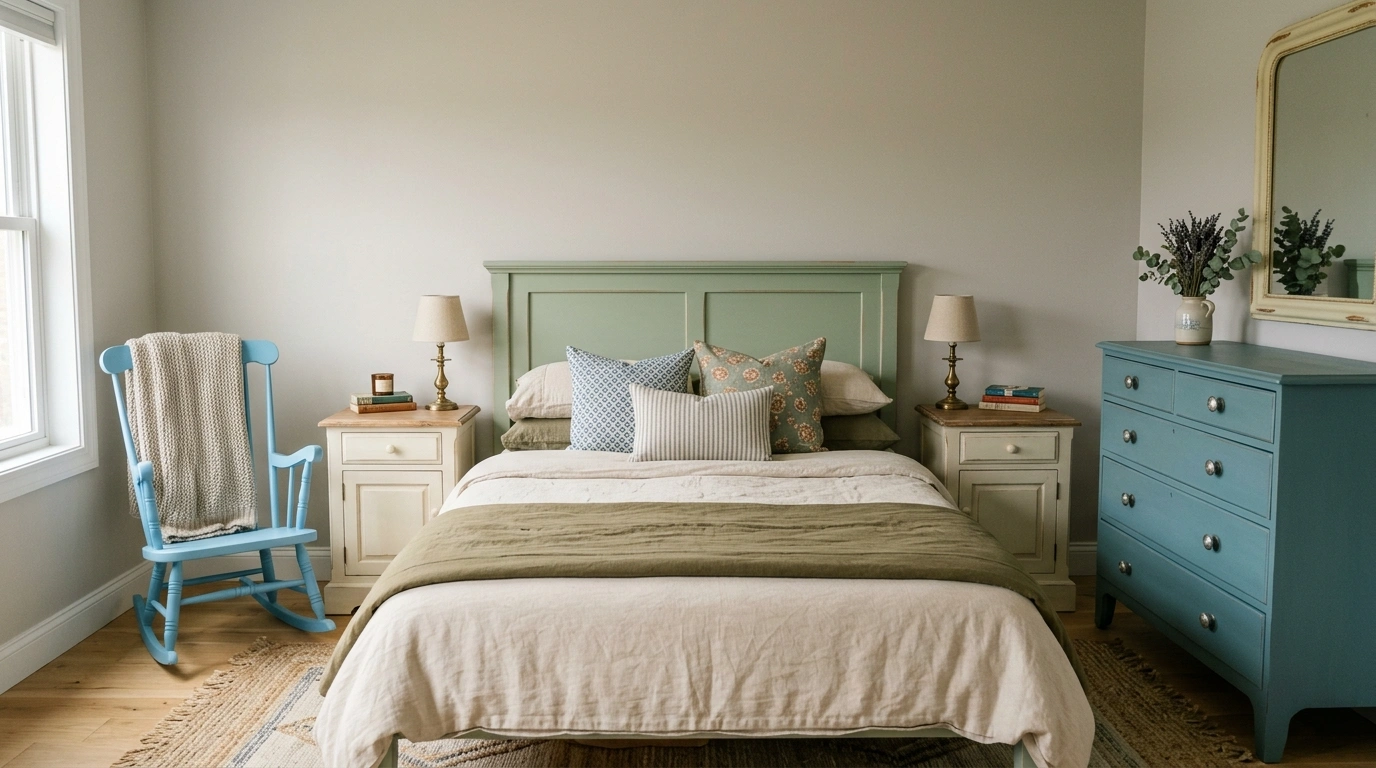
There is a very specific moment when a bedroom feels almost right, but the furniture is ruining the whole thing. The bed works. The curtains work. The rug is behaving. Then there is that tired wooden dresser sitting there like it has personally survived three decades of questionable decorating decisions.
Painted bedroom furniture can completely change that relationship.
The trick is not simply choosing a pretty paint color and hoping for the best. A painted piece needs to belong to the entire room. The color, finish, hardware, wall tone, bedding, flooring, and amount of visual contrast all affect whether the result feels intentional or like a weekend project that got slightly out of hand.
These painted bedroom furniture ideas focus on complete bedroom looks, not isolated furniture makeovers. Each concept has its own color story, furniture combination, surrounding finishes, and styling direction, so the finished result is easier to picture before the paintbrush comes anywhere near the dresser.
And yes, some of these looks are dramatic.
The beige furniture police will survive.
The Furniture Color Decisions Nobody Talks About
The strongest painted furniture rooms usually have one clear visual relationship. Sometimes the furniture blends into the walls. Sometimes it becomes the darkest feature in the room. Sometimes it adds a warm color that makes an otherwise neutral bedroom feel finished.
The important part is that the furniture looks like it belongs there.
Painted Bedroom Furniture Ideas
Soft Sage Furniture With Warm Cream Walls
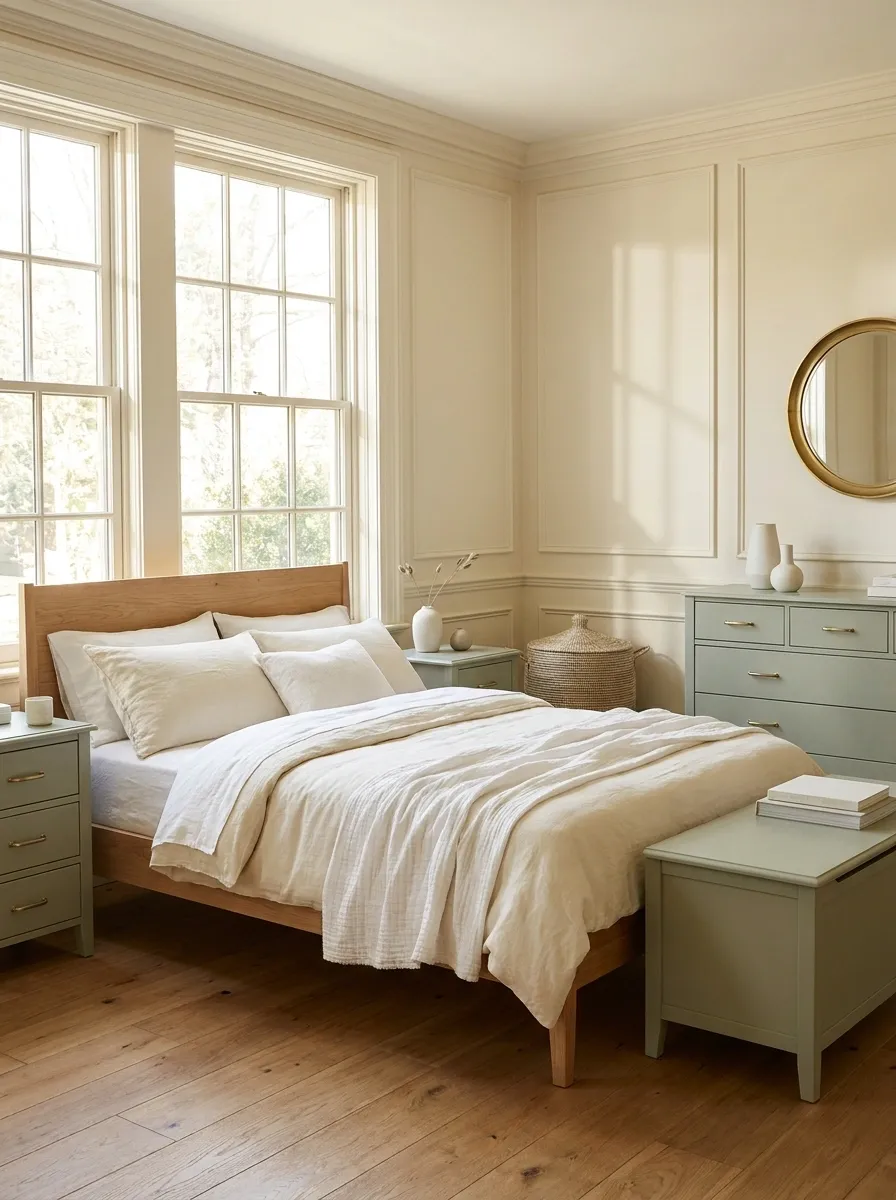
Soft sage green works beautifully when the bedroom needs color without becoming overly sweet. Paint the dresser, bedside tables, and a low chest in a muted sage with a slightly chalky or eggshell finish. Pair them with warm cream walls, natural oak flooring, ivory bedding, and woven textures.
The key is keeping the green slightly dusty rather than aggressively bright. Natural wood can remain visible on the bed frame or floor to stop the room from becoming one giant painted box.
Brushed brass hardware gives the furniture a subtle lift, while linen bedding keeps everything relaxed.
The result feels collected rather than color-coordinated within an inch of its life.Deep Olive Furniture With Natural Linen Bedding
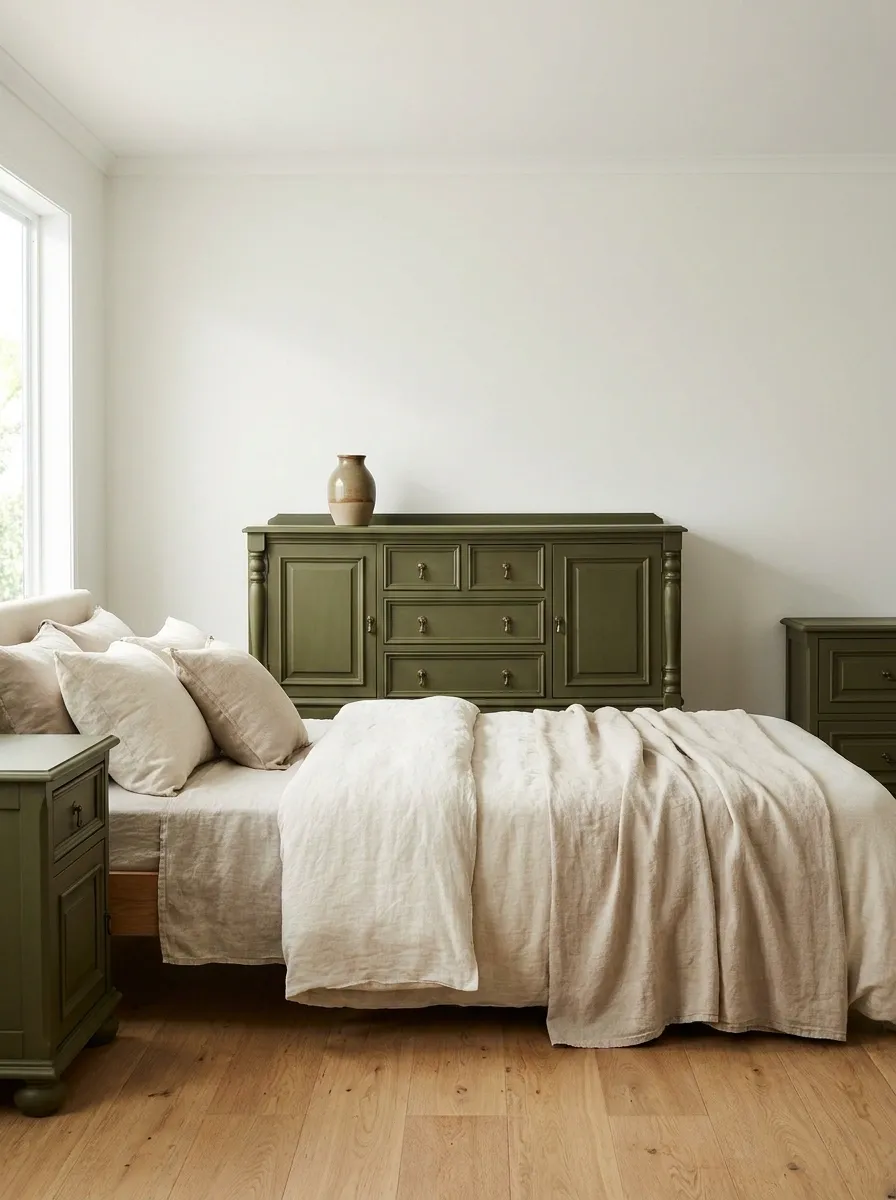
Deep olive turns painted bedroom furniture into an architectural feature. Use the shade across a substantial dresser or matching nightstands, then surround it with pale walls, natural linen bedding, warm wood flooring, and aged brass details.
This works especially well with furniture that has traditional profiles, raised panels, turned legs, or framed drawers. The darker color emphasizes those shapes instead of hiding them.
Keep the bedding simple. Cream, oatmeal, and soft beige are enough.
Adding five decorative cushions and seventeen tiny objects to the dresser would completely miss the point. The furniture already has something to say.Dusty Blue Dresser With A Relaxed Coastal Bedroom
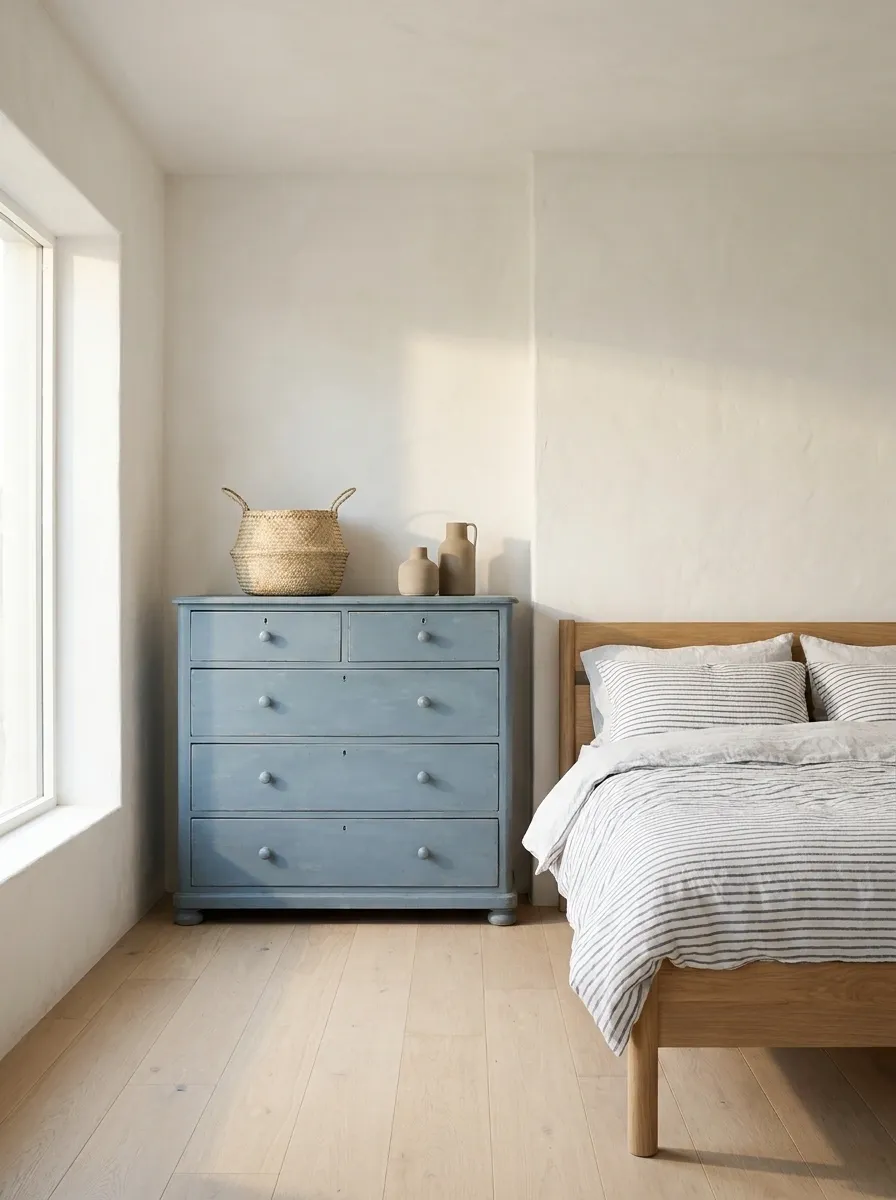
Forget the beach-house cliché with a giant anchor hanging above the bed. Dusty blue furniture can create a coastal feeling without turning the bedroom into a souvenir shop.
Paint a substantial dresser in a faded blue with a low-sheen finish. Pair it with warm white walls, pale timber, striped linen bedding, woven baskets, and simple ceramic accessories.
The blue should feel slightly weathered, not candy-bright.
A natural wood bed provides enough contrast to keep the room grounded. Small amounts of darker blue in the bedding can connect the furniture to the rest of the room without creating a matching-set situation.
The finished bedroom feels airy, relaxed, and lived-in.Charcoal Painted Furniture In A Moody Bedroom
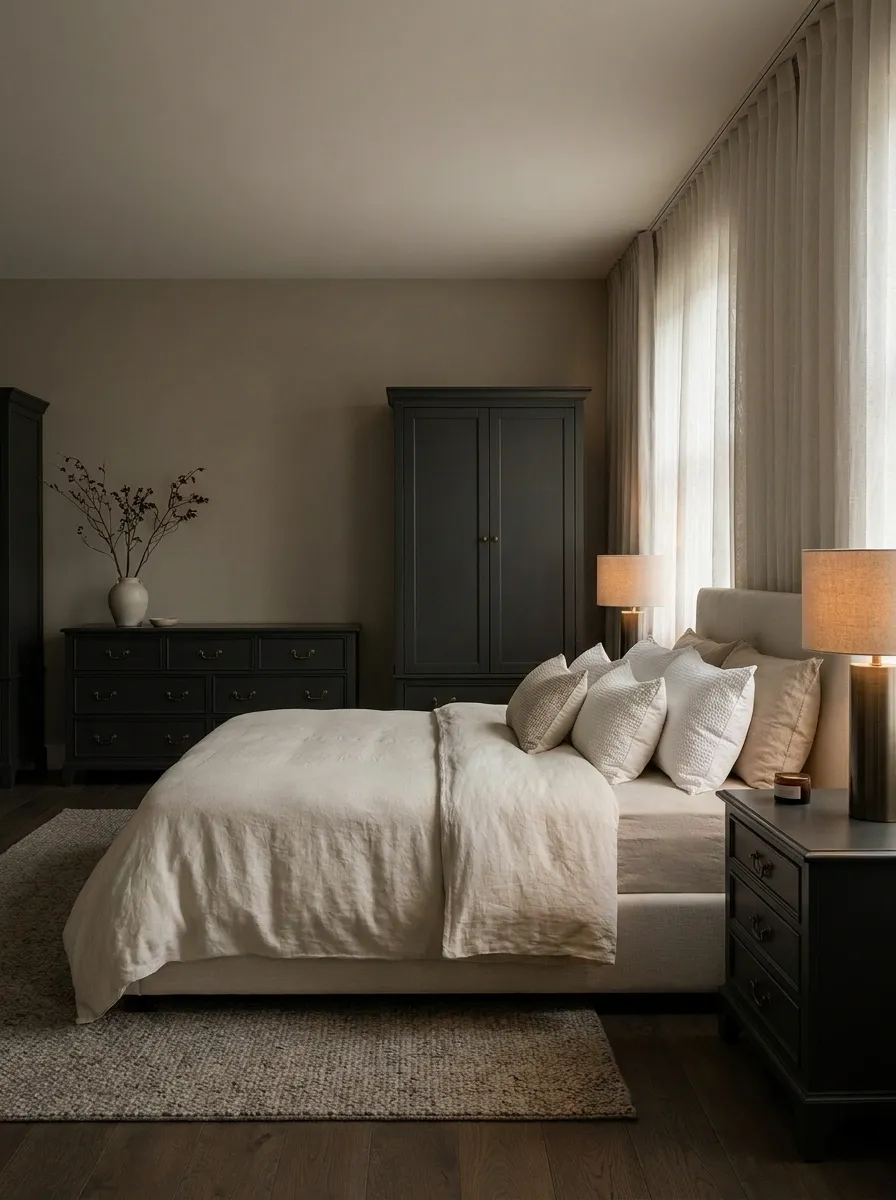
Charcoal furniture creates a completely different bedroom when the rest of the room is kept soft and restrained. Use the dark paint on a dresser, tall wardrobe, and bedside tables, then introduce warm greige walls, cream bedding, dark wood flooring, and low ambient lighting.
The important distinction is charcoal rather than flat black. It still creates drama, but the finish has enough softness to work with textiles and wood.
Use aged brass or antique bronze hardware rather than shiny chrome.
This is the room for anyone who thinks “neutral bedroom” should mean more than six shades of white having a committee meeting.Terracotta Nightstands With A Cream And Clay Palette
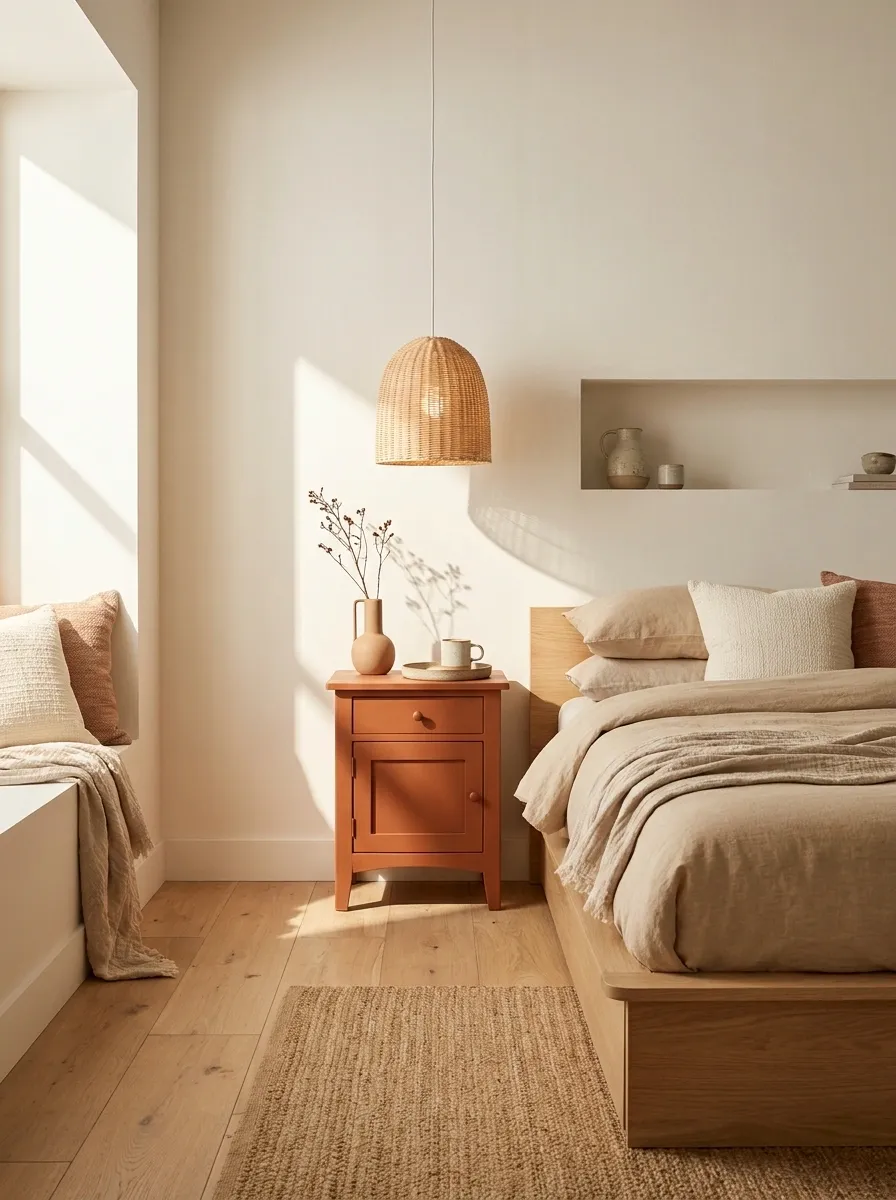
Terracotta painted nightstands can completely change an otherwise plain bedroom. Keep the furniture compact and let the warm color become the accent that connects the room.
Use creamy walls, sandy bedding, a natural wood bed, woven lampshades, and small clay-toned accessories. The terracotta should appear in two or three places rather than being repeated across everything in sight.
This works particularly well in bedrooms with strong afternoon sunlight because the warm paint becomes richer as the light changes.
The trick is restraint. Once the nightstands are doing that much visual work, the rest of the room can relax.Warm White Furniture In A Layered Neutral Bedroom
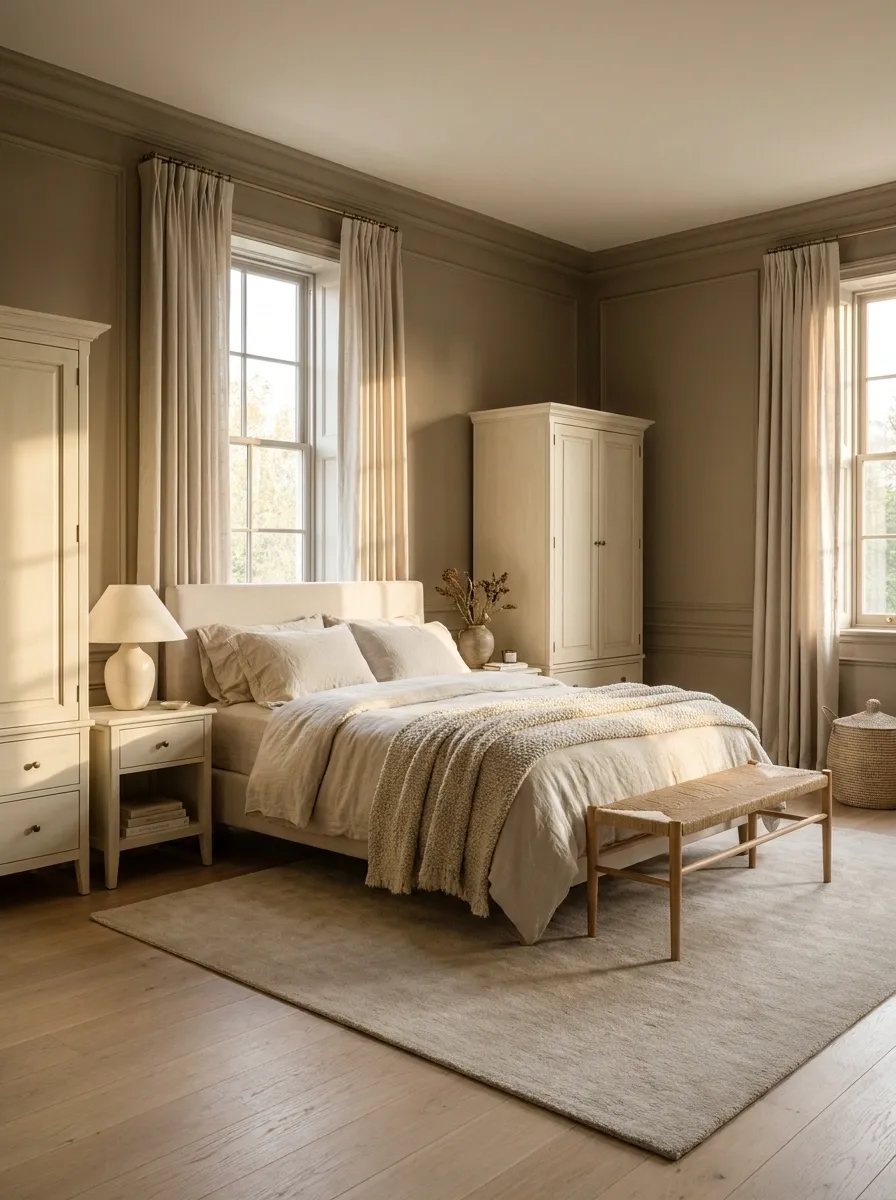
Warm white painted furniture can make a bedroom feel larger and calmer when the surrounding finishes carry enough texture.
Use creamy painted wardrobes and bedside tables against a slightly deeper warm-neutral wall. Add an upholstered bed, washed linen, wool texture, pale oak flooring, and soft ceramic lighting.
The furniture should not be stark white. A warmer paint keeps it connected to the beige, oatmeal, and timber tones around it.
This is especially effective when the room already has several architectural features. The painted furniture becomes a quiet background instead of competing with every window, molding, and ceiling detail.
Minimal does not have to mean emotionally unavailable.Burgundy Furniture With Soft Pink Walls
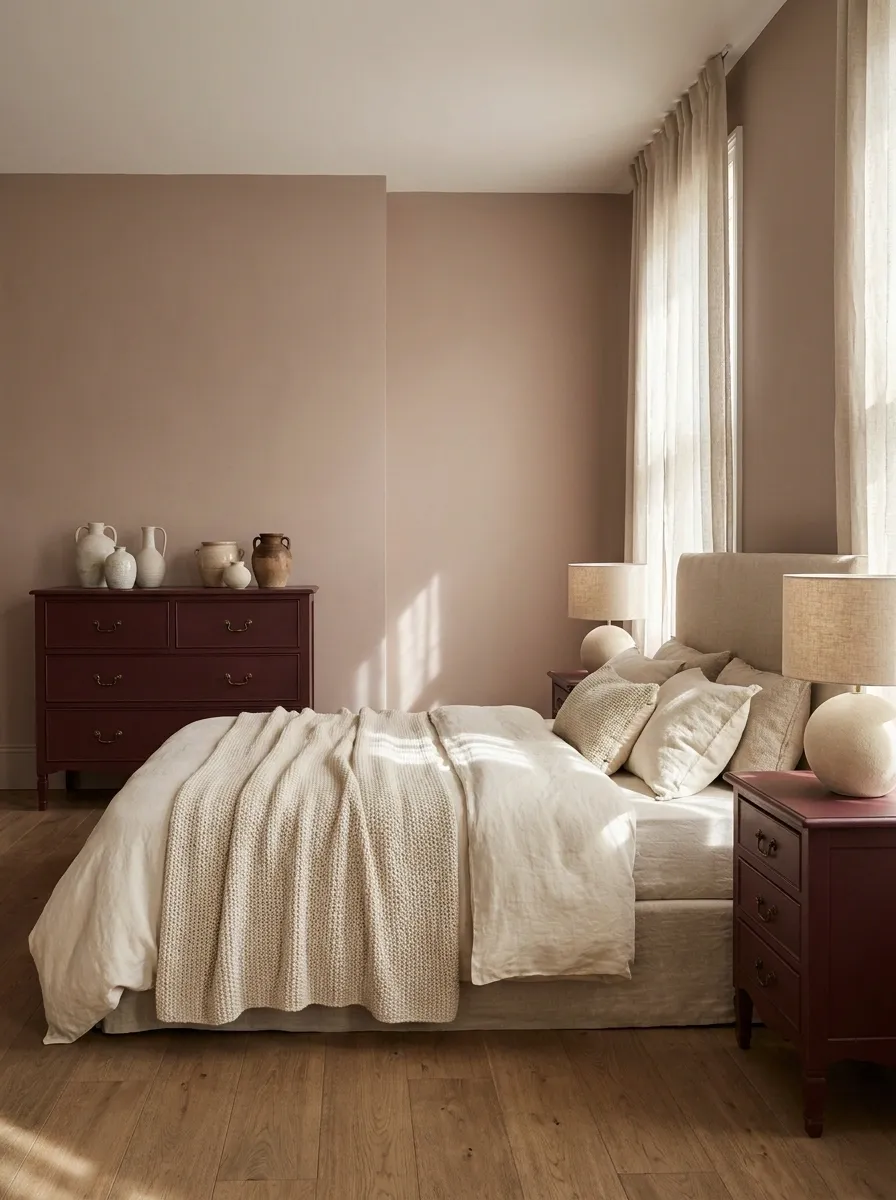
Burgundy painted furniture can make a bedroom feel rich without relying on dramatic wallpaper. Use the color on a vintage dresser or pair of bedside tables, then soften it with dusty blush walls, cream bedding, and medium-toned timber.
The pink should be muted and slightly earthy. Bubblegum pink would take this straight into a different neighborhood.
Antique brass hardware works naturally with burgundy, while warm lamps keep the darker furniture from looking visually heavy.
This combination is especially memorable because the contrast feels unexpected but still grounded.Navy Furniture With Crisp White And Walnut
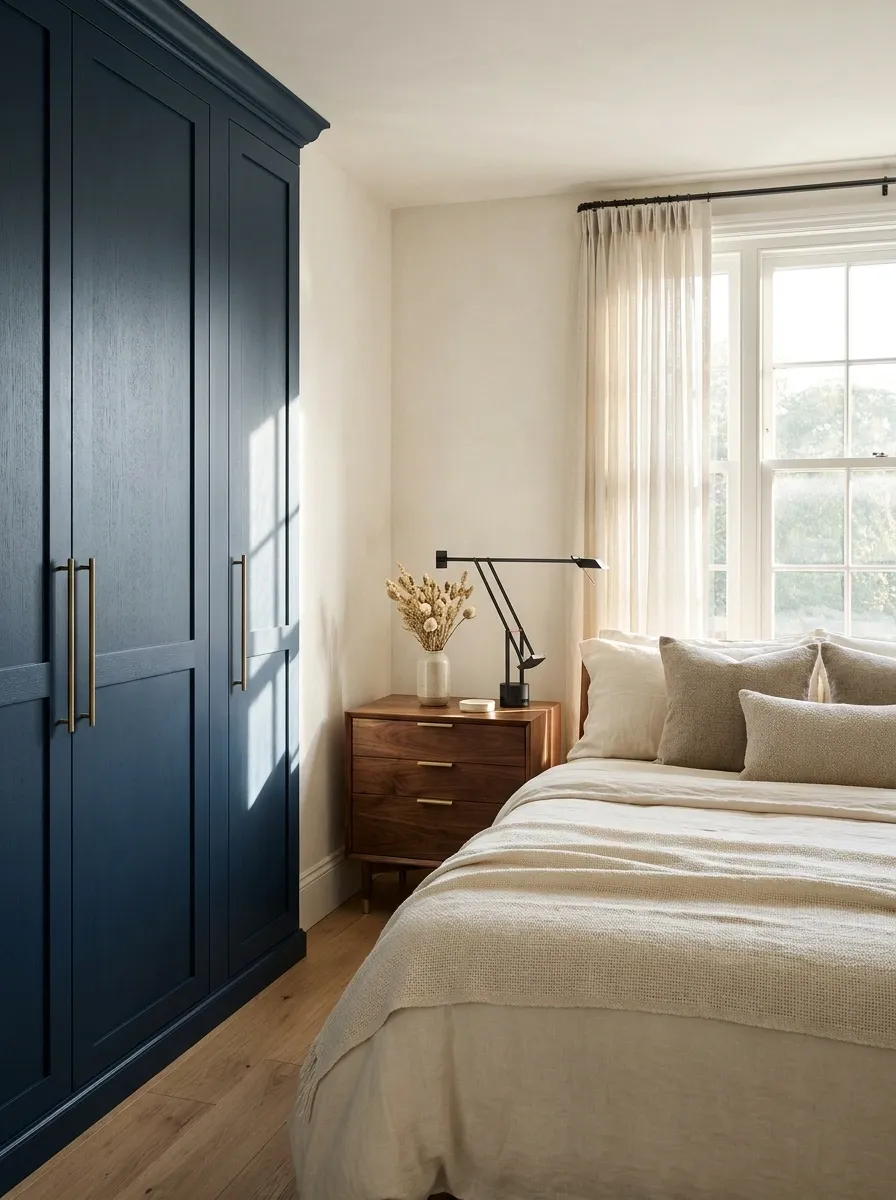
Navy-painted furniture brings structure to a bedroom without making the entire room dark. Paint a tall dresser or built-in wardrobe navy, then pair it with crisp warm-white walls, walnut accents, cream bedding, and black-framed lighting.
The walnut matters here. It prevents the blue and white combination from becoming too sharp.
Choose simple hardware and let the deep blue carry the visual weight.
This look works particularly well in rooms with good natural light because the navy changes noticeably throughout the day. Morning light keeps it crisp, while evening lighting makes it richer.Pale Mushroom Furniture In A Quiet Modern Bedroom
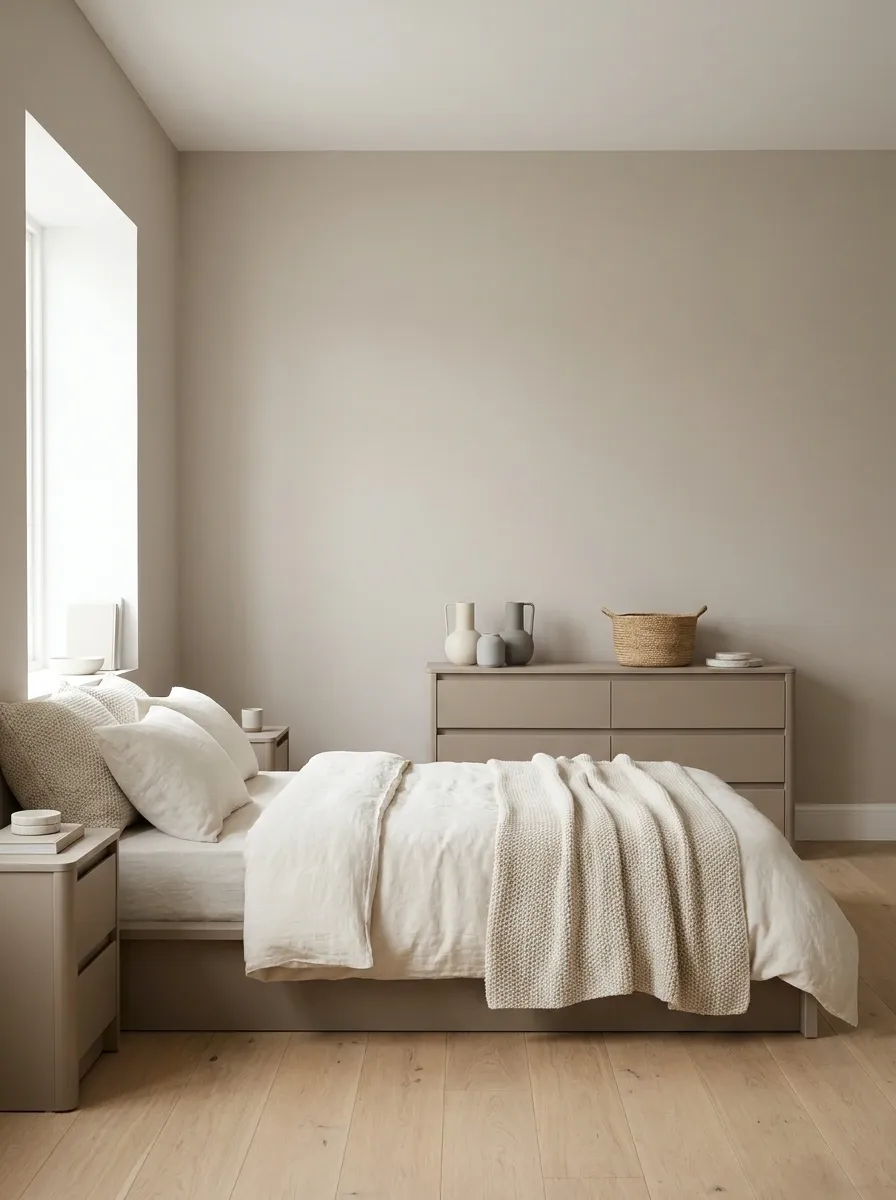
Mushroom-colored furniture sits beautifully between beige and gray, making it useful when a bedroom needs warmth without looking traditionally decorated.
Paint a simple dresser and matching nightstands in mushroom. Pair them with soft taupe walls, ivory bedding, pale stone accents, and light oak.
The furniture should have clean lines so the color becomes the main character.
This approach is particularly good for modern bedrooms where pure white furniture would feel too stark and dark furniture would feel too heavy.
There is nothing flashy happening here, which is exactly why the composition works.Forest Green Furniture With Vintage Character
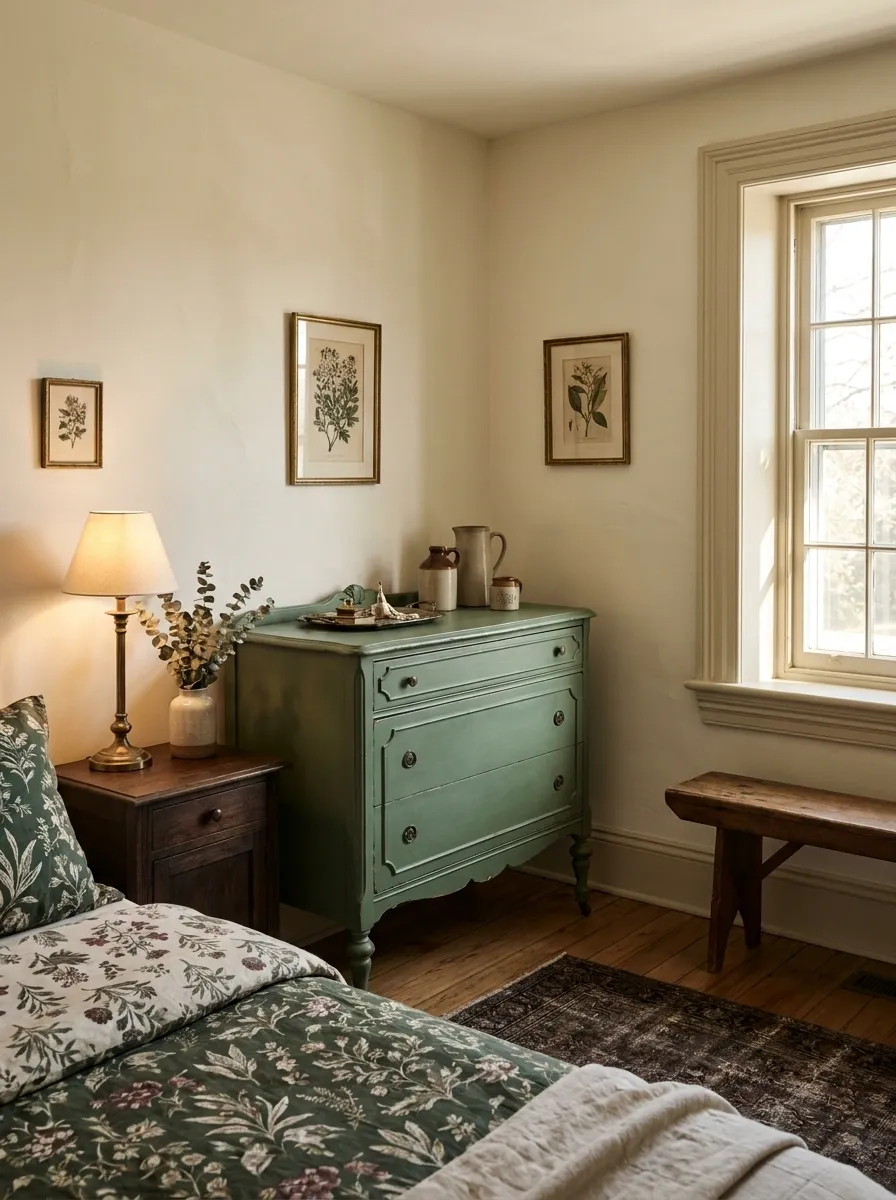
Forest green gives older furniture a completely different personality. Use it on a vintage dresser with visible molding, curved edges, or turned legs. Surround it with warm cream walls, floral or botanical textiles, dark timber, and antique-inspired lighting.
The furniture should still look like furniture rather than a newly manufactured green box.
Keep the finish slightly soft and let the original shape remain visible.
This design direction works particularly well in older homes or bedrooms with traditional architectural details because the paint reinforces the room’s history instead of fighting it.Pale Lavender Furniture With Warm Ivory Textiles
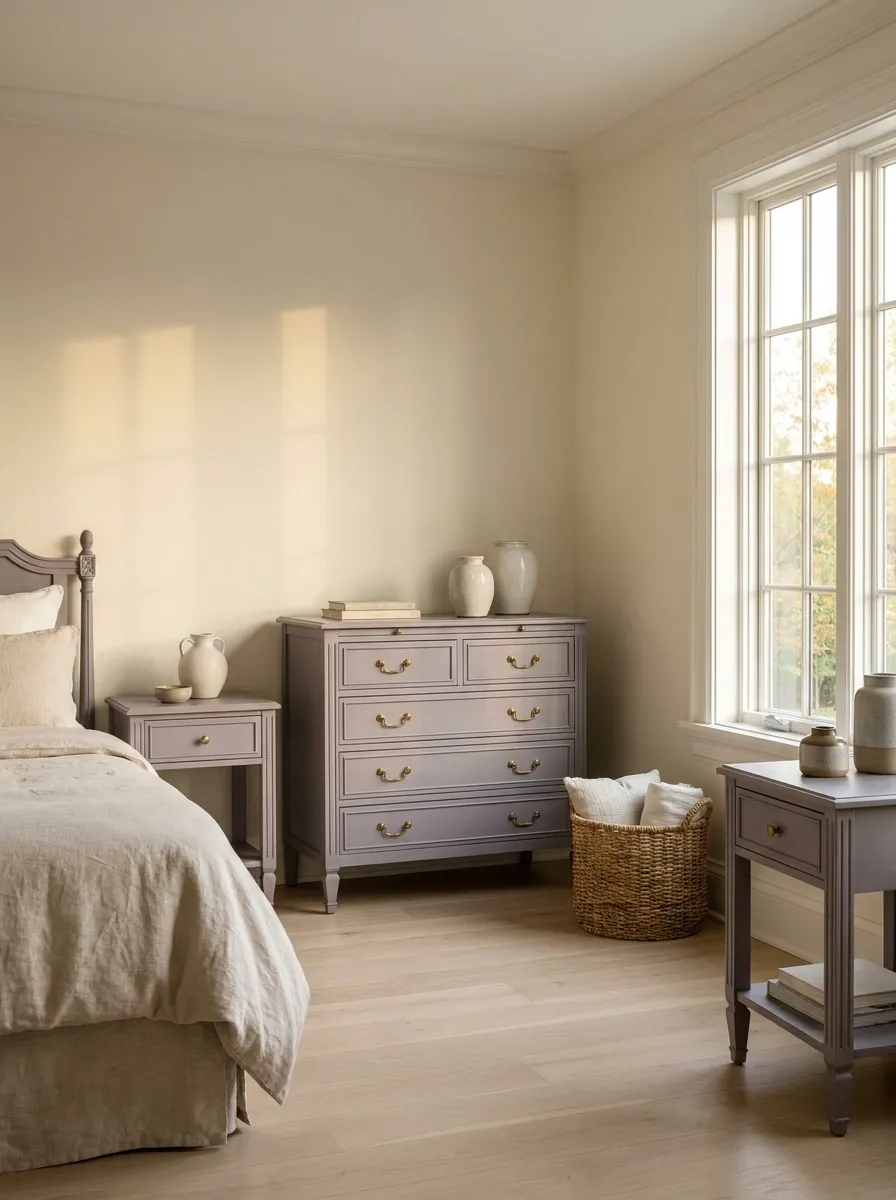
Lavender becomes much more sophisticated when the rest of the bedroom refuses to participate in the pastel overload.
Paint a dresser or bedside tables in a muted lavender-gray. Use warm ivory walls, oatmeal bedding, pale timber, and aged brass accents.
Avoid cool white because it can make the lavender feel much brighter than intended.
The muted paint color works especially well on furniture with simple traditional detailing. It creates personality without turning the bedroom into a themed space.
The result is soft, unusual, and much more grown-up than the word lavender might suggest.+
warm ivory textiles
+
aged brass and pale timber
Black Painted Furniture With Warm Wood Everywhere Else
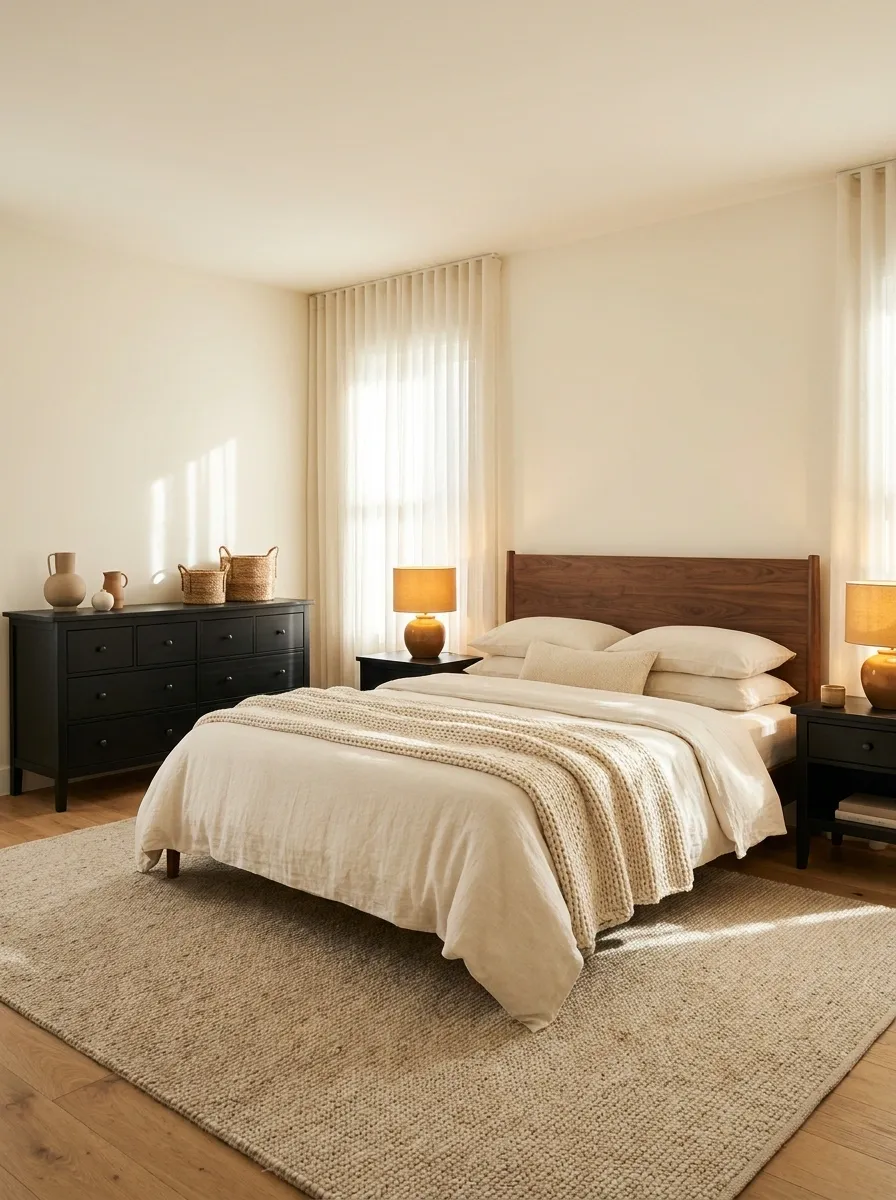
Black furniture becomes much easier to live with when the rest of the bedroom contains enough natural warmth.
Use black paint on a dresser, bedside tables, or wardrobe. Keep the bed frame and flooring in warm oak or walnut. Add cream bedding, textured curtains, and warm lighting.
The wood prevents the black furniture from dominating the entire room.
Avoid adding black to every accessory. That is how a strong design direction becomes a monochrome hostage situation.
Let the painted furniture provide contrast, then allow the wood and textiles to soften it.Powder Blue Furniture In A Traditional Bedroom
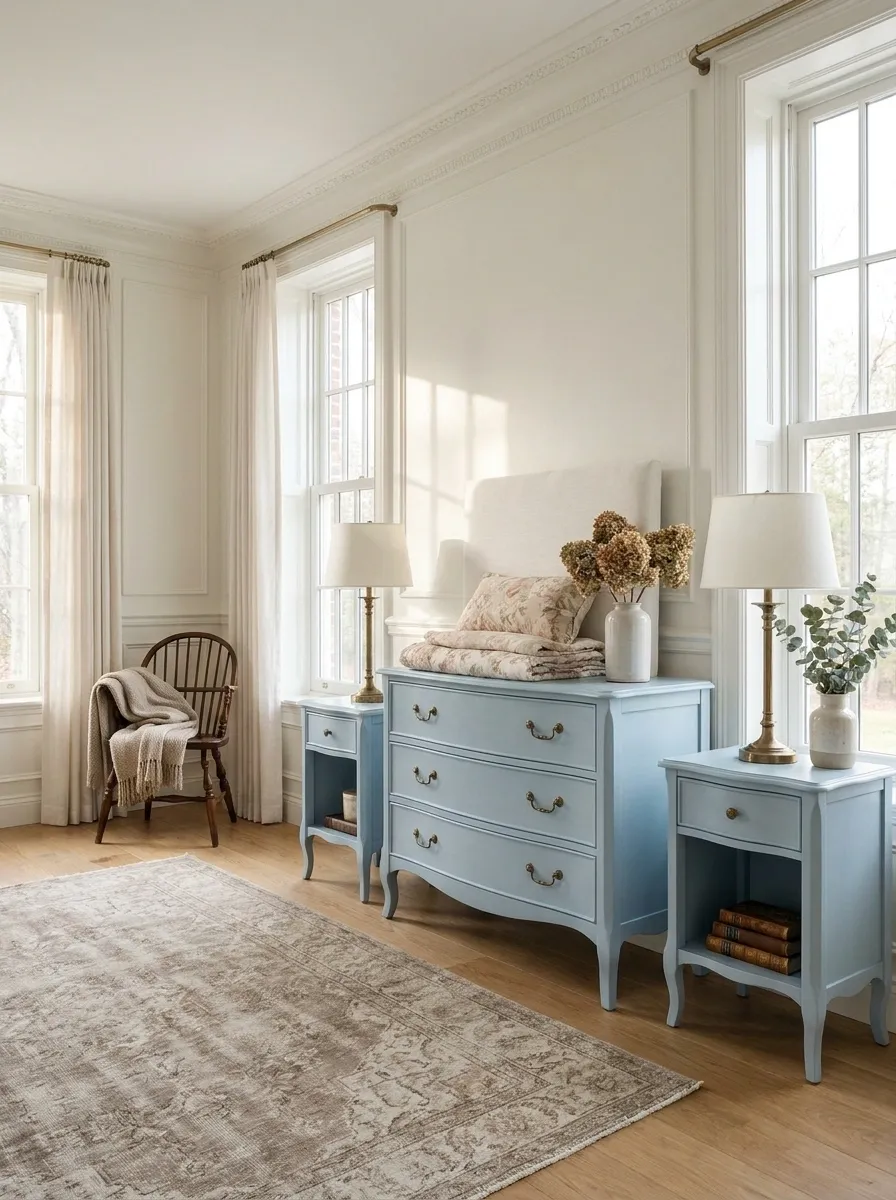
Powder blue furniture works beautifully with traditional bedroom architecture when the blue has enough gray in it.
Paint a paneled dresser and matching bedside tables in the same soft blue. Pair them with warm white walls, an upholstered headboard, floral bedding in restrained colors, and antique brass hardware.
The furniture becomes a gentle color anchor rather than a loud statement.
Use the traditional details to your advantage. Raised drawer fronts, molding, and curved legs become more noticeable once they are painted in a pale color.Clay Pink Furniture With Dark Timber
Clay pink becomes much more interesting when paired with deep timber instead of pale Scandinavian wood.
Paint a compact dresser and bedside tables in a muted clay pink. Use dark walnut flooring or furniture, cream walls, ivory bedding, and aged bronze hardware.
The contrast gives the pink enough depth to feel earthy.
This is a useful direction for bedrooms that need color but still want visual weight. The darker timber keeps the room from becoming overly delicate.
Keep the accessories simple. The color relationship is already doing plenty of work.Greige Painted Furniture For A Soft Contemporary Room
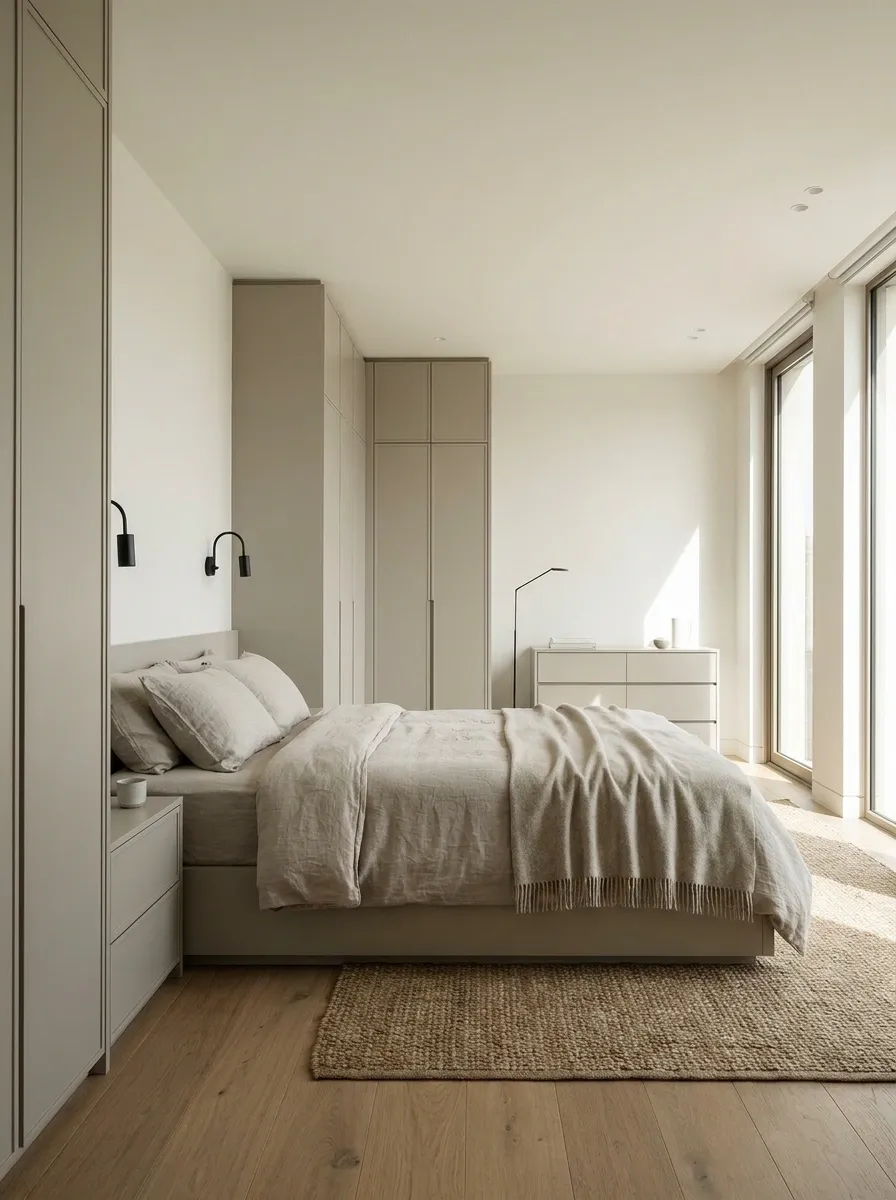
Greige furniture is not exciting on a paint chart, but in the right bedroom it can look incredibly polished.
Use a soft greige on clean-lined wardrobes, bedside tables, and a dresser. Pair it with warm white walls, stone-colored bedding, natural oak, and simple black lighting.
The furniture should be a shade deeper than the walls so the silhouettes remain visible.
This is a strong option when the bedroom already contains several materials and textures. Instead of introducing another obvious color, the furniture quietly connects everything.
Sometimes the furniture needs to stop screaming for attention.Teal Furniture With Brass And Cream
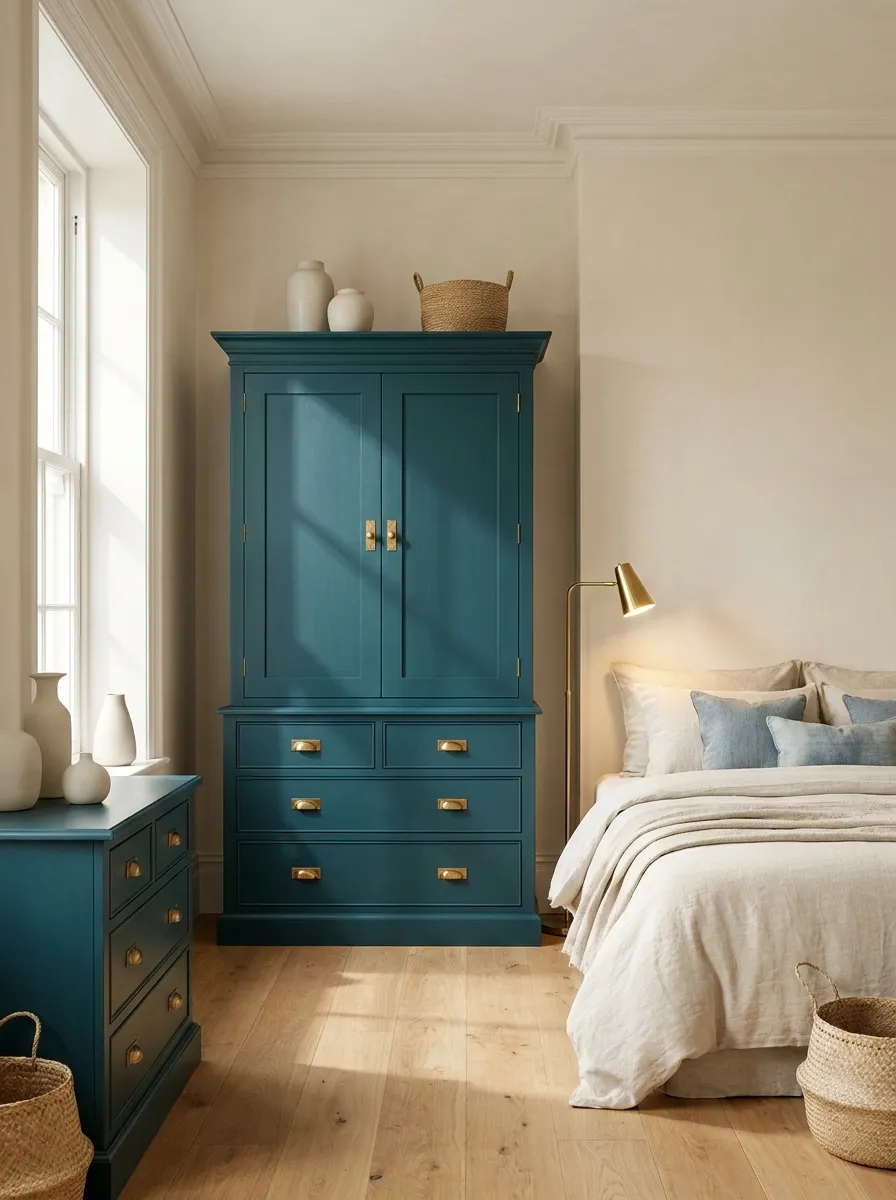
Deep teal furniture can become the defining feature of a bedroom without requiring dramatic walls.
Paint a large dresser or wardrobe in a rich blue-green. Use cream walls, pale bedding, warm timber, and brass lighting.
The teal should be deep enough to feel sophisticated but not so dark that it reads as black in low light.
Keep the surrounding textiles fairly quiet. Cream, oatmeal, and faded blue are enough.
This combination works particularly well when the furniture has strong architectural lines because the dark color emphasizes the shape.Cream Furniture With A Dark Accent Wall
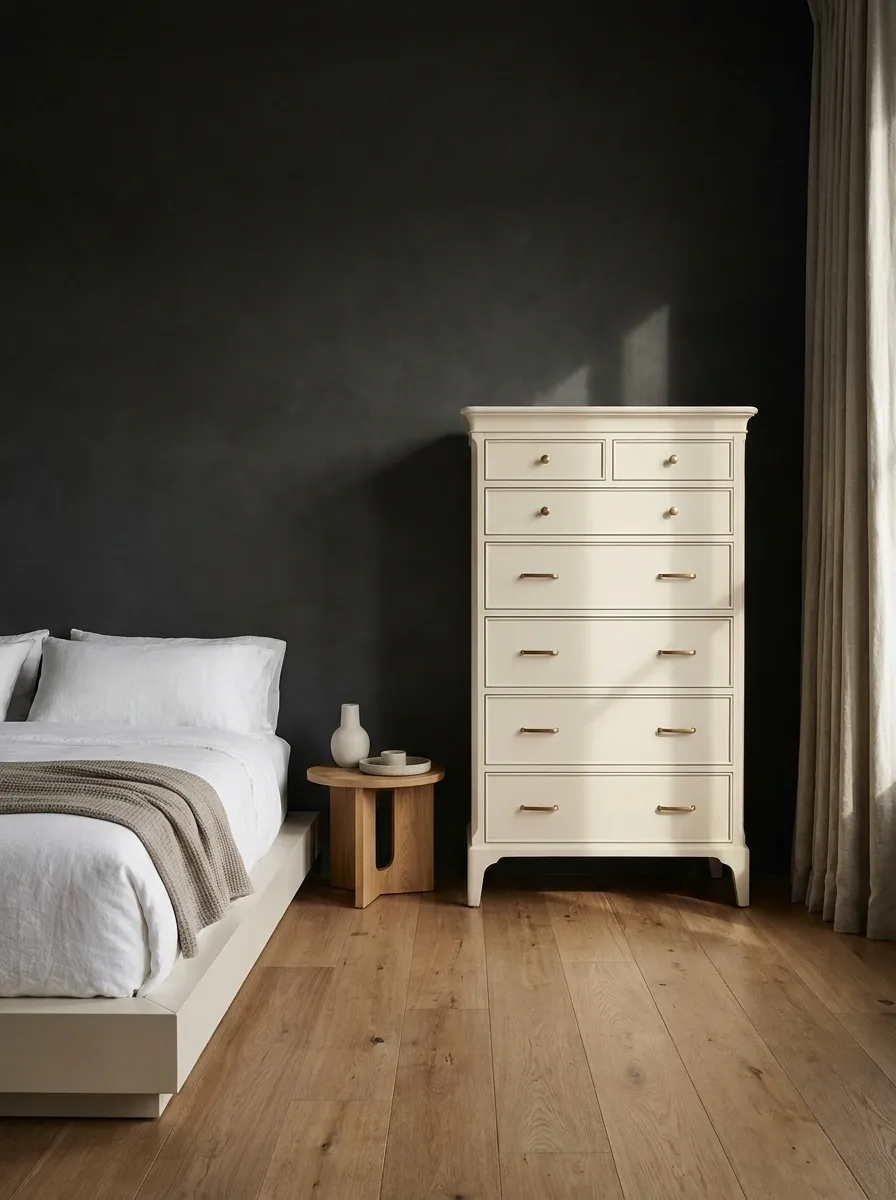
Painting furniture cream does not mean the entire bedroom has to become pale.
Use creamy furniture against a deep olive, charcoal, or brown accent wall. Keep the bedding light and introduce warm wood elsewhere in the room.
The contrast makes relatively simple furniture feel more substantial.
This works especially well with wardrobes or tall dressers because the light furniture becomes a clear silhouette against the darker background.
Keep the accent wall matte. High sheen would change the entire mood.Muted Mustard Furniture In A Warm Vintage Bedroom
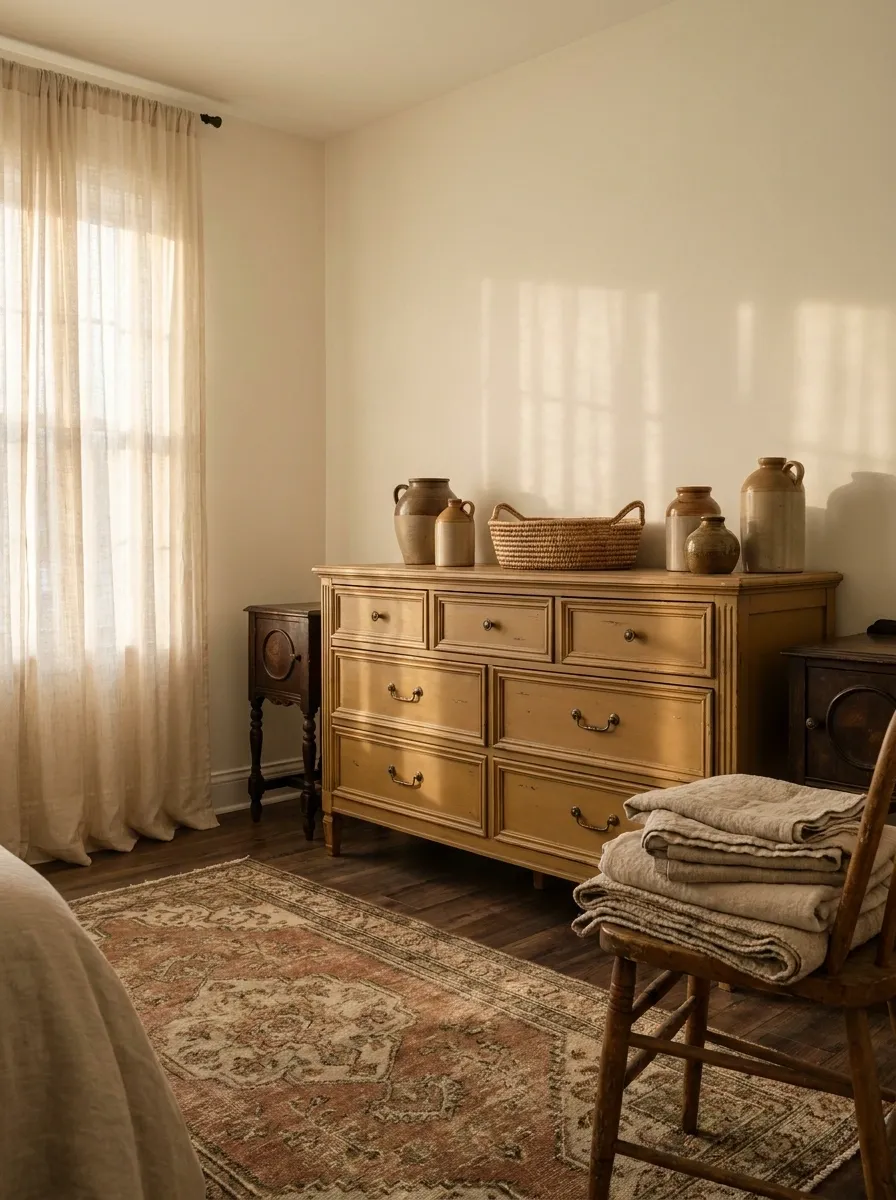
Muted mustard works best when treated as a sophisticated earthy color rather than a bright yellow.
Paint a vintage dresser in a subdued mustard tone. Surround it with warm cream walls, dark wood, faded patterned textiles, and antique brass.
The old furniture shape matters here. The color looks particularly convincing on pieces with character, visible molding, or slightly imperfect proportions.
Avoid pairing it with too many other saturated colors. Let the mustard have its moment.
The result feels collected over time rather than ordered from the “vintage bedroom starter pack.”Pale Green Furniture With A Botanical Bedroom
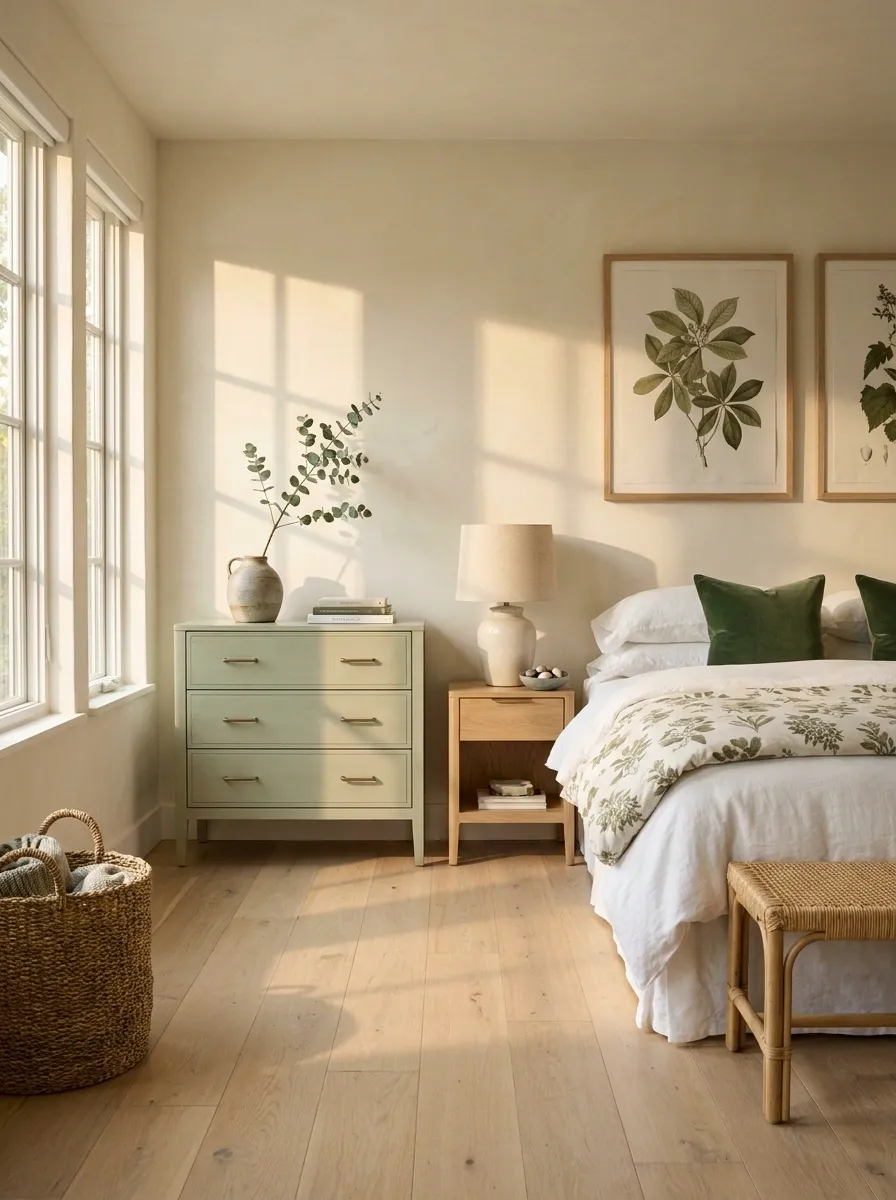
A pale green dresser can anchor a botanical bedroom without competing with the pattern.
Use muted green furniture with warm ivory walls and restrained botanical bedding. Add natural wood, woven lighting, and one or two deeper green elements.
The furniture should be simpler than the bedding. If both are equally detailed, the room becomes visually noisy.
This design works particularly well in bedrooms with natural light because the green changes gently throughout the day.
The goal is botanical, not greenhouse.↓
Simple painted furniture
↓
Natural wood accents
Warm Taupe Furniture With Black Lighting
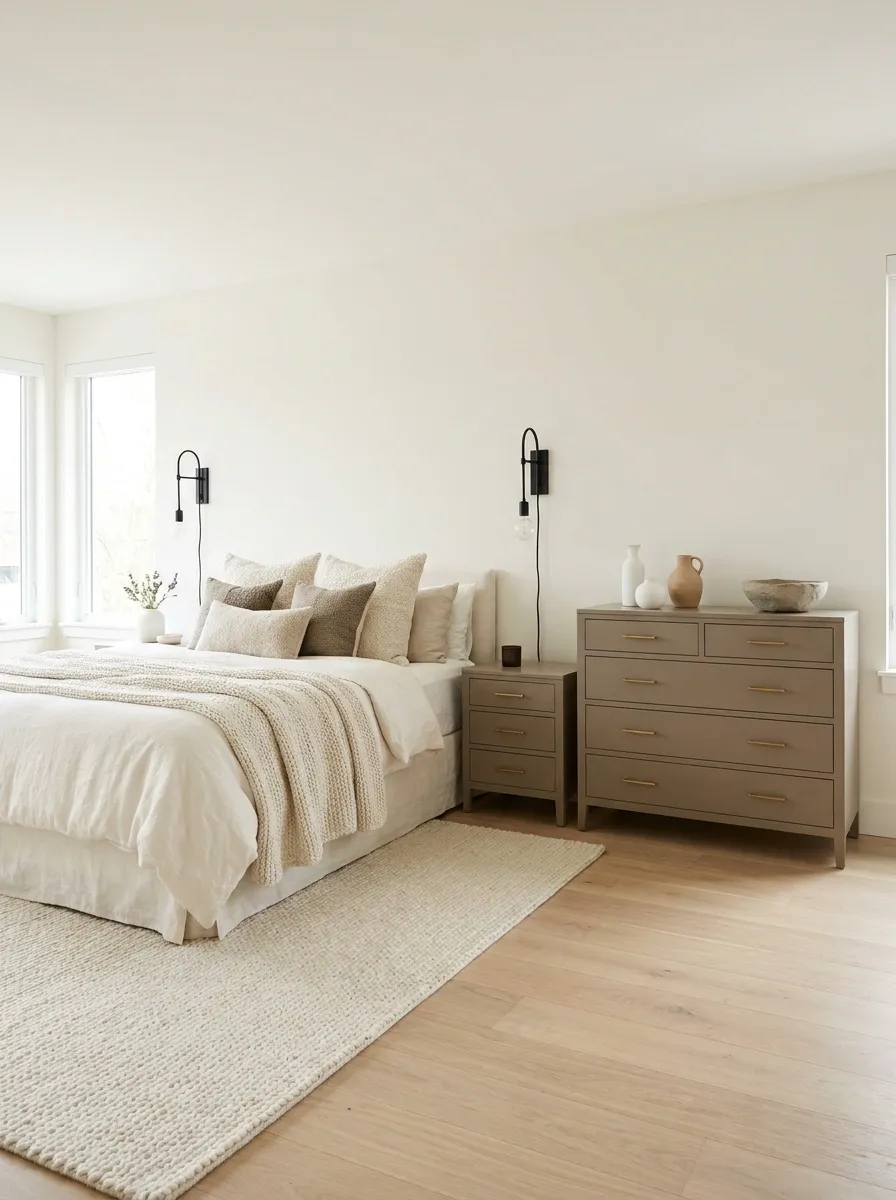
Warm taupe furniture can create a sophisticated bedroom when paired with sharper black lighting and hardware.
Use taupe paint across a dresser and bedside tables. Add cream walls, ivory bedding, pale oak, and black sconces or pendant lights.
The black details give the otherwise soft palette enough definition.
This is especially effective in contemporary bedrooms where the furniture needs warmth without introducing a strong color.
The result is quiet, but definitely not bland.Chocolate Brown Furniture In A Cream Bedroom
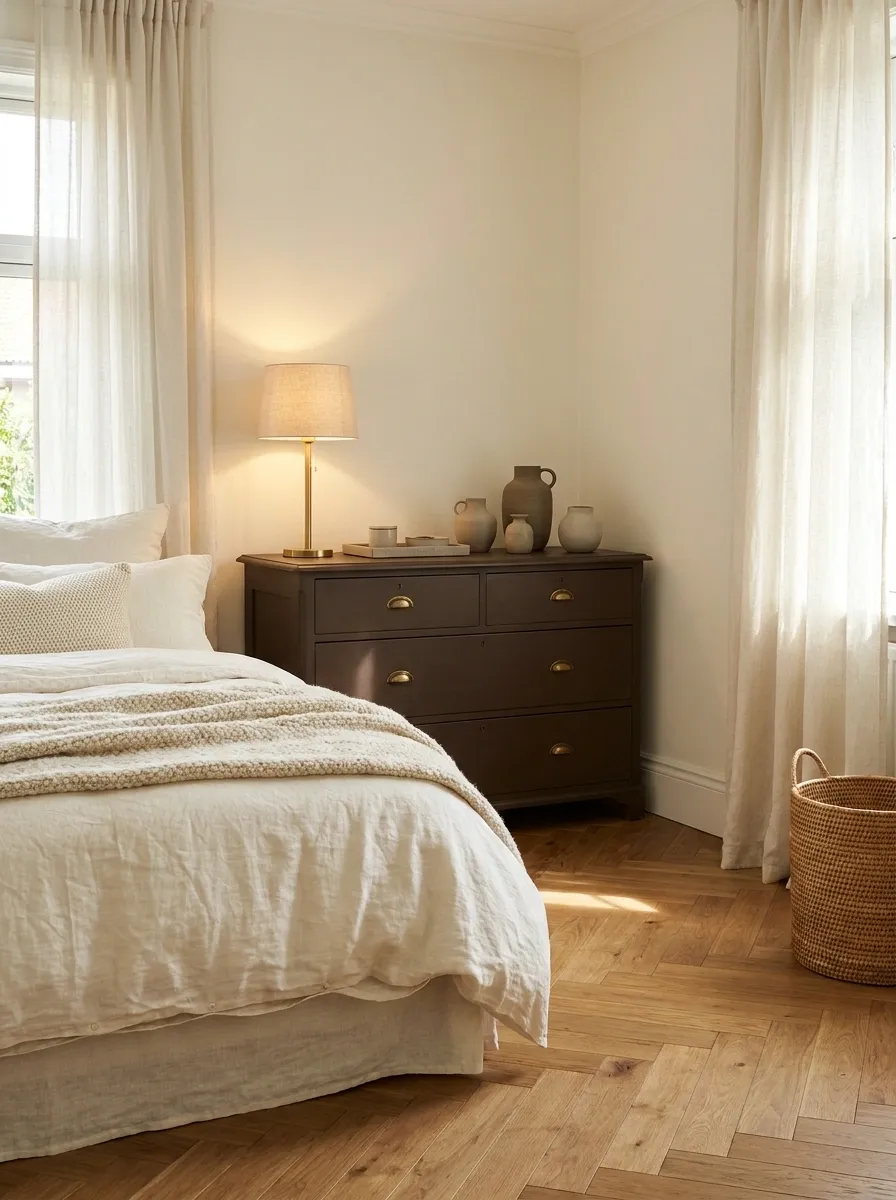
Chocolate brown paint gives bedroom furniture unusual depth without the severity of black.
Use it on a substantial dresser or wardrobe and surround it with creamy walls, ivory bedding, warm oak flooring, and soft amber lighting.
The brown should be rich and matte. Glossy brown can quickly become too heavy.
This works particularly well in bedrooms that already have warm undertones. Cool gray walls would pull the palette in a different direction.
The finished look feels warm, grounded, and slightly dramatic without needing a dark bedroom.Dusty Rose Furniture With Natural Linen
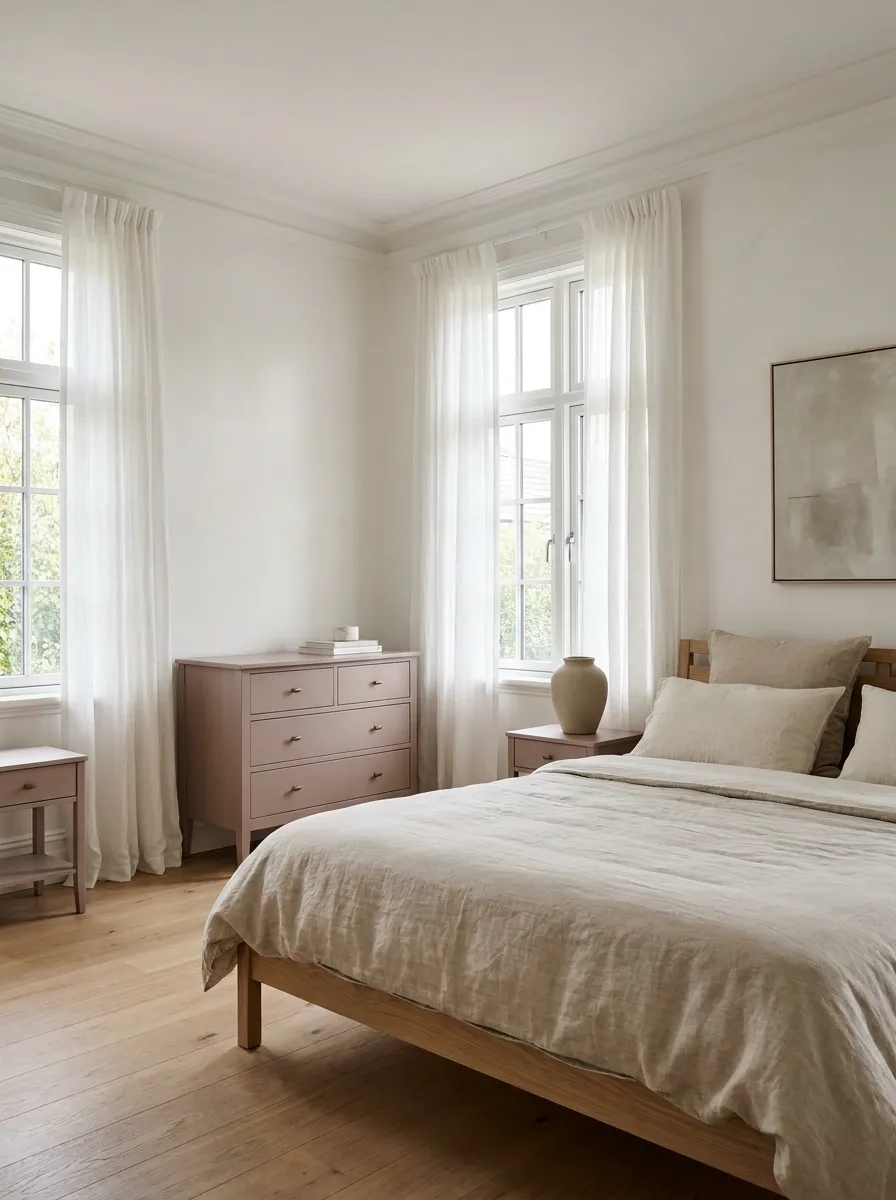
Dusty rose furniture works when the rest of the bedroom keeps its distance from overly sweet styling.
Paint a dresser and small bedside tables in a muted rose. Add warm white walls, natural linen bedding, light oak, and aged brass.
Avoid repeating the rose in every accessory. A single textile or artwork detail is enough to connect the room.
The furniture becomes a soft color statement while the natural materials keep the bedroom grounded.
It is pink without looking like the paint aisle got emotional.Blue-Gray Furniture With Black Window Frames
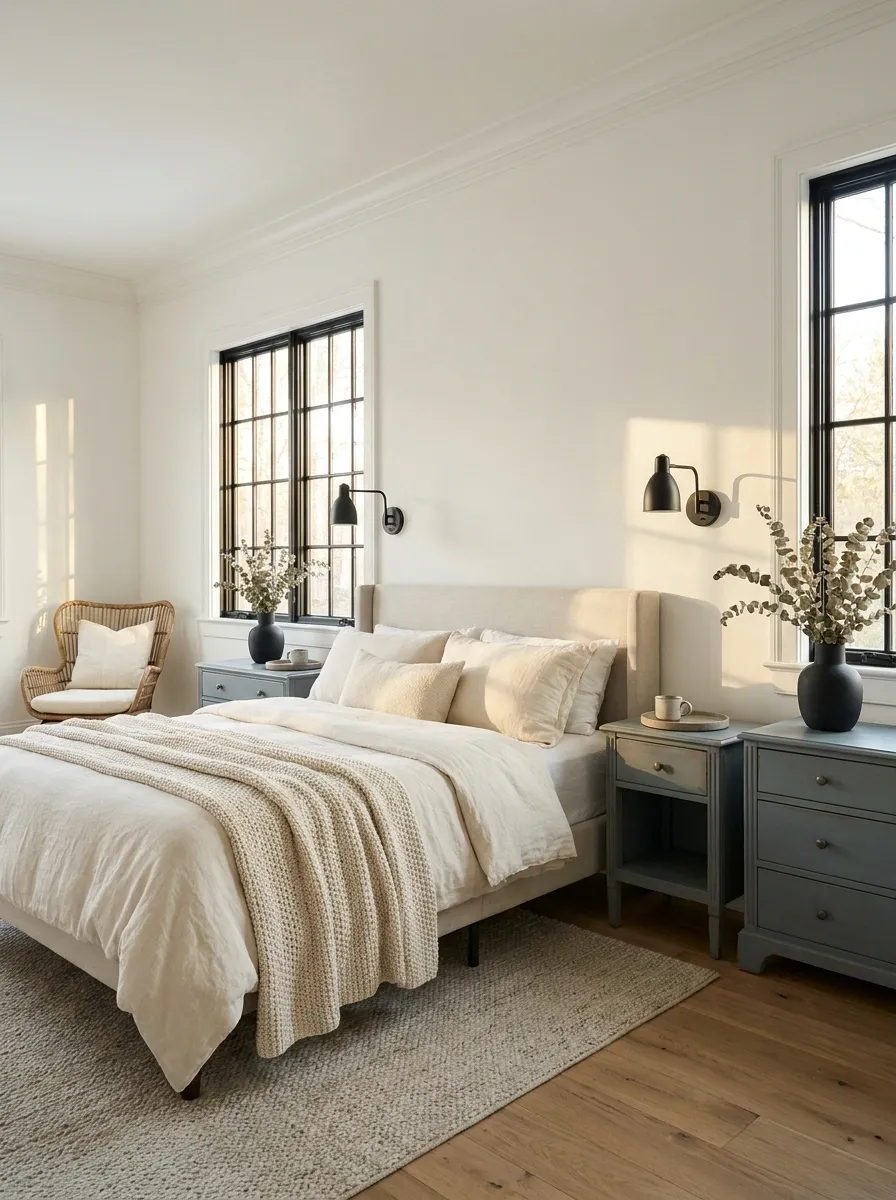
Blue-gray painted furniture looks particularly strong in bedrooms with black-framed windows or other dark architectural details.
Paint the dresser and bedside tables in a muted blue-gray. Keep the walls warm white and add cream bedding, natural timber, and restrained black lighting.
The black architectural details create a visual bridge between the furniture and the rest of the room.
This composition feels modern without requiring ultra-modern furniture.
The important part is keeping the blue-gray muted. Bright blue would change the entire personality.Deep Plum Furniture In A Romantic Bedroom
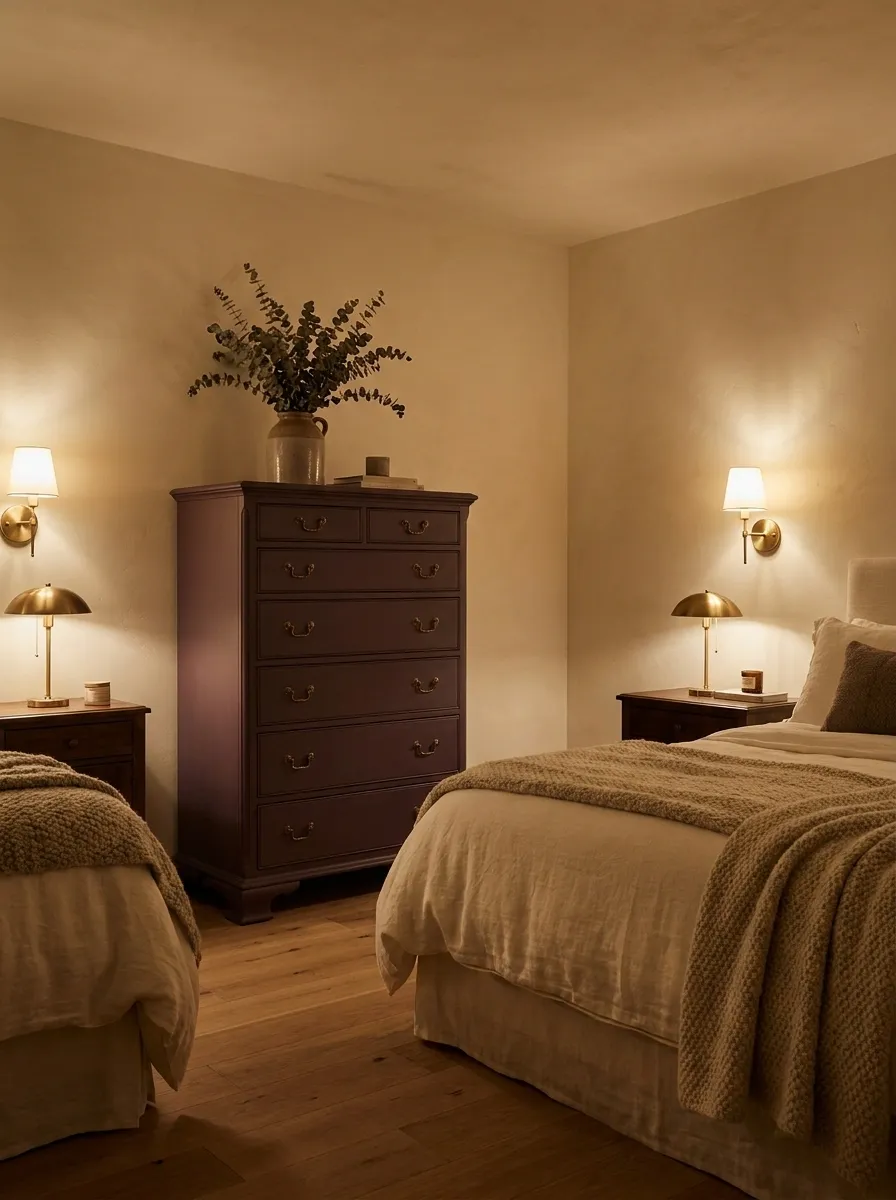
Deep plum creates a dramatic bedroom without relying on red or burgundy.
Use the shade on a vintage dresser or tall chest, then pair it with warm ivory walls, creamy bedding, dark timber, and aged brass.
The color should be muted enough to read as sophisticated rather than theatrical.
This look benefits from low, warm lighting because the plum becomes richer in the evening.
Keep patterns restrained. The furniture already provides the drama.Two-Tone Painted Furniture With Natural Wood
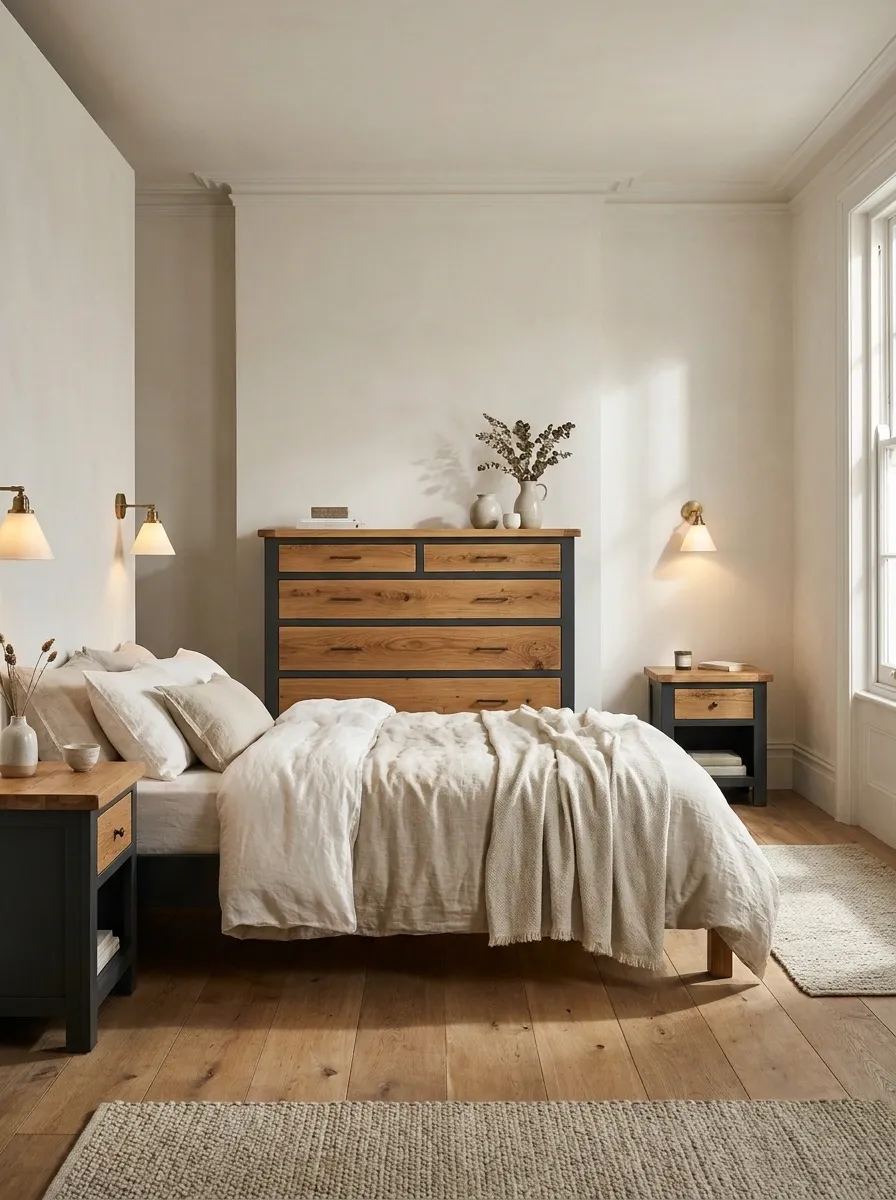
A two-tone furniture finish can make an ordinary dresser feel architectural.
Use a deep painted color on the main cabinet while leaving the drawer fronts or top in natural wood. Repeat the same relationship on the bedside tables.
The rest of the room should stay fairly restrained: warm white walls, neutral bedding, and simple lighting.
This approach is especially useful when the furniture has good wood grain worth preserving. There is no rule saying every square inch has to meet the paintbrush.
The contrast between painted surfaces and natural timber gives the bedroom more visual depth.Painted Wardrobe In The Same Color As The Walls
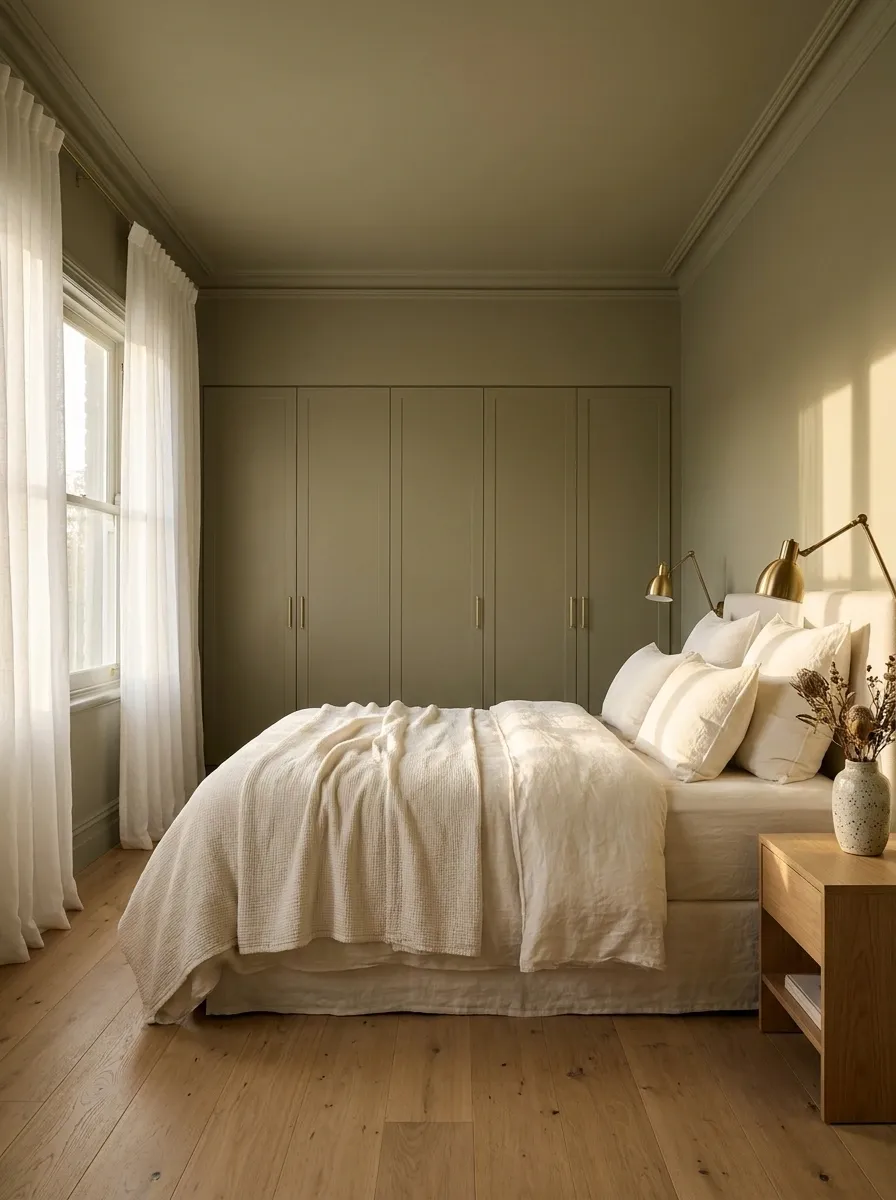
Matching a wardrobe to the wall color can make a large piece of furniture visually disappear.
Use a muted olive, taupe, dusty blue, or warm beige across both surfaces. Keep the bed and textiles slightly lighter so the room still has layers.
This is particularly useful when a wardrobe takes up a large wall and would otherwise dominate the bedroom.
The hardware can remain understated.
It is one of those tricks that looks almost suspiciously simple once finished.Emerald Green Furniture With Cream And Walnut
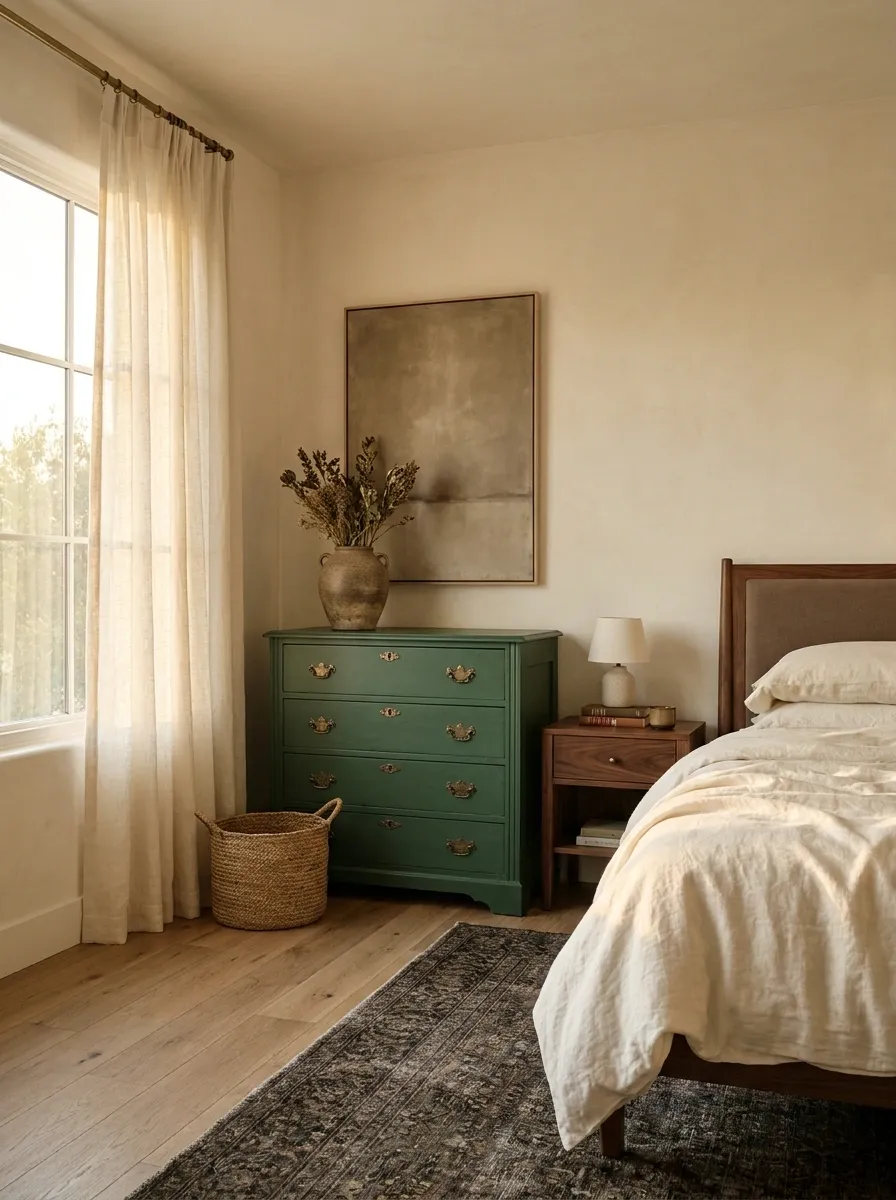
Emerald furniture creates a richer bedroom when paired with warm neutrals rather than bright white.
Use a deep green dresser or wardrobe with cream walls, walnut furniture, ivory bedding, and antique brass details.
The green should be slightly muted. A very saturated emerald can become visually dominant very quickly.
Walnut adds depth and makes the color feel more grown-up.
This is a strong choice when the bedroom needs one unmistakable focal point without relying on patterned wallpaper.Soft Black Furniture With Vintage Brass Hardware
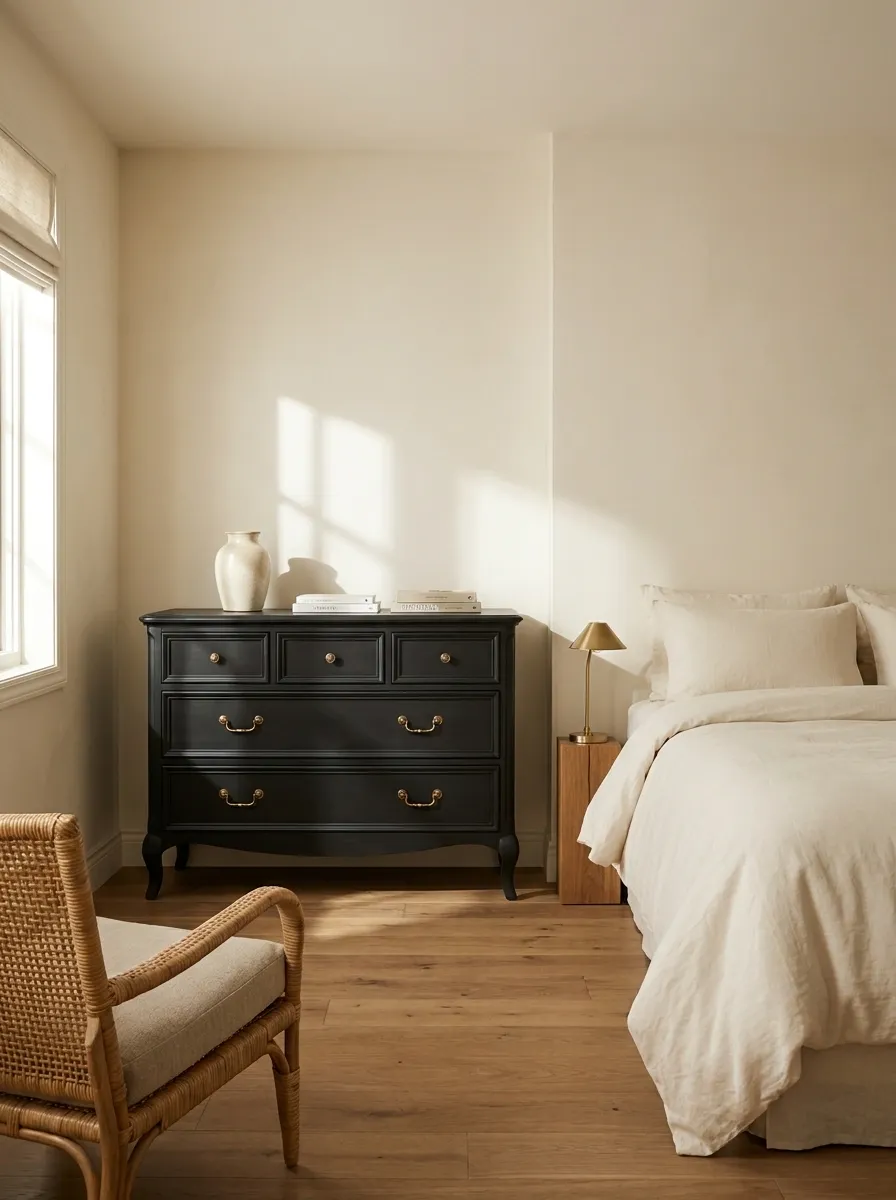
Soft black paint gives traditional furniture a modern edge while preserving its original silhouette.
Use it on a dresser with framed drawers or curved legs. Add vintage brass pulls, warm ivory walls, linen bedding, and medium-toned wood flooring.
The combination works because the hardware catches light while the black keeps the furniture visually substantial.
Avoid adding glossy black accessories throughout the room. The furniture is enough.
This is particularly effective when an old piece has a great shape but an unfortunate original finish.Warm Ochre Furniture In A Sunlit Bedroom
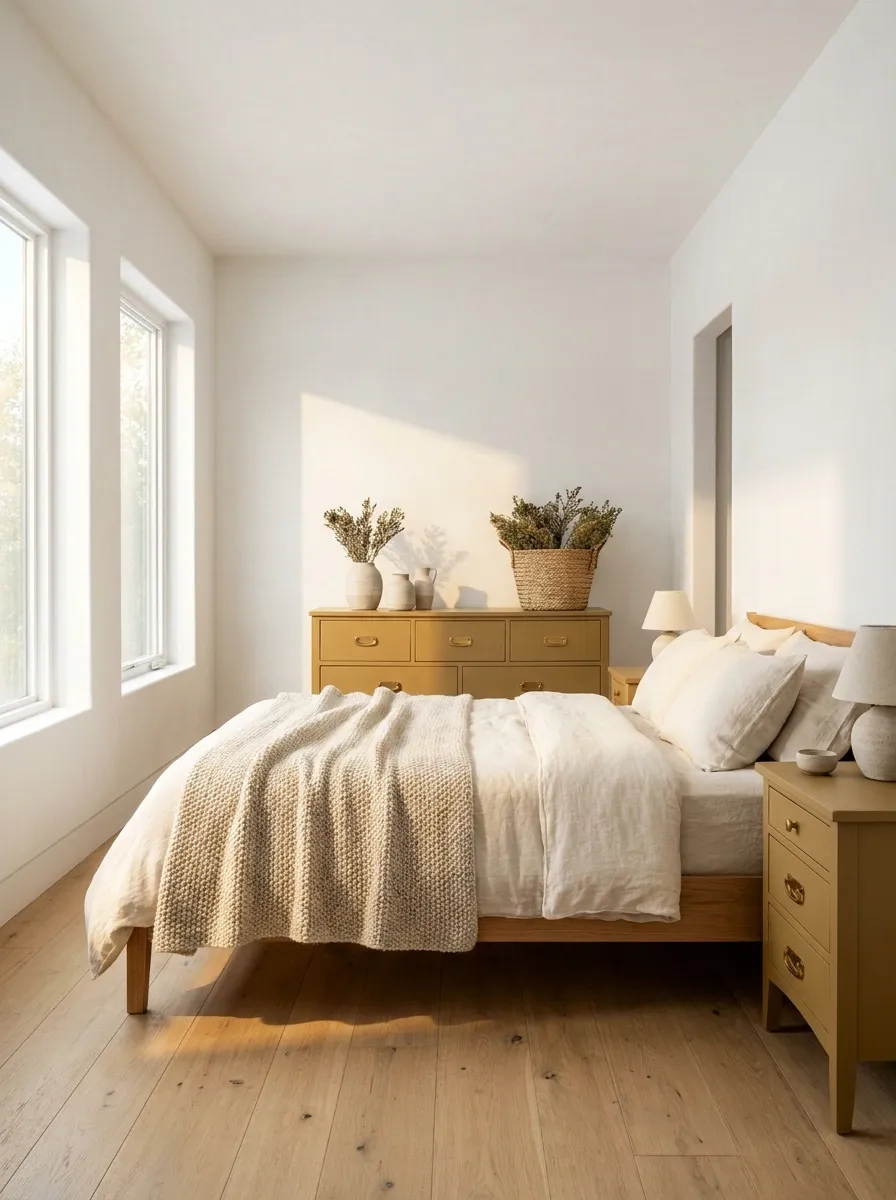
Warm ochre furniture can make a naturally bright bedroom feel even richer.
Paint a dresser or bedside tables in a muted ochre and surround them with warm white walls, cream bedding, natural oak, and woven textures.
The color looks especially good where morning or afternoon sunlight reaches the furniture because the warm undertones become more pronounced.
Keep the room simple enough for the furniture to remain the visual anchor.
No need for seven matching yellow cushions. The dresser has already understood the assignment.Pale Peach Furniture With Modern Cream Interiors
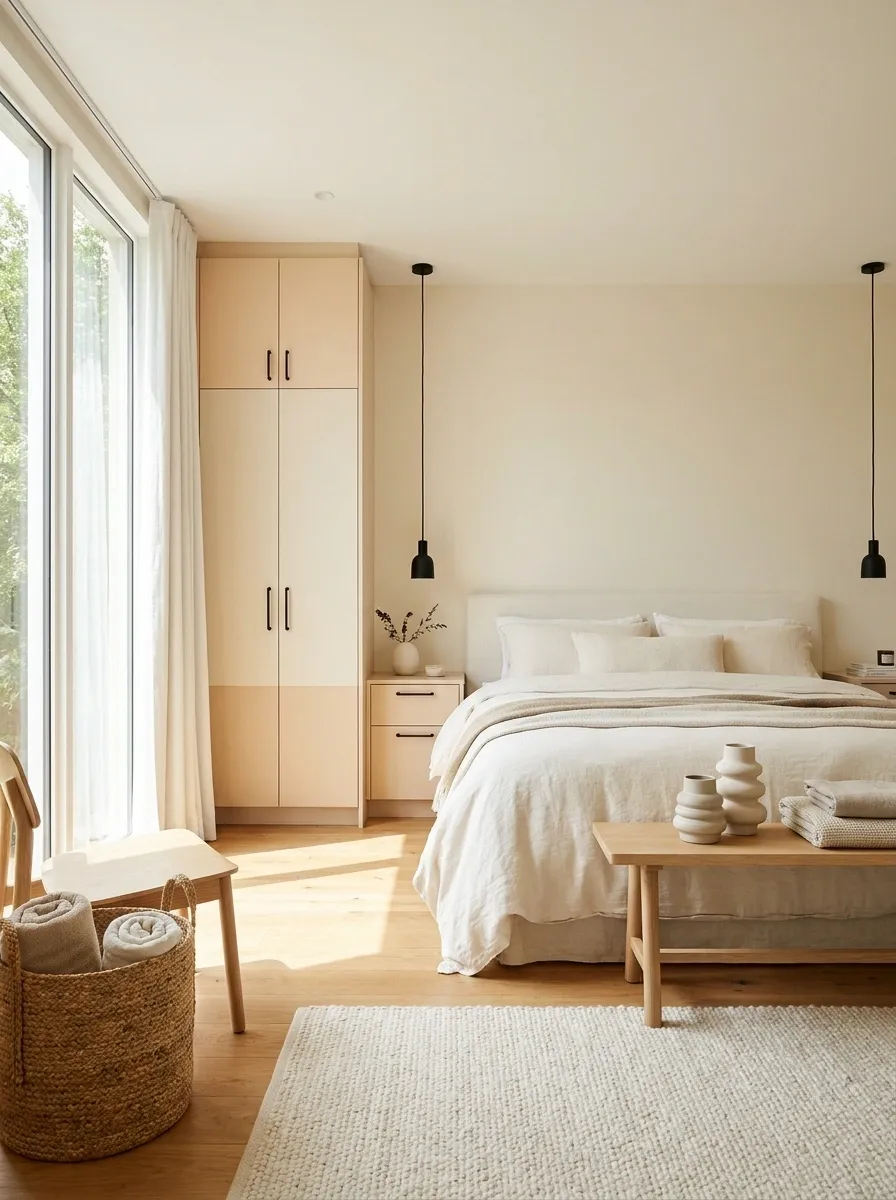
Pale peach furniture can add warmth to a modern bedroom without introducing a heavy color.
Choose a muted peach with beige undertones rather than bright pastel orange. Pair it with creamy walls, simple white-oak furniture, ivory bedding, and minimal black details.
The clean furniture shapes keep the peach contemporary.
This works especially well when the bedroom needs a small amount of personality but the overall design should remain calm.
The color should feel like a warm accent, not a declaration that peach has returned to reclaim the entire house.Slate Blue Furniture With Warm Beige Walls
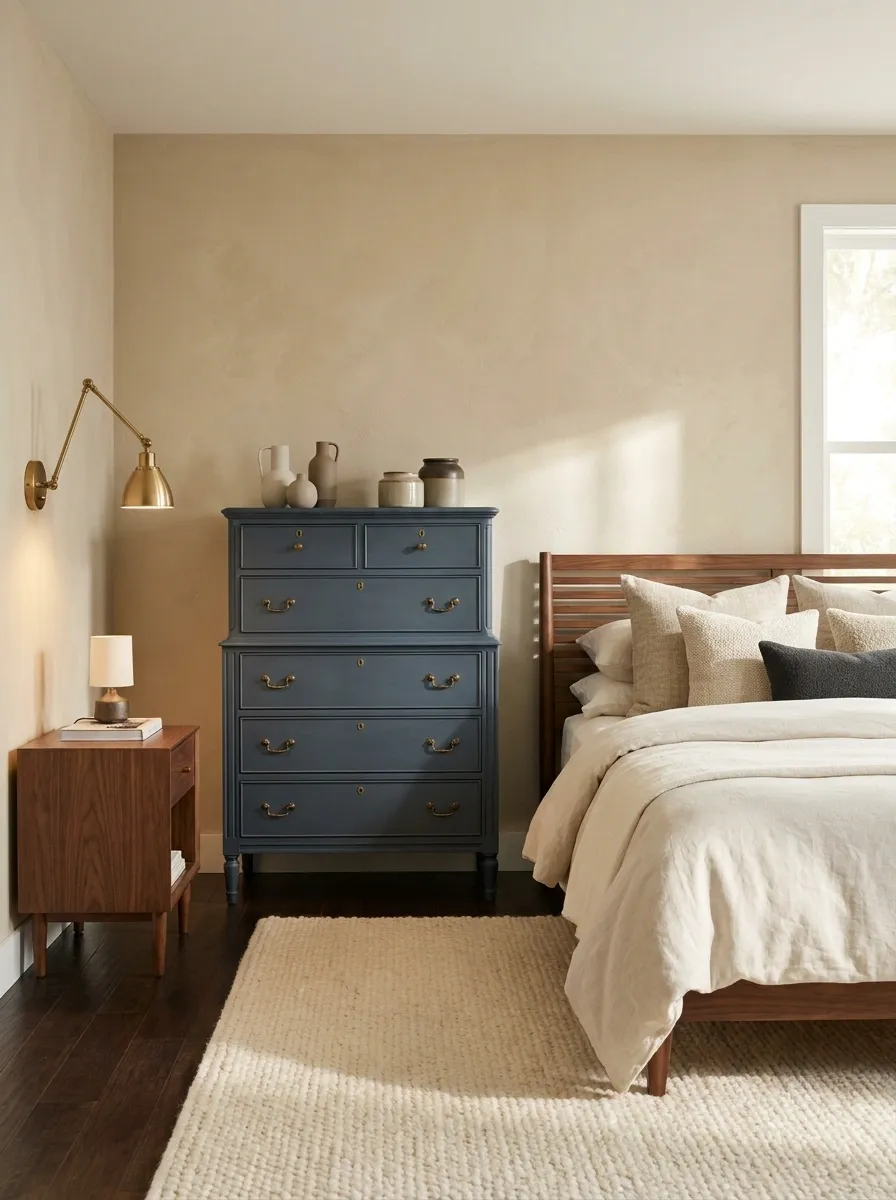
Slate blue furniture creates a grounded bedroom when paired with warm beige instead of cool gray.
Use the blue on a dresser, wardrobe, or matching bedside tables. Add beige walls, cream bedding, walnut accents, and brushed metal lighting.
The warm wall color prevents the blue from feeling cold.
This palette is especially useful for bedrooms that already have dark flooring because the beige and cream elements stop the room from becoming visually heavy.Monochromatic Taupe Furniture And Walls
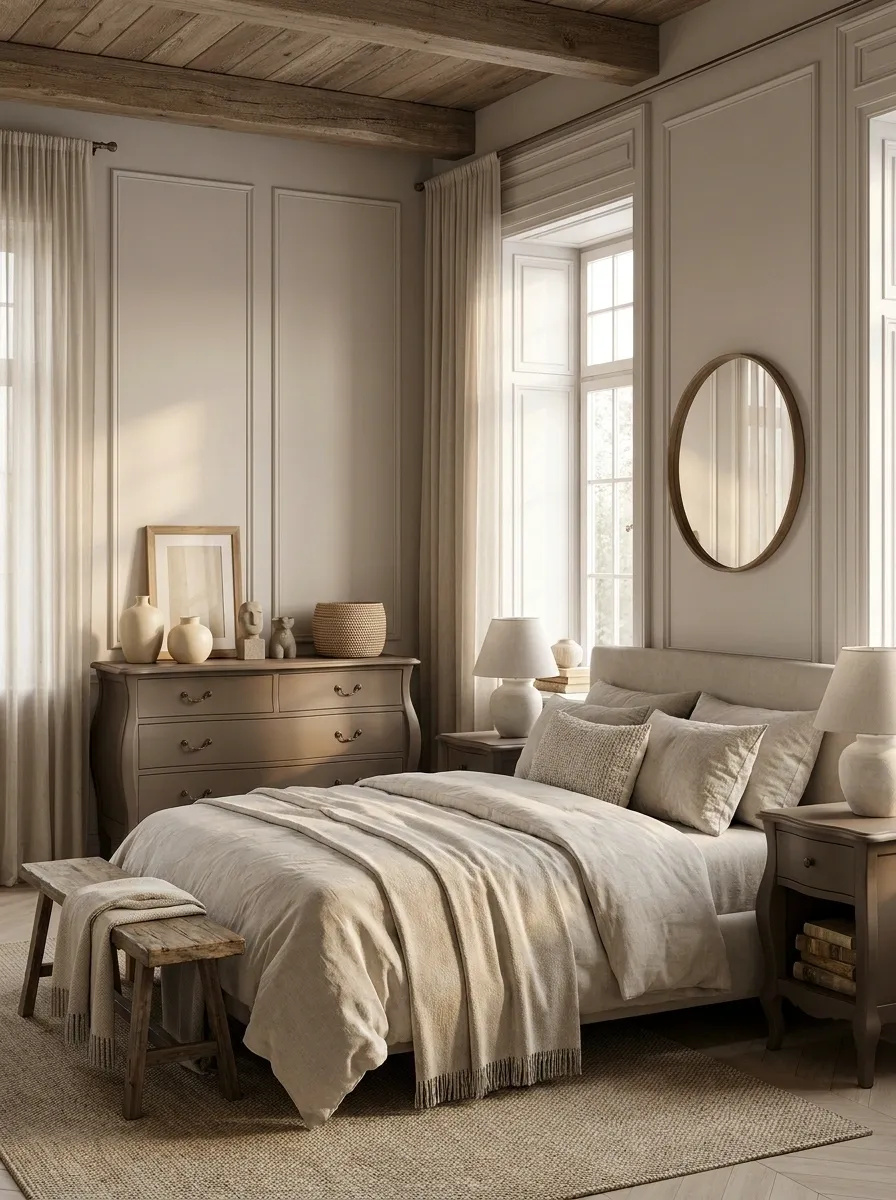
A monochromatic bedroom can look much richer when the furniture and walls sit within the same color family.
Paint the furniture a slightly deeper taupe than the walls. Add bedding in oatmeal, curtains in a related neutral, and natural timber for subtle contrast.
The difference between the surfaces should be visible but gentle.
This works particularly well in bedrooms with interesting architecture because the tonal palette allows the room’s shape to become the focal point.
The secret is texture. Without it, monochromatic can quickly become “paint sample waiting room.”Painted Bed Frame With Matching Bedside Tables
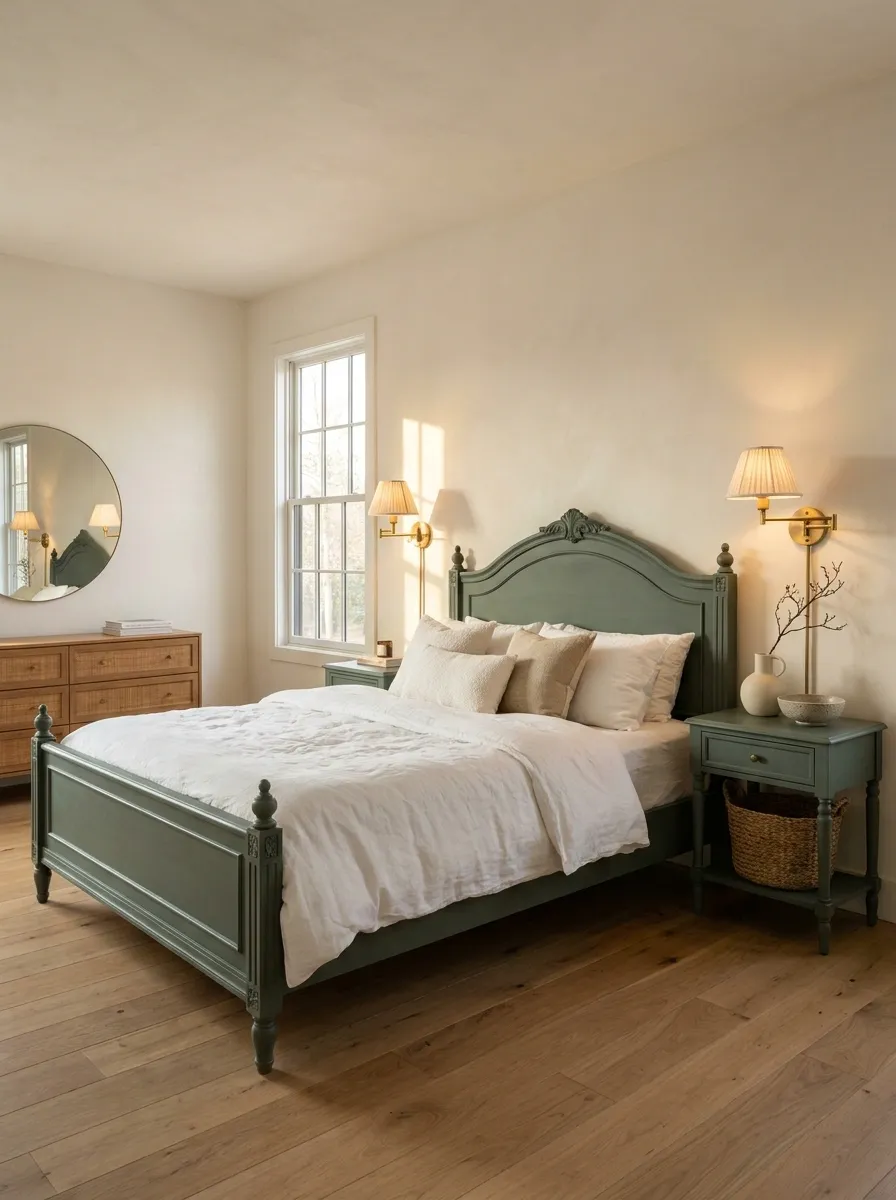
Instead of painting every piece of furniture, create a coordinated focal zone around the bed.
Paint the bed frame and bedside tables in the same deep muted color. Keep the dresser natural wood or upholstered. Add warm cream walls, soft bedding, and simple lighting.
This creates a visual anchor without making the entire bedroom feel color-blocked.
The approach works especially well when the bed has an interesting frame shape that deserves more attention.Muted Red Furniture In A Warm Traditional Bedroom
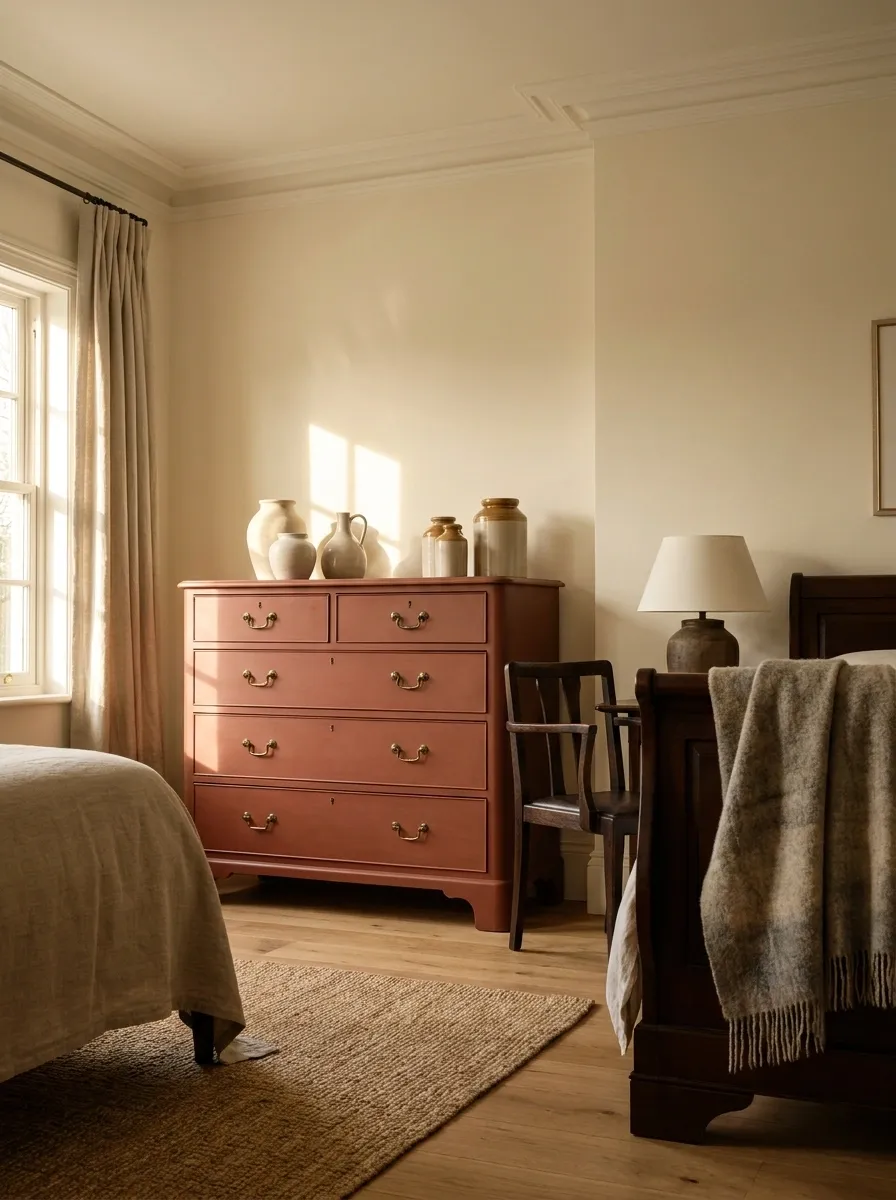
Muted red can make traditional bedroom furniture feel surprisingly sophisticated.
Choose an earthy red rather than a bright primary shade. Paint a dresser or chest and surround it with warm cream walls, dark timber, antique brass, and faded neutral textiles.
The darker wood gives the red enough visual weight.
This concept works especially well with older furniture because the traditional silhouette prevents the color from feeling overly modern.
Use the red sparingly elsewhere. One strong furniture piece is enough to carry the room.Painted Furniture With Natural Wood Top Surfaces
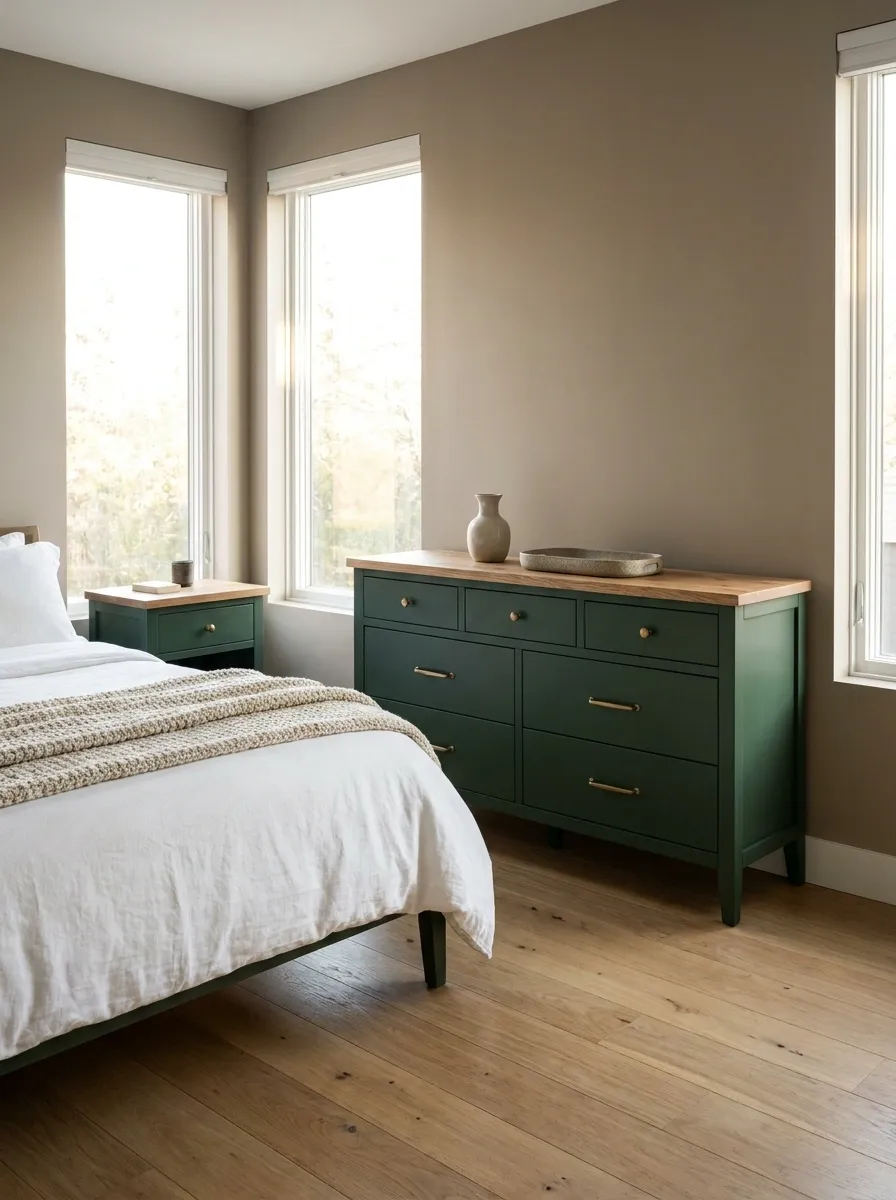
Leaving the tops of dressers or bedside tables natural while painting the bases creates a subtle custom-furniture effect.
Use a deep green, blue, charcoal, or warm neutral on the lower structure and keep the wood top visible. Repeat the finish on a second piece so the relationship feels intentional.
Pair it with simple bedding and warm walls.
This works particularly well when the existing wood grain is attractive but the original furniture color no longer fits the room.Soft Black And Warm White Furniture Mix
A bedroom does not need every painted piece to match.
Use soft black on one substantial dresser while keeping bedside tables warm white. Add a natural wood bed, cream walls, and neutral bedding.
The mismatched furniture creates a more collected look while the repeated warm undertones keep the room cohesive.
This is especially useful when furniture has been collected at different times. Matching everything perfectly is not the only way to make a bedroom look intentional.Deep Brown Painted Furniture With Creamy Vintage Details
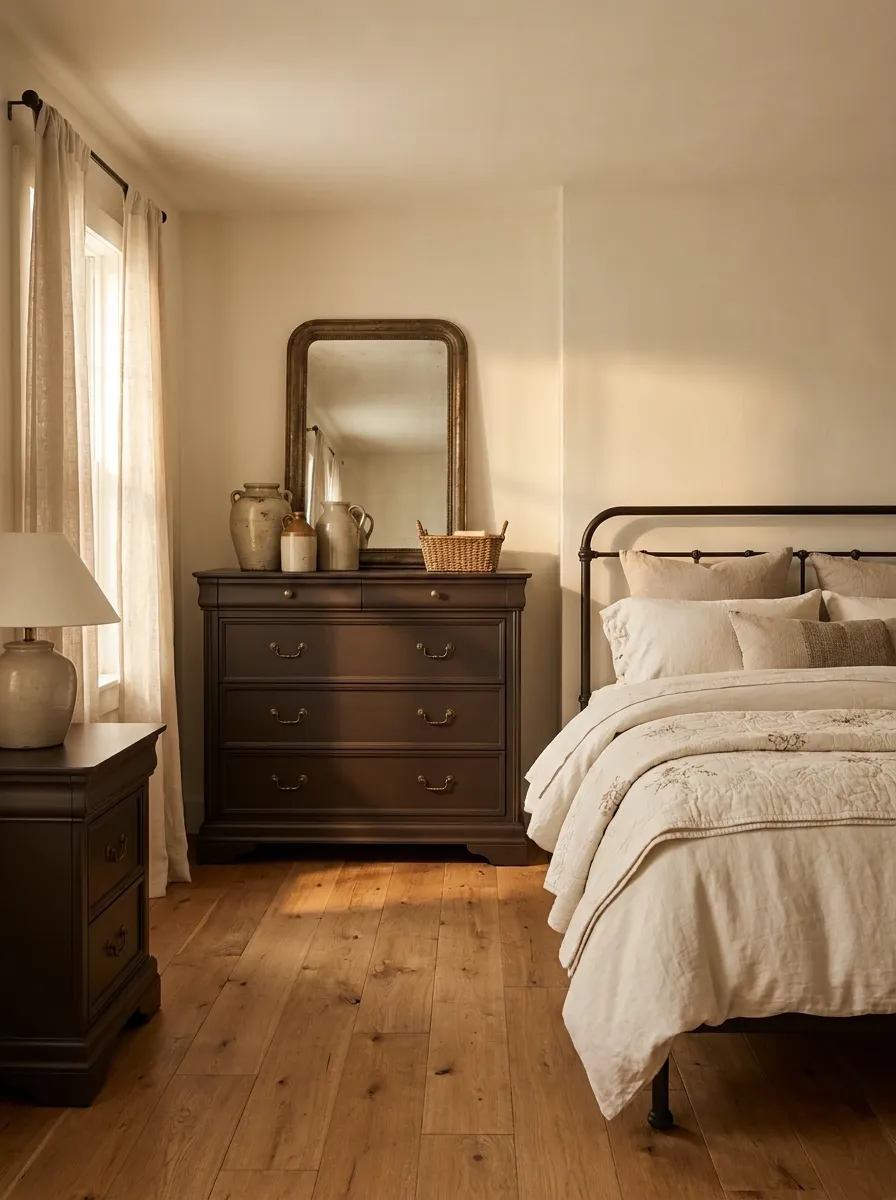
Deep brown paint can make inexpensive or mismatched furniture feel more substantial.
Use the color on a dresser with traditional detailing, then surround it with cream walls, vintage-inspired bedding, aged brass, and warm wood flooring.
The result has enough contrast to feel dramatic but remains warm.
Choose matte or low-sheen paint so the furniture retains a softer, older character.Colorful Furniture In An Otherwise Neutral Bedroom
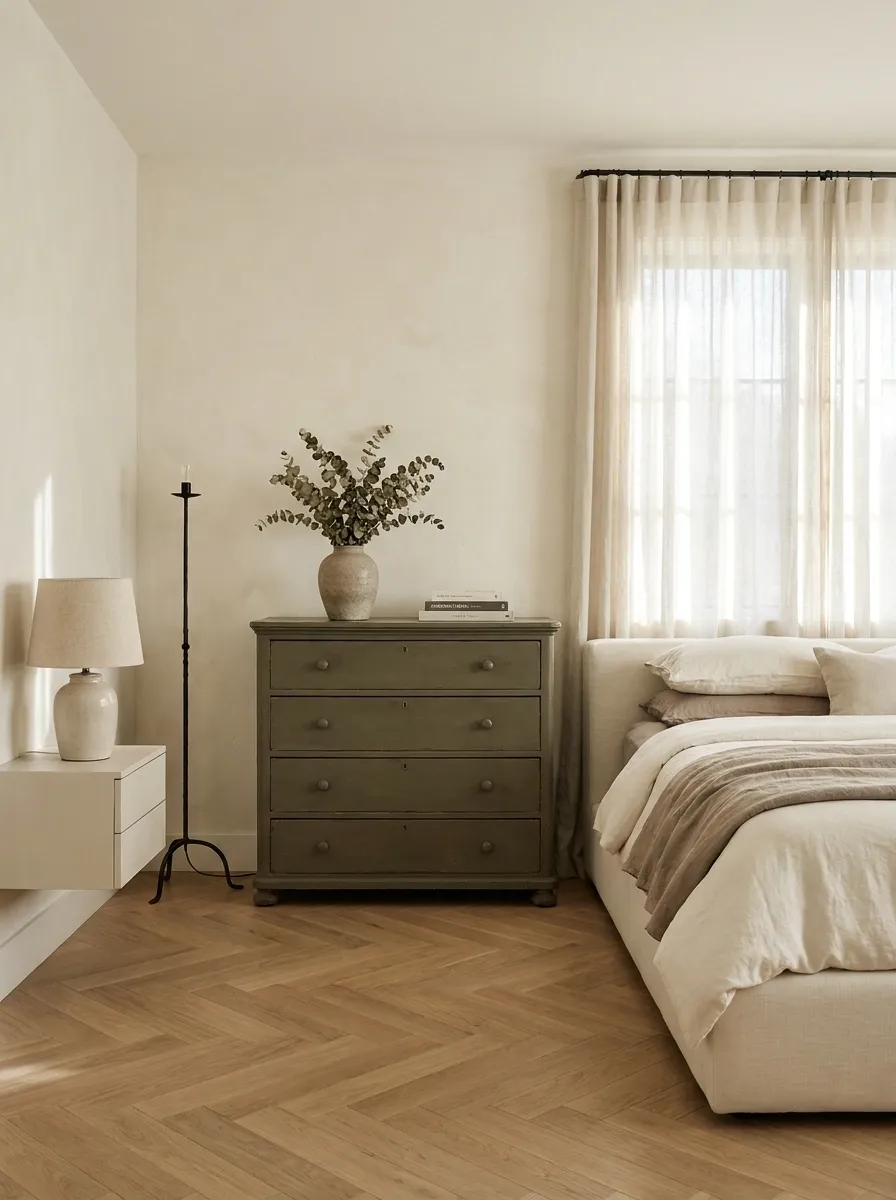
Sometimes the best painted furniture design is deliberately simple around one strong piece.
Choose a saturated but slightly muted color for a single dresser. Keep the walls, bed, bedding, flooring, and curtains neutral.
The furniture becomes the visual punctuation mark.
This approach works particularly well in smaller bedrooms because it introduces personality without filling the whole room with competing colors.
The rest of the bedroom does not need to audition for a supporting role. It already has one.Soft Green And Natural Oak For A Calm Modern Bedroom
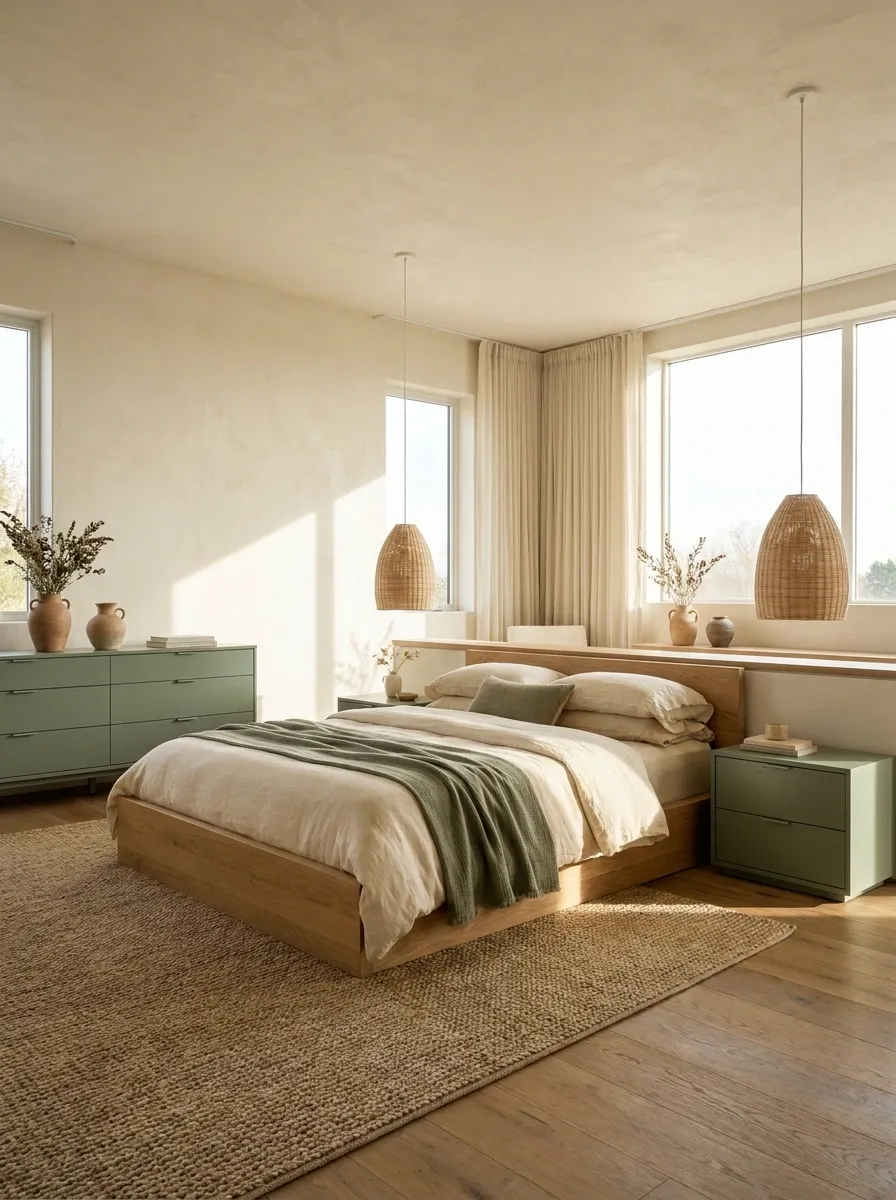
Soft green furniture and natural oak create a balanced modern bedroom with enough warmth to avoid looking sterile.
Paint a low dresser and bedside tables in a muted green. Pair them with an oak bed, warm ivory walls, linen bedding, and simple woven lighting.
The low furniture keeps the composition visually horizontal and relaxed.
This direction works particularly well in rooms with large windows because the natural materials and green paint respond nicely to daylight.Painted Bedroom Furniture With A Tonal Headboard
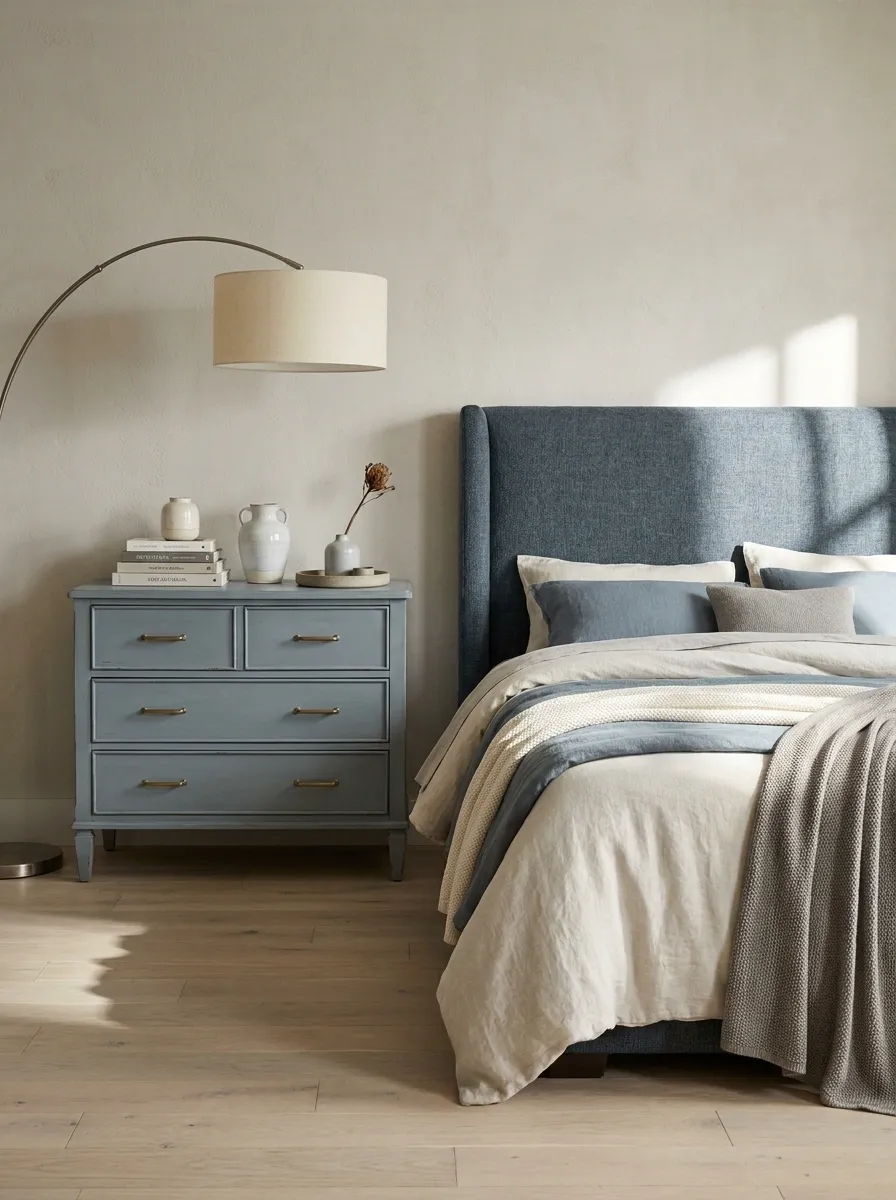
Create a stronger furniture composition by matching the painted pieces loosely to the upholstered headboard.
For example, pair dusty blue furniture with a slightly deeper blue-gray headboard, or muted green furniture with an olive textile headboard.
The colors should belong to the same family without becoming identical.
Keep the walls neutral and let the bed zone become the focal point.
This creates a layered look without needing a gallery wall or dramatic wallpaper.Painted Furniture With Antique Brass For A Collected Bedroom
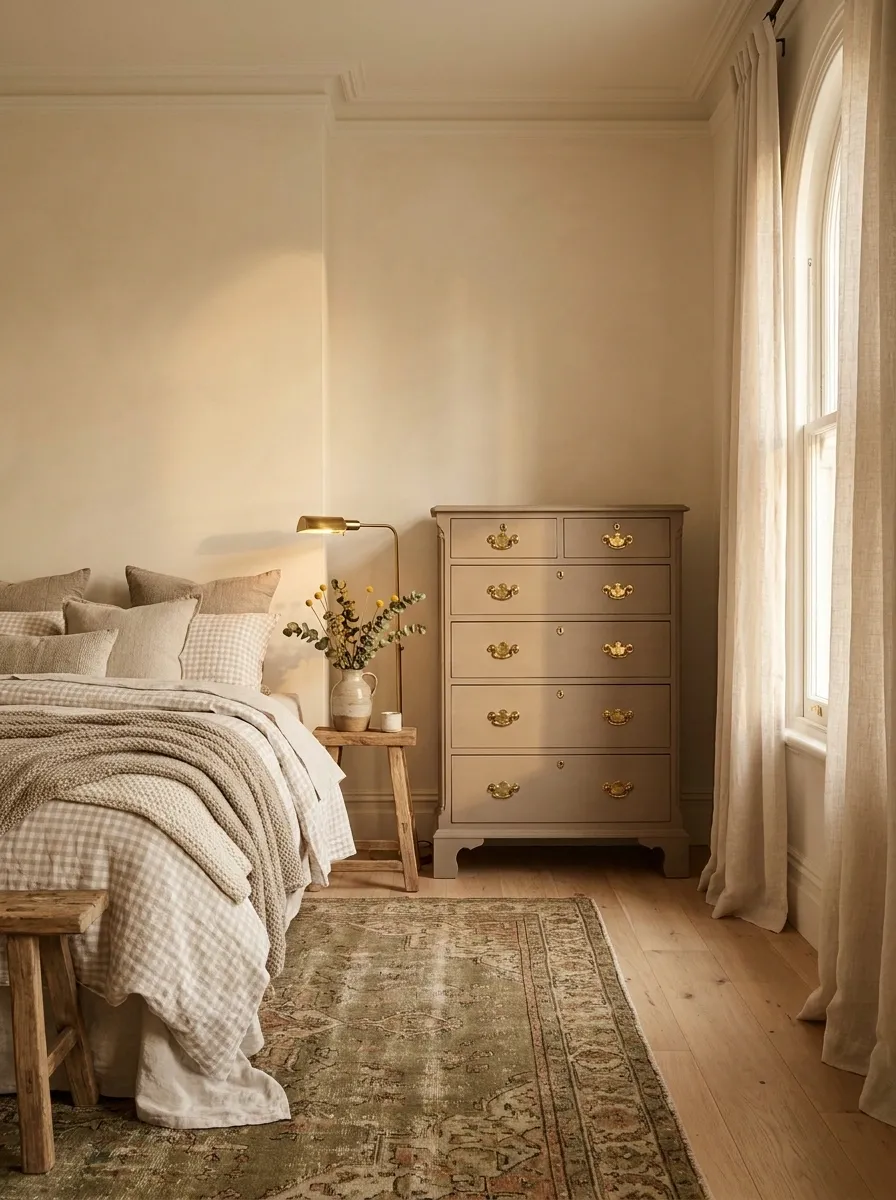
The paint color does not have to be the most dramatic part of the furniture.
A muted neutral such as mushroom, taupe, olive, or warm gray can become much more interesting when paired with antique brass pulls and knobs.
Use the furniture alongside warm textiles, natural timber, and softly patterned bedding.
The hardware provides tiny points of contrast without forcing the entire room into a high-contrast scheme.
It is a good reminder that sometimes the difference between “plain dresser” and “expensive-looking dresser” is approximately twelve brass knobs.Painted Furniture That Matches The Bedroom Trim
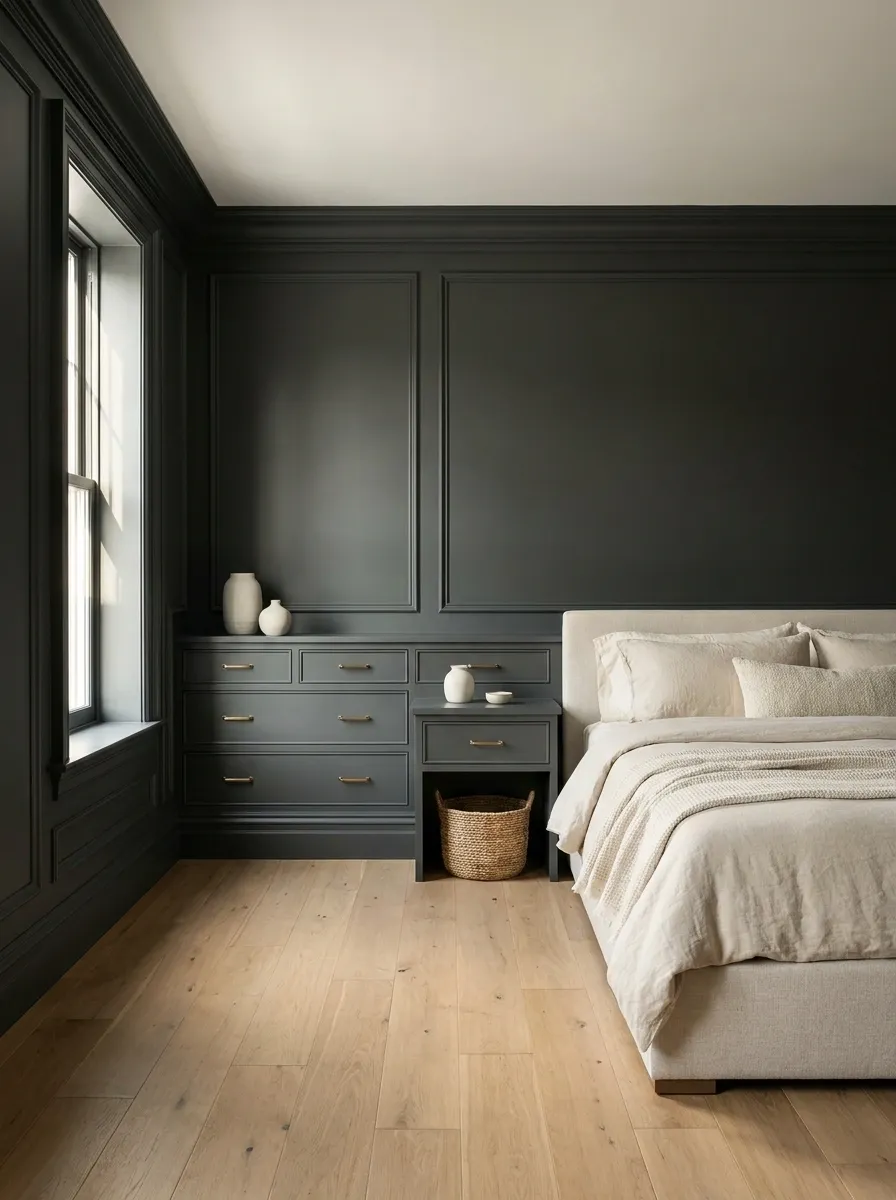
Painting furniture the same color as the trim creates an unusually cohesive bedroom.
Choose a deeper version of the trim color for contrast, or match it exactly when the goal is a more architectural appearance.
Use the same paint on the dresser and bedside tables, then keep the bedding and walls relatively neutral.
The furniture begins to feel connected to the room itself rather than simply placed inside it.
This is particularly effective in bedrooms with substantial molding, paneled walls, or detailed window trim.↓
Painted dresser
↓
Bedside tables
A Dark Painted Dresser Against A Light Bedroom
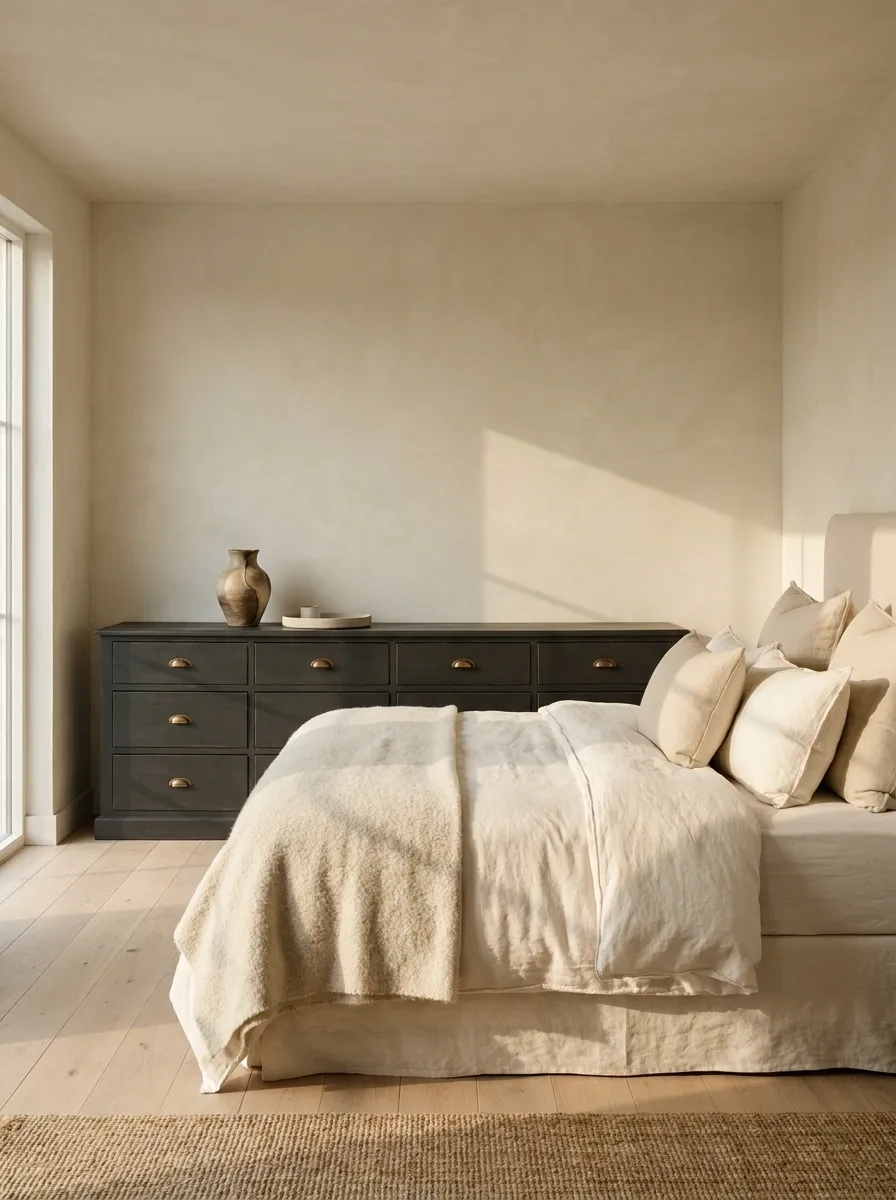
Sometimes the furniture should simply provide contrast.
Use a deep charcoal, brown, green, or navy dresser against a light warm-neutral wall. Keep the rest of the bedroom quiet with cream bedding, pale flooring, and restrained accessories.
The dresser becomes a strong horizontal anchor.
This works particularly well when the room feels visually top-heavy because the darker furniture pulls attention downward.Layered Painted Furniture In Three Related Tones
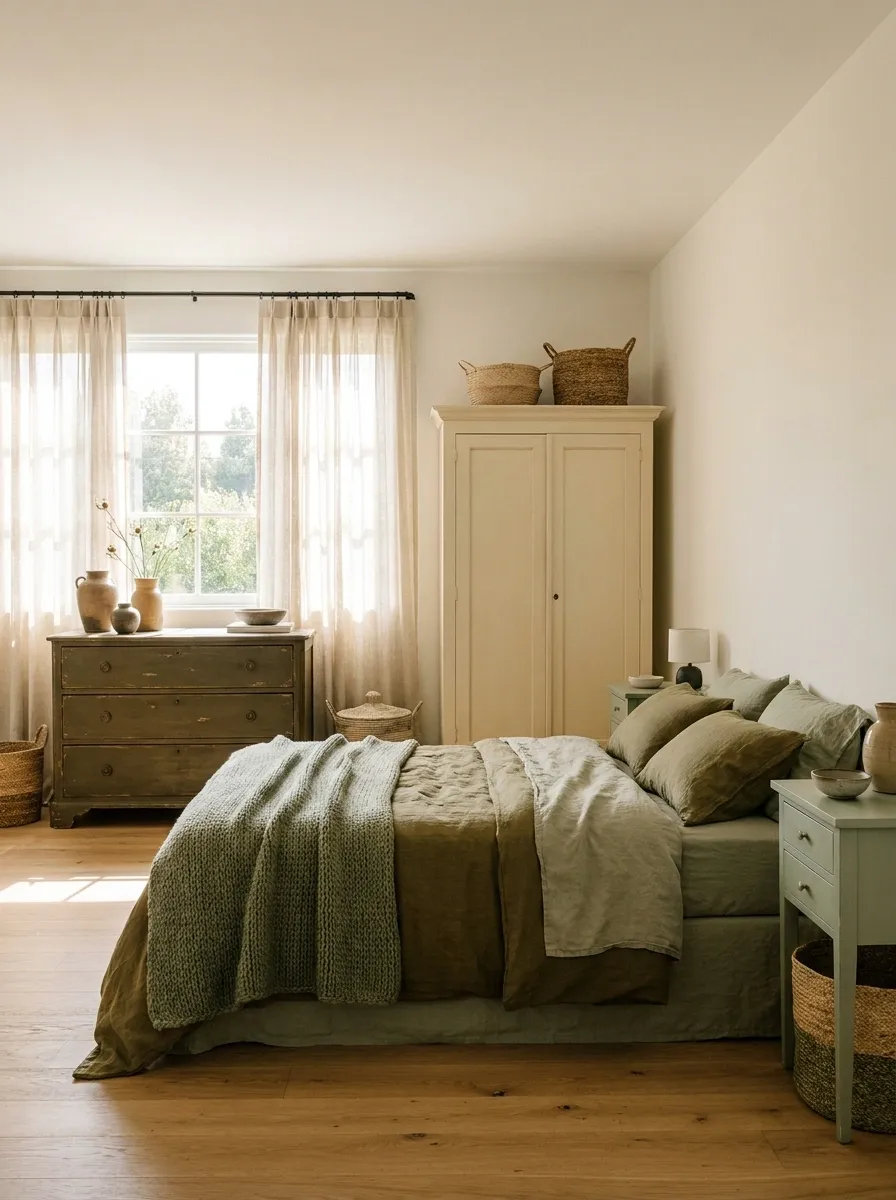
A bedroom can use several painted furniture colors if they belong to one controlled palette.
For example, use deep olive on the dresser, soft sage on bedside tables, and warm cream on a tall wardrobe. Keep the walls warm white and repeat the green family subtly in textiles.
The colors should feel related rather than randomly selected.
This approach works especially well in eclectic bedrooms where perfectly matching furniture would feel too rigid.A Painted Furniture Focal Wall With Minimal Bedding
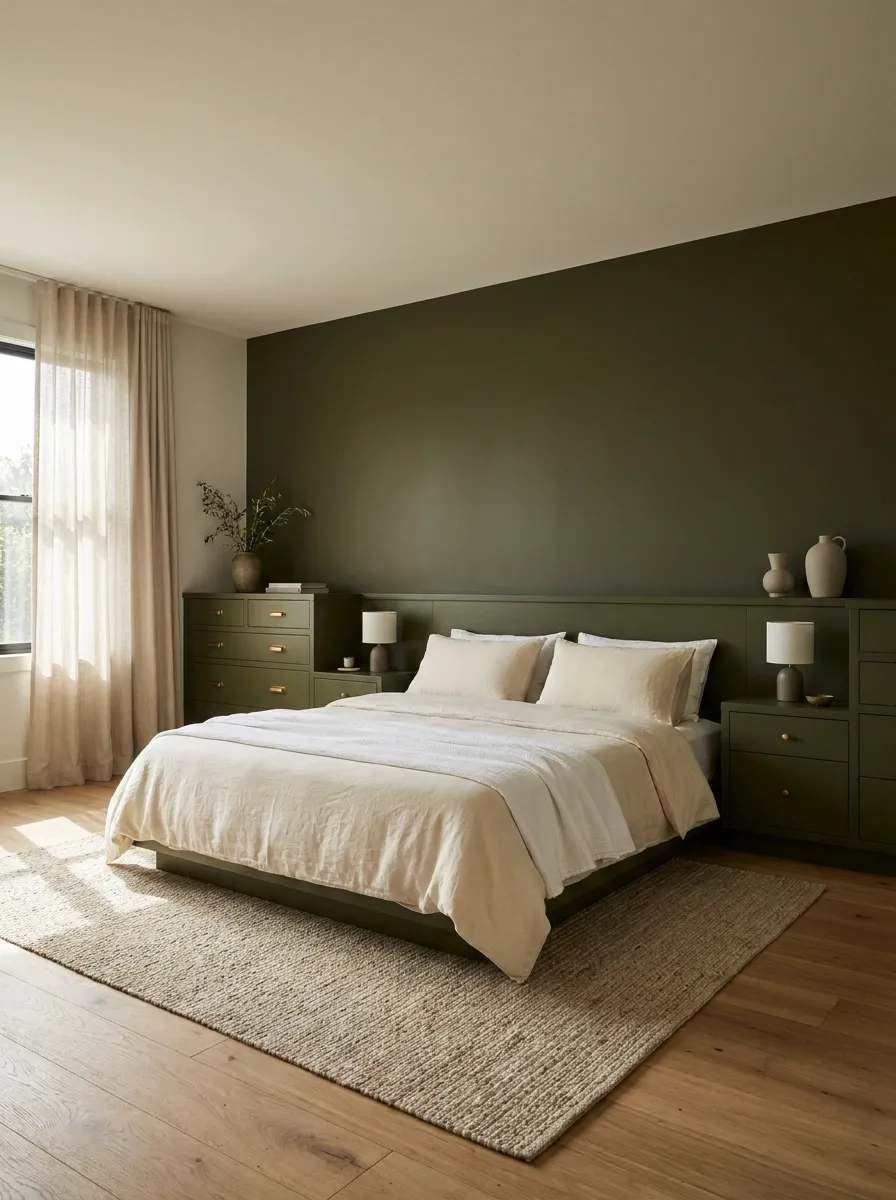
Let the furniture and wall become one dramatic composition.
Paint a dresser, bedside tables, and the wall behind them in a deep earthy shade such as olive, charcoal, brown, or blue-gray. Keep the bed and bedding light and simple.
The result creates a strong backdrop without needing artwork or patterned wallpaper.
The key is contrast. Pale bedding gives the dark furniture zone breathing room.Warm Gray Furniture With Cream, Black, And Oak
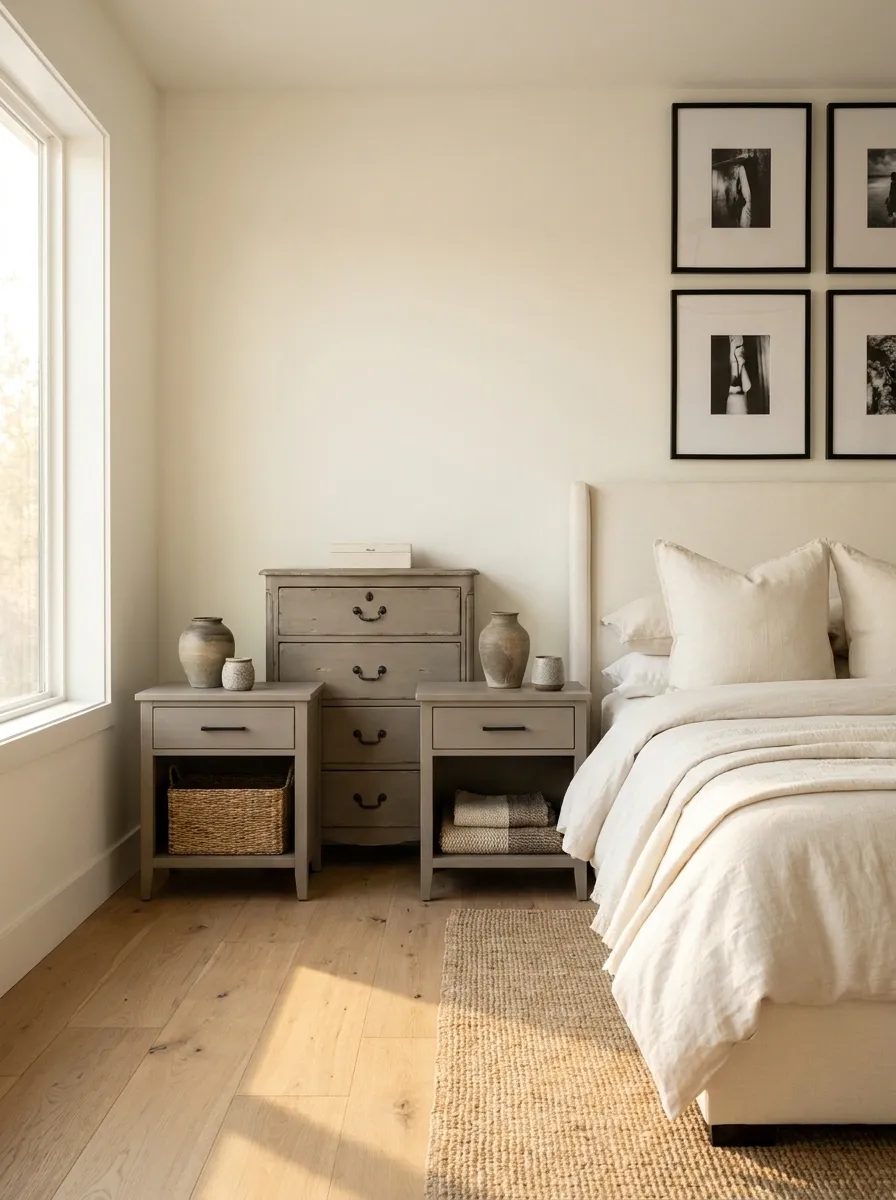
Warm gray painted furniture can become a flexible bridge between modern and traditional elements.
Use the paint on a dresser and bedside tables, then combine cream bedding, oak flooring, and small black accents.
The black gives the room definition while oak prevents the gray from feeling cold.
This is particularly useful when the bedroom already contains mixed furniture styles and needs one color to visually tie them together.cream textiles + oak + black details.
A Single Painted Antique Dresser As The Bedroom Hero
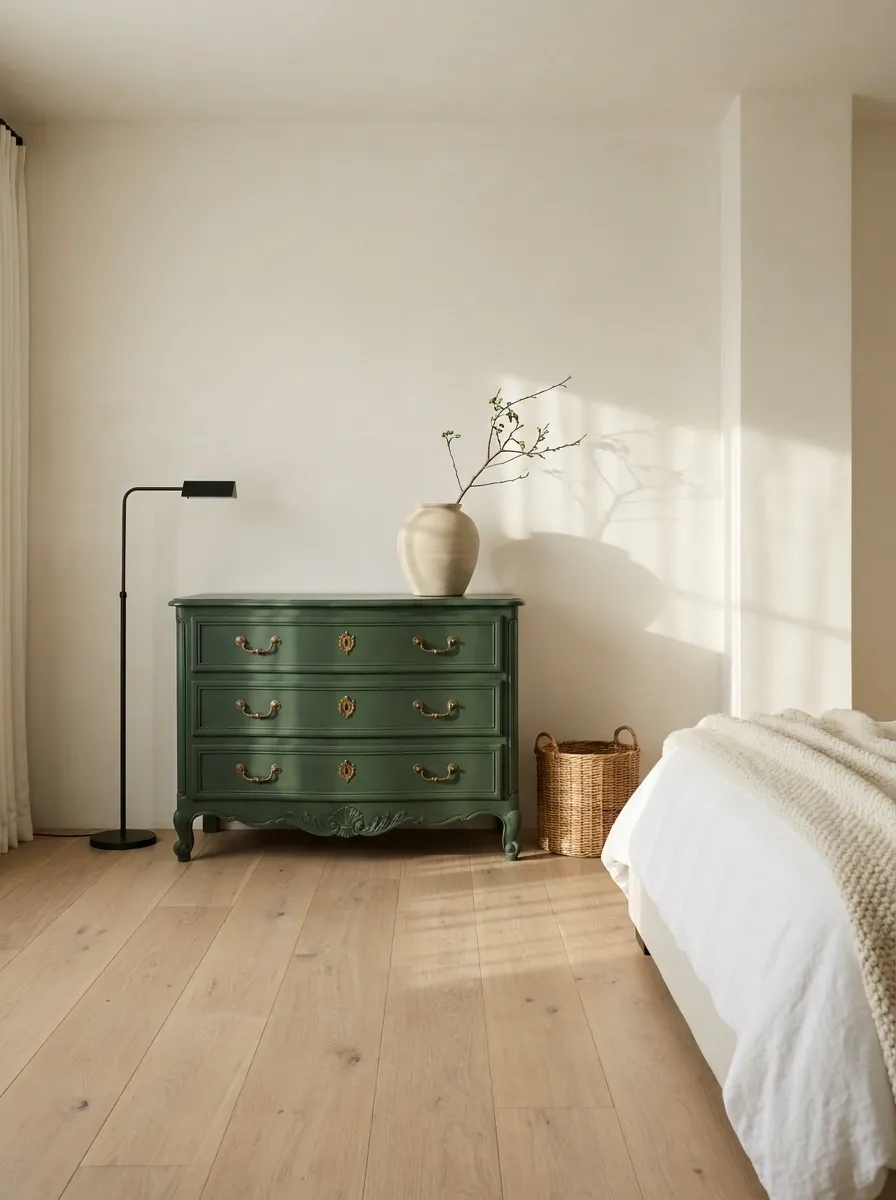
Sometimes the strongest bedroom design is built around one piece rather than repainting everything.
Choose an antique dresser with a strong silhouette and paint it in a distinctive color such as deep green, muted blue, burgundy, or earthy red. Keep every other major furniture piece quieter.
Place it where it can be seen immediately when entering the room.
The dresser becomes the visual story while the rest of the bedroom supports it.Making Painted Furniture Look Like It Belongs
The strongest painted bedroom furniture ideas are rarely about the paint color alone. They work because the furniture has a relationship with everything around it.
Before choosing a shade, look at the room as one composition. A dark dresser needs enough light around it. A warm color needs supporting materials that do not fight its undertones. A highly detailed vintage piece benefits from quieter bedding and walls. A simple modern cabinet can handle a stronger color because its shape is already restrained.
The goal is not to make every piece match.
The goal is to make the finished bedroom feel intentional.
And if the dresser suddenly looks better than the bed, that is between the dresser and the bed.