
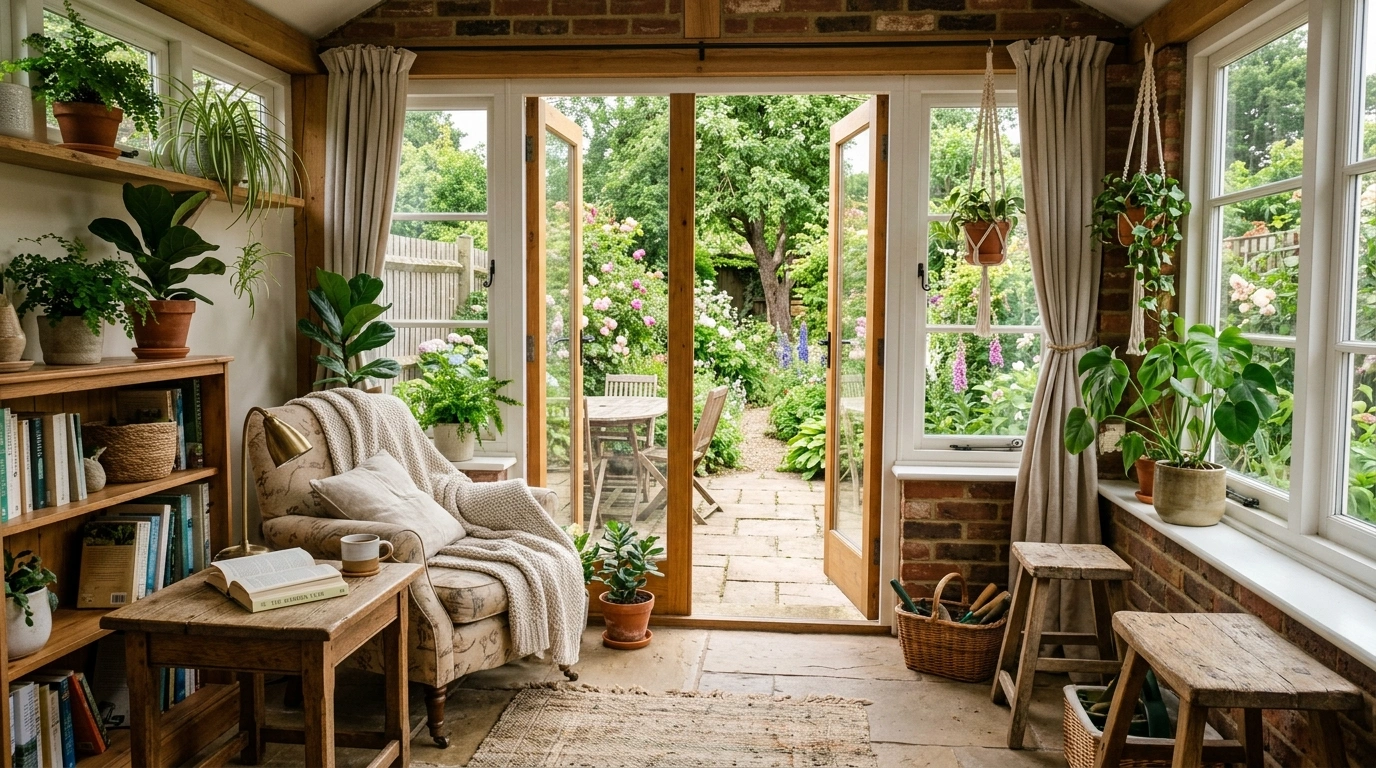
The awkward part of a garden room isn’t getting four walls and a roof. It’s making the finished space feel like somewhere worth spending time in instead of a glorified storage box with a sofa pushed against one wall.
A lot of decorating advice skips the part that actually matters. A chair might look great on its own, but that doesn’t explain where it belongs, what should sit opposite it, how the windows affect the layout, or why the room feels cohesive once everything is in place. Garden rooms are especially tricky because the garden itself is part of the visual composition.
Beautiful Garden Room Ideas
Light-Filled Garden Room With Warm Oak and Linen
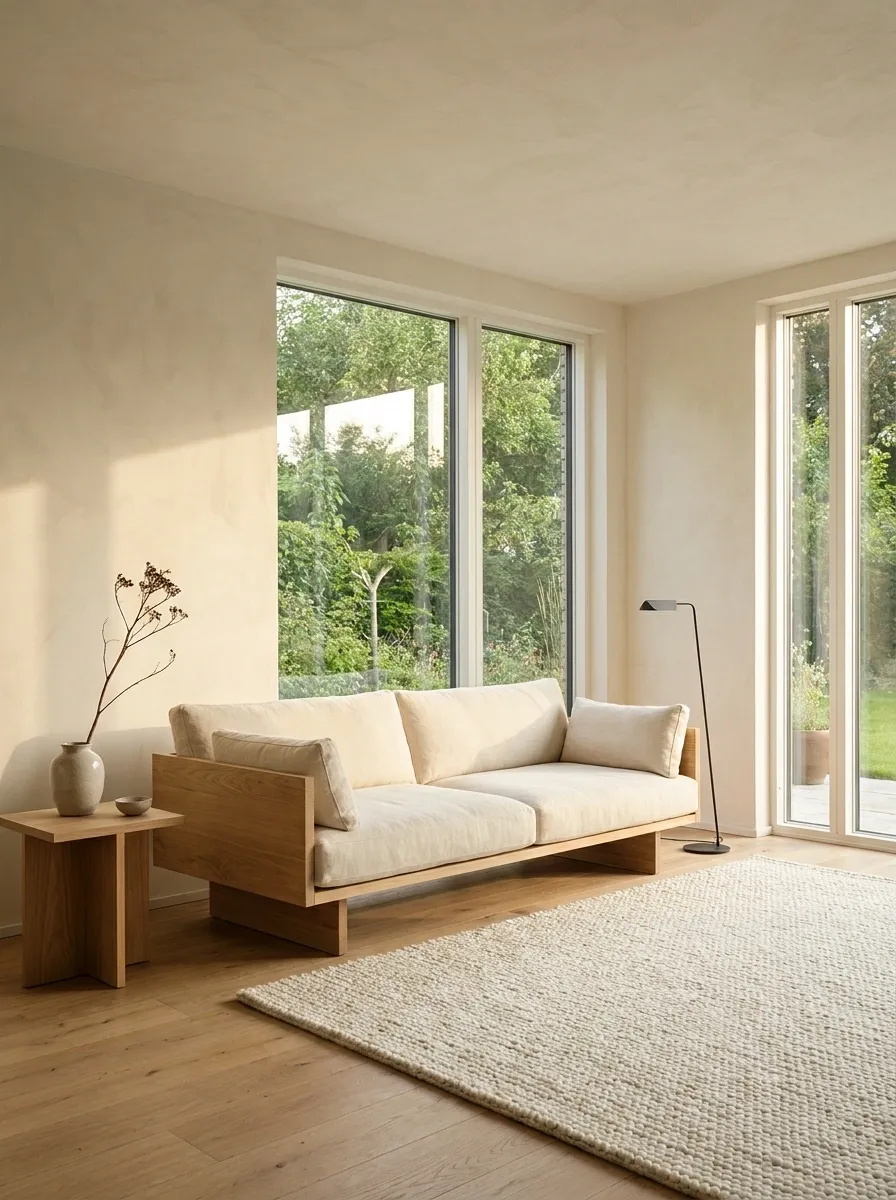
Pale oak, creamy walls, soft linen, and broad garden-facing glazing give this room an easy sense of calm without making it look washed out. The furniture stays fairly low, leaving more of the windows visible and allowing the greenery outside to do some of the decorating.
A textured rug adds softness beneath the seating area, while simple lamps and a small timber table keep the room useful without filling every corner. The warm wood is important here. Too much white can make a garden room feel oddly detached from the garden, while oak gives the whole composition a warmer visual anchor.
The trick is restraint. A room like this doesn’t need seventeen decorative objects fighting for attention.
Dark Green Garden Room With Brass and Walnut
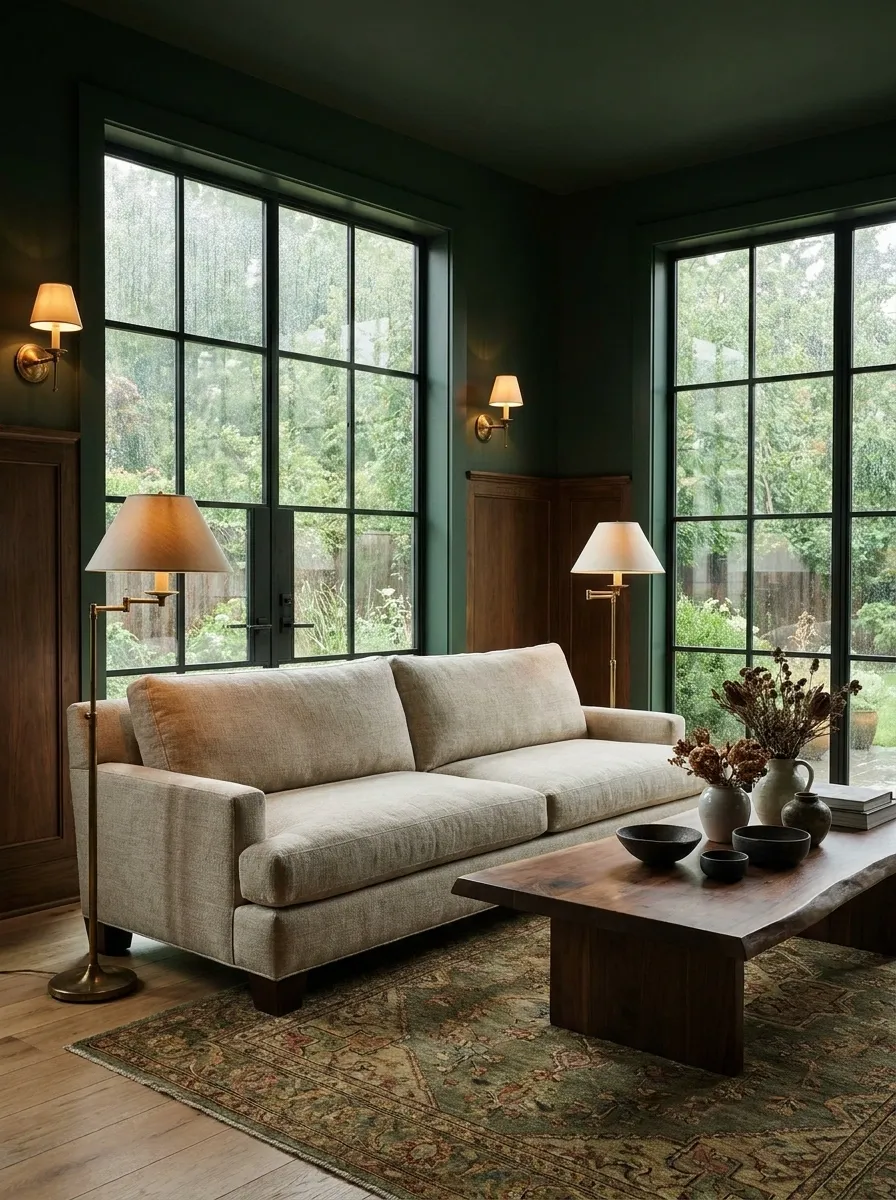
This one goes in the opposite direction and looks all the better for it. Deep green walls wrap around walnut furniture, while aged brass lighting adds a warmer note against the darker backdrop. The result feels intimate rather than gloomy because the windows still provide a strong visual connection to the garden.
A large upholstered sofa anchors the room, with a substantial coffee table keeping the center grounded. The darker palette works especially well when the room has good natural light during the day and warm lamps for evening use.
The important part is keeping the materials rich but controlled. Add too many competing finishes and the room stops looking moody and starts looking like a very confused antique shop.
Walnut gives it weight.
Brass catches the light.
Scandinavian Garden Room With Pale Timber and Soft Gray
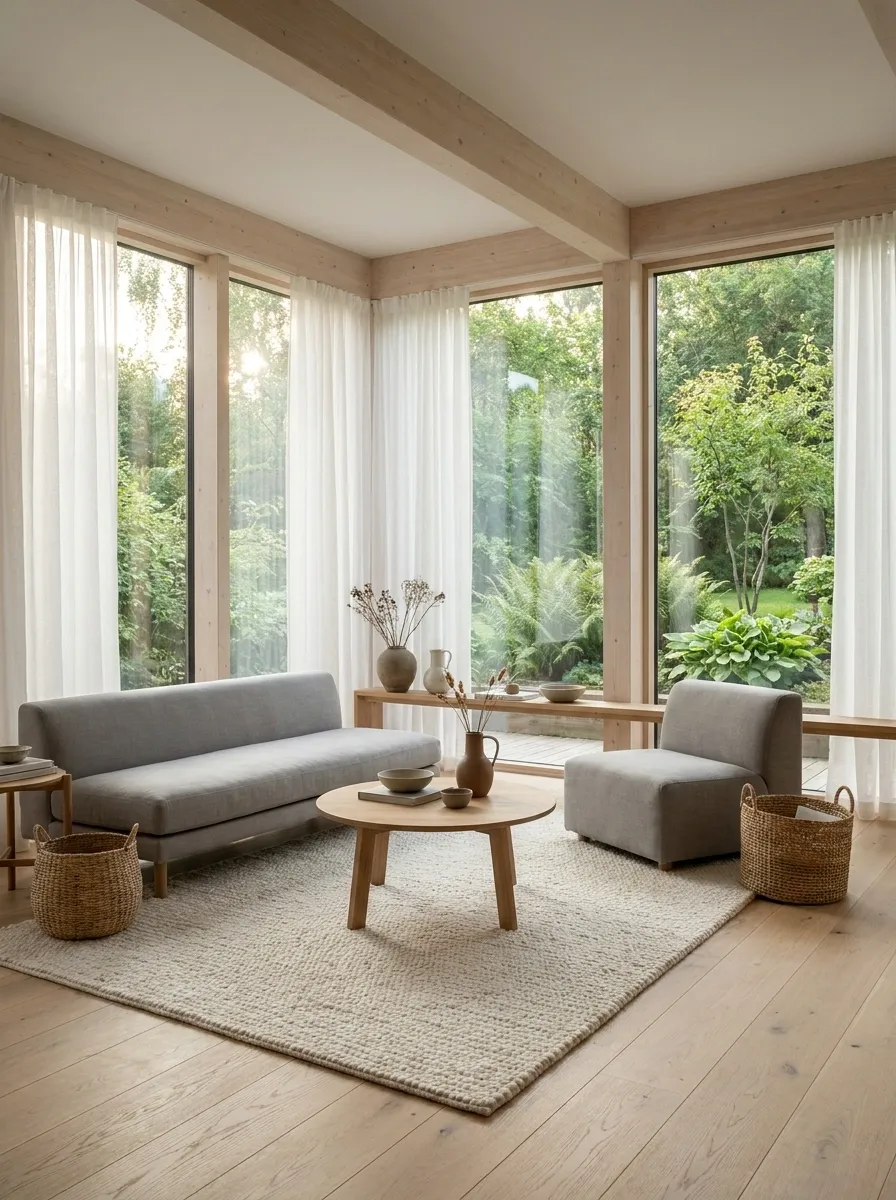
Pale timber gives this garden room its structure, while soft gray upholstery keeps the palette calm without flattening it. A simple sofa, compact armchair, round table, and woven pieces create a useful seating area that still leaves plenty of breathing room around the glazing.
The garden outside should remain visible rather than being hidden behind heavy window treatments. That makes the room feel connected to its setting instead of sealed off from it.
Texture does a lot of the work here. Woven seating, a nubby rug, soft curtains, and timber surfaces give the restrained palette enough variation to stay interesting. The whole room says quiet morning, good coffee, no visual chaos. A surprisingly rare achievement.
Cottage Garden Room With Floral Fabrics and Painted Furniture
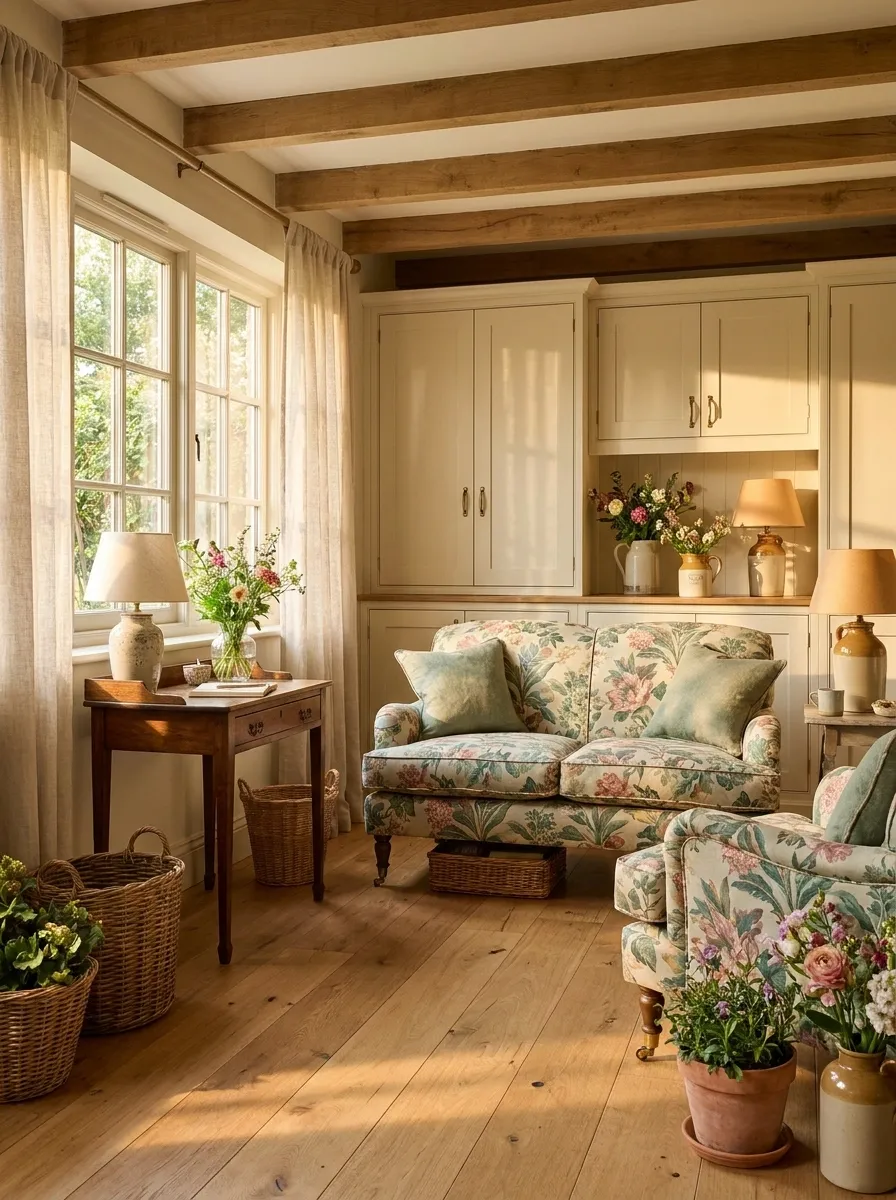
A cottage-style garden room works best when the whole space commits to the idea. Here, painted furniture, floral upholstery, timber details, soft curtains, and a garden full of flowers all speak the same visual language. Nothing feels imported from a completely different room.
A small writing desk can sit beside one window while a compact sofa and armchair create a second zone for reading or conversation. Warm lamps keep the room useful after sunset, and painted storage helps the space stay tidy without looking overly modern.
Pattern is the star, but it isn’t allowed to run the place. Keep the larger furniture fairly quiet and let the floral fabric carry the personality. Otherwise the room starts looking like the wallpaper, curtains, and cushions had a group chat and decided to overachieve.
Modern Garden Lounge With Black Framing and Stone
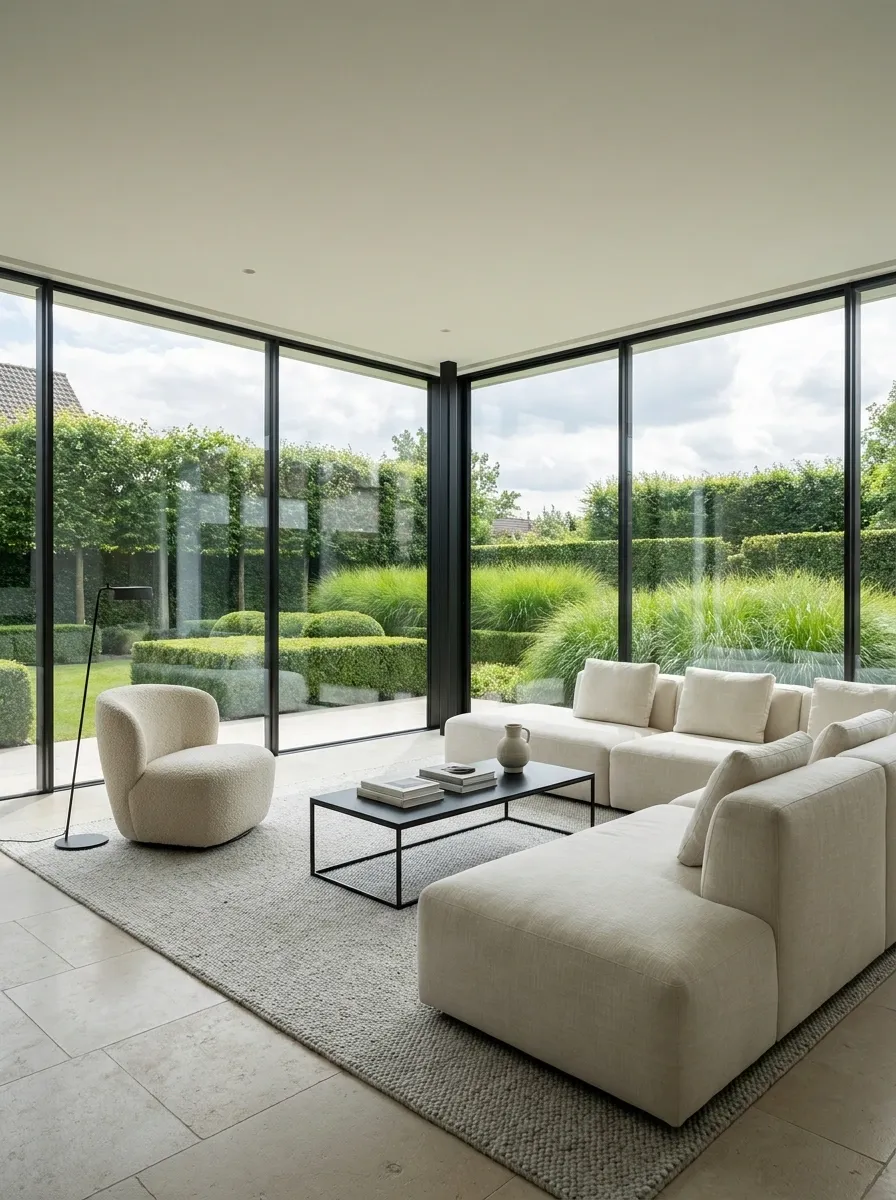
Strong black-framed glazing gives this garden room an architectural edge, while pale stone and soft upholstery stop the space from becoming harsh. A low sofa faces the garden, with a slim coffee table and a single sculptural chair keeping the center open.
The flooring carries the stone tone through the room, creating a visual base that makes the black framing feel intentional rather than random. Outside, clipped planting and softer greenery create contrast against the crisp geometry of the building.
This concept suits a garden room where architecture is meant to be part of the design rather than something hidden behind layers of decor. Keep the furniture simple. Once the black frames and stone are doing this much visual work, adding a dozen decorative objects would be less “finished room” and more “please stop shopping.”
Pale base.
Soft foreground.
Small Garden Office With Built-In Desk and Window Seat
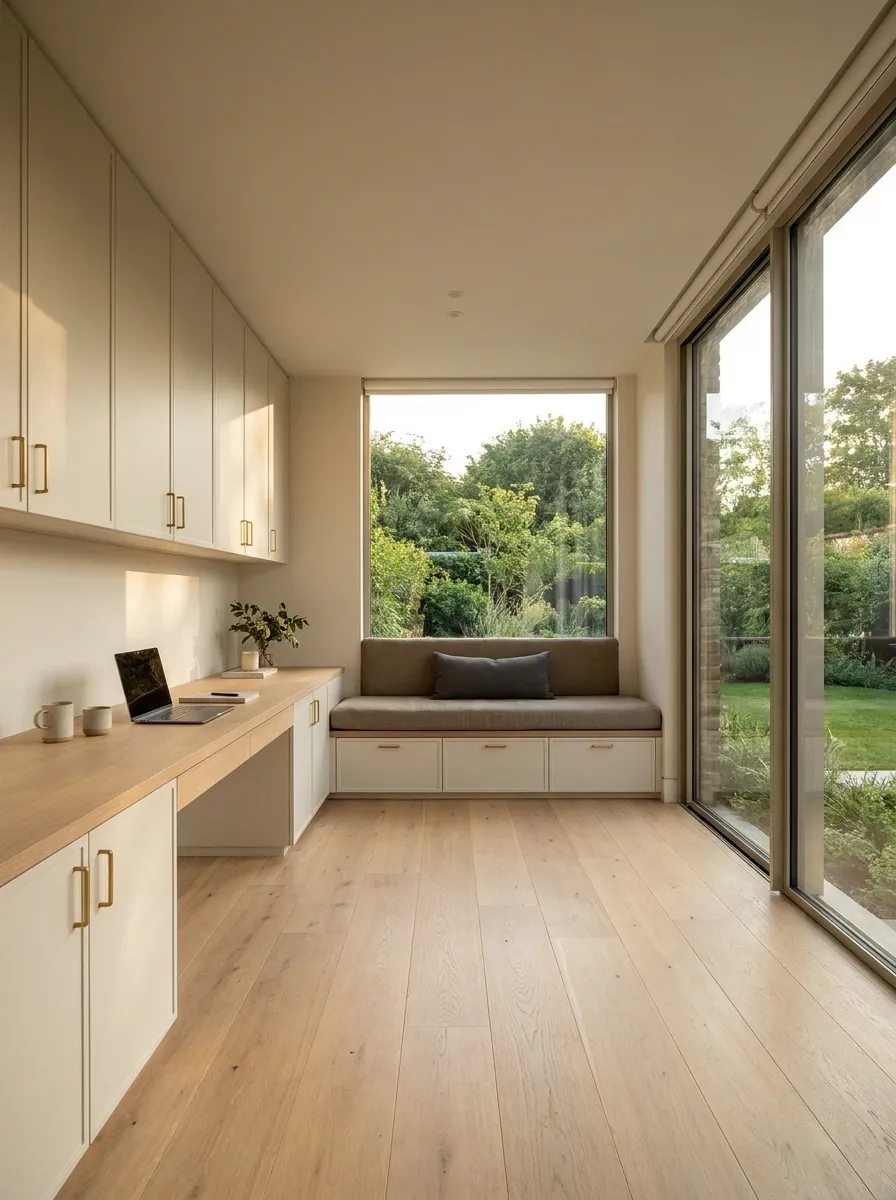
A small garden room doesn’t need a tiny desk floating awkwardly in the middle while the rest of the room wonders what it’s supposed to do. This layout gives the space a proper identity by building the desk and window seat into the architecture.
The long work surface runs along one wall, with shallow storage above and below. Opposite it, a built-in bench creates a separate spot for reading or taking a break without adding another bulky piece of furniture. Large glazing keeps the garden visible from both zones.
The layout works because each side of the room has a job. The center stays open, which makes the footprint feel more generous and keeps the space easy to move through.
Garden Reading Room With Terracotta, Oak, and Greenery
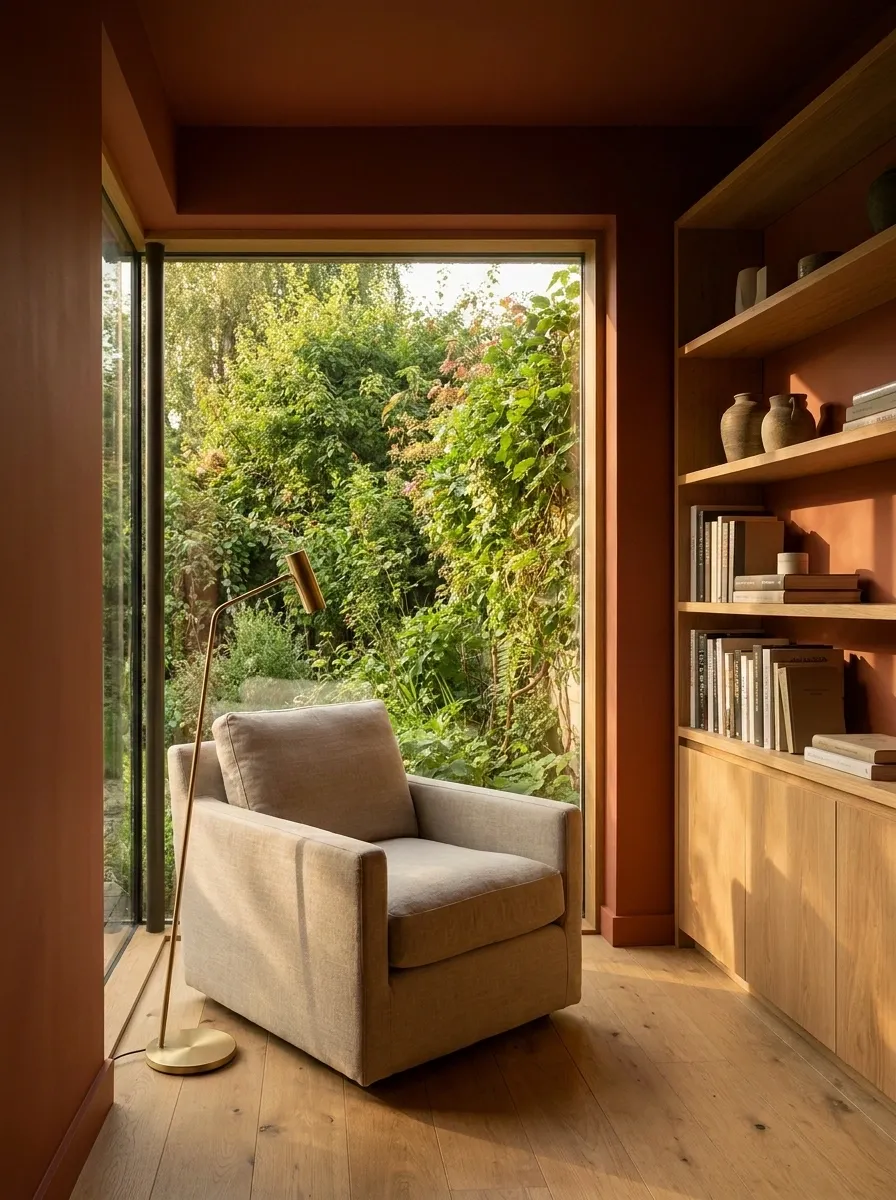
Terracotta walls give this garden room instant warmth, while oak shelving and furniture keep the color grounded. A deep armchair sits near the window with a floor lamp beside it, creating a clear reading spot without turning the entire room into a furniture showroom.
The shelving can hold books, a few ceramics, and useful objects without becoming an endless display wall. Outside, leafy planting adds another layer of green to the warm interior palette.
This design works because the strongest colors are already built into the room. The walls establish the mood, the oak softens it, and the garden supplies the cooler counterpoint. No need for seventeen cushions trying to prove the room is “cozy.” The palette already handled that assignment.
Elegant Garden Dining Room With French Doors
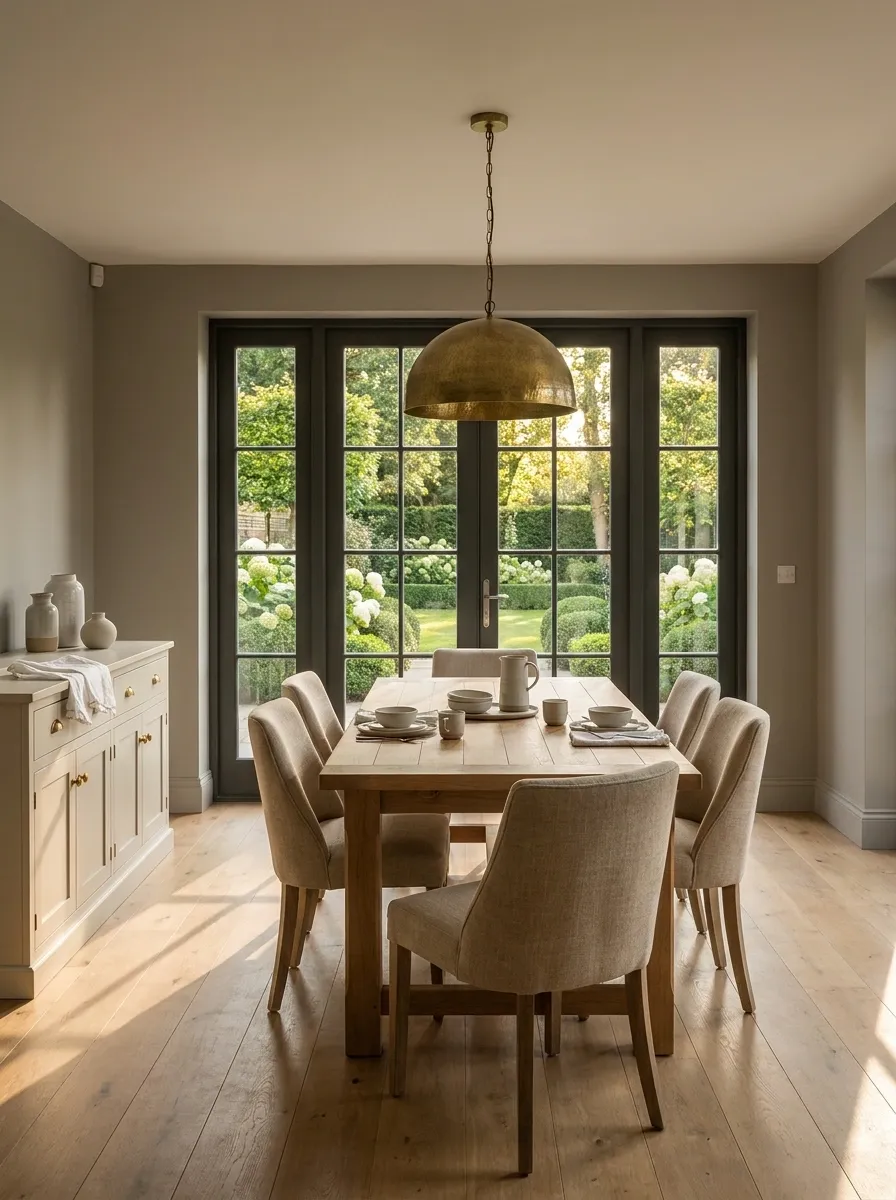
Here, the garden room behaves like a real dining room rather than a place where a spare table happened to survive the decorating process. A solid timber table sits lengthwise toward broad French doors, so the garden becomes part of the main view from the table.
Upholstered chairs add softness while a single pendant centers the composition overhead. Keep the surrounding furniture slim and the walls relatively quiet. The table, doors, and garden already provide enough structure.
A compact sideboard can sit along the rear wall for serving pieces and table linens, but it shouldn’t compete with the central dining arrangement. The strongest part of the design is the axis from the table to the garden. Break that line with oversized furniture and the room loses some of its magic.
Biophilic Garden Room With Layered Indoor and Outdoor Planting
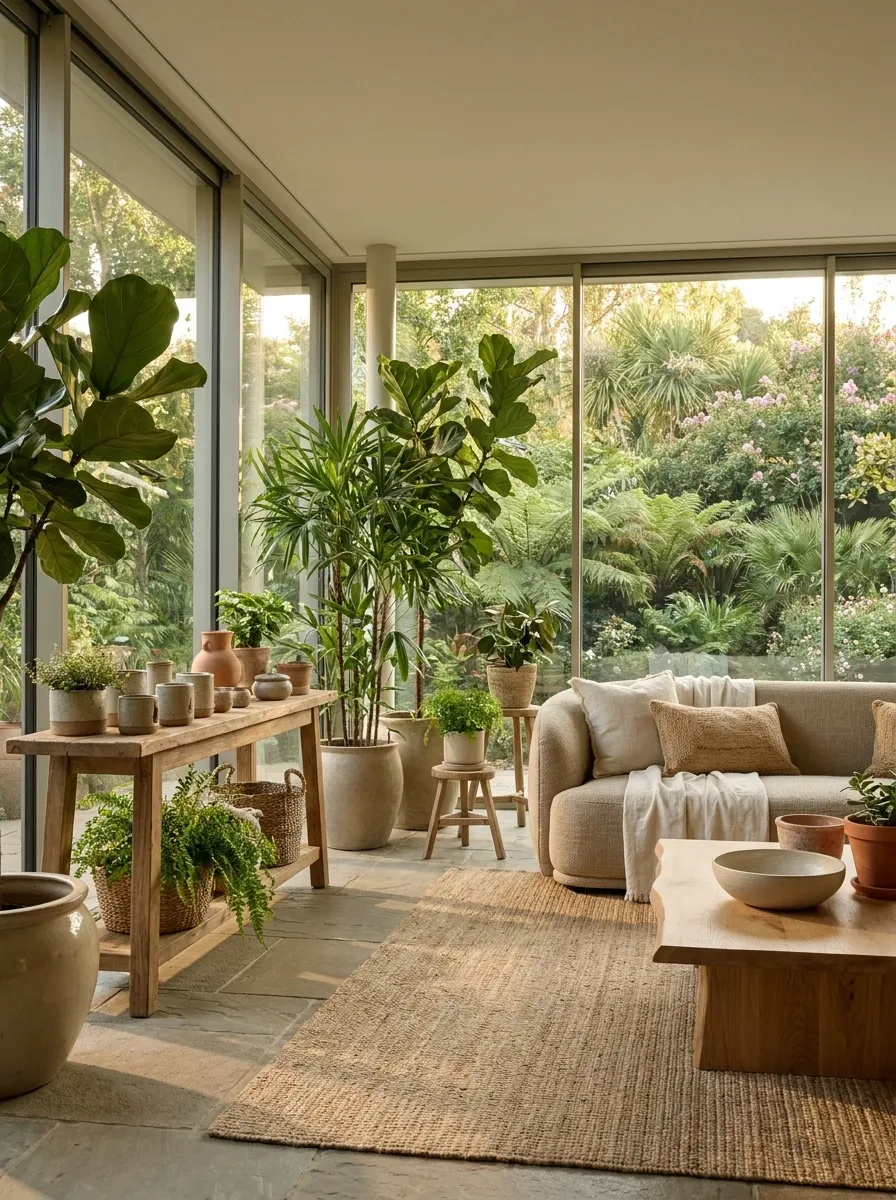
This room takes the garden connection much further by letting plants appear at different heights throughout the composition. A timber console carries smaller pots, medium-height plants sit beside the seating, and taller greenery lines the glazing so the transition to the garden feels gradual.
Natural stone underfoot and woven upholstery keep the room earthy without making it look like a plant shop with seating. The furniture remains simple so the planting has room to breathe.
The useful detail here is the layering. Putting every plant on the same shelf creates a flat green wall. Varying height creates depth and helps the interior visually continue into the landscape beyond the glass.
Also, putting one enormous plant beside every chair is not mandatory. The room has already made its point.
Classic Garden Studio With Cream Walls and Dark Wood
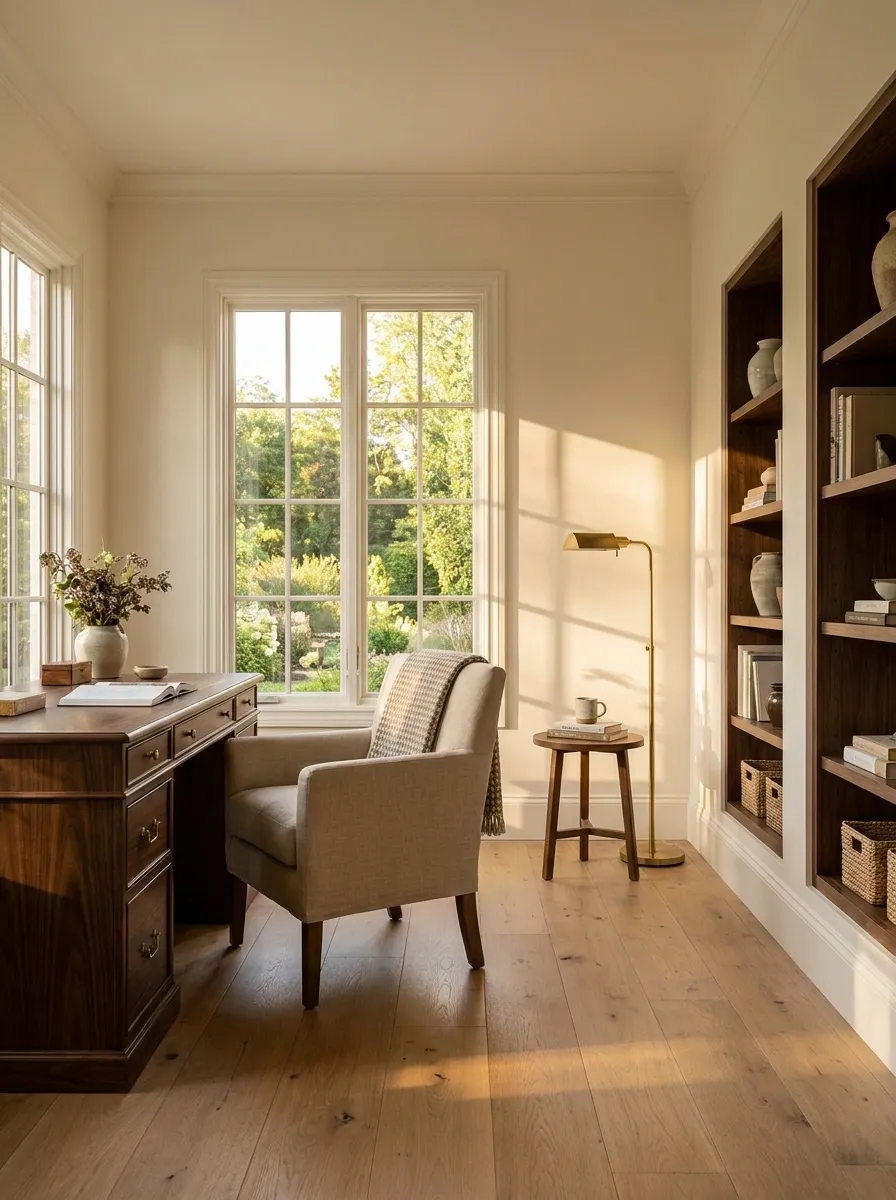
Cream walls and deep wood tones give this garden studio a more traditional architectural feel. A dark timber desk or console anchors one side, while a comfortable armchair and classic lamp create a quieter corner near the garden-facing windows.
The room benefits from a little symmetry, but it shouldn’t become rigid. Matching lamps or balanced furniture placement can establish order while books, ceramics, and textiles keep the space from looking like a furniture catalog photograph.
The cream background is doing important work. It lets the dark wood stand out clearly without making the room feel heavy. Warm metal details can bridge the two tones, but restraint matters. Once the main contrast is working, more contrast is just showing off.
Soft Blue Garden Room With Coastal Character
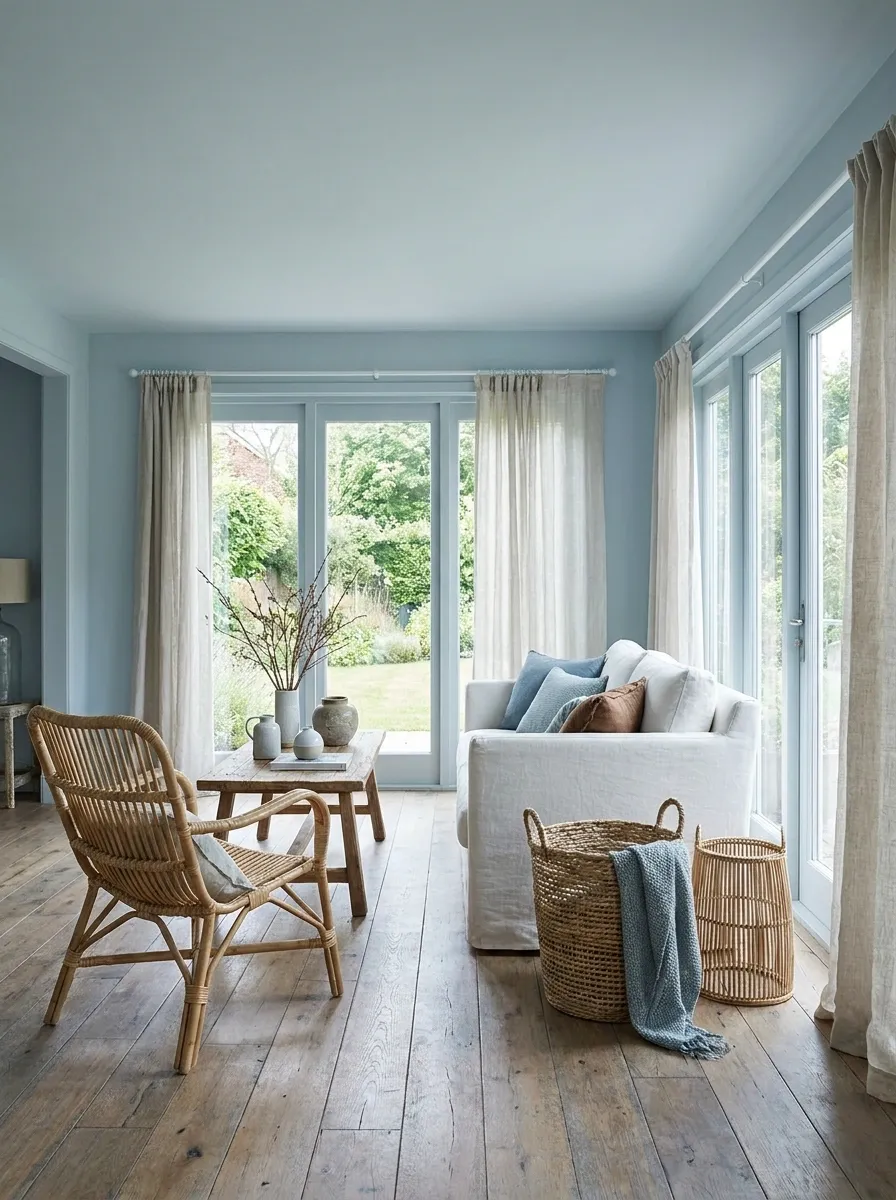
Soft blue walls, white linen, weathered timber, and woven furniture give this garden room a relaxed coastal direction without turning it into a beach-themed souvenir shop. The palette stays pale, while the garden outside brings in deeper greens that keep the room from feeling too washed out.
A compact sofa can sit opposite the glazing, with a woven lounge chair angled slightly toward it rather than lined up like a waiting room. Natural timber adds warmth across the floor and smaller furniture pieces, while lightweight curtains soften the windows without blocking the view.
Texture matters more than extra color here. Linen, wicker, weathered wood, and painted surfaces give the pale palette enough variation to feel layered. The sea isn’t required, thankfully.
Compact Garden Room With Built-In Daybed
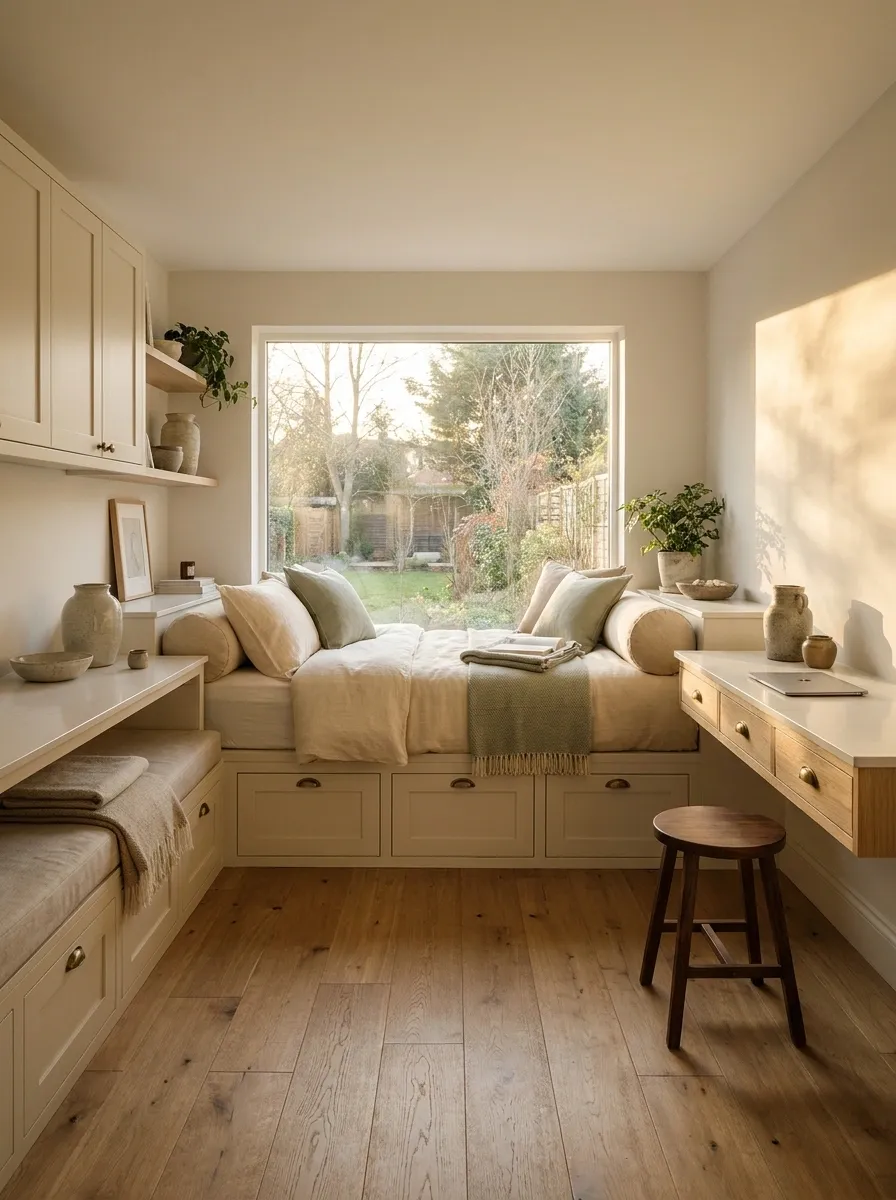
This small garden room makes the footprint feel generous by giving the biggest pieces of furniture a permanent place. A built-in daybed runs beneath the main window, with drawers or cupboards underneath for practical storage. A narrow floating desk occupies the opposite wall, leaving the central floor almost completely open.
The result is part lounge, part reading nook, part occasional workspace, without any of those functions having to fight for room. The daybed can hold cushions during the day and become a comfortable extra sleeping spot when needed.
The real design win is the empty middle. Small spaces often look smaller because every available patch of floor gets occupied. Leaving some of it alone is, apparently, controversial.
Industrial Garden Studio With Concrete, Steel, and Warm Timber
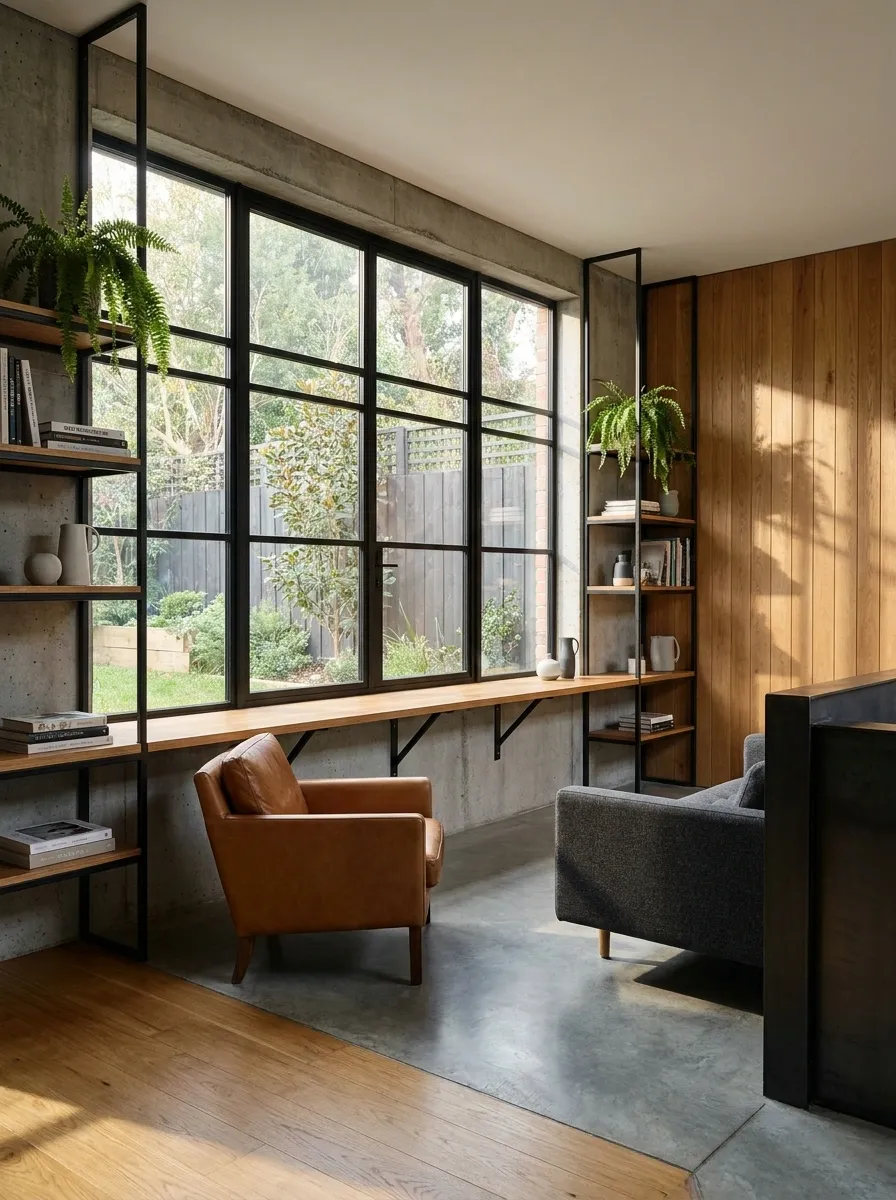
Black steel framing and concrete-style surfaces give this garden studio a strong industrial backbone, but warm timber keeps it from feeling like a very expensive loading bay. A long timber worktop runs beneath the windows, while a leather chair and compact sofa introduce softer shapes.
The glazing is important because natural views break up the harder materials and keep the architecture from becoming visually dense. Open shelving can display a few books, plants, and useful studio objects, but the overall arrangement stays fairly spare.
Warm timber should carry enough visual weight to balance the steel. Add too much black and the room becomes severe. Add too much rustic wood and the industrial idea quietly disappears. The middle ground is where this design earns its keep.
Botanical Greenhouse-Style Garden Room With Vintage Details
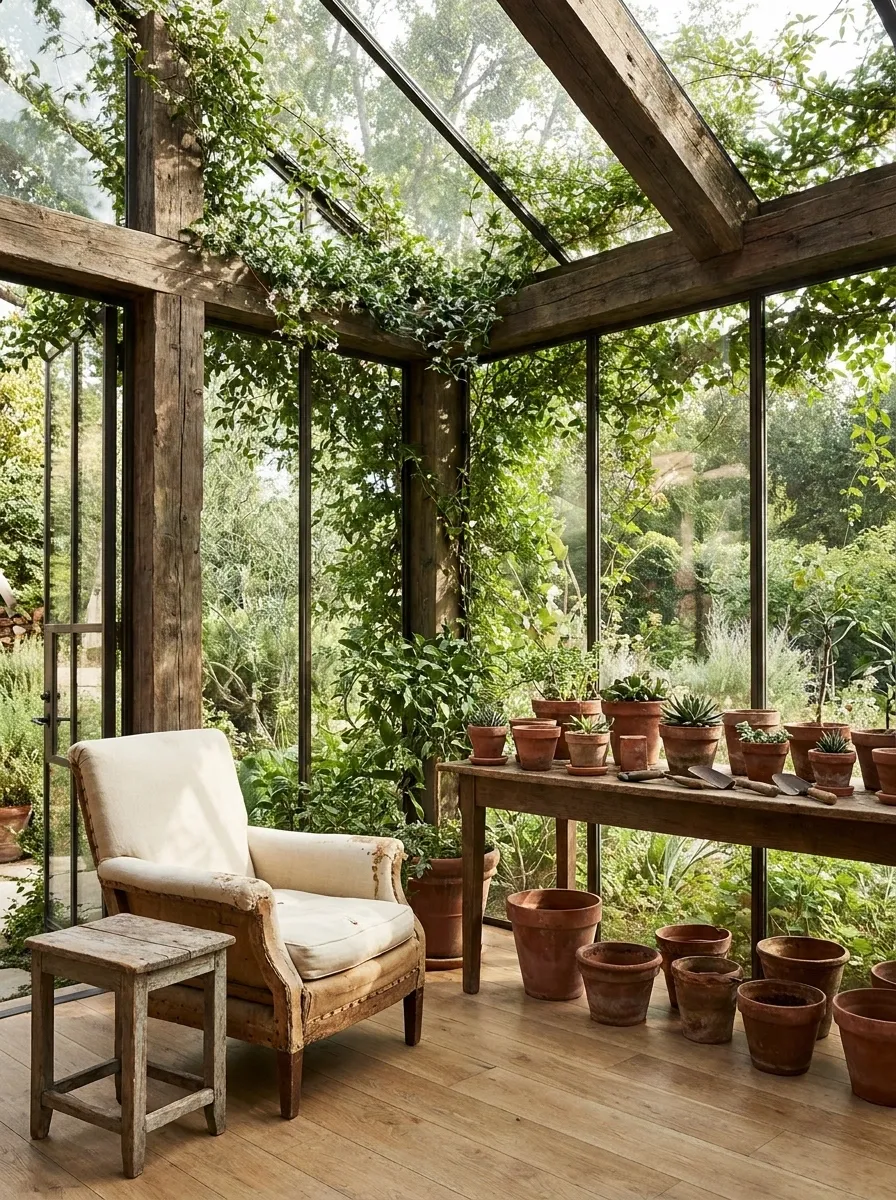
This design sits somewhere between conservatory and sitting room, with large areas of glass, timber framing, terracotta pots, vintage furniture, and climbing greenery immediately outside. Instead of treating plants as accessories, the architecture gives them a major role in the composition.
A vintage armchair can sit beside a small timber table, while a narrow console supports smaller plants and garden finds. Terracotta adds warm color against the glazing, and aged wood gives the room enough character that everything doesn’t need to look newly purchased.
The best part is the overlap between inside and outside. Vines and mature planting soften the edges of the structure, making the garden room feel like it belongs to the landscape instead of being dropped onto it with a tape measure and a deadline.
Warm Minimal Garden Room With Beige and Walnut
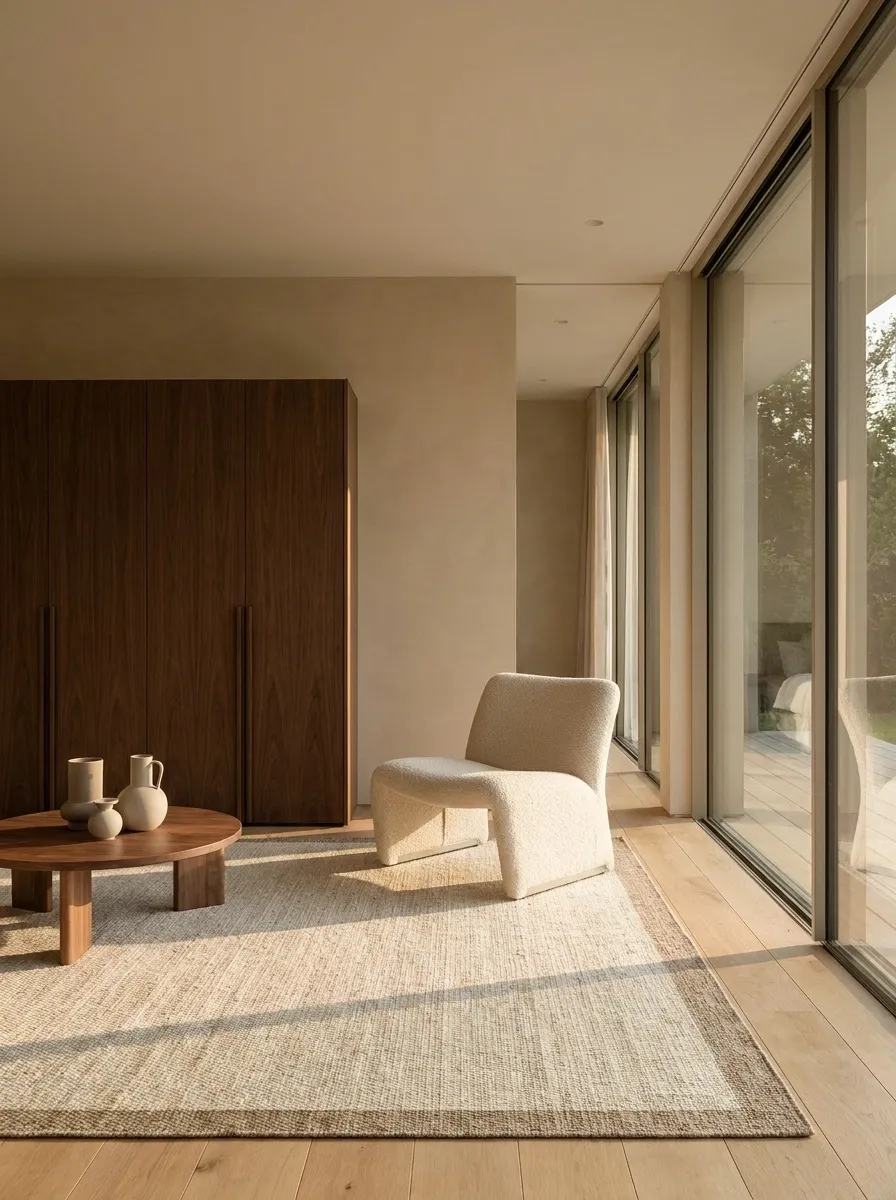
Minimalism works much better here because the room has warmth built into the materials. Beige walls create a quiet backdrop, while walnut cabinetry and furniture add enough depth to stop the space from feeling blank. A sculptural lounge chair sits near the glazing, paired with a low table and a simple woven rug.
Storage is largely concealed, which keeps everyday clutter from becoming part of the room’s visual identity. One or two larger objects can remain on display, but the composition doesn’t depend on lots of little decorative pieces.
The key is choosing fewer forms with more presence. A substantial walnut cabinet has more visual impact than six random shelves. A large rug feels more intentional than several tiny floor coverings wandering around looking lost.
Traditional Garden Office With Built-In Bookcases
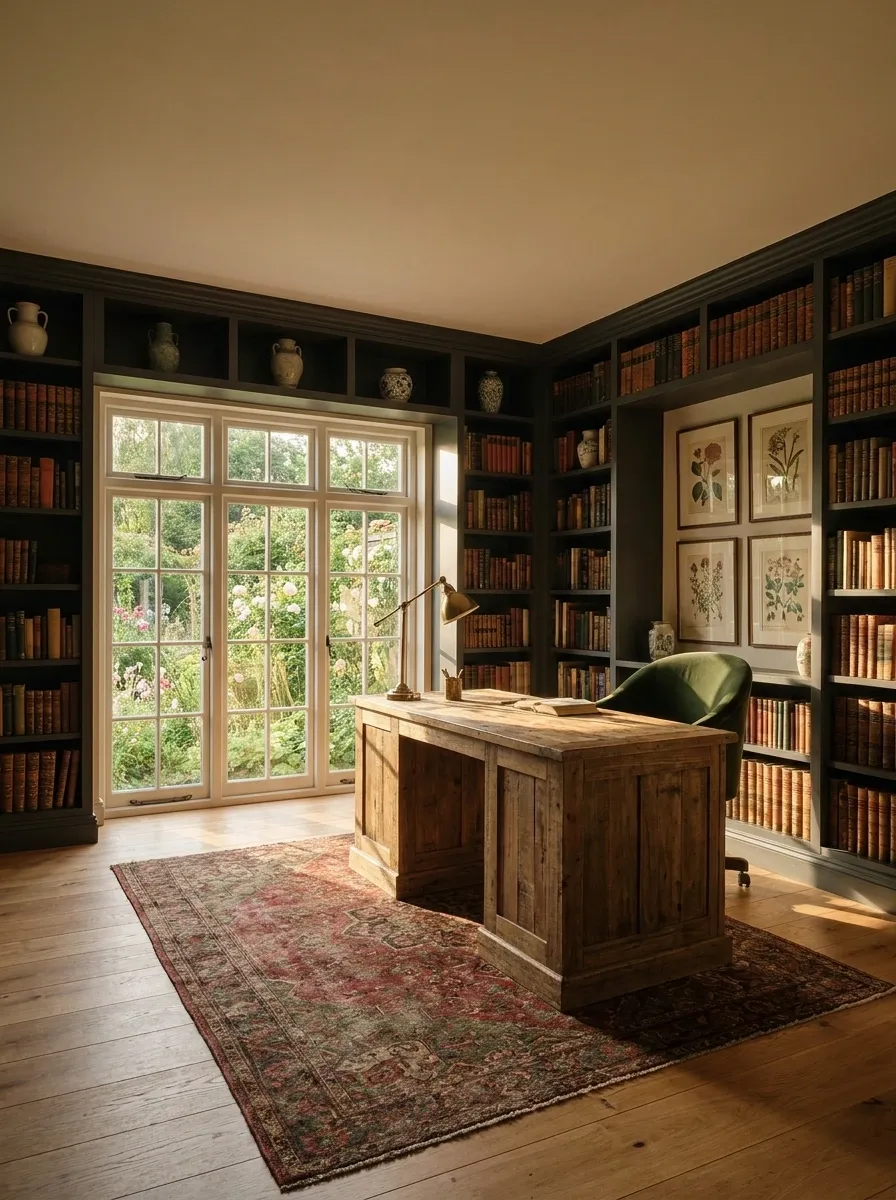
This garden office feels like a proper study rather than a desk that got sentenced to outdoor duty. Full-height bookcases frame the room, while a substantial timber desk faces the garden-facing windows instead of a blank wall.
A deep green upholstered chair adds color without overwhelming the woodwork. Classic task lighting, framed prints, and a small rug give the room enough softness to feel comfortable through a full workday. The shelves provide plenty of storage, but leaving some sections partially open keeps the architecture visible.
The vertical shelving is what gives this room its character. It draws the eye upward and makes the compact structure feel more established. Keep the floor area relatively open. There is no prize for discovering how many filing cabinets fit into twelve square feet.
Rustic Garden Retreat With Reclaimed Timber and Stone
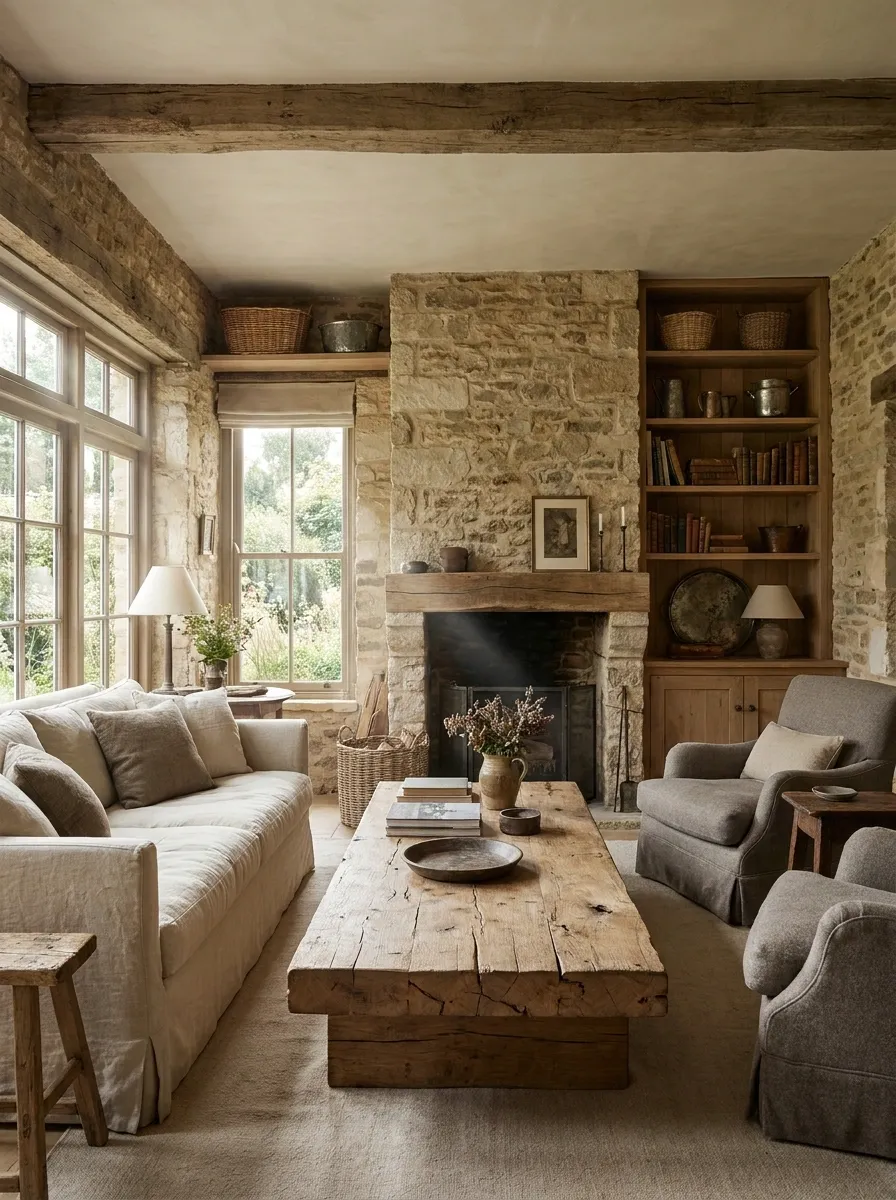
This garden room leans into natural imperfections. Reclaimed timber, rough stone, linen upholstery, and aged metal create a retreat that feels connected to the countryside rather than polished within an inch of its life.
The main seating area uses a deep sofa and a pair of relaxed chairs around a chunky timber table. A stone or plaster fireplace can become the architectural focal point, while shelves hold books, baskets, and a handful of useful objects. Outside, informal planting continues the relaxed character.
The design succeeds because the materials aren’t all trying to look new. Weathered surfaces, visible timber grain, and slightly irregular textures give the room depth. Keep the furniture silhouettes simple so the materials remain the interesting part.
Pink and Green Garden Room With English Garden Character
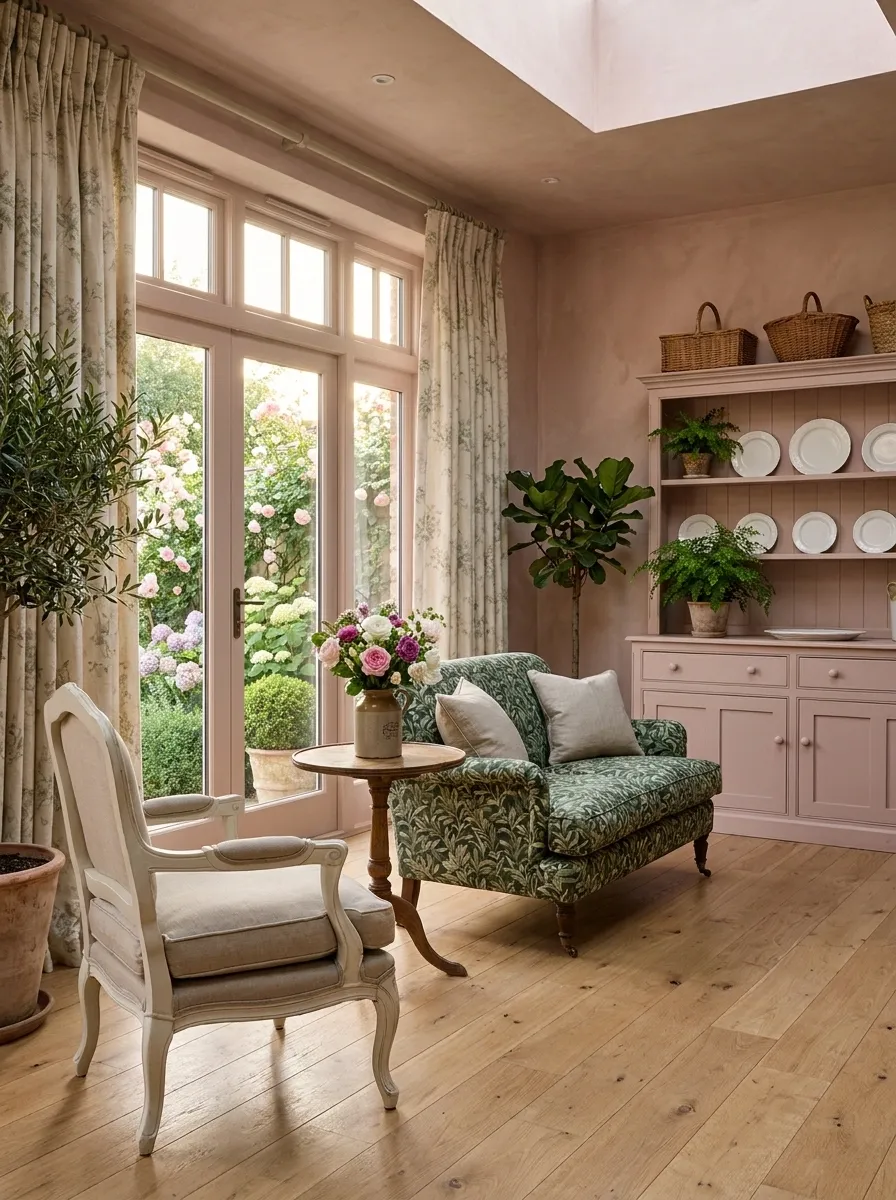
Dusty pink walls bring a softer mood to this garden room, but leafy green upholstery and abundant planting keep the palette grounded. Painted timber furniture adds another gentle layer, while floral textiles connect the interior to the garden outside.
A compact sofa can sit opposite a classic armchair, with a small round table between them. Curtains in a muted pattern soften the glazing without hiding the view. A painted cabinet or dresser can provide storage while carrying the wall color through another part of the room.
The combination works because neither color has to do all the work. Pink supplies warmth, green gives it depth, and the garden creates a natural extension of both. Go too bright with either one and the room starts looking less English garden and more children’s birthday setup.
Contemporary Garden Guest Room With Neutral Textures
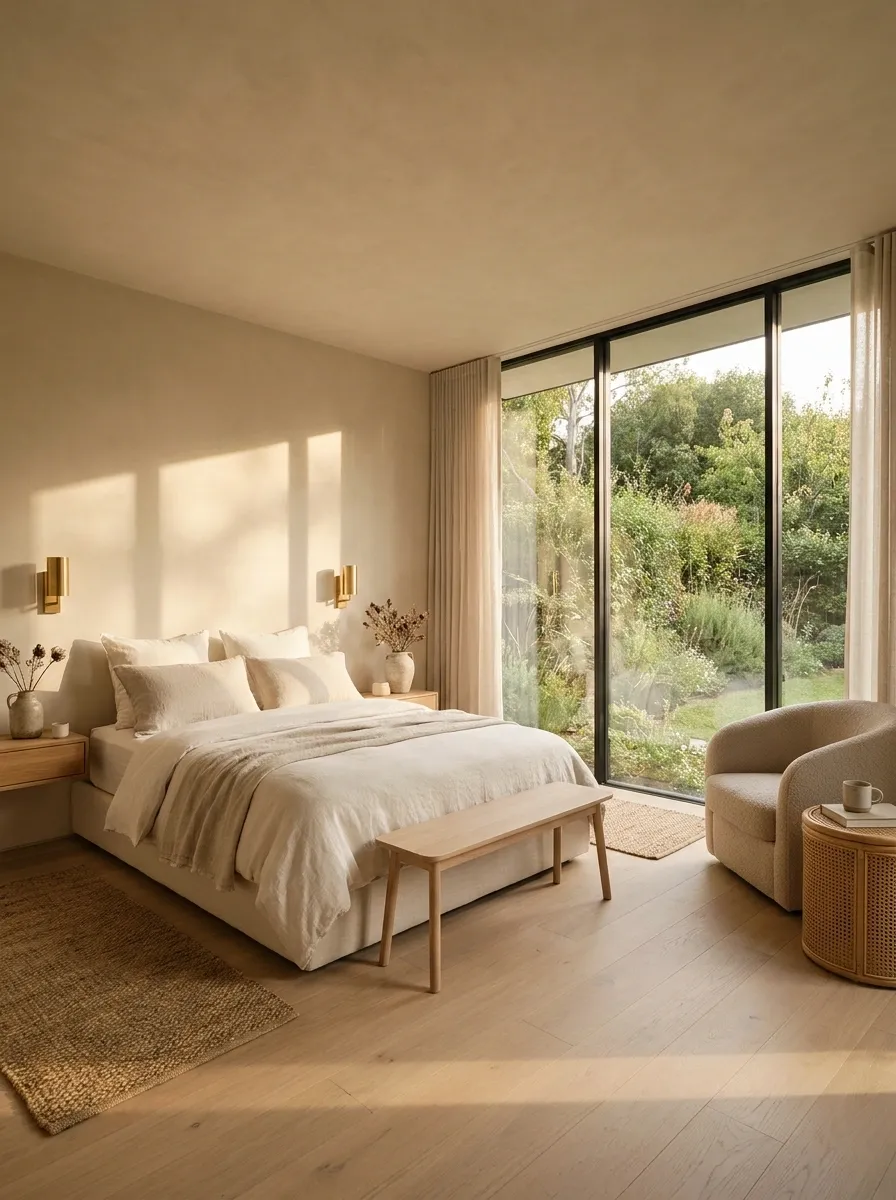
A garden guest room needs to feel like an actual place to sleep, not a decorative lounge that happens to contain a bed. This version keeps the architecture quiet with warm neutral walls, textured bedding, pale timber, and simple built-in storage.
The bed sits where it has a clear visual relationship with the garden, while wall-mounted lights free up the bedside surfaces. A narrow bench provides a place to put luggage without stealing valuable floor area. One comfortable chair near the glazing creates a separate pause point.
Texture keeps the neutral palette from becoming flat. Linen, timber, woven material, and soft upholstery create enough variation without introducing a pile of unrelated colors. Neutral doesn’t mean empty. It just means the materials have to do their jobs properly.
Garden Craft Studio With Long Worktable and Open Storage
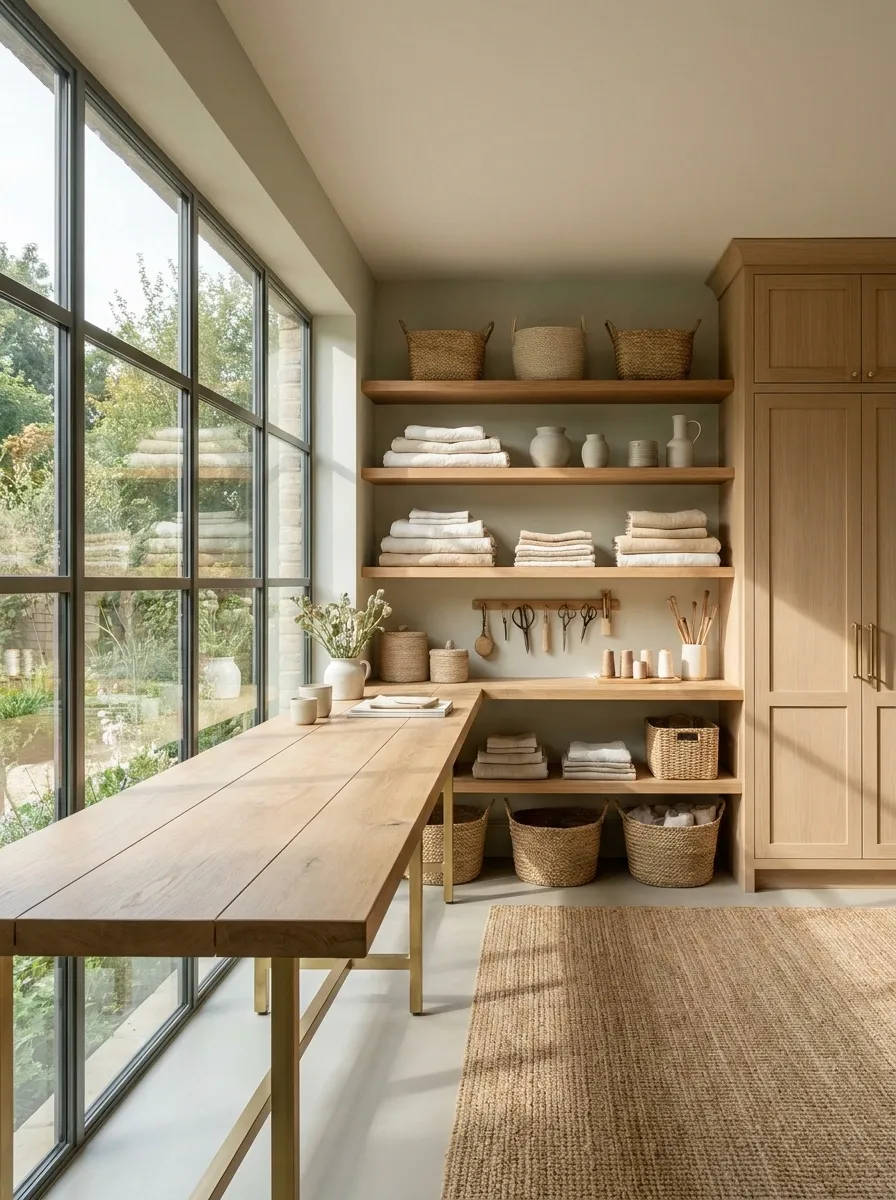
This garden room is built around making things, so the layout begins with the work surface rather than trying to squeeze a craft area into leftover space. A long timber table runs beneath the brightest windows, giving the main activity zone a clear visual center.
Open shelving holds paper, fabric, tools, baskets, and finished pieces within easy reach. A tall storage cabinet can sit at one end for less attractive supplies, keeping the main shelves from becoming an avalanche with labels.
The room stays visually calm because the storage follows a clear rhythm and the table has plenty of breathing room around it. Good creative spaces don’t need to look chaotic to prove that creative people work there. The mess can occur naturally. No need to manufacture it.
Moody Garden Room With Charcoal Walls and Amber Lighting
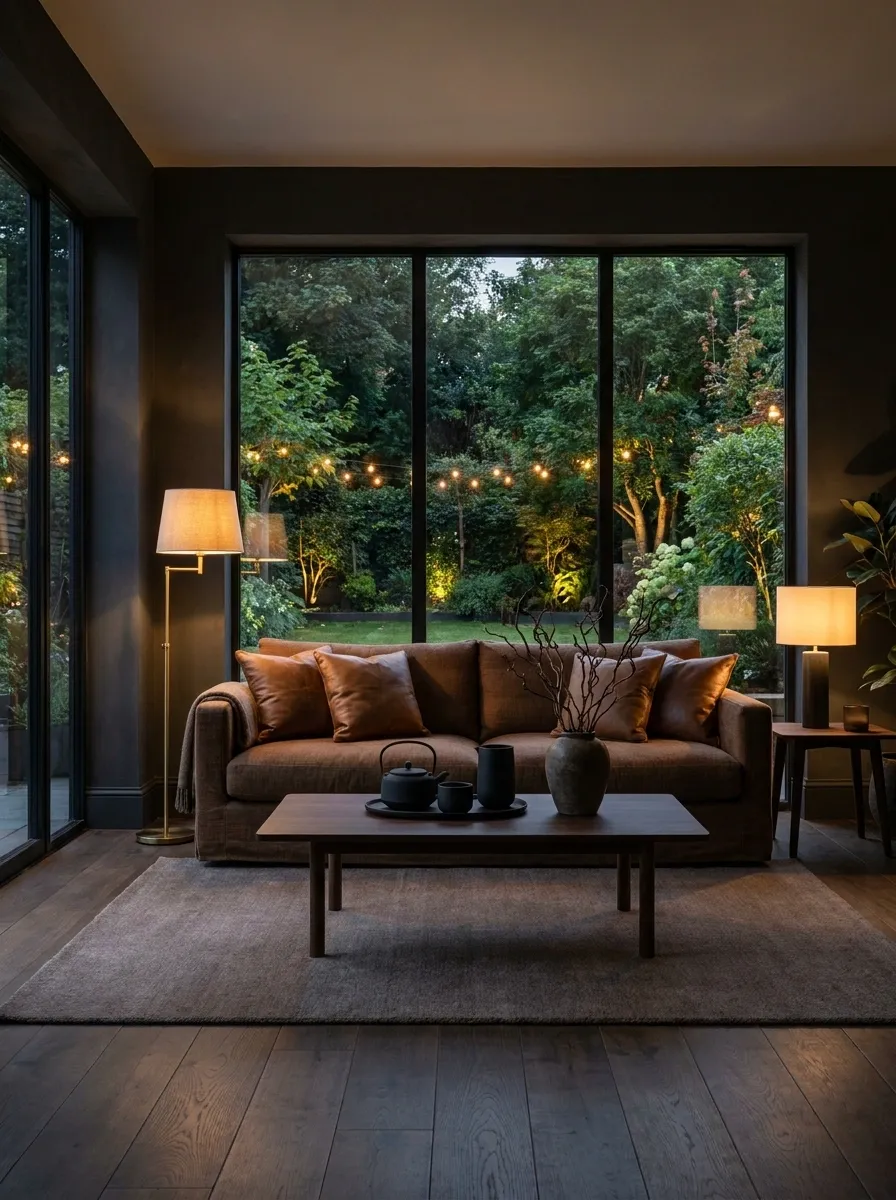
Charcoal walls give this garden room a deeper, more intimate character, while warm amber lighting keeps the darker palette from feeling flat after sunset. Rich brown upholstery, dark timber, and a simple rug build out the interior without introducing too many competing tones.
The seating faces the garden rather than being arranged around a television, which makes the room feel more like a private retreat. During the day, natural light keeps the charcoal surfaces visually soft. In the evening, table lamps and a floor lamp create smaller pools of warmth instead of blasting the entire room with one bright ceiling fixture.
This is a room for slower evenings. The palette doesn’t need to shout. It has already entered the chat wearing charcoal.
Mediterranean Garden Room With Terracotta and Arched Details
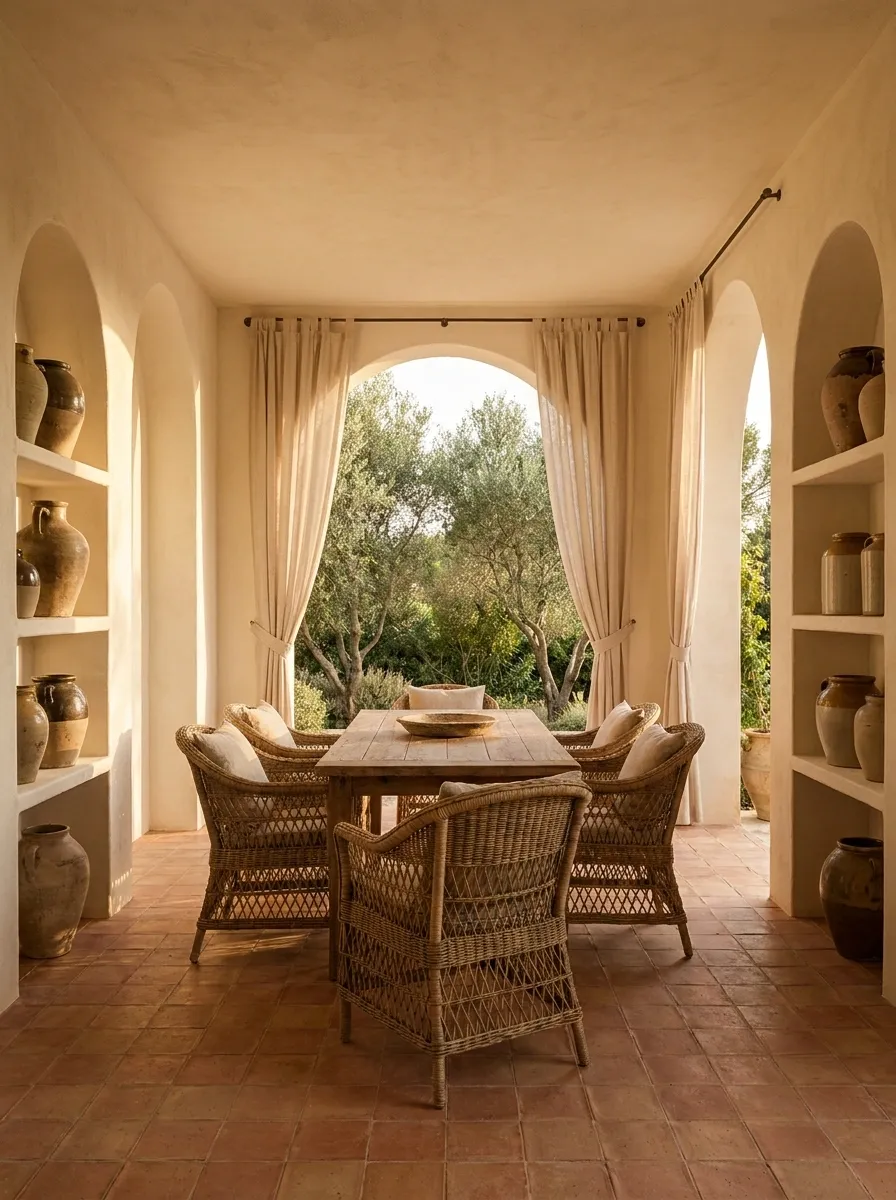
Warm plaster walls, terracotta flooring, arched openings, and rustic timber give this garden room a distinctly Mediterranean character. Olive-toned planting outside reinforces the palette, while woven seating keeps the hard surfaces from taking over.
The architecture should remain visible rather than being buried underneath decoration. A simple timber table, linen curtains, and a few large ceramic pieces are enough to complete the composition. The arches become a repeated shape through the windows, doors, or built-in shelving, giving the room a visual rhythm that feels deliberate.
Terracotta is especially effective here because it connects the floor, walls, and garden tones. Add too many bright colors and the architecture loses its quiet warmth. This room doesn’t need to cosplay as a vacation rental.
Japandi Garden Room With Low Furniture and Natural Stone
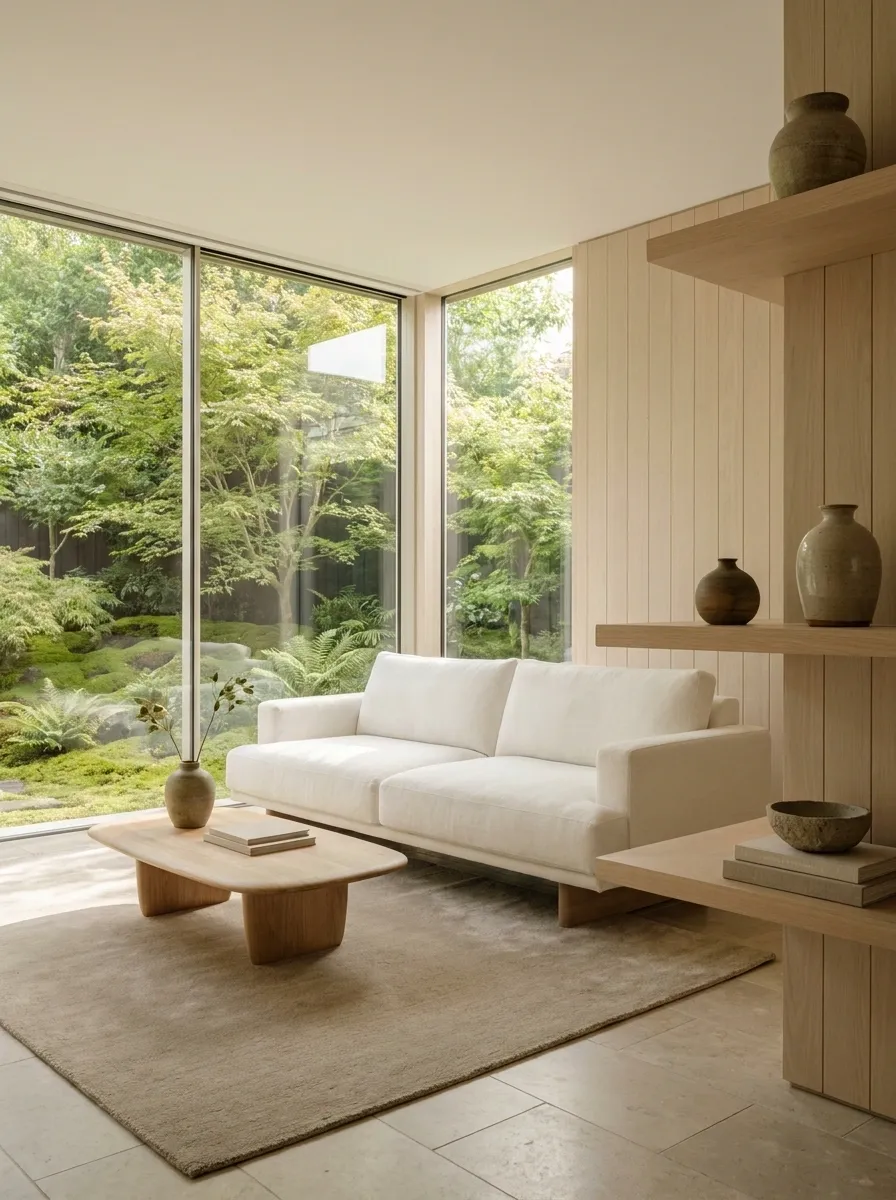
This garden room keeps the visual field low and calm. Pale timber, natural stone, muted textiles, and low-profile furniture create long horizontal lines that make the space feel open without needing oversized windows or excessive decoration.
A low sofa faces the garden, while a simple stone or timber coffee table sits close to the floor. Shelving remains sparse and architectural, with only a few objects breaking up the clean surfaces. A soft rug adds warmth between the harder floor and furniture.
The room’s character comes from proportion more than decoration. Lower furniture leaves more wall and window area visible, which strengthens the connection with the landscape. And yes, empty shelf space is allowed to remain empty. Nobody gets an award for filling it.
opens the upper view.
keep the garden visible.
Colorful Eclectic Garden Room With Collected Vintage Pieces
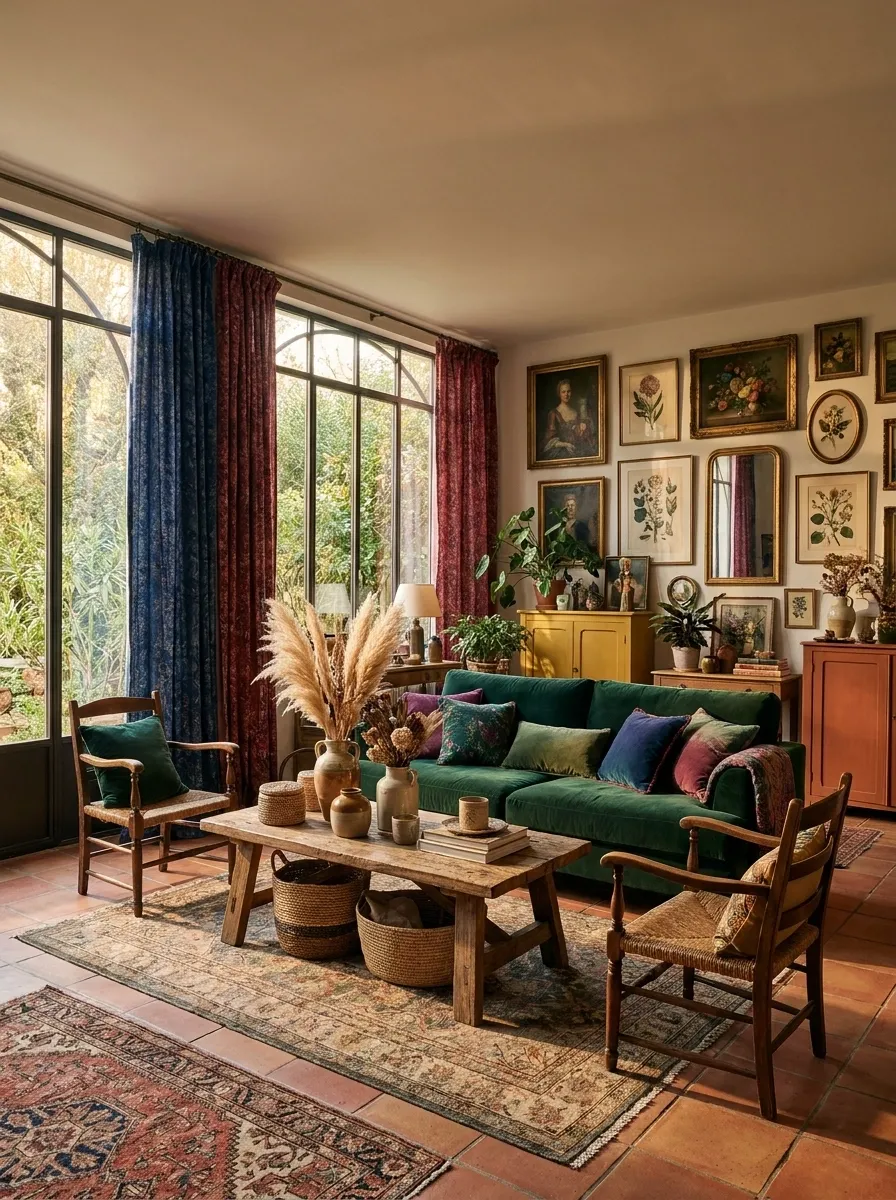
This room isn’t afraid of color, but the arrangement still has a visual center. Jewel-toned upholstery, patterned curtains, painted furniture, vintage pieces, and artwork create a layered interior that feels collected over time rather than ordered from one catalog on a very productive Tuesday.
A strong sofa anchors the room, while mismatched chairs can work around a central table as long as their scale remains compatible. One large artwork or a strong textile can establish the main color relationship, with smaller accents repeating those tones elsewhere.
Eclectic rooms work when there is a thread connecting the chaos. Here, color does the connecting. Without that thread, collected becomes cluttered very quickly.
Garden Music Room With Wood Paneling and Comfortable Seating
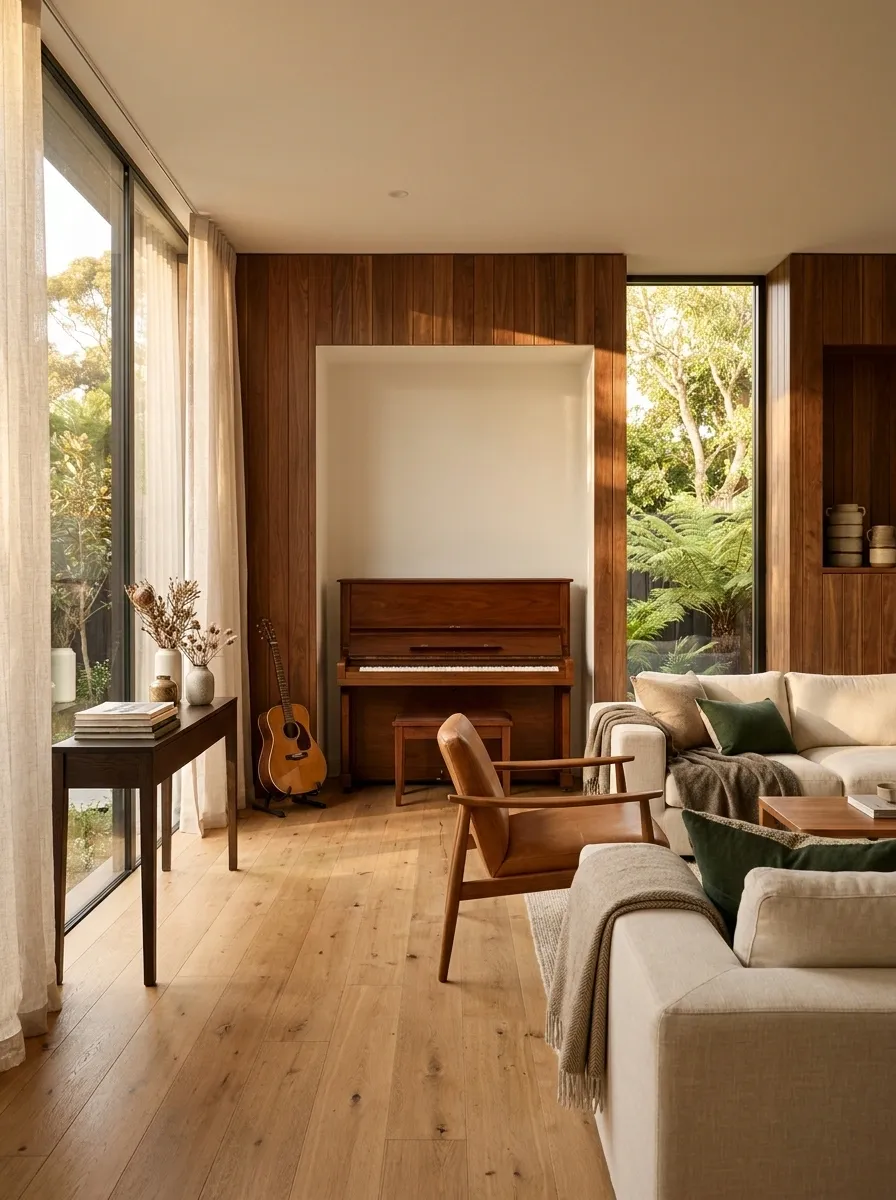
Warm wood paneling gives this garden room a strong architectural identity, making it an ideal setting for a piano, keyboard, guitar collection, or other music-focused setup. A comfortable sofa and two lounge chairs make the room useful even when nobody is playing.
The furniture arrangement leaves a clear area around the main instrument, while bookshelves or a slim console hold music books and equipment. Soft curtains break up the hard timber surfaces and visually frame the garden beyond the glazing.
The room should feel dedicated without becoming formal. Wood gives it depth, upholstery adds softness, and the garden prevents the darker interior from feeling closed in. It has a purpose, but thankfully it doesn’t need a plaque explaining it.
Black-and-White Garden Room With Soft Natural Materials
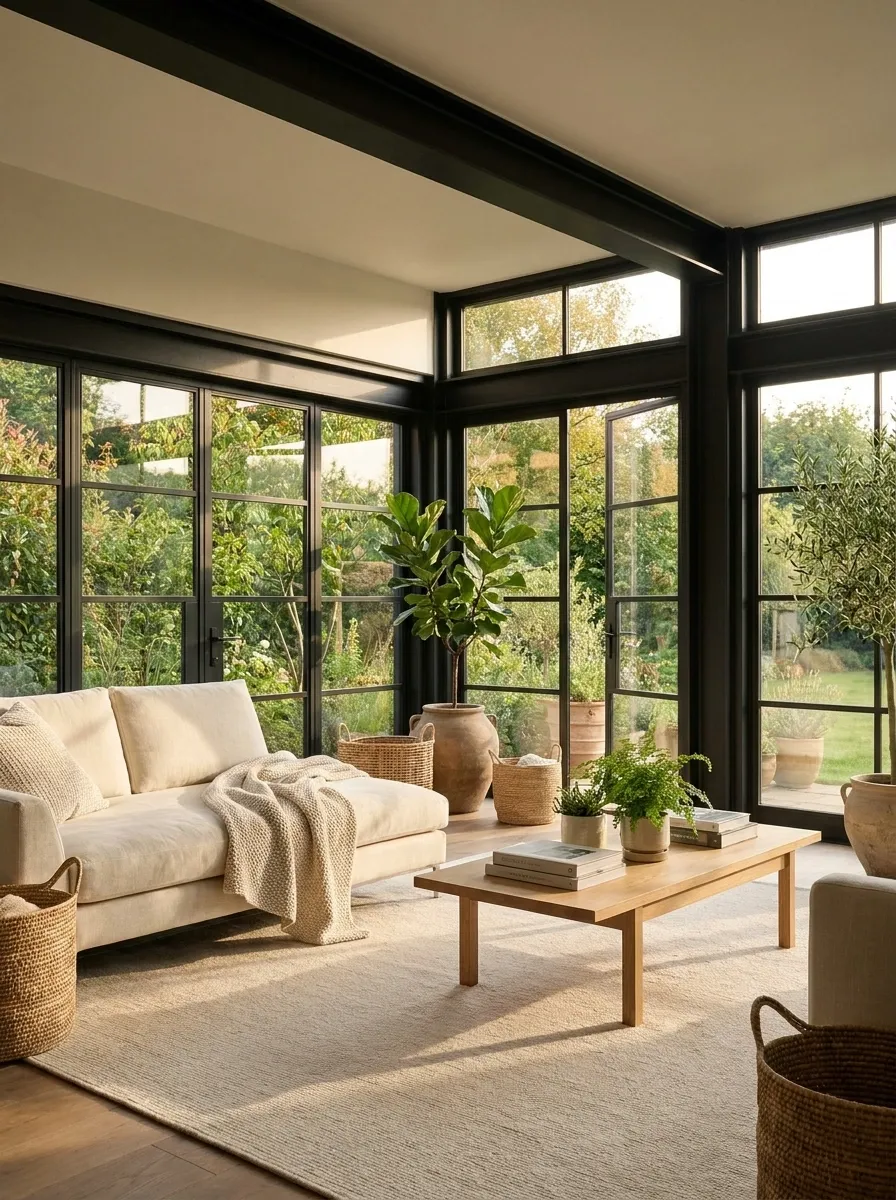
Black framing and furniture give this garden room a crisp graphic quality, but cream upholstery, pale timber, woven textures, and generous greenery keep it from becoming severe. The contrast is strongest around the windows and larger furniture, while the softer materials fill the middle ground.
A low sofa faces the garden, paired with a pale rug and timber coffee table. Woven baskets and a textured throw add enough variation to break up the monochrome structure without introducing a new color scheme.
The secret is deciding where the black belongs. Use it for the architectural lines and a few major pieces, then let lighter materials interrupt the darkness. Otherwise the room starts looking like it has an unusually intense relationship with a black paint sample.
Garden Breakfast Room With Built-In Banquette
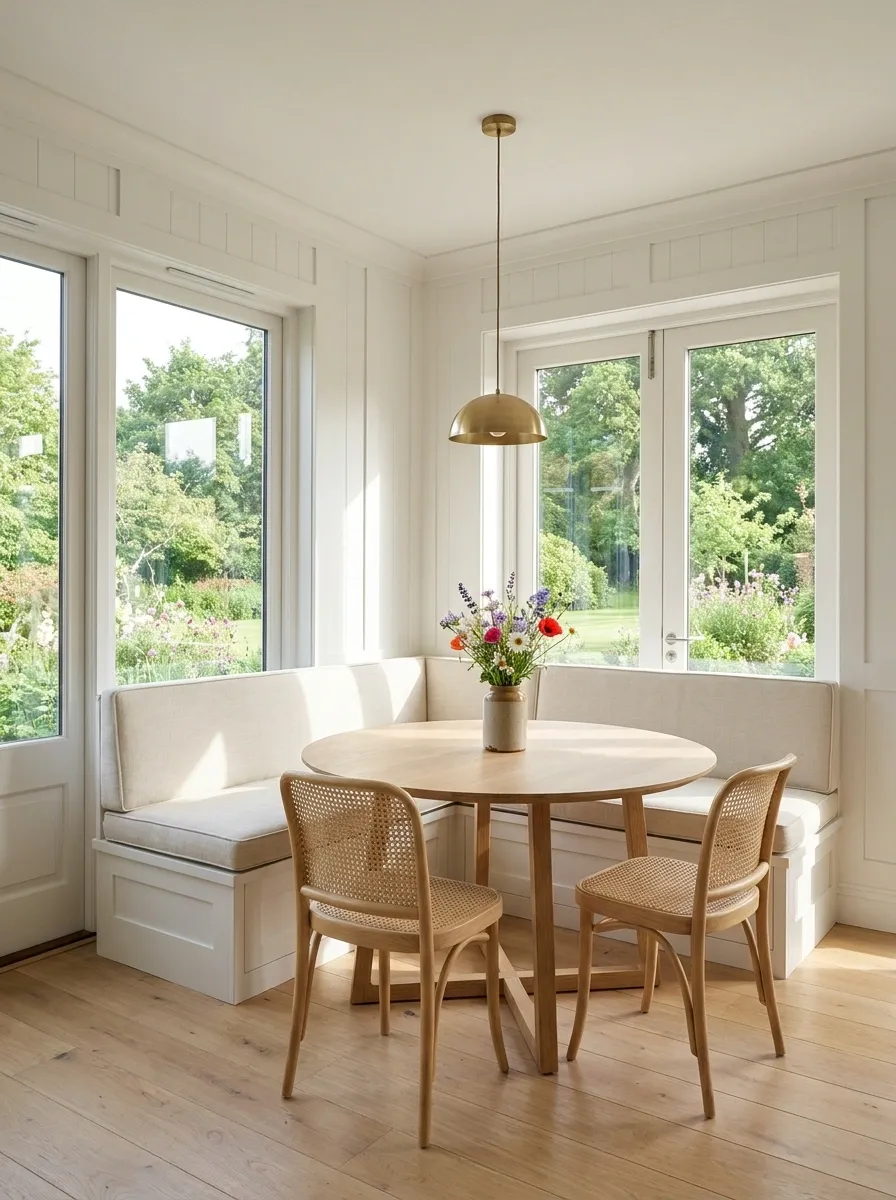
A built-in banquette gives this garden room a more architectural dining setup, with an L-shaped seat tucked neatly against two walls and a round table positioned in front of it. The circular table softens all the straight lines and makes the arrangement feel less rigid.
The banquette can carry a durable upholstered cushion, while the opposite side uses just two or three lightweight chairs. A compact pendant sits above the table, and wide glazing keeps the garden visible from every seat.
This arrangement is especially useful when floor area is limited because the seating stays attached to the perimeter. The center remains easier to navigate, and the table can be moved when the room needs another use. Apparently furniture doesn’t have to block the walkway to prove it exists.
Countryside Garden Room With Olive Green and Natural Linen
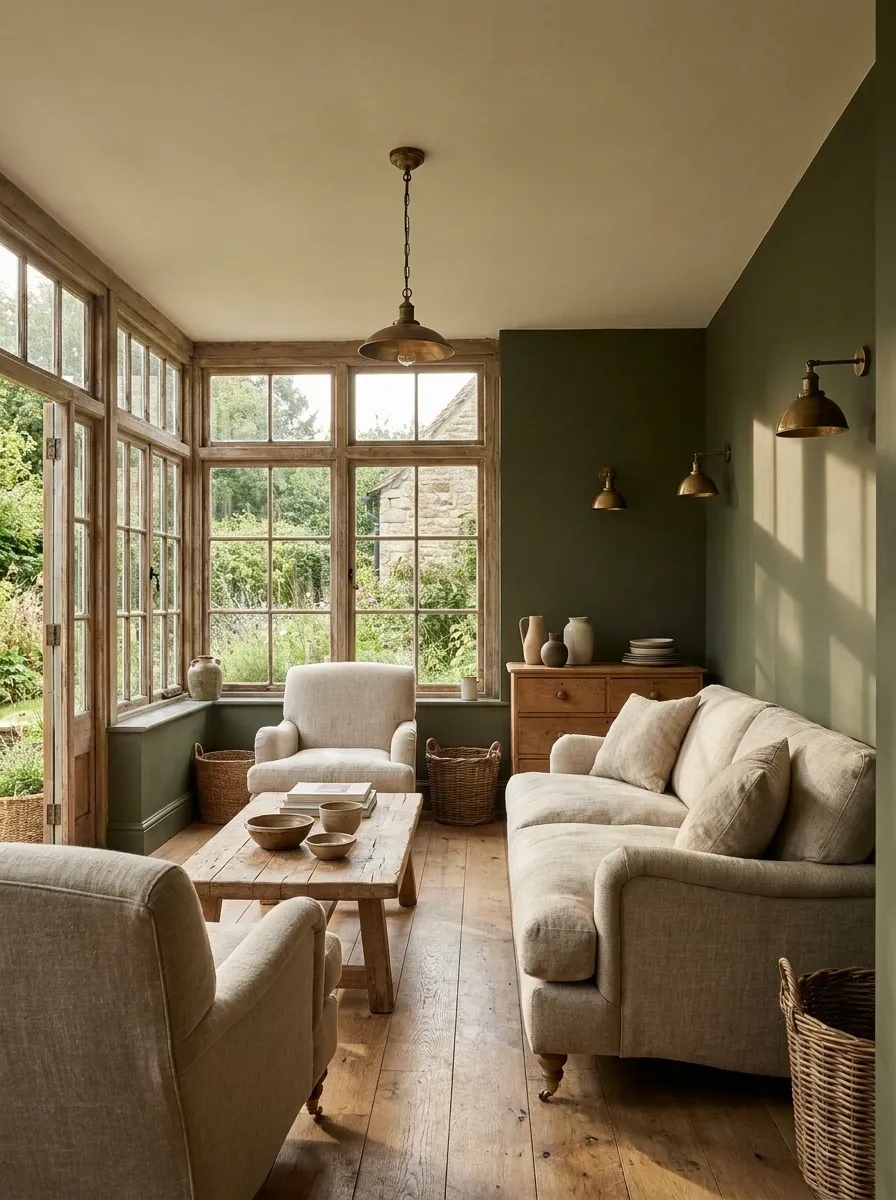
Olive green walls, natural linen upholstery, oak furniture, and aged metal lighting give this garden room a relaxed countryside character without making it look themed. The colors feel grounded and slightly muted, allowing the garden beyond the windows to become part of the palette.
A generous sofa sits opposite two linen-covered chairs, with a timber coffee table tying the seating group together. A simple cabinet or dresser can provide storage against the solid wall, while woven baskets add practical texture without turning into decoration for decoration’s sake.
Olive is the anchor here. It works because the surrounding materials stay natural and restrained. Add bright white, glossy metals, or overly polished furniture and the country character starts packing its bags.
Flexible Garden Room With Sofa, Desk, and Foldaway Dining Area
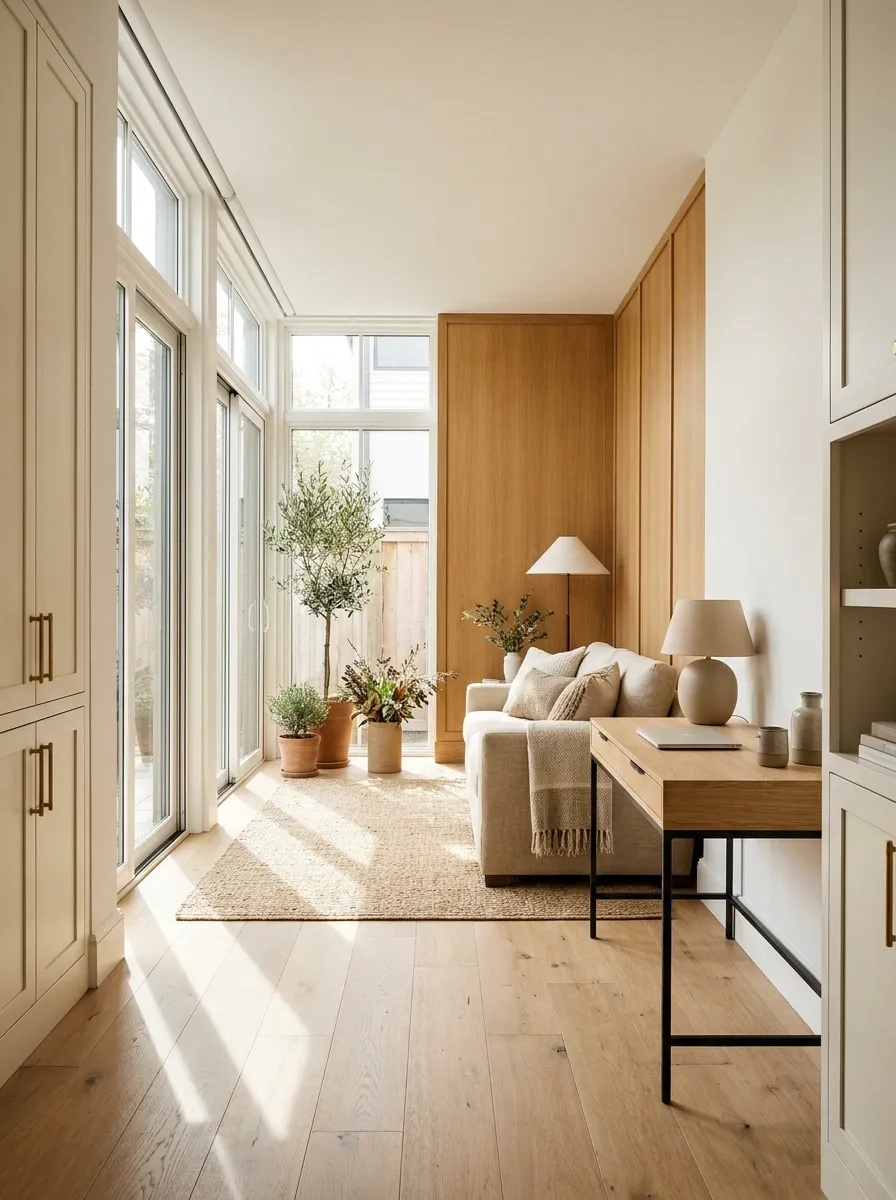
This garden room earns its keep by handling several uses without visually shouting that it is a multipurpose space. A compact sofa occupies one end, a proper desk sits against another wall, and a foldaway dining surface can appear when needed without permanently taking over the floor.
Storage is kept tall and shallow so the central area stays open. A slim console or cabinet can hide office supplies and dining pieces, while the furniture shares a restrained palette of warm neutrals and timber.
The important part is deciding which pieces should remain visually quiet. The sofa and desk stay in place, while the dining setup appears only when required. Otherwise every function competes at once, and the room starts looking like an apartment listing written entirely in panic.
Glass Garden Room Framed by Mature Planting
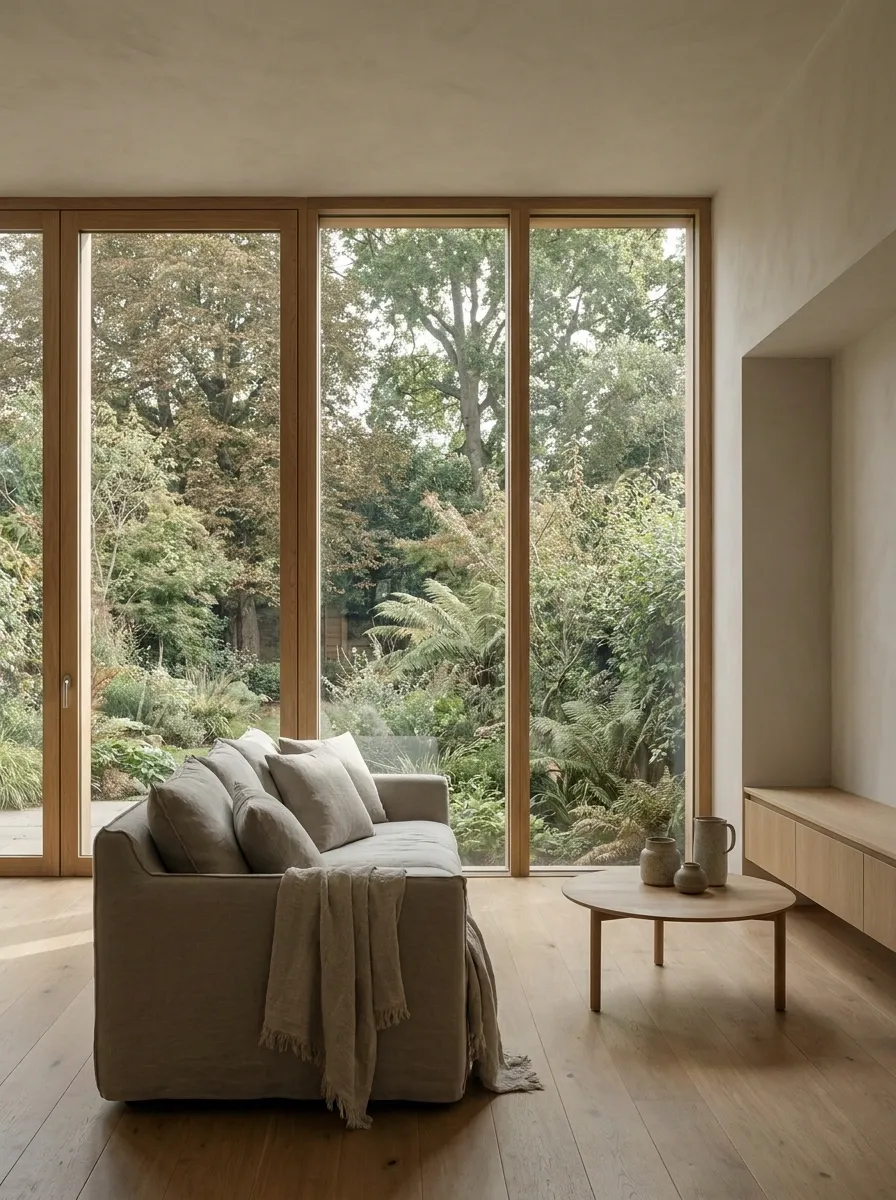
The architecture in this final concept deliberately stays quiet. Large areas of glazing, warm timber, a simple neutral sofa, and a minimal coffee table create a calm interior while mature trees and layered planting become the dominant visual feature.
Furniture sits slightly away from the glazing so the windows remain visually open. A low bench or console can run along one wall without blocking the main view, while the floor and walls stay in soft natural tones that echo the landscape.
This works best when the garden already has something worth looking at. Mature trees, layered borders, or a strong planting composition can turn the windows into framed landscape scenes. The room doesn’t need to compete. It just needs to know when to stop talking.
Choosing a Garden Room Look That Actually Holds Together
A complete design direction makes the room easier to build because the major decisions already support one another. Before choosing individual furniture pieces, look at the architecture, natural light, garden view, intended use, and the amount of space available. Those choices have more influence on the finished result than another cushion ever will.
A compact office needs different proportions from a dining room. A dark evening retreat needs a different lighting approach from a sun-filled reading room. A room surrounded by mature planting can afford quieter interiors because the garden already provides visual interest.
The easiest way to avoid a disjointed result is to choose a full visual language first, then let individual pieces fit inside it. The room should make sense before the accessories arrive.
Make the Garden Part of the Room
Garden rooms look most convincing when the boundary between inside and outside feels intentional. Window placement, furniture orientation, flooring, planting, and door openings all influence that relationship.
A strong garden view can become the visual endpoint of the room. Mature trees can act like artwork. Layered greenery can soften hard architectural lines. Even a small border can provide enough color to influence the interior palette.
The best concepts in this collection don’t treat the garden as an afterthought. The outside space is part of the composition, whether it is dramatic, leafy, quiet, colorful, or deliberately restrained.
Final Thoughts
A garden room becomes much easier to design when the goal is a complete look rather than a shopping list. Start with the room’s purpose, decide what should dominate visually, and make the architecture, furniture, materials, lighting, and garden view support that decision.
Some of these ideas lean calm and minimal. Others are darker, more traditional, more colorful, or more practical. That’s useful. A good reference should give you a clear direction, not another pile of disconnected things to buy.
Choose the concept that matches the way the room needs to work, then build around its strongest visual idea. The finished space will feel far more intentional when every piece has a reason to be there.
Save these garden room ideas before the planning begins, especially the ones that make you stop scrolling and think, “Yep. That’s the room.”