
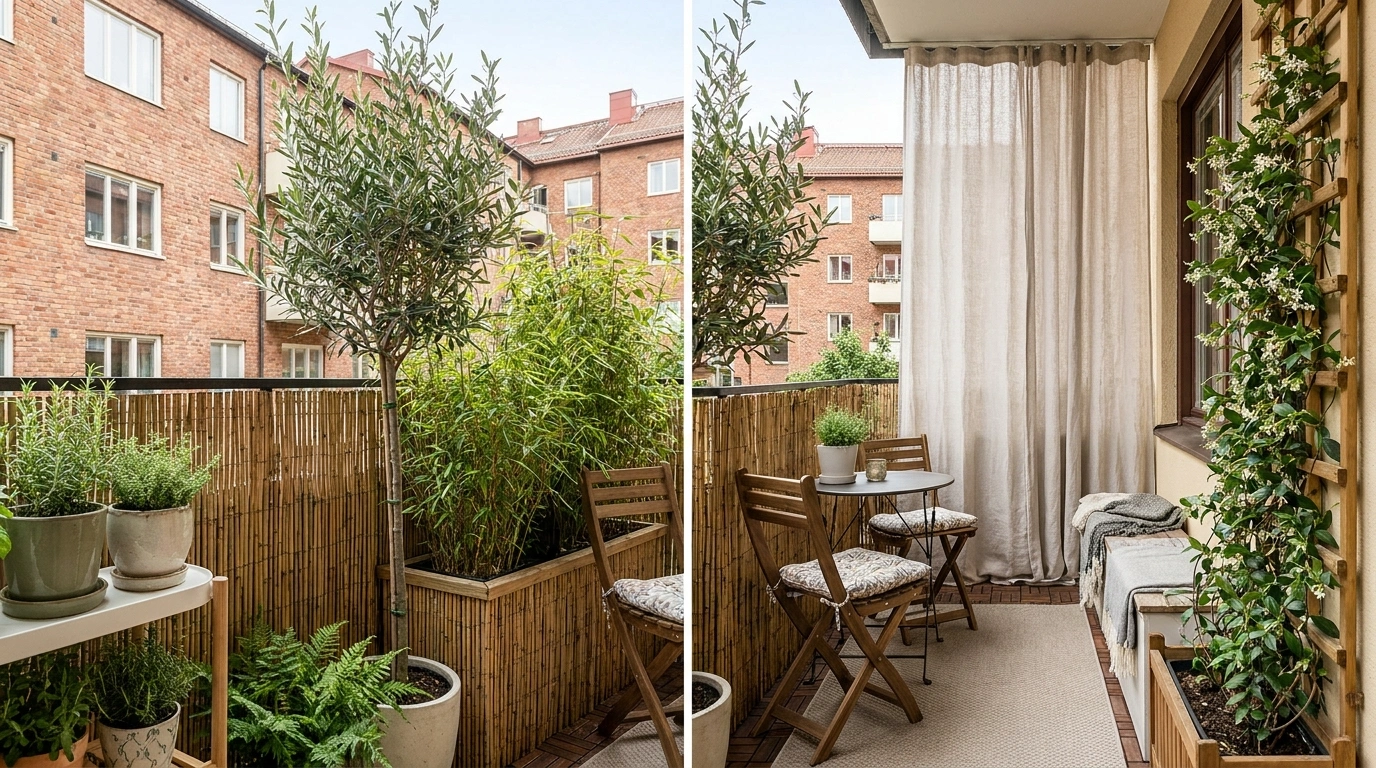
A balcony can have great furniture, pretty plants, and decent lighting and still feel completely unusable when the neighboring building has a front-row seat to everything happening outside.
That is the annoying part about balcony privacy. The problem isn’t always a lack of furniture or decoration. It’s the fact that one exposed railing, open side, or directly facing window can make the entire space feel awkward.
A privacy solution also has to look like it belongs there. A giant plastic screen might block the view, but it can also make a carefully styled balcony look like it lost an argument with a hardware store.
Complete Balcony Privacy Ideas Worth Saving
Cozy Hanging Chair Balcony Escape
A hanging rattan egg chair commands this balcony, suspended against vertical wood slats and a textured reed privacy screen. A low wooden stool, woven floor poufs, and a jute circle rug anchor the seating area in warm, organic neutrals.
Faux tropical leaves and potted grasses bring instant greenery without demanding endless upkeep on a high-rise ledge. The styling embraces an abundance of cozy textiles, from fringed throws to soft accent pillows, creating an inviting nest for quiet mornings.
Avoid turning the balcony into a storage unit for extra cushions by keeping the textiles focused. When everything is tied together with consistent earthy tones, the space feels like a secluded porch rather than an exposed afterthought.
Foldable Privacy Screens With City Views
Woven wooden privacy screens fold neatly along the edge of this balcony, blocking out neighboring views while framing an expansive city skyline. A small wooden stool and textured round rug complete the minimalist arrangement, letting the urban backdrop shine.
The folding panels offer ultimate flexibility, allowing you to easily adjust your privacy levels depending on the time of day. Their rich textured weave introduces warmth against the concrete surroundings without cluttering the compact floor plan.
Keep surrounding accessories to an absolute minimum to let the dramatic screens do the heavy lifting. A clean, uncluttered layout ensures the balcony remains a relaxing retreat rather than a crowded storage deck.
Layered Evergreen Screen With Compact Bistro Seating
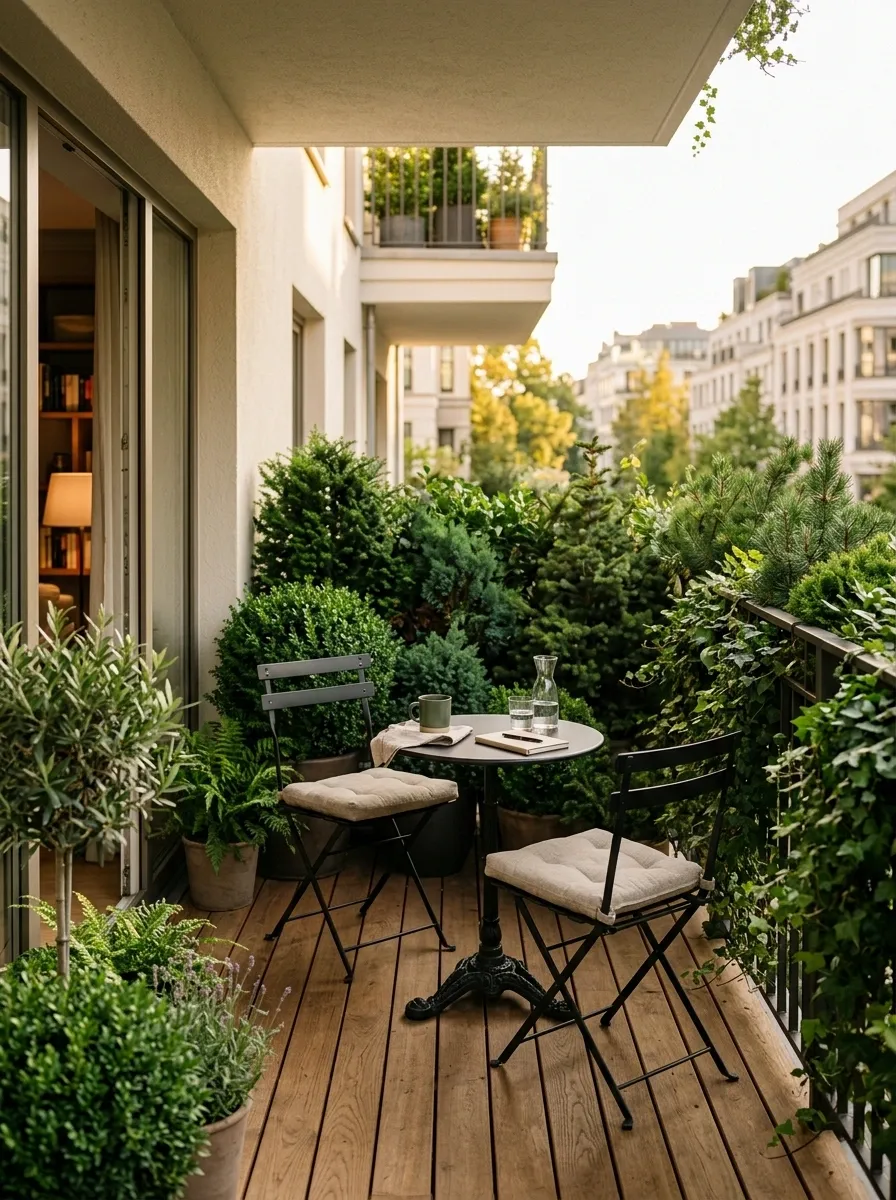
Dense evergreen planting forms a living privacy edge behind a compact bistro table and two chairs. Instead of scattering plants throughout the balcony, the greenery is concentrated along the exposed side, creating a clear boundary while leaving the central floor open.
The layered foliage gives the space a softer appearance than a solid screen and brings natural variation into an otherwise compact setting. The bistro furniture stays deliberately small, allowing the planting to remain the dominant feature.
This is one of those layouts where restraint matters. A few carefully positioned plants create a stronger visual wall than twenty random pots fighting for floor space.
Hanging Egg Chair And Faux Greenery Screen
An inviting hanging egg chair pairs with a sleek concrete-look side table, creating the ultimate spot to unwind outdoors. Behind the seating, a lush artificial hedge screen wraps the railing, instantly cutting off any unwanted sightlines from nearby buildings.
The faux green wall delivers an effortless, vibrant backdrop that stays full and green year-round without a drop of water. Paired with dark interlocking floor tiles and a stylish cocktail tray, the setup looks polished and intentionally designed.
Let the privacy hedge remain the star of the show by keeping the rest of the decor sleek and modern. When the backdrop is this lush, you do not need twenty competing plant pots to make the balcony feel alive.
Soft Linen Curtain Balcony With Natural Rattan Furniture
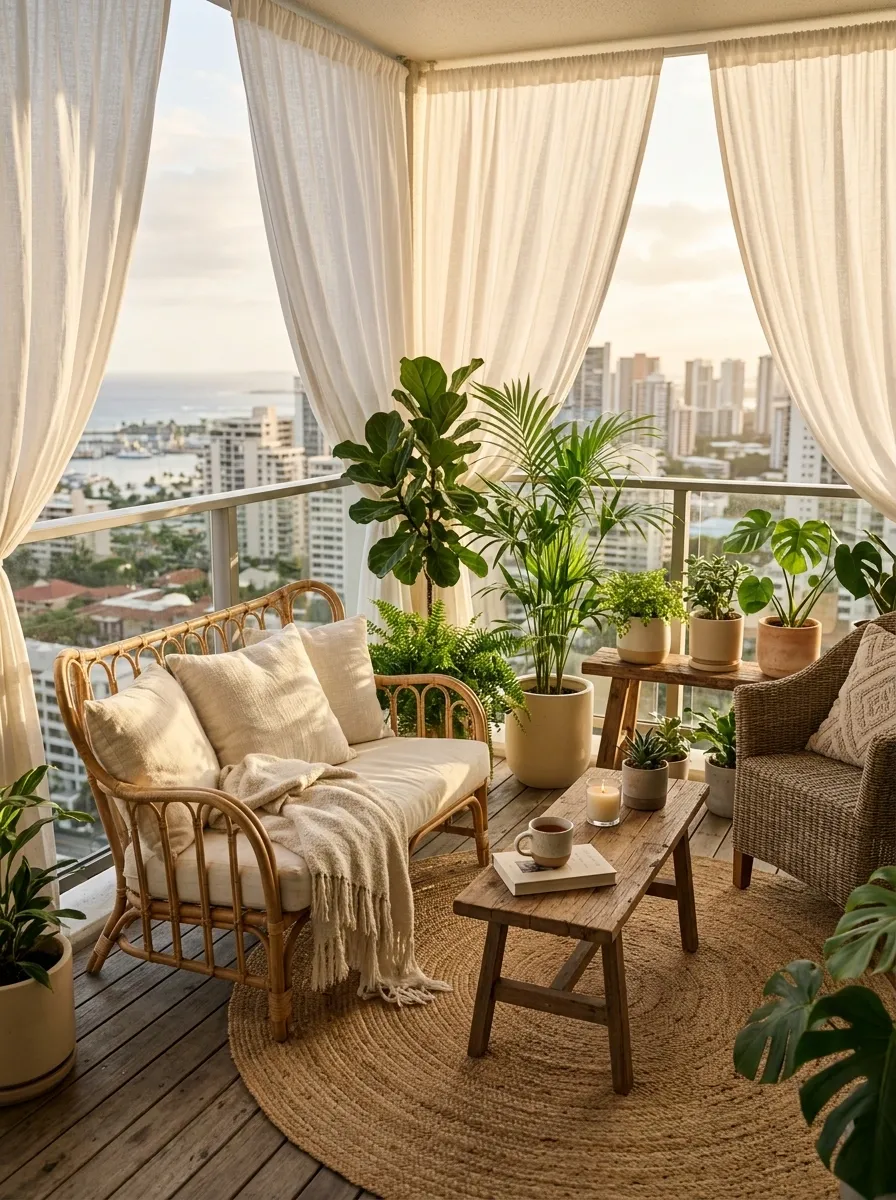
Light outdoor curtains soften the exposed edges of this balcony, creating an airy privacy layer around a natural rattan seating arrangement. A woven lounge chair, low wood table, textured neutral cushions, and leafy plants keep the palette warm without making the small space feel overloaded.
The curtains work because they introduce movement and softness rather than another hard architectural boundary. They can also remain open when privacy isn’t needed, which keeps the balcony visually connected to the outdoors. Natural materials reinforce the relaxed character, but the furniture should stay limited.
Once every surface gets woven, fringed, tasseled, and patterned, the balcony starts looking like it has been personally victimized by a craft store.
Patterned Frosted Glass Balcony Railing
Etched leaf patterns dance across frosted glass panels on this modern balcony railing, providing clever privacy while still letting golden sunlight flood the floor. A slim potted olive tree and minimalist grey planters add a touch of mediterranean elegance to the corner.
The frosted glass treatment offers a brilliant alternative to traditional privacy screens, keeping the architecture feeling light and open. The delicate botanical etching casts gorgeous dappled shadows across the clean tile flooring throughout the day.
Resist the urge to crowd the perimeter with furniture so the patterned glass remains the focal point. This refined approach proves that privacy solutions can look high-end and intentional.
Black-Framed Balcony With Frosted Glass Screening
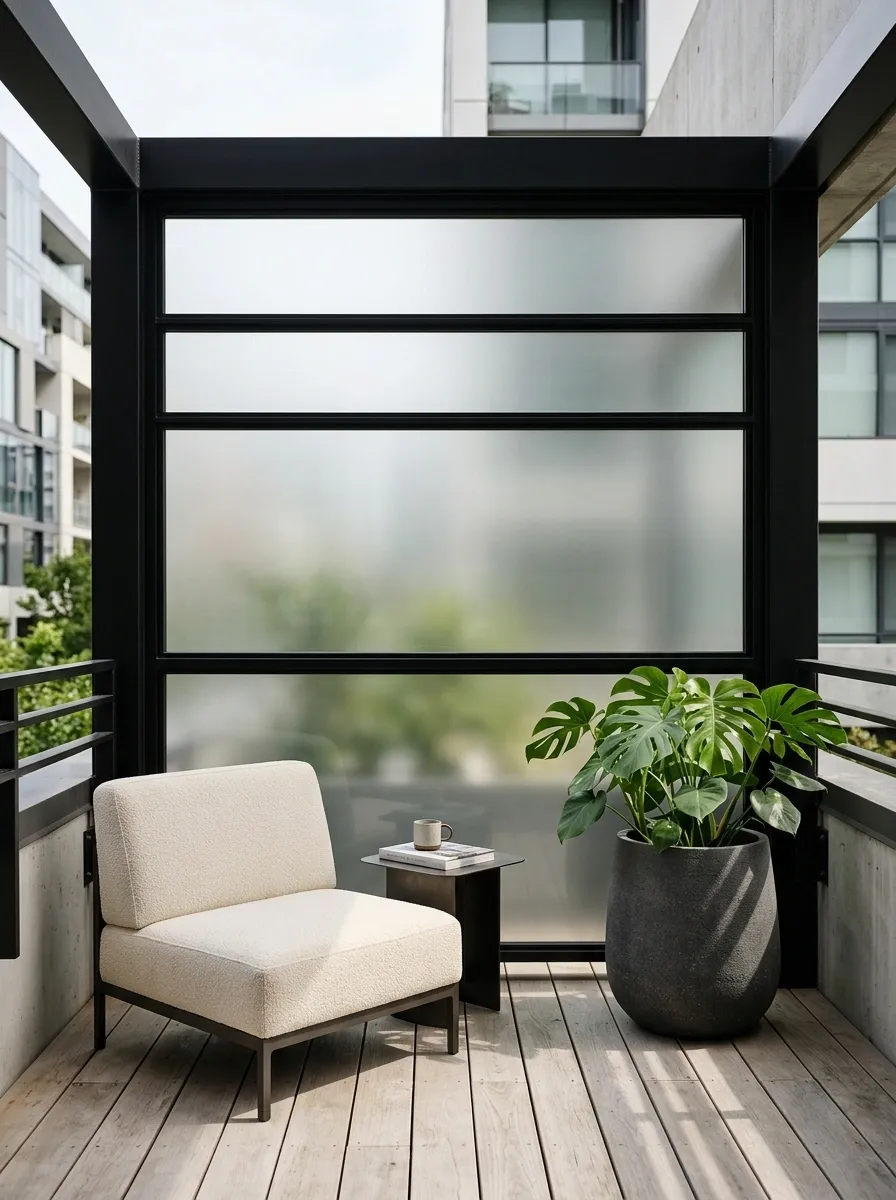
A black-framed frosted glass screen gives this contemporary balcony a crisp architectural appearance while obscuring direct views from neighboring buildings. The rest of the composition stays light, with pale flooring, a compact cream lounge chair, dark metal accents, and one substantial planter.
The contrast between transparent framing and frosted surfaces keeps the screen from becoming visually heavy. The black structure gives the boundary definition, while the translucent panels preserve a sense of daylight.
This approach suits balconies where a leafy screen would feel too casual or where the architecture already leans contemporary. Keep the furniture simple. The glass has already done the expensive-looking thing.
Black Slat Screen With Folding Bistro Set
A tall black slat privacy screen establishes a striking boundary along this compact balcony, paired with a classic wooden folding table and matching chairs. A textured jute rug and warm terracotta pots soften the dark vertical lines with natural earth tones.
The contrasting black slats create a dramatic backdrop that makes surrounding plants pop while keeping prying eyes at bay. The bistro set folds away effortlessly, ensuring the layout remains adaptable whenever floor space is needed for lounging.
Balance the dark screening with lighter flooring and warm wood furniture to keep the small footprint feeling bright. A restrained mix of potted herbs and statement trees finishes the space without overwhelming it.
Tropical Balcony Retreat With Tall Leafy Plants
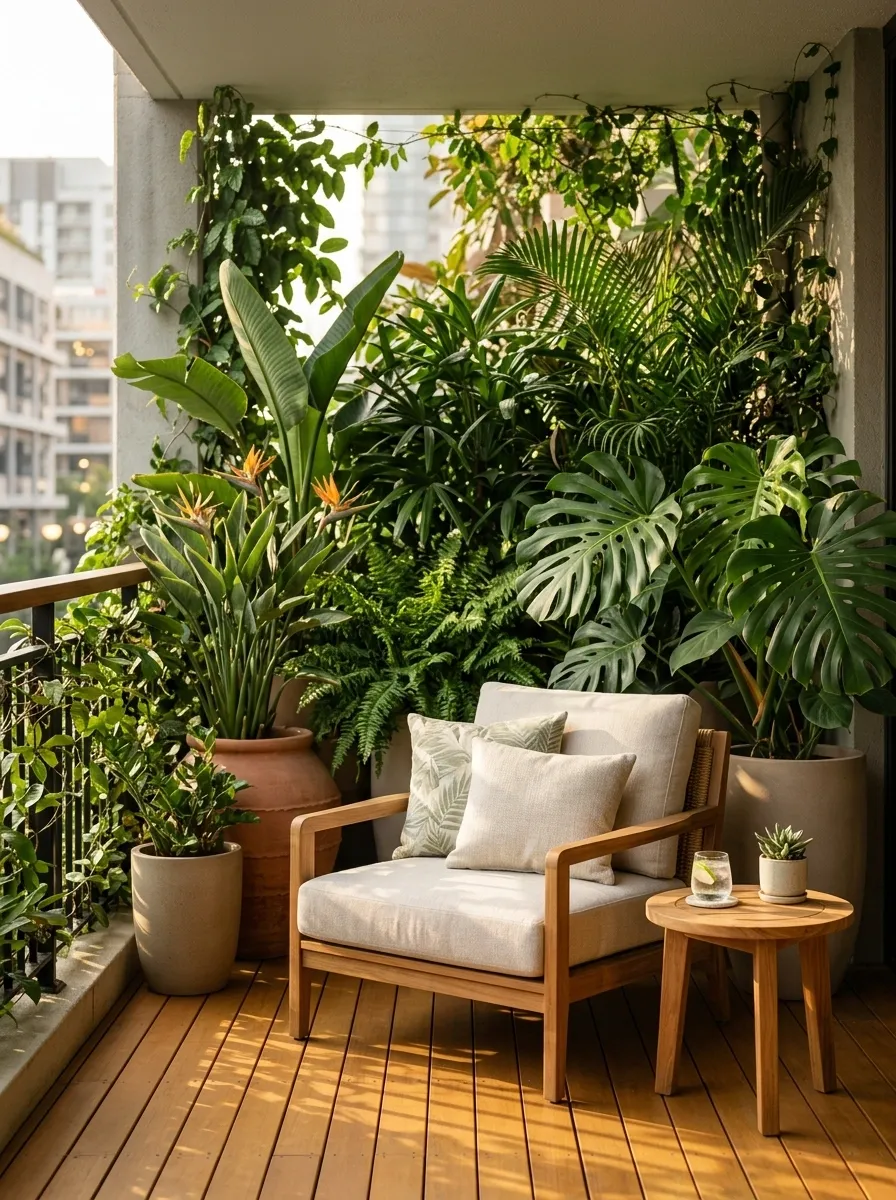
Large tropical foliage creates a lush privacy screen around this compact balcony, with tall leafy plants positioned behind a low lounge chair and small wood table. Natural textures, warm timber, and cream upholstery keep the greenery from becoming visually chaotic.
The plants are deliberately arranged in layers rather than placed at random. Taller leaves interrupt direct views, while shorter plants fill the lower gaps around the seating.
The result feels more like a small planted retreat than a collection of pots. Choose foliage with different shapes and heights so the screen has depth. A wall of identical plants can look strangely corporate, which is not exactly the tropical escape anyone ordered.
Narrow Balcony With Full-Length Vertical Lattice
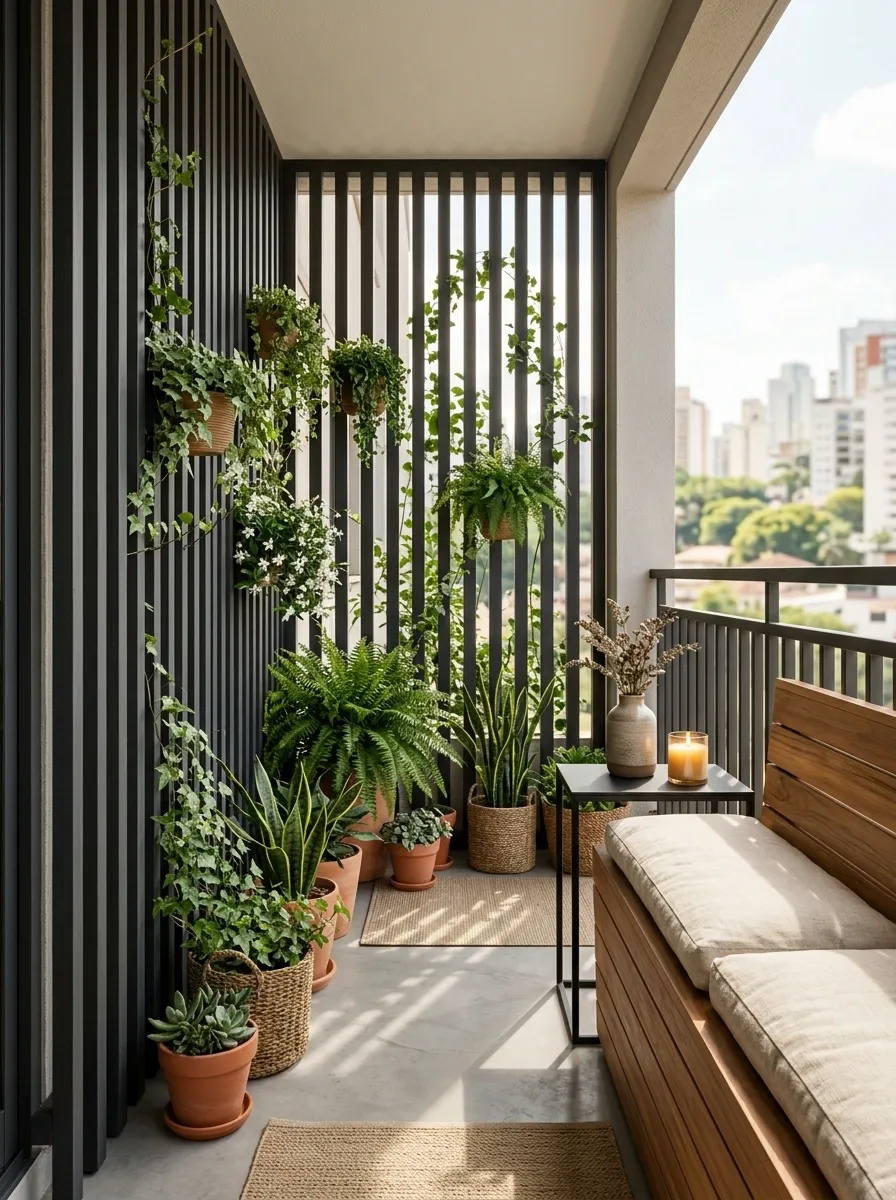
A full-length vertical lattice gives this narrow balcony a strong sense of height while providing a framework for climbing greenery. A slim bench sits along the protected side, with a narrow side table and a few compact planters keeping the walking path clear.
The lattice works particularly well when width is the main limitation. Because the privacy treatment rises vertically instead of spreading across the floor, it preserves valuable circulation space.
The repeated lines also make the balcony feel taller and more intentional. Keep the bench shallow enough for comfortable passage. Privacy is nice. Having to turn sideways every time someone opens the balcony door is less revolutionary.
Rustic Balcony With Timber Privacy Wall and Built-In Bench
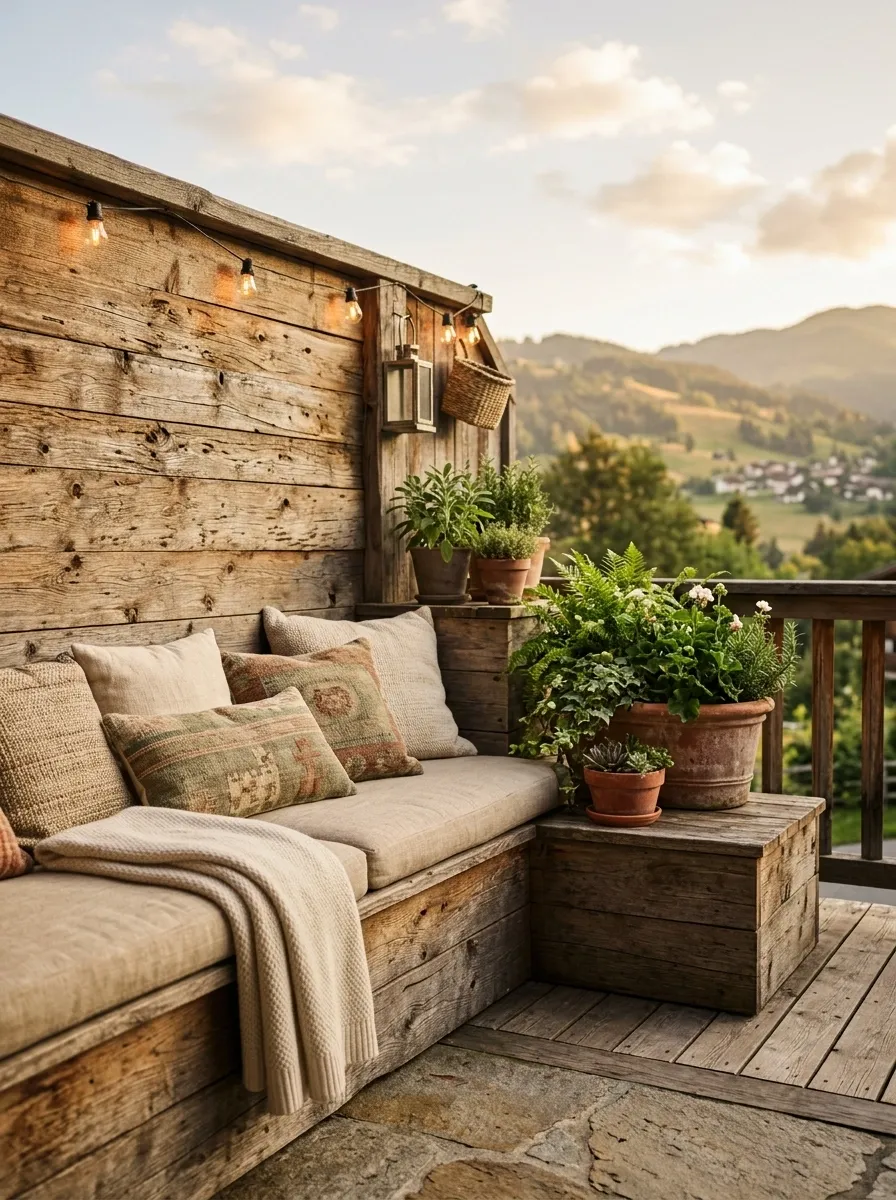
A weathered timber privacy wall forms the backdrop for a built-in bench with thick neutral cushions, chunky planters, and warm outdoor lighting. The natural imperfections in the wood give the balcony character while the built-in seating keeps the footprint efficient.
The bench and screen read as one composition, which makes the balcony feel more deliberate than a collection of separate furniture pieces. Keep the timber warm and slightly imperfect rather than overly polished. The charm comes from the material feeling substantial and tactile. A little irregularity adds character. A lot of fake rustic distressing starts looking like the furniture survived an argument with sandpaper.
privacy boundary
space-efficient seating
Mediterranean Balcony With Whitewashed Privacy Screens
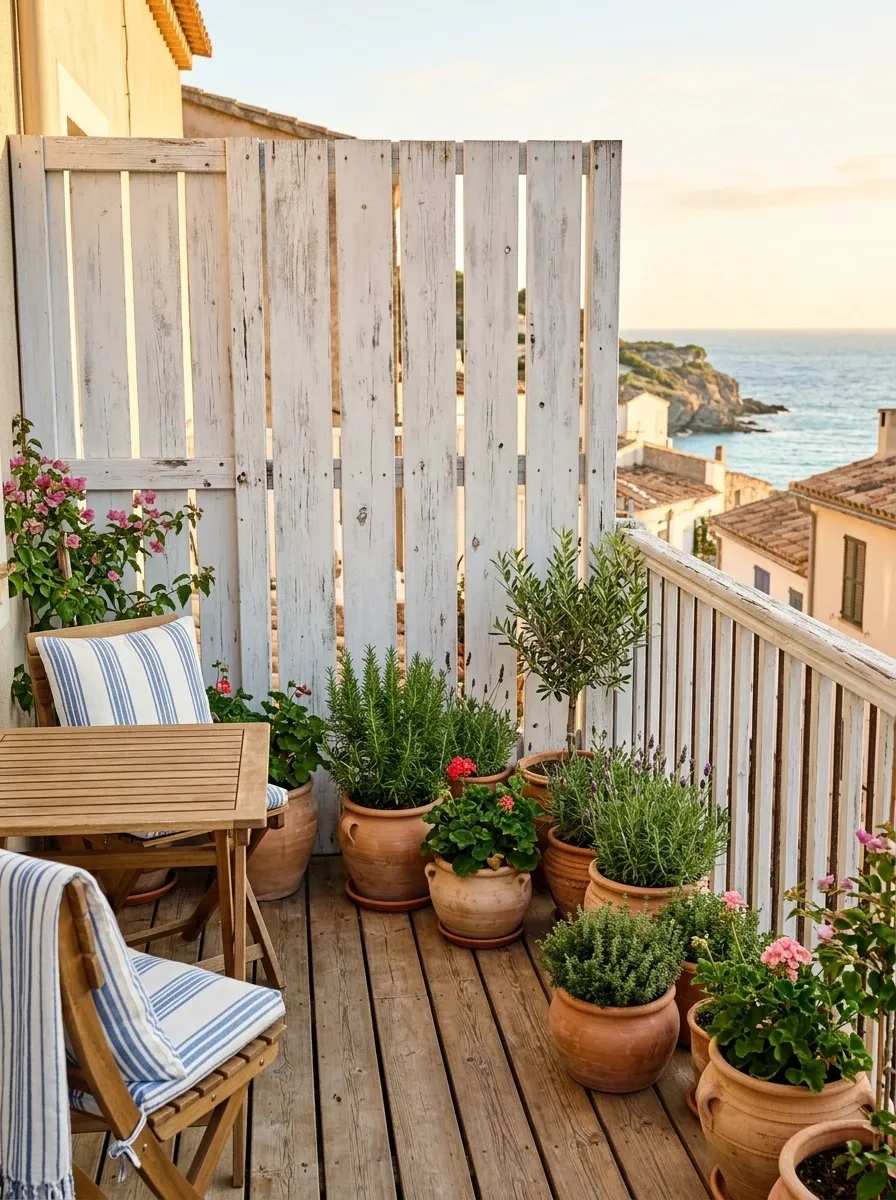
Whitewashed privacy panels create a bright Mediterranean backdrop for terracotta pots, a compact bistro table, striped cushions, and warm natural wood. The screens interrupt neighboring views while keeping the entire composition light and sun-filled.
The palette is intentionally simple. White provides the architectural base, terracotta brings warmth, and greenery supplies the strongest natural contrast. The result feels relaxed without relying on excessive decoration. Keep the screen surface visually clean and allow the plants and pottery to provide most of the character. There is no need to turn the balcony into a Mediterranean restaurant patio with twelve decorative lanterns and a fake olive tree having an identity crisis.
Renter-Friendly Balcony With Freestanding Bamboo Screens
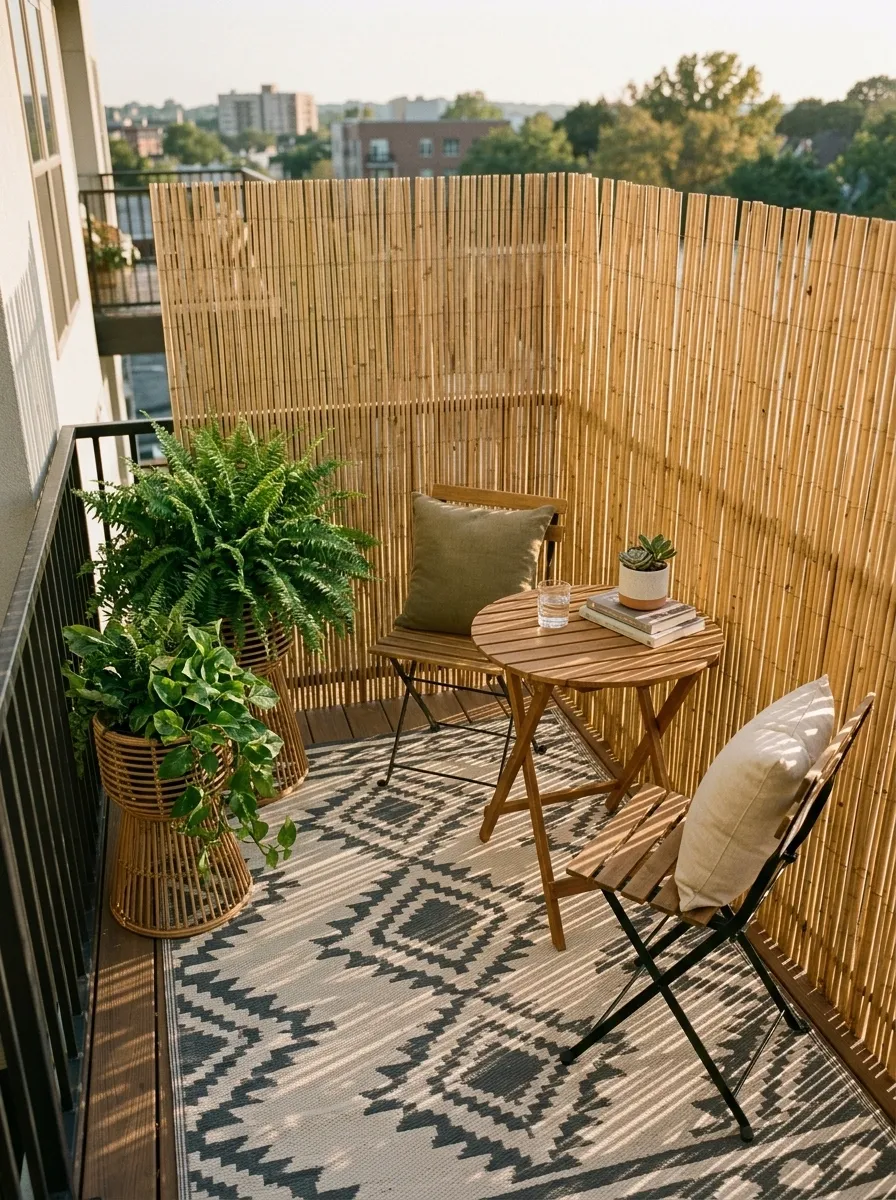
Freestanding bamboo screens give this rental balcony a warm, natural privacy layer without making the design feel permanent. Two tall panels sit behind lightweight folding chairs, a small wood table, woven planters, and a patterned outdoor rug. The rest of the balcony stays open, keeping the arrangement easy to rearrange.
The panels work because they have enough visual weight to define the seating area without consuming the whole balcony. Keeping the furniture lightweight reinforces the temporary, flexible character. This is also a much better look than attaching random materials to every available surface because the lease is apparently already stressful enough.
Soft Gray Balcony With Outdoor Roller Shade
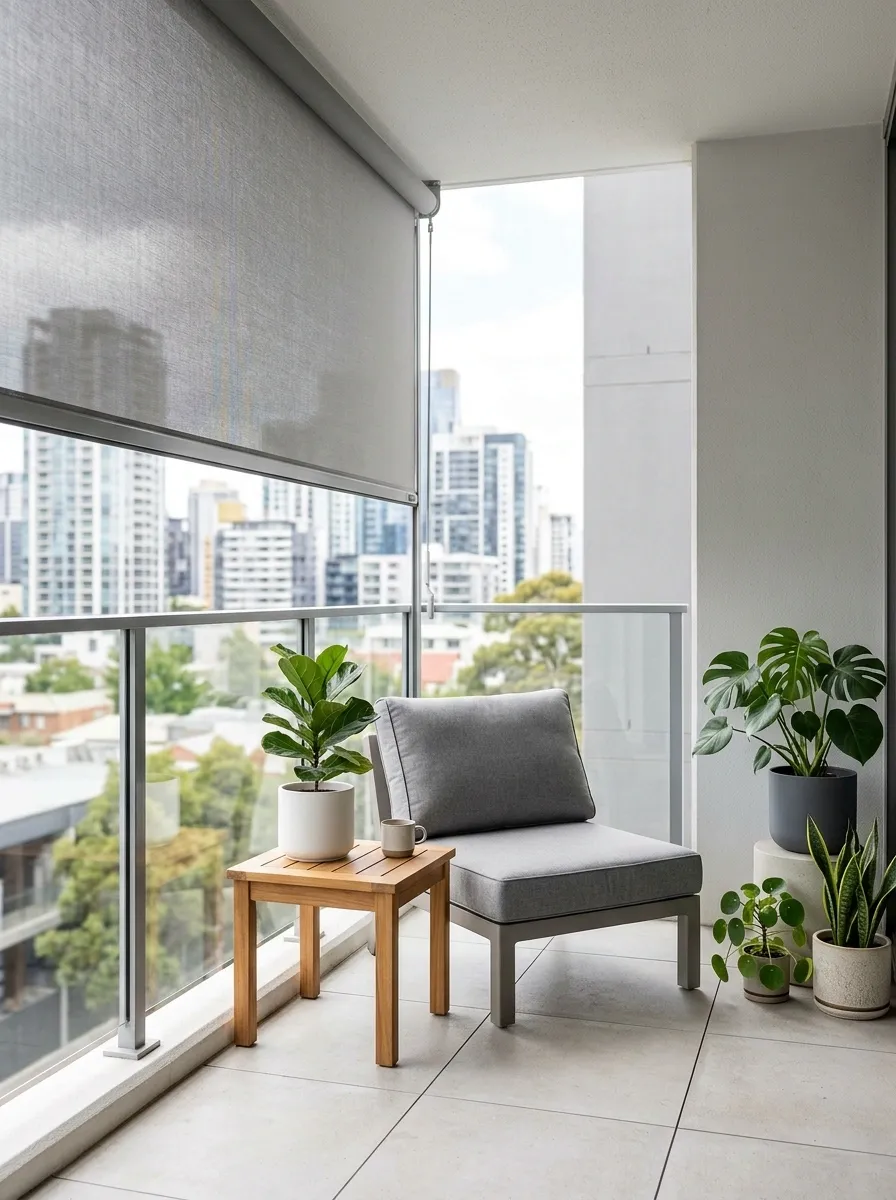
A tailored outdoor roller shade gives this contemporary balcony a cleaner, more controlled form of privacy. The shade runs along the exposed side beside a compact gray lounge chair, warm wood side table, pale flooring, and a few carefully placed plants. When raised, the balcony returns to an open arrangement.
The useful part is the control. Privacy doesn’t have to be an all-day commitment when the problem only exists at certain times. A simple roller mechanism keeps the design visually quiet, while the neutral palette lets the architecture do most of the talking. The balcony gets privacy on demand without looking like it has been permanently grounded.
open view and maximum daylight
stronger separation from nearby views
Boho Balcony With Layered Woven Screening
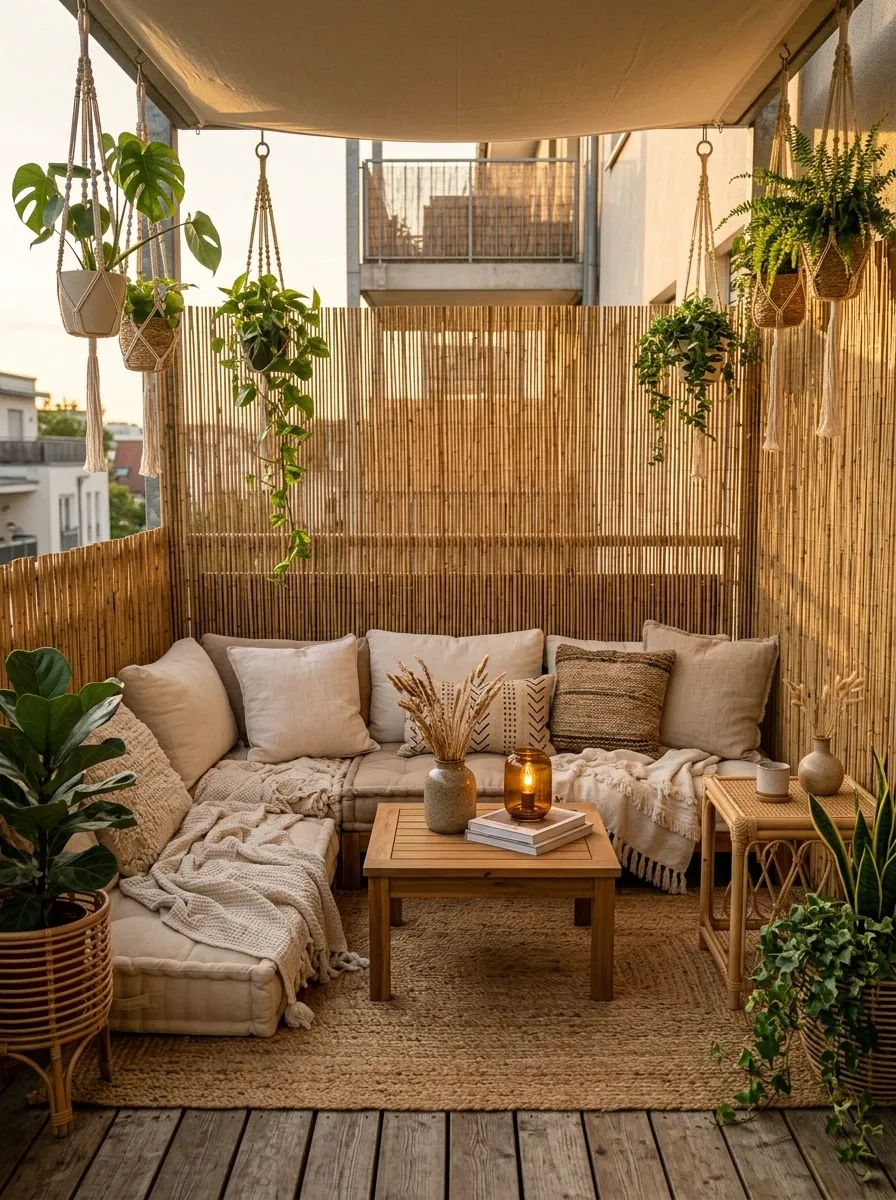
Natural woven panels create partial privacy around a low seating arrangement filled with neutral cushions, textured throws, a simple wood table, hanging plants, and warm lantern-style lighting. The woven material gives the balcony a softer visual boundary than timber or metal while allowing small glimpses of light through the screen.
The composition works because the texture repeats across the balcony rather than appearing only on the screen. Woven planters and natural furniture connect the boundary with the seating area, making the whole space feel intentional. Keep the pattern variation under control. Boho doesn’t require every textile within five miles of the balcony to report for duty.
Slim Urban Balcony With Half-Height Privacy Planter
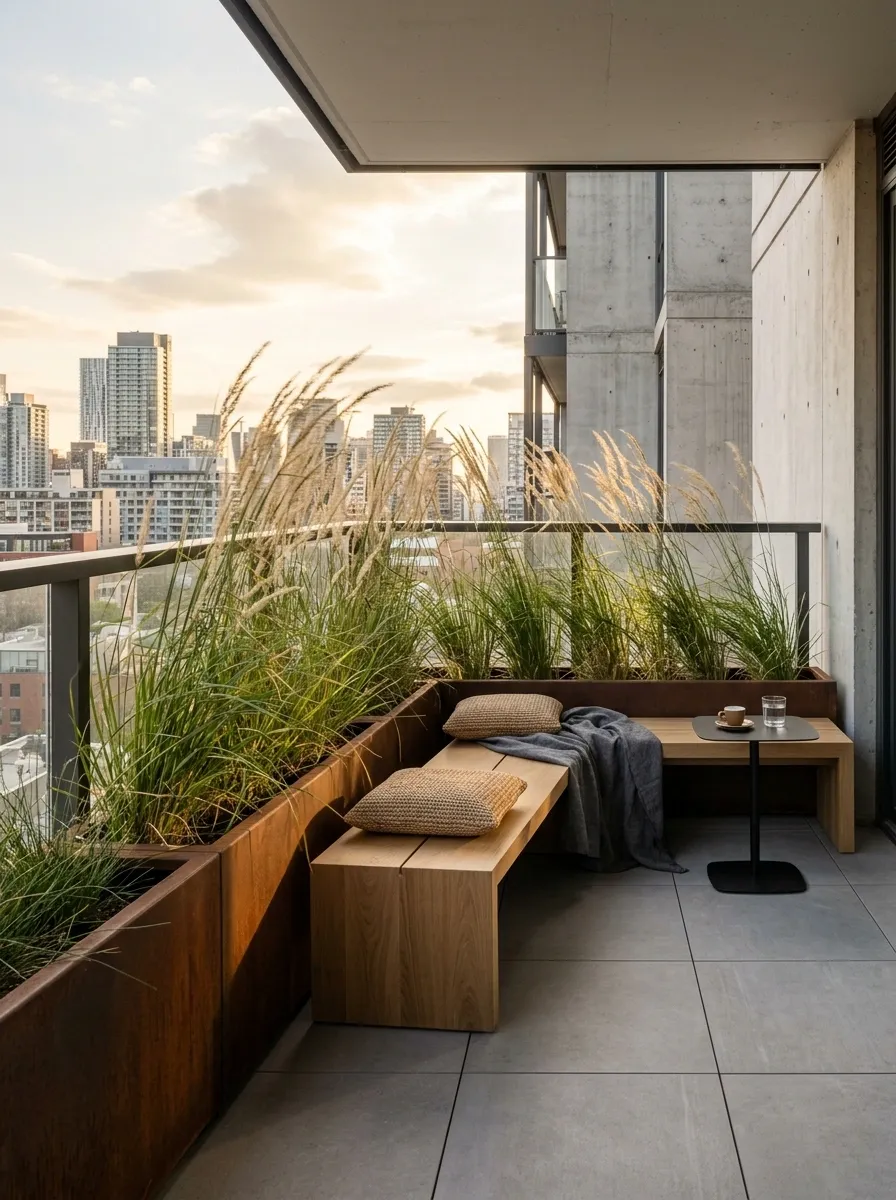
A long trough planter filled with tall ornamental grasses creates a soft privacy boundary while leaving the sky and upper half of the balcony completely open. A slim bench runs behind the planter, with a narrow café table positioned near one end so the central floor remains surprisingly clear.
The half-height approach is especially effective when the main problem comes from eye-level views rather than surrounding buildings that tower overhead. The grasses move gently, catch light, and disguise the hard edge of the balcony. More importantly, they don’t make the space feel sealed. The goal is visual privacy, not accidentally creating a tiny outdoor cubicle.
Upper view stays open.
Small Apartment Balcony With Sheer Outdoor Panels
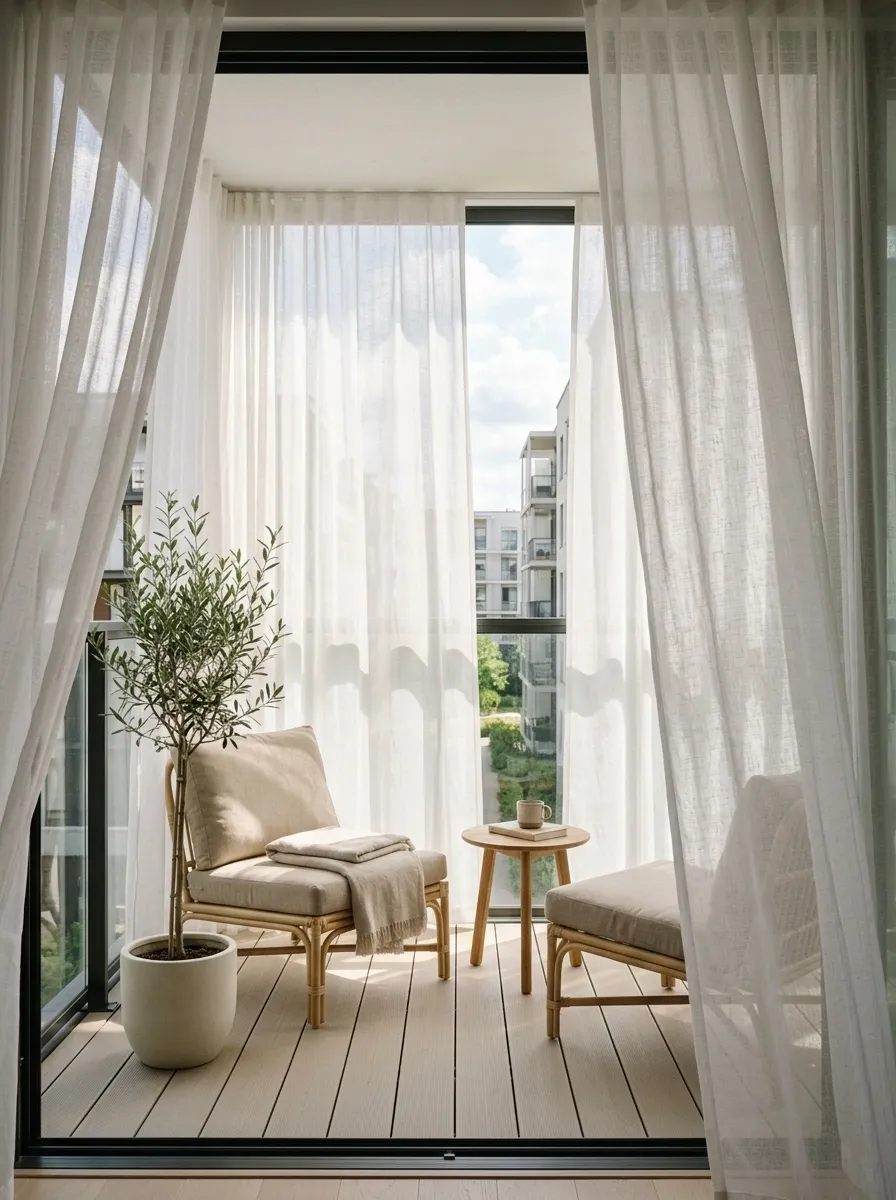
Light-filtering outdoor panels create a soft veil around this compact balcony without visually sealing it off. Two slim lounge chairs face a tiny round table, while pale flooring, natural wood accents, and restrained greenery keep the overall composition bright and uncluttered.
The panels are deliberately more translucent than traditional privacy screens. That means the balcony still feels connected to daylight, while the seating zone becomes less exposed from nearby apartments. The furniture stays visually light because heavy pieces would fight against the softness of the fabric. This is the balcony equivalent of whispering instead of yelling. The privacy is there. It just has better manners.
full visual connection Sheer
filtered privacy Dense
stronger separation
Corner Banquette Balcony With Side Privacy Panels
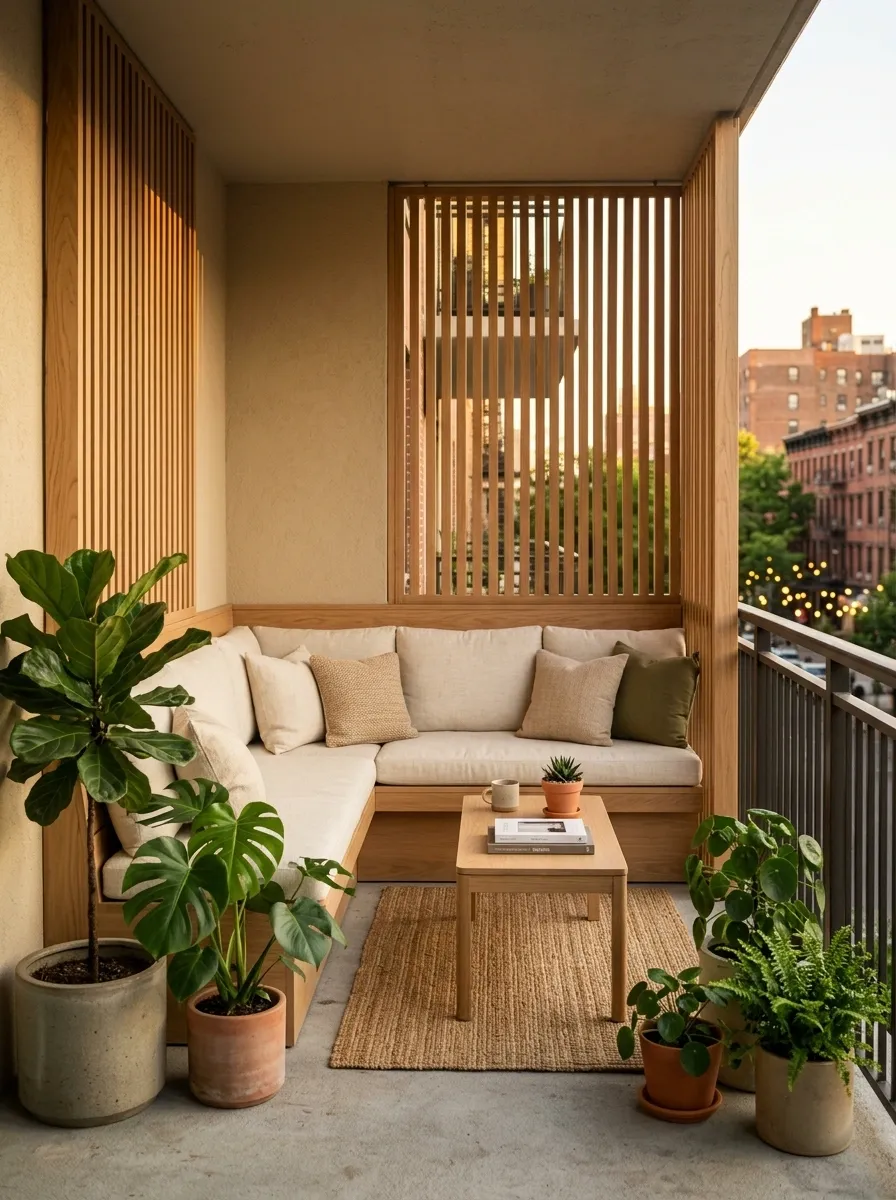
This corner balcony turns the most protected part of the layout into the main seating destination. A built-in banquette runs along the back corner, framed by taller privacy panels on the two exposed sides. Cream cushions, a slim wood table, and a few broad-leaf plants bring softness to the stronger architectural lines.
The arrangement works because the furniture takes advantage of the balcony’s geometry instead of fighting it. The seating faces inward toward the protected corner, while the open front maintains a connection to the outdoors. Side screening is enough because the privacy problem comes from the exposed directions, not from every possible angle. There is no prize for turning a balcony into a sealed box.
Industrial Balcony With Perforated Metal Screening
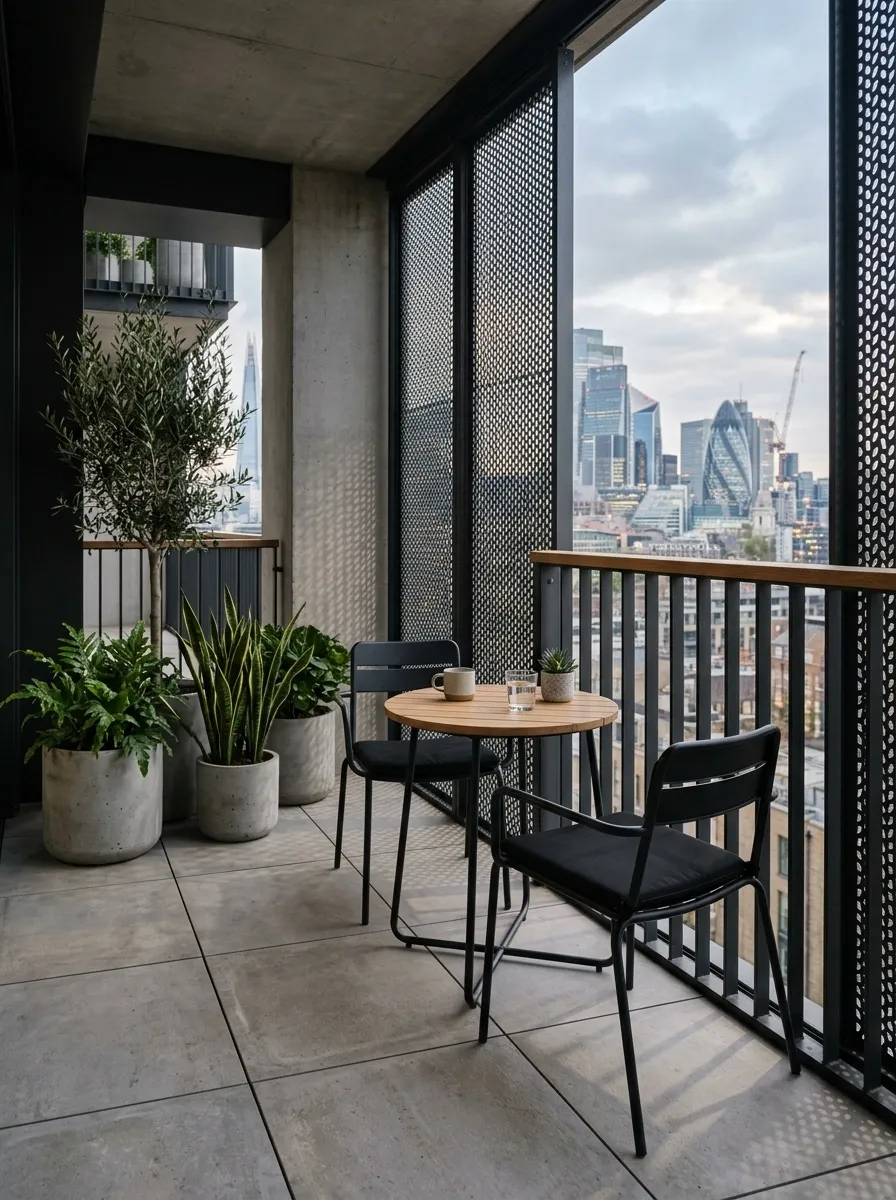
Perforated charcoal metal panels create privacy along the exposed edge of this balcony without completely cutting off the surrounding view. Black outdoor chairs, a compact timber table, concrete-look flooring, and a few architectural planters keep the setting firmly contemporary.
The perforations are what make the design work. From a distance, the panel reads as a solid dark plane, but the tiny openings prevent it from feeling visually heavy. That gives the balcony a stronger architectural identity than fabric or foliage would. Keep the furniture simple and let the metal carry the structure. Add too much industrial hardware and the balcony starts looking less like a home and more like the service entrance to one.
reads as a boundary while retaining visual lightness.
creates a much heavier visual block.
Cottage Balcony With Painted Shutter Screens
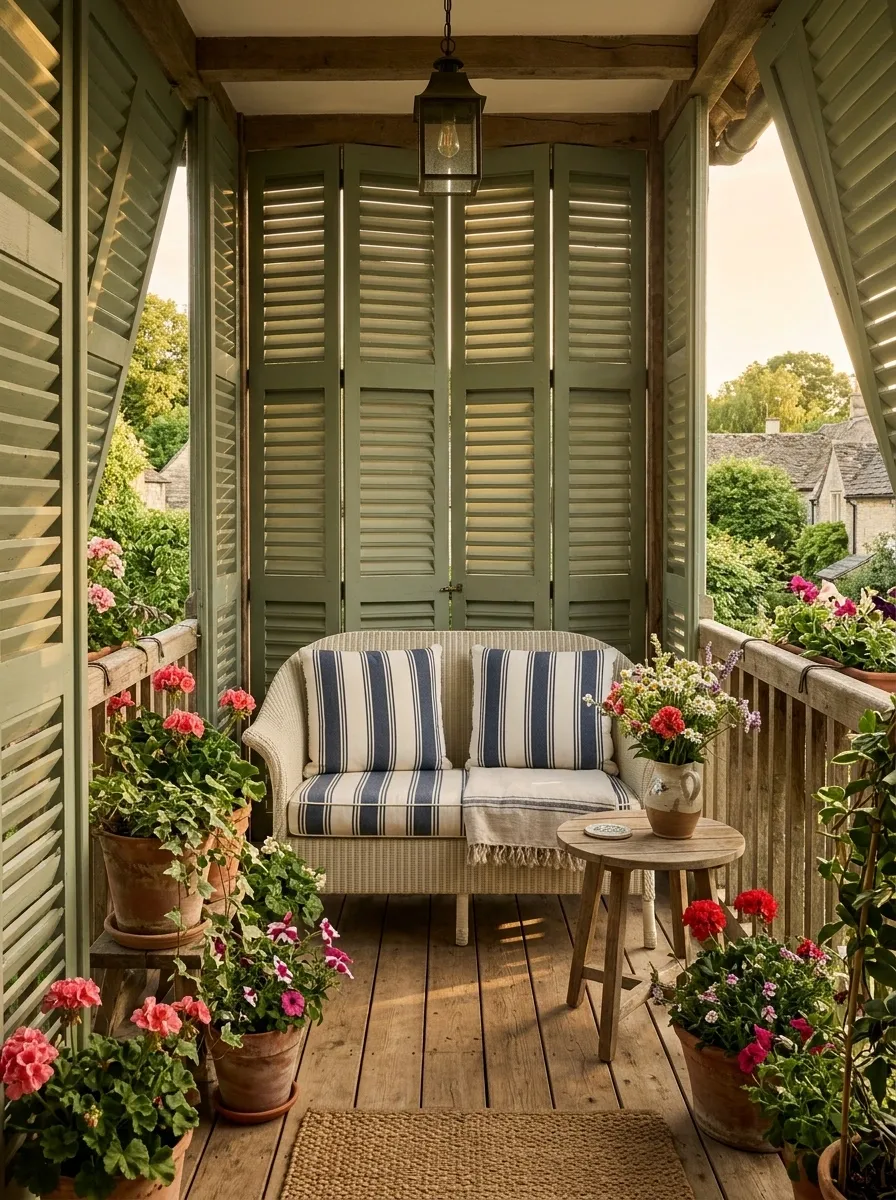
Tall painted shutters give this balcony a cottage-inspired privacy solution that feels architectural, colorful, and slightly playful without becoming fussy. A small loveseat sits against the protected side, surrounded by flowering pots, striped outdoor cushions, a petite wood table, and warm natural textures.
The angled shutters are the important detail. They can interrupt direct views while still allowing light through the gaps, and their vertical lines give the balcony more height. A soft painted finish works best against simple flooring and restrained furniture. The shutters already have personality. Adding seven other decorative statements would be a bit like bringing a marching band to a quiet garden party.
more open view
balanced screening
stronger privacy
Mediterranean Night Balcony With Draped Canopy and Lanterns
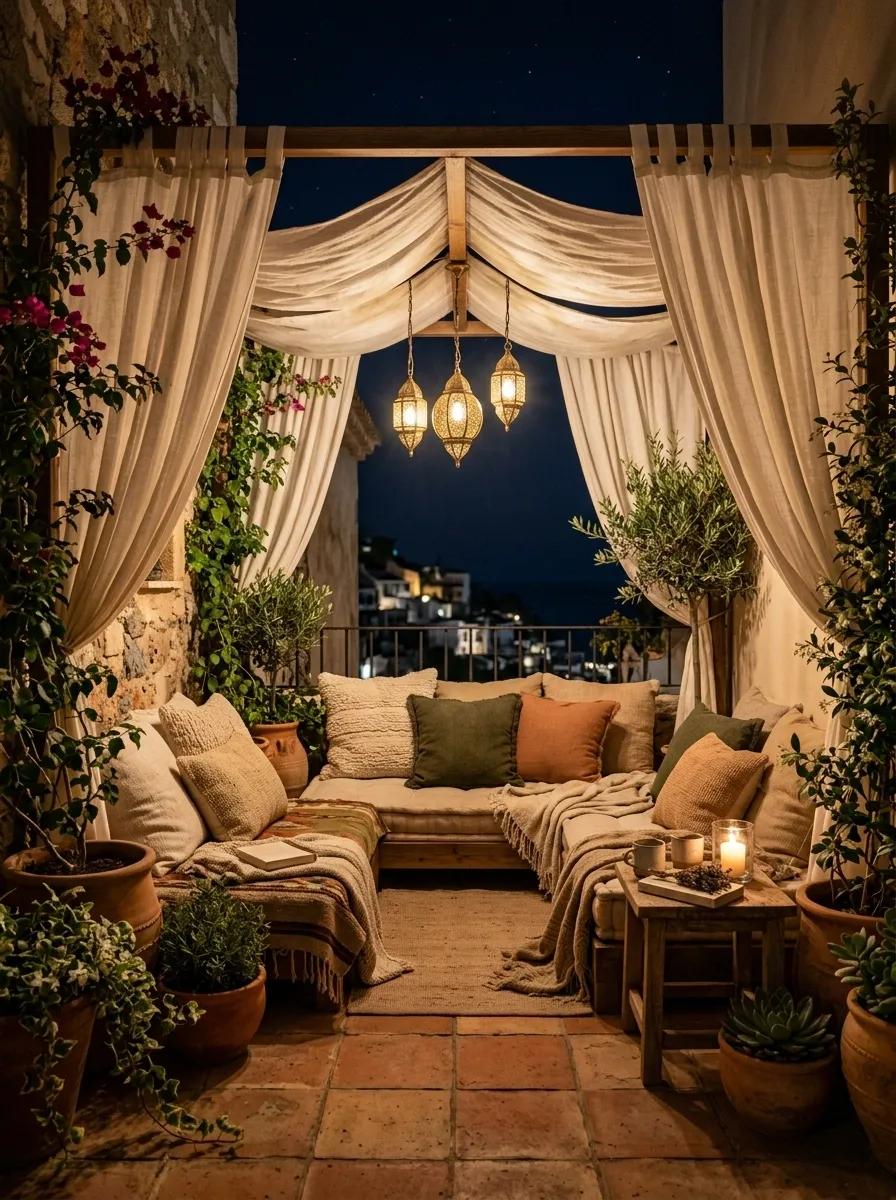
Soft outdoor fabric hangs from a simple overhead frame in this warm evening balcony, partially enclosing a low lounge arrangement with terracotta pots, textured cushions, and lantern-style lighting. The fabric creates an intimate boundary while the open front keeps the balcony connected to the night air.
The design becomes more interesting after sunset because the privacy layer also catches the warm light. The canopy doesn’t need to cover every side. Leaving deliberate openings prevents the space from feeling heavy and gives the lanterns somewhere to glow. Keep the lighting concentrated around the seating rather than scattering bright fixtures everywhere. Privacy is the mood here. Stadium lighting would be a slight contradiction.
Plant-Filled Balcony With Mixed Screen Heights
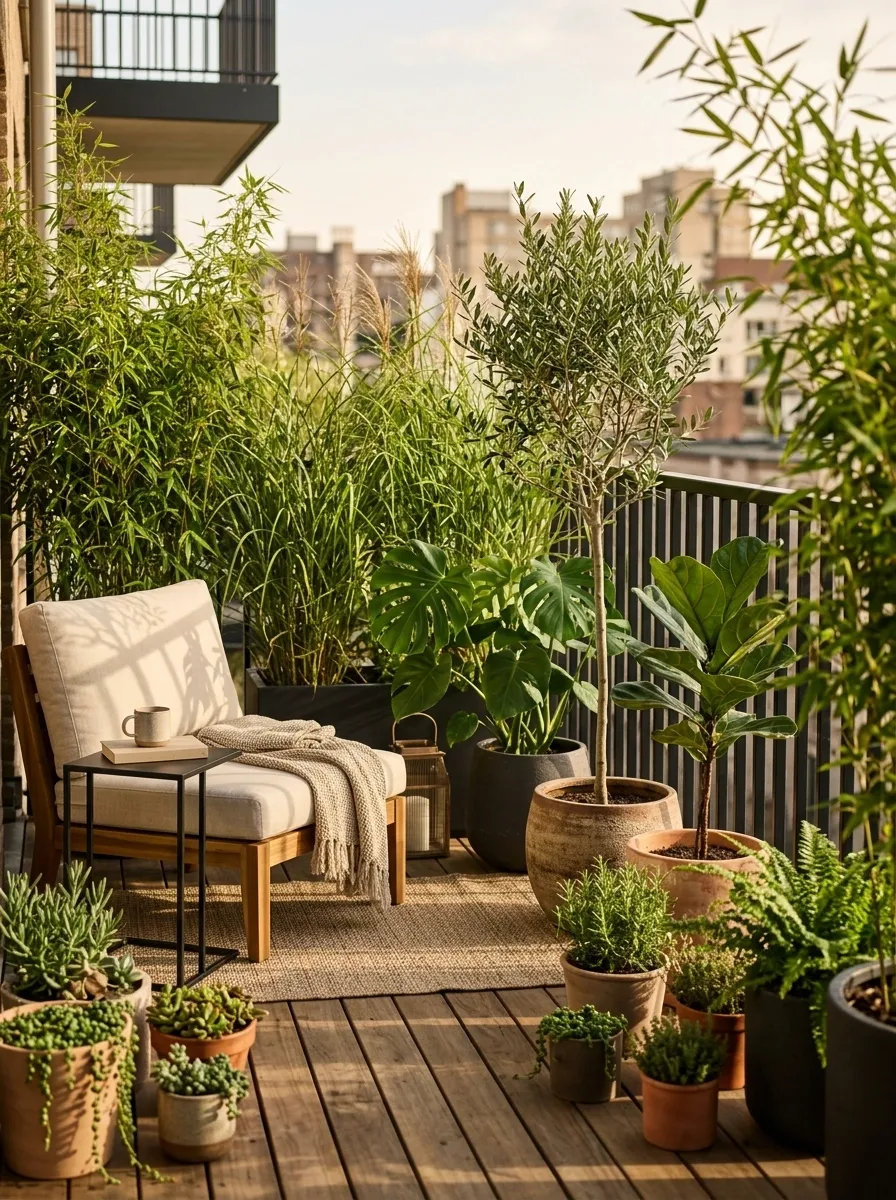
This balcony uses a stepped arrangement of plants rather than one continuous privacy wall. Tall foliage occupies the most exposed edge, medium-height plants create a second layer near the seating, and low pots fill the foreground around a compact lounge chair and small table.
The different heights keep the planting from reading as one giant barrier. The eye moves through several layers, which makes the balcony feel deeper and more natural. It also lets the seating remain visible rather than disappearing behind a wall of leaves. The trick is controlled variation, not maximum plant count. More pots do not automatically equal more privacy. Sometimes they just equal fewer places to put your feet.
foreground Medium
seating edge High
sightline block
Japandi Balcony With Timber Fins and Low Seating
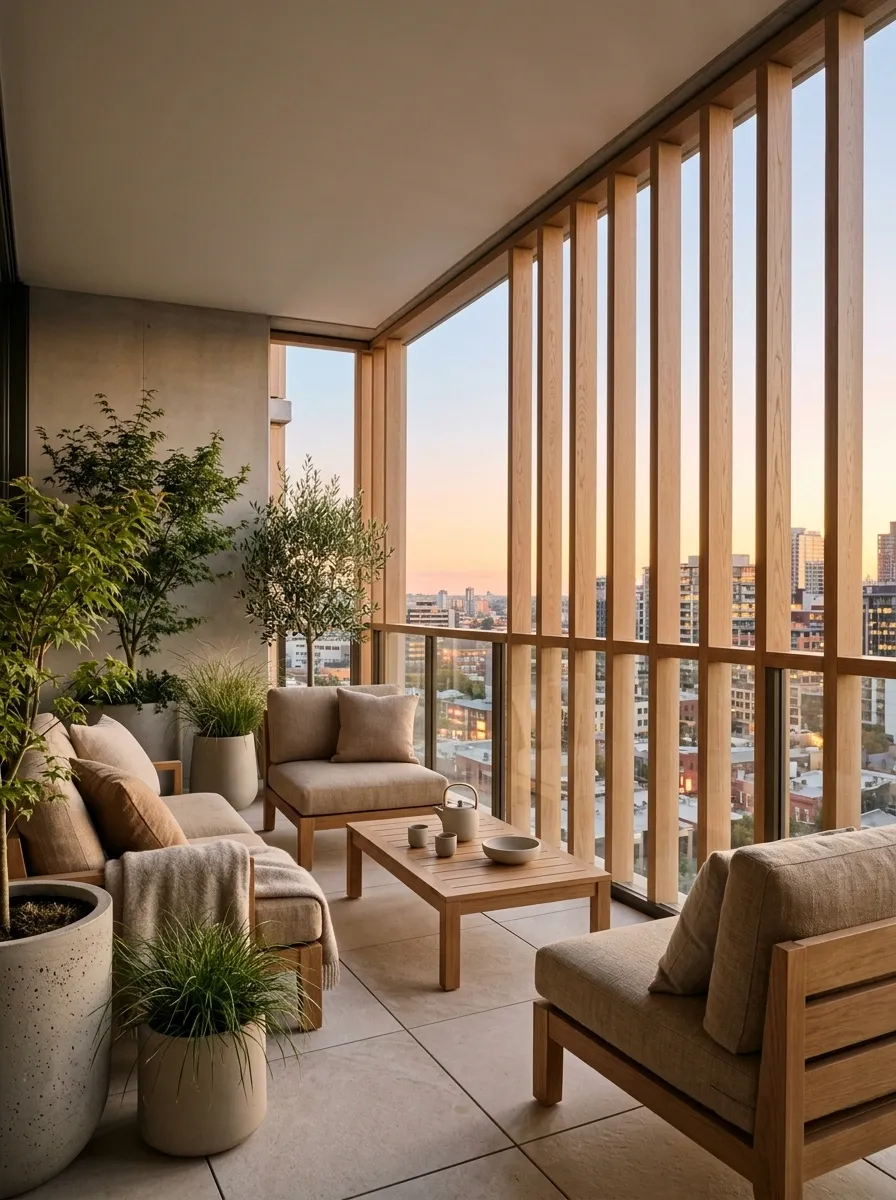
Natural timber fins create a disciplined privacy wall on this Japandi-inspired balcony, with generous gaps between them keeping the composition bright and open. Low seating in warm beige sits against pale stone-colored flooring, while a few sculptural planters and restrained greenery soften the repeating vertical lines.
The design depends on proportion more than decoration. The timber provides rhythm, the pale surfaces create visual breathing room, and the low furniture keeps the balcony feeling grounded. There is no need for a collection of tiny accessories competing for attention. The fins already have something to say. Let them finish the sentence.
creates the privacy boundary
Tiny Balcony With Retractable Privacy Screen and Bistro Table
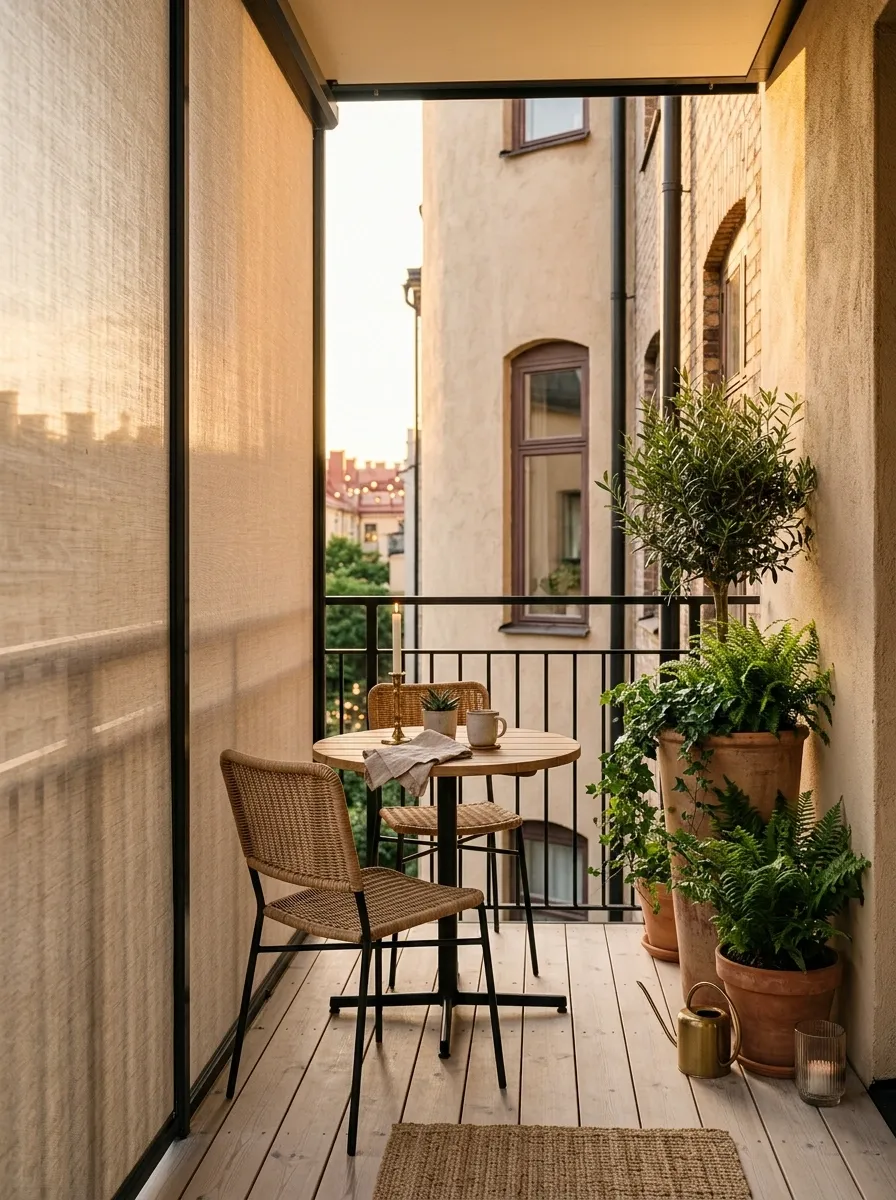
This tiny balcony keeps its footprint remarkably simple: one retractable privacy screen covers the exposed side, while a small round bistro table and two compact chairs occupy the remaining space. Pale flooring, one tall planter, and warm wood details give the setting enough personality without filling every spare inch.
The retractable screen is the entire point. When privacy isn’t needed, it disappears from the main view and leaves the balcony feeling much larger. When the neighboring building suddenly becomes interested in everyone’s business, the screen comes down. The furniture doesn’t need to move, and the floor doesn’t need to be sacrificed. Tiny balcony, surprisingly functional plot twist.
Layered Privacy Balcony With Trellis, Curtains, and Plants
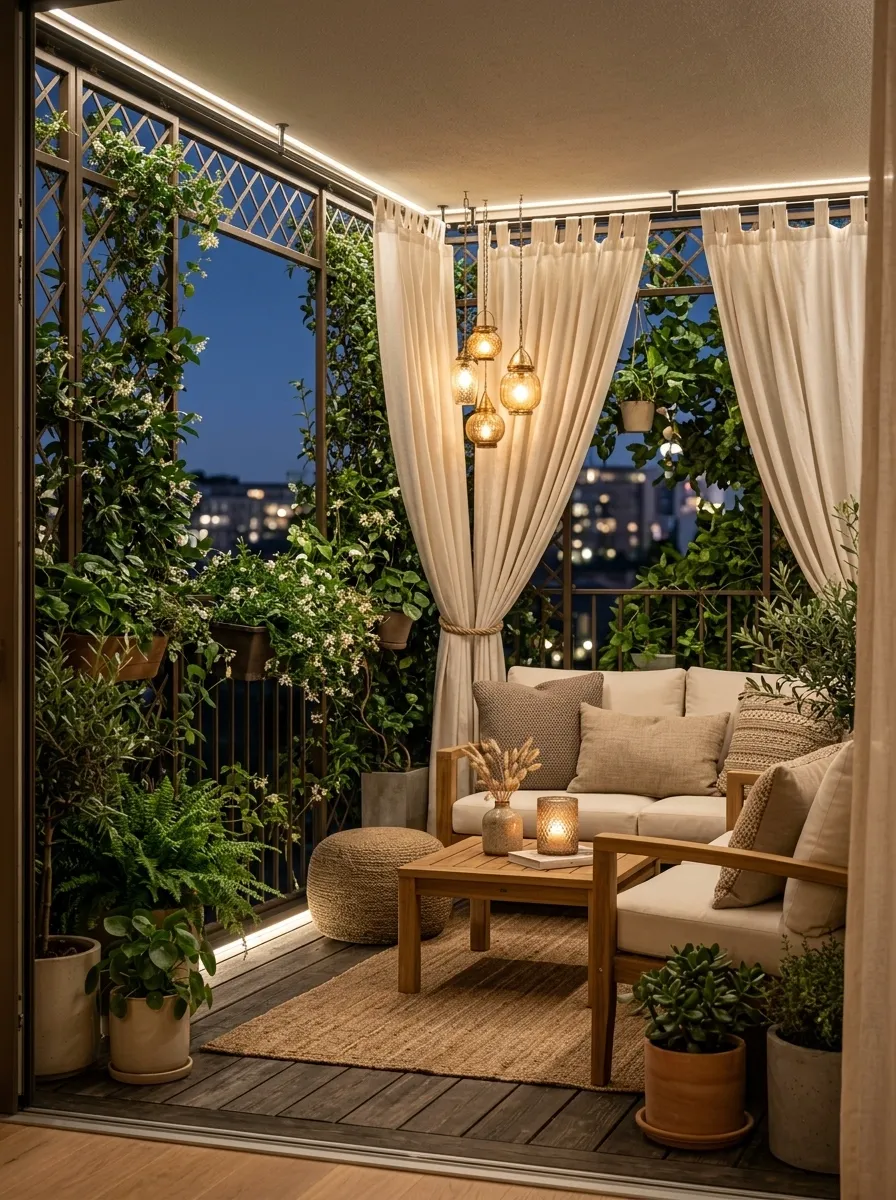
A trellis forms the outer framework of this balcony, climbing plants occupy the middle layer, and soft outdoor curtains provide adjustable privacy closer to the seating. Behind the layered boundary sits a compact lounge arrangement with natural wood, cream textiles, and warm evening lighting.
Each layer has a different visual job. The trellis establishes structure, the plants soften the hard lines, and the curtains provide the strongest control when privacy matters most. Because those roles are distributed, no single element needs to become oversized. That keeps the balcony rich without making it feel crowded. Three layers, one coherent design. Revolutionary stuff, apparently.
Soft Industrial Balcony With Reclaimed Timber Screen
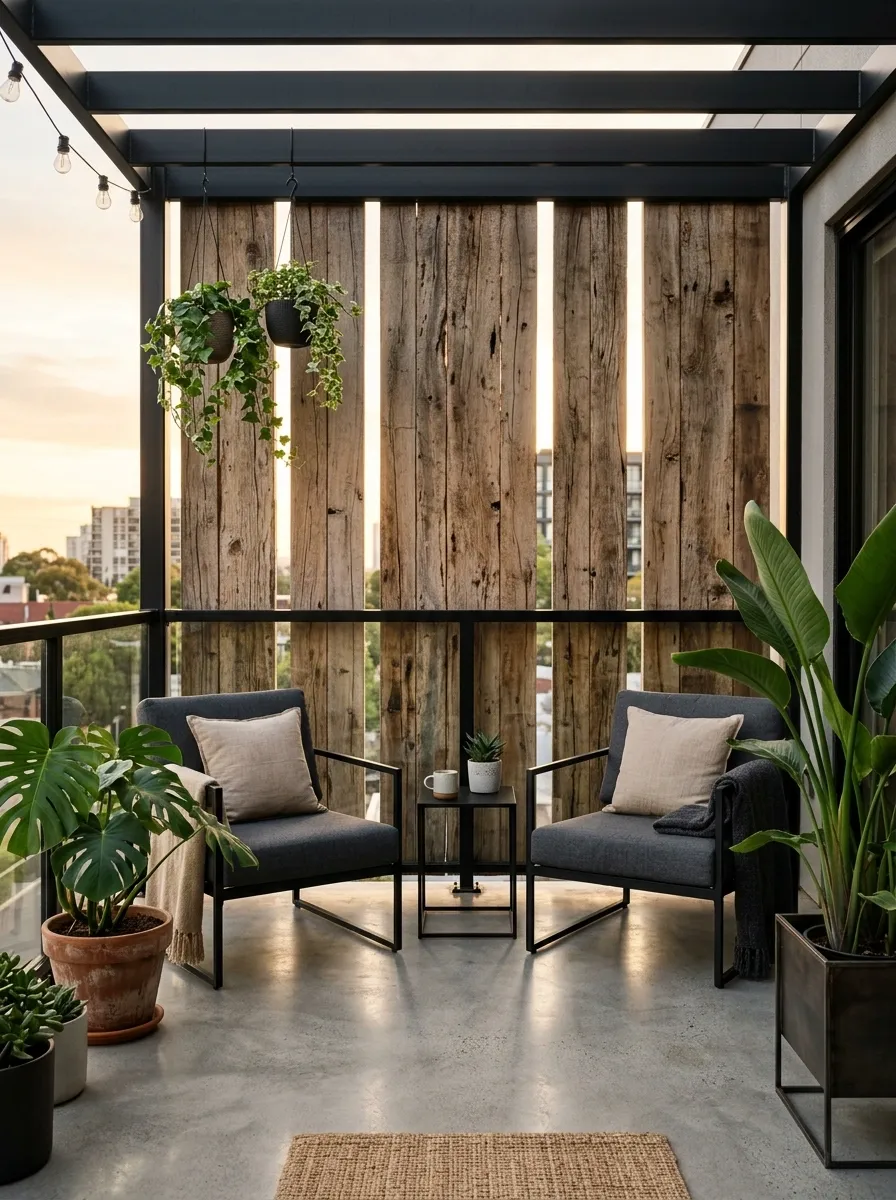
Reclaimed timber panels bring warmth into this industrial balcony, where charcoal seating, a slim black metal table, concrete-look flooring, and broad-leaf plants create a balanced mix of hard and soft surfaces. The rough wood screen blocks direct views while becoming the main visual backdrop.
The contrast is deliberate. Smooth metal and concrete give the balcony its industrial edge, while irregular timber grain and greenery keep the material palette from becoming harsh. Keep the reclaimed wood fairly restrained rather than covering every surface in it. One strong textured wall has character. Five different wood tones start looking like a lumber yard with seating.
Give the Balcony a Privacy Strategy, Not Just a Screen
A balcony starts looking intentional when the privacy treatment and the rest of the design clearly belong to the same composition. Timber works especially well with warm furniture. Plants soften stronger architectural screens. Curtains introduce movement. Dark panels can make pale furniture stand out, while lighter screening keeps a small balcony feeling open.
The useful question isn’t simply, “What can block the view?” It’s “Where does the view actually need to be blocked?” That distinction prevents a lot of balconies from becoming overbuilt.
Start with the sightline that bothers you most. Then decide whether the solution should be structural, planted, fabric-based, adjustable, or layered. Once that decision is made, the furniture and styling become much easier to place.