
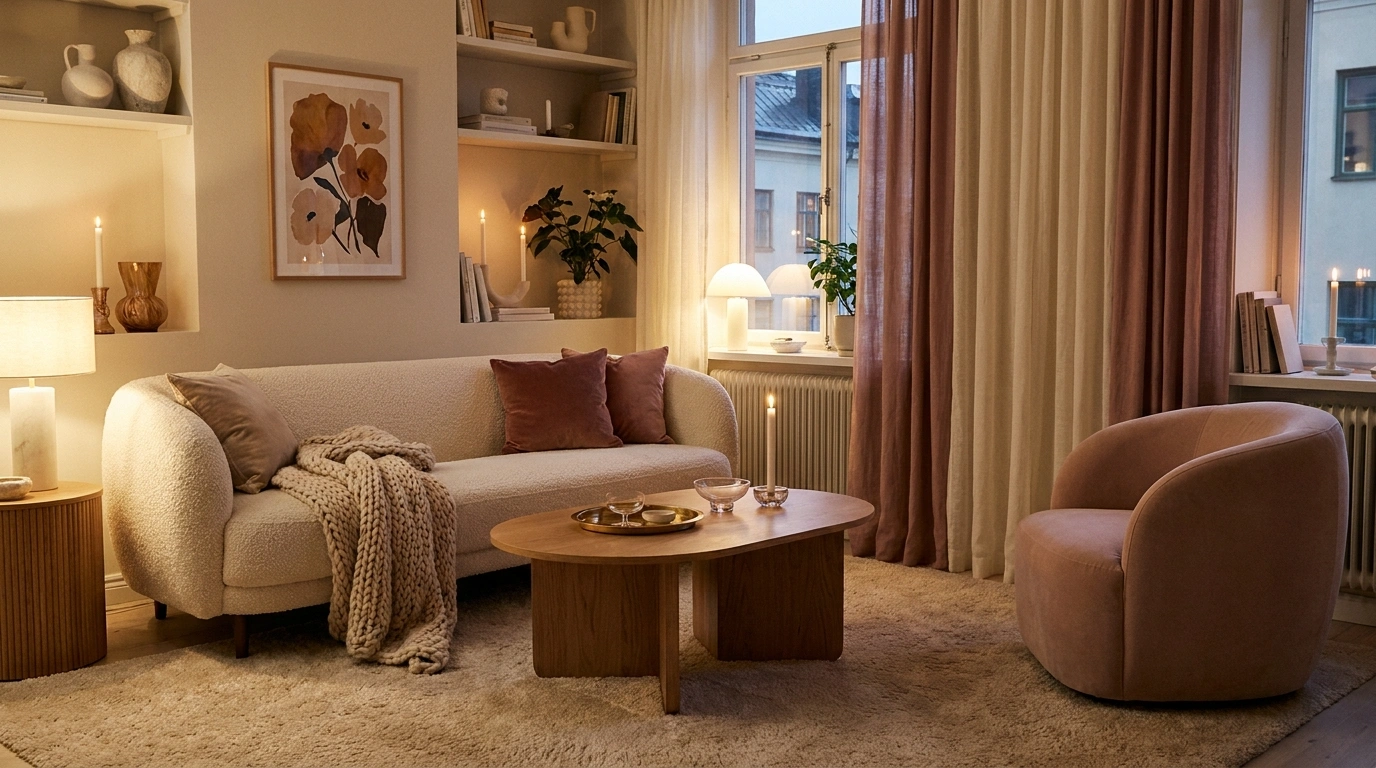
Moving into a new apartment can create a very specific kind of disappointment. The furniture is there. The boxes are mostly gone. The rooms technically work. And somehow the whole place still feels like a furnished rental waiting for its next occupant.
That usually isn’t because the apartment needs more stuff. It needs more evidence of a life happening there.
The little things matter more than people expect. Where the keys land. What you see from the sofa. Whether the bedroom feels inviting after dark. Whether the kitchen looks like someone actually cooks there. Whether the walls have anything to say besides, “The landlord painted this recently.”
A few deliberate changes can make the whole apartment feel warmer, more personal, and far less like it came with a move-in checklist.Before You Decorate, Fix the Feeling
A New Apartment Looks Empty for a Reason
New apartments often have the same problem: everything is technically in place, but nothing has accumulated naturally yet.
There are no favorite books leaning against the wall. No familiar lamp on the bedside table. No chair that has somehow become the official place for tomorrow’s clothes.
That emptiness can make people buy too much, too quickly.
Instead, let the first layer come from things that already support daily life. A useful lamp, comfortable curtains, proper bedding, a rug under the sofa, and somewhere to put keys will do more than a pile of decorative filler.
The apartment doesn’t need to look finished on day one.
Matching Everything Makes the Space Feel Less Personal
Buying an entire room from one collection seems efficient until the room starts looking like the showroom where everything was purchased.
Different pieces should have different jobs and slightly different personalities.
Mix smooth furniture with woven texture. Pair newer pieces with something older. Let one room have a little more color while another stays quieter. Repetition creates connection, but exact matching kills character fast.
Think coordinated, not cloned.
A home should look like things were collected because they worked together, not because a website offered free shipping when everything was purchased at once.
Empty Space Isn’t an Emergency
Blank walls and empty shelves make people nervous after moving.
Resist it.
Some of the best spaces need a little breathing room. An empty section of wall gives artwork nearby more impact. A clear tabletop makes the one object sitting there feel intentional. An open shelf keeps the room from becoming visually noisy.
Give the apartment time to reveal what it actually needs.
The goal isn’t to make every corner look occupied. The goal is to make every corner feel considered.
Small Changes That Make a New Apartment Feel Like Home
Make an Entrance That Matters
The hallway is usually treated as a drop zone for mail and shoes, but it sets the entire mood before anyone even steps foot into the living space.
A floating console paired with a statement mirror instantly draws the eye upward and keeps the floor looking open and airy. Add a vase of fresh flowers and a textured runner to bring instant warmth to the entryway.
First impressions shouldn’t feel like an afterthought.
Start With One Room You Actually Want to Spend Time In
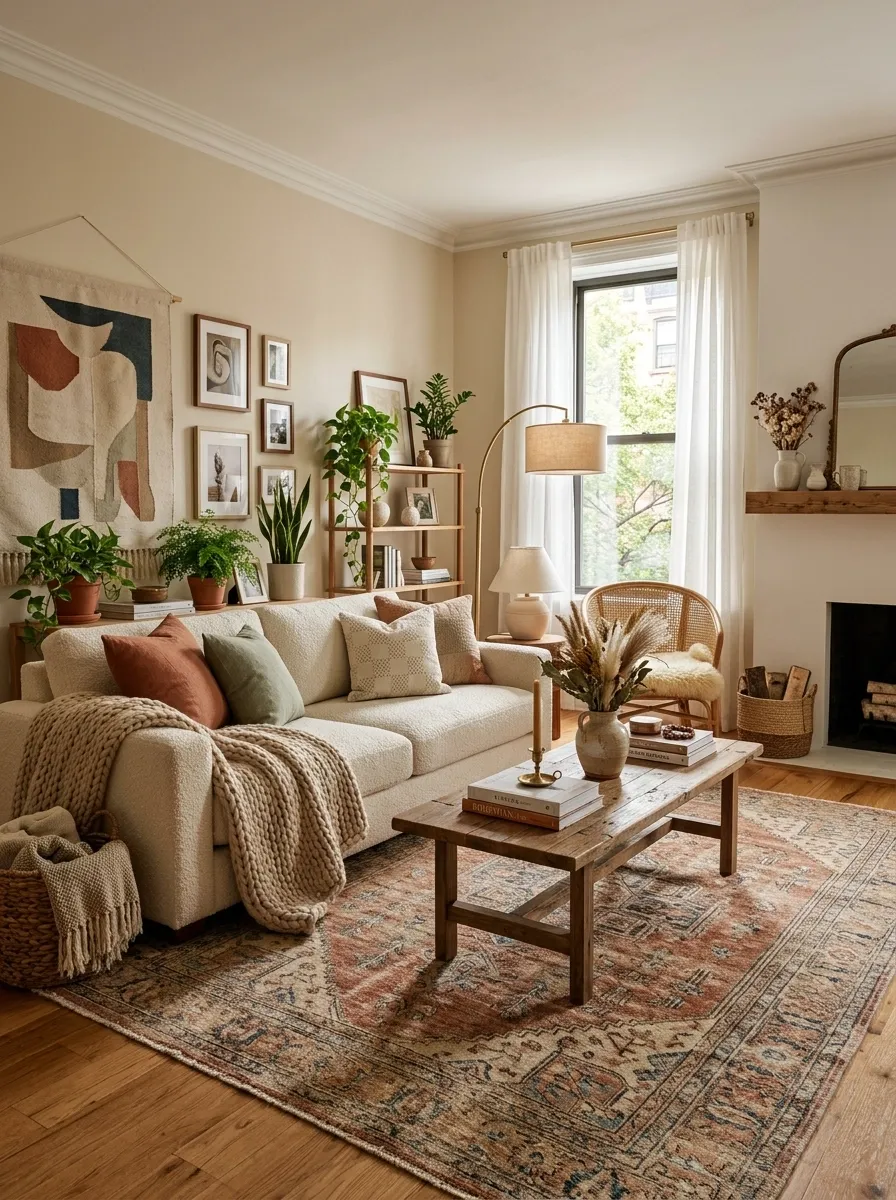
Don’t try to finish the entire apartment at once. Pick the room where you naturally spend the most time and make that one feel good first.
For most people, that’s the living room or bedroom. Get the lighting right. Add the rug or curtains that soften the space. Put the things you use nearby instead of making yourself cross the room every five minutes.
Start with comfort, then add personality.
Once one room feels settled, the rest of the apartment stops feeling like one giant unfinished project.
Float Your Furniture With Purpose
Pushing every single piece of furniture against the wall makes a living room look smaller and far less intentional.
Floating a sofa away from the wall opens up the floor plan and lets you slide a slim console table right behind it. That extra surface gives you a spot for lamps and decor without cramping the room.
Let your seating breathe and the whole layout clicks into place.
Ground Your Living Space Today
A coffee table should feel like the anchor of the room, not just a random wooden box sitting in the middle of the floor.
Style it with a mix of organic textures like a simple metallic vase filled with fresh stems, a couple of lit candles, and a small tray to keep things grounded. The combination of candlelight and greenery instantly softens the hard edges of the room.
Keep the styling effortless and let the space invite you to stay awhile.
Put Curtains Up Earlier Than You Think
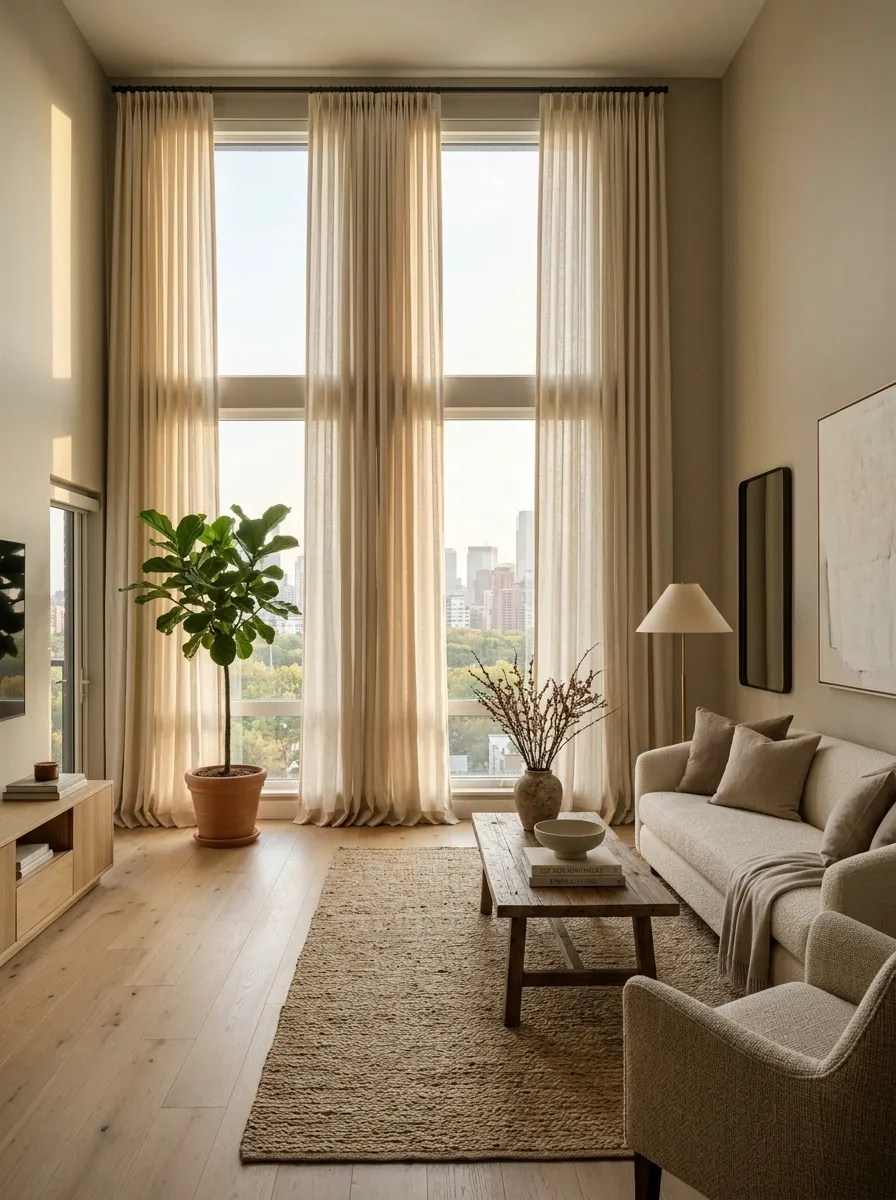
Bare windows make even a nicely furnished apartment feel temporary.
Curtains soften the hard edges of a room, add privacy, and make the windows look connected to the rest of the furniture. They also make a surprisingly large difference when the apartment has basic rental blinds.
Hang them high and let them fall generously around the window instead of stopping at an awkward halfway point.
Don’t treat curtains as an afterthought.
They’re one of the largest textile surfaces in a room, so they have more visual impact than another tiny decorative object ever will.
Layer Warm Lighting Instead of Relying on the Ceiling Fixture
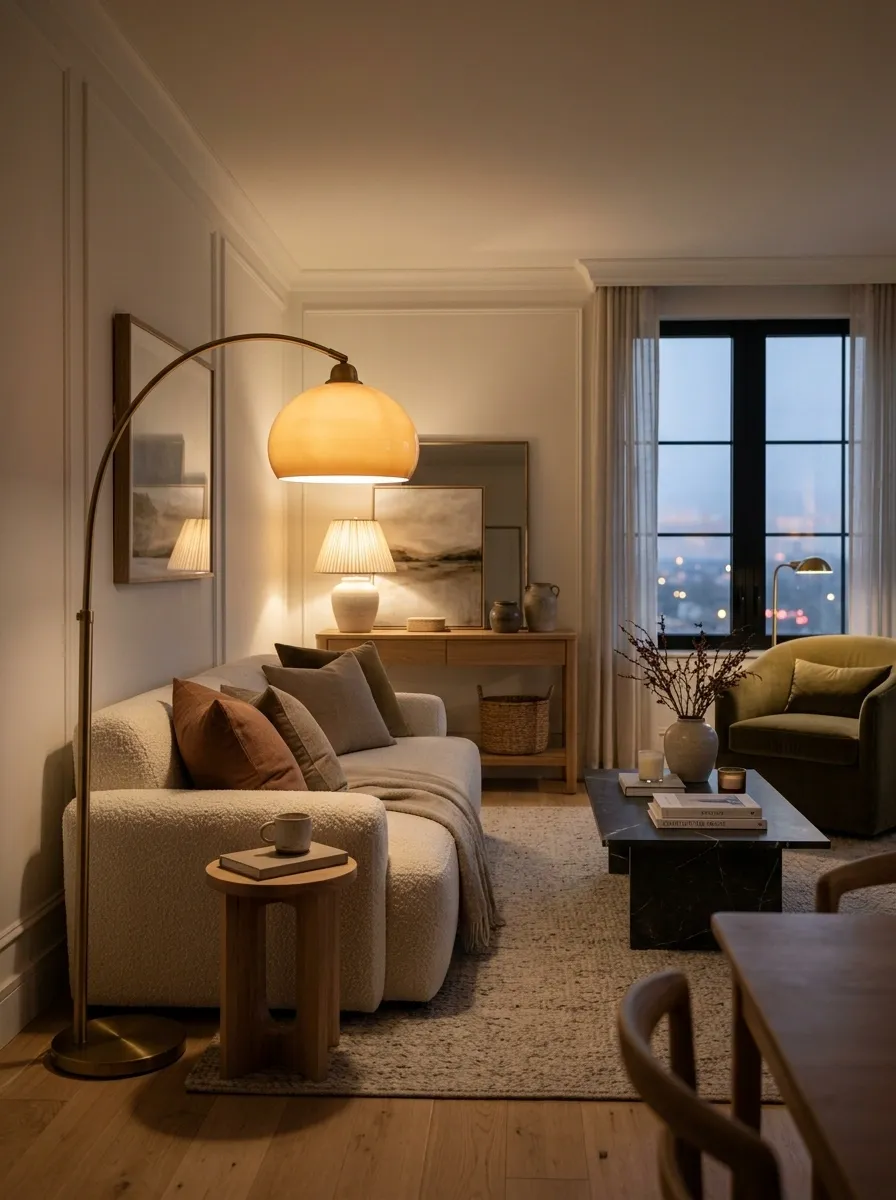
That bright ceiling light has one job: making sure nobody trips.
It does not need to be responsible for the entire atmosphere of the apartment.
Add smaller light sources around the room. A floor lamp beside the sofa, a table lamp on a console, a bedside lamp, or a small light near a reading chair gives the room different levels of brightness.
Aim for pools of light, not one giant blast from above.
The room instantly feels more comfortable when different areas have their own little glow.
Put a Rug Under the Furniture Instead of Somewhere Near It
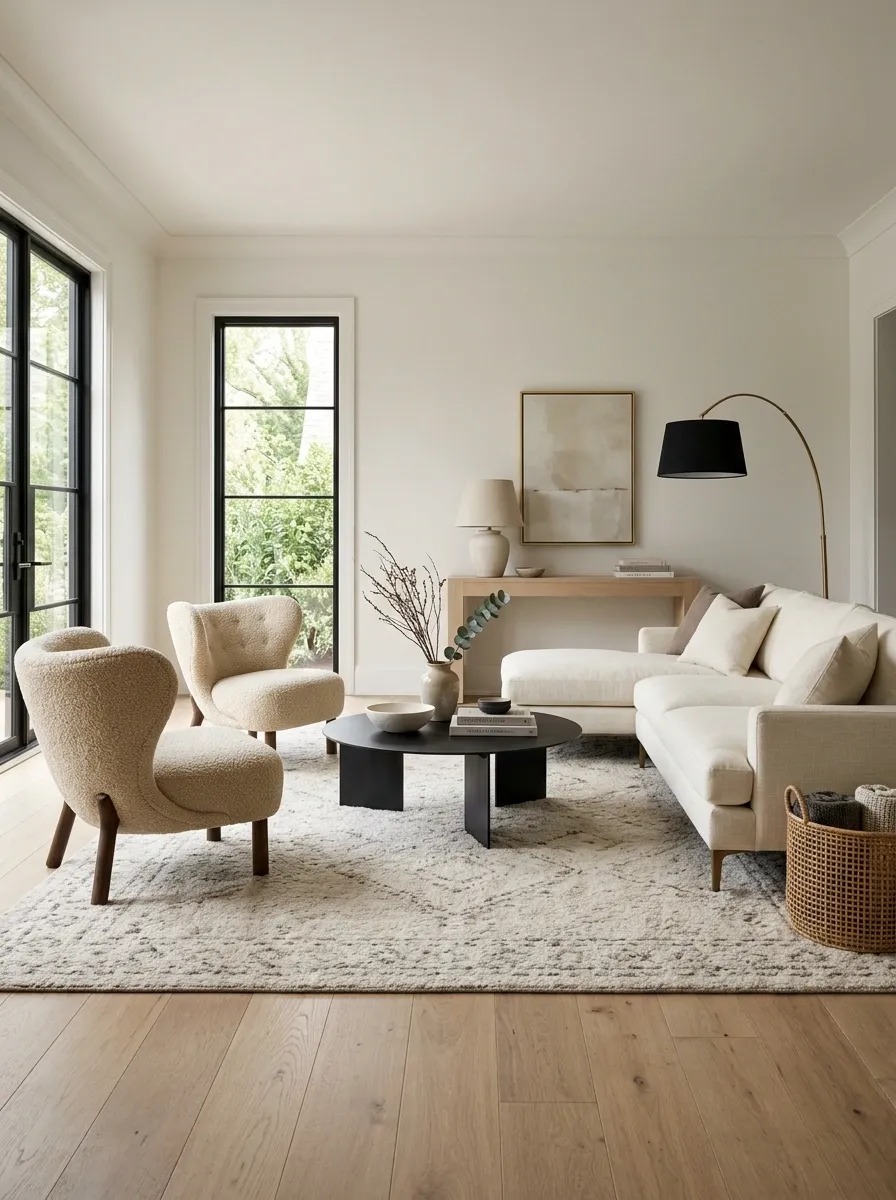
A rug floating alone in the middle of a room doesn’t anchor anything.
The furniture should visually connect to it. In the living room, let the rug reach under at least part of the main seating arrangement. In the bedroom, use it to soften the area around the bed.
The rug should connect furniture, not compete with it.
This one change can make furniture that previously looked scattered suddenly feel like one intentional arrangement.
Give the Entryway a Place for the Things That Usually End Up Everywhere
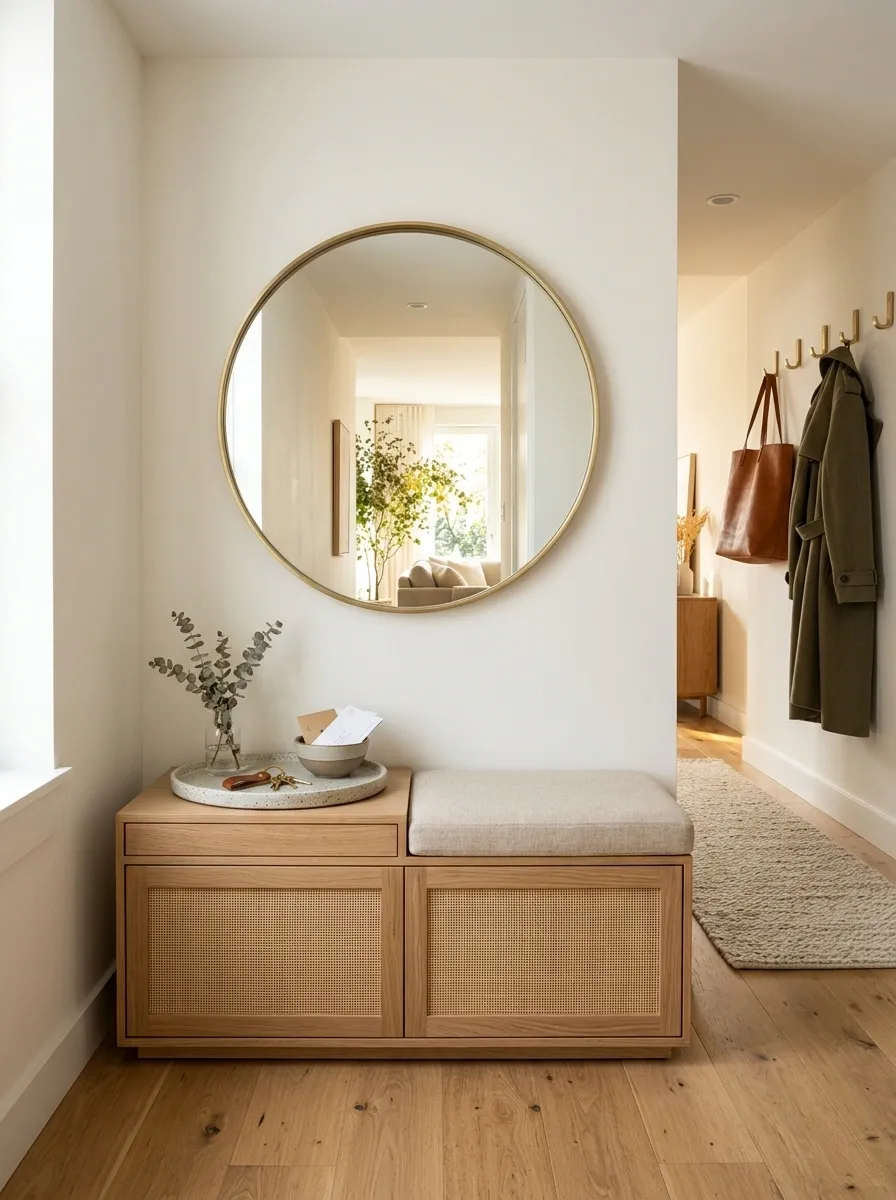
The entrance sets the tone for the whole apartment.
If shoes, bags, keys, mail, and jackets immediately explode across the first available surface, the apartment will feel messy before you’ve even walked ten steps inside.
Give the entry a simple landing system.
A tray handles keys. Hooks handle bags. A small bench or shoe cabinet handles footwear. A mirror makes the area feel finished while still being useful.
Make the entrance easy to use when you’re tired.
If the system requires five steps, nobody is going to follow it after a long day.
Let the Bedroom Look Softer Than the Rest of the Apartment
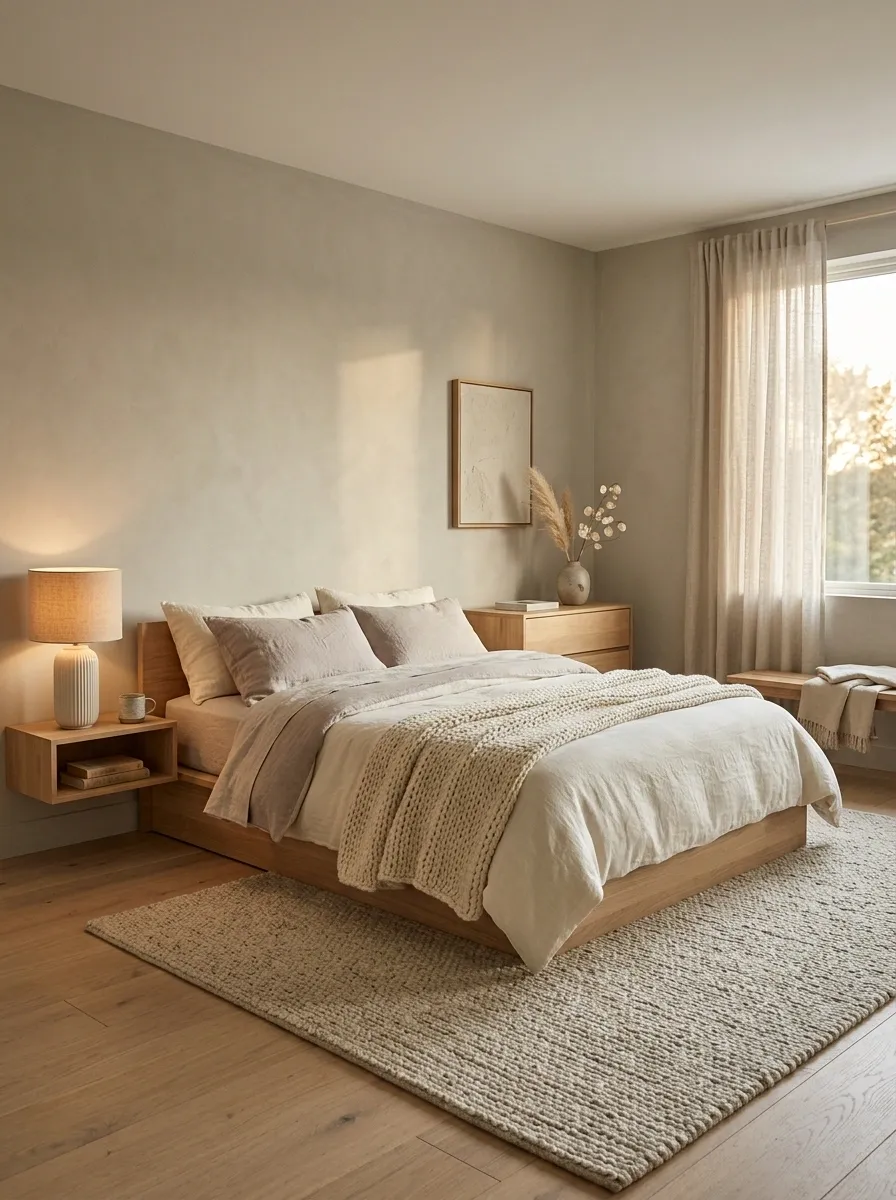
Bedrooms don’t need to follow the same visual energy as kitchens and living rooms.
Use softer bedding, warmer lighting, quieter colors, and fewer hard surfaces around the bed. Add one or two textures that feel good rather than trying to make the room visually impressive from every angle.
A bedroom should look like somewhere sleep happens.
Not somewhere a decorative pillow goes to spend eight hours judging everybody.
Use Books as Decor Only When They Actually Belong There
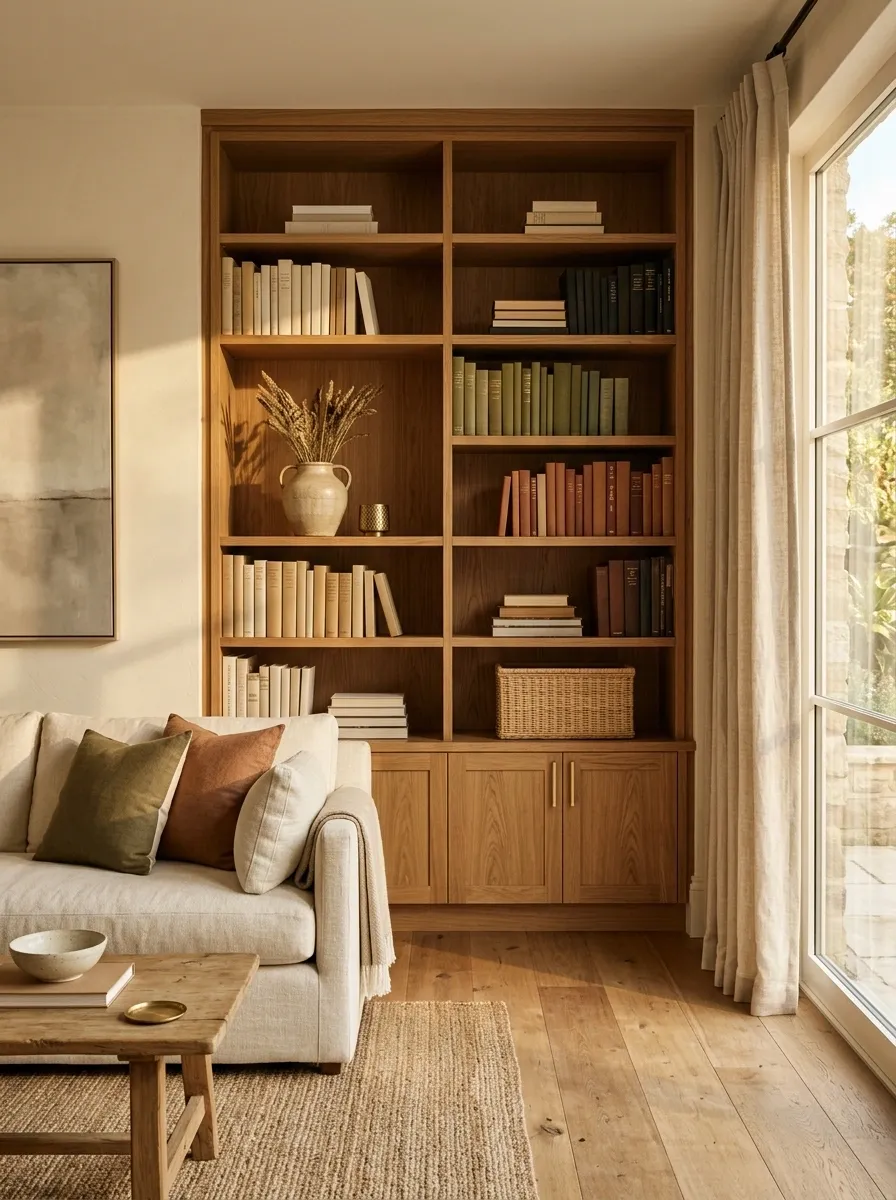
Books are one of the easiest ways to make an apartment feel lived in because they naturally carry personality.
But don’t buy decorative books just to fill a shelf. Use books you already read, want to read, collect, cook from, study, or genuinely enjoy looking at.
Stack a few horizontally beneath a small object. Stand others vertically with a little breathing room around them.
The point isn’t “bookshelf aesthetic.” The point is that someone clearly uses the room.
Add One Plant That Has Enough Room to Actually Look Good
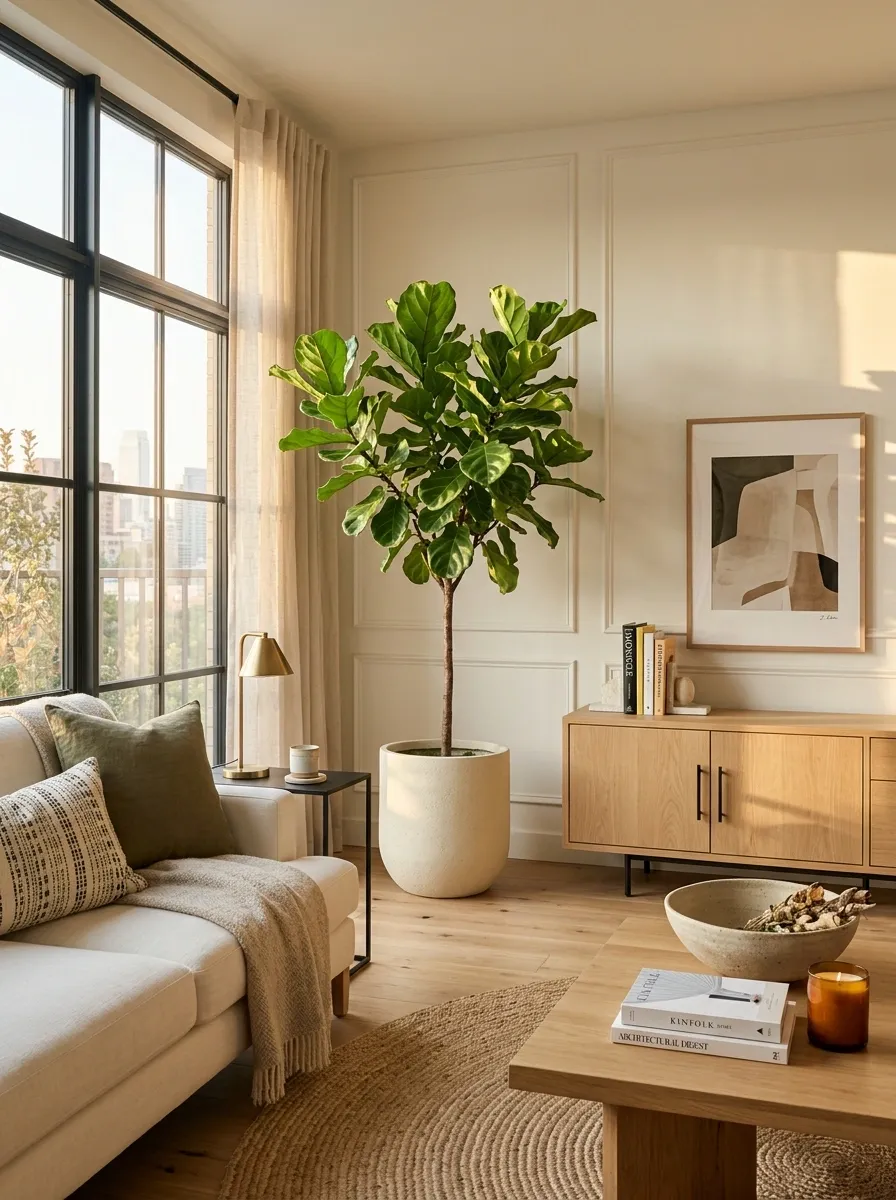
Plants can make an apartment feel less sterile, but the answer isn’t putting a tiny plant on every surface.
Choose one plant with enough visual presence for the room. A larger floor plant can soften an empty corner. A medium plant can fill an open shelf or side table. Even one healthy plant can add life without turning the apartment into a garden center.
Give the plant breathing room.
Don’t wedge it between the television and a lamp because the corner looked empty. Let it occupy its own space.
Create a Kitchen Corner That Feels Like Yours
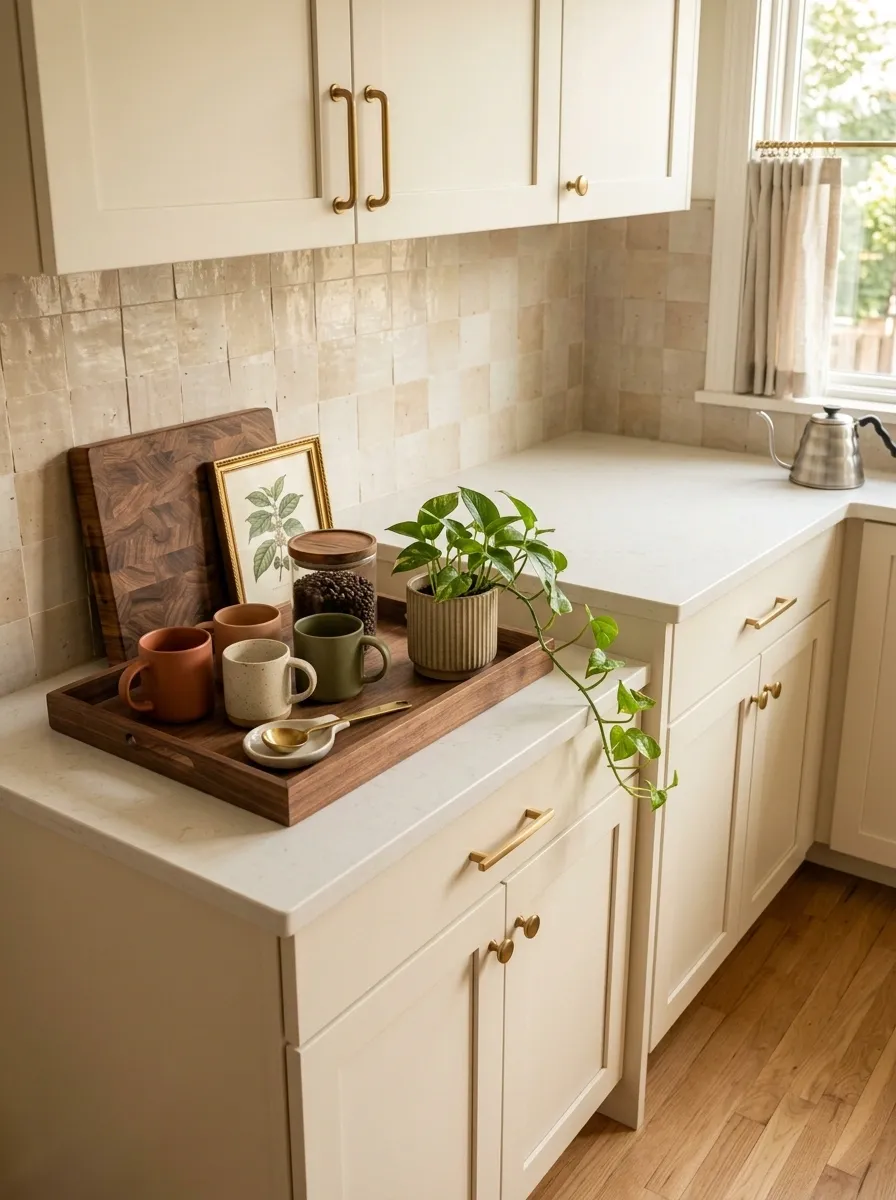
Kitchens get strangely impersonal after a move. Everything is functional, yet nothing says who actually lives there.
Pick one small area and give it a little identity. Keep the everyday mugs together, place a wooden board against the backsplash, add a small framed print, or gather coffee and tea supplies onto one tray.
Don’t decorate the entire counter.
Choose one zone and make it useful and visually clear. The rest of the countertop should stay open enough to cook without performing an obstacle course around decorative objects.
Use Textiles to Repeat the Same Feeling Around the Apartment
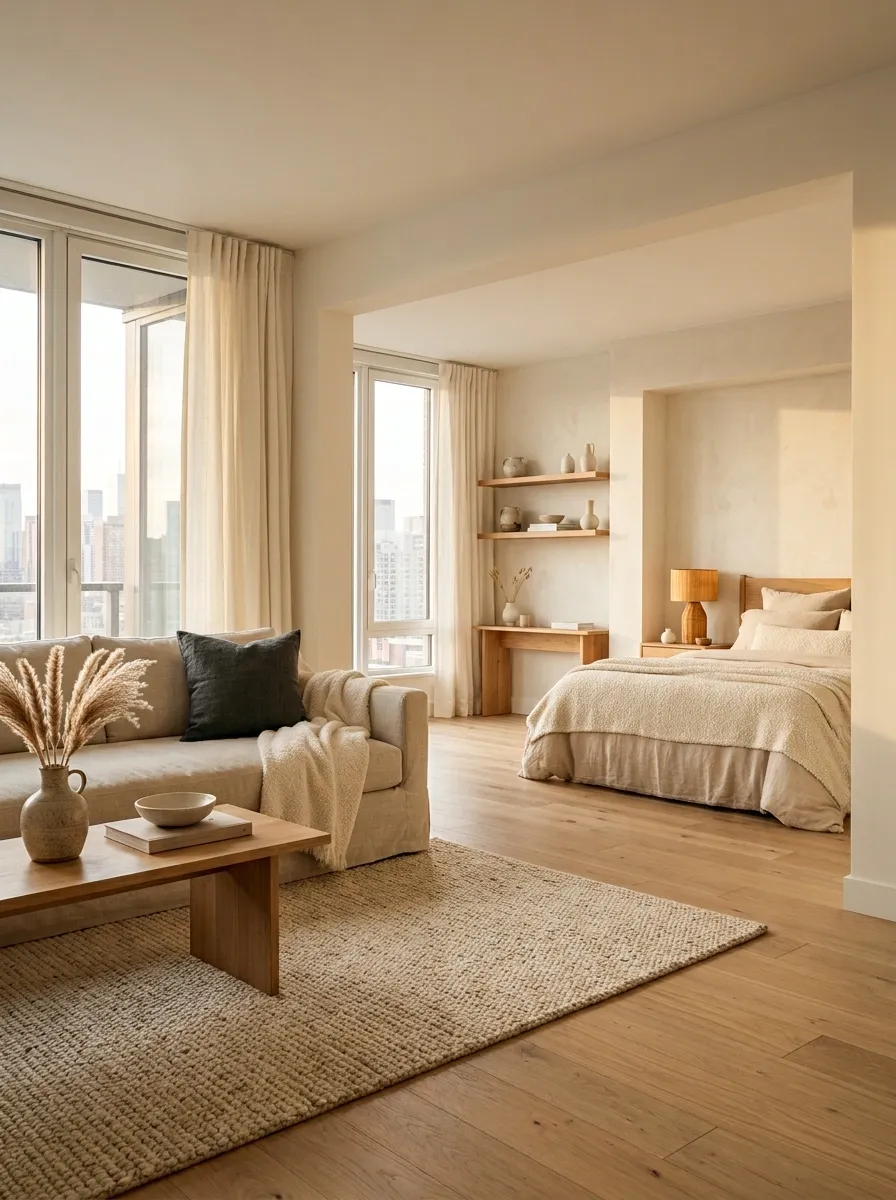
Rooms start feeling connected when the same textures quietly show up in different places.
That doesn’t mean buying a matching set for the entire apartment. Please, the showroom has suffered enough.
Repeat one or two material cues instead. Linen curtains can echo a textured cushion. A woven basket can relate to a natural-fiber rug. Soft cotton bedding can pick up the same relaxed feeling as a throw in the living room.
Think repetition, not matching.
The materials can vary in color and shape while still giving the apartment a consistent thread.
Give the Bathroom One Deliberate Decorative Moment
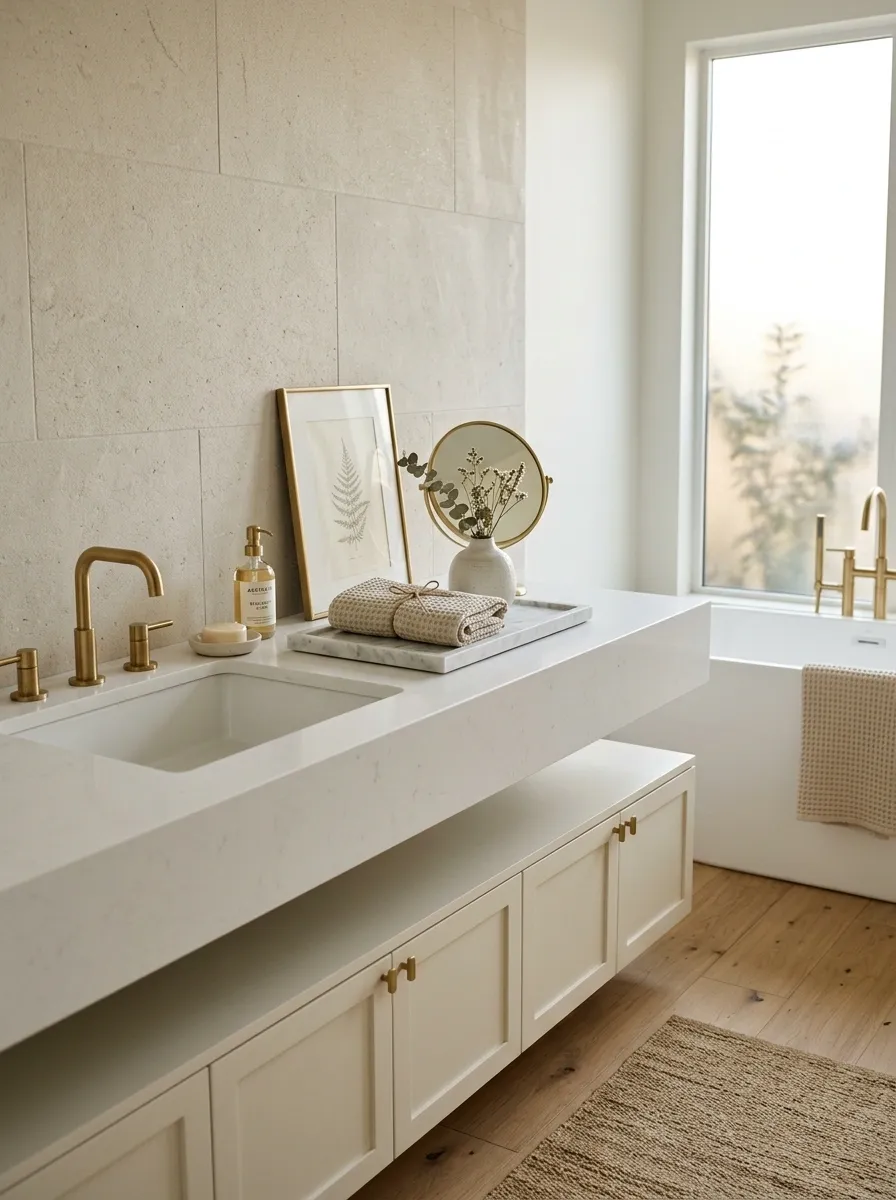
Bathrooms don’t need a shelf full of tiny objects. They need one thing that looks intentional.
Swap the random plastic bottles sitting around the sink for a simple tray, a folded hand towel, a small vessel, or a piece of framed art where appropriate.
The trick is keeping the counter mostly usable.
Use this formula: one tray + one soft element + one visual detail.
That little arrangement makes the bathroom feel like part of the apartment rather than a room that only exists because plumbing had demands.
Display Something You Brought From Your Old Home
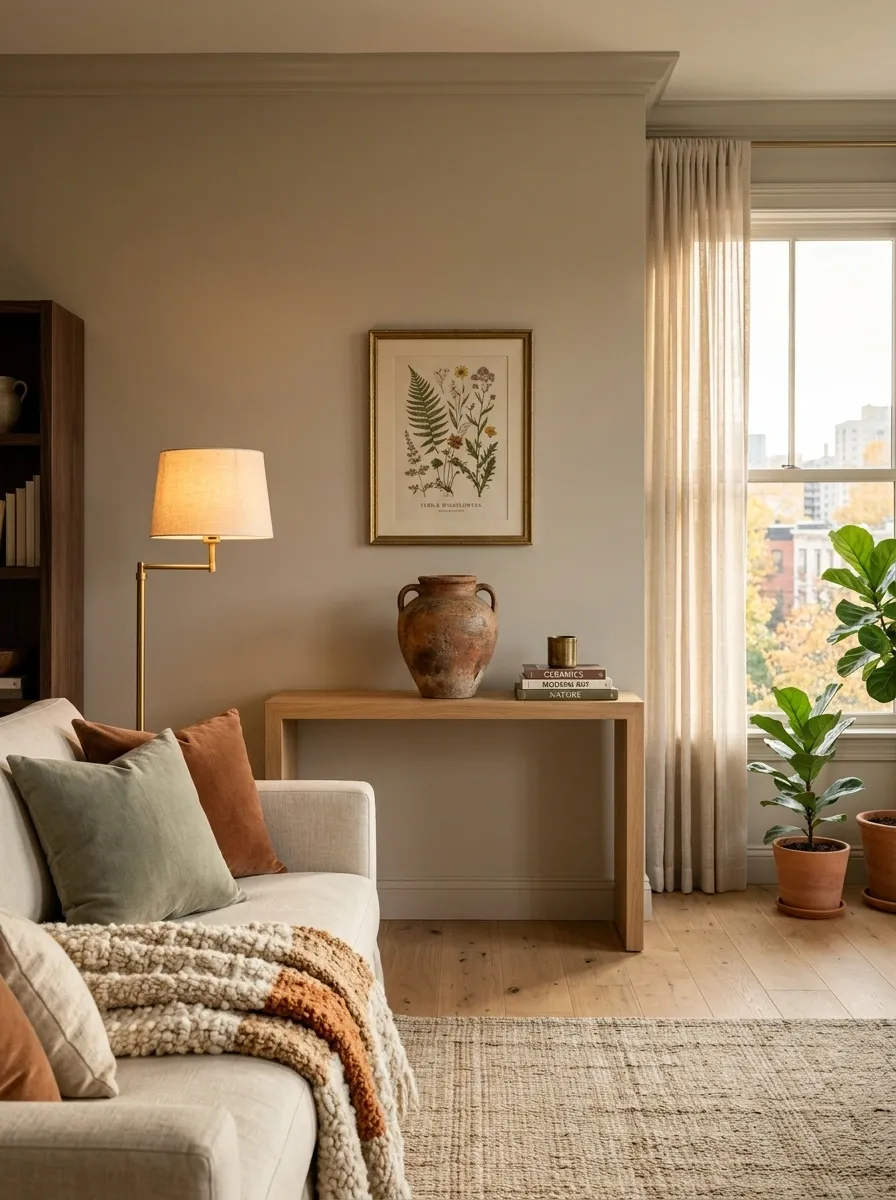
One familiar object can do more emotional work than an entire shopping cart of new decor.
Use something that already carries a memory. A framed print, old book, ceramic piece, small lamp, inherited object, or even a familiar blanket can give a new apartment an immediate sense of continuity.
Place it somewhere you naturally see every day.
Good locations include:
- The bedside table
- A living room shelf
- An entry console
- A reading corner
The apartment shouldn’t look like nothing existed before moving day. A little history makes a new space feel settled much faster.
Make Your Dining Area Feel Like a Place, Not Just a Table
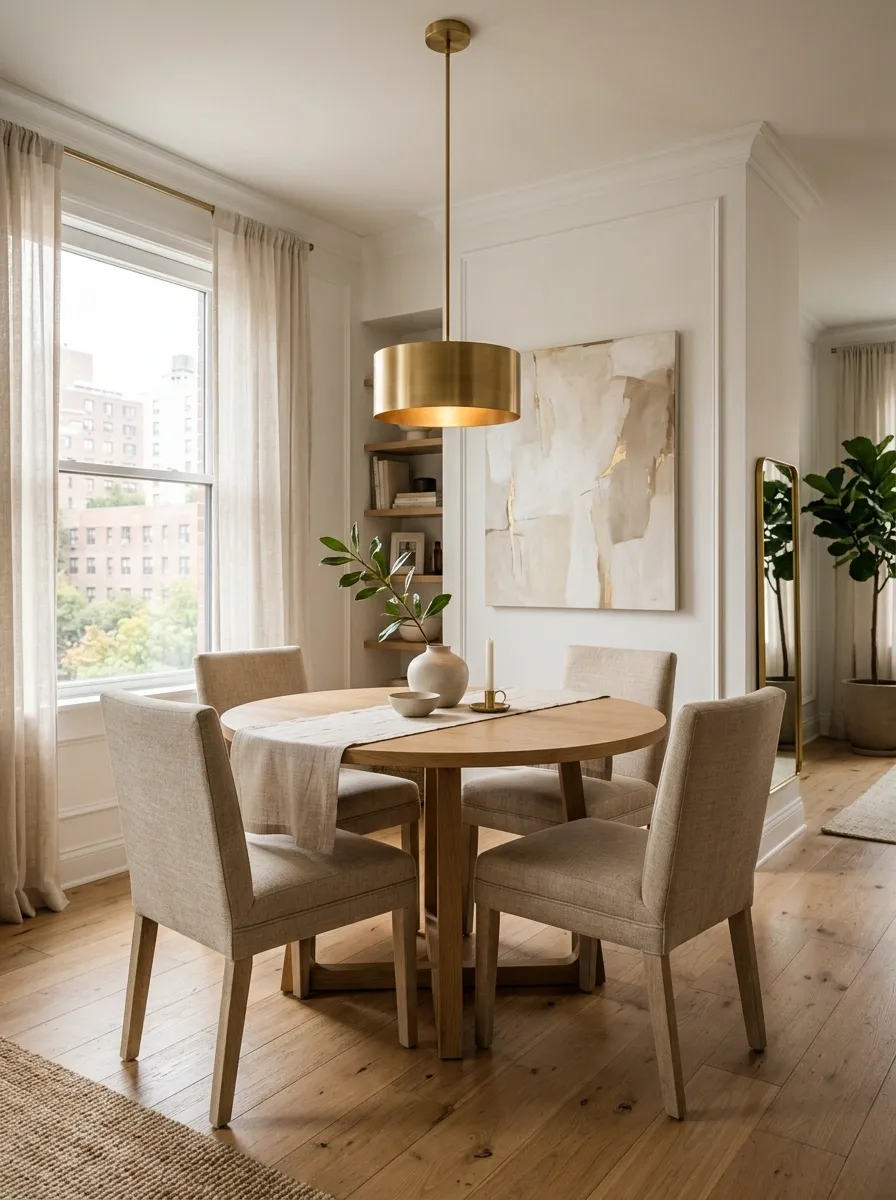
A table shoved against a wall doesn’t automatically become a dining area.
Give it a little visual weight so the zone feels deliberate, even in a small apartment. A pendant or nearby lamp, a piece of art, a runner, or a small centerpiece can define the area without taking up useful table space.
Build the zone in this order:
- Position the table where people can move around it comfortably.
- Add lighting that makes the area feel distinct.
- Give the wall nearby something to look at.
- Keep the tabletop mostly clear between meals.
Now dinner happens in a place that actually feels like a destination. Revolutionary concept, apparently.
Choose One Accent Color and Let It Travel Between Rooms
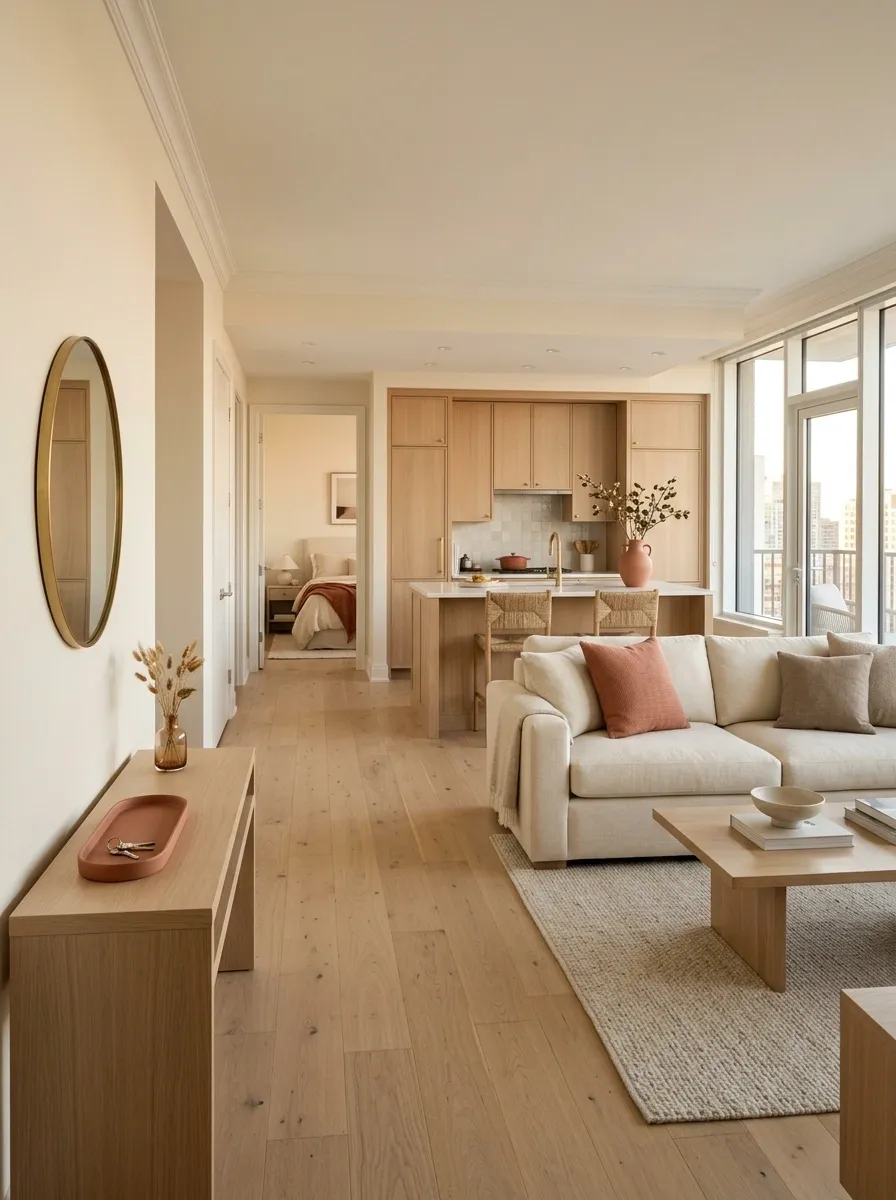
An apartment feels more connected when a color shows up more than once.
Pick one accent shade and repeat it in small doses. A cushion in the living room can echo a vase in the kitchen. A muted artwork color can reappear in the bedroom throw or entryway tray.
The color doesn’t need to dominate anything.
Keep the repeats small:
- One cushion
- One piece of art
- One ceramic object
- One throw or textile
That’s enough to create a visual thread. Otherwise every room starts acting like it signed a separate decorating contract.
Hide the Temporary Stuff That Makes a New Place Feel Unsettled
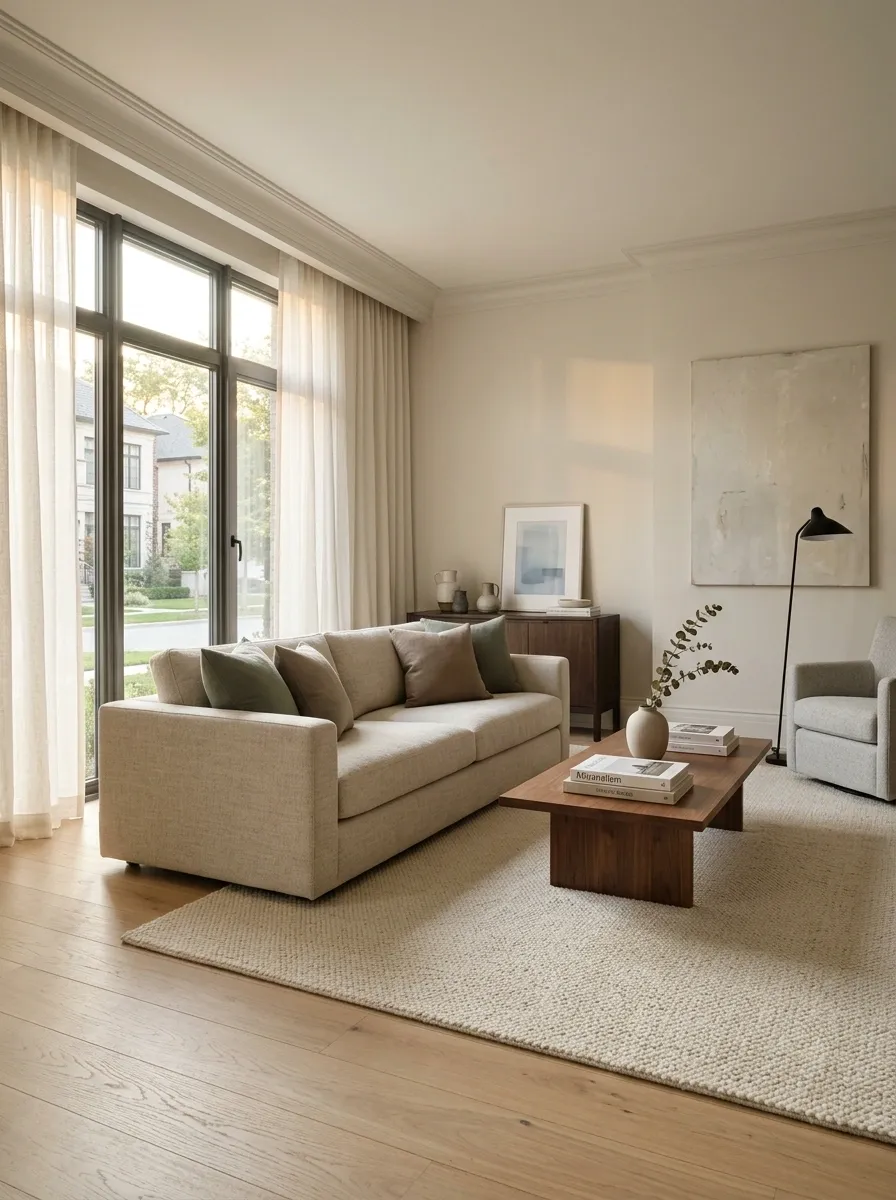
Moving creates a weird category of objects that are technically useful but visually exhausting.
The delivery box waiting to be broken down. The plastic bags near the door. The extension cord stretched across the floor. The random cleaning supplies parked where guests can see them.
None of it says “home.”
Do a temporary-stuff sweep:
- Flatten and remove shipping boxes.
- Hide spare cables in one container.
- Move cleaning products into their actual storage zone.
- Give reusable bags a dedicated spot.
- Clear surfaces that became accidental drop zones.
The apartment doesn’t need more decor. It needs the evidence of moving day to stop haunting it.
Create a Small Nighttime Routine Around Your Bedroom
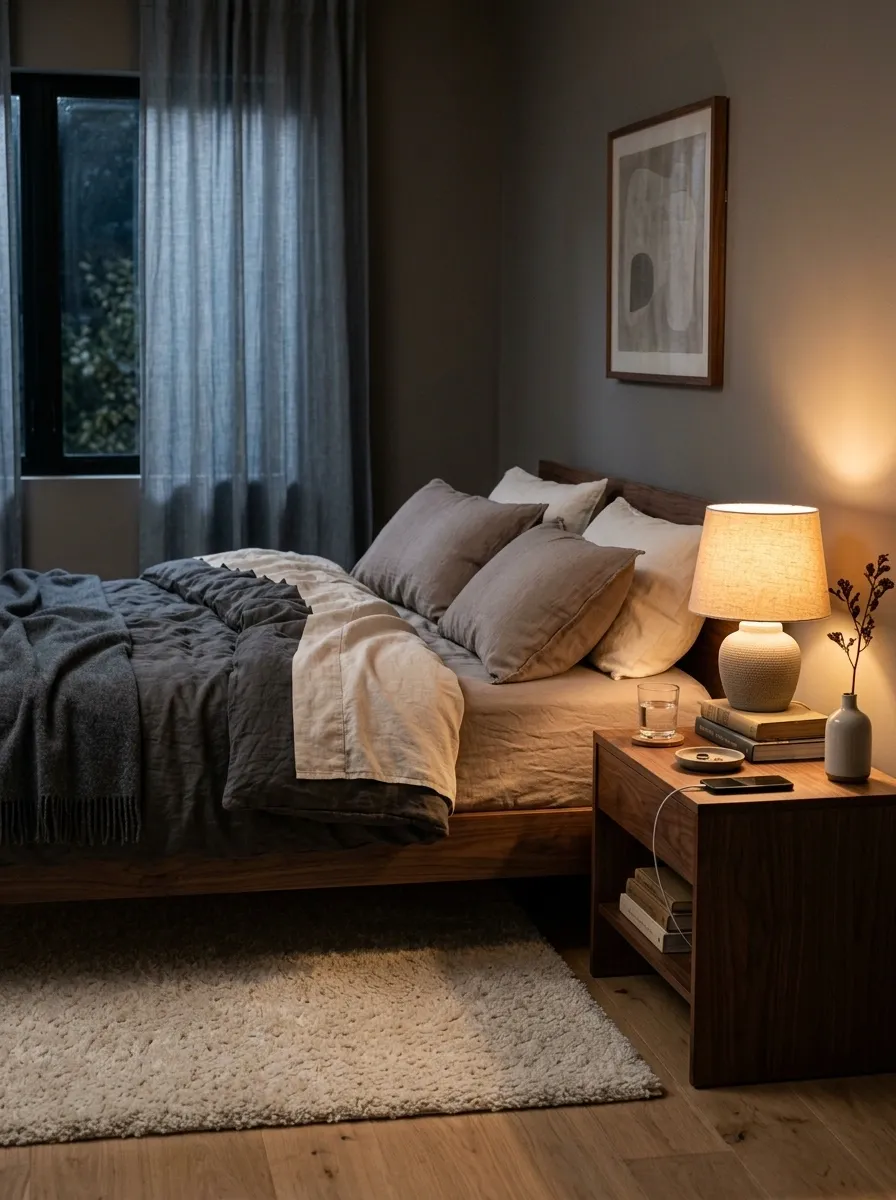
A bedroom starts feeling like home when it supports the hours you actually spend there, not just the five seconds someone sees it in a photo.
Create a small nighttime setup around the bed. Keep the light warm and low, put the phone charger within reach, and give books, glasses, or water a proper landing spot.
Make the last few minutes of the day easy:
- Turn on the bedside light.
- Put your daily essentials within reach.
- Keep the floor clear beside the bed.
- Leave the room visually quiet.
The goal isn’t luxury. It’s removing little annoyances until bedtime feels automatic.
Fill Awkward Corners With Something Useful First
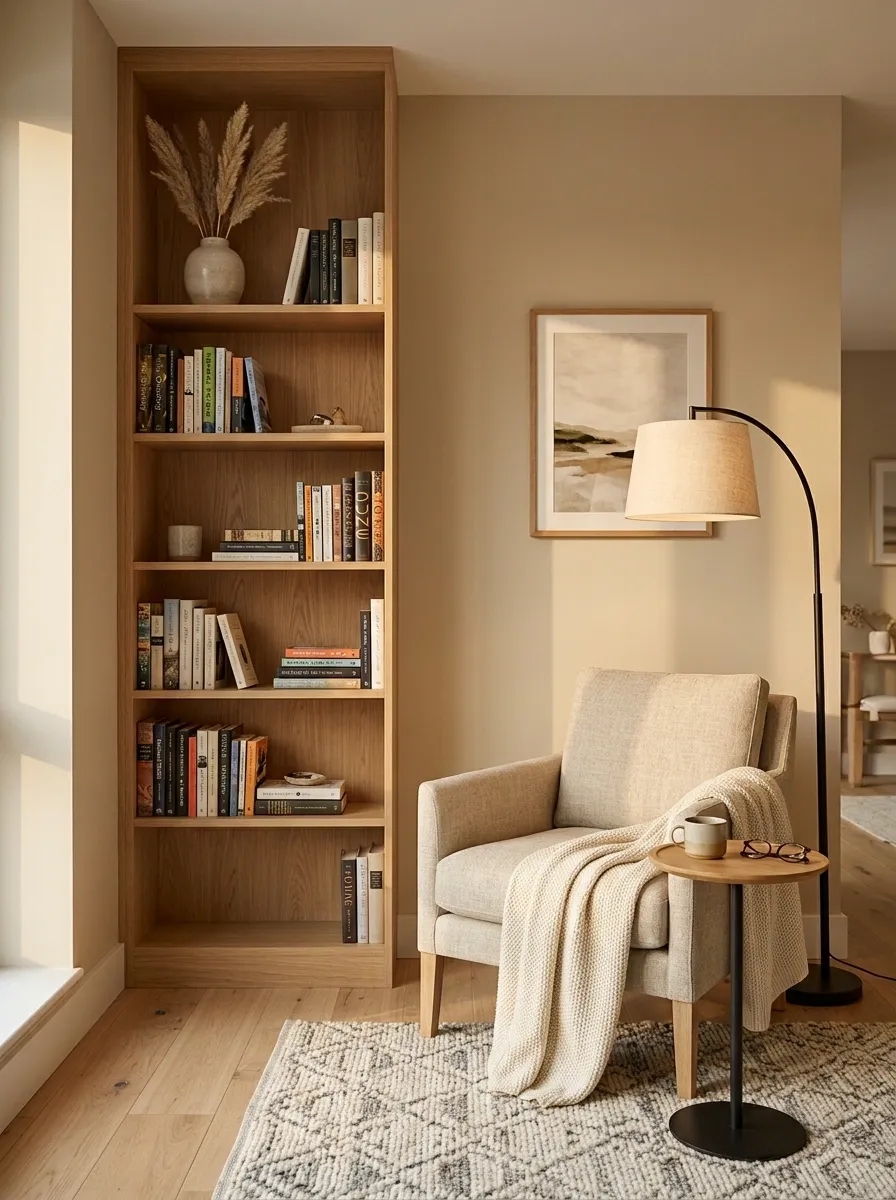
That strange little corner beside the wardrobe doesn’t need a decorative ladder.
Start with the function the apartment is actually missing. Add a slim shelf for books, a laundry basket, a floor lamp, a small chair, or a narrow cabinet.
Ask one question before buying anything: what would make this corner more useful?
That answer gives you a much better starting point than “something cute would fit here.”
Once the useful piece is in place, decide whether the corner needs anything else. Half the time, it doesn’t.
Give Your Shelves Uneven Heights and Breathing Room
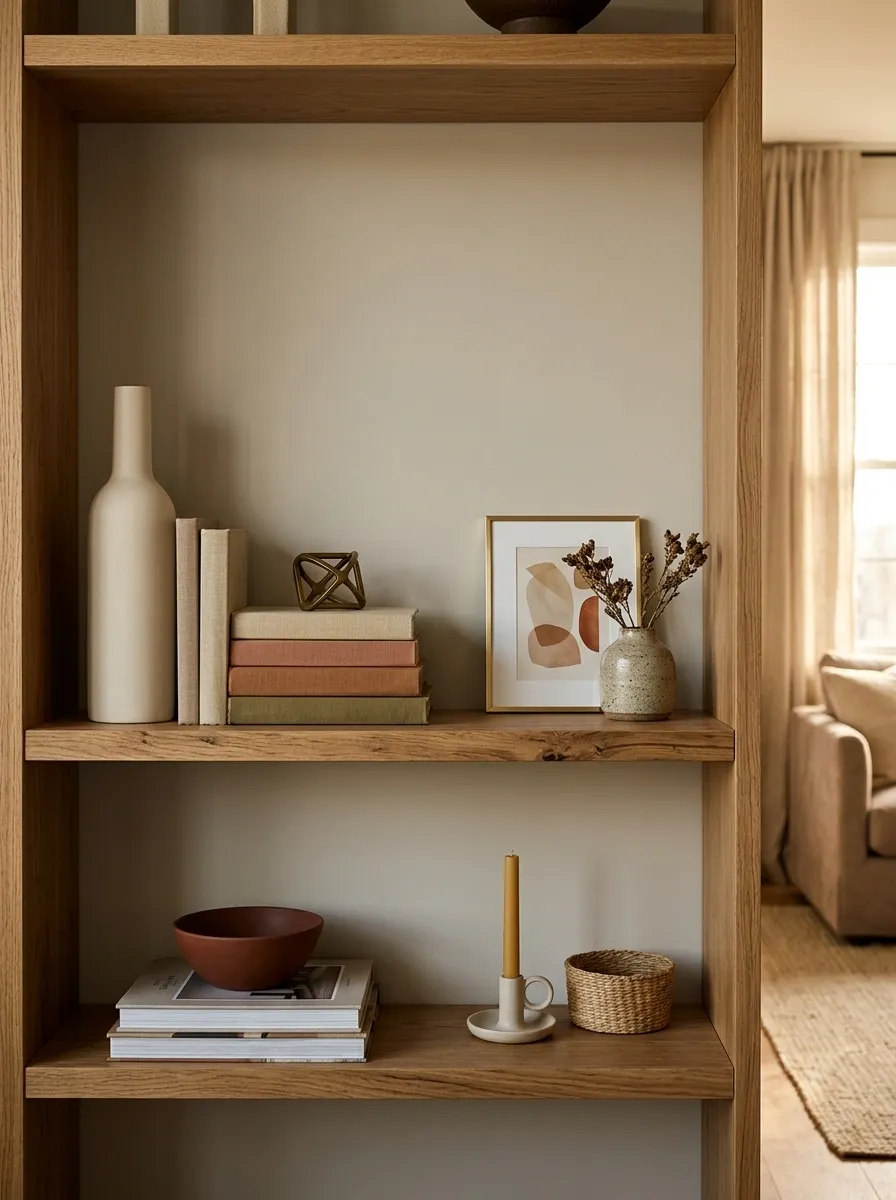
A shelf filled with objects all lined up at the same height looks less like a home and more like inventory waiting for a barcode.
Vary the height and shape of what you display. Put a taller vase beside shorter books, lean a frame behind a small object, then leave an intentional patch of empty shelf.
Use this simple mix:
- Tall object
- Short stack
- Small rounded piece
- Empty space
That contrast creates rhythm without adding more stuff. The empty space matters too. Shelves need somewhere for the eye to rest, unless visual chaos is the design goal.
Make the Apartment Smell Like Your Home, Not the Previous Tenant’s
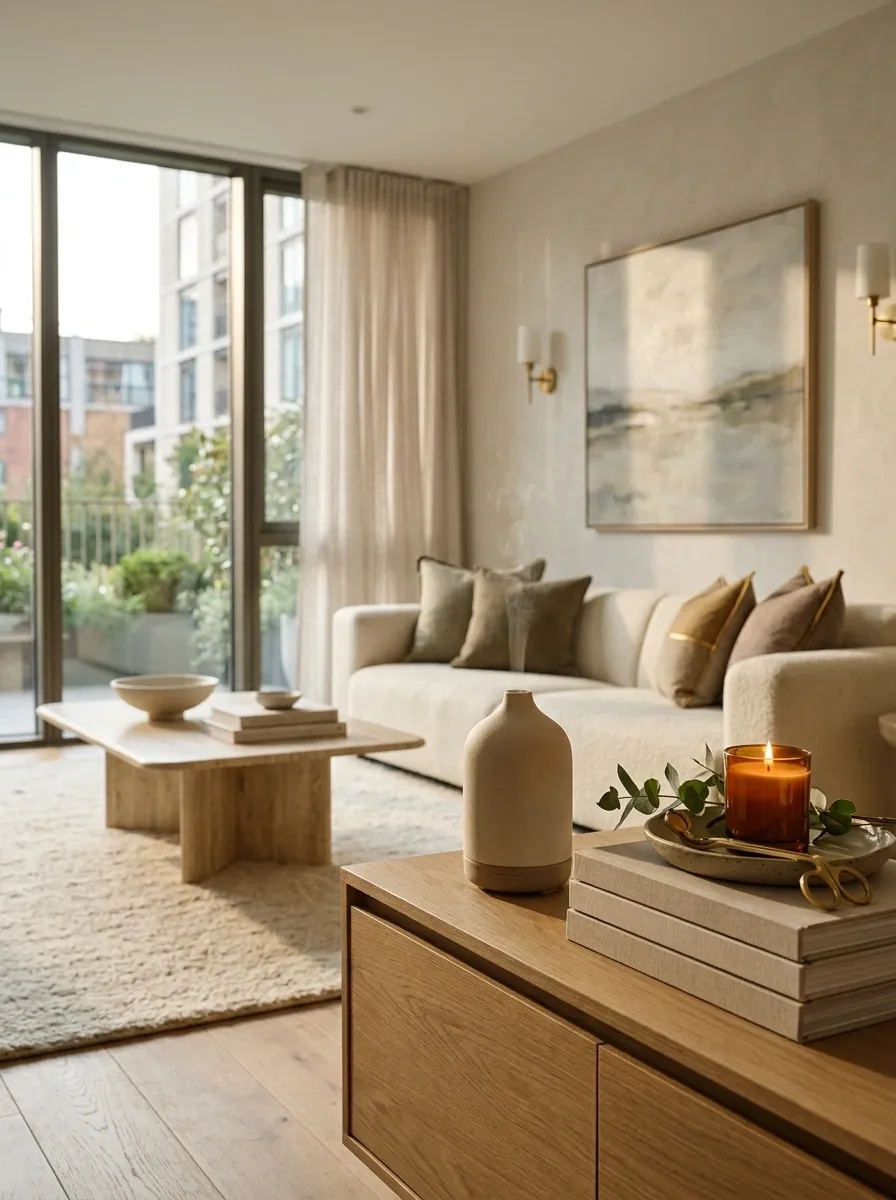
A room can look finished and still feel unfamiliar the moment you walk through the door.
Scent is part of that feeling. Keep it simple and assign a consistent scent to the spaces where you spend the most time. A candle, diffuser, room spray, or fresh flowers can do the job without turning the apartment into a perfume counter.
Keep the scent profile simple: fresh near the entry, clean in the bathroom, warm or subtle in the living room, and calming in the bedroom.
The goal is recognition. After a while, that scent becomes part of what your brain associates with being home.
Set Up a Spot for the Things You Use Every Single Day
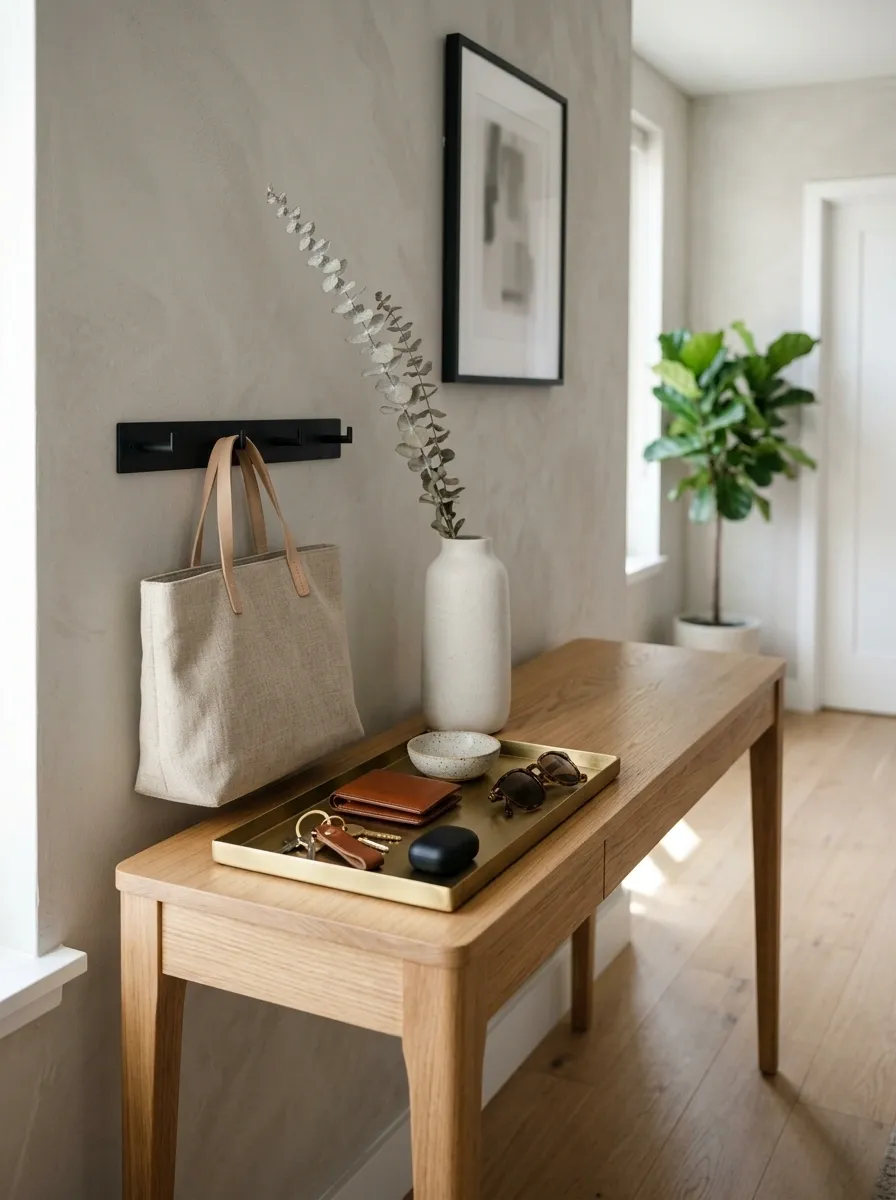
Every apartment has objects that migrate constantly because they don’t have a home.
The same charger moves from the bedroom to the sofa. Sunglasses disappear under mail. Keys land on the nearest random surface. Then the search begins.
Give those repeat offenders a landing zone.
Make one small station for daily essentials:
- Keys and wallet
- Phone and charger
- Earbuds
- Sunglasses
- Mail that actually needs attention
A tray, shallow bowl, hook rail, or small drawer is enough. The best organization is usually the one that requires absolutely no heroic discipline.
Finish With the Details You Notice After Dark
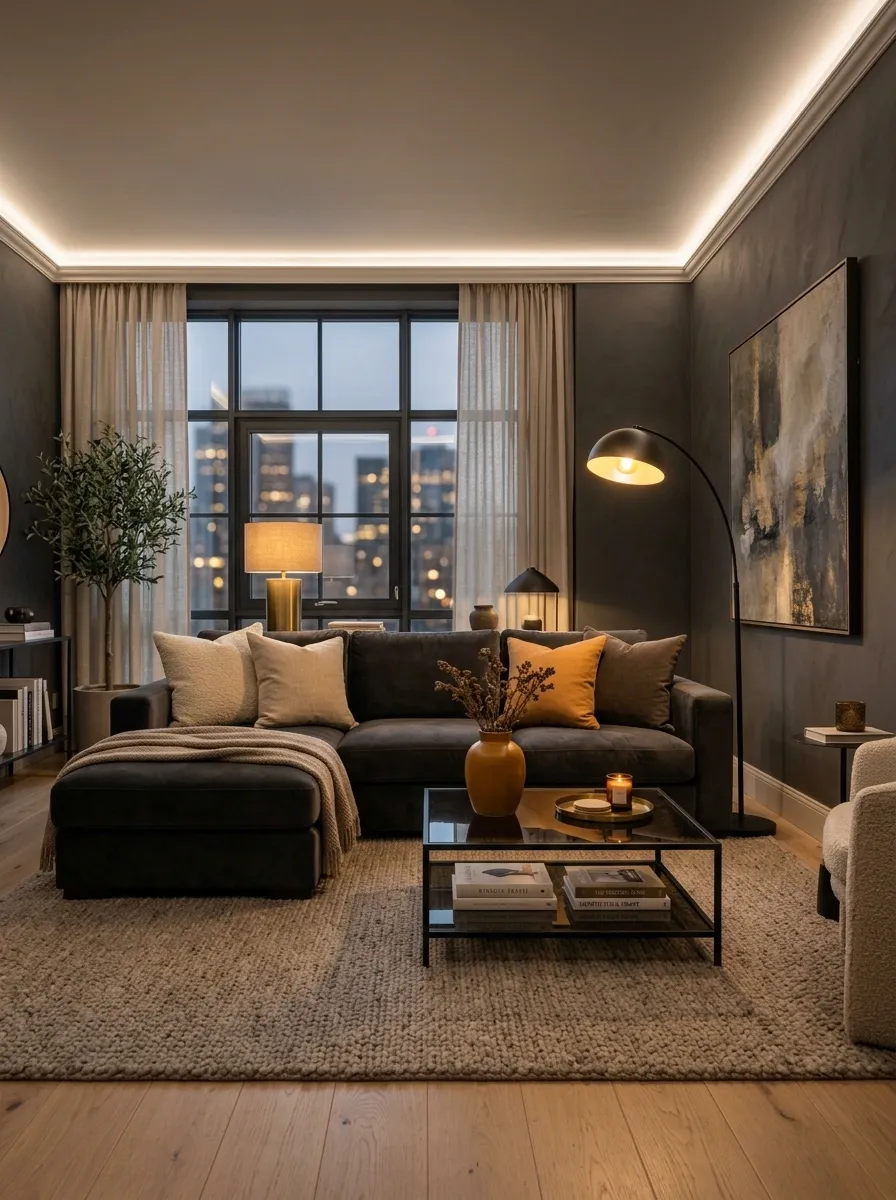
An apartment can look decent during the day and strangely flat at night because the finishing touches were chosen only for daylight.
Walk through the space after sunset and check what still feels unfinished. Maybe the sofa corner disappears into darkness. Maybe the artwork needs a nearby lamp. Maybe the bedroom has harsh overhead light doing absolutely nobody any favors.
Check these at night:
- Dark corners
- Harsh bulbs
- Shadows around seating
- Bare bedside surfaces
- Windows that feel unfinished after sunset
Nighttime is when the apartment becomes the place you actually live in for hours. Design for that version too.
Leave a Little Space for the Apartment to Grow With You
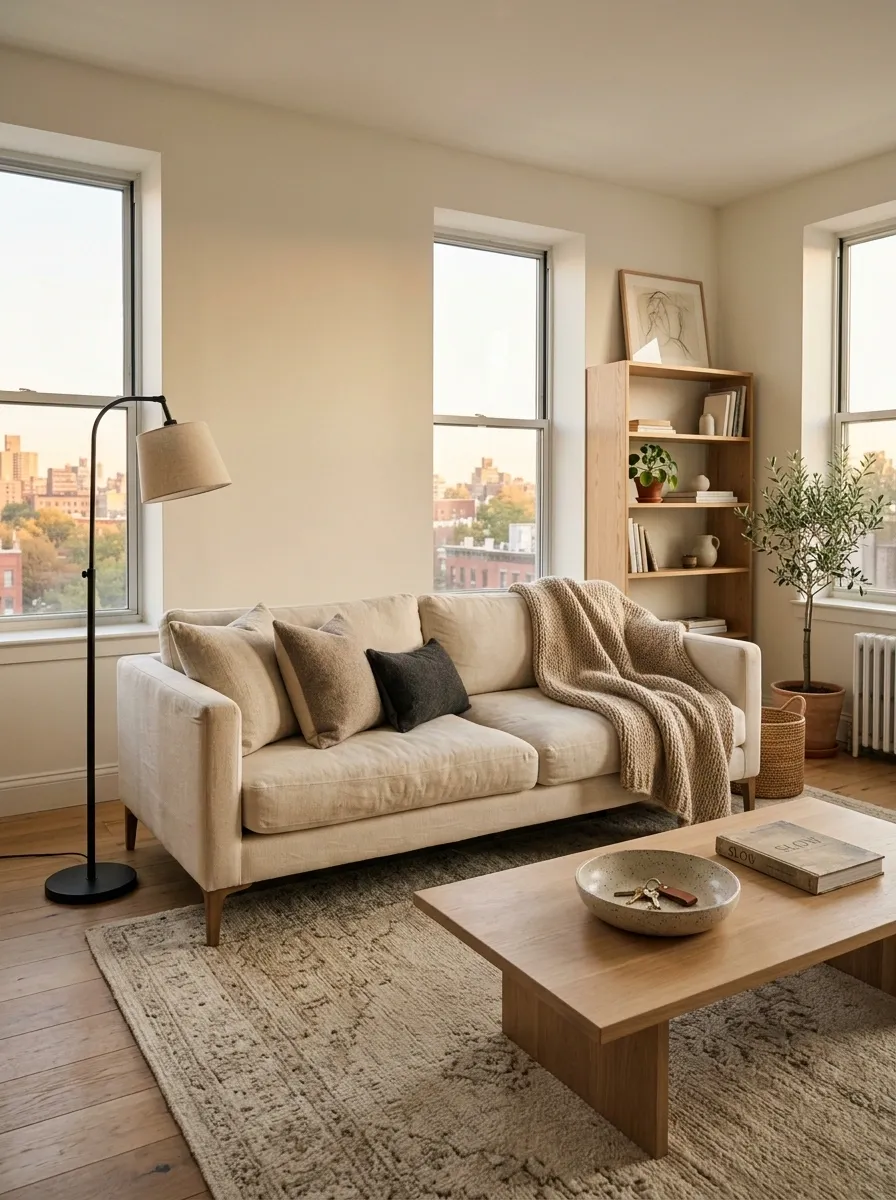
The fastest way to make a new apartment feel forced is to finish every room immediately.
Some spaces should stay a little open. That empty section of wall might eventually hold something meaningful. The side of the sofa might eventually need a better lamp. The shelf doesn’t need another object simply because there happens to be room.
Buy for the life happening now. Save space for what comes later.
A home gets character through time. Some of the best pieces are the ones that arrive slowly because they actually belong there.
A Home Should Look Like Someone Lives There
The apartment doesn’t become yours the moment every box disappears.
It happens more quietly.
The lamp gets moved closer to the sofa because that’s where reading actually happens. The bowl by the door becomes the permanent key spot. A photograph gets framed. A blanket ends up on the same chair every evening. The kitchen counter develops one little coffee corner. Eventually, you stop thinking about where things belong because the apartment has already answered the question.
That’s the part worth chasing.
Don’t decorate the place until there’s nothing left to do. Leave room for memories, routines, secondhand finds, awkward little discoveries, and the things that only make sense after you’ve actually lived there.