
Bay windows are gorgeous until it’s time to dress them. Suddenly, a perfectly normal pair of curtains is expected to negotiate three angles, awkward hardware, a radiator, a sofa, and somebody’s desperate need for privacy. The curtain aisle did not prepare anyone for this.
The biggest mistake is choosing a fabric before figuring out how the finished window should look. Heavy velvet, breezy linen, tailored Roman shades, and short café curtains can all work beautifully, but they solve different problems.
A treatment that looks incredible in a spacious living room may feel completely impractical above a kitchen sink or behind a dining table.
The secret is to design the whole window, not just buy curtains for it. The shape of the glass, the furniture underneath, the surrounding wall color, and the way natural light enters the room all influence the final result.
Before buying another pair of panels, settle these three arguments. Your window has been through enough.
Bay Window Curtain Ideas
Botanical Drapes and Window Seating
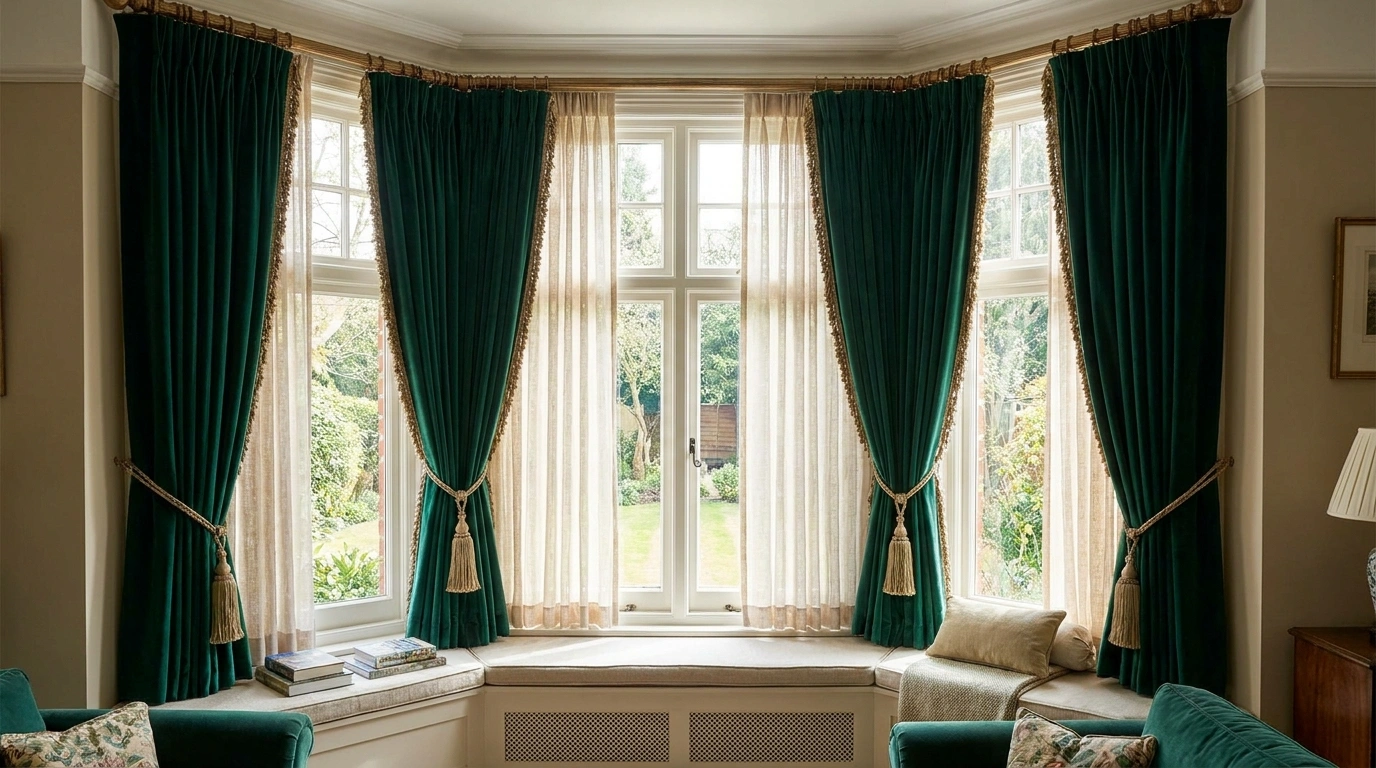
Patterned botanical drapes bring a touch of traditional garden charm to an angled bay window, perfectly framing the cozy built-in seat below. Layered over sheer white panels, the fabrics create a warm, inviting focal point that makes the entire seating nook feel like a peaceful retreat.
The thoughtful combination of patterned side panels and soft sheers offers an effortless balance between decorative impact and filtered daylight. Neutral toss pillows in varying textures tie the warm wood flooring and cream upholstery together, ensuring the bay feels deliberate and well-considered rather than crowded.
Attention to hardware and fullness is what elevates this look from simple to sublime. The continuous rod follows the window’s geometry precisely, while the gathered drapes stack neatly to the sides, preserving both the outside view and the comfortable seating area.
Warm Oak Living Room With Tailored Ivory Linen Curtains
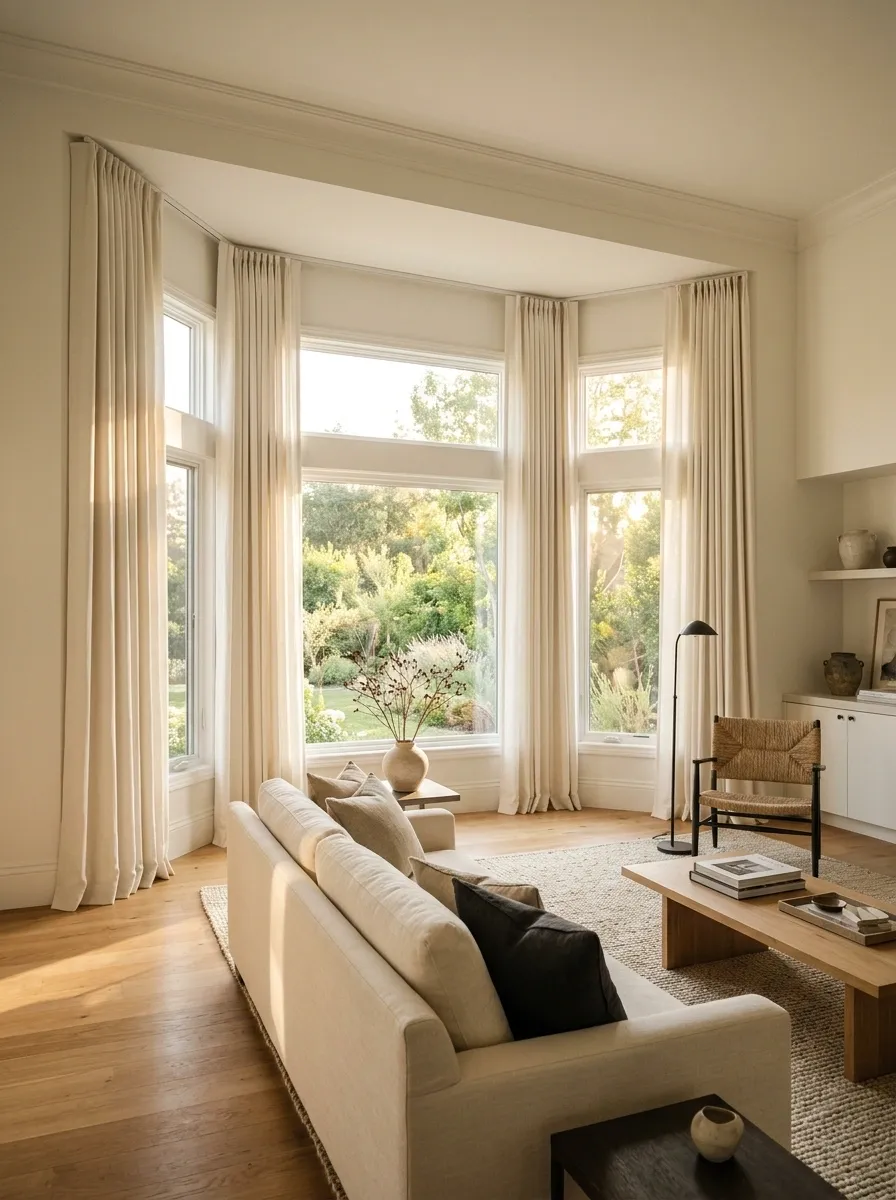
Soft ivory linen frames an angled bay while warm oak flooring, a cream sofa, and natural textures make the living room feel connected from one end to the other. The curtains fall in relaxed, controlled folds, keeping the architecture visible instead of burying it under mountains of fabric.
The restrained color palette is doing more work than it gets credit for. Warm wood prevents the pale curtains and upholstery from feeling cold, while the long vertical panels make the window wall appear taller. A few dark accents can add definition without disturbing the calm finish.
The important detail is fullness. Linen should have enough fabric to drape naturally, but the panels also need somewhere to stack when open. Nobody wants to lose half the garden view to a curtain.
Tailored Taupe Bay Window Panels
Tailored taupe curtains frame a bright, sunlit bay window, instantly making the casual seating nook feel cohesive and finished. The neutral fabric complements the warm oak floors and cream cushions, creating a calm, understated atmosphere that draws the eye toward the lush green view outside.
The simple rod placement and clean vertical folds give the window architecture a polished edge without overwhelming the space. By keeping the palette soft and consistent, the room achieves a relaxed elegance that feels completely natural and unforced.
Practicality meets style with ample stacking room for the panels, ensuring that daylight floods the window seat all morning long. It is a masterclass in letting architectural details shine while adding just enough soft textile finish to make the room complete.
Curved Bow Bay With Ceiling-Tracked Voile Sheers
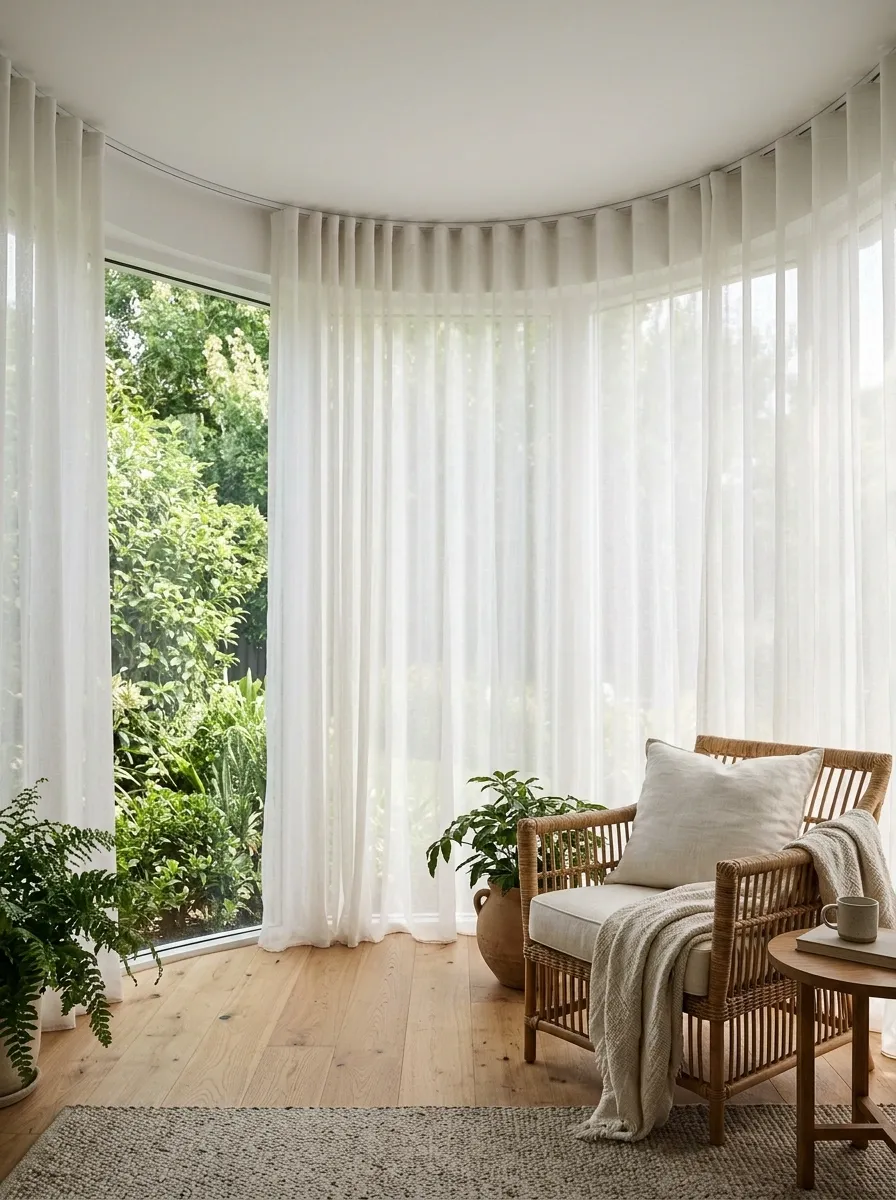
A curved bow window looks its best when the curtains acknowledge the curve rather than pretending the glass is a row of unrelated rectangles. Lightweight white voile follows the rounded window line, with a leafy garden beyond and a woven armchair completing the relaxed sunroom setting.
The continuous sweep of fabric gives the wall a softer outline. It also avoids the visual interruption of several heavy panels fighting for attention at every join. A discreet curved track mounted near the ceiling can help maintain that flowing appearance, provided the track is compatible with the window’s shape and the ceiling structure.
Sheers keep daylight moving through the room, although they won’t provide complete privacy after dark when interior lights are on. That’s the small-print detail worth remembering before falling in love with the airy look.
A bow window has a rounded outline. The curtain arrangement should respect it.
Charming Blue Curtains and Valence
Soft blue curtains paired with a matching scalloped valence give this cozy reading nook an enchanting, storybook finish. Set against built-in cabinetry and warm wooden tones, the window treatment frames a lovely garden view while adding a fresh splash of color to the corner.
The playful scalloped edge of the upper shade softens the window’s angles, working in harmony with the gathered side panels to create an intimate, enclosed feel. A mix of natural woven textures and patterned upholstery completes the charming scene.
This setup proves that small windows benefit immensely from thoughtful, layered detailing. The treatment respects the proportions of the built-in bench while introducing enough personality to make the entire corner feel utterly complete and welcoming.
Deep Olive Velvet Curtains in a Walnut Library
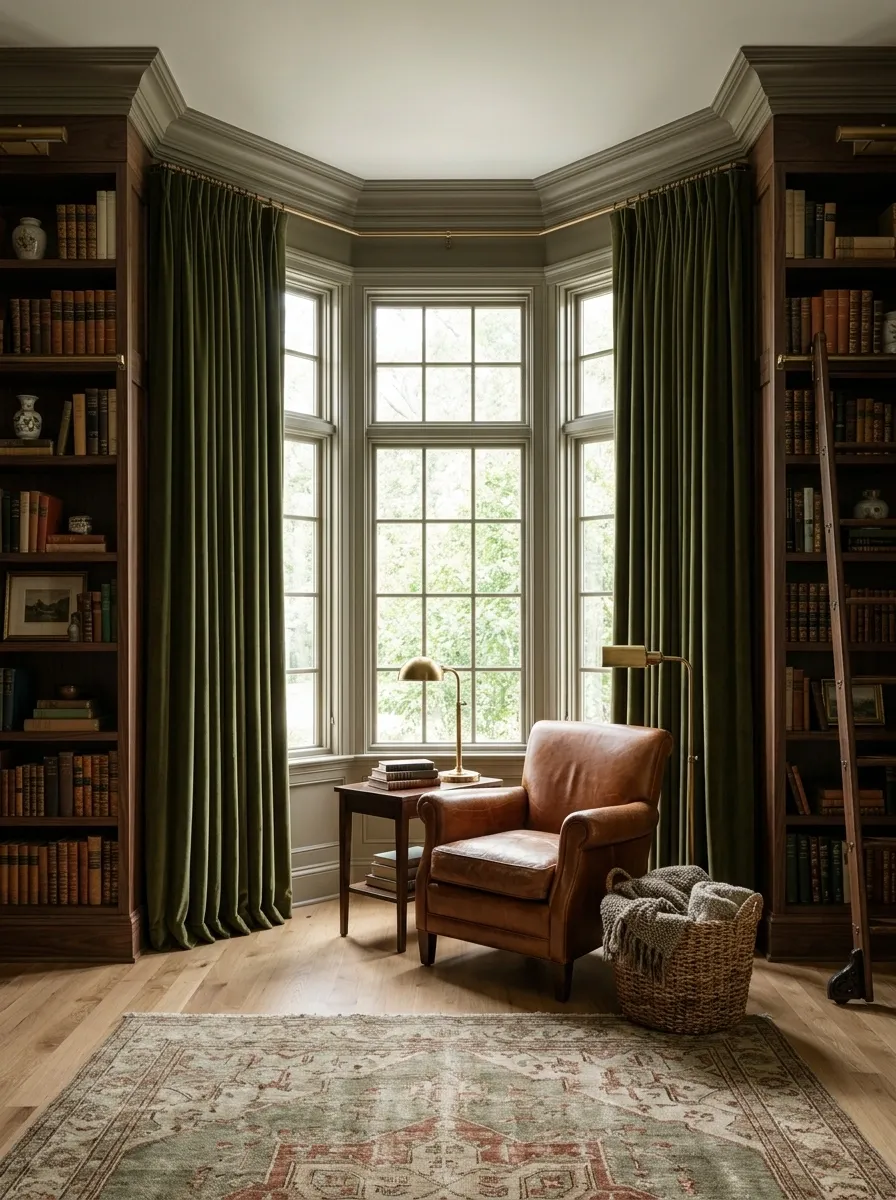
Deep olive velvet gives a traditional bay window a richer, more intimate character. Dark walnut shelving, a cognac leather reading chair, and warm brass lighting make the window treatment feel like part of the architecture rather than a last-minute fabric decision.
The secret is the relationship between the materials. Velvet has a substantial visual presence, walnut adds depth, and leather introduces a warmer brown that stops the dark greens and woods from blending into one giant shadow. Brass supplies just enough reflected light to keep the palette alive.
This treatment suits a library or a living room with enough visual weight to support it. In a small, poorly lit room, heavy dark curtains can make the window feel smaller, especially when closed. Keep lighter surfaces elsewhere, and check that the curtain stacks won’t consume valuable shelf or floor space.
Muted brass introduces warmth without competing with the velvet.
Keep one or two surfaces lighter. An all-dark room can look deliberate; an all-dark room with no contrast can look like the curtains won.
Grand Floral Bedroom Bay Windows
A sweeping bay window serves as the stunning anchor for this serene bedroom, dressed in a sophisticated combination of patterned roman shades and lush floral drapes. Set against soft wallpaper and a plush upholstered bed, the window treatment ties the entire romantic retreat together.
The layered approach allows for versatile light control, shifting seamlessly from bright morning sunshine to a cozy, private evening cocoon. Every textile, from the floral bed skirt to the matching accent stool, contributes to a harmonious, curated aesthetic.
This design showcases how a bay window can anchor an expansive bedroom layout when treated with intention. The generous folds and classic patterns elevate the architecture, turning a standard window alcove into a breathtaking architectural feature.
Individually Fitted Roman Shades in a Sunny Breakfast Bay
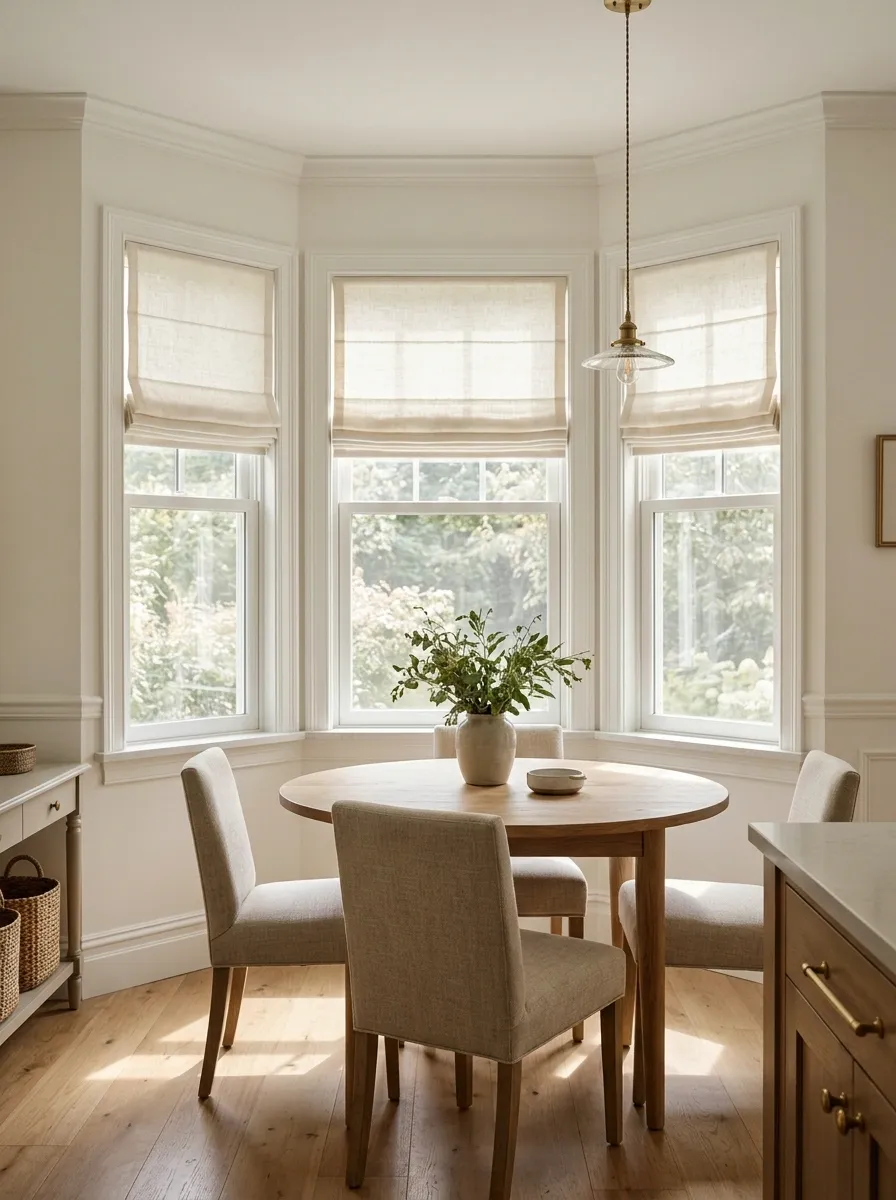
Not every bay window needs long drapes. In a breakfast nook, separate cream Roman shades fitted to the individual window sections create a tidy finish without putting fabric around every chair and table leg. An oak dining table, upholstered chairs, and a view of the garden keep the room warm rather than overly formal.
The shades can be raised when daylight is welcome and lowered when glare becomes annoying during breakfast. Their individual placement also respects the angles of an angled bay, though the measurements need to account for each pane and its fitting space.
This design is especially useful when furniture sits close to the windows. Long curtains can brush against chair backs or become trapped behind a table. Tailored shades avoid that problem while keeping the architectural shape visible.
Dramatic Two Story Bay Drapes
Soaring ceilings meet understated luxury in this dramatic two-story bay window, where rich taupe drapes frame a sweeping wall of sheer white fabric. The custom-built cornice box follows the unique angular architecture overhead, giving the monumental window a tailored, finished crown.
The vertical impact of the floor-to-ceiling sheers accentuates the impressive height of the room, while the structured taupe panels anchor the base with warmth and weight. It is a stunning example of how grand architecture can be softened and styled with the right textiles.
Managing scale is the secret weapon here, ensuring that heavy fabrics do not overpower the natural light pouring through the center panes. The result is a breathtaking, hotel-worthy interior that feels both monumental and intimately finished.
Cottage Kitchen Bay With Crisp Café Curtains
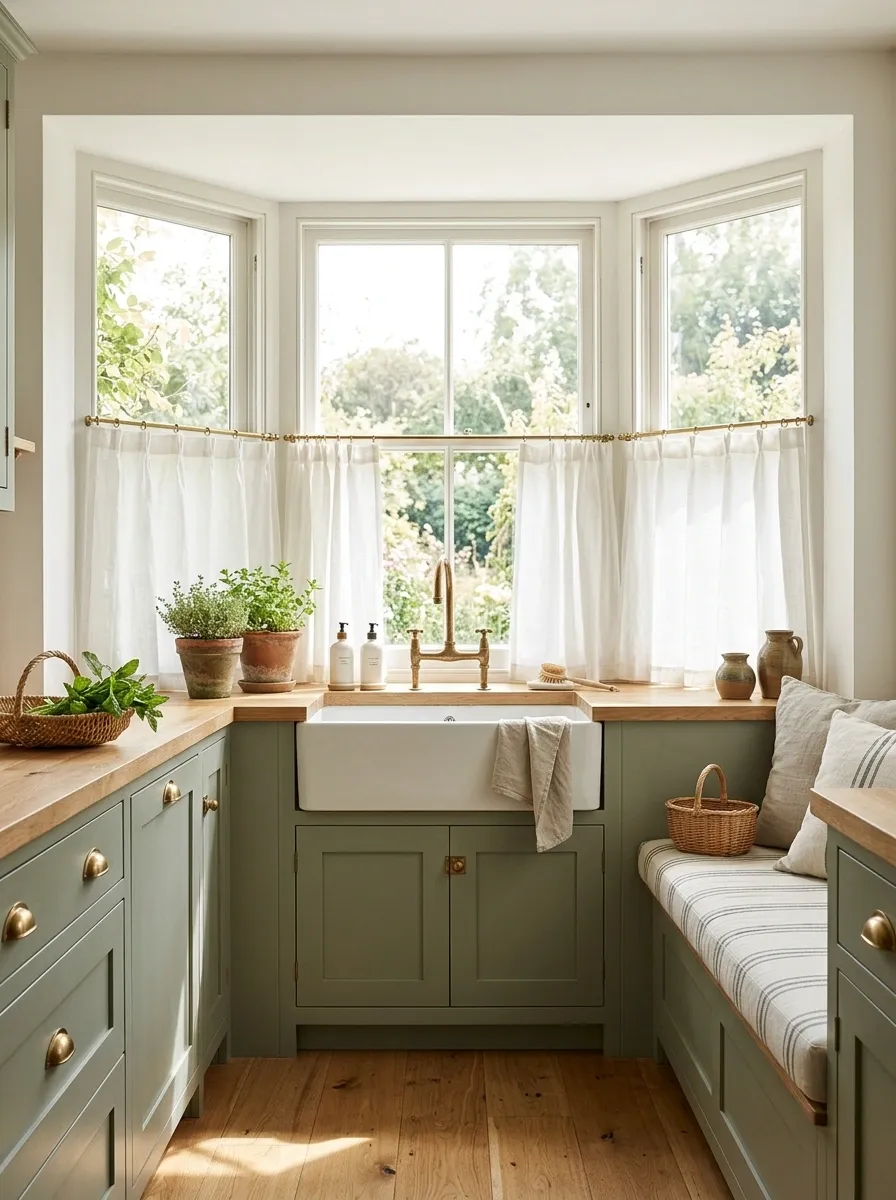
Short café curtains give a cottage kitchen bay a relaxed, lived-in finish without closing off the entire window. White fabric covers the lower glass above a farmhouse sink, while the upper portion stays open to daylight. Sage cabinetry, butcher-block counters, and a garden view make the arrangement feel connected to the rest of the kitchen.
The appeal comes from that balance between privacy and light. The lower curtains soften the view at eye level, while the open glass above keeps the window from looking boxed in. A simple fabric such as cotton or a cotton blend also suits a room where cooking splashes and frequent washing are part of normal life.
Keep the fabric clear of the faucet and work surfaces, and choose a mounting arrangement that suits the window frame. Romantic cottage styling is lovely. A curtain absorbing dishwater is a completely different genre.
Built-In Bay Window Seat Framed by Full-Length Drapes
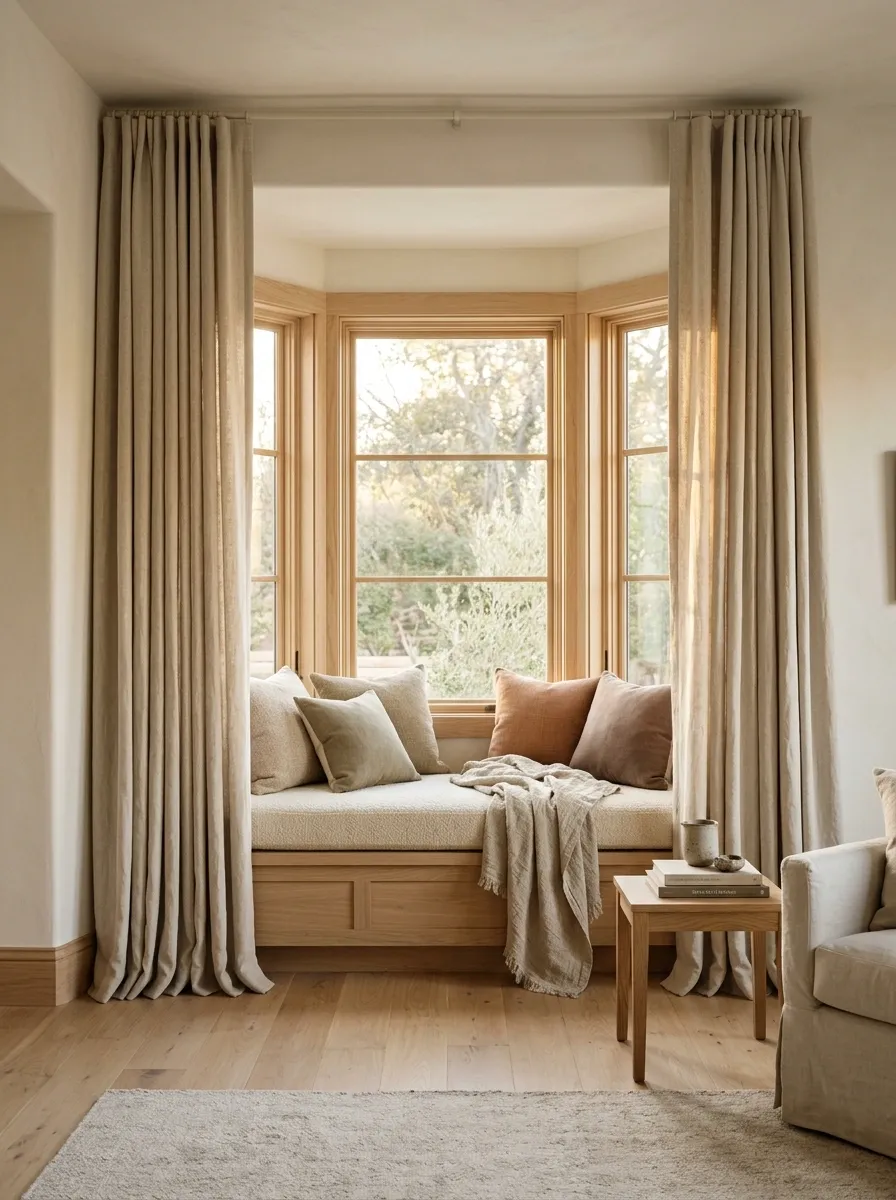
A built-in window seat can make a bay feel like an intentional part of the living room instead of an architectural corner nobody knows what to do with. Fitted cushions sit neatly beneath the glass, while full-length linen curtains frame the outer edges. Warm neutral upholstery, a pale oak side table, and soft textured cushions complete the setting without turning the seat into a pillow storage facility.
The proportions matter here. The curtain panels should stack beyond the usable seating area wherever the window layout allows, and the cushions should leave enough room to sit comfortably. Keeping the fabric and upholstery within a related color palette lets the window seat remain the focal point.
One practical detail deserves attention: check where the curtains fall when closed so the fabric doesn’t bunch awkwardly against the seat or become trapped behind its cushions.
The goal: a reading nook, not a cushion obstacle course with curtains.
Box Bay With a Tailored Fabric Pelmet
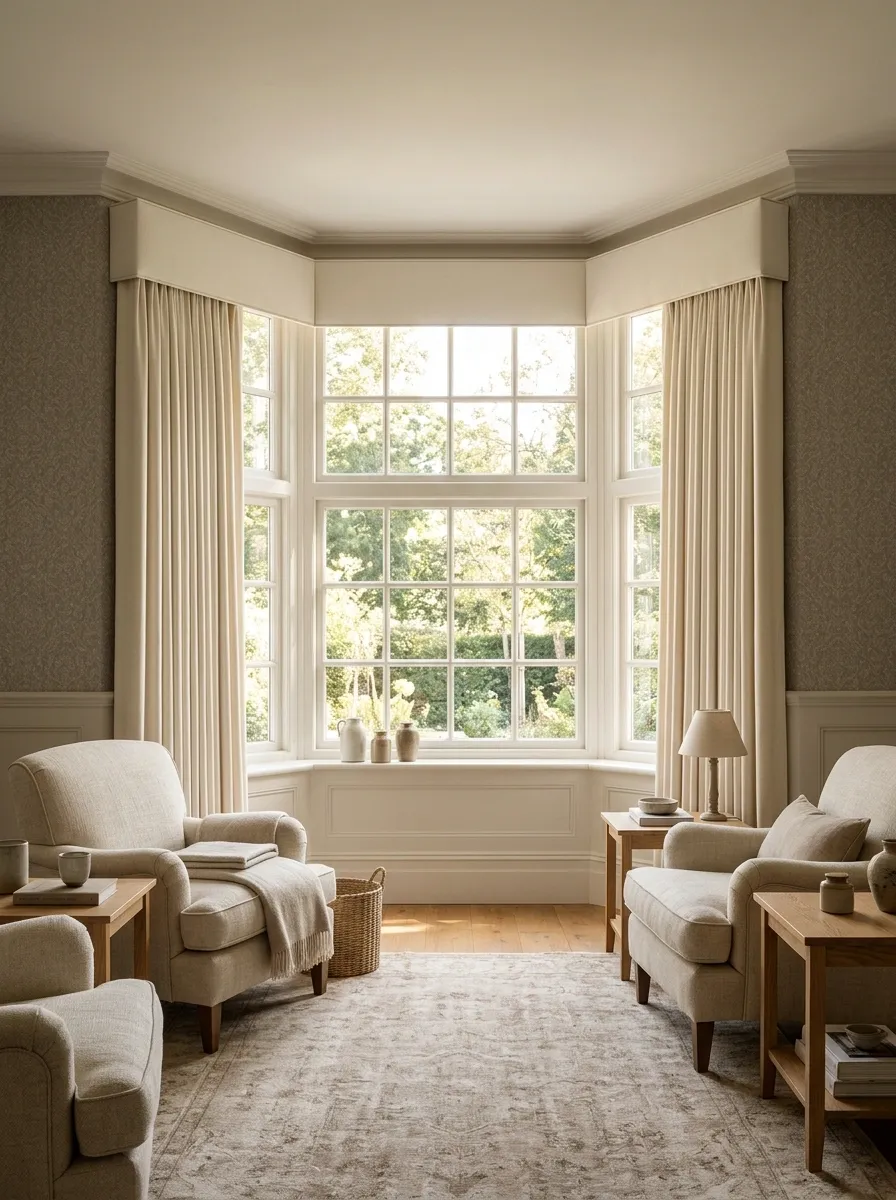
A square-projection bay suits a more structured window treatment. Cream curtains with tidy pleats sit beneath a slim upholstered pelmet, giving the upper edge of the window a clean, continuous finish. Traditional armchairs, quiet patterned wallpaper, and warm wood furniture reinforce the room’s classic character without requiring tassels on every available surface.
The pelmet hides the curtain heading and creates a visual connection between the separate window sections. That can help a box bay read as one composed architectural feature rather than several windows wearing unrelated outfits.
Proportion is everything. A deep, heavy pelmet can overpower a modest window, while one that’s too shallow may not conceal the hardware properly. Measure the mounting arrangement before choosing the finished depth, and keep the fabric coordinated with the curtains or nearby upholstery.
Layered Bedroom Bay With Sheers and Blackout Drapery
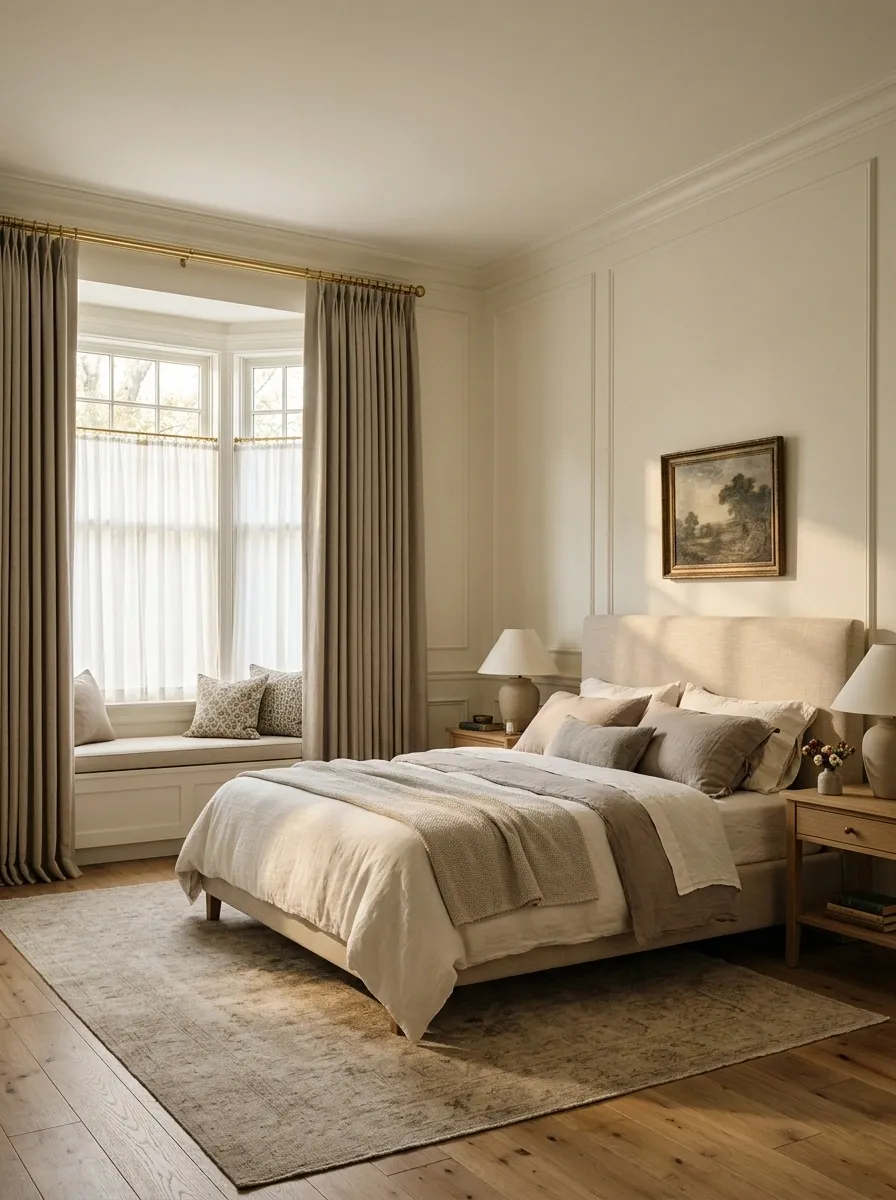
A bedroom bay benefits from a layered treatment that handles more than one lighting condition. Sheer white curtains filter the daylight, while full-height taupe drapes provide privacy and help darken the room when closed. A softly upholstered bed, understated bedside lamps, and warm neutral bedding keep the overall composition restful without looking bland.
The two fabrics do different jobs. The sheers soften the windows during the day, and the heavier curtains give the bedroom greater control over outside light. Blackout performance depends on the lining, fabric construction, and how closely the treatment fits around the window, so the label alone won’t guarantee a completely dark room.
Allow enough room for both layers to move independently. A double track or suitable double-rod arrangement can prevent the heavier panels from constantly wrestling the sheers. The bedroom needs rest, not another daily argument.
English Country Bay With Muted Floral Cotton Curtains
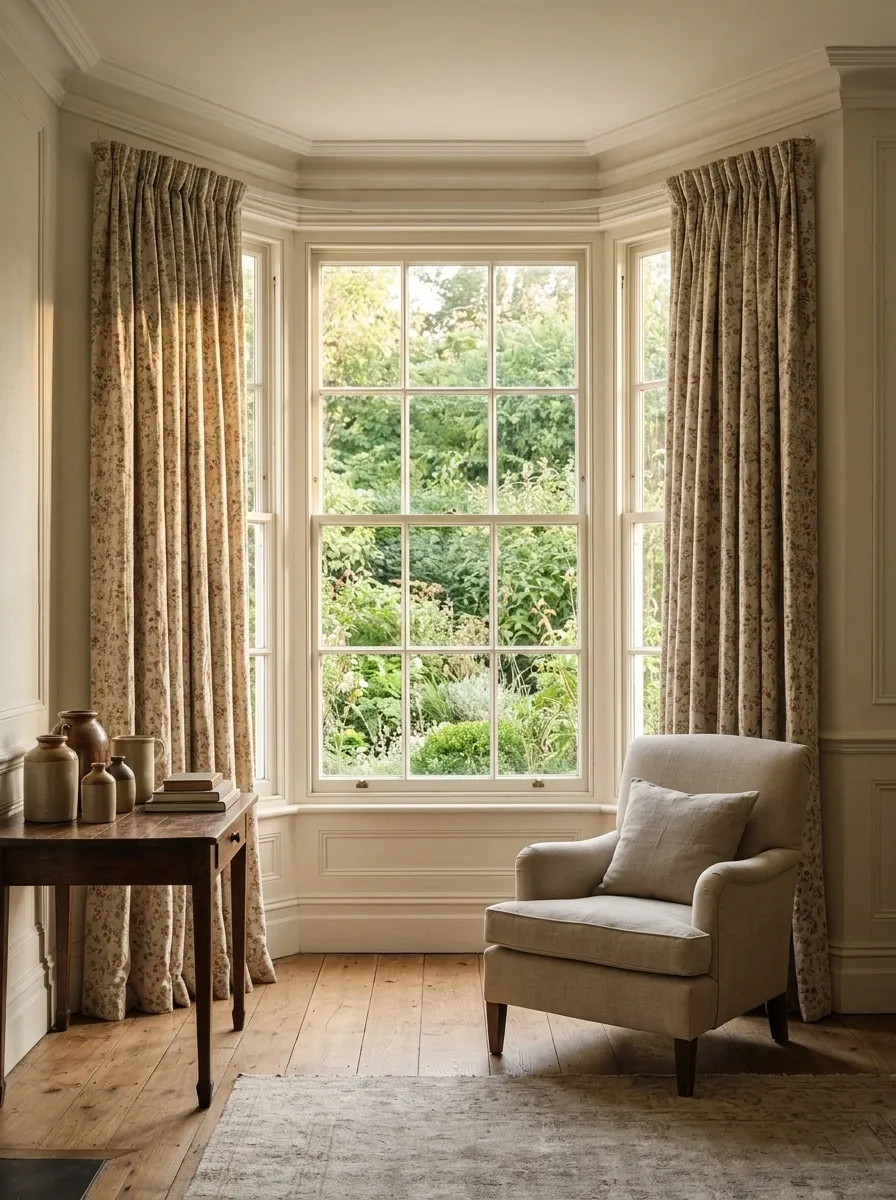
Muted floral curtains give an English country sitting room its character without forcing every surface to compete for attention. Small botanical motifs in faded red, sage green, and cream frame the bay, while an antique wood side table and a traditional upholstered chair add warmth. Outside, the garden continues the theme naturally, so the window treatment feels connected to its surroundings.
Small-scale florals are especially effective when the room already contains several traditional elements. The pattern introduces detail, but the softened colors keep it from overpowering the furniture or making the window look excessively busy. Plain upholstery and a quieter rug give the print enough space to breathe.
Pay attention to repeat size before buying fabric. A large, dramatic floral can look lovely on a sample and surprisingly chaotic across several angled window panels. Check how the pattern will align at the seams, because flowers abruptly disappearing into a curtain fold are not a design feature.
Scandinavian Bay With Fine Pinstripe Curtains
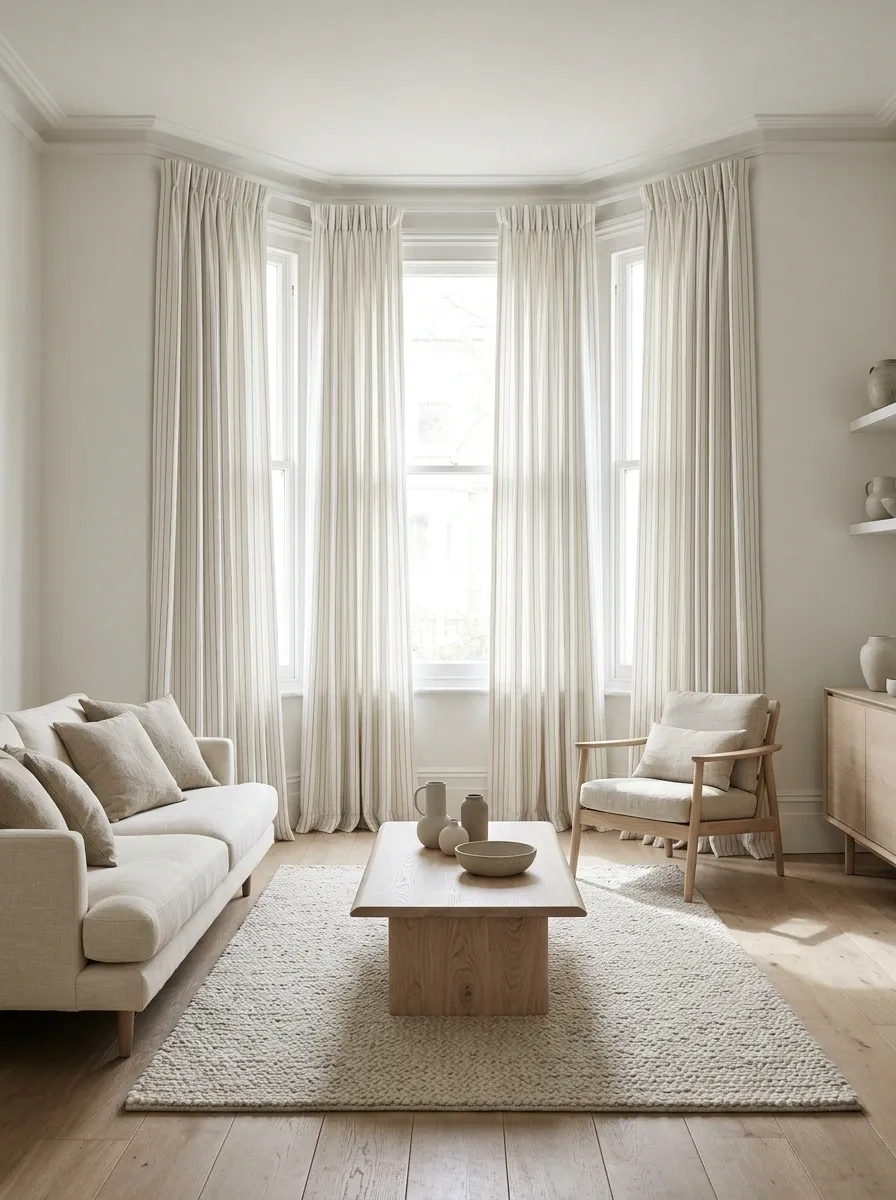
Fine pinstripe curtains add just enough structure to a Scandinavian living room without disturbing its quiet palette. Pale oak furniture, a low-profile sofa, a soft wool rug, and uncluttered surfaces create the foundation. The delicate vertical lines give the bay a little definition while letting the window remain the room’s main architectural feature.
This look relies on restraint, but restraint doesn’t mean everything has to be plain white. Subtle stripes introduce movement, while wood grain and woven textiles supply texture. Keeping the stripe scale small prevents the window treatment from dominating a room built around simple forms and practical furniture.
The curtain length and hanging height matter as much as the pattern. Clean vertical folds reinforce the room’s proportions, and panels with adequate fullness look softer than flat sheets hanging beside the glass. Minimalism doesn’t mean skipping the fabric calculation.
Japandi Bay With Oatmeal Ripple-Fold Curtains
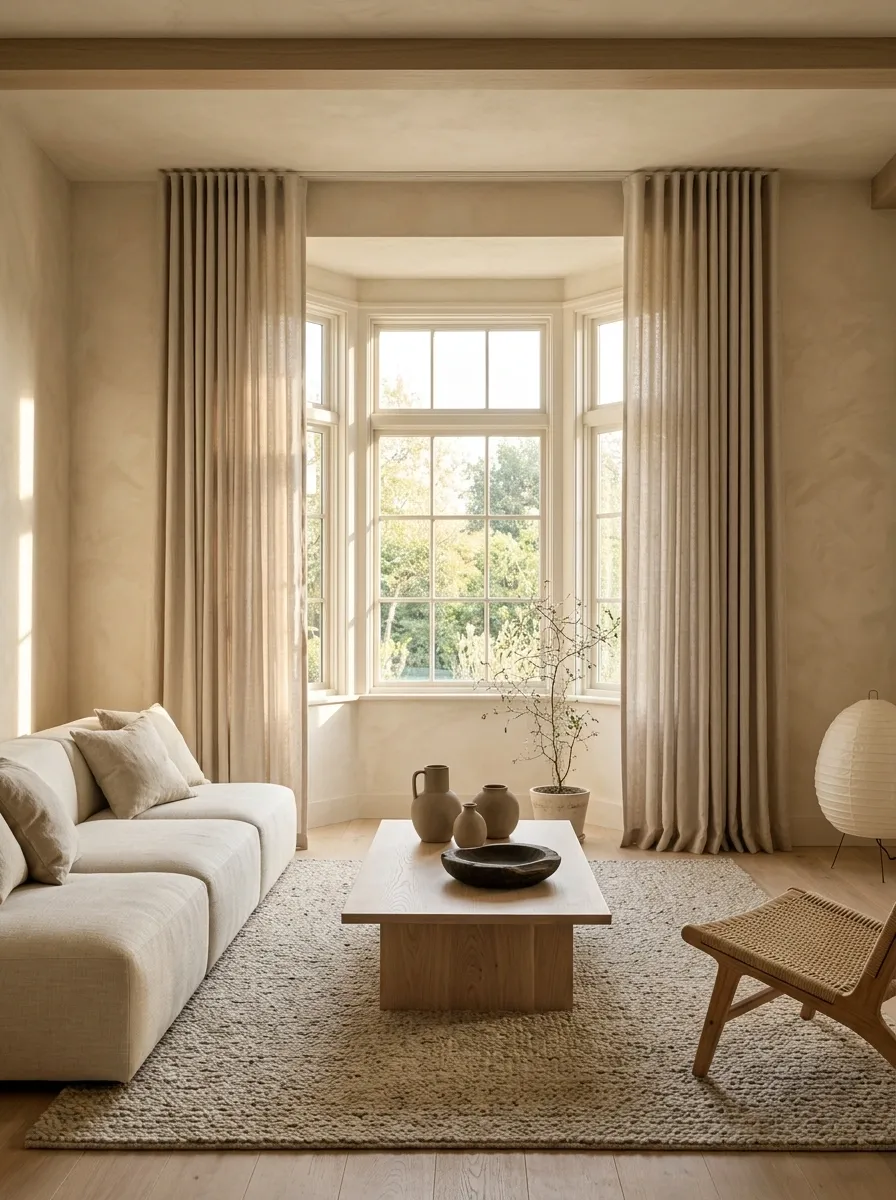
Oatmeal ripple-fold curtains bring a clean, continuous rhythm to a Japandi living room, where warm plaster walls, pale oak furniture, and a low modular sofa keep the setting grounded. The bay window remains the architectural feature, but the consistent folds give it a more deliberate finish without adding unnecessary decoration.
The beauty of this combination lies in its textures. The curtains have a soft, woven surface, the plaster has subtle variation, and the oak introduces warmth through its natural grain. A few sculptural ceramics or a dark wood accent can supply contrast without turning the room into a showroom for expensive beige objects.
Ripple-fold curtains need compatible track hardware and enough space to stack when open. Measure the angled sections carefully, especially if a continuous track must turn around the bay. Minimalism looks effortless only after somebody has done the measuring.
Coastal Bay With Broad Blue-and-Cream Striped Curtains
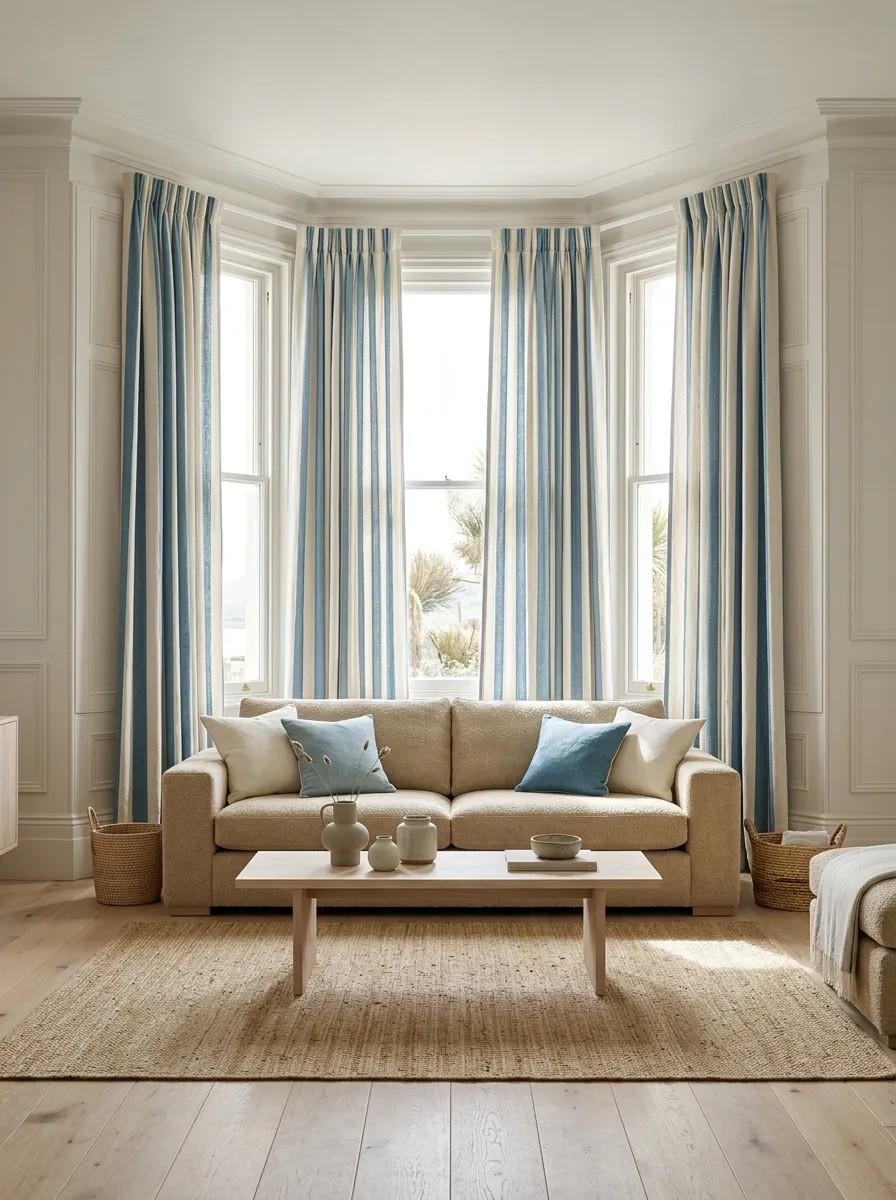
Broad blue-and-cream stripes make a bay window feel fresh without relying on seashell decorations or an anchor hanging suspiciously close to the sofa. Sandy upholstery, pale oak furniture, and woven textures complete the coastal look, while the window’s natural light keeps the stronger pattern from feeling heavy.
The stripes work best when the rest of the room gives them some breathing room. A plain sofa, a simple rug, and restrained wall art allow the curtains to establish the color scheme. Repeating the blue in one or two smaller details creates a connection across the room without making everything match like a coordinated holiday gift set.
Pay attention to the stripe direction and how it aligns across the curtain panels. Broad stripes can become a dominant feature, so check the full repeat before ordering. On an angled bay, consistent alignment helps the separate window sections read as one considered composition.
Color-Drenched Bay With Tonal Curtains and Walls
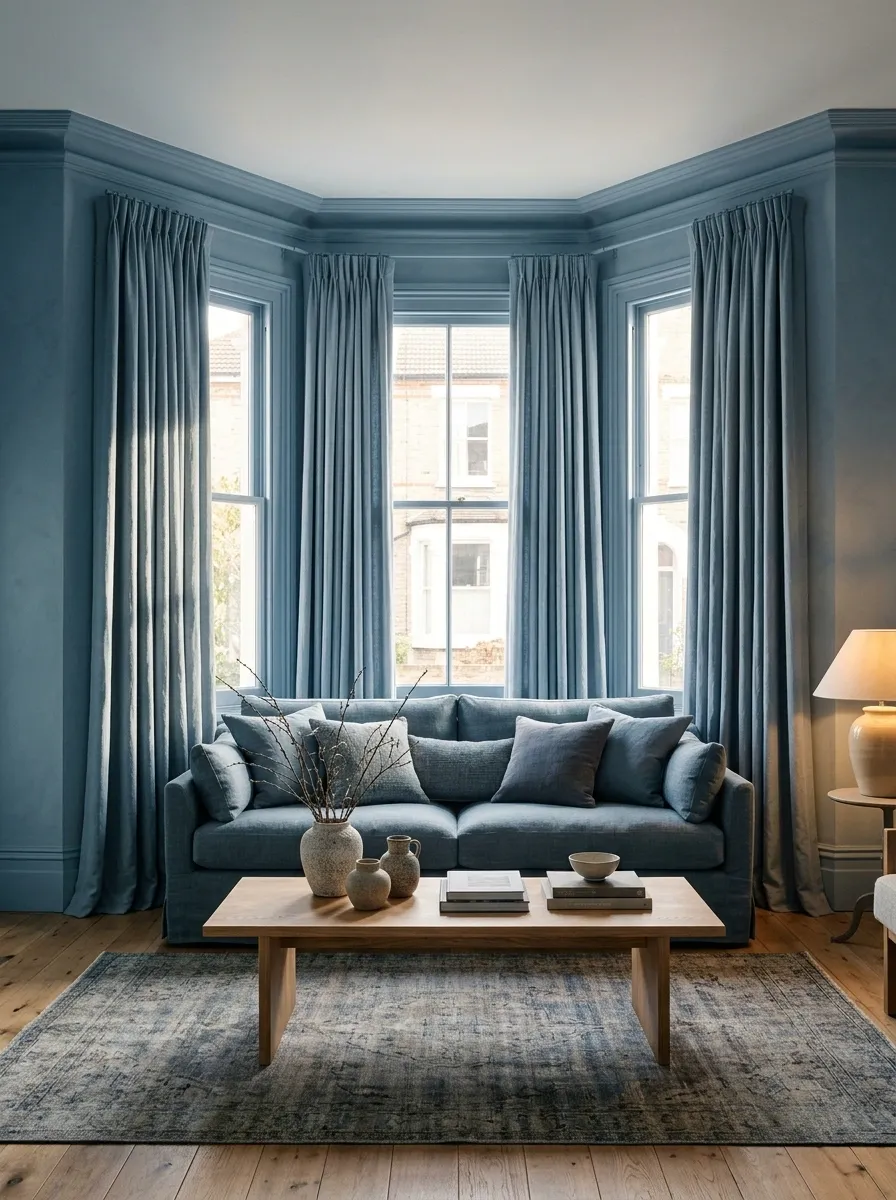
Matching the curtains closely to the wall color makes an angled bay feel integrated into the room rather than outlined with a contrasting border. Dusty blue walls, similarly toned drapes, and a coordinating sofa create a continuous color story, while a warm wood table and a few carefully chosen objects prevent the space from looking flat.
The trick is to create contrast through texture and shape instead of relying on a completely different curtain color. The fabric folds introduce shadows, the sofa supplies a different surface, and the timber adds a naturally warmer note. Small changes in tone can be enough to distinguish the layers without breaking the overall effect.
This approach is especially effective when the bay has an awkward outline that would look busy with several contrasting panels. Make sure the curtain fabric still has enough visual weight to stand beside the wall finish, and test fabric samples in daylight and evening lighting before committing.
Test the wall paint and curtain fabric together. Similar colors can look unexpectedly different once the sun goes down and the lamps come out.
Neutral Linen Curtains With Contrasting Dark Edging
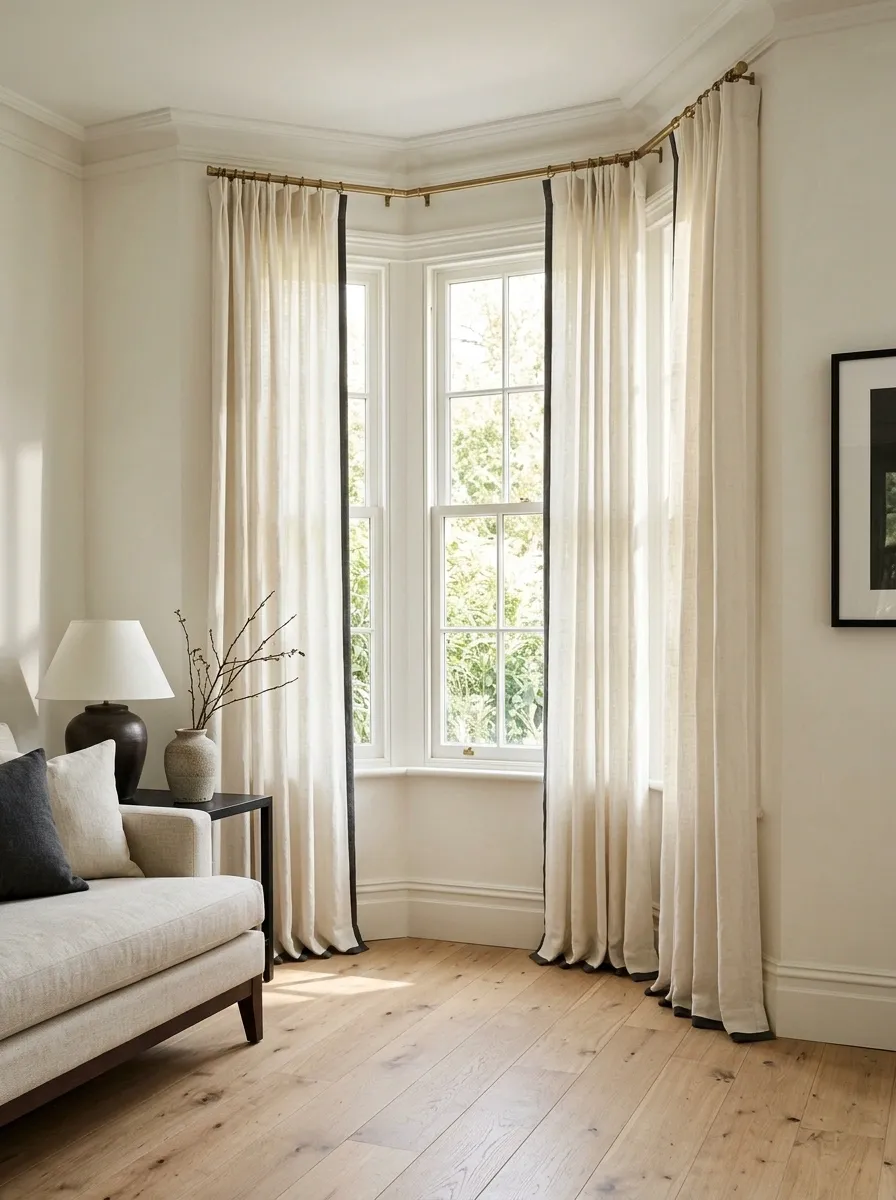
Ivory linen with narrow charcoal edging gives a bay window a defined outline without the heaviness of a dark curtain. The contrast is subtle but deliberate, linking the window treatment to dark furniture legs, a black-framed picture, or other restrained details elsewhere in the room.
This combination suits transitional interiors where traditional fabric and simple modern lines meet. The linen keeps the panels relaxed, while the dark border emphasizes their shape. Against creamy walls, the edging is noticeable enough to sharpen the composition without breaking up the window into too many separate visual sections.
The border width needs proportion. A narrow trim tends to feel refined, while a very wide band becomes the main feature and can make the fabric look more formal. Check how the edging runs along the leading edges and hems, particularly if several panels meet around an angled bay. Alignment is doing quiet work here.
Compact Apartment Bay With High-Mounted Slim Panels
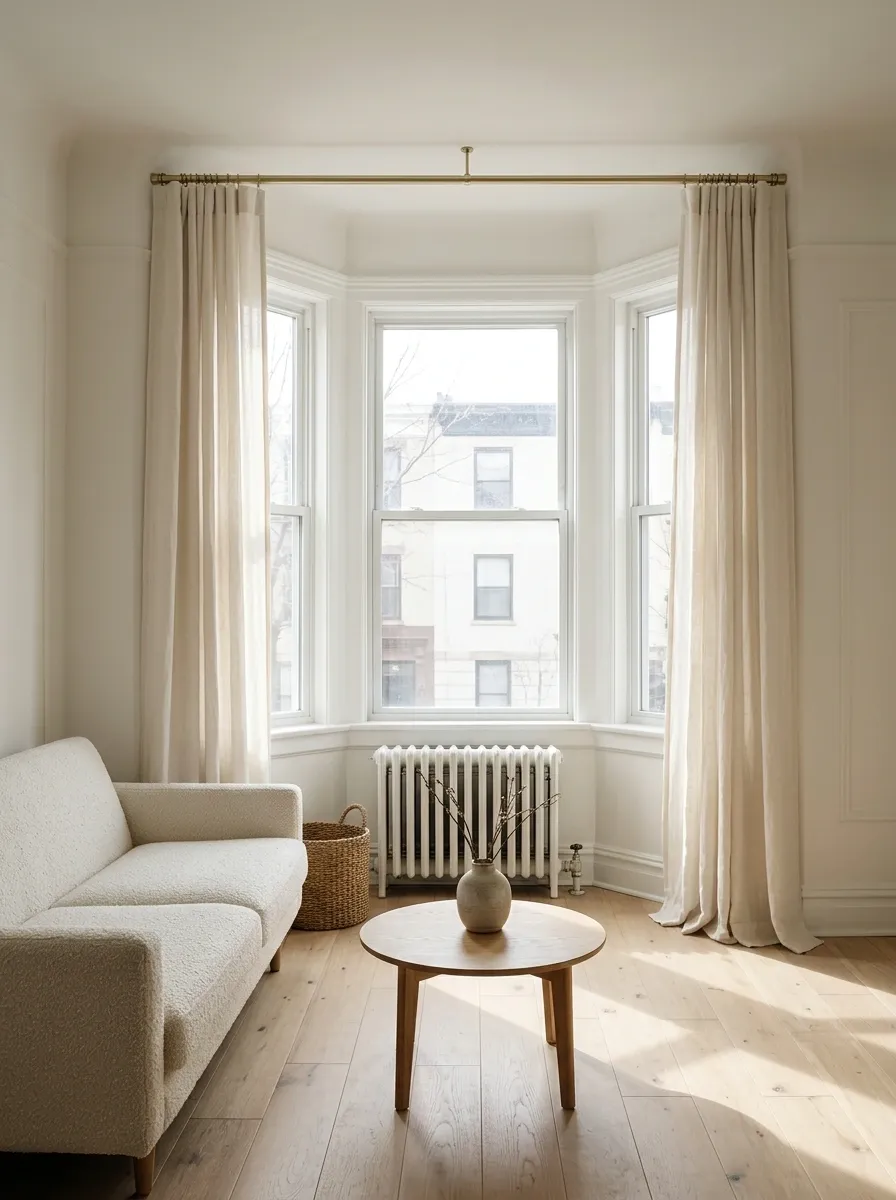
A compact apartment bay can feel more spacious when the curtains are lightweight, the panels have a neat profile, and the surrounding furniture leaves a clear route through the room. Pale fabric, a modest sofa, a round coffee table, and light wood flooring keep the arrangement practical without making it feel unfinished.
Mounting the curtains closer to the ceiling can emphasize vertical height when the wall and window proportions suit it. Slim panels also reduce the amount of fabric stacking beside the glass. The objective isn’t to disguise the bay, but to keep it from competing with every other usable inch of the apartment.
Measure the available wall space at each side before selecting the rod or track. Check where the curtain stacks will sit relative to the sofa, radiators, window handles, and walking route. The most gorgeous curtains in the world are less impressive when somebody has to sidestep them every time they enter the room.
Sill-Length Curtains Above a Period Radiator
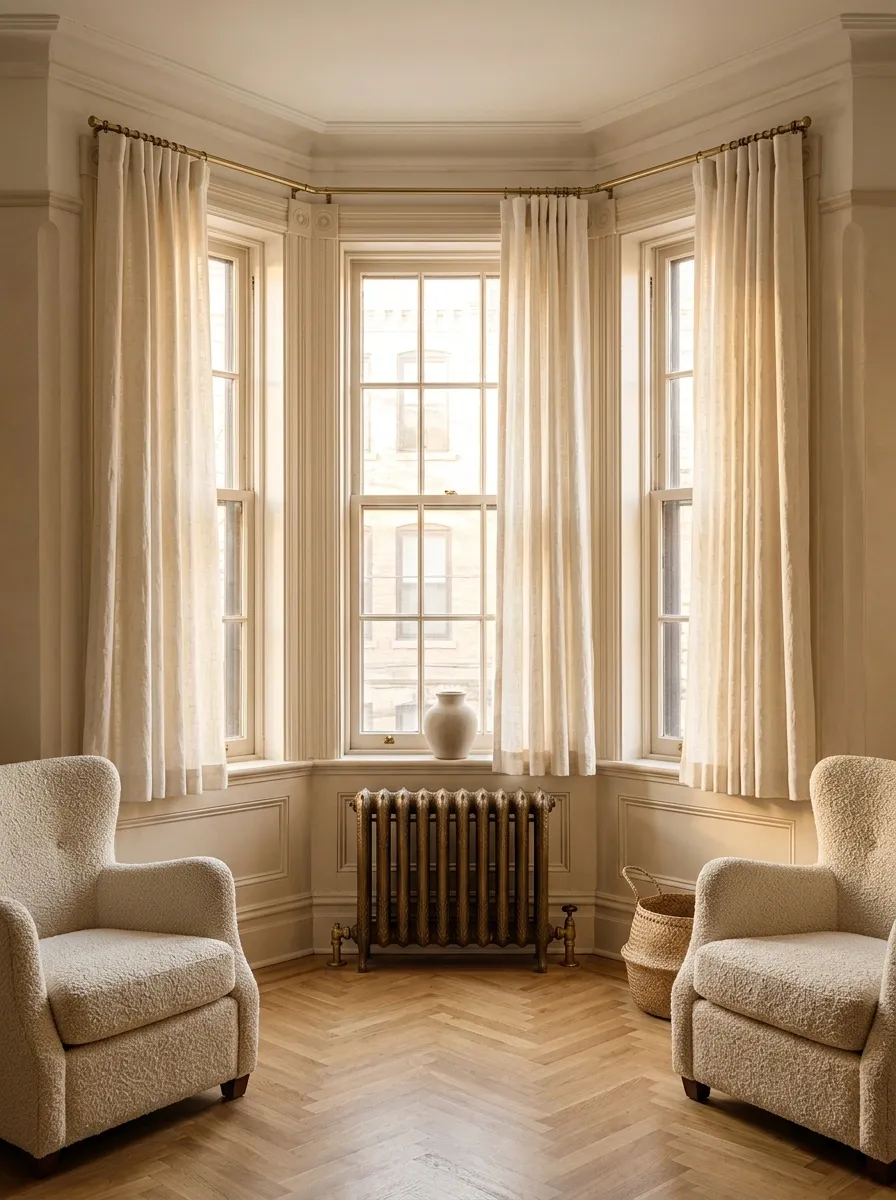
Short, tailored curtains can look surprisingly elegant in a traditional bay window, especially when a period radiator sits directly underneath the glass. Cream fabric finishes just above the radiator, allowing the original window trim, wooden flooring, and traditional armchairs to remain part of the composition. The result feels appropriate to an older home without making the room look trapped in a museum.
The shorter length also avoids fabric pooling around the heating area, but the exact clearance matters. Curtains should not obstruct radiator airflow or create a fire hazard, so follow the radiator manufacturer’s guidance and local safety recommendations. A neat hem and properly fitted rod make the shorter treatment feel deliberate rather than like the curtains lost a fight with the washing machine.
Keep the fabric simple if the room already has patterned wallpaper or detailed upholstery. The architectural features are doing plenty of work already.
A shorter curtain can look completely intentional. Let the hem finish neatly and give the radiator the clearance it needs.
Organic Modern Bay With Textured Ivory Drapery
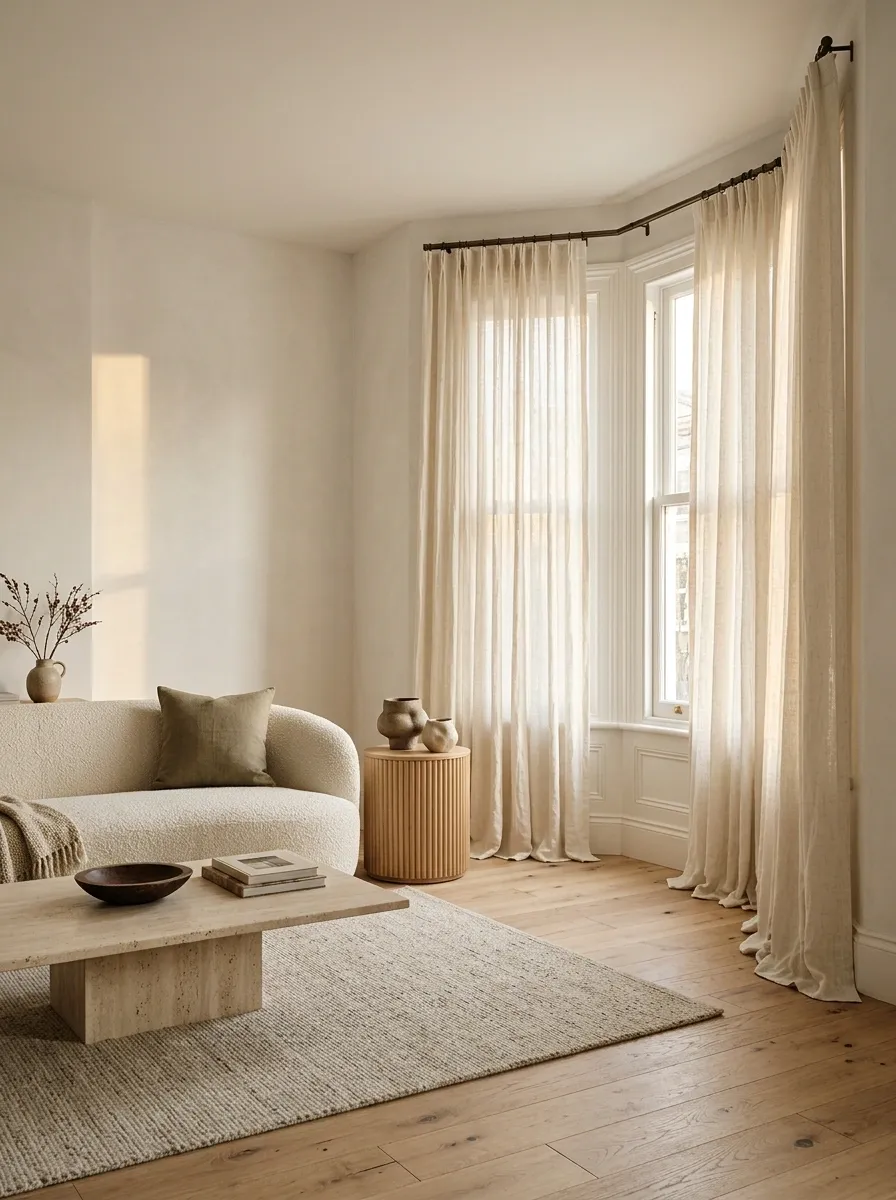
Textured ivory curtains bring softness to an organic modern living room filled with rounded furniture, pale stone, and natural wood. The angled bay supplies the architectural structure, while a curved cream sofa, a travertine coffee table, and sculptural pottery introduce softer shapes. Nothing needs to shout because the contrast comes from the materials themselves.
The fabric is the important detail here. A subtly slubbed linen or linen-look weave has more visual interest than a completely flat fabric, especially against smooth plaster walls. Natural oak adds warmth, while the pale stone keeps the room grounded. The overall effect feels relaxed without looking unfinished.
Restraint does not mean every item needs to be the same shade of oatmeal. A darker wood bowl or muted olive cushion gives the eye somewhere to land. Otherwise, the room risks looking like a very expensive waiting room sponsored by beige.
Gingham Café Curtains With a Built-In Breakfast Banquette
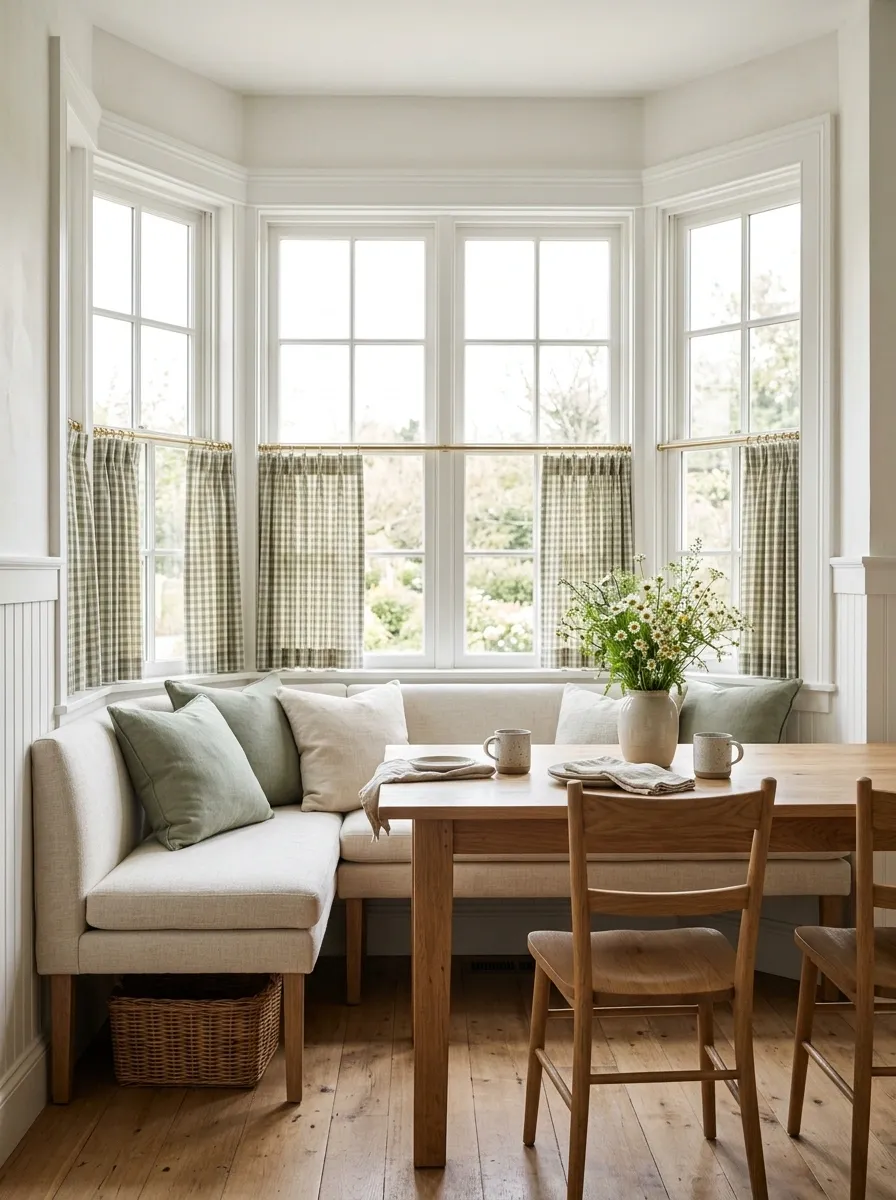
Small gingham café curtains bring a cheerful country feel to a breakfast bay, especially when paired with a fitted banquette and an oak dining table. Muted green and cream checks cover the lower portion of the glass, while the upper windows stay open to natural light. The bench cushions pick up the same quiet palette, connecting the window treatment to the seating.
This arrangement works because the proportions suit the way the space is used. Short curtains do not drag across the seat, obstruct the dining area, or compete with the table. The small-scale check gives the room pattern without making the bay look visually crowded.
Choose washable fabric, especially in a kitchen where breakfast crumbs and splashes are part of the daily programme. Keep the curtain hem clear of the tabletop and work surfaces, and check that the rod is securely fitted. Cottage charm is lovely. Having to explain a curtain’s relationship with a plate of scrambled eggs is less lovely.
Woven Roman Shades With Stationary Linen Side Drapes
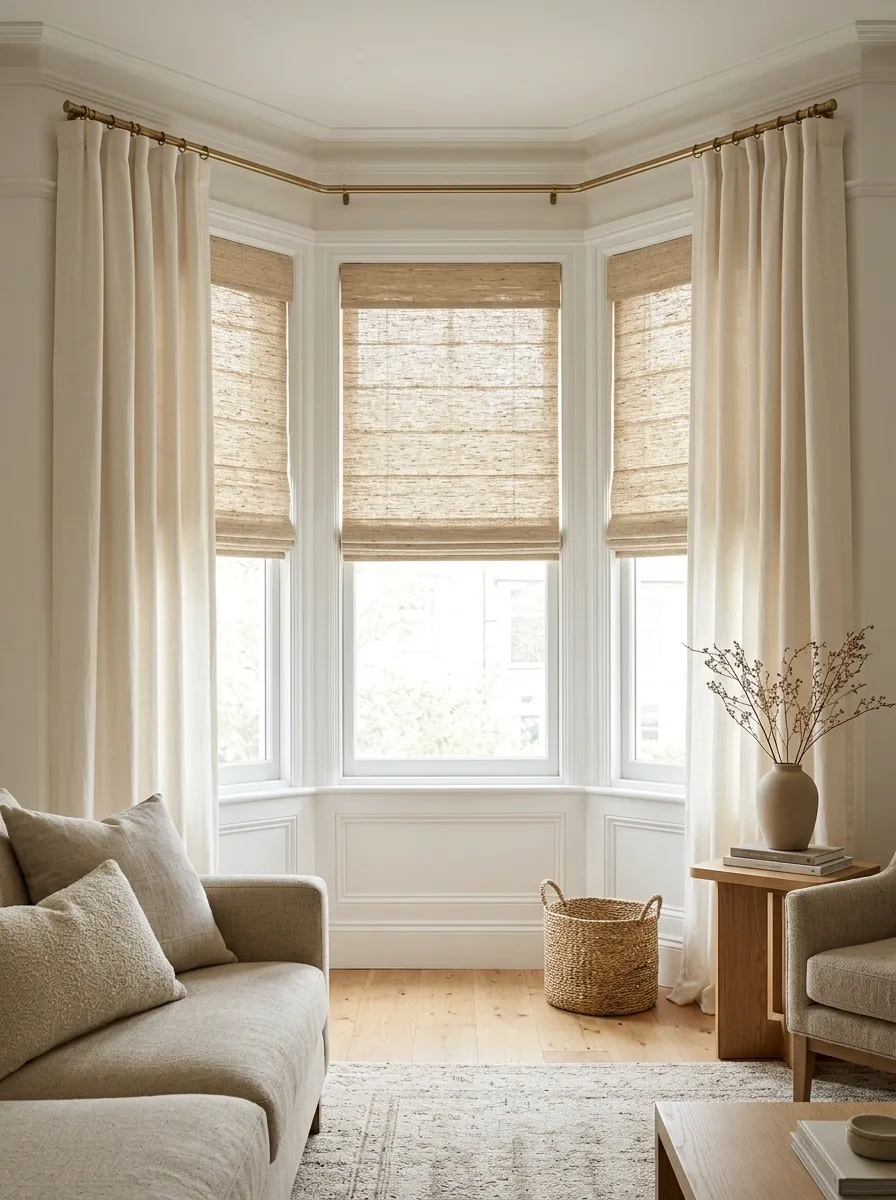
Woven Roman shades handle the separate sections of an angled bay, while stationary linen curtains soften the outer edges. The combination feels layered without requiring long, heavy panels across every pane. A neutral sofa, warm wood furniture, and understated upholstery let the woven texture and linen folds provide most of the decorative detail.
The shades are the functional element. They can be adjusted to control daylight and privacy, while the side curtains mainly frame the composition. This separation is useful when the bay has several angled sections or when there is limited room for curtain panels to stack.
Choose the shade material carefully. Woven textures vary in opacity, so a decorative natural weave may need a privacy or light-filtering lining. Measure each pane independently, and check how the shades operate around handles and frame projections. Layered window treatments are a great idea until one layer decides the other is trespassing.
Traditional Dining Bay With a Scalloped Valance and Pleated Panels
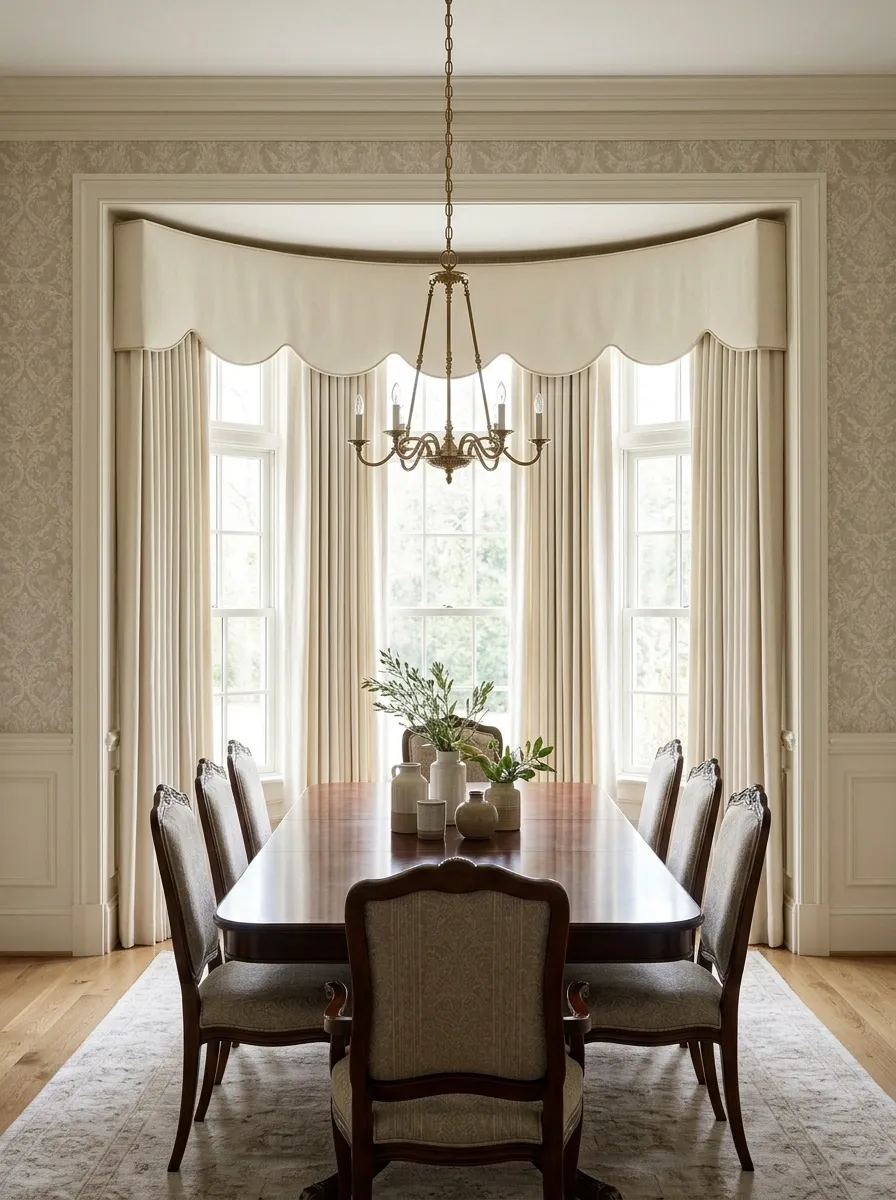
A scalloped valance above neatly pleated curtains gives a traditional dining room a distinctive, finished window treatment. Cream fabric, softly patterned walls, a classic dining table, and a restrained chandelier reinforce the formal character without making the bay look overloaded with decoration.
The curved profile of the valance introduces a softer line above the window, while the pleated panels provide vertical structure. This contrast helps a box or angled bay feel more composed. The key is to keep the design consistent: one decorative upper detail can be enough when the furniture, wallpaper, and lighting already carry traditional character.
Fabric selection matters here. A material with enough body will hold the valance shape more clearly than an extremely flimsy fabric, while the curtain heading should suit the overall formality of the room. Avoid piling on extra tassels, fringe, and patterned tiebacks unless the rest of the interior genuinely supports that level of ornament. The window treatment can have a personality without requiring its own royal title.
One ornamental detail can establish the style. The remaining trim doesn’t need to audition for the same role.
Victorian Bay With Lace Curtains and Heritage Wallpaper
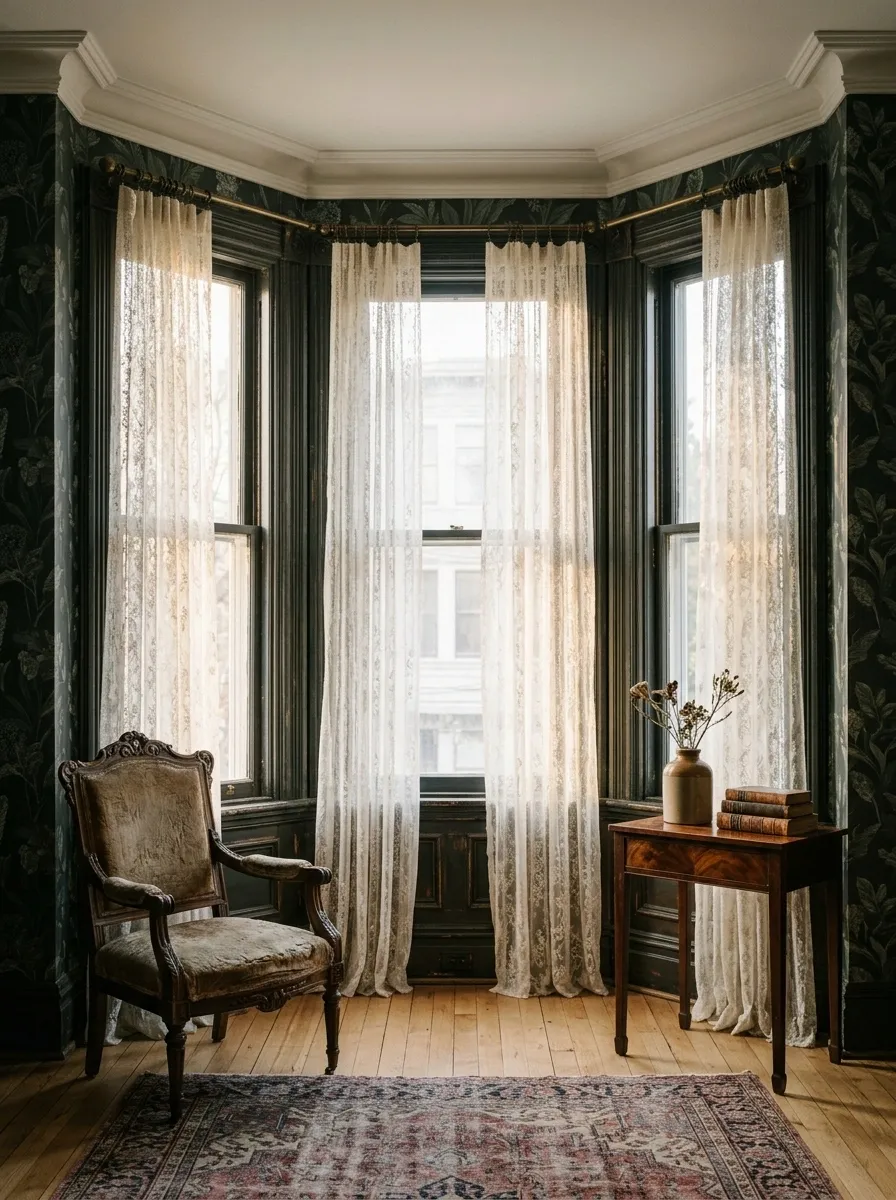
Delicate lace curtains soften a Victorian bay without hiding the original window frames, decorative mouldings, or tall proportions. Dark botanical wallpaper, antique mahogany furniture, and a traditional patterned rug create a layered interior where the lightness of the lace provides a welcome contrast. The result feels rooted in the home’s architecture rather than assembled from a vintage shopping haul.
The fabric allows daylight to filter through while adding a fine texture against the heavier wall pattern. Keeping the curtain color close to ivory or warm cream makes the intricate weave visible without introducing another competing color. Antique wood furniture supplies enough depth to anchor the room, while the wallpaper gives the bay a distinctive backdrop.
The trick is knowing when to stop decorating. Lace, patterned wallpaper, and carved furniture already bring plenty of detail. Add elaborate tassels and oversized swags everywhere, and the room might start looking like it has inherited a very demanding estate.
Industrial Loft Bay With Charcoal Linen Curtains
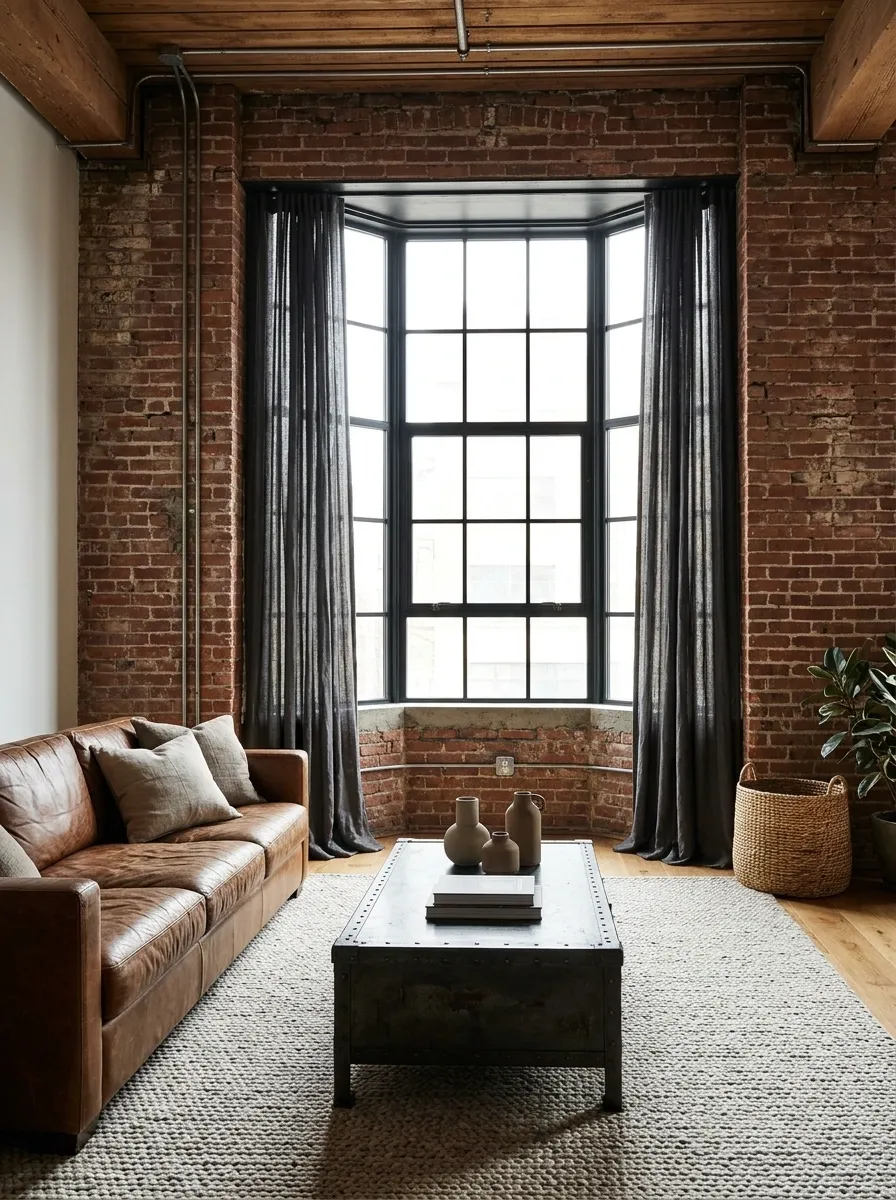
Charcoal linen gives an industrial-style bay window a softer edge without sacrificing its architectural character. Black-framed glazing, exposed brick, a worn cognac leather sofa, and a dark metal coffee table establish the room’s rugged palette. The curtains introduce texture between the harder surfaces, making the room feel lived in rather than like an unfinished warehouse charging residential rent.
The dark fabric works particularly well when it connects to existing black metal details. Meanwhile, linen’s natural weave keeps the panels from looking too flat against the brick and steel. A lighter rug or warm wood accent can prevent the entire composition from becoming one enormous charcoal cloud.
Consider the available daylight before committing to dark curtains. In a bright loft, the contrast can feel dramatic and balanced. In a dim room, heavy dark panels may make the window feel smaller. The industrial look is supposed to be bold, not an accidental power outage.
Urban Bay With Translucent Privacy Curtains
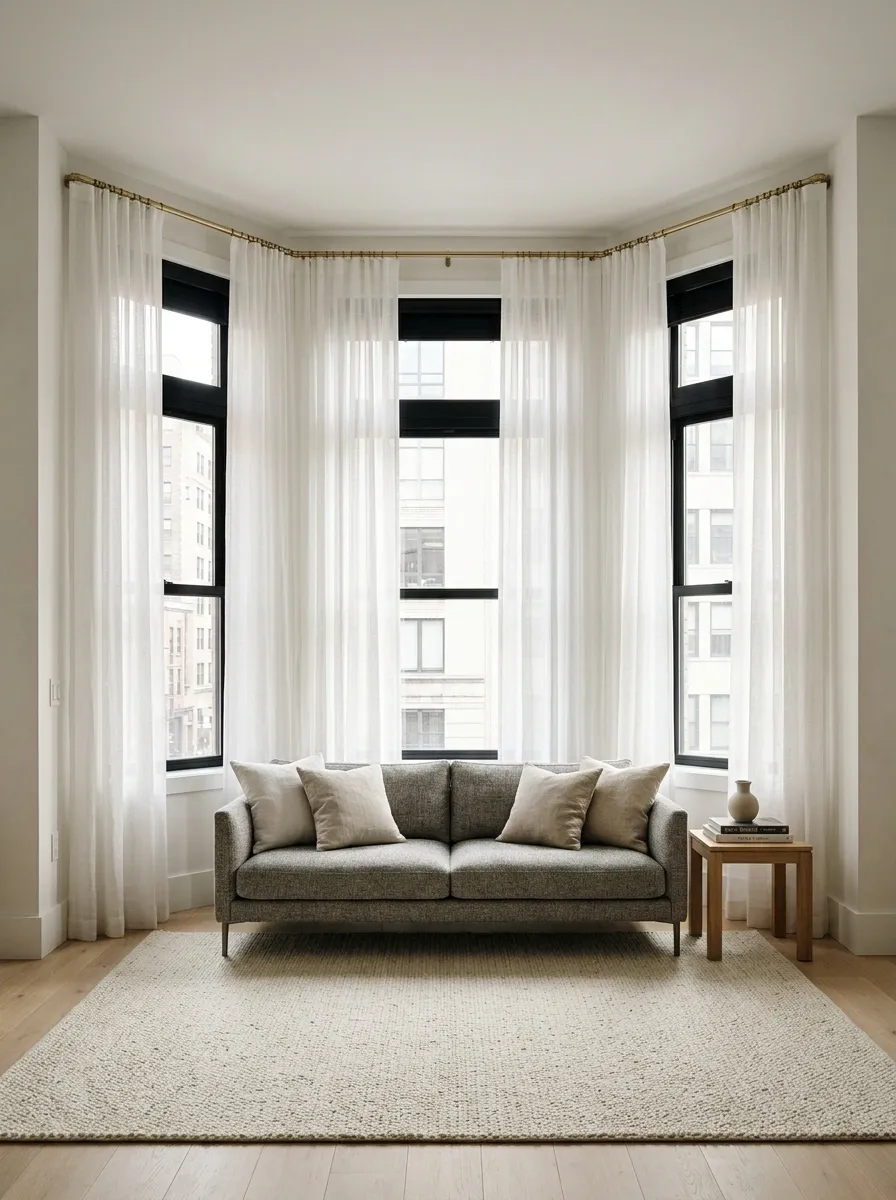
An apartment bay facing neighboring buildings needs a different approach from a window looking onto a private garden. Translucent white curtains soften the outside view while preserving much of the daylight, giving the living room a calmer appearance. A grey sofa, pale rug, and simple wood side table keep the setting modern without competing with the view.
The curtains work because they introduce a soft boundary between the room and the outside world. Their light texture breaks up the hard lines of nearby buildings, while the pale palette avoids making the window wall feel heavy. For a contemporary apartment, that balance often matters more than adding elaborate decorative details.
Sheer fabric does not guarantee privacy after dark. When the room is brighter than the outside, people may still see through it. Pair the sheers with a suitable privacy blind or lined layer if nighttime visibility is a concern. The neighbors do not need an invitation to your entire evening routine.
Translucent fabric is a light-filtering solution, not an invisibility cloak. Choose the treatment according to the view, lighting, and level of privacy required.
Media Lounge Bay With Heavy Lined Curtains
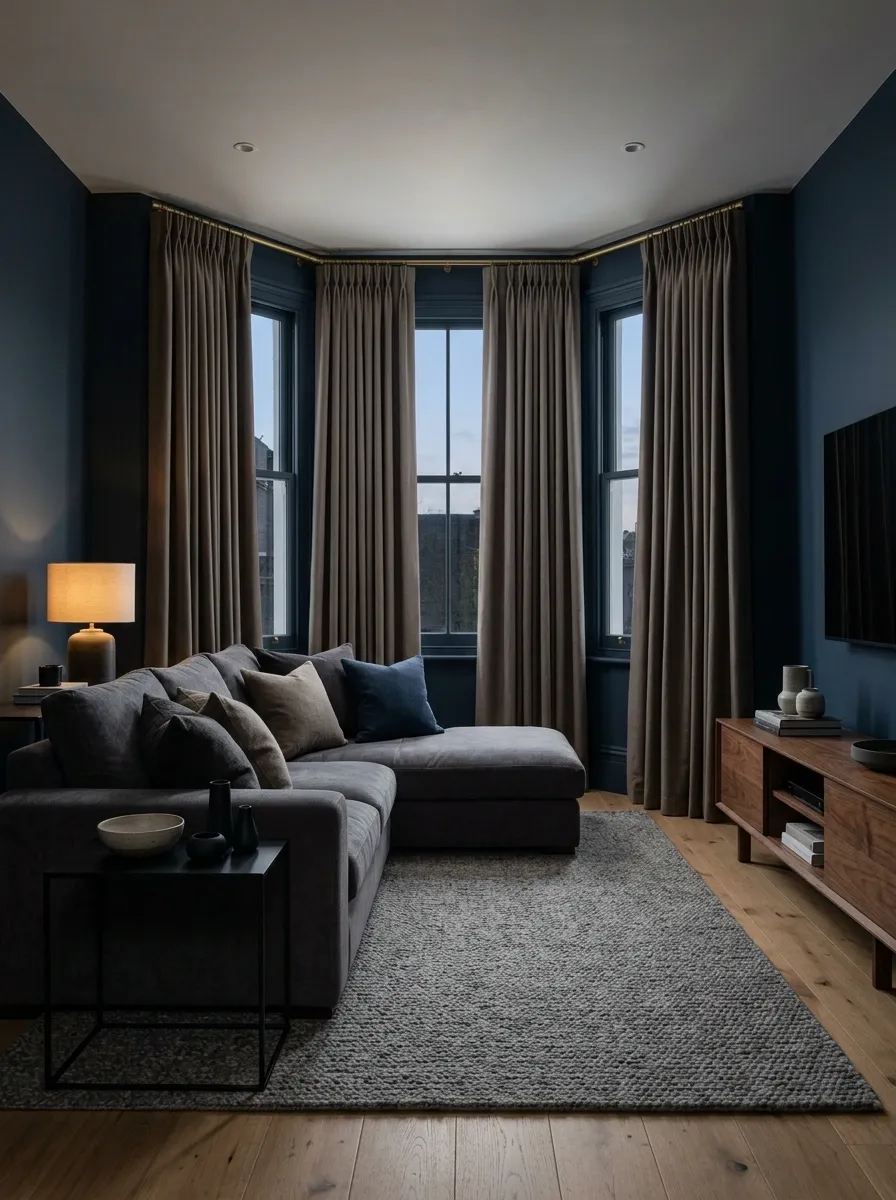
A media lounge benefits from a bay window treatment that controls incoming light and gives the room a more enclosed feel. Deep taupe curtains frame the glass against dark blue walls, while a comfortable sectional and low, warm lighting keep the room suited to movie nights. The curtains add visual weight, making the bay feel like part of the room instead of a bright interruption in the middle of the screen setup.
Lined drapery can help reduce incoming light, particularly when the fabric is dense and the edges fit closely around the window. However, the result depends on the lining, the curtain construction, and gaps around the track. Fabric described as blackout does not automatically eliminate every bright line around a bay’s angled sections.
Plan the hardware and mounting arrangement before choosing the curtain style. A heavy fabric needs appropriately rated supports, especially when the track turns around several window sections. And keep the curtain stack clear of speakers, furniture, and ventilation. Cinematic ambience is good. Accidentally covering the sound system is less Oscar-worthy.
Terracotta Velvet Curtains in a Quiet Neutral Living Room
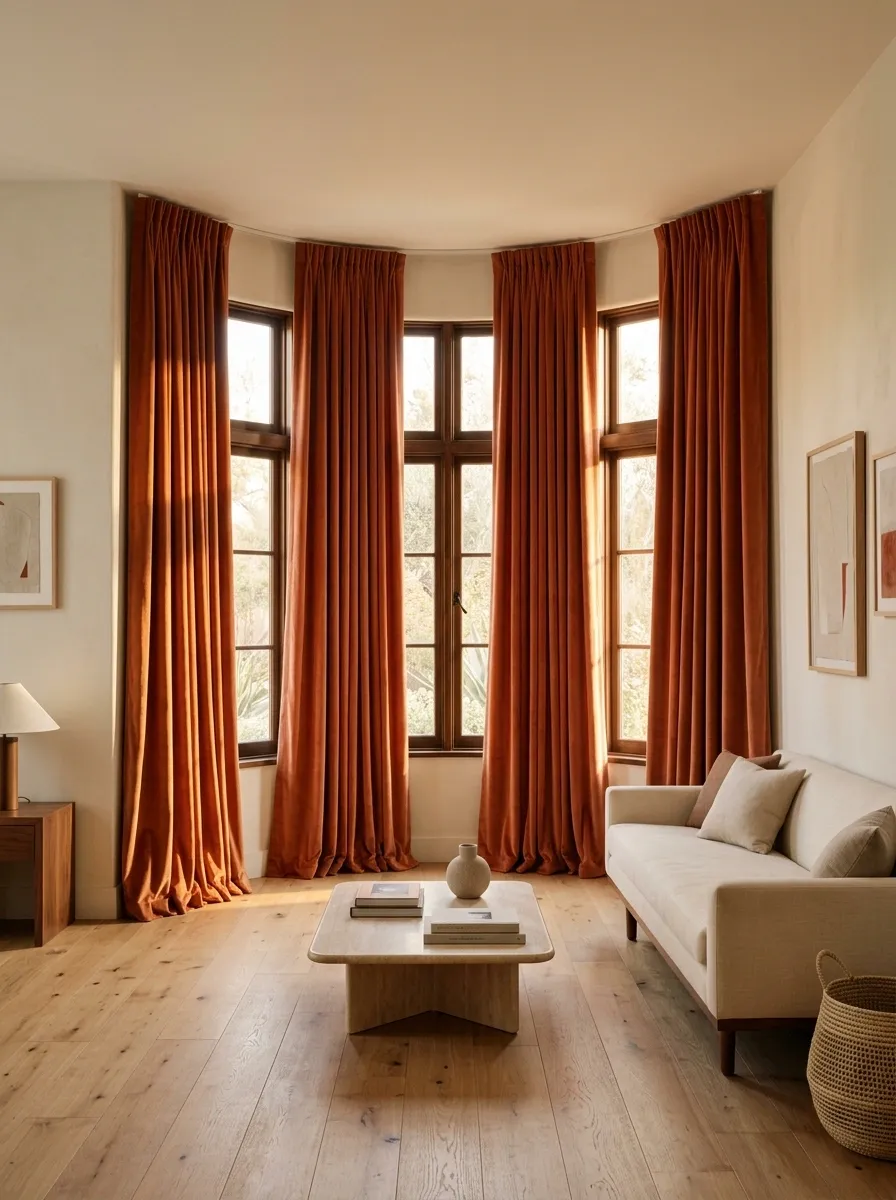
Terracotta velvet adds a warm, saturated focal point to a living room with cream walls, pale upholstery, and a simple stone coffee table. The deep, earthy curtain color gives the bay definition, while the velvet surface catches light differently across its folds. A wood side table and restrained artwork finish the room without competing with the most noticeable feature.
The strength of this design is its clear color hierarchy. Terracotta carries the main visual weight, while the surrounding neutrals let the fabric stand out. A small repeat of the same warm tone in a cushion or piece of art can help the room feel connected, but matching every accessory is unnecessary.
Velvet is heavier than many linen or cotton curtains, so the track or rod needs to support its weight. Also consider how much sunlight reaches the window, because direct light can affect some fabrics over time. Dramatic curtains deserve a little practical planning, not just a dramatic shopping basket.
Mid-Century Bay With Large-Scale Geometric Curtains
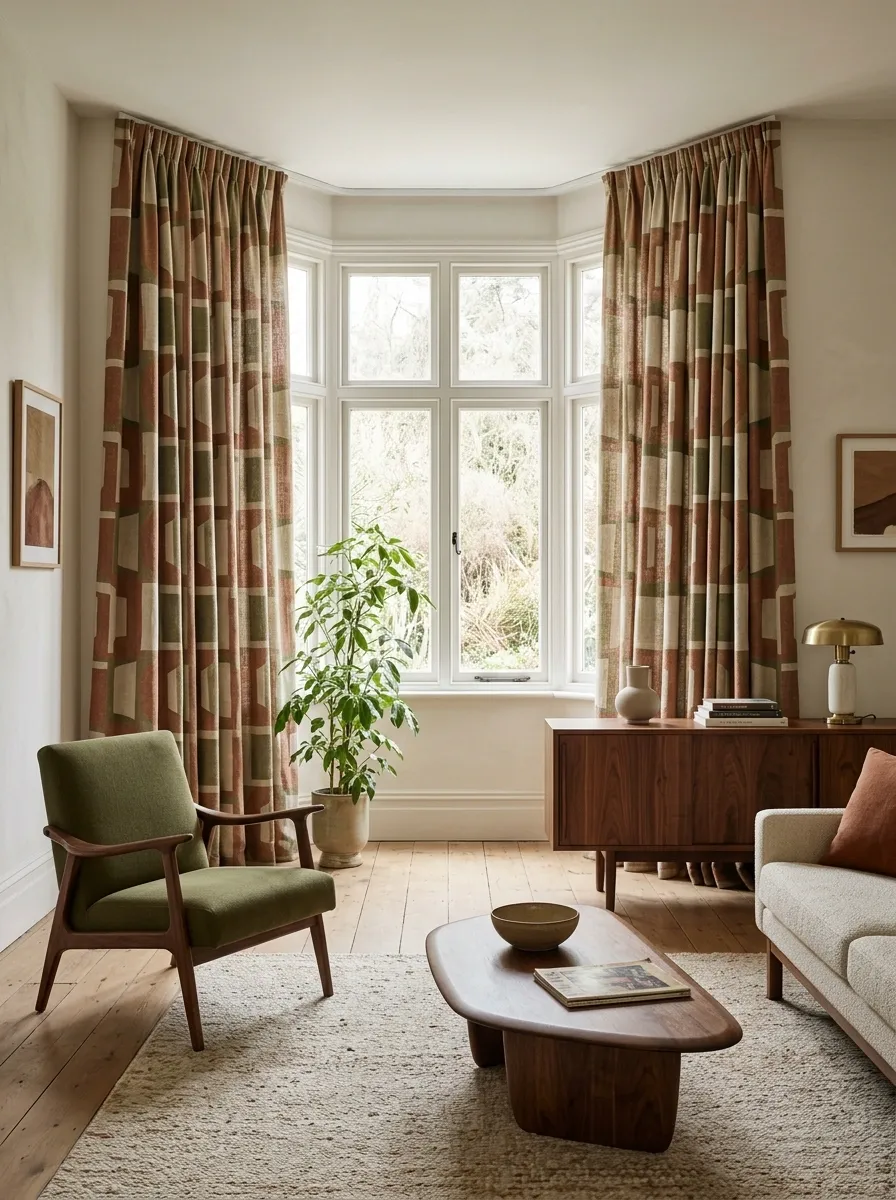
Large geometric curtains give a mid-century living room the kind of personality that doesn’t require seventeen decorative objects fighting for attention. The bay is framed with a bold repeating pattern in muted rust, olive, and cream, while walnut furniture, a sculptural coffee table, and an olive accent chair establish the room’s retro character.
The pattern works because the surrounding materials have simpler shapes. Walnut adds warmth, the chair reinforces one of the curtain colors, and restrained wall finishes let the geometry remain the focal point. The whole room feels connected without looking like a furniture catalogue from a very enthusiastic decade.
Scale is crucial. Large geometric motifs need enough uninterrupted fabric to read clearly, especially across several angled panels. Check the pattern repeat before ordering and avoid introducing another large print on the rug or upholstery. One statement pattern is a design decision. Three competing patterns are a group project nobody agreed to.
Warms up the graphic fabric.
Repeats one curtain tone in a quieter form.
Give the geometric motif space to breathe.
Check the pattern repeat across all panels. Bold geometry should look intentional from across the room, not like the print took a wrong turn at every window corner.
Rental-Friendly Bay With Lightweight, Separately Mounted Panels
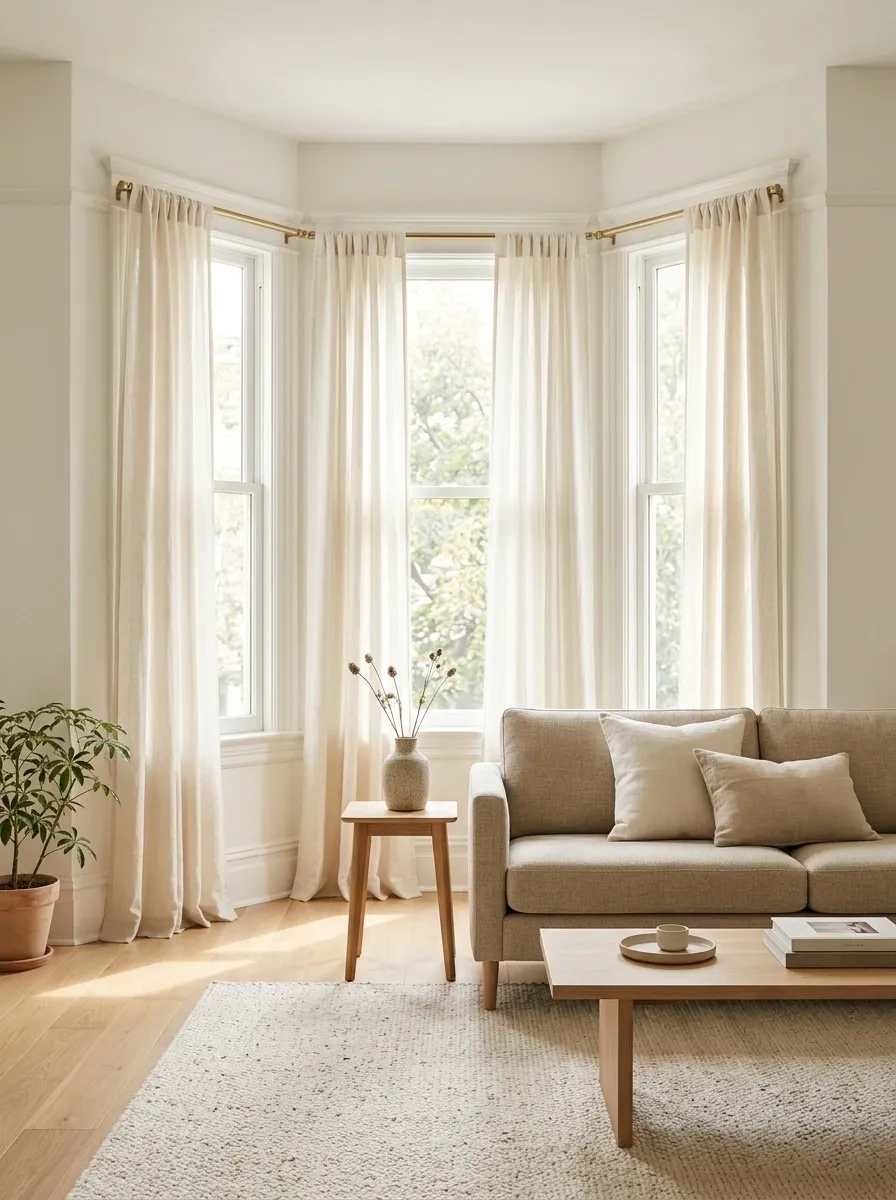
Rental living rooms rarely come with unlimited decorating freedom, perfectly positioned curtain brackets, or a landlord who enjoys surprise holes in the walls. Lightweight curtains mounted separately across the angled sections of a bay offer a flexible-looking solution that respects the window’s shape without requiring one complicated treatment across the entire opening.
Soft ivory panels work naturally with pale walls, a compact sofa, and light wood furniture. Keeping the fabric relatively simple also makes it easier to reuse the curtains after moving, provided the next window dimensions cooperate. Each panel can frame its own section of glass, helping the arrangement feel intentional instead of improvised.
The hardware needs just as much attention as the fabric. Depending on the window construction, suitable adjustable brackets or compatible no-drill solutions may be available, but not every bay supports the same mounting method. Check the manufacturer’s requirements, the window frame, and any rental restrictions before installing anything. A deposit is not a decorating budget.
Dining Bay With Full-Length Sage Curtains and a Round Pedestal Table
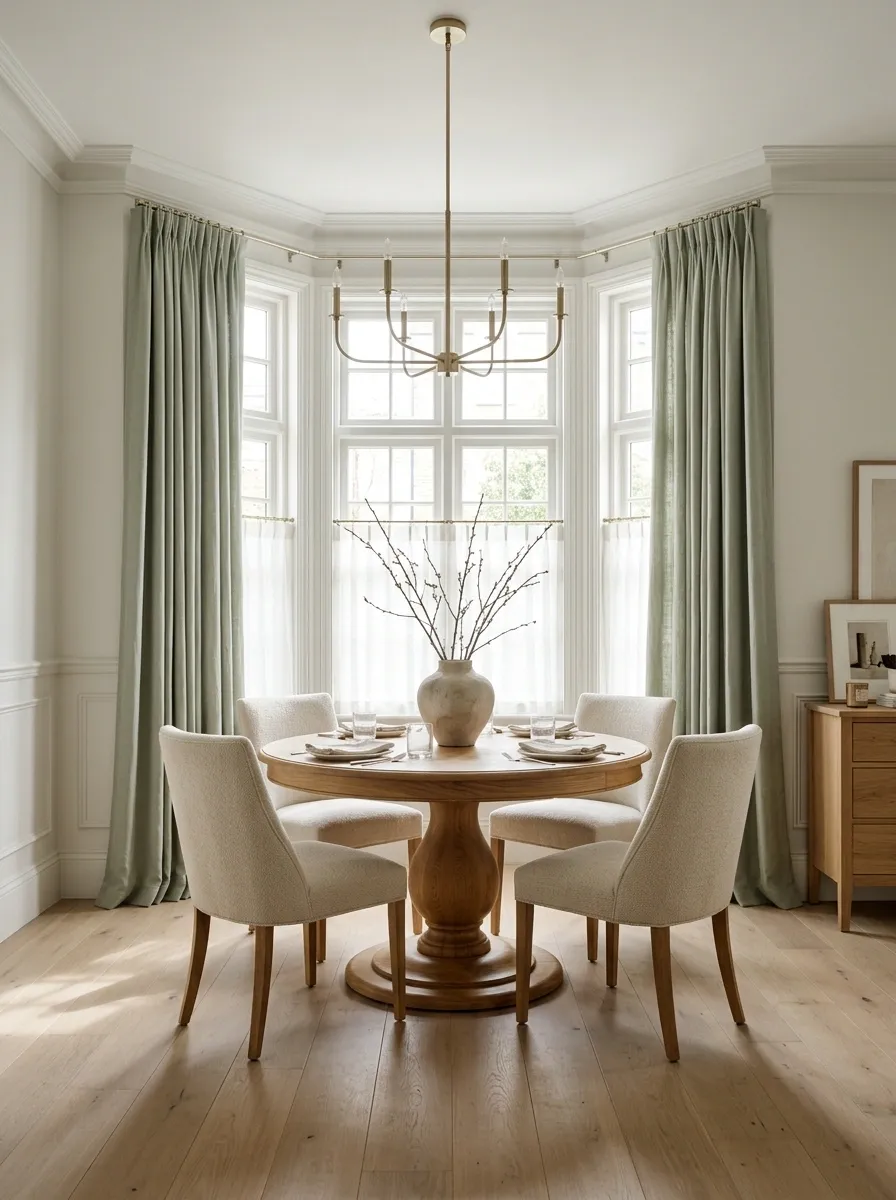
Soft sage curtains turn a dining bay into a defined little destination without making the table feel shoved into an architectural leftover. Full-length panels frame the windows, while a round pedestal table and upholstered dining chairs create a balanced arrangement beneath the glass. Warm wood flooring, muted wall colors, and a restrained chandelier complete the room.
The round table suits this setting because its curved outline contrasts with the angular window sections and makes moving around the seating more natural than squeezing past prominent table legs. The sage curtains add color without dominating the dining furniture, especially when the chairs and tabletop remain in lighter, warmer finishes.
Curtain placement is worth planning before the table arrives. Panels need room to open and close, while chairs require enough space to move back without catching the fabric. If the bay is narrow, check the entire arrangement with the chairs pulled out. The table may look perfect tucked in, but nobody eats dinner permanently glued to their seat.
High-Ceiling Townhouse Bay With Extra-Long Ivory Drapes
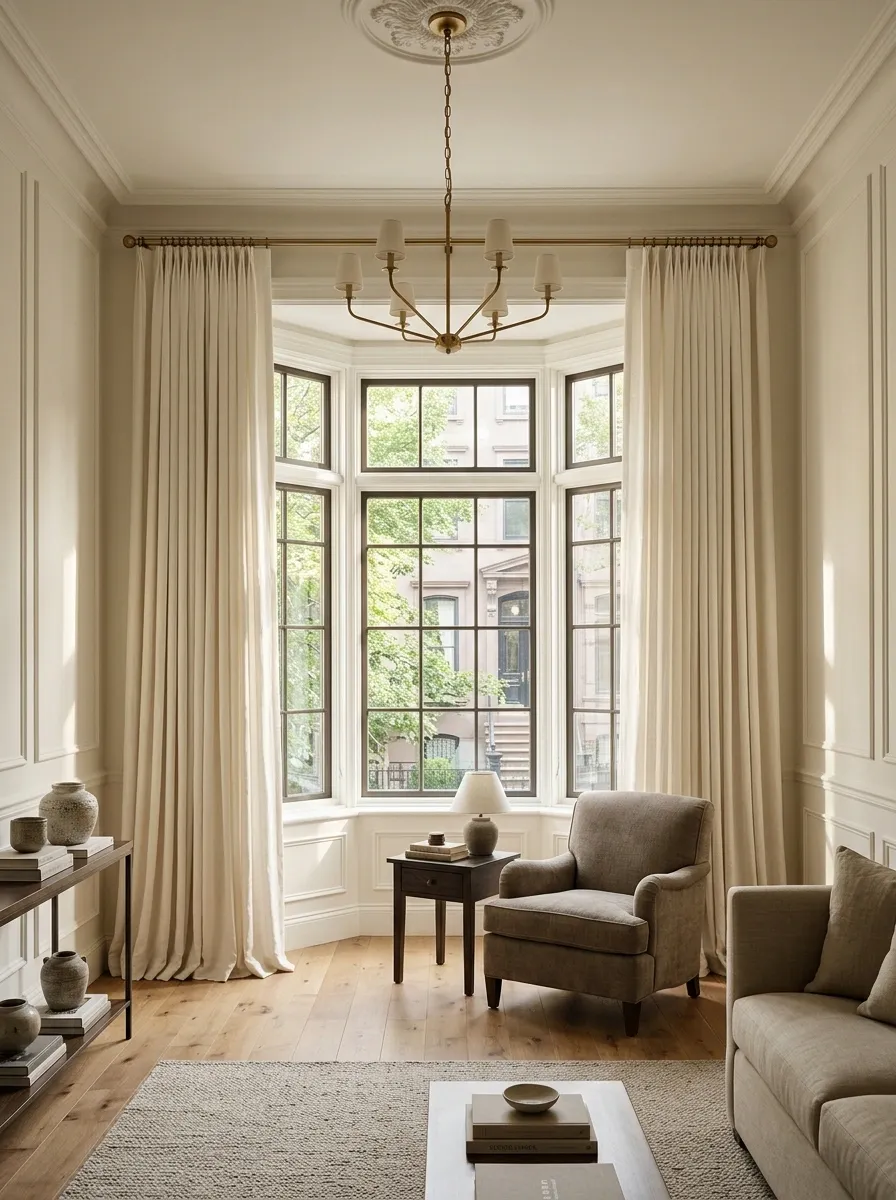
In a high-ceiling townhouse, a bay window can benefit from long ivory drapes mounted close to the ceiling, drawing attention to the room’s generous vertical proportions. The curtains fall toward the floor in full, elegant folds, while traditional furniture, warm wood flooring, and a restrained chandelier give the space enough visual weight to balance the height.
The long panels help connect the window to the rest of the architecture. Their pale color keeps the treatment from appearing too heavy, while the fabric’s folds create texture against the taller wall surfaces. A darker side table or a muted upholstered chair can ground the composition without interrupting the vertical flow.
Measure carefully from the intended mounting point to the finished hem. High ceilings make small length errors more noticeable, and the curtain stacks need sufficient width so the panels don’t cover too much of the glazing. The goal is a full-length treatment that looks tailored, not a fabric waterfall with unclear landing arrangements.
Long drapes should emphasize the architecture, not drag on the floor because the measuring tape took a day off.
Before Choosing Your Bay Window Curtains
The most successful bay window treatments begin with the actual shape of the window, not a photo of fabric that happens to look lovely on a screen. Measure each section, decide whether the curtains need to provide privacy or block light, and check where the panels will sit when open. Then choose the fabric, heading, color, and hardware that work together.
A curved bay may call for a compatible curved track, while an angled window might work better with separate shades or carefully planned panels. A radiator, window seat, or dining table can change the most practical curtain length. These details aren’t the glamorous part of decorating, but they prevent expensive mistakes.
The room should feel finished, not overworked. Let the curtains complement the architecture, give the furniture enough breathing room, and provide the amount of light control the space actually needs.
Save your favorite bay window curtain ideas before heading to the fabric shop. The mood board can do the remembering while the measuring tape handles the reality check.