
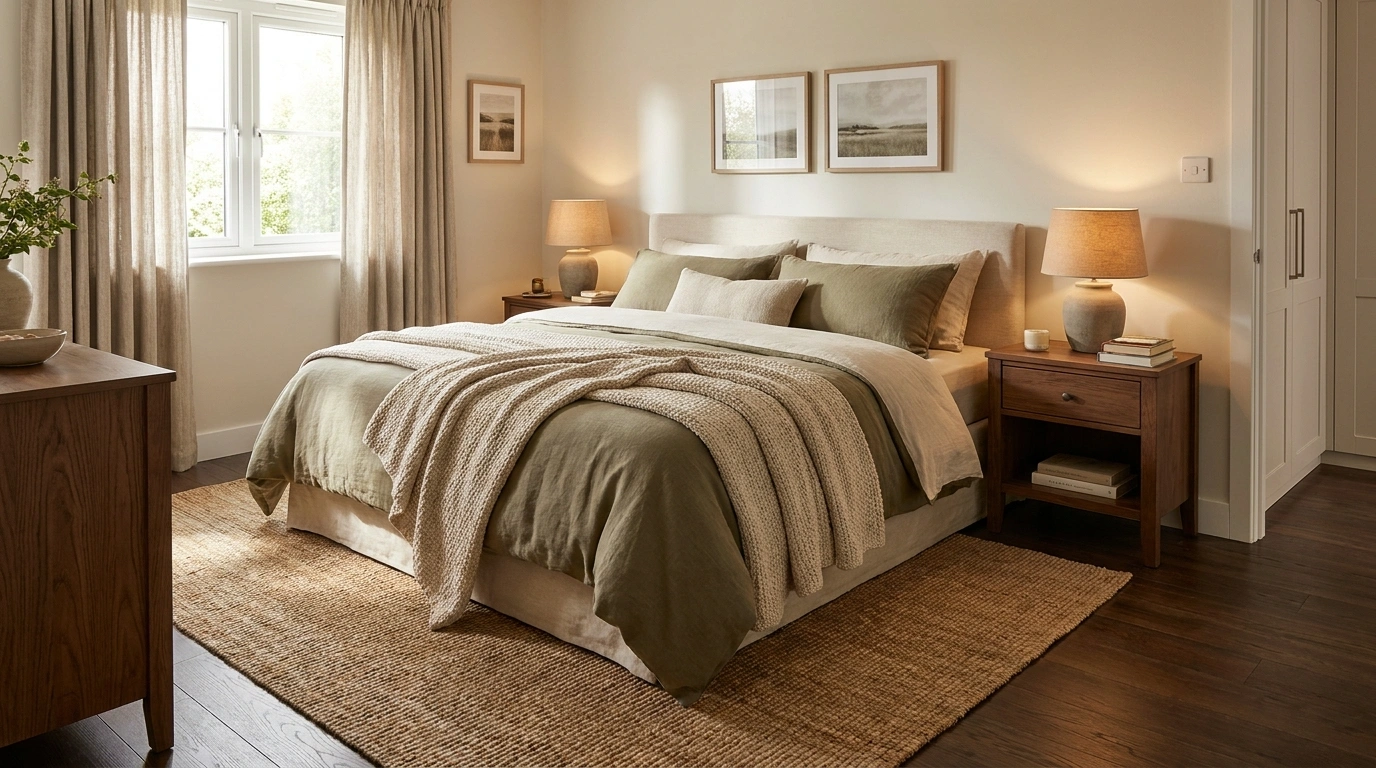
A shared bedroom can look perfectly coordinated in a photograph and still feel wrong for the people sleeping in it. Maybe the furniture is too bulky, the colors don’t reflect either person’s taste, or the room has plenty of decoration but nowhere to put everyday belongings.
These problems usually come from choosing individual pieces before deciding how the entire room should work together.
Some couples prefer the quiet comfort of warm neutrals, while others want deep colors, vintage furniture, or a bedroom that feels like a private hotel suite. Smaller rooms bring another challenge because storage and walking space matter just as much as appearance.
What Makes a Shared Bedroom Feel Balanced?
Balance Both Sides of the Bed Without Making Everything Identical
Matching bedside tables can create a calm, symmetrical look, but they’re not the only way to make a bedroom feel balanced. Two different tables, lamps, or storage arrangements can work just as well when their proportions and finishes relate to each other. The important thing is that neither side feels like an afterthought.
Choose a Clear Focal Point Before Layering in Decor
A bedroom needs a visual anchor. That could be an upholstered headboard, a dramatic wall color, a large window, or a distinctive architectural feature. Decide what should attract attention first, then let the bedding, artwork, and smaller accessories support it instead of competing for attention.
Make Room for Storage, Movement, and Everyday Routines
A beautiful bedroom becomes frustrating when drawers cannot open fully or one partner has to squeeze past the bed. Measure the room before choosing large furniture. Leave practical paths to the wardrobe and bathroom, and consider wall-mounted lighting or built-in storage when bedside floor space is limited.
Married Couple Bedroom Designs
Cozy Neutral Sanctuary With Soft Textures
A warm beige accent wall sets a calm tone in this bedroom, complemented by sheer curtains that filter daylight effortlessly. A plush, cream-colored textured rug anchors the low upholstered bed, while a large round mirror reflects light and adds a sense of openness to the shared space.
Keep the accent pieces minimal to let the tactile fabrics take center stage. Small globe bedside lights mounted on the wall offer a soft evening glow without cluttering the nightstands, keeping the composition balanced and peaceful for both partners.
This aesthetic shines when you want a serene retreat that feels effortlessly styled. Stick to a cohesive palette of muted creams and warm taupes to maintain that continuous, harmonious atmosphere from morning until night.
Tailored Hotel Bedroom With an Upholstered Wall and Warm Oak
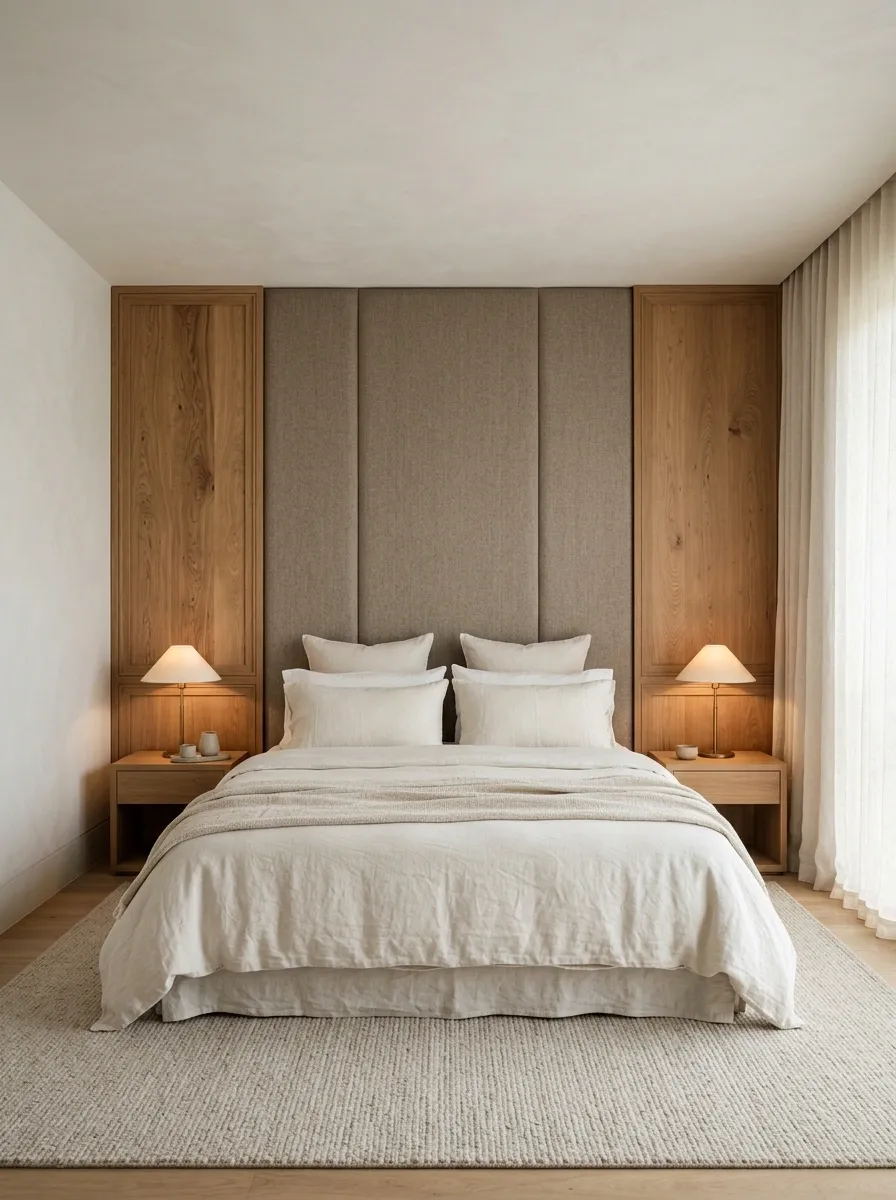
A tall upholstered headboard paired with warm oak panels creates a bedroom that feels polished without becoming formal. The bed sits at the center of the composition, with matching bedside tables, soft ivory bedding, and warm lamps that make the wood grain feel richer.
Keep the surrounding walls and textiles relatively quiet. The combination of soft upholstery and natural timber already provides enough contrast, so a busy wallpaper or several competing art pieces would make the room feel less composed.
This look works particularly well when both partners want a timeless bedroom that feels comfortable on ordinary evenings, not just when the bed is freshly made. Choose bedside storage that suits your actual routines, even if that means using slightly different drawer arrangements on each side.
Shared Bedroom With Built-In Walk-In Closet
Merging a bedroom with an open wardrobe zone creates a luxurious boutique feel while maximizing everyday efficiency. A warm wooden partition frames the sleeping area, providing a natural transition into a spacious customized closet complete with organized shelving and hanging space.
Keep the flooring consistent and use recessed ceiling tracks to maintain an uninterrupted visual flow between the bed and the storage zone. A streamlined bedside table and soft curtained windows ensure the bedroom side remains relaxed and uncluttered.
This layout works wonderfully for couples who appreciate daily organization and seamless routines. By integrating the wardrobe directly into the room’s architecture, both partners gain easy access to their clothing without sacrificing precious floor space.
Olive Green and Walnut Bedroom With Rich, Earthy Contrast
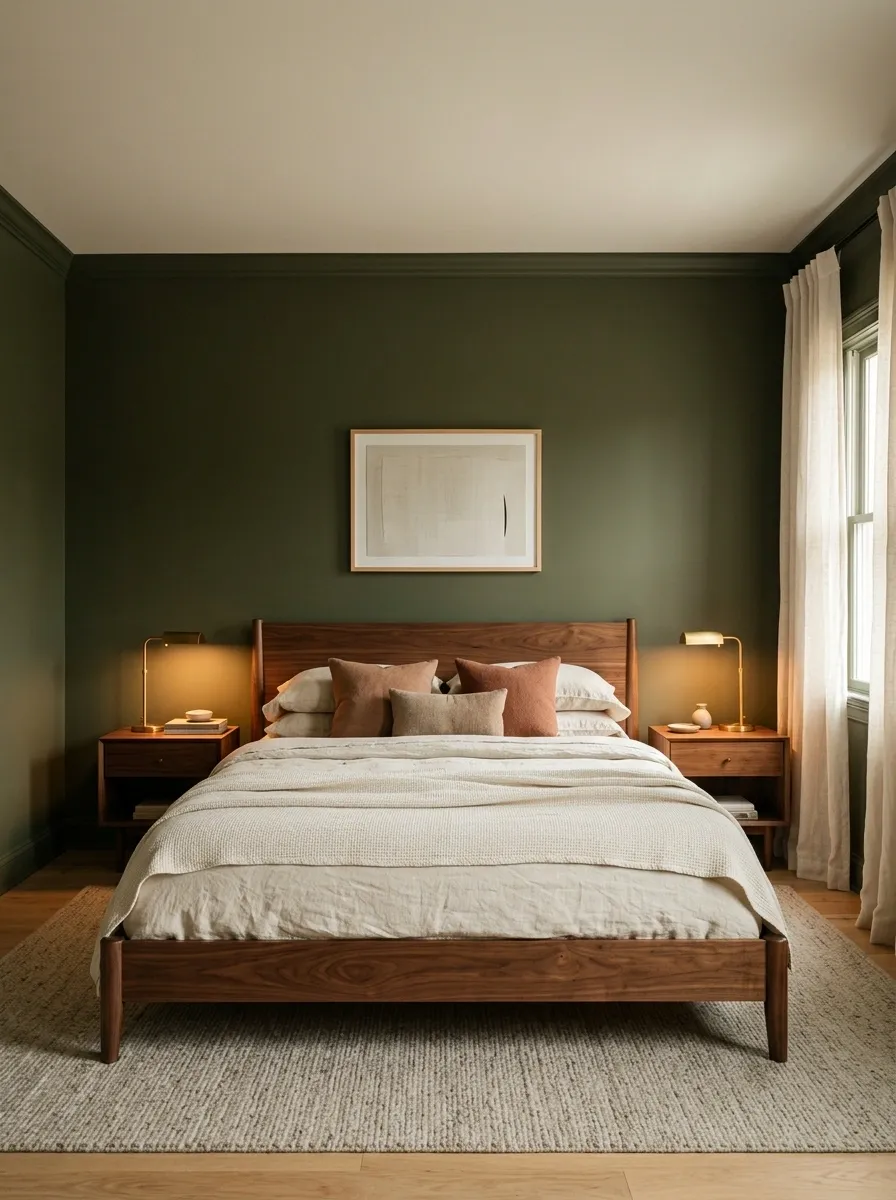
Deep olive walls and walnut furniture give this bedroom a more grounded character than a typical pale neutral scheme. A low walnut bed anchors the room, while cream bedding creates a clear break between the dark wall and the furniture. Warm bedside lighting brings out the wood’s natural tones without making every surface look orange.
The strength of this design comes from its limited palette. Olive supplies depth, walnut provides warmth, and cream keeps the room from feeling too enclosed. Textured bedding adds variety without introducing another dominant color.
Use this approach when you want a bedroom with personality but don’t want bright accent colors or lots of decorative objects. If the room receives limited daylight, keep more of the bedding and curtains light rather than carrying the deep green across every surface.
Keep lighter bedding clearly visible against the darker wall and wood. That separation helps the bed remain the main focal point.
Enchanted Forest Canopy With Romantic Florals
Dark wooden walls paired with a dense overhead canopy of lush faux foliage and cascading roses transform this bedroom into a moody, fairytale-inspired escape. Twinkling string lights woven through the branches cast a warm, intimate glow across the deep berry-toned bedding and heavy drapes.
Balance the dramatic overhead installation by keeping the lower half of the room anchored in rich, saturated textiles. A plush quilted coverlet and layered pillows in matching crimson and plum shades deepen the cocoon-like atmosphere without feeling overwhelming.
This design is ideal for couples looking to create a deeply romantic and immersive retreat. Because the elements are visually heavy, ensure your bedside lighting remains adjustable so you can easily shift from a magical glowing evening to a bright morning setup.
Small Married Couple Bedroom With a Wraparound Storage Headboard
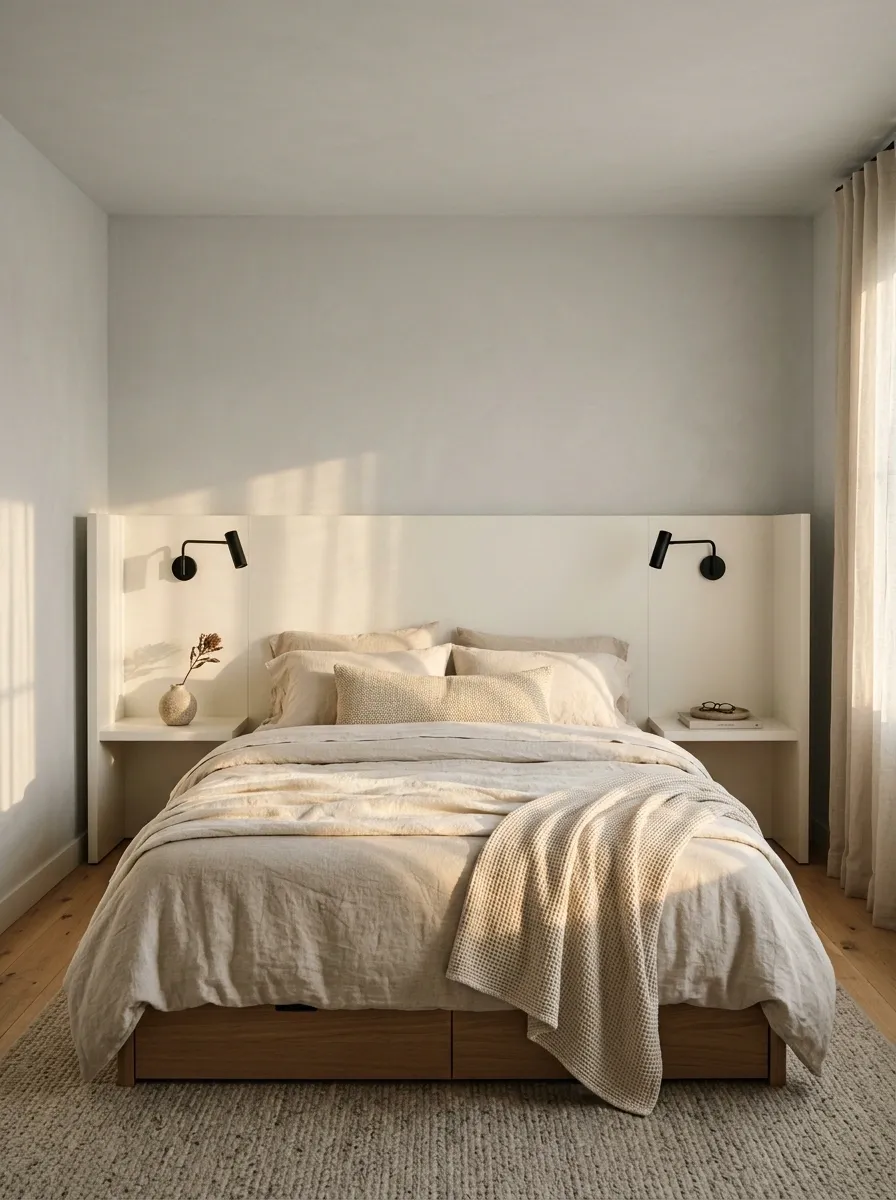
In a small shared bedroom, bulky nightstands can take up space that would be more useful for walking or opening wardrobe doors. A wraparound headboard with integrated storage offers a different approach. The bed remains the main feature, while shallow shelves and compact drawers keep everyday items close without adding several separate pieces of furniture.
Use a light upholstered headboard, pale walls, and streamlined bedding to stop the storage wall from becoming visually heavy. Wall-mounted reading lights free up the bedside surface, and drawers beneath the bed can hold linens or seasonal clothing when there is enough clearance to access them.
The details need to be measured carefully. Check where outlets, switches, and existing doors sit before planning built-ins. A clever headboard is only useful when both partners can reach their side comfortably and the remaining walkway still feels practical.
Warm Taupe Bedroom With Typographic Art
Soft taupe walls featuring classic wall molding create a sophisticated backdrop for a contemporary upholstered bed. A trio of matching black-and-white typographic art prints hangs above the headboard, bringing a personalized graphic touch to the neutral color scheme.
Keep the bedside styling clean and functional with sleek white drawers and minimalist lamps that cast a warm, inviting glow. A subtle rose-toned throw blanket across the patterned bedding adds just enough contrast to break up the neutral palette without introducing clutter.
This setup is a fantastic choice for couples who love a curated gallery look that remains deeply comforting. The combination of tailored wall paneling and cozy lighting ensures the room feels finished, balanced, and ready for everyday life.
Romantic Canopy Bedroom With Sheer Curtains and Layered Bedding
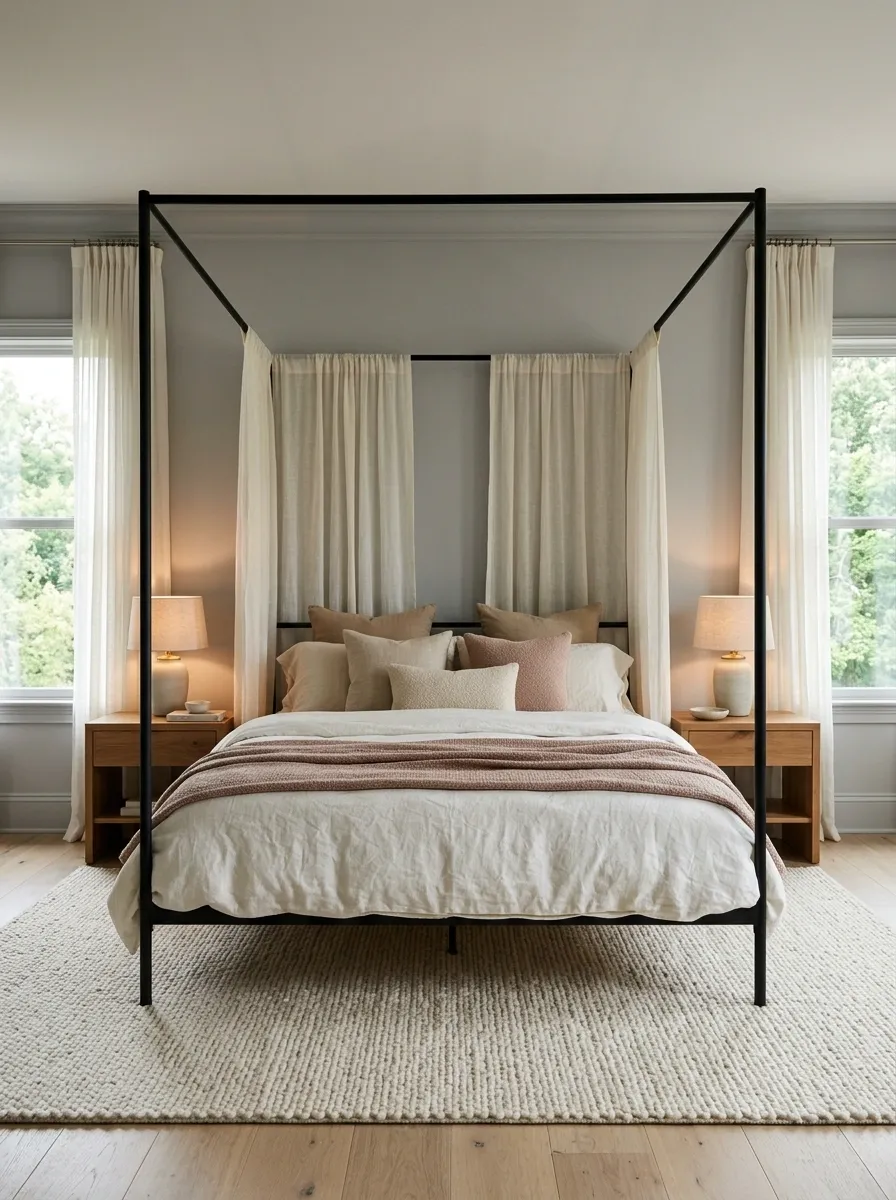
A slim four-poster bed with sheer ivory curtains creates a romantic focal point without requiring ornate furniture or a room full of frills. The canopy gives the bed a strong outline, while the translucent fabric softens that structure. Layered bedding in ivory, muted rose, and warm beige adds color without competing with the frame.
Keep the bedside furniture simple and use warm lamps instead of relying on one overhead light. This makes the room feel softer in the evening and keeps the canopy from appearing too formal. A lightly textured rug beneath the bed can connect the furniture to the rest of the room.
The proportions are especially important here. The frame needs enough clearance around doors, windows, and ceiling fixtures, and the curtains should not interfere with getting into bed. In a smaller bedroom, a slim frame with open sides feels less imposing than a heavy, dark canopy.
Dreamy Fairy Light Canopy and Floral Trims
A soft gray upholstered bed takes center stage beneath a magical canopy of cascading fairy lights and delicate white floral arrangements. Sheer white curtains frame the sleeping area, creating an ethereal focal point that softens the clean lines of the mirrored wardrobe.
Enhance the romantic ambiance by layering plush white textiles and keeping the surrounding decor light and airy. The vertical strands of tiny lights draw the eye upward, making the ceiling feel taller while casting a gentle, flattering glow across the entire room.
This approach is perfect for couples who want to turn their bedroom into a whimsical, glowing sanctuary. Choose durable, easy-to-clean fabrics for the lower bedding to keep the bright white palette looking fresh and inviting day after day.
Moody Navy Bedroom With Bronze Lighting and Textured Bedding
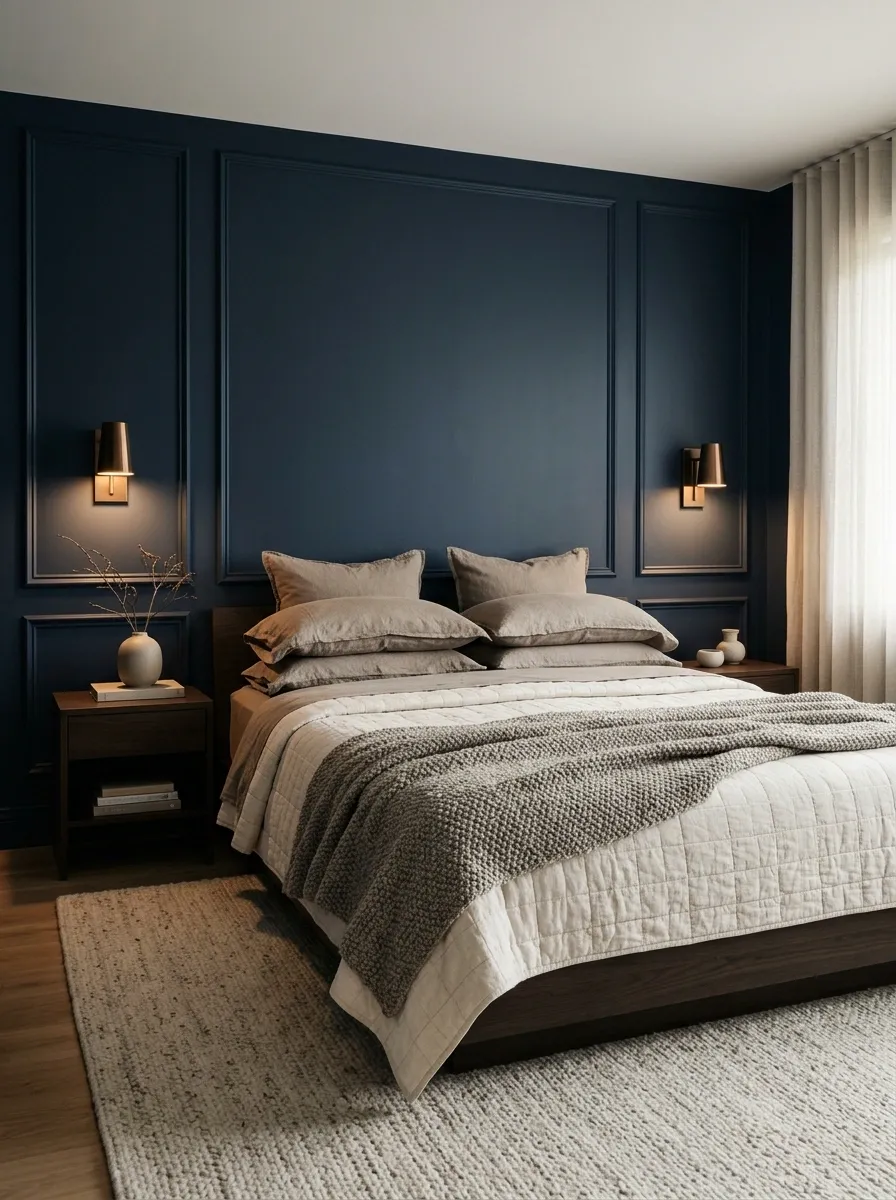
Deep navy walls give this bedroom a bold, enclosed feel, while bronze bedside lights add a warmer note. A dark timber bed or charcoal upholstered frame reinforces the depth, and bedding in mushroom, warm gray, or soft ivory keeps the central area from disappearing into the walls.
The contrast should come from light and texture, not from adding more accent colors. A nubby throw, softly quilted coverlet, or linen pillowcases can create visible variation without disturbing the palette. Position the bedside lights so they illuminate the reading area and part of the bedding, rather than producing a small bright spot on the wall.
This design suits couples who prefer a more dramatic room than an all-white bedroom. If the walls are very dark, consider the daylight the room receives and keep window coverings flexible. A dark bedroom can feel rich and restful, but it still needs enough light for dressing, reading, and finding things in storage.
Classic Bedroom With Wall Moulding and Antique-Inspired Furniture
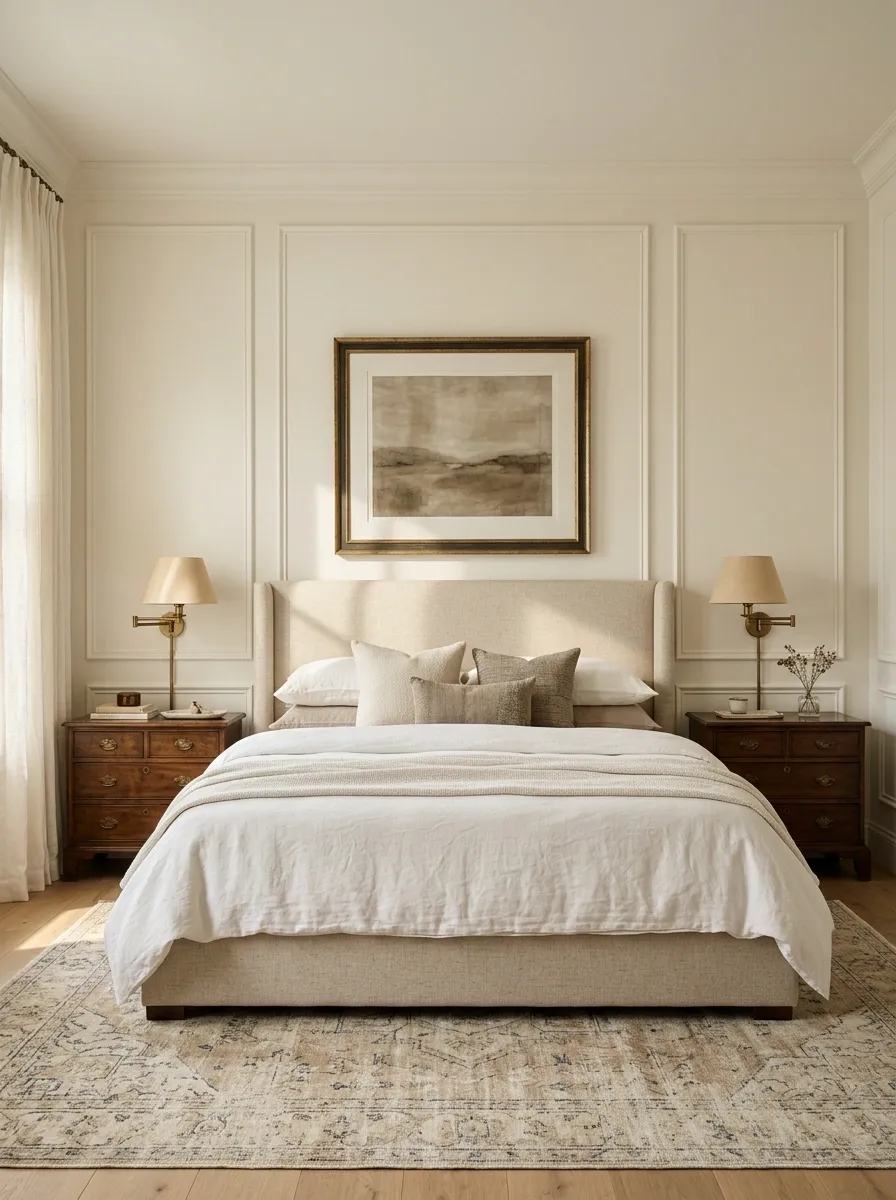
Wall moulding gives a bedroom structure before you add a single picture or decorative object. In this design, warm-white panelled walls frame an upholstered bed, traditional bedside chests, aged brass lamps, and soft neutral bedding. The furniture has a slightly old-world character, but the restrained colors keep the room from feeling heavy or overly formal.
The key is to let the architecture and furniture work together. Align the headboard with the central wall panel, then choose artwork that fits the space above it rather than squeezing several small frames into the same area. Warm wood flooring or a traditional rug can add depth without competing with the moulding.
This look suits couples who enjoy classic interiors but don’t want a bedroom filled with ornate details. Keep the bedding simple enough that the wall’s shapes remain visible.
Sculptural Modern Bedroom With Curved Plaster Architecture
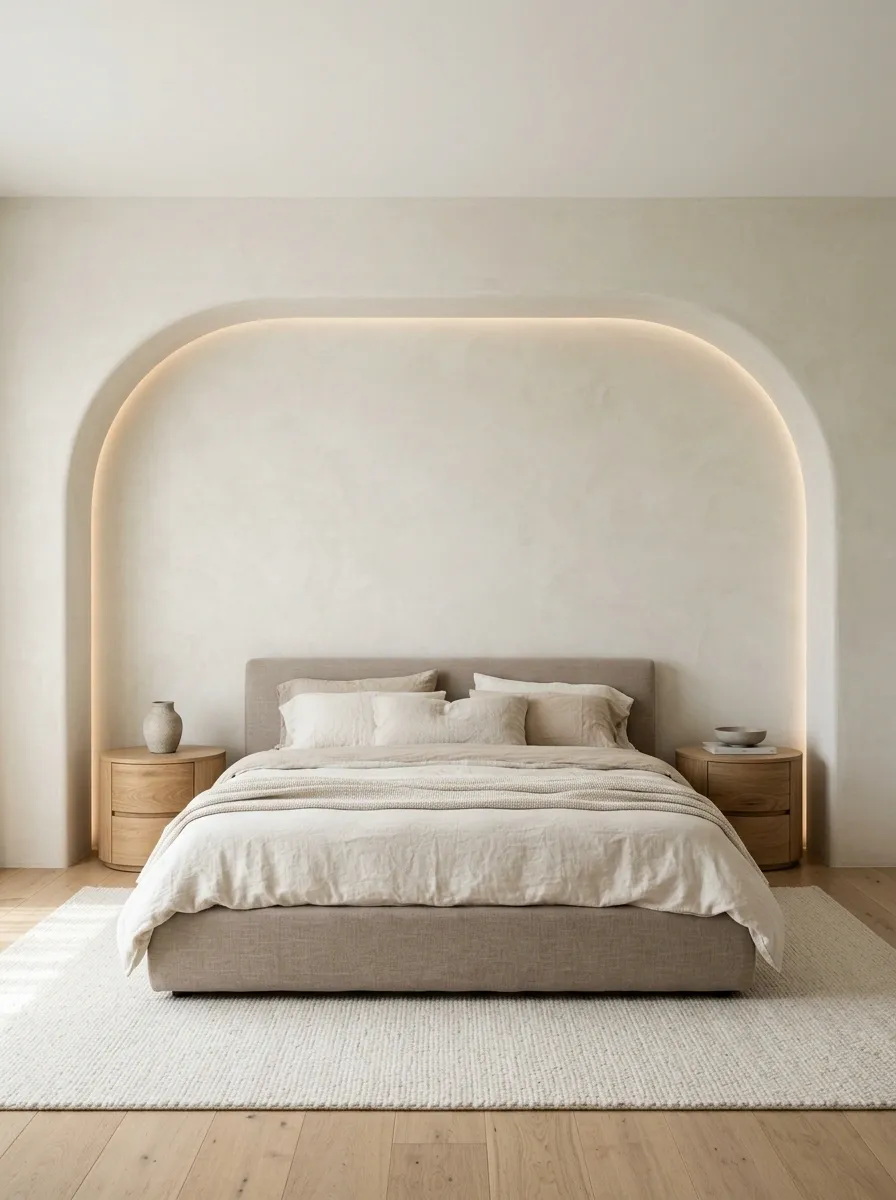
Straight lines don’t have to define every part of a modern bedroom. Here, a softly curved plaster recess frames the bed, rounded bedside tables echo the arch, and a low upholstered bed keeps the room grounded. Pale walls, subtle texture, and discreet lighting let the architecture do most of the visual work.
Choose one or two curved forms and repeat them thoughtfully. A rounded bedside table or curved bench will feel related to the wall, while too many sculptural pieces can make the room feel like a furniture showroom. Keep the bedding relaxed and use warm wood or muted fabric to break up the pale surfaces.
The result feels contemporary without relying on black metal, glossy finishes, or dramatic contrast. It’s especially effective in a bedroom with enough wall space for the curved recess to read as a single, intentional feature.
wall
headboard
table
Attic Bedroom With a Low Bed Beneath the Sloping Ceiling
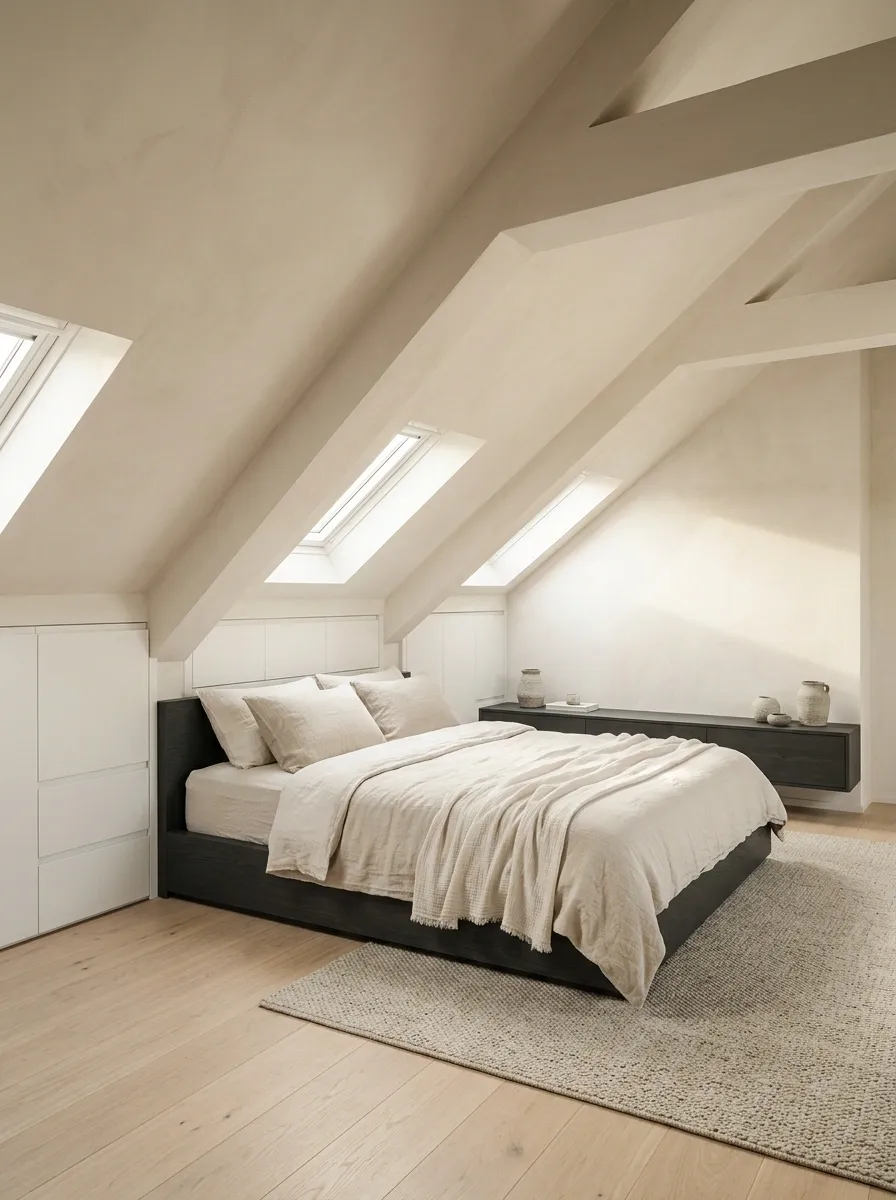
An attic bedroom can feel awkward when tall furniture competes with the roofline. This design makes the slope part of the composition by placing a low bed beneath the angled ceiling and reserving the tallest section of the room for standing, dressing, and moving around. Built-in drawers or low cupboards tuck neatly beneath the eaves.
Keep the finishes light enough to reflect available daylight, especially when the room has only a few roof windows. Pale wood, warm-white walls, and natural bedding create a connected look, while a darker bed frame can give the sleeping area definition. Avoid tall bedside cabinets where the roof cuts into usable headroom.
Before committing to the layout, check the roof angle, window positions, and the height needed to stand beside the bed. The aim is to use the low zones for storage rather than fighting against them.
Narrow Couple’s Bedroom With Slim Furniture and Wall-Mounted Lighting
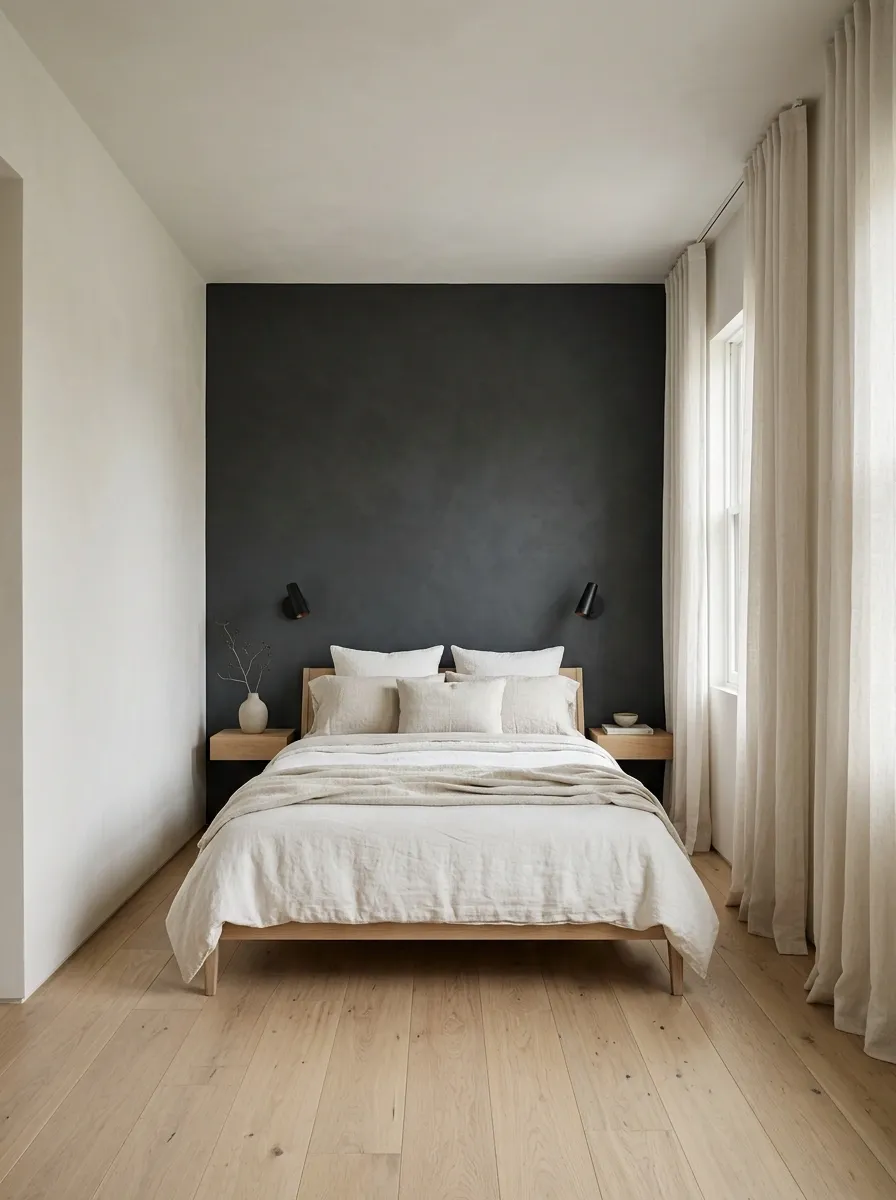
A narrow bedroom can quickly feel crowded when standard-size nightstands, lamps, and extra seating are squeezed around the bed. This arrangement keeps the furniture footprint small. A slim bed frame, shallow bedside ledges, wall-mounted reading lights, and full-height curtains make the room feel more considered without relying on mirrors or pale paint alone to solve the problem.
Use a restrained palette of warm white, pale timber, and one deeper accent behind the bed. The contrast gives the sleeping area definition, while simple bedding prevents the long room from feeling visually busy. Avoid adding a bench at the foot of the bed unless measurements show there is still a comfortable route past it.
The key is protecting movement. Both partners need practical access to their side of the bed, the wardrobe, and the room’s entrance. Measure those routes before buying furniture, rather than judging the layout from the bed dimensions alone.
ledge
ledge
City-View Bedroom With a Window-Side Reading Lounge
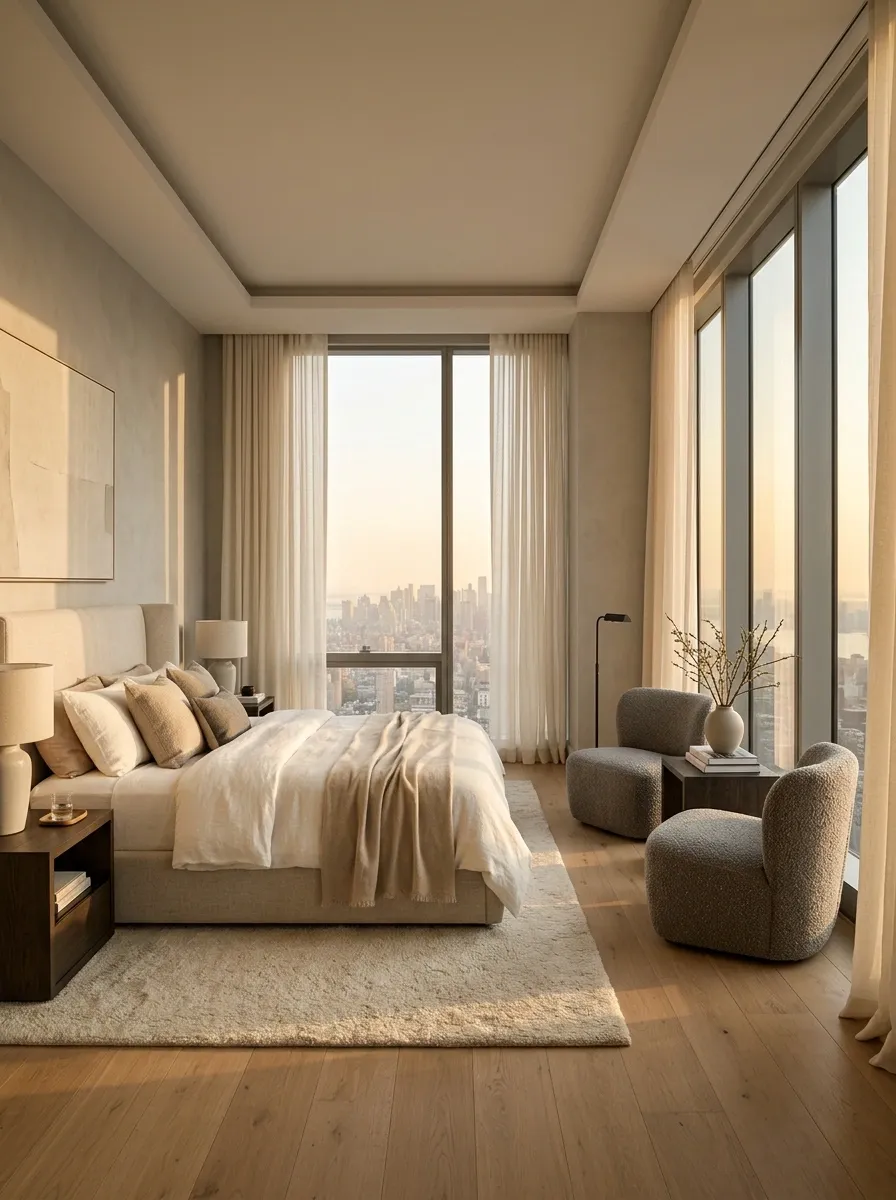
When a bedroom has a generous window or an appealing city view, the bed doesn’t need to occupy every inch of attention. This design pairs a low upholstered bed with floor-length curtains and a small sitting area near the glazing. Two compact lounge chairs and a little side table create a separate place for reading, talking, or enjoying the view without leaving the bedroom.
Keep the palette calm so the outside scenery remains a meaningful part of the room. Warm gray, sand, ivory, and a little dark timber work well with both daylight and evening city lights. Arrange the seating so the chairs feel connected to each other but don’t block access to curtains, windows, or balcony doors.
This layout works best in a room with enough floor area to separate sleeping and sitting functions. In a smaller room, a single comfortable chair may be more useful than forcing a complete conversation set beside the bed.
Seamless Bedroom With a Full Wardrobe Wall
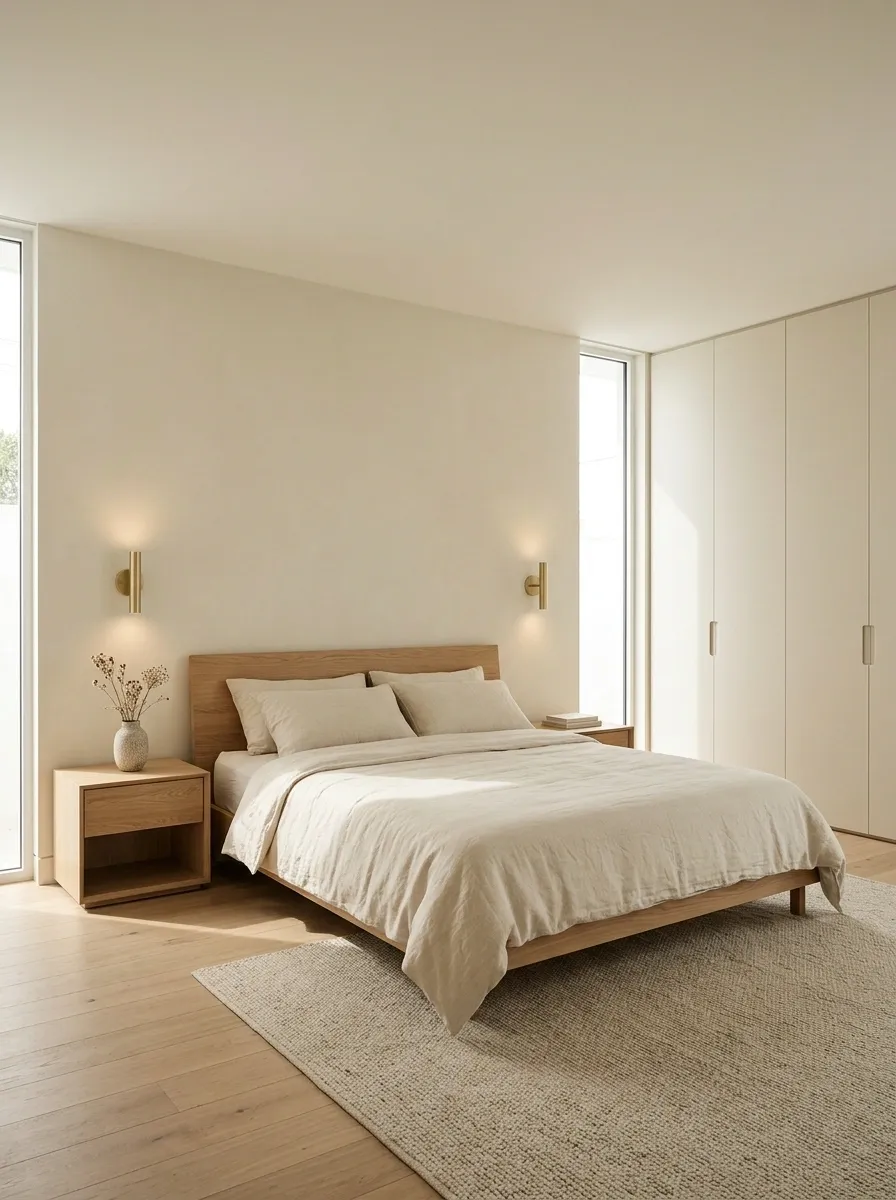
A full-height wardrobe wall can make a shared bedroom feel calmer by giving clothing, bags, and everyday belongings one defined home. In this design, flush wardrobe doors run along one wall, while a low timber bed, warm ivory bedding, and understated bedside lights keep the sleeping area simple.
Choose wardrobe fronts that relate to the wall color instead of introducing another strong finish. Handleless doors or discreet recessed pulls create a continuous surface, while a timber headboard or bedside table adds enough contrast to keep the room from feeling flat. The bed should remain the visual anchor, not compete with a row of cabinet doors.
Before planning the joinery, account for hanging space, shelves, drawers, and the room’s door swings. A seamless exterior only works when the storage inside suits the way both people actually use it.
wardrobe
wardrobe
wardrobe
zone
Warm Terracotta Bedroom With Cream Textiles and Dark Wood
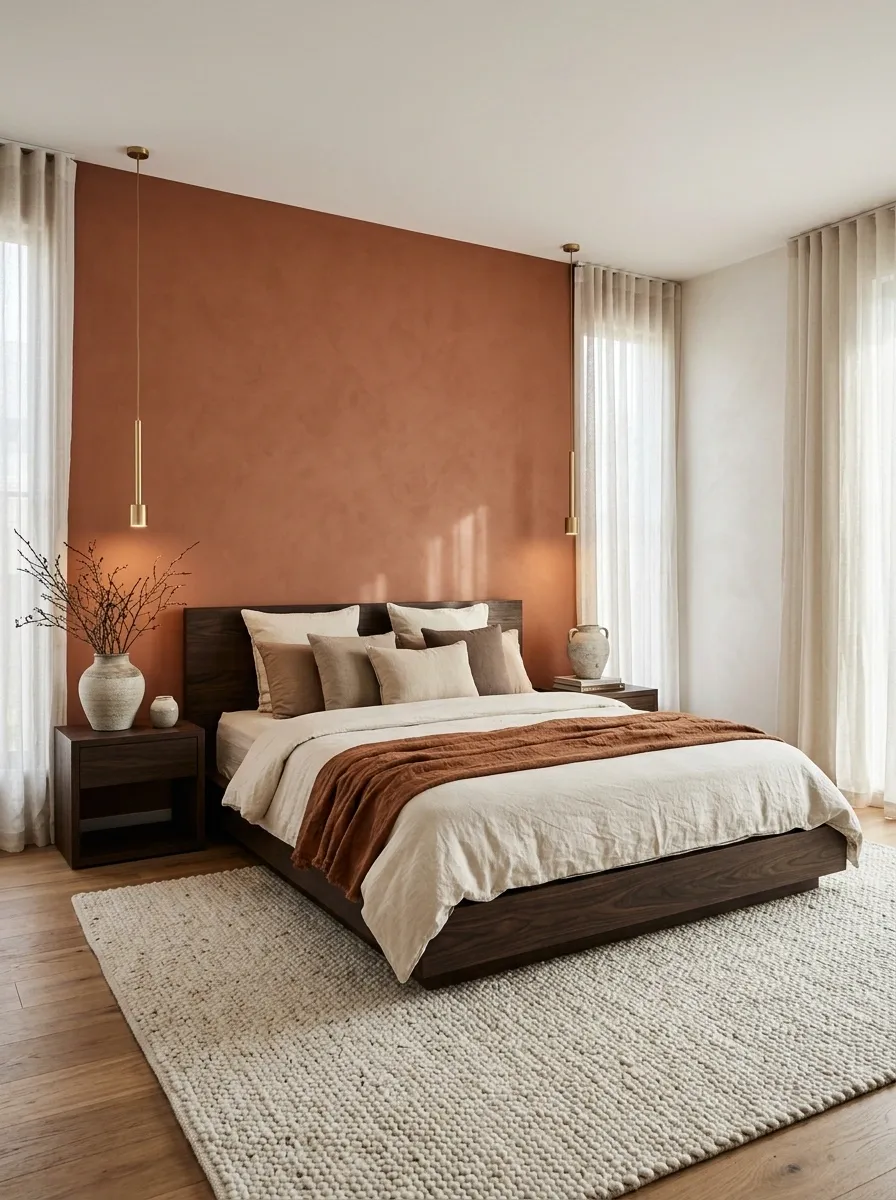
Terracotta walls bring warmth and personality to this bedroom, while a dark timber bed gives the room a strong outline. Cream bedding softens the contrast, and warm pendant lights cast a gentle glow against the earthy wall color. A few substantial ceramic pieces or a textured rug add interest without turning the room into a collection of accessories.
The balance depends on keeping the large surfaces simple. Let terracotta cover the main wall, use dark wood for the bed and selected furniture, and reserve lighter fabrics for the largest textile areas. Small accents in rust or muted brown can connect the palette, but another bright color would distract from its natural richness.
This direction suits couples who enjoy warm interiors with a little drama. Test the wall color in both daylight and evening light before painting the entire room, since terracotta can appear much stronger under warm bulbs.
Graphic Black-and-Ivory Bedroom With Strong Architectural Contrast
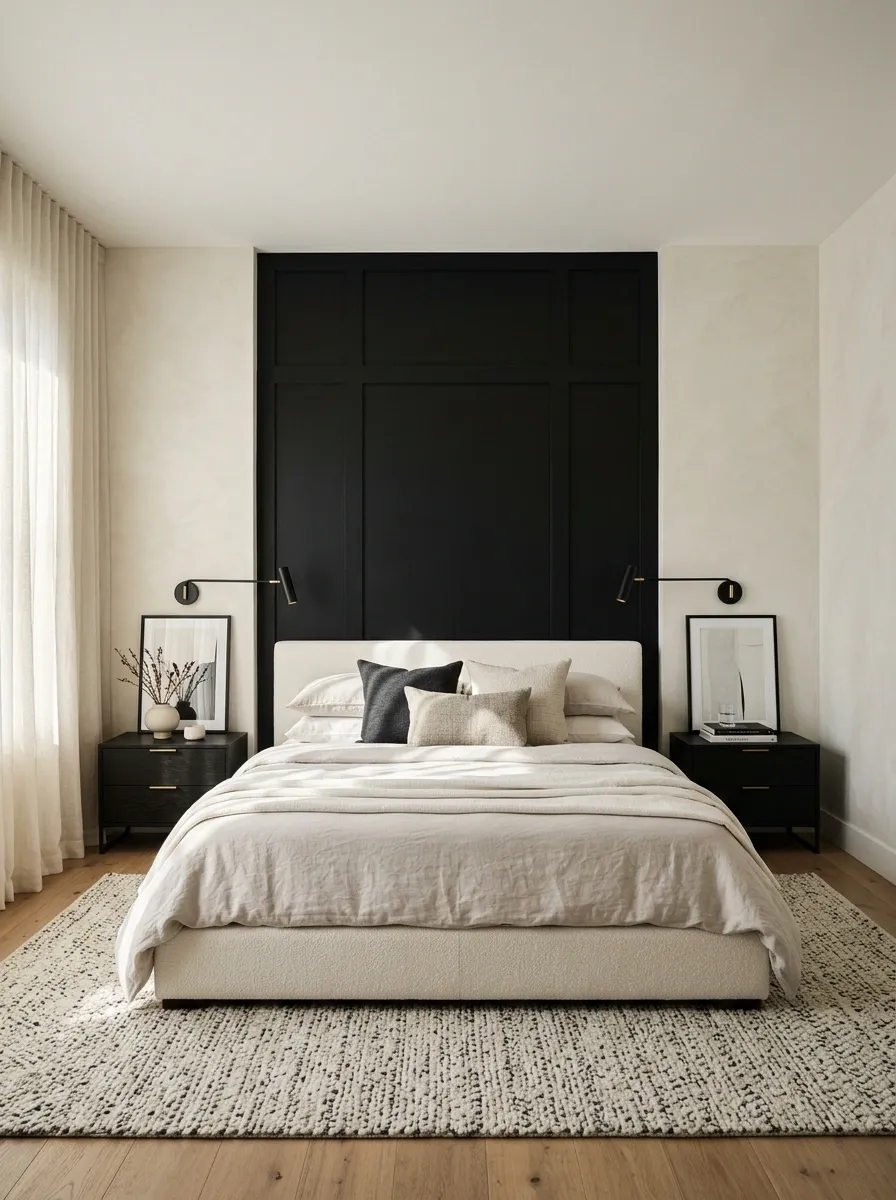
Black and ivory give a shared bedroom a more graphic, architectural character. An ivory upholstered bed stands against a matte black feature wall, with pale bedding, black-framed artwork, and restrained bedside furniture completing the composition. Light flooring or warm timber keeps the contrast from feeling too sharp across the entire room.
The trick is to use black with intention rather than spreading it across every surface. A dark bed wall creates a focal point, while the lighter bed and surrounding walls help separate the main shapes. Keep artwork simple and choose frames that relate to the feature wall instead of introducing several unrelated finishes.
This design suits couples who like clean lines and a strong visual statement. If the bedroom is small, maintain a generous amount of light wall space and use bedside lighting that illuminates the bed rather than leaving the darker wall as one solid block.
surface
Botanical Mural Bedroom With Walnut Furniture and Warm Linen
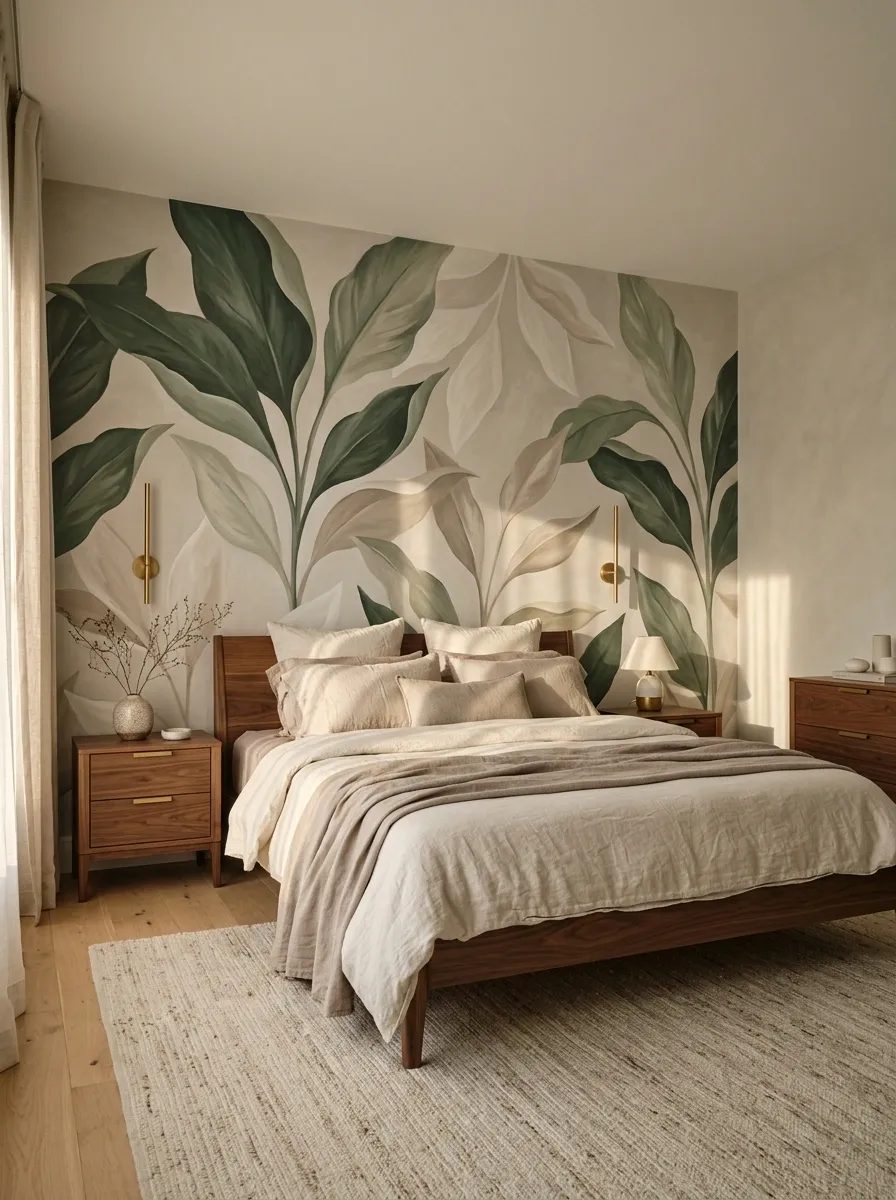
A large botanical mural behind the bed gives this bedroom a sense of depth and movement. Oversized leaves and soft natural tones bring a garden-inspired quality to the room, while walnut furniture adds warmth and weight. Cream or flax-colored bedding keeps the mural visible without competing with its pattern.
Choose a mural with a scale that suits the wall. Large leaves can look convincing behind a wide bed, while a small repeating print may make the headboard wall feel busier than intended. Keep the other walls comparatively quiet, and avoid adding several different floral patterns to the curtains, bedding, and rug.
The best part of this design is that the artwork becomes part of the architecture. It defines the sleeping zone and gives the room a clear identity without needing a large collection of framed prints. Check the mural’s placement in relation to the headboard and bedside lighting before installation.
Vintage-Inspired Bedroom With Floral Wallpaper and Dark Timber
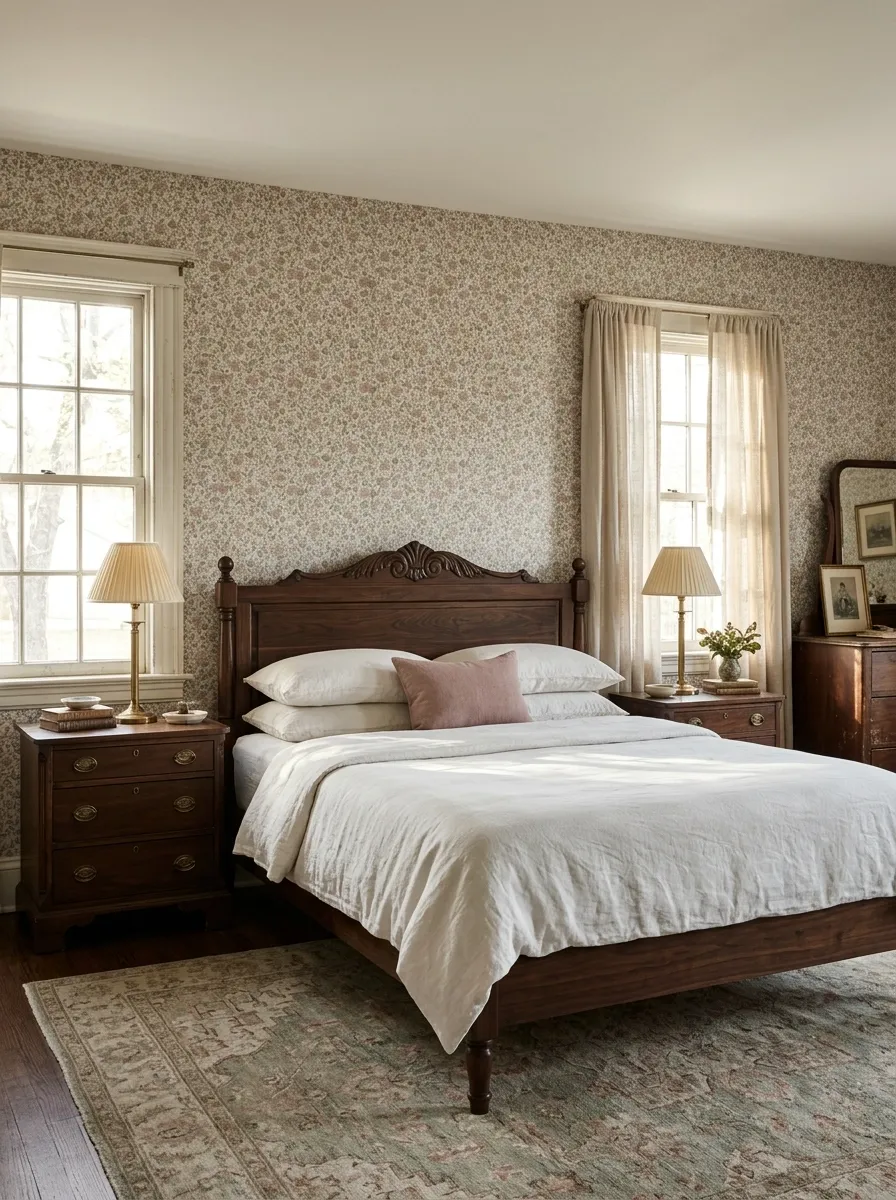
Floral wallpaper and dark timber create a bedroom that feels collected over time rather than newly furnished all at once. A traditional wood bed, delicate flower-patterned walls, warm bedside lamps, and softly textured bedding provide the foundation. A slightly worn dresser or an antique-inspired bedside chest adds character without making every piece look old-fashioned.
The balance comes from the difference between the wallpaper and the furniture. Let the floral pattern bring softness, then use the bed’s darker wood to give the room a firm outline. Keep the bedding mostly plain, with perhaps one small patterned cushion that shares a color with the wallpaper.
This look suits couples who prefer rooms with a little history and detail. It doesn’t require authentic antiques throughout the space. One distinctive older piece can create enough contrast, especially when the rest of the furniture has simple shapes and practical storage.
Limestone Feature Wall Bedroom With a Light Oak Bed
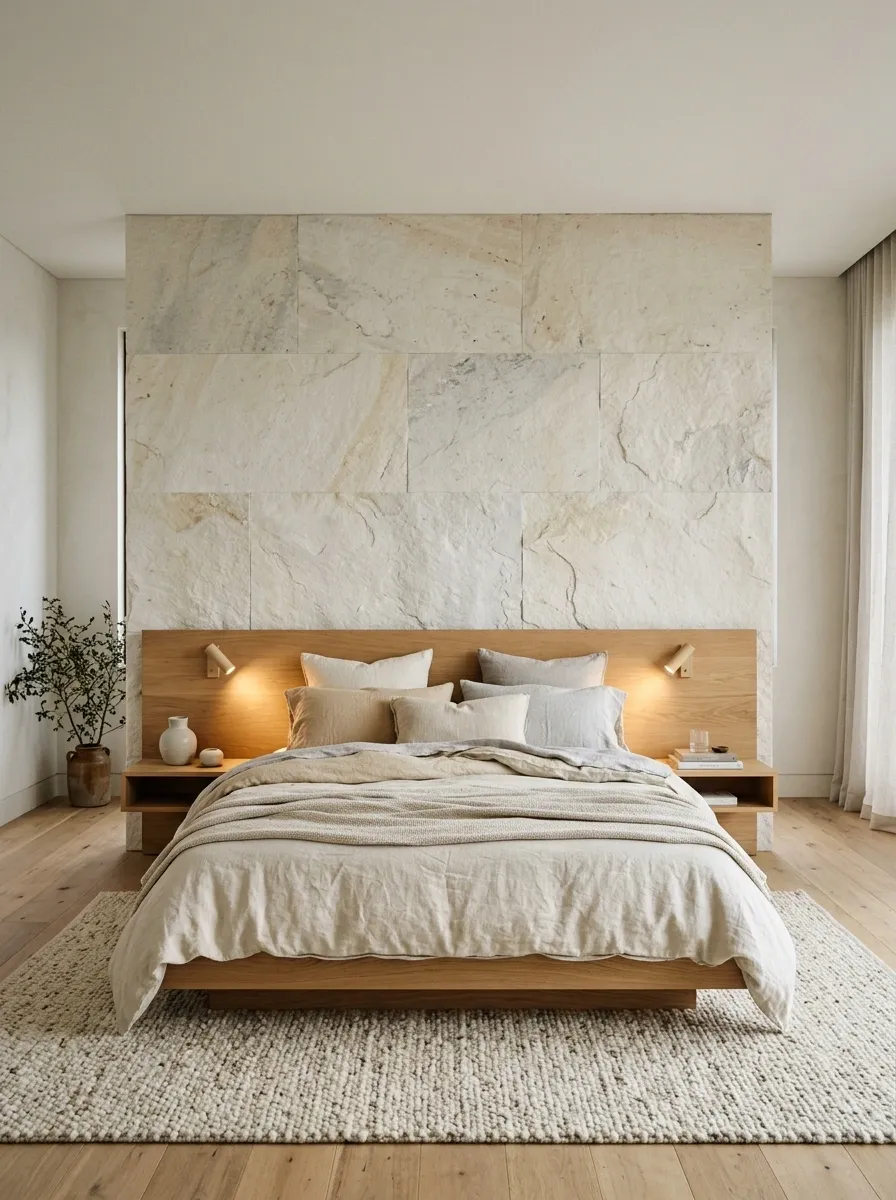
A pale limestone feature wall gives this bedroom texture without relying on a bold paint color or busy wallpaper. A low oak bed sits against the softly varied stone, with integrated bedside shelves, warm reading lights, and natural linen bedding. The wood grain brings warmth to the stone’s cooler surface, while the simple furniture keeps the overall composition relaxed.
The key is allowing the materials to remain distinct. Limestone has natural variation, oak has its own grain, and linen adds a softer texture. These three surfaces provide enough interest without requiring decorative objects on every available surface. Keep the lighting warm and angled so the stone’s texture remains visible after dark.
For a more practical version, consider a suitable stone-look porcelain finish if natural stone installation or maintenance is a concern. Either way, let the bed wall remain the main feature and avoid adding another dramatic finish directly beside it.
Bedroom With a Fireplace, Upholstered Bed, and Quiet Seating Area
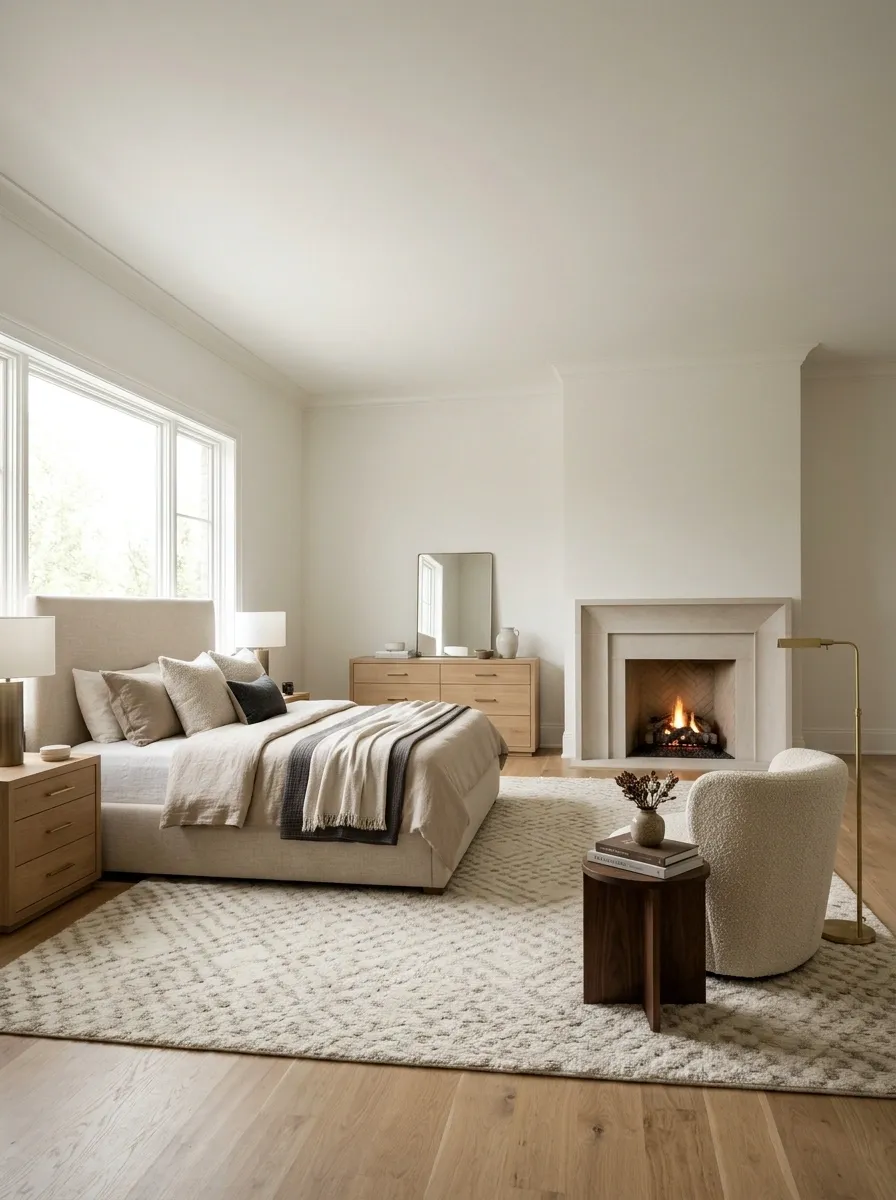
A fireplace can give a shared bedroom a strong architectural focal point, especially when the rest of the room is arranged around it instead of competing with it. This design pairs a generously upholstered bed with a compact lounge chair, a small side table, and warm layered lighting. The fireplace provides a visual connection between the sleeping area and the seating corner.
The layout needs to respect both views and movement. If the fireplace is on a wall opposite the bed, keep the route between them clear. If it sits beside the bed, avoid squeezing a bulky chair into a corner that already feels tight. A soft rug can visually connect the seating area to the rest of the room without making the furniture feel crowded.
Keep the finishes restrained. Upholstery, warm wood, and a simple mantel give the fireplace enough presence without filling the space with decorative objects. Check the fireplace manufacturer’s or installer’s clearance requirements when arranging nearby furniture.
Balanced Bedroom With Two Different Bedside Setups
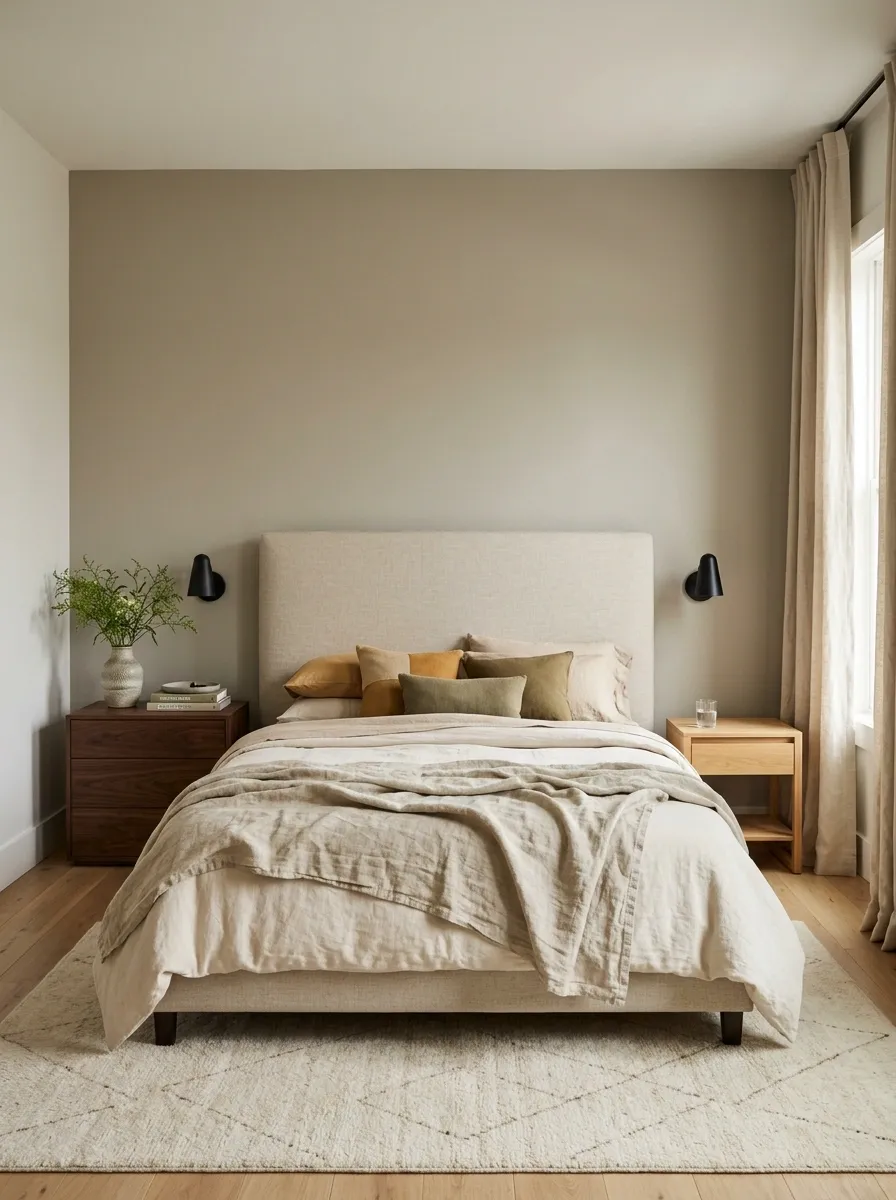
A shared bedroom doesn’t need identical furniture on both sides of the bed to feel intentional. In this design, one partner has a compact drawer chest for books and everyday items, while the other has a lighter open-legged table with a wall-mounted reading lamp. A shared upholstered headboard, coordinated bedding, and a connected color palette bring the two sides together.
The difference in furniture adds a little personality without making the room feel mismatched. Keep the bedside surfaces at comfortable heights, and repeat at least one finish or material across both sides. For example, the tables can differ in shape while sharing a similar wood tone, or the lamps can have different forms but a related metal finish.
This is a particularly useful direction when partners have different storage needs. One person may need drawers, while the other prefers a clear surface. Design around those routines instead of buying matching pieces that neither person uses well.
Mid-Century-Inspired Bedroom With Walnut, Rust, and Mustard
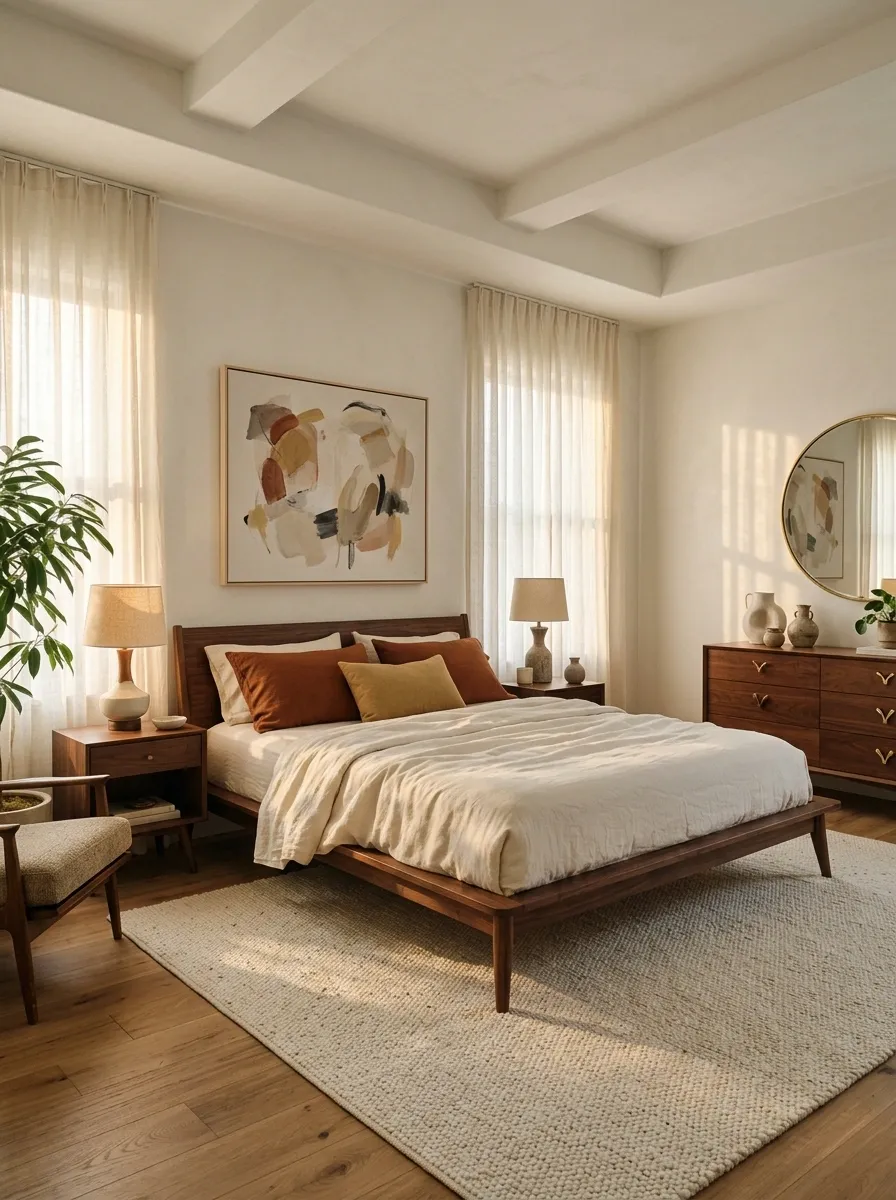
Warm walnut furniture, rust-colored textiles, and a muted mustard accent give this bedroom a clear mid-century influence. A low bed with tapered legs creates an airy outline, while sculptural bedside lamps and a simple dresser add period-inspired shapes. The palette feels warm and expressive without turning the room into a themed display.
Let the furniture shapes establish the style first. A walnut bed or dresser will carry more visual weight than several small decorative accessories, so keep the bedding relatively plain and choose artwork that relates to the rust and mustard tones. A textured ivory rug can provide a lighter break between the dark wood and the floor.
This direction works well for couples who like vintage-inspired furniture but still want a bedroom that feels current. Avoid collecting too many matching retro pieces. A few characteristic silhouettes mixed with simpler contemporary textiles will make the room feel more personal.
Fresh Coastal Bedroom With Chalk White, Navy, and Natural Timber
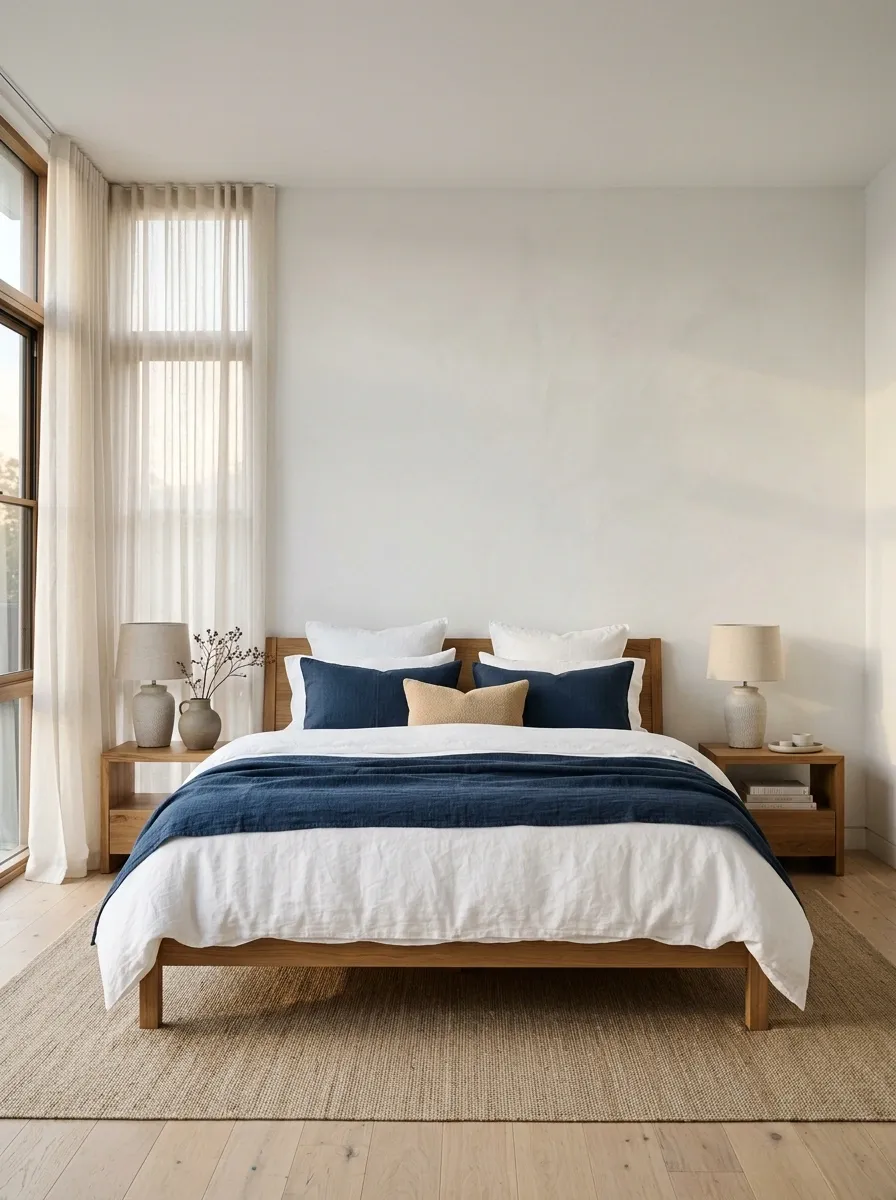
This coastal-inspired bedroom uses chalk-white walls, crisp bedding, navy accents, and natural timber to create a light but grounded composition. A simple wood bed and pale flooring keep the room warm, while navy cushions or a coverlet add definition without darkening the entire space. Airy curtains soften the windows and allow daylight to become part of the design.
The idea is to borrow the feeling of a bright seaside home without leaning on obvious nautical decorations. There is no need for ropes, shells, or anchor motifs. The combination of white surfaces, deep blue textiles, natural grain, and relaxed linen already communicates the direction.
For a bedroom shared by two people, this palette is also easy to adapt. Keep the larger surfaces neutral, then change smaller navy or striped textiles to suit personal preferences. If the room has a cool northern light, add warmer oak or woven textures to prevent the white and blue from appearing too cold.
High-Ceiling Bedroom With a Floor-to-Ceiling Upholstered Headboard
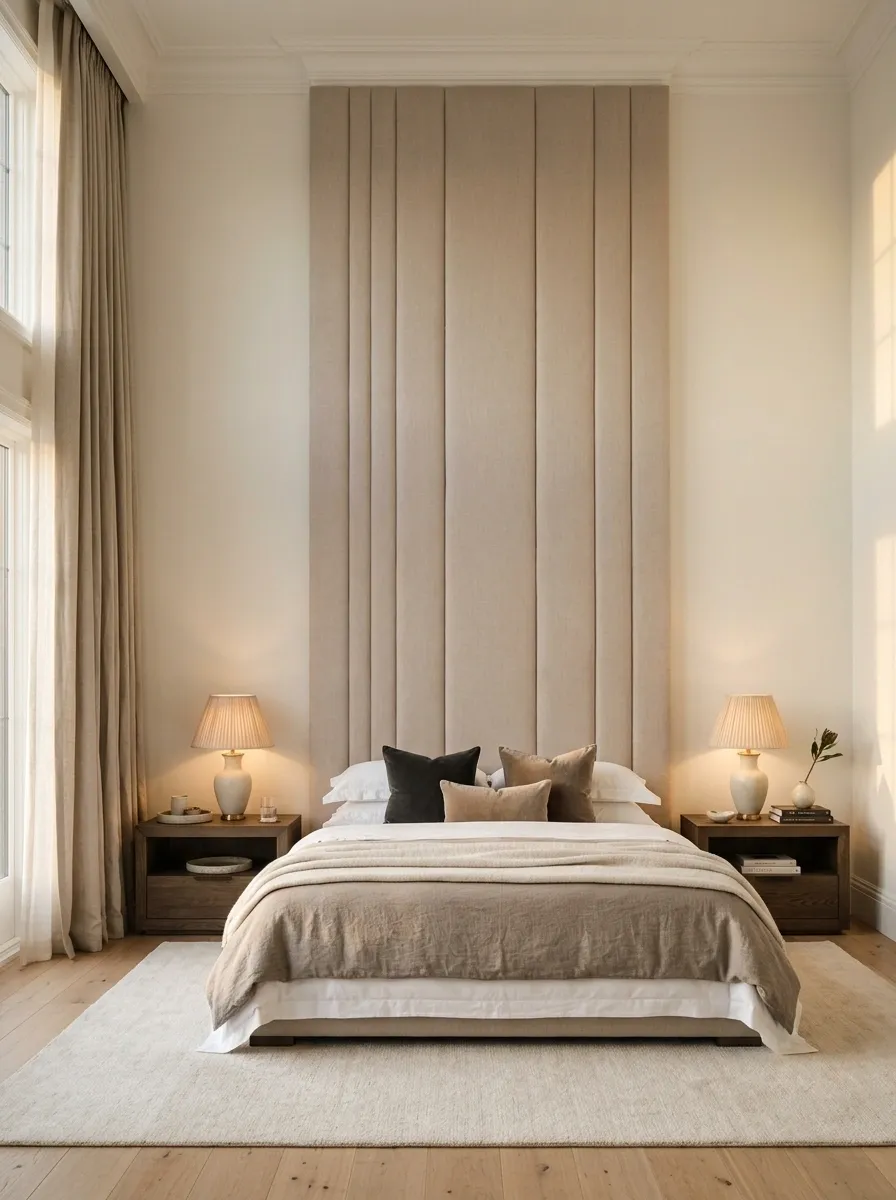
A tall bedroom can feel surprisingly unfinished when the bed sits beneath a huge stretch of empty wall. This design gives that space purpose with an upholstered headboard that extends well above the pillows, visually connecting the bed to the height of the room. Large-scale artwork or subtle vertical wall panels complete the composition, while substantial bedside furniture keeps the lower half from feeling too delicate.
Choose a fabric in warm taupe, muted beige, or soft gray, and pair it with natural wood or darker bedside tables. Layered lighting adds depth without requiring extra wall decorations. The headboard should feel proportional to the bed and ceiling, not like a small panel enlarged simply to fill space.
Measure the full wall before committing to the upholstery. Leave room for switches, reading lights, and any artwork that belongs above or beside the bed. The result is a bedroom with a strong focal point that makes good use of vertical space.
Recessed Bed Alcove With Integrated Shelves and Soft Lighting
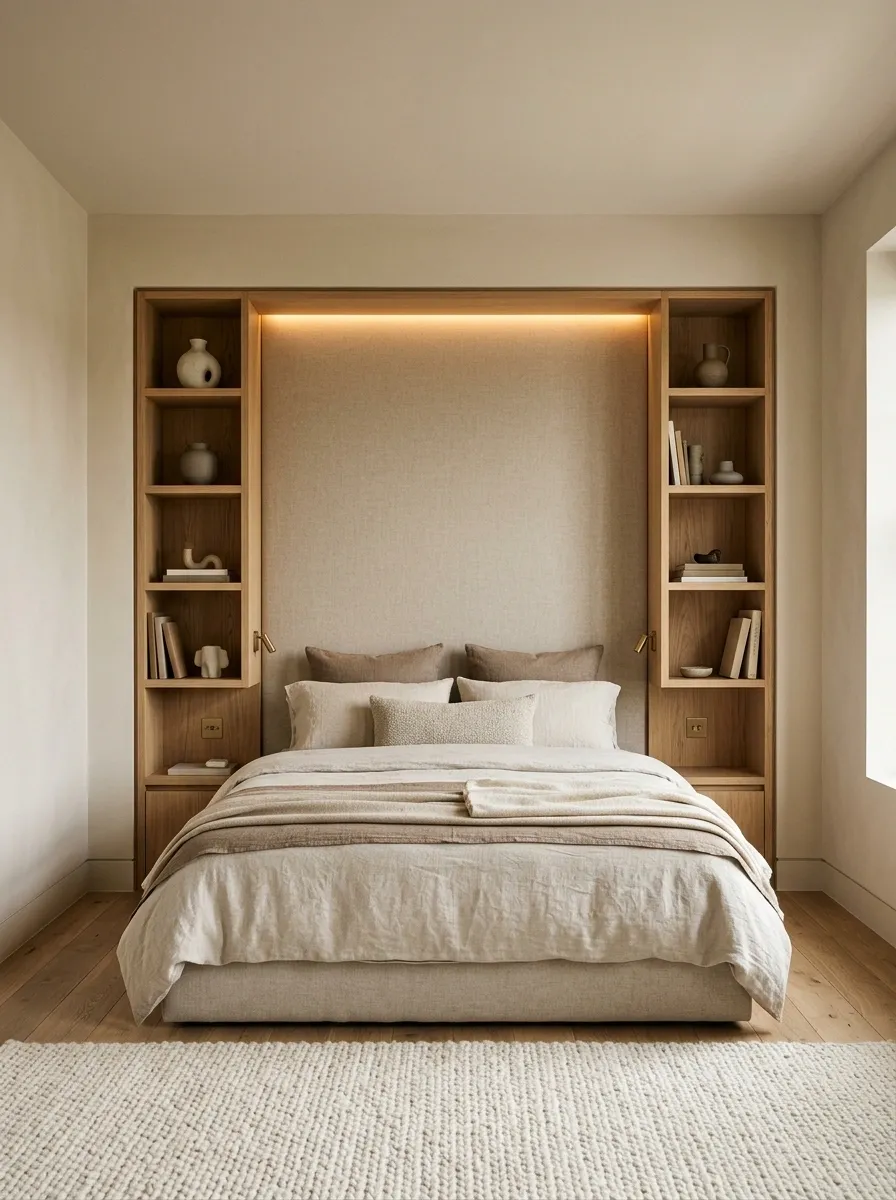
A recessed bed alcove creates a distinct sleeping area without needing a separate room. The bed sits inside a deep wall niche, with built-in shelves on either side and concealed warm lighting tucked along the recess. A continuous headboard surface brings the different elements together, while simple bedding keeps the alcove from becoming visually busy.
The built-in arrangement works especially well when bedside storage is important but there isn’t enough space for bulky freestanding tables. Keep frequently used items on accessible shelves and reserve higher compartments for belongings that aren’t needed every day. The lighting should illuminate the bed and shelves without shining directly into either person’s eyes.
An alcove needs careful planning before construction. Account for the actual bed width, mattress height, ventilation, accessible power outlets, and enough room to make the bed comfortably. In an existing bedroom, a shallow built-out feature wall can create a similar visual effect without requiring a deep structural recess.
Bedroom With a Painted Ceiling and a Quiet, Grounded Bed Wall
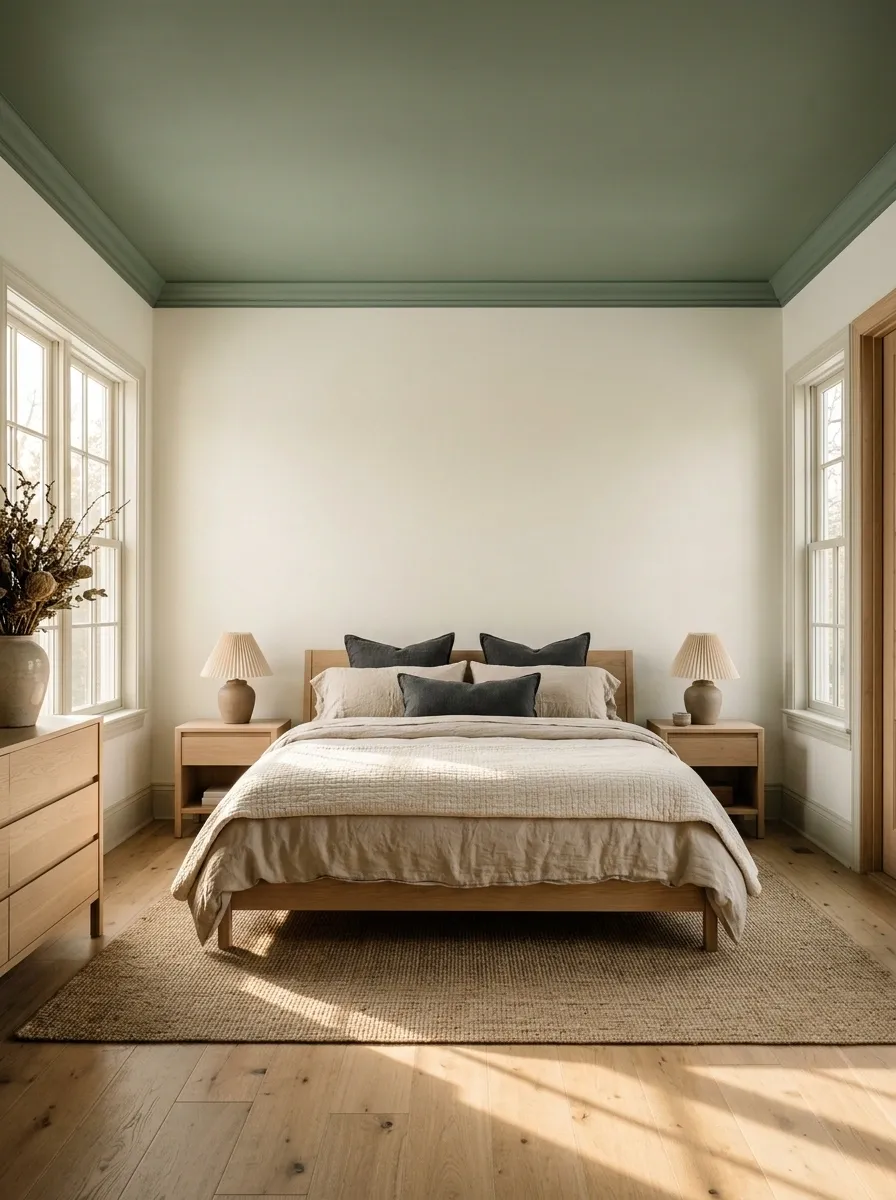
A colored ceiling gives a bedroom an unexpected focal point without requiring a bold feature wall. Here, muted sage, dusty blue, or warm clay covers the ceiling, while the walls stay pale and the bed remains understated. Natural timber, neutral bedding, and simple bedside lamps create a grounded arrangement beneath the colored surface.
The design works because the color is concentrated in one large plane. It draws attention upward while leaving the headboard wall and furniture visually calm. Choose a ceiling shade that relates to at least one textile or piece of artwork, but don’t repeat it on every surface. That would blur the distinction that makes the ceiling interesting.
Consider the ceiling height and lighting before selecting the finish. A deeper color can make a tall room feel more intimate, while a softer tint creates a gentler effect in a smaller bedroom. Test a sample overhead and review it in daylight and under the room’s evening lights.
Tonal Green Bedroom With Garden Views and Natural Wood
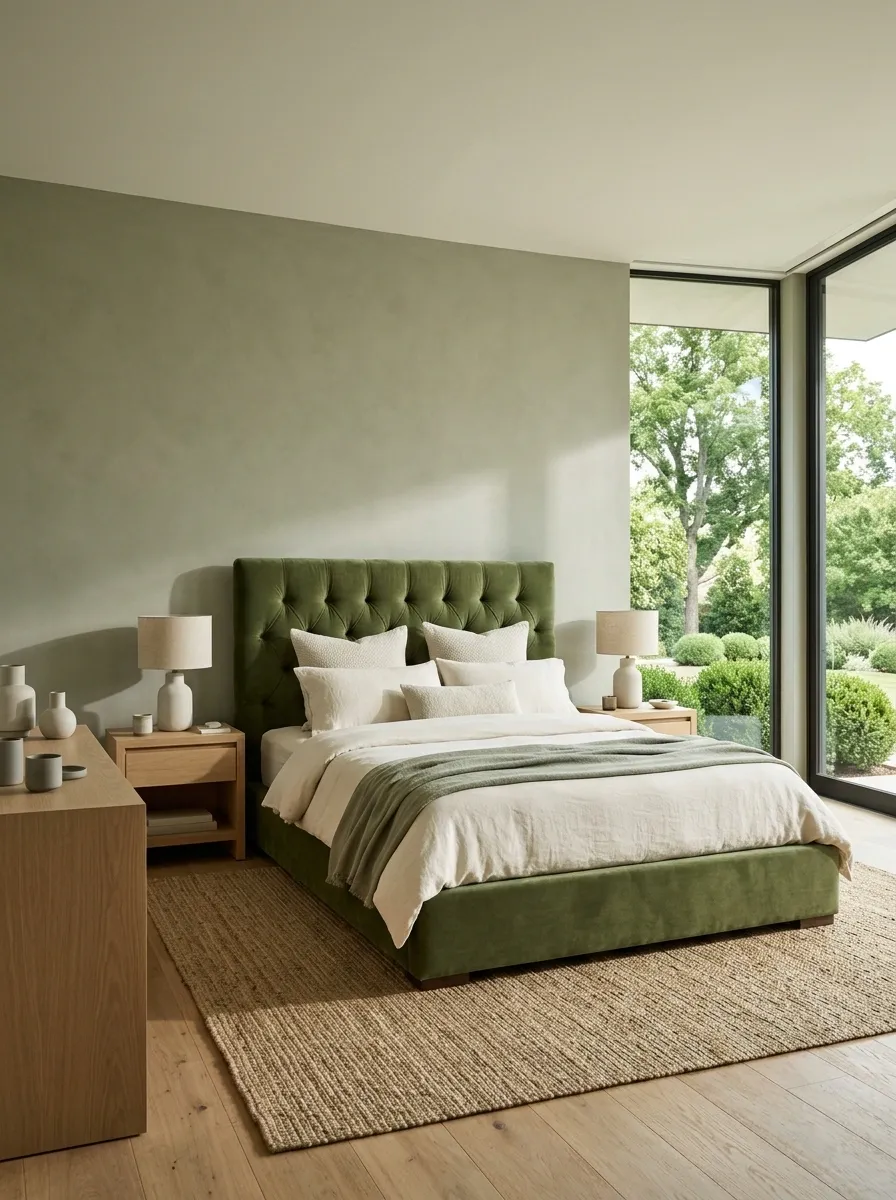
Layered green tones connect this bedroom to the garden outside without relying on a printed botanical wall. Sage or moss-green walls provide a muted backdrop, deeper green upholstery gives the bed more presence, and warm timber adds contrast. A large window or glazed door completes the composition by bringing outdoor planting into the view.
The palette needs variation in depth rather than several unrelated shades. Use a quieter green on the largest wall surfaces, then choose a deeper version for the headboard or selected textiles. Cream bedding creates a break between them, allowing each shade to remain visible instead of blending into one flat field of color.
This design suits a bedroom with a view of trees, shrubs, or a planted courtyard, but the palette also works without outdoor greenery. If the garden is visible from the bed, keep window treatments simple enough to preserve the connection. Choose washable or easy-care fabrics where the window is frequently opened and the room receives regular outdoor dust or pollen.
Shared Bedroom With a Discreet Work and Dressing Zone
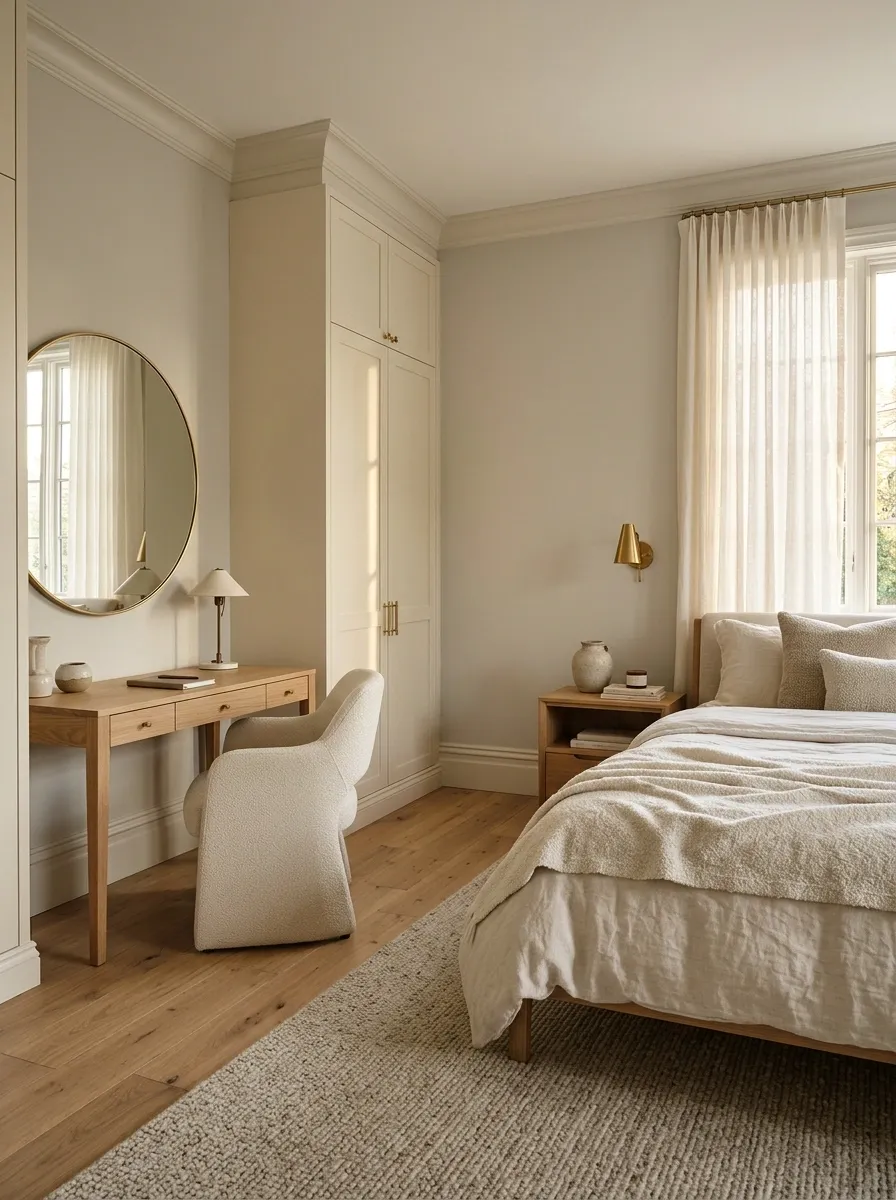
When a bedroom has to accommodate dressing, working, and sleeping, the challenge is keeping those activities from competing for attention. This layout places a compact desk or dressing surface beside a full-height wardrobe, while the bed occupies a quieter part of the room. A warm neutral palette, simple timber furniture, and carefully placed lighting make the separate functions feel connected.
Use a desk with drawers if one partner needs a practical work surface, or choose a shallow dressing table with a wall mirror when getting ready is the main priority. Keep task lighting focused on that area and use softer bedside lights near the bed. This distinction helps the sleeping zone feel separate, even when everything shares one room.
Measure chair clearance, wardrobe doors, and the route between the entrance and bed before selecting the furniture. The aim is to fit both partners’ routines into the bedroom without sacrificing a clear walking path.
Soft Blue Bedroom With Warm Oak and Layered Neutral Bedding
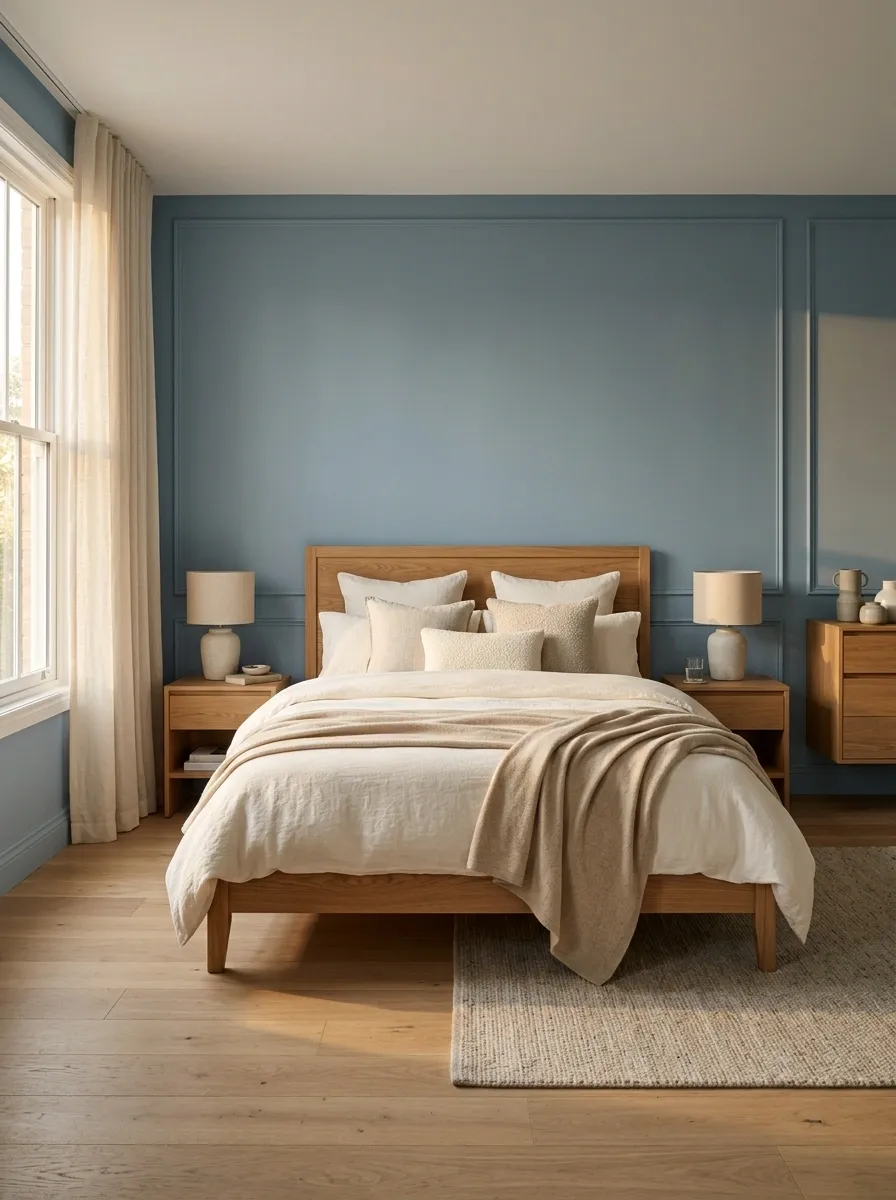
Dusty-blue walls, warm oak furniture, and layered ivory bedding create a bedroom that feels fresh without becoming cold or overly formal. A natural timber bed provides a warm outline against the blue walls, while pale curtains and textured bedding soften the room. Simple bedside furniture allows the combination of color and grain to remain the main feature.
The important detail is the temperature contrast. Blue brings a cooler quality to the room, while oak, cream, and warm beige prevent it from feeling stark. Use the blue on the walls or behind the bed, then repeat a related shade in a cushion or throw rather than covering every textile in the same color.
This design works for couples who want a calm bedroom with more character than an all-white scheme. If the room receives cool daylight, choose a blue with a slightly muted or gray undertone and bring in warm bulbs and timber finishes. Check paint samples at different times of day before settling on the final shade.
Deep Plum Bedroom With Burgundy Textiles and Warm Metallic Lighting
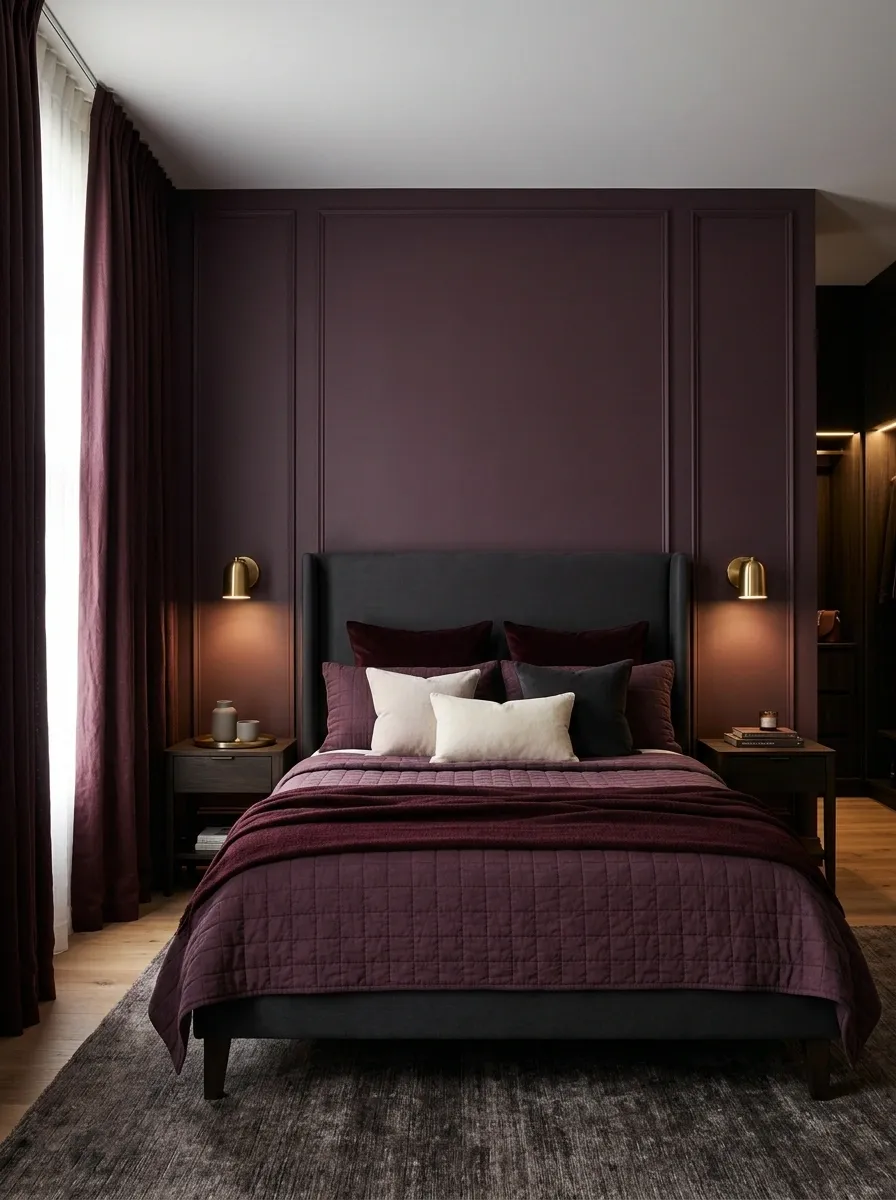
Deep plum walls and burgundy textiles create a bedroom with more depth and warmth than the navy or charcoal schemes elsewhere in this collection. A dark upholstered bed grounds the room, while plum walls create a continuous backdrop. Warm metallic bedside lights and a few lighter cushions make the shapes of the furniture and bedding easier to distinguish.
Keep the color layering controlled. The wall and main textiles can sit within the same rich family, but they should differ enough in tone or texture to remain separate. A quilted coverlet, smooth upholstered headboard, and softer curtains introduce variation without requiring a collection of extra colors.
This look suits couples who enjoy rich, enveloping interiors. It needs deliberate lighting, especially around the wardrobe and dressing area, so choosing clothes and finding everyday items remains easy. Use light bedding in selected areas if the room is small or receives limited natural light.
Suite-Style Bedroom With a Slatted Screen and Separate Dressing Area
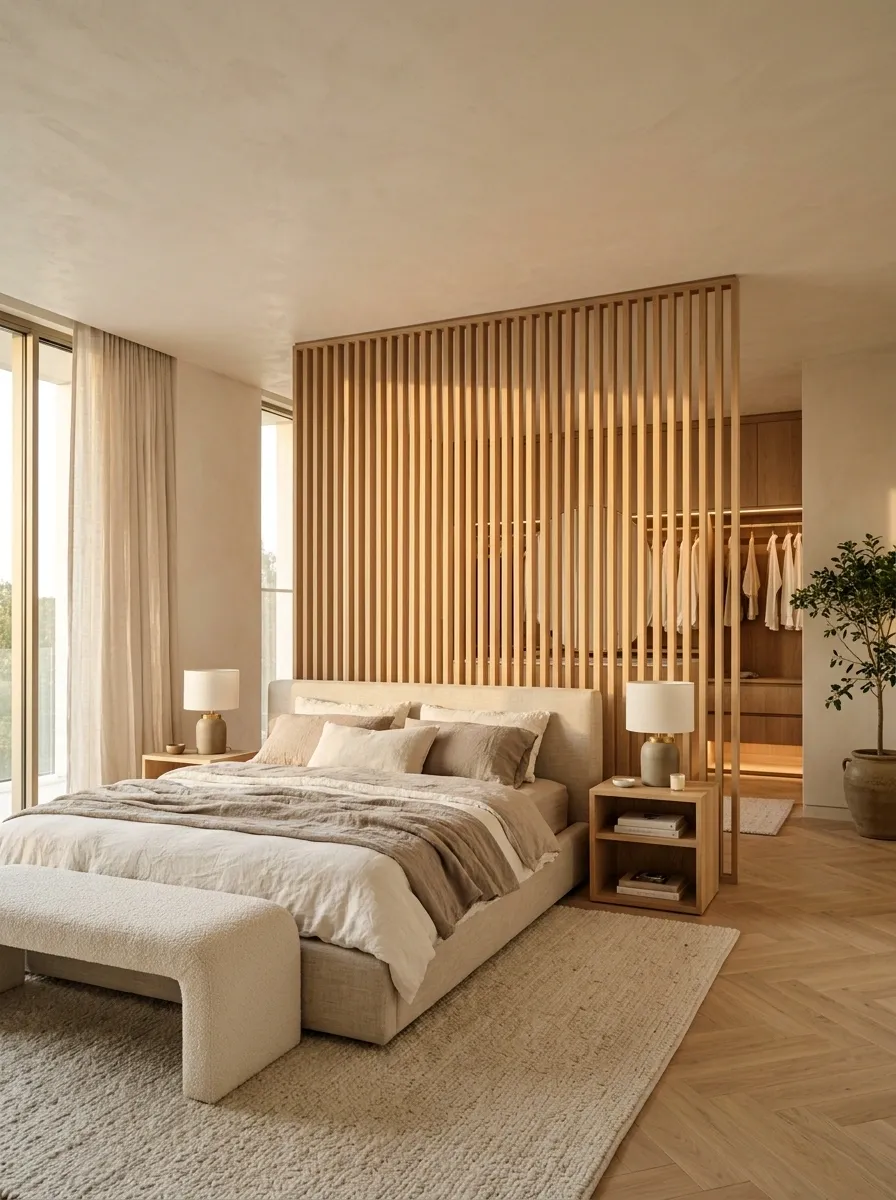
A timber slatted screen creates a sense of separation between the sleeping area and dressing zone without closing off the bedroom completely. The bed sits in a calm arrangement of neutral upholstery, layered linen, and warm lighting, while the screen partially conceals a wardrobe or dressing area beyond it. A small chair or bench can complete the suite-like atmosphere when space allows.
The screen should define the zones without blocking too much daylight or narrowing the route through the room. Slim vertical slats provide visual separation while allowing glimpses of the space beyond. Match their timber tone to the bed or flooring so the divider feels connected to the architecture.
This layout is especially useful in a large bedroom or an open-plan suite where the wardrobe area is visible from the bed. Check the width of the passage around the screen and ensure wardrobe doors and drawers can open fully. The goal is privacy and visual order, not an obstacle course.
Choosing a Bedroom That Works for Both of You
The best bedroom isn’t necessarily the one with the most dramatic headboard or the richest color palette. It’s the one where the layout makes sense, the finishes feel connected, and both partners can use the space without constantly working around furniture or clutter.
Before buying anything, decide what matters most in your room. You may need better storage, softer lighting, a place to read, more privacy, or simply a color scheme that feels more personal than an all-neutral bedroom. Choose a complete design direction first, then adapt its details to your room size, natural light, and daily routines.
Save the bedroom designs that genuinely suit your taste, and compare their layouts and material combinations before making your first purchase. A few well-chosen elements that work together will do more for the finished room than a collection of unrelated accessories.