
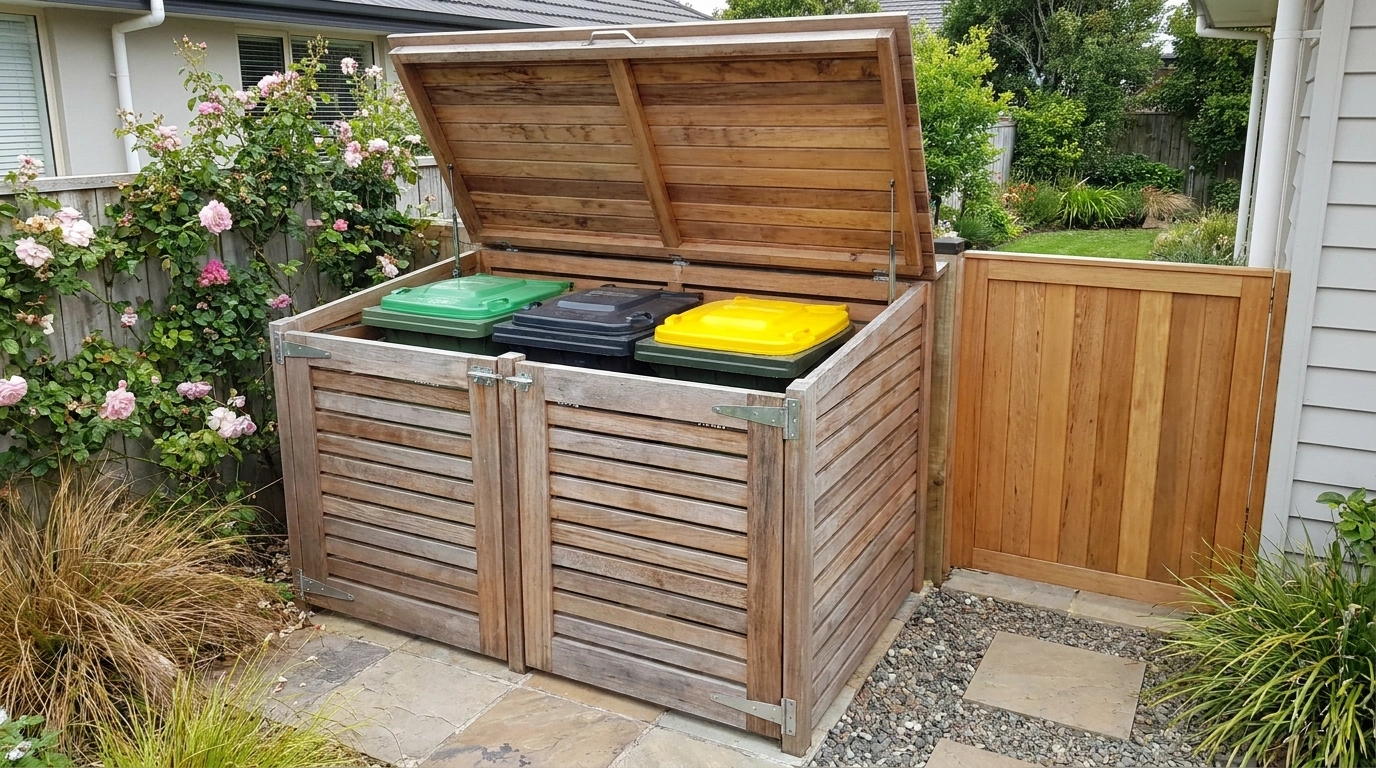
If taking out the rubbish requires opening a cupboard, moving a stool, lifting a decorative lid, and wrestling a bag past a pipe, the storage system is the problem.
You are allowed to make this easy.
Start by watching what happens for a few days. Where do packaging and food scraps first accumulate? Which container overflows? Which lid does everyone mysteriously forget how to operate? Those habits tell you more than a photograph of an immaculate bin cabinet.
Separate waste according to your local collection rules, measure the containers with their lids open, and plan the route to collection. A hidden bin is useful only if you can still use, empty, and clean it.
At the Kitchen Work Zone
A Pull-Out Beside the Main Preparation Area
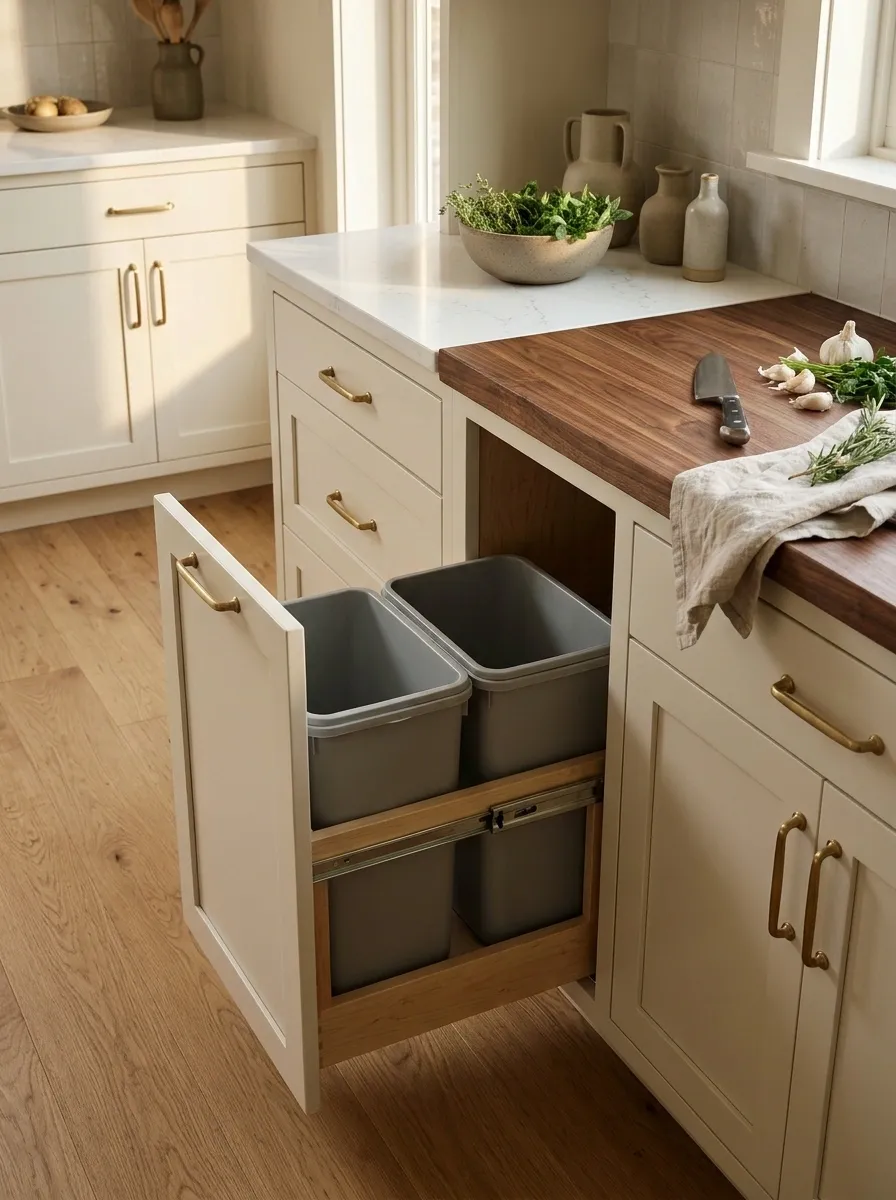
A pull-out near the chopping area can shorten the path between preparing food and disposing of scraps or packaging.
Choose hardware rated for the loaded containers and check clearance with adjacent doors and appliances. Remove the bins for cleaning without dismantling the cabinet. The mechanism should suit daily use, not merely glide beautifully once while someone demonstrates it in a showroom.
Prepare, sort, close
Confirm loaded capacity, full extension, and adjacent clearances.
An Under-Sink Bin That Fits Around the Plumbing

Under-sink storage can work when the container leaves the plumbing visible and accessible.
Measure around the actual pipes, shutoff valves, and any disposal unit. Avoid buying a bin based only on cupboard width. Keep leaks easy to spot and store cleaning products safely according to their labels, separate from anything they could contaminate.
| Measure | Include |
|---|---|
| Width | Hinges and door opening |
| Height | Pipes and lid travel |
| Depth | Connections behind the bin |
| Access | Ability to remove the container |
A Narrow Pull-Out in a Spare Base-Cabinet Space
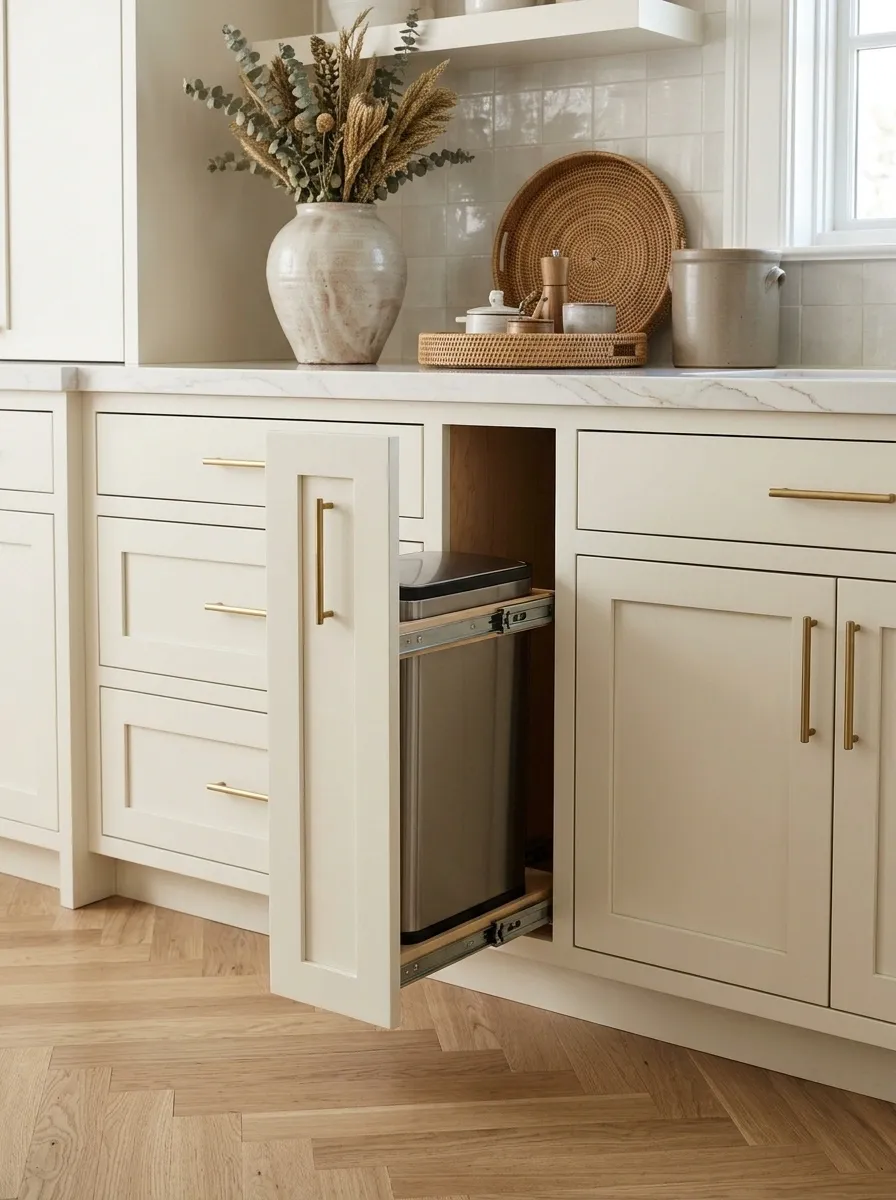
A slim cabinet can hold a small waste stream that would otherwise occupy the counter or floor.
Choose the purpose around capacity: perhaps packaging or frequently emptied general waste. A narrow container fills quickly, so be honest about the household routine. Tiny bins are not more organized simply because they require constant attention.
Capacity check: Base the choice on what accumulates between emptying days, not on the cabinet’s most flattering measurement.
Separate Compartments Inside One Drawer
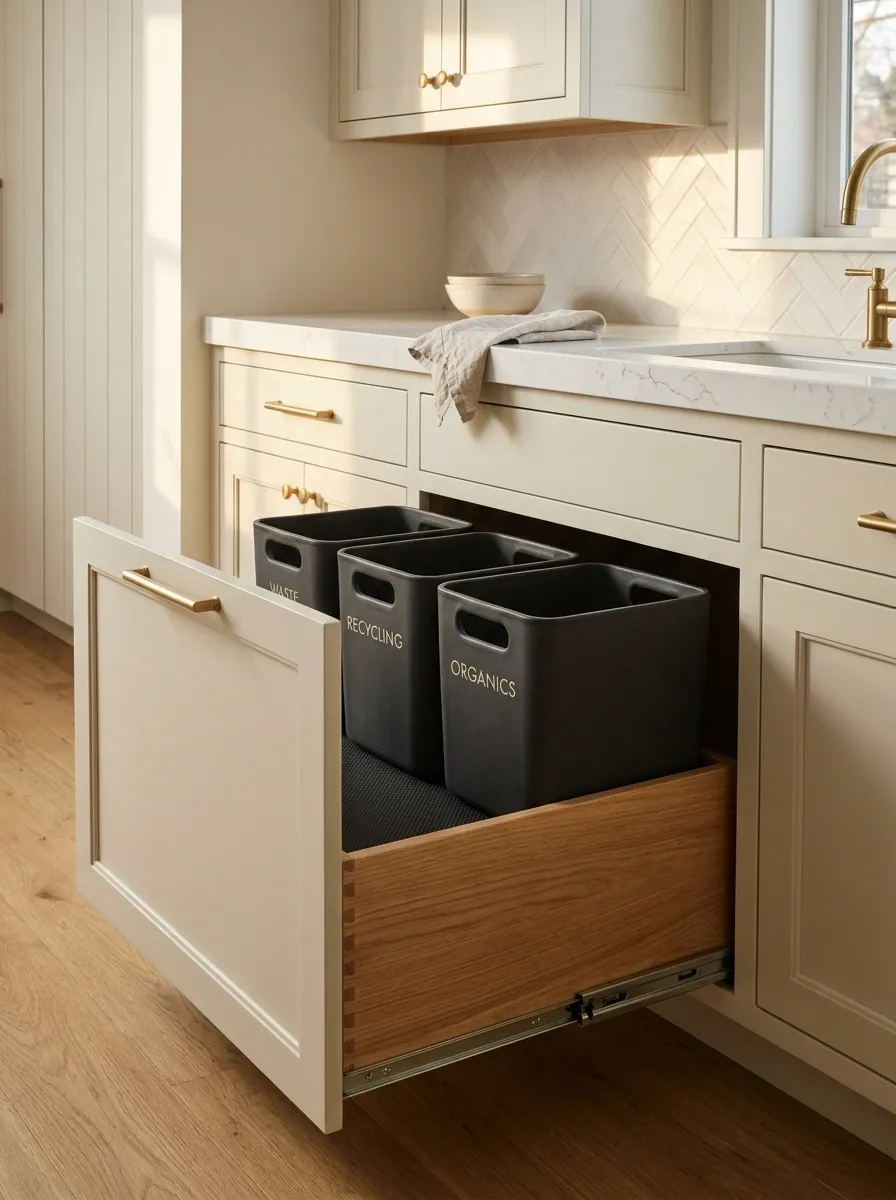
A drawer-based sorting setup can keep related containers together while preserving a clean kitchen front.
Use removable bins that fit the drawer and its rated load. Label by local waste stream, and leave enough room to grip each container. Oversized labels are more useful than subtle color coding that nobody remembers after the first week.
Sort at the point of disposal
Adjust compartment sizes to what your household actually produces.
A Small Scraps Caddy You Can Wash Easily
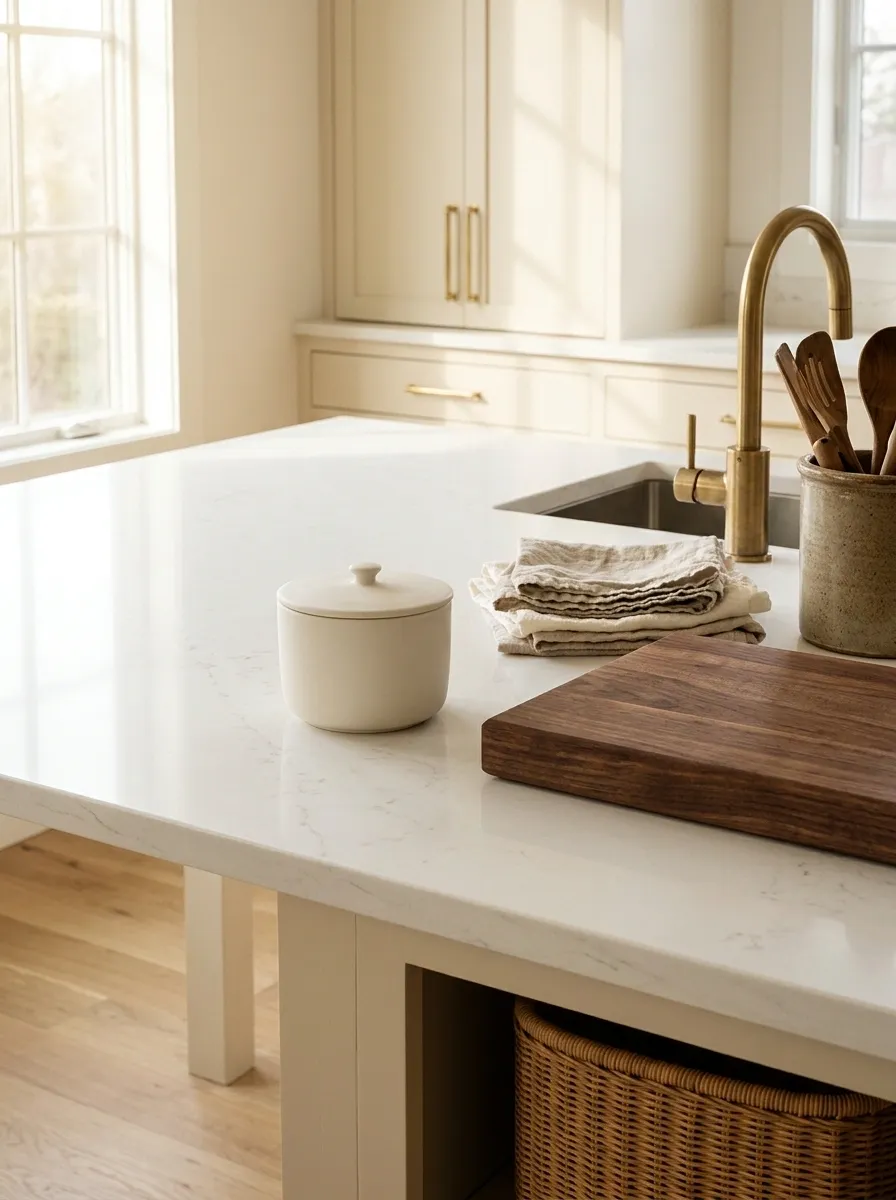
A removable caddy near the preparation area can make food-scrap collection less awkward where a suitable collection or composting route exists.
Choose a container with accessible corners and a lid you will clean. Empty it frequently, follow local liner requirements, and avoid treating the caddy as long-term storage. Any filter or deodorizing feature is secondary to a sensible emptying routine.
Prioritize: easy carrying, easy washing, and a clearly defined destination for the contents.
When You Cannot Change the Cabinets
A Freestanding Bin With a Deliberate Place
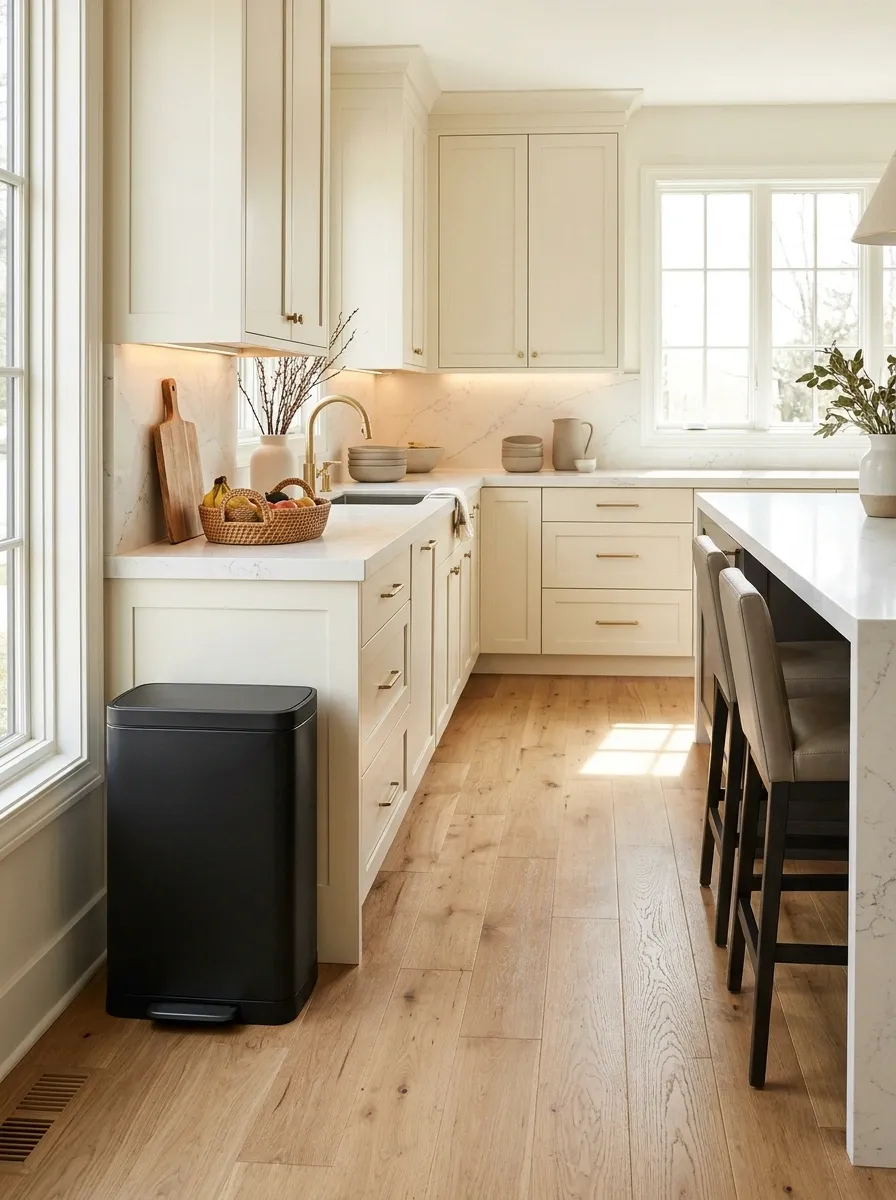
Sometimes a visible bin is the most practical choice. Give it a position beside the work zone where it does not block doors or movement.
Choose a shape that fits the space and a finish that relates to an existing element. A well-placed ordinary bin often looks better than an elaborate concealment scheme that leaves everyone dumping packaging on the counter.
| Better placement | Awkward placement |
|---|---|
| Near the task | Across the main route |
| Clear lid operation | Trapped under an overhang |
| Easy bag removal | Squeezed behind furniture |
A Slim Bin at the End of a Cabinet Run

The end of a cabinet run can provide a natural home for a narrow freestanding bin.
Check that the position does not reduce a required route, interfere with appliance ventilation, or put the container beside an unsuitable heat source. Use the whole footprint in the measurement, including pedals and handles. Product dimensions occasionally have a very optimistic relationship with reality.
Keep the bin within a defined edge
A Movable Sorting Trolley
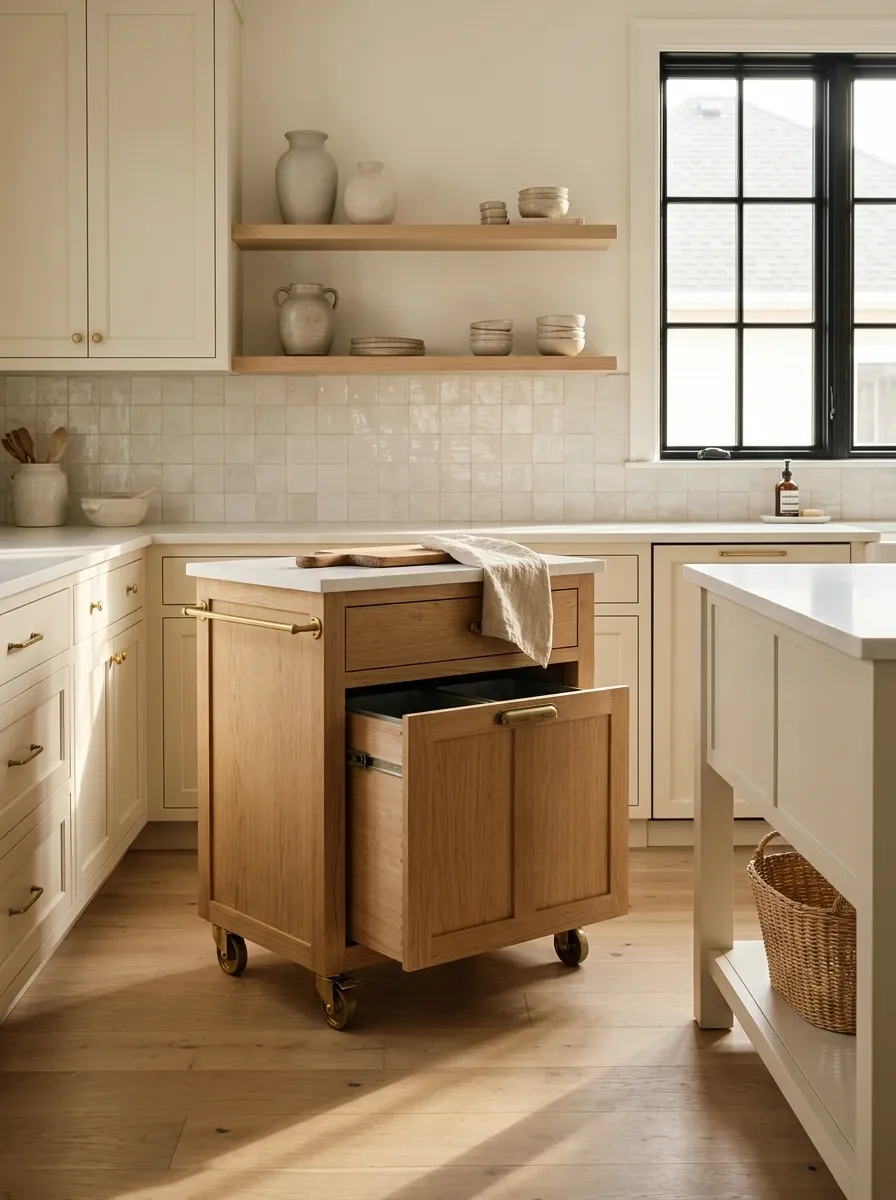
A trolley suits a kitchen where the preparation area moves with the task. Bring the containers closer while cooking, then return the trolley to its parking spot.
What makes this work:
- Stable construction and suitable locking castors.
- Removable containers you can wash.
- A parking space outside the walking route.
Without the last item, you have bought a mobile obstruction.
Give it a parking space first. Otherwise, “movable storage” becomes furniture that is always in the wrong place.
A Lidded Container Inside a Utility Cupboard
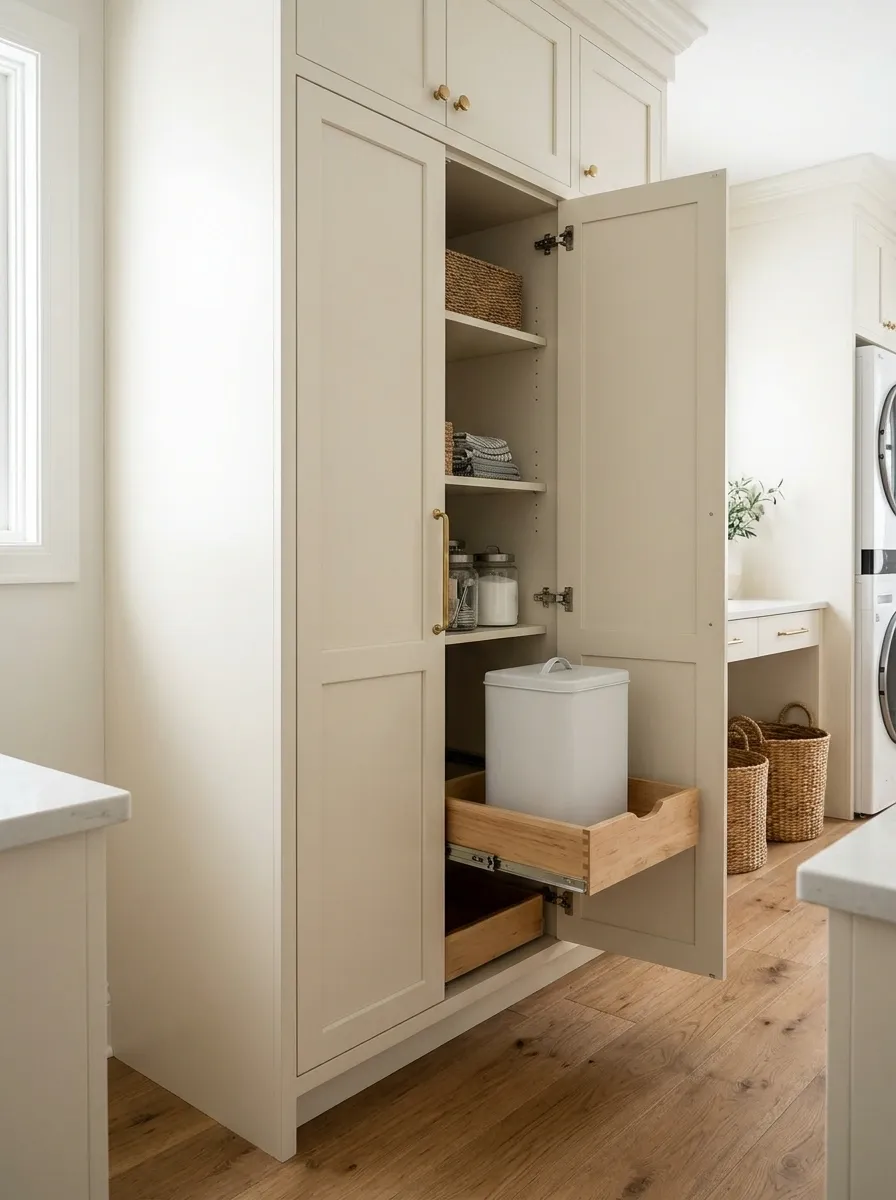
A utility cupboard can handle a less frequently used waste stream if conditions and collection rules make that appropriate.
Use a suitable container, keep access easy, and avoid storing wet or odor-prone waste there for long periods. This works better for a defined dry stream than as a mysterious overflow zone. Cupboards have an unfortunate ability to hide problems until they become larger problems.
| Suitable planning questions |
|---|
| What exactly goes in this container? |
| How often will it be emptied? |
| Can it be removed without moving other items? |
| Is the cupboard appropriate for those contents? |
A Sideboard Converted Into a Bin Station
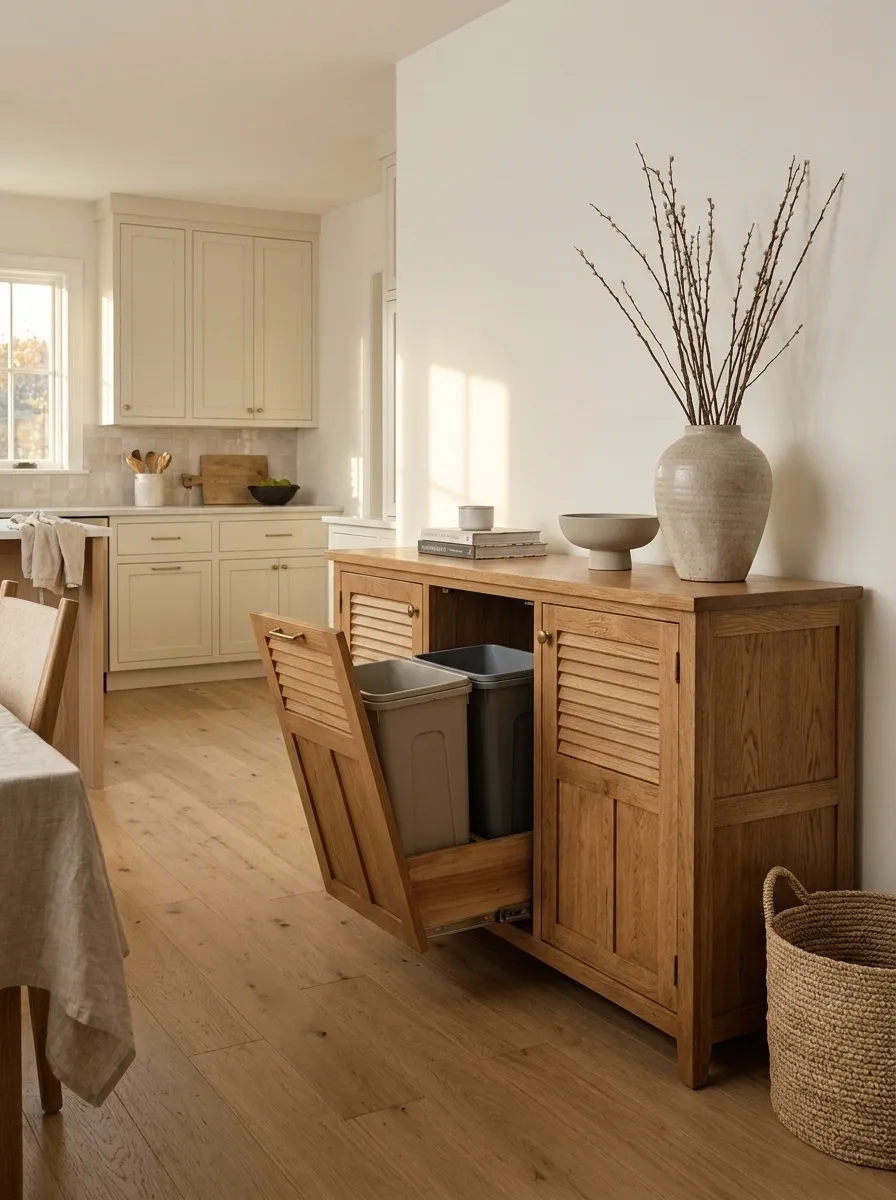
A suitable cabinet can hold removable containers while presenting a quieter exterior to a kitchen-dining area.
Choose a unit that can accommodate practical door openings and cleaning access. Protect surfaces appropriately and do not trap moisture against vulnerable materials. Avoid converting a valuable or delicate piece simply because its doors conceal the bins beautifully. Garbage storage should not require a conservation specialist.
A quiet front, a practical interior
Verify material durability and operating space before adapting the unit.
Stop the Secondary Piles
A Vertical Slot for Flattened Cardboard
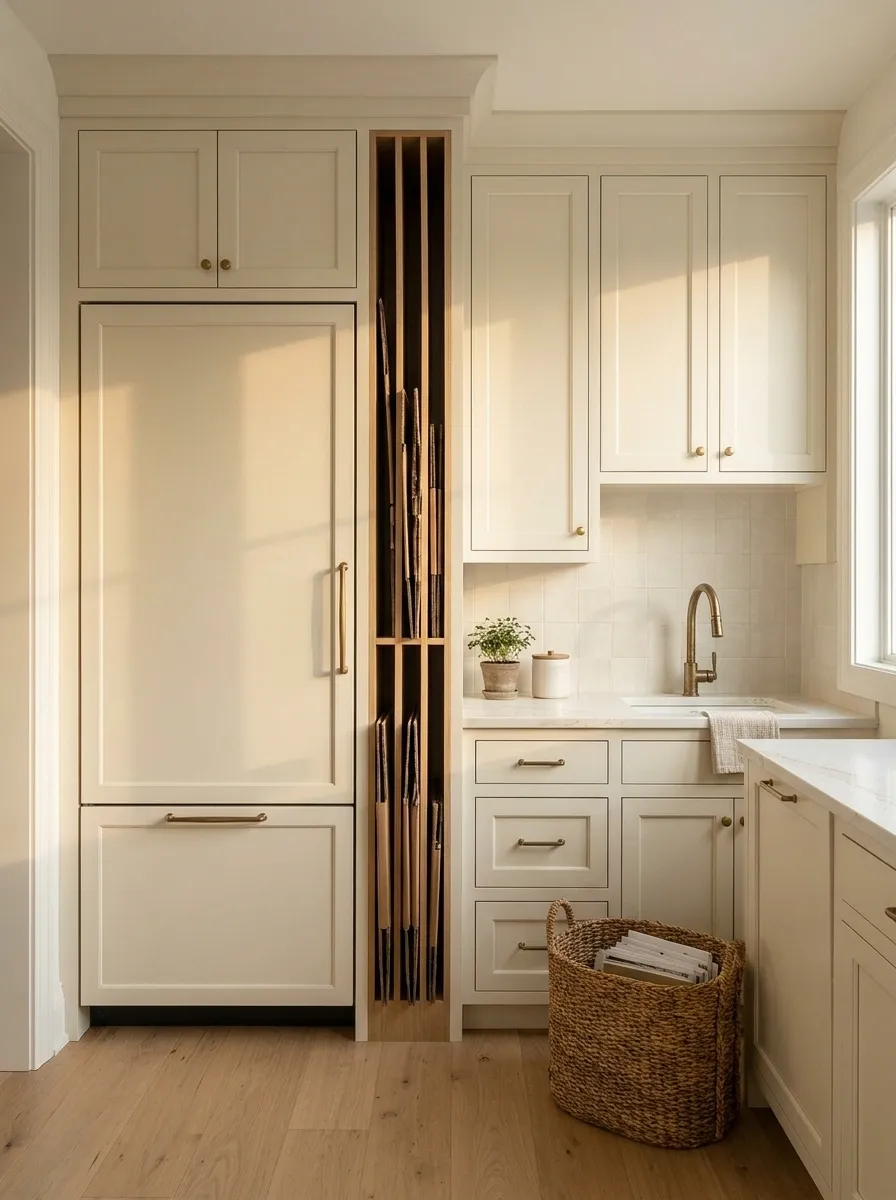
Cardboard behaves better when it has a narrow, defined place instead of leaning loosely against the wall.
Use a dry slot, crate, or divider near the route to recycling. Flatten boxes according to your collection system and keep the volume manageable. Place the slot away from heat sources and exits. The intention is temporary organization, not building a packaging annex beside the fridge.
Boundary: when the slot is full, the contents move to the next collection stage.
A Dry Recycling Station Near the Exit
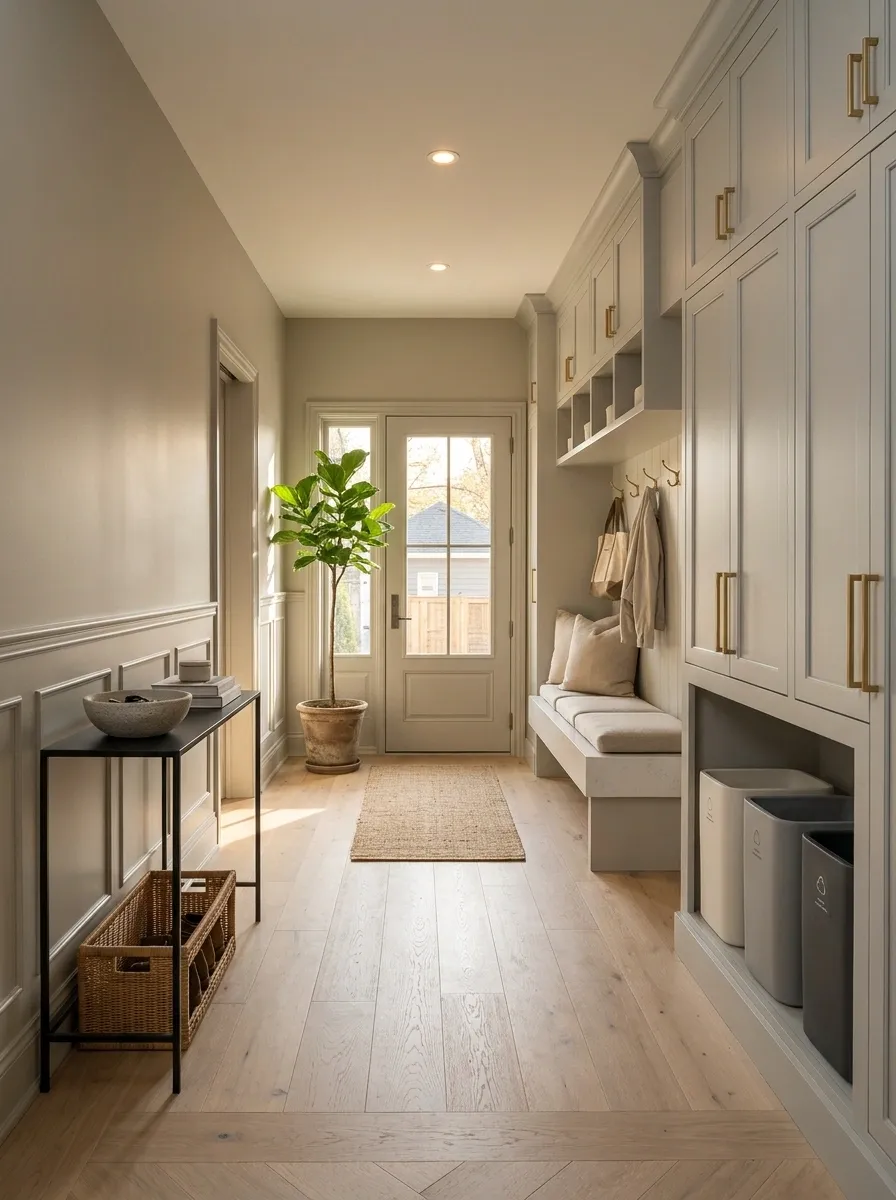
A cleanable station near the usual exit can shorten the route to outdoor bins.
Match the containers to local sorting requirements and keep them within a dedicated footprint. If this is also the entrance, preserve space for shoes, bags, and door movement. Recycling is useful; making everyone climb around it is an unnecessarily immersive experience.
Put the next step on the existing route
A Returnables Crate With Handles
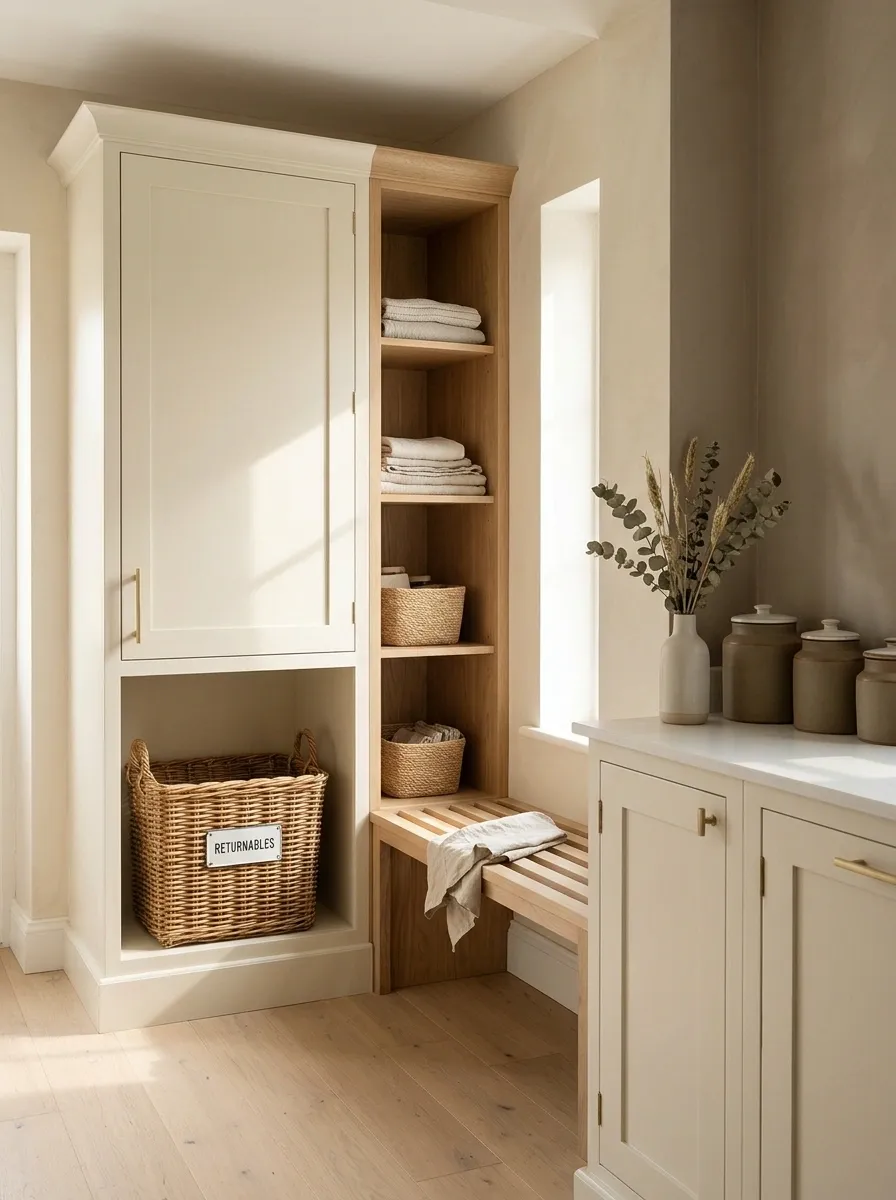
If your area has a bottle-return scheme, a handled crate can make the collection easier to carry.
Choose a manageable loaded size and store it dry. Avoid piling loose glass above the container rim. Keeping returnables separate from ordinary recycling can prevent accidental disposal, but label the purpose clearly so the crate does not become an all-purpose home for random packaging.
| Make carrying easier | Make sorting easier |
|---|---|
| Suitable handles | Clear label |
| Manageable loaded weight | Defined contents |
| Stable base | Separate location |
A Small Bin Where Unwrapping Happens

Where does unwrapping happen?
At the desk, the craft table, beside the entrance? A modest container there can stop packaging traveling to the nearest chair. Choose it for that particular waste and empty it on a regular schedule.
Do not equip every room speculatively. Too many large bins create more emptying work. Start with the place that already has a recurring pile.
Observation first: A pile in the same spot every week usually means the disposal route is inconvenient.
A Washable Bathroom Bin With a Quiet Profile
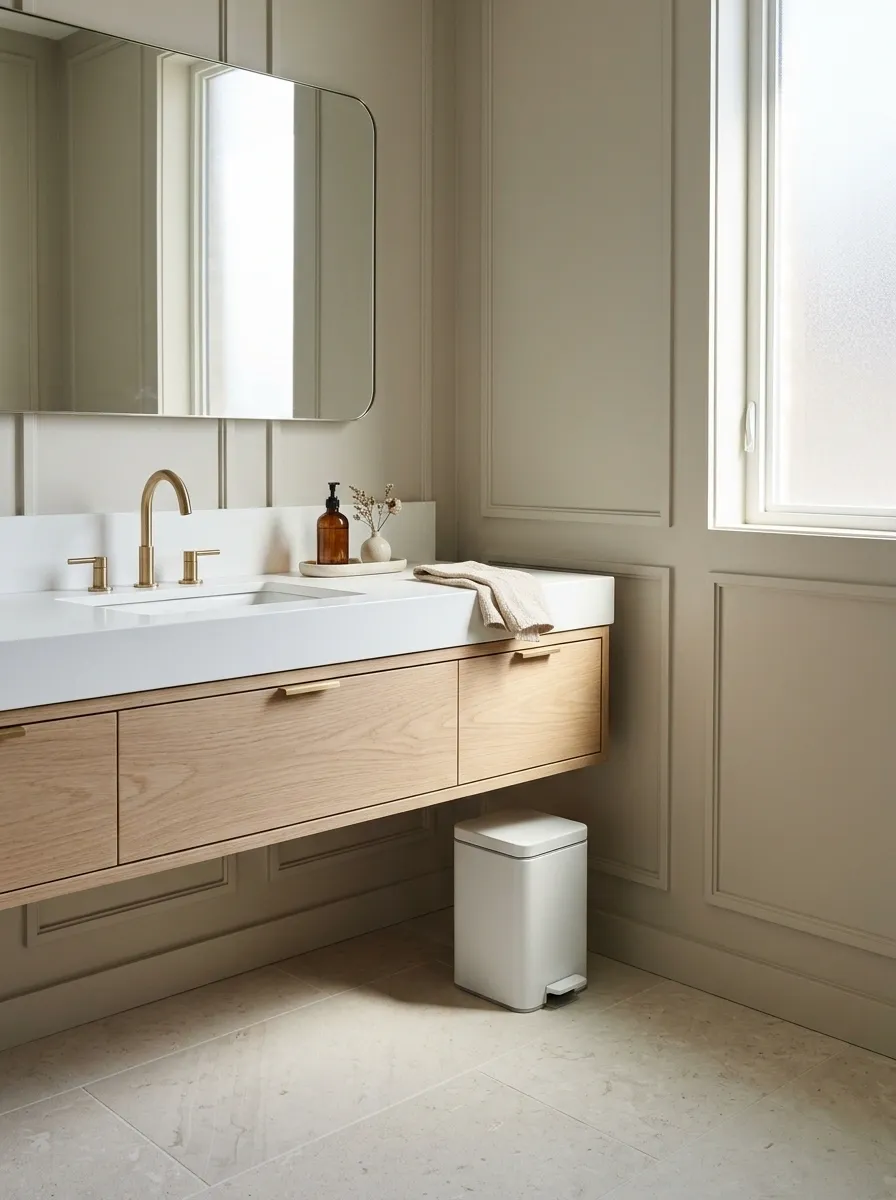
The bathroom bin should be easy to operate, remove, and clean.
Choose a suitable lidded design where needed, with safe access restrictions appropriate to children and pets in the home. Make sure the lid clears the vanity and the container can be lifted without catching on plumbing or furniture. A fabric-lined decorative basket is rarely the most practical answer here.
Measure the movement, not just the object
Outside, Where the Large Bins Live
A Slatted Screen Around the Bin Area

A screen can soften the view of wheelie bins without requiring a fully enclosed store.
Design it for local exposure and suitable anchoring, then leave a generous operating opening. Slats conceal differently depending on angle, so assess the view from the house and street. Keep the actual waste in appropriate lidded containers; a screen does not provide pest resistance by itself.
| Screen handles | Bins handle |
|---|---|
| The view | Waste containment |
| Visual connection to the garden | Secure lids |
| A defined storage area | Collection compatibility |
A Gated Bin Store With Full Lid Clearance
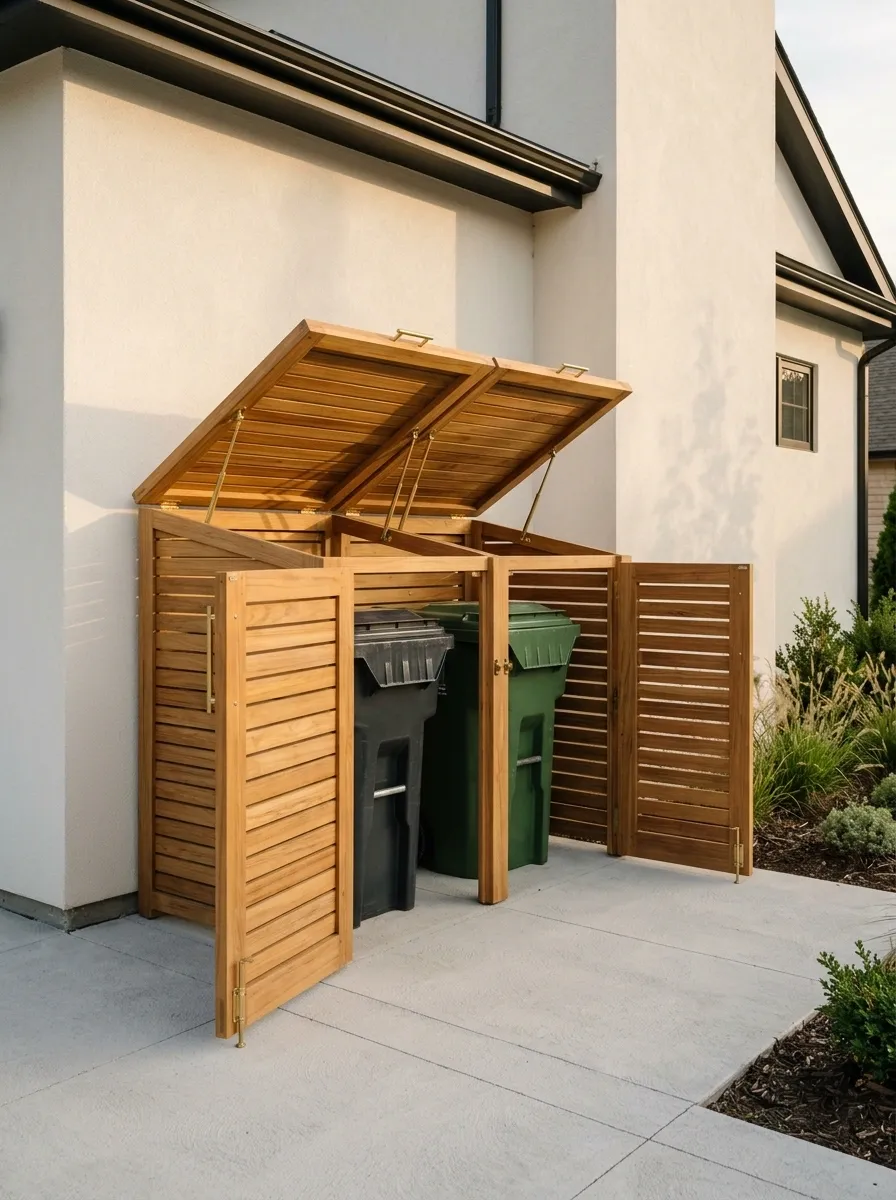
A purpose-made store can keep bins together and visually contained.
Check roof height, lid travel, door width, and the space needed to wheel each bin out independently. Do not assume a cabinet advertised for several bins fits your municipality’s actual containers. A store that requires removing one bin to reach another is likely to become irritating by the second collection day.
Allow space above and in front
The pull-out area in front is part of the storage footprint.
A Side-Yard Bin Bay With a Direct Route
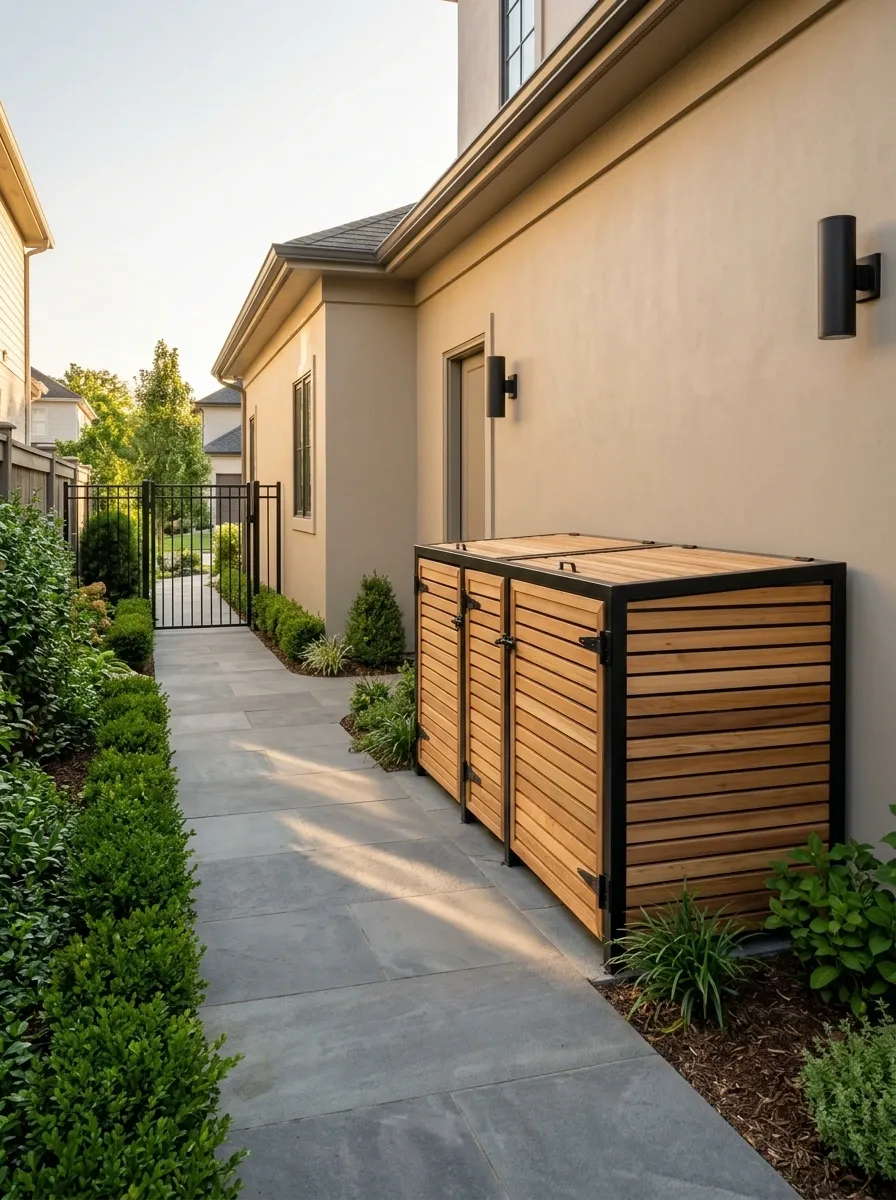
The side of the house can provide a discreet bin location if it remains accessible.
Check gates, uneven ground, drainage, services, and required access around the building. Plan the route with the largest bin, not the smallest. If moving it requires dragging wheels through gravel or negotiating a tight corner, improve the route before adding decorative screening.
Do the rehearsal: wheel an empty bin from storage to collection and back before committing to the bay.
A Washable Pad Beneath the Containers
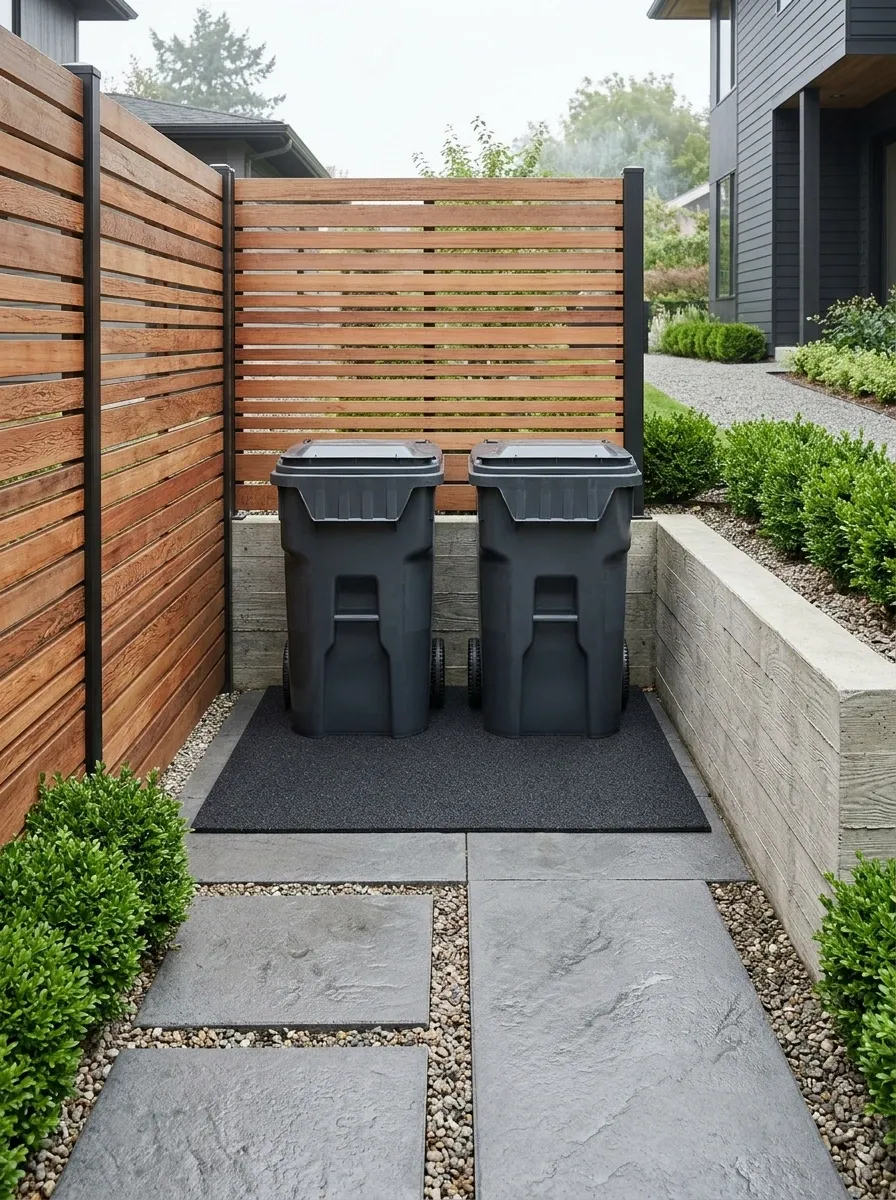
A suitable stable base can make outdoor bins easier to move and the area easier to maintain.
The design should manage runoff appropriately rather than directing contaminated wash water into an unsuitable drain or neighboring space. Follow local disposal guidance when cleaning. Keep the surface accessible around the wheels so leaves and debris do not collect in unreachable strips.
Practical priority: stable footing and sensible water management come before an attractive paving pattern.
A Planted Foreground That Does Not Block the Bins
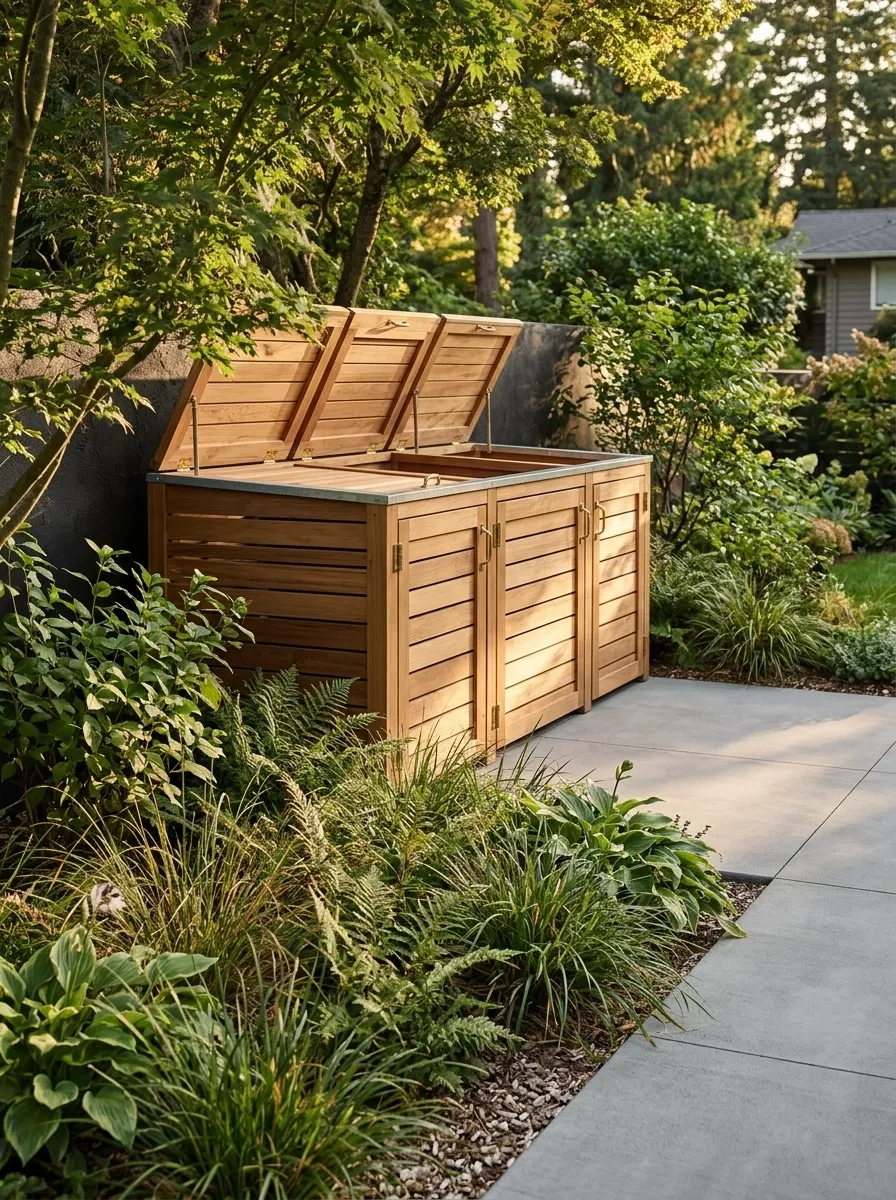
Planting can interrupt the view of a bin area without forming a dense barrier around it.
Place appropriate plants beyond the operating space, allowing for mature spread and maintenance. Keep lids, doors, and handles easy to reach. Containers still need to move on collection day, even if the new shrub has developed strong feelings about its personal space.
Planting sits outside the operating zone
Systems That Keep the Storage Working
A Pet-Resistant Waste Container
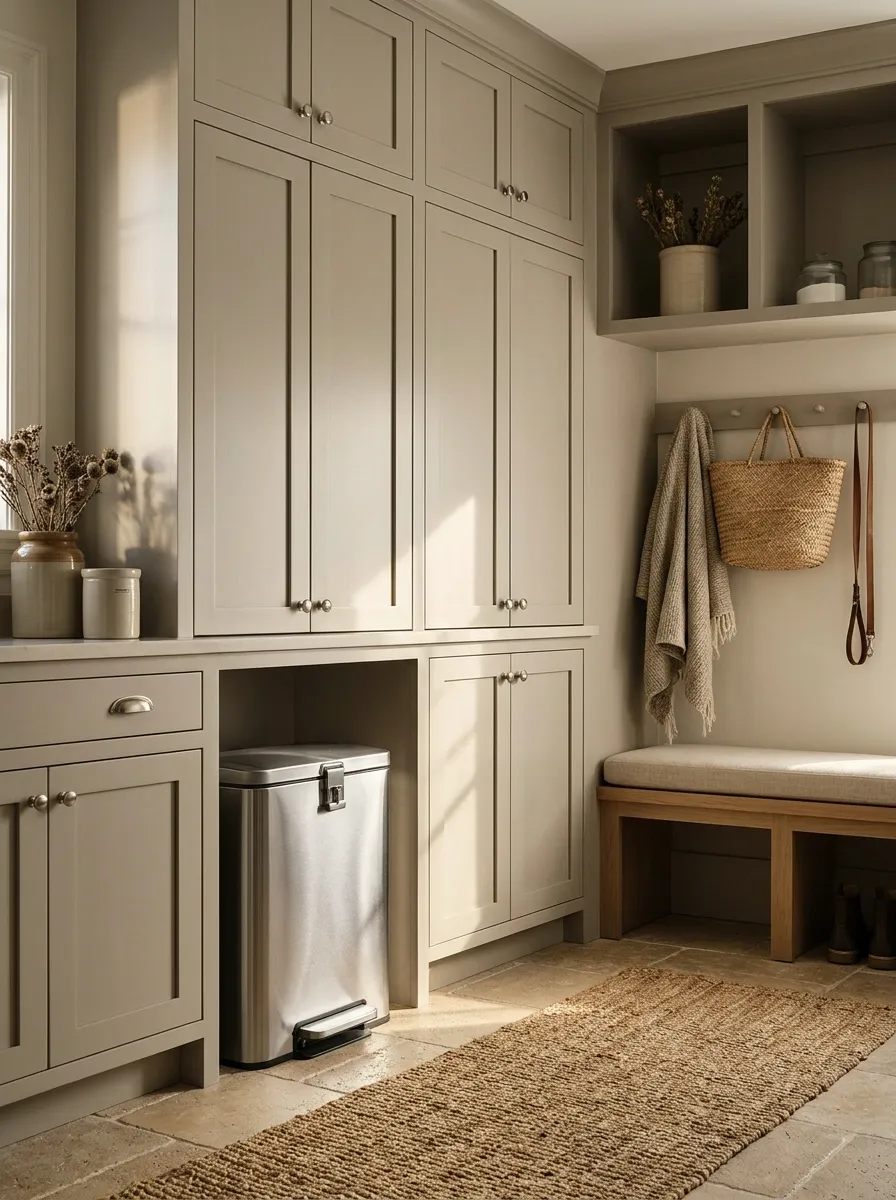
Where pets investigate bins, choose a suitable container with a genuinely effective closure for your household.
Place it where it cannot easily be tipped or opened, and keep hazardous contents out of reach. Do not assume a decorative lid is secure. The design should make daily use easy for people while addressing the animal’s actual behavior; some pets regard a pedal bin as a puzzle with excellent prizes.
| Observe | Choose around it |
|---|---|
| Tipping | Stable, appropriate placement |
| Lifting lids | Suitable secured closure |
| Pulling liners | Contained bag edges |
A Food-Scrap Collection Point With a Real Destination
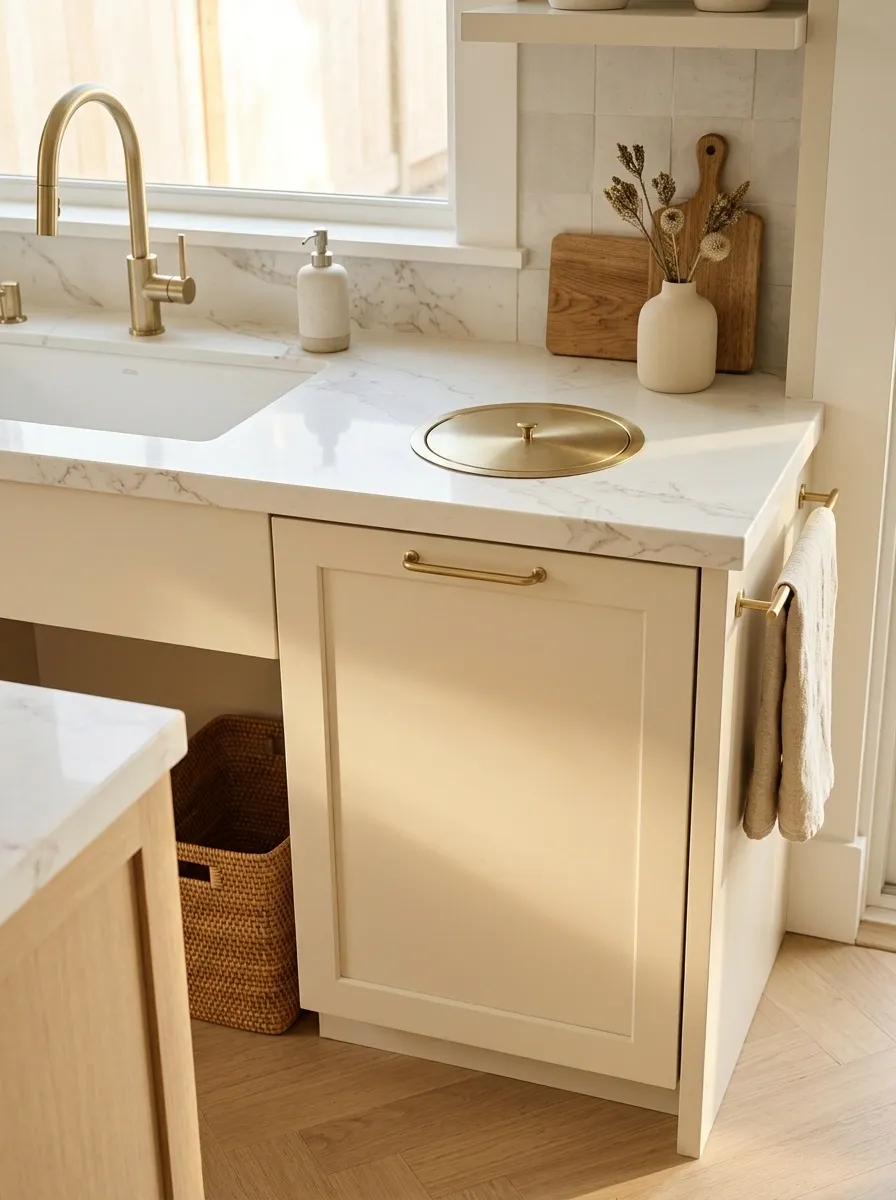
If food scraps are collected locally, make that stream easy to use. If composting at home, choose an established method and manage it properly.
Do not assume a countertop dehydrator produces finished compost: the EPA describes those appliances as pre-processors, producing dried scraps that still need a composting route. The kitchen container and the final process are separate decisions. (EPA home-composting guidance)
Before adding a caddy: know where its contents go and what that destination accepts.
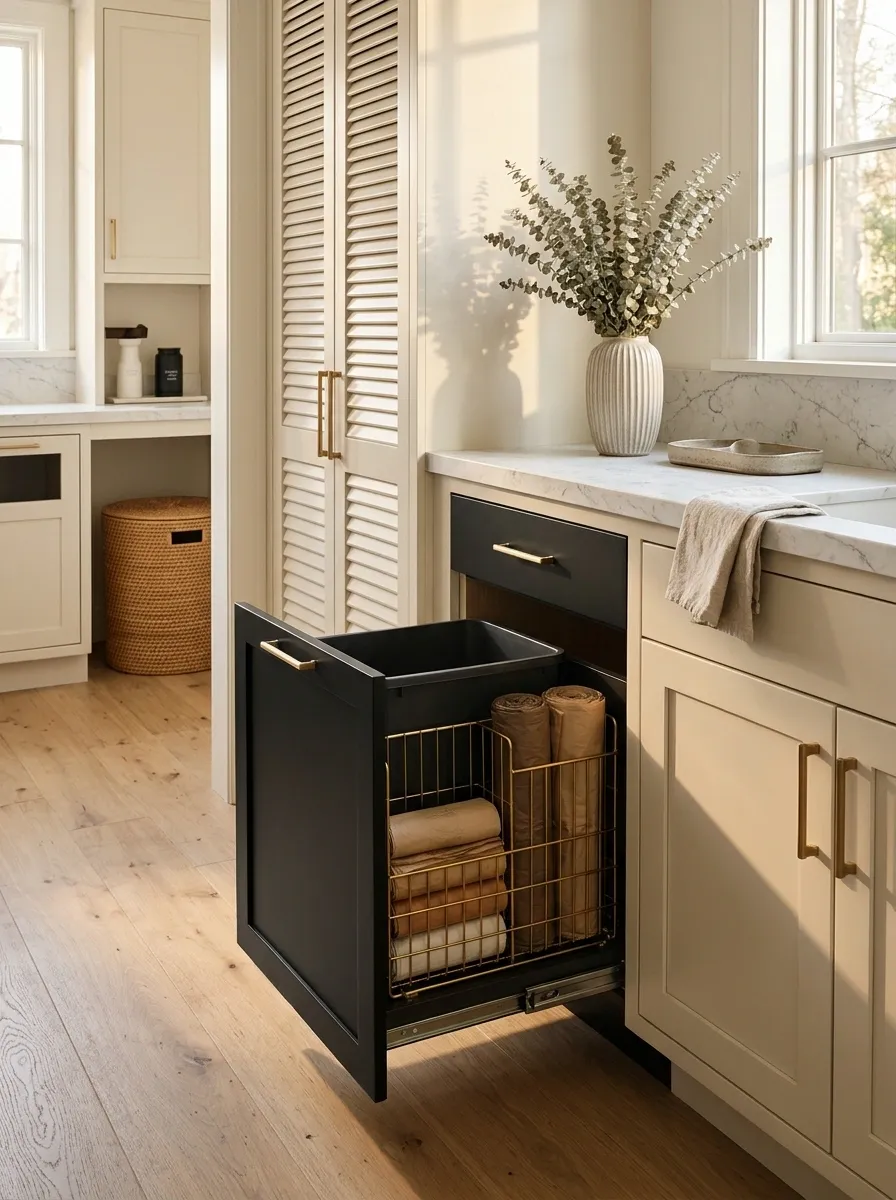
A Liner Station Beside the Bin
The bin is empty. The fresh liners are upstairs. Someone immediately drops a banana skin into the unlined container.
Households have impeccable comic timing.
Keep replacement liners in a dry, convenient place nearby, safely away from children and pets. One suitable holder or dedicated cupboard space is enough to make the last step easier to finish.
Make the fresh liner the easy last step
A Collection-Day Parking Spot
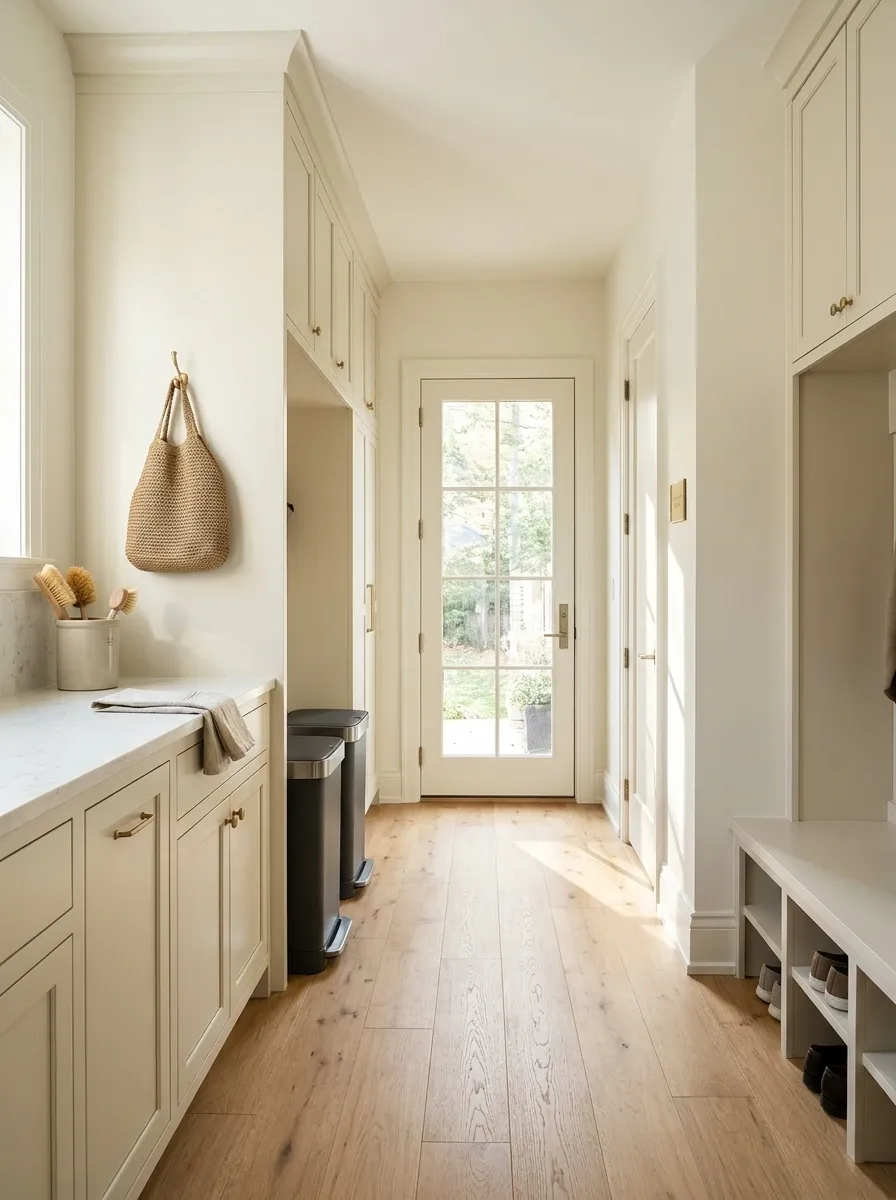
If bins need to wait somewhere different before pickup, identify a legal, accessible position that follows local collection rules.
Keep the route clear and make sure containers can return to storage without moving parked furniture or garden equipment. Where several people share the task, a simple reminder on the inside of the utility door can be more effective than another phone app everyone ignores.
Keep clear: pedestrian access, exits, service points, and whatever clearance your collector requires.
A System Sized for the Busiest Normal Week
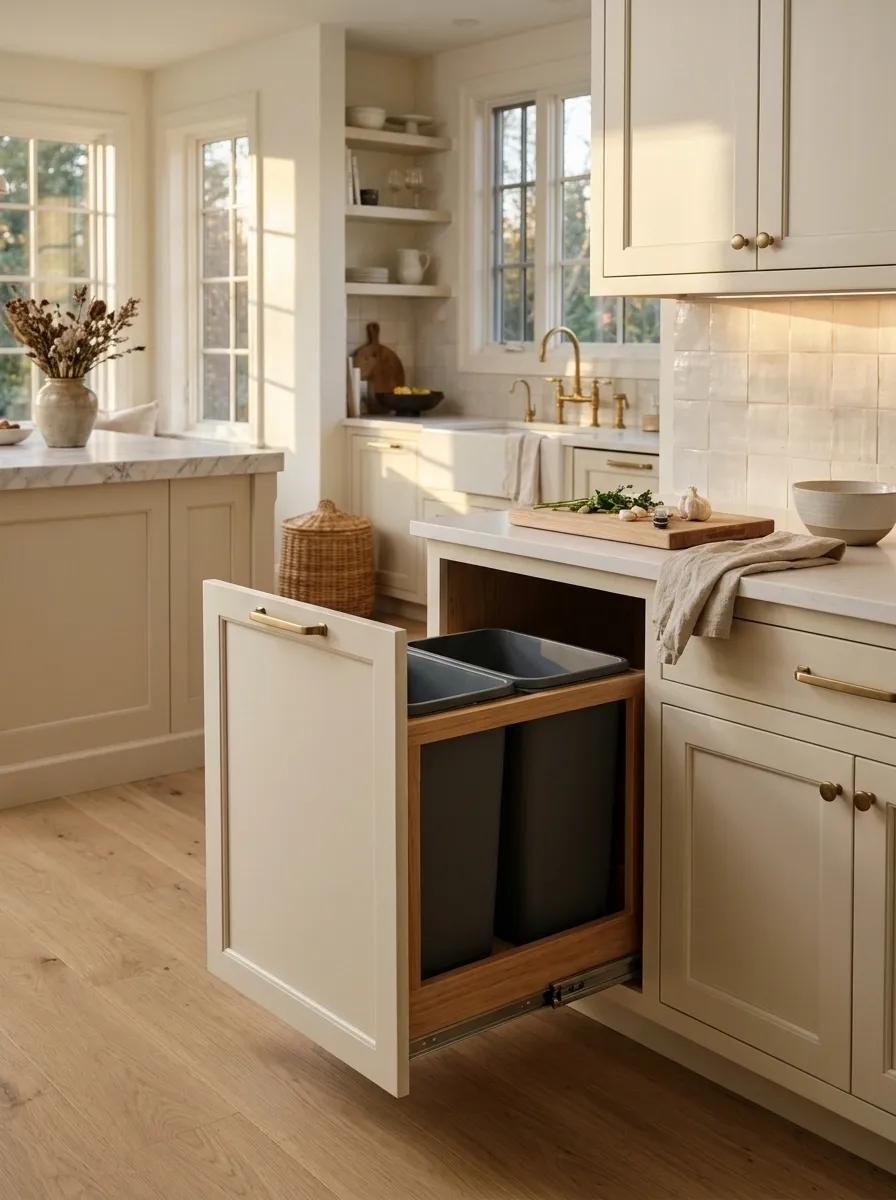
Choose capacity around ordinary high-volume days, then make a separate plan for unusual events.
This avoids both extremes: a bin that overflows constantly and a huge container occupying space you need every day. Review the setup after you have lived with it. If one stream fills rapidly while another stays nearly empty, change the proportions rather than blaming the people using them.
| What happens | What to change |
|---|---|
| Frequent overflow | Capacity or emptying schedule |
| Waste left beside the bin | Access or lid operation |
| Wrong items in compartments | Labels and sorting simplicity |
| Persistent mess under the container | Removal and cleaning access |
Judge It on a Busy Evening
The useful test happens when somebody is cooking, a delivery has arrived, and nobody feels like carefully operating the beautiful bin furniture.
If disposal is still obvious and easy, the storage works. If not, simplify it. Rubbish already has a job making a mess; the cabinet does not need to assist.