
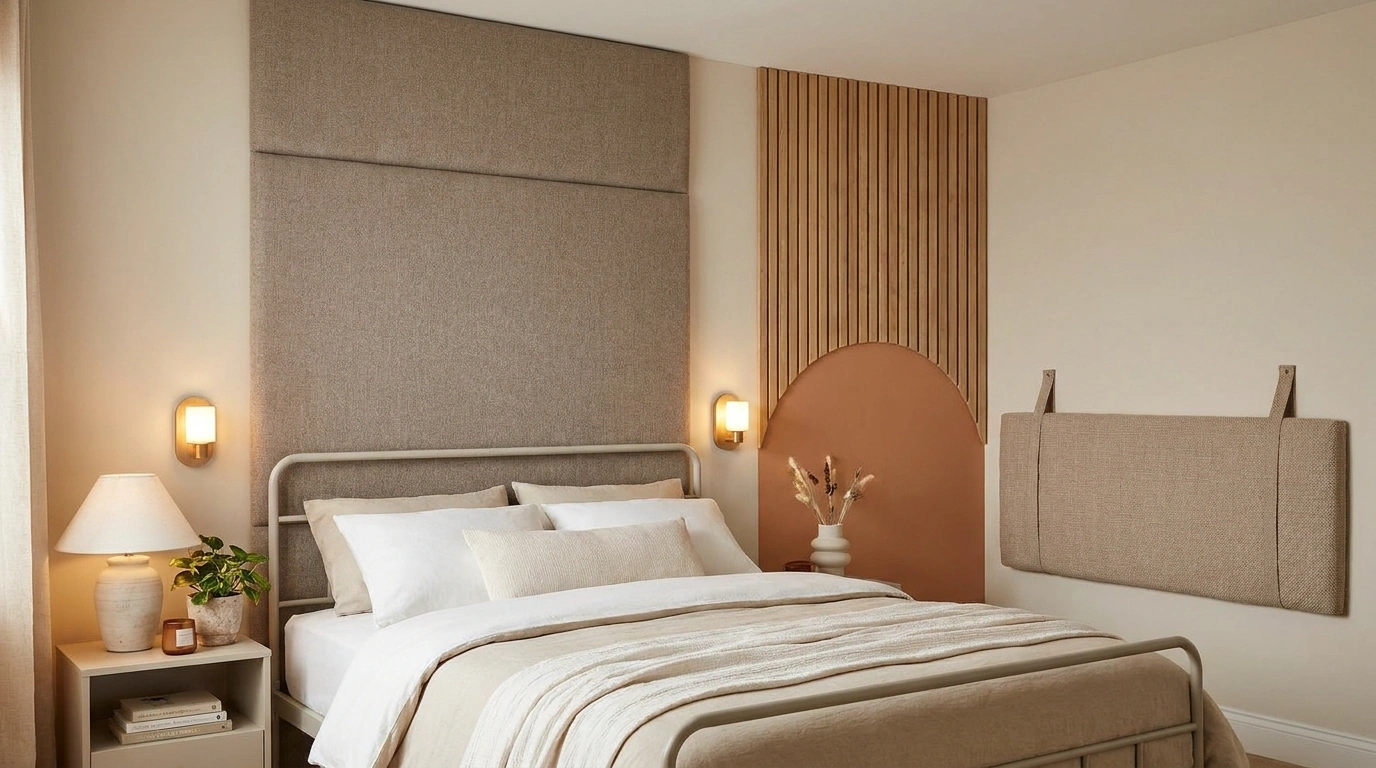
Keep the bed. Change what happens behind the pillows.
That might mean recovering the headboard you already own, mounting a new panel to the wall, or using paint to give a plain frame a more deliberate setting. The mattress and base can carry on doing their jobs without becoming collateral damage in a decorating project.
There is one useful distinction: a painted or papered backdrop changes the view, while a padded headboard also changes how it feels to sit up. Choose around the problem you want to solve.
For wall-mounted pieces, use fixings appropriate to the wall and loaded weight, checking for services before drilling. Keep anything above or behind sleepers securely installed. Heavy objects, loose screens, and an optimistic quantity of adhesive are a poor combination.
The Existing Headboard Is Worth Keeping
Repaint a Sound Wooden Headboard
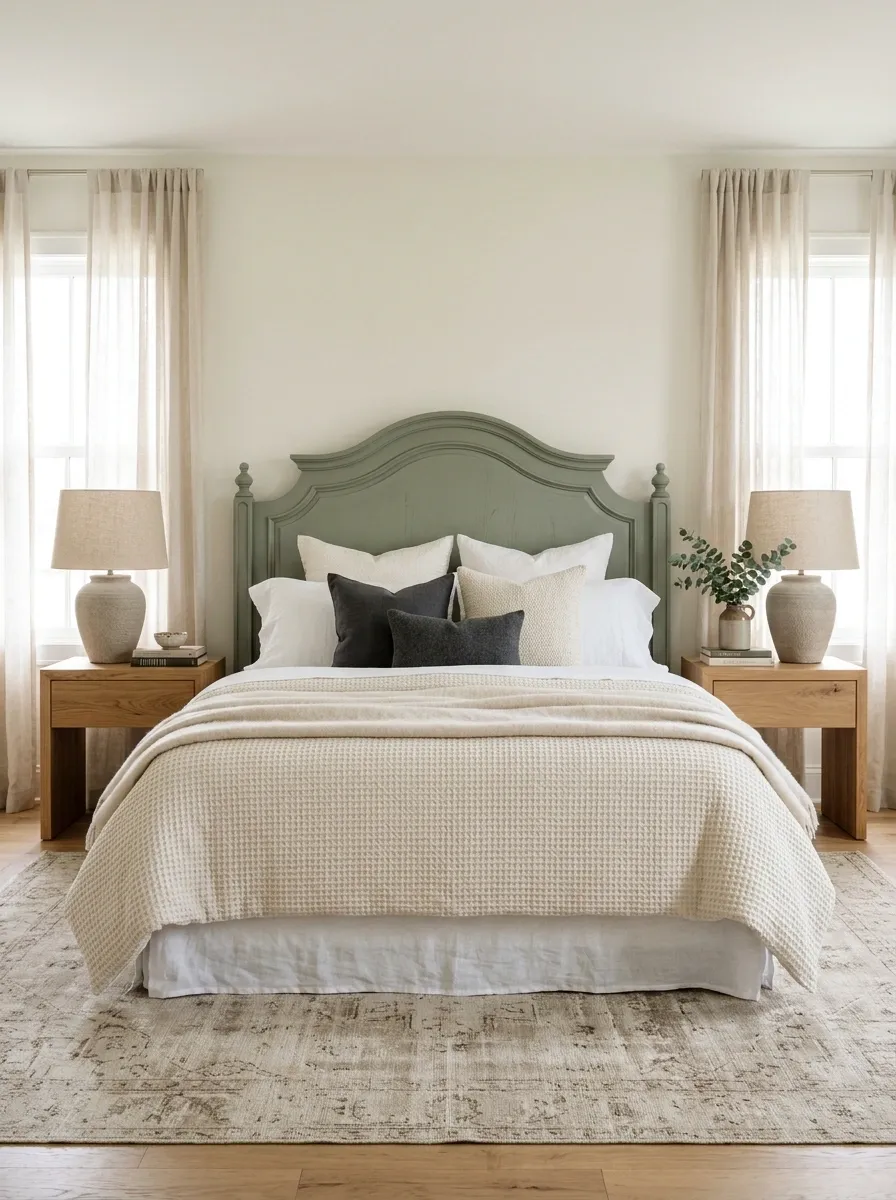
Paint can give a dated shape a different personality. A fussy outline often looks calmer in one deep color, while a plain rectangular headboard can become the room’s focal point in a warm midtone.
Inspect the existing finish and use preparation and products suited to it. Treat unknown old coatings cautiously rather than sanding first and asking questions later. Keep mattress contact surfaces and moving connections clear of unsuitable buildup.
Change the finish before replacing the piece
Let bedding and wall color support the new emphasis.
Restore the Wood Instead of Covering It
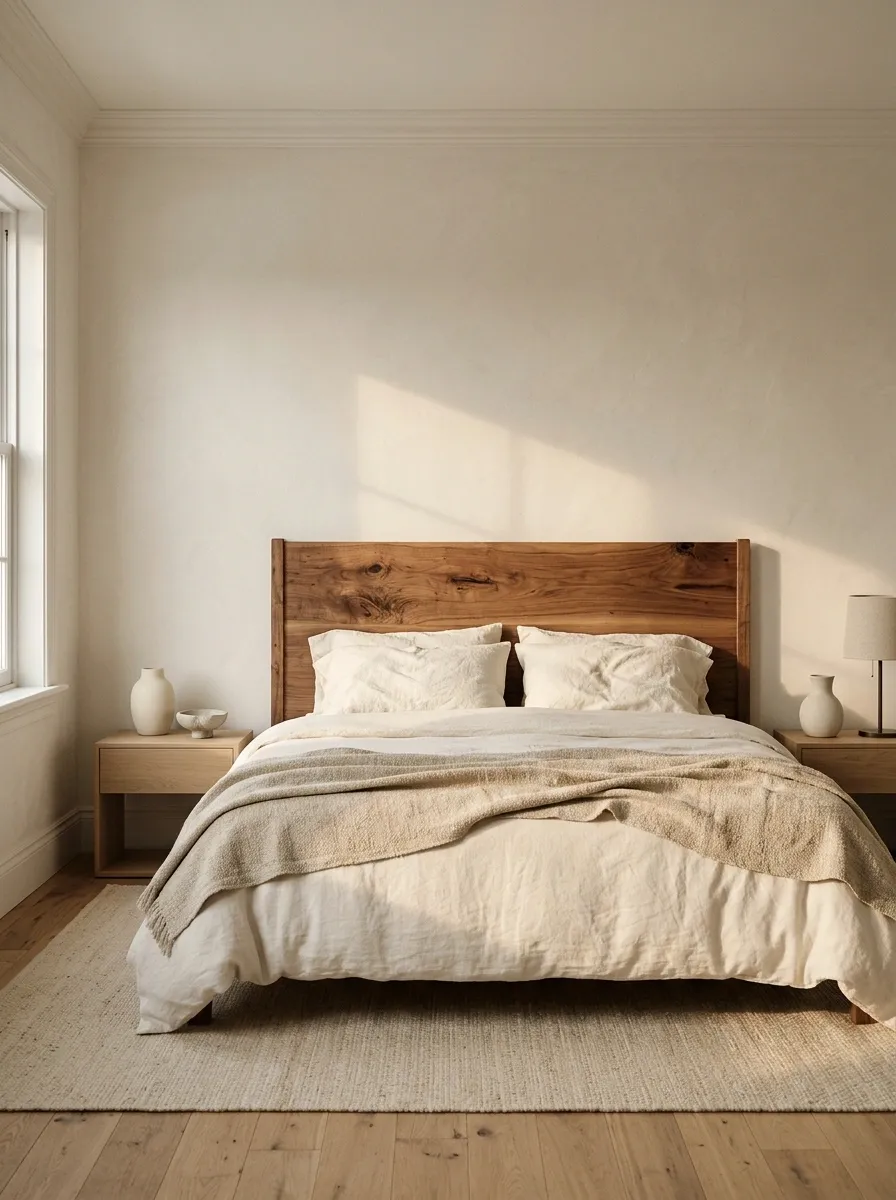
If the headboard has attractive grain, a careful restoration may do more than another coat of paint.
First identify whether you are looking at solid wood, veneer, or a decorative printed surface. Their repair options differ. Keep good wear if it suits the room; not every mark is a crisis. A restored headboard can look especially good with plain bedding that gives the wood room to register.
| Existing surface | Before starting |
|---|---|
| Solid wood | Assess finish and damage |
| Veneer | Avoid aggressive sanding |
| Unknown old coating | Seek suitable testing or professional advice |
| Decorative surface | Confirm whether refinishing is feasible |
Sew a Removable Slipcover
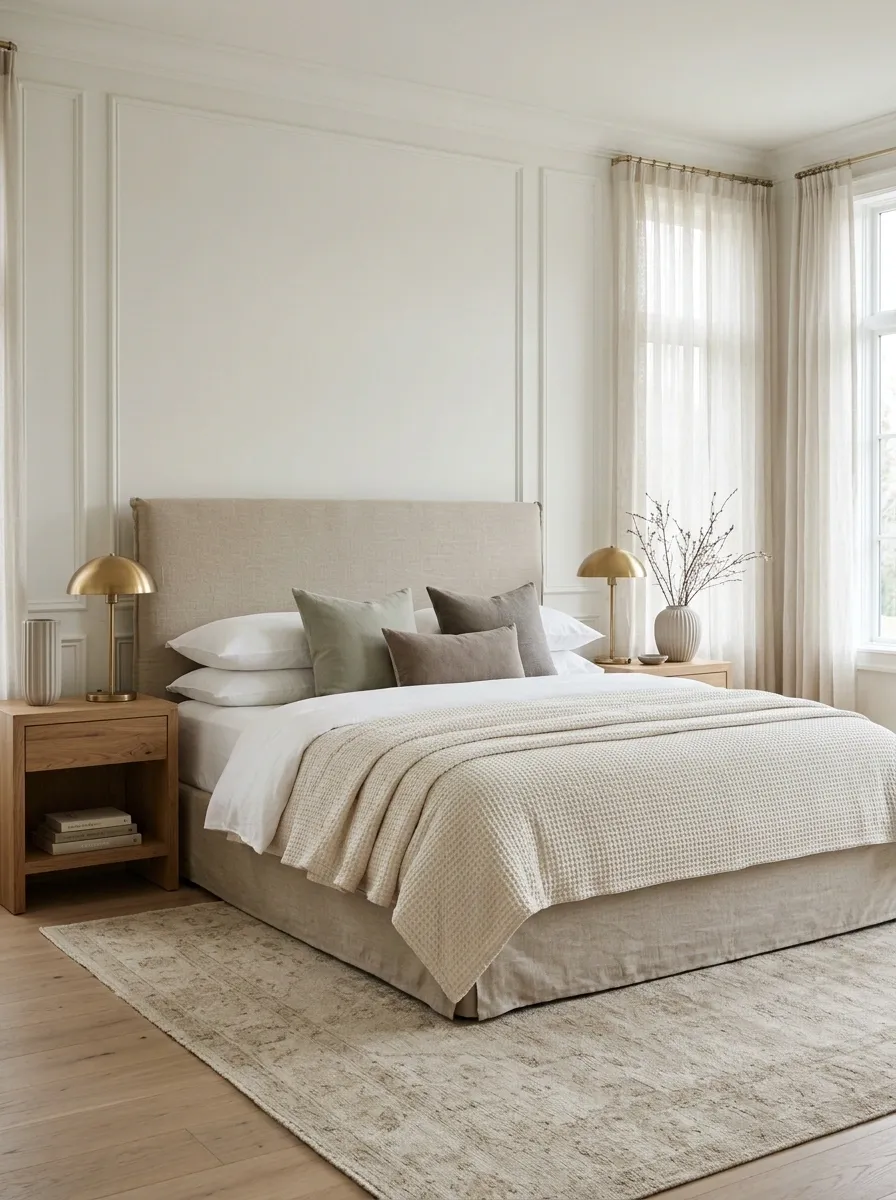
A sound headboard in the wrong color is a slipcover candidate.
Plan the cover around:
- The actual outline, including any curves.
- Attachment points that must remain accessible.
- A practical way to remove it.
- Fabric care and any shrinkage allowance.
Give the fabric enough body to hold its shape. A tailored cover looks more intentional than a loose drape, and it should still fit after laundry day.
Particularly useful for: a sound headboard whose color no longer belongs in the room.
Reupholster a Plain Padded Headboard
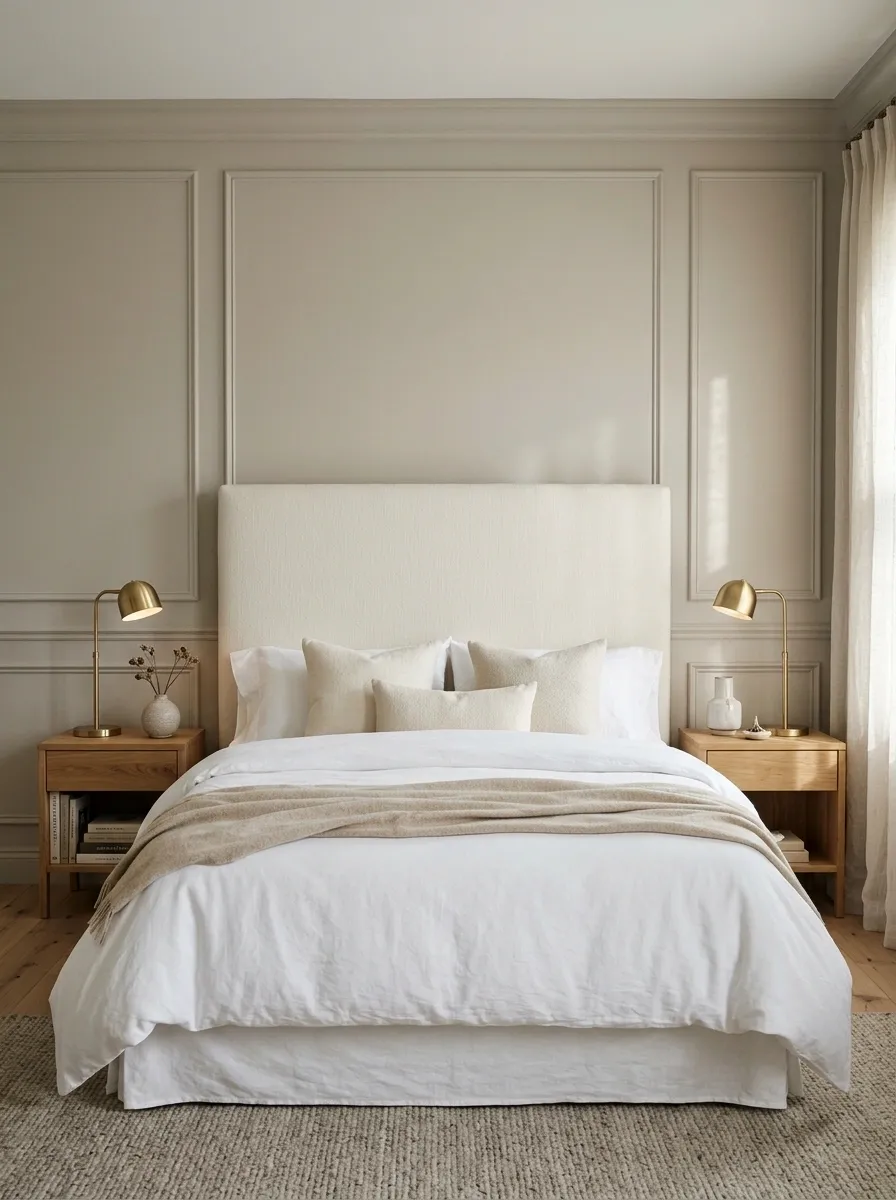
A simple upholstered panel is a good candidate for a new fabric when its structure and padding remain serviceable.
Inspect everything before covering it. New fabric does not fix a loose frame or deteriorated cushioning. Use upholstery materials suited to the job and applicable requirements, with secure fastening and a neat back. A textured solid often lasts visually longer than a bold pattern chosen during one enthusiastic evening online.
Inspect what the new fabric will conceal
Sound support · suitable padding · properly secured finish
Replace Only the Inset Panel
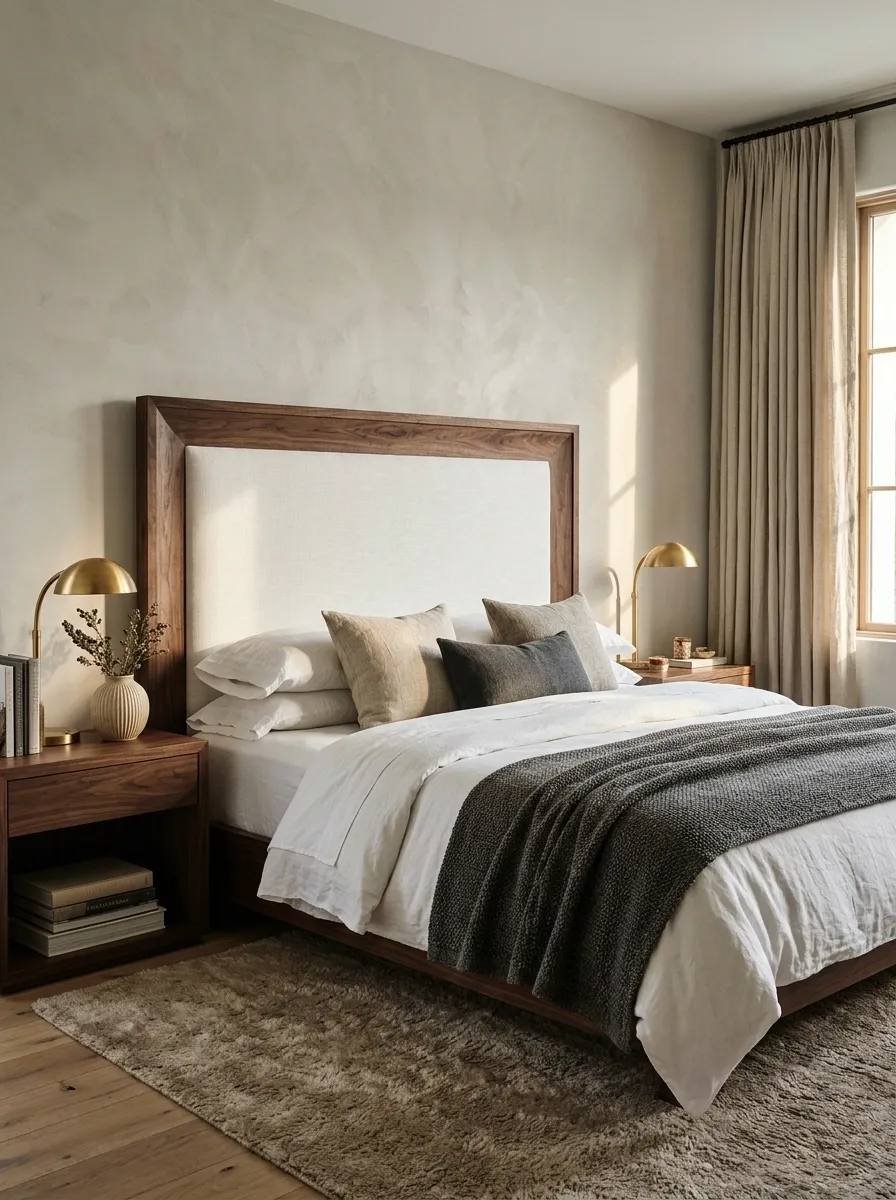
Keep the frame; change the middle.
Where the construction allows it, an inset panel can be recovered or replaced while the outer headboard stays. Check its attachment and structural role before making changes.
Try linen against dark wood, or a restrained pattern inside a pale frame. A clearly different material often looks more deliberate than an almost-matching wood insert.
Useful contrast: retain the timber outline and soften the center.
Repair or Replace a Cane Insert
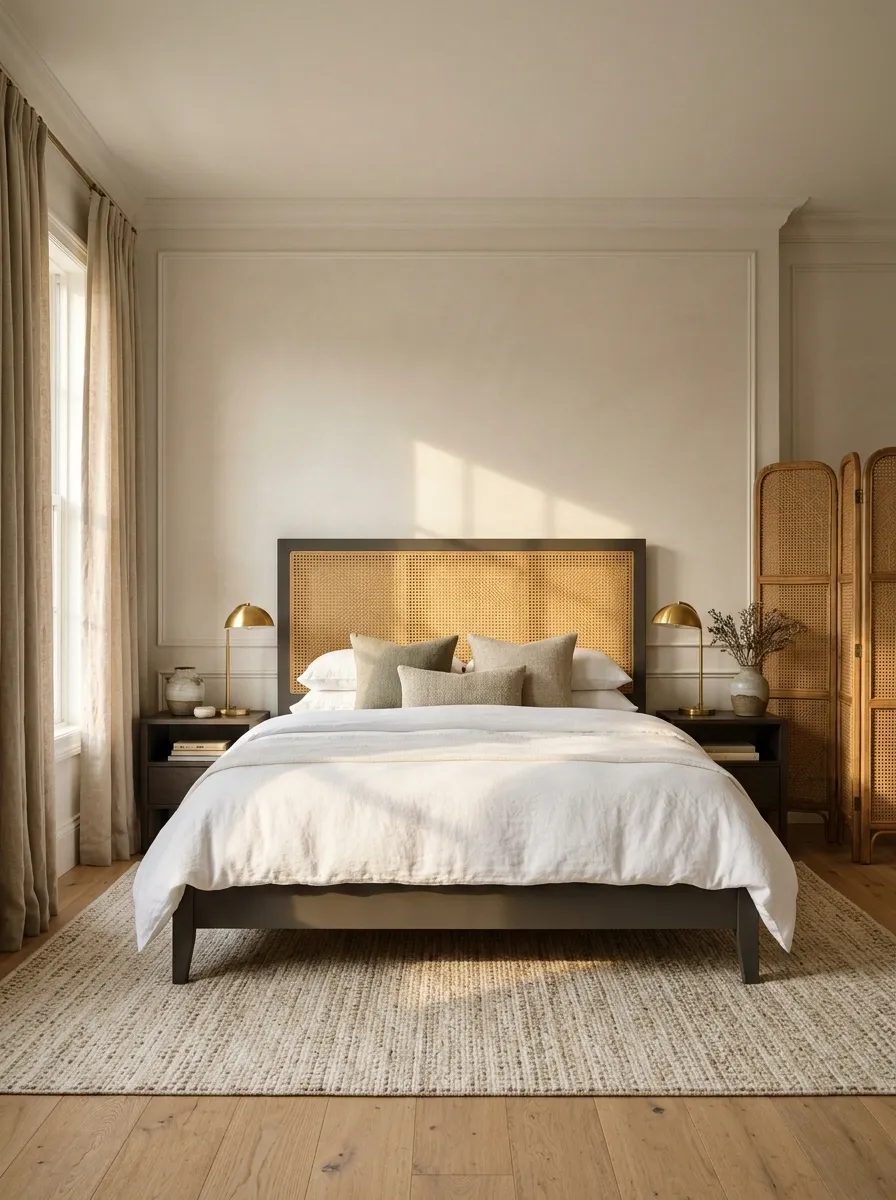
Cane brings lightness to a headboard that otherwise feels heavy. It works particularly well when the surrounding frame has a clean outline.
Use the correct method for the existing construction; prewoven cane and hand-woven seats or panels do not install in the same way. Seek help where the frame needs repair. Choose the backing and placement so pillows do not catch or press against a vulnerable area.
| Let cane supply | Keep quieter |
|---|---|
| Texture | Bedding pattern |
| Airiness | Nearby decorative screens |
| A natural material note | Competing woven accessories |
Add a Shaped Top to a Suitable Plain Frame
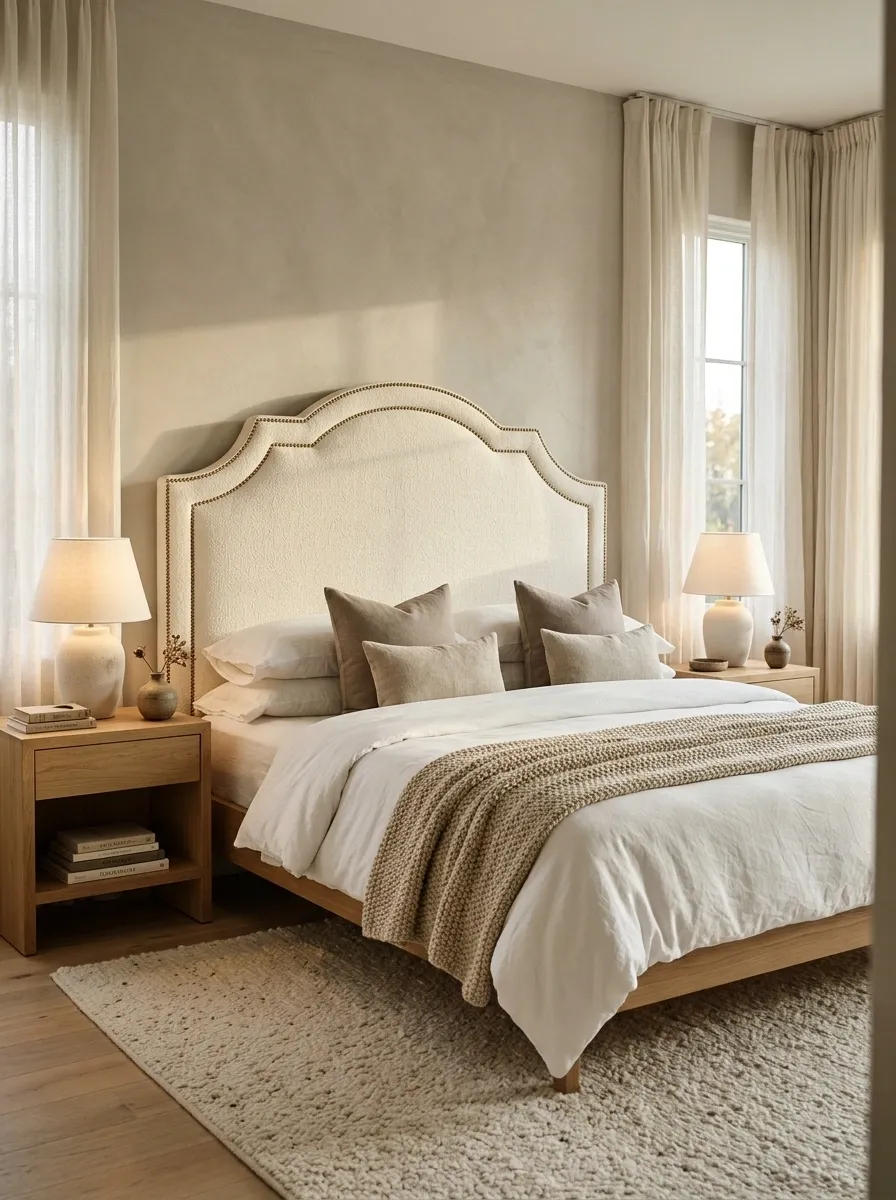
A plain headboard may be adaptable with a securely designed shaped addition, depending on its construction.
Think a gentle scallop or curved outline rather than an elaborate silhouette. Keep the modification proportionate, smooth, and properly connected; it must not weaken the headboard or introduce loose parts. If the existing frame cannot safely support the change, use a separate wall-mounted shaped panel instead.
Decide with a paper template: look at the proposed outline from the doorway before making a permanent alteration.
Add Comfort Without Replacing the Base
A Simple Wall-Mounted Upholstered Rectangle
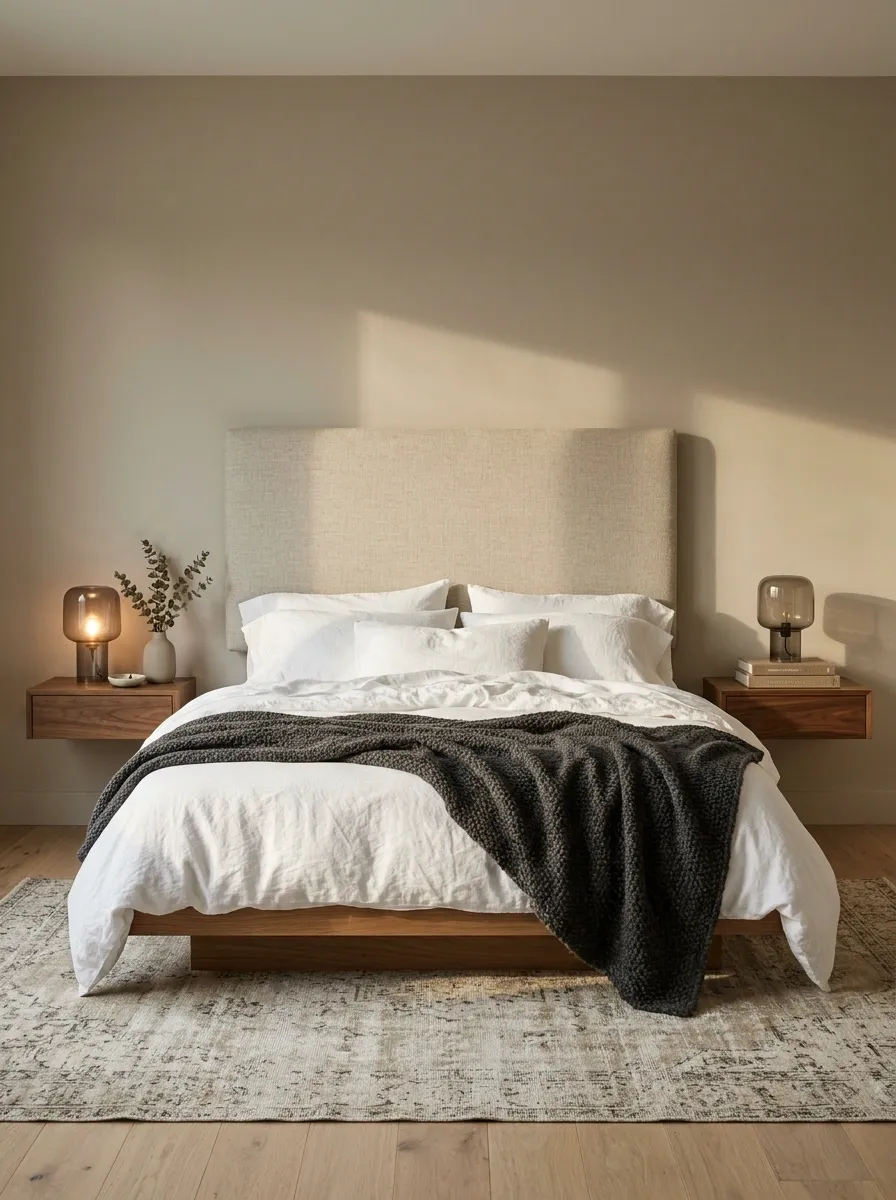
A padded rectangle is one of the most flexible headboard solutions because it does not need to attach to the bed frame.
Choose width and height around the mattress, pillows, and seated position, then use a properly rated mounting system. Keep the lower relationship with the mattress practical so pillows do not disappear into an awkward gap. The plain shape lets fabric texture do the decorative work.
Size the panel around pillows and posture
Vertical Upholstered Channels
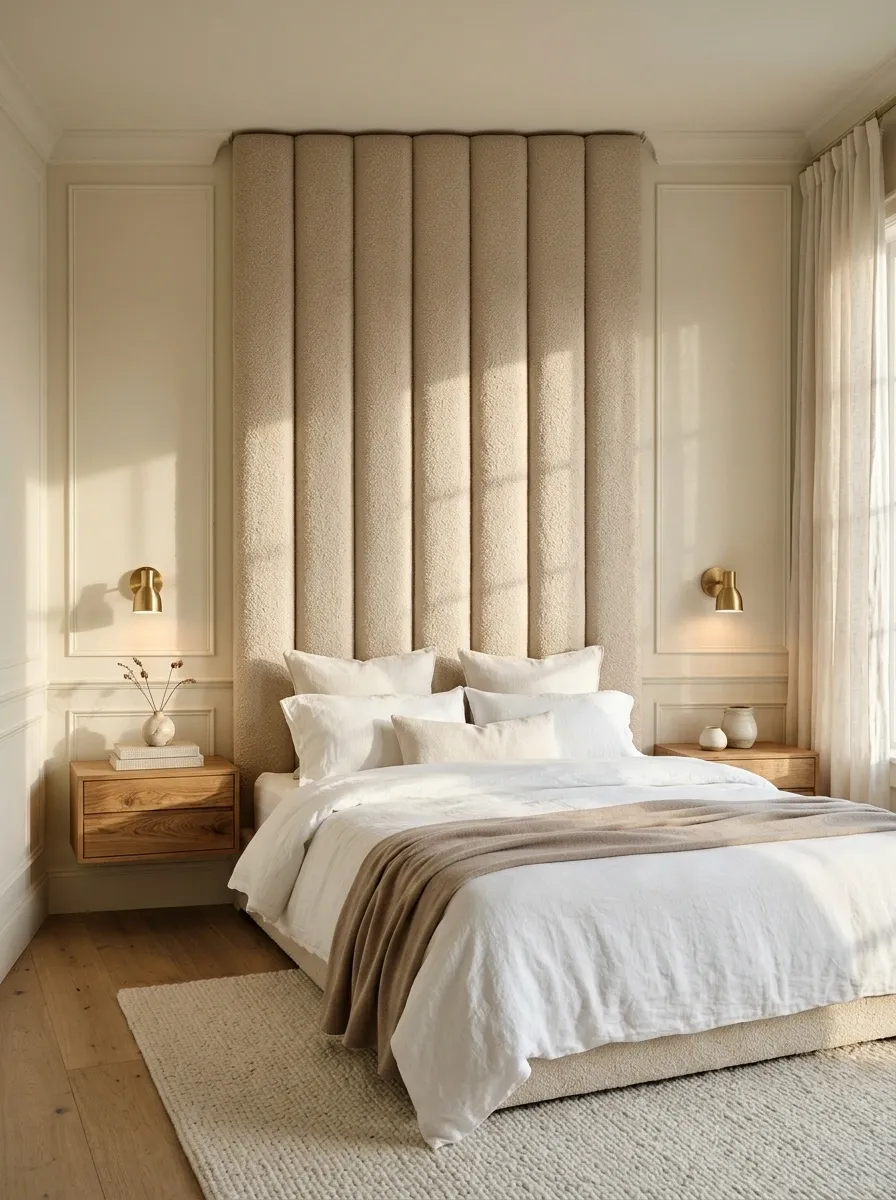
Vertical channels can give a plain bed wall rhythm and a taller-looking emphasis.
Plan the channel width before buying fabric so the outer edges finish cleanly. Use a suitable supported assembly rather than relying on individual lightweight pieces stuck casually to the wall. Keep the rest of the bed relatively simple; the channels already provide a strong pattern through shadow.
| Channel choice | Visual effect |
|---|---|
| Broader sections | Quieter and more substantial |
| Narrower sections | More rhythmic and tailored |
| Softly textured fabric | Gentler edges |
A Curved Upholstered Panel
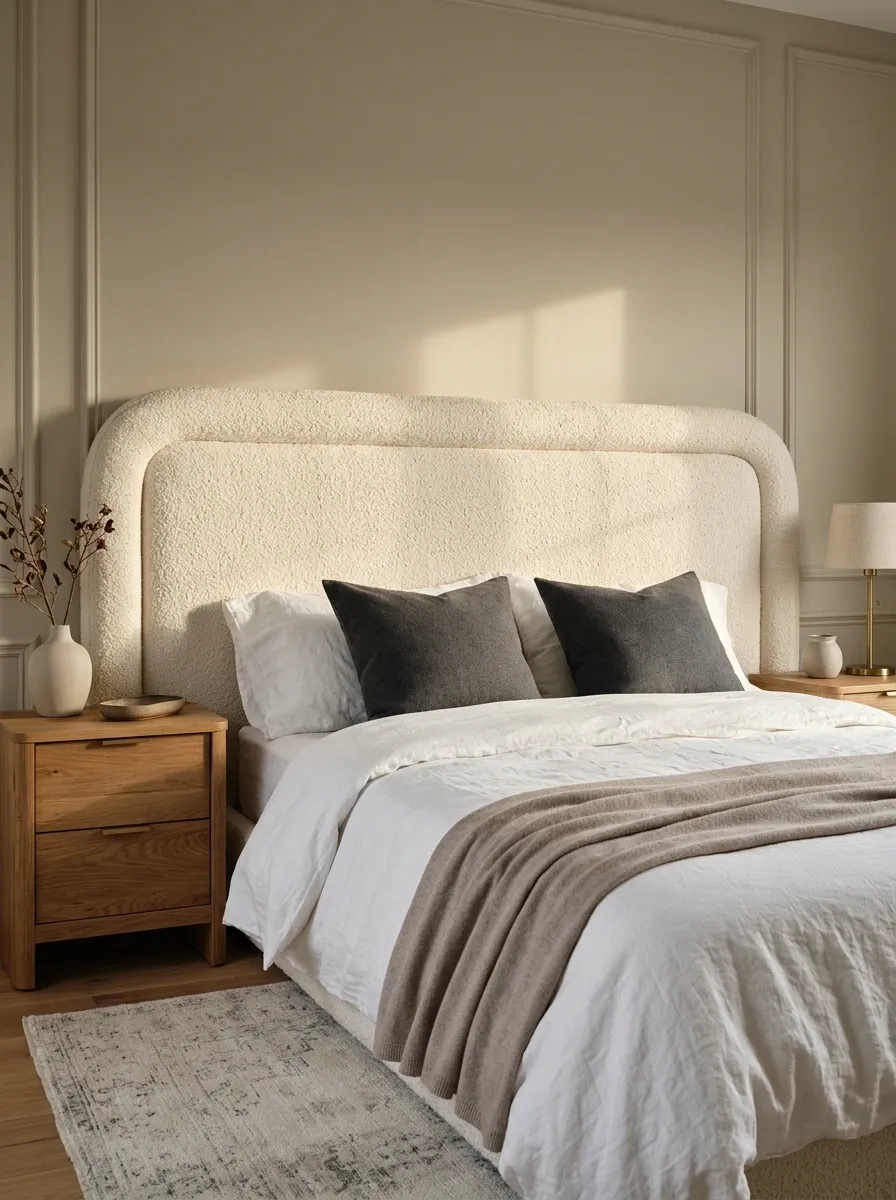
A curved top can soften a room full of rectangular furniture.
The panel might have a broad arch, rounded corners, or a shallow asymmetric curve. Keep the padding even around the outline and choose fabric that behaves well on the shape. An uncomplicated curve is often more convincing than several competing scallops, especially in a small bedroom.
Balance it: pair the curved headboard with simpler bedside furniture rather than repeating curves on every object.
A Wide Padded Panel Behind the Bedside Tables
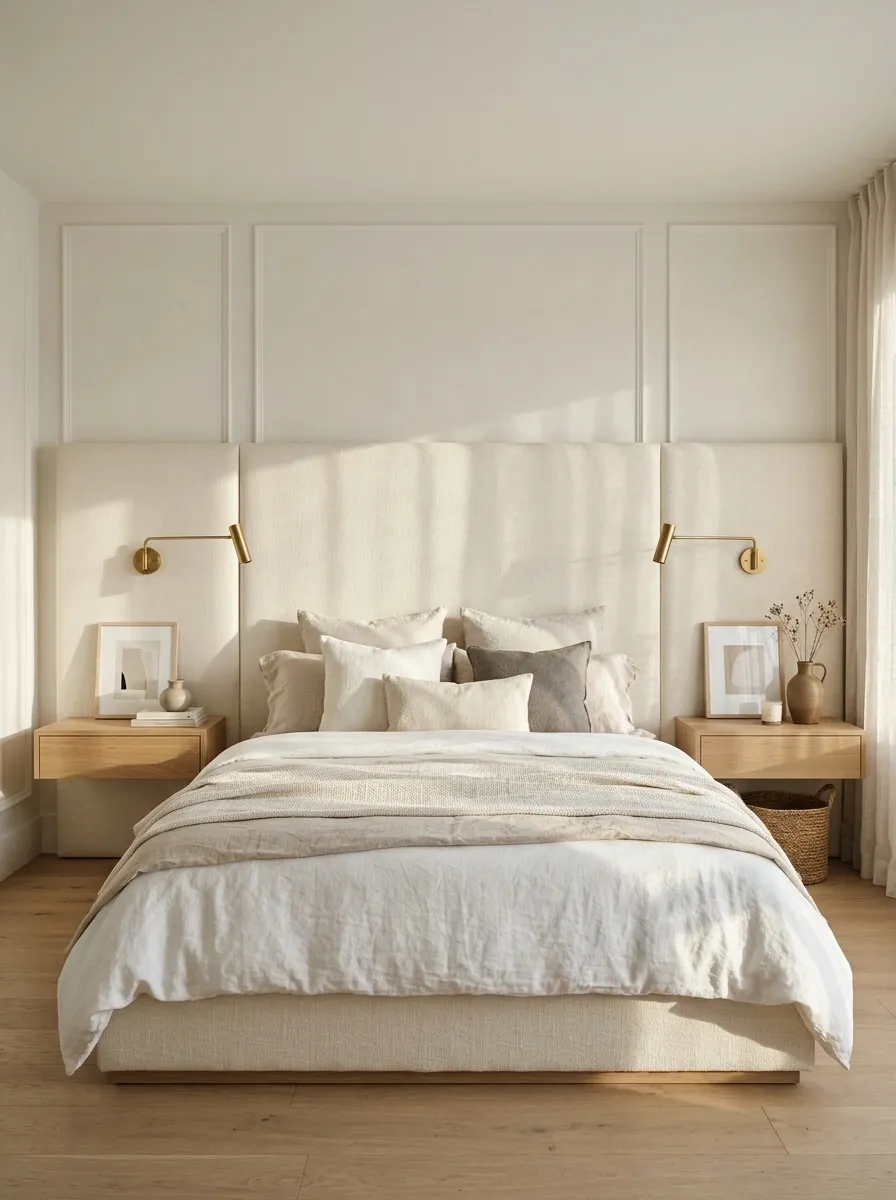
A wide panel can connect the bed and bedside pieces into one composition.
Plan sockets, switches, ventilation openings, and access before building. The panel does not need to be very tall to feel substantial; its width already creates presence. Use wall mounting and materials appropriate to the weight, and keep furniture positions flexible enough for cleaning and bedding changes.
Connect the bed and the bedside pieces
A Winged Headboard Mounted Independently
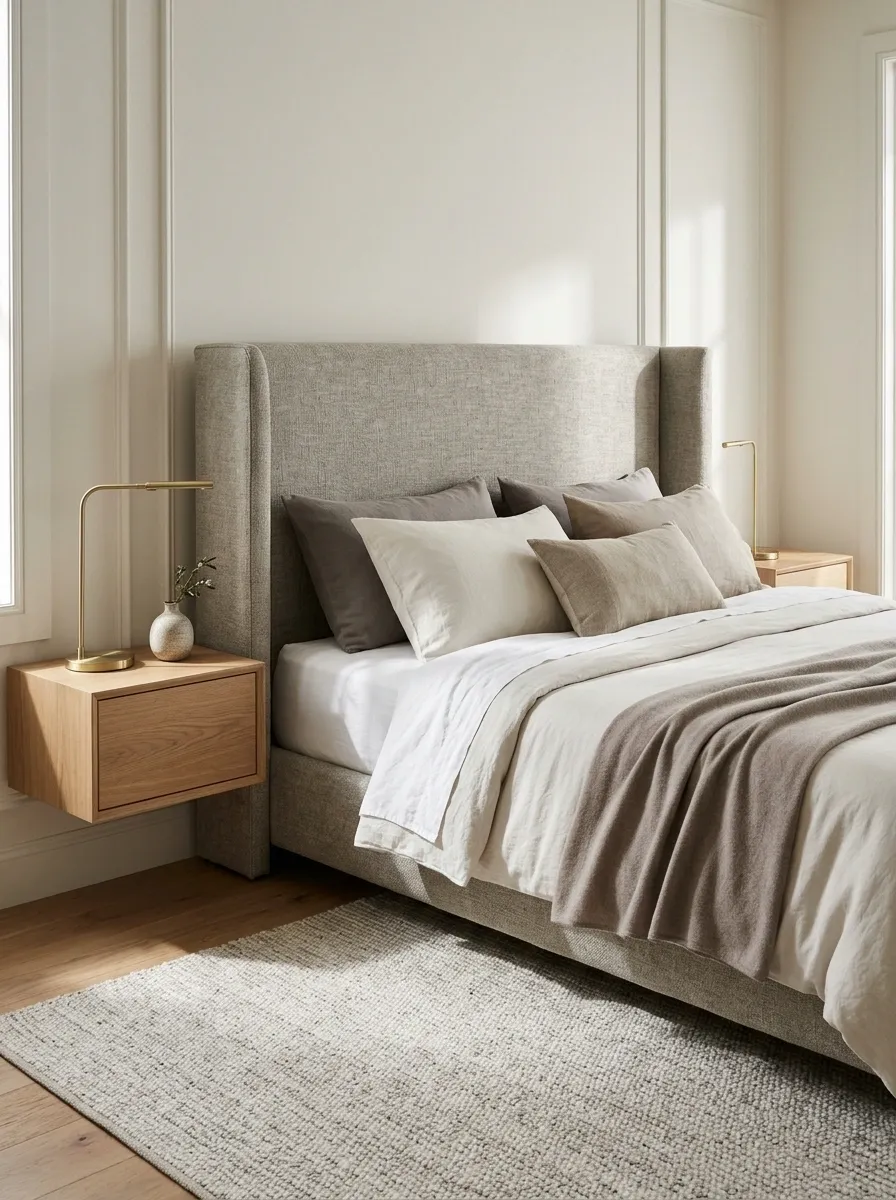
Shallow upholstered wings can make the bed feel more enclosed, but they need enough room and a properly designed structure.
Check how the wings relate to bedside tables and the route into bed. They should not pinch access or press against curtains. A compact version often feels more comfortable and less theatrical than a deep hotel-style enclosure transplanted into an ordinary bedroom.
Check from the side: the wings should look intentional in profile as well as from the foot of the bed.
Padded Cushions on a Purpose-Made Rail
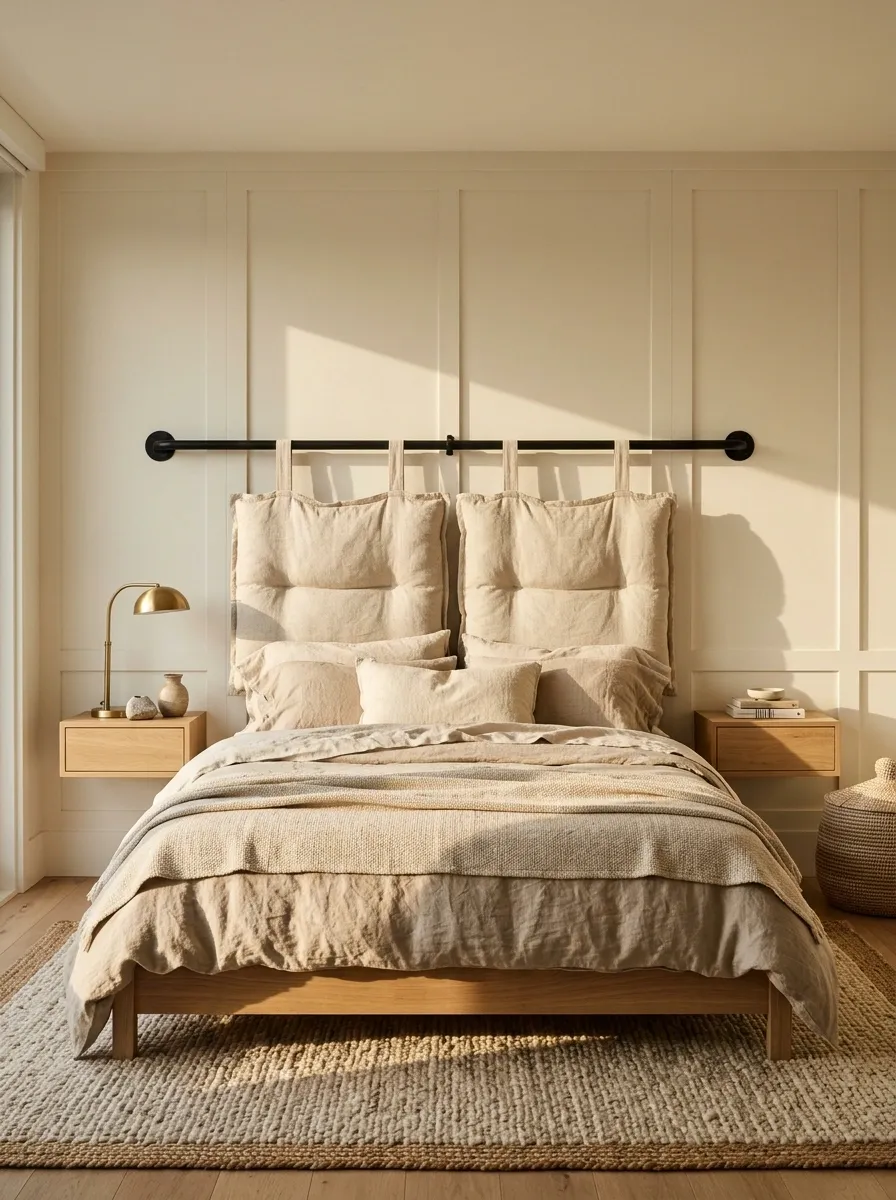
A securely mounted rail with cushions designed for that use can give a bed a relaxed, softer backdrop.
Use a system that supports the loaded cushions and keeps attachments secure. Position the cushions for actual leaning rather than appearance alone. Avoid long loose ties or improvised attachments that can snag. Removable covers are useful because a headboard gets more contact than a decorative wall hanging.
| Plan together |
|---|
| Rail fixings and load |
| Cushion height behind the pillows |
| Secure attachment method |
| Cover removal and cleaning |
Change the Wall, Keep the Furniture
A Painted Arch Behind a Plain Bed
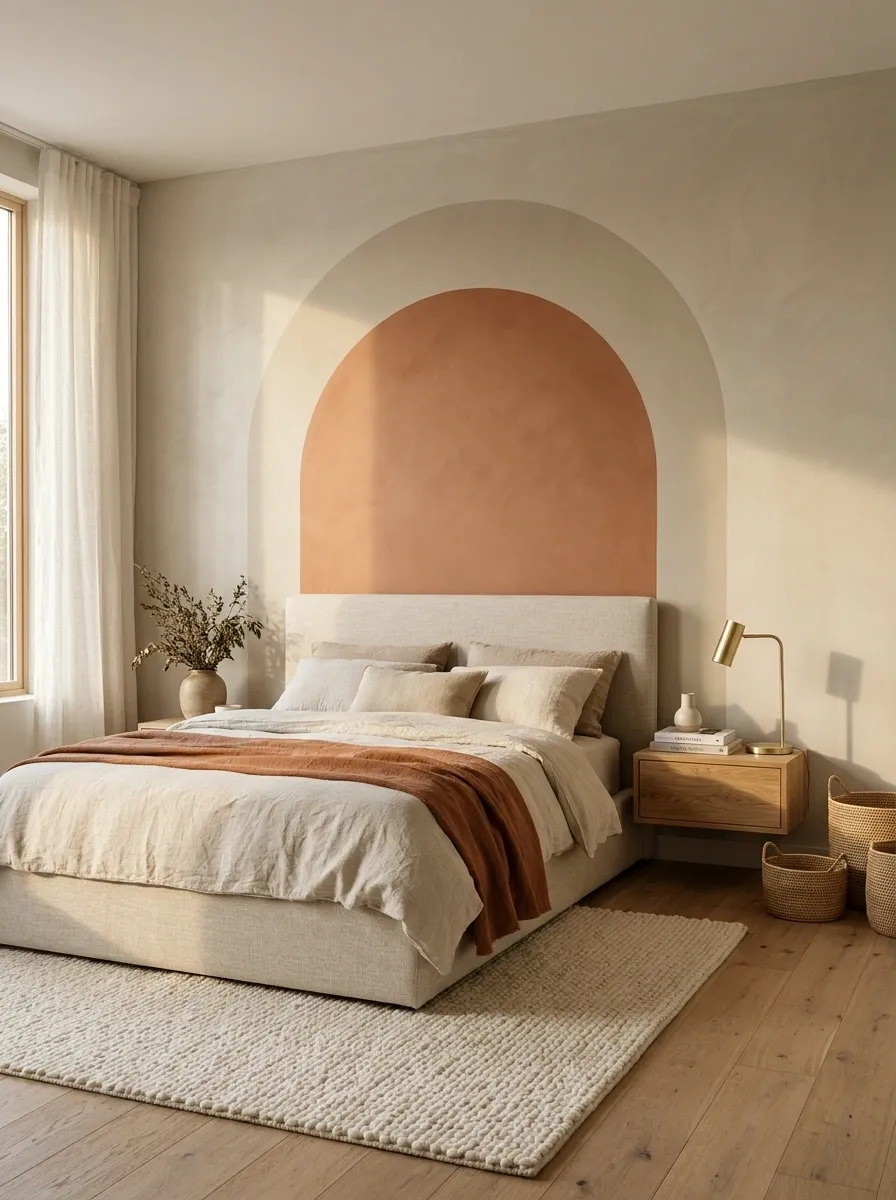
No extra depth. No new furniture. Just a clear outline behind the bed.
Mock up the arch in paper or tape and look from the doorway. Check the width against the mattress and the curve against nearby windows and lights.
Remember what paint supplies: a backdrop. If sitting against the wall is uncomfortable, softness needs a separate solution.
A clear outline without another object
Mock up the arch before choosing the final edge position.
A Broad Painted Band Across the Bed Wall
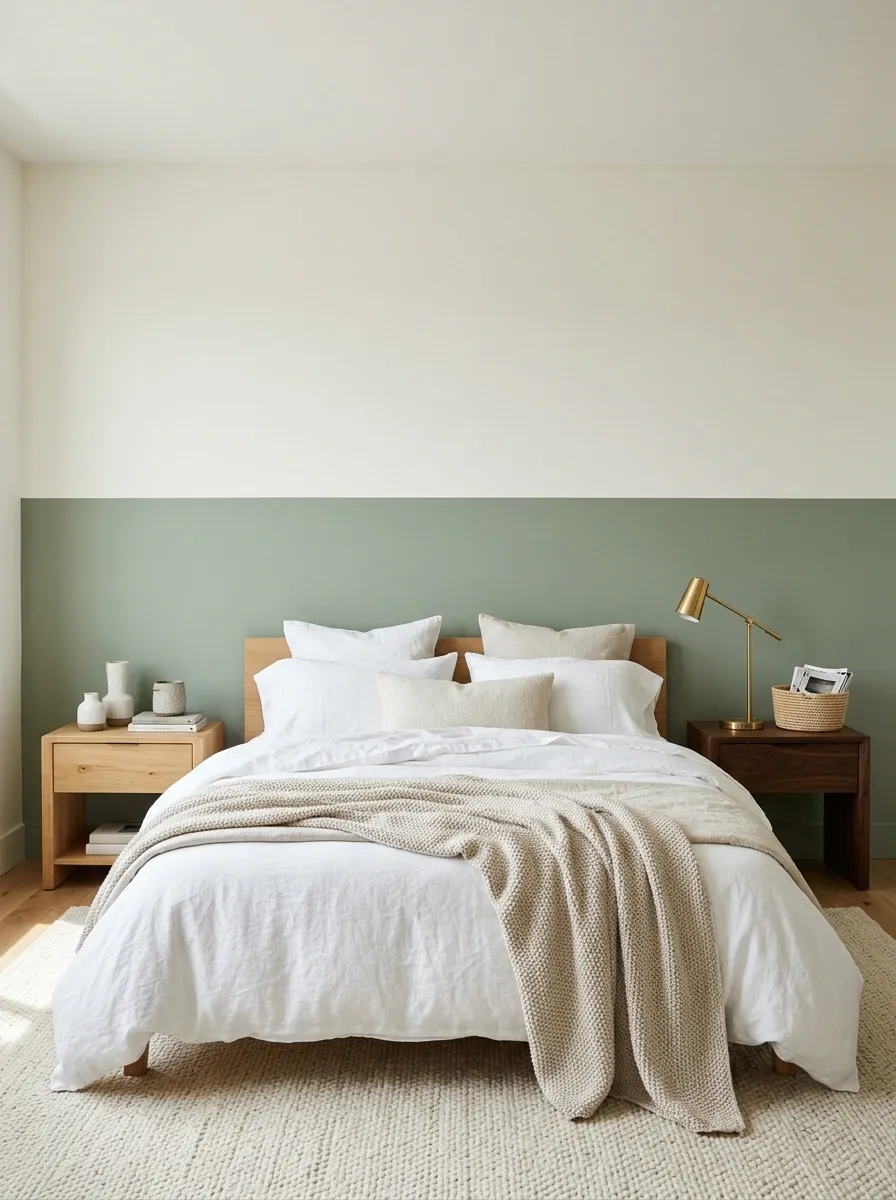
A horizontal color band can link the bed and bedside furniture, particularly in a room where several small pieces feel disconnected.
Set the height around the furniture and architectural features rather than choosing it arbitrarily. Keep the upper wall light if you want a quieter effect. The line should pass deliberately behind the arrangement, not skim awkwardly across switches and window trim.
Useful application: a room with a low headboard and mismatched bedside tables that need a shared background.
A Wallpaper Panel With a Defined Border
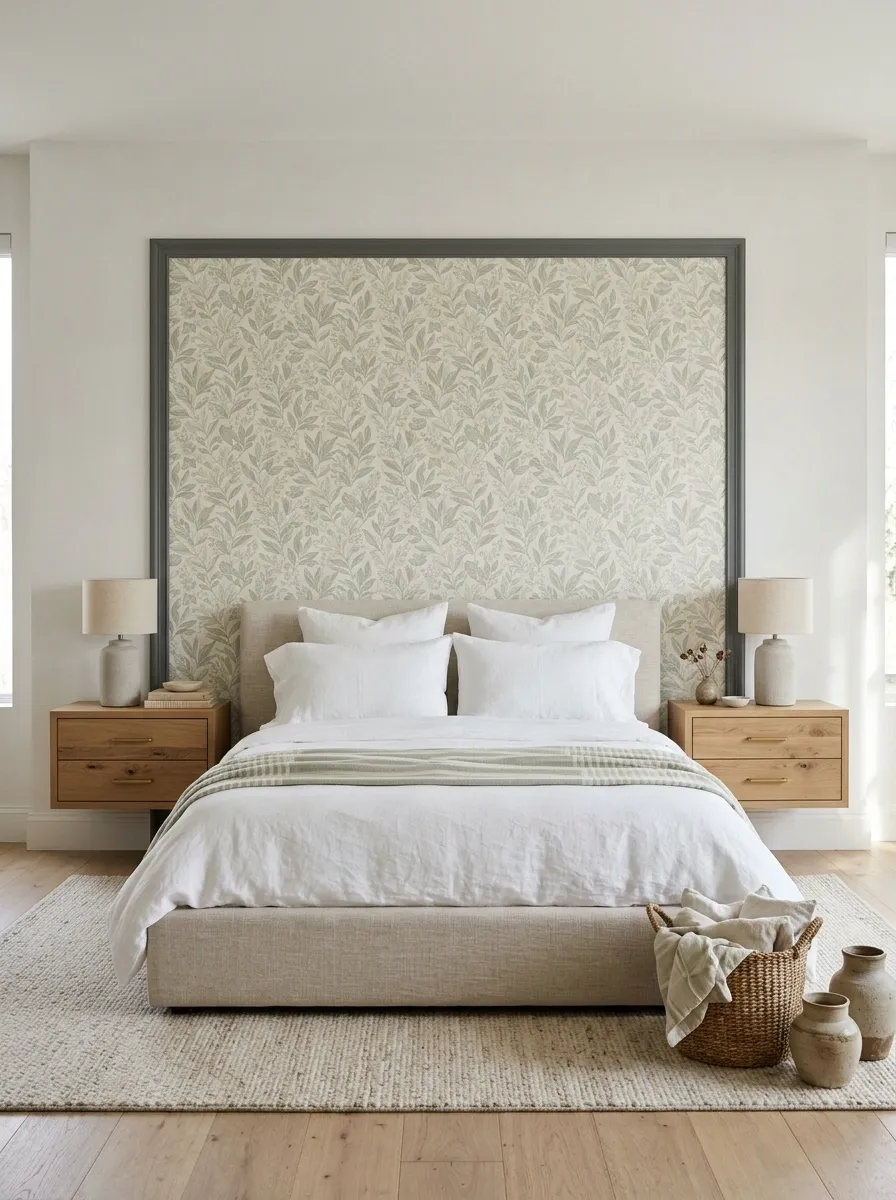
Use wallpaper as a large framed section rather than covering the entire bedroom.
Size the panel so the bed feels comfortably contained within it. Choose a border treatment that suits the wall and paper; a simple painted margin may be enough. Removable paper still needs a compatible surface and a discreet test, especially in a rental.
| Pattern | Best supporting move |
|---|---|
| Large botanical | Plain bedding |
| Subtle stripe | Simple border |
| Small repeated motif | Generous panel size |
A Soft Landscape Mural
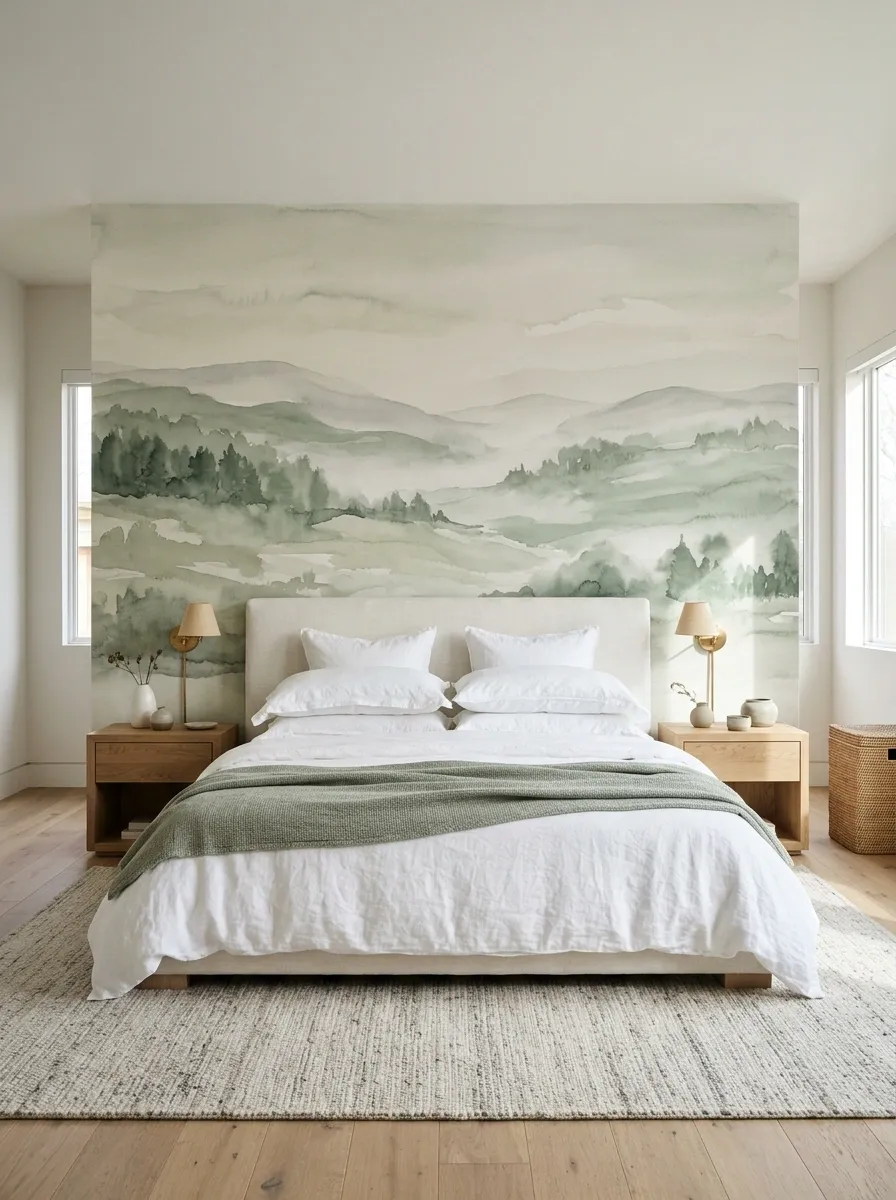
A mural can make the bed wall feel less flat, especially when the scene has open areas rather than dense detail everywhere.
Plan the composition around the mattress and pillows. Important elements should not disappear behind the bed or be chopped by a lamp. Keep surrounding colors connected to the mural so it feels like part of the room rather than a very large picture added afterward.
Leave the main scene above the pillows
Picture-Frame Molding Behind the Bed
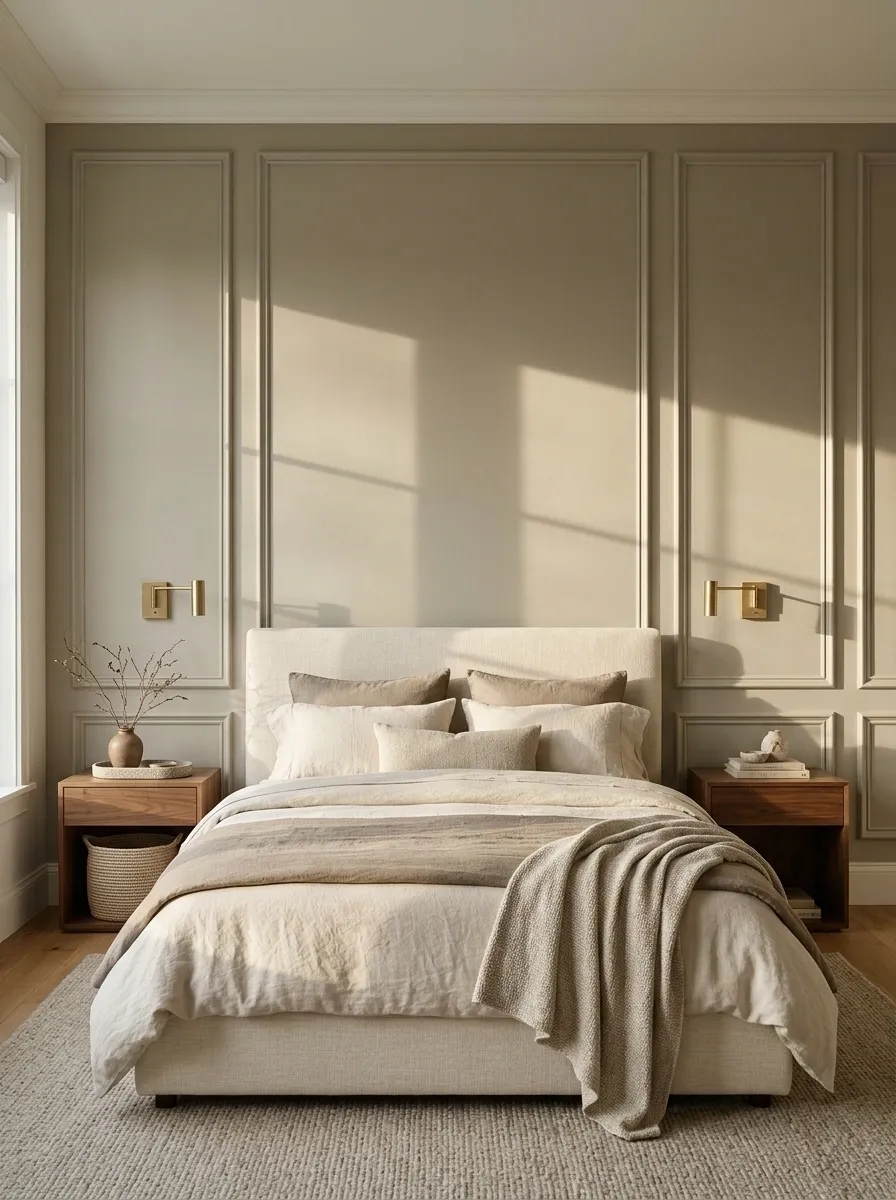
Molding can create a tailored setting around a simple bed.
Design the panel proportions with the bed in place and decide whether the whole arrangement or only the bed should sit within the frame. Paint the molding and wall together for a quieter result. This gives the effect of architectural detail without adding a padded object.
Avoid the almost-fit: a molding edge that lands just behind a lamp or grazes a headboard corner looks less deliberate than a clearly larger frame.
Wide Vertical Battens
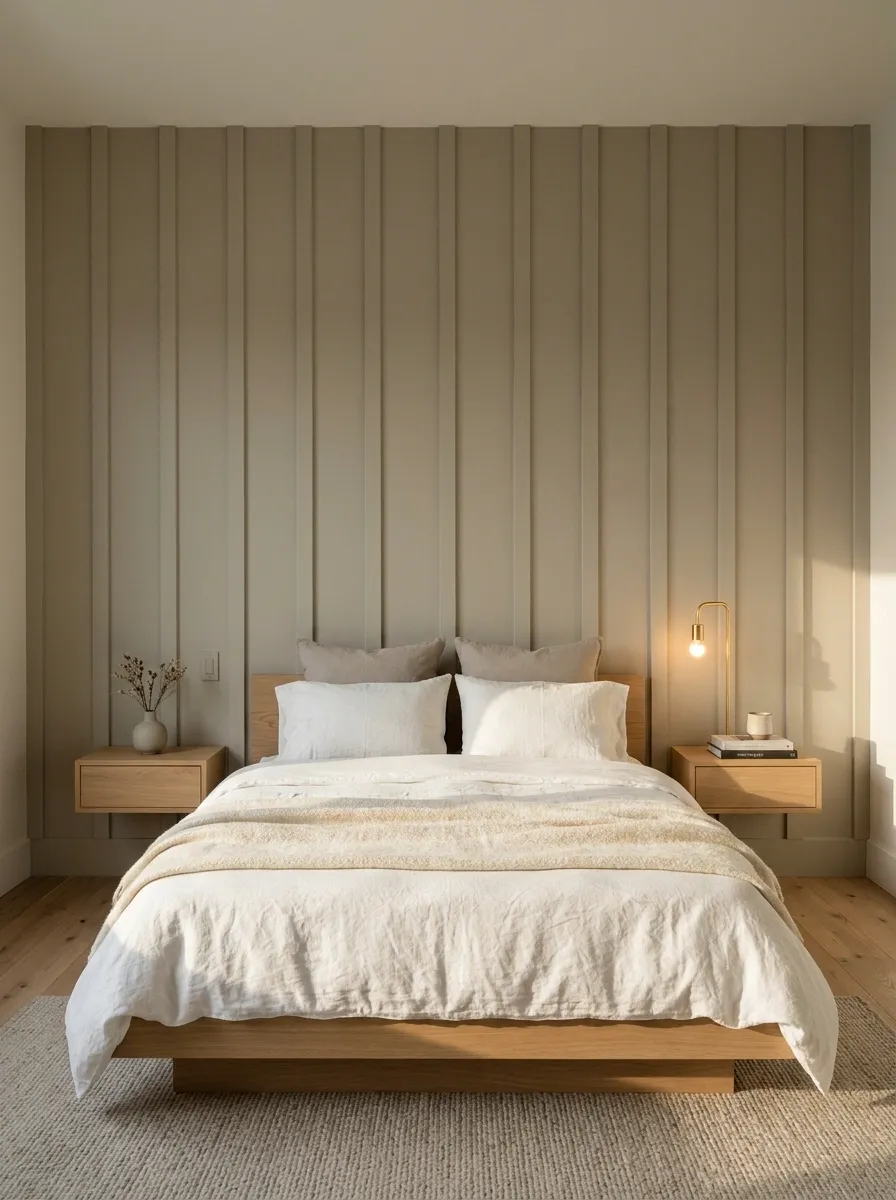
Wide battens can give the bed wall structure without the busier rhythm of narrow slats.
Use materials and fixings suitable for the wall, and finish edges smoothly. Plan the spacing around outlets and existing trim. A tonal paint finish keeps the effect calm, while a stronger color makes the entire wall more of a feature.
Keep the bed simple: let the batten spacing provide the pattern.
Horizontal Timber Planks
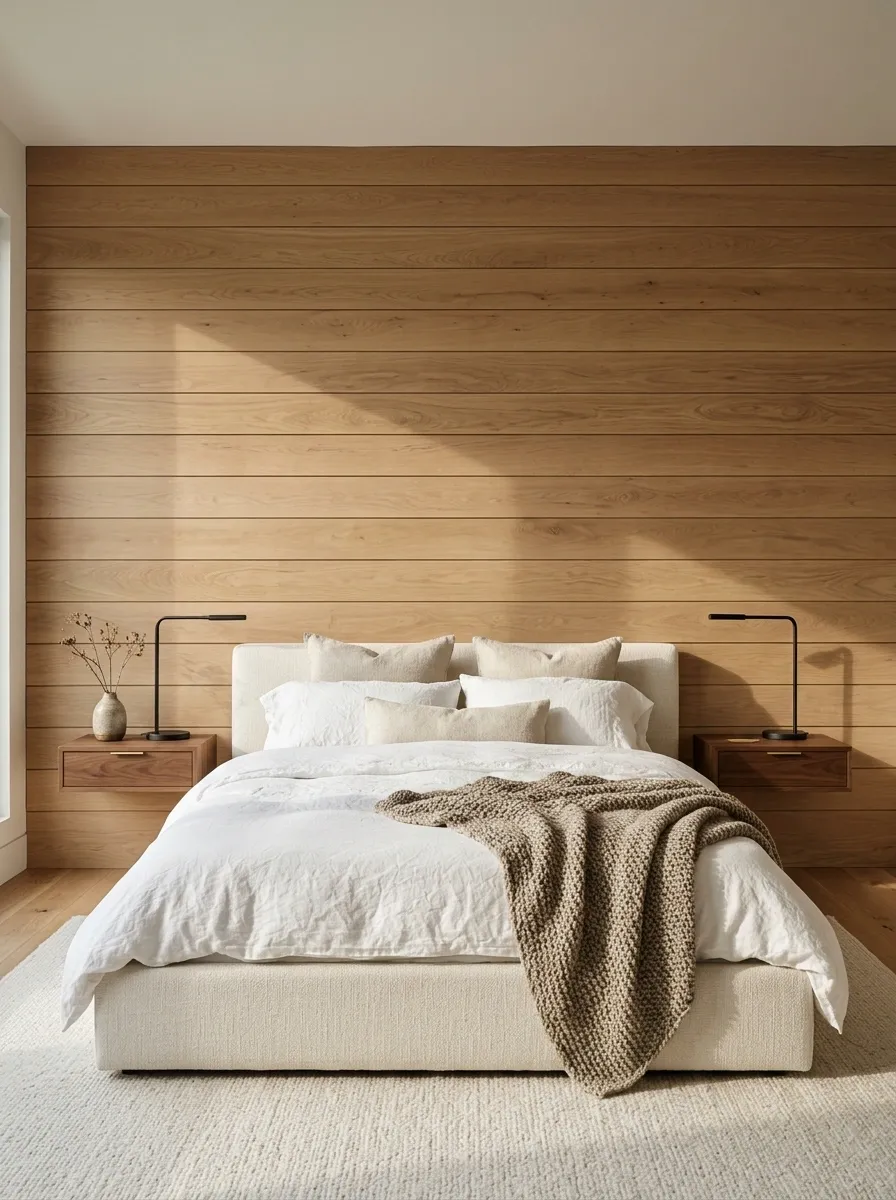
Horizontal boards can make a headboard backdrop feel broad and grounded.
Choose an appropriate, known material and a clean installation method rather than bringing questionable reclaimed timber straight indoors. Plan board ends, joints, fixings, and wall services. A restrained finish and plain bedding keep the look from becoming excessively rustic.
Let the timber read as one broad surface
Cork as a Warm Wall Backdrop
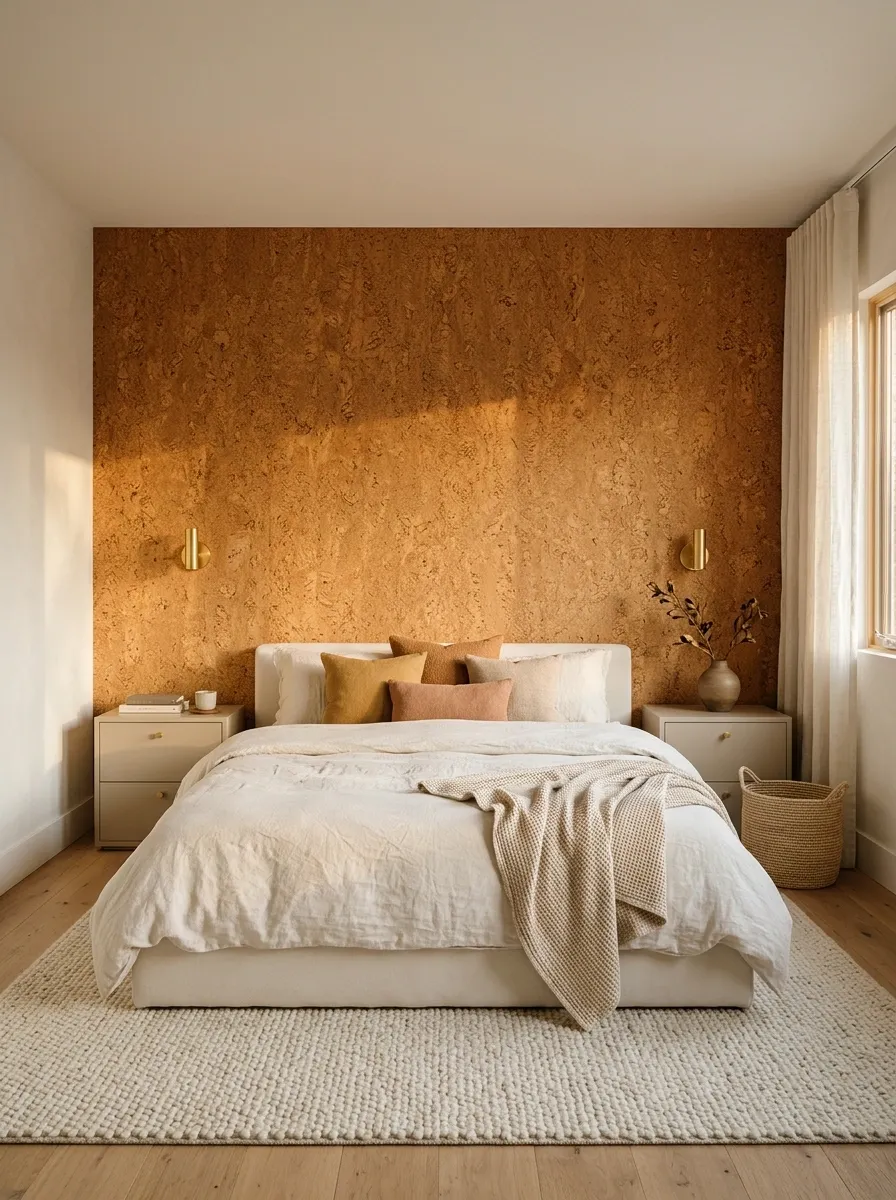
Cork can add a softer-looking natural surface behind the bed without imitating timber paneling.
Use a wall product suited to the installation and follow its preparation and adhesive requirements. Keep it plain behind sleepers rather than turning the area into a pinboard with sharp objects. Choose nearby textiles that contrast with its texture so the wall remains the distinctive material.
| Cork contributes | Add beside it |
|---|---|
| Warm color | Pale bedding |
| Fine texture | Smooth painted furniture |
| A continuous surface | A simple light fixture |
Bring in Character Without Buying a Bed Set
A Framed Fabric Panel
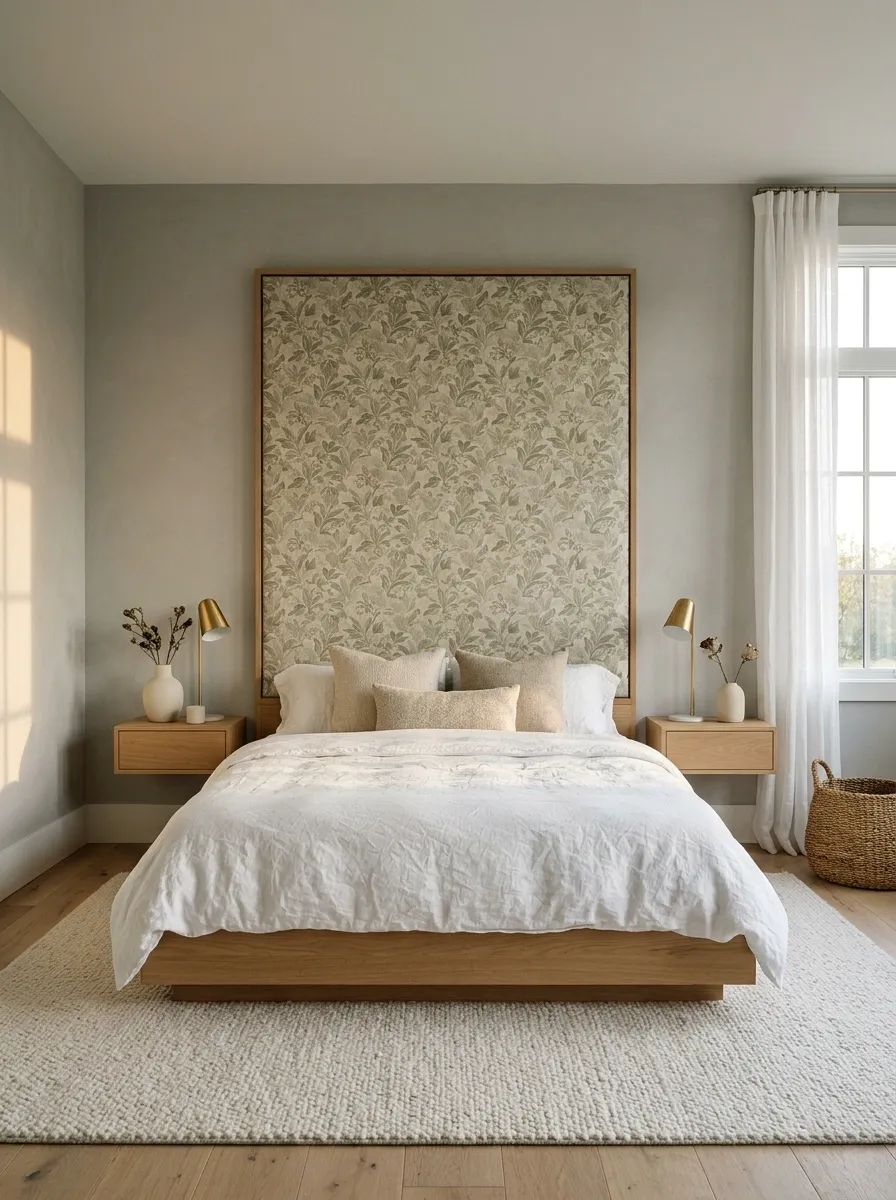
A fabric panel gives a favorite textile a larger, more deliberate presence than a cushion.
Stretch and secure it over a suitable support, frame it as appropriate, and use a properly rated installation. Keep hard frame edges and heavy components positioned safely relative to sleepers. This works well when you want pattern on the wall but would rather keep the bedding plain.
Choose the fabric at full scale: a small motif can feel very different when repeated across a broad panel.
A Securely Hung Flat Textile
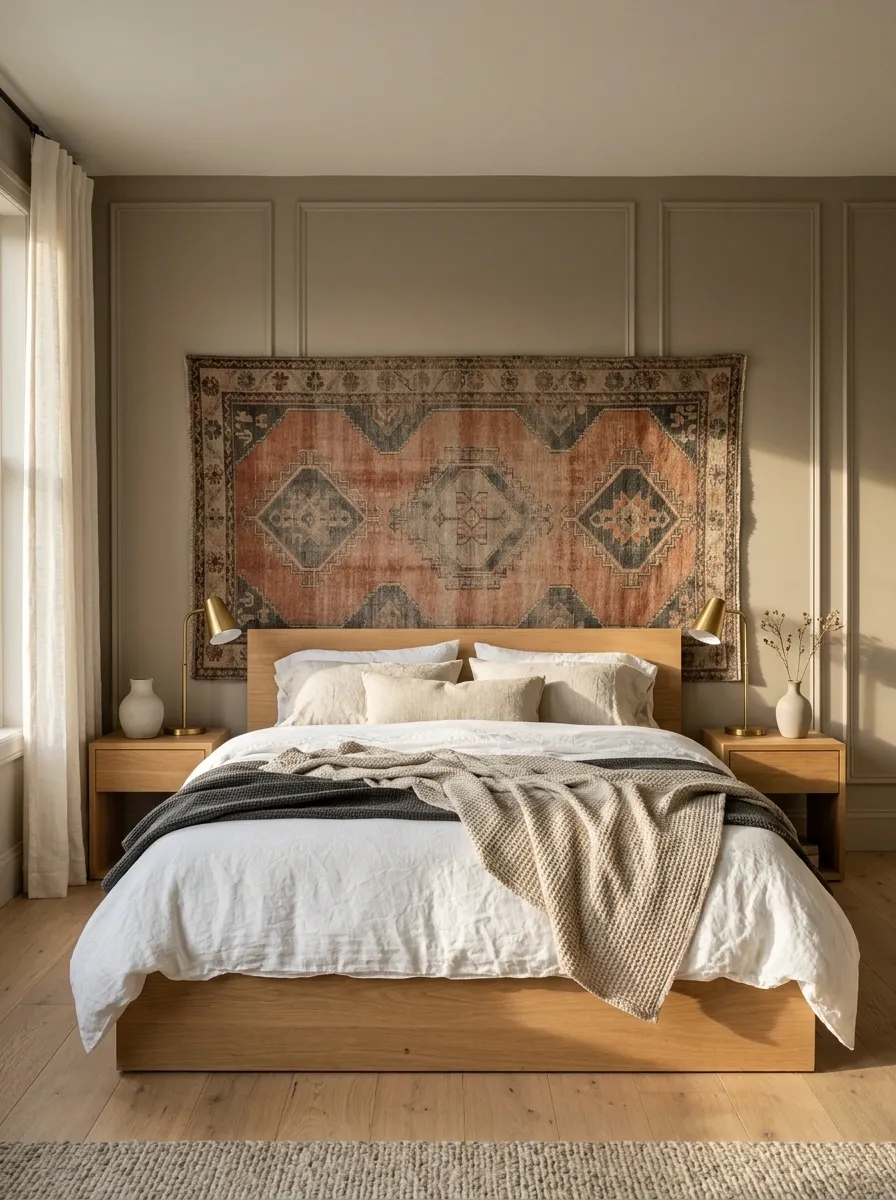
A flat textile can soften the wall behind a bed, especially when its colors connect with the room’s existing fabrics.
Use a proper hanging method suited to its weight and keep it clear of lights, heaters, and controls. Avoid loose heavy rugs hung with improvised clips. The point is a calm, secure backdrop, not a fabric installation that rearranges itself while you sleep.
Support the whole piece appropriately
Check support, weight, location, and clearance from electrical and heat sources.
A Reclaimed Door Used as a Fixed Backdrop
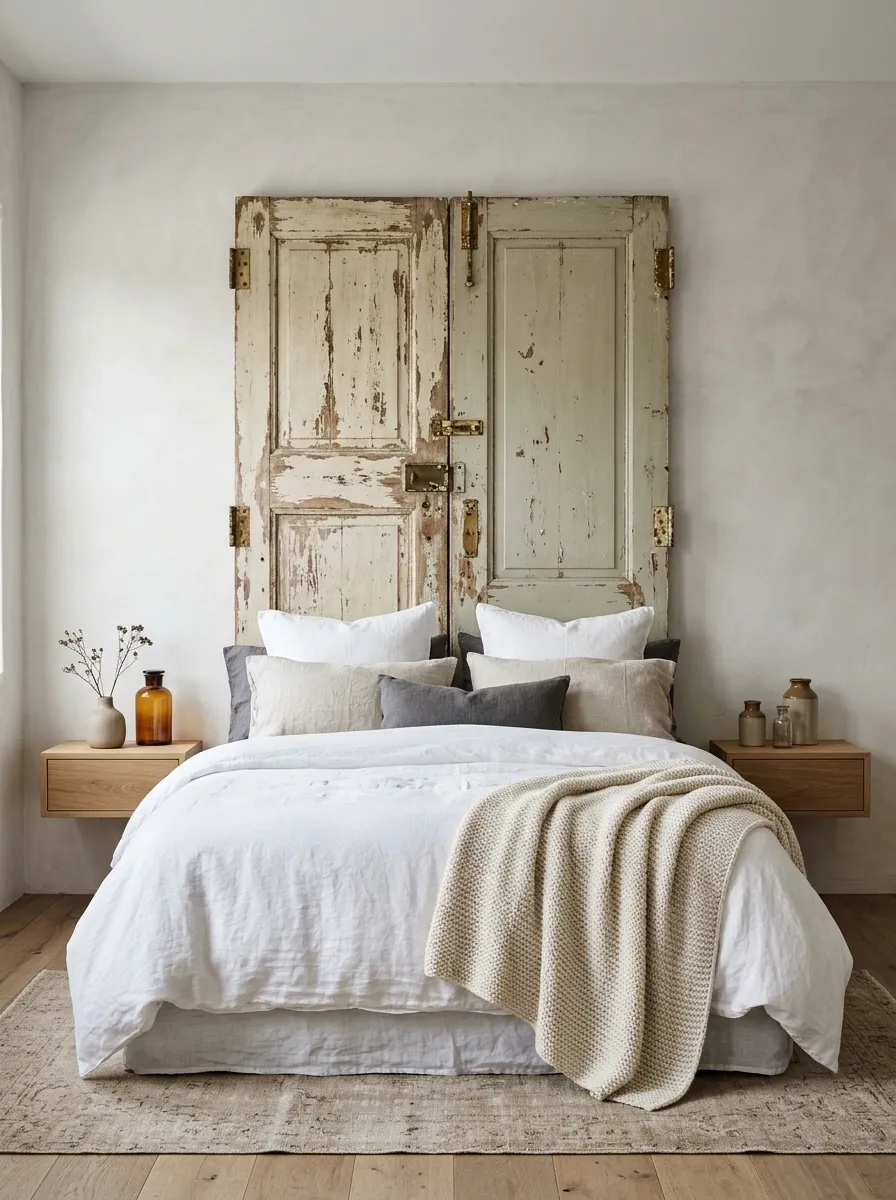
A salvaged door can make an interesting headboard backdrop when its condition, finish, and proportions are right.
Remove unsuitable hardware, assess unknown coatings before disturbing them, and have the heavy piece secured appropriately. Do not simply lean it behind the bed. Keep the room around it relatively quiet so the old paneling and wear can provide the character.
Reject: unstable material, projecting hardware, suspect contamination, or a size that makes the room awkward.
A Compatible Replacement Headboard on the Existing Frame
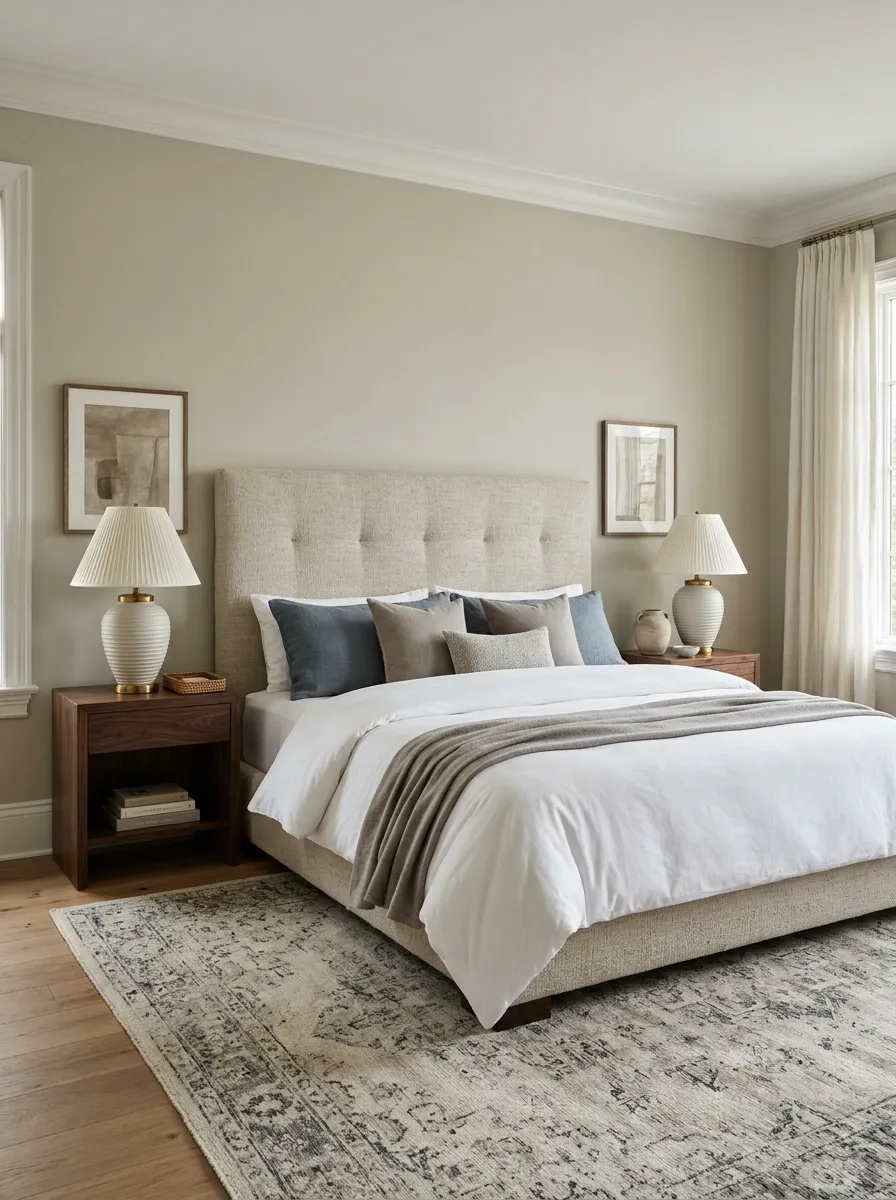
You can replace the headboard without replacing the bed, provided the connection is compatible.
Check the frame manufacturer’s guidance, mounting pattern, hardware, load, and stability. Use approved adapters where specified rather than improvising a connection. This is often the most straightforward route when the existing headboard is damaged or simply cannot be adapted into something you like.
| Verify before ordering |
|---|
| Frame and headboard compatibility |
| Mounting position and hardware |
| Finished height with the actual mattress |
| Room width and bedside clearances |
Stop at the Change That Solves the Problem
If the fabric bothers you, change the fabric. If the wall feels empty, give it a backdrop. If sitting in bed is uncomfortable, add properly supported padding.
There is no obligation to replace a perfectly good base because the matching furniture collection has developed a new colorway. Your bed can survive a change of scenery.