
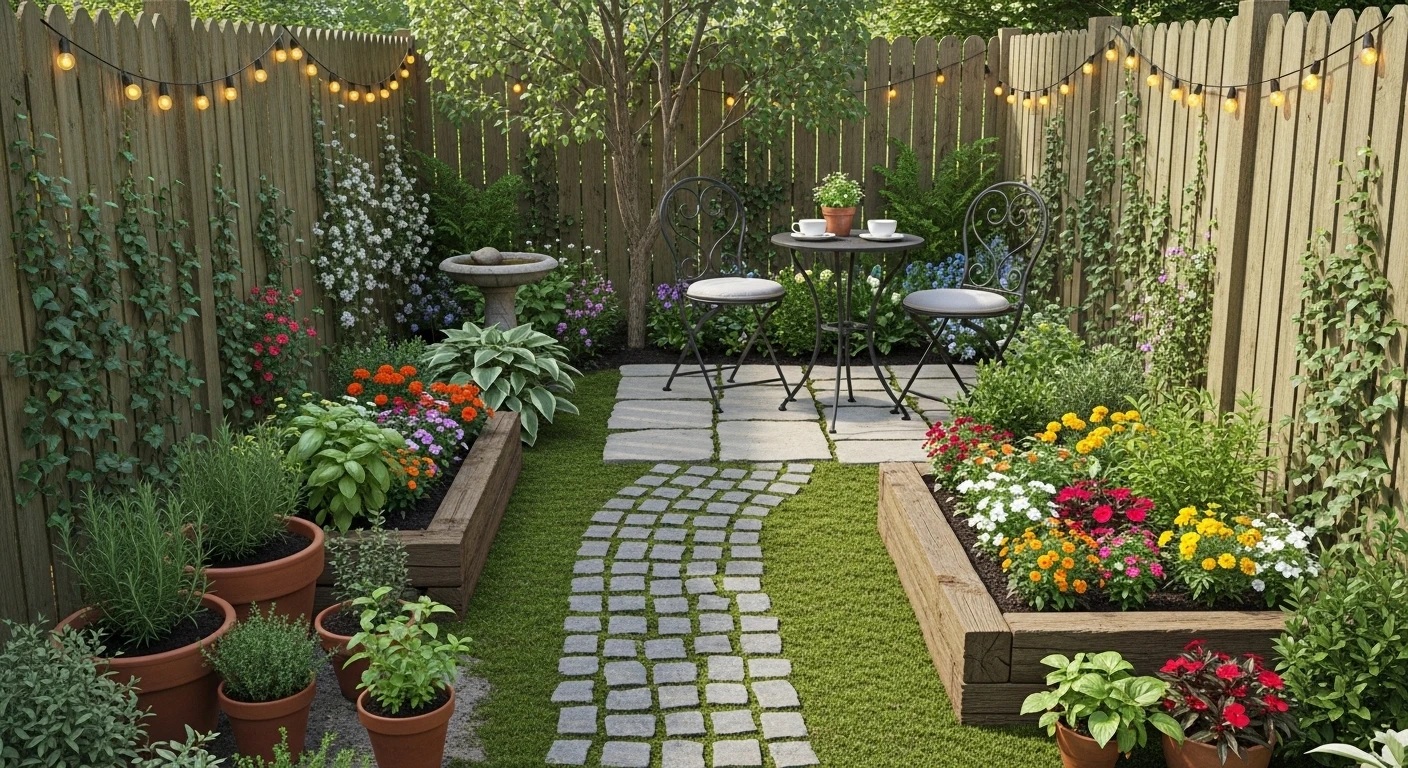
Somewhere along the way, small garden owners collectively decided that limited square footage meant limited ambition — and the results are everywhere. Patchy grass that gets mowed twice a year. A single sad pot near the back door. Maybe a plastic chair that’s been sitting at a slight angle since 2021 because the patio underneath it was never quite level. The vibe? Functional neglect with seasonal guilt.
The deeply unhelpful advice that gets recycled endlessly is to “keep it simple” in small spaces — which apparently translates to doing almost nothing and calling it minimalism. Real minimalism is intentional. What most small gardens have going on is just emptiness with a lawn border.
Here’s what nobody mentions loudly enough: small gardens are genuinely easier to design well than large ones. Every element is visible from everywhere. Proportions are manageable. A single good decision — one strong focal point, one committed planting style, one lighting choice that actually works — transforms the entire space in a way that would barely register in a larger garden. You don’t need more room. You need a better plan and the willingness to commit to it.
These ideas cover everything from maximalist English cottage chaos to meditative Japanese restraint, and every single one of them proves that the square footage was never the problem to begin with.
Your Small Garden Doesn’t Have a Size Problem
Before plants get purchased and pavers get laid, the thinking needs a complete overhaul — because the instinct to compensate for smallness almost always makes things worse.
Trying to Fake Bigger is the Enemy — Mirrors, endless pale colors, every trick designed to create the illusion of space — all of it broadcasts insecurity and none of it actually works. Gardens that embrace their scale and design confidently within it look a thousand times better than ones straining against their own dimensions.
One Strong Focal Point Beats Ten Mediocre Ones — Small gardens cannot absorb visual clutter the way large ones can. A single sculptural fountain, an exceptional specimen tree, or a seriously committed planting bed will anchor the whole space. Scattering four medium-interesting things around the perimeter just creates noise.
Vertical Space is Free Real Estate — Most small garden owners are so fixated on the ground plane that they completely ignore the walls, fences, and overhead space available to them. Climbing plants, wall-mounted planters, pergolas, and hanging lighting all add dimension without consuming a single square foot of floor space.
Design Rules That Small Gardens Actually Reward
Large gardens can absorb mistakes — something ugly in one corner gets forgotten by the time you reach another. Small gardens have no such mercy. Every choice is on display at all times, which sounds terrifying until you realize it also means every good choice gets maximum exposure.
Commit to a Mood, Not a Catalogue — Japanese zen, romantic English cottage, tropical maximalism — these aren’t just aesthetic categories, they’re structural frameworks that tell every subsequent decision what it needs to do. Mixing two or three of them without a dominant direction produces spaces that feel confused rather than layered.
Materials Need Consistency — One primary hard landscaping material used confidently throughout reads as design. Three different paving types cobbled together from whatever was on sale reads as indecision permanently installed in your garden.
Planting Density is Your Friend — Sparse planting in a small garden doesn’t create breathing room; it just makes the space feel unfinished and slightly depressing. Dense, layered planting that fills beds properly creates the lush enclosure that makes small outdoor spaces feel like destinations rather than afterthoughts.
What Separates a Good Small Garden from a Great One
The difference rarely comes down to budget. Expensive materials in a poorly conceived space still look like an expensive mistake. These are the details that actually move the needle.
Lighting is Not Optional — A garden that disappears after sunset is effectively half a garden. Whether it’s string lights creating atmosphere above a seating area, uplighting on a feature plant, or ground-level LEDs edging a path, evening lighting transforms small outdoor spaces more dramatically than almost any daytime design choice.
Every Container Needs to Earn Its Place — Pots and planters are among the most powerful tools in a small garden precisely because they’re moveable and scalable — but a collection of mismatched containers in varying states of health is worse than no containers at all. Fewer, better, consistently styled.
Seating Placement is a Design Decision — Where you put the chair or bench determines how the whole garden is experienced. Tucked into a planted corner with something worth looking at, seating creates a destination. Plopped in the middle of an open space, it just gets in the way.
Small Garden Ideas
The Garden That Decided Maximalism Was a Personality
My small garden this year on full bloom.
by u/Rishstudio in gardening
This brick cottage entrance doesn’t have a single square inch of unused wall — climbing roses arch over the doorway, lavender crowds the border, birdcage lanterns hang from the creeping stems, and a peacock painting gets mounted on the exterior like it belongs there, because apparently it does. The dark painted decking grounds the whole scene while a metal chair and folding table suggest this tiny space genuinely functions as a living room extension rather than just a threshold. What should be overwhelmingly cluttered instead reads as deeply personal and completely deliberate — the difference being that every single element here is alive with color or texture and nothing is filler. It’s the garden equivalent of someone who dresses incredibly well: technically a lot going on, but the confidence makes it work.
The Japanese Garden That Has More Serenity Than Your Entire Interior
Pea gravel, stone lanterns, a bonsai that looks older than your mortgage, a red Japanese maple, and a multi-tiered rock waterfall fountain that sounds like it was sourced directly from a meditation app — this small garden has done more with a tight urban space than most people manage with an acre. The warm timber bench offers a single uncluttered spot to sit and look at things properly, which is the entire point of Japanese garden design and the thing most Western gardens completely miss. Hostas, ferns, and azaleas fill the planted borders with considered variety rather than random abundance, and the aged wooden fence behind everything creates a backdrop that makes the whole composition feel contained and intentional. It’s restrained without being sparse and calming without being boring — an extremely difficult line to walk that this garden pulls off by taking the whole concept seriously from the start.
The Zen Garden That Went Full Cinema
Horizontal timber deck platforms float over black river pebbles and soft moss like something lifted from a Japanese film set, and the surrounding planting — ferns, boulders, a blazing red Japanese maple overhead — provides exactly the kind of layered natural drama that takes genuine plant knowledge to assemble. The bamboo fencing on two sides creates an enclosed world that makes you forget immediately that a neighborhood exists on the other side of it, and the black lantern in the corner does the atmospheric heavy lifting without drawing attention to itself. What makes this space exceptional isn’t any single element but the relationship between the hard materials and the planting — the geometry of those deck platforms against the looseness of the ferns and moss creates a tension that keeps the eye moving without ever feeling restless. This is a garden designed by someone who understood the assignment on the first attempt.
The Garden That Turns “Small Patio” Into a Lifestyle Brand
String lights draped under a timber pergola. A full sectional sofa with throw pillows. A wicker drum coffee table. Round concrete steppers floating through a grass panel. Sunflowers, roses, hydrangeas, and lavender all performing simultaneously without a single one overwhelming the others. This small garden has quietly achieved something that eludes most large outdoor living spaces — it actually looks like somewhere a person would want to spend time, rather than a space that was set up for a photo and then avoided on actual summer evenings. The pergola does the critical work of defining the room overhead without enclosing it, the string lights give it evening warmth without trying too hard, and the stepping stone path through the grass gives the whole layout a sense of arrival and destination that transforms a patio into a proper outdoor room.
The Romantic Cottage Garden That Doesn’t Know the Meaning of Restraint
Pink peonies. Purple campanula. Climbing roses threatening to take over the entire trellis. A stone urn spilling over with more flowers. A wicker chair with a striped cushion and a pink pillow sitting beside a small ground-level fountain that’s actually burbling. A herringbone brick path leading through all of it like a trail through an intentionally overwhelming dream. This garden operates on a completely different frequency from anything involving clean lines or material restraint — it commits entirely to floral abundance and the result is something that looks genuinely beautiful rather than designed, which is the hardest possible thing to achieve on purpose. The fact that the brick path and the stone fountain are there as structural anchors keeping the floral chaos from collapsing into itself is easy to miss, but pull either of them out and the whole composition falls apart.
The Black Shed Garden That Rewrote the Rules on Small Space Confidence
Dark painted timber cladding on the structure at the back, immaculate green grass down the center, stepping stones pressed into the lawn, a rustic wooden bench loaded with mismatched cushions, hanging baskets dripping with geraniums, wall-mounted planters stuffed beyond reasonable capacity, and enough dahlias, zinnias, and mixed perennials in the borders to supply a florist for a season. The dark backdrop is the genius move — it pushes everything planted in front of it forward with serious visual force and gives all that color maximum contrast to perform against. Most people would have painted that shed cream or grey and wrecked the whole effect. Instead, going dark turned a simple garden structure into the anchor of an entire composition, and the surrounding planting responds to it with the kind of enthusiastic abundance that dark backgrounds demand and generously reward.
Go Linear Luxe: Command the Space with Textures and LEDs
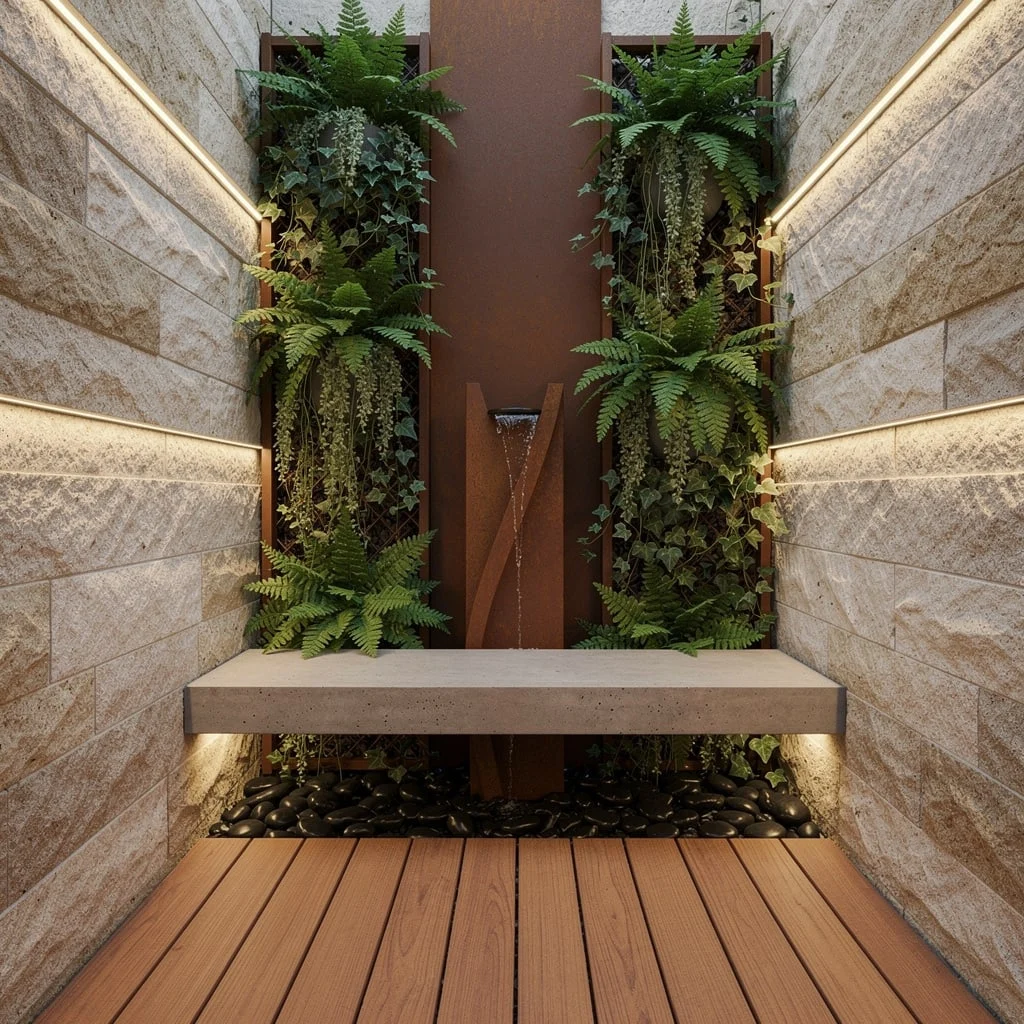
Want your garden to stop looking like a sad alleyway? Think linear. Grab textured limestone for your walls, dump those crusty bricks, and float a concrete bench above warm wooden decking. Stack vertical planters with ferns and trailing ivy—because horizontal planting is for amateurs. Drop some concealed linear LED strips in wall recesses for that moody night glow. Toss in a sculptural corten steel water feature and let water drop onto black river stones. Stop shoving spotlights everywhere—up-light your greenery and the limestone for max tranquility. Rule of thumb: always light from below, not above—makes your foliage look ten times boujee.
Courtyard Chic: Smash Boring with Terracotta and Glass
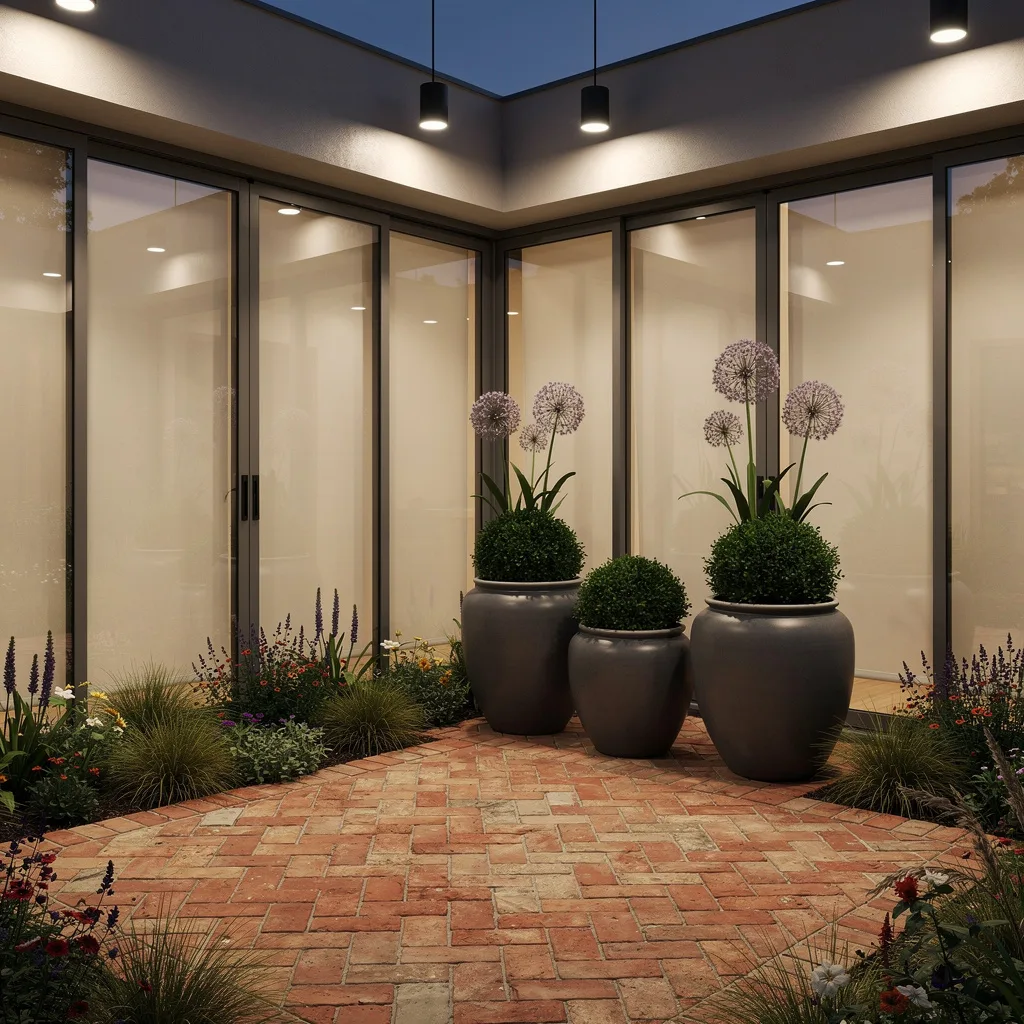
If you want that ‘garden meets art gallery’ vibe, start with floor-to-ceiling sliding glass panels—privacy, yes, but also drama. Lay herringbone terracotta tiles; patterns scream designer, plain tiles just mumble. Toss beds of low ornamental grasses and flowering perennials into the mix for softness. Anchor one corner with oversized ceramic planters in toned-down charcoal and stuff them with boxwoods and alliums—because tiny plants get lost. Hang discreet pendant lights for a cozy evening glow, and never ever rely on ceiling cans alone. Styling hack: mix up planter heights and groupings, always odd numbers—looks curated, not mall display.
Tropical Slice: Decks, Plant Screens, and Resort Energy
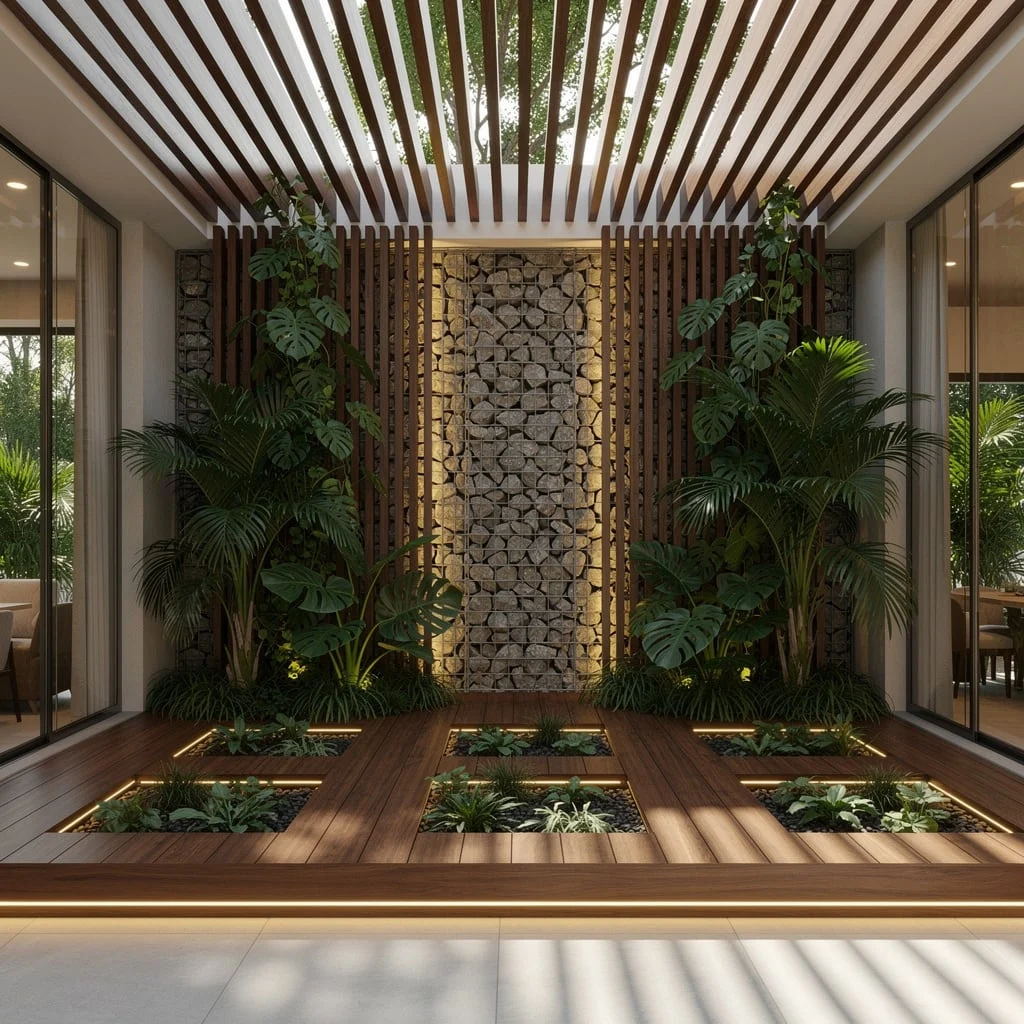
Want vacation vibes without quitting your job? Line your mini garden with rich timber decking and punch in groundcover plantings for wild patterning. Install slatted vertical timber screens and let climbing philodendrons and palms run riot (use cable ties, not nails, or cry over snapped stems later). Gabion stone walls are your texture wall, so light them with integrated LEDs for drama. Under-deck strip lighting creates a floating effect—actual magic. Style hack: fake sun with slatted roof panels for dappled shading; never go full open or you’ll roast your plants and guests together.
Pattern Play: Encaustic Tiles and Shadow-Casting Arbors
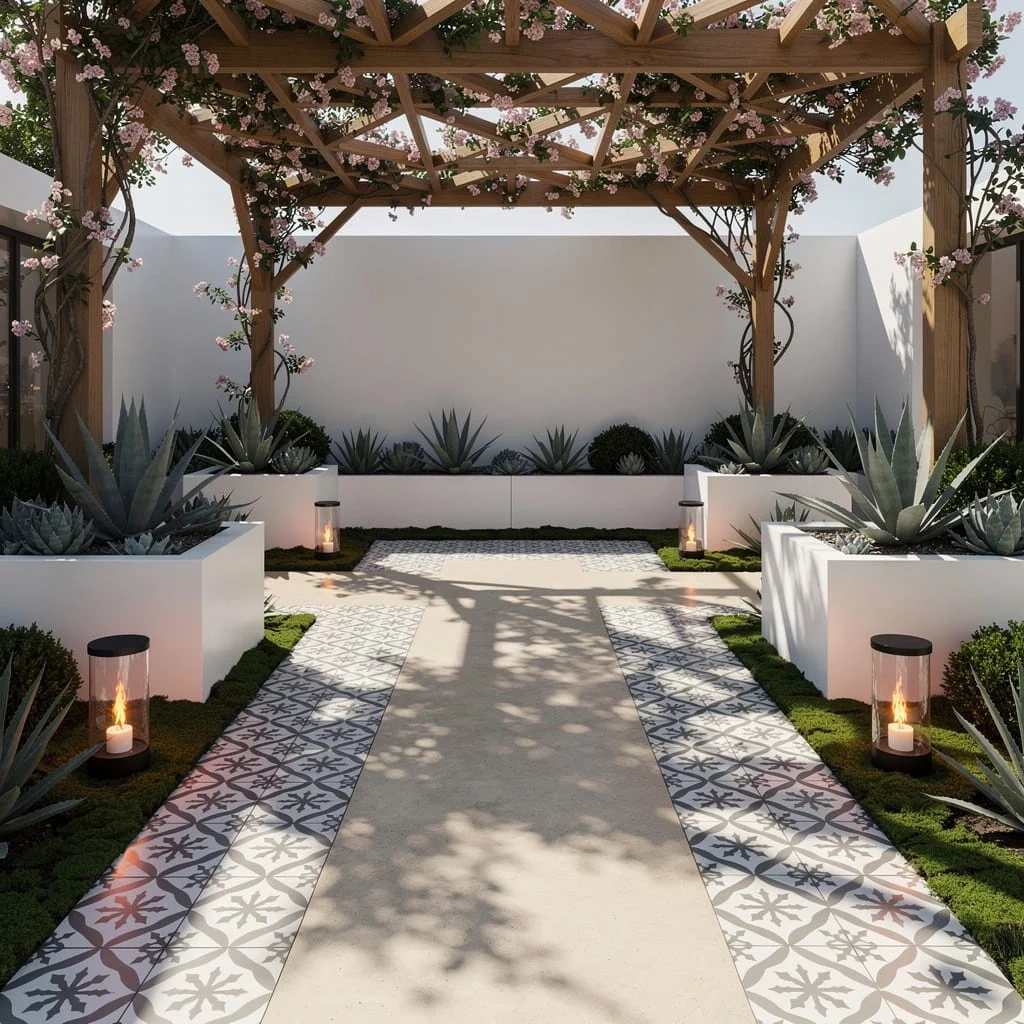
Yes, you need patterned encaustic tiles—stop settling for builder-basic slabs. Split your courtyard with a light concrete path so you don’t trip every time you text-and-walk. Build a geometric timber arbor overhead for climbing vines; let them throw wild shadows, not just filter sun. Sleek white planters packed with succulents and agave, with mossy accents along borders, give you that botanical contrast. Stack hurricane lamps (battery flames only unless you crave fire department drama) for ambient illumination. Pro tip: never crowd the path; allow negative space for shadow play and actual movement.
Sunken Seating: Concrete, Walnut, and Some Water Magic
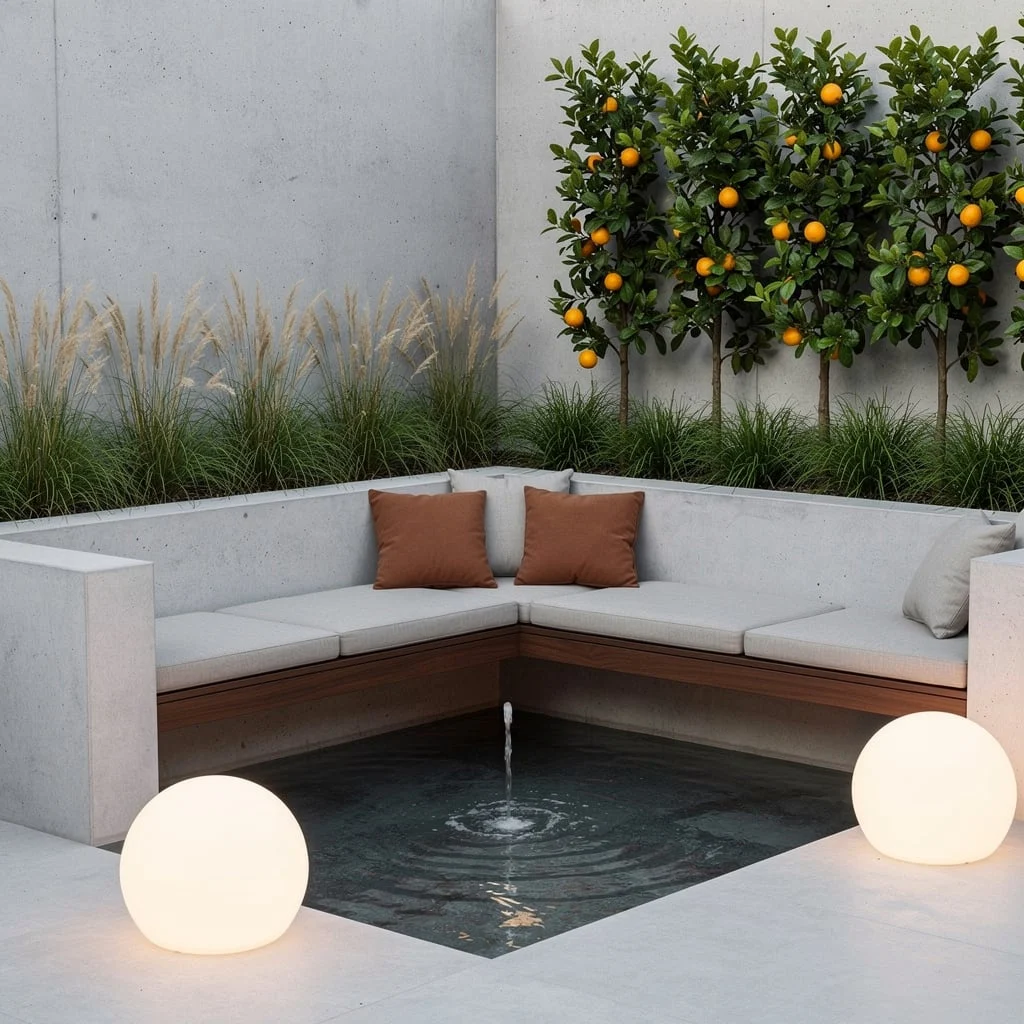
If you crave that hidden lounge vibe, drop your seating nook below grade. Wrap it with smooth-rendered concrete and float walnut benches for plush-cushion comfort—because hard seats are for punishment, not parties. Run a minimalist water rill along one edge, and pop architectural grasses and espalier citrus opposite. Don’t waste your money on solar stakes; ground-level frosted LED spheres add modern mood and won’t blind anyone. Always mirror lighting in water for extra atmosphere; and style trick: blend citrus branches with grass for height, don’t let things get flat and dull.
Cinematic Alley: Basalt, Shou Sugi Ban, and Bronze Drama
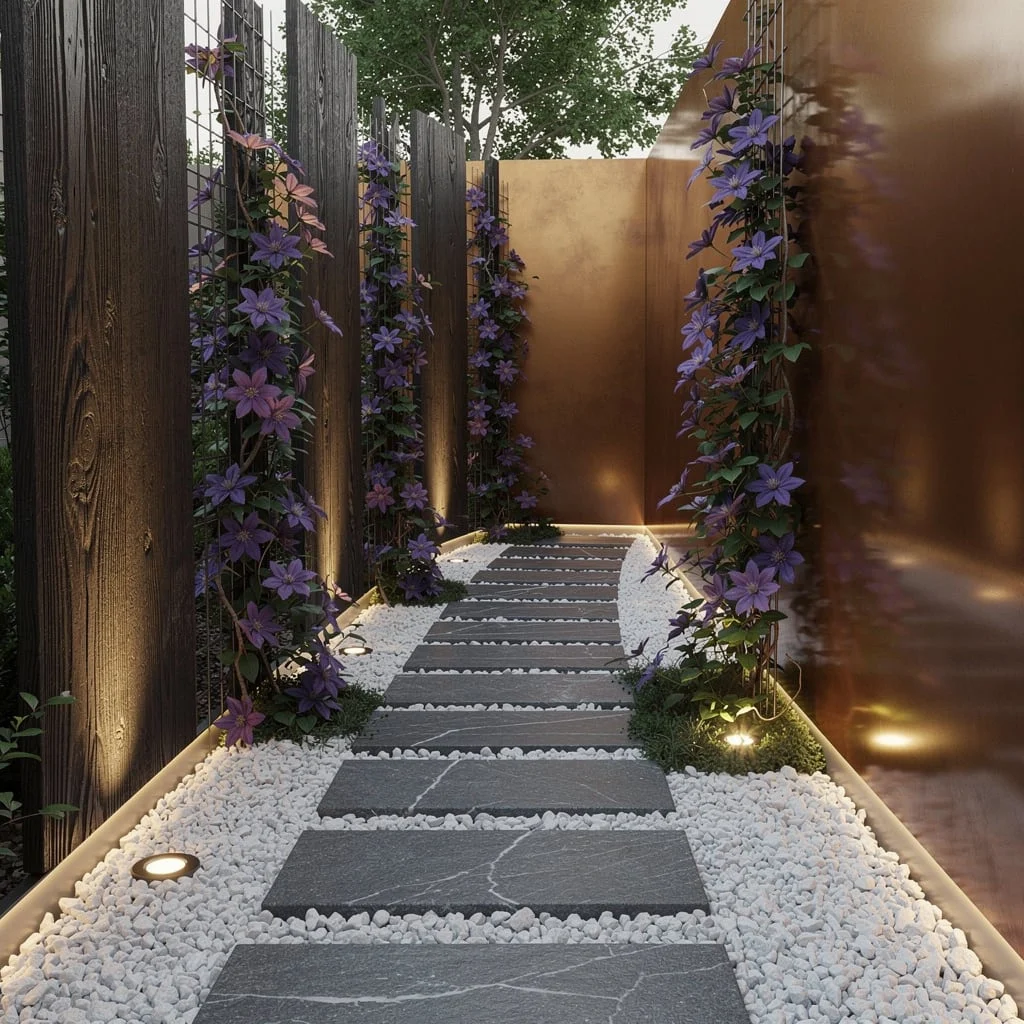
Want your garden to look like a set piece, not a boring pass-through? Lay sandblasted basalt slabs, break up boredom with white gravel. Stagger charred shou sugi ban vertical panels for privacy and edge, then ignore the urge to paint—black wood is non-negotiable. Let clematis climb these screens with no mercy. The opposite boundary? Make it reflective bronze for instant depth, not grandma gold. Use under-step strip lighting and concealed spotlights at plant bases; never go all floodlight, trust subtlety. Pro styling: stagger screens, never line them up—irregular gaps = designer.
Curved Calm: Cozy Alcoves and Micro-Ponds
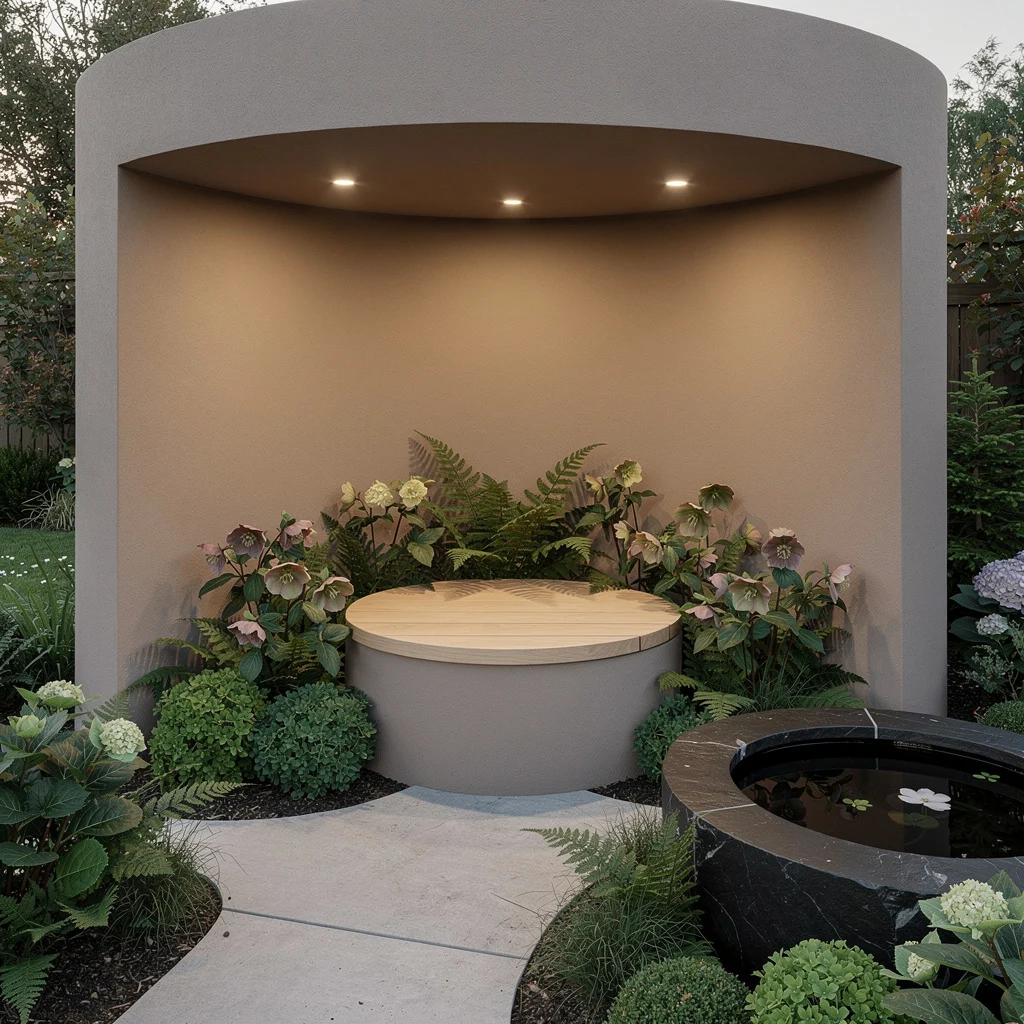
If you’re over sharp corners, design a sheltered garden alcove with curved rendered walls—taupe, not gray, unless you’re allergic to warmth. Drop a minimalist circular seat in light oak and cram lush ferns, hellebores, and compact hydrangeas around it. Micro-pond with slate rim? Essential. Downlights in the soffit keep you glowing after dark, not squinting in gloom. Always cluster plants densely for cocooning vibes and mirror pond reflections with low-slung lighting. Style tip: round shapes work—no one finds relaxation in a right angle.
Outdoor Dining FTW: Travertine, Pergolas, and Culinary Plants
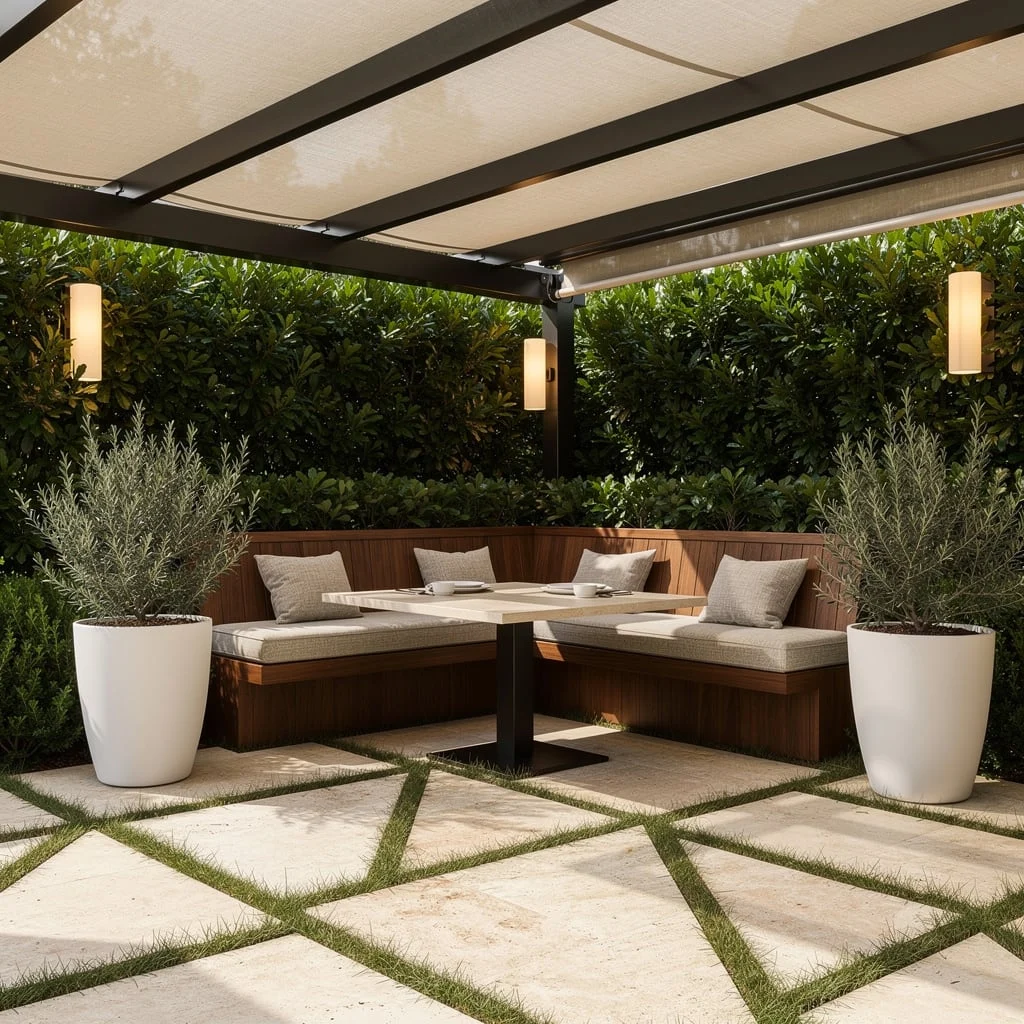
Host your pals under an architectural steel pergola with retractable screens for dappled shade—fixed roofs are overrated and kill the mood. Lay geometric-cut travertine studio-style and outline with lines of meadow grass for visual interest. Build in banquette seating from stained mahogany, add textured cushions (neutral, not matchy-matchy) for comfort. Matte white planters filled with rosemary and olive give that Mediterranean flex. Always use cylindrical wall sconces for both direct and indirect lighting; don’t rely on overhead alone. Designer rule: outline your garden rooms with edible plants—brag about fresh herbs to anyone who’ll listen.
Sensory Path: Timber, Jasmine, and Uplighting Genius
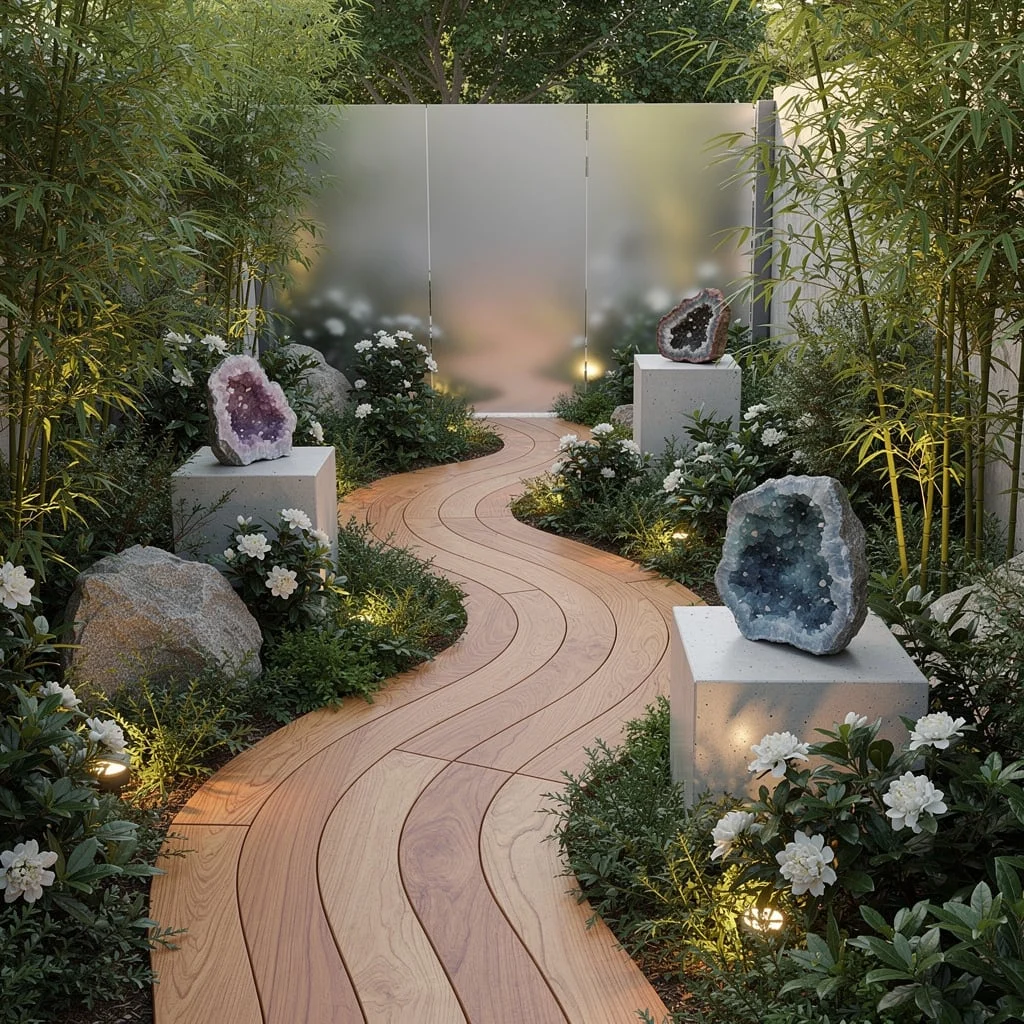
Turn your narrow side zone into a sensory runway with robinia timber paving—let it snake, not straight-up grid. Pack dense beds of scented jasmine and bamboo for the full aromatherapy experience. Install polished concrete plinths and top them with mineral specimens—no fake geodes, only the real texture junk. Drop uplighting in ground covers, but keep it low-key; garden should whisper, not shout. End your path with reflective acrylic privacy screens for depth—don’t use mirrors, use acrylic, and watch your space triple. Rule: always break up the line-of-sight with tactile, vertical points.
Final Thoughts
A small garden that genuinely impresses isn’t the product of clever spatial illusions or expensive materials — it’s the product of someone deciding what the space should feel like and refusing to compromise on that vision halfway through when the nerves kicked in.
Every garden on this list is operating from a clear point of view. The Japanese gravel gardens commit to calm. The cottage gardens commit to abundance. The dark shed garden commits to contrast. None of them are trying to be something they’re not, none of them are apologizing for their scale, and none of them made the fatal mistake of buying plants before having a plan.
Your small garden is not a problem to solve — it’s a brief you haven’t written yet. Write it clearly, follow it through, and stop treating limited square footage as a reason to aim lower. The best small gardens on the planet got that way by doing exactly the opposite.