
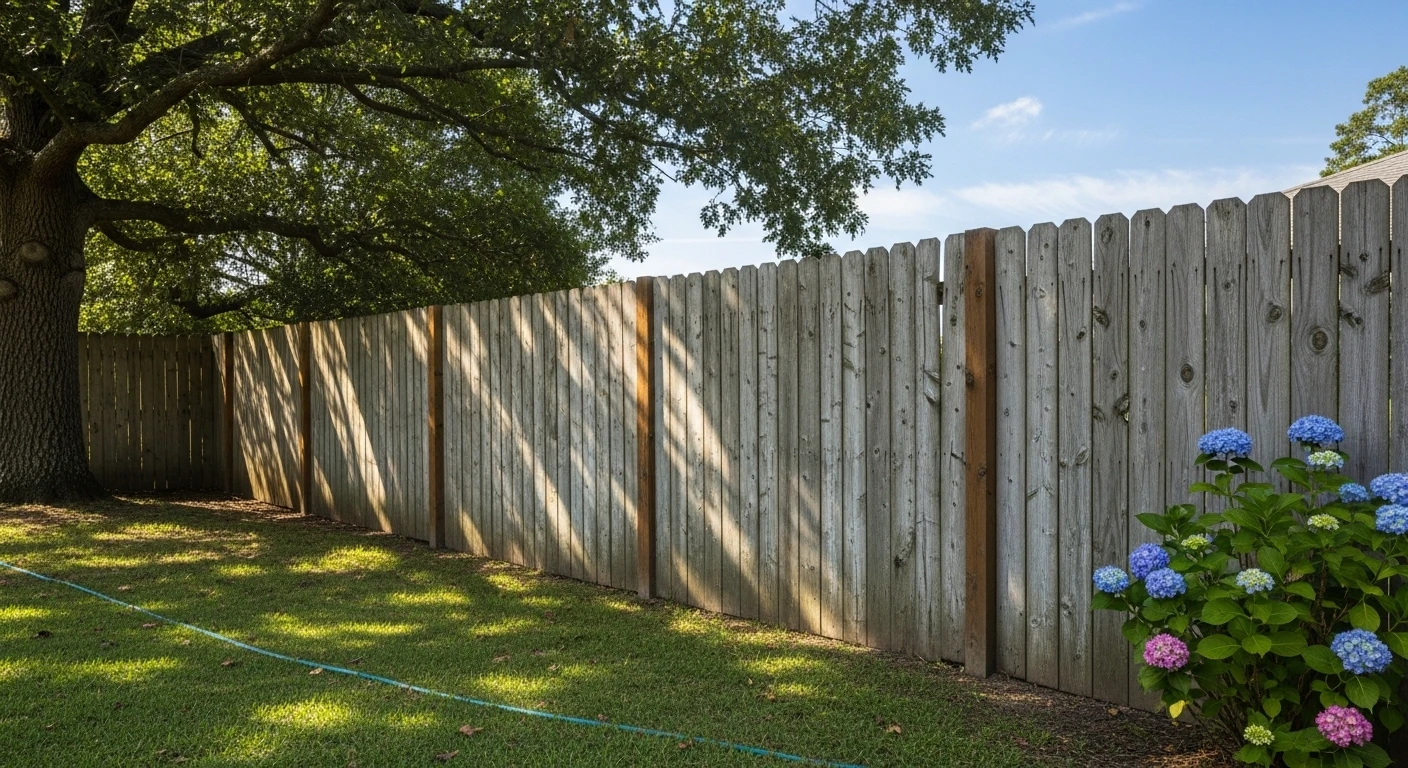
Your fence is the first thing that defines your outdoor space and the last thing most homeowners actually think about. It just sits there — weathered, forgotten, doing its one job of technically existing while the rest of your garden gets all the attention and budget. The result is usually a tired wooden panel situation that was installed by the previous owners sometime around the early 2000s and has been silently deteriorating ever since.
The problem isn’t that people don’t care about their fences. It’s that fences feel like infrastructure rather than design — a functional necessity rather than a creative opportunity. So they get replaced like-for-like when they finally fall over, with the cheapest option that does the same job the last one did, just slightly less weathered for the first eighteen months.
What gets consistently missed is that a fence runs the entire perimeter of your garden. It’s the largest continuous surface in your entire outdoor space. Whatever it looks like, it is the backdrop against which every plant, every piece of furniture, every carefully chosen paving material performs. Getting it wrong doesn’t just affect the fence — it undermines everything else you’ve done out there.
The ideas below range from a before-and-after upgrade that proves even vinyl can have dignity, to a corten steel art installation that makes the whole concept of “boundary” feel like a creative brief. All of them start with treating the fence like it matters — because it does, considerably more than it gets credit for.
The Fence Is Not a Supporting Character
Most garden design thinking treats the fence as background — neutral, inoffensive, something to grow things against. That framing needs to go, because it produces exactly the forgettable boundaries that make gardens feel unresolved no matter how good everything else is.
Background Doesn’t Mean Invisible — Even if your fence isn’t a focal point, it’s always present. A poorly considered fence in neutral brown with no relationship to anything else in the garden doesn’t disappear — it just looks like something nobody bothered to think about, which is arguably worse than something boldly wrong.
The Fence Sets the Tone Before Anything Else Does — A visitor’s first impression of your garden is largely determined by its boundary treatment. Reclaimed wood with climbing roses and wrought iron panels tells a completely different story than composite cladding with matte black posts — and neither is wrong, as long as the rest of the garden is having the same conversation.
Height and Opacity Are Design Decisions Too — The choice between full privacy screening, partial slatting that lets light through, or open ironwork that keeps the borrowed landscape visible has more impact on how a garden feels than almost any planting choice. It deserves the same level of deliberate thought.
Materials Tell You Everything About a Fence
Walk past any garden fence and within about four seconds you know whether the owner was thinking about design or just ticking a box. The material choice is that legible from the outside, which means it’s equally legible from inside your garden every single day.
Longevity Matters More Than Initial Cost — A cheap timber fence that needs replacing in seven years costs more over time than a quality material that lasts twenty-five. The fence math that most people do in the hardware store car park is wrong because it only accounts for today’s invoice, not the lifetime cost of the boundary.
Texture and Finish Interact With Light All Day — Smooth surfaces, rough-split stone, horizontal slats casting shadows, rusted corten glowing amber at sunset — the material you choose performs differently at 8am, noon, and dusk. Considering a fence only in flat daylight is how you end up with something that looks fine on the receipt and disappointing in real life.
Mixing Materials Requires a Dominant Logic — Two materials can work together extraordinarily well when one clearly leads and the other supports. Wood and steel, stone and metal coping, composite cladding and powder-coated posts — these pairings succeed when the relationship is obvious. Throwing three materials together with equal weight just looks indecisive.
What Actually Makes a Fence Work With Its Garden
A fence that looks spectacular in isolation but fights with everything planted in front of it is not a success — it’s a very expensive mismatch. The best fence choices make the planting look better and the planting makes the fence look better, and that reciprocal relationship is what separates genuinely good garden design from a collection of individually reasonable decisions.
Dark Fences Push Planting Forward — This is the single most underused trick in garden design. Charcoal, black, deep brown — dark backdrops make every green look more vivid, every flower more saturated, every plant silhouette more dramatic. The fence disappears and the planting takes center stage in a way that pale or natural wood finishes simply don’t produce.
Vertical Elements Need Horizontal Counterweight — A tall solid fence without something horizontal to anchor it — a planting bed, a path running parallel, a bench positioned against it — creates a looming quality that makes gardens feel smaller rather than more private. The boundary should enclose, not oppress.
Lighting Transforms a Fence From Daytime Feature to Evening Architecture — Wall-mounted spots, up-lighting from the base, strip lighting integrated into the structure — a fence with considered evening lighting stops being a boundary and becomes a backdrop that makes the whole garden work after sunset in a way that most outdoor spaces simply don’t.
Backyard Fence Ideas
The Before-and-After That Makes the Case for Starting Over
So happy I upgraded my fence
by u/JawshRacer in FenceBuilding
Two panels side by side and the argument is made in about three seconds flat — the weathered timber picket on the left with its random post hardware and gently failing structural integrity versus the clean grey vinyl panelling on the right with its crisp framing and finished cap detail. Nobody is claiming vinyl is the most exciting fence material in the world, but what this comparison actually demonstrates is that condition and finish quality matter more than material prestige. The old fence isn’t charming or rustic — it’s just tired, and it’s making everything next to it look tired too. The replacement reads as intentional, resolved, and clean in a way that becomes the neutral foundation a garden actually needs rather than a distraction it has to work around. Sometimes the most effective design move isn’t the boldest one — it’s the one that stops actively undermining everything else.
The Corten Fence That Makes Botanical Art Out of a Boundary
Laser-cut botanical silhouettes — branches, seed heads, trailing stems — punched through large corten steel panels that have oxidized into that deep amber-rust tone that makes everything around it look like it belongs in an editorial shoot. Each panel is its own composition while the whole run creates a continuous illustrated screen that functions simultaneously as a privacy fence, a decorative feature, and apparently a piece of public art that the neighborhood gets to enjoy for free. The mature trees behind it provide a canopy that frames the whole installation, and the conifer planted at the junction where panels stagger adds a living counterpoint to the metal without competing for attention. This is what happens when someone approaches a fence brief as a commissioning decision rather than a construction one — the result is a boundary that people stop to look at rather than simply look past.
Horizontal Slats, Cylindrical Planters, and the Confidence to Commit
Clean horizontal timber slats in warm honey-toned wood, three tall graphite cylinder planters at evenly spaced intervals with rounded evergreen shrubs spilling over the rims, stainless steel wall-mounted spot lights casting warm pools down the fence face, and a pergola structure extending the same timber language overhead into the garden space. Everything in this setup is making the same decision — contemporary, warm-toned, geometric — and because every element agrees with every other element, the whole composition feels inevitable rather than assembled. The pebble border at the fence base and the stone paving running parallel add the horizontal counterweight that keeps the vertical fence from feeling oppressive, and the spotlights ensure this doesn’t vanish after dark. It’s the kind of fence design that looks effortless because someone put serious thought into making it look effortless, which is an entirely different thing.
The White Picket Fence That’s Earned Every Inch of Its Cliché
It is a white picket fence around a kitchen garden and it is completely correct about itself. Tomatoes climbing stakes, pumpkins tumbling across the beds, aubergines and peppers making a color argument against the green, roses blurring the line between kitchen and cutting garden in the background — the whole scene is so straightforwardly charming that criticizing the fence choice would be genuinely churlish. The picket fence exists in this context not as a default or a failure of imagination but as the exactly right enclosure for exactly this kind of garden, where the point is abundance and the boundary should feel welcoming rather than territorial. The stone stepping path leading to the gate treats entry as an occasion, which is the detail that lifts this from generic to genuinely considered. Not every fence needs to make a statement. Some just need to be right for where they are.
Composite Cladding and Black Steel That Means Business Poolside
Warm cedar-toned composite boards running horizontally between matte black steel posts, a laser-cut reed pattern decorative panel across the upper register adding texture without weight, grey gravel at the base border, and a pool with dark stamped concrete surround doing serious work in the foreground. The genius of this combination is that it manages to look both engineered and warm simultaneously — the black steel posts and frame give it structural precision while the wood-grain composite surface prevents it from feeling cold or industrial. Against a pool setting where the surrounding materials are already working hard — dark paving, bright water, mature trees overhead — this fence has the intelligence to play a supporting role rather than competing for attention. It holds the space together without demanding to be noticed, which is genuinely more difficult to execute than something that just shouts.
The Reclaimed Door Fence That Has Better Stories Than Your Entire Garden
Salvaged doors in various states of beautiful decay — one bearing a wrought iron medallion of considerable ambition, another painted white against weathered wood, each framed within a timber post and rail structure that holds the eclectic collection into something cohesive — all of it fronted by a border of hydrangeas, climbing clematis, lavender, and roses that is performing at full cottage garden volume. This fence is clearly the product of someone who collects things with intention, who understands that reclaimed materials tell stories that new ones cannot, and who was confident enough in that vision to build an entire garden boundary around it rather than keeping the interesting stuff inside the house. The wrought iron panels between the door sections let borrowed light and greenery through without sacrificing the sense of enclosure, and the planting at the base connects the whole structure to the ground so it reads as garden rather than yard sale. It’s maximalist and completely controlled at the same time — a very specific skill.
Go Luxe With Charred Cedar and Bronze—Yes, You Can
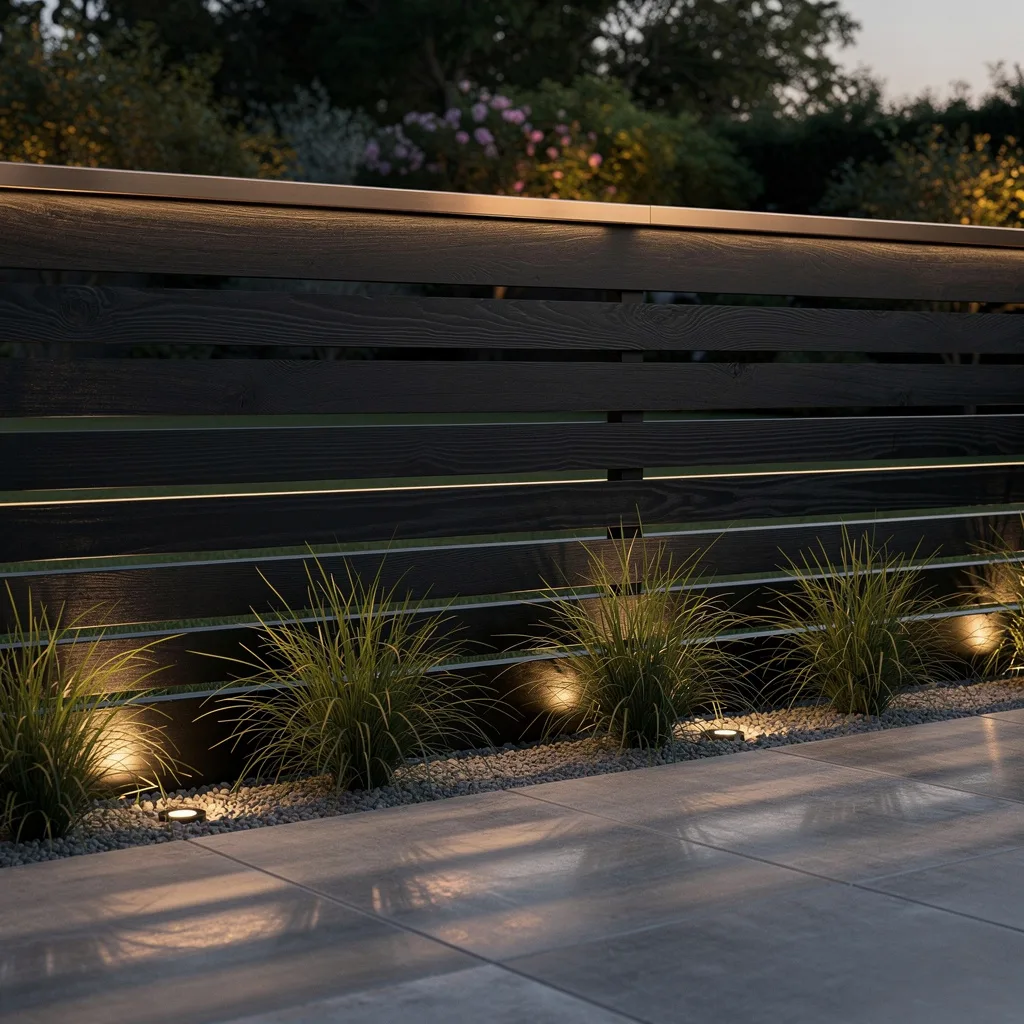
If you’re chasing nighttime drama like it’s a Real Housewives reunion, charred cedar slats with a shot of bronze trim are your ticket. Lock down privacy with precisely spaced slats, ignore anyone who tells you to go wide—they’re wrong. Hit up a matte soot-black stain for pure modern moodiness, then run skinny bronze trim along the top for a wink of metallic. Throw LED uplighting at every slat, and slap down polished concrete pavers. Minimalist gravel borders plus ornamental grasses? Non-negotiable. Never cheap out on uplighting; it’s where the magic happens.
Steel Dreams: Abstract Corten Is Your Iron-Clad Statement
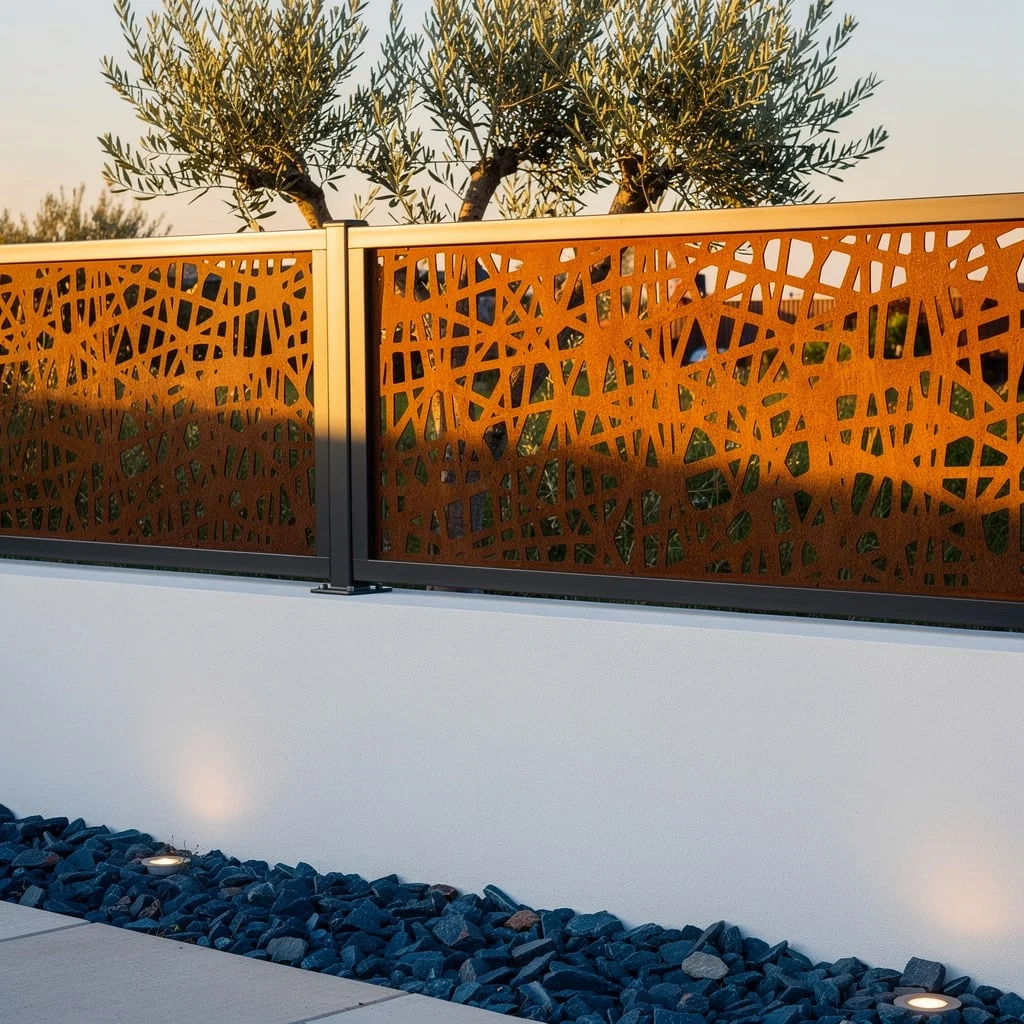
If you want to prove you’ve got taste (not trust fund taste, actual taste), aim for corten steel panels cut with geometric patterns and let those rust tones glow. Secure each panel in an anthracite steel frame sitting on a crisp white concrete wall. Accent with in-ground spotlights, blue slate chippings, and olive trees for that Mediterranean flex. Don’t half-commit—get cluster plantings above the line, not just one sad sapling. Always keep your steel frame matte, or risk looking like you raided a warehouse.
Gallery Goals: Frosted Glass Is Next-Level Privacy
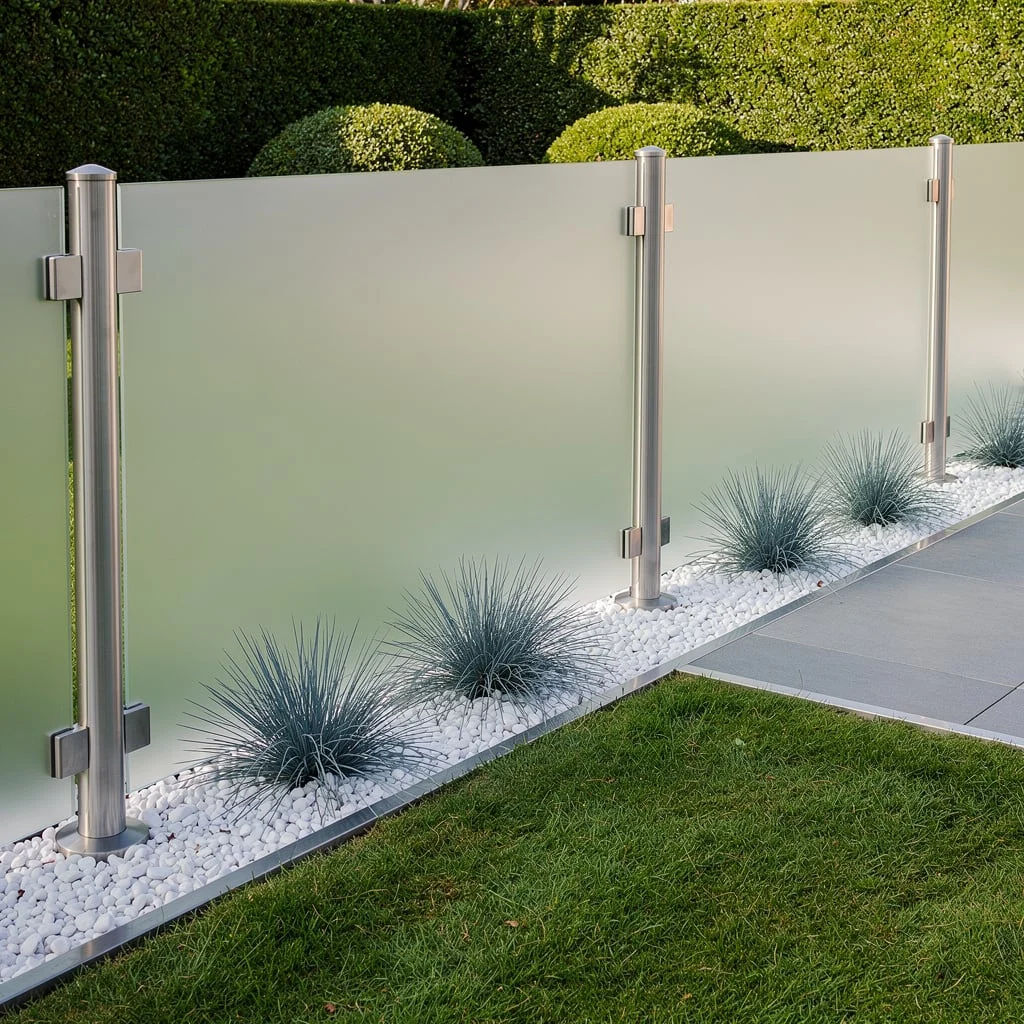
Want a fence that’s basically a VIP pass? Grab chunky opaque glass panels and mount them with fat stainless hardware—none of that cheap silver spray. Run a shallow planter filled with white pebbles and blue fescue right at the base for grown-up symmetry. Let clipped boxwoods work their magic in the background for that extra polish. Make sure you’re picking real frosted glass, not flimsy acrylic; if your panels don’t diffuse sunlight like an influencer’s ring light, you’re not doing it right.
Limestone Stacks: Organic Sophistication Without Trying Too Hard
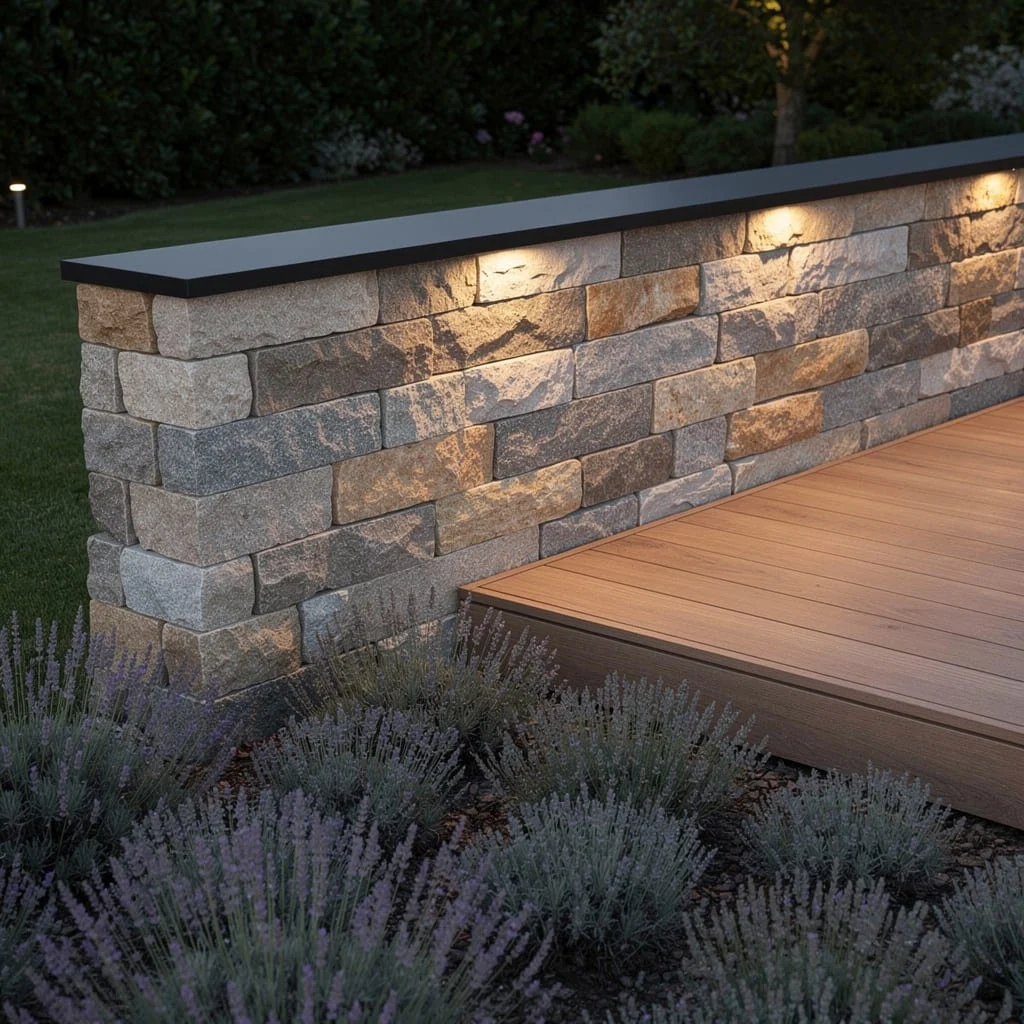
Stop thinking stone fences are only for old castles—bring offset limestone blocks in mixed gray shades and knock everyone dead with texture. Lay them dry-stacked for that high-end, natural look, then slap slim jet-black steel capping on top for contemporary cred. Run clean up-lights along the base, build out a fat oak deck, and toss low lavender shrubs just for fun and fragrance. If your lavender border isn’t wide enough to hit the nose, you messed up. Never line your cap—keep it slim, so stone takes the attention.
Golden Hour Teak: Go Recycled, Go Rhythmic, Go Warm
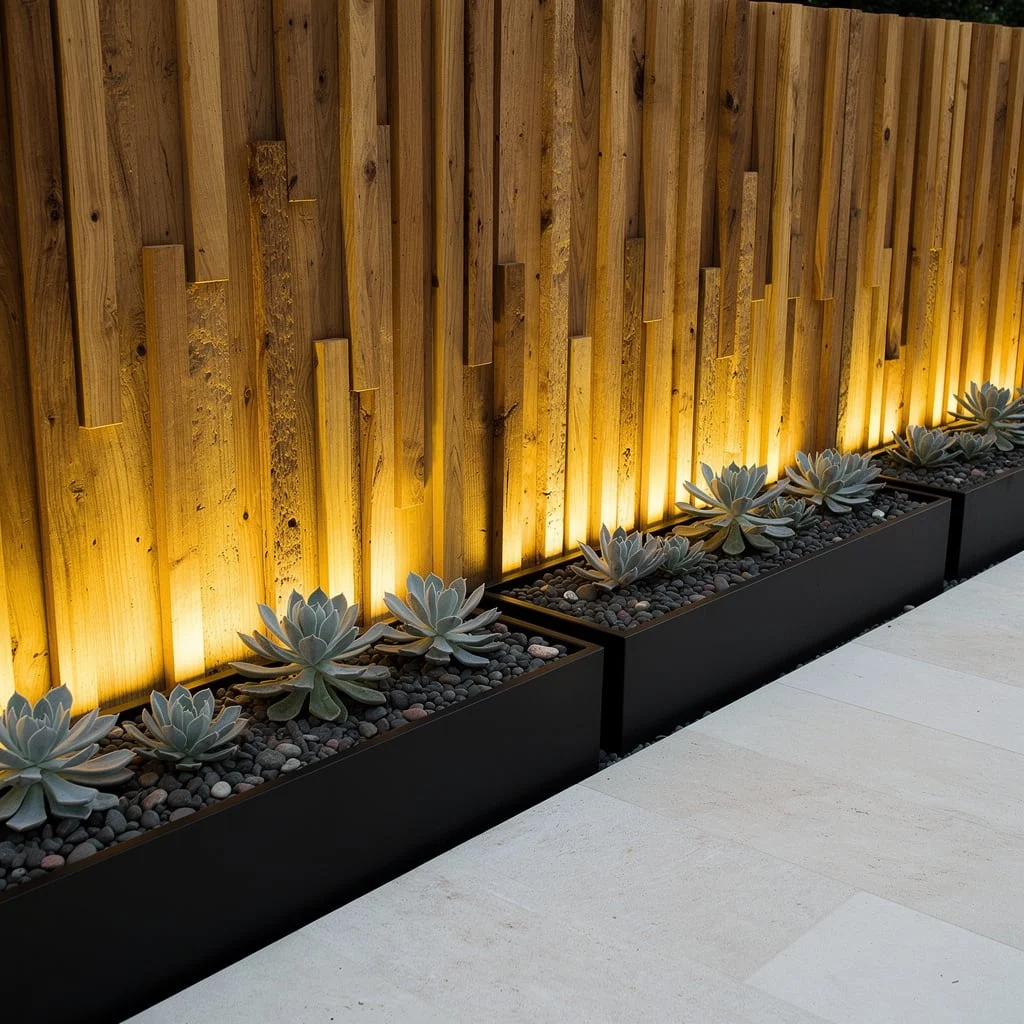
Nothing says ‘money’ like recycled teak battens in mixed widths, stacked vertical and backlit with integrated LEDs. Pick raised black planters for sharp contrast—silvery succulents and river pebbles for extra texture, not sad mulch piles. Always lay a light stone walkway next to the fence for visual clarity. Never skip on LED backlighting; you want that warm halo so your fence pops at night. If you think wood equals rustic, think again—the right teak finishes scream designer, not dad-bod.
Minimalist Monoliths: Concrete With Attitude
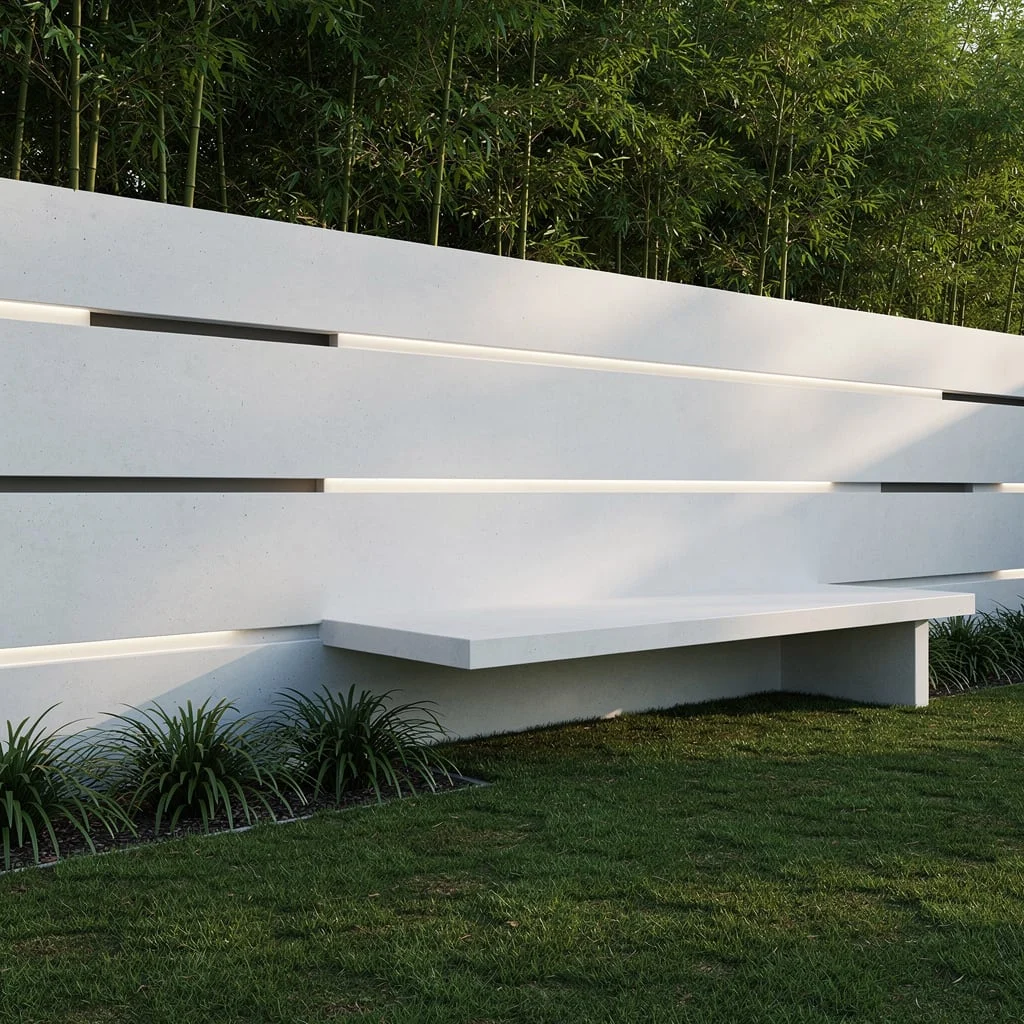
If you want your fence to shout ‘architect,’ go matte white concrete with skinny horizontal reveals, then embed linear strip-lights. Keep your planting classic—lush green, liriope edging. Integrate a cantilever bench from the same concrete, no awkward additions. Make sure your lighting is low and linear; don’t ruin the vibe with tacky garden spots. And please, for the love of clean lines, keep your bamboo backdrop dense and tall for total privacy. If your fence isn’t monolithic enough, get more concrete. Weak attempts won’t cut it.
Brick Is Back—But With Chevrons, Not Grandma’s Wall
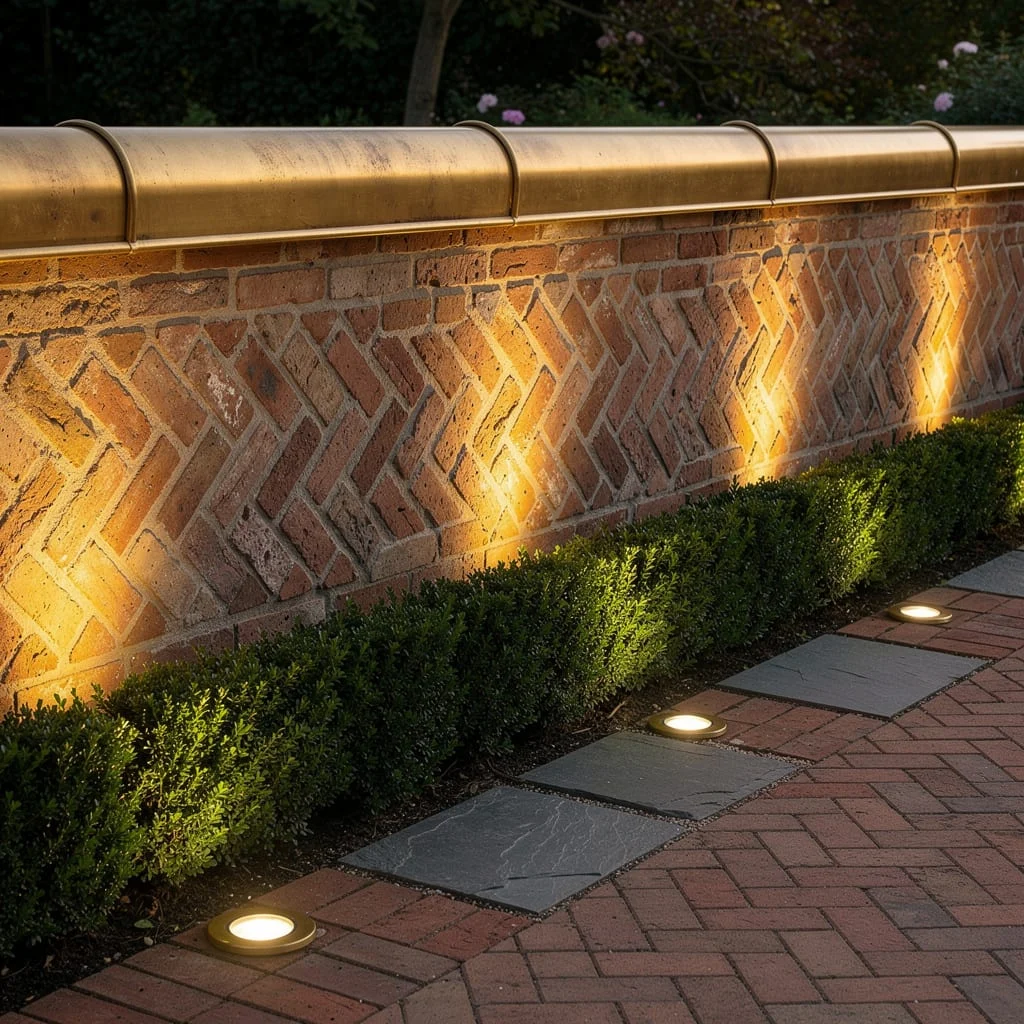
Ditch basic red brick and lay reclaimed bricks in a chevron bond. Top with antique brass coping and blast ground-level spotlights at dusk for killer glow. Pair with tight yew hedges along the base, and run slate stepping stones for easy sophistication. Your path must match—go herringbone clay pavers, adding vintage luxury instead of nostalgia. Chevrons are strictly a must—don’t settle for standard bonds, or you’ll get written off as “builder basic.” Brass coping should always have the real patina, not faux-finish.
Graphite Aluminum Pickets: Modern Minimalist Show-Off
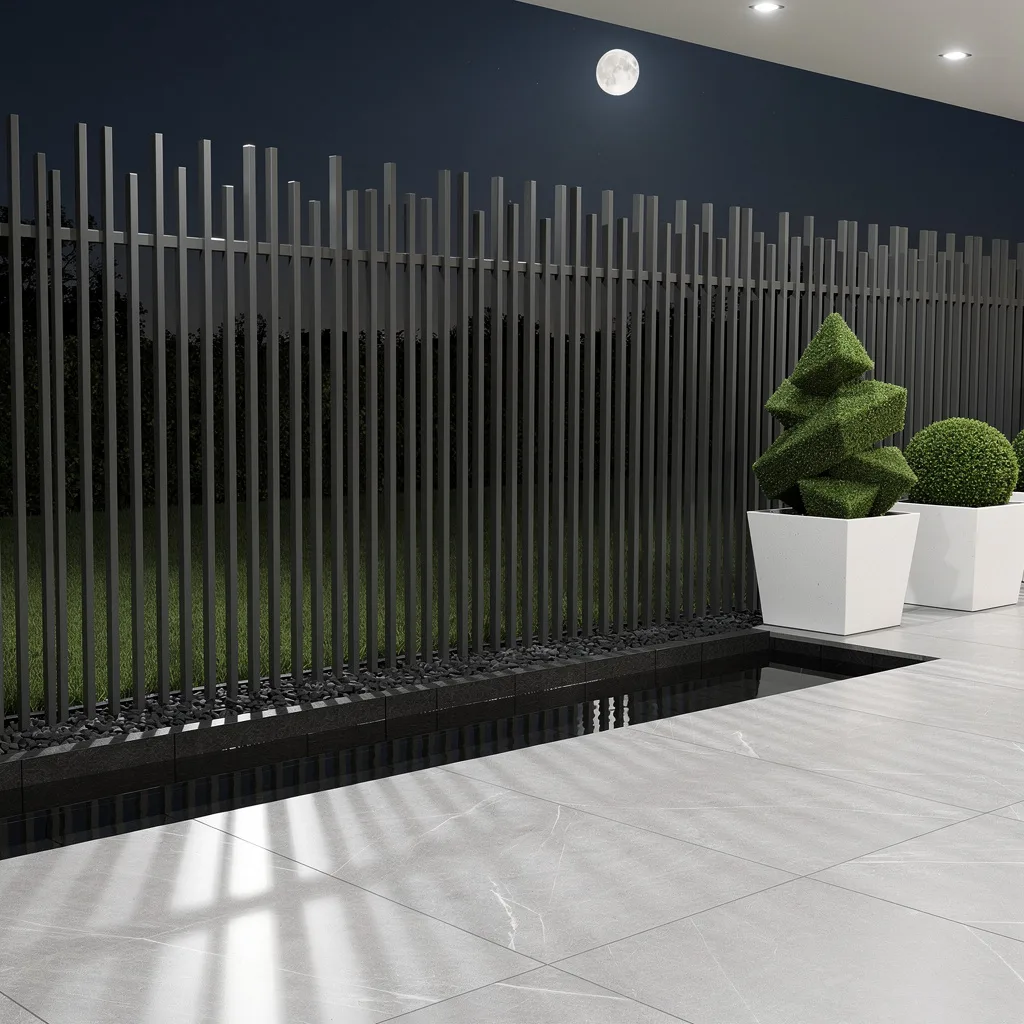
When plain pickets are for peasants, go bespoke with matte graphite aluminum, custom vertical rods, and alternating heights. Lay wide porcelain tiles for sharp patio vibes, run a geometric water feature parallel for extra flex, and drop white planters with topiary for architecture in plant form. Soft overhead moonlighting should complete your drama—never let solar lights from the hardware store ruin your fence. Always alternate heights; uniform rods are boring. Graphite finish is essential, not optional—dull gray is a crime.
Terrazzo Time: Go Modular, Go All-Out Urban Chic
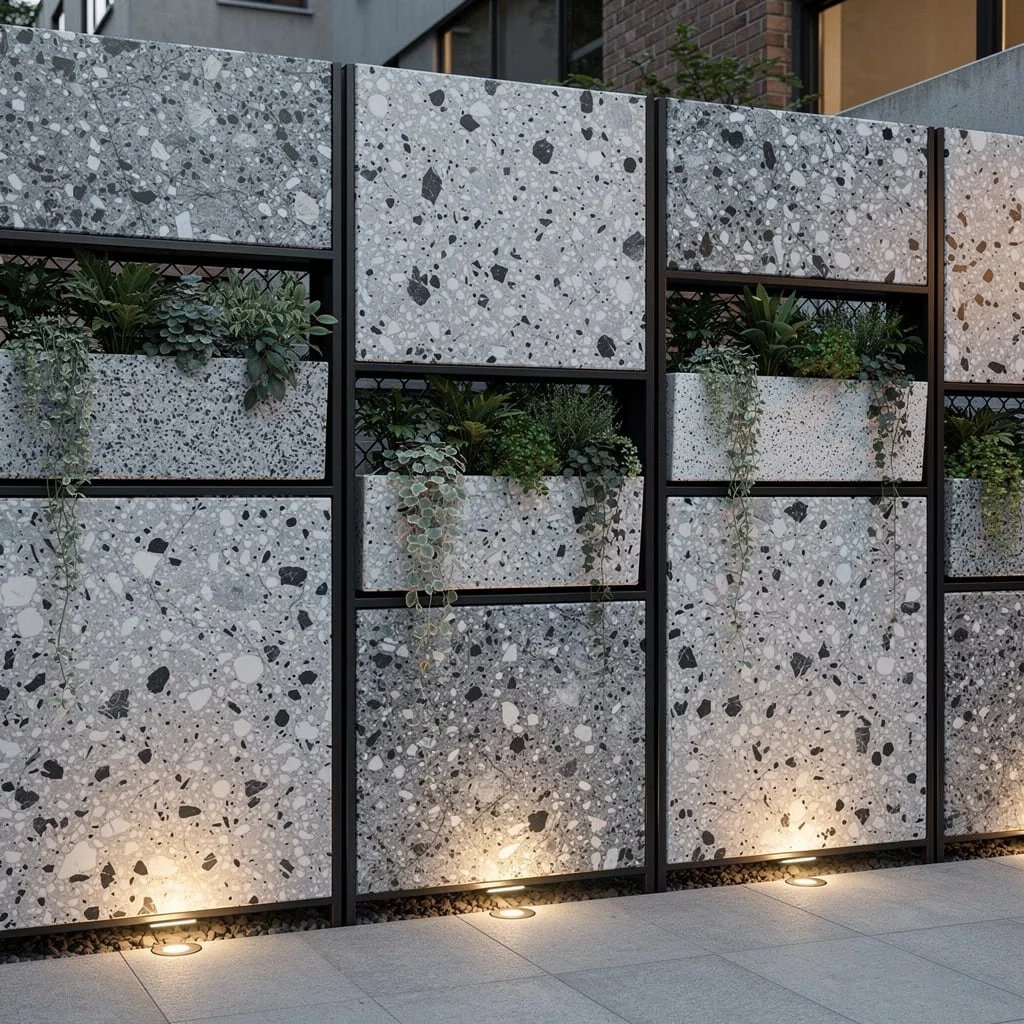
If “plain” is your toxic trait, grab oversized textured terrazzo panels embedded with polished marble and granite chips. Frame each in seamless black powder-coated steel for that grid rhythm. Break verticality with integrated planter pockets spilling trailing greenery. Blast accent lighting from below—you want those marble chips sparkling, not hiding. Use discreet fixtures; visible lights are tacky. Never skip the steel frames; they make the terrazzo chic instead of chaotic. If your planters aren’t lush enough, plant more. Don’t go sparse.
Fence Weaving: Where Zinc and Timber Are Besties
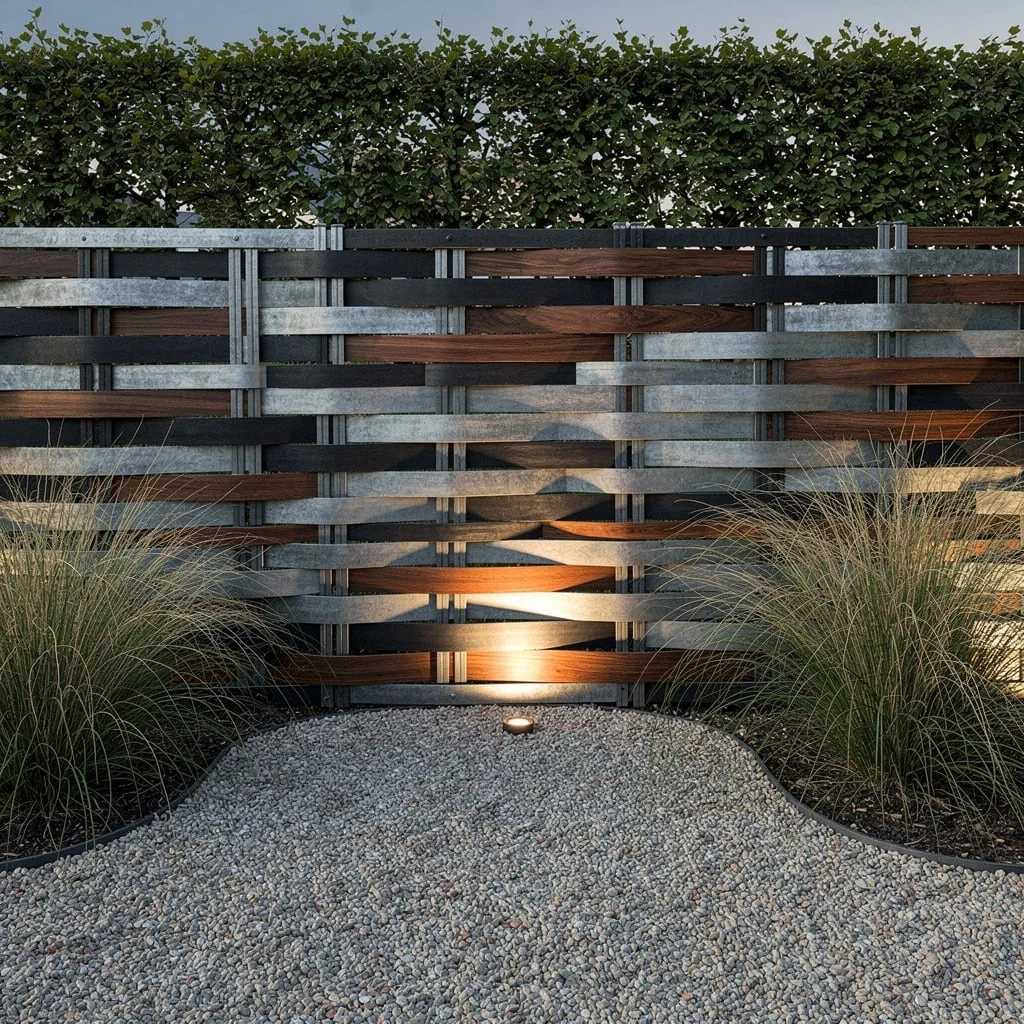
If you want to flex creativity, weave weathered zinc belts with charcoal-stained larch wood in a wonky horizontal pattern. Place your fence on pea gravel and flank it with tall, wispy grasses and a straight row of hornbeam trees. Forget symmetry—embrace layering with hidden uplights for dusk drama. Always alternate materials for full texture. Zinc needs real patina and shimmer; dull metal is tragic. Get hornbeam trees pruned to uniformity—they’re the cool older sibling to those sad, irregular hedges you never maintain.
Slate Luxe: Privacy That’s All About Texture
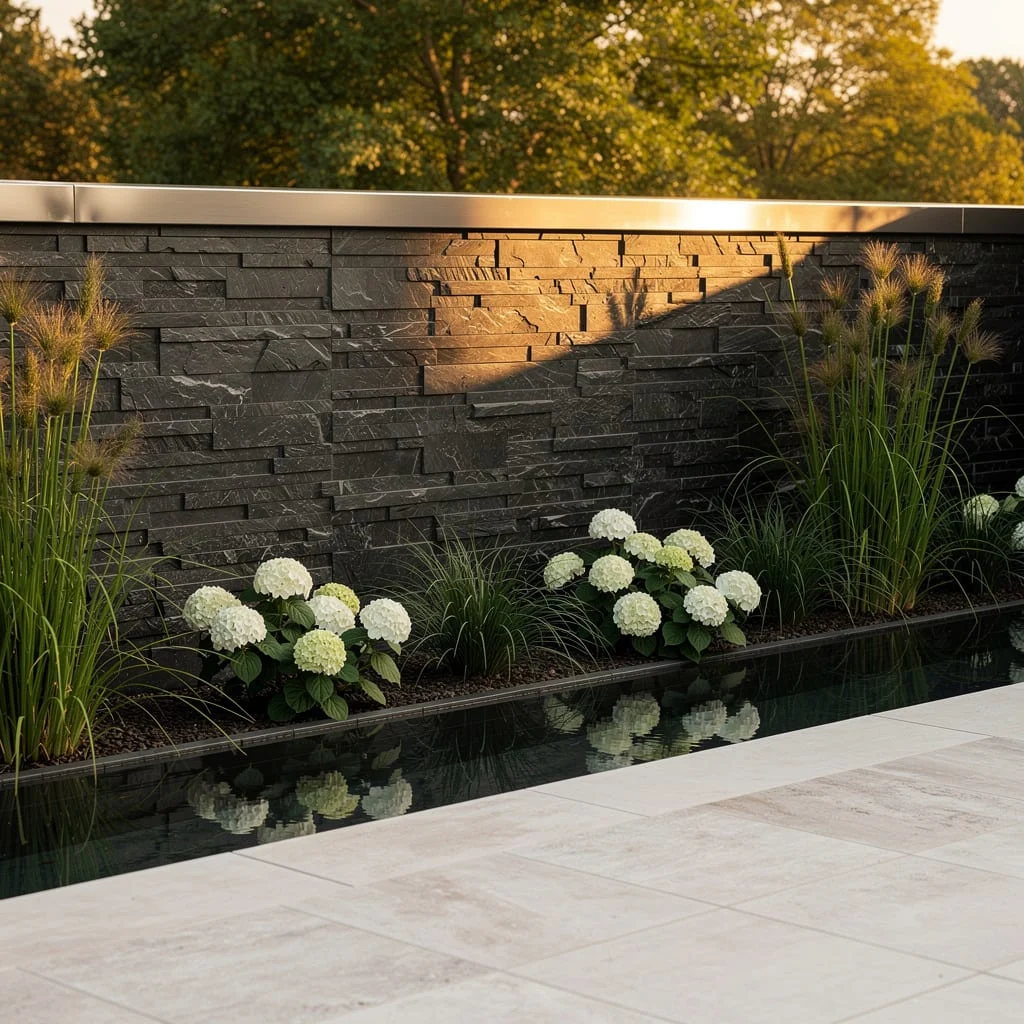
Stop thinking privacy is boring—stack jet-black split-faced slate stones with deep texture and subtle color shifts. Top it all with brushed titanium coping for industrial edge. Mirror everything in a shallow reflecting pool below and border with papyrus and white hydrangea for heavy-duty softness. Frame with pale travertine tile terraces; golden hour light is your friend. Always stack with intention—random is tragic. Pool reflections must show off the stone, not just add water. Titanium coping must shine, but never glare.
Modernist Layers: Polycarbonate Plus Roasted Ash For The Win
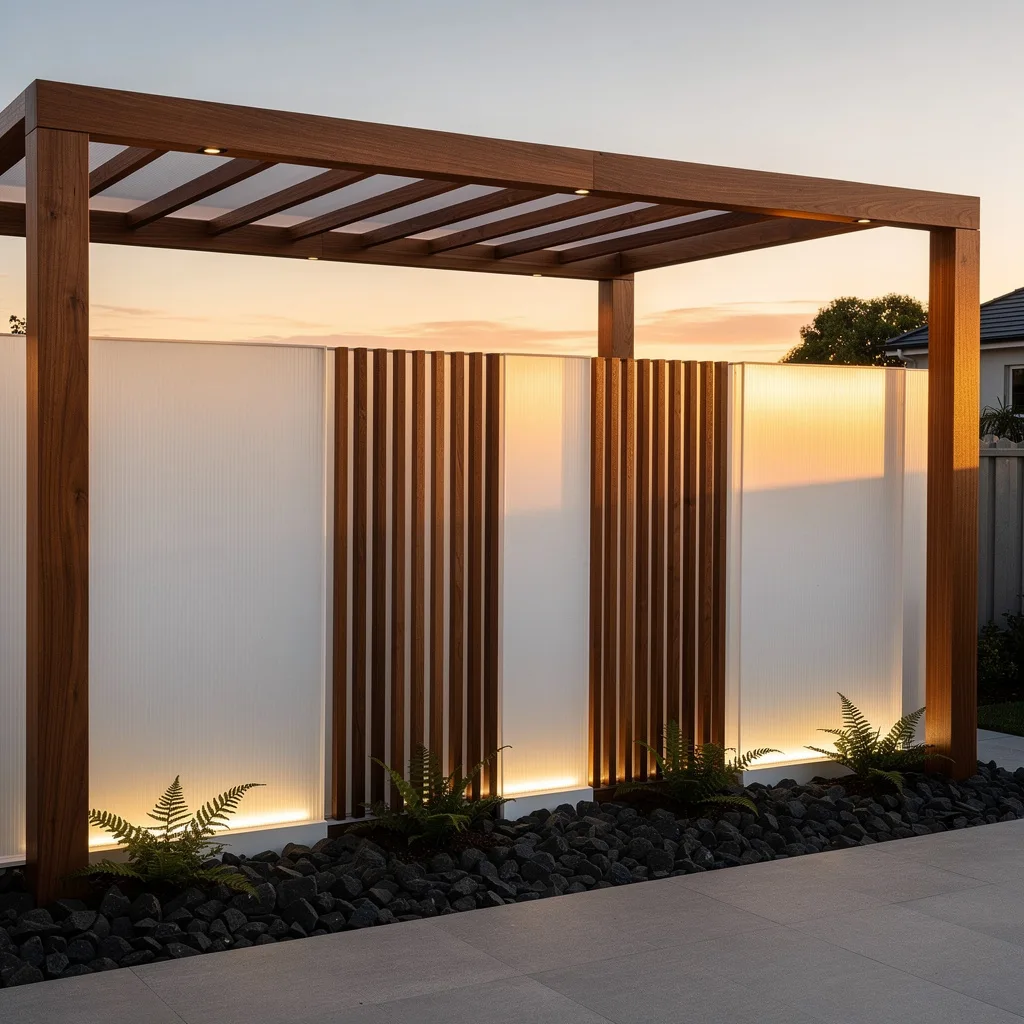
Kill the pattern fatigue with layered polycarbonate and roasted ash panels—alternate for a glowing, textured backdrop. Float dark basalt stones at the base, seed with delicate ferns, and frame the entry with a cantilevered pergola in matching ash beams. Go heavy on integrated lighting without showy fixtures. If polycarbonate doesn’t properly diffuse sunset light, trash it and buy the good stuff. Always mix vertical with horizontal; pure symmetry is boring. Ash must be roasted—fake stains won’t pass. Pergolas must cantilever; stop with ugly posts.
Final Thoughts
Fence decisions get rushed because they feel practical rather than creative, which is precisely the thinking that produces thirty years of looking at something you settled for. Every fence on this list started with someone taking the boundary seriously as a design element — not an afterthought, not a construction line item, not something to be resolved quickly so the real garden work could begin.
The material, the finish, the height, the relationship to planting, the evening lighting strategy — these aren’t details, they’re the framework within which everything else in your garden either succeeds or struggles. A fence that works with your garden makes the planting look more intentional, the paving feel more resolved, and the whole outdoor space feel designed rather than assembled.
Whatever your garden’s personality — restrained and architectural, wildly romantic, deliberately utilitarian — your boundary should be making the same argument, consistently and without apology. The fence is not background. It’s the first and last thing that defines your outdoor space, and it deserves to be treated that way from the start.