
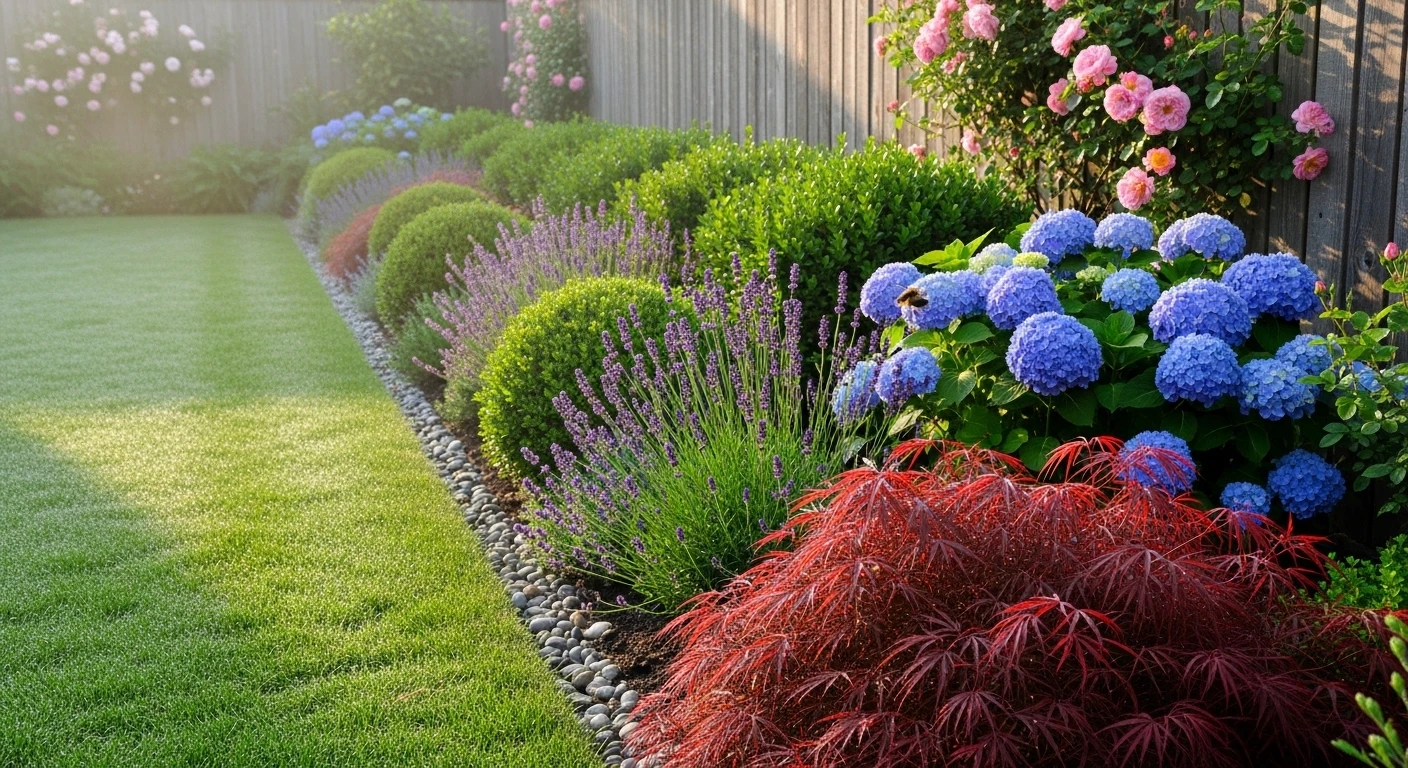
Somewhere between “I should probably do something about that bed edge” and actually doing something about it, most gardens develop a permanent case of the blur — that vague, unresolved transition between lawn and planting that makes everything look like it hasn’t quite finished being designed yet. The grass creeps in. The mulch creeps out. The whole border takes on the quality of a suggestion rather than a decision.
Edging is one of those things that garden owners consistently underestimate until they see a bed with genuinely sharp, considered edges — at which point the contrast is so stark it’s almost embarrassing. A well-edged border doesn’t just look tidier than an unedged one. It makes the planting look more intentional, the lawn look more precise, and the entire garden look like someone with actual standards lives there.
The edging material you choose does a significant amount of silent work. It sets the visual register for everything growing inside the bed, establishes whether the garden is formal or relaxed, structured or loose, and signals within about three seconds whether the whole space was planned or just accumulated. Stone brick edging around gladiolus is telling a completely different story than black timber raised beds fronting a perennial border, and both of those are different again from ground-level uplighting doing the heavy lifting at dusk.
These five ideas cover the full range — from the maximalist colour party that commits to abundance unapologetically, to the moody evening statement that proves good lighting is the edging detail most gardens are missing entirely.
The Edge Is Doing More Work Than You Think
Most gardening attention goes to plant selection, and most gardening disappointment comes from the fact that even excellent plant choices look underwhelming in a bed with no considered boundary. The edge is where the garden makes its first argument, and a weak one undermines everything behind it.
Definition Creates Perceived Quality — A crisp edge between lawn and bed makes both look better simultaneously. The grass looks more intentional. The planting looks more curated. Neither element has actually changed — only the line between them has been sharpened — but the whole composition reads as designed rather than default.
The Edging Material Sets the Tone Before the Plants Do — Reclaimed timber says one thing. Pale limestone brick says another. Neither is wrong, but both are making a statement that every plant in the bed either reinforces or contradicts. Choosing edging material after the planting scheme is already decided is designing backwards.
Height Matters as Much as Material — Flat edging that sits flush with the lawn is almost invisible and provides mostly practical rather than visual value. Raised edging that lifts the bed above grade creates shadow lines, adds dimension, and transforms the border from a flat surface into something with actual physical presence.
Getting the Relationship Between Edge and Planting Right
The edging and the planting are not separate decisions — they’re a single conversation that either makes sense or doesn’t. The most common mistake is choosing an edging material in isolation and hoping the plants will sort themselves out around it.
Contrast Works Harder Than Match — Pale stone edging under dark mulch and vivid colour pops. Dark timber framing a riot of mixed perennials lets the flowers advance while the structure recedes. When edging and planting are too similar in tone, both get lost. The relationship needs tension to create visual interest.
Planting Density Should Justify the Edging Investment — A generously edged bed with sparse, thin planting looks worse than no edging at all because the empty space makes the structure look like it’s waiting for something to happen. Whatever edging you install, plant the bed as if the edging deserves it.
Think About What the Edge Looks Like in Winter — Annual planting schemes look spectacular for five months and then leave the edging completely exposed for seven. If the border material doesn’t hold up visually as a standalone element in the colder months, either choose something that does or commit to planting that gives year-round interest.
The Details That Separate Good Edging From Great Edging
Installing an edging material correctly is only half the job. These are the finishing details that make the difference between a bed that looks professionally executed and one that looks like a weekend project that almost got there.
Clean Lawn Lines Are Non-Negotiable — The best edging material in the world looks mediocre against a ragged lawn edge. The two elements need each other — sharp edging demands a sharp lawn line, and a sharp lawn line makes even modest edging look considered. One without the other is a missed opportunity.
Lighting Transforms Edging From Daytime Feature to Evening Architecture — Most gardens effectively stop existing visually after dark, which is a waste of roughly half of every day. Ground-level uplights positioned within or just behind a bed edge don’t just illuminate the planting — they give the whole border a completely different character that daytime photographs simply cannot capture.
Corners and Curves Reveal the Quality of the Execution — Anyone can run a straight edge along a rectangular bed. How edging handles a curve, a corner, or a junction with a path is where the quality of the material and the installation actually shows. If the solution for those transitions is “we’ll figure it out when we get there,” the result will look like it.
Flower Bed Edging Ideas
The Colour Column Border That Decided Subtlety Was Overrated
Pale cream limestone brick edging runs the full length of the bed in a clean, low line while behind it gladiolus spikes in what appears to be every colour available to the plant kingdom rise in a disciplined row, and mounded chrysanthemums and ageratum fill the foreground in alternating yellow and blue drifts that create a rhythm reading almost like a repeating pattern. The beige vertical-board fence with lattice topper serves as an enormous neutral canvas that the planting performs against, and a single wall-mounted zinc planter trailing ivy adds one vertical note that prevents the composition from feeling entirely ground-level. What makes this work — and it absolutely does work despite doing a lot — is that the planting has underlying structure. The gladiolus create consistent height, the mounded plants create consistent foreground, and the limestone edging holds the whole colourful argument inside a clean, orderly line that stops it from spilling into chaos.
The Raised Timber Bed That Took the Perennial Border Seriously
Dark weathered timber boards stacked three courses high create a raised bed with genuine physical presence — not the flimsy single-board edging that sits a few centimetres above grade and blows over in a strong wind, but a proper raised structure that lifts the planting level and creates a clear visual separation between bed and lawn. Inside, a full cast of summer perennials performs at volume: pink and orange gerberas, yellow rudbeckia, white echinacea, purple salvia, blue ageratum — all of it dense enough that the mulch below is barely visible. Behind the bed, the weathered timber fence posts carry climbing plants up their faces, and the whole structure from post base to plant tip creates a vertical layering that gives the border genuine depth. The flat, striped lawn running alongside keeps everything grounded and stops the abundant planting from reading as uncontrolled.
The Standard Tree Border That Understood the Assignment Completely
Two matching lollipop standard trees — variegated white foliage on clean single stems — anchor a mixed border against a slate-blue horizontal slat fence, and the combination of those three elements alone would already be a considered garden moment. That the planting beneath them includes clipped globe shrubs, crimson azaleas, white hyacinths, forget-me-nots, and a yellow-variegated euonymus ball at the front edge with no two elements competing for the same visual register makes it exceptional. The fence colour is the quiet genius here — that particular dusty teal-grey does not compete with any of the planting tones, it complements every single one of them, and it makes the white variegated foliage on the standard trees glow in a way that a natural wood or green fence simply wouldn’t. Dark soil mulch provides the edging function here, and the curved lawn edge running along the front is cut with the precision the whole composition demands.
The Foundation Planting That Treated the House Wall Like a Backdrop
Every window along this house facade has a wooden box planter mounted beneath it, and every box is overflowing with petunias in pink, red, orange, and trailing varieties that cascade down the wall face, at which point they meet a ground-level border below that continues the same colour energy in geraniums, marigolds, white alyssum, and more petunias in drifts that run the full length of the building. There is no formal edging material here — the neat lawn line and the dark soil define the bed boundary — and the decision not to add a physical edging element is exactly right, because introducing a hard material line would give structure to a planting scheme that gains all its appeal from looking gloriously, intentionally uncontrolled. The house cladding and window frames in pale grey act as the neutral backdrop the whole flower performance requires, and the scale of the planting relative to the wall means this reads as a design decision rather than someone who just really likes petunias. Though they clearly do really like petunias, and this proves that’s a perfectly valid position.
The Matte Black Fence Edging That Looks Entirely Different After Dark
During the day this is a clean, architectural planting — matte black horizontal slat fence, autumn chrysanthemums in amber and copper and burnt orange, ornamental grasses softening the foreground, the whole thing reading as a composed seasonal border in a considered colour palette. After dark it becomes something else entirely. Ground-level uplights positioned low within the planting throw warm amber light upward through the chrysanthemum heads and grass stems, and the effect on the black fence behind is that the slats partially glow where light catches their lower faces while the gaps between them reveal lit garden beyond. The fallen leaves on the path outside the border are not a maintenance oversight — in this context, in this light, at this time of year, they’re part of the composition, contributing to a scene that understands its season and leans into it rather than fighting it. This is what it looks like when lighting is treated as a primary design element from the start rather than an afterthought installed once everything else is finished.
Go Monochrome Mood With Black Slate Drama
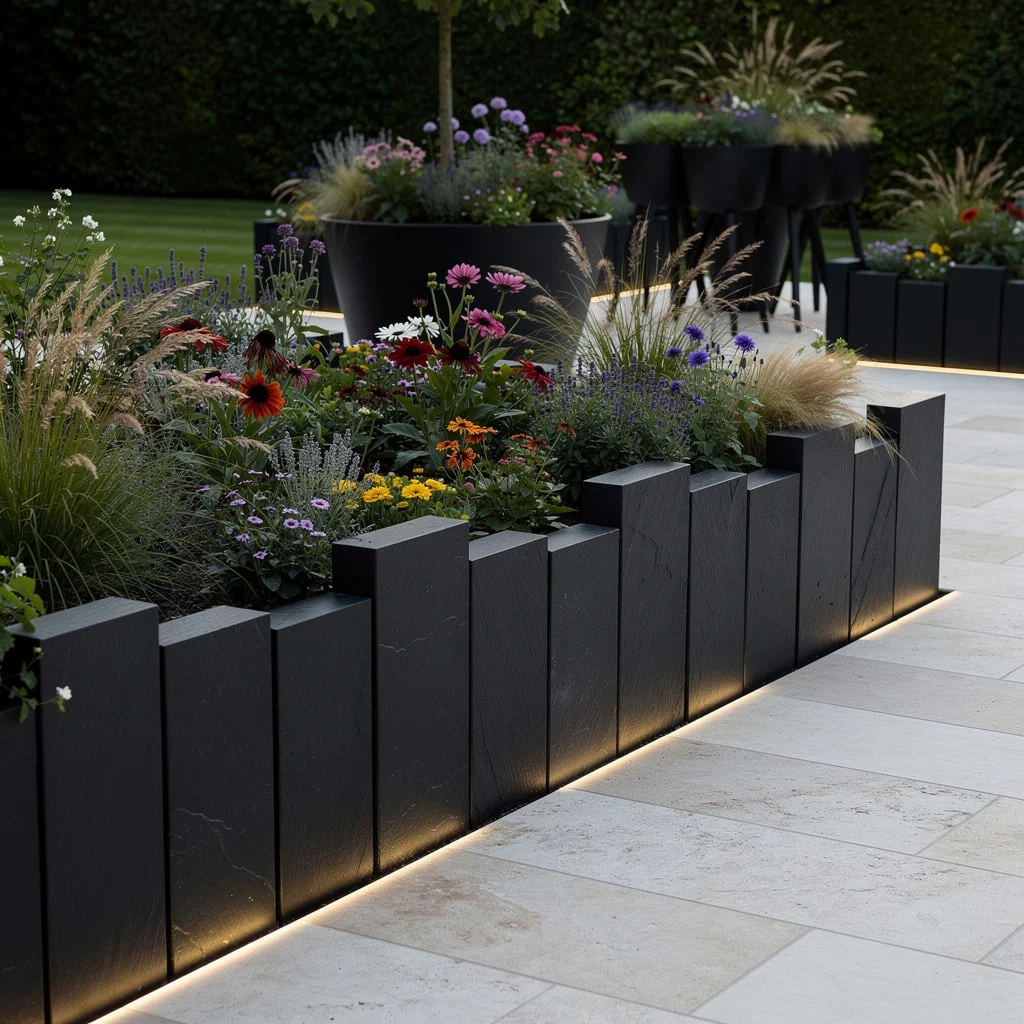
Craving a vibe that’s crisp, moody, and pure main character energy? You need to quit it with cutesy garden borders and go precision-mode with vertical-cut black slate—none of that craggy chaos, just pure geometric order. Stack those slabs with military-level accuracy, then lay in invisible, ground-level LEDs to give the stone that ‘soft glow in a designer catalog’ look. Orange marigolds, purple perennials, or wild fountain grasses? Let them pop against the stone and clean limestone pavers. Rule number one: mix up your planter heights for dimension—nobody wants flat flower energy.
Steel and Glass—For When You Want Outdoor Gallery Status
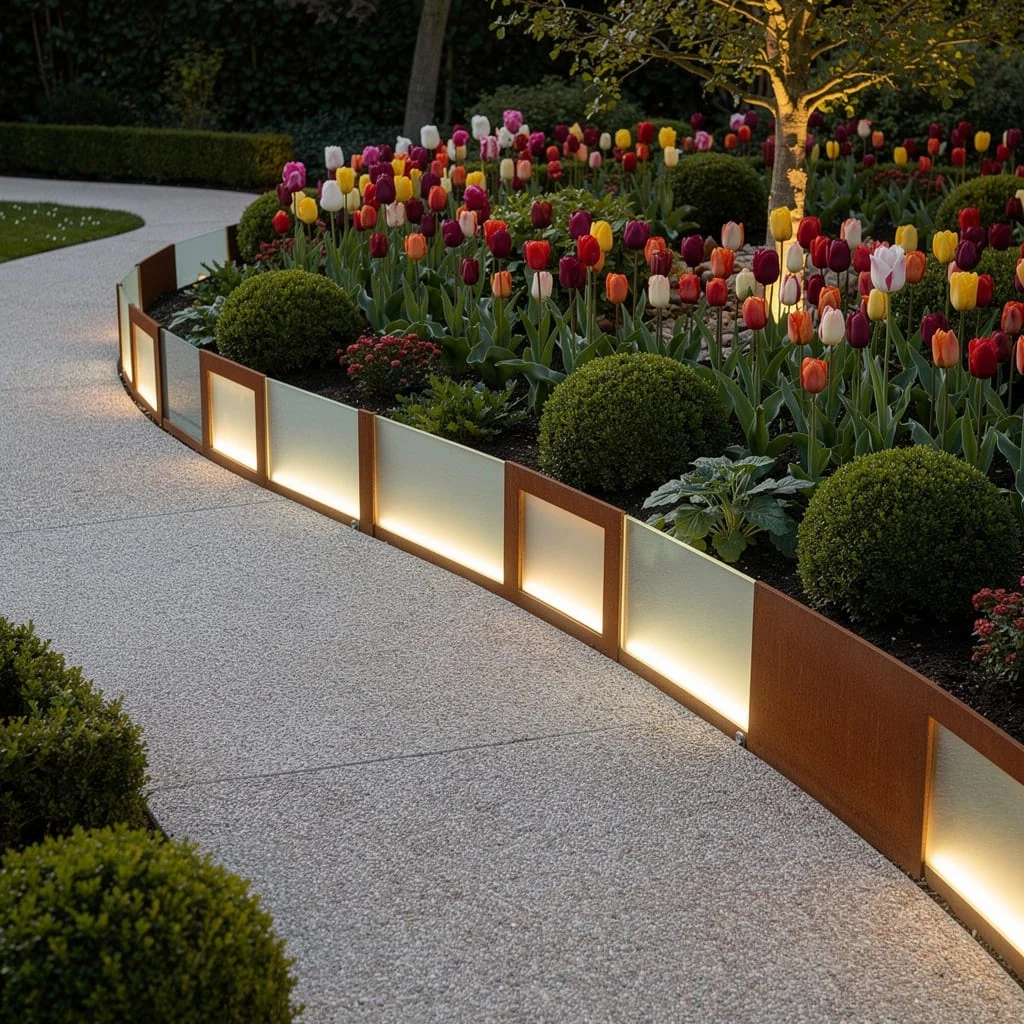
You’re not running a cottagecore yard, okay? Go for major impact with alternating corten steel and frosted glass panels—yes, actual panels—in a geometric rhythm. Ground them in smooth exposed concrete for a path that feels as sleek as your IG feed. Pack in color with tight tulip groupings and clipped boxwoods for max contrast with the burnished steel. Sneak in LED strips under the glass so your beds get that gallery-lit-up-at-night effect. Hot tip: keep the steel pattern consistent—random gaps look lazy, not edgy. Consistency equals sophistication.
White Travertine + River Pebbles = Sunlit Courtyard Chic
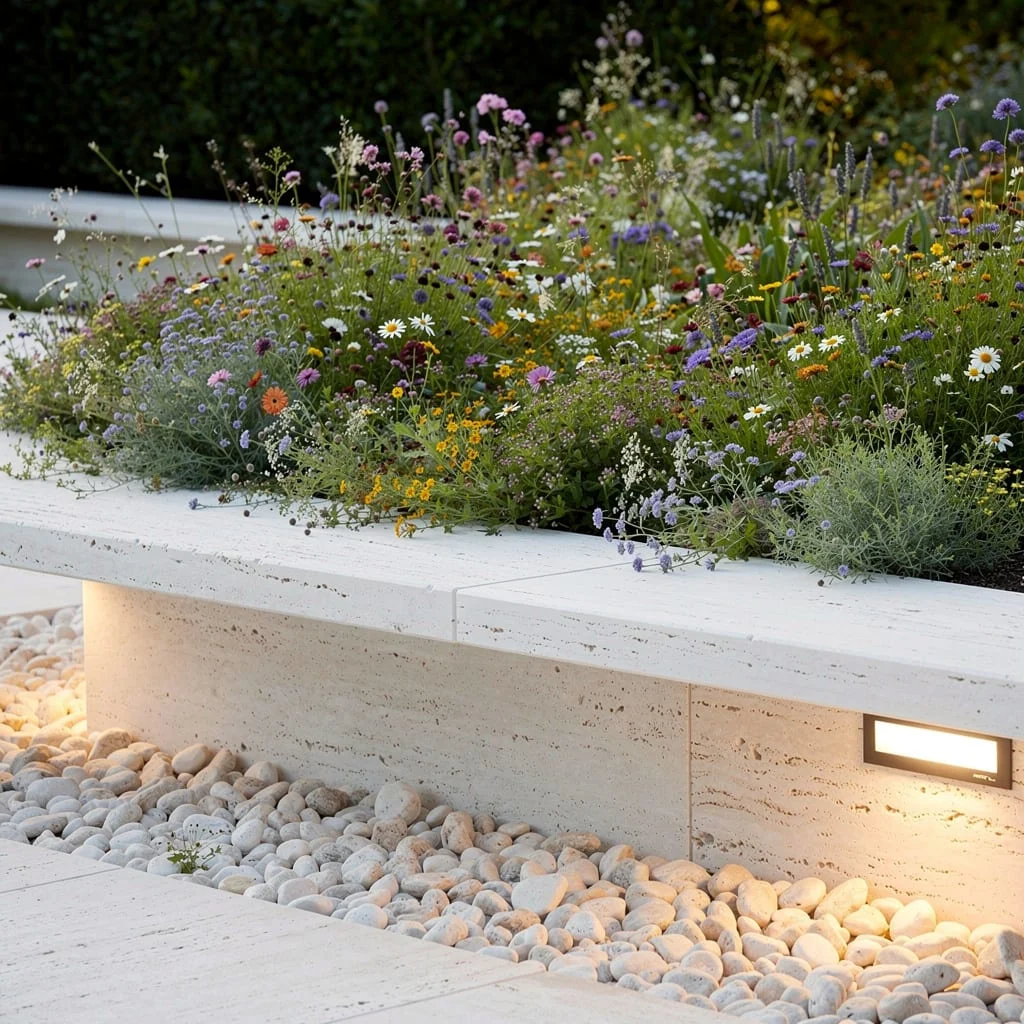
Want that ‘just stepped into a Mediterranean villa’ feeling? Get your hands on some smooth white travertine for the edge and float a continuous, cantilevered ledge over pale river pebbles. Forget fussy annuals—go wild with native wildflowers for spillover drama. Drop slimline uplights between the pebbles to give your edge a magical twilight aura. Always keep the travertine lines clean—any grout haze is a design crime. Major rule: contrast messy, loose wildflowers with precision-cut stone for that chef’s kiss garden tension.
Earthy Hipster: Timber Beams With Steel Attitude
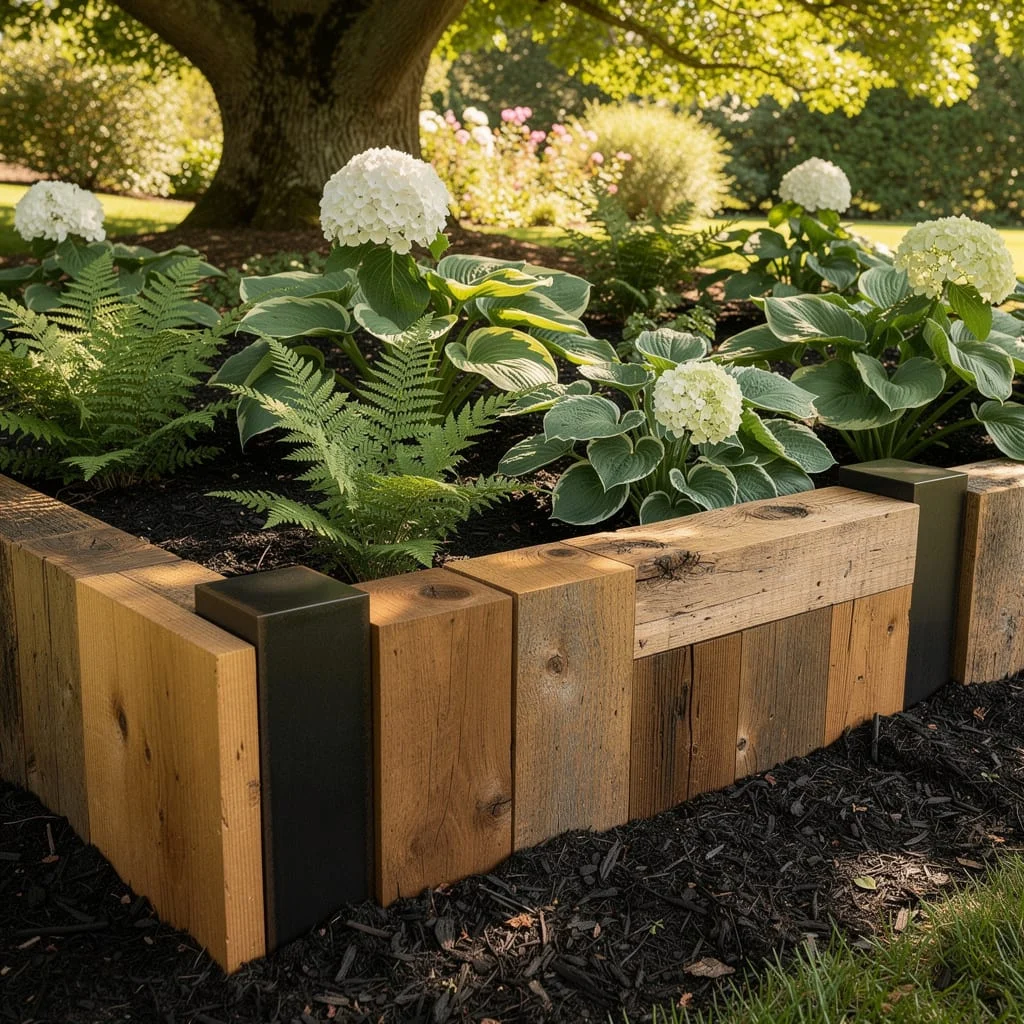
Seriously, stop buying plastic log lookalikes. Take reclaimed timber beams, stand them vertically, rub on a matte sealant, and alternate with chunky cubes of blackened steel. That’s how you do earthy without looking like you lost in a forest. Go for shade-lovers—ferns, hostas, hydrangeas—in dense groups, then layer on dark mulch for definition. Got trees overhead? Let the patchy sun play with all those textures. Pro tip: embrace the imperfections in the timber grain; trying to sand them all out just screams try-hard.
Granite Ribbons For Major Suburban Flex
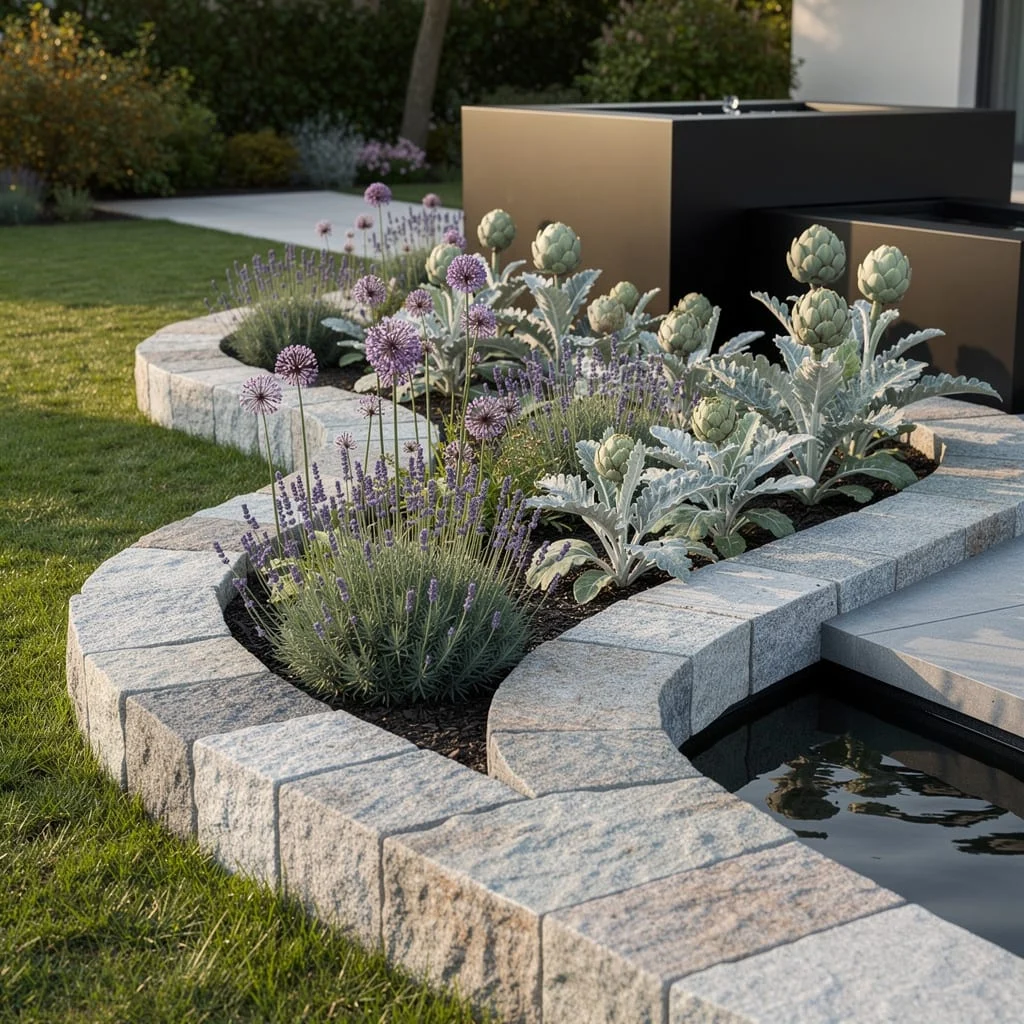
Nobody’s impressed by sad concrete blocks. Mortar flush tumbled granite for a seamless, undulating ribbon around your bed—it’s like jewelry, but for your lawn. Go for silvery lavender, artichokes, and alliums to get that ‘soft industrial’ color hit, and drop a matte black water feature nearby for fancy reflection points. That granite movement only works if you actually follow your bed’s organic curves, not some wobbly freehand line—mark it out with a hose before you start. Granite needs confidence, so over-order your stone for backup pieces.
Bring the Drama With Terrazzo Sparkle
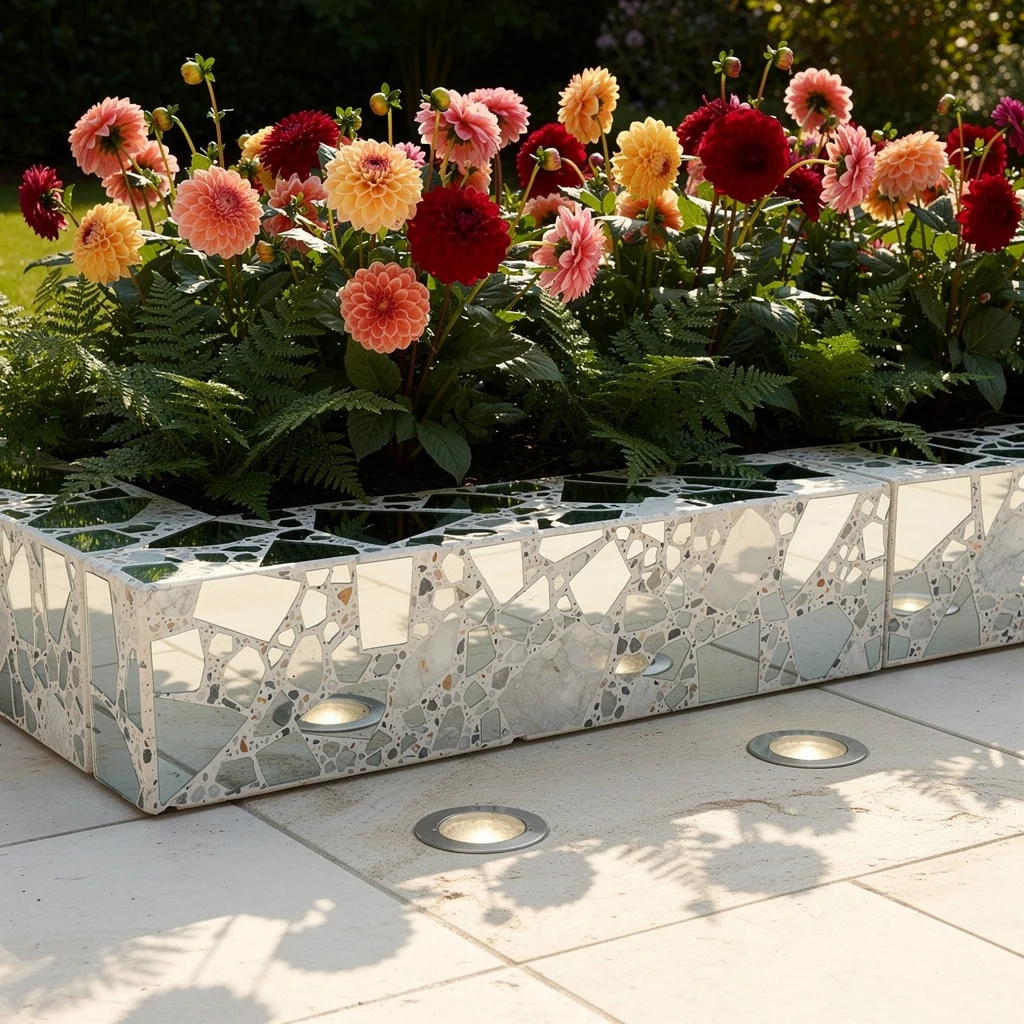
Terrazzo isn’t just for TikTok kitchens. Get your garden on the ‘glam but make it horticulture’ level with hand-cast terrazzo slabs—packed with marble, quartz, and mirror chips—for a wild edge line. Go dense with bold dahlias and lush ferns to play off the sparkle. Match the vibe with pale sandstone paving and sneak in ground spots that throw patterned shadows at dusk. Never, ever skip sealing terrazzo—water spots kill the look fast. Set the edge high enough to show off the aggregate, not bury it, or what’s the point.
Bluestone + Brass Inlay: The Classic Glow-Up
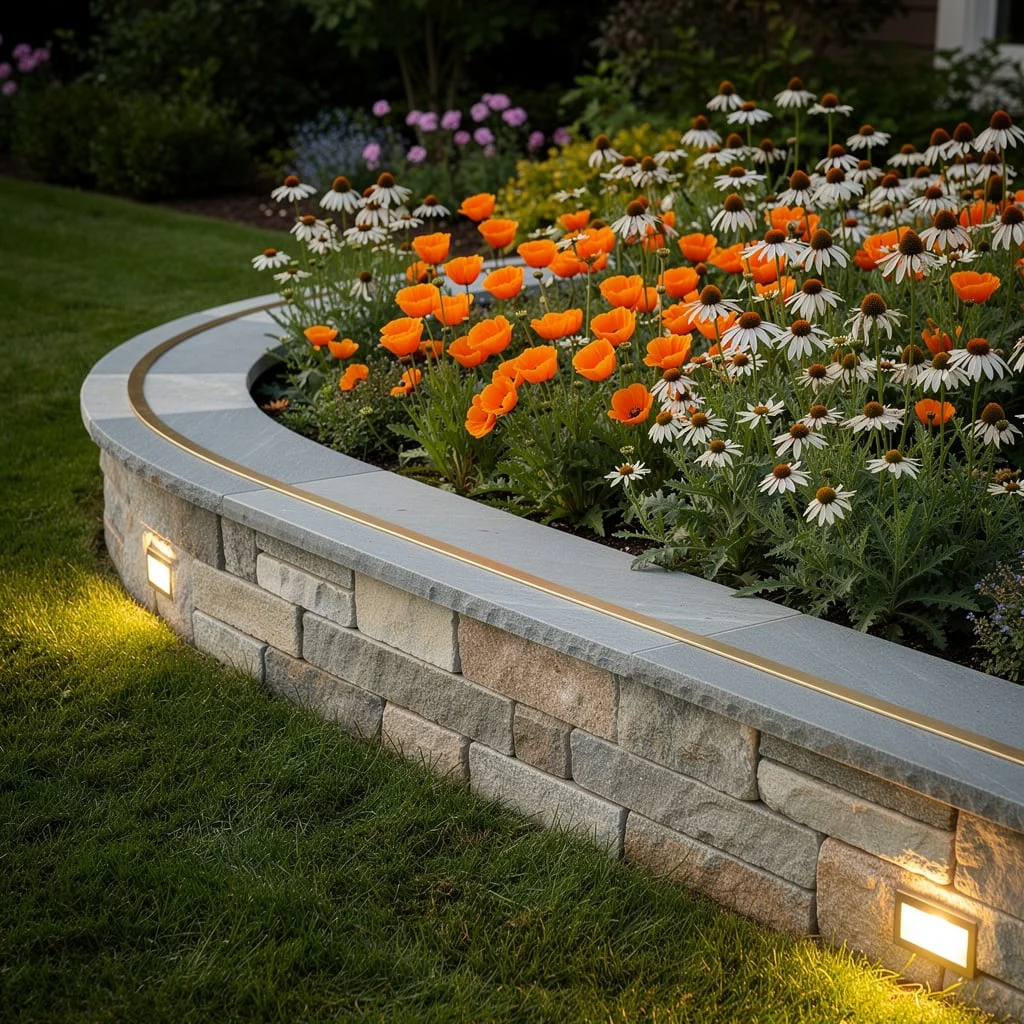
Want flower beds that outclass every ‘quaint’ stone wall in the cul-de-sac? Stack up low, dry-laid limestone walls, then cap with honed bluestone slabs for that icy-cool contrast. Orange poppies and white echinacea are the move—vibrant without feeling clownish. Slide delicate brass inlays along the walltops to trick the light and signal you know about details. Pop some landscape spots below to keep it glowing after hours. Granite gravel touch? Don’t. Stick to clean, weedless lawn for the purest ‘old money’ vibe.
Concrete Tiles + Stainless Bling For Geometry Geeks
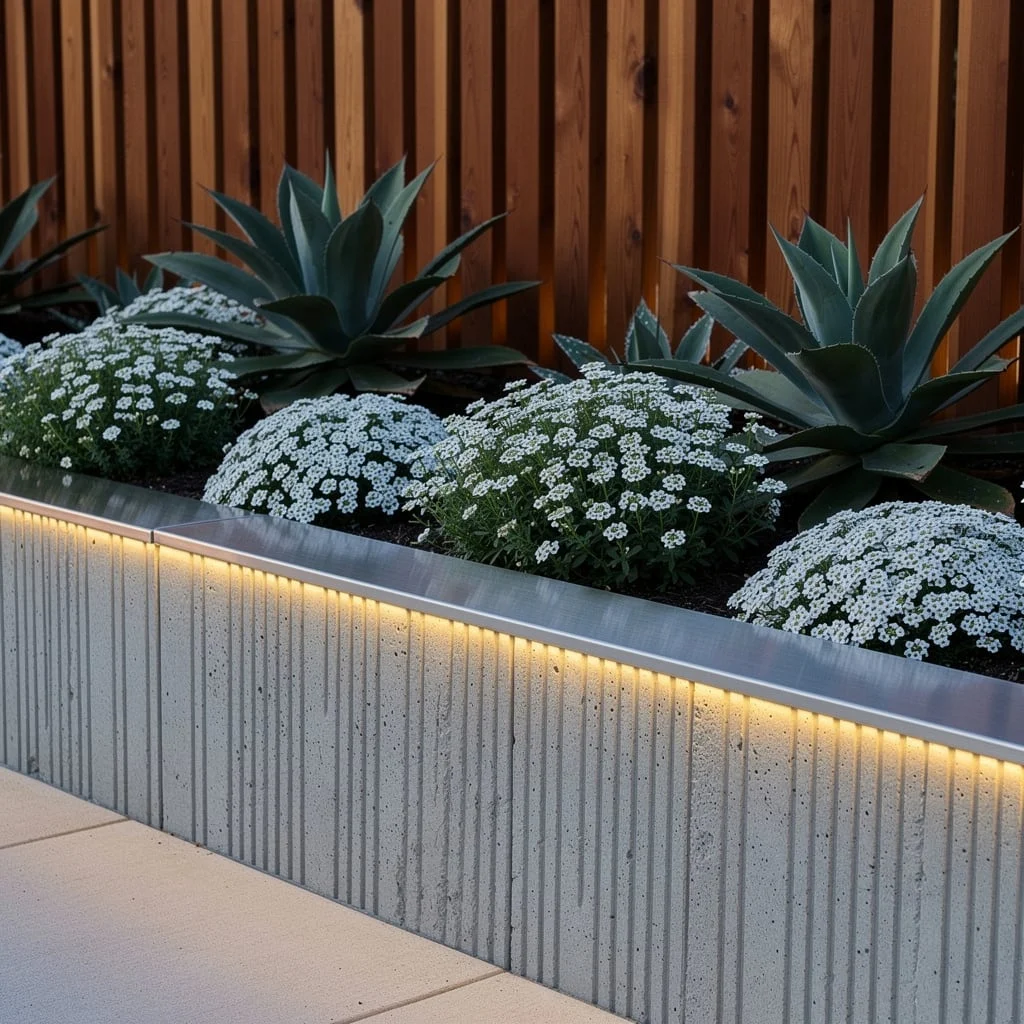
Modern curves—get yourself upright, deeply grooved concrete tiles, then top with brushed stainless edges for that high-shine line. Plant architectural agaves and absolute clouds of white alyssum to push those graphic outlines. Slatted cedar screens balance the coldness and give your background some texture. When the sun drops, hit all the grooves with tight downlights for real shadow drama. Concrete edges mean business—no chipping, no lazy pours. Set your tiles perfectly plumb or the whole look just collapses into home improvement store chaos.
Seamless Glass So Your Flowers Get Main Stage
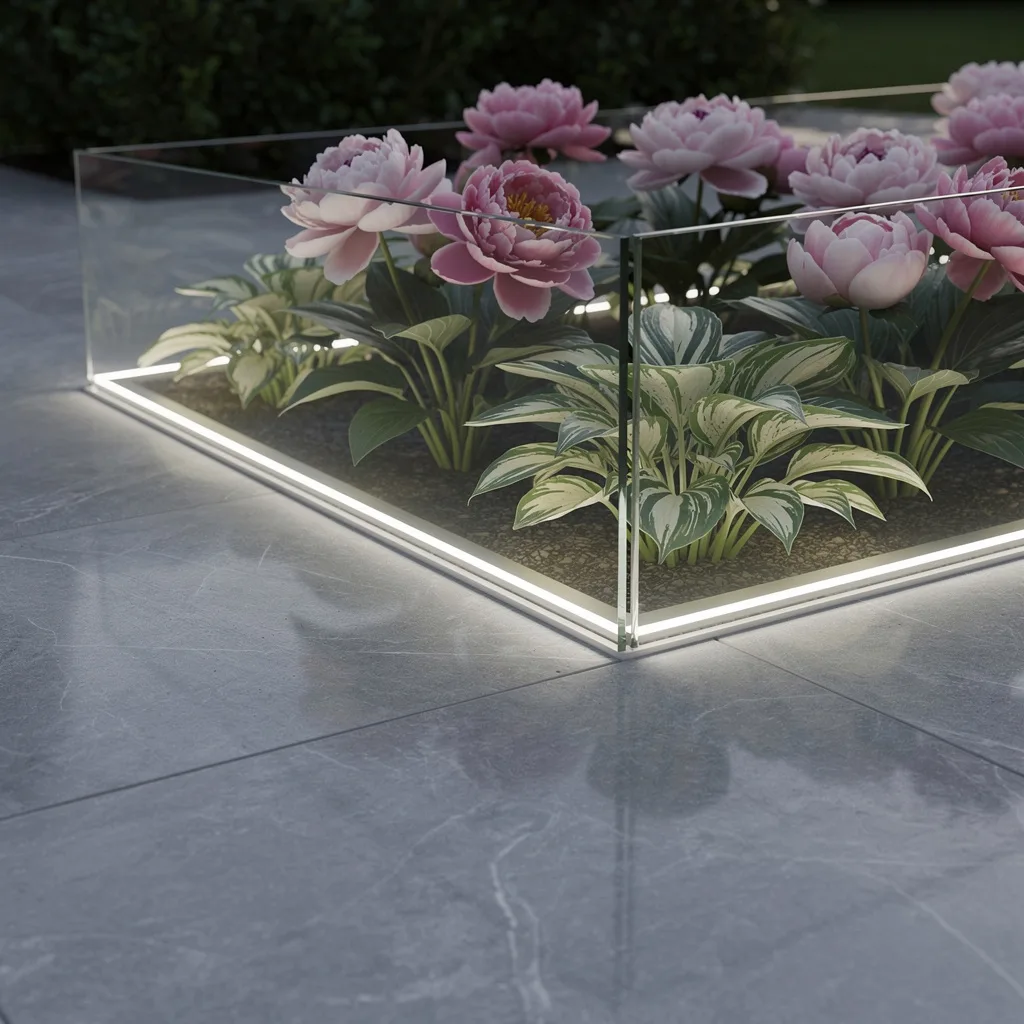
Glass is THE move if you want zero visual distractions. Slot ultra-clear tempered glass panels right into the ground and watch your hostas and peonies freak out the neighbors (in a good way). Pair with a reflective porcelain terrace for more futuristic peak. Sneak LEDs beneath each glass sheet to make your bed look like it’s levitating at night—seriously, this isn’t grandma’s garden. Never let grime or water spots slide—clean glass is non-negotiable. And, keep pets back; paw prints are not a design feature.
Travertine Cubism: The Most Fun Blocks Since Kindergarten
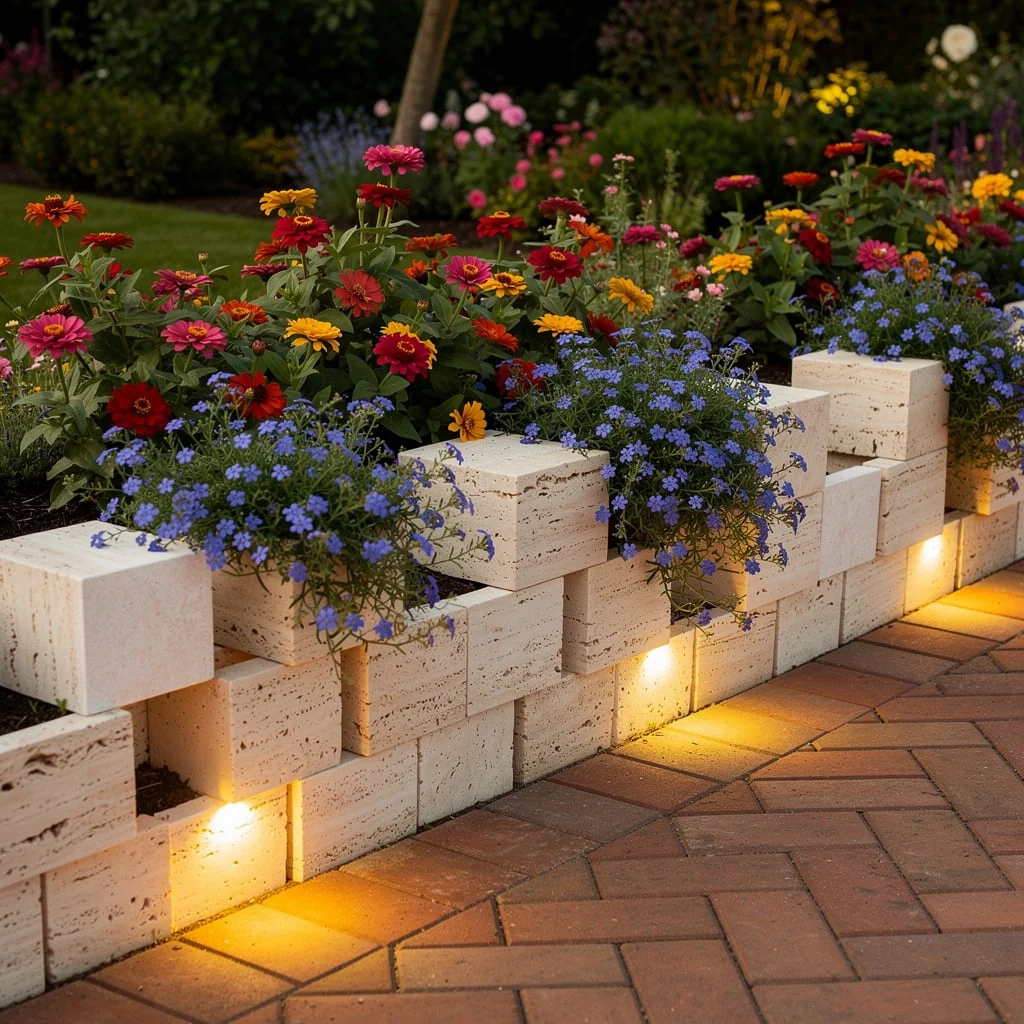
Stack pale travertine cubes at random heights for an edge that’s literally playful architecture. Pack the beds with hot zinnias and waterfalls of lobelia for the pop-art color surge, and tuck in well-hidden garden lighting to throw that modern fairy tale vibe after dark. Pair the lot with a herringbone clay paver path—no, not stamped concrete, clay—so the tones actually vibe. Stacking cubes? Always keep joints tight and faces flush; messy lines ruin everything. Let your plants spill for drama, but don’t let them smother the cubes’ punchy silhouette.
Aluminum Chic—For People Who Love Things That Shine
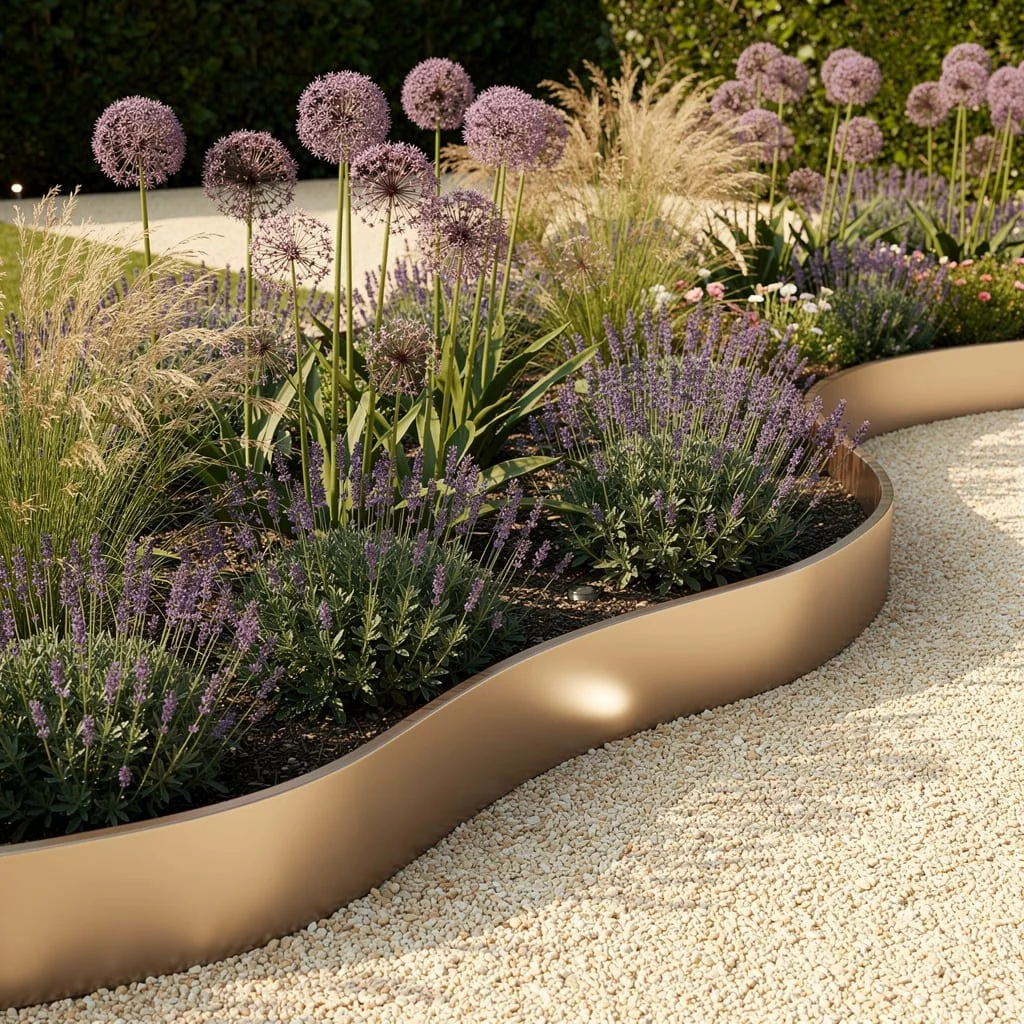
If you like your edges with a side of ‘Wow, is that metal?’ curve custom-formed aluminum along your bed in one beautiful, continuous sweep. Anodize to champagne for day-to-night glow, and pair with structural alliums, fluffy grasses, and dense nepeta so the flowers actually hold their own against all that glam. Roll out a resin-bound cream gravel for the cleanest contrast—straight lines only, ditch the winding path nonsense. Use ground-level spots to dial up the bling at night. Rule: never, under ANY circumstances, let this edge get dinged with a weed whacker.
Ceramic Tile Waves For Artsy Show-Offs
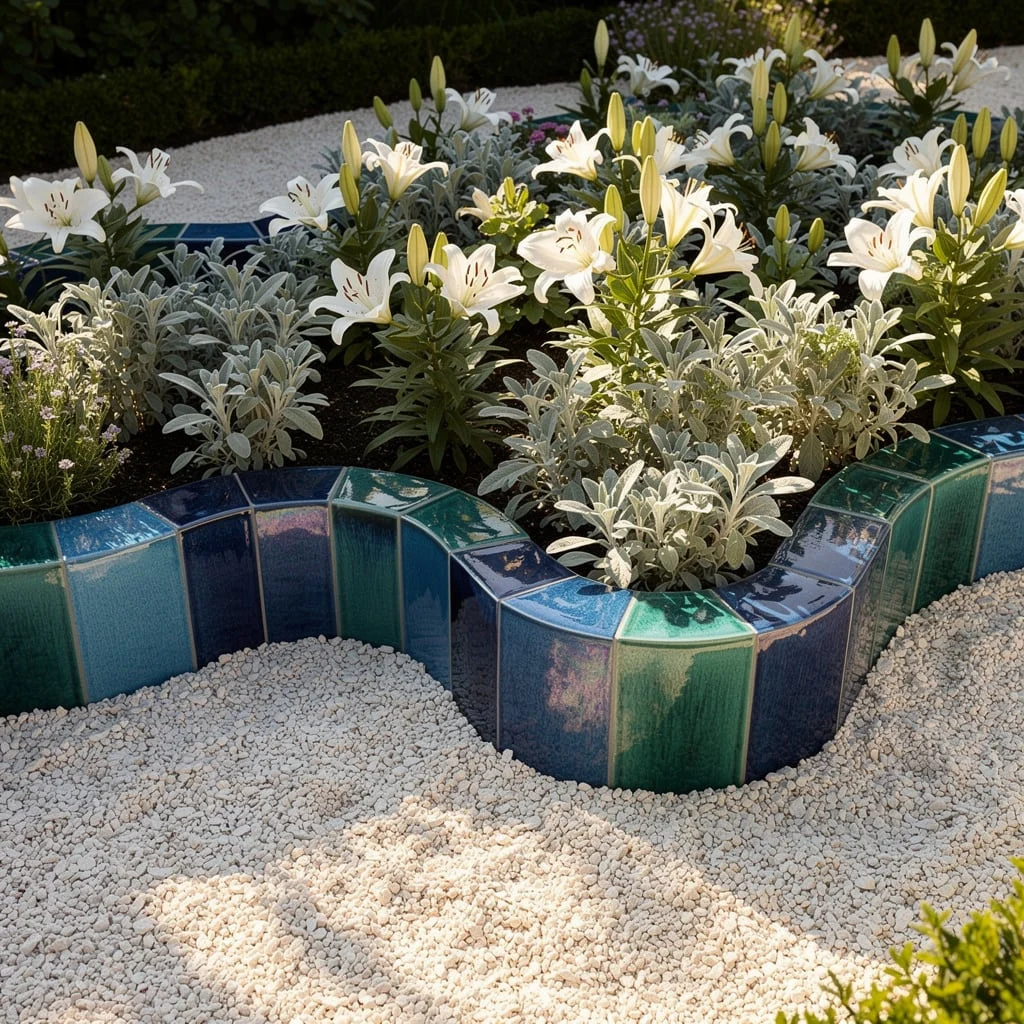
Shop-bought plastic edging is for design cowards. Get handcrafted ceramic tiles glazed in every shade of jewel blue and emerald, and set them in an undulating wave pattern that wraps your beds like an art installation. Go monochrome with white lilies and muted sage so that deep-glaze sparkle does all the flexing. Lay crushed pale limestone as paths for ultimate contrast and sun-bounce. Cleaning rule: hit those tiles with a soft cloth regularly or lose your right to complain when the sheen dies off. The wave rhythm is non-negotiable—don’t break the mosaic flow.
Final Thoughts
Flower bed edging is one of those garden elements that rewards the people who take it seriously and quietly punishes the people who don’t — not dramatically, not immediately, but in that persistent background way where something always looks slightly unresolved and you can never quite put your finger on why.
Every border here succeeds because the edging decision and the planting decision were made together, with each one making the other look better. The limestone brick holds the gladiolus spectacle inside a legible structure. The dark timber gives the perennial riot a frame worth filling. The blue fence transforms ordinary mixed planting into something that looks deliberately curated. These aren’t coincidences — they’re the result of treating the boundary between lawn and bed as a creative decision rather than a maintenance task.
Get the edge right and the planting that follows it has a foundation worth growing into. Get it wrong — or ignore it entirely — and no amount of beautiful plant selection will compensate for the fact that the whole thing looks like it hasn’t quite finished deciding what it wants to be.