
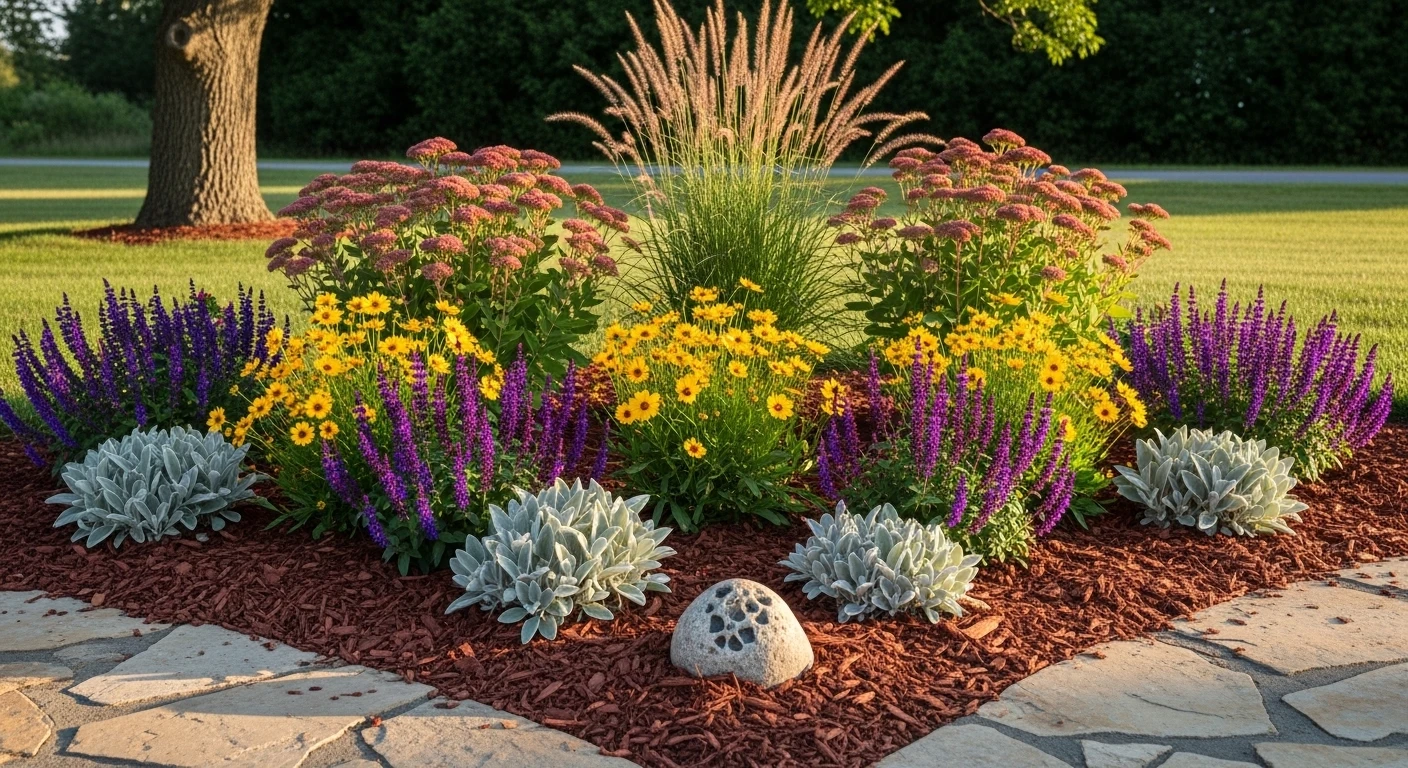
There’s a particular kind of gardening guilt that strikes every weekend when the weather is nice and the flower beds are looking a little desperate — the kind where you know exactly what needs doing, have no intention of doing it, and feel vaguely bad about that until Monday rolls around and work becomes the excuse again. The beds get watered when it rains. The weeding happens when visitors are coming. The whole thing oscillates between “actually fine” and “quietly embarrassing” depending on the season and your threshold for denial.
The advice that usually follows is to plant less, simplify ruthlessly, and accept a more minimal aesthetic — which is reasonable gardening advice and also deeply unsatisfying to anyone who actually wants their outdoor space to look like something rather than nothing. Low maintenance shouldn’t mean low impact. It should mean choosing plants and structures that do the work for you, so the garden looks intentional without requiring your constant intervention to stay that way.
The difference between a low maintenance bed that looks considered and one that just looks neglected usually comes down to three things: the right plant choice for the actual conditions, a ground cover or mulch strategy that handles weeds before they handle you, and an edging or structure decision that keeps the whole composition readable even when the planting hasn’t been touched in three weeks. Get those three things right and the garden largely manages itself. Get them wrong and you’re out there every Saturday morning wondering how it all unravelled again.
Why Most “Low Maintenance” Beds Still Feel Like Work
Low maintenance gardening fails for predictable reasons that have nothing to do with laziness and everything to do with setup decisions made before the first plant went in the ground.
Wrong Plant, Wrong Place — A plant fighting its growing conditions requires constant intervention to stay alive and never looks truly healthy no matter how much effort goes in. Put the same plant somewhere it actually wants to be and it establishes, spreads, and performs without asking for anything. Matching plant to conditions is the single highest-return decision in low maintenance gardening, and it happens before you spend a penny on anything else.
No Weed Suppression Strategy — Bare soil is an open invitation, and a flower bed without ground cover, mulch, or dense enough planting to shade the soil surface will spend most of the growing season being reclaimed by whatever was there before you started. A decent layer of bark mulch or a ground-covering underplanting is not optional — it’s the difference between a bed that needs weekly attention and one that needs monthly attention.
Edging That Requires Constant Re-cutting — A vague, soft lawn edge will blur back into the bed within a growing season and make the whole border look unresolved regardless of how good the planting is. Physical edging — metal strip, cobble set, stone border — holds the line permanently and removes a maintenance task that would otherwise repeat indefinitely.
Choosing Plants That Actually Want to Be There
The low maintenance flower bed is not a collection of plants that survive despite their conditions. It’s a selection of plants that genuinely thrive in them — and the distinction matters enormously to both the garden’s appearance and your weekends.
Perennials Over Annuals Every Time — Annuals need replanting every year and provide exactly one season of value for the effort of sourcing, planting, and establishing them. Perennials come back annually, spread gradually to fill the bed more densely each season, and develop root systems that make them progressively more drought tolerant and self-sufficient. The first year looks sparse. By year three you’re dividing plants and giving them to neighbours.
Mass Planting Beats Mixed Planting for Ease — A single species planted in sufficient quantity to cover a bed section creates a bold, cohesive look that reads as designed, suppresses weeds through sheer density, and removes the need to manage the spatial relationships between multiple different plants. A bed of one well-chosen perennial in full bloom looks more intentional than a complicated mixed border that’s spent the season competing with itself.
Drought Tolerance Is Not a Compromise — The impulse to treat drought-tolerant plants as a consolation prize for gardens with poor conditions misses the point entirely. Plants that have evolved to manage with less water don’t just survive dry spells — they flower more freely, develop stronger root systems, and produce the kind of self-reliant performance that high-water-demand plants require constant maintenance to match.
The Structural Decisions That Make Low Maintenance Actually Work
Plants alone don’t create a low maintenance garden. The structures around them — edging, mulch, ground cover, raised beds — determine whether the planting holds its composition over a full season or dissolves back into general garden chaos by August.
Raised Beds Change the Maintenance Equation — Lifting planting above grade in a defined structure changes everything about how a bed behaves over time. Drainage improves dramatically. Weed pressure from surrounding lawn reduces significantly. The defined boundary means there’s no ambiguity about where the bed ends and the lawn begins, which eliminates an entire category of ongoing maintenance. The upfront investment in building or buying a raised bed pays back in reduced weekly effort almost immediately.
Ground Cover Works While You Don’t — Dense, spreading ground cover planted under taller perennials and shrubs shades the soil surface, preventing weed germination, retaining moisture, and creating the layered planting effect that makes a bed look professional and considered. Geranium, creeping thyme, ajuga, and epimedium all do this effectively while contributing their own seasonal interest. They are, in essence, your unpaid garden staff.
Mulch Is an Investment, Not a Finish — A substantial layer of bark mulch applied annually does more for a low maintenance bed than almost any other single intervention — suppressing weeds, regulating soil temperature, retaining moisture, and improving the soil structure as it breaks down. Skimping on mulch depth or skipping it entirely undermines every other low maintenance decision made elsewhere in the bed.
Low Maintenance Flower Bed Ideas
The Dry Stone Raised Bed That Does All Its Own Showing Off
My flower bed I created 2 years ago.
by in GardeningIRE
Dry-stacked grey stone walls lift this long rectangular bed well above grade, and the structure alone is doing substantial design work before a single plant is considered. Inside, a colourful free-for-all of marigolds, purple verbena, snapdragons, and assorted annuals performs at full summer volume without the bed needing any particular intervention to look abundant — once established and mulched, the planting density handles weed suppression while the stone walls handle everything structural. The walls themselves are the real low maintenance genius here: no rotting timber to replace, no concrete to crack, no edging to re-cut every spring. Stone stacked correctly just sits there looking expensive and getting better with age, which is the ideal behaviour in a garden feature.
The Pink Petunia River That Committed to One Idea and Won
An entire border planted wall-to-wall with pink petunias and impatiens in varying shades, anchored by a single standard hydrangea tree at the centrepiece, running the full length of a dark horizontal-slat fence with string lights overhead and a gravel path alongside — this bed succeeded by making one strong decision and repeating it until the effect became undeniable. Mass planting a single genus means no plant competition to manage, no height juggling, no colour-clash anxiety, and a maintenance routine that consists mainly of deadheading and occasional watering rather than the constant intervention a complex mixed border demands. The dark fence backdrop makes every pink tone advance with maximum intensity, and the evening string lights ensure this border performs as well at dusk as it does mid-afternoon.
The Corner Bed That Started Smart and Built From There
A steel edging strip curves cleanly around a fence corner, containing a modest but properly considered planting of osteospermum and a young standard tree still wearing its nursery tag — and the fact that you can see the nursery tag is actually the most useful thing about this image, because it shows what a genuinely low maintenance bed looks like at the moment of installation rather than three seasons later when everything has filled in and the smart decisions are invisible. The metal edge will hold that curve permanently without re-cutting. The young tree will grow into the vertical structure the bed needs. The sparse planting now leaves room for the plants to establish and spread naturally. Getting the structure right from day one means the bed manages its own development from this point forward.
The Whiskey Barrel Trick That Earns Its Cleverness
A half whiskey barrel positioned on its side against a tree base with pansies planted both inside it and spreading out across the mulch bed in front creates the illusion of flowers literally spilling out of the barrel — an idea so simple it’s almost annoying, and so visually effective it consistently stops people in their tracks. The planted area is small and contained, requiring minimal weeding given the dense pansy coverage and bark mulch underneath, and the barrel itself requires nothing beyond existing. Pansies are among the most forgiving and cold-tolerant annuals available, which means this low effort installation delivers colour from early spring through to summer frosts in most climates. It’s a conversation piece that costs an afternoon and a bag of pansies, which is an excellent return on investment by any measure.
The Shasta Daisy Mass Planting That Runs Itself
An entire bed along the house wall planted solidly with Shasta daisies in full bloom, so densely packed that the soil underneath is completely invisible and the overall effect is of a white and yellow wave breaking against the building’s foundation — and the maintenance requirements of this bed in this condition are essentially zero. Shasta daisies are among the most reliably self-sufficient perennials available, returning stronger each year, spreading gradually to fill gaps, and requiring nothing beyond cutting back to the ground in autumn before they repeat the whole performance the following summer. The simplicity of the single-species planting is the design confidence that makes it work — this bed isn’t trying to do multiple things at once, and the visual impact of that restraint in full bloom is considerably more impressive than a complicated mixed border twice its size.
Go Geometric With Concrete Borders and Gravel
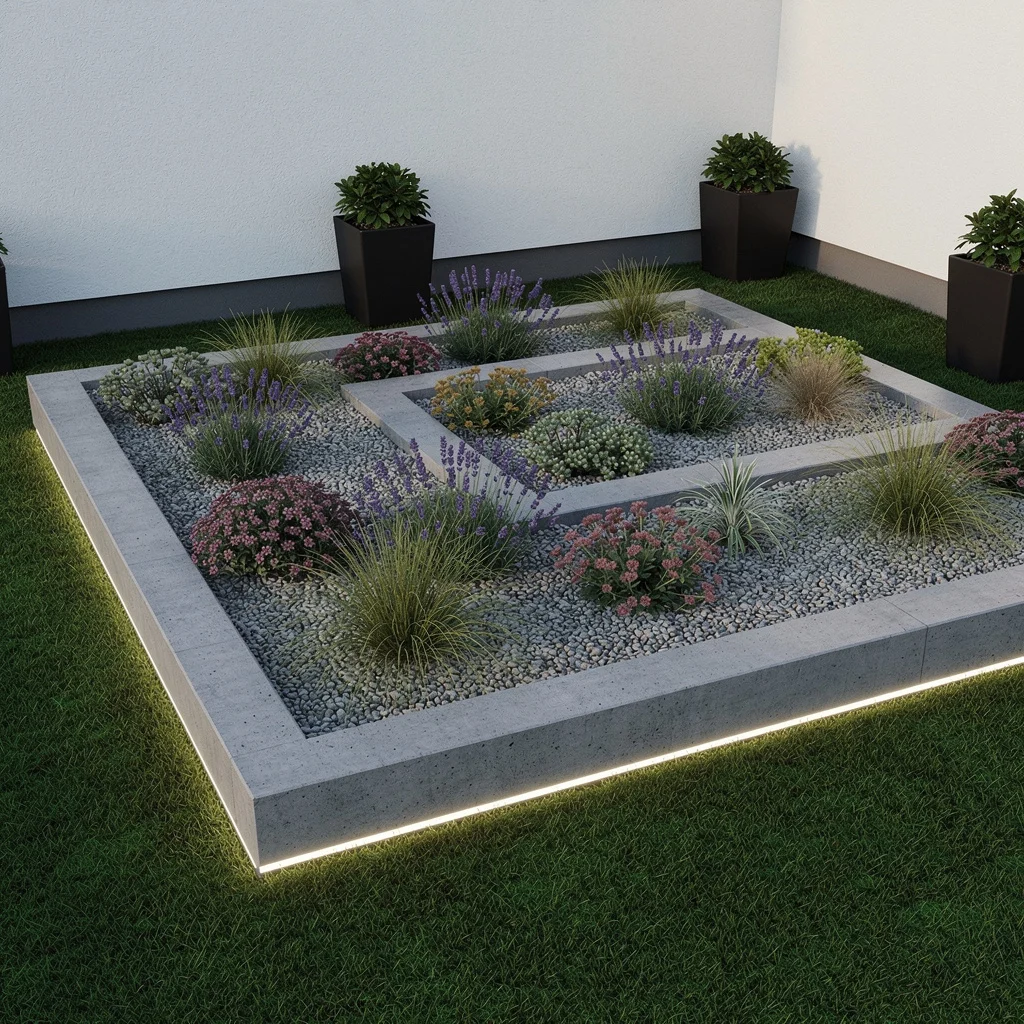
Want your backyard to look more crisp than a freshly ironed shirt? Commit hard to geometric beds with cool concrete borders—yes, concrete, because you’ll never replace rotting wood again. Fill rectangular beds with gravel mulch for a weed-free vibe and alternate lavender, sedum, and ornamental grasses so things stay alive without your tears. Fake the lushness with artificial turf; nobody’s inspecting it. Install LED strip lights around the edge because drama at dusk is non-negotiable. For major flex, keep black planters minimalist and white stucco walls squeaky clean to stop any visual chaos. Always stagger your plant clusters—not everything needs to be symmetrical.
Raise Your Game With Corten Steel And Succulents
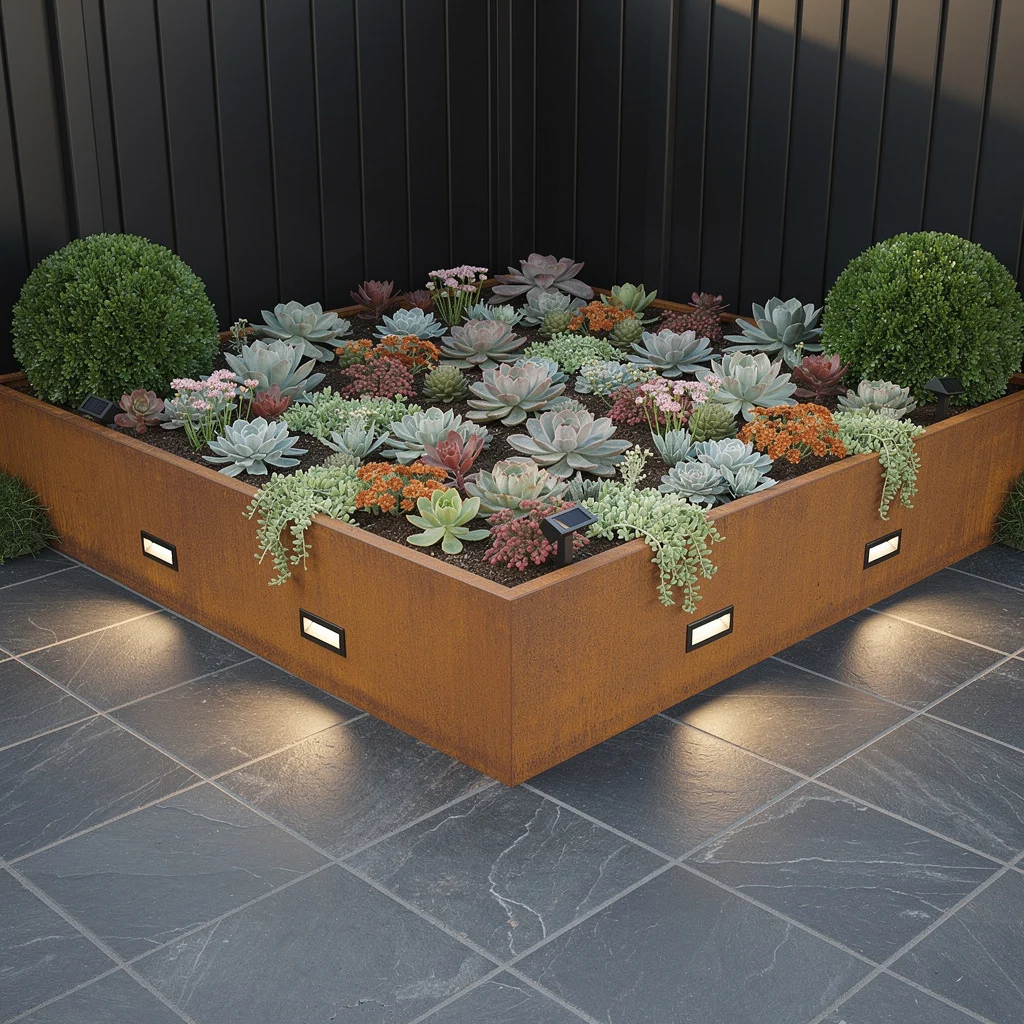
Stop playing safe with boring wood beds and embrace corten steel—the warm, rusty look screams designer without any actual effort. Place these babies on dark slate patio flooring to make colors pop. Pack the bed tight with echeveria, kalanchoe, and trailing sedum; all thrive on neglect. Drop solar-powered uplights along the steel edges so the foliage glows at night—no electrical bills here, please. Anchor corners with boxwood balls for that ‘I have my life together’ structure. Matte black aluminum fence panels are a must since nobody needs the neighbors judging your succulent obsession. Remember: Succulent gardens are only cool when the plants are overcrowded in odd numbers.
Stacked Stone Circles: The Perennial Power Move
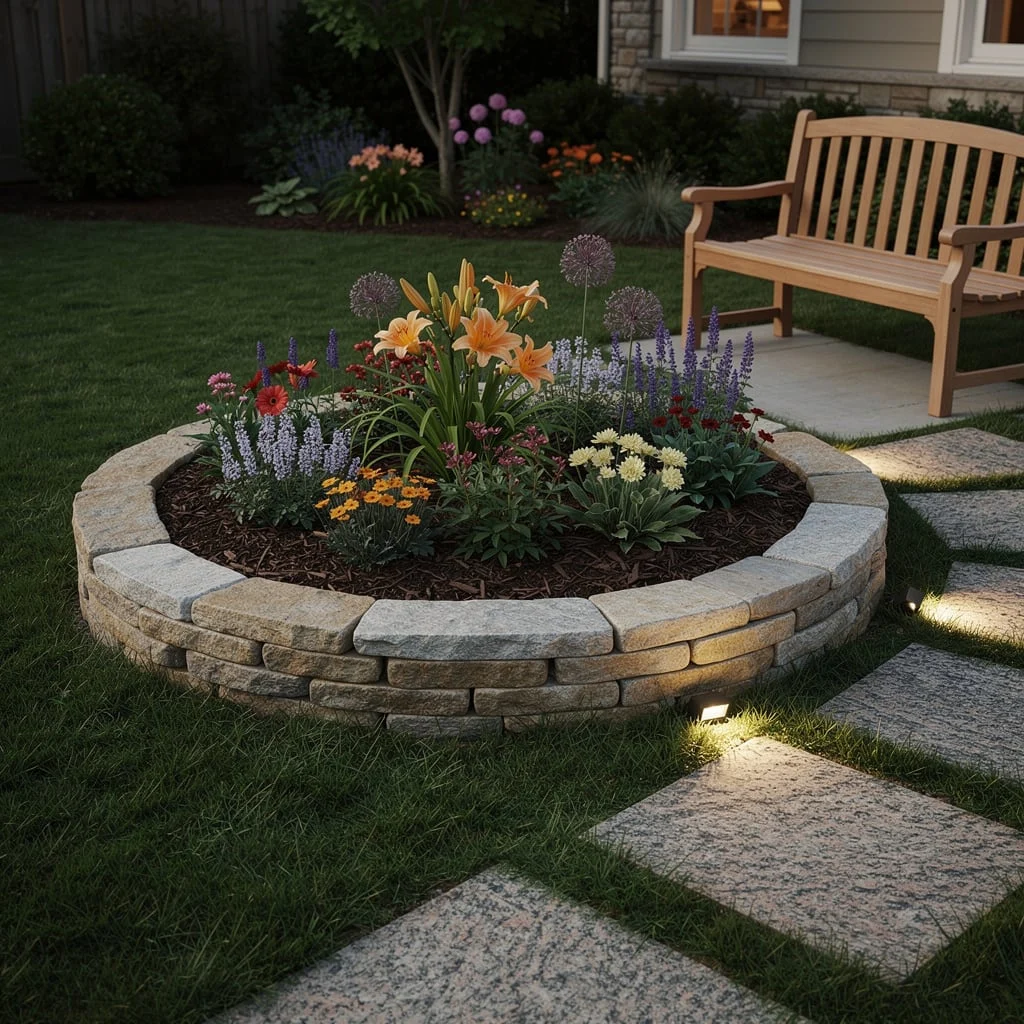
If you’re allergic to annuals, switch to perennial classics like daylilies, salvia, and ornamental alliums—these survive year after year while you nap. Go circular with stacked stone borders for grown-up elegance (because rectangles are for boring people). Mulch the bed with dark bark to kill weeds and keep things tidy. Don’t skip hidden pathway lighting in adjacent granite stones; low key lighting is everything for post-sunset flexing. Plonk down a teak bench nearby so you can pretend you’re enjoying nature without moving much. Always match your bench’s tone to the stone edging; clashing materials are strictly forbidden.
Limestone Luxe: Linear Beds and Pebble Perfection
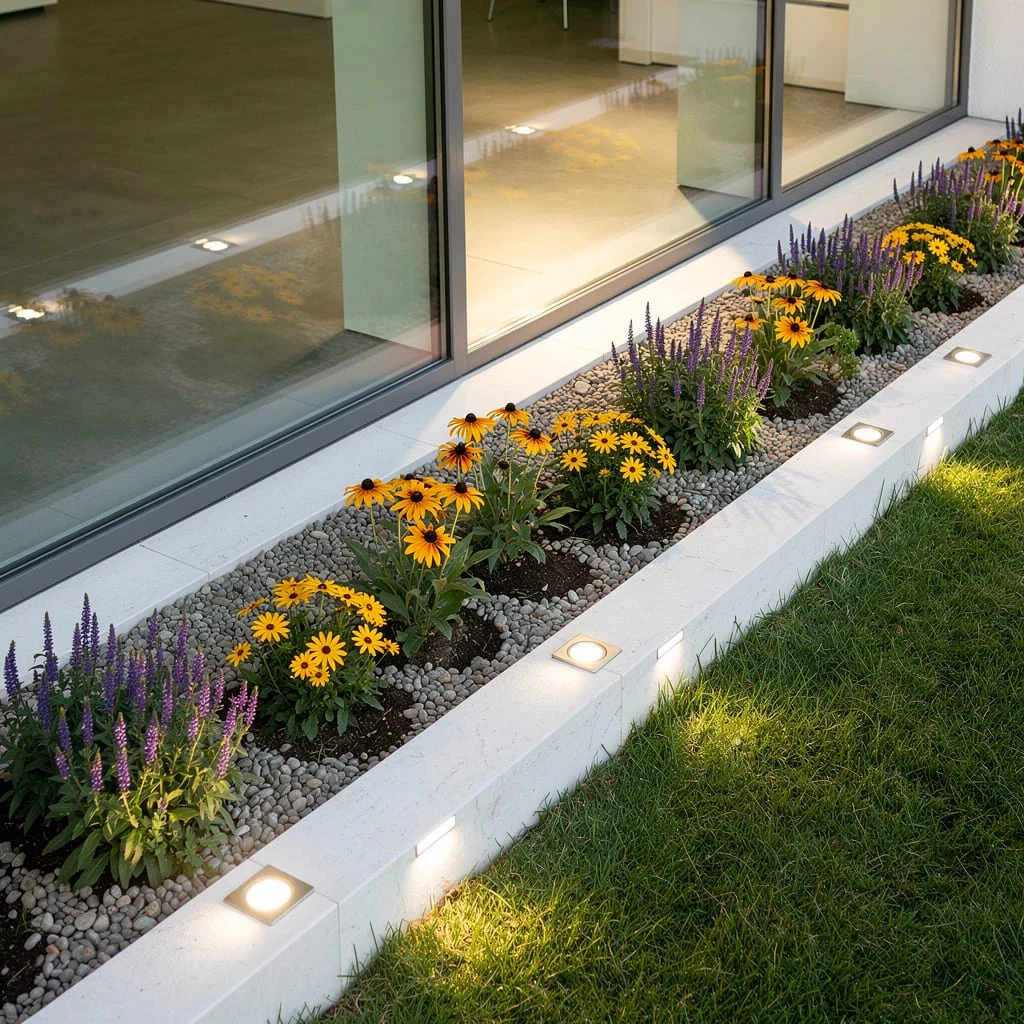
If your life goal is to have a garden that’s as organized as your Google Calendar, run a linear flower bed right alongside your glass wall. Use sleek white limestone for the edge—a sharp move for anyone dodging maintenance. Choose black-eyed Susan, veronica, and golden coreopsis in perfect rows; even a plant newbie could keep these alive. Pebble mulch locks in the weed-free vibe and LED spotlights from the limestone edge say ‘architectural genius’ after dark. Fescue grass lawn? Keep it tight. Always arrange your plants by height and color—sloppy beds are a crime against modern design.
Terraced Drama With Stainless Steel And Grasses
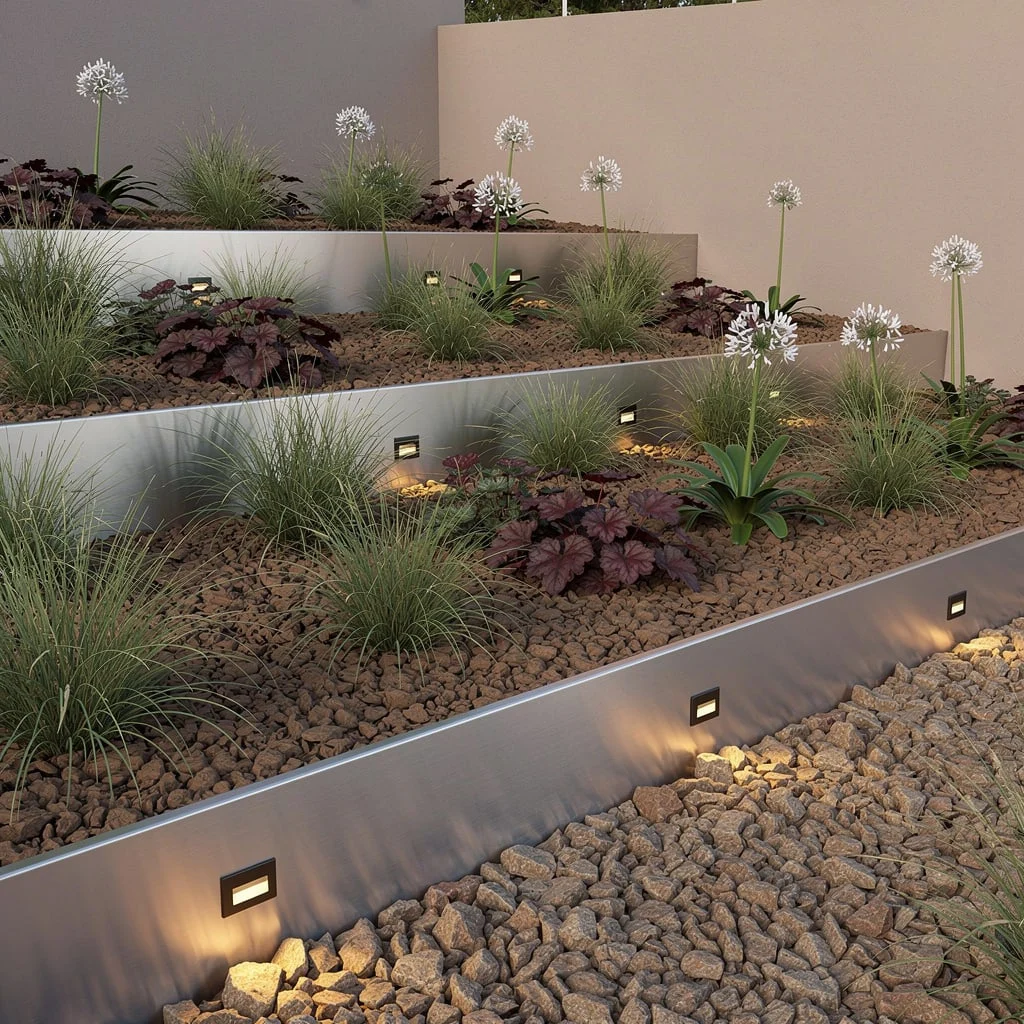
Got a slope? Don’t let it haunt your lawn dreams. Build layered flower beds edged in brushed stainless steel—hello, contemporary sharpness. Mix in ornamental grasses, burgundy heuchera, and white agapanthus; these take minimal effort, so even a serial plant killer wins. Rock mulch keeps things neat for eternity and sneaky solar lights embedded in risers make slopes look designer, not forgotten. Concrete retaining walls in taupe are your low-key friends for blending. Always fill each tier densely—empty terraces scream laziness, so pack plants in tight like you mean it.
Angular Timber Beds In A Courtyard—No Watering Needed
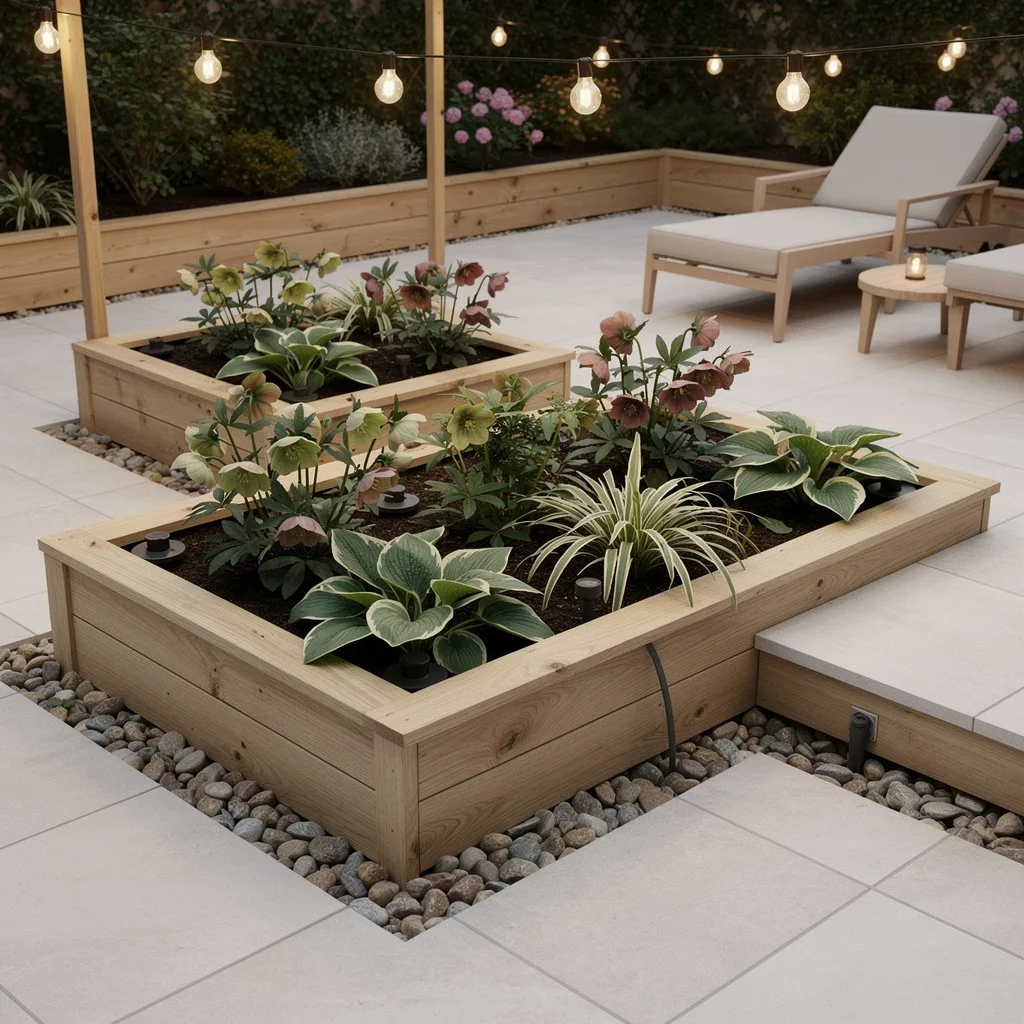
Stop blaming your brown thumb and start building angular raised beds with light oak timber. Plop these in a porcelain tile courtyard for that neutral, ‘I rent here but actually own the place’ look. Skip the stress and pack beds with evergreen hellebores, hostas, and variegated liriope; these live forever and never whine. Integrate self-watering systems because who wants to be a slave to the hose? River stone borders keep things extra clean, and string lights overhead practically beg for photos. Always use weatherproof lounge seating in the courtyard—if you can’t nap by your plants, what’s the point?
Urban Wow: Glossy Borders, Brick Walkways And Designer Foliage
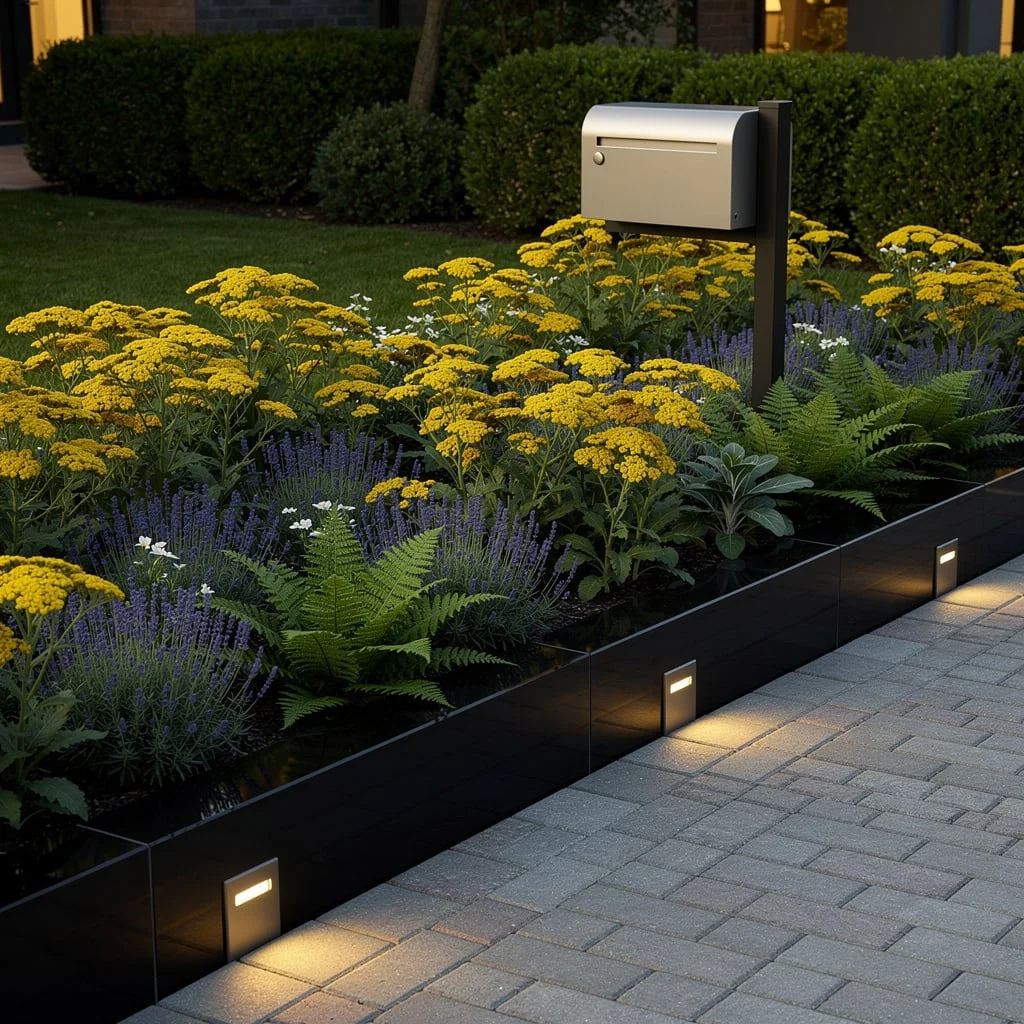
Forget bland front yards; go glossy with black masonry borders next to a permeable brick walkway. Cluster golden yarrow, blue sage, and lush ferns for color that’s too rich to be ignored. Line the pads, not the beds, with low-voltage path lights because safety is sexy. A minimalist mailbox says you’re too busy for drama, while boxwood hedges frame the plot year-round. Never plant ferns solo; always mix in bold color for texture. If your flower bed doesn’t scream urban luxury, you’re doing it wrong.
Sunken Luxury: Marble Edges And Drought-Tolerant Blooms
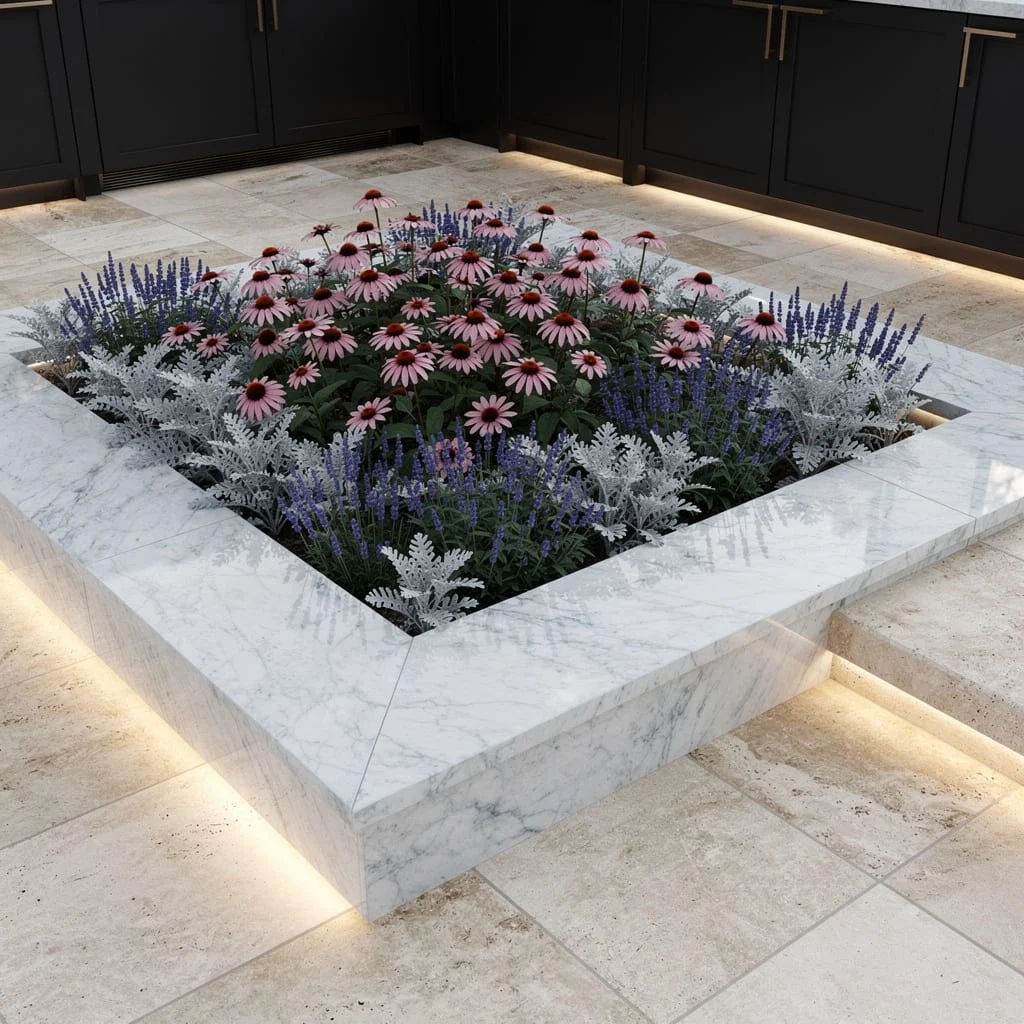
Want ultra-luxury with zero effort? Sink a flower bed and edge it in honed Carrara marble—yes, actual marble, because life’s too short for plastic. Cram pink echinacea, blue catmint, and silvery artemisia together; drought-tolerance is your friend, not your brag. Recessed step lights in travertine pavers are mandatory for nighttime envy. Surround with large-format tiles and matte black cabinets for the ultimate designer flex. Never let gaps show between your marble edge and tiles—seamless is the only vibe worth fighting for.
Curve Appeal: Sandstone Borders And Shady Blooms
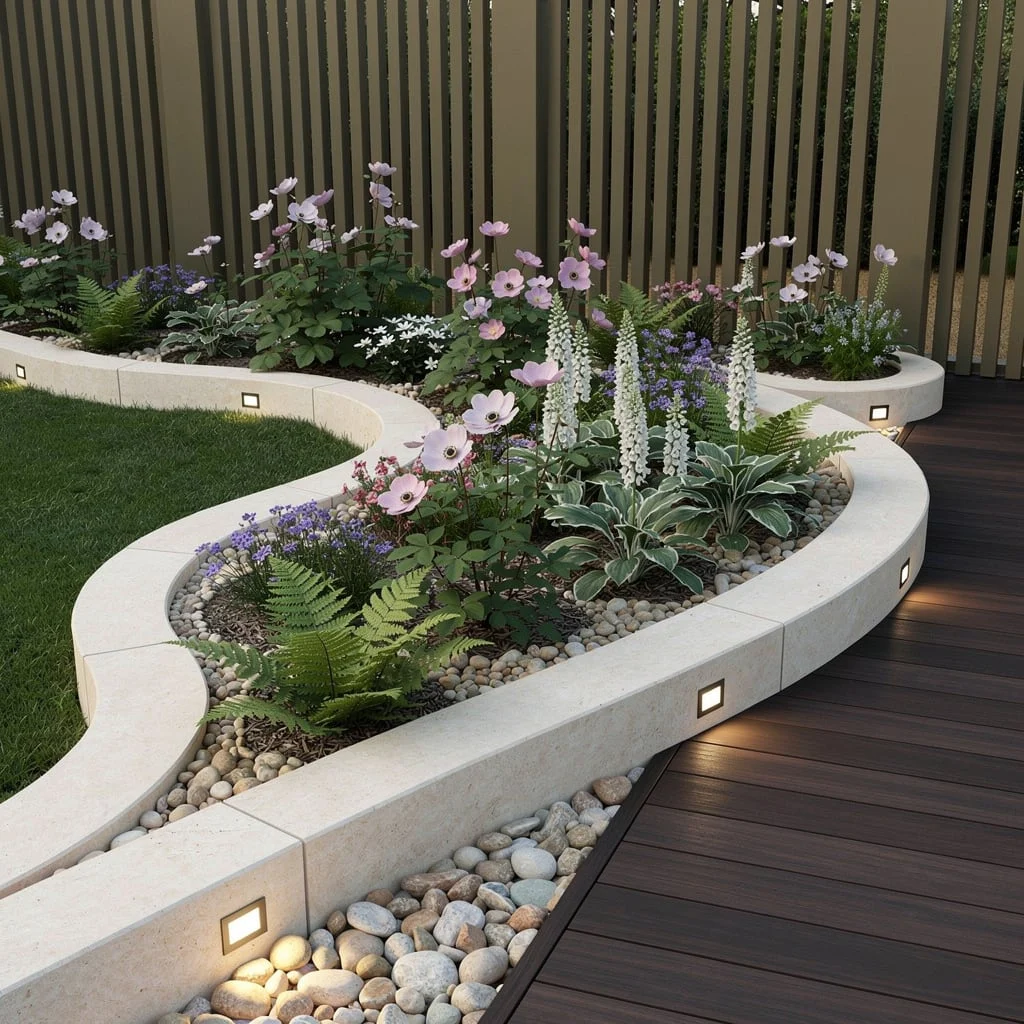
Ditch boxy beds and embrace curves; pale sandstone borders with ribbon-flow shapes are a fast track to sophistication. Pack Japanese anemone, ferns, and digitalis for shade tolerance that won’t whine about sunlight. Mulch with polished river stones for a fresh, clean look. Hide uplights in the ground to accentuate the curves and textures, not blind your guests. Go dark with hardwood decking on adjacent pathways, and slap up vertical slatted screens in earthy tones for a soft backdrop. Always run the curves parallel to the main walkway—for maximum visual flow, never random squiggles.
Rooftop Modular Madness: White Planters And Drip Systems
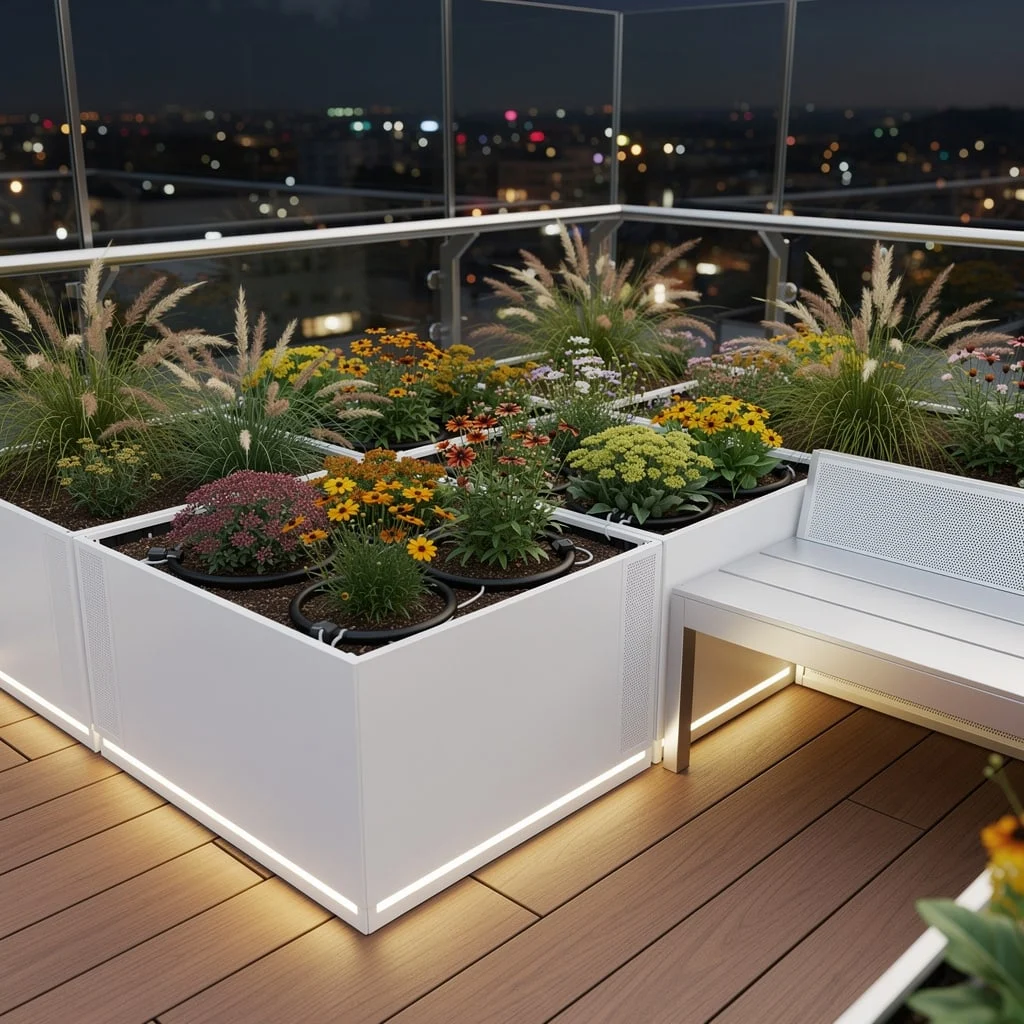
Rooftop gardening isn’t for the faint-hearted, so install modular beds with powder-coated white aluminum planters—don’t even try matching the paint, just buy crisp white. Pack modules with coreopsis, sedum, and ornamental feather grass in the finest potting mix, then add drip irrigation to dodge watering woes. Teak composite decking and concealed LED strips between modules instantly scream rooftop chic. Glass balustrades frame your city view, while matching aluminum benches give you a high-end seat without soaking up rainwater. Always stagger planter heights around the edges—if they’re all the same, your garden screams ‘rental staging’.
Final Thoughts
Low maintenance flower beds that actually look good share a quality that’s worth naming directly: they were designed to be low maintenance from the start rather than hoping they’d turn out that way. The stone walls, the metal edging strips, the mass plantings, the mulch strategy, the drought-tolerant species choices — none of those are accidents. They’re the upfront decisions that remove the ongoing decisions, and making them deliberately at the beginning is what separates a garden that looks after itself from one that just looks neglected.
The goal was never to have a garden that requires no attention. It’s to have one where the attention it does require is proportionate to the results it delivers — where thirty minutes of seasonal maintenance produces something that looks like considerably more effort went in. Every idea here achieves that in a different way, but all of them start from the same place: choosing the right plant, giving it the right structure to grow within, and trusting the design to carry the composition between visits.
Stop punishing yourself with beds that demand more than they give back. Build the structure right, plant densely and deliberately, mulch properly, and then do the radical thing — leave it alone and let it perform.