
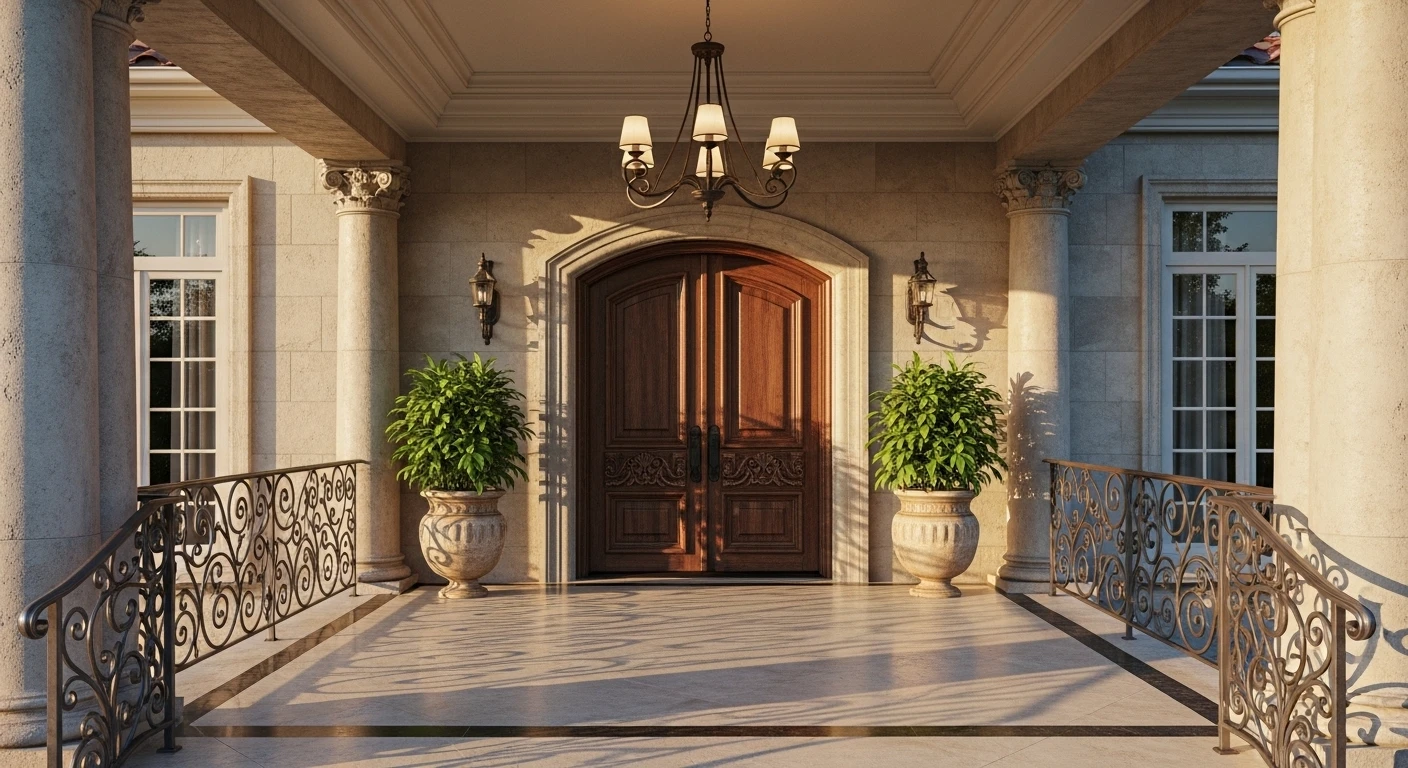
Your front porch is doing a job interview every single day and most of them are failing spectacularly. It’s the first thing visitors see, the last thing they notice leaving, and the space that sets expectations for everything inside the house — which makes it genuinely baffling that so many porches get decorated with whatever was left over after the interior was finished and a sad potted plant from the petrol station forecourt.
The porch sits in a strange design no-man’s-land for most homeowners. Too exposed to treat like an interior room, too visible to ignore entirely, too small to justify serious furniture investment. The result is usually a collection of half-decisions — a mat that came with the house, a light fixture that was never quite right, and a seasonal wreath that gets changed twice a year to prove effort is being made somewhere.
What porches actually reward is commitment to a mood. The ones that stop people in their tracks — that make guests say something complimentary before they’ve even knocked — have a point of view that’s visible from the street. Whether that’s maximalist bohemian warmth, crisp French country symmetry, or the cheerful confidence of a green door surrounded by every flower variety within driving distance, the specificity is what creates the impression. Vague porches produce vague reactions. Decided ones produce actual compliments.
The Porch Makes a Promise the House Has to Keep
Every front entrance is making a claim about what’s inside, and the relationship between that claim and the reality either creates a sense of arrival or a sense of mild disappointment. Getting the porch right means understanding what story it’s telling.
Coherence Matters More Than Individual Pieces — A porch decorated with beautiful individual items that don’t relate to each other still reads as unresolved. The rocking chair, the lantern, the wreath, the planter — these need to be having the same conversation, not interrupting each other. One clear aesthetic direction, consistently applied, beats a collection of individually nice things every time.
Scale Is the Most Common Mistake — Undersized furniture on a generous porch looks lost and temporary. Oversized elements on a compact entry crowd the space and make arrival feel like an obstacle course. Getting proportions right — pots large enough to register at street level, seating that fits the floor area without consuming it — is the difference between a porch that looks styled and one that looks staged.
The Door Is the Focal Point Whether You Treat It That Way or Not — Every porch composition organises itself around the entry door, which means the door colour, material, and hardware are doing enormous design work regardless of how much attention you’ve paid them. A flat, builder-grade door in default brown undermines everything around it. A door that’s been given a considered colour treatment, even on a very modest porch, elevates the entire composition immediately.
Layering Makes Porches Feel Lived In Rather Than Set Up
The porches that feel genuinely inviting rather than staged for a photoshoot share a quality that’s surprisingly hard to manufacture deliberately — they look like someone actually uses them, and the layers of objects, textiles, and plants reflect actual habitation rather than careful arrangement.
Textiles Warm Up Hard Surfaces Fast — Outdoor rugs, cushions, and throws are the fastest route from “functional porch” to “place people want to linger.” They introduce softness against timber decking, concrete floors, and painted surfaces that would otherwise read as purely utilitarian. The key is choosing textiles that relate to each other in colour or pattern rather than simply piling on whatever’s comfortable.
Plants Do More Work Than Any Other Single Element — A well-chosen potted plant at the right scale on a porch does the work of three decorative accessories simultaneously — it adds colour, organic texture, and the sense of something living and tended. Two matching plants flanking a door create formal symmetry. A loose grouping of varied heights and types creates relaxed abundance. Both work. Neither of them is a single small pot sitting apologetically to one side of the mat.
Lighting Sets the Evening Personality — The porch that looks considered at noon and bleak at 7pm has only half a design. Wall lanterns, pendant lights, and candle lanterns all give the space a different character after dark, and the choice between warm amber tones and bright white illumination determines whether the porch feels welcoming or clinical during the hours when most people actually arrive and leave.
What Separates a Good Porch From One People Remember
The gap between a porch that gets a passing “nice” and one that produces a genuine reaction usually comes down to the decision-making confidence visible in the result — whether the space looks like it knows what it is, or like it’s still working that out.
One Considered Risk Beats Ten Safe Choices — A yellow front door on a grey house. A large ornate mirror hung on exterior brick. A full bohemian living room transplanted to a covered deck. Every porch on this list that genuinely arrests attention made at least one decision that could have gone wrong and didn’t, and that calculated boldness is what gives it character. Safe porches are forgettable by design.
The Mat Is Not a Throwaway Decision — The doormat is the last thing you see before entering and the first thing that signals whether the porch was styled with attention or just furnished. A mat that reinforces the porch’s personality — whether through its message, its material, or simply by being the right size for the space — is a two-second decision that pays disproportionate dividends in the overall impression.
Symmetry Signals Intentionality — Even partial symmetry — matching planters on either side of a door, paired lanterns flanking an entry, two chairs positioned to face each other — creates an instant sense that someone made compositional decisions rather than just placing objects where they fitted. It’s the fastest available signal that the porch was designed rather than accumulated.
Entryway Porch Ideas
The Bohemian Deck That Turned a Covered Porch Into a Whole Room
Porch redesign.
by in maximalism
Dark-stained decking, a dining table with mismatched chairs, two mid-century armchairs over layered kilim rugs, a Tiffany-style pendant lamp, fairy lights looped across the ceiling, a sun face metal sculpture, framed artwork on the exterior wall, and a ceiling fan that’s clearly been there for years and earned its place — this porch decided it was a room and furnished it accordingly, consequences be damned. The result is a space with more personality per square foot than most fully designed interiors, achieved entirely through accumulation of objects that all share the same warm, eclectic frequency. Nothing matches in any conventional sense and the whole thing is completely coherent because the person who put it together has a clear point of view and trusted it completely.
The White-on-White Porch That Proves Restraint Has a Pulse
Powder-blue painted decking, a white wooden bench with linen cushions, a large oval mirror in a woven frame hung on white-painted brick, a pendant cage light with amber bulb, two wicker baskets holding herbs and white hydrangeas in full bloom, and a doily-style round rug completing the floor — this porch achieves something that white-and-neutral palettes usually fail at, which is feeling warm rather than cold. The secret is the layering of organic textures: woven baskets, linen fabric, wicker frame, botanical prints, and the living hydrangeas all bring tactile variation that prevents the pale palette from feeling clinical. It looks like it smells of something pleasant, which is a quality very few porches manage to project through a photograph.
The French Arched Entry That Understood Symmetry Is a Love Language
A rounded arch rendered in warm greige frames double doors in the same tone, flanked by matching spiral topiary in white cross-panel planters, with bronze lantern wall sconces casting warm light on either side, white hydrangeas clustered at the base of each planter, matching bronze lanterns sitting on the step, and a “Welcome” mat centred with the precision of someone who owns a tape measure and uses it. Every element here is mirrored exactly, and the effect is an entrance so composed it could be a stage set — the kind of front door that makes the rest of the street look like it isn’t trying. The bronze hardware throughout, from the door handles to the lanterns to the wall sconces, creates a material thread that ties the whole composition together without a single piece feeling out of place.
The Green Door Cottage That Weaponised Cheerfulness
White clapboard siding, black shutters, a confident kelly green front door with a colourful wreath, black window boxes stuffed with marigolds and petunias, large black planters flanking the steps packed with tropical foliage and geraniums, terracotta pots with more flowers at ground level, and clipped round shrubs in the foreground creating a green foreground layer — this house made a decision about its personality at some point and has been fully committing to it ever since. The green door is the anchor that makes everything else legible: without it, the black shutters and white siding would read as neutral. With it, the whole facade becomes a coherent colour story in which every flowering plant is making exactly the right contribution. It’s the most energetic front elevation on this list and completely earns every bit of it.
The Yellow Door Porch That Put Its Whole Personality in Writing
A sunshine yellow craftsman door with a cotton blossom wreath, a “Come On In” doormat, a “Stay Awhile” chalkboard sign mounted on the grey shiplap siding, white rocking chair with a floral cushion and yellow throw blanket, a white lantern at floor level, square planters of ornamental grass, and a striped runner extending the mat toward the street — this porch is running a full communications campaign about the kind of household it belongs to, and the message is warm, casual, and completely intentional. The yellow door is the obvious talking point but the sign is what makes the whole composition interesting, because it turns a decorative arrangement into something with a point of view about hospitality. The coordinated yellow in the throw and the door colour is the detail that shows how much thought actually went into something that performs as effortless.
The Classic Farmhouse Porch That Has Been Getting This Right for Generations
Two grey-painted rocking chairs with botanical print cushions, a picnic basket between them functioning as an informal side table, a blue enamel pot of pink pentas at the far corner, ferns growing alongside the lattice skirting, window boxes of lavender visible through the railing, and white-painted clapboard siding completing the backdrop — this porch is not attempting anything new and is completely correct about that. There are ideas here that work because they’ve always worked: rocking chairs face out toward the garden, paired seating invites company, the enamel planter adds the colour note that prevents the grey-and-white palette from becoming flat, and the lattice skirting gives the elevated deck a finished base that ties it to the ground. The cushion choice — one floral, one geometric, both in the same cool blue and white palette — is the styling decision that shows someone thought about it rather than just sitting down.
Go Heavy on Luxe Materials—Land That Movie-Star Entry
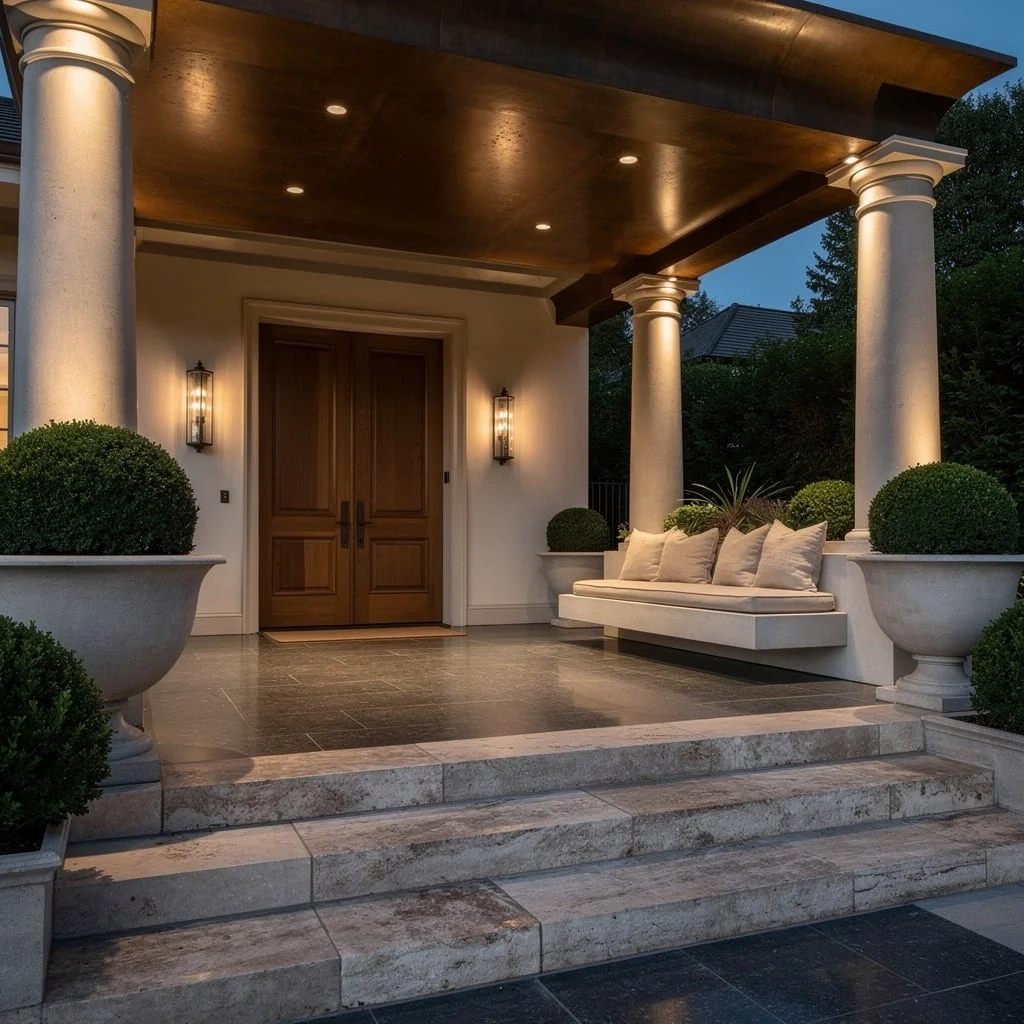
If you want your entrance to scream luxury and not just whisper ‘I’m here,’ you need to splurge—think weathered limestone steps, smoky grey basalt tile floors, and a show-off bronze canopy. Anchor your landing with mature boxwood in sculpted planters (because no one’s impressed by scraggly shrubs), and throw in vertical glass sconces for a glow that says ‘nighttime sophistication,’ not ‘budget basement.’ Float a concrete bench along one side and slap on linen cushions so you’re not sitting on a concrete block. Rule number one: slap uplighting in planters to make boring columns look like architectural icons.
Go Drama with Oversized Pivot Doors & Terrazzo Everything
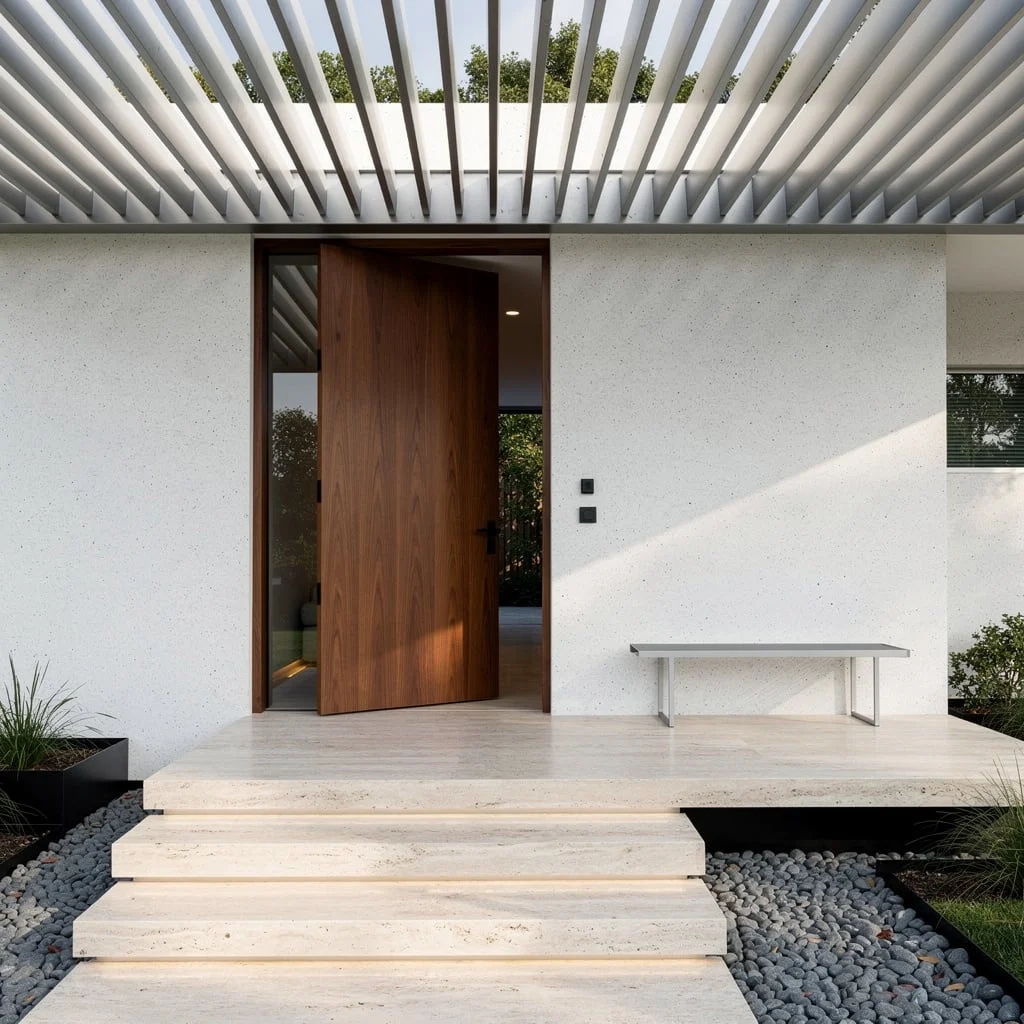
Ready for your porch to look like a designer gallery instead of a storage shed? Install an oversized walnut pivot door and surround it with a terrazzo facade so your entrance is actually worth noticing. Ditch boring steps—opt for floating travertine with strip lighting underneath so it feels like you’re gliding, not hiking. Sunken pebble gardens edged in black steel are mandatory for minimalist pedigree. Toss in a powder-coated metal bench, then top it with an aluminum awning for those moody shadows. Always embed strip lighting below steps for instant ‘architectural wizardry’ and major photo ops.
Fluted Columns and Brass Details—The Drama You Deserve
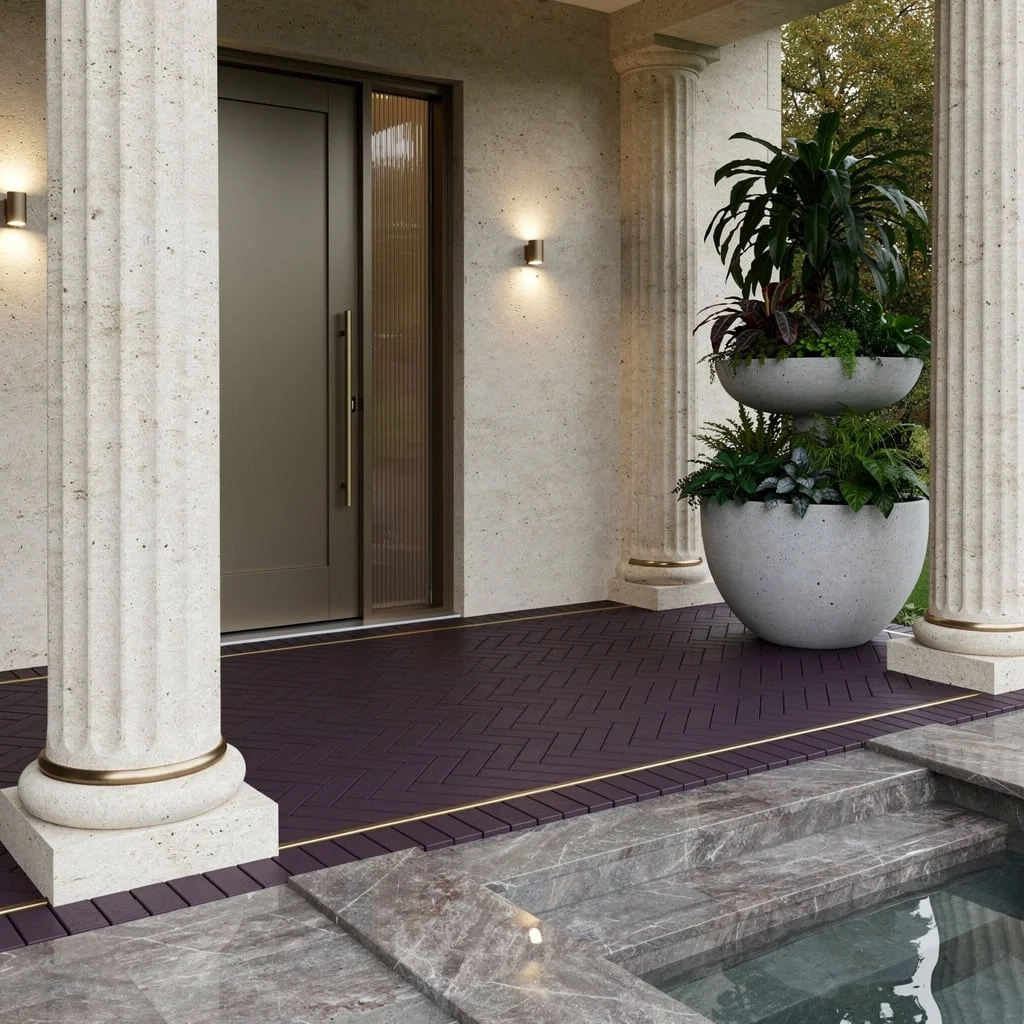
Stop faking elegance and embrace fluted limestone columns paired with a steel door and reed-glass sidelight. Get bricks with deep plum hues laid in herringbone (because you’re not basic), then inlay brass strips for real luxury. Super-size a concrete planter for tiers of foliage—height, baby, not horizontal clutter. Throw in reflective water features for a bit of mystique and add wall-mounted LED lights to make every texture pop after dark. Always plant foliage at varying heights to prevent your porch from looking like a tragic garden center.
Cherry Timber Pergola—Warmth Without Trying Too Hard
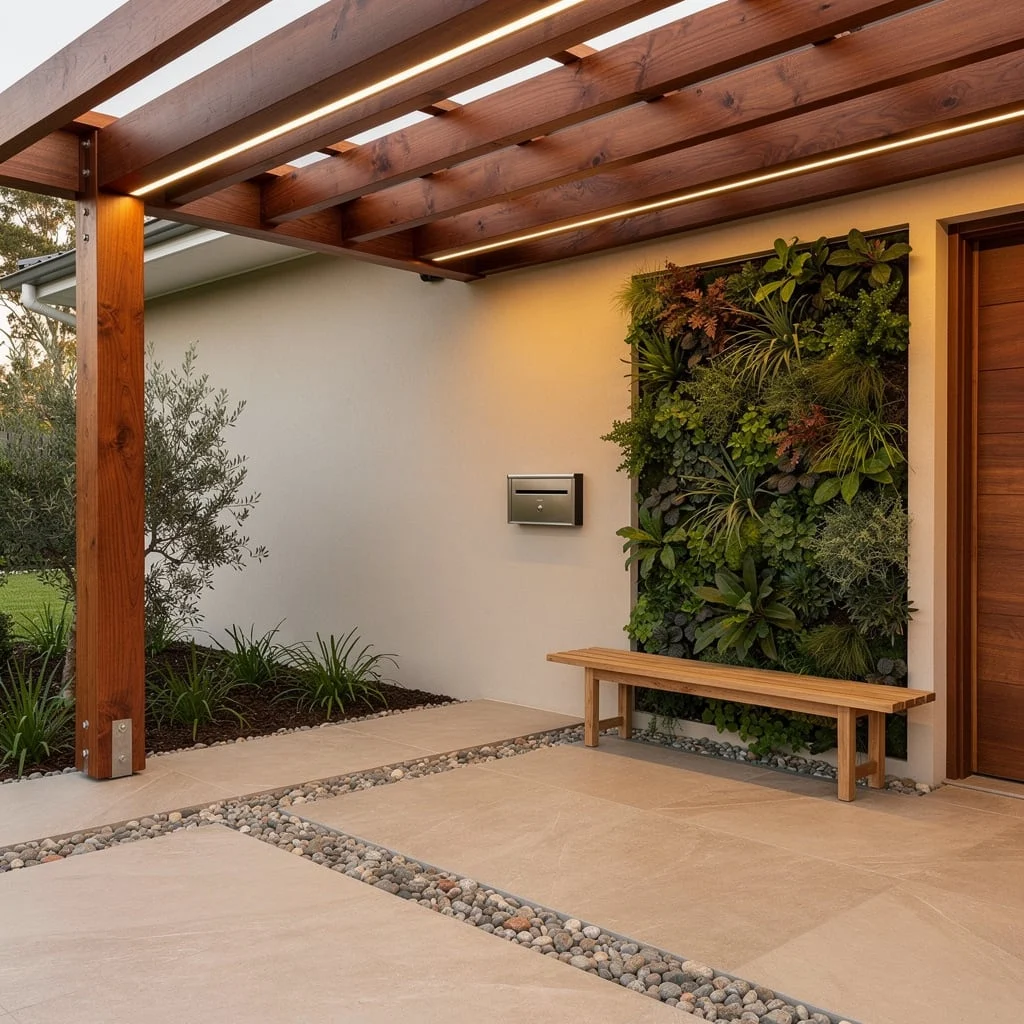
If you want inviting vibes without going full cottage-core, slap a cantilevered cherry timber pergola overhead. Ditch the tiny tiles—use oversized matte porcelain slabs and lace them with river stone strips for tactile coolness. Grow a vertical living wall to shove stale air out and make your mail sleek with a flush-mounted box. Toss strip lighting onto your beams for cozy but subtle glow, and bring a teak bench for minimalist seating. Never let your greenery look wild—curate it and keep lighting indirect for that ‘I woke up like this’ ambiance everyone wants.
Marble Steps and Sand-Colored Panels—Quiet Luxury, Loud Impact
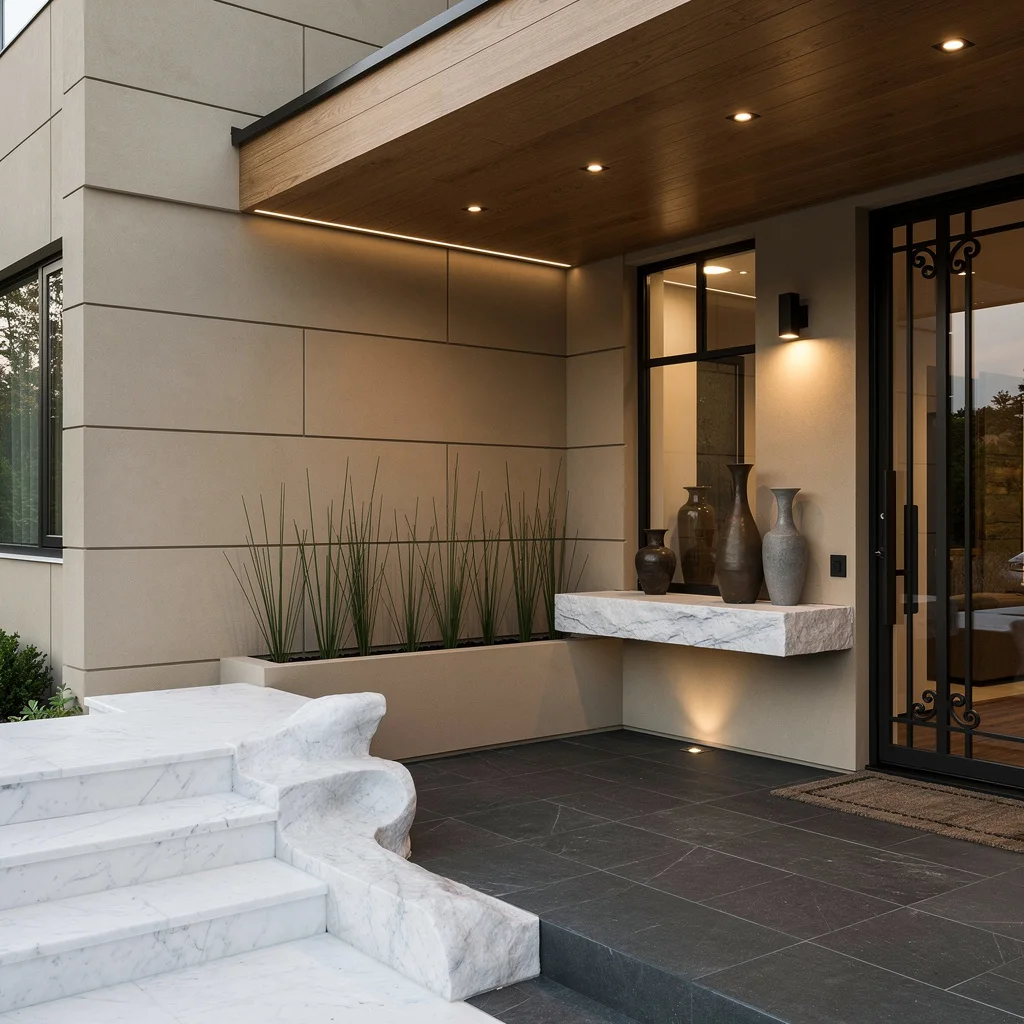
Want to make your porch scream ‘I have taste…and cash’? Marble steps and slate tiles are your besties. Wrap your walls in oversized sand-toned panels for high-impact, low-maintenance drama. Line up tall grasses in built-in planters so you don’t have to babysit flowers. Float a stone ledge under the sidelight for your weird vase collection, and slap down a sleek oak canopy with micro-spotlights for modern overhead action. Never skip up-lighting on walls—texture needs shadows to look rich, not tragically flat.
Charred Wood Siding—Modern Moody Vibes Without Apologies
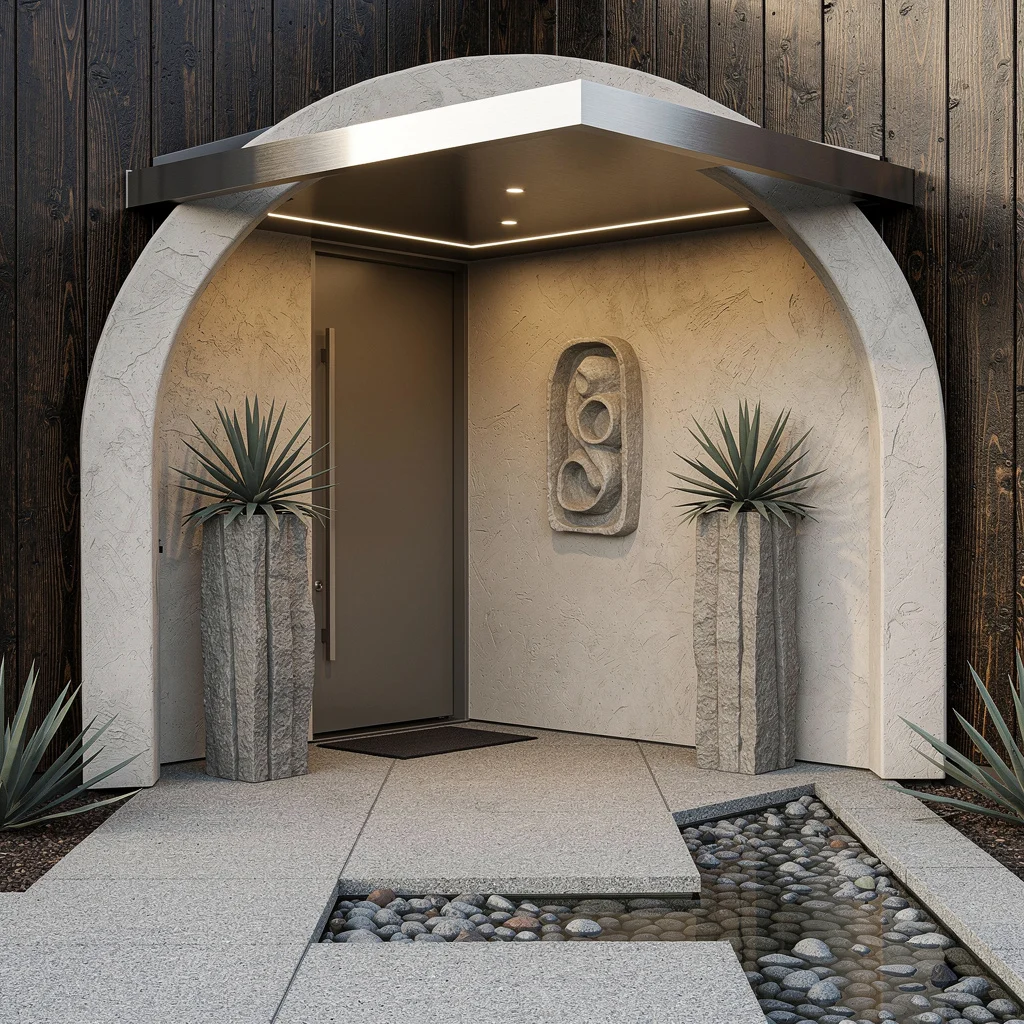
Done with boring facades? Frame your entryway with hand-troweled stucco arches against grooved charred wood—it’s moody and unapologetic. Precision-laid concrete floors and geometric water rills (just Google it) keep things crisp, while brushed steel canopies with hidden LEDs set the mood. Rusticated stone planters packed with spikey succulents say ‘I care, but not enough for daily watering.’ Always include a sculptural wall niche—because why let blank walls feel left out? Make sure your lighting is concealed so your porch glows—don’t blind people walking in.
Granite and Oak For That Sophisticated, Subtle Flex
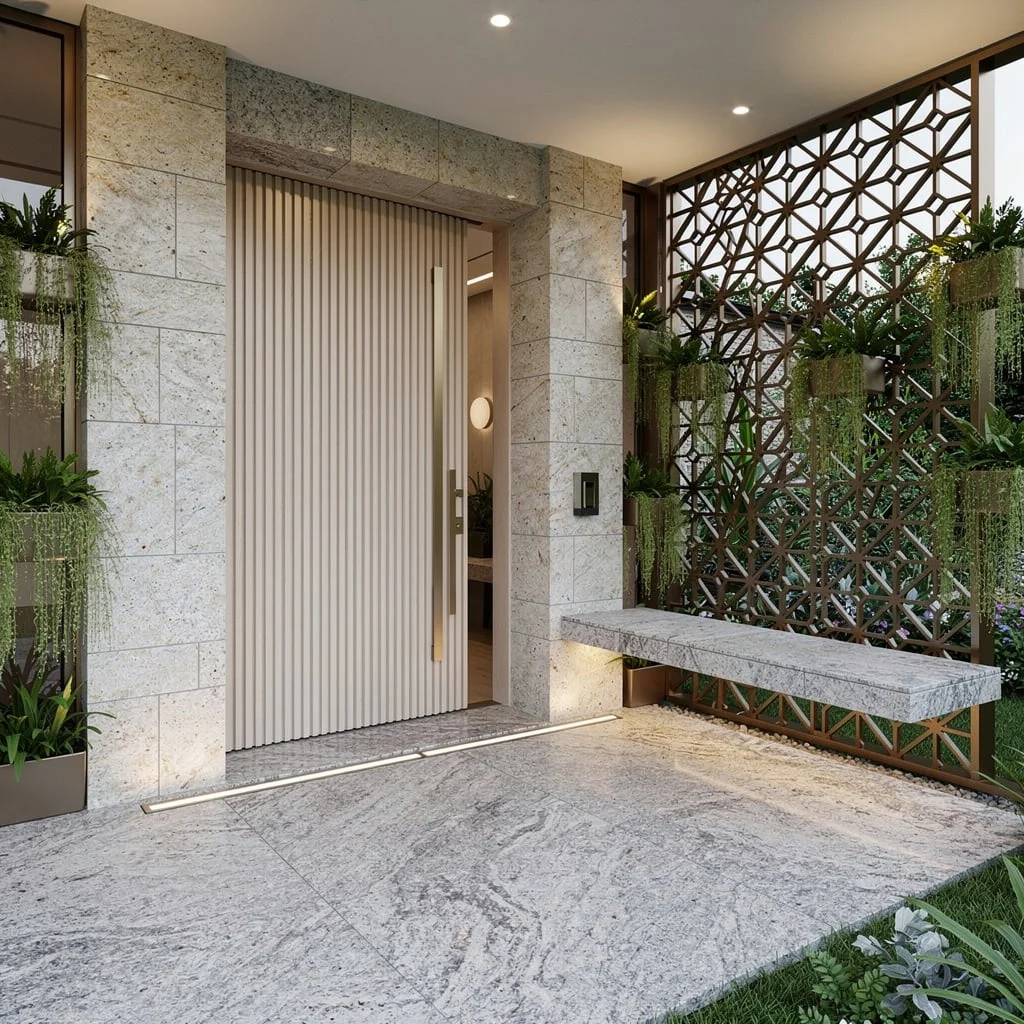
Want your entryway to feel grand without looking try-hard? Single out a white oak slat pivot door, stone-clad alcoves, and flamed granite floors. Stretch a recessed lighting track along your entry path, then cue up custom bronze lattice screens for that semi-private ‘don’t look, but also look’ vibe. Flank your door with vertical cascading planters and roll out a stone bench that floats alongside the facade for function and eye candy. Always put lighting low and screens high for killer depth and maximum privacy flex.
Glass Awning, Cedar Wall—Welcome to Modern Porch Power
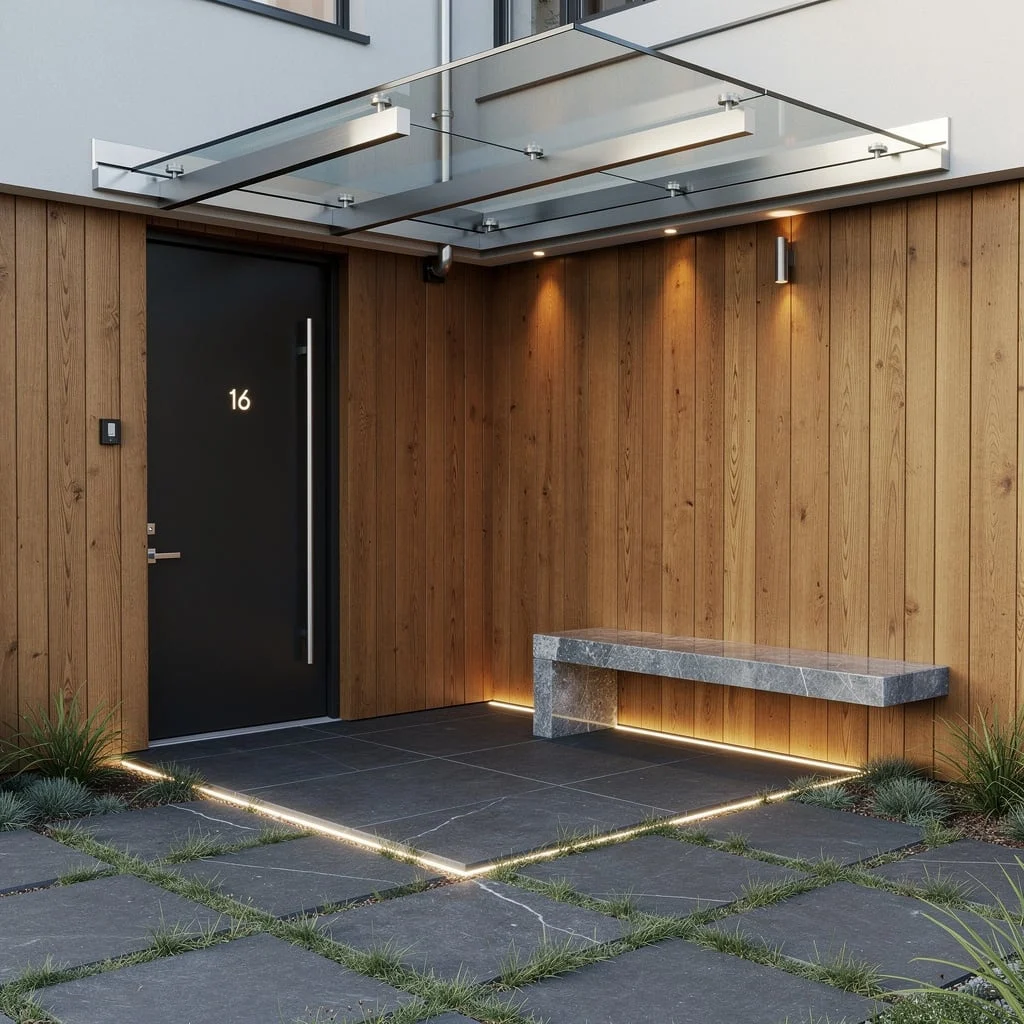
If you’re sick of bland porches, go bold—cantilever a glass awning and support it with invisible brackets. Lay down matte basalt pavers, weaving groundcover grass between for texture (and less sweeping). Rock cedar planks vertically for instant warmth, then pick a jet-black entry door with illuminated numbers—because why not flex on the neighbors? Integrate LED accent lights in the floor for future-forward drama, and finish with a built-in bluestone bench. Always make your house number glow; it says ‘style’ and ‘delivery drivers shouldn’t have to squint.’
Corten Steel and Reflecting Pools—Zen Meets Boss Energy
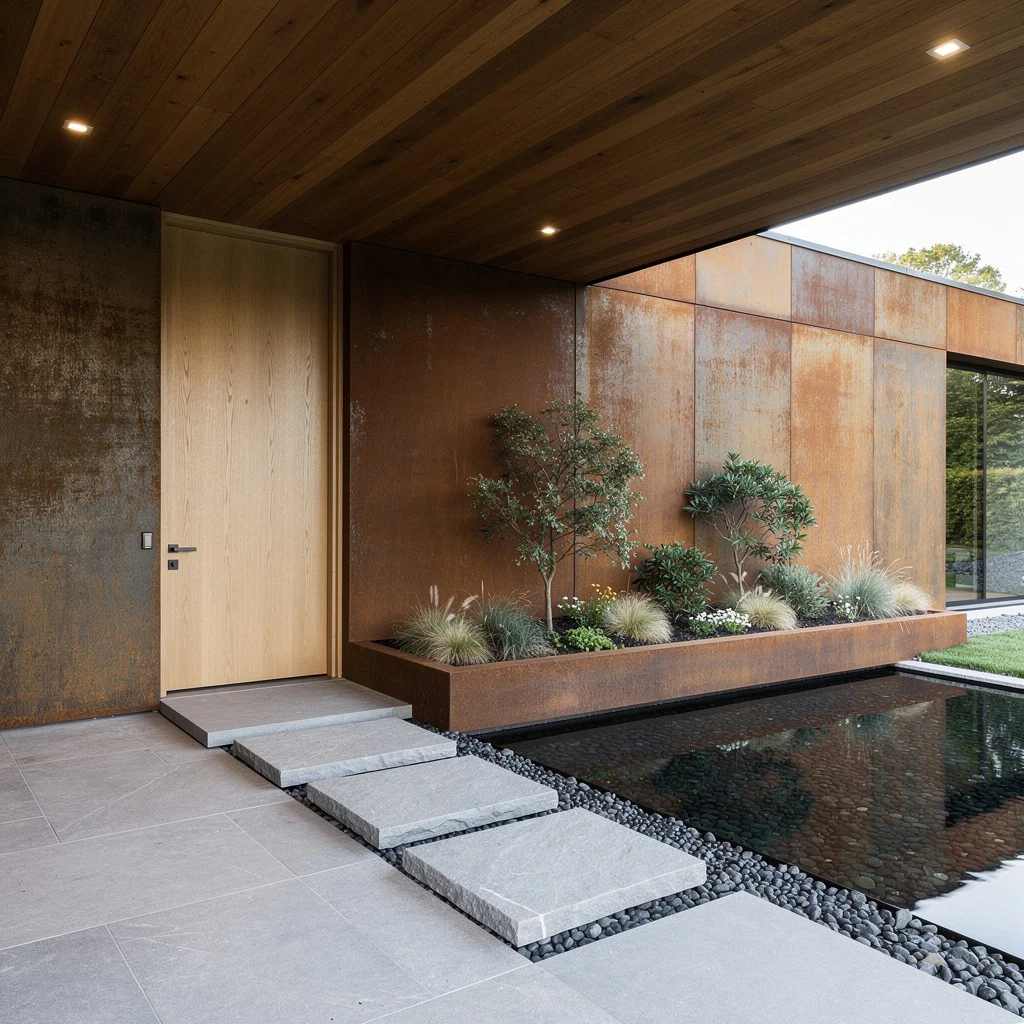
Stop settling for ‘just okay’ porches. Wrap your entry with weathered corten steel panels and soften them with expansive light stone floors for analytical chill. Go hard with timber-lined soffits and flush LED downlights so your night-time game is strong. Install a reflecting pool lined with black pebbles—peaceful, but also low effort. Bring in a linear planter full of textured low grasses and shrubs along the porch length. Always float stone pavers to your door; it forces people to slow down and appreciate how sick your entry is.
Matte Black Aluminum—Industrial Edge, Zero Boredom
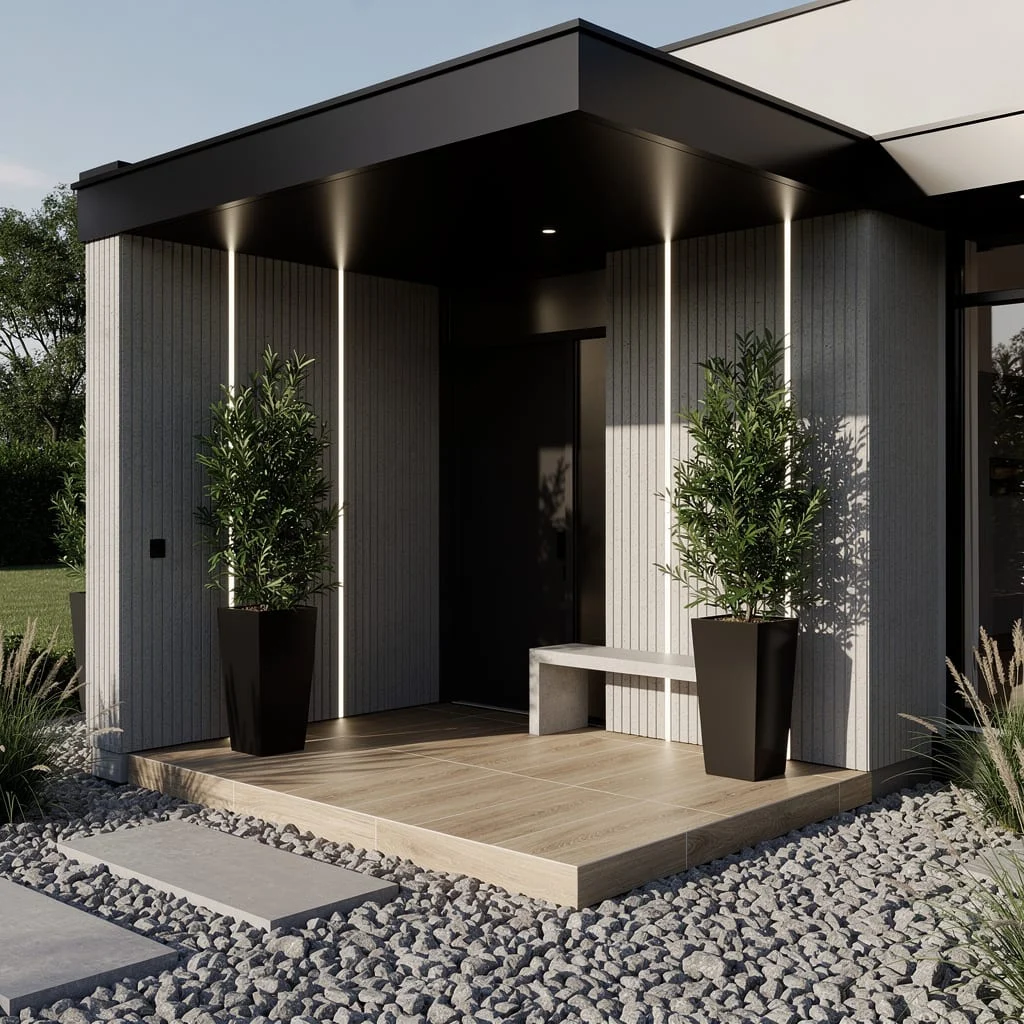
Ready to flex some architectural muscle? Drop an angular matte black overhang and wrap your structure in vertical fiber cement. Lay porcelain plank tiles in light oak tones and transition them to a stepping path surrounded by river rock—visual movement, less mud. Carve out recessed linear lights vertically for ultimate facade drama, and park a minimalist concrete bench right at the entrance for form and function. Plant tall columnar greens in black planters so your shadows hit like runway models. Always light your door from the side—never overhead—so the modern lines are sharp, not muddy.
Copper Door & Travertine—Time To Go Full Gatsby
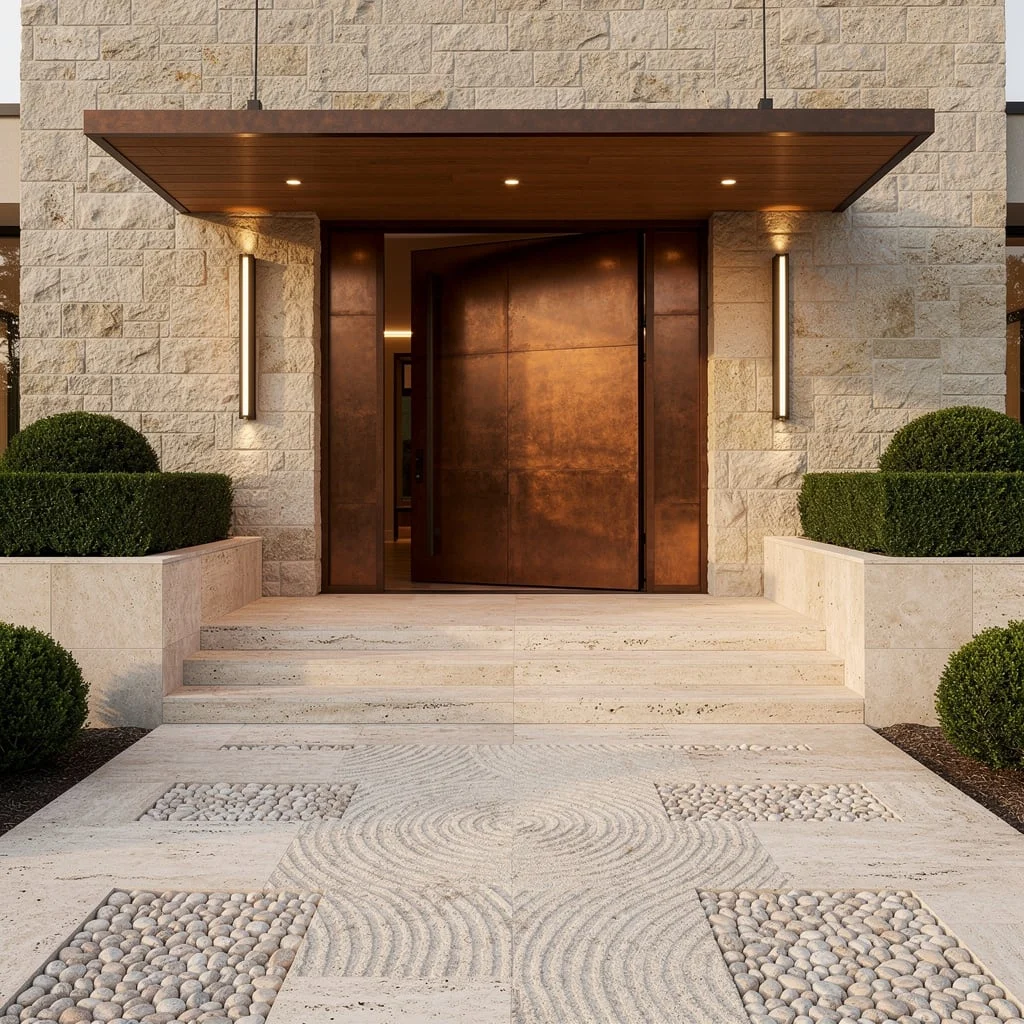
If you secretly crave a porch worthy of a legacy movie set, install natural stone steps and go all-in with a massive copper-panel pivot door. Mix raked travertine with tumbled pebble insets for that tactile contrast—more Instagram, less dad-shade. Flank your entry with integrated evergreen hedges trimmed surgical-sharp, then opt for slim vertical sconce lighting for drama without disco. Hang a wood canopy just enough to float, glowing softly underneath. Always balance pebble insets with stone for that opulent, layered texture—monotony is a crime.
Terrazzo with Bursts—Color Pop Without the Kid Chaos
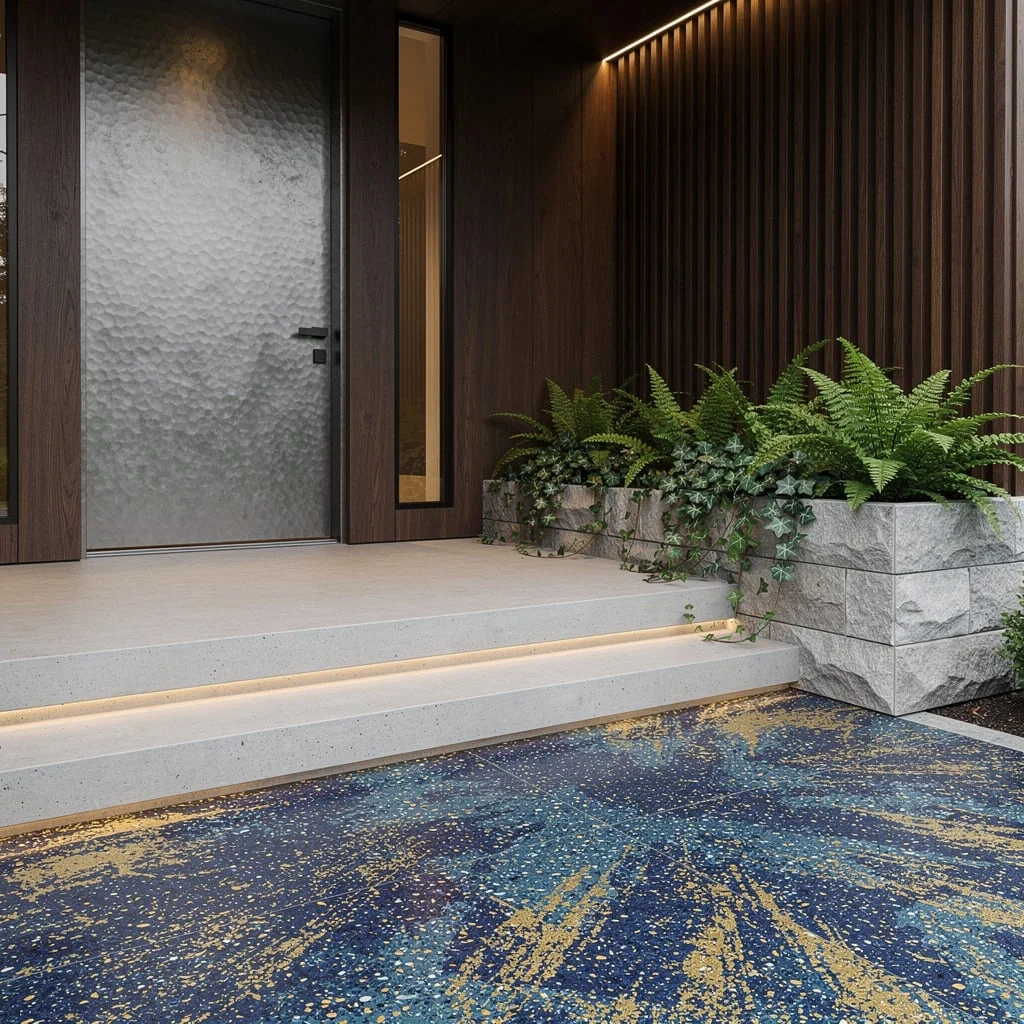
Ready to drop jaws? Pour terrazzo floors with chunks of deep blue and gold—no, don’t settle for those timid palettes. Wrap your facade in dark walnut slats and break it up with a vertical sidelight window (yes, windows can be skinny and cool). Float concrete steps up to a contemporary steel door with wild textured metal for instant street cred. Add a built-in stone planter packed with ferns and trailing ivy, then edge your floating steps and soffit with slim LED strip lights. Always match your lighting color with terrazzo pops for cohesion—clash is so last season.
Final Thoughts
A porch that makes people feel something before they’ve even knocked is not the product of an expensive renovation or a full-day styling session. It’s the product of someone understanding what impression they want to create and making every individual decision in service of that impression rather than in isolation from it.
The bohemian deck and the French arched entry are at completely opposite ends of the design spectrum, and both of them work for exactly the same reason — they knew what they were going for and followed it through. The green cottage door and the yellow craftsman entry work for the same reason. So does the precise white-on-white bench porch and the classic farmhouse rocking chair setup. Confidence in a clear direction is the one ingredient every successful porch shares, regardless of budget, scale, or aesthetic territory.
Whatever your house looks like, your porch is capable of being the part that makes the best first impression. The only thing standing between your current entry and one that actually earns a compliment is deciding what you want it to say — and then having the nerve to say it clearly.