
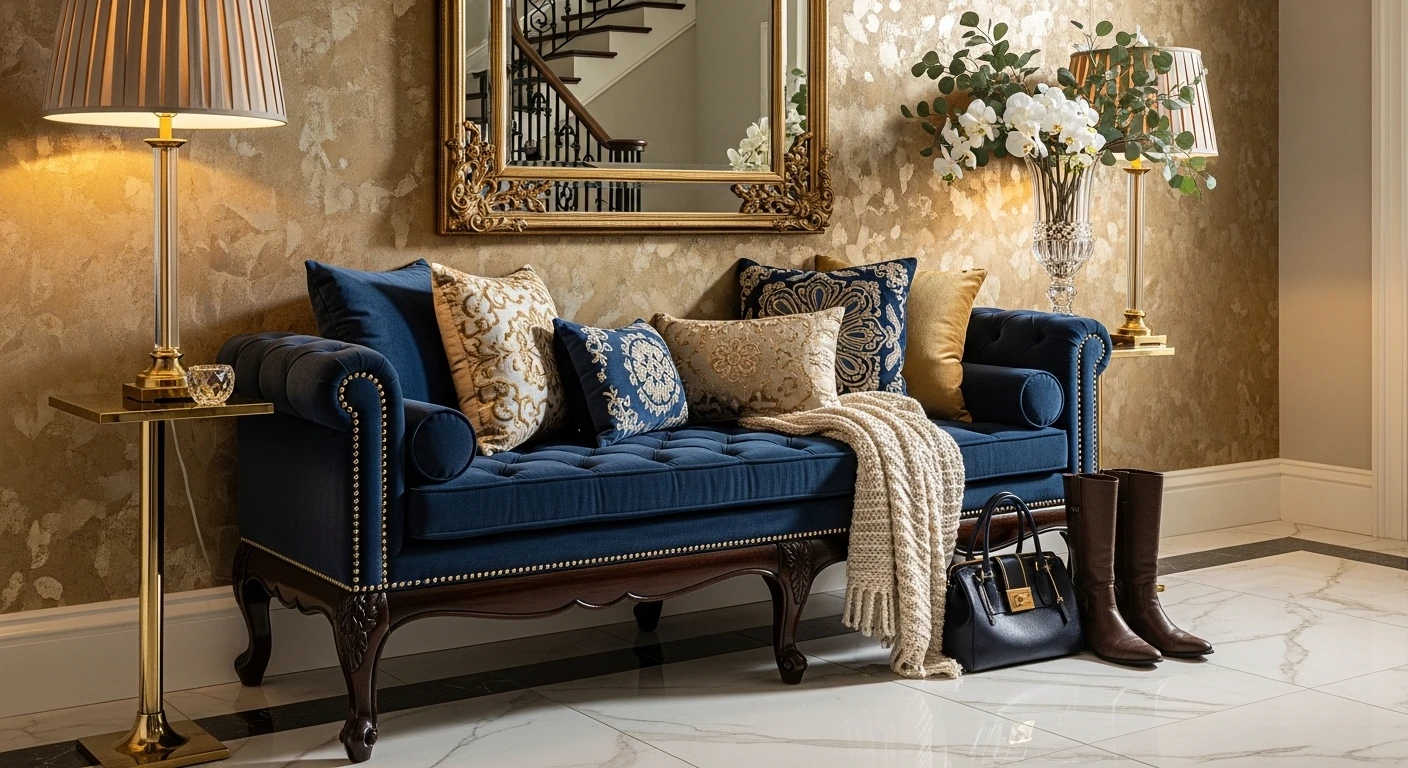
Somewhere between walking through the front door and making it to the kitchen, your entryway became a crime scene. Shoes scattered in a radius that suggests they were thrown rather than removed. Coats draped over whatever was closest. Bags on the floor because there’s nowhere else to put them. And somewhere under all of it, a bench you bought with the best of intentions that is now functioning primarily as a surface for things that don’t have homes.
The entryway bench had one job: create a moment of organized calm in the first space people encounter when they walk into your home. Instead, it became a passive participant in the chaos—technically present, functionally absent, and aesthetically irrelevant because you can’t see it under everything piled on top of it.
What separates a bench that actually transforms an entryway from one that just joins the mess is almost never about price. It’s about whether the bench was chosen as part of a system—hooks above it, storage below or within it, a surface treatment that makes the whole corner feel designed rather than assembled by accident. Get those relationships right and even a DIY build looks intentional. Get them wrong and a thousand-dollar upholstered bench looks like it wandered in from another room and never found its way back.
These six setups show exactly what that looks like when it’s done correctly—and more importantly, what decisions made each of them work.
Why Your Current Bench Situation Isn’t Working
The bench itself is rarely the problem. The problem is everything that surrounds it, and understanding what’s going wrong is the first step to fixing it permanently.
A bench without a hook situation is just seating nobody uses — People don’t sit in entryways to relax. They sit to put on or take off shoes, and while they do that, their coats and bags need somewhere to go that isn’t the floor or the bench itself. A bench in isolation from any vertical storage is a functional orphan.
Open storage surfaces become collection points — Any horizontal surface in an entryway without a specific, designated purpose will accumulate everything that doesn’t have a home elsewhere. The bench top, the shelf above it, the space beside it—without intention, these areas become the physical manifestation of “I’ll deal with that later.”
The bench is setting a tone it might not realize — A bench covered in clutter tells everyone who walks in that the chaos starts here and doesn’t stop. A bench that looks considered—even a simple one—signals that someone is running a tighter operation than the coat pile suggested from the outside.
What Every Great Entryway Bench Setup Has
Before the ideas: three principles that show up, in different forms, in every setup on this list.
Vertical and horizontal storage working together — The bench doesn’t exist in isolation. It anchors a system where hooks handle outerwear, the seat handles the transitional moment of coming and going, and some form of lower storage handles the category of things that don’t fit anywhere else. These three zones working in concert is what creates an entry that stays functional rather than just starting that way.
One material that earns the most attention — Whether it’s the walnut bench top, the ornate mirror above, or the statement art on the wall, every successful entryway bench setup has one element that does the design heavy lifting. Everything else supports it. The mistake most people make is trying to make everything equally interesting, which produces a corner where nothing is.
Scale that matches the ceiling, not just the wall — A bench that looks right against a wall but wrong in the room is almost always a scale problem. The height of the accompanying hooks, mirror, or cabinetry needs to address the vertical space above the bench all the way to the ceiling, or the whole setup looks unfinished regardless of how nice the individual pieces are.
Entryway Bench Ideas Worth Stealing
The DIY Built-In That Embarrasses Store-Bought Furniture
I made an entryway bench too. Not as elaborate as the last guy, but I was happy how it turned out. Bench seat opens up
by in woodworking
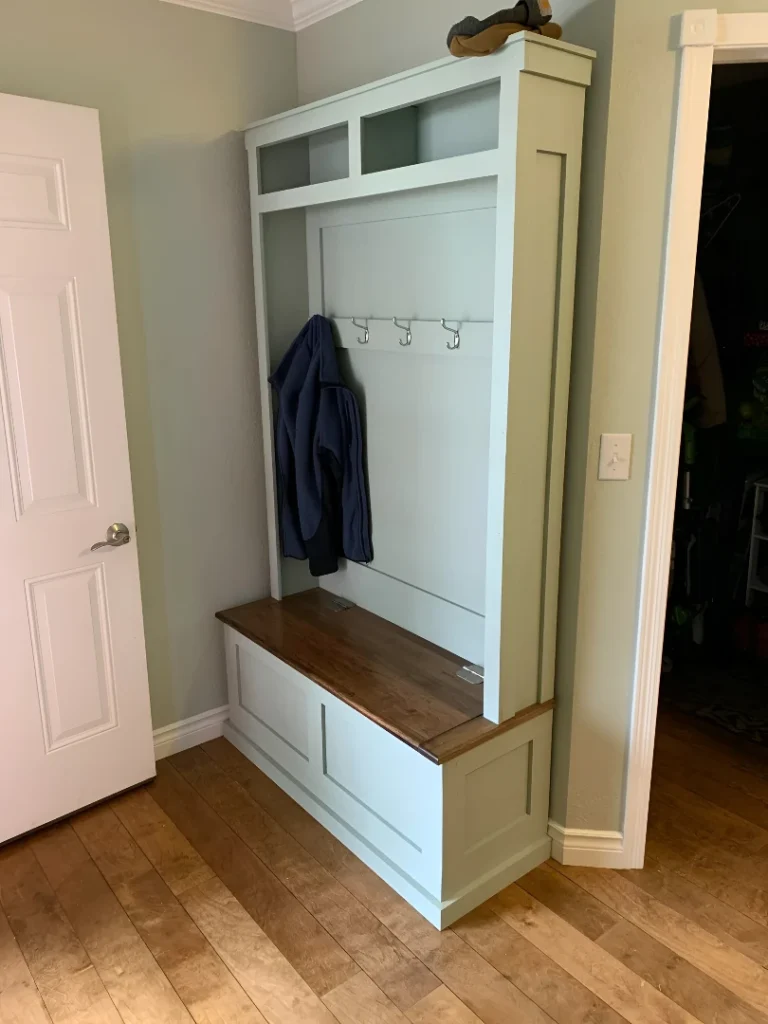
Anyone who says you can’t build your way to a polished entryway has not seen what a painted MDF frame, a walnut butcher block top, and a carefully chosen paint color can accomplish. This floor-to-ceiling built-in unit in a soft sage green does what most purchased furniture cannot: it addresses the full height of the wall, creates dedicated zones for hooks, display, and concealed storage in a single cohesive piece, and looks like it was always meant to be there rather than moved in from somewhere else. The walnut top on the bench section adds warmth that prevents the painted finish from reading as cold or flat, the upper cubbies above the hook zone handle the awkward top-of-the-wall territory that freestanding furniture always leaves unresolved, and the panel detailing on the bench front elevates what would otherwise be a plain storage box into something with architectural credibility. Built-ins get away with color that freestanding furniture can’t because they read as part of the room rather than objects placed within it—which is exactly why the sage works here and would potentially overwhelm a standalone piece.
The Bouclé Bench That Understood the Assignment Perfectly
There’s a version of minimal entryway design that feels cold and incomplete, and then there’s this—where stripping back to the essentials produces something warm and genuinely inviting rather than just sparse. A long, low bouclé storage bench in cream sits against a white wall with nothing competing for attention except a small black side table holding a single vase of eucalyptus, and a few hooks on the adjacent wall doing practical work without being visible from this angle. The restraint is the point: the texture of the bouclé provides all the visual interest the space needs, the light oak floor continues uninterrupted beneath it, and the black front door with its glass panes and brass hardware is allowed to be the most dramatic thing in the frame. The faded vintage runner leading to the door adds pattern at ground level without introducing any color that would disturb the calm. This is the setup for someone who looked at the trend for maximalist, hook-laden, basket-filled mudroom walls and decided, correctly, that it wasn’t for them.
The Tufted Bench That Unapologetically Went Full Grand Hotel
The entryway bench exists on a spectrum from functional mud room equipment to something that has never in its life been sat on by anyone holding wet shoes, and this one is firmly at the decorative end of that spectrum without any regret about it. A cream tufted daybed-style bench on dark carved legs sits beneath a heavily ornate silver-leafed baroque mirror that is approximately the size of a small window and contains roughly as much personality as the rest of the room combined. Wall sconces in a candelabra style flank the mirror, a black lantern pendant hangs overhead, an oversized urn vase of white roses sits beside the bench rather than on it, and the whole thing is grounded by a pale blue Persian rug. The genius move is the wainscoting and panel molding covering the walls in the same warm greige as the ceiling—it provides the architectural depth that stops this level of decorative intensity from becoming theatrical. This bench isn’t really for sitting. It’s for the moment guests walk in and realize they’ve underestimated you.
The Black Velvet Bench Where Art Does All the Heavy Lifting
Most entryway benches are working hard to justify their presence—storage under them, hooks above them, baskets beside them, doing useful things to earn their keep. This one decided that being beautiful was enough of a contribution, and paired with the right art, it makes a completely convincing argument. A tufted black velvet bench on dark tapered legs sits below a large abstract canvas in a brass frame—navy, black, white, and gold in a composition that reads from across the room—with nothing between them except wall space that makes both pieces feel more considered than they would if crowded together. A small round side table with a gold base holds a white ceramic vase and a dark candle, adding the one moment of warmth the black bench needs to avoid feeling austere. The travertine tile floor and arched iron front door visible at the edge suggest a home with strong architectural bones, and this bench setup respects that by not trying to compete. When the art is this good, the bench’s job is to be the seat you look from, not the thing you look at.
The Built-In Mudroom Bench That Makes Chaos Structurally Impossible
If your entryway has children, dogs, or any human being who arrives home with things in their hands, the previous four benches are aspirational fiction and this is the one that actually applies to your life. Board-and-batten paneling in bright white runs floor to ceiling, a row of generous black double hooks provides one hook per household member plus a few spares, a butcher block bench top in natural oak sits above four open cubby spaces with woven baskets that swallow shoes, sports equipment, and whatever else comes through the door, and herringbone brick flooring beneath it means no amount of tracked-in mud registers as a design problem. Two black barn-style sconces mounted high on either side provide warm, practical light. The ceramic crocks and spring branches in the corner are the small acknowledgment that this space is also allowed to look nice—but they’re doing their job without pretending the primary function here is anything other than handling the organized chaos of daily life. The baskets are the real stars: identical, neatly fitted to the cubbies, and fully capable of containing all the things that would otherwise be on the floor.
Scandi Minimalism: Stop Overthinking—Go Streamlined
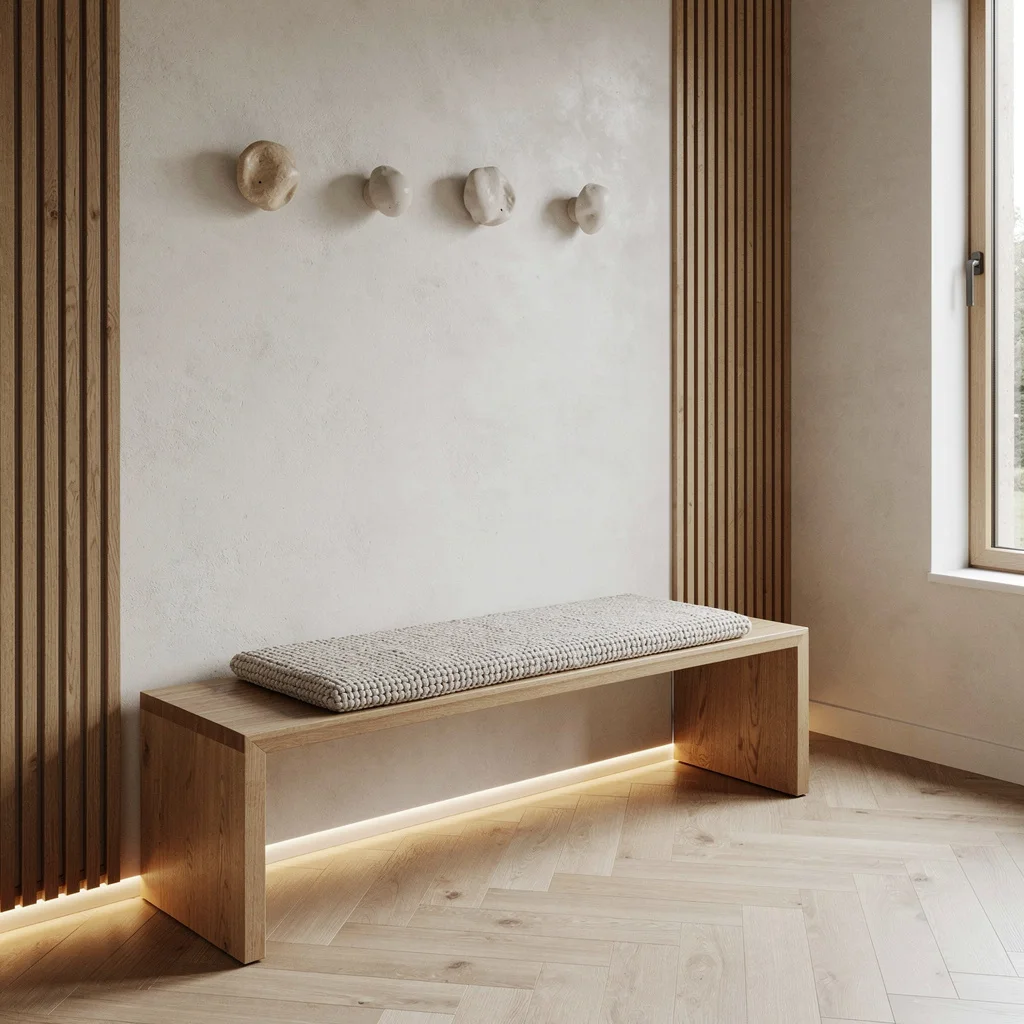
If you want that fresh, can’t-believe-I-live-here calm, embrace Scandi cool. Grab a streamlined oak bench with edges that whisper sophistication (not shout), and stick to matte limewashed walls for the ultimate ‘I don’t try hard, but still win every day’ look. Now, slap up some vertical slatted wall panels; they do all the heavy lifting for airflow and drama while barely trying. Toss a wool runner under your bench for texture that says ‘grown-up.’ And forget the messy hooks—line up hand-molded ceramics and mount them at eye level. Don’t skimp on LED strip lighting under your bench, because nobody likes entering a dark and moody cave. Always keep storage practical: hooks just above, runner beneath. Streamline or bust.
Gallery Vibes: Float Your Bench for Maximum Wow
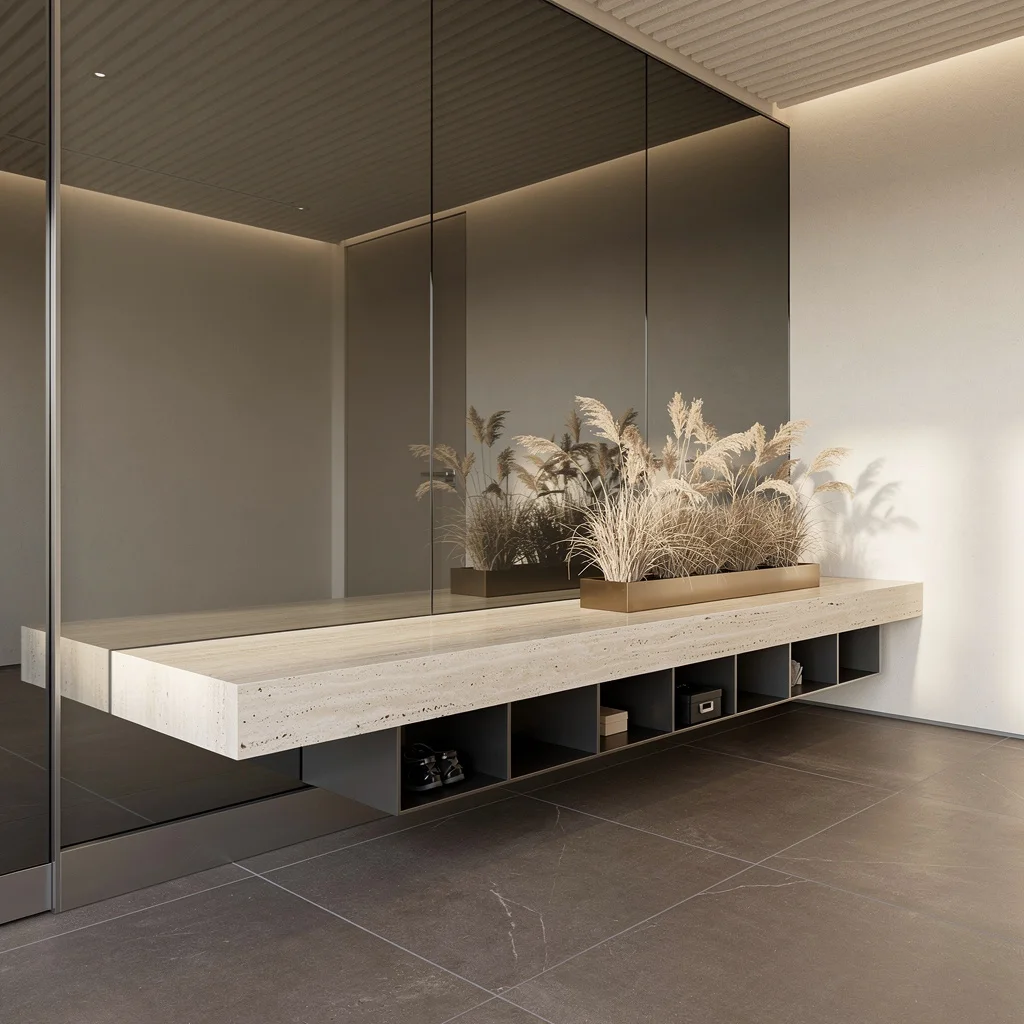
Want neighbors to gasp? Float your bench—literally. Mount a polished travertine slab right to a smoked glass wall, and let the architecture handle the flex. Press a bronze planter into the seat for dried grass—because who has time to water plants anyway? Light your life with wall washers, and let those creamy travertine tones pop against deep tile floors. Hide all the straggly nonsense in metal cubbies under the bench. For ceiling drama, make plaster ribbed and keep it clean. Stash accessories out of sight—nothing kills gallery-chic faster than dump-and-go clutter.
Modern Farmhouse: Reclaim Wood, Steal All the Shoes
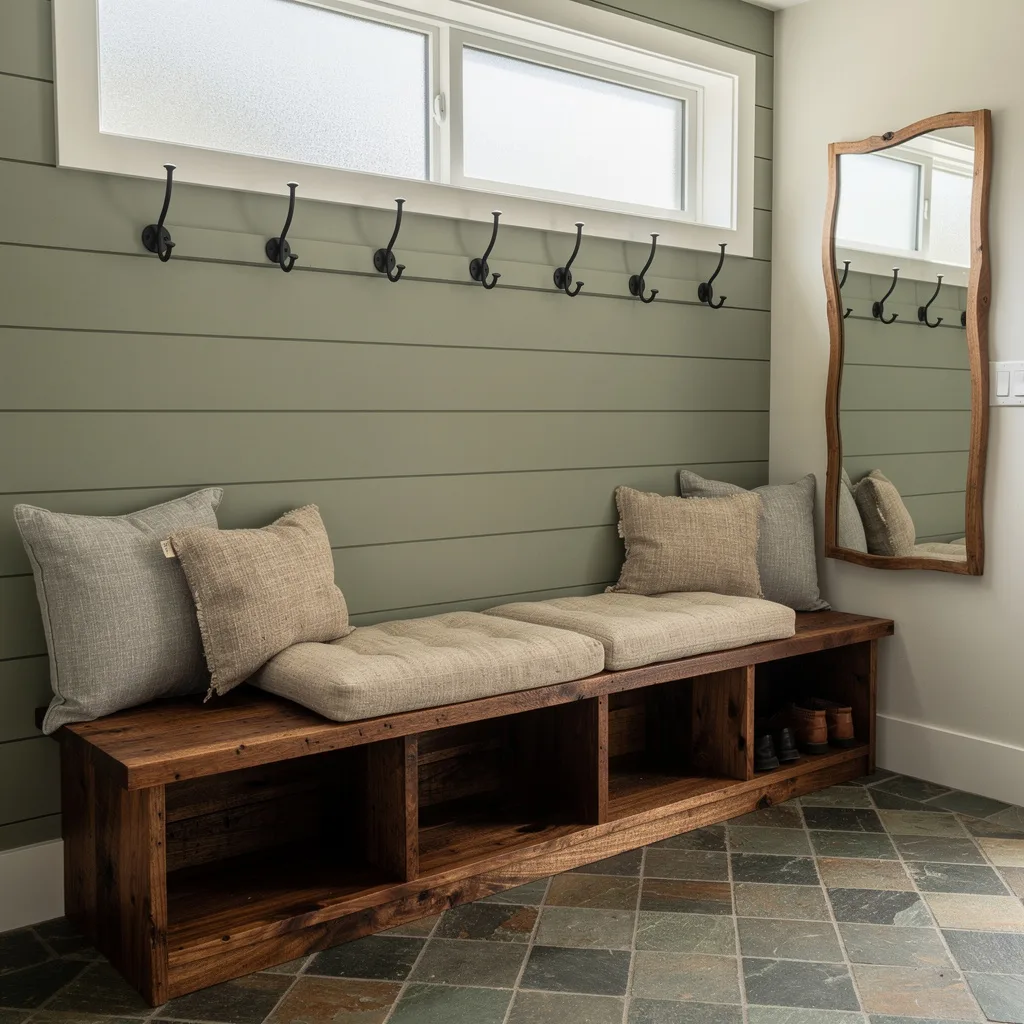
Craving that ‘my house is cozy but not a barn’ vibe? Build your bench with chunky reclaimed walnut (the more worn-in, the better), and slap on nubby linen cushions in earthy colors. Paint your shiplap sage—yes, green, because basic white is for quitters. Line up black steel hooks above for all-season jackets, then sport a raw-edge oversized mirror to reflect every shade of trendy you own. Slide your bench atop functional cubbies for shoe hoarding, and keep checkerboard tiles underfoot for eternal farmhouse cred. Never skip mirrors in an entry—they make even tiny spaces feel boss-level big.
Bouclé Bliss: Float Luxury, Light Everything Up
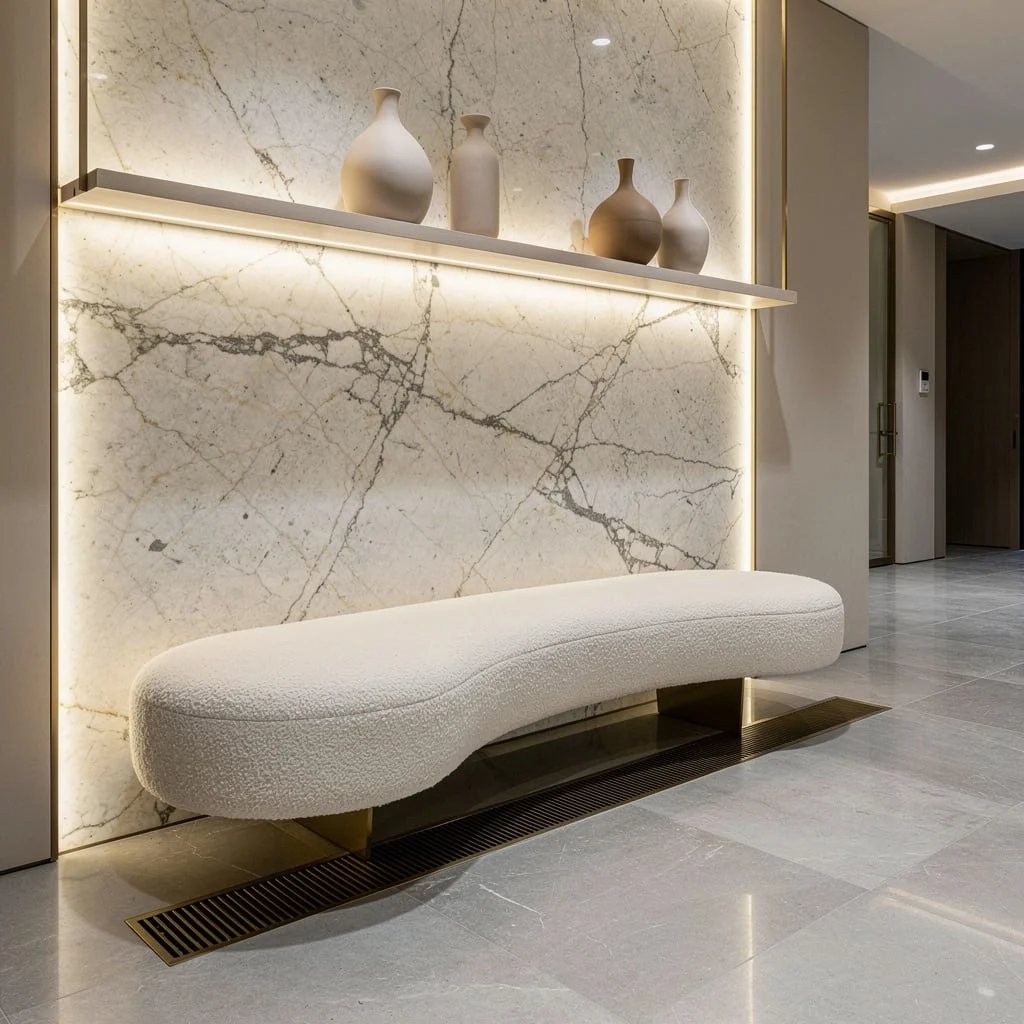
Luxury isn’t just about splurging—it’s about showing off. Use ivory bouclé on a sweeping curved bench and float it on sneaky brass legs. Backlight a vein-cut limestone panel behind; you NEED drama and subtle bling. Style a shelf above your bench: line up ceramic vases and keep it minimal—zero clutter, zero apologies. Bounce diffused pendant light onto big gray tiles, and ditch threshold confusion with an inset bronze floor grille. Always match bench height to shoe storage: nobody wants to squat like a gym rat when putting boots on.
Bold Color Flex: Go Teal or Go Home
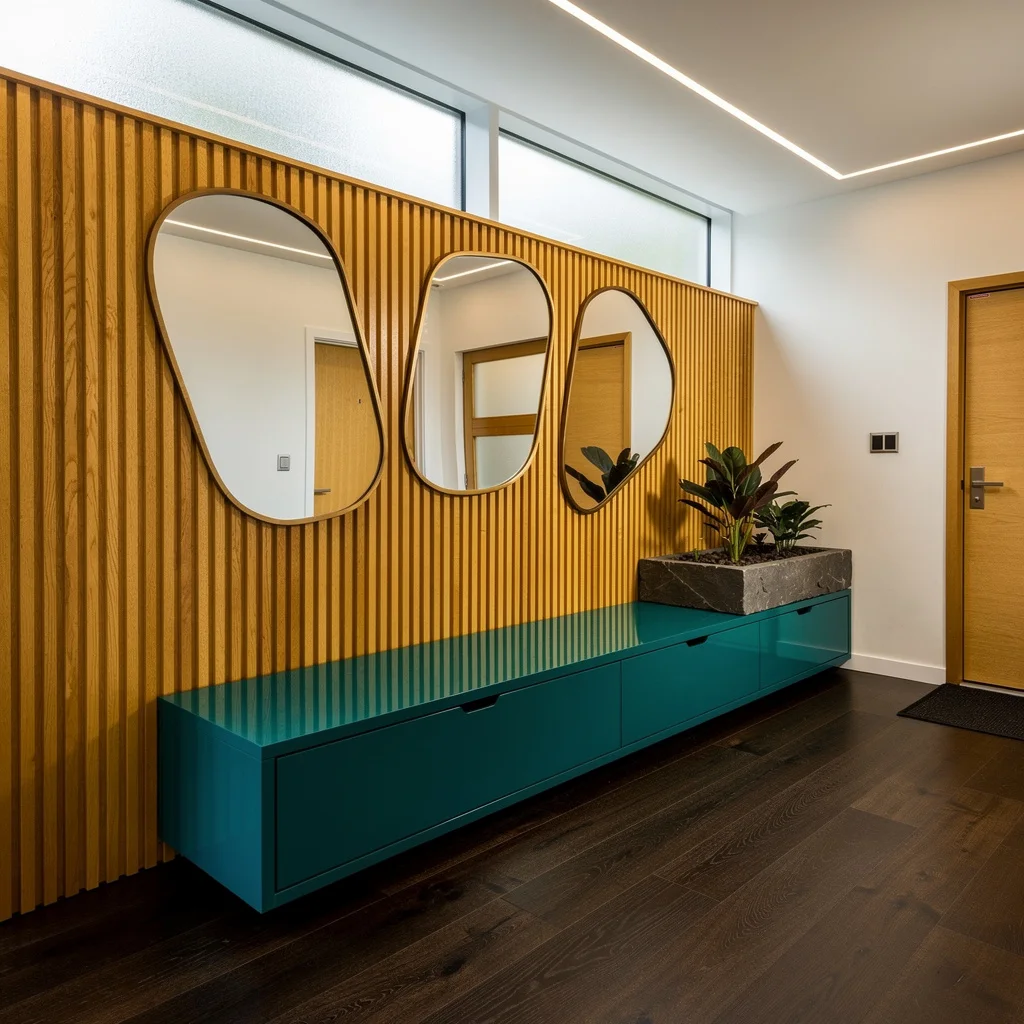
Ready to quit playing safe? Anchor your foyer with a bold lacquered teal bench and let your vertical maple slats do all the talking for you. Pro tip: Go for integrated drawers—nobody needs to see your random dog leashes and mail. Throw up a trio of nonsense-cool, asymmetrical bronze mirrors for instant light bounce; the weirder, the better. Upgrade flooring to wide dark wood planks and install linear LED strips in your ceiling. Always position planters at bench height—random floor greenery is for lazy decorators.
Ultra-Narrow Chic: Go Steel, Float Your Storage
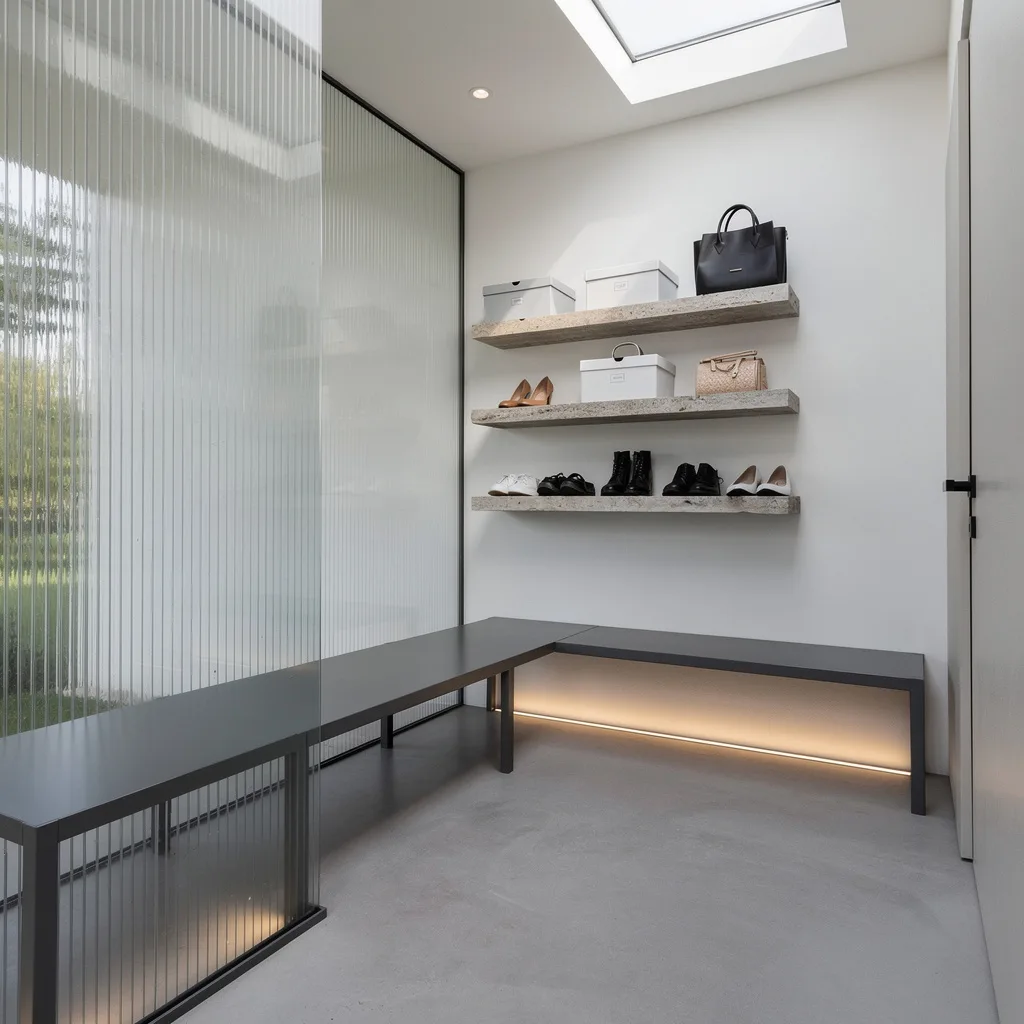
Tiny entry? Who cares. Pick a skinny, powder-coated matte graphite bench and line it up with ribbed glass to stretch the visual space. Mount modular stone shelves—above, below, wherever—and show off your shoe boxes like you’re auditioning for a reality show. Flood the scene with skylight daylight, and slap in microcement floors for modern grit. Under-bench lighting is a must; it fakes depth AND makes the base look clean. Don’t let accessories pile up—keep your shelf game strong and stagger heights for maximum visual impact.
Japandi Zen: Waterfall Your Oak, Hide the Junk
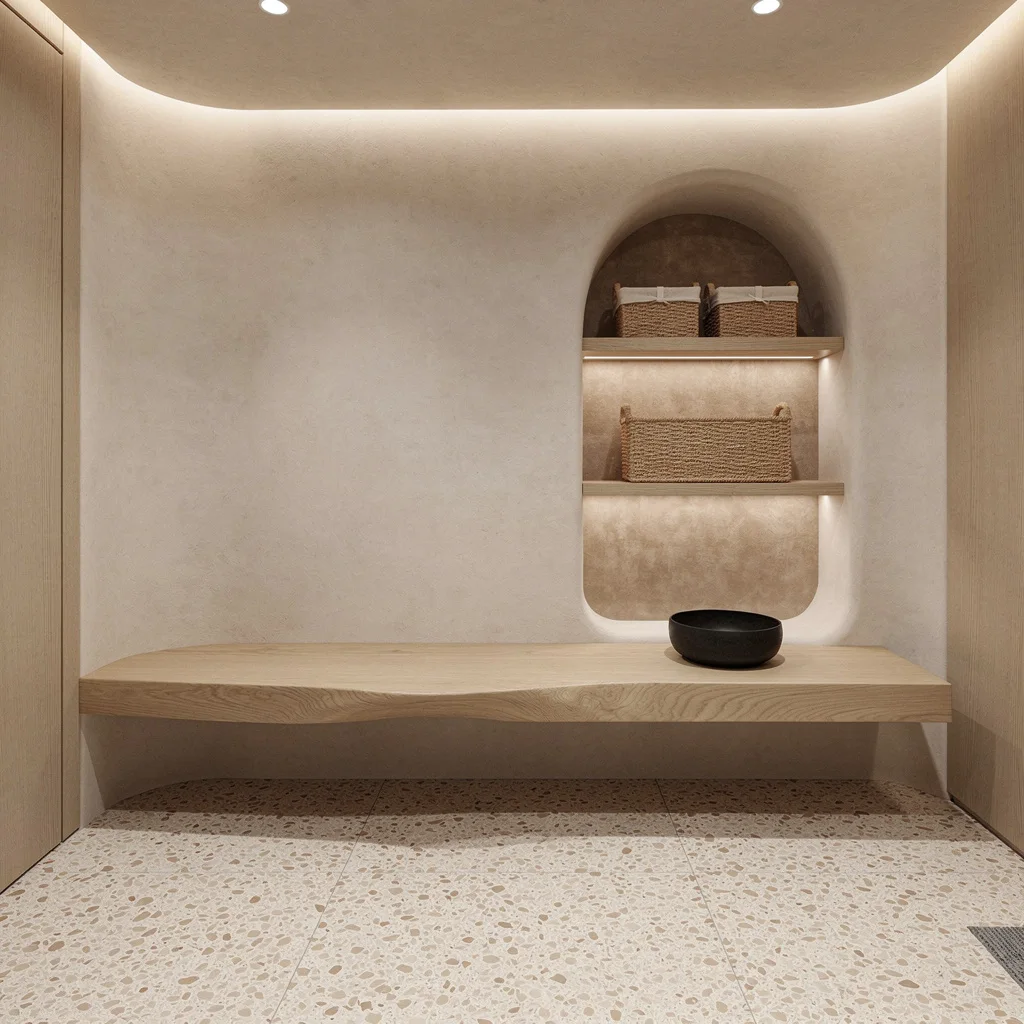
Zen vibes incoming: float a waterfall-edge light oak bench that melt right into gently curved gypsum wall niches. Line those niches with suede-textured wallpaper; nobody’s impressed by basic drywall. Fill each alcove with storage baskets—don’t let clutter kill your serene state. Top terrazzo tiles with a warm, speckled palette for the ultimate calm. Complete the bench end with a black ceramic catchall bowl: toss keys, leave clutter OUT. Always fake glow with cove lighting above—people walk in, they think you paid triple what you actually did.
Urban Luxe: Marble + Felt = Instant Power
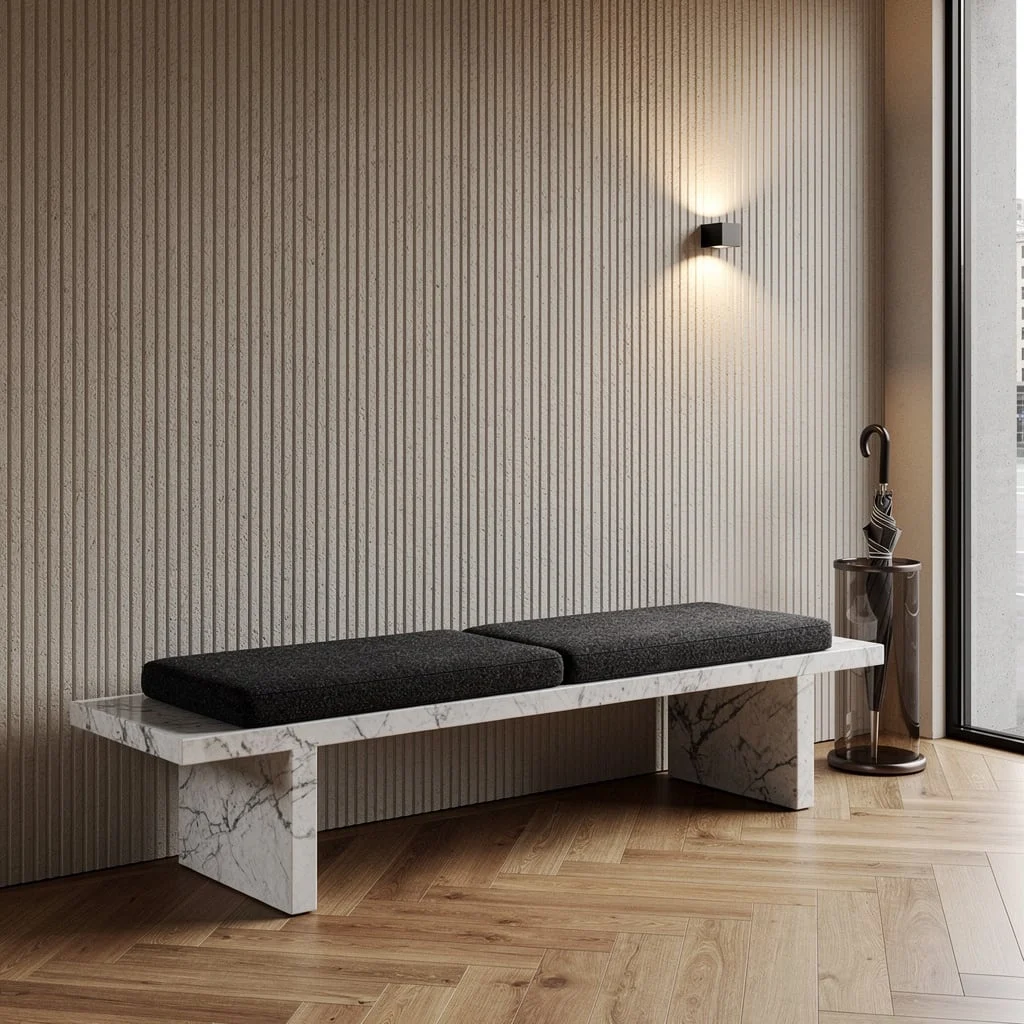
If you want your entry to scream sophisticated but not snobby, bookmatch Calacatta marble for your bench and layer charcoal wool felt cushions for the right dose of softness. Align the bench with microgrooved plaster panels—they make everything look taller and sleeker. Nail wide honey-oak parquet beneath, and sidle up a smoked glass umbrella stand that actually looks expensive. Always stick with indirect sconces for lighting; harsh bulbs are for interrogation rooms, not foyers. Balance geometric details with cozy materials, and keep umbrella stands minimal—your guests actually have eyes.
Organic Gallery: Float Walnut, Concrete Everything
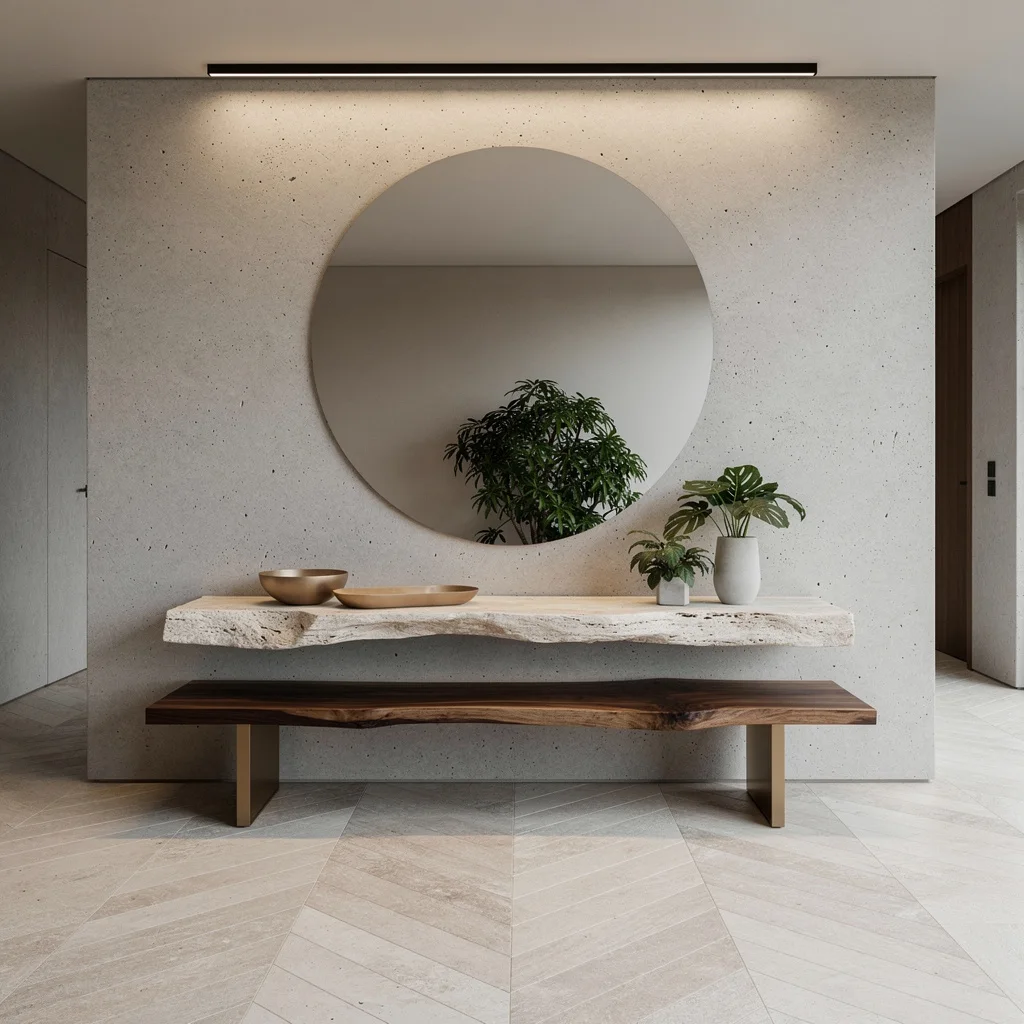
Organic is code for ‘not boring.’ Place a double-length live-edge walnut bench on matte brass legs, and float it right in the middle of your entry—none of this wall-hugging nonsense. Use textured concrete behind for standing drama; mount a travertine shelf low for display trays. Bling it out with linear dimmable ceiling fixtures to highlight wood grain, and go chevron limestone for real flooring flex. Hang a giant round mirror with invisible mounts—make depth happen without screaming ‘look at me.’ Never skip soft lighting—it makes every entry feel sculptural and alive.
Sculpted Steel: Get Industrial, Keep It Artful
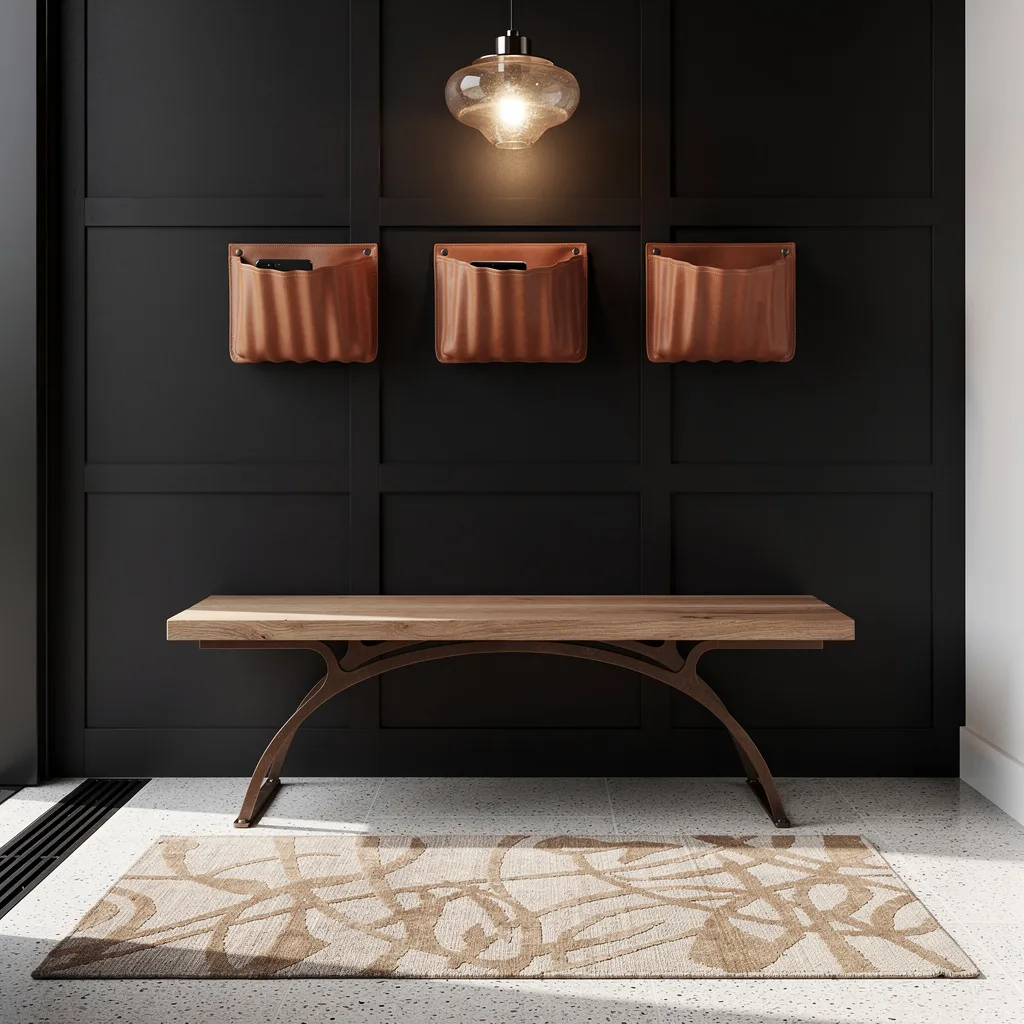
Artful doesn’t mean you need fifty art school degrees. Stick a solid timber bench atop a sculpted, earthy bronze steel base, and use matte black wall panels for pure attitude. Organize with ridged leather catch-alls mounted up the wall—leather beats plastic ANY day. Let a blown glass pendant flood your space with warmth, and keep a custom floor runner with abstract patterns underfoot for extra punch. If you’re in a mud-prone zone, embed a flush in-floor drain and slide to light terrazzo. Always coordinate catch-all colors with base hardware: mixed metals are chic, not random.
Monochrome Magic: Alcove It, Reflect the Light
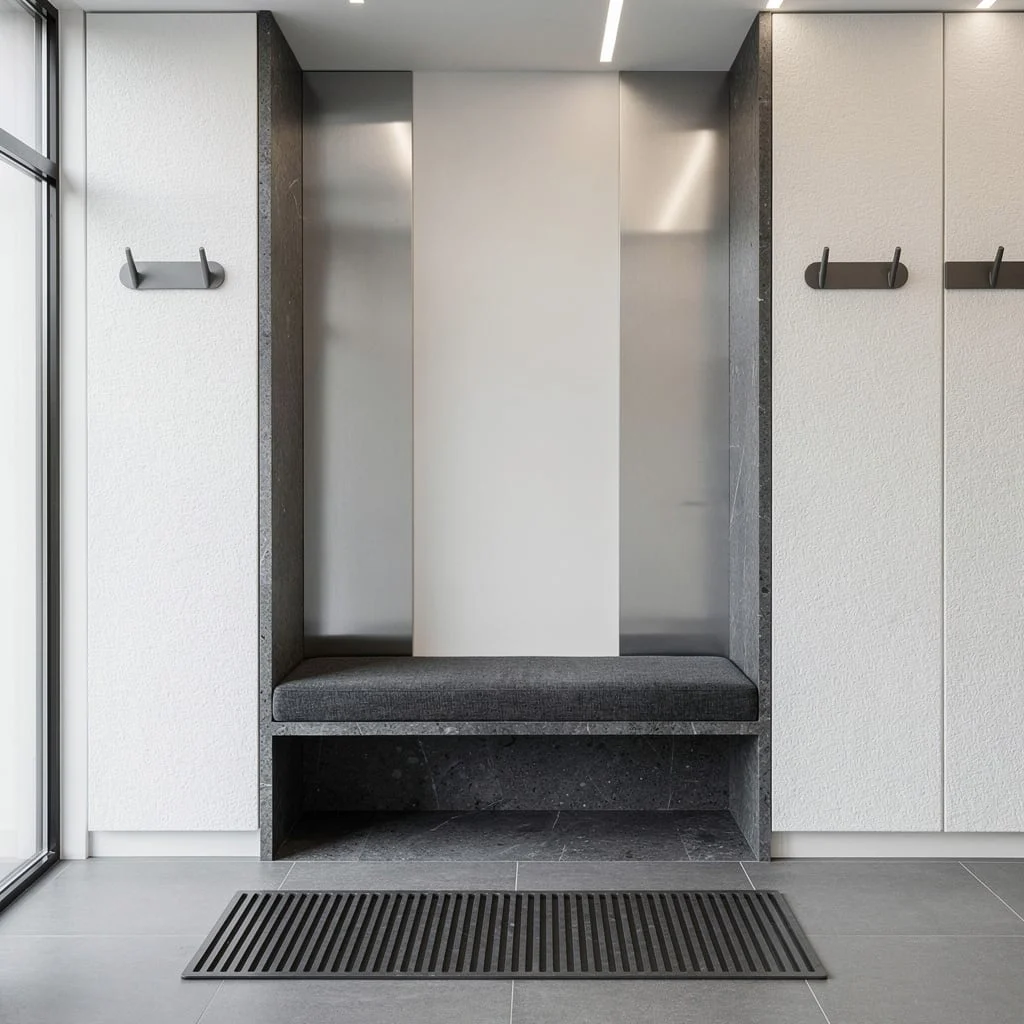
Contemporary monochrome isn’t just for Instagram influencers. Build your bench deep-gray chenille, and sink it flush inside a limestone alcove for real visual flow. Frame that alcove with vertical brushed aluminum slabs—they REFLECT without looking like a disco. Toss textured white wall panels next to soften the space. Hook up minimalist graphite powder-coated hooks up top for outerwear, and slap in a linear rubber floor mat for trash-tolerance and style. Slot your ceiling lighting for architectural glow; always match daylight direction with brush pattern on aluminum—shine matters.
Transitional Masterclass: Olive Panels + Spindle Bench
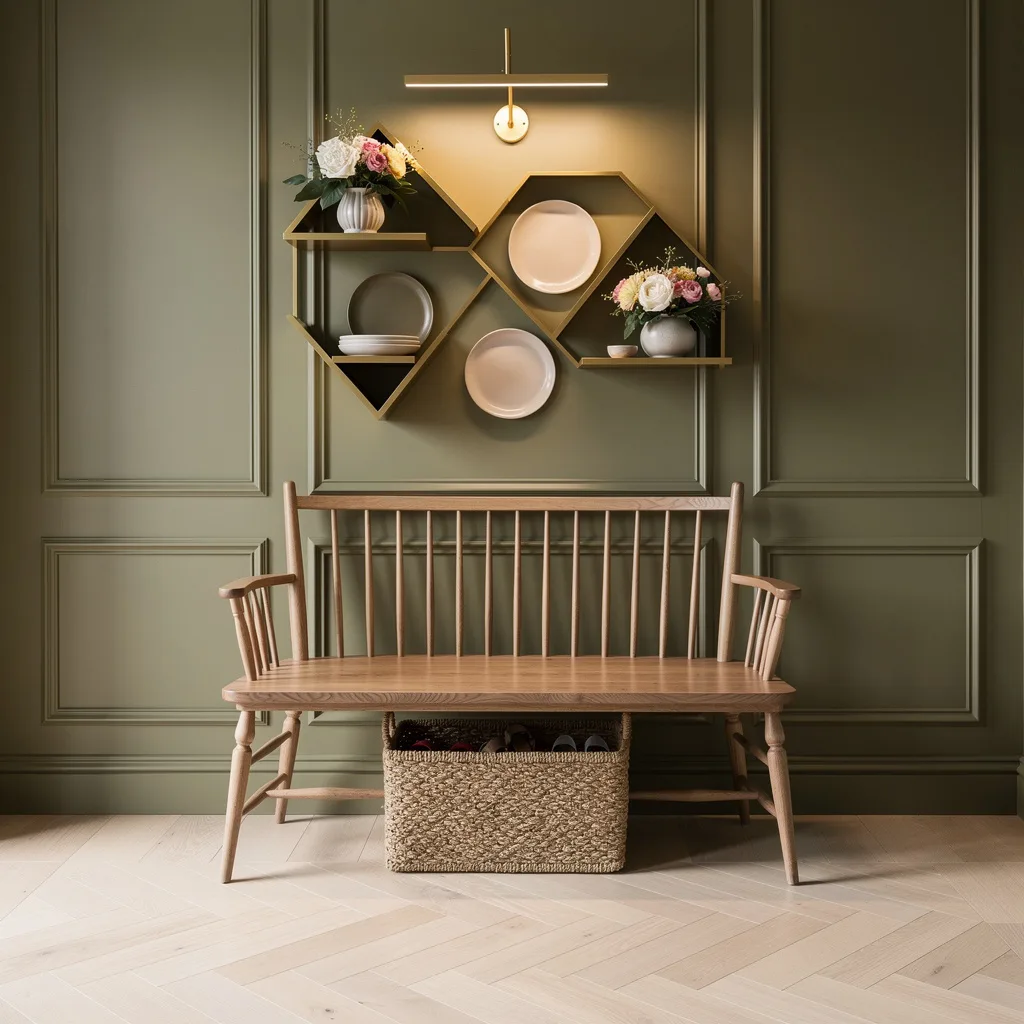
Ready for a layered entry that doesn’t scream ‘grandma’s parlor’? Paint classic panels muted olive. Anchor everything with a spindle-back ash bench—spindles are in, deal with it. Lay pale herringbone oak floors for high-end taste, and scatter geometric brass floating shelves to display those weird ceramics and floral arrangements you keep buying. Use a slim adjustable sconce to spotlight the fine wood grain, and tuck a woven sisal basket underneath for shoe storage you can actually be proud of. Always position shelves and lighting to draw the eye across the wall—never let your bench be the only star.
Final Thoughts
An entryway bench that actually improves your home rather than just occupying space in it comes down to whether it was chosen as part of an answer to the question “what does this entry need to function and feel good” rather than “what bench do I like.” Those are different questions with different outcomes, and the difference shows every single day.
The setups worth borrowing from aren’t successful because they’re expensive or because they follow a particular style trend. They work because someone thought about the relationship between the bench and the hooks, between the seating height and the storage below it, between the scale of the piece and the architecture of the space around it. That level of thinking costs nothing but attention, and it produces results that no amount of money spent on the wrong bench in the wrong context can match.
Get the function right first—hooks at a usable height, storage that actually contains the things that live in your entry, a surface that’s comfortable enough to serve the purpose of sitting—and then let the styling follow. The entries that look effortless are the ones where the effort went into the structure rather than the decoration, and that order of operations is available to anyone willing to start there.