
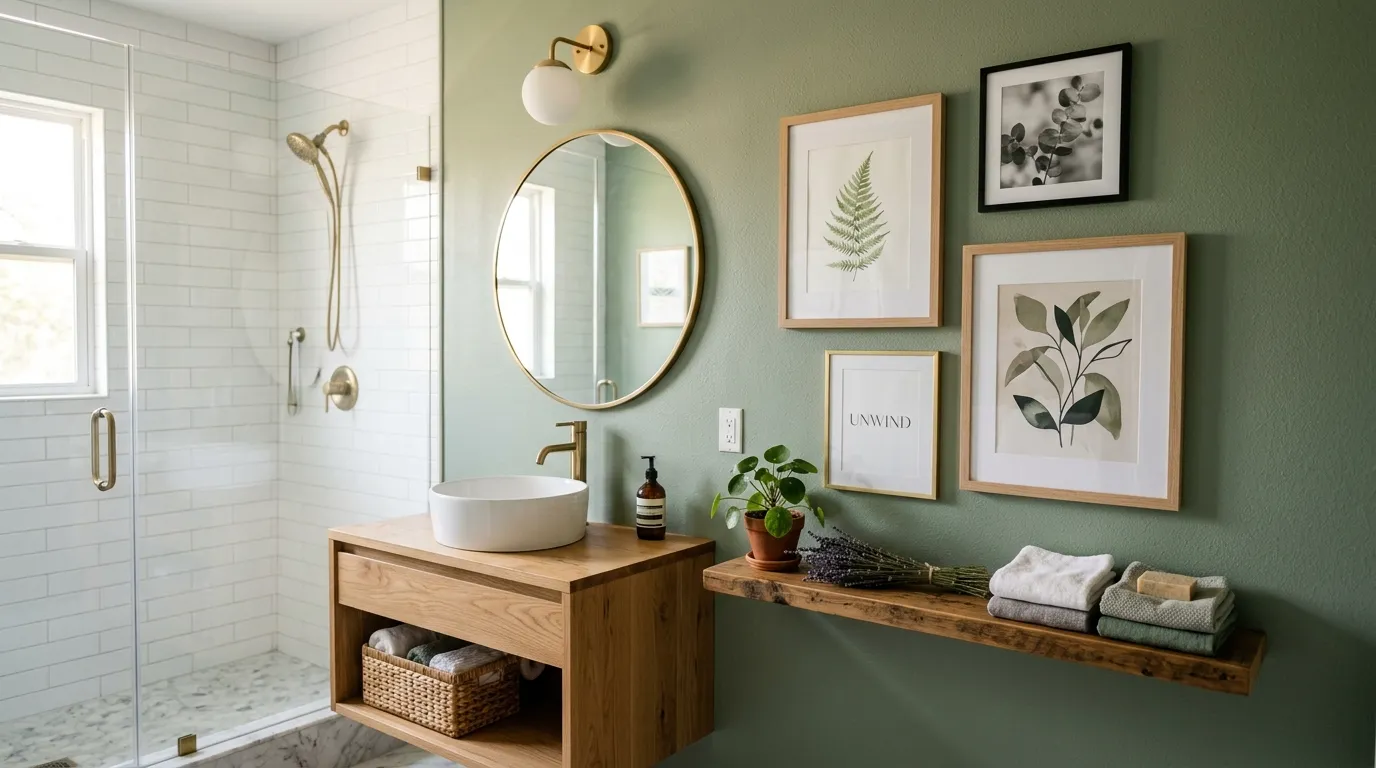
A bathroom wall can go wrong in a surprisingly small number of square feet. A random print beside the toilet, a mirror that’s too small for the vanity, or a shelf stuffed with things nobody actually needs can make an otherwise decent bathroom feel unfinished.
Good bathroom wall decor starts earlier than the decorating stage. The wall has to work with the vanity, lighting, tile, mirror, hardware, and the amount of visual weight already happening around it.
That’s why isolated decorating tips aren’t especially helpful here. A wall doesn’t exist by itself. It belongs to a room.
What Makes Bathroom Wall Decor Look Intentional Instead of Random?
Start With the Wall’s Job
Not every bathroom wall needs artwork. Some need a focal point. Some need architectural interest. Others simply need better proportion around the vanity or mirror.
The strongest rooms decide what a wall is supposed to do before adding anything to it.
Let Materials Carry Some of the Design
Tile, plaster, stone, paint, wood, and wallpaper can already provide plenty of visual information. Decorative pieces should work with that foundation instead of competing with it.
A textured wall with a strong mirror may need almost nothing else.
Give Small Bathrooms a Different Strategy
Small bathrooms punish clutter quickly. A tighter composition, stronger vertical lines, larger mirrors, and fewer decorative pieces usually create more impact than filling every available patch of wall.
Complete Bathroom Wall Decor Looks Worth Saving
Warm Oak, Plaster, and Oversized Art
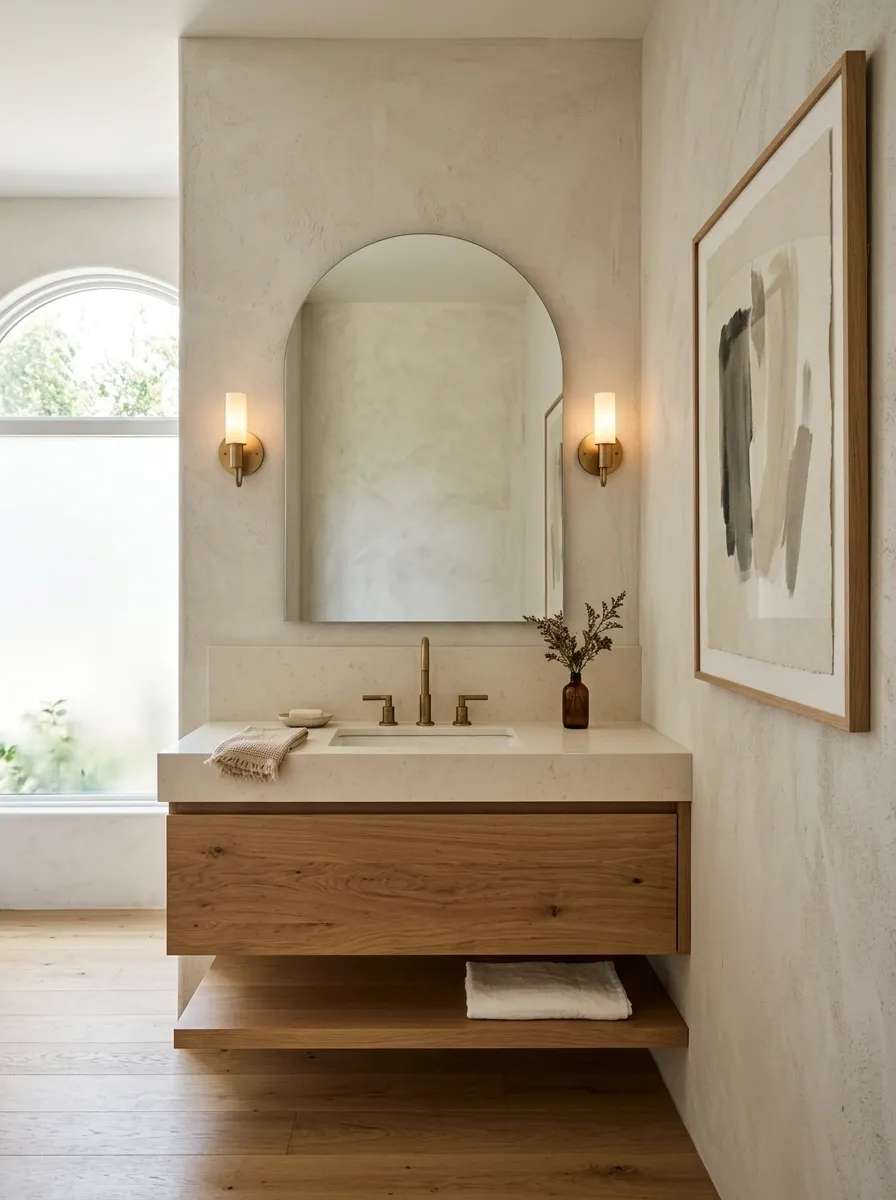
This bathroom gets its character from restraint. Soft mineral plaster covers the walls, a warm oak floating vanity sits beneath a broad rounded mirror, and one oversized framed artwork occupies the open wall beside it. Aged brass fixtures and warm sconces connect the pieces without making the room feel overly coordinated.
The artwork matters because it has enough scale to hold its own. A tiny print would look timid here.
I’d keep the rest of the wall almost empty. The warm oak already gives the room plenty of texture, and the plaster keeps the background from feeling flat. It works especially well in a medium-sized bathroom where one strong vertical composition can replace a collection of smaller decorative objects.
Dramatic Stone Wall With Sculptural Lighting
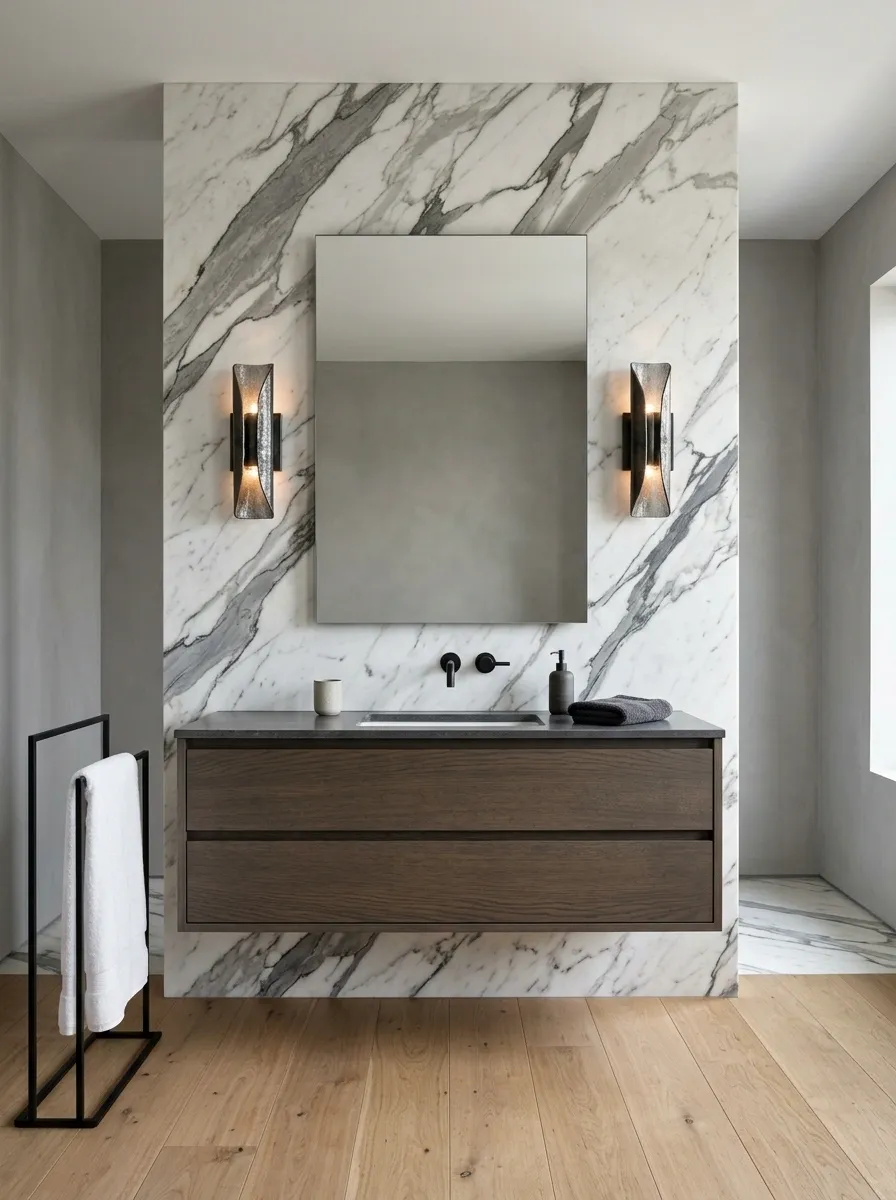
Here the wall is the star, and the rest of the bathroom knows it.
A full-height slab-style stone wall with expressive veining runs behind a dark floating vanity. A broad mirror sits between two sculptural wall lights, while matte black fittings keep the room crisp against the movement in the stone. The flooring stays quiet so the wall can carry the visual weight.
This approach works because there aren’t competing focal points. The stone gets the drama. The lighting adds shape. The vanity grounds everything below.
Don’t add several decorative objects just because there’s open space. The wall already has a point of view.
Vintage Gallery Bathroom With Framed Prints
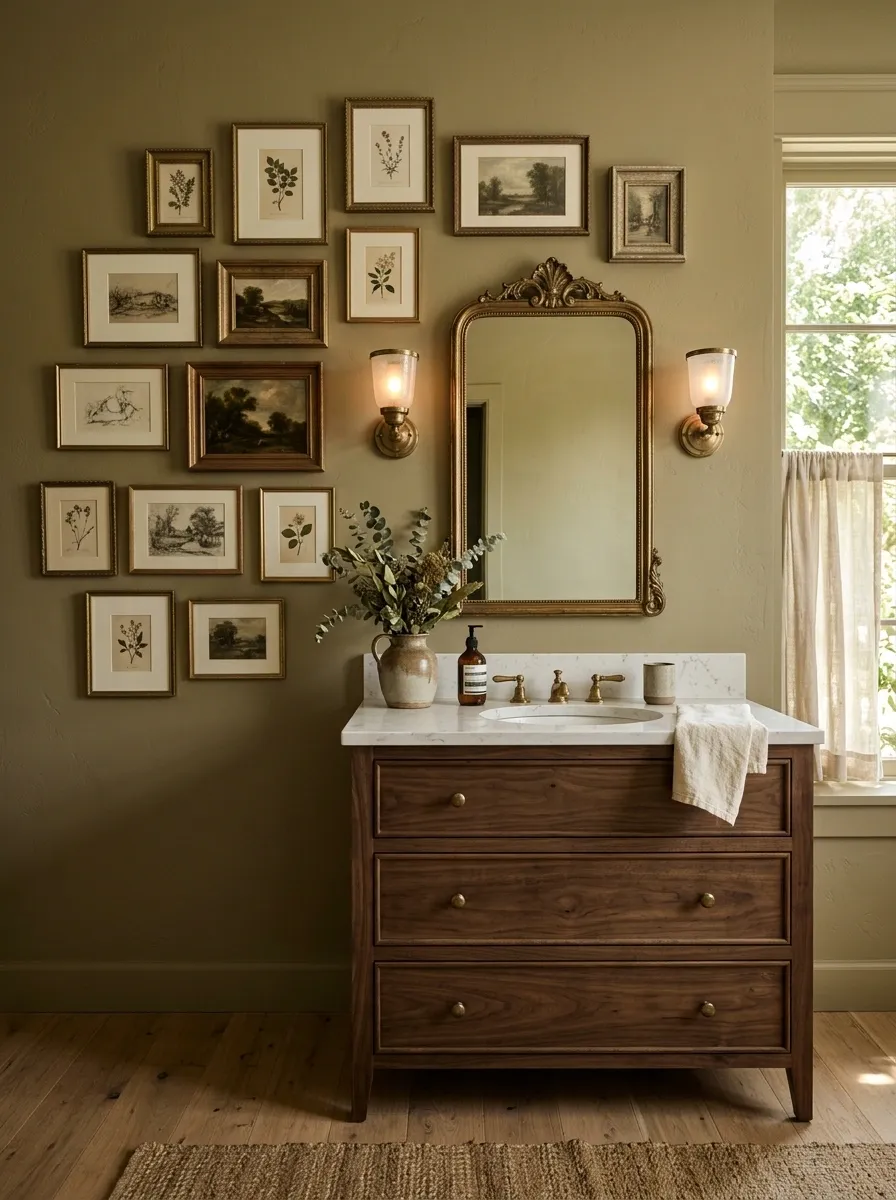
This one feels collected rather than decorated in one afternoon.
Warm painted walls frame a furniture-style vanity, an antique-looking mirror, aged metal fixtures, and a loose arrangement of small framed artwork. The frames aren’t identical, and they don’t need to be. That slight irregularity gives the bathroom some personality.
The trick is keeping the overall palette related. Cream, muted brown, soft olive, and warm brass can handle several different frame shapes without turning the wall into visual noise.
I’d leave the art slightly asymmetric. Bathrooms already contain a lot of hard, fixed geometry. A little looseness makes the room feel more lived-in.
Soft Green Bathroom With Botanical Wall Composition
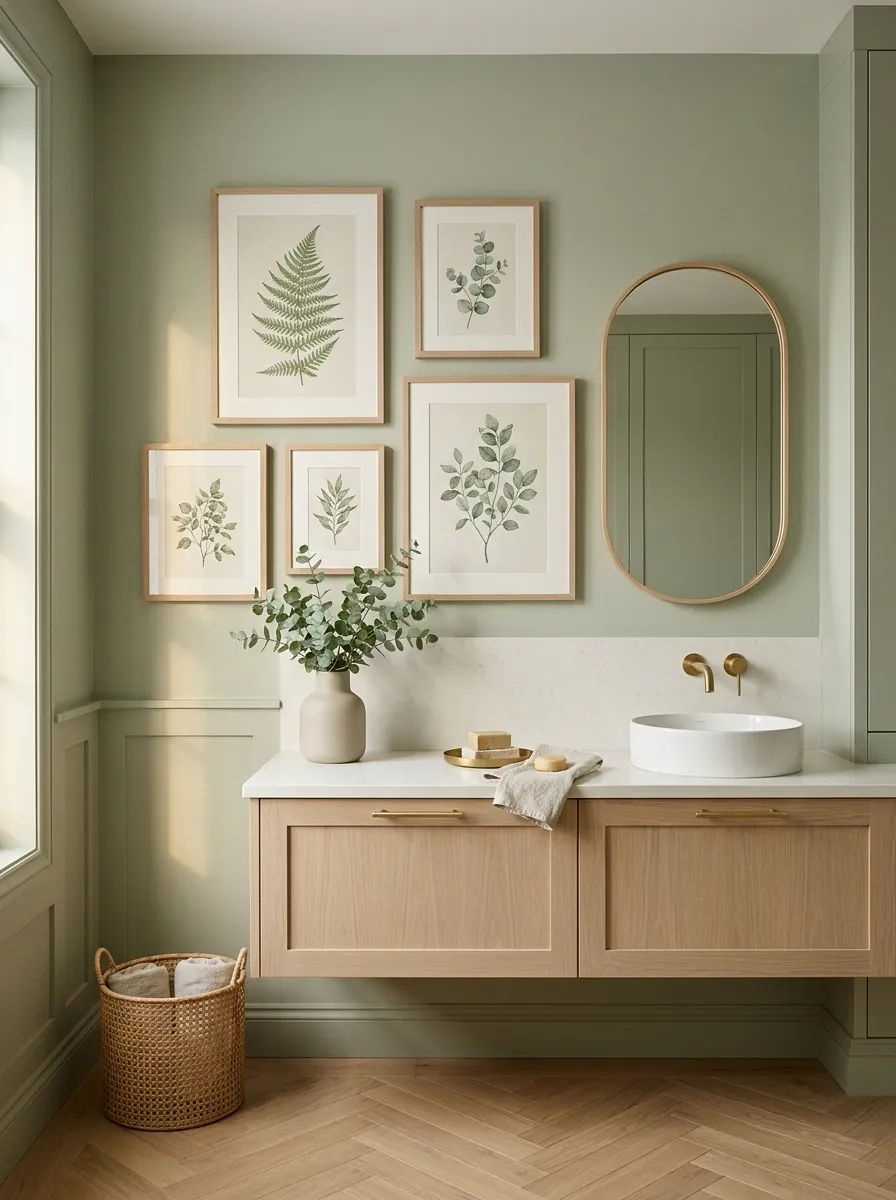
Muted green walls, pale oak, a rounded mirror, and botanical artwork give this bathroom a softer direction without turning it into a greenhouse.
The key is repetition. The green appears in the wall color and artwork, while oak and warm white repeat through the vanity and surrounding finishes. A few real leaves or branches can echo the art, but they should stay secondary.
The room works because the wall decor is part of the color story instead of being pasted onto it. Everything feels connected without looking matched.
I’d also keep the lighting warm and simple. The bathroom already has plenty of visual softness from the color and organic shapes.
Black-and-Cream Graphic Bathroom
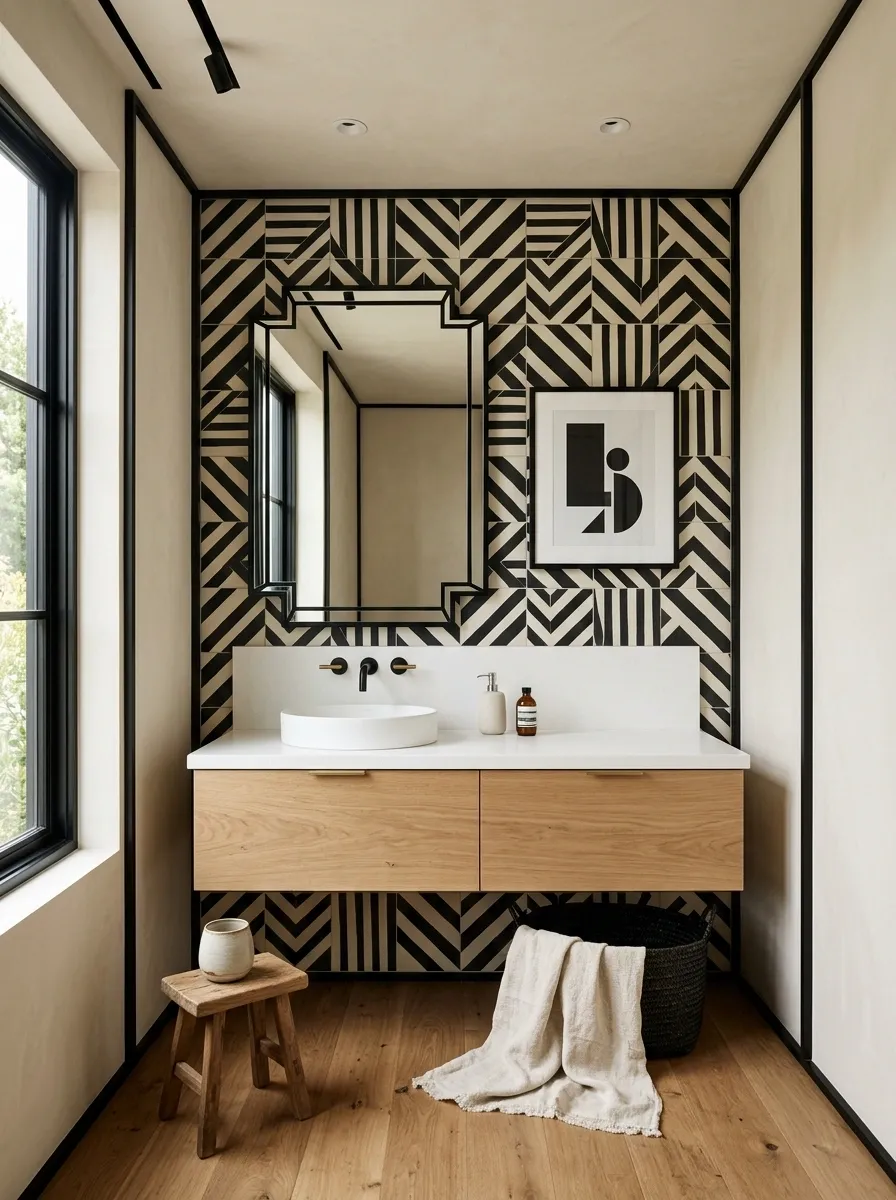
This bathroom doesn’t rely on a lot of decoration. It relies on contrast.
Cream walls, dark trim, a strong geometric mirror, black-and-white artwork, and bold tile placement create a graphic composition that feels architectural. The vanity is simple, the fixtures are crisp, and the wall carries most of the visual tension.
What keeps it from feeling harsh is proportion. The cream areas need more visual space than the black accents. Otherwise the whole thing starts looking like a bathroom designed around a paint swatch.
I’d keep accessories minimal here. A small stool, one ceramic vessel, or a folded textile is enough. More would dilute the clean geometry that makes the room interesting.
Arched Alcove With Integrated Shelving
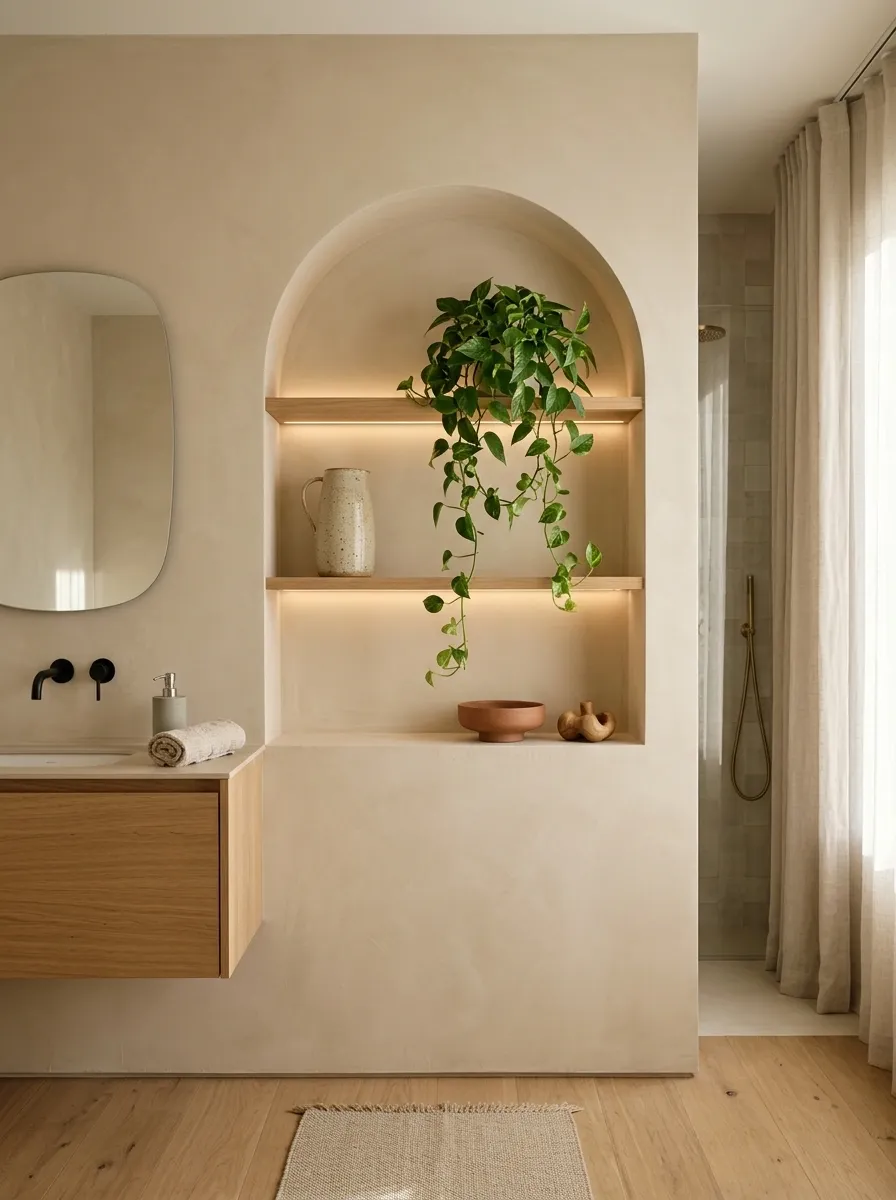
The wall itself becomes the decoration here.
A shallow arched niche is built into a warm plaster wall, with two or three open shelves tucked inside and softly illuminated from above. A simple floating vanity sits below a rounded mirror, while handmade ceramics and one trailing plant occupy the shelves without turning them into storage bins.
The arch gives the bathroom an architectural focal point before any accessories enter the picture. That’s why the styling can stay sparse.
Keep the shelf arrangement deliberately uneven. One tall vessel, one low bowl, and a small organic object usually look more natural than a row of matching containers.
Coastal Bathroom With Textured Limewash Walls
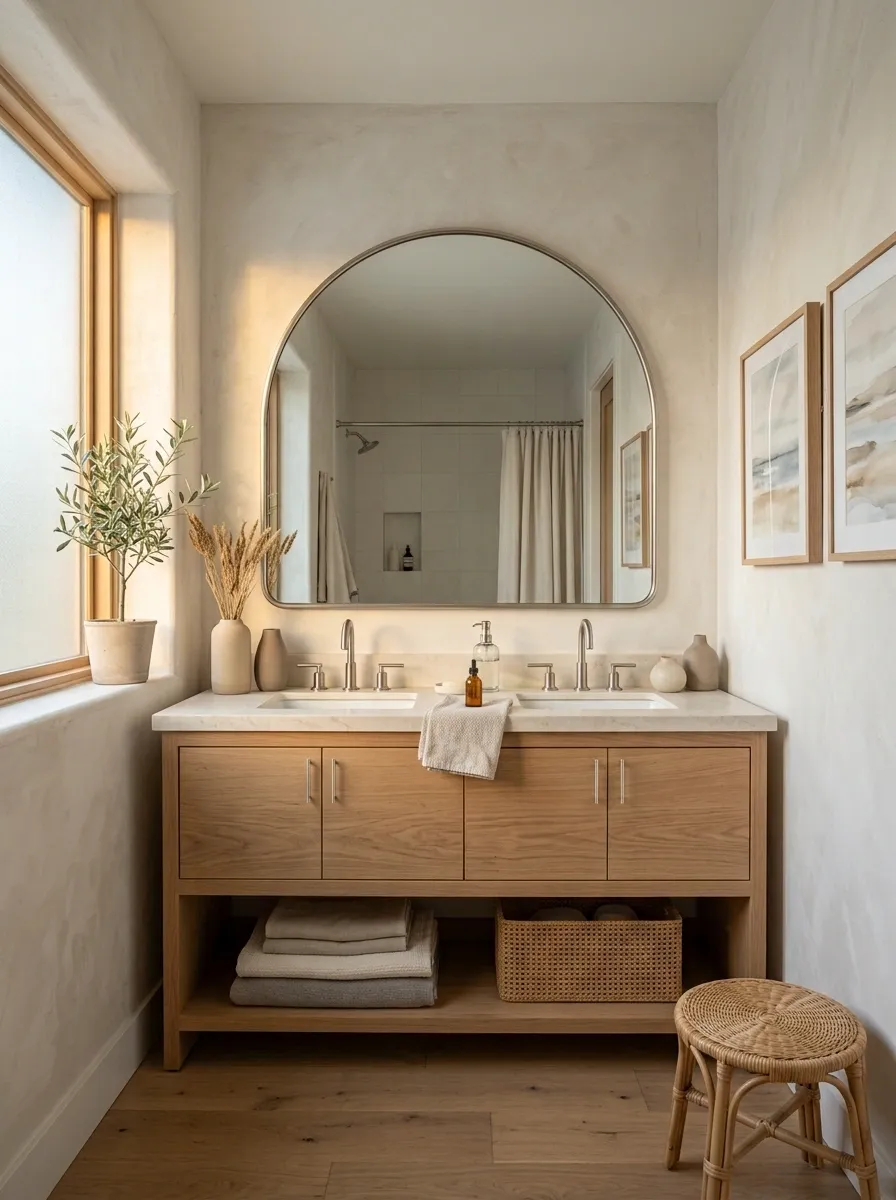
Forget the obvious seashells and blue-striped accessories. This coastal bathroom works because it borrows the softer parts of the coast instead.
Chalky limewashed walls create a lightly uneven backdrop for a broad rounded mirror, pale stone vanity, light oak, and woven accents. The fixtures stay simple, and the decor leans toward natural ceramics and muted artwork rather than anything overtly nautical.
The result feels relaxed without looking themed.
Limewash is especially useful here because the wall itself supplies texture and variation. That means the rest of the room can stay quiet. Add too many decorative pieces and the softness disappears under clutter.
Compact Bathroom With One Oversized Mirror Moment
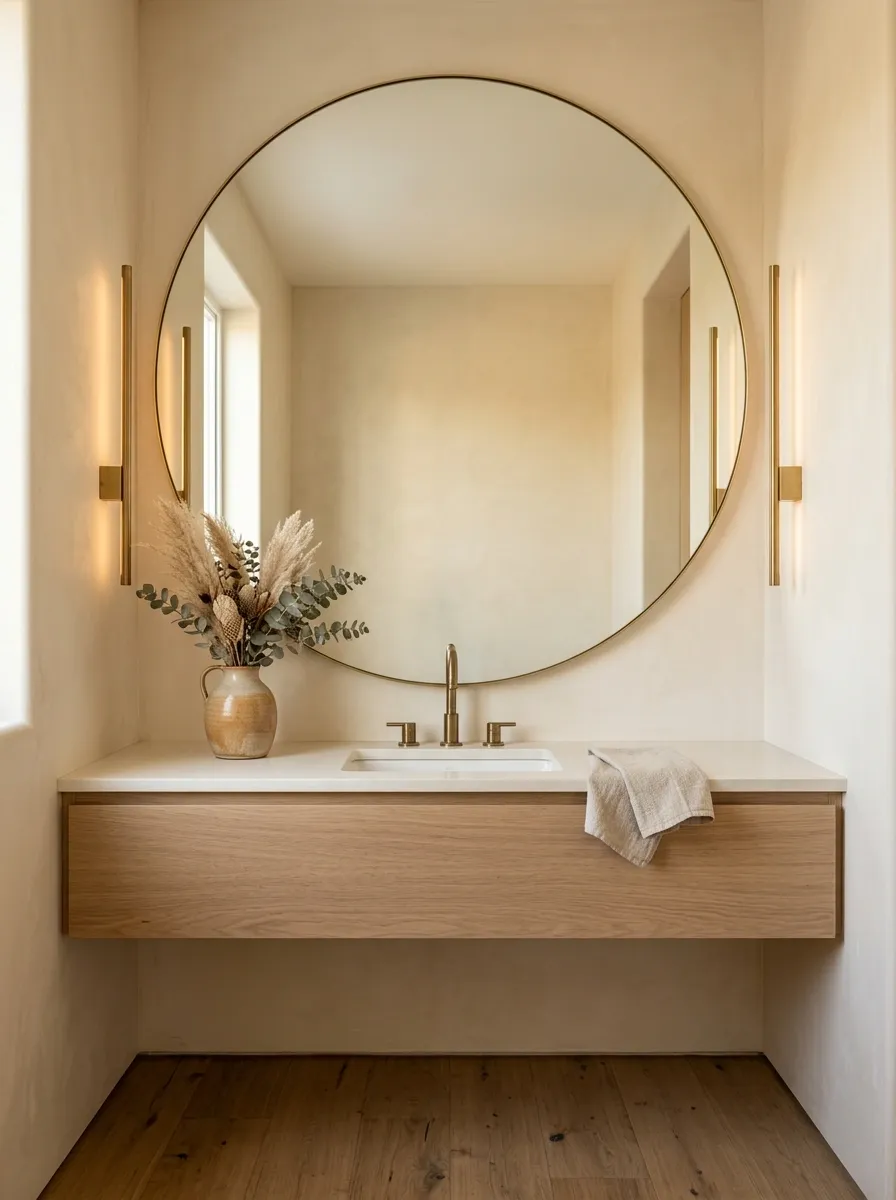
A small bathroom doesn’t need a busy wall. It needs a wall that knows exactly what it’s doing.
Here, one oversized rounded mirror spans most of the visual width above a narrow floating vanity. The walls use a warm continuous tile or plaster finish, slim vertical sconces sit close to the mirror, and the floor stays mostly visible.
The large mirror creates presence without filling the room with extra objects. That matters in compact spaces, where every decorative addition competes with the little breathing room you already have.
I’d skip the gallery wall entirely. The scale of the mirror is the design statement.
Moody Blue Bathroom With Warm Brass
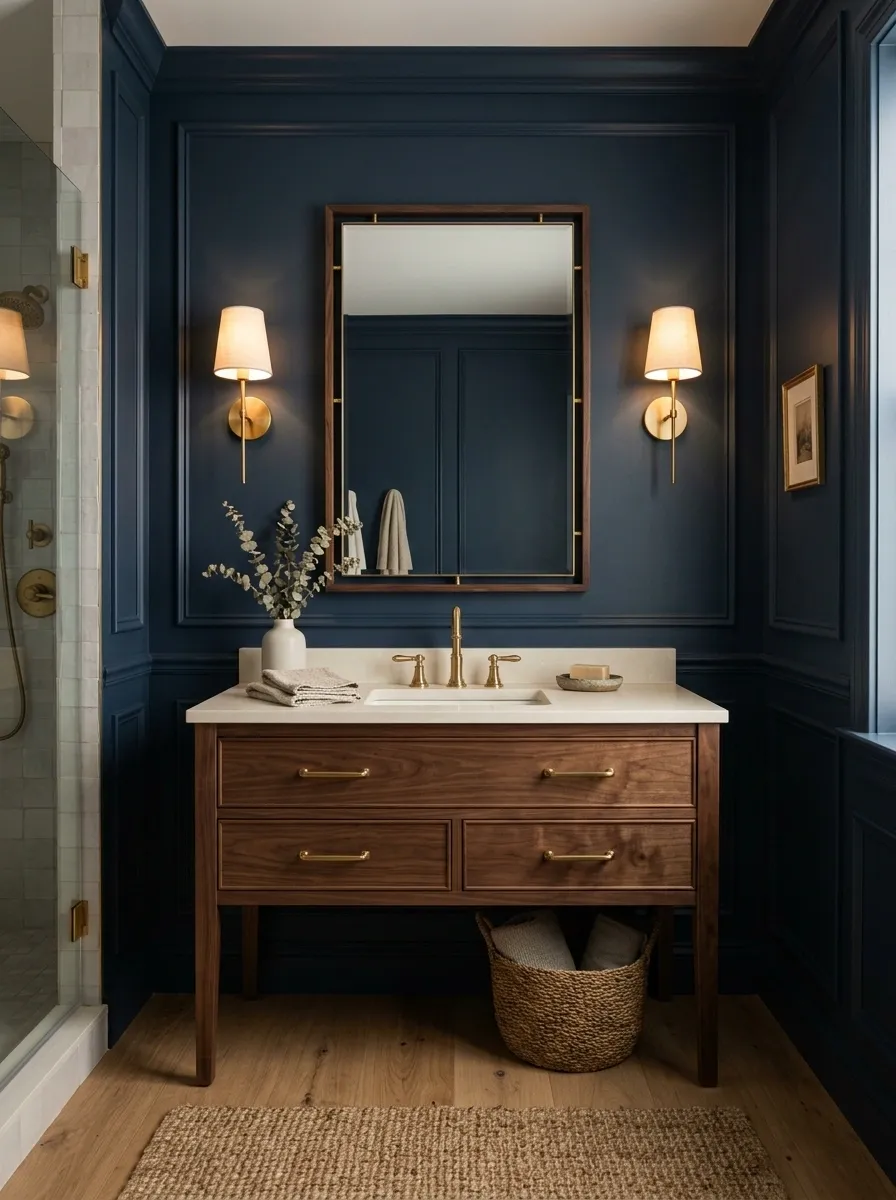
Deep blue walls give this bathroom an entirely different personality.
The wall treatment is a rich painted blue with subtle traditional paneling beneath a substantial framed mirror. Warm brass sconces and fixtures keep the darker color from becoming cold, while a walnut vanity introduces another layer of warmth.
There isn’t much conventional wall decor here because the room doesn’t need it. The paneling, color, mirror, and lighting already create enough structure.
This is a good reminder that wall decor doesn’t always mean hanging something. Sometimes the best wall treatment is the architecture itself, supported by a strong mirror and carefully chosen lighting.
Earthy Terracotta Bathroom With Handmade Tile
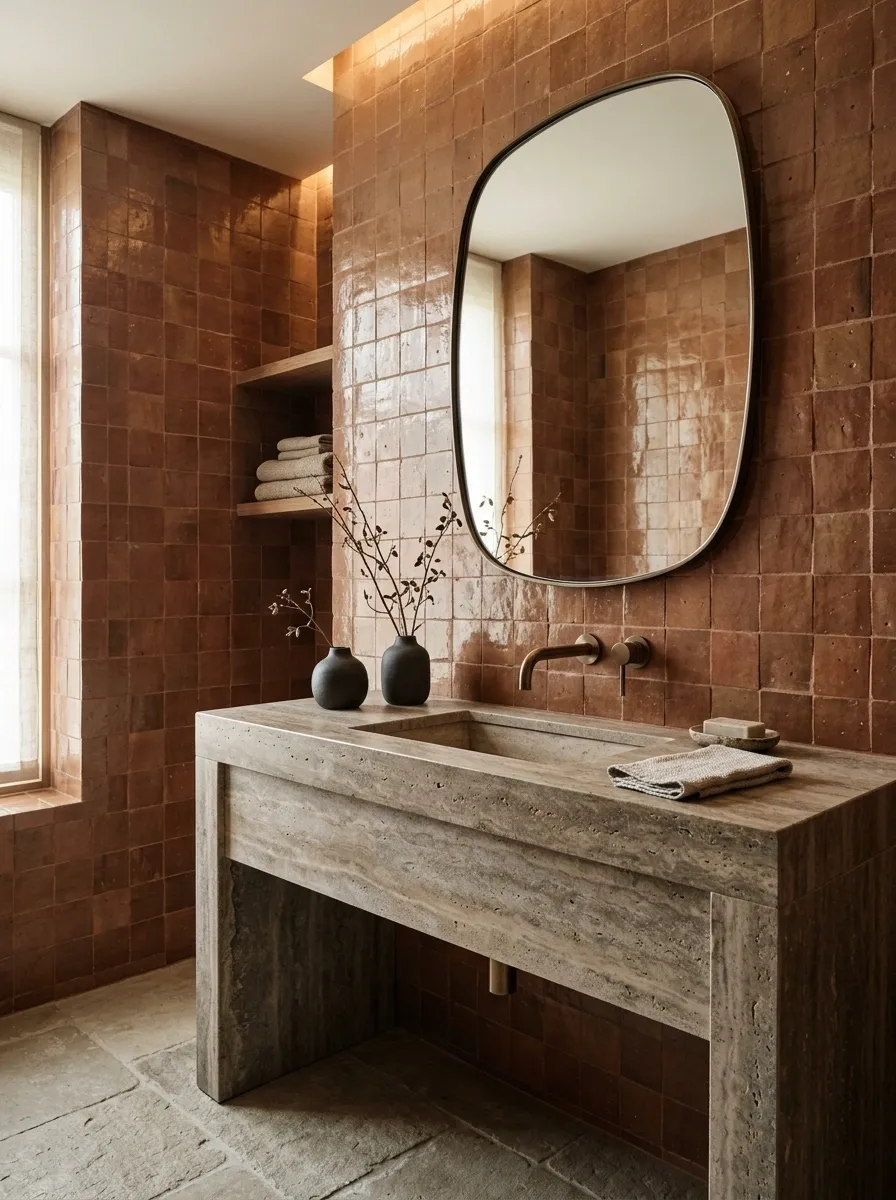
This bathroom gets its personality from the wall finish rather than an assortment of decorations.
Terracotta-toned handmade tile runs across the main walls, creating slight shifts in color and texture. A chunky stone vanity, bronze hardware, rounded mirror, and warm indirect lighting reinforce the earthy direction. A few ceramic pieces sit on the vanity, but they stay secondary.
The handmade quality is what makes the room feel interesting. Small variations keep the wall from looking flat or mass-produced.
I’d let the grout stay close to the tile color. High-contrast grout would create a much busier pattern and pull attention away from the warmth of the materials.
Minimal White Bathroom With Architectural Art
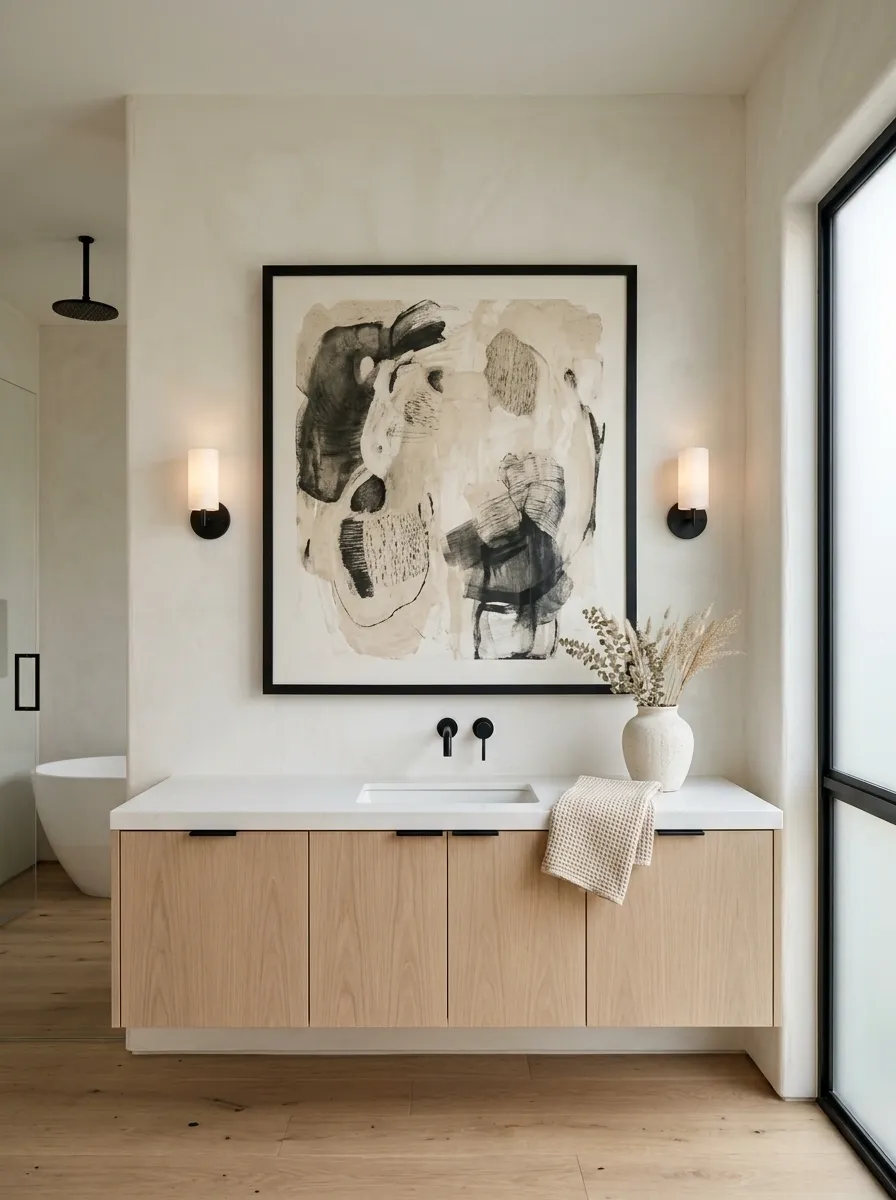
White doesn’t have to mean blank.
This bathroom uses a warm white wall finish, pale oak vanity, slim black fixtures, and one large abstract artwork in a substantial frame. A wide mirror sits above the vanity while soft wall lighting creates enough shadow to keep the pale surfaces from looking flat.
The artwork works because it has scale. A cluster of tiny prints would make the wall feel busier without making it more interesting.
I’d keep the accessories almost nonexistent. One ceramic vessel and a folded towel are enough. The room already has a strong relationship between the artwork, wood, mirror, and white background.
Powder Room With Patterned Wallpaper and Antique Mirror
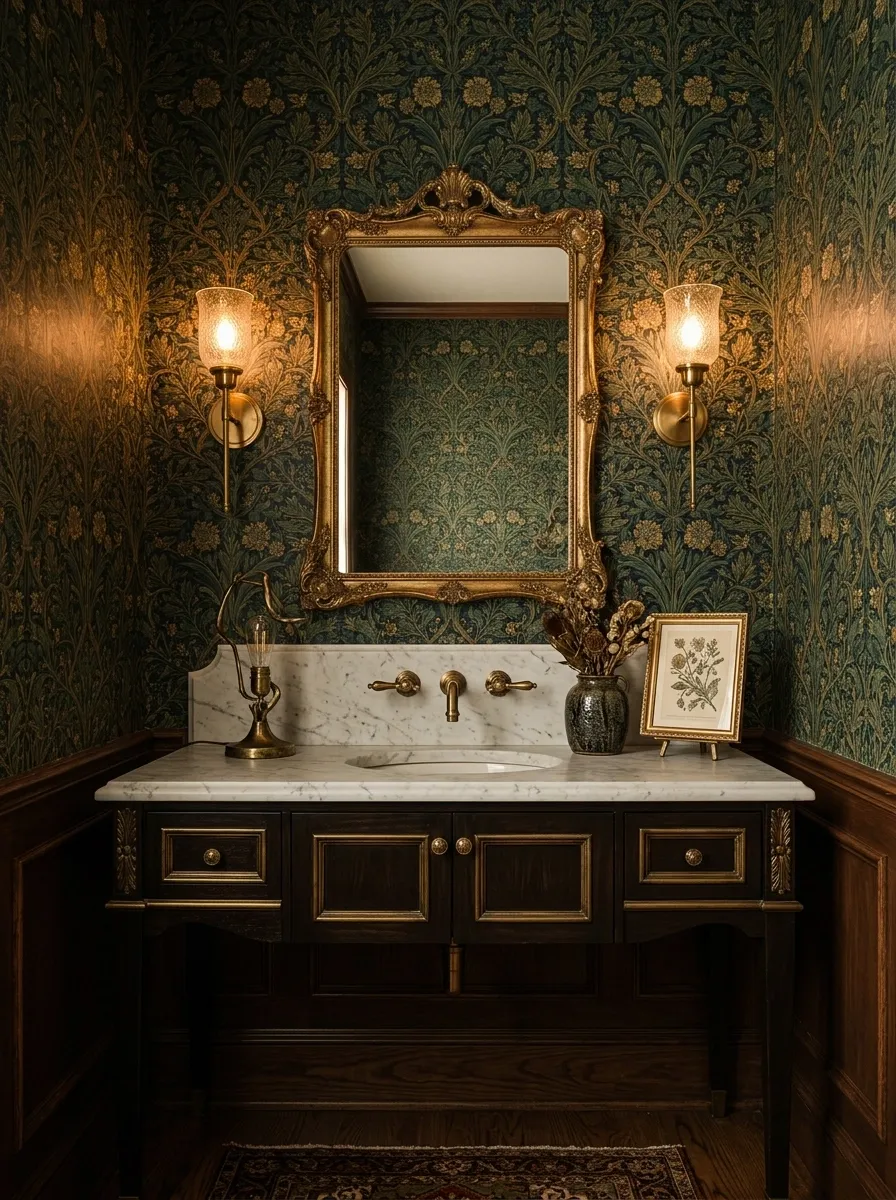
A powder room can handle considerably more personality than a large family bathroom.
This version uses patterned wallpaper across the walls, a dark wood vanity, an antique-style mirror, aged brass fittings, and warm sconces. The pattern runs throughout the room instead of being confined to a single accent wall, which makes the compact space feel intentional rather than pieced together.
The mirror breaks the wallpaper pattern and gives the eye a calmer focal point. That’s important when the print is already busy.
This is one room where I’d embrace decoration instead of trying to make everything minimal. A small framed piece, ceramic vessel, or sculptural lamp can add to the character without competing with the wallpaper.
Limestone Bathroom With Horizontal Composition
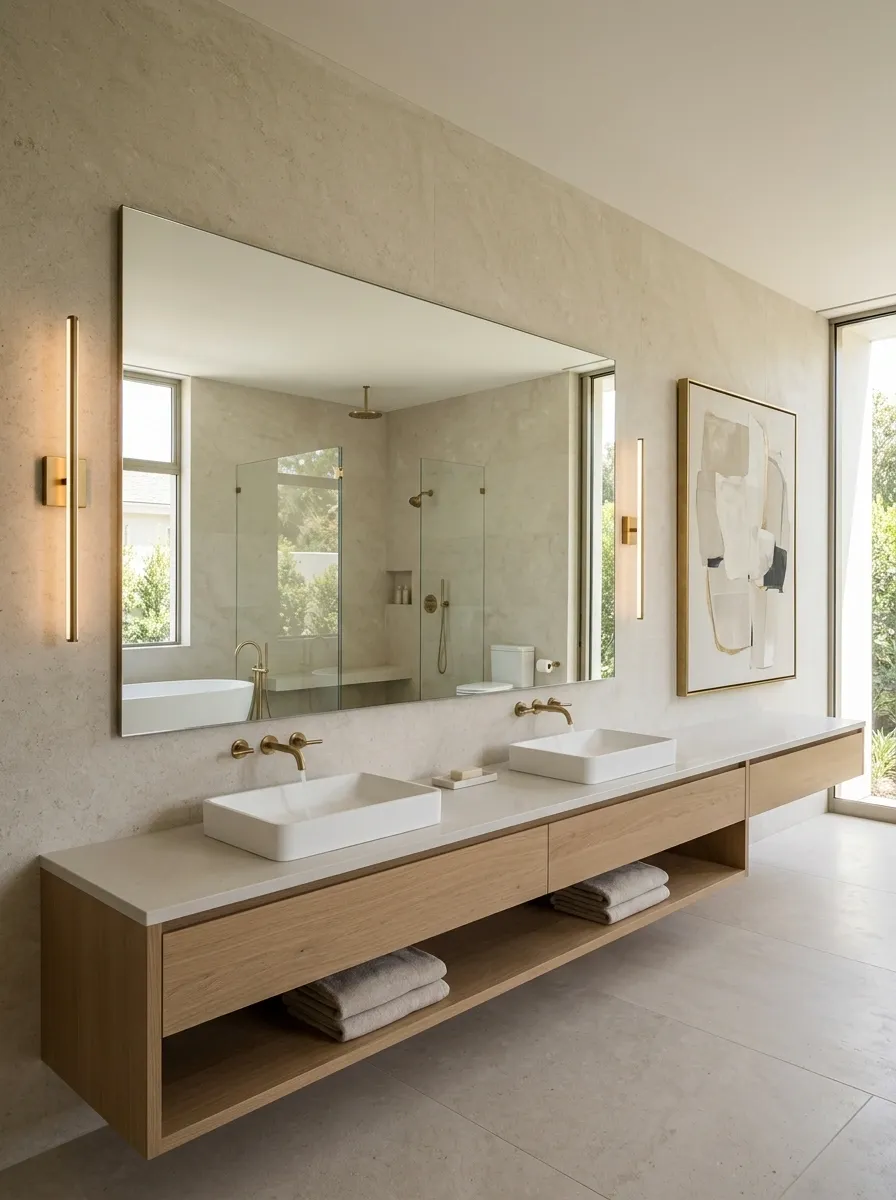
The strongest feature here isn’t a piece of decor. It’s the way the entire wall reads from side to side.
Limestone-look walls create a soft, continuous backdrop behind a long floating vanity. A wide mirror stretches across the main wall, with linear sconces reinforcing the horizontal direction. A few pieces of restrained artwork sit to the side rather than fighting the mirror for attention.
This arrangement works particularly well in a wider bathroom. The long lines make the space feel calmer and visually broader.
Keep the decoration low and deliberate. The wall needs uninterrupted stretches of surface so the horizontal architecture remains obvious.
Warm Beige Bathroom With Layered Textures
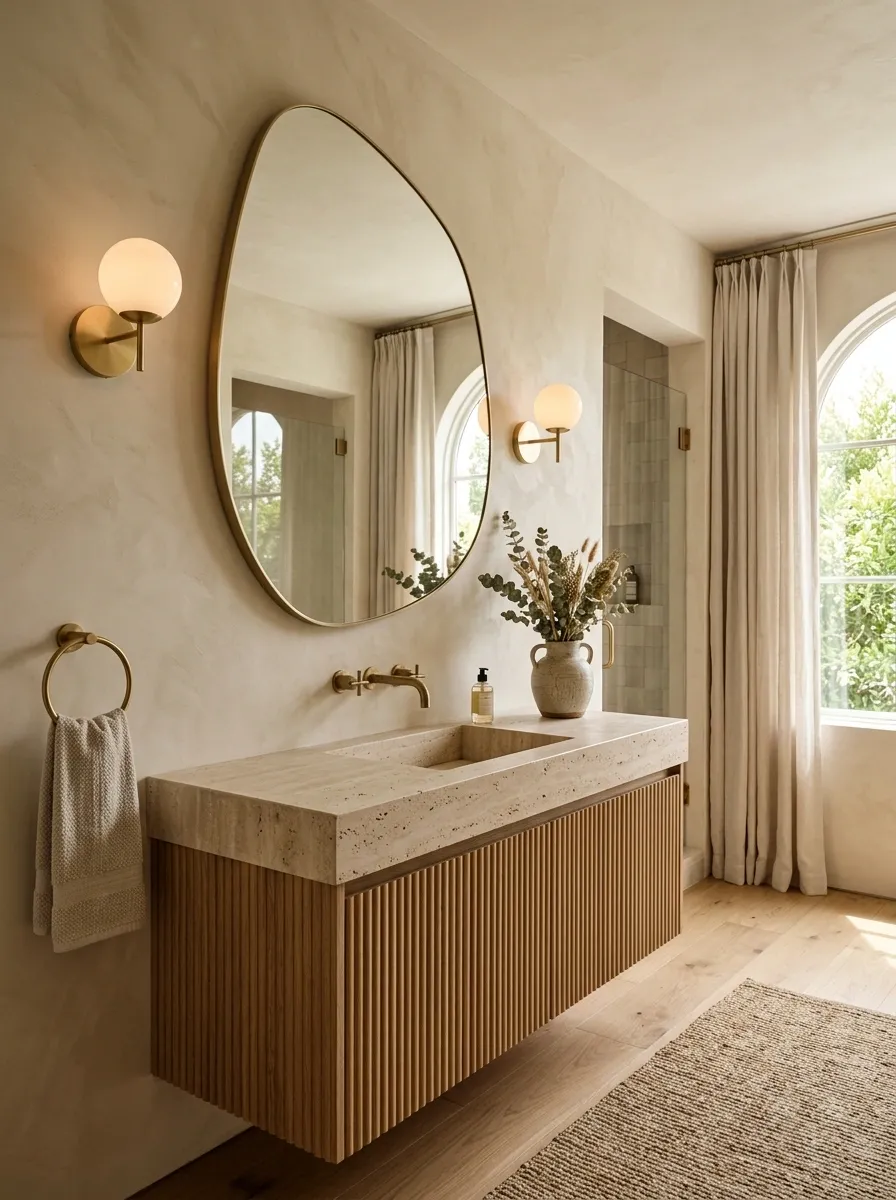
Beige isn’t the problem. Beige with nothing else happening is.
This bathroom solves that by layering different surfaces instead of adding a pile of accessories. Warm beige walls meet ribbed wood, honed stone, linen textiles, and softly curved forms. A large organic mirror breaks up the straight lines around the vanity, while subtle wall lighting adds depth.
The decor stays quiet because the materials are doing the work. That gives the bathroom a relaxed feel without turning every surface into another display area.
I’d use several shades of beige rather than forcing everything into one exact color. Slight tonal shifts make the room feel richer and more dimensional.
Eclectic Bathroom With Mismatched Vintage Frames
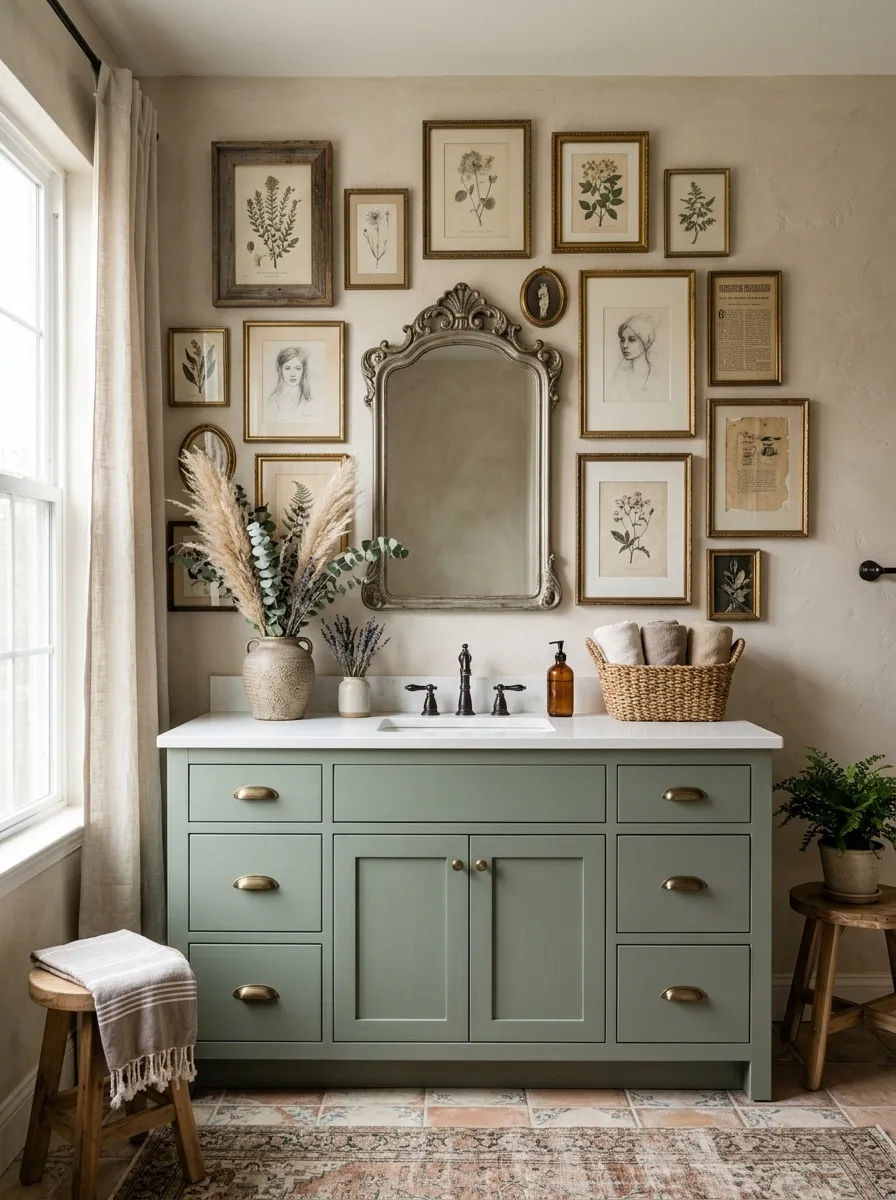
The wall looks collected, not purchased as a matching set.
A painted vanity sits against a warm neutral wall with an antique-style mirror at the center and several mismatched vintage frames arranged around it. Some hold botanical prints, others simple sketches or old-looking typography. The floor introduces another pattern, while aged metal keeps the room from feeling too polished.
The trick is giving the mismatched pieces one common thread. Warm frame tones, related artwork colors, or similar visual age can tie together things that aren’t identical.
I’d avoid perfectly equal spacing. A gallery like this should feel assembled over time rather than measured with a ruler.
Japandi Bathroom With Slatted Oak Wall
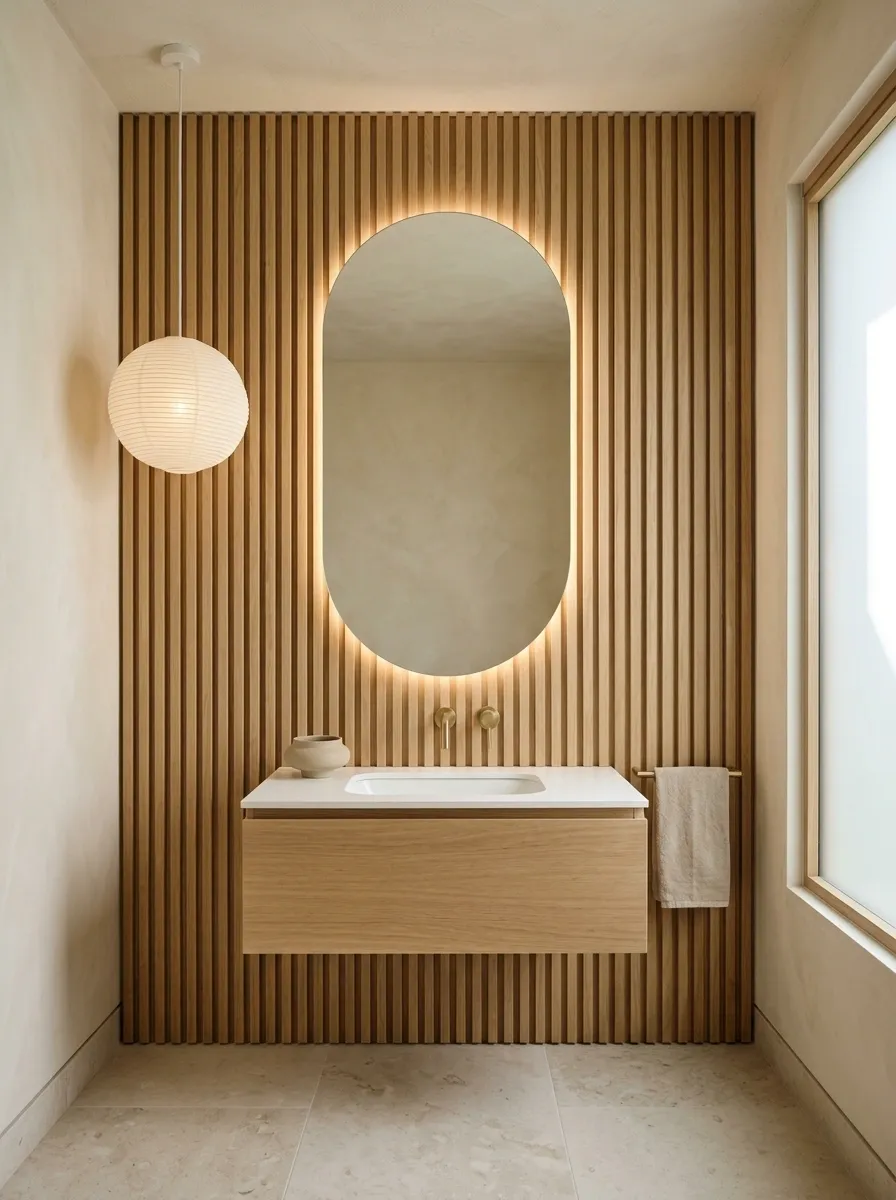
This bathroom keeps the wall interesting without filling it with things.
A vertical slatted oak wall runs behind a floating vanity and rounded mirror, creating a warm architectural backdrop against pale plaster and soft stone. A simple paper-like pendant and one low ceramic vessel add just enough detail to stop the room from feeling stark.
The slats bring rhythm and height, which makes them especially useful when the bathroom has low visual energy or a fairly plain layout. They also give the eye something to follow without introducing another color.
Keep the rest of the room quiet. The wood wall is already doing the talking.
Terracotta and Cream Mediterranean Bathroom
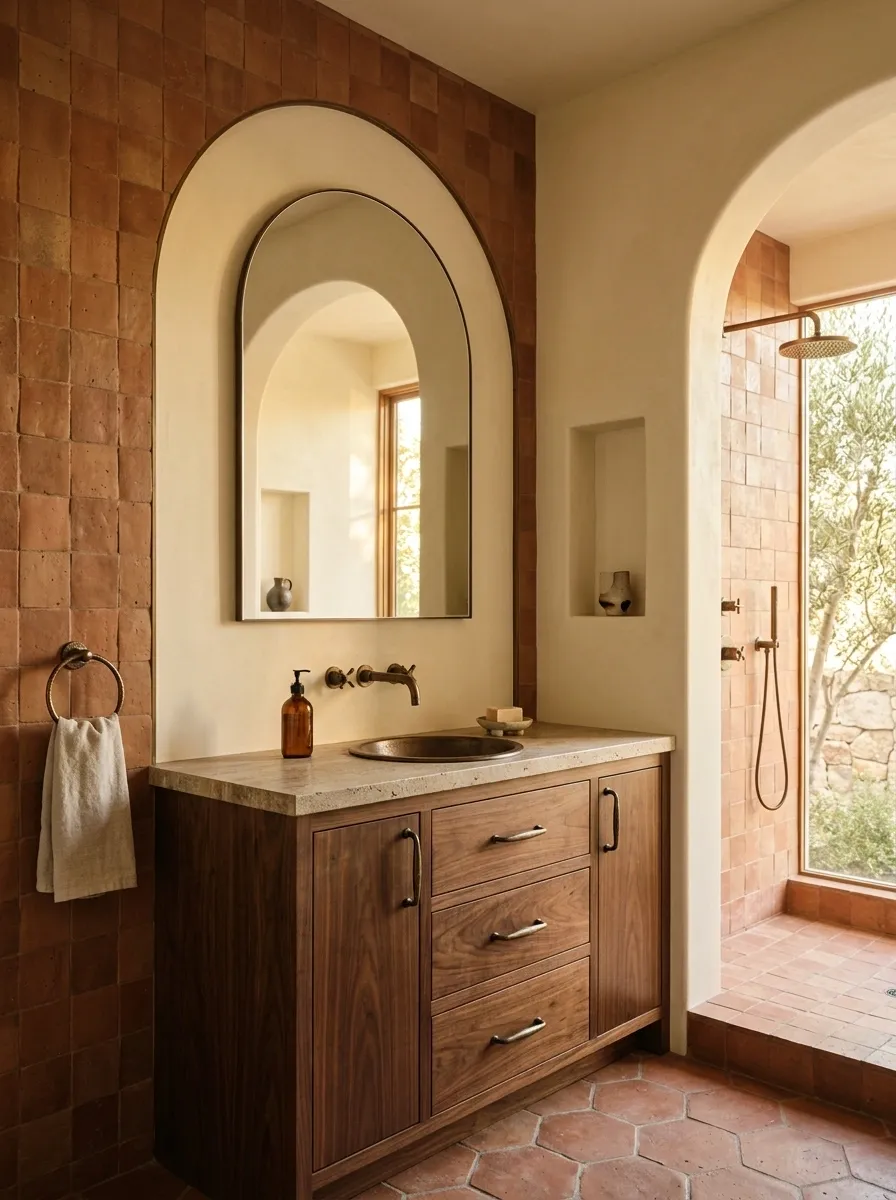
Arches, terracotta, creamy plaster, and dark wood give this bathroom a warmer architectural language.
Terracotta tile covers the main wet-zone walls, while creamy plaster surrounds an arched mirror and recessed niches. A dark wood vanity anchors the lower half, and aged bronze fittings connect the warm materials. Small ceramic vessels sit inside the niches, but the architecture remains the dominant feature.
This is where wall decor works best when it feels built into the room. The niches, arches, tile, and mirror create a layered composition without requiring a gallery wall.
Don’t overfill the niches. Empty space is part of the design.
Contemporary Bathroom With Oversized Graphic Mirror
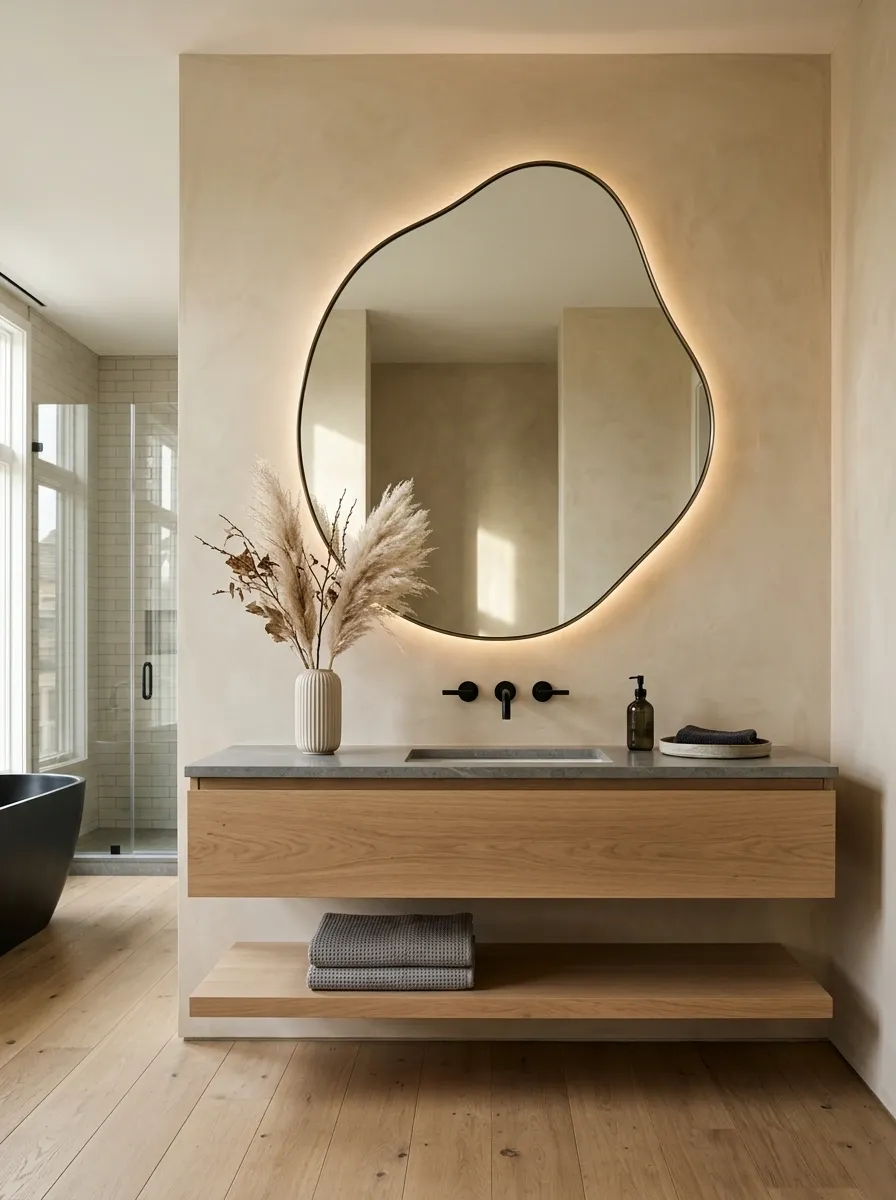
The mirror is deliberately too interesting to be treated as an afterthought.
A large sculptural mirror with an irregular organic outline hangs over a simple floating vanity, backed by a muted textured wall. Concealed lighting washes the wall softly, while slim black fixtures and a stone countertop provide enough contrast to define the composition.
The wall decor here is really a study in scale. The oversized mirror gives the bathroom a visual centerpiece without taking up much physical depth.
This is especially effective when the surrounding architecture is plain. Instead of adding several decorative objects, give one element enough size and shape to carry the room.
Soft Pink Bathroom With Dark Wood Contrast
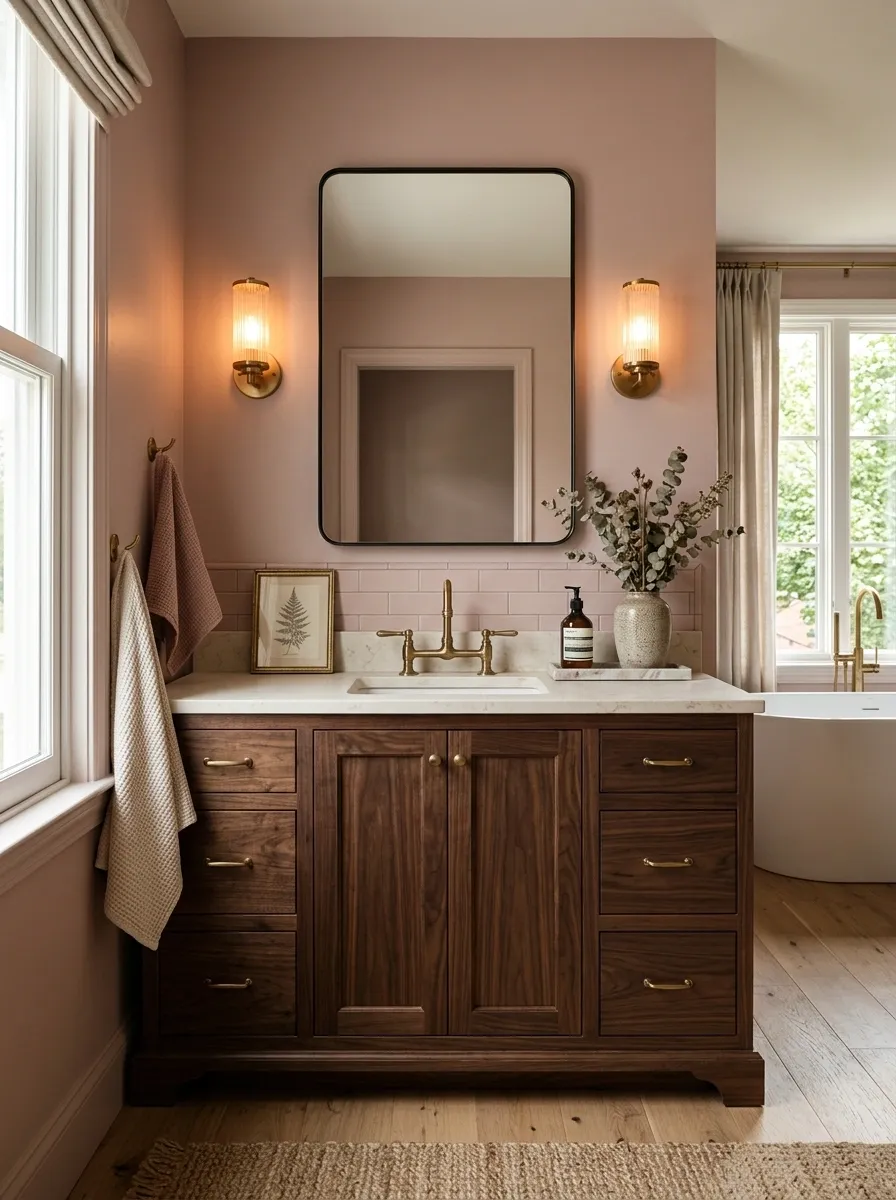
Dusty pink walls become much more sophisticated when they have something substantial to push against.
This bathroom pairs muted pink walls with a dark walnut vanity, creamy stone, antique brass hardware, and a large framed mirror. Warm sconces sit close to the mirror, creating a soft pool of light that deepens the wall color at night.
The walnut is doing important work here. Without it, the pink could become too sweet. The darker wood gives the room visual weight and makes the color feel considered rather than sugary.
I’d keep artwork minimal. One small vintage print can work, but the color and wood contrast already provide enough character.
Industrial Bathroom With Concrete, Oak, and Artwork
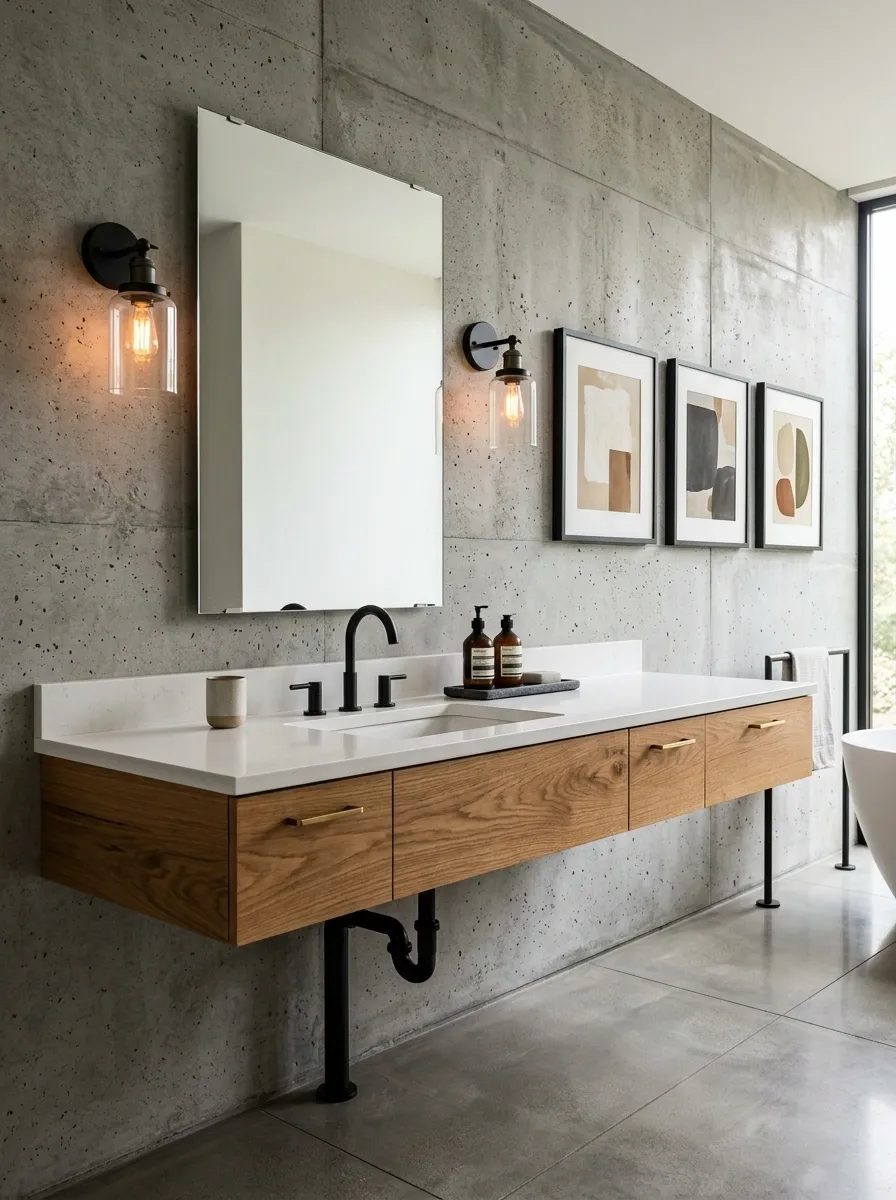
Concrete-look walls give this bathroom a harder starting point, so the rest of the room needs warmth.
A floating oak vanity softens the concrete backdrop, while black steel fixtures and simple framed artwork reinforce the industrial direction. Exposed-looking wall lights add another layer without introducing decorative clutter. A large mirror breaks up the harder geometry and keeps the bathroom from feeling like a utility room.
The artwork is important here because it brings a residential quality to materials that could otherwise feel cold.
I’d choose artwork with warm neutrals, charcoal, or muted earth tones rather than bright colors. The goal is to soften the industrial materials, not interrupt them.
Classic White Bathroom With Picture-Frame Molding
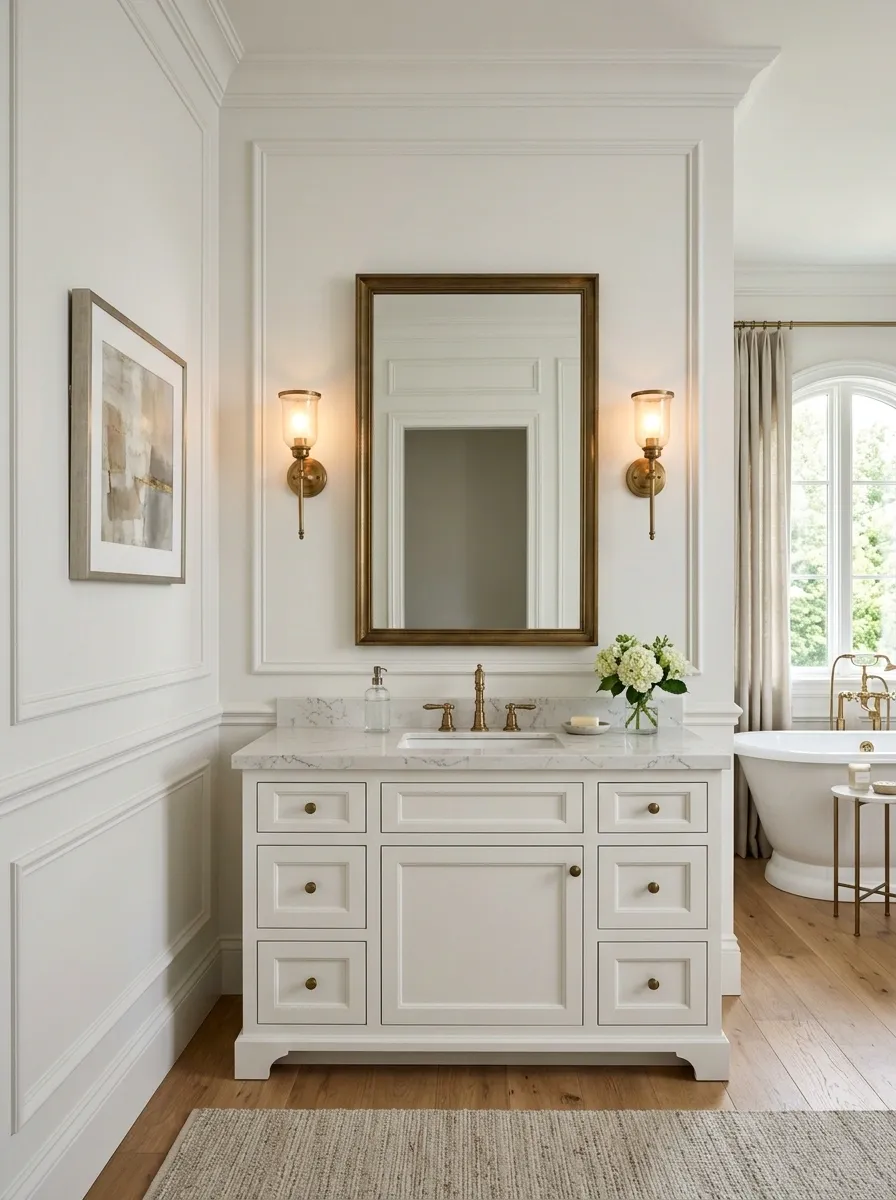
This bathroom proves that a white bathroom doesn’t need to be plain.
Crisp picture-frame molding gives the walls architectural depth around a large traditional mirror, while marble-look surfaces, aged brass fittings, and warm sconces keep the palette classic. A furniture-style vanity grounds the lower half of the room, and one restrained piece of artwork adds a little personality without disrupting the symmetry.
The wall treatment does most of the decorating here. That’s the advantage of using molding well. It creates shadow, rhythm, and proportion without asking you to hang something on every empty section.
Keep the artwork modest. The molding should remain visible enough to be part of the composition.
Desert-Inspired Bathroom With Clay Tones
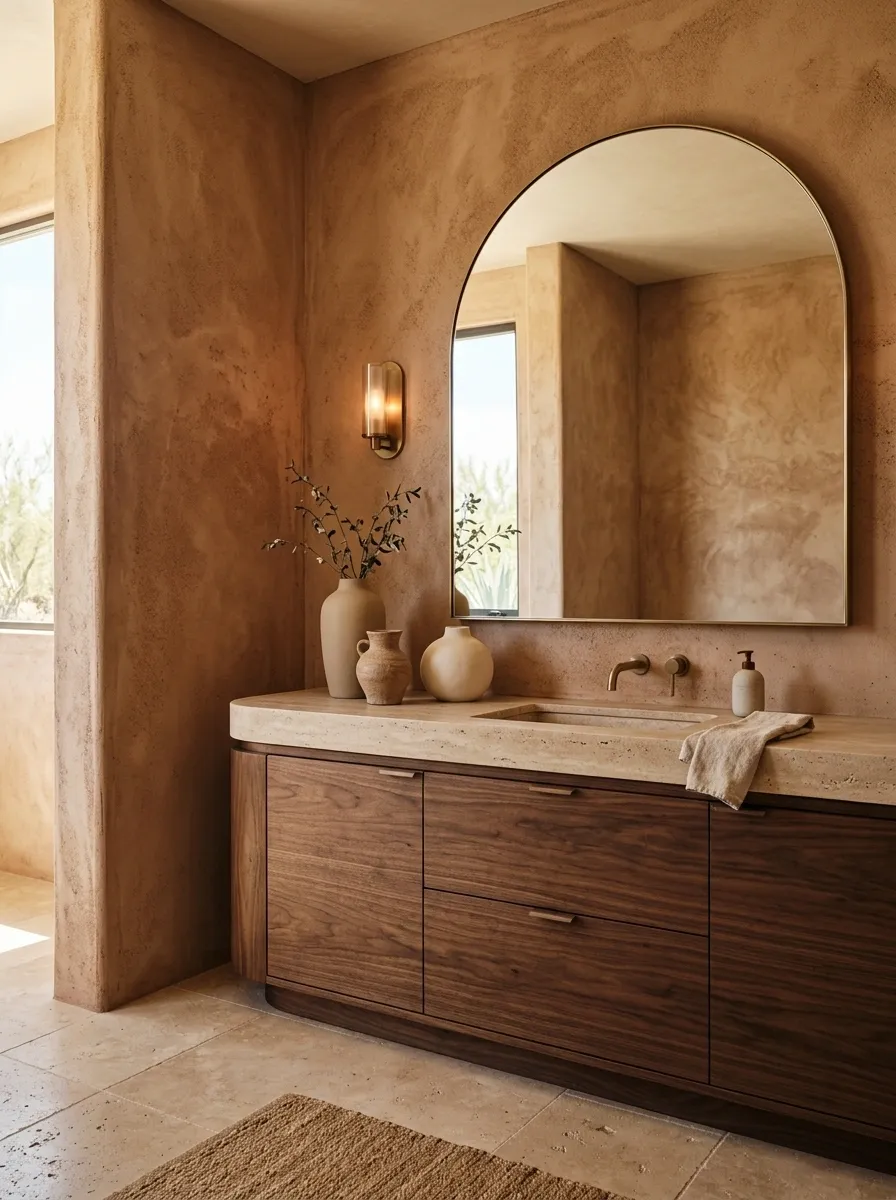
Warm clay plaster gives this bathroom its identity before a single decorative object appears.
The walls sit in a dusty terracotta range, paired with travertine, walnut, woven accents, and softly curved forms. A large rounded mirror breaks up the broad wall surface, while sculptural ceramics introduce small pockets of interest. The lighting stays warm and directional, bringing out the variations in the plaster after dark.
The best part is the restraint. There aren’t decorative pieces scattered everywhere because the wall finish already has texture and color.
Use tonal variation rather than lots of contrasting colors. Sand, clay, cream, walnut, and stone can create a surprisingly rich bathroom without turning it into a themed space.
Quiet Luxury Bathroom With Full-Height Microcement Walls
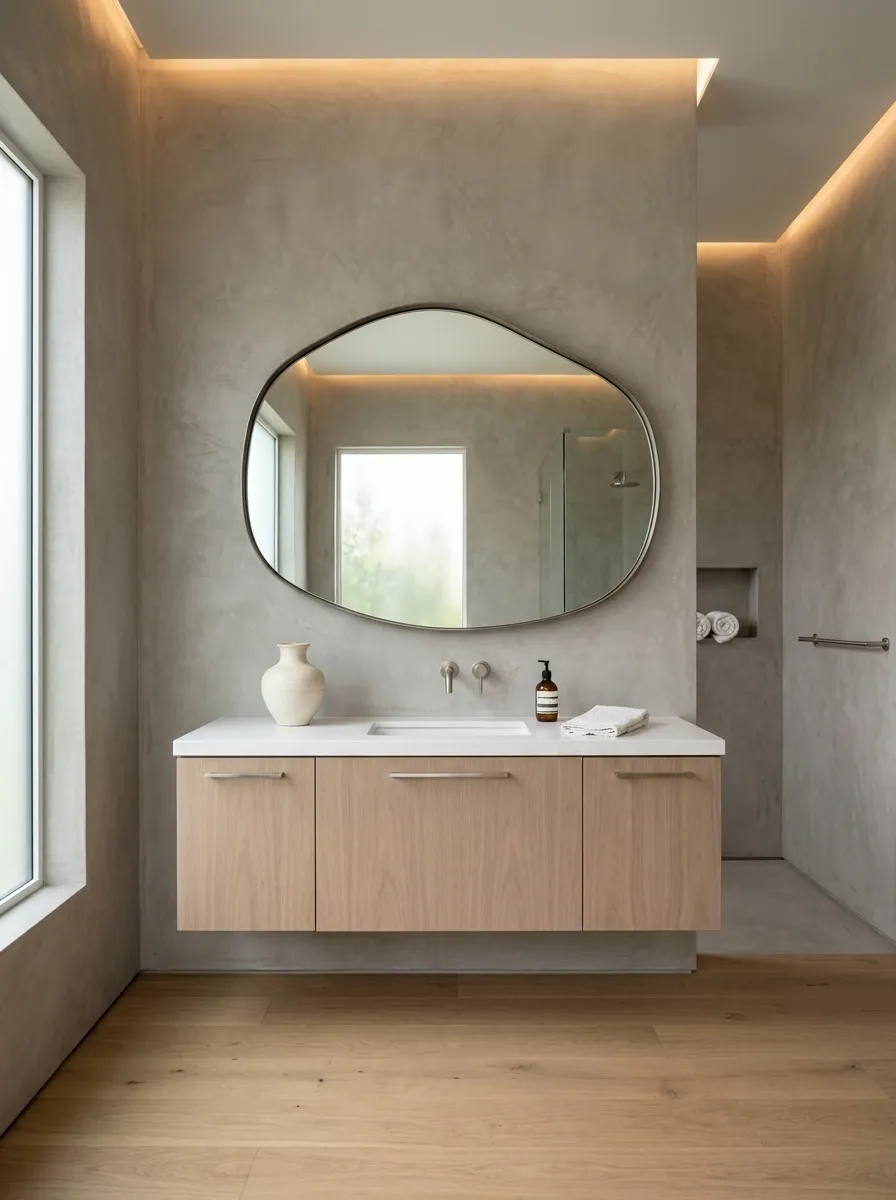
Nothing here is trying too hard.
Warm gray microcement runs from floor to ceiling, creating a continuous background for a pale walnut vanity, brushed nickel fixtures, and an oversized organic mirror. Soft architectural lighting grazes the walls, exposing subtle surface variation rather than blasting the room with uniform brightness.
The effect comes from proportion and material quality, not decoration. A single sculptural vessel on the vanity is enough.
This works especially well when the bathroom has strong natural light or interesting architectural lines. The continuous wall finish keeps the room visually calm and lets the shape of the vanity and mirror become more important.
I’d resist adding a gallery wall here. It would interrupt the quietness that makes the composition work.
Narrow Bathroom With Vertical Tile and Tall Artwork
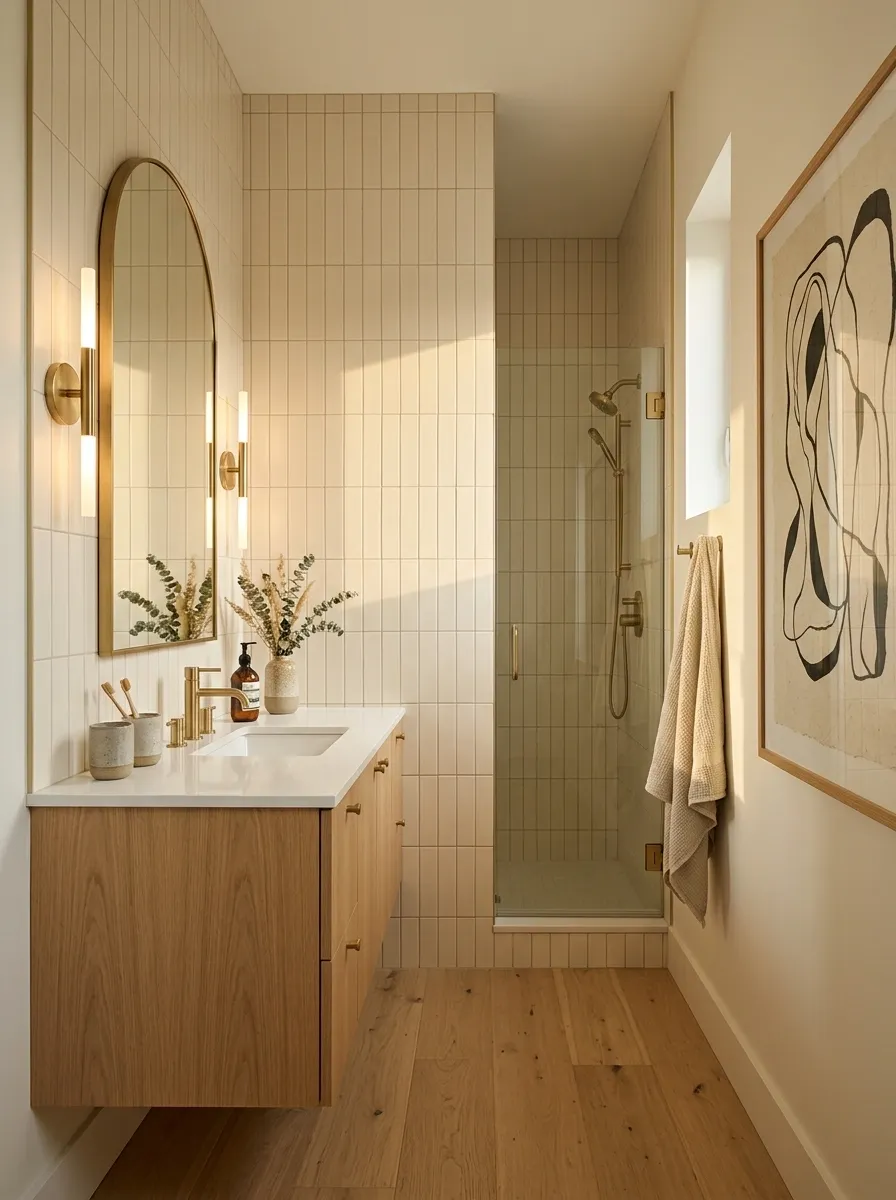
A narrow bathroom benefits from a wall strategy that pulls the eye upward.
Elongated vertical tiles create height along the main walls, while a tall framed artwork sits beside a narrow vanity and a pair of slim sconces. The mirror follows the same vertical logic, and the floating vanity keeps the floor visually open below.
The result feels taller and less cramped because the elements share one directional language. Nothing is fighting sideways for attention.
I’d avoid horizontal gallery arrangements in a room like this. They can make the walls feel wider than they are, which isn’t always the problem you need to solve.
Black Vanity Bathroom With Warm Gallery Wall
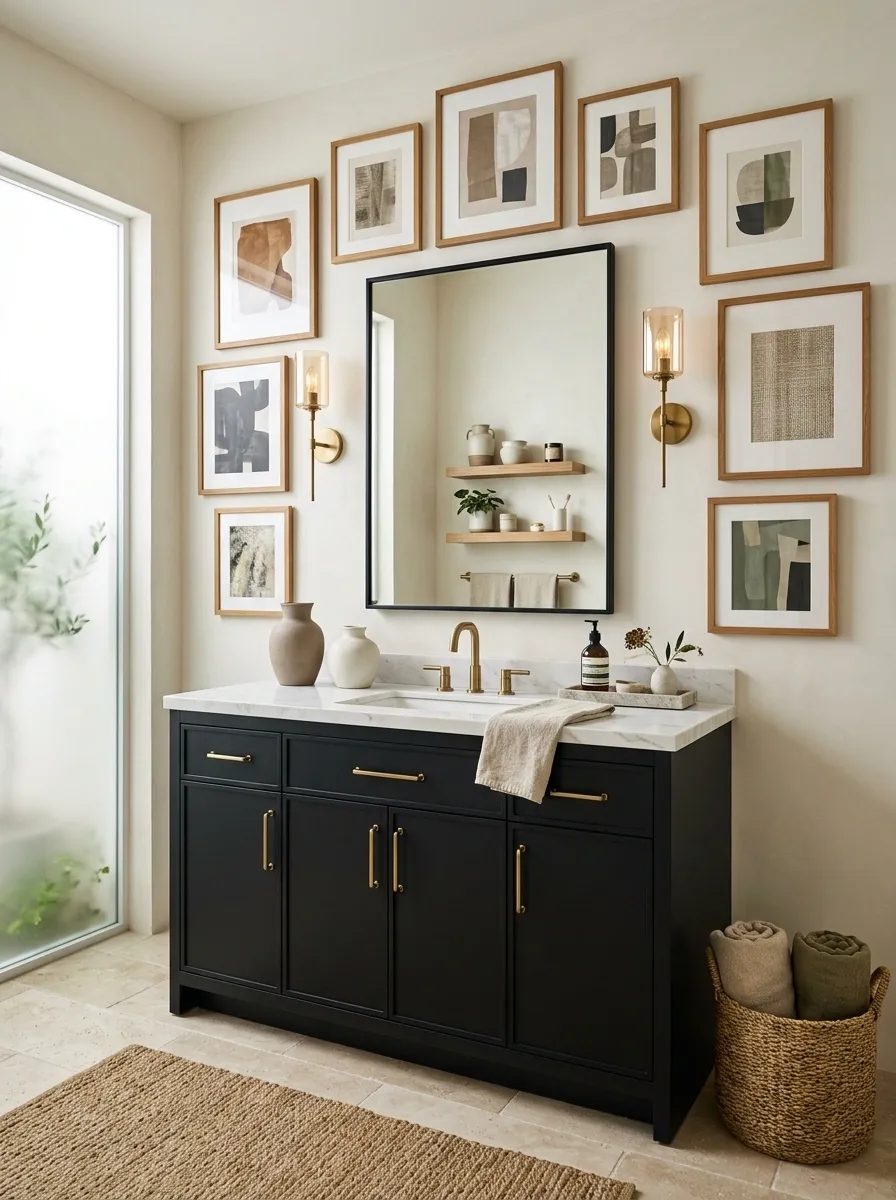
This one takes the opposite approach from the minimalist bathrooms. The wall gets layered, but the composition is still controlled.
A matte black furniture-style vanity anchors an ivory wall, with a wide mirror centered above it and a collection of warm oak-framed artwork arranged around the larger central element. Aged brass sconces add warmth between the frames, while small shelves and ceramics bring just enough depth to the vanity area.
The important move is treating the artwork as part of the vanity composition. It isn’t a random gallery wall placed somewhere nearby. The whole arrangement reads as one vertical zone.
Keep the artwork within a narrow range of warm neutrals, charcoal, muted greens, and earth tones. That gives the collection variety without making the bathroom visually chaotic.
Conclusion
Before buying anything, step back and decide what you want the wall to do. Create contrast, add texture, introduce personality, strengthen the architecture, or simply make the vanity area feel finished. Once that job is clear, the smaller choices become much easier.
Save the bathroom designs that genuinely fit your taste before you start shopping. It’s much easier to edit a saved inspiration board than rethink a wall you’ve already filled.