
Nobody talks about the bedroom entry. Everyone obsesses over the bed, the lighting, the curtains, the rug — and then the moment of transition between the rest of the home and the bedroom itself gets a coat of paint and a hollow-core door and is never thought about again. But the bedroom entry is the first thing you see when you walk in, the last thing you see when you leave, and the zone that determines whether your bedroom feels like a considered interior or a room you happen to sleep in. These ideas will change how you think about that transition permanently.
The Entry Sequence
Design the psychological transition from public to private space.
Why the Bedroom Entry Is the Room’s Most Neglected Design Opportunity
The entry to a bedroom is doing several things simultaneously that most people never consciously design for. It’s managing the psychological transition from shared or public space to private space. It’s setting the visual register for the entire bedroom before anything else is seen. It’s handling practical functions — storage, a place to pause, somewhere to leave things — that end up happening informally on surfaces that were never designed for them. When the entry is considered as part of the bedroom’s design rather than as a corridor that happens to lead to it, the entire bedroom benefits from a coherence it couldn’t achieve without it.
The door is the entry’s most visible design element and most commonly defaulted
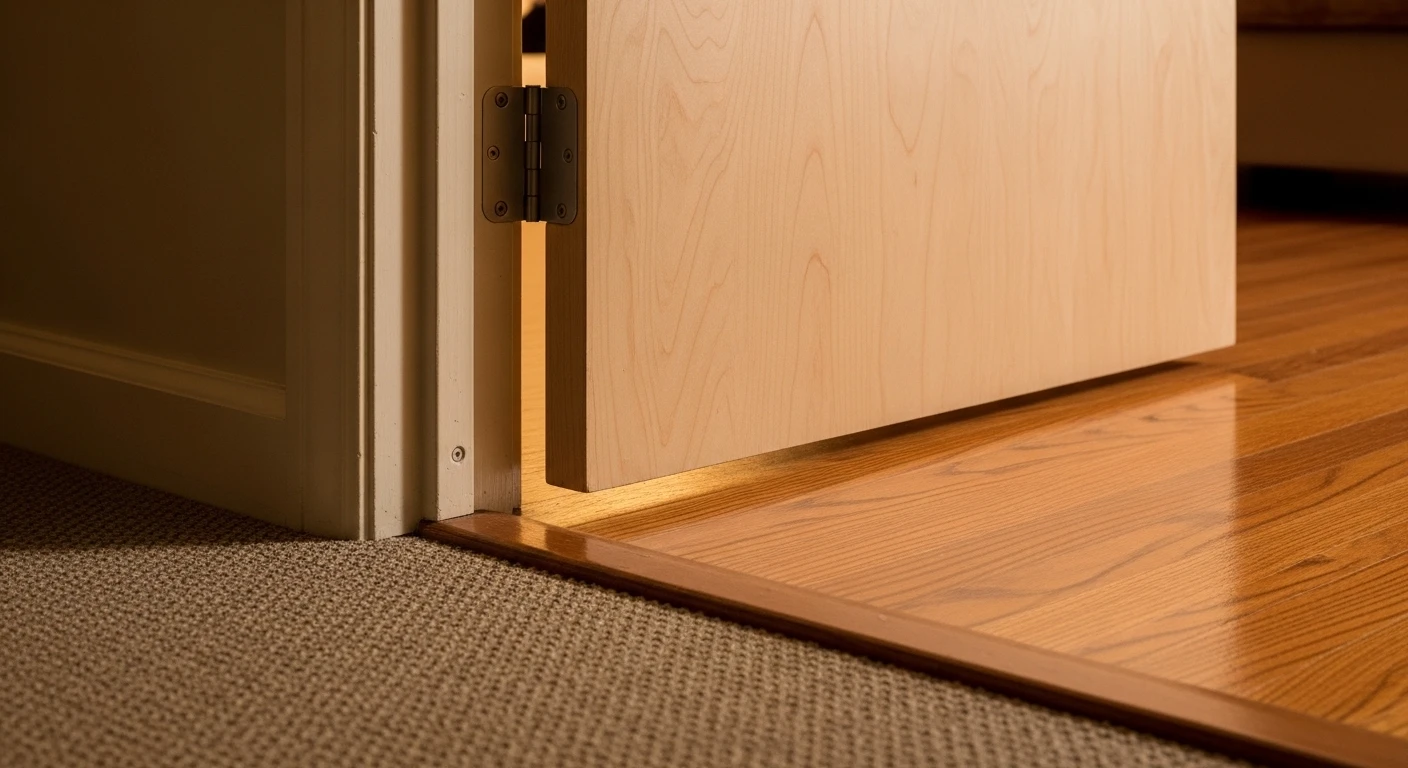
The bedroom door is almost universally a decision made by a builder or a previous owner rather than the person currently living with it. Standard hollow-core doors in standard trim configurations at standard heights make the bedroom entry feel like every other interior door in the house, which means the bedroom gets no design distinction from the moment of crossing its threshold. Upgrading the door — in material, in height, in hardware, in the way it operates — is the single highest-impact change available to a bedroom entry and the one most commonly overlooked.
The transition between corridor and bedroom deserves its own material or colour moment
The point where the hallway or landing ends and the bedroom begins is a design opportunity that’s almost always handled identically — the same flooring continues, the same wall colour continues, and the threshold is marked only by the door frame. A change in flooring material at the threshold, a wall treatment that begins at the bedroom side of the door, a different ceiling treatment or lighting scenario that signals arrival into a different zone — these distinctions don’t need to be dramatic to be effective. They just need to be deliberate.
Storage at the bedroom entry solves practical problems that otherwise get solved badly
The bedroom entry is where things happen in the morning and in the evening that require specific objects — a place to sit while putting on shoes, somewhere to hang tomorrow’s outfit, storage for the day’s accessories before they end up on the nightstand or the floor. When the entry has designed storage that addresses these moments — a bench, hooks, built-in wardrobes with considered organisation — those practical functions get resolved at the entry rather than bleeding into the sleeping zone and cluttering the bedroom. Designing the entry’s storage is designing the bedroom’s cleanliness.
Lighting in the entry zone sets expectations for the room’s atmosphere
The first light source encountered when entering a bedroom shapes the expectation for the room’s entire atmosphere. A bright overhead fixture at the entry produces an expectation of a lit, active room. Warm, low, indirect lighting at the entry produces an expectation of a calm, intimate room. The entry lighting doesn’t need to match the bedroom’s ambient lighting exactly, but it needs to belong to the same atmospheric register — shifting dramatically between entry and bedroom lighting tells the brain it’s in two different environments rather than one composed space.
The Considered Sequence
Why your bedroom doesn’t start at the bed, it starts at the door.
The door is the first decision
Standard hollow-core doors make the bedroom feel like a utility closet. Upgrading the door—in height, material, and hardware—is the highest-impact change available to the entry sequence.
Design the material threshold
Don’t let the hallway bleed aimlessly into the bedroom. A change in flooring material or wall treatment signals arrival into a distinct, private zone without needing to be dramatically loud.
Solve problems before the bed
The entry handles practical functions—taking off shoes, dropping accessories. Designed storage at the entry prevents these daily habits from cluttering the actual sleeping zone.
Set the atmospheric expectation
A bright overhead fixture at the door ruins the transition to rest. Warm, low, indirect lighting at the entry produces an immediate psychological expectation of an intimate, calm room.