
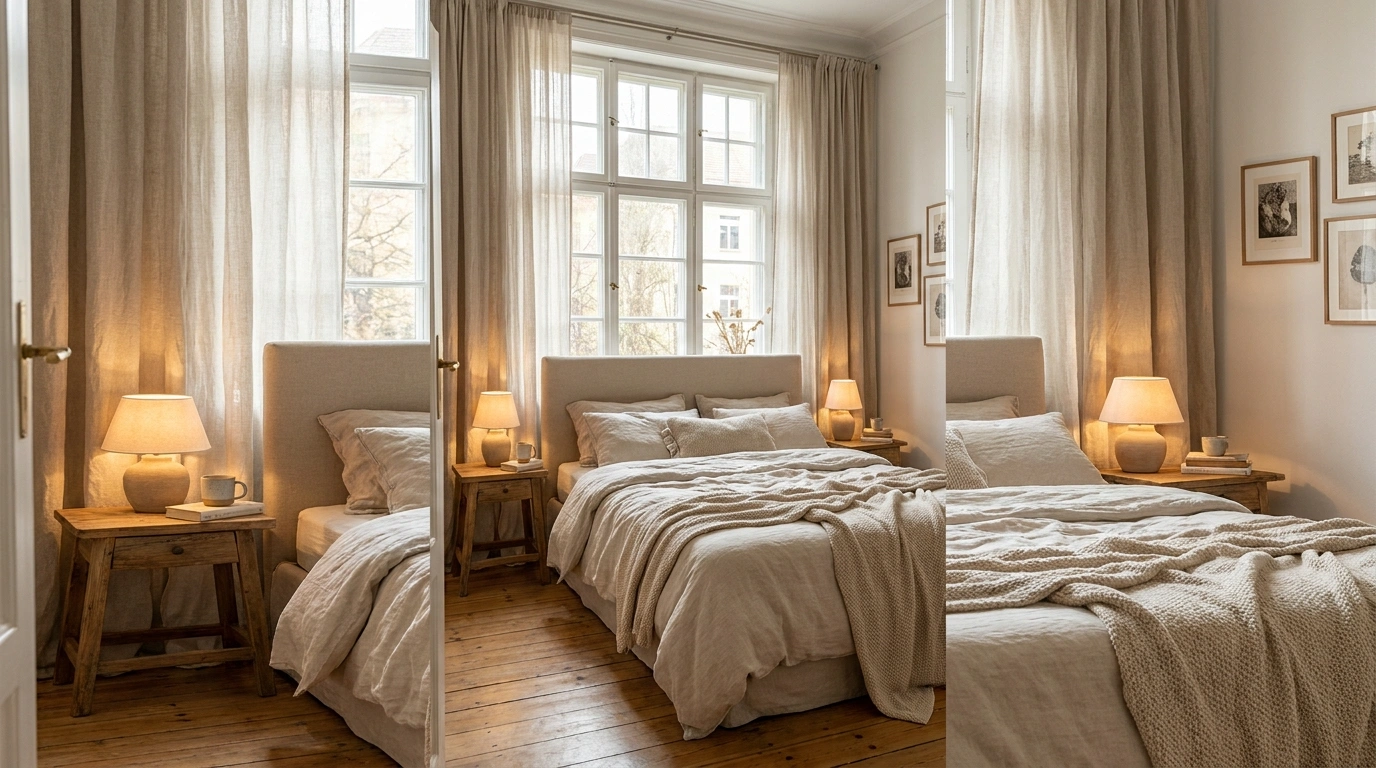
A window is usually one of the best features in a bedroom, yet it can become surprisingly difficult to work around when the only sensible place for the bed is directly in front of it.
A tall headboard can block too much of the glass, bedside tables may crowd the wall, and curtains can make an already awkward arrangement feel heavier.
But a bed under a window isn’t automatically a design problem.
The most successful rooms treat the window and bed as parts of the same composition. A low upholstered frame can leave the glass visually open.
Full-height curtains can make the entire wall feel deliberate. A recessed window can become a natural backdrop. Even a difficult attic corner can work beautifully when the furniture is chosen around the architecture instead of fighting it.
Bedroom Ideas for a Bed Under a Window
Light-Filled Bedroom With Dark Headboard Under a Wide Window
A wide window centers this bright bedroom, with a contrasting dark upholstered bed positioned directly beneath it. Crisp white bedding, soft gray textured quilts, and light grey walls keep the overall color story calm while allowing the dark headboard to anchor the space.
The low height of the headboard ensures it stays safely beneath the window frame, leaving the view and natural daylight unobstructed. Matching grey nightstands and minimal decor maintain the clean, uncluttered sightlines needed for this furniture placement.
This layout is ideal for rooms with abundant natural light where you want to make the most of an exterior view without sacrificing a strong focal point.
Soft Linen Bedroom With a Low Upholstered Bed Beneath a Wide Window
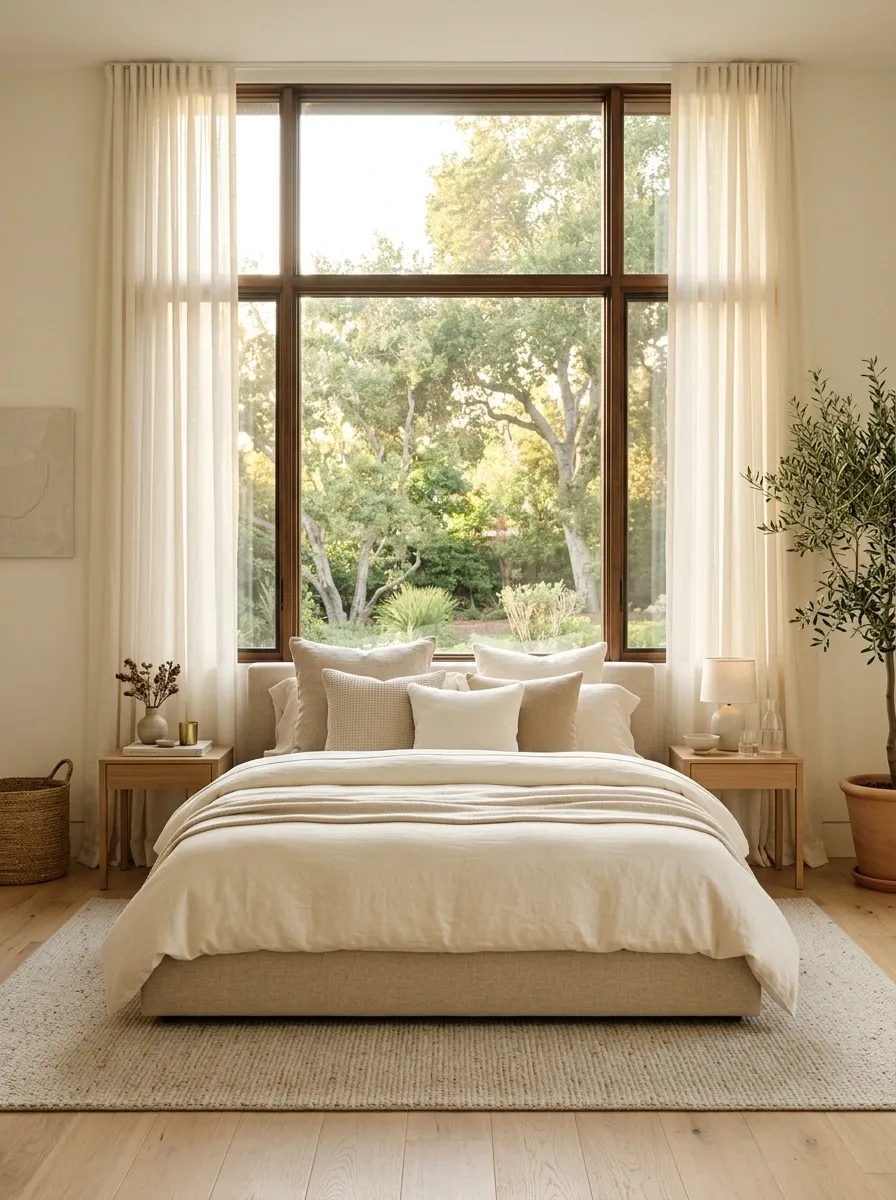
A wide window becomes the natural focal point in this light-filled bedroom, with a low oatmeal upholstered bed positioned directly beneath it. Pale oak flooring, slim oak nightstands, creamy linen bedding, and floor-length curtains keep the palette warm without making the window feel crowded.
The low profile is the key decision. Instead of competing with the glass, the bed sits quietly below it, allowing daylight and the view to remain part of the room. Keep bedside furniture narrow and visually light so the arrangement doesn’t become too heavy at the edges.
This direction works especially well in bedrooms with generous natural light and a broad, centered window.
Charming Nook Bedroom With Blue Wallpaper and Built-In Bookshelves
A cozy bedroom alcove transforms a challenging window placement into a feature by wrapping the entire sleeping zone in patterned blue wallpaper. The bed tucks snugly beneath a compact window dressed in a matching roman blind, while custom built-in bookshelves frame the head of the bed.
The tailored built-ins maximize every inch of the small footprint, offering clever storage without encroaching on the sleeping space. A classic blue table lamp and layered blue-and-white textiles reinforce the cohesive, enveloping color palette.
This arrangement works wonderfully in small guest rooms or attic spaces where embracing the compact proportions creates an intimate, cocoon-like atmosphere.
Traditional Bedroom With a Layered Curtain Wall Behind the Bed
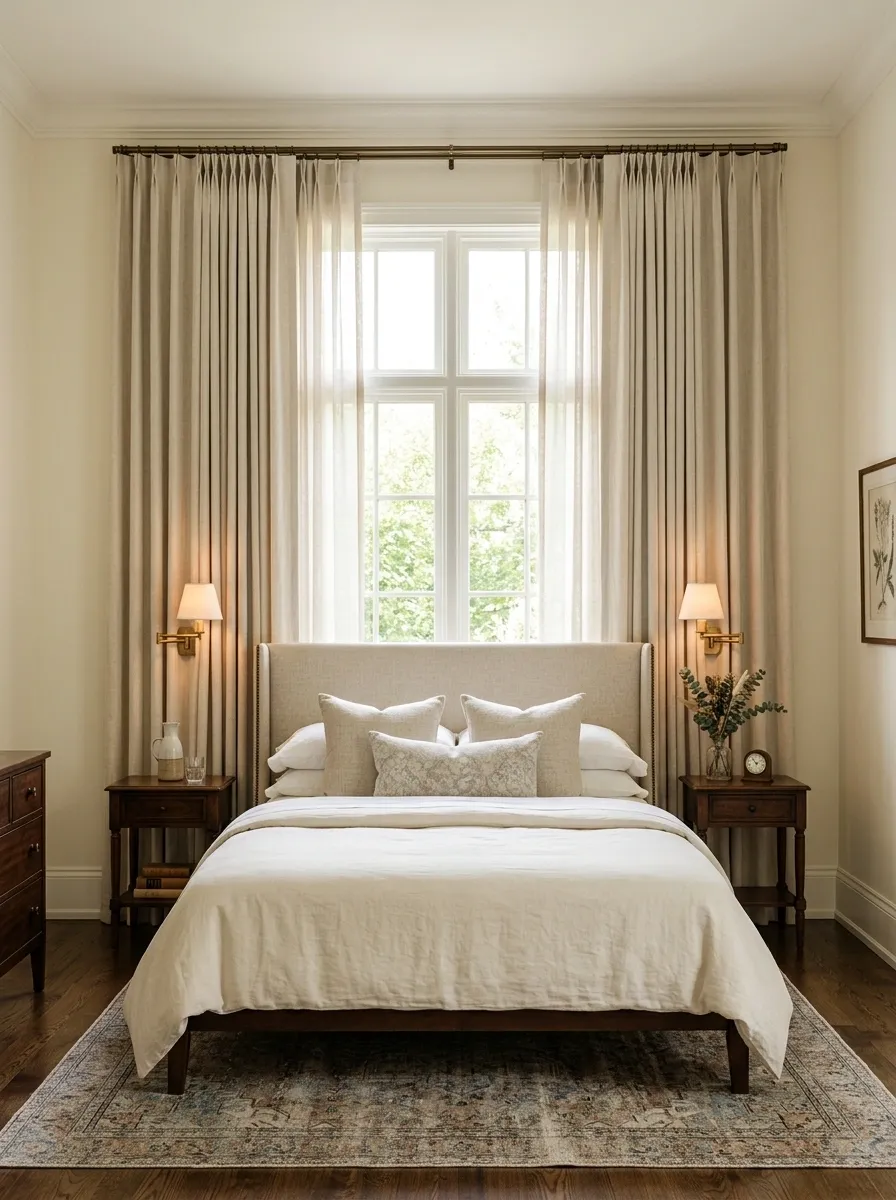
A traditional bedroom can make the window feel grand rather than inconvenient by turning the entire wall into a framed backdrop. A tailored upholstered headboard sits below a tall central window, while full-width curtains extend beyond the opening and fall to the floor.
Warm ivory walls, antique wood nightstands, a faded rug, and restrained brass lighting keep the room classic without making it feel formal. The curtains are doing more than covering the glass. They visually widen the bed and connect the window to the rest of the wall.
The strongest version keeps the bedding relatively quiet so the architectural framing remains the main feature.
Warm Wooden Bedroom With Slatted Wall and Upholstered Bed
A warm wooden paneling wall frames this serene bedroom, with an upholstered bed positioned beneath a sleek horizontal window. Vertical slat details, a built-in wooden headboard ledge, and recessed ceiling lighting add architectural depth and subtle modern texture.
The horizontal lines of the window echo the clean geometry of the wooden headboard and base, keeping the composition harmonious. A minimalist bedside table and a soft neutral area rug complete the grounded, inviting aesthetic.
This setup shines in contemporary homes that lean into natural materials, warm woods, and streamlined architectural features.
Modern Bedroom With a Floating Platform Bed Under a Black-Framed Window
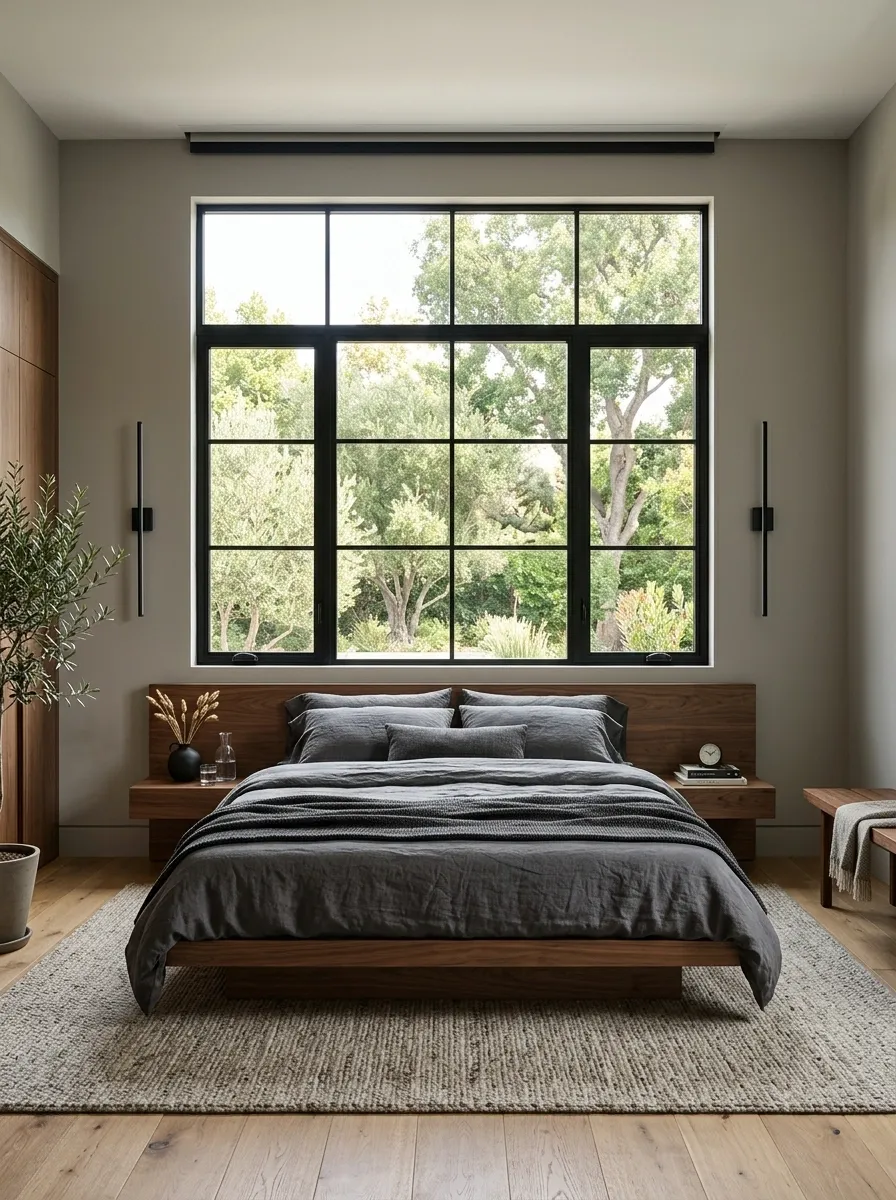
A large black-framed window gives this bedroom its architectural character, while a low walnut platform bed keeps the furniture visually grounded. Warm gray walls, charcoal linen, slim matte-black lighting, and a textured neutral rug create a controlled contemporary palette.
The contrast between walnut and black steel makes the room feel architectural without becoming cold. The window frame provides strong linear detail, so the furniture stays simple and low.
This arrangement works best when the surrounding walls remain relatively quiet. Too many competing patterns would weaken the clean relationship between the dark frame, warm wood, and soft textiles.
Symmetrical Bedroom With Twin Windows and Matching Nightstands
Twin windows frame a wooden platform bed in this balanced bedroom, flanked by matching wooden nightstands and vintage table lamps. Soft green sheer curtains filter the daylight, while framed artwork and a patterned vintage rug add classic character to the green-toned walls.
The centered arrangement turns the double window into a natural architectural frame for the sleeping area. Keeping the nightstands low and visually light prevents the bedside vignettes from overwhelming the windows.
This layout works best in rooms with balanced wall space where symmetry and traditional charm take center stage.
Cozy Cottage Bedroom With a Painted Window Wall and Iron Bed
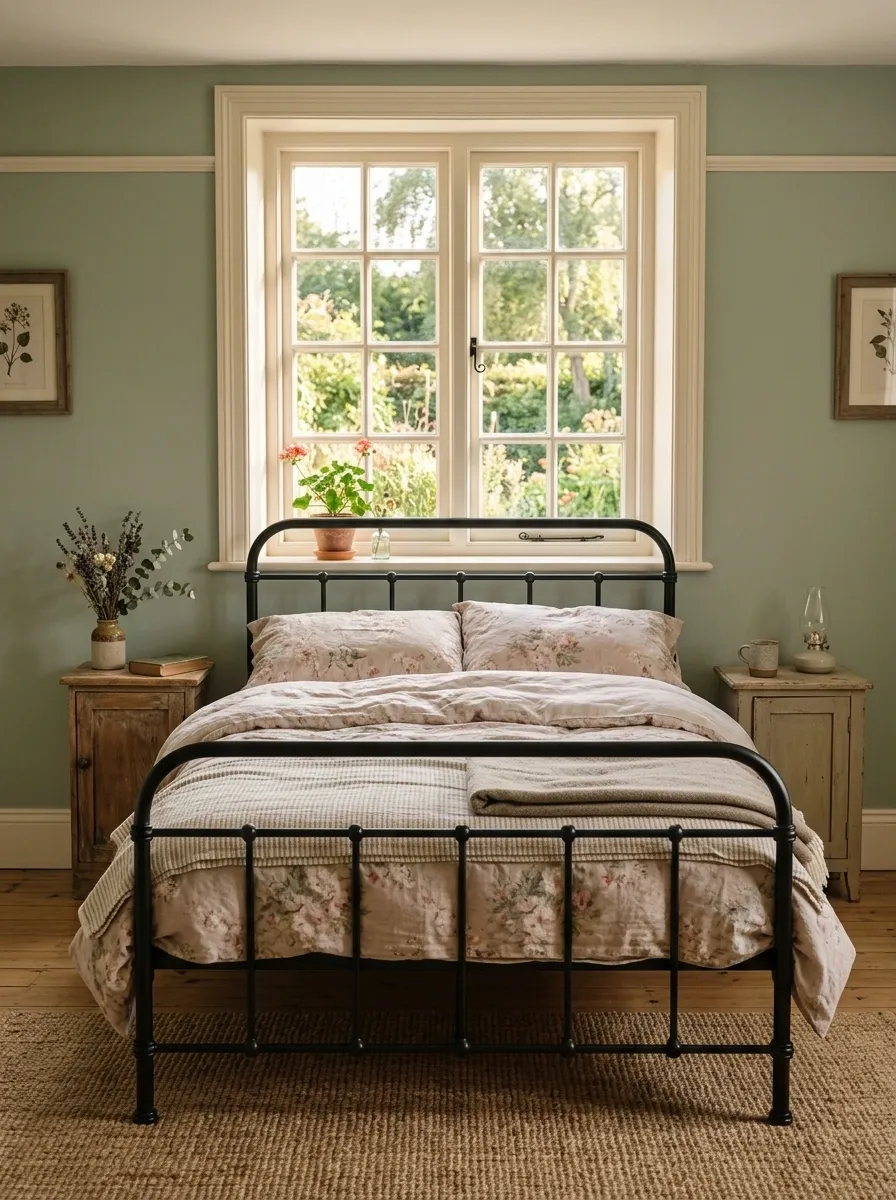
A simple iron bed works beautifully beneath a traditional window when the room has enough character around it. Here, dusty sage walls, warm white trim, faded floral bedding, a woven rug, and small vintage bedside tables create a collected cottage bedroom.
The muted wall color gives the window a defined frame, while the iron bed keeps the composition visually open. Nothing feels oversized, which is important in a smaller bedroom where a heavy headboard could easily crowd the opening.
Keep the patterns slightly imperfect and the furniture varied rather than matching every piece. That mix is what gives the room its lived-in character.
Sun-Drenched Plant Lover Bedroom With Neutral Linen Bedding
A sunlit window bathes this bohemian bedroom in golden light, with a simple wooden bed dressed in relaxed linen duvets positioned right underneath. Lighter-than-air white curtains and an abundance of trailing houseplants create a lush, organic sanctuary.
The collection of wall-mounted shelves and potted monsteras brings the outdoors in, using natural greenery to soften the edges of the window frame. Keeping the bedding in a neutral, rumpled beige tone maintains the effortless, lived-in feel.
This layout is perfect for plant enthusiasts and sun-worshippers who want their bedroom to feel like a warm, botanical retreat.
Scandinavian Bedroom With White Oak, Soft Gray, and a Deep Window Reveal
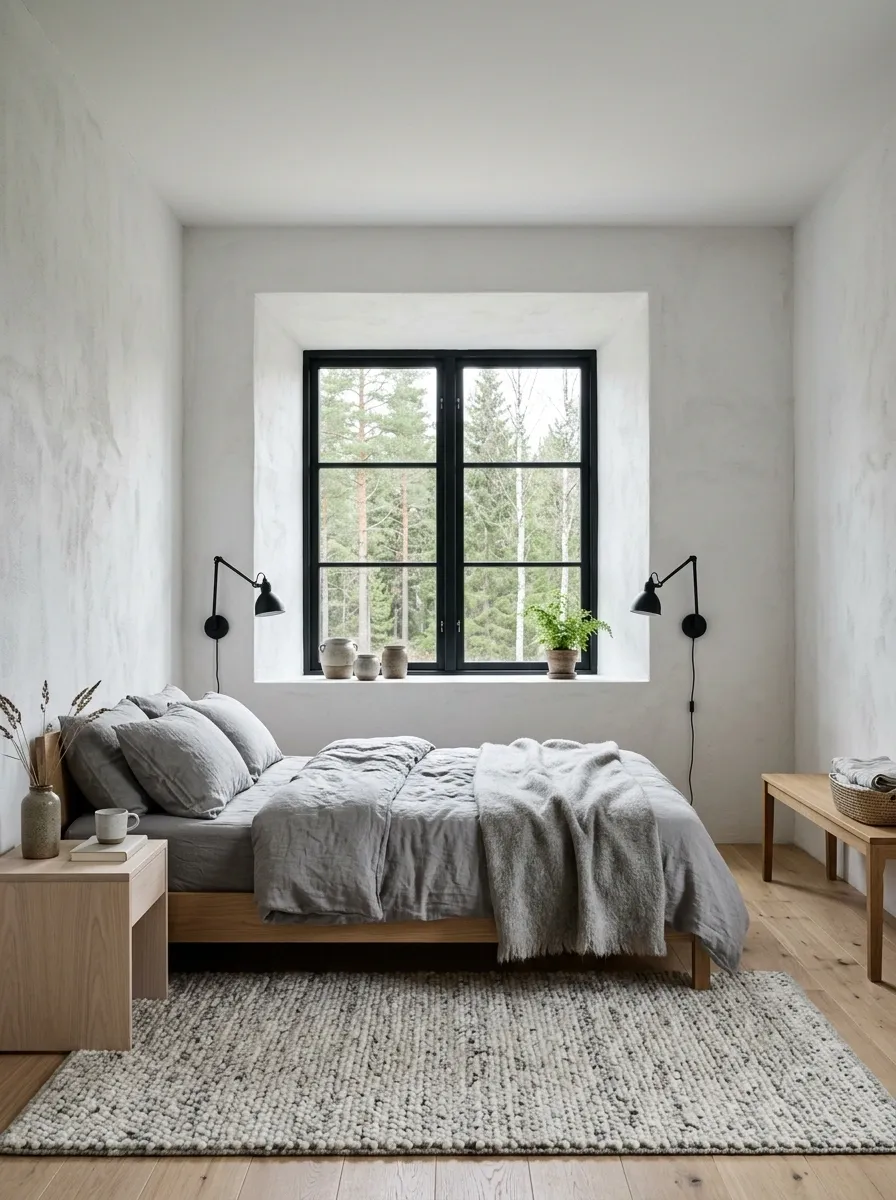
A recessed window creates an unusually strong backdrop for a Scandinavian bedroom. The bed sits beneath the opening with pale oak furniture, soft gray bedding, white plaster walls, a textured wool rug, and simple black reading lights.
The recessed architecture gives the window its own depth, so the rest of the room can stay restrained. The furniture is deliberately low and linear, keeping the sightline open and allowing the natural light to carry much of the visual interest.
The result feels calm because there are very few competing shapes. Texture does the work that decoration normally would, with wool, linen, oak, and plaster creating enough variation to keep the neutral palette from feeling flat.
Moody Bedroom With a Deep Green Wall Around the Window
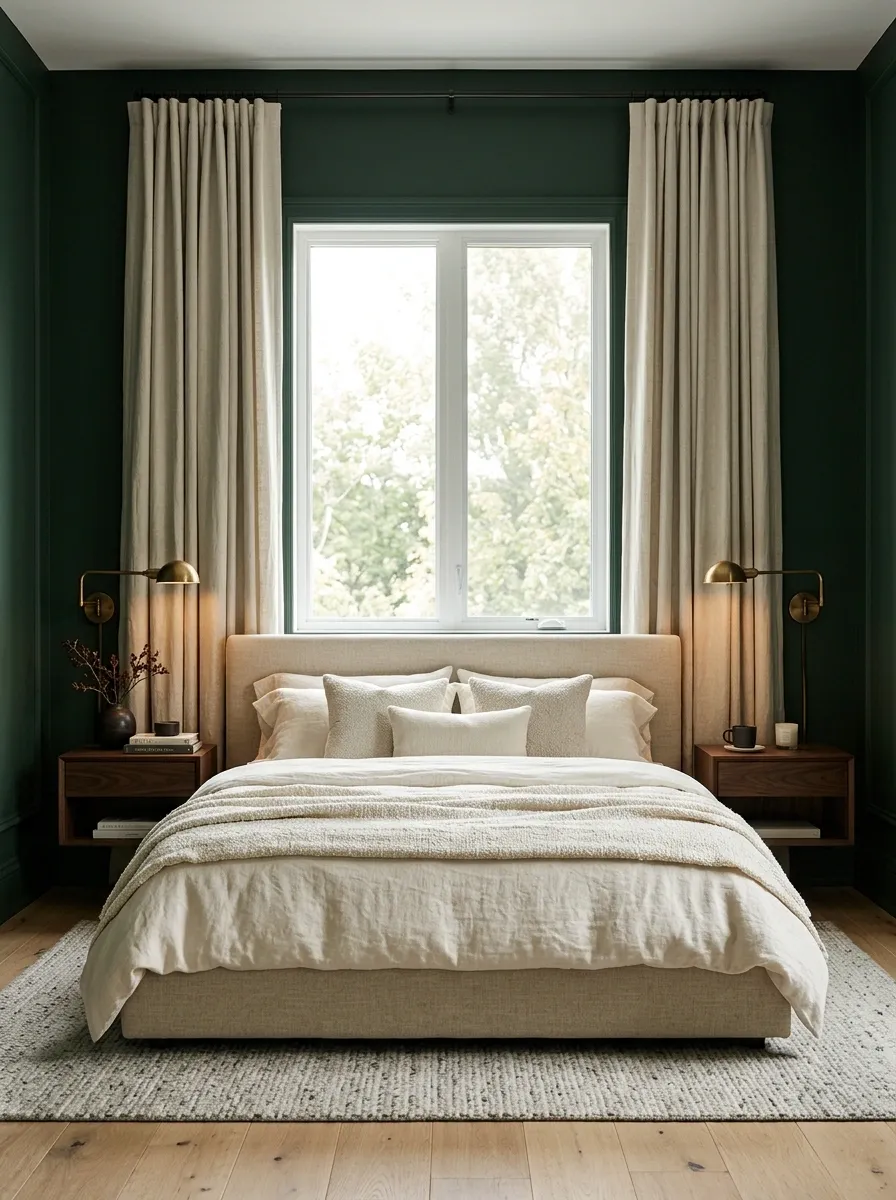
Deep forest green turns the window into the brightest point in this bedroom. A low upholstered bed sits beneath the opening, paired with dark wood nightstands, aged brass sconces, cream linen bedding, and heavy natural curtains.
The darker wall creates a strong frame around the daylight, while the lighter bedding keeps the bed from disappearing into the background. The contrast feels intentional because the palette stays limited to green, cream, wood, and aged metal.
Keep the furniture restrained here. The wall already provides enough visual weight.
Small Apartment Bedroom With a Narrow Bed Beneath a Centered Window
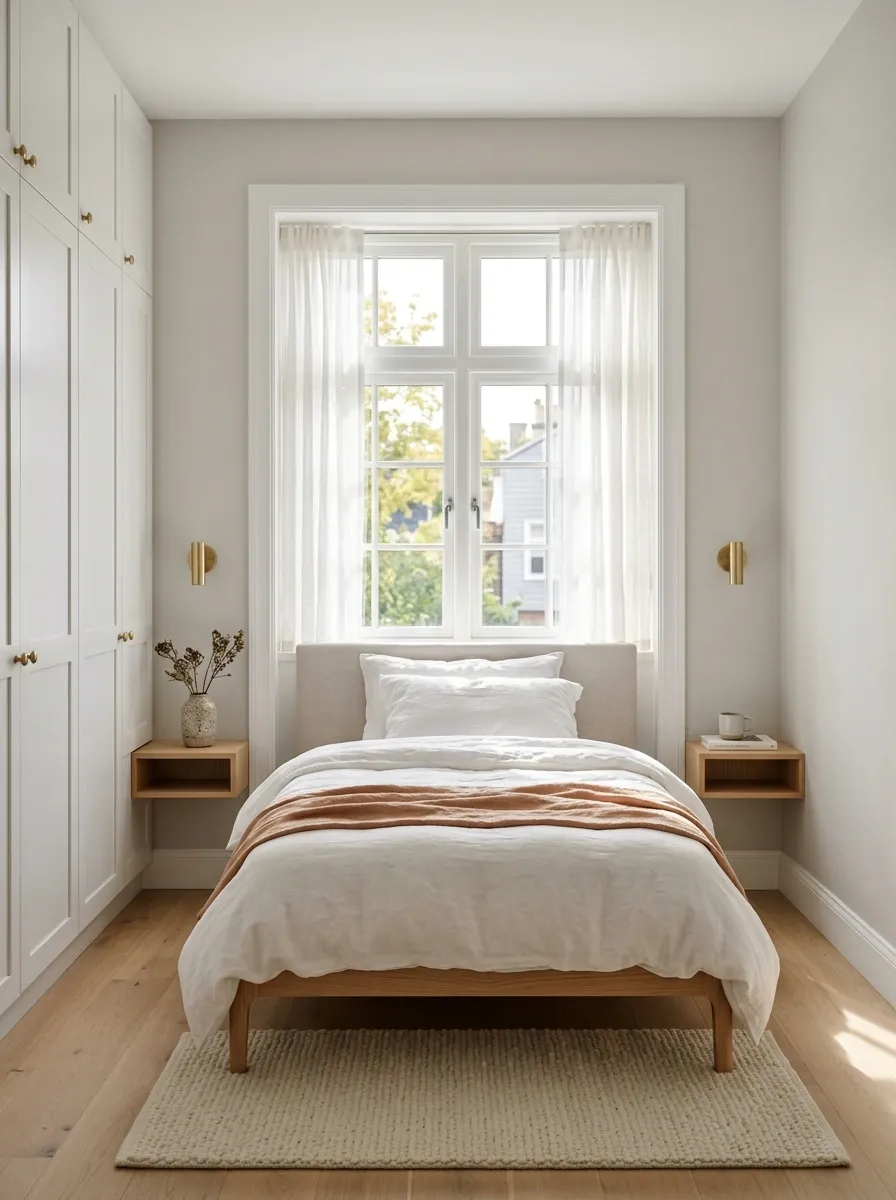
A modest bedroom can handle a bed beneath the window when every piece of furniture respects the limited floor area. This apartment-style composition uses a narrow upholstered bed, floating bedside shelves, wall-mounted reading lights, pale walls, and built-in storage.
The centered window gives the room a strong axis, while keeping the bedside pieces off the floor preserves as much walking space as possible. Soft bedding and a small textured rug add warmth without adding bulk.
The important decision is scale. Oversized nightstands or a deep headboard would quickly make the room feel crowded.
Warm Transitional Bedroom With a Window-Framed Upholstered Headboard
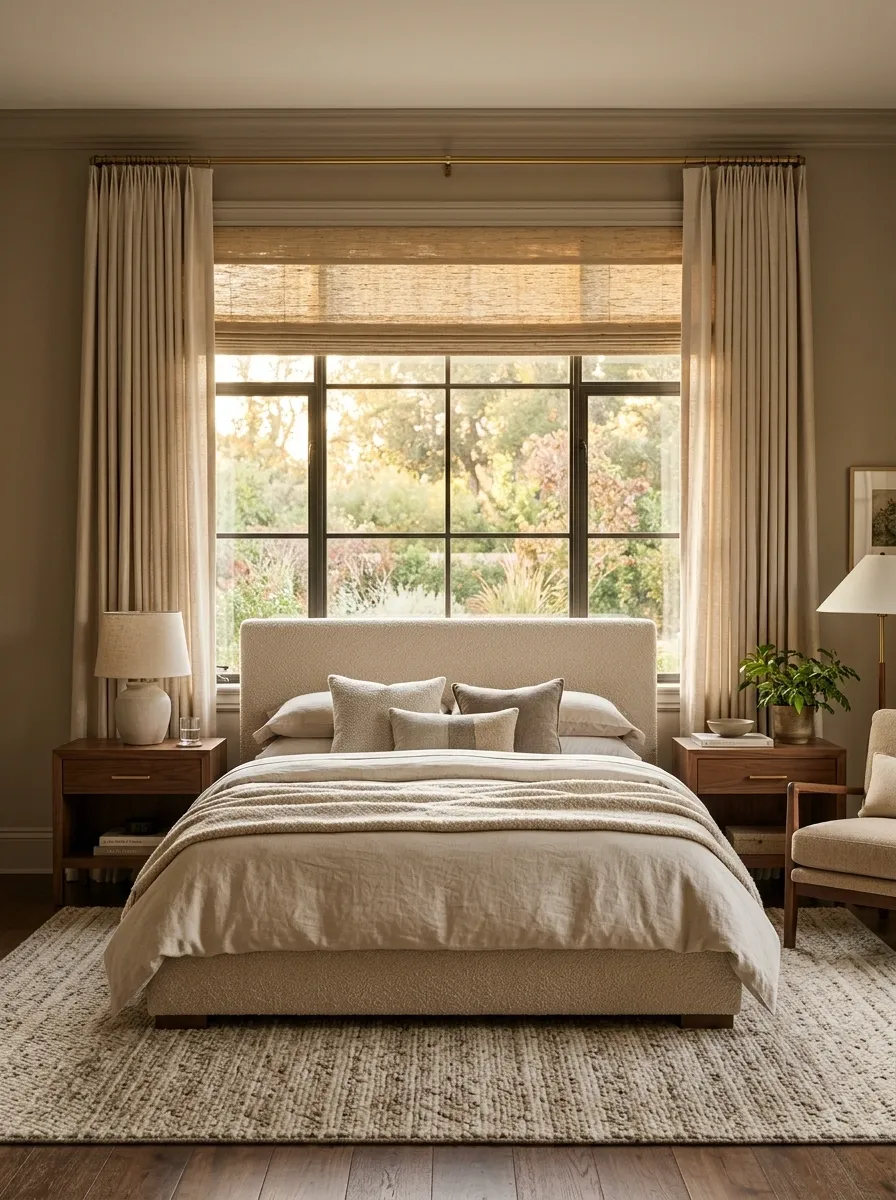
A warm transitional room can place a substantial upholstered bed beneath a window without making the window disappear. The headboard remains lower than the strongest part of the opening, while woven shades, full-length curtains, medium walnut furniture, and soft beige bedding create a layered composition.
The restrained palette gives the room a polished quality, but natural wood and woven materials stop it from feeling overly formal. The headboard acts as a bridge between the architecture above and the furniture below.
The result is especially strong when the window is centered on the wall and the bedside furniture matches the bed’s width and visual weight.
Vintage-Inspired Bedroom With Floral Curtains Framing the Bed
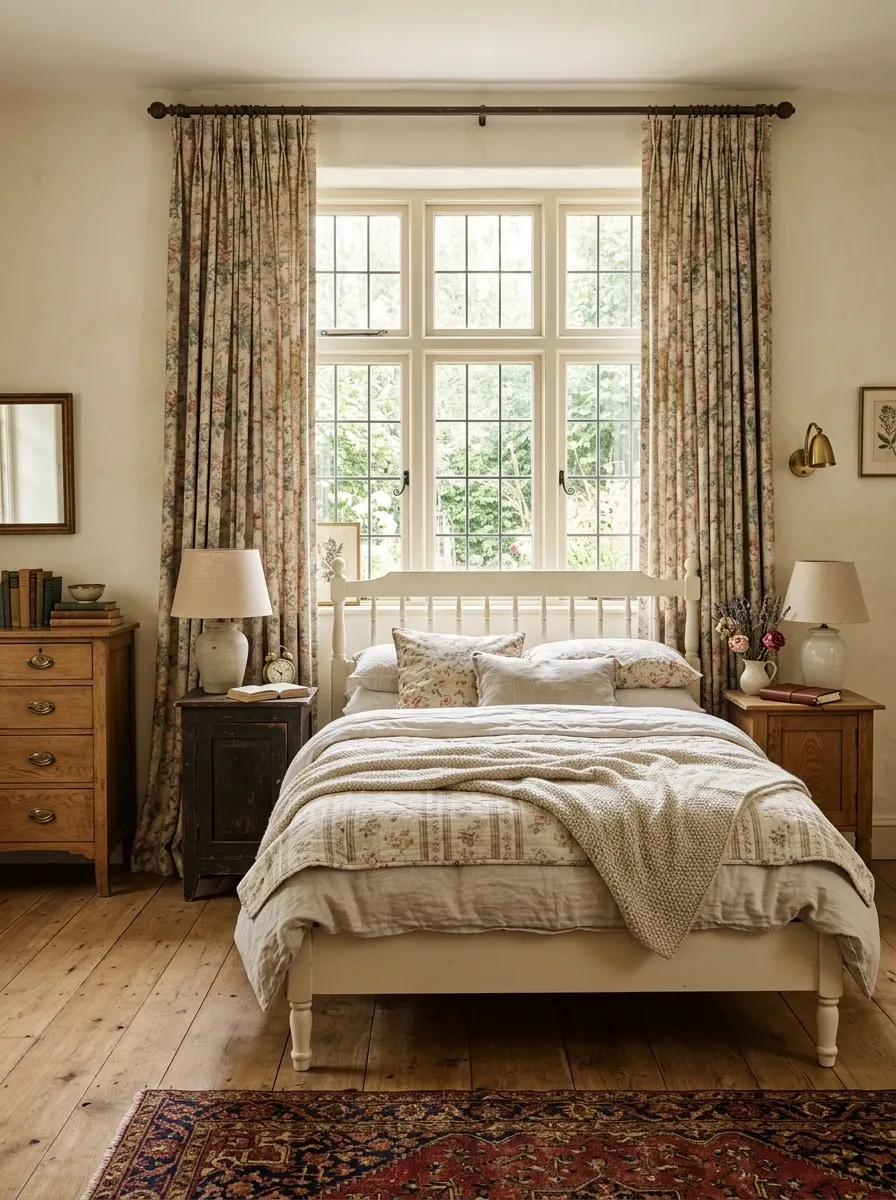
A traditional window becomes part of a collected bedroom when patterned curtains frame the bed instead of simply covering the glass. A painted wood bed, faded floral fabric, warm ivory walls, a worn Persian-style rug, and mismatched antique bedside tables create an intentionally layered room.
The patterns work because the larger surfaces remain quiet. The wall and bedding provide enough solid color for the floral curtains and vintage furniture to stand out without making the room feel crowded.
Use variation in the furniture here. Matching nightstands would make the composition feel more formal and less collected.
Minimal Bedroom With a Window Instead of a Traditional Headboard
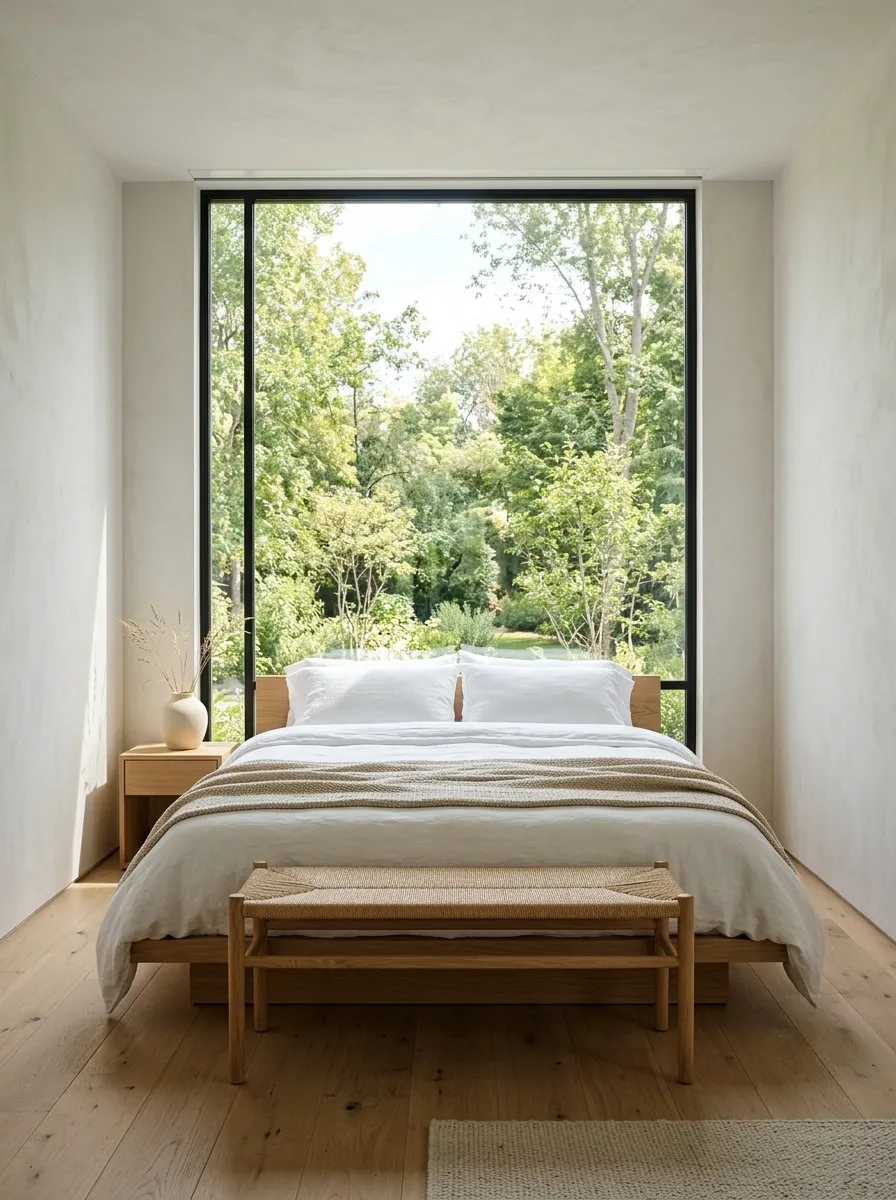
This pared-back bedroom treats the window itself as the headboard moment. A very low bed sits beneath a broad opening, with pale plaster walls, crisp white bedding, a simple wood bench, one understated bedside table, and almost no decorative clutter.
The strength comes from restraint. The outdoor view provides visual interest, while the low furniture keeps the wall open and prevents the window from feeling obstructed.
This composition works best when the view outside is pleasant and the window has enough architectural presence to carry the wall on its own.
Organic Modern Bedroom With Oak Slats and Soft Stone Tones
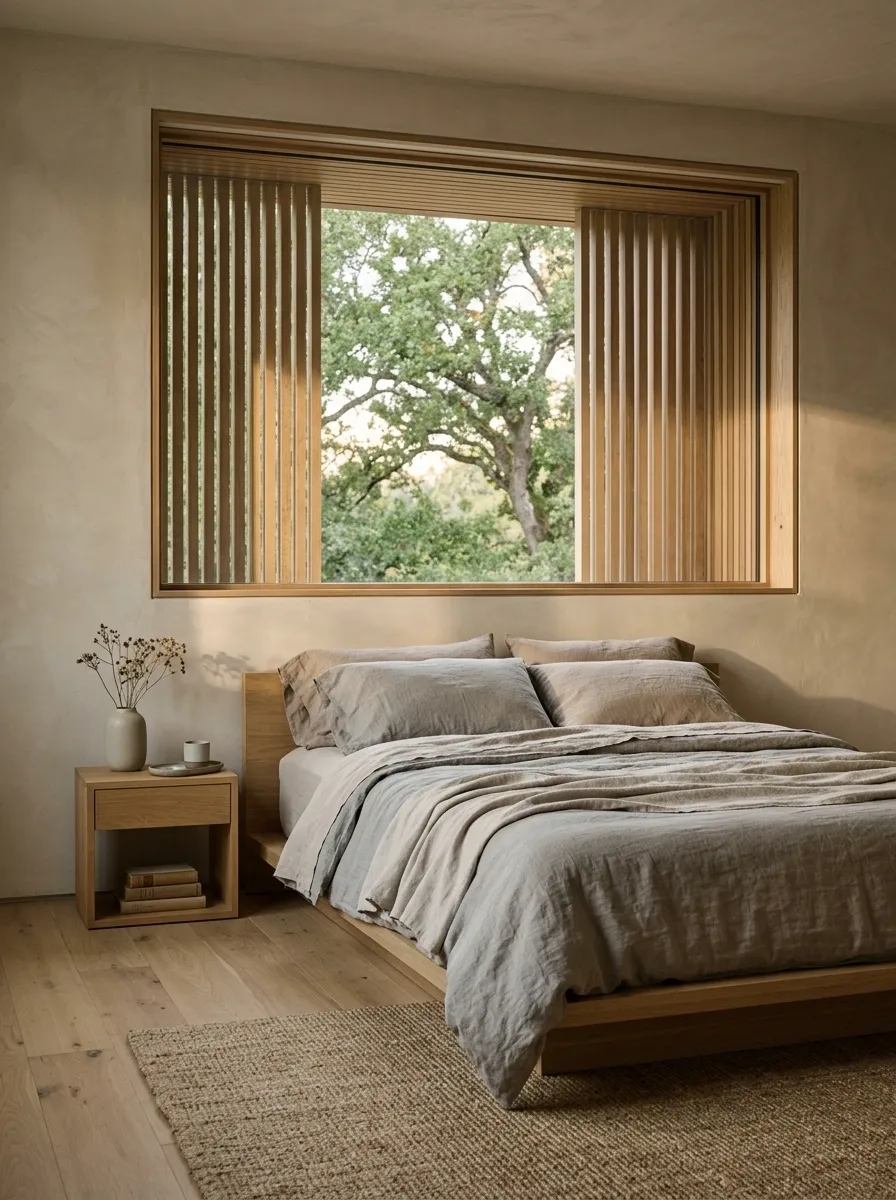
A wide window sits behind a low oak bed in this organic modern bedroom, with a partial wood-slat treatment extending around the opening. Textured plaster walls, stone-colored bedding, a woven rug, and simple sculptural furniture keep the room warm without making it rustic.
The slatted section gives the window architectural importance while the plaster walls provide enough visual quiet around it. Oak brings warmth, linen softens the harder lines, and the muted stone palette keeps everything connected.
Keep the wood treatment limited to the window zone. Extending it across the entire wall would change the composition from architectural detail to a much heavier feature wall.
Classic Blue and White Bedroom With a Centered Window Composition
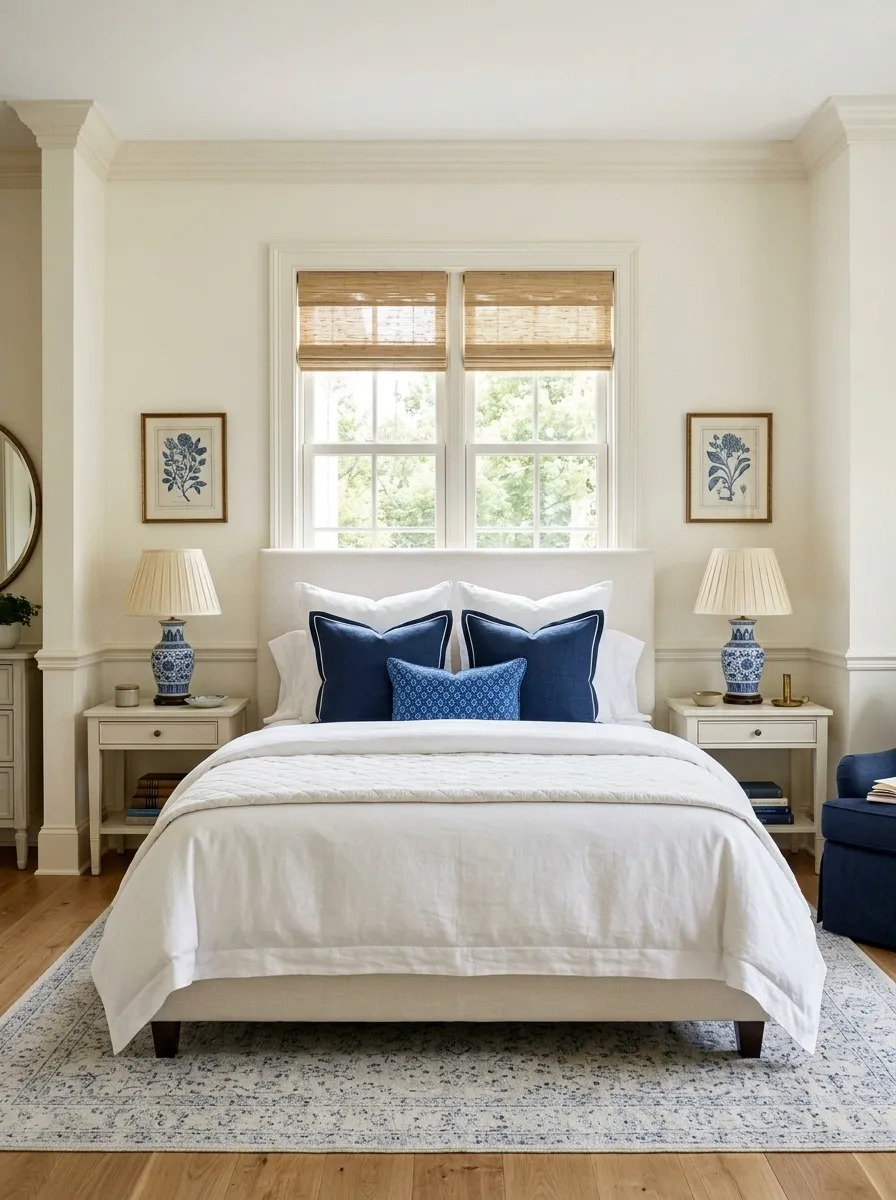
A divided-pane window provides the structure for this traditional blue-and-white bedroom. The bed sits directly below it, framed by painted bedside tables, tailored bedding, woven shades, and a classic rug with restrained pattern.
The centered window establishes a strong axis, so the rest of the room can follow that order. Matching bedside lighting reinforces the symmetry without requiring every accessory to match.
The palette stays crisp because the blue is concentrated in the textiles and smaller furnishings rather than covering every surface. Keep the walls and trim light so the window remains visually connected to the bed.
Attic Bedroom With the Bed Beneath a Low Dormer Window
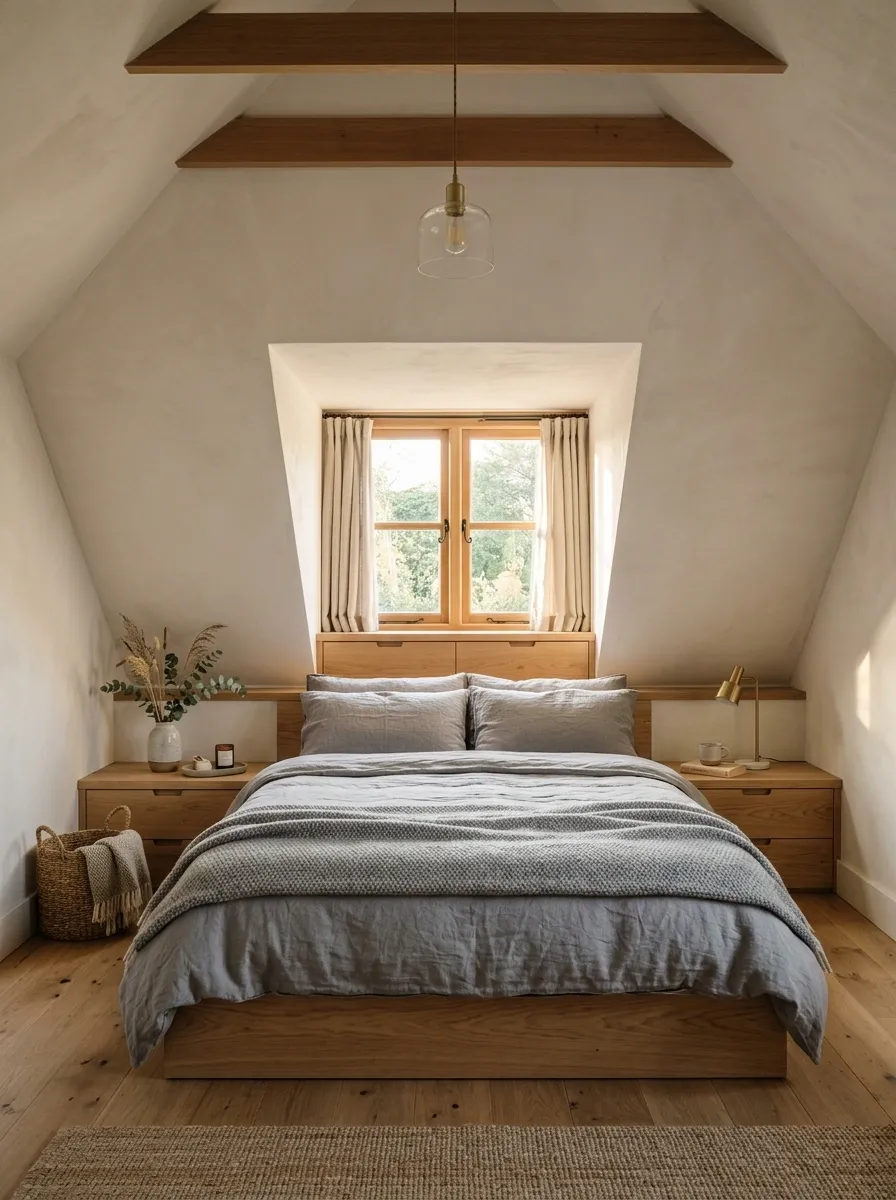
The sloped ceiling becomes useful rather than awkward in this compact attic bedroom. A low bed fits beneath a dormer window, with built-in drawers, warm white walls, natural oak, soft gray textiles, and a simple pendant providing everything needed without crowding the low side of the room.
The bed works in this location because the area doesn’t require standing-height furniture. Storage can occupy the lower portions of the sloping wall while the window brings daylight into the sleeping zone.
This approach turns a difficult architectural corner into the room’s most distinctive feature.
Romantic Bedroom With Sheer Curtains and a Soft Painted Palette
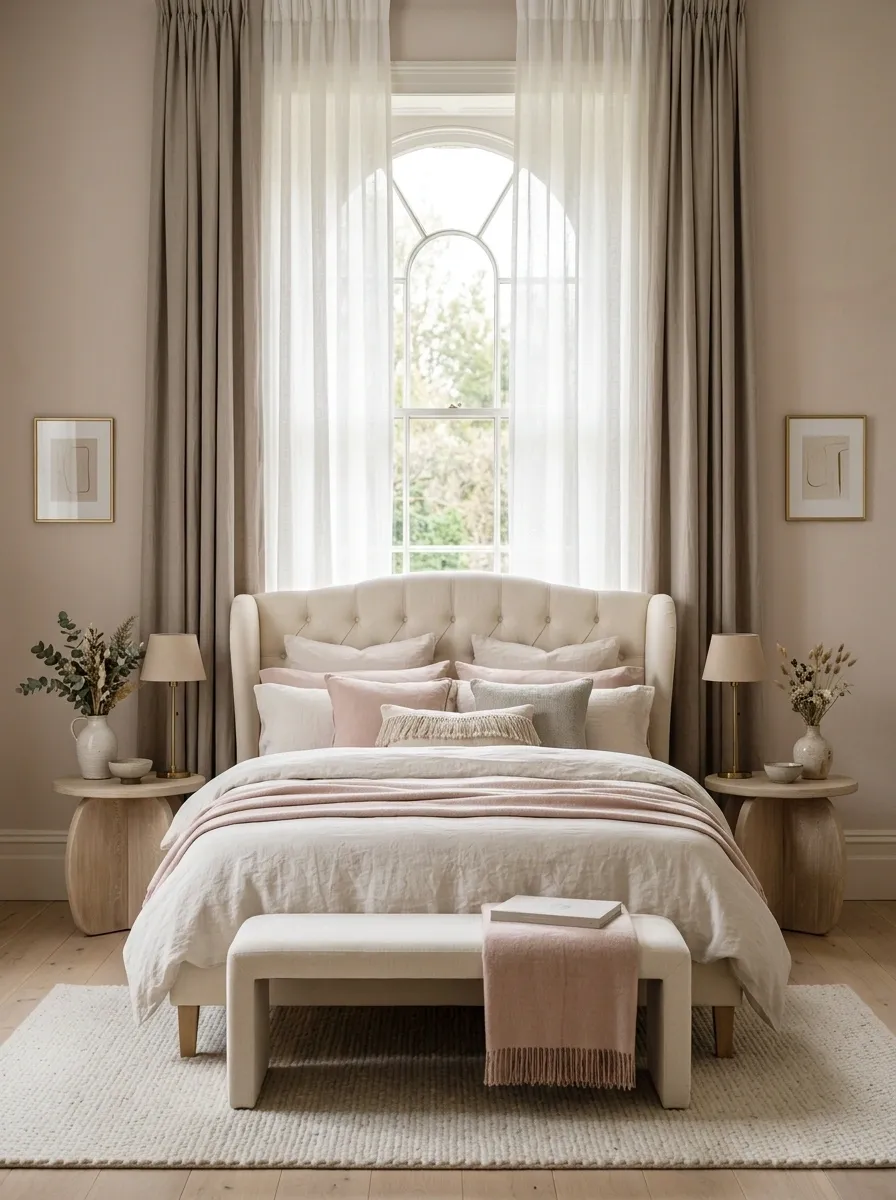
A tall window gives this romantic bedroom a naturally vertical backdrop for a cream upholstered bed. Sheer curtains soften the daylight while heavier side panels add definition, and blush-beige walls, pale wood, rounded bedside tables, and loosely layered linen keep the composition gentle.
The softness comes from the relationship between materials rather than decorative excess. Rounded furniture echoes the softness of the textiles, while the window remains clearly visible through the sheer layer.
Keep the wall color muted. A stronger pink or overly ornate furniture would push the room into a themed look rather than a refined one.
Dark Walnut Bedroom With a Large Landscape Window
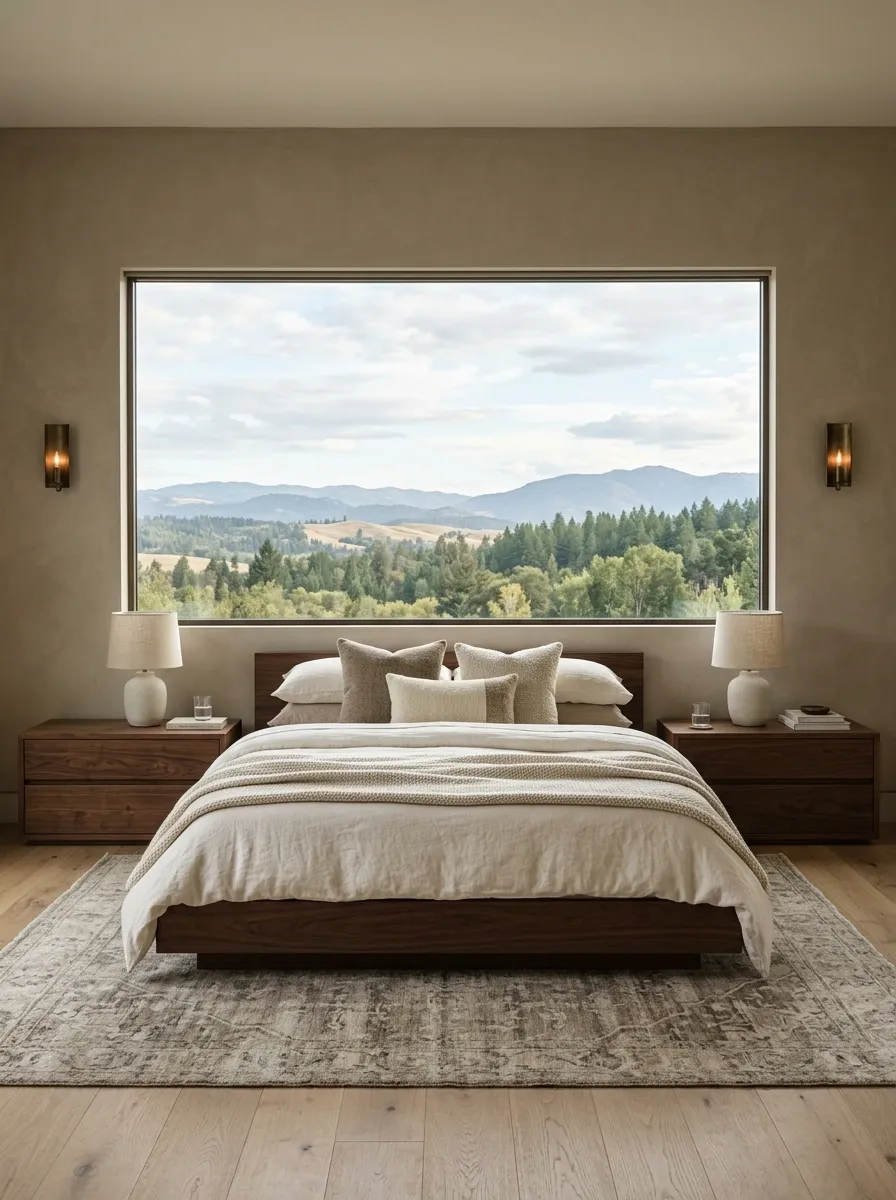
A broad landscape window becomes almost artwork in this sophisticated bedroom. The bed sits low against the opening, framed by dark walnut nightstands, warm taupe walls, creamy bedding, aged bronze lighting, and a restrained rug.
The composition is deliberately horizontal. The window establishes a wide line, the low bed reinforces it, and the long nightstands extend that visual rhythm. Dark furniture works because the bedding and daylight provide enough contrast.
Avoid filling the window wall with decorative objects. The landscape outside is part of the finished composition.
Warm Modern Farmhouse Bedroom With a Wood-Framed Window
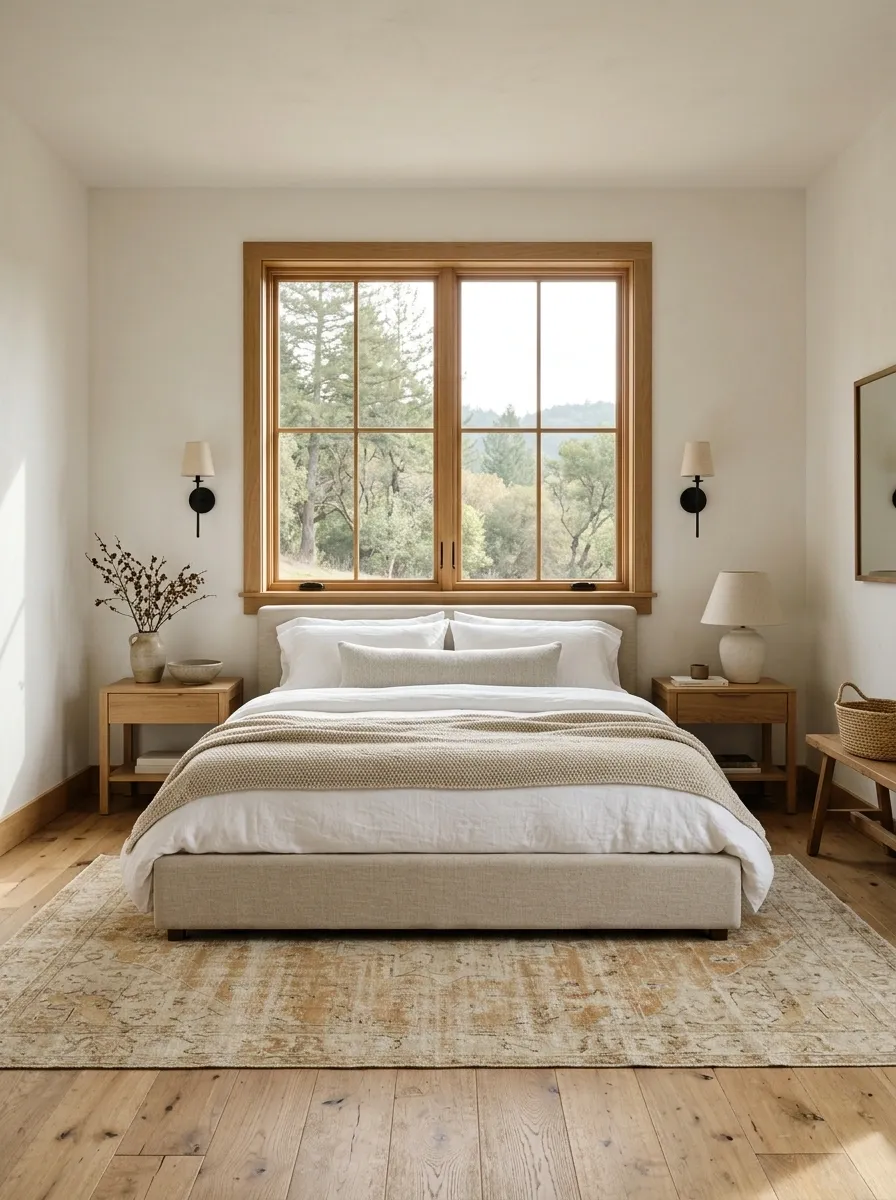
Warm white walls, a wood-trimmed window, a simple upholstered bed, and natural oak furniture give this farmhouse-inspired bedroom a relaxed but current feel. Cotton bedding, a muted vintage-style rug, and restrained black hardware provide enough contrast without turning the room into a theme.
The wood around the window is important because it connects the architecture to the furniture. The bed then feels like part of the same material story rather than a separate object placed in front of the opening.
Keep the farmhouse references selective. Natural wood and simple textiles carry the look more effectively than rows of rustic accessories.
window + furniture
bedding + softness
visual breathing room
small contrast points
Japandi Bedroom With a Low Bed Beneath a Wide Horizontal Window
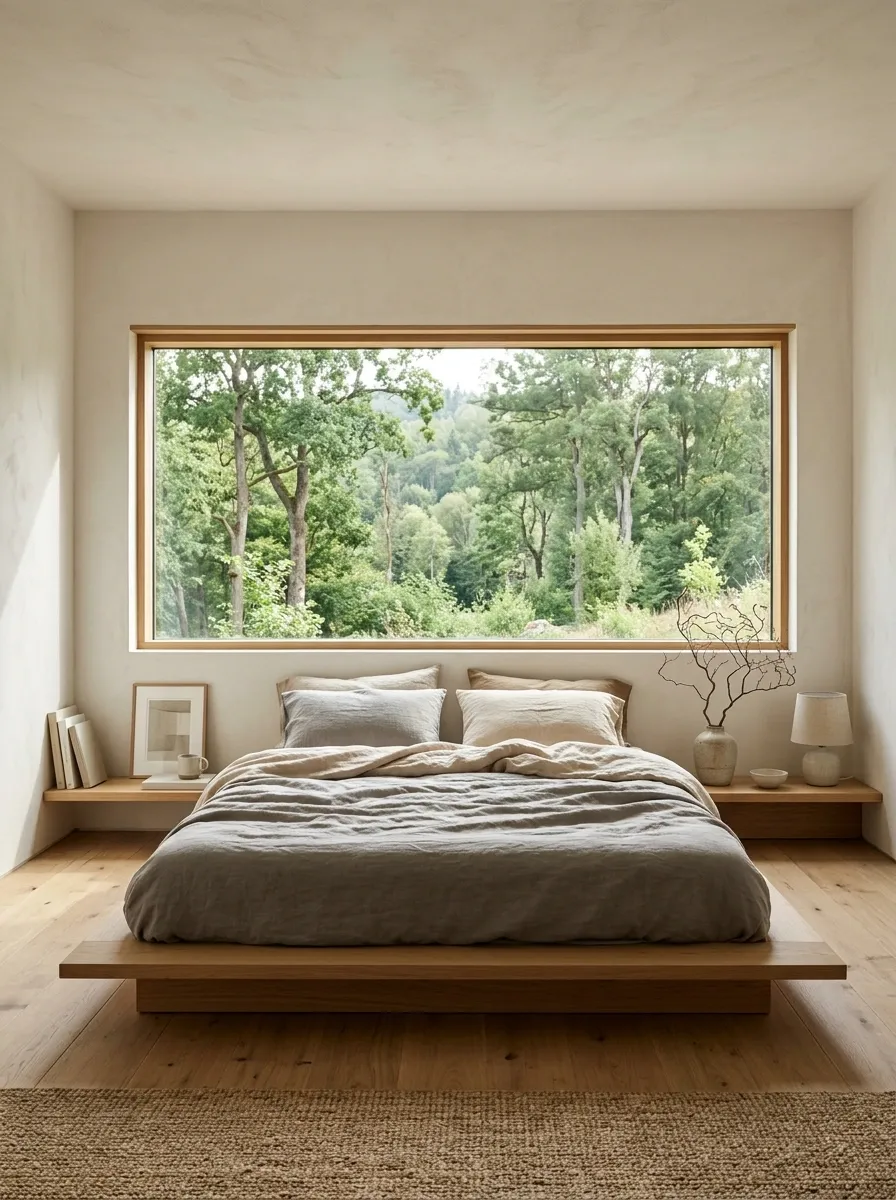
A very low wood platform bed sits beneath a broad horizontal window in this quiet Japandi-inspired bedroom. Warm plaster walls, linen bedding, oak, a single branch arrangement, and carefully limited furniture allow the architecture and natural light to dominate.
Everything sits close to the floor, creating a calm horizontal composition. The window provides openness above the bed while the wood grounds the lower half of the room.
The restraint is what makes the design recognizable. Avoid adding decorative pieces simply to fill the empty surfaces.
Eclectic Bedroom With the Window Integrated Into a Gallery-Like Composition
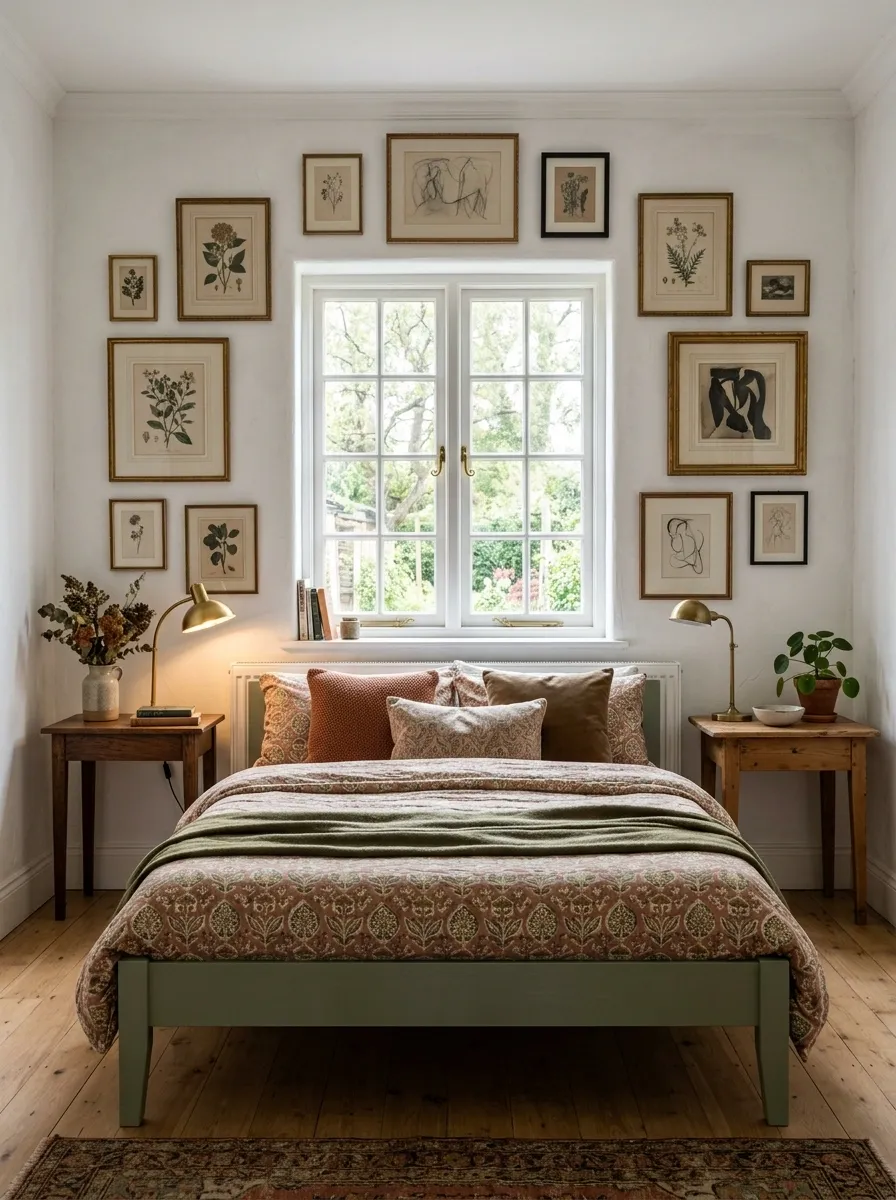
This bedroom treats the window as part of a larger collected wall rather than leaving it isolated. A painted wood bed sits below the opening, while carefully selected artwork fills the adjoining wall areas. Vintage side tables, patterned bedding, warm lighting, and collected objects create a layered but controlled composition.
The key is restraint around the glass. The artwork builds outward from the window rather than competing directly with it, creating a loose gallery effect that makes the entire wall feel intentional.
Leave some empty wall space between the art, window, and furniture. A collected room still needs visual breathing room.
Small Traditional Bedroom With a Built-In Window Seat Behind the Bed
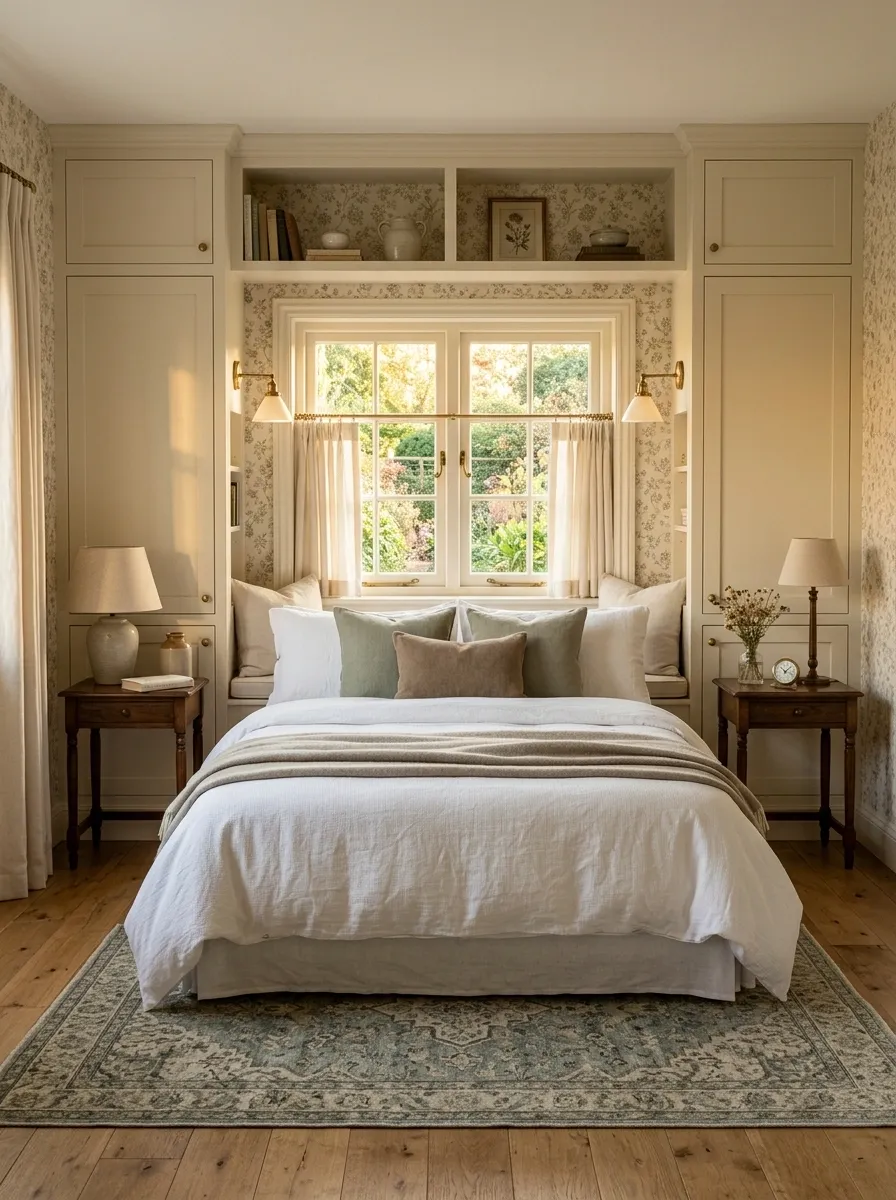
A compact traditional bedroom can make good use of a low window by treating it as part of a built-in architectural composition. The bed sits slightly forward from a painted window seat, with patterned wallpaper, tailored bedding, a small rug, and compact bedside storage completing the room.
The extra depth behind the bed creates a layered backdrop without requiring a large headboard. Painted millwork around the window ties the architecture together, while the window seat adds a useful secondary surface.
Keep the furniture close to the walls and leave the center of the room open. In a small bedroom, that empty floor area makes the entire composition feel more generous.
Soft Neutral Bedroom With a Curved Headboard Beneath a Tall Arched Window
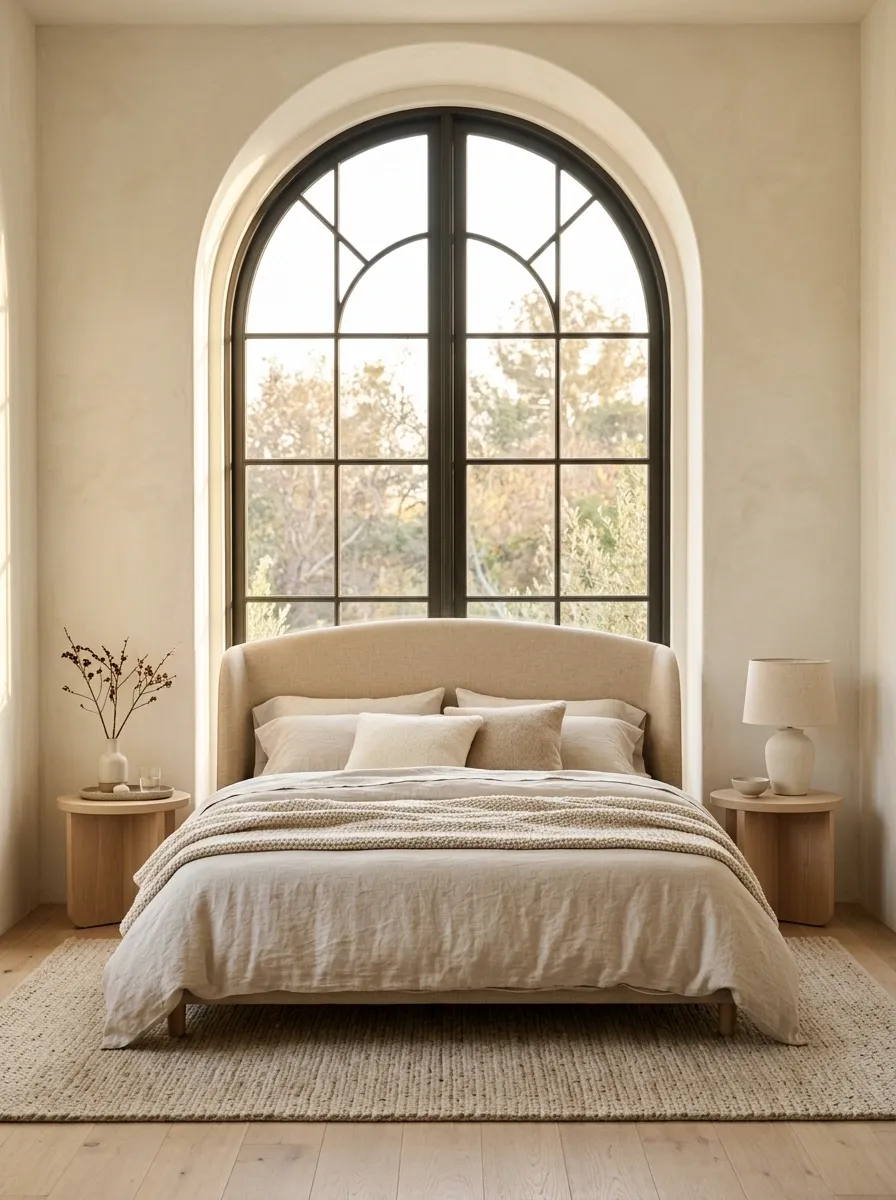
A tall arched window gives this neutral bedroom its shape. A gently curved upholstered headboard sits below the opening, while creamy plaster walls, pale oak, rounded bedside tables, and warm linen repeat the room’s softer geometry.
The headboard doesn’t copy the arch exactly. Instead, its curved silhouette creates a subtle visual echo that makes the bed feel connected to the architecture. The result is softer than a room built entirely from straight lines, without becoming overly decorative.
Keep the surrounding furniture rounded but simple. Too many curved forms would dilute the impact of the window.
Color-Blocked Bedroom With a Window Framed in Dusty Clay
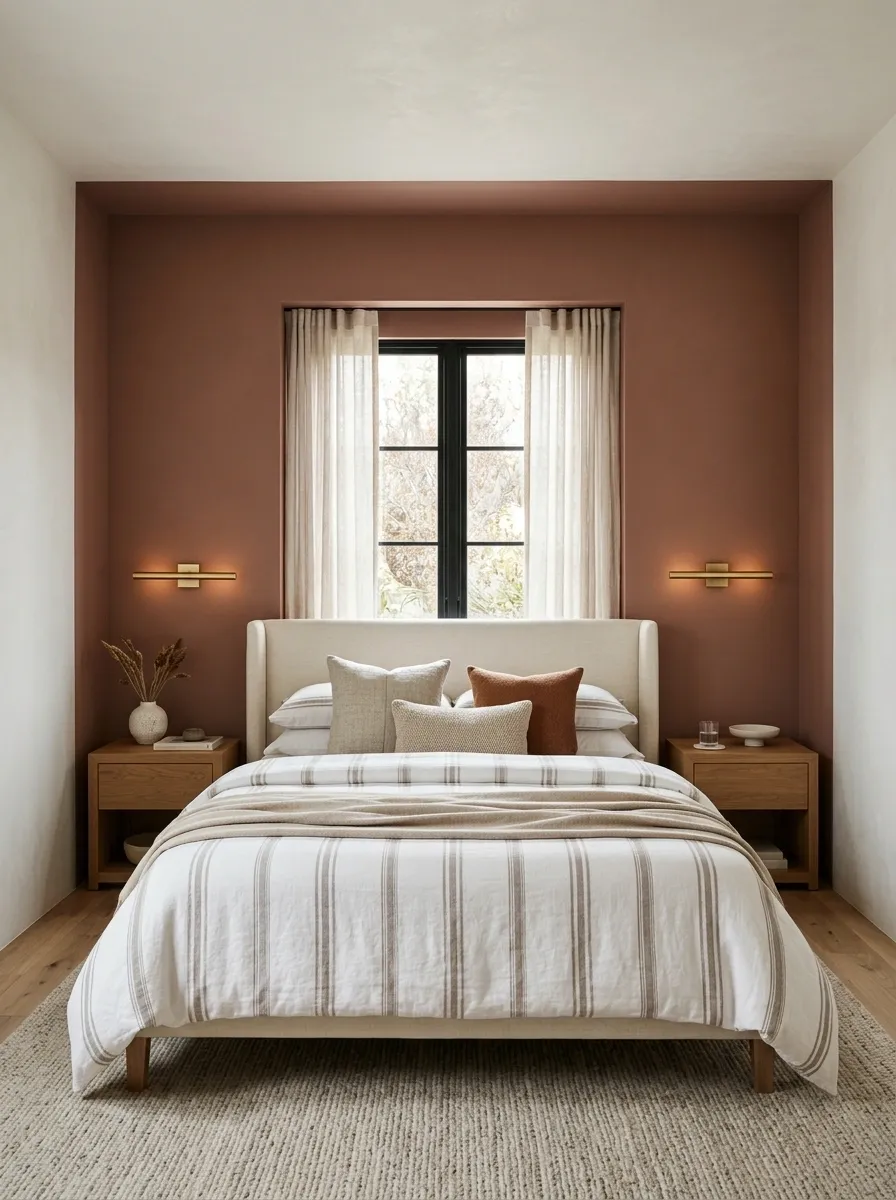
A dusty clay wall color wraps the window and extends behind the bed in this more expressive bedroom. The bed itself stays soft and neutral, with cream upholstery, medium-toned wood, striped bedding, and muted brass lighting providing contrast against the painted architectural zone.
The color framing turns the window into a deliberate focal point while visually connecting it to the bed below. Because the rest of the room remains restrained, the stronger wall color feels intentional rather than overwhelming.
The color should stop at a clear architectural boundary. Keeping the surrounding walls neutral gives the painted zone enough impact without allowing it to dominate the entire bedroom.
Rustic Contemporary Bedroom With a Deep Recessed Window
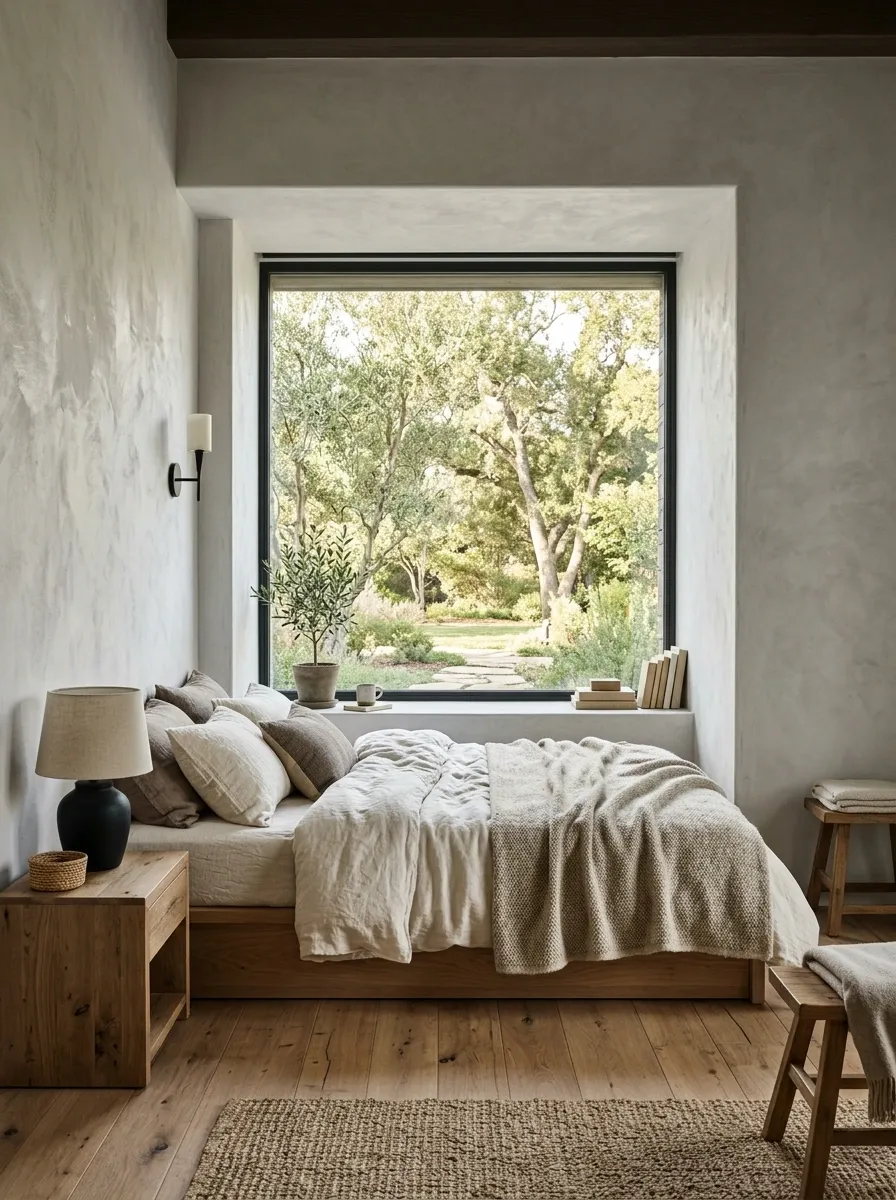
A deep-set window creates an architectural niche behind the bed in this rustic contemporary bedroom. A low wood bed, textured plaster walls, wide-plank flooring, chunky linen, black fixtures, and a handful of natural materials give the room weight without making it look overly rustic.
The depth of the opening is the main feature. Rather than placing a tall headboard in front of it, the design allows the recess itself to act as the backdrop.
Keep the furniture straightforward so the architecture remains visible. Rougher materials should appear in a few deliberate places, with smoother surfaces providing contrast.
FOREGROUND
RECESS
BACKGROUND
Tailored Luxury Bedroom With a Symmetrical Window Wall and Layered Textiles
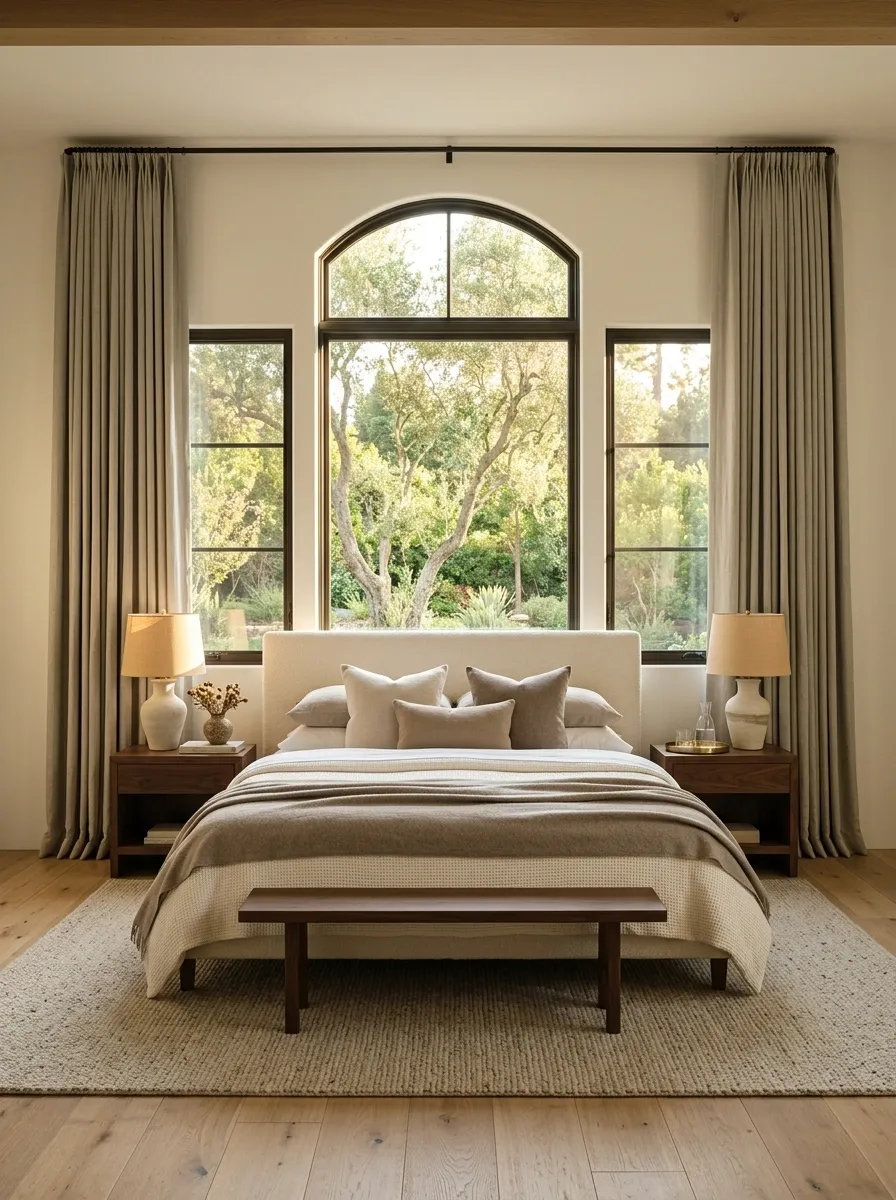
A large symmetrical window anchors this polished bedroom, with the bed carefully centered beneath it and a restrained upholstered headboard filling the lower portion of the composition. Full-height curtains, matching nightstands, sculptural lamps, layered neutral bedding, and rich wood accents create a room that feels precise without becoming rigid.
Alignment is what makes this concept work. The central lines of the window, headboard, bed, rug, and lighting all relate to one another, while varied textiles keep the room from feeling overly formal.
The finishing touch is restraint. A few high-quality textures have more impact here than a large collection of decorative objects.
A Better Way to Approach the Layout
The placement only becomes difficult when every element is treated separately. Once the window, bed, curtains, bedside furniture, and floor area are considered together, the room has far more possibilities.
A low bed can preserve an open view. A strong curtain frame can make the window feel wider. A recessed opening can provide architectural depth. A built-in seat can create another layer behind the bed. Even a sloped ceiling can become an advantage when the furniture is scaled to the available height.
Start with the architecture rather than the accessories. Look at the window’s shape, position, and surrounding wall space, then choose the bed and supporting furniture to reinforce those proportions. The finished room will feel intentional because every major element is working from the same visual structure.
Save the designs that feel closest to the architecture of the room, then use those references when choosing the bed, curtains, furniture, colors, and finishes.