
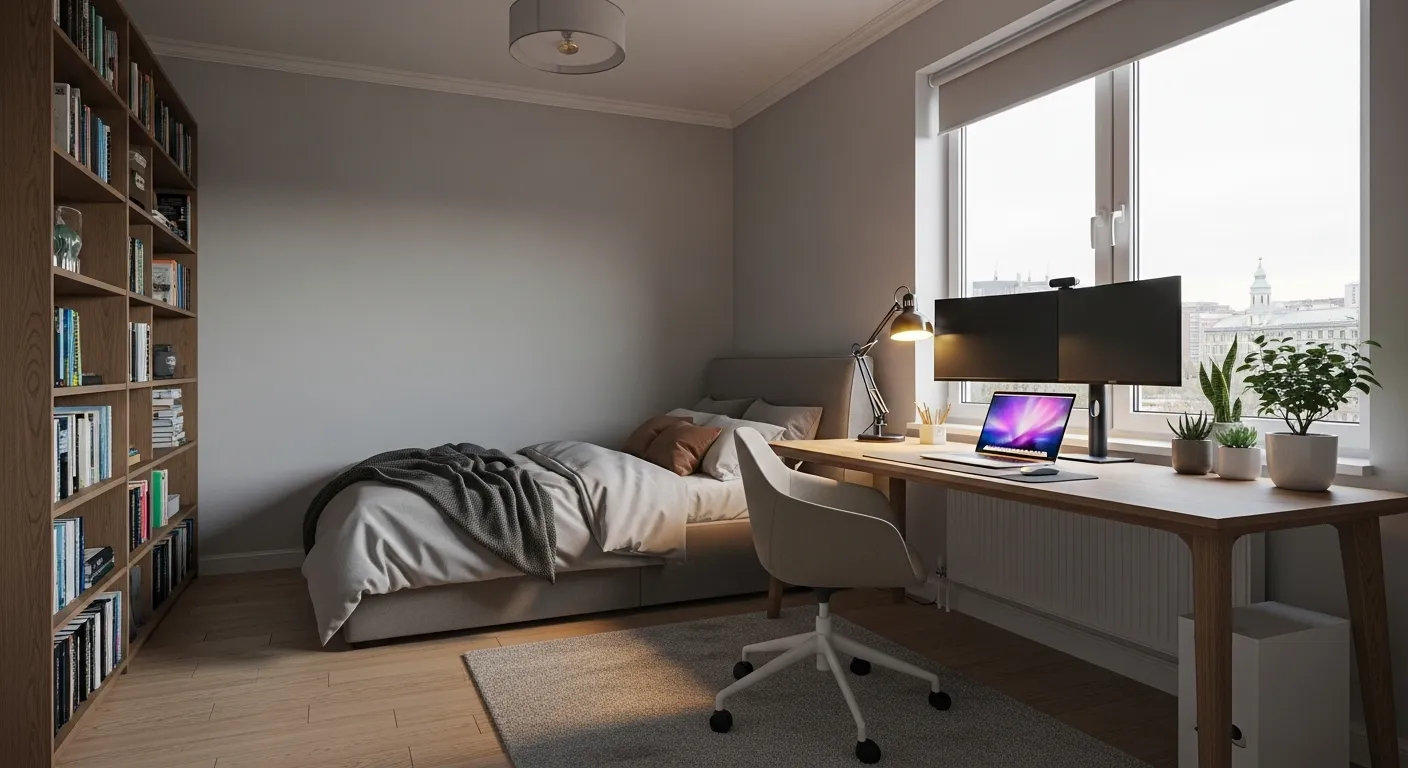
Let’s be clear about something. Working from your bed is not a workspace — it’s a posture disaster dressed up as convenience, and your productivity, your sleep quality, and your lower back all know it. A proper bedroom office isn’t about squeezing a desk into a corner and hoping for the best. It’s about designing two distinct functional zones that coexist without either one compromising the other. Whether you have a dedicated wall to work with or just enough room to turn sideways, these bedroom office ideas will show you what an actual setup looks like.
Bedroom Office Zoner
Design functional zones without destroying your sleep.
Why Most Bedroom Offices Fail Before You’ve Sat Down to Work
The bedroom office fails in a specific and predictable way: the work zone bleeds into the sleep zone, the sleep zone bleeds into the work zone, and the room ends up serving both functions badly rather than either one well. The desk is visible from the pillow, which means work anxiety follows you to bed. The bed is visible from the desk, which means the temptation to horizontal is always one swivel away. These are design failures, not discipline failures, and they’re almost entirely fixable through intentional zone separation rather than willpower.
Visual separation between the desk and the bed is not optional
The most common bedroom office mistake is treating the room as a single undifferentiated space where a desk simply happens to exist alongside a bed. The zones need to be psychologically distinct, which means the desk area needs to have its own visual identity — a different wall treatment, a different lighting scenario, a different flooring element, or at minimum a spatial arrangement that means you’re not looking at the bed while you’re working and not looking at the desk while you’re trying to sleep. This is a design problem and it has design solutions.
The desk chair is doing more zone-definition work than people realise
A proper office chair — something with genuine ergonomic support, the right height for the desk surface, and a visual presence that reads as workplace rather than bedroom — signals to the brain that this is where work happens. A dining chair pulled up to a desk, or worse, a beanbag or floor cushion, does the opposite. The chair choice is both a productivity decision and a design decision, and getting it wrong undermines both the comfort of working and the visual coherence of the space.
Cable management is a design requirement, not an afterthought
In a bedroom office, visible cables don’t just look messy — they make the bedroom feel like it’s been colonised by technology, which defeats the purpose of having a room that’s also meant to support rest. Cable management — cable trays under the desk, clips routing cables against the wall, a single power strip positioned out of sightline — is the difference between a desk setup that looks intentional and one that looks like it was assembled in a hurry and never tidied up. It takes thirty minutes and costs almost nothing.
Lighting needs to operate independently in each zone
The bedroom and the office have opposing lighting requirements. Work requires bright, directed, cool-toned task lighting that supports focus and reduces eye strain. Sleep preparation requires warm, dim, indirect lighting that supports the body’s transition toward rest. A single overhead light doing both jobs does neither well. The bedroom office needs its own desk lamp or task light that operates independently of the room’s ambient lighting, and the ambient lighting needs to be warm enough and dimmable enough that the work zone can be visually switched off when the working day is done.
The Coexistence Dilemma
Why your bedroom office is a design failure, not a discipline failure.
Face the wall, never the bed
Desk orientation is the most impactful decision. A desk facing the bed creates a direct sightline to rest, destroying psychological separation. Face a wall, a window, or an alcove.
Cable management is infrastructure
Visible cables make the bedroom feel colonised by technology. Routing cables against the wall and using under-desk trays is the difference between an intentional workspace and a hasty setup.
Independent lighting zones
Work requires bright, cool-toned task lighting. Sleep requires warm, dim ambient light. A single overhead fixture fails both. The work zone must visually switch off when the day is done.
The chair defines the zone
A dining chair or beanbag undermines productivity and visual coherence. A genuine ergonomic office chair signals to the brain that this is where work happens, enforcing the boundary.
Bedroom Office Ideas
Window Desk With L-Shaped Return, Floating Shelves, and Warm Lamp
A pale timber L-shaped desk running along a full-width window, with the desk surface at window-sill height to maximise the view and the light, covered in the comfortable chaos of active creative work — open books, candles, a laptop, desk accessories accumulated over time rather than styled for a photo. Floating shelves above loaded with books and a trailing plant. A warm cylinder lamp providing the evening task light. A platform bed immediately adjacent, separated not by distance but by orientation — the desk faces the window and the city beyond, the bed faces the room. The lamp candle glow in the window makes the whole setup feel genuinely inhabitable. Pro tip: When the desk and the bed share the same wall or corner, the orientation of the desk chair is everything — if your natural working gaze points at the window rather than the bed, the psychological separation between zones is maintained even in a very small room.
Alcove Desk Nook With Black Slat Panel, Oak Shelves, and Cognac Chair
A recessed alcove between a sliding wardrobe and a doorway — the kind of space most people paint and ignore — transformed into a fully realised workspace by lining the back wall with black vertical acoustic slat panels, mounting two oak floating shelves above the desk with an Edison bulb lamp and a curated selection of art prints and plants, and installing a wall-mounted floating desk at the correct working height. A cognac leather ergonomic chair on a black base completes a setup that looks considered rather than compromised. The sage green walls of the surrounding room make the dark alcove feel intentional rather than heavy. Pro tip: An alcove desk nook works because the three walls around you create natural zone definition — you’re physically inside the workspace rather than sitting in the bedroom at a desk, and that spatial distinction does more psychological zone separation work than any design trick you could add to an open-plan setup.
White L-Desk With Slat Panel Wall, LED Shelves, and Graffiti Art Feature
A white L-shaped desk with a large working surface running along a warm dark timber acoustic slat wall panel, two black floating shelves with warm LED underlighting displaying a curated gaming and collectible setup, a full-size black gaming chair, and a gaming console and TV unit to the right on a matching ribbed cabinet. On the adjacent wall, a large-scale black and white graffiti art wallpaper panel provides the room’s bold statement moment. A black and white check bedspread on the platform bed in the foreground ties both zones into the same graphic monochrome palette. Pro tip: Using the same wall panel material for both the desk backdrop and the TV cabinet on the adjacent wall creates the visual continuity that makes a room with two very different functions — working and gaming — read as a single coherent design rather than two separate setups sharing a room.
All-Black Setup With Dual Monitors, Speaker System, and Dark Wall Treatment
Matte black walls on three sides, dark exposed-brick texture on the fourth, a dark timber desk running the full width of the workspace wall with dual monitors, a mechanical keyboard, speakers, and shelf-mounted audio equipment above, a black gaming chair, and a platform bed with charcoal bedding occupying the perpendicular wall. The room is lit almost entirely by the glow of the monitors and two recessed ceiling spots, which creates an atmosphere that is either exactly right or completely wrong depending entirely on the person who lives in it — and this person clearly knows which one it is. A dark shag rug anchors both zones on warm timber floors. Pro tip: All-dark bedroom offices only maintain their atmosphere if the desk setup itself is clean and organised — dark walls amplify visual clutter rather than hiding it, so the discipline required for this aesthetic is significantly higher than for lighter palettes.
Dark Charcoal and White Bedroom Office With Long Timber Desk
A narrow room with dark charcoal walls on the office side and white on the bedroom side, a long live-edge timber desk running the full length of the right wall with dual monitors, mechanical keyboard, studio monitors, and a mic, and a platform bed with grey herringbone bedding running the full length of the left wall — two zones in parallel, separated by a metre of timber floor and a clear visual shift from white to charcoal. Trailing plants at the window behind the bed and small potted plants on the windowsill above the desk introduce the shared botanical thread that keeps both zones in the same room rather than feeling like two separate environments. A wall-mounted hanging planter above the desk and a leaning framed print beside the bed add the only decoration either zone needs. Pro tip: When the desk and the bed run on parallel walls facing each other — which is the unavoidable layout in a narrow room — the visual separation needs to come from wall treatment rather than orientation, and the charcoal-to-white shift across the room’s width achieves exactly that separation without any physical partition.
Go Full Luxe: Walnut, Velvet, and Glass—Like You Mean It
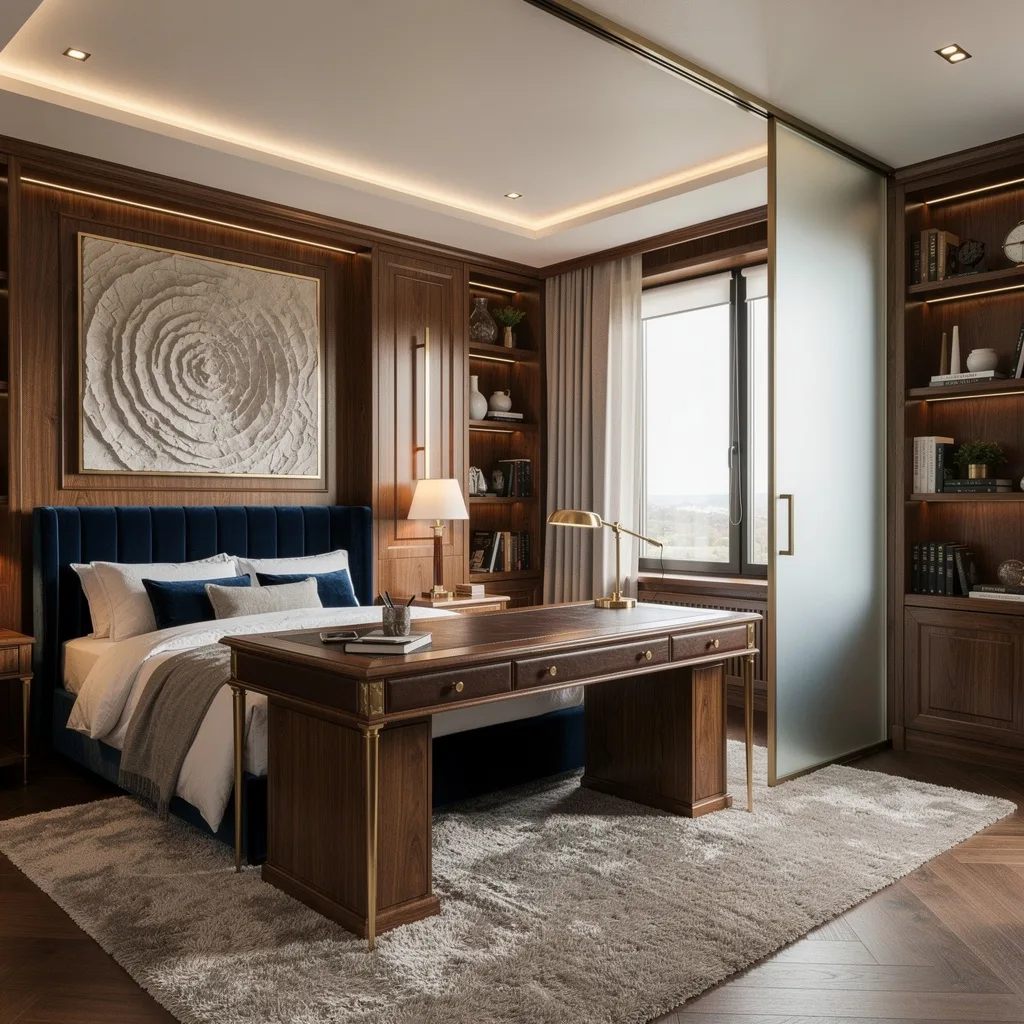
If you want your home office to scream, ‘I’m just here for the Forbes cover,’ you need rich walnut paneling, built-in bookshelves, and a custom leather-topped desk parked right by the biggest, baddest window you can find. Separate your bed from your workspace with a frost-glass sliding partition—privacy is power, and frost-glass is basically a grown-up visual filter. Get the velvet headboard in deep navy and don’t skimp on plush, high-pile rugs. Keep the lighting smart and recessed, then throw some brass accents around. When styling, spotlight textured wall art with LED strips rather than blinding overheads.
Modern Marvel: Glass, Microcement, and Geometric Rugs for That ‘CEO-in-Training’ Energy
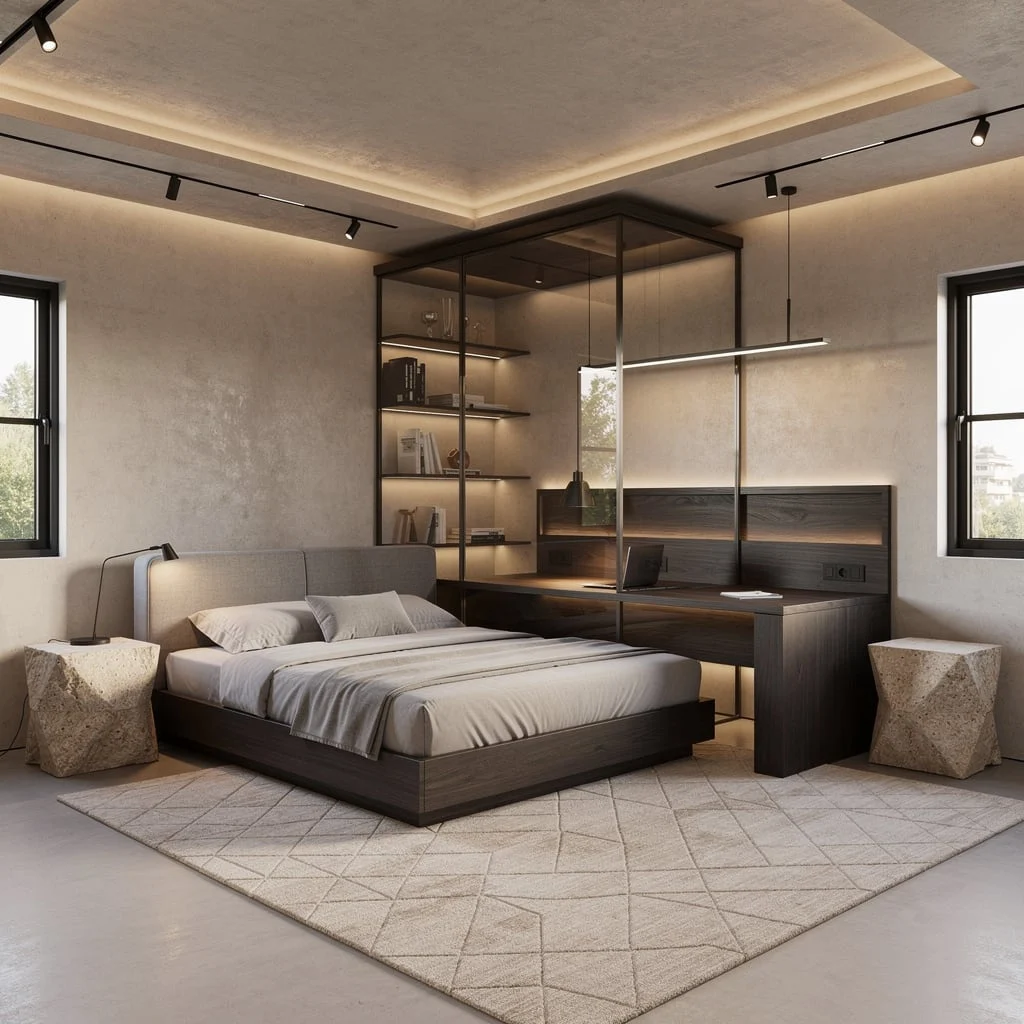
Want your bedroom office to look like you run a VC fund? Build a glass-walled nook for your L-shaped dark maple desk, hide every cable, and layer your area rug with geometric patterns in light tones for contrast. Go for a platform bed across the room with textured stone side tables—nothing says ‘expensive’ like stone. Microcement matte walls are the move; skip glossy basic. Keep your windows black steel-framed for an attitude boost, and use layered ceiling lights and designer tracks for perfect ambient glow. Always match your bed platform height with your desk nook for visual balance.
Art Deco Drama: Bold Colors, Marble Dividers, and Crystal Chandelier Slay
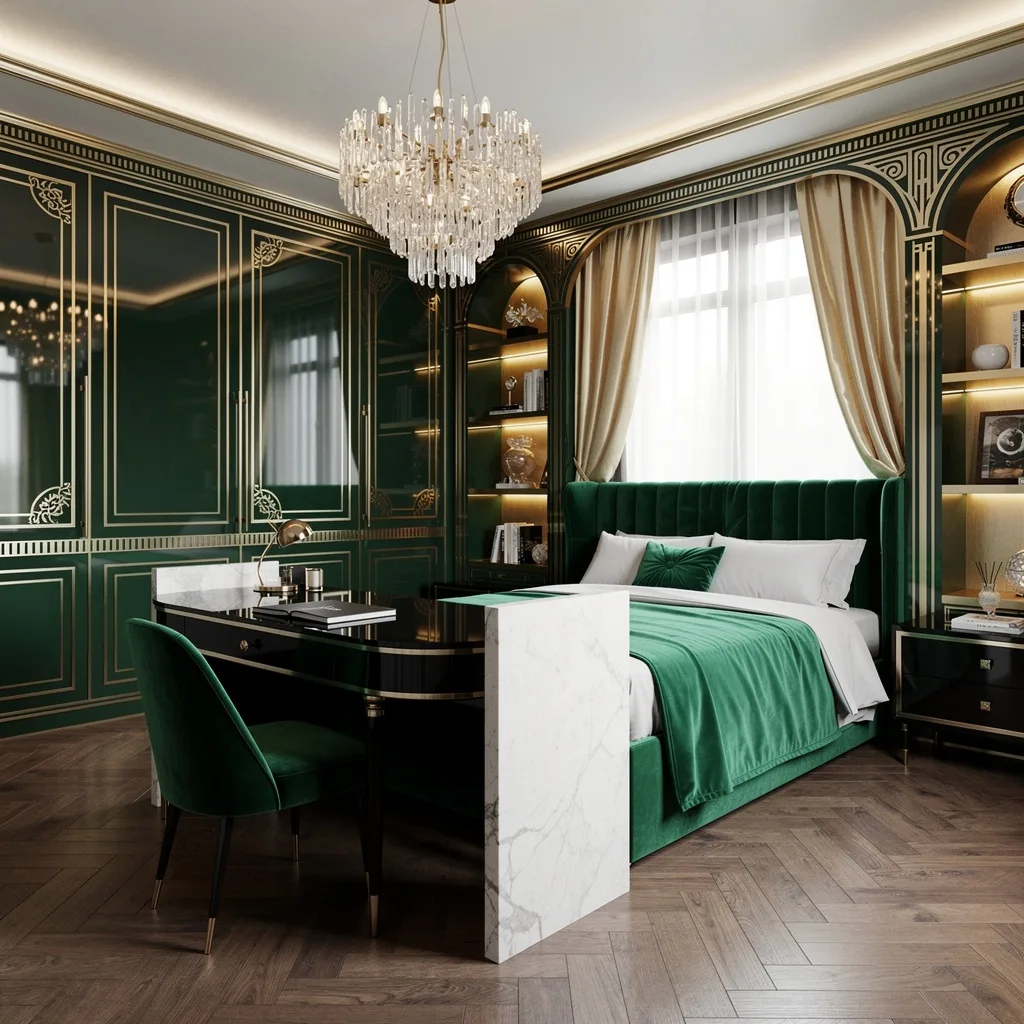
If you’re feeling extra, lacquered paneling with gold inlays and a velvet emerald bed are non-negotiable. Curve your glossy black desk and park it under a blinged-out crystal chandelier—no basic lamps allowed. Pull in a short marble divider to split sleep from work, but keep it luxe with cream silk drapes and herringbone floors. Channel-tufted velvet chairs are the only seating you should even consider. When styling, backlit shelving is your cheat code for making all your random objects look like museum pieces; always choose lighting that shows off your stuff, not the dust.
Design Nerd’s Dream: Central Platform Combo with Bold Niches and Ambient Lighting
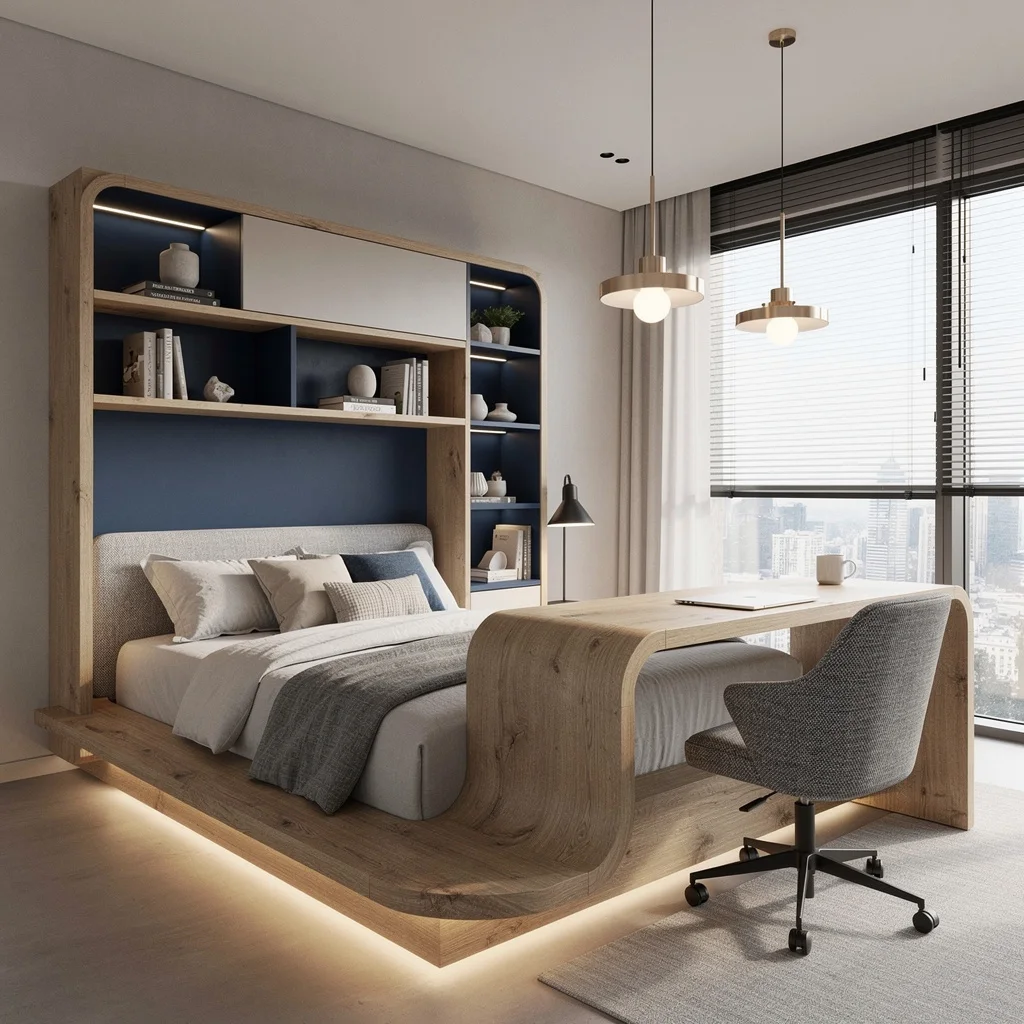
Feeling creative? Build a custom oak platform that houses both your bed and workspace—who needs furniture when you can have architecture? Curve your desk for ergonomic appeal and line overheads with modular shelving. Contrast light-toned walls with deep blue accent niches and keep your windows wide with smart blinds. Ambient strip lighting is a must to soften the mood; don’t ever rely just on ceiling lights. Layer neutral textiles (yes, multiple throws and cushions) for comfort, but use designer pendant fixtures for an ‘I’m-cool-but-I-get-stuff-done’ energy. Limit shelf styling to three items per cubby for maximum impact.
Contemporary Power: Double-Height Ceilings, Matte Black Beams, and Marble Magic
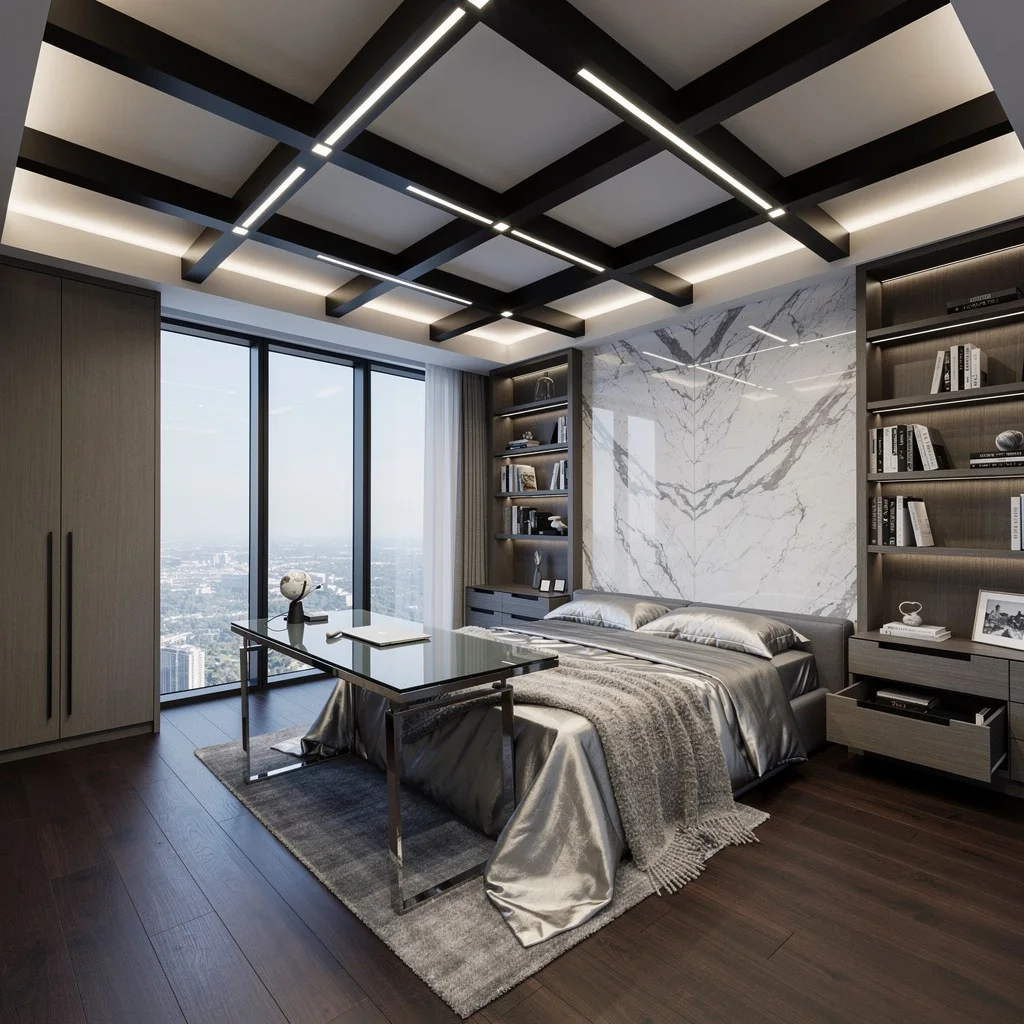
Crave sophistication? Install a double-height ceiling grid with matte black beams—yes, this means repainting your ceiling, deal with it. Throw a glass-top desk against a marble accent wall and cover your bed in silver satin, because nobody wants weak bedding. Use custom cabinetry and floating bookshelves to keep storage slick and hidden. Floor-to-ceiling windows (even if they’re just illusion panels) add big energy to your workspace. For pro styling, always pair cool-tone finishes with soft wool throws, then layer your lighting in grids for drama. Never let your hardware distract; stick with subtle, matte metals.
Eco Luxe: Reclaimed Teak, Live Edge Walnut, and Greenery All Over
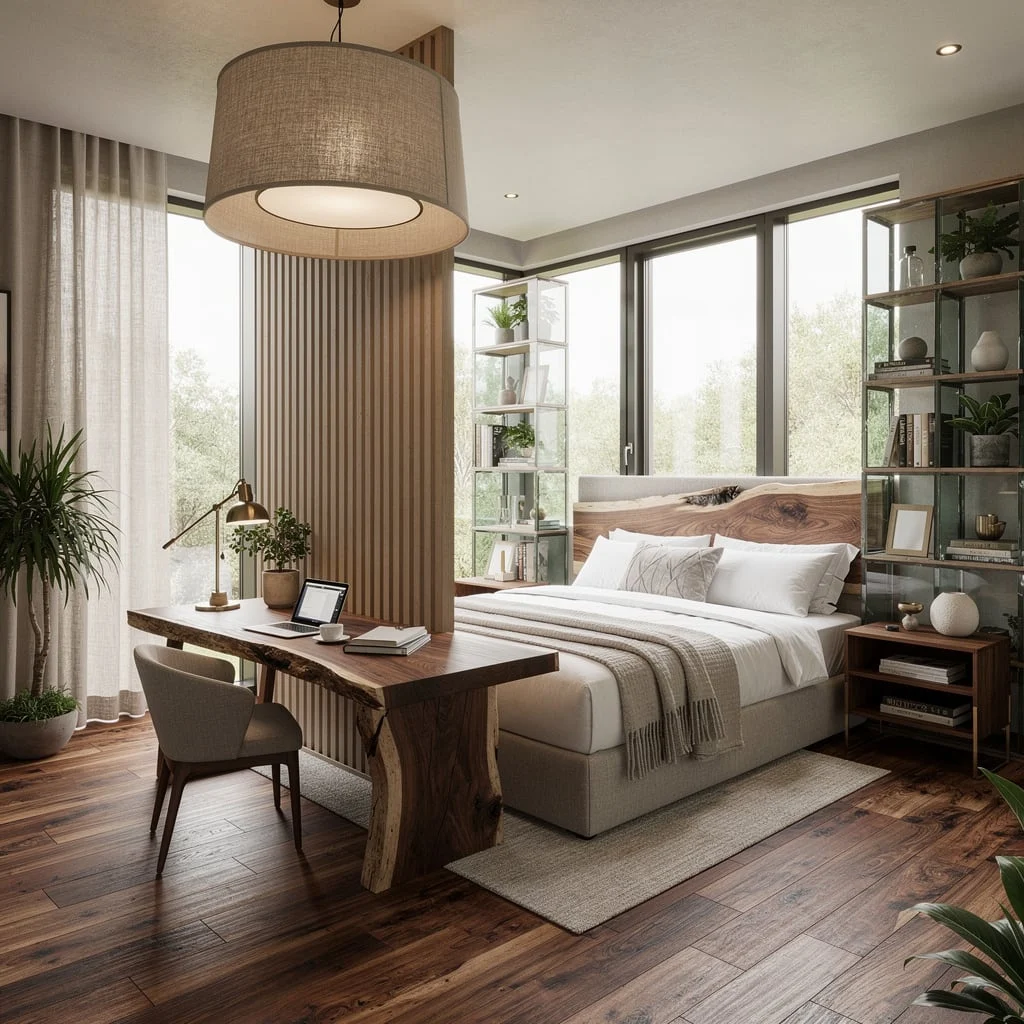
Ready to flex your sustainability creds? Lay reclaimed teak floors and grab a live-edge walnut desk—no more faking it with particleboard. Build shelving from recycled glass, and split your workspace from your sleep zone with a slatted wood divider. Hang oversized linen drum shades for soft lighting, and pack the room with neutral organic textiles. Daylight is your friend, so let triple-glazed corner windows do the heavy lifting. Always position indoor plants right by your desk, not in random corners; it helps oxygen and looks grown-up. A split-level layout is key—don’t let the office creep into bed territory.
Charcoal Cool: Custom Millwork, Slate Statement Walls, and Wool on Point
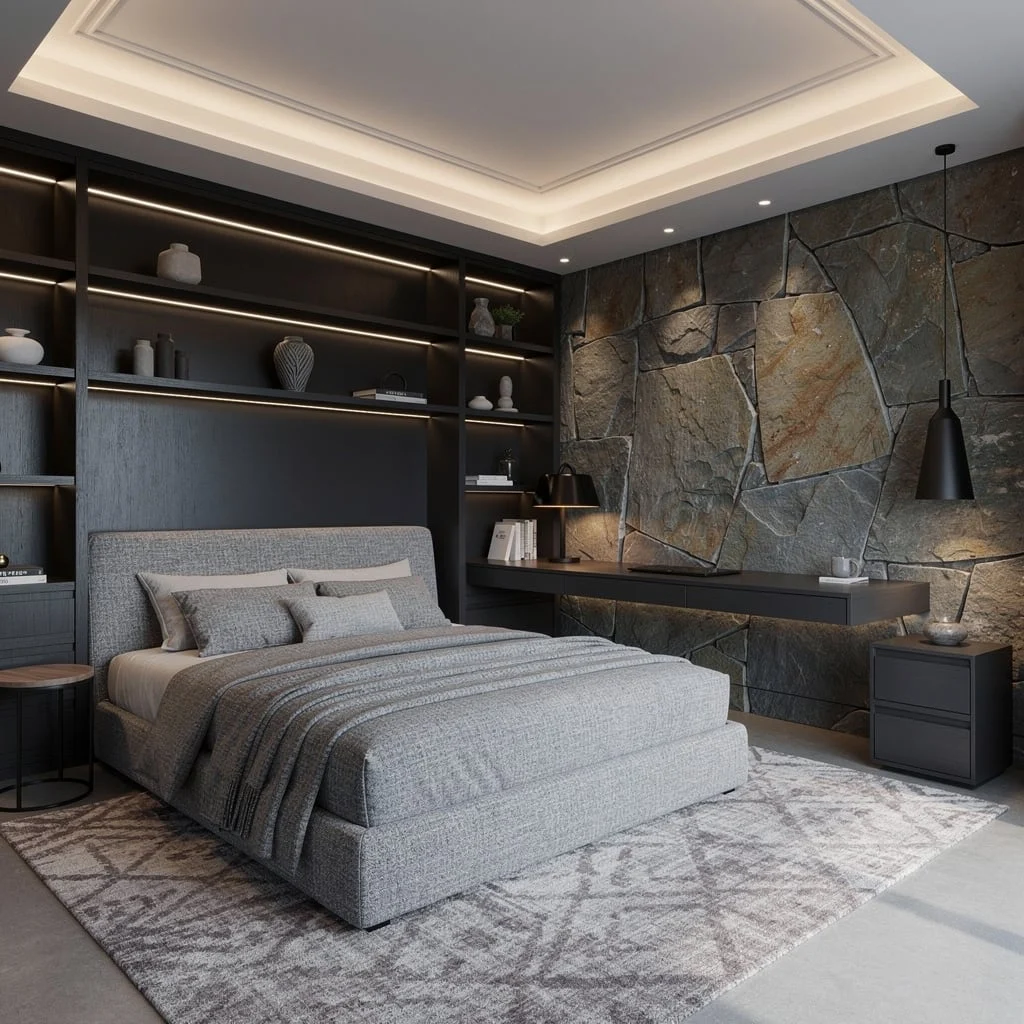
Want an office vibe that’s basically a hug in designer fabrics? Go deep charcoal millwork on walls and install integrated LED lighting along open shelving. Float your desk on the wall so it looks intentional, not desperate. Upholster your king bed in textured grey wool—soft, not scratchy. Clad your main wall in natural slate for instant depth. Pull in plush patterned carpet and minimalist side tables; then layer the ceiling with soft indirect lighting and matte black fixtures. For max coziness, always build out shelving that matches your wall color for seamless style. Never let a slate wall go unlit.
Cerulean Pop: Monochrome Power, Mirrored Walls, and Bold Hardware
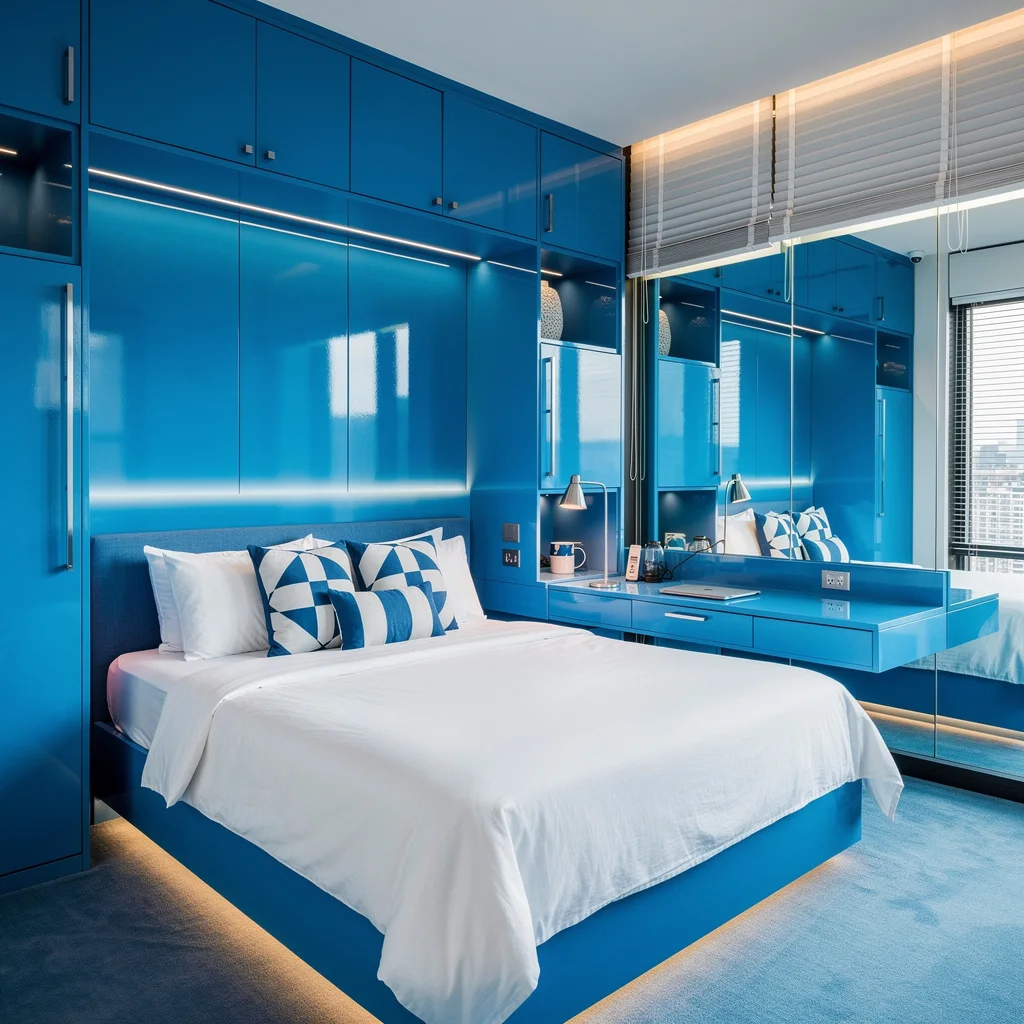
If you’re tired of safe palettes, drown your room in cerulean blue. Lacquer your panels, float your desk in built-in cabinetry, and let crisp white cotton linens do the heavy lifting. Add geometric pillows for texture, then run indirect LED behind your headboard for mood. Floor-to-ceiling windows? Automatic blinds only. Mirror your accent wall to double the drama—fake more space, fake more swag. For storage, build niches into the cabinetry and choose brushed chrome hardware (yep, ditch the bronze). Never let blue overwhelm; carve out visual breaks with white to keep it from feeling like Smurf HQ.
Sanctuary Mode: Canopy Bed, Glass-Brass Desk, and Persian Rug Luxe
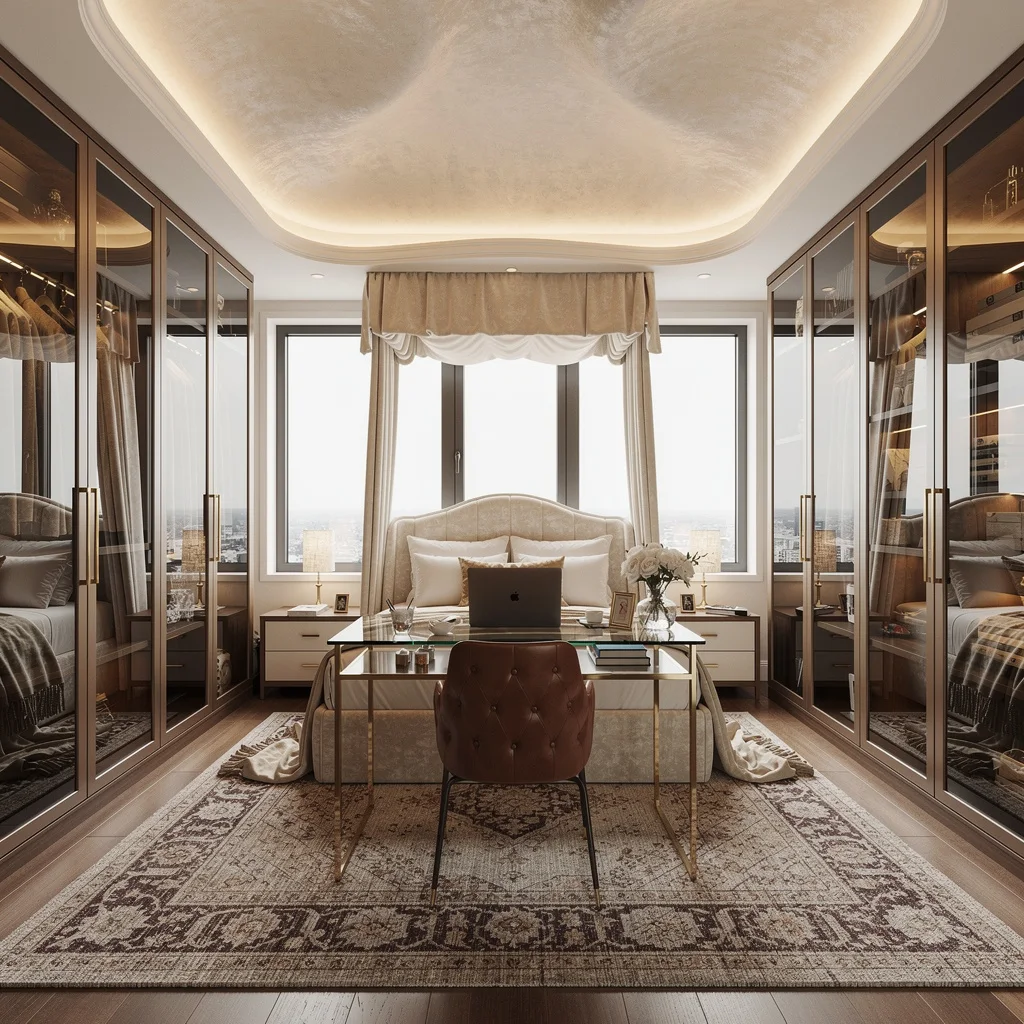
Dream of working somewhere softer than your therapist’s office? Drop a canopy bed in pale cream velvet right beneath a sculpted, backlit ceiling. Set up a glass-brass desk with a tufted leather chair—no one works well on basic wood. Mirror built-in wardrobes to fake space and bounce light everywhere; storage is easy if you hide it. Use soft earth tones for throws and bedding, and rely on ultra-thin frames for your windows. Persian rugs are a must for layering texture; never go bare floor unless you hate comfort. Keep silk throws close and always pair glass furniture with brass details.
Urban Loft Flex: Mezzanine Workspace, Exposed Brick, Metallic Edge
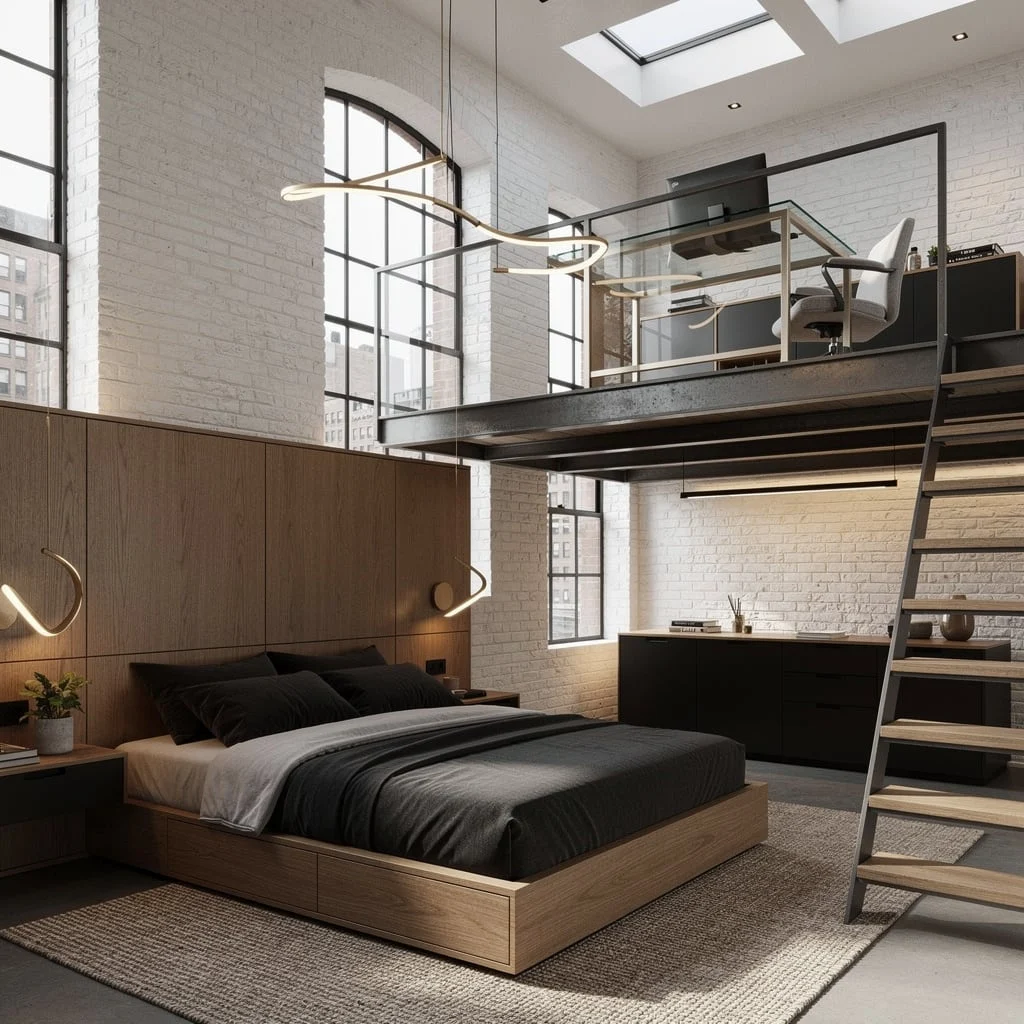
Want that New York loft vibe without paying rent? Paint your exposed brick walls soft white and oversize those iron-framed windows. Install a mezzanine to house your desk—the higher the better, plus you get bragging rights. Float stairs in warm oak, and don’t settle for standard bedding: Go charcoal linen and custom built-in storage for grown-up business. Choose open steel and glass for your desk, plus sculptural LED pendants above. Skylights are a must; fake them if you need to. For finishing, layer woven rugs in muted patterns and use subtle metallic details to hint at the city without being obvious.
Final Thoughts
A bedroom office that works for both functions requires more deliberate design thought than almost any other room configuration, precisely because the two functions it serves have directly opposing requirements — one needs stimulation, the other needs calm. The setups that succeed are the ones where someone understood both requirements and made specific design decisions to serve each one, rather than hoping that a desk in the corner of a bedroom would somehow feel like an office. Zone the space deliberately. Orient the desk away from the bed. Treat the lighting in each zone independently. And accept that the cable management situation needs to be resolved before anything else gets styled.
Really solid work that delivers on every promise. The resource is far above average.