
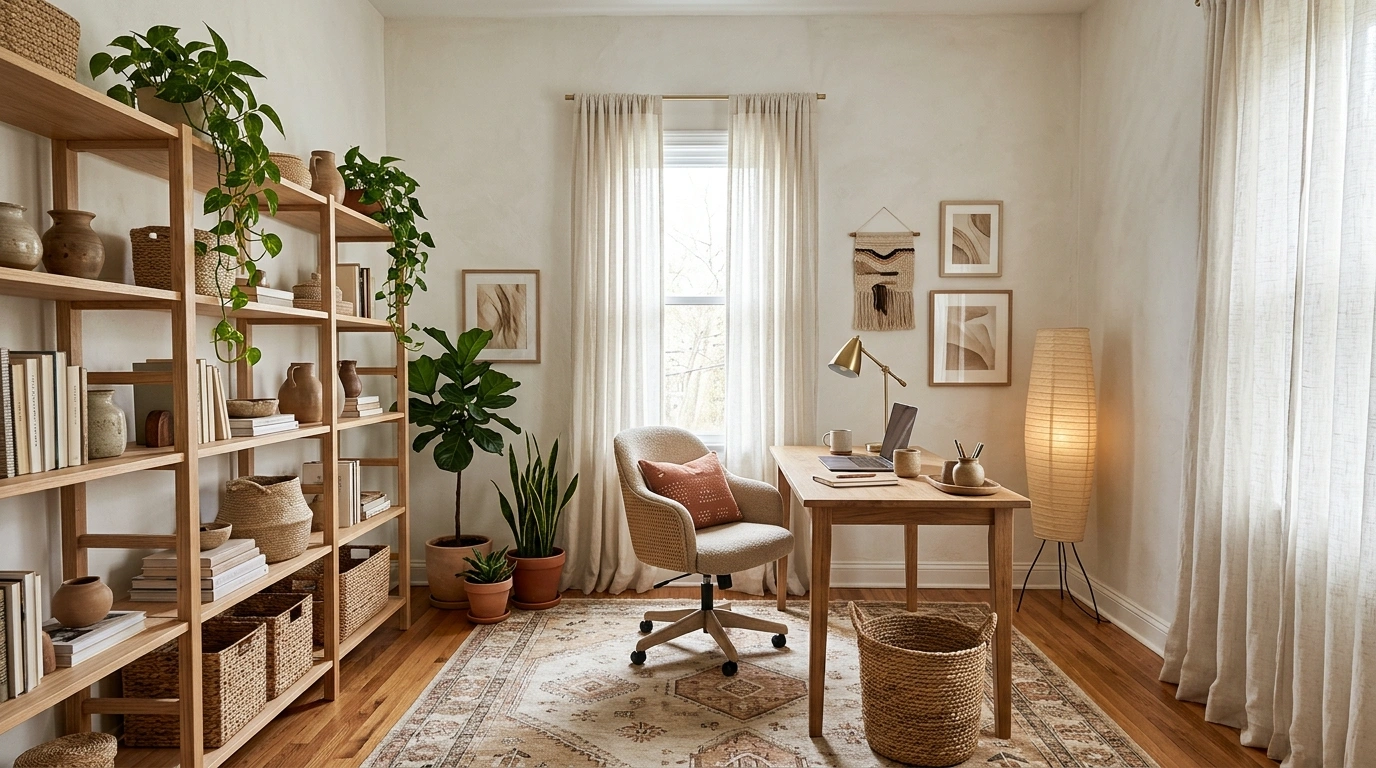
A boho home office can look incredible in a photo and completely ridiculous once all the pieces are actually placed in one room.
A woven chair here, a basket there, a plant on the desk, another plant on the shelf, three wall hangings, and suddenly there is nowhere left to put the laptop. Very inspirational. Very inconvenient.
Because boho style is supposed to feel collected, personal, and relaxed. Not like a basket store exploded directly beside a standing desk.
The Boho Office Rule Nobody Puts on Pinterest
Boho Home Office Ideas
Sunlit Botanist Boho Office
A vintage timber desk sits directly beneath a bright, oversized window, creating a workspace that practically hums with natural light. Woven floating shelves climb the white walls, holding an abundant mix of trailing ivy and neatly stacked books. A patterned low-pile rug grounds the warm wooden chair, tying the organic textures together.
The magic here relies on the partnership between wood tones and lush greenery. The warm grain of the desk echoes the shelving, while cascading plants soften the sharp corners of the room. It feels less like a corporate cubicle and more like a sunroom that happens to have a laptop.
Positioning the desk to face the light keeps the workspace energizing. Just be sure to balance the plant load so your desk doesn’t accidentally double as a greenhouse.
Warm Oak and Terracotta Boho Office
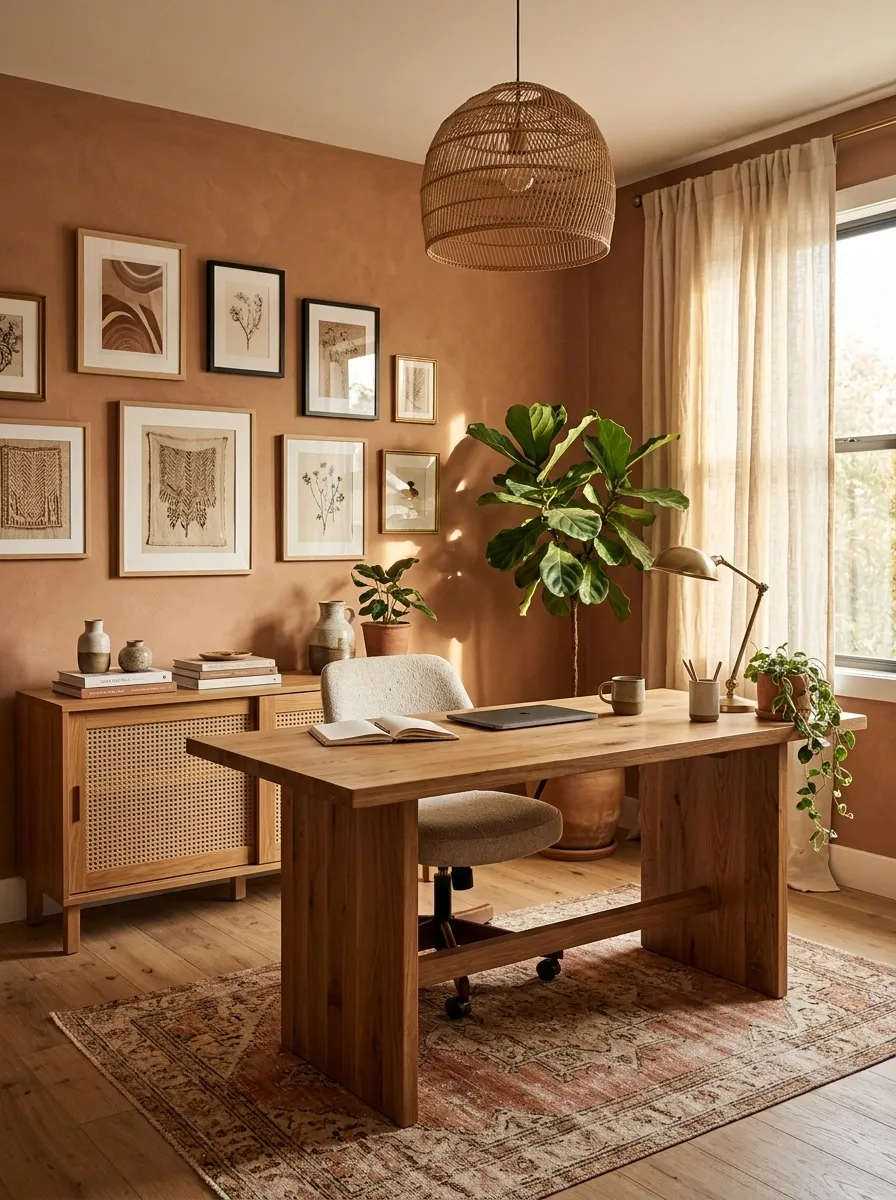
Warm oak gives this office its backbone, while terracotta walls bring enough color to keep the room from drifting into generic beige territory. A substantial timber desk sits beneath a woven pendant, with a vintage-patterned rug grounding the chair and lower storage. Cream linen curtains soften the window without hiding the natural light.
The palette works because every major surface stays earthy. The orange-brown wall feels connected to the wood, while the ivory textiles create breathing room. A few handmade-looking ceramics and framed pieces finish the room without turning every shelf into an exhibition.
This composition suits a room with decent natural light. The color has presence, but it doesn’t need a dozen accessories to prove the point.
Warm Walnut and Pink Rug Office
Rich walnut furniture anchors this cozy office, while a faded pink patterned rug brings a grounded, earthy color to the floorboards. Floating wooden shelves hold a collection of framed art and potted plants, and a classic globe sits ready for daydreaming. The warm woods make the small room feel intimate rather than cramped.
The color palette stays balanced by letting the reddish tones of the rug play off the natural wood grains. A mix of framed sketches and abstract prints adds personality to the walls without creating visual clutter. Every element feels intentional and softly lived-in. Cane-back seating keeps the heavy wooden desk from dominating the entire square footage. It provides the right amount of vintage texture while preserving an airy feel beneath the workspace.
Creamy Neutral Boho Office With Dark Wood Accents
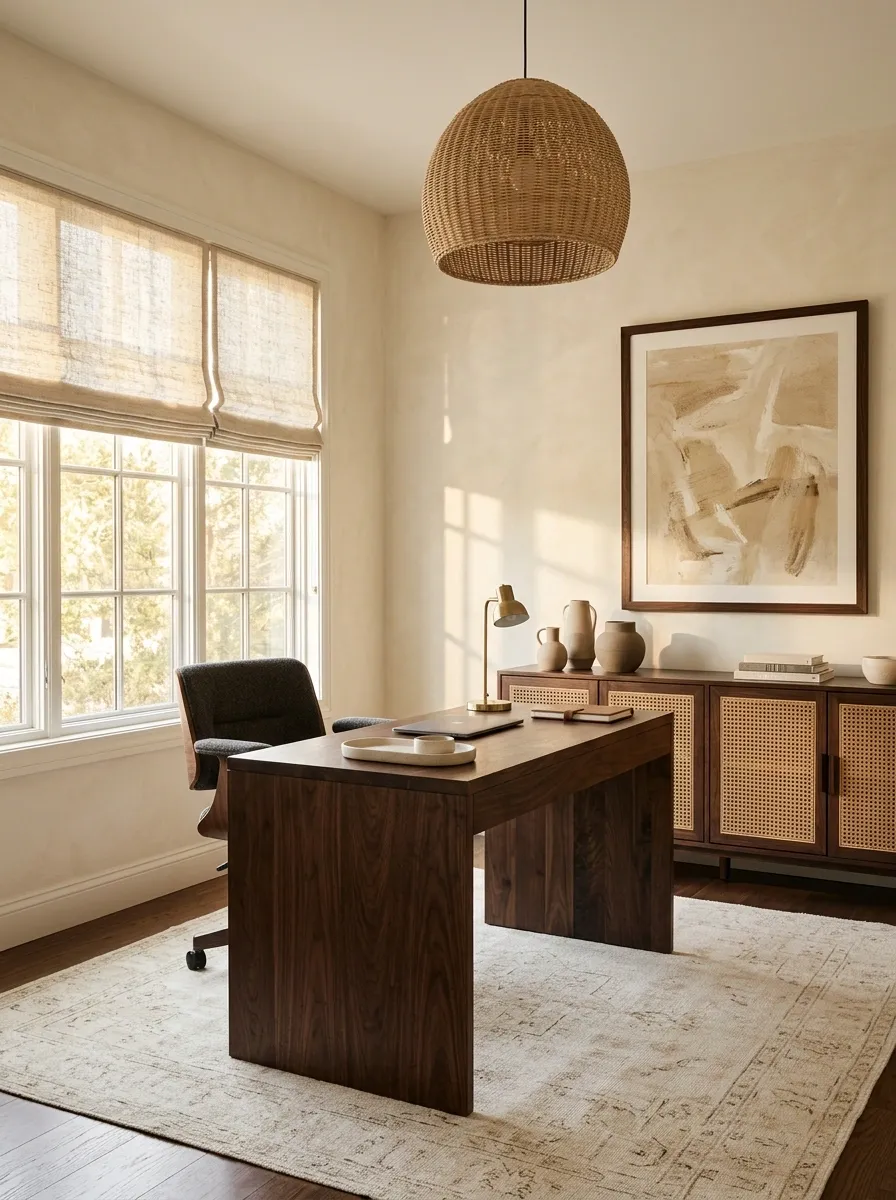
This version keeps the walls and textiles light, then lets dark walnut furniture provide the contrast. The desk has enough visual weight to anchor the room, while cane-front storage and woven lighting stop the darker wood from feeling formal. An ivory rug with faded pattern adds softness underfoot.
The trick here is restraint. The walls stay quiet, the artwork is limited, and the strongest contrast comes from the furniture. That gives the room a more grown-up bohemian feeling without losing warmth.
It is also a useful direction for rooms that already have strong daylight. The pale backdrop keeps the heavier walnut pieces from making the space feel closed in.
Cozy Corner Boho Office
A streamlined wooden floating desk hugs the corner, paired with a curved cane-back chair that invites you to actually sit and work. A rattan room divider screens off the adjacent sleeping space, while layered wall art and cascading trailing plants frame the window. Sheer curtains filter the sunlight into a soft, golden glow.
The design succeeds by keeping major furniture pieces visually light. The slender desk and open chair allow light to pass through the room, preventing the small footprint from feeling boxed in by all the surrounding decor.
Letting plants climb near the light source adds instant life to an otherwise blank wall. A textured neutral rug underneath ties the relaxed, organic elements together seamlessly.
Desert Boho Office With Arched Architecture
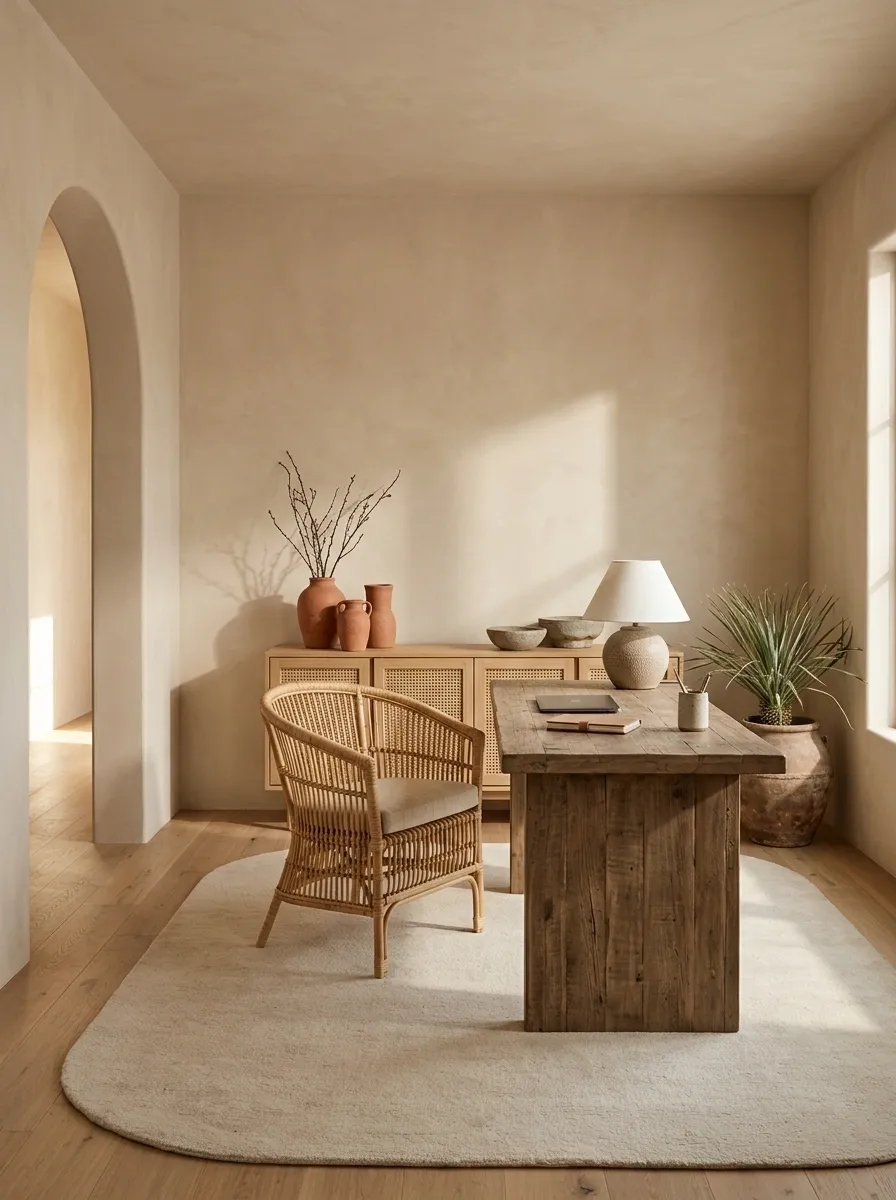
Here, the architecture gets to be the star. A soft sand-colored plaster finish surrounds a curved doorway, while a chunky timber desk, woven chair, low cabinet, and clay-toned textiles reinforce the desert-inspired palette. The furniture stays relatively simple because the room already has a strong silhouette.
Repeated curves make the composition feel connected. The doorway, rounded lighting, soft-edged rug, and gently shaped accessories echo one another without turning the room into a theme park version of “desert boho.”
Keep the floor and major furniture grounded in natural wood tones. Too many orange accessories would flatten the palette and make the room feel much more forced.
Sloped Ceiling Boho Workspace
Tucked under architectural angles, this workspace makes the most of a cozy attic-style nook. A sleek computer setup sits on a clean white desk, while a woven chair wrapped in plush faux fur adds immediate tactile warmth. Draped string lights and a woven basket filled with blankets turn the corner into a total retreat.
The texture game here does all the heavy lifting. Fluffy throws, natural fibers, and a rich display of framed botanical prints bring soul to a simple desk setup. It proves that sloped ceilings are an asset, not an awkward design hurdle.
Keep the desktop relatively clear so the surrounding gallery wall and greenery remain the focus. The mixture of warm wood floors and soft textiles keeps the room feeling grounded and calm.
Vintage Boho Office With Collected Furniture
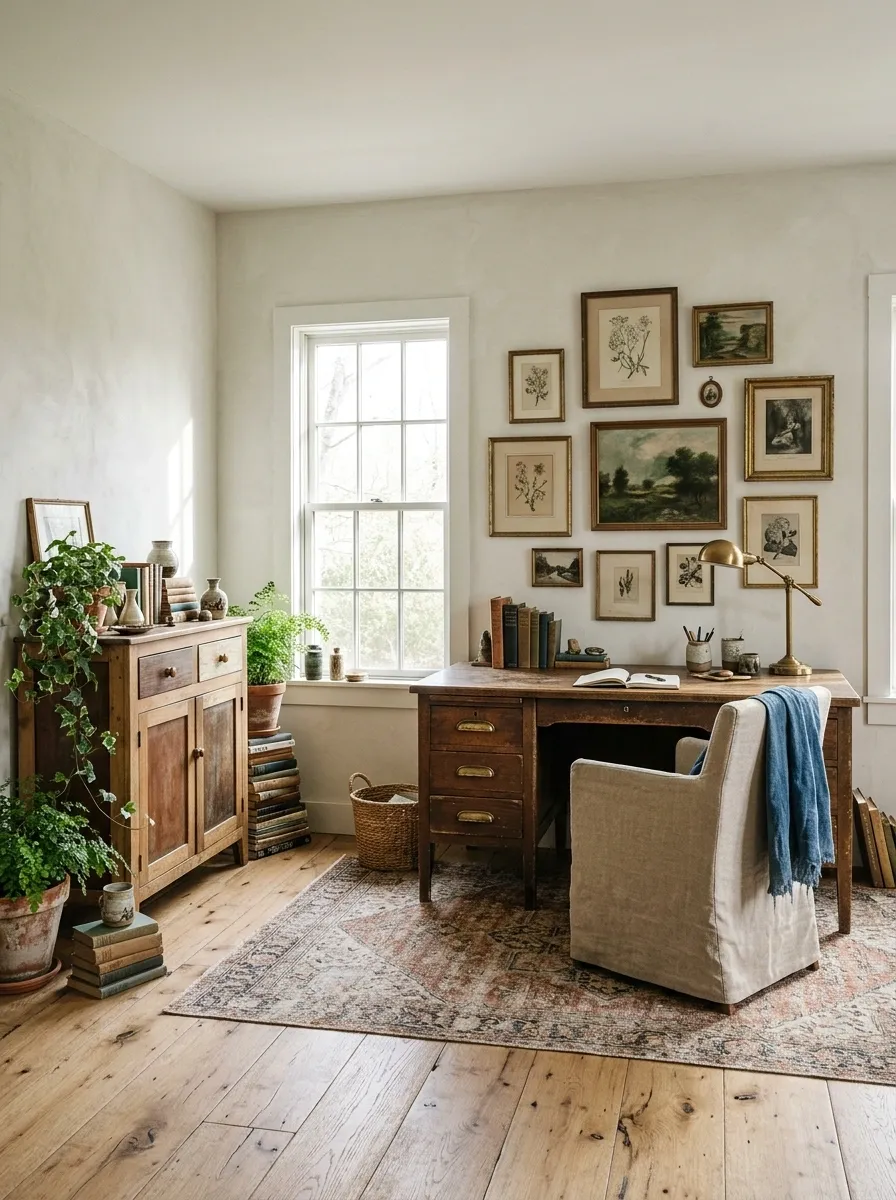
Nothing in this room needs to look brand new. A vintage wooden desk sits beside an aged cabinet, with a faded patterned rug, linen chair, antique-style brass lighting, and a loose arrangement of framed art above the workspace. Books, ceramics, and a few useful office pieces fill the room without making it feel staged.
The appeal comes from slight variation. Wood finishes do not have to match exactly, and the artwork doesn’t need to arrive as one suspiciously coordinated set. The room feels collected because the pieces share warmth, scale, and color rather than identical finishes.
The key is giving the older furniture enough empty wall and floor space around it. Otherwise, the character quickly turns into visual traffic.
Chalkboard Wall Boho Office
A dramatic black wall sketched with botanical line art gives this office a moody, artistic backdrop. Chunky wooden shelves display trailing vines and pottery, hovering above a crisp white trestle desk. A rattan armchair and a textured cream rug soften the high-contrast walls with plenty of earthy charm.
The space works because the dark wall acts as a sophisticated canvas rather than a cave. The crisp white desk pops against the dark paint, while natural wood accents and woven baskets restore the characteristic warmth of bohemian style.
Anchor the heavy contrast with plenty of soft textiles on the floor. A patterned cream rug prevents the dark walls from feeling too stark, keeping the workspace grounded and balanced.
Moody Olive Boho Home Office
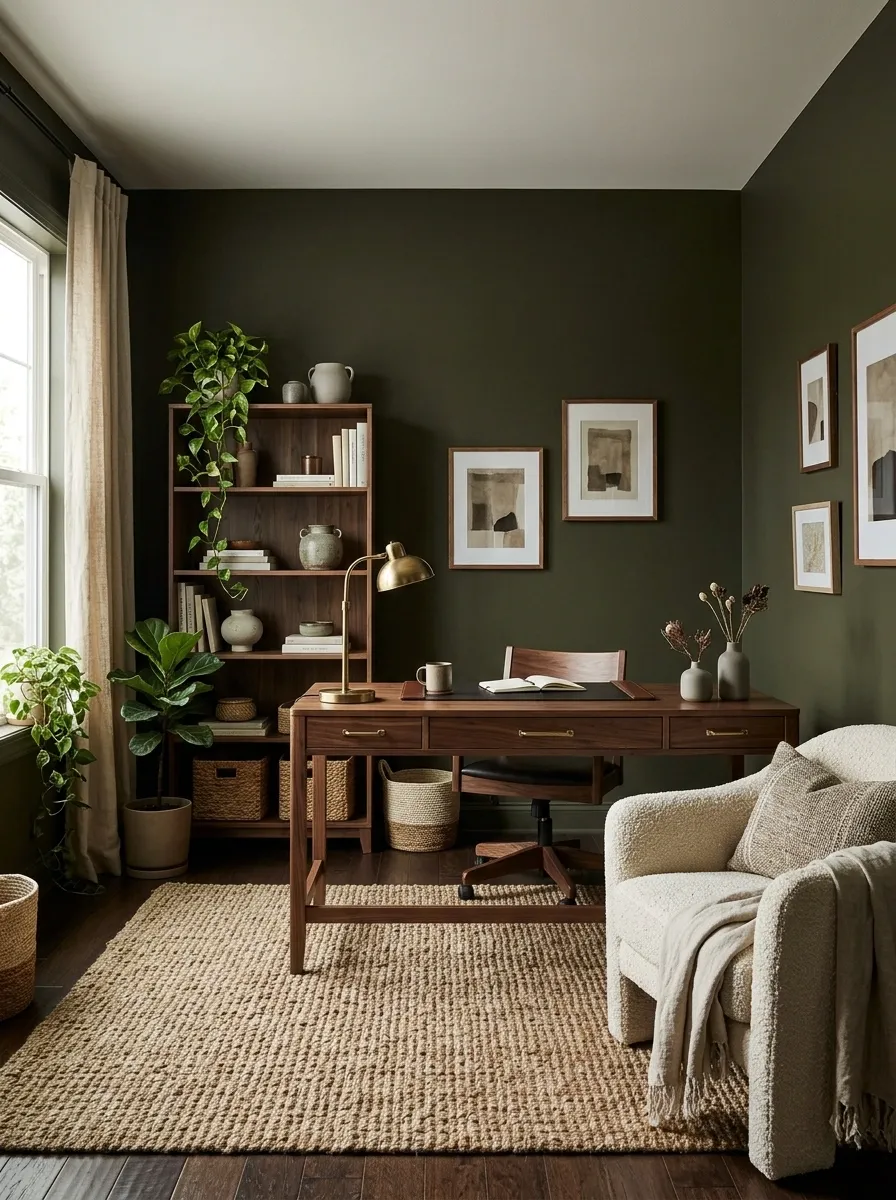
Deep olive walls give this office an entirely different mood. Walnut furniture, cream upholstery, woven storage, a large natural-fiber rug, and muted artwork keep the darker backdrop from feeling heavy. The desk becomes the visual center because the surrounding finishes are rich but controlled.
This room works through tonal depth rather than a long list of decorative accents. Olive and walnut naturally sit close together, while cream creates the contrast that keeps the composition readable.
Keep the floor and larger textiles relatively quiet. Once the wall color and wood are doing this much visual work, another loud pattern can quickly become the room’s unwanted main character.
Small Boho Office Nook With Built-In Storage
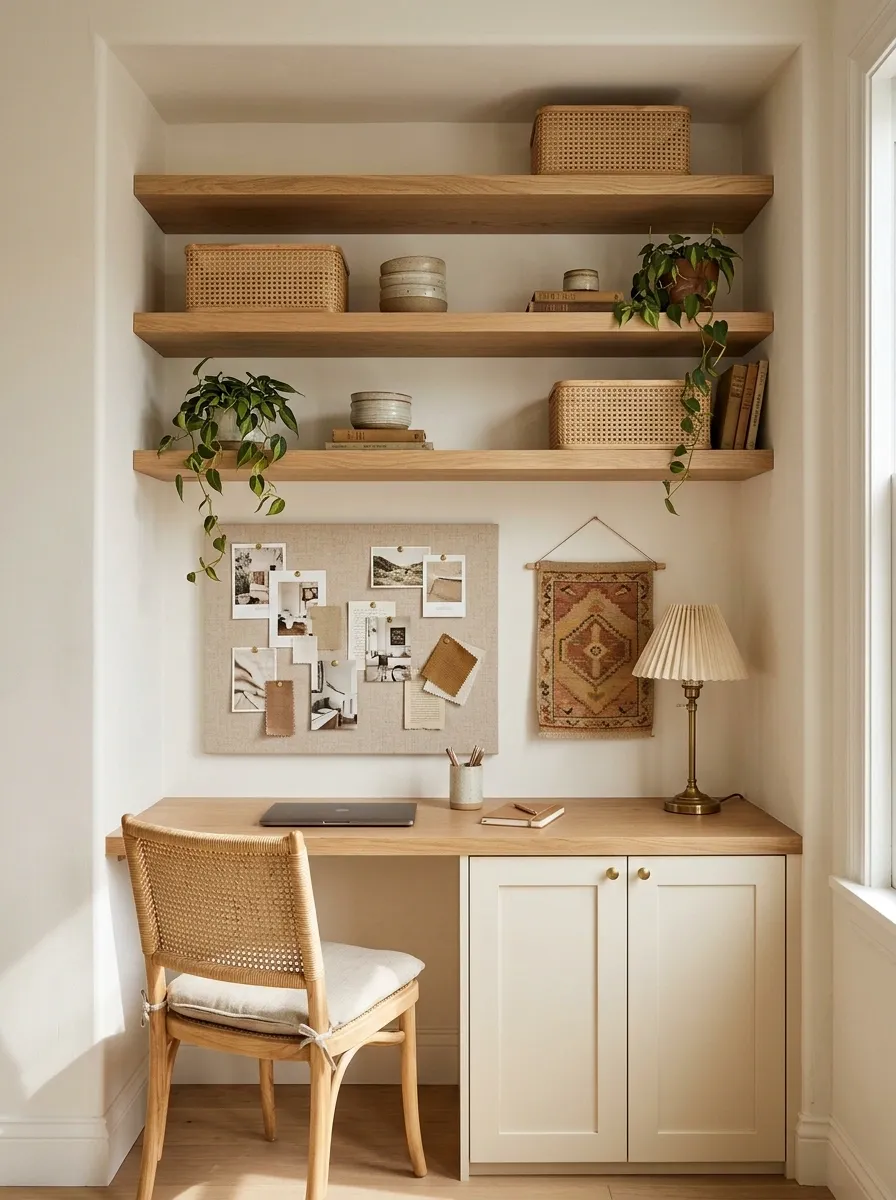
A tiny office does not need to look like a sad desk parked in a hallway. This nook uses a slim oak desk, low closed cabinets, floating shelves, woven baskets, a small pinboard, and one patterned textile to turn an awkward recess into a proper workspace. The storage stays close to the desk, so the work surface doesn’t become the unofficial dumping ground for receipts, chargers, and mysterious bits of paper.
The palette is warm cream, honeyed wood, muted rust, and natural fiber. Because the footprint is small, the furniture stays visually light and the wall carries much of the personality.
This is especially effective when the office occupies part of a bedroom, landing, or underused corner rather than having a dedicated room.
Boho Office in a Bright Bedroom Corner
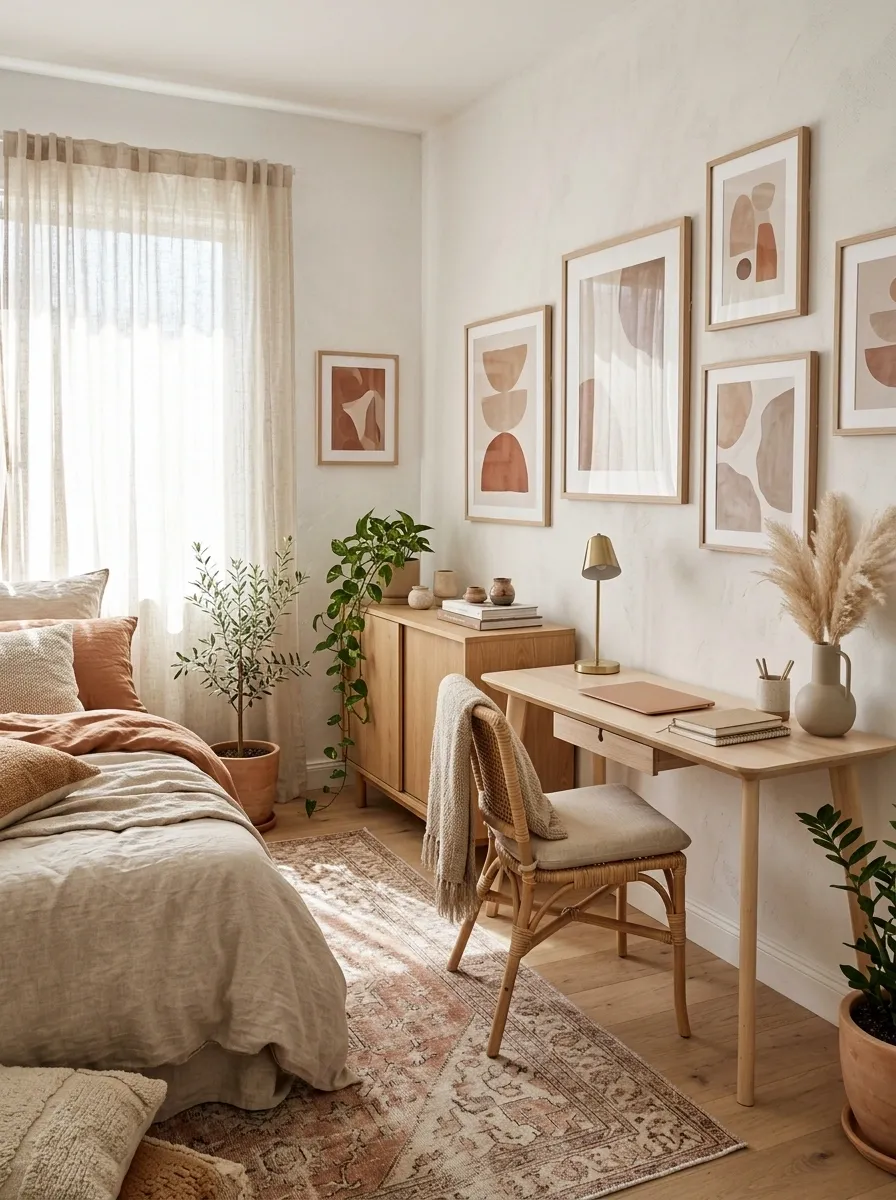
This workspace shares a bedroom without looking like the desk wandered in after everyone else had gone to bed. A pale timber desk sits beside a low cabinet, with a woven chair, faded rug, linen curtains, and artwork that repeats the bedroom’s warm neutral palette. The result feels like one room with two clear purposes.
The desk faces enough natural light to make the work zone feel pleasant, while the softer furnishings around it keep the bedroom from becoming visually divided. A small lamp adds task lighting after sunset without introducing another competing statement piece.
The important detail is coordination. The office borrows colors and materials from the bedroom instead of trying to establish an entirely separate identity.
Boho Loft Office With Exposed Brick
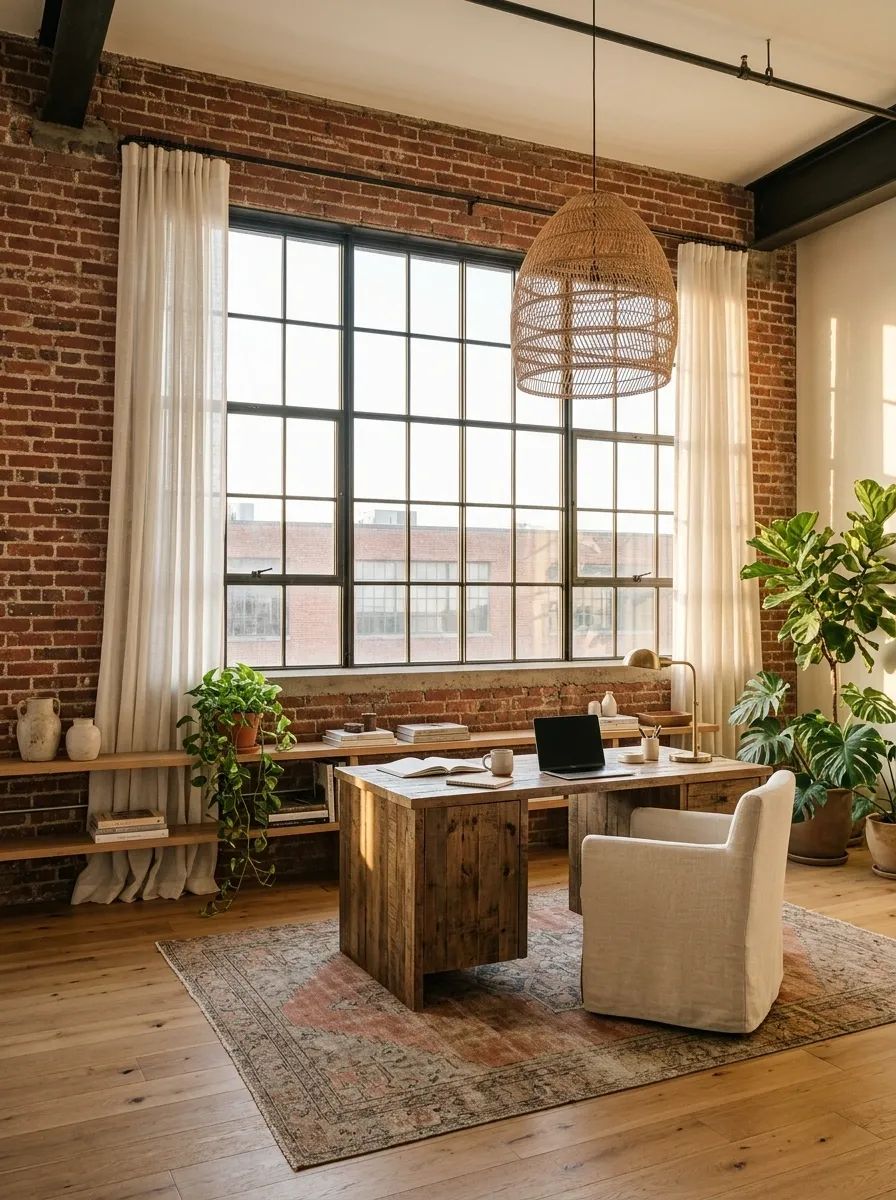
Exposed brick gives this office a harder architectural edge, so the furnishings can be noticeably softer. A reclaimed wood desk sits in front of a large window, paired with a linen chair, woven pendant, faded rug, and long curtains that soften the brick and dark window frames. Low shelving keeps the room practical without covering up the architecture.
The contrast is what makes the room work. Brick and black metal bring structure, while wood, linen, and woven textures stop the space from looking like a converted workshop that accidentally acquired a Pinterest account.
Artwork can stay fairly restrained here. The wall already has texture, so covering every available brick with frames would erase the very feature that gives the room its character.
Sunroom Boho Office Filled With Natural Light
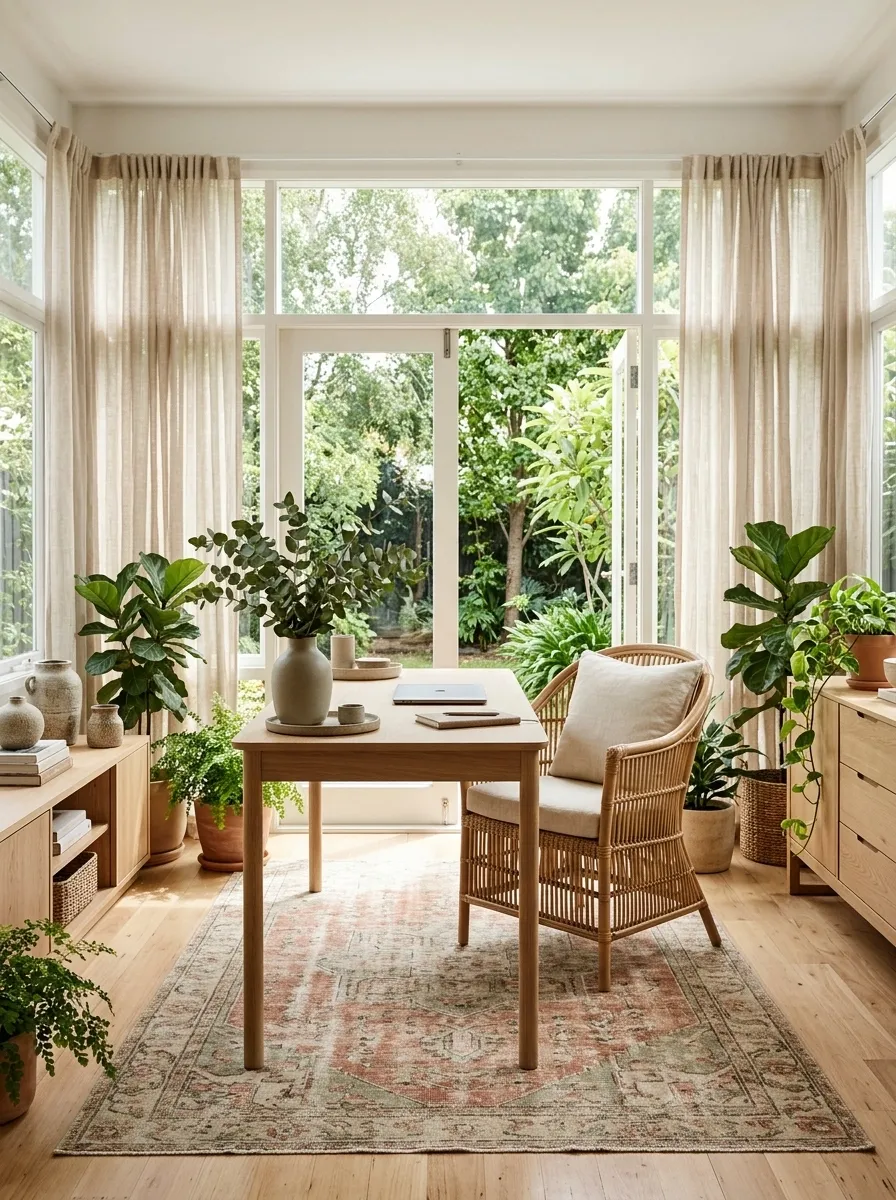
This office makes the windows part of the design rather than treating them as background scenery. A pale oak desk faces the garden, with a woven chair, low storage, linen curtains, and a faded rug keeping the room grounded. Plants sit around the perimeter rather than swallowing the workspace, creating a green frame around the main composition.
The biggest advantage is the calm palette. Cream, light wood, soft green, and muted terracotta keep the room connected to the outdoors without turning it into a greenhouse with a laptop.
Screen glare needs more attention here than decoration does. Sheer curtains give the space softness while providing some control when the sun becomes less cooperative.
Black and Natural Boho Office
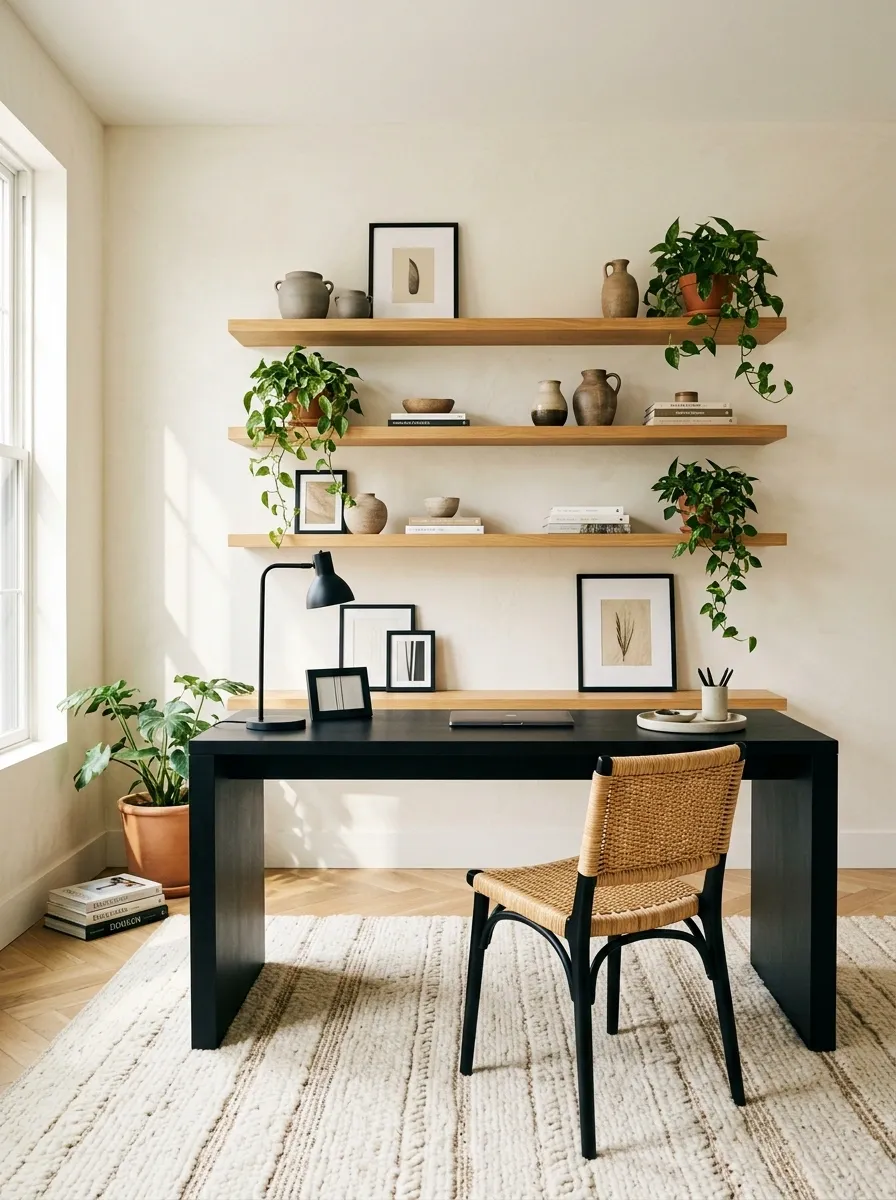
Black furniture gives this boho office a sharper silhouette than the usual all-wood setup. A matte black desk anchors the room, while pale walls, honey-toned shelving, woven seating, an ivory rug, and a few organic shapes keep the contrast from feeling severe.
The strongest visual move is concentrating the black in a few substantial pieces instead of sprinkling little black objects everywhere. The desk, lamp, and a couple of frames establish enough structure. The rest of the room can stay warm and natural.
This direction works particularly well when the surrounding architecture is simple. Against a quiet wall, the black furniture reads as intentional rather than heavy.
Soft Minimal Boho Office With Plaster Walls
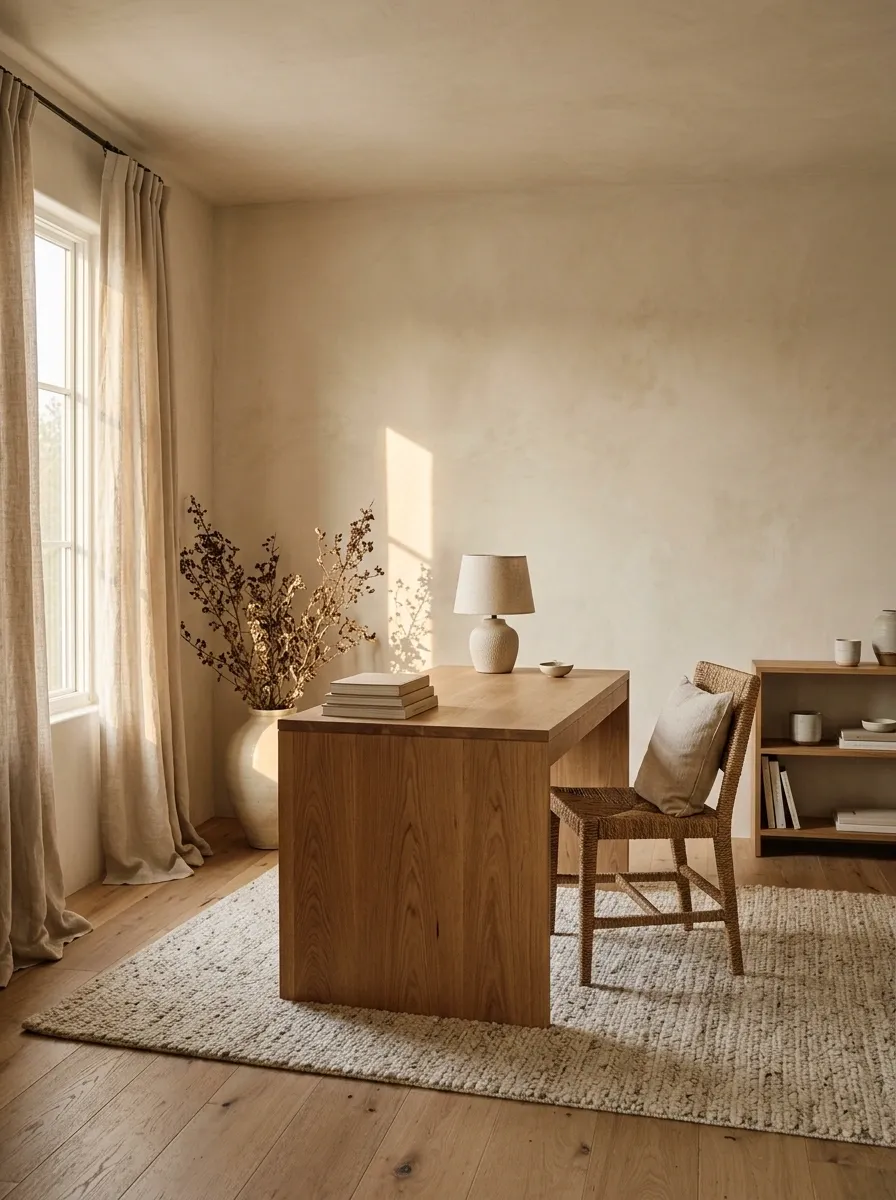
This room takes boho down to its quieter side. Warm plaster-toned walls, a substantial oak desk, a woven chair, linen curtains, a textured rug, and a handful of handmade-looking pieces create a workspace where the materials provide the personality.
Nothing is fighting for attention. The desk has enough visual weight to feel intentional, while the wall stays mostly open so the texture of the plaster remains visible. A small ceramic lamp and a few books add life without turning the desktop into an archaeological dig.
The result is especially convincing in rooms with simple architecture. When the bones are quiet, subtle texture becomes far more noticeable.
Maximalist Boho Office With Layered Art
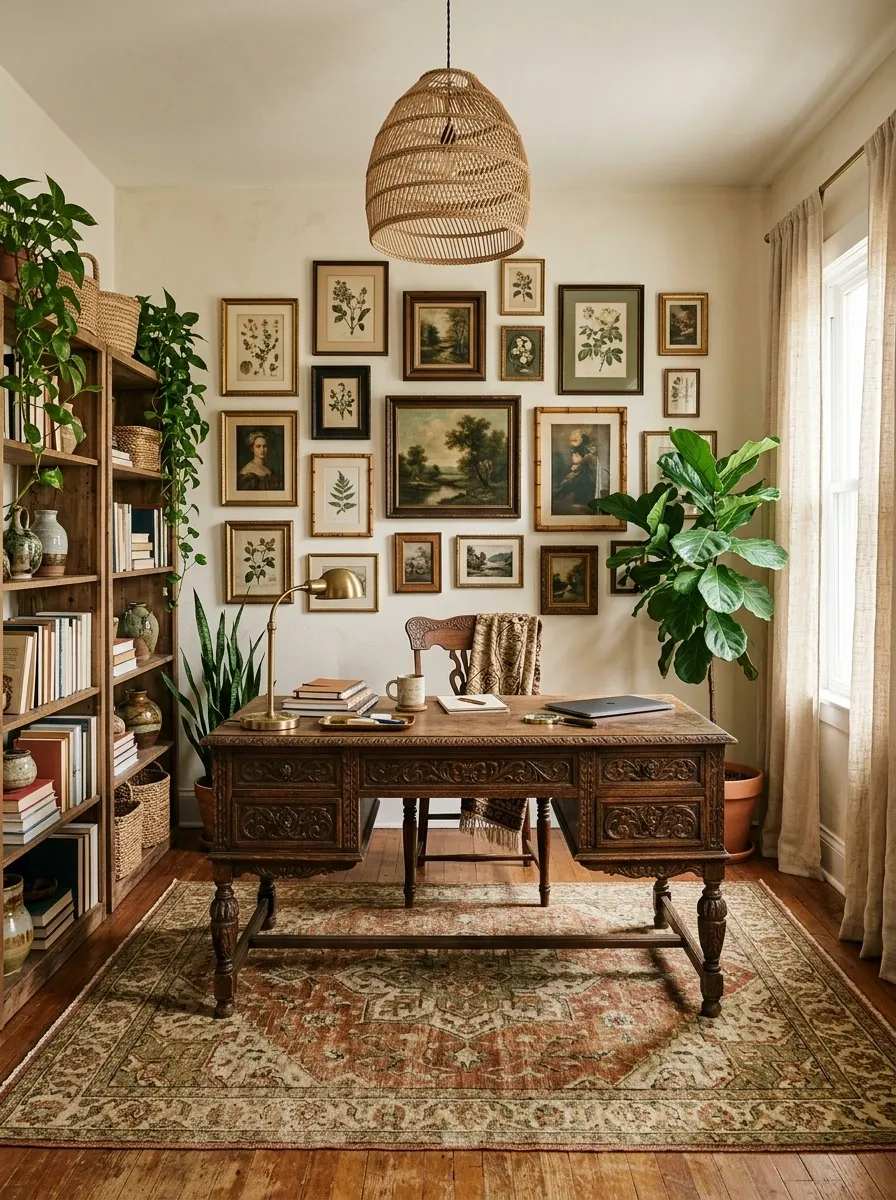
This is the louder version, but it still has a plan. A carved wood desk anchors the room while a patterned rug, vintage-style artwork, woven pendant, books, plants, textiles, and collected objects build layers around it. The colors stay within warm rust, ochre, olive, cream, and wood tones so the room can hold plenty of visual information without becoming chaotic.
The gallery wall does most of the heavy lifting. Instead of spacing every frame into a rigid grid, the artwork creates a looser composition around the desk and nearby shelving.
The trick is leaving a few calm areas untouched. Maximalism needs negative space too. Otherwise the room starts looking like every object was invited to the meeting and nobody had the courage to remove anyone.
Boho Office Under a Sloped Ceiling
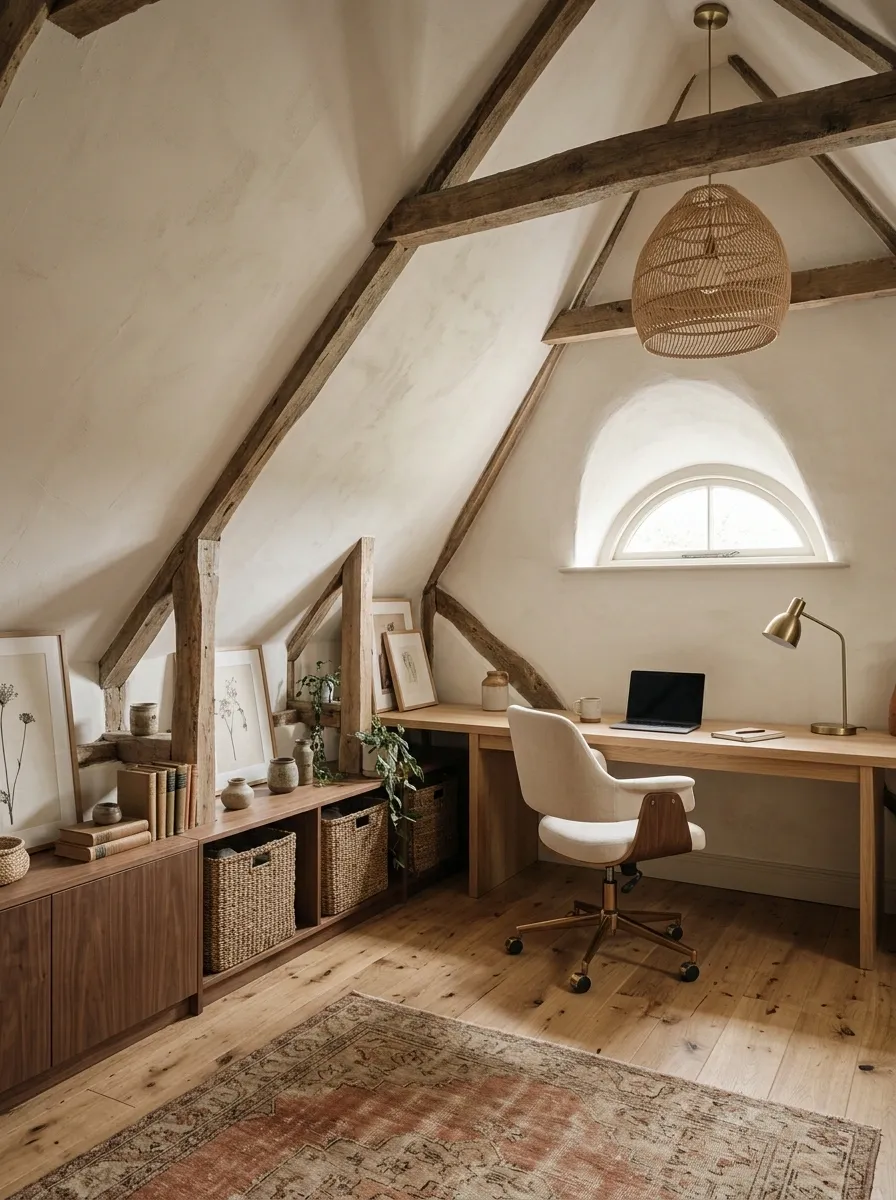
An awkward attic room becomes a useful workspace when the furniture respects the changing ceiling height. A long low desk sits beneath the highest practical section, while short cabinets follow the lower wall. Warm timber, a faded rug, soft cream upholstery, and woven lighting keep the room relaxed rather than making it feel like a cramped afterthought.
The architecture is doing enough, so the furniture stays uncomplicated. Taller pieces are kept toward the highest part of the room, while the low edges become useful storage and display zones.
That makes the space feel designed around the ceiling rather than designed in spite of it.
Rustic Boho Office With Reclaimed Wood
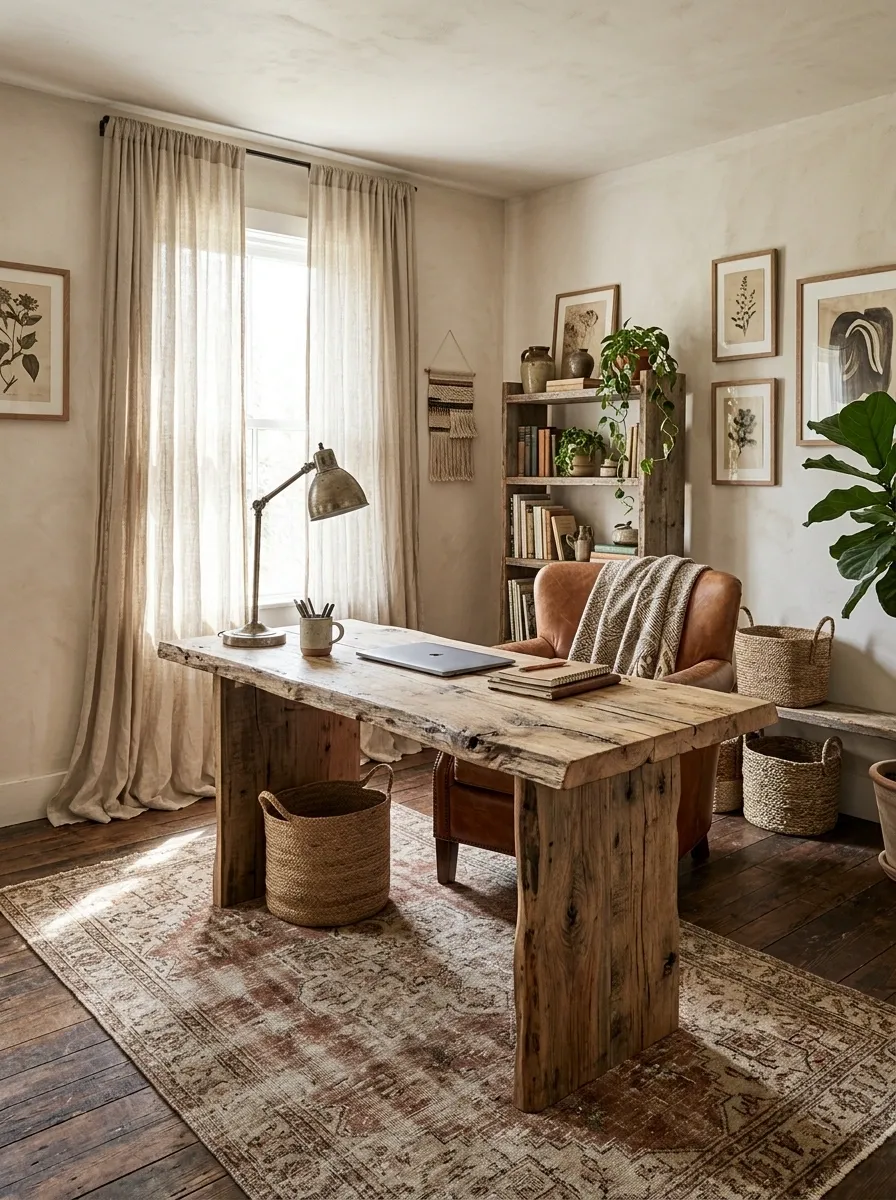
Reclaimed timber brings a rougher character to this office, paired with pale plaster walls, an aged metal lamp, leather seating, woven storage, and a faded rug. The materials have visible variation instead of looking factory-perfect, which gives the room a more grounded, cabin-like quality without turning it into a rustic theme set.
The reclaimed desk should be the hero. Surrounding furniture stays comparatively simple so the grain, knots, and irregular edges remain noticeable.
Soft textiles keep all that hard material from becoming visually cold. Linen curtains and a comfortably upholstered chair do enough work without introducing another major pattern.
Boho Office With a Library Wall
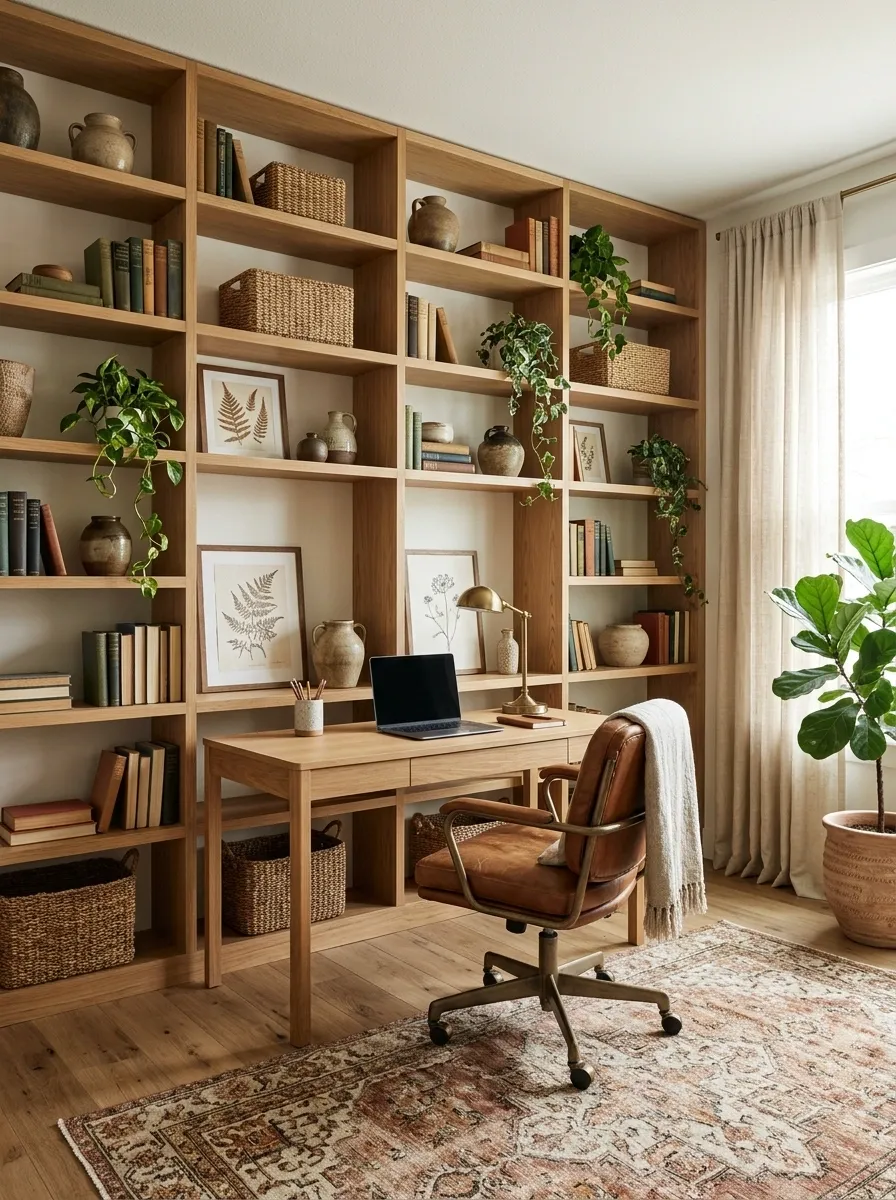
A full wall of bookshelves turns this workspace into something closer to a private studio. The desk sits directly in front of the shelving, surrounded by books, baskets, ceramics, framed artwork, and a few practical office supplies. Natural wood keeps the wall warm while cream and muted rust tones prevent the shelves from becoming visually muddy.
The secret is not filling every shelf. Some sections stay open, creating pockets of negative space between the denser groups of books and objects. That makes the wall read as a composition rather than one enormous storage unit.
It also gives the office a strong background in photographs, which is convenient when the Zoom camera accidentally becomes part of the interior design plan.
Elegant Boho Office With Brass and Linen
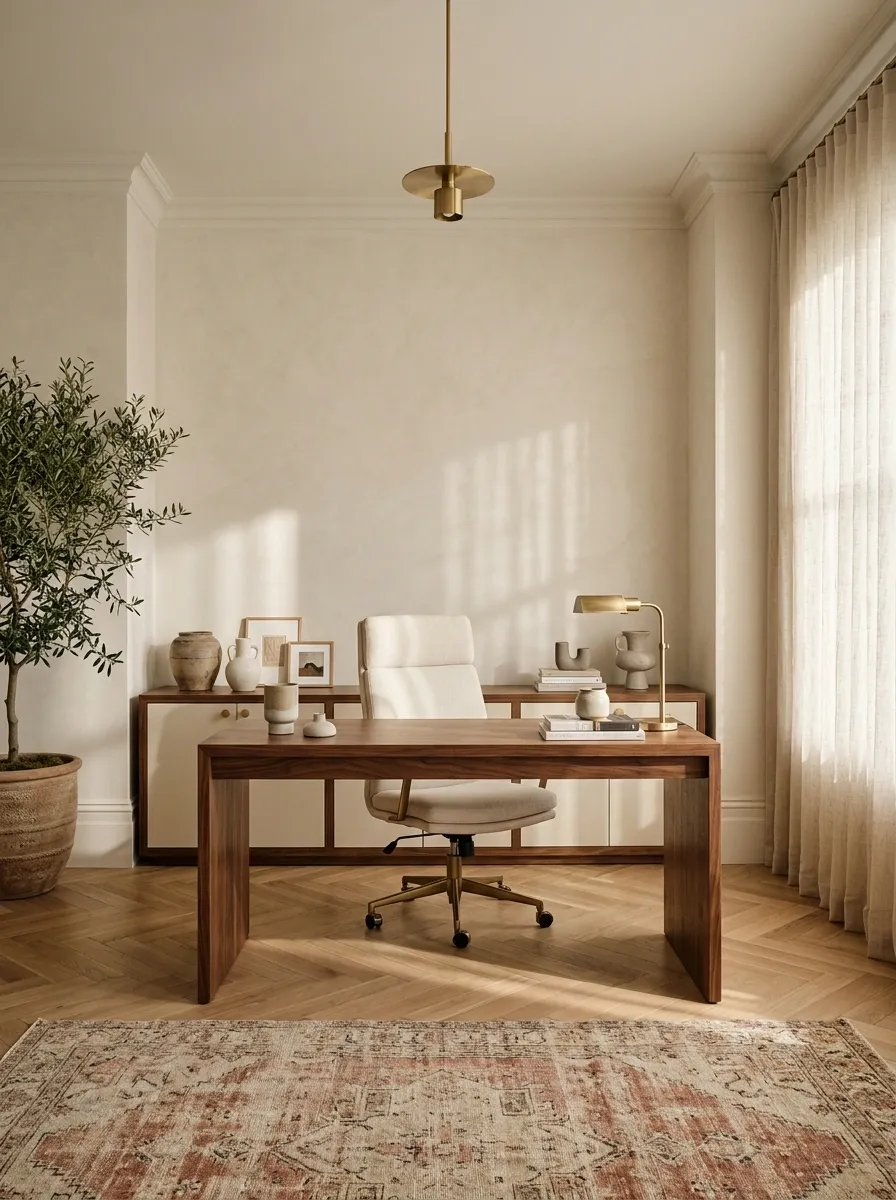
This is the polished side of boho, where warmth comes from materials rather than visual clutter. A walnut desk sits against a soft ivory wall, paired with an upholstered linen chair, brushed brass lighting, a faded patterned rug, and a few sculptural pieces. The room feels collected but noticeably calmer than a maximalist setup.
The brass works because it appears in only a few places. A desk lamp, cabinet pull, and lighting fixture can create enough repetition without turning the office into a brass showroom. Linen softens the darker wood, while the rug gives the floor just enough pattern to keep it from feeling flat.
The overall effect is refined without becoming precious. There is still room for books, notebooks, and the occasional cable that refuses to cooperate.
Compact Apartment Boho Office Behind a Sofa
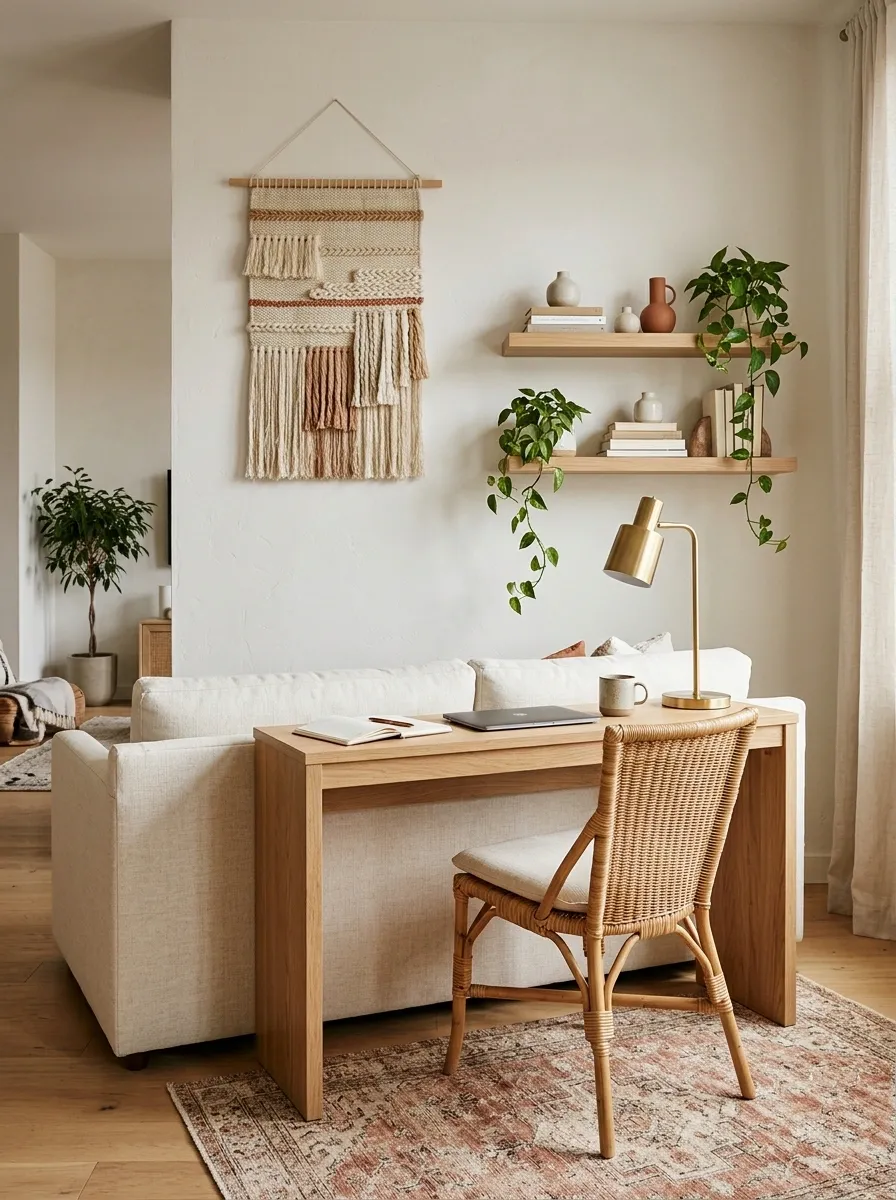
A slim console-style desk tucked behind the sofa turns an open living room into a practical two-purpose space. The desk stays narrow, while wall-mounted shelving handles books and supplies above it. A woven chair, small task lamp, vintage-inspired rug, and textile wall hanging make the work area feel intentional without visually cutting the room in half.
The sofa and desk share the same warm wood and cream palette, which keeps the workspace connected to the living area. There is no need for a giant room divider when the furniture already creates a natural boundary.
This layout works especially well when every square foot matters. The desk becomes part of the furniture arrangement instead of demanding a separate office-shaped corner.
Green and Ochre Boho Office
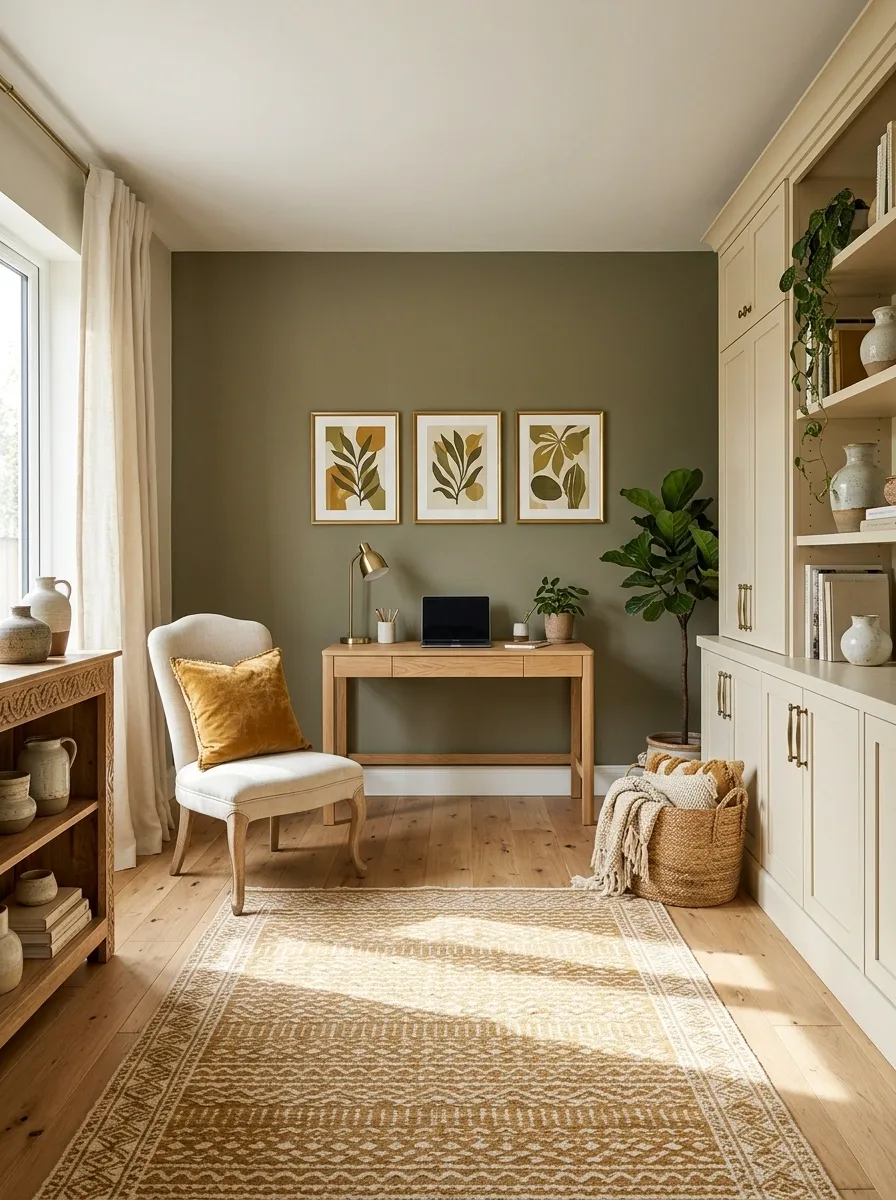
Muted green and ochre give this office more color without making it loud. An olive-toned wall frames a natural wood desk, while ochre appears through the rug, cushion, artwork, and a few smaller textiles. Cream curtains and pale upholstery keep the stronger colors from taking over.
The palette feels especially rich because the green and ochre are warm rather than bright. They sit comfortably beside natural timber, woven fibers, and aged-looking finishes.
Use pattern selectively here. The rug can carry more visual interest because the walls and furniture are relatively simple. Adding a second loud textile on top of it would only make the room busier without making it better.
The broadest color field
Repeated through textiles and art
Keeps the stronger tones breathable
Warm White Boho Office With Rich Pattern
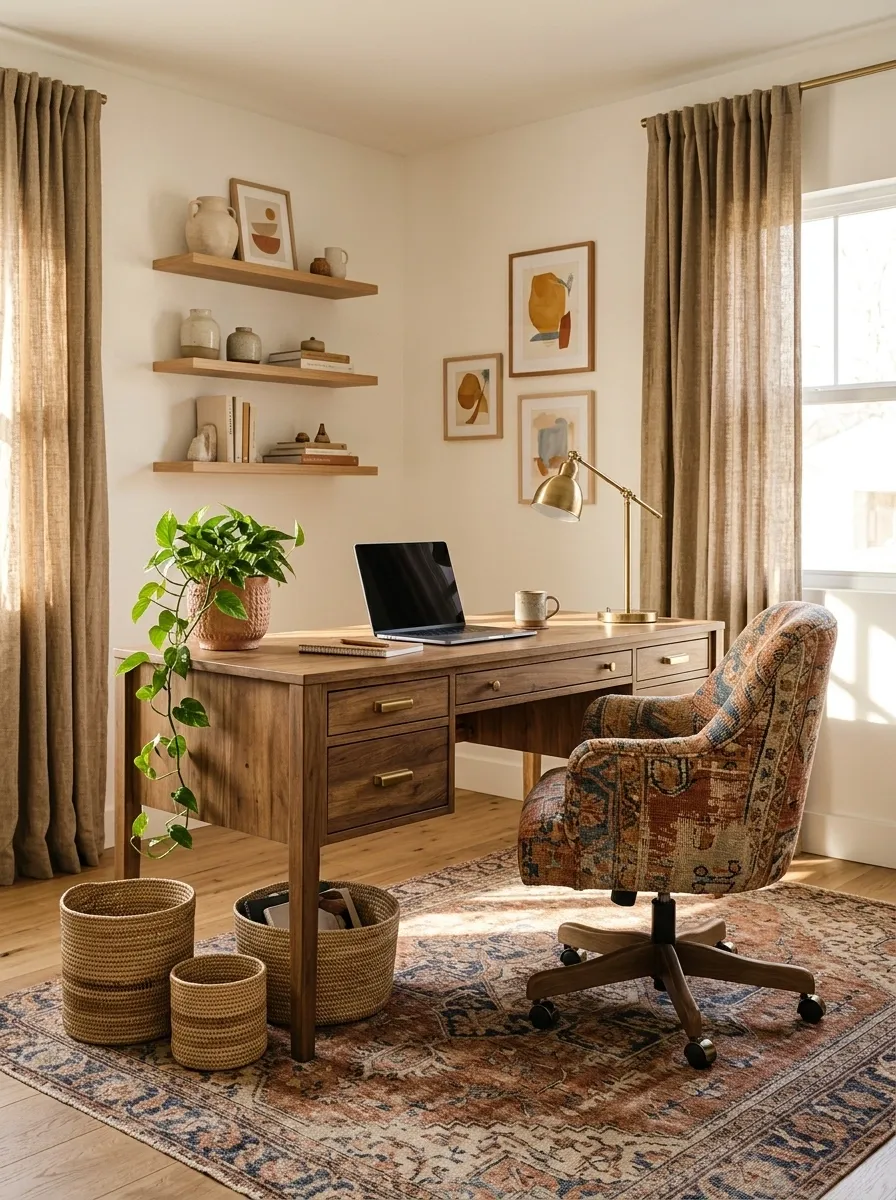
The walls stay almost completely quiet in this version, allowing the textiles to carry the visual story. A warm white backdrop frames a substantial wood desk, while the rug, curtains, upholstered chair, and artwork introduce more expressive patterns in rust, faded blue, ochre, and cream.
The room feels layered because pattern is concentrated rather than sprayed over everything. The desk and major storage pieces remain simple, giving the eye a stable place to land.
This approach is useful for anyone who loves textiles but doesn’t want a room that looks permanently mid-rearrangement. Keep the architecture calm, then let two or three soft surfaces do the expressive work.
Boho Office With a Built-In Bench and Desk
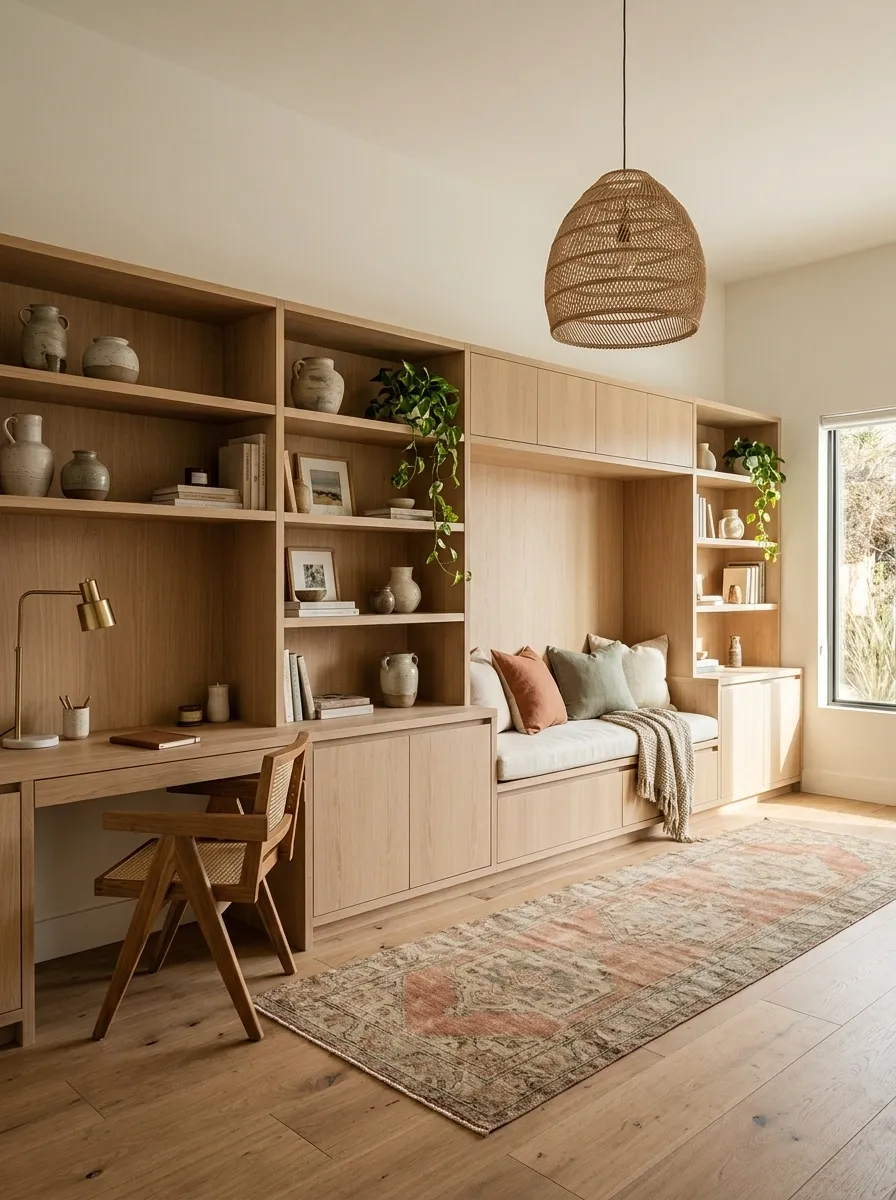
This room makes the workspace feel architectural by connecting the desk, bench seating, storage, and display shelving into one continuous wall. Pale oak keeps the built-in from feeling bulky, while a woven pendant, patterned rug, linen cushions, and a few handmade-looking objects bring in the relaxed boho character.
The bench adds a second use without competing with the desk. It can become a reading spot, a place to sort papers, or simply somewhere to sit when the desk chair has started feeling like a personality test.
Keeping the built-in visually simple is important. The room already has one large statement element, so the surrounding furniture should support it rather than compete with it.
Dark Wood Boho Office With a Vintage Rug
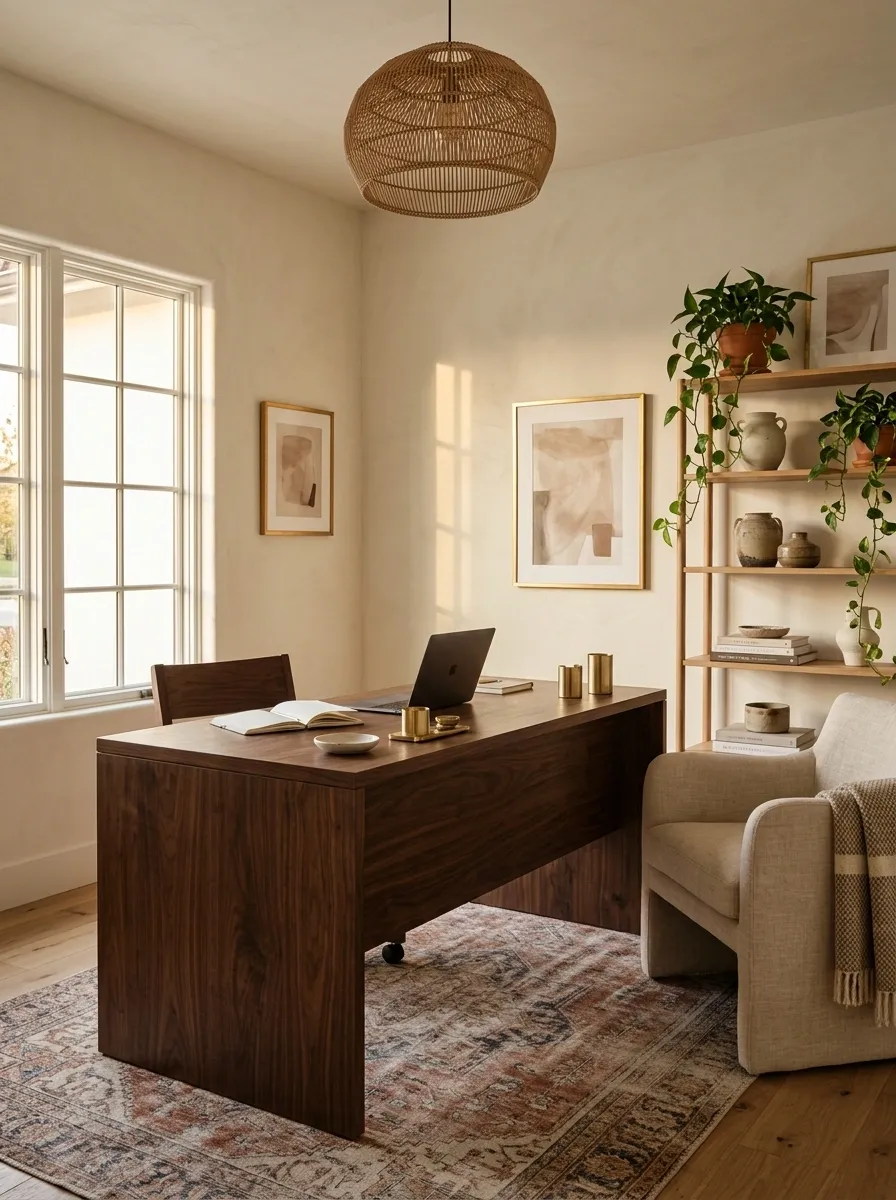
Deep wood furniture gives this office a richer, quieter character. A substantial walnut desk sits above a faded vintage-style rug, while cream walls, woven lighting, leather or linen seating, and soft artwork keep the room from becoming too dark.
The rug is the bridge between the heavy furniture and the lighter envelope of the room. Its muted pattern introduces color without asking for attention from every corner.
This direction suits anyone who likes boho style but wants something less airy and more grounded. The furniture should stay fairly substantial, because flimsy pieces would lose their visual presence against the darker wood and patterned floor.
Boho Office With a Curved Desk and Soft Forms
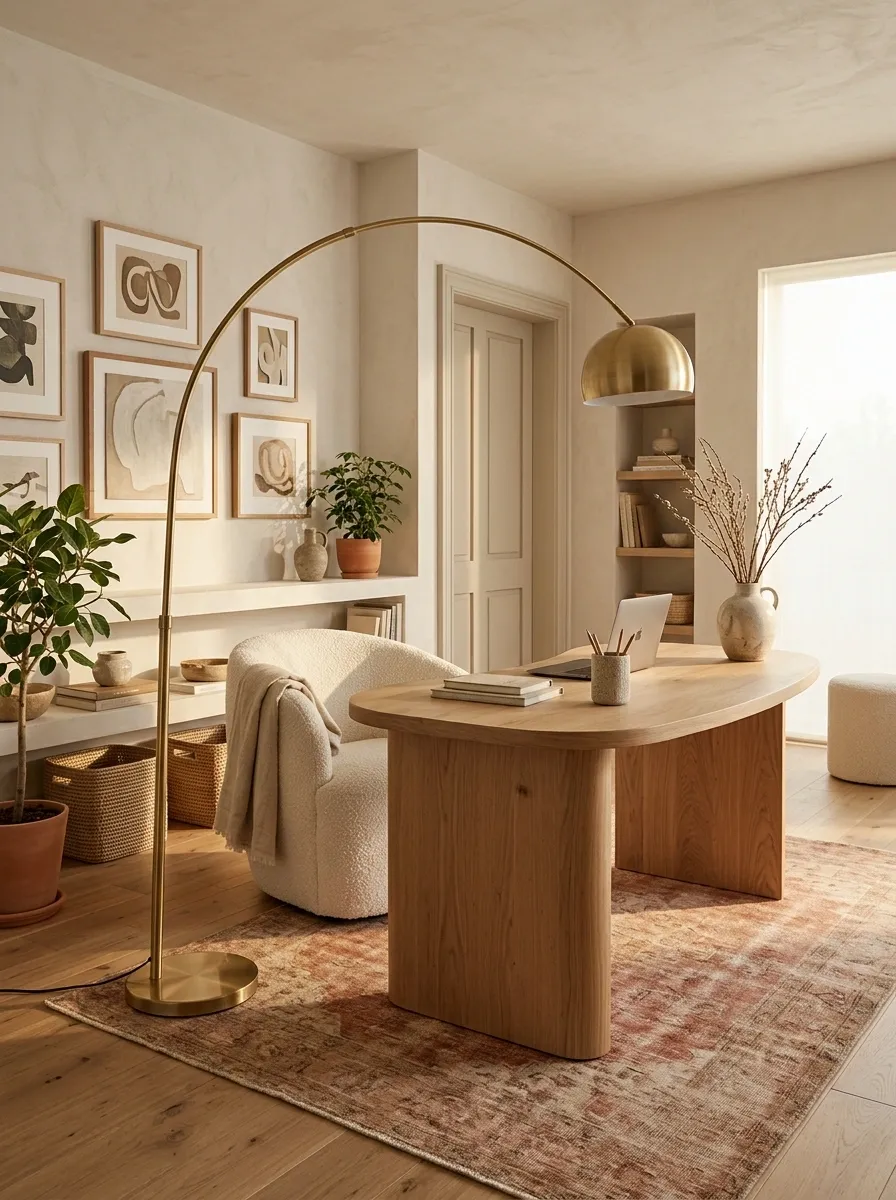
This office builds its identity around rounded shapes. A gently curved desk, rounded chair, arched lamp, soft-edged rug, and organic artwork create a room that feels noticeably different from the usual arrangement of hard rectangles.
Natural wood keeps the curves from becoming overly delicate, while warm ivory, muted rust, and woven textures add the familiar boho character. The room works because the curved forms repeat without appearing in every single object.
Keep a few straight architectural elements visible. A perfectly rounded room can start looking like a showroom for furniture that has forgotten what corners are for.
Travel-Inspired Collected Boho Office
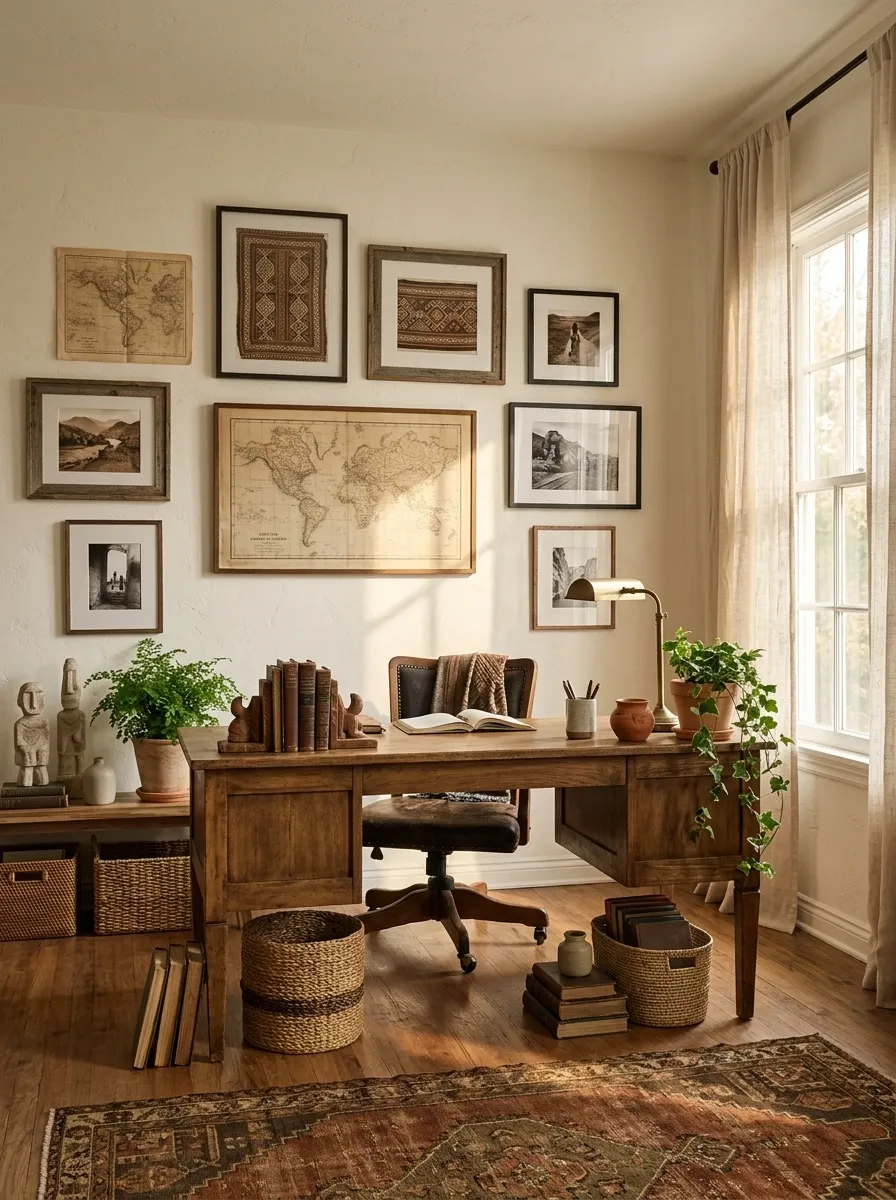
This office feels personal because its inspiration comes from places, objects, and stories rather than one obvious decorating theme. A warm timber desk sits beneath maps, framed textiles, travel photography, handmade-looking ceramics, carved wood pieces, books, and woven storage. The colors stay grounded in cream, tobacco, rust, olive, and natural wood.
The room has enough variety to feel lived in, but the palette keeps everything from fighting. Larger pieces establish the visual structure, while smaller objects provide the sense of discovery.
The difference between collected and cluttered comes down to editing. Not every souvenir needs a starring role just because it survived the suitcase.
Boho Office With a Floor-Level Lounge Area
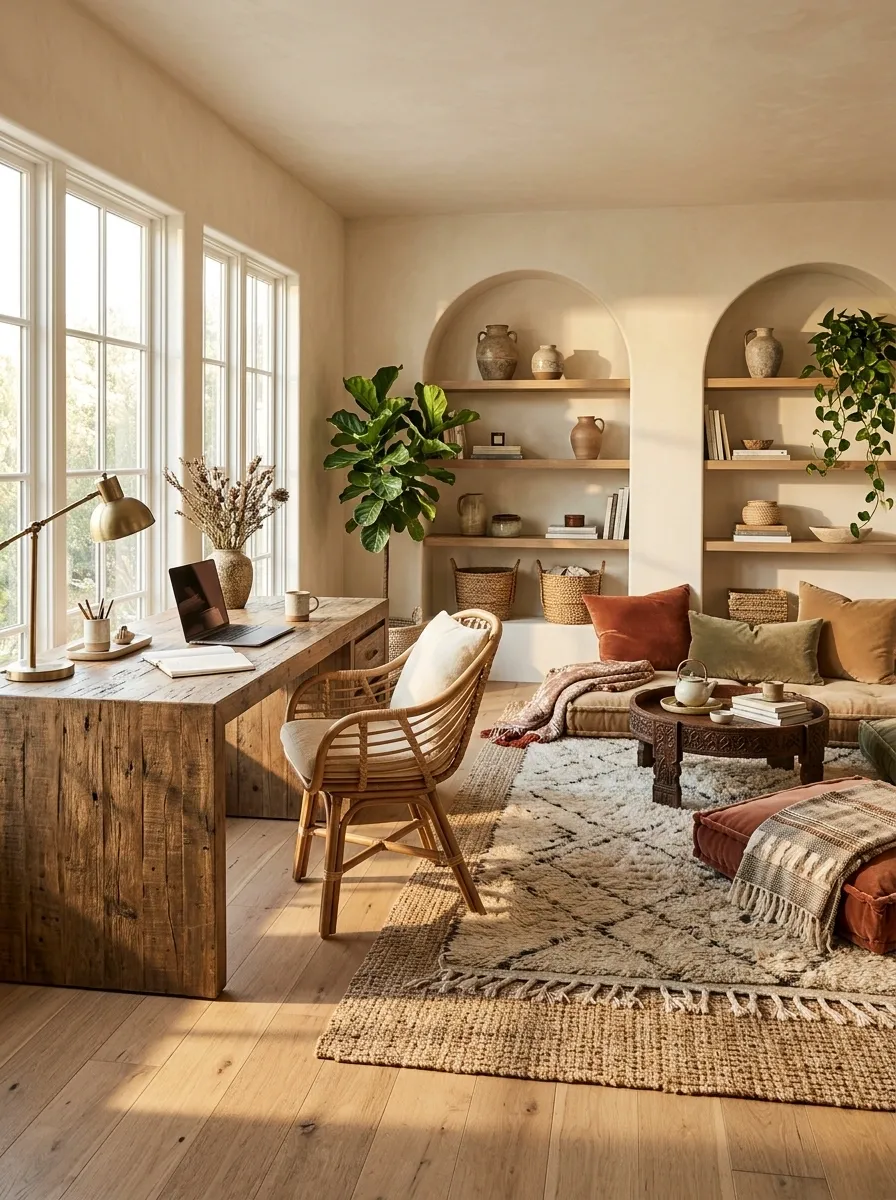
This office goes beyond the standard desk-and-chair setup by adding a low lounge corner for reading, sketching, brainstorming, or simply getting away from the screen. The main work zone uses a substantial wood desk and supportive chair, while the second area drops down to floor cushions, a low table, and layered textiles.
The two zones share the same cream, rust, tan, and olive palette, so the room remains visually cohesive despite the change in furniture height.
The lounge area should have enough room to feel deliberate. Squeezing three cushions into the leftover six inches beside the desk is not a lounge. It is furniture apologizing for existing.
Warm Black, Rust, and Cream Boho Office
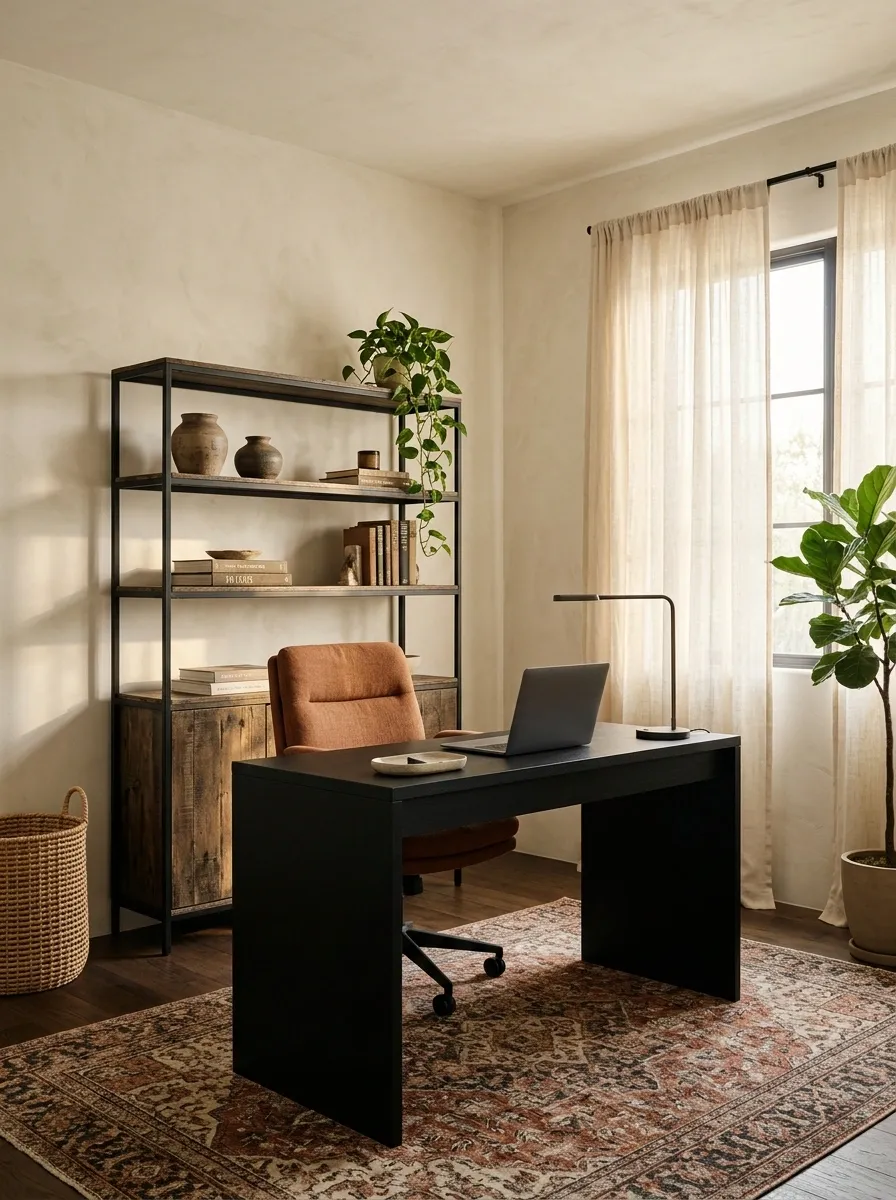
This office takes a bolder route with matte black furniture, rust-colored textiles, creamy walls, aged wood, and a patterned rug that ties everything together. The contrast is stronger than in a typical neutral boho room, but the warm rust and natural materials keep the black from feeling severe.
The desk and shelving provide the dark structure, while the rug and curtains bring the warmer tones into the lower and middle parts of the room. Cream walls leave enough visual space around those deeper colors.
The best part is the balance. Black gets to make a statement without becoming the entire personality of the room. One dramatic color is plenty. There is no need to invite six more to the meeting.
Boho Office With Freestanding Wardrobe Storage
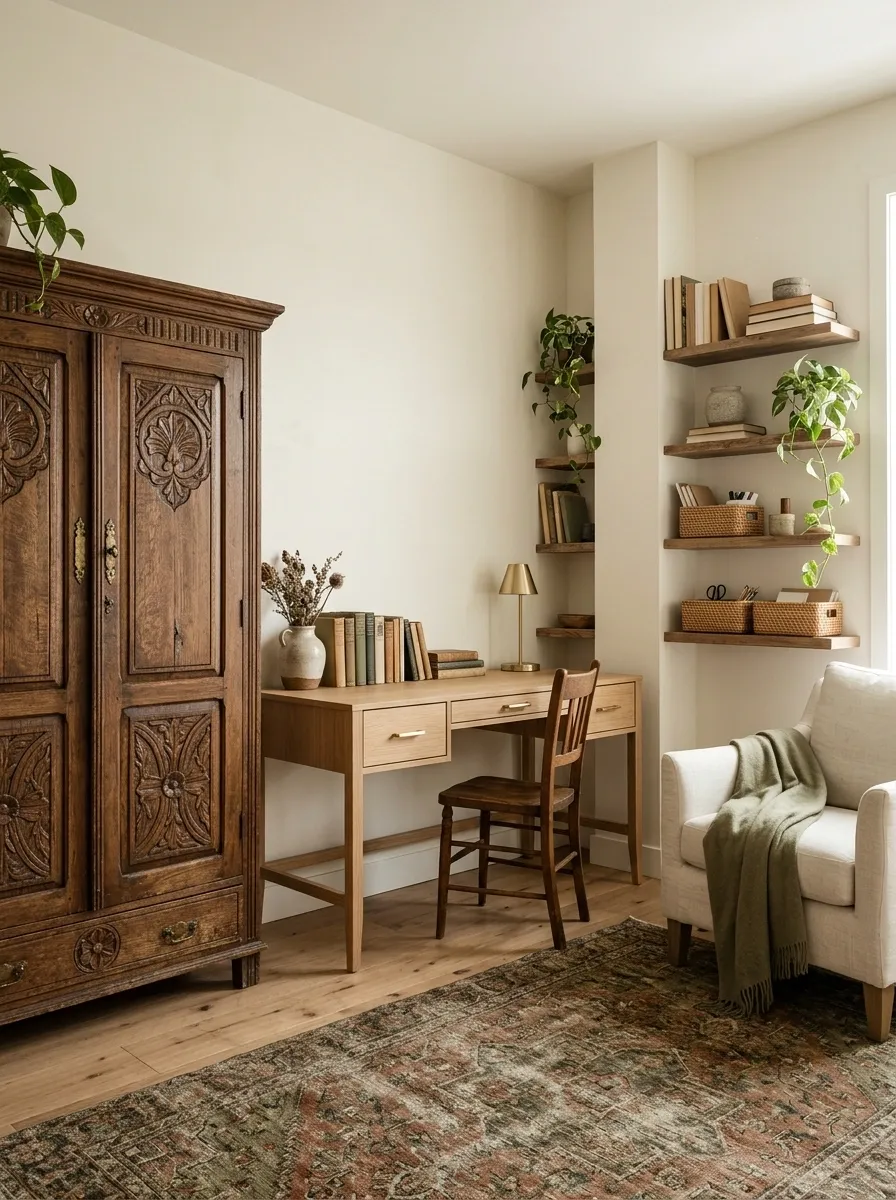
A tall vintage wardrobe gives this office a proper storage anchor without covering the entire wall in built-ins. The desk sits beside it, while woven baskets, open shelving, books, and a faded rug fill out the rest of the room. The wardrobe provides a place to hide printers, paperwork, cables, and all the other things that make open shelving look suspiciously optimistic.
Natural wood and cream establish the base, while muted rust and olive appear through artwork and textiles. The room feels collected because the wardrobe looks like a piece of furniture rather than an office supply cabinet.
It is an especially useful composition for rooms where storage matters but wall-to-wall cabinetry would feel too permanent.
Polished Boho Office With Sculptural Lighting
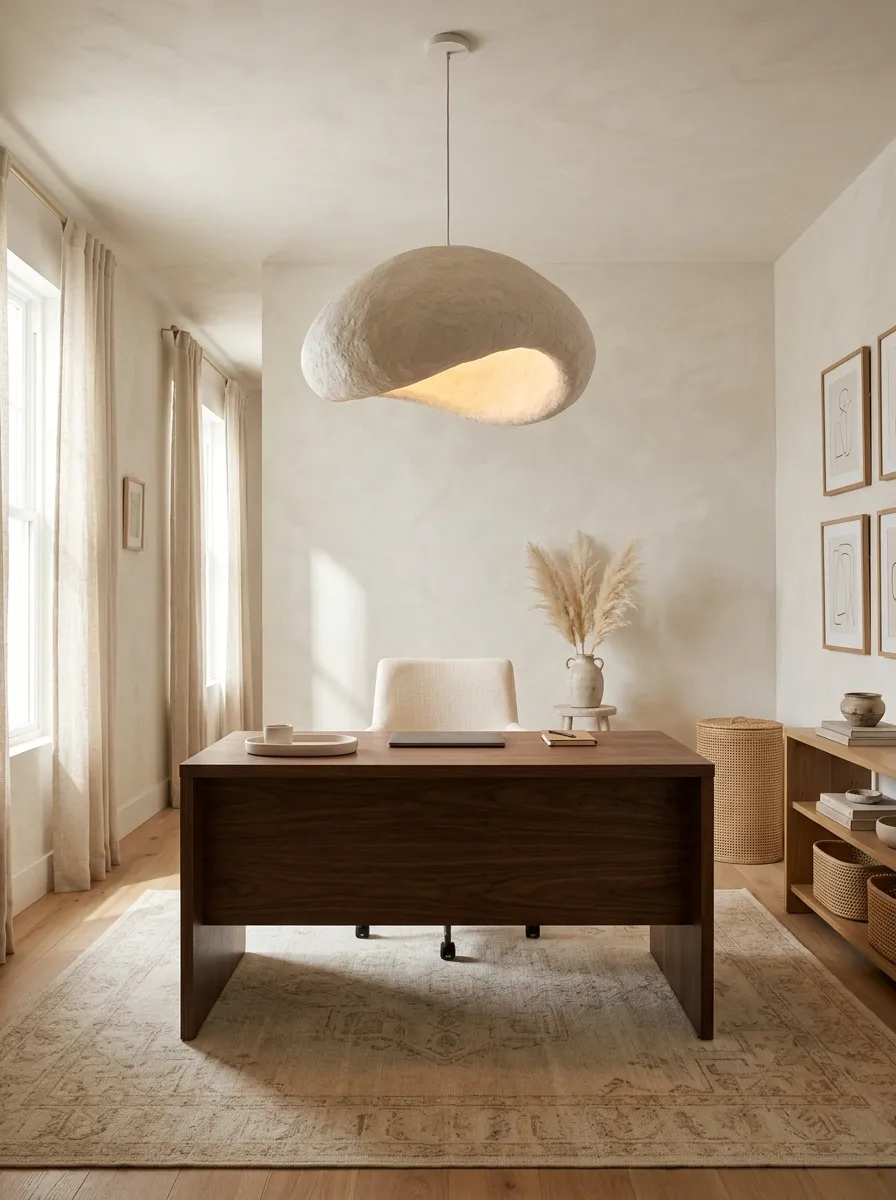
This room is built around one memorable lighting fixture. A large sculptural pendant hangs above a substantial walnut desk, with plaster-toned walls, linen upholstery, woven accents, and restrained artwork supporting the focal point. The lighting becomes part of the architecture instead of an afterthought attached to the ceiling.
The rest of the room deliberately stays quieter. The desk has clean proportions, the rug carries only subtle pattern, and the wall art doesn’t compete with the pendant’s silhouette.
This is a strong direction for a room that needs one unmistakable focal point. Give the light enough breathing room and it can carry the visual drama without turning the entire ceiling into a collection of things.
Boho Office With a Long Shared Worktable
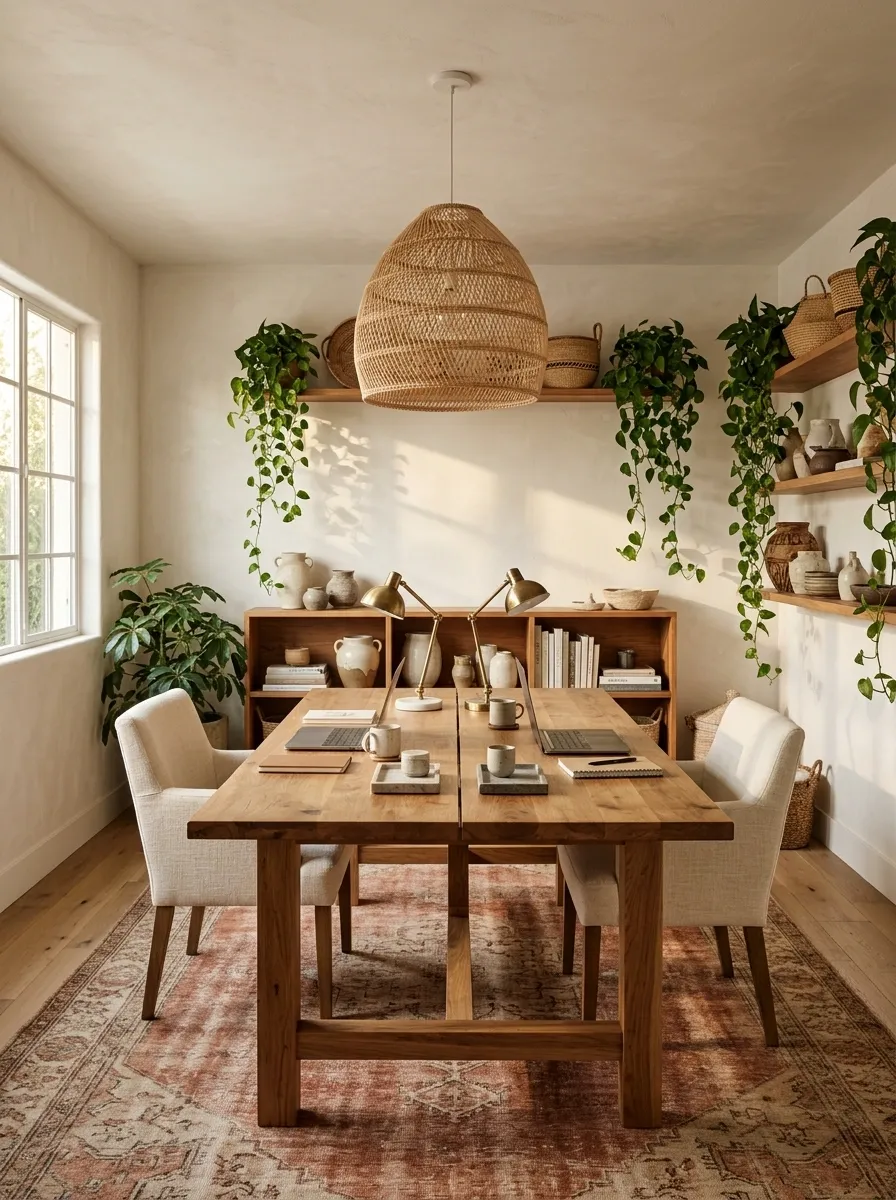
A long timber table creates a generous shared workspace for two people without making the room feel like a corporate co-working space. Two upholstered chairs sit opposite a low storage wall, while woven lighting, a large faded rug, and open shelving bring softness around the central work surface.
The shared table is the visual anchor, so everything else stays relatively low and quiet. Coordinated chairs keep the composition connected, while separate task lamps give each side of the table its own functional light.
This setup works especially well for couples, siblings, creative partners, or anyone whose household has somehow produced two people who both need the same desk at exactly the same time.
Soft Scandinavian-Boho Office
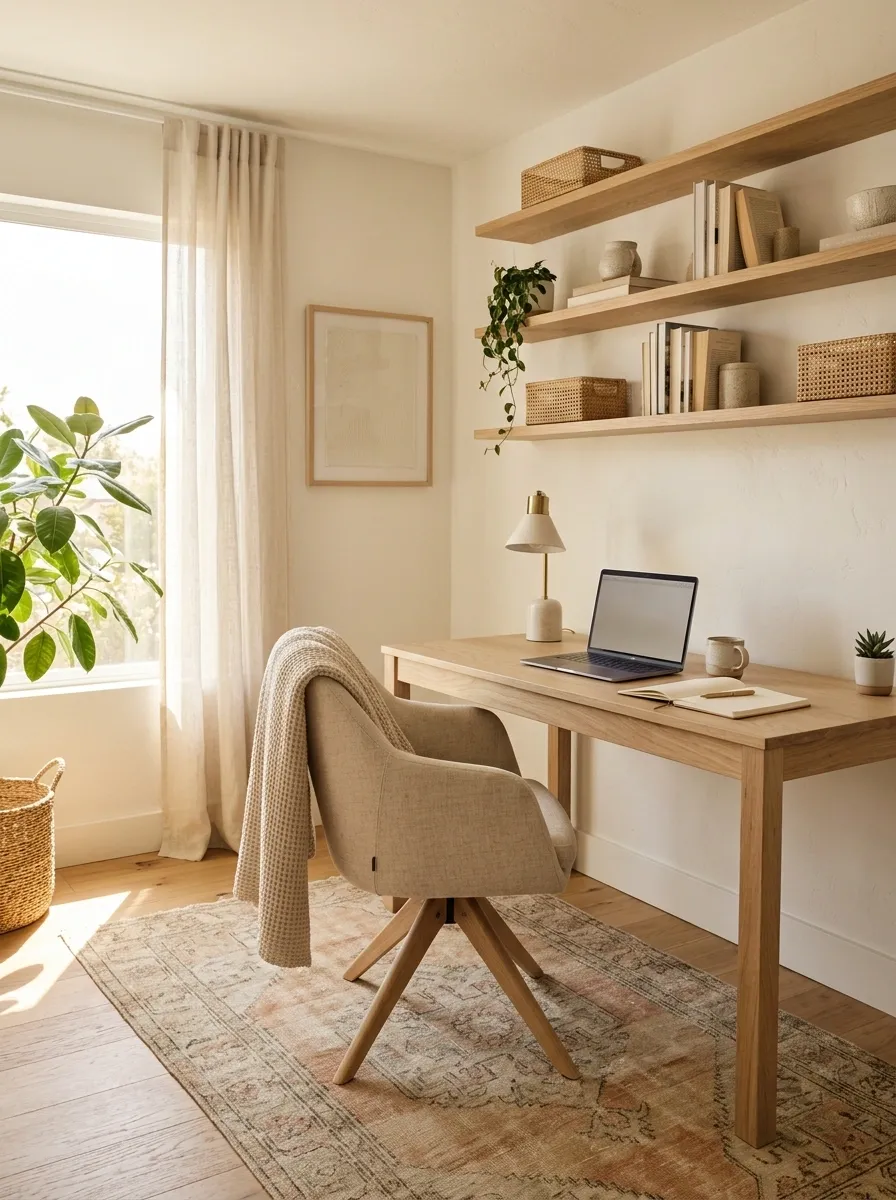
Pale oak and warm white create a clean Nordic base, while woven textures, a muted vintage rug, linen upholstery, and one or two older pieces add the bohemian layer. The room feels light and uncluttered, but it still has enough texture to avoid looking like a showroom where nobody is allowed to breathe.
A simple desk anchors the room, while open shelving holds a restrained mix of books, ceramics, and baskets. Pattern stays low-key, allowing the materials to create most of the visual interest.
This combination works beautifully when natural light already gives the room plenty of energy. There is no reason to manufacture drama when the room has good bones.
Clay Pink Boho Office With Soft Walnut Furniture
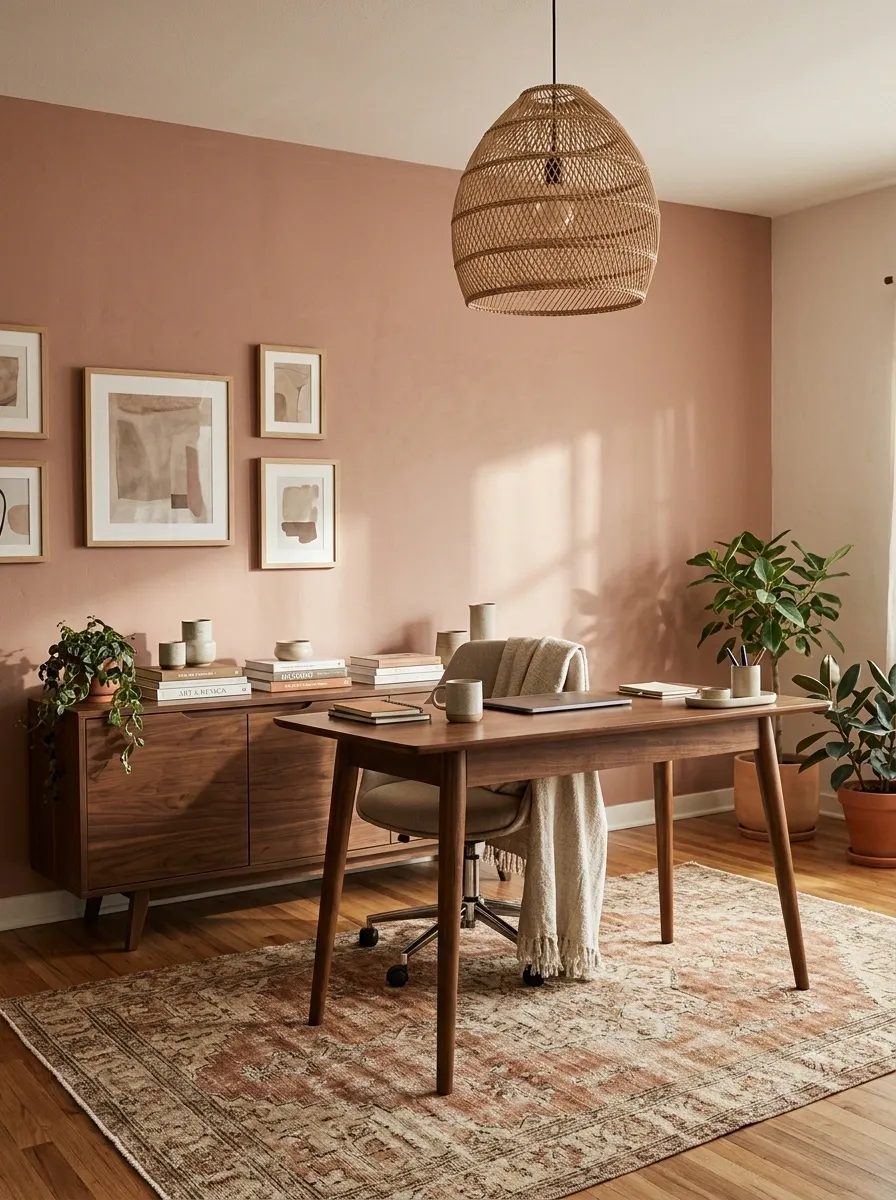
A dusty clay-pink wall gives this office a warm backdrop without turning the room sugary. A walnut desk and matching low cabinet add depth, while oatmeal linen, a woven pendant, a faded patterned rug, and muted artwork keep the palette grounded.
The color works because it is treated as architecture rather than an accent. The wall carries the strongest version of the tone, while the textiles repeat quieter versions of it through rust, tan, and cream. Walnut gives the whole composition enough weight to feel sophisticated.
Keep the rest of the room restrained. Once the wall has this much personality, adding pink to every cushion, vase, and frame would turn a thoughtful palette into a very determined theme.
Minimal Boho Office With a Wide Window and Low Furniture
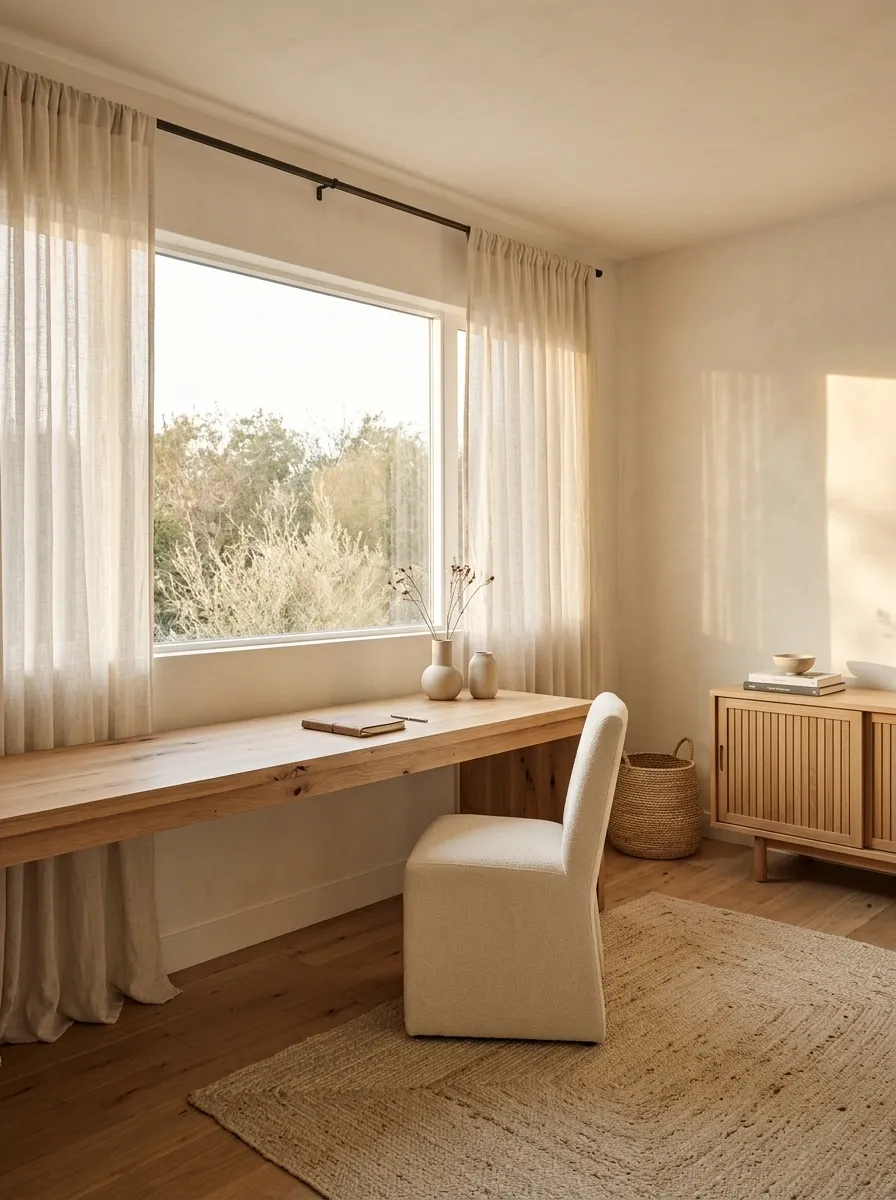
This room strips the boho look down to proportion, material, and light. A long low desk sits beneath a wide window, paired with a simple upholstered chair, low timber storage, linen curtains, a textured rug, and a few carefully placed objects.
The lower furniture keeps sight lines open, making the window and natural light feel like part of the design. Instead of filling the wall around the desk, the composition leaves generous negative space so the room feels calmer.
The bohemian character comes from variation in surface texture: rougher wood, woven fibers, soft linen, and a subtly irregular rug. Nothing needs to shout.
This is the room for anyone who looked at maximalist boho and quietly thought, “That is lovely, but absolutely not happening on this desk.”
Boho Office With a Painted Ceiling and Warm Timber
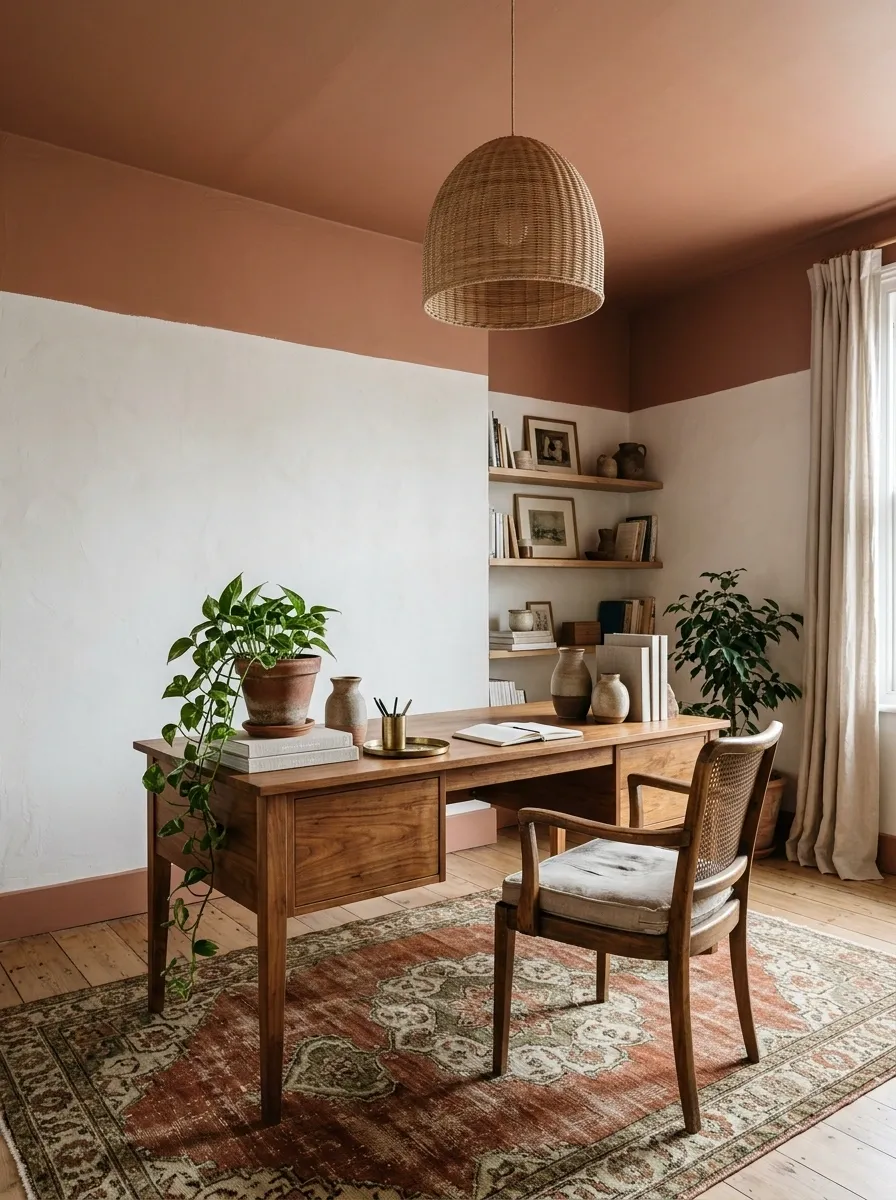
This room gets its personality from above. A muted earthy ceiling color continues slightly down the upper wall, creating a cocooning effect around a warm timber desk, cane chair, vintage rug, and woven pendant. The walls below remain lighter, so the darker ceiling adds character without making the entire room feel enclosed.
The contrast between ceiling and wall also gives a simple room more architectural definition. The furniture stays fairly straightforward because the overhead color already creates a strong visual moment.
This approach is especially interesting in rooms where the walls are too plain for built-in architectural features. Apparently ceilings have been doing all this work quietly while everyone keeps staring at accent walls.
Earthy Boho Office With a Leather Reading Chair
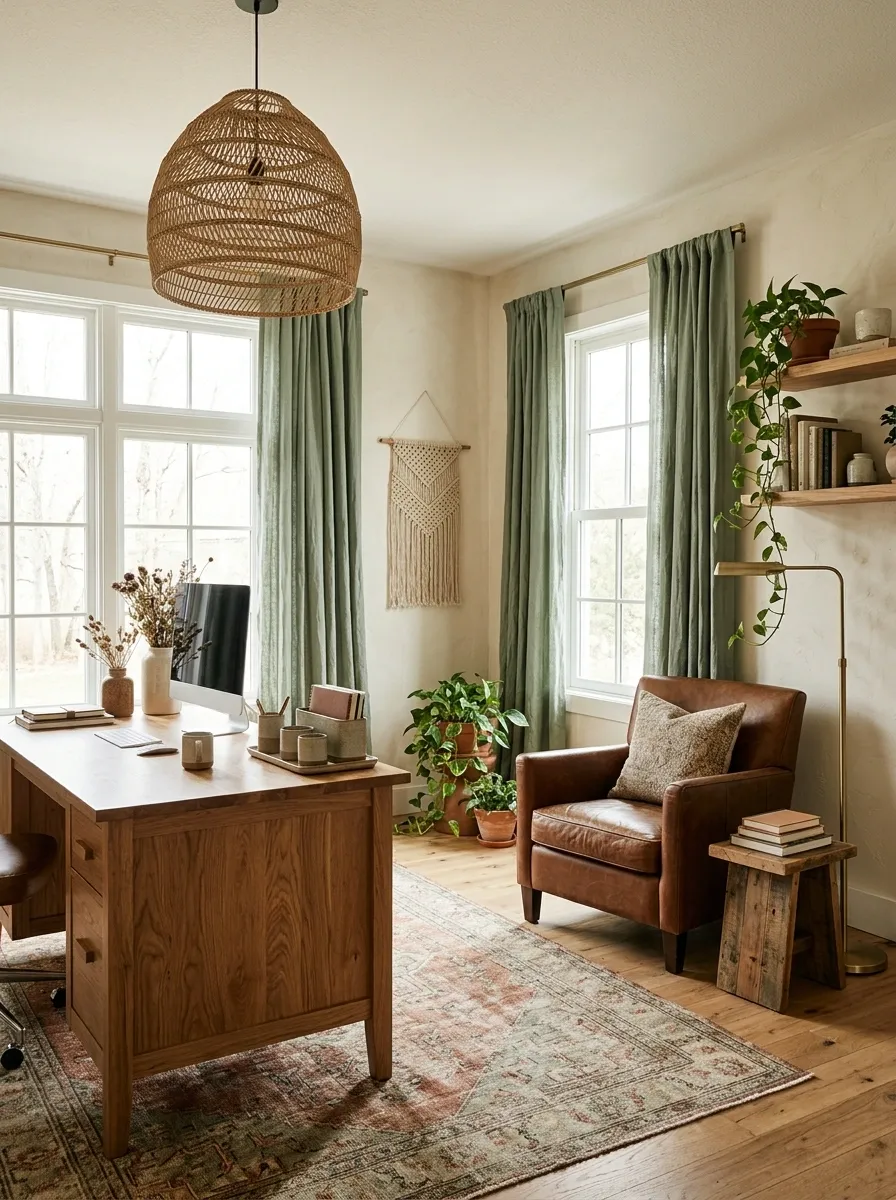
This workspace combines warm wood, tobacco leather, cream plaster-toned walls, woven lighting, a patterned rug, and muted green textiles. The desk remains the main work zone, while a leather reading chair sits in the opposite corner with a small side table and floor lamp.
The leather introduces a different texture from the usual linen-and-rattan combination, giving the room more depth and a slightly more tailored feel. The green textiles keep it connected to the natural palette without relying entirely on beige.
The chair matters because it gives the room another reason to exist. A home office can be practical and still acknowledge that sometimes the screen needs to be abandoned for a book, a notebook, or five minutes of pretending to be done for the day.
Boho Office With a Textured Accent Wall and Floating Desk
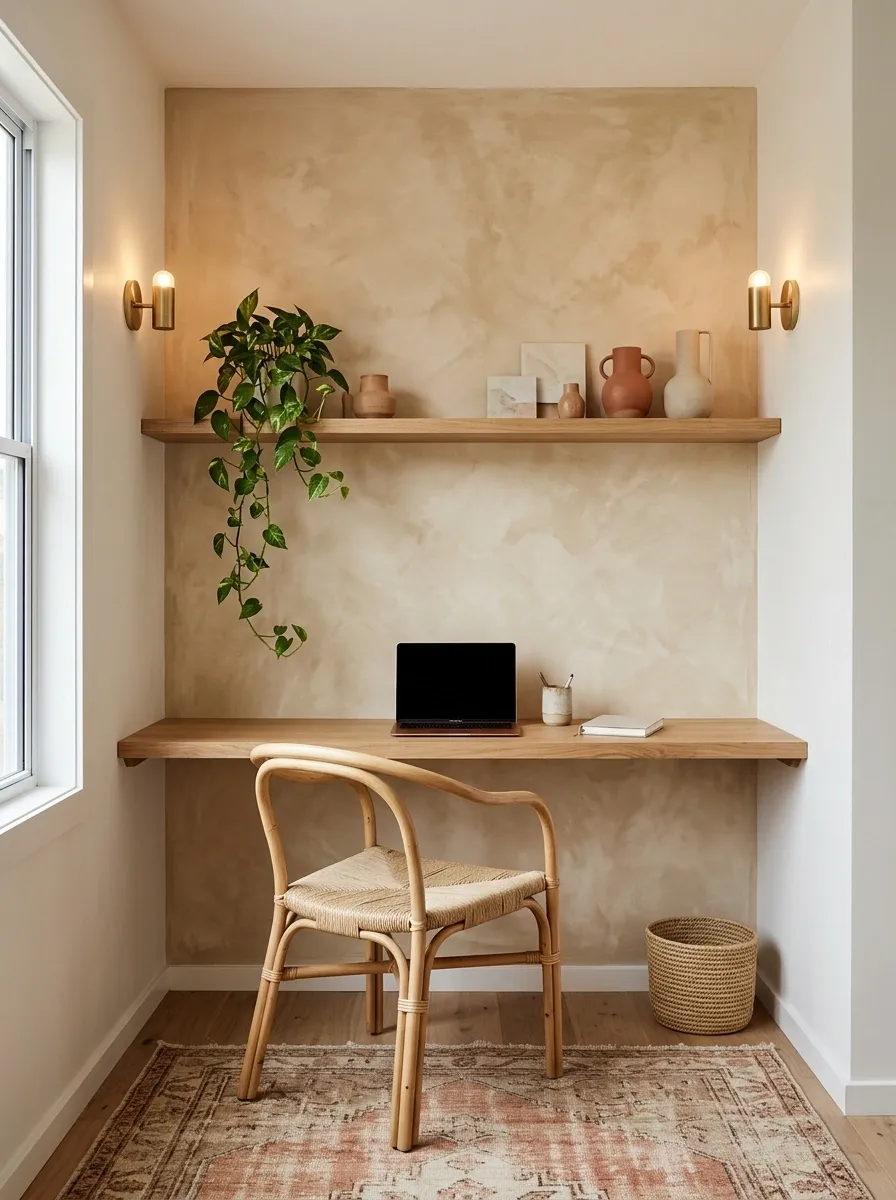
A textured plaster or limewash-style accent wall gives this compact office a strong backdrop without requiring a large piece of furniture. A slim floating timber desk sits against it, paired with a woven chair, low floor rug, floating shelf, and warm wall lighting.
The floating desk keeps the floor visually open, which makes the office feel lighter than a standard desk-and-cabinet arrangement. The accent wall provides depth, while the rest of the room stays relatively simple.
This composition suits narrow rooms and small alcoves particularly well. The wall provides the personality, the desk provides the function, and the floor is spared from being attacked by three pieces of furniture and one unnecessarily ambitious basket.
Choosing the Right Boho Direction
The best boho office is not the one with the most stuff. It is the one where the room has a clear visual idea and every major decision supports it.
A compact office may need the walls to do more work because there is no floor space for bulky storage. A naturally bright room can carry deeper colors without feeling boxed in. A room with strong architectural features may need quieter furniture, while a plain square room can benefit from stronger texture, color, or lighting.
Before buying another basket because the algorithm told everyone to buy another basket, decide what the room is actually trying to be.
A good boho home office does not need to look busy to feel personal. The strongest rooms in this collection use a clear mix of materials, thoughtful proportions, useful storage, and a few memorable choices that give the space its own identity.
Start with the room itself. Look at the natural light, the available wall space, the desk position, the storage problem, and the architectural features that already exist. Then choose a visual direction and build around it. That approach usually creates a room that feels far more convincing than buying a pile of vaguely “boho” accessories and hoping they develop a relationship.
The goal is a workspace that feels relaxed enough to enjoy and organized enough to actually work in.