
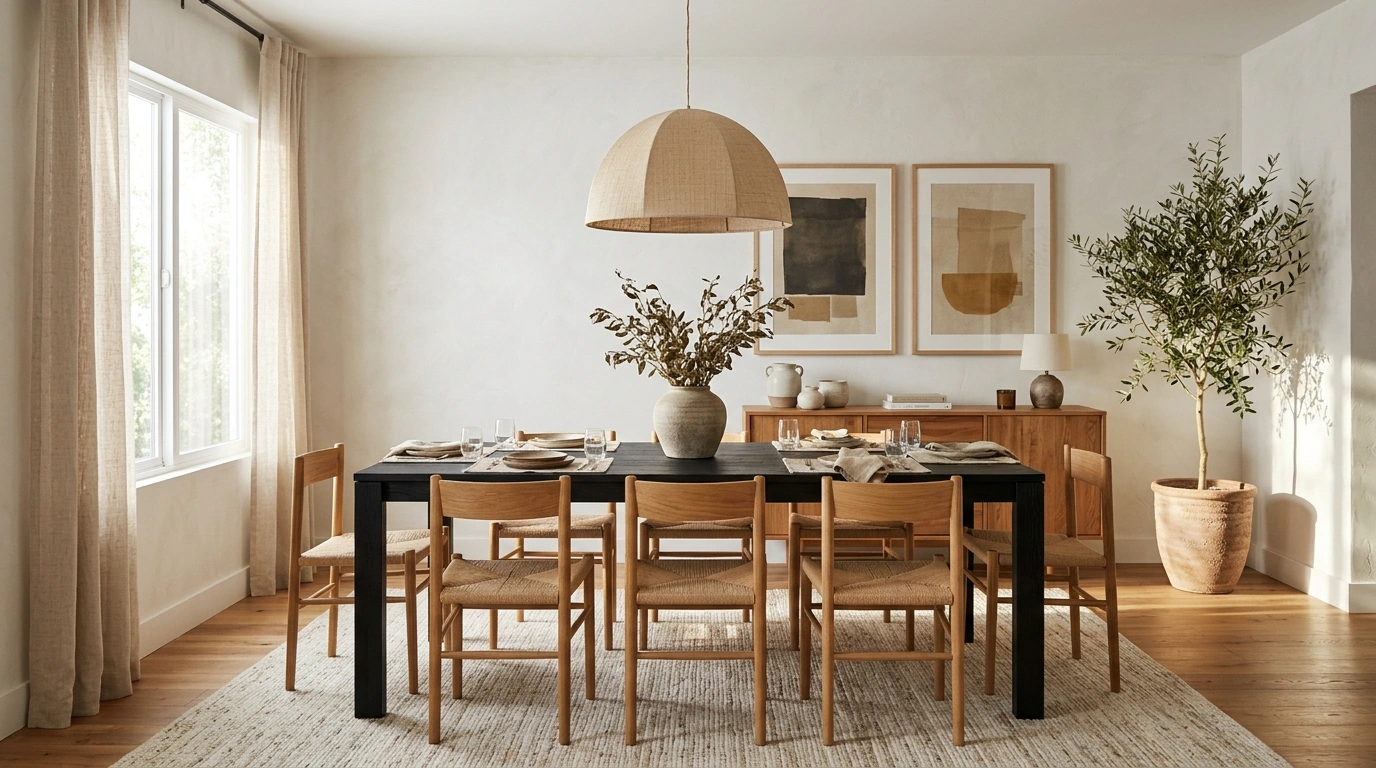
A black dining table has one annoying habit: it makes lazy decorating choices painfully obvious.
Put it beside warm wood, creamy walls, textured chairs, and a good pendant, and it looks expensive.
Put it beside a pile of dark furniture, a tiny rug, and twelve random accessories, and suddenly the dining room looks like it was decorated during a power outage.
That’s why How to Style a Dining Room with Black Dining Table isn’t really about finding more things to put around the table. It’s about giving that strong black surface the right contrast.
A black dining table already has enough visual weight to become the main character. Then someone adds dark chairs, a dark rug, dark curtains, dark art, and a suspicious amount of black metal and suddenly the dining room looks like it has unresolved feelings.
Black Dining Table Ideas
Embrace Sleek Metallic Accents
A black dining table loves a little bit of shine, especially when it comes in the form of polished brass or gold chair caps and lighting fixtures. That tiny glint of metal lifts the whole setup, pulling light right down to the floor so the dark furniture never feels heavy.
Keep the metallic finishes intentional and refined. A shimmering modern pendant or subtle furniture detailing acts like jewelry for the room, catching your eye and bouncing brightness across the space.
Pair these metallic elements with soft, curving silhouettes in your seating to ensure the dining area feels welcoming, sophisticated, and completely balanced.
Pair the Black Table With Warm Wood Chairs
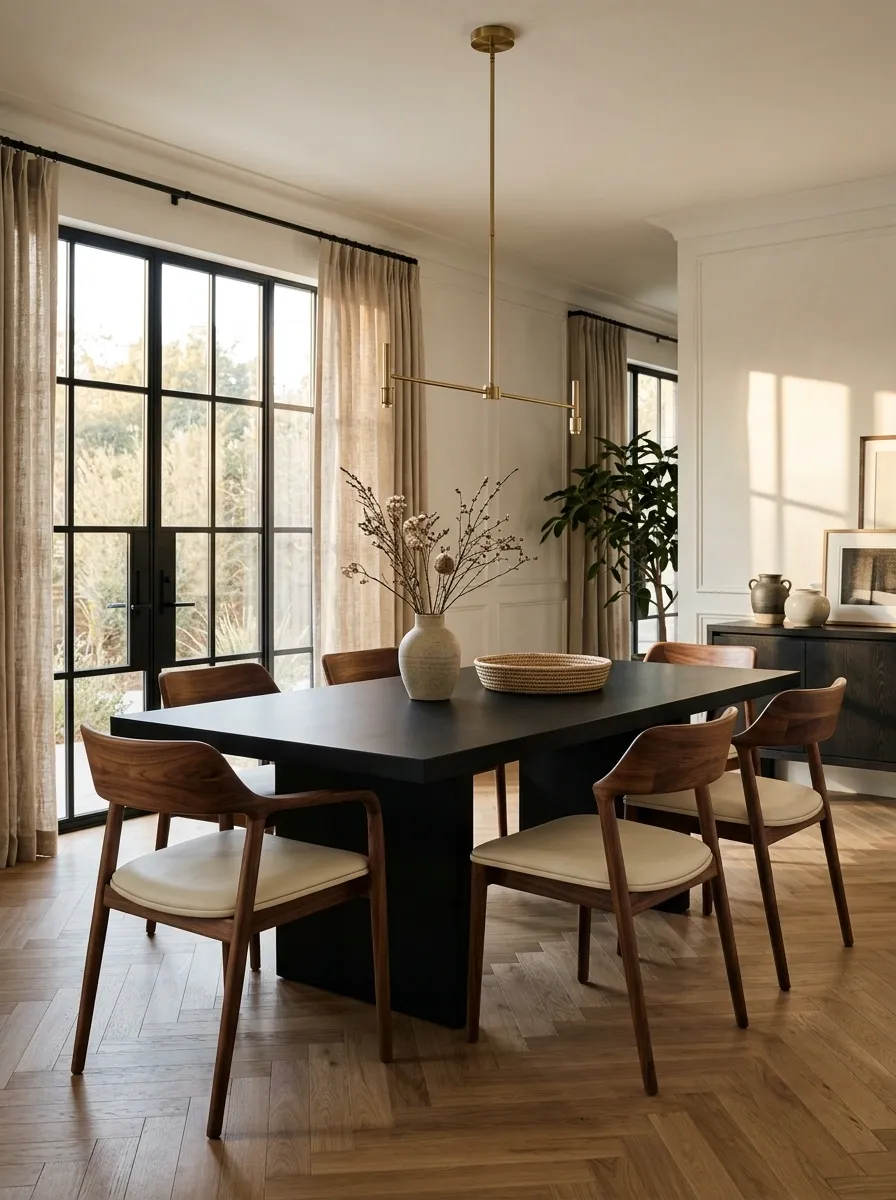
Black and warm wood are basically the dining-room version of a good comment section argument. They disagree just enough to make things interesting.
Choose chairs with visible wood grain in walnut, oak, or another medium-to-deep natural finish. The wood breaks up the solid black surface while keeping the room grounded and grown-up.
Skip the matching-black-chair parade. That’s how the room starts looking heavier than it needs to.
A warm wood seat, curved back, or exposed frame gives the table something softer to play against without making the room feel rustic.
Float on a Sea of Cream
When your dining table and chairs lean toward the dark side, a pale, expansive rug is your absolute best friend. It creates a brilliant buffer between a deep floor and your statement furniture, instantly doubling the light in the room.
Choose a textured, neutral rug that extends generously past every chair. This generous sizing visually expands the room, making even a dramatic black dining set look light on its feet.
Let organic greenery in a clear glass vase sit right in the center to bridge the gap between the moody table and the bright, airy foundation beneath it.
Use a Cream Rug to Stop the Table From Feeling Heavy
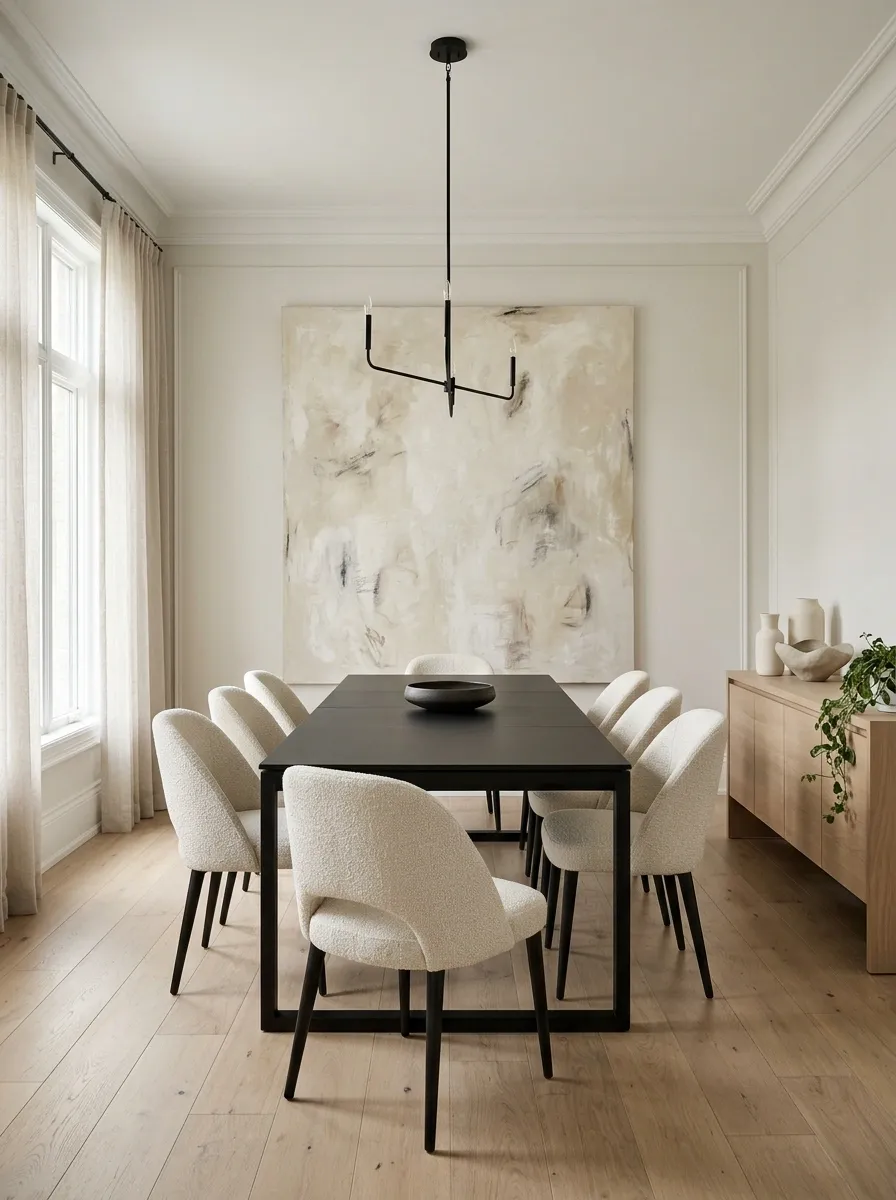
A cream rug does one important job: it puts a lighter visual layer underneath the darkest furniture in the room.
Go for ivory, oatmeal, warm beige, or a muted geometric pattern. The rug should extend comfortably beyond the chairs so the whole dining zone feels connected when the chairs slide back.
Tiny rugs are where the trouble starts. A small rectangle trapped under a big table makes everything look cramped, and the table ends up looking like it landed there by accident.
Rug rule: light enough to open the room, substantial enough to anchor the furniture, patterned enough to hide real-life crumbs.
Play With Monochromatic Curvature
Going dark doesn’t mean losing dimension. By combining a crisp, light-colored tabletop with bold black seating, you create a striking high-contrast look that naturally draws the eye and bounces available light around.
Incorporate sculptural, rounded chairs that offer visual softness despite their dark finish. The curves break up rigid lines and keep the dining area feeling cozy rather than severe.
Anchor the entire arrangement with soft ambient lighting and subtle wall art to ensure the space feels layered, curated, and effortlessly illuminated from every angle.
Hang a Large Pendant Directly Over the Table
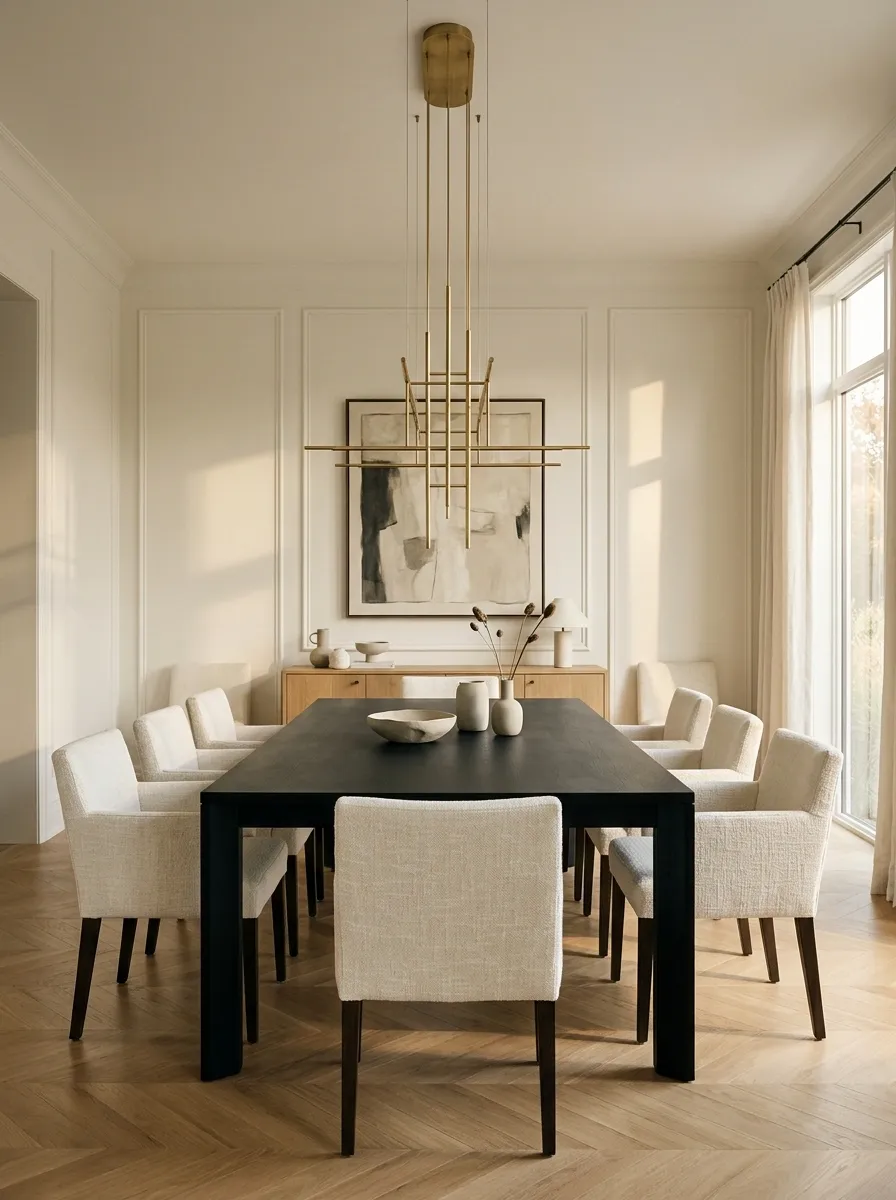
The light fixture should look connected to the table, not randomly suspended somewhere near it like it missed an appointment.
A substantial pendant or linear fixture gives the black table a clear visual partner above it. That vertical connection makes the dining area feel intentional, especially in open-plan rooms.
Keep the fixture centered over the tabletop, then let its shape echo the table. A long table deserves a longer fixture. A round table can handle a centered globe, drum, or sculptural pendant.
The ceiling is doing more work here than people think. Use it.
Layer Rich Warm Ambers
Black tables are remarkably versatile, and they look undeniably stunning when paired with rich, warm accent colors like burnt orange and deep gold. A vibrant table runner and matching curtains instantly infuse the space with an inviting glow.
Don’t be afraid to pull in dramatic abstract art that bridges your dark furniture and warm textiles. It ties the whole color palette together so the black table feels like an intentional centerpiece rather than an outlier.
Add flickering candlelight and metallic decor to make the rich tones dance, proving that a dark table can easily become the coziest spot in the house.
Repeat Black in Two or Three Smaller Details
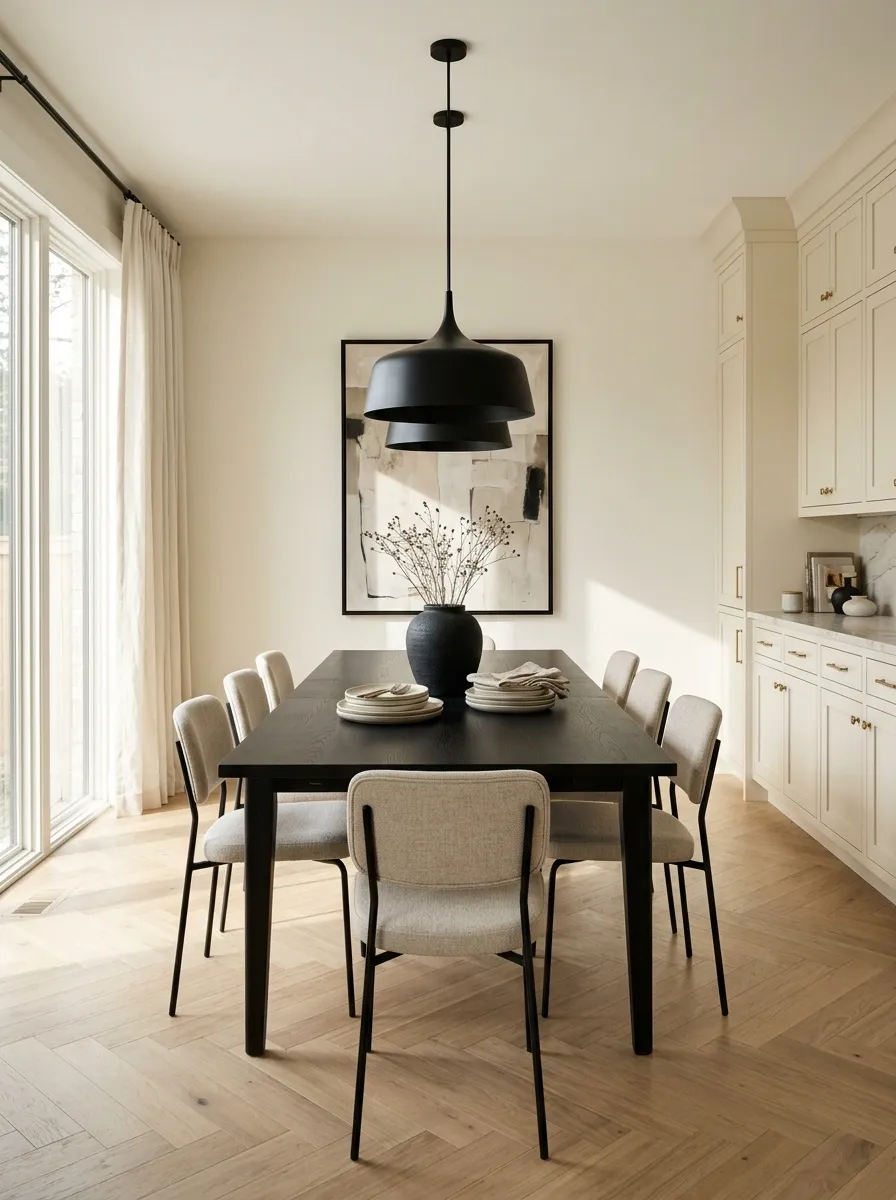
Black works best when it has somewhere else to appear.
Don’t scatter tiny black objects around the room like breadcrumbs. Pick two or three meaningful repeats instead: a picture frame, pendant, vase, cabinet handle, or slim chair detail.
That’s enough to make the table feel connected to the rest of the room without turning every surface into a black-and-white themed event.
The key word is repeat, not reproduce. The finishes don’t need to match exactly. They just need to share enough visual weight that the table doesn’t look stranded in the middle of the room.
Choose Linen Chairs for a Softer Contrast
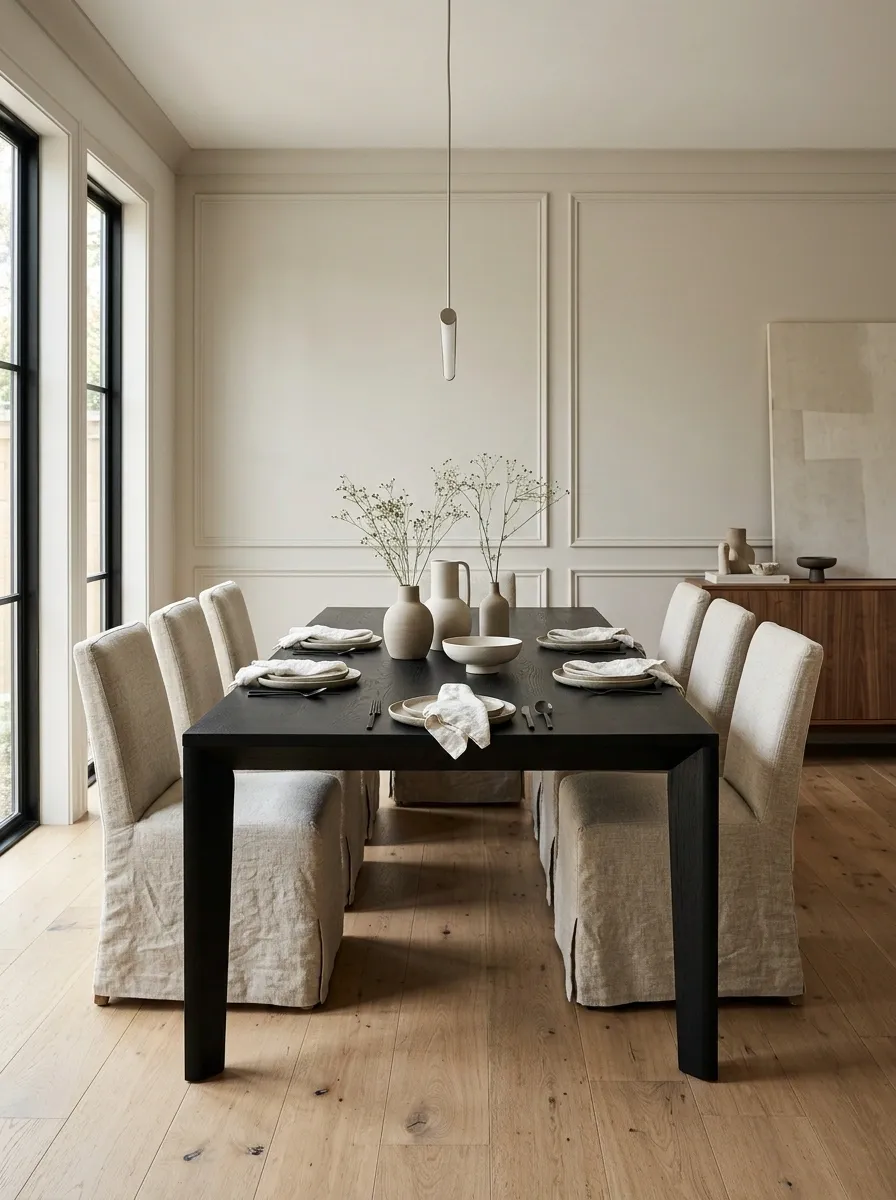
Black furniture gets dramatically better when something nearby has texture.
Linen or linen-look upholstery softens the hard edge of a black dining table without making the room precious. Cream, oatmeal, stone, and warm greige work especially well because they keep the contrast visible.
This pairing also gives the room something the table can’t provide on its own: a soft surface that catches light differently throughout the day.
And yes, dining chairs will eventually encounter crumbs. That’s called having a dining room, not a design emergency.
Let the Walls Stay Light and Quiet
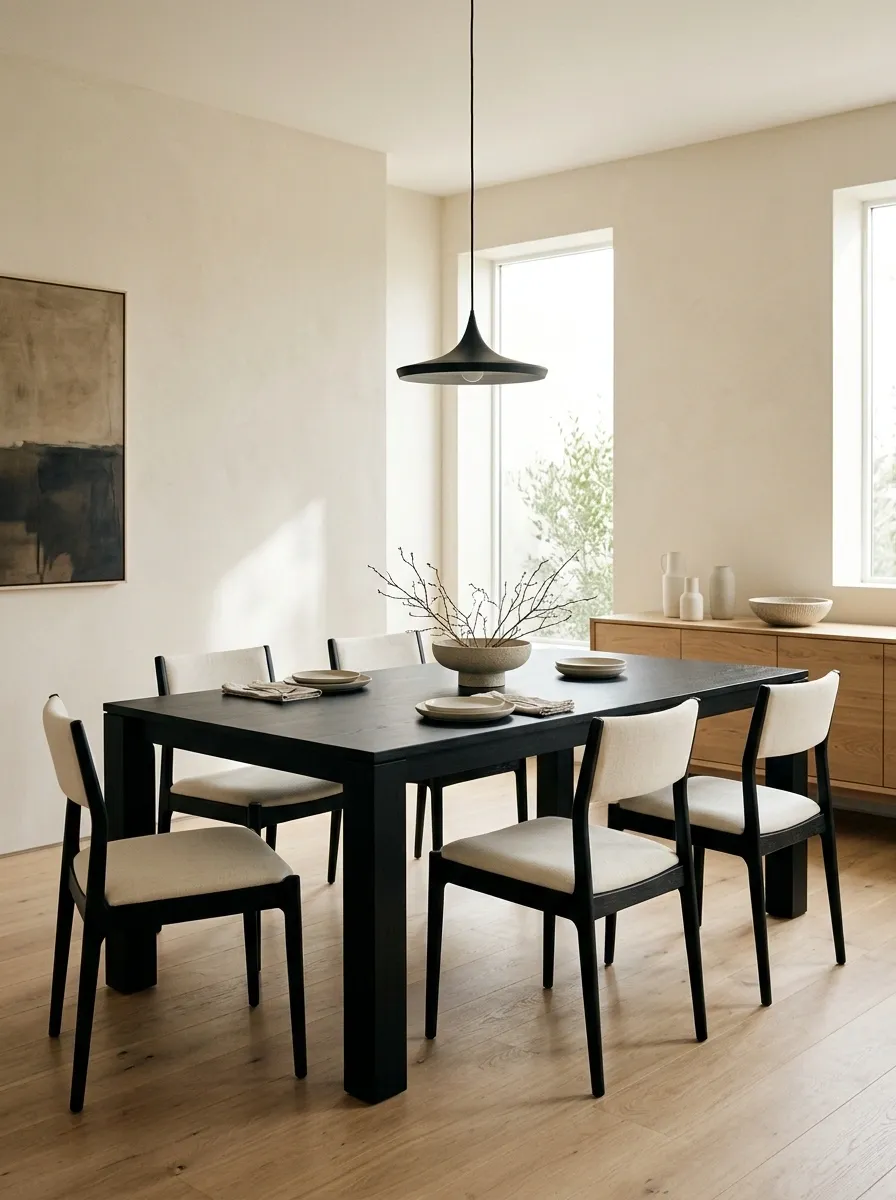
The walls don’t need to compete with a black dining table. They need to make it look intentional.
Warm white, creamy beige, pale greige, and soft putty shades give the table enough contrast to stand out without making the room feel stark.
And skip the urge to fill every available inch with art. A black table already creates a strong horizontal line. Giving the walls some visual breathing room makes the entire dining area feel calmer.
Best rule: let the table provide the drama while the walls handle the background noise.
Ground the Room With a Deep Wood Sideboard
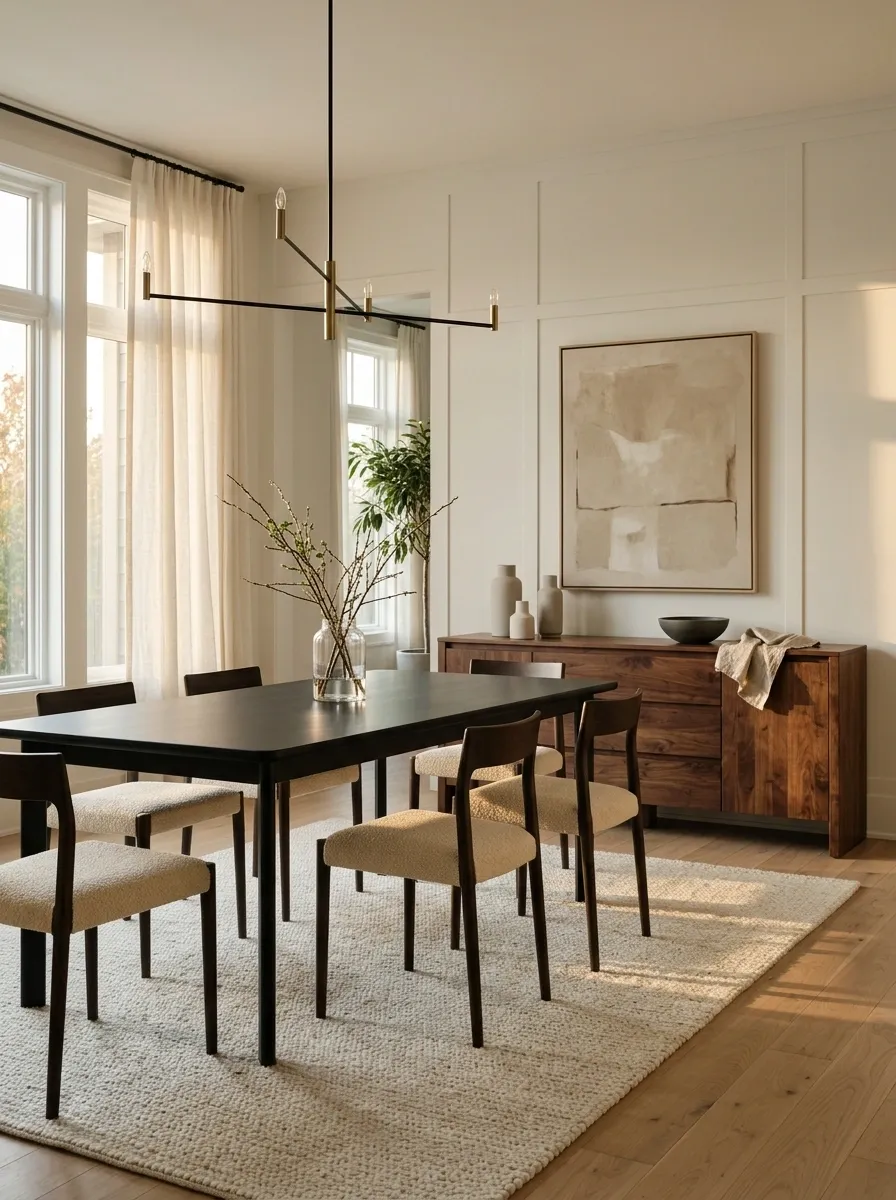
A black table can look a little too isolated when the rest of the room is made from pale, lightweight pieces.
A deep wood sideboard fixes that by giving the dining area another substantial anchor. Walnut, smoked oak, and rich brown finishes work especially well because they bridge the gap between black furniture and warmer room details.
Keep the sideboard simpler than the table. It shouldn’t become another main character with a decorative identity crisis.
Think of it as the furniture equivalent of a good supporting actor. Noticeable, useful, and not stealing the scene.
Bring in Natural Woven Materials Before the Room Gets Too Serious
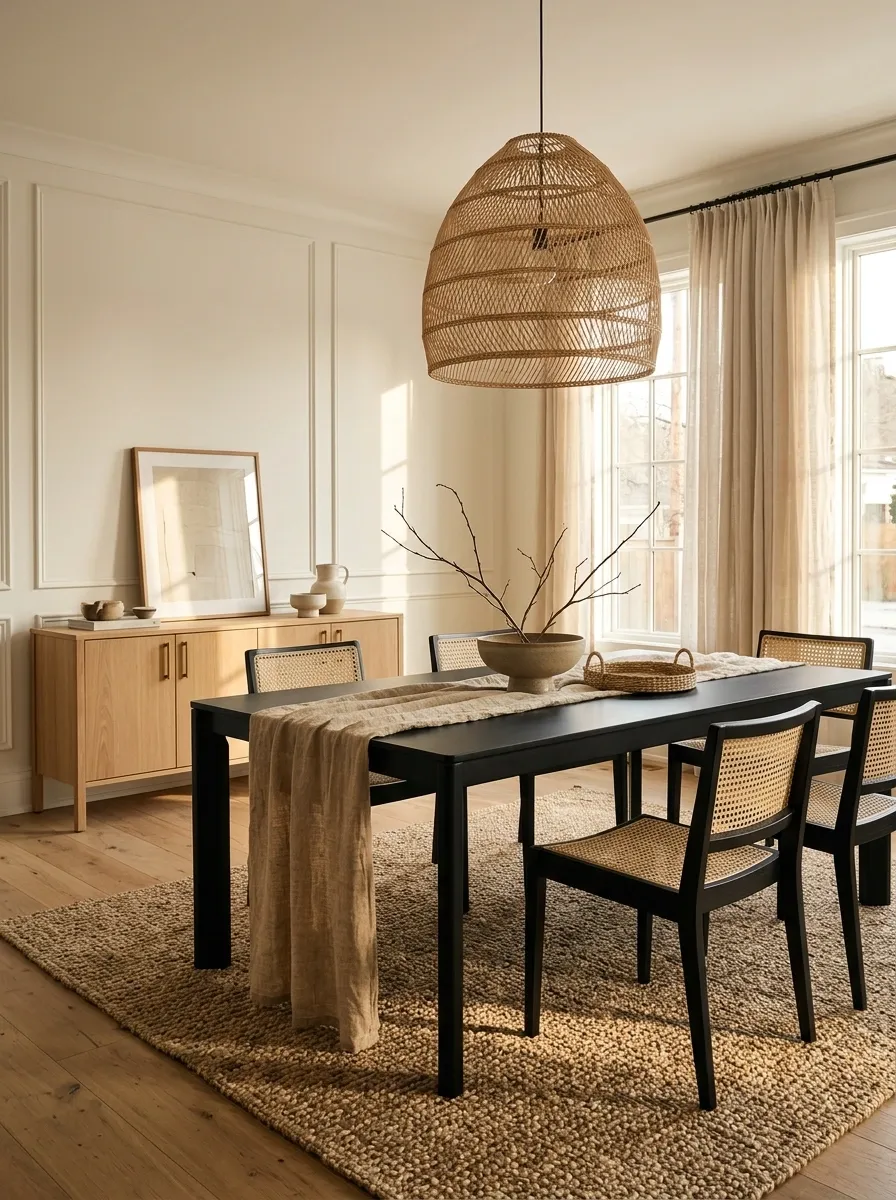
A black dining table can make even a casual dining room start acting like it’s waiting for a magazine cover.
Woven materials pull that tension right back down. Think cane chair backs, rattan details, woven pendant shades, jute, seagrass, or a basket tucked into the sideboard.
These materials bring visible texture without adding another heavy color block.
Keep it selective. One or two woven elements create contrast. Twelve start looking like a coastal resort has taken over the dining room.
Chair backs or cabinet details
Grounding rug texture
Pendant or accent detail
Small storage or tabletop accent
Make the Black Dining Table the Darkest Element in the Room
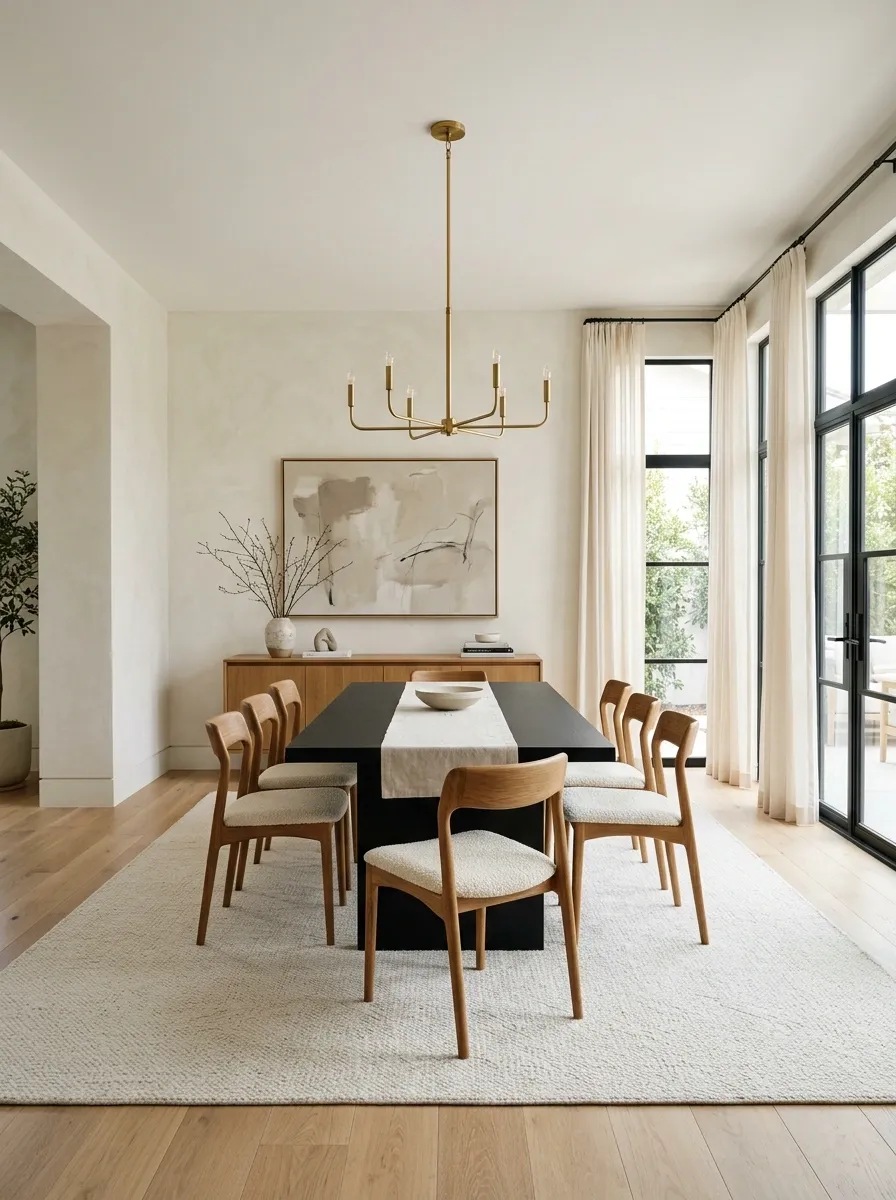
This is the easiest way to keep a black table from making a small dining room feel visually crowded.
Let the table carry the strongest dark value while everything else gets progressively lighter. Chairs can be medium wood or cream. The rug can be pale. The walls can be warm and light. Even the artwork can use mostly softer tones with a few darker marks.
That’s what creates hierarchy.
Without it, every piece starts shouting for attention. And yes, black curtains plus black chairs plus a black sideboard can technically coordinate. They can also make the room look like it has decided daylight is offensive.
Use a Long Runner Instead of a Tiny Centerpiece
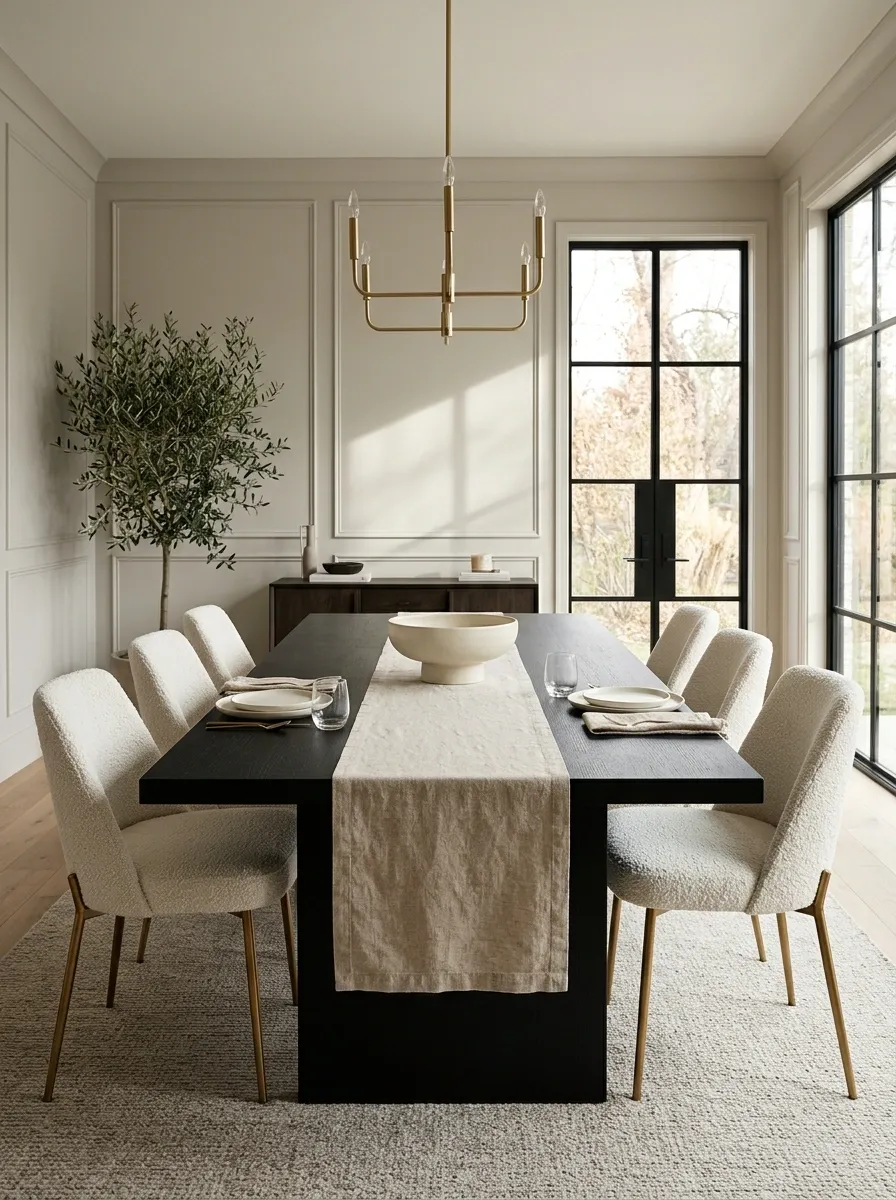
A long runner gives a black table a clean visual line without filling the entire surface with decorative clutter.
Choose linen, cotton, washed fabric, or another matte textile in a warm neutral. Let it run along the length of the table and keep the rest of the styling low.
Then add one substantial centerpiece rather than a collection of tiny objects that look like they’ve been placed there during a very determined five-minute panic.
The best dining tables still look usable. Plates should have somewhere to land. Elbows should survive.
Bring in Brass Lighting for Controlled Warmth
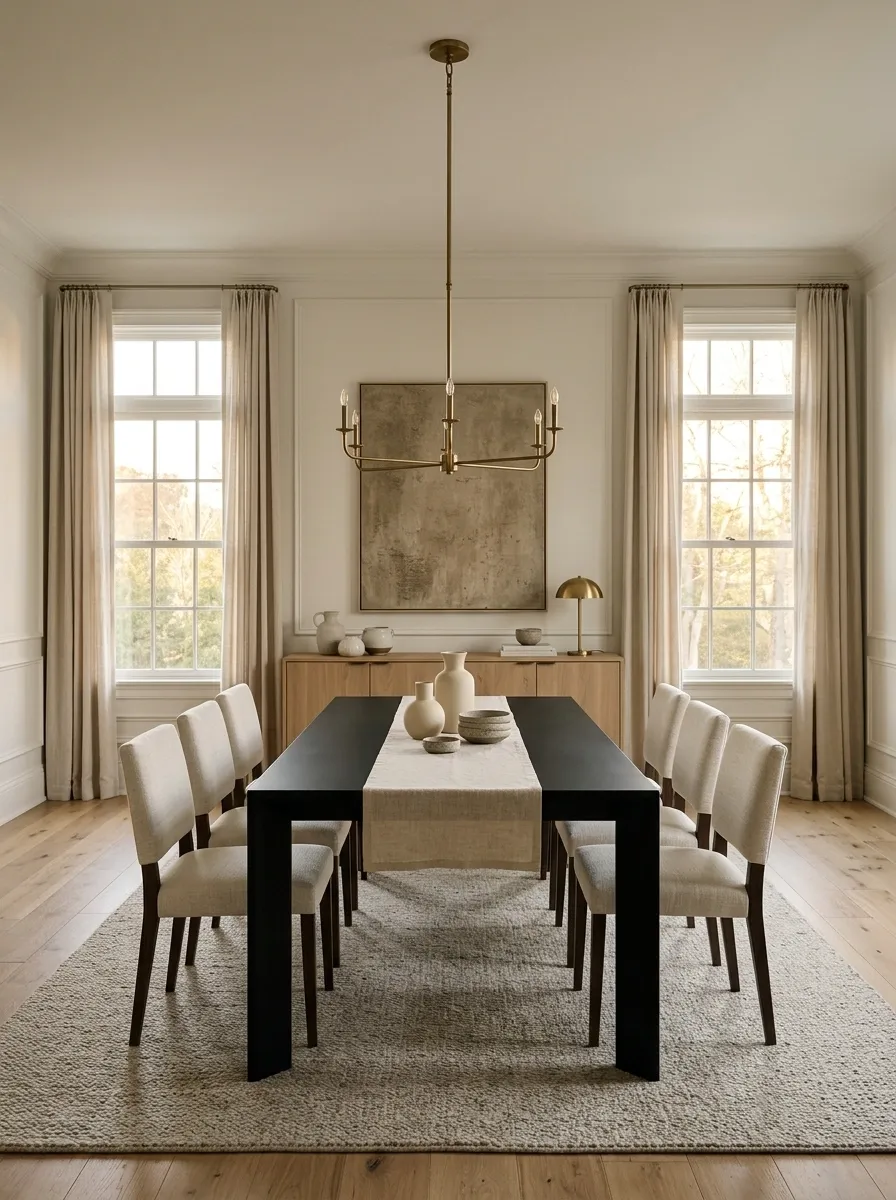
Black and brass work because one is visually serious and the other catches light. The trick is keeping the brass warm and selective instead of turning the dining room into a hardware aisle.
A brass pendant, slim chandelier, or a few warm-metal details can soften the darkness of the table without fighting it.
Look for aged, brushed, or softly polished finishes when the room already has plenty of visual activity. They tend to sit quietly in the background until the light hits them.
One strong brass moment beats a whole collection of tiny metallic souvenirs.
Pick Dining Chairs With an Open Silhouette
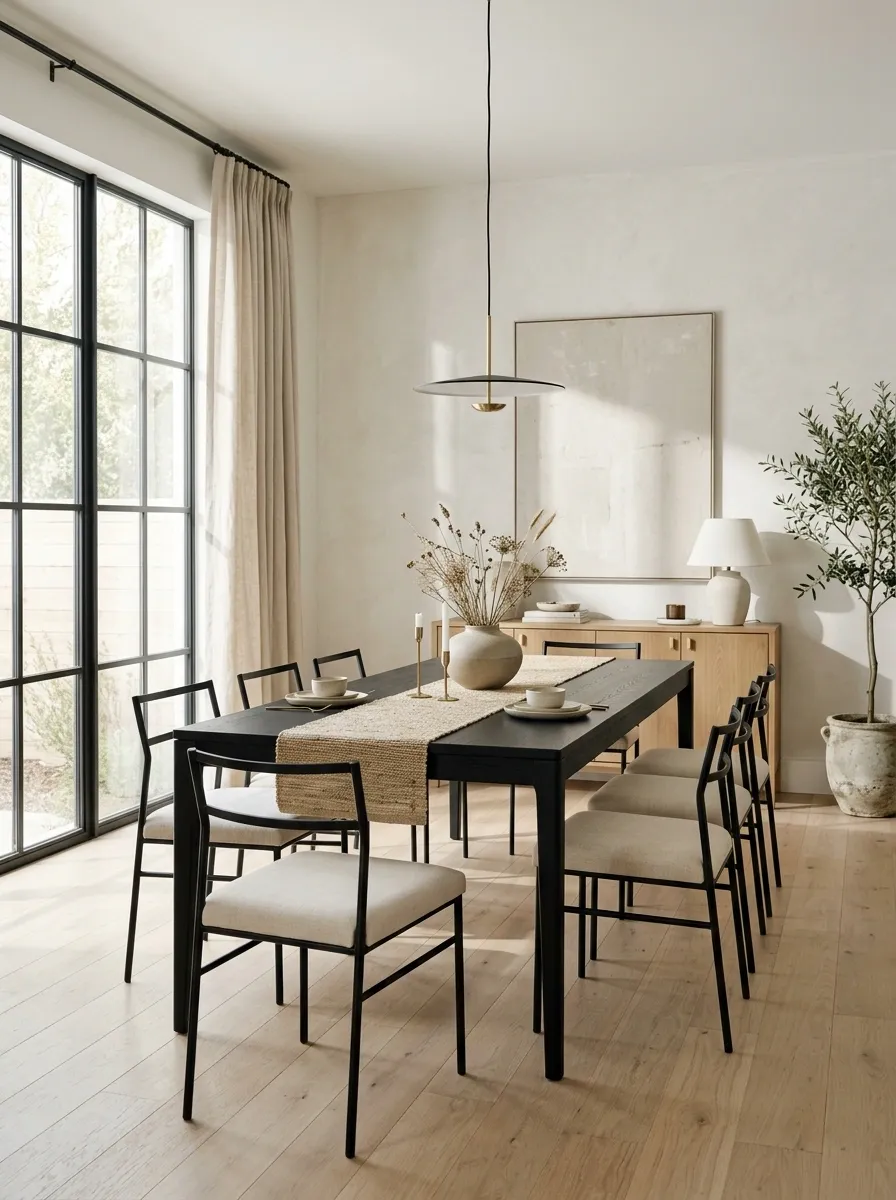
Heavy chairs can make a heavy table look even heavier.
Instead, choose dining chairs with visible space between the seat, frame, and floor. Slim legs, open backs, cane panels, and lighter frames let more of the room show through.
That small gap matters. It keeps the dining area from becoming one giant visual block, especially when the table is wide or the room itself is compact.
Upholstery can still be substantial. The frame just shouldn’t look like it’s preparing to survive a medieval siege.
Put Oversized Art Behind the Table
The wall behind a dining table is not begging for six tiny frames arranged like a nervous little grid.
One oversized artwork can give the black table a proper backdrop and make the entire dining zone feel finished.
Choose something with a light or warm base if the rest of the room is already dark. Abstract shapes, loose botanical forms, vintage-inspired artwork, and restrained landscapes all work well.
The scale matters more than the subject. A tiny print floating above a wide table looks accidental. A larger piece gives the furniture something substantial to relate to.
Keep the Tabletop Low and Sculptural
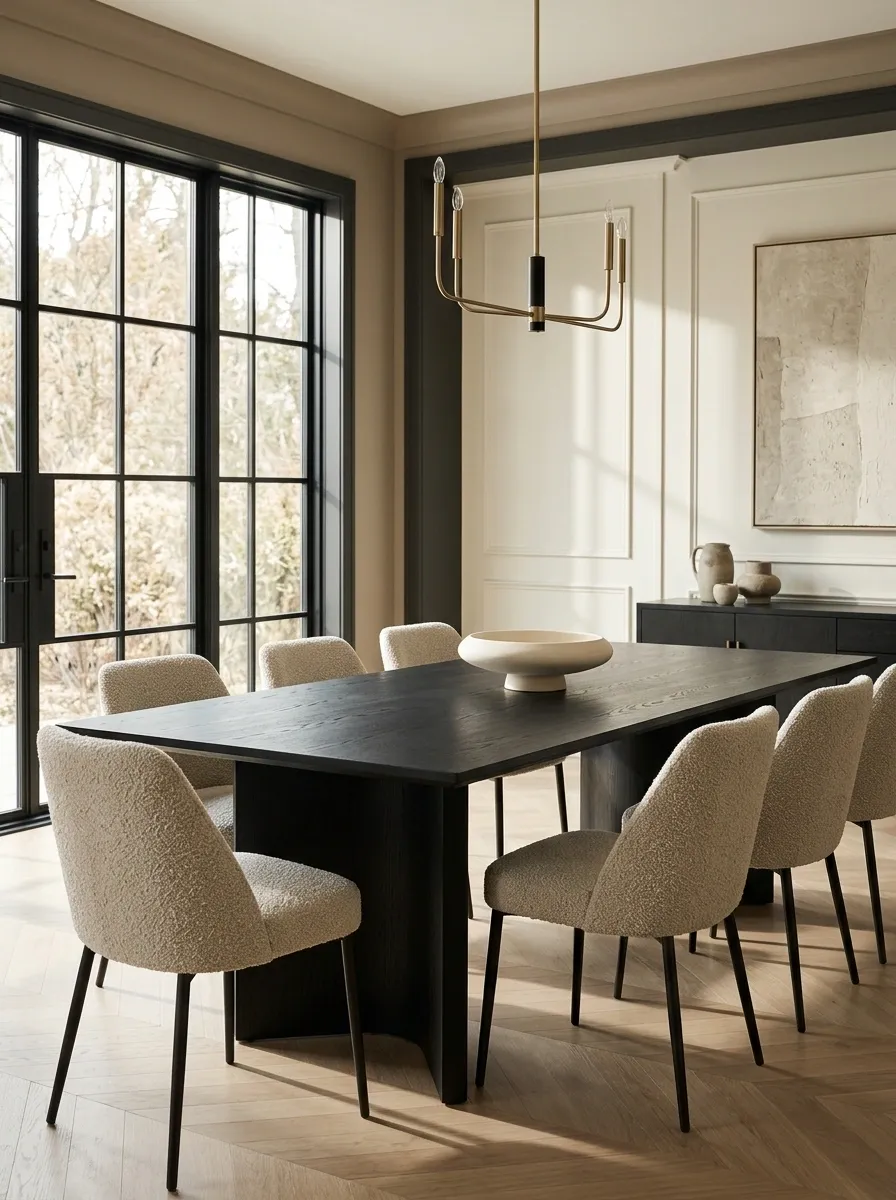
Dining tables need to look styled without becoming an obstacle course.
Keep the centerpiece low enough that people can see across the table. Then choose one sculptural form with enough presence to hold the surface together.
A wide ceramic bowl, low stone vessel, shallow tray, or simple arrangement of branches can do the job.
The secret is volume without height. That’s especially useful when the black tabletop already has plenty of visual weight.
And please leave room for actual plates. Dinner is still invited to this party.
Keep sightlines open across the table.
A bowl or vessel beats a cluttered cluster.
Leave room for place settings and serving dishes.
Bring in Greenery Without Turning the Table Into a Garden
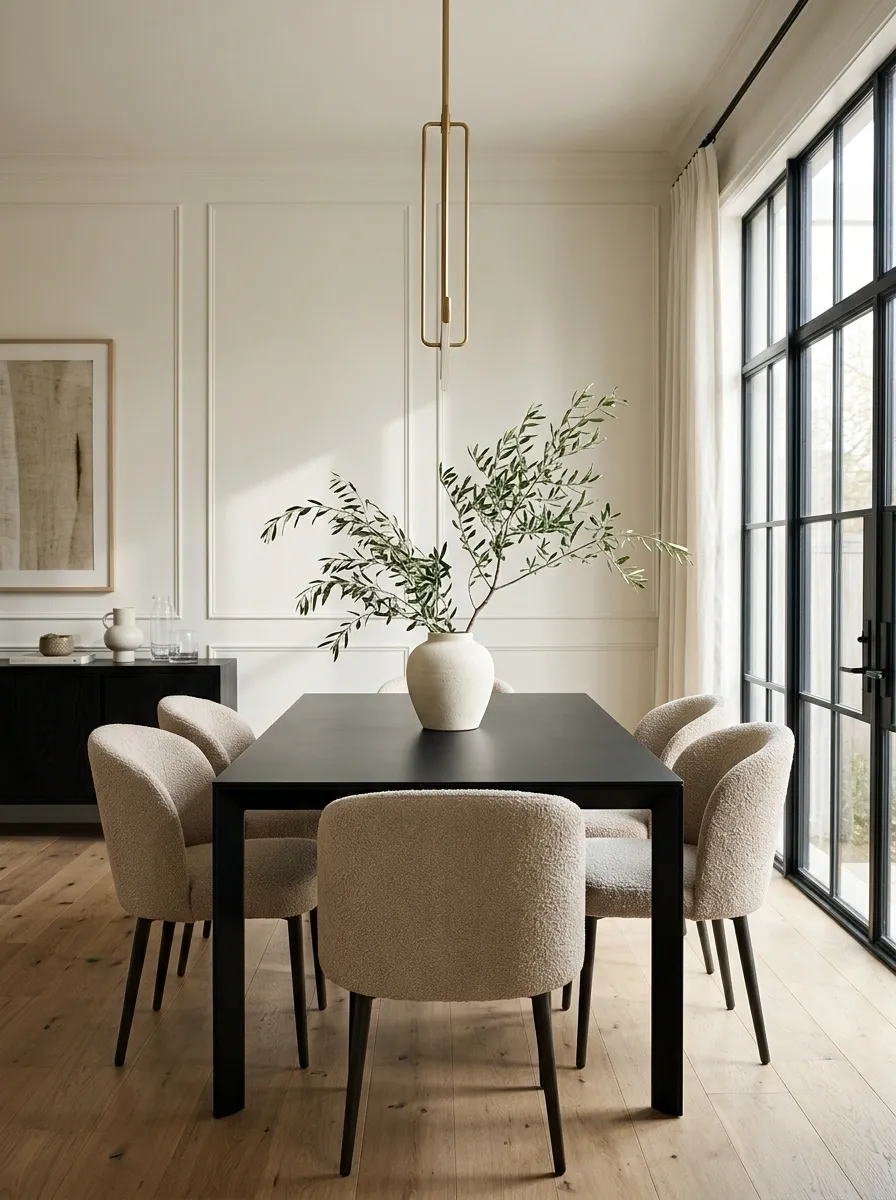
A little greenery changes the energy of a black dining table immediately.
The trick is choosing greenery with a clean shape. A single leafy branch, olive-like foliage, eucalyptus-style stems, or a compact plant in a warm ceramic vessel keeps the arrangement relaxed without introducing another huge visual mass.
Use greenery to soften the edges of the room, not to cover the tabletop.
And skip the tiny collection of six miniature plants lined up like they’re waiting for roll call. One convincing arrangement looks far more intentional.
Use a Patterned Rug When the Rest of the Room Is Plain
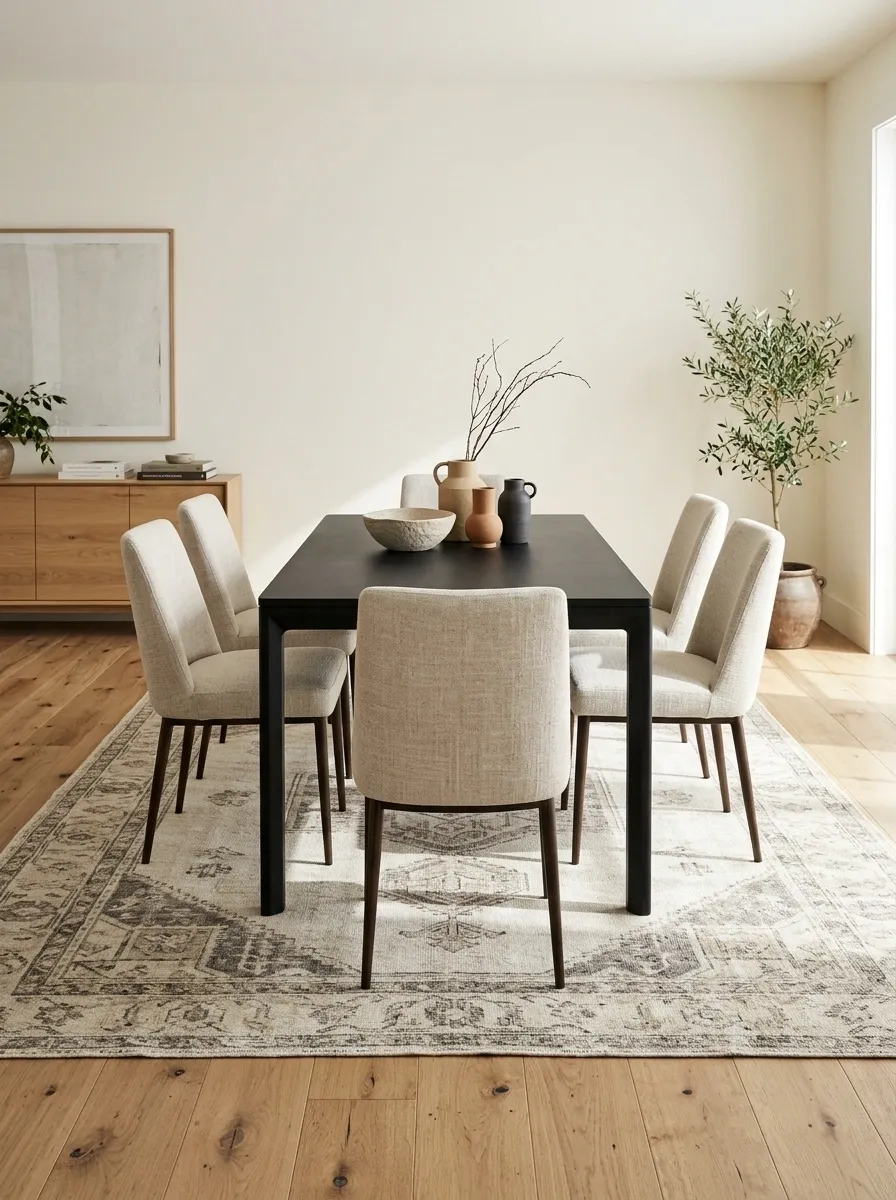
A patterned rug is an easy way to stop a black dining table from making the room feel too serious.
Keep the walls, chairs, and larger furniture fairly calm, then let the rug carry the pattern. Geometric lines, faded motifs, subtle checks, and traditional-inspired patterns all work because the table gives the room a strong visual anchor already.
The pattern doesn’t need to match the artwork. It just needs to live in the same color family.
Best move: use a rug with several quiet tones instead of one loud contrast. It adds interest without turning dinner into a hostage negotiation with the decor.
- ✓ Keep the base warm: ivory, oatmeal, beige, taupe, or faded brown.
- ✓ Use restrained contrast: let the black table remain the darkest solid block.
- ✓ Let the pattern do one job: add movement under the furniture without competing with the walls.
Build a Black-and-Cream Dining Room With One Wood Tone
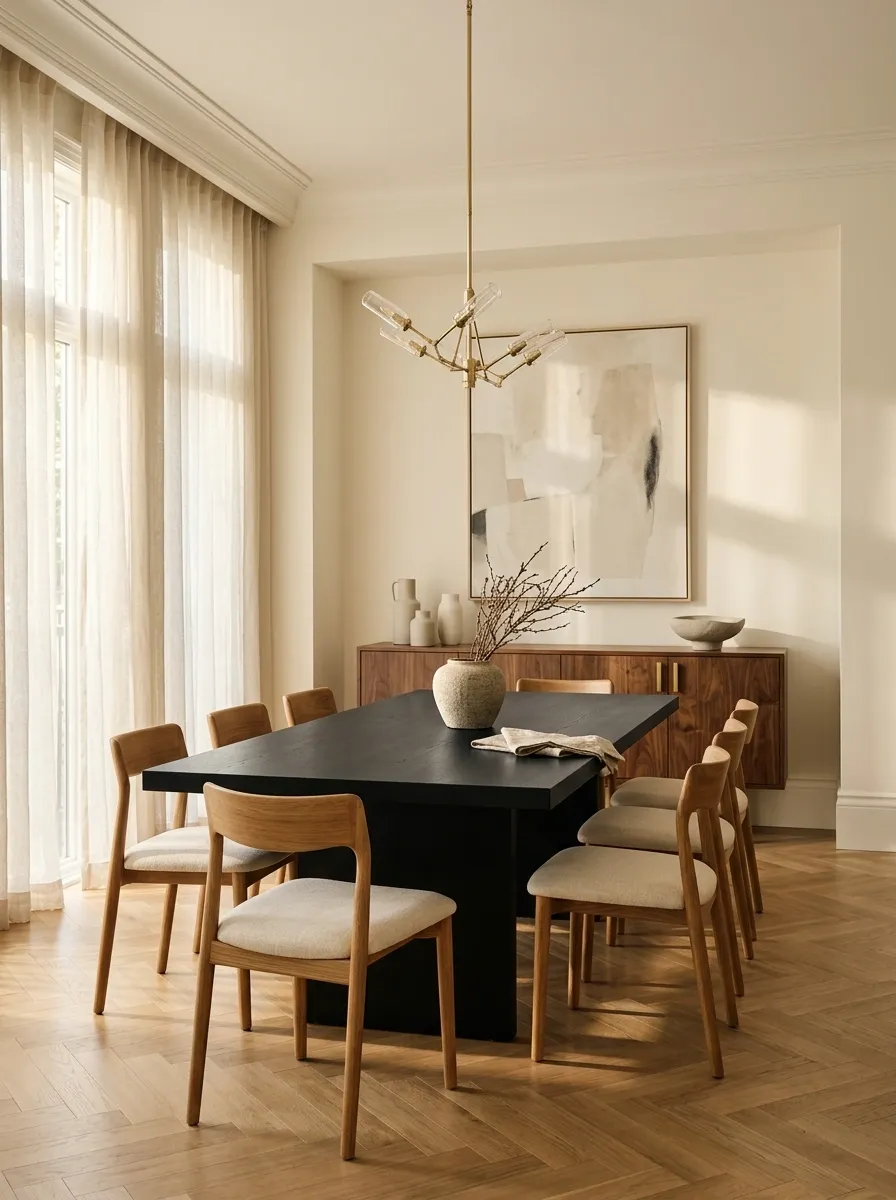
Black and cream already give you the contrast. Wood is what keeps the whole thing from feeling flat.
Pick one wood family and repeat it through the chairs, sideboard, flooring, or a few smaller details. Medium oak, walnut, and warm brown finishes all bring enough variation without creating a furniture showroom of unrelated samples.
The trick is restraint. Black handles the depth. Cream handles the light. Wood brings the warmth.
Add five different wood colors and suddenly every piece has entered the chat.
Swap Matching Chairs for a Slight Mix of Materials
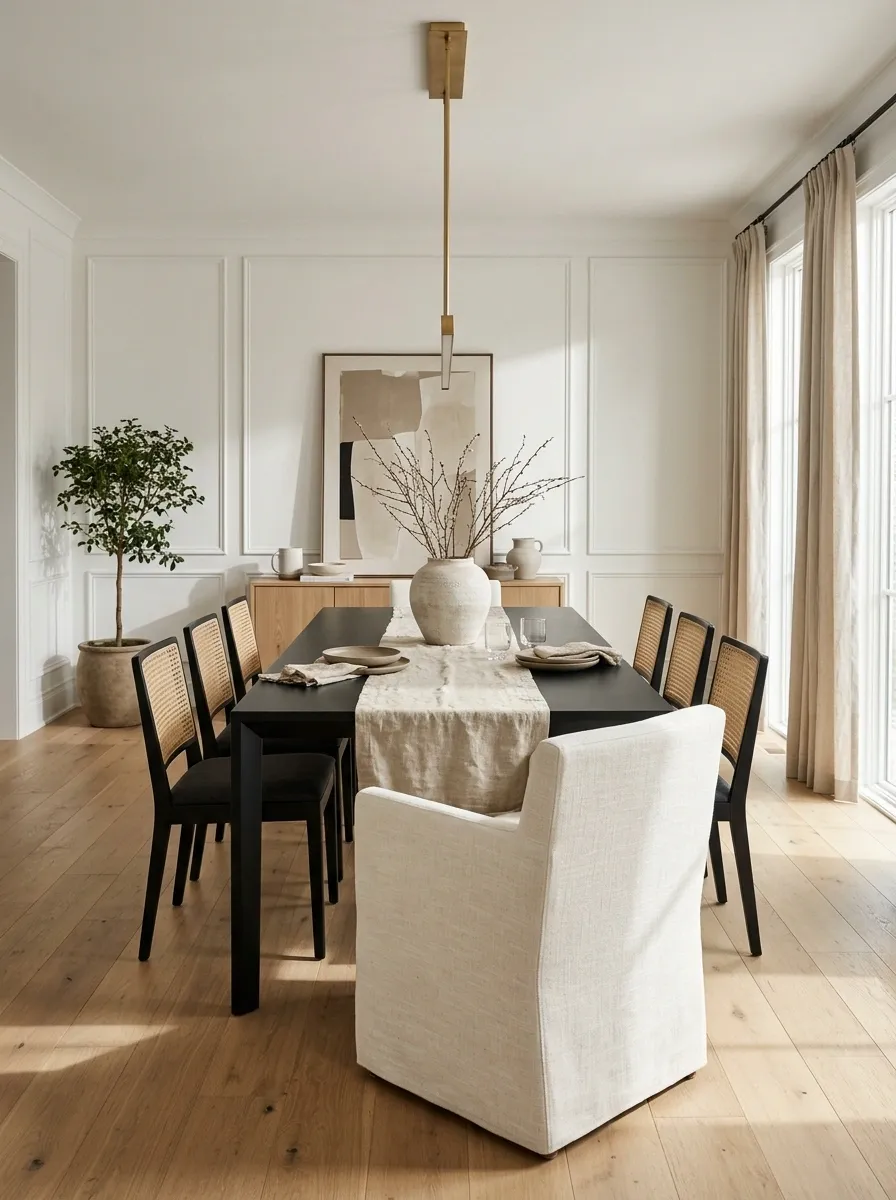
Dining chairs don’t have to come as a perfectly matched squad.
A black table can handle chairs that share a shape or color while differing slightly in material. Think upholstered seats with wood frames, cane backs with black legs, or a pair of armchairs at the ends with simpler side chairs.
The room still needs cohesion. That’s why the mix should have one clear common thread, such as the same color family, similar silhouette, or matching wood tone.
The goal isn’t randomness. It’s enough variation to keep the dining area from looking like the furniture department sold everything as a six-piece bundle.
Use a Mirror to Spread Light Around the Black Table
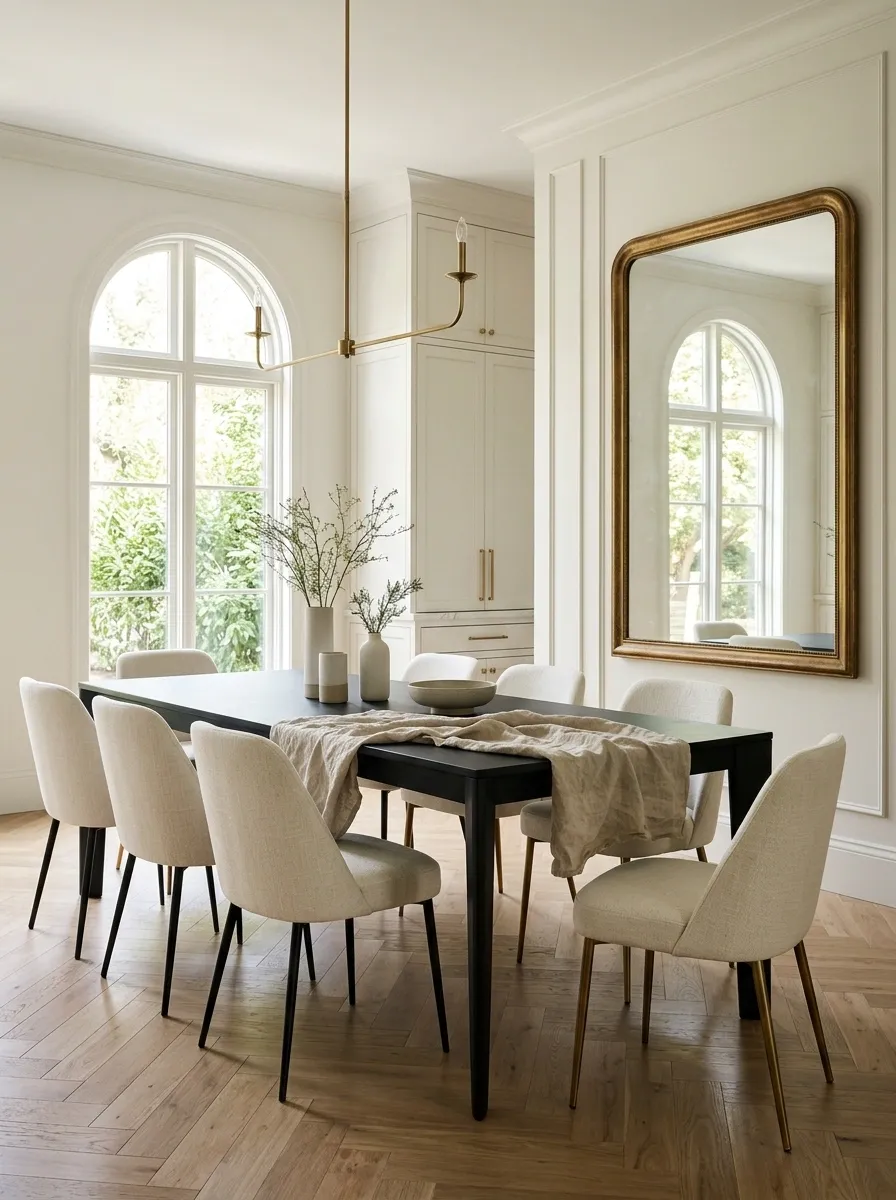
A black table absorbs attention. A mirror helps throw some of the room’s light and brightness back into the scene.
Place one across from a window, near the dining area, or on a wall where it can reflect something worth looking at. A warm wood, aged metal, or simple black frame can all work depending on the rest of the room.
The important part is the reflection. A mirror facing a blank wall gives you a glamorous view of… a blank wall.
Aim it toward daylight, greenery, artwork, or another visually useful part of the room.
Keep Table Decor Centered and Below Eye Level
The dining table isn’t the place to build a tiny skyline.
Keep the tallest part of the centerpiece low enough that people across the table can still see each other. Symmetry helps when the table is formal, while one off-center vessel can feel more relaxed on a casual table.
Use the center as the focal zone and keep the edges comparatively clear. That gives the black tabletop a clean visual outline instead of burying it underneath trays, candles, flowers, bowls, and every object that looked cute in the store.
The black surface should still be visible. That’s kind of the point.
Use Curtains That Reach the Floor
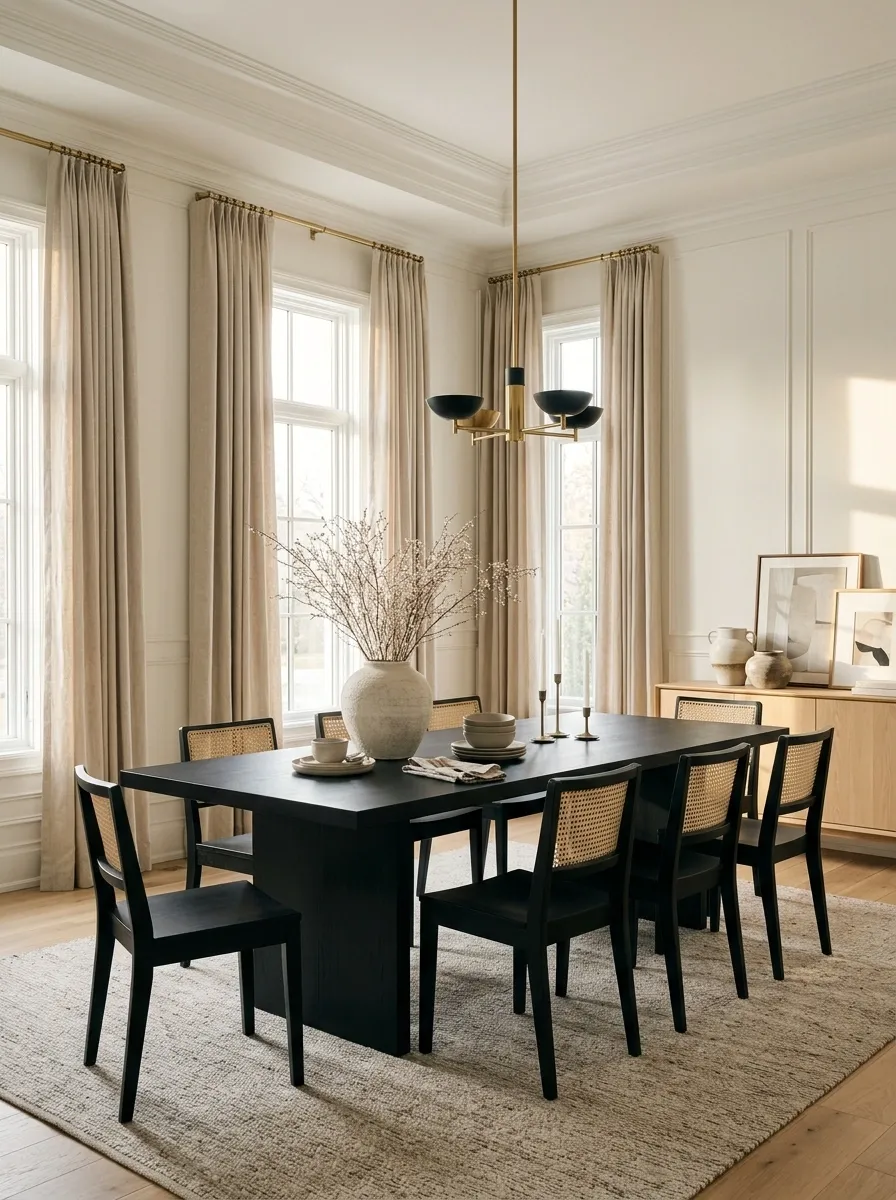
Short curtains can make a beautiful dining room look strangely unfinished, especially when a black table already gives the room a strong horizontal line.
Floor-length curtains add a softer vertical element and help balance all that furniture sitting around the table. Warm white, oatmeal, flax, and soft beige are easy choices when the room already has black and wood.
Keep the fabric relaxed rather than overly formal unless the dining room genuinely calls for that look.
And yes, the curtain rod matters too. Mounting it too low makes the whole window look shorter, which is not exactly the plot twist anyone ordered.
Use One Bold Color Instead of Several Small Accents
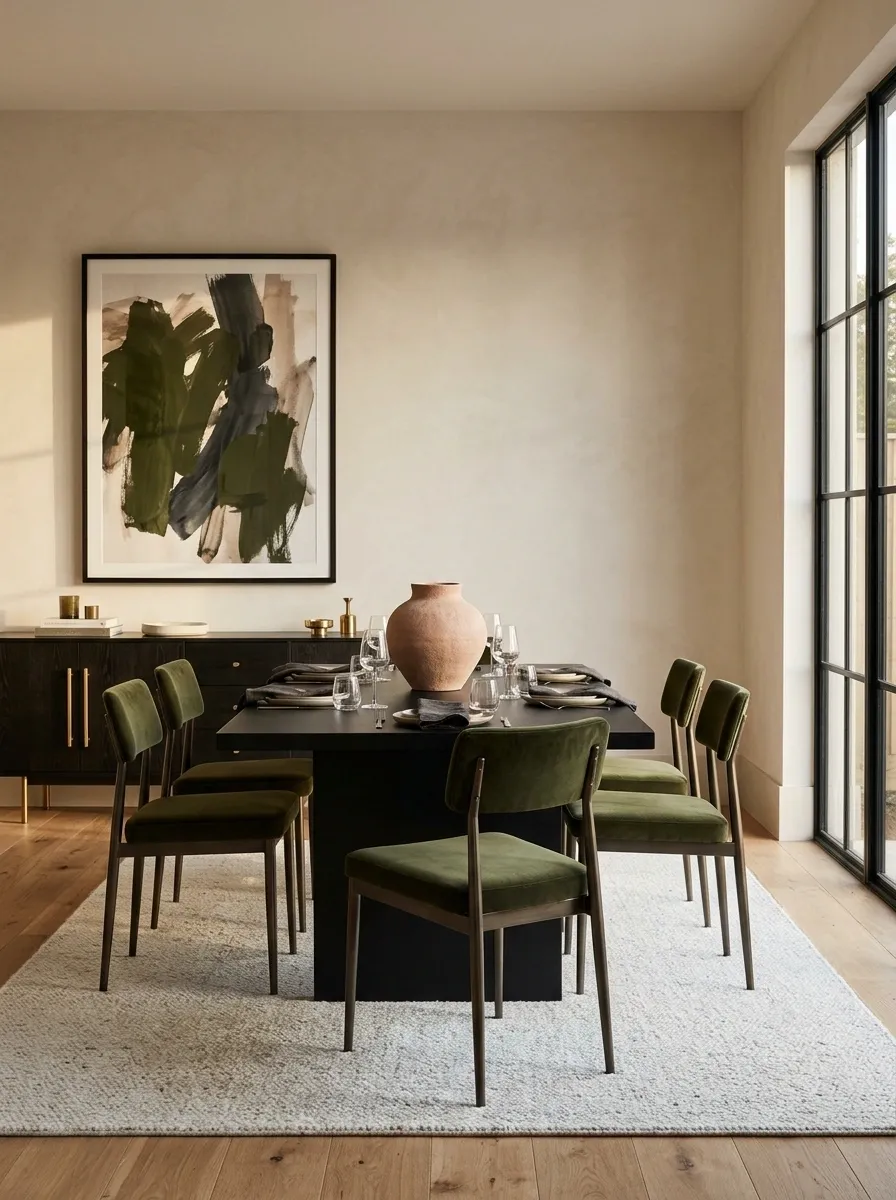
A black dining table gives you permission to use color. It does not require you to use every color.
Choose one stronger accent and let it appear in a few useful places. Deep olive, muted terracotta, dusty blue, rust, or a warm burgundy can all work beautifully against black.
The important part is repetition. A colored artwork, one upholstered chair detail, and a ceramic vessel can feel connected. Ten unrelated colorful accessories just make the room look indecisive.
One bold color has impact because everything around it knows when to shut up.
Style an Open Dining Area With a Clear Furniture Boundary
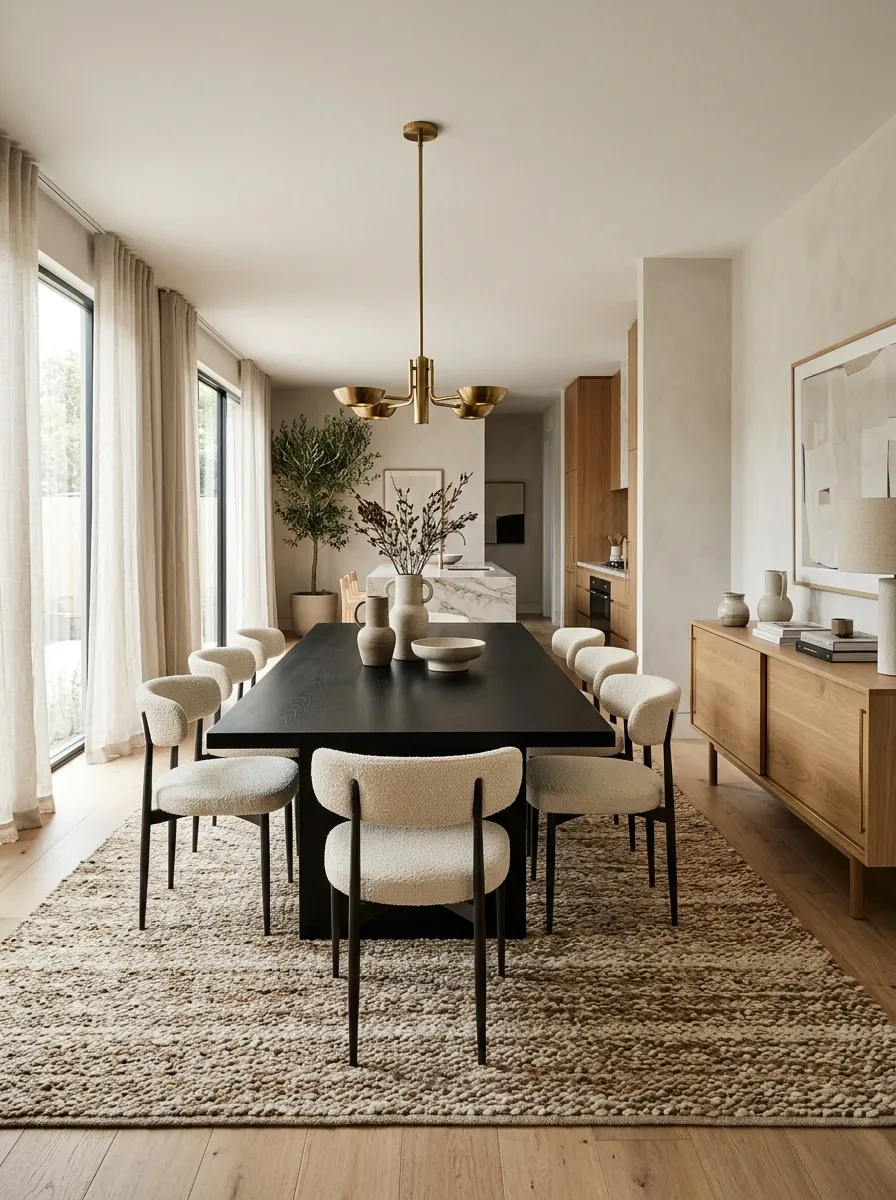
Open-plan dining areas have one annoying problem: everything wants to become one giant room with no actual zones.
A black dining table is useful here because its dark finish naturally creates a visual anchor. Give it an even clearer boundary with a large rug, a pendant overhead, or a sideboard along the nearest wall.
You don’t need a half-wall or an expensive renovation. You just need enough visual information for the eye to understand, “Yep, that’s the dining area.”
Otherwise the table starts floating between the kitchen and living room like it missed the group project.
Repeat the Table’s Black Finish in the Lighting or Art
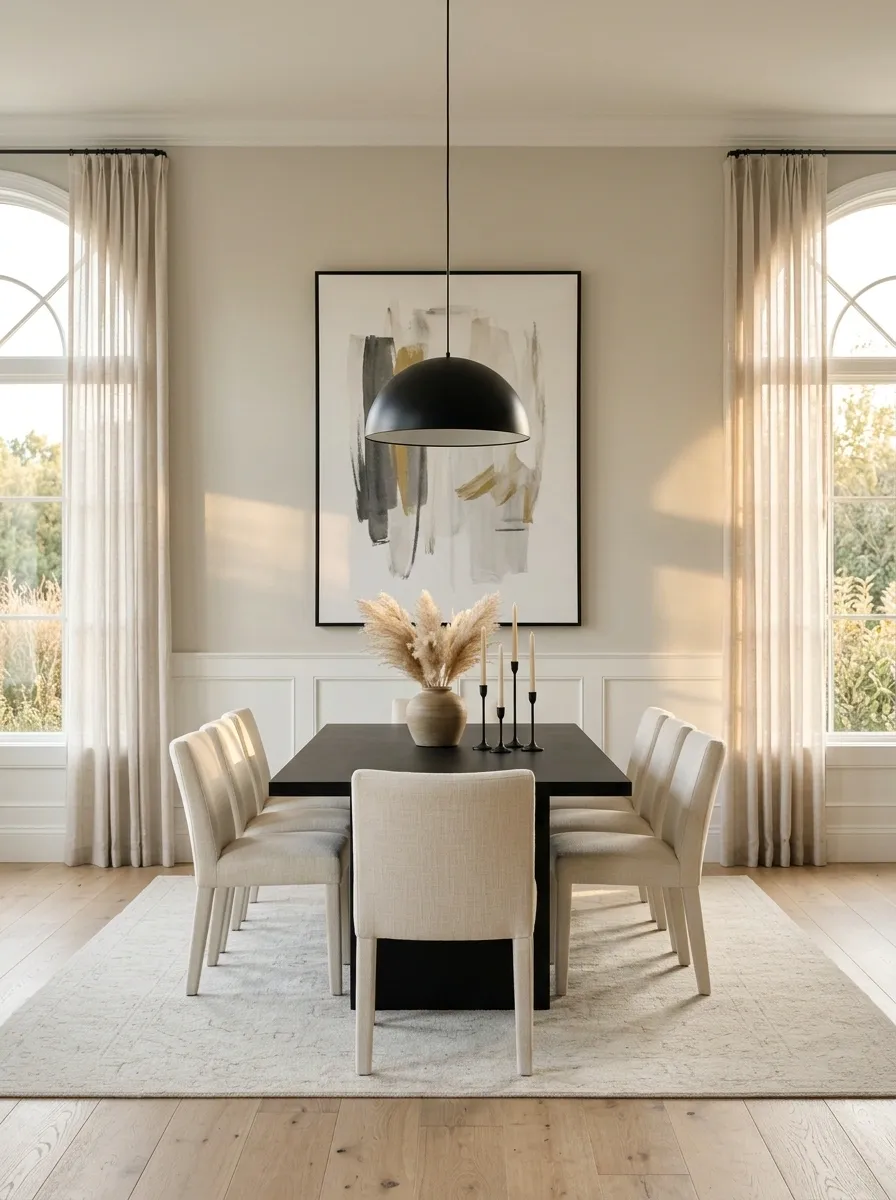
There should be at least one reason the black table belongs in the room beyond, well, being the black table.
Repeat that finish somewhere above or behind it. A black pendant, slim picture frame, dark artwork detail, or small black hardware element can establish the connection.
The repetition doesn’t have to be exact. Matte black, painted black, and charcoal can coexist as long as the overall effect reads as intentional.
This is especially useful when the chairs and rug are much lighter. One dark repeat pulls the eye back toward the table.
Otherwise the poor thing has to carry the entire color story by itself.
Black pendant or chandelier
Dark frame or artwork detail
Small hardware or accent detail
Use Dinnerware That Breaks Up the Black Surface
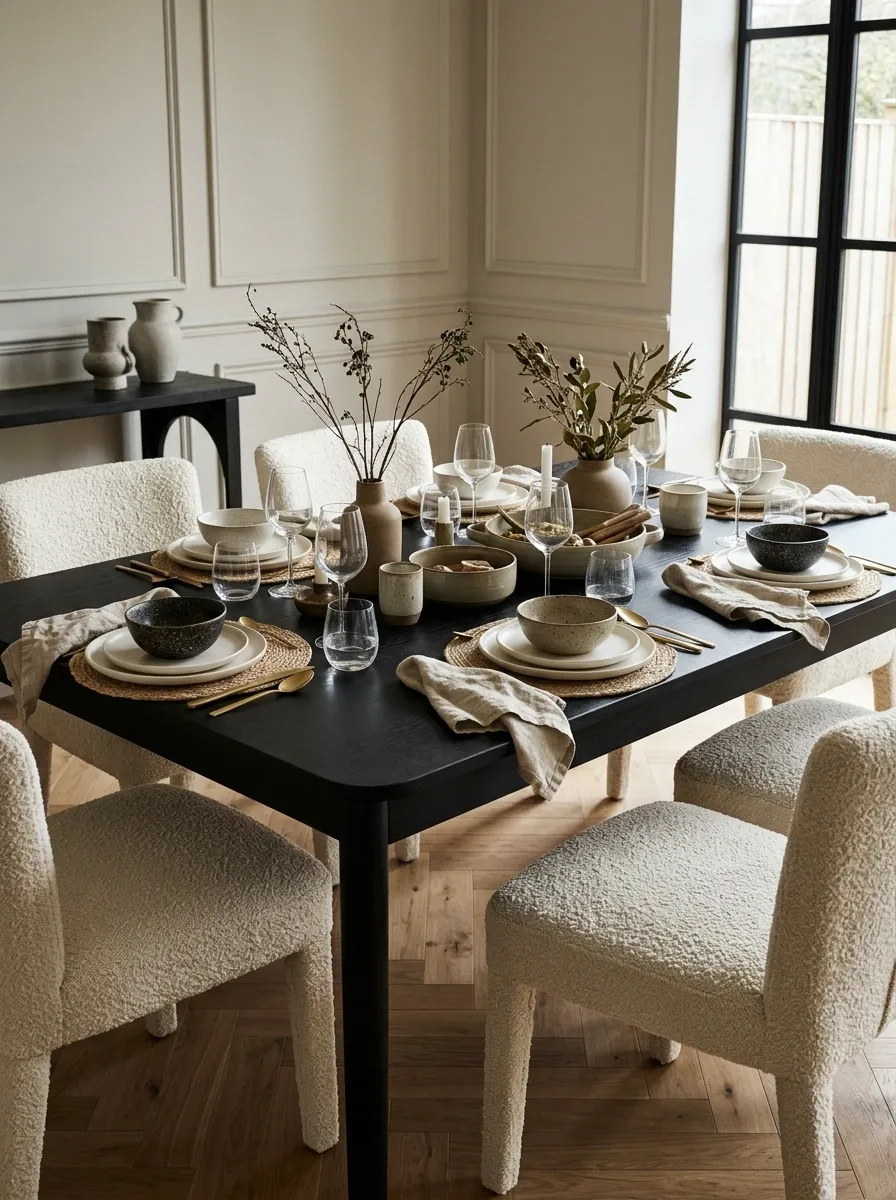
A completely black tabletop can look striking, but a full spread of dark dinnerware can make the whole setting visually disappear.
Use lighter plates, bowls, or serving pieces to create contrast against the table. Cream ceramic, warm white stoneware, speckled finishes, and muted earthy tones all work beautifully.
Then bring in texture through linen napkins, woven placemats, or a slightly irregular ceramic finish.
There’s no need to make every place setting identical down to the last teaspoon. A little variation makes the table feel lived in instead of staged for a furniture catalog.
And yes, the plates are allowed to actually look good while holding food.
Build a Moody Dining Room With Deep Walls and Warm Lighting
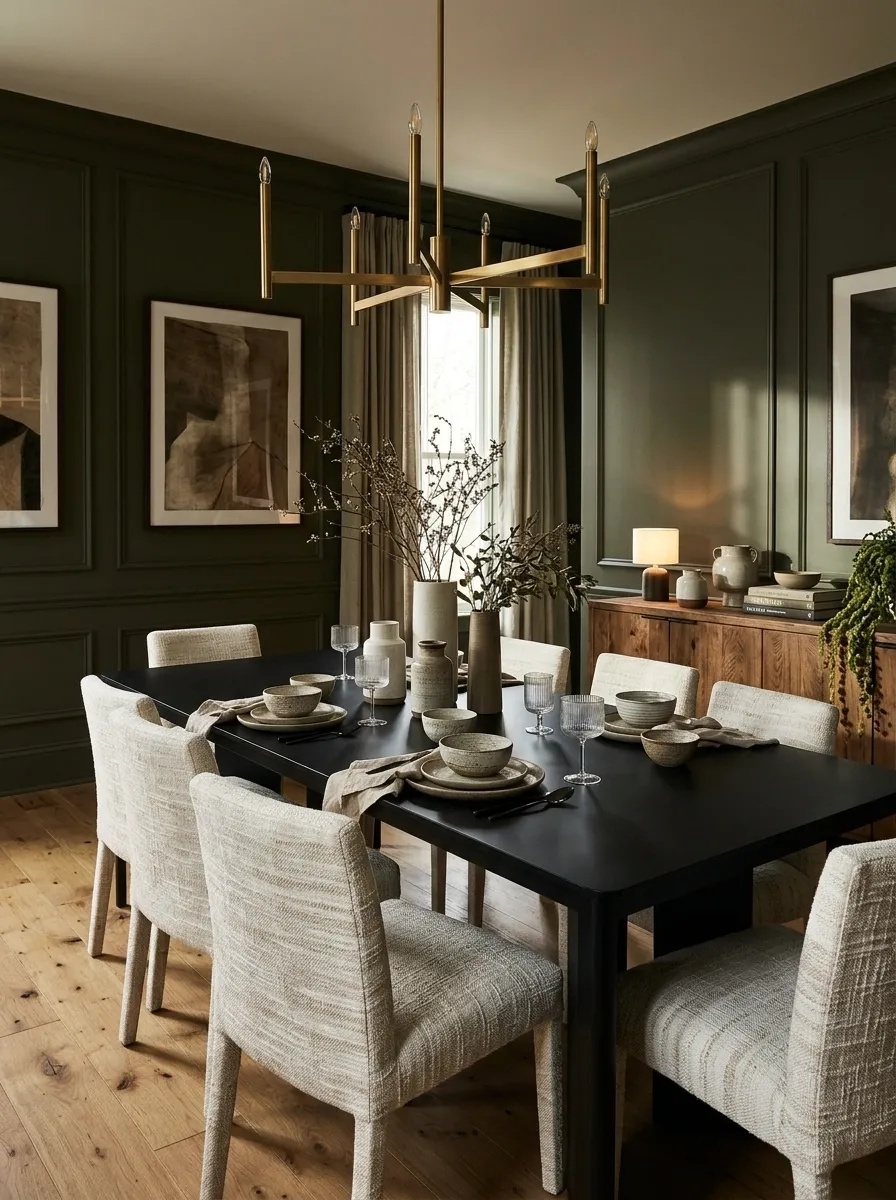
A black dining table doesn’t always need a light backdrop.
A darker dining room can look incredibly rich when the lighting is warm and the surfaces have enough variation. Deep olive, charcoal, chocolate brown, muted navy, or earthy clay tones can create that enveloping effect.
The trick is layering. A dark wall needs something that catches light, such as brass, glass, warm wood, linen, or a softly reflective surface.
Without those contrasts, the room can quickly become one giant block of dark furniture and walls.
Moody works. Cave-like is a separate design category.
Keep a Narrow Dining Room Visually Uncluttered
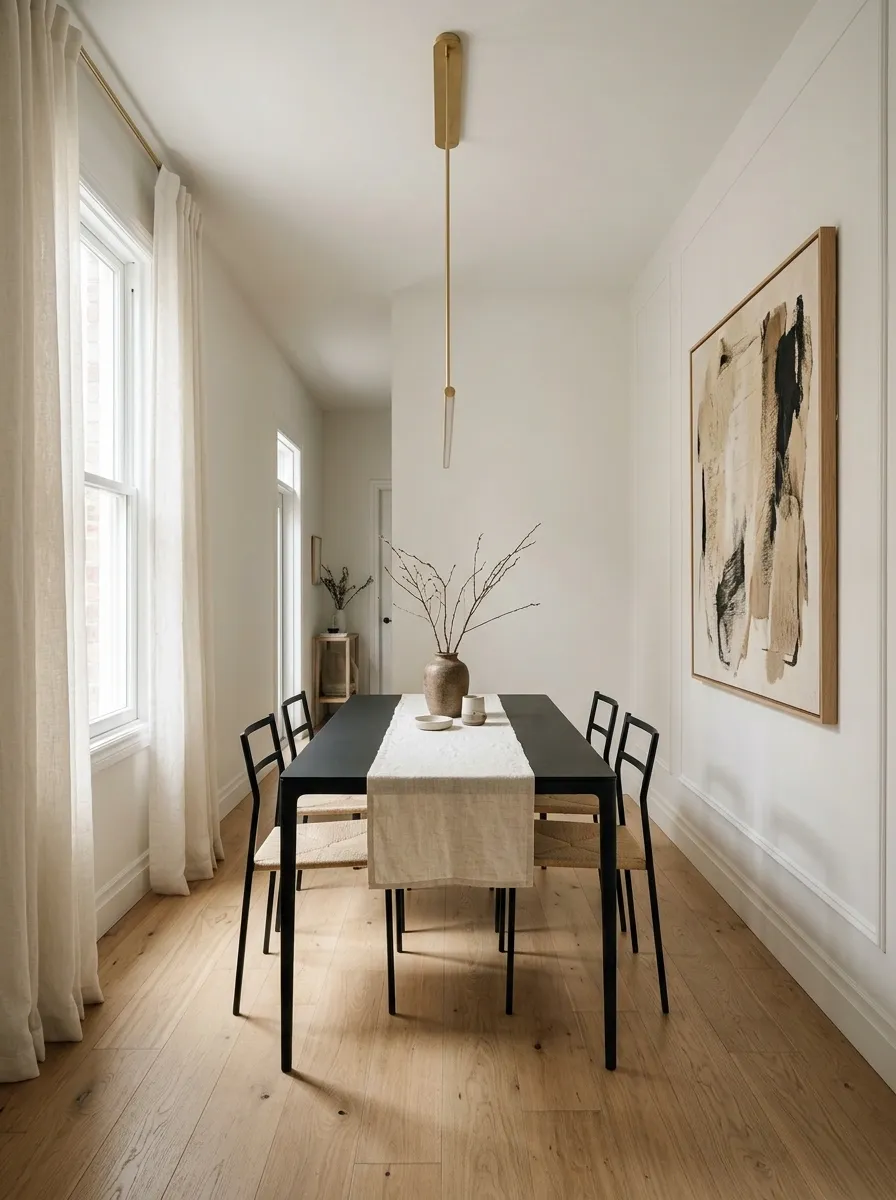
A narrow dining room doesn’t need more decoration. It needs fewer things fighting for the same little strip of space.
Use a dining table with a relatively clean profile and chairs that don’t have oversized arms or bulky backs. Keep the wall treatment focused instead of filling both long walls with competing art and storage.
A runner, slim pendant, and one substantial piece of wall art can be enough.
The temptation in a narrow room is to “finish” every empty spot. Resist it. Some empty wall space isn’t unfinished. It’s literally the reason the room can breathe.
Style the Table for Everyday Meals, Not Just Photos
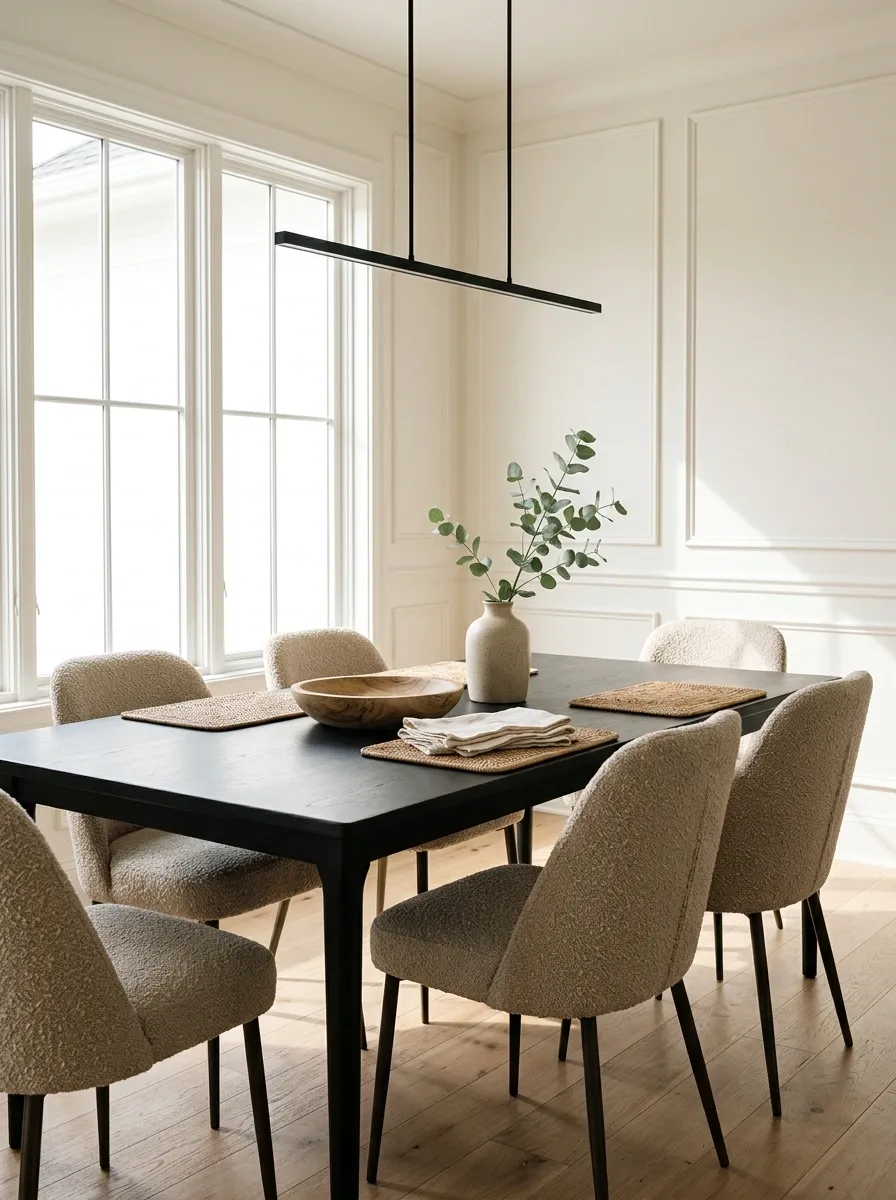
A dining table can look gorgeous without looking like nobody is allowed to touch it.
Keep the everyday setup simple enough that dinner doesn’t require a 20-minute clearing ceremony. A small centerpiece, practical placemats, a stack of linen napkins, and a serving bowl are plenty.
The black surface actually helps here because everyday pieces stand out against it. Cream ceramics look brighter. Natural wood looks warmer. Greenery looks fresher.
The goal is a room that survives real life without losing the visual structure that made the table look good in the first place.
A dining room should support dinner, not just photograph nicely before dinner.
Finish the Room With One Strong Focal Point
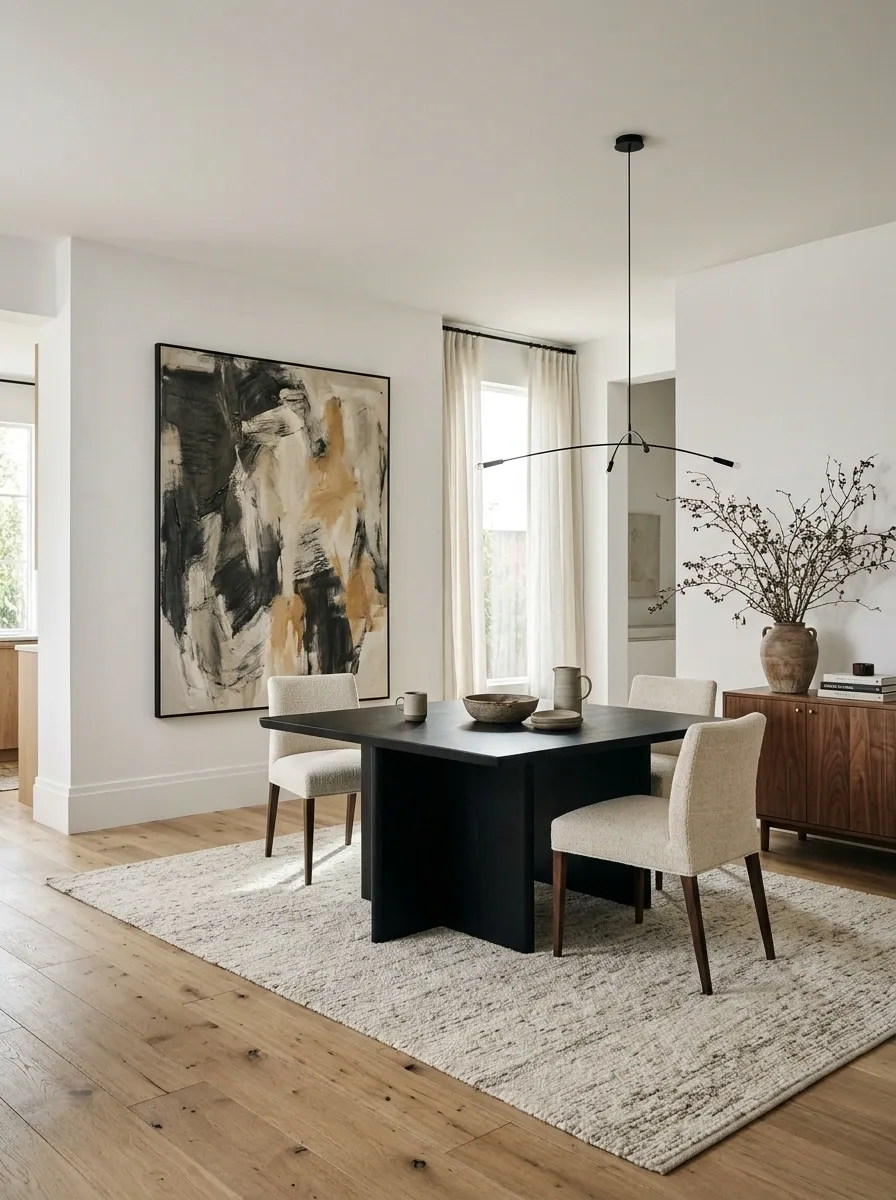
The last mistake is trying to make everything interesting.
A black dining table already gives the room a strong center. The finish should come from one additional focal point that supports it, such as an oversized artwork, a sculptural pendant, a dramatic sideboard, or a striking view.
Pick one.
Everything else should support that choice quietly through texture, color, shape, or repetition.
That’s how the room starts feeling designed rather than assembled piece by piece from completely different corners of the internet.
And honestly, the dining room doesn’t need another decorative moment. It needs confidence.
The Bottom Line
A black dining table doesn’t need to be softened until it barely looks black. That defeats the entire reason it works.
The strongest rooms let the table stay bold, then balance it with lighter surroundings, warm wood, textured upholstery, natural materials, useful lighting, and a little visual restraint. Nothing has to match perfectly. It just needs to make sense together.
And the biggest styling trick isn’t another accessory. It’s knowing when to stop.
Once the rug works, the chairs make sense, the lighting is right, and the room has one clear focal point, leave it alone. The dining room isn’t missing something just because one corner isn’t covered in decor.
Save this list for the next time the black table starts looking a little too serious and the room needs an intervention, not another shopping spree.