
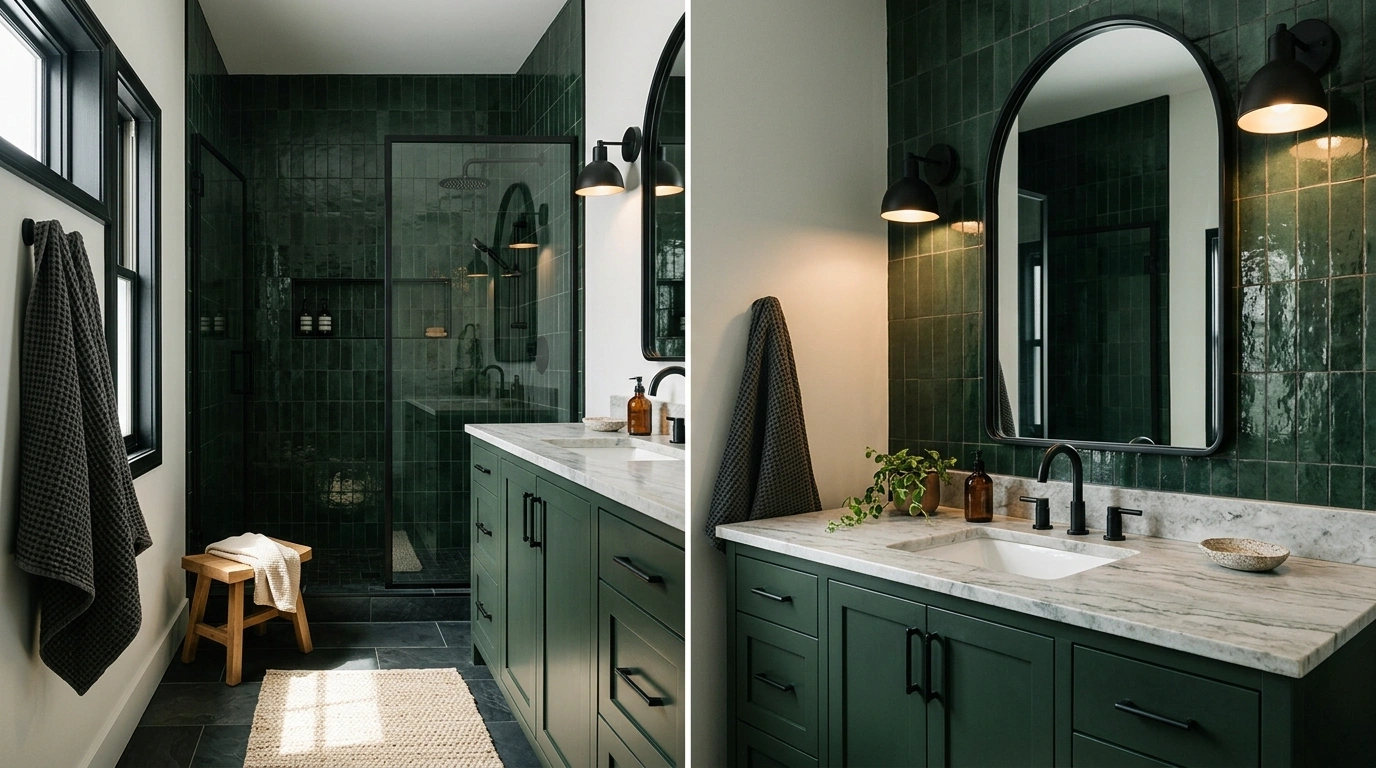
Green and black bathrooms can look incredible. They can also go sideways surprisingly fast. One minute the room looks like an expensive boutique hotel, and the next it looks like every dark tile sample in the showroom got invited to the same party.
The difference usually comes down to the whole composition. Green, black, stone, wood, lighting, cabinetry, flooring, mirrors, and empty space all have to work together.
A black vanity looks completely different against sage plaster than it does against emerald tile. Deep green stone needs a different supporting cast than soft olive paint. Even the amount of pale flooring in the room can change the entire mood.
That is why isolated decorating tips aren’t especially useful here. A black faucet means very little without seeing what surrounds it.
Green and Black Bathroom Ideas
Textured Green Tile With Sleek Black Vanity
Glossy green ceramic tiles wrap the walls with incredible depth, bouncing ambient light around the room while a floating black vanity introduces a striking architectural contrast. Brass hardware and hanging pendant lights warm up the darker tones, giving the entire setup a layered, custom feel.
A round illuminated mirror breaks up the rigid geometry of the rectangular tiles, while the crisp white vessel sink keeps the upper wall feeling bright and balanced. Dark stone flooring anchors the space effortlessly, proving that moody palettes work wonders when paired with the right reflective surfaces.
This design succeeds by letting rich textures do the heavy lifting. The green tiles bring movement, the black cabinetry provides a grounded base, and the warm metallic touches ensure the room feels inviting rather than intimidating.
Forest Green Zellige Bathroom With Matte Black Fixtures
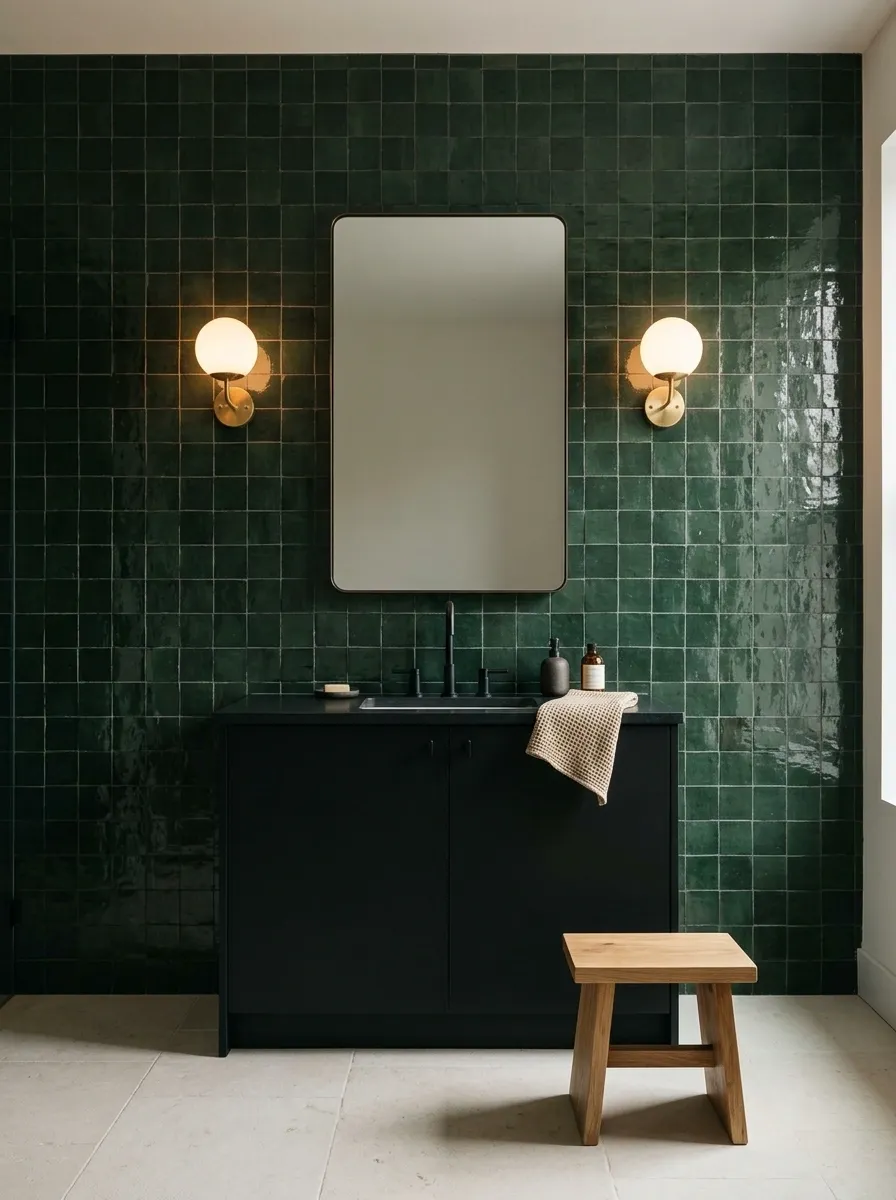
Deep forest green tile gives this bathroom its personality immediately, especially when the tile has a slightly irregular, handmade look instead of a perfectly uniform finish. A simple black vanity, matte black fittings, a dark framed mirror, and warm globe lighting build around it without competing for attention.
The important move is the pale limestone or creamy stone floor. That lighter surface breaks up the darker upper half and keeps the room from feeling boxed in. A little warm wood can help too, particularly around the vanity or in a small stool.
This composition works because the materials are doing different jobs. Green creates atmosphere, black provides structure, and the pale floor keeps the whole thing from becoming one giant dark rectangle.
Botanical Wallpaper With Deep Green Tile
Lush botanical wallpaper sets an adventurous mood overhead, transitioning seamlessly into dark green wainscoting tiles that line the lower half of the powder room. Floating wooden shelves introduce a natural organic element, while minimalist brass fixtures add a subtle hint of polish.
A sleek white wall-mounted sink maximizes floor space, and a slim oval mirror reflects the intricate pattern of the jungle-inspired walls without overwhelming the compact layout. Marble flooring underneath provides a bright, classic foundation that keeps the moody upper sections grounded.
This powder room embraces drama without sacrificing functionality. The pattern play creates a high-end designer look, while the rich green tiles and warm wood accents make the small space feel like an intentional jewel box.
Olive Green Bathroom With Black Walnut Vanity
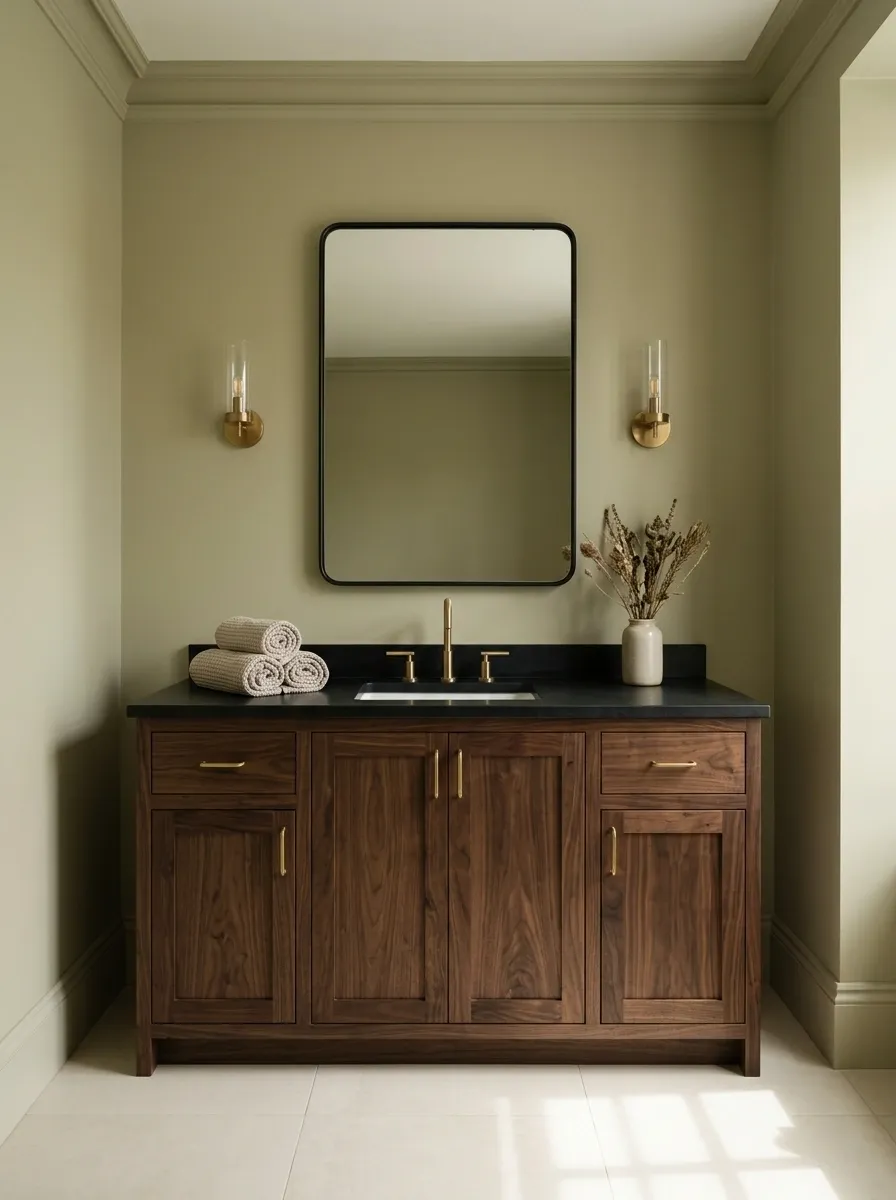
Muted olive green feels much warmer than the deep jewel tones usually associated with this palette. Here, it covers the walls and lets a substantial walnut vanity take center stage, with a black countertop, black framed mirror, and understated lighting adding just enough contrast.
Cream floor tile keeps the lower half bright, while the walnut brings warmth that plain black cabinetry would not provide. The result feels collected rather than aggressively coordinated.
This is a good direction when the bathroom needs personality without looking theatrical. The olive is soft enough to live with every day, while the dark vanity gives the room an architectural anchor. The color combination says “thoughtful renovation” rather than “the tile sample aisle won.”
walls
vanity
counter
floor
Moody Green Tile With Warm Brass Accents
Vertical green subway tiles bring a sophisticated rhythm to this compact bathroom, perfectly complemented by a substantial black vanity and matching black sink. Elongated vertical sconces cast a warm, flattering glow over the frameless arch mirror, highlighting the rich variations in the tilework.
A graphic patterned floor tile introduces a playful geometric element that contrasts sharply with the moody vertical lines of the walls. The clever mix of textures prevents the dark color scheme from feeling flat, creating an environment that feels both curated and timeless.
This space proves that smaller rooms are the ideal place to experiment with bold color palettes. By pairing deep green walls with black cabinetry and brass details, the design achieves a rich, finished look that punches well above its weight class.
Emerald Green Marble Bathroom With Architectural Black Detailing
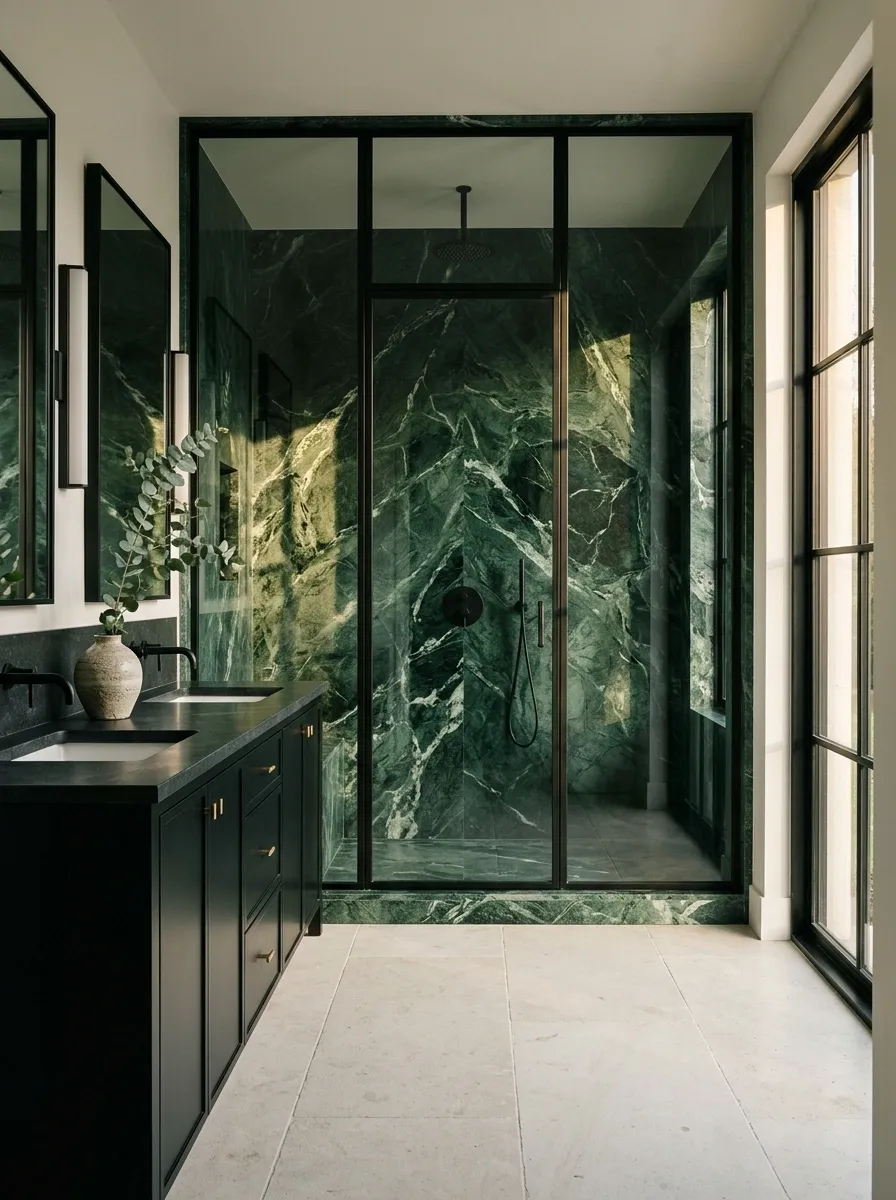
Emerald green marble turns the bathroom into a statement without needing much else. Use it around the shower or vanity, then let slim black window frames, fittings, and cabinetry sharpen the edges. Pale ivory stone can sit quietly underneath everything.
The strongest versions keep the architecture clean. A simple black frame around a window or glass enclosure often does more than a room full of decorative black objects. The marble already has movement, so the surrounding finishes should know when to leave the room alone.
This concept suits spaces where the stone can be seen from the doorway. The green becomes the first thing the eye notices, while the black elements quietly outline the composition. It is dramatic, but still believable as a real bathroom rather than a luxury showroom trying to win an award.
Jungle Mural With Geometric Black Flooring
An exotic botanical mural wraps the walls in a tapestry of deep greens and vibrant florals, creating an immersive forest atmosphere overhead. Beneath it, vertical green zellige tiles add a handmade texture, while a bold black-and-white geometric floor pattern anchors the entire visual experience with sharp graphic lines.
The brilliant ceiling lighting washes down the textured walls to highlight every subtle variation in the tile and paint. Hidden plumbing details and sleek black fixtures keep the lines clean, allowing the dramatic wall treatments to remain the undisputed star of the show.
This maximalist powder room works because every element has a distinct job. The botanical walls bring drama, the zellige tiles offer tactile richness, and the graphic floor ensures the room stays grounded in modern design principles.
Soft Sage Bathroom With Black Steel Shower Framing
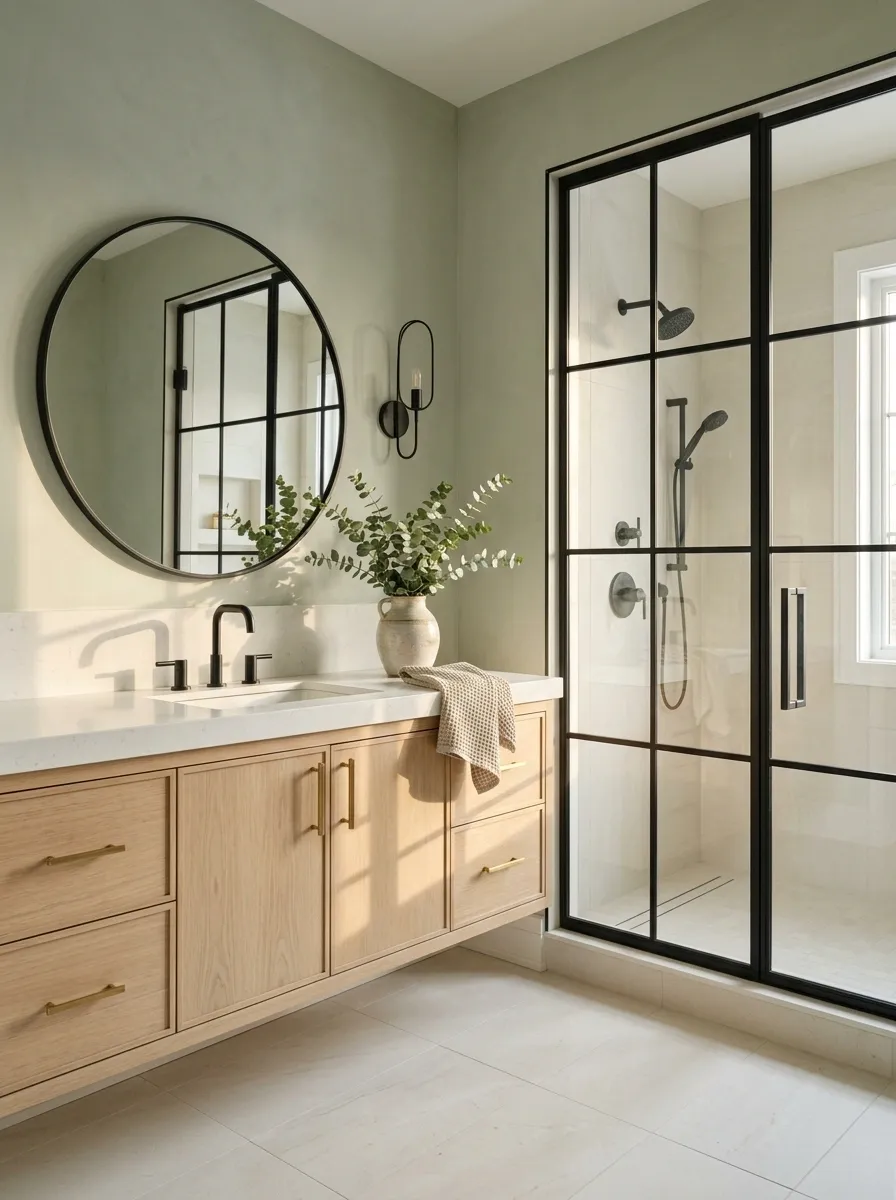
Not every green and black bathroom needs to be moody. Soft sage walls, warm white floor tile, a pale oak vanity, and a black steel shower enclosure create a much lighter interpretation of the palette.
The black works here because it stays relatively thin. Instead of covering major surfaces, it appears in the shower frame, mirror, fittings, and perhaps a small light fixture. Those repeated lines give the room definition without dragging the visual weight downward.
Natural light makes this composition especially convincing. The sage reads fresh, the oak introduces warmth, and the black framing gives the pale materials enough contrast to avoid looking washed out. It is basically the green-and-black equivalent of having one friend in the group chat who knows when to stop typing.
Emerald Mosaic Tile With Black Wainscoting
Shimmering emerald mosaic tiles create a stunning focal point within an arched shower alcove, bouncing light through the space like crushed jewels. Below the tiled zone, dark vertical wood paneling frames the lower walls, meeting a striking black-and-white geometric marble floor.
A minimalist wall-mounted black toilet blends seamlessly into the dark paneling, maintaining uninterrupted visual lines across the lower half of the room. Warm brass hardware adds a necessary metallic flash against the deep jewel tones of the green mosaic.
This layout masters the art of high-contrast zoning. The luminous green alcove draws the eye inward, the dark paneling adds architectural weight, and the patterned floor finishes the room with a dose of graphic personality.
Dark Green Traditional Bathroom With Marble Wainscoting
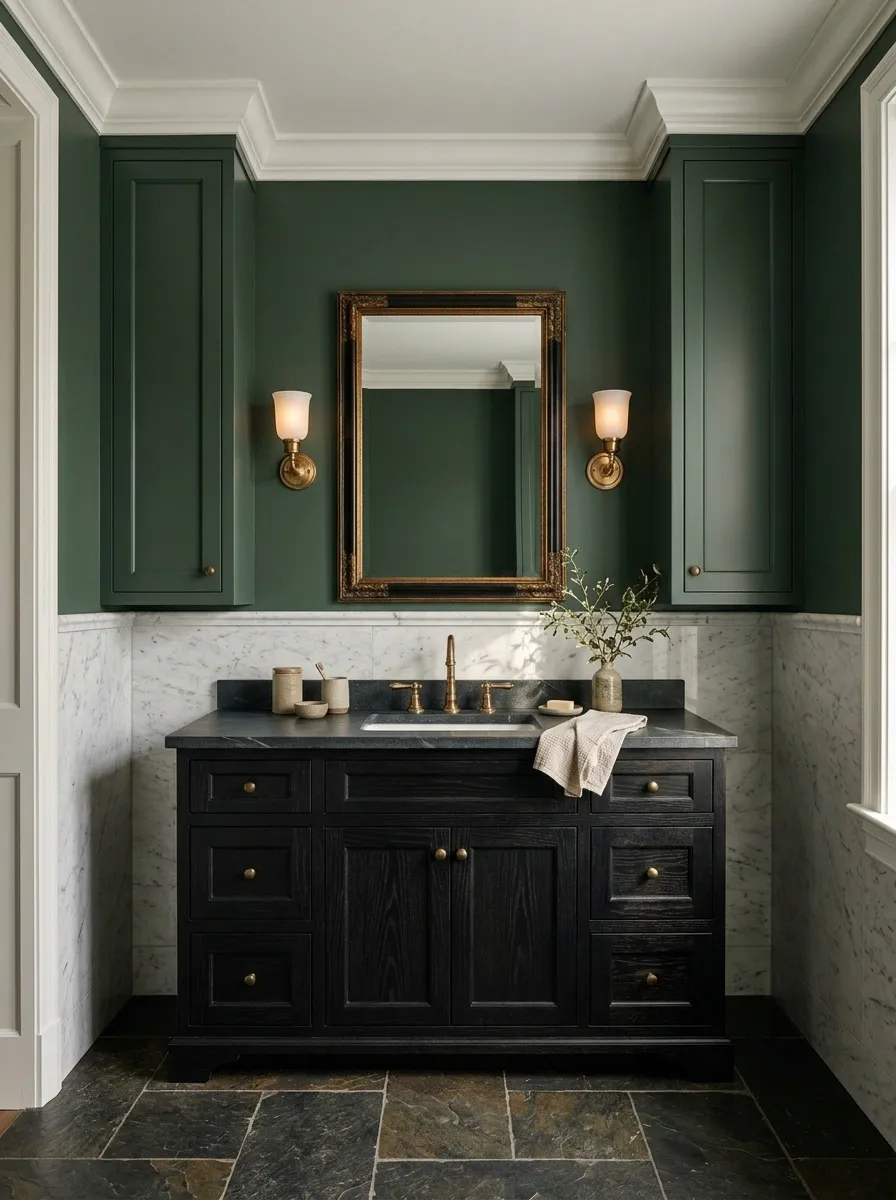
This traditional composition uses deep green on the upper walls and cabinetry while pale marble wainscoting carries the lower half of the room. A black vanity, classic framed mirror, traditional sconces, and dark stone countertop give the space enough weight to feel established without becoming gloomy.
The wall division is the trick. Dark green all the way to the floor would create a very different room, but the marble band introduces a visual pause and catches light around the lower half. It also gives the classic architecture something to work with instead of leaving the palette as two flat colors.
The overall effect feels tailored and slightly old-fashioned in the best way. Think less “trend of the month” and more “this bathroom somehow has a better vocabulary than everyone else.”
Moss Green Bathroom With Blackened Oak Ceiling
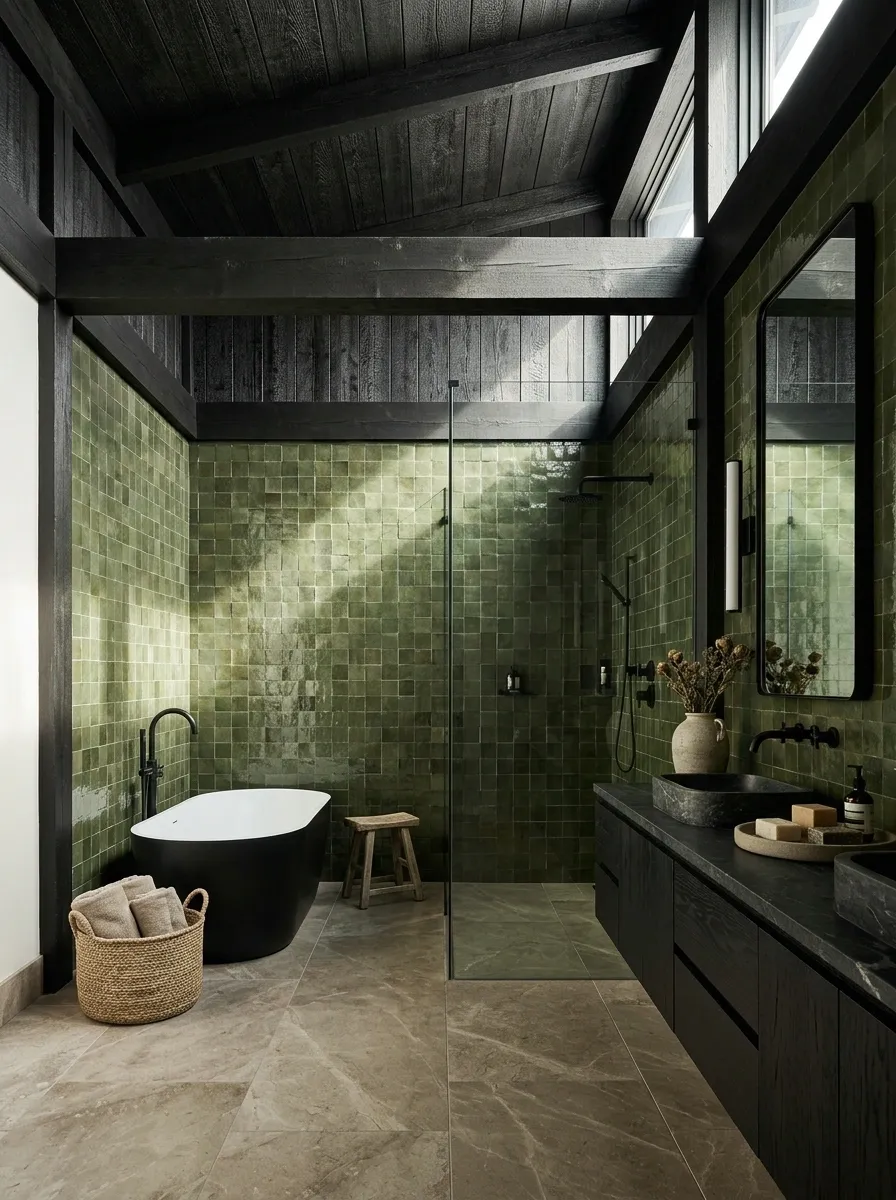
Moss green tile wraps the main bathing area while a blackened oak vanity gives the room a heavier, more grounded base. The unusual move is carrying that dark wood tone upward with a ceiling treatment or strong overhead timber detail, so the bathroom feels intentionally framed rather than simply decorated.
Warm stone flooring keeps the lower half from becoming too dense. Black fittings can stay simple because the room already has plenty of visual character from the combination of green tile and dark wood.
The ceiling detail works particularly well in bathrooms with enough height to spare. It draws the eye upward and gives the darker palette somewhere to travel. Basically, the ceiling finally gets a personality instead of being the neglected fifth wall.
Green Subway Tile Bathroom With Sculptural Black Vanity
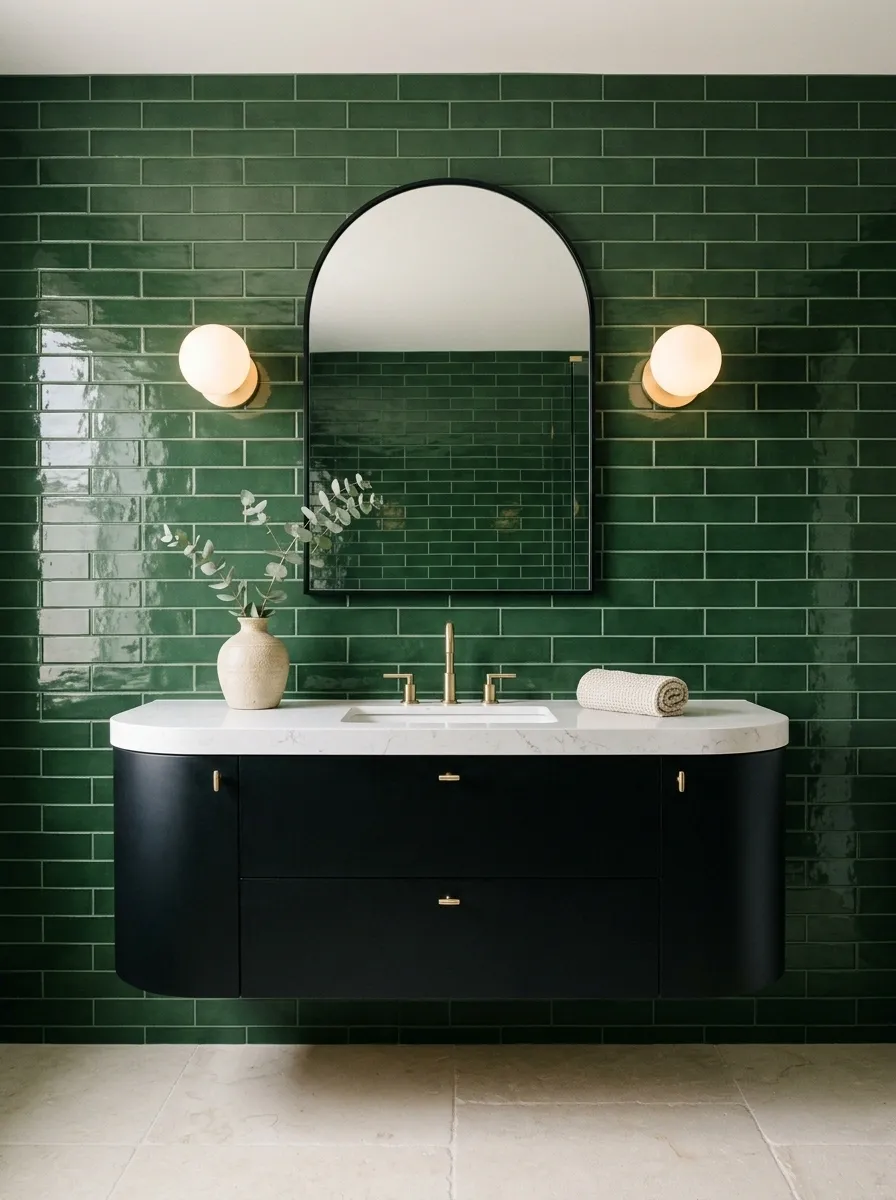
This bathroom starts with a familiar material, green subway tile, and gives it a less predictable setting. Instead of pairing it with ordinary cabinetry, a substantial black vanity introduces a sculptural shape, rounded mirror, and softer lighting.
The tile provides rhythm through its repeated lines, while the vanity and mirror bring curves into the composition. That contrast keeps the room from feeling overly rigid.
Cream flooring is a smart supporting choice because it does not compete with the green or make the black furniture feel even heavier. The result is contemporary without becoming cold. It also proves that subway tile does not automatically mean “standard contractor bathroom,” which is probably good news for subway tile’s reputation.
Moody Pine Green Bathroom With Limestone Floor
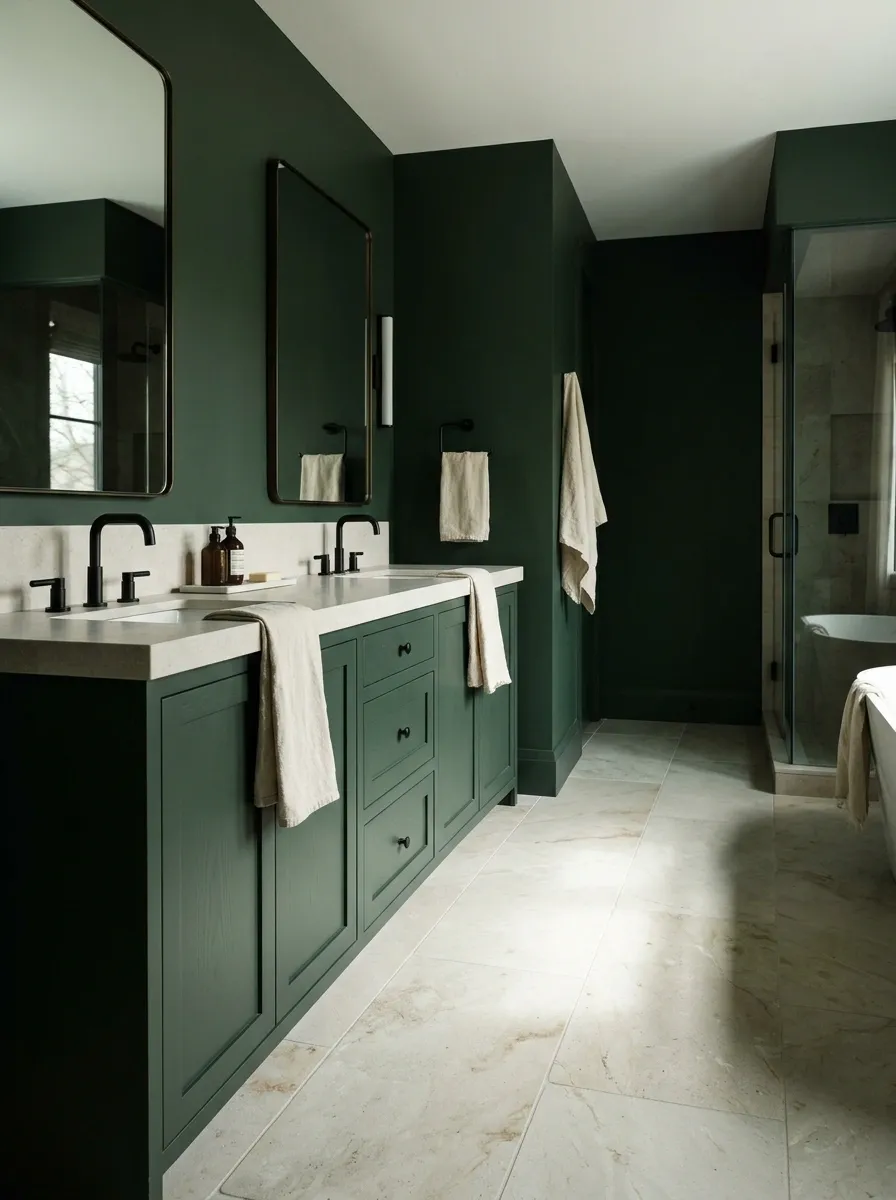
Pine green walls and cabinetry create the mood here, but the floor gets an important supporting role. A pale limestone surface stretches across the lower plane while a stone vanity top, black fittings, and simple linen accents build a restrained material palette above it.
The floor matters more than it might seem. Against a dark green wall, a pale natural stone surface reflects light upward and gives the room some breathing room. The effect is especially strong when the stone has subtle variation instead of looking like a perfectly flat cream rectangle.
This is the sort of bathroom that can feel sophisticated without needing a dozen decorative objects. The dark green already has enough opinions.
Green Marble Vanity Bathroom With Soft Black Walls
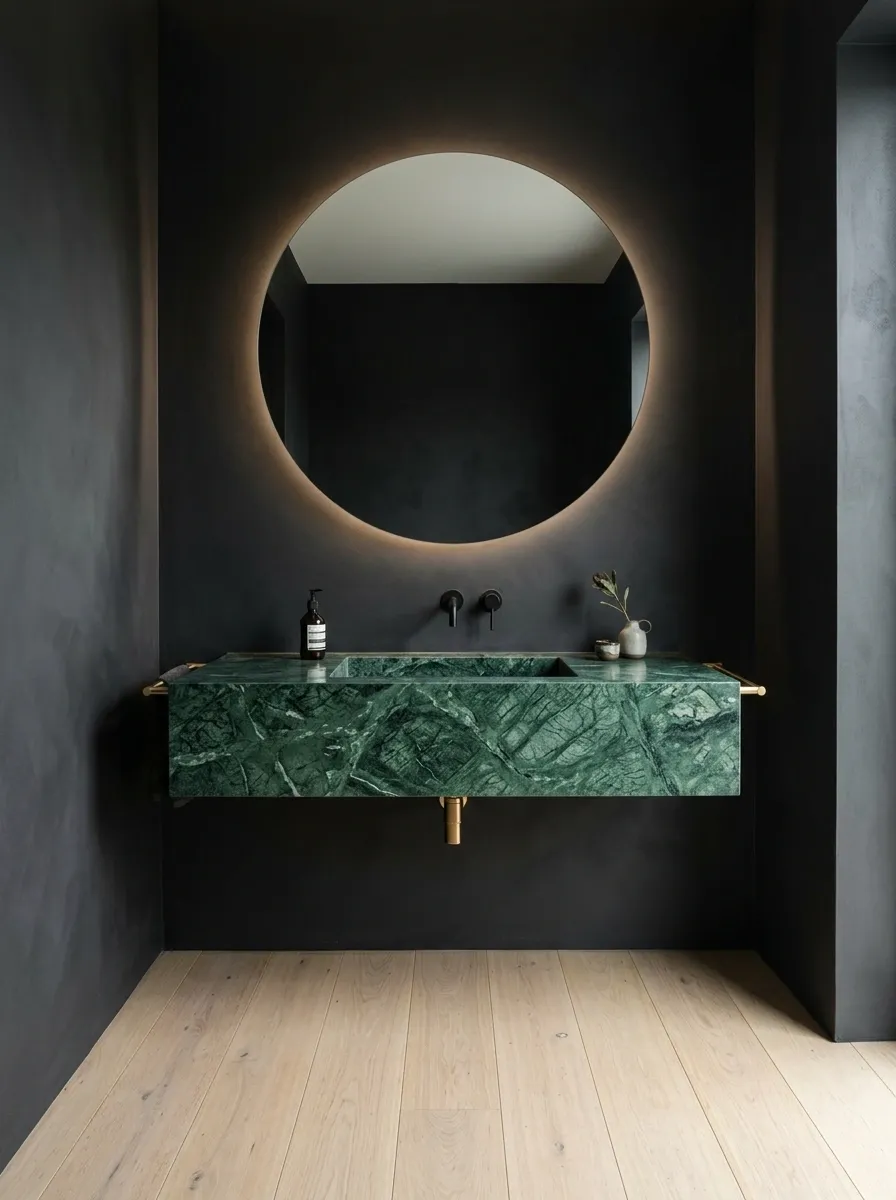
Instead of spreading green across the entire bathroom, this concept concentrates it in one important place: the vanity. A richly veined green marble surface becomes the focal point against soft charcoal-black walls, pale flooring, and minimal black fixtures.
That reversal changes the entire mood. Green no longer acts as the background color. It becomes a concentrated jewel-like element that gets more attention because everything around it is quieter.
The vanity wall needs enough visual space to breathe. Overloading it with shelves, art, plants, and accessories would bury the material that made the design interesting in the first place.
This approach suits bathrooms where a bold slab or stone surface deserves to be seen clearly. The black walls simply make sure it gets the spotlight without screaming for it.
Sage Green Bathroom With Black-and-Cream Checkerboard Floor
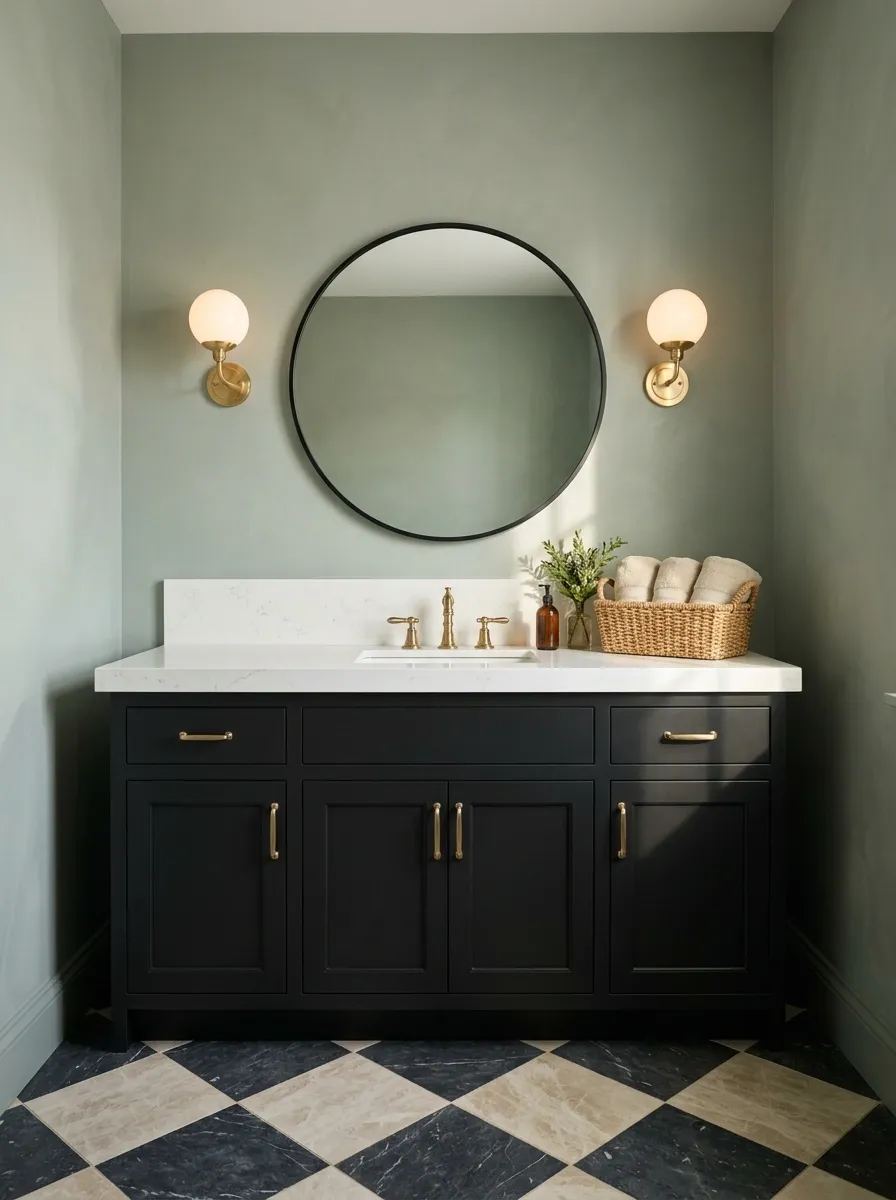
Sage walls soften the room while a black-and-cream checkerboard floor gives it a more graphic foundation. A black vanity, simple mirror, and traditional lighting tie the floor pattern back into the rest of the bathroom without making the room feel themed.
The checkerboard belongs on the floor because it gives the room a strong base without interrupting the calmer sage walls. Keeping the walls relatively quiet allows the pattern to read as part of the architecture rather than a decorative afterthought.
The combination feels classic but not fussy. Add too many competing patterns and the bathroom starts looking like it lost an argument with a flooring showroom.
keep the sage relatively calm
let the checkerboard establish rhythm
Black-Framed Green Bathroom With Large-Format Stone
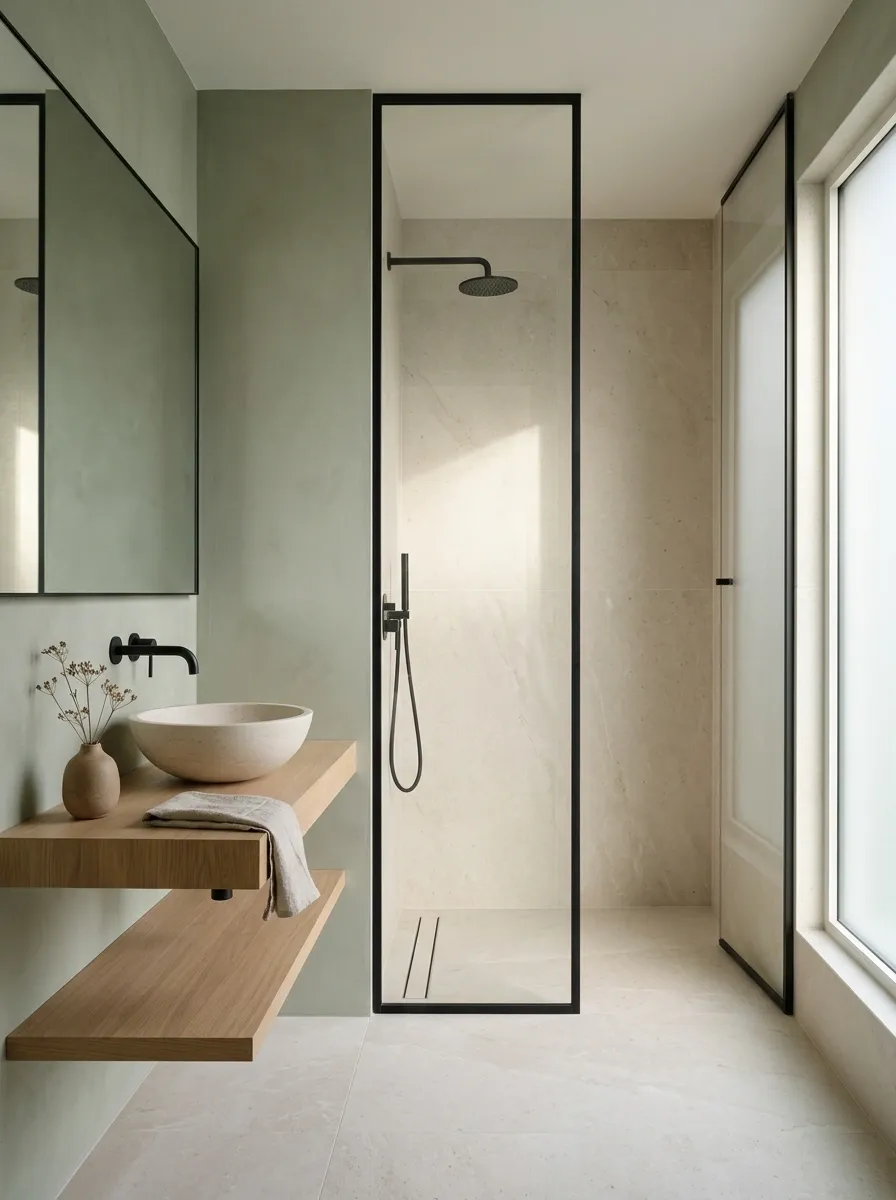
This bathroom takes a quieter approach to the green-and-black combination by letting surface scale do most of the talking. Muted green walls sit against large pale stone slabs, while a black-framed shower enclosure and slim black fittings create sharp architectural lines.
Large-format stone is important here because it reduces the number of visual breaks across the room. The green can feel richer when it isn’t competing with dozens of grout lines, patterns, or decorative objects.
The black framing then works almost like punctuation. It outlines the shower and mirror without becoming another major surface. The result is clean, substantial, and a lot more interesting than simply covering everything in tiny green tiles and hoping for the best.
Vintage Green Bathroom With Black Clawfoot Tub
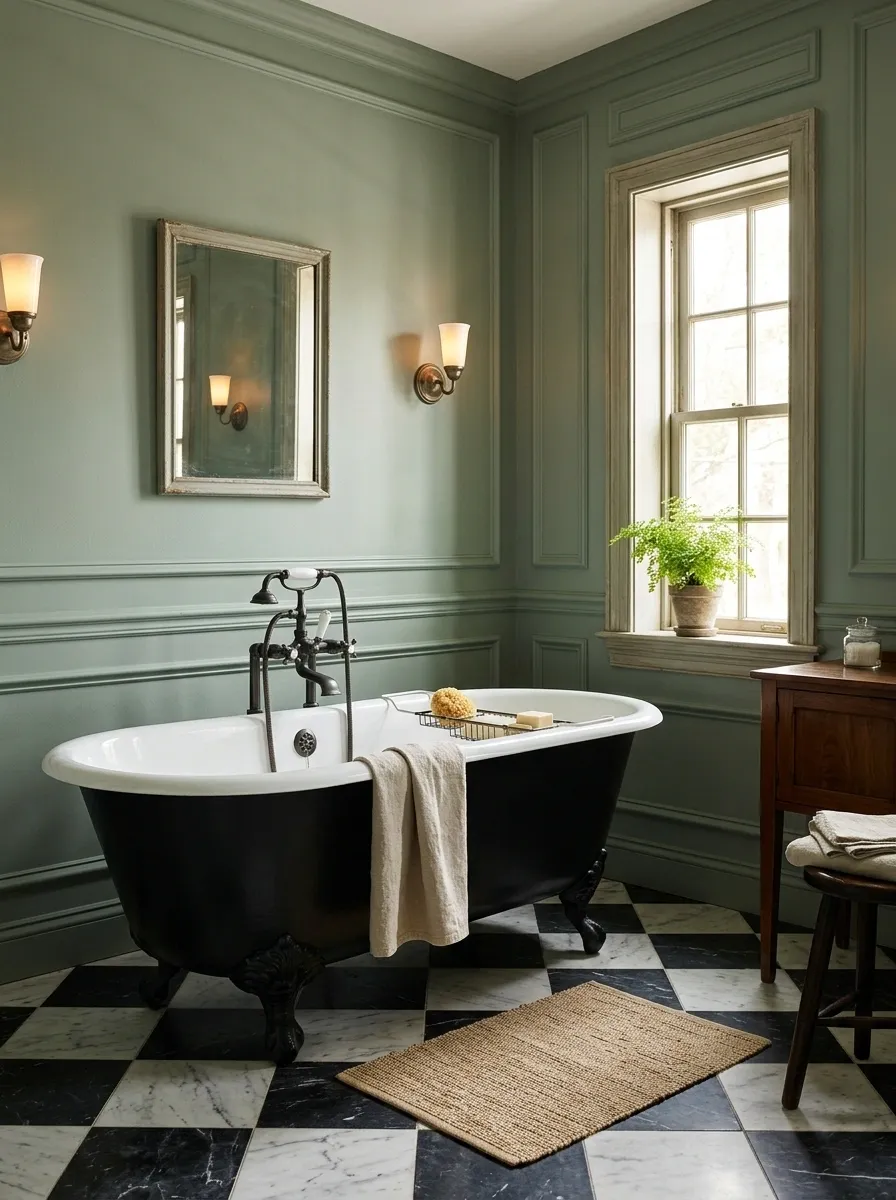
A dusty green wall color gives this bathroom its old-school character, while a black clawfoot tub becomes the major architectural shape. Traditional white plumbing, checkerboard flooring, dark wood furniture, and classic lighting complete the composition without turning it into a theatrical period set.
The tub works because its silhouette is strong enough to stand alone. There is no need to pile decorative objects around it. A simple framed mirror and restrained accessories keep the room feeling lived-in rather than staged for a costume drama.
The black tub also gives the green walls something solid to push against. Together they feel nostalgic without requiring every object in the room to come from another century. Vintage character, modern restraint. Very convenient when the goal is charm without accidentally opening a portal to 1897.
Deep Teal Bathroom With Black Terrazzo
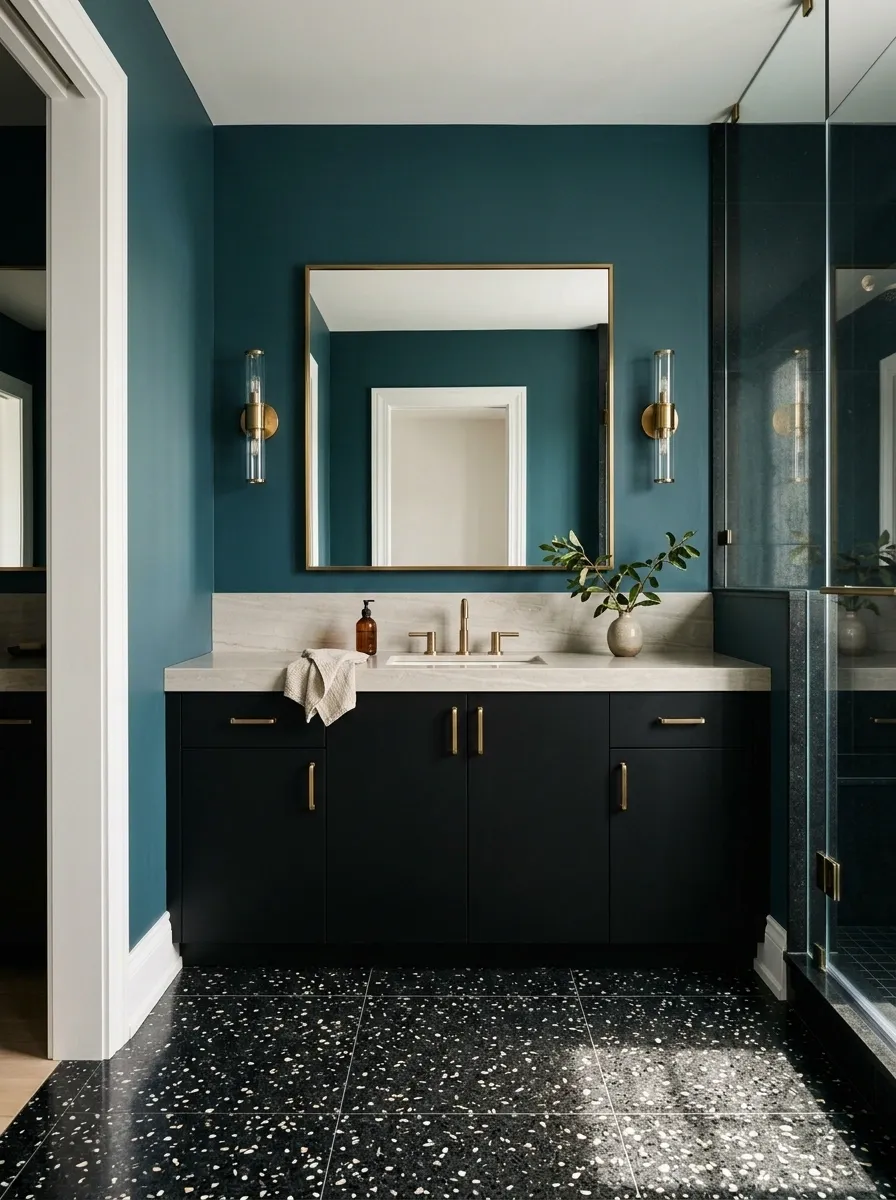
Deep teal brings a slightly cooler personality to the green family, especially when paired with black terrazzo flooring and a clean black vanity. The terrazzo adds movement underfoot without introducing another dominant color, while pale stone and warm metal details prevent the room from becoming too dense.
The floor is the main reason this concept feels different from a standard dark green bathroom. The scattered aggregate creates small flashes of lighter texture that break up the dark base without competing with the walls.
Keep the cabinetry simple here. Between the teal, terrazzo, and black surfaces, the room already has plenty going on. Adding six decorative baskets and twelve little bottles would be less “spa retreat” and more “countertop lost custody.”
Dark Olive Bathroom With Aged Brass and Black Stone
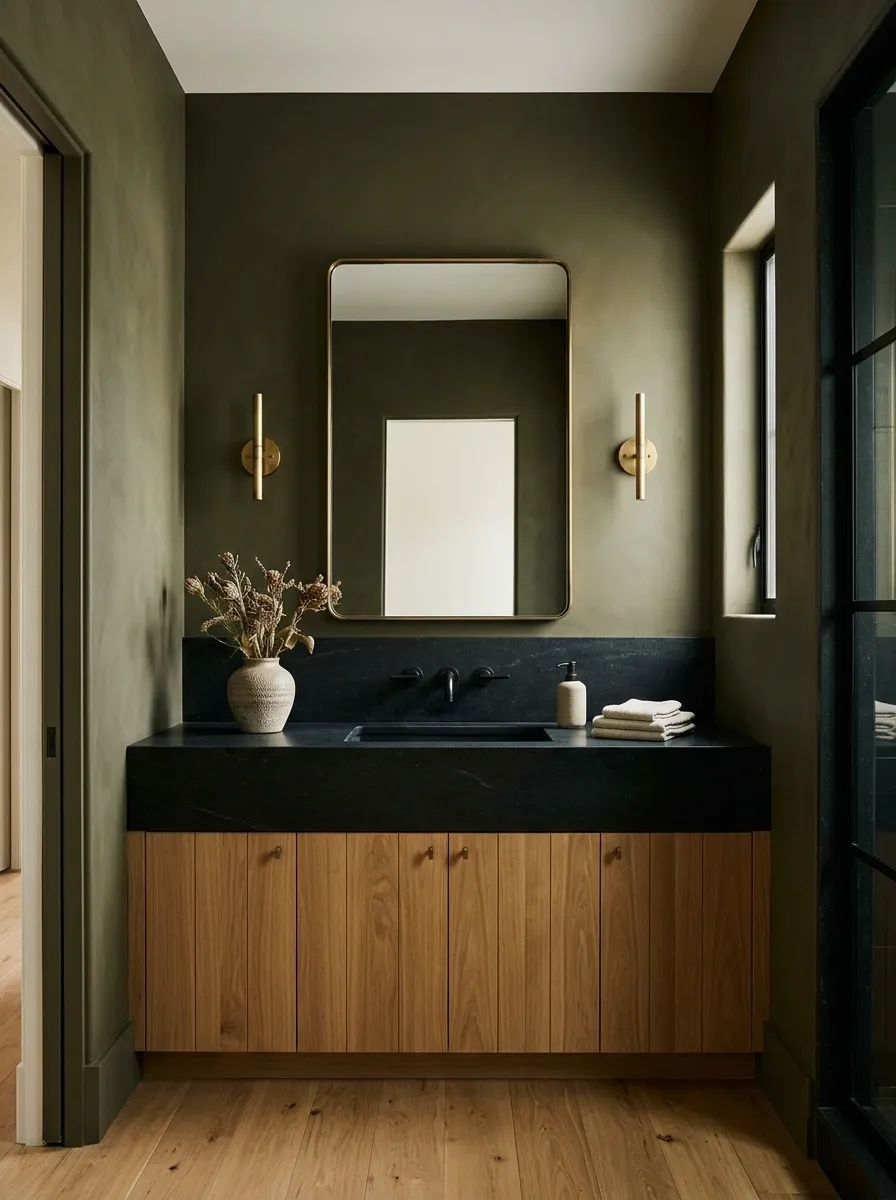
Dark olive walls create a rich backdrop for a black stone vanity, black fittings, warm oak details, and small touches of aged brass. The brass should stay concentrated around lighting or a few fixtures, where it adds warmth without hijacking the green-and-black palette.
The olive works especially well because it has a slightly earthy quality. Against true black, it feels softer and more layered, while the walnut or oak elements keep the room from becoming overly cool.
The key is restraint. Brass can warm the room beautifully, but too much of it changes the entire story. Suddenly the bathroom has gone from tailored to “every surface purchased from the same shiny-metal collection.” Nobody needs that level of commitment.
Scandinavian Green and Black Bathroom
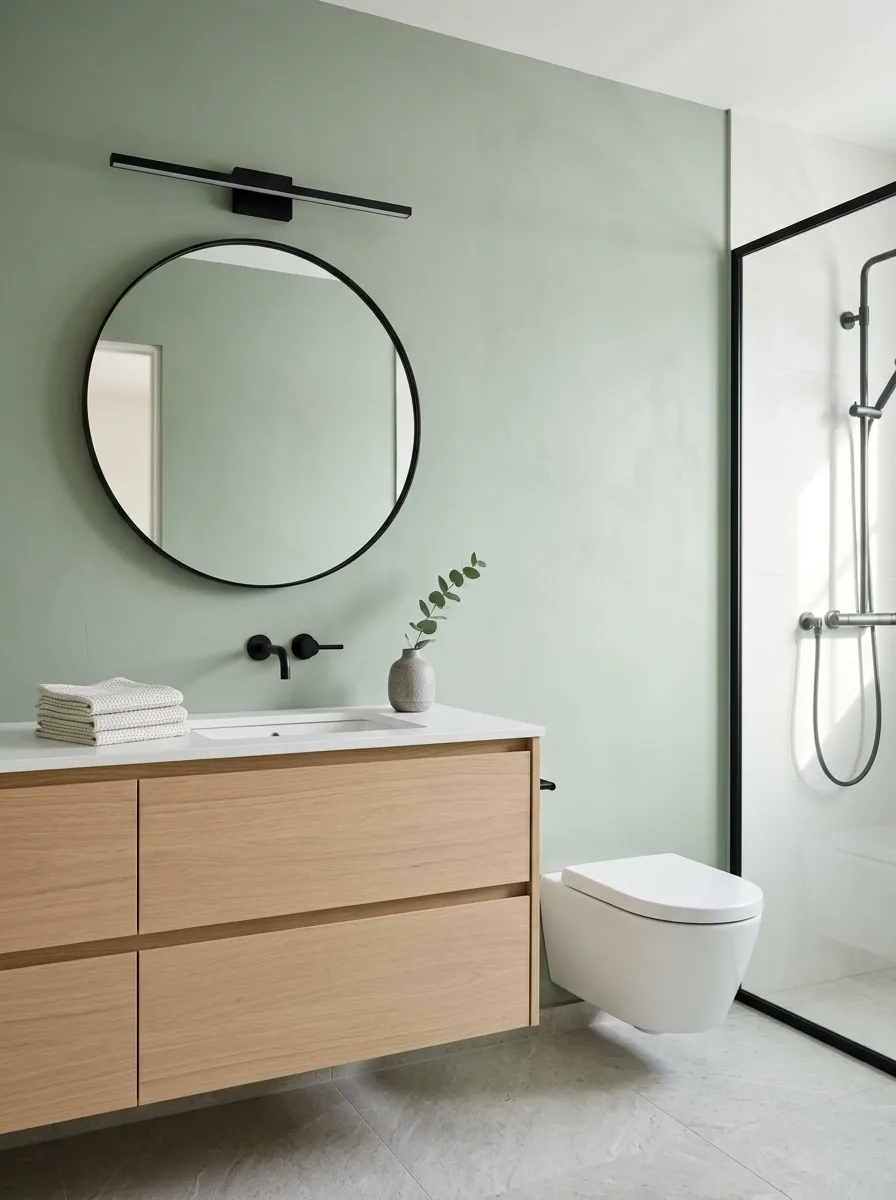
This Scandinavian interpretation keeps the palette surprisingly light. Muted green walls provide the color, pale oak cabinetry brings warmth, black fittings add definition, and simple white sanitaryware keeps the room visually clean.
The black elements should stay narrow and purposeful. A slim shower frame, mirror, faucet, and light fitting are enough to connect the composition. The rest of the room can remain soft, natural, and uncluttered.
Pale oak matters because it changes the character of the green. Instead of feeling dramatic or botanical, the green becomes calmer against the natural wood. It is a useful reminder that green and black do not have to mean moody. Sometimes the darkest color in the room is simply there to keep everyone else in line.
DETAILS
Traditional Green Bathroom With Black Furniture
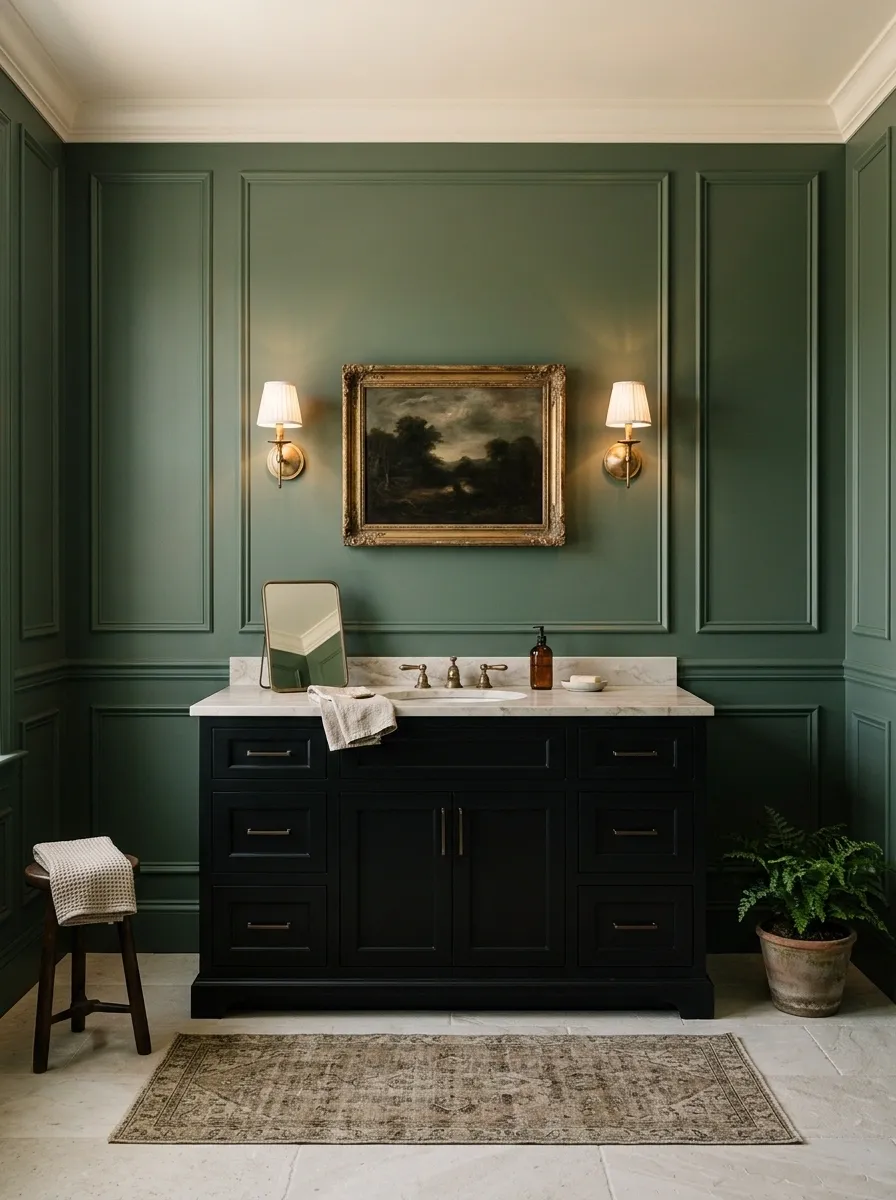
Classic green painted walls create the backdrop for a freestanding black vanity, pale marble countertop, framed artwork, traditional sconces, and dark wood accents. The room has enough old-school detail to feel established, but the palette keeps it from drifting into overly formal territory.
The black furniture provides the strongest visual anchor. Against green walls, it looks substantial without needing an elaborate shape or oversized hardware. A warm white ceiling and pale stone floor keep the darker middle section from swallowing the room.
The trick is letting the furniture and architecture carry the personality. Too many decorative accessories would make the bathroom feel like it is trying very hard to prove it has taste. It already does.
Black Vanity Wall Against Muted Green Plaster
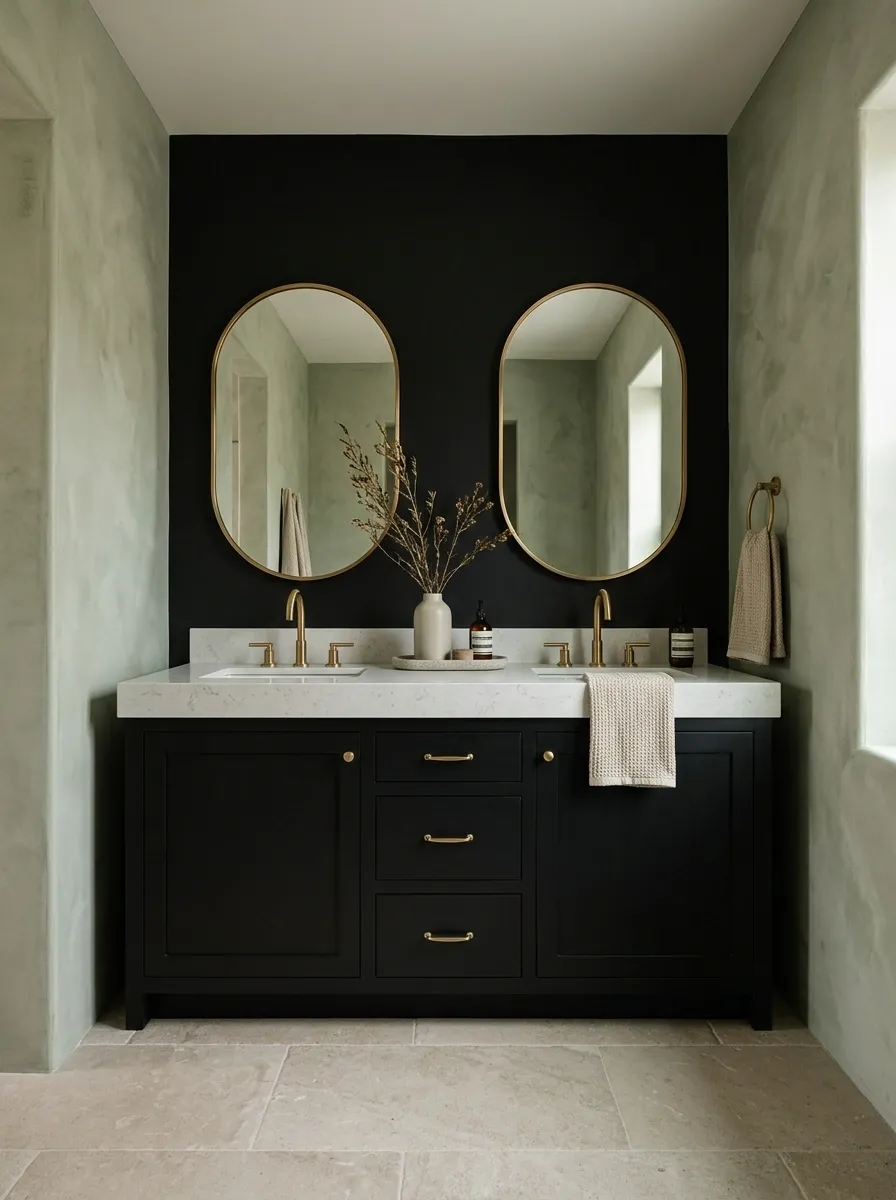
Here, the green does not come from patterned tile. A softly textured muted green plaster covers most of the room, while one complete vanity wall turns black and becomes the architectural counterpoint.
The black wall works best when it feels like part of the room’s structure rather than a randomly painted feature wall. A pair of rounded mirrors, pale stone countertop, and soft flooring help break up the dark rectangle without weakening its impact.
Texture does a lot of the heavy lifting. The green plaster has subtle variation that changes with the light, while the black wall feels more solid and graphic. That difference makes the room interesting even when the furniture is kept extremely simple.
And yes, the walls can have texture without every wall needing a fluted panel. The fluted panel industry has survived long enough.
Small Green Bathroom With Floating Black Vanity
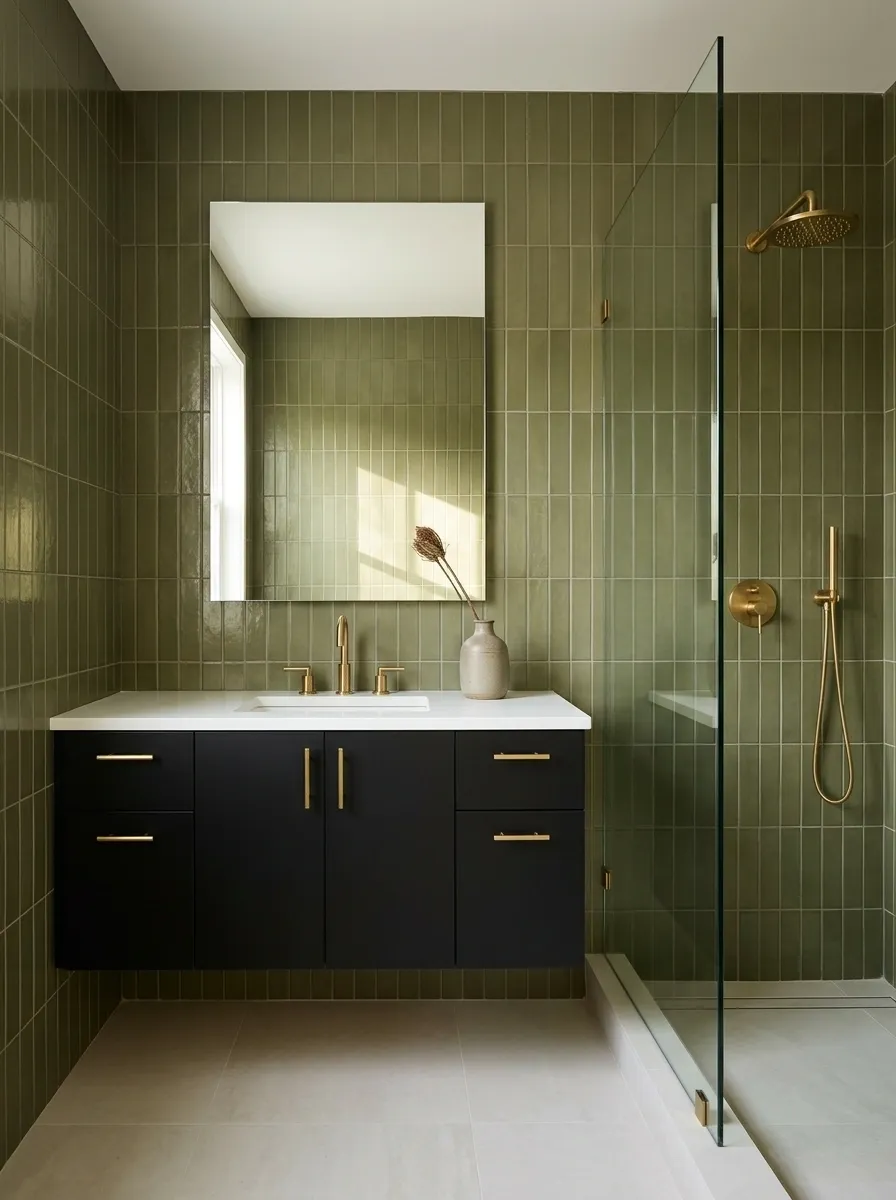
Compact bathrooms benefit from a more deliberate use of dark furniture. Medium green tile creates a consistent background, while a floating black vanity keeps the floor visible underneath. Pale floor tile and a frameless glass shower preserve the sense of openness.
The floating cabinet is doing more than providing storage. Because the flooring remains visible beneath it, the dark vanity appears lighter and the room feels less crowded. A larger mirror can continue that visual openness without requiring more decorative elements.
This is one of the more practical green and black bathroom ideas for a small footprint because the palette stays bold while the composition remains simple.
Small bathroom. Big personality. Tiny amount of square footage. Everyone wins.
Forest Green Bathroom With Arched Architecture
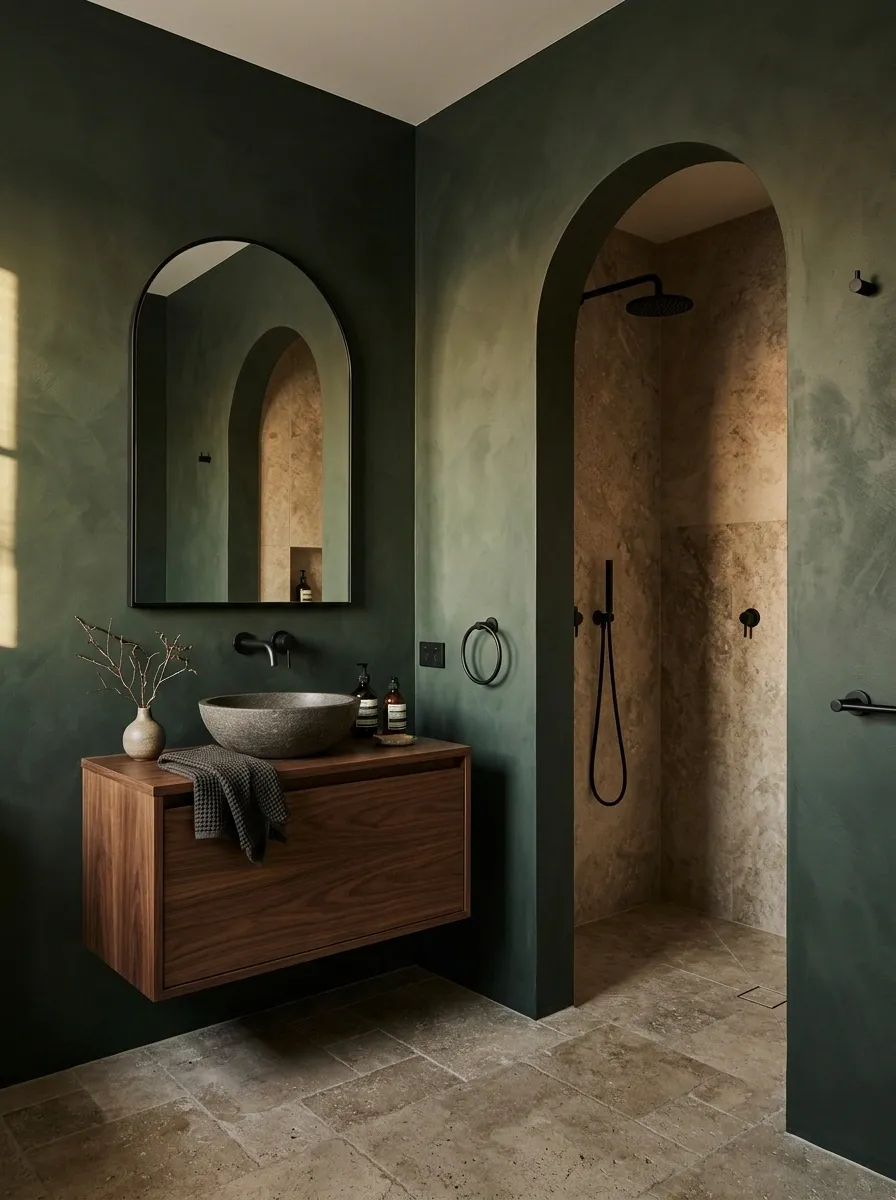
Deep forest green becomes even richer when paired with an arched shower opening, curved mirror, warm stone floor, and a compact walnut vanity. Black fixtures provide a clean outline without competing with the architecture.
The important feature here is repetition. The arch appears again in the mirror or through softened vanity edges, creating a quiet connection between the major forms. That repeated curve makes the room feel designed as a whole instead of assembled from unrelated pieces.
Natural materials keep the architecture from becoming too dramatic. Walnut warms the lower portion, stone grounds it, and the green ties the room together.
A curved doorway doing this much visual work is honestly a little unfair to every rectangular bathroom on the internet.
Airy Sage and Black Bathroom With Natural Wood
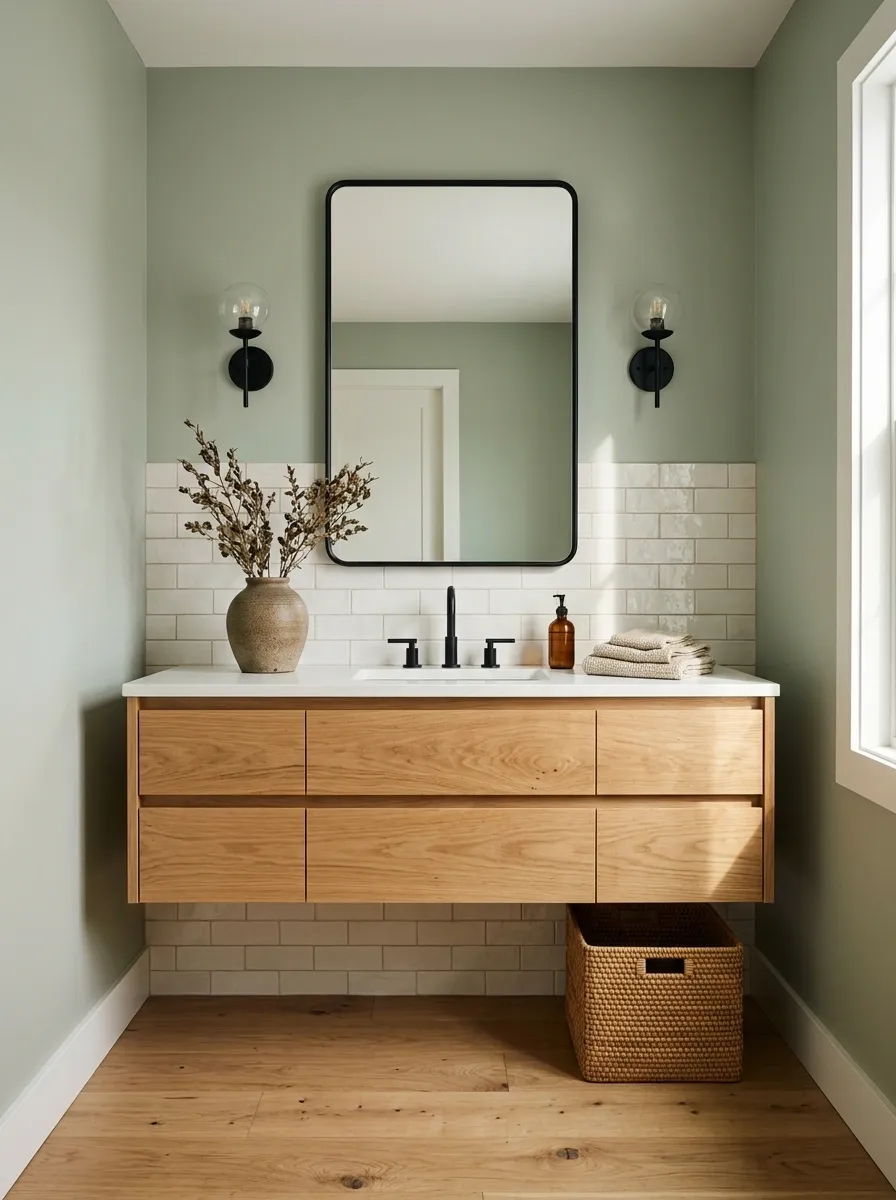
Soft sage walls, black-framed mirrors and fixtures, natural oak cabinetry, warm white tile, and woven textures create a relaxed version of the green-and-black palette. There is no dramatic stone wall demanding attention, and that is exactly the point.
The room relies on contrast in smaller doses. Black appears around mirrors, taps, lighting, and perhaps the shower frame, while the large surfaces remain light. Natural oak fills the middle ground and keeps the palette from feeling too cool.
This composition suits bathrooms where daylight is already doing some of the work. The room feels fresh without becoming bland, and the black accents keep the lighter palette from drifting into generic spa territory.
Basically, it is the bathroom equivalent of saying “minimal” while still owning a personality.
Green Onyx-Inspired Bathroom With Black Marble Vanity
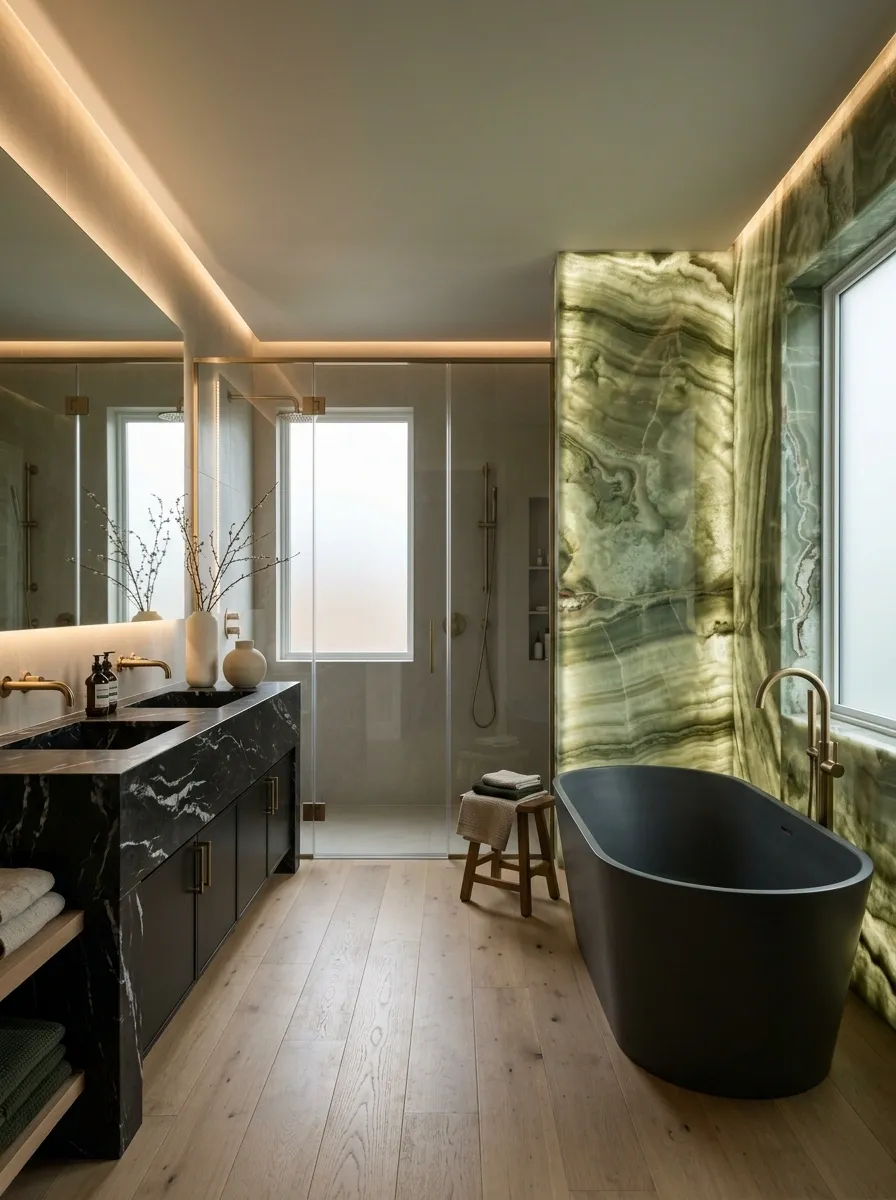
A luminous green stone-inspired surface becomes the main event in this bathroom, wrapping the bathing area or one substantial wall while a black marble vanity gives the room a dense visual counterweight. Warm indirect lighting brings out the variation in the green without turning the space into a nightclub.
The contrast works because the two materials have completely different visual personalities. The green surface feels layered and almost translucent, while the black vanity feels solid and grounded. Pale flooring keeps the lower edge of the room from becoming too heavy.
The lighting deserves restraint. The stone should glow softly rather than look like it was hired to headline a music video.
Dramatic Emerald Bathroom With Black Ceiling
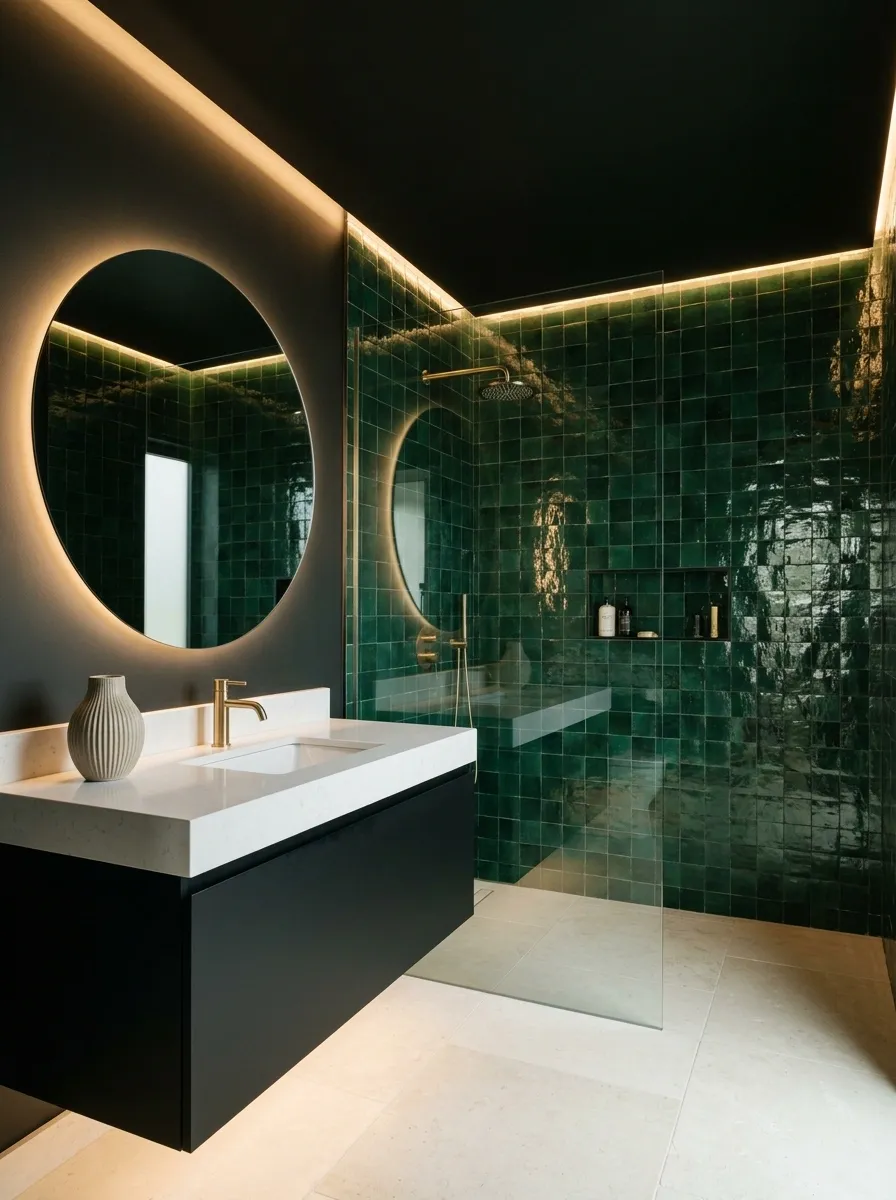
Emerald green tile or stone covers the main shower walls while the ceiling and cabinetry turn black, creating a much moodier composition from top to bottom. Warm concealed lighting and pale flooring keep the room from feeling enclosed.
The black ceiling is what makes this design different. Rather than treating the ceiling as a blank white afterthought, it becomes part of the dark architectural frame. That works best when the central wall zone carries the strongest color and the floor provides a lighter visual base.
A room like this needs discipline. Keep the lighting warm, keep the fixtures streamlined, and let the emerald surface do the dramatic work. Once the room has this much personality, another statement mirror may want a quieter life elsewhere.
Light-Filled Green Bathroom With Slim Black Accents
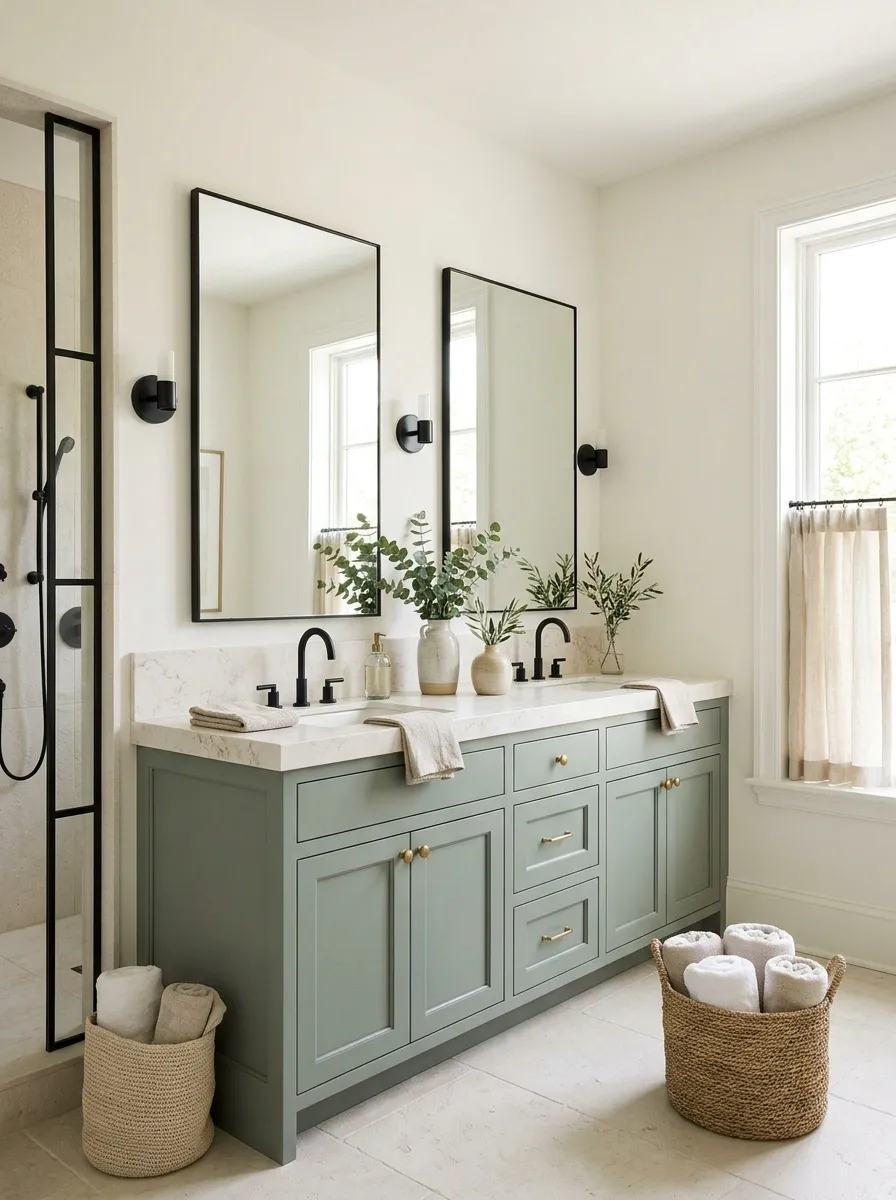
This composition turns the usual dark bathroom formula upside down. Muted green cabinetry or walls provide the color, but warm white walls, pale stone flooring, generous daylight, and slim black details keep the overall room bright.
Black appears through a narrow shower frame, mirror edge, faucet, and perhaps a small wall light. Those repeated details create continuity without creating dark blocks.
The green should stay slightly dusty rather than highly saturated. That makes the room feel calm enough for a bright interior while still giving it more character than an all-neutral bathroom.
This is the proof that green and black can be dramatic without being moody. Sometimes black just needs to know its role.
Black Stone Bathroom With a Single Green Marble Wall
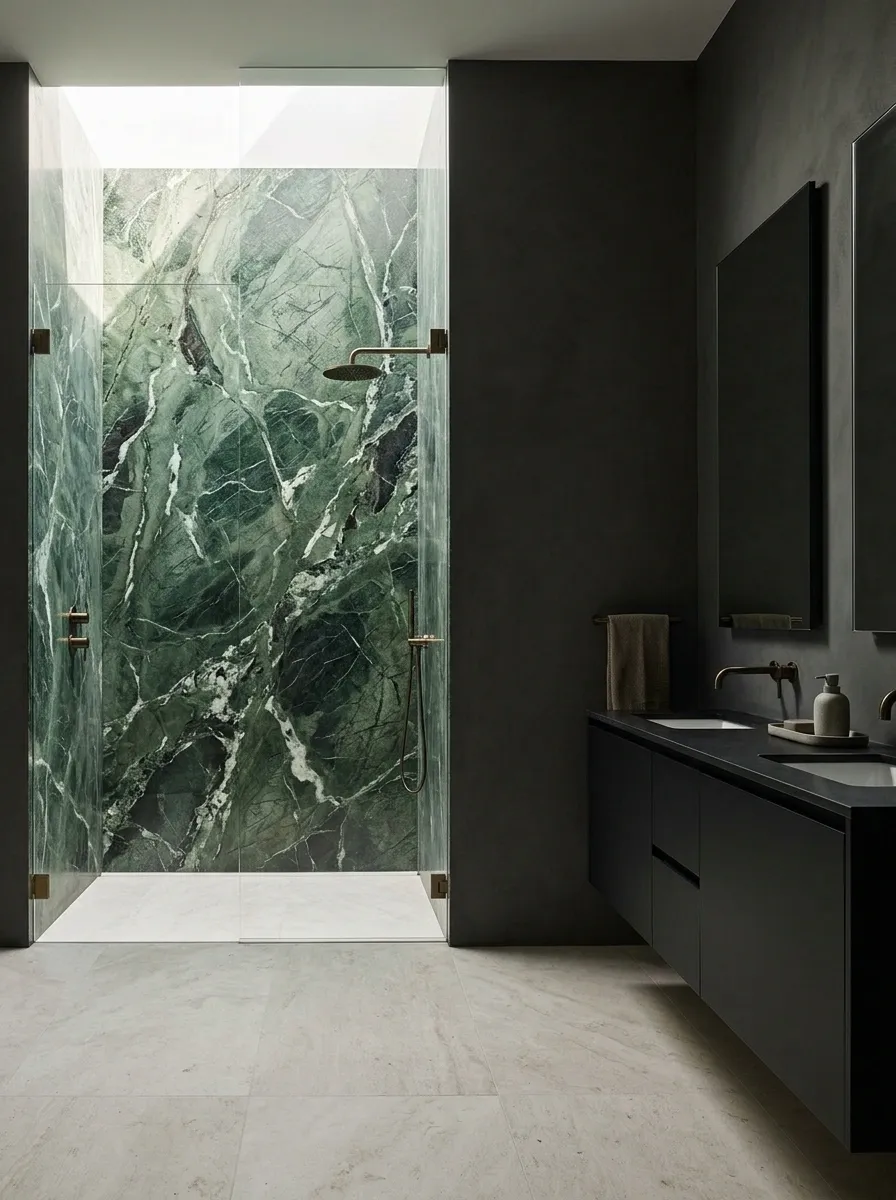
Most of this bathroom stays restrained: charcoal surfaces, black cabinetry, dark fixtures, and pale flooring. Then one complete green marble wall takes over the shower or vanity zone and becomes the reason anyone remembers the room.
The strength comes from concentration. Instead of sprinkling green throughout the bathroom, the color is given one substantial architectural surface. That makes the veining easier to appreciate and gives the black surroundings a clear purpose.
The important thing is giving that stone enough uninterrupted space. A green slab surrounded by a dozen shelves, bottles, niches, and little decorative moments loses its impact quickly. One strong surface is enough.
The bathroom already has a plot. No need for twelve subplots.
Modern Farmhouse Bathroom With Green Cabinetry and Black Hardware
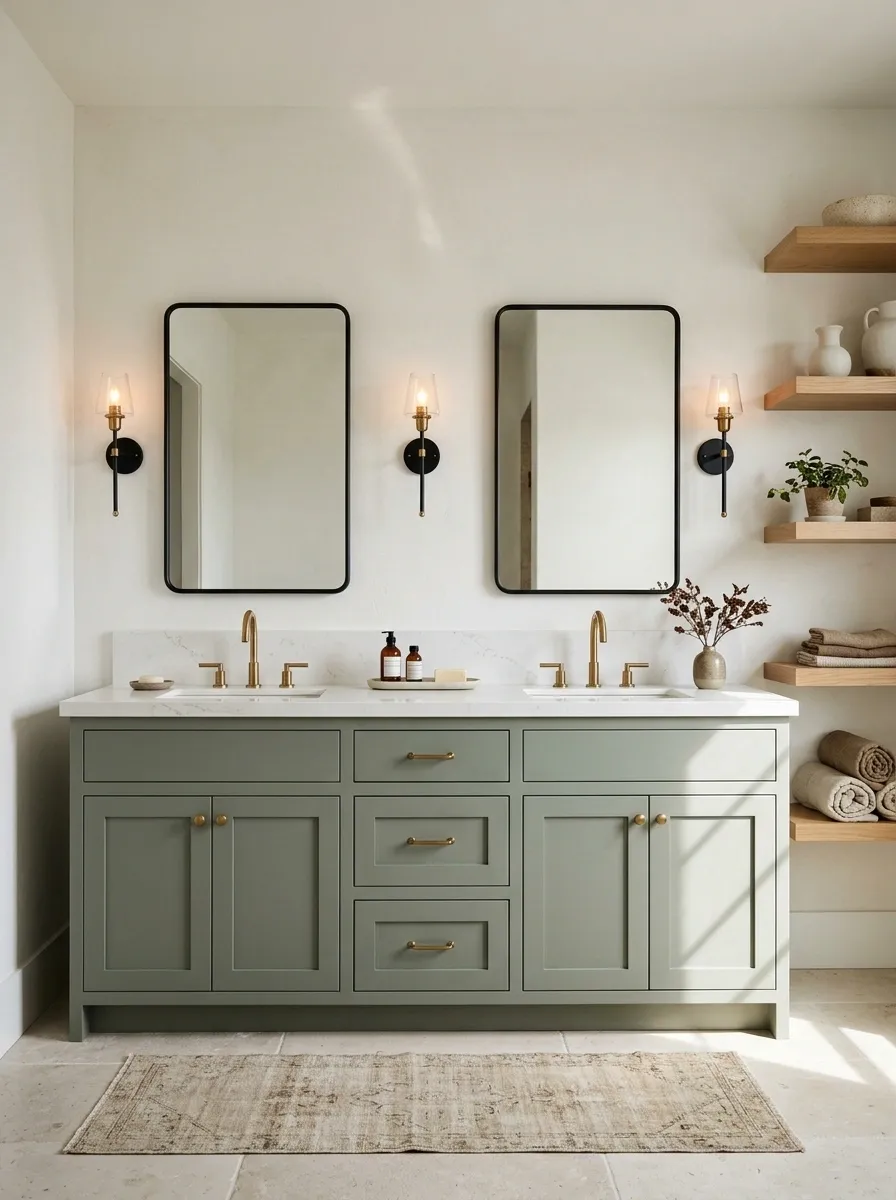
Muted green shaker cabinetry gives this modern farmhouse bathroom its character while warm white walls, pale stone, natural wood, and black hardware keep it fresh. A simple black-framed mirror and traditional lighting connect the cabinetry to the darker details elsewhere in the room.
The combination works because the green is concentrated in the furniture rather than spread across every surface. That allows the shaker profile to become part of the color story while the white walls keep the bathroom bright.
Natural wood adds enough warmth to keep the farmhouse influence believable without pushing the room toward heavy rustic styling. There is no need for fake distressed signs, three baskets labeled “wash,” or anything else that announces the theme from across the street.
Deep Green Bathroom With Floor-to-Ceiling Stone
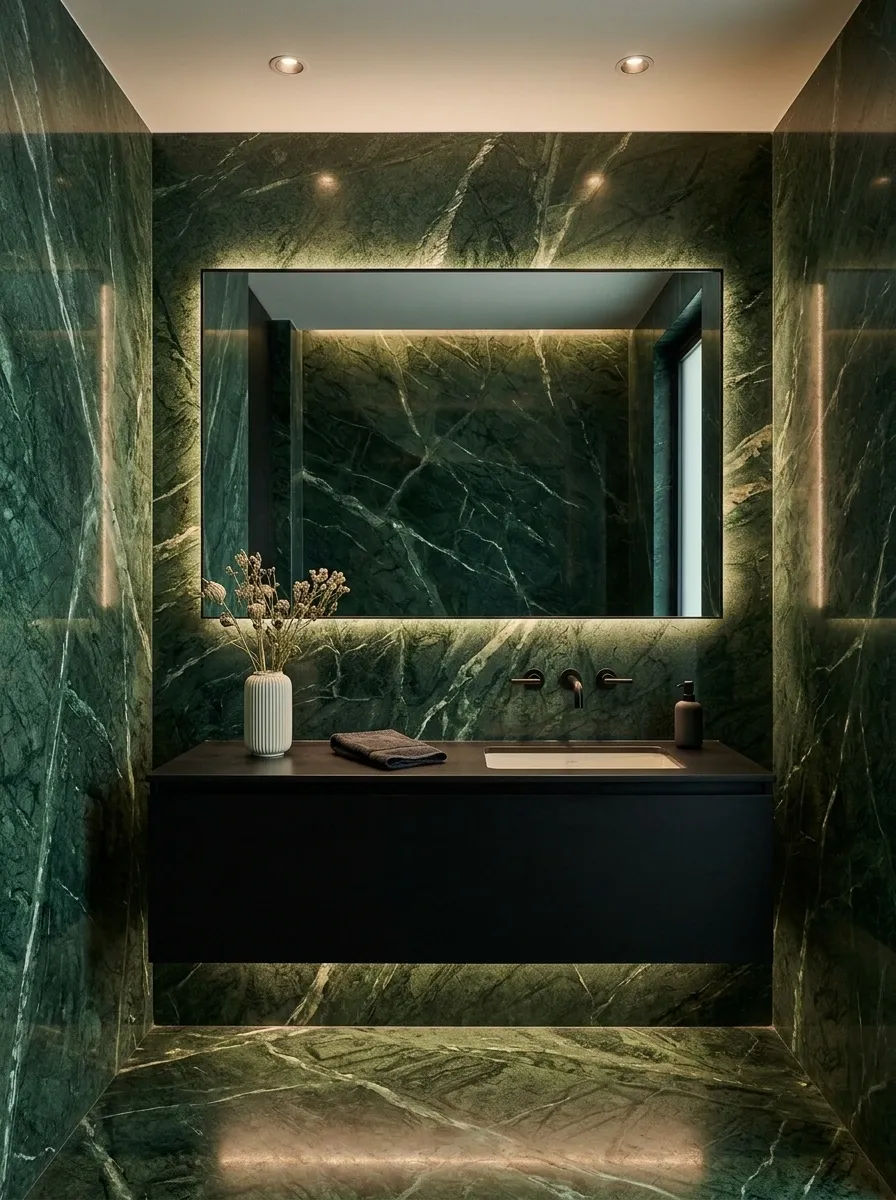
A deep green stone or richly patterned green tile runs almost uninterrupted from floor to ceiling, creating a strong architectural shell around the bathroom. A sculptural black vanity and black fixtures give that green backdrop a crisp modern edge, while small pale accents keep the room from becoming visually dense.
The key here is continuity. When the green surface runs across several planes, the room feels larger and more intentional because there are fewer abrupt transitions. The black vanity then looks almost carved out of the space rather than placed against it.
Lighting should stay warm and directional so the texture of the green surface remains visible. Keep the styling restrained too. Once the walls are doing this much work, another decorative moment is basically showing up to a meeting that already has enough people.
Charcoal Bathroom With a Single Green Stone Wall
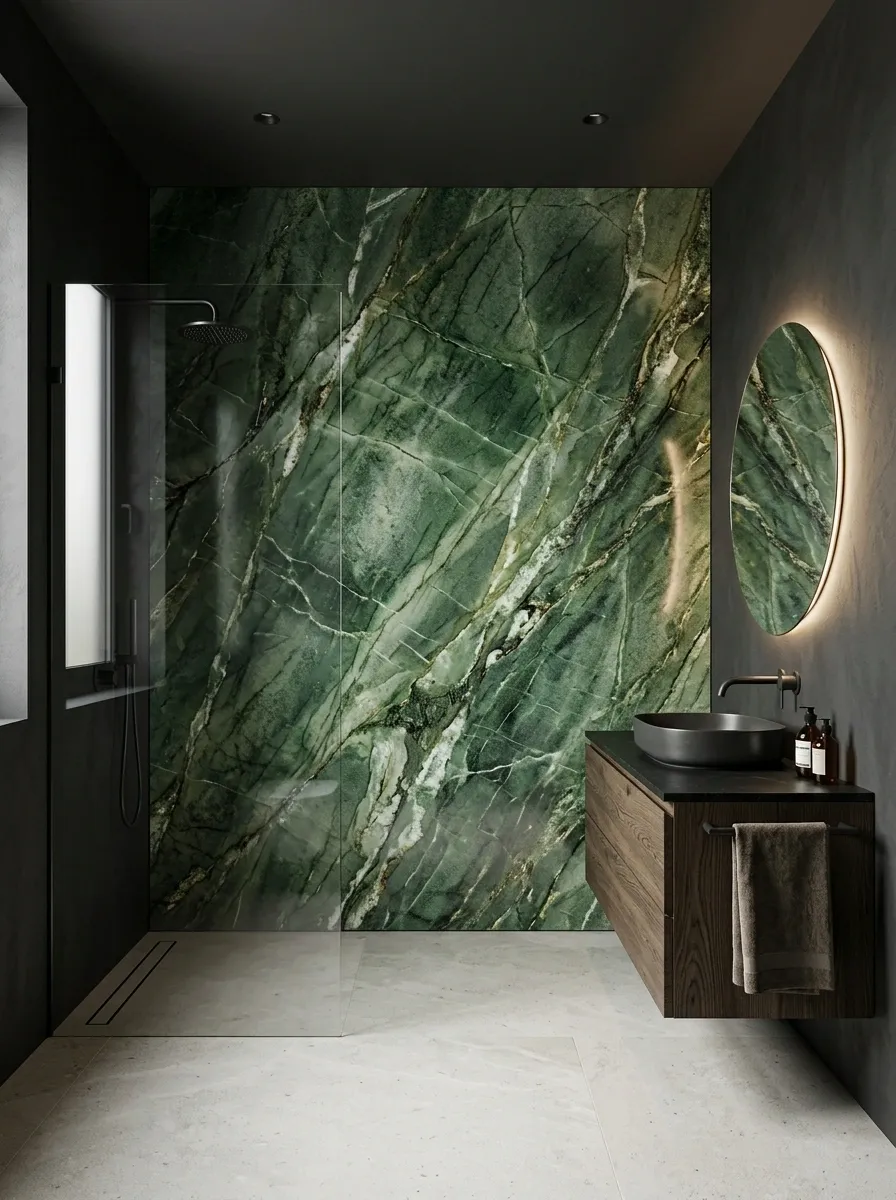
Most of this bathroom stays dark and restrained, using charcoal walls, black cabinetry, dark fixtures, and pale flooring as the supporting cast. One substantial wall of richly veined green stone then takes over the shower or vanity area.
This is a useful way to use green when an entire green bathroom feels like too much commitment. The stone becomes a concentrated burst of color rather than a background layer, and the darker surroundings make its natural variation much easier to notice.
The important thing is giving that stone enough uninterrupted space. A green slab surrounded by a dozen shelves, bottles, niches, and little decorative moments loses its impact quickly. One strong surface is enough.
The bathroom already has a plot. No need for twelve subplots.
Black Ceiling Bathroom With Muted Green Walls and Oak
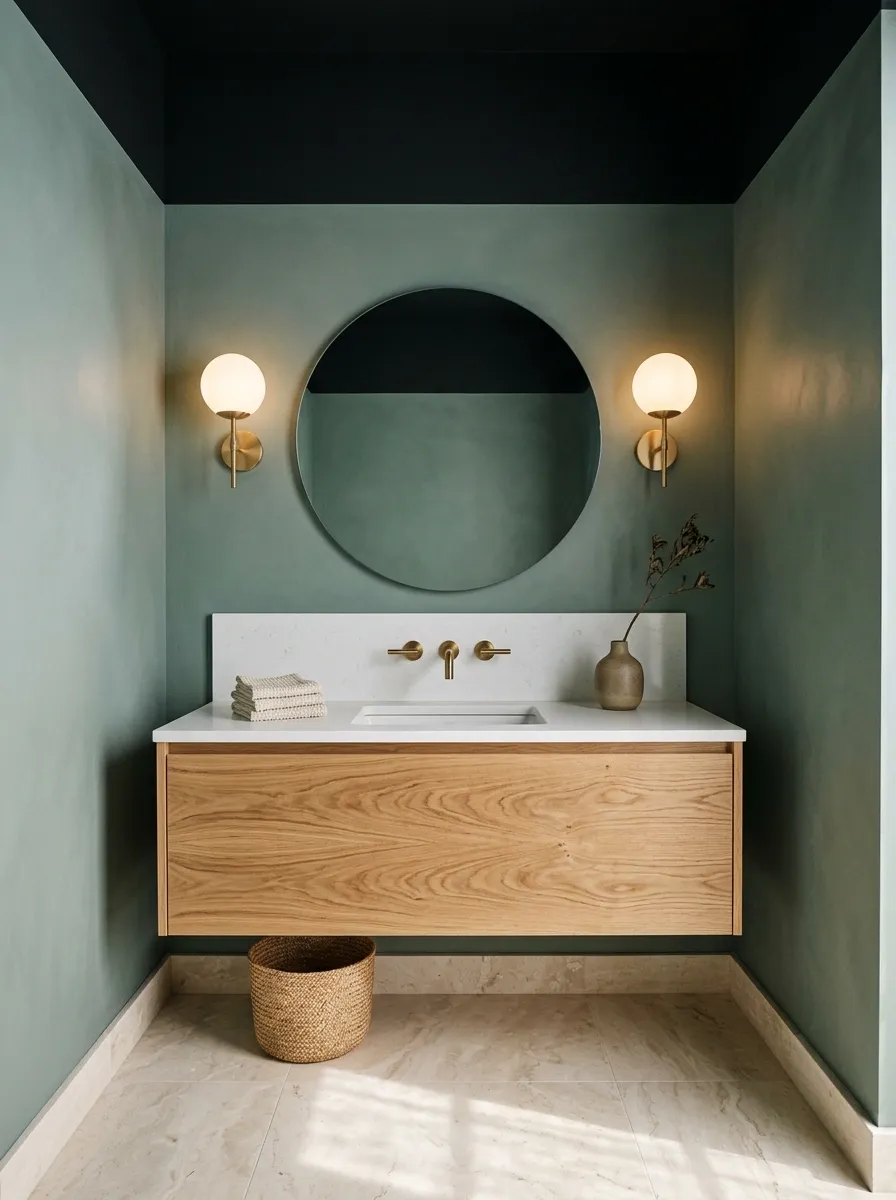
This room takes the green-and-black palette upward by giving the ceiling a deep black finish while the walls remain a muted moss or eucalyptus green. A natural oak vanity, warm white floor, and soft globe lighting bring warmth back into the room.
The black ceiling works because it is balanced by the green middle zone and pale floor below. Those three layers create a clear visual structure rather than allowing the darkness to spread randomly across every surface.
Oak is particularly useful here because it sits between the green and black in warmth and scale. A simple vanity with visible grain can soften the architecture without introducing another loud color.
It is basically the five-walled room finally remembering that ceilings exist.
Green Terrazzo Bathroom With Black Cabinetry
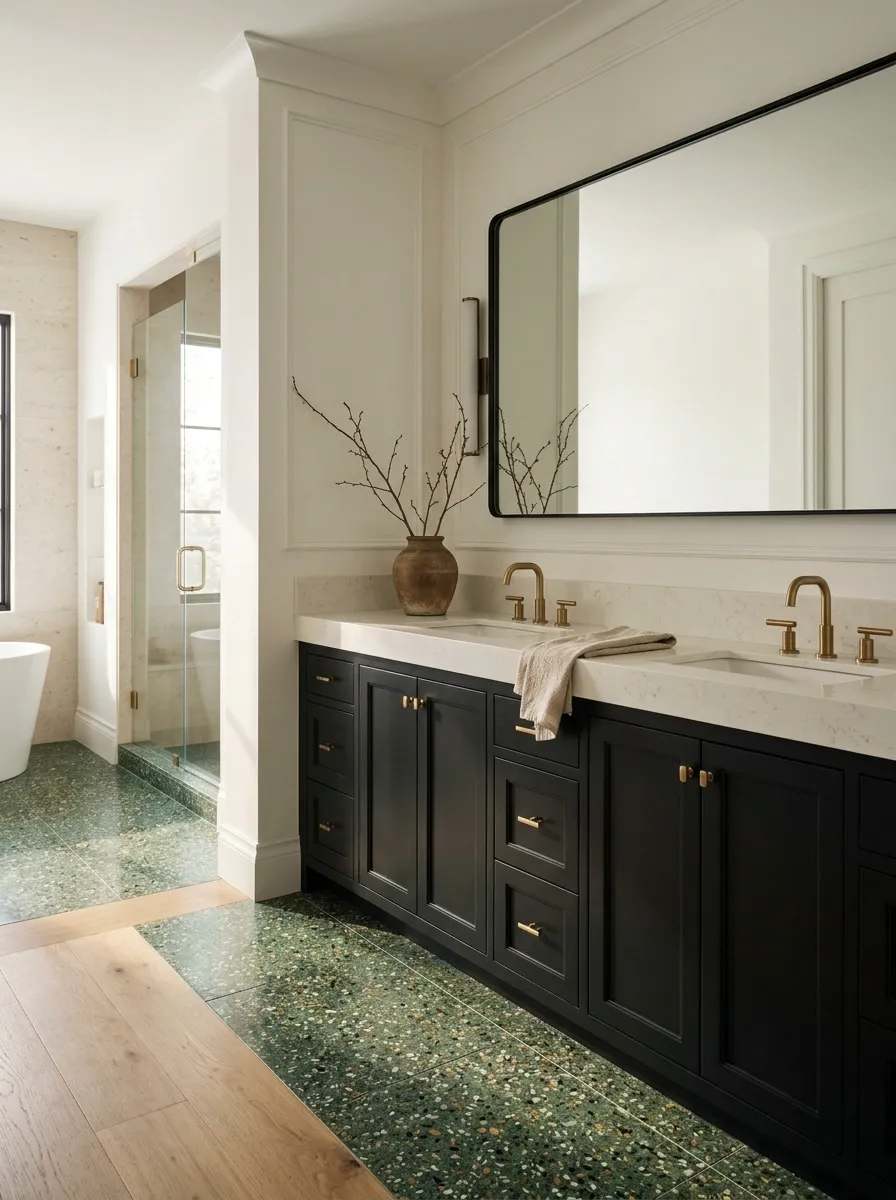
Instead of making green the obvious wall color, this bathroom uses a green terrazzo finish across the floor or shower surfaces, with small colored aggregates creating movement beneath a mostly neutral shell. A substantial black vanity and black-framed mirror give the room a stronger architectural center.
The terrazzo works because the green is distributed through texture rather than presented as one uninterrupted color field. That makes the overall scheme easier to balance with warm white walls, pale stone, and natural wood.
The cabinetry should stay broad and simple so the terrazzo has something solid to contrast against. Too many small furniture pieces would compete with the aggregate pattern and make the floor feel louder than it needs to be.
The floor can have personality. It just doesn’t need to start a podcast about it.
Soft Black Bathroom With Olive Green Cabinetry
This version puts the green directly into the furniture and lets the surrounding room stay soft black. The walls have a charcoal finish, while olive cabinetry, pale stone counters, warm lighting, and a light floor introduce enough contrast to keep the room from becoming a dark box.
The olive cabinetry creates a welcome interruption between the black walls and pale stone. Its earthy undertone also makes the bathroom feel warmer than one built entirely around black and cool white.
Use the cabinetry as the main green statement and keep the surrounding fixtures uncomplicated. Once the olive is framed by charcoal, it becomes surprisingly rich.
The room is dark, but not miserable. A surprisingly important distinction.
Choosing the Right Green and Black Direction
The strongest choice usually becomes obvious once the room itself is considered.
A bathroom with generous daylight can handle deeper green and black surfaces without feeling oppressive. A smaller room often benefits from keeping the dark color in cabinetry, framing, or one focal wall. Traditional architecture pairs naturally with painted green, marble, black furniture, and classic lighting, while contemporary spaces can handle large-format stone, concrete textures, dramatic slabs, and stronger geometric shapes.
The smartest combinations also give the eye somewhere quieter to rest. Warm white, limestone, oak, cream stone, and pale flooring aren’t filler. They are what allow the darker colors to look richer.
And that is the whole trick. Green and black do not need to be toned down. They just need a room that knows when to shut up.