
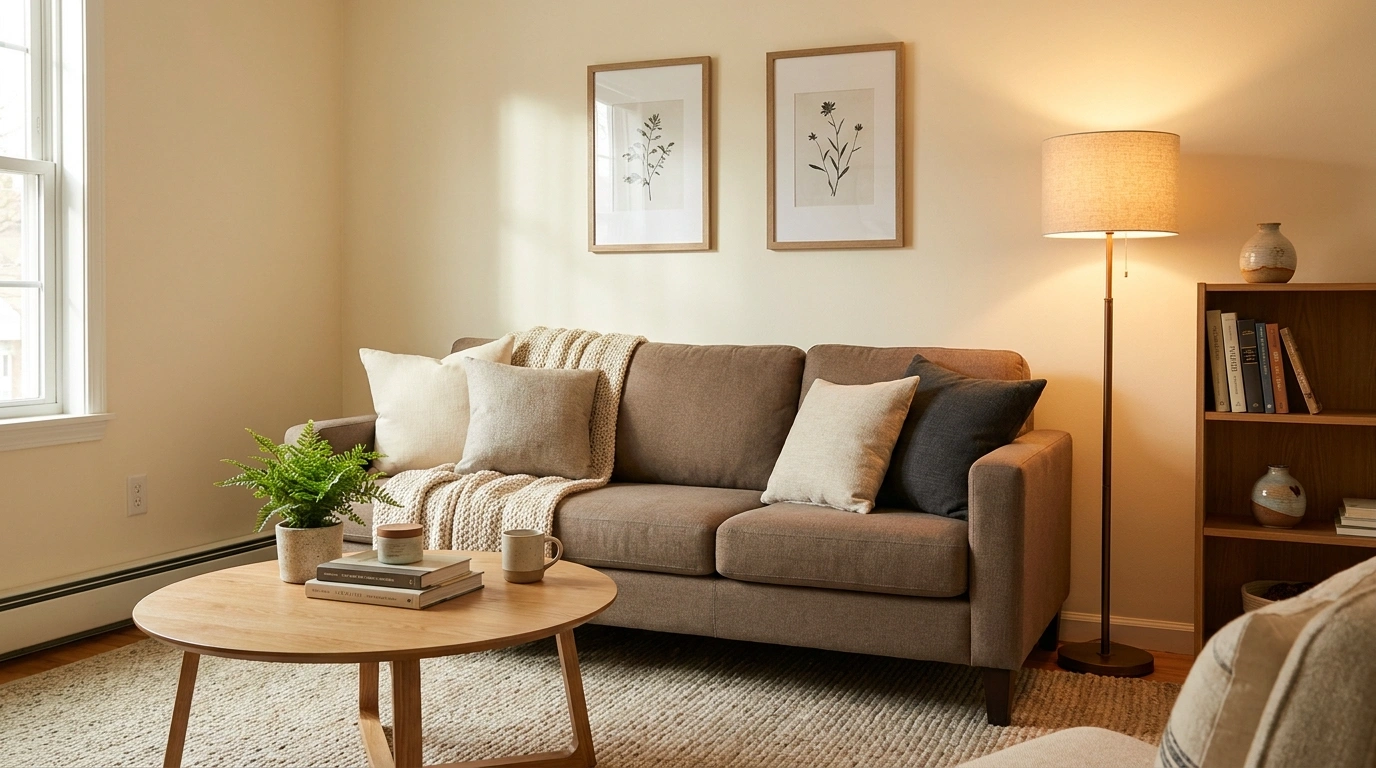
A brown couch can make a living room look warm, expensive, and completely pulled together. It can also sit in the middle of the room looking like a very large object that somehow got abandoned there. The difference usually has surprisingly little to do with the sofa.
Brown upholstery already brings plenty of visual weight. Put it beside random beige furniture, a tiny rug, three unrelated wood tones, and enough decorative objects to fill every empty surface, and suddenly the room looks less like a finished design and more like a group project nobody coordinated.
The better approach is to look at the whole composition. The walls, rug, lighting, coffee table, artwork, wood, textiles, and seating should all make sense around the sofa. That’s why these brown couch living room ideas focus on finished looks rather than isolated decorating tricks.
Some are quiet and minimal. Some go dark and dramatic. Others bring in olive, green, rust, pink, pattern, vintage pieces, or a little mid-century character. The point isn’t to copy every room. It’s to find a complete direction that actually fits the space.
Brown Couch Living Room Ideas
Warm Oak Living Room With a Cognac Brown Sofa
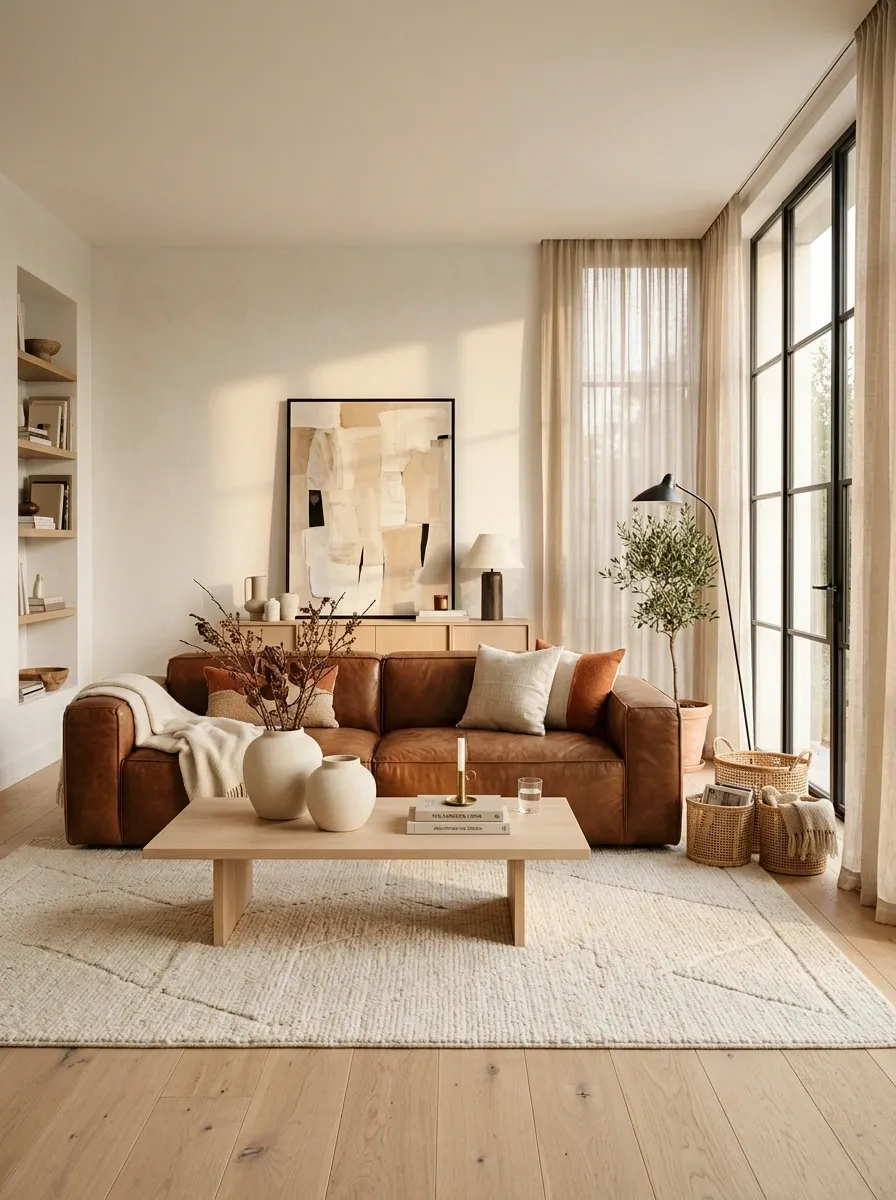
Cognac brown gets along particularly well with pale oak, warm white, and natural woven textures. Put all of that together in a sunlit living room with a substantial cognac sofa, a pale oak coffee table, an oversized cream rug, linen curtains, and a few chunky ceramic pieces.
The key is keeping the wood light and the walls soft so the sofa becomes the warmest major element in the room. A little black metal from a floor lamp or window frame adds definition without hijacking the palette.
This works because every major surface repeats the same warm undertone. Nothing is screaming for attention from the corner like it just discovered accent decor.
Keep the supporting finishes lighter than the sofa.
Soft Modern Living Room With Chocolate Brown Bouclé Seating
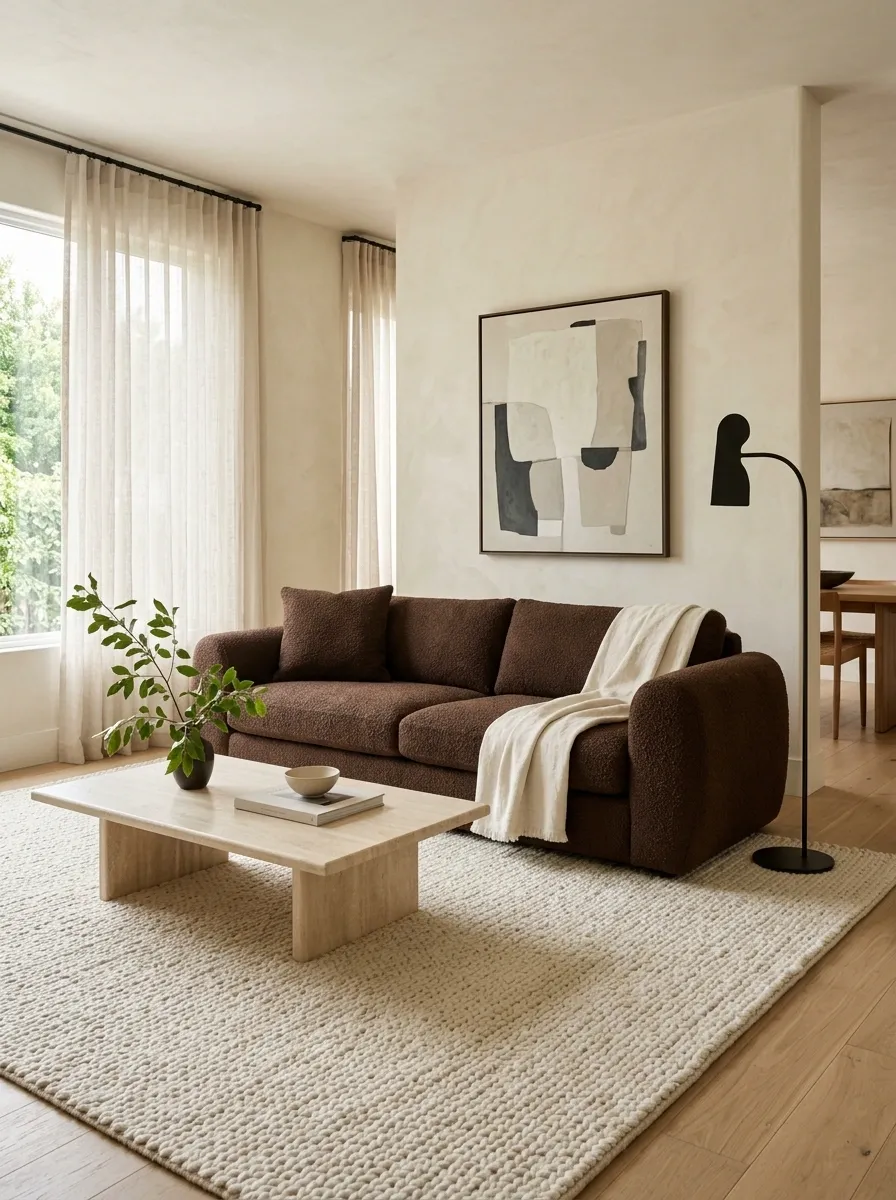
A chocolate brown sofa makes a soft modern room feel grounded when the rest of the composition stays light and low. Use an oversized warm-white rug underneath the seating area, a chunky pale stone coffee table, softly textured walls, and a sculptural floor lamp with a simple silhouette.
The furniture should have rounded edges without turning the room into a collection of marshmallows. Keep the artwork restrained and let the upholstery provide most of the texture.
The important contrast here is deep brown against creamy neutrals. It gives the room depth without forcing in a dozen accent colors. Clean lines do the rest.
Basically, the sofa gets dramatic. Everything else knows when to sit down.
Moody Olive Living Room With a Brown Leather Couch
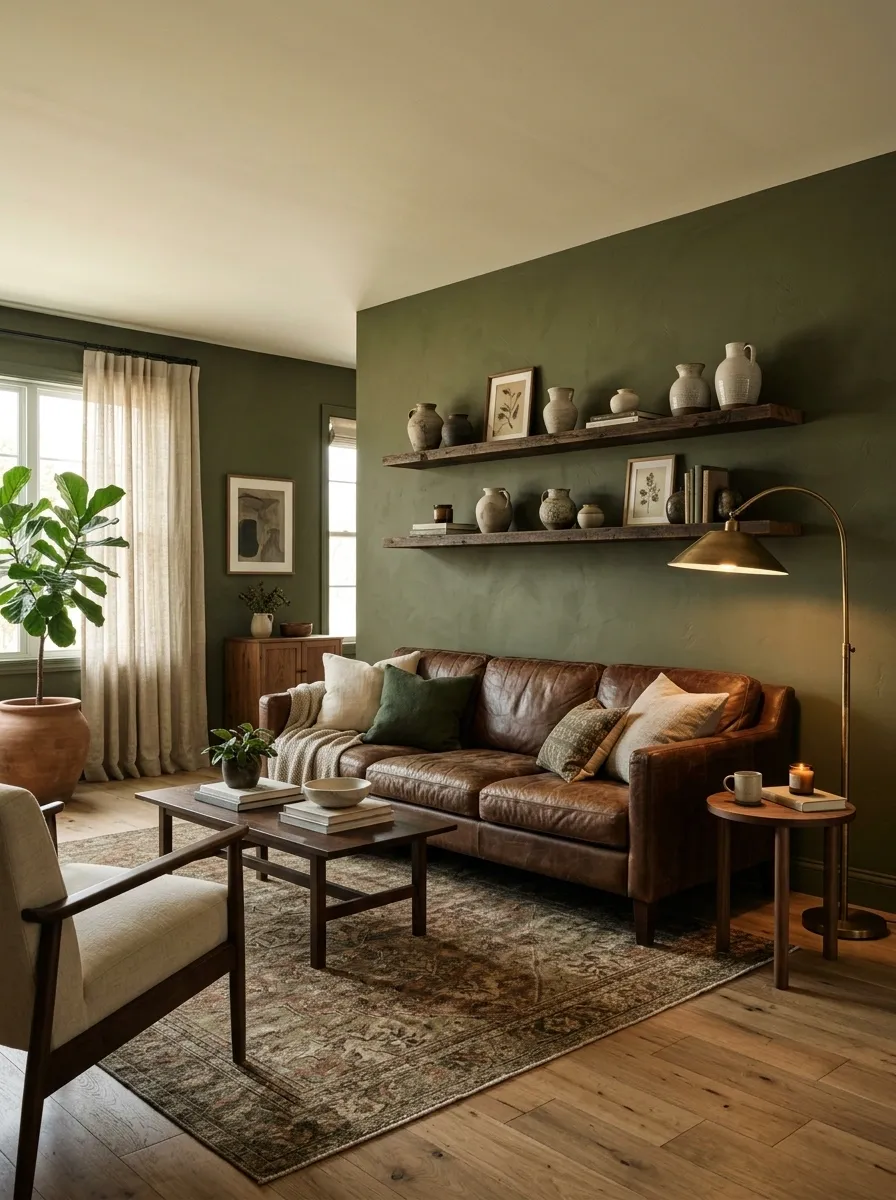
Olive walls completely change the personality of a brown leather sofa. Instead of trying to brighten the room with endless cream accessories, lean into the deeper palette and build a moody composition around it.
A worn brown leather couch works especially well with dark wood shelving, an aged brass floor lamp, a muted patterned rug, and warm lamps that create pools of light after sunset. Keep the ceiling and a few larger textile surfaces lighter so the room doesn’t become one giant dark rectangle.
The olive and brown combination feels rich because the colors share an earthy quality. The aged finishes stop the room from looking overly polished.
No matching furniture set required. Frankly, the room has better things to do.
Cream and Walnut Living Room With a Mid-Brown Sofa
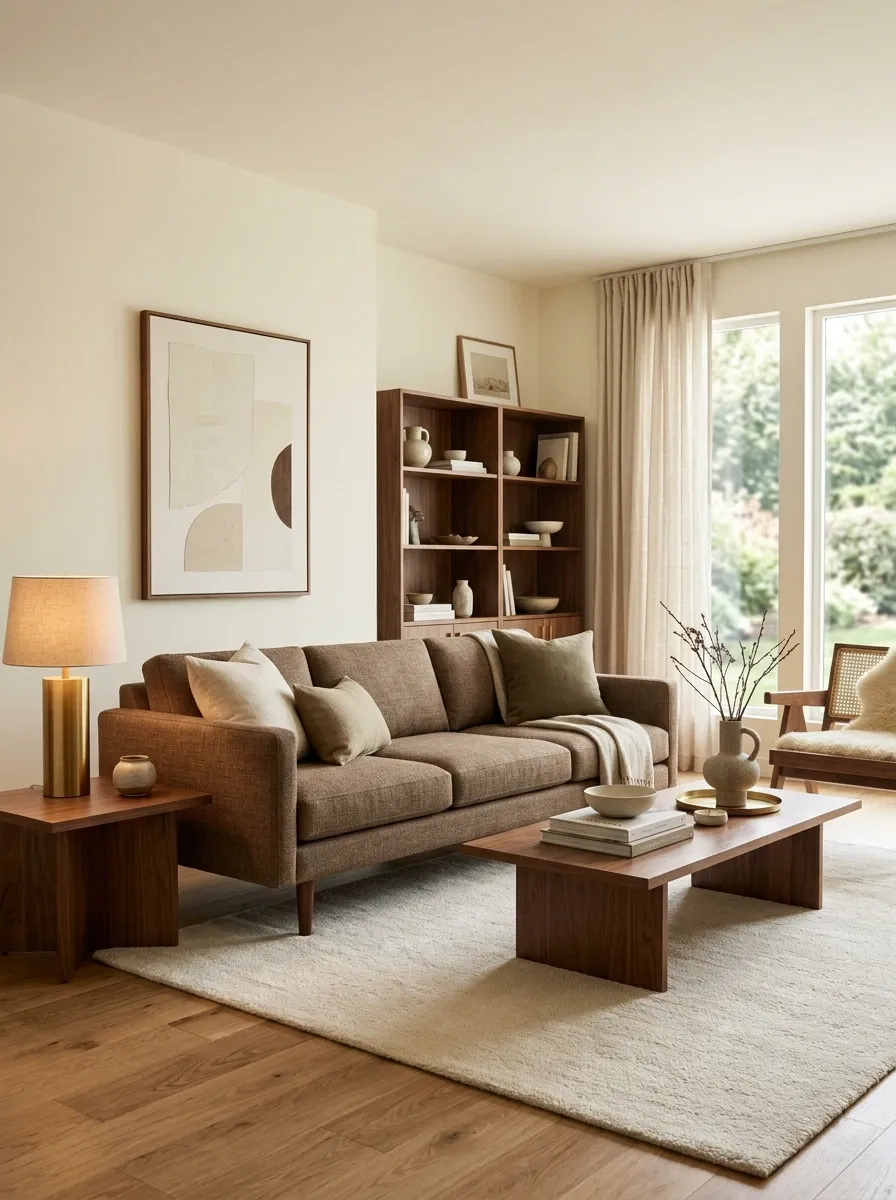
A medium-brown fabric sofa works beautifully in a room built around cream and walnut. Start with creamy walls and a large ivory rug, then bring in a walnut coffee table, matching low side table, and warm lamps with soft shades.
The sofa should sit comfortably within the palette rather than becoming the only brown object. Repeating walnut nearby creates a visual link between the seating and the rest of the room. Keep the curtains light and the artwork fairly simple so the wood grain remains noticeable.
This is a quieter composition, but it isn’t boring. Texture comes from the rug, upholstery, wood grain, and natural light.
The room doesn’t need twelve decorative objects. It already has a plot.
Light Wood + sofa
Warm mid-tone Lighting + art
Quiet accents
Terracotta Living Room With a Tobacco Brown Sofa
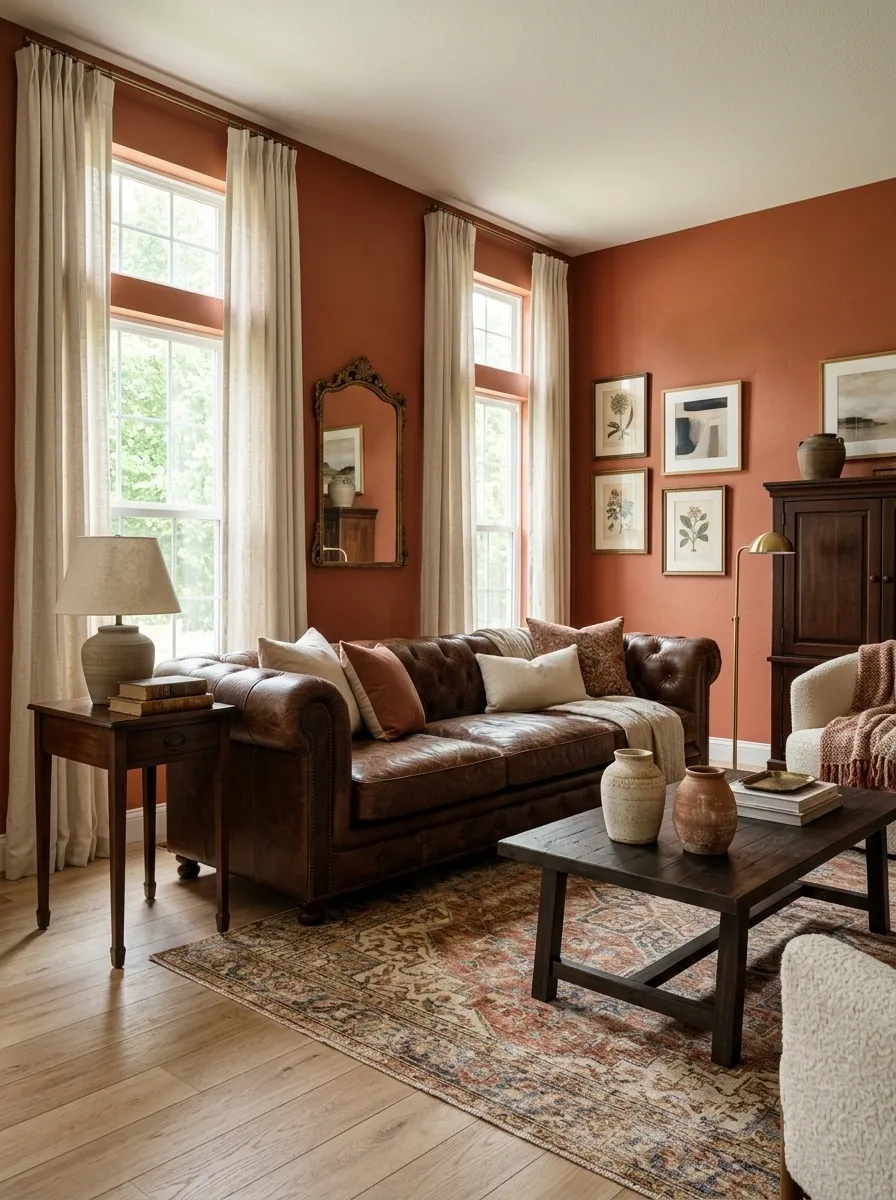
Terracotta walls give a tobacco-brown sofa an immediate sense of place. The combination works especially well in a room with dark wood furniture, a faded patterned rug, cream linen curtains, and a few aged metal details.
The trick is controlling the warmth. Too much orange, red, and brown can quickly turn the room into a permanent autumn mood board. Cream textiles and a lighter floor break up the darker surfaces, while the pattern in the rug keeps the palette from becoming a collection of solid blocks.
The result has personality without relying on novelty furniture.
And yes, terracotta can be used without putting a tiny dried-flower arrangement on every available surface.
Small Apartment Living Room With a Compact Brown Sofa
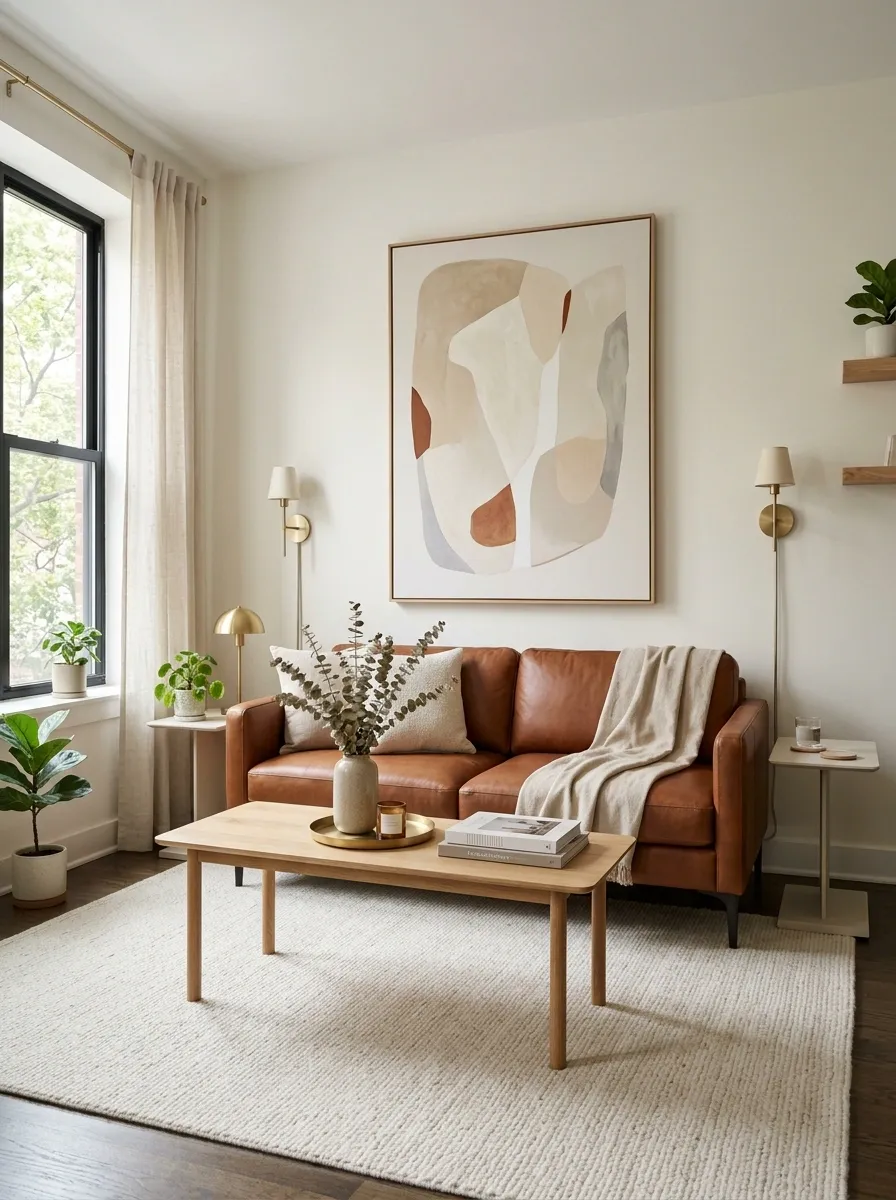
A compact brown sofa can make a small apartment feel much more finished when the rest of the room stays deliberately lean. Use a slim wood coffee table, a large pale rug that visually connects the seating zone, and wall-mounted or narrow-profile lighting instead of bulky floor pieces.
Keep the sofa close enough to the wall to preserve a useful walking route, then let one larger artwork piece provide height. A couple of small side tables are enough. There is no prize for making a tiny living room look like it has been storing furniture since 2007.
The lighter rug matters because it separates the brown sofa from the floor and makes the whole seating area easier to read.
Skip: oversized tables, bulky chairs, furniture with nowhere to breathe.
Scandinavian Living Room With Warm Brown Upholstery
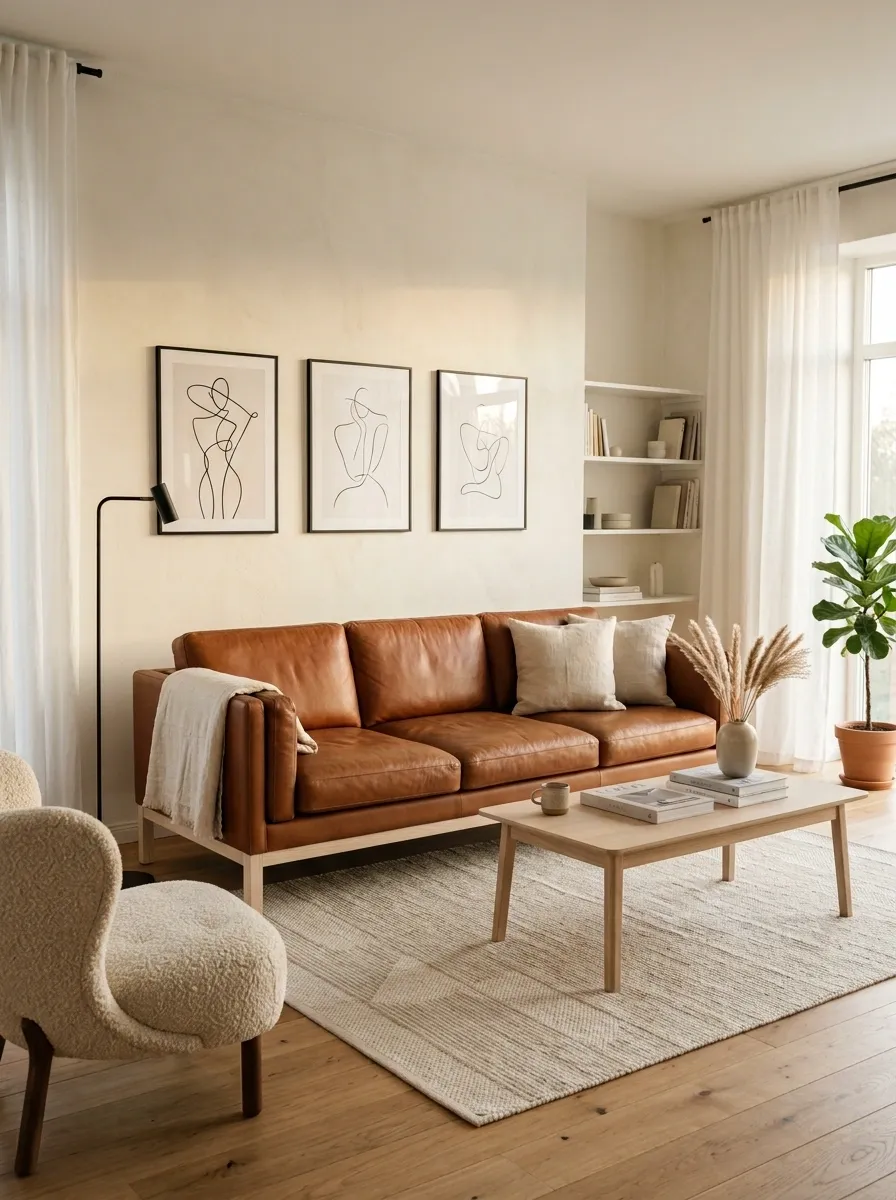
Scandinavian simplicity becomes warmer with a caramel-brown sofa instead of the usual pale gray or oatmeal seating. Build the room around creamy walls, pale timber furniture, a flatwoven rug, simple black accents, and soft natural curtains.
The furniture should stay visually light, with exposed legs and uncomplicated shapes. A small amount of black gives the pale room some structure, but brown remains the strongest color in the seating area.
The beauty here is restraint. Nothing is trying to become the main character.
And that is exactly why it works.
Traditional Living Room With a Brown Tufted Sofa
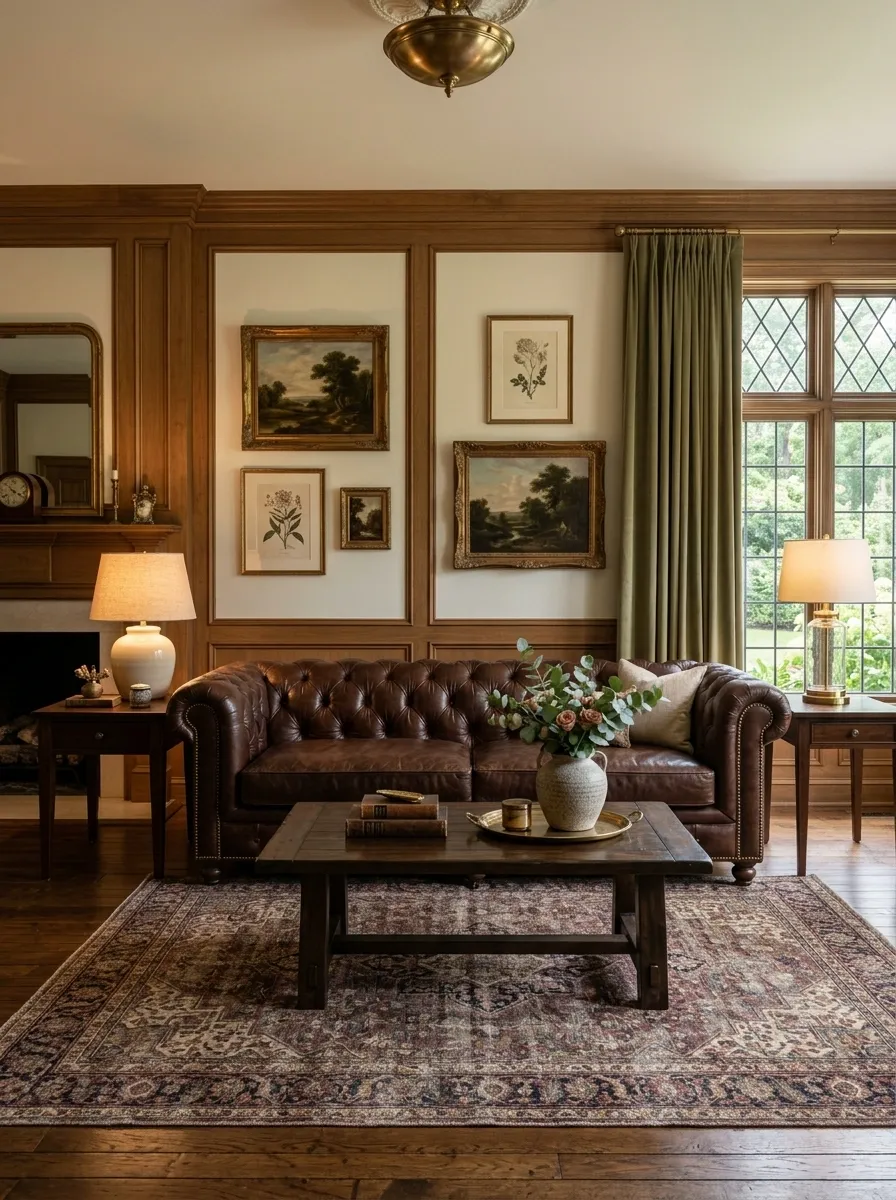
A tufted brown sofa can look genuinely sophisticated in a traditional room when the architecture and furniture support it. Think warm molding, an old-world rug, dark wood tables, classic lamps, and framed artwork arranged with some breathing room.
The room should feel collected rather than perfectly matched. Mixing wood finishes is fine here because the traditional details provide a common language. Keep the curtains substantial and let the sofa sit comfortably within the room rather than pushing every piece tightly toward it.
The biggest mistake would be over-accessorizing the surfaces.
Traditional does not mean every table needs enough objects to qualify as a small museum exhibit.
Japandi Living Room With a Low Brown Sofa
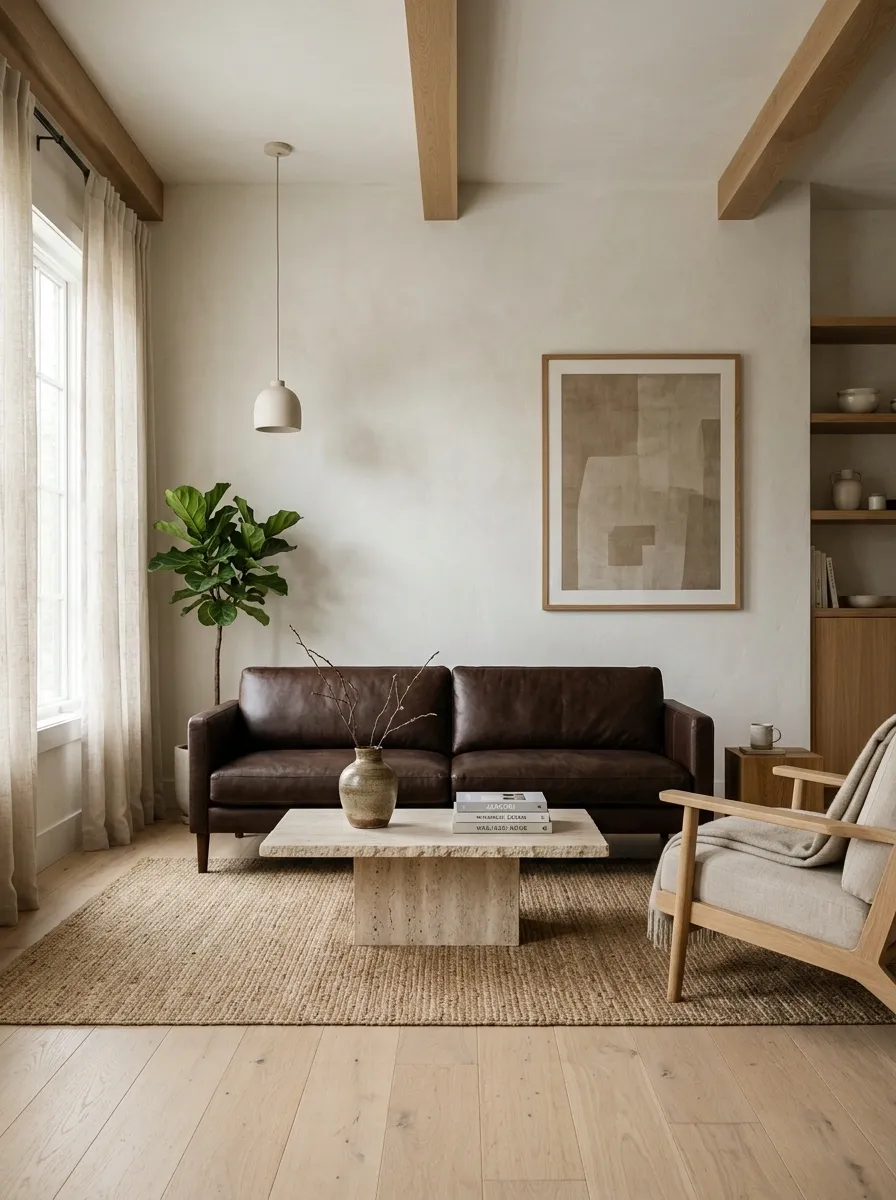
A low brown sofa gives a Japandi-inspired living room its anchor while leaving plenty of visual space above and around it. Pair it with pale oak, softly textured walls, natural linen, a low stone or wood coffee table, and only a few carefully placed objects.
The room should not feel empty for the sake of being empty. It should feel edited. That distinction matters.
Keep the palette close to warm neutrals, brown, and muted natural tones. Furniture with low profiles makes the room feel calmer, while the sofa’s darker color gives the composition enough contrast to avoid becoming one giant bowl of oatmeal.
Minimalism with actual furniture. Revolutionary.
Industrial Loft Living Room With a Distressed Brown Leather Sofa
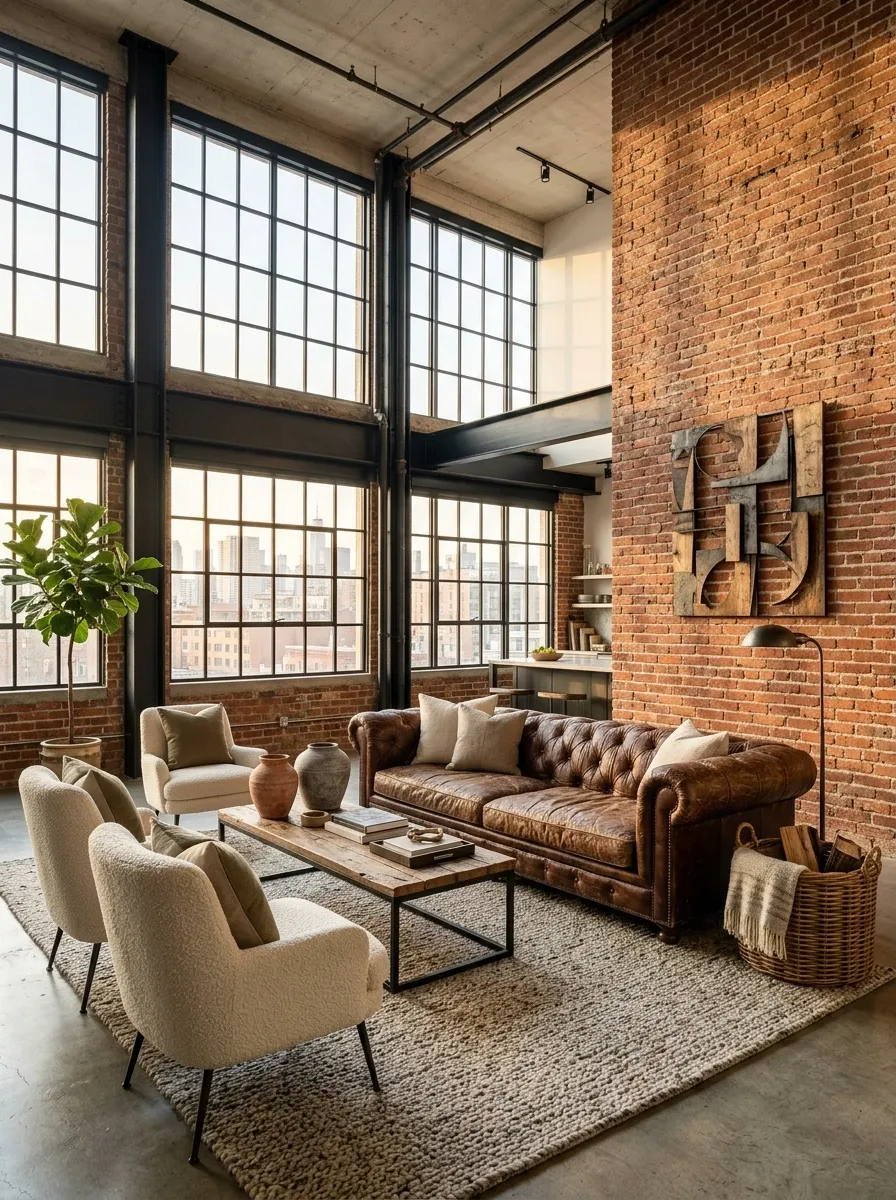
A distressed brown leather sofa feels at home in a loft with exposed brick, dark-framed windows, reclaimed wood, black metal, and a large neutral rug. The trick is avoiding an entirely hard-surface room.
Bring in softer elements through curtains, cushions, a thick rug, and upholstered occasional seating. The contrast between worn leather and soft textiles makes the space feel lived in rather than themed.
The architecture should remain visible. Don’t cover every brick wall with furniture just because empty wall space exists.
Sometimes the brick is already doing enough. Let it flex.
Coastal Living Room With a Sandy Brown Sofa
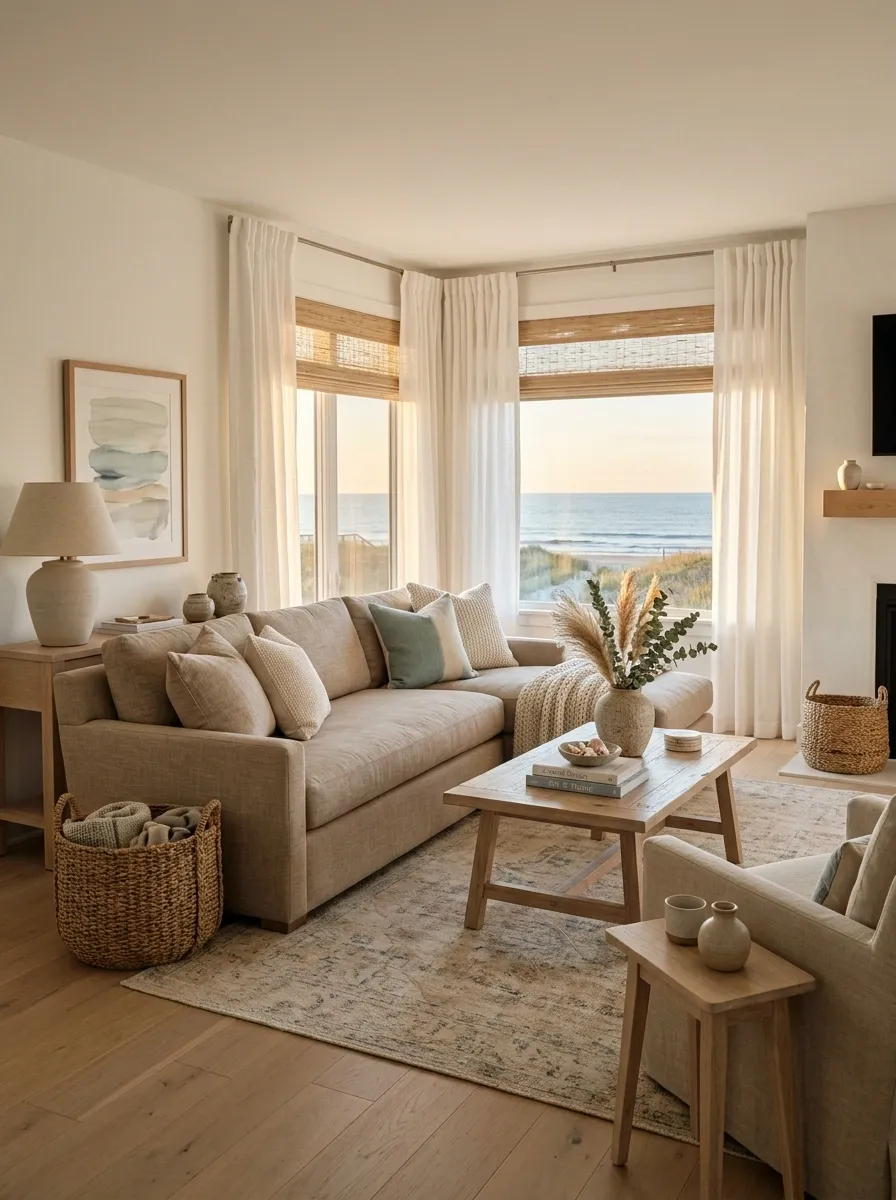
A light sandy-brown linen sofa gives a coastal living room a warmer direction than the predictable blue-and-white formula. Pair it with warm white walls, pale oak furniture, woven shades, a faded neutral rug, and loose linen curtains that soften the windows.
The room should feel connected to the outdoors through texture and light rather than a collection of seashells. A soft blue accent can appear in artwork or one textile, but it shouldn’t take over the room.
The brown sofa works because it echoes sand, wood, and natural fibers already present elsewhere.
Coastal without the decorative anchor throwing itself into the ocean? Progress.
Deep Blue Living Room With a Rich Brown Sofa
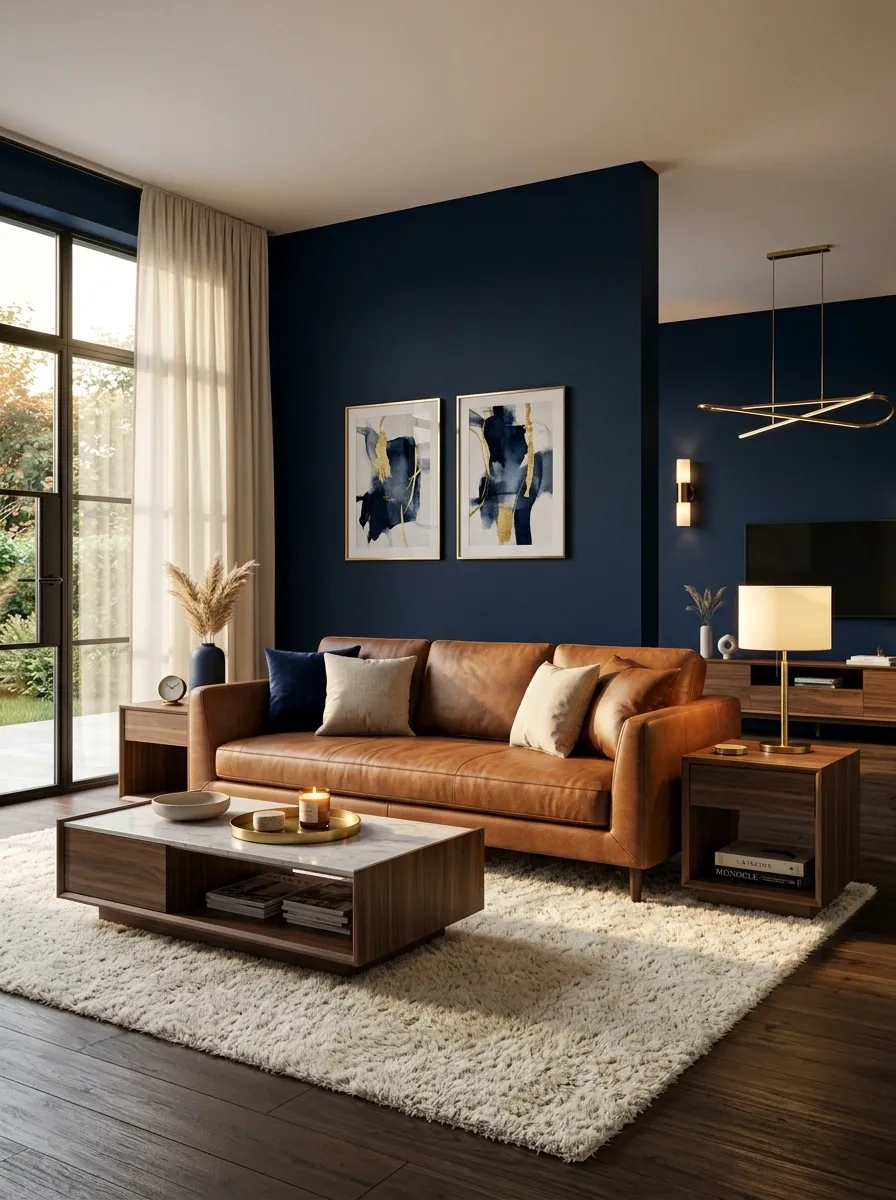
Deep navy walls create a dramatic backdrop for a rich brown sofa, especially when the rest of the room introduces enough light to stop the palette becoming visually dense. Use an ivory rug, walnut side tables, warm brass lighting, and cream curtains.
The contrast is strongest when the sofa stays warm and the wall stays distinctly cool. A pale rug then breaks the two dark masses apart so the room retains some openness.
This is a strong choice for a room with good natural light or generous windows. The darker backdrop actually makes the brown upholstery look richer.
Dark walls, brown sofa, brass lighting. Suddenly “moody” has entered the chat.
Light-Filled Living Room With a Caramel Sofa and Greenery
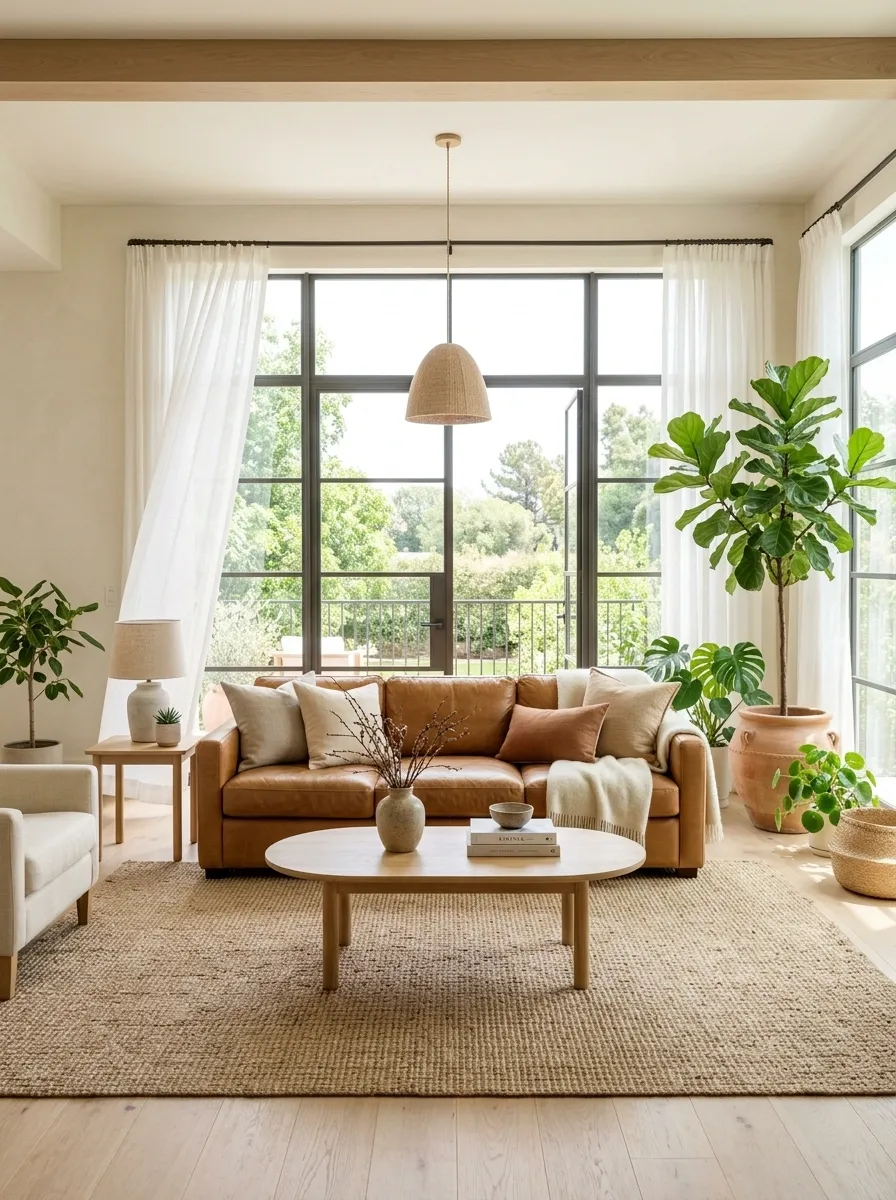
Large windows change the way a caramel sofa reads. Instead of surrounding the room with more dark furniture, use creamy walls, light wood, an oversized natural rug, linen curtains, and a few substantial plants to create an airy composition.
The sofa should stay close to the window light, with the coffee table and side tables kept visually simple. Greenery works best when it reinforces the natural palette rather than becoming the focus of the room.
What makes this design memorable is the relationship between sunlight, warm brown upholstery, and pale materials. The room feels organic without becoming a plant nursery with a seating problem.
Warm anchor: caramel sofa, wood
Natural accents: restrained greenery
Vintage-Inspired Living Room With a Brown Velvet Sofa
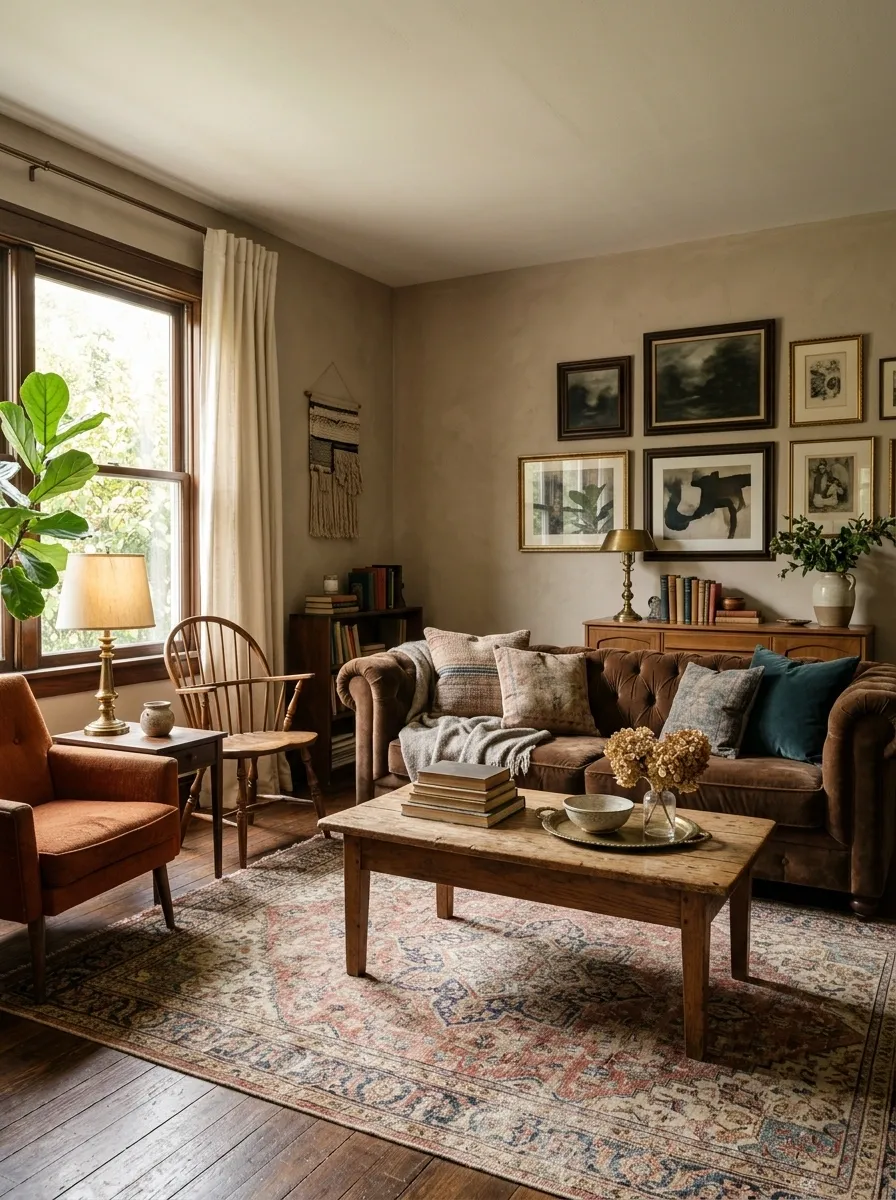
Brown velvet gives a vintage-inspired room enough richness to support patterned textiles and old-world furniture without becoming theatrical. Place the sofa against a warm cream or muted clay wall, then build around it with a faded traditional rug, an antique-looking wood coffee table, classic lamps, and artwork with slightly darker tones.
The furniture doesn’t need to come from the same era. In fact, that usually makes the room more interesting. Combine an older-looking table with simpler modern side seating and keep the overall palette warm.
The goal is collected, not costume drama.
Because there is a very small gap between “vintage living room” and “period drama set.” This stays on the sensible side of it.
Minimal White Living Room With One Strong Brown Sofa
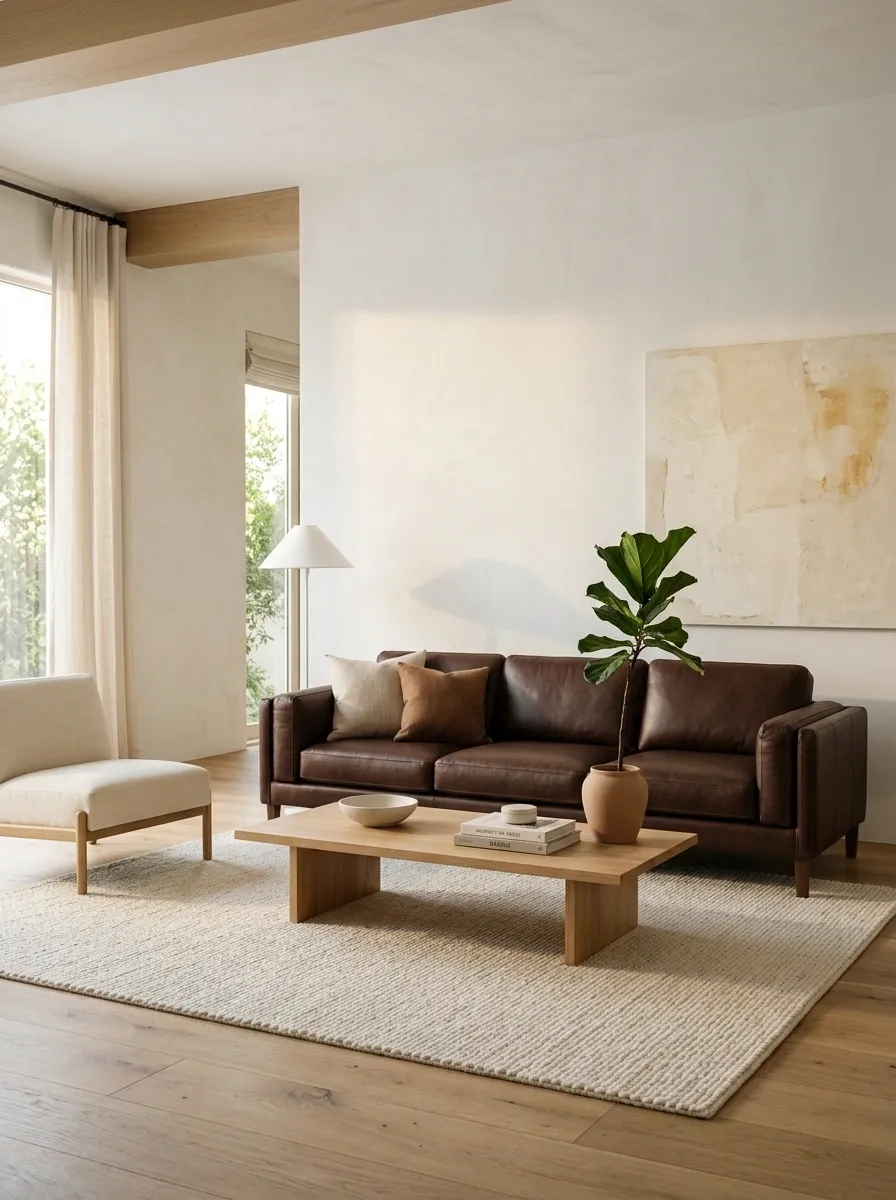
A nearly white room can make a brown sofa feel surprisingly architectural. Keep the walls warm white, lay down a large pale rug, and choose one simple wood coffee table with understated artwork and a single tall plant.
The sofa should have a clean silhouette and enough room around it to remain visually dominant. Smaller furniture pieces should stay low and quiet so the room doesn’t lose its minimal character.
The interesting part isn’t the amount of decor. It’s the amount of empty space surrounding the sofa. That space gives the brown upholstery its visual importance.
Minimalism occasionally means leaving things alone. A terrifying concept for people who own decorative trays.
Warm Gray Living Room With a Chestnut Sofa
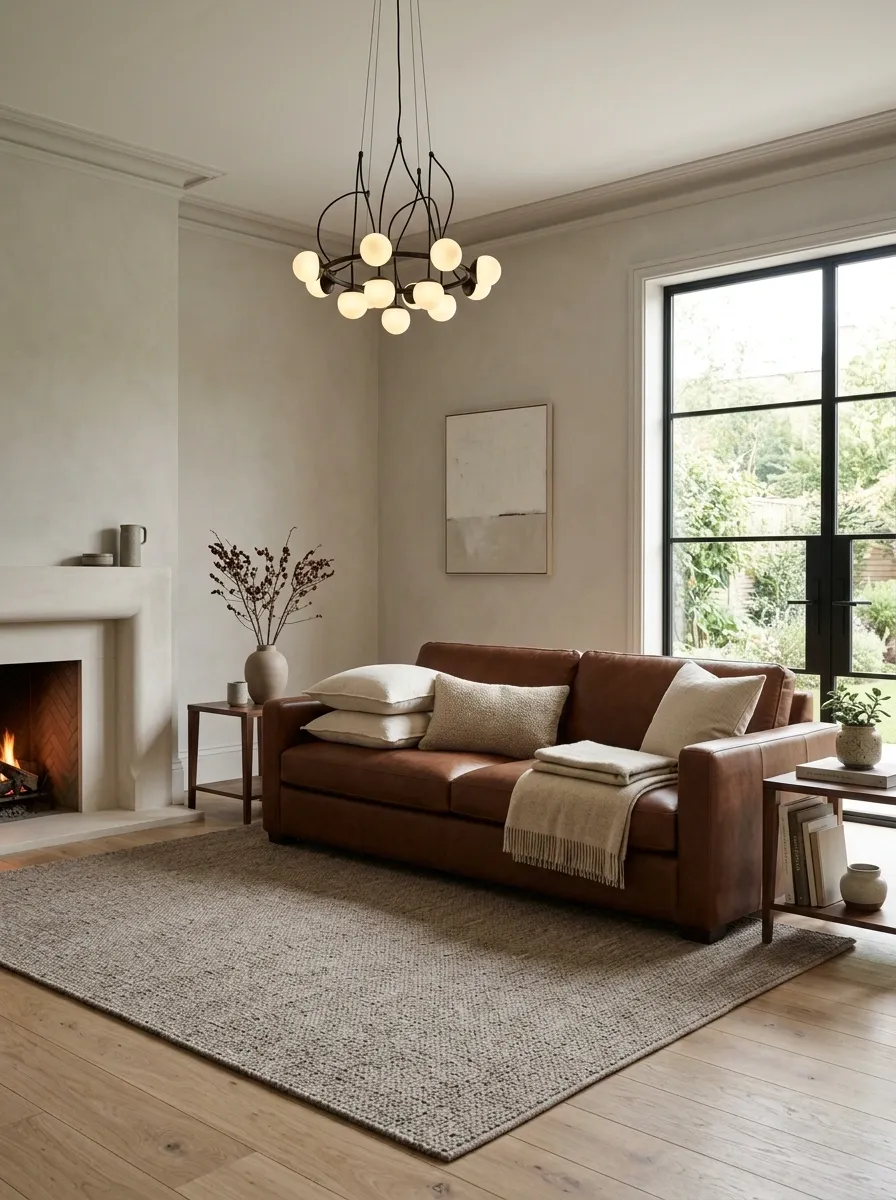
Chestnut brown and warm gray make a surprisingly balanced pair. Set a chestnut sofa against soft warm-gray walls, then bring in a taupe rug, walnut side tables, blackened metal lighting, and cream cushions.
The gray should have enough warmth to sit comfortably beside the brown. A blue-gray would push the room in a colder direction and make the sofa feel disconnected. Keep the floor and larger textiles light enough to create separation underneath the seating.
This palette is especially useful when beige feels too expected but stark white feels too sharp.
Basically, it’s the living room equivalent of having opinions without starting an argument.
Cool blue-gray + brown creates stronger separation and can make the sofa feel visually isolated.
Colorful Living Room With a Brown Sofa and Mustard Accents
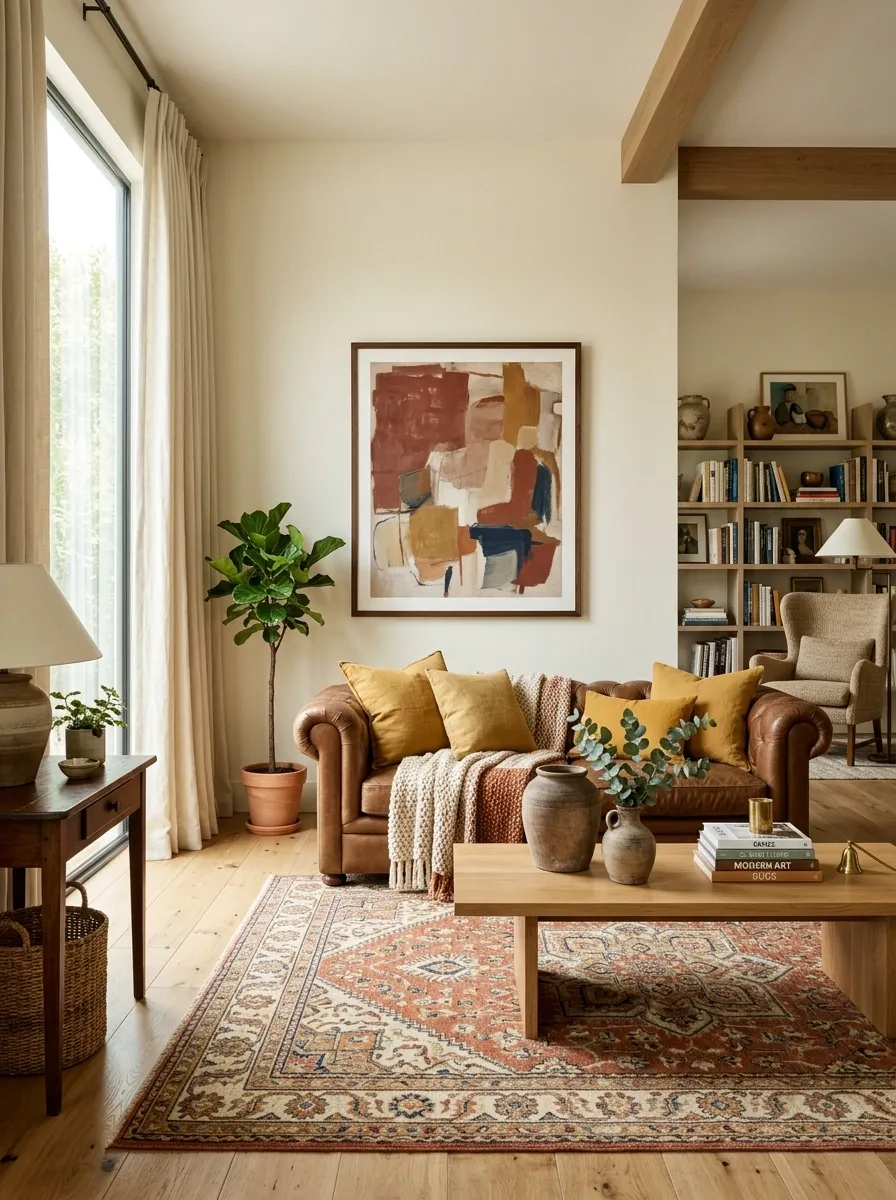
Brown makes an excellent foundation for a living room that actually uses color. A medium-brown sofa can anchor mustard cushions, muted brick-red artwork, warm cream curtains, and a patterned rug without competing with all of them.
The trick is giving each stronger color a job. Mustard can appear around the seating, while rusty red stays mostly in artwork or the rug. Cream then occupies the larger surfaces and keeps the room from becoming visually loud.
The brown sofa is doing something important here: it absorbs some of the visual intensity.
A bold room still needs a responsible adult.
Cream: walls, curtains, and rug
Mustard + muted red: smaller moments that create energy
Contemporary Living Room With a Curved Brown Sofa
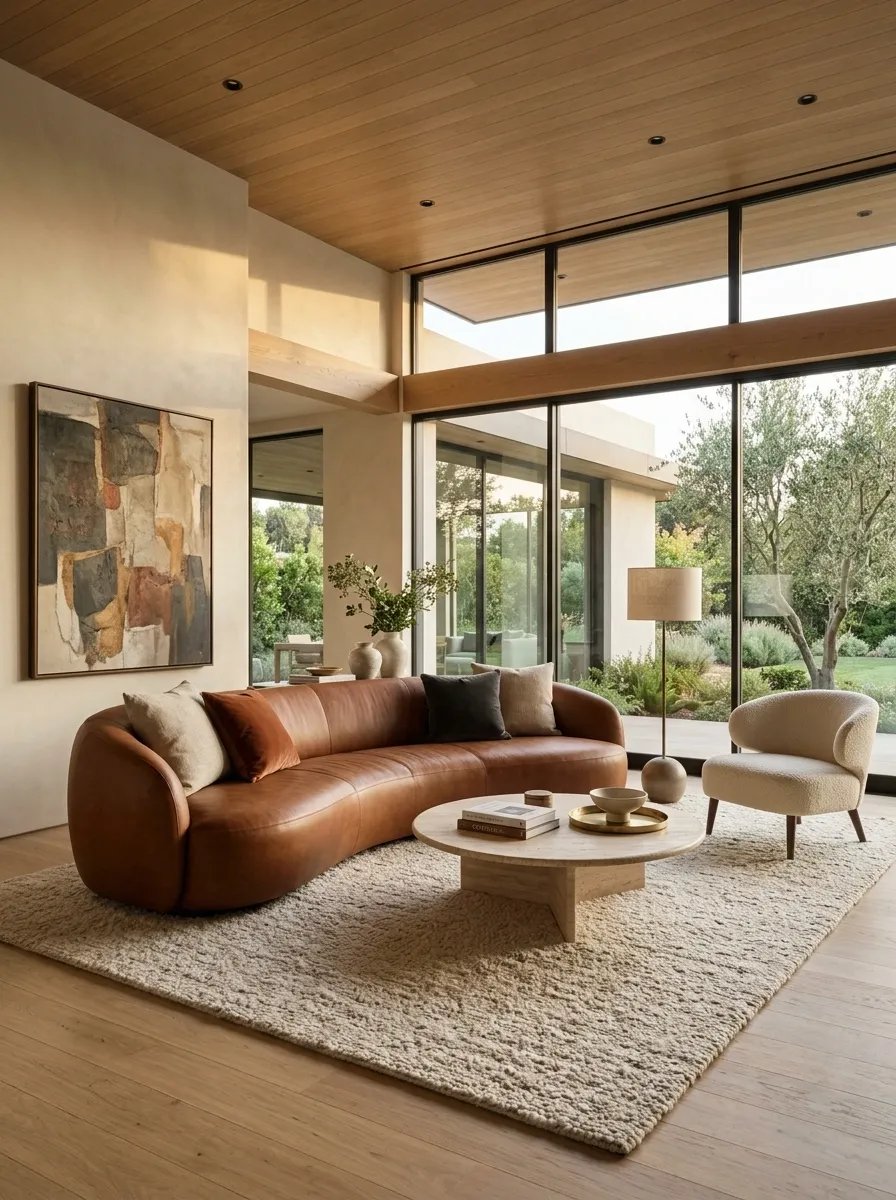
A curved brown sofa changes the geometry of the entire room. Instead of surrounding it with rectangular furniture, repeat that softer shape with a round stone coffee table, curved occasional chair, rounded lamp silhouette, and an oversized rug that visually contains the seating arrangement.
Keep the walls simple and use one substantial artwork piece rather than creating a busy gallery wall. The sofa already provides a strong sculptural form, so the surrounding pieces should reinforce its shape rather than compete with it.
This composition works especially well in an open room where the rounded seating can soften the harder lines of windows, flooring, and architecture.
The furniture has curves. The room has boundaries. Everyone has a role.
Round coffee table
Soft lamp or chair profile
Narrow Living Room With a Long Brown Sofa and Gallery Wall
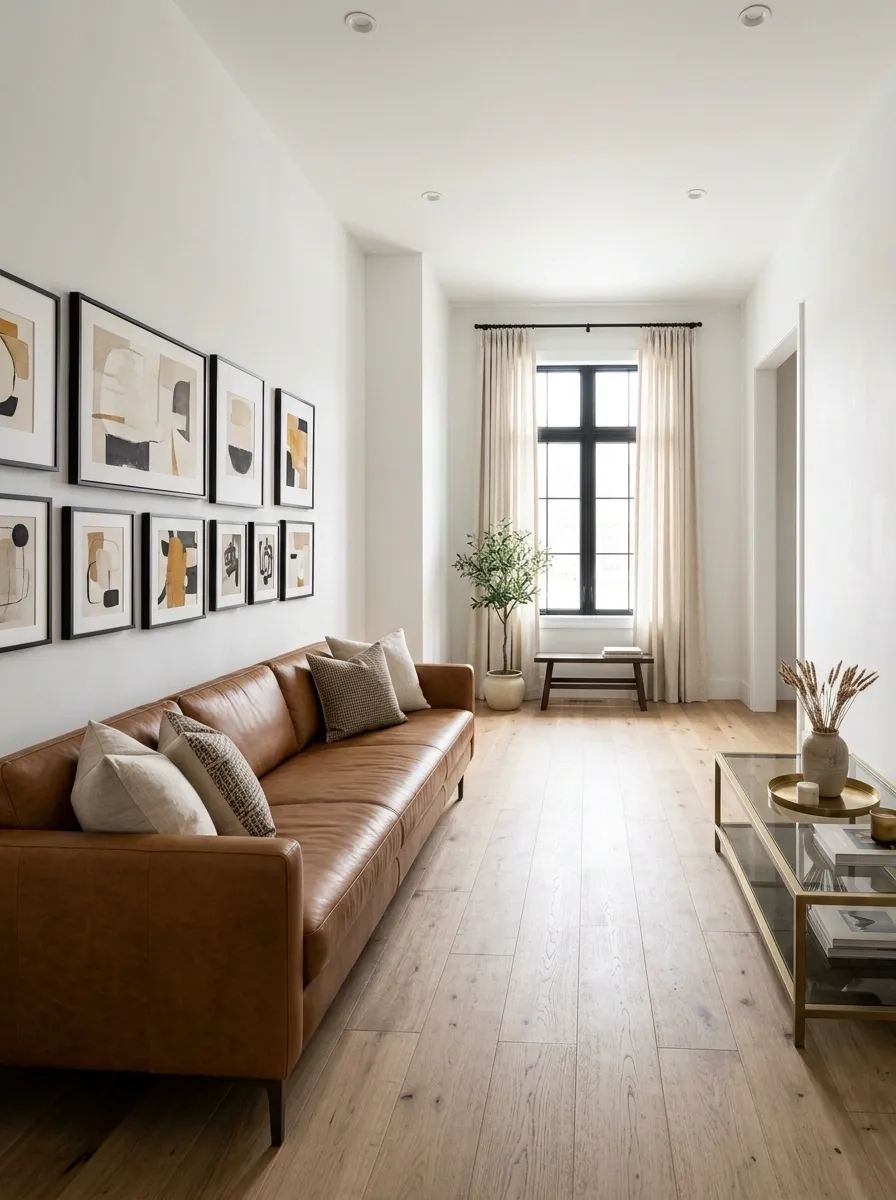
A long, narrow living room benefits from treating the brown sofa as one continuous visual line. Place it along the longer wall, use a slim rectangular coffee table opposite, and reserve a clear strip of floor for movement through the room.
Above the sofa, a gallery wall can add vertical interest without stealing much floor space. The artwork should share a color relationship with the rug and curtains so the wall feels connected to the seating below.
The important thing here is scale. A tiny sofa floating in the middle of a long room leaves awkward gaps, while an oversized coffee table can choke the walkway.
Long room, long sofa, sensible furniture. Wild concept, apparently.
Earth-Tone Living Room With Brown, Rust, and Cream
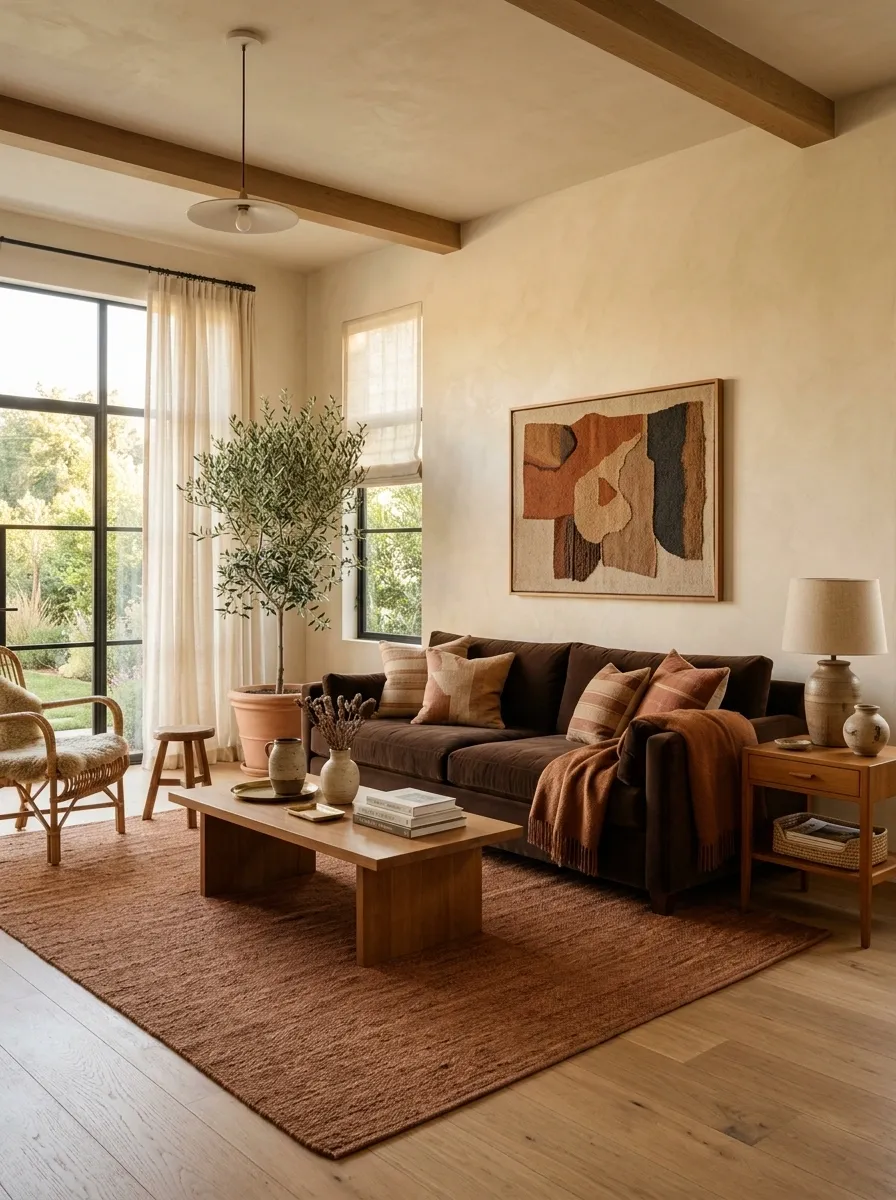
A deep brown sofa can become the centerpiece of an earthy room when the palette stays disciplined. Use creamy plaster-like walls, a rust-toned rug, medium wood furniture, and textiles in warm sand and clay shades.
The room should have variation within the palette rather than completely different colors competing for attention. A rust throw or patterned cushion is enough to bridge the sofa and rug. Keep the larger background surfaces lighter so the brown remains grounded without making the whole room feel dark.
Material variety matters here too. Mix wood, linen, wool, and ceramic so the earthy palette doesn’t become visually flat.
This room understood tonal dressing. The rest of us are taking notes.
anchor
energy
breathing room
Black and Brown Contemporary Living Room
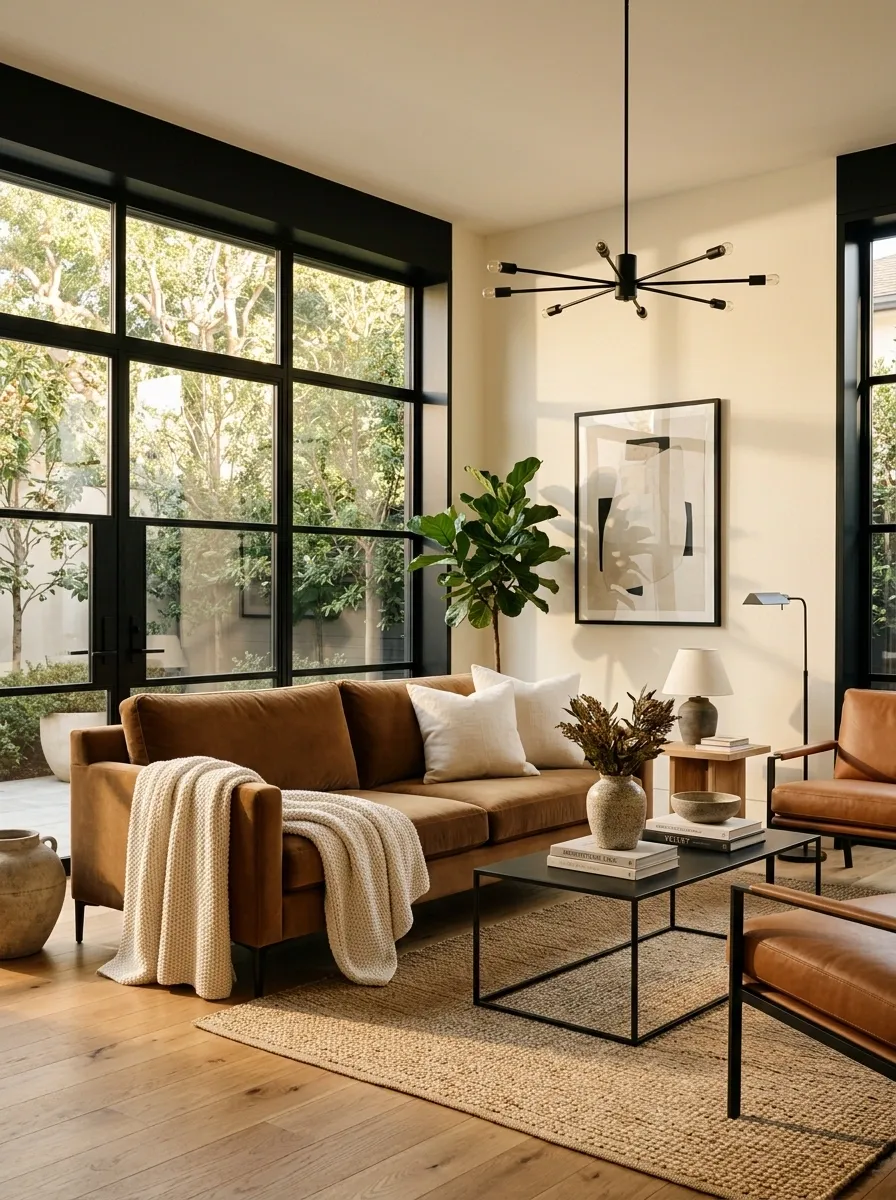
A brown sofa looks especially crisp when paired with black architectural details. Picture warm brown upholstery against soft cream walls, black-framed windows, a slim black coffee table, warm wood flooring, and a few cream textiles breaking up the contrast.
The black should appear in meaningful places rather than scattered across every accessory. Window frames, lighting, and one table can be enough to give the room structure. Wood then bridges the black and brown so the combination feels warm rather than severe.
This is a good direction for a room that needs definition without piling on color.
Black and brown together? Apparently they figured out their differences.
Beige-on-Brown Living Room With Soft Layering
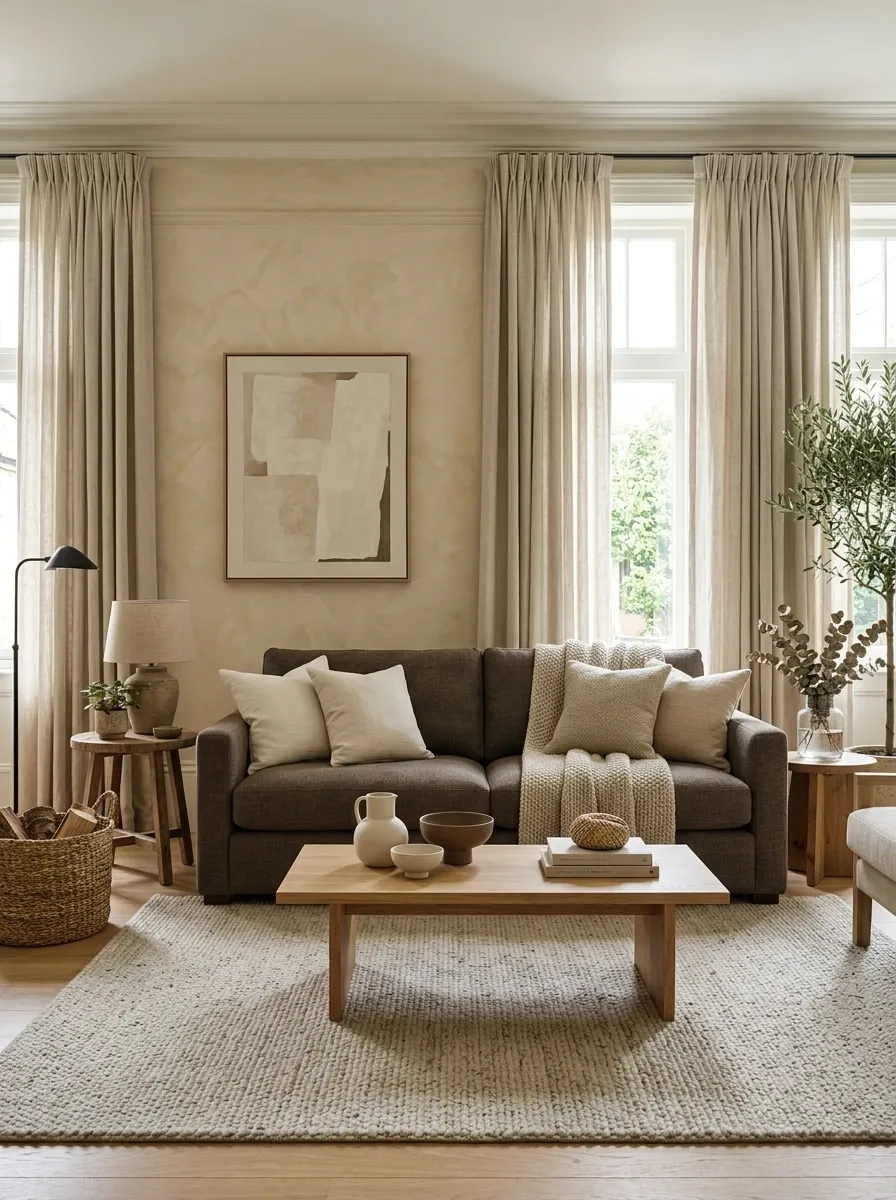
A medium-dark brown sofa can anchor an almost entirely beige room when the interest comes from texture instead of color. Use oatmeal curtains, a thick neutral rug, cream cushions, natural wood tables, and softly textured walls.
The room should contain several different surfaces that happen to share a quiet palette. Linen, wool, wood grain, woven baskets, and matte ceramics keep all those neutrals from collapsing into one giant beige blur.
The sofa supplies the darker note, while the cream and natural wood prevent it from dominating the space.
This is subtle decorating done properly.
Not “every object must be beige because the Pinterest algorithm said so.”
Wool for visual weight
Wood for warmth
Ceramic for harder contrast
Mid-Century Living Room With a Walnut Brown Sofa
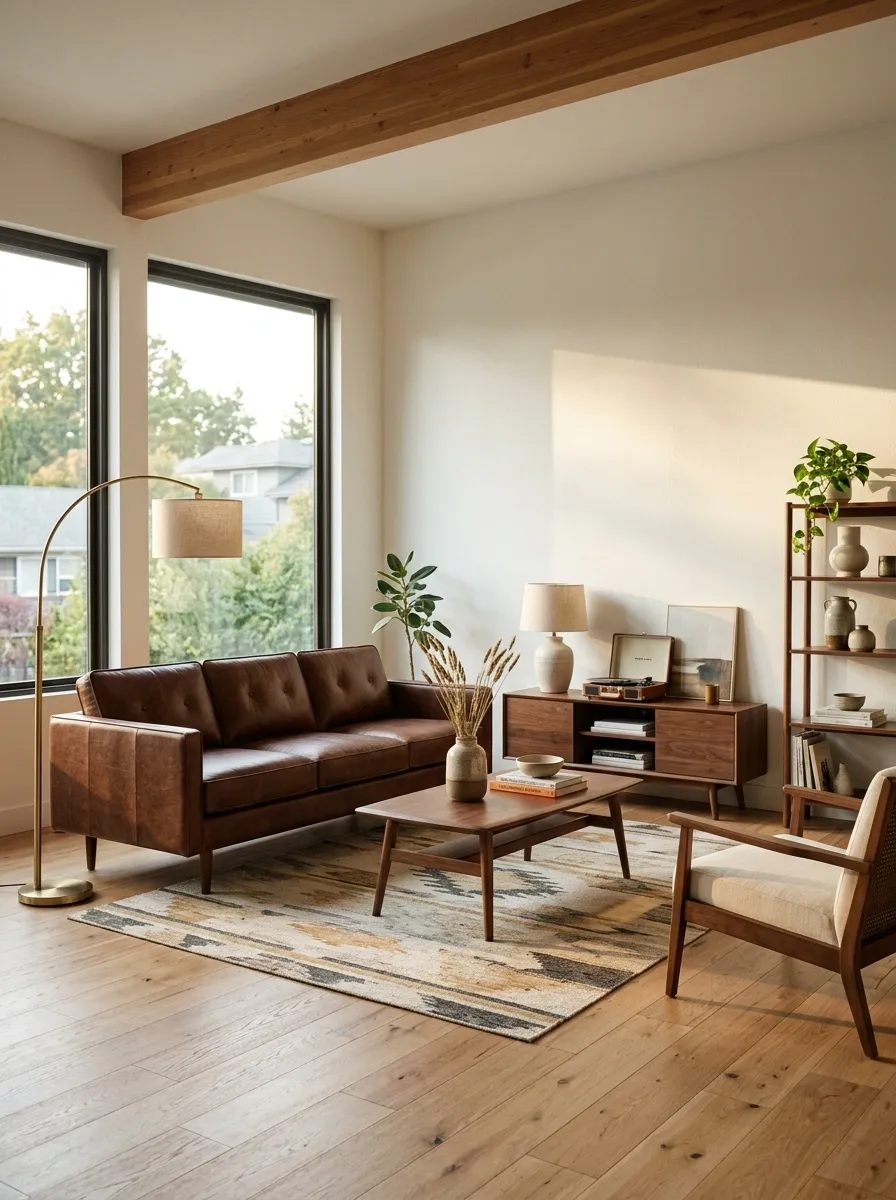
A structured brown sofa fits naturally into a mid-century living room filled with clean lines and warm wood. Add tapered-leg furniture, a geometric rug, a simple floor lamp, and low-profile storage against a warm white wall.
The furniture arrangement should leave generous space between pieces. Mid-century style looks strongest when the individual silhouettes remain easy to see rather than being packed together.
Walnut can appear on the coffee table, media console, and side tables, but let the sofa remain a slightly different brown so the room doesn’t become one giant wood-toned rectangle.
The room should look intentional, not like a furniture catalog exploded in a time capsule.
Family Living Room With a Durable Brown Sectional
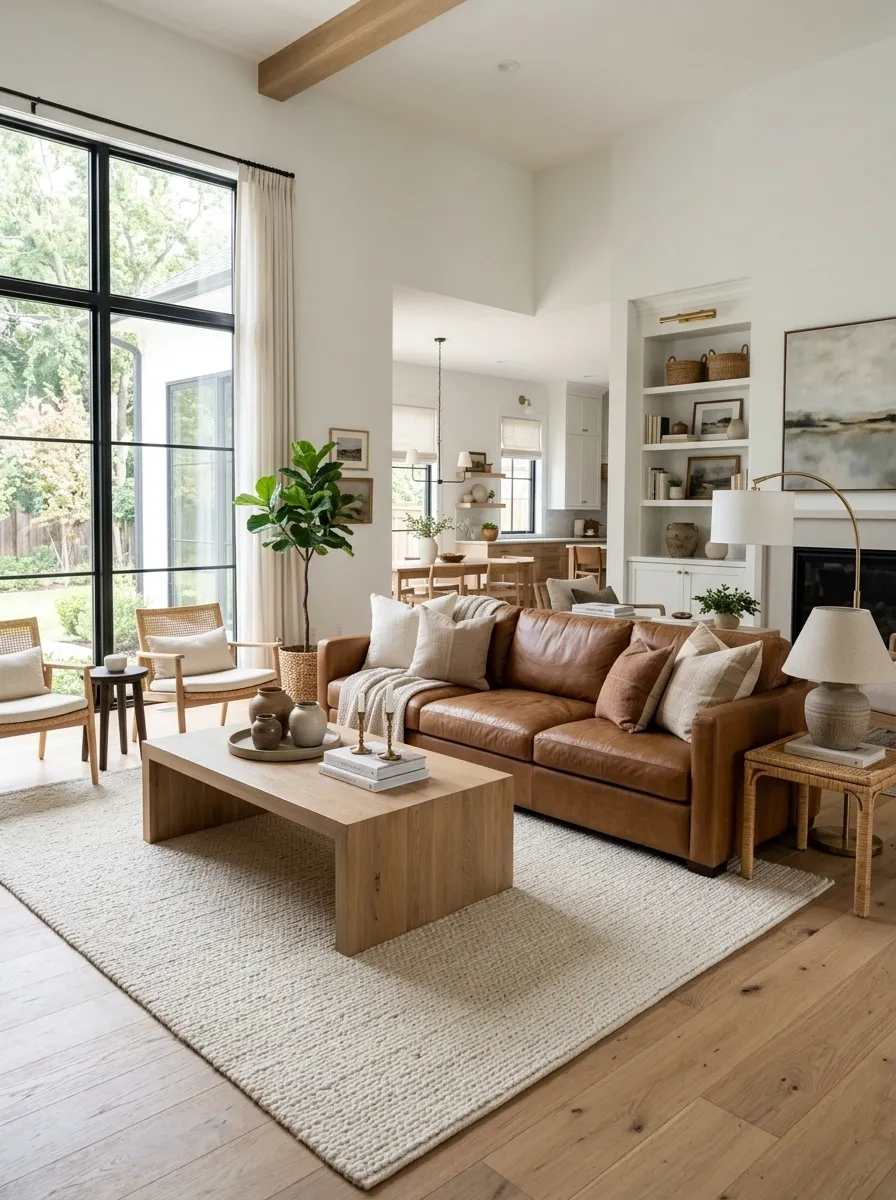
A generous brown sectional makes sense in a family room when the rest of the layout is built around actual movement and everyday use. Give the seating a large rug, a sturdy wood coffee table, layered lamps, and enough open space to move around the main seating zone.
The sectional should face the main focal point without blocking doors, windows, or the natural route through the room. Keep smaller side pieces lightweight enough to move when the room needs to change.
A brown sectional can also make the room feel visually grounded while allowing lighter textiles and walls to carry brightness.
Practical does not have to mean depressing.
A shocking development for the “family room = beige waiting room” department.
Cottage Living Room With a Weathered Brown Sofa
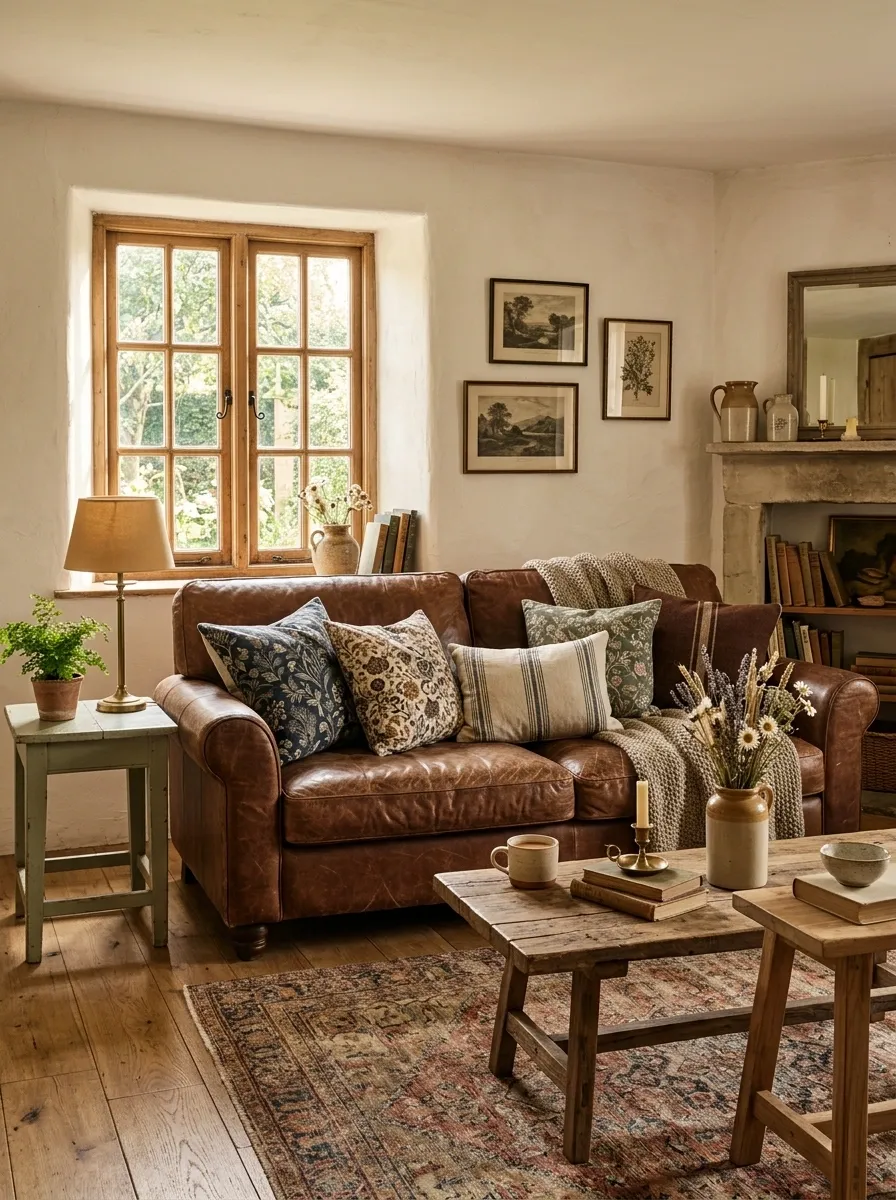
A weathered brown sofa can give a cottage living room its grounding element when paired with painted wood, faded patterns, warm white walls, and a traditional rug. Use a mix of soft floral or botanical textiles, a simple wood coffee table, and lamps with fabric shades.
The room should feel comfortably imperfect. A painted side table can sit beside a more natural wood piece, while patterned cushions bring softness without requiring every fabric to match.
Brown upholstery gives all those lighter cottage elements something substantial to lean against.
The secret is restraint. Cottage charm is lovely. Cottage clutter has another agenda.
Faded pattern
Warm white
Natural texture
Dramatic Charcoal Living Room With Cognac Leather
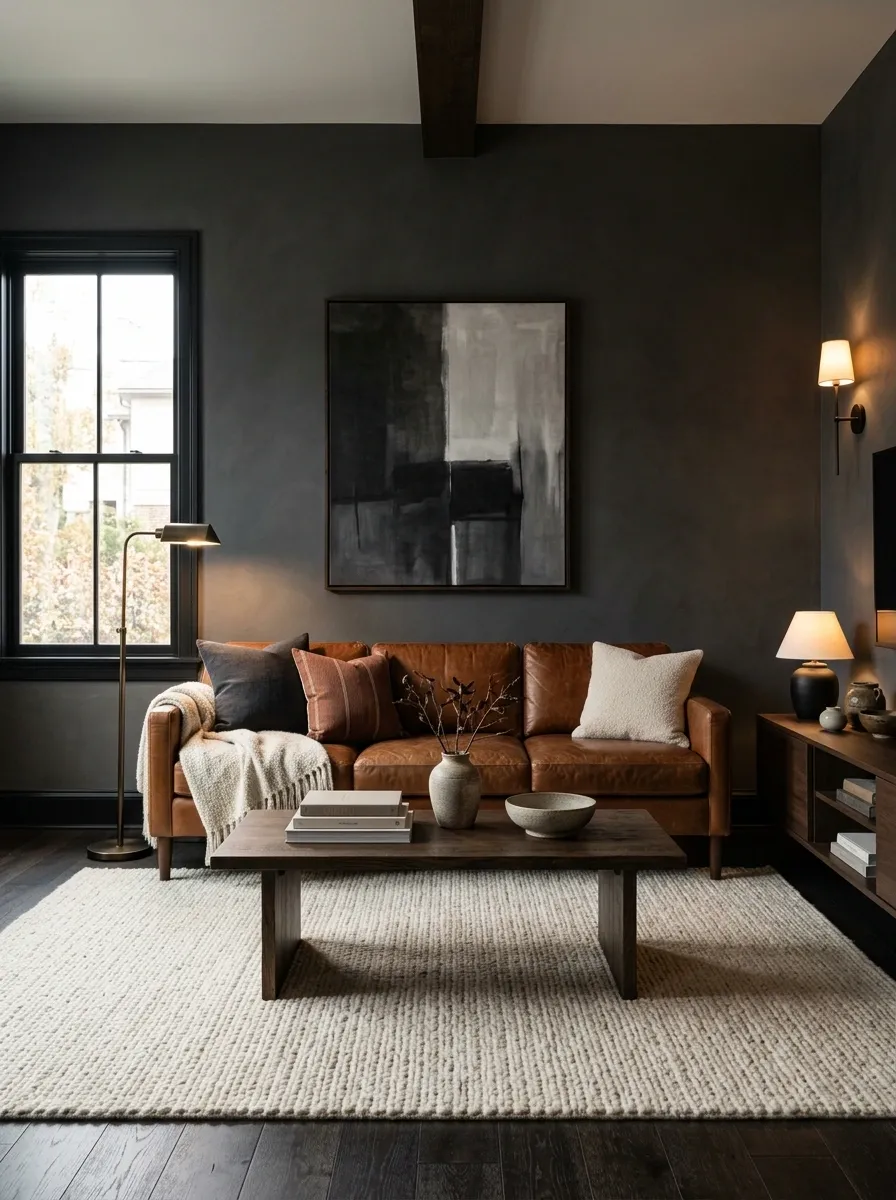
A cognac leather sofa becomes almost luminous against charcoal walls. Build the room around that contrast with a large cream rug, dark wood furniture, warm directional lamps, and restrained artwork.
The charcoal backdrop gives the leather a rich focal position, but the pale rug is essential. It separates the sofa from the dark architecture and creates a brighter center to the room.
Use warm lighting rather than cool white bulbs so the leather keeps its depth after sunset. Keep the rest of the furniture fairly simple because the wall and sofa already create substantial contrast.
This room is dramatic without becoming theatrical.
The charcoal wall said “main character.” The sofa agreed.
Renter-Friendly Living Room With a Brown Sofa and Removable Layers
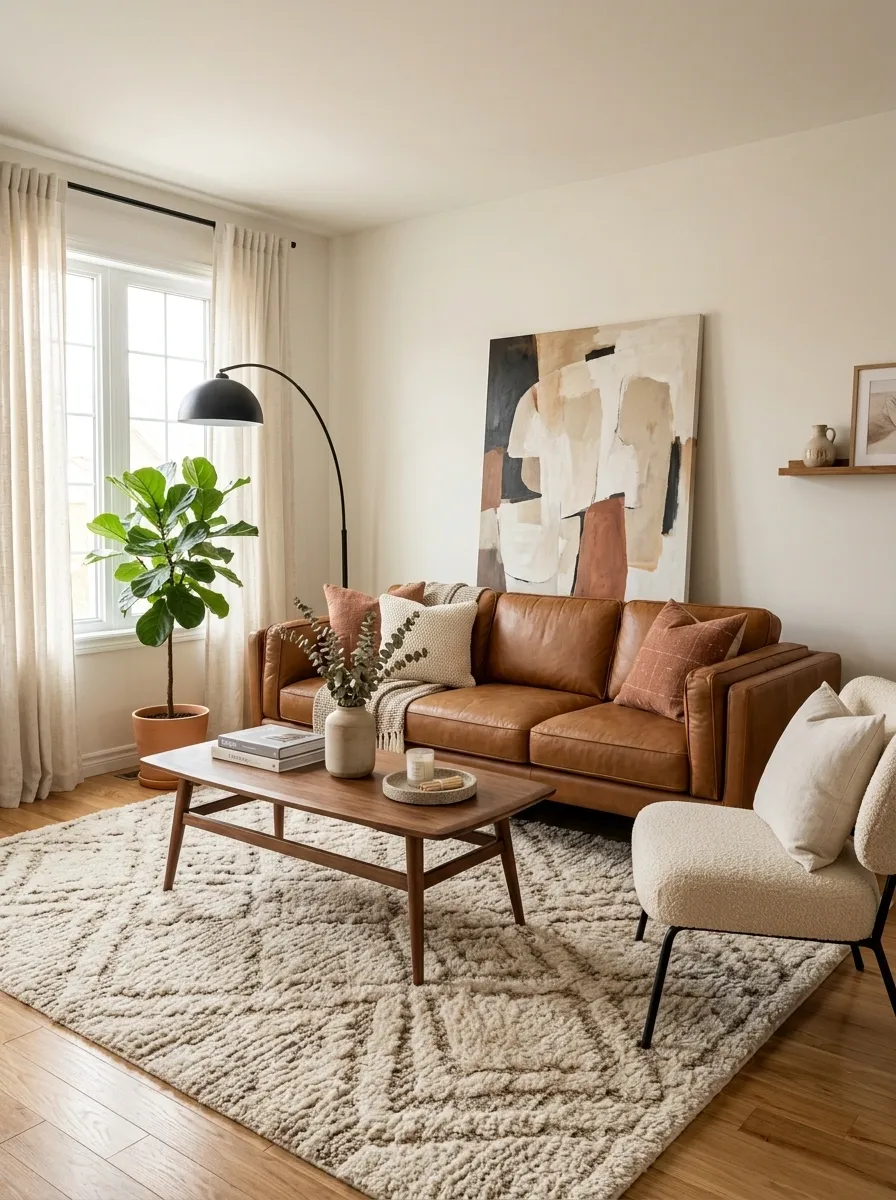
A brown sofa is a useful anchor in a rental because it can carry most of the room’s visual weight while the changeable pieces handle the personality. Build around it with a large rug, freestanding lamps, oversized artwork, curtains, and movable wood furniture.
The important part is separating what the room gives you from what the decor brings in. Existing flooring and wall color become the backdrop, while the rug and textiles create the new direction.
Avoid filling every blank wall just because painting isn’t an option. Large artwork usually has more impact than a dozen tiny pieces competing for the same square meter.
Rental restrictions are annoying. A chaotic living room is optional.
Change: rug · curtains · lighting · artwork · movable furniture
Soft Pink and Brown Living Room With a Muted Palette
Muted dusty pink can make a brown sofa feel unexpectedly soft without turning the room sugary. Place the sofa against a dusty-pink wall and pair it with cream upholstery, pale timber, a faded rug, and simple artwork containing warm neutrals.
The pink works best when it stays relatively quiet. It should establish the wall color and perhaps return in one or two smaller textiles rather than appearing on every object in sight.
The brown adds enough depth to keep the pale palette from becoming overly sweet, while the cream creates separation between the furniture and background.
Pink and brown decided to collaborate, and honestly, the group project worked.
High-Contrast Cream, Brown, and Green Living Room
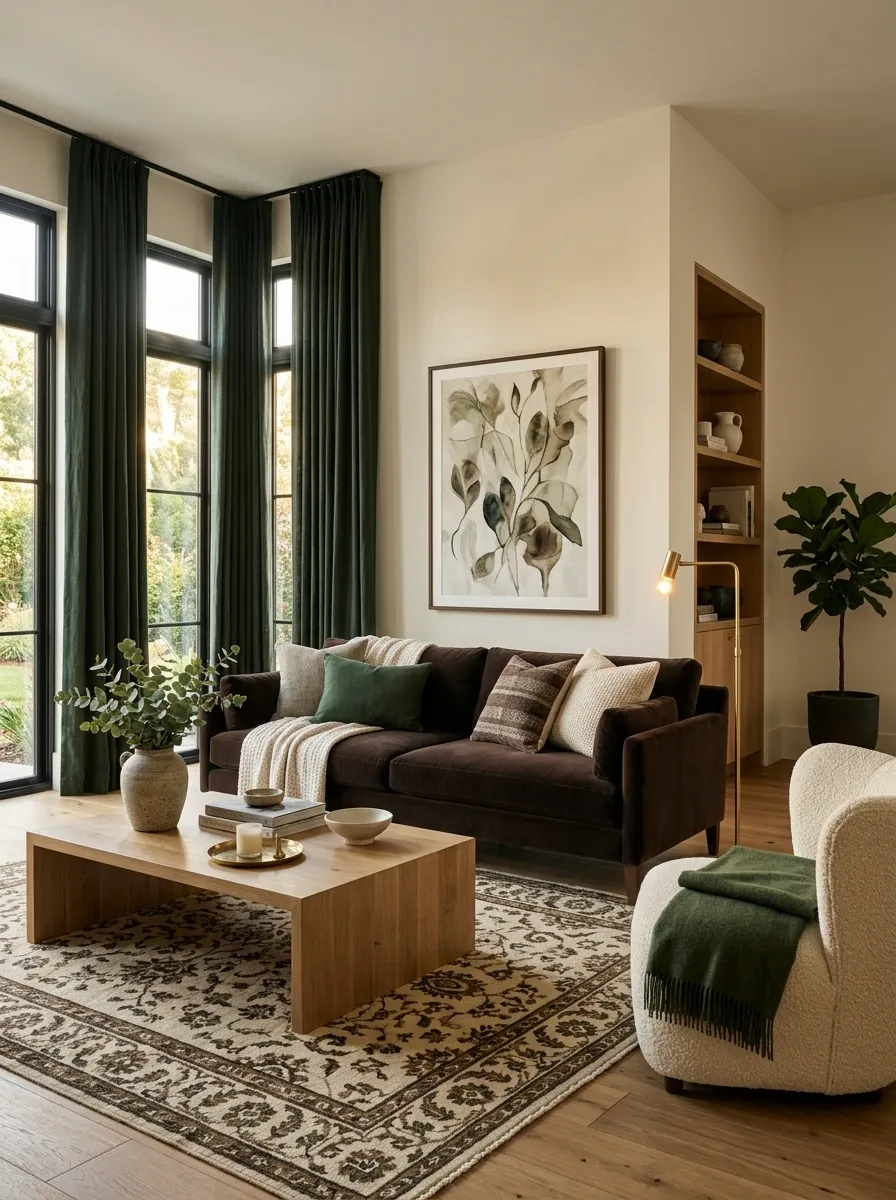
A deep brown sofa looks especially sharp in a cream room when dark green enters through curtains, artwork, and a few carefully chosen textiles. Add a natural wood coffee table and a patterned rug that quietly repeats the same earthy tones.
The green should appear in several places, but not everywhere. Repetition creates a connection between the sofa and the room without making the palette feel forced.
Cream walls and flooring provide the large areas of brightness, while the brown and green create the stronger visual anchors.
It’s basically a three-color conversation. Nobody invited seventeen accent shades, so everyone gets along.
Mid-Century Apartment Living Room With a Caramel Sofa
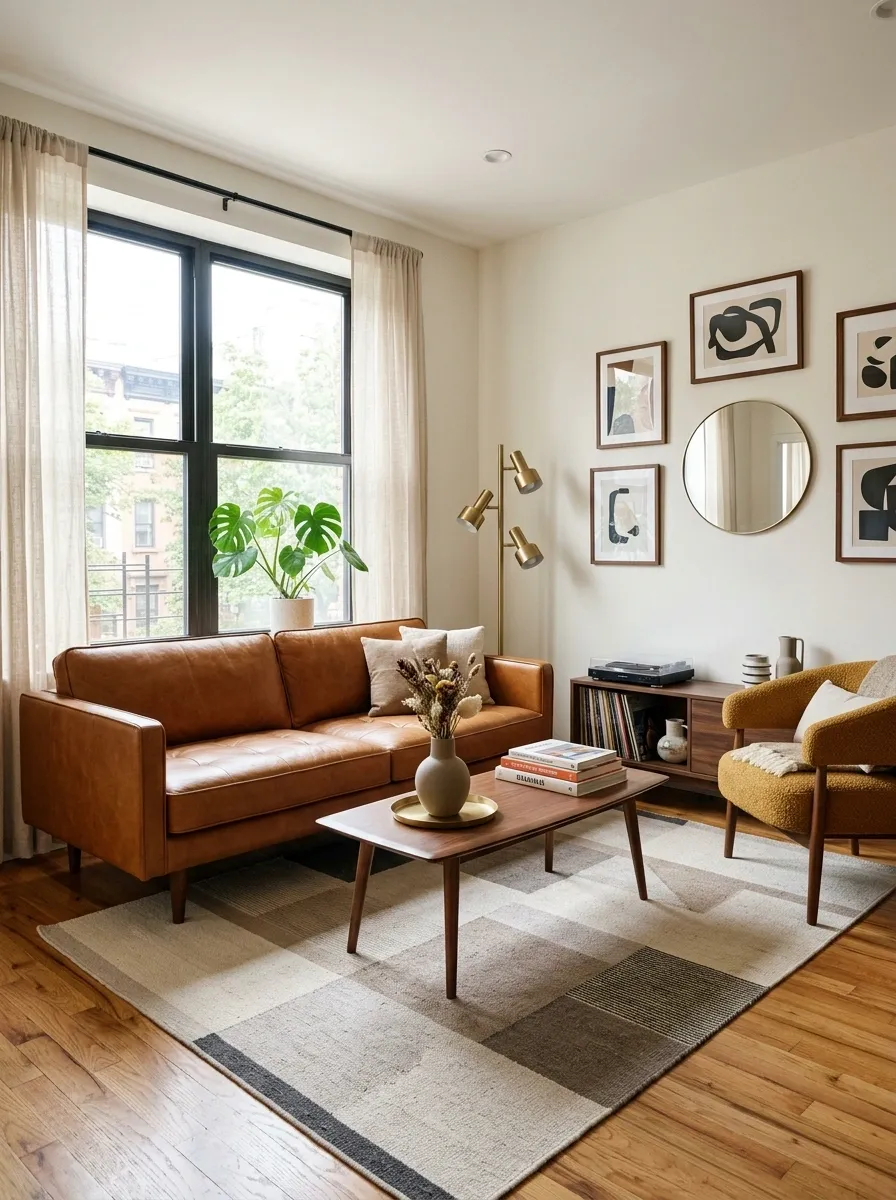
A caramel sofa can make a compact mid-century apartment feel warmer without visually shrinking it. Use furniture with tapered legs, a slim walnut coffee table, a low media console, and a geometric rug in muted neutrals.
Keep the heavier furniture pieces visually separated from the floor with exposed legs. That small gap creates more visible floor area and helps the room feel less packed.
A single sculptural lamp or vintage-inspired chair can provide personality without turning the apartment into a museum of mid-century objects.
The room needs style, not a full historical reenactment.
Textured Neutral Living Room With a Dark Brown Sofa
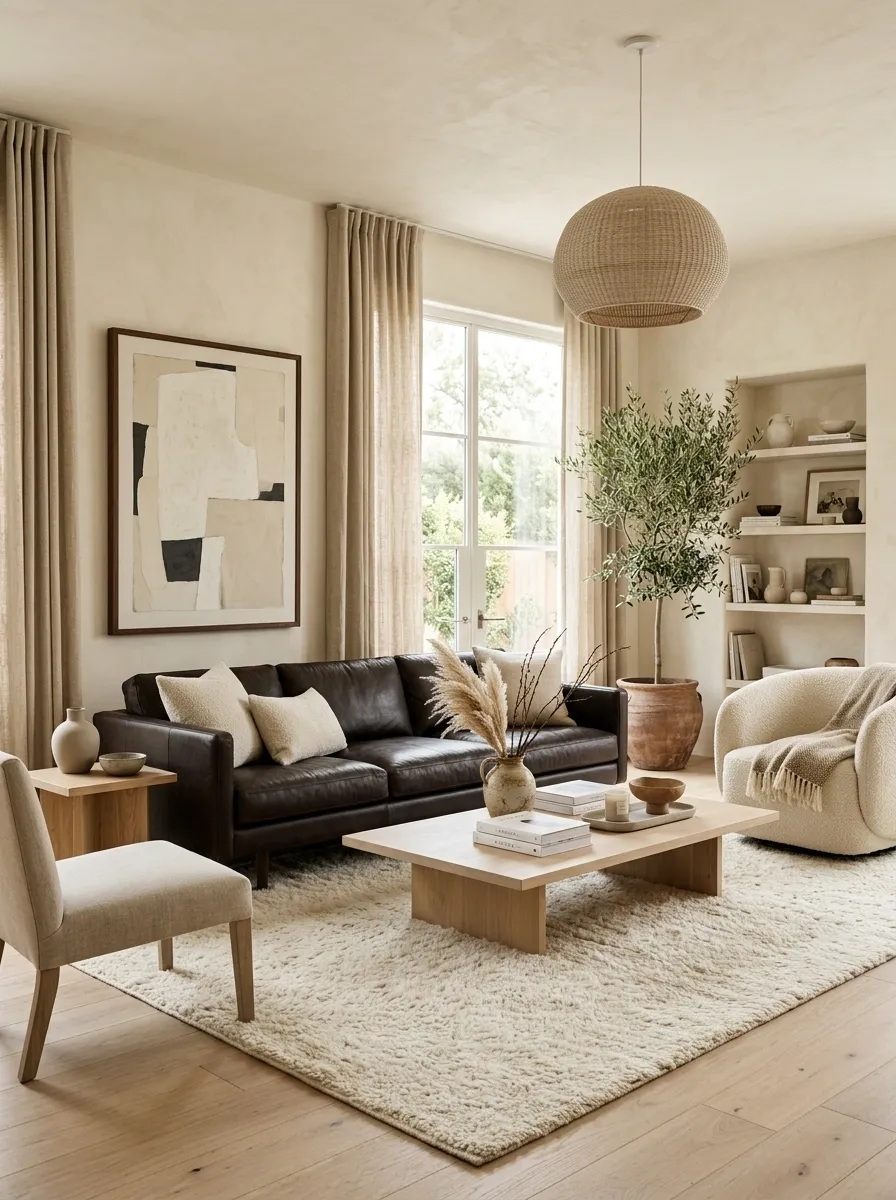
This composition keeps the palette almost completely neutral but gives every surface a different texture. A dark brown sofa sits against warm ivory walls with a thick cream rug, bouclé or linen occasional seating, pale oak furniture, woven curtains, and matte ceramic decor.
The room stays interesting because the materials change even when the colors barely do. The sofa provides the deepest visual note, while the cream and natural wood prevent it from dominating the space.
Keep the artwork restrained and slightly graphic so the room doesn’t become overloaded with soft, fuzzy surfaces.
Texture is carrying the whole conversation here. Color can take the afternoon off.
Brown Sectional Living Room With a Large Patterned Rug
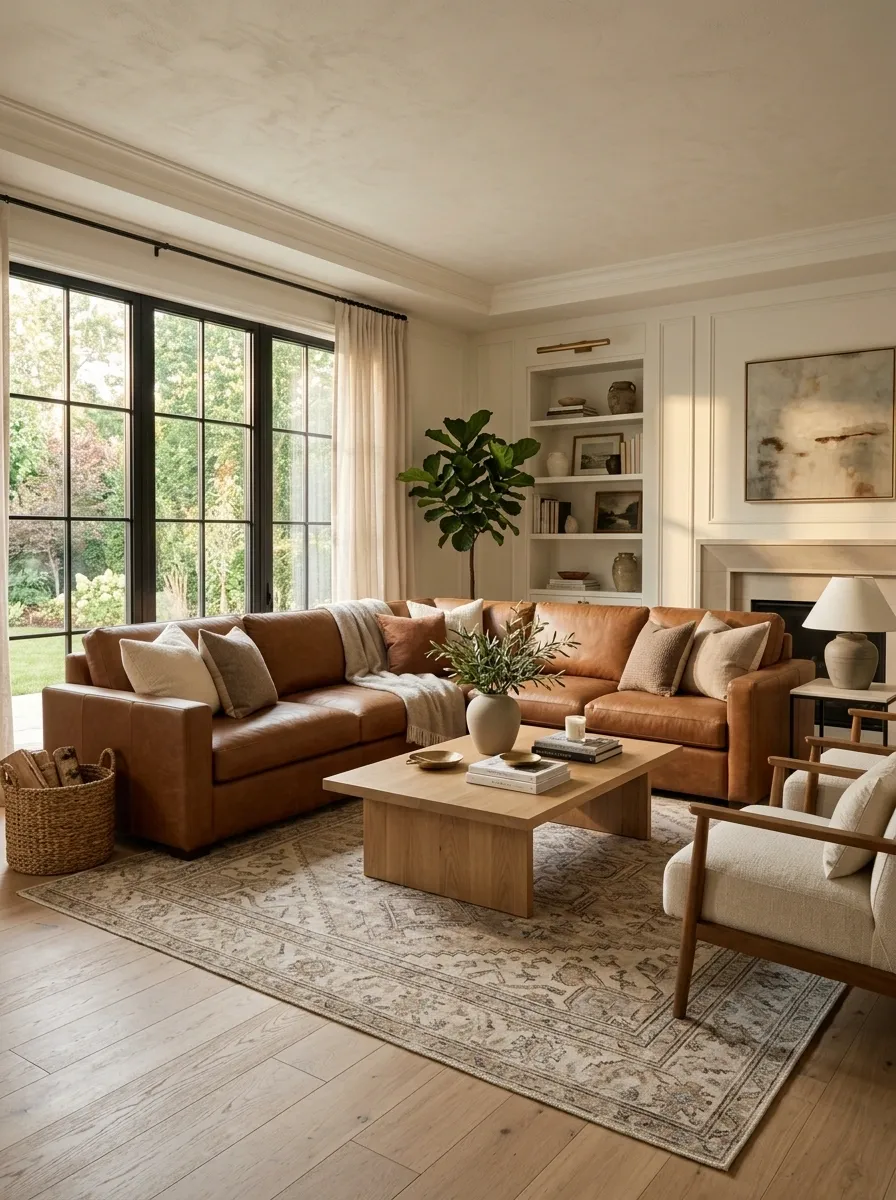
A large brown sectional can look far more intentional when the rug underneath it introduces pattern and scale. Use a substantial geometric or faded patterned rug, a broad wood coffee table, light walls, and two contrasting occasional chairs to create a complete seating arrangement.
The sectional should define the room rather than simply sit against one wall. Let the rug extend well into the surrounding space so all the seating feels connected.
Because the sofa is already large, the smaller furniture should have lighter profiles and enough spacing around the corners.
One giant sofa does not need six giant friends. That’s how floor space disappears.
Walnut, Cream, and Brown Living Room With Architectural Lighting
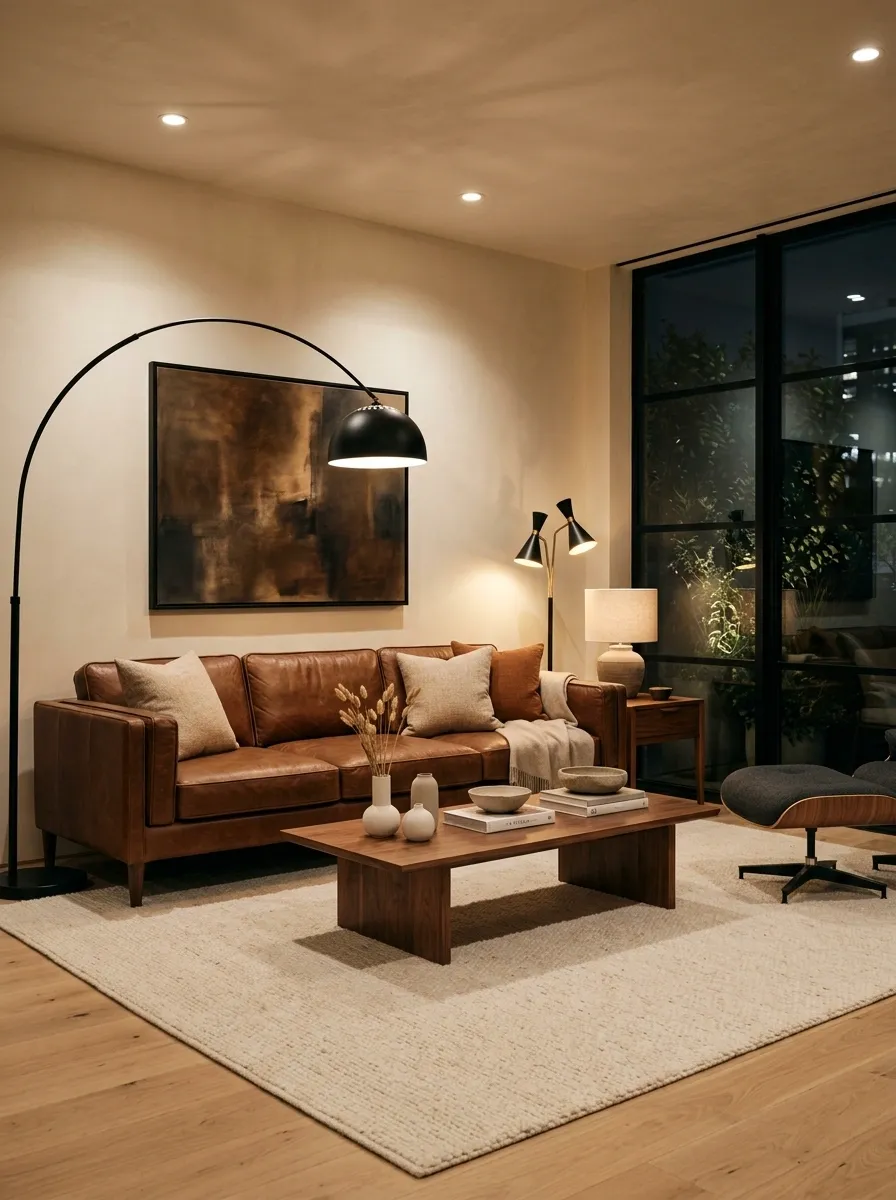
A brown sofa can feel particularly polished when the room’s lighting becomes part of the architecture. Picture warm walnut furniture, creamy walls, a pale rug, recessed or directional lighting, and a sculptural wall or floor lamp creating pools of light around the seating.
The furniture should remain fairly simple so the lighting can shape the room after dark. Walnut repeats the warmth of the sofa without matching its exact color, while the pale rug prevents the seating area from becoming too dense.
This approach is especially effective in modern rooms where lighting needs to do more than simply illuminate a sofa.
The ceiling lights can do their job. The floor lamp gets the drama.
Directional light → artwork or architecture
Low light → sofa and seating zone
Eclectic Living Room With a Brown Sofa and Mixed Wood Tones
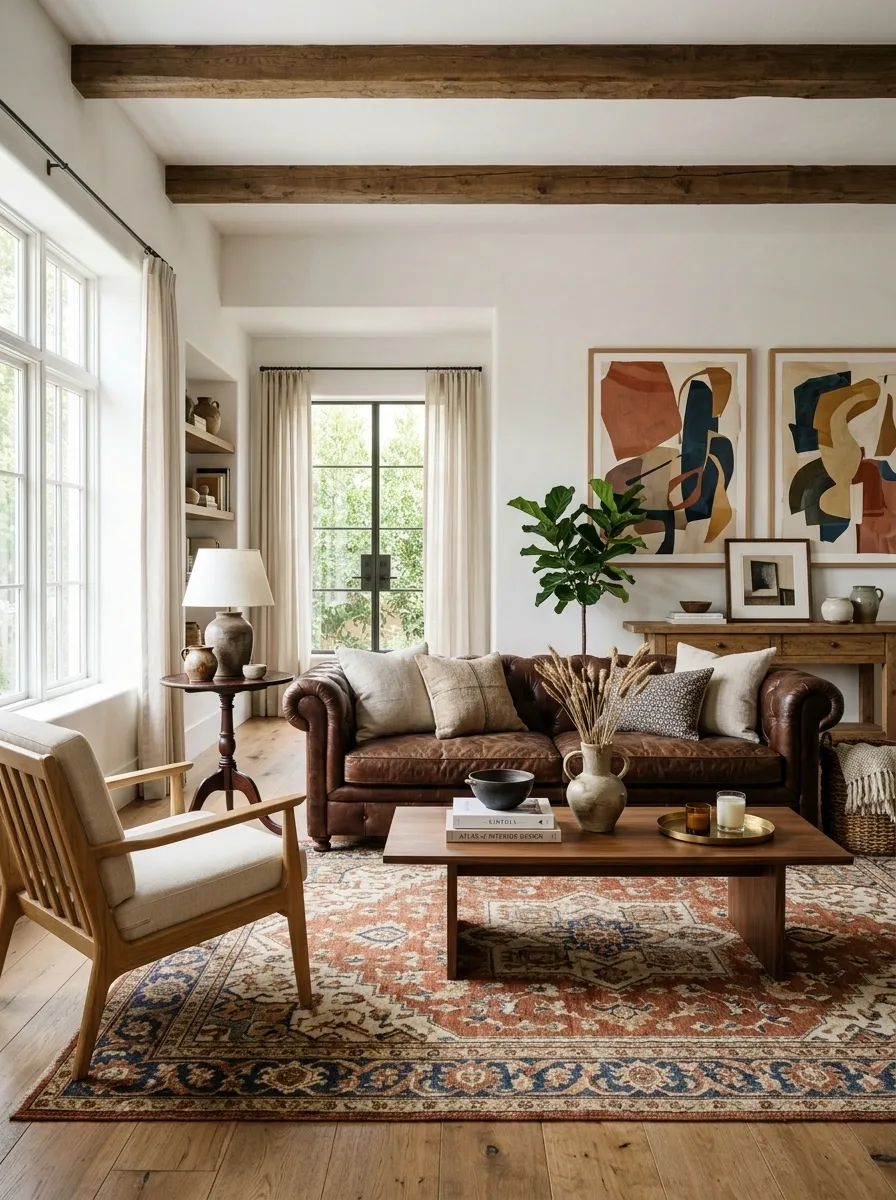
A brown sofa gives an eclectic room enough stability to mix several wood tones without looking completely chaotic. Combine medium walnut with lighter oak, one darker vintage-style piece, a patterned rug, expressive artwork, and a few sculptural objects.
The key is repetition. Wood tones can differ, but similar warm undertones should appear across the room. The artwork can introduce a little stronger color, while the brown sofa provides the constant element tying the composition together.
This is where mismatching becomes useful rather than accidental.
Different furniture eras are welcome. Different design identities are not.
↕
Warm walnut
↕
Deep vintage wood
Warm White Living Room With a Chocolate Brown Sofa and Stone Coffee Table
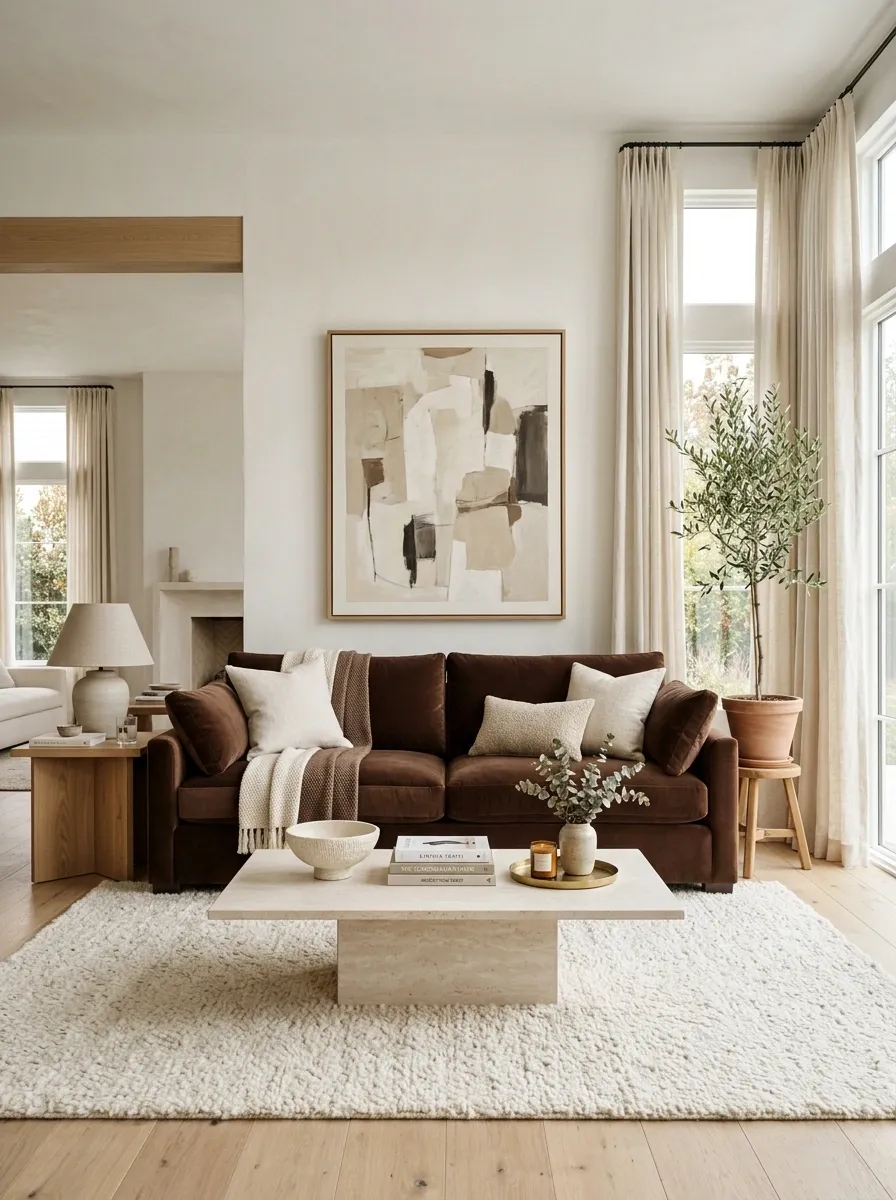
A chocolate brown sofa can become the richest element in a warm white room when the furniture is built around pale stone and natural textures. Use a large warm-white rug, limestone-look coffee table, cream curtains, subtle artwork, and light-to-medium wood accents.
The coffee table provides an important textural change. Its stone surface keeps the room from becoming too wood-heavy while its pale tone visually separates it from the dark sofa.
Keep the room’s forms fairly substantial but simple. The palette already has enough depth.
This is the kind of room where every object looks calm because nobody is fighting for top billing.
Airy Modern Living Room With a Light Brown Sofa
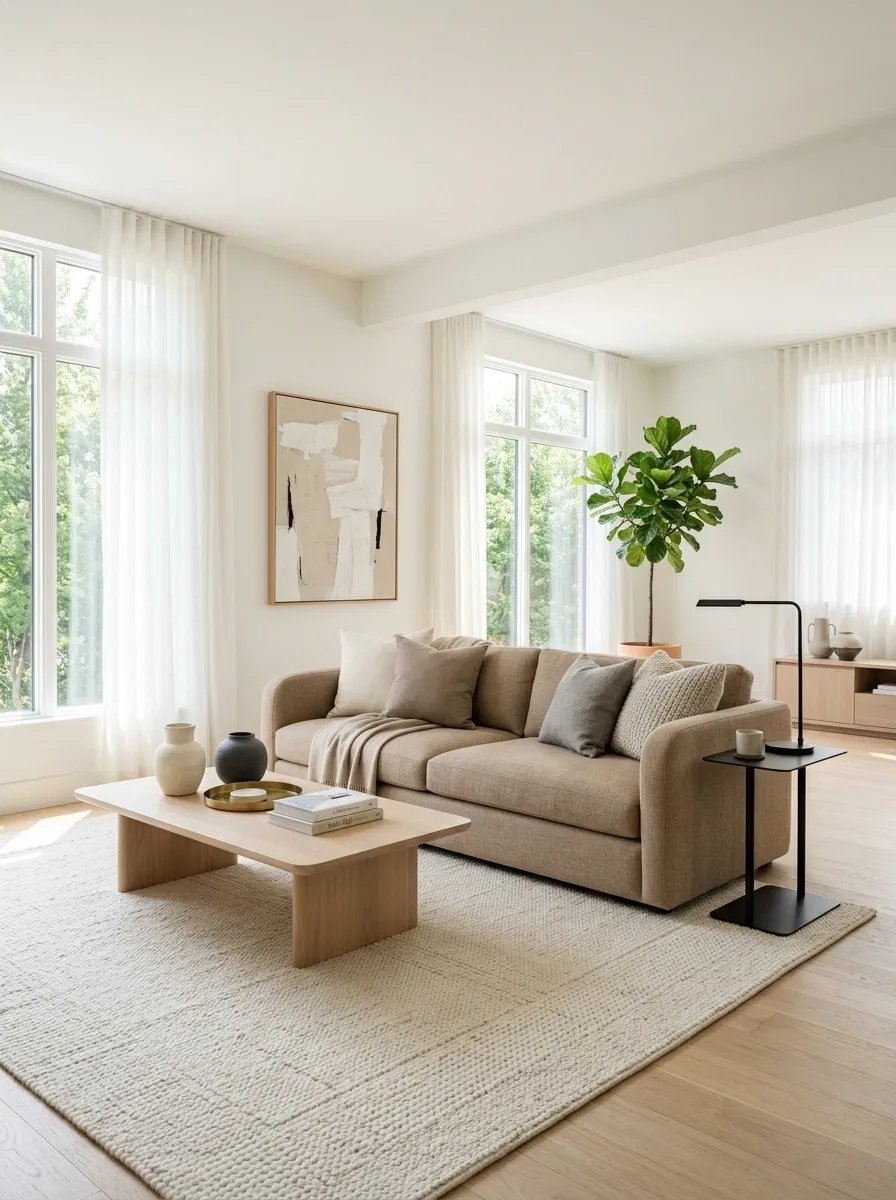
A lighter brown sofa gives a modern living room a softer starting point without losing definition. Pair it with warm white walls, pale oak flooring, a generously sized ivory rug, and furniture with clean but slightly rounded silhouettes.
Large windows should remain visually open, with simple curtains that soften the edges without blocking the light. A single black accent, such as a slim lamp or side table, gives the pale composition some structure.
The room works because there is enough contrast to keep it interesting without creating hard visual breaks everywhere.
Clean, warm, bright. Basically, modern design after drinking some water.
Forest Green Living Room With a Tobacco Brown Sofa
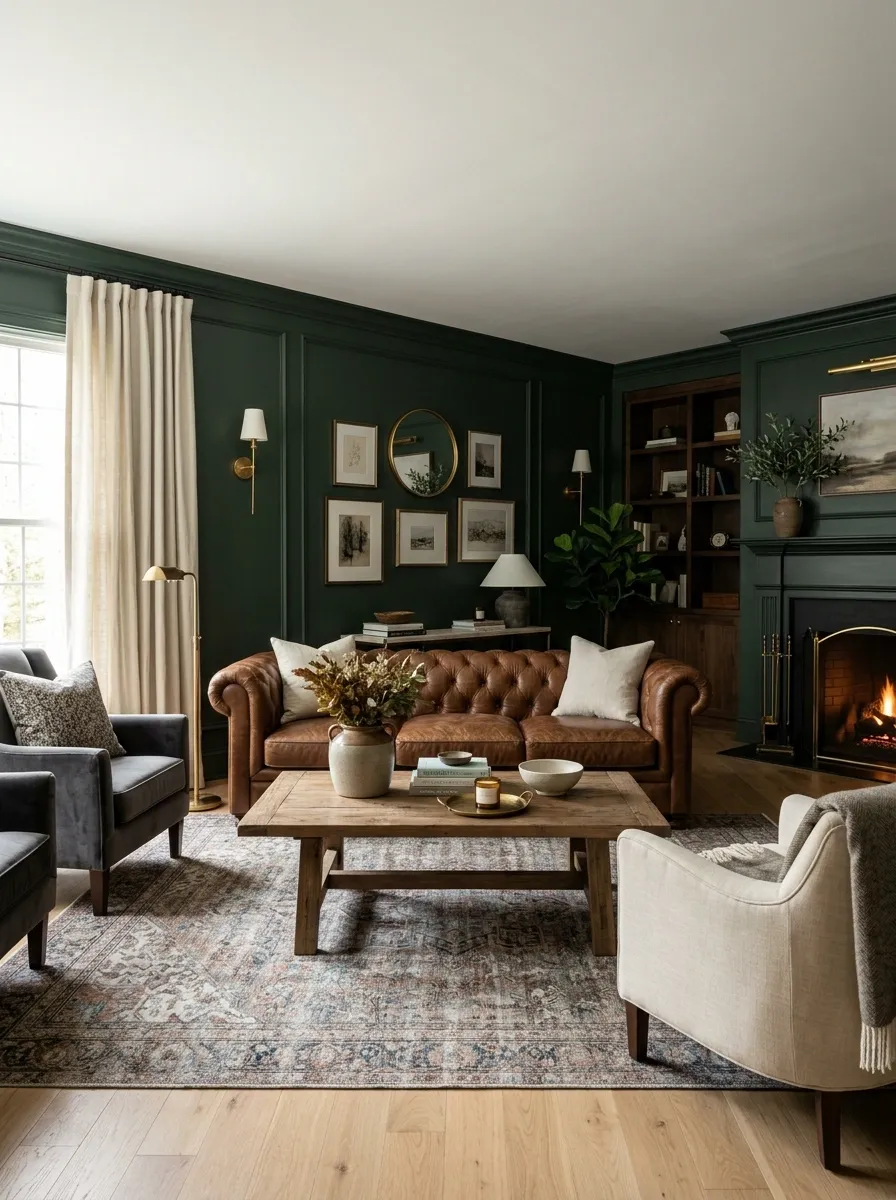
Forest green walls create a rich backdrop for a tobacco-brown sofa, particularly when the floor and ceiling stay lighter. Add a faded patterned rug, warm wood coffee table, cream curtains, and brass lighting to keep the deeper colors from becoming visually flat.
The strongest part of this room is the relationship between the two deep colors. Green creates the atmospheric background, while brown becomes the warm furniture anchor. Cream then cuts through both.
Keep the artwork relatively quiet and let the wall color do some of the visual work.
The room is dark. The design isn’t confused.
Soft Contemporary Living Room With an Oversized Brown Sofa
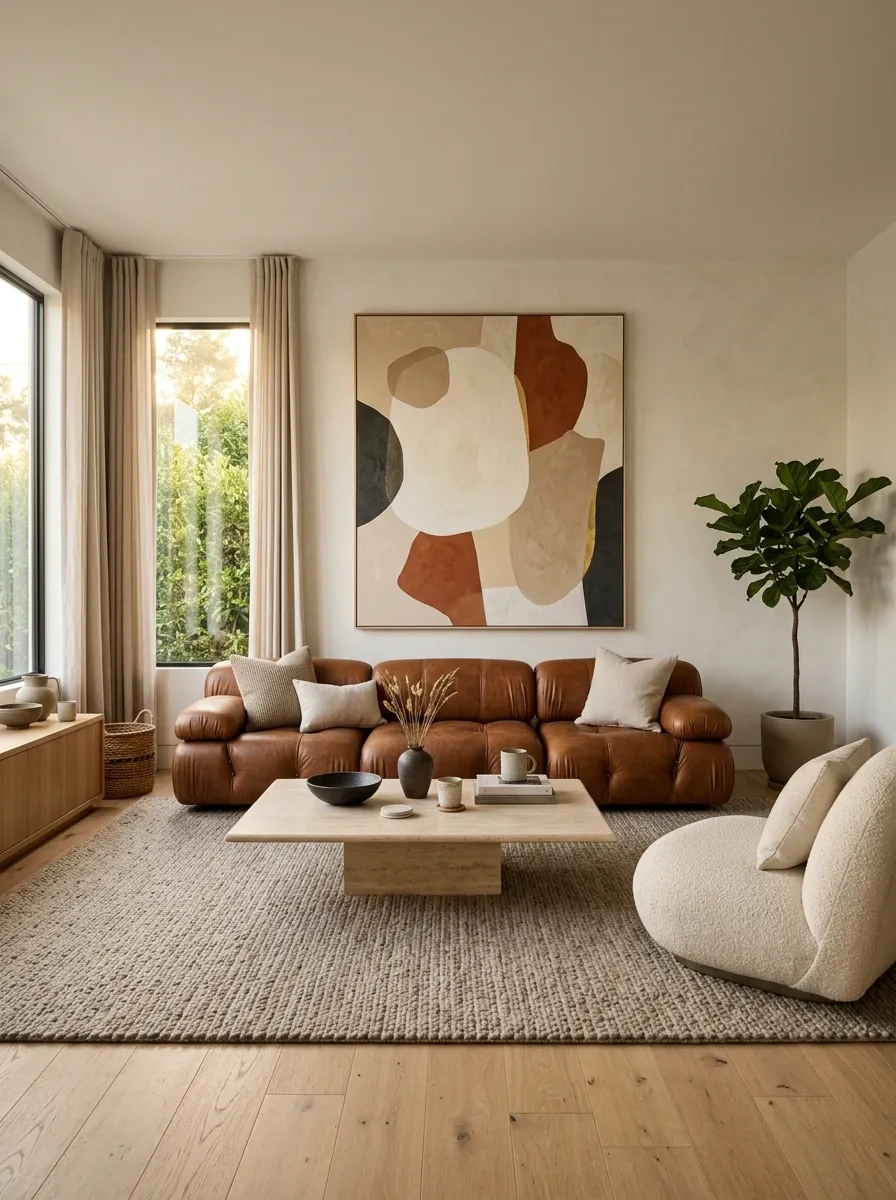
An oversized brown sofa can feel luxurious without making the room feel stuffed when the surrounding furniture stays low and generous in scale. Use a very large neutral rug, a broad stone coffee table, one substantial lounge chair, and simple floor-to-ceiling curtains.
The important thing is allowing the sofa to occupy the center of the composition rather than squeezing it against a wall with random furniture around it.
Keep artwork large enough to relate to the sofa’s scale. Tiny frames above a massive sofa tend to look accidentally miniature.
Big sofa. Big rug. Big mistake avoided.
Rustic Modern Living Room With a Brown Leather Couch
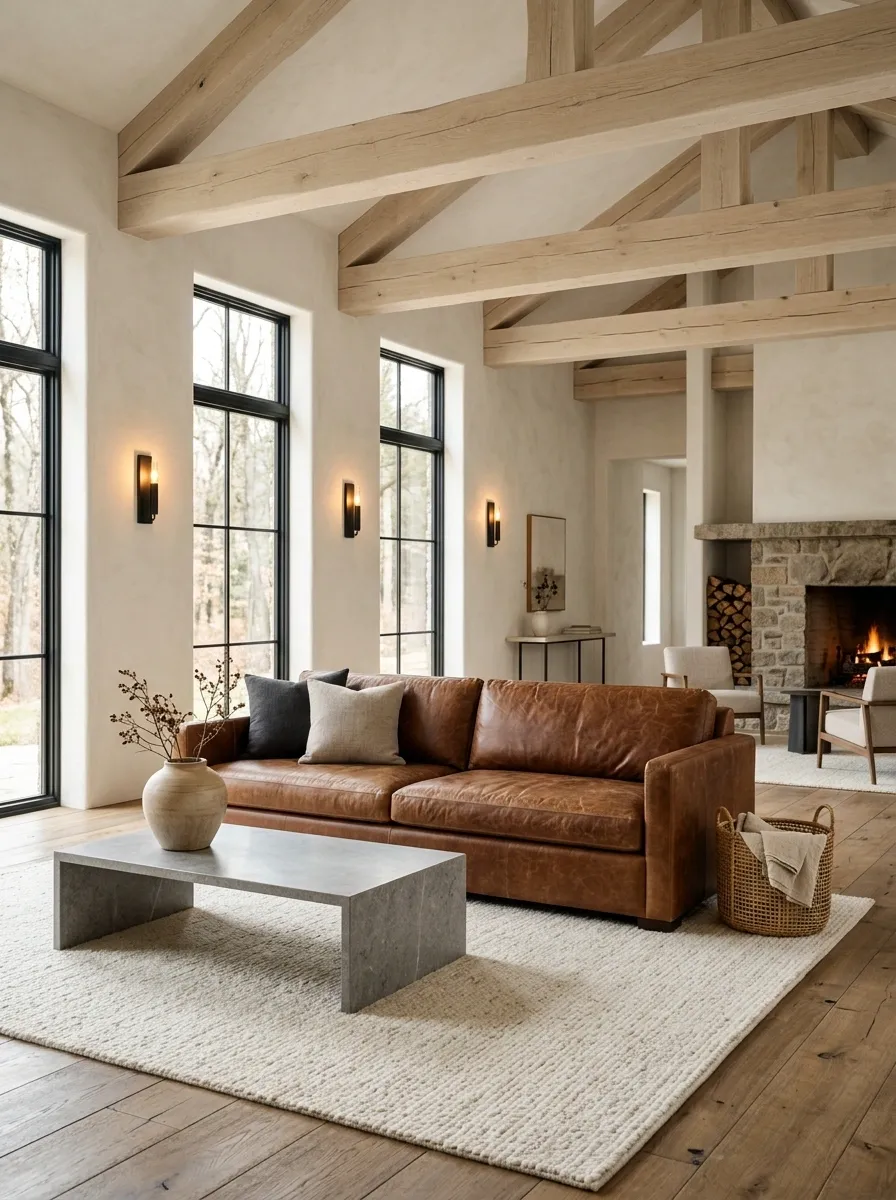
A brown leather couch can bridge rustic and modern styles when rougher materials are paired with cleaner forms. Combine the sofa with pale wood beams, smooth plaster walls, a simple stone coffee table, modern lighting, and a textured neutral rug.
The room should keep its architectural character visible. Rustic elements create warmth, while modern silhouettes stop the space from becoming overly themed.
Use leather with visible natural variation rather than perfectly uniform upholstery. That small amount of irregularity gives the room more depth.
Rustic, but without turning the living room into a cabin-themed audition.
Brown Sofa Living Room With a Gallery-Style Art Wall
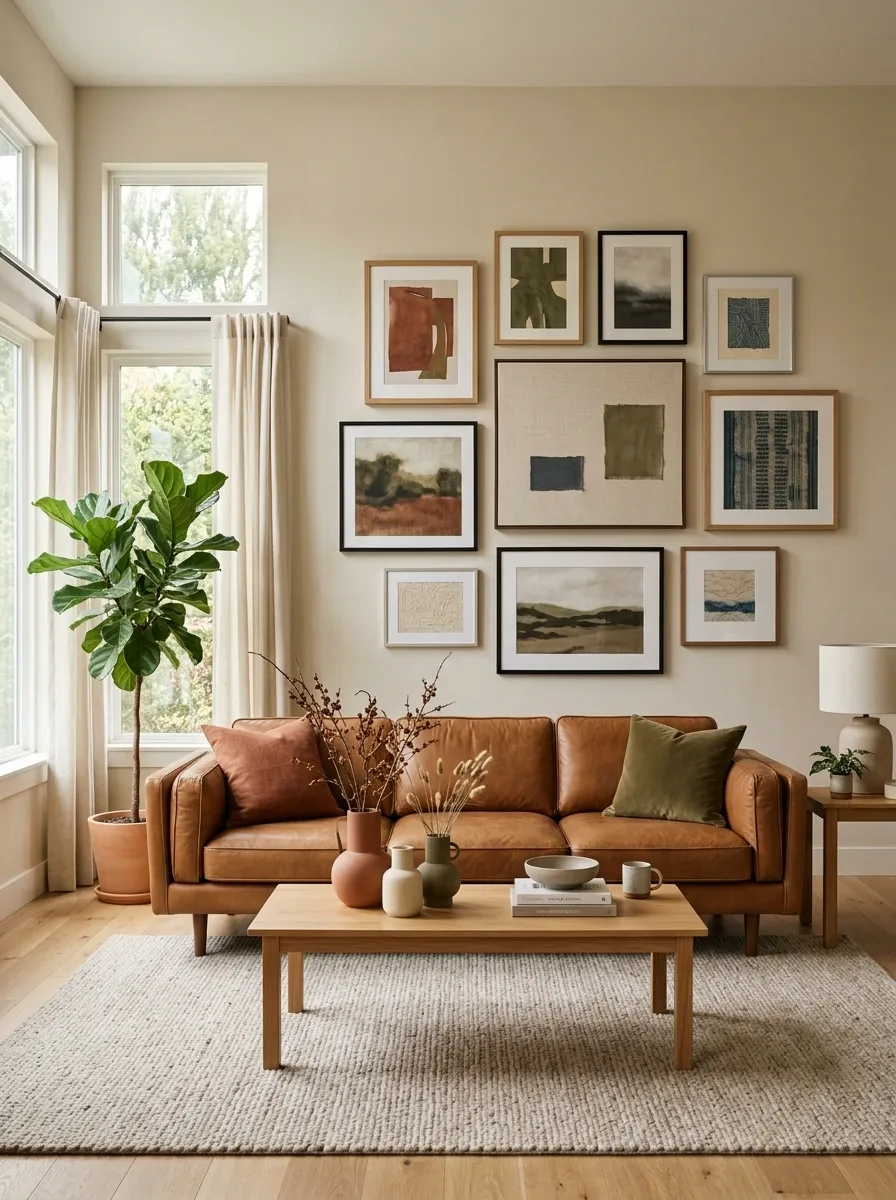
A brown sofa becomes the visual base for a gallery-inspired living room where artwork carries much of the personality. Keep the walls warm white or soft beige, then arrange a mix of large and medium artwork above the sofa with enough space between pieces to keep the wall readable.
A simple wood coffee table, neutral rug, and understated curtains prevent the artwork from competing with too many other surfaces.
The brown upholstery acts almost like a frame around the room’s color story. Artwork can bring in rust, olive, charcoal, cream, or muted blue without making the furniture feel disconnected.
The wall gets to be dramatic. The coffee table can calm down.
Let the Brown Sofa Set the Direction
The most convincing brown sofa rooms don’t happen because every accessory perfectly matches. They work because the major pieces agree with one another.
Start with the largest visual decisions: the wall color, the sofa, the rug, the main wood tone, and the general lighting temperature. Those establish most of the room’s personality. Smaller elements can then fill in the gaps without having to carry the entire design.
A brown sofa can support a surprising range of looks. It can sit inside a pale Scandinavian room, a dark olive composition, a colorful eclectic space, a traditional interior, or a minimal modern apartment. What changes isn’t simply the sofa. It’s the entire visual world built around it.
And that is why swapping one pillow rarely fixes a room that never had a clear direction in the first place.
Save the designs that feel closest to the space and use them as complete visual references when choosing the next furniture, color, and material decisions.
The sofa already showed up. Now the rest of the room needs to act like it had a plan.