
A canopy bed can make a bedroom look expensive in seconds, but the wrong one can also make the room feel crowded, heavy, or strangely old-fashioned. The frame isn’t usually the problem. It’s what you do around it.
Too much fabric, oversized bedding, bulky nightstands, and competing patterns can turn a strong focal point into visual clutter. On the other hand, a simple frame with the right proportions can make even a plain bedroom feel considered.
These canopy bed ideas focus on the details that actually change the room. You’ll find ways to use fabric without closing in the bed, choose a frame that fits the room, balance darker materials, and make the whole setup feel intentional without decorating every inch.
The best part is that most of these changes don’t require a complete bedroom makeover. A smarter frame choice, better bedding proportions, or one well-placed textile can do more than a pile of accessories ever will.
Start With the Details That Make the Bed Work
The frame has to earn its space
A canopy bed naturally draws attention upward, so scale matters more than it does with a standard bed frame.
A thick frame in a small room can make the ceiling feel lower. A slim frame, however, keeps the same architectural effect without swallowing the room.
Before choosing a frame, check:
- Ceiling height
- Walking space around the bed
- Size of the nightstands
- Visual weight of the bedding
A good frame doesn’t just fit the mattress. It leaves enough breathing room around it.
Fabric isn’t the automatic answer
Curtains can make a canopy bed feel soft and private, but covering every side isn’t always the smartest move.
For many bedrooms, a little fabric is stronger than a lot of it. A sheer panel at each corner can soften the structure while keeping the frame visible.
The trick is to decide what the fabric is supposed to do before hanging it. Privacy, softness, drama, and decoration all call for different treatments.
The rest of the room should take a step back
A canopy bed already has a built-in focal point. It doesn’t need a giant upholstered bench, a busy accent wall, three patterned pillows, and oversized lamps fighting for attention.
Think in terms of visual priority.
Now the fun part is choosing the exact move that fits your room instead of copying a look that only works in a showroom.
Canopy Bed Ideas
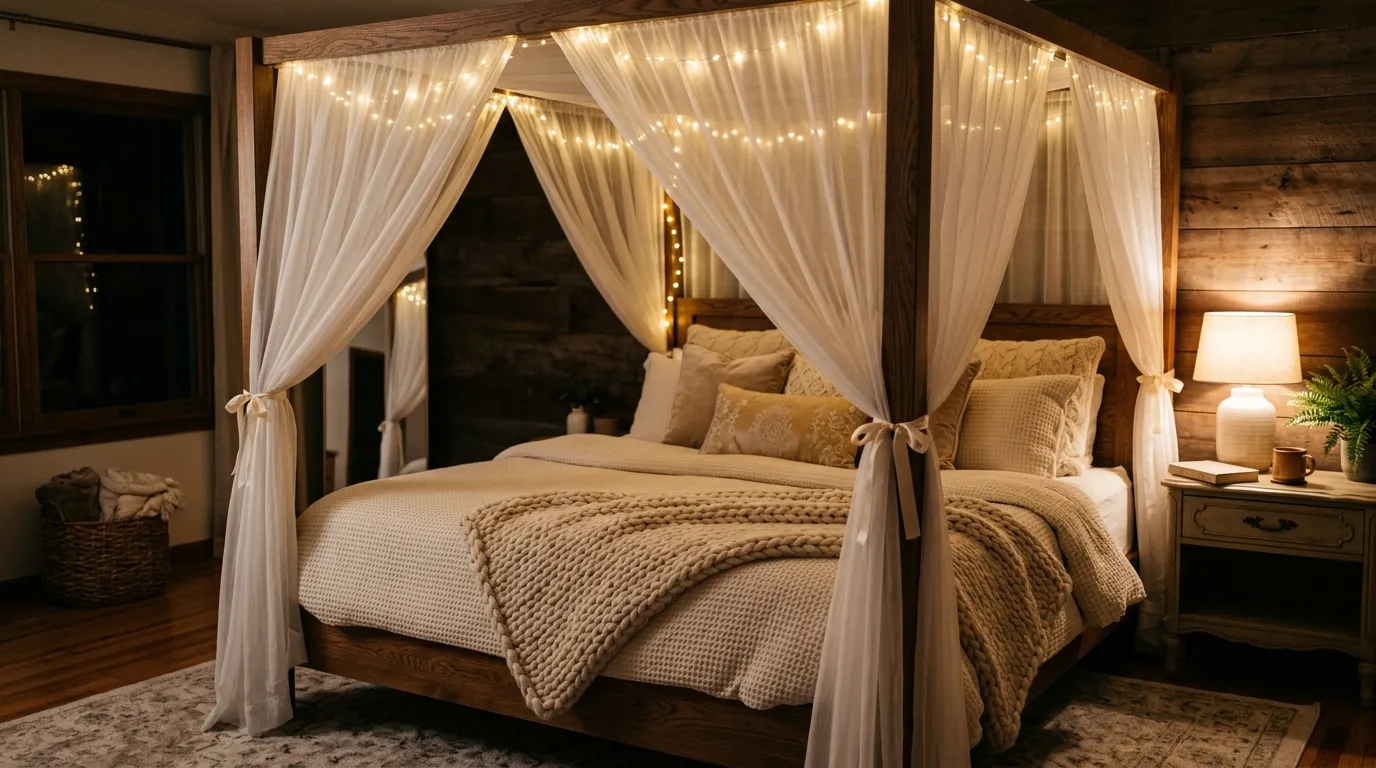
Drape Twinkling Lights Above
A canopy bed instantly transforms into a glowing retreat when you weave string lights through the overhead rails. It casts a warm, ambient glow that makes the entire sleeping space feel magical without relying on harsh overhead lighting.
Pair this luminous setup with soft, flowing fabrics to diffuse the light and create a dreamy, cloud-like atmosphere. The delicate sparkle catches the textile folds just right, adding depth and cozy charm to the room.
Keep the surrounding decor minimal so the glowing canopy remains the undeniable star of the room. Let the light do the heavy lifting for your evening ambiance.
Leave the Canopy Frame Completely Open for a Cleaner Look
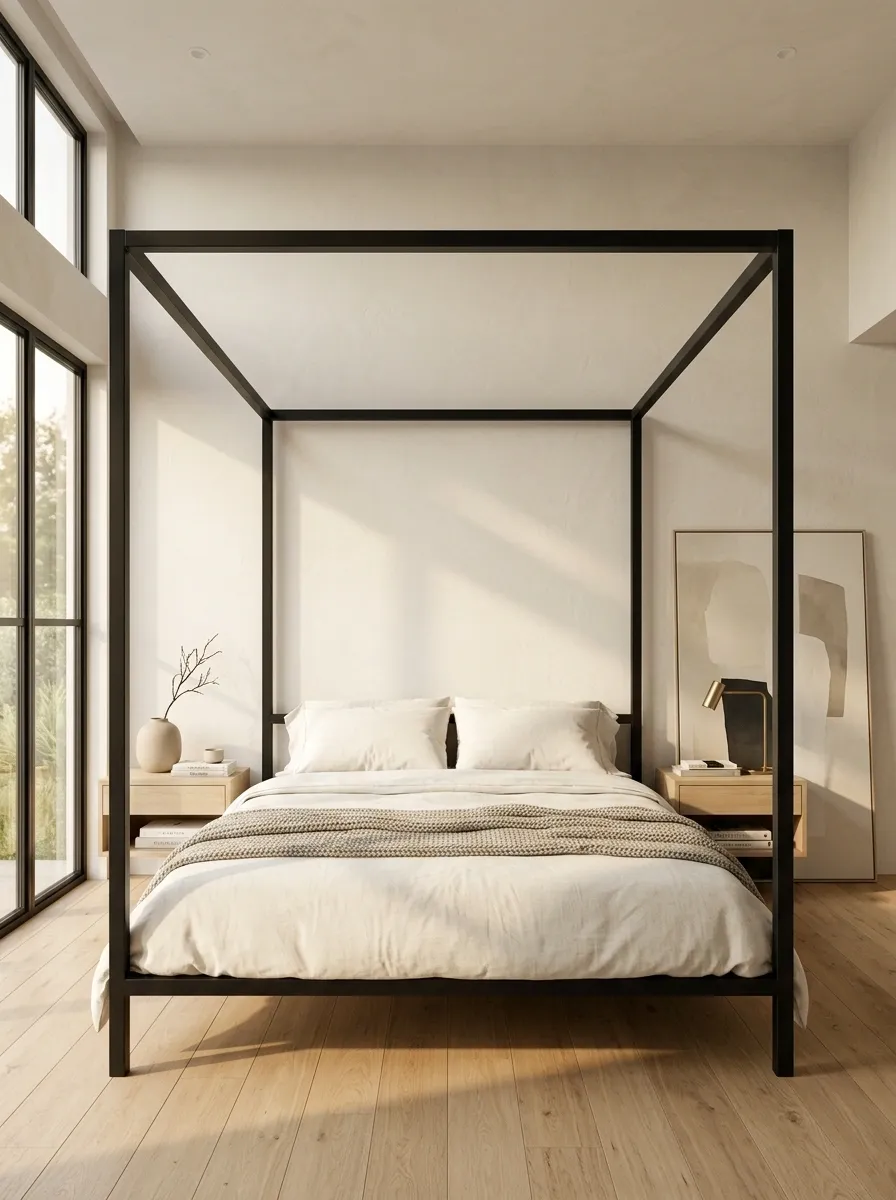
You don’t need curtains to make a canopy bed feel finished. An open frame often looks sharper, especially in a bedroom with simple bedding and limited floor space.
This works particularly well when the frame itself has a strong shape. Let those vertical posts and top rails create the architecture instead of hiding them behind fabric.
Keep the rest simple:
- Low-profile bedding
- One restrained throw
- Slim nightstands
- Minimal window treatments
The empty space is doing part of the decorating here. It keeps the bed substantial without making the room feel enclosed.
Layer Sheer Curtains and Lights
Combining airy white panels with interwoven string lights creates a breathtaking, romantic cocoon. The fabric softens the bulbs, turning individual points of light into a continuous, ethereal glow that wraps around the bed.
Let the sheer material drape generously from all sides to maximize the sense of privacy and luxury. This technique adds instant texture and movement to a neutral bedroom design scheme.
Keep your bedding crisp and pale to bounce the warm light around the room. The result is a luminous sanctuary that feels both grand and deeply inviting.
Hang Sheer Panels Only at the Corners
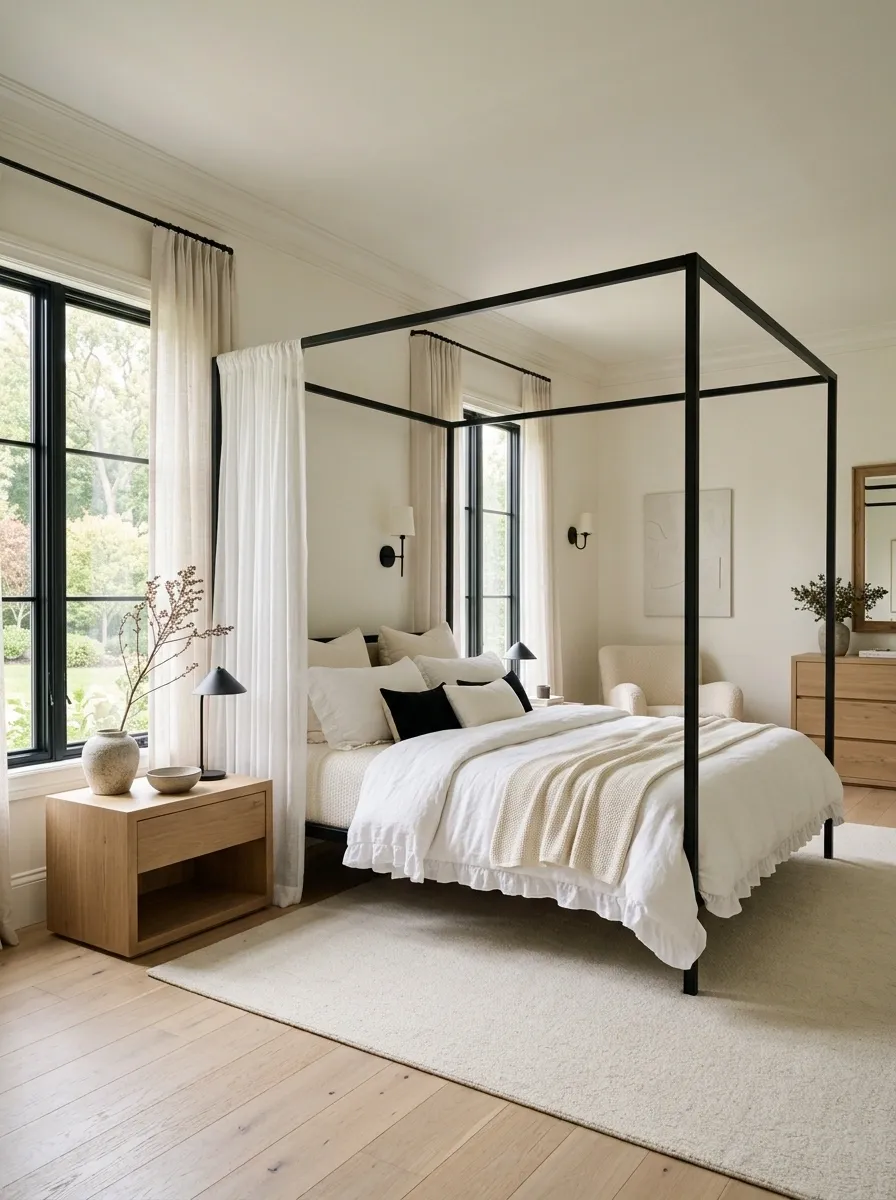
The bed feels softer, but the frame still gets to show off.
Instead of covering every side, hang sheer panels from selected corners and leave most of the canopy open. This gives you movement and softness without turning the bed into a fabric box.
It’s especially effective when the room already has curtains or upholstered furniture. Too many full-length textiles can make the whole space feel mushy.
Best placement: let the fabric fall straight from the top rail and stop it from bunching heavily around the mattress.
The goal is a gentle frame around the bed, not a curtain wall.
Embrace Whimsical Floral Canopies
Transform a dark canopy frame into an enchanted forest by winding faux ivy and floral garlands around the posts. This approach brings organic beauty indoors and softens the striking architecture of a dramatic black bed.
Layer in patterned botanical bedding and butterfly accents to complete the magical garden aesthetic. The rich jewel tones and lush greenery make the sleeping nook feel like a secret sanctuary.
Let the rich textures and moody colors take center stage while keeping the rest of the styling intentional. It creates a stunning, immersive escape right in your own bedroom.
Use a Dark Canopy Frame Against Pale Bedding
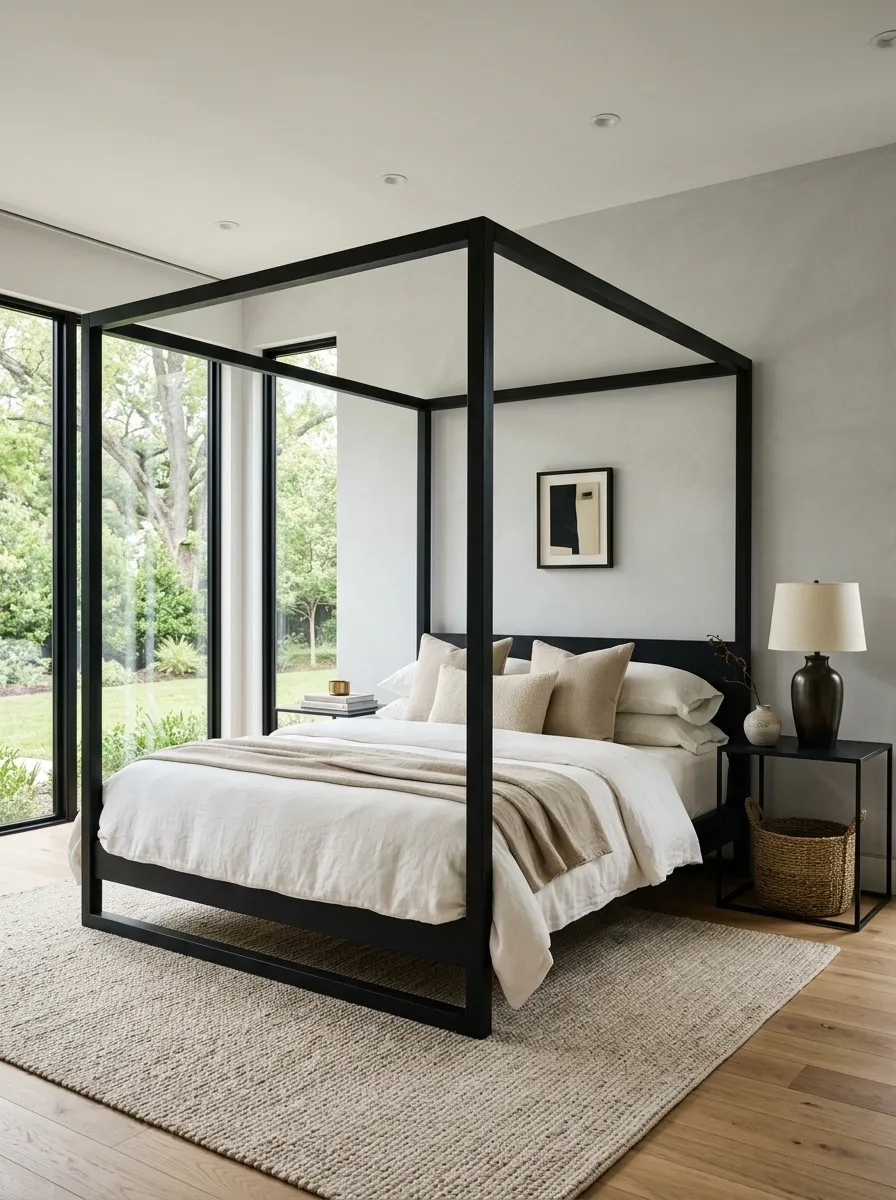
The contrast is what makes this combination work.
A dark wood or black frame looks far less heavy when the bedding underneath is light and visually simple. White, cream, soft beige, and pale gray all give the frame enough contrast to stand out without making the room feel gloomy.
Don’t muddy the effect with too many dark accessories. Let the frame hold the deepest tone and repeat that color only in small details such as a lamp base or hardware.
The visual formula is simple: dark structure, light bedding, quiet background.
Go Moody With Black Sheers
Swathing your canopy frame in dark, sheer fabrics introduces an immediate sense of drama and sophistication. The translucent black material adds mystery while keeping the space feeling open and airy rather than heavy.
Accentuate the moody atmosphere with flickering candles placed strategically around the base of the bed. The warm flames bouncing against the dark netting create an incredible, intimate nighttime vibe.
Pair this dramatic styling with minimalist furniture to keep the aesthetic clean and intentional. It turns an ordinary bedroom into a luxurious, boutique-hotel retreat.
Match the Canopy Wood to the Room’s Other Wood Tones
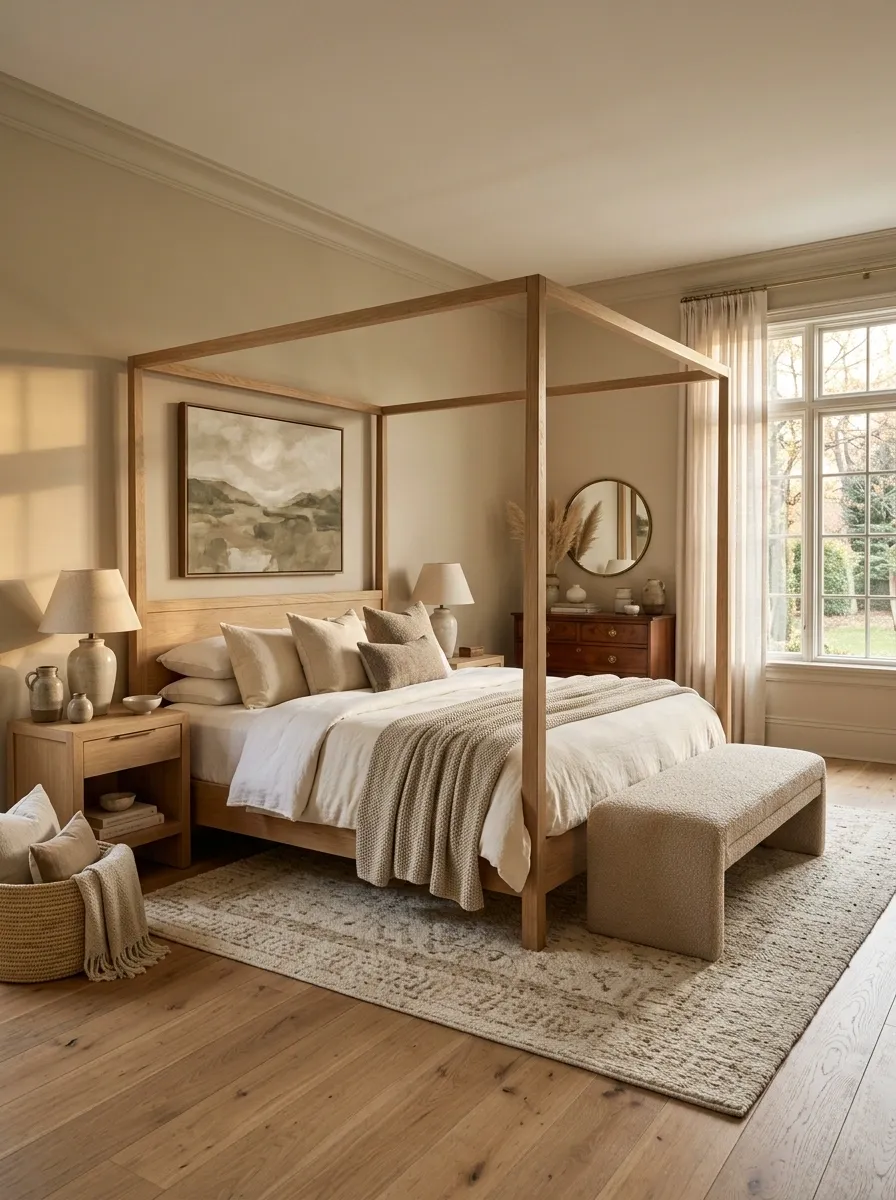
Matching every wooden piece exactly isn’t the goal. Repeating related wood tones is.
A canopy bed can look oddly disconnected when its finish has nothing to do with the dresser, nightstands, bench, or flooring nearby. You don’t need a furniture showroom set. You just need one clear visual relationship.
Use this rule when choosing finishes:
Look around the room before buying the frame. The floor and existing furniture have already chosen part of the palette for you.
Push the Bedding Down Instead of Piling It High
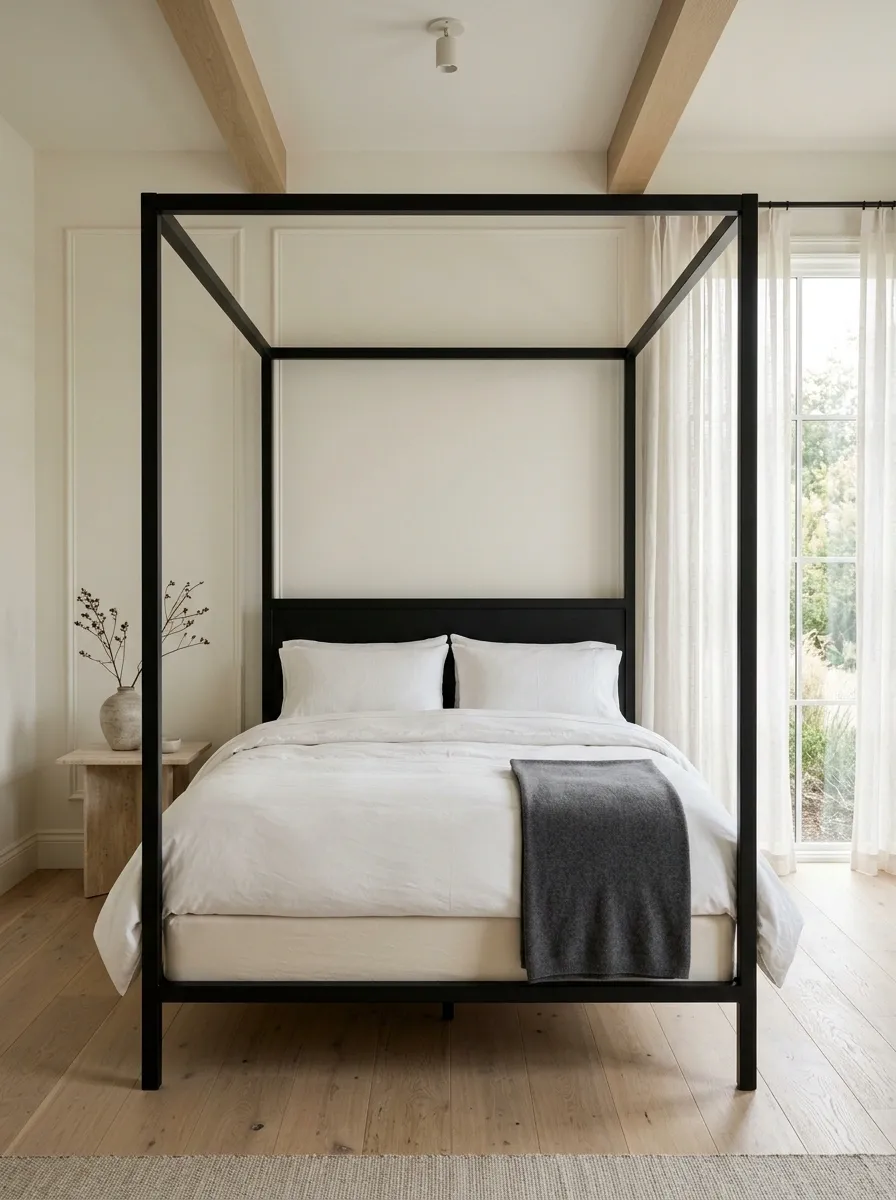
A tall pile of pillows and bulky layers can swallow the clean lines that make a canopy bed special.
Keep the bedding visually lower. Use a fitted base, one duvet or comforter, a restrained folded layer, and only the pillows you actually use.
That gives the frame room to read from top to bottom.
Build the bed in this order:
- Keep the base smooth and fitted.
- Use one dominant bedding layer.
- Fold one lighter textile at the foot.
- Add only a few pillows with clear purpose.
The result feels calmer, and you can actually see the architecture of the canopy.
Use One Statement Textile Instead of Four Decorative Layers
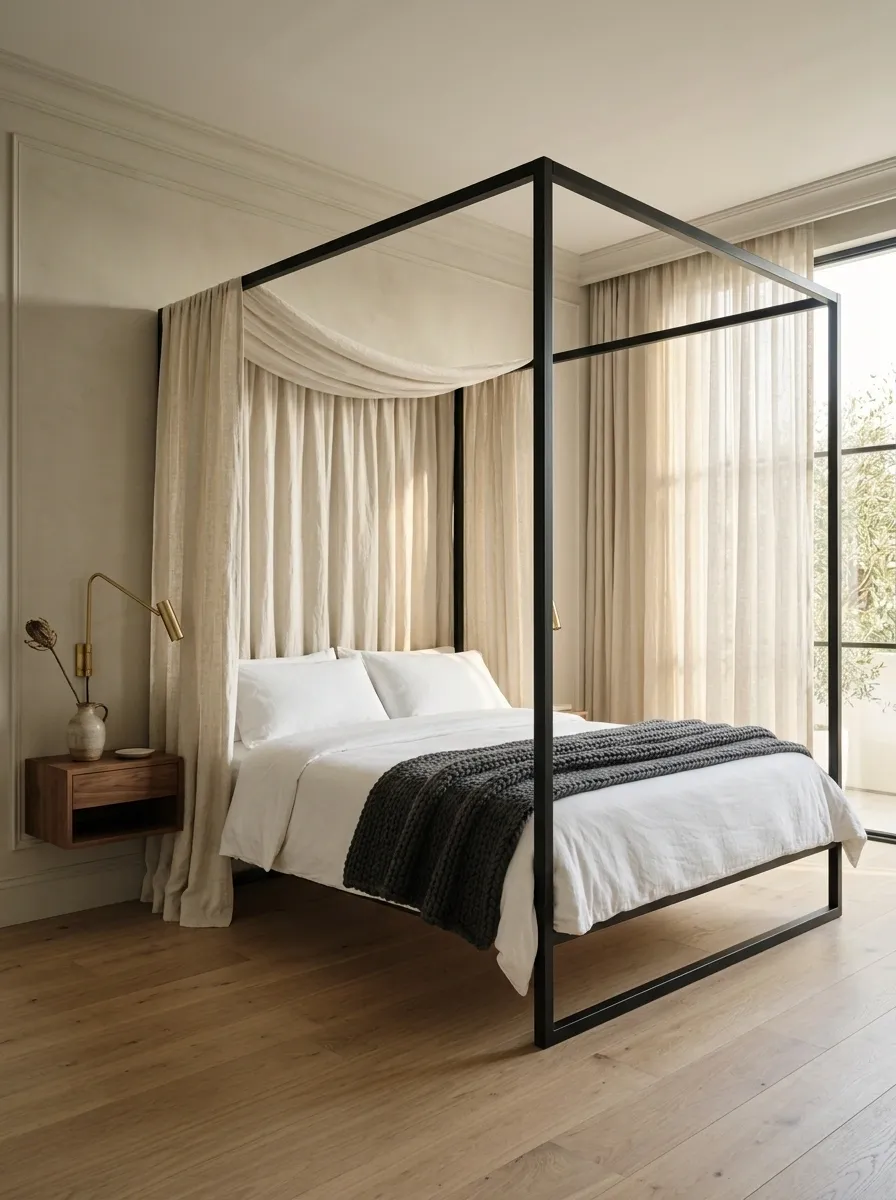
Too many textiles make a canopy bed look busy fast. The frame already gives you a strong vertical shape, so piling on quilts, throws, runners, and cushions just hides the good parts.
Pick one textile with a clear job. A chunky throw can add warmth. A patterned coverlet can bring contrast. A linen curtain can soften the frame. You don’t need all three.
Edit the bed before adding anything else:
- Keep one main bedding texture.
- Add one secondary textile.
- Remove anything that only fills empty space.
The room will feel more intentional because every layer has a reason to be there.
Frame the Bed With Matching Nightstands
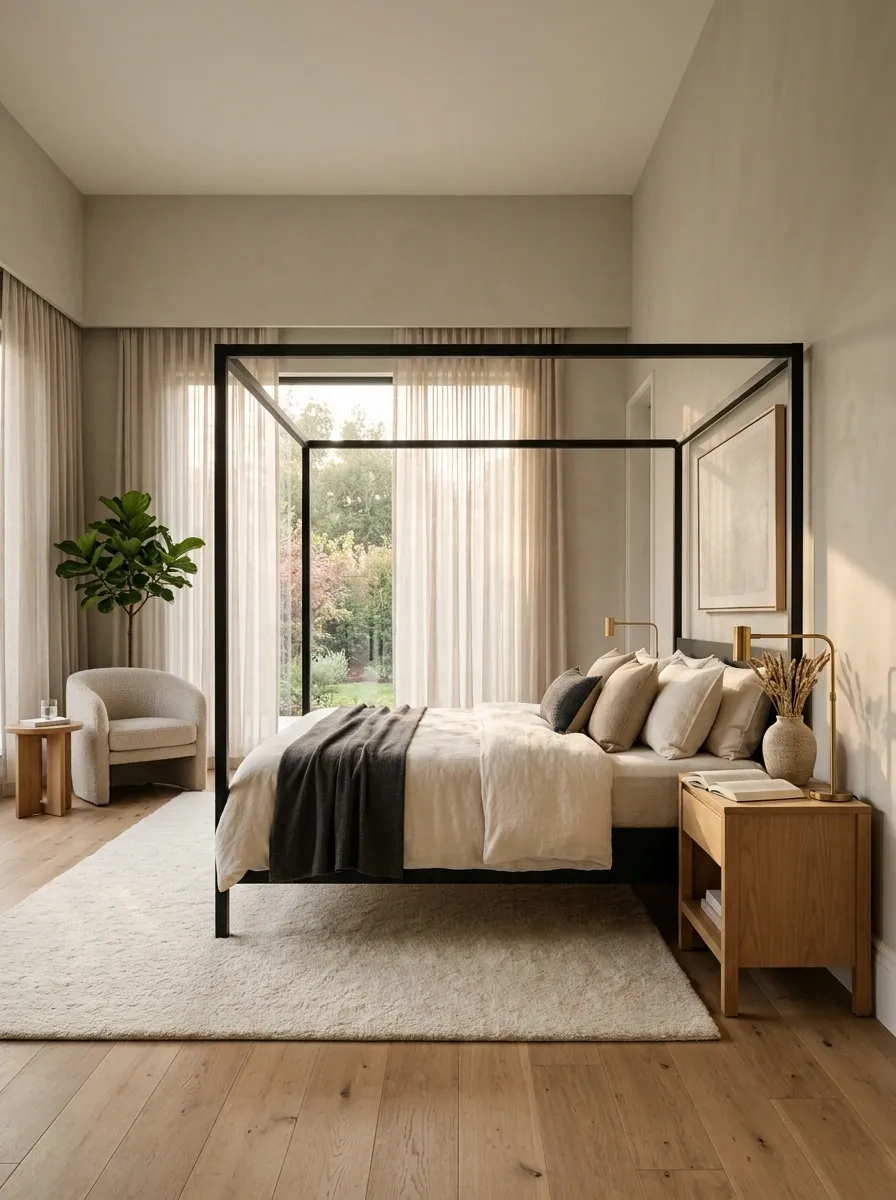
A canopy bed looks strongest when the furniture beside it feels measured.
Uneven or undersized nightstands can make a large canopy frame feel strangely top-heavy. Matching nightstands solve that problem immediately because they create a visual base for the bed.
They don’t need to be fancy. Two simple tables with enough surface for a lamp, book, and everyday essentials are enough.
Check the alignment before buying anything: the nightstands should relate to the mattress and frame height without making the bed look squeezed between them.
Let the Wall Behind the Bed Do Some of the Decorating
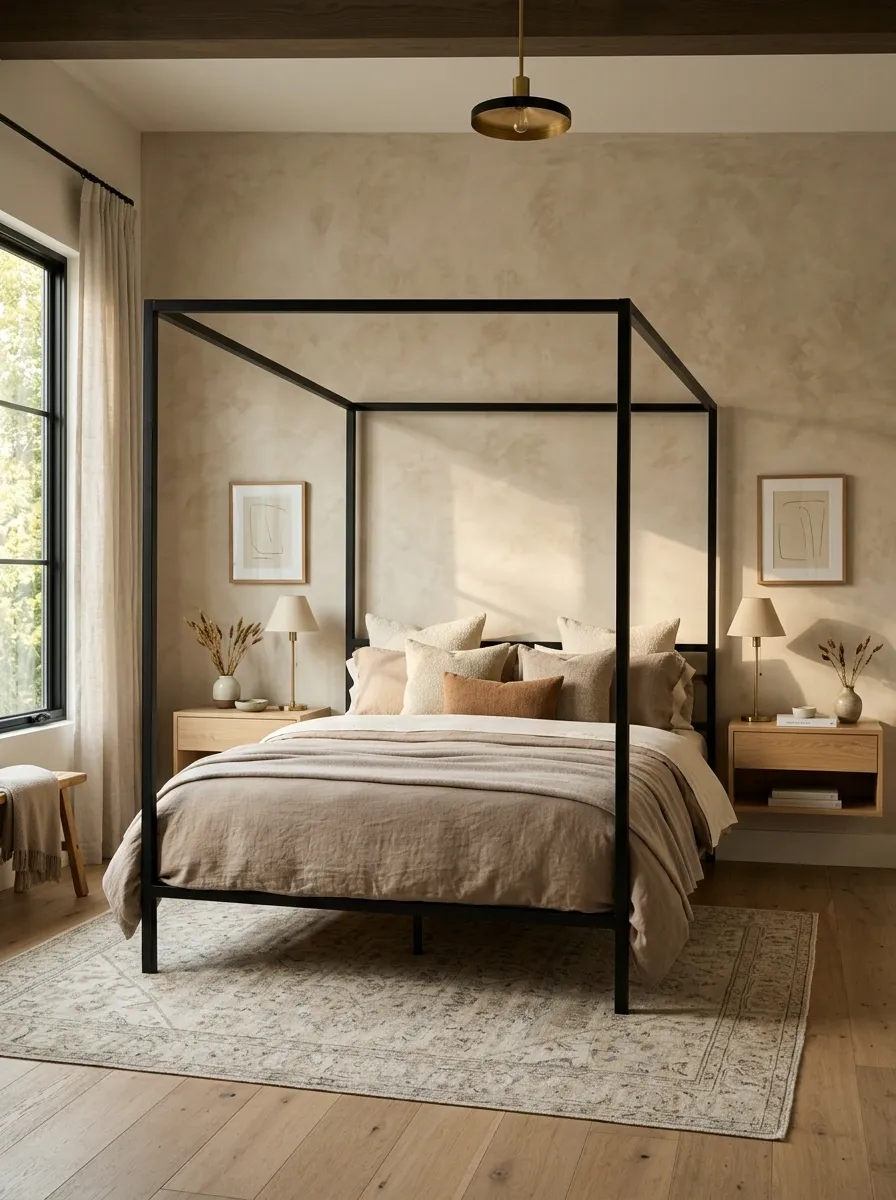
Not every bedroom needs a dramatic canopy frame covered in extras.
Sometimes the smartest move is leaving the frame fairly simple and giving the wall behind it a little more character. A warm paint color, subtle paneling, or restrained artwork can make the bed feel finished without adding more objects to the floor.
The key is keeping the wall treatment flatter than the frame. You want it to support the bed, not compete with it.
Good background choices: limewash-style texture, quiet paneling, a single oversized artwork, or a warm solid wall color.
Choose a Four-Poster Shape for a More Architectural Feel
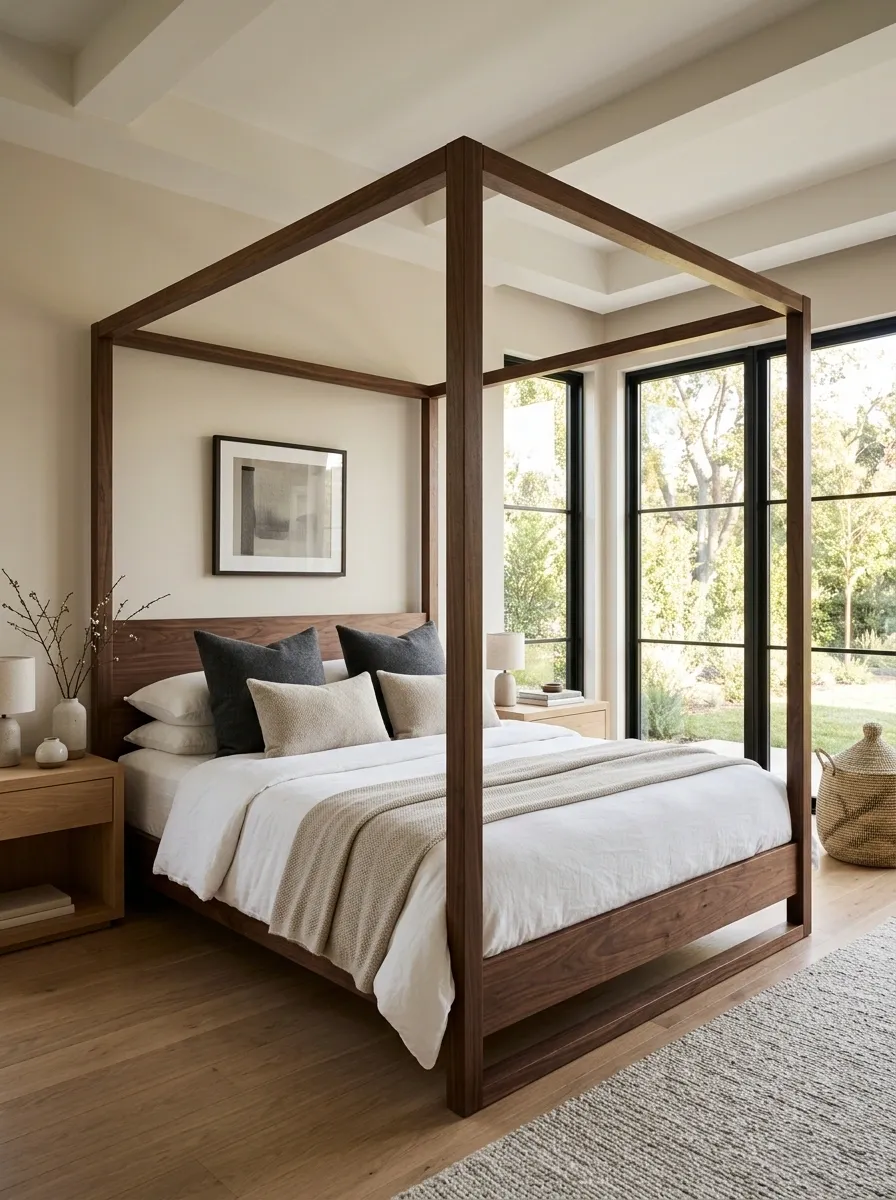
A canopy bed doesn’t always need to read as soft or romantic.
A four-poster frame with straight lines creates a more architectural look, especially when the posts are squared off and the top rails are clearly visible. It works well in rooms that already lean modern, traditional, or quietly masculine.
The biggest difference is visual structure.
Compare the two approaches:
Choose the open version when you want the bed to feel like part of the room’s architecture rather than a fabric feature.
Use Ceiling-Height Curtains Only in a Tall Room
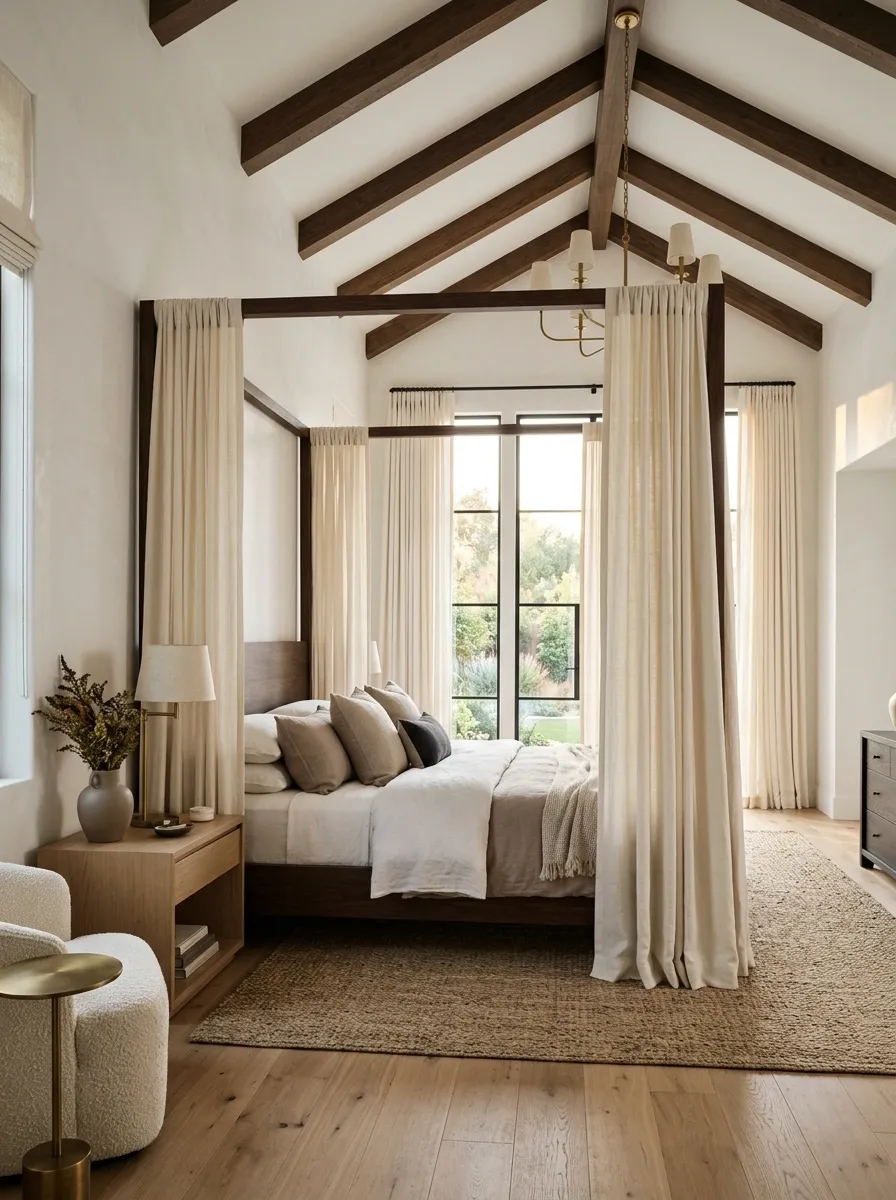
Floor-to-ceiling curtains can make a canopy bed look dramatic, but they need room to breathe.
In a lower bedroom, long fabric hanging from the frame can make the entire space feel compressed. In a taller room, the same treatment creates a stronger sense of height and makes the bed feel grand without needing more decoration.
Watch what happens around the ceiling line. If fabric, canopy rails, and window curtains all compete at the same height, the room gets visually crowded.
Quick test: stand at the doorway. If the fabric is the first thing you notice instead of the bed itself, you’ve gone too far.
Keep the Bedding Simple When the Frame Is Ornate
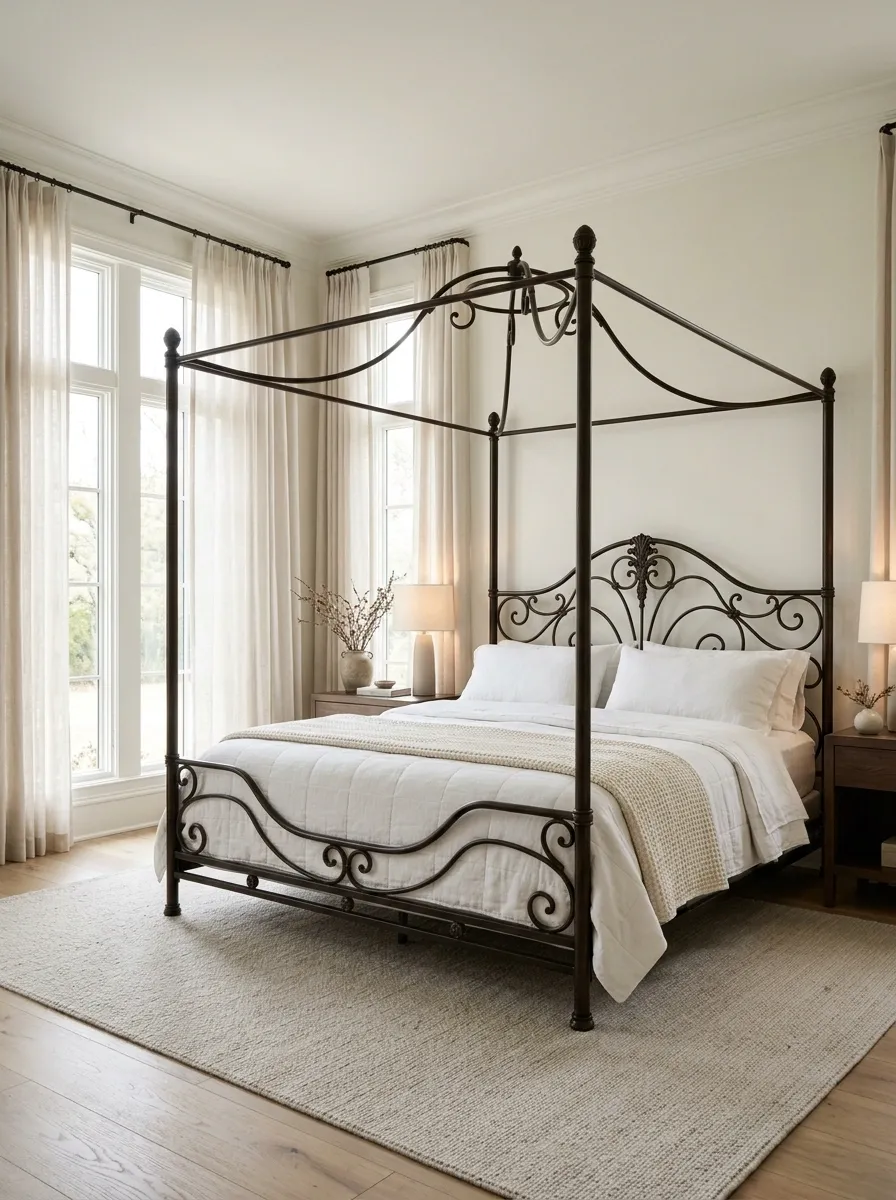
An ornate canopy frame already brings pattern, curves, and detail into the room. Adding equally busy bedding creates a competition you don’t need.
Let the frame do the talking.
Choose bedding with a quiet surface, then bring in texture through something subtle such as washed linen, a soft quilt, or a single woven throw. The goal isn’t to make the bed plain. It’s to keep the visual weight in one place.
Use this balance:
- Detailed frame → simple bedding
- Simple frame → more freedom with pattern
- Dark frame → lighter bedding
- Light frame → richer texture can work
When the frame is the star, everything underneath should support it.
Turn a Plain Frame Into a Focal Point With One Bold Material
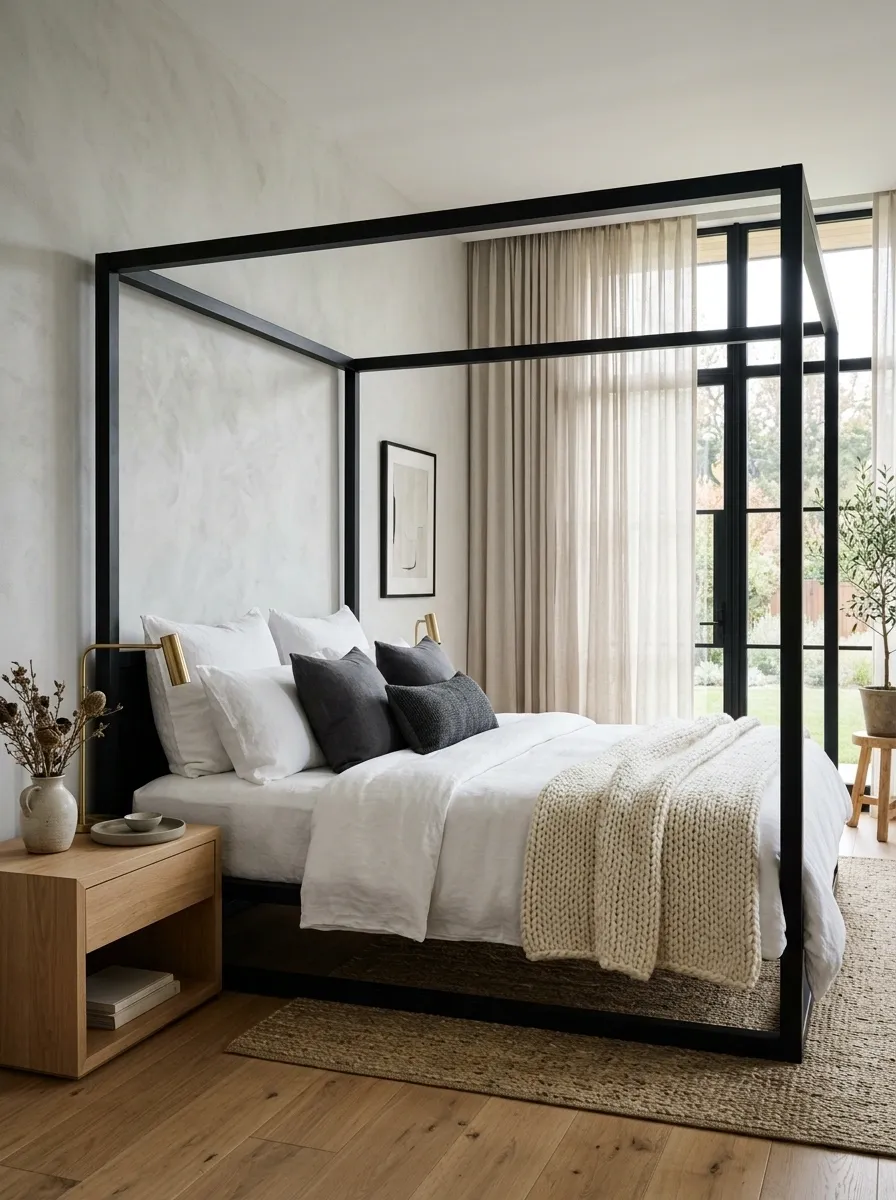
A simple canopy frame doesn’t need elaborate carving to stand out.
Give it one material with enough presence to carry the room. A warm natural wood finish can make the bed feel grounded. Black metal creates sharper contrast. A deep stained finish gives a plain silhouette more visual authority.
Don’t mix several statement materials on the same frame. One strong material looks deliberate. Three usually look undecided.
Choose by the feeling you want:
| Material direction | What it adds | Best pairing |
|---|---|---|
| Warm wood | Softness and depth | Cream, beige, natural textiles |
| Black metal | Crisp contrast | White bedding, clean lines |
| Deep wood | Richness | Light walls and restrained accessories |
The frame should be memorable because of its material, not because you’ve covered it with decorations.
Use Warm Wood to Make the Bed Feel Less Formal
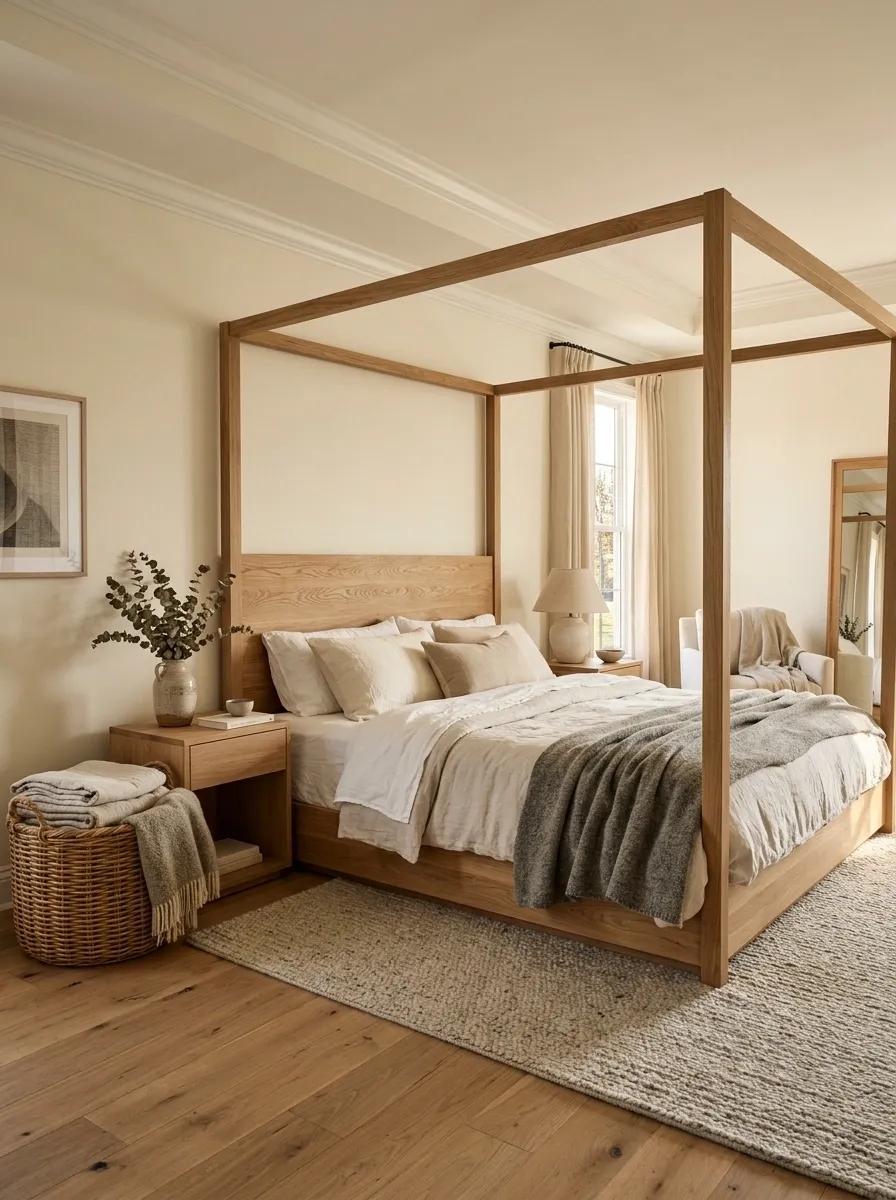
Some canopy beds can feel a little too polished, especially when the frame is perfectly symmetrical and the rest of the room is equally formal.
Warm wood fixes that feeling.
Look for natural grain, slightly varied tones, or a finish that doesn’t look overly glossy. Pair it with washed cotton, linen, woven baskets, or a simple wool throw. These materials make the strong geometry feel more relaxed without taking away its structure.
The trick is contrast. A structured bed becomes much more inviting when the materials around it feel tactile and lived in.
Good pairings: warm wood + linen, warm wood + woven texture, warm wood + soft neutral bedding.
Skip the Matching Bedroom Set Around the Canopy Bed
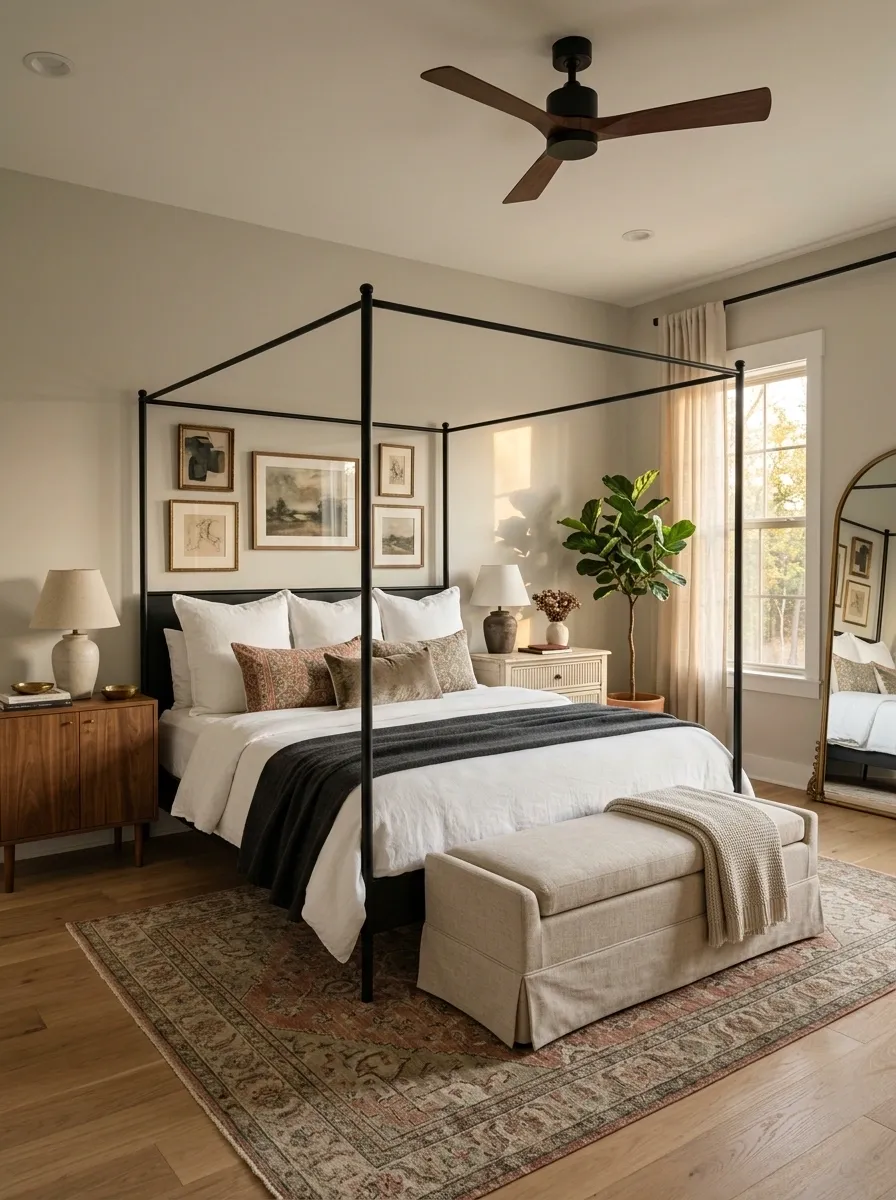
Matching furniture sounds safe, but a canopy bed already has enough presence to carry the room.
When the frame, nightstands, dresser, bench, and mirror all come from the same collection, the bedroom can start looking staged instead of personal. The better move is to let the bed anchor the room and bring in pieces that relate without matching exactly.
Replace the showroom approach:
- Matching nightstands → similar scale with a different finish
- Matching dresser → complementary wood tone
- Matching bench → simple upholstered piece
- Matching mirror → shape that echoes the frame
You want the pieces to get along, not dress alike.
Create a Soft Canopy Effect Without Closing In the Bed
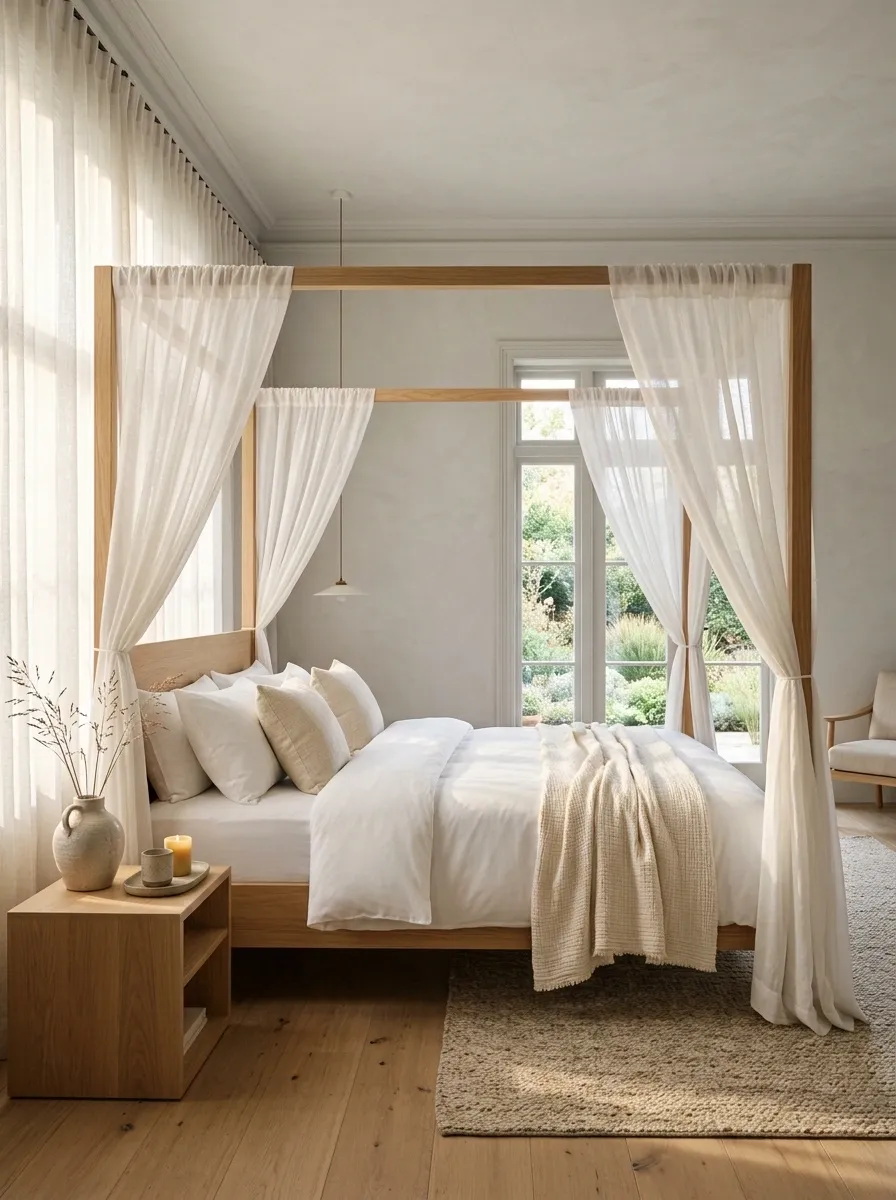
You can get the softness of a draped canopy without turning the whole bed into a private tent.
Use fabric selectively. Hang panels from the top rails, pull them slightly back from the mattress, and leave the head and foot areas visually open. This keeps the bed airy while still giving you that layered textile effect.
Sheer or lightweight fabric works best when you want the frame to remain visible. Heavier fabric creates a stronger statement, so use less of it.
Think in corners, not walls. The fabric should frame the bed rather than form a solid enclosure around it.
Use White Bedding to Let the Frame Carry the Look
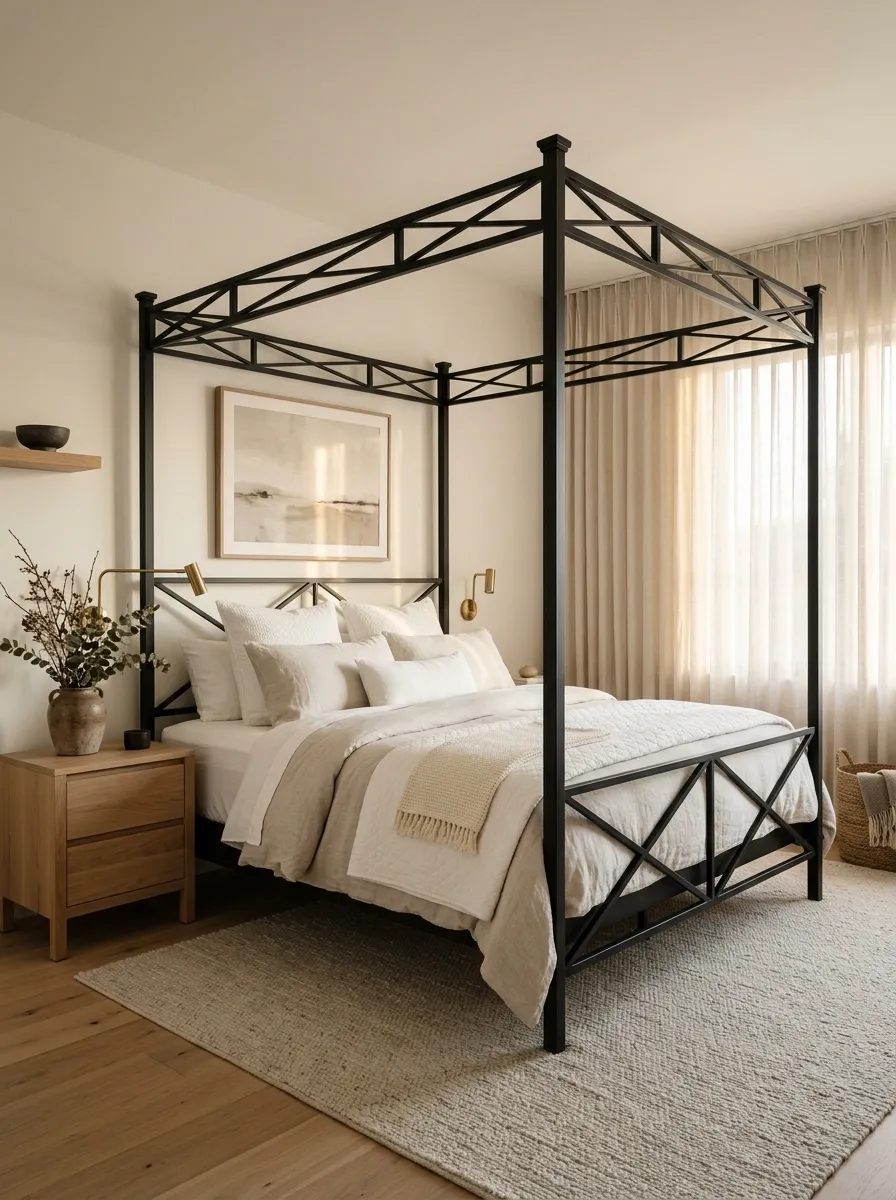
White bedding gives a canopy bed room to breathe.
It works especially well when the frame has a strong finish, interesting posts, or a detailed top rail. Instead of adding another pattern or dark color to the mattress, let the bedding create a clean base that makes the frame easier to notice.
You don’t need a completely plain bed, either. Texture matters more than pattern here. A quilted cover, rumpled linen, or a small woven throw keeps the white from looking flat.
The formula is simple: strong frame, quiet bedding, one small layer of texture.
Add a Bench Only When the Bed Has Enough Floor Space
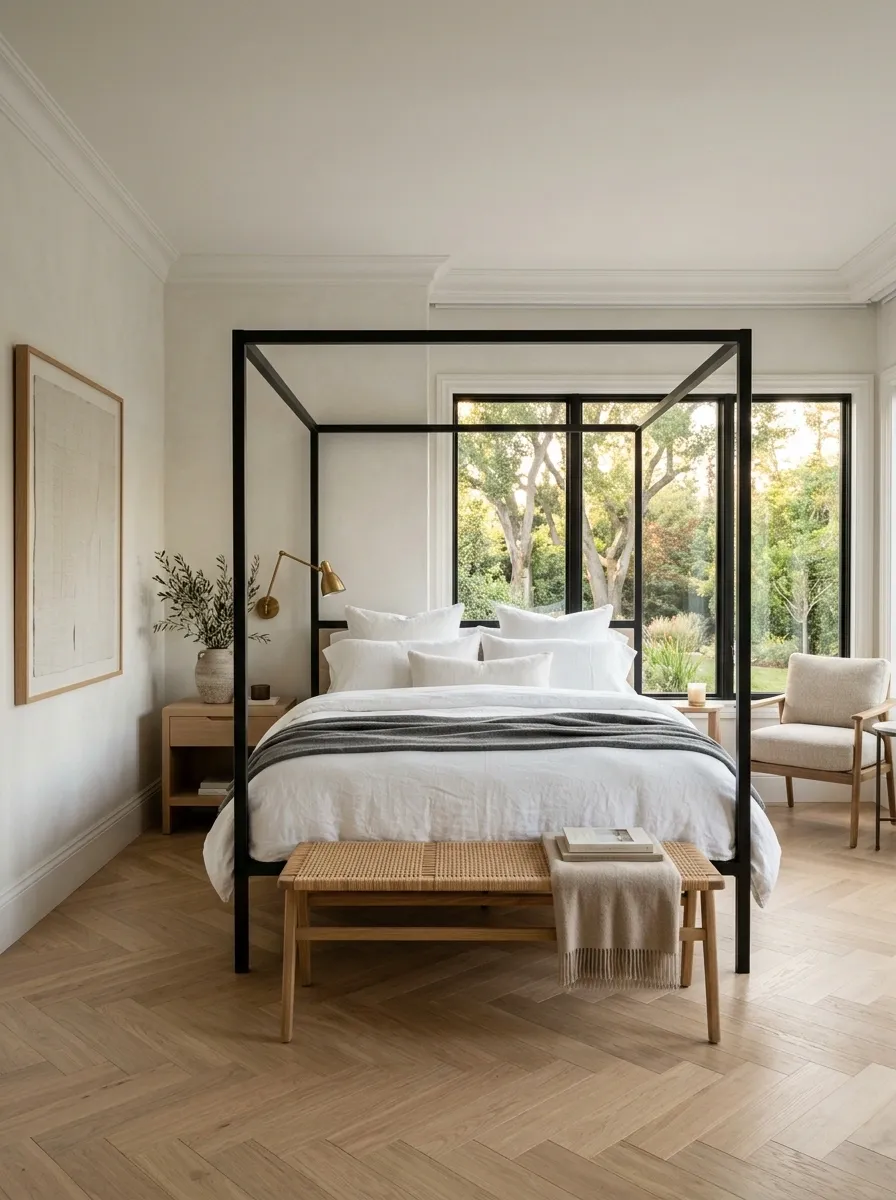
A bench at the foot of a canopy bed looks useful, but squeezing one into a narrow room creates a problem instead of solving one.
The walkway matters more than the bench.
Before adding it, stand at the foot of the bed and look at the path you actually use every morning. Opening drawers, changing sheets, and walking around the room shouldn’t require sidestepping around furniture.
A low bench works best when it adds function without visually extending the bed too far.
Good uses include: a place to fold blankets, sit while putting on shoes, or keep one everyday textile.
Choose Black Metal for a Sharper, More Modern Bedroom
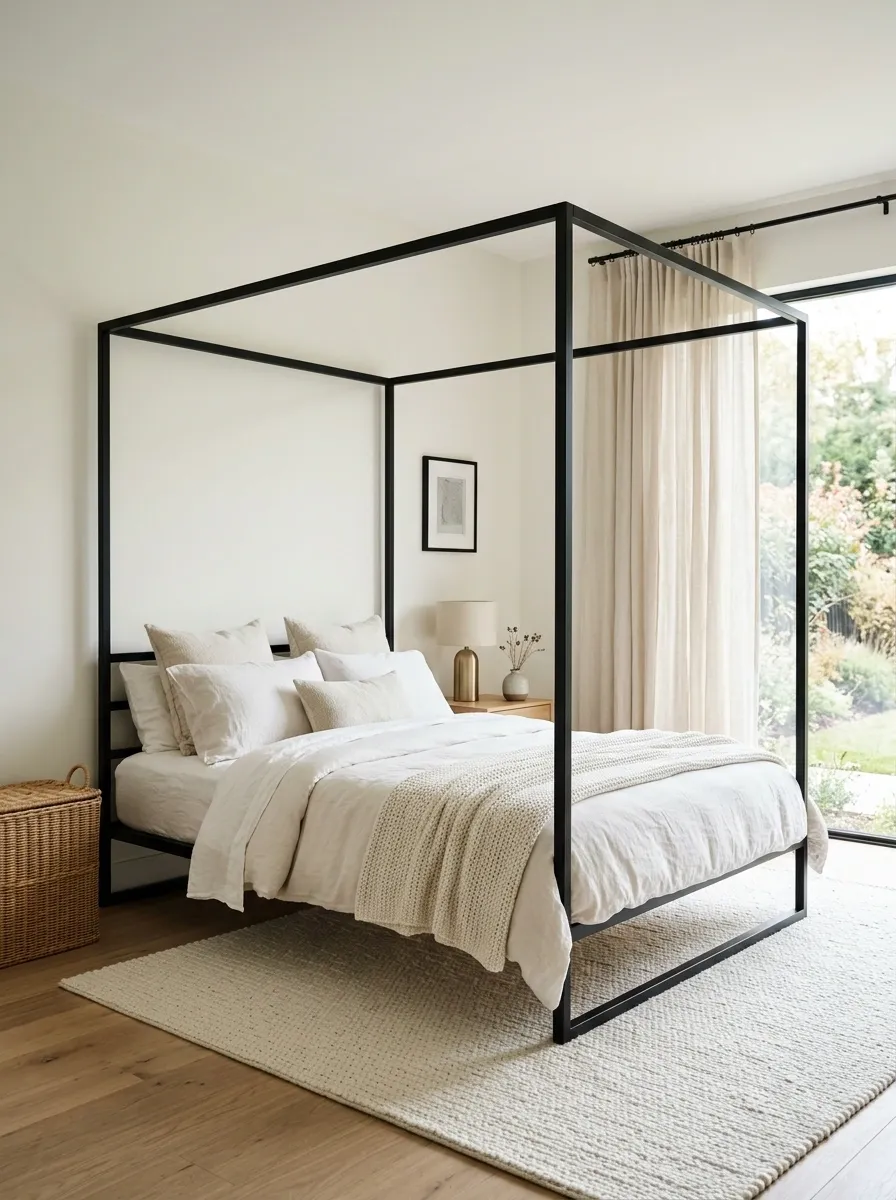
Black metal changes the personality of a canopy bed immediately.
The thin lines create contrast without the visual bulk of thick wood posts, which makes this finish especially useful when you want the bedroom to feel crisp rather than traditional.
Keep the rest of the room from becoming a collection of black accents. One or two repeated details are enough. A lamp base, curtain hardware, or picture frame can quietly connect the finish to the rest of the space.
Think contrast, not matching. Light walls and pale bedding make the black frame stand out without needing extra decoration.
Keep the Ceiling Above the Frame Visually Quiet
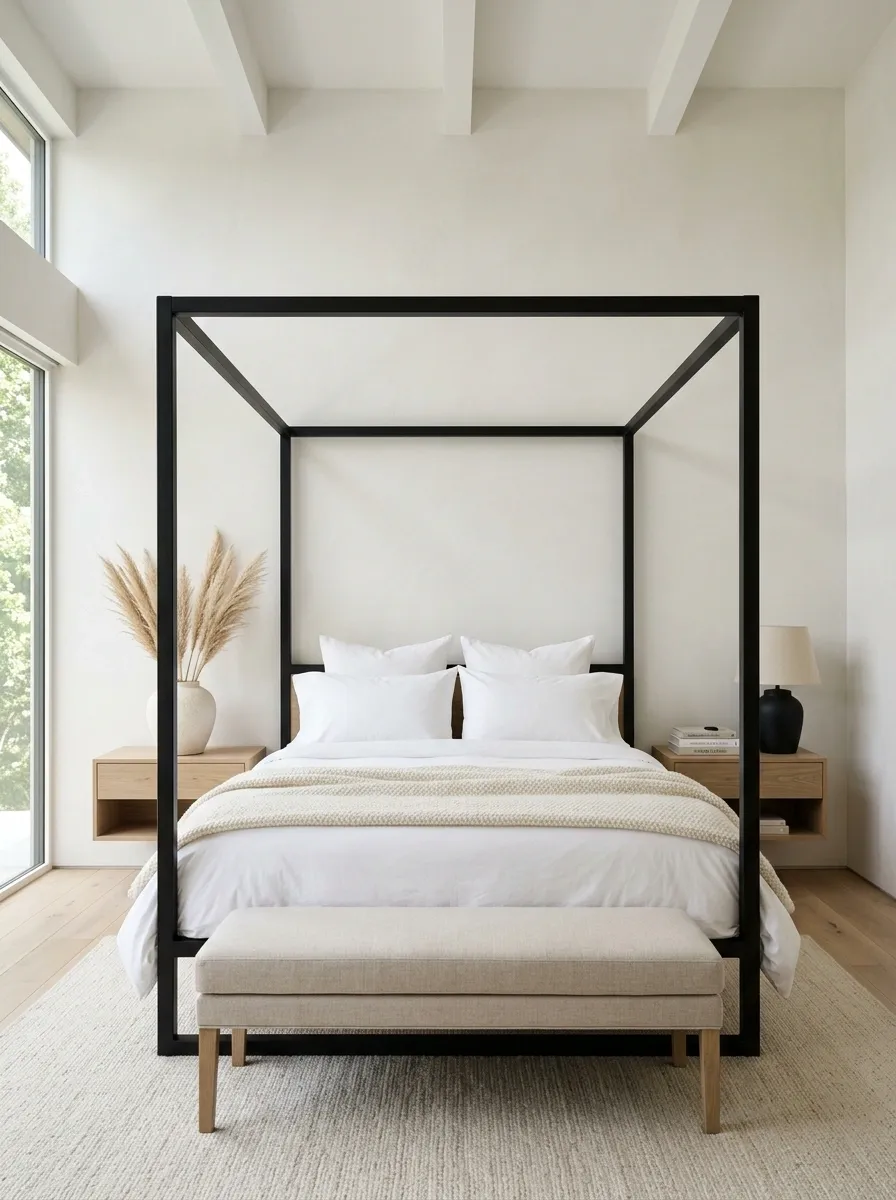
A canopy bed already creates a strong vertical line, so the area above it doesn’t need more competition.
Avoid placing busy artwork, hanging baskets, oversized pendants, and decorative ceiling details directly above the frame. The eye should travel up the posts and stop naturally at the top rail.
This matters even more in rooms where the canopy nearly reaches the ceiling.
Give the upper zone some breathing room. A plain ceiling, restrained lighting, or one simple fixture keeps the vertical shape powerful without making the room feel crowded.
Use Pattern on the Bed Only When the Frame Is Simple
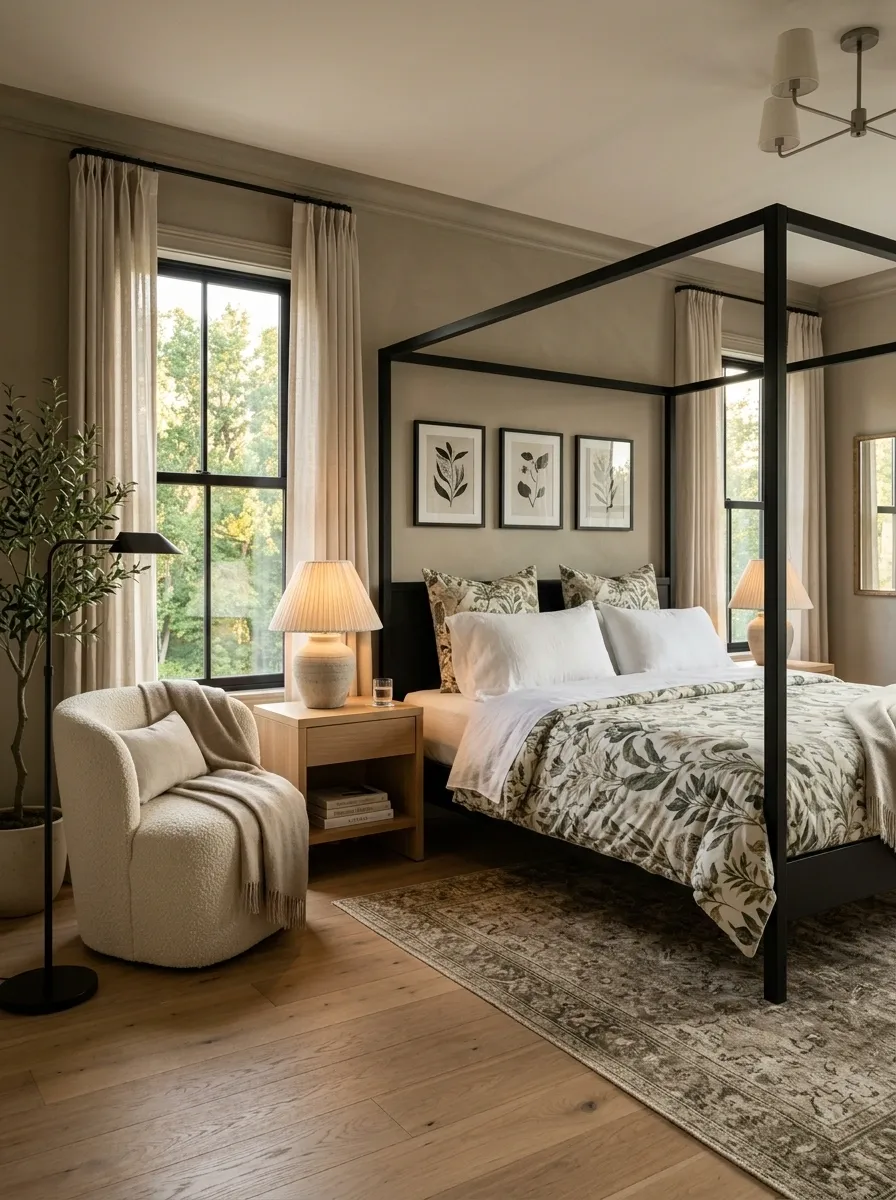
A patterned duvet can look excellent on a canopy bed, but it needs a quieter frame to work.
If the frame has carved details, thick posts, or decorative rails, a large pattern adds another strong shape to the room. The result gets busy quickly.
On a slim, simple canopy frame, however, pattern has more room to breathe. Stripes, checks, botanical prints, or geometric bedding can become the main visual feature without fighting the architecture.
Use the pattern as the lead only when the frame is willing to play support.
Make a Small Bedroom Work With a Slim Canopy Frame
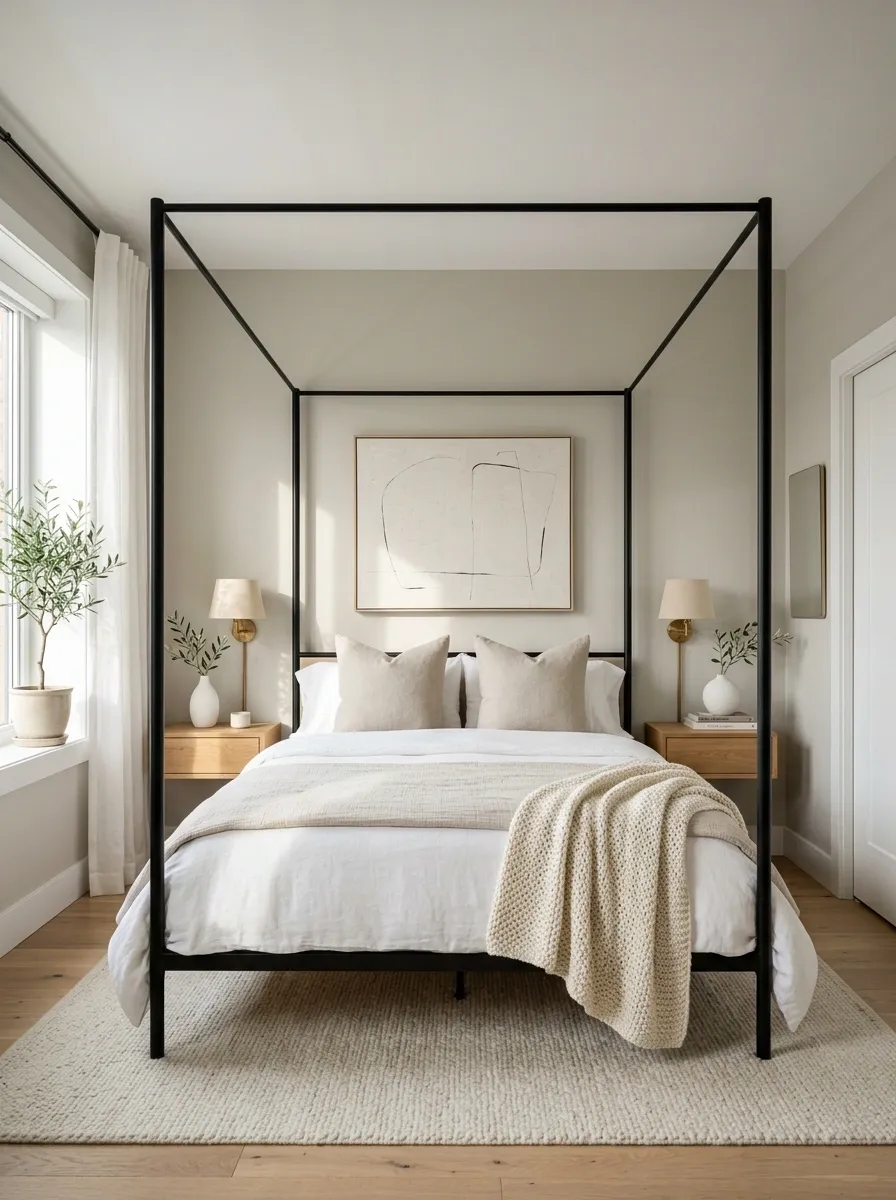
A small bedroom doesn’t rule out a canopy bed. It rules out a bulky one.
Choose a frame with narrow posts, simple rails, and enough open space beneath the top structure to keep the room visually airy. Avoid thick upholstered posts or oversized decorative corners that steal attention and floor space.
The bed should feel tall, not wide.
For a tighter room, prioritize:
- Slim vertical posts
- Open sides
- Low-profile bedding
- Small-scale nightstands
- Minimal fabric
You still get the height and character of a canopy bed without making every walkway feel squeezed.
Repeat One Canopy Color Somewhere Else in the Room
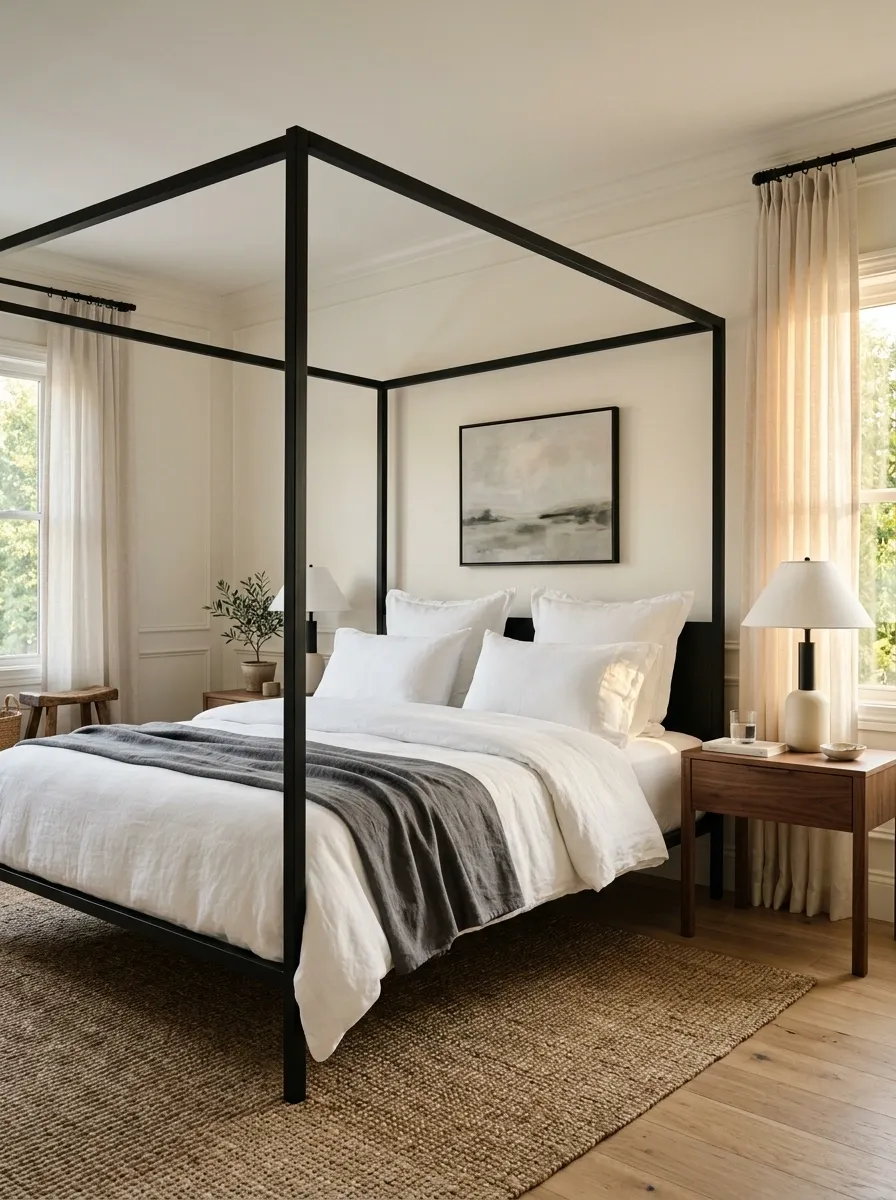
The easiest way to make a canopy bed feel connected to the rest of the bedroom is to repeat one of its colors elsewhere.
Don’t match everything. Just echo the frame or fabric once or twice.
A black frame can connect to a lamp base. A warm wood canopy can relate to a small stool or picture frame. A muted fabric panel can reappear in a cushion or artwork.
That repetition gives the room a visual thread without making it look coordinated to death.
Think echo, not duplication.
Choose Low-Profile Bedding for a More Modern Canopy Bed
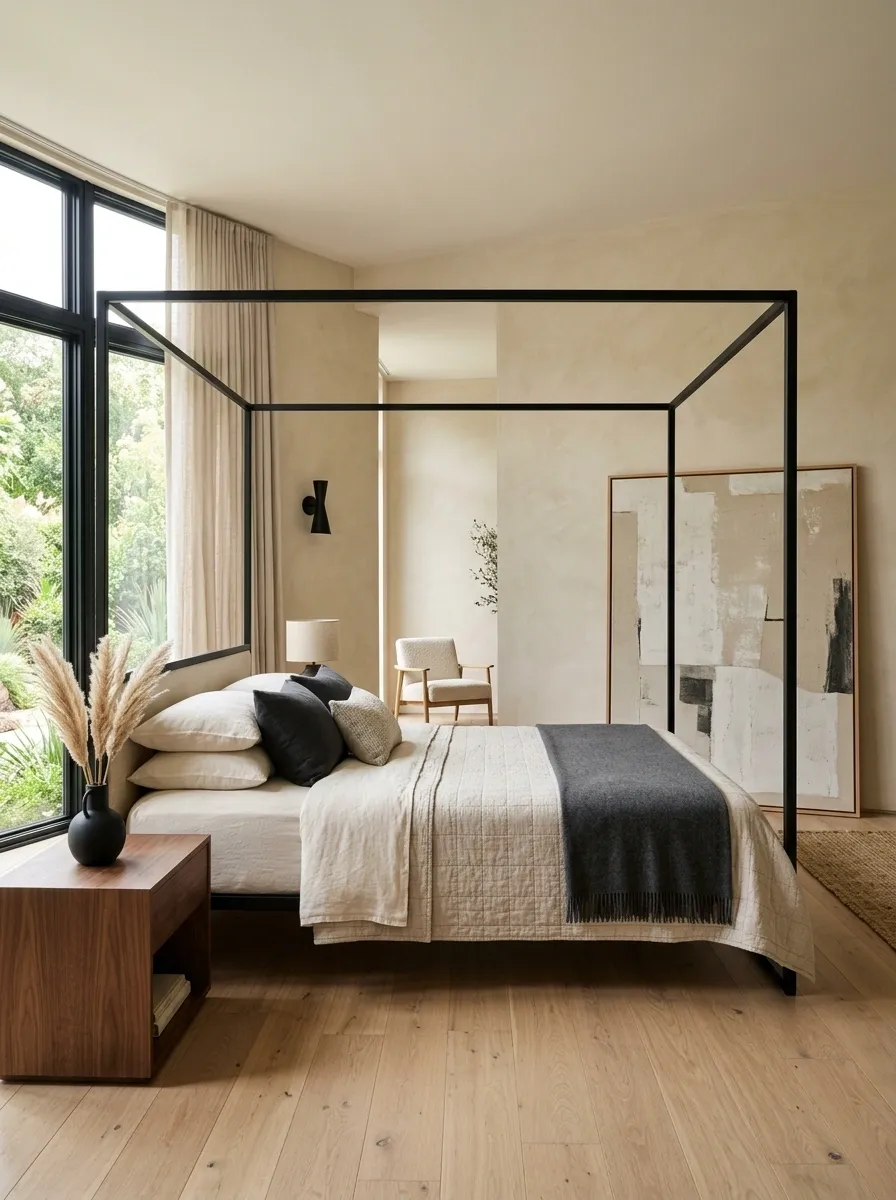
A tall stack of pillows and fluffy layers can make a modern canopy frame feel much more traditional than you intended.
Low-profile bedding keeps the geometry visible. You see the mattress line, the posts, and the clean relationship between the bed and surrounding furniture.
That doesn’t mean the bed has to look flat. Use texture instead of bulk. A lightly quilted cover, soft linen sheets, or one folded throw adds interest without building the mattress upward.
Modern canopy formula: clean frame + low bedding + one tactile layer.
Let the Canopy Frame Be the One Thing You Notice First
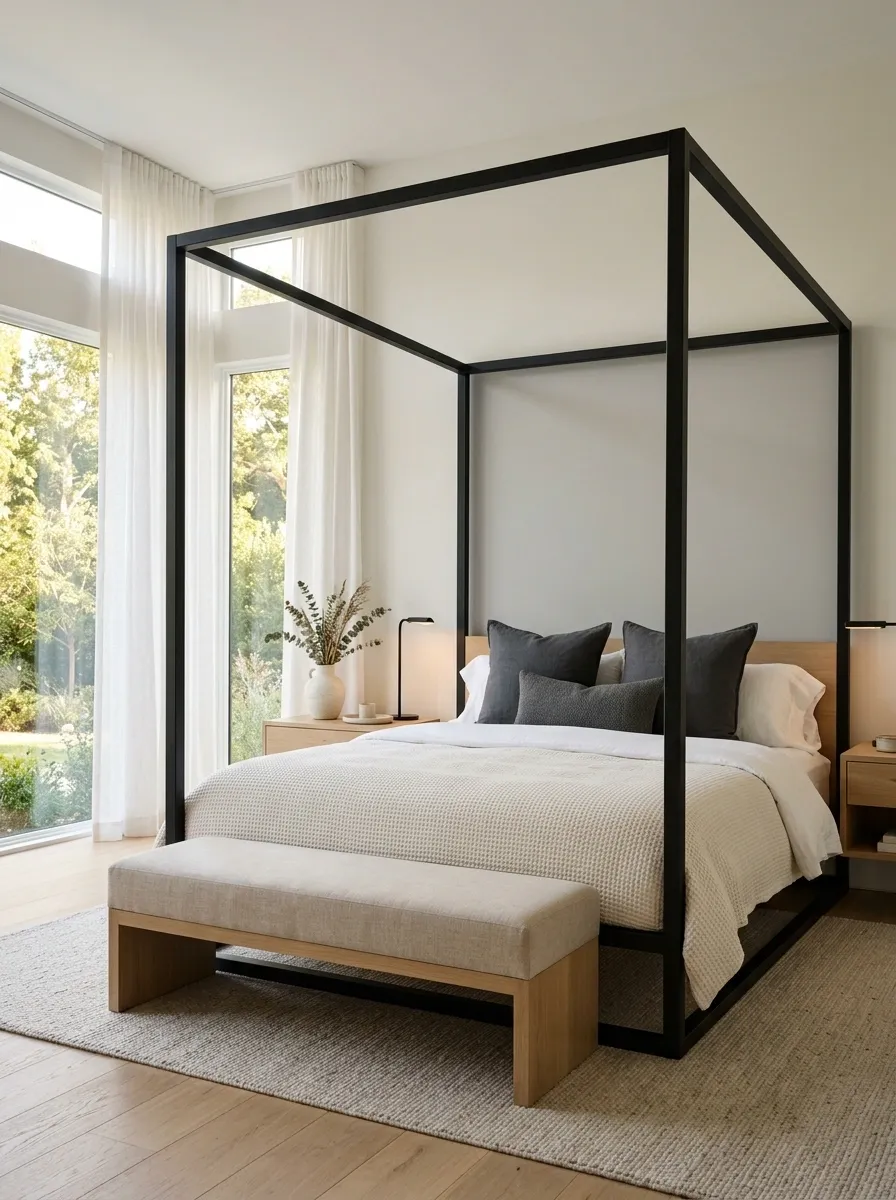
This is the rule that ties the whole bedroom together.
A canopy bed already has height, structure, and a naturally strong silhouette. You don’t need another giant centerpiece competing with it.
Walk into the room and decide what should catch your eye first. If it’s the canopy, then the rug, artwork, bedding, lighting, and accessories should support that decision.
Keep one area visually dominant. Let everything else settle into the background.
Before you add anything, remove one thing. That habit alone will keep the bedroom from becoming overloaded.
The Best Canopy Beds Know When to Stop
A canopy bed doesn’t need layers of fabric, a matching furniture set, oversized bedding, and a dozen accessories to look finished. The strongest setups usually do less, but they do it deliberately.
Start with the frame. Get the scale right for the room, then decide whether the bed needs softness, contrast, texture, or simply more breathing room. From there, make the rest of the bedroom support that choice instead of competing with it.
The right canopy bed should feel like part of the architecture, not a decoration dropped into the room.
Save this list on Pinterest before your next bedroom refresh so you can come back to the ideas when you’re ready to choose your frame, bedding, and finishing details.