
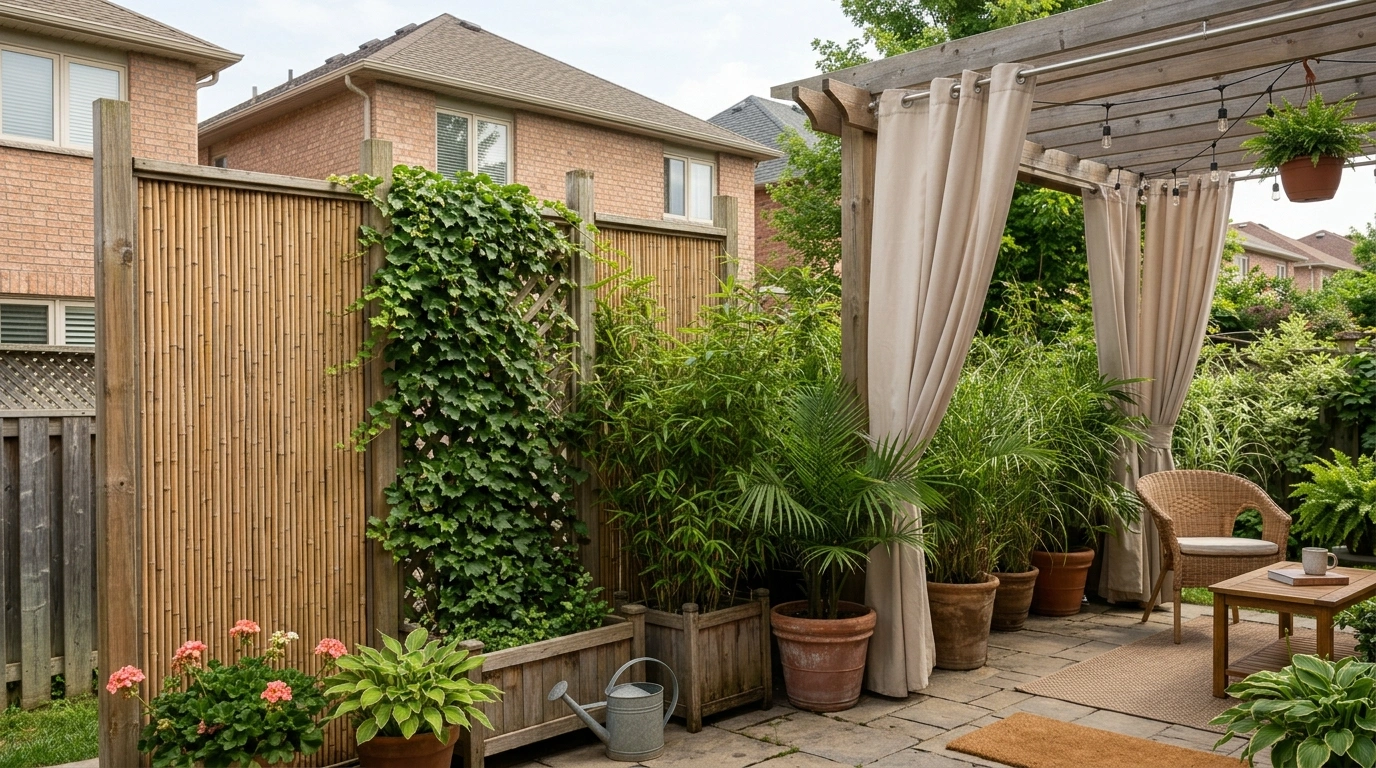
A backyard can be perfectly comfortable until you realize the neighbors have a clear view of the exact spot where you sit. The usual reaction is to put up a tall fence, but that can create a different problem. Too much screening can make a small yard feel dark, cramped, and disconnected from the garden.
The better approach is to treat privacy as part of the overall design. Cheap ways to block neighbors view can involve a narrow screen, a row of tall planters, a trellis, outdoor curtains, or even a carefully positioned piece of furniture. What matters is how the privacy element fits into the finished space.
What Makes Cheap Privacy Ideas Look Intentional?
The strongest privacy designs don’t try to hide everything. They identify where the unwanted view enters the space, then build a visual barrier around that specific area.
Start With the View You Actually Need to Block
Stand in your usual seating position and look toward the neighboring property. That sightline tells you much more than the boundary itself. A screen aimed at the exposed direction can be smaller and cheaper than covering the entire yard.
Keep Privacy Screens Proportional to the Space
A narrow patio can quickly feel crowded when a tall solid structure takes up one complete side. Open screens, planted layers, and partial barriers give you privacy while preserving light and visual depth.
Let Materials and Planting Do Some of the Work
Wood, greenery, lattice, fabric, and natural screening materials can interrupt a direct view without creating the hard visual stop of a solid wall. Combining two or three of these elements usually produces a more finished result.
Cheap Ways To Block Neighbors View
Treasure the Lattice Look
A tall wooden or metal lattice structure creates an immediate sense of privacy without trapping every whisper of passing breeze. By pairing an open weave with rich green foliage climbing through the slats, you achieve a layered boundary that feels alive.
Positioning sleek, modern planters along the base of the screen anchors the entire assembly and softens the transition between the hardscape and the garden beds. Selecting upright, vibrant greenery keeps the eye moving upward, drawing attention to texture rather than a blank wall.
This approach works wonderfully in tighter yards because light filters effortlessly through the geometric patterns. You get complete shielding from prying eyes while maintaining an airy, expansive atmosphere that never feels heavy or claustrophobic.
Slim Vertical Slat Screen With a Small Gravel Patio
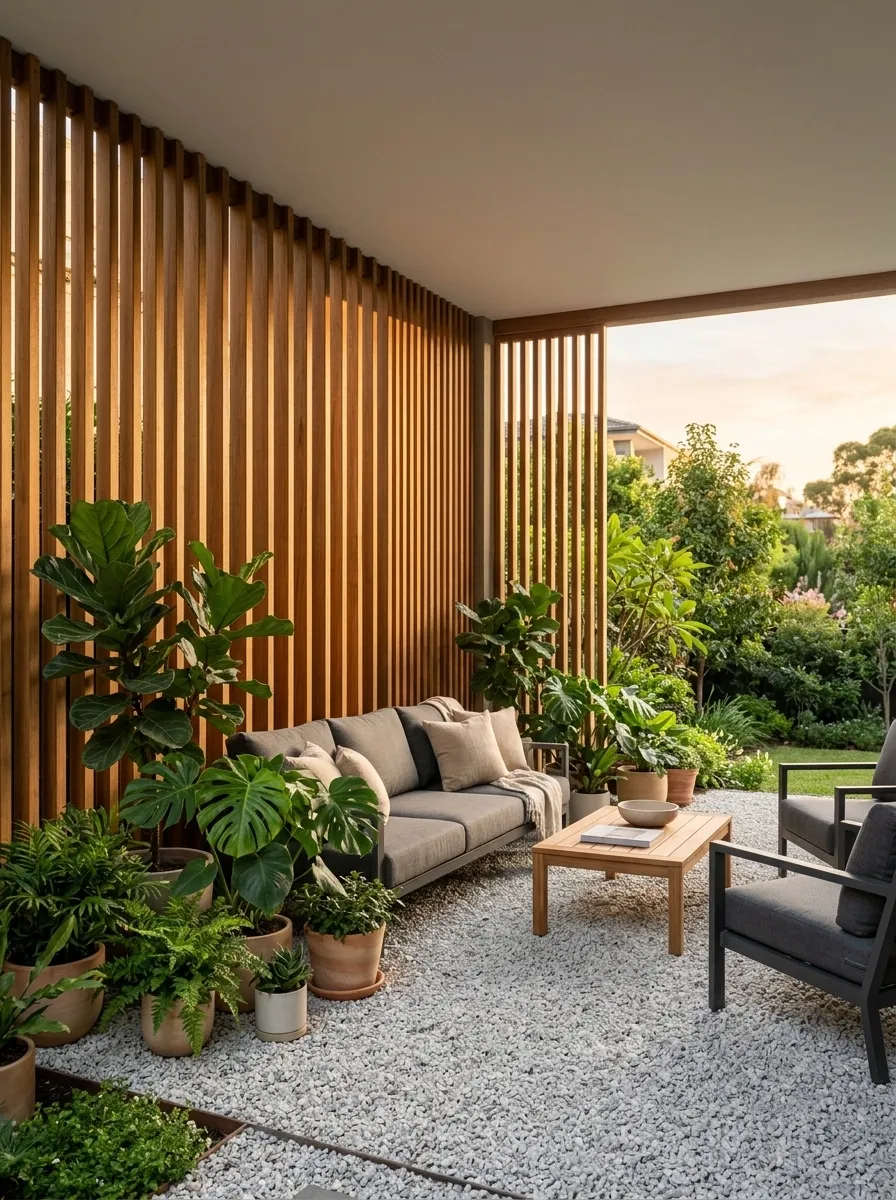
This compact patio uses a warm wood-look vertical slat screen along the neighbor-facing edge, creating privacy without closing off the entire seating area. A small outdoor sofa and two simple chairs sit on a gravel surface, while a few broad-leaf plants soften the base of the screen.
The vertical lines make the boundary feel taller without adding a heavy solid wall. Keeping the furniture low helps the screen remain useful without dominating the patio.
I’d leave the opposite side completely open. That contrast is what keeps this little outdoor room from feeling like a fenced enclosure.
Visual focus: privacy is concentrated on the exposed side, while the seating area and entry remain visually open.
The screen handles the exposed edge while the rest of the patio stays open to light and movement.
Embrace Painted Whimsical Panels
Turn an ordinary backyard boundary into a vibrant work of art by applying a rich green backdrop and hand-painting cheerful floral motifs right onto the wooden slats. This creative technique transforms a functional privacy screen into a stunning focal point.
Suspending charming lanterns and hanging baskets from iron brackets above adds incredible vertical dimension and cozy evening illumination. The floating planters create a natural canopy that gently breaks up direct sightlines from elevated neighboring windows.
Not only is this method budget-friendly, but it also injects a tremendous amount of personality into your outdoor living space. It proves that blocking an awkward view can actually elevate your overall design rather than simply closing off the yard.
Layered Evergreen Planters Along a Shared Fence
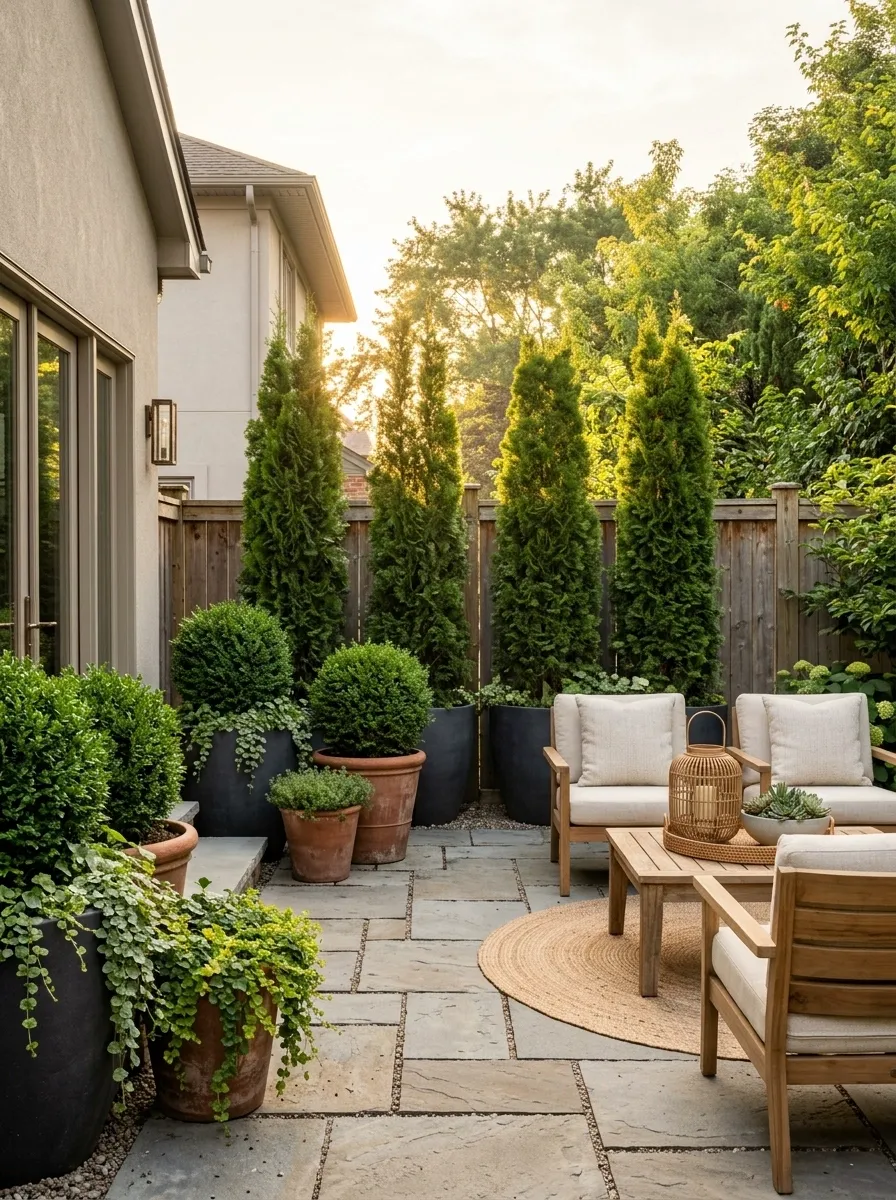
An ordinary shared fence becomes a softer privacy boundary when tall planters are placed directly in front of it. The finished arrangement uses a mix of evergreen forms, with taller plants toward the sightline and lower pots stepping down toward the seating area.
Instead of making every planter identical, the design uses slightly different heights and widths while keeping the overall palette restrained. A simple bench or two outdoor chairs sit in front, leaving enough room to move comfortably.
The greenery adds depth that a flat fence can’t provide. The key is keeping the planting concentrated along the boundary rather than filling the entire yard.
Visual focus: three planting heights create a layered screen that feels deeper and more natural than one uniform row.
Stepping the planting heights upward creates a fuller visual screen without turning the boundary into one solid mass.
Upcycle Colorful Vintage Doors
Creating a backyard boundary using a mismatched row of vintage wooden doors painted in brilliant turquoise, cherry red, and sunny yellow is pure design genius. This eclectic arrangement instantly blocks unwanted views with an explosion of character and charm.
Interspersing the weathered panels with intricate wrought iron grates allows filtered light and gentle breezes to dance through the garden. The varied heights and textures create a dynamic visual rhythm that draws the eye horizontally rather than straight up to a sterile wall.
Grounding this quirky architectural fence with a lush border of blooming perennials bridges the gap between old-world craftsmanship and natural beauty. It is an imaginative, wallet-friendly statement piece that guarantees privacy while keeping the yard feeling vibrant and whimsical.
Bamboo Screen Behind a Simple Outdoor Dining Area
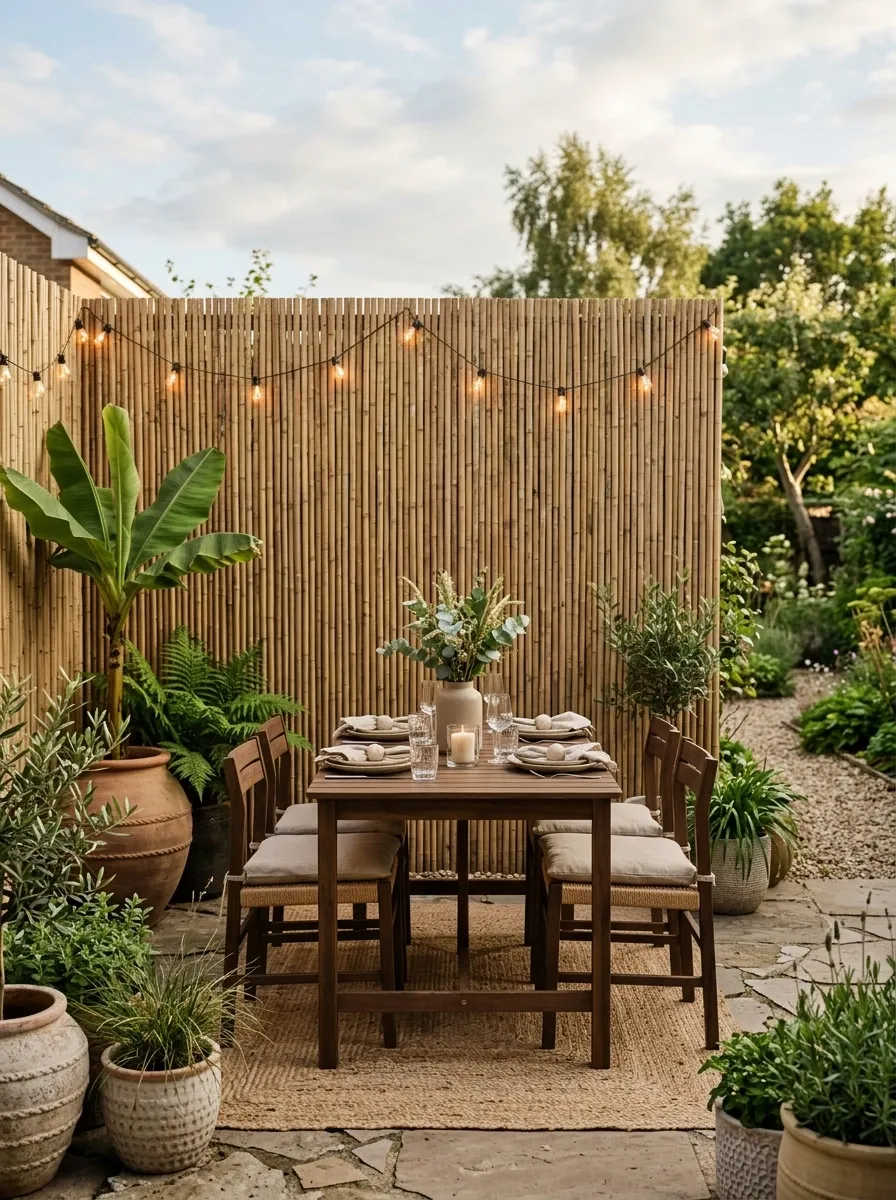
A bamboo privacy screen gives this small dining area a defined backdrop without making it look heavily built. The screen sits behind a simple outdoor table and chairs, with a few ceramic pots and warm lighting keeping the setting relaxed.
The important part is the relationship between the screen and the furniture. It rises enough to interrupt the neighbor-facing view while the front and sides of the dining area stay visually open.
Natural bamboo works especially well here because the texture breaks up the hard line of the boundary. Keep the furniture simple so the screen remains part of the architecture rather than competing with the table.
Visual focus: the dining table sits comfortably below the screening line, creating privacy exactly where people are seated.
Lattice Fence With Climbing Greenery
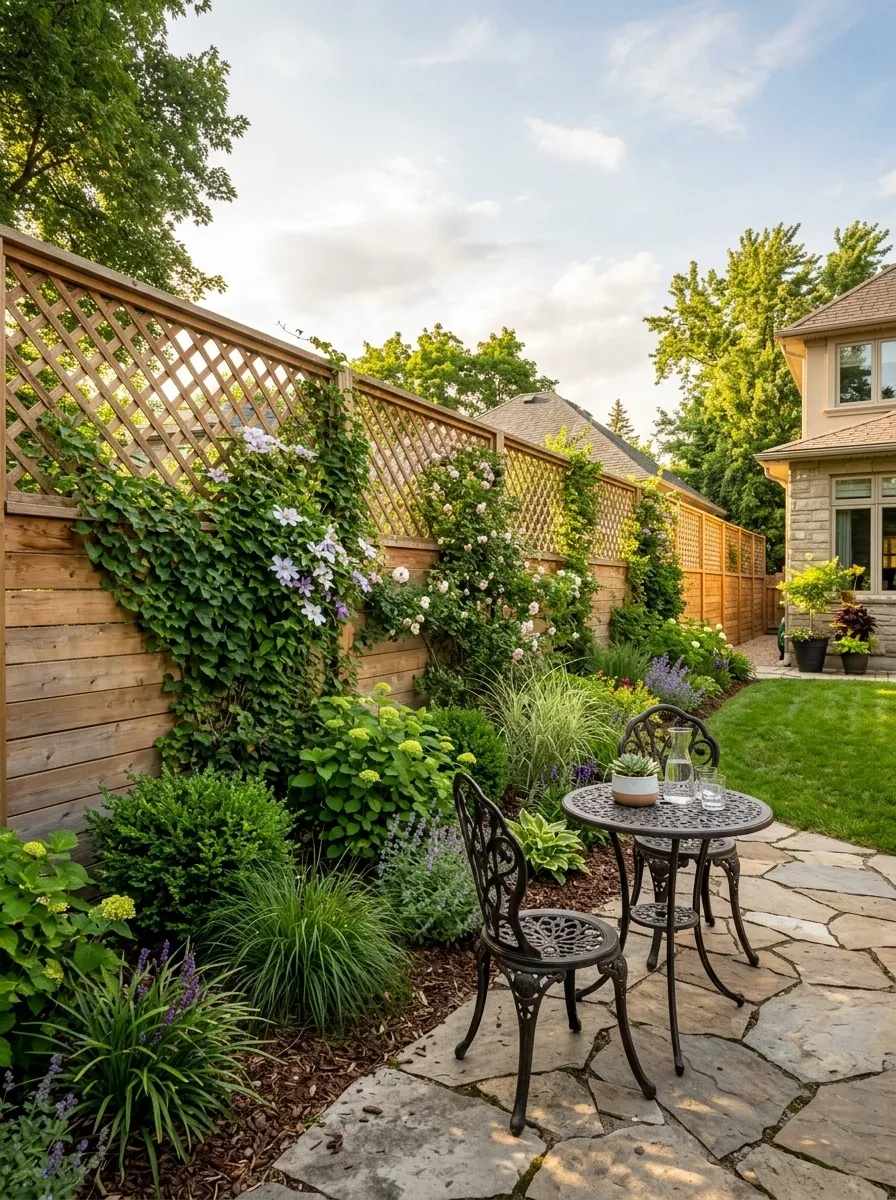
A basic fence becomes much more interesting when an open lattice layer is added above it and climbing greenery is allowed to become part of the composition. The lower boundary stays visually solid, while the upper portion filters the neighboring view instead of blocking the sky completely.
A narrow garden bed runs along the base, connecting the structure to the rest of the yard. A small bench or bistro set sits several feet forward, leaving enough breathing room for the planting to remain visible.
The strength of this design is the balance between structure and softness. The lattice gives the boundary a clear shape, while the greenery keeps it from reading like a tall panel.
Visual focus: the privacy barrier has a solid lower section and an open upper section, creating a lighter vertical transition.
Upper zone: interrupts the sightline while keeping the boundary visually lighter.
Deploy Potted Planted Trellises
Freestanding metal trellises housed in deep, weighted troughs offer an incredible, modular way to reclaim your personal sanctuary. These sleek dark frames disappear into the background while letting lush climbing roses take center stage.
Placing these mobile privacy blocks strategically allows you to adjust your sightlines exactly where you need them most, whether you are lounging on the patio or dining al fresco. The heavy containers ensure everything stays secure without requiring permanent post holes.
Training blooming vines through the intricate metalwork adds seasonal color and organic softness to your boundaries. It is an effortlessly stylish solution that keeps your yard feeling completely open, breezy, and entirely your own.
Curtain-Screened Small Covered Patio
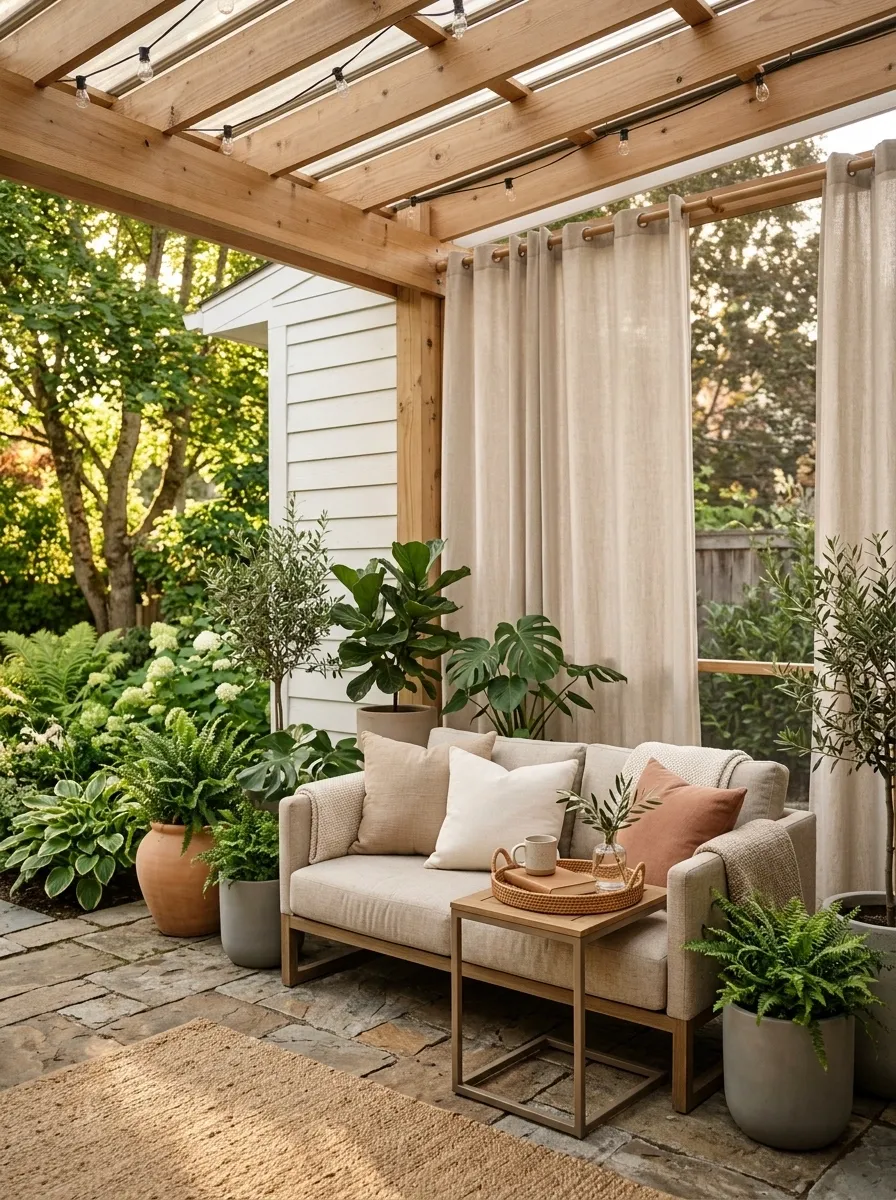
This covered patio uses outdoor curtains as a flexible privacy layer around a simple seating area. Neutral fabric hangs from the existing patio structure, with one side partially closed toward the neighbor and the other side left open to the yard.
The furniture is intentionally low and uncomplicated: a compact sofa, a small table, and a few plants near the corners. Nothing competes with the soft vertical curtain panels.
This approach works because privacy becomes adjustable. You aren’t committing the whole patio to a permanent wall. Open the curtains when you want a broader view, then close the exposed side when the neighboring property becomes distracting.
Visual focus: privacy changes with the position of the curtains, while the underlying patio layout stays exactly the same.
Repurposed Pallet Privacy Wall With Built-In Planters
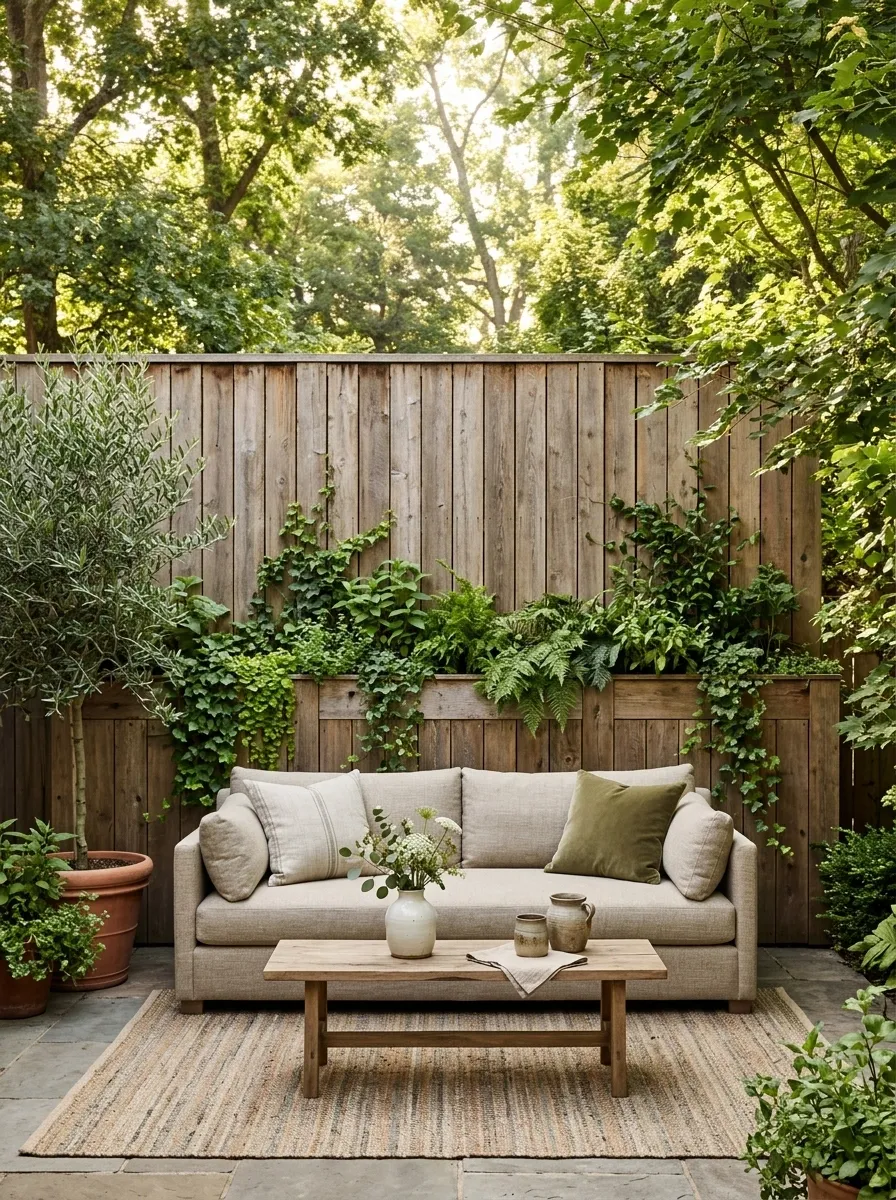
A pallet-style privacy wall can look surprisingly intentional when it becomes part of the seating area instead of sitting alone against the fence. Here, vertical timber slats create a rustic backdrop behind a compact outdoor sofa, while narrow planter boxes are built into the lower portion.
The wood is left in a warm, slightly weathered finish, with greenery concentrated around the bottom and sides. A simple outdoor rug and small coffee table give the space enough definition without adding clutter.
The built-in planting is what makes this design feel complete. It breaks up the timber and gives the wall a useful second role beyond blocking the neighboring view.
Visual focus: the privacy wall, planting, and seating operate as one vertical composition.
Outdoor Trellis Wall Behind a Lounge Chair
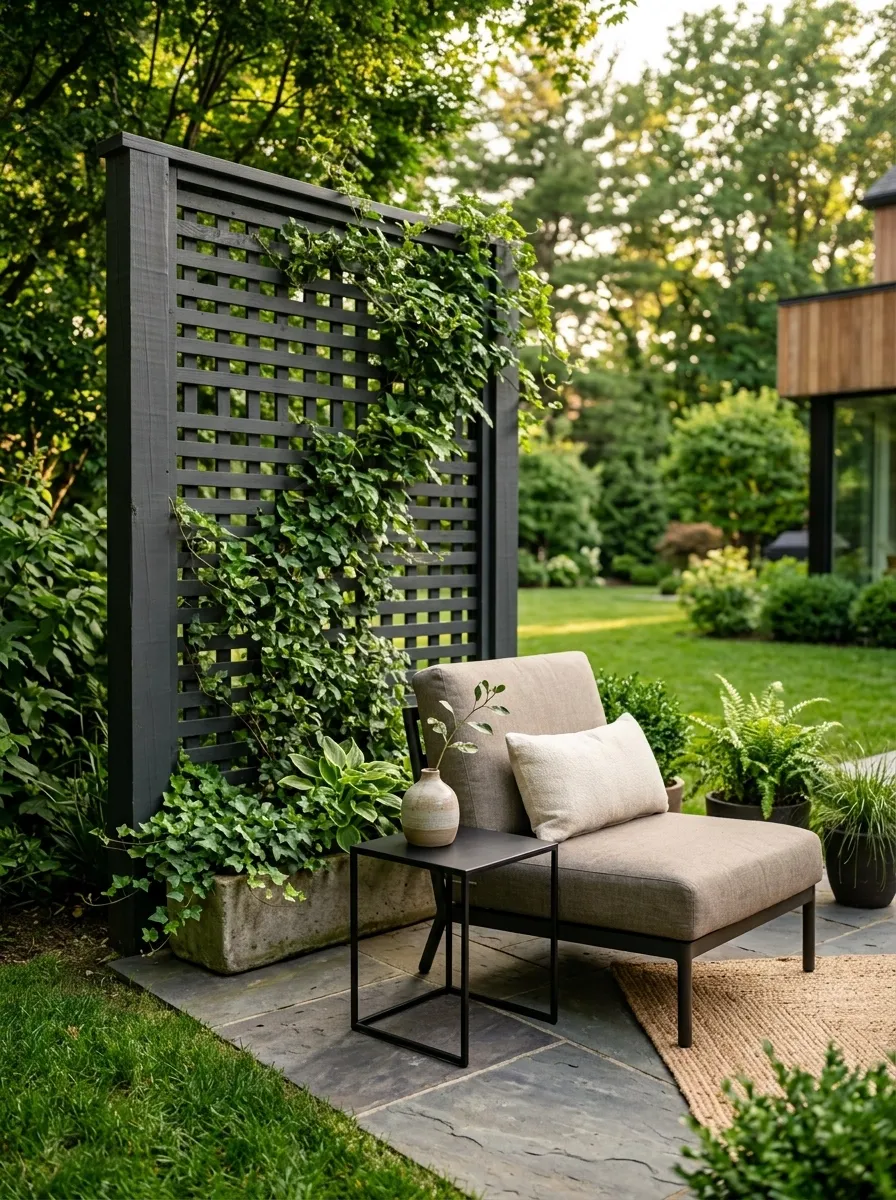
A decorative trellis can create a private little retreat without turning the entire yard into a screened box. In this arrangement, the trellis sits directly behind a comfortable lounge chair, with climbing greenery beginning to soften its open structure.
A side table, low planter, and textured outdoor cushion complete the corner, while the space around it remains uncluttered. The trellis becomes an architectural backdrop rather than an isolated garden feature.
This layout works because privacy is created exactly where it matters. The rest of the yard stays open, so the screen feels purposeful rather than oversized.
Visual focus: one defined private corner surrounded by open space.
Keep the strongest visual barrier directly behind the place where you actually sit.
Black Metal Grid With Climbing Plants
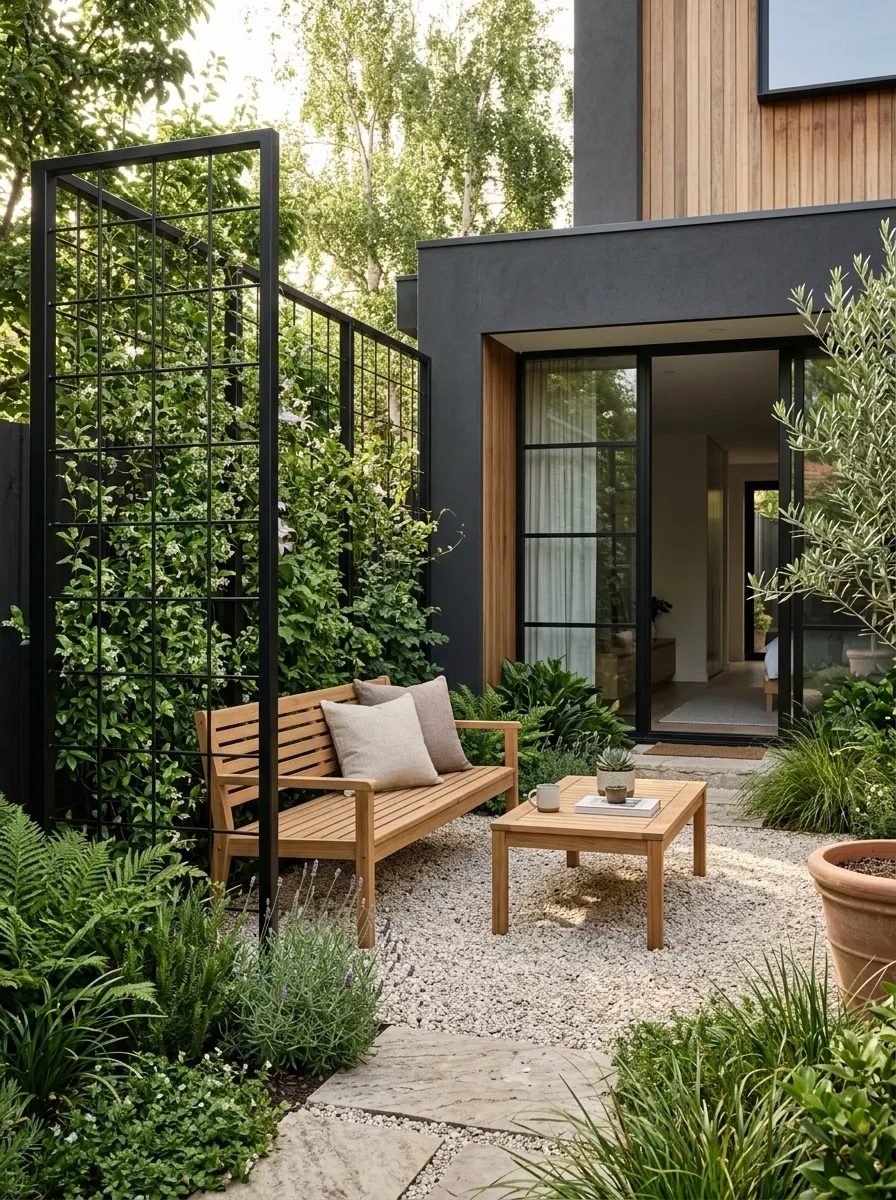
This modern setup pairs a slim black metal grid with climbing greenery to create a privacy screen that still feels visually open. The structure stands along one side of a small patio, while warm timber furniture and a pale gravel surface keep the composition from becoming too dark.
The grid gives the boundary a crisp architectural line. The plants provide the softer layer, gradually filling the open structure without hiding the form completely.
I’d avoid adding several other black elements here. The screen already provides enough contrast, and the warm wood keeps the patio from becoming visually severe.
Visual focus: crisp black structure against organic greenery and warm wood.
The dark structure gives the composition its edge, greenery softens it, and warm wood keeps the patio grounded.
Mixed Fence Panels With Alternating Wood and Greenery
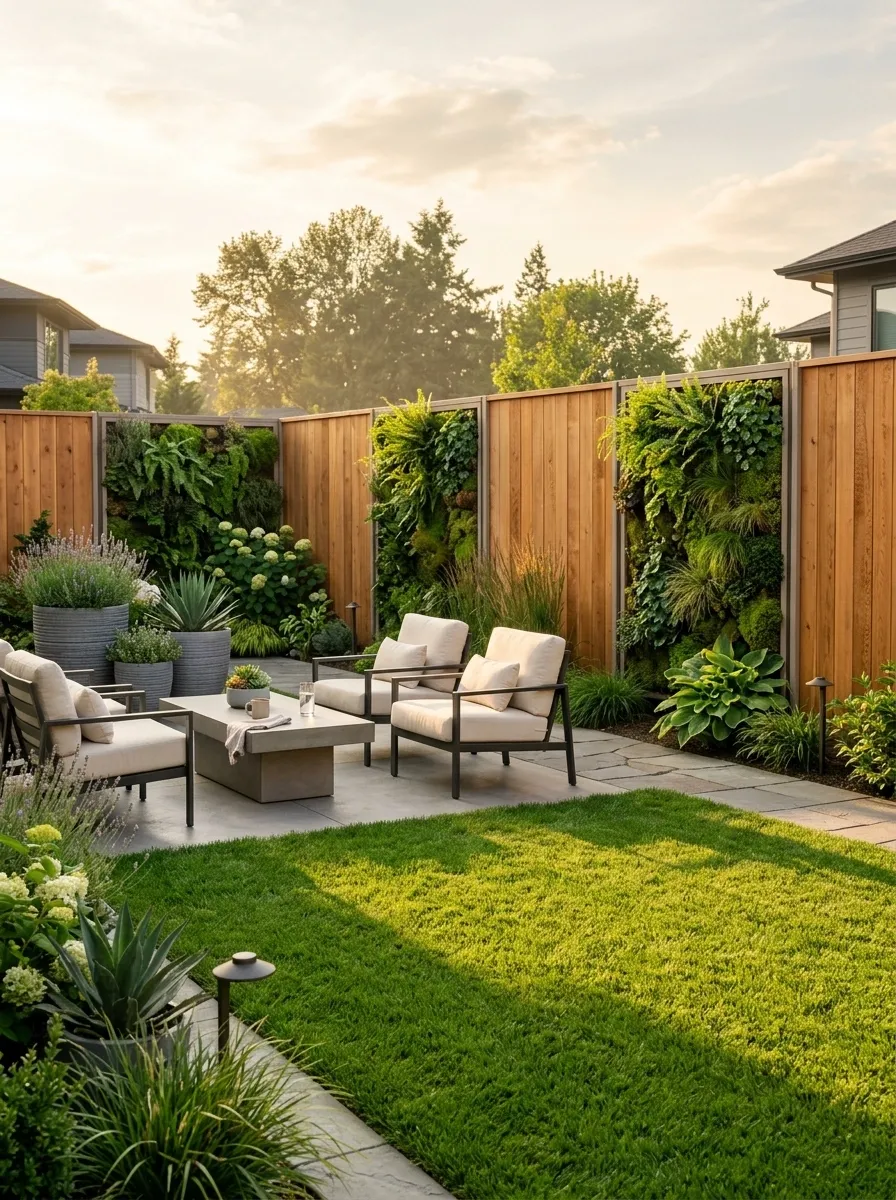
Instead of covering a boundary with one uninterrupted material, this backyard uses simple wood panels separated by planted sections. The alternating rhythm gives the fence more character while still creating a clear visual barrier along the neighbor-facing side.
A small lawn remains open in front of the boundary, with a compact seating area positioned toward the more enclosed section. The planted gaps prevent the fence from reading as one long wall and introduce natural texture at regular intervals.
The important decision is repetition without perfect uniformity. Keep the panel width similar, but allow the plants to vary slightly in shape and height.
Visual focus: alternating solid and planted sections create privacy while breaking up the length of the boundary.
Repeating the material pattern keeps the fence cohesive, while the planted sections stop it from feeling like a continuous wall.
Outdoor Umbrella Used as a Localized Privacy Solution
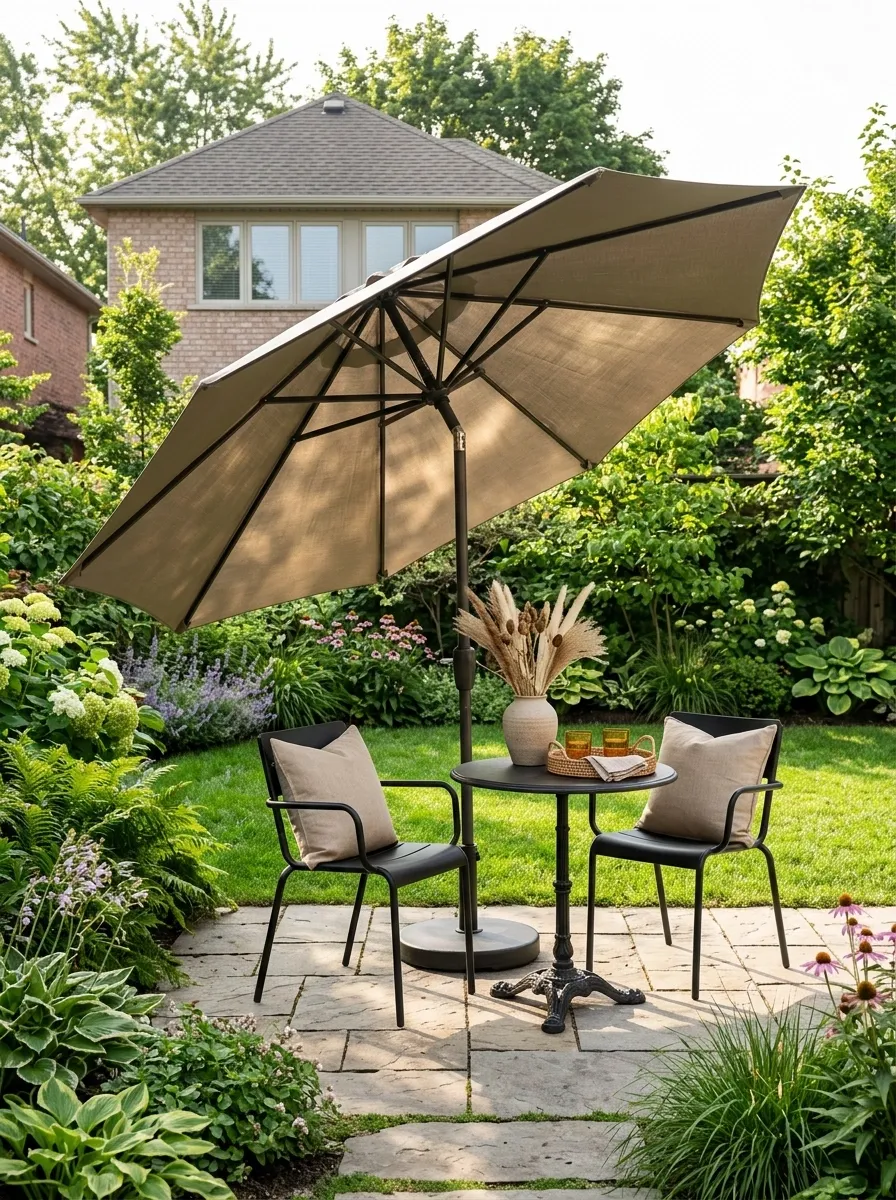
Sometimes the neighbor’s view only reaches one part of the yard. Instead of building a permanent screen, this design uses a large outdoor umbrella above a compact seating area, positioned to interrupt the exact sightline.
The result feels like a normal patio rather than a screened enclosure. A small table sits beneath the umbrella with two chairs, while the surrounding lawn and planting remain completely open.
This is one of the cleanest approaches for renters or anyone who doesn’t want permanent construction. The umbrella becomes part of the outdoor furniture arrangement while quietly solving the exposure problem.
Visual focus: privacy follows the seating area rather than the property boundary.
Simple Corrugated Panel Privacy Wall With Wood Trim
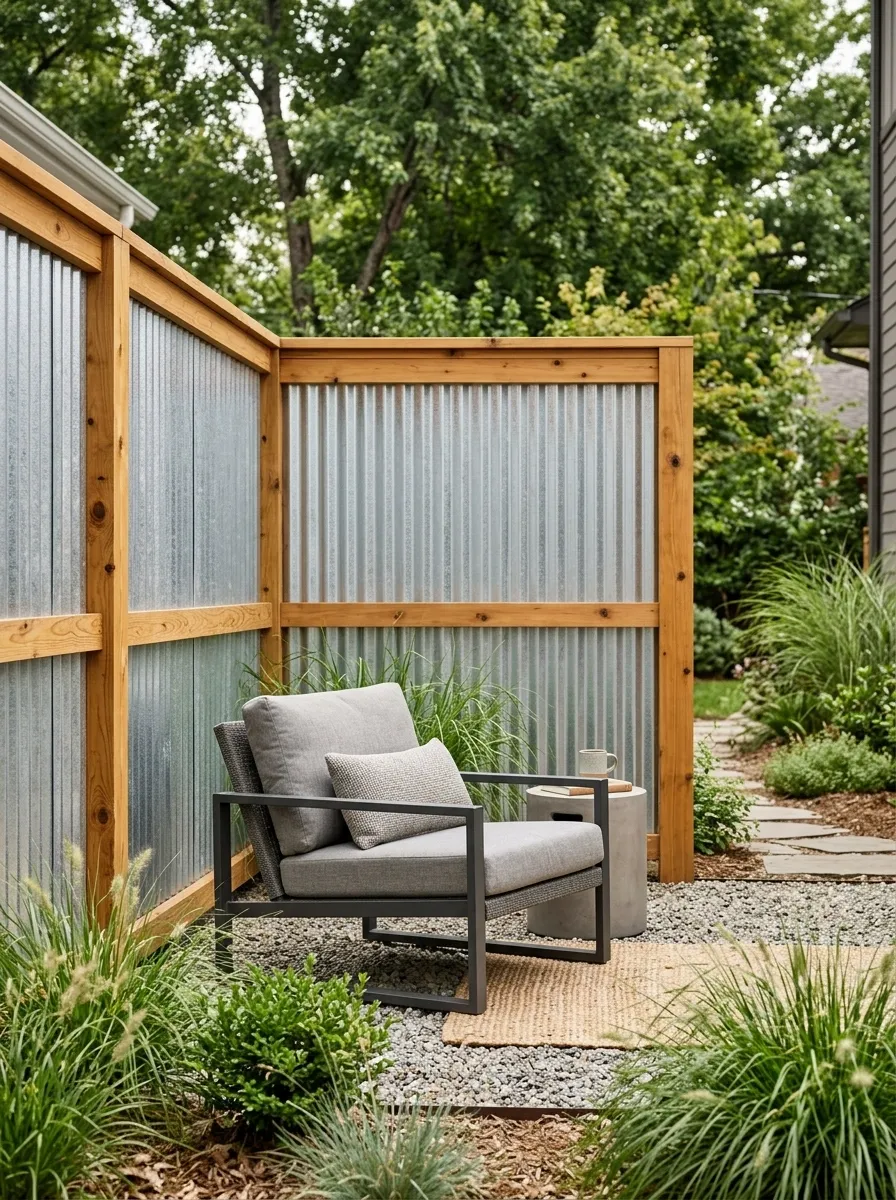
Corrugated panels can create a strong privacy backdrop without requiring an expensive custom fence. In this small side-yard design, the panels are framed with warm timber and placed behind a compact seating area, while gravel and a few plants soften the harder materials.
The combination works because the wood interrupts the industrial surface. Rather than covering the entire boundary, the panel is limited to the section where the neighboring view is most noticeable.
Keep the surrounding finishes quiet. A complicated floor pattern or too many decorative pieces would compete with the corrugated texture.
Visual focus: inexpensive paneling gains a more finished look through simple timber framing and restrained landscaping.
Repurposed Shutters as a Decorative Privacy Screen
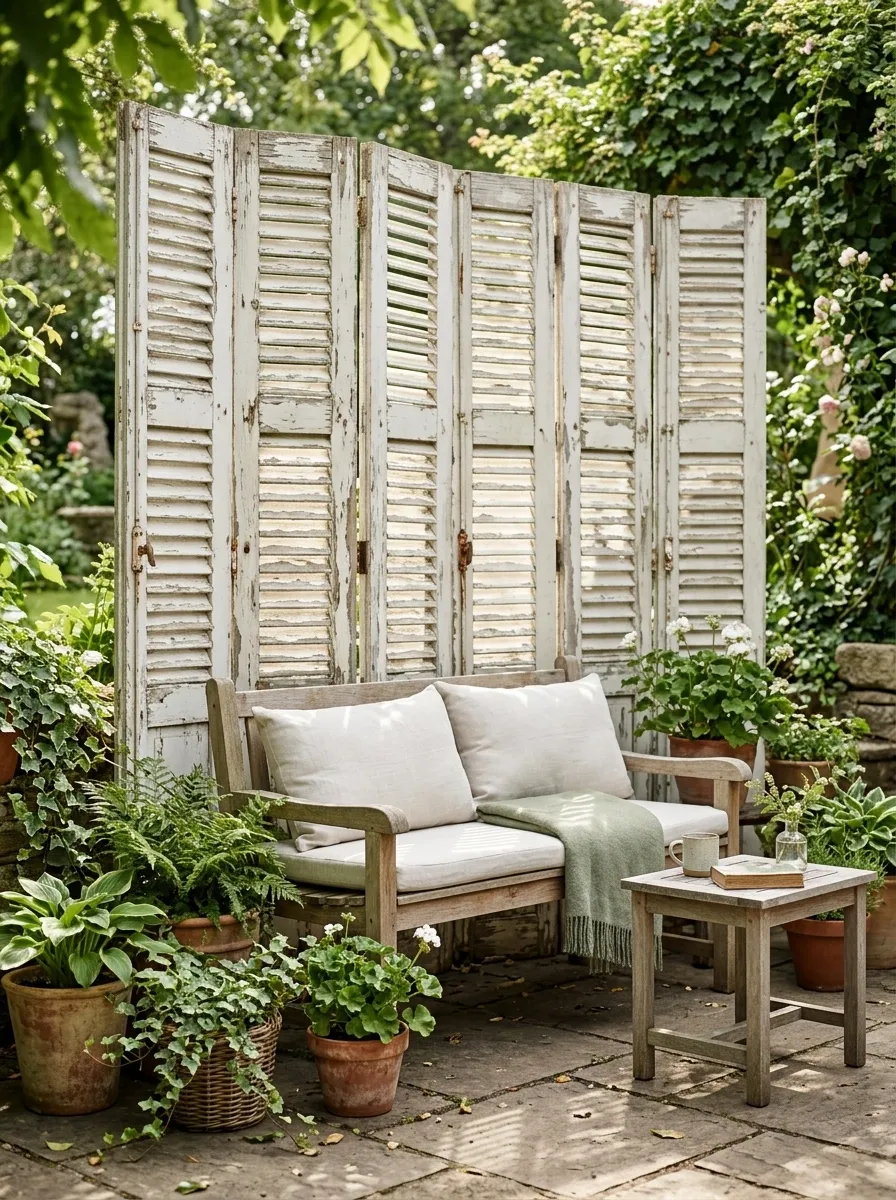
Old shutters can become a surprisingly elegant outdoor divider when several are arranged together as one screen. Here, weathered shutters stand behind a small patio seating area, with their adjustable-looking slats allowing light to pass through while breaking up the neighboring view.
The screen feels more collected than a standard fence panel because the individual shutters create a repeating rhythm. A simple timber bench, a small table, and a few plants complete the garden corner.
The trick is restraint. Let the shutters carry the character and keep the surrounding furniture simple enough that the composition doesn’t become visually busy.
Visual focus: repeated shutter openings provide privacy while preserving light and visual texture.
Repeated shutters create a continuous visual boundary while the openings keep the screen lighter than a solid wall.
Half-Height Privacy Wall With Tall Planting Above It
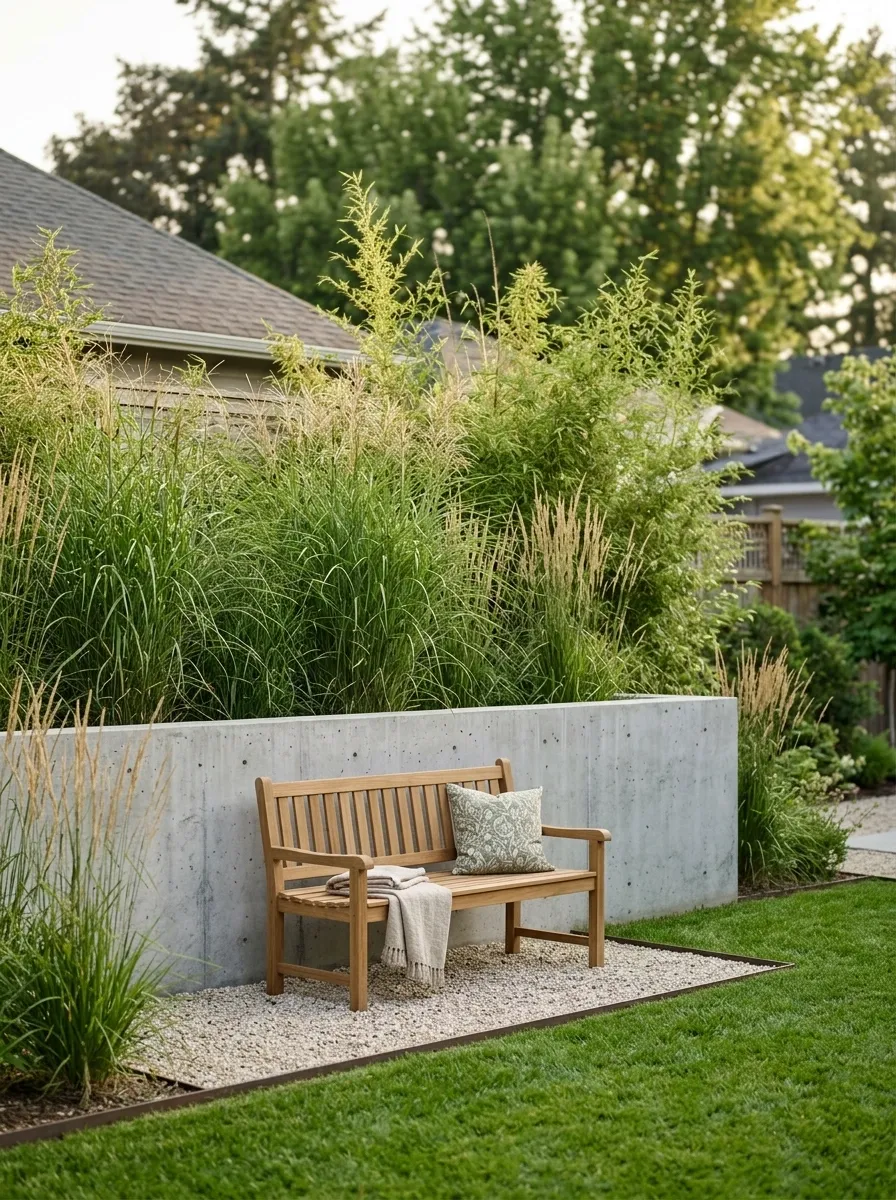
A half-height wall creates the lower foundation for this backyard privacy design, while taller plants rise above it to interrupt the neighboring view. The combination feels lighter than a full-height solid fence because the upper half remains organic and varied.
A bench sits in front of the planted section, with a small lawn or gravel area extending toward the rest of the yard. The low wall gives the planting a visual base and prevents the greenery from looking scattered.
This is a useful composition when you want privacy but still want the yard to feel connected to its surroundings.
Visual focus: two different layers, a solid lower boundary and a soft upper screen, work together as one design.
Outdoor Bookcase-Style Screen With Selective Planting
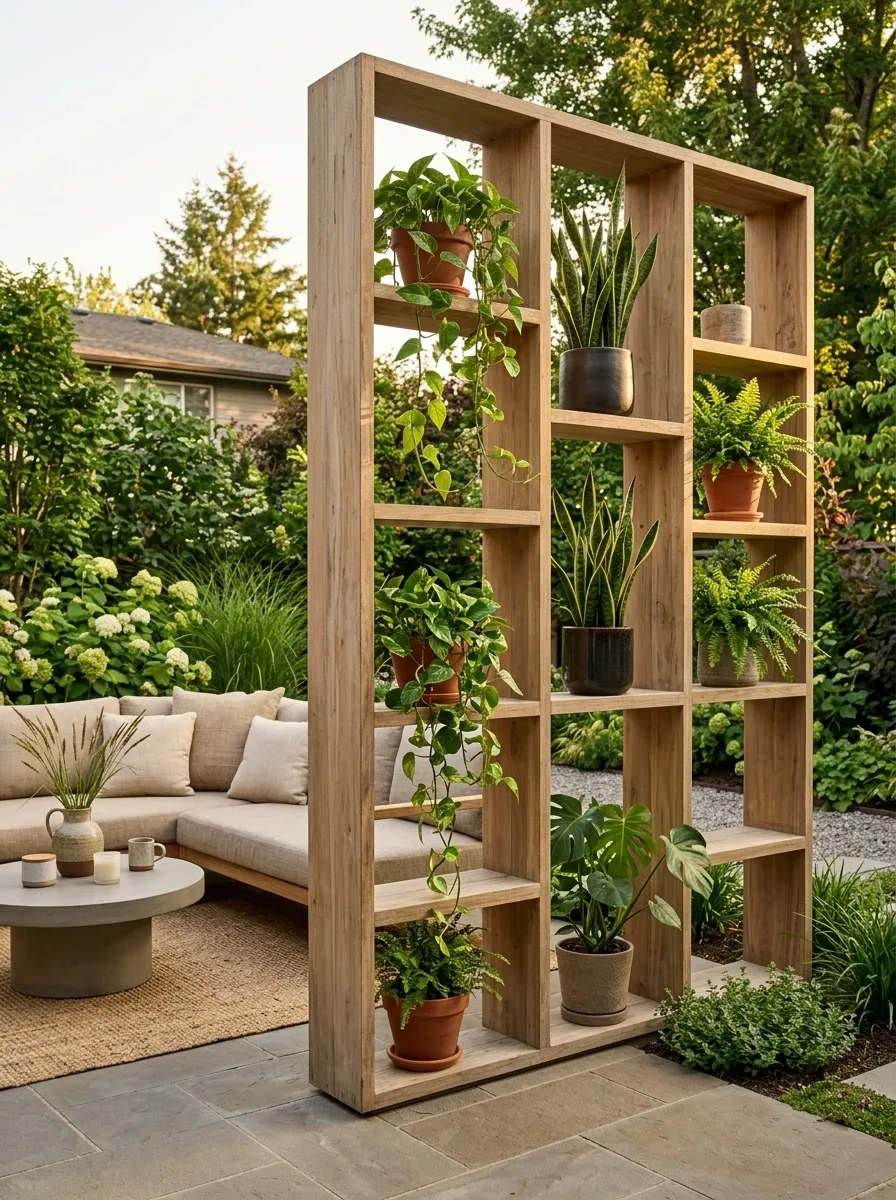
An open wood shelving structure can separate a patio from the neighbor-facing side without becoming another solid wall. In this finished design, a tall freestanding frame sits beside a compact lounge area, with plants filling only selected openings.
Leaving some sections empty is important. The gaps let daylight and glimpses of the garden remain visible, while the filled sections break the direct sightline from the neighboring property.
The furniture stays low and simple, allowing the shelving structure to act as the architectural backdrop. Use a few larger plants rather than filling every opening with small objects.
Visual focus: selective opacity creates privacy without turning the structure into a dense screen.
Leave some compartments open. Privacy comes from interrupting the sightline, not filling every square inch.
Narrow Pergola With Side Screening
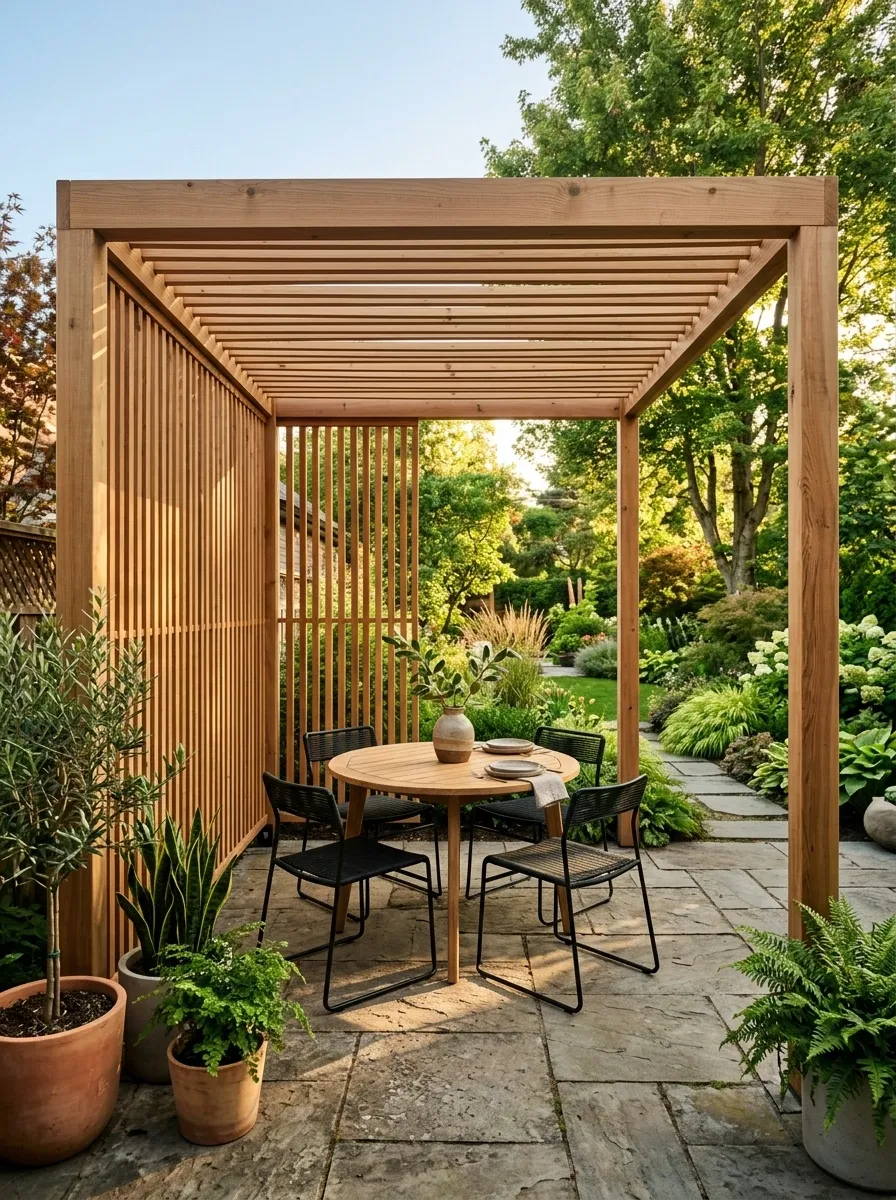
A compact pergola can turn an exposed seating area into a distinct outdoor room without surrounding it on every side. This version uses a simple open roof structure with one screened side facing the neighbors and a small dining or lounge arrangement underneath.
The roof keeps the composition visually grounded, while the screened side provides the actual privacy. The opposite side stays open toward the garden, preserving a clear connection to the rest of the yard.
Use the pergola structure sparingly. Once the roof, side screen, furniture, and greenery are all present, extra decoration can quickly make the small footprint feel crowded.
Visual focus: an open roof and one protected side create enclosure from only the directions that matter.
Layered Potted Shrubs Around a Small Deck
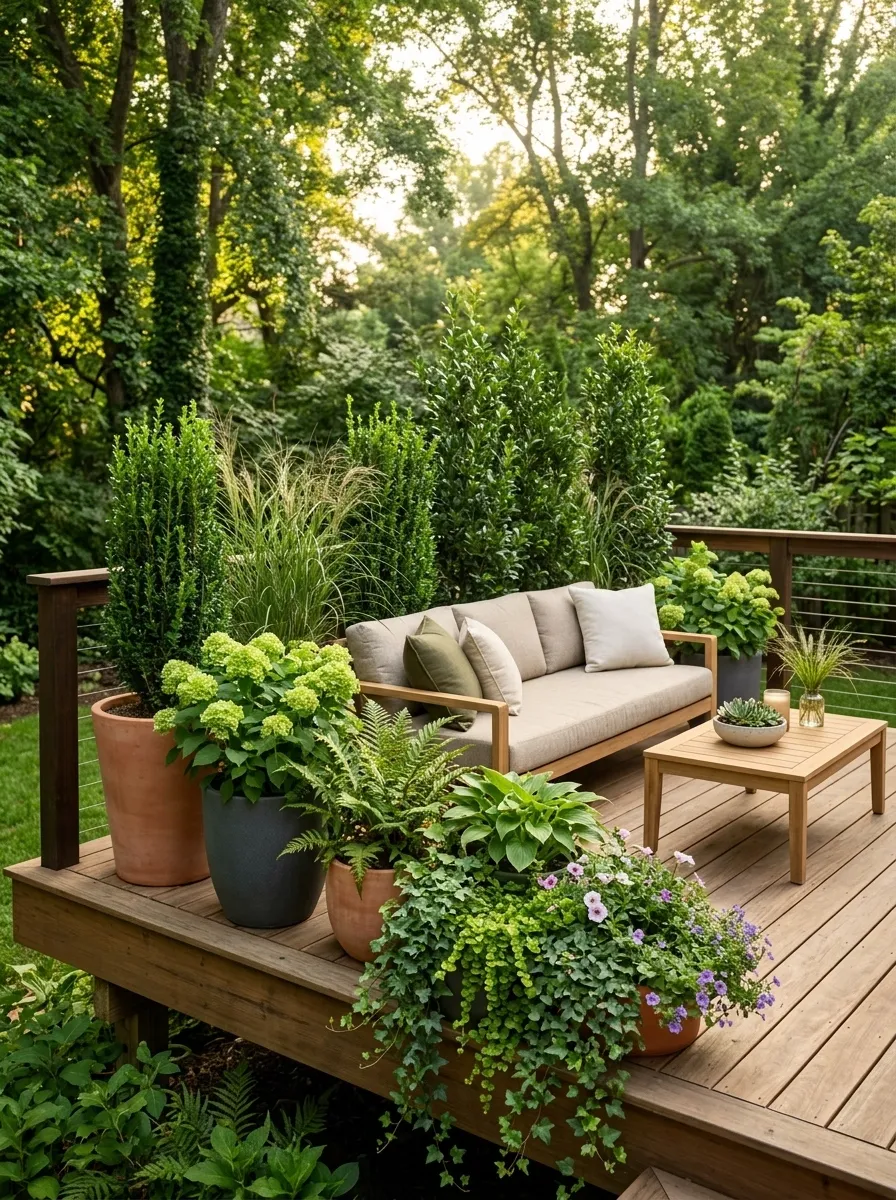
A small deck can feel exposed when the neighbor’s property sits directly beside it. This design solves that with several large pots arranged in layers around the most visible edge rather than lining the entire deck with containers.
The tallest shrubs sit toward the back, medium plants occupy the middle, and lower foliage fills the front. A simple outdoor sofa and small coffee table stay centered on the deck, leaving the entry path clear.
The layered arrangement creates depth that a straight row of identical pots would miss. Keep the deck furniture simple so the planting remains the main privacy element.
Visual focus: three planting layers create a deeper screen while preserving the deck’s usable floor area.
Varying the heights gives the privacy edge depth instead of creating one flat row.
Simple Roll-Up Outdoor Shade Screen
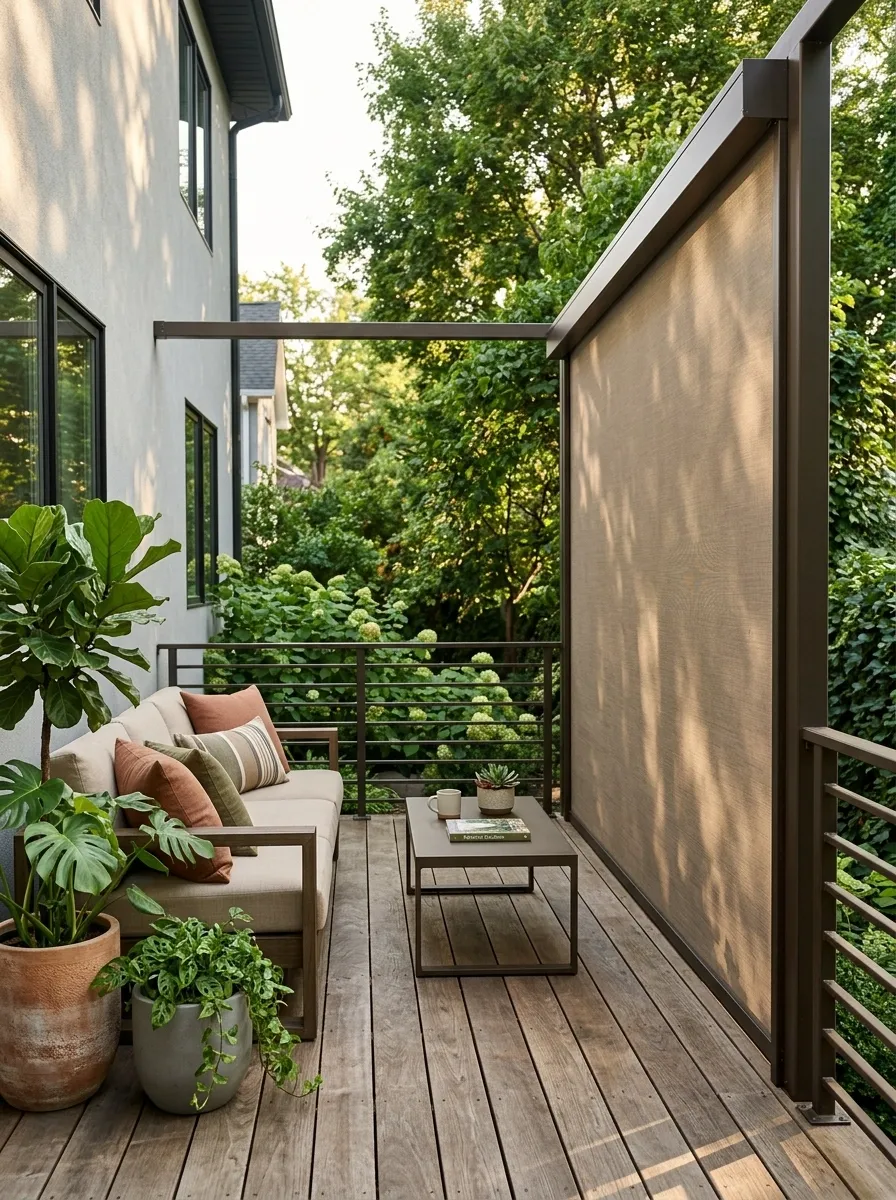
This compact deck uses a roll-up outdoor shade screen along the neighbor-facing side, giving the seating area privacy only when it is needed. The rest of the deck stays open toward the yard.
A small outdoor sofa, coffee table, and two plants create a finished composition without competing with the screen. When the screen is raised, the deck becomes an open seating area again. When lowered, the same furniture sits behind a clear privacy layer.
The design is especially useful when the neighboring view changes depending on how the space is being used. The privacy element remains practical rather than permanently dominating the boundary.
Visual focus: one simple screen changes the privacy level without changing the underlying deck layout.
Painted Plywood Screen With Geometric Cutouts
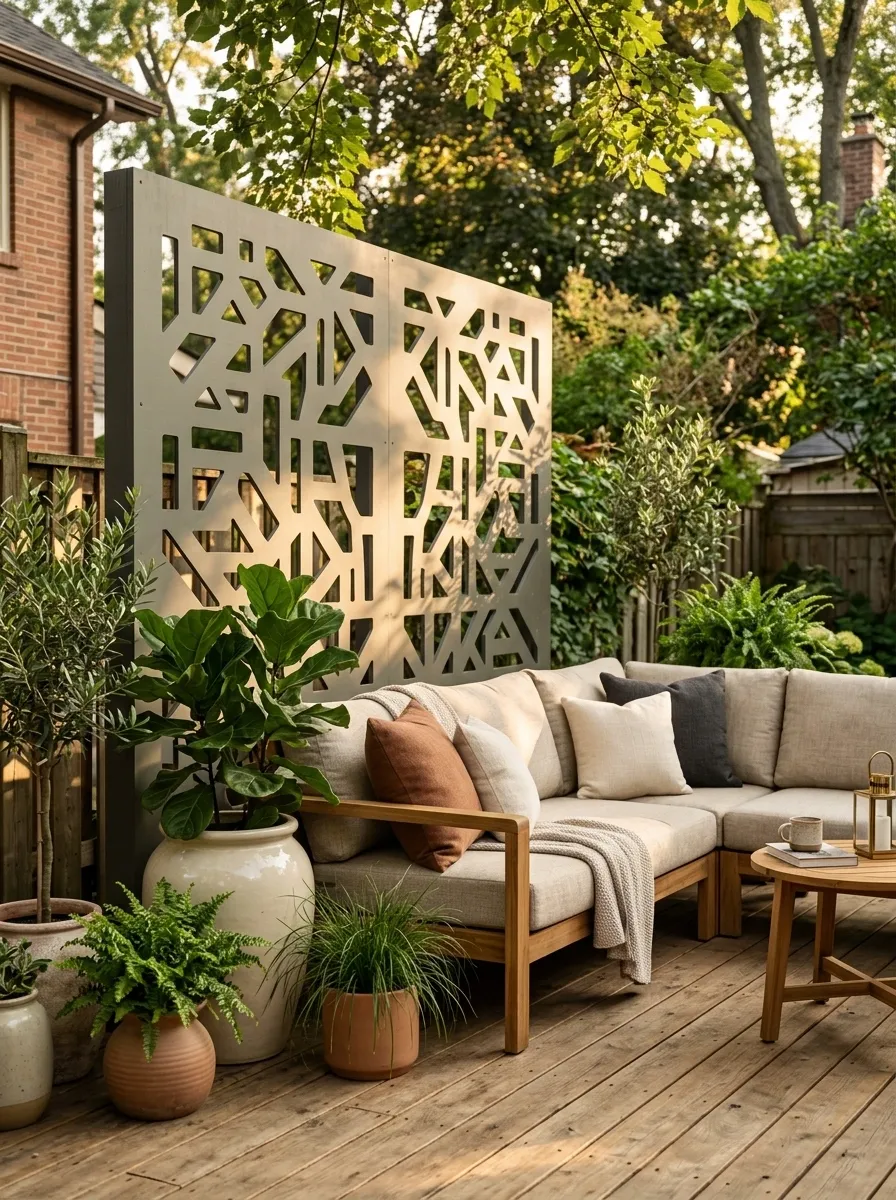
A plain plywood panel becomes a more intentional privacy feature when geometric cutouts are used to break up its surface. This design places the painted panel beside a small patio, with a neutral outdoor sofa and a few plants balancing its stronger shape.
The openings are large enough to prevent the panel from looking visually heavy, but the overall surface still interrupts the neighbor’s direct view. A restrained paint color lets the pattern provide most of the interest.
This approach works particularly well when you need a clear visual barrier but don’t want another solid rectangle dominating the yard.
Visual focus: negative space is deliberately built into the privacy panel rather than added afterward as decoration.
Fence-Top Privacy Extension With Climbing Vines
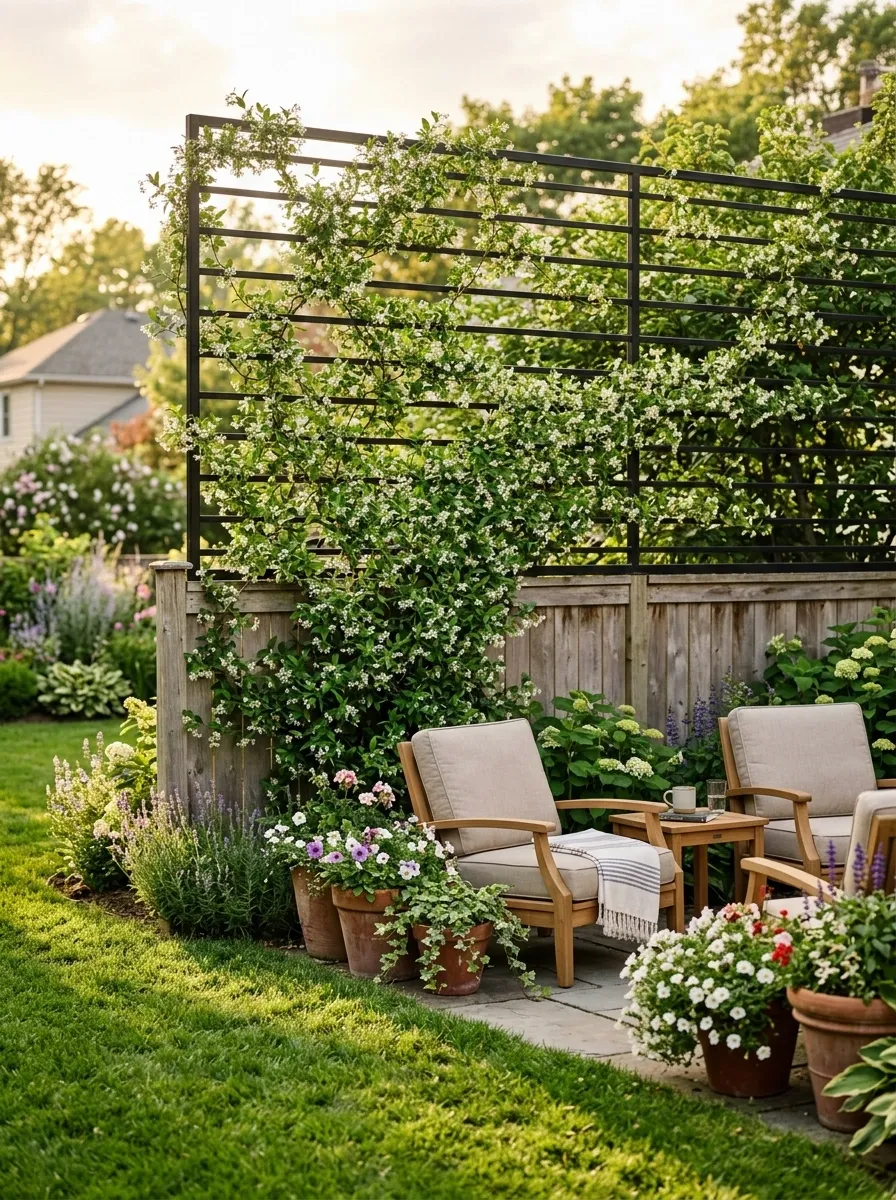
A low existing fence doesn’t always need to be replaced. This backyard adds a lightweight upper extension above the fence, then uses climbing vines to soften the new vertical layer.
The lower fence remains visible and gives the boundary a stable base. Above it, the open structure breaks the neighboring sightline while greenery creates a softer visual screen. A simple lawn and seating area remain open in front.
The finished effect is much lighter than installing another full-height fence. The important part is making the extension look like an intentional continuation of the boundary rather than a temporary add-on.
Visual focus: an existing low boundary gains height through a separate upper layer.
Outdoor Sofa Positioned Behind a Tall Planter Backdrop
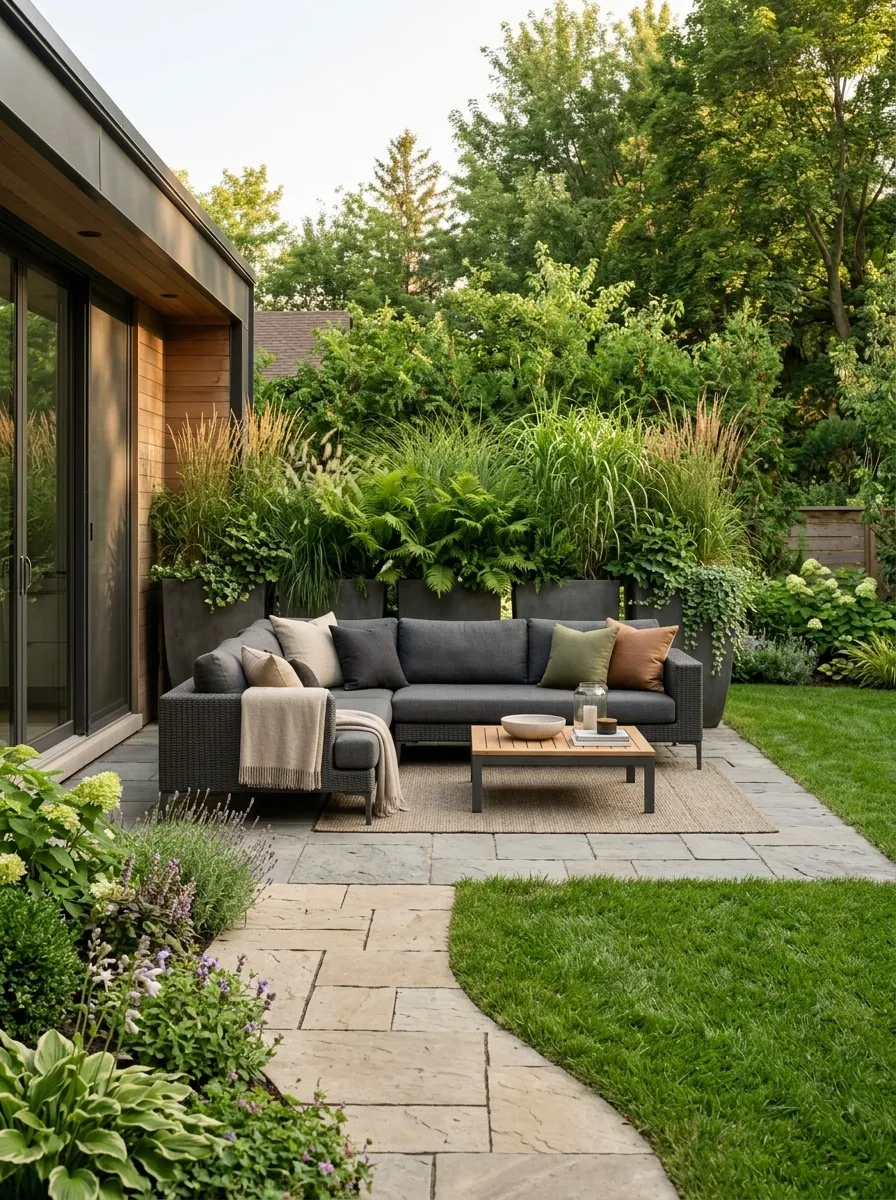
Instead of screening an entire backyard, this design creates privacy directly around the outdoor sofa. Several tall planters sit immediately behind the seating, forming a green backdrop that blocks the neighbor’s view into the conversation area.
The rest of the yard remains open. A simple path leads around the seating group, and lower plants are used farther away so the backdrop doesn’t feel like an isolated row of containers.
This is a smart composition when the privacy problem is centered on one activity zone. The screen follows the furniture rather than the property line, which keeps the rest of the space visually free.
Visual focus: the seating arrangement becomes its own private outdoor room within a larger open yard.
Privacy stays concentrated around the seating zone, leaving the surrounding lawn and circulation areas open.
White Trellis With Soft Flowering Climbers
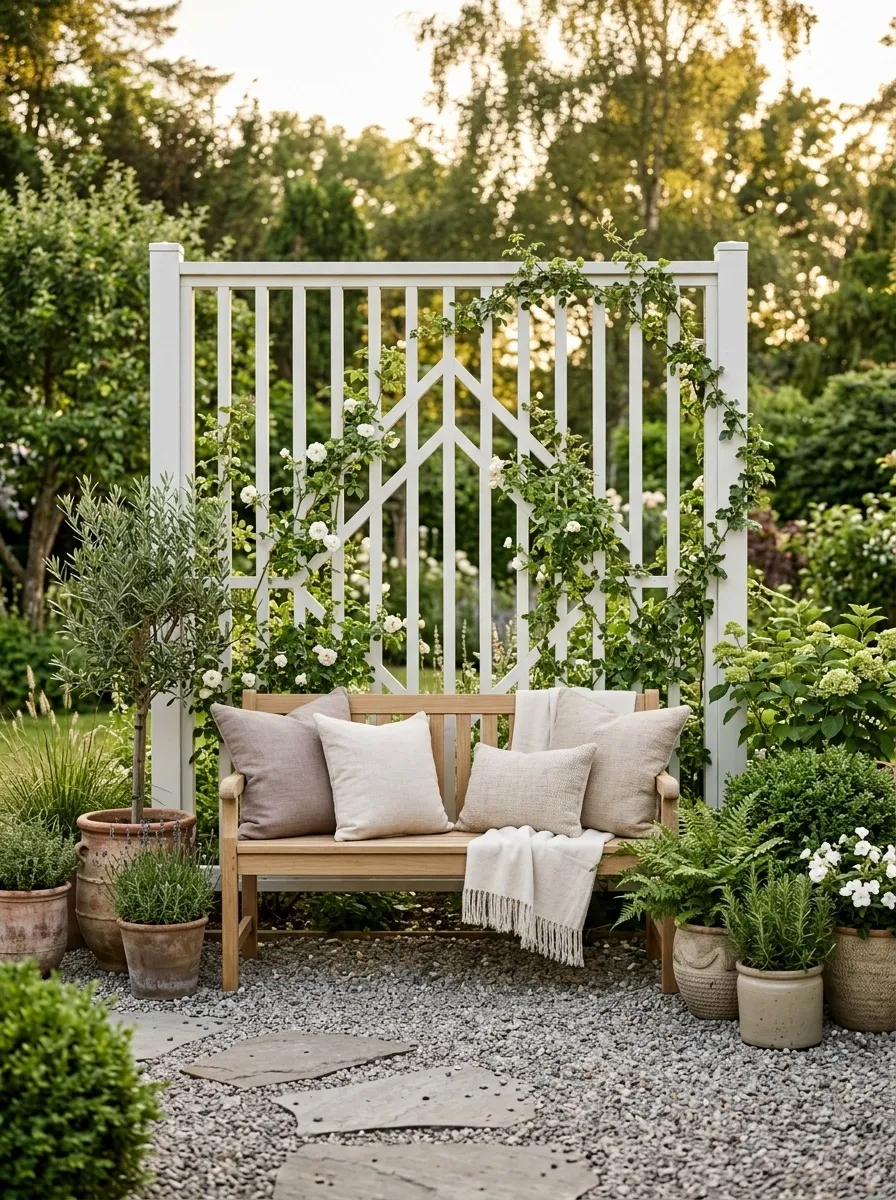
A white trellis can create a lighter garden-style privacy wall around a porch or small patio. In this design, the pale structure stands behind a simple seating arrangement, while flowering climbers weave through the openings and soften the strong vertical lines.
The white finish keeps the boundary visually light, especially when the space already receives plenty of daylight. A natural wood bench, muted cushions, and a small gravel or stone surface complete the composition.
The planting should remain controlled around the seating area. Let the trellis stay visible in places so the structure still contributes to the overall design.
Visual focus: a pale vertical frame provides privacy while flowering greenery makes the barrier feel connected to the garden.
The pale trellis keeps the boundary visually light, while climbing greenery fills only enough of the openings to interrupt the neighboring view.
Mixed Natural Privacy Screen With Willow and Greenery
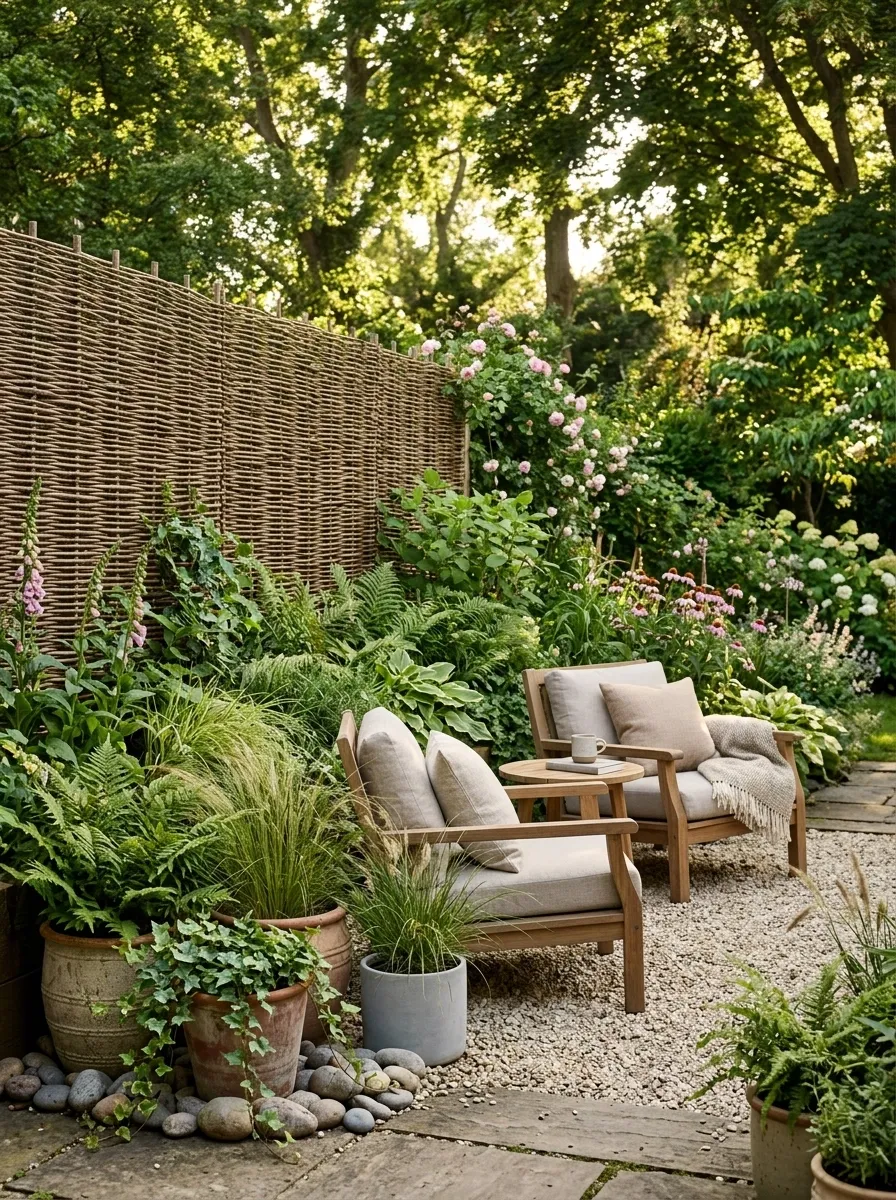
A textured willow-style screen brings a softer, more informal character to a small outdoor seating area. Rather than covering every boundary, the screen occupies one side of a compact garden retreat, with loose greenery planted around its base.
Warm timber furniture and a simple stone or gravel surface complement the natural texture. The screen itself becomes the main backdrop, while the planting creates a gentle transition between the barrier and the rest of the garden.
This design works best when you want privacy to feel woven into the landscape. Avoid pairing it with too many artificial materials because the natural texture is what gives the composition its personality.
Visual focus: dense natural texture forms the backdrop while varied greenery keeps the edges soft.
Layered Budget Backyard With Fence, Trellis, and Planting
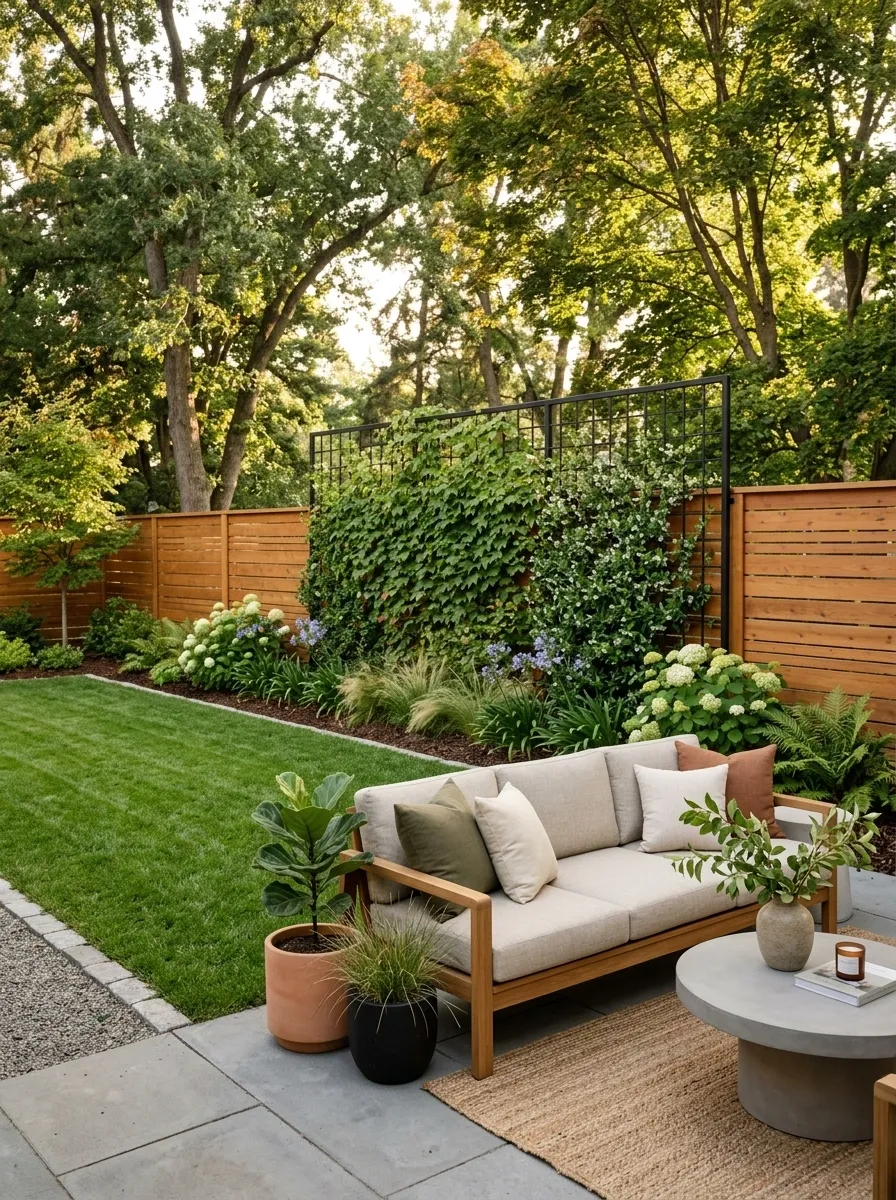
This final composition combines several inexpensive privacy methods into one cohesive backyard. The existing fence provides the lower boundary, a simple trellis adds height in the most exposed section, and climbing or upright planting softens the upper layer.
A compact seating area sits in front, with the rest of the lawn kept open. The different materials are repeated in small ways throughout the space, so the privacy features feel connected rather than randomly added.
The important lesson is hierarchy. The strongest screen belongs exactly where the neighboring view is most obvious. Beyond that section, the garden can become lighter and more open.
Visual focus: fence, vertical structure, planting, and seating work together as coordinated layers.
Choosing the Right Privacy Design for Your Yard
The cheapest solution isn’t always the smallest object or the lowest-cost material. A solution becomes economical when it fixes the actual problem without forcing you to screen areas that never needed screening.
Start with the place where you spend the most time. A sofa, dining table, balcony chair, or garden bench can tell you exactly where the privacy treatment should be concentrated. From there, choose the visual language that fits the space.
A small urban patio may benefit from curtains or a slim trellis. A larger backyard has room for layered planting or mixed fence panels. A narrow side yard needs a very different approach because circulation matters just as much as privacy.
The finished result should still look like a place you’d enjoy using even when the neighbors aren’t outside.
Let the Existing Boundary Help
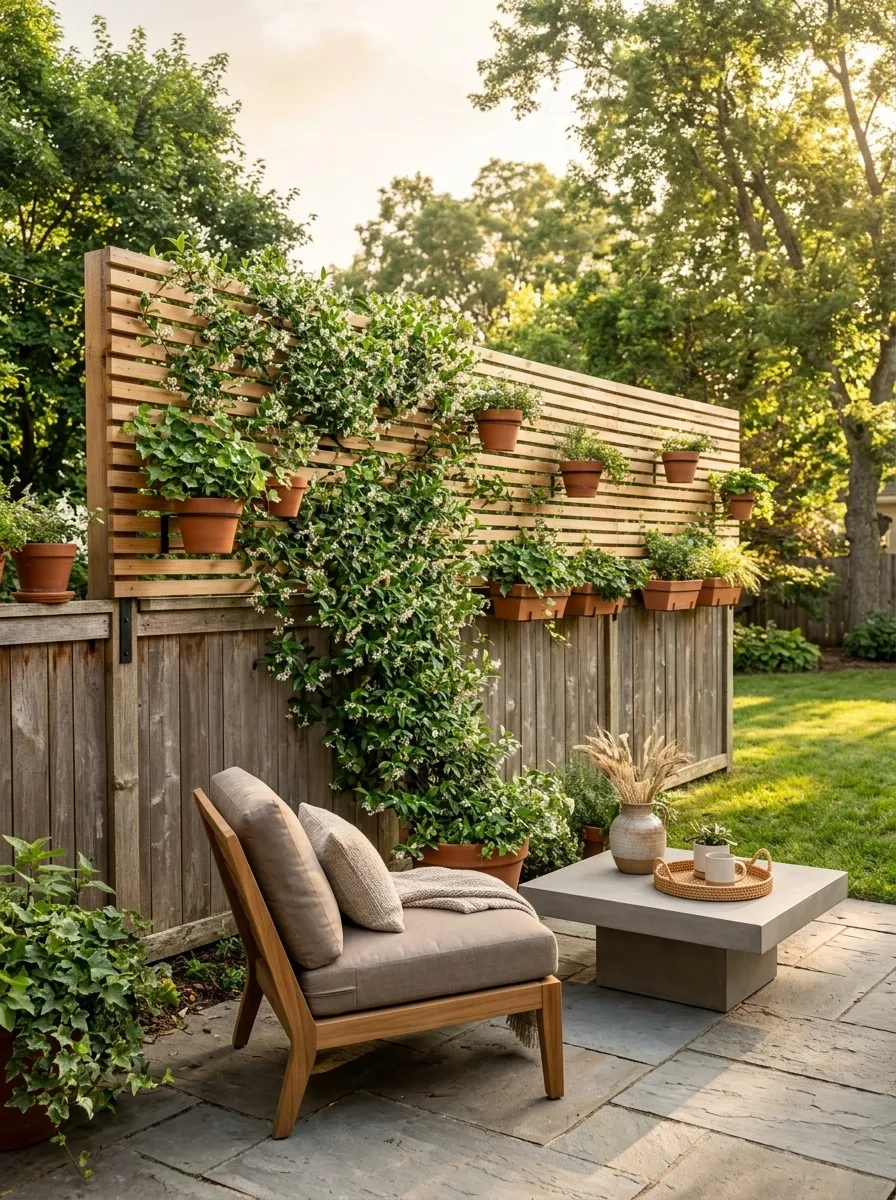
A privacy screen doesn’t always need to start from the ground. An existing fence, wall, railing, pergola, or covered patio structure can become the foundation for the new design.
Building on what’s already there often produces a more cohesive result because the added element looks connected to the property rather than dropped into it.
Protect the Useful Parts of the Yard
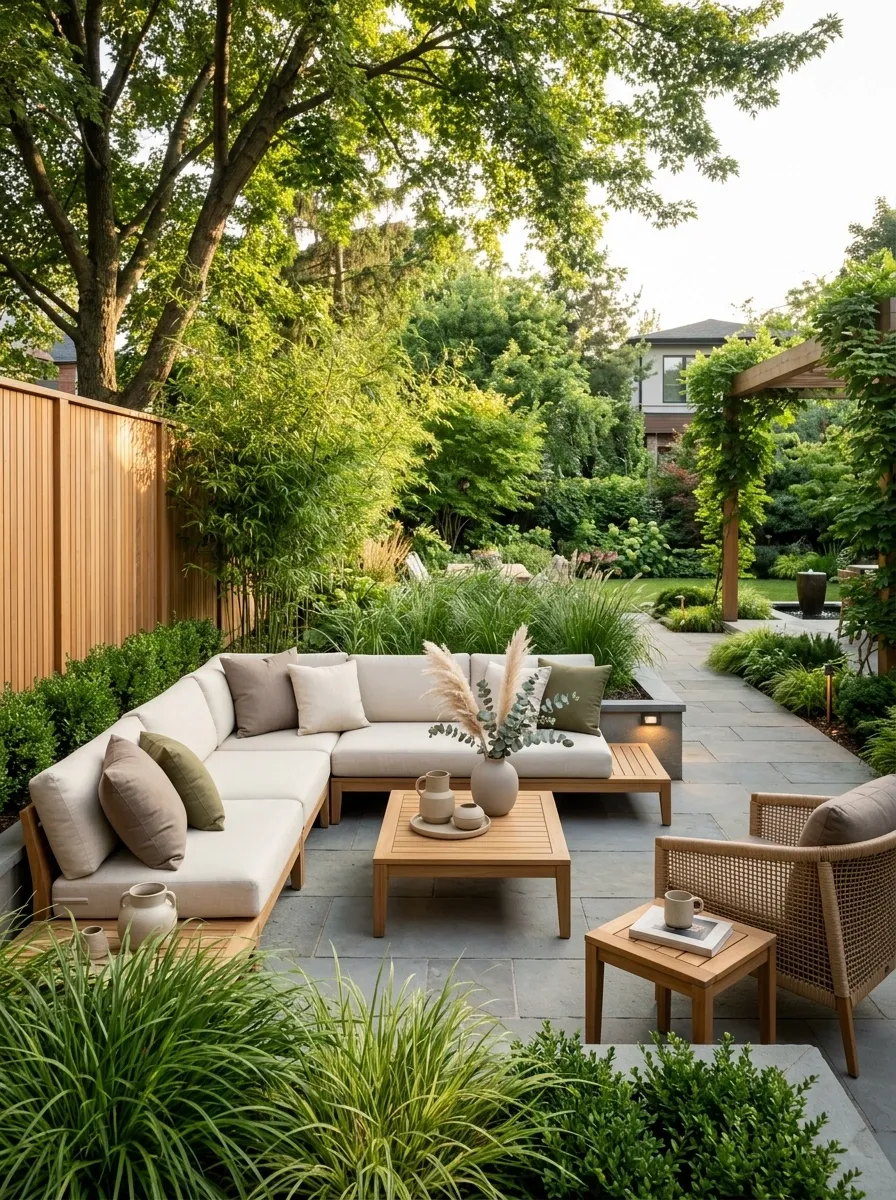
Privacy shouldn’t steal the space you need for walking, opening doors, moving furniture, or using a patio comfortably. That’s why furniture-led screening and narrow planted edges can work so well.
The best arrangement is often the one that leaves most of the yard alone.
Keep the Materials Connected
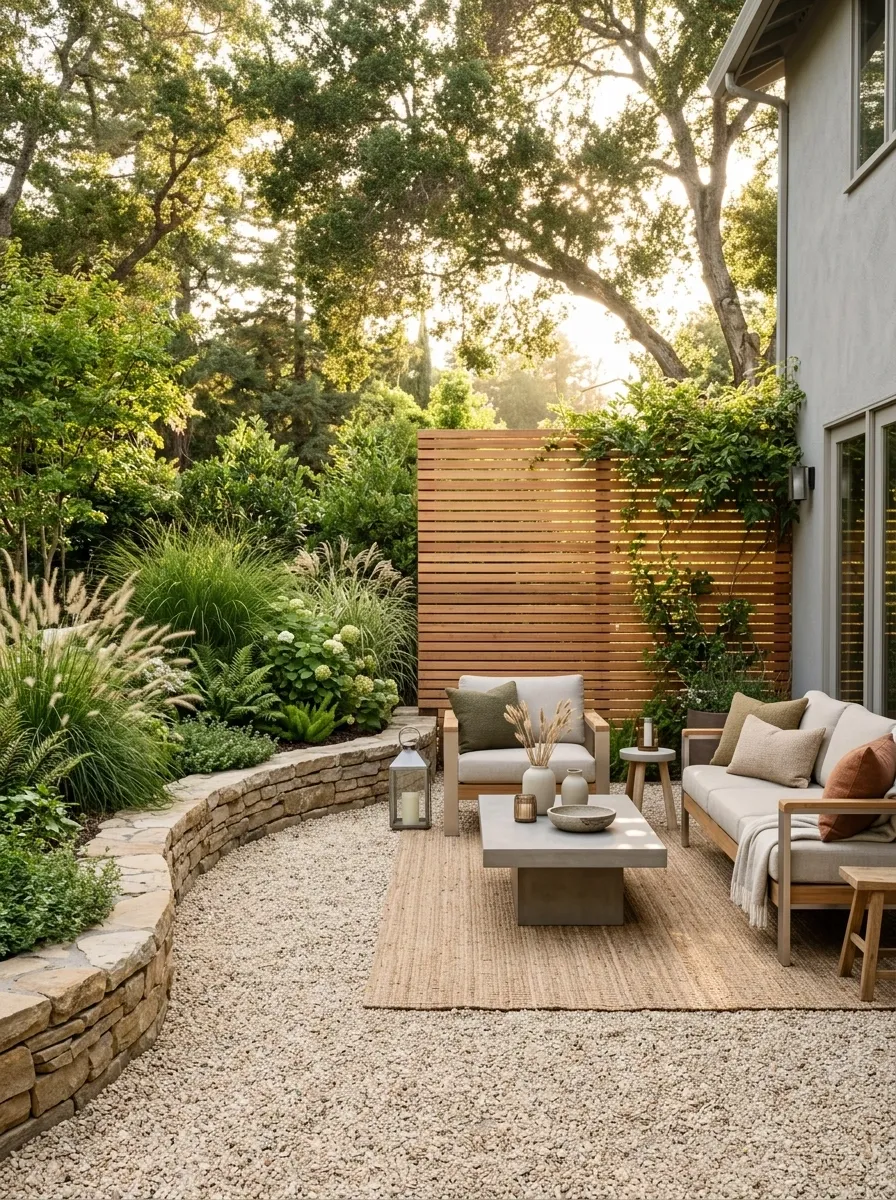
A cheap screen can look much more expensive when its material language relates to the rest of the outdoor space. Warm timber works naturally with gravel, stone, woven textures, and greenery. Black metal sits comfortably with modern furniture and restrained planting. Natural reed and willow look strongest beside other organic textures.
The goal isn’t to match everything exactly. It’s to make the privacy feature feel like it belongs there.
Finding the Look That Fits Your Space
There isn’t one right way to create an outdoor area that feels private. A structured black grid can give a modern patio a clean architectural edge, while layered shrubs can make the same problem feel like part of a garden.
Think about what you want the privacy feature to contribute beyond blocking the view. It may define a seating area, create a stronger backdrop, add greenery, provide shade, or give a plain fence more character.
That’s where inexpensive privacy ideas become much more useful. You’re no longer hiding a problem. You’re designing around it.
The strongest approach is the one that solves the neighbor-facing sightline while leaving the rest of the space open, comfortable, and believable. Save the designs that fit your yard best, then use the complete composition as your reference when planning the finished space.