
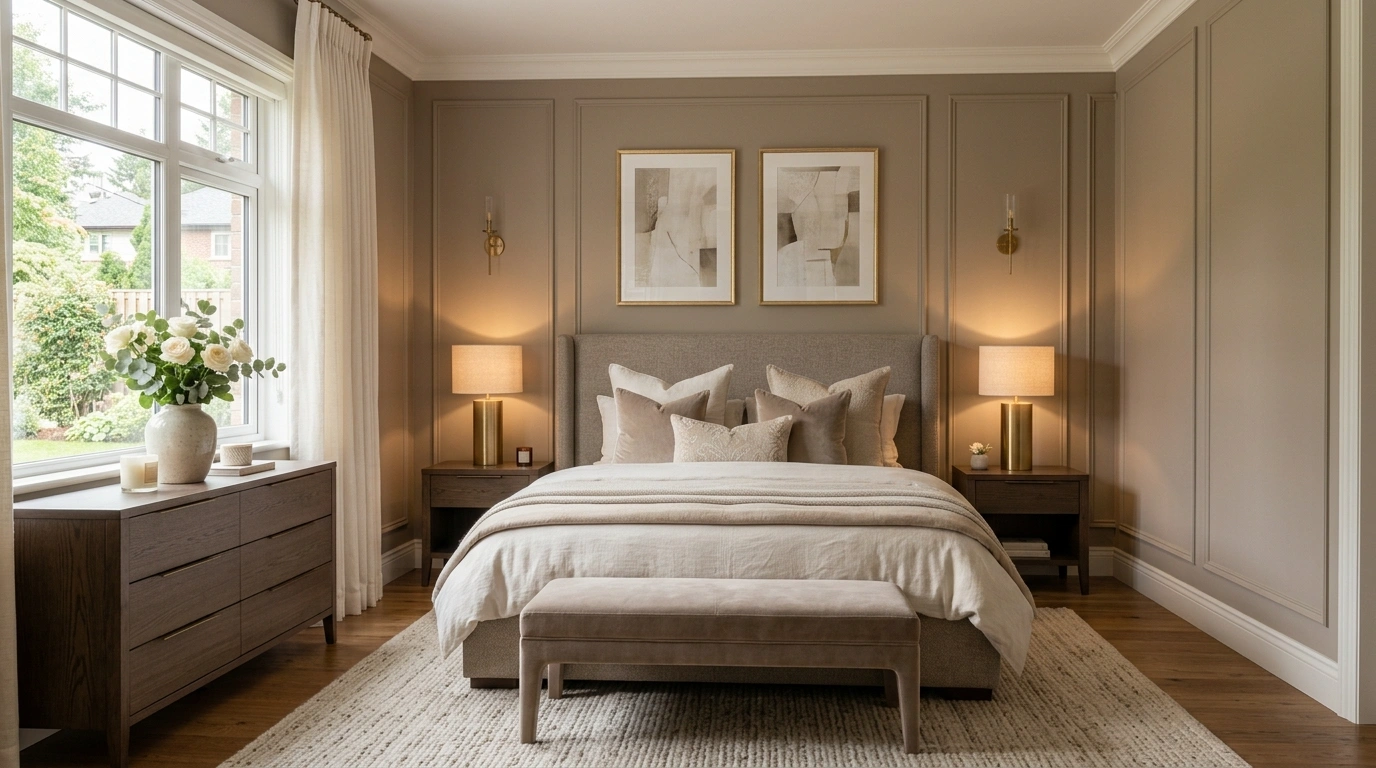
A couples bedroom gets awkward when it starts looking like a compromise nobody actually wanted.
One person likes darker colors. The other wants something light.
One needs a clear nightstand for glasses, a phone, and a book. The other leaves half the day’s belongings beside the bed.
Then the room slowly fills with furniture and decor that seemed like a good idea at the time.
The answer isn’t making everything match.
A bedroom shared by two people needs a strong visual foundation, but it also needs to work at bedtime, first thing in the morning, and during all the messy little moments in between.
That’s where smart Couples Bedroom ideas make a difference.
The best rooms balance comfort, function, scale, and personality without looking like two separate decorating schemes pushed together.
Start with the things that affect both people every day.
Then layer in the details that make the room feel personal.
These ideas show you exactly where to make those moves.
Couples Bedroom Planner: Start With the Problem You Actually Have
Use the situation below that sounds most like your bedroom, then let that problem guide your first design decisions.
Start With the Problem, Not the Decor
Find the situation that sounds most like your bedroom, then follow the design move beside it.
Couple Bedroom Ideas
Build the Bed Around One Strong Shared Focal Point
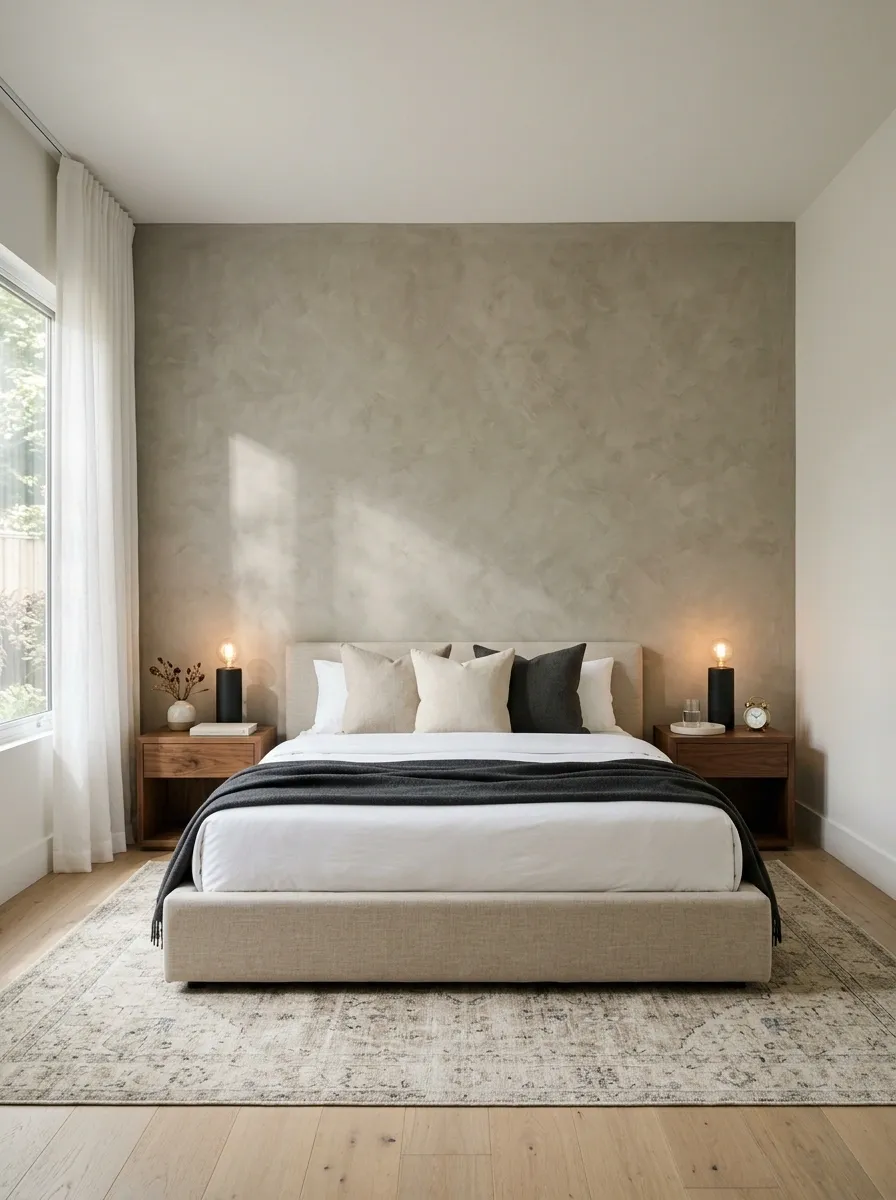
A bedroom feels unsettled when every wall is trying to be important.
Put the attention where it belongs: the bed.
Choose one strong anchor, such as a tall upholstered headboard, a textured plaster wall, or a wide wood panel behind the bed.
Then keep everything around it quieter.
Build the focal point like this:
- One dominant headboard or wall treatment
- Simple bedding underneath
- Matching bedside scale
- One restrained decorative layer
The trick is restraint.
A dramatic headboard doesn’t need a gallery wall, oversized lamps, and six pillows fighting for attention.
Set the Mood With Romantic Lighting and Textures
Creating a bedroom that feels romantic for both partners starts with softening the overall atmosphere. Frame the headboard with delicate fairy lights to cast a warm, inviting glow across the room without needing harsh overhead fixtures. It instantly makes the space feel intimate and intentional.
Layering deep shades of red and burgundy against a neutral backdrop gives the bed a rich, collected look. Start with crisp white bedding, then drape a textured maroon throw across the lower half and scatter matching accent pillows. This approach brings in color without overwhelming the neutral walls.
Finish the bedside setup with personal touches like framed love notes and fresh flowers. A small side table holding two glasses of wine and a lit candle turns the room into a peaceful retreat. It is a thoughtful design that balances softness with a touch of drama.
Use Two Matching Nightstands to Create Visual Balance
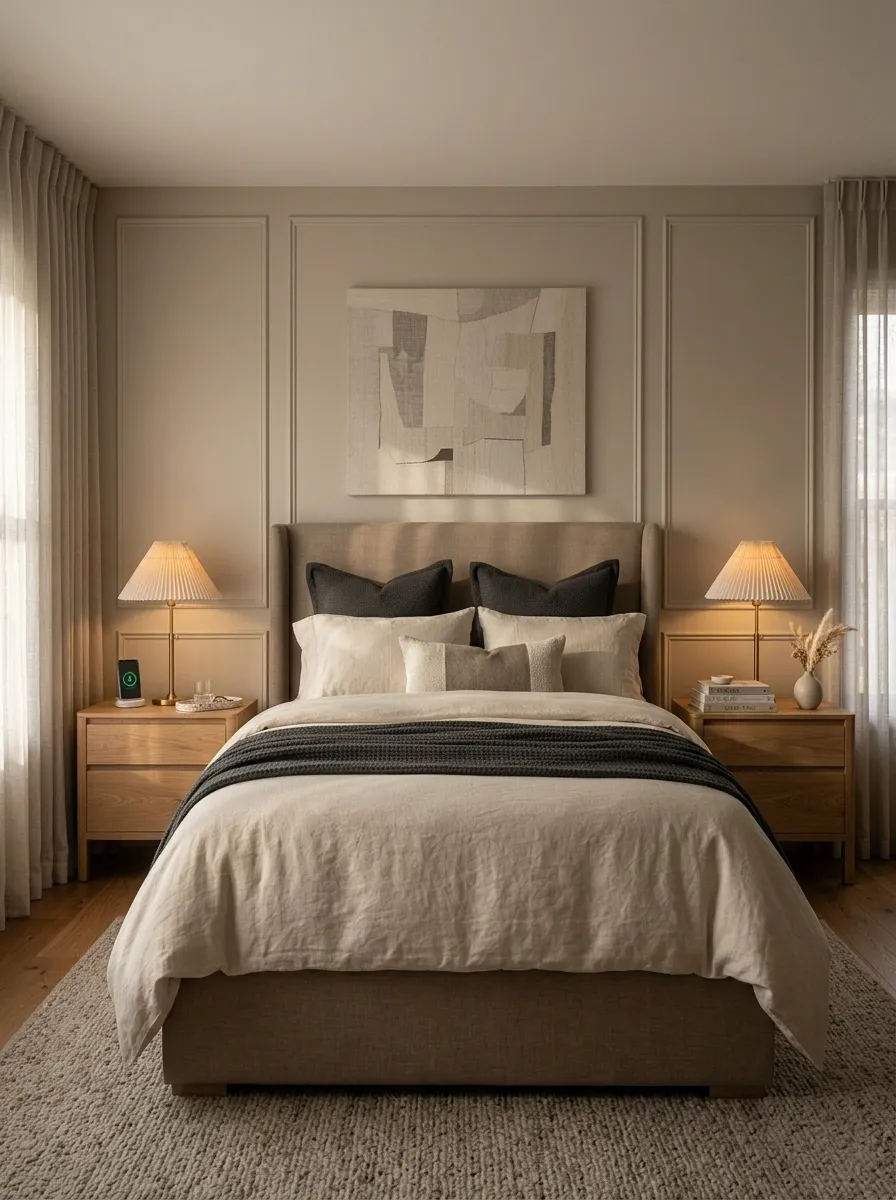
Matching nightstands do more than make the room symmetrical.
They stop the bed from looking visually lopsided.
Keep the frames similar in width and height, then personalize what sits on top.
Use this simple setup:
- Same nightstand shape
- Same lamp scale
- Different small objects
- Clear surface area for everyday use
One person might need a charging station.
The other might want a small stack of books.
That’s fine.
The structure stays shared while the details stay personal.
Anchor the Space With Bold Contrast
A successful couple’s bedroom often relies on balancing deep, moody tones with soft, welcoming textures. Pair a black upholstered headboard with blush pink bedding to create a striking contrast that feels neither too masculine nor too feminine. The dark frame grounds the room while the lighter fabrics keep it airy.
Keep the nightstands and dressers consistent by sticking to a dark finish that matches the bed frame. This creates visual continuity across the room and prevents the space from looking disjointed. Add a small matching ottoman at the foot of the bed for a functional spot to sit.
Layer the windows with a mix of dark blackout curtains and sheer panels wrapped in fairy lights. This dual-layer approach lets you control both privacy and natural light effortlessly. It results in a sophisticated bedroom that satisfies both design preferences.
Mix Warm Wood With Soft Bedding for a Less “His or Hers” Look
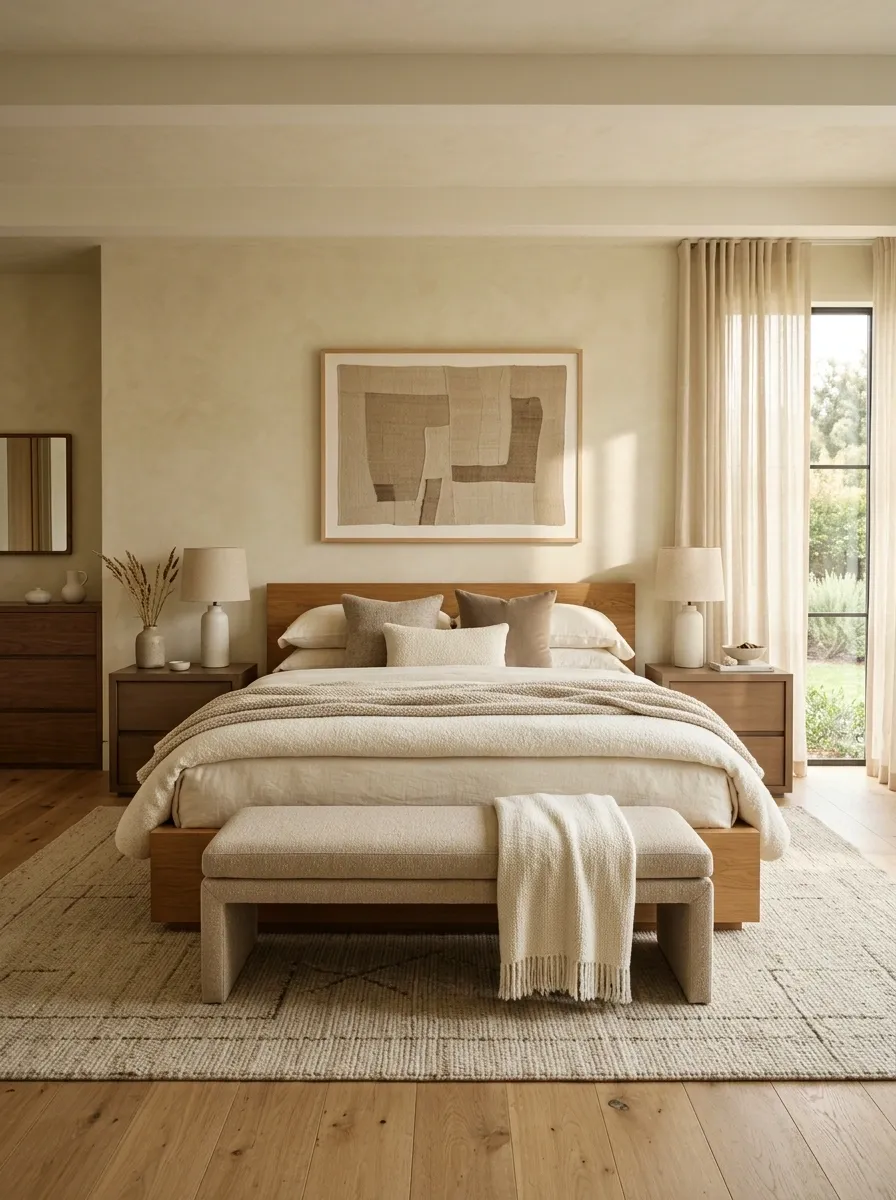
A room starts feeling more balanced when hard and soft materials share the space.
Warm oak, walnut, or medium wood brings structure.
Linen, cotton, boucle, or quilted bedding softens it.
Neither side dominates.
Start with the biggest surfaces first.
A wood bed frame paired with creamy bedding is enough to establish the direction before you add smaller accessories.
The strongest mix is simple:
- Warm wood for structure
- Soft textiles for comfort
- Matte finishes for a calmer backdrop
- Small metal accents used sparingly
That combination works because it doesn’t push the room too far toward one decorating style.
Celebrate Together With Glowing Candles and Balloons
Marking a special occasion in the bedroom doesn’t mean sacrificing everyday comfort. Use a soft arrangement of candles on the floor and rose petals on the bed to create an unforgettable setting for two. The flickering light brings an instant warmth that transforms the entire room.
Keep the headboard simple and let the festive decorations take center stage. Heart-shaped balloons and glowing marquee lights above the bed add a playful yet romantic element to the space. The crisp white bedding acts as a clean canvas for the deep red details.
Arrange the floor candles in a neat heart shape to anchor the walking space at the foot of the bed. Combine them with scattered rose petals and floating foil balloons for a cohesive look. It is a memorable way to celebrate while keeping the room feeling personal and inviting.
Give Both Sides of the Bed Their Own Useful Lighting
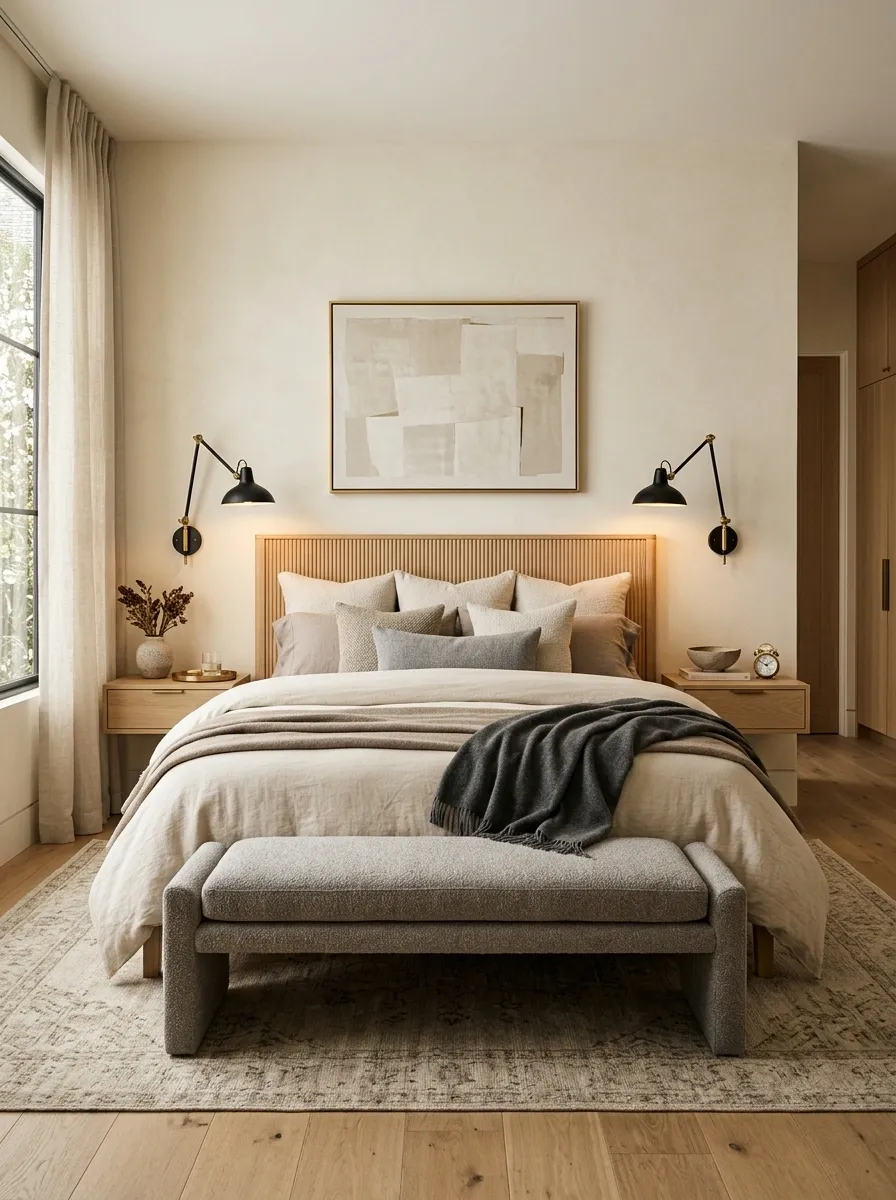
Nothing exposes a poorly planned bedroom faster than one tiny lamp doing all the work.
Each side of the bed should have its own light source.
Wall sconces save space in smaller rooms.
Plug-in pendants work when the ceiling is the right height.
Table lamps are the easiest choice when you don’t want electrical work.
Set them up in this order:
- Place the light where it can be reached from bed.
- Keep the scale similar on both sides.
- Use warm, comfortable light for the evening.
- Add a ceiling fixture only as the general layer.
Good bedside lighting makes reading, winding down, and getting up during the night much less irritating.
Canopy the Ceiling With Lush Faux Florals
Bringing nature into the bedroom creates a serene escape that both partners can appreciate. Suspend a lush arrangement of faux roses and green vines above the bed to form an enchanting overhead canopy. It acts as a dramatic focal point that softens the entire room.
Pair the dark wooden wall panels with rich burgundy and berry-toned bedding to complement the overhead floral display. The mix of dark wood and textured fabrics creates a moody, intimate atmosphere that feels grounded. Keep the surrounding decor minimal to let the textures shine.
Weave a string of warm fairy lights through the overhead greens to add a subtle evening glow. The combination of twinkling lights and natural elements makes the bedroom feel like a hidden woodland retreat. It is a bold, romantic design choice that completely redefines the space.
Choose a Neutral Base Then Add One Deep Accent Shade
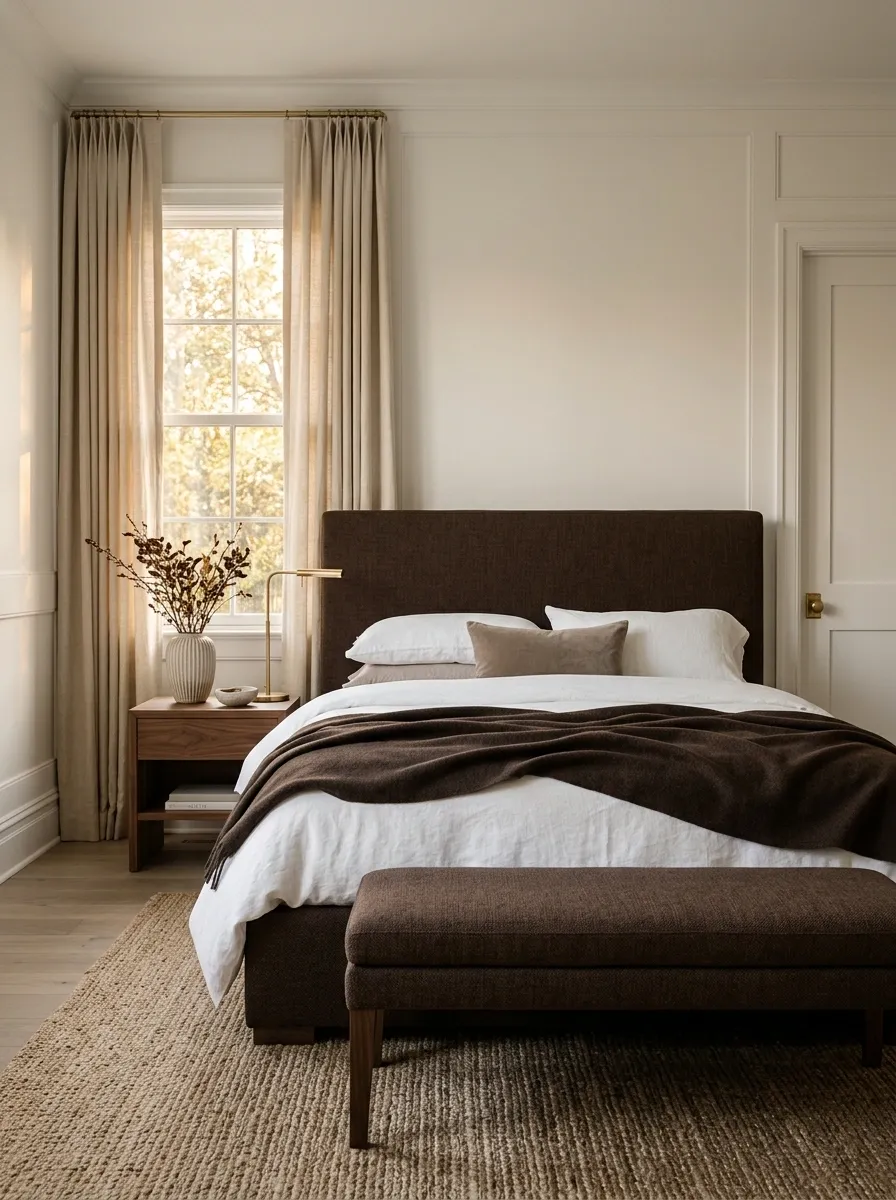
Couples usually don’t need a perfectly matched color palette.
They need a base that both people can live with.
Start with warm white, beige, taupe, soft gray, or another quiet neutral.
Then introduce one deeper shade through the headboard, curtains, throw, bench, or artwork.
The important word is one.
Don’t scatter five accent colors around the room.
A deep olive, muted navy, chocolate brown, charcoal, or terracotta can give the bedroom enough contrast without making it feel themed.
Layer the Bed With Different Textures Instead of More Patterns
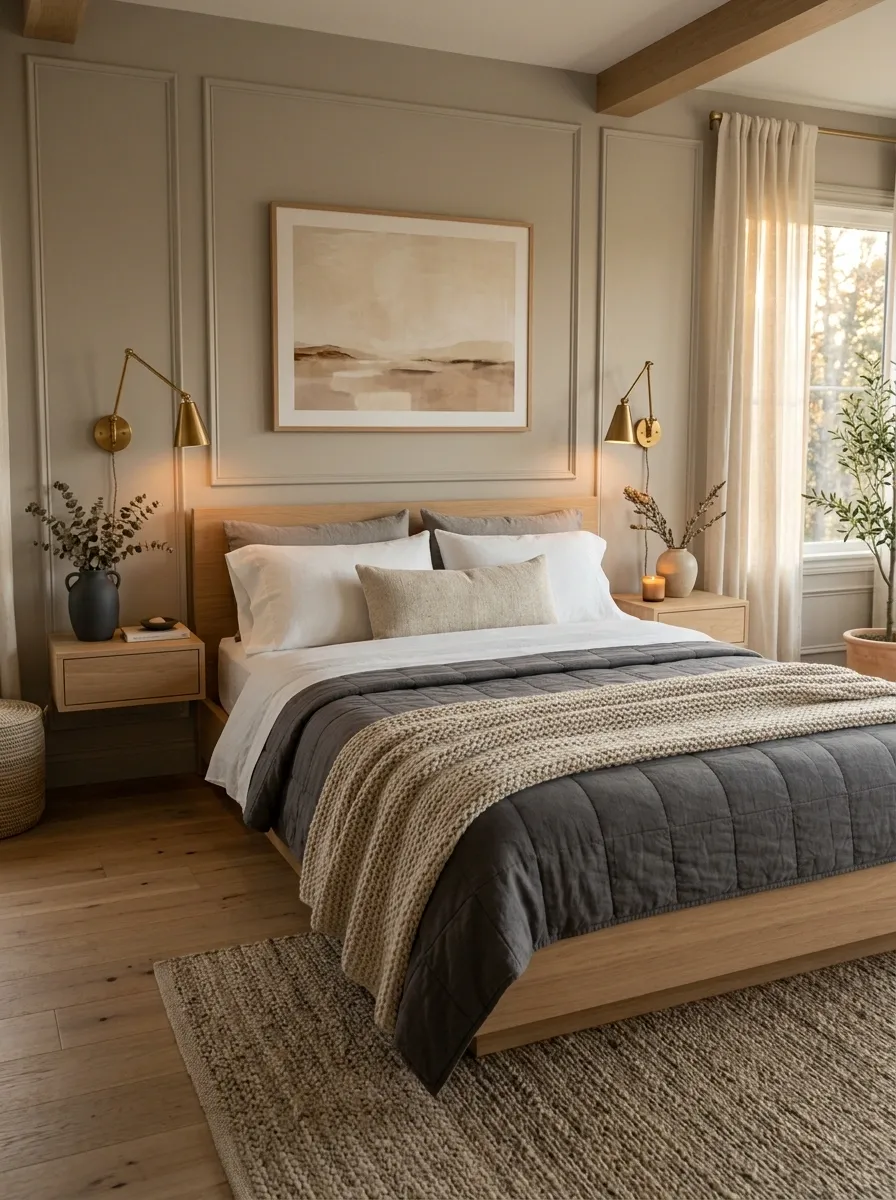
A bed doesn’t need more prints to look interesting.
It needs texture that changes as your eye moves across it.
Start with smooth sheets.
Add a slightly heavier duvet.
Then finish with one woven or knitted throw.
Use pillows sparingly.
Too many competing patterns make a shared bedroom feel busy fast.
Build the layers like this:
- Smooth base sheets
- Soft quilt or duvet
- Textured throw at the foot
- Two or three useful pillows
The contrast between crisp bedding and a rougher woven layer gives the bed depth without turning it into a pile of decorative cushions.
Hang One Oversized Artwork Above the Bed
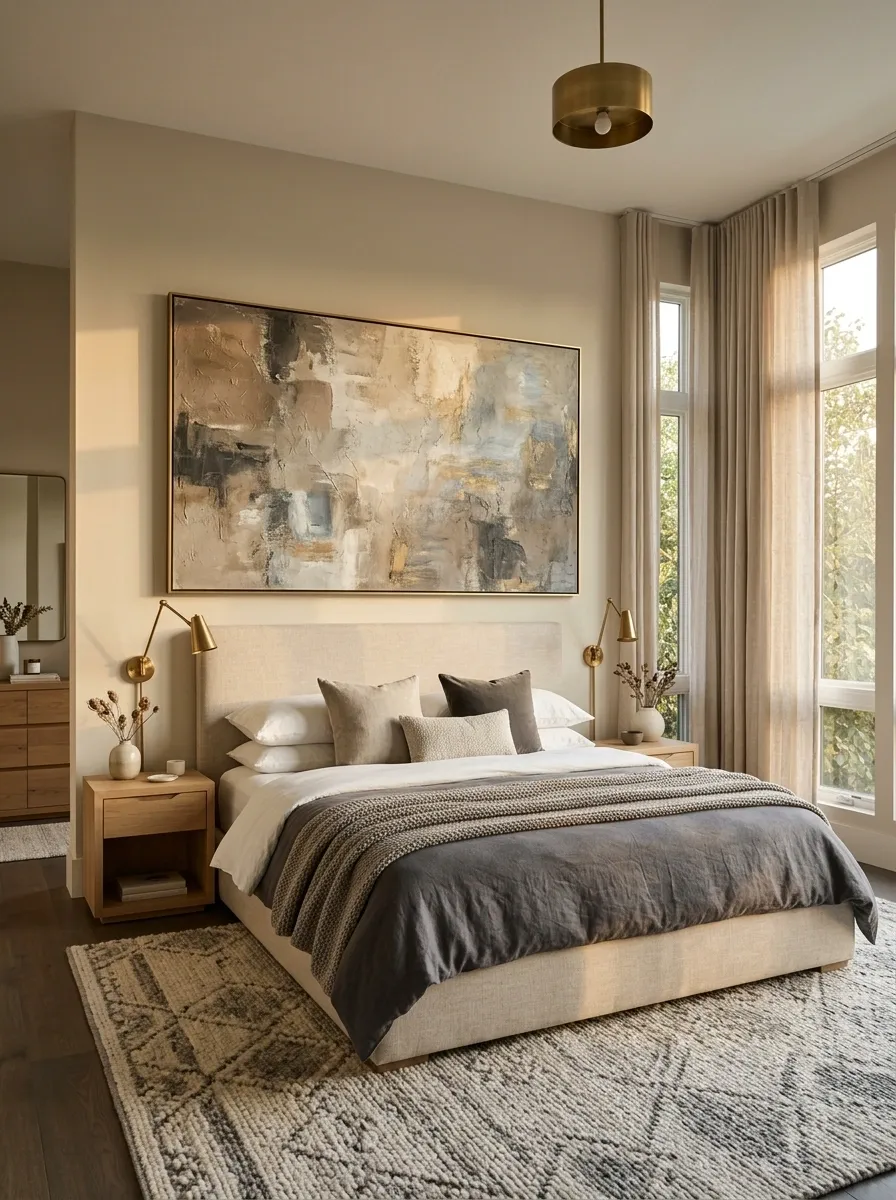
Small artwork often makes a large bed wall look strangely unfinished.
One substantial piece fixes that faster than a collection of tiny frames.
Choose something wide enough to visually relate to the bed rather than floating like an afterthought.
Abstract artwork, a quiet landscape, line art, or a textured canvas all work well.
The key is scale, not subject.
Aim for a piece that:
- Relates clearly to the bed width
- Uses colors already found in the room
- Leaves breathing room around it
- Doesn’t compete with the headboard
Skip several unrelated prints unless the bedroom genuinely benefits from a gallery arrangement.
Create a Small Seating Spot at the Foot of the Bed
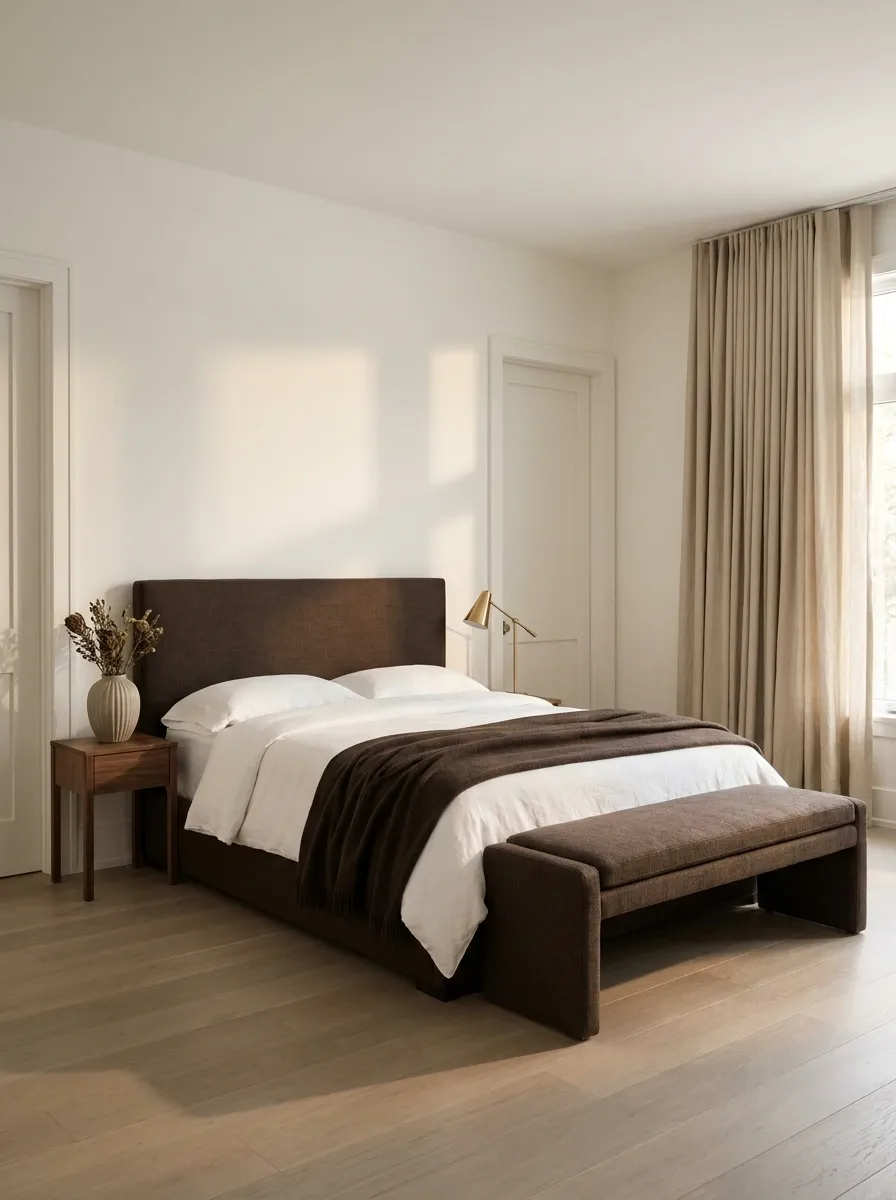
A bedroom doesn’t need a full sitting room.
A compact bench or pair of slim chairs can give the space a second useful zone without stealing the spotlight from the bed.
This is especially useful when one person likes to sit and read, put on shoes, or fold clothes somewhere other than the bed.
Keep the furniture visually light.
A cushioned bench with exposed legs usually works better than a bulky storage ottoman in a tighter room.
Use Curtains That Make the Whole Room Feel Softer
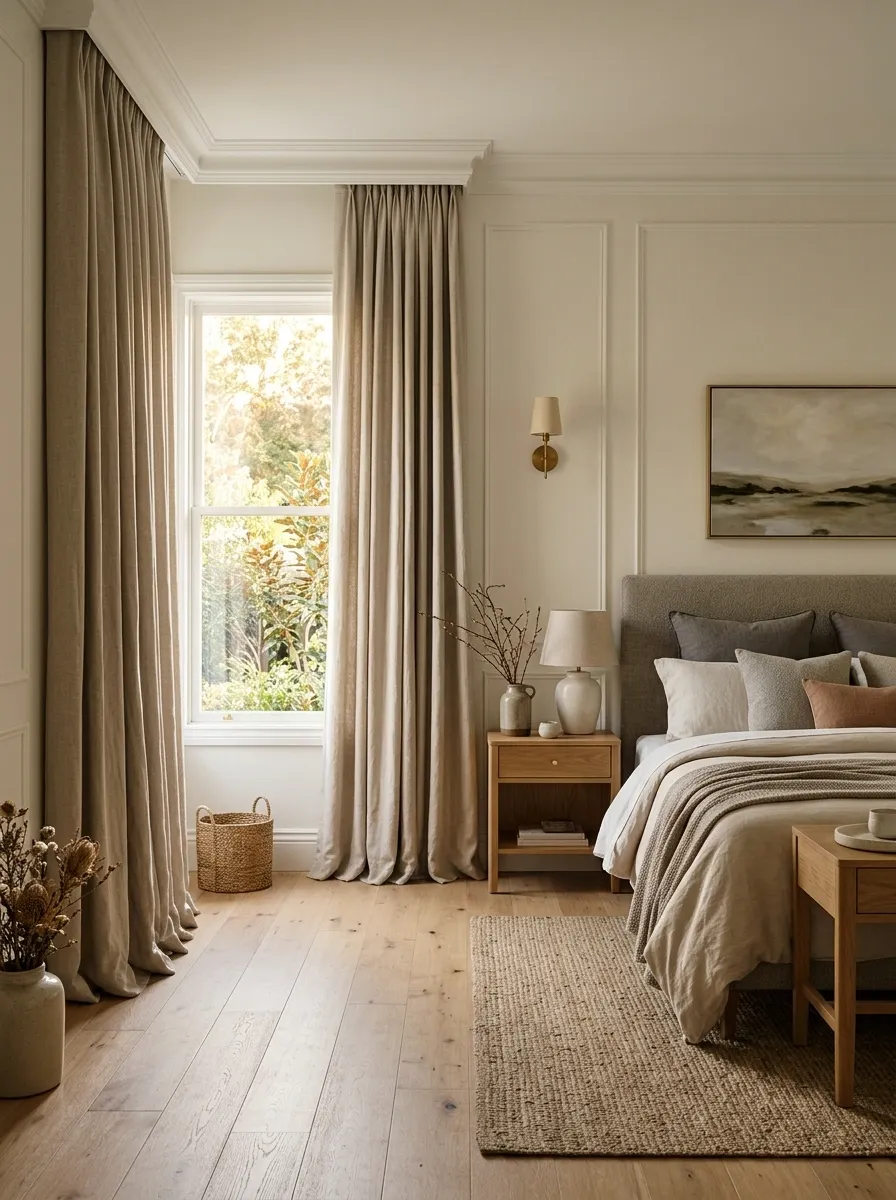
Curtains shouldn’t look like they’re simply covering a window.
They should help frame the entire room.
Mount the rod high and let the panels fall close to the floor.
Choose a fabric with enough weight to soften light without looking stiff.
For a couples bedroom, warm neutral curtains are the safest starting point because they work with both cool and warm bedding.
Look for:
- Full-length panels
- A calm neutral shade
- Enough width for generous folds
- Fabric with visible softness
The room instantly feels more settled when the window treatment reaches the floor instead of stopping halfway down the wall.
Add a Bench at the End of the Bed for Function and Shape
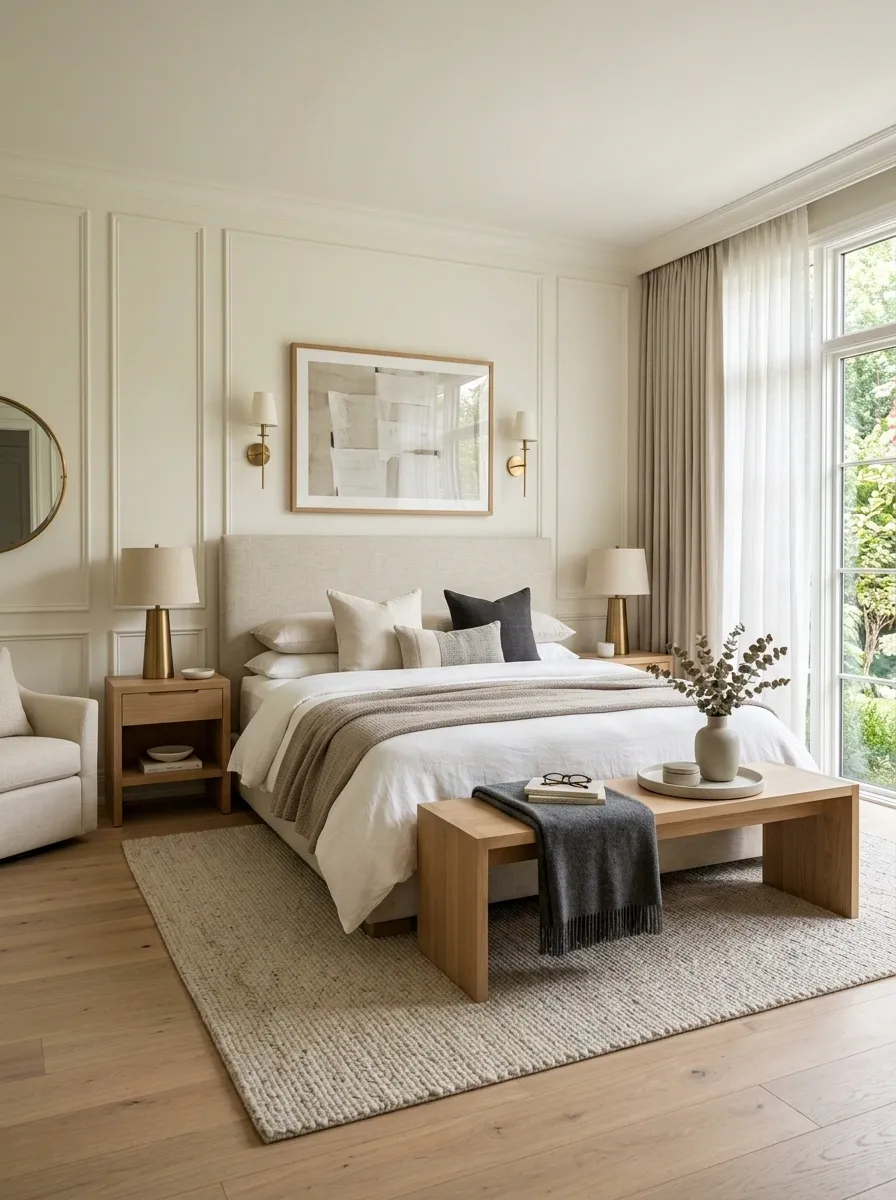
The foot of the bed is often wasted space.
A bench gives it a job without making the room feel stuffed with furniture.
Choose a design that’s long enough to relate to the bed but shallow enough to preserve the walking path.
Upholstered benches bring softness.
Wood benches add structure.
A woven bench works when the room already has plenty of smooth surfaces.
Use it for things you’ll actually do:
- Sitting while putting on shoes
- Folding tomorrow’s clothes
- Holding an extra blanket
- Creating a visual finish for the bed
Skip oversized storage benches when the room is already tight.
Mix Metal Finishes Without Making the Room Look Random
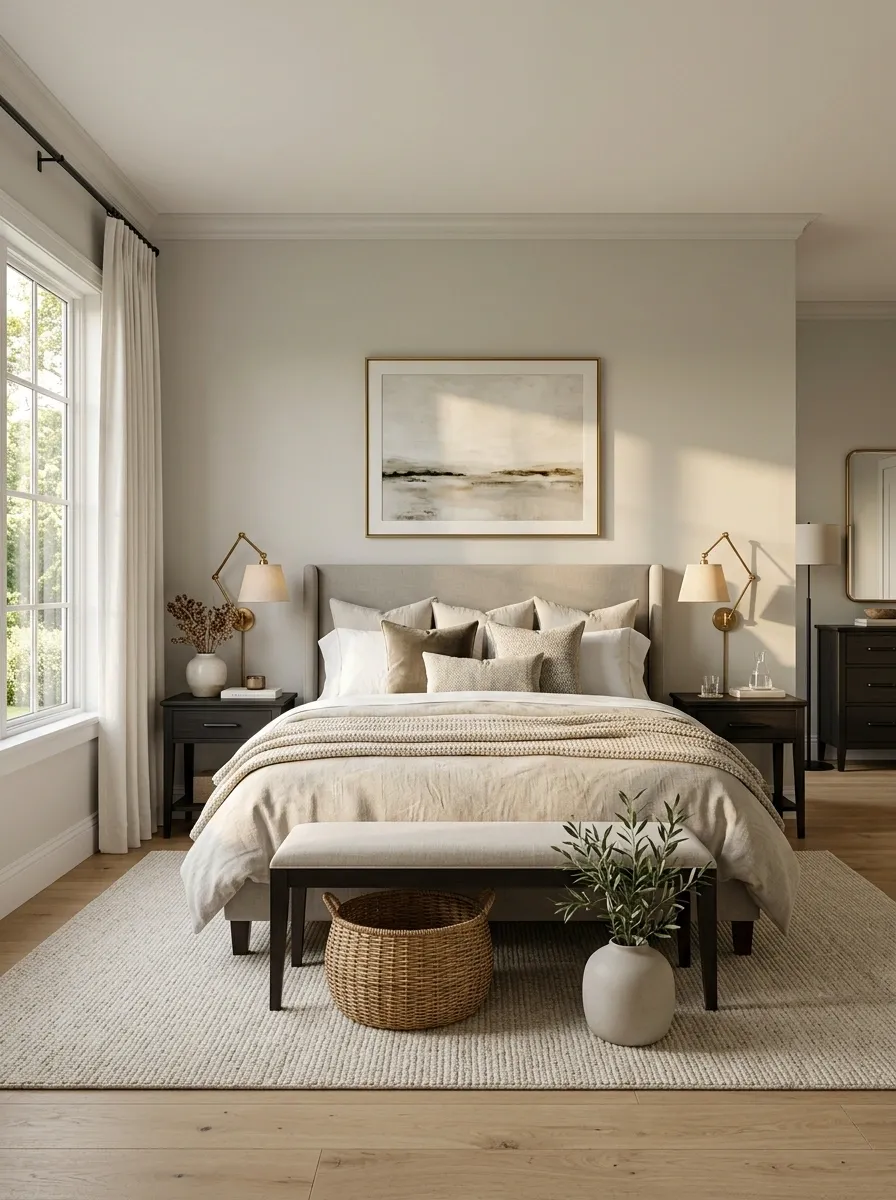
You don’t need every metal finish to match.
You do need a clear hierarchy.
Pick one finish as the main player, then use a second finish only where it makes sense.
For example, warm brass on bedside lamps can work with black curtain hardware when the rest of the room stays controlled.
Follow this sequence:
- Choose the dominant metal.
- Repeat it in at least two places.
- Introduce a second finish sparingly.
- Keep the shapes related even when the finishes differ.
The goal isn’t perfect matching.
It’s repetition with enough variation to keep the room from looking like a showroom set.
Build a Cozy Reading Corner With Two Distinct Preferences
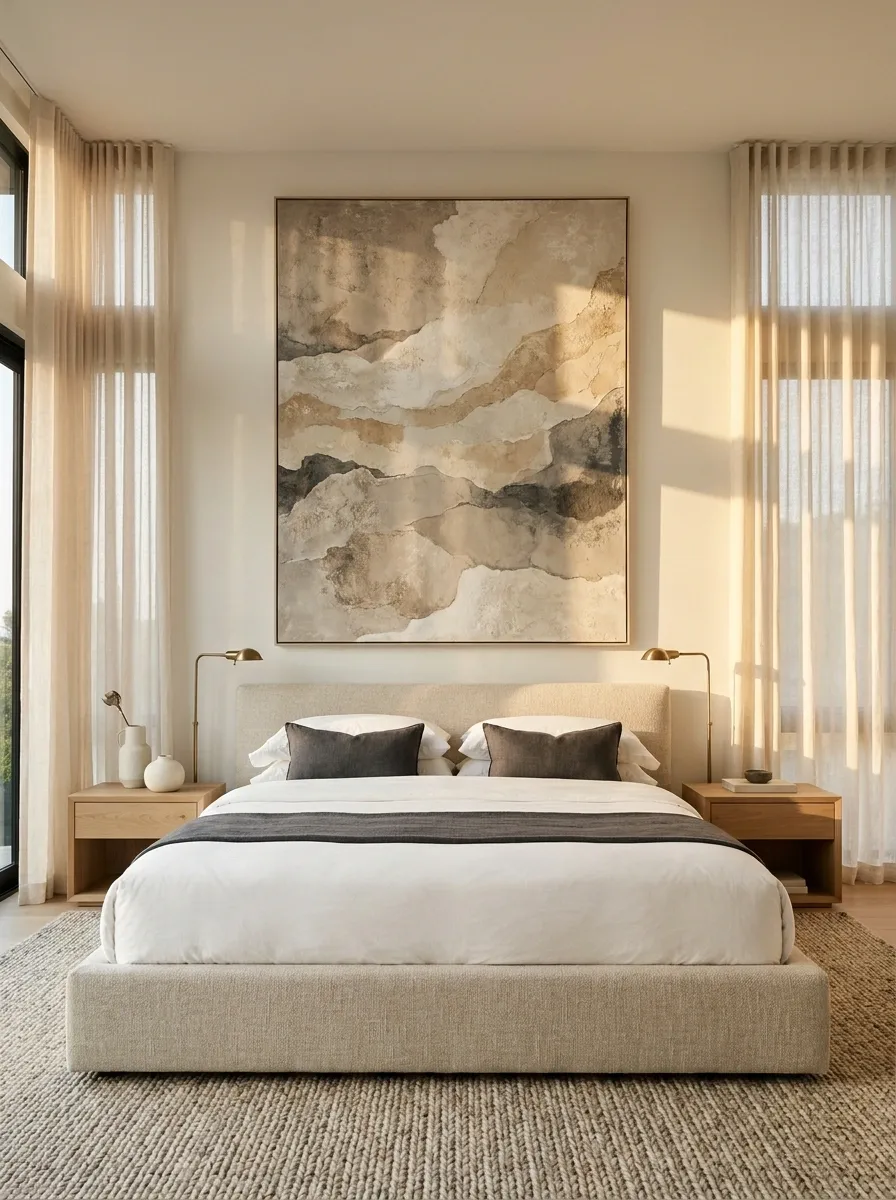
Shared bedrooms don’t require shared hobbies.
One person may want a quiet chair for reading while the other wants the room to stay open and uncluttered.
Solve both by creating a small, defined corner instead of adding seating everywhere.
A comfortable chair, a slim floor lamp, and a tiny side table are enough.
Keep the footprint compact so the corner feels intentional rather than like leftover furniture.
The smartest reading spot isn’t the biggest one.
It’s the one that doesn’t interrupt the rest of the room.
Choose Bedding That Looks Good in Daylight and at Night
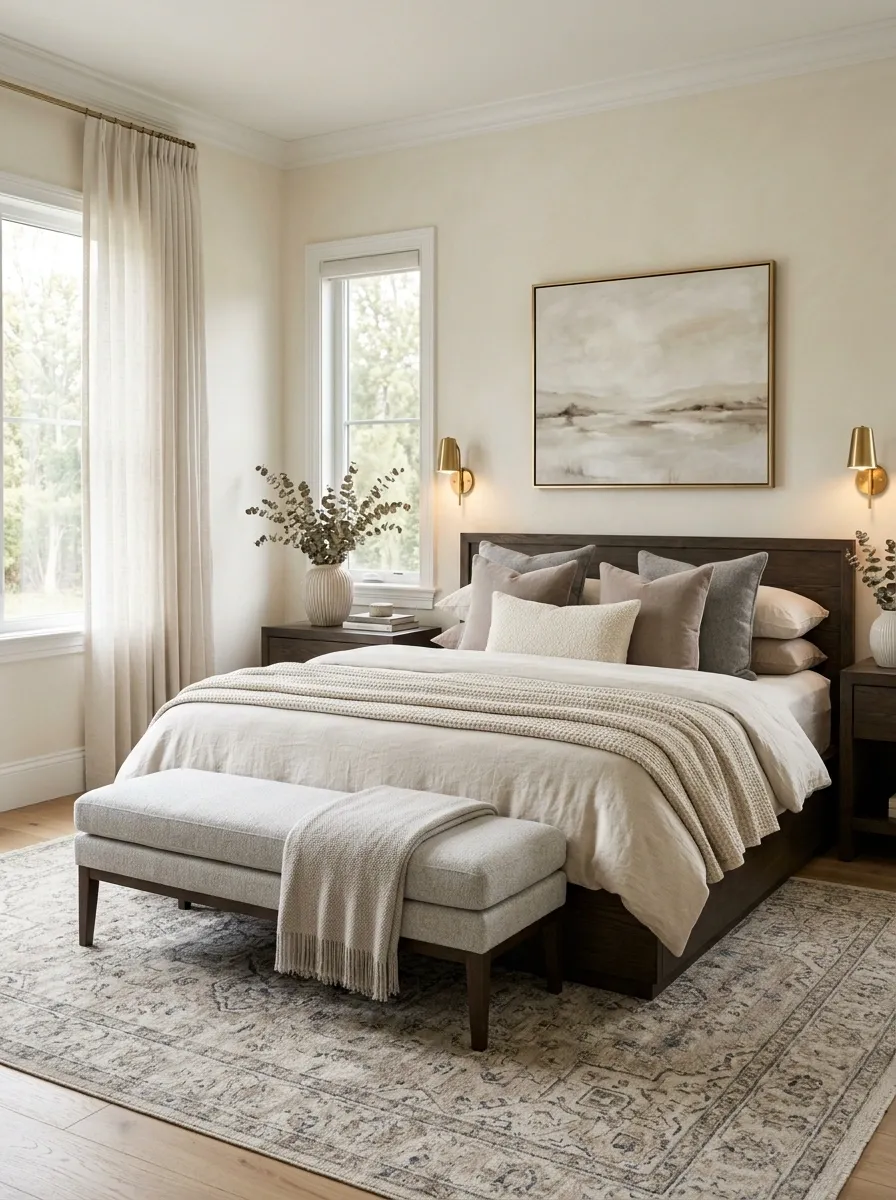
Some bedding looks fantastic under store lighting and completely different in a real bedroom.
The safest approach is to start with a color that feels comfortable in both bright daylight and warm evening light.
Cream, oatmeal, taupe, soft gray, muted blue, and earthy shades are easier to live with than highly saturated colors.
Texture matters too.
A duvet with a little visual depth won’t look flat when the lights are dim.
Before buying anything, hold the fabric near the actual bed and look at it during both parts of the day.
That’s where the real color shows up.
Use a Large Rug to Tie Both Sides of the Room Together
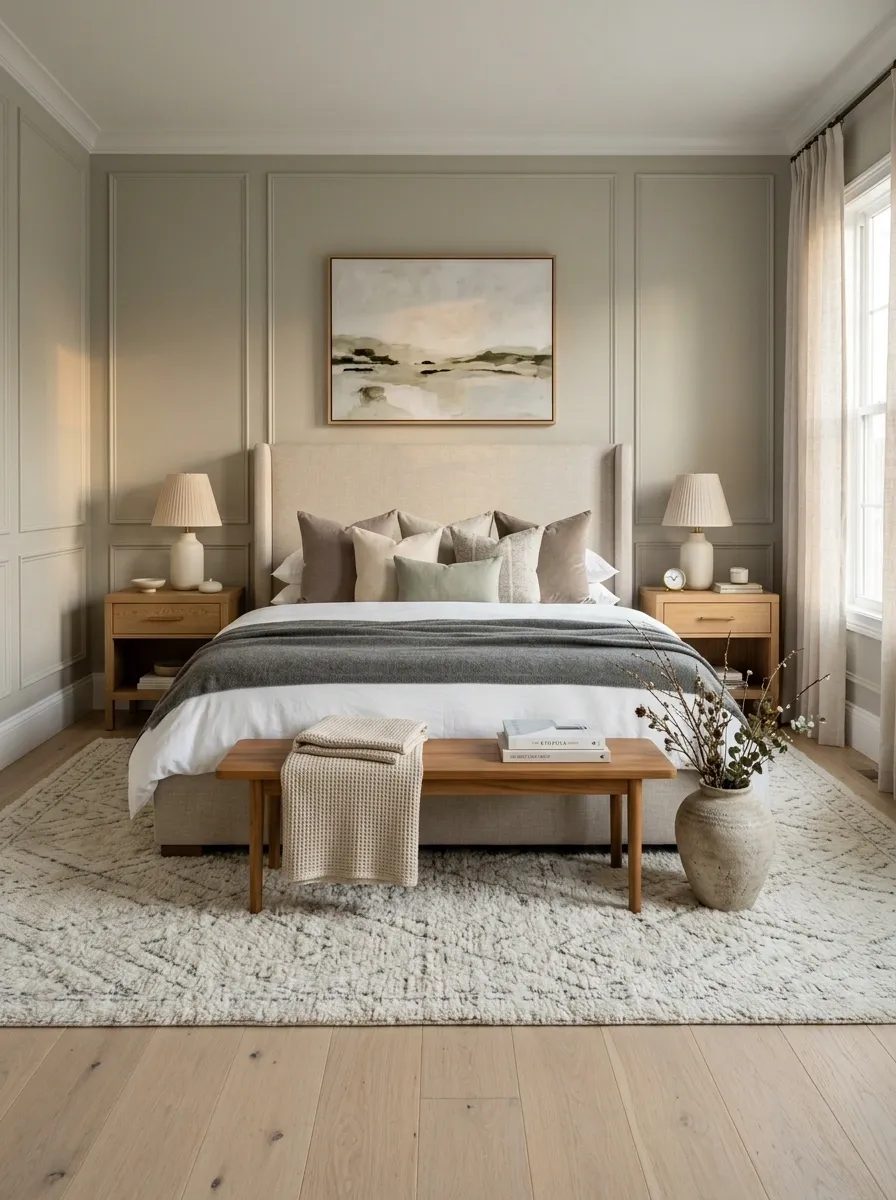
A tiny rug floating under the coffee table won’t do much for a bedroom.
A properly sized rug creates a visual zone around the bed and makes both sides feel connected.
Place the rug so it extends beyond the bed on the sides and toward the foot.
In a smaller room, a runner on each side can work, but a single larger rug usually creates a cleaner composition.
Think of the rug as the room’s foundation:
- It connects the nightstands visually
- It softens the hard floor around the bed
- It adds another layer of texture
- It gives the furniture a shared base
When the rug feels anchored to the bed, the entire room reads as one arrangement.
Bring In Plants That Add Life Without Taking Over the Room
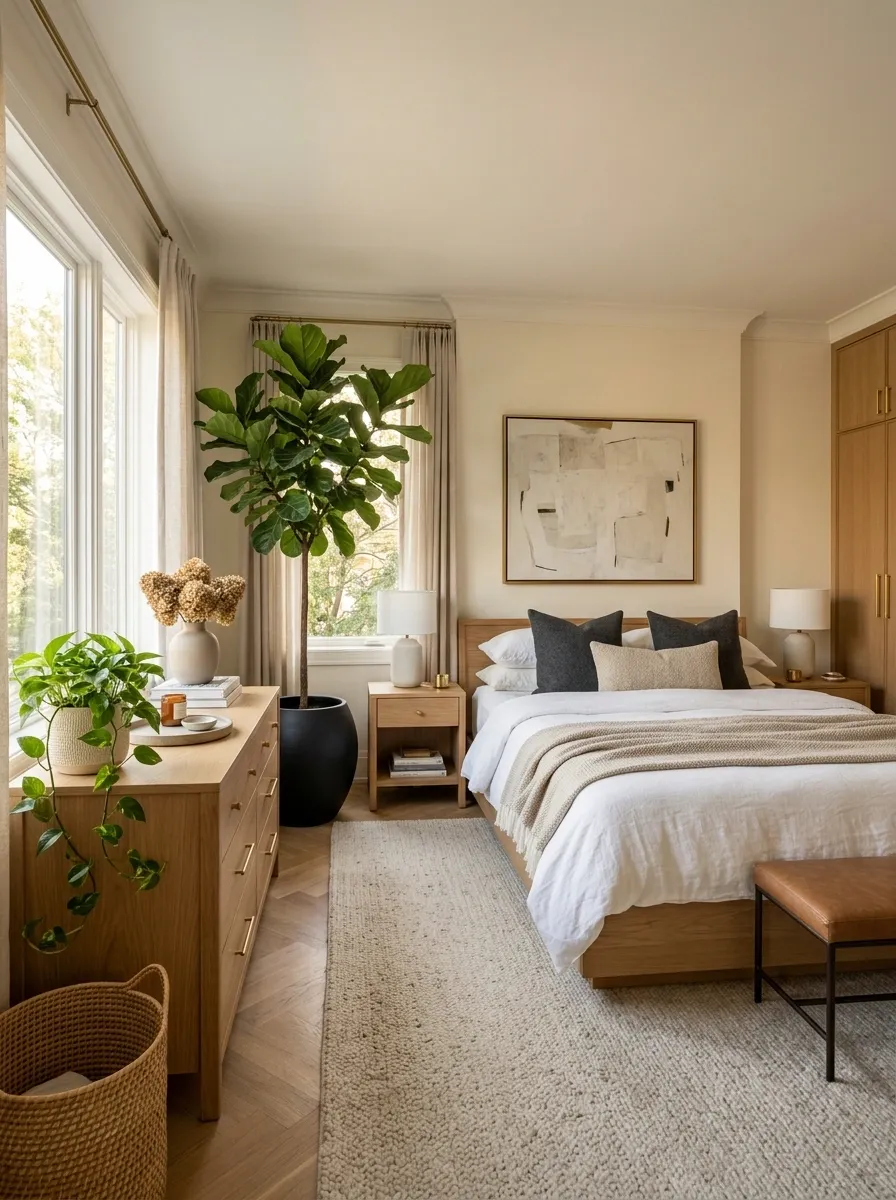
Plants can soften a bedroom, but a crowded collection quickly creates another maintenance chore.
Choose one substantial plant in an empty corner.
Or use a smaller plant on a dresser where it won’t interfere with daily routines.
Pick containers that repeat an existing material, such as ceramic, wood, or woven fiber.
The plant should fill a visual gap, not become the whole decorating plan.
Best placement: corners with unused vertical space, beside a dresser, or near natural light where the plant can actually thrive.
Use Layered Lighting Instead of Relying on One Ceiling Fixture
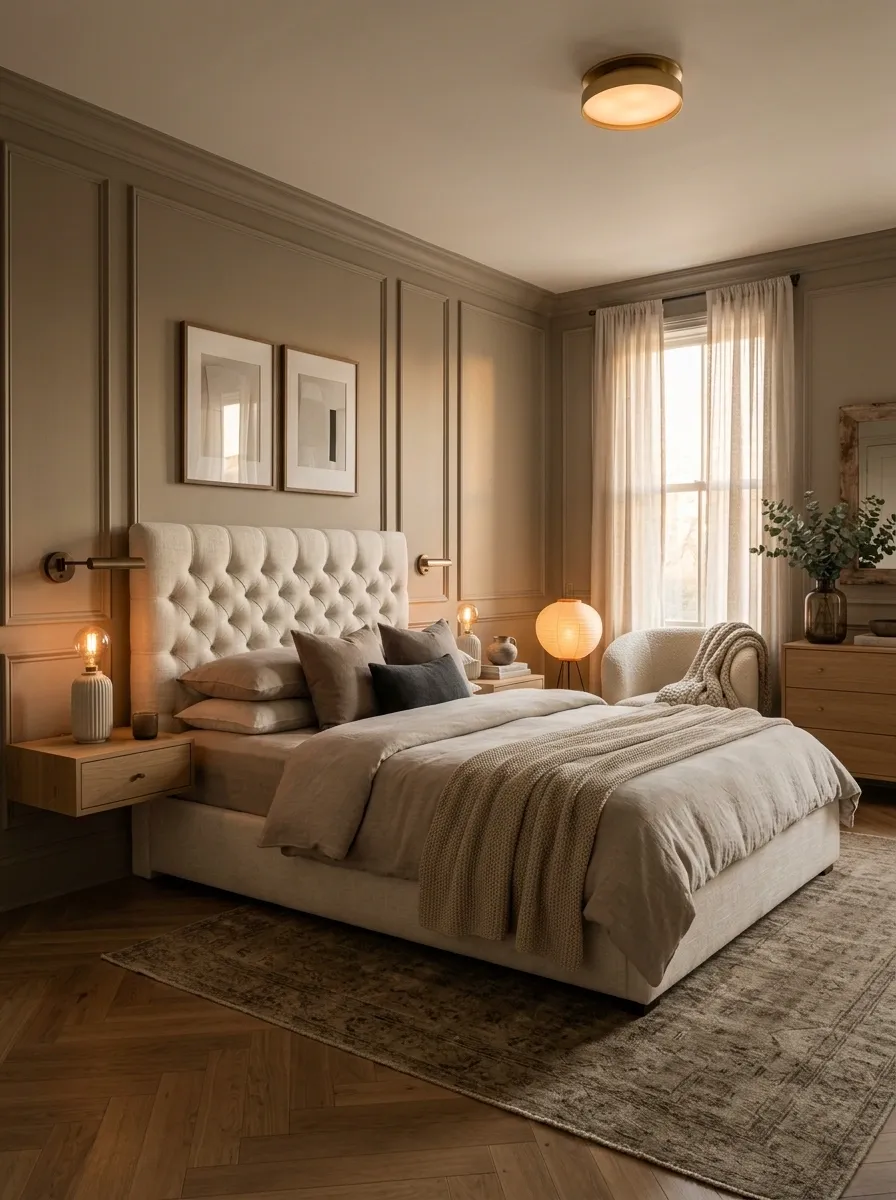
That bright ceiling fixture may technically light the bedroom, but it rarely creates a relaxing room.
Think in layers.
General light handles movement and cleaning.
Bedside lights handle reading and nighttime routines.
A smaller accent source adds warmth when you want the room to feel quieter.
Build three useful layers:
- Overhead light for general visibility
- Bedside light for focused tasks
- Accent light for softer evenings
This also makes the bedroom more flexible.
One person can read while the rest of the room stays calm.
Add Personal Pieces in Pairs So Both People Feel Represented
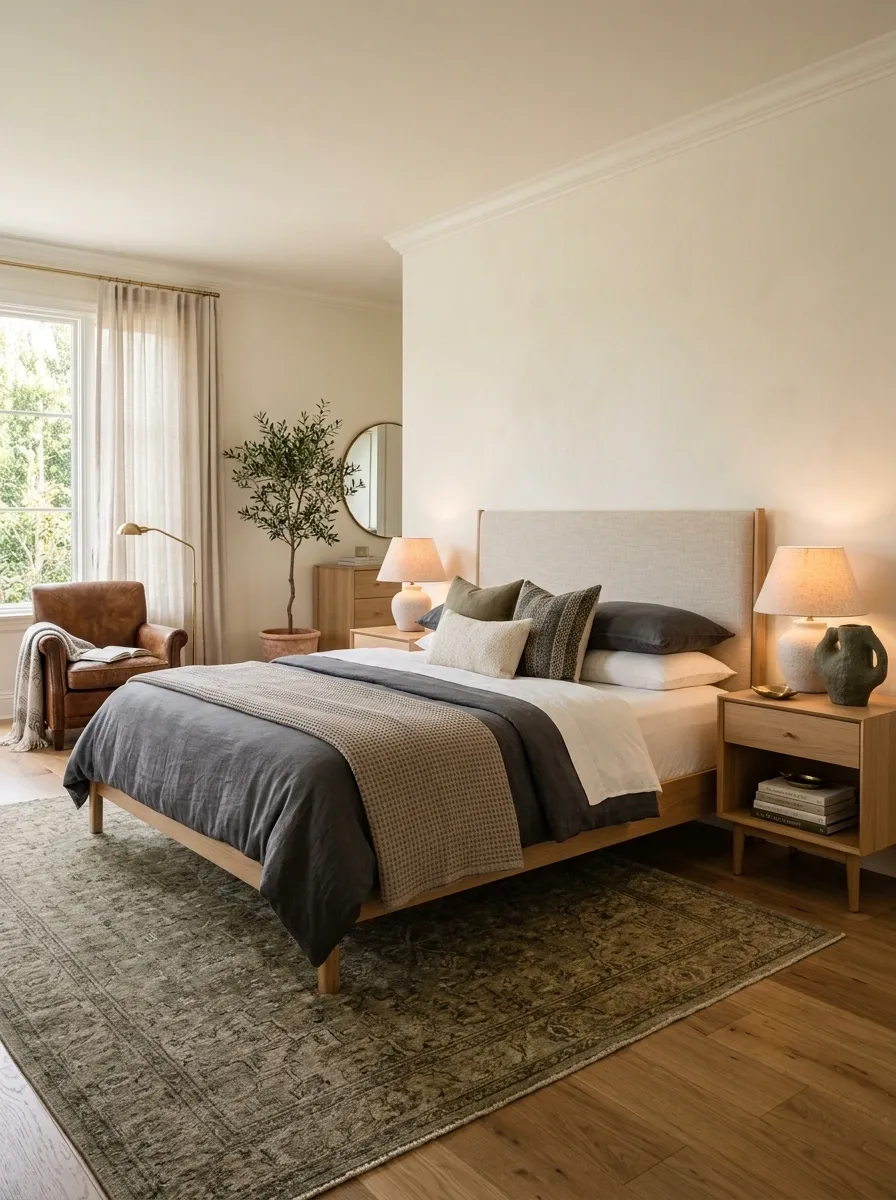
A shared bedroom shouldn’t erase either person’s personality.
The easiest way to make personal decor feel intentional is to give each person a small zone.
One side might hold favorite books.
The other might have a framed print, a small object, or a meaningful souvenir.
Don’t force both sides to carry identical accessories.
The balance comes from scale and placement, not cloning every detail.
Keep the larger furniture shared.
Then let smaller objects tell two different stories.
Use a Small Tray to Control Bedside Clutter
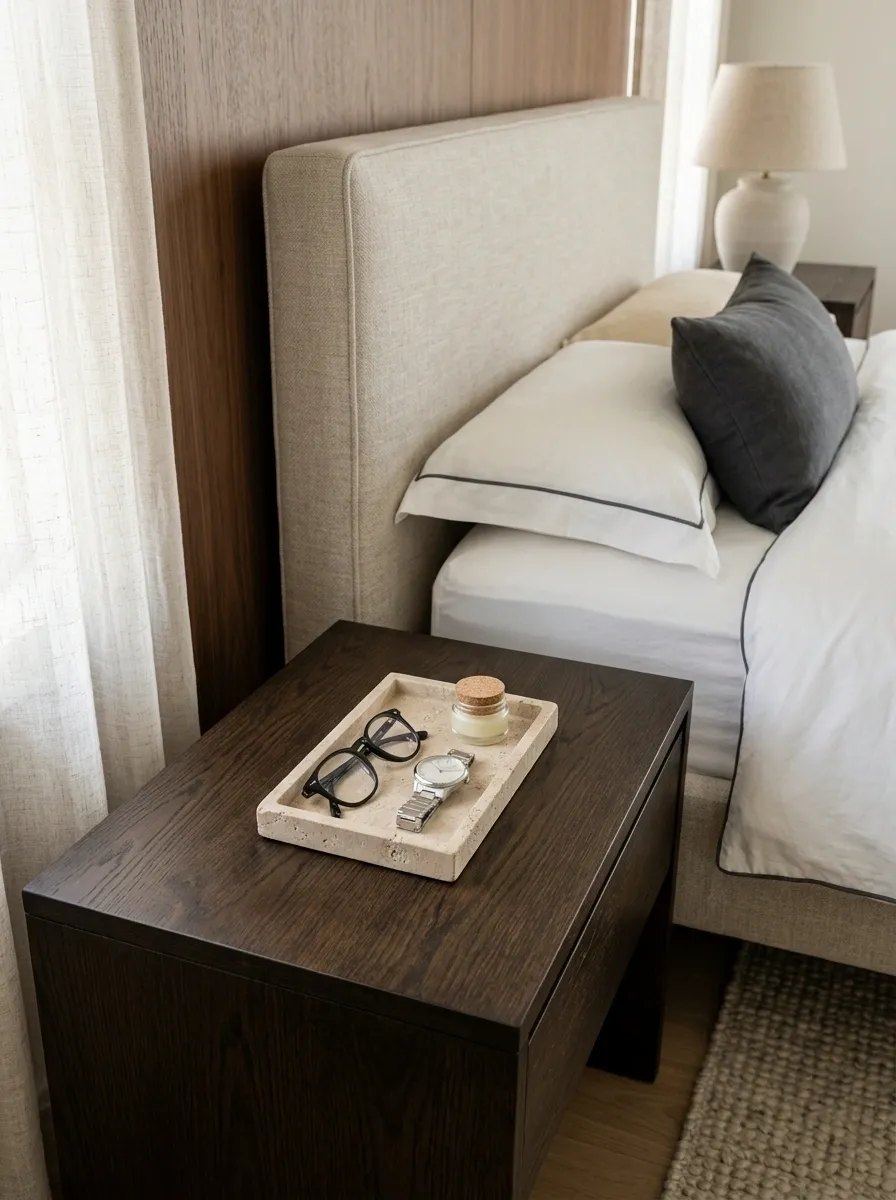
The bedside table tends to collect tiny objects because there’s nowhere obvious to put them.
A small tray solves that by creating a visual boundary.
Put the loose essentials inside it: glasses, a watch, lip balm, remote, or charging accessories.
The surface instantly looks more deliberate.
Keep the tray smaller than the tabletop.
It should organize the objects, not consume the entire surface.
Best rule: one tray, a few daily essentials, and visible empty space around it.
| Keep in Tray | Keep Elsewhere | Why |
|---|---|---|
| Glasses | Receipts | The tray stays focused on daily use. |
| Watch | Random packaging | Small items stay grouped together. |
| Remote | Laundry | The surface doesn’t become overflow storage. |
Finish the Room With One Shared Detail That Feels Personal
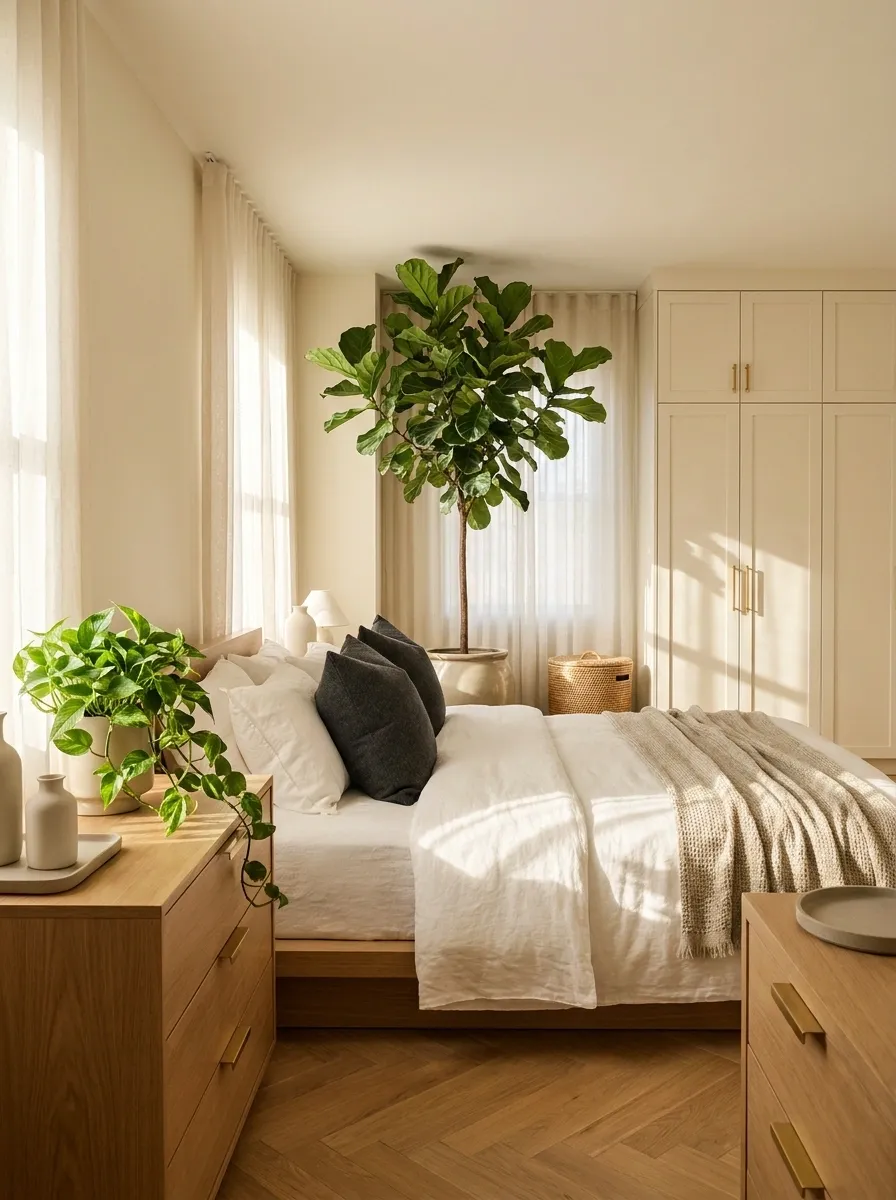
The last detail shouldn’t be another object you bought because a shelf looked empty.
Choose something that belongs to both of you.
It could be a framed map from a meaningful trip, a photograph of a place you both love, a book displayed on the bench, or a small object tied to a shared memory.
Keep it visible enough to notice, but don’t build the whole room around it.
The best finishing detail answers one simple question: what makes this bedroom feel like your bedroom instead of a showroom?
That’s the detail worth keeping.
The Bedroom Should Work Before It Looks Pretty
The strongest bedroom isn’t the one with the most decoration.
It’s the one where both people can reach what they need, move around easily, turn down the lights, put things away, and actually relax.
That’s why the best couples bedroom ideas start with structure.
Get the bed right.
Balance both sides.
Give clutter somewhere to go.
Make the lighting work for two different routines.
Then bring in texture, personal objects, and one or two details that make the space feel like home.
Don’t chase symmetry so hard that the room loses personality.
Don’t add another accessory just because one corner feels empty.
Make the big decisions work first, and the smaller choices become much easier.
Save this list for the next time your bedroom feels unfinished, crowded, or caught somewhere between two styles.