
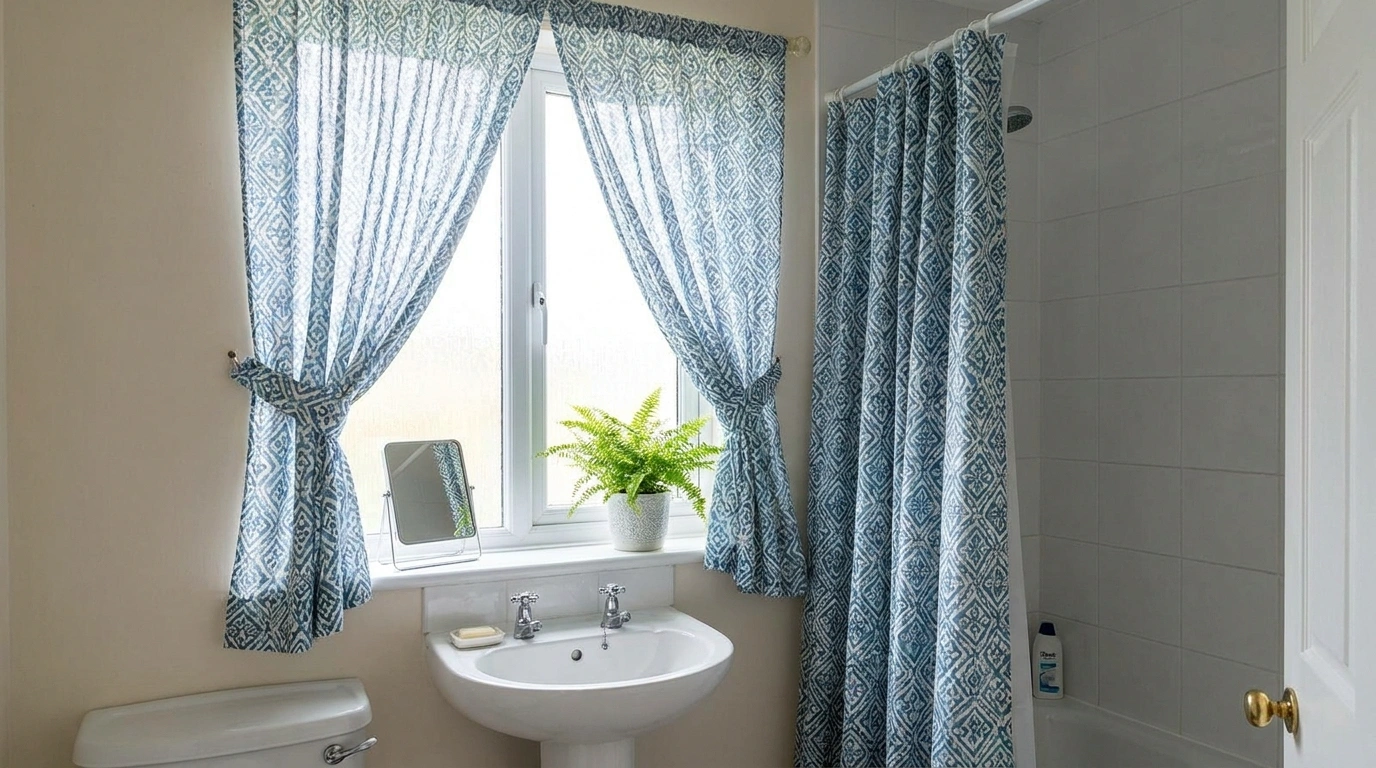
A curtain can make a small bathroom feel either calm and open or crowded and oddly chopped up. The difference often has less to do with the fabric itself and more to do with everything surrounding it. A busy pattern against busy tile creates one effect. The same pattern against quiet walls, warm wood, and simple fixtures can look completely different.
Small bathrooms are especially unforgiving because every major surface sits close to the next one. There is little room for a random curtain to exist on its own. Color, curtain height, pattern scale, texture, flooring, vanity size, and natural light all become part of the same visual decision.
Curtain Ideas for Small Bathroom Spaces
Sophisticated Black and White Bathroom With Patterned Curtain
This striking bathroom makes a bold statement with dark walls and gleaming mirrors, while a tailored patterned curtain softens the transition between the tub and the sleek fixtures. A classic white console sink sits gracefully nearby, and polished metallic hardware catches the subtle lighting.
The clever use of the curtain adds an unexpected layer of texture to the dark backdrop, keeping the compact space feeling intimate rather than enclosed. The crisp white fabric with delicate botanical prints provides a refreshing contrast against the deep perimeter.
Simplicity is the secret here. By keeping accessories minimal and letting the patterned drape take center stage, the room achieves a tailored, high-end hotel aesthetic.
Moody Charcoal Bathroom With Rich Crimson Curtain
Deep charcoal walls envelope this compact bathroom, creating a dramatic atmosphere that feels both cozy and sophisticated. A rich crimson shower curtain adds a luxurious splash of color, perfectly matched by plush bath mats and neatly rolled towels on an open metal shelf.
The illuminated mirror acts as a glowing halo, casting warm light across the dark surfaces and highlighting the sleek black vanity. The crimson textile introduces a layer of tactile warmth that softens the industrial edge of the surrounding dark tones.
This space succeeds because of its bold color confidence. Limiting the palette to charcoal, crimson, and brushed brass keeps the dramatic design looking cohesive and intentionally styled.
Botanical Floral Bathroom With Warm Rust Accents
A vibrant botanical curtain featuring rich rust and deep green florals anchors this charming bathroom, bringing a lively organic pattern to the space. Textured terracotta towels, woven baskets, and natural wood elements build a wonderfully layered, earthy environment.
The patterned curtain does the heavy lifting, tying together the warm color palette and the crisp white walls without overwhelming the room’s modest footprint. Open wooden shelving displays neatly organized jars and greenery, adding both function and charm.
The trick to this look is letting the floral print shine by keeping surrounding surfaces uncluttered. A few rustic accents complete the inviting, nature-inspired retreat.
Tiny Sage Bathroom With Botanical Curtain and Light Oak Vanity
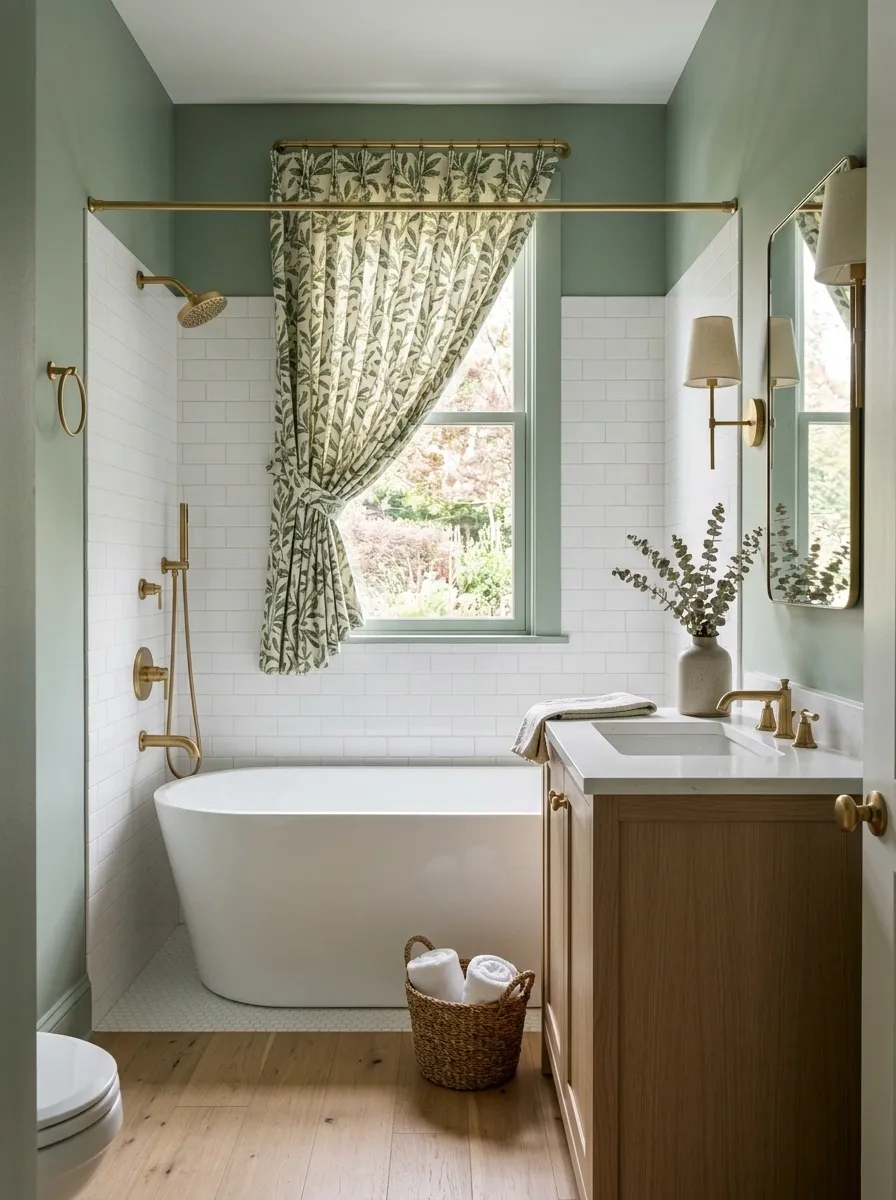
Muted sage walls make this small bathroom feel connected to the natural materials around it. A compact light oak vanity sits beneath a simple mirror, while a botanical curtain introduces leaves in a controlled, medium-scale pattern. White tile around the bathing area gives the eye a calm surface between the pattern and the wood.
The curtain is doing more than adding a floral note. Its green and cream tones bridge the wall color and the lighter surfaces, which makes the pattern feel built into the room rather than pasted onto it.
The biggest mistake here would be adding another strong pattern elsewhere. Keep the floor, mirror, and accessories quiet so the curtain has room to breathe.
Green Wall Bathroom With Vintage Floral Curtain
Rich forest green walls set a moody, cocoon-like tone in this small bathroom, while a delicate vintage-inspired floral curtain introduces a soft, traditional element. A rustic wooden shelving unit against the wall provides practical storage while echoing the organic warmth of the room.
The curtain creates a gentle focal point against the saturated green backdrop, preventing the darker walls from feeling heavy. Its subtle pattern adds a layer of timeless elegance that bridges classic and contemporary styles seamlessly.
Maintaining balance is essential in a richly colored room like this. Sticking to simple wooden tones and crisp white accents allows the floral textile to stand out beautifully.
Narrow White Bathroom With Ceiling-Height Neutral Curtain
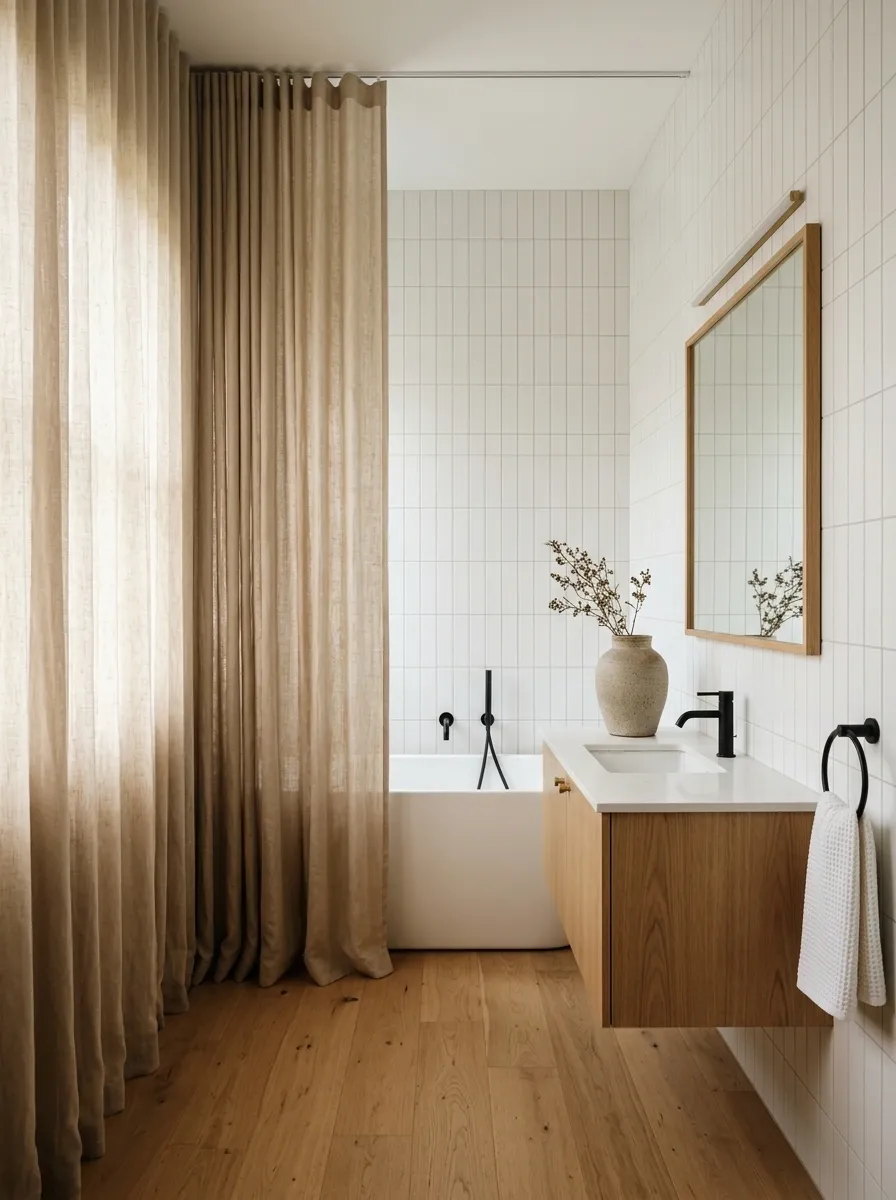
When the bathroom is long and narrow, visual height matters almost as much as floor space. This design uses white vertical tile, a slim wall-mounted vanity, minimal fixtures, and a warm beige curtain hung from a ceiling-mounted track. The curtain runs almost uninterrupted from top to bottom, creating a tall, calm plane.
There is very little competing for attention. That is intentional. The visible floor stays open beneath the floating vanity, while the long curtain connects the ceiling and tub area into one clean vertical gesture.
A standard-height rod would make this arrangement feel more chopped up. The ceiling track is what gives the finished composition its architectural quality.
Pink Vanity Bathroom With Dramatic White Curtains
A vibrant magenta vanity steals the show in this energetic bathroom, complemented by soaring white curtains that frame the shower area with theatrical elegance. Bold abstract art on the wall pulls in shades of yellow, pink, and teal, echoing the cheerful palette.
The tall white curtains draw the eye upward, making the compact space feel significantly larger and more architectural. The crisp white fabric softens the intensity of the saturated cabinetry and provides a breath of visual calm.
This vibrant design thrives on its joyful fearlessness. By pairing punchy color blocks with clean, flowing drapery, the room achieves a surprisingly polished and artistic finish.
Moody Charcoal Bathroom With Warm Ivory Curtain
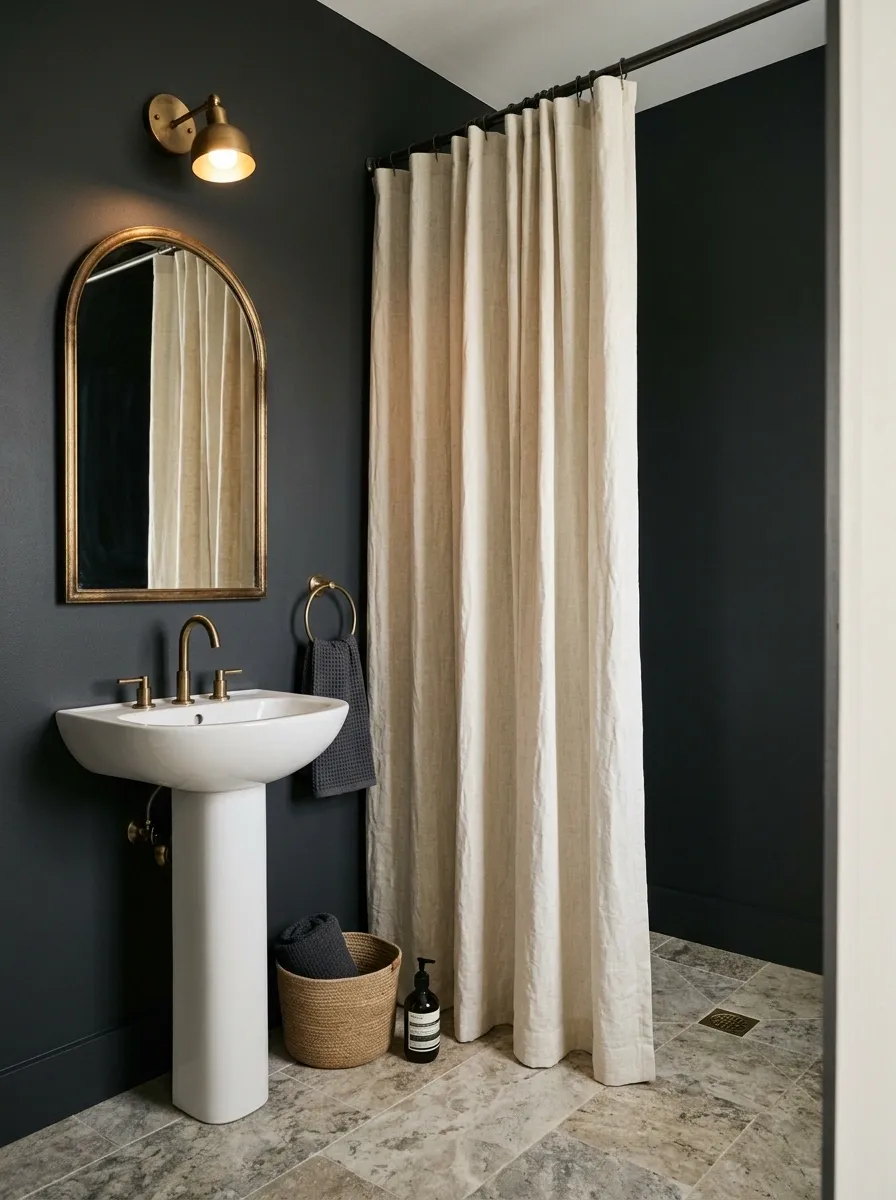
A dark bathroom can work surprisingly well in a small footprint when the lighter elements are placed with intent. Here, charcoal walls and a warm stone floor create the shell. An ivory curtain cuts across the darker surfaces, while a compact pedestal sink, aged brass mirror, and warm directional lighting keep the room from feeling flat.
The curtain is the release point. It breaks up the charcoal without turning the bathroom into a high-contrast black-and-white scheme. The warmer ivory works better than a stark optic white because it connects with the stone and brass.
The room does not need more decoration. Dark walls already provide enough visual weight, so the curtain, mirror, and lighting should carry the composition.
Blue-and-White Cottage Bathroom With Gingham Curtain
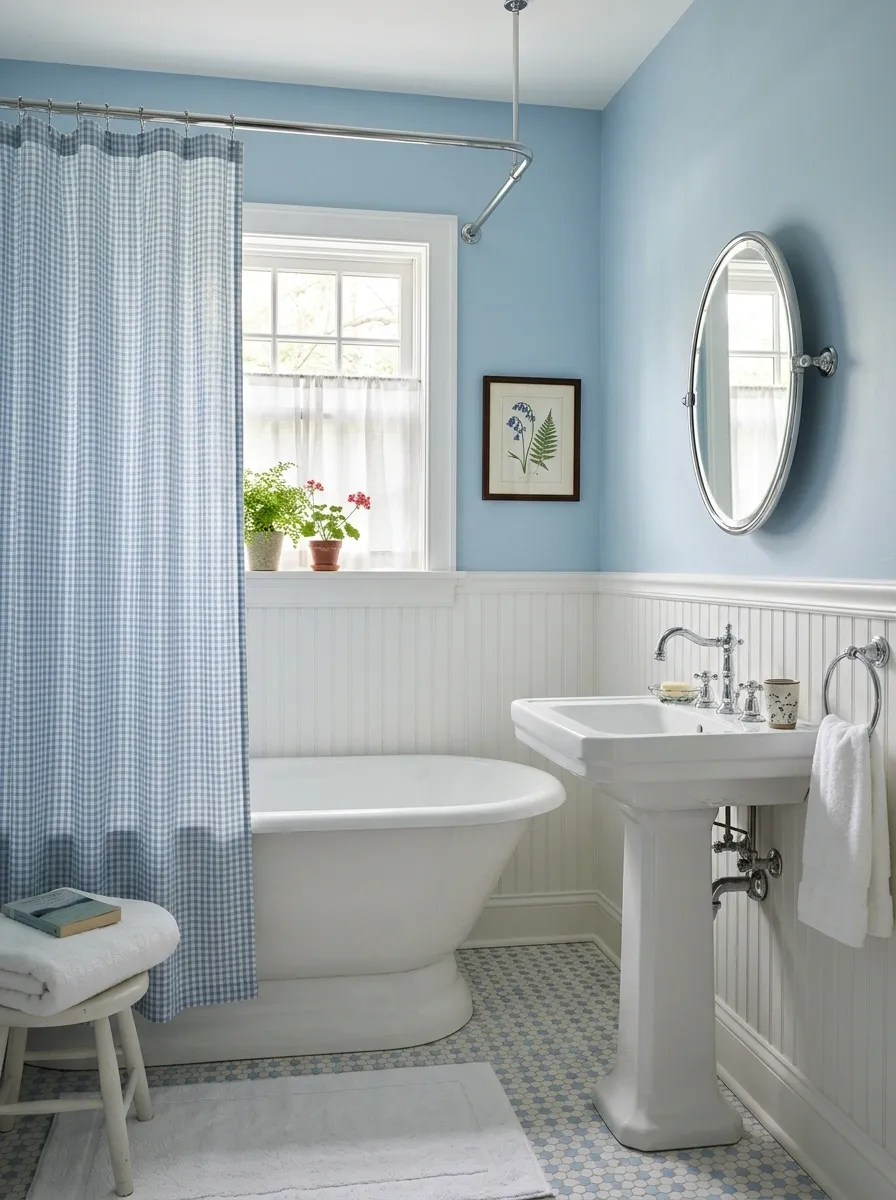
Powder-blue walls, white beadboard, and a small classic tub give this bathroom a distinctly cottage character. The gingham curtain adds pattern, but its soft blue-and-white palette keeps it connected to the architecture rather than turning into a separate focal point. Chrome fixtures and a petite vintage-style mirror add a little shine without changing the relaxed mood.
The beadboard is important here because it gives the lower half of the room a strong horizontal rhythm, while the curtain introduces a smaller repeating pattern. That contrast makes the room feel layered instead of busy.
Keep the artwork simple. A single small framed print works better than a gallery wall in a bathroom already carrying two recognizable patterns.
Japandi Small Bathroom With Oatmeal Woven Curtain
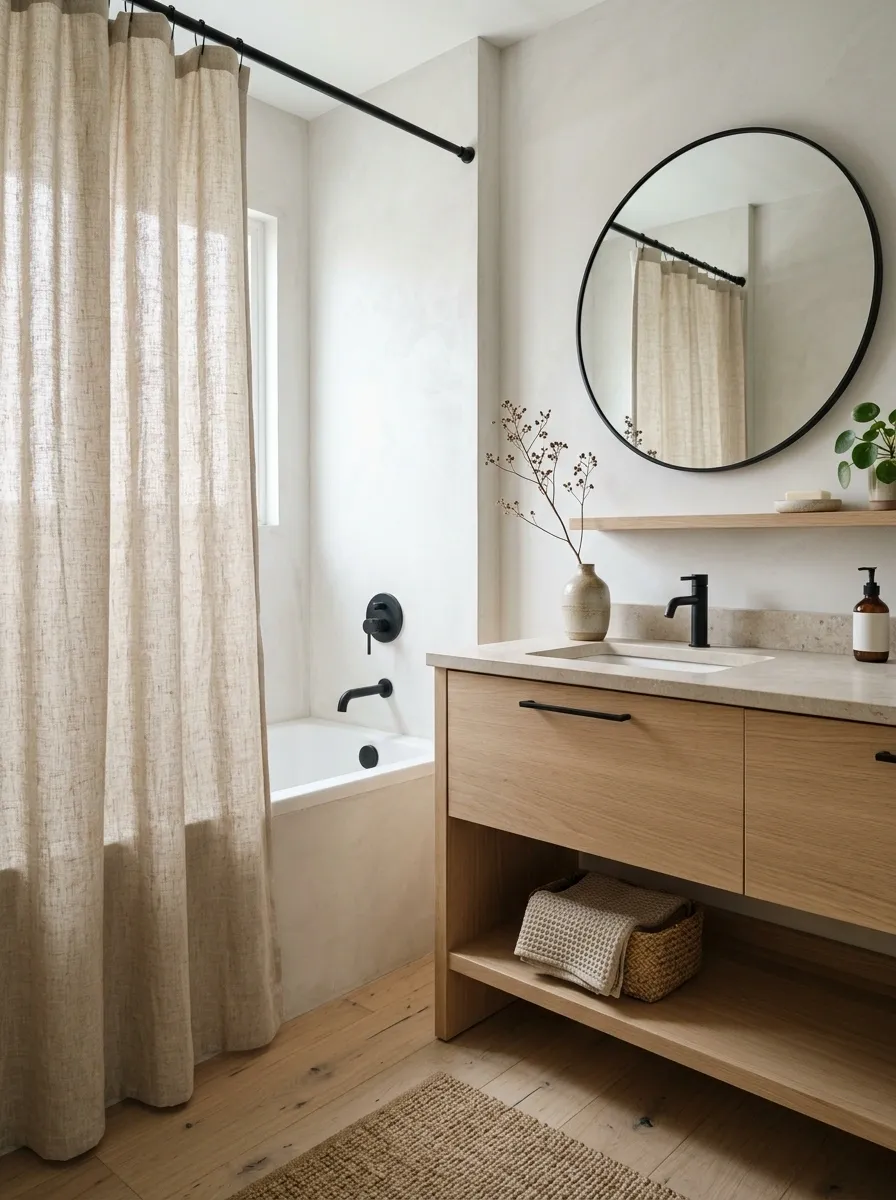
This bathroom strips the design back to a few quiet materials: pale plaster, light oak, natural stone, oatmeal fabric, and matte black metal. The vanity has a simple geometric form, while a woven curtain softens the harder surfaces around the bathing area.
Nothing here relies on decorative clutter. The interest comes from changing texture and natural material rather than adding objects. The oatmeal curtain is especially useful because it sits between the pale wall and warm wood instead of creating a hard visual boundary.
The result feels calm because each material has a clear job. Keep accessories sparse and let the contrast between smooth plaster, grainy wood, stone, and fabric do the work.
Warm Terracotta Bathroom With Cream Curtain and Walnut Vanity
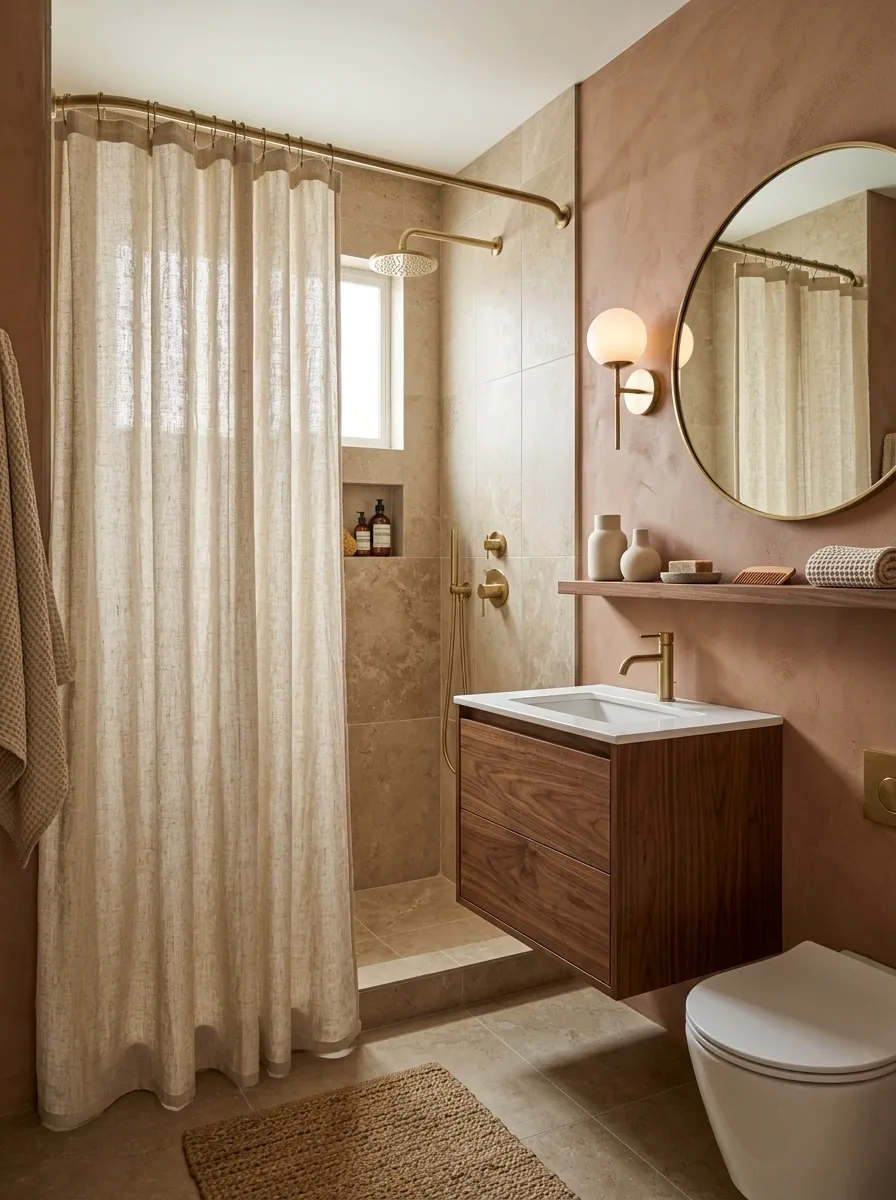
Muted terracotta walls give this compact bathroom a rich backdrop, while a walnut vanity introduces darker natural grain. A creamy curtain softens the bathing area, and warm globe lighting creates a gentle glow across the stone-look floor and ceramic accessories.
The palette succeeds because the colors are related rather than competing. Terracotta carries the largest visual area, walnut adds depth, and cream creates a break between the warm wall and darker furniture. The curtain therefore becomes a bridge between the finishes instead of another statement.
This design is strongest when the terracotta stays earthy. Highly saturated orange would make the small room feel much louder.
Small Black-and-White Bathroom With Pinstripe Curtain
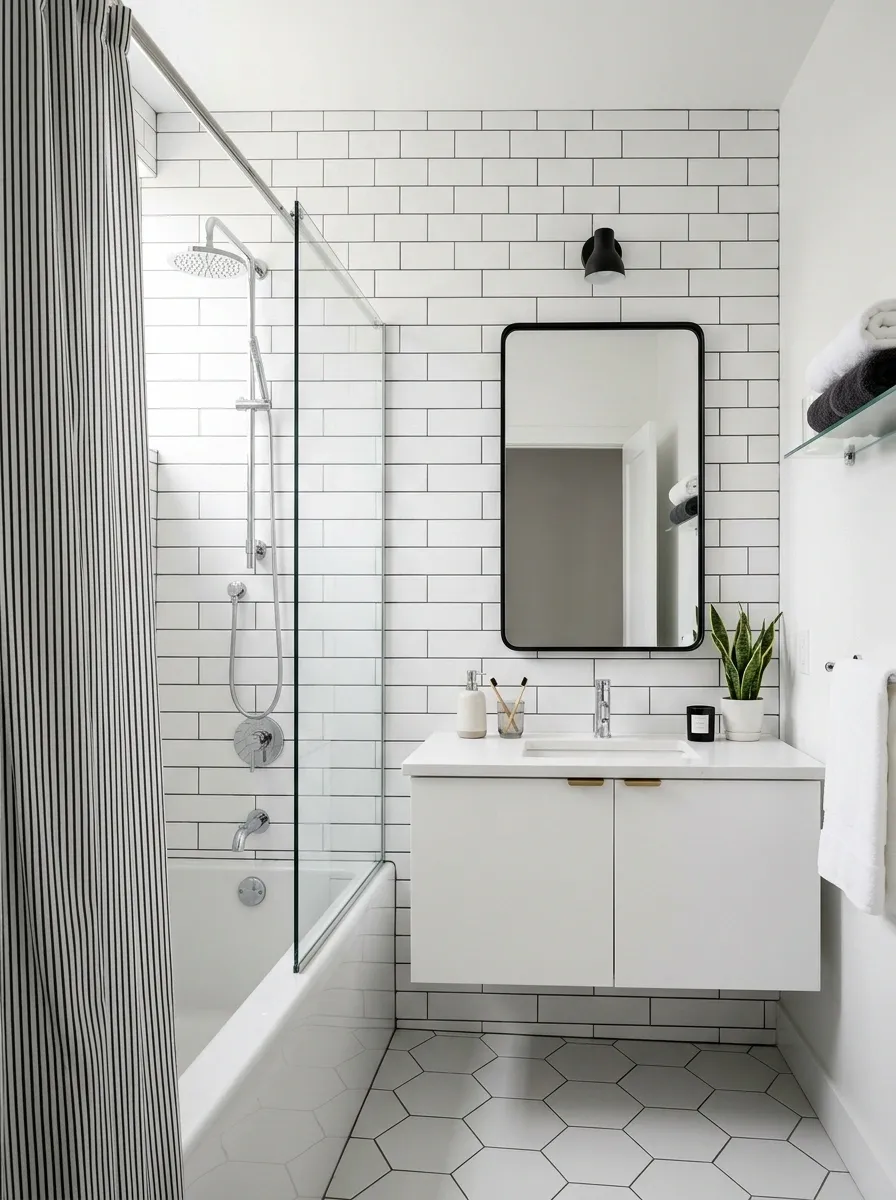
This monochrome bathroom relies on linework rather than color for personality. White subway tile fills the walls, a black-framed mirror anchors the vanity, and a fine pinstripe curtain creates another vertical element beside the bathing area. The floor and fixtures remain deliberately quiet.
The curtain works because its stripes are narrow enough to read as rhythm rather than decoration. That lets the black fixtures repeat visually without creating a blocky, high-contrast room.
The strongest version keeps the stripe direction consistent with other slender vertical details. Avoid adding bold geometric artwork, because the room already has plenty of graphic structure.
Pale Mushroom Bathroom With Rounded Tub Curtain Setup
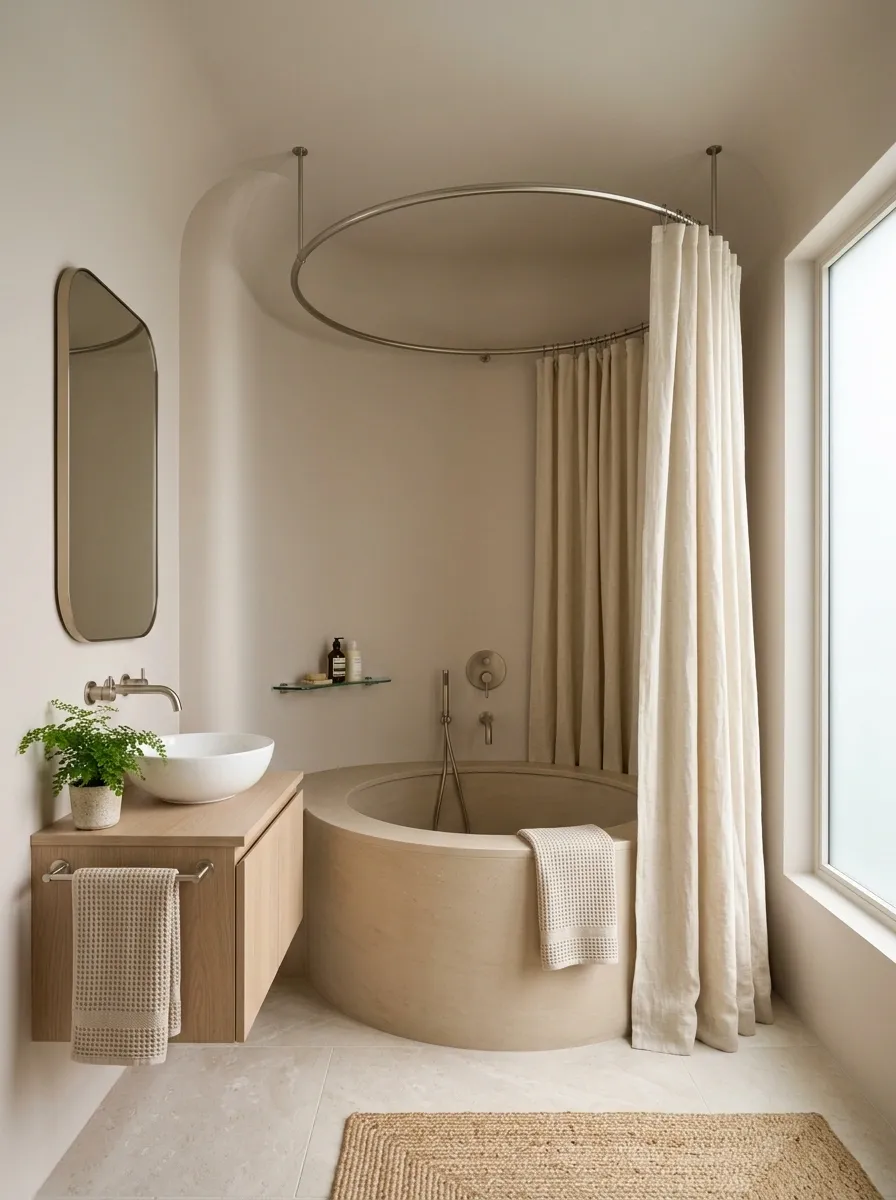
Soft mushroom walls replace the sharper feeling often found in small bathrooms, while a rounded tub creates a gentler footprint. The curtain follows the curve instead of cutting straight across the space, and warm nickel fixtures continue the softer language.
The curved arrangement is more than a decorative choice. It keeps the bathing zone visually cohesive and prevents a straight curtain line from making the rounded tub feel like a separate object.
The rest of the room stays simple: pale stone-look flooring, a compact vanity, and a small rounded mirror. Too many angular accessories would work against the architecture.
Minimal White Bathroom With Sheer Privacy Curtain
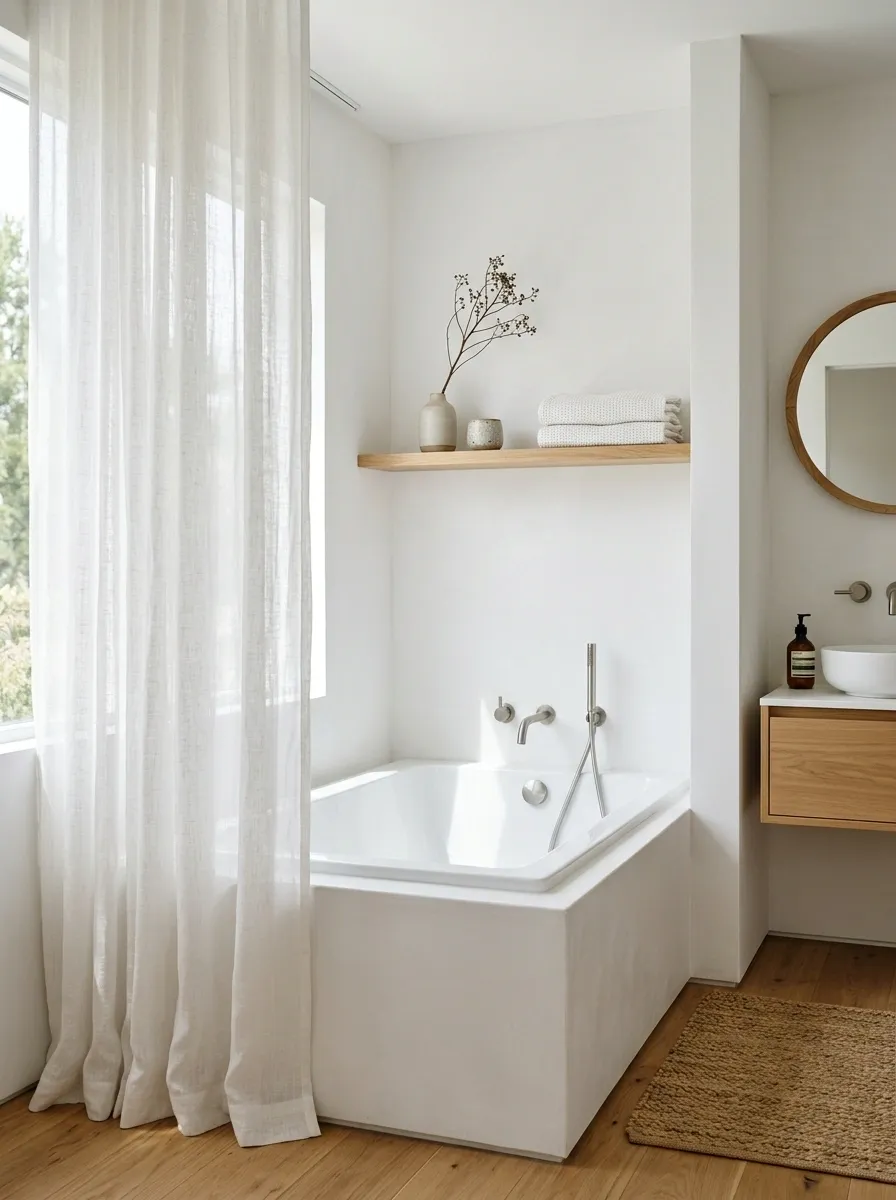
Bright daylight is the defining feature of this small bathroom. White walls and a petite soaking tub create a clean shell, while a translucent textured curtain gives the bathing area privacy without visually sealing it off. A slim oak shelf introduces the only strong warm material.
The sheer fabric matters because a solid curtain would create a much heavier visual wall in an already compact room. Texture keeps the panel from looking completely flat while still allowing light to remain part of the composition.
There is no need to fill the empty wall space. The open areas are part of the design.
Vintage Powder Room With Café Curtain and Petite Tub
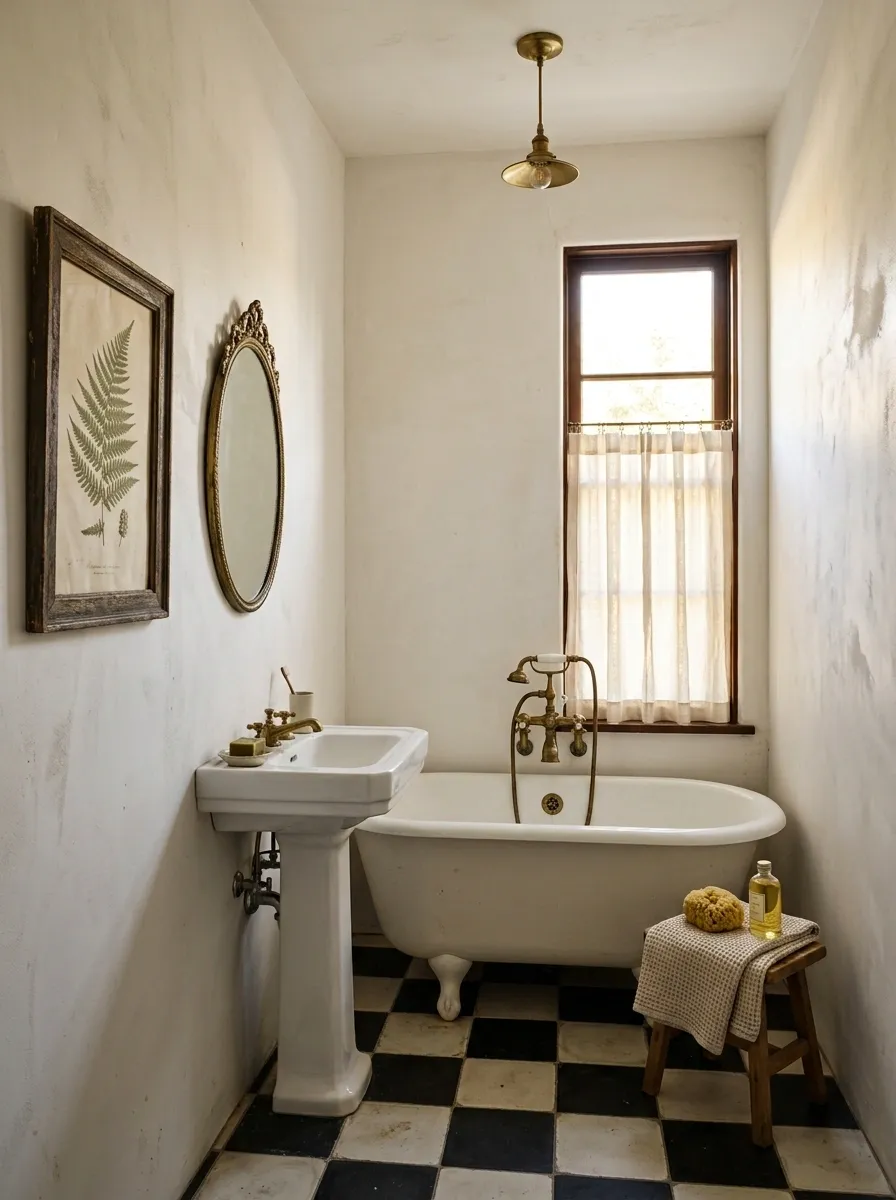
This vintage-inspired bathroom uses warm white walls, checker flooring, aged brass, and a petite bathing zone to create character without crowding the room. The café curtain sits lower on the window, preserving an open upper section while keeping the private portion covered.
That split is what makes the treatment interesting. The window does not become a fully blocked rectangle, so daylight remains visually important. A small antique-style mirror and one carefully chosen piece of artwork reinforce the period feel.
The room already has plenty of personality through tile, metal, and the window treatment. More decorative pieces would dilute it.
Greige Bathroom With Textured Curtain and Stone Vanity
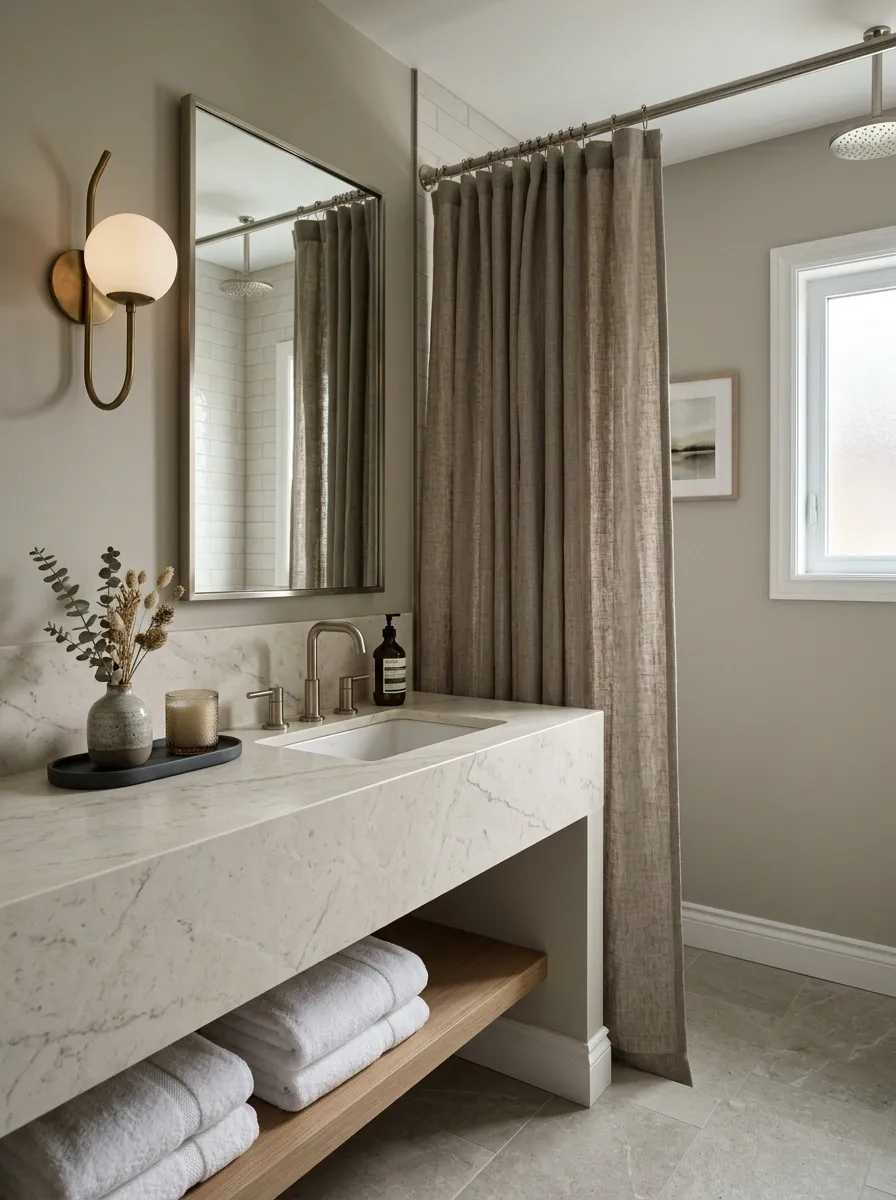
Greige keeps this bathroom neutral, but the room avoids looking washed out by introducing several distinct surfaces. A creamy stone vanity sits against the wall, brushed nickel catches the light, and a taupe textured curtain adds softness around the bathing area. A sculptural wall light provides a small moment of shape.
The design works because the materials carry more contrast than the colors. Stone looks cooler and harder than fabric, while the metal adds a sharper line against both.
A completely flat curtain would lose some of that depth. Subtle woven texture is what gives the neutral palette enough visual movement.
Coastal Small Bathroom With Faded Blue Stripe Curtain
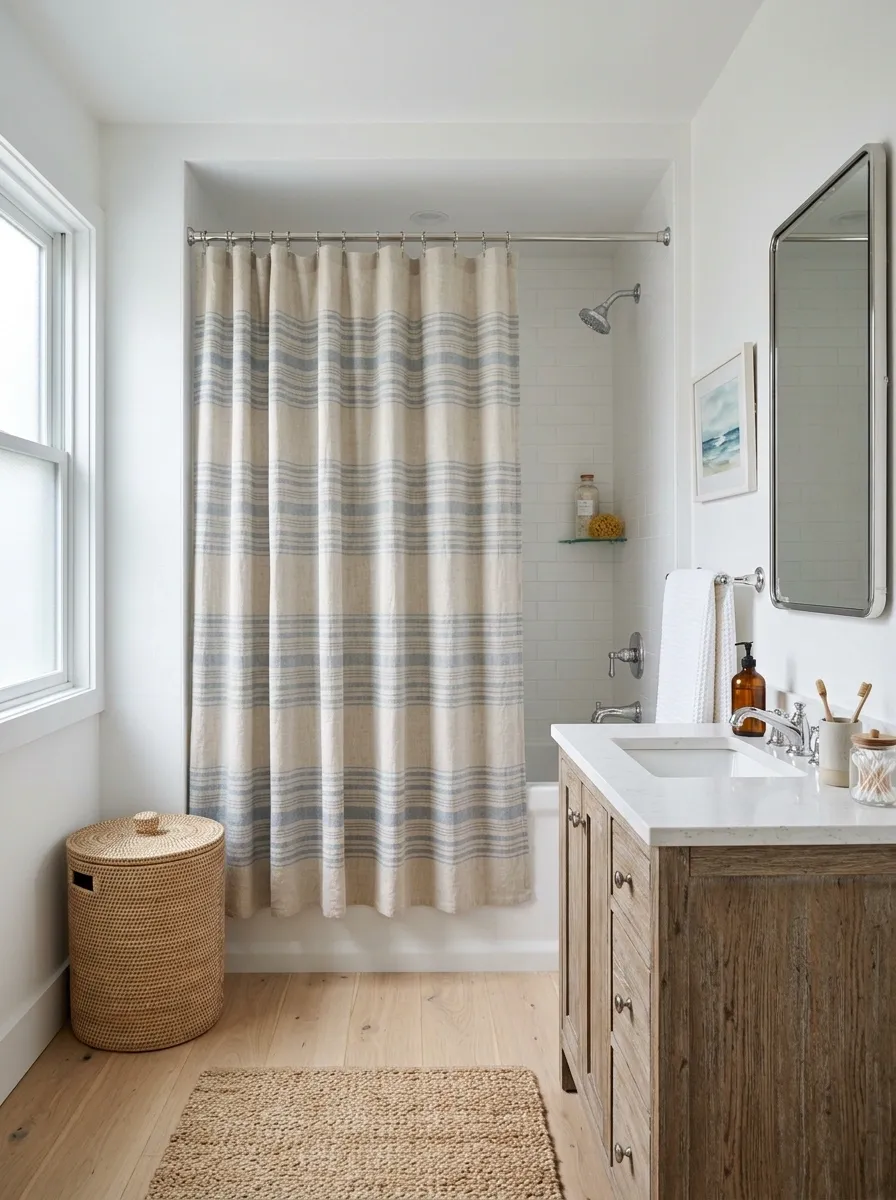
This coastal bathroom avoids the usual bright nautical treatment. Instead, white walls, weathered oak, pale flooring, and a faded blue stripe curtain create a quieter interpretation. A woven basket and simple chrome fixtures add natural texture without introducing obvious beach-themed decoration.
The stripe direction gives the curtain a useful visual role. Horizontal bands broaden the fabric visually, while the vertical lines from the mirror and vanity keep the room from feeling too flat.
The faded blue matters. A strong navy-and-white scheme would make the small room much more graphic and less relaxed.
Modern Small Bathroom With Black-and-Cream Grid Curtain
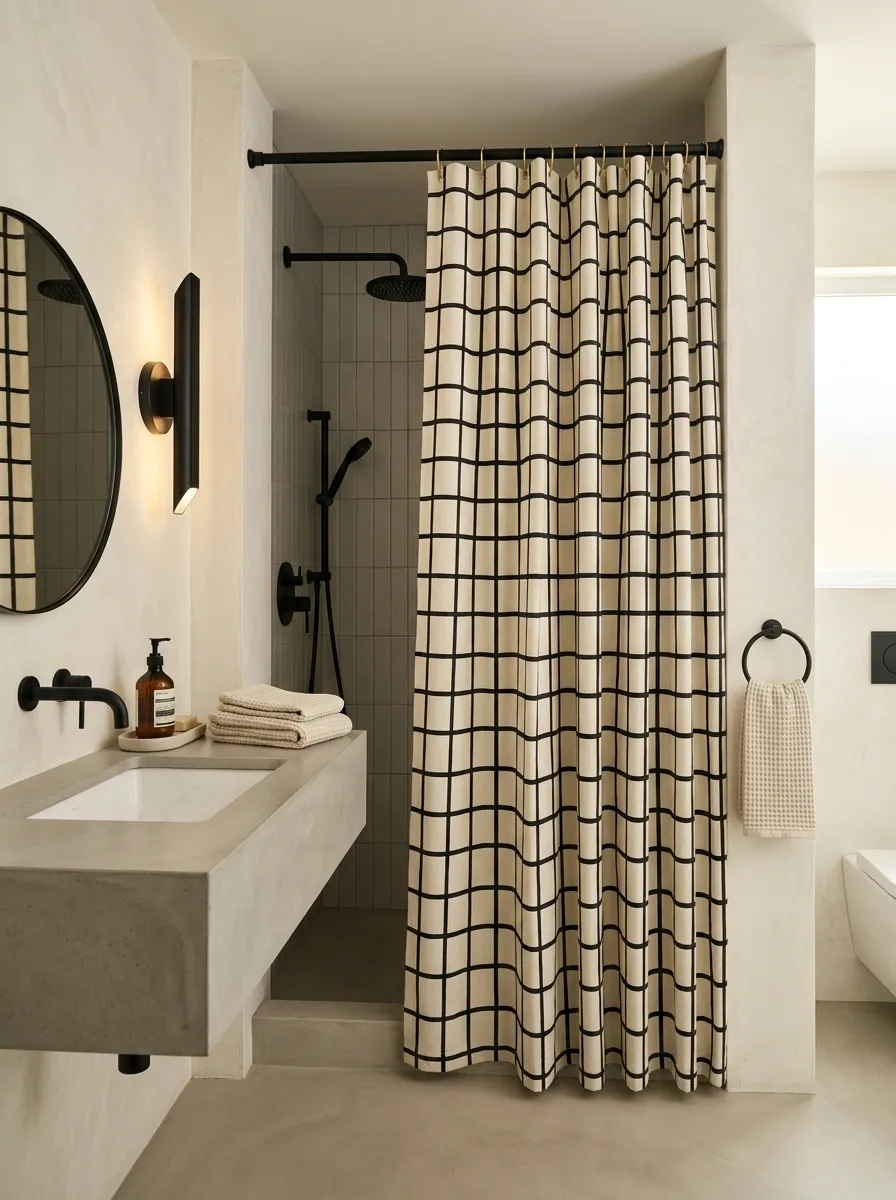
A black-and-cream grid curtain gives this modern bathroom a clear graphic identity. Behind it, warm white plaster and a concrete-look vanity keep the architecture understated, while black fixtures repeat the darker lines in the curtain. A sculptural light adds shape without introducing another pattern.
The grid works because the rest of the bathroom is relatively quiet. The curtain becomes the strongest graphic element, while the black fixtures act as small echoes rather than competing focal points.
This is not the place for another bold geometric floor. Keeping the floor simple protects the clean structure of the design.
Scandinavian Bathroom With Dusty Taupe Curtain and Birch Wood
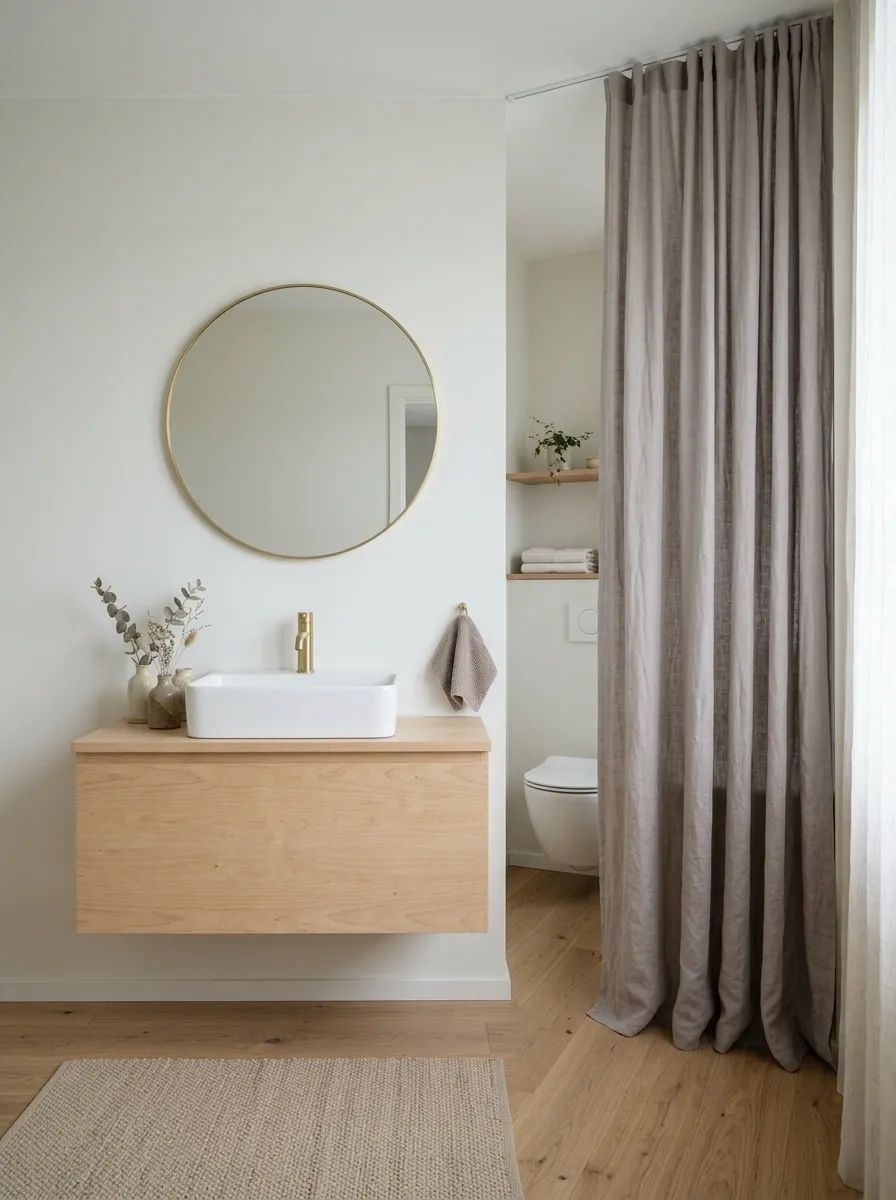
Pale walls, a birch vanity, matte white basin, and dusty taupe curtain give this bathroom a soft Scandinavian character. The room has very little visual noise, so the subtle change in tone between the wall, wood, and fabric becomes the main source of depth. Small ceramic pieces keep the styling practical and restrained.
The curtain does not need to match the wood exactly. Its cooler taupe tone creates just enough separation from the warmer birch grain to stop the room from looking washed out.
A simple mirror and open floor area complete the composition. The result depends on restraint, so bulky storage furniture would weaken the effect.
Emerald Green Bathroom With Crisp White Shower Curtain
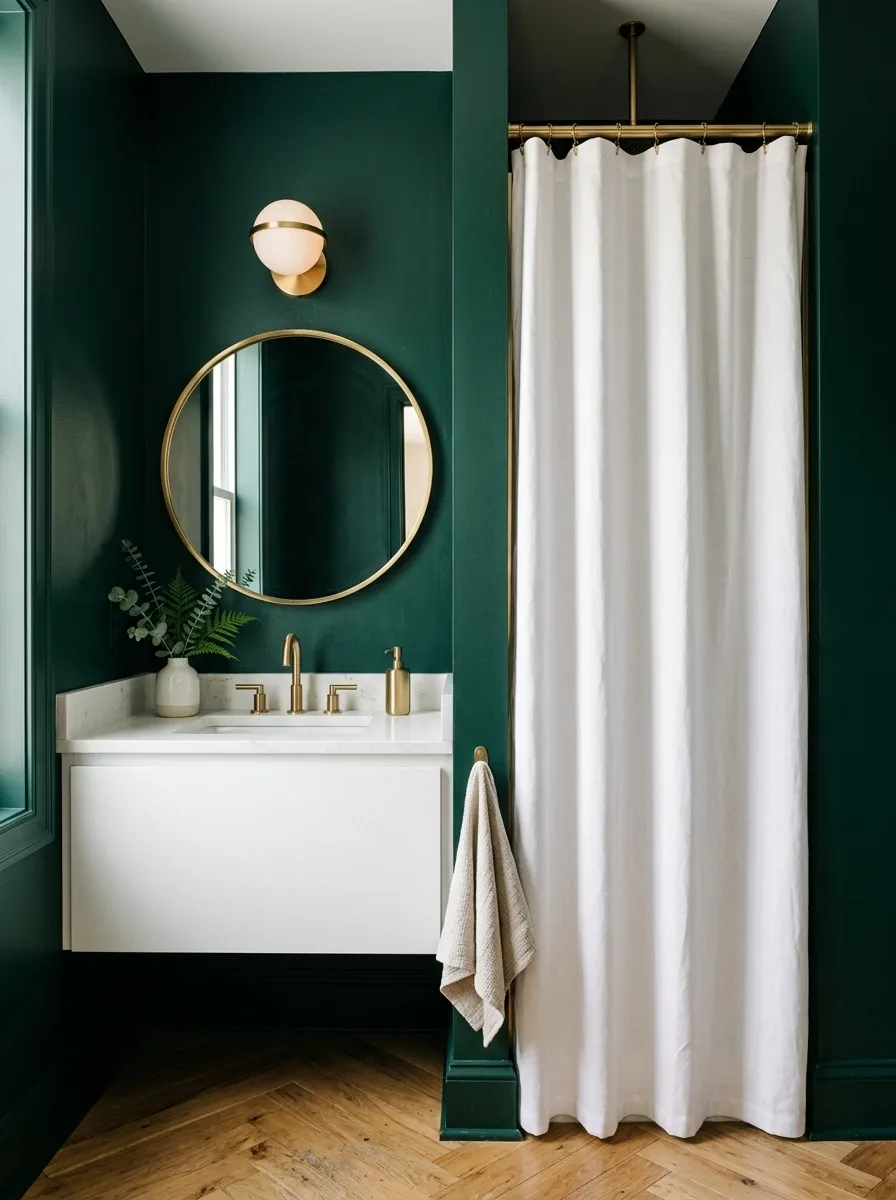
Deep emerald walls give this compact bathroom its strongest visual statement. The curtain stays deliberately plain and bright white, creating a clean break against the darker architecture. A brass-framed mirror adds warmth, while a small amount of greenery softens the composition without turning it into a themed room.
The plain curtain is exactly why the design works. A printed fabric would compete with the wall color and scatter attention across the room. Here, the curtain acts almost like a blank canvas inside a much richer envelope.
The dark wall color needs breathing room, so keep the remaining surfaces light and avoid piling accessories onto the vanity.
Tiny Industrial Bathroom With Natural Canvas Curtain
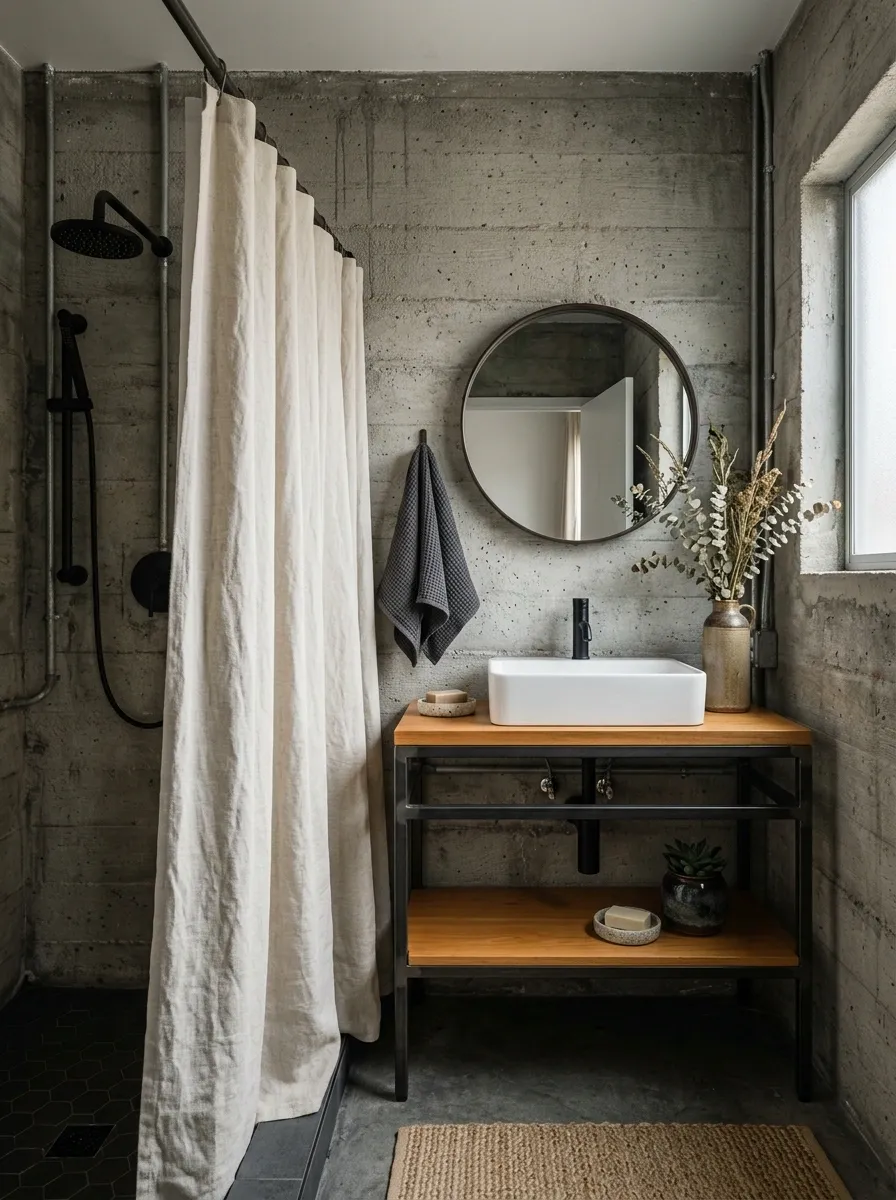
This industrial bathroom softens its concrete and metal surfaces with natural canvas. Concrete-look walls provide the rough background, a dark steel-framed vanity anchors the room, and warm timber appears on a narrow shelf. The canvas curtain becomes the bridge between the hard architectural materials and the softer side of the design.
The contrast is more interesting than simply making everything industrial. The curtain introduces an irregular, tactile surface while the black fixtures preserve the sharper structure.
Keep the timber warm but limited. Too much wood would move the room toward rustic rather than industrial.
Cream-on-Cream Bathroom With Subtle Floral Curtain
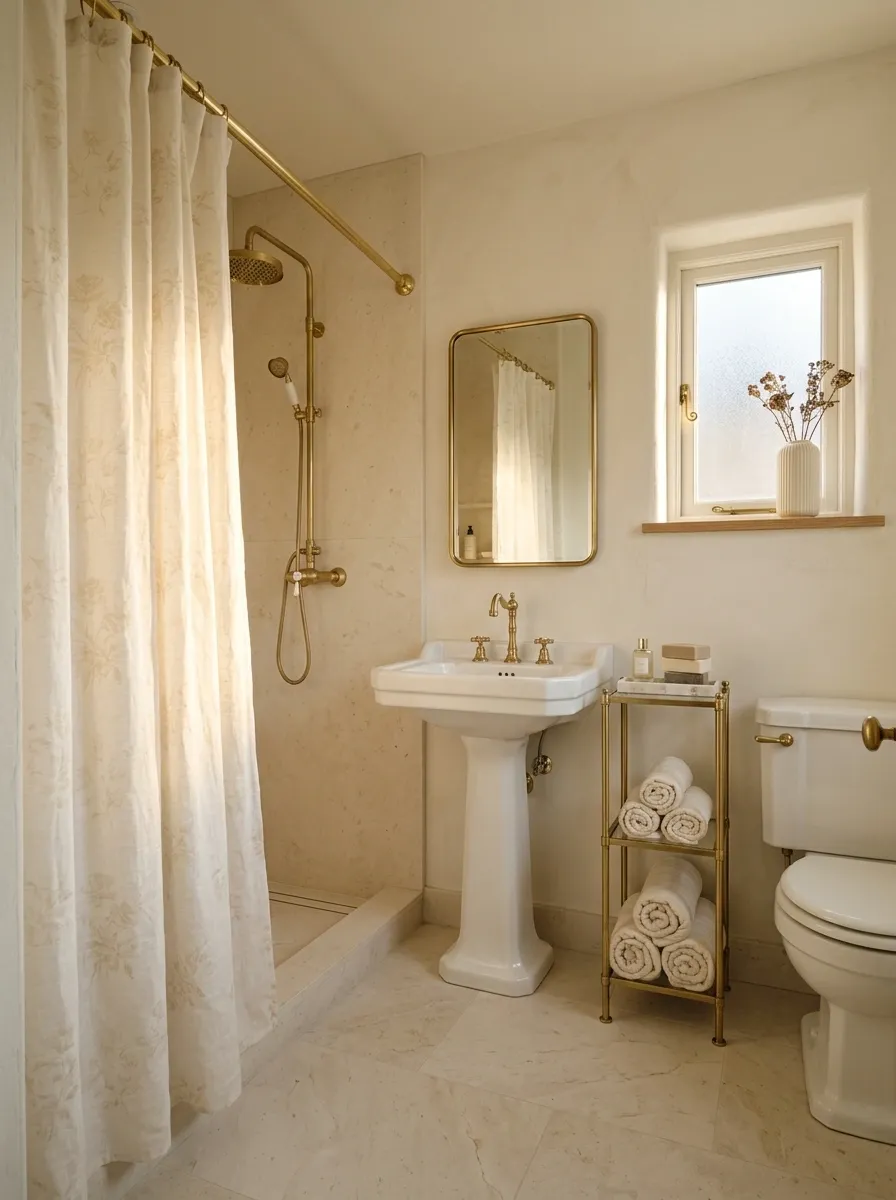
This bathroom stays within a narrow cream palette, but the surfaces are far from identical. Ivory walls, pale stone flooring, a soft floral curtain, and warm brass details create a quiet traditional composition. The curtain pattern is intentionally faint, almost disappearing until the light catches it.
That subtlety is the point. Instead of relying on strong color contrast, the room gets its character from texture and pattern that sit close to the surrounding tones.
A warmer metal finish helps prevent the palette from becoming too flat. Keep the floral motif restrained and let the fabric remain the most decorative surface in the room.
Small Luxury Bathroom With Draped Stone-Colored Curtain
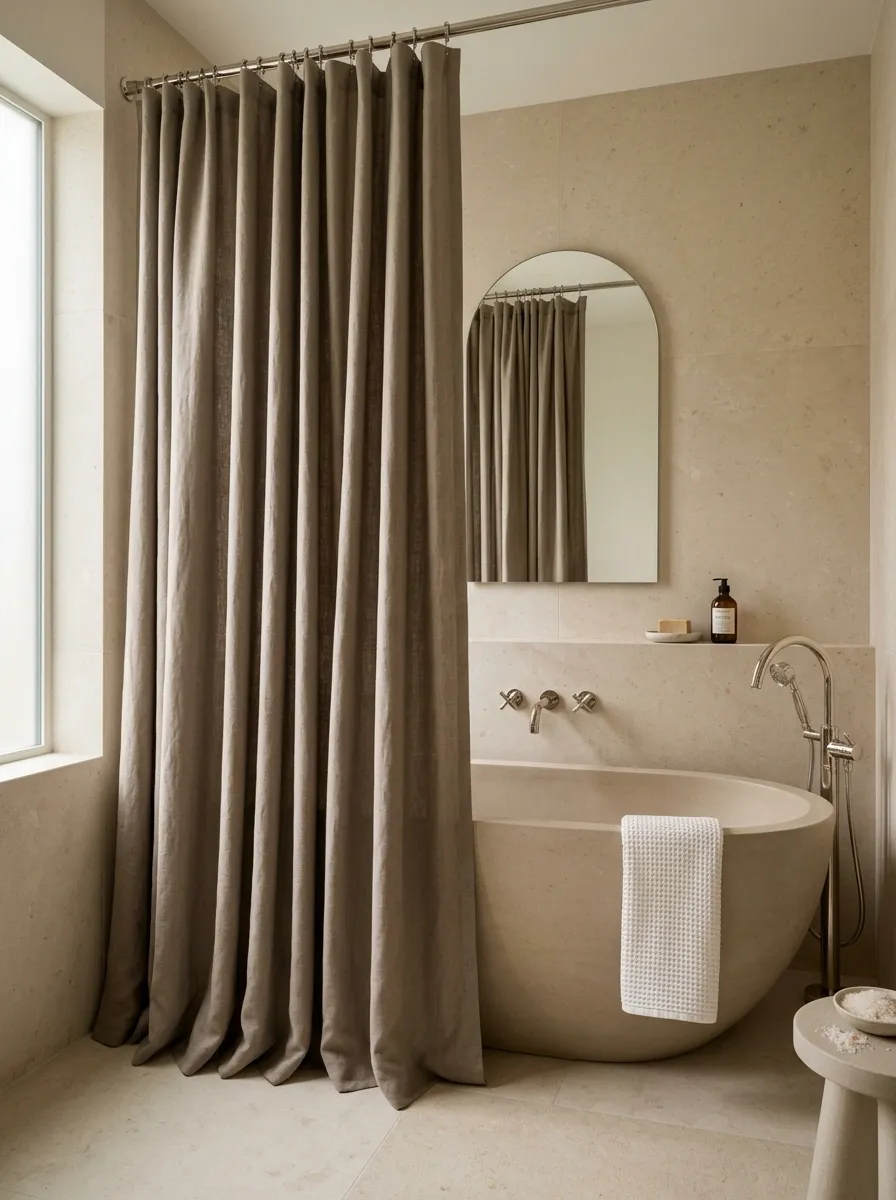
A warm stone palette gives this bathroom a compact boutique-hotel feel. The bathing area uses a substantial taupe curtain with visible folds, while warm stone surfaces, polished nickel, and a simple freestanding-style tub establish the setting around it. Accessories are kept to a minimum.
The fabric needs enough visual body to look intentional. A very thin curtain would lose the rich draping that makes this composition work.
The room stays luxurious by editing rather than adding. One strong curtain, one attractive mirror, and carefully chosen fixtures carry more weight than a shelf full of decorative pieces.
Playful Small Bathroom With Muted Check Curtain and Colorful Tile
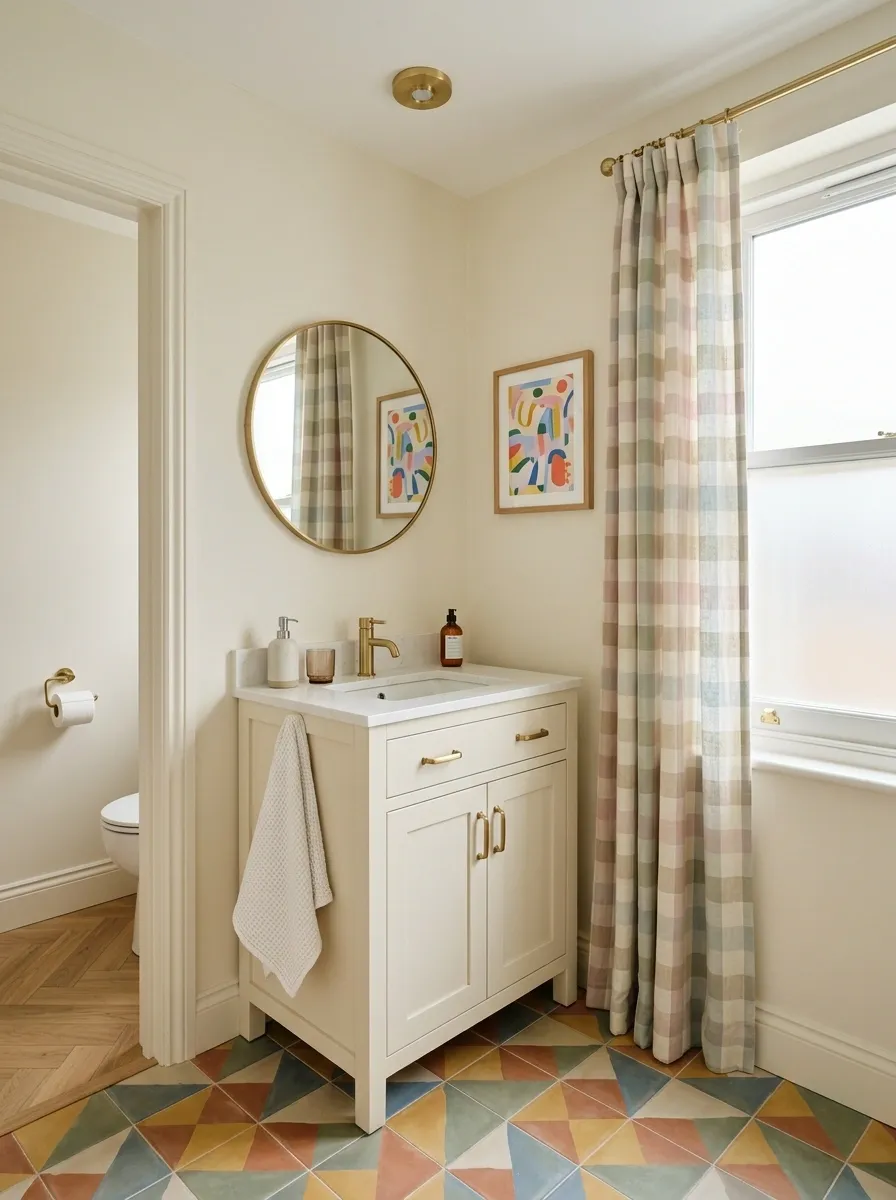
This bathroom has more personality than the neutral designs, but it stays controlled. Cream walls provide a quiet background, colorful handmade-look floor tiles bring energy underfoot, and a muted check curtain repeats some of the softer tones. A compact vanity and playful artwork finish the composition.
The trick is to keep the floor pattern and curtain pattern visually separate. They should feel related, not layered on top of each other.
That means the wall and vanity need to stay simple. The room already has two patterned surfaces, so adding patterned accessories would make the small footprint feel crowded.
Organic Small Bathroom With Clay-Tone Curtain and Travertine Look
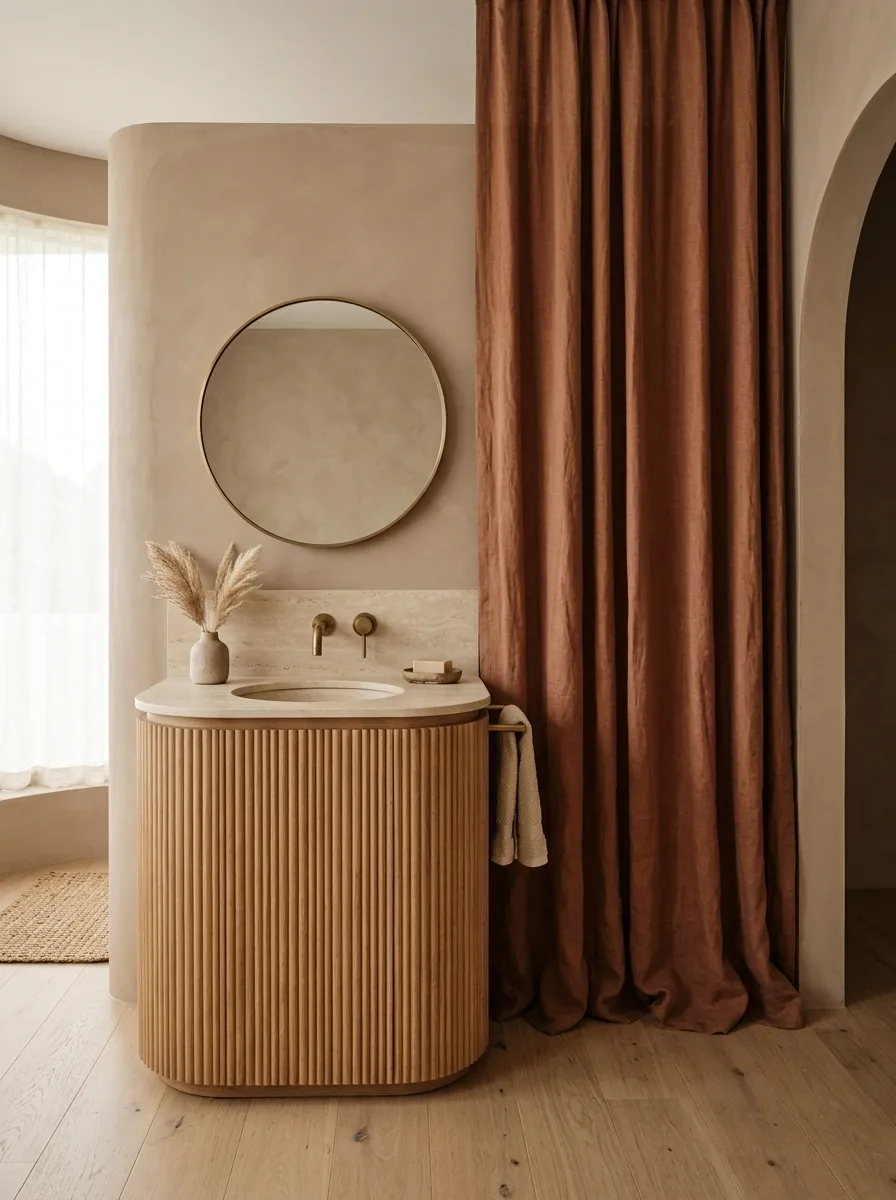
Rounded forms and warm natural colors give this bathroom a softer architectural character. Clay-colored walls sit behind a travertine-look surface and rounded oak vanity, while a textured curtain continues the earthy palette. The lighting stays soft so the materials remain the focus.
The curved vanity and rounded edges matter because they repeat the gentleness of the curtain. Hard rectangular cabinetry would introduce a completely different visual language.
The palette should remain grounded in warm earth tones. Bright white accessories would create a sharp interruption that the rest of the composition deliberately avoids.
Soft Gray Bathroom With Floor-to-Ceiling Curtain and Floating Vanity
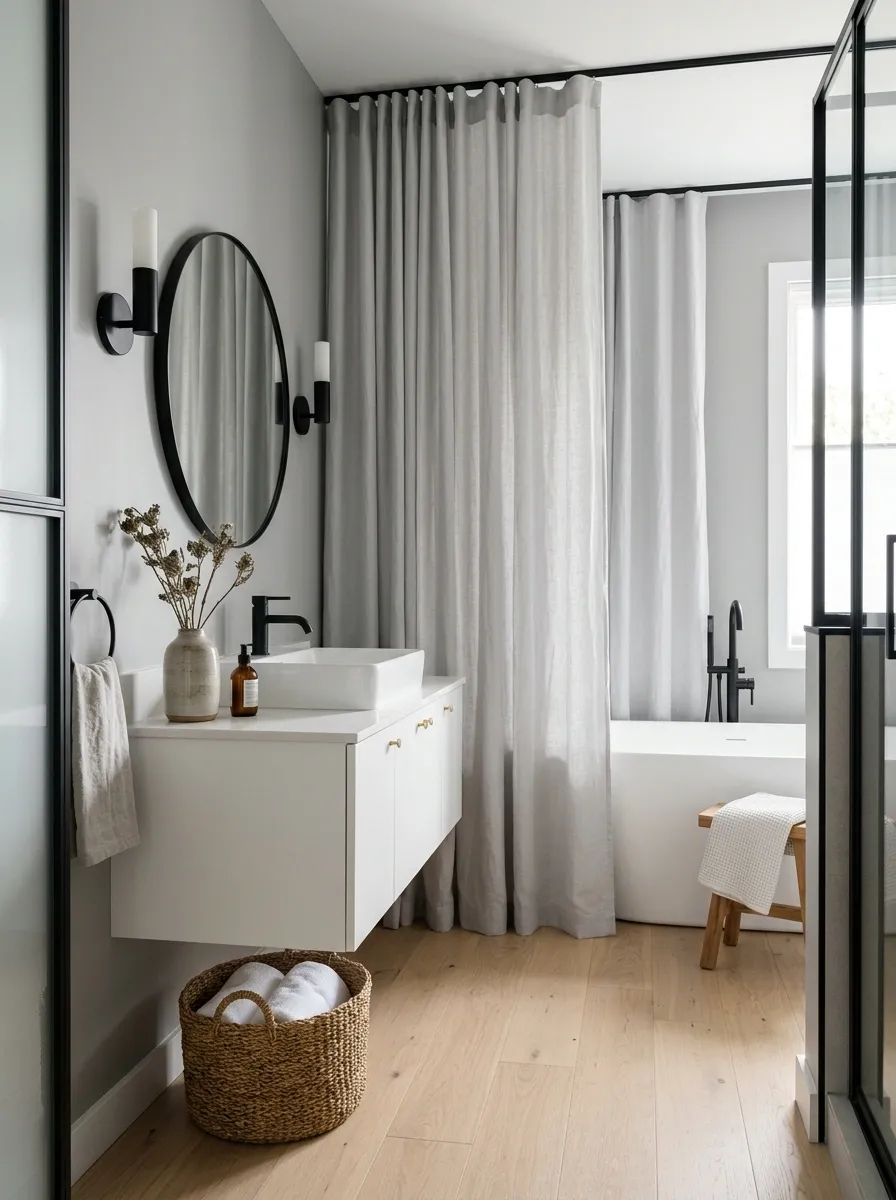
Soft gray walls create a quiet backdrop for a ceiling-height curtain and floating white vanity. Because the vanity sits above the floor, more of the pale flooring remains visible, while the uninterrupted curtain creates a strong vertical surface behind the bathing zone. Black-framed details add just enough contrast.
The design relies on visual openness rather than a large amount of storage furniture. Concealed storage keeps the walls clean, while the floating vanity prevents the lower half of the room from becoming visually dense.
This arrangement is especially effective when the floor has a light, continuous finish that does not create another strong boundary.
Old-House Bathroom With Romantic Floral Curtain and Dark Wood
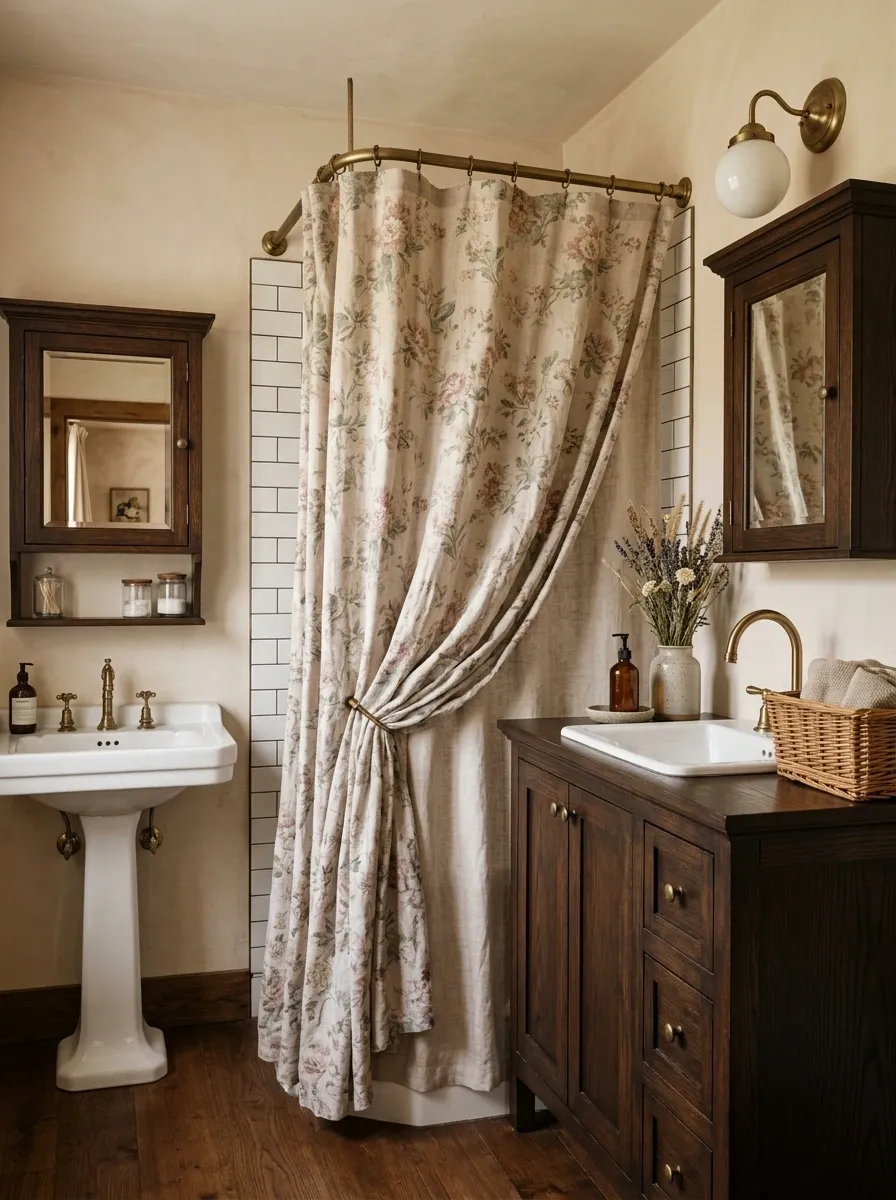
Warm plaster walls, dark wood, classic tile, aged brass, and a muted floral curtain give this bathroom the feeling of an older home that has been carefully updated rather than completely rebuilt. The floral fabric introduces softness against the darker vanity, while vintage-inspired lighting adds a warm glow.
The strongest feature is the contrast between the dark wood and pale wall. The curtain sits between those two values, allowing the transition to feel gradual instead of abrupt.
Keep the floral colors faded. A bright modern botanical print would shift the room into a completely different style.
Quiet Neutral Bathroom With Sand Curtain and Sculptural Fixtures
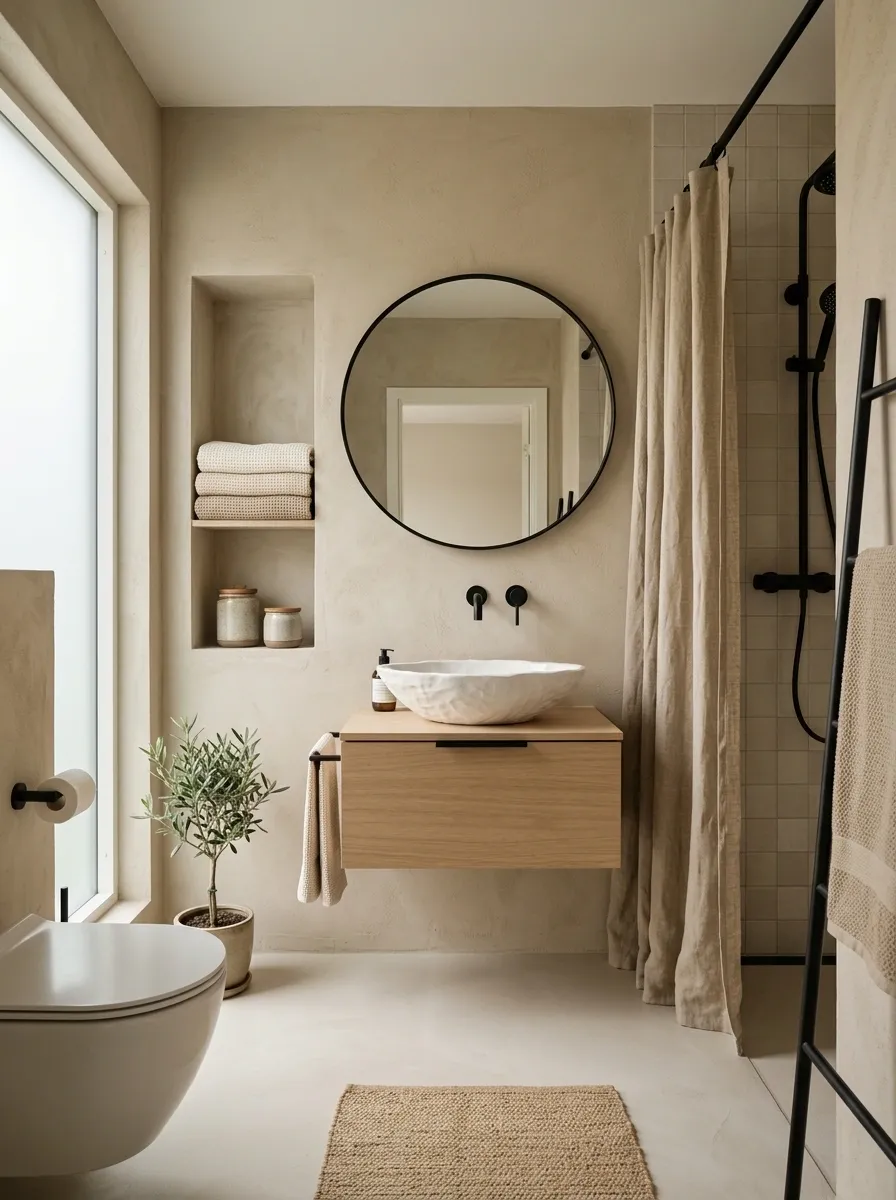
The final design brings the collection back to restraint. Sandy beige walls, a sculptural basin, pale continuous flooring, a textured sand-colored curtain, and a few black accents create a contemporary bathroom with very little visual noise.
The curtain is close to the wall color, but its texture prevents the room from becoming completely flat. The sculptural basin supplies the main shape, while black fixtures provide small points of contrast that guide the eye around the room.
This design works because every element carries a little visual weight without competing for the same spot. The result is quiet, but not empty.
Final Thoughts
Small bathrooms reward decisions that work together. A curtain can make a room feel taller, soften a hard architectural shell, introduce a pattern, brighten a dark palette, or simply disappear into a calm neutral composition. None of those effects comes from the fabric alone. The surrounding finishes determine whether the curtain feels integrated or out of place.
Start with the room as a whole. Look at the wall color, floor, vanity, fixtures, available light, and amount of visual activity already present. Then choose a curtain that belongs to that composition.
That approach produces a finished room rather than a collection of unrelated pieces.
Save the designs that fit the look of your bathroom now, then return to them when it is time to choose the final curtain.