
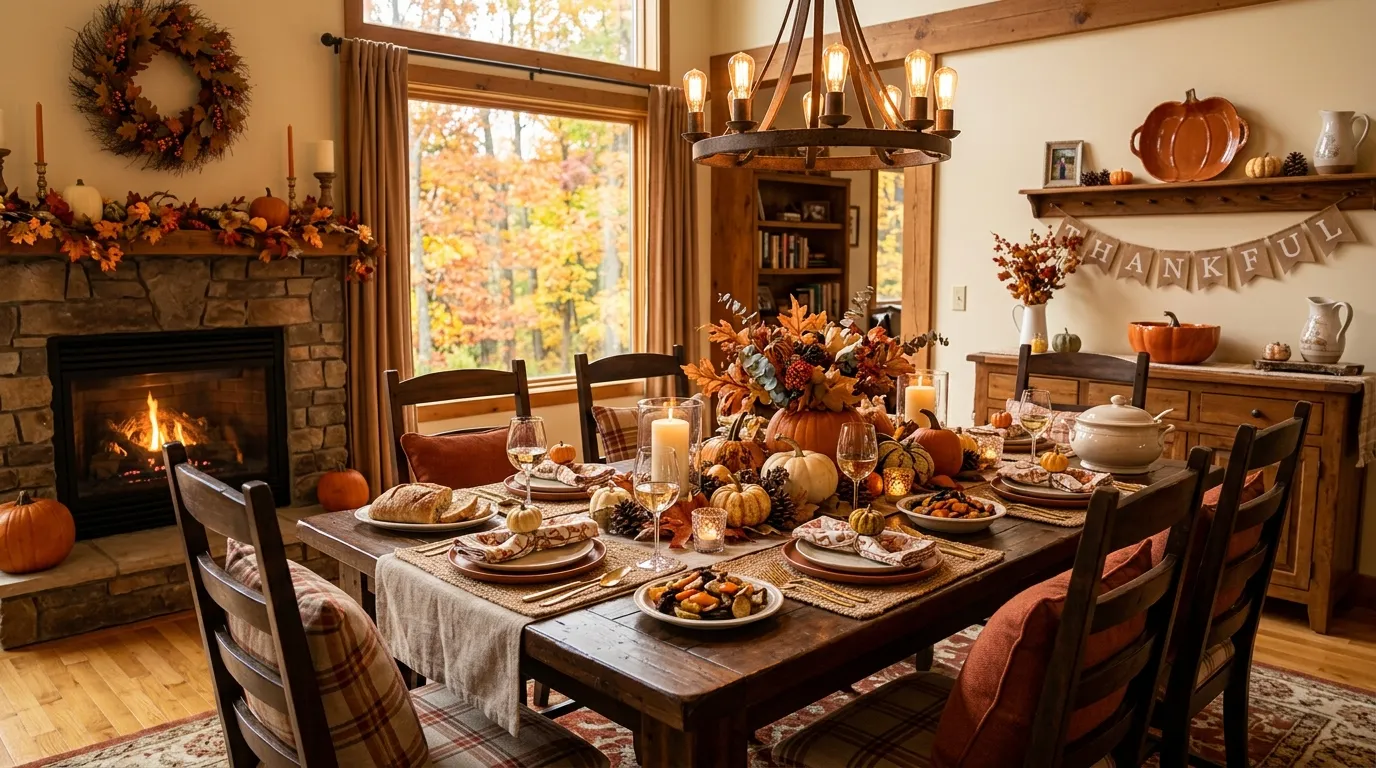
So here’s the thing about a dining table: for ten months of the year, it’s a place mail goes to die.
Then fall arrives and suddenly it’s expected to host a dinner party, hold a centerpiece worth photographing, and somehow look like it’s been ready for company all along. Most people respond by putting a single pumpkin in the middle and calling it done.
That’s not styling. That’s an apology dressed up as decor.
The dining rooms that actually earn a second look aren’t relying on one hero object. They’re layering candlelight, letting the sideboard do real work, and treating the whole room — not just the table — as the thing on display.
The Table Isn’t the Only Surface That Needs Styling
Every dining room that reads as fully finished has a second act happening somewhere behind the chairs — a sideboard, a shelf, a hutch, something doing as much visual work as the table itself.
A console or credenza against the wall gives a dried arrangement, a stack of books, or a cluster of pumpkins somewhere to live that isn’t crowding the actual place settings. It also means the room still looks styled from any angle, not just the one directly above the plates.
A mirror or piece of framed art hung above that surface adds height and reflects whatever candlelight is already working the room. And baskets tucked underneath — holding throws, linens, extra gourds — turn dead floor space into one more layer of texture instead of leaving it empty and unfinished.
None of this needs to match the table’s formality exactly. A rustic basket under a fairly polished console works precisely because of that contrast — it keeps the room from reading as one uniform, overthought set piece.
Fall Dining Room Ideas
Chunky Throw Boucle Chairs
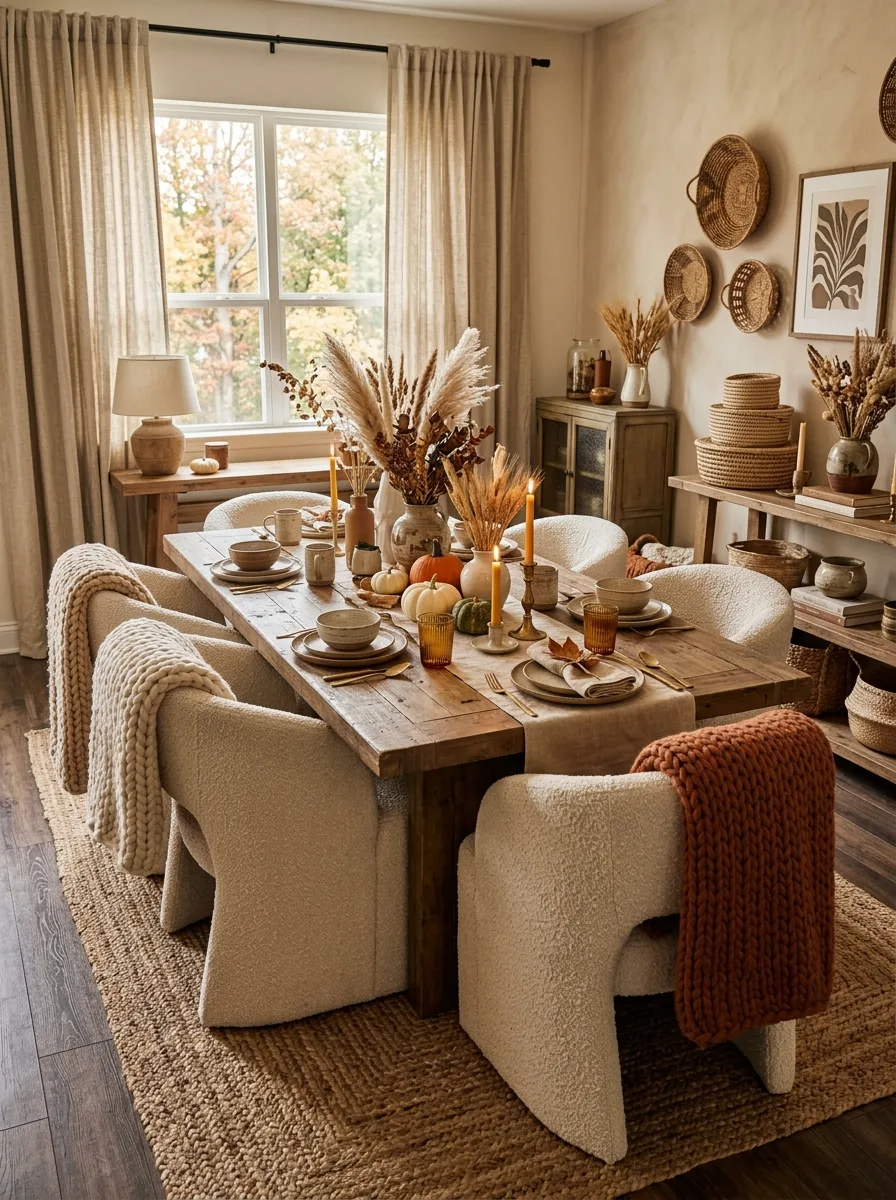
Choose boucle dining chairs in a soft cream, then drape a chunky knit throw — one neutral, one in a contrasting rust — loosely over two of the chair backs rather than every chair. Uneven distribution reads as lived-in; a throw on every single chair reads as a showroom set.
Fill a tall stoneware pitcher with dried pampas, wheat, and a few trailing eucalyptus stems, letting the arrangement lean generously to one side rather than standing perfectly upright.
Anchor the far wall with a cluster of woven baskets hung at varying heights instead of matched pairs. The wall becomes a second focal point without needing a single framed print.
Vintage Cider Bar Console
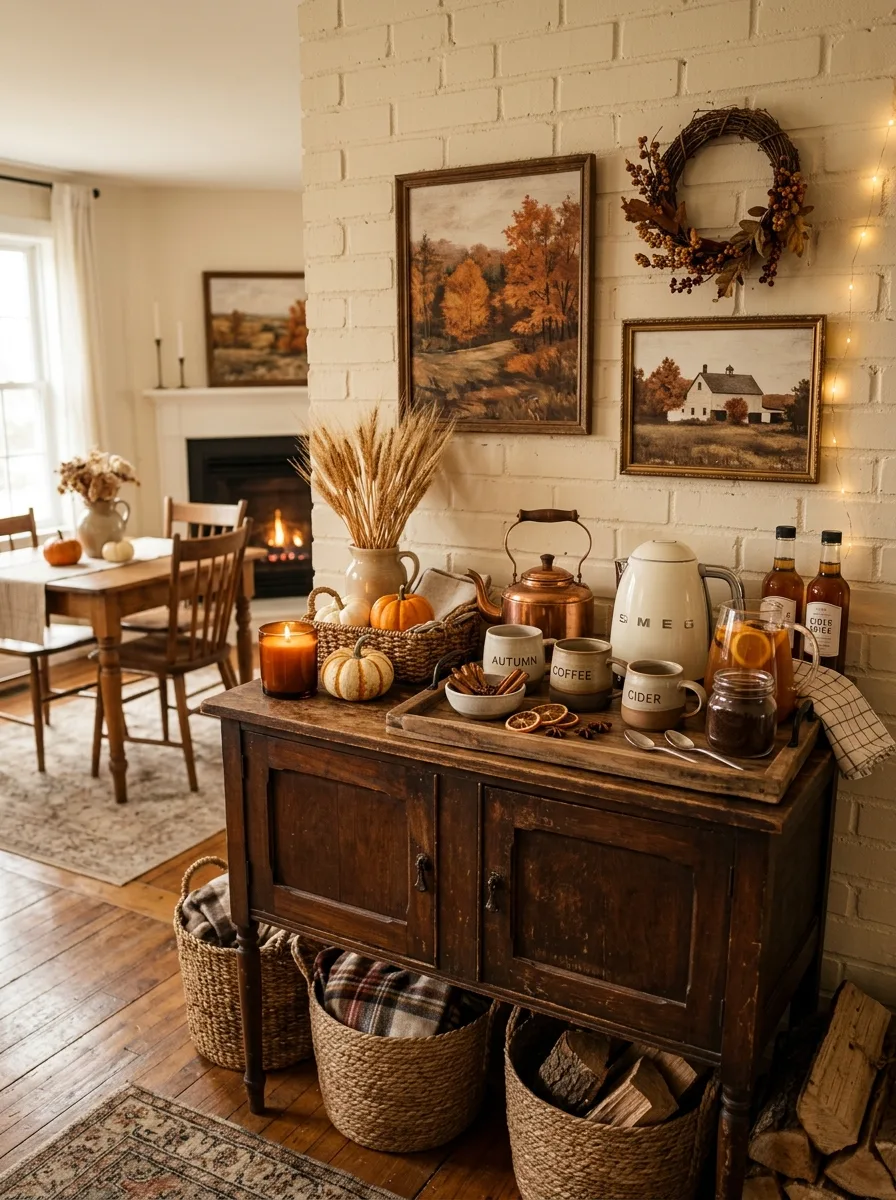
Dedicate one antique console or sideboard entirely to warm drinks — cider, coffee, mulled wine — rather than folding it into the main table setting.
Style the surface with a mix of mismatched mugs, a vintage kettle, and small glass bottles labeled simply, keeping the palette in warm ambers and creams so nothing fights the room’s existing tones.
Tuck baskets underneath holding folded throws and firewood. A cider station only really works if it looks like something guests will actually walk over to, not a display they’re meant to admire from the table.
Amber Glass Cheese Board
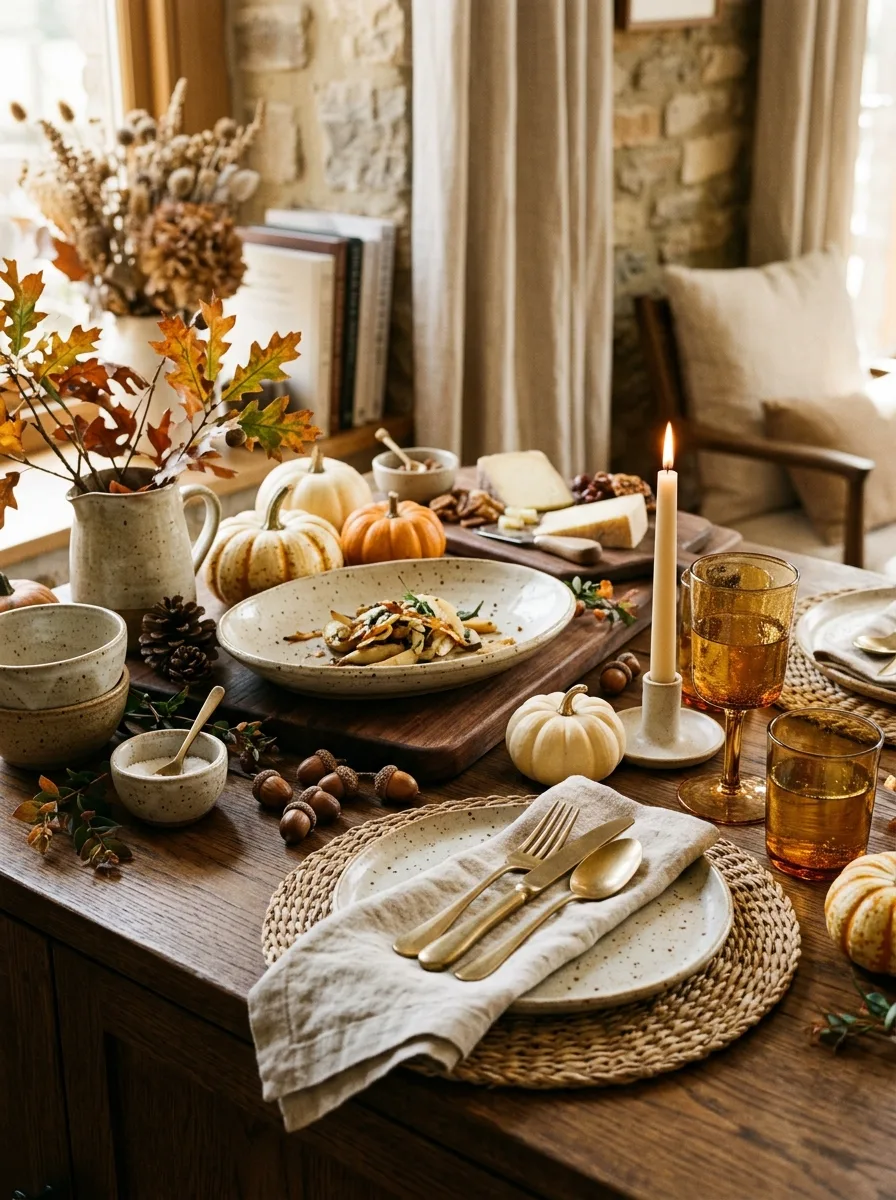
Build a rustic wooden board loaded with cheese, nuts, and dried fruit directly onto the table rather than serving it separately, letting a few mini pumpkins and acorns spill across the wood around it.
Choose amber glassware for wine and water rather than clear crystal. The warm tint does more for the table’s mood in candlelight than an extra centerpiece would.
Let one dramatic taper candle stand taller than everything else nearby. It gives the eye somewhere to land amid all the small, scattered objects on the board.
Travertine Table Olive Branches
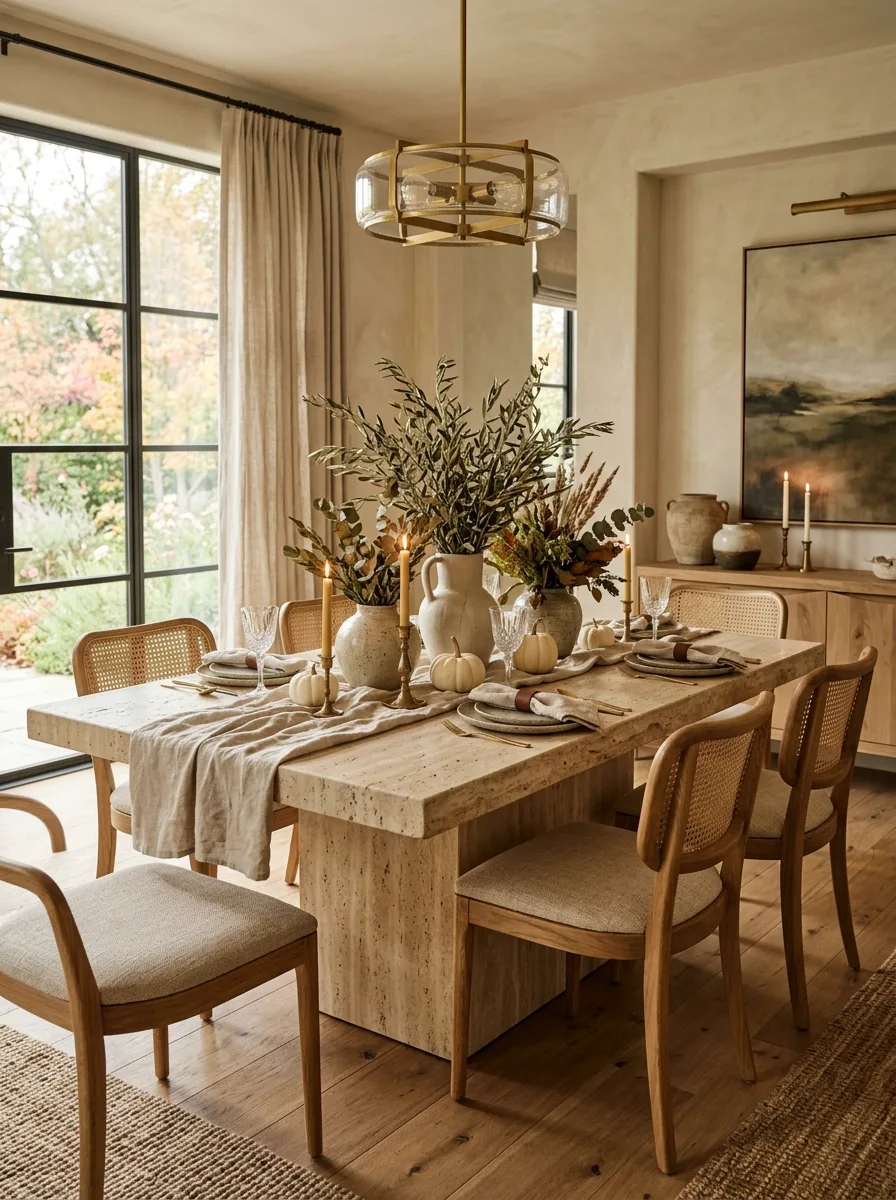
Choose a stone table — travertine or a similar warm-toned material — as the room’s main textural statement, letting its natural veining stay the star rather than competing with a busy runner.
Fill oversized ceramic vases with fresh olive branches rather than traditional fall foliage. The silvery-green reads as autumn without tipping into the expected orange and rust palette.
Pair the stone table with cane-back chairs. The woven texture softens what would otherwise be a very hard, cool material running the length of the room.
Amber Bottle Corner Nook
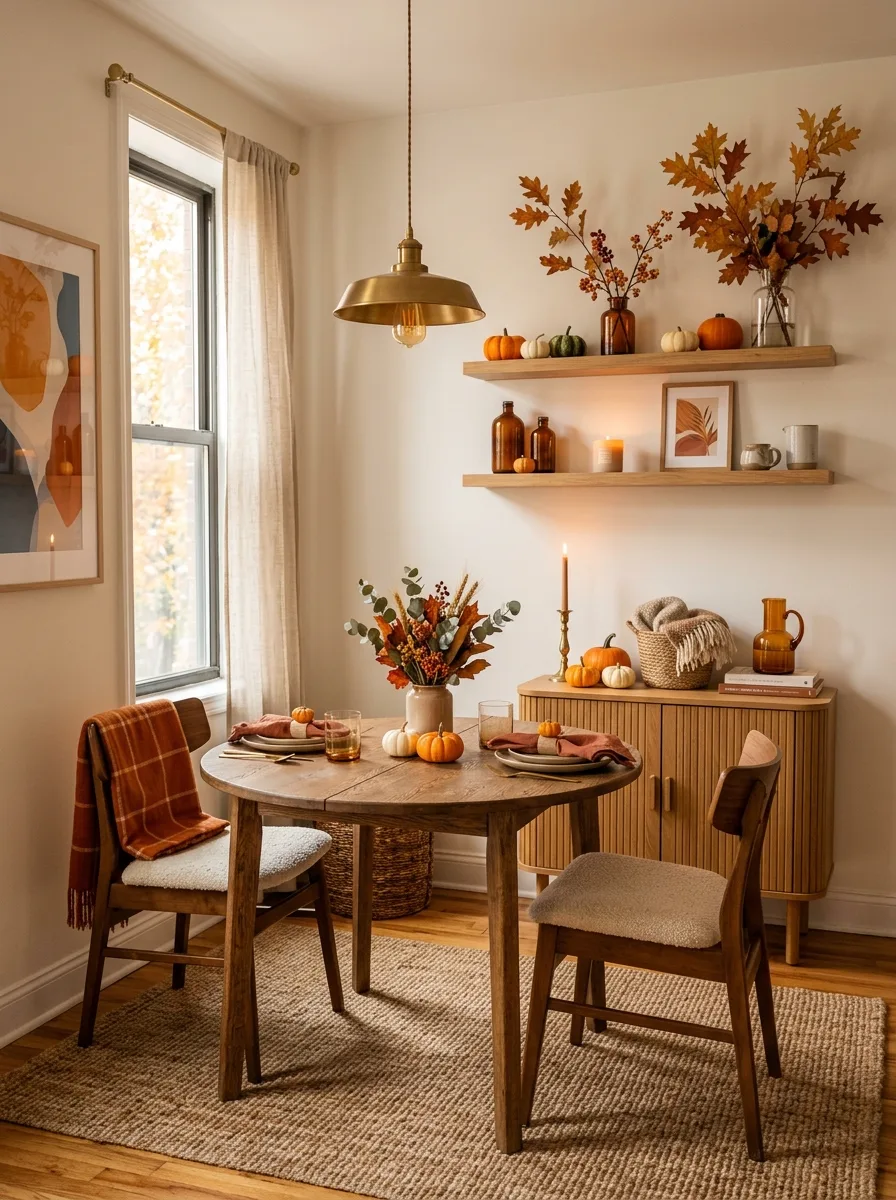
If your dining space is small, commit to a round table rather than forcing a rectangular one into a corner that doesn’t fit it. Round tables use tight spaces more honestly.
Line a nearby shelf with amber apothecary bottles and dried oak branches in mismatched vases, letting the collection spill slightly past the shelf’s edges rather than sitting in a tidy row.
Drape a plaid throw over the back of just one chair. In a small room, one deliberate texture reads as styled; covering every surface reads as cluttered.
Antler Chandelier Mountain View
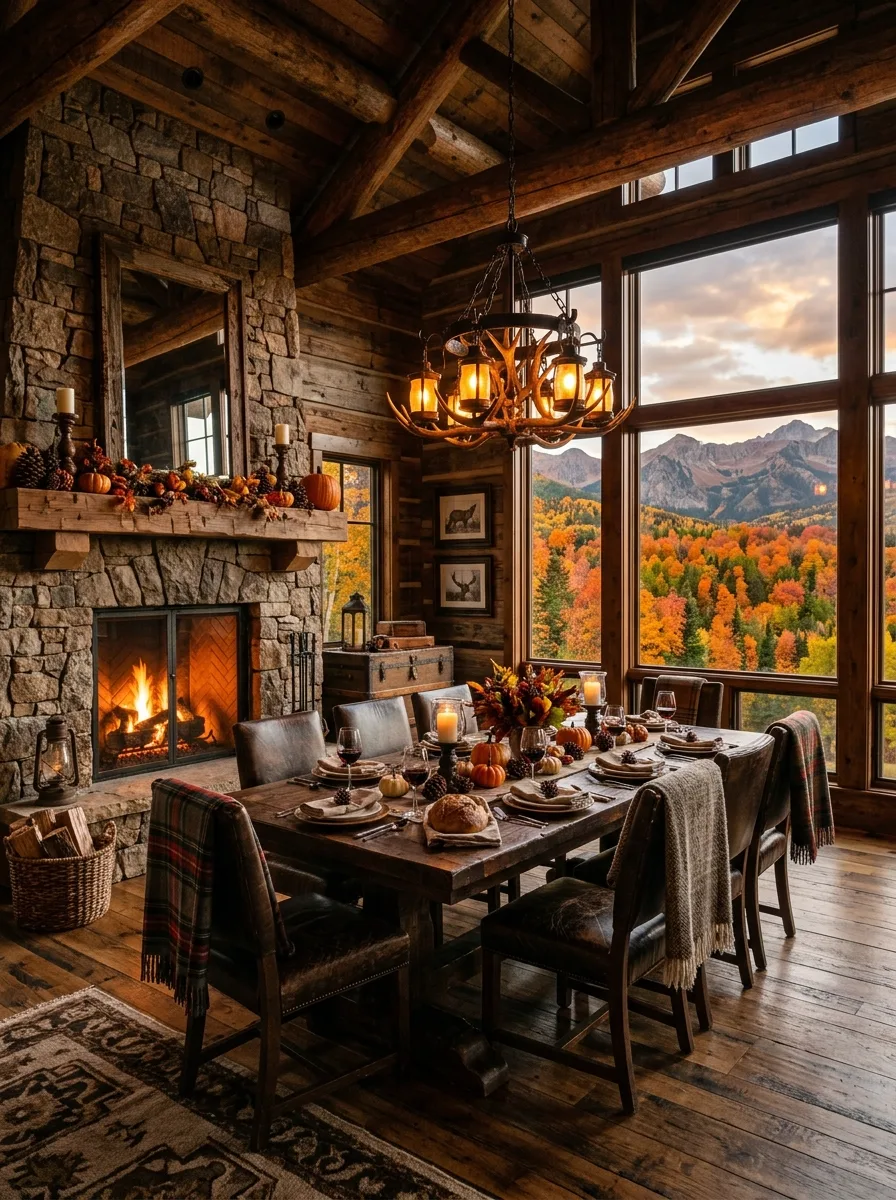
Choose a chandelier built from real or faux antler alongside lantern-style glass shades, letting the mixed materials read as gathered rather than matched from a single collection.
Set the table with mismatched leather and wood dining chairs rather than a uniform set. In a room already built from stone and heavy timber, uniformity would undercut the cabin’s whole point.
Let plaid throws hang loosely off the backs of at least half the chairs, and keep the centerpiece low and dense with berries and mini pumpkins so it doesn’t block the view beyond the windows.
Crystal Chandelier Burgundy Runner
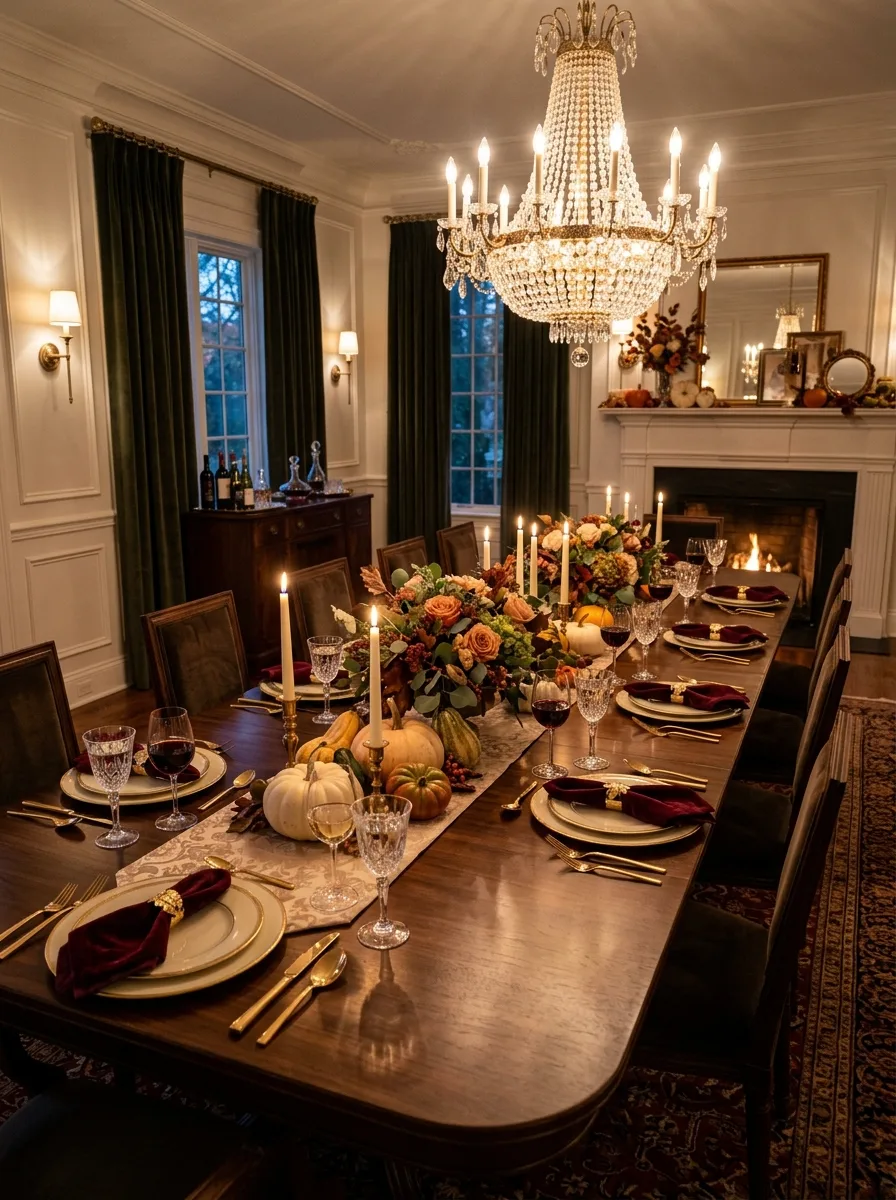
Hang the largest crystal chandelier the room can support, and let its light do most of the illumination work alongside wall sconces rather than any additional lamps.
Choose a deep burgundy velvet table runner as the one saturated color statement, keeping everything else — chargers, glassware, napkins — in gold, cream, or white so the runner has room to stand out.
Cluster loose floral arrangements heavy on garden roses and dahlias directly on the runner rather than in a single central vase. A formal room like this benefits from abundance stretched the full length of the table, not one contained centerpiece.
Plaid Window Seat Breakfast
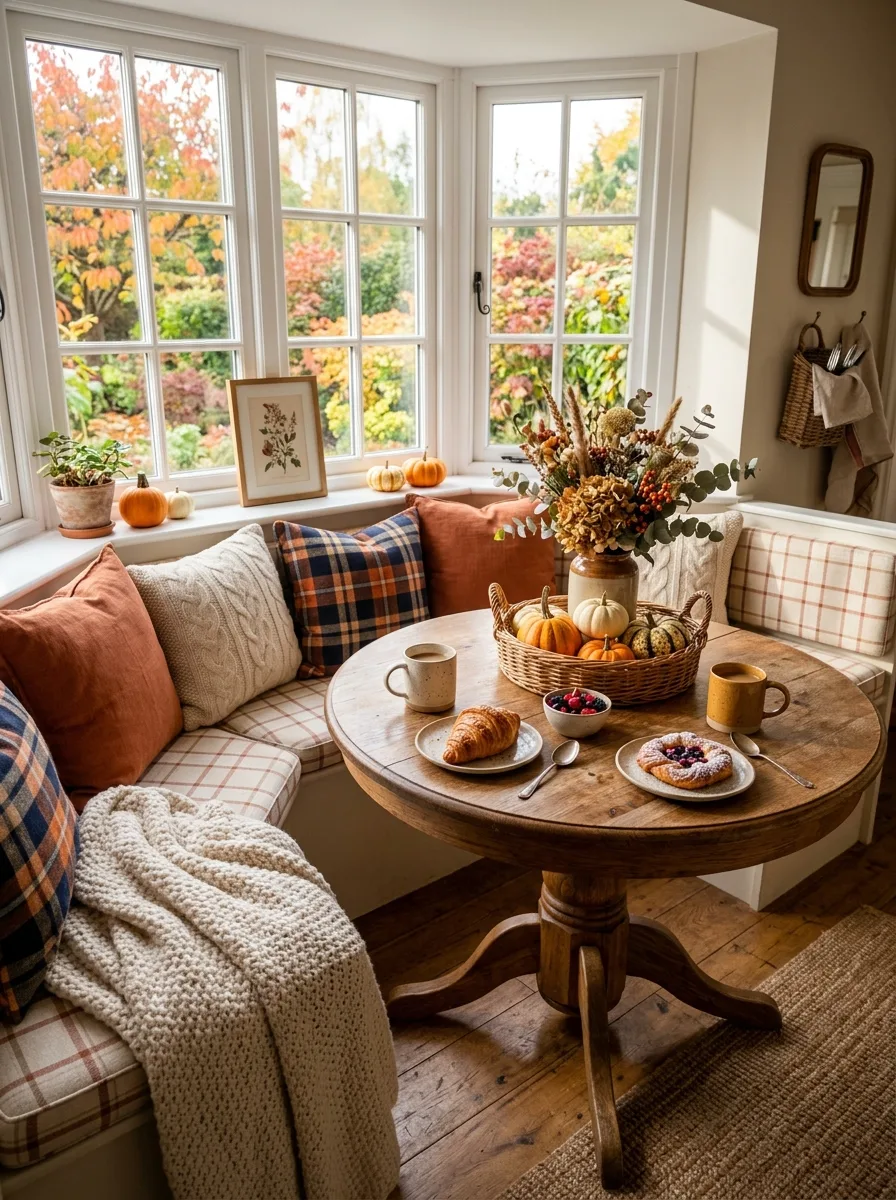
Build a cushioned window seat with plaid and cable-knit pillows layered together, mixing patterns rather than keeping everything in a single print.
Set a small round pedestal table in front of it, loaded with a basket of mini pumpkins and gourds rather than a formal centerpiece — this is a breakfast nook, and the styling should read casual, not staged for a dinner party.
Leave real food out — a croissant, a bowl of berries, two filled coffee cups. An empty styled table in a breakfast nook undercuts the whole point of the space.
Built-In Shelf Wall Styling
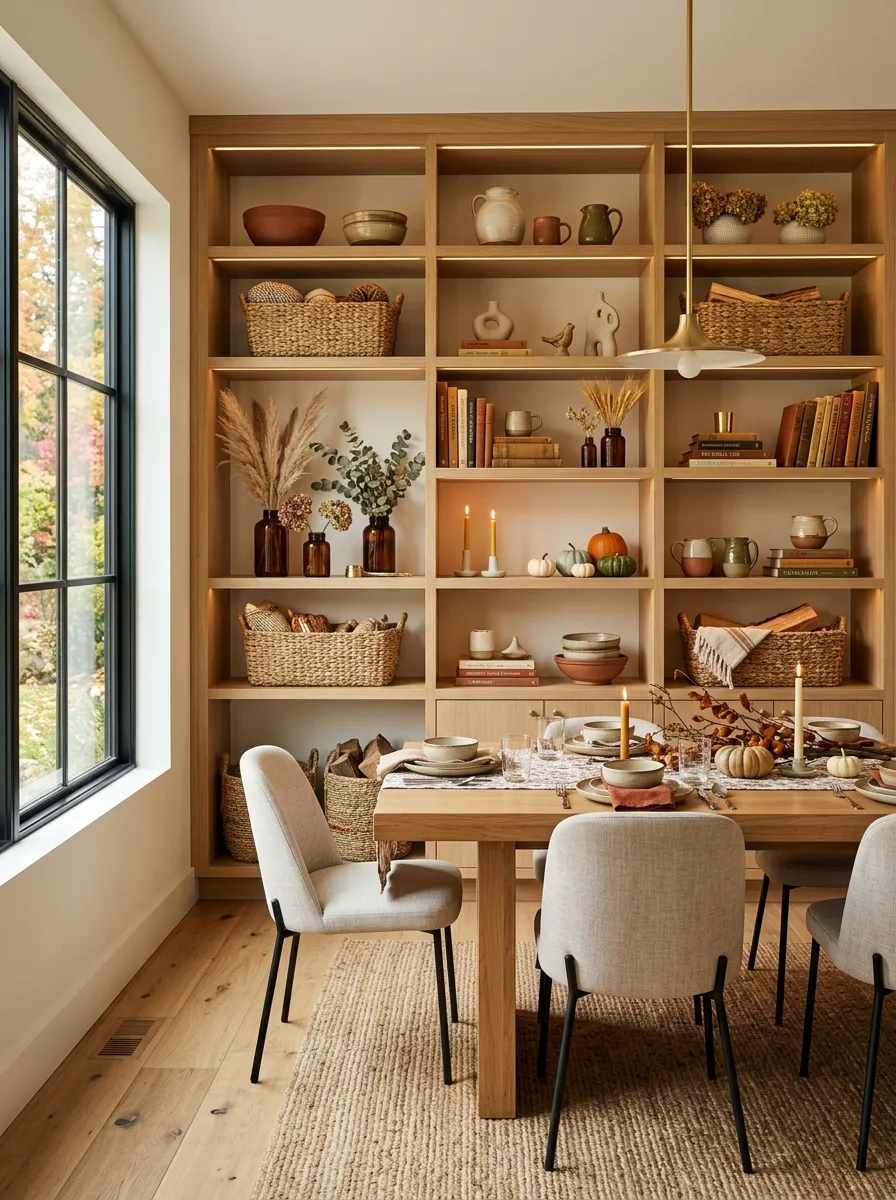
Build floor-to-ceiling open shelving along one full wall of the dining room, treating it as an extension of the table’s styling rather than a separate display.
Mix baskets, stacked books, ceramics, and dried arrangements across the shelves unevenly — no shelf should look identical to the one above or below it.
Let the table’s own centerpiece echo the shelving’s dried botanicals in color, so the whole wall and the table read as one continuous styled scene rather than two competing ones.
Framed Pressed Leaf Wall
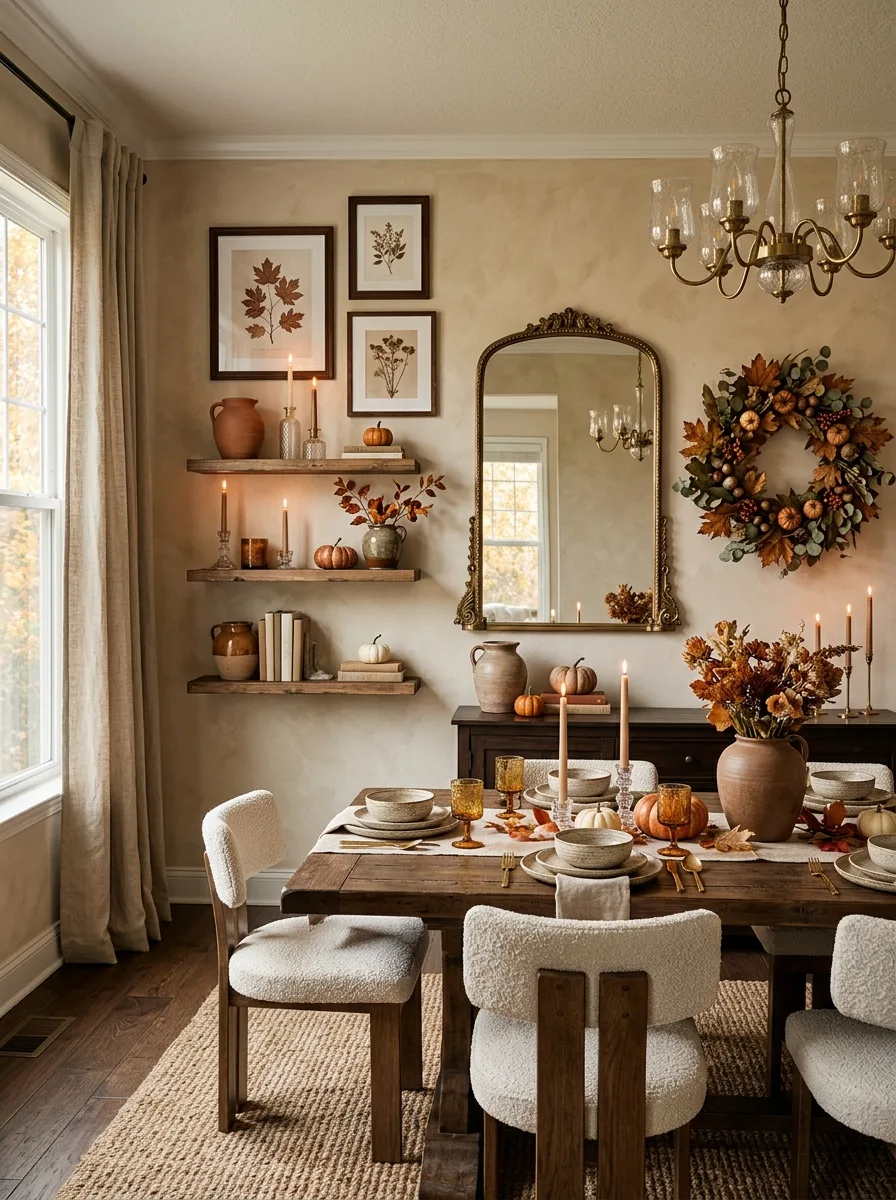
Hang a tight gallery wall of pressed botanical prints in mismatched frames directly beside the dining table, letting the collection run right up against a mirror rather than stopping short of it.
Choose boucle upholstered dining chairs to soften the wall’s formality, and add wall sconces on either side of the mirror so the gallery stays lit even when the overhead chandelier is dimmed.
Keep the table’s centerpiece lower than the artwork’s bottom edge. The wall should read as the room’s tallest visual statement, not compete with what’s happening on the table.
Oversized Stoneware Leaf Arrangement
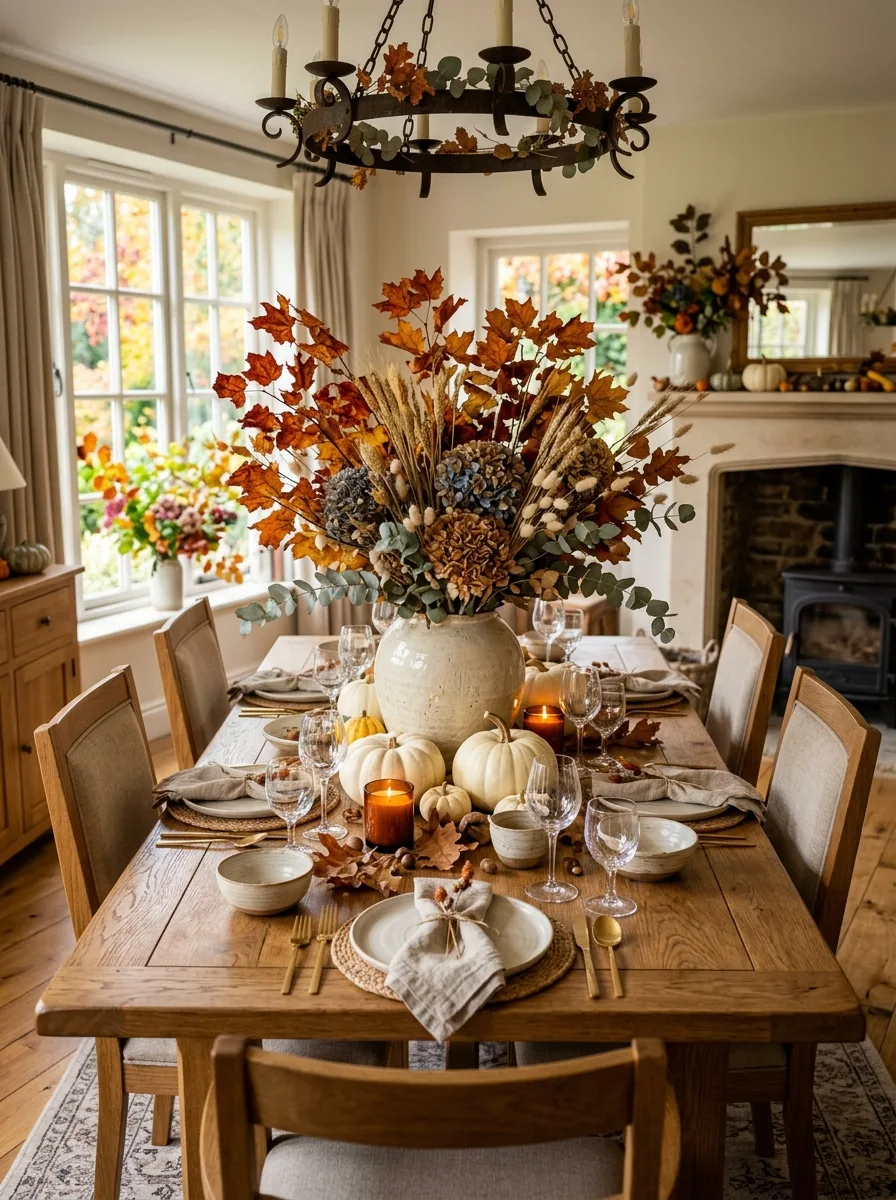
Choose a large-handled stoneware jug as the centerpiece vessel, and fill it with dried oak leaves, hydrangea, and eucalyptus in a mix that leans deliberately asymmetrical rather than dome-shaped.
Hang a wrought iron chandelier woven with faux eucalyptus and leaves directly above it, so the arrangement on the table and the one overhead feel like they belong to the same gesture.
Surround the base of the jug with a cluster of white and orange pumpkins in varying sizes, letting a few sit slightly behind the vase rather than lined up in front of it.
Rattan Cabinet Pampas Display
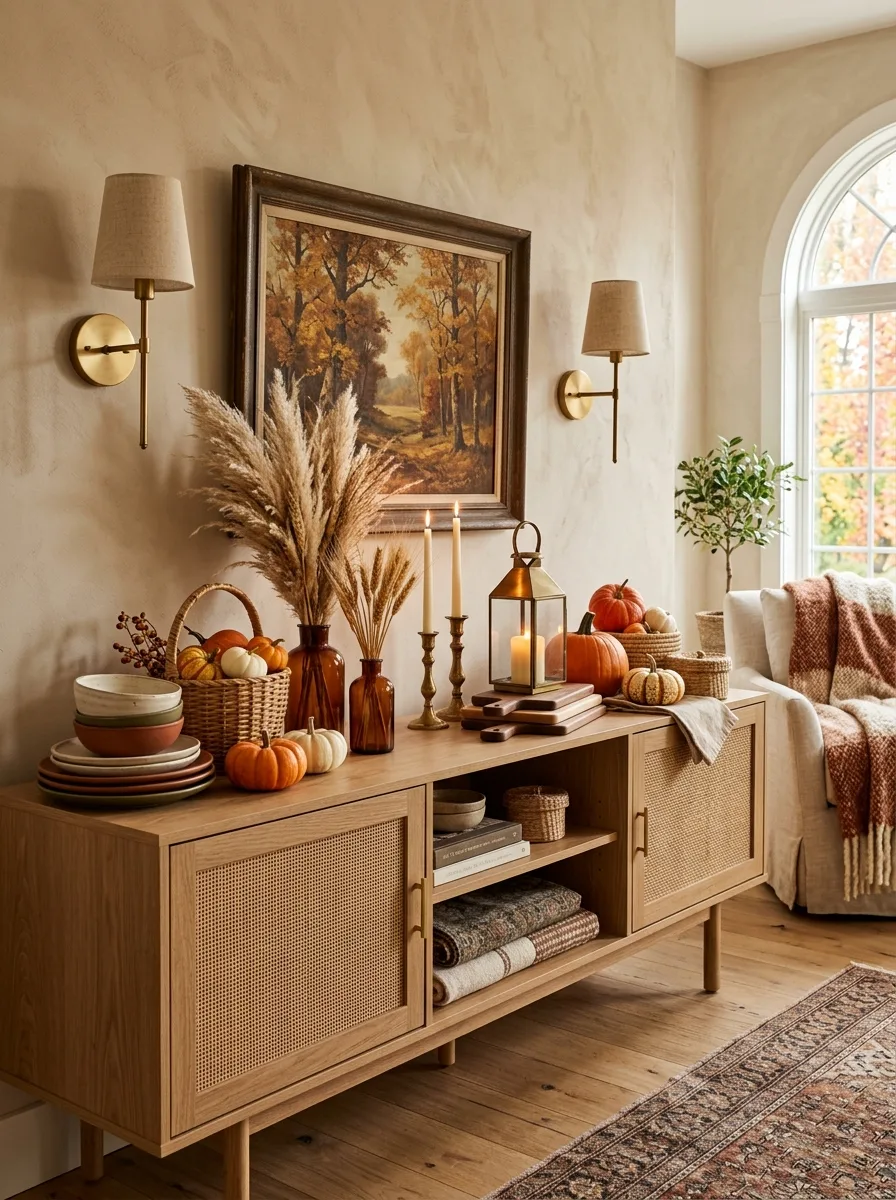
Choose a cabinet with woven rattan door fronts to introduce texture without adding another color to the room’s palette.
Style the top with tall pampas and wheat stems in slim amber glass vases, mixed with stacked dinnerware and a woven basket of small pumpkins.
Mount two matching sconces above a landscape painting rather than relying on a single overhead fixture. The pair of lights frames the artwork the way a picture light would, but with more warmth.
Wrought Iron Candle Chandelier
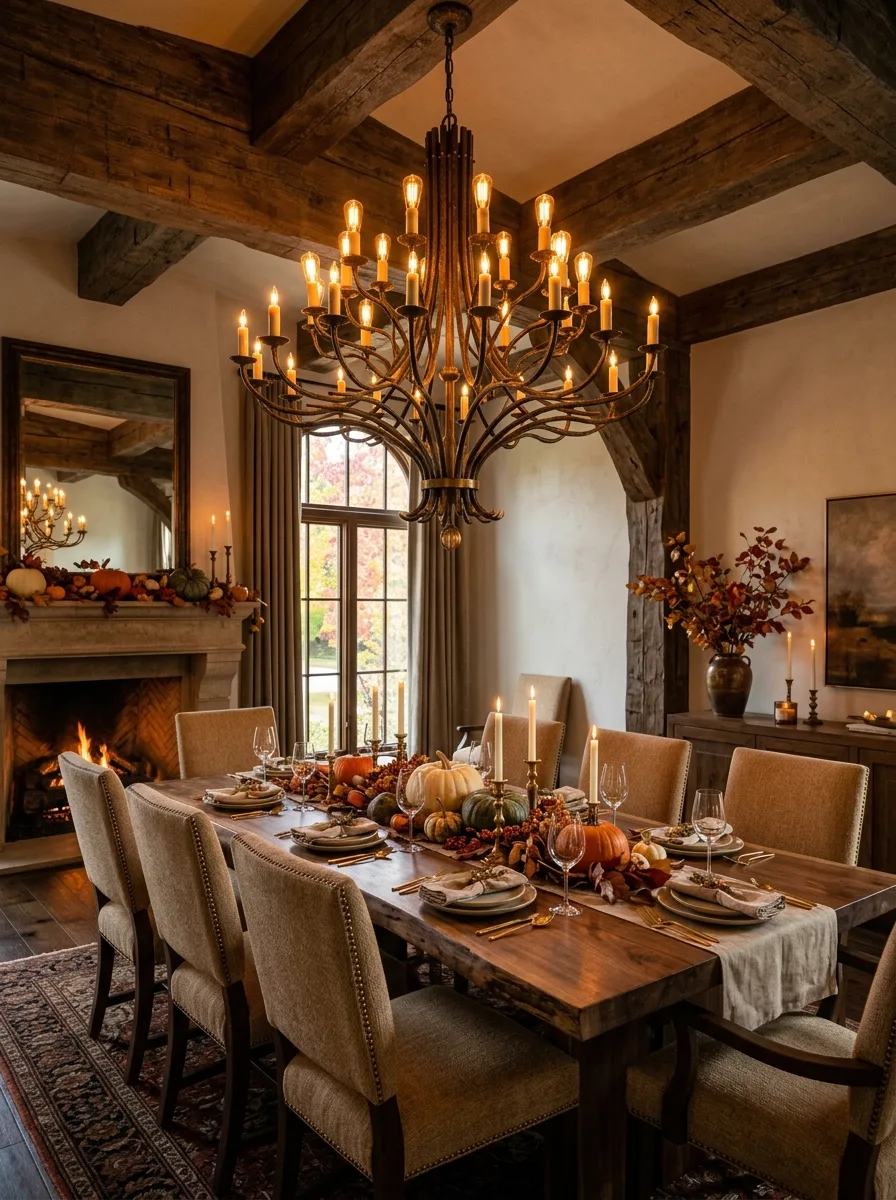
Choose a dramatic wrought iron chandelier with dozens of candle-style bulbs, letting its scale genuinely overwhelm the room rather than sizing it modestly to the table below.
Pair it with a live-edge wood table that keeps its natural, irregular border rather than a table cut to a perfect rectangle. The organic edge softens the chandelier’s heavier, more architectural presence.
Fill the table’s runner with a loose, tumbling mix of gourds, berries, and greenery rather than a single contained arrangement, letting some pieces rest directly on the bare wood.
Moody Black Velvet Runner
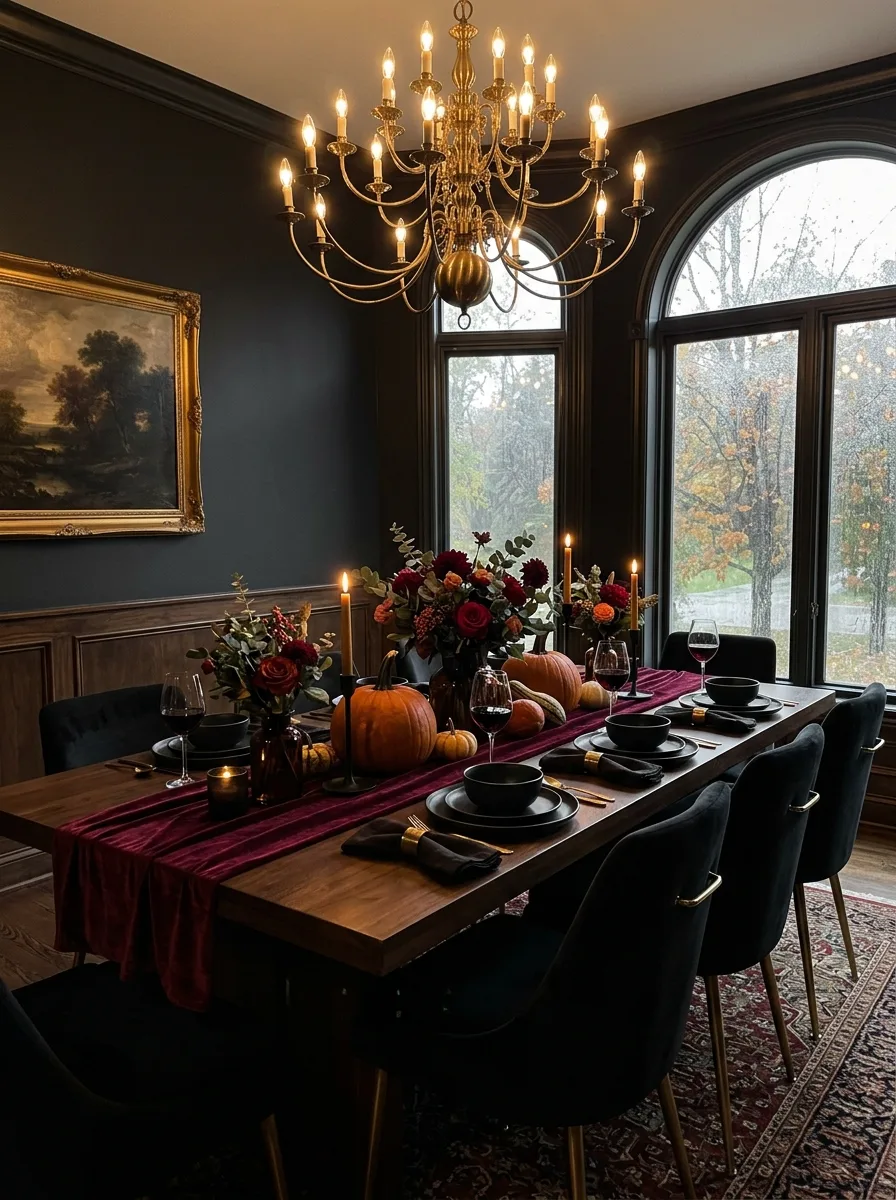
Paint the dining room walls a deep charcoal or black, and let a gold ornate chandelier be the one warm, bright element in an otherwise dark palette.
Choose black dining chairs with brass or gold leg accents, and dress the table in a burgundy velvet runner rather than linen — velvet holds a much deeper, richer color under low light.
Add deep red floral arrangements mixed with a few classic orange pumpkins. The pumpkins are what keep this dramatic, moody room legible as fall rather than reading as a room decorated for an entirely different occasion.
Botanical Print Grid Wall
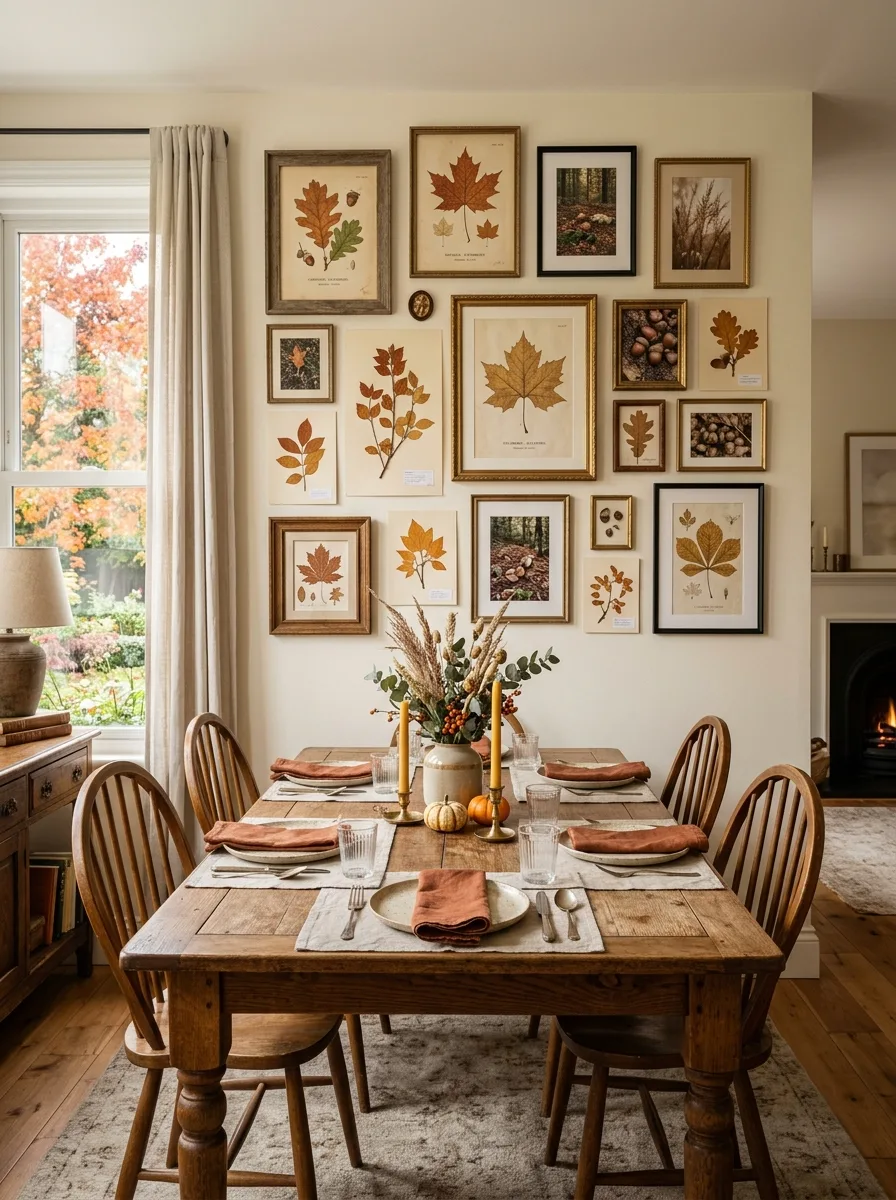
Cover an entire wall in a dense, evenly spaced grid of pressed leaf and botanical prints, choosing frames that vary slightly in tone but share a similar gold or dark wood finish.
Pair the wall with classic spindle-back Windsor chairs, keeping the rest of the room’s furniture simple so the print grid stays the obvious focal point.
Set the table with terracotta-toned napkins as the single warm accent color, letting everything else — plates, glassware, linens — stay neutral so the wall doesn’t have to compete for attention.
Black Lantern Candle Cluster
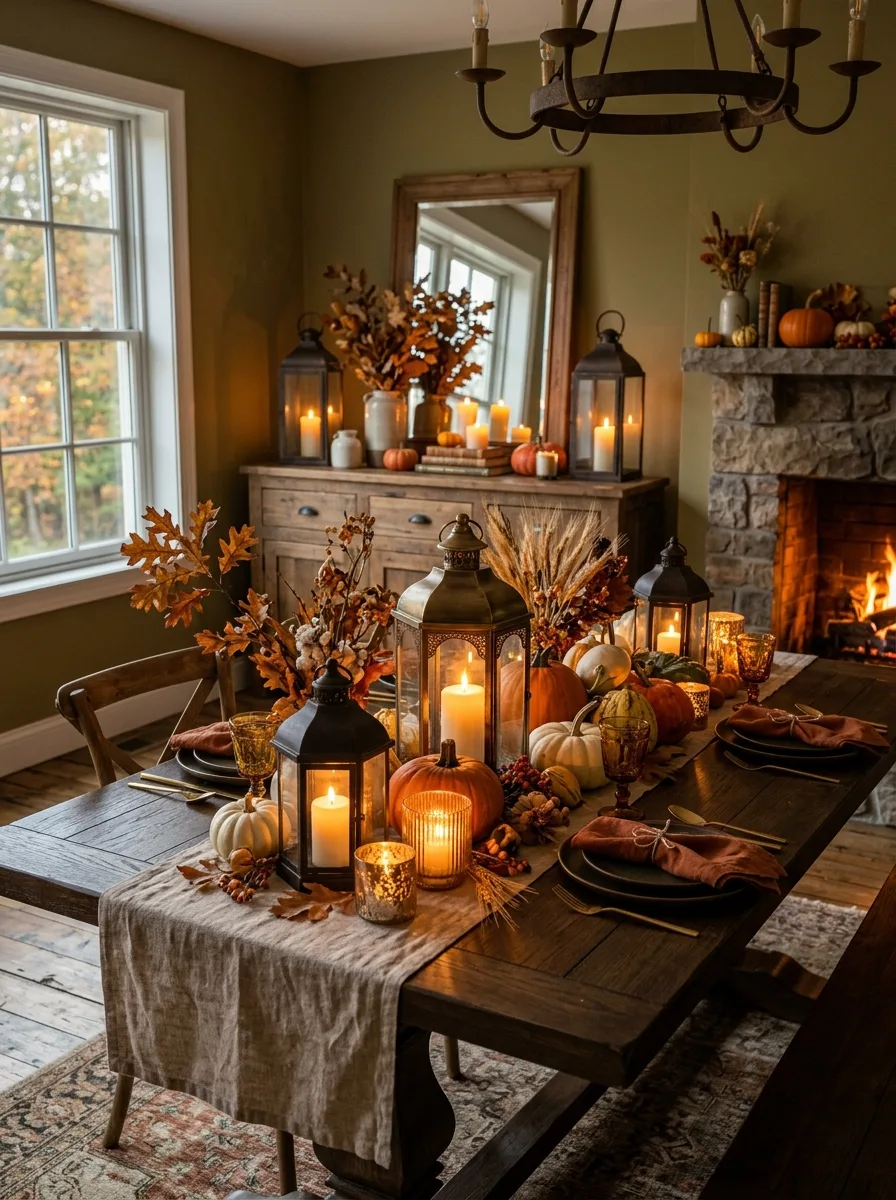
Choose black metal lanterns in a few different heights and cluster them directly down the center of the table rather than lining them up single-file.
Fill the gaps between lanterns with mini pumpkins, gourds, and loose amber votive candles, letting the whole arrangement feel dense enough that no bare table shows between pieces.
Paint the surrounding walls a deep olive or sage rather than a warm neutral. The cooler wall color makes the lanterns’ orange candlelight read even warmer by contrast.
Basket Storage Console Table
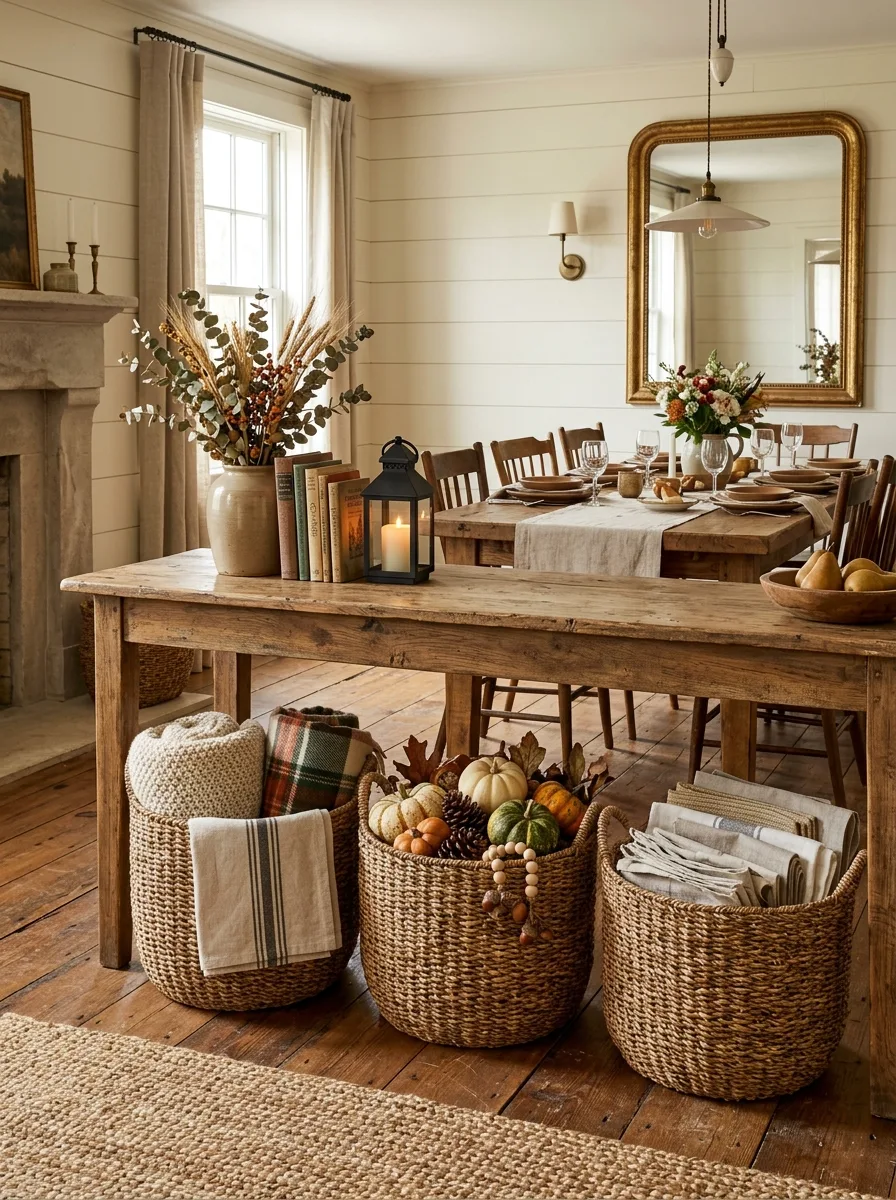
Push a long wooden console table against the wall behind the dining chairs, and use it to hold books, a lantern, and a bowl of fresh pears rather than purely decorative objects.
Line three or four woven baskets directly underneath, each holding something different — folded throws, table linens, a mix of gourds and pinecones — so the space reads as genuinely useful storage rather than staged filler.
Let one basket’s contents spill slightly over the rim. A perfectly contained basket looks untouched; one with a throw draped over the edge looks like it gets used weekly.
Woven Dome Pendant Light
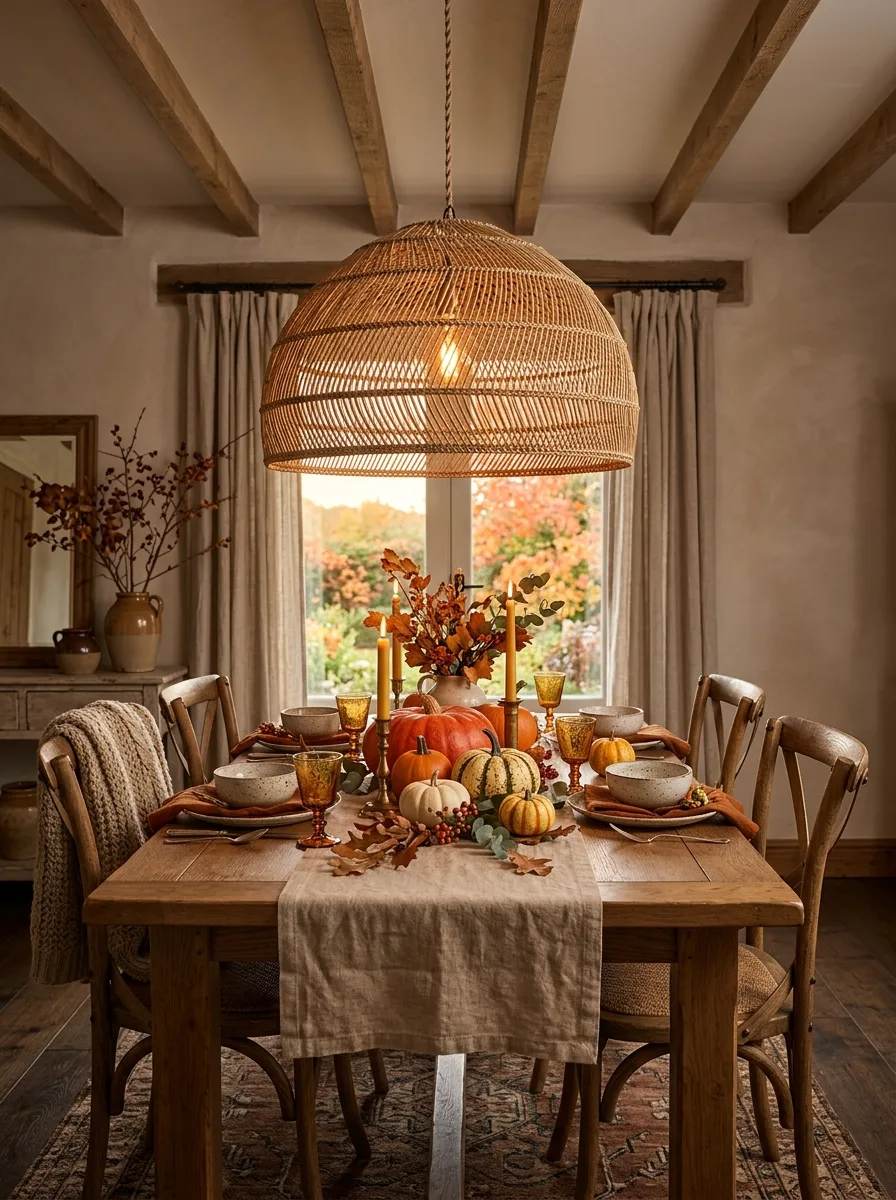
Hang an oversized woven rattan pendant directly above the table, sized large enough that it becomes the room’s dominant light fixture rather than a supporting one.
Choose simple wishbone-style dining chairs in a warm wood tone, keeping the seating quiet so the pendant and the table styling can carry the room’s visual weight.
Run a plain linen runner the full length of the table rather than a patterned one, and let a single generous floral arrangement anchor the center. The pendant is already doing the drama; the table doesn’t need to compete with it.
Taper Candlestick Forest Table
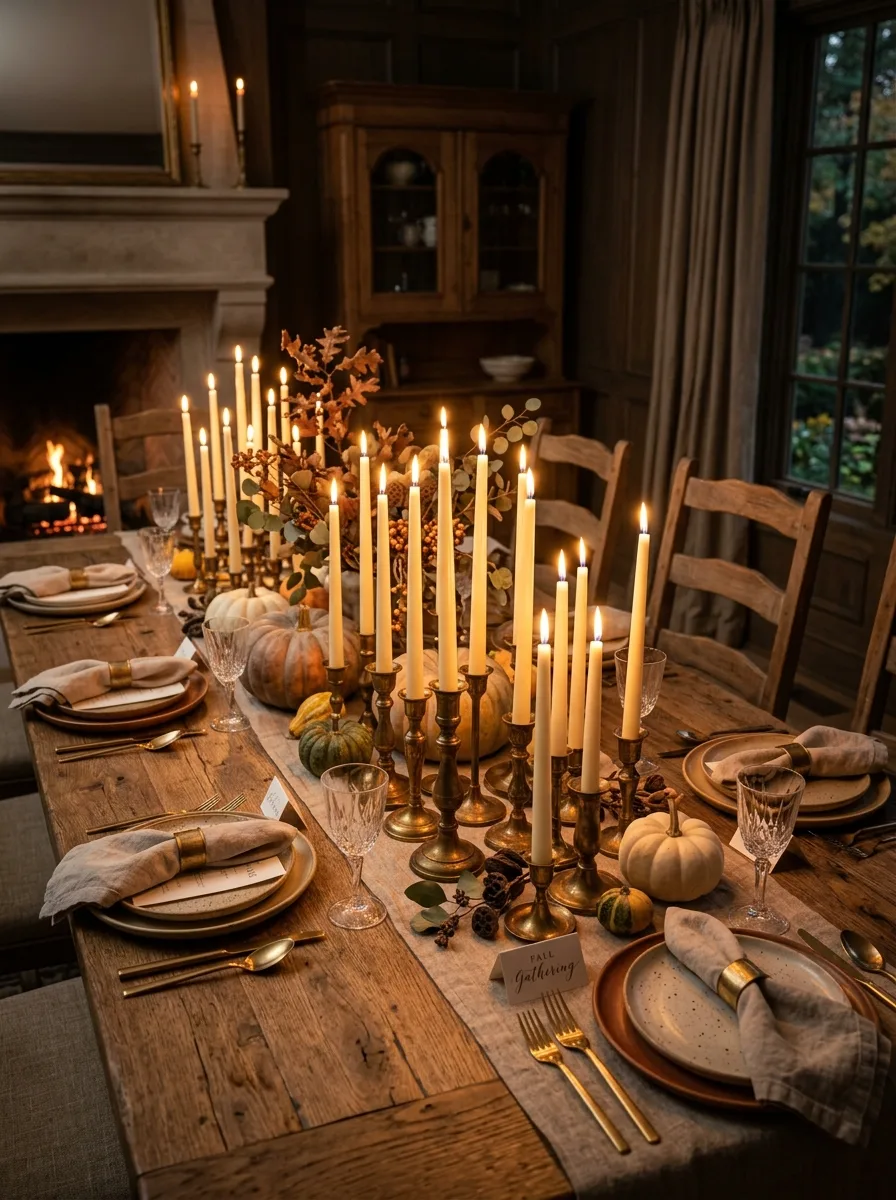
Choose brass candlesticks in as many varying heights as you can gather, and cluster them densely around a low, wide centerpiece of pumpkins and dried greenery rather than spacing them along the table’s length.
Use gold flatware and rimmed dinnerware to keep the metal tones consistent from the candlesticks all the way down to the place settings.
Add small printed place cards at each setting. In a table this dense with candlelight and metal, a place card is a small, legible detail that keeps the abundance from tipping into chaos.
Glass Tube Chandelier Sunset
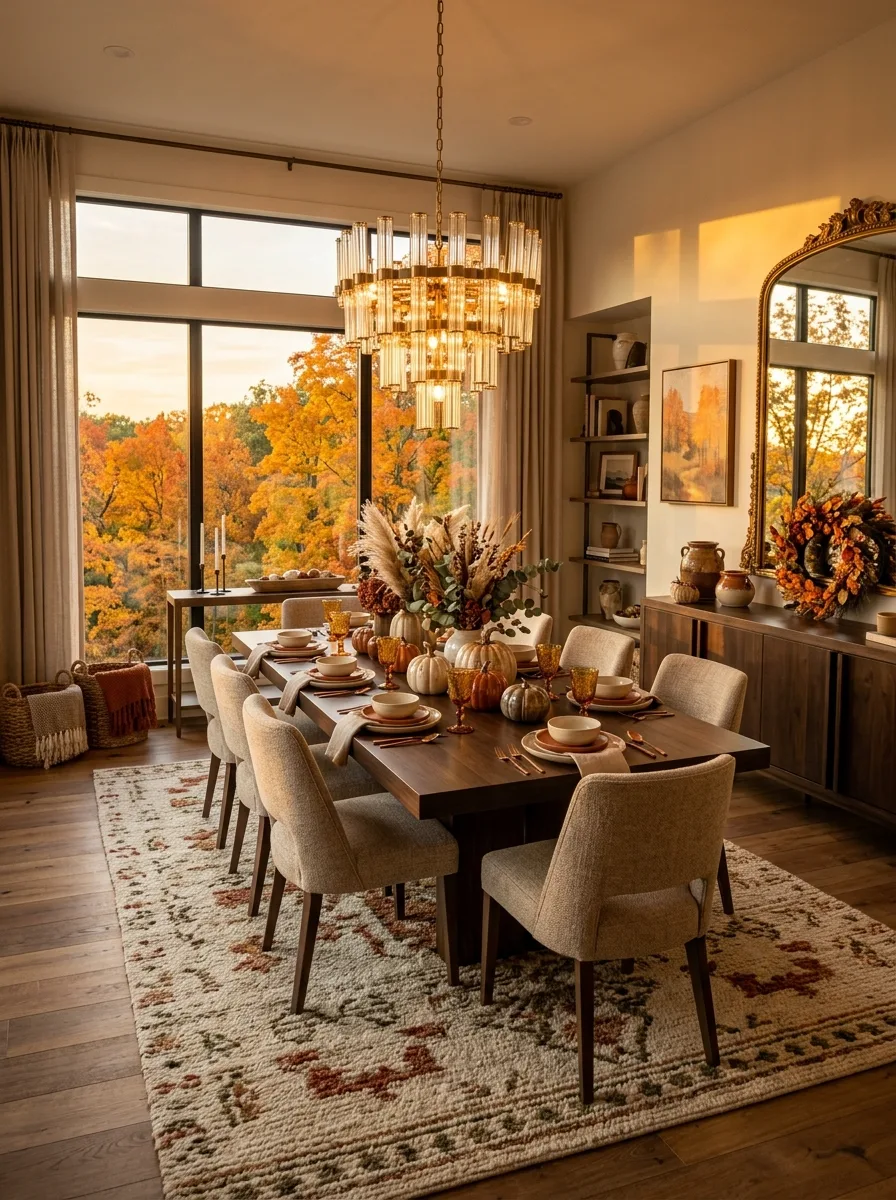
Choose a modern chandelier built from layered glass tubes and warm bulbs, letting its geometric structure contrast against an otherwise soft, traditional table setting.
Position the dining table to face a full wall of windows, and plan for the room’s best moment to be late afternoon, when low sunset light comes through nearly level with the table.
Fill a large vase with pampas and dried florals in warm rust and cream tones, keeping the arrangement tall enough to hold its own against the window view without blocking it entirely.
None of these rooms are relying on a single trick. They’re stacking candlelight, texture, and a second styled surface until the room stops looking like it’s waiting for a holiday and starts looking like one is already happening.
That’s the actual difference between a dining room with a pumpkin on it and a dining room that’s finished. It was never about the pumpkin.