
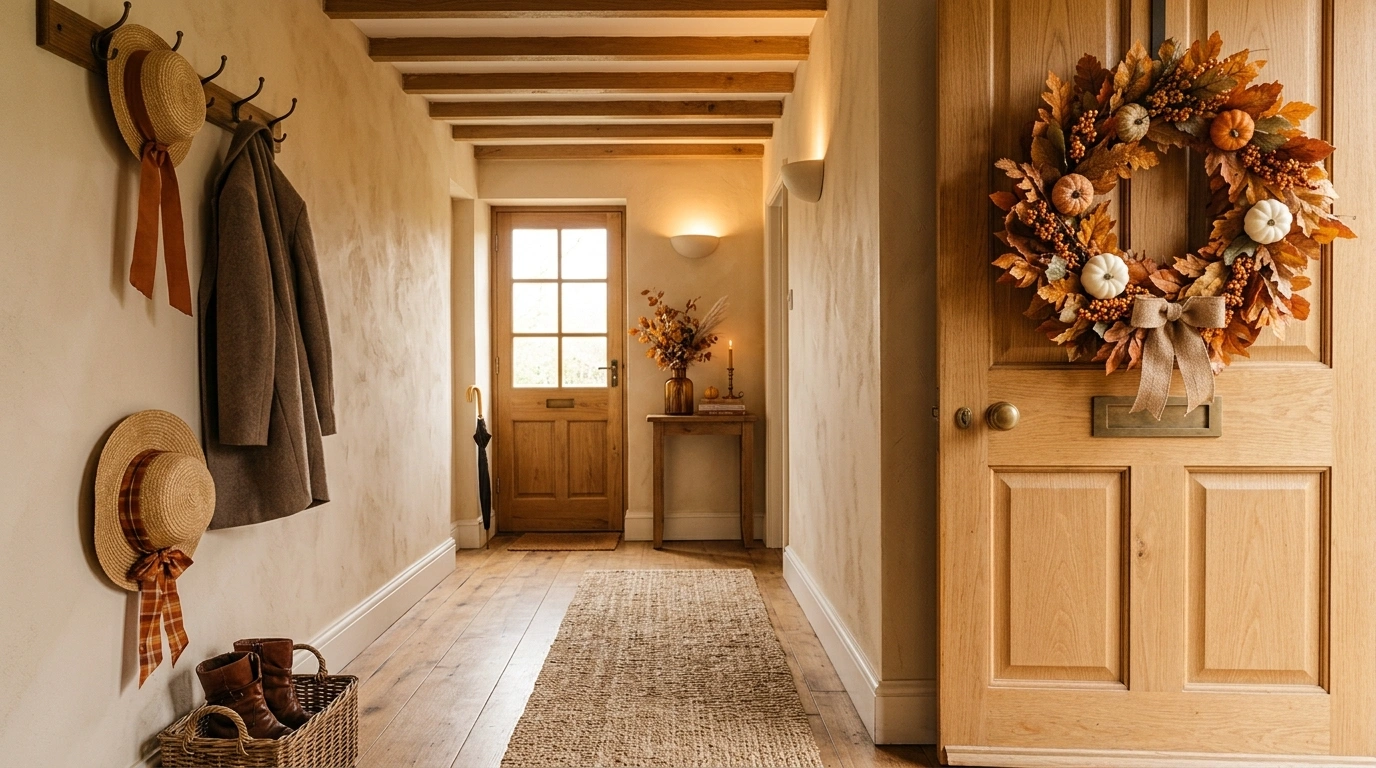
A fall entryway can look cluttered long before it actually looks decorated. A few pumpkins land on the console, a seasonal sign gets squeezed onto the wall, another basket appears by the door, and suddenly the entrance feels smaller instead of warmer.
The problem isn’t a lack of autumn decor. It’s poor visual hierarchy.
An entryway has to handle shoes, coats, bags, keys, traffic, and all the little things that pile up by the door. Seasonal styling has to work around those realities. That’s why fall entryway decor ideas work best when they use a few strong shapes, warm materials, useful storage, and enough empty space for the room to breathe.
The most convincing fall entrances don’t scream “seasonal.” They look naturally warmer because the textures, colors, lighting, and proportions are doing the work.
The strongest fall entryways don’t need dozens of seasonal decorations. They rely on a few pieces with enough scale and texture to make the doorway feel intentional.
Fall Entryway Decor Ideas
Style a Console With Autumn Foliage and Warm Glows
An entryway console table looks completely finished when you anchor the surface with oversized pottery filled with rust-toned autumn branches.
Pair the natural botanical arrangement with a classic ceramic lamp, a stack of vintage-inspired books, and a glowing candle to create instant seasonal ambiance.
Tuck a few patterned pumpkins and a woven basket underneath to maximize storage and bring cozy texture right down to the floor.
Layer a Rust Runner Under the Everyday Entry Rug
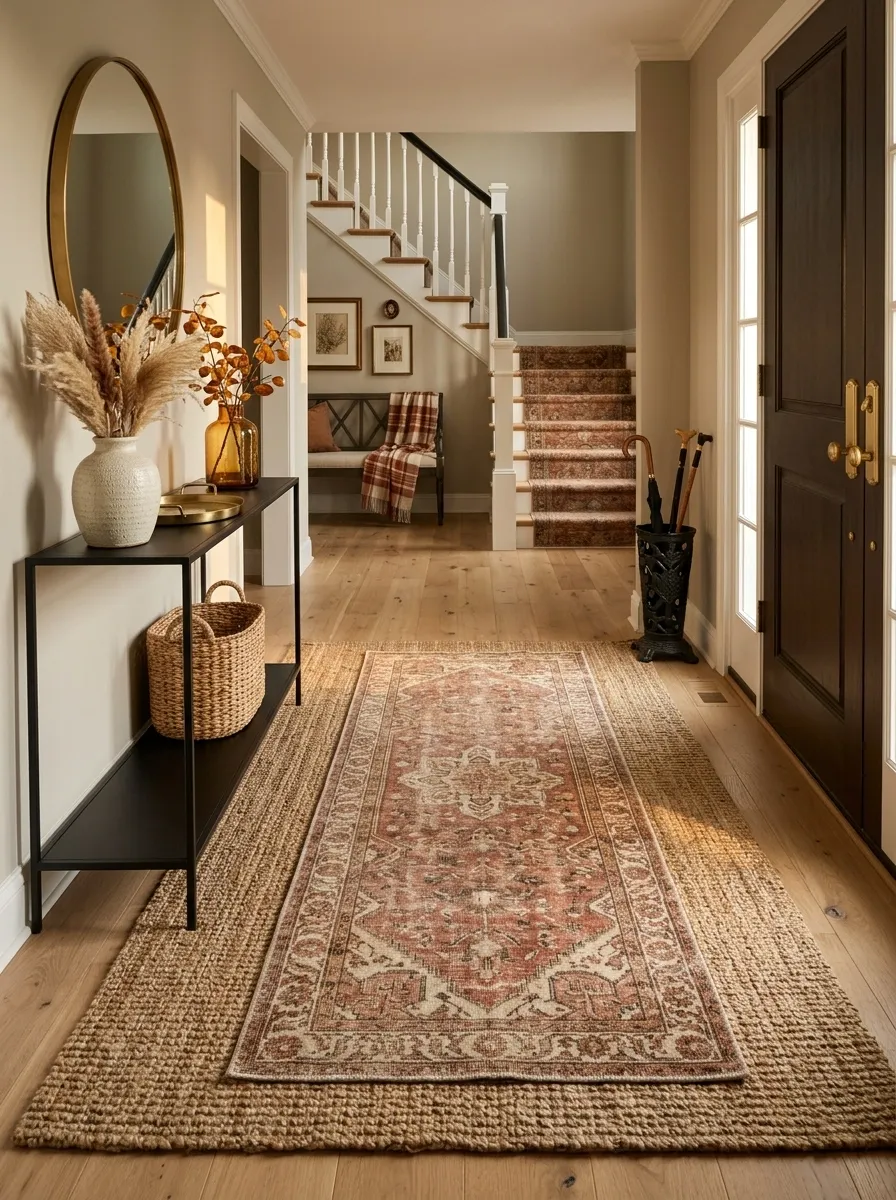
A fall runner works best when it looks like part of the entryway, not a seasonal mat dropped on top of everything else.
Choose a muted rust, faded terracotta, or warm tobacco pattern. Keep the everyday rug visible around the edges so the layers feel deliberate.
Best combination:
- Narrow woven runner
- Neutral base rug
- Dark wood bench or console
- One small seasonal accent
The layered rugs also help define the entry zone without adding another bulky piece of furniture.
</div> </div>
Create a Cozy Corner With Layered Lighting
Transform a blank staircase landing into an inviting autumn retreat by styling a wooden bench with textured pillows and a draped throw blanket.
Flank the seating area with tall glass lanterns filled with fairy lights and flickering pillar candles to wash the walls in a warm, welcoming glow.
Finish the look by arranging natural pampas grass and white pumpkins nearby to give the entire entryway an effortless seasonal glow.
Turn One Oversized Pot Into a Fall Focal Point
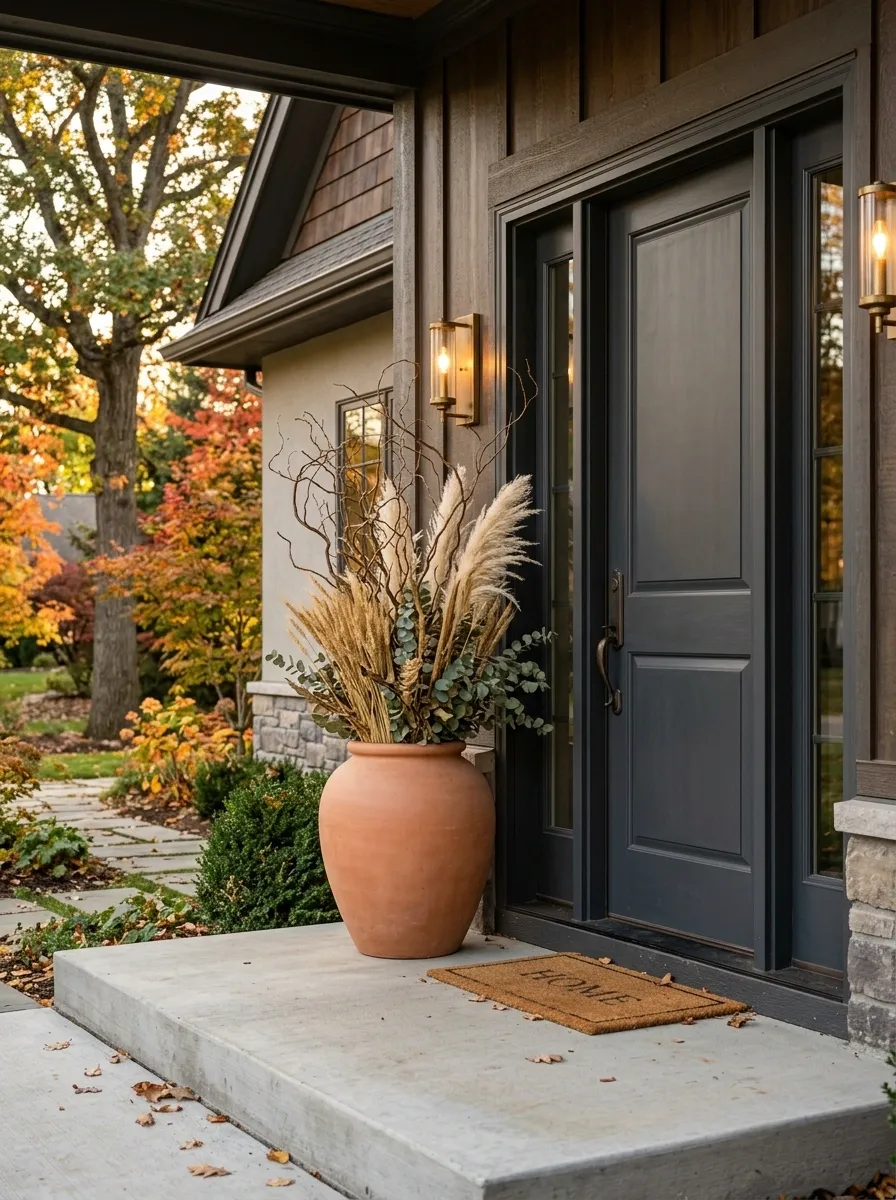
A single large planter has more visual authority than a collection of tiny seasonal objects.
Place it beside the door, then fill it with a structured mix of dried stems, branches, ornamental grasses, or hardy seasonal foliage. The container should feel substantial enough to hold its own against the doorway.
Keep it simple:
- Start with one oversized vessel.
- Add one dominant plant or branch shape.
- Tuck in a smaller contrasting texture.
- Stop before the arrangement becomes crowded.
That restraint keeps the entrance polished instead of overly themed.
</div> </div>
Hang Botanical Art Above a Decorated Bench
A simple entryway bench becomes a dedicated fall feature when you mount matching botanical art prints in rich, earthy tones right on the wall.
Layer patterned accent pillows in rust and amber against neutral cushions to tie the seasonal color palette together seamlessly.
Ground the entire vignette with an ornate patterned rug and a scattering of heirloom pumpkins along the base of the bench for a complete look.
Hang a Full Eucalyptus Wreath Instead of a Tiny Sign
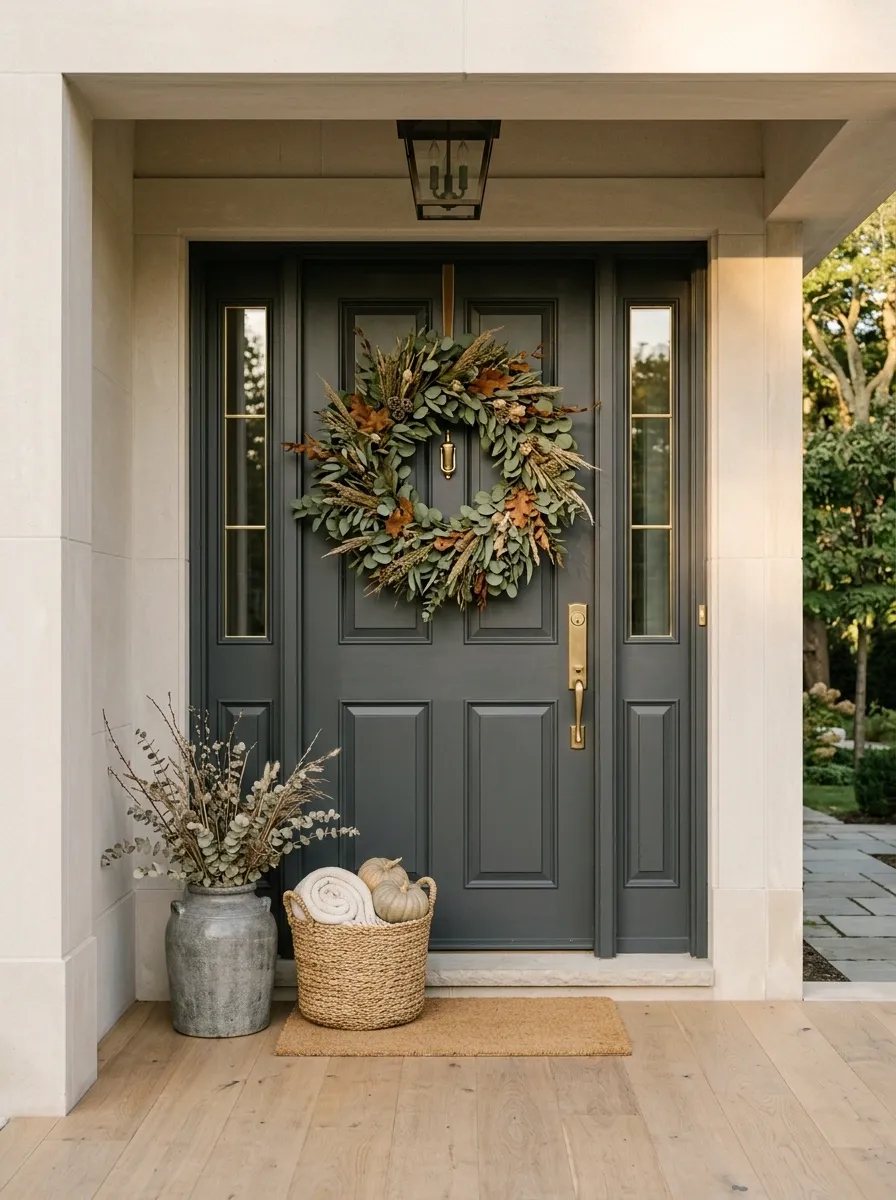
Tiny signs often disappear against a front door.
A generous wreath gives the doorway one clear focal point, especially when the rest of the entryway stays quiet. Eucalyptus, olive-toned foliage, preserved leaves, and warm dried stems keep the look seasonal without forcing a literal pumpkin theme.
The proportion matters most.
The wreath should feel large enough to visually balance the door while still leaving breathing room around the hardware.
A sparse wreath can look unfinished. A thick, full shape immediately reads as intentional.
</div> </div>
Pair an Asymmetrical Mirror With Sculptural Stools
Modern fall styling is all about organic shapes, like pairing an asymmetrical wall mirror with a sleek fluted console table.
Add tactile interest to the surface using a creamy ceramic vase of amber eucalyptus leaves, amber glass pumpkins, and a warm ceramic lamp.
Tuck textured bouclé ottomons underneath the console to add softness and provide a practical spot to pause when you first walk through the door.
Build a Console Vignette Around One Tall Branch Arrangement
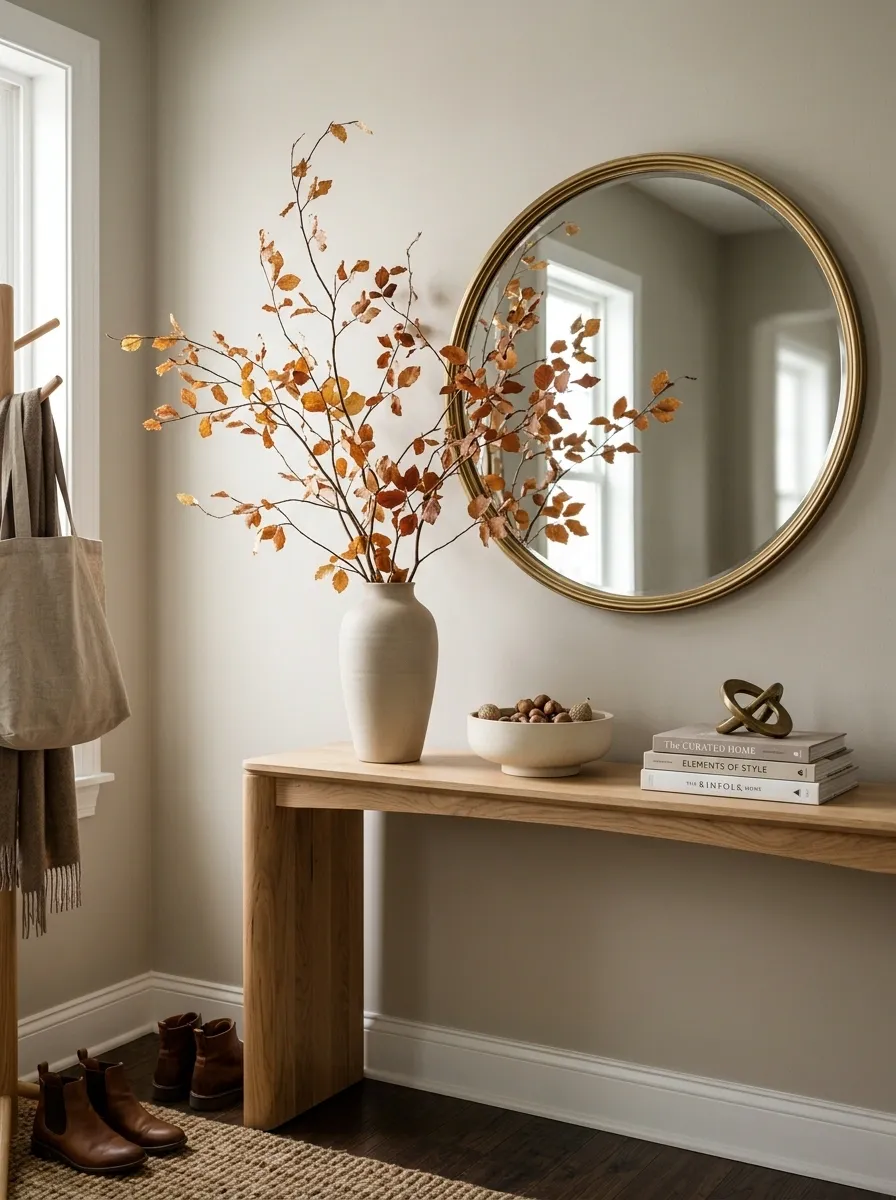
The easiest way to make a console feel autumn-ready is to give the eye one vertical element to follow.
Start with a tall branch arrangement in a narrow vessel. Then keep the pieces around it low: a ceramic bowl, a stack of books, or one small sculptural object.
The height pattern should read:
Tall → low → low.
That simple rhythm prevents the console from turning into a row of unrelated decorations. It also leaves enough open surface for everyday items such as keys without destroying the composition.
</div>
</div> </div>
Frame the Door With Matching Lantern Clusters
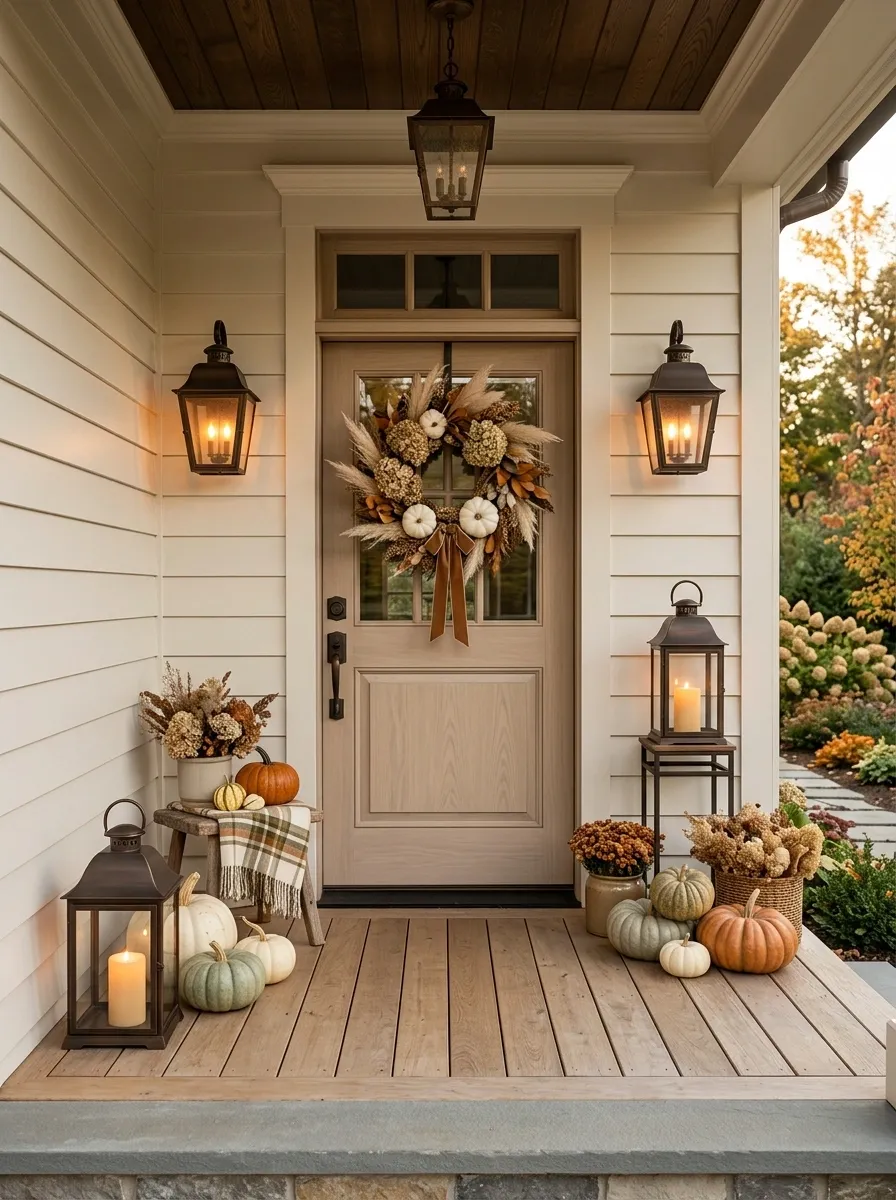
Two lanterns placed at different sides of the doorway create symmetry without requiring a perfectly symmetrical entryway.
Use matching shapes but vary the height slightly. Dark metal works especially well against pale siding or a light-colored door, while warm wood tones soften a darker exterior.
Keep the lanterns grouped near the doorway rather than scattering them along the whole porch. The goal is to frame the entrance, not decorate every available inch.
Lighting should stay warm and low. That matters more than adding extra seasonal accessories.
</div> </div>
Swap Bright Everyday Cushions for Textured Autumn Covers
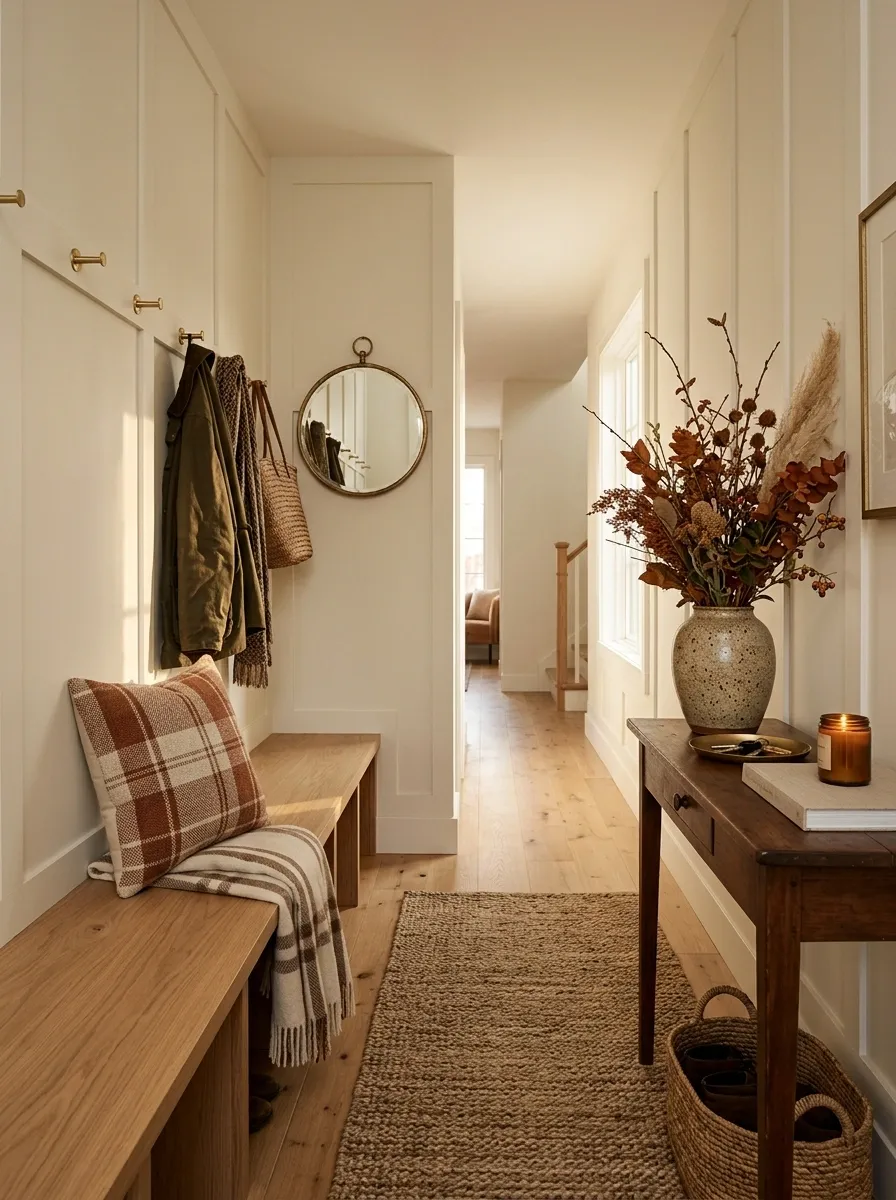
The fastest way to make an entryway bench feel seasonal isn’t another pumpkin. It’s changing the textile that sits at eye level.
Choose one cover with visible texture, such as boucle, linen, brushed cotton, or a subtle plaid. Keep the color grounded in cream, tobacco, muted rust, or warm brown.
Best pairing
- Cream bench
- Rust or tobacco cushion
- Woven basket underneath
- One darker accent nearby
A textured cover adds seasonal warmth without taking up floor space. That’s especially useful in narrow entrances where extra decor quickly becomes an obstacle.
</div> </div>
Use a Narrow Wooden Bench as the Seasonal Anchor
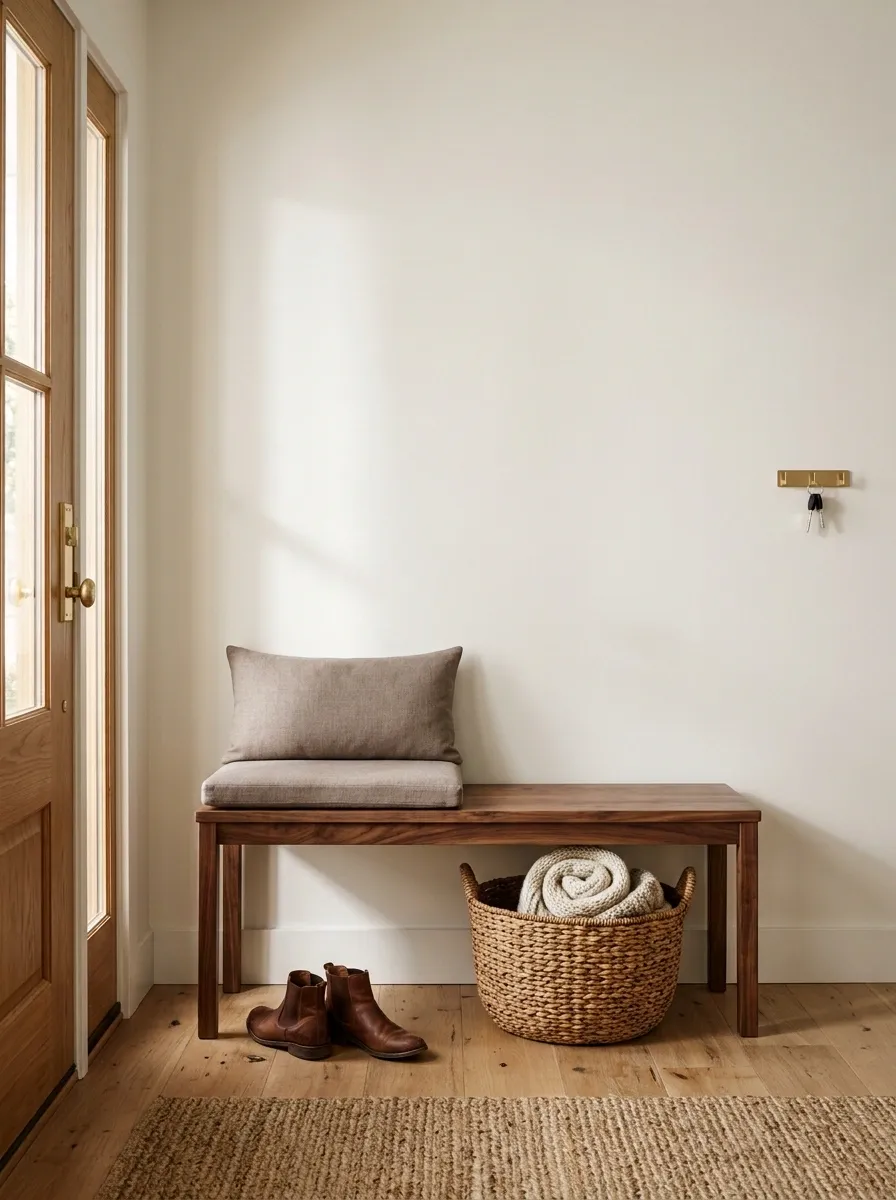
A bench gives a larger entryway one strong horizontal line, and that makes the seasonal pieces above and below it easier to arrange.
Look for a bench with a simple wood seat and enough visual weight to balance the doorway. Then keep the styling restrained: one cushion on top and one basket underneath is enough.
The key move: leave part of the seat uncovered.
That empty space keeps the bench functional for putting on shoes instead of turning it into a display shelf.
</div> </div>
Fill One Basket With Chunky Throws and Neutral Texture
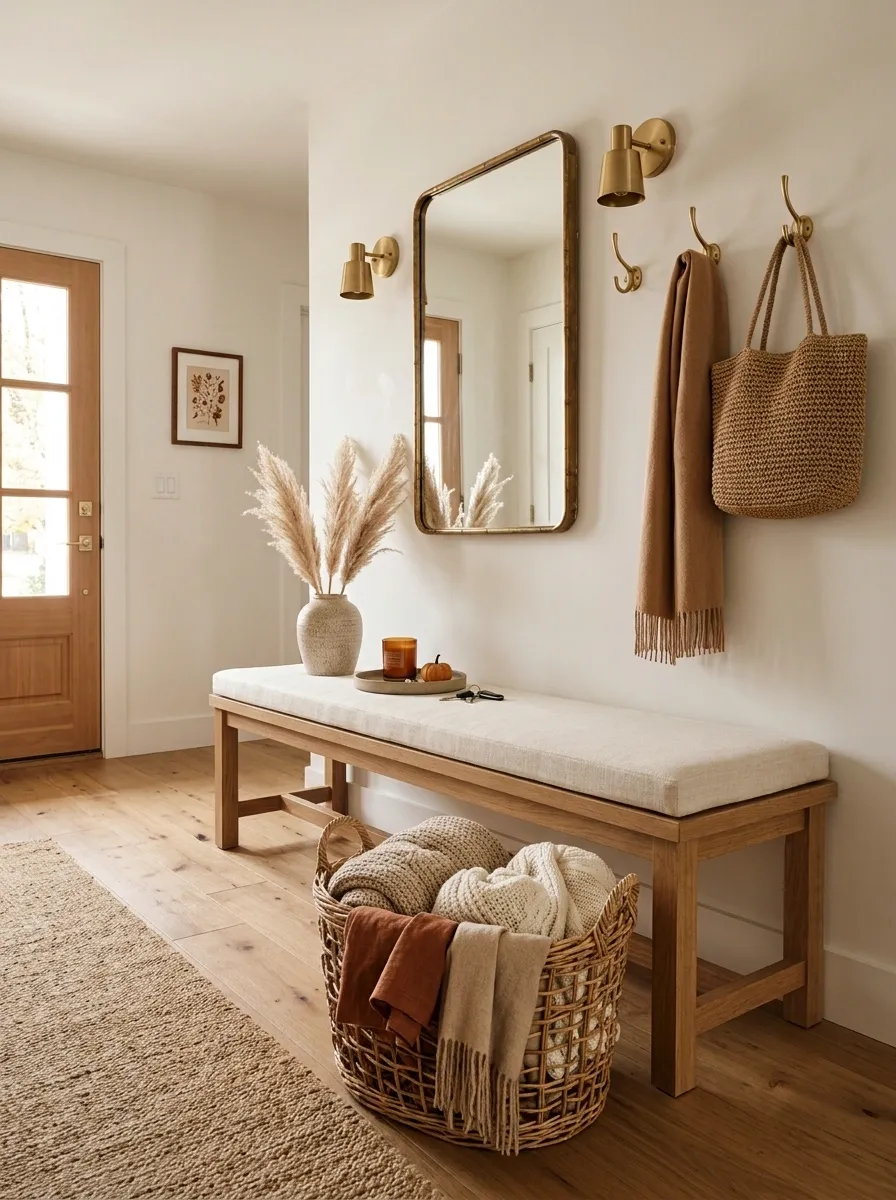
An entryway basket should hide useful things first and decorative things second.
A large woven basket under the bench can hold extra throws, scarves, or lightweight seasonal layers while contributing the texture the space needs. Choose a loose weave or slightly irregular shape instead of a glossy, perfectly matched container.
Use this formula:
| Basket finish | Best surrounding material |
|---|---|
| Natural wicker | Dark wood |
| Dark woven fiber | Cream upholstery |
| Weathered seagrass | Black metal |
| Warm rattan | Rustic ceramic |
The basket earns its space because it handles storage and styling at the same time.
</div> </div>
Create a Pumpkin Group With Three Different Heights
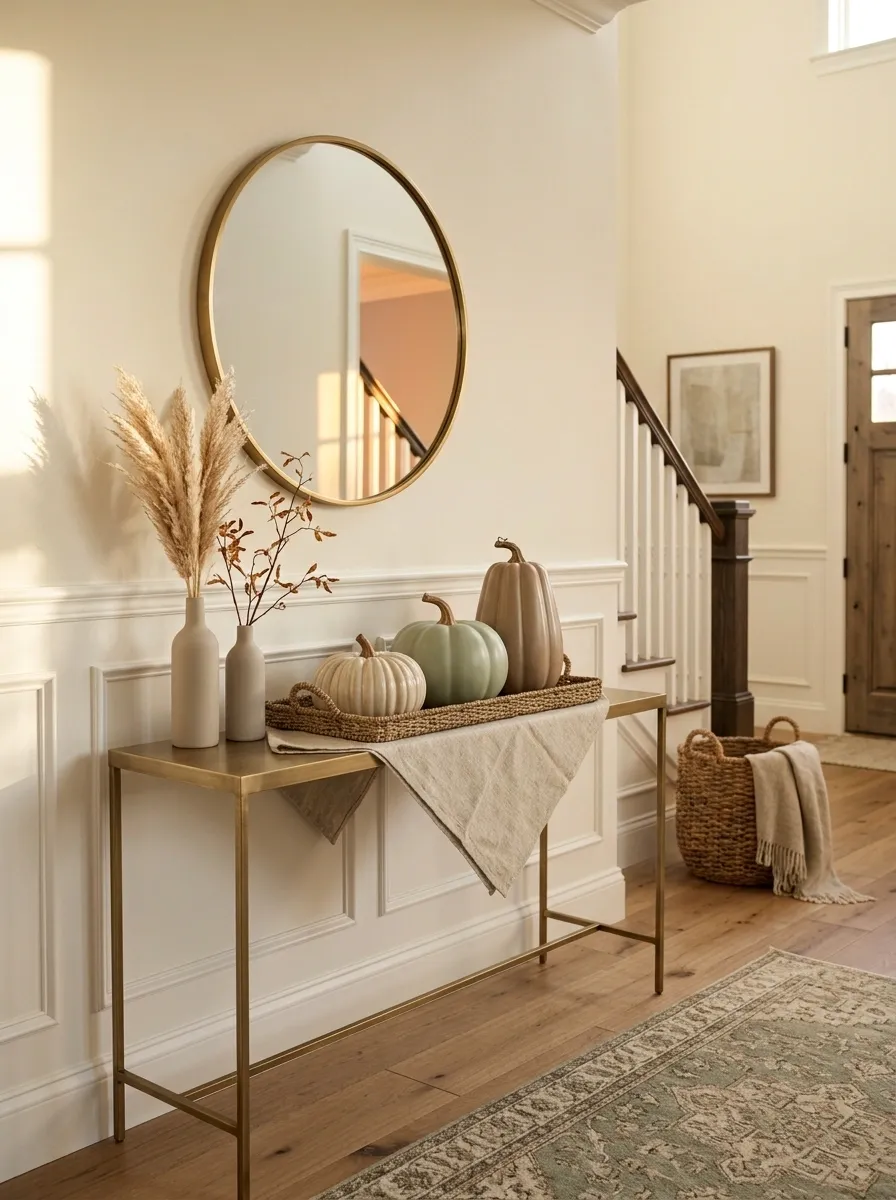
Three pumpkins look intentional when their silhouettes are clearly different.
Don’t line up identical mini pumpkins across the console. Use one squat shape, one medium round form, and one taller pumpkin or gourd. Keep the colors connected, then let the shapes provide the variation.
The arrangement should read from left to right as:
low → medium → high
Slightly overlapping the pieces creates a fuller composition without needing a large collection.
</div>
</div>
</div>
Add Amber Glass Near the Mirror for Warm Evening Light
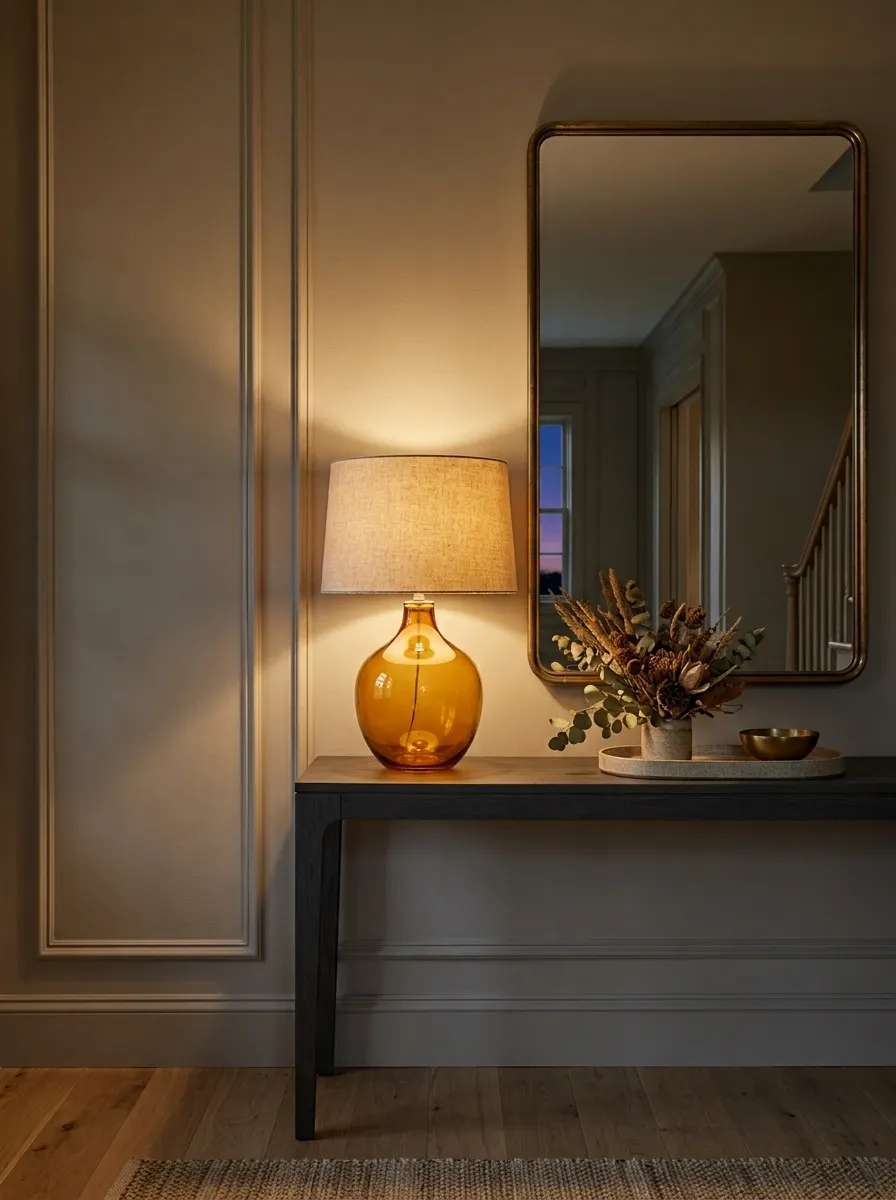
A mirror already catches daylight, so the area around it doesn’t need more decoration. It needs a little warmth once the sun drops.
Place one amber glass lamp, lantern, or candle-style light near the mirror. The reflective surface picks up that warm tone and makes the whole corner feel richer after dark.
Keep the surface restrained.
- One light source
- One small ceramic object
- Open space around both
Too many glowing pieces flatten the effect. One warm source feels deliberate.
</div> </div>
Style the Coat Hooks With One Repeated Fall Element
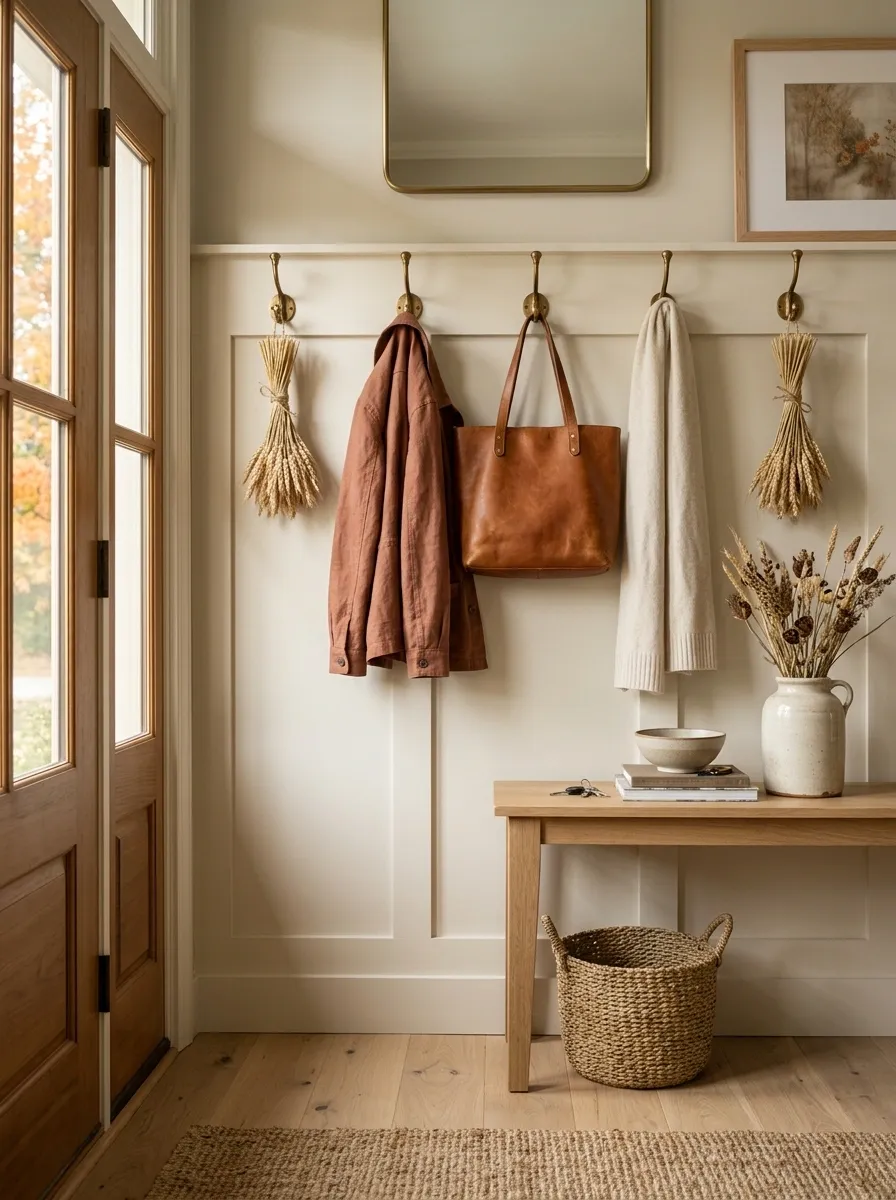
Coat hooks are usually treated as purely functional, which leaves a useful vertical area looking unfinished.
Repeat one fall material across the hooks instead. A small dried bundle, leather loop, woven detail, or muted rust accessory at each end gives the wall a visual rhythm without crowding the coats.
The trick is repetition, not decoration overload.
Keep the middle hooks mostly clear so everyday jackets and bags still have room. The repeated detail should frame the useful section rather than compete with it.
</div> </div>
Give the Console a Moody Wood-and-Ceramic Finish
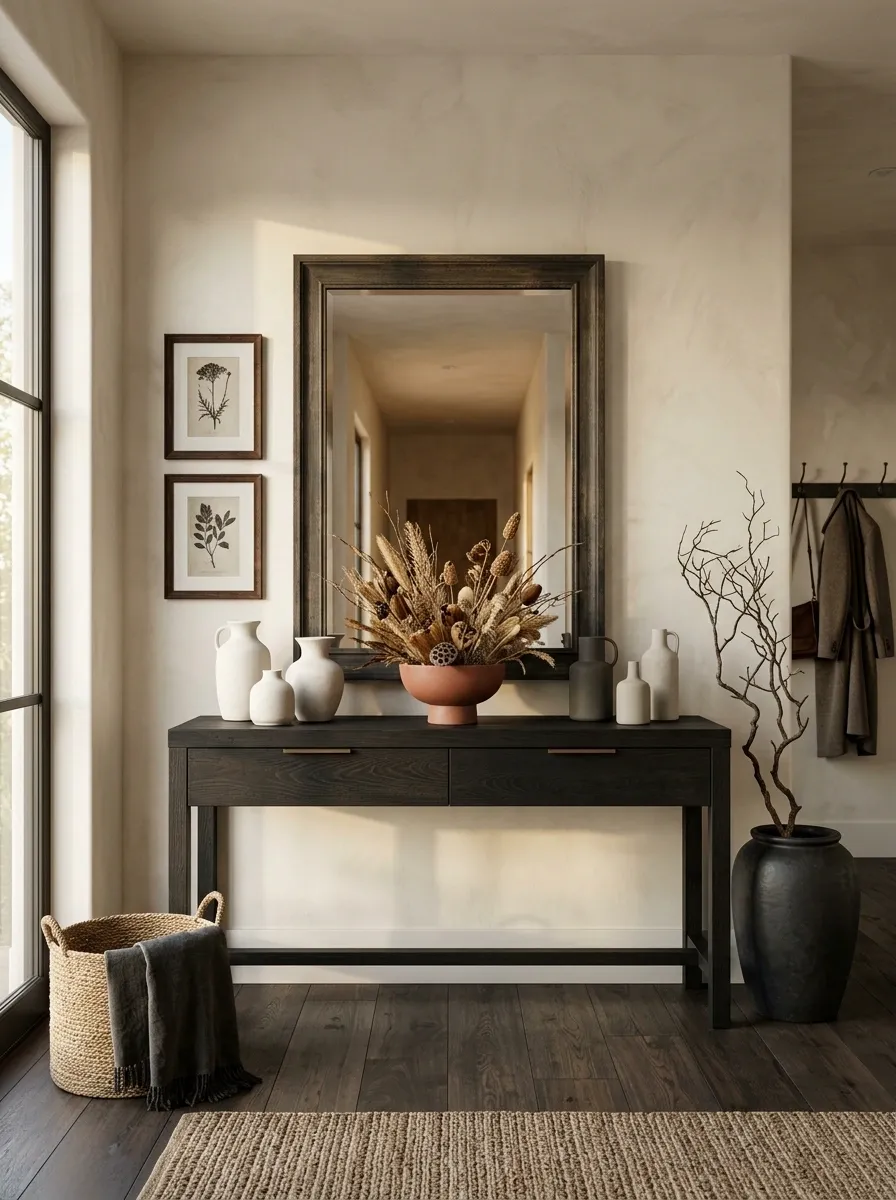
Fall doesn’t need to look orange.
A dark wood console paired with matte ceramic pieces gives the entryway a deeper seasonal feel while keeping the palette sophisticated. Think charcoal, warm brown, cream, and a restrained rust accent.
The winning balance is simple: dark foundation, pale counterpoint, one warm seasonal note.
Glossy finishes work against this look. Use chalky ceramics, aged wood, brushed metal, or other materials with a little visual grain.
</div> </div>
Layer a Vintage-Style Mirror Over a Textured Wall
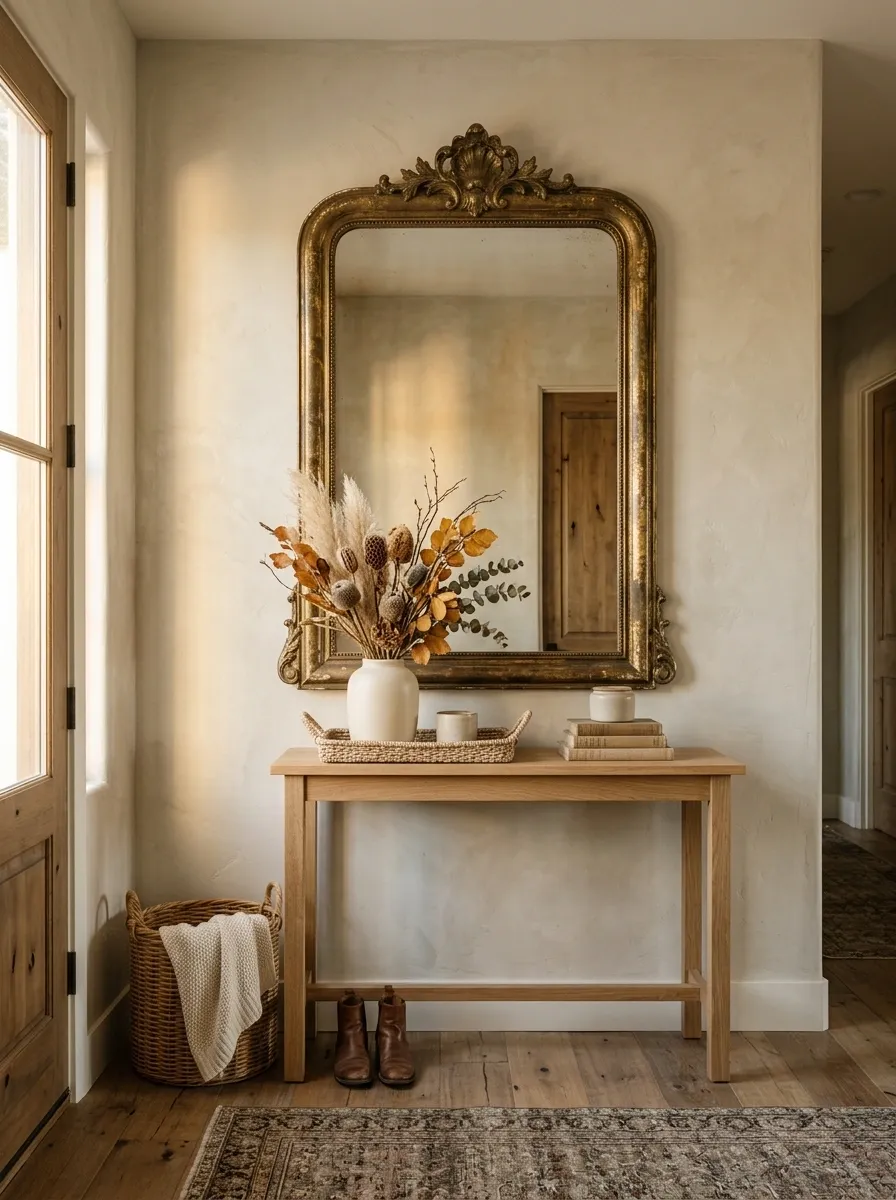
A mirror shouldn’t simply fill an empty wall. Its frame can become one of the strongest fall details in the entire entryway.
Choose aged wood, distressed bronze, antique brass, or another finish with visible character. Put it against a textured or softly painted wall, then keep the objects directly beneath it low.
The visual hierarchy should be obvious:
Mirror first.
Console second.
Small accessories last.
That order keeps the entryway from looking like every surface was decorated separately.
</div> </div>
Replace Tiny Seasonal Signs With One Oversized Art Piece
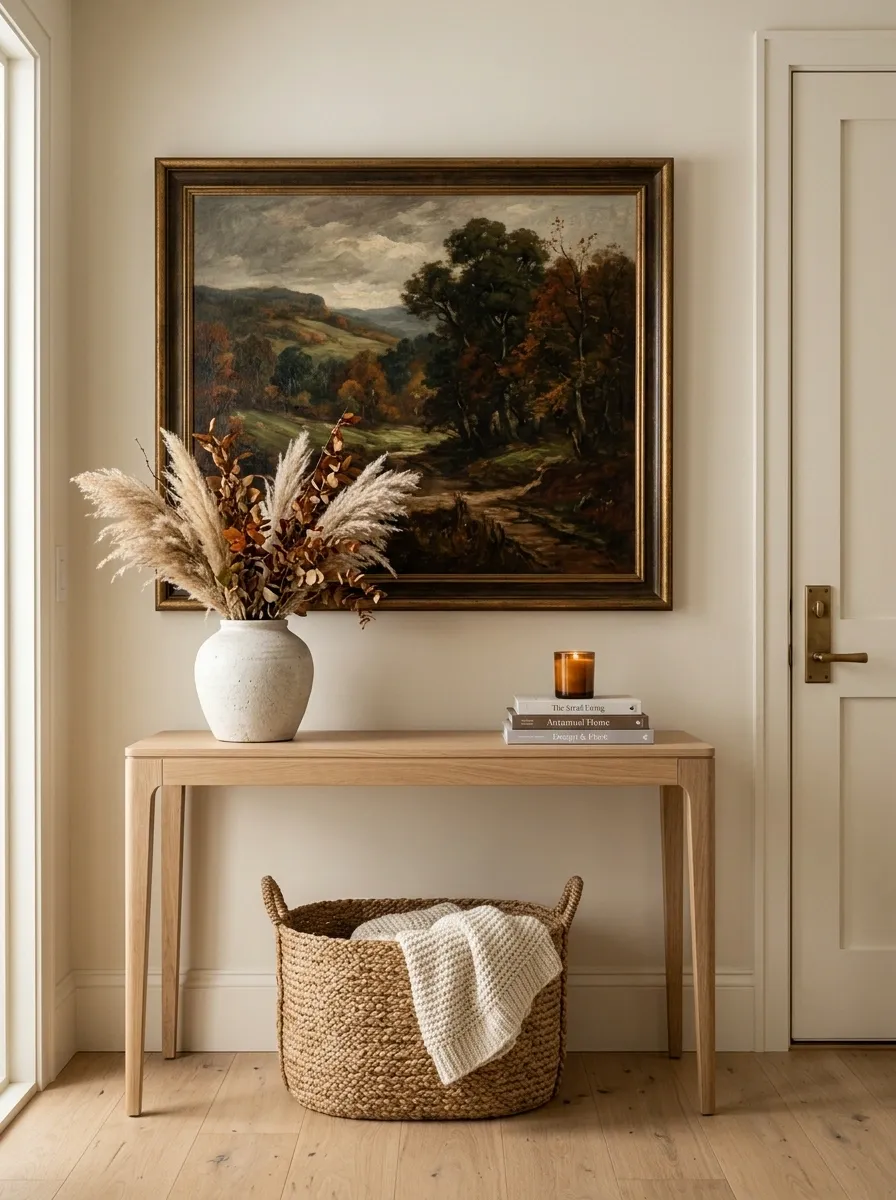
Small signs disappear fast in an entryway.
A large botanical print, vintage landscape, still life, or muted autumn artwork gives the wall one substantial focal point. That single decision often looks more expensive than filling the same wall with several little signs.
Compare the visual weight:
| Small seasonal signs | Oversized art |
|---|---|
| Many competing edges | One dominant shape |
| Harder to arrange | Easy to anchor |
| Often feels temporary | Can stay year-round |
| More visual clutter | More breathing room |
Choose artwork with enough contrast to stand out from the wall, but keep the colors connected to the rest of the entryway.
</div> </div>
Use Dried Grasses to Soften a Dark Entryway
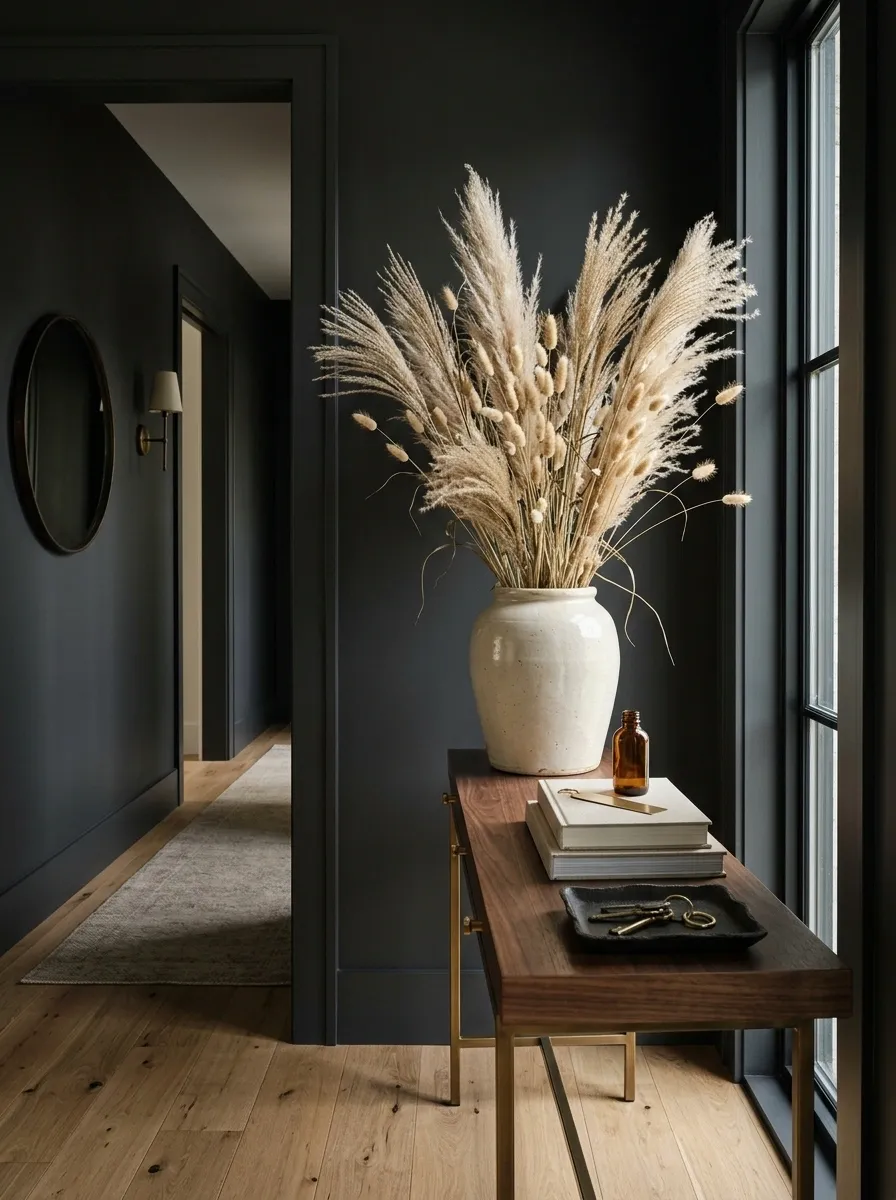
Dark entryways need something light and irregular to break up all the hard visual weight.
Tall dried grasses do exactly that. Place them in a pale ceramic or stoneware vessel so the arrangement stands apart from dark walls, furniture, or doors.
The movement of the stems matters. A slightly loose arrangement looks much better than a tightly packed bundle.
Aim for:
- Tall, airy stems
- Light neutral color
- Matte vessel
- Plenty of negative space
This is especially effective in narrow entrances because the vertical form adds drama without extending far into the walking path.
</div> </div>
Make the Shoe Area Look Intentional With Matching Storage
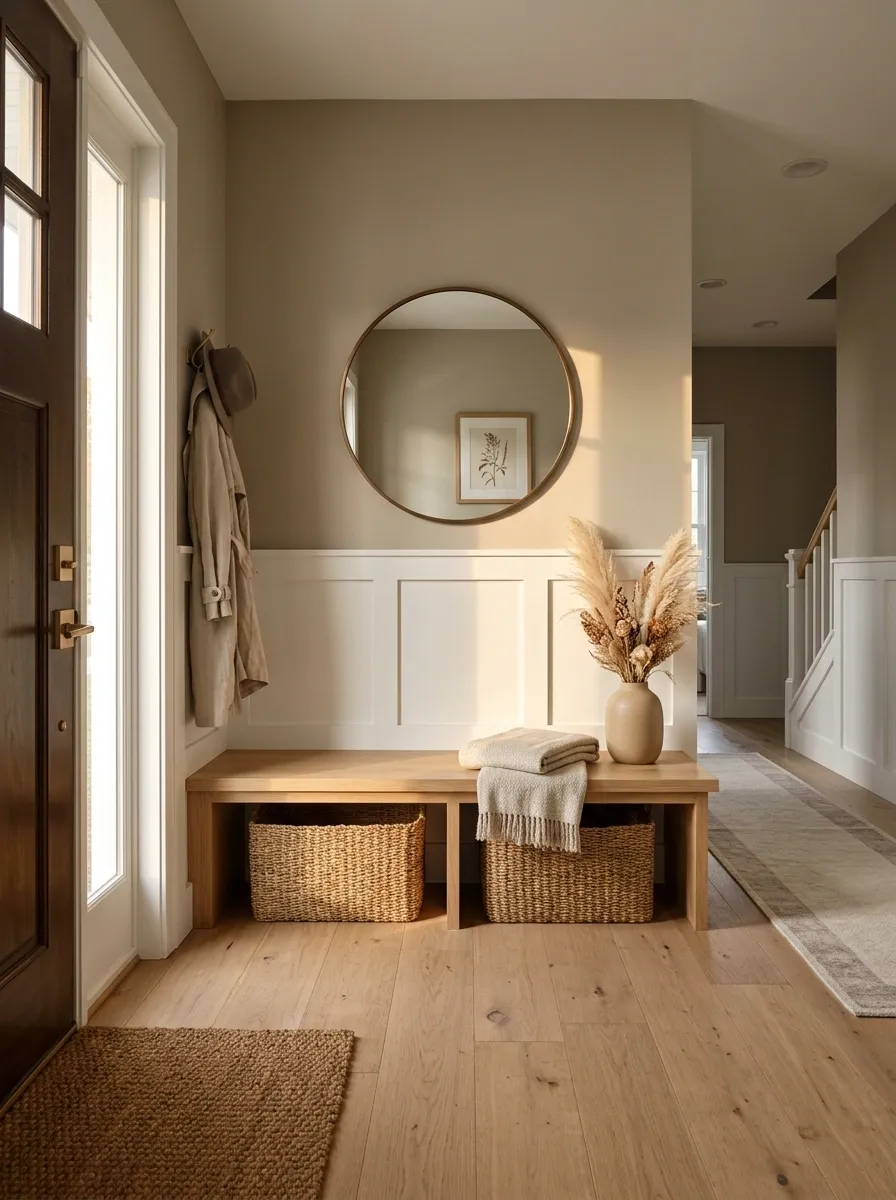
The floor near the door is where a polished entryway usually starts to fall apart.
Instead of letting shoes form a loose pile, contain them inside one or two matching baskets, a low cabinet, or a clean shoe bench. Choose storage that echoes the materials already used in the room so it feels built into the design.
Keep the visual line simple:
- Closed storage for everyday shoes
- One basket for slippers
- Clear floor space around the doorway
- No decorative objects on the floor
Fall accessories look far better when they’re sitting beside an organized entryway instead of competing with daily clutter.
</div> </div>
Build a Simple Black, Cream, and Rust Color Story
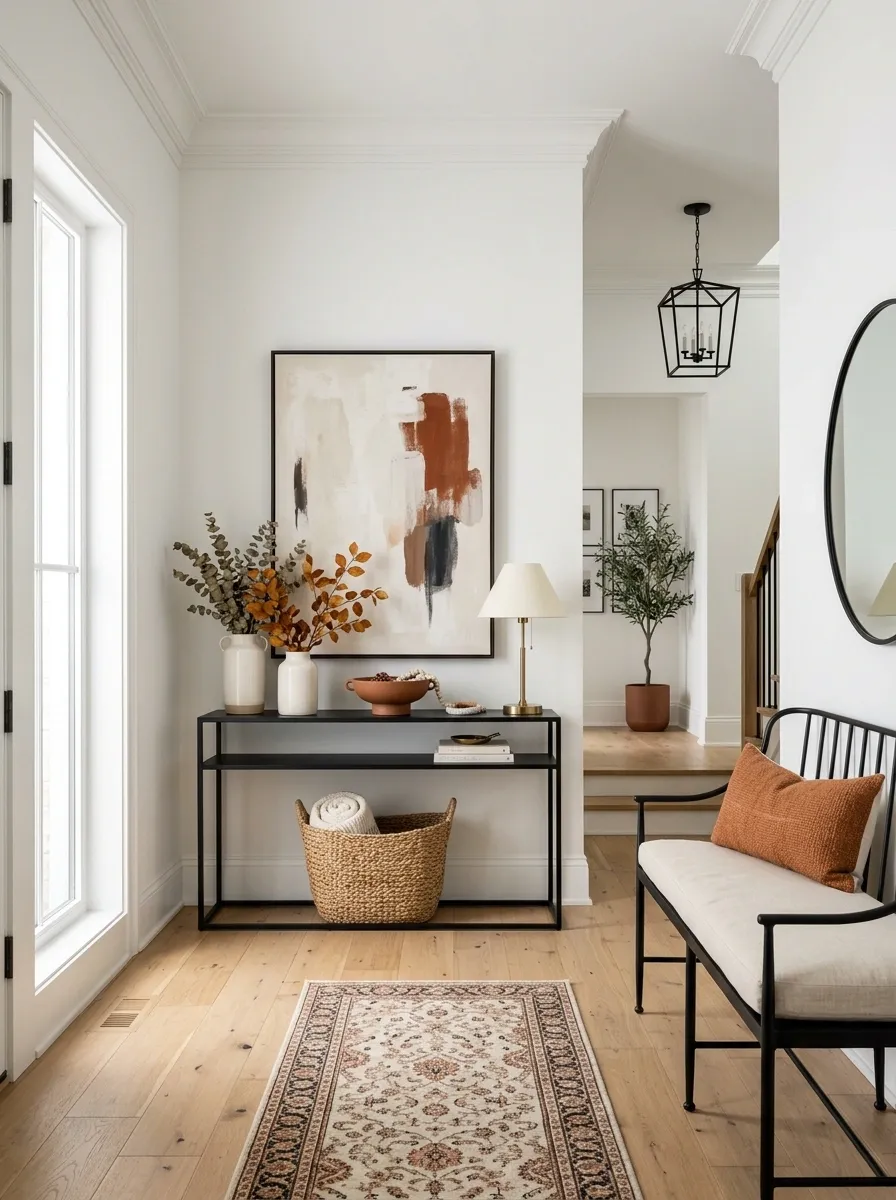
A fall entryway doesn’t need every autumn shade available.
Pick three main colors and repeat them across the rug, artwork, cushions, pottery, and seasonal accents. Black provides structure, cream keeps the room light, and rust supplies the seasonal warmth.
Use the palette in unequal amounts:
Black should ground the space.
Cream should fill most of it.
Rust should appear in small, intentional moments.
That imbalance is what keeps the room from looking overly themed.
</div>
</div>
</div>
Add a Plaid Throw Without Making the Entry Look Busy
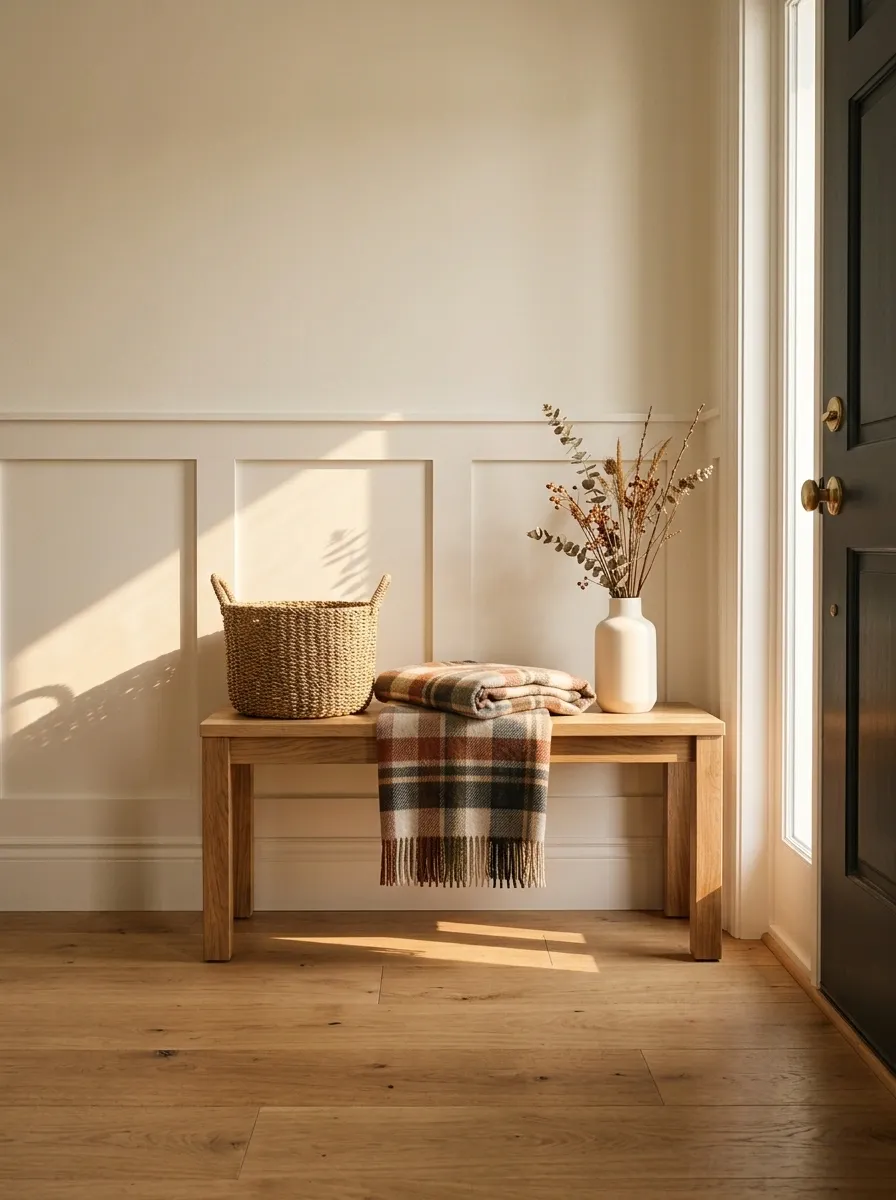
Plaid becomes messy when several patterns start competing for attention.
One folded plaid throw on a bench is enough to introduce fall without turning the entryway into a cabin display. Keep the rest of the textiles mostly solid and textured.
Choose a plaid with muted rust, cream, brown, charcoal, or olive rather than a high-contrast seasonal pattern.
Simple rule: one plaid, one location.
The throw should look casually folded, not arranged into a stiff decorative stack.
</div> </div>
Group Mini Pumpkins Inside a Low Ceramic Bowl
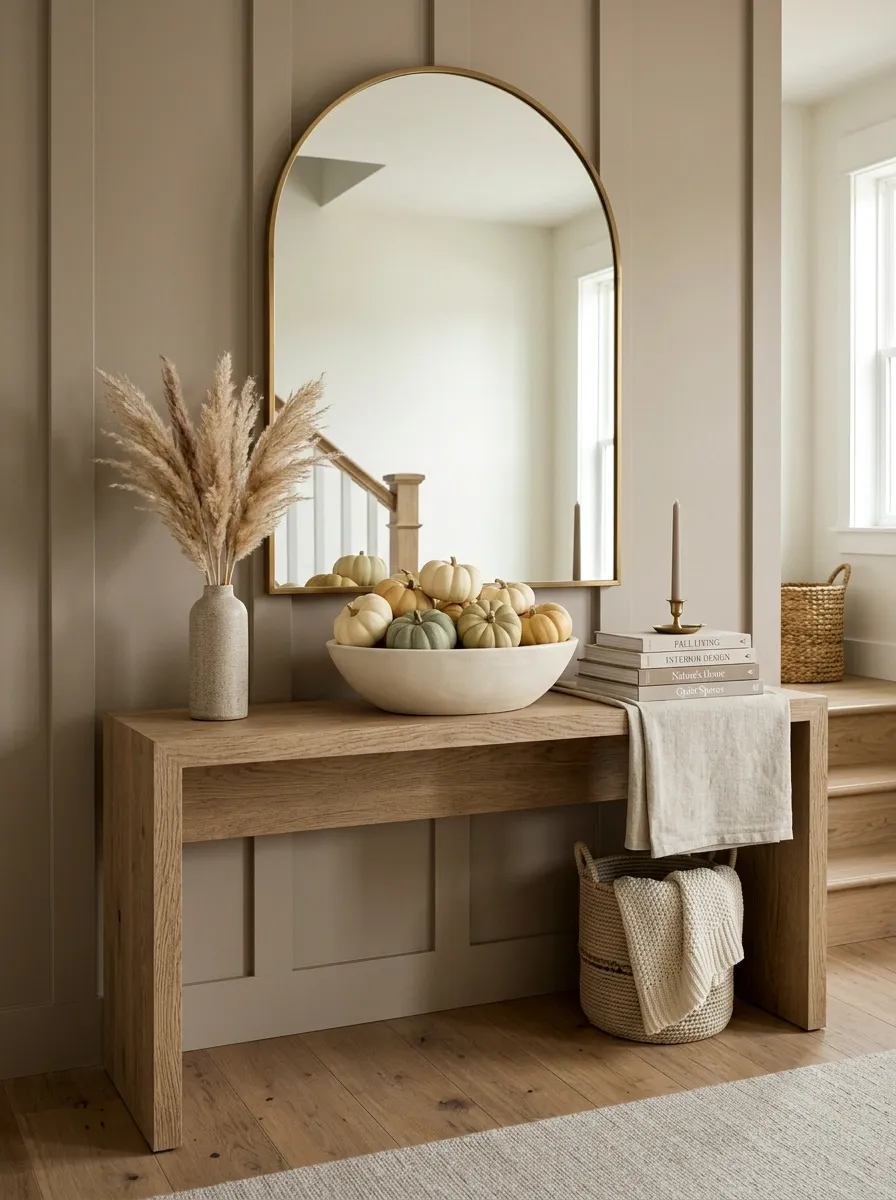
Mini pumpkins scattered across a console usually read as clutter because every piece has its own stopping point.
A low ceramic bowl fixes that problem by turning several small objects into one visual mass. Choose pumpkins in related shades, then let the bowl provide the stronger shape.
Keep the arrangement below mirror height so the upper half of the wall remains open.
Best setup:
- Low bowl
- Three or four small pumpkins
- One contrasting gourd
- Empty space around the bowl
The grouping looks intentional because the container gives the collection boundaries.
</div> </div>
Style the Doorstep With One Hardy Seasonal Plant
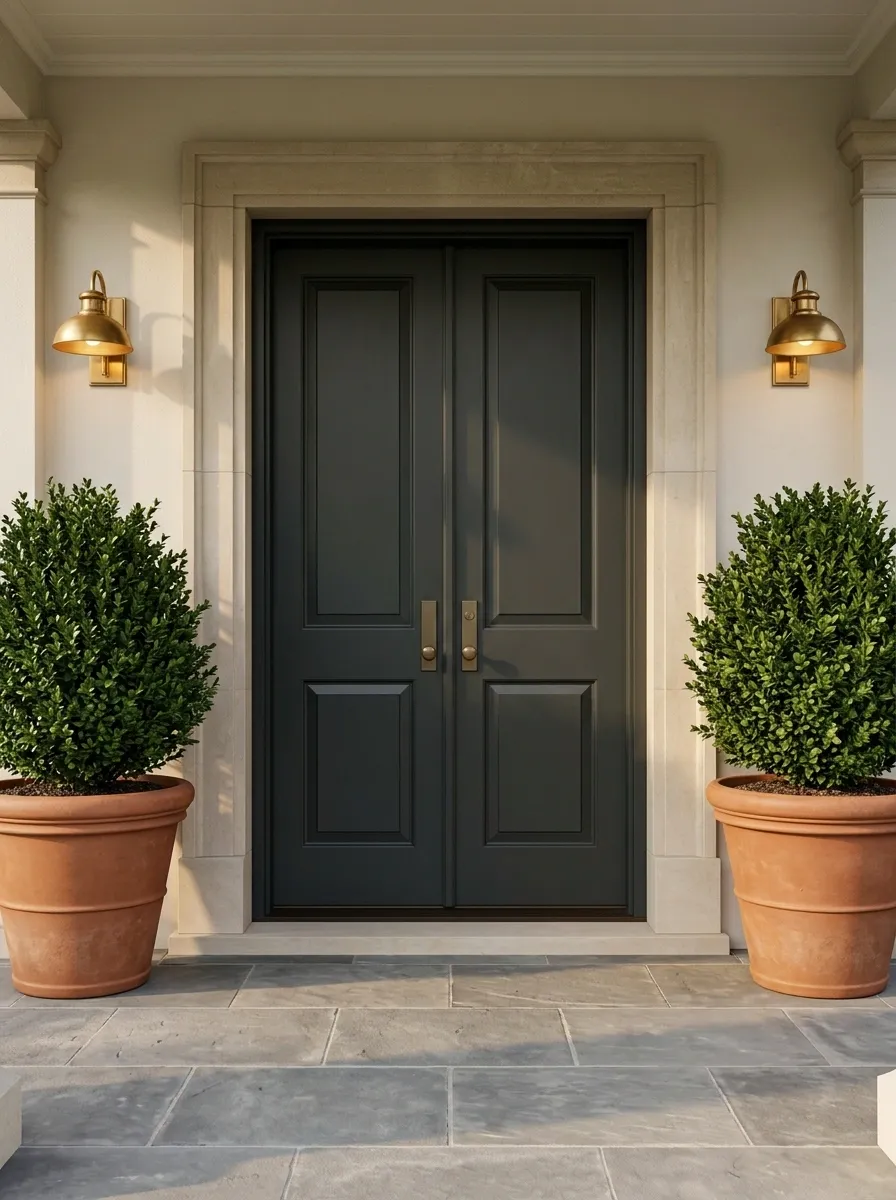
The doorstep doesn’t need a collection of pots to look ready for fall.
One substantial plant on each side of the entrance creates enough symmetry to frame the door. Choose foliage or seasonal plants that can handle the conditions at the actual doorstep, then use containers with enough visual weight to keep the arrangement grounded.
Set them at matching distances from the door first. Then adjust their height rather than adding more objects.
A clean pair gives the entrance structure and leaves the walking path open.
</div>
</div>
Use Candle-Style Lanterns to Create a Nighttime Glow
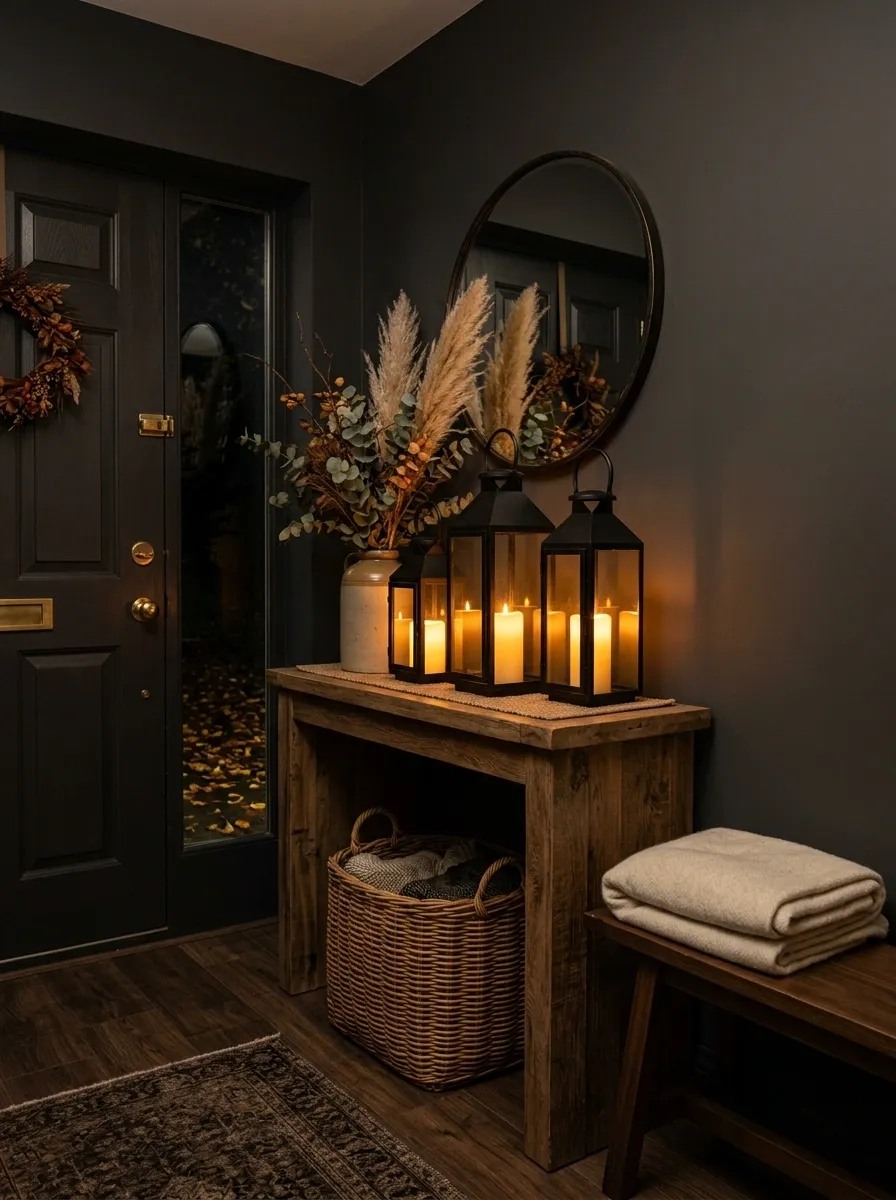
An entryway that looks good in daylight can still feel flat after sunset.
Candle-style lanterns solve that without demanding more furniture or seasonal accessories. Place two or three lanterns together near the console, steps, or covered doorway. Keep their shapes related, then vary the height so the light doesn’t form one rigid line.
The strongest arrangement has a clear tallest point.
Use warm-toned light inside and let the surrounding area stay relatively dark. That contrast makes the glow feel intentional instead of washing the entire entryway in brightness.
</div>
</div>
Turn an Empty Corner Into a Tall Fall Arrangement
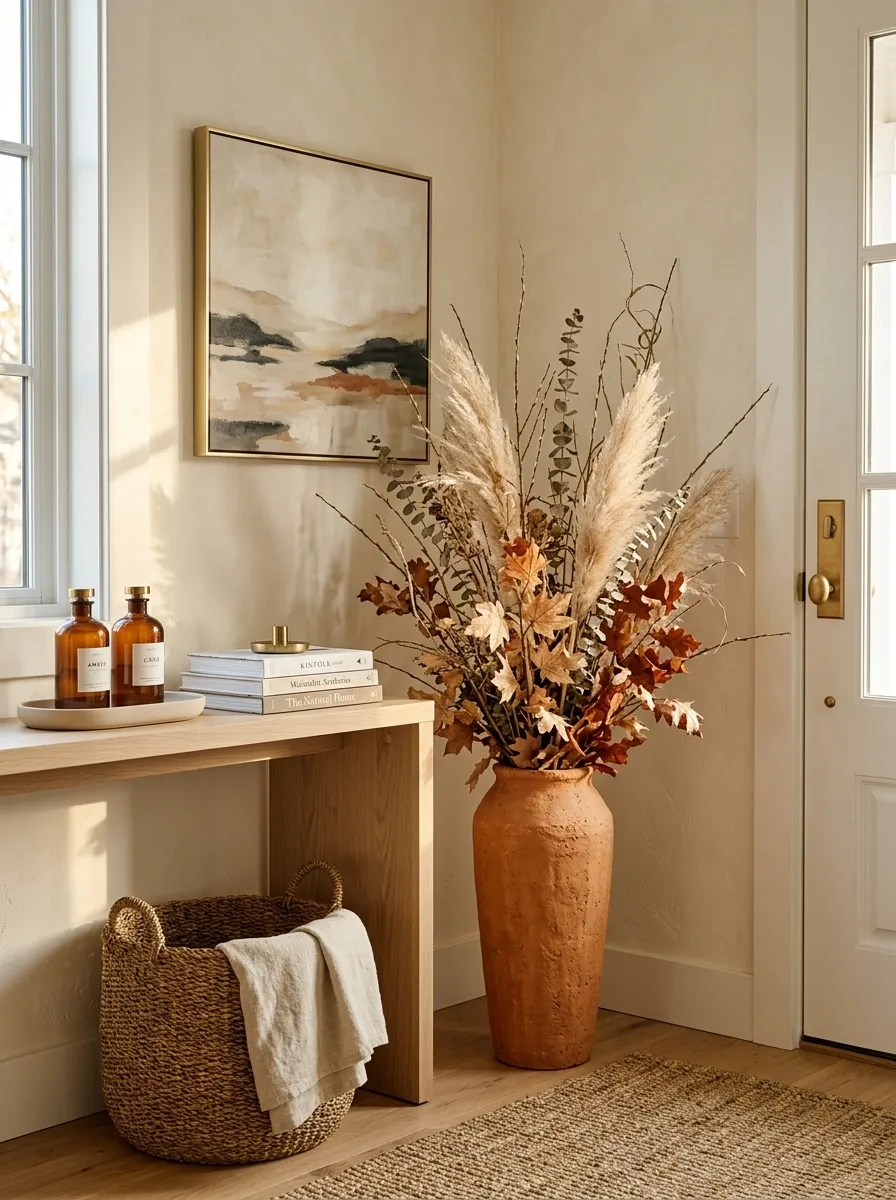
That awkward corner beside the console doesn’t need another piece of furniture.
A tall seasonal arrangement gives the empty area height and makes the entire entryway feel more balanced. Use branches, grasses, dried leaves, or airy stems in a narrow floor vase so the composition stays close to the wall.
Three things should happen:
- The arrangement should rise above nearby furniture.
- The vessel should stay visually quiet.
- The stems should spread outward without blocking the walkway.
This works especially well in entries where the furniture is low and the ceiling feels visually empty.
</div> </div>
Add Texture With a Woven Wall Basket Display
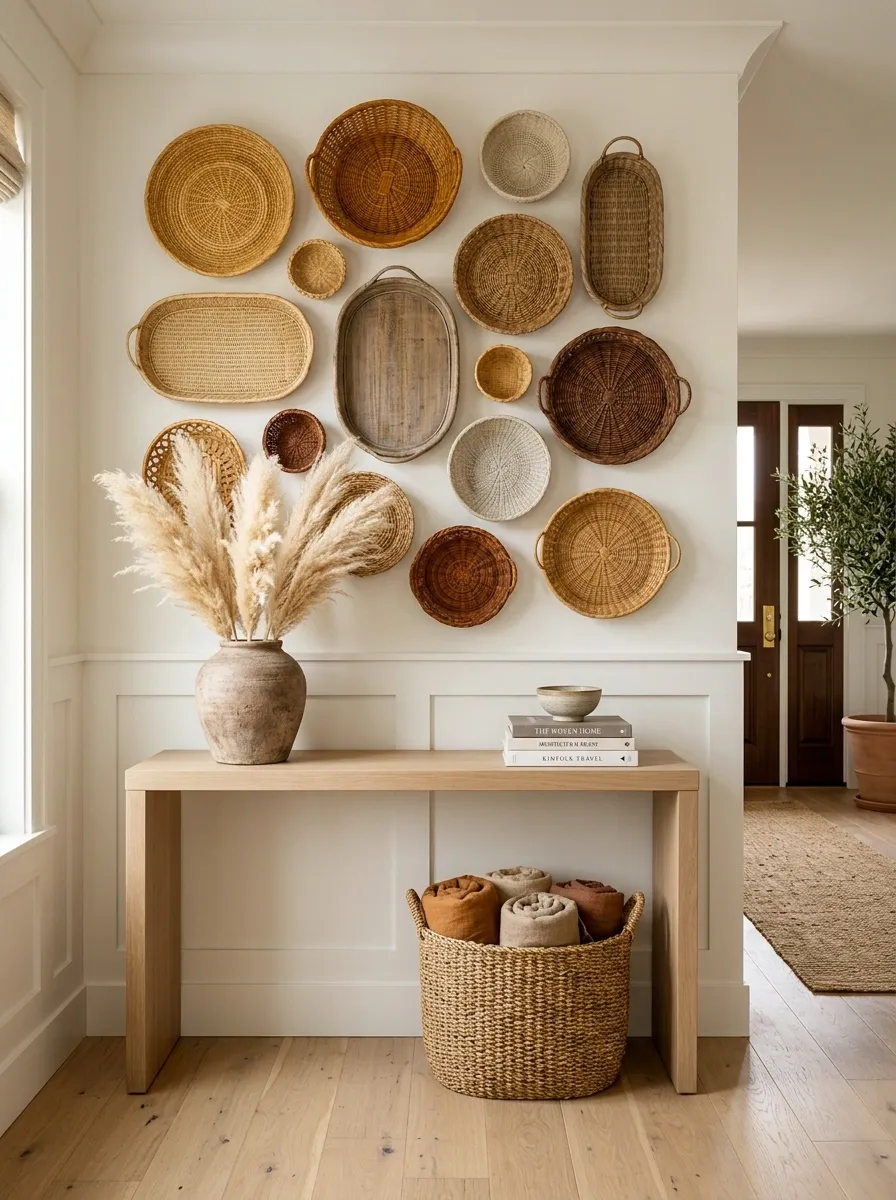
A blank wall doesn’t always need artwork.
A woven wall basket introduces shape and texture while keeping the entryway softer than a collection of framed prints. One large basket can work as a focal point, while a small pair can create rhythm on a wider wall.
Choose natural fiber, weathered rattan, or a darker woven material. Avoid mixing several basket colors in the same display.
The strongest version keeps the forms related but not identical.
That variation gives the wall interest without turning it into a craft-shop arrangement.
</div> </div>
Keep the Console Top Nearly Empty and Let One Piece Lead
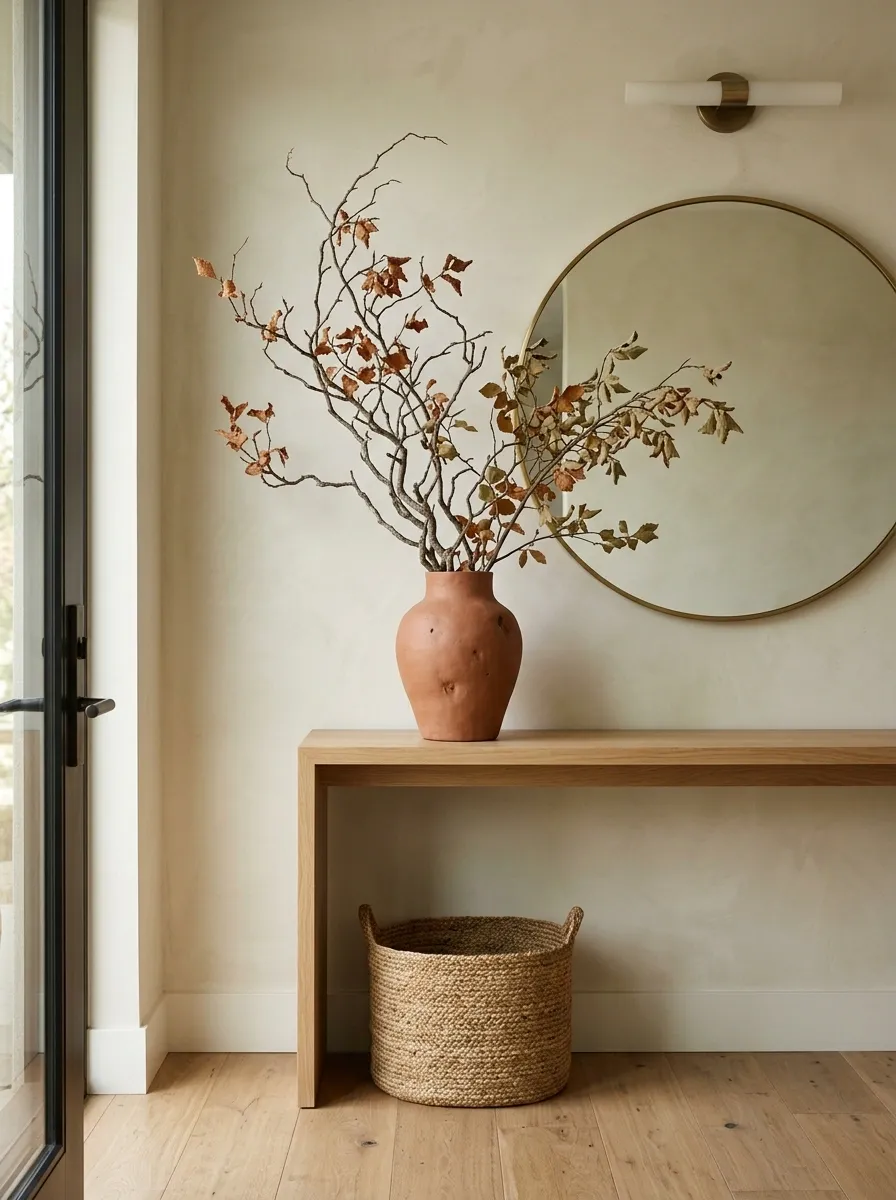
More objects don’t make a console look more finished.
A mostly empty surface with one strong seasonal object creates much better visual tension. That piece could be a sculptural vase, oversized branch arrangement, substantial bowl, or striking piece of pottery.
Leave deliberate gaps around it.
The empty surface isn’t wasted space. It’s what makes the main object noticeable.
A crowded console also becomes annoying during everyday use because keys, mail, and bags have nowhere to land. A little restraint keeps the entryway attractive and functional.
</div> </div>
Finish Everything With One Repeated Material
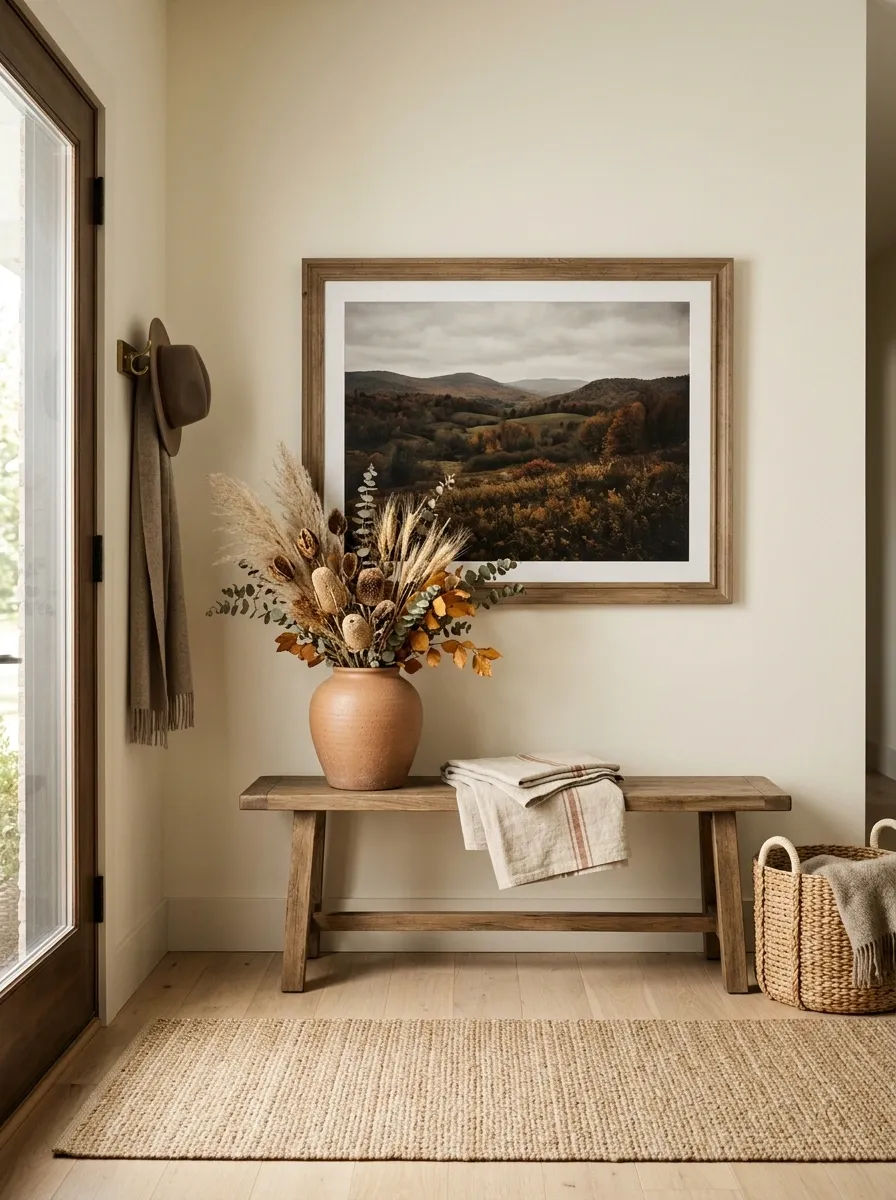
The easiest way to make separate fall decorations look like they belong together is to repeat one material.
Maybe it’s aged wood. Maybe it’s woven fiber, matte ceramic, blackened metal, or warm brass. The material doesn’t need to dominate. It simply needs to appear in several places so the eye connects the pieces.
For example, a woven basket can echo a woven runner, while a wood bench repeats the tone of the picture frame.
Choose one material family and echo it across the entryway.
That small connection makes a collection of individual objects feel like one finished design.
</div> </div>
Keep One Seasonal Motif Running Through the Space
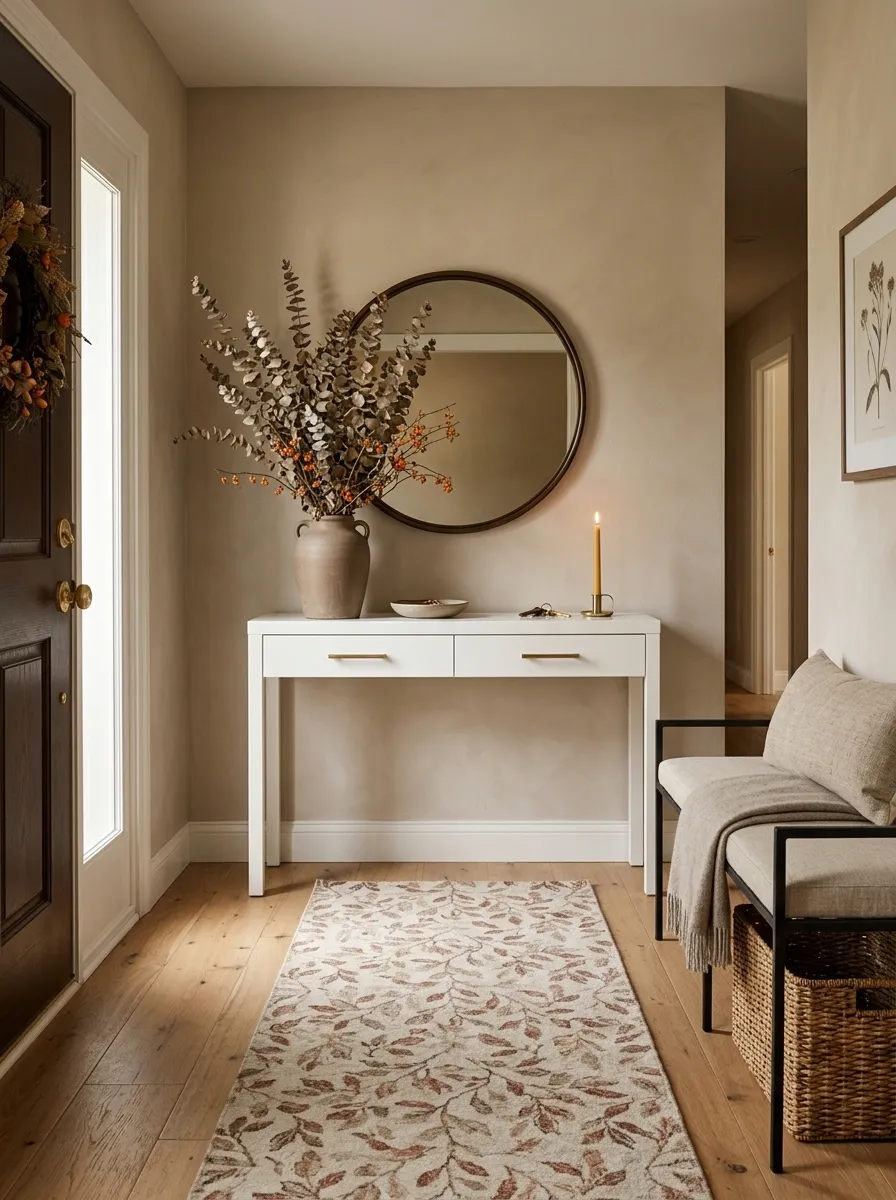
A fall entryway feels much more intentional when one small motif appears in several places.
Use the same leaf shape, branch texture, plaid pattern, pumpkin tone, or dried botanical detail on the wreath, console, bench, and doorstep. The repetition should be noticeable only after the eye moves around the room.
Think echo, not matching set.
The same motif can appear at different scales and in different materials. A leaf pattern on a runner can echo real dried leaves in a vase without looking repetitive.
</div>
</div>
</div>
A Final Styling Pass Makes the Difference
The strongest fall entryway isn’t the one with the most seasonal pieces. It’s the one where the pieces feel like they belong together.
Start at the doorway and look at the space from a distance. Does one element immediately catch the eye? Is there enough empty space around it? Do the materials repeat without becoming obvious? Can shoes, coats, keys, and bags still be handled without moving half the decor?
Those questions matter more than adding another pumpkin or another sign.
A warm runner can establish the season. A generous wreath can anchor the door. Woven storage can handle clutter. A tall arrangement can fill a dead corner. Soft lighting can completely change the entrance after dark.
The best fall entryway decor ideas don’t make a home look decorated for a season. They make the whole entrance feel warmer, calmer, and more considered.
Save this list for the next entryway refresh, especially before buying another small seasonal accessory that the room doesn’t actually need.