
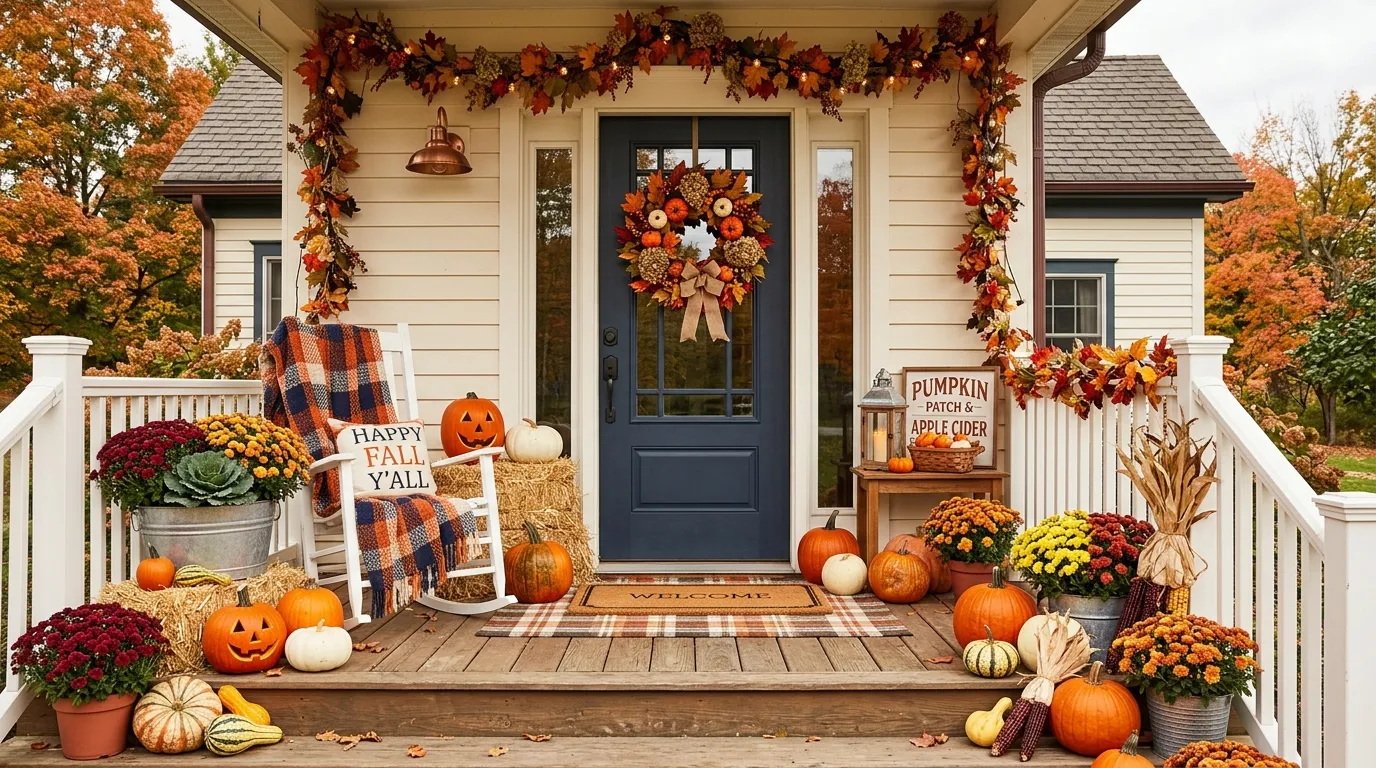
A wreath is not a fall porch. A wreath is a formality, like a handshake before you actually talk business.
Most people hang the wreath, prop a pumpkin against the mat, and call it done. Then they wonder why their porch photographs like an afterthought while the neighbor three doors down looks like she’s been commissioned by a magazine.
The difference was never the wreath. It’s everything underneath it — the layering, the lighting, the thing you’re sitting on, the container the pumpkins are stacked in. Fall porches that actually work treat the whole space as a room, not a doormat with seasonal accessories bolted on.
The Two Fall Aesthetics People Keep Confusing
There are two distinct fall languages happening on porches right now, and mixing them by accident is why so many setups look muddled instead of intentional.
Maximalist Harvest
This is the loud version — warm orange pumpkins, layered garlands, string lights woven through greenery, mums packed into every gap. It works because it commits fully. Half-hearted maximalism just looks cluttered.
The tell is density. Every surface earns something — a lantern, a gourd, a trailing vine — until the porch reads as abundant rather than staged. Color stays in the traditional orange-red-gold family, and nothing is precious about it.
Minimalist Heirloom
The other language strips fall down to texture and shape. Heirloom pumpkins in sage, cream, and dusty blue replace the classic orange. Concrete, terracotta, and pampas grass do the talking instead of ribbon and garland.
This version photographs like restraint, not absence. A single oversized terracotta urn with one dramatic grass plume carries more visual weight than a dozen small accents scattered around. It’s a harder look to pull off because there’s nowhere to hide a bad decision.
Pick One Per Porch
The mistake is borrowing a maximalist wreath for a minimalist entry, or dropping a single sage pumpkin into an otherwise orange-and-gold setup. Neither language reads as intentional halfway. Decide which one your house architecture supports — a stone farmhouse leans harvest, a black-and-glass modern build leans heirloom — and commit the whole porch to it.
Fall Porch Ideas
Cascading Mum Garland Column
Instead of a wreath, run a dense trail of mums and autumn leaves vertically down a porch column, letting it wrap slightly as it descends so it doesn’t read as a straight stripe. Start the trail up near the roofline and let it spill all the way to ground level, ending in a cluster of pumpkins.
Use mophead mums in warm reds and golds packed tightly together — this only works if there’s no visible gap in the greenery. A sparse version looks like a garland that fell partway off, not an intentional cascade.
Repeat the exact same trail on the opposite column or railing if your porch has one. Symmetry is what makes this read as designed instead of accidental.
Blanket-Loaded Porch Swing
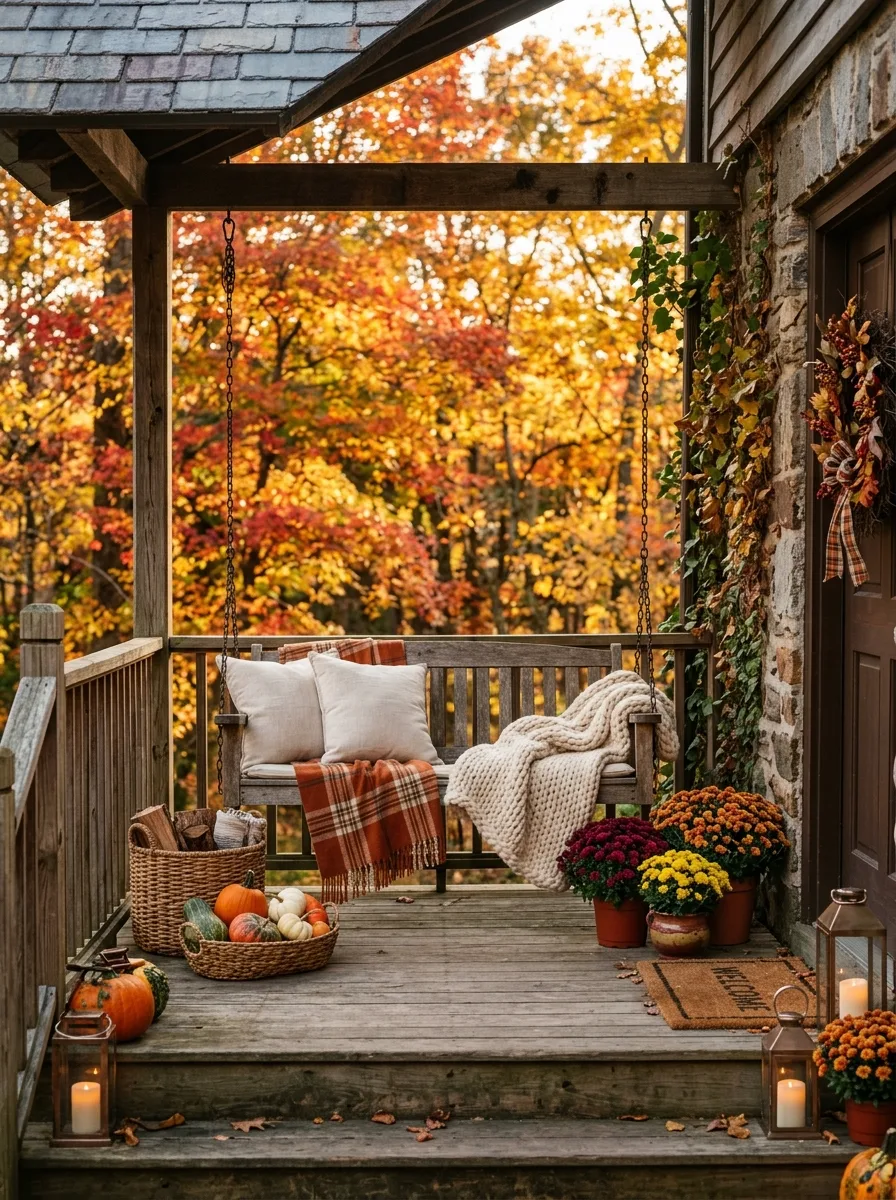
Pile two pillows and at least two different blanket textures onto a hanging swing or bench — a woven plaid throw and a chunky cable knit thrown over it, not folded flat but draped like someone just stood up. A swing styled too neatly looks like nobody’s allowed to sit on it.
Set a basket of mini gourds and pumpkins on the floor beside it, along with a lantern holding a real candle. The basket does double duty as both decor and an actual place to grab a pumpkin if you want one inside.
Hang a wreath on the nearest wall or door, but keep it modest. The swing itself is the focal point here — everything else should support it, not compete with it.
Leaf-Scattered Pumpkin Staircase
Let real fallen leaves collect on the stair treads instead of sweeping them off — this is the one instance where mess is the design choice. Place a pumpkin, in ascending or alternating sizes, on alternating steps rather than every single one, so the leaves stay visible between them.
Flank the top step with two full mum arrangements in matching containers, then let a single lantern with a real or flameless candle sit at one side for evening light. Keep the pumpkin varieties simple — a mix of one or two orange sizes plus a single pale variety for contrast is enough.
Don’t over-style the rest of the porch to match. This look depends on looking slightly caught-in-the-moment, so a bare rocking chair or an unstyled railing actually supports it rather than undermining it.Overflowing Terracotta Mum Urns
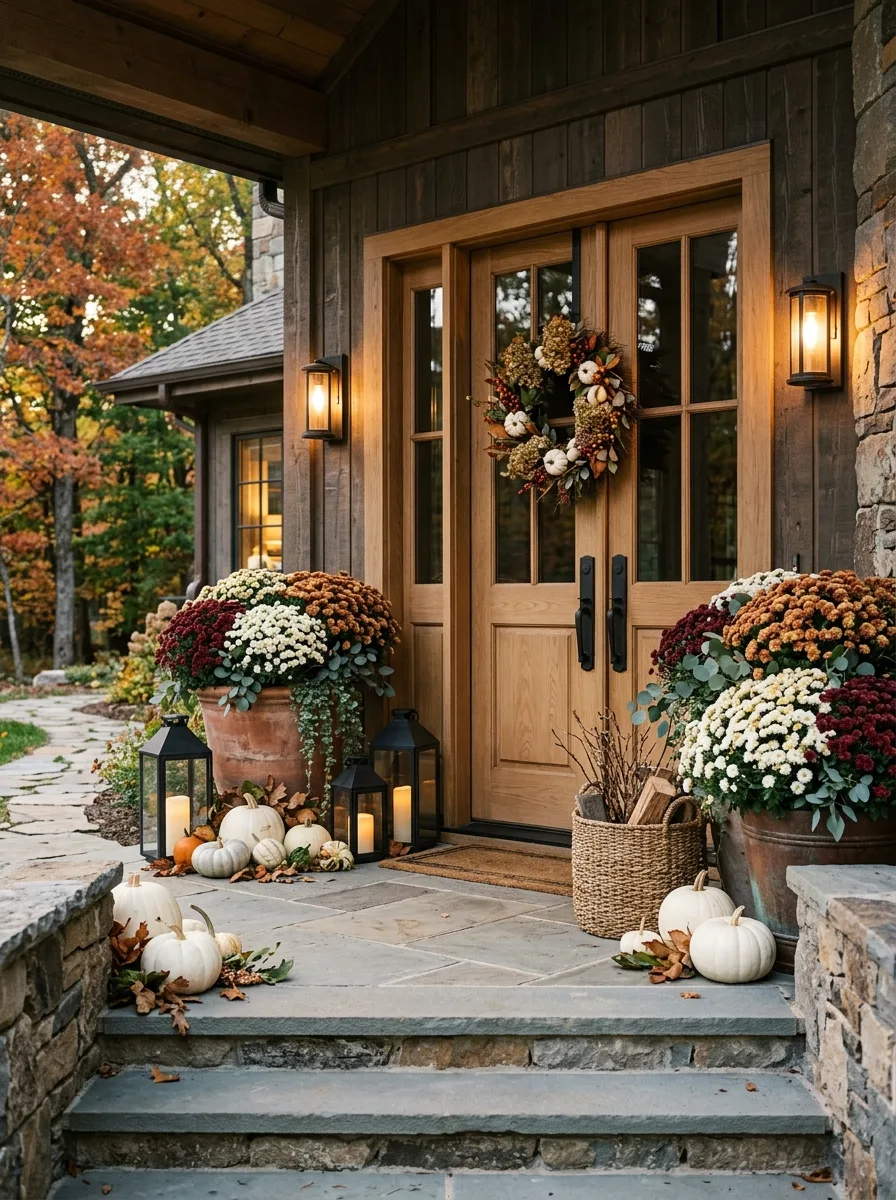
Choose the largest terracotta urns your entry can visually support and pack them completely full with mums in two or three colors, letting the blooms spill slightly over the rim rather than sitting neatly inside it. An urn with visible gaps between blooms looks unfinished no matter how nice the flowers are.
Position a pair of these urns flanking the door and let them do the majority of the color work for the whole entry — the wreath and any garland should stay simpler by comparison so the urns don’t have to compete for attention.
Scatter a handful of white pumpkins on the ground directly in front of each urn. The pale color against the deep terracotta and saturated mums gives the eye somewhere to rest between the two visually busy elements.
Brownstone Ivy Pumpkin Pyramid
If you’ve got a vine or ivy already climbing your facade, let it be the star and build everything else around it — don’t compete with more greenery. Stack pumpkins in a loose pyramid shape directly on the steps, biggest at the bottom, working up to minis at the top.
Mix white and orange pumpkins rather than sticking to one color, since the vine is already carrying the deep orange-red saturation for the whole facade. A single small wreath on the door is enough; anything larger fights the vine for attention.
Line a row of tiny pumpkins along the sidewalk edge at the base of the stairs. It’s a small move but it extends the display past the property line, which reads as generous rather than contained.
Dramatic Urn Branch Arrangement
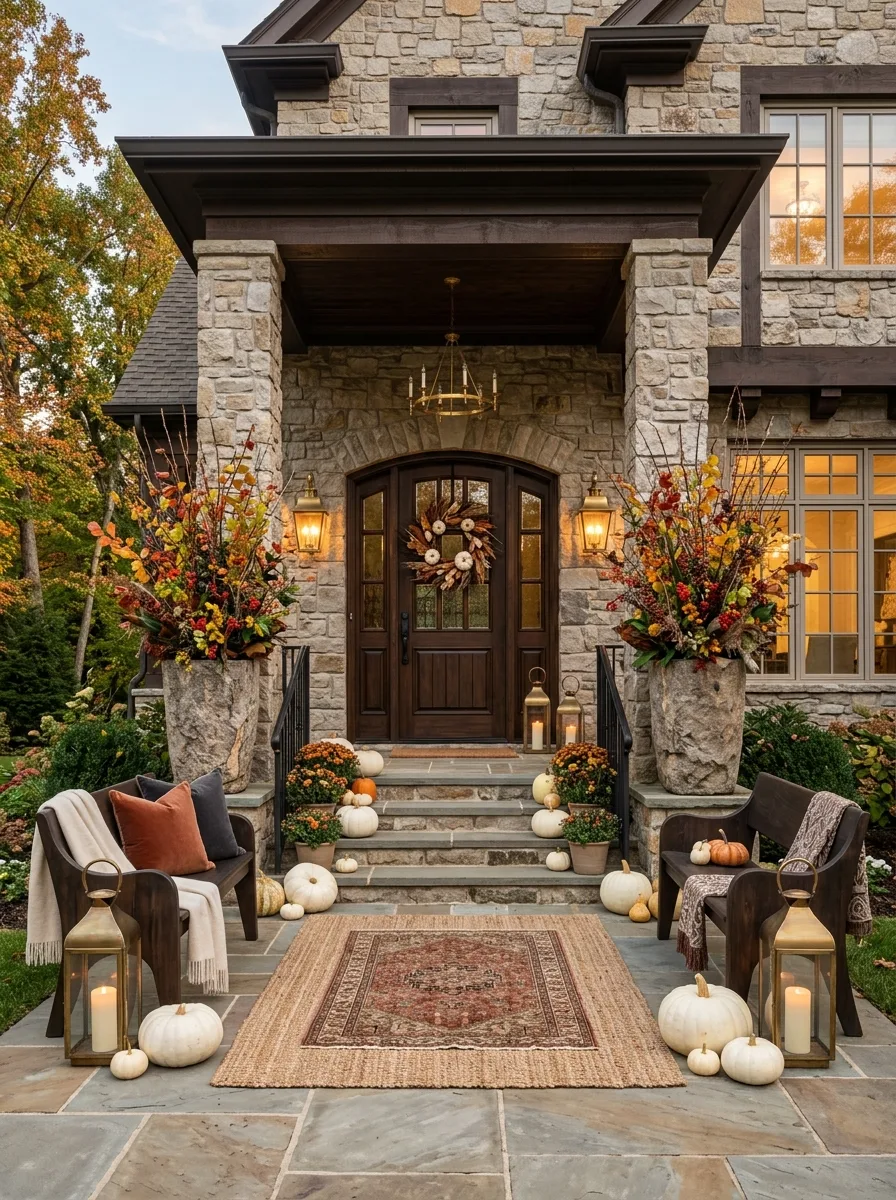
Fill oversized stone or concrete urns with tall branches and dried florals in warm rust and gold tones, letting the stems fan out asymmetrically rather than in a tidy dome shape. The goal is a wild, almost overgrown silhouette that reads as gathered from the property, not purchased pre-arranged.
Place these urns at the base of the entry steps, one on each side, sized large enough that they read as architecture rather than accessories. Undersized urns in a grand entry just look lost.
Add bench seating nearby with throws and pillows, plus a rug underneath to anchor the whole grouping. Without the rug, furniture placed directly on stone reads as temporary rather than intentional.
Wine Barrel Mum Planters
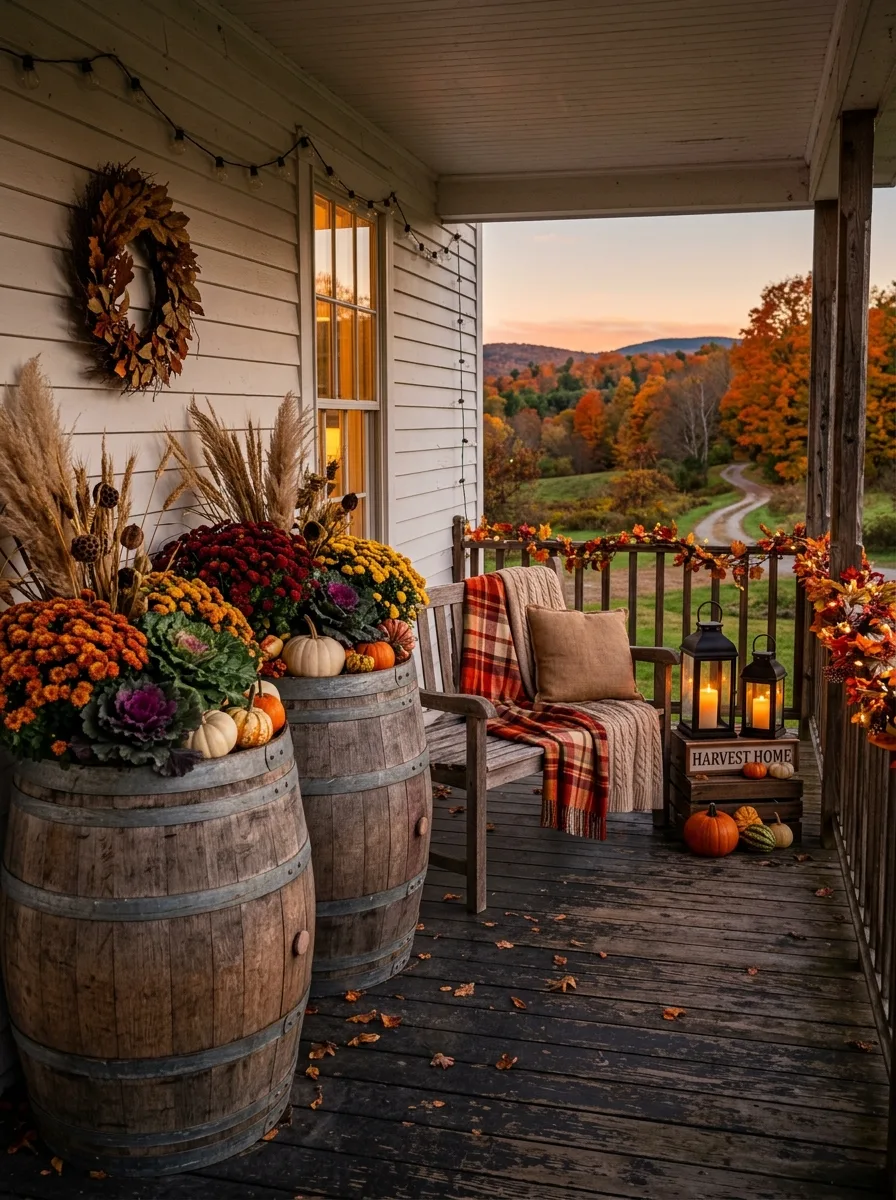
Source a genuine wine barrel — half-round planters made to look like barrels don’t have the same weathered grain or metal band rust that sells the look. Fill it with a dense mix of mums, ornamental kale, and a few small pumpkins nestled into the gaps between the blooms.
Group two barrels together rather than using just one, positioned at slightly different heights if your porch has a step or ledge to work with. The pairing reads as a considered vignette instead of a single random planter.
Pull one flower color from the barrel arrangement — burgundy kale, say — and echo it in a nearby pillow or throw. That thread is what makes the barrels feel connected to the rest of the porch instead of an isolated feature.
Heirloom Pumpkin River Steps
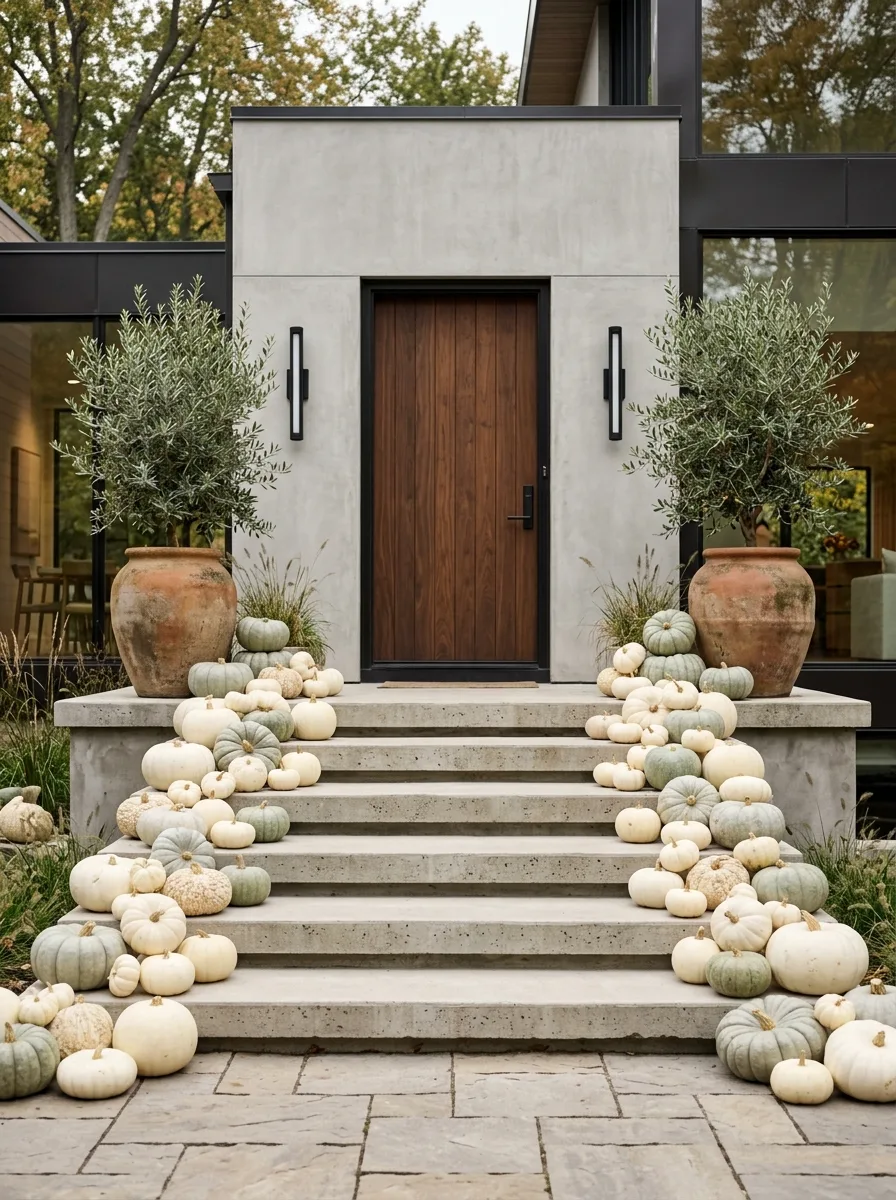
Line both edges of every stair tread with small heirloom pumpkins in sage, cream, and pale blue-grey, packed close enough together that they form a continuous river rather than scattered dots. Keep the centers of the steps completely clear — the walkway needs to stay obviously usable.
Use only muted, matte-finish varieties. A single glossy orange pumpkin dropped into this palette breaks the entire effect immediately, so sort your pumpkins before you start placing them.
Anchor the top of the display with two oversized terracotta urns holding a single olive tree or ornamental grass each. The height contrast between the low pumpkin river and the tall urns is what keeps the whole composition from reading as flat.
Adirondack Blanket Reading Nook
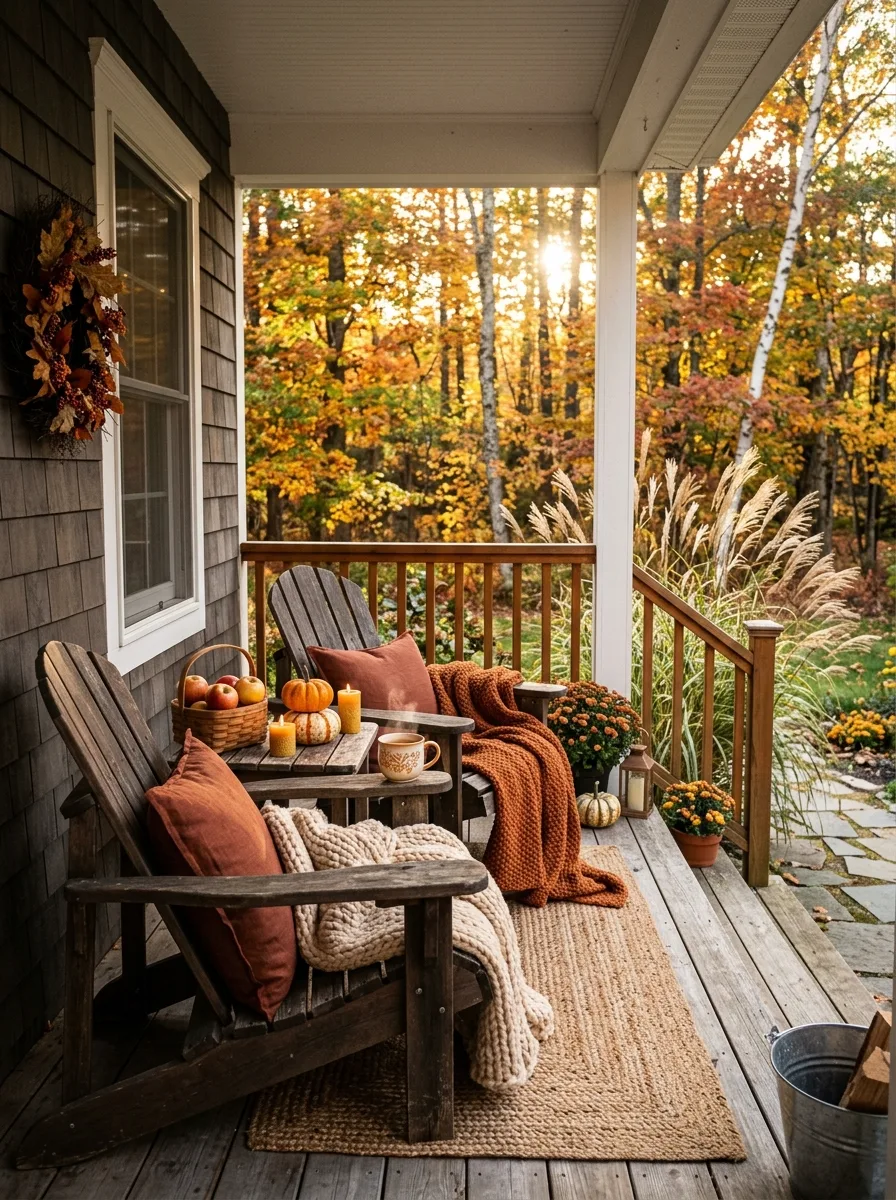
Set two Adirondack chairs at a slight angle toward each other rather than facing straight out, with a small side table between them. Pile rust and cream pillows against the chair backs and drape a chunky throw over one armrest so it looks mid-use.
Place a basket of apples and small pumpkins on the table along with a mug — an empty, staged mug reads as strange, so make sure it looks like it actually has something warm in it. A candle in a low glass holder finishes the tablescape without overcrowding it.
Surround the seating with ornamental grasses in pots rather than mums alone. The movement they add in wind gives the whole vignette a sense of life that static florals can’t.
DIY Cider Station Cart
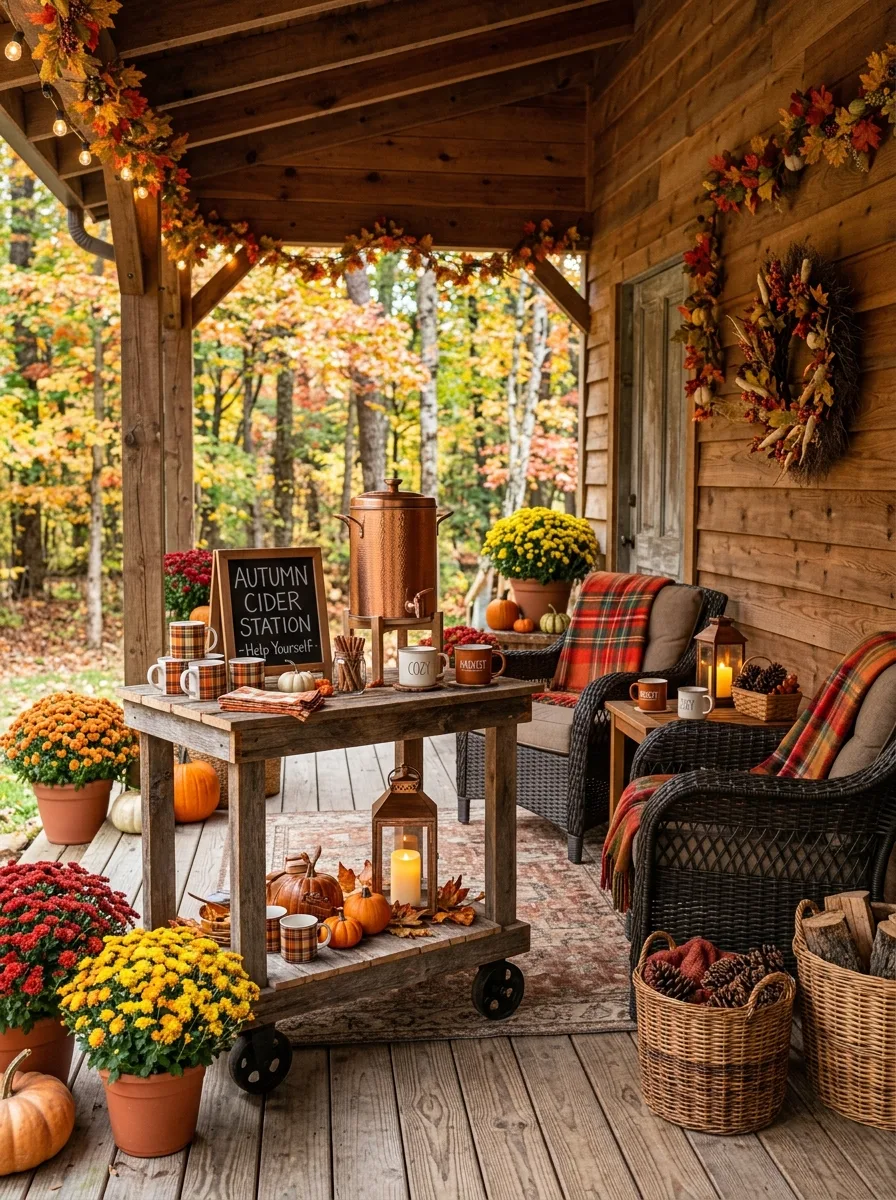
Roll a wooden bar cart or garden cart into a corner of the porch and turn it into a self-serve station — a copper kettle or urn, a stack of mismatched mugs, and a small chalkboard sign spelling out what’s on offer. The sign is what turns a cart of mugs into an actual station rather than just clutter.
Keep the surrounding seating casual and slightly worn — wicker chairs with plaid throws work better here than anything polished, since the whole point is a low-key gathering spot, not a formal display. Add a rug underneath to define the space as its own zone.
Tuck a basket of pinecones and a stack of firewood nearby. It reinforces the idea that this corner of the porch is functional, not just decorative.
Lit Garland Door Frame
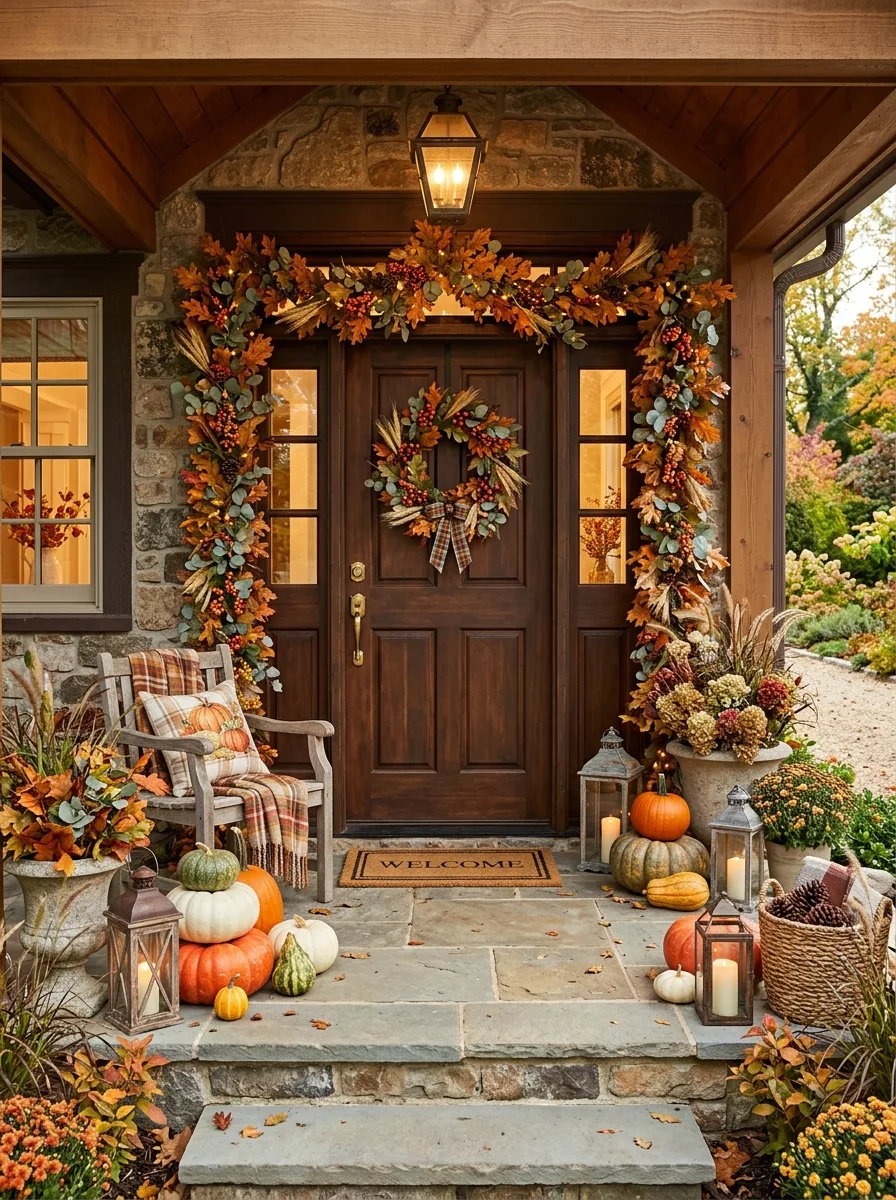
Drape a heavy, textured garland — mixing dried leaves, eucalyptus, and small clusters of berries — across the top of the door frame and down both sides, letting it hang slightly looser than a tightly wound version would. Weave warm white lights through before you hang it rather than after, so the wiring stays hidden inside the greenery.
Center a wreath just below the top of the garland, using dried wheat and berries rather than fresh-looking florals to match the garland’s dried texture. Mixing fresh-looking and dried elements in the same display reads as mismatched.
Place a stack of pumpkins in a large urn to one side of the door and a wicker basket of pinecones on the other, so the garland has a grounded finish at both ends instead of trailing off into nothing.
Ladder Shelf Wreath Display
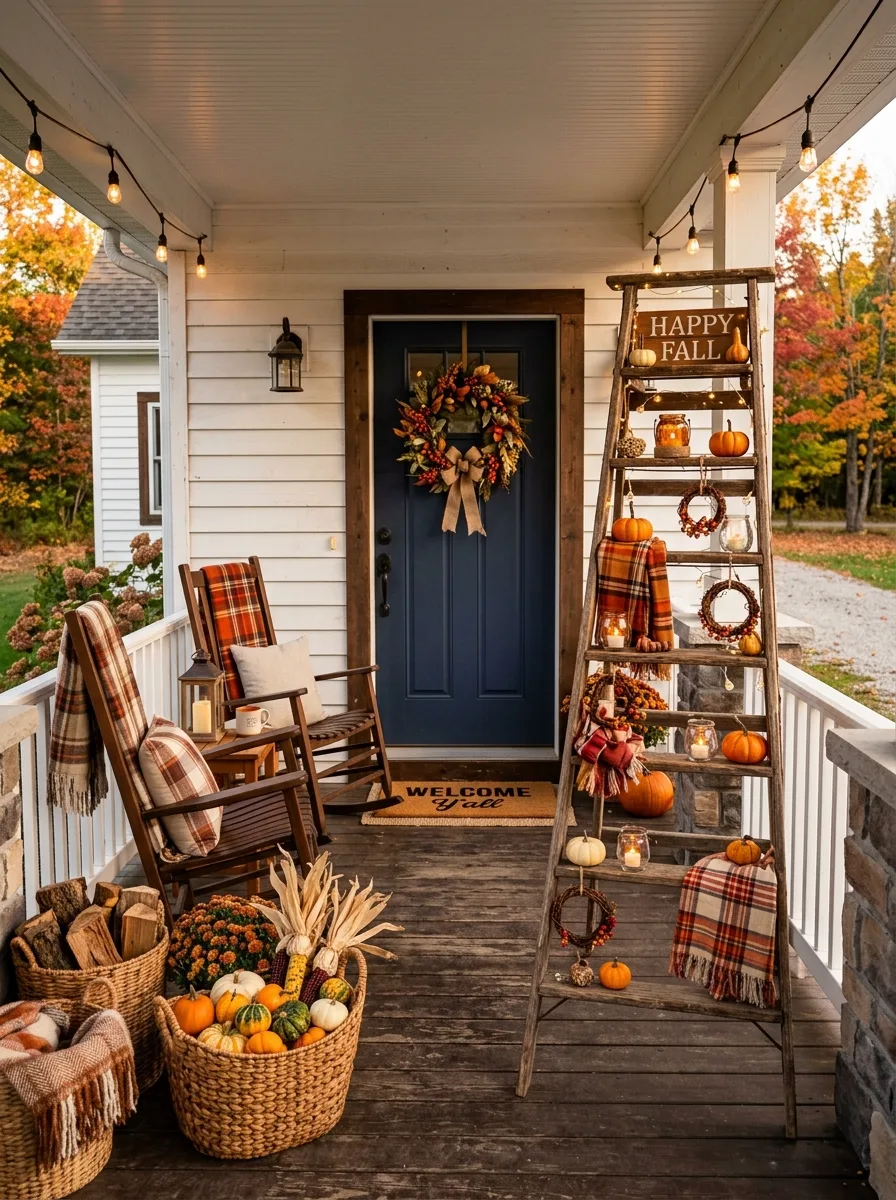
Lean a weathered wooden ladder against a porch post or wall and use each rung as a display shelf. Hang a small mini wreath from one rung, set a lantern with a real candle on another, and let a pumpkin or two sit directly on a lower step.
Add a simple wood sign — something short like a seasonal greeting — wired to the top rung so the ladder has a clear focal point instead of just being a random collection of objects. Keep the items on each rung sparse; overloading every level makes the ladder read as storage rather than styling.
Drape a plaid throw over the very top rung so it trails down one side. It softens the hard lines of the ladder and ties it visually to any blankets used elsewhere on the porch.
Cornstalk Bundle Door Flank
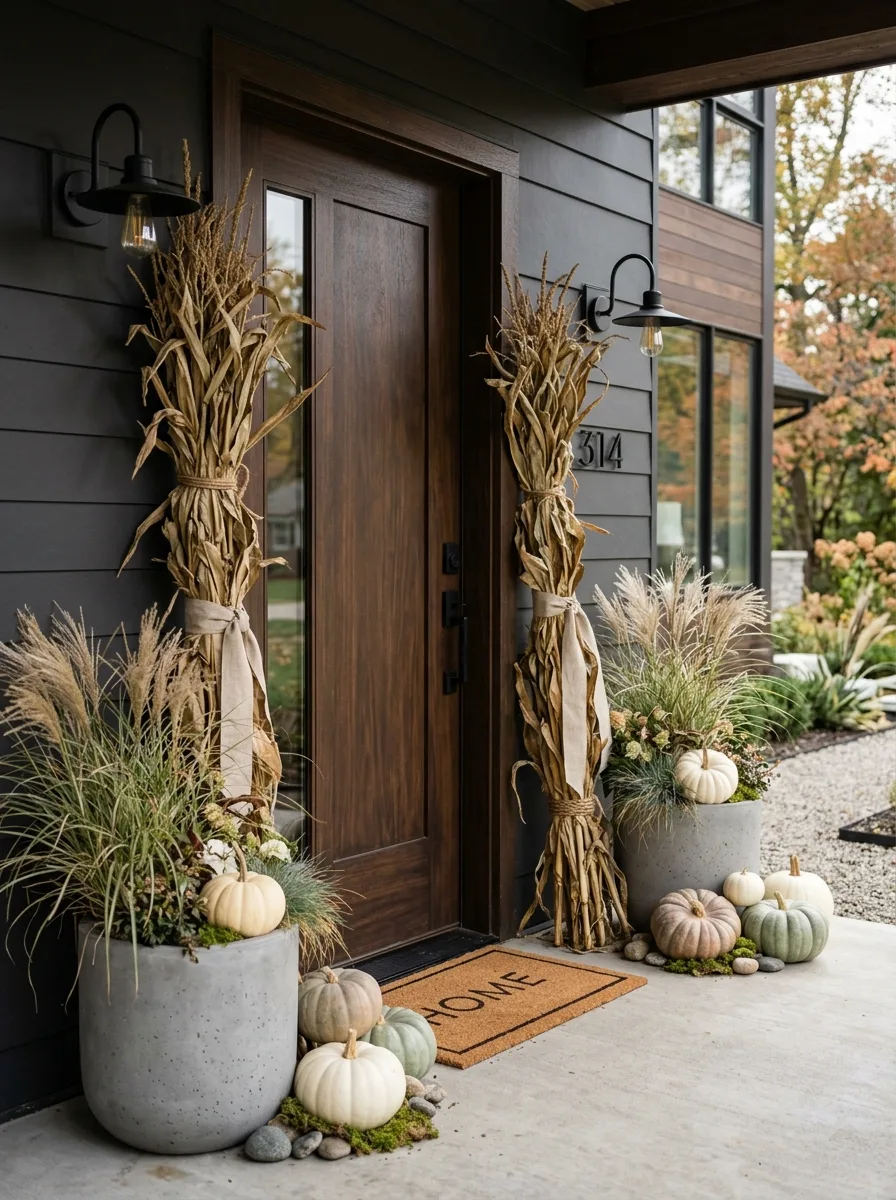
Bundle dried cornstalks tightly with twine, then wrap a wide strip of neutral fabric or burlap around the base and tie it in a loose knot. Stand two bundles upright, one on each side of the door, tall enough to reach well above the door handle.
Set each bundle into a large concrete or terracotta planter filled with ornamental grasses and a few heirloom pumpkins at the base, so the cornstalks have visual support instead of standing alone against the wall. Bare cornstalks with nothing planted around them look unfinished.
Keep everything else at this entry minimal — a single wreath, no additional garland. The cornstalks are tall and graphic enough to be the whole statement.
Stool-Flanked Pumpkin Entry
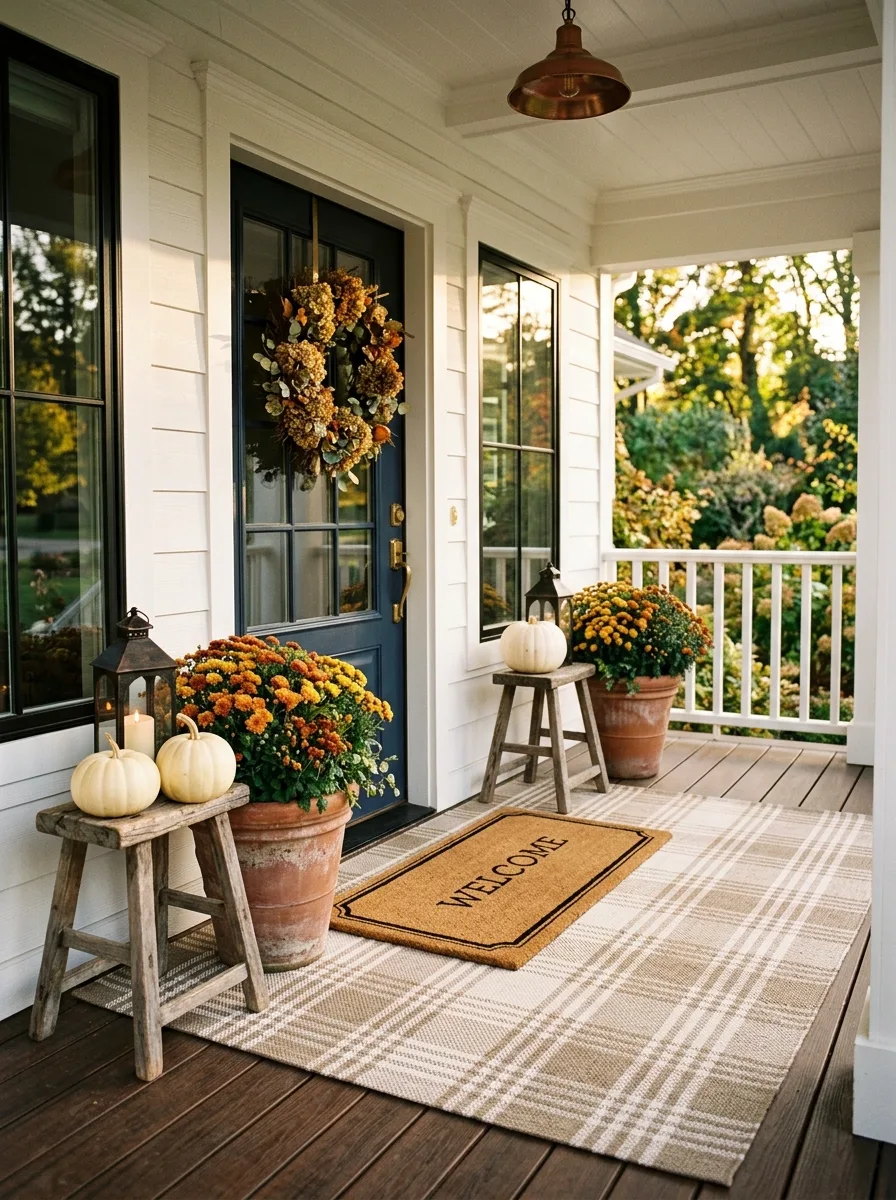
Set a low wooden stool on each side of the door and stack it with two or three white pumpkins, using the stool’s height to lift the pumpkins off the ground so they read as a deliberate display rather than something left behind. A pumpkin on the floor blends in; a pumpkin on a riser gets noticed.
Pair this with a large terracotta pot of mums positioned just beside one stool, and a lantern with a candle beside the other, so the two sides of the door are balanced without being identical.
Finish with a plaid runner rug layered over a plain woven mat rather than choosing one or the other. The layered rug is what elevates this from a standard welcome-mat setup into something styled.
Plaid Pillow Bench Nook
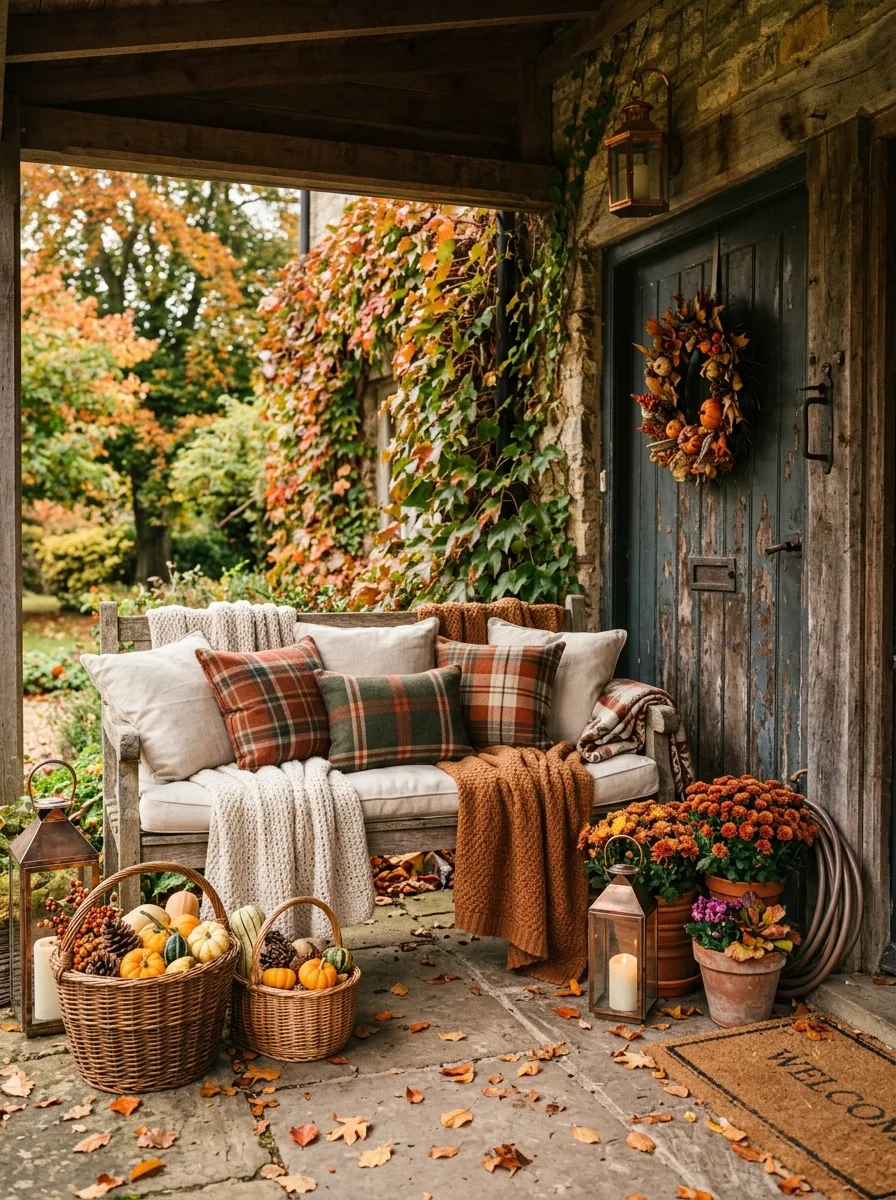
Load a weathered wooden bench with a cluster of plaid and solid pillows in a coordinated but not matching palette — rust, forest green, and cream work well together without looking like a matched set. Drape a chunky knit throw over one end so the pile reads as inviting rather than staged for a catalog.
Set two wicker baskets on the ground in front of the bench, filled with mixed gourds, pinecones, and small pumpkins, so there’s texture at floor level to match the texture piled on the bench. Empty floor space in front of a heavily styled bench makes the whole vignette feel top-heavy.
Let real climbing ivy or vine on the wall behind the bench stay untrimmed. It’s doing more work for the cozy, lived-in feeling than any additional decor item would.
Floating Bench Pumpkin Row
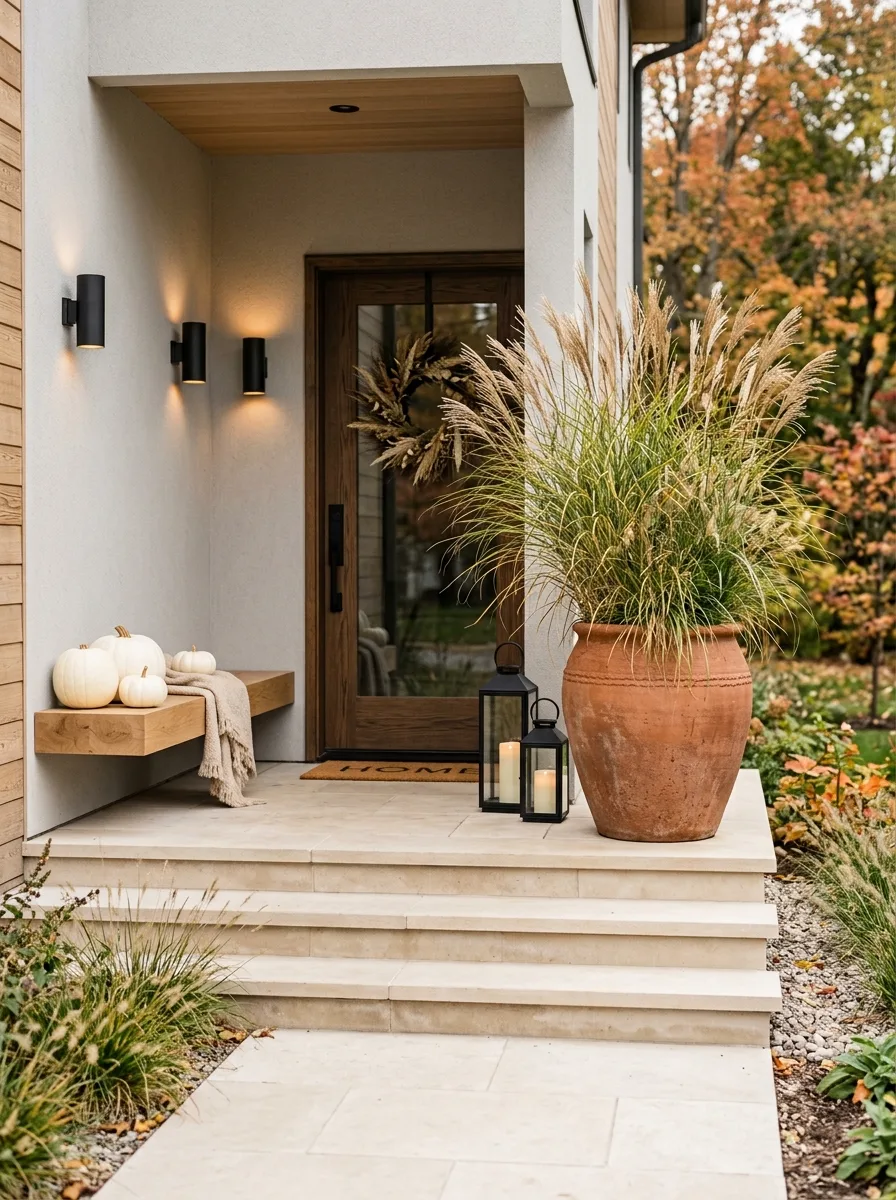
Install or use a simple floating wood bench along the entry wall and line a small row of white pumpkins across the top of it, spaced slightly apart rather than clustered together. The clean line of evenly spaced pumpkins is what makes this work in a minimalist entry — clustering them undoes the effect.
Drape a single neutral throw over one end of the bench, folded rather than piled, to keep the styling restrained. This look depends on negative space, so resist the urge to add more.
Place one oversized terracotta urn with tall pampas grass beside the steps, letting it be the only tall, textural element in an otherwise low, quiet composition. One dramatic gesture is enough when everything else stays this pared back.
Farm Crate Pumpkin Stack
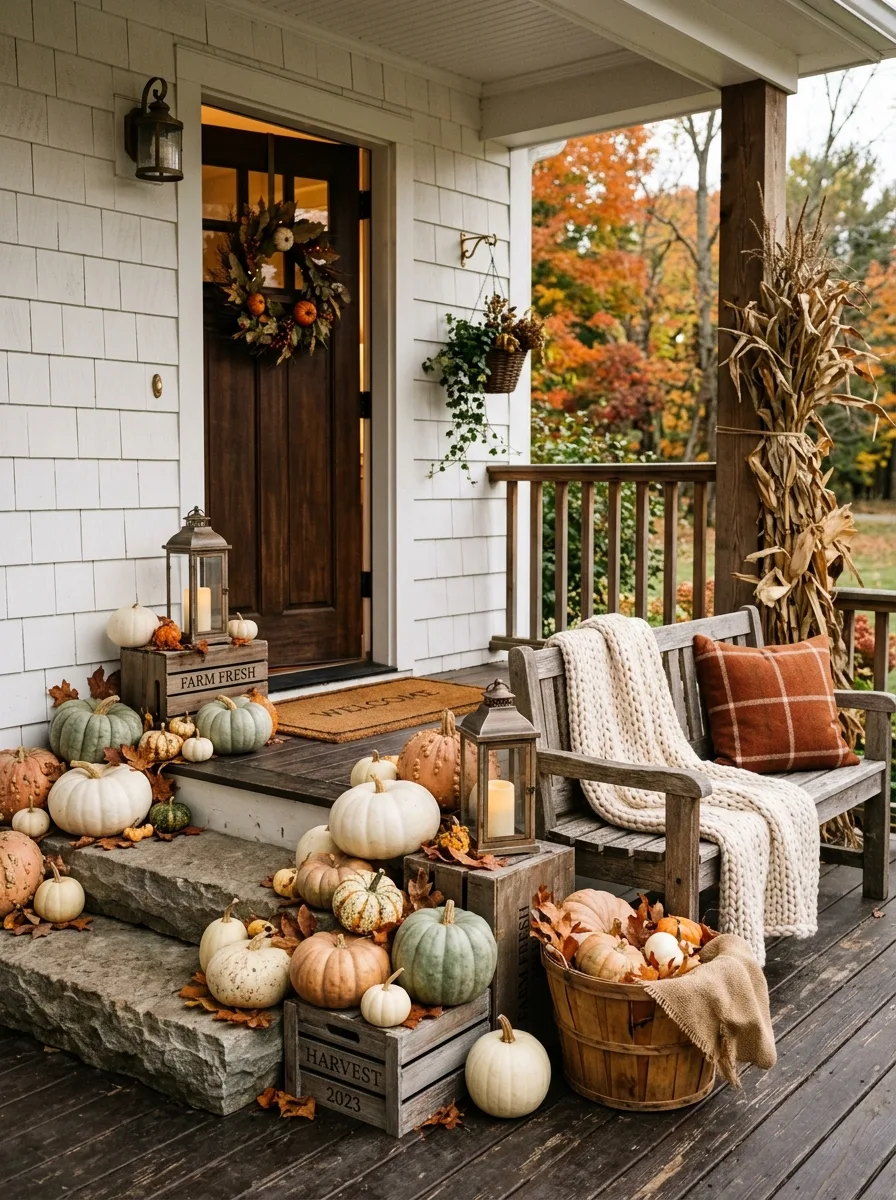
Stack two or three wooden crates, stamped or stenciled with something like “Farm Fresh” or a harvest year, at slightly staggered heights beside the door. Fill the top and gaps between crates with a mix of heirloom pumpkins in varied sizes, letting a few spill over the crate edges onto the step below.
Use crates with visible wear — worn stenciling, slightly rough wood — rather than anything that looks freshly printed. New-looking crates read as a prop bought for the season rather than something with an actual farm history.
Add a bench nearby with a cream throw and a single plaid pillow, plus a cornstalk bundle at the porch post, so the crates feel like one part of a larger harvest scene instead of an isolated stack.
Wheat Cotton Wreath Runner
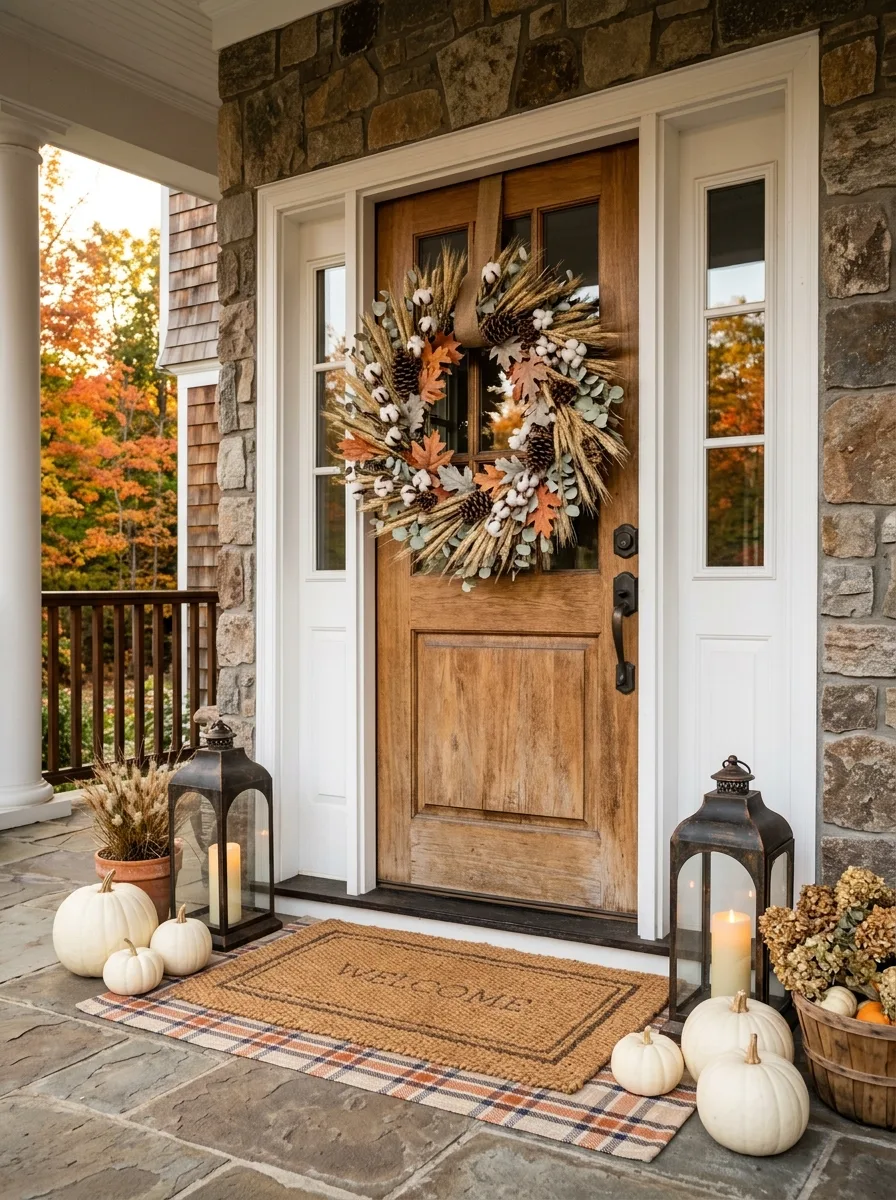
Build a wreath from dried wheat stalks, cotton bolls, and pinecones instead of the usual leaves and berries — the pale, textural palette reads as more elevated than a standard autumn wreath and works especially well against a stone or light-colored door. Let the wheat stalks trail slightly below the wreath’s base rather than trimming them flush.
Layer a plaid runner rug directly over a plain coir welcome mat, letting the plain mat’s border show at the edges. This double-layer trick is a small detail that consistently reads as more finished than a single mat alone.
Finish with a pair of lanterns holding real candles flanking the door, and a wicker basket of small white pumpkins to one side. The overall palette — wheat, cotton white, warm candlelight — should stay tight enough that nothing looks like it wandered in from a different color story.
Final Thoughts
The porches that actually work all share one thing that has nothing to do with pumpkins: they were built to be looked at from more than one angle. A wreath is a single decision made once, hung, and forgotten. Everything above required someone to walk down the steps, turn around, and check whether it still worked from the sidewalk.
That’s the actual skill here — treating the porch as three-dimensional space instead of a flat backdrop behind a door. Height, texture, and something to sit in all matter more than how many pumpkins you managed to fit in the frame.
Fall gives you a short window before the leaves are gone and the whole thing turns into holiday lights. Spend it on the porch, not just the door.
The best ones on this list didn’t get there by buying more. They got there by choosing a container, a palette, and a reason for someone to sit down — and then not second-guessing any of it.