
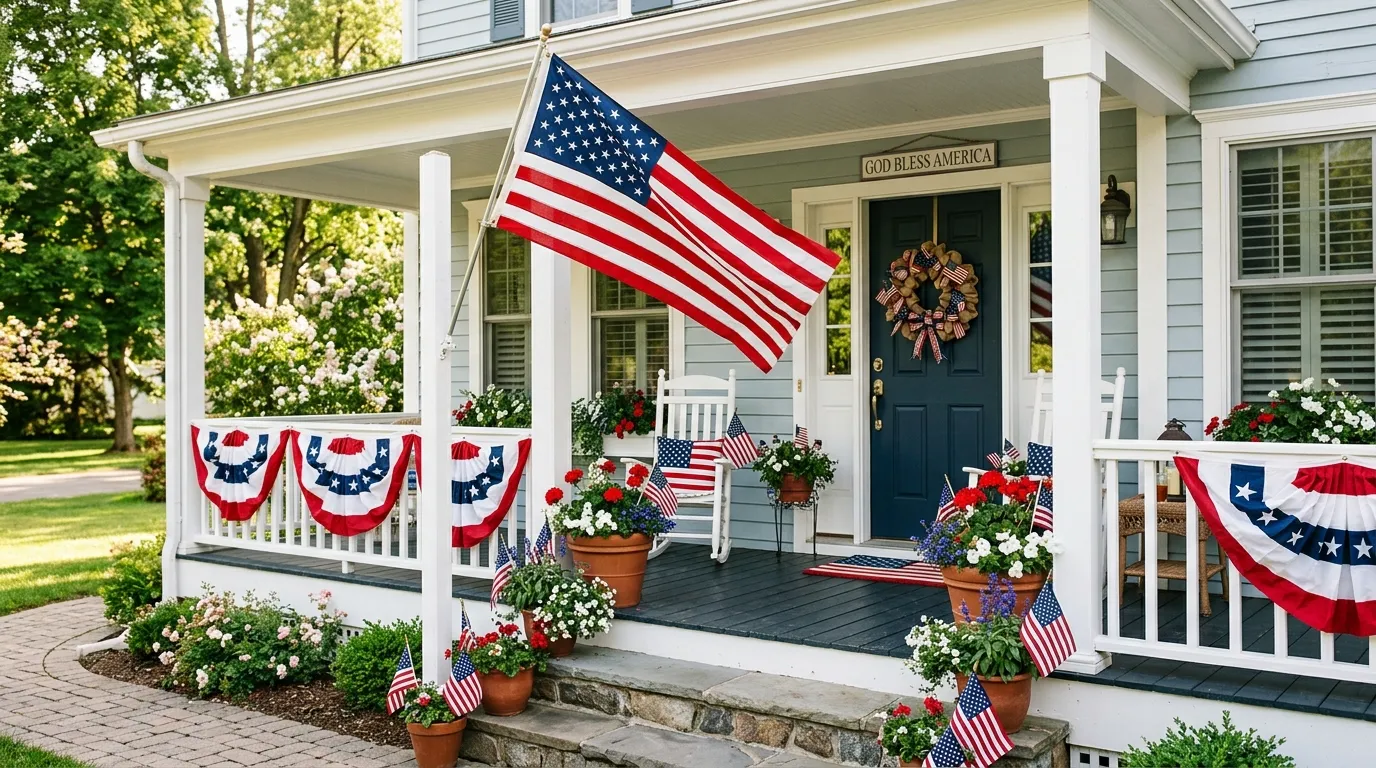
The flag has been doing heavy lifting for this country’s front porches since before your house was built. And yet most people either shove it in a holder they bought at a gas station or drape it somewhere vague and call it seasonal.
The homes in this collection understood the assignment differently. The flag isn’t an accessory. It’s the architecture.
Here’s how each one pulled it off.
The Design Principles Behind These Displays
Every flag display that makes you slow your car down has one thing in common: it was composed, not installed.
Work With the Architecture, Not Against It
The flag on the dark navy house in this collection works because someone understood that a full-color flag on a monochrome facade is a visual event. The weathered flag on the red barn works because the faded textile tones match the aged wood tones — the flag looks like it belongs to the barn rather than being placed on it. Know your surface before you choose your flag style.
Repetition Creates Ceremony
The bunting swags along the white porch railing work because there are multiple of them, evenly spaced, treating the entire porch as one unified display rather than one decorative moment. The street of flag-lined houses works because every property participated. Repetition elevates display into ritual. One flag is decoration. Ten flags on consecutive properties is a neighborhood saying something together.
Let the Flag Be the Only Thing
The most powerful flag displays in this collection have minimal supporting elements. The white wall with the flag and the sign below it needs nothing else. The dark navy house needs only the lantern and the brass fish. The rooftop display needs only sky. When the flag shares visual attention with too many competing elements, it loses gravity. Give it room to be what it is.
What to Decide Before You Hang Anything
Fabric and Finish First
Cotton or nylon made-in-USA flags read completely differently from imported polyester. The cotton flag has weight and movement. It drapes properly. The colors are correct — deep navy, true red, clean white. Polyester often runs toward purple-navy and orange-red and never hangs right. Buy the best flag you can afford for permanent display. Save the cheap versions for garden stakes and basket accents.
Permanent Mount Versus Seasonal Display
A wall-mounted bracket with a staff is a permanent installation decision that involves drilling. A hook system for hanging a flat flag requires two to four hooks and is reversible in ten minutes. Draping bunting over a railing requires only the fabric and gravity. Know which category your situation calls for and don’t over-install something you’ll want to remove in September.
The Flag Code
The U.S. Flag Code has etiquette guidelines worth knowing: the canton should face the observer’s left when displayed flat, the flag should not touch the ground, it should be illuminated if flown at night, and displaying a distressed or faded flag is a choice that reads as intentional vintage rather than neglect only if the flag is clean and intact. Know the rules well enough to decide which ones apply to your specific display.
Fourth of July Flag Display Ideas
The Layered Blue Porch Vignette
A house with bold siding color — deep teal, cobalt, or Mediterranean blue — gives the flag a background that makes it look like a piece of art rather than a seasonal accessory. Mount a large flag flat against the siding above eye level, anchoring it at both top corners with small hooks so it hangs parallel to the wall surface.
Below the flag, build a layered vignette at floor level: a vintage red plant stand holding red-flowering plants, a weathered wooden box or antique window frame with trailing greenery, flags tucked in at natural angles rather than standing upright in holders, a white ceramic vessel with red geraniums, vintage lanterns at varied heights. This combination of levels — flat flag above, arranged vignette below — creates a composition that reads top to bottom as a complete display.
The grapevine wreath on the floor adds a circular shape that interrupts the primarily vertical and horizontal elements. One wreath, no bow, leaned rather than hung.
The All-Flags Parade Float Side Panel
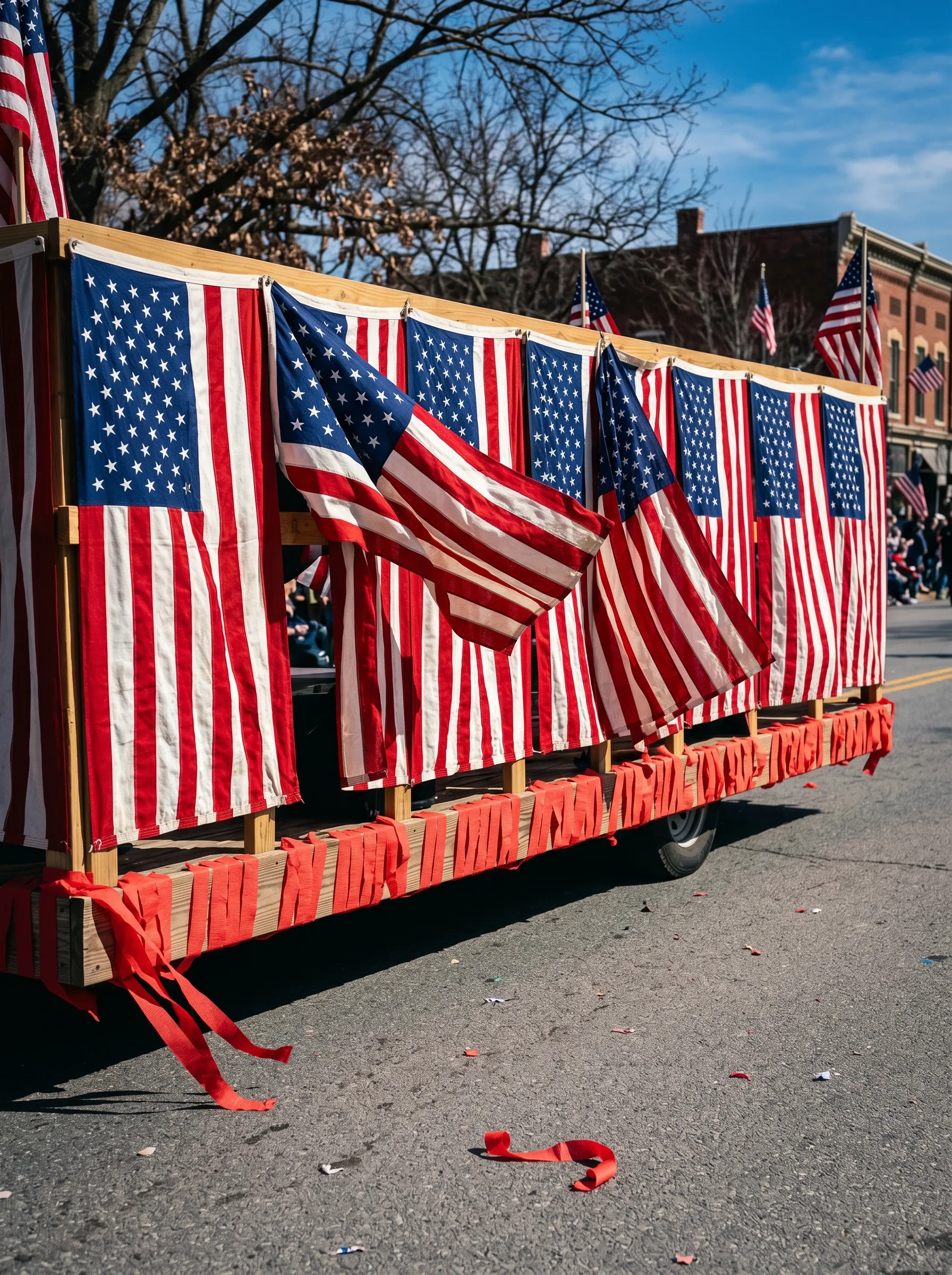
When decorating a parade float, the temptation is to add too many different elements. The most effective float panel in this collection is made entirely of full-size flags hung side by side on a timber frame, filling the entire visible face of the float.
Build a simple frame of two-by-fours in a rectangular form attached to the float bed. Space vertical posts every four feet across the frame. Hang a full-size three-by-five flag from each pair of adjacent posts using cable ties through the flag grommets, so the flags hang overlapping slightly and fill the full height and width of the frame.
The base of the frame — the skirt that touches the road — runs a length of red fringe or red ribbon tied in loops at two-inch intervals, creating a moving fringe that is visible from ground level as the float moves.
This is a display built for a moving context and a viewing audience on both sides. It doesn’t need any other element. A solid wall of flags moving through a crowd at four miles per hour is all it needs to be.
The Freestanding Flagpole in a Cottage Garden
A full-height residential flagpole — twenty to twenty-five feet is the residential standard — installed in a front garden creates a display that is visible from an entire block in both directions and changes character entirely with every shift in wind.
The flagpole is the investment. Buy aluminium or fibreglass over wood; they don’t require painting and won’t warp. Install it at the approximate midpoint of the front garden rather than in a corner, so it has symmetrical visual relationship with the house behind it. Plant around the base with a low mixed border — the natural garden planting shown here, with purple salvia, marigolds, and mixed perennials — so the pole rises from a living context rather than bare mulch or concrete.
The flag at the top of a proper flagpole, backlit by a dramatic sky, is simply a different object than a flag in a porch bracket. It moves differently. It sounds different in the wind. It earns the yard it’s in.
The Cream Bicycle With Wire Basket and Flag Pick
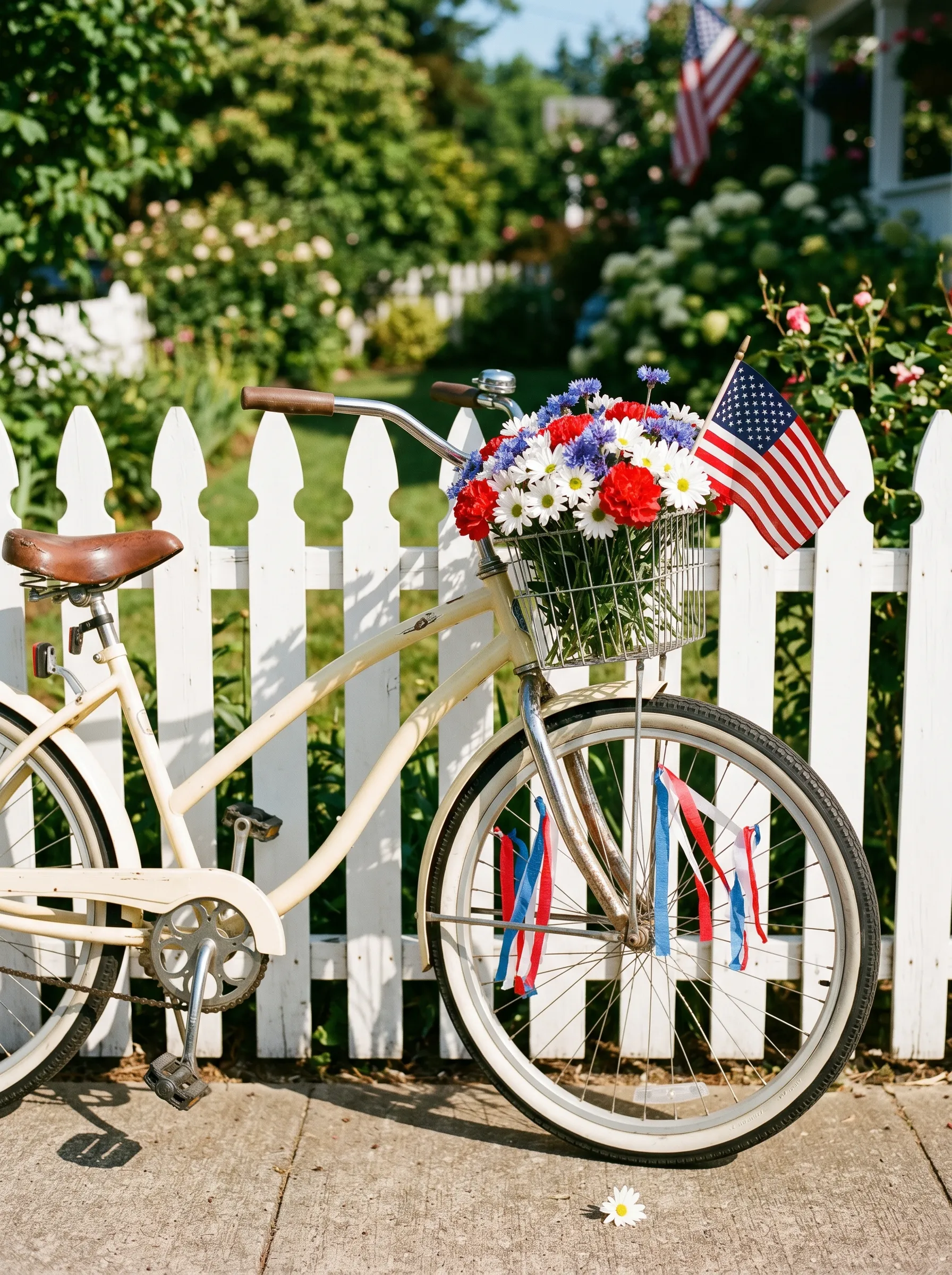
A vintage or vintage-style bicycle in cream, white, or pale tone leaned against a white picket fence already contains an entire Fourth of July mood before you add anything. The bicycle is doing the nostalgic work. Your additions should support that, not override it.
Source a wire handlebar basket and fill it with a direct-from-garden-or-market flower mix: red carnations or gerberas, white daisies, blue cornflowers or bachelor’s buttons. Tuck one medium American flag among the flowers — not prominently placed as a decoration, but naturally inserted as if it was the last thing added before someone left on an errand.
Through the spokes of the front wheel, thread several lengths of wide satin ribbon in red, white, and blue — not tied, simply woven through and left to trail. The ribbons move in the wind and give the bicycle a celebratory quality that a static arrangement never has.
No additional flags. No bunting. No sign. The bicycle and one flag are the complete composition.
The Dark House Single Flag Statement
A deep charcoal or near-black house exterior with white trim needs exactly one flag and nothing else. Mount a period-appropriate flag — the thirteen-star Betsy Ross or an early-style colonial flag — on a wooden staff inserted into a wall-mounted bracket positioned at the door surround cornice, angled at thirty to forty-five degrees forward.
The flag hangs and moves at the entry. The single exterior lantern beside the door provides the only other visual element. A brass fish or similar architectural detail on the door surround is the home’s own personality — not added for the holiday.
Nothing else is needed. The contrast between the dark house and the saturated flag colors does all the work.
The Flag and Sign Two-Element Wall
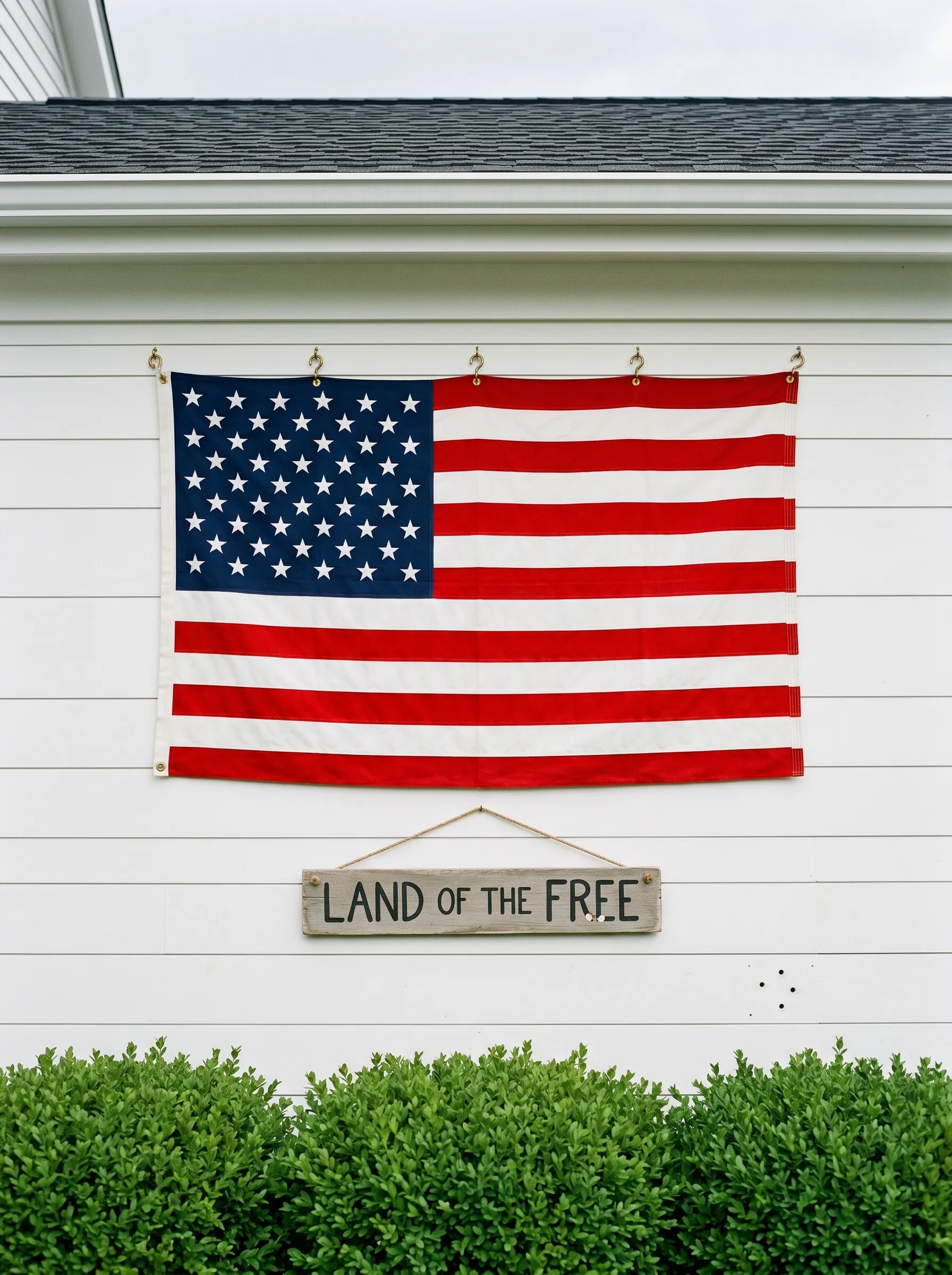
The cleanest display in this collection and the most frequently underestimated. A full-size flag mounted flat against a white or light-colored exterior wall using four brass cup hooks — one at each corner of the flag — hangs parallel to the surface and shows the complete flag without any drape distortion.
Below the flag, centered, hang a single weathered wood sign on a length of natural jute rope over one nail. The sign carries a short phrase in painted lettering. The phrase should be declarative rather than decorative: a statement, not a sentiment.
A perfectly trimmed boxwood hedge at the base of the wall provides the ground line. That is the complete display. Four hooks, one nail, two objects. The proportion of flag to wall to sign to hedge does the design work that no additional element could improve.
The Flag-as-Backdrop Long Table
A very large flag — at least five feet wide, ideally larger — hung vertically on an exterior white wall becomes a photo-quality backdrop for a long outdoor dining table. The flag hangs with the canton in the upper left and the stripes running vertically rather than horizontally, which changes its visual weight significantly and makes it read as a banner rather than a standard flag.
String a strand of globe lights at mid-height across the flag surface — this requires two anchor points on the wall or flanking structures and the strand should cross the full width.
The table below uses the flag’s palette: a red-and-white gingham tablecloth, blue mason jar vases with white hydrangeas and small flag picks, wood charger plates, white plates, and clear glassware. The combined effect — large flag above, correctly dressed table below, globe lights linking them — reads as an intentional outdoor party space rather than a backyard with chairs.
The Whole Street at Sunrise
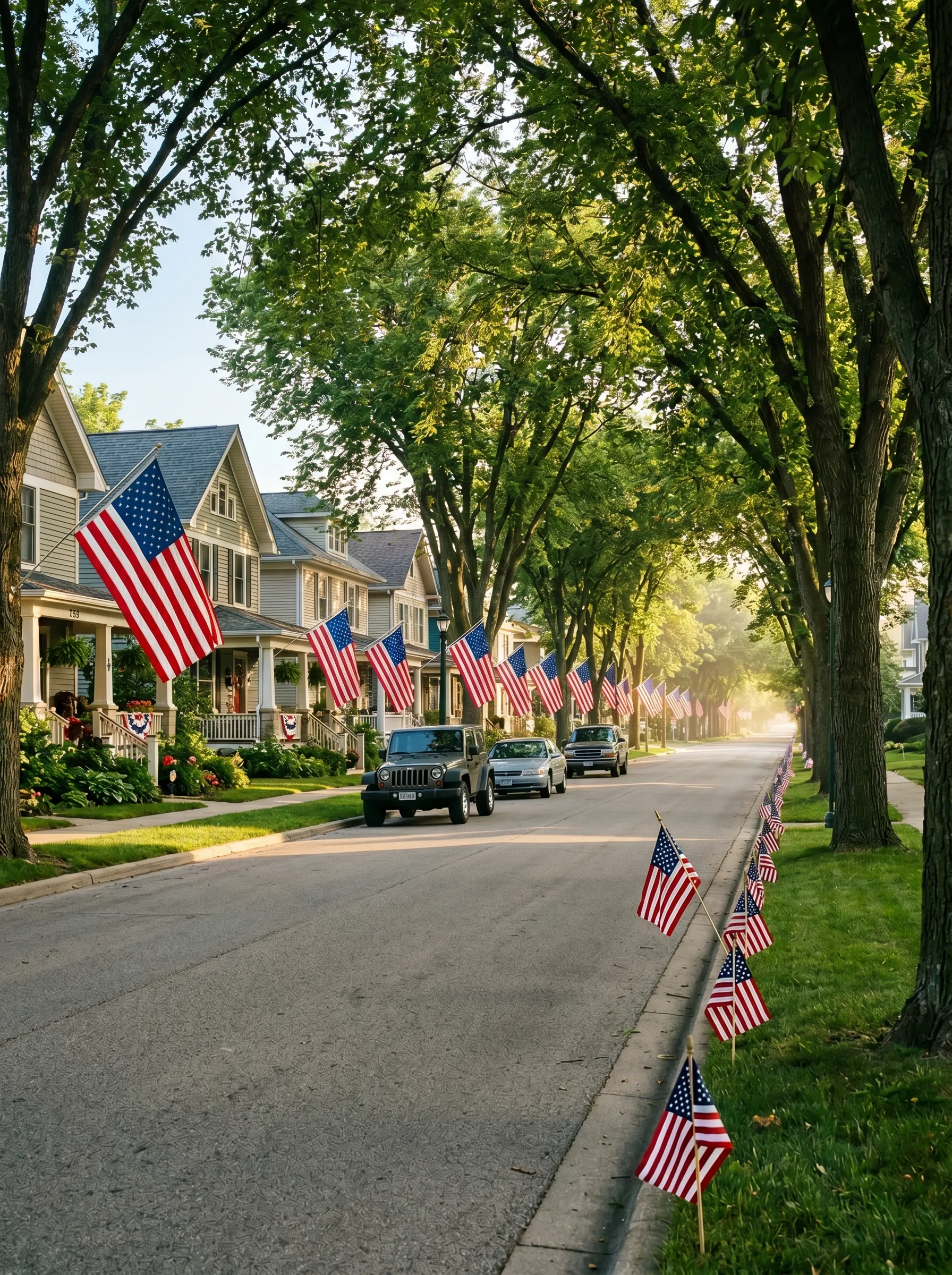
This one is not a single property decision. It is a neighborhood decision, and it is worth organizing.
Purchase a case of small wooden-staked American flags — available in quantities of fifty or one hundred from most flag retailers — and coordinate a morning installation along the parkway strip between sidewalk and curb on your block. Space flags every three feet, pushed firmly into the turf at a slight forward angle. When seen from one end of the block, the receding line of flags creates a perspective effect that is genuinely moving, particularly in early morning light when the sun comes in low and sideways through the tree canopy.
Every house on the block also mounting its own flag that same morning makes the street something that people will remember and return to. There is no single-property equivalent for this. Some effects require collective participation.
The Mantel Flag Fan With Lanterns and Candles
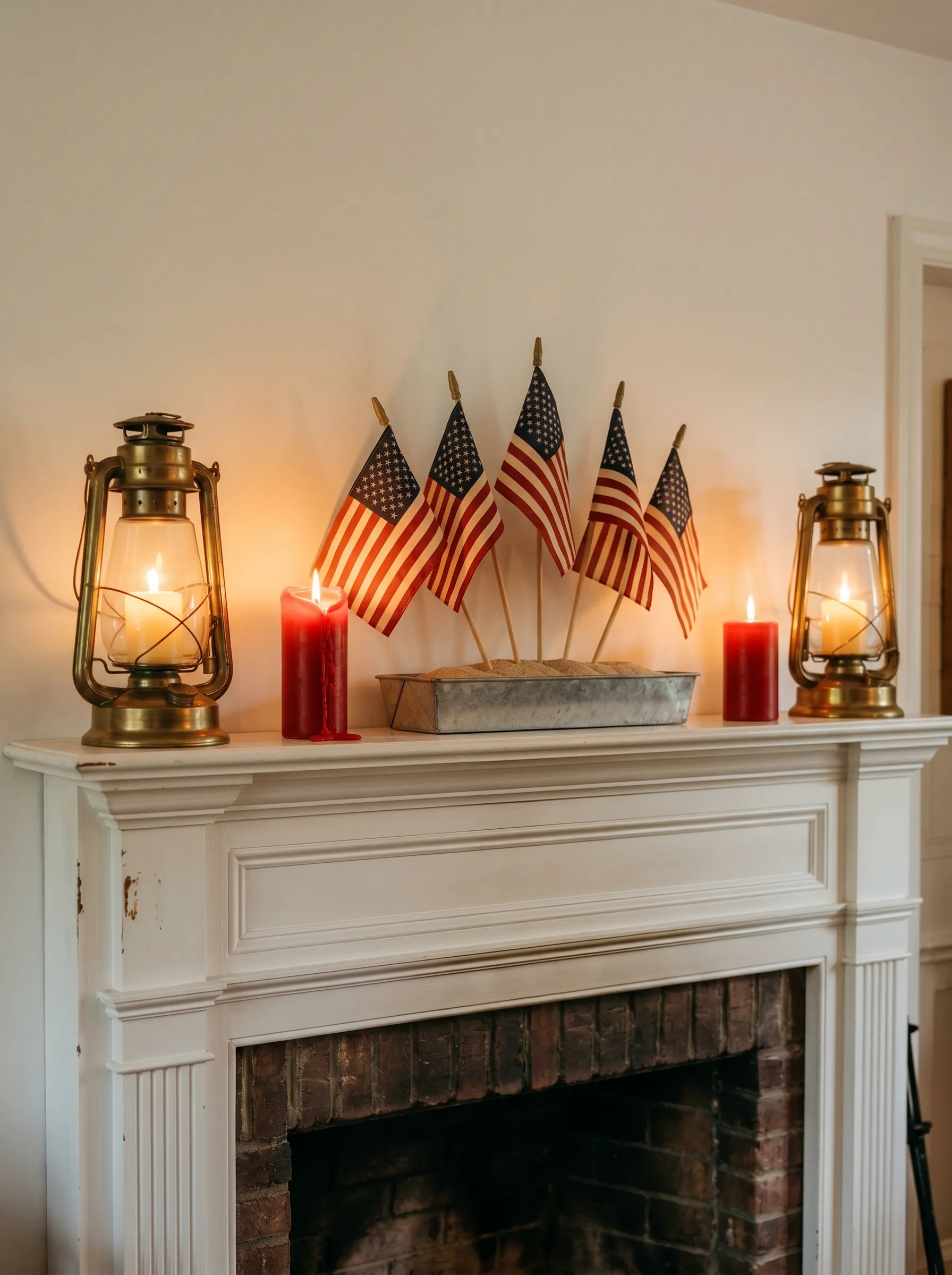
Inside the house, the mantel is the display surface that carries the most emotional weight. Dress it with material restraint and the flag’s meaning amplifies rather than dilutes.
Fill a galvanized rectangular seed tray or similar low container with sand or clean litter. Into the sand, insert five to seven small flag picks at varying heights and angles so they fan outward like a hand of cards — the flags angling left, right, and center, overlapping without obscuring each other.
Flank the flag grouping with a graduated candle arrangement: on each side, one pillar candle in deep red and one antique brass oil lantern with a candle inside. The lantern flames and the pillar candle flames should be at different heights so the light level varies across the mantel surface.
Leave the mantel background wall completely bare. The warm glow from four fire sources — two lanterns, two candles — illuminates the flags from below, creating upward light and shadow in the fabric folds.
The Navy Door With Wreath and Wall-Mounted Flag
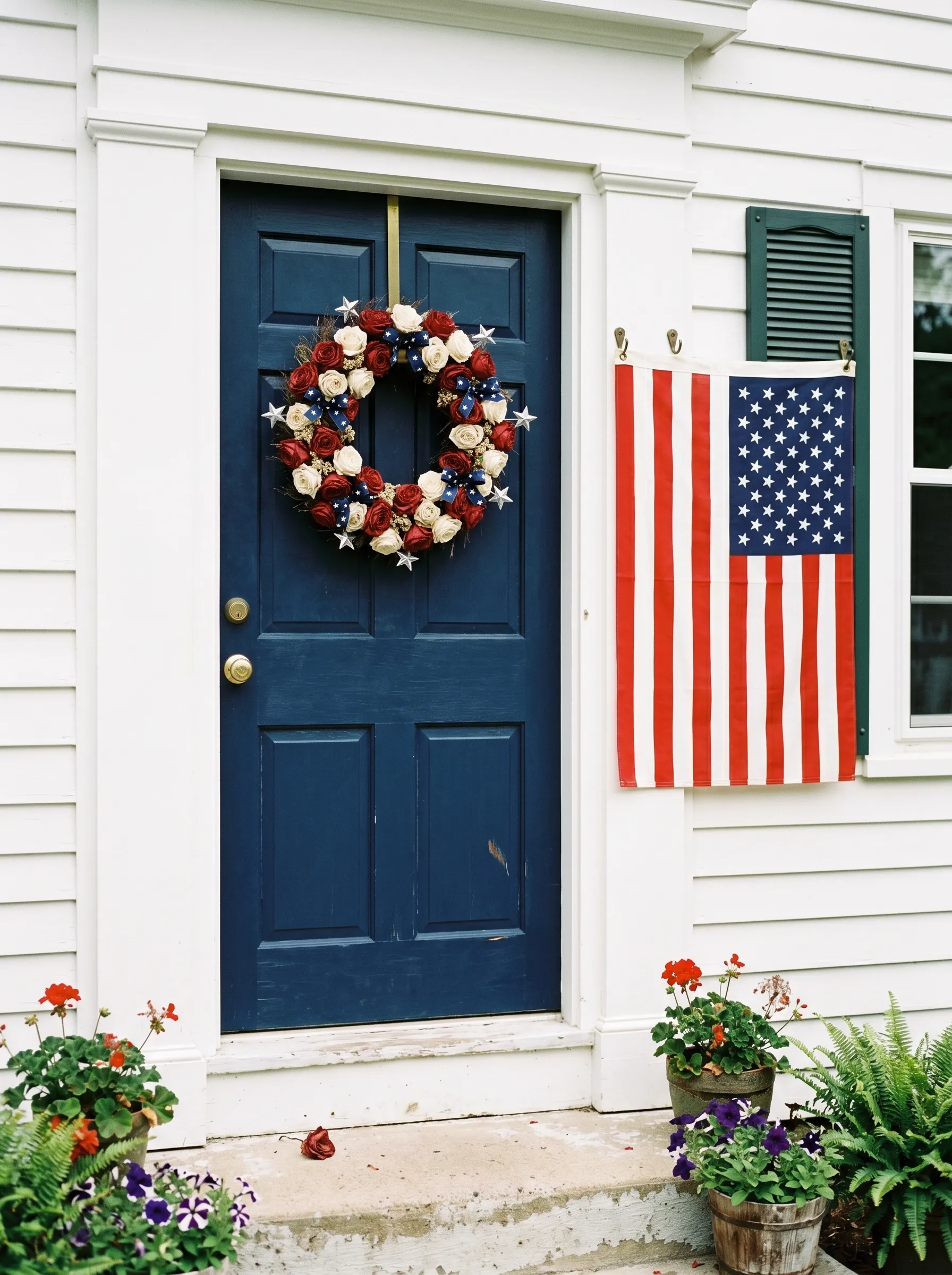
A navy blue painted door is already doing patriotic work before you add anything. The wall-mounted flag display — hung vertically on two brass cup hooks screwed into the exterior siding to the right of the door — should use a flag oriented so the canton is in the upper left when viewed face-on.
The brass cup hooks and the brass door hardware — knob, kick plate, house numbers — create a metallic accent system that ties the door surround together. Do not use chrome or black hardware on a navy door dressed with flags; only brass reads correctly here.
On the door itself, a rose and silver star wreath in deep red and cream with a wired navy ribbon woven through provides the circular element that the vertical flag needs as a counterpoint shape.
At the base of the stoop, two to three simple pot plants in red geraniums, ferns, and trailing purple flowers. They should look like they live there year-round, not like they were purchased for the holiday.
The Rooftop Flagpole at Dusk
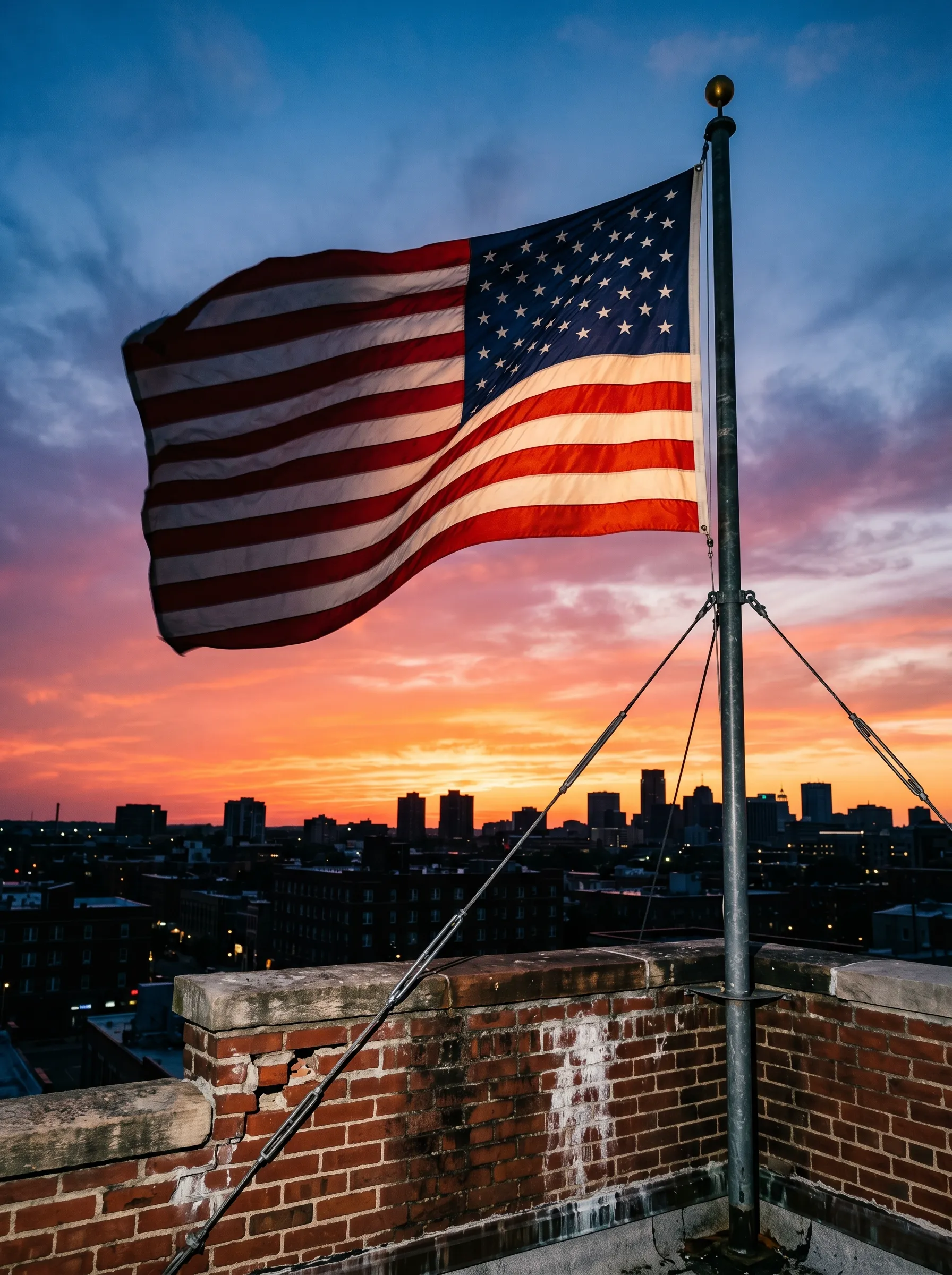
A flag on a rooftop building-mount pole at dusk, against a burning orange-and-purple sky, is one of the most powerful flag images that exists. It requires nothing except the right pole, the right flag, and the willingness to be outside when the light is doing that.
Install a roof-mount flagpole bracket into a solid masonry parapet or roof structure — this is a permanent installation that requires appropriate hardware and structural consideration. The pole should rise a minimum of eight feet above the roof line. Use stainless steel guy wires on two sides for stability in wind, attached to the roof at anchor points offset from the pole base.
Fly a five-by-eight or larger flag for a rooftop pole. The larger flag has the weight and surface area to move fully in the wind rather than drooping around the pole.
At golden hour and into dusk, the flag will be lit by the same quality of light that makes the sky behind it extraordinary. This is not a decorative decision. It is a decision about what you want to see from your roof at the end of July Fourth.
The Backyard Farmhouse Table With Mason Jar Flag Centerpiece
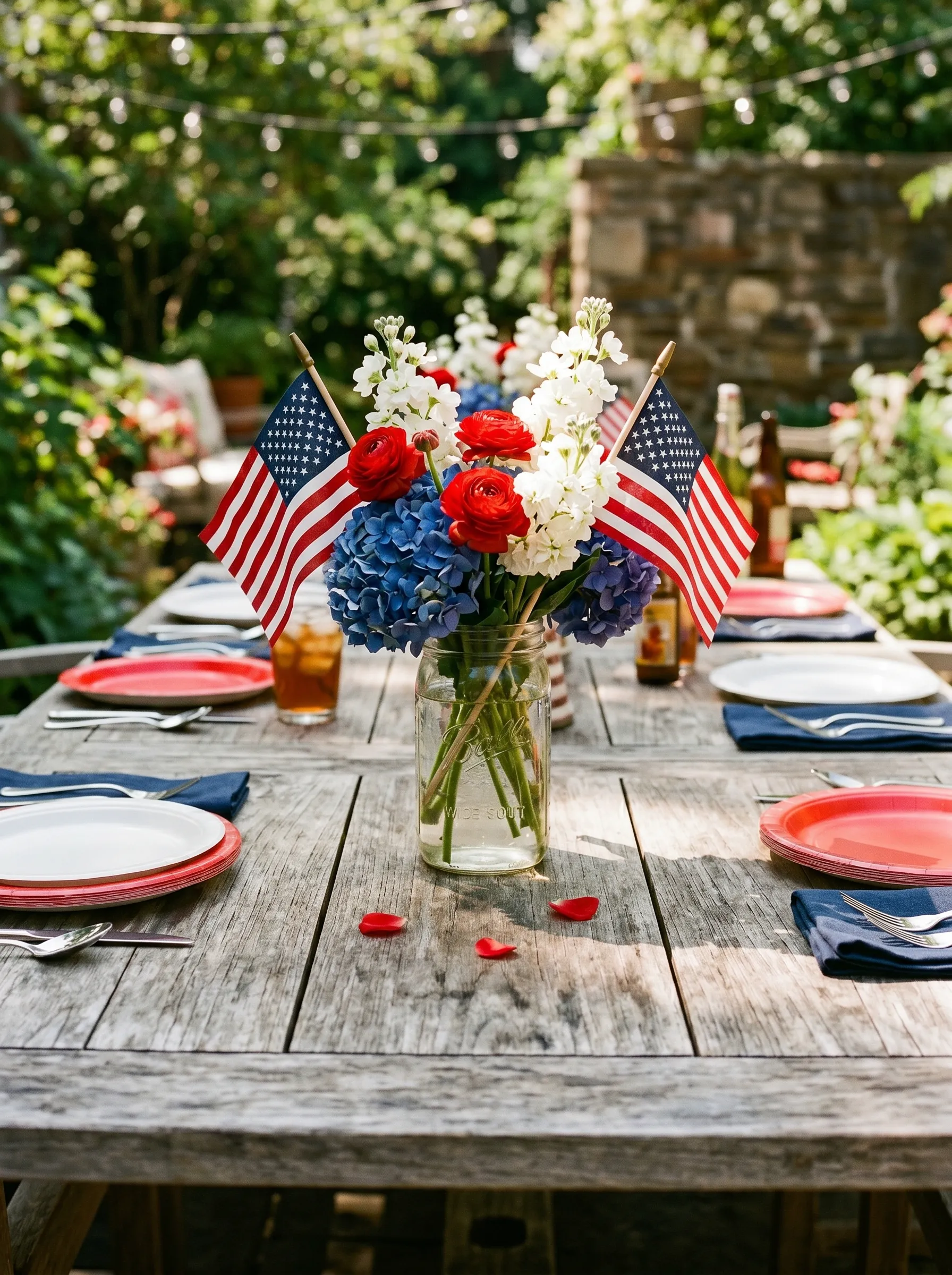
A weathered teak or cedar outdoor dining table needs almost nothing to feel dressed for the holiday. The table’s own material quality does the formal work.
For the centerpiece, fill a large clear Ball mason jar with water and build a loose, natural arrangement: blue hydrangea heads at the bottom layer providing mass and color, red ranunculus or red garden roses at mid-height, white stock flowers or white larkspur as the tall vertical elements. Insert two small flag picks into the arrangement — not centered, but positioned at the left and right sides so they face outward toward the diners rather than each other.
For place settings, stack a red charger plate with a white dinner plate and fold a navy napkin in a simple rectangle beside it. This three-color place setting mirrors the flag’s palette without any additional patriotic element needed.
The string lights above the table require no installation for a single-evening dinner — clip them to a fence, tree branch, and pergola post, then connect to an outdoor extension cord. They’re down in ten minutes after the party ends.
The Distressed Flag on the Red Barn
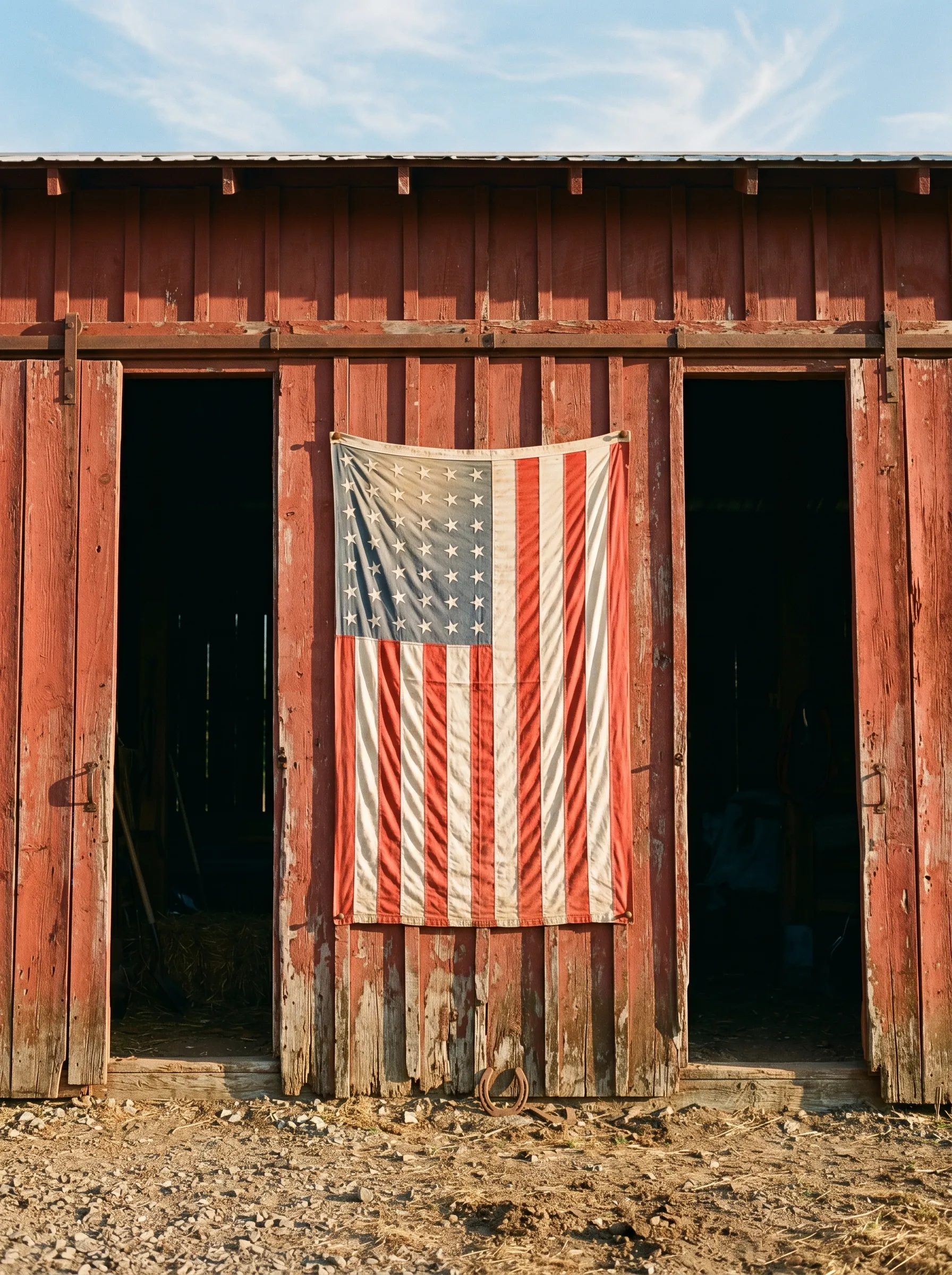
An aged or intentionally distressed flag — faded stripes, dusty canton tones — hung on a surface with equivalent age and character creates a display that feels historical rather than seasonal. The red barn provides exactly that character.
Hang the flag vertically in portrait orientation between two open barn doors. Use the existing door hardware — the sliding track, the exposed bolts — as anchor points, attaching the flag corners with simple loops of jute rope over whatever protrusion is available. The flag should hang with some slack at the bottom so it drapes rather than stretches.
The faded flag and the peeling red paint share a color temperature — both are warm-toned versions of red rather than the saturated flag red — and this tonal matching is what makes the combination feel composed rather than accidental.
Leave the barn doors open enough to show the dark interior behind the flag. The flag hanging against blackness reads more powerfully than the flag against any solid surface.
The Terracotta Pot Stair Ascent
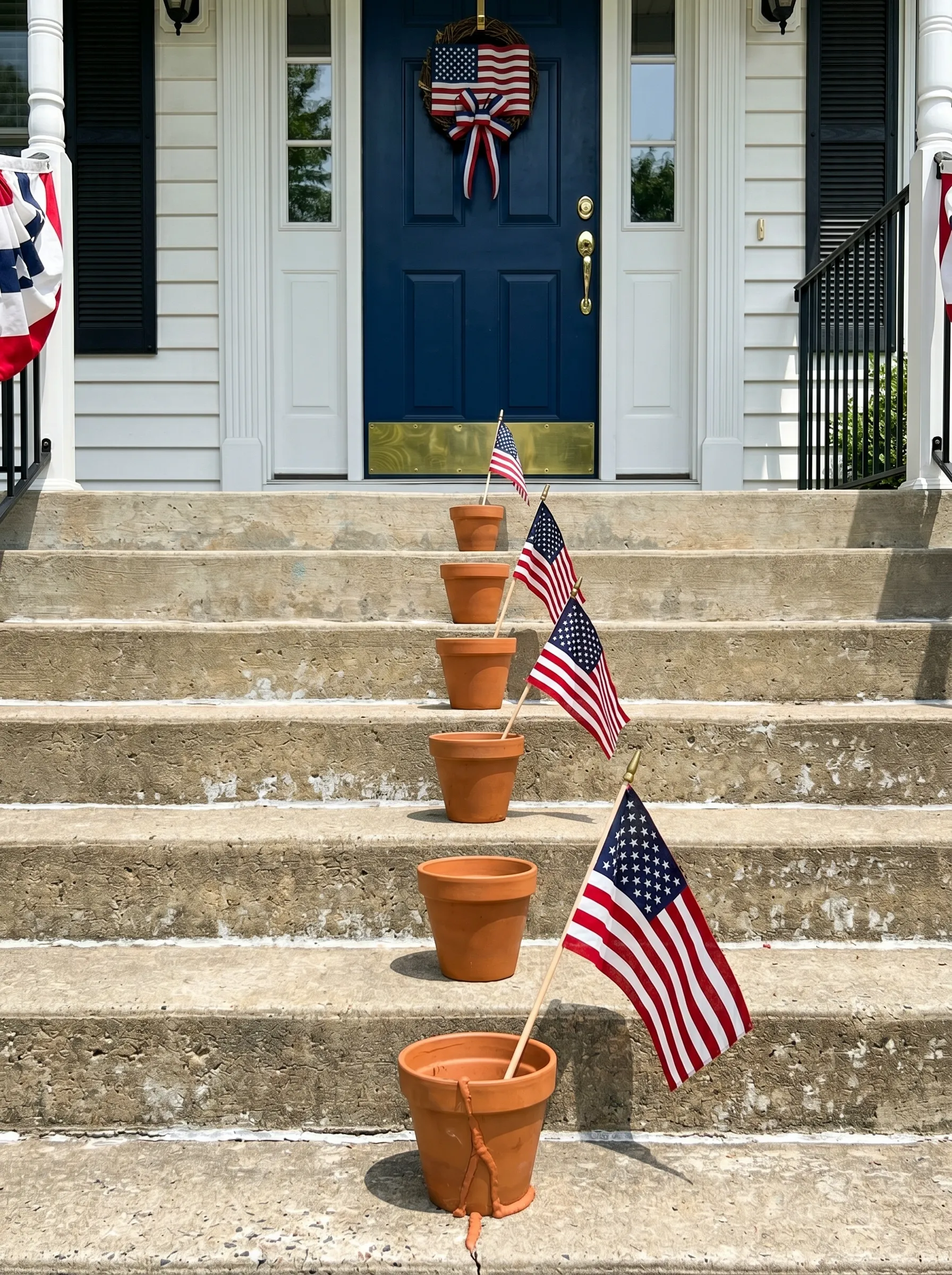
One flag per step, one terracotta pot per step. The simplicity of the idea is its strength.
Fill each pot with dry play sand or soil to anchor the flag staff. Press a wooden-staffed flag into the center of each pot, angling it slightly toward the viewer at the base of the stair so all flags face the same direction. Use graduating flag sizes — largest at the bottom, smallest at the top — so the visual scale shrinks as the stair ascends toward the door. This creates natural perspective emphasis that draws the eye upward to the entrance.
The navy door at the top of these stairs already provides the blue in the palette. The terracotta pots provide warm earth tones that keep the display from being cold. A grapevine wreath with a simple ribbon bow on the door completes the composition without adding any element that competes with the flag line.
The whole effect is achieved with five pots, five flags, and a total investment of under thirty minutes.
The Weathered Picket Fence at Sunset
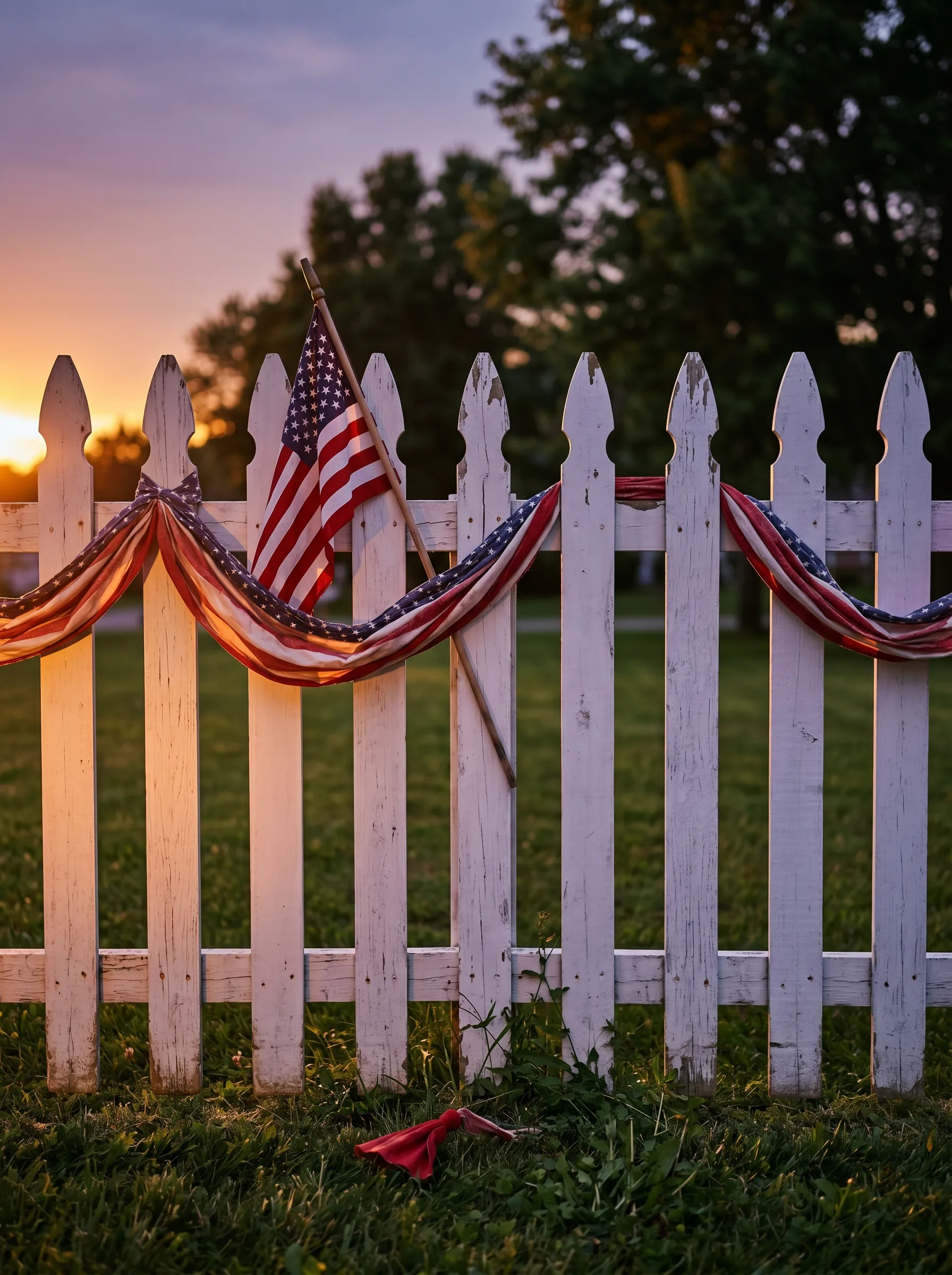
A white picket fence at the golden hour, draped with a flag-print fabric bunting swag that pools along the top rail, with a single medium flag inserted through the pickets at one end, is a display that requires exactly fifteen minutes to install and looks like a painting.
Source a length of flag-print fabric — the kind with stars and stripes in a continuous print — cut to approximately two to three yards. Drape it over the fence rail from one end, letting it pool naturally rather than pinning or shaping it. Wherever it wants to drape is where it should drape. At the end, tuck a single flag staff through the fence pickets so the flag faces outward toward the street.
Come back at 7:30 p.m. The fence will have turned gold. The fabric will have turned gold. The flag will be the most saturated element in the frame. This is not decorating. It is knowing when light will do the work for you.
The Red Geranium Window Box With Flag Picks
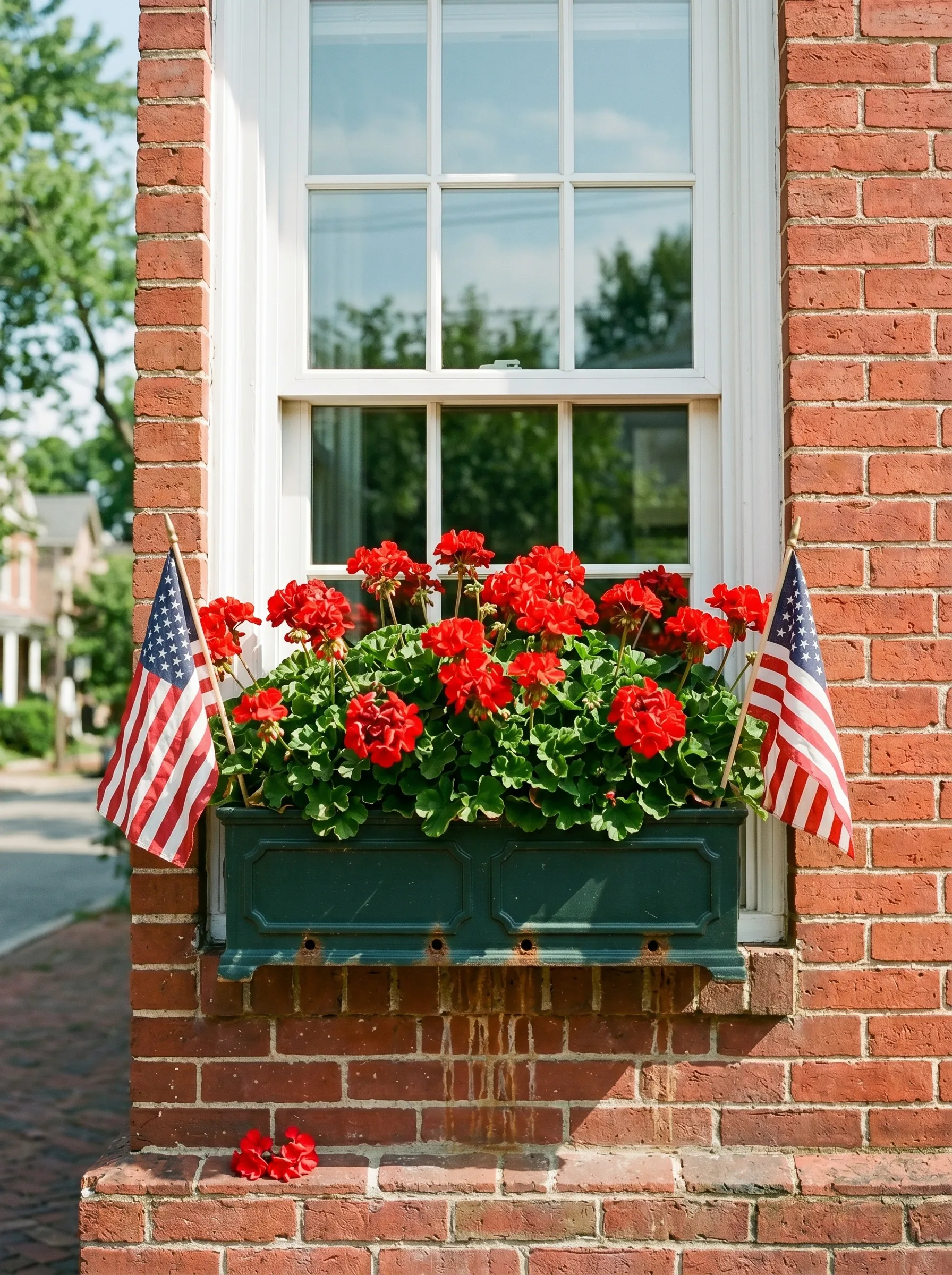
A dark hunter green or black painted window box mounted below a white-framed window on a red brick facade needs nothing except maximum geraniums and two flag picks to become one of the strongest patriotic displays in this collection.
Plant red geraniums — only red, no pink, no mixed — at maximum density in the box so the planting overflows the edges and covers any visible soil surface. Fill to within two inches of the box rim, water thoroughly so the plants settle, and allow them to establish for at least one week before the holiday so they look resident rather than recently purchased.
On the day itself, insert one medium flag pick into the left end of the planting and one into the right end, angled outward at approximately thirty degrees so the flags face toward the street rather than toward each other. The red brick, the dark green box, the saturated red flowers, and the flags create a patriotic palette without any blue — because the sky is providing the blue. This is the only display in the collection that understands the sky is part of the composition.
The Old White Porch With Star Garland Overhead
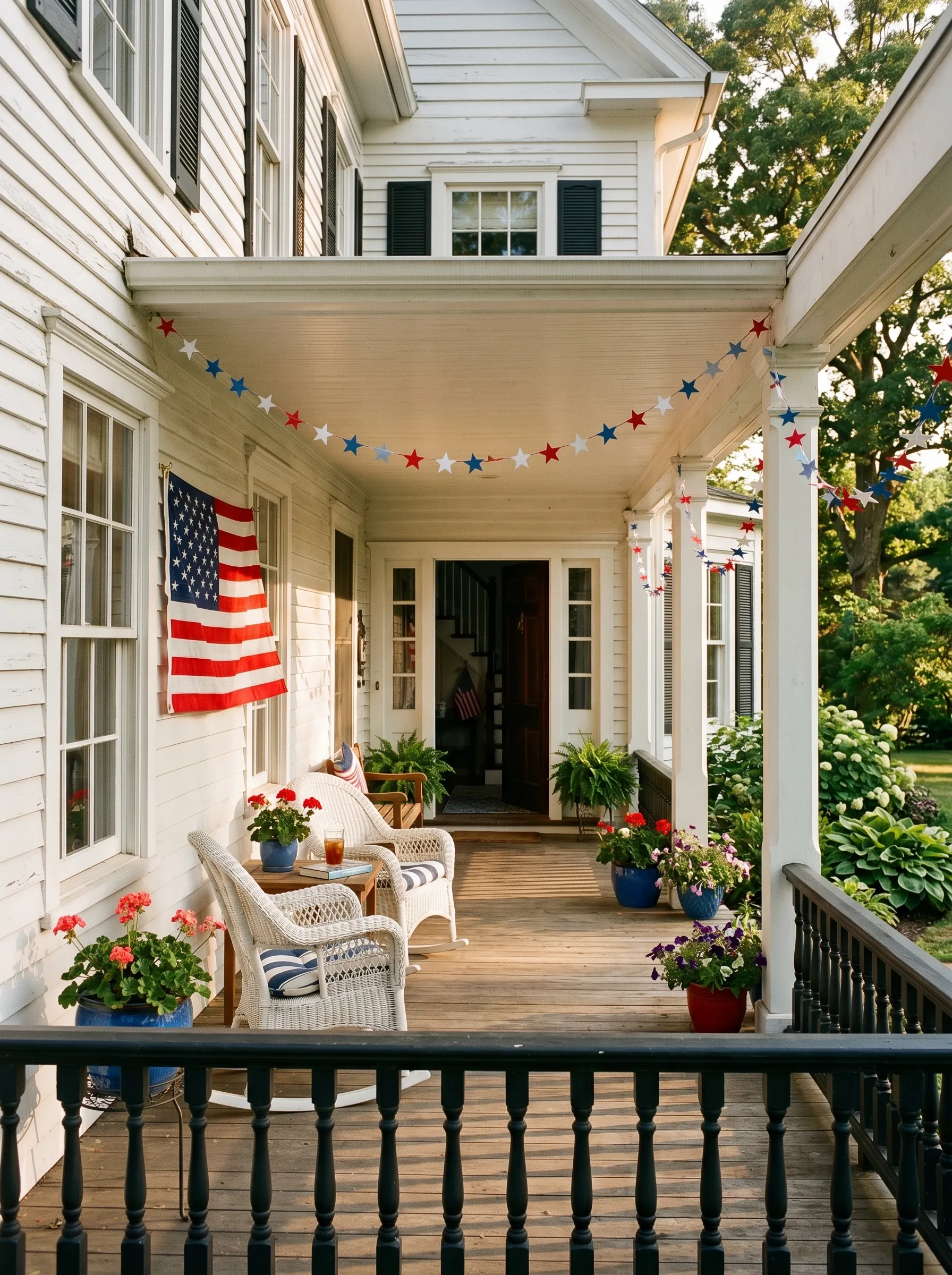
A wraparound Victorian or farmhouse porch with turned spindle railings and original bead board ceiling already carries a century of American summers in its bones. It does not need elaborate decoration.
Run a simple star garland — cut stars from cardstock in red, white, and navy blue at three to four inches each and thread on clear fishing line at four-inch intervals — from the exterior wall at one end of the porch across to the far column, attached with small nails or adhesive hooks. Run a second strand on the return leg. The two strands swag across the porch ceiling plane rather than hanging down into the view.
On the wall beside the door, mount a flag flat with two hook-and-eye screws through the top grommets. The flag needs no horizontal rod or dowel — two hooks spaced the width of the canton hold it flat against the wall surface.
On the porch floor, a collection of blue clay pots with red geraniums at varying heights. White wicker furniture with navy cushion or blue-and-white striped pillow. An iced tea glass on the side table. This is not a decoration. This is a porch that knows what it is.
The Mailbox Bunting With Flag Trio
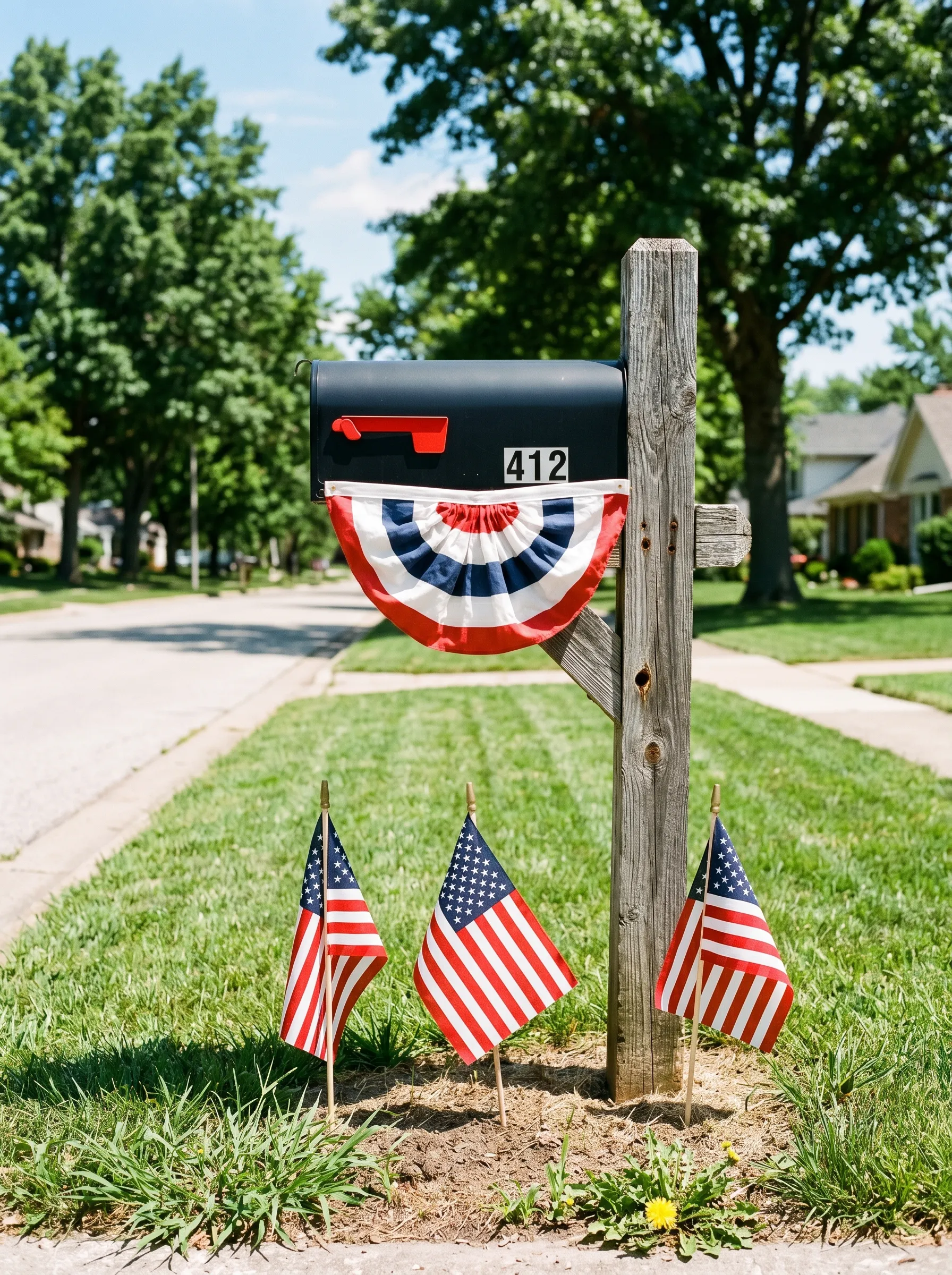
The mailbox post is a flag display opportunity that most people never consider. It is also the first thing visible to anyone approaching the house from the street.
Attach a single half-circle fan bunting to the front face of the mailbox using small binder clips through the bunting header and over the mailbox body — this leaves no marks and removes in seconds. Center the bunting beneath the mailbox door so the address numbers remain visible above it.
At the base of the post in the turf, insert three small garden-stake flags in a slight fan arrangement — not parallel, but spread about twenty degrees from each other so they create a small color mass at ground level. Push them to the same depth so they stand at the same height.
Nothing else. No wreath, no ribbon, no flowers. The bunting and the three flags are a complete and proportional installation for a standard residential mailbox post. It reads confidently from a moving car at twenty miles per hour, which is exactly what a front-of-property display needs to do.
What Every Great Flag Display Understood
There is a reason flags move people.
It is not the fabric. It is not the colors, technically speaking. It is not even the design, though the design is remarkable in its geometry and clarity.
It is the decision behind placing it. The act of saying: this is what this house stands for, this is what this family considers worth marking. A flag hung carelessly says nothing. A flag hung with intention says everything.
The displays in this collection span every scale — from a single bunting clip on a mailbox post to a neighborhood-wide sunrise installation to a rooftop pole against a burning sky. None of them required architectural genius or a significant budget. All of them required one thing: someone who thought about what they were doing before they did it.
That thinking is visible. It is always visible. The house with the dark navy siding understood that a full-color flag against a monochrome background is a visual event. The porch with the bunting swags understood that repetition creates ceremony. The barn understood that age speaks to age.
Your house already has a background. It already has an architecture, a light quality, a relationship to the street and to the neighbors around it. The flag doesn’t override any of that. It responds to it.
Find the right surface. Give it the right flag. Step back and let it do what it has always known how to do.
The rest is just weather and light.