
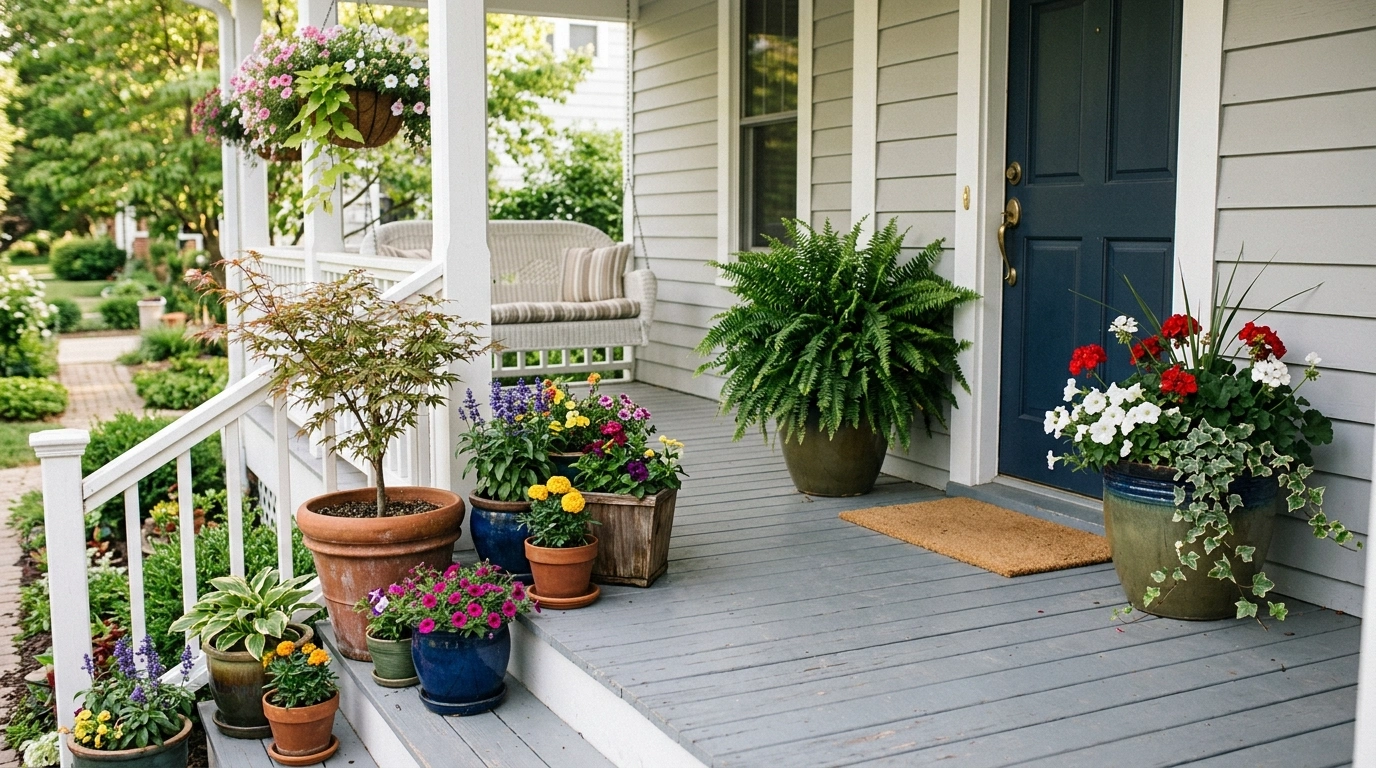
A porch can have beautiful architecture, fresh paint, and a good front door and still feel oddly unfinished.
The problem is often the planting.
Pots that are too small disappear beside the house. Too many containers make the entrance feel cluttered. Mismatched plants can pull attention in several directions at once.
The best front porch potted plants ideas work as complete compositions.
The plants, containers, doorway, steps, lighting, seating, and surrounding finishes all contribute to one visual direction.
Instead of deciding on each pot separately, it helps to see how an entire arrangement could come together.
That’s what this collection focuses on.
Some entries use formal symmetry. Others rely on loose layers, oversized containers, strong silhouettes, or a single statement plant.
The goal isn’t to copy every detail.
It’s to notice which complete arrangement feels right for your porch, then borrow the parts that make that composition work.
Front Porch Potted Plants Ideas for a Finished Entry
Cascading Purple Flower Display
This striking vertical arrangement uses a tiered wooden planter to bring vibrant purple foliage right to eye level. Rich purple Tradescantia tumbles generously from each level, adding deep color and a soft texture against the pale siding.
The vertical design makes brilliant use of porch ceiling space, drawing the eye upward while keeping the floor clear for other potted greens. Surrounding fern-filled barrels ground the lighter porch floorboards and complete the lush woodland atmosphere.
The secret here is the dramatic contrast between the rustic wooden slices and the vivid, saturated purple leaves. Keeping the container materials natural ensures the bright color feels right at home on a classic country porch.
Oversized Terracotta Pots Framing a Classic Front Door
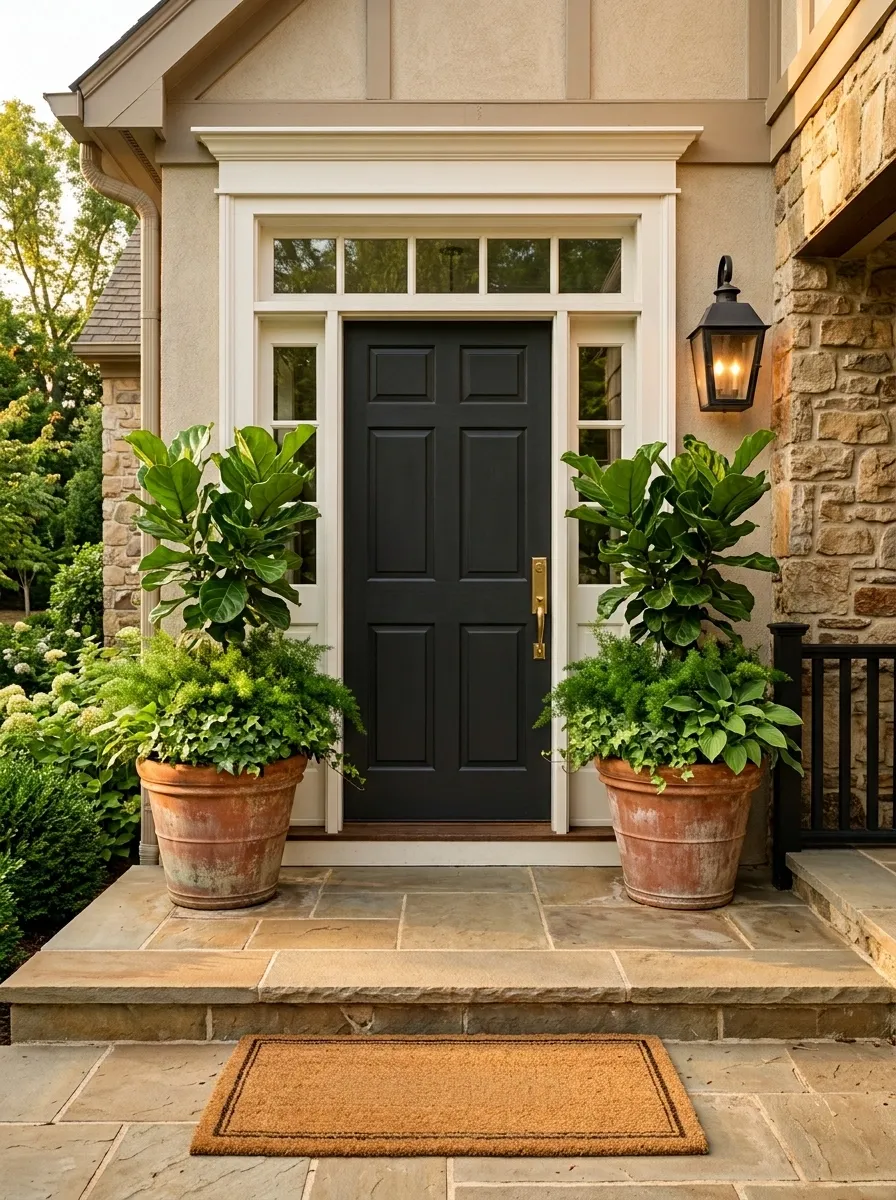
Two generously sized terracotta pots anchor this porch on either side of a traditional dark front door.
Each container holds a tall green plant with a fuller lower layer, creating enough height to connect visually with the doorway without hiding it.
Warm steps, a simple lantern, and a natural-fiber doormat complete the composition.
The important part is the scale.
Small containers would disappear beside the door, while these substantial pots make the entrance feel intentionally framed.
Keep the rest of the porch relatively quiet so the earthy terracotta and greenery carry the visual weight.
Colorful Hanging Planter Cluster
A vibrant collection of hanging planters creates a cheerful canopy of color along this covered wooden porch. Different shades of pink, orange, yellow, and white holiday cacti burst from pots suspended at varying heights, adding cheerful energy to the entry.
The layered placement fills the porch ceiling with life without cluttering the floor below. Each basket holds a dense, blooming specimen that catches the natural light beautifully from every angle.
While the flower colors are diverse, the uniform plant variety ties the entire overhead display together. Varying the suspension lengths prevents the arrangement from looking blocked and keeps the walkway feeling open and welcoming.
Layered Greenery Along a Long Farmhouse Porch
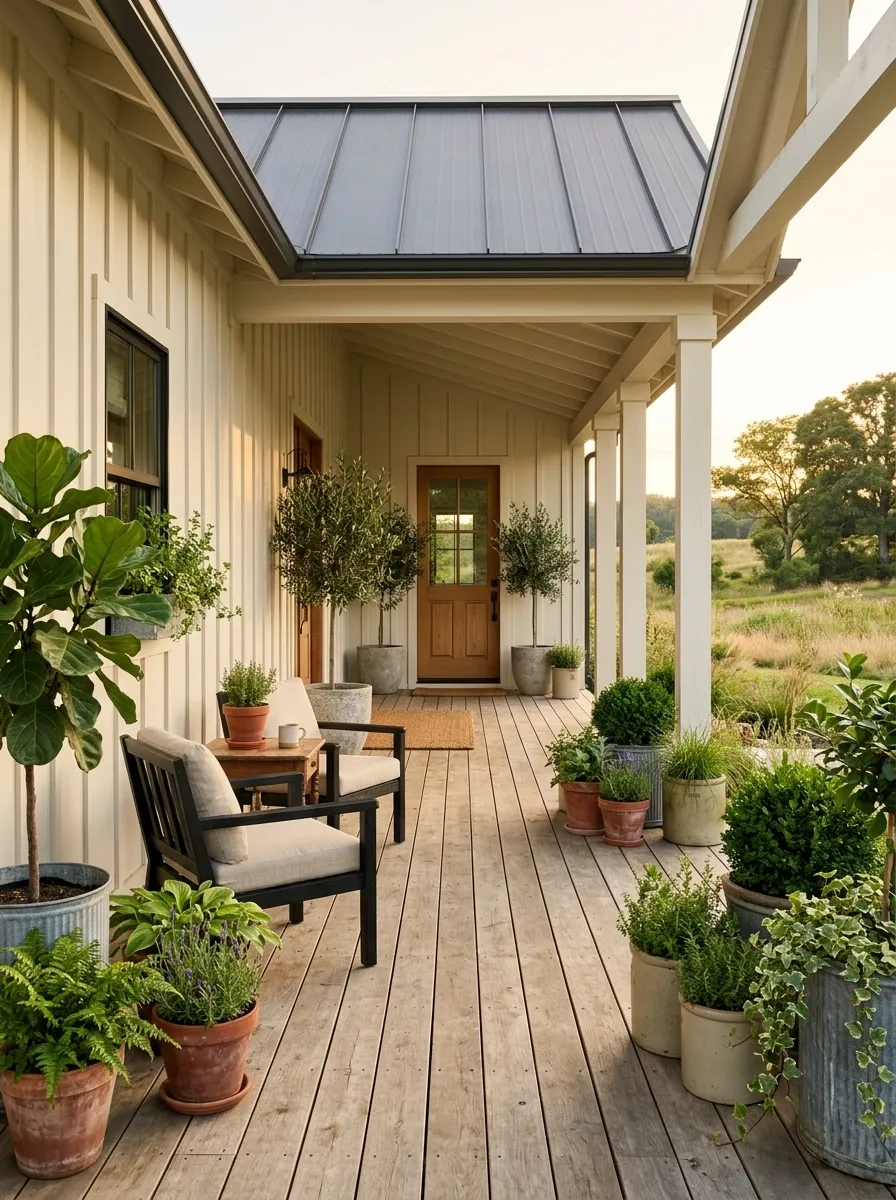
A long farmhouse porch benefits from repetition without looking perfectly matched.
Large leafy plants occupy the corners, medium containers sit near the seating, and a few smaller pots bridge the empty stretches between columns and the front door.
Weathered wood, simple outdoor chairs, and pale siding give the greenery a natural backdrop.
The arrangement feels collected because the containers aren’t identical, but the green palette ties everything together.
Varying plant height is what prevents a long porch from reading as one continuous row of identical pots.
Lush Ferns and Flower Cascades
Classic wicker baskets brimming with verdant ferns frame this rustic wooden door with timeless texture and movement. A secondary layer of cascading white and pink florals tumbles downward, softening the hard edges of the porch railing and entryway.
The combination of leafy greens and spilling blossoms adds instant depth and makes the doorway feel like a lived-in garden retreat. Natural textures dominate the space, from the woven baskets to the warm timber walls.
Scale is key to making this look intentional rather than overgrown. Letting the trailing greenery hang just past the railing creates a lush, welcoming threshold that draws guests right up to the front door.
Black Planters With Architectural Evergreen Shapes
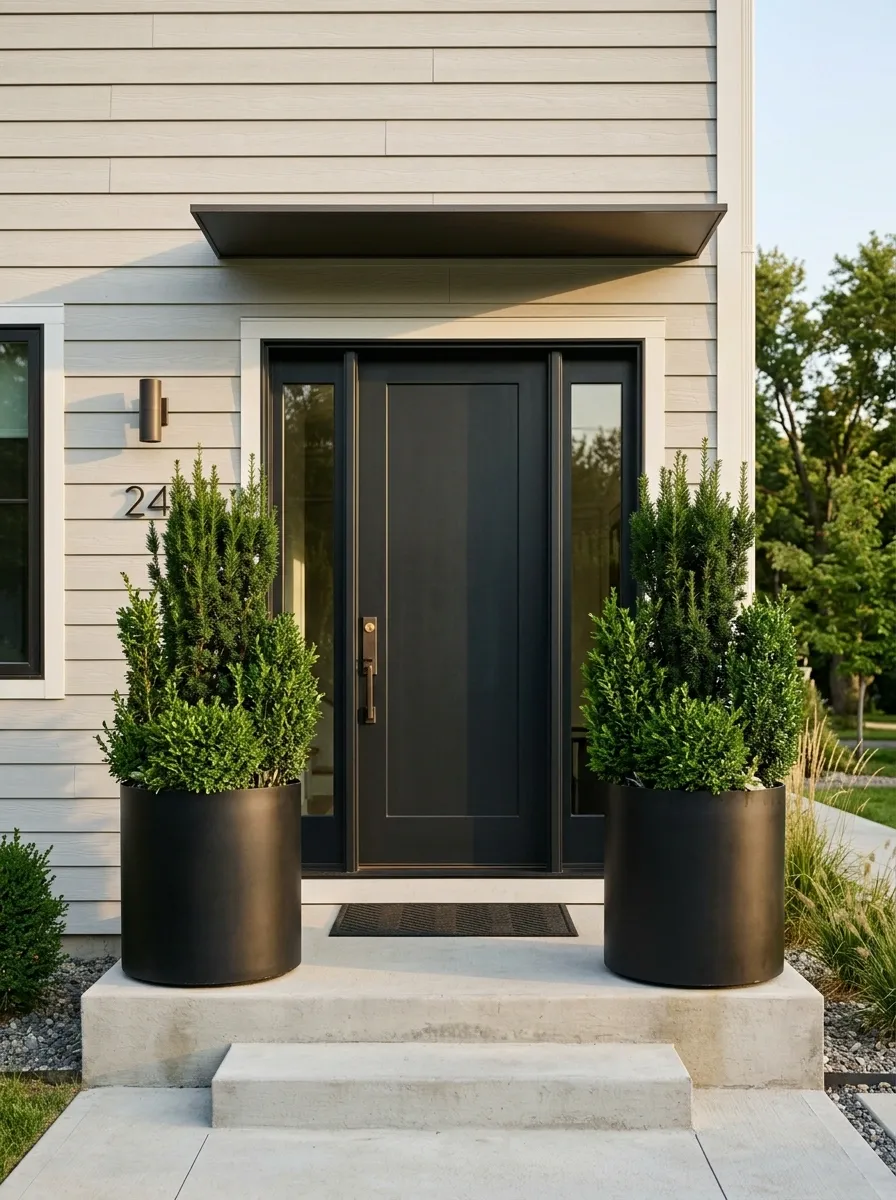
This contemporary porch uses oversized matte black planters filled with strongly shaped evergreen foliage.
Pale siding and concrete steps provide a quiet backdrop, while the deep containers echo the dark front door and exterior hardware.
The result is crisp without feeling cold.
The plants matter here because their silhouettes become part of the architecture.
Choose foliage with a clear upright or sculptural form instead of a loose collection of tiny leaves.
That gives the entrance a stronger visual rhythm.
Tiered Porch Flower Stand
A clever tiered stand transforms a narrow porch corner into a brilliant vertical garden right beside a sunny yellow door. Rows of pink, orange, and yellow blooms sit stacked neatly in crisp white containers, maximizing color without taking up floor space.
The bright floral display echoes the cheerful paint of the entryway, while a nearby vintage cooler and patterned rug ground the scene in cozy charm. It is a masterclass in adding personality to a compact porch.
The impact comes from grouping similar heights together while letting vibrant colors play off each other. Keeping the surrounding furniture simple lets the stacked flower containers take center stage.
Soft Cottage Porch With Mismatched Flower Pots
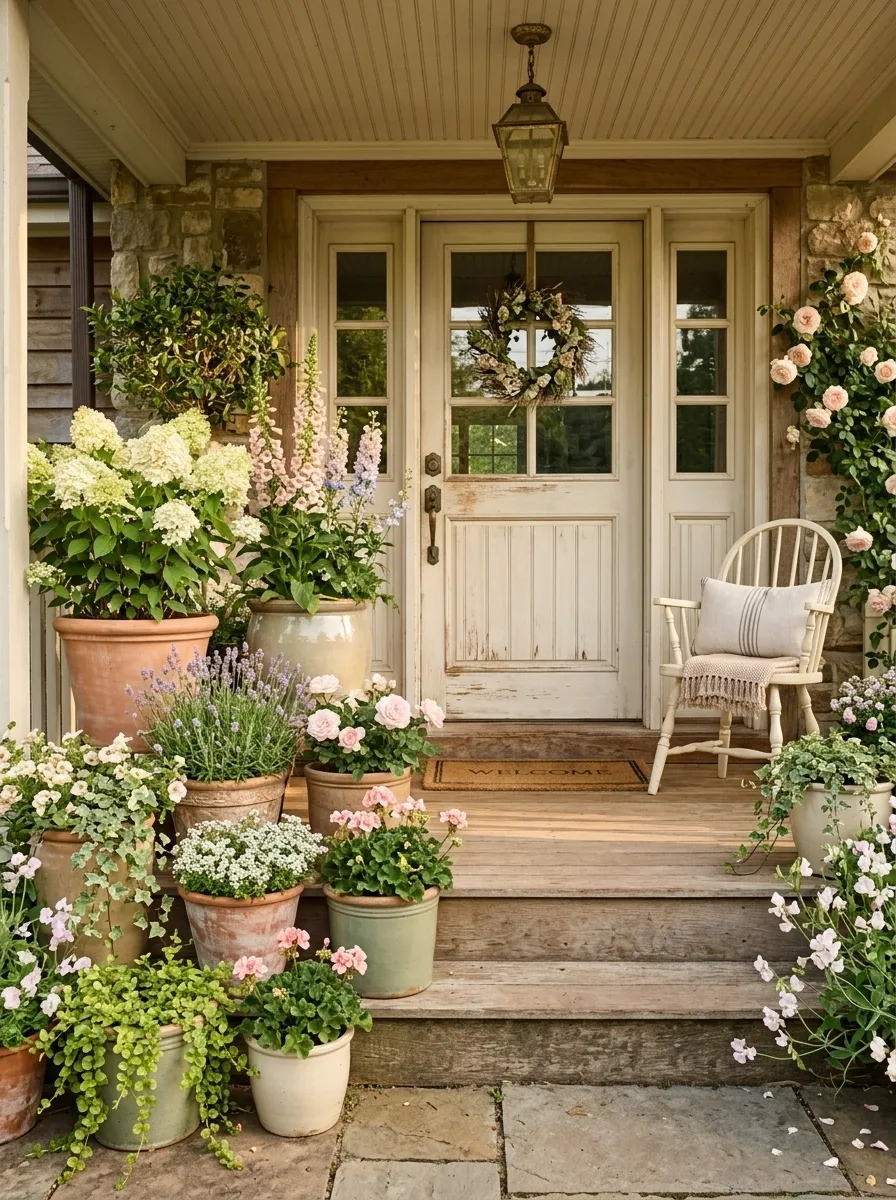
A cottage-style entry feels better with a little looseness.
Here, differently shaped ceramic pots cluster around the threshold, steps, and a small porch chair.
Flowering plants add soft color, while trailing greenery spills gently over a few containers to break up the harder lines of the porch.
The arrangement isn’t symmetrical, but it still has structure because the tallest plants stay near the entry and the smallest containers remain closer to the foreground.
Too many flowering colors would make the scene noisy, so keep the palette intentionally narrow.
Modern Entry Statement Plant
An oversized matte white planter anchors this contemporary entryway with a single, magnificent tropical plant. Large, glossy green leaves stand tall against the warm wood siding, creating a sleek silhouette that instantly elevates the entire porch.
The minimalist container highlights the organic shape of the foliage without introducing any visual clutter. Paired with a sleek dark door and clean concrete floors, the look is effortlessly sophisticated.
Success with this style relies on choosing one dominant plant with incredible structural presence. Giving a large specimen room to breathe ensures the entrance feels intentional, curated, and completely finished.
Clean White Porch With Green Topiary Pots
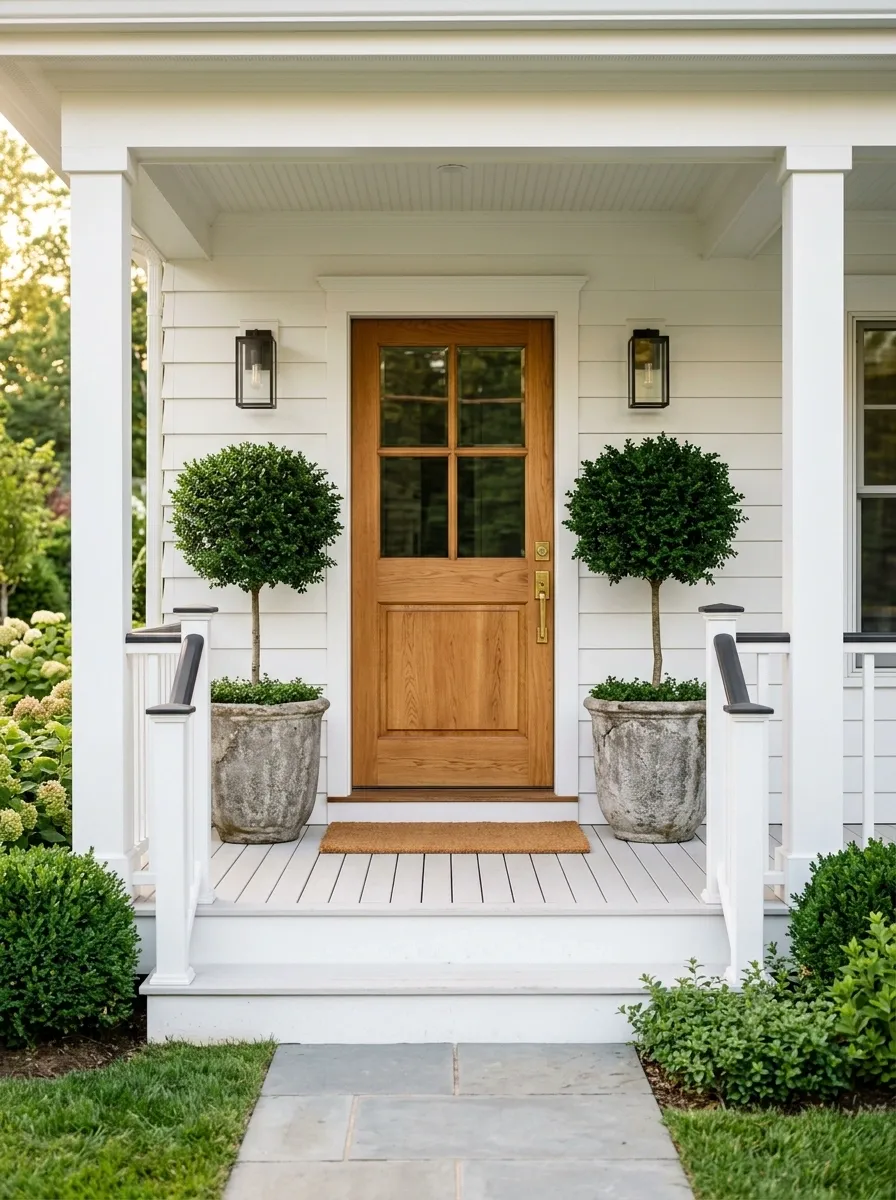
A bright white porch gains definition from two substantial planters filled with rounded topiary-style greenery.
The containers sit symmetrically beside a warm wood door, while a woven mat and understated outdoor lighting keep the composition grounded.
This look succeeds because the greenery introduces depth without introducing a dozen competing colors.
Keep the pots large enough to hold their own against the doorway.
Resist the urge to fill every nearby corner with smaller accessories.
Deep Blue Door With Warm Ceramic Plant Containers
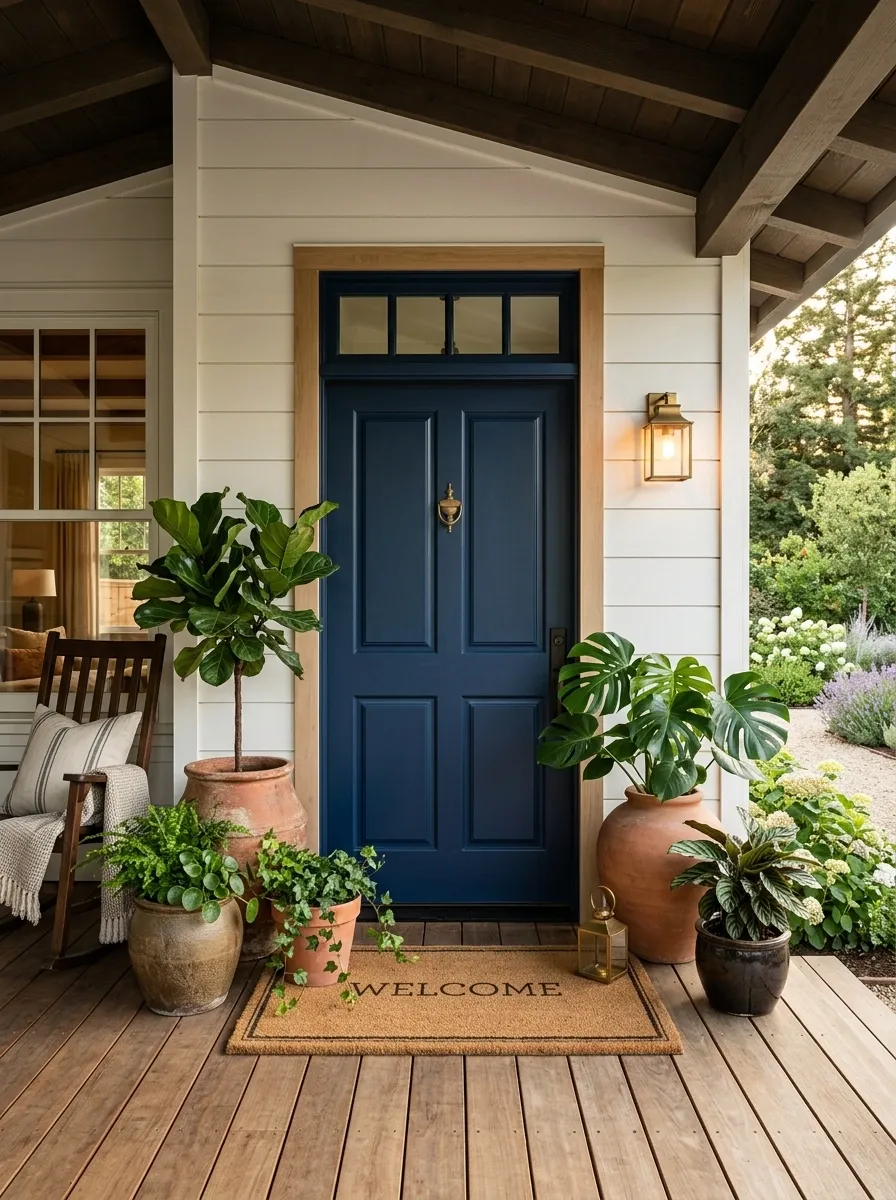
A deep blue front door becomes the focal point of this porch, surrounded by warm ceramic pots filled with broad green foliage.
The containers have slightly different shapes, but their earthy tones relate to the warm wood floor and natural doormat.
A simple lantern provides another small warm note without competing with the planting.
The key is the temperature contrast.
The cool blue door gives the composition depth, while terracotta and muted ceramic tones stop it from feeling too stark.
Keep the greenery mostly green rather than adding several unrelated flower colors.
Symmetrical Boxwood Pots on a Brick Porch
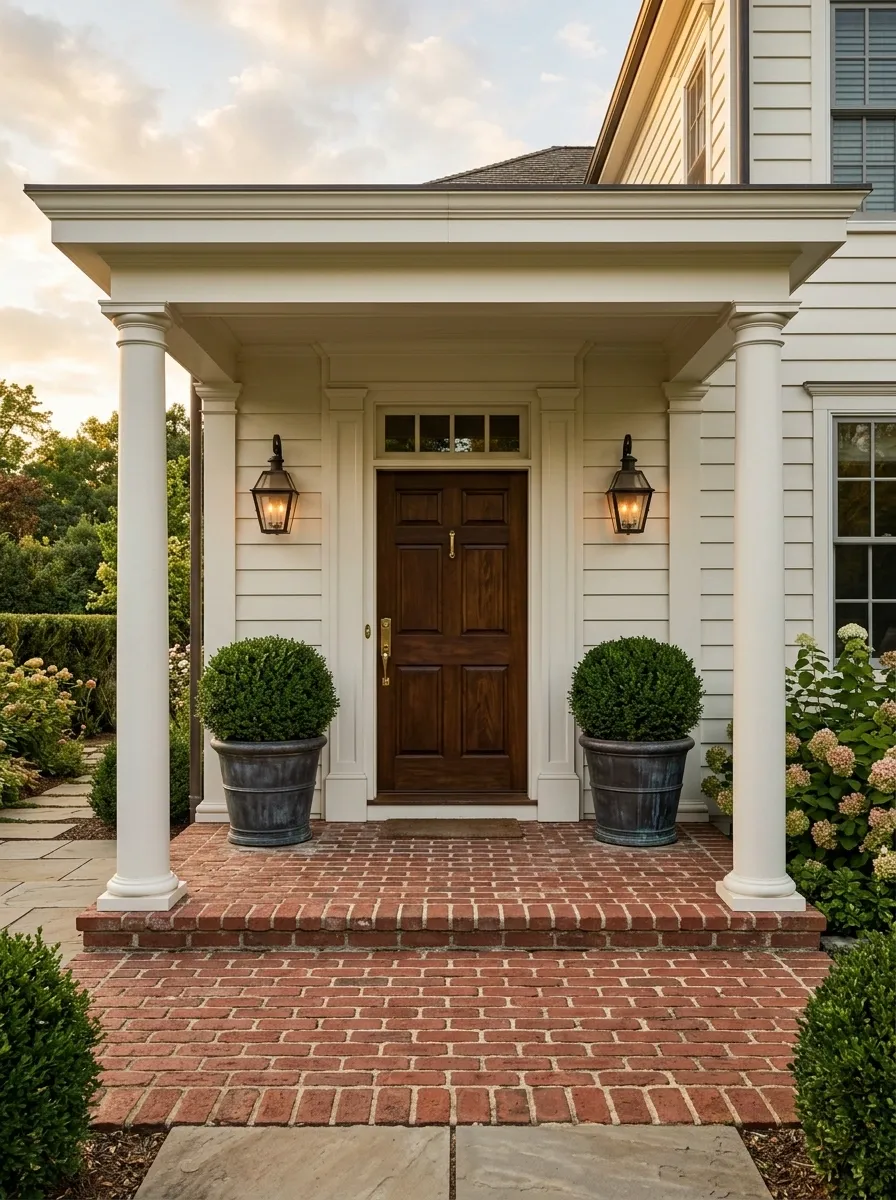
A traditional brick porch gets a polished entrance from two matching substantial pots filled with dense, rounded greenery.
The containers sit at equal distances from the doorway, while classic lanterns and a simple wooden door reinforce the formal architecture.
This arrangement works because almost everything has a clear visual relationship.
The brick already provides plenty of texture, so the plants stay disciplined and the accessories remain restrained.
The symmetry does most of the decorating work.
Rustic Porch With Galvanized Metal Planters
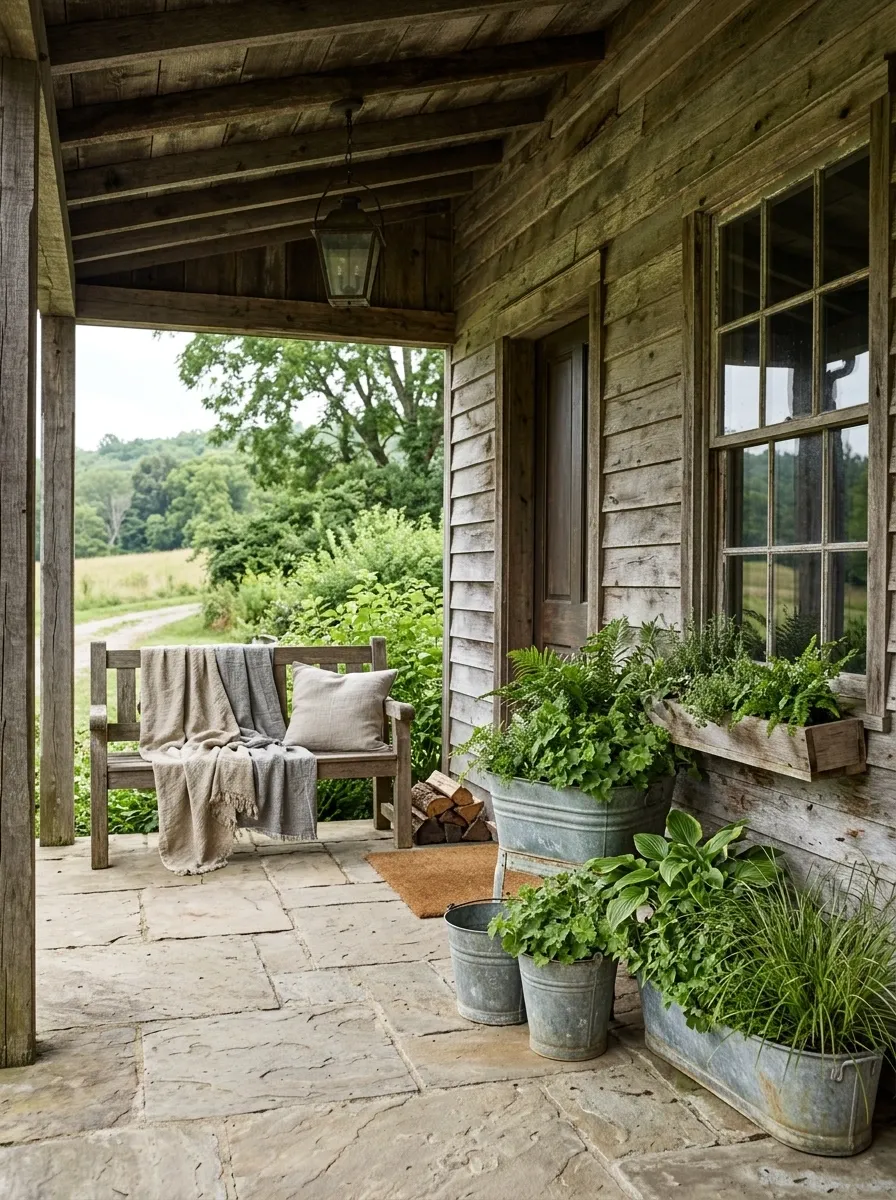
A relaxed farmhouse porch pairs weathered wood with galvanized containers packed with leafy plants and soft grasses.
A simple bench, stone-colored flooring, and natural textiles keep the metal from becoming the dominant feature.
The plants provide the organic layer that ties the harder materials together.
The strongest contrast here is texture, not color.
Keep the foliage loose and slightly informal.
Avoid shiny new-looking accessories that would fight the aged character of the porch.
Narrow Entry With Tall Columnar Plants
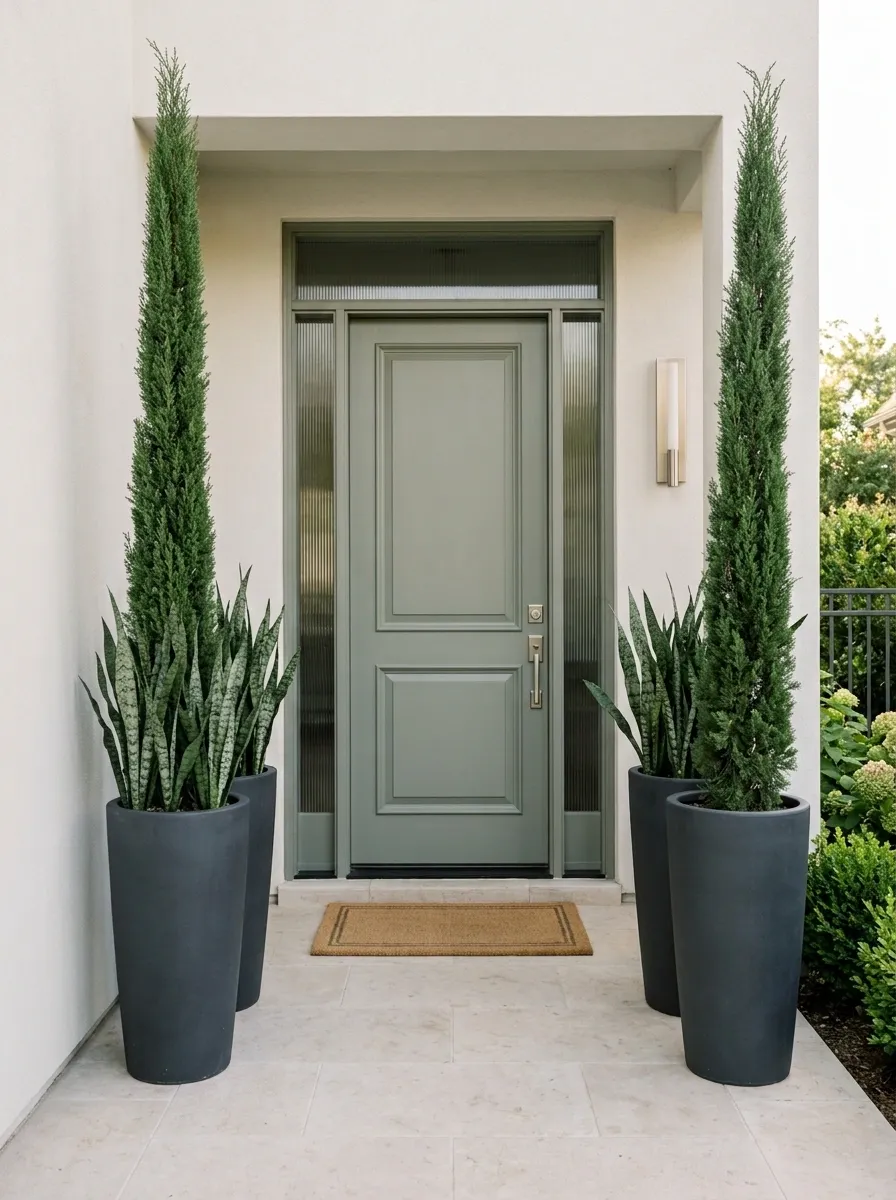
A narrow front porch doesn’t need a collection of small containers.
This version uses tall, slim planters with upright greenery positioned close to the doorway, leaving the center of the entry clear.
Pale walls and a restrained door color make the vertical planting easy to see without making the space feel crowded.
The design solves a real spatial problem: adding height without taking over the walkway.
The containers should stay visually narrow, and the plants should rise upward rather than spreading aggressively into the passage.
zone
zone
Layered Steps Filled With Potted Greenery
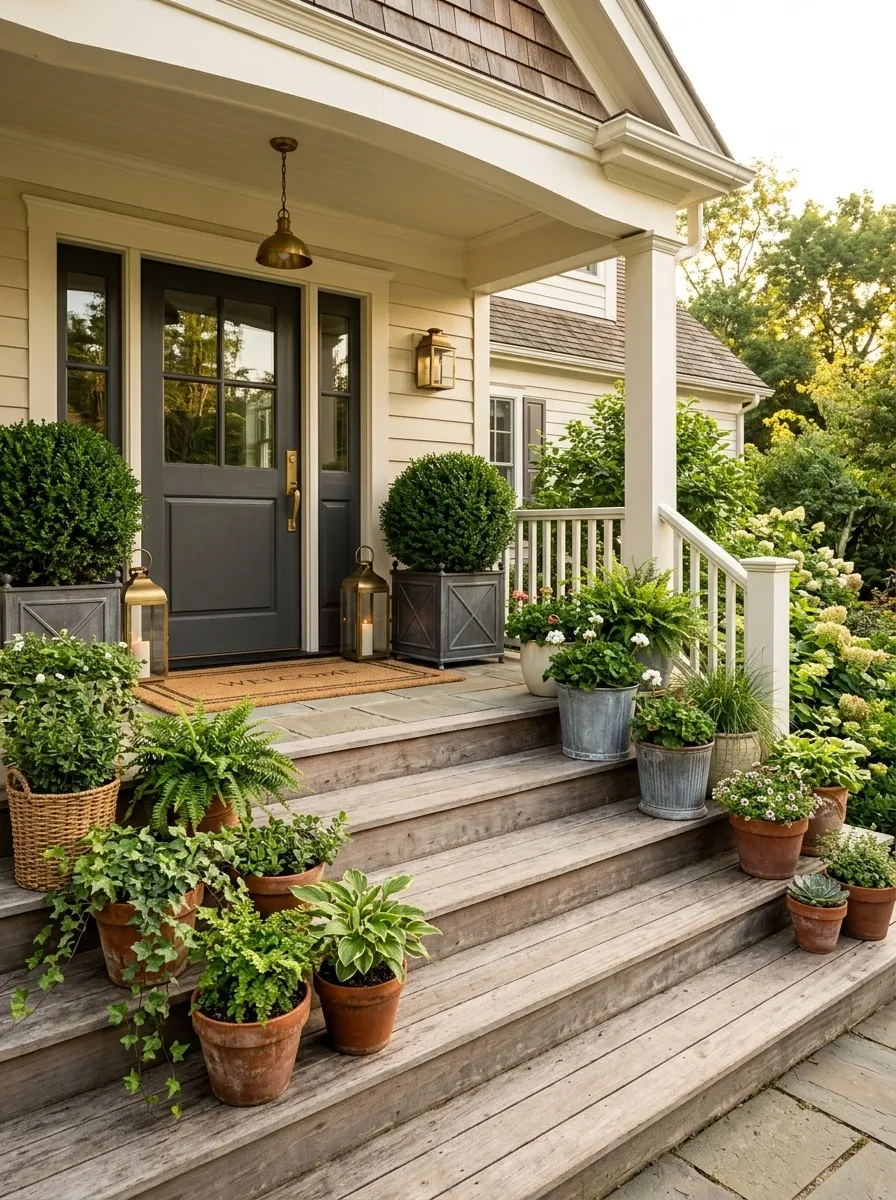
This entry uses the steps themselves as part of the planting composition.
Smaller containers begin near the lower step, medium plants occupy the middle, and taller greenery leads the eye toward the front door.
The arrangement feels connected to the architecture instead of sitting beside it.
The gradual change in height is what gives this porch its movement.
Keep enough tread visible for safe footing.
Avoid placing every pot directly in the center of the stairs.
The plants should frame the route, not obstruct it.
Mediterranean-Inspired Porch With Olive Trees in Pots
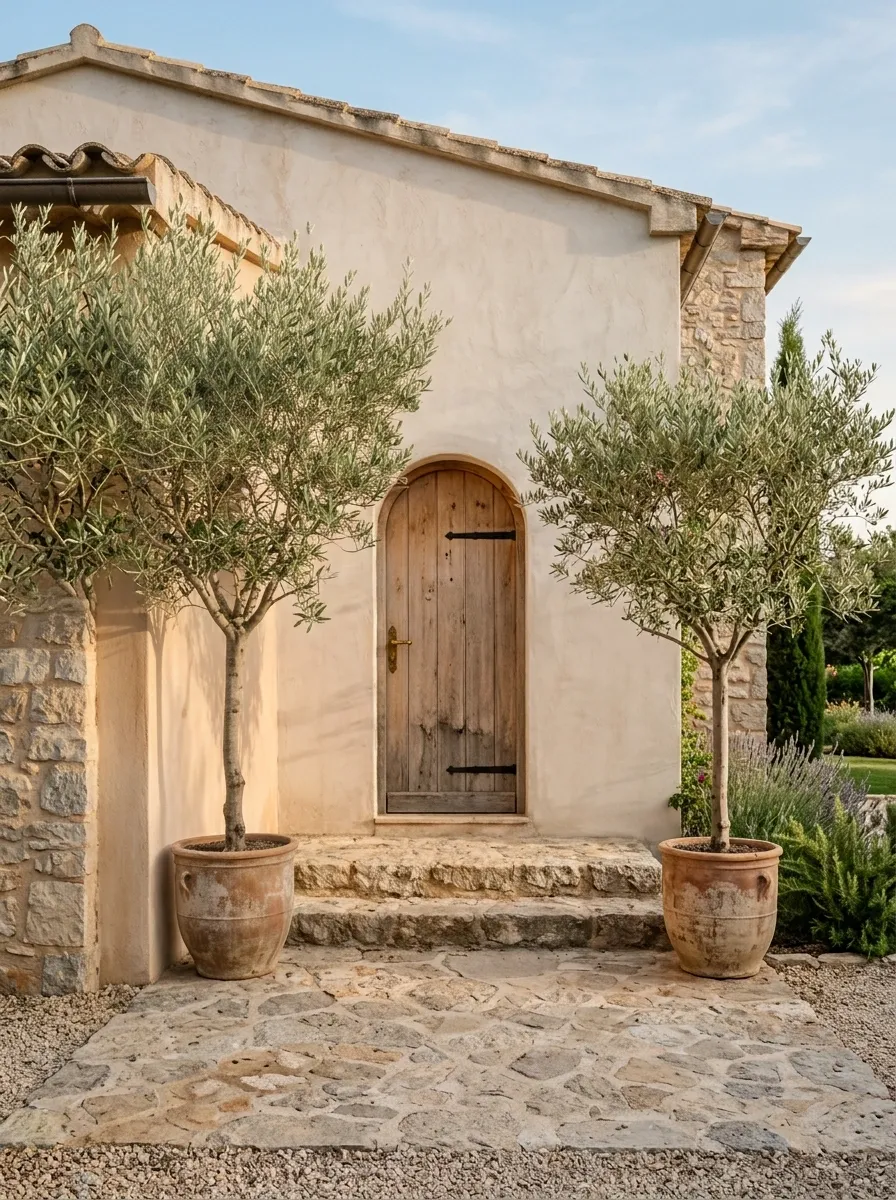
A pale stucco porch takes on a relaxed Mediterranean character with two mature-looking olive trees planted in large terracotta containers.
Natural stone steps, warm plaster walls, a simple wooden door, and a woven bench keep the setting understated.
The greenery is airy enough to leave the architecture visible.
The appeal comes from the limited material palette.
Terracotta, stone, wood, and muted green already create plenty of texture, so there is no need for decorative clutter.
Give the trees enough visual space around them to preserve the calm, open character of the entrance.
Modern Black-and-White Porch With Sculptural Plants
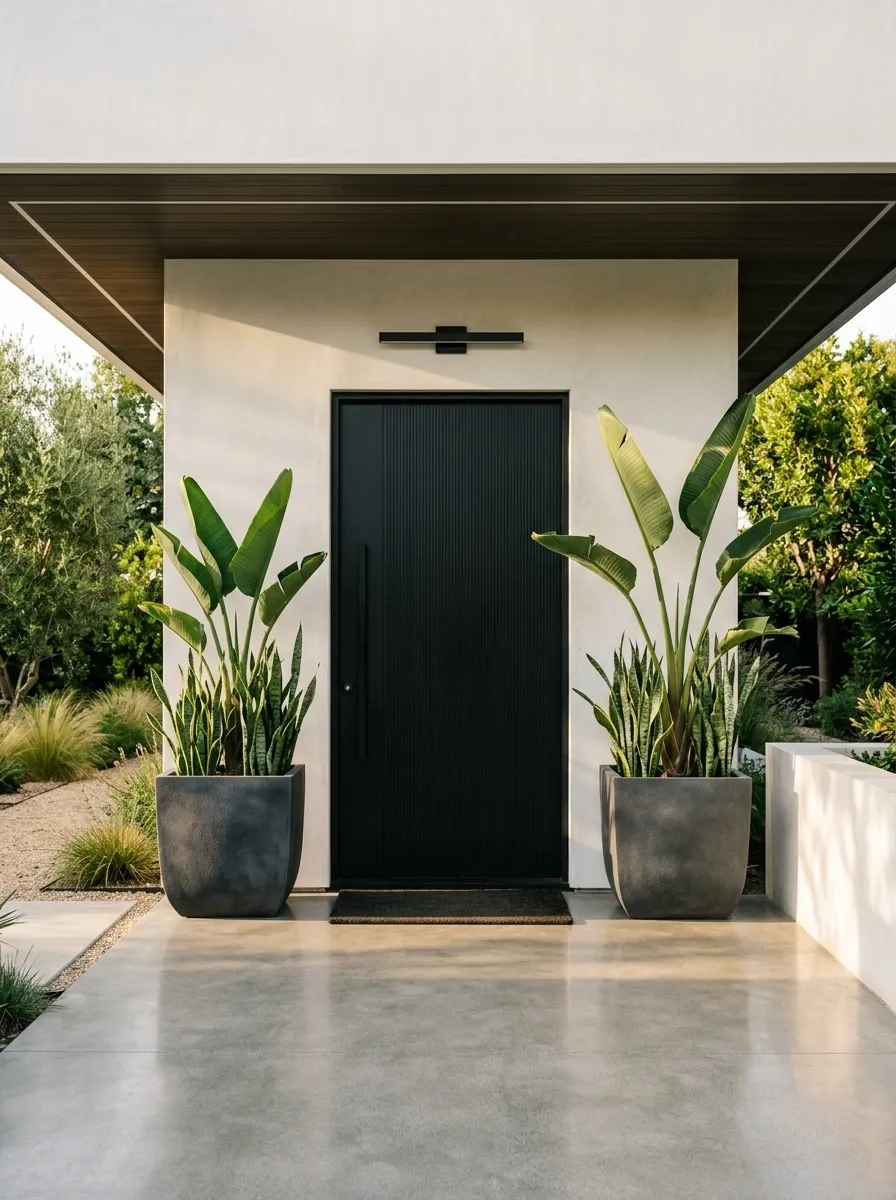
This modern entrance uses a restrained black-and-white architectural palette with oversized containers filled with sculptural foliage.
The dark door, pale exterior, and concrete flooring create clean blocks of color.
The plants introduce organic shapes without making the porch feel decorative.
Here, plant silhouette matters more than flower color.
Look for foliage with bold leaves or a strong upright shape that can hold its own beside crisp architectural lines.
Keep the supporting accessories minimal so the contrast stays clear.
Front Porch Corner Garden With a Relaxed Chair
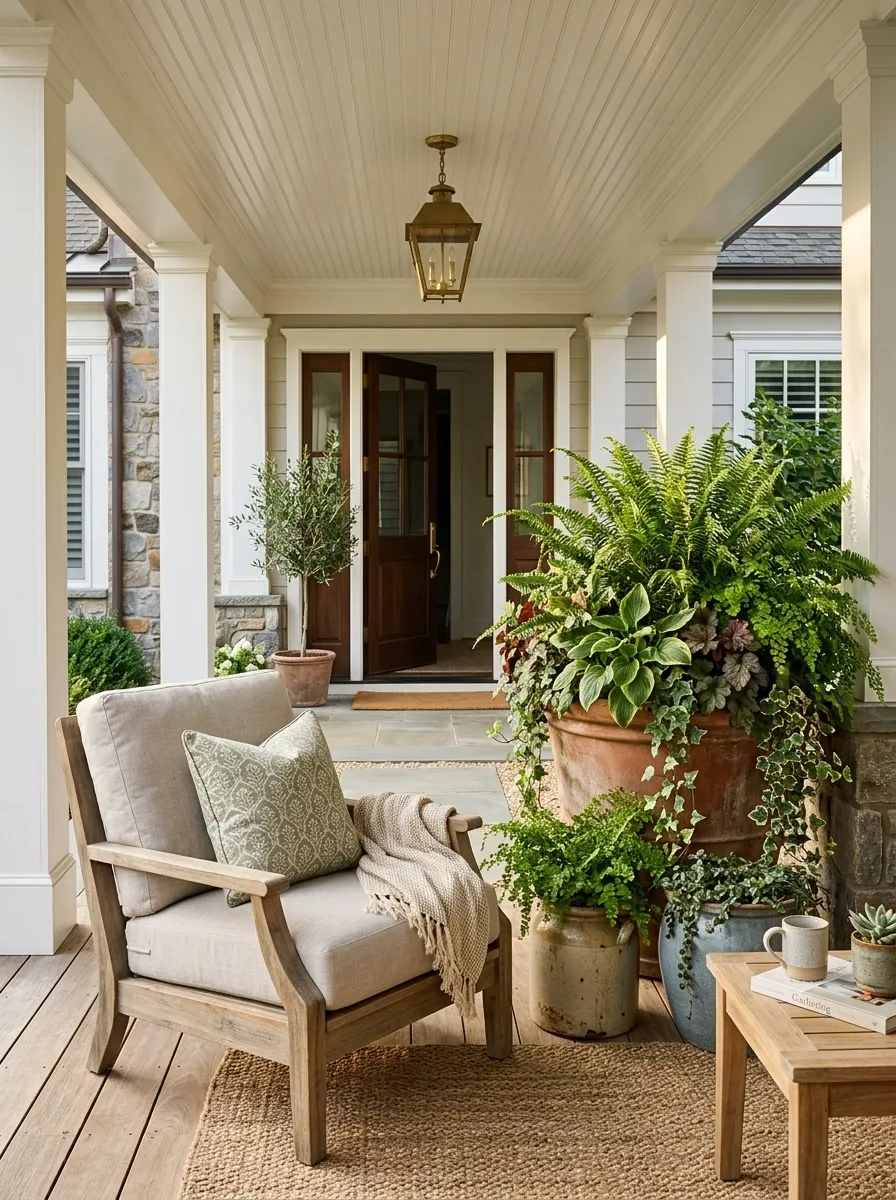
One corner of this porch becomes a compact garden rather than filling the entire entry with plants.
A large floor container anchors the corner beside a relaxed outdoor chair, while a smaller pot and trailing plant create a second layer.
The rest of the porch stays open.
This approach is especially effective when the entrance already has enough architectural interest.
The plants define the seating area without taking over the path to the door.
Keep the largest container close to the visual edge of the composition so the center remains breathable.
Rustic Wood Porch With Oversized Floor Baskets
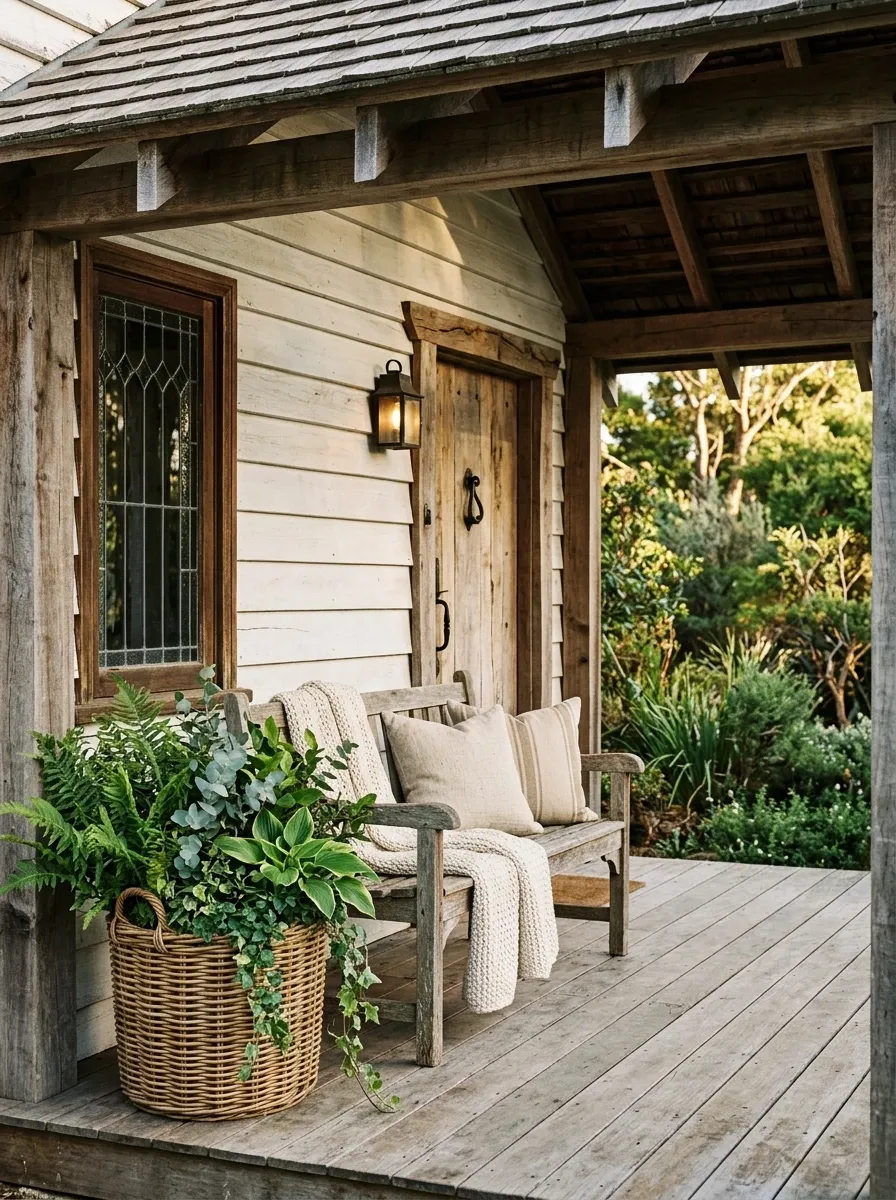
This rustic porch pairs weathered timber with generously sized woven containers full of loose, leafy plants.
A simple wood bench, neutral outdoor textiles, and muted flooring continue the natural material story.
Nothing feels overly polished, which is exactly what makes the arrangement work.
The woven containers bring softness to the porch while the plants create movement around the rigid lines of the wood structure.
Avoid adding glossy ceramic pieces or highly formal topiary here.
The beauty is in the relaxed, slightly imperfect layering.
Small Townhouse Porch With One Strong Plant Statement
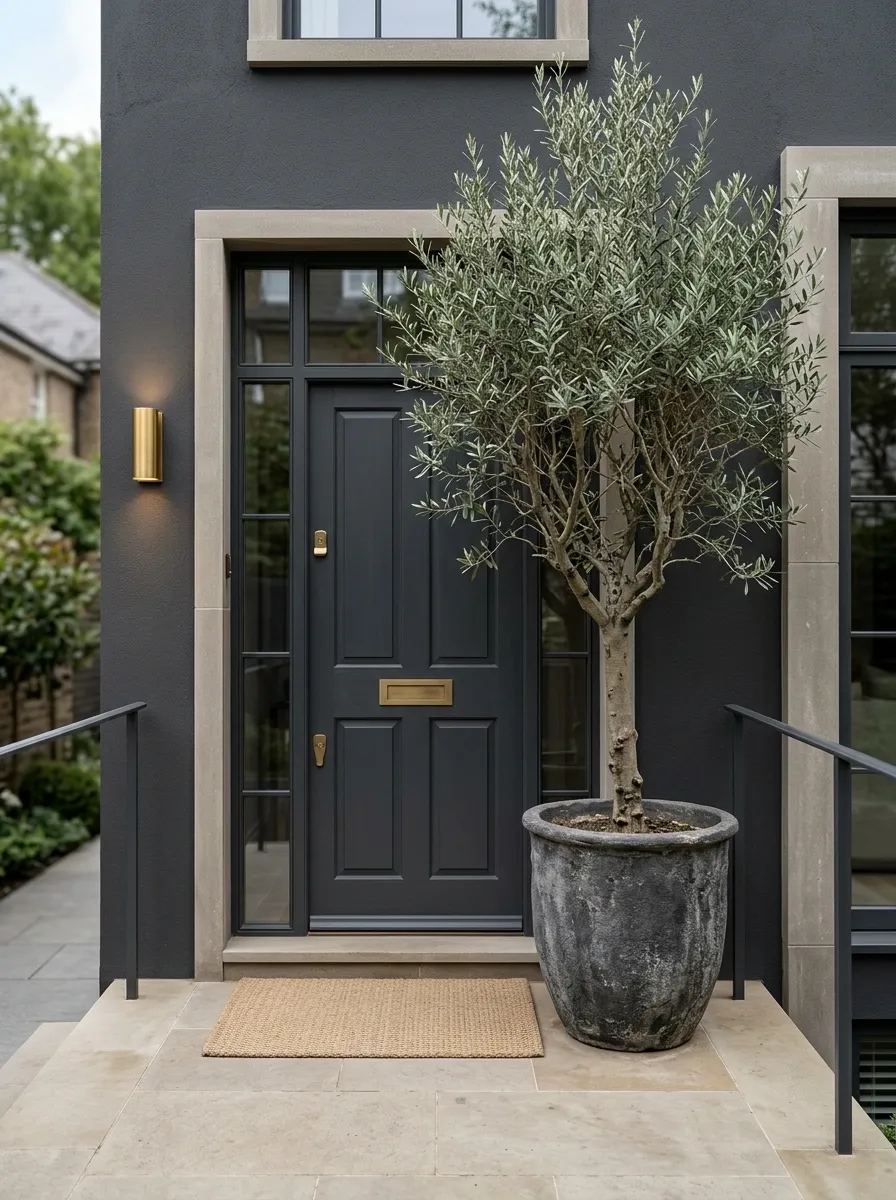
A narrow townhouse entrance looks cleaner with one large sculptural plant rather than a collection of little pots.
A substantial planter sits beside the doorway, paired with a simple mat and understated lighting.
The rest of the threshold remains open and uncluttered.
The oversized plant gives the small porch a clear focal point while taking up only one defined planting zone.
This is a case where restraint creates more impact.
Choose a container with enough visual presence to balance the front door instead of using several undersized pieces.
Soft Neutral Porch With Dusty Green and Cream Planters
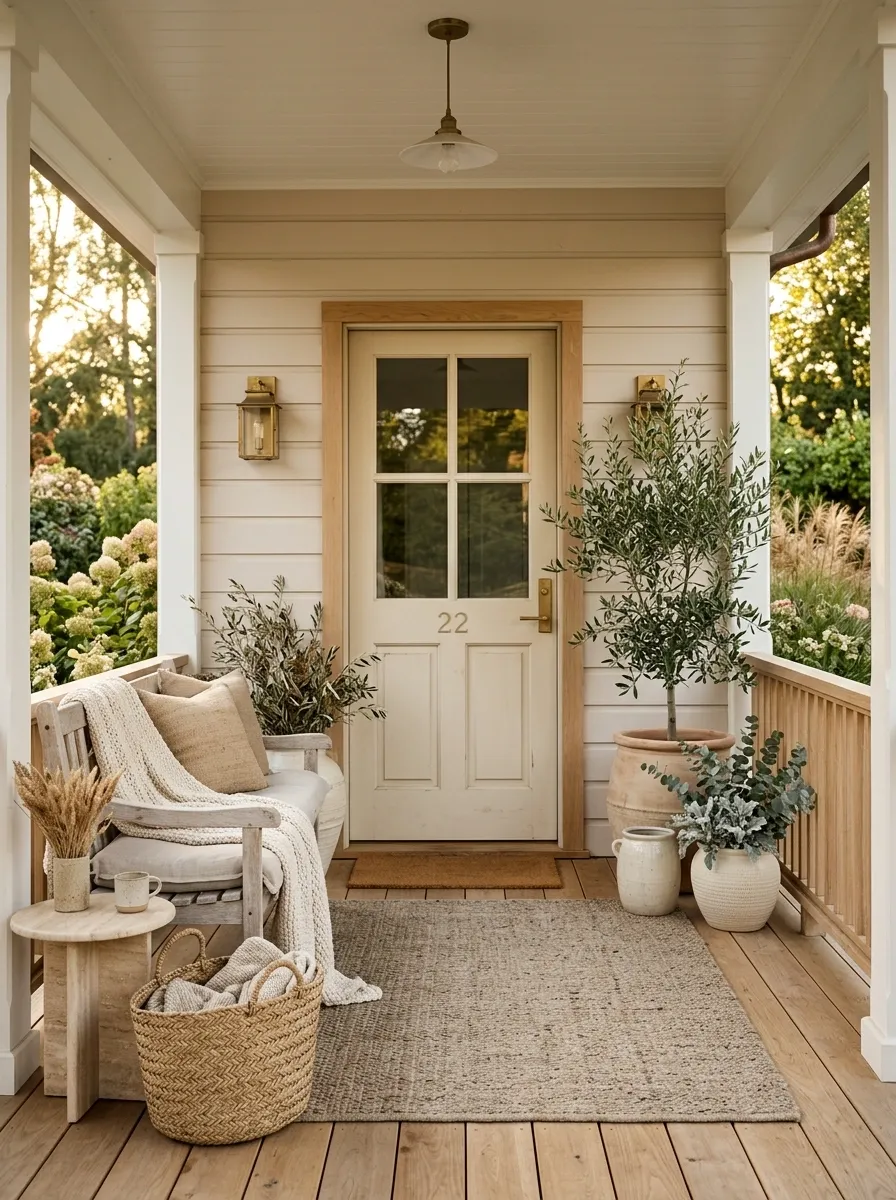
A quiet neutral porch combines cream-colored containers with dusty green foliage, pale wood, and understated outdoor seating.
Nothing is highly saturated, so the eye moves gently between the doorway, plants, and furniture instead of stopping at a single loud accent.
This arrangement is about tonal layering.
The planters should be slightly distinct from the wall, while the foliage provides the deeper value needed to keep the porch from looking flat.
Warm natural materials help the pale palette retain some depth.
Dark Exterior With Lush Tropical Container Plants
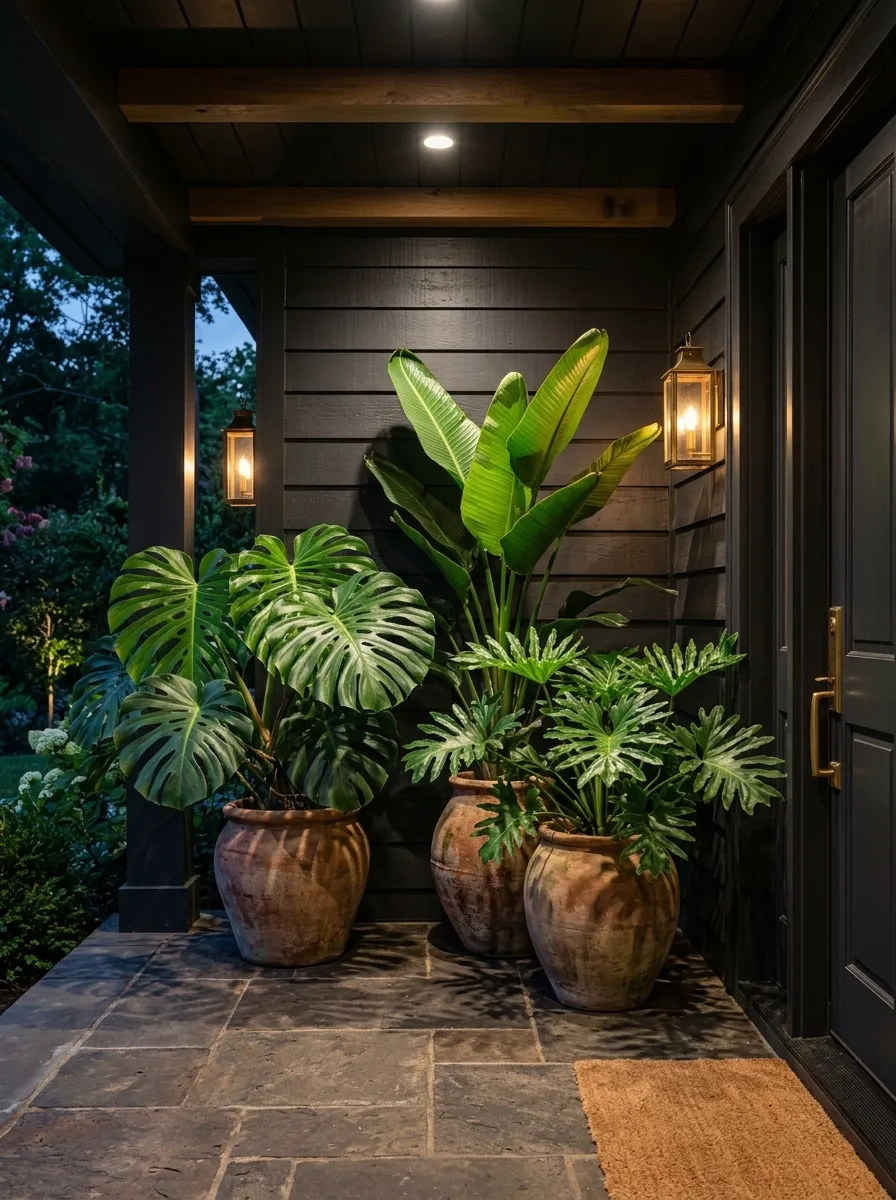
A dark-painted exterior creates a dramatic backdrop for large tropical leaves in substantial containers.
The foliage becomes the brightest visual element, while warm porch lighting picks out leaf edges and keeps the architecture from disappearing into the darkness.
The scale is important.
Tiny plants would get lost against the deep wall color.
Use larger foliage with broad leaves and give each container enough breathing room to remain legible as an individual part of the composition.
Traditional Porch With Flowering Plants in Window-Box Colors
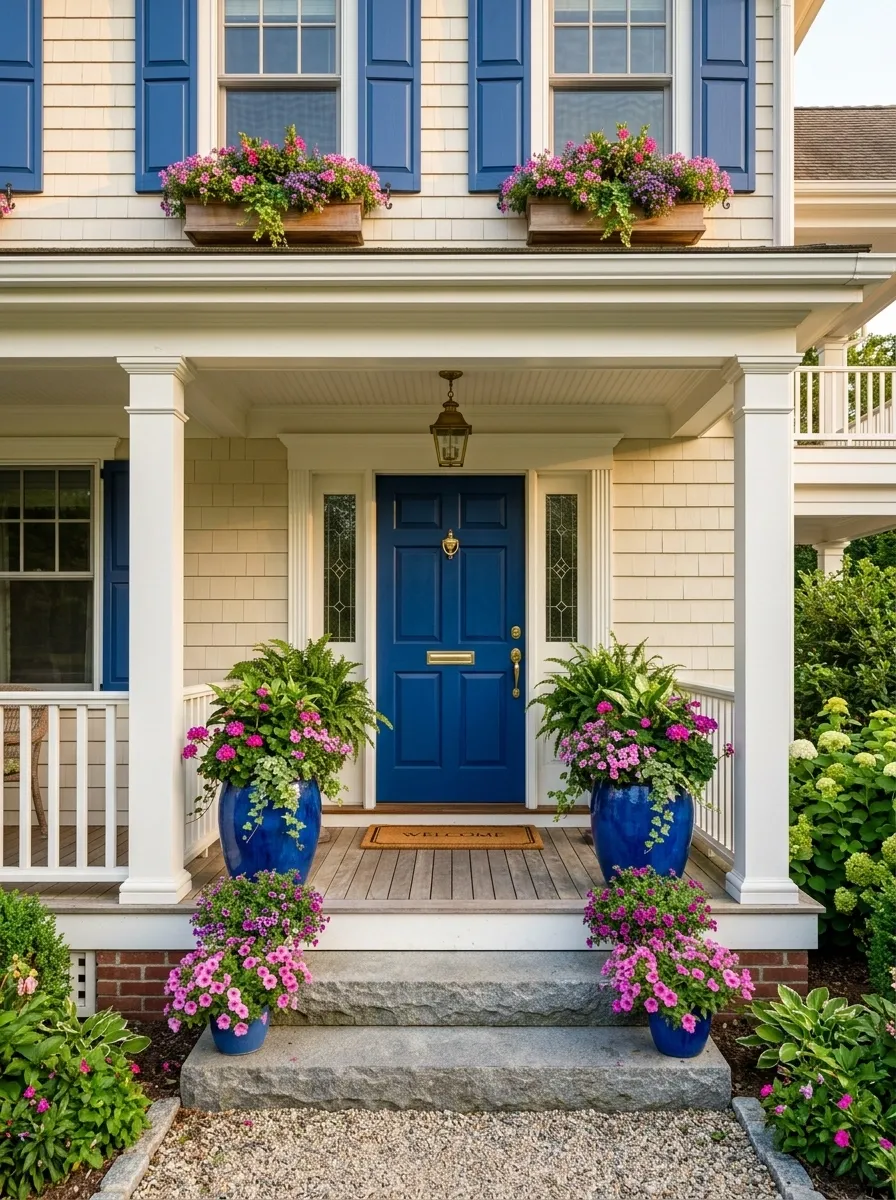
This traditional entry uses potted flowers that repeat colors already present around the house.
The flowers echo the window boxes and trim, while abundant green foliage works as the neutral layer between the planting and the architecture.
A classic front door completes the formal composition.
Repeating an existing exterior color makes the planting feel connected to the house instead of added afterward.
Limit the flowers to one or two related tones.
Once too many colors enter the arrangement, the architectural connection becomes harder to read.
Layered Porch With Steps, Rails, and Hanging Greenery
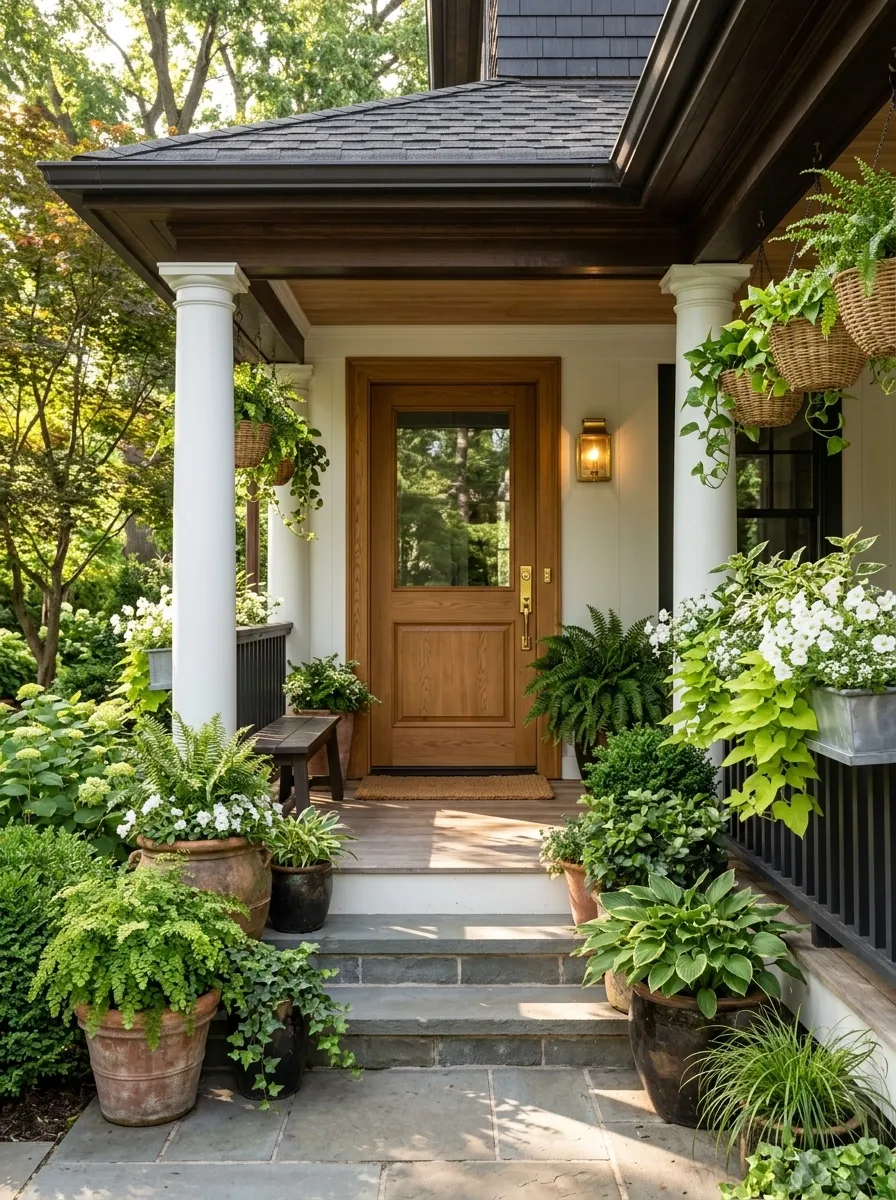
This deeper porch uses planting at multiple vertical levels.
Floor containers frame the lower portion of the entrance, hanging baskets occupy the upper part of the porch, and the railing becomes a middle layer.
The result feels lush without filling every square foot.
The secret is distribution.
Don’t put all the plants on the floor.
Moving some greenery upward makes the porch feel fuller while preserving usable space below.
Keep the hanging elements visually lighter than the floor pots so the composition doesn’t become top-heavy.
Minimal Concrete Porch With Oversized Rounded Planters
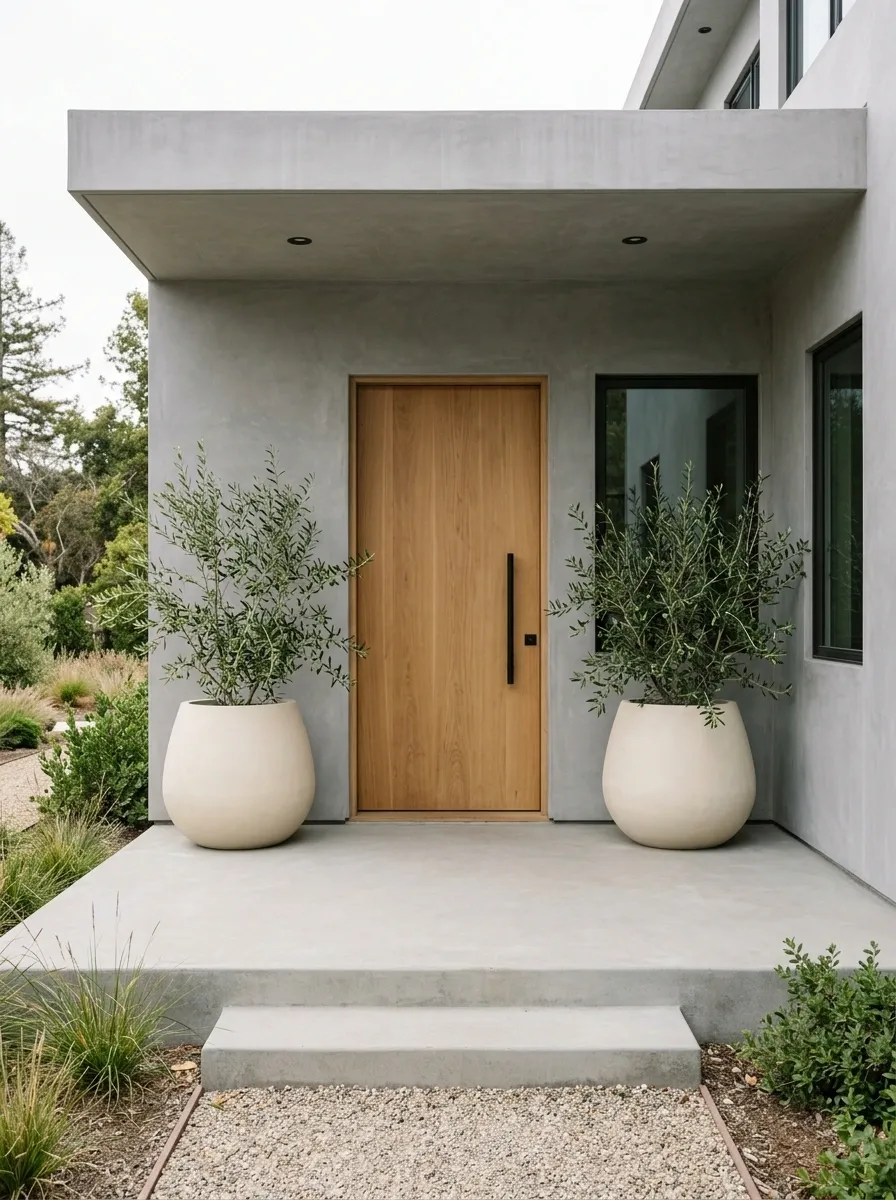
A minimalist concrete entry gets its character from scale and shape rather than decoration.
Two oversized rounded planters hold restrained greenery beside a simple door, while the broad concrete surfaces remain almost completely bare.
The large containers give the minimalist porch enough visual substance to avoid feeling empty.
Smaller decorative objects would weaken the composition because the architecture already has strong clean lines.
Let the curve of the planters provide the softness.
Vintage Porch With Aged Ceramic Pots and Soft Flowers
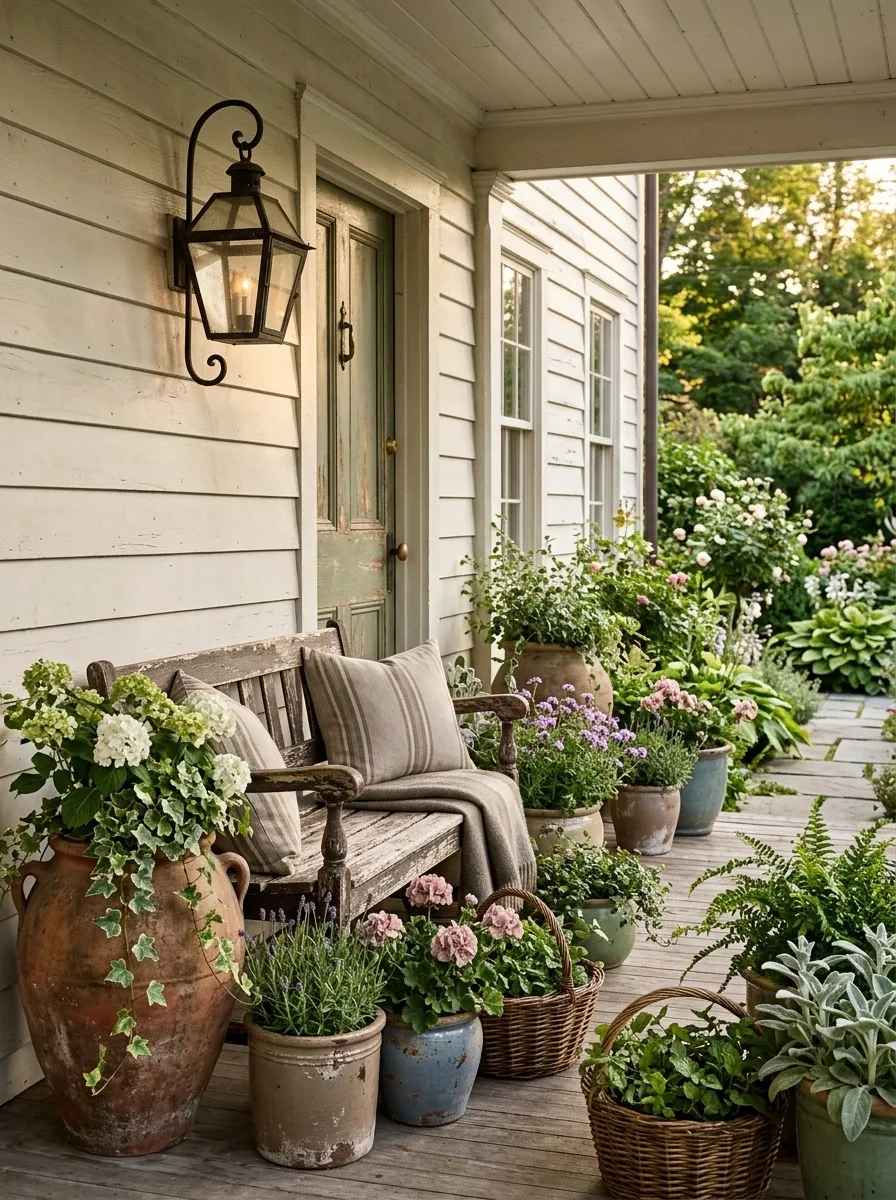
A vintage-inspired entry uses aged-looking ceramic pots filled with soft flowers and relaxed greenery.
Painted wood siding, an old-fashioned lantern, and a weathered bench reinforce the sense that the plants belong naturally to the porch rather than being newly arranged for display.
The containers should have variation in surface and shape, but the flower colors need discipline.
Muted tones work better than highly saturated blooms because they support the weathered architecture instead of overpowering it.
Symmetrical Porch With Tall Plants and Low Flower Pots
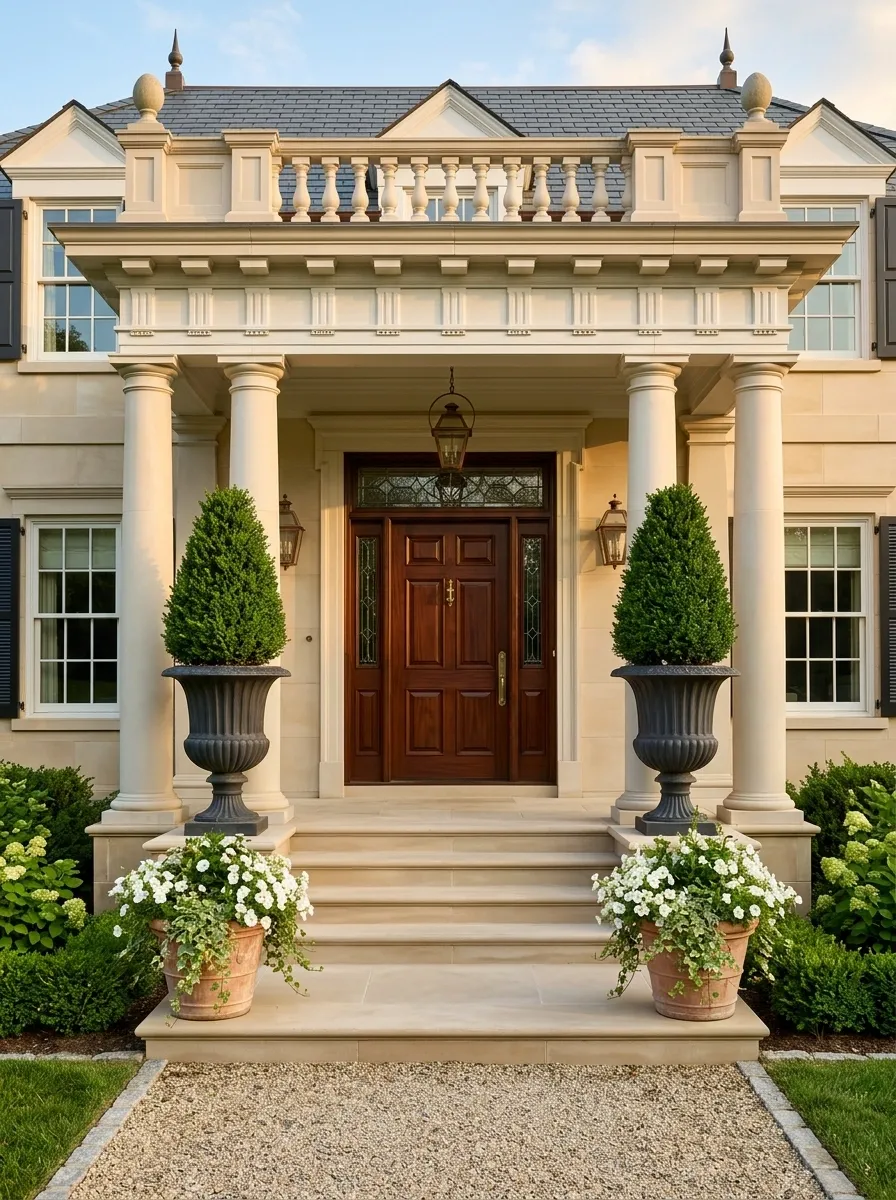
This formal porch combines two tall containers near the front door with lower flowering pots positioned closer to the steps.
The arrangement stays symmetrical at the architectural center but gains depth through the change in planting height.
That difference in scale keeps the composition from looking flat.
The tall plants frame the door while the low flowers bring color forward toward the viewer.
Keep the lower pots visually lighter so they don’t compete with the larger anchors.
Woodland-Style Porch With Ferns and Natural Stone
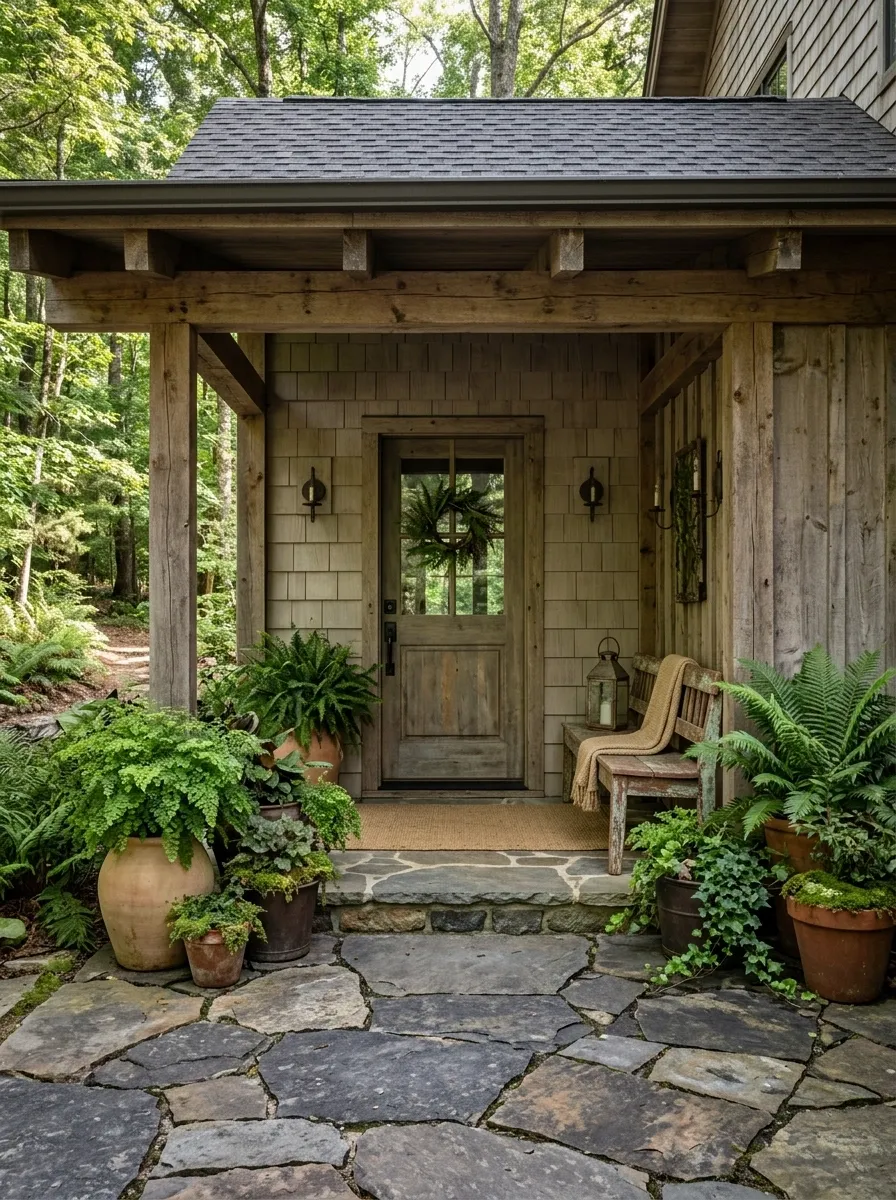
A shaded porch can feel especially connected to its surroundings when the planting echoes the landscape.
This composition uses fern-filled containers, weathered wood, natural stone, and subdued greenery around a simple entry.
The result is leafy without becoming tropical or overly decorative.
The materials should stay close to what you might already see around a wooded property.
Stone provides the hard visual anchor, while the ferns soften its edges.
Avoid introducing bright pots or vivid flowers that would pull the arrangement away from the woodland character.
Bright Southern-Style Porch With Large Green Containers
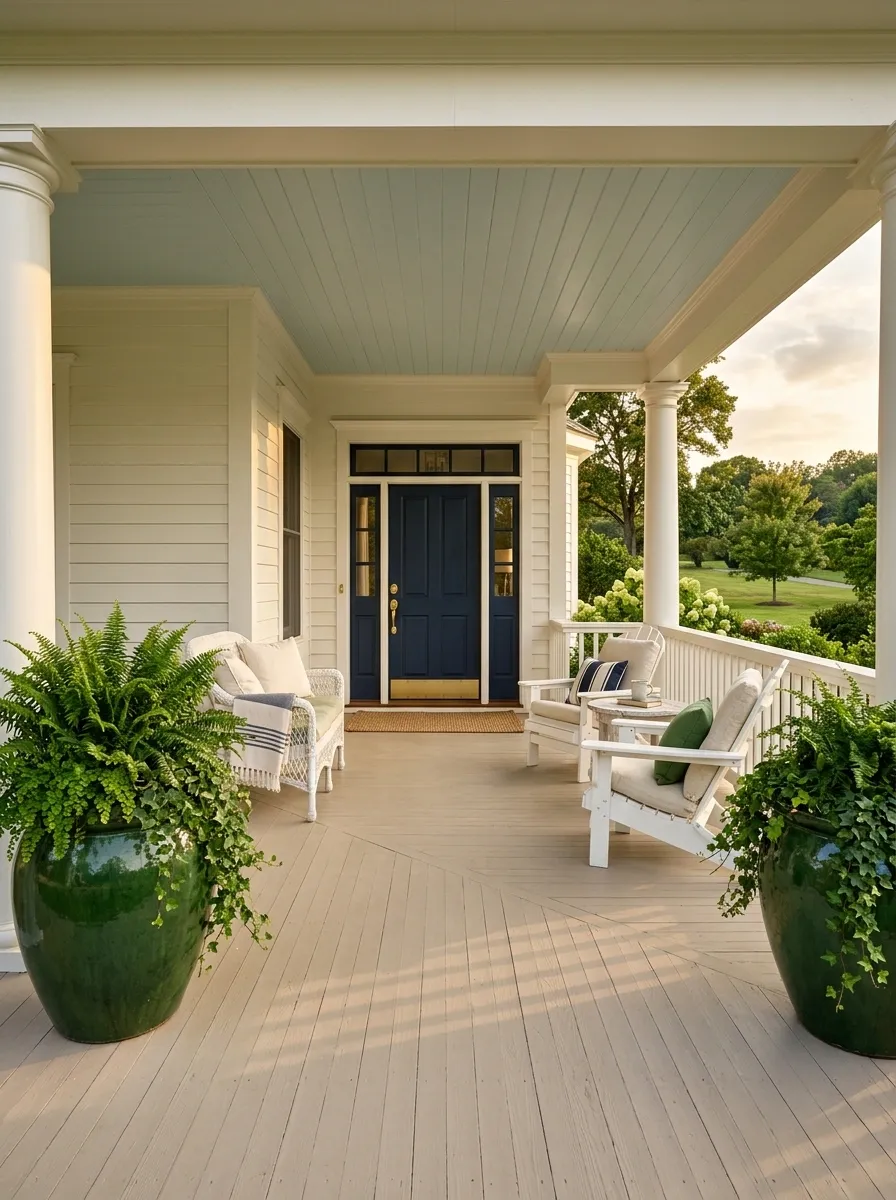
A broad, sunny porch uses substantial green containers filled with dense foliage to give the large entry enough visual weight.
Comfortable seating, pale architectural finishes, and generous open floor area keep the porch welcoming while the plants anchor the corners.
Scale is the defining feature.
A large porch can make small pots look insignificant, so the containers need enough presence to hold their own against the architecture.
Use fewer large pieces rather than filling the space with dozens of small ones.
Refined Entry With Sculptural Olive Pots and Quiet Styling
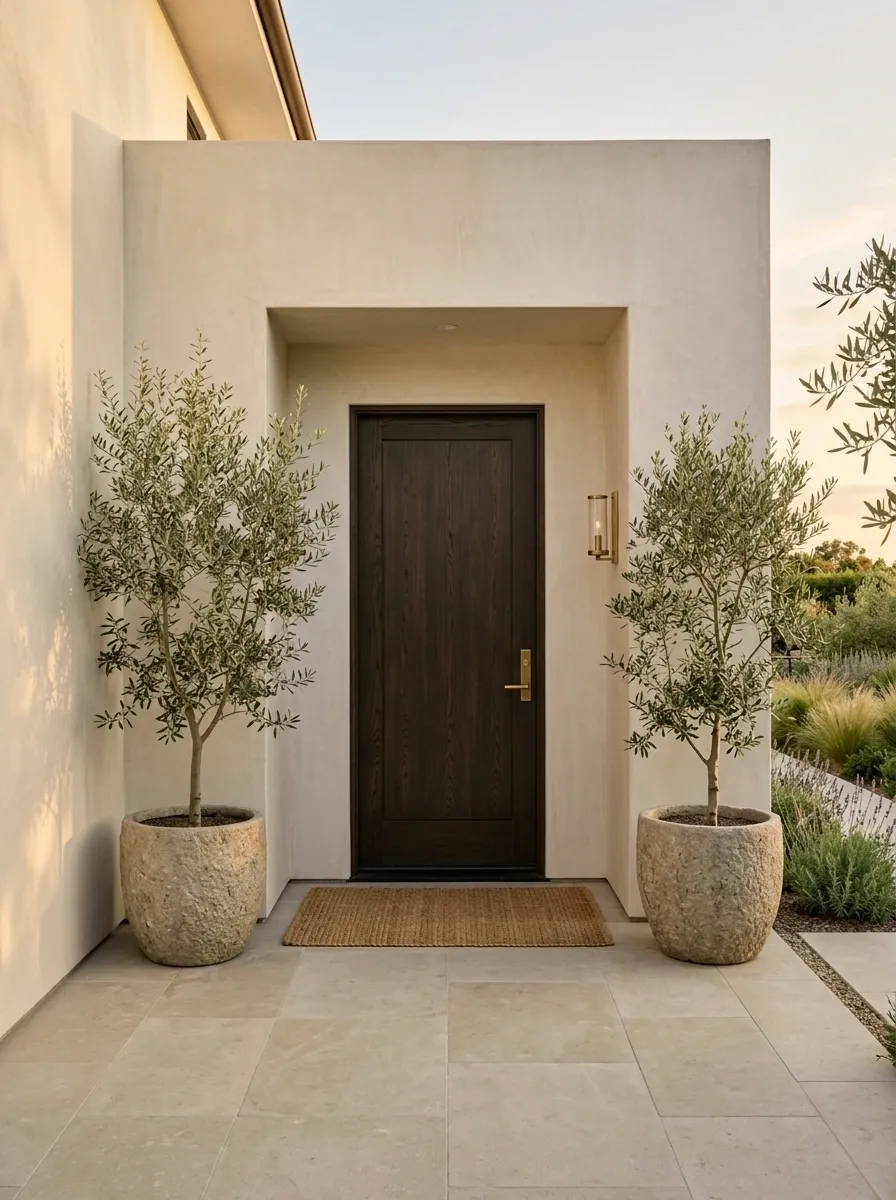
A refined entry ends the collection with an intentionally restrained composition.
Two sculptural olive trees sit in large neutral containers beside a simple front door, accompanied only by understated lighting and a clean doormat.
The architecture remains visible, and every element has room to breathe.
The strength here comes from knowing what to leave out.
There is no need for a collection of small accessories when the trees, containers, doorway, and lighting already create a complete visual story.
Keep the surrounding finishes quiet and let the silhouettes do the work.
Make the Planting Work With the House
The easiest way to get a porch arrangement wrong is to choose the plants before looking at the structure around them.
A large brick entrance can handle a very different composition than a narrow townhouse threshold.
A deep covered porch has room for layers that would overwhelm a shallow entry.
Look at three things first: scale, architecture, and circulation.
The containers should have enough presence to relate to the doorway.
The plant shapes should support the character of the house.
The route through the porch should remain obvious.
Once those pieces are right, the actual planting choices become much easier.
The most successful arrangements usually have one dominant idea.
It might be symmetry, dramatic foliage, warm terracotta, loose cottage layering, or one oversized statement plant.
Let that idea lead rather than trying to give every corner equal attention.
Conclusion
A front porch doesn’t need dozens of plants to feel finished.
What matters is how the planting relates to the doorway, the architecture, the available floor space, and the other materials already in view.
Start with the overall composition you want, then choose containers and greenery that support it.
A formal house may benefit from matched anchors.
A cottage entry can handle more variation.
A narrow porch often improves when the planting goes upward instead of outward.
A spacious porch can carry much larger containers without looking crowded.
The best arrangement is the one that makes the entrance feel intentional before you even notice the individual pots.
Save your favorite porch compositions now, then come back to them when you’re ready to rethink your own entry.