
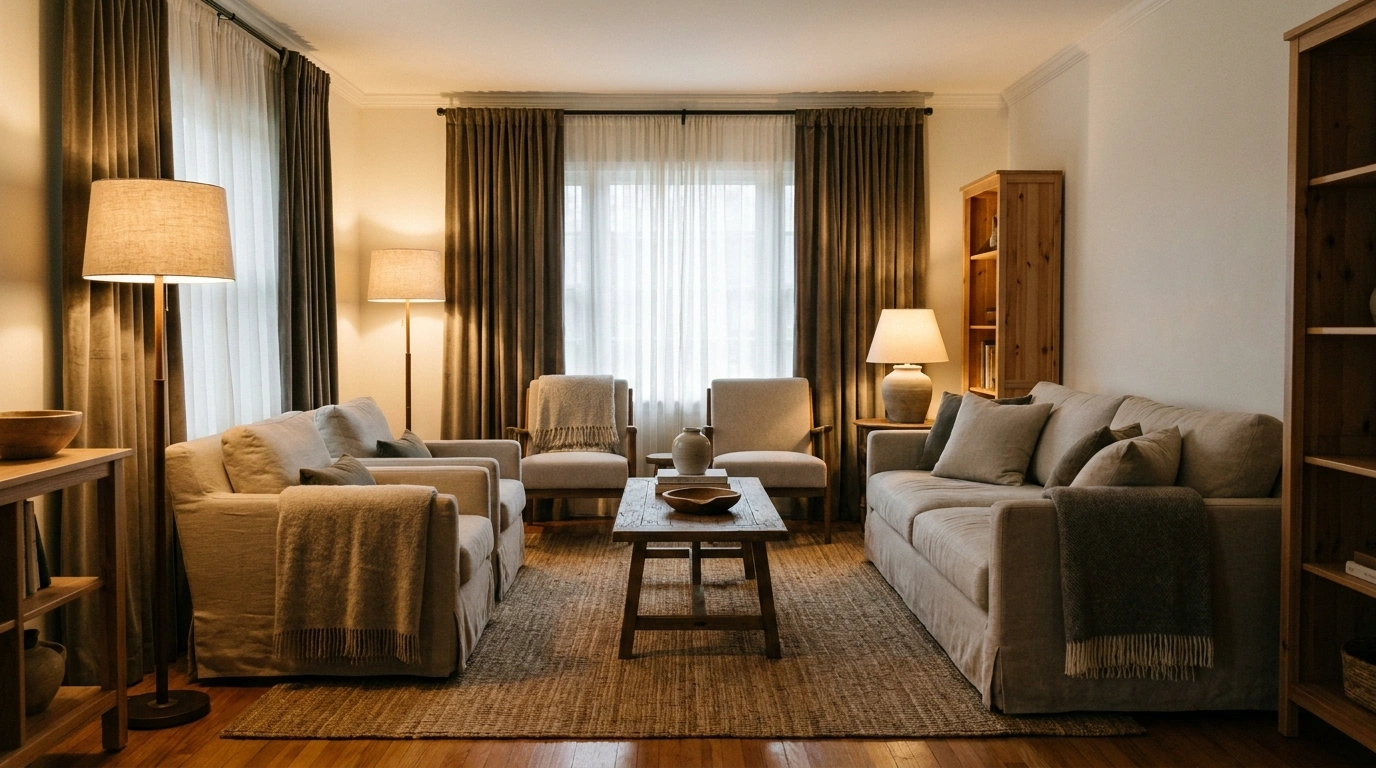
Some rooms look finished but never quite feel comfortable. The furniture is there, the colors coordinate, and every surface has been decorated, yet the room still feels hard, flat, or strangely impersonal. Usually, the problem isn’t one missing accessory. It’s the relationship between everything already in the room.
A truly cozy home has a certain visual rhythm. Furniture feels substantial enough to settle into. Lighting creates softer areas rather than washing the whole room in the same brightness.
Wood, fabric, stone, paint, rugs, curtains, and personal objects each have a role, and the room feels more complete because those choices speak the same visual language.
Cozy Home Designs
Staircase Nook With Soft Cushions and Glowing Candles
An unused alcove beneath the stairs becomes a hidden retreat, while neutral cushions, a plush sheepskin rug, framed botanical prints, and dozens of flickering candles create an enveloping, cocoon-like atmosphere. The low-slung seating arrangement keeps the space intimate without feeling cramped, while the warm ambient glow replaces traditional overhead lighting.
The setup feels magical because the flickering light reflects off every soft surface, turning a simple transitional area into a dedicated relaxation spot. Dried florals and seasonal pumpkins add an earthy grounding element that prevents the nook from feeling overly precious.
Lean into the architecture of awkward spaces rather than trying to fill them with standard furniture. A custom cushion pile transforms dead zones into the coziest corners of the home.
Warm Neutral Living Room With a Deep Sofa and Soft Layered Lighting
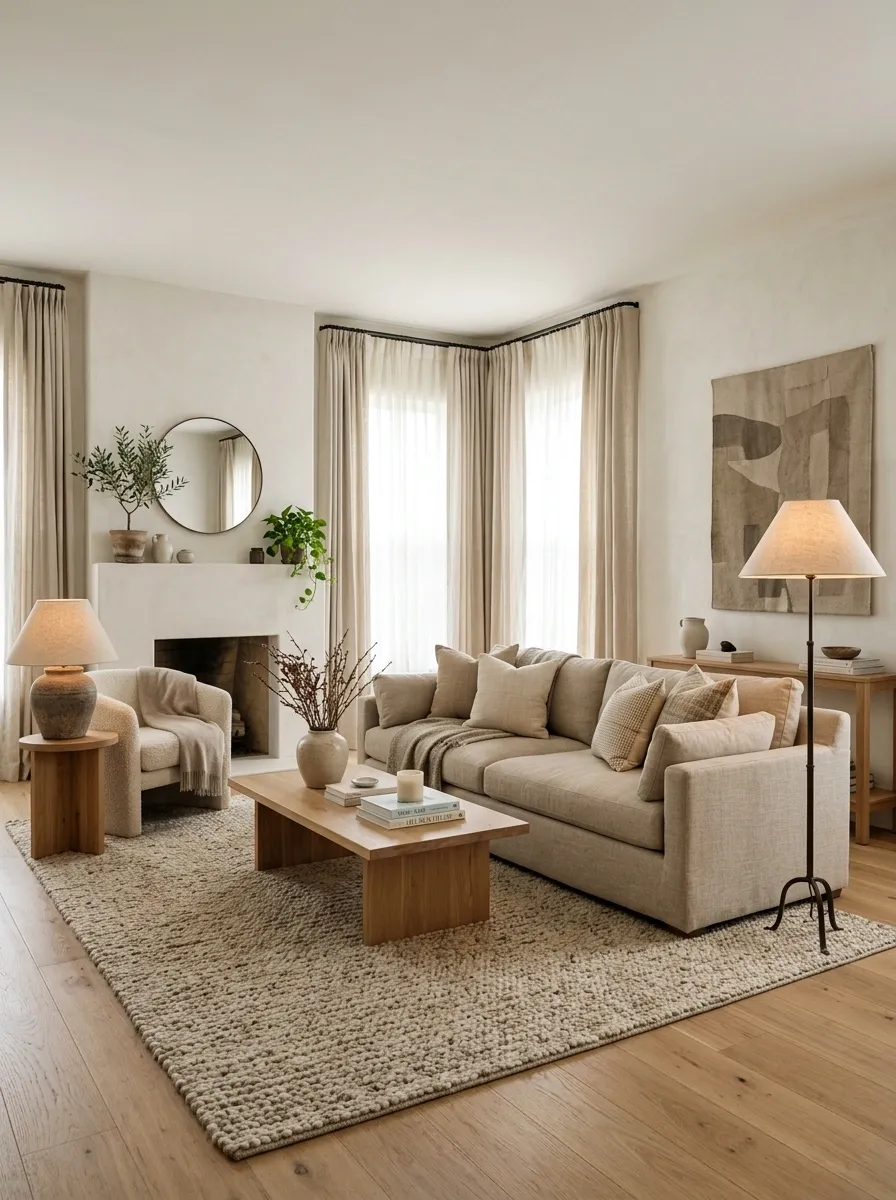
An oatmeal-colored sofa anchors this living room, while warm white walls, natural oak, a thick neutral rug, and relaxed linen curtains keep the palette quiet. A low coffee table leaves the seating visually grounded, while floor and table lamps create several softer pools of light instead of relying on one bright ceiling fixture.
The result feels comfortable without looking overloaded. The substantial sofa provides visual weight, while the lighter walls and curtains keep the room open. Warm wood prevents the neutral upholstery from becoming flat.
Keep the surrounding furniture simple so the sofa remains the main visual anchor.
Sloped Attic Living Room With Warm Wood and String Lights
Sloped eaves give this attic space an intimate architecture, while a rattan pendant light, string lights, neutral textiles, and abundant candles spread a golden warmth across the room. A low wooden coffee table anchors the layout, while a textured floor pouf and rattan armchair complete the relaxed seating configuration.
The space succeeds because the layered lighting sources highlight the natural wood tones and woven textures without overpowering the quiet color palette. Every corner feels intentional, creating a sanctuary shielded from the rest of the house.
Embrace low furniture in rooms with slanted ceilings to preserve headroom while maximizing the cozy, grounded feeling of the space.
Moody Cocoa Living Room With Vintage Furniture and Amber Lamps
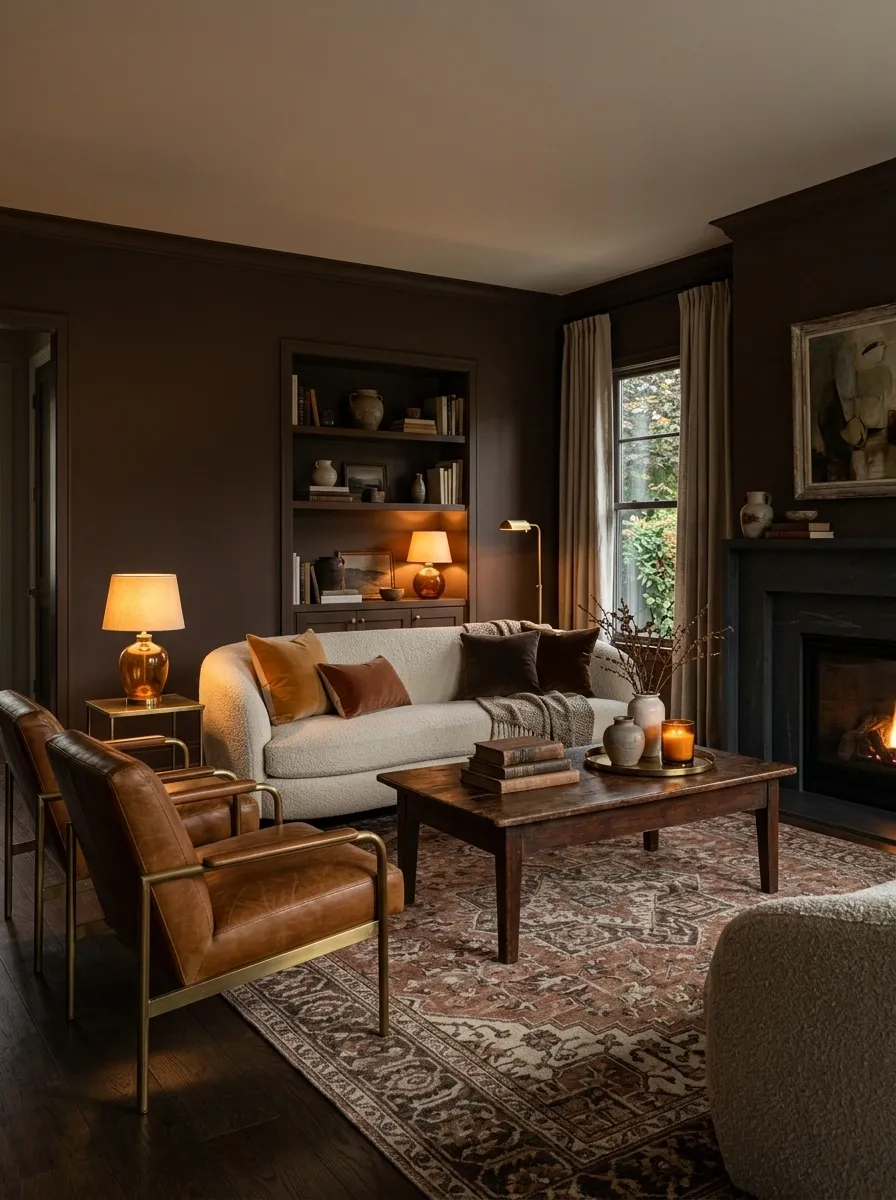
Deep cocoa walls give this living room a wrapped-in feeling, while aged wood furniture, a patterned rug, curved vintage seating, and warm brass details add depth. The lighting stays deliberately low, with table lamps and floor lamps creating amber pools against the darker background.
The room feels rich because the palette isn’t built from one brown tone. Upholstery, wood, metal, and painted walls each have slightly different depths and textures.
The darker setting works best when the room still has enough breathing space between furniture pieces. Deep color adds intimacy, but overcrowding would make the composition heavy.
Built-In Bookshelf Reading Nook With Cascading Greenery
A floor-to-ceiling wooden bookcase frames a snug seating area, while trailing ivy, earthy throw pillows, stacked paperbacks, and a warm table lamp turn a simple alcove into a reader’s paradise. The rich wood of the shelving acts as a natural frame, while the neutral upholstery keeps the dense collection of books feeling orderly rather than chaotic.
The composition works because the living plants introduce a fresh, organic element against the structured geometry of the shelves. The soft lamplight illuminates the book spines and creates a welcoming pocket of light.
Combine practical storage with soft textiles to make functional zones double as comfortable, highly personalized lounging spaces.
Cozy Cottage Living Room With a Fireplace, Slipcovered Seating, and Exposed Wood
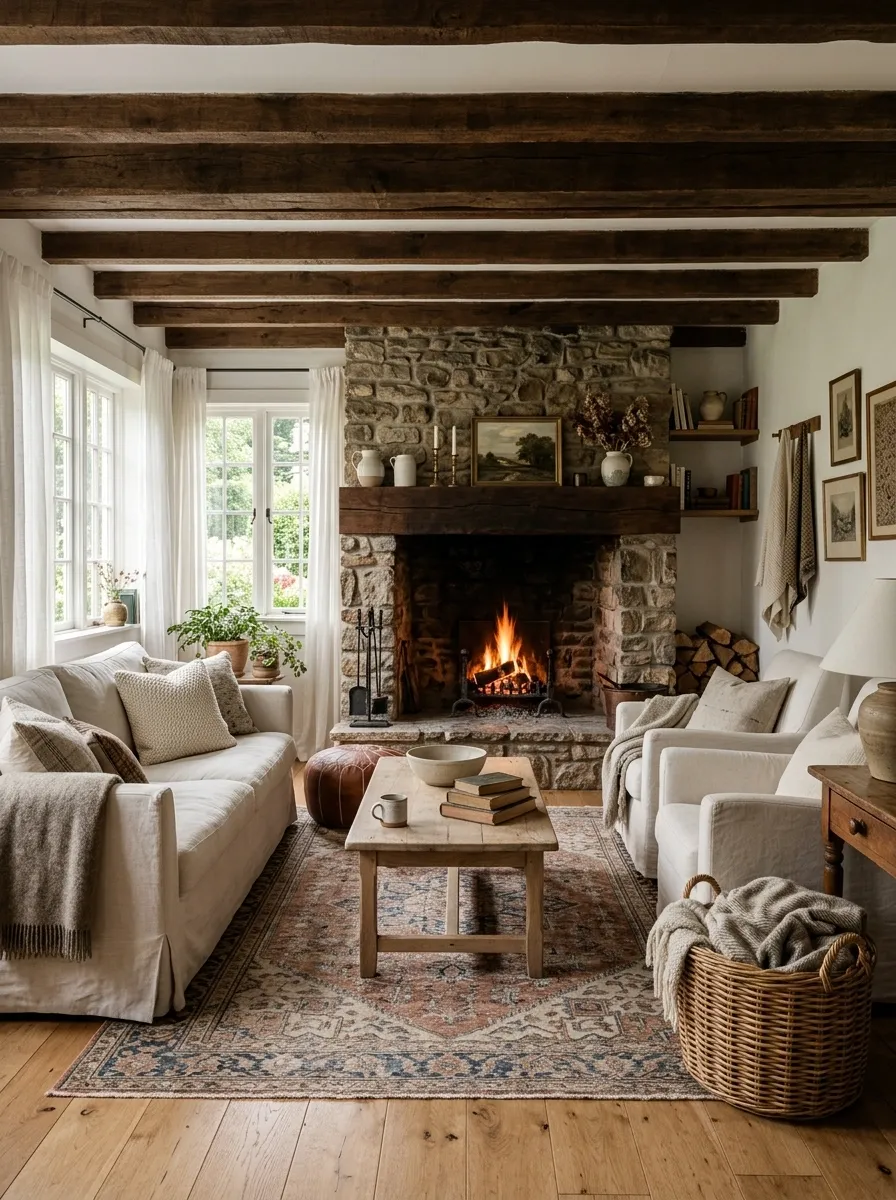
A traditional fireplace becomes the natural center of this cottage-inspired room. Relaxed slipcovered chairs, pale oak furniture, linen curtains, woven baskets, and a soft patterned rug give the space character without turning it into a collection of themed accessories.
The exposed wood introduces warmth and texture, while the lighter upholstery keeps the room from becoming visually dense. Seating is arranged to face the fireplace rather than simply line the walls, which makes the room feel designed around conversation and comfort.
Let the architecture carry part of the decoration here. A strong fireplace, beams, or original trim already provides visual interest, so smaller objects can stay quieter.
City Balcony Sanctuary With String Lights and Evening Glows
A high-rise balcony transforms into an evening retreat, while delicate string lights, glowing lanterns, plump neutral cushions, and potted greenery soften the urban backdrop of glittering skyscrapers. The warm illumination bounces off the wooden flooring, creating an inviting outdoor living room that feels completely private despite the city setting.
The outdoor space feels luxurious because the lighting replicates the warmth of an indoor interior, turning the balcony into an extension of the home long after sunset. Lush plants frame the view, bringing a touch of nature to the skyline.
Layer multiple small light sources outdoors instead of relying on a single overhead wall sconce to achieve that magical, resort-like evening ambiance.
Small Apartment Living Room With Soft Curves and Built-In Warmth
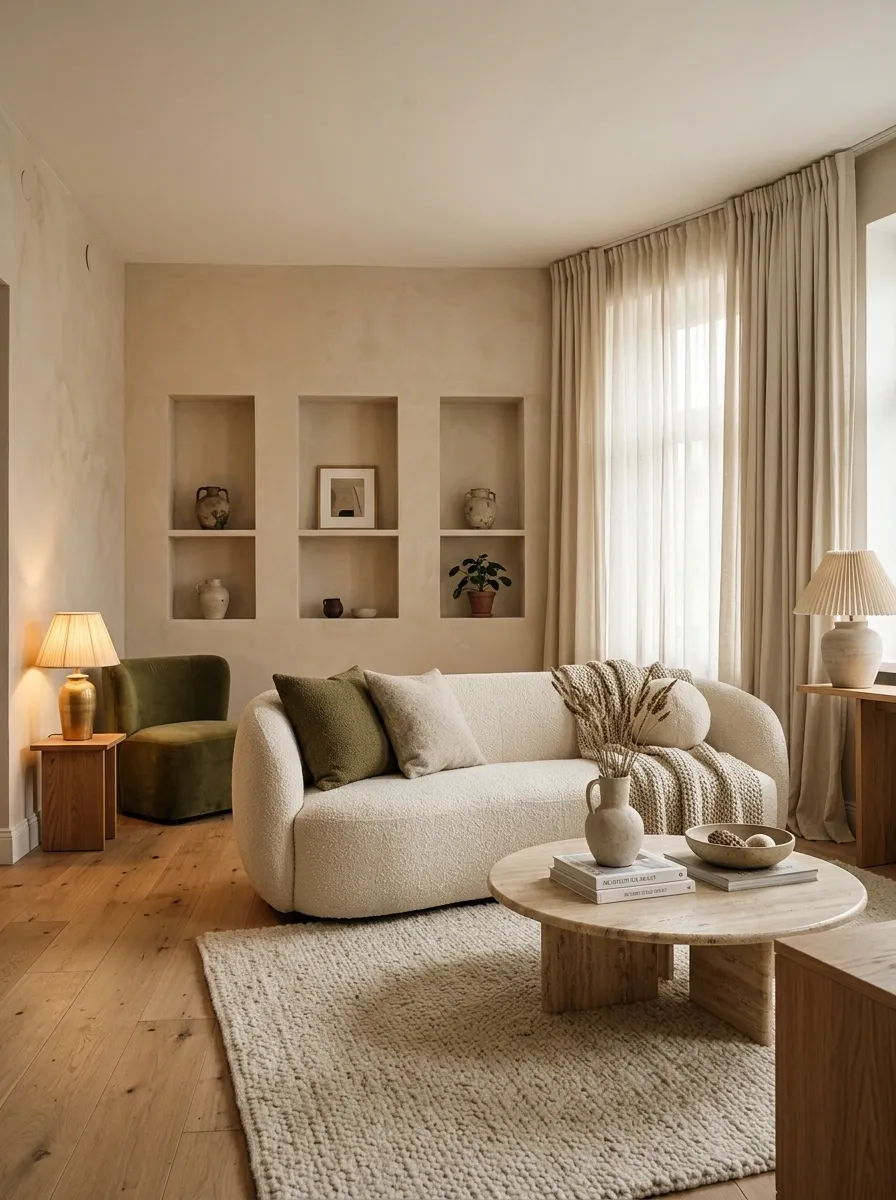
A compact living room can feel intimate without feeling cramped. This version uses a curved sofa, round coffee table, warm plaster-toned walls, full-height curtains, a compact reading chair, and several small lamps instead of one oversized furniture arrangement.
The curved shapes soften the limited footprint and make movement around the room easier. Curtains add height, while the warm wall color gives the relatively small space a stronger sense of enclosure.
Keep the center of the room visually open. In a compact layout, clear circulation contributes to comfort just as much as upholstery or textiles.
Scandinavian-Inspired Cozy Room With Pale Oak and Cream Textures
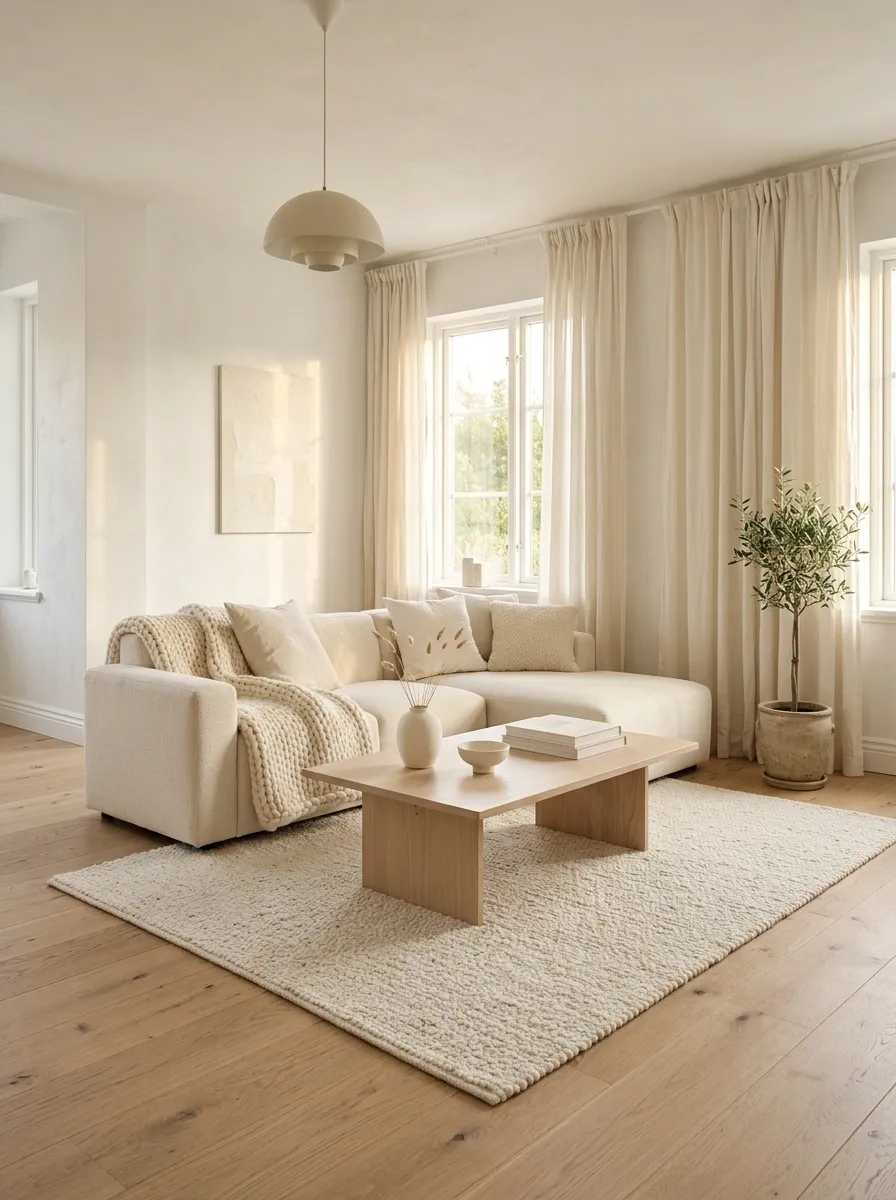
This brighter interpretation of coziness relies on restraint. Pale oak furniture, cream upholstery, wool textiles, simple ceramics, soft curtains, and natural daylight create warmth without deep colors or heavy decoration.
The important detail is texture. Wool, linen, wood, and softly finished surfaces keep the monochromatic palette from feeling flat. Furniture remains simple, but the materials give the room enough variation to hold the eye.
A limited palette works especially well when every major surface has a slightly different texture. The room feels calm because there are fewer competing colors, while the layered materials keep it from becoming sterile.
Deep Green Reading Room With a Leather Chair and Library Walls
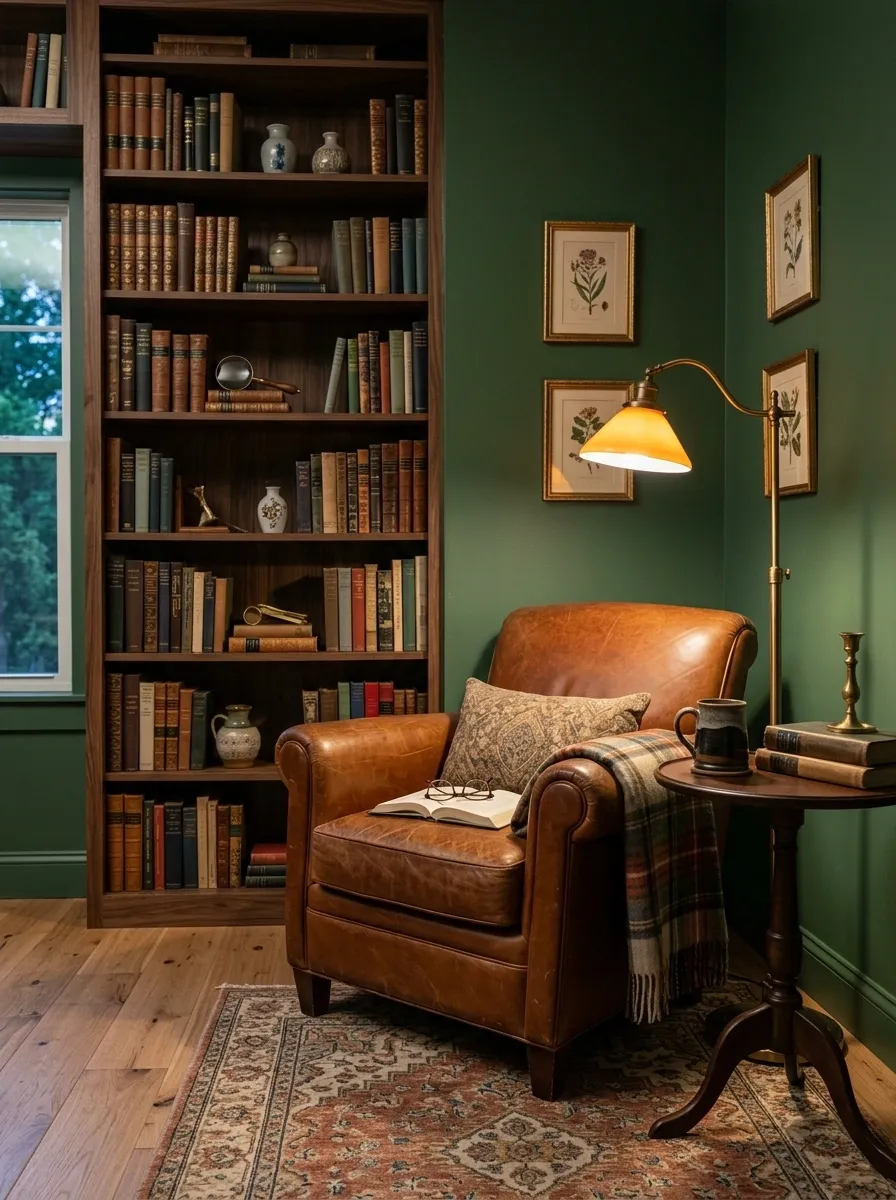
Deep green walls give this reading room a quiet, enveloping character. A cognac leather chair sits beside a dark wood bookcase, while a small side table, traditional floor lamp, patterned rug, and framed artwork fill out the composition without making it feel busy.
The contrast between the green walls and warm leather gives the room depth. Dark wood reinforces the traditional character, while the lighter rug keeps the floor from visually disappearing.
This concept works especially well in a spare corner that deserves to feel intentional. Keep the lighting close to the chair so the reading area becomes its own little destination.
Warm Modern Living Room With Stone, Walnut, and Bouclé
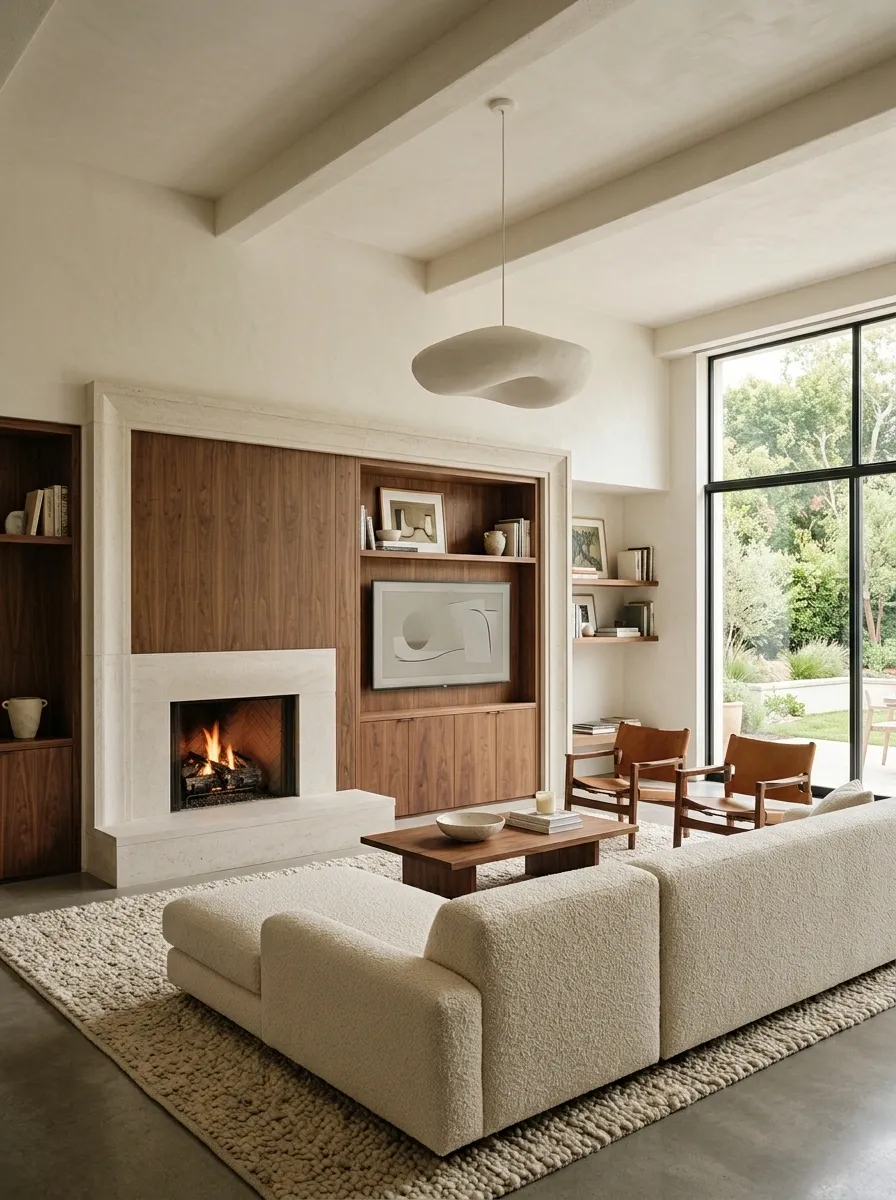
A contemporary room becomes noticeably warmer when hard surfaces are balanced by substantial upholstery. Pale stone surrounds a walnut media cabinet, while a creamy bouclé sofa, textured rug, and sculptural pendant keep the composition from feeling stark.
The palette stays controlled, but the materials are clearly different. Smooth stone catches light, walnut adds depth, and the upholstery introduces softness at the largest scale.
This is a good direction for a modern home that already has strong architectural lines. Avoid adding too many small decorative objects. The larger material relationships are what give the room its character.
Cozy Farmhouse Room With Painted Trim and Oversized Upholstery
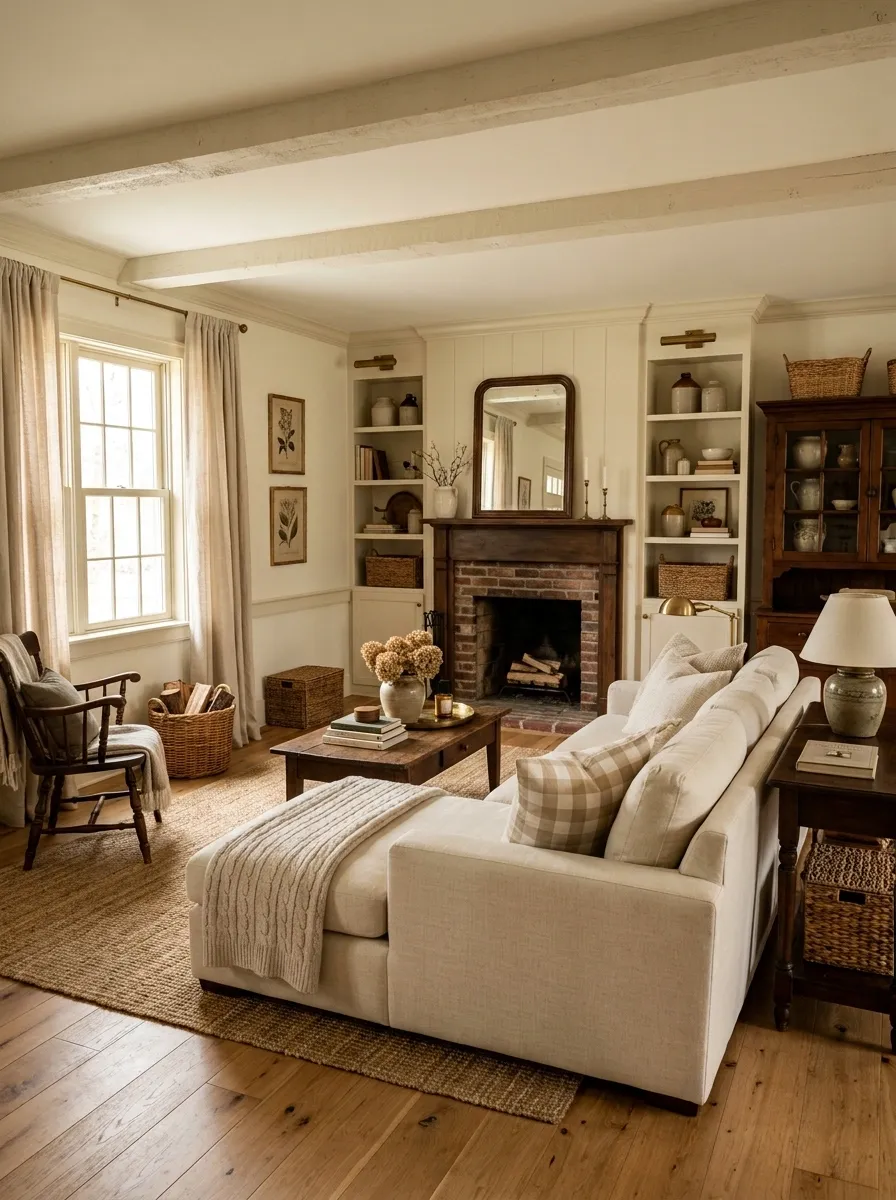
Cream-painted trim frames this relaxed farmhouse living room, where an oversized sectional, antique-inspired wood furniture, checked textiles, woven storage, and long linen curtains create an easy sense of comfort.
The room feels substantial because the furniture isn’t undersized. A generous sofa gives the composition a comfortable center, while the lighter painted trim adds definition around the walls and openings.
Pattern is used selectively rather than scattered across every surface. A single checked textile can feel more intentional when the rest of the upholstery remains relatively calm.
Autumnal Terracotta Living Room With Walnut and Linen
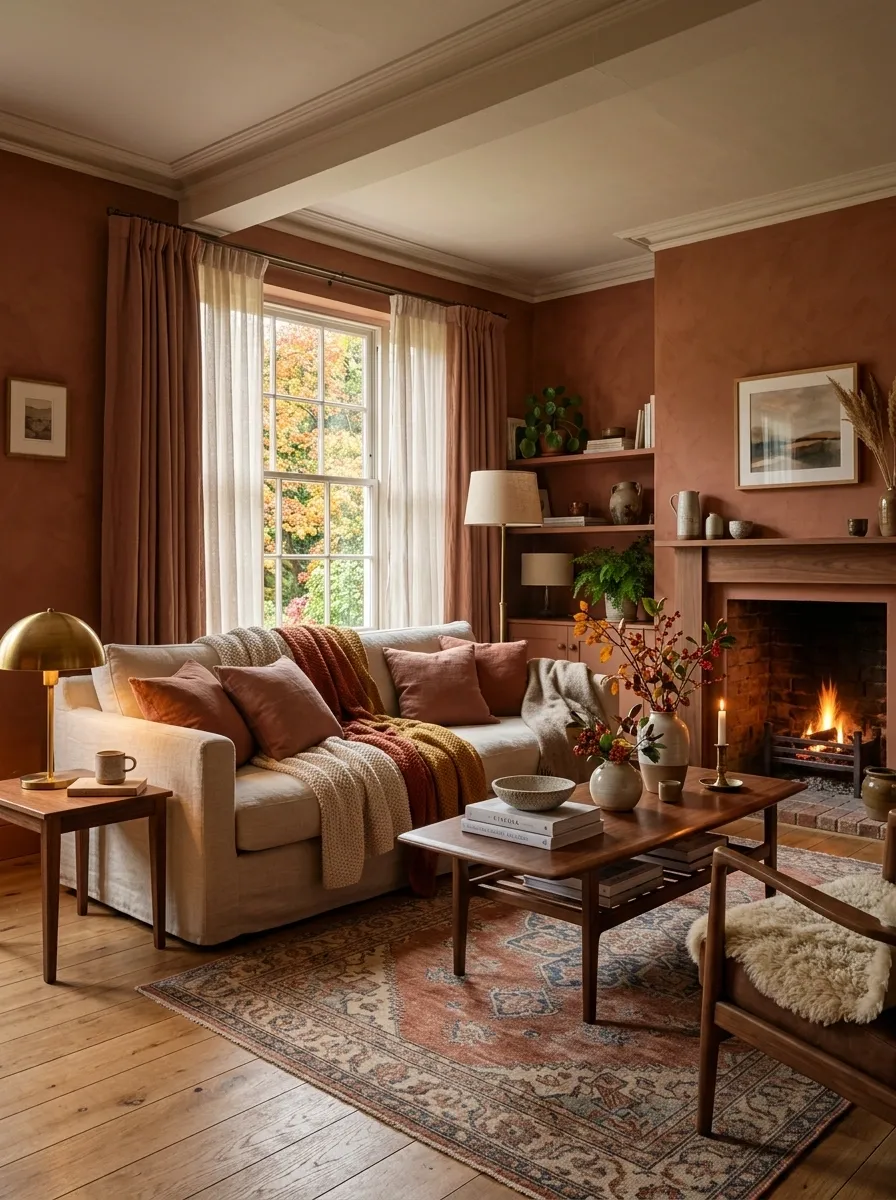
Terracotta walls give this living room its immediate warmth, while walnut furniture, relaxed linen upholstery, aged brass, and muted rust textiles create a deeper layered palette.
The key is contrast without harshness. The reddish wall color sits comfortably beside the brown wood, while cream linen creates enough visual breathing room to keep the palette from becoming heavy.
A room like this benefits from warm, directional lighting in the evening. Lamps should illuminate useful areas such as seating and side tables rather than simply brightening every corner equally.
Cream-on-Cream Bedroom With Heavy Curtains and an Upholstered Bed
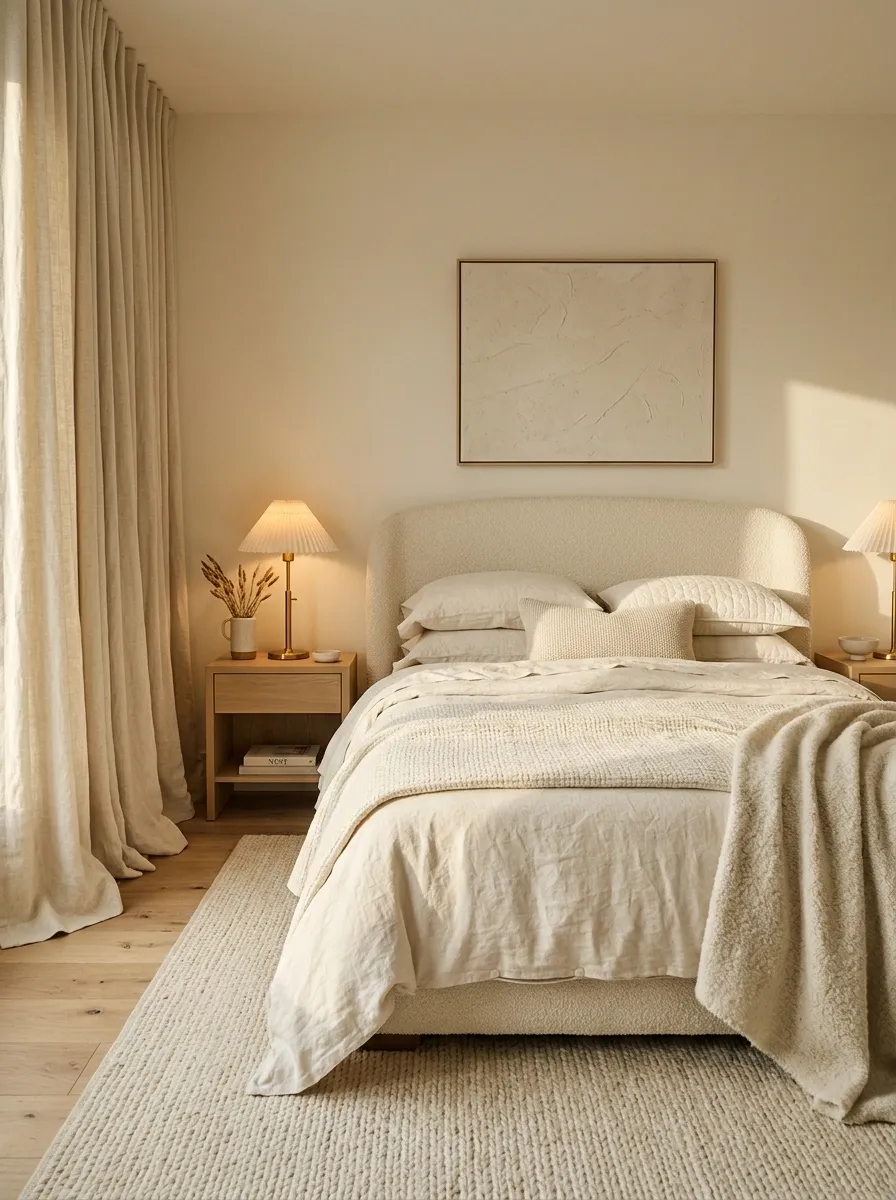
This bedroom proves that coziness doesn’t require dark paint. Ivory walls, a softly upholstered bed, thick curtains, tonal bedding, a woven rug, and warm bedside lamps create a quiet room with very little visual contrast.
Texture becomes the main source of variation. Smooth painted walls sit beside woven flooring, rumpled bedding, heavy curtains, and soft upholstery. The same neutral family appears repeatedly, but each material catches light differently.
Use this approach when a bedroom needs to feel calm without becoming stark. The curtain fabric matters as much as its color because weight and drape help give the room a more enveloping quality.
Layered Neutral Bedroom With Low Walnut Furniture and Textured Walls
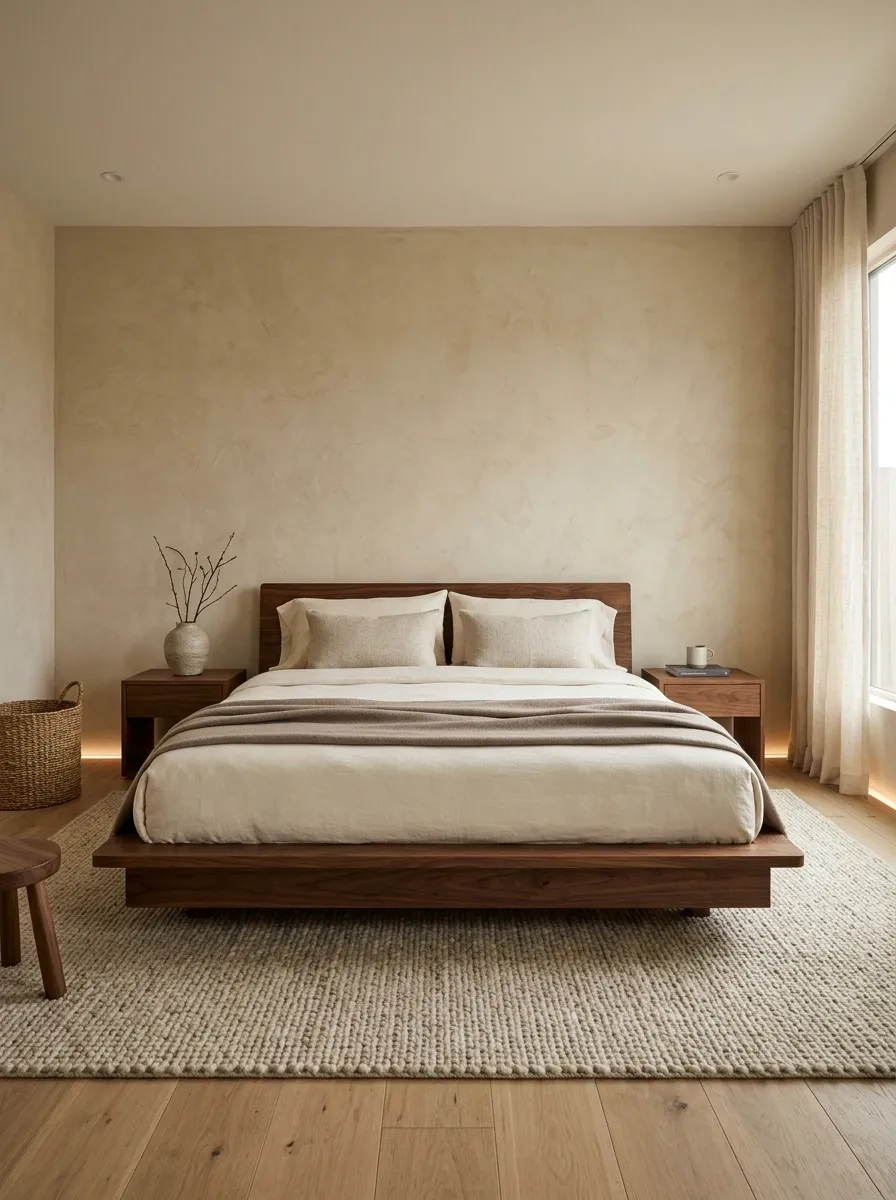
A darker wood palette can make a bedroom feel immediately settled without turning it gloomy. This version uses a low walnut bed, warm plaster-toned walls, minimal bedding, a broad textured rug, and soft floor-level lighting.
Keeping the furniture low creates a calm horizontal line through the room. The textured walls add depth behind the bed, while the warm wood prevents the restrained styling from feeling stark.
The room works because very few elements compete for attention. Let the bed, wall texture, and wood furniture carry most of the visual weight, then keep accessories deliberately sparse.
Traditional Bedroom With Wallpaper, a Patterned Quilt, and a Reading Chair
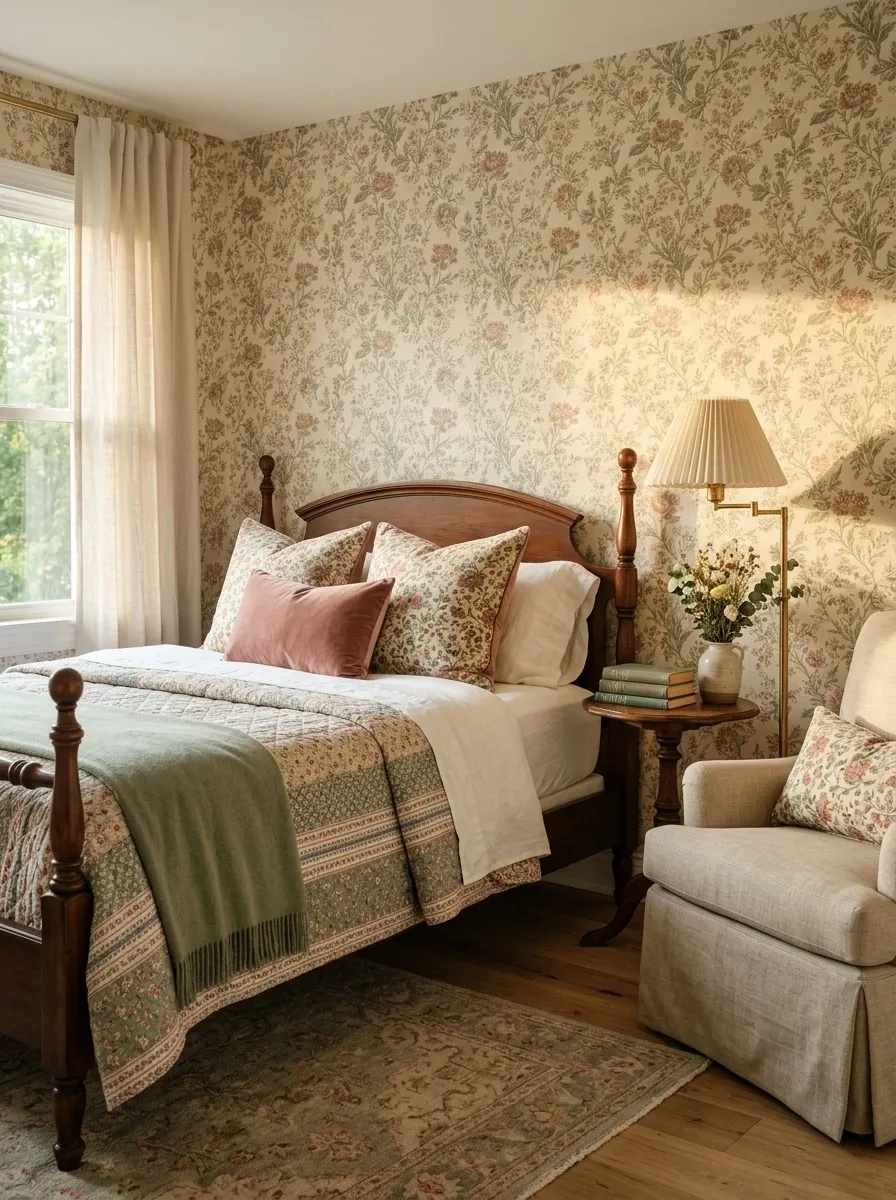
Soft wallpaper introduces pattern across the walls of this traditional bedroom, while a classic bed, layered quilt, skirted chair, small side table, and warm lamp create a comfortable collected look.
The room doesn’t depend on matching every fabric. Instead, the wallpaper establishes the strongest pattern, the quilt supplies a second layer at a smaller scale, and the larger furniture pieces remain comparatively quiet.
That hierarchy keeps a traditional room from becoming visually noisy. Choose one dominant pattern first, then let the bedding and smaller textiles support it rather than compete with it.
Rustic Bedroom With Exposed Beams and Soft Neutral Bedding
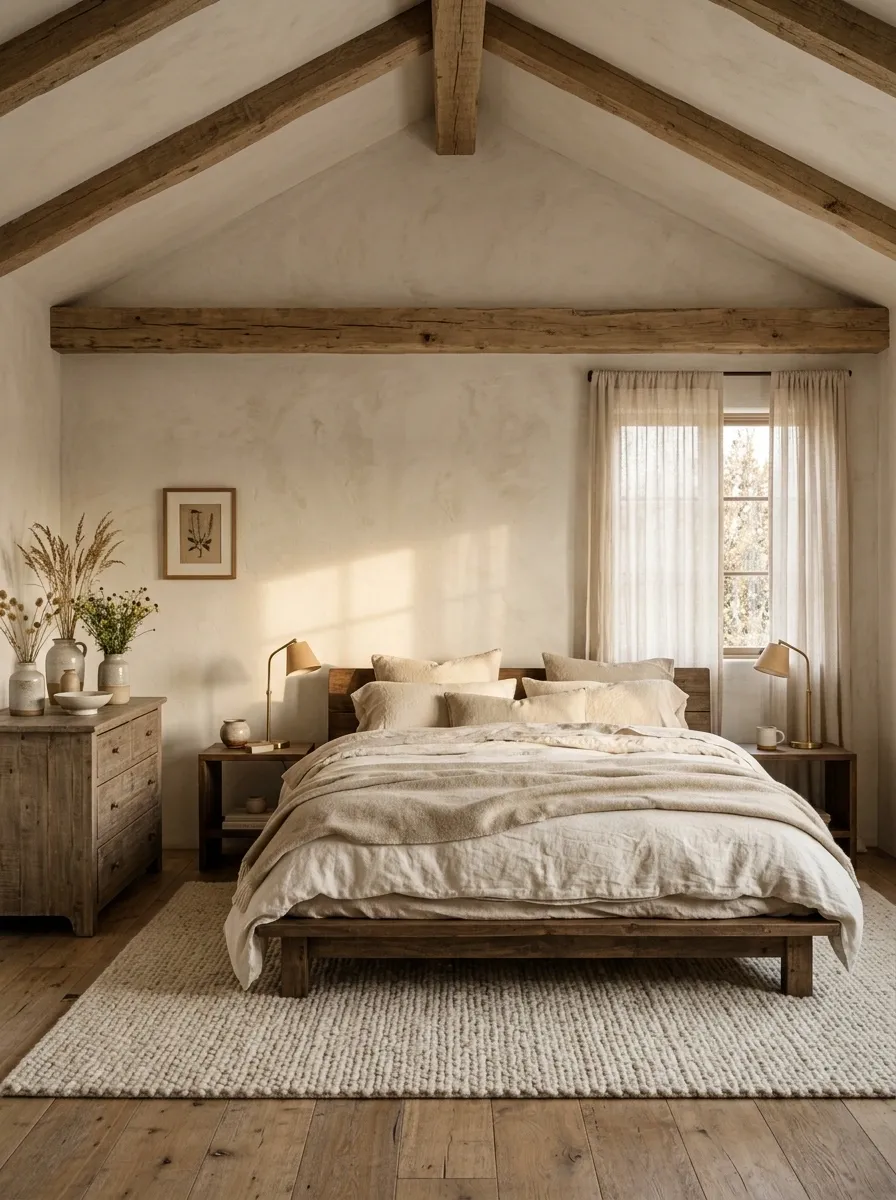
Natural beams become the defining feature of this bedroom, where reclaimed-looking wood, textured plaster, oversized linen bedding, and understated bedside lighting create a relaxed rustic setting.
The architecture does much of the decorative work. Rather than filling the room with rustic accessories, the design keeps the furniture simple and allows the beams, wood grain, and imperfect surface texture to provide character.
Soft bedding is especially important here. Without those lighter, tactile layers, the wood could make the room feel too heavy. The balance comes from pairing rugged structure with generous softness.
Modern Bedroom With Low Furniture and Warm Plaster Walls
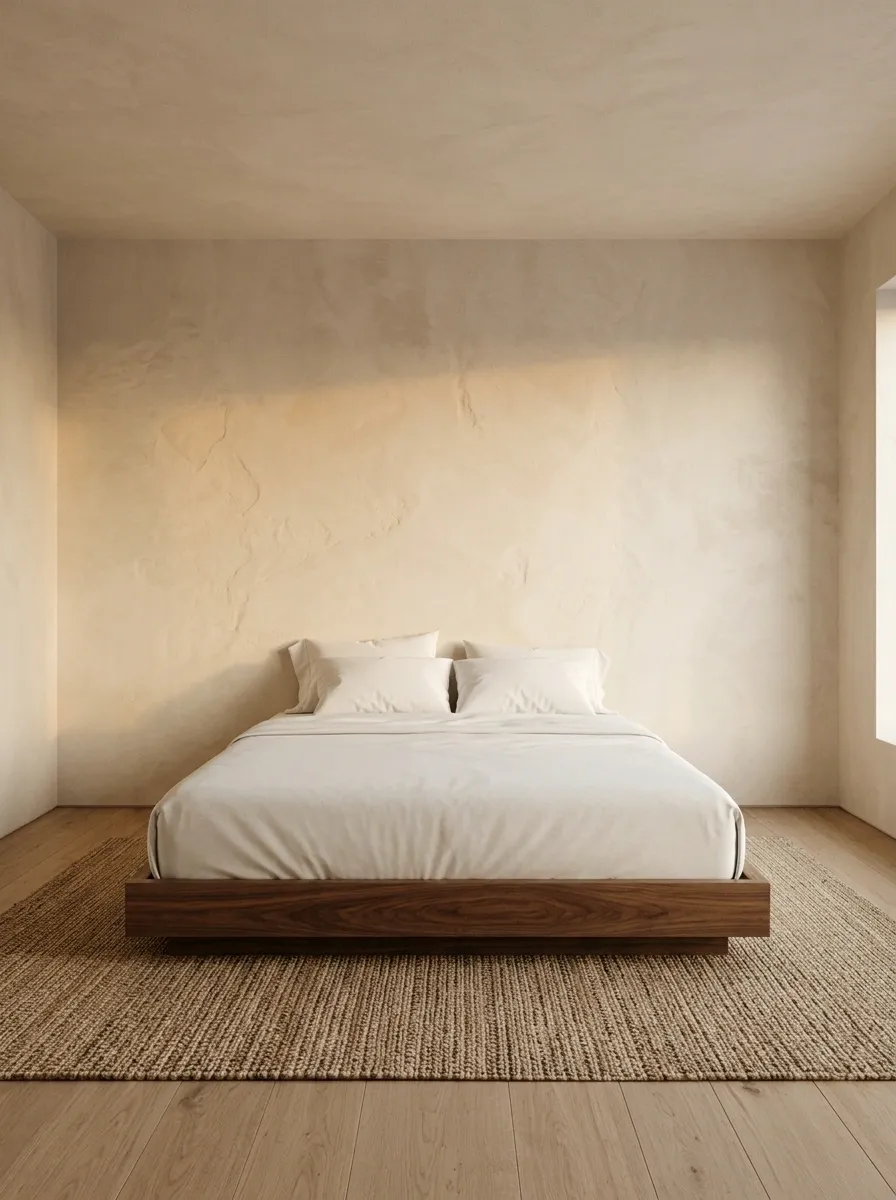
A low-profile walnut bed sits against warm plaster-toned walls in this quiet modern bedroom. A broad textured rug, minimal bedding, soft floor lighting, and almost no decorative clutter allow the architecture and materials to remain visible.
The composition feels restful because the furniture doesn’t interrupt the room with unnecessary height. The broad bed and horizontal rug create a grounded visual base, while the wall finish provides subtle variation behind them.
This direction suits contemporary spaces that need warmth without becoming traditional. Keep the palette narrow and use texture instead of extra objects to create depth.
Cozy Bedroom Under a Sloped Ceiling With Built-In Storage
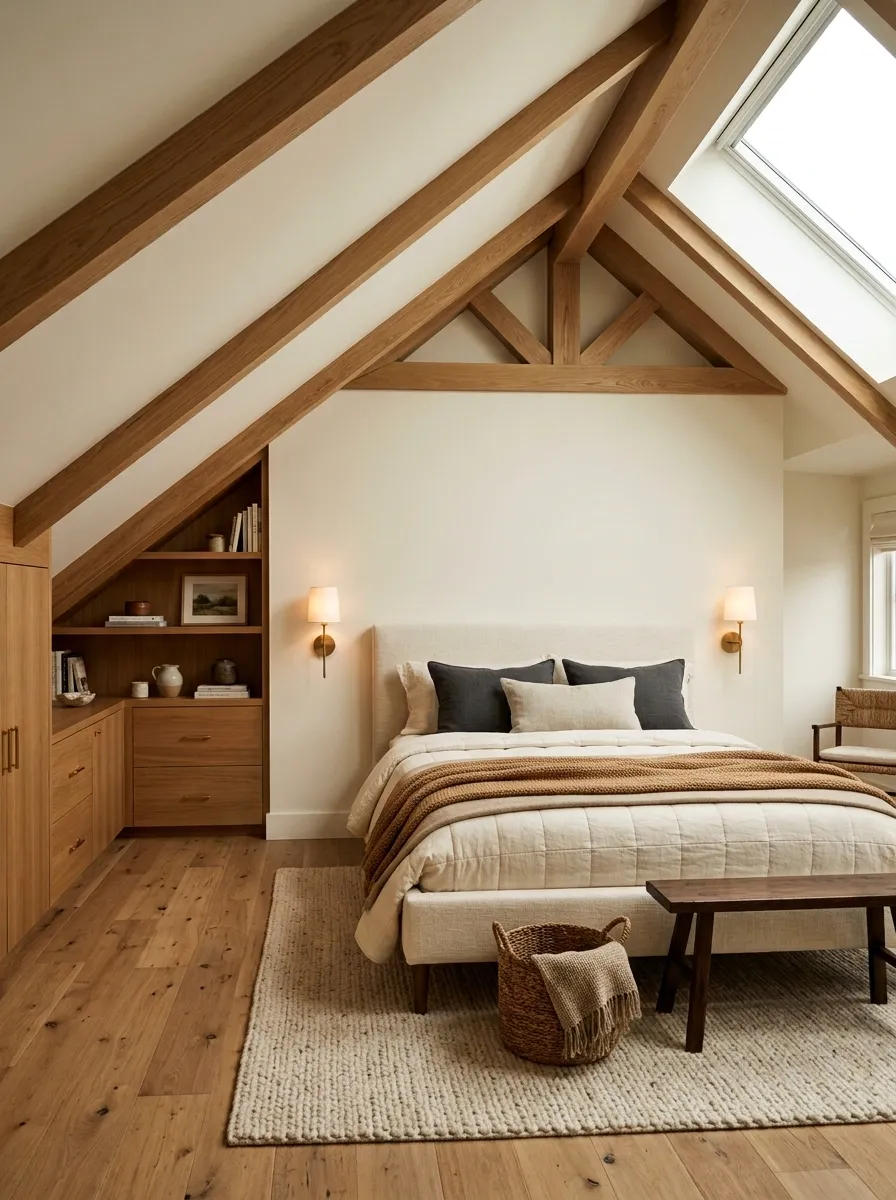
A sloped ceiling can become the defining feature rather than an awkward limitation. This bedroom uses built-in storage beneath the lower roofline, warm wood cabinetry, an upholstered bed, wall-mounted bedside sconces, and carefully scaled furniture.
The built-in joinery makes use of space that might otherwise be difficult to furnish. Because the storage follows the architecture, it feels integrated rather than squeezed into an already awkward room.
The rest of the furniture stays visually simple. Too many freestanding pieces would compete with the unusual ceiling shape and make the room feel smaller.
Warm Kitchen With Natural Oak Cabinets and Soft Cream Walls
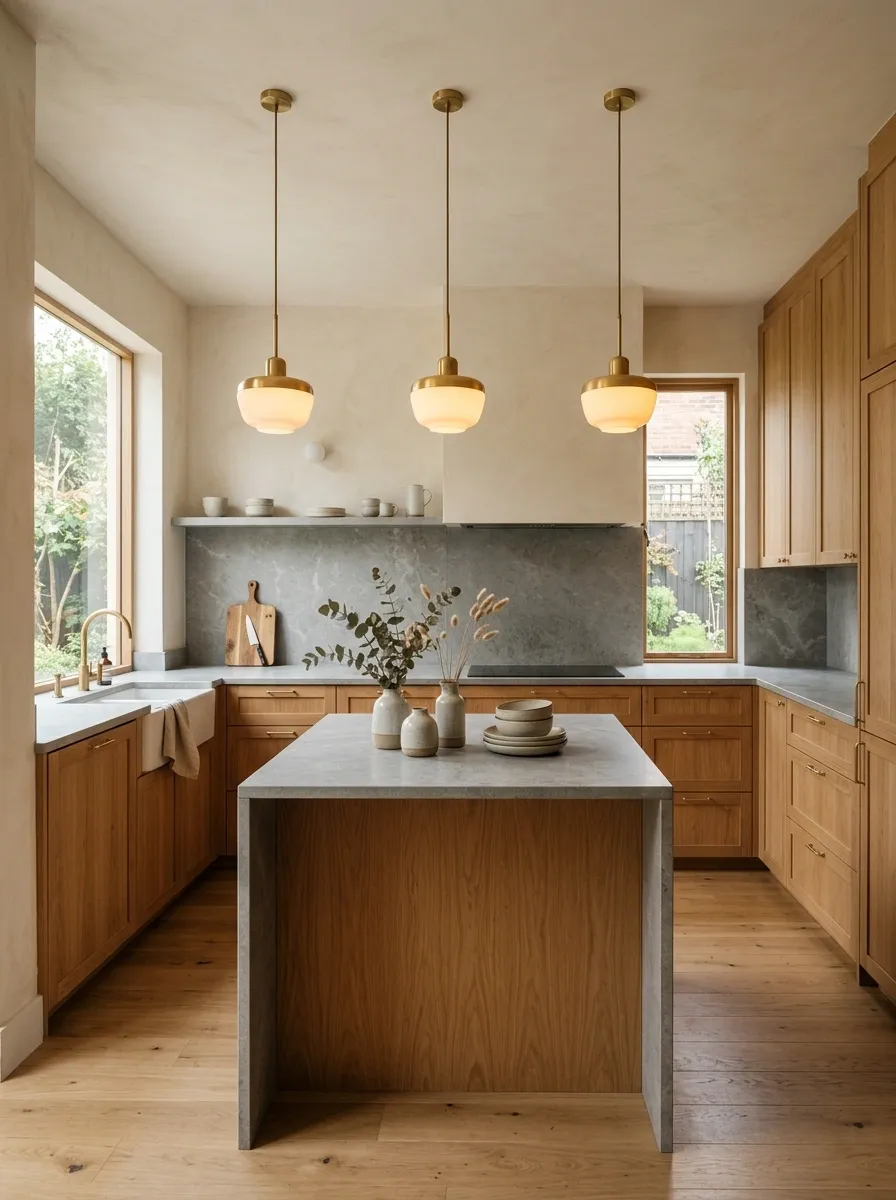
Natural oak cabinetry gives this kitchen an immediate sense of warmth, while creamy walls, honed stone, aged metal hardware, and warm pendant lighting create a softer interpretation of a modern kitchen.
The wood provides continuity across the room instead of functioning as a small accent. Cream walls allow the cabinetry to remain prominent without creating a high-contrast boundary, while the stone introduces a cooler surface that keeps the palette balanced.
Use open areas sparingly and let the cabinetry provide most of the visual interest. Too many exposed shelves or decorative objects would interrupt the calm material rhythm.
English-Inspired Kitchen With Painted Cabinets and Freestanding Furniture
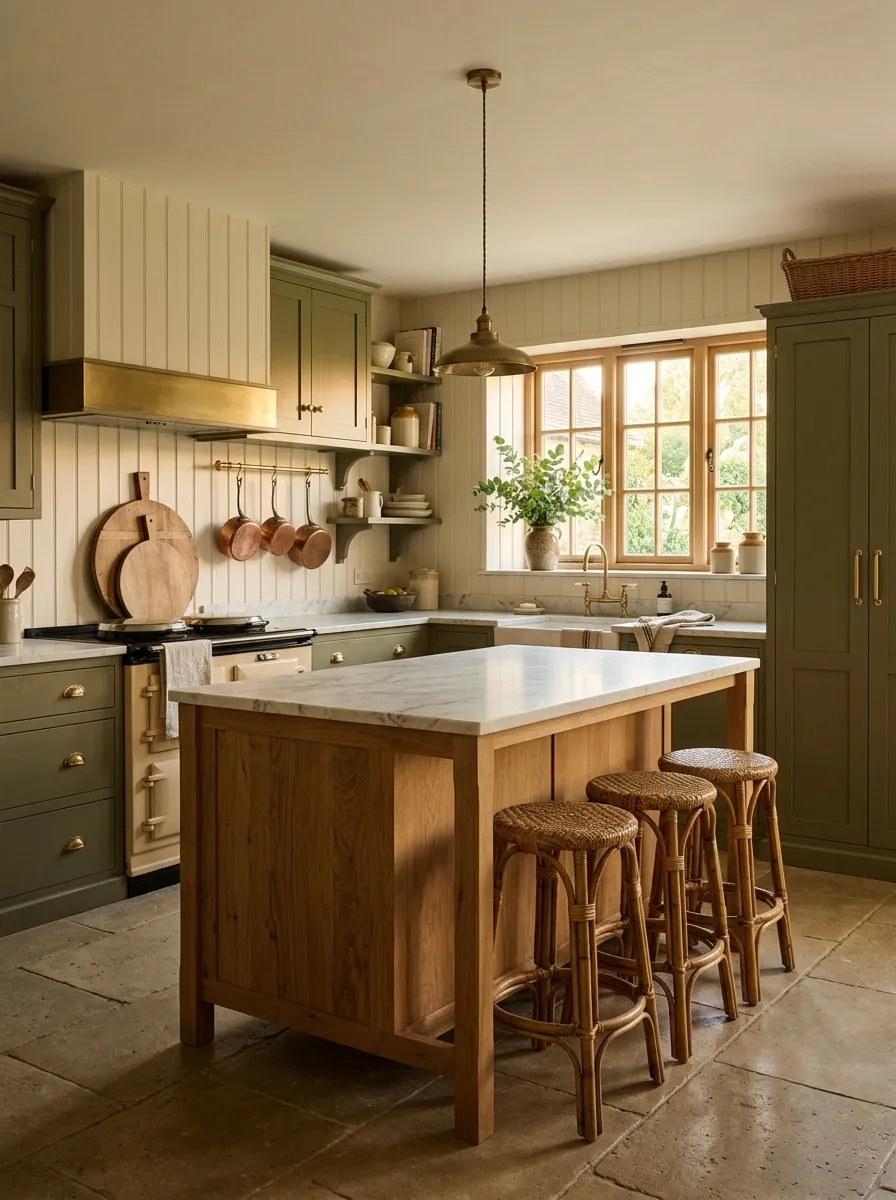
Painted cabinetry gives this kitchen a distinctly traditional foundation, while a wooden island, paneled walls, brass hardware, woven stools, and furniture-like storage pieces keep it from feeling overly fitted.
The strongest detail is the combination of built-in and freestanding elements. Cabinetry provides structure, but the independent pieces make the kitchen feel collected over time rather than designed as one uninterrupted run.
Warm wood prevents the painted surfaces from becoming too formal. Keep the decorative styling practical, with useful pieces that can remain visible without crowding the work surfaces.
Small Cozy Kitchen With Warm Wood and Open Shelving
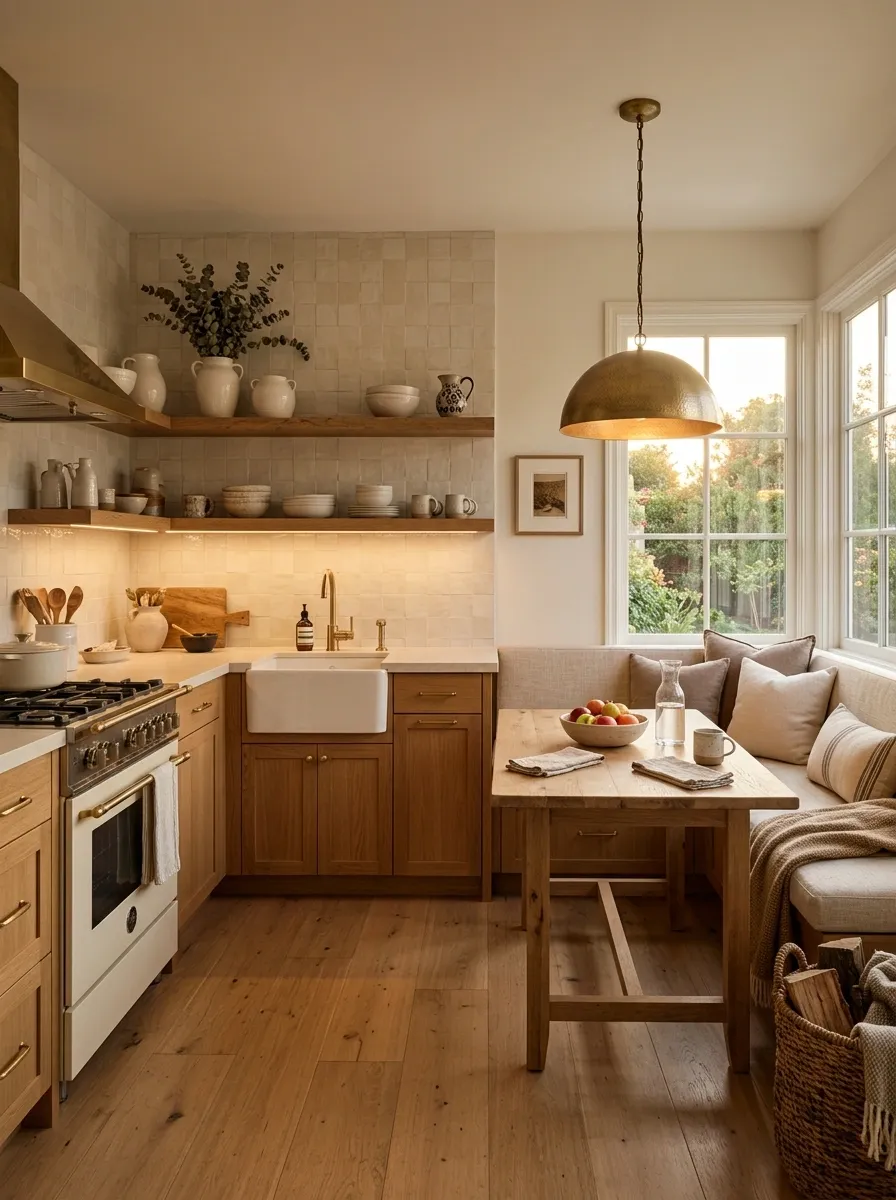
A compact kitchen becomes more intimate through warm oak cabinetry, creamy tile, restrained open shelving, compact lighting, and a small adjacent dining nook. The materials stay warm, but the layout remains practical.
Open shelving is limited to the areas where it can actually contribute to the composition. Keeping the rest of the storage closed prevents the smaller room from becoming visually crowded.
A nearby dining surface makes the kitchen feel connected to everyday life. The cozy effect comes from the relationship between cooking, eating, light, and material warmth rather than from decoration alone.
Moody Kitchen With Deep Cabinets and Warm Stone
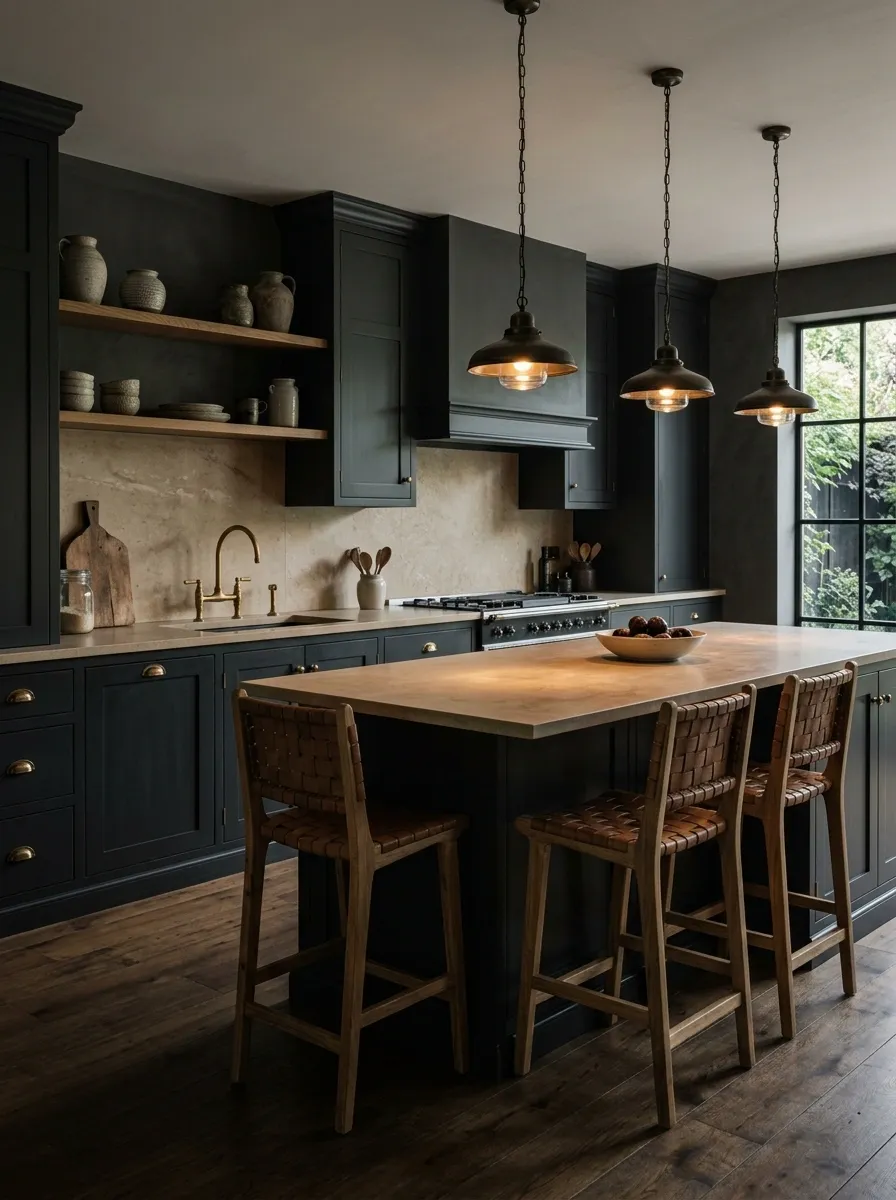
Deep olive or charcoal cabinetry gives this kitchen a dramatic foundation. Warm stone counters, wooden stools, aged brass details, and concentrated pendant lighting keep the darker palette from feeling cold.
The strongest contrast comes from the relationship between dark cabinetry and lighter stone. Wood then bridges the two, introducing a warmer middle tone that keeps the room grounded.
Dark cabinetry works particularly well when the lighting is intentional. Instead of flooding every surface with bright light, use focused illumination over the island and softer light around the perimeter.
Cozy Dining Room With a Round Table and Oversized Linen Curtains
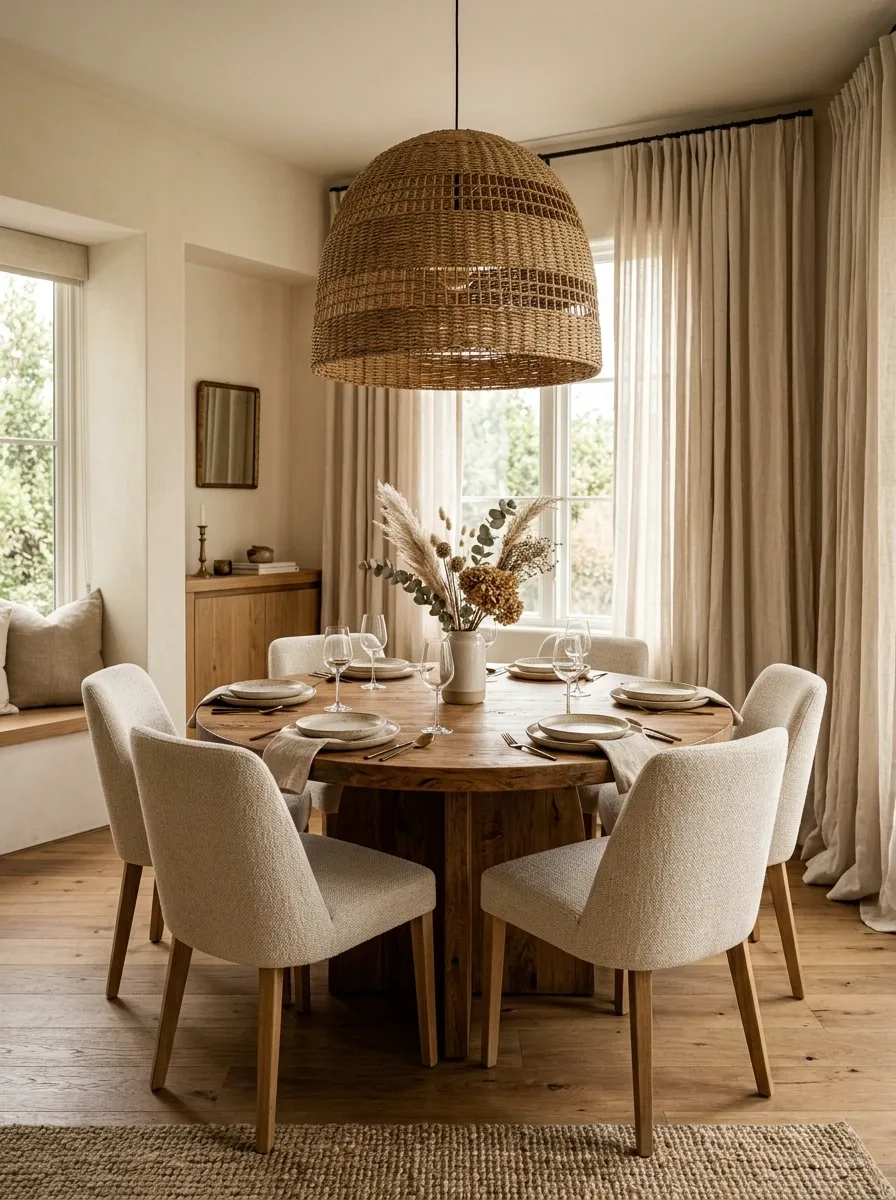
A round wood dining table gives this room an immediate sense of intimacy. Upholstered chairs sit close around it, while a substantial pendant hangs low above the center. Floor-length linen curtains soften the windows and visually contain the dining area within the larger home.
The round shape changes the feeling of the space more than another decorative object would. It keeps conversation naturally oriented around the center and removes the rigid linear quality of a rectangular table.
Let the table remain the star. Simple tableware, warm wood, and soft fabric are enough to give the room character without covering every surface.
center
Fireside Dining Room With Dark Walls and Candlelit Layers
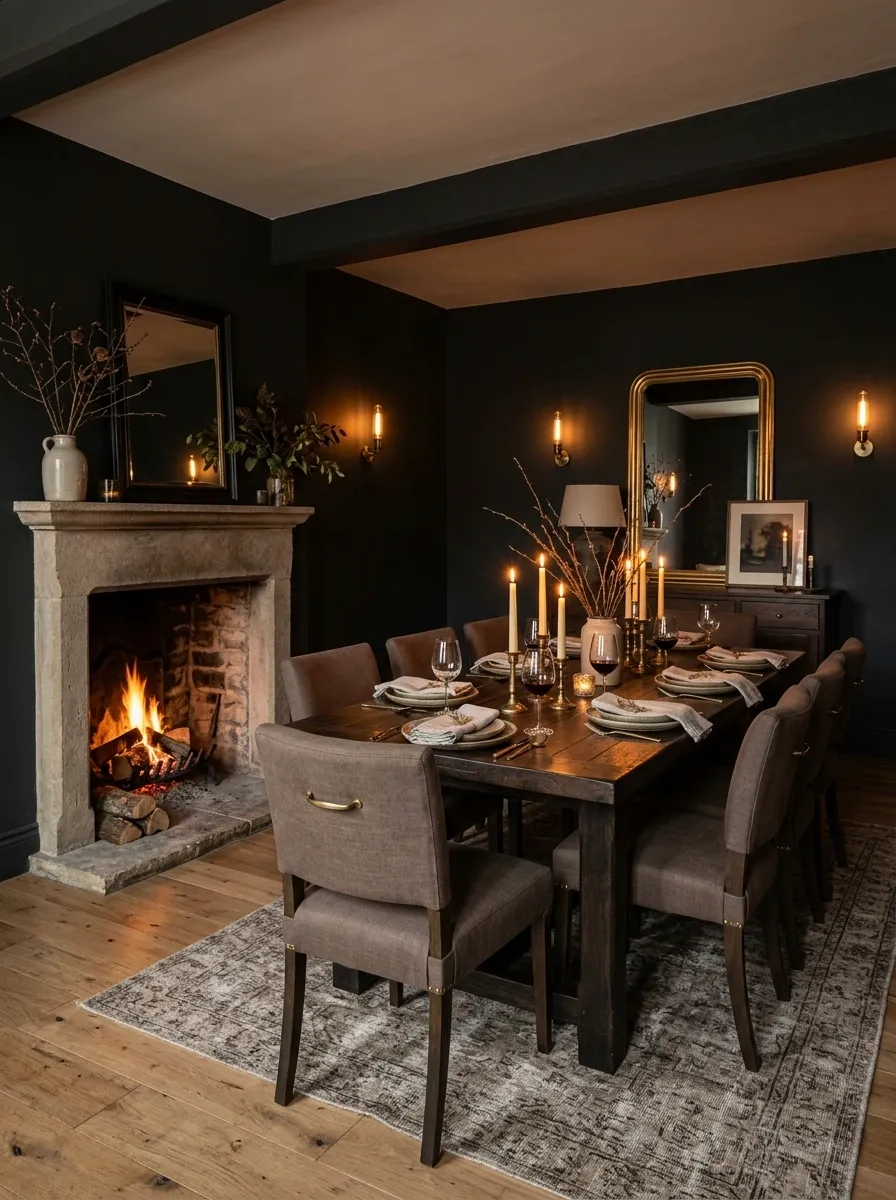
Deep painted walls give this dining room a more intimate evening character, while a fireplace, substantial wood table, upholstered chairs, warm sconces, and carefully placed candlelight create several layers of glow.
The darker background helps the warm light become part of the room’s architecture. Rather than illuminating every surface equally, the lighting concentrates attention around the fireplace and dining table.
This approach suits dining spaces used mostly after dark. Keep the surrounding finishes quiet so the small areas of warm illumination feel intentional instead of scattered.
Cozy Entryway With a Wood Bench, Runner, and Warm Wall Color
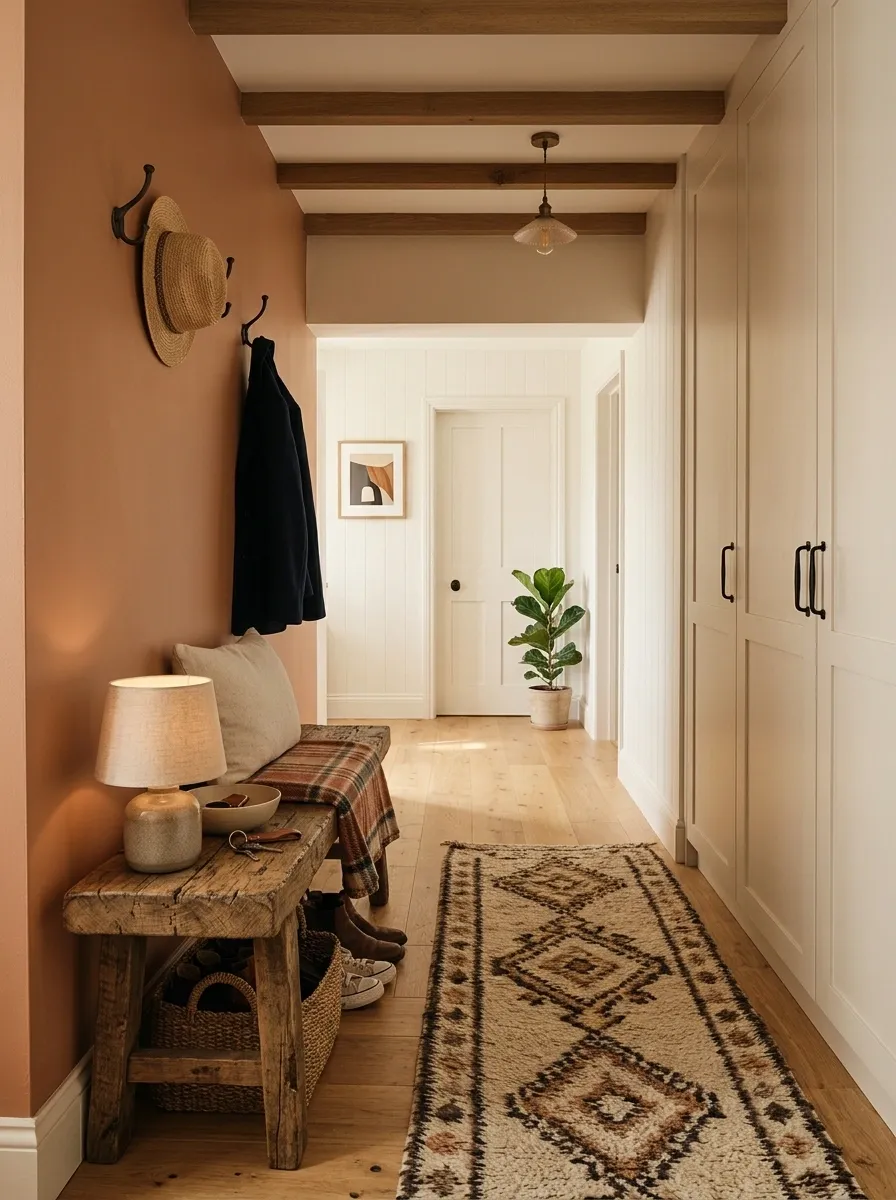
A narrow entryway becomes part of the home’s overall atmosphere through a substantial wood bench, textured runner, practical hooks, closed storage, and a small lamp. Warm wall paint connects the separate elements and prevents the entrance from feeling like a purely functional passage.
The bench creates a visual stopping point while also providing a useful place to sit. The runner gives the narrow floor some definition, and the lamp introduces a softer source of light than a bright overhead fixture.
Keep the storage visually contained. A calm entry works better when everyday items have a clear home instead of becoming part of the decoration.
Layered Home Office With a Wood Desk and Upholstered Chair
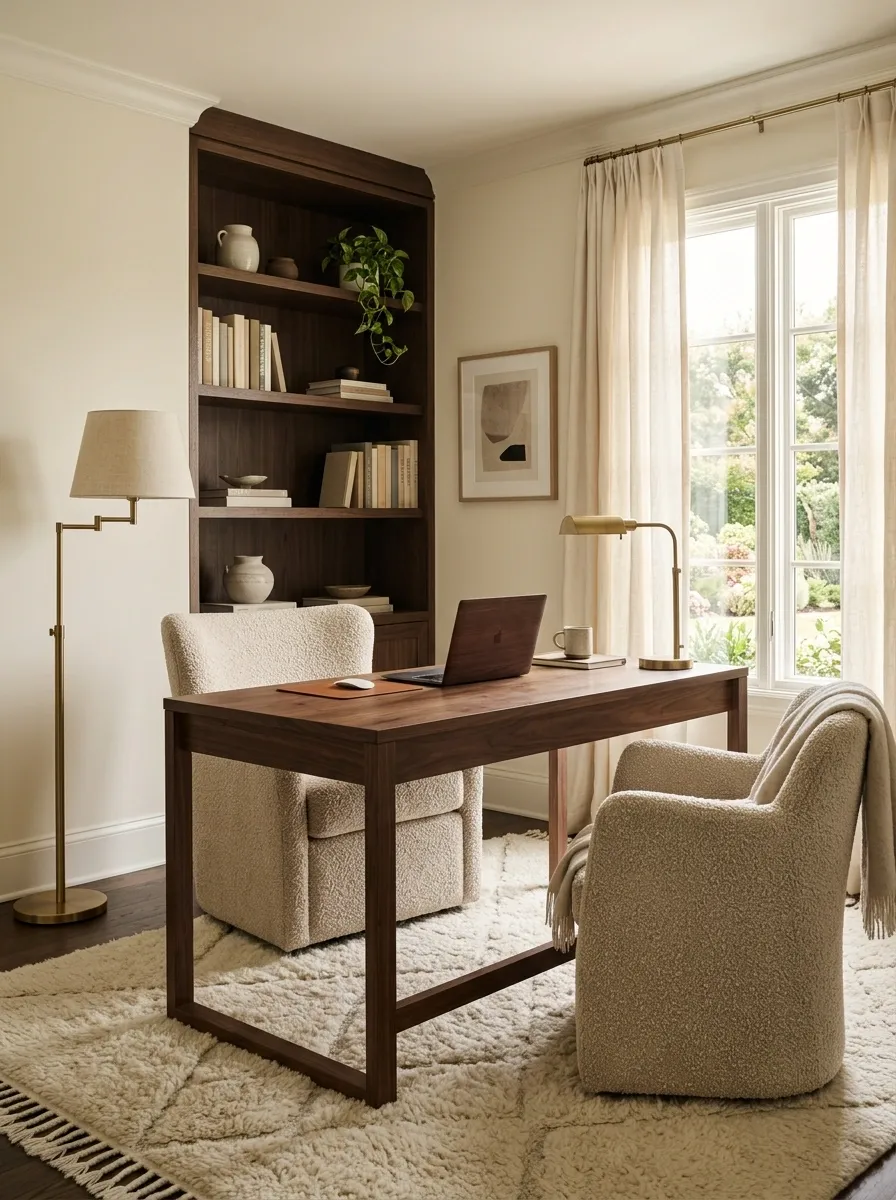
This home office feels like part of a house rather than a corporate workspace. A substantial wood desk sits beside an upholstered chair, while linen curtains, a floor lamp, a textured rug, and quiet shelving soften the harder working surfaces.
The wood provides enough visual weight to make the desk feel intentional, while fabric and warm lighting prevent the room from becoming overly formal. Shelving stays selectively styled rather than packed from edge to edge.
The result is a workspace with enough structure for focused work and enough softness to remain visually connected to the rest of the home.
Cozy Bathroom With Limestone, Walnut, and Soft Lighting
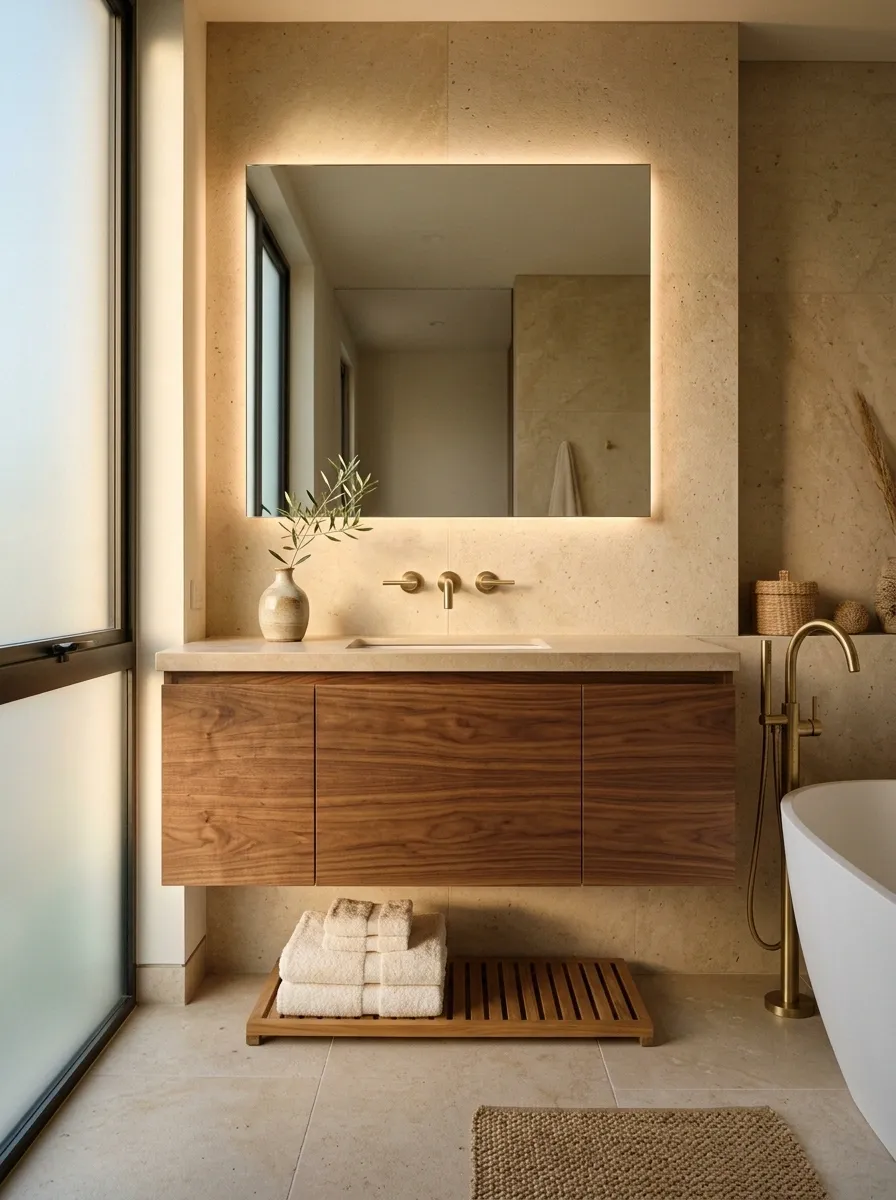
Warm limestone gives this bathroom a quiet architectural foundation, while walnut cabinetry, brushed metal fixtures, soft towels, and carefully positioned lighting make the hard surfaces feel more residential.
The combination works because the materials occupy different visual roles. Stone provides the broadest surface, walnut adds warmth at the vanity, metal introduces restrained contrast, and textiles soften the smallest areas.
Avoid filling the counters with decorative objects. A bathroom feels more luxurious when the major materials remain visible and everyday necessities have been given concealed storage.
Small Bathroom With Cream Tile and Vintage-Inspired Fixtures
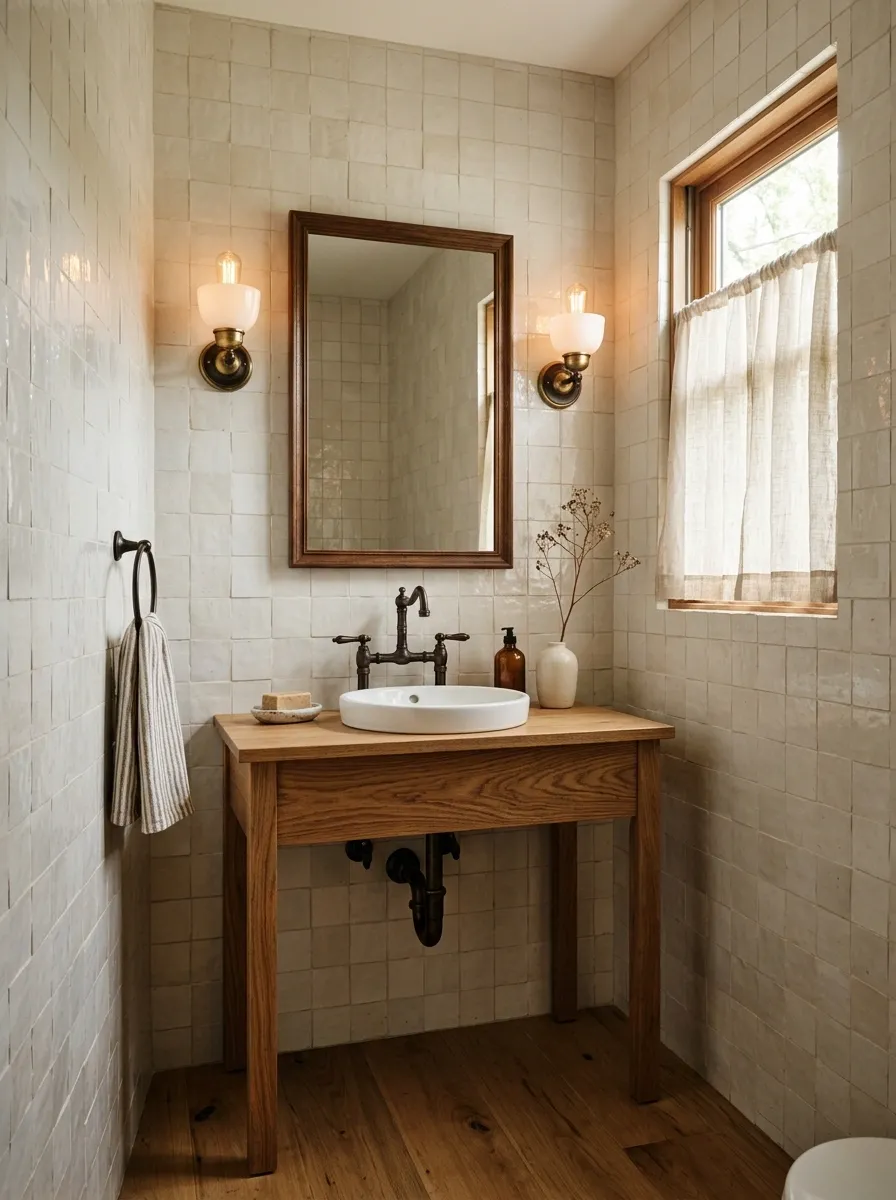
Small-format cream tile covers the walls of this compact bathroom, while a wood vanity, traditional fixtures, a framed mirror, soft fabric at the window, and warm lighting create a more intimate composition.
The tile establishes a continuous light background, allowing the wood vanity and darker fixtures to provide definition. Instead of adding many decorative accessories, the design gets character from the proportions and finish of the permanent elements.
In a smaller bathroom, consistency matters. Carrying the same warm family through the tile, wood, and lighting helps the space feel considered rather than pieced together.
Cozy Hallway With Warm Paint, Framed Art, and Soft Lighting
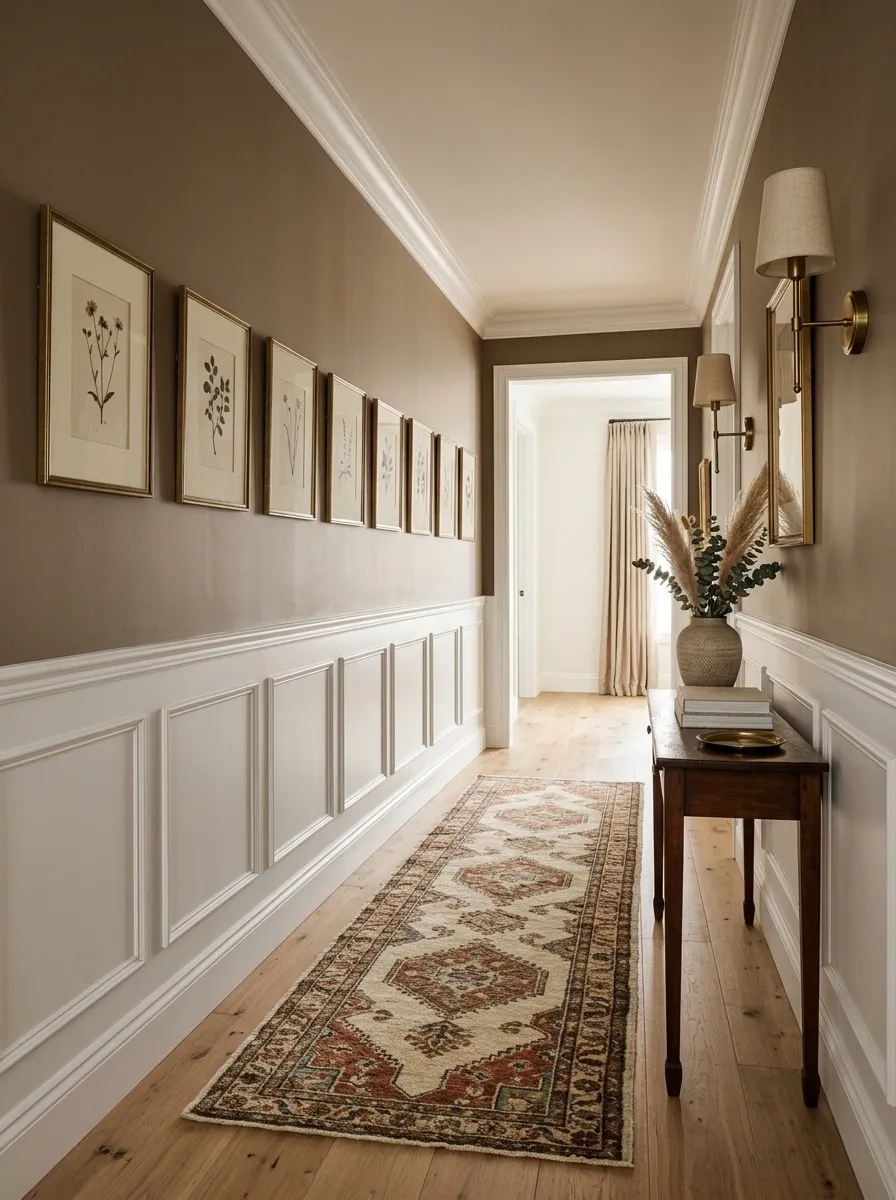
A hallway becomes much more inviting when it is treated as a real part of the home rather than leftover circulation space. Warm paint creates the base, while framed artwork, a narrow runner, architectural trim, and discreet lighting build a sense of rhythm down the corridor.
The artwork doesn’t need to cover every wall. A few pieces with consistent spacing can create a deliberate visual sequence while leaving enough negative space around them.
The runner provides a long horizontal element that connects the entire hallway. Soft lighting then repeats that rhythm after dark.
Sunroom With Wicker Furniture, Linen, and Abundant Plants
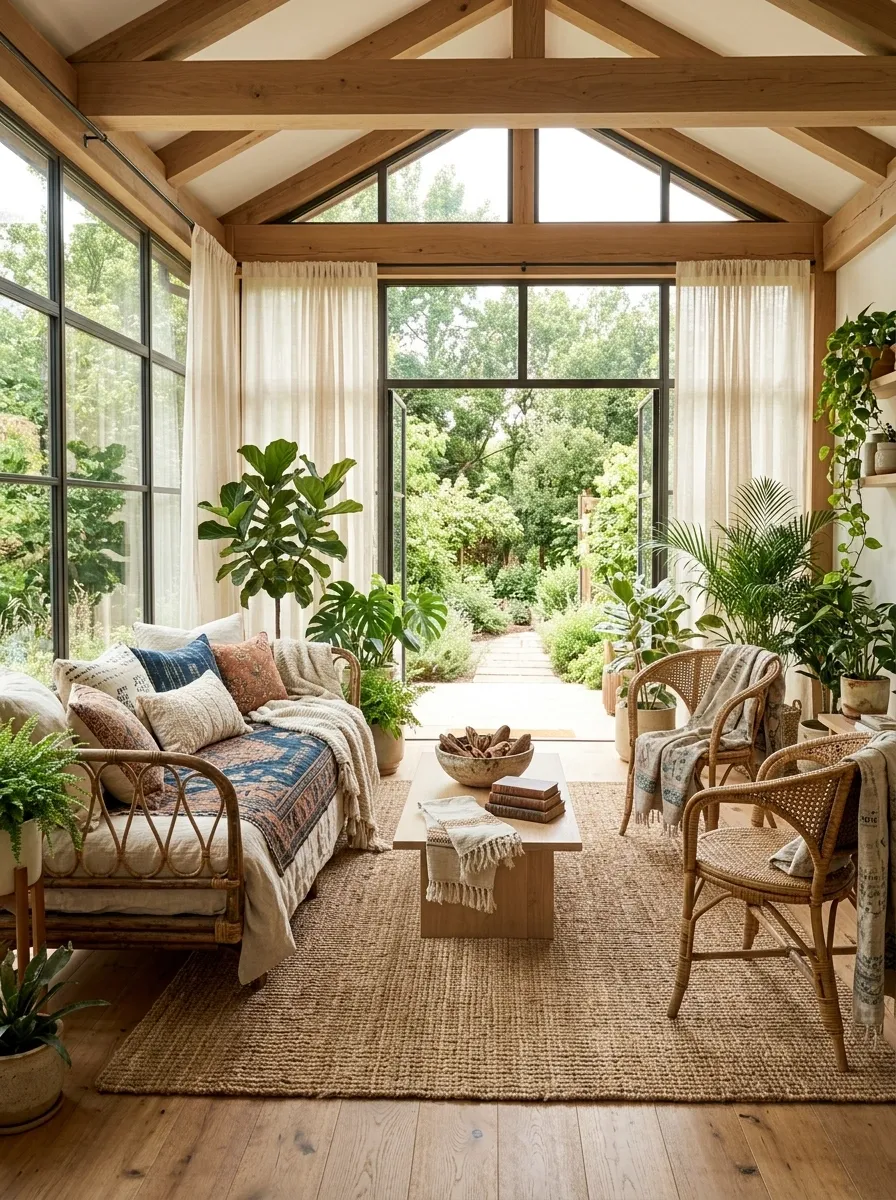
This sunroom takes a lighter approach to coziness. Woven furniture, linen cushions, pale wood, leafy plants, relaxed curtains, and a textured rug soften the abundant daylight without blocking it.
The woven surfaces create visual warmth without making the room dark. Linen keeps the seating relaxed, while greenery introduces height and variation around the edges of the room.
The strongest version of this look leaves some space around the plants. A sunroom should still feel connected to the natural light coming through the windows instead of becoming a dense indoor jungle.
Layered Family Room With a Sectional, Ottoman, and Built-In Shelving
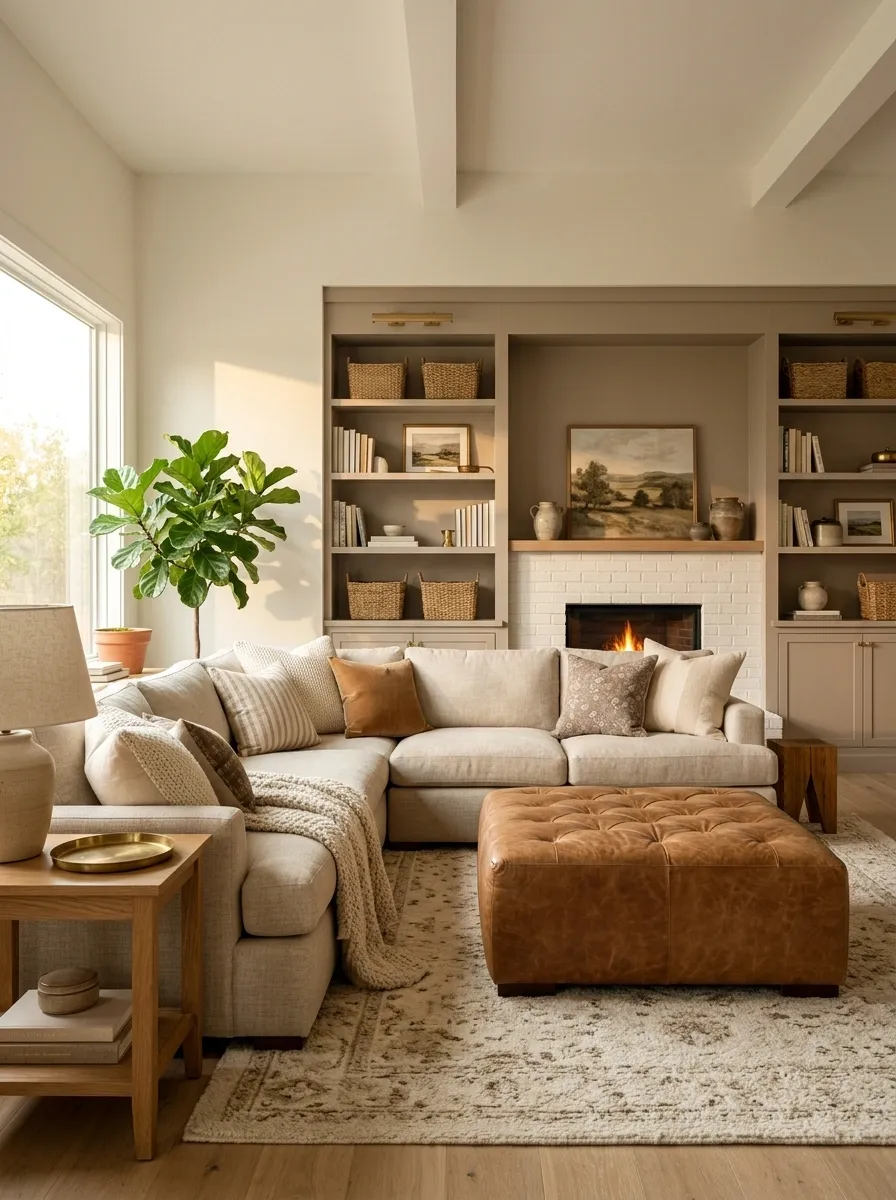
A generous sectional gives this family room a comfortable center, while an oversized ottoman provides a practical surface that doesn’t interrupt the seating arrangement. Built-in shelving surrounds the room with books, baskets, artwork, and a few personal objects.
The composition feels lived in because every major element supports everyday use. The sectional encourages lounging, the ottoman keeps the center flexible, and the shelving absorbs both storage and display.
Keep the built-ins visually varied but not overloaded. A mixture of books, empty space, baskets, and a few larger objects feels more relaxed than filling every shelf edge to edge.
Cozy Winter-Inspired Room With Rust, Cream, and Natural Wood
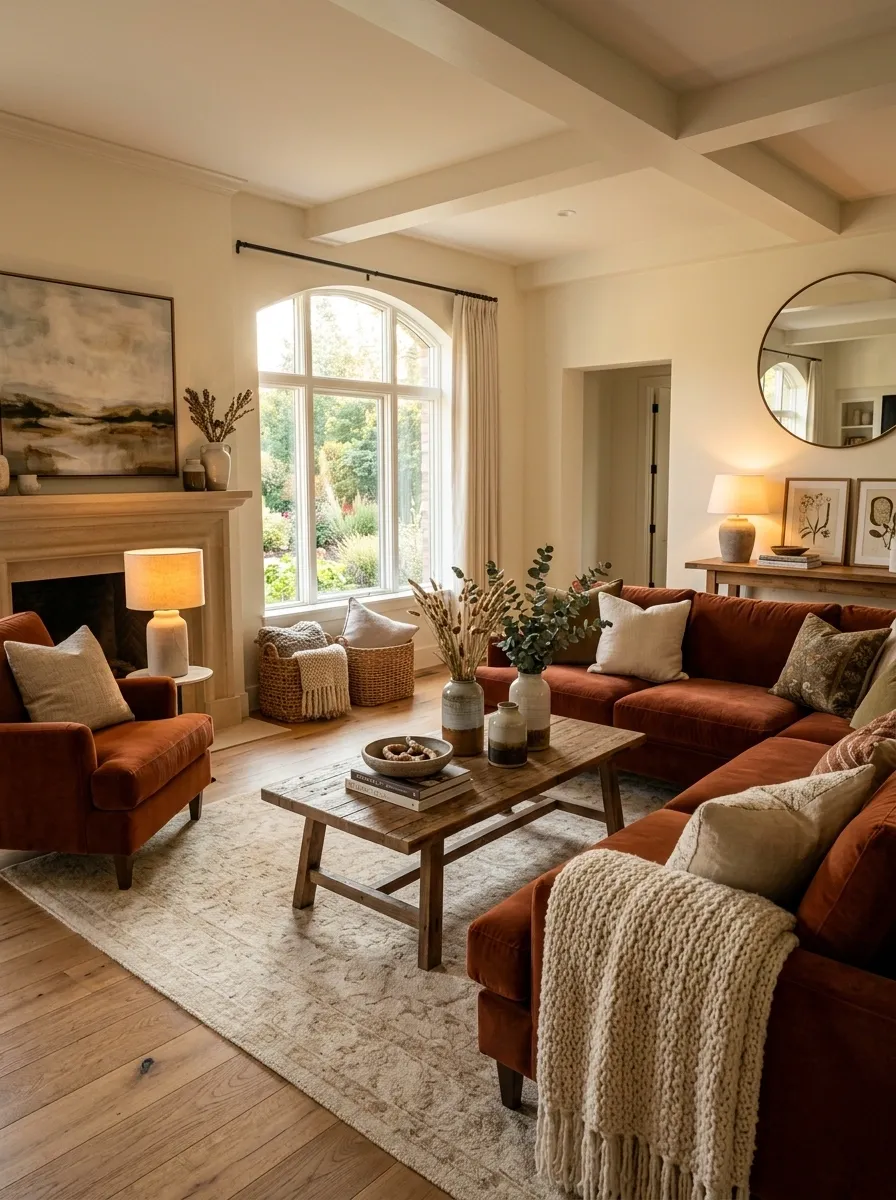
Rust-colored upholstery gives this room its seasonal character, while cream walls, natural wood, chunky textiles, and warm lamps keep the setting grounded throughout the year.
The palette feels winter-inspired without relying on obvious seasonal decorations. Rust supplies the stronger color, cream creates space around it, and wood provides the visual foundation.
This type of cozy room works because the seasonal feeling comes from materials and color rather than themed objects. The same foundation can remain in place as the seasons change.
Collected Cozy Home With Mixed Woods, Vintage Pieces, and Modern Upholstery
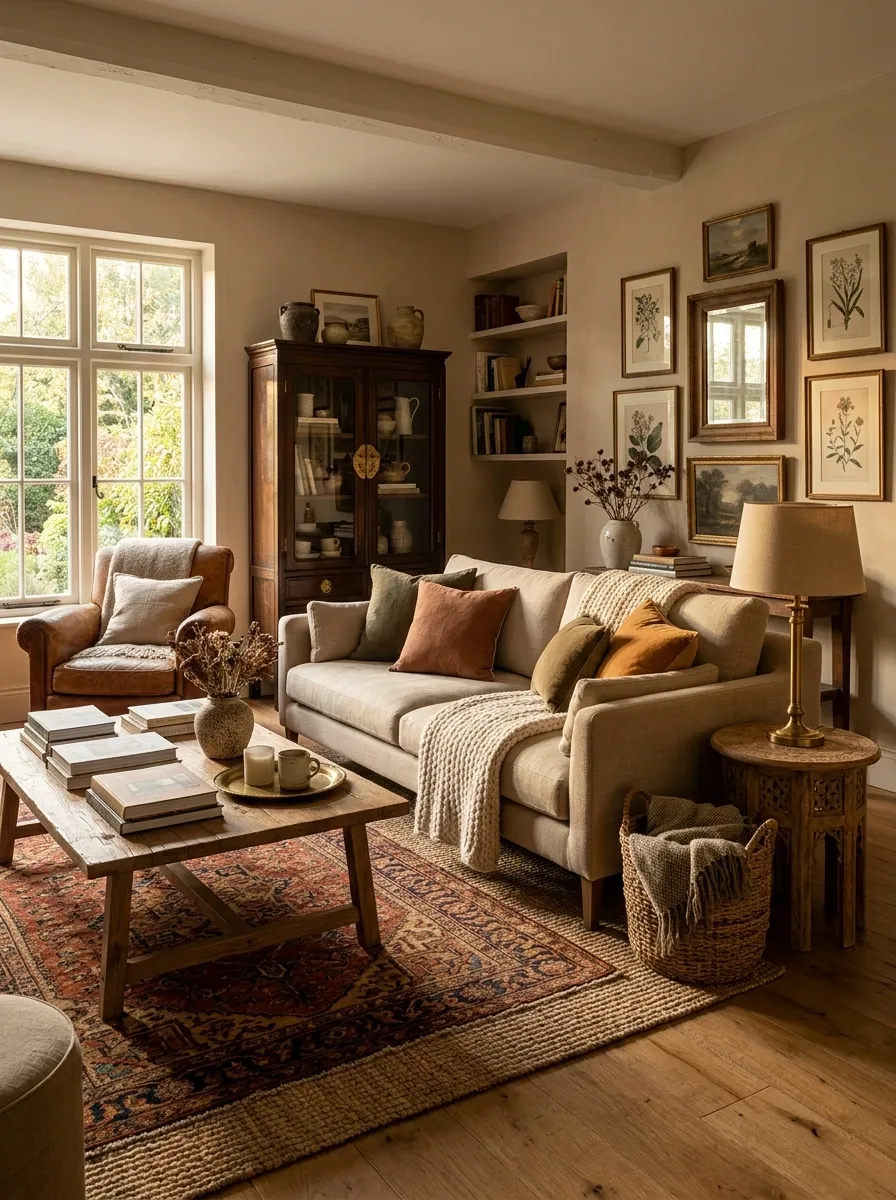
The final design direction feels accumulated rather than matched. Mixed wood tones sit alongside vintage furniture, modern upholstery, framed artwork, books, layered rugs, warm lamps, and personal objects.
The room stays cohesive because the pieces share common undertones and proportions even when their styles differ. A modern sofa can sit comfortably beside an older cabinet when the surrounding colors and scale create a visual bridge.
This is the most flexible approach in the collection. Rather than trying to make every piece belong to one period, build the room around a consistent sense of scale, warmth, and comfort.
Make the Whole Home Feel Like It Belongs Together
Coziness becomes much easier to achieve when the room is treated as a complete composition instead of a series of small decorating decisions. A warm wall color won’t carry an otherwise uncomfortable room, and a pile of soft textiles won’t fix furniture that is too small or lighting that is too harsh.