
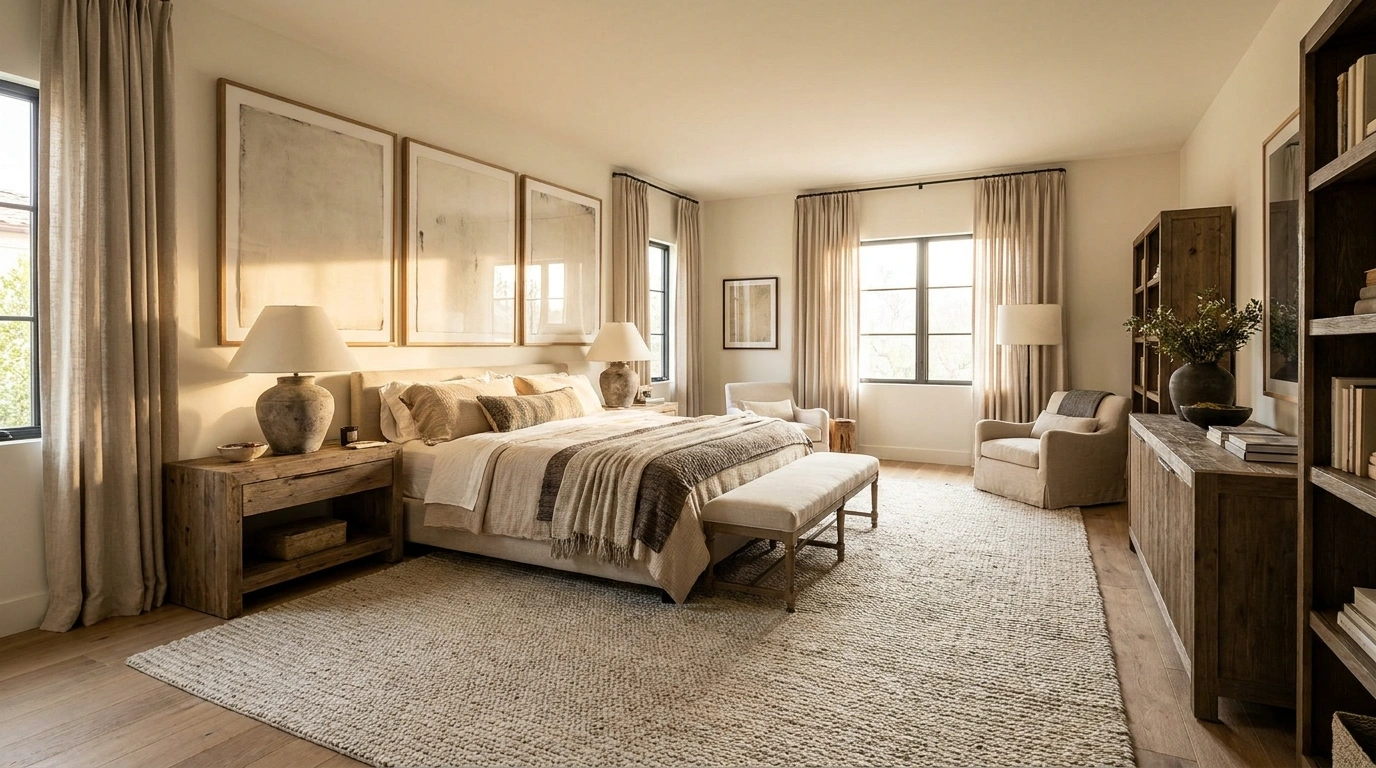
A spacious bedroom can create a surprisingly awkward decorating problem: the bed is perfectly reasonable, yet somehow it looks lost.
The issue usually isn’t the mattress. It’s the relationship between the mattress and everything around it. A tall ceiling can leave too much empty space above the headboard.
A large rug can look undersized beneath the bed. Tiny nightstands can make the entire sleeping area feel visually weak. Even a beautifully made bed can disappear when the surrounding walls, furniture, and floor area are much larger than the sleeping zone.
The solution is to stop treating the bed as a standalone piece of furniture.
The bedrooms in this collection use complete compositions to change how the bed is perceived. Some build height with architectural details. Others create width with oversized headboards, rugs, cabinets, or artwork.
Some use lighting and textiles to give the sleeping area more volume, while others divide a large room into purposeful zones.
Bedroom Designs That Make a Bed Feel More Proportionate
Curved Low-Profile Platform Bed
A sweeping, low-profile upholstered frame commands attention through sheer width rather than height. In this expansive bedroom, the extended curved headboard stretches generously across a dark wood accent wall, creating a massive horizontal anchor that grounds the entire floating mattress arrangement.
The clever integration of small side tables directly into the extended headboard design eliminates empty gaps and keeps the furniture footprint unified. A chunky matching bench at the foot of the bed further extends the visual mass, ensuring the centerpiece commands the room.
Soft textures and a restrained palette of cream and deep green prevent the wide setup from feeling overwhelming. By expanding outward rather than upward, this layout effortlessly fills a spacious floor plan while maintaining an inviting, cozy atmosphere.
Floor-to-Ceiling Upholstered Headboard With Layered Neutral Bedding
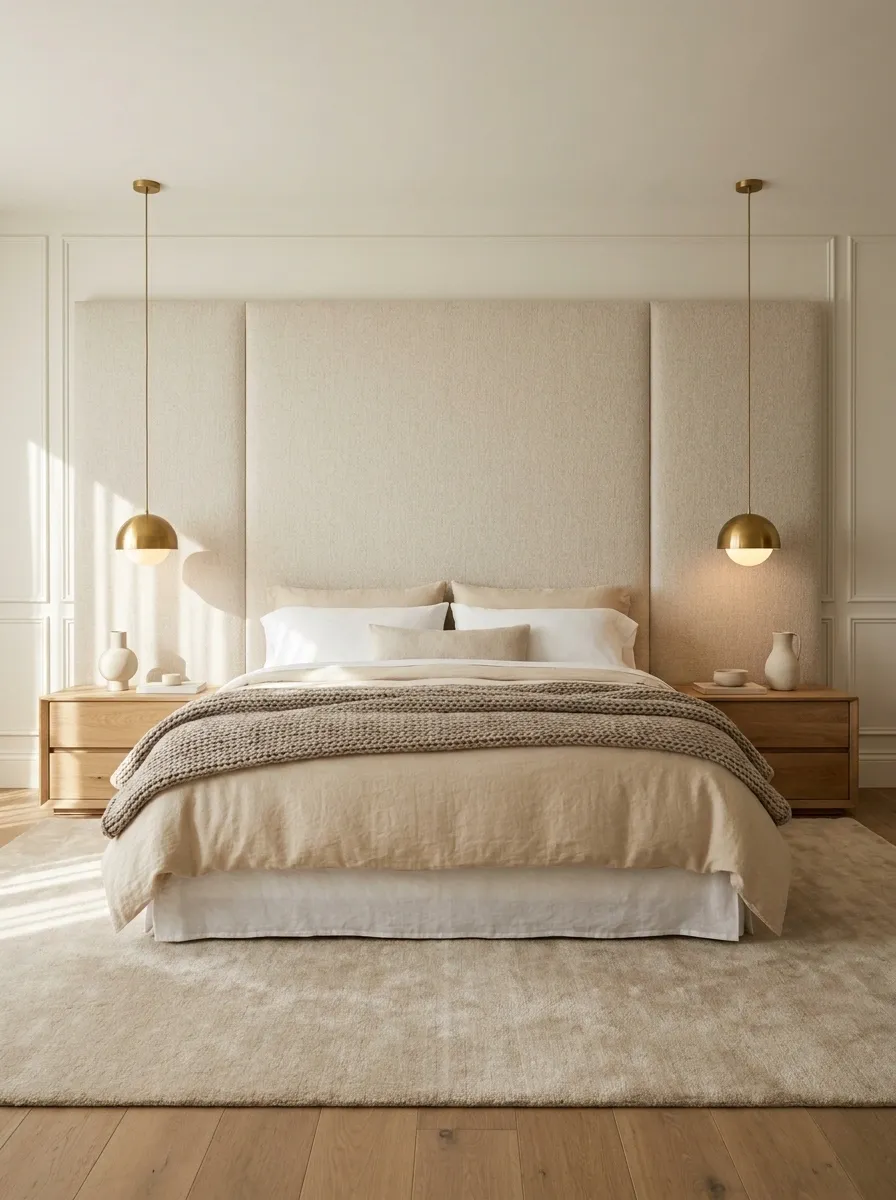
A tall upholstered headboard immediately gives the bed more architectural presence. In this bedroom, the headboard rises almost to the ceiling, creating a broad vertical backdrop behind a softly layered linen bed. Wide nightstands, warm pendant lights, and a generous rug continue that sense of scale without making the room feel crowded.
The neutral palette matters here. Cream, oatmeal, warm beige, and soft taupe allow the large headboard to remain visually substantial without becoming harsh. A smaller bed can hold its own in a spacious room when the wall behind it has enough presence.
High and wide enough to create a strong backdrop.
Becomes the center of a larger visual mass.
Keep the palette quiet so the scale reads clearly.
Fireside Wingback Headboard Wall
A towering black wingback headboard with an integrated fireplace feature introduces an undeniable sense of scale and luxury. The dramatic vertical fins draw the eye upward, while the wide footprint establishes a commanding presence that easily fills a tall, airy bedroom.
Flanking artwork and a large indoor tree help bridge the gap between the tall furniture and the high windows, making the bed feel like part of a carefully curated architectural zone. The dark velvet texture absorbs light, giving the massive structure a grounded, substantial weight without feeling bulky.
Layered neutral bedding in crisp whites and warm taupes softens the deep black tones, creating a welcoming contrast. This design proves that a bed can easily anchor a vast room when it combines soaring height with cozy, functional focal points.
Oversized Rug Anchoring a Standard Bed
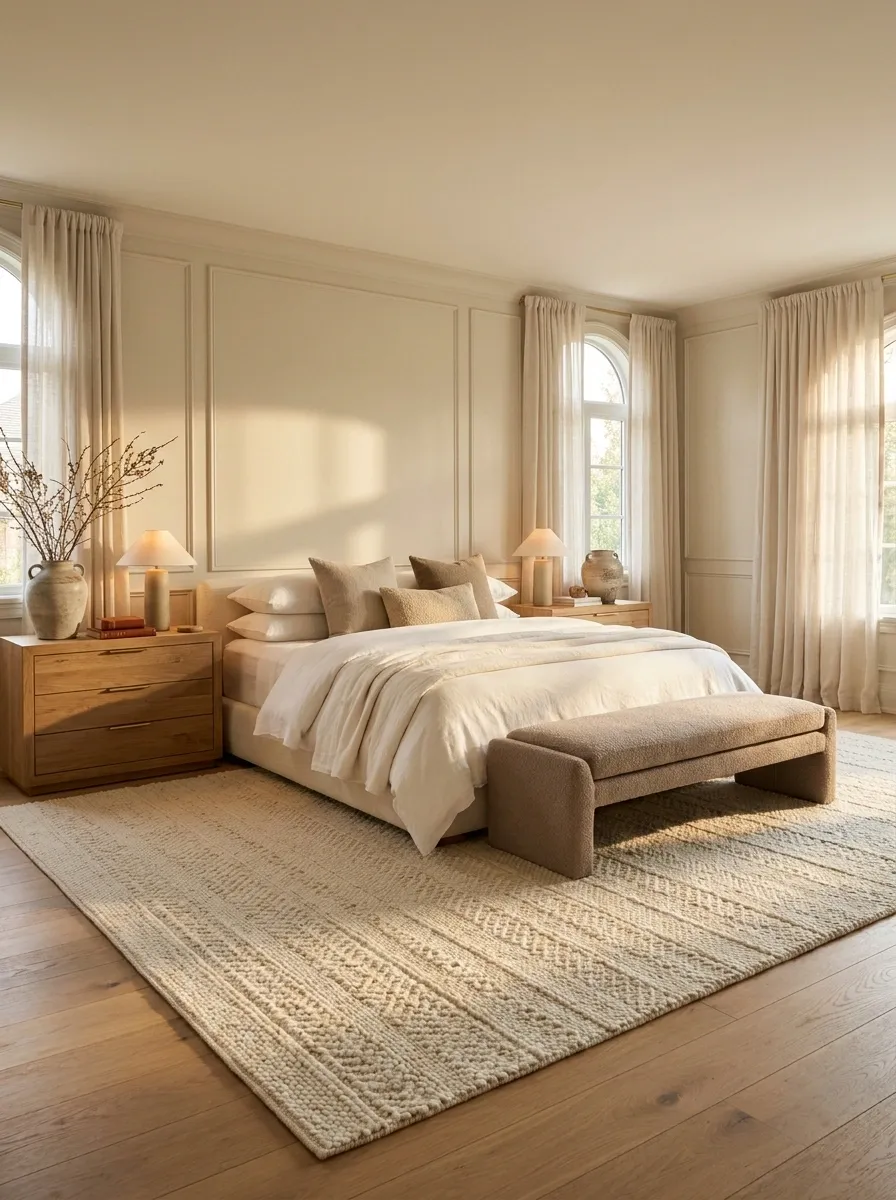
An oversized rug can change the perceived footprint of the entire sleeping area. Instead of ending close to the mattress, the rug extends generously beyond the bed and under the major surrounding furniture. A substantial bench at the foot, wide nightstands, and full curtains reinforce the larger visual zone.
This approach works especially well in rooms where the floor area feels much larger than the bed. The rug essentially draws an invisible boundary around the sleeping arrangement, making the bed feel connected to the furniture around it rather than isolated in the middle of the floor.
extension
extension
Glowing Backlit Marble Headboard
A dramatic dark marble and fluted wood feature wall provides an impenetrable backdrop that instantly bulks up the sleeping zone. Integrated strip lighting traces the perimeter of the paneling and ceiling, framing the bed in a warm glow that establishes a massive architectural footprint within the dark room.
Matching dark nightstands and a heavy charcoal rug extend the footprint of the bed outward, anchoring the mattress firmly within the vast space. The dark monochromatic palette wraps around the sleeping area, turning an ordinary bed into a moody, immersive destination.
Subtle textures in the bedding and minimal accessories keep the focus entirely on the grand scale of the illuminated wall installation. In a room dominated by shadows and high ceilings, this luminous framing technique ensures the bed remains the undisputed hero of the space.
Statement Wall Behind the Bed With Dark Architectural Contrast
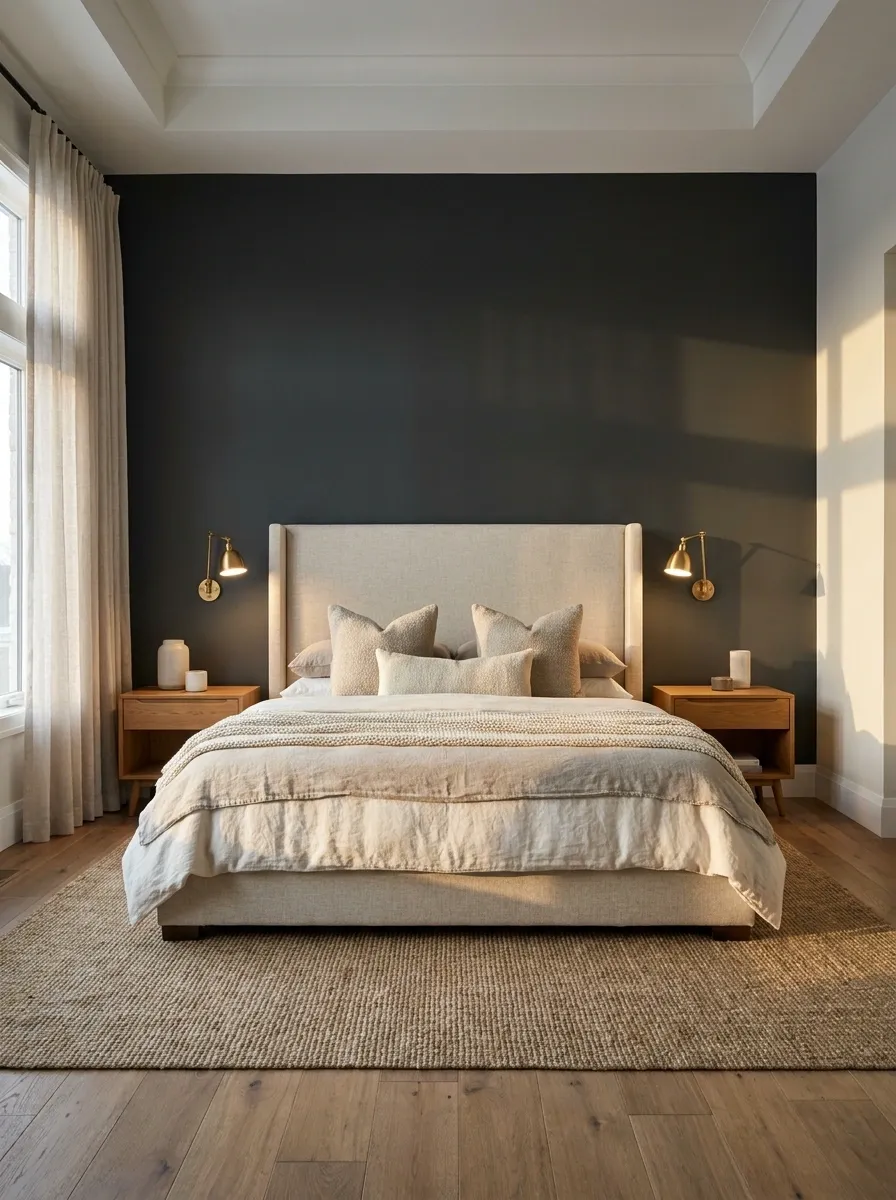
A deep olive, charcoal, or muted brown wall gives a bed something powerful to sit against. In this composition, the darker backdrop creates a clear visual boundary, while warm wood nightstands, softly textured bedding, and restrained lighting prevent the room from feeling heavy.
The contrast is doing more than adding drama. It gives the bed a defined destination. Instead of disappearing into a large pale room, the mattress and headboard become part of one strong architectural zone. This works particularly well when the bedroom already has tall ceilings or generous floor space.
Gives the sleeping zone a defined boundary.
Warm wood keeps the darker wall grounded.
Soft neutrals keep the focal wall from overpowering the room.
Full-Width Built-In Headboard Wall
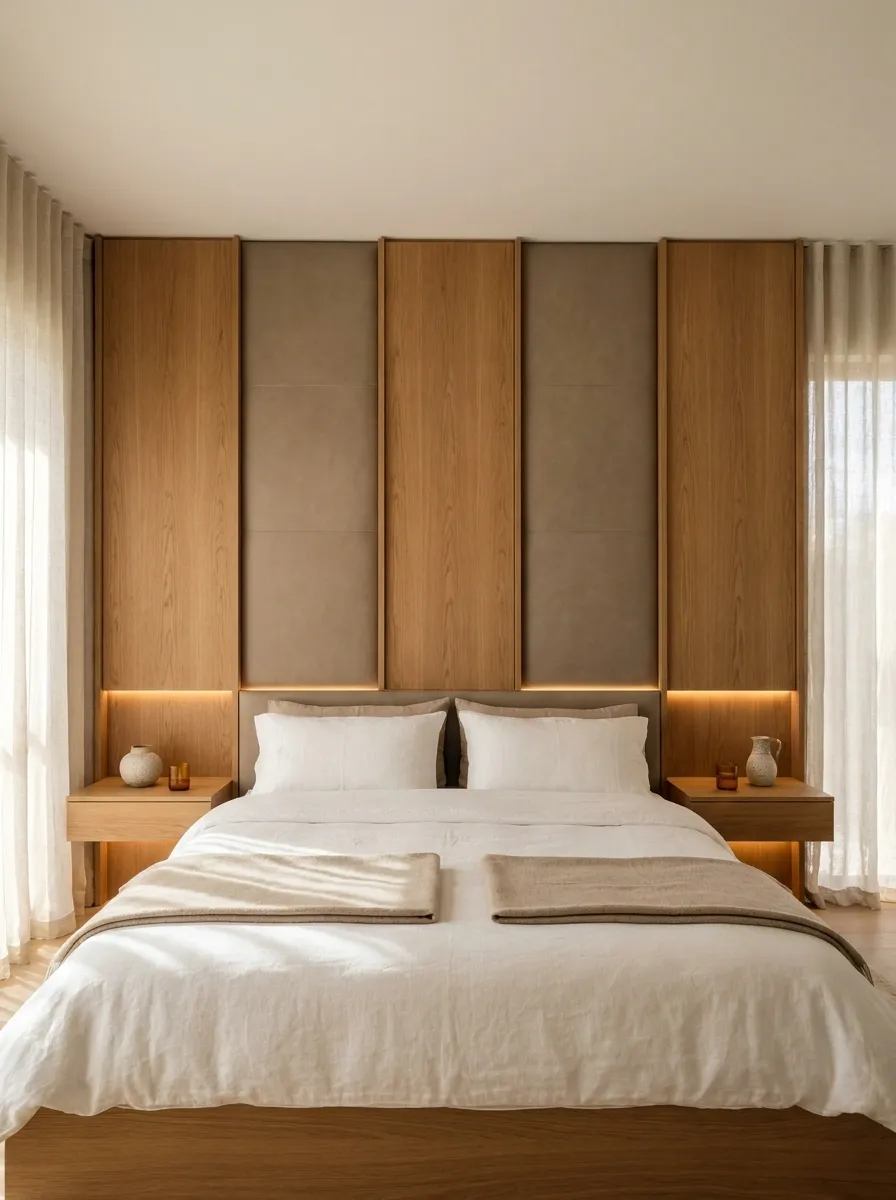
A built-in headboard wall can make a normal bed feel like part of a much larger architectural feature. Here, the composition stretches across the entire wall, combining warm wood, upholstered sections, integrated bedside tables, and soft lighting. The mattress becomes the center of the installation instead of a separate object placed against a blank wall.
This solution is especially effective in large bedrooms because it uses the wall itself to establish scale. The continuous width creates a strong horizontal line, while the central bed remains easy to identify. Keeping the finishes limited to two or three materials prevents the built-in from becoming visually busy.
storage
anchored by the full wall
storage
Four-Poster Bed With Soft Draped Curtains
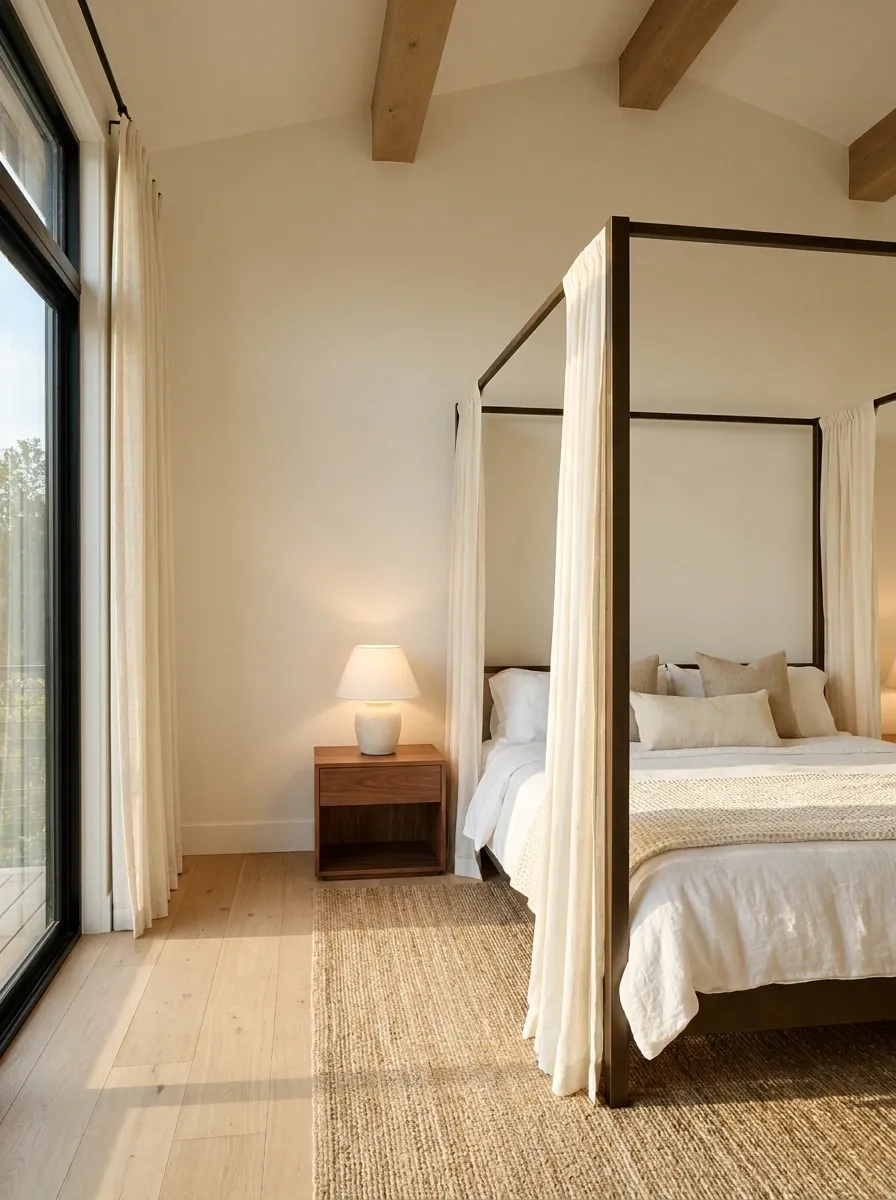
A four-poster frame gives the bed immediate vertical authority. Instead of allowing a spacious bedroom to visually swallow the mattress, the tall structure creates a defined room within the room. Soft curtains add another layer of scale, while simple bedding and warm lighting keep the effect relaxed.
The strength of this design comes from structure rather than decoration. The posts establish clear vertical lines, and the fabric adds softness without requiring a complicated collection of accessories. In a room with high ceilings, that extra height helps the sleeping area feel appropriately substantial.
with vertical presence
Large Pendant Lights Framing a Low Bed
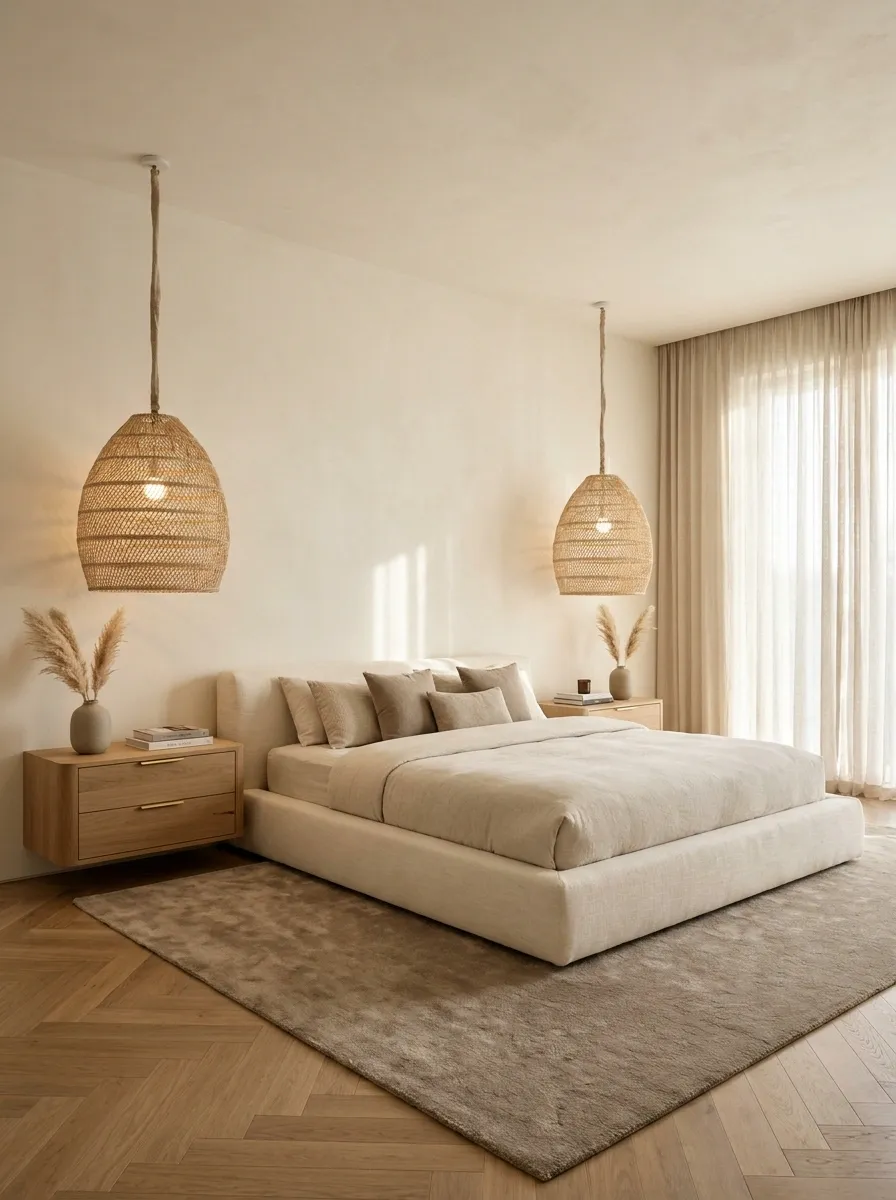
A low-profile bed can feel substantial when the elements around it create enough vertical and horizontal weight. Here, oversized pendant lights hang beside the mattress, while wide nightstands, warm wood, and a generous rug establish a clear sleeping zone. The arrangement gives the eye several strong points of reference instead of leaving the low bed floating in open space.
The pendants should hang low enough to feel connected to the bedside furniture while leaving comfortable clearance. Keeping the bed itself simple allows the lighting and surrounding architecture to create the visual scale.
Vertical presence
Grounded center
Vertical presence
Wide Horizontal Headboard With Integrated Nightstands
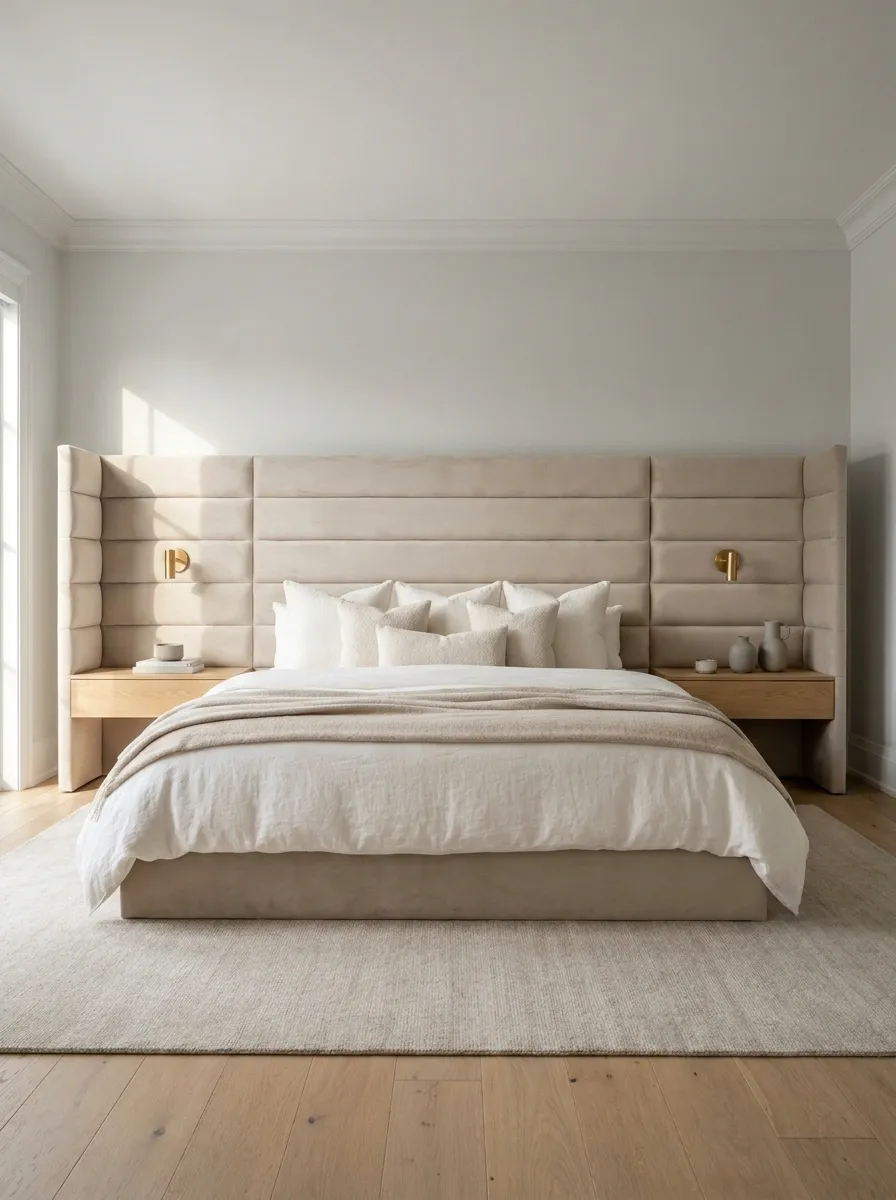
A bed can look undersized when the mattress has no visual extension beyond its own edges. A wide upholstered headboard solves that problem by stretching the sleeping zone several inches or even feet beyond the mattress on both sides.
Integrated nightstands continue the horizontal line, while wall-mounted lighting keeps the composition clean. The result feels especially polished in a broad bedroom where a standard bed would otherwise appear too narrow. Soft beige upholstery, warm white bedding, and natural wood keep the enlarged composition from becoming visually heavy.
extension
extension
Layered Bedding That Gives the Bed More Visual Volume
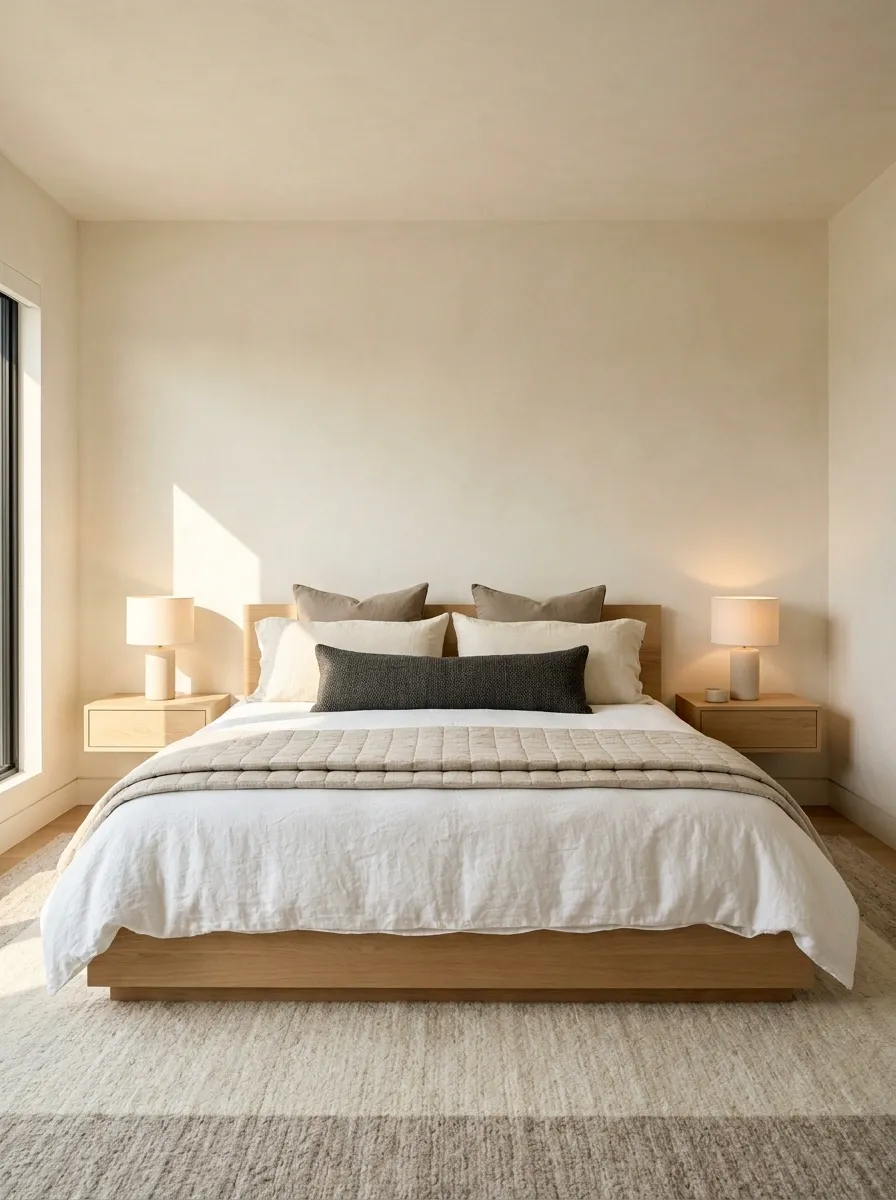
A spacious bedroom can make a neatly made bed look unusually flat and small. This composition solves that problem through layered bedding rather than oversized furniture. A textured duvet, folded coverlet, several substantial pillows, and a long lumbar cushion give the mattress more physical depth.
The surrounding room stays deliberately calm. Warm plaster walls, simple nightstands, soft lamps, and a large rug allow the bedding to remain the dominant feature. The key is controlled layering rather than piling on accessories. Every textile adds shape, texture, or a horizontal line that makes the bed feel fuller.
Symmetrical Built-In Nightstands With Wall Sconces
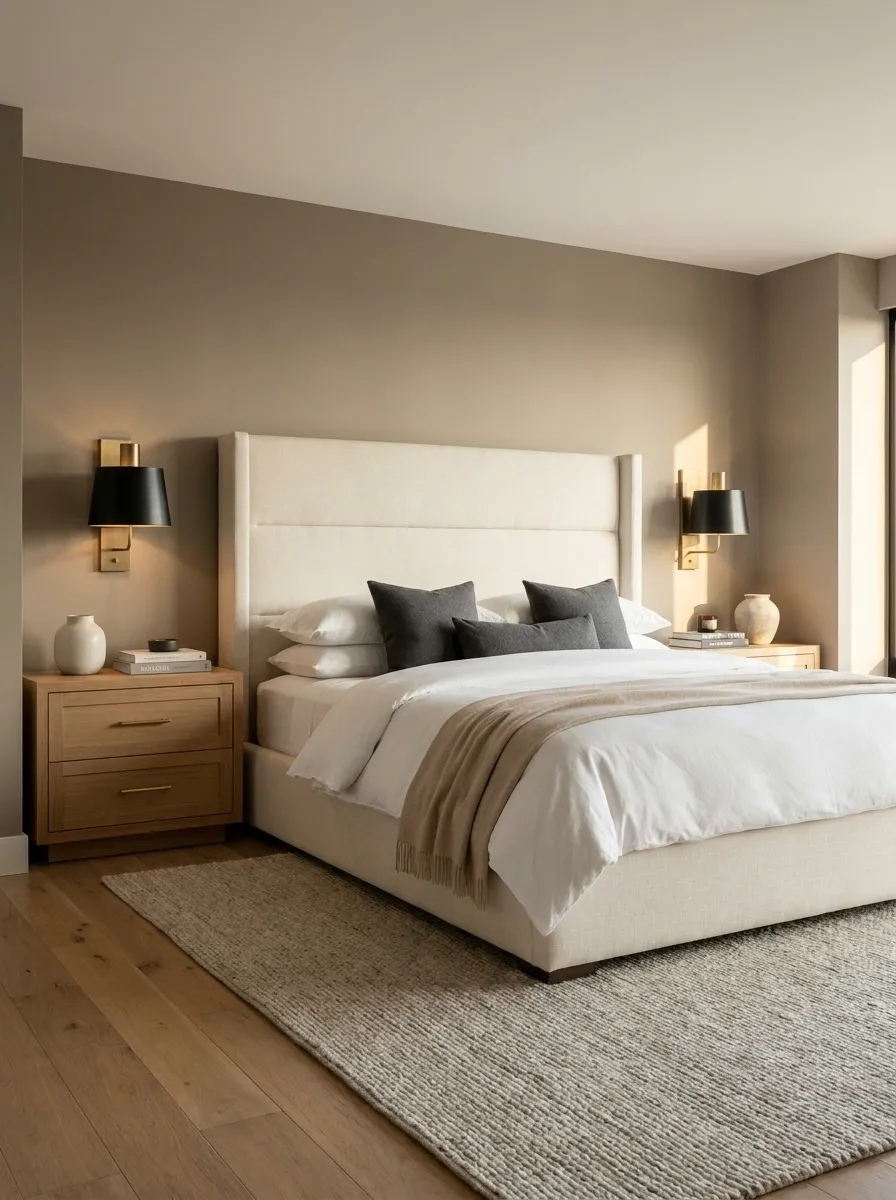
Large bedrooms often benefit from stronger symmetry around the bed. This version uses matching built-in nightstands and substantial wall sconces to create a stable frame on both sides. The mattress becomes the center of a carefully measured composition instead of a standalone piece surrounded by empty wall.
The built-ins are particularly useful because their width adds visual substance without taking up unnecessary floor space. Warm oak or painted cabinetry can introduce enough contrast to distinguish the sleeping zone while keeping the room clean and architectural.
+
built-in
central focal point
+
built-in
Bedroom With a Large Bench and Foot-of-Bed Zone
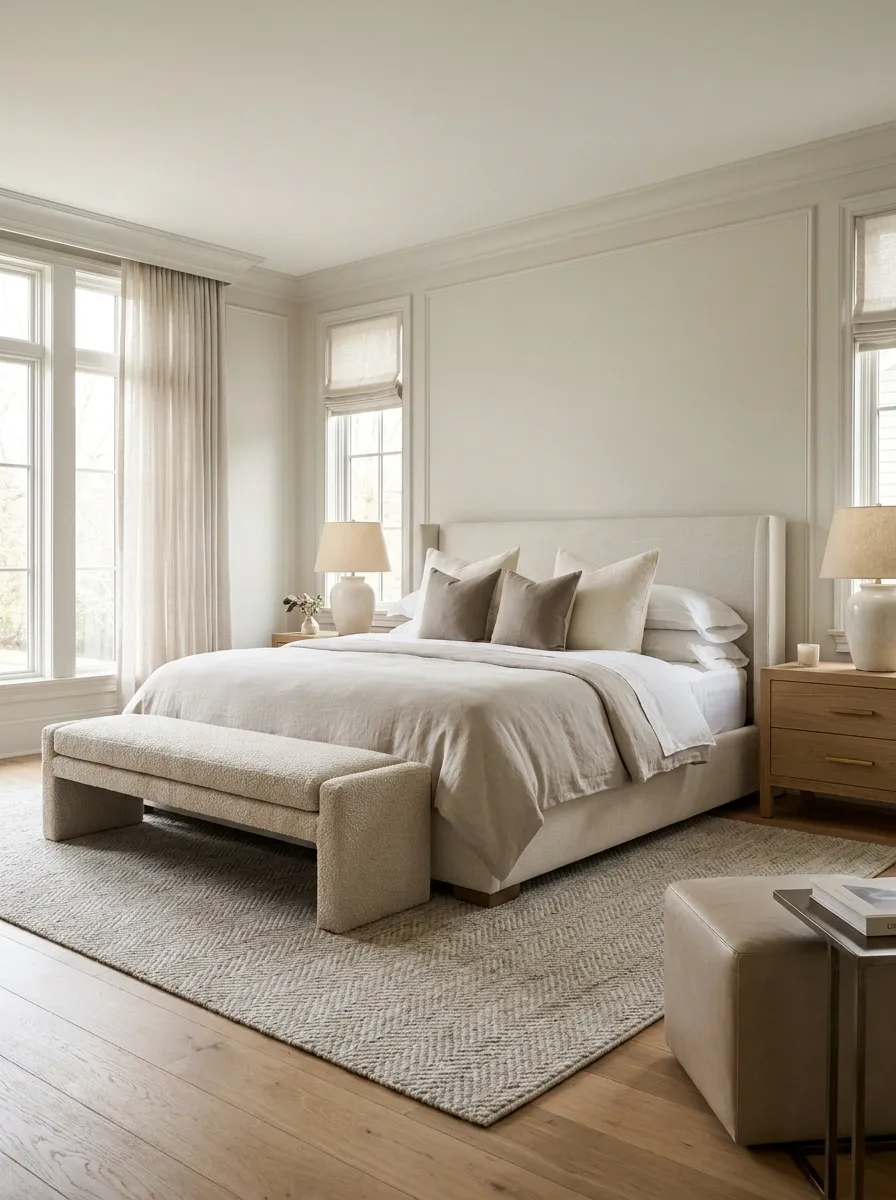
When the room is very large, adding a meaningful zone at the foot of the bed can solve the scale problem better than enlarging the bed itself. A substantial upholstered bench creates a second horizontal element, while a generous rug ties the bench, bed, and nightstands into one connected arrangement.
The space between the bed and bench should remain comfortable enough for daily movement. That practical separation is important because the goal is to create visual fullness without sacrificing circulation. A reading lamp, small side table, or soft ottoman can make the foot-of-bed area feel intentional rather than decorative filler.
Dark Wood Bed in a Warm Tonal Bedroom
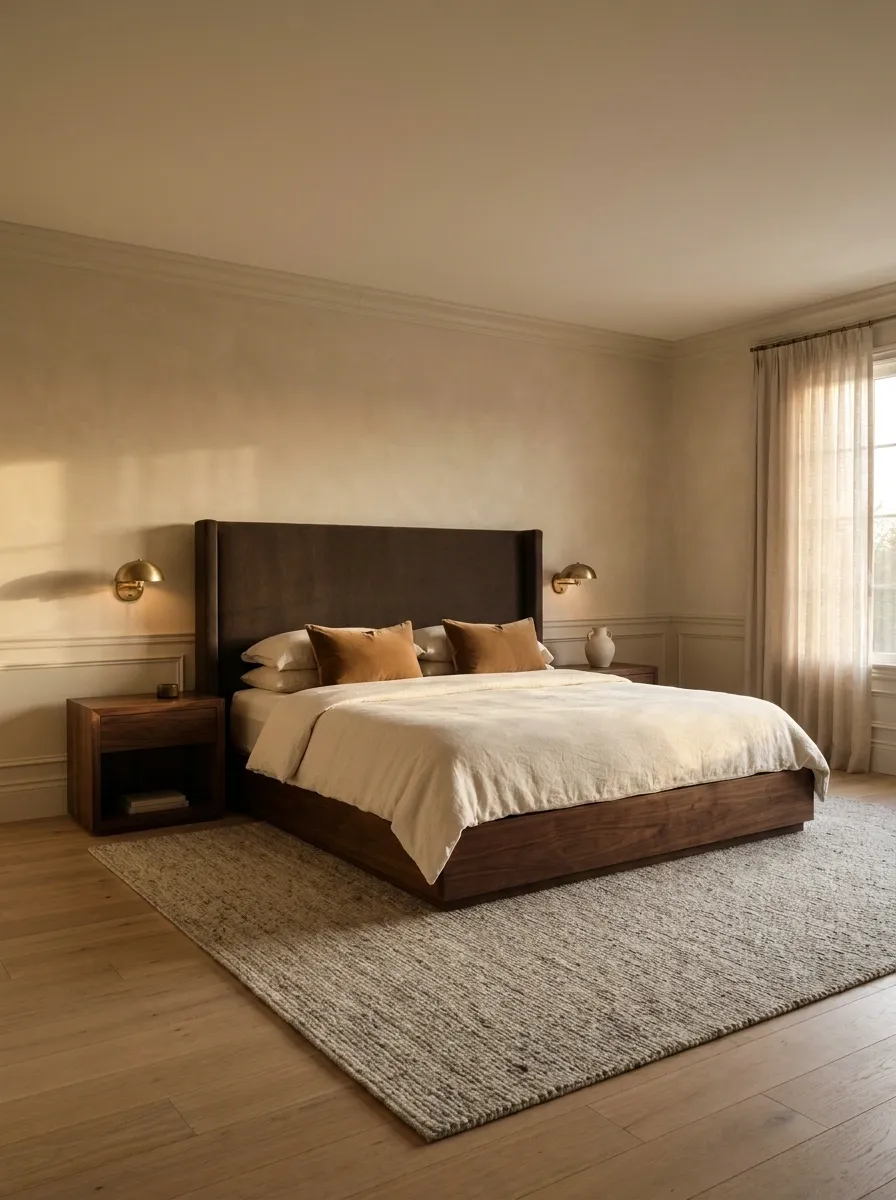
Dark walnut can give a standard bed considerably more visual authority, especially when the surrounding room stays within a warm, restrained palette. This composition uses a substantial walnut frame, cream linen bedding, caramel upholstery, plaster-toned walls, and softly aged brass lighting.
The contrast between the dark frame and lighter textiles gives the bed a clear outline from across the room. Matching wood elsewhere, kept to a few carefully chosen pieces, makes the bed feel connected to the architecture rather than like a single heavy object dropped into a neutral bedroom.
Ceiling Treatment That Visually Connects to the Bed
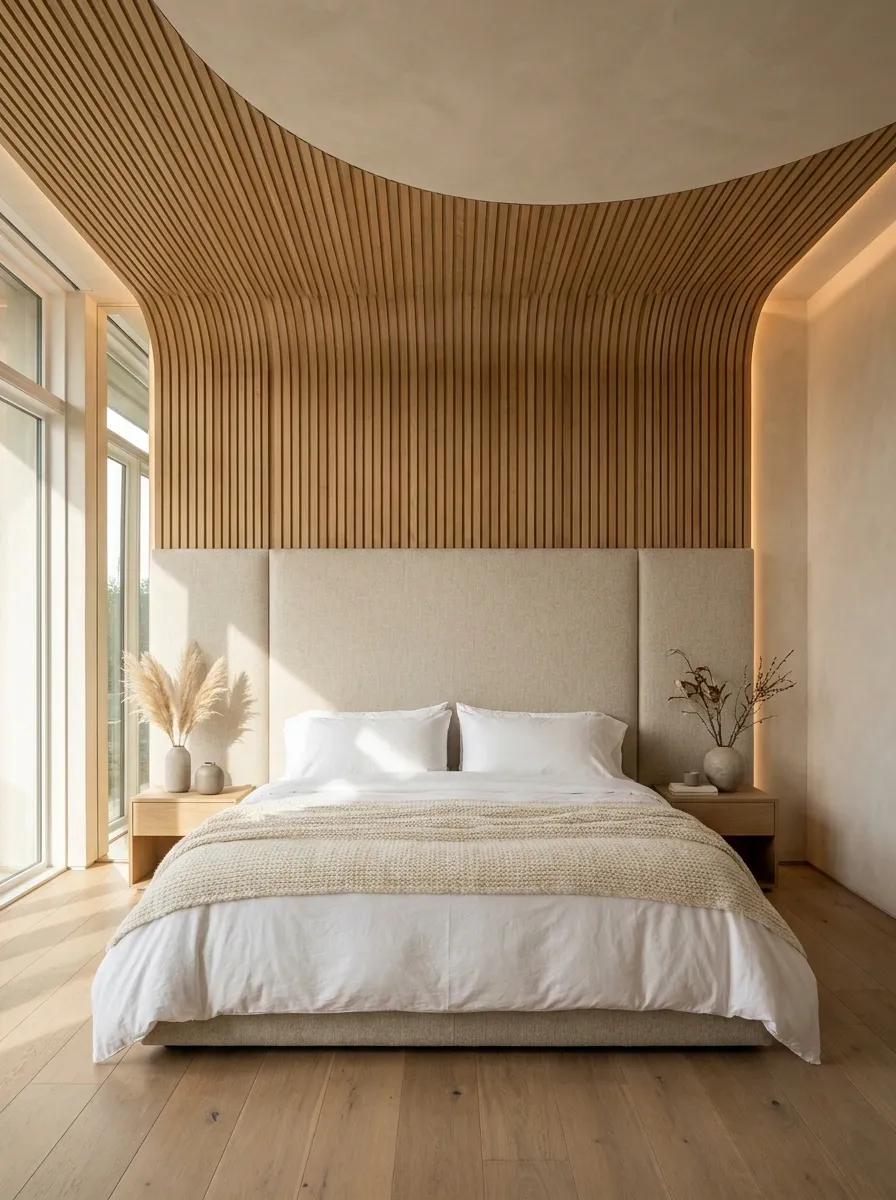
A large bedroom can make the bed feel disproportionately low when there is a great deal of empty vertical space above it. This composition solves that problem by carrying a ceiling detail directly from the headboard area upward.
Warm wood slats, a painted ceiling section, or a recessed architectural frame can create a continuous visual path from the bed to the ceiling. The result makes the sleeping area feel taller and more integrated with the room. Keeping the rest of the furnishings relatively quiet prevents the ceiling treatment from becoming a competing focal point.
Draws the eye upward
Links the architecture to the bed
Large-Scale Curtains Framing the Entire Sleeping Zone
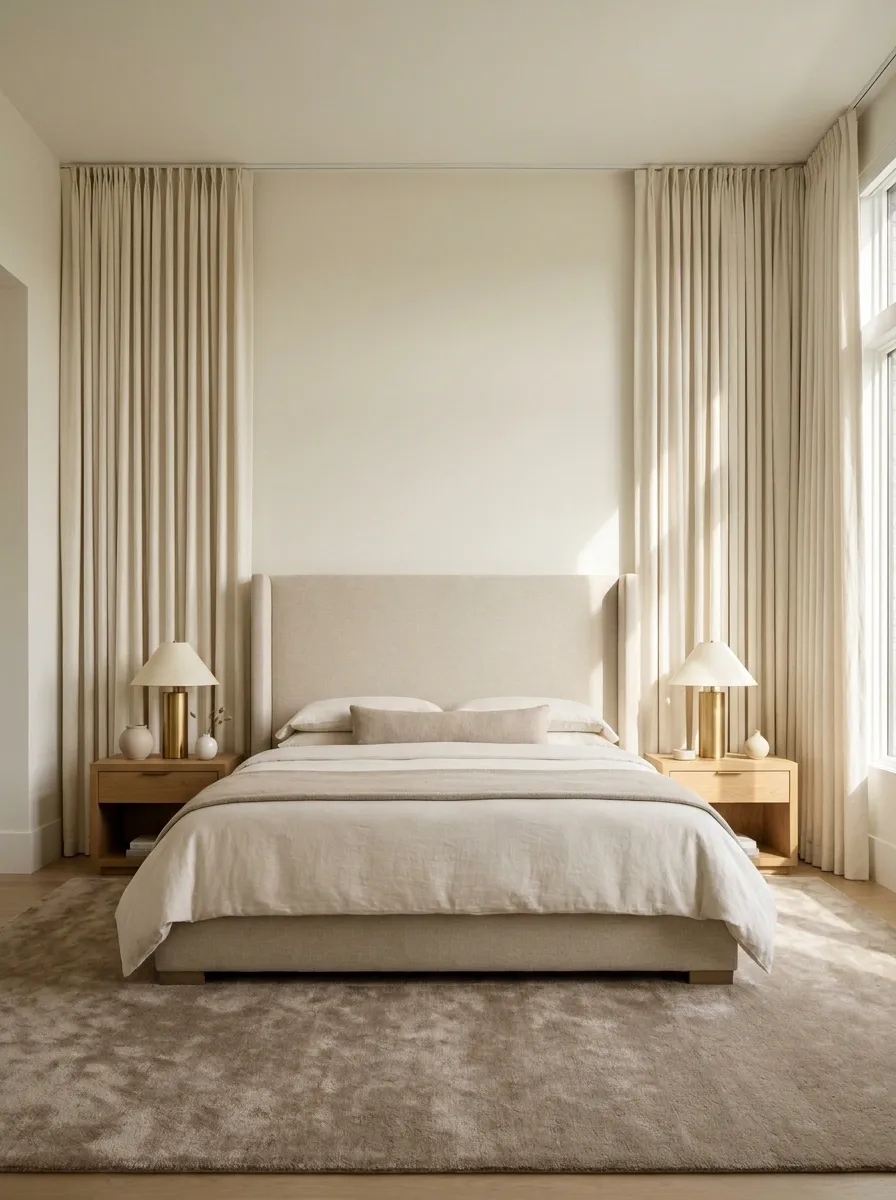
Curtains can do much more than cover a window. In a spacious bedroom, full-height fabric extending across a broad portion of the wall can create a substantial backdrop around the bed.
This design uses soft floor-to-ceiling curtains, a generously sized rug, an upholstered headboard, and warm bedside furniture. The fabric adds vertical volume while the rug establishes a strong horizontal base. Together, those two elements make the sleeping area feel much more substantial without filling the room with unnecessary furniture.
fabric
within a larger framed zone
fabric
Full-Length Wood Slat Wall Behind the Bed
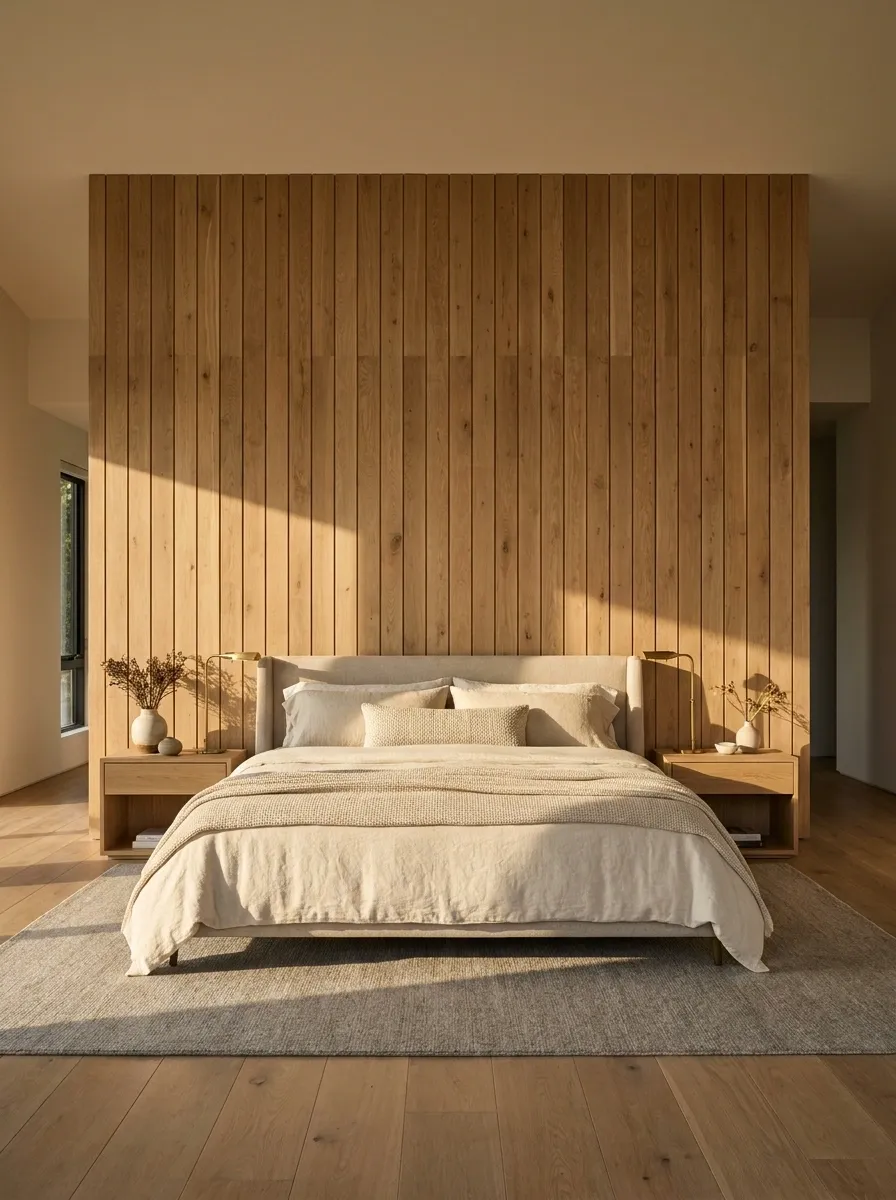
A full wood-slat wall can turn an otherwise ordinary headboard area into a strong architectural composition. Vertical oak slats run across the entire wall in this design, creating rhythm and repetition while giving the bed a clearly defined backdrop.
The furniture remains intentionally simple. Soft bedding, low-profile nightstands, and understated lighting allow the wood to carry the visual weight. This approach works especially well in contemporary bedrooms where a plain painted wall leaves too much empty space around a standard bed.
Low Platform Bed Surrounded by Oversized Soft Furnishings
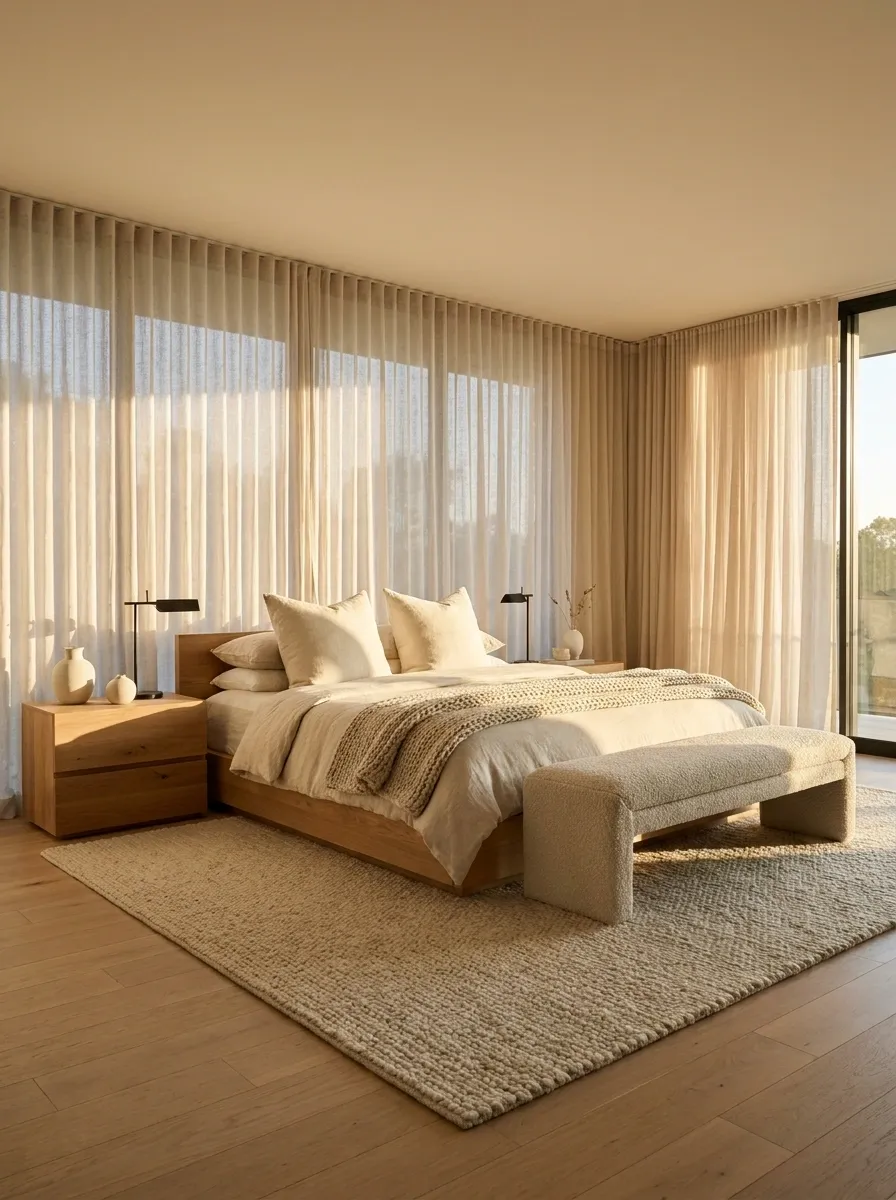
A low bed does not have to look small. The right surroundings can make the lower profile feel deliberate and grounded. This bedroom pairs a simple platform bed with a deep upholstered bench, a broad rug, generous nightstands, full curtains, and substantial bedding.
The contrast is what makes the composition work. The bed stays visually low, while the surrounding furniture supplies mass and texture at slightly greater heights. This creates a grounded bedroom with enough visual substance for a large floor plan without relying on tall or ornate furniture.
curtain
upholstery
Classic Bedroom With a Sculptural Upholstered Bed
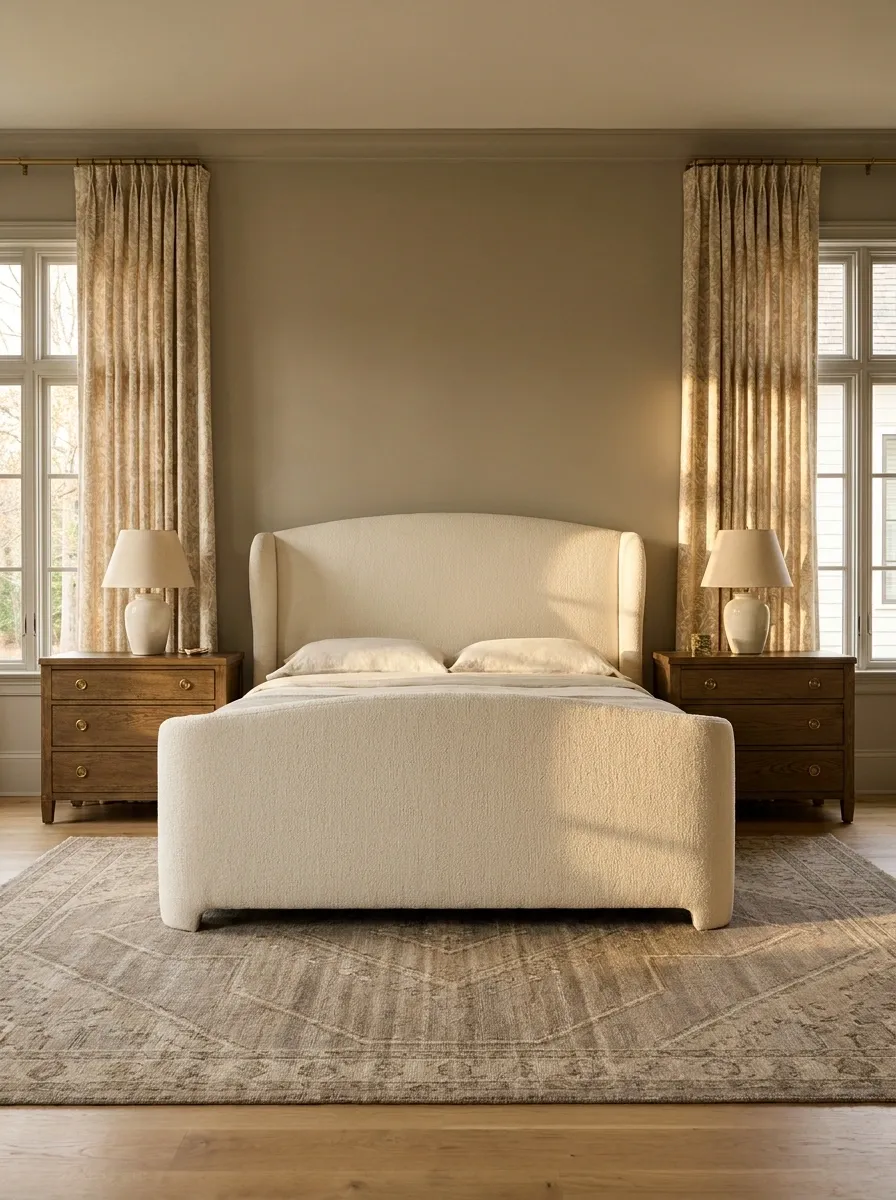
A traditionally shaped upholstered bed can give a spacious bedroom the visual character it is missing. Here, the headboard has a softly curved silhouette that becomes the focal point, while matching lamps, substantial casegoods, patterned curtains, and a broad rug fill the surrounding composition.
The room feels complete because the furniture has enough presence to relate to the bed. Nothing needs to be oversized simply for the sake of scale. The curved headboard, repeated upholstery, and balanced lighting create a cohesive center that prevents the mattress from appearing lost against a large wall.
Monochromatic Bedroom With Minimal Visual Breaks
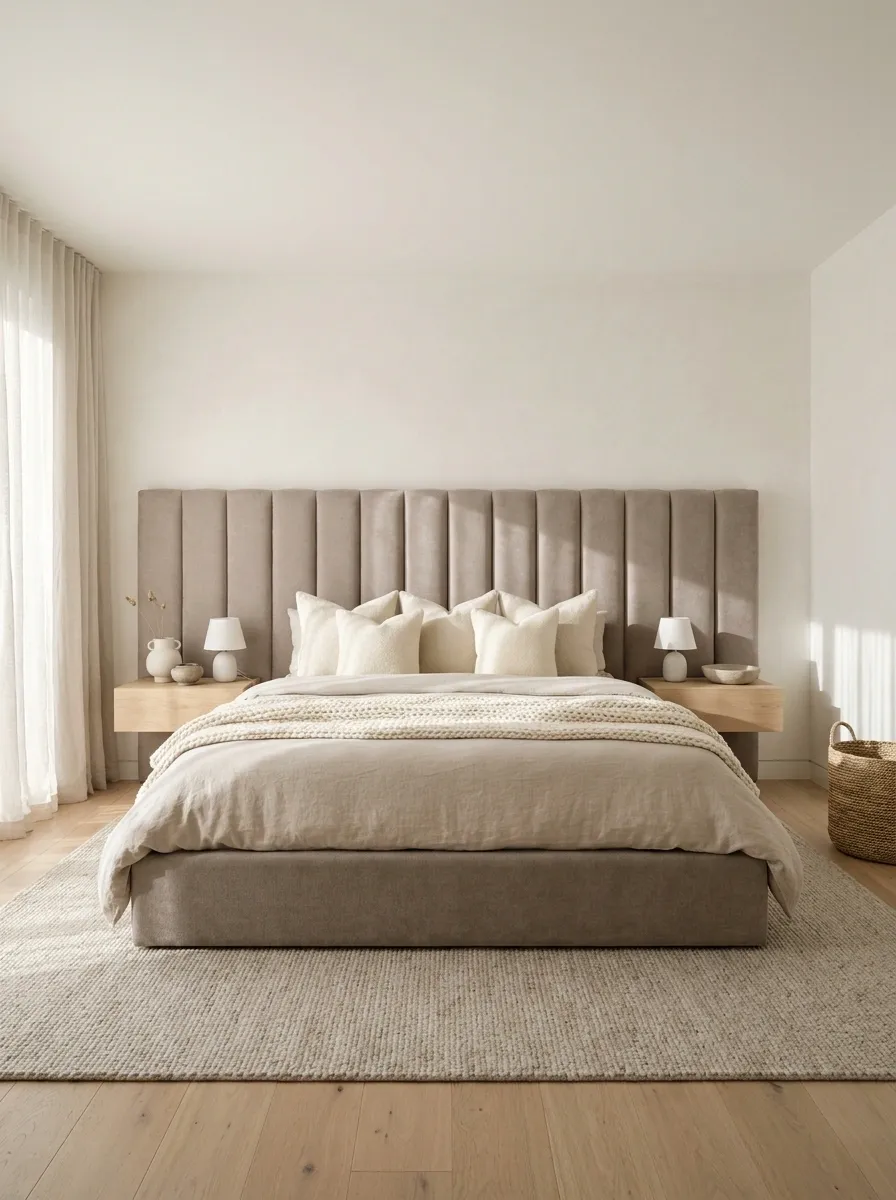
A large room can make a bed seem smaller when every surface is divided into unrelated colors and materials. A monochromatic scheme takes the opposite approach. Warm white, beige, taupe, pale wood, and closely related textiles allow the furniture and bed to read as one connected composition.
The lack of strong color boundaries creates visual continuity across the room. A substantial headboard, broad rug, and generous bedding still provide physical scale, but the tonal consistency prevents those elements from appearing fragmented. This works particularly well in bedrooms where calm, understated design is more important than dramatic contrast.
Gallery Wall That Gives the Bed a Larger Backdrop
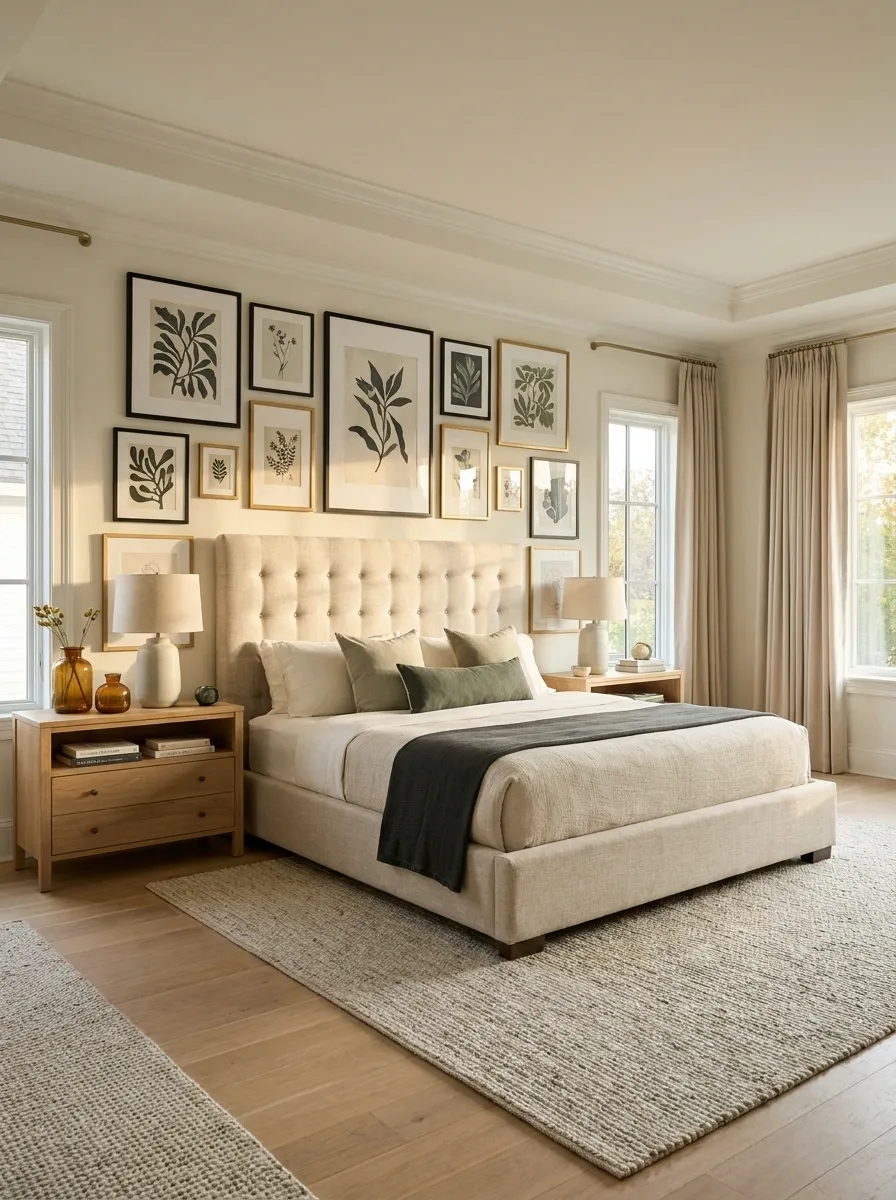
Artwork can give a modest bed much more visual territory. Instead of placing one small frame directly above the headboard, this bedroom uses a broad gallery wall that stretches across much of the sleeping zone.
A mix of related artwork, simple frames, a substantial upholstered bed, and matching bedside furniture creates a wide composition that fills the wall without overwhelming it. The arrangement feels collected rather than perfectly symmetrical, which keeps a large bedroom from becoming too rigid.
Full Upholstered Wall With Warm Integrated Lighting
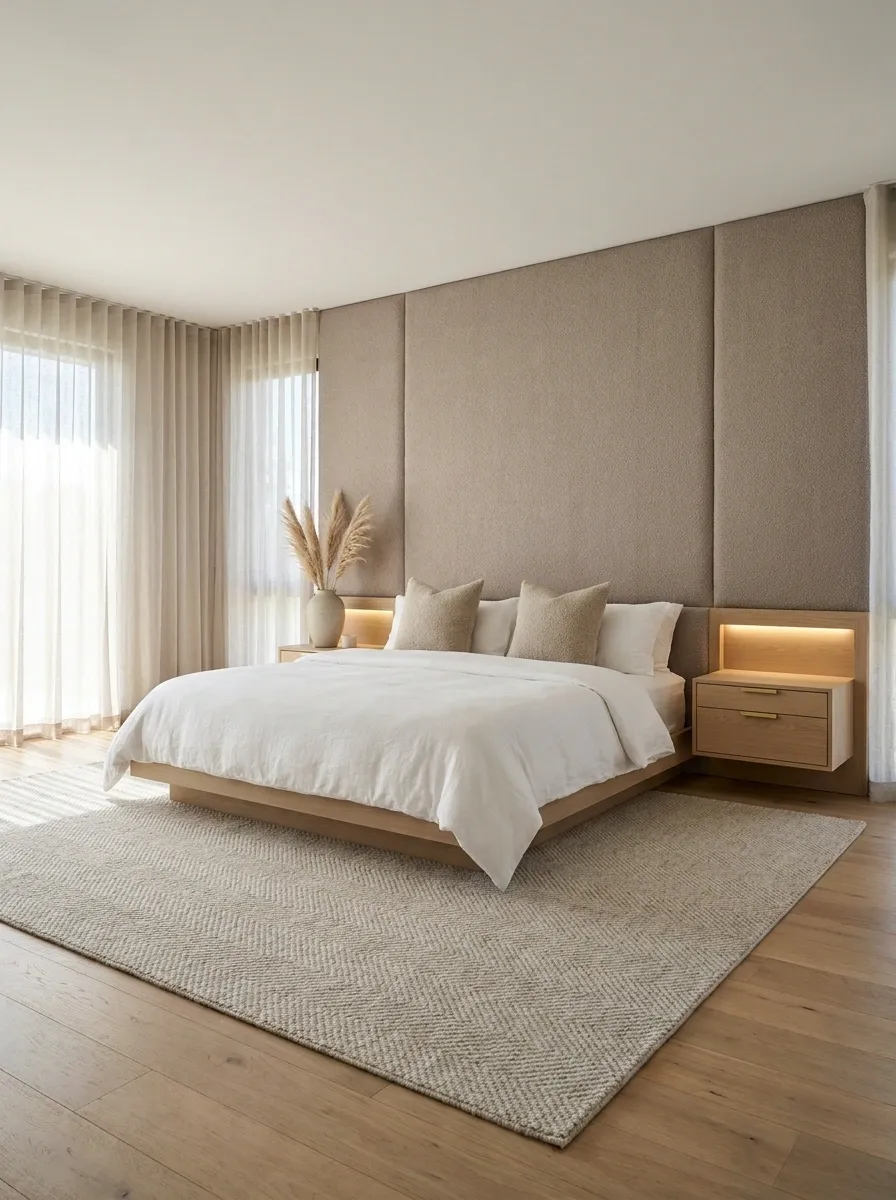
A fully upholstered wall can make the bed feel almost built into the architecture. Soft panels extend across the entire headboard wall, while narrow integrated lighting creates a warm horizontal glow. The actual bed can remain relatively simple because the wall supplies most of the composition’s visual weight.
This approach works particularly well in modern bedrooms where clean lines matter. The lighting adds depth after dark without requiring oversized lamps, while the upholstery softens the room and keeps the large architectural treatment from feeling cold.
Large Bedroom With a Separate Sitting Area
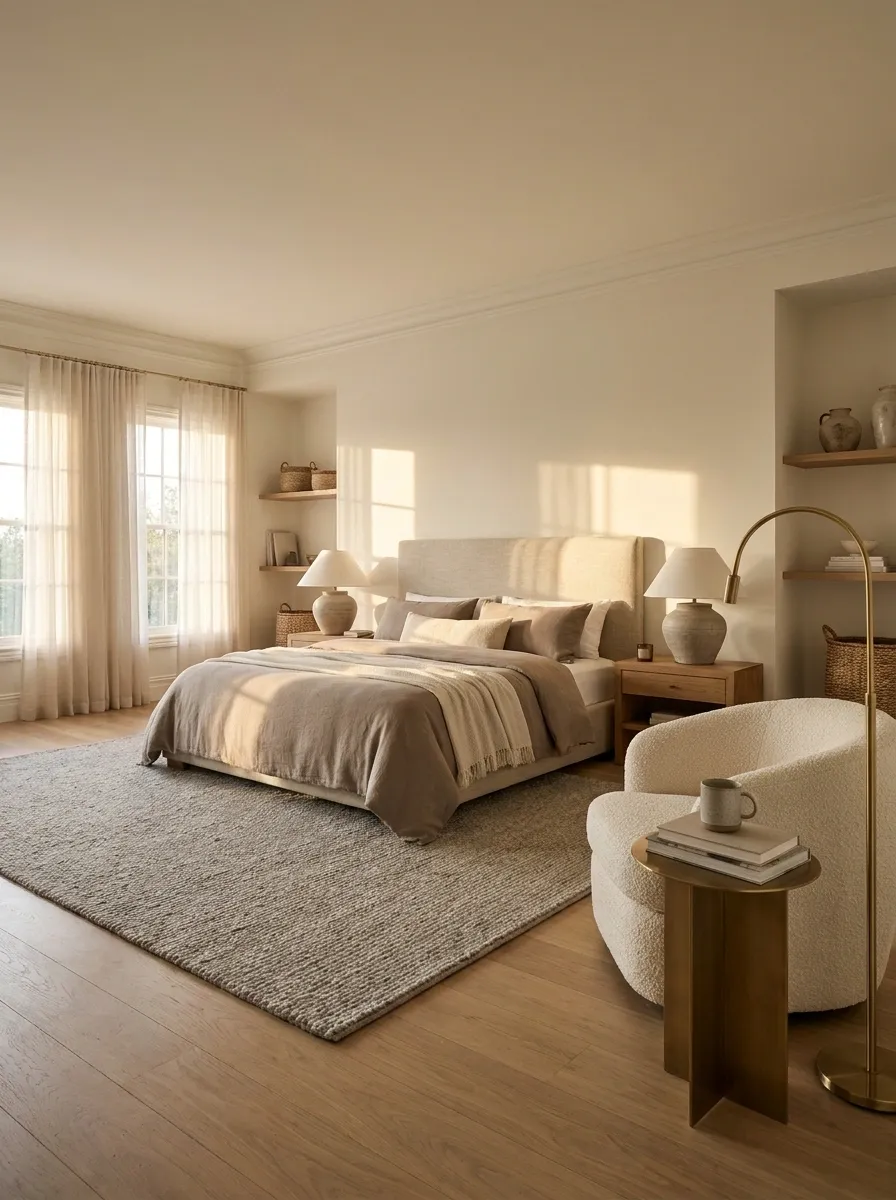
Sometimes the bed looks too small because the room is simply doing too little with its available floor area. A separate sitting area solves that without changing the bed at all.
This composition divides the bedroom into two purposeful zones. The sleeping area contains the bed, nightstands, and rug, while a nearby chair, side table, and floor lamp establish a quiet reading corner. The room feels intentionally furnished instead of excessively empty, and the bed gains proportion because it now belongs to one part of a larger, clearly organized suite.
Bold Wallpaper Behind the Bed With Quiet Surroundings
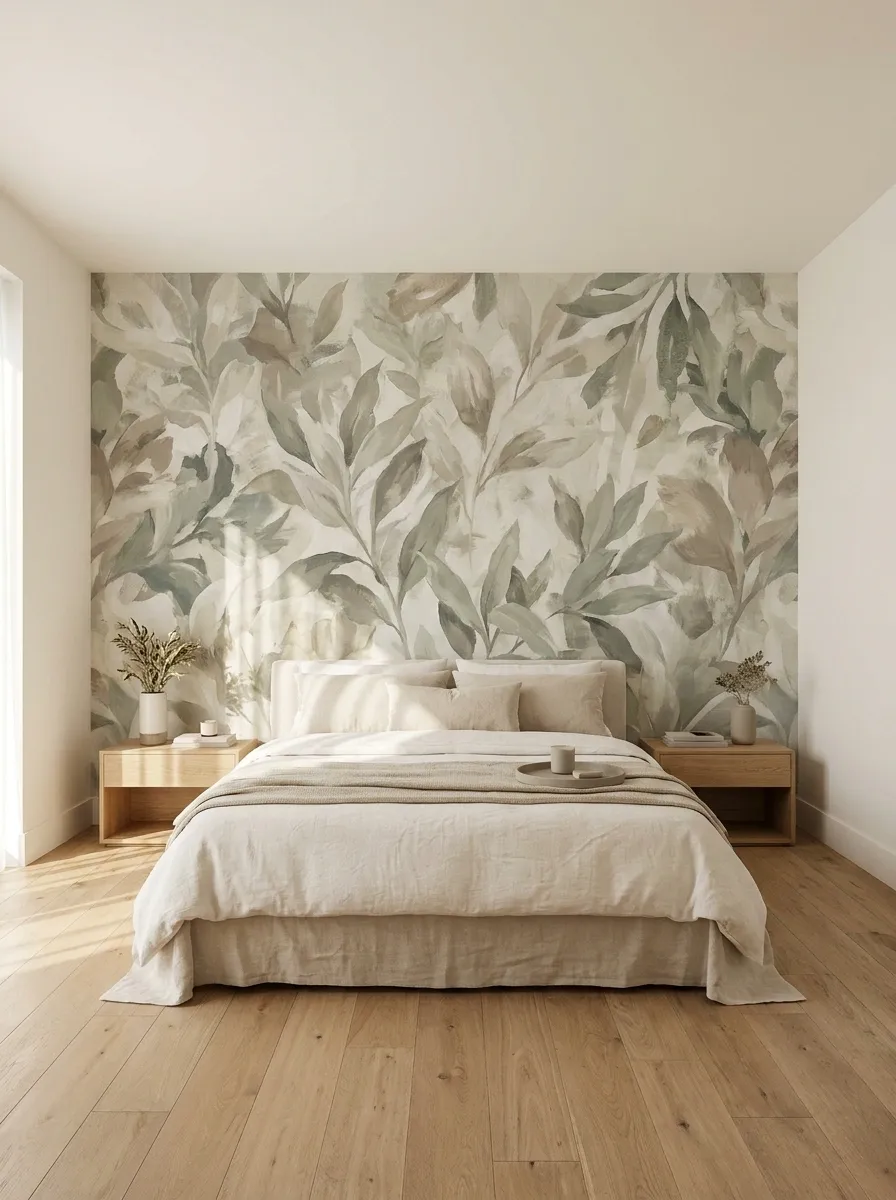
A large bedroom wall can overwhelm a modest bed when it is left completely bare. Bold wallpaper solves that problem by giving the sleeping area a broad visual backdrop. A muted botanical, oversized geometric, or painterly pattern can fill the wall from floor to ceiling while the furniture remains deliberately restrained.
In this composition, the bed, two simple nightstands, and soft bedding sit against the pattern as one connected arrangement. The surrounding walls stay quiet, and the artwork is kept minimal. The wallpaper supplies enough visual weight to make the bed feel intentional without adding more furniture.
Oversized Matching Bedside Cabinets With Statement Lamps
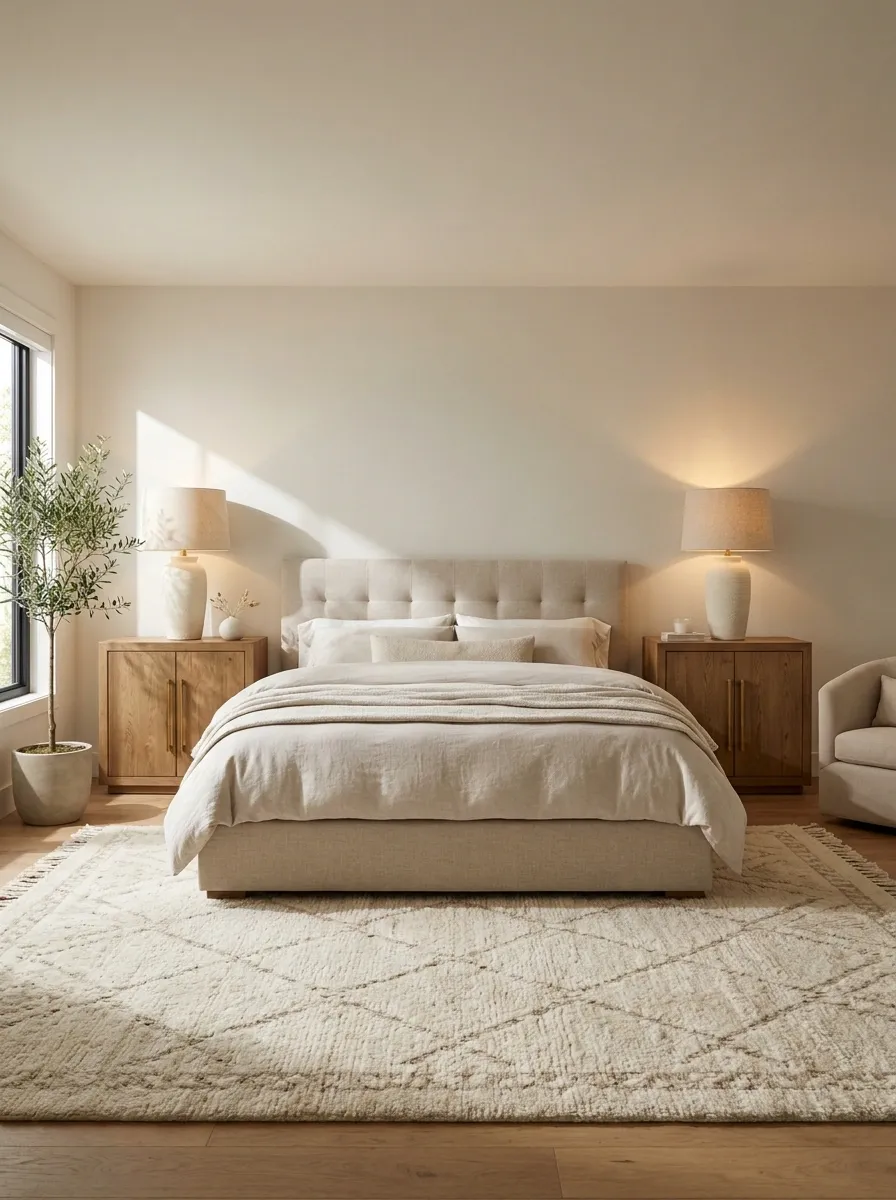
A standard bed can appear narrow when the furniture beside it is tiny. This bedroom reverses that relationship with substantial matching bedside cabinets and tall statement lamps. The cabinets extend the visual footprint outward, while the lamps add height and create a strong symmetrical frame.
The bed itself remains relatively understated. That restraint keeps the composition from feeling overloaded and allows the side furniture to do the scaling work. Warm wood, soft upholstery, and a large rug bring the separate elements together so the arrangement reads as one complete sleeping zone.
Vertical weight
Side mass
Side mass
Vertical weight
Soft Architectural Bedroom With an Arched Bed Alcove
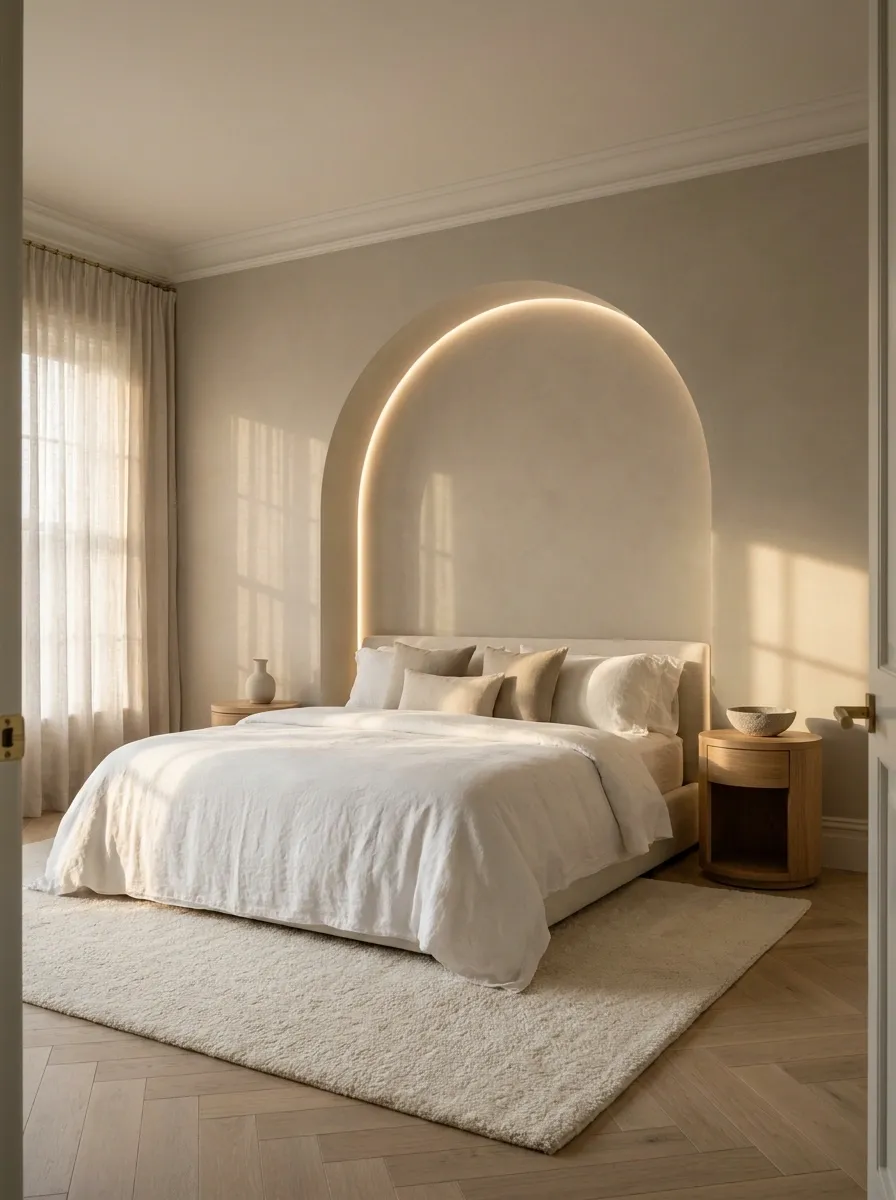
An arched alcove gives the bed an architectural destination instead of leaving it against an uninterrupted wall. The broad curved opening frames the mattress, while plaster-toned surfaces, rounded bedside furniture, and warm integrated lighting reinforce the soft geometry.
This design works because the architecture does the heavy lifting. The bed itself does not need an elaborate frame or oversized bedding. The alcove establishes a clear boundary around it, making the sleeping zone feel intentional within a generous room.
Layered Neutral Bedroom With a Large Art Piece and Oversized Rug
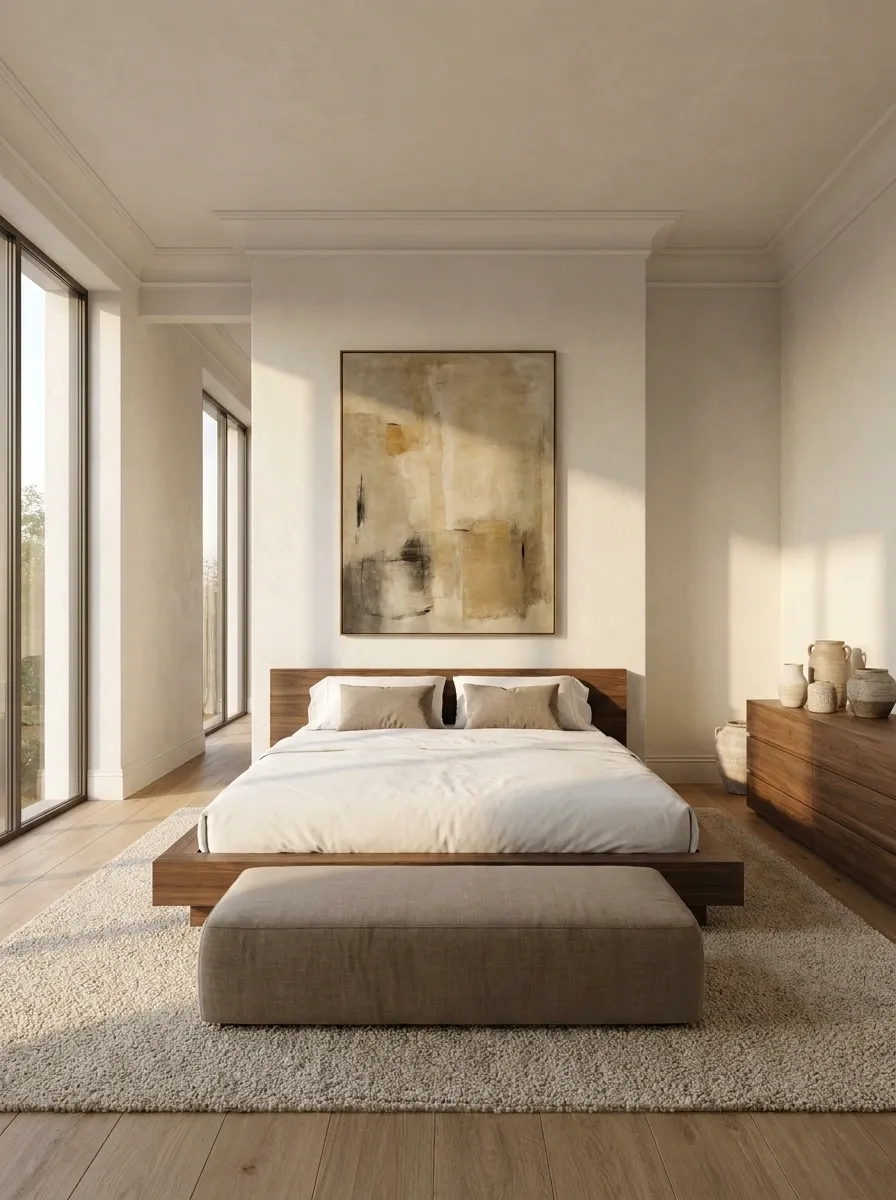
A quiet neutral palette can still have plenty of visual weight. This bedroom combines warm white walls, taupe textiles, walnut furniture, one substantial artwork, and a generously sized rug. The bed stays relatively simple, allowing the larger pieces around it to establish proportion.
The large artwork provides a vertical focal point while the rug anchors the composition horizontally. Together they create two strong visual boundaries around the bed. The restrained colors keep the room calm, but the scale of the major elements prevents it from feeling sparse.
Dramatic Canopy Bedroom With Floor-to-Ceiling Framing
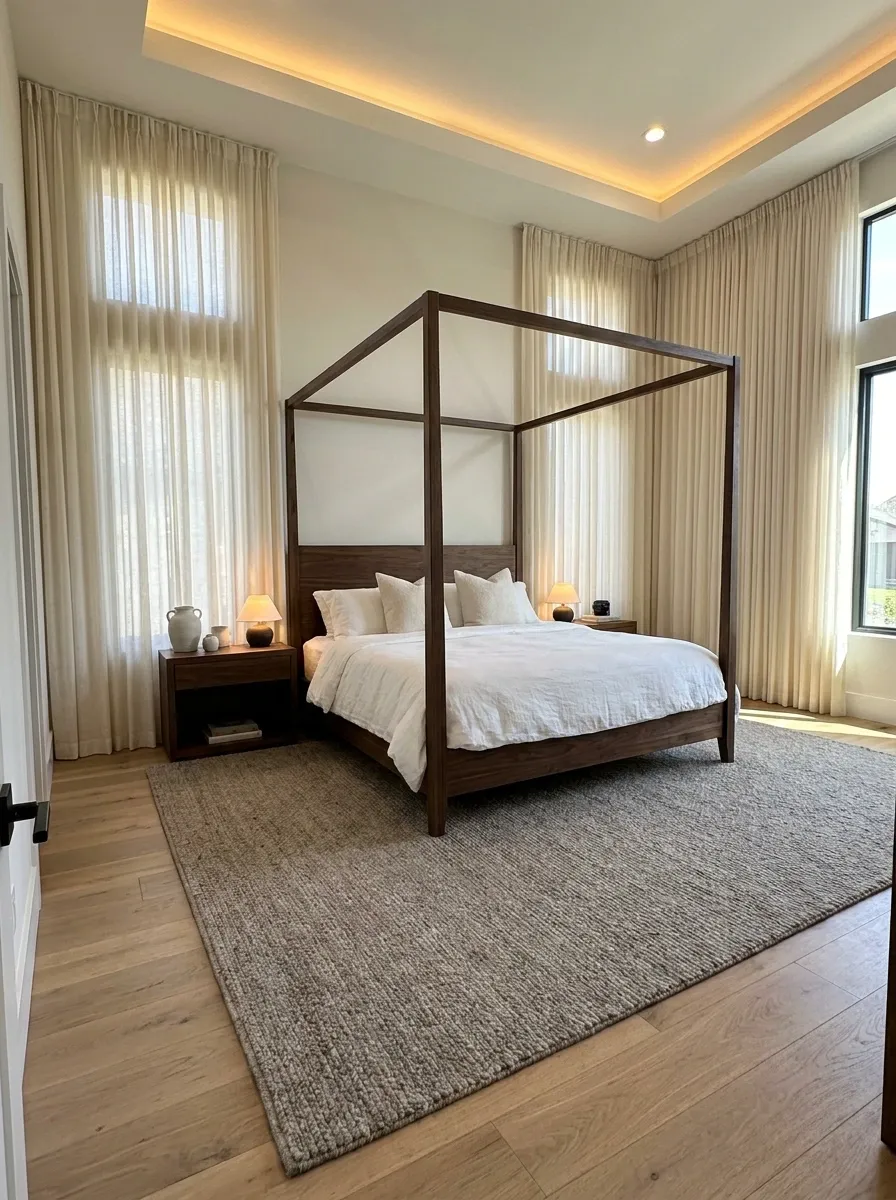
A dramatic canopy can turn the bed into the obvious architectural center of a very large bedroom. A substantial dark wood frame rises toward the ceiling, while floor-to-ceiling curtains soften the structure and create a private visual enclosure around the mattress.
The surrounding furnishings remain deliberately quiet. Ivory bedding, a restrained rug, low bedside tables, and warm ambient lighting allow the canopy to carry the composition without making the room feel theatrical. It is especially effective in bedrooms with high ceilings, where a conventional bed can disappear beneath all that vertical space.
Primary architectural structure
Softens the tall frame
Supports without competing
Let the Room Give the Bed Its Scale
A bedroom rarely feels wrong because the mattress itself is too small. More often, the room has lost the visual relationship that makes the bed feel anchored.
A broad headboard can establish width. A canopy can claim vertical space. A large rug can create a complete sleeping zone. Built-ins can turn an empty wall into architecture. Even a separate sitting area can make a large bedroom feel more proportionate by giving the unused floor space a clear purpose.