
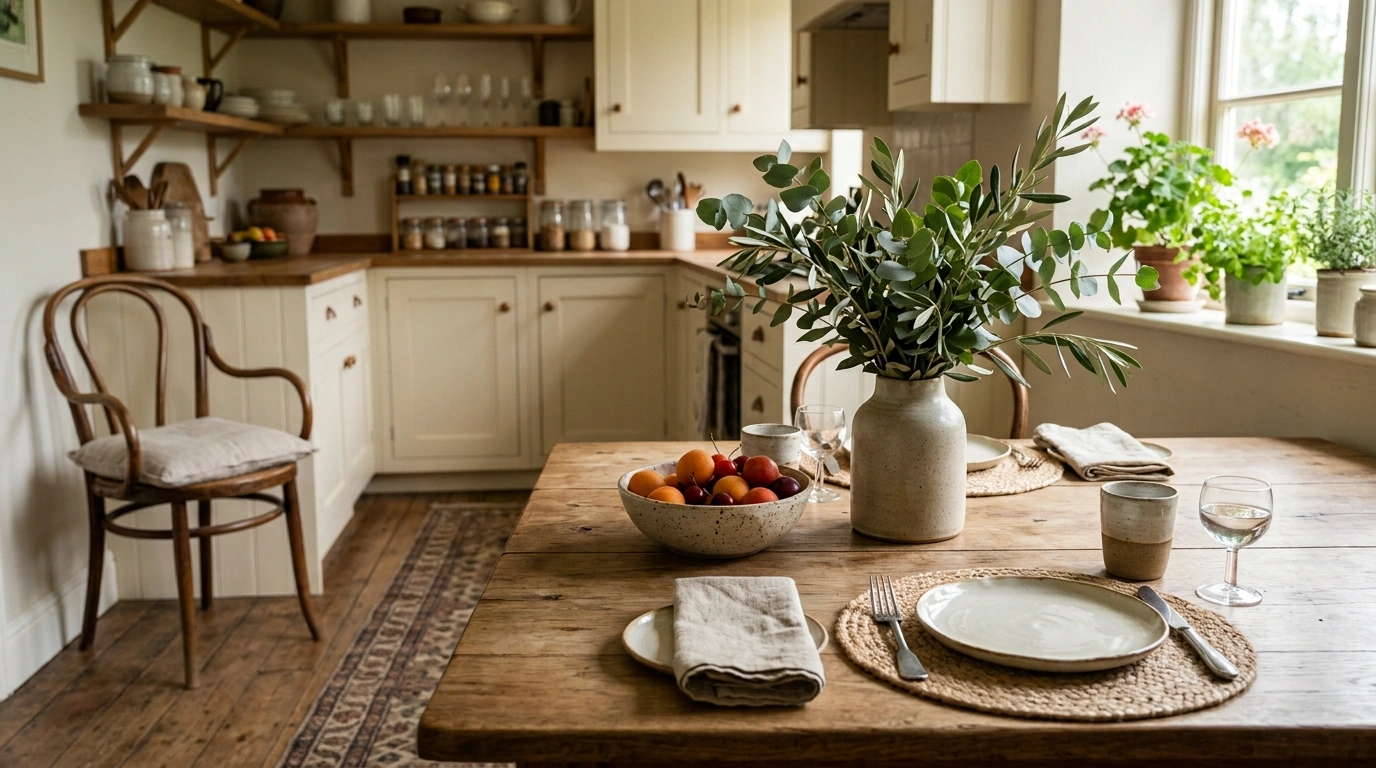
A kitchen table has a strange talent for becoming the least attractive surface in the room. One minute it has a bowl of fruit and a nice runner. The next, it has receipts, mail, chargers, keys, school papers, and something nobody remembers putting there.
Good kitchen table decor isn’t about covering the surface until there’s barely room for a plate. The best setups make the table feel like it belongs with the kitchen around it. The chairs make sense with the table. The lighting connects to the room. The colors repeat naturally. Even the empty space looks intentional.
That’s the difference between a table that looks decorated and one that looks finished.
The Kitchen Table Is Not a Storage Unit, Apparently
Kitchen Table Decor Ideas
Classic Red Gingham Country Charm
This kitchen table setup leans hard into cheerful country nostalgia with a vibrant red and white checkered tablecloth and matching curtains. A matching radio sits on the windowsill next to fresh floral plates and a vase of bright red tulips, creating a space that feels instantly welcoming and delightfully unapologetic about its theme.
The real trick here is committing to the pattern play without losing your mind. The matching napkins, plates, and tablecloth tie the whole breakfast nook together so it feels curated rather than chaotic.
A table this bright makes your morning coffee feel like an event. Who needs a minimalist aesthetic when you can have a permanent picnic indoors?
Warm Oak Table With Cream Linen and Olive Green
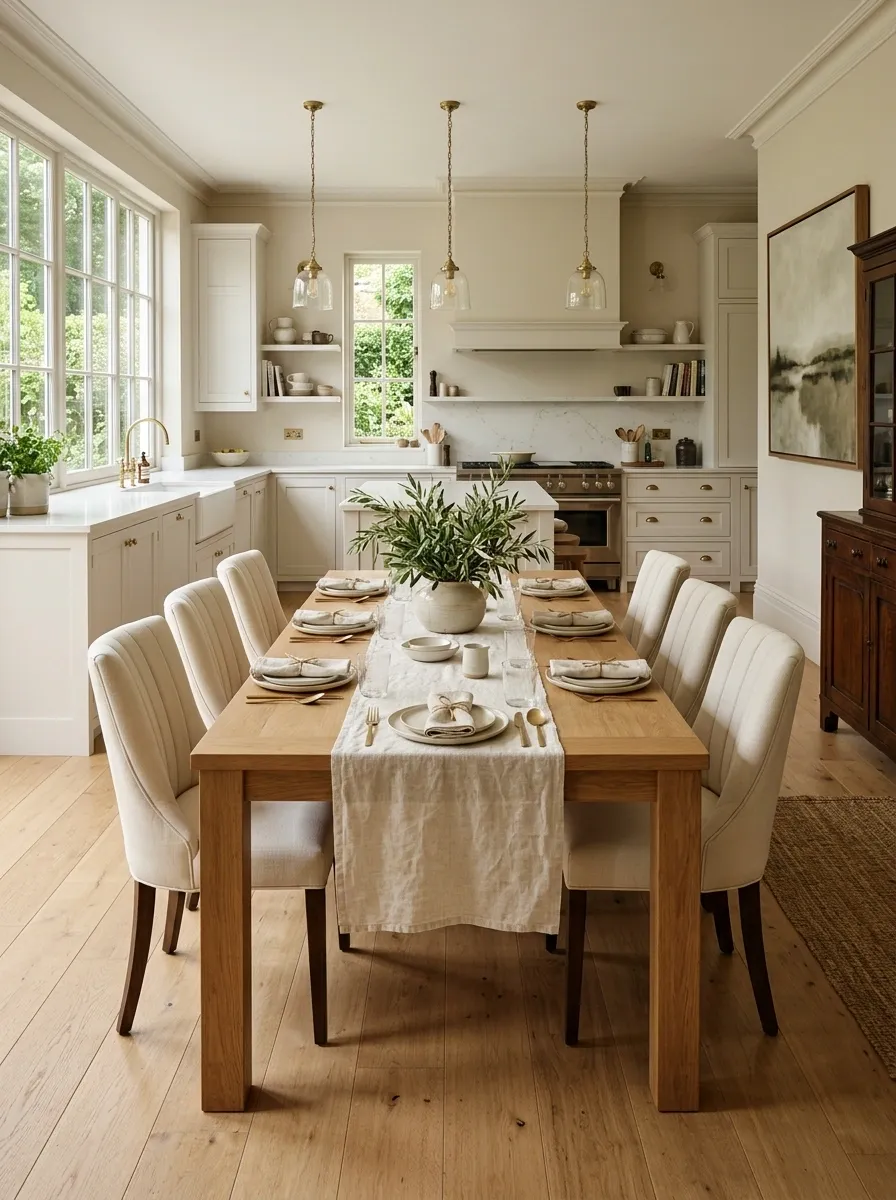
Warm oak does most of the visual work here. The table sits in a soft white kitchen with cream upholstered chairs, a loose linen runner, and a low ceramic vessel filled with olive branches. The cabinets stay simple, which lets the wood and muted green become the personality of the room.
The important part is the color relationship. Cream keeps the scene light, oak adds warmth, and olive gives the eye one natural accent to land on. Nothing needs to shout.
And the centerpiece stays low because nobody wants to negotiate dinner around a decorative shrub.
Dark Dining Table and Cream Chairs
A sleek dark round table anchors this open-plan kitchen, surrounded by modern cream upholstered chairs that soften the architectural contrast. Woven placemats add natural texture to the dark wood surface, while a simple white vase filled with lush greenery keeps the center of the table grounded and fresh.
The secret lies in balancing dark and light elements. The dark table gives the dining zone a clear identity against the herringbone floors, while the cream seating echoes the cabinetry in the background.
You don’t need excessive clutter to make a dining space feel finished. Sometimes a well-chosen centerpiece and great chairs do all the heavy lifting.
Long Farmhouse Table With Collected Vintage Pieces
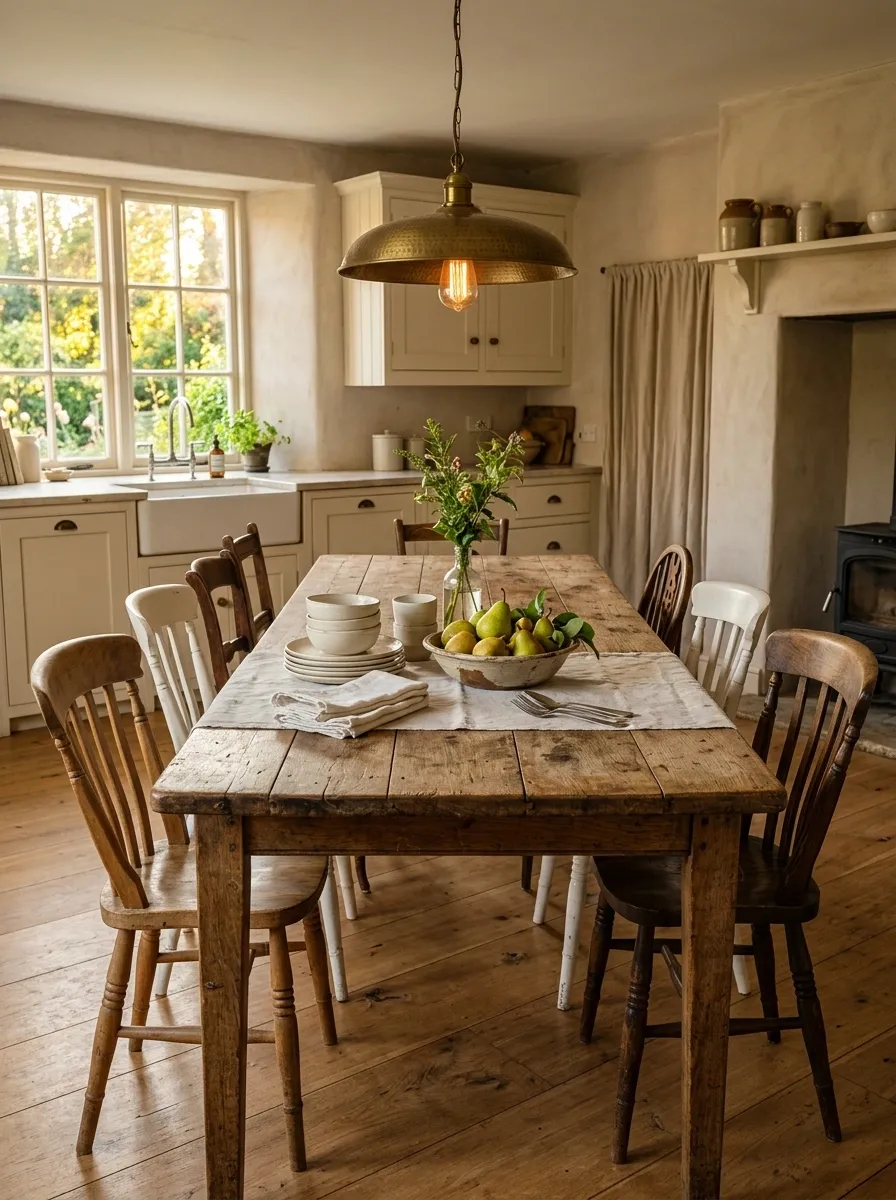
This kitchen leans into age, texture, and the slightly imperfect charm that makes farmhouse rooms feel convincing. A long aged-wood table anchors the space, surrounded by mismatched timber chairs with slightly different shapes and finishes. A vintage-style pendant hangs above, while cream crockery, folded cotton napkins, and a shallow bowl of pears keep the tabletop grounded.
The trick is letting the pieces disagree a little without looking completely unrelated. Similar wood warmth and muted colors quietly connect everything.
A room like this doesn’t need twelve decorative objects trying to look antique. The table has already lived a little. Let it have the attention.
Ribbed Wood Table and Warm Accents
This slim wooden console-style table makes the most of a compact kitchen corner with its gorgeous ribbed pedestal base and rich, warm finish. A ribbed amber glass vase filled with dried botanicals and a single dark wine bottle styling the surface give the arrangement an effortlessly chic, café-inspired vibe.
The magic here is in the vertical lines and warm tones. The fluted wood base adds instant architectural interest, while the amber glass catches the light just right.
A narrow table setup proves you don’t need a massive dining room to create a stylish vignette. Just add good texture and a moody bottle of wine.
Black Table, Walnut Chairs, and Cream Stone
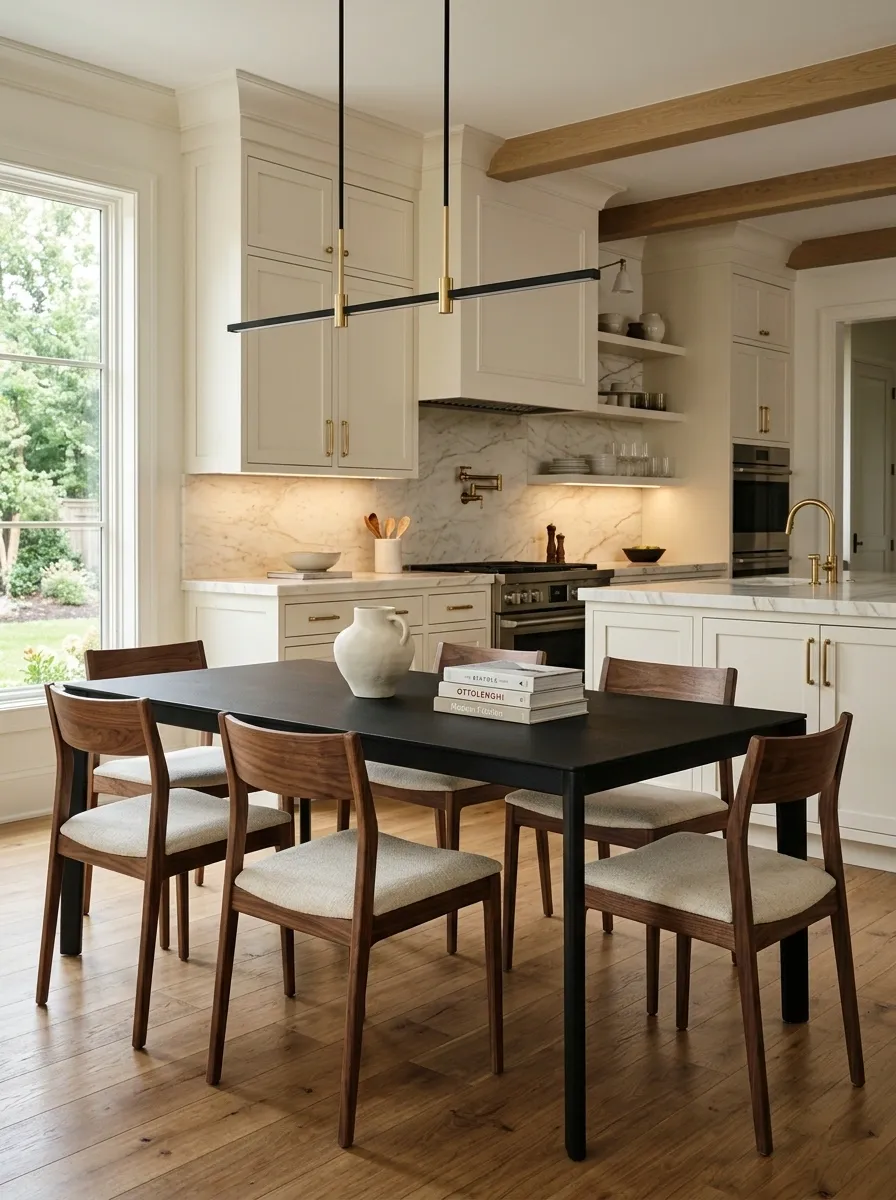
This one goes sharper. A simple black dining table sits between rich walnut chairs in a contemporary kitchen finished with creamy stone counters and warm under-cabinet lighting. The tabletop stays surprisingly quiet, with one sculptural ceramic vessel and a small stack of cookbooks providing just enough detail.
The contrast is what makes the scene memorable. Black gives the table weight, walnut keeps the seating warm, and creamy stone stops the room from becoming one giant dark rectangle.
The furniture doesn’t need extra decoration to prove it’s interesting. It already brought the architectural drama to dinner.
Rustic Farmhouse Table With Benches
A solid rustic wood farmhouse table takes center stage here, flanked by matching wooden benches and softened with neutral cushions. A burlap table runner runs down the middle, topped with a wooden tray of glowing candles, a soft vase of eucalyptus, and simple cream-colored dinnerware.
The key is the mix of raw wood texture and soft textiles. The benches keep the look casual and inviting, while the neutral linens prevent the heavy wood from feeling too rustic for everyday living.
A well-styled family table doesn’t need to look pristine. A little warmth and a few thoughtfully placed candles make the whole kitchen feel complete.
Small Round Table With Soft Cottage Styling
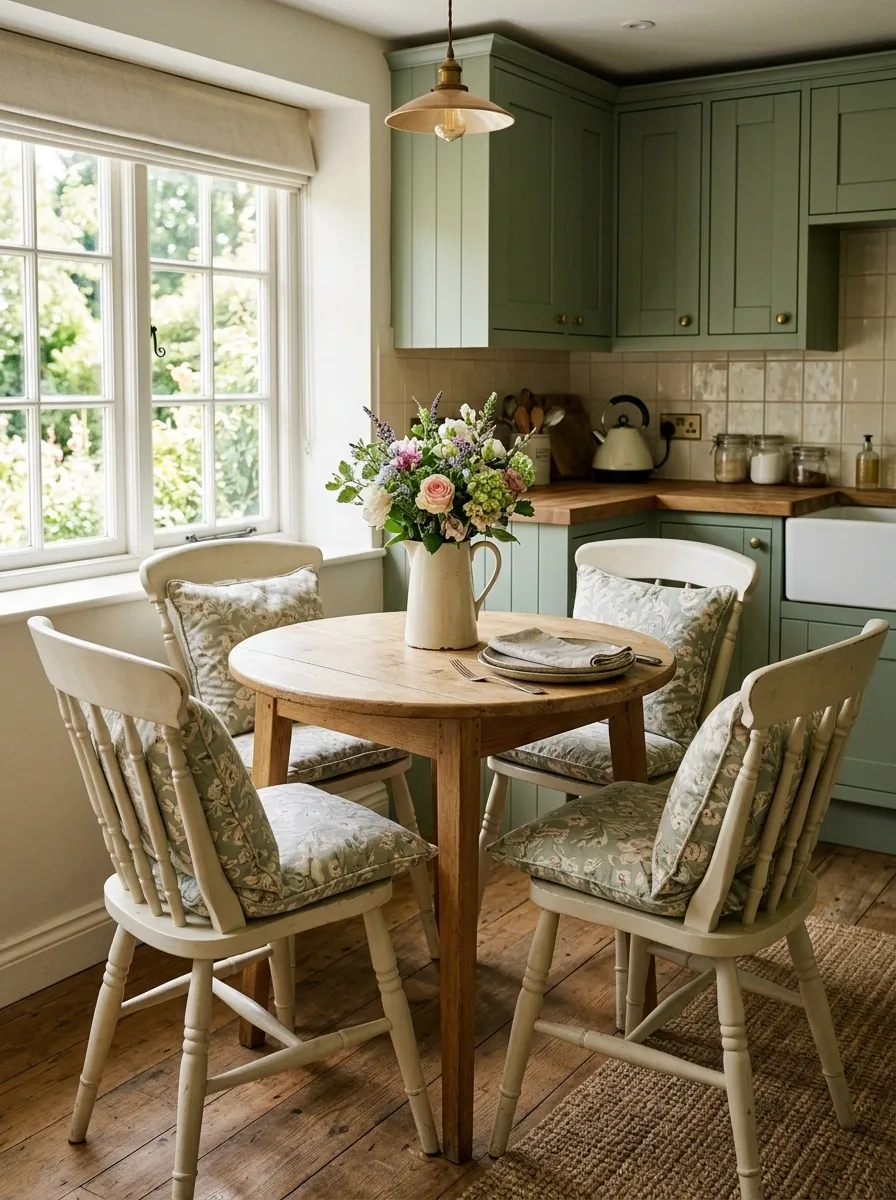
A small round wood table gives this cottage kitchen a softer shape, especially when the room already has straight cabinetry and narrow walkways. Spindle-back chairs surround the table, with a floral cushion, an old-fashioned ceramic jug, and a tiny loose arrangement of flowers adding just enough personality.
The round top helps the seating feel social without eating up as much visual space as a large rectangular table. That matters in a small kitchen.
The styling stays deliberately modest. There is a point where cottage charm becomes “someone emptied the craft store onto the table,” and this design stops well before it gets there.
+
ROOM TO MOVE
Sunny Breakfast Nook With Pendant
This bright breakfast nook features a clean white table surrounded by built-in banquette seating piled high with soft pastel pillows. A gorgeous pleated pendant light hangs overhead, casting a warm glow over a fresh floral centerpiece, morning orange juice, and elegant tableware.
The brilliance of this space is the light and airy color palette. The pale wood floors and white surfaces bounce natural sunlight around the room, making the entire kitchen feel larger and more open.
A cozy banquette setup turns an ordinary corner into the best seat in the house. Just add comfortable cushions and a statement light fixture to seal the deal.
Moody Kitchen With Charcoal Table and Amber Lighting
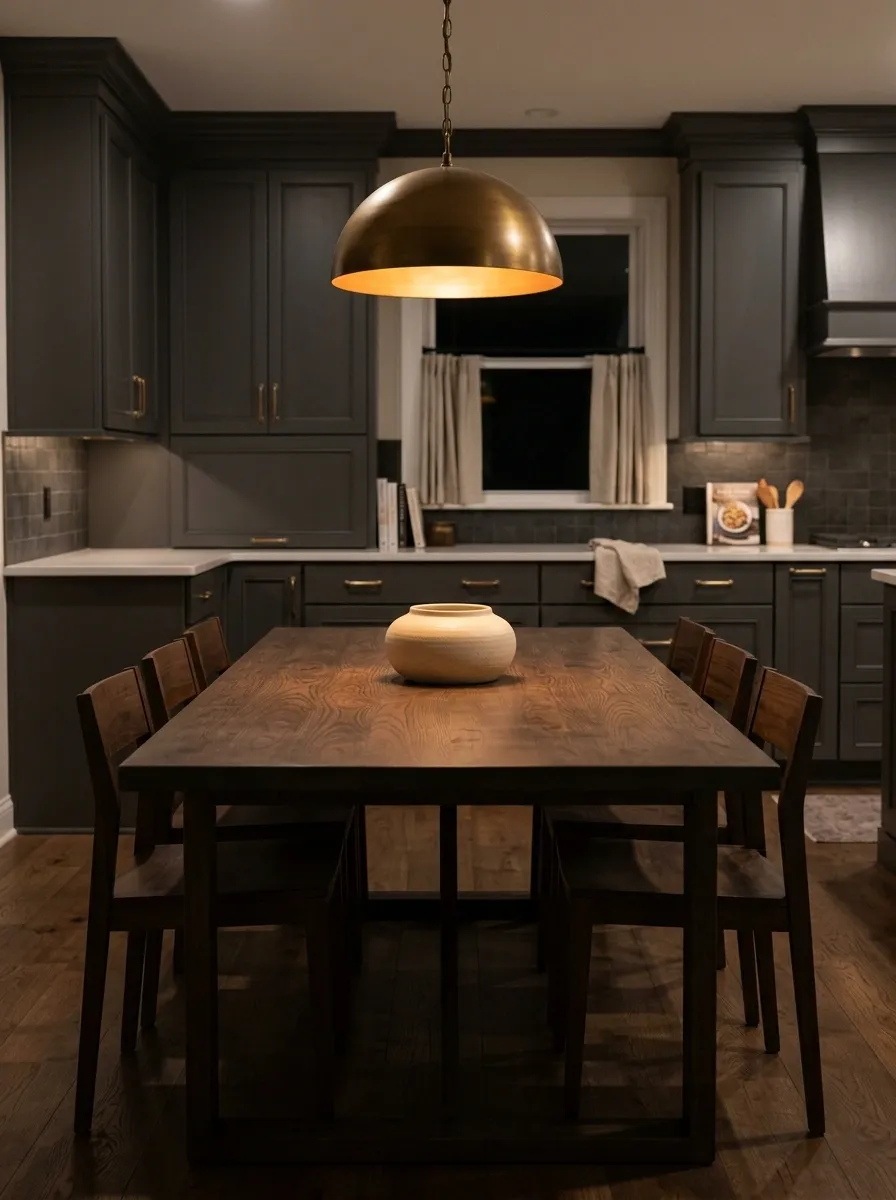
This kitchen takes the darker route with a charcoal table, deep cabinetry, aged brass lighting, warm ivory ceramics, and evening light that gives everything a soft amber edge. The table feels intimate without looking heavy because the materials are warm rather than cold.
A wide tabletop provides enough space for everyday meals, while one low vessel keeps the center visually calm. The darker room also gives the lighter ceramics a useful contrast, so the table doesn’t disappear into the background.
This is the design for anyone who thinks a kitchen needs to be aggressively bright to be practical. Apparently, lamps are allowed to have personalities too.
Scandinavian White Kitchen With Pale Wood Table
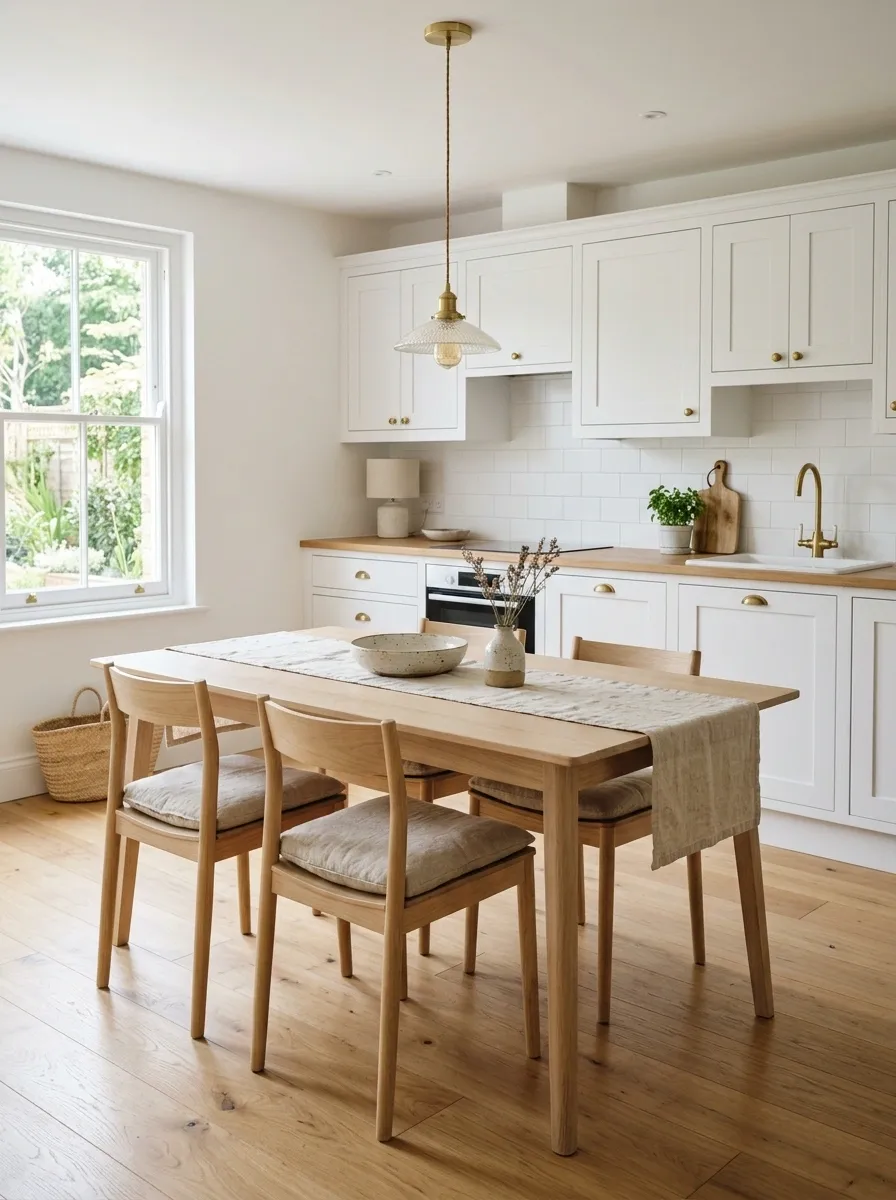
A pale oak table keeps this white kitchen from feeling like a showroom nobody is allowed to touch. Simple light-wood chairs, oatmeal seat cushions, handmade-looking ceramics, and a soft pendant give the room warmth without filling every inch.
The palette stays intentionally quiet, but the finishes keep it from looking flat. Smooth cabinetry sits beside natural wood, woven fabric, and slightly irregular ceramic pieces. That’s enough texture to make a mostly neutral kitchen feel finished.
The tabletop itself stays sparse. A shallow bowl and a folded linen runner are plenty. The room already has good bones. It doesn’t need decorative witnesses.
Deep Green Kitchen With Natural Wood Dining Corner
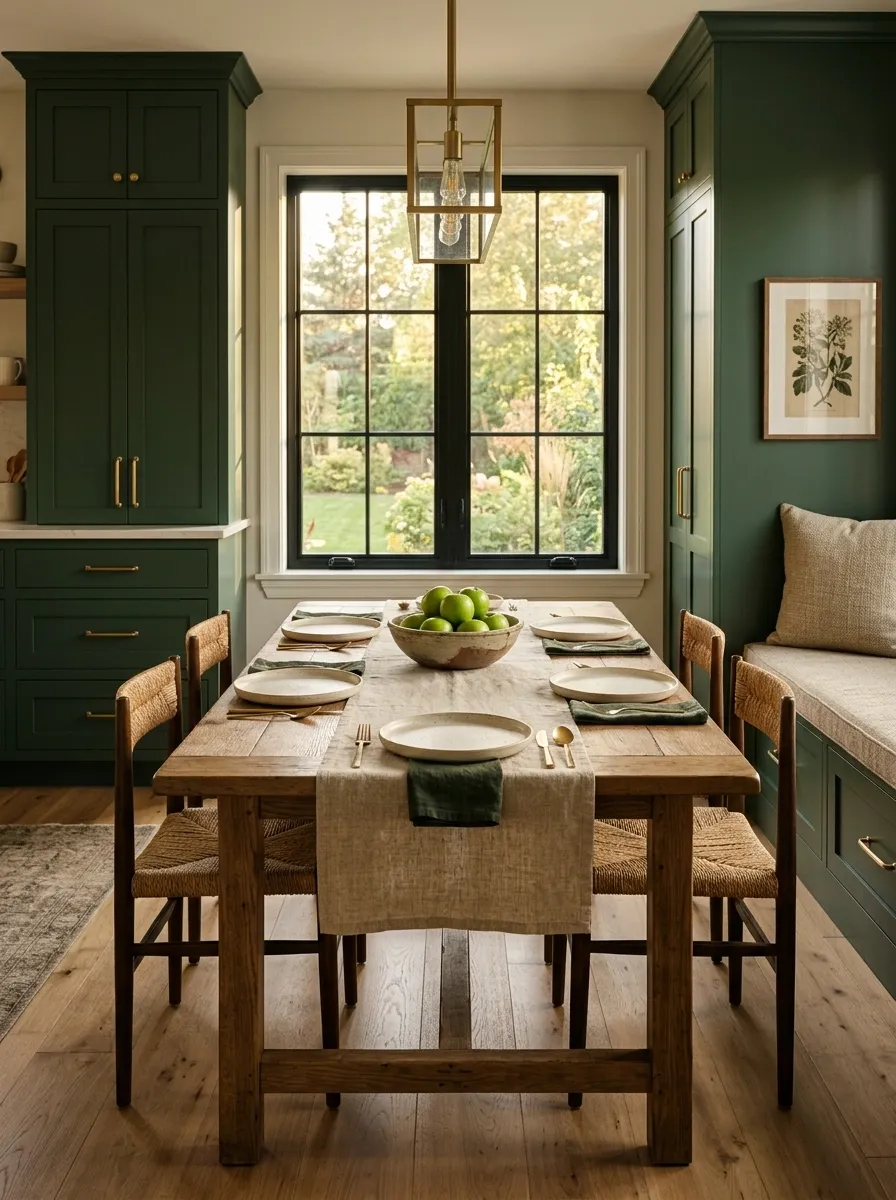
Deep green cabinetry gives this kitchen a strong backdrop, so the dining area answers with warmth instead of more drama. A natural wood table sits between woven-seat chairs, with cream stoneware, a linen runner, and a bowl of green apples tying the tabletop back to the cabinetry.
The green feels richer because the wood interrupts it. That’s the useful contrast here. The room gets color without becoming a green theme park.
Keep the furniture finishes natural and slightly warm. Glossy white chairs would change the whole mood, and not in a particularly helpful way.
Everyday Kitchen Table With a Low Centerpiece
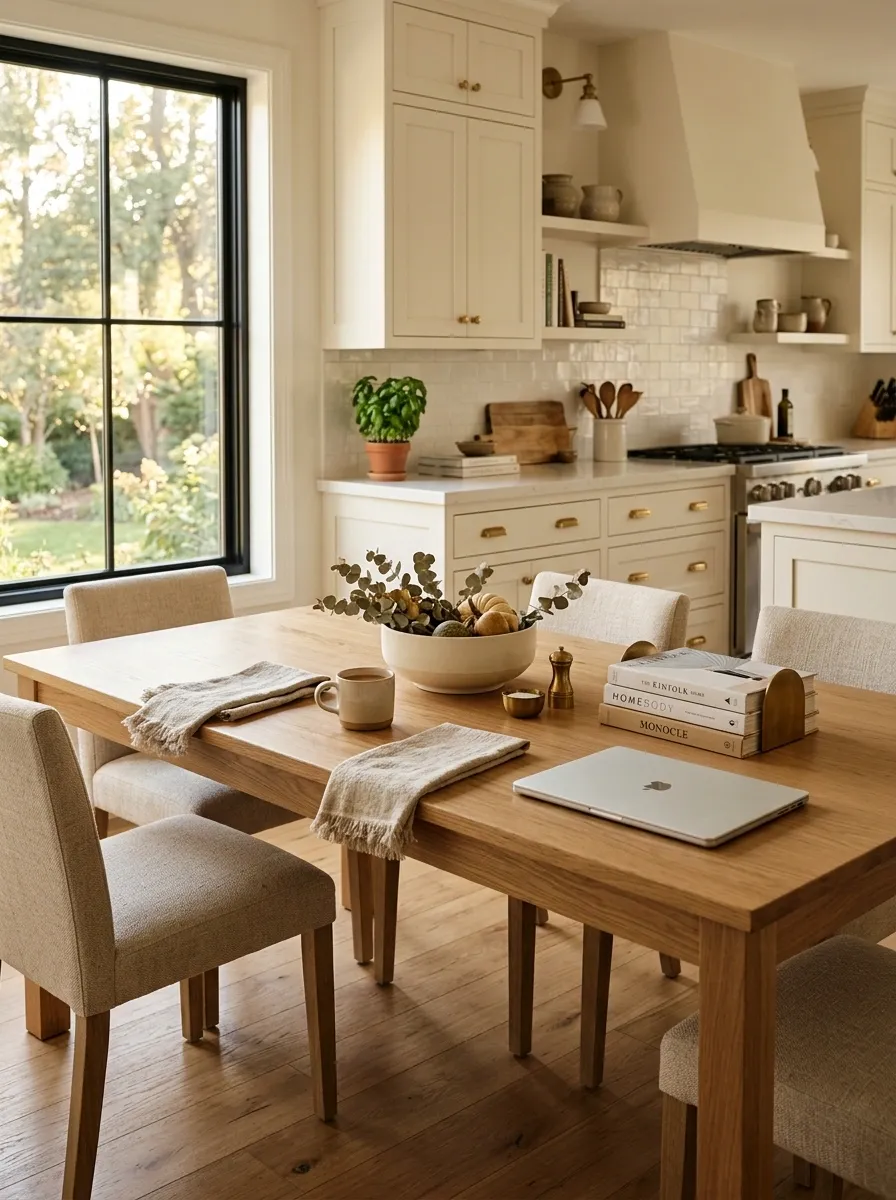
This setup is intentionally normal in the best possible way. A medium wood table sits in a bright kitchen with simple chairs, a low ceramic bowl, cloth napkins, and enough open tabletop for actual breakfast, laptops, homework, or the occasional mountain of vegetables that needs sorting.
The design works because the decorative layer is low and contained. Nothing fights for attention, and the center of the table stays usable.
That matters more than arranging seventeen tiny objects into a tiny decorative village. The table still has a job.
CENTERPIECE
Blue-and-White Kitchen With Classic Table Styling
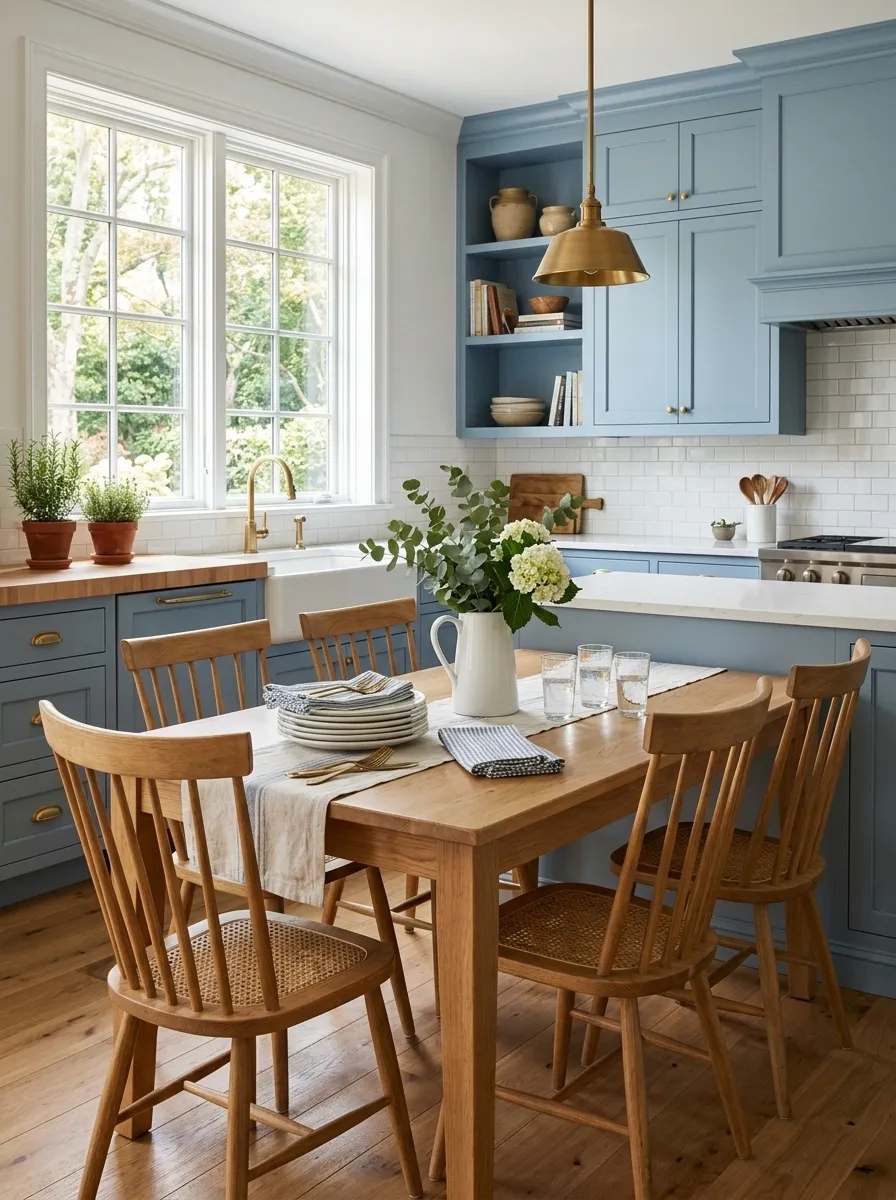
A soft blue kitchen gets a warm wood table, white crockery, striped blue textiles, and a simple white ceramic pitcher. The palette feels familiar without drifting into full-on nautical territory, which is important unless the kitchen is secretly a yacht.
The wood table adds enough warmth to keep all that blue and white from feeling cold. White dishes repeat the lighter cabinetry or walls, while the striped textile adds a small pattern without taking over the room.
This look works because the strongest colors have clear jobs. Blue frames the room, white gives it breathing space, and wood keeps everybody from freezing.
Banquette Breakfast Nook With Layered Neutrals
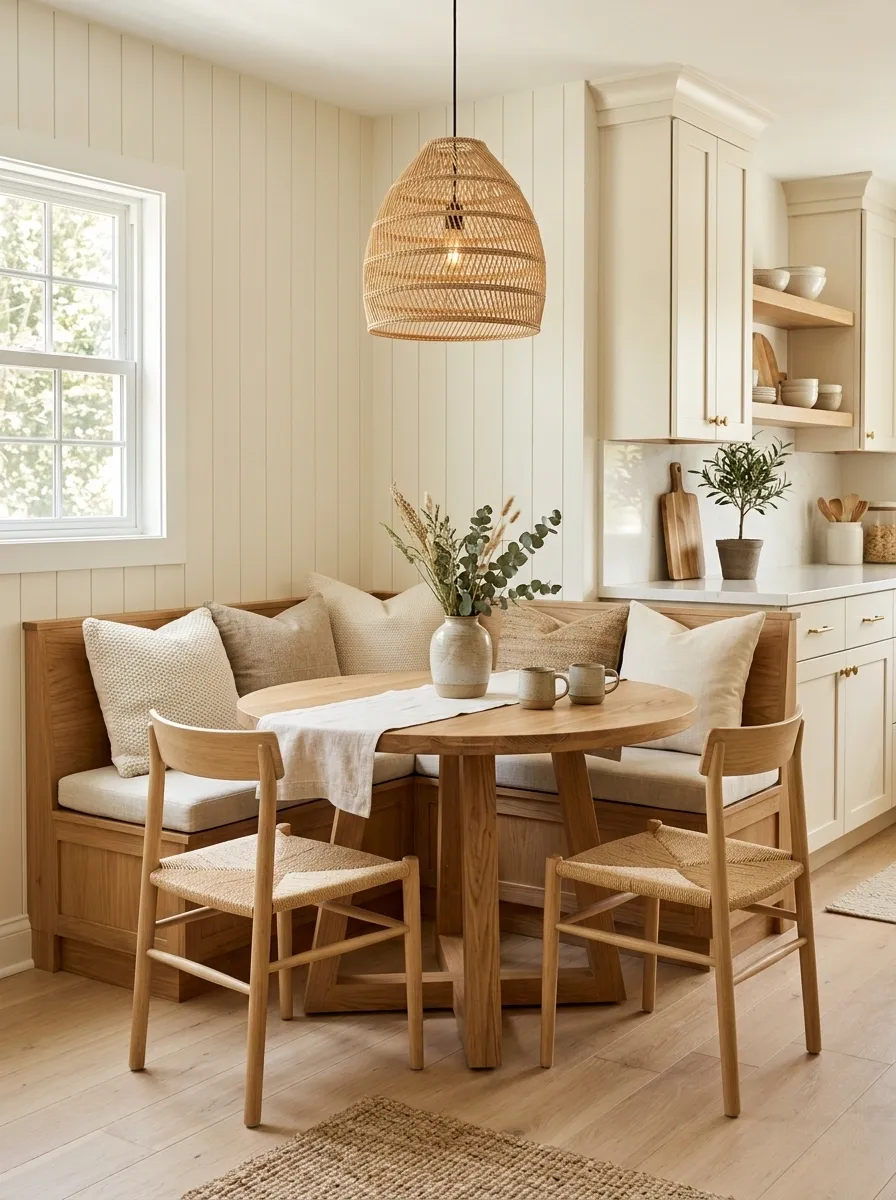
A built-in bench hugs one side of a compact kitchen table, giving the dining corner a tailored look without requiring a huge footprint. Soft oatmeal cushions, a round wood table, two simple chairs, and a pendant create a calm little zone that feels connected to the rest of the kitchen.
The interest comes from texture rather than color. Upholstery, wood grain, ceramic, and woven details give the neutral palette enough variation to feel rich.
The bench also solves an awkward little problem: seating can tuck closer to the wall when the kitchen is tight. Suddenly that dead corner has a purpose. Rude of it to have worked so well.
AGAINST
WALL
TABLE
LIGHTER
CHAIRS
Terracotta and Cream Kitchen Table Composition
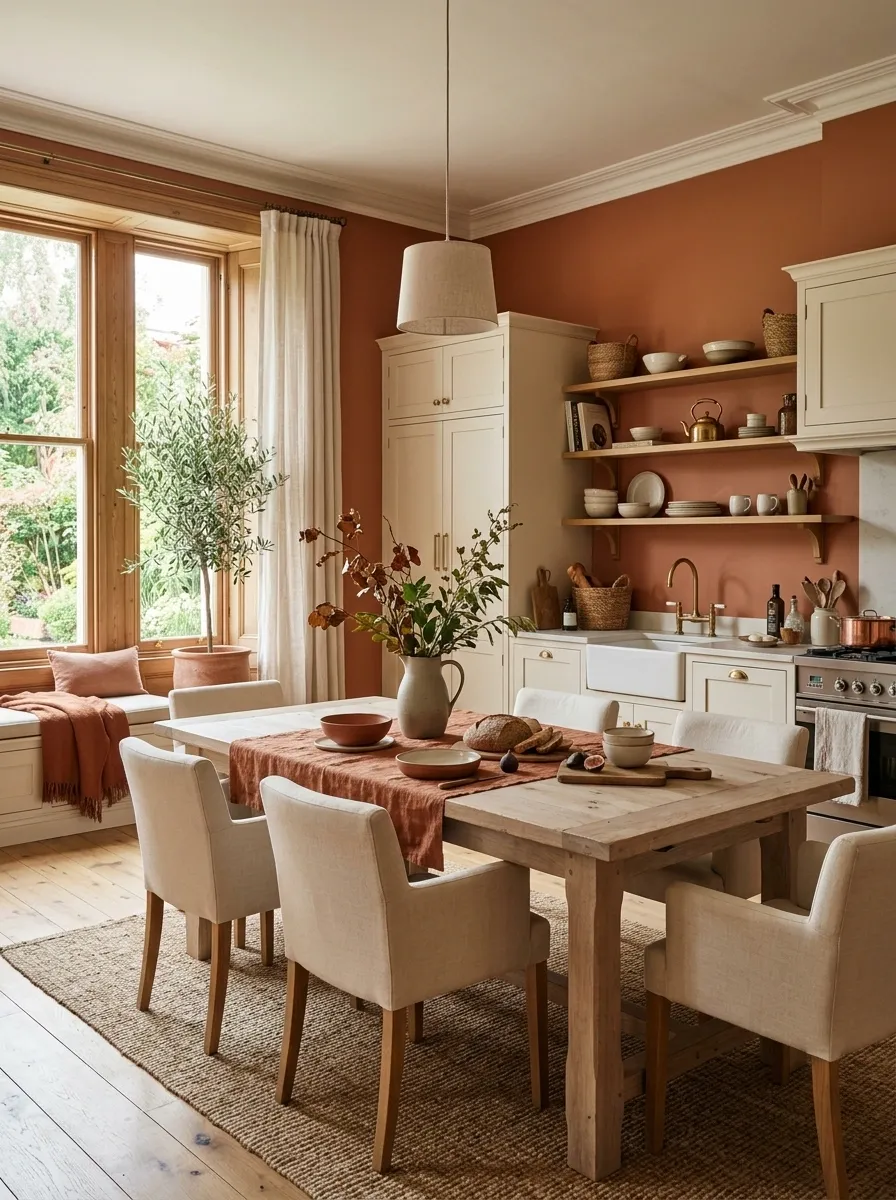
A warm terracotta kitchen becomes the backdrop for a pale wood table, cream chairs, rust-toned linen, and handmade-looking ceramic serving pieces. The table feels rich without becoming visually loud because the strongest color stays mostly in the larger room surfaces.
Cream breaks up the warmth, while the wood connects everything together. A simple bowl or pitcher gives the tabletop a focal point without turning it into a tiny museum exhibit.
The trick is keeping the terracotta intentional. Once every napkin, plate, vase, and chair starts matching, the room goes from relaxed to “the paint sample has taken control.”
Slim Apartment Table With Built-In Storage Seating
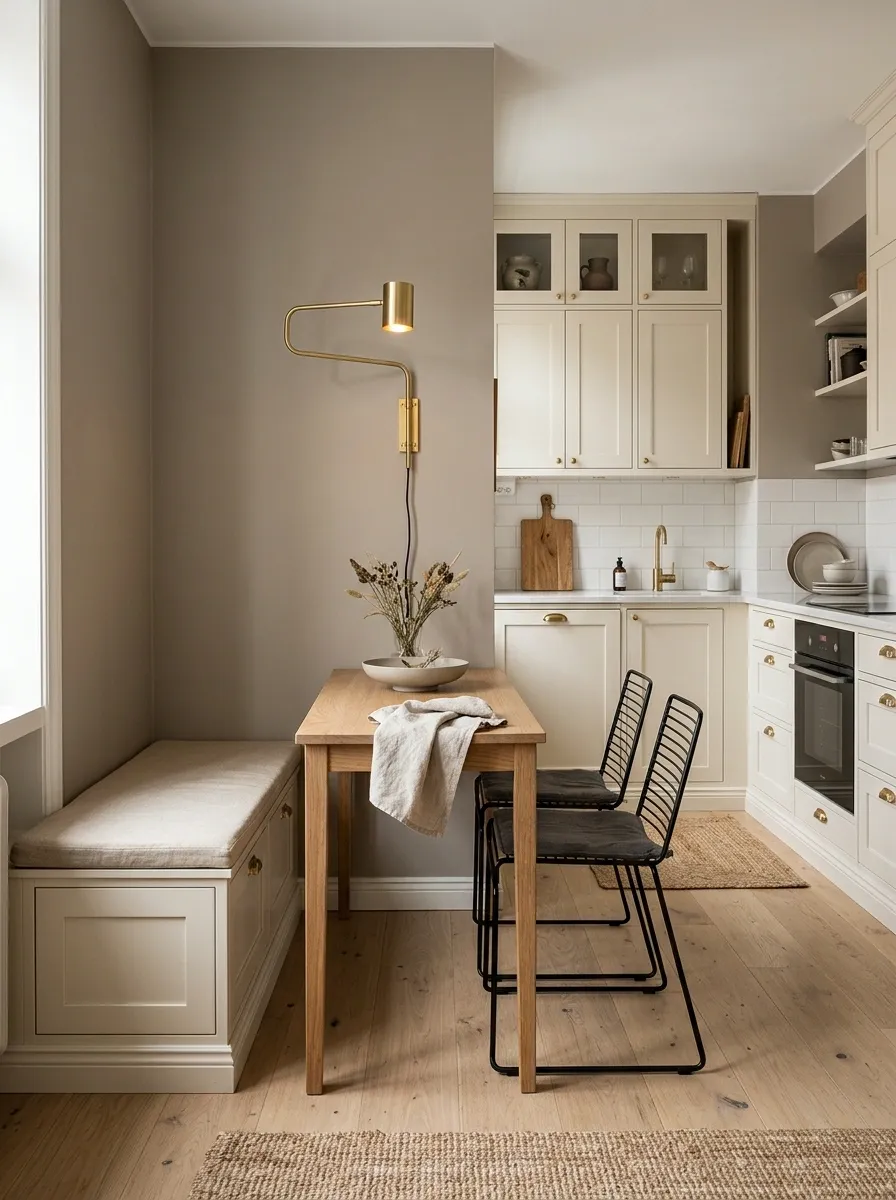
A narrow dining table fits neatly against one wall of a compact apartment kitchen, paired with a storage bench on one side and two lightweight chairs on the other. A wall-mounted light, a shallow ceramic bowl, and folded textiles finish the corner without taking over the floor.
This setup works because the dining area feels intentional without demanding a large footprint. The bench keeps one side visually clean, while the table stays narrow enough for comfortable movement around it.
Small kitchens don’t need tiny furniture everywhere. They need furniture that understands the assignment. A table blocking the only walkway is less “cozy dining corner” and more “daily obstacle course.”
CIRCULATION
ZONE
Vintage Checkerboard Kitchen With Simple Wood Table
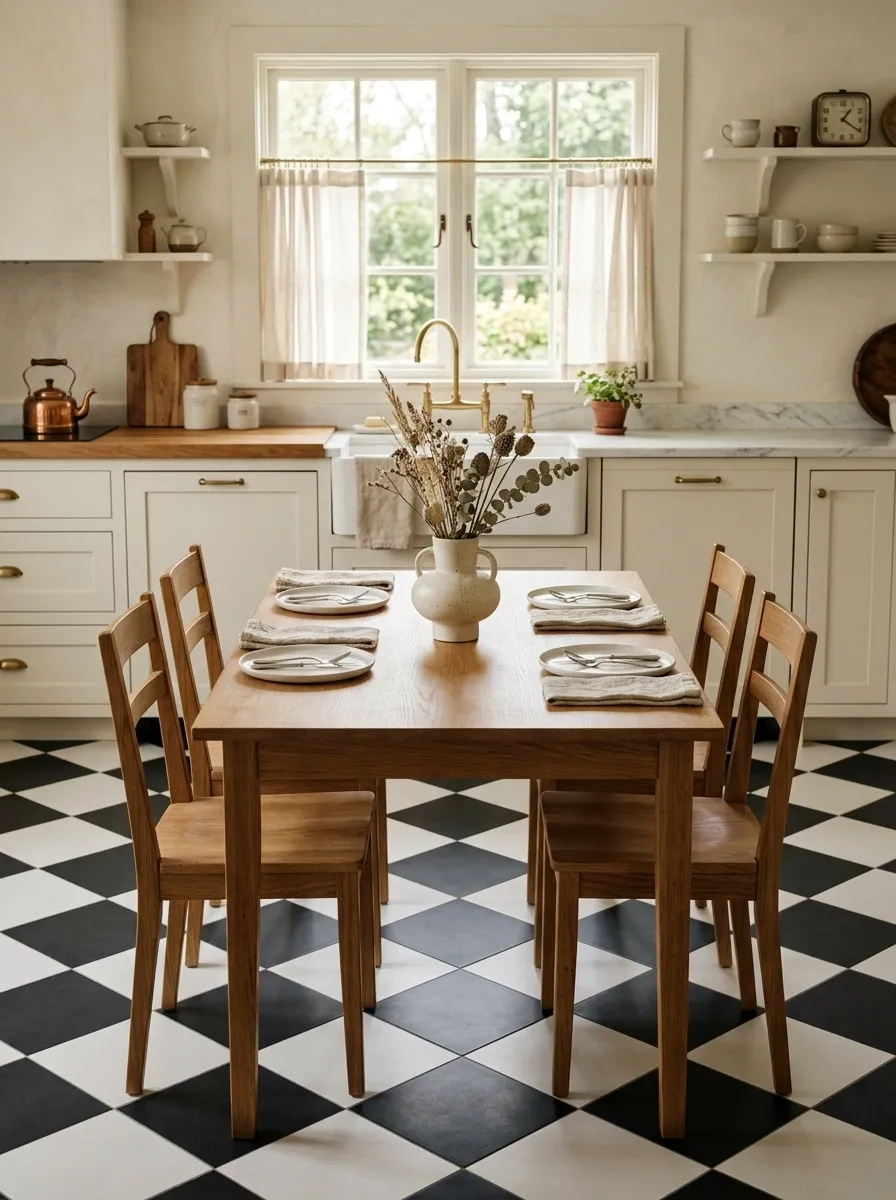
A checkerboard floor already brings a strong pattern into the room, so the table keeps things calm. A medium-toned wood top sits beneath simple chairs, with white ceramics, natural linen, and one understated vessel completing the scene.
The contrast between the patterned floor and quiet furniture gives the kitchen enough visual tension without making every surface compete. The tabletop becomes a grounding layer rather than another focal point.
This is a useful reminder that vintage style doesn’t require every object to look like it was rescued from the same decade. One dramatic element can do plenty of work.
Organic Modern Table With Stone and Wood
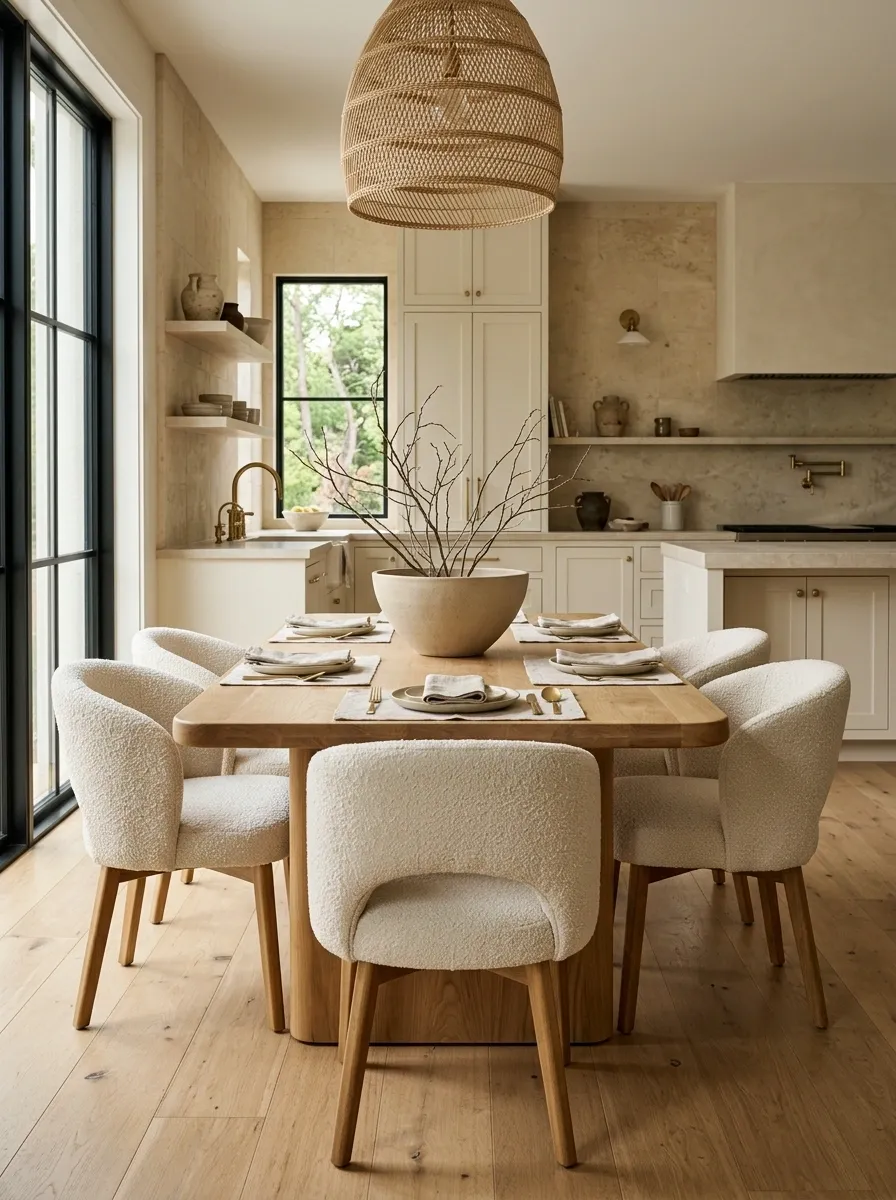
A thick wood table anchors a soft modern kitchen filled with limestone tones, rounded chairs, a large stoneware bowl, and a sculptural branch. The room feels contemporary because the forms are clean, but the materials keep it from looking cold.
Rounded edges are important here. The table, chairs, pendant, and even the vessel echo one another without becoming matchy-matchy. That’s what makes the composition feel calm instead of overly designed.
There is also plenty of breathing room around the table. The furniture isn’t shoved together just to make the room look fuller, because apparently empty space is allowed to exist.
Narrow Black Farmhouse Table With Woven Chairs
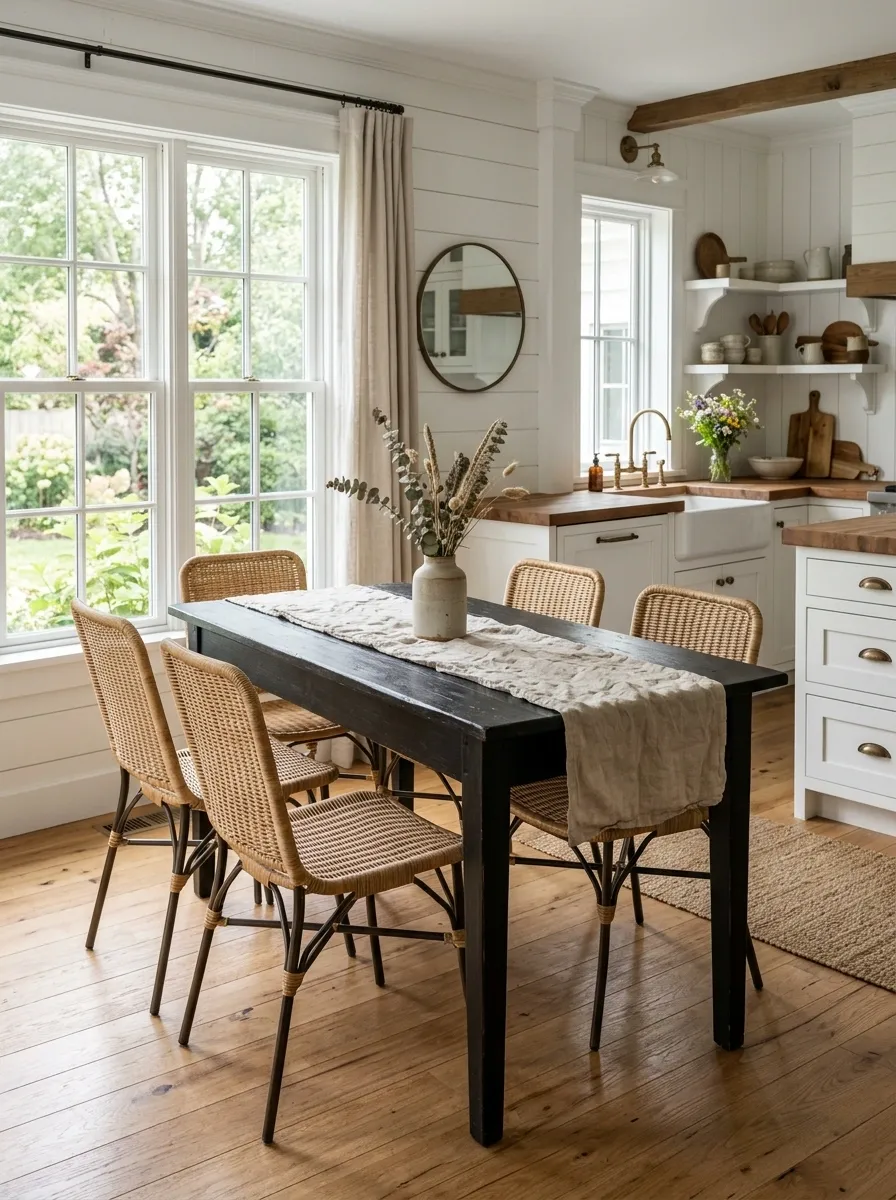
A slim black table gives this farmhouse kitchen some structure while natural woven chairs make the dining area feel softer. White walls, warm wood accents, aged metal, and a loose linen runner keep the black from becoming too formal.
The contrast is simple but strong. Black gives the table a defined silhouette, while the woven seating introduces texture and a little visual looseness. The result feels relaxed rather than polished to death.
The table doesn’t need a giant centerpiece either. One ceramic vessel is enough. More would just start covering up the nice black surface, which seems a little rude after choosing it on purpose.
Soft Sage Kitchen With Everyday Breakfast Styling
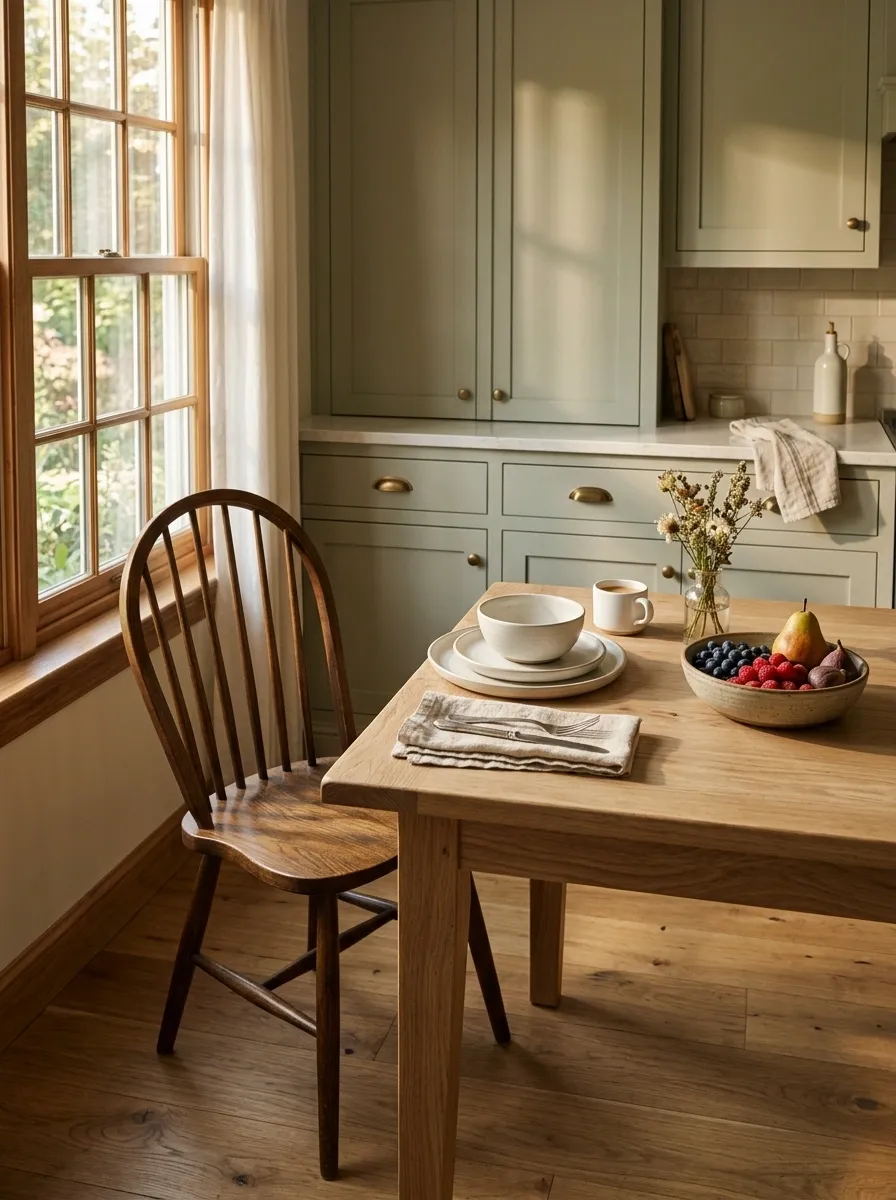
Soft sage cabinetry gives this kitchen a calm backdrop for a pale wood table, simple white dishes, linen napkins, and a low bowl filled with fresh fruit. Sunlight lands across the tabletop, making the whole corner feel ready for breakfast rather than staged for a catalog.
The green and wood combination works because neither one tries to overpower the other. White dishes keep the table crisp, while natural wood adds enough warmth to stop the sage from feeling chilly.
This is also the kind of setup that can survive an actual Tuesday morning. Nothing precious is taking up half the table, which is always a promising sign.
room backdrop
warm anchor
clean contrast
Dramatic Marble Kitchen With Understated Tabletop
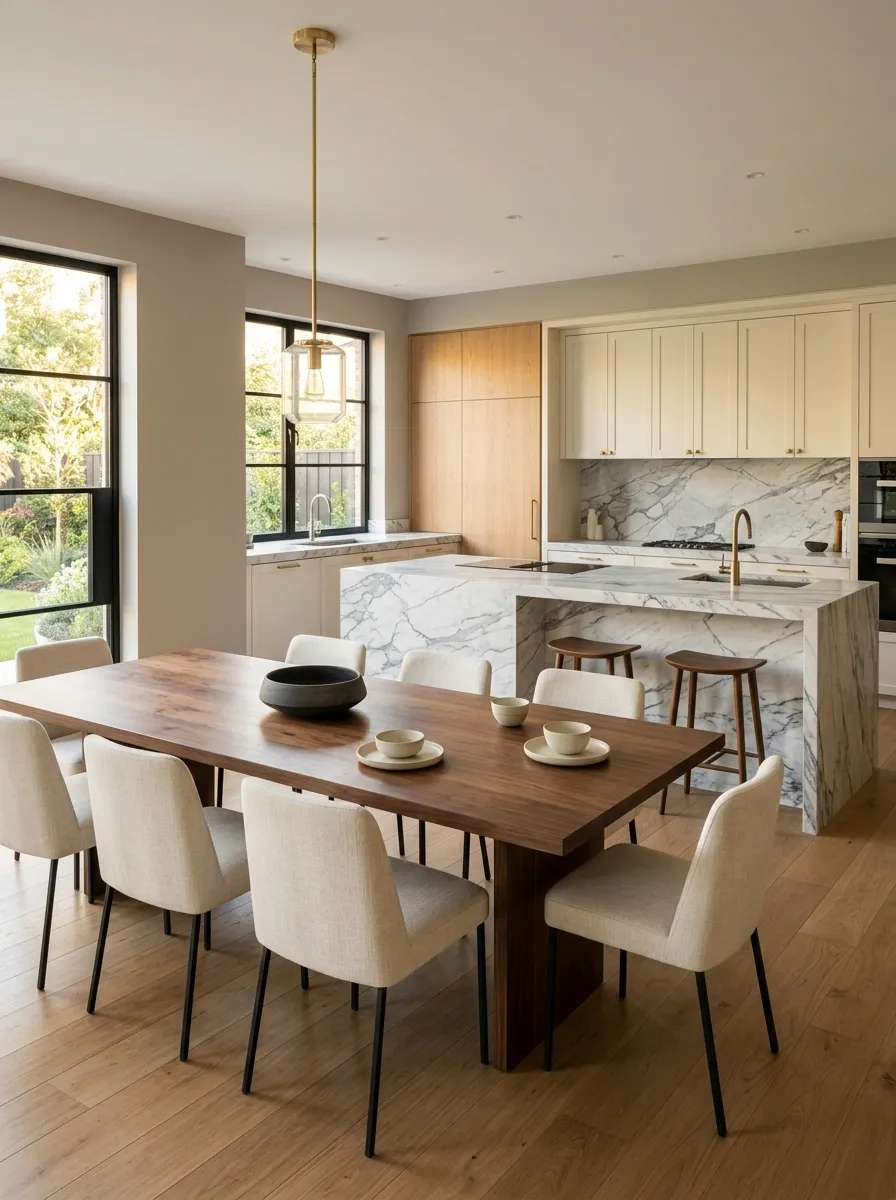
A dramatic marble kitchen already has plenty going on, so the dining area goes deliberately quiet. A deep walnut table sits beneath a simple pendant, surrounded by clean upholstered chairs. The tabletop holds one broad vessel and a few cream ceramics, leaving most of the stone and wood visible.
That restraint is what makes the room feel expensive rather than crowded. The marble gets to remain the star, while the walnut adds depth and warmth underneath it.
There is no medal for filling every empty spot of a table. Especially when the countertop is already doing enough talking for the entire kitchen.
TABLE SECOND.
DECOR THIRD.
Sunny Breakfast Corner With Yellow Textiles
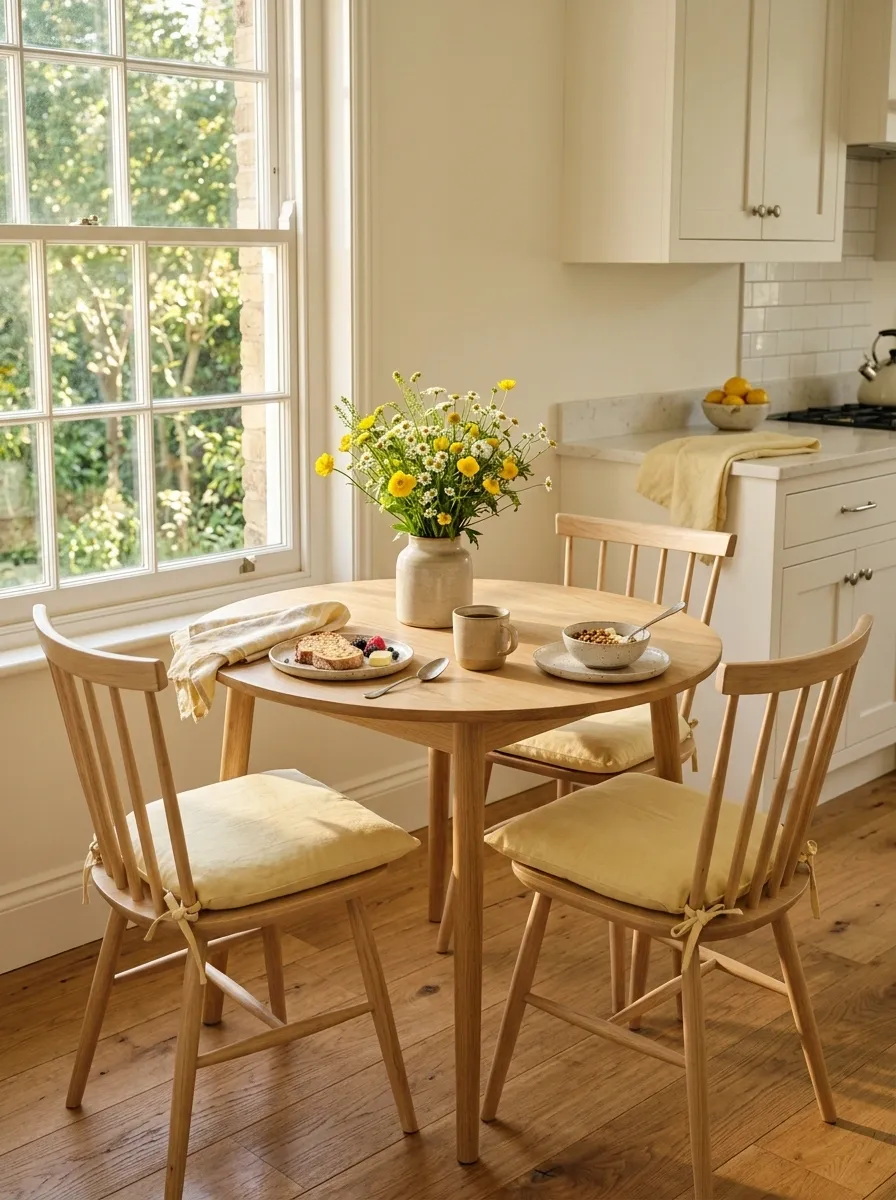
A sun-filled kitchen gets a small natural wood table, light chairs, pale yellow seat cushions, and a loose bouquet with tiny yellow flowers. The palette is cheerful without becoming sugary because the yellow appears in only a few places.
The trick is repetition. A little yellow on the chairs, another touch in the flowers, and perhaps a soft kitchen textile nearby makes the color feel connected to the room instead of randomly dropped onto the table.
The rest of the kitchen stays quiet, which gives the sunny corner room to breathe. Nobody needs fourteen shades of yellow competing before coffee.
CUSHIONS
TEXTILE
Coastal Kitchen With Weathered Wood Table
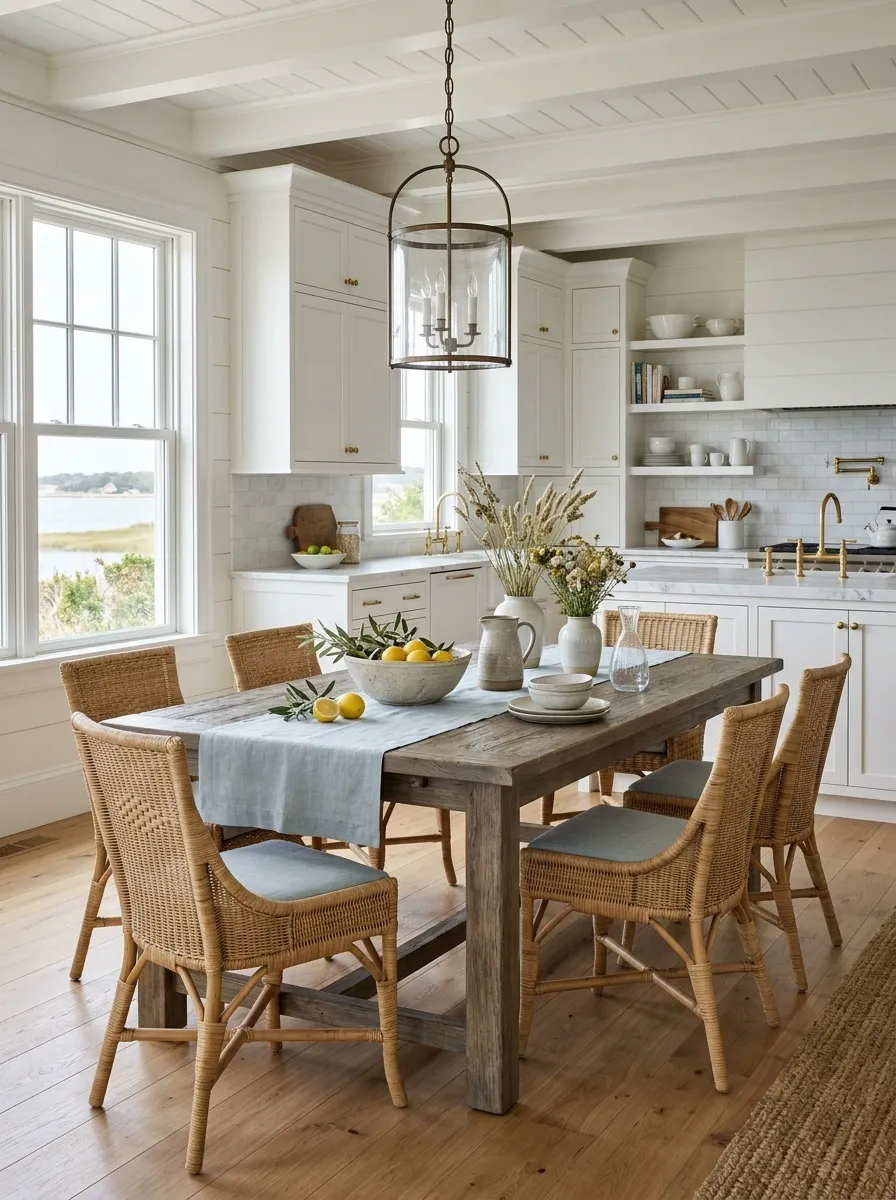
A weathered wood table brings softness into a bright coastal kitchen with white cabinetry, woven chairs, pale blue textiles, and simple stoneware. The materials feel natural and slightly imperfect, which keeps the room from drifting into themed beach-house territory.
The blue is used as a supporting note instead of the whole story. Weathered wood provides age and texture, while woven seating adds warmth around the table.
No seashell collection is required. The room can suggest the coast without looking like a souvenir shop got access to the dining area.
Traditional Kitchen With Round Pedestal Table
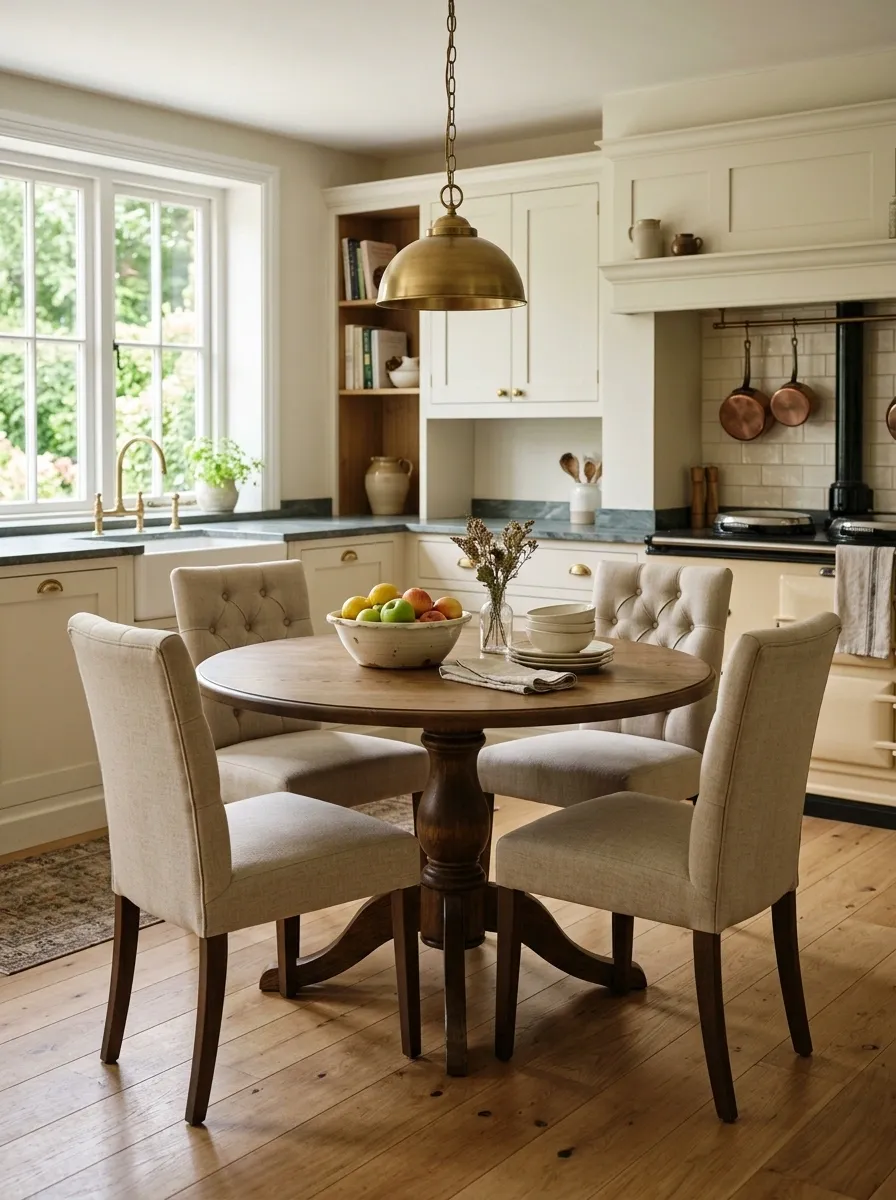
A round pedestal table gives this traditional kitchen a centered, social feel. Painted cabinetry surrounds the dining area, while upholstered chairs, a classic pendant, cream crockery, and a bowl of fresh fruit keep the table looking polished but comfortable.
The pedestal base is especially useful visually because it leaves the area beneath the table open. Chairs can shift more freely, and the single central support keeps the furniture silhouette clean from every angle.
The composition feels classic without becoming overly formal. It looks ready for dinner guests, but it doesn’t look like dinner guests were required to submit a dress code first.
Burgundy Kitchen Accent With Warm Walnut Table
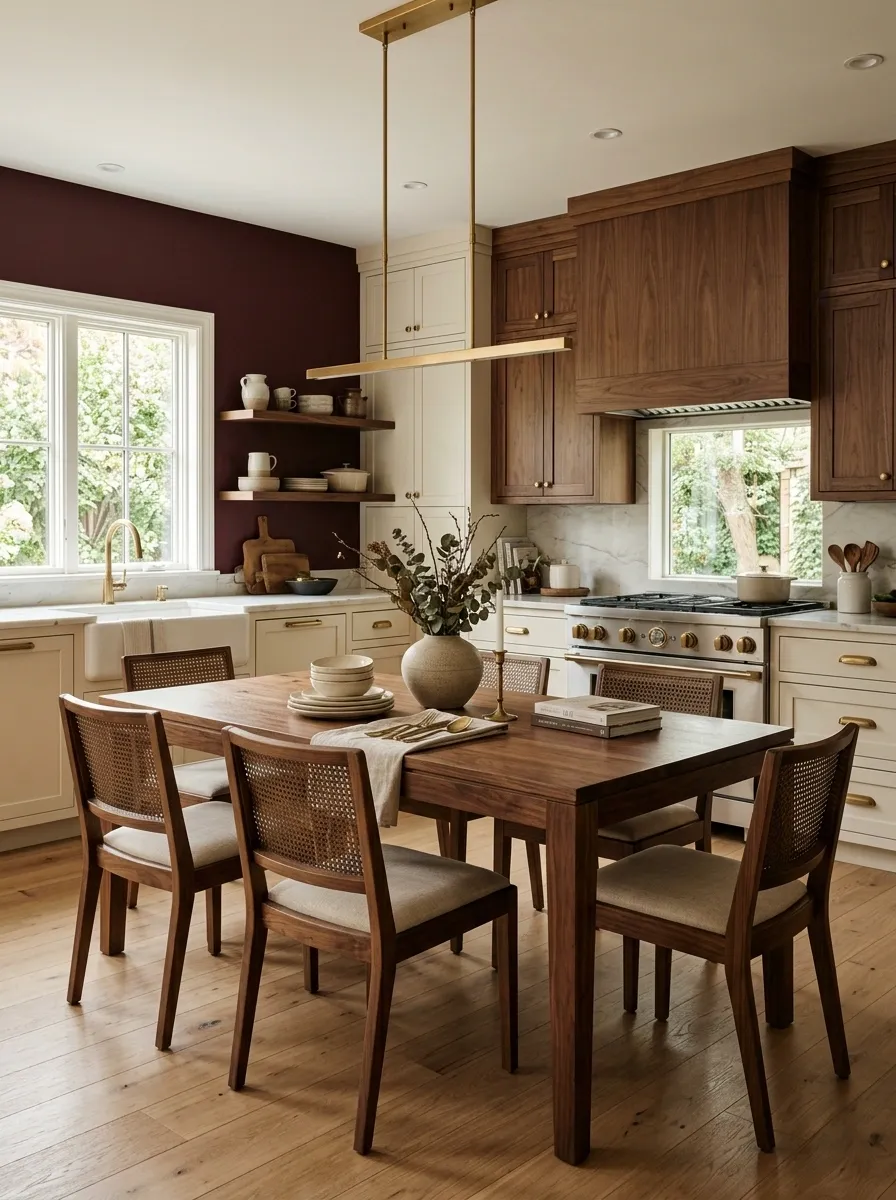
Burgundy gives this kitchen a deep, slightly dramatic color story, while a warm walnut table keeps the dining area grounded. Cream dishes, aged brass details, and soft lighting break up the darker tones so the room still feels welcoming rather than heavy.
The walnut is doing more than filling the middle of the room. Its warm undertone connects the burgundy to the rest of the kitchen and gives the whole composition a richer finish.
Keep the stronger color selective. Burgundy cabinetry or one textile detail is enough. Once every chair, plate, and napkin joins the campaign, the kitchen starts looking like it lost a bet with a paint catalog.
Accent
Grounding layer
Visual rest
Minimal Kitchen Table With Architectural Lighting
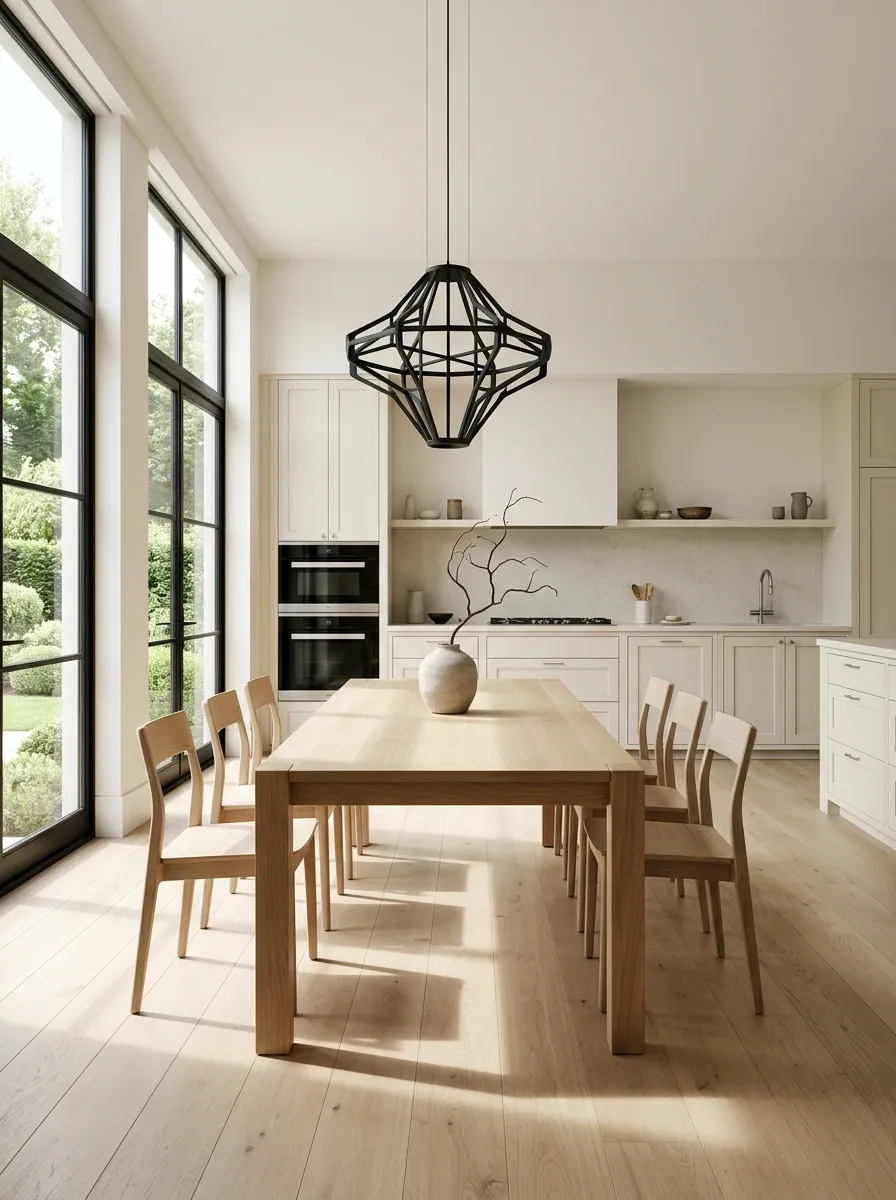
A simple table becomes the focal point of this clean kitchen because the room gives it space to breathe. Straight cabinetry, a sculptural pendant, restrained chairs, and almost no tabletop decoration create a composition built around shape, shadow, and proportion.
The pendant matters as much as the table here. Together they create a strong vertical relationship that gives the room visual structure without filling it with accessories.
This is minimal without looking empty. There is a difference. Empty says nothing. Minimal says exactly what it meant to say and then stops talking.
English Country Kitchen With Floral Table Linens
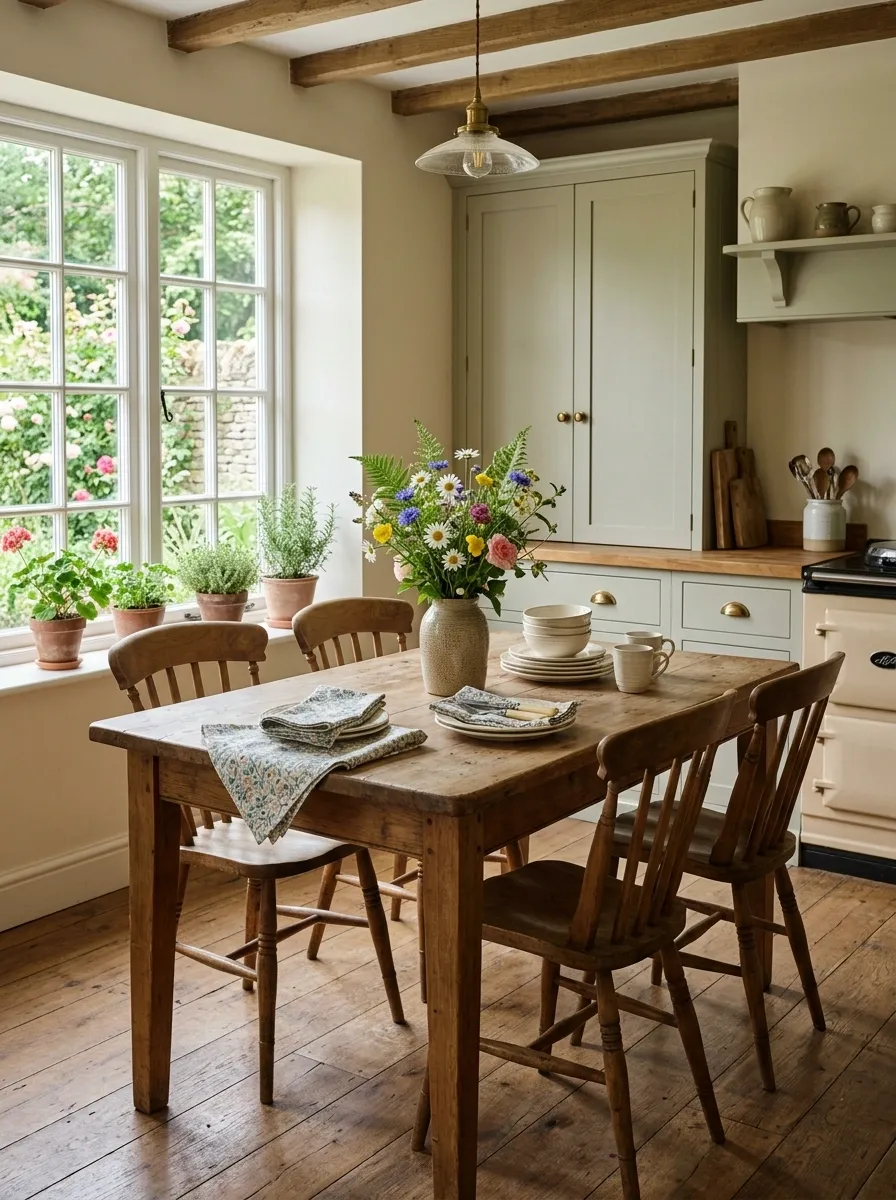
A traditional wood table sits beneath a soft pendant in a country-style kitchen with painted cabinetry, cream crockery, floral linen napkins, and an informal arrangement of flowers. The pattern brings softness into the room without turning every surface into a garden.
The floral detail works because it stays small while the larger materials remain calm. Wood, painted cabinetry, cream ceramics, and linen create the base, then the flowers add just enough movement.
This is where pattern restraint matters. One floral textile looks charming. Six competing florals start holding a neighborhood meeting on the tabletop.
Industrial Kitchen With Reclaimed Wood and Steel
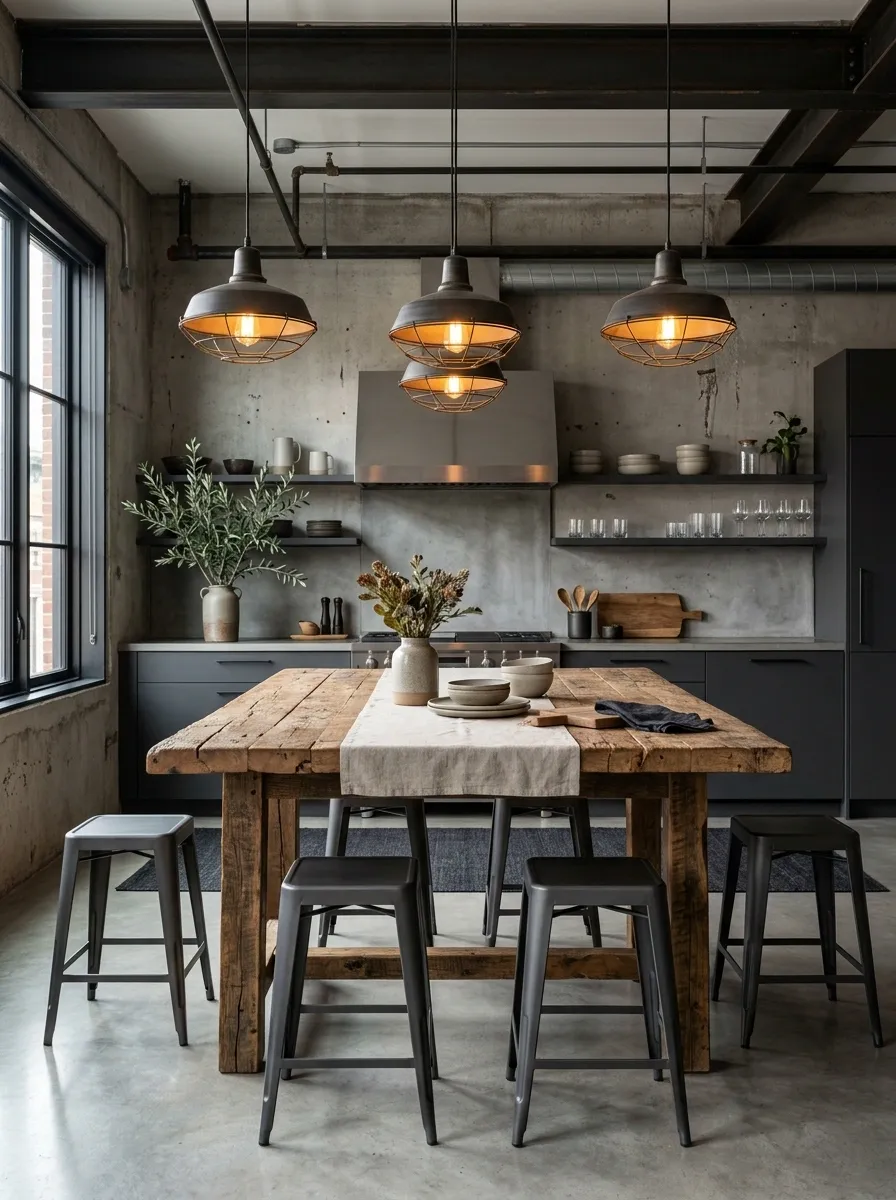
Reclaimed wood brings warmth to an industrial kitchen filled with steel stools, dark hardware, concrete-inspired finishes, and exposed-style lighting. The table becomes the softest major element in the room, giving all those harder surfaces somewhere to land.
Warm bulbs and a few textiles make the difference. Without them, the space can start feeling more workshop than kitchen. With them, the steel and concrete-inspired finishes look intentional instead of chilly.
The roughness should feel controlled. A little wear gives the room character. Every surface looking like it has been through a minor construction incident is unnecessary.
Tiny Kitchen With One-Sided Dining Bench
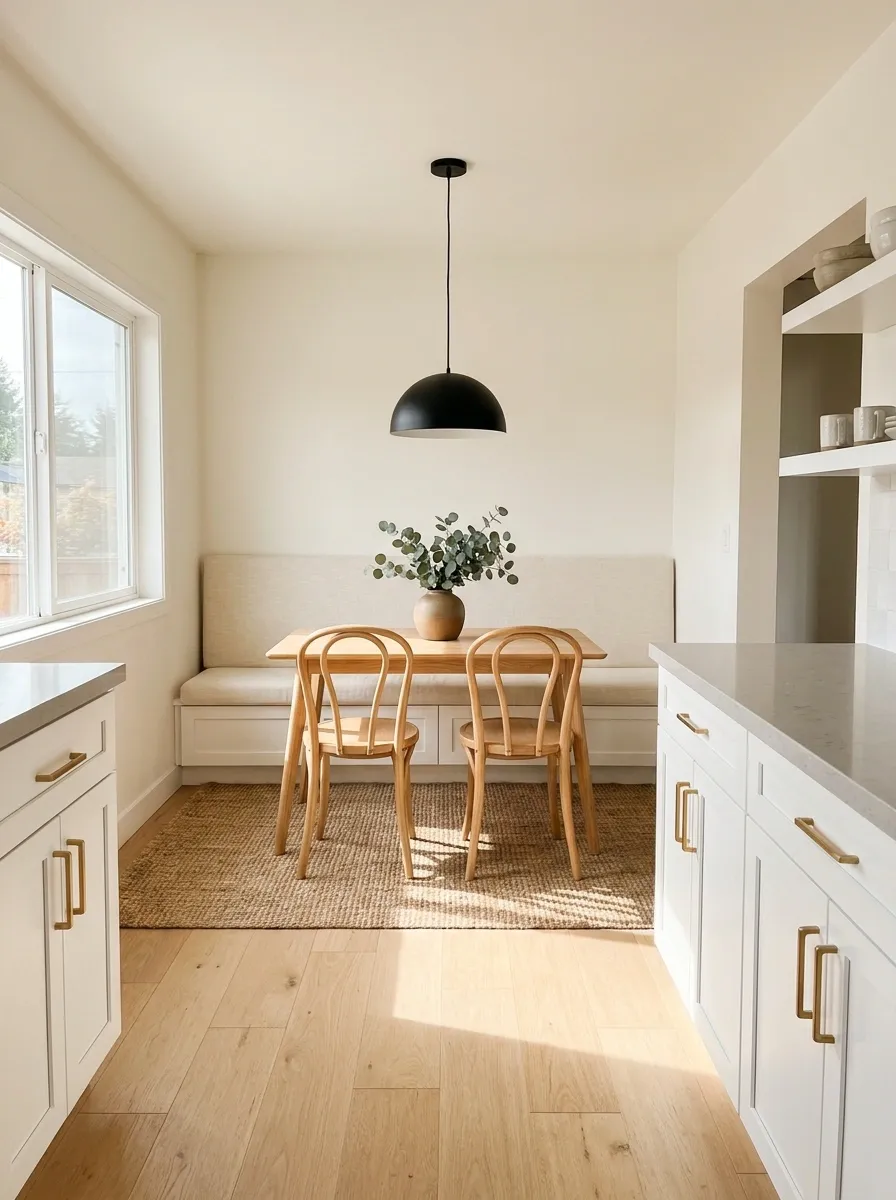
A tiny kitchen makes every inch count with a compact rectangular table pushed toward the wall, a built-in bench on one side, and two smaller chairs opposite. A single pendant hangs above the table while one low centerpiece gives the corner a finished look without blocking movement.
The seating arrangement is what makes this composition work. The bench uses the least disruptive side of the room, while the open side keeps the kitchen’s main path easier to navigate.
This is the kind of layout that proves small dining spaces don’t need to look apologetic. They just need furniture with a better spatial IQ than most people.
BENCH
FOR CHAIRS + MOVEMENT
Warm Beige Kitchen With Textural Table Layers
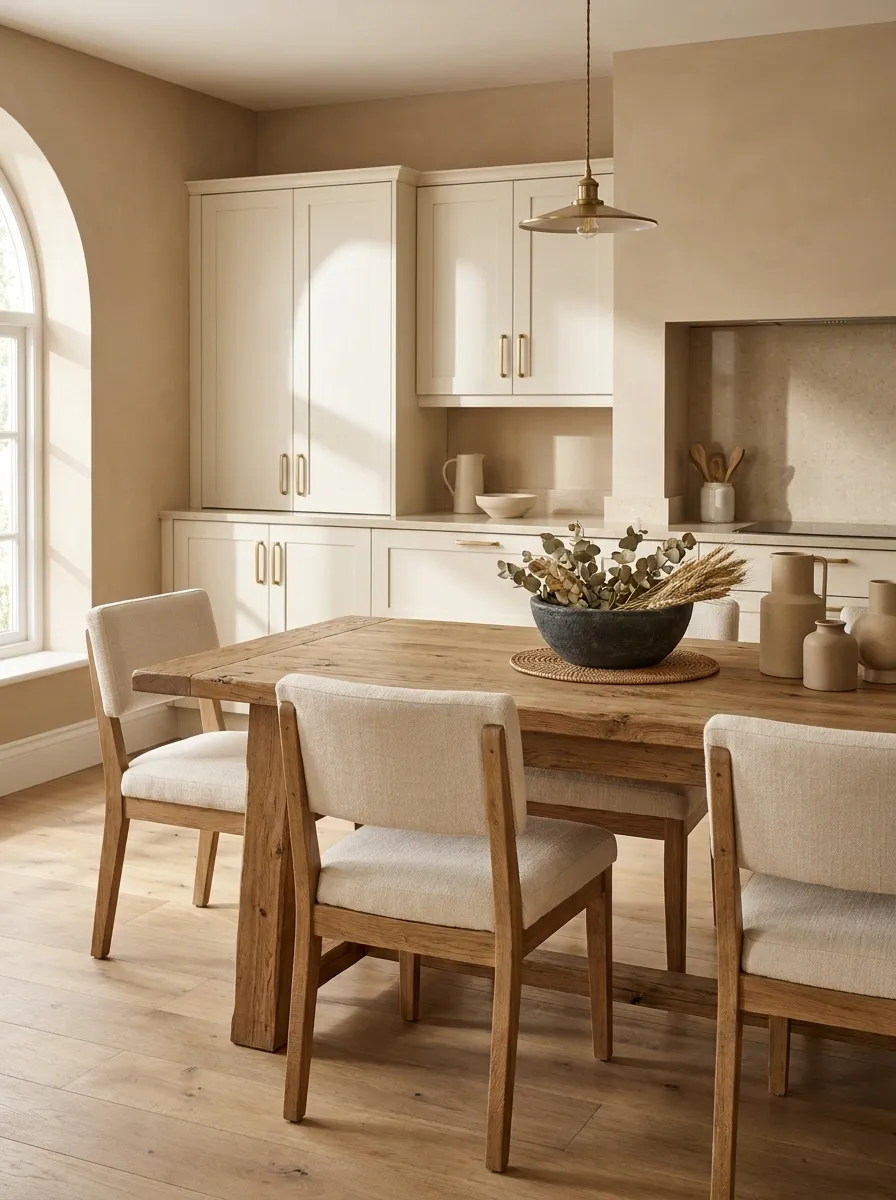
A warm beige kitchen proves that neutral doesn’t have to mean boring. The table, chairs, walls, and cabinetry stay within a soft range of tan, cream, and sandy beige, but the surfaces keep changing. Oak grain, linen, ceramic, woven fibers, and a slightly rough stoneware bowl give the eye something to notice.
There isn’t a strong color contrast here, so texture becomes the main source of depth. That’s what keeps the room looking rich instead of flat.
The secret is letting the textures disagree slightly. Everything being perfectly smooth would make the kitchen look like it was rendered instead of lived in.
walls
linen
oak
ceramic
Playful Colorful Kitchen With Mismatched Chairs
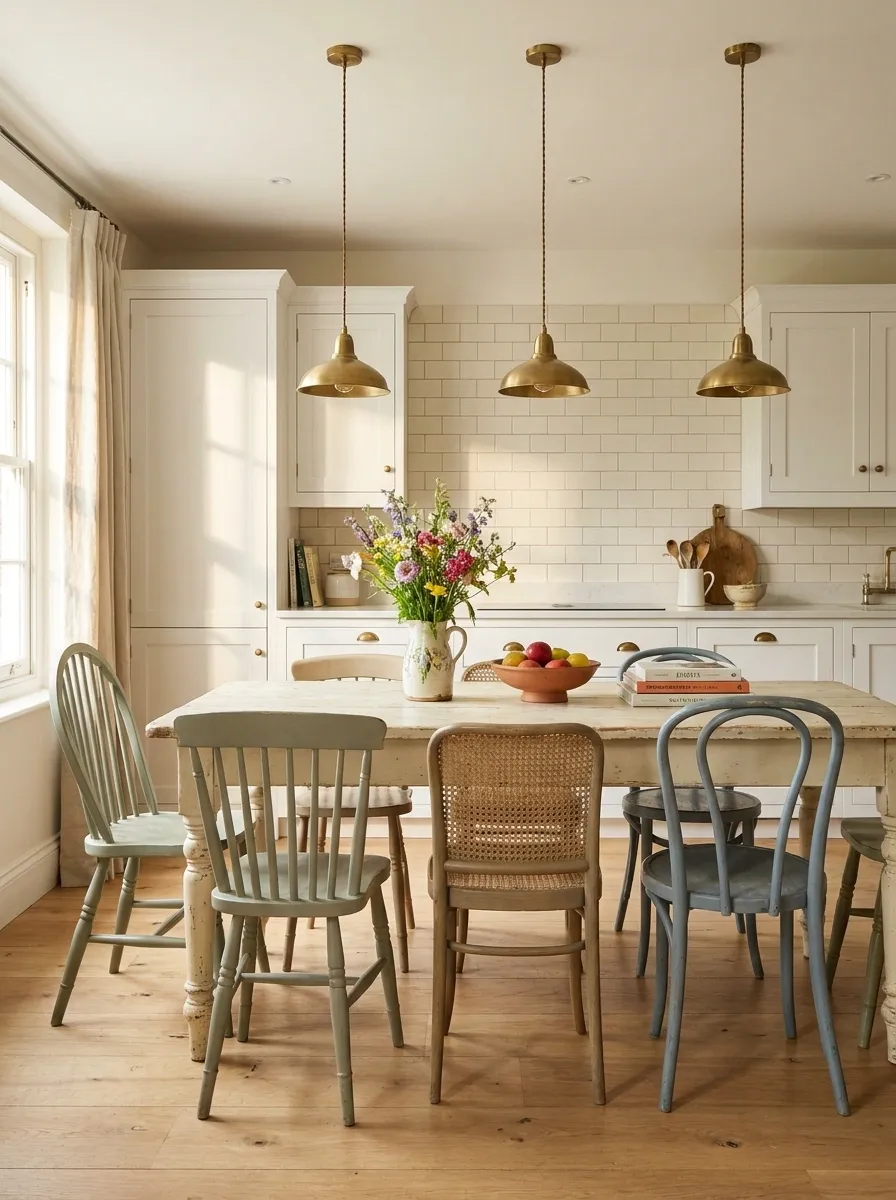
A painted dining table becomes the center of a cheerful kitchen surrounded by mismatched chairs in related muted colors. The cabinets and walls remain comparatively simple, allowing the dining area to carry the playful part of the design.
The chairs don’t need to match. They need to look like they belong to the same color family. Repeating a few soft tones keeps the arrangement intentional while giving the table some personality.
This is where mismatched should mean collected, not “every spare chair in the house has been invited.” A little coordination saves the whole thing.
Black-and-White Kitchen With Natural Greenery
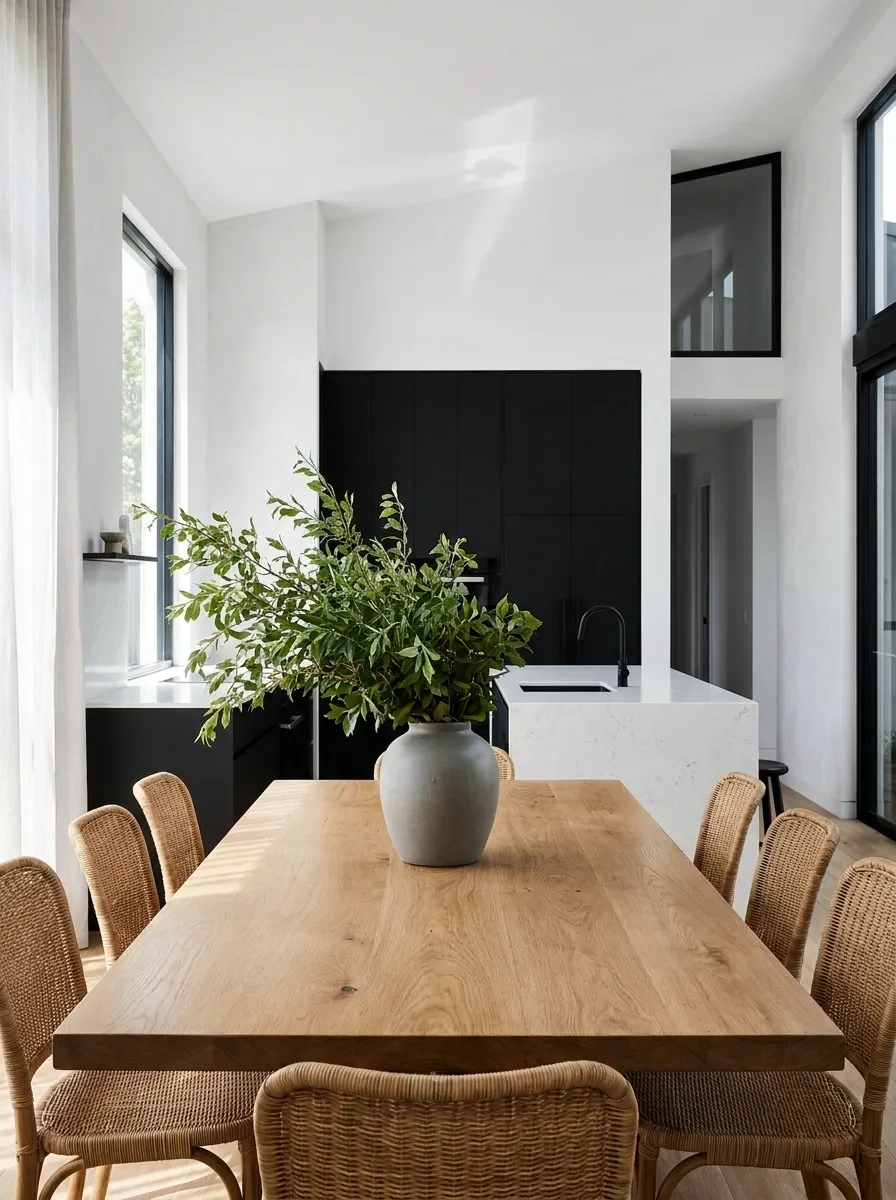
Crisp black cabinetry and white surfaces create a strong graphic backdrop for a natural wood table, woven chairs, and one generous leafy arrangement. The greenery softens the contrast while the wood keeps the dining area from feeling too stark.
The important move is using organic materials against the hard black-and-white architecture. A simple woven chair can do more here than a dozen decorative objects because its texture changes the feel of the whole composition.
The greenery should look substantial but relaxed. One good arrangement beats a tabletop covered in tiny plants having what appears to be an emergency meeting.
Fall Kitchen Table With Deep Rust and Cream
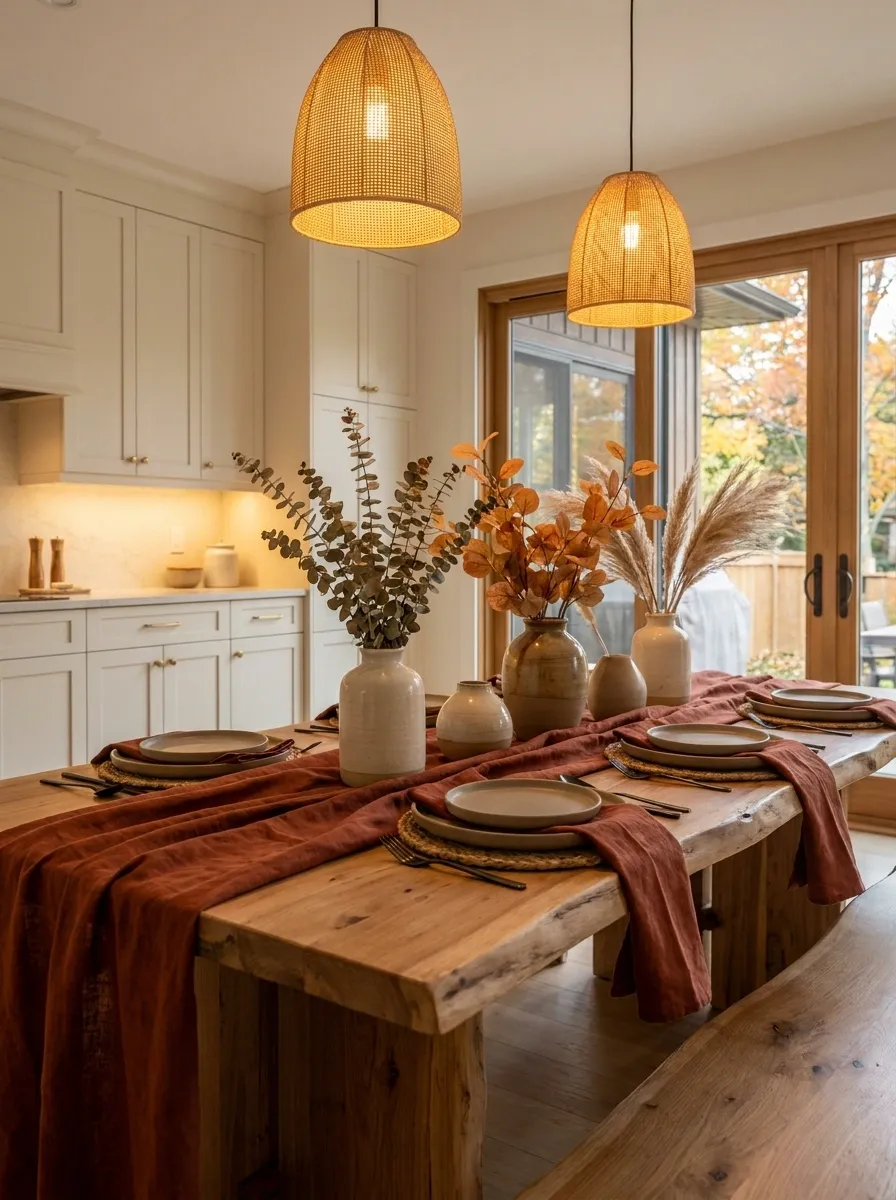
A wood table becomes the base for a warm fall composition with cream ceramics, deep rust linen, muted foliage, and amber-toned lighting. Instead of covering the kitchen in obvious seasonal decorations, the color palette does the seasonal work.
The neutral kitchen stays visible behind the table, giving the rust and foliage enough room to stand out. Natural wood ties those colors together and keeps the scene grounded.
This approach also ages better than a tabletop full of tiny pumpkins. A few weeks into the season, the restrained version still looks like a kitchen. The pumpkin convention can retire with dignity.
Refined Everyday Kitchen With Bistro-Style Seating
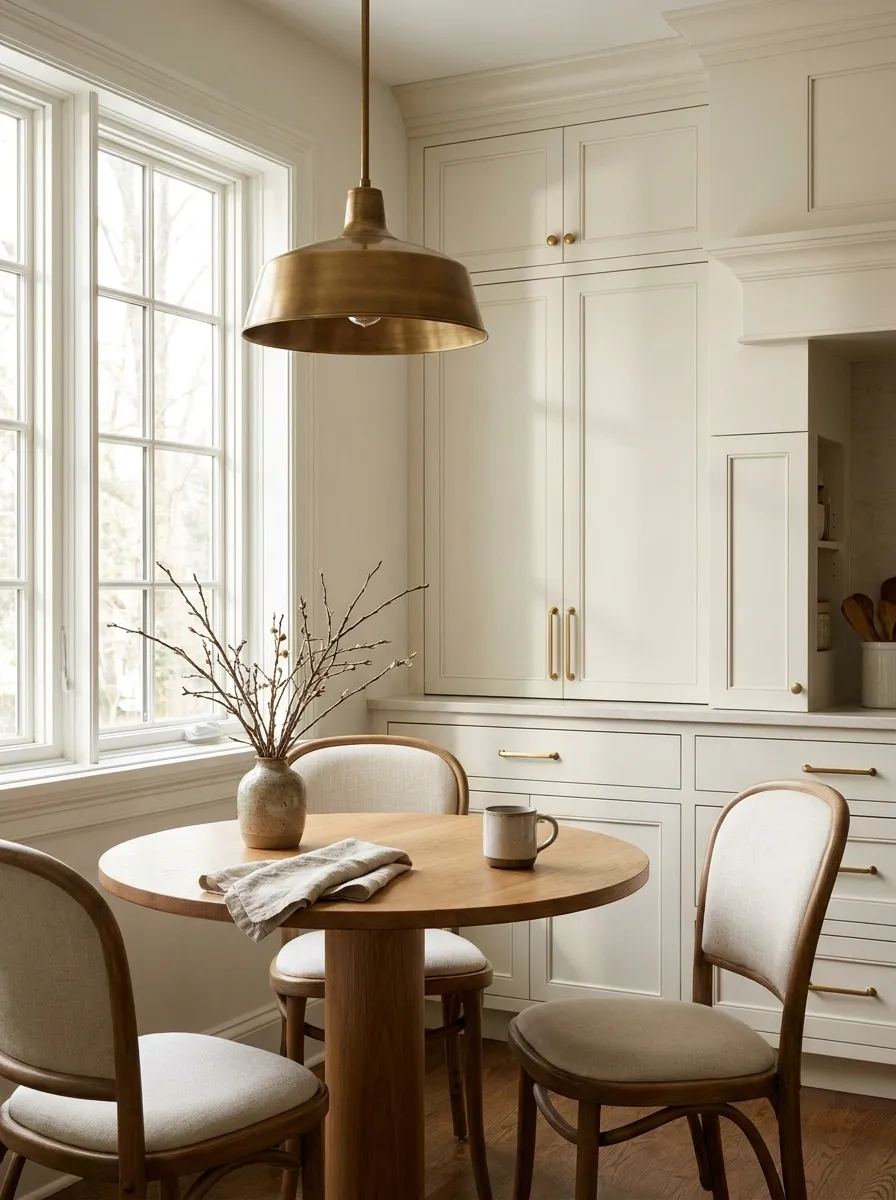
A compact table near the kitchen window gives this final look a casual bistro feeling without turning the room into a themed restaurant. Bentwood or upholstered chairs surround the table, while a warm pendant, small ceramic vase, folded linen, and natural daylight give the dining corner a polished finish.
The arrangement feels special enough for guests but normal enough for coffee, breakfast, or an afternoon snack. That’s really the sweet spot for a kitchen table. It should look good when nobody is trying.
Keep the accessories small and the seating comfortable. A beautiful table nobody wants to sit at is basically furniture with excellent public relations.
Make the Table Feel Like It Belongs There
The nicest kitchen tables aren’t necessarily the ones with the most decoration. They’re the ones that make sense the second you see the whole room.
A warm wood table can soften dark cabinets. A round table can open up a tight corner. A strong marble kitchen may need almost nothing on the tabletop. A colorful group of chairs can become the entire personality of a simple dining area. None of those looks depend on piling more stuff onto the surface.
That’s the part worth stealing from these designs. Don’t start with a bowl, a vase, or a runner and hope the kitchen magically follows along. Start with the whole scene.
Look at the table, the chairs, the light above it, the colors around it, and the amount of space left open. When those pieces agree, the table stops looking like a surface that needs decorating and starts looking like part of the architecture.