
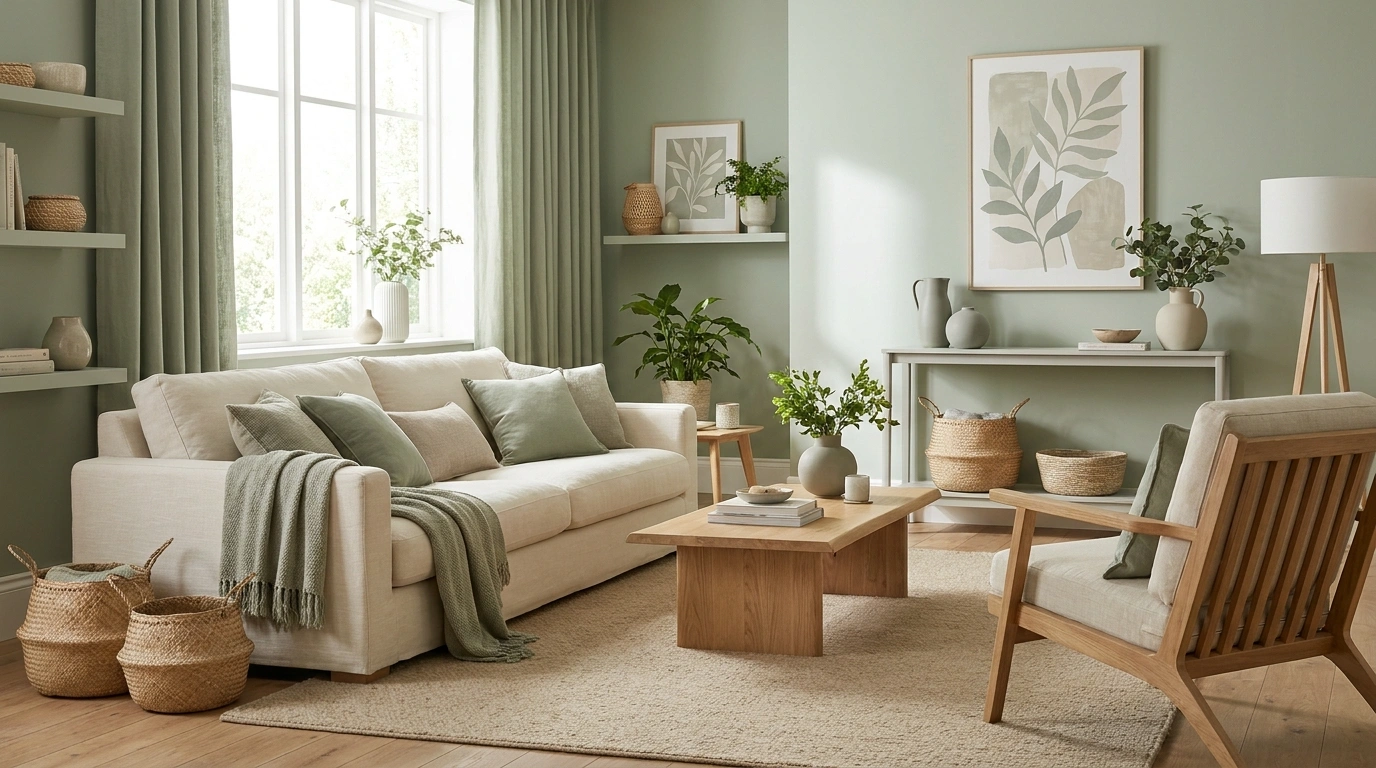
Sage green can look calm and expensive in a photo, then strangely flat or overly coordinated once it enters a real home. The problem usually isn’t the color itself. It’s what gets placed around it.
A sage sofa beside cold white walls can feel disconnected. A room with green pillows, green art, green pottery, and green curtains can start looking like a matching showroom set. Even a beautiful sage paint color can lose its character when every other finish is competing with it.
Sometimes it should carry a wall. Sometimes it works better through upholstery, cabinetry, curtains, bedding, tile, or a single oversized artwork. Warm wood can deepen it. Cream can soften it. Terracotta can give it energy. Black can sharpen it.
Sage Green Home Decor Ideas
Tuck a Woven Caddy Onto the Armrest
A sofa armrest is prime real estate that usually goes completely underutilized. Instead of piling remotes and books on the floor, drape a textured green caddy right over the side for instant storage.
The earthy green knit pairs effortlessly with neutral upholstery, while playful tassels add a relaxed touch. It keeps your daily essentials within arm’s reach without cluttering up the coffee table.
Keep the surrounding living room light and airy so the textured fabric stands out. A soft white rug and simple drapery complete the cozy, organized corner.
Frame the Entryway With Soft Sage Panelling
An entryway sets the tone for the entire home, making vertical sage panelling an inspired choice for a warm welcome. It adds architectural detail without feeling heavy or overwhelming.
Pair the muted green walls with natural jute runners, a sleek wooden bench, and simple black hardware. The combination of earthy tones creates an instantly grounded and cohesive arrival space.
Let the accessories stay minimal by hanging a few woven baskets and clean framed art. The result is a curated hallway that feels naturally put together from the moment you walk in.
Pair a Sage Sofa With Cream Walls and Dark Wood
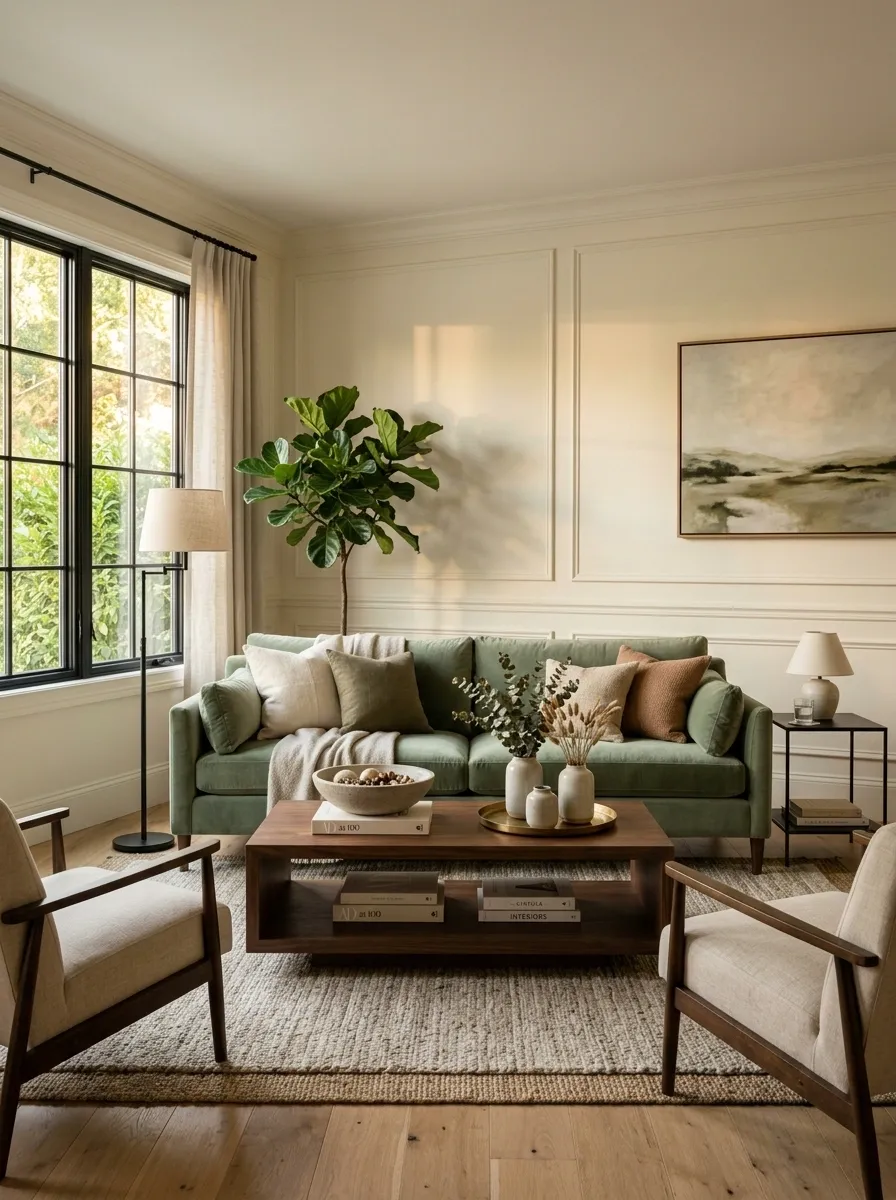
A sage sofa already has enough presence to anchor the seating area. Instead of surrounding it with more green, place it against warm cream walls and introduce one darker wood piece.
A walnut coffee table, media console, or sideboard gives the upholstery more depth. Black metal can appear in the floor lamp or side table, but only in a few places.
The balance feels richer because every material has a separate role. Sage carries the color. Cream keeps the background quiet. Walnut provides weight.
That is much stronger than matching the sofa with green curtains, green pillows, and green art.
Anchor the Hallway With a Sage Console Table
A narrow hallway or empty foyer wall is the ideal spot for a muted green console table. It provides a functional drop zone while instantly warming up transitional spaces.
Top the table with an arched mirror, a stack of neutral books, and a simple ceramic vase filled with branches. Flank it with a soft woven rug on the floor to introduce a layer of organic texture.
Keep the surrounding walls in crisp off-white to let the sage tone pop. A warm brass lamp adds a gentle glow, making the entire entryway feel welcoming and intentional.
Use Sage Green Curtains to Frame a Bright Window
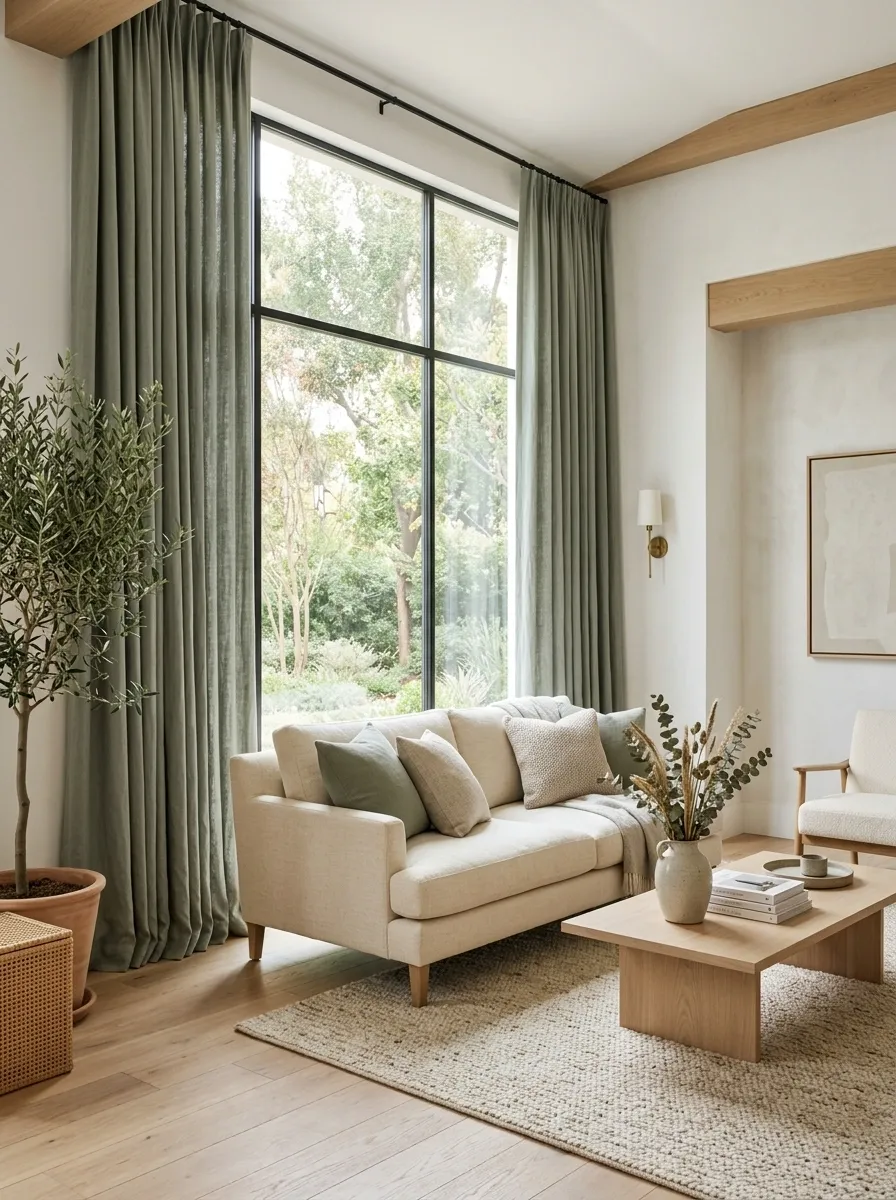
Curtains are a smart way to bring a substantial amount of sage into a room without changing the architecture.
Choose a muted shade with enough gray to sit comfortably in daylight. Hang the panels high and let them frame the window rather than crowding the glass.
Warm linen upholstery, pale wood, and woven texture work well nearby. The room stays bright because the green is concentrated at the edges rather than taking over the center.
This is particularly effective in living rooms where large windows already provide most of the visual energy.
Wrap Your Staircase in Continuous Sage Panelling
If you want to make a dramatic statement in a double-height foyer, carry sage green wall panelling all the way up the staircase. It unifies two levels while adding incredible depth and character.
Pair the painted wood with a classic black-and-white checkered floor and a warm wooden handrail. The contrast between the rich green walls and traditional checkerboard keeps the space feeling timeless rather than trendy.
Finish the landing with a statement floral arrangement on a slender accent table. The rich blooms echo the natural tones of the walls, tying the grand stairway together seamlessly.
Bring Sage Into the Kitchen With Lower Cabinets
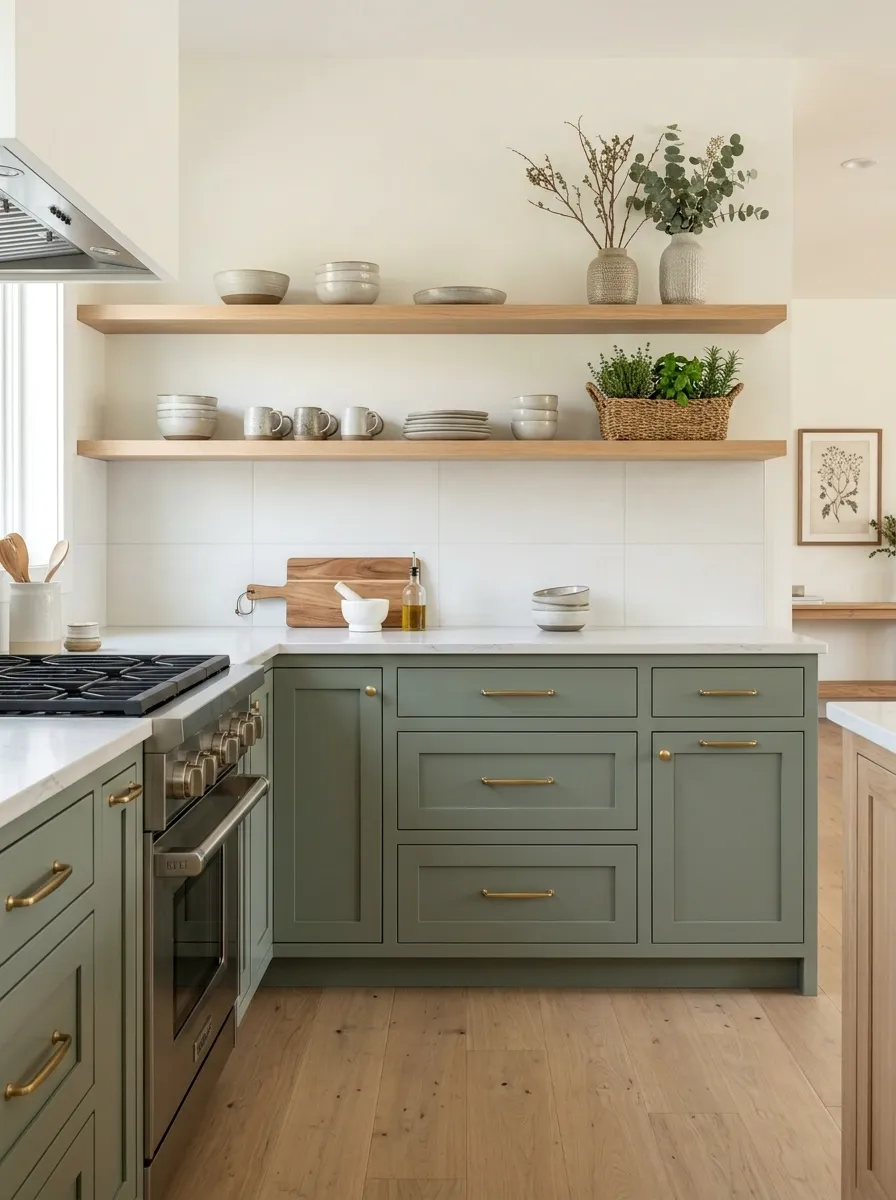
Full sage cabinetry can be beautiful, but smaller kitchens often benefit from keeping the color lower.
Sage base cabinets create a grounded visual layer while cream walls, pale counters, or open shelving keep the upper half lighter. Warm wood can then bridge the cabinetry with the rest of the home.
The effect feels especially strong when the backsplash remains quiet. A patterned wall behind already-colorful cabinetry can make the kitchen unnecessarily busy.
Use the lower cabinets as the statement and let everything above them breathe.
Ground the Vanity With Soft Sage Cabinetry
Bathrooms often lean too cold and sterile, but a sage green vanity instantly introduces warmth and calm. Pair the soft green cabinets with crisp marble countertops for a balanced, high-end look.
Incorporate warm brass sconces and hardware to complement the earthy undertones of the paint. A simple botanical print in a wooden frame echoes the natural color palette without competing for attention.
Keep the remaining surfaces clean with neatly rolled white towels and amber glass accessories. The bathroom feels fresh, spa-like, and completely cohesive.
Layer Sage Bedding With Oatmeal and Natural Linen
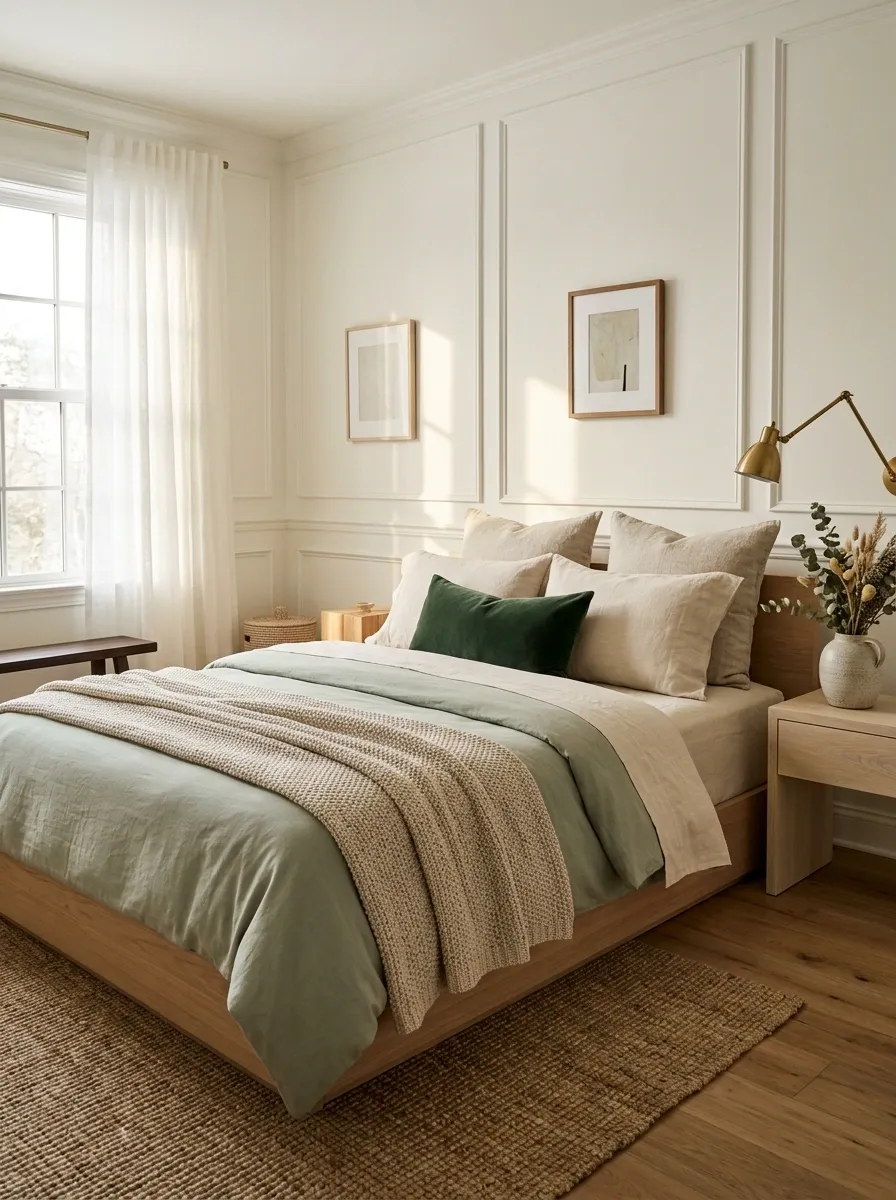
The bedroom doesn’t need every textile to match the wall color.
Start with one major sage layer, such as the duvet or quilt. Add oatmeal sheets, natural linen, and one deeper green detail. The textures should change even when the palette stays close.
This makes the bed look layered without turning it into a collection of decorative pillows and coordinated accessories.
The strongest versions use sage as a middle note, not as the entire bedding set.
Turn a Small Bathroom Into a Soft Sage Retreat
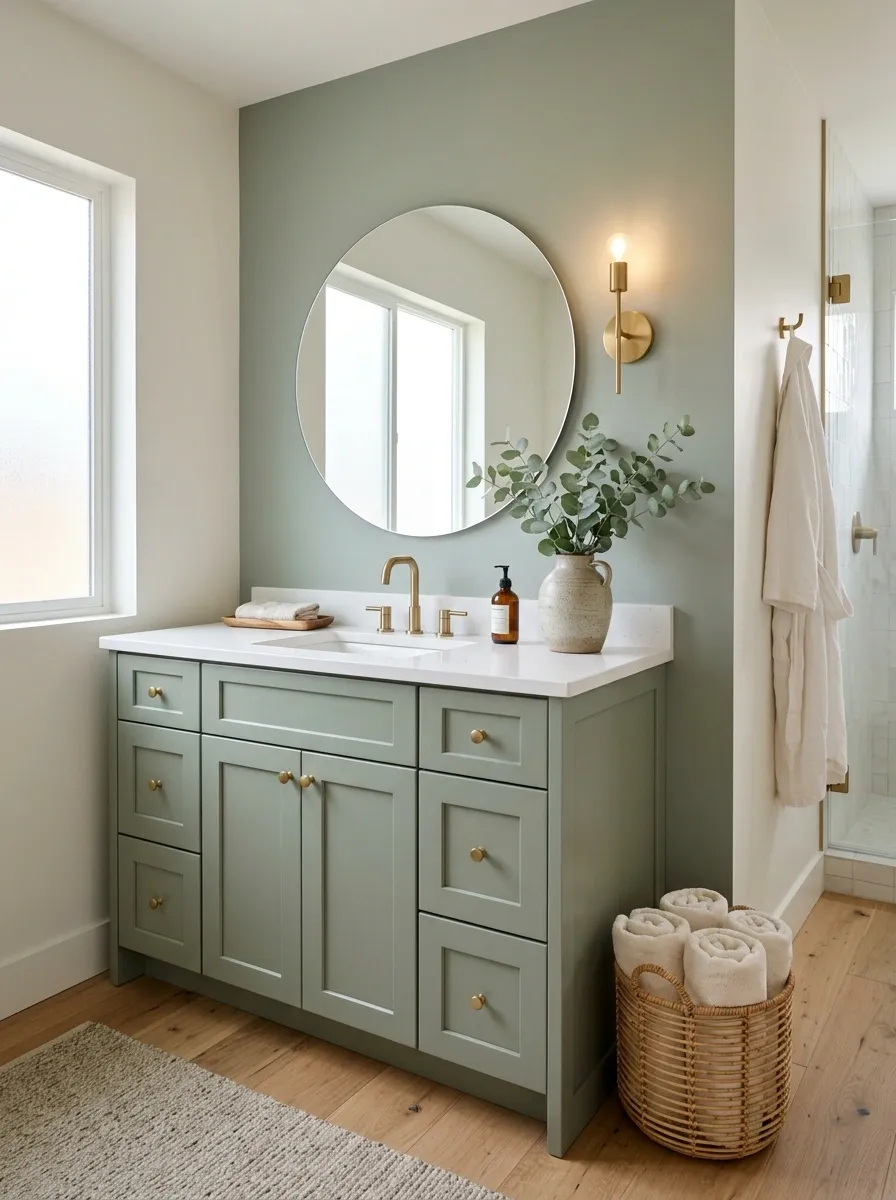
Small bathrooms don’t need dozens of decorative pieces. A better composition uses one major sage feature and lets the rest of the room stay calm.
That could mean a sage vanity, one painted wall, a shower curtain, or muted tile. Warm white towels, natural wood, and a single metal finish keep the space from becoming visually fragmented.
The green should look like part of the room’s architecture, not something added after everything else was finished.
Use a Sage Accent Chair Instead of Repainting the Room
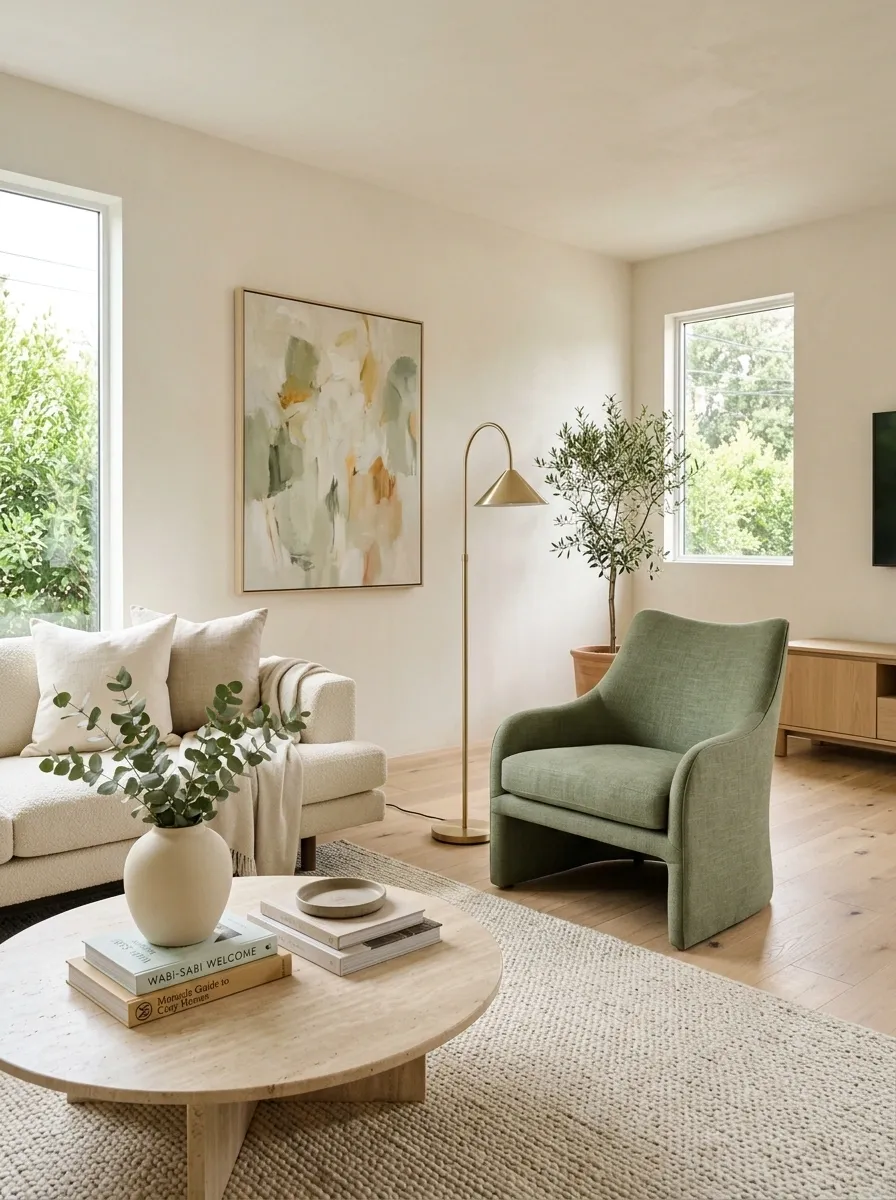
A substantial sage chair can give a neutral room far more personality than a collection of small green decorations.
Look for a clear silhouette, such as a curved lounge chair, slipper chair, or upholstered armchair. Give it enough visual space that it reads as a deliberate focal piece.
Then repeat the green only once, perhaps in artwork or a small cushion. The repetition creates connection without turning the room into a green-on-green display.
Mix Sage With Walnut for a Richer Living Room
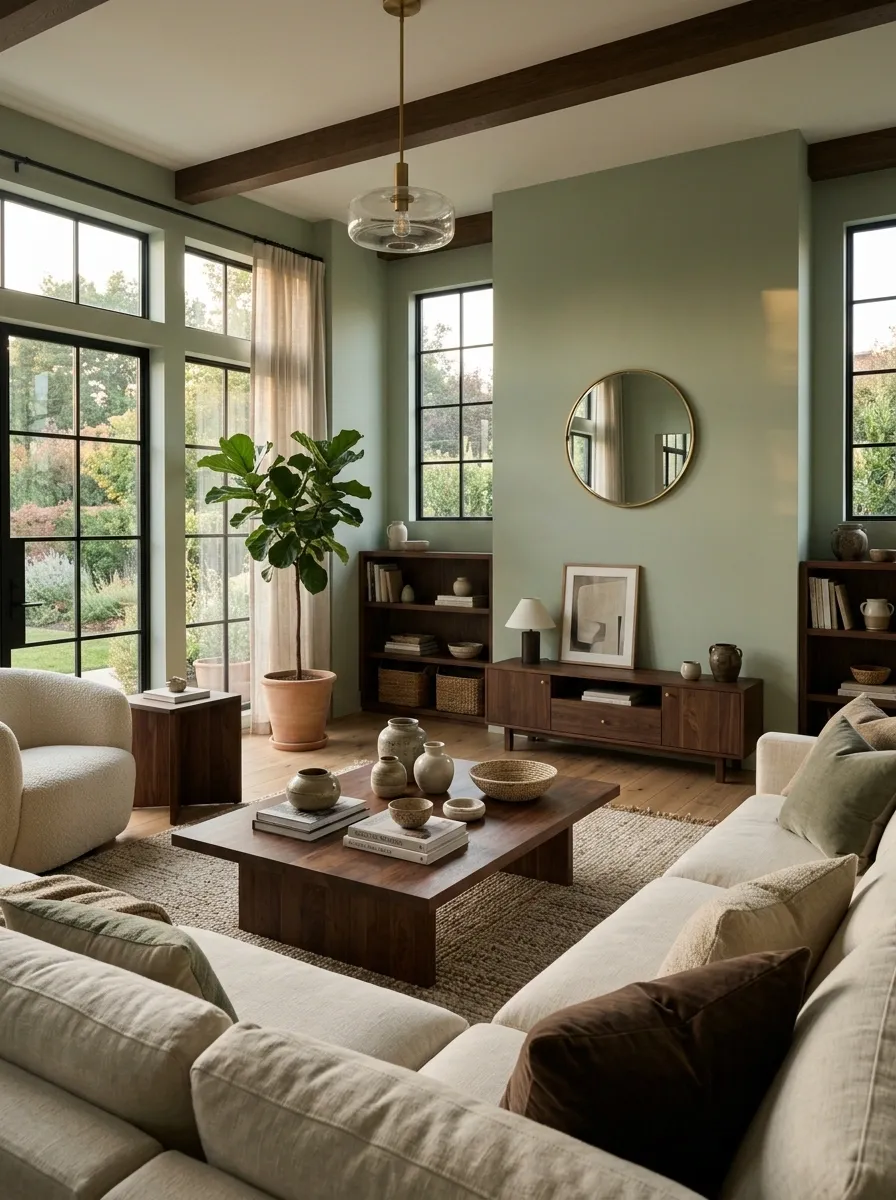
Sage becomes moodier and more sophisticated when it is paired with dark wood rather than only pale timber.
A walnut coffee table, media unit, or sideboard gives the room a visual anchor. Cream upholstery prevents the darker wood from making the entire composition feel heavy.
The key is concentration. Let the walnut appear in one or two substantial pieces instead of scattering dark wood everywhere.
Sage stays soft. Walnut gives it depth.
Add Sage Green Through a Vintage-Style Rug
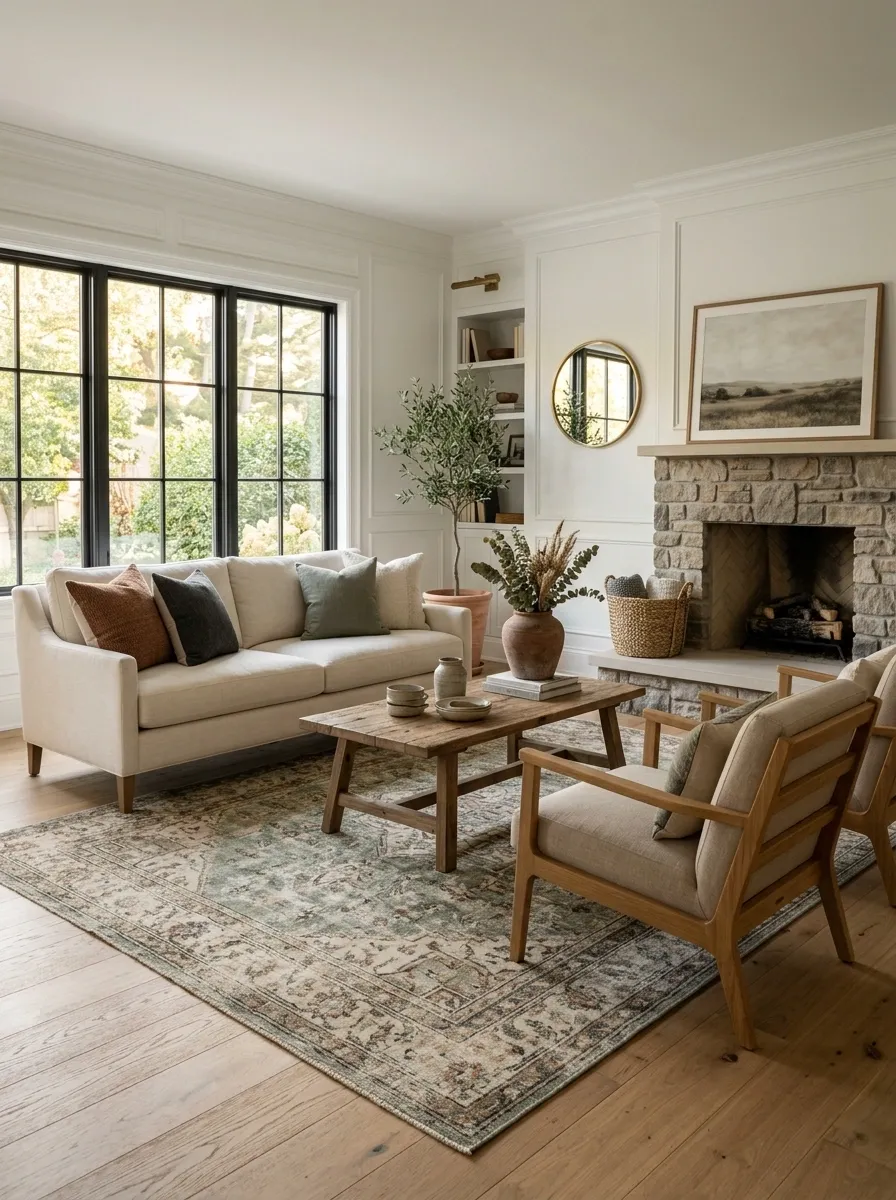
A rug is one of the easiest ways to introduce sage across a large area without committing to paint or cabinetry.
Faded patterns work especially well because they naturally combine green with cream, beige, brown, rust, or charcoal. That built-in variation makes the rest of the room easier to furnish.
The rug should sit underneath the main furniture so the color visually connects the seating group instead of appearing as an isolated rectangle.
This is the strongest route when the room needs color but the walls and larger furniture already work.
Let Sage Cabinets Stand Out Against Warm Stone
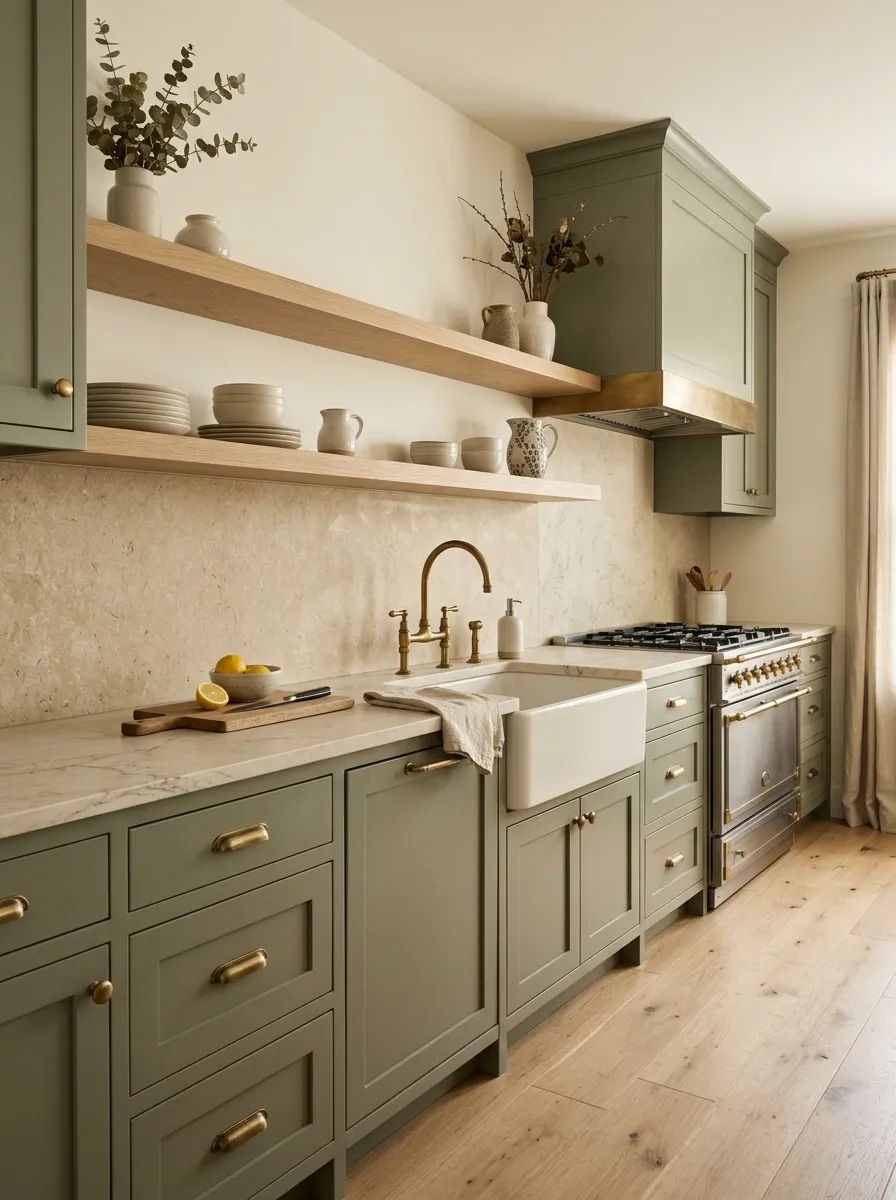
Sage cabinetry becomes far richer when the surface beside it has warmth.
Creamy stone, warm limestone, beige counters, and softly veined neutrals keep the green from drifting into a cool or sterile direction. Natural wood can repeat that warmth through open shelving or nearby furniture.
The hardware should provide another deliberate line rather than another color story. Matte black and aged brass both work, but the finish should be repeated instead of mixed randomly.
Use Sage in an Entryway Where It Can Set the Tone
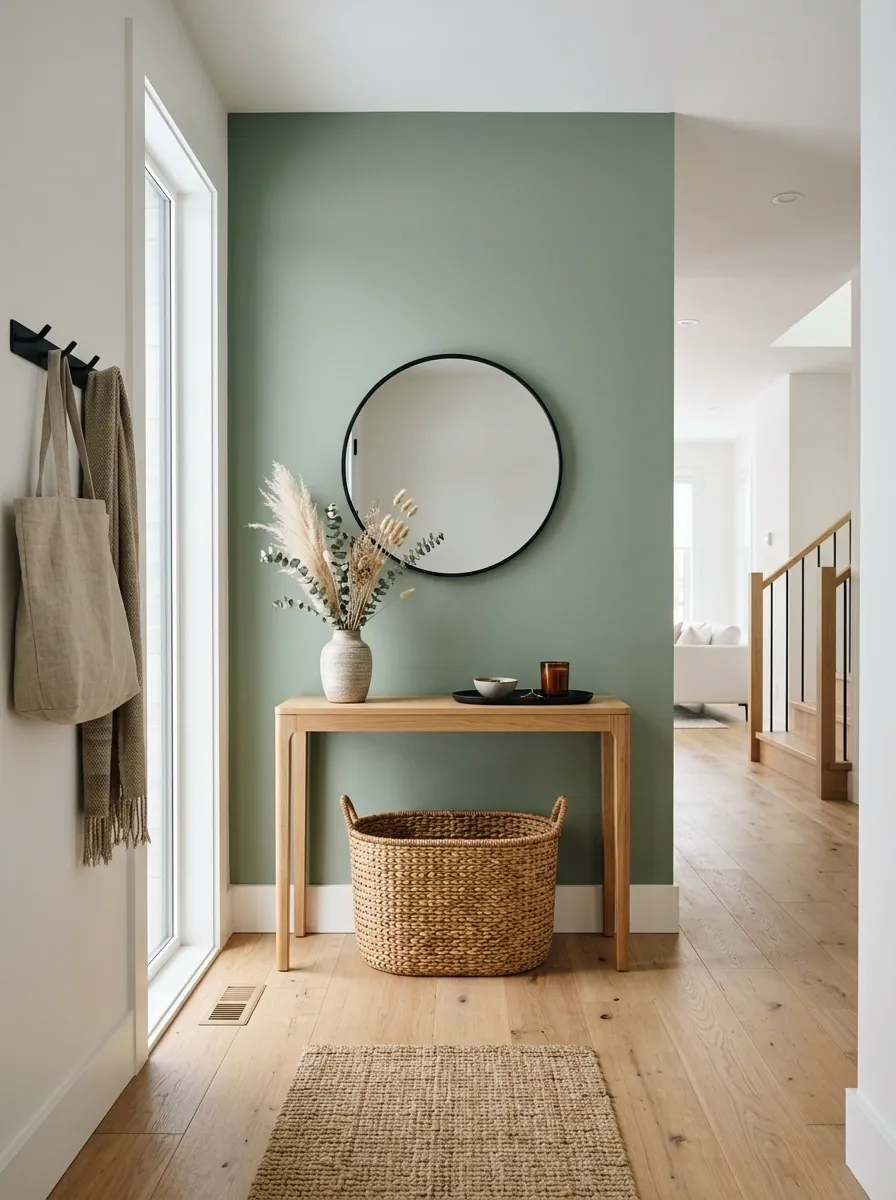
The entryway doesn’t need many pieces to make an impression. It needs a clear visual decision.
A sage-painted wall, upholstered bench, runner, or console can establish the color story before the eye reaches the main rooms. Natural wood, woven texture, and one dark detail can finish the composition without making the entry feel crowded.
Function still matters. There needs to be enough room around the door, shoes, bags, and everyday movement.
Try Sage Green on a Moody Home Office Wall
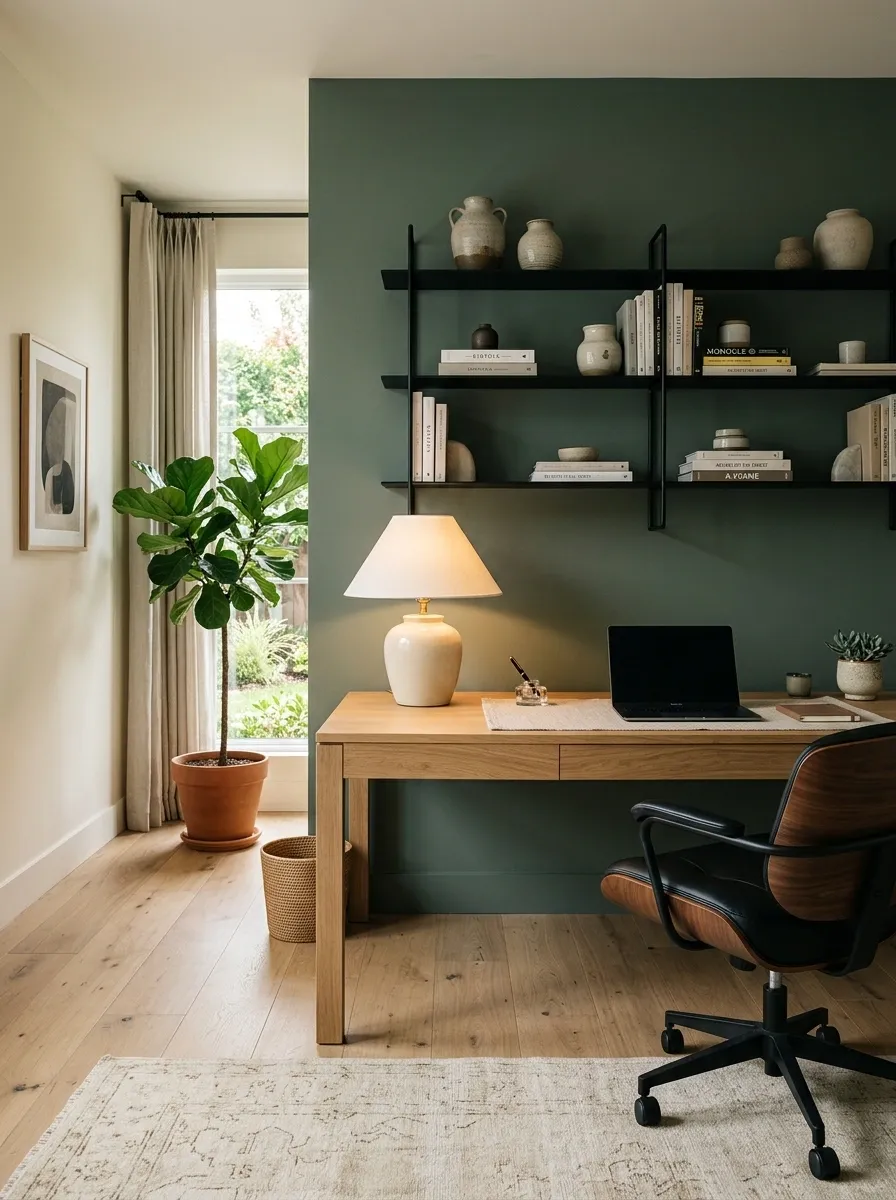
A deeper sage can make a home office feel focused without turning the room into a dark box.
Paint the wall behind the desk and let black shelving, warm wood, and cream task lighting provide the supporting structure. The green establishes a distinct work zone while still feeling connected to the rest of the home.
The desk should remain relatively light. A visually heavy workstation against a dark wall can make the room feel compressed.
Use Sage Green Throw Pillows to Connect Mixed Furniture
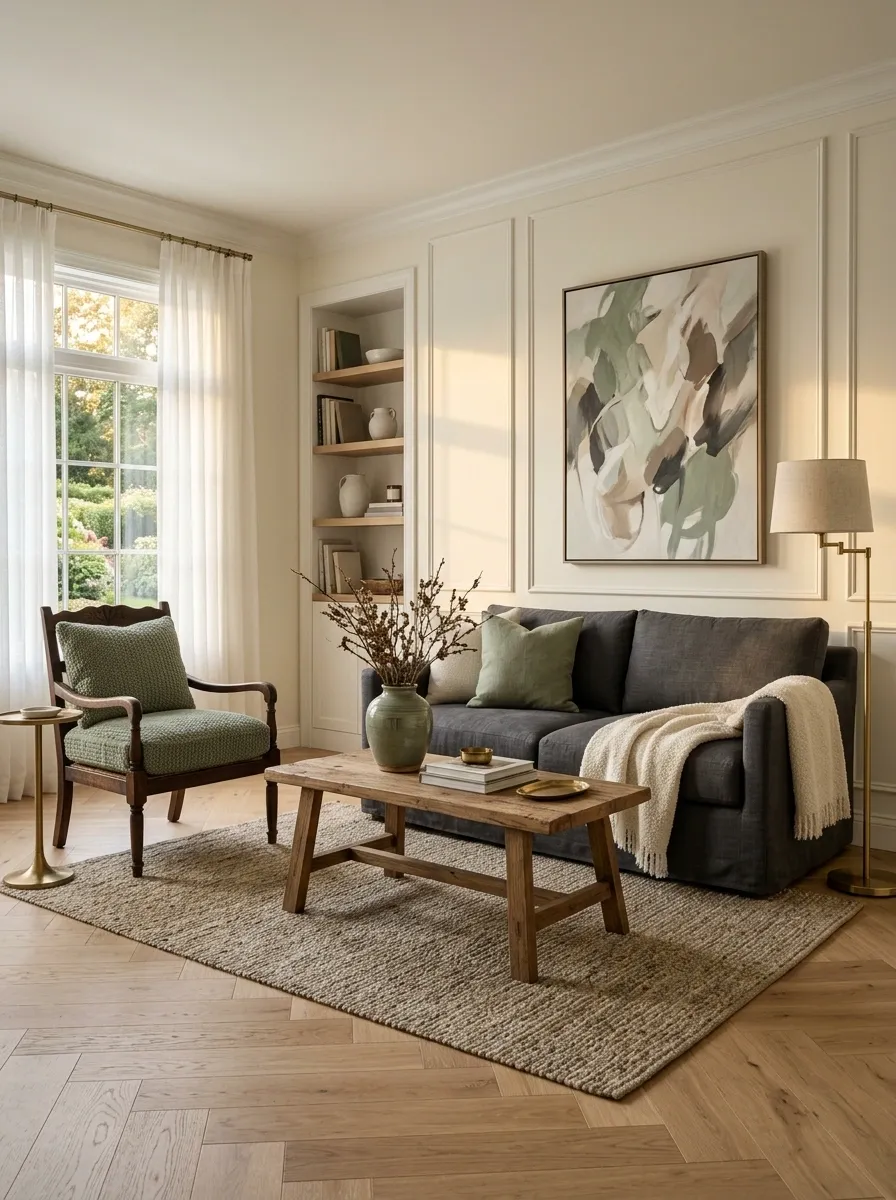
Mismatched furniture can look intentional when something subtle ties the pieces together.
Sage pillows are useful because they can appear on different seats without forcing the fabrics or silhouettes to match. Put one on the sofa and another on a chair, then repeat the color once elsewhere in the room.
The fabrics should differ. Linen, velvet, woven cotton, and boucle create more depth than buying everything from one collection.
The goal is color connection, not visual duplication.
Make a Sage Green Dining Nook Feel Intentional
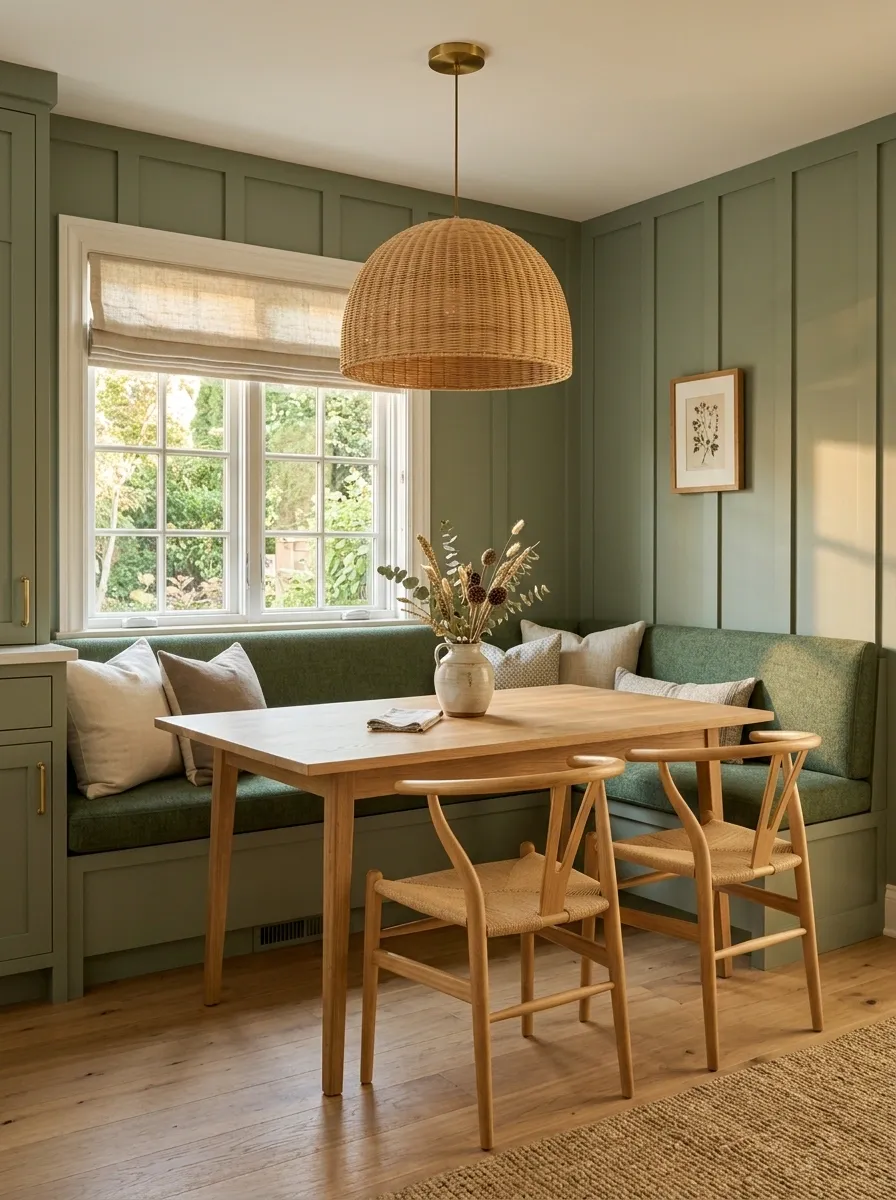
A small dining nook can easily look like an unused corner with a table pushed into it. Strong color gives the zone a clearer identity.
Use sage on the wall, banquette, or dining chairs. Then bring in warm wood through the table and soften the overhead light with woven texture.
The rest of the home can remain neutral. The dining area gets its own visual language without feeling disconnected from the rooms around it.
Keep the tabletop relatively clean. The wall and furniture already establish the composition.
Add Sage Bathroom Towels for a Low-Commitment Change
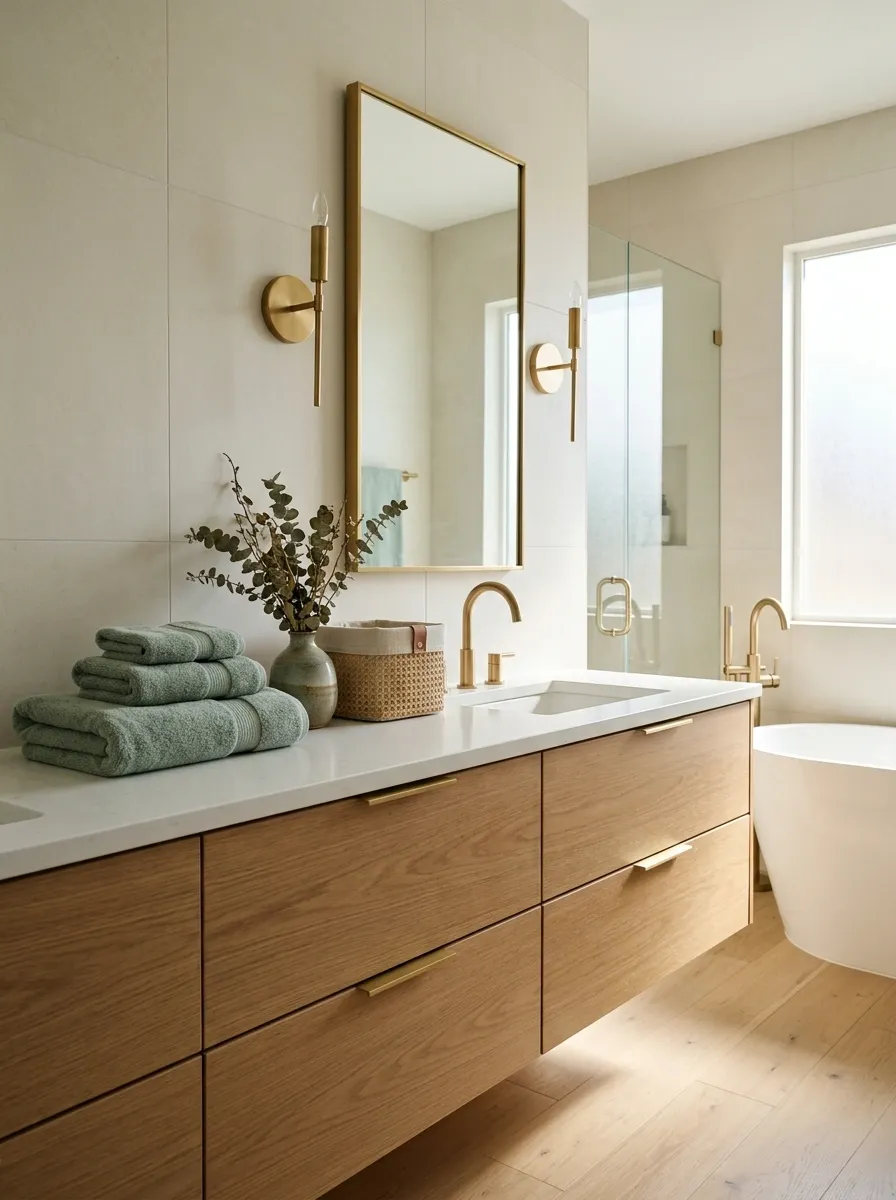
Textiles are a useful place to test sage before making a permanent change.
Dusty sage towels can give an otherwise neutral bathroom a completely different mood. Keep the tile, vanity, and larger surfaces quiet so the color has enough contrast to register.
A single fabric basket or small ceramic piece can repeat the tone, but there is no need to match every accessory.
The room should still make sense when the towels are replaced later.
Combine Sage Walls With Warm Wood Trim
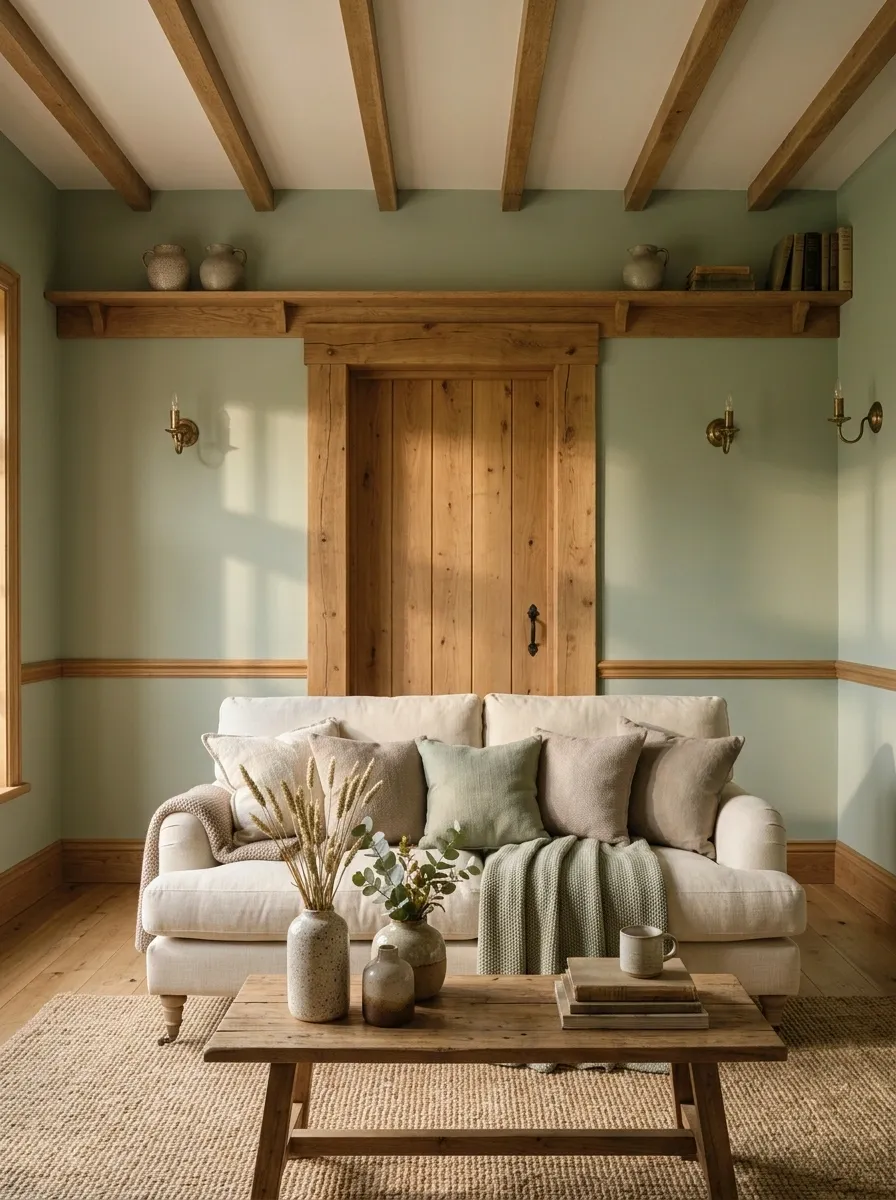
Sage walls can become unexpectedly flat when every architectural detail disappears into the same color.
Warm wood solves that problem. An oak window casing, timber door surround, wood chair rail, or exposed beam creates a natural interruption without introducing another paint color.
The pairing works especially well in cottages, older homes, and rooms where architectural details already matter.
The wood should look structural, not decorative.
Use Sage Wallpaper in a Small Powder Room
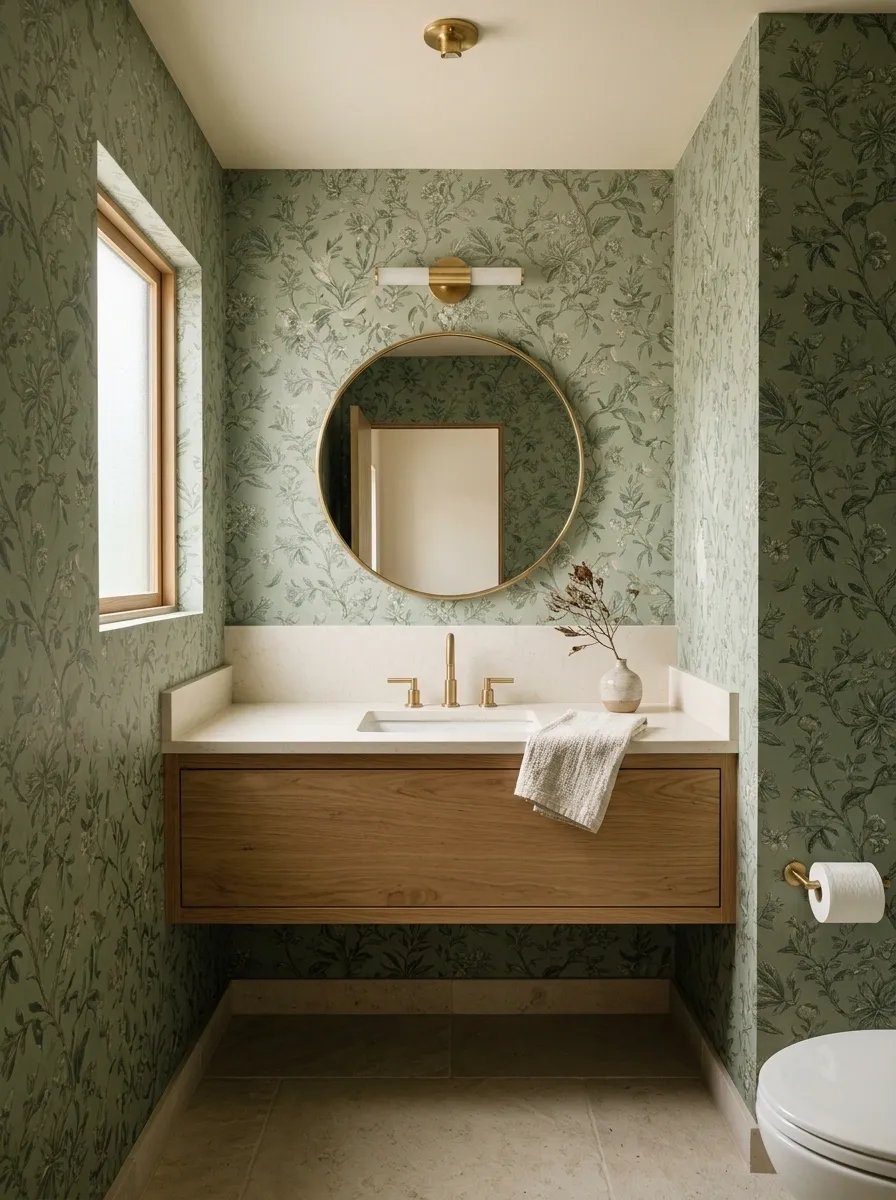
A powder room can carry stronger pattern than a large open living space because there are fewer large surfaces competing for attention.
A muted sage botanical, geometric, or heritage-style wallpaper can wrap the room in one complete visual idea. Keep the vanity simpler so the pattern remains the star.
Warm wood, creamy stone, and one consistent metal finish are enough to complete the composition.
The important distinction is restraint around the wallpaper, not restraint within it.
Balance Sage Green With Black Lighting and Hardware
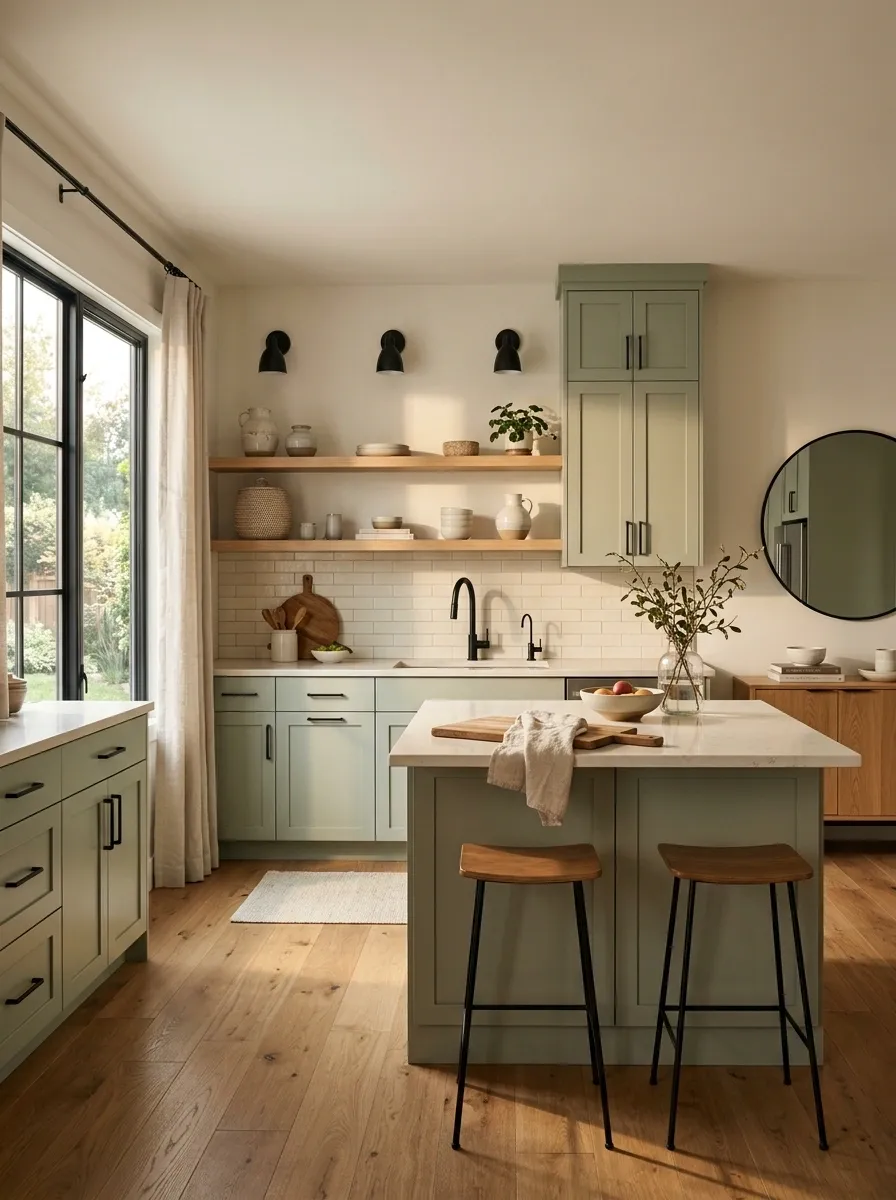
Sage becomes sharper when a few black lines enter the room.
Matte black can appear through sconces, cabinet pulls, curtain rods, mirror frames, or slim furniture legs. The dark finish gives the soft green more definition and works especially well with cream and natural wood.
The mistake is spreading black everywhere. A few repeated details are enough to create structure.
Style a Sage Green Nursery Without Making It Too Sweet
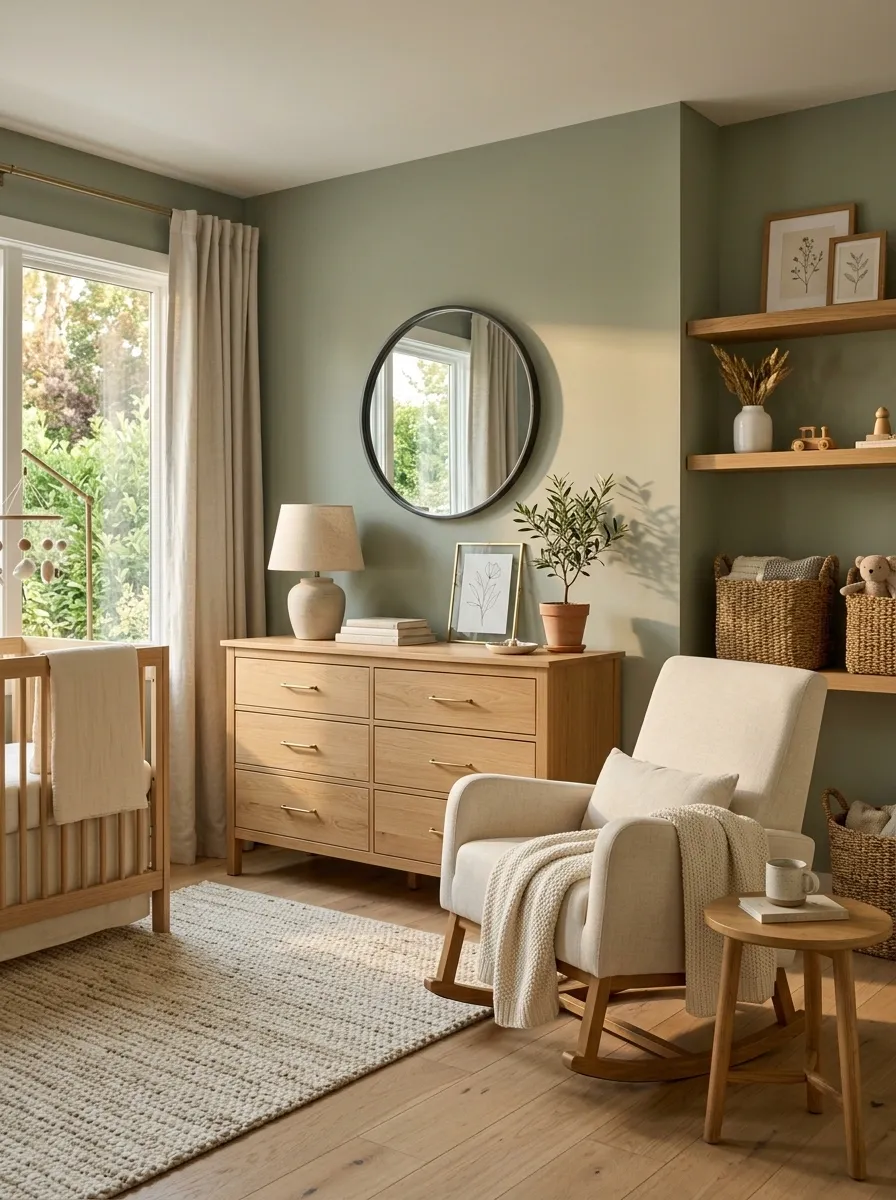
Sage has a useful quality in nurseries because it doesn’t force the room toward an overly pink or blue palette.
A muted sage wall works beautifully with natural wood, cream textiles, woven storage, and simple artwork. The room can still feel playful, but the furniture doesn’t need to look juvenile.
Choose pieces that have a life beyond the nursery stage. A real dresser, useful shelving, and timeless lighting will continue to work as the room changes.
Use Sage Green in a Sunroom With Natural Textures
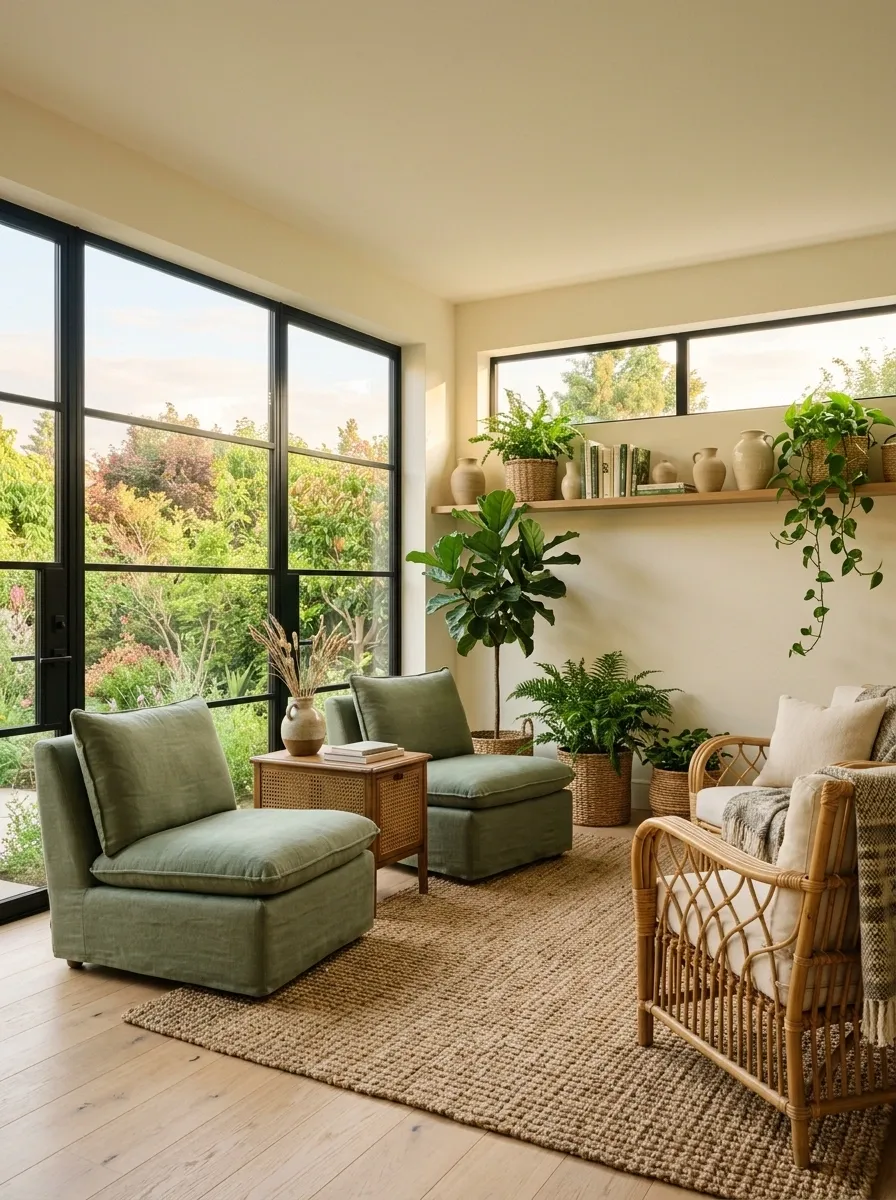
Natural daylight changes how sage behaves, which makes a sunroom a particularly good place to use it.
Bring the color in through upholstery, cushions, a wall, or a pair of lounge chairs. Then support it with cane, rattan, linen, jute, and pale wood.
The materials should feel slightly imperfect and tactile. Smooth synthetic finishes can make the green feel more decorative than organic.
Keep the window area open so the daylight remains the brightest element in the room.
Add One Oversized Sage Artwork Instead of Many Small Pieces
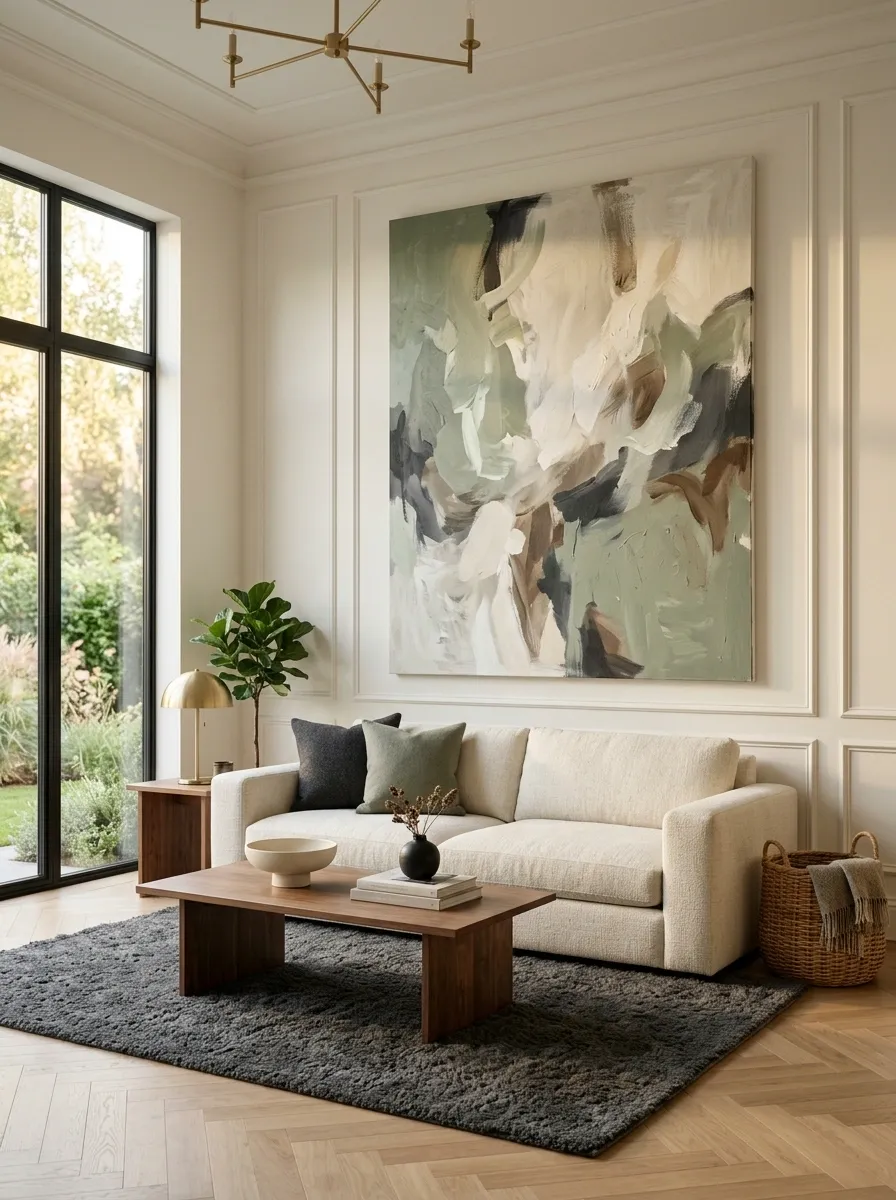
When a wall feels empty, the instinct is often to add several smaller frames.
One oversized artwork can make a stronger statement.
Choose a piece where sage appears beside cream, charcoal, brown, or muted earth tones. That gives the artwork enough internal contrast to connect with several materials around the room.
The scale matters. A tiny frame above a large sofa can look accidental. One substantial piece gives the wall a clear focal point without requiring a full gallery.
Paint a Sage Green Ceiling for a More Finished Room
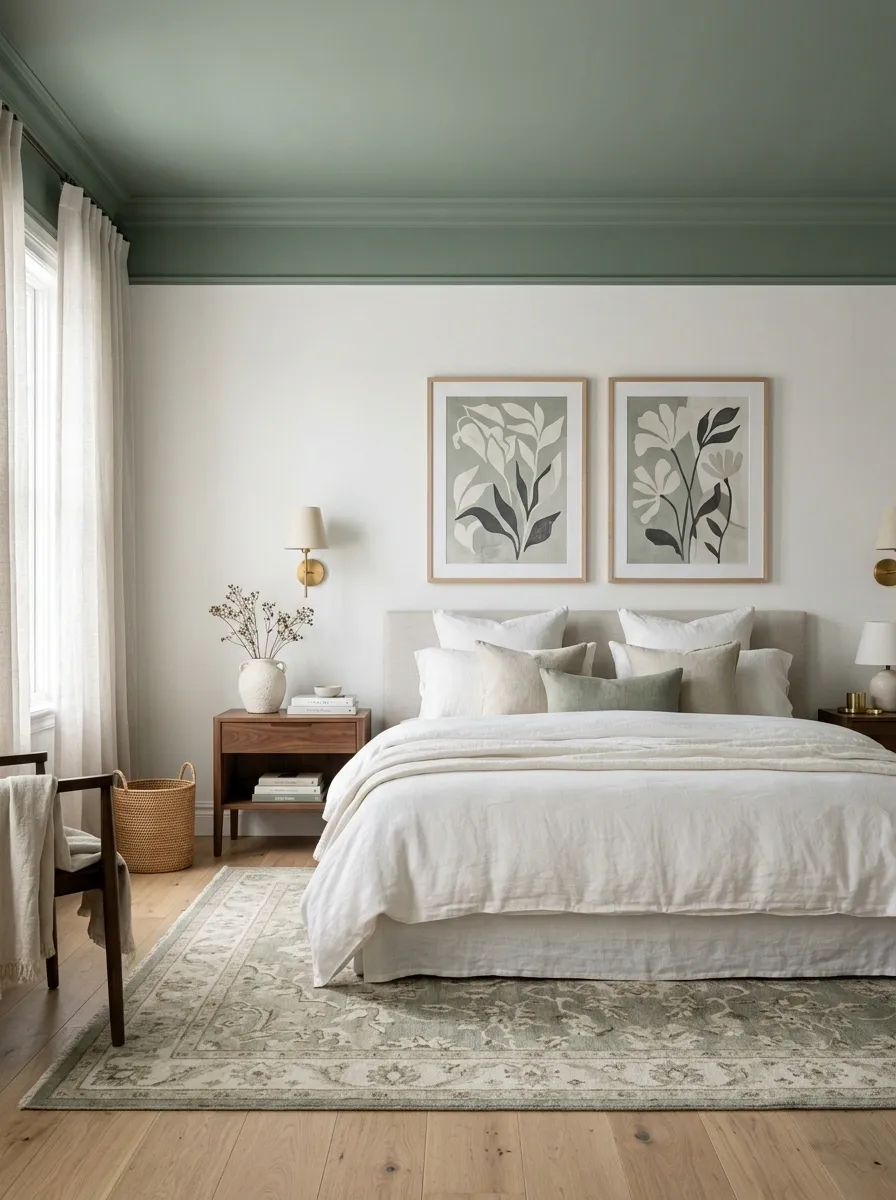
The ceiling can carry color without competing directly with the furniture.
A muted sage ceiling works particularly well in bedrooms, dining rooms, and studies where the room can benefit from a more enveloping composition. Keep the walls lighter so the ceiling reads as an intentional plane rather than a heavy cap.
Repeat the sage once lower in the room through upholstery, art, or a rug detail.
Mix Sage Green With Terracotta for a Warmer Look
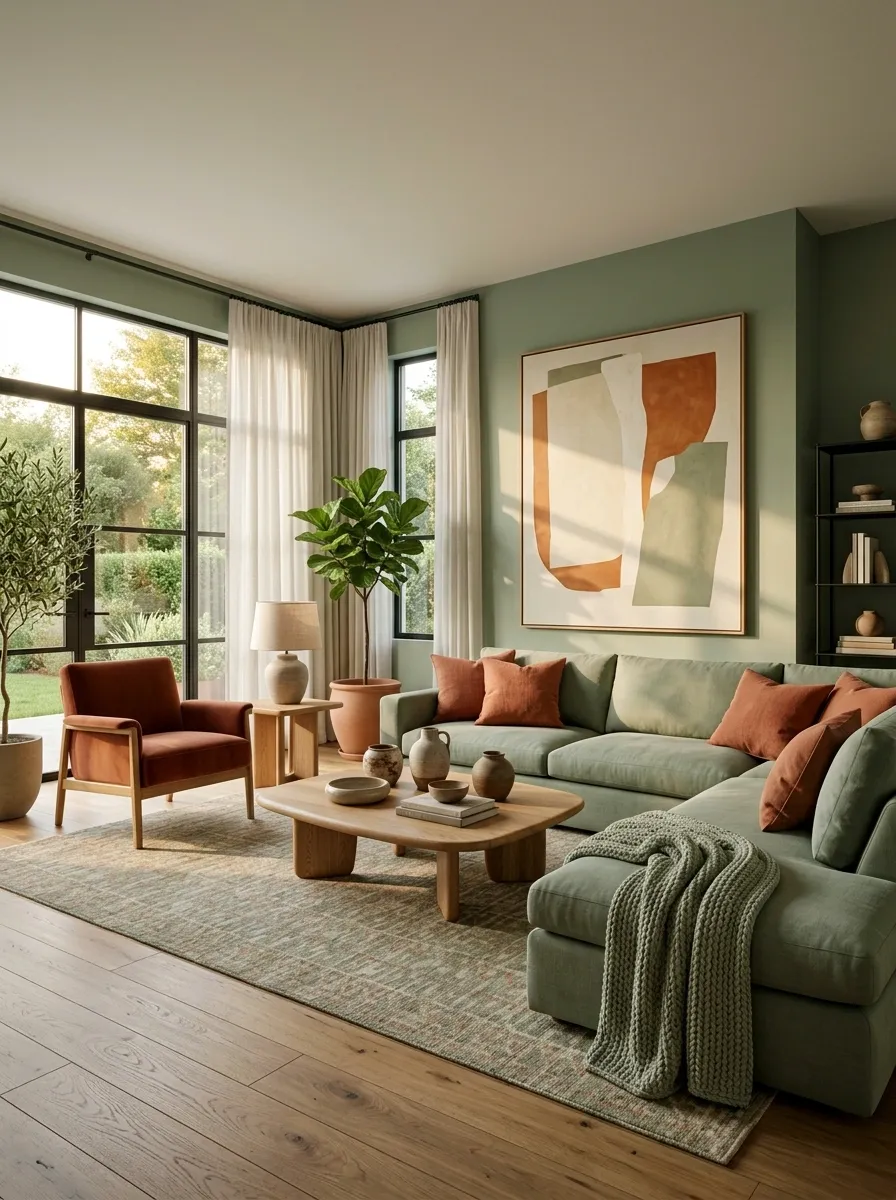
Sage and terracotta create a strong relationship because one feels muted and cool while the other carries earthy warmth.
Keep sage on the larger visual surfaces, then bring terracotta into the room through pottery, art, cushions, a rug pattern, or one accent chair.
The terracotta should feel like a supporting note rather than a second dominant color.
This combination works particularly well in rooms with natural wood because the three materials reinforce each other without becoming overly rustic.
Use Sage Green Accents to Tie an Open-Plan Home Together
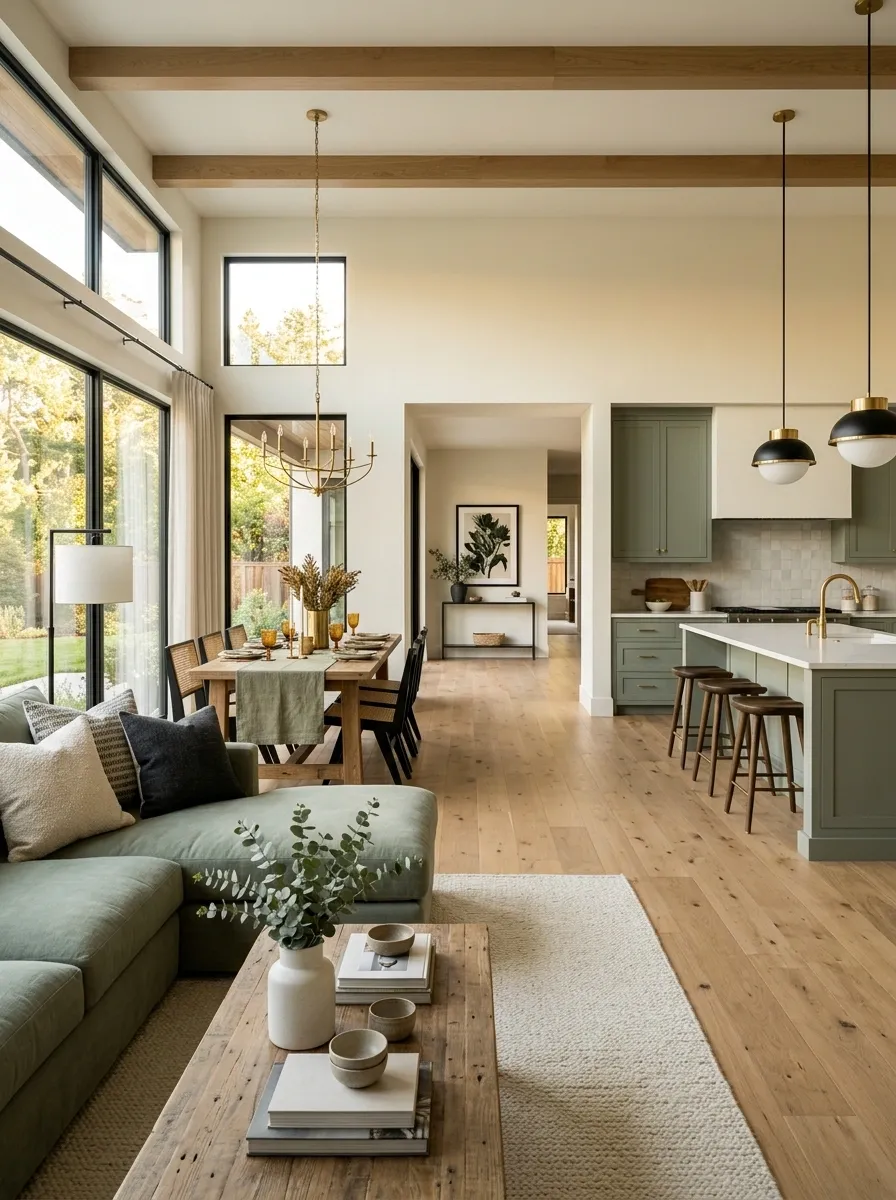
Open-plan homes don’t need every room to use sage in the same way.
The color works better as a visual thread. A sofa can carry it in the living room, lower cabinetry can use it in the kitchen, a runner can repeat it near the dining table, and artwork can bring it into the hallway.
The applications change, but the color family keeps the spaces connected.
That creates continuity without making the entire home feel decorated from one box.
When Sage Green Feels Right
The strongest sage interiors aren’t created by repeating one exact formula.
A bright room can carry a stronger wall color because natural light keeps it open. A darker room may need warmer surrounding finishes. A small bathroom can handle pattern that would feel excessive in an open living space. A kitchen may benefit from sage on the lower cabinets while a bedroom works better with fabric or paint.
The color needs to respond to the room.
What matters most is the relationship between sage and everything around it. Warm materials usually give the green more depth. Pale neutrals let it breathe. Dark accents sharpen it. Natural textures keep it from feeling too polished or artificial.
| ROOM FEELS | SAGE’S ROLE | SUPPORT IT WITH |
|---|---|---|
| Too cold | Warm visual anchor | Oak, cream, aged brass |
| Too plain | Focal color | Artwork, upholstery, tile |
| Too dark | Muted color without glare | Warm white, linen, pale wood |
| Disconnected | Color thread | Use it differently in nearby rooms |