
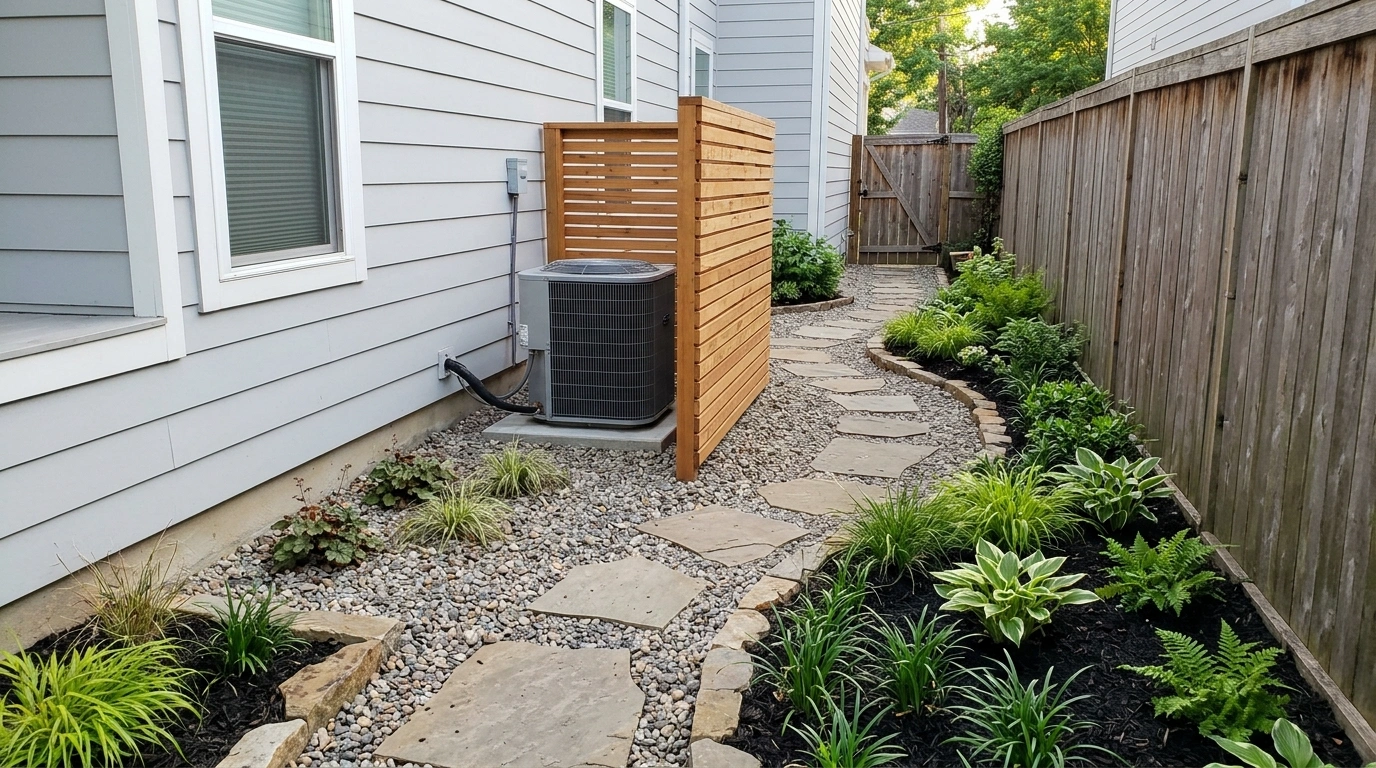
The outdoor unit does not need to become invisible. It needs enough room to work and be serviced, with a garden that looks considered around it.
Start with the exact equipment manual and a qualified HVAC professional where needed. Clearance, discharge direction, service access, and operating requirements vary by unit; a general landscaping measurement is not a substitute for the installation instructions.
Carrier emphasizes a well-ventilated location with access and clearance from obstructions. (Carrier placement guidance)
Keep planting outside the required envelope at its mature size. Preserve the pad, drainage, service panels, electrical access, and routes to the equipment. Locate buried services before digging. Do not add a roof, enclosure, or decorative cover around operating equipment without proper approval for that setup.
Garden With AC Unit Ideas
A Defined Maintenance Court
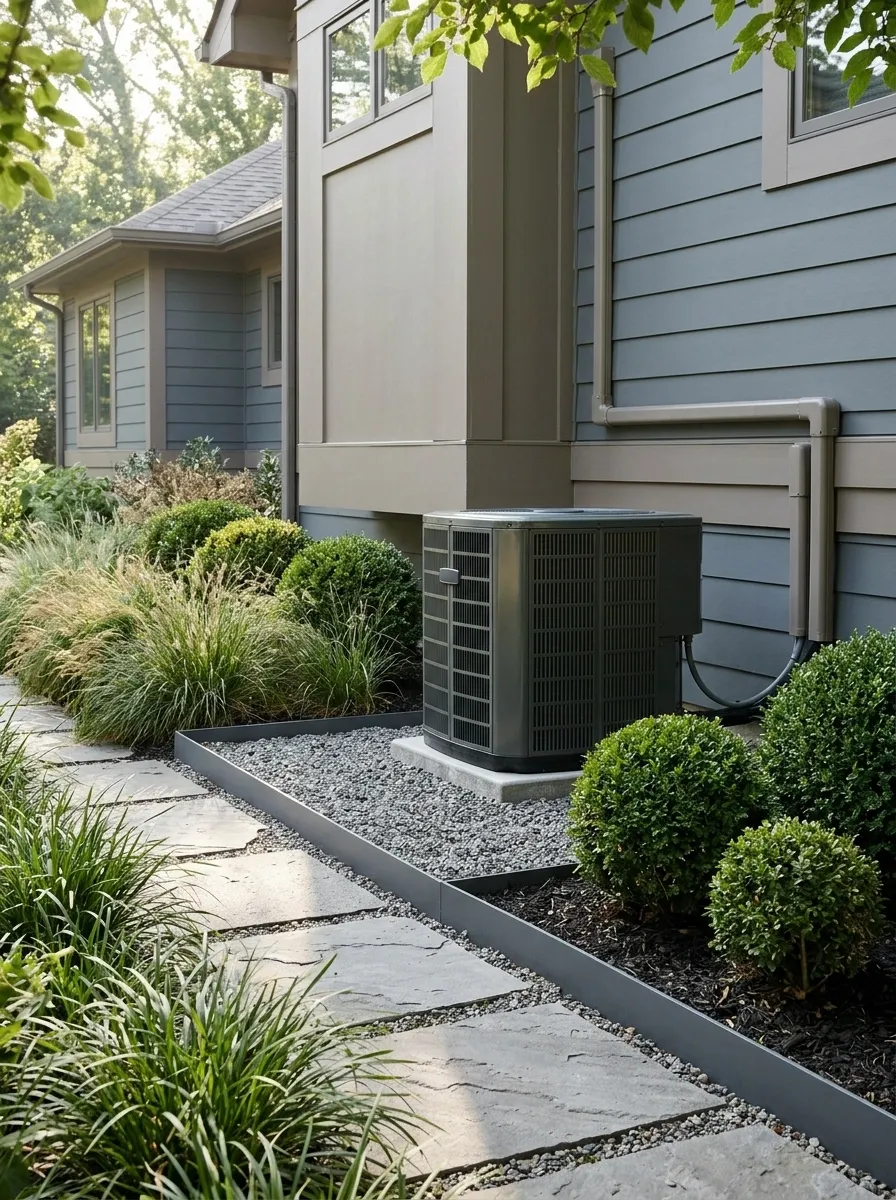
Give the unit a simple, accessible area within the wider garden rather than planting directly against it.
The court can feel deliberate through clean edges and a related surface, while keeping the required space open. Choose materials and any changes around the pad with appropriate advice. The aim is an intentional service area, not a miniature garden bed wrapped tightly around machinery.
A Straight, Practical Access Path
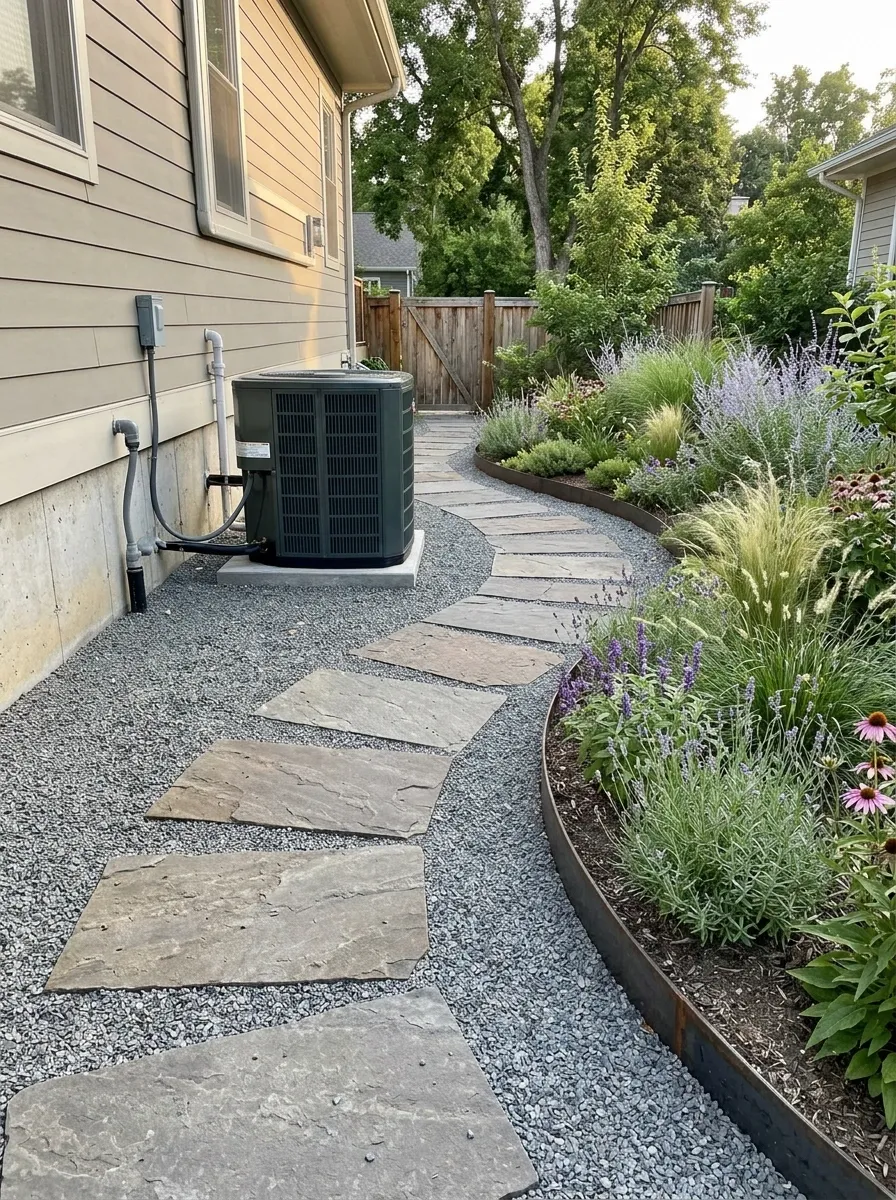
Walk the service route before drawing the planting plan.
Can someone reach the equipment with tools? Does the gate open? Will a pot need moving first?
Choose a suitable stable surface and keep drainage and services intact. A decorative stepping-stone pattern is secondary to a route that actually works.
| Keep the route | Keep the garden |
|---|---|
| Stable and accessible | Outside the working area |
| Free of storage | Easy to maintain |
A Curved Bed Beyond the Clear Zone
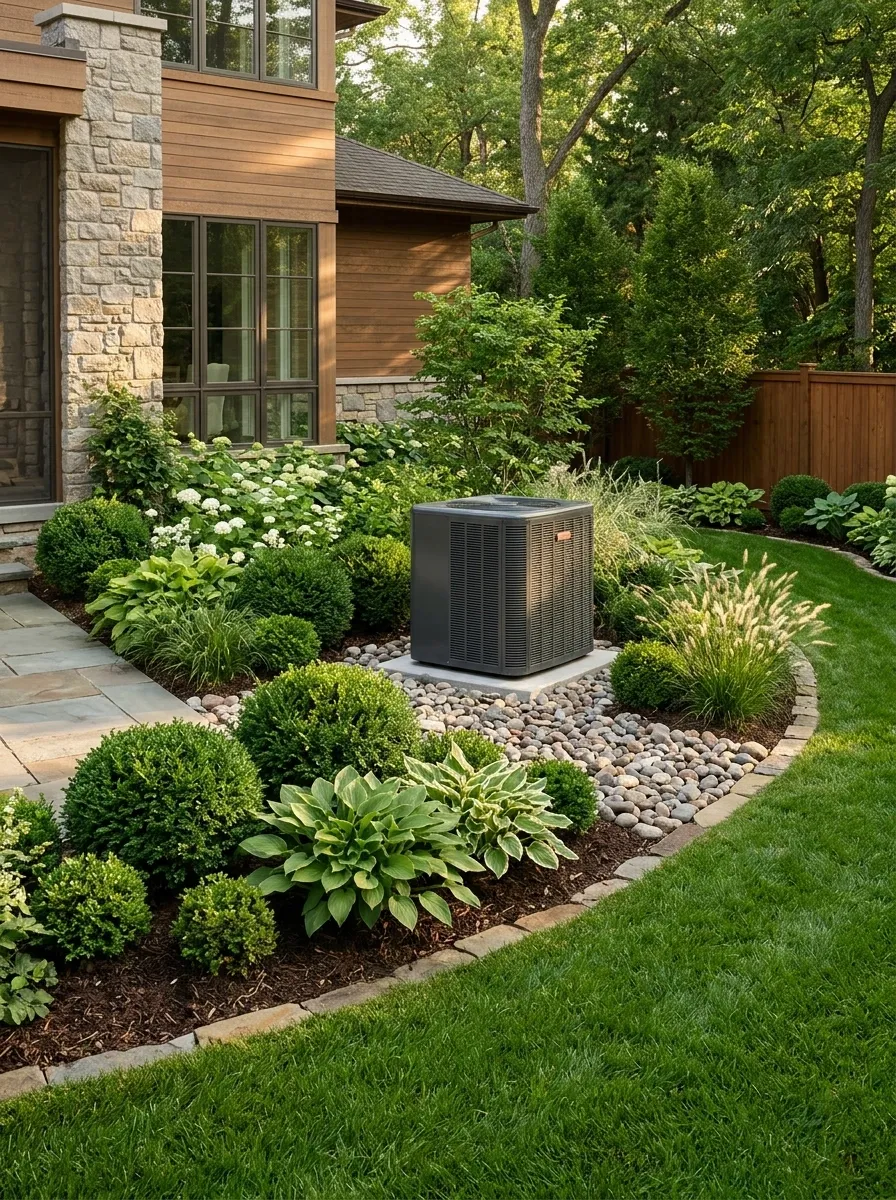
A curved planting bed can soften the visual relationship between a rectangular unit and the garden.
Draw the curve outside the full equipment envelope, allowing for mature growth. Let the bed belong to the wider landscape rather than hugging the unit’s outline. This makes the machinery one part of the scene instead of the object every plant is conspicuously trying to hide.
Low Evergreen Shapes Where They Suit the Climate
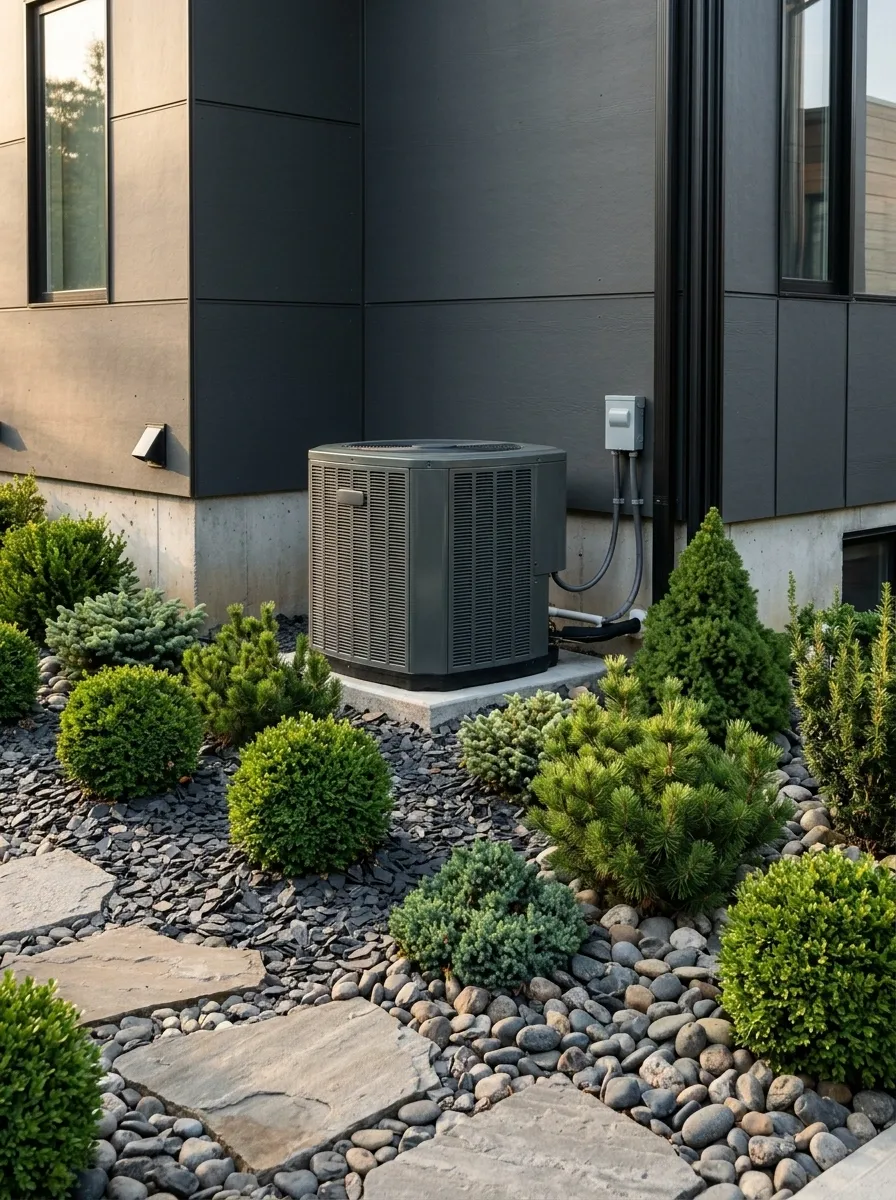
Locally appropriate compact evergreen plants can provide structure without requiring a tall hedge.
Choose by mature spread, root behavior, light, and maintenance needs. Keep growth well outside the unit’s clearances, not just when newly planted. Trane’s landscaping guidance highlights the importance of keeping vegetation and debris from obstructing outdoor equipment. (Manufacturer landscaping guidance)
Ask the nursery for: suitable mature dimensions, not merely an attractive small plant in a pot.
Perennials in Broad Drifts
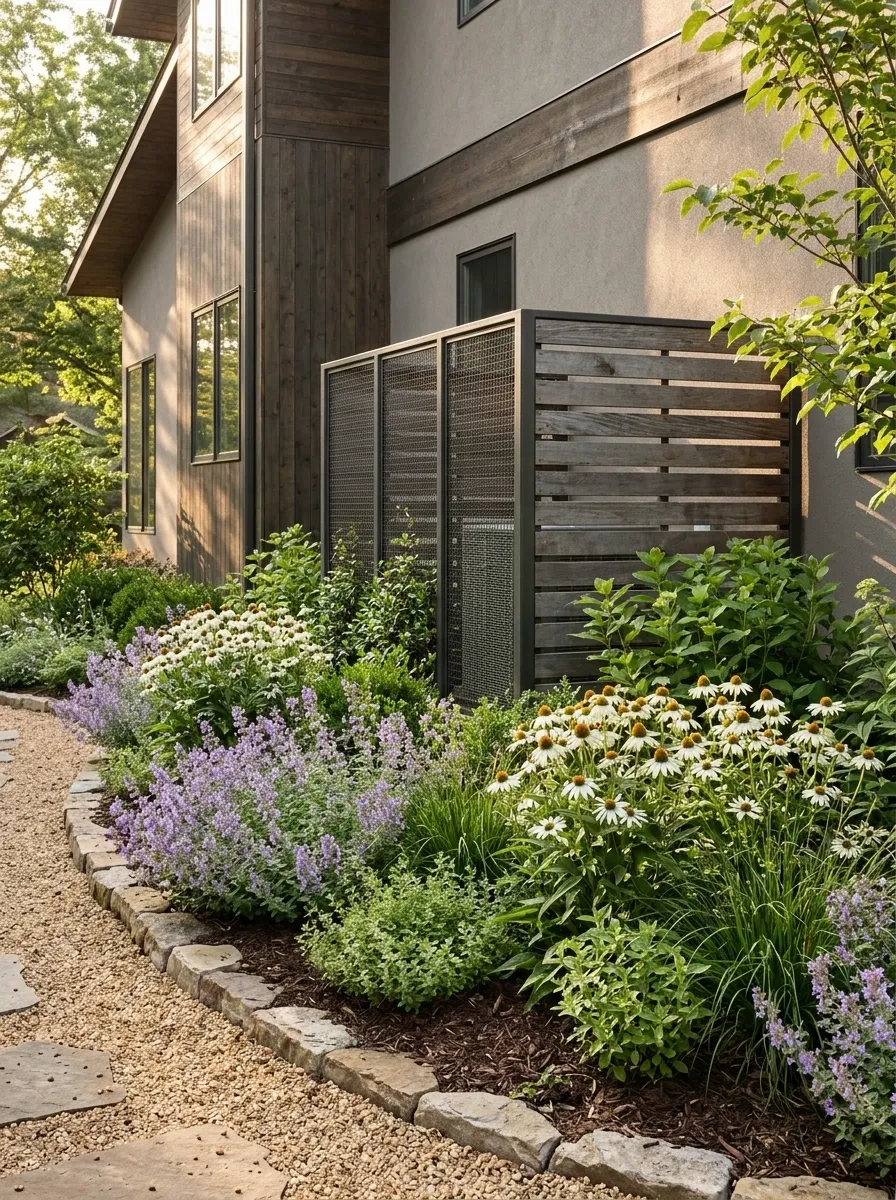
A few repeated groups of suitable perennials can make a small bed feel more coherent than many individual specimens.
Choose varieties suited to the site and keep the planting boundary outside the operating area. Allow for their full spread and seasonal maintenance. The repeated shapes can draw attention to the garden rather than the equipment without creating a dense wall around it.
Moveable Containers at the Outer Edge
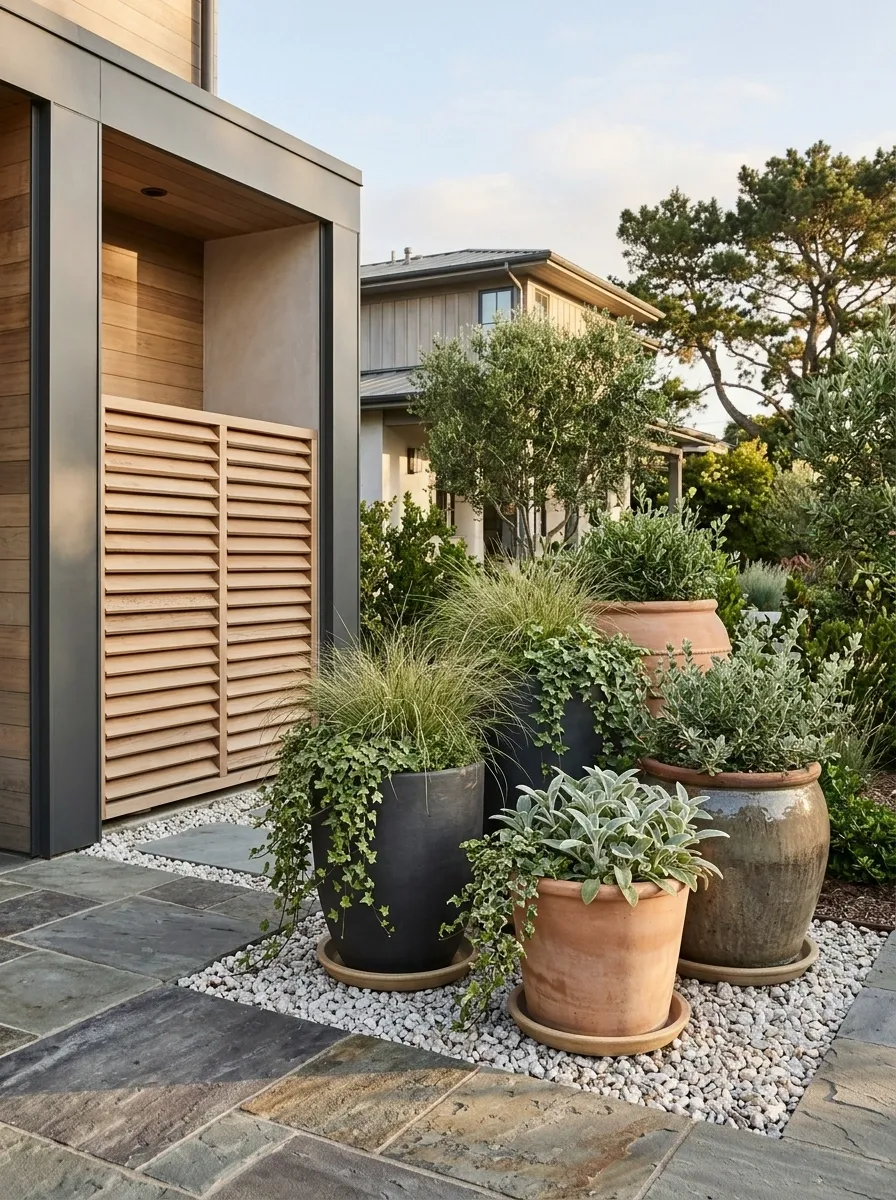
Containers can add color where in-ground planting is unsuitable, provided they remain outside required clearances.
Choose stable pots with appropriate drainage and manageable loaded weight. Plan where water goes and keep the service route permanently clear. Moveable should not mean routinely parked in the one place someone needs to stand to work on the unit.
| Container decision | Practical check |
|---|---|
| Stable shape | Wind and accidental contact |
| Drainage | No water directed toward equipment |
| Placement | Outside the full working envelope |
A Long Trough That Belongs to the Boundary
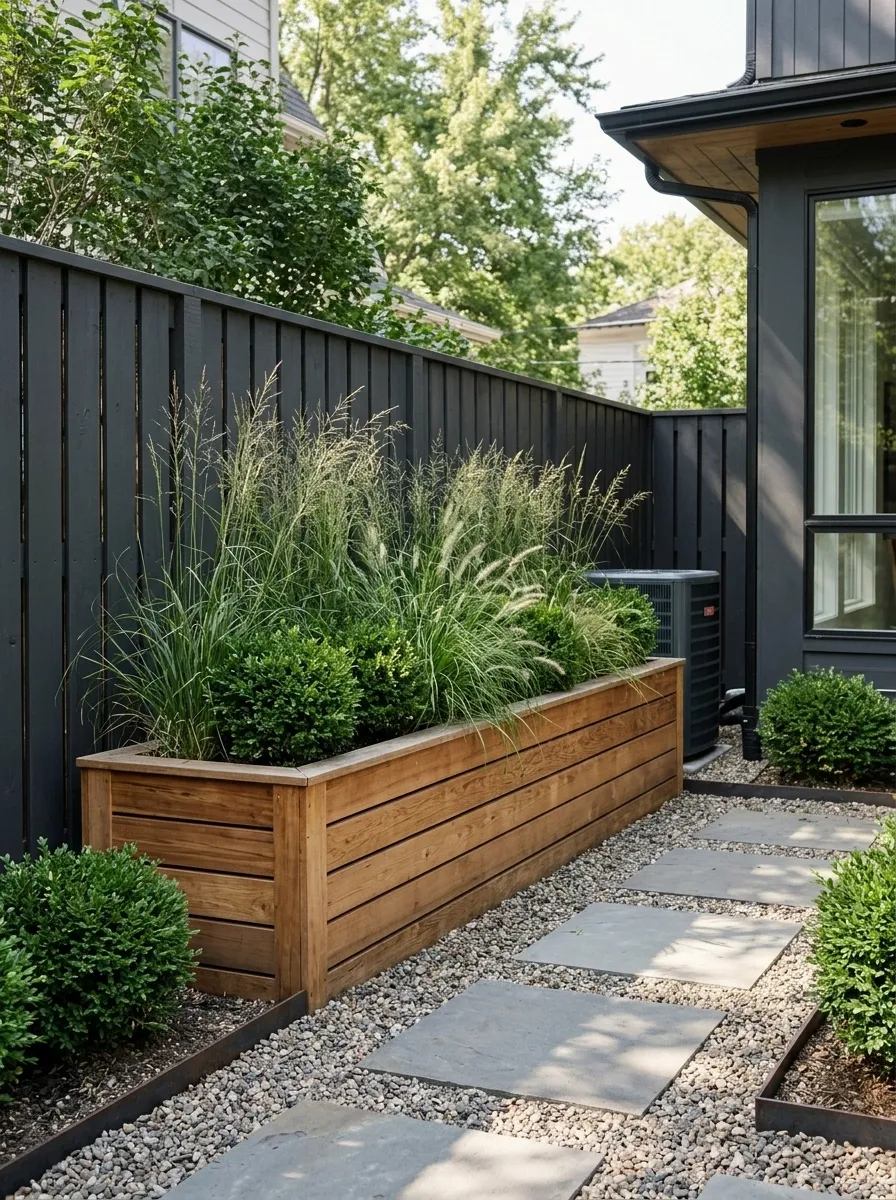
A long planter can connect a fence or wall with the wider garden, visually shifting attention away from the unit.
Position it outside the equipment envelope and keep it independent of the pad and services. Choose planting that stays within a predictable mature footprint. The trough should define a garden edge, not form a tight enclosure around the machine.
A Trellis Well Away From the Equipment
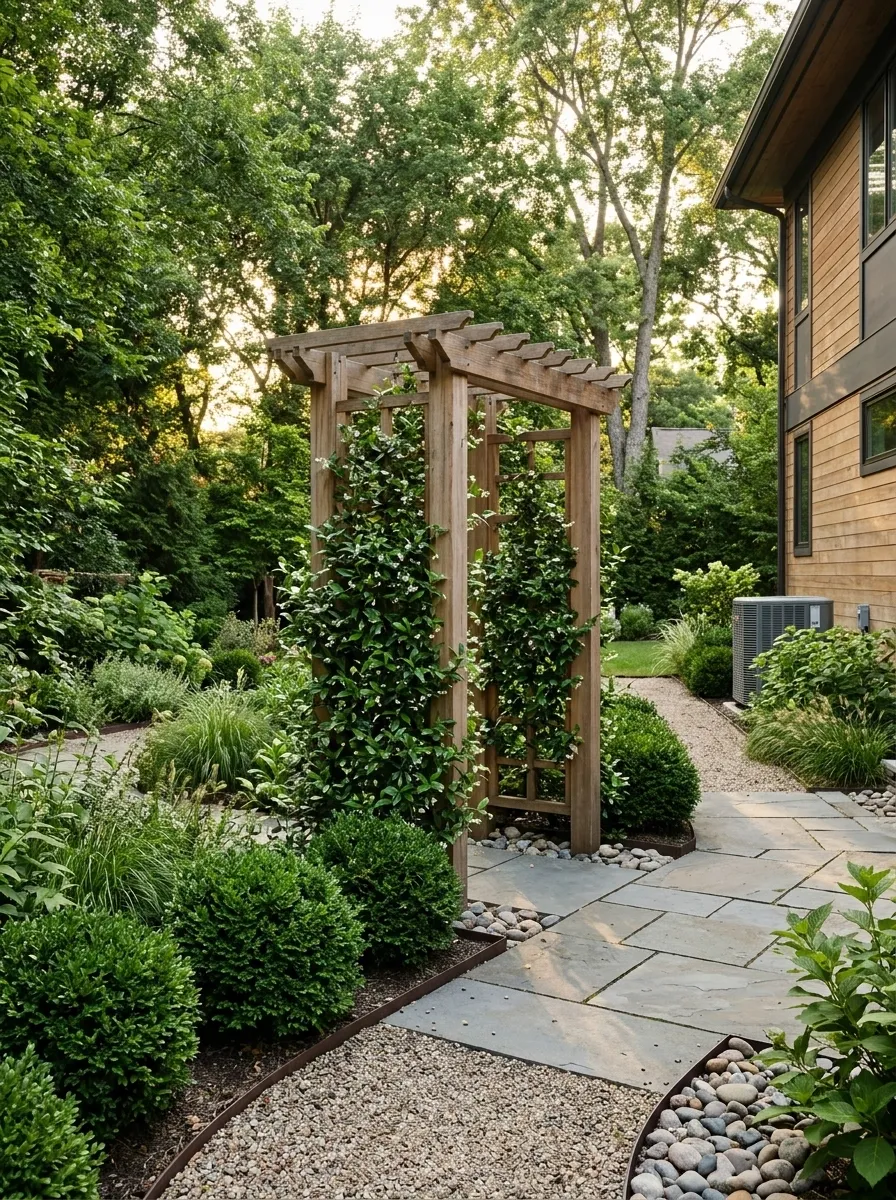
A remote trellis can provide a garden backdrop without wrapping climbing plants around the unit.
Specify suitable support and train the planting away from equipment, services, and access routes. Choose a plant with appropriate growth and root behavior for the site. Keep the separation maintainable; a vigorous climber will not politely stop at the line on your sketch.
Keep the visual goal clear: a backdrop elsewhere in the garden, not a living jacket on the AC unit.
An Offset Screen Reviewed for the Actual Unit
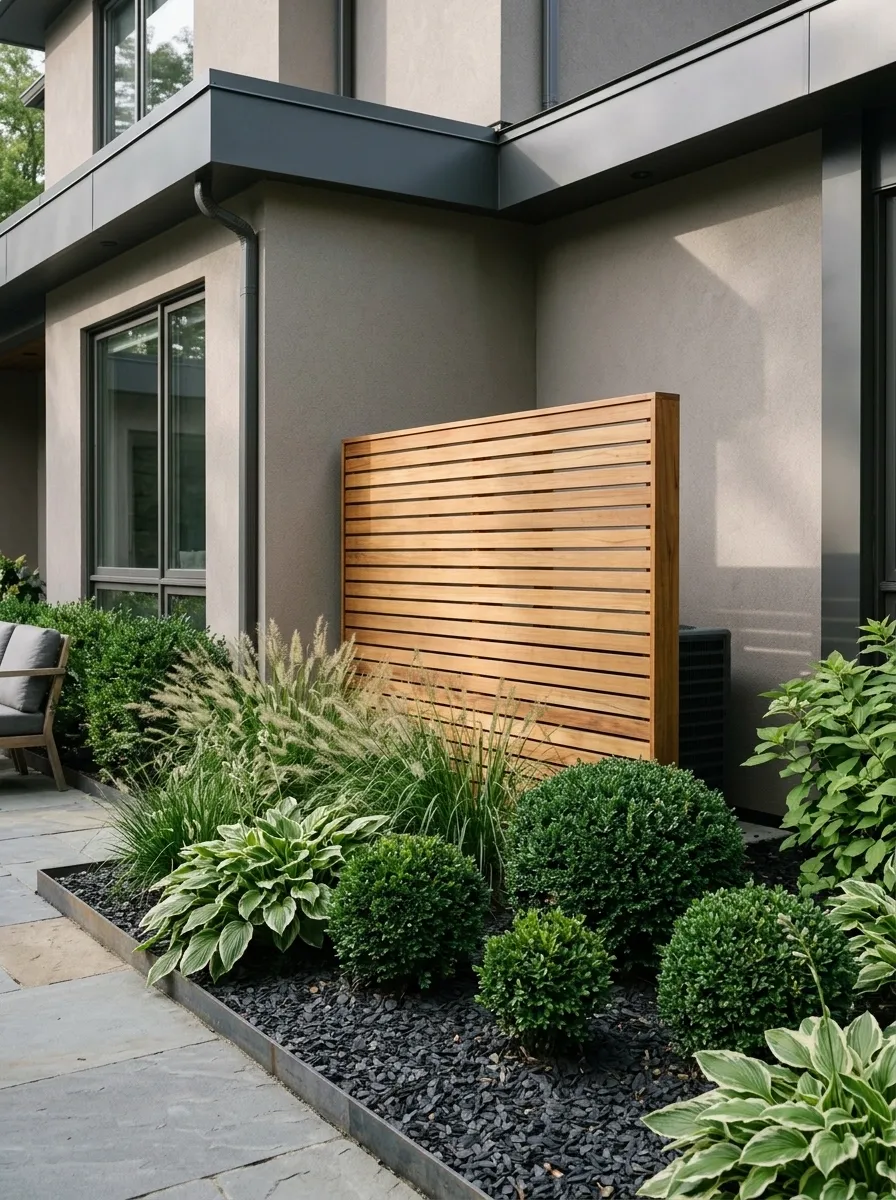
Where a screen is appropriate, place it to interrupt a particular sightline rather than automatically surrounding every side.
Have its position, height, openness, support, and access reviewed for the equipment. A decorative slatted product is not automatically an approved airflow solution. The best screen may sit farther away and hide only the view from the patio.
A Quiet Fence Finish Behind the Area
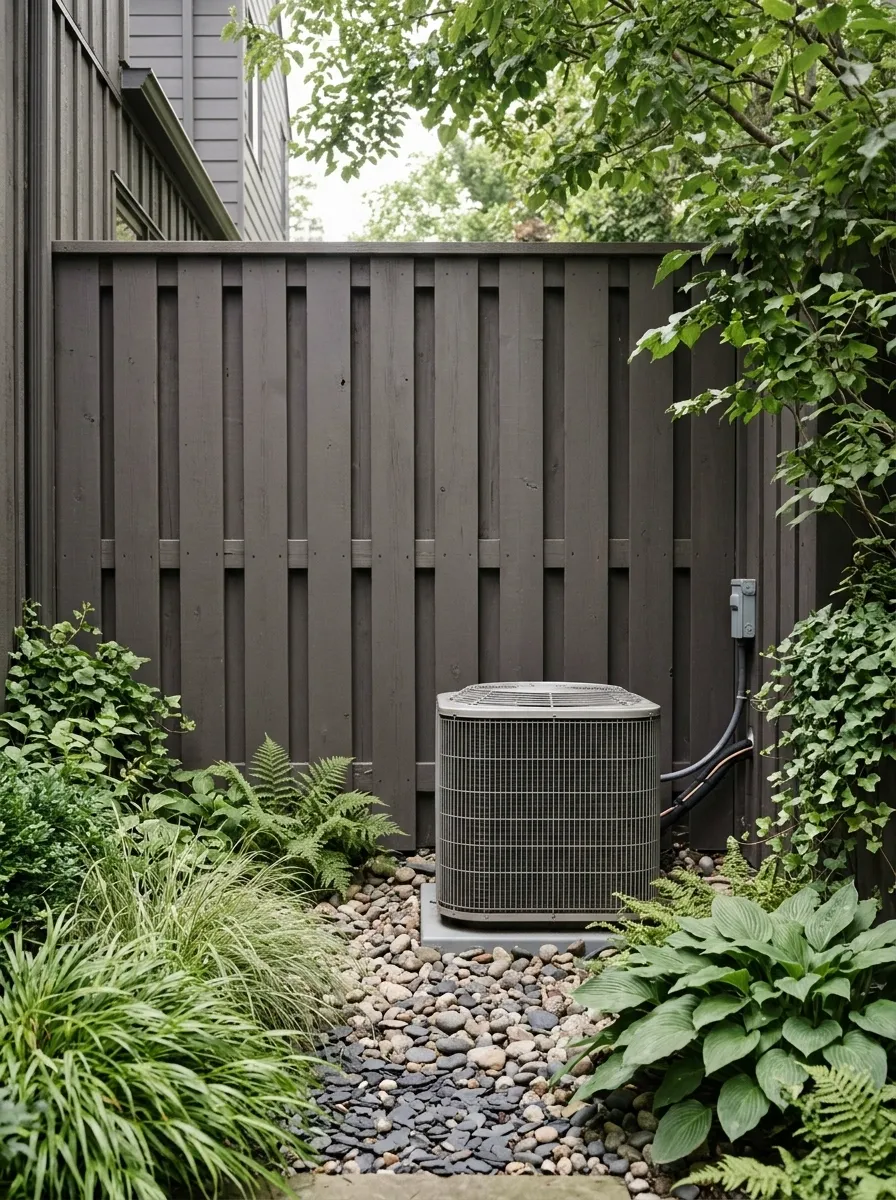
A restrained fence color can make the whole corner feel calmer without altering the unit.
Choose a finish appropriate to the fence and coordinate it with nearby planting or furniture. Do not paint equipment, grilles, labels, or electrical components. The garden background can change while the machine remains exactly as its manufacturer intended.
Useful palette: a subdued boundary with planting that is visible against it.
A Focal Plant Somewhere More Interesting
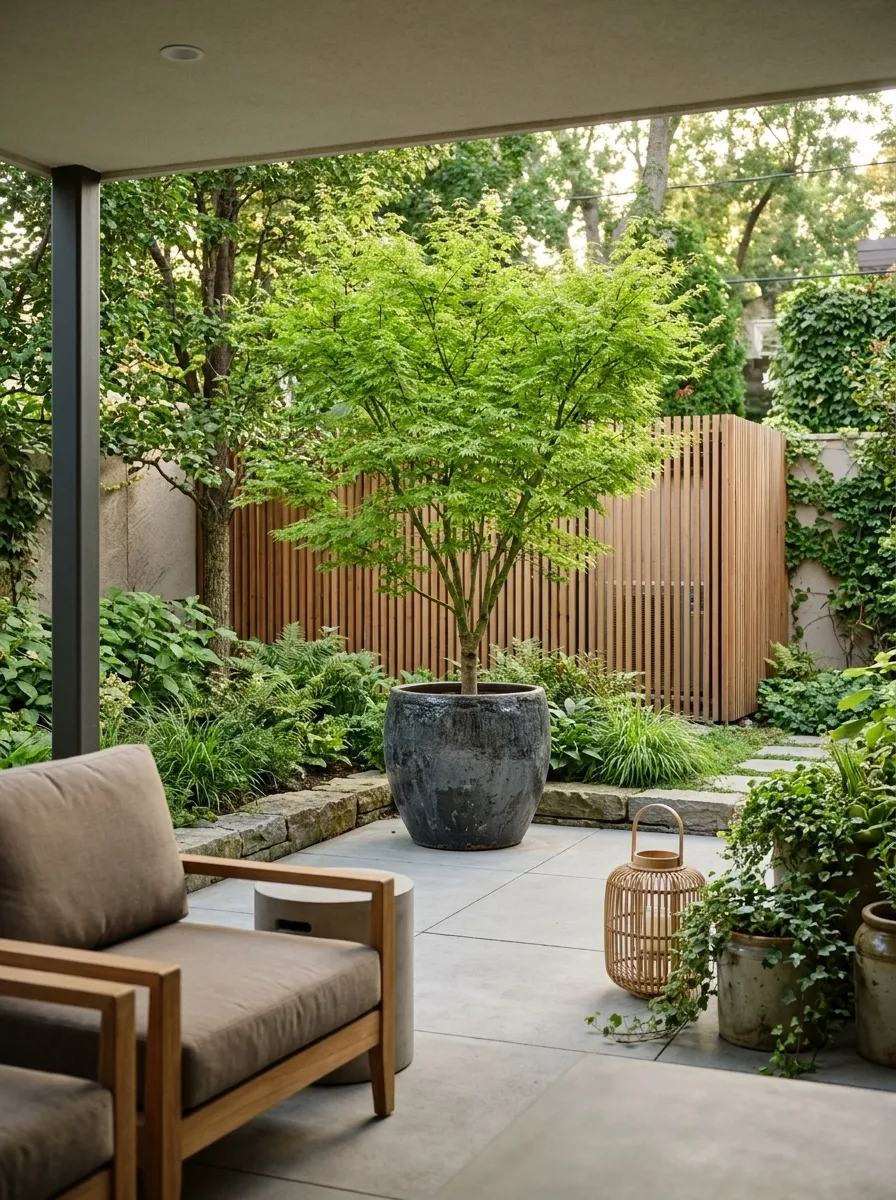
Place a suitable specimen plant or substantial container where you want the eye to go, outside the equipment area.
This can work better than disguising the unit itself. Check the view from the house or main seat, then position the focal point where it earns attention. The garden should have something to look at beyond the successful concealment of machinery.
Seating Oriented Toward the Garden
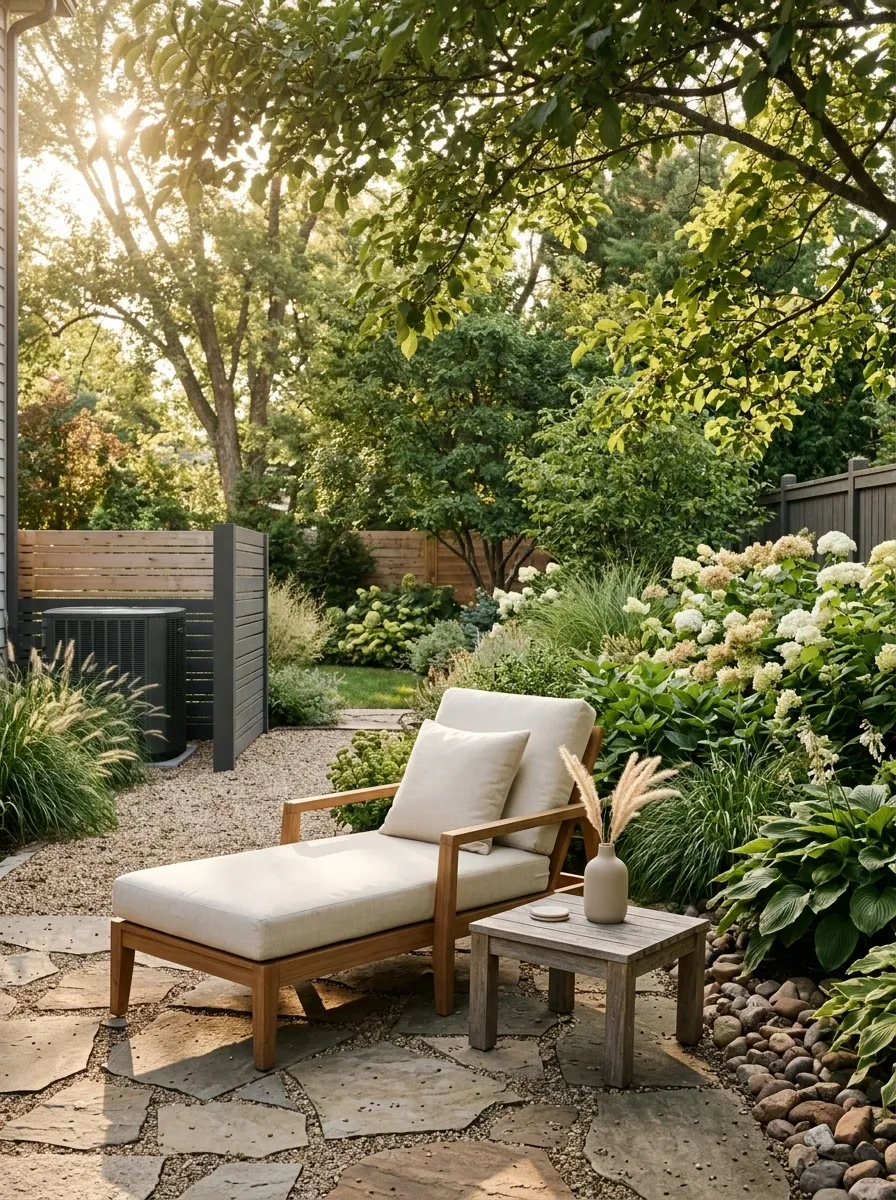
Sometimes the simplest improvement is turning the seating toward a better view.
Keep furniture outside the equipment’s required area and consider operation, sound, and maintenance in the layout. A seat facing planting or an open garden view may make screening unnecessary. You are allowed to enjoy the garden without making every practical object disappear first.
| Change | Potential benefit |
|---|---|
| Seat orientation | A more pleasant main view |
| Table position | Less emphasis on the service corner |
A Clear Edge Between Bed and Service Surface
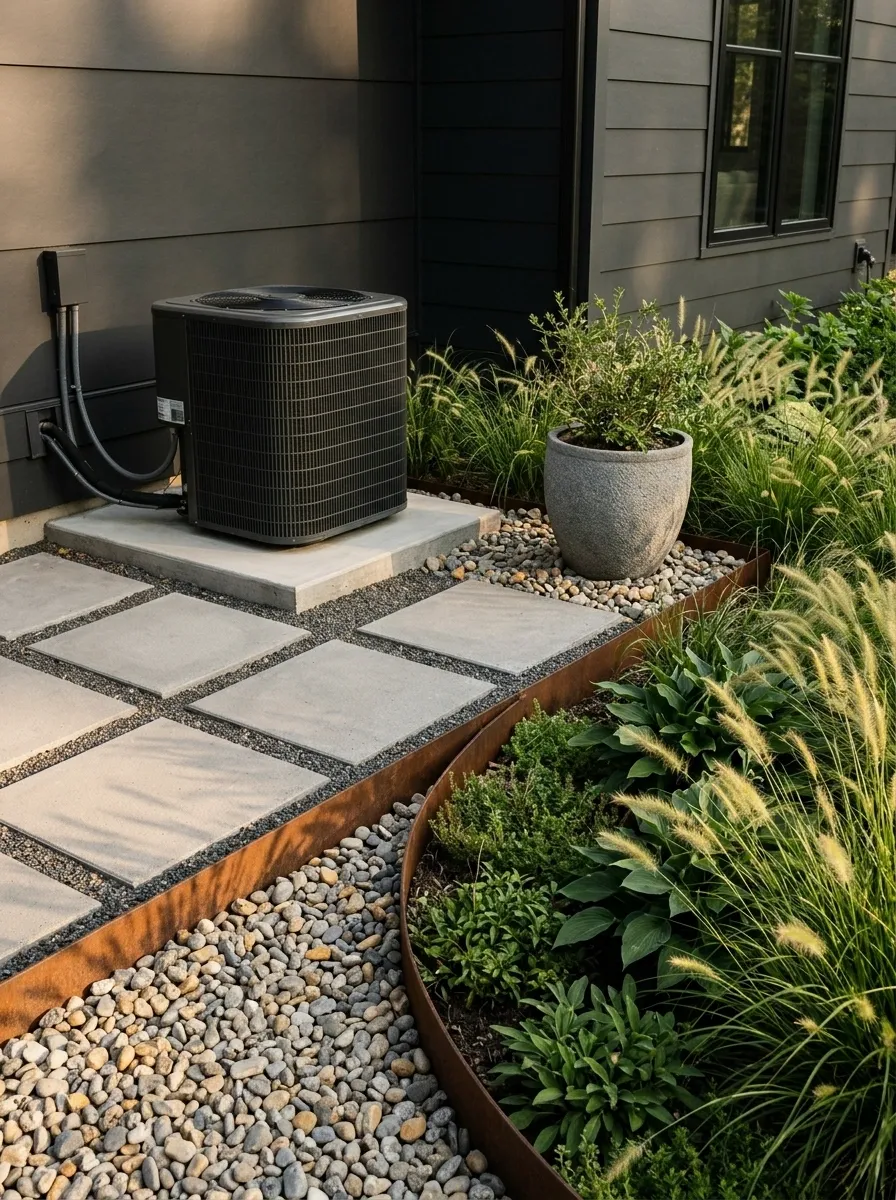
A suitable edging detail can help keep soil and planting within the intended bed.
Plan installation around buried services, drainage, and the equipment base. Keep edges safe and maintainable rather than adding a raised strip directly across access. The detail is useful when it makes the separation obvious during gardening and routine upkeep.
A Dry-Garden Composition Where Conditions Suit
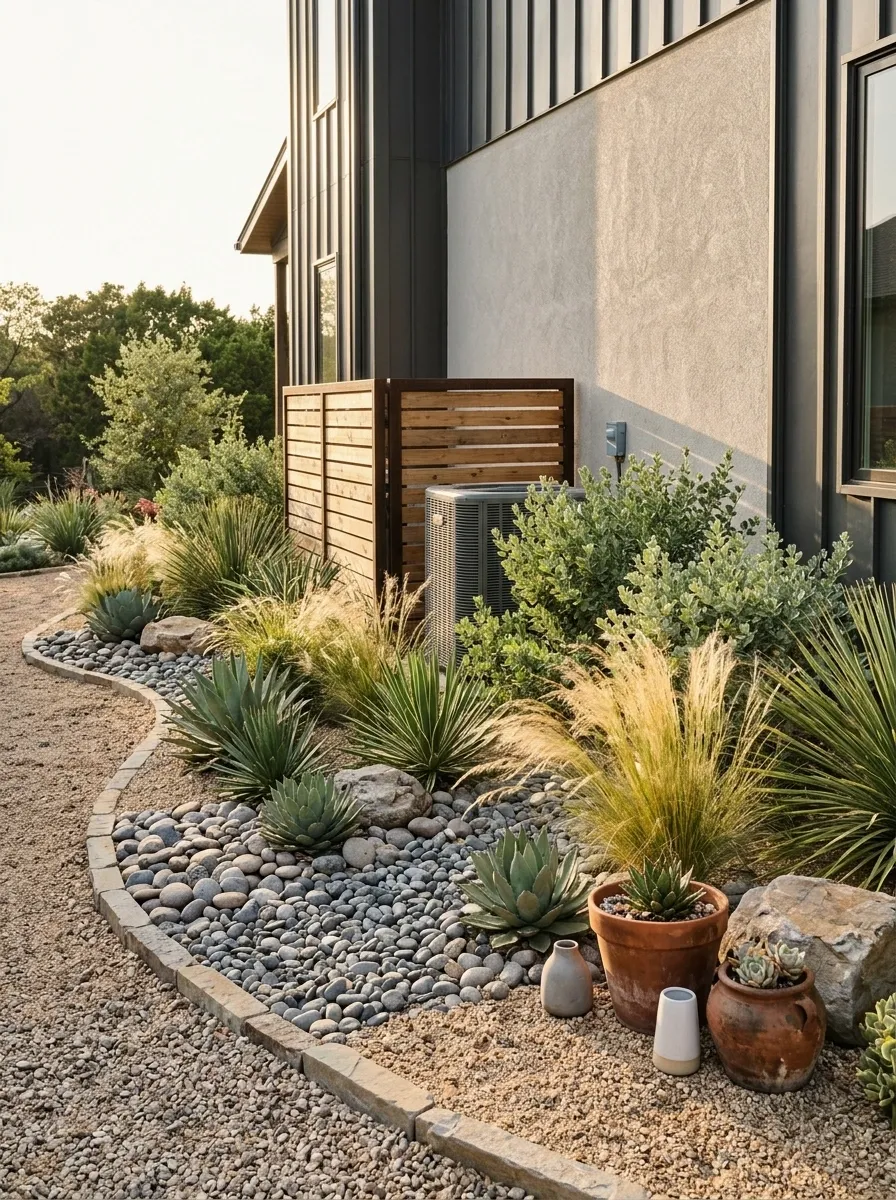
A dry-garden style can use suitable plants and mineral surfaces in the wider bed.
Choose it for the climate and actual maintenance needs, not because gravel automatically solves drainage. Keep loose material, dust, and debris away from equipment openings. Any ground changes near the pad should preserve its function and be checked where necessary.
A style is not a drainage design. Resolve water movement separately from the appearance of the bed.
A Shade-Garden Bed in a Naturally Shaded Position
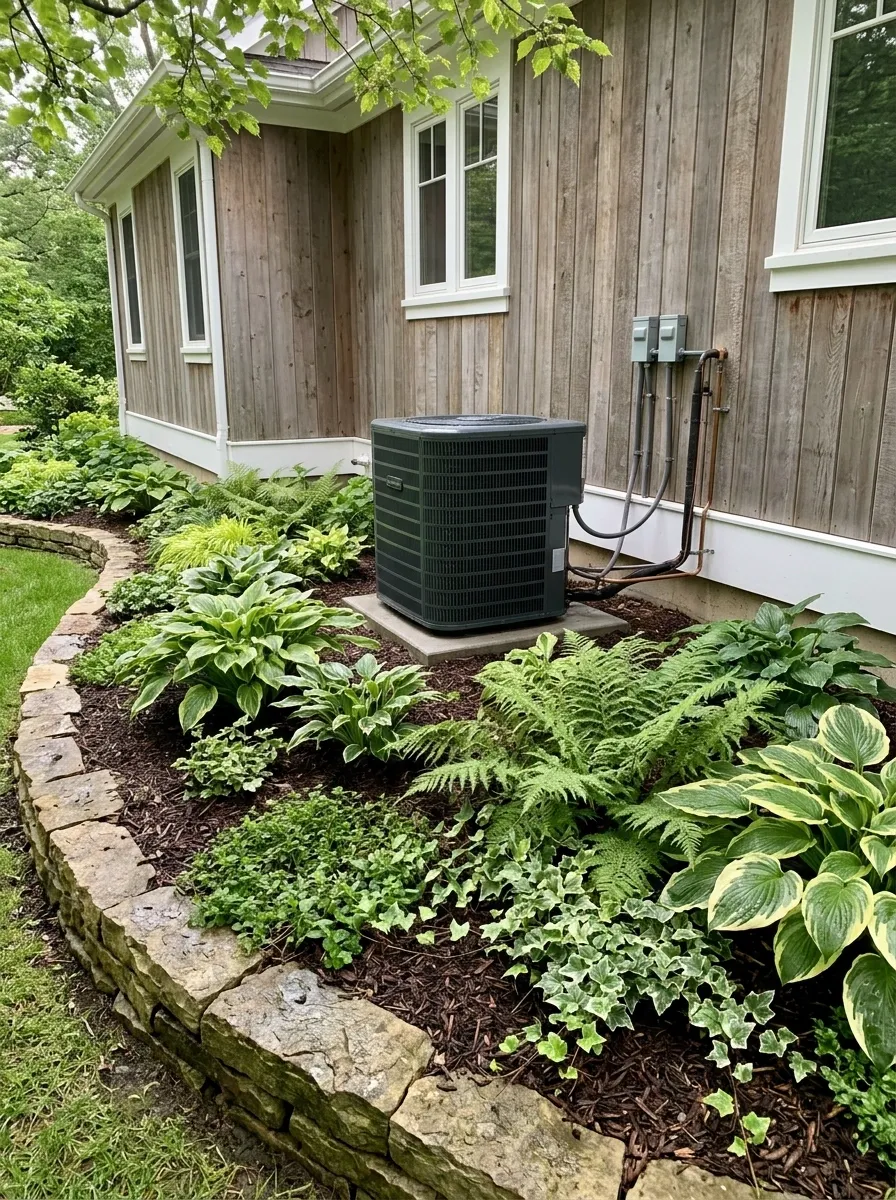
If the area is genuinely shaded, choose planting that belongs in those conditions.
Keep the bed outside the required operating space and avoid creating overhead obstruction to manufacture shade for the unit. A planting scheme can respond to the site’s light without changing the equipment environment. Look for broad visual texture rather than relying on a large number of different plants.
A Flowering Border in Front of the Service Area
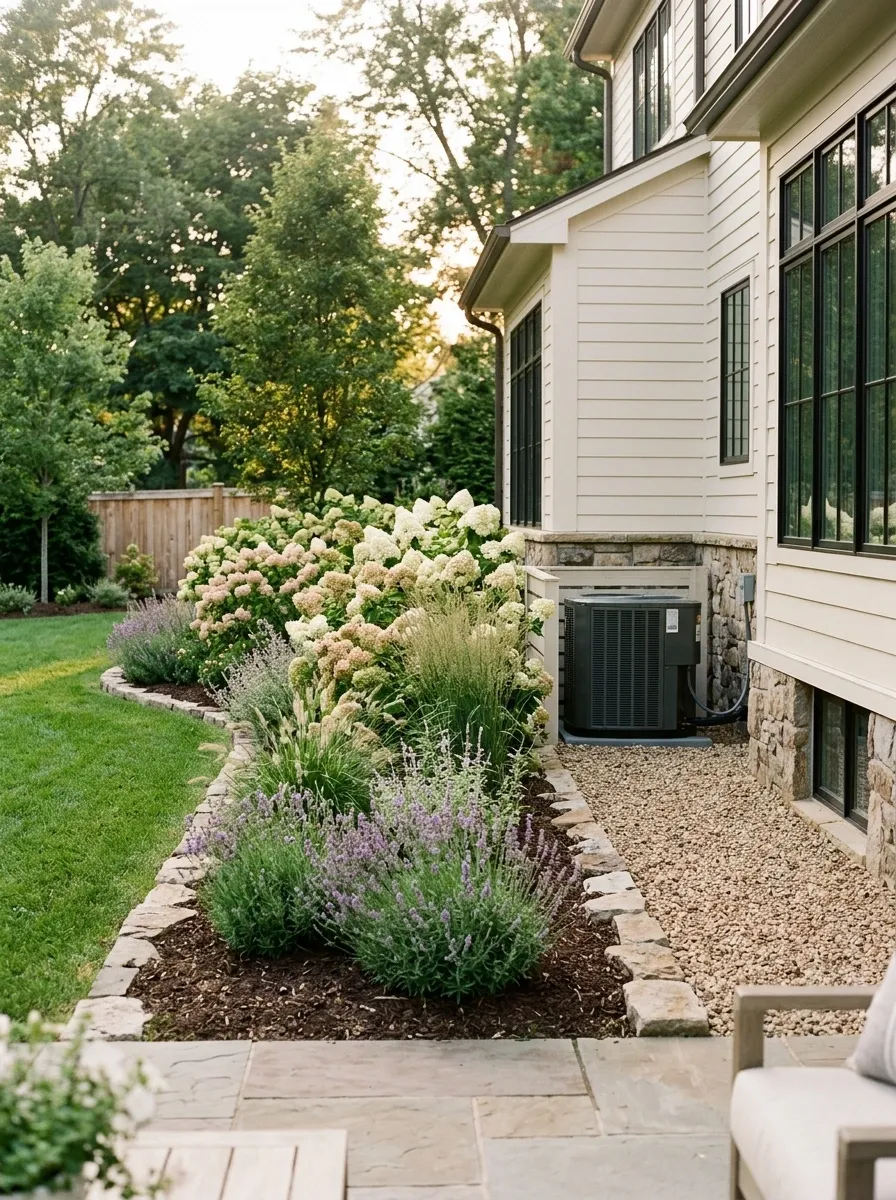
A flowering bed farther forward can make the garden view more appealing while leaving the equipment accessible behind it.
Choose appropriate plants and allow for mature spread, shedding, and seasonal care. Keep the access route obvious. The planting should not have to be trampled whenever the unit needs attention.
| From the main view | From the service route |
|---|---|
| A coherent flowering border | Clear equipment access |
| Seasonal color | No plants blocking panels |
A Separate Kitchen-Herb Bed
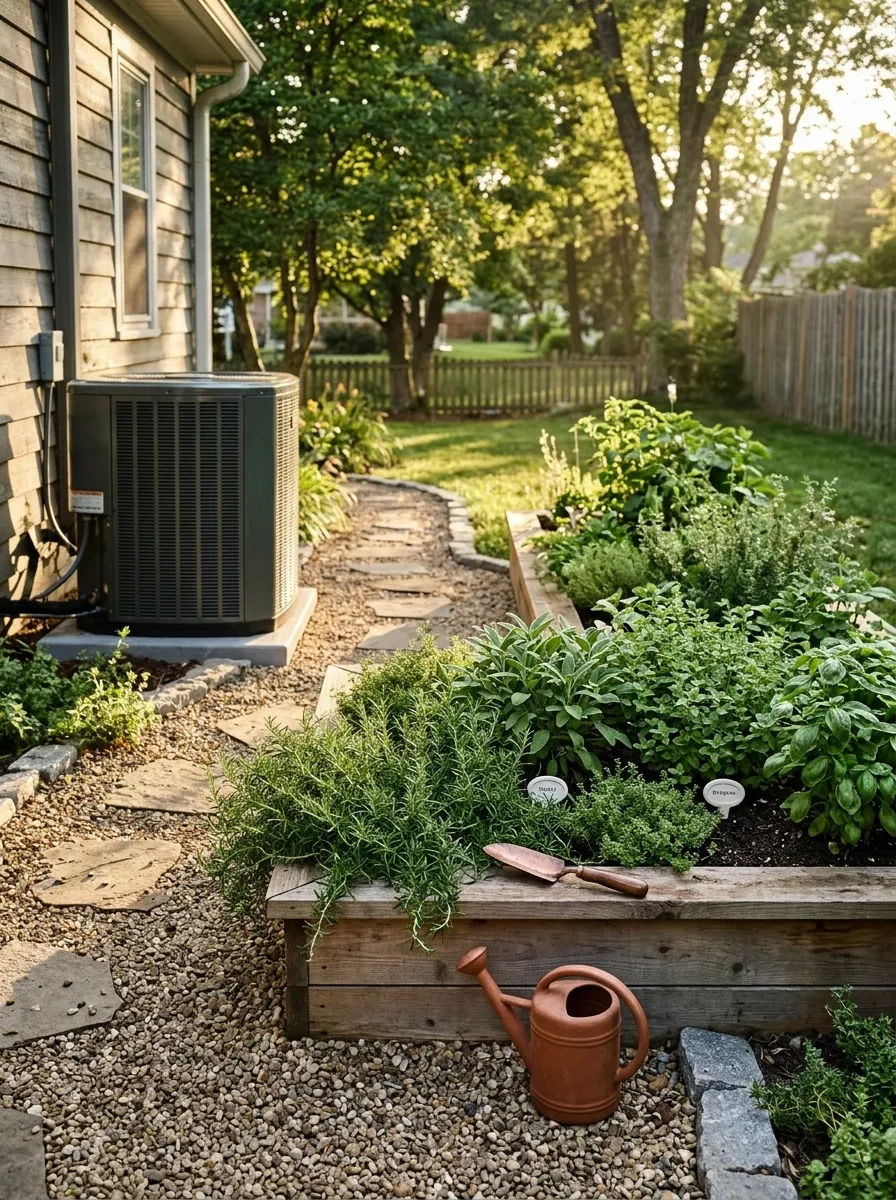
A small herb bed can give this part of the garden a useful purpose if the location suits the plants.
Keep it outside the equipment envelope, with convenient access for harvesting and care. Choose the growing conditions first and do not direct irrigation toward the unit. The herbs should occupy a garden bed, not a narrow leftover strip that makes both gardening and maintenance awkward.
A Raised Bed Positioned Away From the Pad
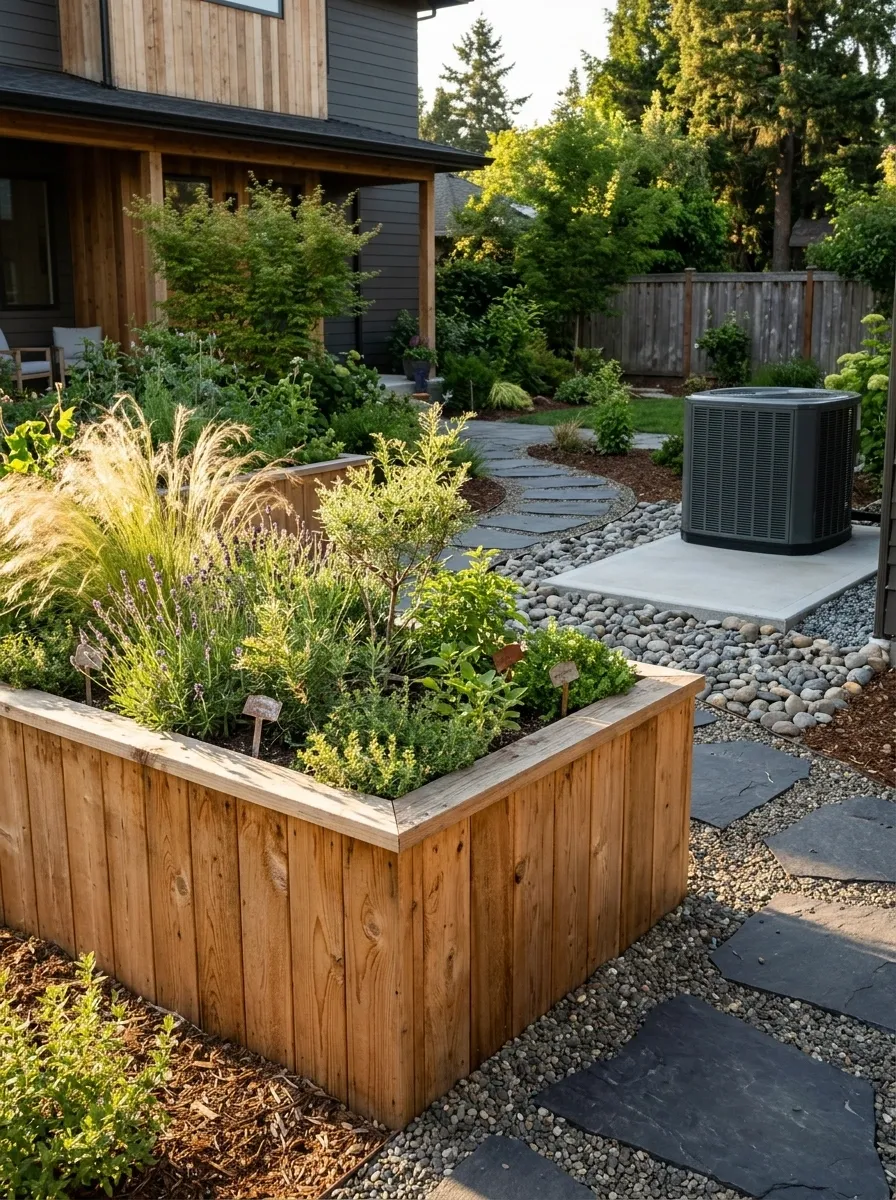
A properly planned raised bed can organize a small garden where the site allows it.
Keep it independent of the equipment base, services, drainage, and required access. Account for mature plant spread beyond the bed edge. Avoid building up soil or altering levels near the unit without appropriate advice. The bed’s walls do not make the plants’ eventual growth boundary disappear.
Draw both footprints: the structure itself and the mature planting above it.
Winter Structure Without Overhead Cover
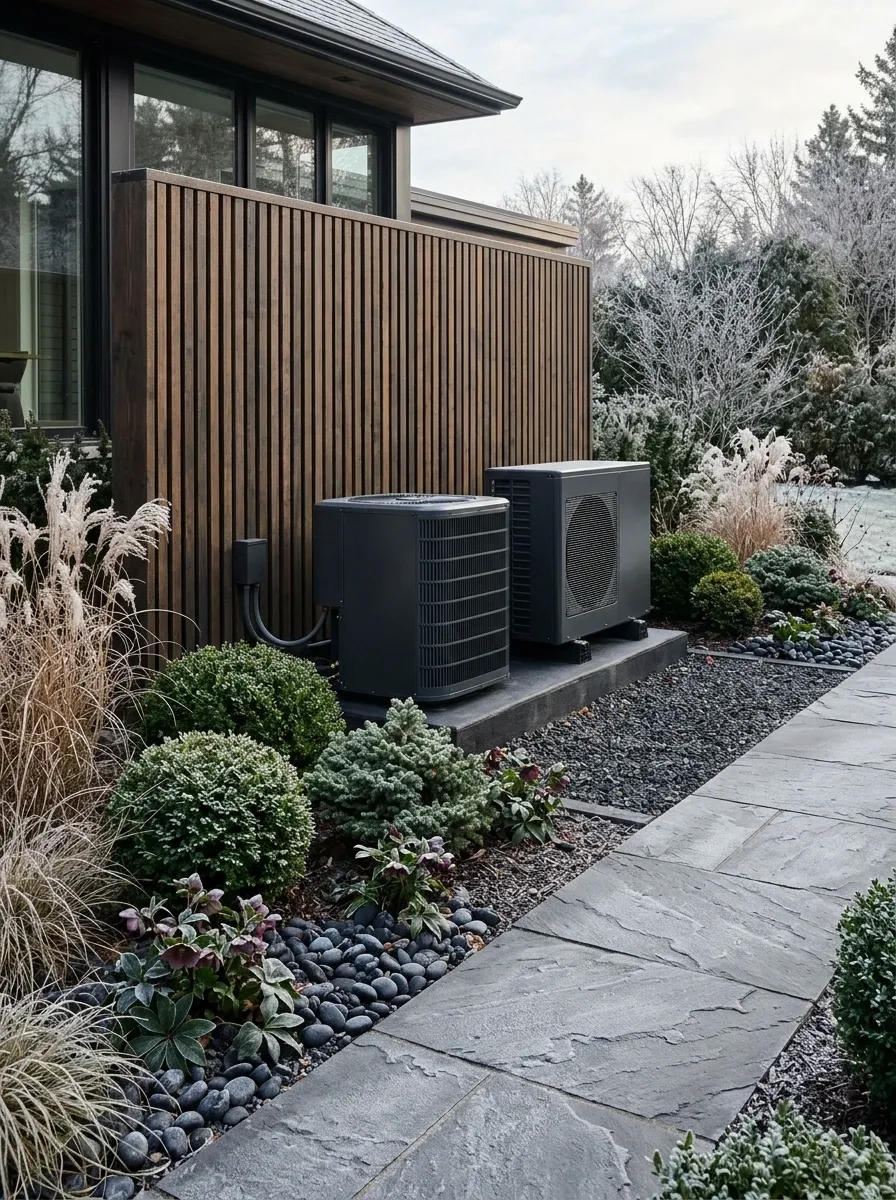
Where winter changes the garden dramatically, select appropriate planting or durable garden elements that retain a clear shape.
Keep that structure outside the equipment’s needs, including any seasonal requirements for a heat pump. A garden can look considered in winter without adding an improvised roof or decorative wrap around operating equipment.
Low Groundcover Beyond the Exclusion Area
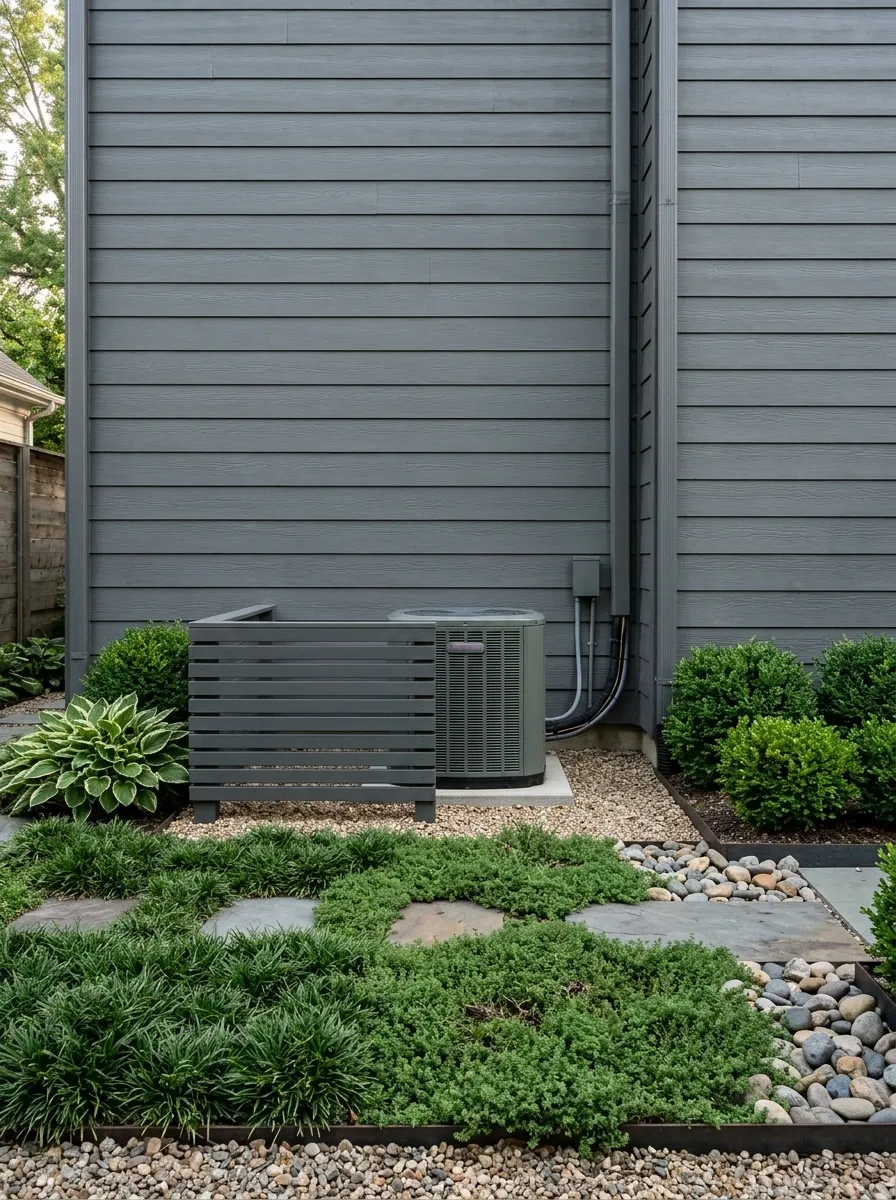
Suitable low groundcover can reduce the visual busyness of a small bed.
Choose a noninvasive option appropriate to the location and maintain the edge so it does not creep into the required clear area. Low does not automatically mean harmless: spread, roots, and debris still matter. Keep the service surface clearly distinct from the planted area.
| Check beyond height |
|---|
| Mature spread |
| Root behavior |
| Debris and maintenance |
A Side-Yard Layout With Planting on the Opposite Edge
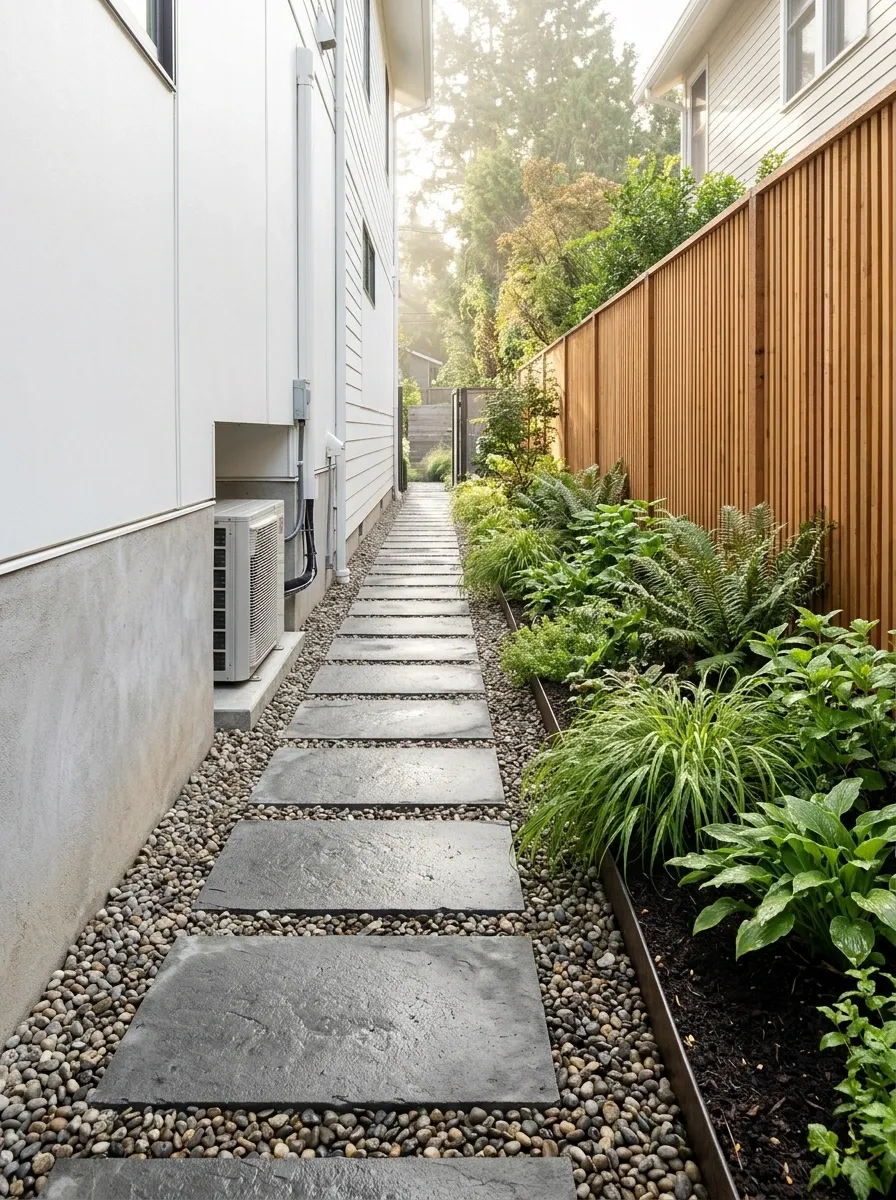
In a narrow side yard, the opposite boundary may be the better planting location.
Let the equipment side remain practical while a coherent border improves the overall passage. Keep enough space for access and movement. This can be more successful than squeezing a line of pots between the unit and a fence simply because that is where the empty gap happens to be.
A Corner Bed That Opens Toward Service Access
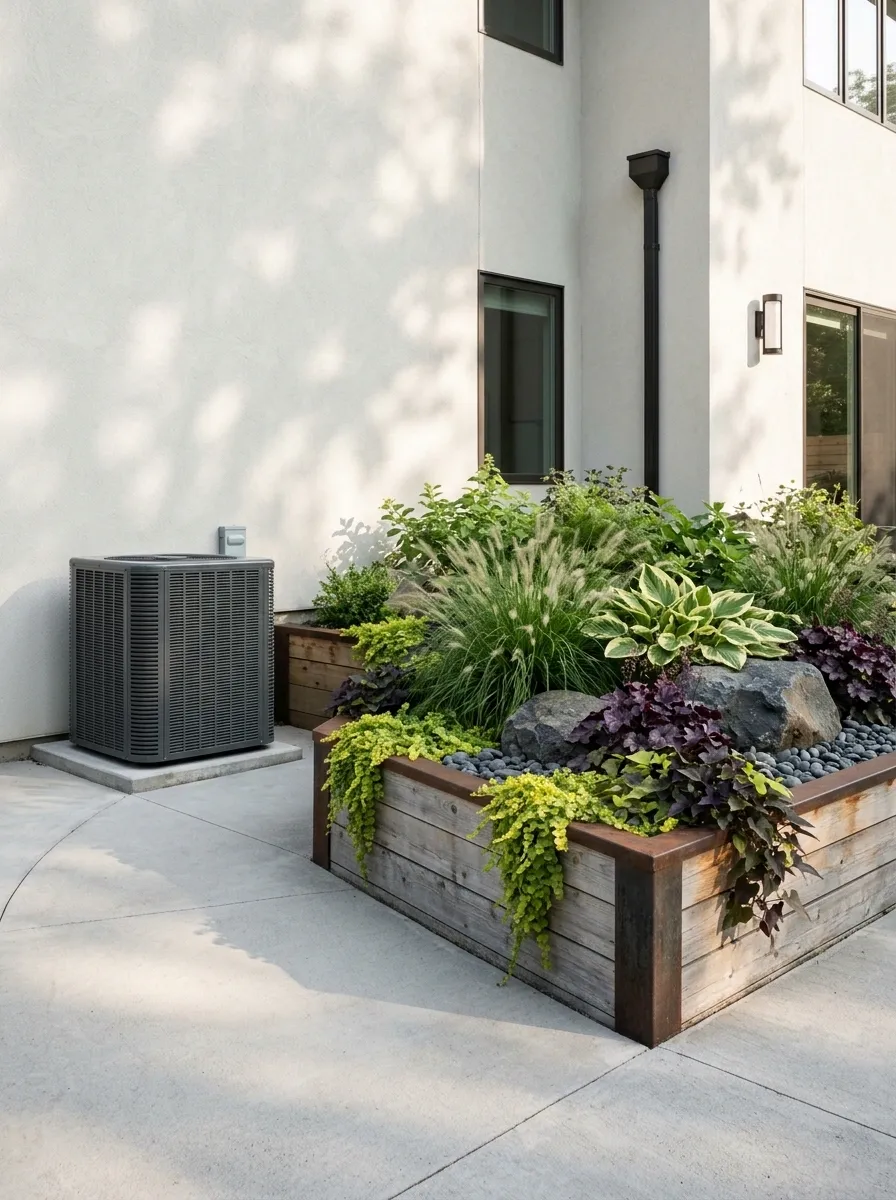
A corner composition can direct planting away from the working side of the equipment.
Use the required clearances as fixed boundaries, then place the garden elements beyond them. Keep the service approach open rather than wrapping the bed evenly around every face. The asymmetry can look intentional when it relates to the rest of the garden.
Start the plan with: the service access, then add the planting—not the other way around.
Appropriate Path Lighting Outside the Equipment Area
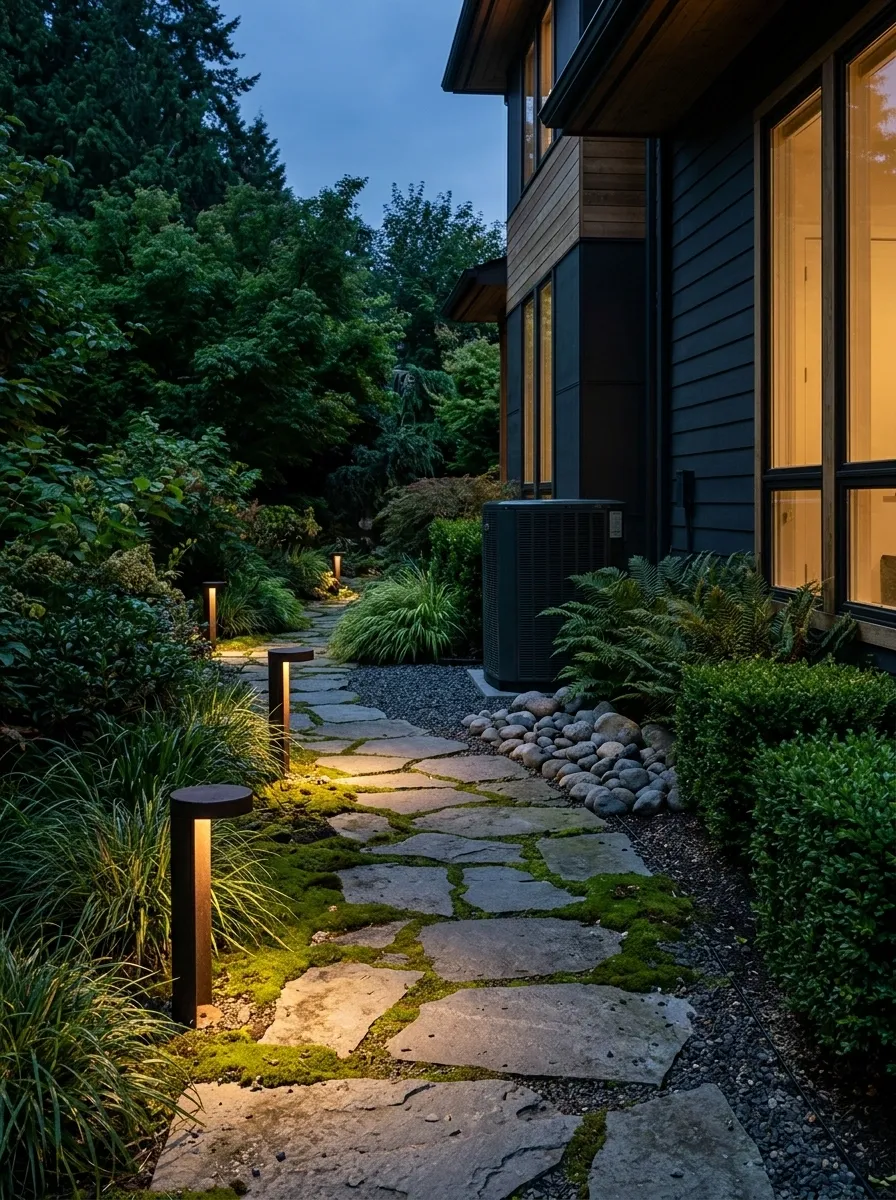
Suitable outdoor lighting can make the access route easier to use without putting decorative fittings on the unit.
Have electrical work and placement handled appropriately. Keep fixtures, cables, and planting outside equipment requirements and avoid glare into neighboring spaces. Light the route or garden feature you want to emphasize rather than turning the condenser into a spotlighted attraction.
A Planting Scheme That Continues Past the Unit
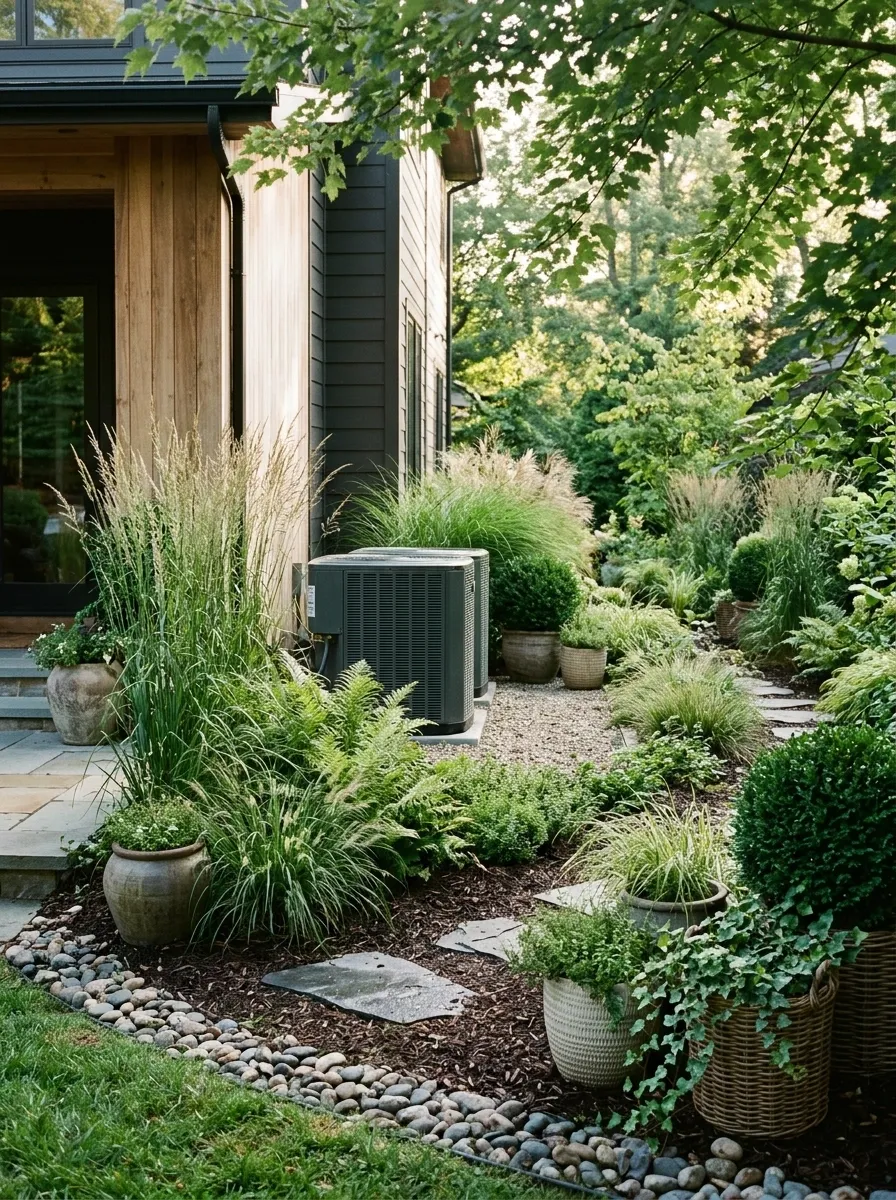
A continuous wider border can make the unit feel like one practical interruption within the landscape.
Keep the equipment envelope clear while repeating plant forms or materials beyond it. This avoids the conspicuous effect of a little hedge built solely around a machine. The eye reads the garden as a whole rather than focusing on the object being hidden.
| Repeat beyond the clear area | Keep independent |
|---|---|
| Plant forms and container finishes | The service footprint |
| Bed materials | Equipment operation |
A Gate and Route Designed for Maintenance
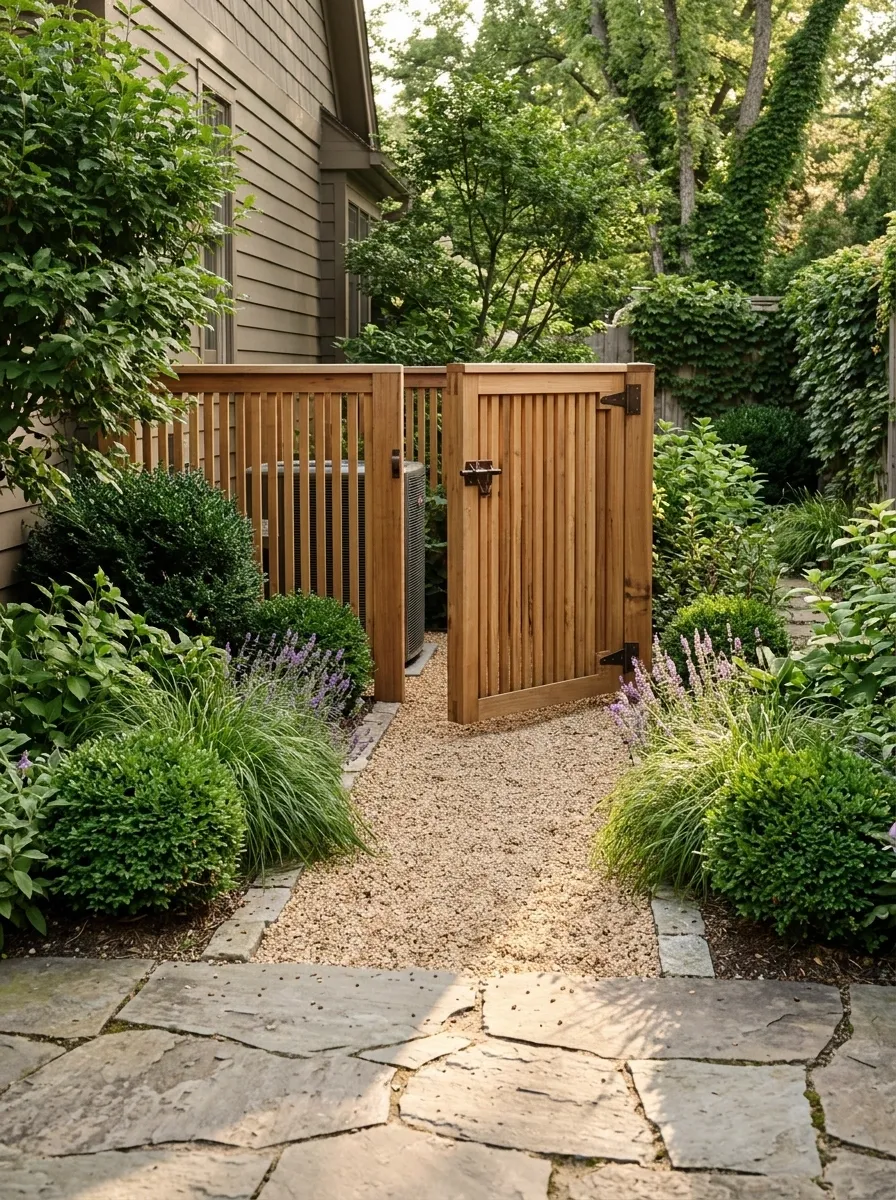
If access passes through a gate, plan the opening around the work that may be needed, not just a person walking through empty-handed.
Keep plants and storage out of the gate’s movement. Discuss suitable service access with the HVAC professional before making permanent changes. A beautiful garden corner should remain usable when the equipment needs attention.
Judge the result from the patio, then from the service approach. If the garden looks coherent and the unit remains accessible with its required space intact, the design is doing both jobs.